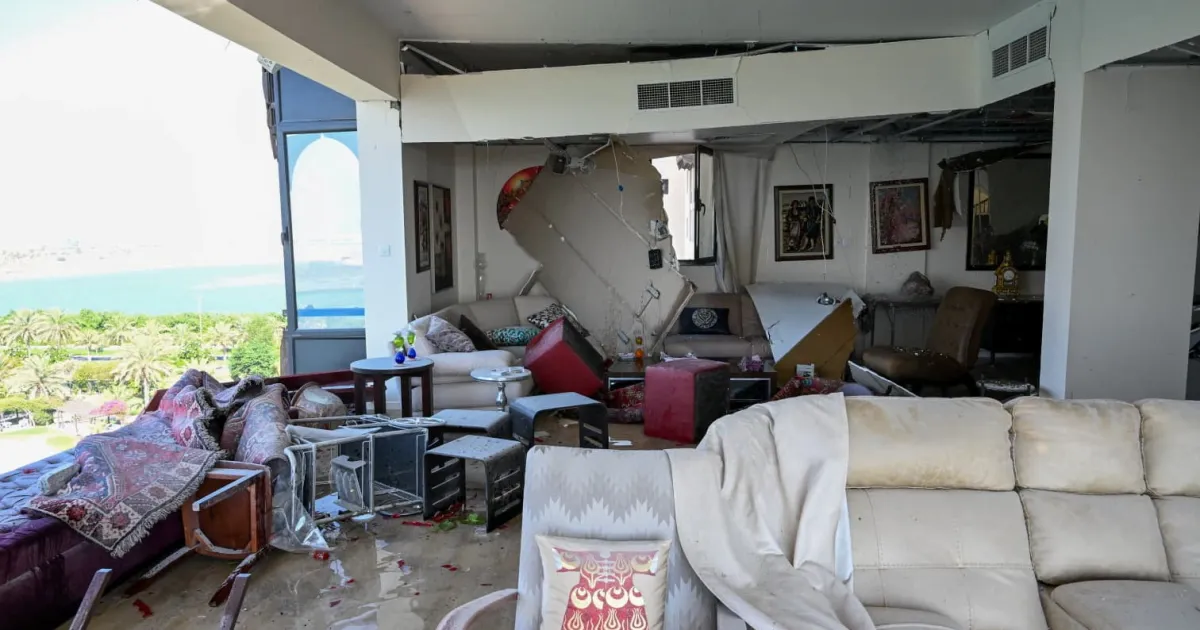
war

Iran and Israel: From friends to enemies | US-Israel war on Iran

NewsFeed

Israel and the US have been at war with Iran since February 28th. The impact of the conflict has become global and all sides have suffered casualties, but it wasn’t always this way.
Al Jazeera’s Ruby Zaman explains how Iran and Israel once had a very different kind of relationship.

Source link

China posts 5.0% Q1 growth, defying war concerns

People ride on bicycles and scooters on a street, in Shanghai China, 10 April 2026. Photo by ALEX PLAVEVSKI / EPA

April 16 (Asia Today) — China’s economy grew 5.0% in the first quarter, exceeding expectations despite concerns over the impact of the Iran conflict, official data showed Thursday.

The National Bureau of Statistics said gross domestic product rose 5.0% from a year earlier, topping the 4.8% forecast by economists surveyed by Reuters and Bloomberg.

The stronger-than-expected growth was driven by manufacturing and exports. Industrial production rose 5.7% in March from a year earlier, while retail sales increased just 1.7%, highlighting weak consumer recovery.

High-tech industries showed particularly strong momentum. Output in the sector rose 12.5% in the first quarter, with industrial robot production up 33% and integrated circuit output increasing 24%. Manufacturing accounted for about one-third of overall economic growth.

The impact of the Iran conflict has so far been limited. Bloomberg reported that China’s efforts to bolster energy security, along with prolonged deflationary pressures, helped cushion the shock from rising oil prices. However, some effects were visible, including a 2.2% decline in refined oil production in March.

Domestic demand remains a key concern. Real per capita consumption rose just 2.6%, while wage growth slowed. The urban unemployment rate reached 5.4%, the highest level in a year.

Investment indicators were also weak. Fixed-asset investment increased 1.7% in the first three months of the year, while real estate investment fell 11.2%. Private investment declined for the first time outside the pandemic period.

Analysts said China’s economy continues to show an “imbalanced structure,” with growth driven by exports and manufacturing while domestic demand lags. Falling sales of automobiles, home appliances and furniture further point to soft consumption.

Policy responses are expected to remain measured. With growth exceeding expectations, pressure for large-scale stimulus has eased, and the government has set a relatively modest annual growth target of 4.5% to 5%.

Still, targeted fiscal support and cost-cutting measures are likely to continue to address rising energy prices and external uncertainties. Some economists also see room for monetary easing, including a possible reduction in banks’ reserve requirement ratio.

— Reported by Asia Today; translated by UPI

© Asia Today. Unauthorized reproduction or redistribution prohibited.

Original Korean report: https://www.asiatoday.co.kr/kn/view.php?key=20260416010005290

Source link

Iran reasserts control of Hormuz Strait as Trump warns against ‘blackmail’ | US-Israel war on Iran News

Top negotiator Mohammad Bagher Ghalibaf says US naval blockade of Iran’s ports is ‘a clumsy and ignorant decision’.

Iran’s Islamic Revolutionary Guard Corps Navy (IRGC) says the Strait of Hormuz is closed and that any ship that attempts to pass through the waterway will be targeted, a dramatic reversal less than 24 hours after the critical shipping lane was reopened.

In a statement carried by Iran’s Student News Agency, the IRGC navy said on Saturday the strait will be closed until the United States lifts its naval blockade on Iranian vessels and ports. It said the blockade was a violation of the ongoing ceasefire agreement in the US-Israel war on Iran.

Recommended Stories

list of 4 itemsend of list

“We warn that no vessel of any kind should move from its anchorage in the Persian Gulf and the Sea of Oman, and approaching the Strait of Hormuz will be considered cooperation with the enemy, and the offending vessel will be targeted,” it said.

Mohammad Bagher Ghalibaf, Iran’s parliament speaker and a senior negotiator in talks between Washington and Tehran on ending the war, said in a television interview that “the Strait of Hormuz is under the control of the Islamic Republic”.

“The Americans have been declaring a blockade for several days now. This is a clumsy and ignorant decision,” he added.

The reassertion of control came just hours after Iran had briefly reopened the strait, in line with a 10-day ceasefire between Israel and Lebanon. Oil prices dropped on global markets after Iranian Foreign Minister Abbas Araghchi said on Friday that the waterway was “completely open for all commercial vessels.”

More than a dozen commercial ships passed through the waterway before the IRGC reversed course.

Iranian gunboats reportedly fired on two commercial ships on Saturday, according to United Kingdom Maritime Trade Operations (UKMTO). India’s Ministry of External Affairs also said that two Indian-flagged ships were involved in a “shooting incident” in the strait.

Some merchant vessels in the region received radio messages from the IRGC Navy, warning that no ships were being allowed through the strait.

US President Donald Trump said Tehran could not blackmail Washington by closing the waterway and warned that he would put an end to the ceasefire if a deal before its expiry on Wednesday is not reached. Trump added that the naval blockade would “remain in full force”.

Iranian Supreme Leader Mojtaba Khamenei, meanwhile, said the navy was ready to inflict “new bitter defeats” on its enemies.

‘Two competing blockades’

Al Jazeera correspondent Zein Basravi said that Iran and the US are back where they were the previous day.

“Less than 24 hours ago, world leaders were praising what they thought was a breakthrough in this conflict, hoping Iran was signalling a confidence-building measure by opening the Strait of Hormuz, potentially leading to a ceasefire deal and a permanent end to the war,” he said.

“As disappointed as people may be, this isn’t entirely surprising. What we’re seeing now is a return to square one,” he added, saying there are now “two competing blockades in place”.

Al Jazeera’s Ali Hashem, reporting from Tehran, said Iran was using the strait to send a message.

“It’s clear that Iran is dealing with a situation in which they are not sure what’s on the table. So the Strait of Hormuz is once again the only space for engagement, even if it’s a negative engagement. And it’s the space where they are sending and conveying messages to the Americans, showing their leverage,” he said.

Source link

Trump claims on Iranian concessions trigger questions, rejections in Tehran | US-Israel war on Iran News

Tehran, Iran – United States President Donald Trump’s announcements about securing major concessions from Tehran have riled supporters of the Iranian establishment, prompting rejections and clarifications from the authorities.

Several current and former senior officials, state media and the Islamic Republic’s hardcore backers expressed anger, frustration, and confusion after the US leader made a series of claims, with days left on a two-week ceasefire reached on April 8.

Recommended Stories

list of 4 itemsend of list

Trump on Friday said Iran and the US would jointly dig up the enriched uranium buried under the rubble of bombed Iranian nuclear sites, and transfer it to the US. He claimed Iran had agreed to stop enriching uranium on its soil.

He also said the Strait of Hormuz had been opened and would never be closed again, while the US naval blockade of Iran’s ports remained in place, and sea mines were removed or were in the process of being removed.

Trump also emphasised that Iran would not receive billions of dollars of its own frozen assets abroad due to US sanctions, and that the 10-day ceasefire between Israel and Lebanon was completely unrelated to Iran.

Amid Pakistan’s ongoing efforts to mediate another round of negotiations, Iran’s Parliament Speaker Mohammad Bagher Ghalibaf, who led the Iranian delegation to the Islamabad talks earlier this month, rejected all of Trump’s claims.

“With these lies, they did not win the war, and they certainly will not get anywhere in negotiations either,” he posted on X early on Saturday.

By Saturday noon, the Khatam al-Anbiya Central Headquarters of the Islamic Revolutionary Guard Corps (IRGC) released a statement, saying the Strait of Hormuz is once again heavily restricted and under “strict management” of the armed forces. It cited continued “acts of piracy and maritime theft under the so-called label of a blockade” by Washington as the reason.

‘Haze of confusion’

In the hours it took between Trump’s flurry of announcements on Friday and official responses from Iranian authorities, supporters of the establishment voiced serious concerns about any major concessions.

“Is there no Muslim out there to talk to the people a bit about what is happening?!” Ezzatollah Zarghami, a former state television chief and current member of the Supreme Cyberspace Council that controls the heavily restricted internet in Iran, wrote on X.

Alireza Zakani, the hardline mayor of Tehran, said if any of Trump’s claims are true, then the Iranian establishment must beware “not to gift the vile enemy in negotiations what it failed to achieve in the field”.

A fan account on X for Saeed Jalili, an ultrahardline member of the Supreme National Security Council who has opposed any deals with the US for decades, said “dissent” may be at play. It said Supreme Leader Mojtaba Khamenei, who has not been seen or heard from outside of several written statements attributed to him, must release a voice or video message to confirm what is happening.

Jalili’s main account distanced itself from the comment, saying the fan account – which was subsequently deleted – was a sign of “infiltration” by enemies of Iran who were trying to sow discord.

Iranian state media released another written statement attributed to Khamenei on Saturday to mark Army Day, but made no mention of the political drama unfolding hours earlier, or the negotiations with the US.

The dissonance was clearly on display on state television and other state-linked media on Friday, especially those affiliated with the IRGC.

Multiple state television hosts and analysts harshly attacked Foreign Minister Abbas Araghchi because he tweeted on Friday that the Strait of Hormuz was “declared completely open for the remaining period of ceasefire, on the coordinated route as already announced by Ports and Maritime Organisation”.

One of the hosts demanded Araghchi must immediately clarify. Another said the top diplomat’s tweet was in English, and since the Iranian people do not have access to X due to the state-imposed near-total internet shutdown for seven weeks, the message was not directed at the people.

With a huge Hezbollah flag in the background, a furious presenter on state television’s Channel 3 claimed that Araghchi was somehow “the representative of the people of Lebanon, Yemen and Iraq” because they are a part of Iran’s “axis of resistance” of armed forces, so he should demand concessions on their behalf from Trump.

Morteza Mahmoudvand, a representative for Tehran in the Iranian parliament, went as far as saying Araghchi would have been impeached had it not been for “the excuse of war”.

The Fars and Tasnim news sites, which are affiliated with the IRGC, also heavily criticised Araghchi and called for further explanations on Friday evening, with Fars arguing that “Iranian society was plunged into a haze of confusion.”

Armed supporters in the streets

Critical comments from supporters of the Iranian government also flooded social media, including local messaging applications and the comments section of state-run sites.

“We took to the streets every night with clear demands, but you shook hands with the killer of our supreme leader and handed our strait to the Zionists,” one user wrote on Friday in the local app Baleh, in reference to Israel.

“After all these years of sanctions and war and costs imposed on the people, if you are to give up the uranium and the strait, then why did you play with the people’s livelihoods and the blood of the martyrs for so long?” another user wrote.

A large number of analysts and media personalities, including Hossein Shariatmadar, the head of the Kayhan newspaper, who was appointed by late Supreme Leader Ayatollah Ali Khamenei, also voiced criticism and demanded answers on Fars and other outlets.

Regardless of whether there will be more mediated negotiations in Pakistan or whether the war will continue, Iran continues to encourage and arm backers to take to the streets to maintain control.

State media on Friday aired footage of more armed convoys moving through the streets of Tehran while waving the flags of Lebanon’s Hezbollah, Iraq’s Hashd al-Shaabi and other groups. The video below shows women and children crewing heavy machineguns mounted on the back of pick-up trucks during a rally in downtown Tehran.

With no end in sight to the state-imposed internet shutdown that has wiped out millions of jobs in Iran, in addition to steel factories and other infrastructure that were destroyed, the Iranian economy continues to suffer.

The timing of the back-and-forth between Trump and the Iranian officials meant that oil prices dropped before Western markets closed on Friday, and the Iranian currency experienced more volatility.

The rial was priced at about 1.46 million against the US dollar on Saturday morning, the first day of the working week in Iran. But it shot back up to about 1.51 million after the IRGC announced the repeated closure of the Strait of Hormuz.

Source link

Gunfire reported by vessel in Strait of Hormuz | US-Israel war on Iran

NewsFeed

A maritime agency reported that a tanker was fired on by gunboats in the Strait of Hormuz. The United ⁠Kingdom ⁠Maritime Trade Operations agency says it received a report ⁠of a tanker being fired upon by what it ‌said were two gunboats linked to Iran’s Revolutionary Guard Corps. The vessel and ‌its crew were reported safe.

Source link

Iran closes Strait of Hormuz again over US blockade of its ports | US-Israel war on Iran News

Reports of Iranian gunboats opening fire on a tanker in strait, after Tehran said it is closing the waterway until the US lifts the blockade of its ports.

Iran says it has closed the Strait of Hormuz again, calling the decision a response to a continued blockade of its ports by the United States.

The Iranian military on Saturday said control of the strategic waterway, through which 20 percent of the global oil flows, has “returned to its previous state”, with reports saying Iranian gunboats fired at a merchant vessel as it attempted to ‌cross.

Recommended Stories

list of 4 itemsend of list

The closure of the strait came hours after it was reopened, with more than a dozen commercial ships passing through the waterway, after a US-mediated 10-day ceasefire deal was reached between Israel and Lebanon.

The Islamic Revolutionary Guard Corps (IRGC) on Saturday said in a statement, cited by the Iranian media, that the ongoing US blockade of Iranian ports represented “acts of piracy and maritime theft”, adding that the control over Hormuz is “under the strict management and control of the armed forces”.

“Until the US restores full freedom of navigation for vessels travelling from Iran to their destinations and back, the status of the Strait of Hormuz will remain tightly controlled and in its previous condition,” it said.

By 10:30 GMT on Saturday, no fewer than eight oil and gas tankers had crossed the strait, but at least as many ships appeared to have turned back, having begun to exit the Gulf, the AFP news agency reported.

The toing and froing over the strait cast doubt on US President Donald Trump’s optimism the day before, that a peace deal to end the US-Israel war on Iran was “very close”.

Trump had celebrated the reopening of the strait on Friday, but warned the US attacks would resume until Iran agreed to a deal, which included its nuclear programme.

“Maybe I won’t extend it,” Trump told reporters on board Air Force One about the temporary ceasefire agreement in place. “So you’ll have a blockade, and unfortunately we’ll have to start dropping bombs again.”

Asked whether a potential deal could be made in this short timeframe, Trump said: “I think it’s going to happen.”

But Iran says no date has been agreed for another round of peace talks, accusing the US of “betraying” diplomacy in all negotiations.

The conflicting and changing reports about the strait and how much freedom ships have to transit through it have deterred many vessels from crossing, according to John-Paul Rodrigue, a maritime shipping specialist at Texas A&M University.

“Ships have been attempting transit since the announcement, but it looks like many of them are heading back because the situation is unclear,” Rodrigue told Al Jazeera. “There is contradictory information being issued by all parties.”

Reporting from Tehran, Al Jazeera’s Tohid Asadi said “uncertainty is the name of the game” as far as the Strait of Hormuz is concerned.

“Iran is looking for a comprehensive end to the war across the region, security assurances, sanctions relief, the unfreezing of frozen assets, regional relations – and on top of all of that – the nuclear dossier and Iran’s stockpile of highly enriched uranium,” he said.

“But right now, uncertainty is the name of the game. The fragile situation makes it hard to talk about the possibility of successful negotiations down the road.”

Source link

Pakistan PM, army chief wrap up key trips in push for more US-Iran talks | US-Israel war on Iran News

Field Marshal Asim Munir leaves Tehran while premier Shehbaz Sharif heads home from Turkiye amid hopes of another round of US-Iran talks.

Pakistan’s army chief and the prime minister have wrapped up separate diplomatic visits aimed at advancing efforts to end the United States-Iran conflict, with Field Marshal Asim Munir leaving Tehran and Prime Minister Shehbaz Sharif returning from Turkiye.

Munir met Iran’s leadership and peace negotiators during a three-day visit to Tehran, a Pakistani military statement said on Saturday.

Recommended Stories

list of 4 itemsend of list

The visit demonstrated Pakistan’s “unwavering resolve to facilitate a negotiated settlement… and to promote peace, stability and prosperity,” the military said ahead of expected US-Iran talks in Islamabad in the coming days.

Munir held talks with the country’s president, foreign minister, parliament speaker and head of Iran’s military central command centre.

Parliament Speaker, Mohammad Bagher Ghalibaf, and Foreign Minister, Abbas Araghchi, led the Iranian delegation to Islamabad for peace talks with the US last week, the highest level face-to-face contact between Washington and Tehran in decades.

Those talks ended without agreement, and a ceasefire is due to expire on April 22.

But diplomacy has continued, with Pakistan’s Prime Minister, Shehbaz Sharif, visiting Saudi Arabia, Qatar and Turkiye to push the peace process.

His three-country trip concluded on Saturday, with Sharif and Foreign Minister Ishaq Dar departing a diplomacy forum in Antalya, according to statements from both officials.

“I leave Antalya [Turkish city] with fond memories and a renewed commitment to further strengthening the enduring fraternal bonds between our two nations, and to continuing our close cooperation to advance dialogue and diplomacy for lasting peace and stability in the region,” Sharif posted on X.

The flurry of diplomacy comes as further negotiations are expected in Pakistan in the coming days as Islamabad intensifies contacts with regional and global leaders in an effort to sustain momentum towards a US-Iran deal.

Pressure for a deal between the two countries has grown after Iran reimposed restrictions on the Strait of Hormuz, hours after its reopening following the start of a ceasefire in Lebanon. Tehran accused the US of violating a deal to reopen the strategically important waterway.

Donald Trump has said a second round of talks with Iran could be held in Pakistan in the coming days. The New York Post reported that Trump praised Munir, saying he was “doing a great job”.

Reporting from Islamabad, Al Jazeera’s Kamal Hyder said Munir landed back home on Saturday as Pakistan prepared for another round of US-Iran talks expected “within the next few days”.

“We have also seen a lot of praise from the Trump administration on social media, praising the Pakistani leadership. So all eyes are on Islamabad. Serious differences remain, but there is a flurry of diplomatic activity and a hope and expectation that some sort of breakthrough may happen,” he said.

Source link

Martin Lewis shares ISA tip to ‘smooth out’ Iran war economic impact

He was asked if now is a good time to open an ISA or not

Martin Lewis has offered some advice on how you could organise your savings. He explained the practical tip amid the current uncertainty surrounding the economic impact of the Iran conflict.

The major war has already triggered a surge in oil prices, with fears of long-term consequences for food production and global economic growth.

Mr Lewis was questioned on his BBC podcast about whether now is an opportune moment to open a stocks and shares ISA, given that markets are struggling. When share prices fall, it can present a prime opportunity to invest, as your funds could increase in value when the market bounces back. But if prices decline further, the worth of your holdings could also drop. In response, Mr Lewis outlined the general principle to bear in mind.

He said: “If you’re talking about investing for a long term money that you don’t need for five years and you’re going to do that in a nice spread of investments, like a global tracker fund or an S&P tracker or FTSE tracker, then you just have to accept that you will never know when the perfect time to put money in is.”

£1,000 savings tactic

Nevertheless, he did reveal one strategy you could use to reduce the risk posed by market volatility. Mr Lewis said: “Let’s just imagine you’re putting £10,000 in a stocks and shares ISA, and you’re putting it away for a long time.

“You could put £10,000 in now but you could arrange with the provider that it sits in its cash part. You can hold it in cash, within a stocks and shares ISA, for the moment.

“You could say I’ve got £10,000, over the next 10 months, I’d like you to buy £1,000 a month of that tracker fund that I’m putting my investment into. It’s called pound-cost averaging.

“Because you’re drip feeding the money in, that helps smooth out the short-term volatility of buying at the right moment. So if you’re worried about that volatility, you might want to adopt that tactic.”

Mr Lewis continued in saying that in reality nobody can predict the optimal time to invest. He said: “They are unknowable in the short term, but in a broad spread of investment over the long term, on the balance of probabilities, investing will outperform saving.

“So don’t let the volatility put you off, but you might want to spread the time that you’re putting the money in.”

Major changes to ISA allowances

Savers may also want to note that major changes to ISA allowances are on the horizon. Currently, you can deposit up to £20,000 each tax year, which can be divided as you wish between cash ISAs and stocks and shares ISAs.

From April 2027, you will only be permitted to save up to £12,000 as you choose. The remaining £8,000 will only be available for deposits into investment-based accounts.

Savers aged 65 and over will be exempt from the new regulations, retaining the existing £20,000 allowance. ISAs are entirely tax-free, with no tax liability on any interest earnings or investment gains within these accounts.

Source link

World reacts to Strait of Hormuz reopening amid US-Iran conflict | US-Israel war on Iran News

Iran’s Foreign Minister Abbas Araghchi and United States President Donald Trump have said that the Strait of Hormuz is open to commercial vessels.

Araghchi declared on Friday that the strategic waterwat was “completely open” in line with the ceasefire between Israel and Lebanon that took effect the previous day.

Recommended Stories

list of 3 itemsend of list

Trump affirmed on social media that the strait was open, later claiming that Iran had agreed to “never close the Strait of Hormuz again”. However, he also posted that the US naval blockade on Iranian ports would “remain in full force”.

In parallel, France and the United Kingdom hosted a meeting in Paris involving about 40 countries, which agreed to play a role in restoring freedom of navigation in the Strait of Hormuz once the US-Israeli war on Iran stops.

The blocking of tankers from using the strait, through which about 20 percent of the world’s crude flows on a typical day, has led to a global surge in fuel prices.

World leaders have welcomed the news with cautious optimism amid mixed messages from the US and Iran:

United States

“The Strait of Hormuz is completely open and ready for business and full passage, but the naval blockade will remain in full force and effect as it pertains to Iran, only, until such time as our transaction with Iran is 100% complete,” Trump wrote on Truth Social.

Minutes later, he issued another post saying the US Navy’s blockade on Iranian ships and ports “will remain in full force” until Tehran reaches a deal with the US, including on its nuclear programme.

Later, Trump told the news agency AFP that a deal to end the war on Iran was “close”, saying there were “no sticking points” left between Washington and Tehran.

Iran

Foreign Minister Abbas Araghchi posted on X that the strait was “declared completely open” and would remain open for the remaining period of the 10-day Israel-Lebanon ceasefire, which took effect overnight Thursday into Friday.

Some Iranian state media reports later appeared to contradict Araghchi’s announcement, with a senior military official telling state media that only nonmilitary vessels would be allowed to transit with permission from the Iranian Islamic Revolutionary Guard Corps (IRGC) Navy.

The Fars news agency, which is close to the IRGC, noted a “strange silence from the Supreme National Security Council”, the de facto top decision-making body in the country, as the status of the new supreme leader, Mojtaba Khamenei, remains unknown.

United Kingdom

UK Prime Minister Keir Starmer cohosted a summit on a potential military mission to secure the Hormuz Strait with French President Emmanuel Macron in Paris on Friday, with about 30 to 40 countries participating in person or by video conference.

On the sidelines, Starmer cautiously welcomed news of the strait’s reopening but said it must become “both lasting and a workable proposal”.

He said the UK and France would lead a “strictly peaceful and defensive” multinational mission to protect freedom of navigation as soon as conditions allow.

France

Speaking after the gathering, Macron said, “We all demand the full, immediate and unconditional reopening of the Strait of Hormuz by all parties.”

“We all oppose any restrictions or system of agreements that would, in effect, amount to an attempt to ⁠privatise the strait – and, of course, any toll system,” he added.
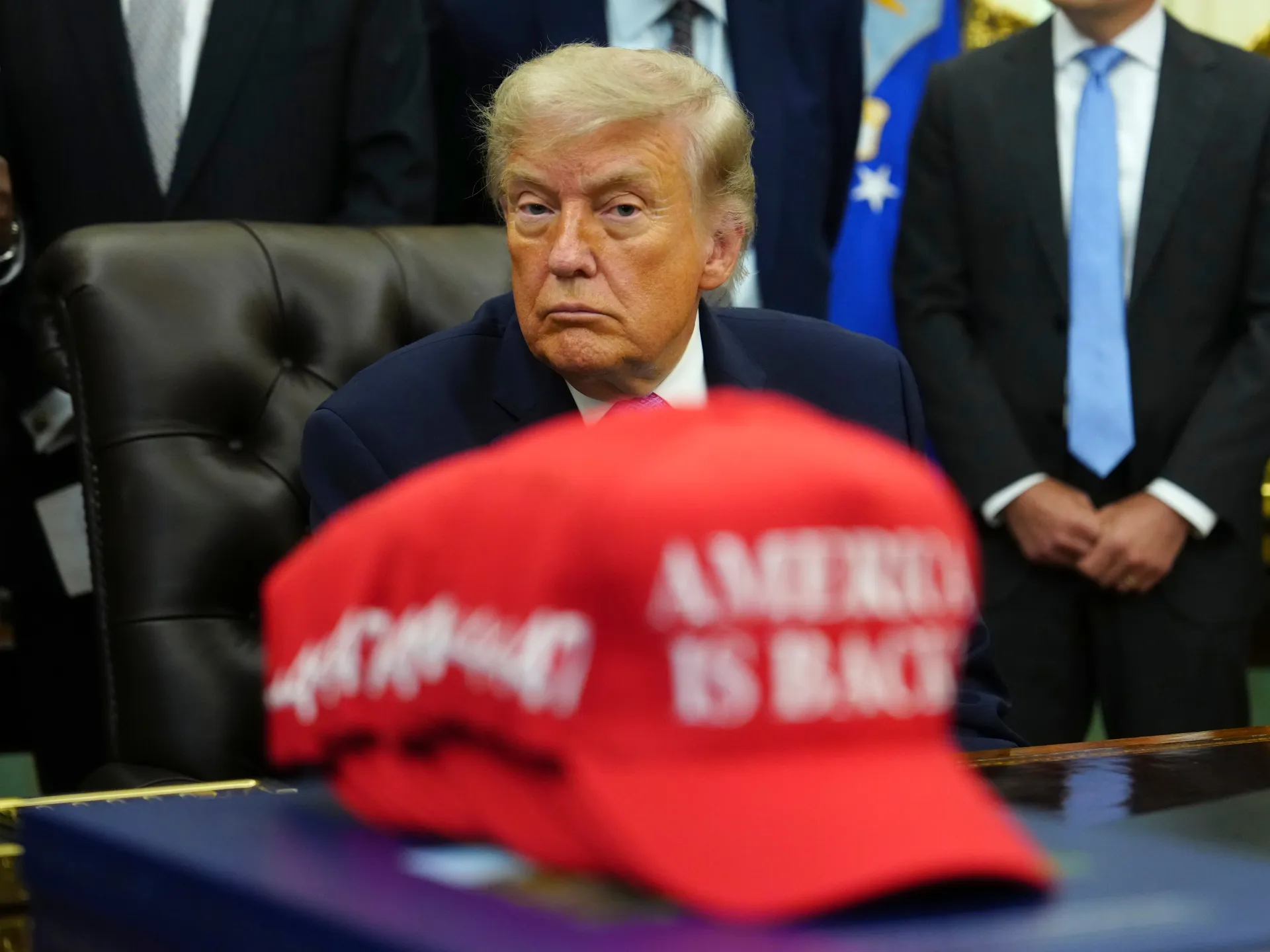
Macron’s office said roles for members of the international coalition working to reopen the strait could include “intelligence, mine-clearing capabilities, military escorts [and] communication procedures with coastal states”.

Germany

Chancellor Friedrich Merz said Germany could contribute mine clearance and intelligence capabilities to the international mission, but would need parliamentary support and a ″secure legal basis″ such as a UN Security Council resolution.

He said he wanted US involvement in the international mission to secure shipping through the Strait of Hormuz. “We believe this would be desirable,″ he said.

Trump later appeared to rebuff his overtures, saying on social media that he had received a call from NATO, but declined its assistance in no uncertain terms.

Finland

Finnish President Alexander Stubb, who participated in the Paris summit, said on X, “We welcome Iran’s announcement on opening the Strait. Lasting solutions require diplomacy,”

United Nations

United Nations Secretary-General Antonio ⁠Guterres on ⁠Friday welcomed the opening ‌of Strait of Hormuz by Iran ⁠and said ⁠it was “a ⁠step in the ⁠right ⁠direction”.

International Maritime Organisation

Arsenio Dominguez, secretary-general of the UN shipping agency said, “We are currently verifying the recent announcement related to the reopening of the Strait of Hormuz, in terms of its compliance with freedom of navigation for all merchant vessels and secure ‌passage.”

Shipping companies

The Norwegian Shipowners’ Association said several things had to be clarified before any ships can transit the strait, including the presence of mines, Iranian conditions and practical implementation.

“If this represents a step towards an opening, it is a welcome development,” said Knut Arild Hareide, CEO of the association, which represents 130 companies with some 1,500 vessels.

A spokesperson for Germany’s Hapag-Lloyd Shipping Company said, “We are now beginning to assess the new situation and the risks involved … For the time being, therefore, we are still refraining from passing through the strait.”

In a statement, Denmark’s Maersk said: “We have noted the announcement. The safety of our crew, vessels and customers’ cargo remains our priority. Since the outbreak of the conflict, we have followed the guidance of our security partners in the region, and the recommendation so far has been to avoid transiting the Strait of Hormuz.

“Any decision to transit the strait will be based on risk assessments and close monitoring of the security situation, with the latest developments also included in the ongoing assessments.”

Markets

Oil prices plunged after Iran’s announcement that passage for commercial vessels would remain “completely open” for the duration of a 10-day ceasefire in Lebanon.

“This news is having an immediate impact on markets,” said Kathleen Brooks, research director at XTB. “This is the biggest development so far during the ceasefire, and it gives hope that the war will end soon, and supply chains will return to some normality.”


Source link

Shipping firms seek clarifications before crossing Hormuz | US-Israel war on Iran News

Shipping companies said several things had to be clarified, including the presence of mines, Iranian conditions, practical implementations.

Shipping companies have cautiously welcomed Iran’s announcement that the Strait of Hormuz is open but said they would require clarifications, including about the risk of mines, before vessels move through the entry point to the Gulf.

Iran’s Foreign Minister Abbas Araghchi said on Friday that the Strait of Hormuz was open to all commercial vessels during a 10-day Lebanon ceasefire accord, prompting a fall in oil and other commodity prices while stock markets rose.

Recommended Stories

list of 4 itemsend of list

All commercial ships, including United States vessels, can sail through the strait, although their plans need to be coordinated with Iran’s Islamic Revolutionary Guard Corps, a senior Iranian official told the Reuters news agency.

Transit would be restricted to lanes which Iran deemed safe, adding that military vessels were still prohibited, the official said.

“We are currently verifying the recent announcement related to the reopening of the Strait of Hormuz, in terms of its compliance with freedom of navigation for all merchant vessels and secure passage,” said Arsenio Dominguez, secretary-general of the United Nations shipping agency, the International Maritime Organization.

The Norwegian Shipowners’ Association said several things had to be clarified before any ships could transit the strait, including the presence of mines, Iranian conditions and practical implementation.

“If this represents a step towards an opening, it is a welcome development,” said Knut Arild Hareide, CEO of the association which represents 130 companies with some 1,500 vessels.

Shipping association BIMCO cautioned members on returning to the strait.

“The status of mine threats… is unclear and BIMCO believes shipping companies should consider avoiding the area,” said Jakob Larsen, BIMCO’s chief safety and security officer.

The threat posed by mines in parts of the strait is not fully understood, and avoidance of the area by ships should be considered, a US Navy advisory on Friday, seen by Reuters, also said.

German shipping group Hapag-Lloyd on Friday said it was working for its ships to sail through the strait “as soon as possible”, but added that several questions remained.

“Our crisis committee is in session and will try to resolve all open items with the relevant parties within the next 24-36 hours,” it added.

Its Danish peer Maersk said it was closely monitoring the security situation and would act based on its risk assessment.

France’s CMA CGM and Norwegian oil tanker group Frontline declined to comment.

A recent route imposed by Tehran through its territorial waters near Larak Island would present navigational challenges even if vessels were not required to pay a toll, and would raise questions regarding compliance and insurance, said Matt Wright, lead freight analyst at data intelligence firm Kpler.

US President Donald Trump on Friday said Iran had agreed to never close the strait again, and that it was removing sea mines from it.

One of the world’s most important maritime chokepoints, disruption in the strait has forced shipping companies to suspend sailings, reroute cargo and rely on costly workarounds to keep goods moving in and out of the Gulf.

Source link

Iran foreign minister says Strait of Hormuz ‘completely open’ | US-Israel war on Iran News

Iran says ‘passage for all commercial vessels through Strait of Hormuz’ open during the Israel-Lebanon ceasefire.

The Strait of Hormuz is “completely open” for all commercial vessels and will remain so during the Israel-Lebanon ceasefire, Iran’s foreign minister has said.

“In line with the ceasefire in Lebanon, the passage for all commercial vessels through Strait of Hormuz is declared completely open for the remaining period of ceasefire,” Abbas Araghchi said in a post on X on Friday.

Recommended Stories

list of 3 itemsend of list

A 10-day ceasefire was agreed between Israel and Lebanon late on Thursday.

The passage of ⁠vessels through the ⁠strait will be on the coordinated route as ⁠already announced by ⁠Ports and ⁠Maritime Organisation of Iran, Araghchi added.
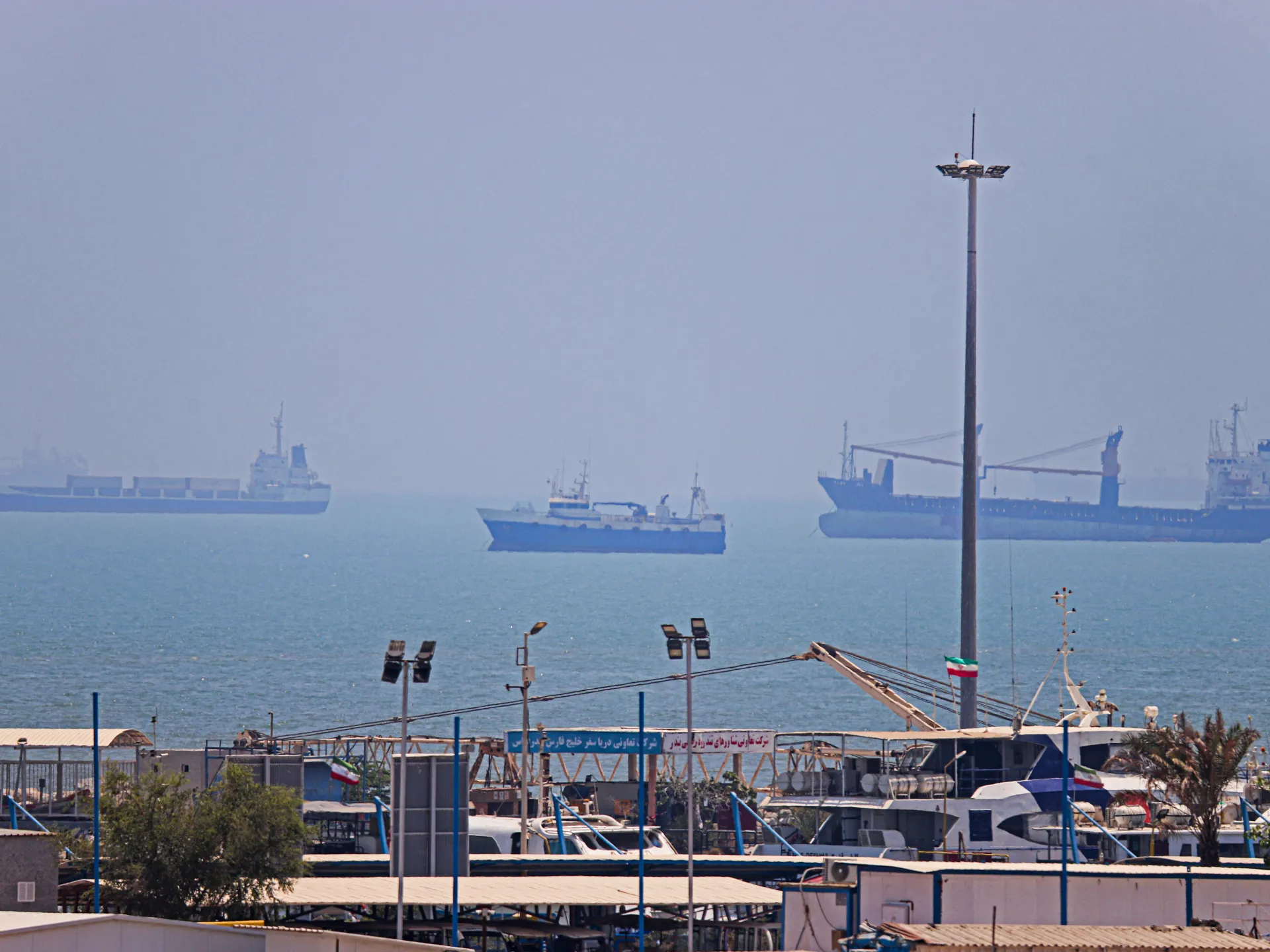
United States President Donald Trump confirmed in a social media post that the strait was “completely open and ready for business and full passage”.

More to come…

Source link

Contributor: Trump’s empty bluster worked until he took on the pope and Iran

Until recently, President Trump always found a way to fail forward, through a combination of spin, threats, payoffs and bluster.

OK, that’s the simplistic interpretation. The fine print tells a less-glamorous story: a man born on third base who spent decades insisting he’d hit a triple.

Still, it’s hard to argue with success. When Trump entered politics, he redefined the rules of the game. Rivals who tried to outflank him on policy detail, ideological consistency and institutional norms found themselves either vanquished or assimilated by the Borg.

By my lights, only once during Trump’s admittedly chaotic first term did he run into something that his playbook couldn’t at least mitigate or parry: the COVID-19 pandemic. For the final year of his presidency, reality refused to negotiate, and political gravity reasserted itself. It turns out, viruses aren’t susceptible to the Art of The Deal.

But then, miraculously, Trump wriggled through legal jeopardy, bulldozed his way past more conventional Republicans and Democrats, and re-emerged victorious in 2024.

If anything, that comeback reinforced the idea that Trump could survive anything by virtue of his playbook.

By the start of his second term, he’d made impressive headway in co-opting not only individuals but also major institutions within big tech, the media and academia.

Even in foreign affairs, Trump’s sense that any problem could be solved via force, intimidation or money was confirmed when he captured Venezuelan President Nicolás Maduro and installed Maduro’s vice president, Delcy Rodríguez, as a sort of puppet leader. Everyone has a price, right?

Unfortunately for Trump, no. Not everyone does.

Lately, the president has encountered a different kind of resistance — adversaries motivated by something bigger and more transcendent than money, power or the avoidance of pain.

In dealing with Iran, for instance, Trump has confronted people operating under a wholly different set of incentives. It’s a regime guided by a mix of ideology, radical religious doctrine and long-term strategic interests that don’t always align with short-term material gain.

(Now perhaps, having punished Trump enough already, Iran will finally come to the negotiating table. But even if that happens, it will have occurred after exacting a steep price — so steep, in fact, that it may already be too late for Trump to plausibly claim a win.)

It turns out, you can’t easily intimidate or pay off a true believer who isn’t afraid to die and believes they have God on their side.

A similar (though obviously not morally equivalent) dynamic is now also on display in the form of Trump’s skirmish with Pope Leo XIV, a man who commands moral authority. He opposes the war in Iran (“Blessed are the peacemakers”) and has demonstrated a stubborn refusal to back down to Trump’s attempts at bullying.

“Woe to those who manipulate religion and the very name of God for their own military, economic and political gain, dragging that which is sacred into darkness and filth,” Leo said during a tour of Africa. It’s a remark that the American pope seemed to implicitly be aiming at the American president.

Here’s what Trump doesn’t understand: There are still pockets of the world where concepts like faith and national identity outweigh tangible incentives. Where sacrifice and suffering are an accepted part of the plan.

When facing these sorts of foes, Trump’s usual operating system starts to look less like a cheat code and more like a category error.

But he can’t see this because Trump is always prone to a sort of cynical projection — of assuming everyone views the world in the same base, carnal, corrupt way he sees it.

Whether it was his incredulity that Denmark wouldn’t sell Greenland, rhetoric that seemed to discount the motivations of those who serve and sacrifice in the military, or his affinity for nakedly transactional gulf states, the pattern is familiar: a tendency to view decisions through a cost-benefit lens that not everyone shares.

To be fair, that lens has often served him well. In arenas where power, money and leverage dominate, Trump’s approach is eerily effective.

But after years of taming secular, “rational” opponents, he is fighting a two-front war against people who see their struggles as moral and spiritual.

They aren’t stronger in a conventional sense. But they are, in a very real sense, less susceptible to Trump’s methods.

For perhaps the first time in his life, Donald Trump finds himself facing adversaries who aren’t just immune to his usual Trumpian playbook but are playing a different game altogether.

Matt K. Lewis is the author of “Filthy Rich Politicians” and “Too Dumb to Fail.”

Source link

KLM and Lufthansa CANCEL hundreds of flights as fuel cost soar amid Iran war

The global air travel crisis has spread further as Lufthansa and KLM became the latest airlines to announce flights axed to and from major destinations, including London Heathrow

Hundreds of flights have been cancelled by two major airlines amid warnings Europe has just a “few weeks” of jet fuel left.

Germany’s flag carrier airline Lufthansa is suspending its CityLine services from tomorrow, including flights to and from London, in response to rocketing kerosene costs and an ongoing trade union dispute. Netherlands’ KLM meanwhile confirmed it had cancelled 160 flights over the next month, as the industry grapples with an ‘unprecedented’ oil shock triggered by the closure of the Strait of Hormuz.

It comes after the head of the world ’s energy watchdog has warned that Europe only has six weeks’ supply of jet fuel because of the Middle East conflict.

READ MORE: TUI update for passengers worried about risk of ‘fuel shortages’READ MORE: Jet2 issues Spain warning over four popular destinations

Fatih Birol, executive director of the International Energy Agency (IEA), warned there could be flight cancellations “soon” if oil supplies remain restricted by the war, with Iran and the US jostling for control for the vital Strait of Hormuz waterway.

Mr Birol said the conflict is causing “the largest energy crisis” the world has “ever faced”, with Asian nations such as Japan, India and China that rely on energy from the Middle East currently on “the front line”. But he warned that the impact would then “come to Europe and the Americas”, likely as soon as late May. Tourists are encouraged to continue to check before they travel.

Lufthansa’s CityLine services, which fly to a number of destinations across Europe including London, Paris, Frankfurt, Florence, Kraków, Stockholm and Copenhagen, will be cancelled from Saturday. Multiple daily services from Heathrow have already been pulled from the schedule.

A statement from Lufthansa last night said: “In view of significantly increased kerosene prices, which have more than doubled compared to the period before the Iran war, as well as rising additional burdens from labour disputes, the implementation of the corporate strategy is being partially accelerated.

“As a first, immediately effective step, starting the day after tomorrow, the 27 operational aircraft of Lufthansa Cityline will be permanently removed from the schedule to reduce further losses at the loss-making airline.”

Ongoing strikes by pilots and cabin crew belonging to German trade unions have already grounded approximately 90% of all Lufthansa Group flights on the worst days this week, with cancellations reported at Heathrow, Manchester, Birmingham, Edinburgh, Newcastle, and Glasgow.

KLM announced “a number of adjustments to its flight schedule for the coming month” on routes which are “no longer financially viable to operate”. The Dutch airline said this was due “rising kerosene costs”, adding: “There is no kerosene shortage.”

Meanwhile, schedule data published by AeroRoutes this week showed that Norse Airlines has cancelled bookings for its planned Los Angeles flights this summer from London Gatwick, Paris Charles de Gaulle, and Rome Fiumicino.

Jet prices have more than doubled since the beginning of the Iran war on February 28, causing the largest wave of cancellations at many major international airports since the Covid pandemic.

Source link

Nine major airlines that have cancelled flights as fears Europe will run out of fuel in WEEKS due to Iran war

OFFICIALS have warned that there is just weeks of jet fuel supplies left before airlines start running out.

Earlier this week, the head of the International Energy Agency warned that vital supplies remain blocked by conflict in Iran – as a result, many airlines have already started axing routes.

Certain airlines, like Norse, have started cutting back on flight routes Credit: GC Images
British Airways has axed one route completely from April 24, 2026 Credit: Getty

The blockade of the Strait of Hormuz is holding up major supply chains which has led to a huge hike in fuel costs – and shortages.

ACI Europe, which represents European airports, said the key trade route must open within three weeks or fuel reserves will run drastically low.

In response, a number of major airlines have been cancelling flights in preparation for shortages – with thousands affected.

Here are the major eight airlines that have already cut back on their routes…

SHORE WINS

How to bag yourself a stunning British seaside holiday break for just £49


TRIP UP

The Sun’s travel experts reveal their best EVER holidays & how you can do them too

United Airlines

United Airlines said that five per cent of flights would be cancelled in the second and third quarters of 2026.

With up to 5,000 flights a month – working out to around 4,000 domestic and 800 international routes – this means it affects around 250 flights a month.

United Airlines has the world’s largest airline fleet with more than 1,075 aircraft.

Scandinavian Airlines

SAS was the first major airline in Europe to axe flights because of of the cost of fuel going up.

It said in mid-March that it would cancel 1,000 flights throughout April.

Lufthansa

Lufthansa‘s subsidiary airline CityLine is to cease operations due to both the Iran crisis and ongoing strike action.

The division ran business flights between European airports but will ground its entire fleet of 27 aircraft. 

Flight routes typically connected London to Frankfurt and Munich.

It will also cut six planes from its international fleet after the summer holiday season, warning that the cutbacks could last into winter.

Lufthansa will cease operations of CityLine due to the conflict Credit: Getty

KLM

Dutch airline KLM has cancelled 160 flights for the coming month, but has said it will affect less than 1 per cent of its schedule

The airline insists there is no shortage of jet fuel, saying the move is purely down to spiralling costs.

A KLM spokesperson said: “Passengers affected by these changes will be rebooked onto the next available flight.

“KLM expects a busy May holiday period and is making sure passengers can travel to their holiday destinations as planned.”

Cathay Pacific

Cathay Pacific has confirmed that two per cent of passenger flights will be cancelled from May 16 to June 30.

This will affect a number of regional routes, as well as longer-haul connections to destinations across Australia and South Asia.

Its budget airline HK Express is set to cut six per cent of flights due to increased costs.

Air New Zealand

Air New Zealand announced in March that it will be cutting back on flights over the next two months.

Chief Executive of Air New Zealand Nikhil Ravishankar said the airline would see roughly a five per cent reduction in its services which would continue until the beginning of May 2026.

This reduction equates to around 1,100 flights which in turn will affect 44,000 passengers out of its 1.9million.

Norse

Norse Atlantic Airways has removed all flights to Los Angeles International Airport (LAX) from its summer schedule.

A spokesperson said: “Due to the continued increase in fuel constraint risks, fuel prices, and the resulting impact on our operating costs, we have had to make the difficult decision to suspend our LAX operations this summer, May to October.”

Norse operated a summer route from London Gatwick to LA.

British Airways

British Airways will drop its service from London Heathrow to Jeddah in Saudi Arabia permanently from April 24, 2026.

The airline had been operating a four flights a week service since November 2024.

BA said the terminating of the service was due to a shift in demand rather than fuel costs as hasn’t axed any flights because of that so far.

Virgin Airways

Virgin Atlantic announced earlier this month that it would be permanently scrapping its London flight to Riyadh from April 7, 2026.

It said some of the reasons were the “evolving situation in the Middle East” and “operating costs.”

Some airlines have increased prices to offset costs instead…

Rather than axing routes – other airlines have added surcharges or baggage fees…

  • Air France and KLM have have increased their round-trip fares by €100 (£87) on most of their long-haul flights– with an additional charge of €10 (£8.69) for a round trip in economy.
  • Virgin Atlantic confirmed it would do the same earlier this week – passengers in economy will pay an extra £50, in premium economy passengers will pay an extra £180 and anyone in business class will see flights cost an extra £360.
  • JetBlue has increased baggage fees by $4 (£3) for off peak, economy travellers. This will now be $39 (£30) – the cost peak economy travellers will be $49 (£37).
  • The low-cost Spanish Airline Volotea is adding maximum surcharge of €14 (£12.20) per person to flight bookings.

Here’s why you should book your summer holiday now – easyJet boss says.

And here are the European holiday destinations Brits are flocking to instead of Turkey and Egypt due to Iran crisis.

A number of airlines are cutting routes due to the conflict in the Middle East Credit: Alamy

Source link

Stock index futures muted as Trump signals Iran war may end soon (SPX:)

Apr 17, 2026, 4:19 AM ETS&P 500 Futures (SPX), INDU, US100:IND, , , , , , , , By: Sinchita Mitra, SA News Editor
The New York Stock Exchange on the Wall street sign

Dmitry Vinogradov

Stock index futures were muted on Friday as President Donald Trump signaled that the U.S. and Iran could hold talks over the weekend, boosting optimism that Middle East tensions may be easing.

Dow futures (INDU) rose 0.27%, while S&P 500

Source link

Trump Signals Iran War May End Soon as Ceasefire Holds and Talks Near

Donald Trump has indicated that the conflict with Iran could conclude “soon,” citing progress in negotiations and a possible meeting between the two sides in the coming days. A temporary ceasefire between Israel and Lebanon has added to cautious optimism, though the broader regional situation remains unstable. The war, which began with U.S.-Israeli military action, has had sweeping geopolitical and economic consequences.

Ceasefire in Lebanon:
A 10-day truce between Israel and Lebanon has come into effect, offering a brief pause in cross-border hostilities. However, early reports of violations underline the fragility of the arrangement. Hezbollah, aligned with Iran, has been urged by Washington to maintain restraint during this critical window.

Diplomatic Breakthrough Efforts:
Backchannel diplomacy, with Pakistan playing a mediating role, has reportedly led to progress on key issues. Talks are expected to produce an initial memorandum of understanding, potentially followed by a comprehensive agreement within weeks. Engagement between U.S. and Iranian officials is likely to intensify in the immediate term.

Global Economic Shock:
The conflict has disrupted global energy flows, particularly through the Strait of Hormuz, through which a significant share of the world’s oil supply passes. This has triggered sharp oil price fluctuations and raised concerns about a broader economic slowdown, even as markets show signs of stabilizing on hopes of a resolution.

Nuclear Issue as Core Dispute:
Iran’s nuclear program remains the central obstacle in negotiations. Washington is pushing for long-term restrictions, while Tehran seeks shorter commitments and the lifting of sanctions. Bridging this gap will be critical to securing a durable settlement.

Political Pressures and Regional Stakes:
The war has created domestic political challenges for Trump, particularly ahead of upcoming elections. At the same time, regional actors are closely watching the outcome, as any agreement will shape the balance of power and security dynamics across the Middle East.

Analysis:
Momentum toward a deal is clearly building, but the situation remains precarious. The ceasefire in Lebanon and progress in diplomacy suggest a window of opportunity, yet unresolved issues, especially around nuclear limits and sanctions relief, could still derail negotiations. Trump’s urgency reflects both strategic calculation and domestic political pressure, while Iran appears willing to engage but not at any cost. If a preliminary agreement is reached, it would mark a significant de-escalation, but sustaining peace will require careful management of deep-rooted tensions and competing interests on all sides.

With information from Reuters.

Source link