war

Democrats push for war powers vote over U.S. attack on Iran

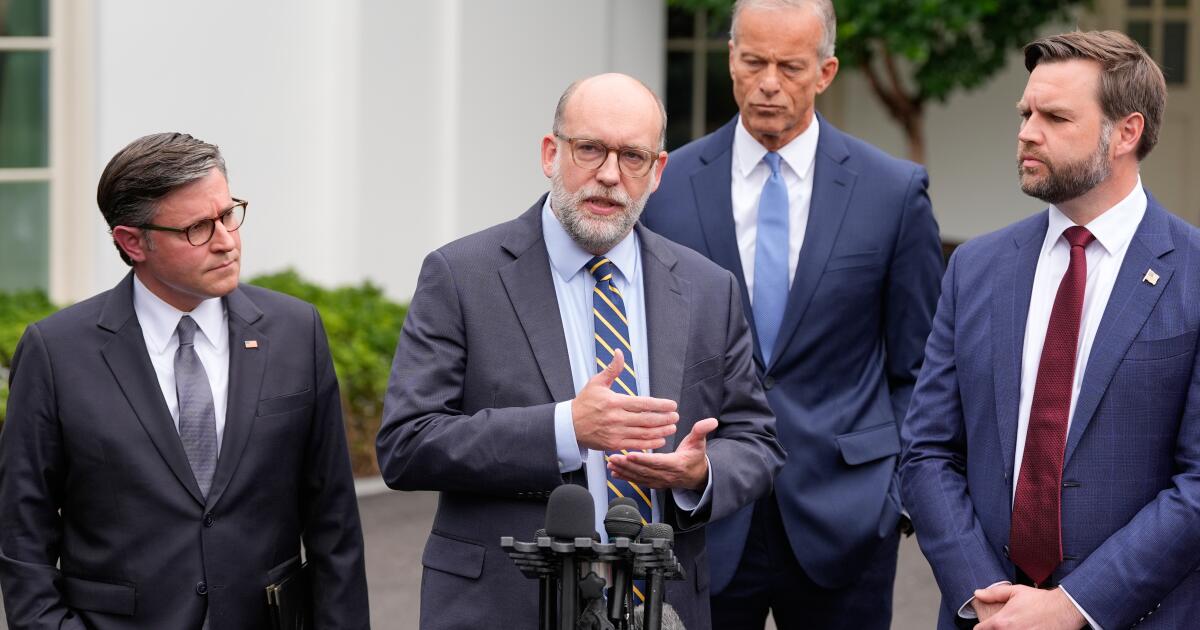
Democrats are pushing for a vote next week on a resolution to curtail President Trump’s authority to conduct strikes in Iran, a move that would reassert Congress’ role in approving the use of military might.

The effort was already underway to force a vote on a war powers resolution, but it gained fresh momentum as the U.S. and Israel bombed Iran beginning early Saturday, an action that Trump referred to in a video shortly afterward as “war.” House Democratic leaders announced this week — before the strikes — that they would begin procedures to force a floor vote on a resolution for Iran.

The resolution directs Trump to terminate the use of armed forces against Iran, unless explicitly authorized by Congress. Presidents of both parties have skirted around war powers resolutions in the past.

Passage is uncertain in the Republican-controlled House and Senate, with GOP members of both chambers expressing initial support for the bombing of Iran. Senate Majority Leader John Thune (R-S.D.) praised the attacks Saturday and said to reporters that the administration “better well make it about getting new leadership and regime change.”

But the effort for a war powers vote has gained the support of at least two House Republicans, Thomas Massie of Kentucky and Warren Davidson of Ohio, making it possible for the measure to pass the House if enough Democrats support the measure and enough members show up for the final vote.

On the Senate side, Republican Rand Paul of Kentucky, who voted for an earlier war powers resolution, said he would “oppose another presidential war.”

House Democratic leader Hakeem Jeffries of New York said Iran “is a bad actor and must be aggressively confronted for its human rights violations, nuclear ambitions, support of terrorism and the threat it poses” to allies in the region.

“However, absent exigent circumstances, the Trump administration must seek authorization for the preemptive use of military force that constitutes an act of war,” Jeffries’ statement said.

Rep. Ro Khanna (D-Fremont), a California Democrat who is co-sponsoring the resolution with Massie, urged lawmakers to reconvene in Washington on Monday to vote, calling the strikes the launch of “an illegal regime change war in Iran with American lives at risk.”

Massie on social media described the attack as “acts of war unauthorized by Congress.”

The resolution faced initial opposition from staunch pro-Israel House Democrats Jared Moskowitz of Florida and Josh Gottheimer of New Jersey.

Senate Democratic leader Chuck Schumer of New York said the Senate should pass the resolution but didn’t outright oppose the strikes. He complained that the administration did not lay out its case to Congress or the public.

Trump would surely veto the resolution if passed, but substantial GOP votes for it could persuade him to limit the attacks on Iran. The Senate passed a procedural vote for a resolution against the strikes in January that culminated in the capture of Venezuelan leader Nicolas Maduro, after which the White House sent Secretary of State Marco Rubio to Capitol Hill to testify to members.

The U.S. Constitution gives Congress the power to declare war, but no president since Franklin D. Roosevelt in World War II has used that formal declaration, instead relying on less expansive authorization to deploy military force. Congress passed the War Powers Resolution in 1973 to slow the Vietnam War.

However, most presidents have sought some level of buy-in and approval from Congress, which approves the budget for the Pentagon.

“The Constitution is clear: The decision to take this nation to war rests with Congress, and launching large-scale military operations — particularly in the absence of an imminent threat to the United States — raises serious legal and constitutional concerns,” Sen. Mark Warner (D-Va.) said in a statement. “Congress must be fully briefed, and the administration must come forward with a clear legal justification.”

Other Senate Democrats, including Tim Kaine of Virginia and Andy Kim of New Jersey, have also urged their chamber to vote on a similar measure to put checks on Trump’s use of military force in Iran.

Rubio notified the so-called Gang of Eight — the top congressional leaders in the House and Senate and on the intelligence committees — of the strikes, the White House said.

Sen. Roger Wicker (R-Miss.), the chair of the Senate Armed Services Committee, defended the strikes as “pivotal and necessary.”

“The President has stated the operation’s goals clearly: thwart permanently the ayatollahs’ desire to create a nuclear weapon, degrade their ballistic missile force and their production capacity, and destroy their naval and terrorism capabilities,” Wicker said in a statement.

Sen. Chris Coons (D-Del.) noted in his statement: “This is not how a democracy goes to war.”

Wasson writes for Bloomberg.

Source link

U.S. And Israel At War With Iran (Updated)

Israel has launched an attack on Iran, striking targets in Tehran.

A U.S. official has confirmed to TWZ that the U.S. is attacking Iran. Including strikes from air and sea, the official said. See updates down below.

Details remain extremely limited at this time, but what we know is that Israel struck targets as part of what it is calling a preemptive strike. Images from the capital show smoke plumes rising in urban areas. In addition, we have seen video from Iraq showing what appear to be low flying cruise missiles or possibly fighter aircraft. Iraq has been the primary access point for the Israeli Air Force in past strikes on Iran.

BREAKING: Israel says it launched a preemptive strike against Iran and declares a nationwide state of emergency. Reports of explosions across the Iranian capital, Tehran. pic.twitter.com/mRXNHj3Yy8

— Ariel Oseran أريئل أوسيران (@ariel_oseran) February 28, 2026

Some on the ground are saying the strikes targeted Iranian leadership installations in the city, particularly those used by Supreme Leader Ali Khamenei, although we cannot confirm that at this time. Geolocation info will soon be coming that should shed light on the target set.

The IDF posted the following on X, stating:

The State of Israel has launched a preemptive attack against Iran. Israel’s Minister of Defense, Israel Katz, declares a special and immediate state of emergency throughout the state The State of Israel has initiated a preemptive attack against Iran to remove threats directed against the State of Israel. As a result, missile and drone launches against the State of Israel and its civilian population are expected in the very near term. Therefore, pursuant to his authority under the Civil Defense Law, Minister of Defense Israel Katz has now signed a special order mandating the imposition of a special state of emergency in the Home Front throughout the State of Israel, effective immediately. The instructions of the Home Front Command and the authorities must be followed, and individuals must remain in protected areas.

U.S. Central Command has declined to comment on the strikes in response to our direct inquiry to them.

This is a rapidly developing situation and we are going into rolling coverage on it below. Newest updates will be posted on top.

UPDATE: 5:45 AM EST—

It appears that Iran attacked U.S.-related sites in Bahrain, UAE, Qatar, Iraq and Kuwait. We are also hearing Saudi Arabia, but that is not confirmed. We are now getting responses from these countries condemning the attacks and some saying they reserve to right to respond. This is exactly how this conflict would quickly widen, as we have discussed for years, and most recently in this in-depth feature.

🚨Statement:Bahrain confirms attacks on sites within the Kingdom launched from outside its territory,a blatant violation of sovereignty. Authorities activated emergency plans. We condemn the attacks & reserves the right to respond in coordination w/ allies https://t.co/Ht7DjE8ZvD

— Abdulla R. Al-Khalifa (@AbdullaRAK) February 28, 2026

الإمارات تعلن التصدي “بنجاح” لعدد من الصواريخ الإيرانية على الدولة

أعلنت وزارة الدفاع تعرض دولة الإمارات العربية المتحدة اليوم لهجوم سافر بصواريخ باليستية إيرانية، حيث تعاملت معها الدفاعات الجوية الإماراتية بكفاءة عالية وتم التصدي بنجاح لعدد من الصواريخ.

كما تعاملت الأجهزة… pic.twitter.com/R0WkOLHQ8k

— وزارة الدفاع |MOD UAE (@modgovae) February 28, 2026

MIM-104 “Patriot” Surface-to-Air Missile Batteries with the U.S. Army attempting to down Iranian ballistic missiles over Erbil in Kurdistan, Northern Iraq. pic.twitter.com/NmY9xe0IxA

— OSINTdefender (@sentdefender) February 28, 2026

We are seeing video of flaming missile bodies on the ground in Syria and other locales. Whether they are a part of the ballistic missile or the interceptor isn’t clear in most cases.

One of the interceptor missiles fell a short while ago in the city of Inkhil in the countryside of #Daraa. The skies over Daraa Governorate are still witnessing continuous aircraft activity as a result of the war between #Iran and the United States. pic.twitter.com/OHWvL3YZvr

— Mohammad Alasakra (@mohammed_asakra) February 28, 2026

A major set of strikes appear to have done significant damage to a mountainside facility in eastern Iran that that is related to IRGC ballistic missile capabilities. Destroying the entrances to the missile caves is critical to lock as many of the weapons inside.

UPDATE: 5:15AM EST—

Fox News reports a U.S. official says American forces are not targeting regime targets. Instead they are going after military, industrial, especially missile-related ones. Israel is going after the regime.

US official: Israel is targeting Iranian leadership. The US is targeting military targets and ballistic missile sites that pose an “imminent threat.” The US military is not targeting Iran’s leadership.

— Jennifer Griffin (@JenGriffinFNC) February 28, 2026

IDF reportedly is now stating it is going after the top of the regime:

🚨🚨Israeli officials say the IDF has conducted strikes against Iranian senior commanders and political leaders including Supreme Leader Khamenei and President Pezeshkian

— Barak Ravid (@BarakRavid) February 28, 2026

IDF has warned Iranians near military-related industry in Iran:

“Urgent Warning to All Individuals Located Inside or Near Military Industrial Factories and Military Infrastructure Across Iran. You are in proximity to weapons and facilities that are dangerous. Dear Citizens, for the sake of your safety and health, we kindly request that you immediately evacuate these areas and remain outside them until a new announcement is issued. Your presence in these locations puts your life at risk.”

‼️هشدار فوری به کلیه افرادی که در داخل یا حوالی کارخانجات صنایع نظامی و زیر ساخت های نظامی در سراسر کشور ایران قرار دارند.
شما در مجاورت با تسلیحات و تاسیساتی هستید که خطرناک می باشند.
شهروندان گرامی، بمنظور امنیت و سلامت شما خواهشمندیم فورا از این اماکن خارج شده و تا انتشار… pic.twitter.com/rPrS97Dm4J

— ارتش دفاعی اسرائیل | IDF Farsi (@IDFFarsi) February 28, 2026

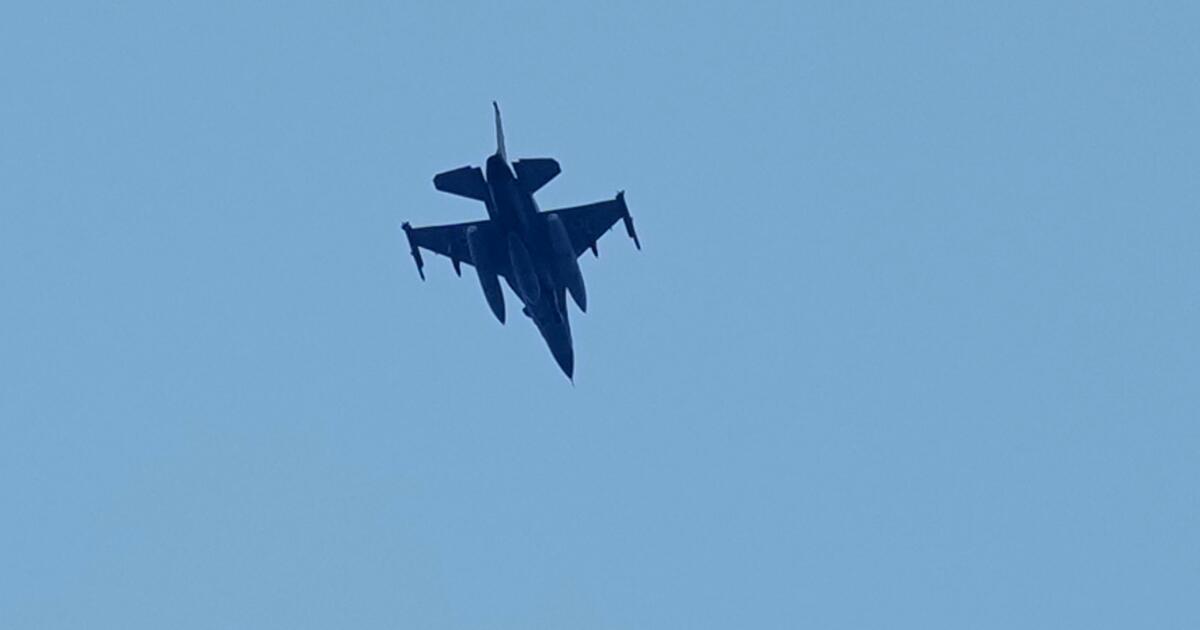
Video shows F-15C Bazs taking off on a sortie for today’s operation. It is armed with AIM-7 Sparrows, still not uncommon for IAFs F-15A-Ds. Still, a bit odd for the general mission. It also does not have external tanks. Possibly on domestic counter-drone duty, if indeed the video depicts what it claims.

UPDATE: 5AM EST —

From an IDF official to TWZ: “Confirm on attacks in Bahrain and Qatar. We are being striked and missile attack all over Israel. We are being informed that Bahrain Qatar and Jordan are being attacked as well.”

Videos show intercept occurring over Dubai:

UPDATE: 4:50 AM EST—

We are seeing a sizable impact from an Iranian missile on the 5th Fleet HQ in Bahrain.

New footage appears to show smoke rising from a secured compound in Bahrain with visible perimeter walls and communications infrastructure. The location appears consistent with a military facility in the Juffair area. pic.twitter.com/sgOHekkzF4

— WarMonitor (@TheWarMonitor) February 28, 2026

We are also seeing videos claiming to show smoke rising in the UAE.

A number of the USAF tankers that were in Tel Aviv have taken off:

U.S. Air Force aerial refueling tankers, staged at Tel Aviv’s Ben Gurion International Airport, have sortied.

They will likely support ongoing US/Israeli strike operations on Iran. pic.twitter.com/a4Z9Emoni7

— OSINTtechnical (@Osinttechnical) February 28, 2026

A video that shows an armada of fighters over Syria from this morning has surfaced:

UPDATE: 4:26 AM EST—

Iran is striking back across the Middle East, including Israel and U.S. interests along the Persian Gulf:

UPDATE: 4:10AM EST—

Iran appears (still unconfirmed) to have struck the Navy’s facility in Bahrain, the epicenter of the 5th Fleet.

Iran just attacked the U.S. Navy’s Naval Support Activity (NSA) Bahrain, with explosions and a large smoke plume reported within Mina Salman port. pic.twitter.com/eqqu3WZUvt

— OSINTtechnical (@Osinttechnical) February 28, 2026

A statement from the IDF gives a better overview of what the campaign seeks to accomplish:

The IDF Spokesperson’s Unit announces that the IDF and the US Armed Forces have launched a broad and joint operation to thoroughly degrade the Iranian terrorist regime and to remove existential threats to the State of Israel over time.

The strike targeted dozens of military targets and was carried out as part of a broad, coordinated, and joint operation against the regime.

The Iranian regime has not abandoned its plan to destroy Israel. In recent months, and despite the severe blow it sustained during Operation “Rising Lion”,  the IDF identified that the regime continued efforts to advance production, fortify, and conceal its nuclear program, alongside rehabilitating its missile production processes.

In addition, the regime has continued financing, training, and arming its proxies positioned on Israel’s borders. These actions constitute an existential threat to the State of Israel and pose a danger to the Middle East and the world as a whole.

In the months preceding the strike, close and joint planning was conducted between the IDF and the U.S. military, enabling the execution of the broad strike in full synchronization and coordination between the two militaries. The IDF, across all its branches, carried out a meticulous and long-term preparation process for this operation — both in defensive systems and in various offensive plans.

Video claiming to show an TLAM over Tehran:

UPDATE: 4AM EST—

Netanyahu has now made an address, it states in part:

My brothers and sisters, citizens of Israel, just an hour ago, Israel and the United States embarked on an operation to remove the existential threat posed by the terrorist regime in Iran. I thank our great friend, President Donald Trump, for his historic leadership. For 47 years, the Ayatollahs’ regime has chanted “Death to Israel,” “Death to America.” It has spilled our blood, murdered many Americans, and massacred its own people. This murderous terrorist regime must not be allowed to arm itself with nuclear weapons that would enable it to threaten all of humanity.

Our joint operation will create the conditions for the brave Iranian people to take their fate into their own hands. The time has come for all parts of the Iranian people—the Persians, Kurds, Azeris, Baloch, and Ahwazis—to cast off the yoke of tyranny and bring freedom and peace-loving values to Iran.

I call on you, citizens of Israel, to heed the instructions of the Home Front Command. In the coming days, during Operation “Lion’s Roar,” we will all be called upon to show patience and strength of spirit. Together we will stand, together we will fight, and together we will ensure the eternity of Israel.

אחיי ואחיותיי אזרחי ישראל, לפני שעה קלה יצאנו ישראל וארה״ב למבצע להסרת האיום הקיומי מצד משטר הטרור באיראן.

אני מודה לידידינו הגדול הנשיא דונלד טראמפ על מנהיגותו ההיסטורית.

במשך 47 שנים קורא משטר האייתוללות ״מוות לישראל״, ״מוות לאמריקה״. הוא הקיז את דמינו, רצח אמריקנים רבים וטבח… pic.twitter.com/itTF5b4jB4

— Benjamin Netanyahu – בנימין נתניהו (@netanyahu) February 28, 2026

Right on time, the Houthis are now saying they are closing the Bab El Mandeb Strait that connects the Red Sea with the Gulf of Aden.

🚨 BREAKING: Houthi movement announces the closure of the Bab el-Mandeb Strait in the Red Sea and warns that they will target U.S. and Israeli ships.

— The Middle East (@A_M_R_M1) February 28, 2026

U.S. Mission in UAE and the Embassy in Jordan have also sent shelter-in-place alerts:

Subject: Security Alert – Shelter-In-Place – U.S. Mission UAE, Feb. 28, 2026

Location: UAE

Event: Due to regional hostilities, the U.S. Embassy in Abu Dhabi and the U.S. Consulate in Dubai have instructed staff to shelter-in-place (i.e., take cover). We recommend all Americans… pic.twitter.com/UurG3PY6Ol

— US Mission to UAE (@USAinUAE) February 28, 2026

The U.S. Embassy in Jordan is implementing a shelter-in-place for all personnel. We recommend all Americans do the same until further notice.
 
Actions to Take:
•Find a secure location within your residence or another safe building. Have a supply of food, water, medications, and… pic.twitter.com/lC7Tneb4b8

— U.S. Embassy Amman (@USEmbassyJordan) February 28, 2026

One of Israel’s prized submarines, which alas carry the country’s undeclared second strike nuclear deterrent, was seen booking it out of Haifa:

Hezbollah in Lebanon also got struck this morning.

Hezbollah infrastructure, including tunnel shafts and rocket launchers, were targeted in a wave of Israeli airstrikes across southern Lebanon this morning, the IDF says.

According to the military, Hezbollah was recently working to restore its military capabilities at the… pic.twitter.com/6XkF1hfP63

— Emanuel (Mannie) Fabian (@manniefabian) February 28, 2026

A prayer app that is popular in Iran has been hacked:

An Iranian app for tracking Muslim prayer times has been hacked.

Messages are encouraging armed forces to defect and “protect your compatriots. They will protect you in return.”

Another message says, “Help has arrived.”

Another, “It’s the time for reckoning.”

Via @Vahid pic.twitter.com/qoddvmE8W0

— Khosro K Isfahani (@KhosroIsfahani) February 28, 2026

An unexploded Tomahawk warhead is seen on the ground in Iraq:

UPDATE: 3:39 AM EST—

Pentagon has named this campaign Operation Epic Fury.

OPERATION EPIC FURY 🇺🇸

— Department of War 🇺🇸 (@DeptofWar) February 28, 2026

Reports are coming in that ballistic missiles hit Haifa in Israel:

BREAKING; Reports that Iranian ballistic missile hit Haifa.

At least 2 missiles were launched and 1 impacted and another was intercepted. pic.twitter.com/ABvIhKWzuq

— Global Surveillance (@Globalsurv) February 28, 2026

Air travel in the region is highly disrupted, with flights trying to figure out how to reroute around the conflict zone:

The IRGC has put out a statement:

“In the name of God, the Crusher of the Tyrants: In response to the hostile and criminal enemy’s aggression against the Islamic Republic of Iran, the first wave of extensive missile and drone attacks by the Islamic Republic of Iran towards the occupied territories has begun.”

Iran’s Ministry of Interior condemns the strikes and states:

“It brings to the attention of the great people of Islamic Iran that the criminal enemy, once again violating all international laws and during the negotiations, has again attacked our beloved homeland.”

UPDATE: 3:26 AM EST—

The IDF says a barrage of missiles is inboard from Iran.

❗️An additional barrage of missiles was launched toward Israel.

The Aerial Defense Array is currently identifying and intercepting threats.

— Israel Defense Forces (@IDF) February 28, 2026

Internet traffic in Iran has plummeted. Meanwhile Iranian state news says checkpoints are being set up and not to post any images or videos of targeted areas. It also warns of extreme instability in the coming hours.

⚠️ Confirmed: Network data show #Iran is now in the midst of a near-total internet blackout with national connectivity at 4% or ordinary levels. The incident comes amid US and Israeli combat operations and matches measures used during last year’s war with Israel. pic.twitter.com/1XunOr4Q19

— NetBlocks (@netblocks) February 28, 2026

UPDATE: 3:01 AM EST—

There are reports that major Iranian Navy/IRGC Navy bases on the Persian Gulf and Arabian Sea have been hit. This would make perfect sense to preempt a mining operation or attempted closure of the strait.

Reports that US forces have struck the Iranian IRGC Naval base at Asaluyeh this morning.

Explosions were also reported in the vicinity of the port at Chabahar. pic.twitter.com/OUcKGNFLEq

— OSINTtechnical (@Osinttechnical) February 28, 2026

We are also getting more indications of what was hit in Tehran. Regime, nuclear, and security apparatus targets.

From unconfirmed reports, it appears that the initial strikes have targeted leadership (Office of the Supreme Leader, Presidency), repression (Judiciary), military (MODAFL, missiles), nuclear (AEOI, potentially residual facilities)

— Nicole Grajewski (@NicoleGrajewski) February 28, 2026

Now the U.S. Embassy in Bahrain is sending a shelter-in-place alert. Bahrain is a major center of gravitas for the U.S. military and home of the 5th Fleet.

Message for U.S. Citizens

Subject: Bahrain Security Alert – Shelter-In-Place
Month DAY, 2026

Location: Bahrain

Event: The U.S. Embassy in Bahrain is implementing a shelter-in-place for all personnel. We recommend all Americans do the same until further notice.

Actions to… pic.twitter.com/MGjgxsS711

— U.S. Embassy Manama (@USEmbassyManama) February 28, 2026

Images are emerging showing spent boosters of Israel’s air-launched ballistic missiles laying in fields in Eastern Iraq. This is customary for IAF attacks on Iran at this point, with these weapons largely used to destroy air defenses and hit critical command and control related targets deep in Iran without putting manned aircraft at risk. We were first to report on these launches during Israel’s first direct strikes on Iran, which you can read about here. You can also read more about the latest of this unique class of weapon in the IAF’s inventory here.

Israeli KC-707 supposedly spotted refueling fighters over Syria:

Crown Prince Reza Pahlavi, whose fatally ill father, Mohammad Reza Pahlavi, fled Iran ahead of the 1979 Islamic revolution, is now living in exile in the U.S. He has been instrumental in urging Iranians to protest the regime.

In a statement on X, Pahlavi urged Iranian military, police and security forces to take action against the regime to protect the people.

“You have sworn an oath to protect Iran and the Iranian people—not the Islamic Republic and its leaders. Your duty is to defend the people, not a regime that has taken our homeland hostage through repression and crime. Join the people and help bring about a stable and secure transition. Otherwise, you will go down with Khamenei’s sinking ship and his regime.”

هم‌میهنان عزیزم،

لحظاتی سرنوشت‌ساز پیشِ روی ماست.

کمکی که رئیس‌جمهور ایالات متحده به مردم شجاع ایران وعده داده بود، اکنون رسیده است. این یک مداخله بشردوستانه است؛ و هدف آن، جمهوری اسلامی، دستگاه سرکوب و ماشین کشتار آن است؛ نه کشور و ملت بزرگ ایران.

اما، با وجود رسیدن این کمک،… pic.twitter.com/kRiamgeCpS

— Reza Pahlavi (@PahlaviReza) February 28, 2026

UPDATE: 2:45 AM EST—

Trump has addressed what he calls a “major combat operation inside Iran.” He lists Iran’s history of nefarious operations against the U.S. and others for decades and says he “isn’t going to put up with it anymore.” Trump says Iran will never have nuclear weapons and he will destroy their missiles and their missile industries, annihilate their Navy, and they will no longer be able to support proxies across the Middle East. He says there may be casualties as part of the operation. Trump tells Iranian troops and security forces that they will get immunity if they lay down their arms, or the alternative is they “will face certain death.” He tells the Iranian people to stay home as “bombs will be dropping everywhere” and the government will be theirs for the taking.

UPDATE: 2:27AM EST—

Israel’s N12 is reporting that the operation name is “Roar Of The Lion.”

שם המבצע באיראן: “שאגת הארי”

— החדשות – N12 (@N12News) February 28, 2026

N12 also claims a source said the Supreme Leader is in a secure hideout. Reuters also reported this.

המנהיג העליון של איראן נלקח למקום מסתור. גורם ישראלי: אנחנו הולכים על הכול, תכננו את זה במשך חודשים

— החדשות – N12 (@N12News) February 28, 2026

Strikes are occurring at sites throughout Iran. While these could be targeting time sensitive targets, many of these strikes would be used to prepare the battlefield for aircraft operations over Iran. In other words, degrading and destroying what’s left of Iran’s air defenses so strike aircraft can more safely operate over the country. These operations would likely occur tonight under the cover of darkness, where direct attacks on targets can be made. So tonight will look nothing like what we are seeing today.

UPDATE: 2:15AM EST—

A U.S. official has confirmed to TWZ that the U.S. is attacking Iran.

Meanwhile the Mossad is asking Iranians to “return Iran to its glorious days.”

As Israel launches strikes on Iran, the Mossad spy agency on its official Persian-language Telegram channel calls on Iranians to help “return Iran to its glorious days.”

“Our Iranian brothers and sisters, you are not alone! We have launched a highly secure and dedicated Telegram… pic.twitter.com/jnL937YR8e

— Emanuel (Mannie) Fabian (@manniefabian) February 28, 2026

We are getting unconfirmed reports that Israel has assassinated Iran’s defense minister.

UPDATE: 1:55AM EST—

Israel is preparing for a reprisal strike:

In the last few minutes, sirens were sounded all throughout Israel, with an advance instruction alert directly to cellular devices to stay within proximity to protected spaces. This is a proactive alert to prepare the public for the possibility of missiles being launched toward the State of Israel. The IDF emphasizes that the public is requested to stay in proximity to protected spaces.

In the last few minutes, sirens were sounded all throughout Israel, with an advance instruction alert directly to cellular devices to stay within proximity to protected spaces.

This is a proactive alert to prepare the public for the possibility of missiles being launched toward…

— Israel Defense Forces (@IDF) February 28, 2026

Flights are currently diverting away from the region and Iran has closed its airspace.

It appears USAF transport aircraft are trying to leave the ground prior to any kind of reprisal strikes. One ACARS message told a C-17 crew to remain on the ground in Jordan for as little time as possible not long before the strikes.

It’s looking like a U.S. strike on Iran could go down at any moment

A U.S. Air Force C-17 Globemaster III strategic airlifter with identification number 06-6166 en route to King Abdullah II Air Base in Jordan has been instructed to keep its ground time to an absolute minimum.… pic.twitter.com/1GIXRN14jt

— Egypt’s Intel Observer (@EGYOSINT) February 28, 2026

The daytime nature of the attacks would point to time sensitive targets being hit.

CNN is reporting that the U.S. was at least in coordination with Israel on the strikes, but that is not surprising at all even if Israel acted unilaterally in the kinetic action itself. There had been reports that the Trump administration favored Israel striking first so that it could then jump in once Iran responded with its own strikes.

A shelter-in-place order has been broadcasted in Qatar, home to the U.S. military’s largest installation in the region and what is presumed (and previously demonstrated) as the top U.S. target of Iran.

Message for U.S. Citizens:

The U.S. Embassy in Qatar is implementing a shelter-in-place for all personnel. We recommend all Americans do the same until further notice. 

Actions to Take:

– Find a secure location within your residence or another safe building. Have a supply of… pic.twitter.com/ENogjpfK5r

— U.S. Embassy in Qatar (@USEmbassyDoha) February 28, 2026

An Israel KC-707 was seen departing today, likely to support the strike operation. Minister of Defense Yoav Gallant posted simply “Good luck” with U.S. and Israeli flags on his X account along with an image of an IAF F-15D and him talking to crews.

Tyler’s passion is the study of military technology, strategy, and foreign policy and he has fostered a dominant voice on those topics in the defense media space. He was the creator of the hugely popular defense site Foxtrot Alpha before developing The War Zone.


Howard is a Senior Staff Writer for The War Zone, and a former Senior Managing Editor for Military Times. Prior to this, he covered military affairs for the Tampa Bay Times as a Senior Writer. Howard’s work has appeared in various publications including Yahoo News, RealClearDefense, and Air Force Times.


Source link

Column: Fall of Kabul may not mean end of U.S. global power

Amid the chaos in Kabul, politicians and pundits have declared the Taliban’s victory in Afghanistan a defeat from which U.S. influence may never recover.

“Biden’s credibility is now shot,” wrote Gideon Rachman, chief oracle of Britain’s Financial Times.

“A grave blow to America’s standing,” warned the Economist.

But take a deep breath and remember some history.

When South Vietnam collapsed after a war that involved four times as many U.S. troops, many drew the same conclusion: The age of U.S. global power was over.

Less than 15 years later, the Berlin Wall came down, the Cold War began to end, and the United States soon stood as the world’s only superpower.

The lesson: A debacle like the defeat in Kabul — or the one in Saigon two generations earlier — doesn’t always prevent a powerful country from marshaling its resources and succeeding.

I’m not dismissing the tragedy that has befallen the Afghans or the damage that U.S. credibility has suffered. When President Biden told a news conference that he had “seen no questioning of our credibility from allies,” he sounded as if he was in denial — or, perhaps worse, out of touch.

No questioning? How about the question from Tobias Ellwood, chairman of the British Parliament’s defense committee: “Whatever happened to ‘America is back’?”

Or the complaint from Armin Laschet, the German conservative who could be his country’s leader after elections next month: “The greatest debacle NATO has experienced since its founding.”

Whether he likes it or not, Biden has repair work to do.

The first step, already underway, is making sure the endgame in Kabul doesn’t get any worse.

That means keeping U.S. troops on the ground until every American is out, as Biden has promised. It also requires an energetic effort to evacuate Afghans who worked with the U.S. government and other institutions, even if that requires risking the lives of some American troops. Those Afghans trusted us; if we abandon them, it will be a long time before we can credibly ask the same of anyone else.

And, of course, the administration needs to prevent Al Qaeda and other terrorist groups from replanting themselves in Taliban-ruled Afghanistan. If the United States fails at that — the original reason we invaded the country almost 20 years ago — Biden’s decision to withdraw will justly be judged a fiasco.

There’s repair work to do beyond Afghanistan, too.

“We’ve got to show that it would be wrong to see American foreign policy through the lens of Afghanistan,” Richard N. Haass, president of the nonpartisan Council on Foreign Relations and a former top State Department official, told me.

The United States has more important interests that need attention and allies that need reassurance, he said.

“The most important thing is to deter our major foes,” he said, referring to China, Russia and Iran.

“This is a moment to strengthen forces in Europe, mount more freedom of navigation operations [by the U.S. Navy] in the South China Sea,” he said. “This is a good time to say we’re serious about our commitment to Taiwan,” which China periodically threatens.

Biden took a step in that direction in his recent interview with ABC’s George Stephanopoulos, listing Taiwan along with South Korea and Japan as places where the U.S. “would respond” to an attack.

If anything, Haass and other foreign policy veterans say, the questions about American credibility are likely to make Biden react more strongly to the next few challenges overseas.

“The most intriguing question is what effect this episode has on Biden’s thinking,” suggested Aaron David Miller of the Carnegie Endowment for International Peace. “Will he think: ‘I’ve got to be tougher with the Iranians now? Do I have to signal to a country like Taiwan that I’m prepared to protect American interests there?’”

But the notion that American influence has been fatally damaged is overblown, he argued.

“There have been many other instances in which U.S. credibility has been diminished, but our phone continues to ring,” Miller said.

Biden and his aides already know most of this. The premises of his foreign policy — reviving U.S. domestic strength, revitalizing U.S. alliances, and focusing on vital interests like China and Russia — provide a foundation for recovery.

“My dad used to have an expression: If everything is equally important to you, nothing is important to you,” the president said last week. “We should be focusing on where the threat is the greatest.”

The test Biden faces now is whether he can execute that strategy — and show that he’s credible where it matters most — more successfully than in his botched withdrawal from an unwinnable war.

Source link

Russia-Ukraine war: List of key events, day 1,465 | Russia-Ukraine war News

These are the key developments from day 1,465 of Russia’s war on Ukraine.

Here is where things stand on Saturday, February 28:

Fighting

  • Russia struck port infrastructure overnight in Ukraine’s southern Odesa region, igniting fires and damaging equipment, warehouses and food containers, Deputy Prime Minister Oleksii Kuleba said.
  • A localised truce has been established near the Russian-controlled Zaporizhzhia nuclear power plant to allow repairs to power lines, Russian news agencies report, citing the head of Russia’s state nuclear corporation.
  • Ukraine shot down a drone near the border with Romania during a Russian attack on port infrastructure on the Danube River, Romania’s Ministry of National Defence said.
  • Romania said it scrambled fighter jets and that the drone was brought down 100 metres (110 yards) from the Romanian village of Chilia Veche, on the opposite side of the Danube River to Ukraine.
  • Russian forces have taken control of the village of Biliakivka in the Dnipropetrovsk region of eastern Ukraine, the Russian RIA Novosti state news agency reported, citing the Ministry of Defence.
  • Ukraine’s military said it struck an oil depot in the Russian-occupied Luhansk region overnight, causing a large fire at the facility.
  • Firefighters were trying to bring a fire at an oil refinery in Russia’s southern Krasnodar region under control, local officials said early Saturday.
  • Ukraine is considering forming partnerships with allies to build air defences capable of intercepting ballistic missiles and to address a critical shortage of munitions for United States-made Patriot systems, the country’s defence minister said.
  • Ghana’s Foreign Minister Samuel Okudzeto Ablakwa said 55 Ghanaians had been killed fighting in Ukraine, and that some 272 citizens of the African country are believed to have been lured to fight for Russia in Ukraine since 2022.
multi-storey residential building destroyed in the course of Russia-Ukraine conflict in the town of Severodonetsk in the Luhansk region
A multistorey residential building was destroyed in the town of Severodonetsk in the Russian-controlled Luhansk region, Ukraine [File: Alexander Ermochenko/Reuters]

Regional security

  • The Swedish military intercepted a suspected Russian drone off the country’s south coast while a French aircraft carrier was docked in Malmo, officials said.
  • Kremlin spokesman Dmitry Peskov said it was “absurd” to suggest the drone that was electronically disabled near a French aircraft carrier in Sweden earlier this week was Russian.
  • The European Commission said Croatia is assessing whether it can legally import seaborne Russian crude to supply Hungary and Slovakia through its Adria pipeline.
  • The move by Croatia follows after oil supplies via the Ukrainian section of the Druzhba pipeline to Hungary and Slovakia – the only European Union countries still importing Russian oil – were halted last month due to damage Ukraine blamed on a Russian drone strike.
  • In a video posted on Facebook, Hungarian Prime Minister Viktor Orban urged Ukraine’s President Volodymyr Zelenskyy to grant Hungarian and Slovak inspectors access to repair and restart the Druzhba pipeline.
A photo taken on May 5, 2022 shows the receiver station of the Druzhba pipeline of petroleum between Hungary and Russia with a memorial plate of its construction at the Duna (Danube) [File: Attila Kisbenedek/ AFP}
The receiver station of the Druzhba pipeline of petroleum between Hungary and Russia, with a memorial plate of its construction at the Danube Refinery of the Hungarian MOL gas company [File: Attila Kisbenedek/AFP]
  • President Zelenskyy said he had not been offered nuclear weapons by the United Kingdom or France, but added he would accept such an offer “with pleasure”, after Russia’s Foreign Intelligence Service accused both countries of working to provide Kyiv with a nuclear bomb.
  • Poland’s parliament approved a law to implement the EU’s Security Action for Europe (SAFE) defence procurement programme aimed at boosting member states’ military readiness.

Economy

  • The International Monetary Fund said its executive board had approved an $8.1bn, four-year loan for Ukraine, anchoring a broader $136.5bn international support package. The World Bank estimates Ukraine will need $588bn for post-war reconstruction.
  • Economists say Russia is grappling with heavy state defence spending alongside deepening structural challenges, including labour shortages and high inflation.
  • Ukraine’s major steelmaker ArcelorMittal Kryvyi Rih said it is closing another division due to a worsening energy crisis caused by continued Russian attacks on Ukraine’s power system.

Peace talks

  • Bilateral talks between US and Ukrainian officials in Geneva concluded on Thursday, with Kyiv saying preparations are under way for the next round of negotiations aimed at ending the war.
  • Ukraine’s chief negotiator, Rustem Umerov, said on X that discussions were held in two formats: separate meetings with the United States and a trilateral session involving the US and Switzerland.
  • Umerov said participants spoke with President Zelenskyy and were working to ensure the next three-sided meeting with Russia on a settlement is “as substantive as possible”.

Politics and diplomacy

  • Former British Prime Minister Rishi Sunak has begun advising the Ukrainian government on economic renewal as Kyiv works to rebuild its energy sector before next winter.
  • Finland, Ukraine and the Czech Republic will skip the opening ceremony of the Milano Cortina Paralympics in protest against the inclusion of Russian athletes competing under their own flag while the war in Ukraine is ongoing.
  • German Chancellor Friedrich Merz said “diplomacy cannot succeed at the moment” with Russia, and that greater emphasis should be placed on defending Ukraine from Moscow’s aggression.

Source link

Israel’s Fighter Force Stands To Be Far More Effective With Full USAF Tanker Support In A War With Iran

The U.S. Air Force now has at least 14 aerial refueling tankers forward-deployed in Israel ahead of potential strikes on Iran. Beyond supporting U.S. aircraft, an equally important role the tankers — and those spread across the region — could play is refueling Israeli fighters joining in the fight. The Israeli Air Force’s (IAF) entire tanker fleet consists of just seven nearly antique KC-707s, which imposes inherent limits on range, loiter time, sortie rates, loadout options, and other aspects of tactical air operations. Giving the IAF the full tanking resources of the U.S. would unlock its full combat potential.

Nine KC-46s and five KC-135s have arrived at Ben Gurion Airport since the start of this week. Ben Gurion is Israel’s main international airport, and is situated just to the southeast of Tel Aviv, roughly in the center of the country.

At least nine American refueling tankers arrived at Israel’s Ben Gurion Airport overnight as part of the United States’s massive buildup of military forces in the Middle East.

In all, 14 US refuelers arrived at Ben Gurion Airport in the past week. pic.twitter.com/POICMrC8DT

— Emanuel (Mannie) Fabian (@manniefabian) February 27, 2026

At least nine US Air Force refueling tankers have arrived at Israel’s Ben Gurion Airport as part of the US’s massive buildup of military forces in the Middle East. Jack Guez, AFP. pic.twitter.com/qNFy677lnE

— Benjamin Alvarez (@BenjAlvarez1) February 27, 2026

At least 11 U.S. Air Force F-22 Raptors are also now forward-deployed to the IAF’s Ovda Air Base in the southern tip of Israel. The F-22s had flown there after making a stop at RAF Lakenheath in the United Kingdom. A 12th Raptor reportedly had to return to Lakenheath due to a technical issue, but whether it may now have made its way to Israel is unclear.

Intersting choice.

USAF F-22 fighter jets redeployed from the UK will be stationed at the Ovda Air Base in southern Israel, per reports.

H/t to @EISNspotter as I believe that he broke the news first.

At this moment, we know about the redeployment of 11 F-22s (one from the… https://t.co/v1MKiiDXHr pic.twitter.com/4KOFvJl6yd

— Status-6 (War & Military News) (@Archer83Able) February 24, 2026

The tankers at Ben Gurion and the F-22s at Ovda are relatively small parts of the massive buildup of U.S. military forces across the Middle East in recent weeks. The large influx of U.S. airpower has caused crowding at other available bases in the region that sit outside the range of Iran’s short-range ballistic missiles and other standoff weaponry, which clearly played a part in deciding to utilize Israeli facilities for the deployment of additional aircraft. Israel would also be under threat of heavy retaliation in the event of any new U.S. operation targeting Iran. U.S. aircraft in Israel would be well-positioned to help provide more immediate defense against incoming Iranian threats, but those assets could also contribute heavily to strikes on Iran.

At the same time, as TWZ has previously noted, there are very strong signs that Israeli forces will be fully integrated into the defensive and offensive components of any potential new U.S. operation against Iran. The KC-46s and KC-135s now at Ben Gurion are a tanker force twice as big as what the IAF has in its inventory today. Each KC-46 also carries more fuel to offload to receivers than a KC-707 or a KC-135. All of this could offer a major boost in aerial refueling capacity, and the operational benefits that come along with that, to Israeli forces.

One of the IAF’s KC-707s seen refueling an F-15. IAF

From the very start of what became the 12 Day War between Israel and Iran, TWZ pointed out that committing U.S. tankers to the fight could have massive force multiplying impacts for the IAF. In the weeks that followed, there were reports that the United States had done just this, but clandestinely and to a very limited degree, to help sustain the Israeli air campaign. The U.S. Air Force subsequently denied that this had been the case, after which we delved deep into what Israel would have otherwise had to have done to keep up the operational tempo.

As we wrote:

“Fitting as much external fuel on the fighters – the IAF’s F-15 fleets and F-16Is are all notably fitted with conformal fuel tanks and have the ability to carry drop tanks – was clearly necessary. Even dropping external tanks once they are empty to maximize range appears to have been part of the plan during the initial high-volume strikes. While drop tanks are expendable, they are not cheap and are usually retained unless performance has to be regained due to enemy threats or an in-flight emergency occurs. Dropping them to maximize an aircraft’s range is also an established tactic, but not a very sustainable one over the long term. It’s also one that is not needed if tanker support is readily available, nor is equipping the jets with maximum external fuel in the first place, in many circumstances.”

“Flying very carefully planned flight profiles to squeeze every bit of efficiency out of the range of IAF tactical jets was also clearly a tactic employed, although it leaves very little margin for error or combat contingencies. In addition, we know that Israel’s F-35Is have been tweaked to provide extra range. We don’t know exactly what this entails, and it could be a cocktail of measures, from software tweaks to internal or external fuel tanks. Regardless, it was reported that many IAF fighters landed on fumes after their initial sorties.”

“Regardless, maximizing Israel’s fighter force of close to 300 aircraft (total inventory, not what is actually available at any given time) in the opening waves of the war with just seven tankers may have been a feat that can be explained by careful planning, drop tanks, and the use of long-range standoff weaponry, at least early on. As the war continued, the magnitude of the sorties may have dropped, but the geographical depth and power of their strikes increased. These operations were sustained for nearly two weeks.”

“During the conflict, TWZ discussed how, at a certain point, Israel would have to drastically reduce its cadence of operations or wrap up the war. If the U.S. had not struck Fordow with B-2s, it’s possible the war would not have ended until the IDF was able to deal with that very hardened target, which would have likely required a ground operation very deep into a highly-defended area of Iran. Strikes would have eventually slowed as the IAF’s sortie rates degraded, and especially those of its overworked and geriatric tankers.”

As an aside, Israeli Ambassador to the United States Yechiel Leiter offered what looks to be the first official confirmation that range-extending fuel tanks for the F-35I are in service in an interview earlier this month. “We developed fuel tanks that extend the aircraft’s range without compromising stealth,” Leiter told the Israel Hayom newspaper.

Questions remain about these tanks, including whether they are internally or externally mounted. To date, no pictures have emerged that definitively show them fitted to an F-35I.

An Israeli F-35I with a so-called ‘beast mode’ loadout, including ordnance on pylons under the wings. IAF

Regardless, truly robust tanker support would fundamentally change the IAF’s planning processes and operational possibilities. Access to the USAF’s tanker ‘bridge’ that will cover large swathes of the Middle East, keeping combat aircraft in the fight, will be an unprecedented operational reality for the IAF. More aerial refueling capacity would enable tactical jets to fly further, loitering over areas of the battlespace longer, and carry heavier ordnance loads. Greater reach and time on station could be extremely valuable when hunting for mobile high-value targets, like Iranian ballistic missile launchers. More range and loiter time could be equally important for responding to large waves of incoming Iranian missiles and drones in retaliation.

Far greater tanker support would also provide much higher safety margins for aircraft returning low on fuel from longer-range and/or long-duration missions. As noted earlier, it was reported that IAF fighters often landed on fumes after their initial sorties during the 12 Day War. It is somewhat shocking that aircraft were not lost to fuel starvation alone considering how closely they were operating to the edge of their endurance. Tankers forward-deployed in Israel could be similarly critical for providing recovery tanking, giving IAF aviators an extra margin of flight time, especially if everything doesn’t go as planned. The same can be said for U.S. fighter aircraft operating out of Israel. The F-22 has a notoriously short combat radius, for instance. Fuel starvation was an issue even in the mission to capture Maduro, for instance.

All around, U.S. tankers refueling Israeli jets during a future operation against Iran could only help greatly magnify the contributions of the latter, which would already be substantial in this scenario. IAF involvement would add hundreds of fighter aircraft, unique munitions, and more to the equation. On top of materiel aspects, Israeli pilots would bring immense experience about operations over Iran gained during the 12 Day War, as well as the benefits of analysis of lessons learned from the conflict. The rest of the Israel Defense Forces (IDF) and the Israeli intelligence apparatus would be able to provide other kinds of critical support.

12 Days of Precise Action


All of this also underscores the importance of Israel’s effort now to acquire a new fleet of six KC-46 tankers to replace its aging KC-707s. At least as of 2022, Boeing was expected to deliver the first KC-46s to the IAF before the end of this year.

It is still to be seen whether the U.S. will launch a new operation against Iran, and what role Israel will play if that decision is ultimately made. Many other questions remain to be answered, as well, as TWZ just recently explored in detail.

“It’d be nice if we could do it without, but sometimes you have to do it with,” U.S. President Donald Trump told reporters as he left the White House earlier today in response to a question about possible strikes on Iran. “We have the greatest military anywhere in the world. There’s nothing close. I’d love not to use it, but sometimes you have to.”

Trump on military force against Iran: “It’d be nice if we could do it without, but sometimes you have to do it with. We have the greatest military anywhere in the world. There’s nothing close. I’d love not to just it but sometimes you have to.” pic.twitter.com/kDh9oOeoPK

— Aaron Rupar (@atrupar) February 27, 2026

“They should make a deal, but they don’t want to quite go far enough. It’s too bad,” Trump also said today. “We’re not happy with the negotiation.”

“They don’t want to say the key words, ‘We’re not going to have a nuclear weapon,’ and they just can’t get there… So I’m not happy with the negotiation,” says @POTUS on Iran. pic.twitter.com/XN0S4ObS2x

— Rapid Response 47 (@RapidResponse47) February 27, 2026

“I met Vice President J.D. Vance today and shared details of the ongoing negotiation between the United States and Iran and the progress achieved so far,” Omani Foreign Minister Badr Albusaidi also wrote in a post on X today. “I am grateful for their engagement and look forward to further and decisive progress in the coming days. Peace is within our reach.”

I met Vice President JD Vance today and shared details of the ongoing negotiation between the United States and Iran and the progress achieved so far. I am grateful for their engagement and look forward to further and decisive progress in the coming days. Peace is within our… pic.twitter.com/fMHxWV0jgl

— Badr Albusaidi – بدر البوسعيدي (@badralbusaidi) February 27, 2026

U.S. and Iranian officials met in Oman yesterday for a second round of talks aimed at avoiding a conflict, and focused on Iran’s nuclear ambitions. The results of that engagement were inconclusive, though there are publicly stated plans for another round of talks next week.

If the U.S. government does decide to take action against Iran, the tankers at Ben Gurion are among the forces now in place to swing into action, and could easily find themselves refueling Israeli jets, as well as American ones. U.S. Air Force tanker support would be a massive force multiplier for the IAF that would allow it to have an even greater impact than it had in the 12 Day War.

Contact the author: joe@twz.com

Joseph has been a member of The War Zone team since early 2017. Prior to that, he was an Associate Editor at War Is Boring, and his byline has appeared in other publications, including Small Arms Review, Small Arms Defense Journal, Reuters, We Are the Mighty, and Task & Purpose.


Source link

Residents describe panic as Pakistan attacks Afghanistan in ‘open war’ | Taliban

NewsFeed

Residents of Kabul, Afghanistan are cleaning up broken glass and describing how they tried to run to safety when Pakistan attacked in the middle of the night. Meanwhile in Karachi, Pakistan, people are celebrating the offensive as a “positive development”.

Source link

Azov’s hiring spree: Controversial Ukrainian brigade competes for recruits | Russia-Ukraine war News

Kyiv, Ukraine – Posters advertising “The Azov school of landscape design” can be seen inside subway cars and on billboards in Kyiv.

But instead of a smiling gardener surrounded by blossoming trees and flowers, the poster depicts a bearded, smiling soldier with the Azov Corps walking away from a howitzer that spews out a shell to “design” the landscape on the Russian side.

Recommended Stories

list of 4 itemsend of list

As Ukrainian soldiers keep getting killed and wounded along the crescent-shaped, 1,250-kilometre (777-mile) long front line, Kyiv faces a dire shortage of servicemen.

Individual military units compete for potential recruits and lure them with catchy slogans, witty campaigns, text messages and social media posts that promise thorough training that reduces the risk of getting killed or jobs behind the front line.

Many Ukrainian men of fighting age – 25 to 60 – who cannot refuse the draft choose to join them. Otherwise, they could be rounded up by “conscription patrols” and undergo perfunctory training to end up as storm-troopers – a role which comes with a high risk of death.

“There’s zero training. They don’t care that I won’t survive the very first attack,” Tymofey, a 36-year-old office worker who was forcibly conscripted last year but broke out of two training centres, told Al Jazeera.

Hundreds of thousands of men dodge the draft, pay bribes to flee abroad or illegally cross into European nations amid corruption and coercion on the part of conscription officers, as documented by government officials, media and rights groups.

In the first year after Russia’s 2022 full-scale invasion, men of all ages volunteered in droves, standing for hours outside conscription offices and even travelling to other parts of Ukraine to find a less crowded conscription office that would enlist them.

“The first wave very massive, they were motivated,” a senior serviceman told Al Jazeera on condition of anonymity.

But volunteers are rare these days. The average age of conscripts has risen to above 40, and their fitness levels have dropped.

“We get what is left of what is left,” he said of the new recruits in his military unit – adding that infantrymen are “hardest to recruit”.

“They can and will be trained, but there’s a matter of condition. A man in his 50s with a white-collar job and several chronic diseases is not exactly fit,” he said.

Azov’s hiring spree

While recruitment campaigns are very visible, the hiring process is largely non-transparent.

Most of the applications should be filled online, and only prospective candidates are invited to recruitment offices whose locations are not disclosed because Russia targets them with drones, missiles or attacks by people recruited via messaging apps or the dark web.

And when it comes to picking the cream of the crop, Azov, now known as the First National Guard Corps, and its offshoot, The Third Storm Brigade, reign supreme.

Apart from the “school of landscape design,” Azov has billboards and online advertisements offering sarcastically named “courses” in “content making,” “event management” and “cross-fit”.

A billboard advertising service in the 225 Special Brigade in central Kyiv
A billboard with the slogan ‘Forged In Combat’ advertises the 225 Special Brigade in central Kyiv [Mansur Mirovalev/Al Jazeera]

Azov has, for years, been one of Ukraine’s most outspoken military units, and its servicemen were dubbed “300 Spartans” for their months-long defence of the southern Ukrainian city of Mariupol in early 2022 that ended only when top brass ordered them to surrender.

Some 700 of Azov fighters are still behind bars in Russia, facing torture and starvation, according to swapped servicemen and Ukrainian officials.

They have become the bogeymen of the Kremlin propaganda machine that calls them “neo-Nazis” and claims they “terrorise” civilians and stage their killings to blame Russian “liberators”.

Azov had far-right origins, but the current leadership claims to have cleaned up the brigade, denying any links with “extremist” groups. Al Jazeera is unable to independently verify these claims.

The publicity and halo of martyrdom have raised Azov’s domestic profile.

And what its recruiters offer is a “soldier-centred” approach that takes into account each potential serviceman’s background, shape, medical history and military experience – or lack thereof.

“We are building a system centred around a soldier, because a soldier is not a resource, it’s the basis of the whole system,” a senior Azov recruiter who identified himself by his call sign, Tara, told Al Jazeera in one of Azov’s open spaces in central Kyiv.

The open space is a far cry from average Ukrainian conscription centres usually located in gloom, claustrophobic Soviet-era buildings with drafty corridors and creaky floors.

It has a cafeteria with a menu most hipsters would find palatable, and a shop with trendy T-shirts, hoodies and souvenirs.

“A nation that doesn’t stand up for its heroes kneels before the enemy,” a handwritten sign on a wall reads.

Tara said that aspiring Azov servicemen undergo tests and interviews – and choose a job “with the highest efficiency

“We, for our part, guarantee that [the recruits] will serve in the exact position for which they have been approved.”

All of Azov’s recruiters are battle-tested servicemen, said Tara, who volunteered to join nascent Azov in 2014.

With a tidy moustache and at the towering height of six feet, five inches (1.95 metres) tall, he took part in Azov’s transformation from ragtag volunteer crews of football fans and nationalists who were instrumental in repelling the onslaught of Russia-backed separatists in southeastern Ukraine, into a primary military unit.

Meanwhile, smaller, less outspoken units can barely find enough recruits to replenish their losses.

“We ask around, we tell friends, we say that we can make sure they get trained properly, but it’s never enough,” Oleh, a senior officer with a military unit stationed in eastern Ukraine, told Al Jazeera.

And some are adamant that Ukraine should introduce a system of compulsory and universal military service.

“All privileges must be cancelled, all men of fighting age should undergo training and be ready for service. Otherwise, we’ll keep on losing ground,” retired Lieutenant-General Ihor Romanenko, former deputy head of Ukraine’s general staff of armed forces, told Al Jazeera.

Source link

Pakistan in ‘open war’ with Afghanistan after airstrikes

Taliban security inspect a vehicle at a checkpoint in Kabul, Afghanistan, on Friday, February 26, 2026. Photo by Samiullah Popal/EPA

Feb. 26 (UPI) — Pakistan conducted airstrikes in areas of Kabul, Kandahar and Paktia overnight, officials from both countries said, as Islamabad’s defense minister early Friday declared Pakistan was in “open war” with Afghanistan.

Pakistani warplanes struck areas of the Afghan capital Kabul and its second-largest city, Kandahar, and Paktia province, Zabihullah Mujahid, spokesman for Afghanistan’s ruling Taliban, said in a statement, claiming there were no casualties — which Pakistan disputes.

Mosharraf Zaidi, spokesman for Pakistan’s prime minister, said Afghan military targets were hit, and claimed 133 Afghan Taliban fighters were killed and more than 200 wounded. The figures could not be independently verified.

Twenty-seven Afghan military posts were destroyed and nine captured in the assaults, he said.

“Our cup of patience has overflowed. Now it is open war between us,” Pakistan Defense Minister Khawaja Asif said in a statement.

“Pakistan’s army did not come from across the seas. We are your neighbors; we know your ins and outs.”

The airstrikes were carried out after Afghan forces attacked Pakistani border positions late Thursday, according to Afghanistan’s Ministry of National Defense, which said the assault was retaliatory for Pakistan’s fatal strike on seven militant camps and hideouts last week.

The latest explosion in violence follows months of escalating tensions between the two countries, with Pakistan repeatedly accusing Afghanistan of harboring terrorists, in particular the Tehreek-e-Taliban Pakistan, an Islamist group seeking to overthrow the Islamabad government.

Afghanistan has repeatedly denied the allegations Pakistan has leveled since the Taliban returned to power in August 2021.

Pakistan blames TTP and other Afghan-based terrorists for a series of brutal attacks over the years, and has carried out repeated airstrikes in Afghanistan in response, including in October.

Source link

The CIA’s China Playbook and the Shadow War

In a recent move, China’s top general and a longtime confidant of President Xi Jinping, Zhang Youxia, and Joint Staff chief Liu Zhenli were removed from the Central Military Commission (CMC). An editorial published in Liberation Army Daily described both men as “seriously betraying the trust and expectations” of the Communist Party of China (CPC) and the CMC.

Beyond corruption allegations, Zhang was reportedly accused of leaking core technical data on China’s nuclear weapons programme to the United States. In the aftermath, the Central Intelligence Agency (CIA) released a Mandarin language recruitment video targeting disaffected Chinese soldiers. Titled “The Reason for Stepping Forward To Save the Future,” portrays a disillusioned midlevel officer choosing to contact American intelligence. The outreach appears aimed at deepening internal doubts and positioning itself as an alternative confidant for officers who may feel exposed. However, this is not the first time the agency has sought to infiltrate the country.

A History of Intelligence Operations and Resets

Intelligence rivalry stretches back to the late 1940s, when the CIA tried to monitor the Soviet nuclear programme by placing listening devices within China and along its Soviet border. Surveillance also extended to the Xinjiang region, tracking uranium, gold, petroleum, and Soviet aid to the CPC during its war with the US backed Guomindang for regional control. Despite these efforts, the intelligence gathered remained minimal at best, from October 1950 to July 1953 the agency also failed to achieve its primary objective of diverting significant resources away from China’s military campaign in Korea.

As Cold War rivalries hardened, the CIA launched Operation Circus in the late 1950s to support Tibetan rebels against the CPC. The CIA supplied guerrilla groups, including the most active Chushi Gangdruk group, with arms and ammunition and trained fighters at Camp Hale. Allen Dulles, then CIA deputy director, saw the effort as an opportunity to destabilize the CPC and counter Communist influence across Asia. The group continued its operations from Nepal until 1974, when funding ended after US-China rapprochement.

During the 1970s and 1980s, the CIA cooperated with Chinese intelligence under Project Chestnut, establishing listening posts in the northwest to monitor Soviet communications. In 1989, as the Tiananmen Square protests rocked the CPC, the CIA provided communications equipment, including fax machines and typewriters to protestors. It also assisted in the escape of protest leaders with the help of sympathizers in Hong Kong under Operation Yellow Bird. Relations deteriorated in 2001, when an aircraft built in the US for General Secretary Jiang Zemin was found to contain at least 27 listening devices, including one embedded in the headboard of a bed, operable via satellite.

However, these gains proved fragile as major setbacks soon followed, with reports that between 2010 and 2012 Chinese authorities dismantled a large CIA network. In total, between 18 and 20 sources were killed or imprisoned, according to two former senior American officials. One asset was reportedly shot in front of colleagues in the courtyard of a government building as a warning to others suspected of working with the CIA.

Espionage in the Xi Jinping Era

Estimates in 2024 suggested the Ministry of State Security (MSS) employed as many as 800,000 personnel, compared with roughly 480,000 at the height of the KGB. After taking power in 2012, Xi further consolidated control over its security apparatus, chairing a high level national security task force.

His approach also followed revelations that an American informant network had infiltrated the MSS. An executive assistant to MSS Vice Minister Lu Zhongwei was discovered in 2012 to have passed sensitive information to the CIA. The ministry was also influenced by former security chief Zhou Yongkang, who was charged with abuse of power and intentionally leaking state secrets in 2014. He was subsequently expelled from the politburo in one of the most consequential purges in the country’s history.

In light of these developments, Xi’s “comprehensive state security concept,” promulgated in 2014, linked internal and external threats and underscored the dangers of destabilization through foreign subversion and infiltration. He also enacted the 2014 Counter Espionage Law, revised in 2023 to broaden espionage definitions, coinciding with detentions of foreign firm employees and tighter data controls.

Under his leadership, another major initiative allowed the MSS to establish direct public contact in 2015 through a hotline and website urging citizens to report threats to national security. In 2017, MSS offered rewards of up to 500,000 RMB for reporting suspected threats. In the same year, counterintelligence services also launched a broad awareness campaign through websites, animations, and television dramas promoting this “special work,” often targeting journalists, academics, and Chinese American and Taiwanese businesspeople.

Chinese courts have also imposed severe punishments in such cases. In April 2025, a former employee of a military research institute was sentenced to life imprisonment for selling secret documents to foreign intelligence agencies. The ruling followed the sentencing of a former engineer to death in March on similar charges.

China also deploys operatives abroad to curb criticism and preserve regime stability. Overseas police stations reportedly directed by provincial MSS offices combine administrative services with intelligence functions. One established in New York by the Fuzhou Public Security Bureau drew headlines in 2023. In fact, the earliest cyber incidents targeting UK government systems in the early 2000s originated not from Russia but from China, and were aimed at gathering information on overseas dissident communities, including Tibetan and Uighur groups.

New Intelligence Order Enters a Decisive Era

As China’s influence grew in the 2000s, Western policymakers were focused on the war on terror and interventions in Afghanistan and Iraq. At the same time, political leaders often preferred that intelligence chiefs avoid publicly naming China. Businesses faced mounting pressure to prioritize access to its vast market, while remaining reluctant to acknowledge that their proprietary information was being targeted.

In 2021, the FBI reported opening a new Chinese espionage case roughly every 12 hours, most involving cyber disruption. Cybersecurity and Infrastructure Security Agency (CISA), the Department of Justice, and other US bodies repeatedly identified MSS affiliated actors in advisories and indictments. Analysts assess MSS linked groups have surpassed PLA associated actors in both the sophistication and scope of their hacking campaigns. In 2024, authorities announced that Salt Typhoon had breached major US telecommunications companies in one of the most damaging publicly reported cyber campaigns. The National Security Agency (NSA) also noted that China’s reliance on indigenous technology makes its networks harder to track.

Former CIA director William J. Burns, under the Biden administration described these intelligence shortcomings as a “pacing challenge.” The administration created a China Mission Centre and a technology intelligence centre to address it. An executive order was also issued in 2024, prohibiting funding for Chinese semiconductors, microelectronics, quantum computing, and certain AI applications in sectors that are considered capable of enhancing military capabilities.

When the Trump administration returned in 2025, it triggered significant disruptions across the US government. In early May 2025, plans were announced to cut 1,200  positions at CIA and 2,000 at the NSA, with similar reductions reportedly planned for other intelligence bodies as well. Such cuts were expected to disrupt operations and deter long term asset relationships. The “Signalgate scandal” further revealed that senior national security officials had shared classified information in an unsecured Signal group chat. These avoidable lapses posed a serious threat to operational security and heightened the risks faced by intelligence assets worldwide.

As China pursues its vision of a unipolar world while escalating espionage and global security threats, international attention on its actions has intensified. Trump’s planned visit to China in April 2026 will be closely watched to assess whether the recruitment videos are part of a broader strategy targeting Xi’s establishment or merely a pressure tactic.

Source link

The Pentagon is demanding to use Claude AI as it pleases. Claude told me that’s ‘dangerous’

Recently, I asked Claude, an artificial-intelligence thingy at the center of a standoff with the Pentagon, if it could be dangerous in the wrong hands.

Say, for example, hands that wanted to put a tight net of surveillance around every American citizen, monitoring our lives in real time to ensure our compliance with government.

“Yes. Honestly, yes,” Claude replied. “I can process and synthesize enormous amounts of information very quickly. That’s great for research. But hooked into surveillance infrastructure, that same capability could be used to monitor, profile and flag people at a scale no human analyst could match. The danger isn’t that I’d want to do that — it’s that I’d be good at it.”

That danger is also imminent.

Claude’s maker, the Silicon Valley company Anthropic, is in a showdown over ethics with the Pentagon. Specifically, Anthropic has said it does not want Claude to be used for either domestic surveillance of Americans, or to handle deadly military operations, such as drone attacks, without human supervision.

Those are two red lines that seem rather reasonable, even to Claude.

However, the Pentagon — specifically Pete Hegseth, our secretary of Defense who prefers the made-up title of secretary of war — has given Anthropic until Friday evening to back off of that position, and allow the military to use Claude for any “lawful” purpose it sees fit.

Defense Secretary Pete Hegseth, center, arrives in the House Chamber of the U.S. Capitol

Defense Secretary Pete Hegseth, center, arrives for the State of the Union address in the House Chamber of the U.S. Capitol on Tuesday.

(Tom Williams/CQ-Roll Call, Inc via Getty Images)

The or-else attached to this ultimatum is big. The U.S. government is threatening not just to cut its contract with Anthropic, but to perhaps use a wartime law to force the company to comply or use another legal avenue to prevent any company that does business with the government from also doing business with Anthropic. That might not be a death sentence, but it’s pretty crippling.

Other AI companies, such as white rights’ advocate Elon Musk’s Grok, have already agreed to the Pentagon’s do-as-you-please proposal. The problem is, Claude is the only AI currently cleared for such high-level work. The whole fiasco came to light after our recent raid in Venezuela, when Anthropic reportedly inquired after the fact if another Silicon Valley company involved in the operation, Palantir, had used Claude. It had.

Palantir is known, among other things, for its surveillance technologies and growing association with Immigration and Customs Enforcement. It’s also at the center of an effort by the Trump administration to share government data across departments about individual citizens, effectively breaking down privacy and security barriers that have existed for decades. The company’s founder, the right-wing political heavyweight Peter Thiel, often gives lectures about the Antichrist and is credited with helping JD Vance wiggle into his vice presidential role.

Anthropic’s co-founder, Dario Amodei, could be considered the anti-Thiel. He began Anthropic because he believed that artificial intelligence could be just as dangerous as it could be powerful if we aren’t careful, and wanted a company that would prioritize the careful part.

Again, seems like common sense, but Amodei and Anthropic are the outliers in an industry that has long argued that nearly all safety regulations hamper American efforts to be fastest and best at artificial intelligence (although even they have conceded some to this pressure).

Not long ago, Amodei wrote an essay in which he agreed that AI was beneficial and necessary for democracies, but “we cannot ignore the potential for abuse of these technologies by democratic governments themselves.”

He warned that a few bad actors could have the ability to circumvent safeguards, maybe even laws, which are already eroding in some democracies — not that I’m naming any here.

“We should arm democracies with AI,” he said. “But we should do so carefully and within limits: they are the immune system we need to fight autocracies, but like the immune system, there is some risk of them turning on us and becoming a threat themselves.”

For example, while the 4th Amendment technically bars the government from mass surveillance, it was written before Claude was even imagined in science fiction. Amodei warns that an AI tool like Claude could “conduct massively scaled recordings of all public conversations.” This could be fair game territory for legally recording because law has not kept pace with technology.

Emil Michael, the undersecretary of war, wrote on X Thursday that he agreed mass surveillance was unlawful, and the Department of Defense “would never do it.” But also, “We won’t have any BigTech company decide Americans’ civil liberties.”

Kind of a weird statement, since Amodei is basically on the side of protecting civil rights, which means the Department of Defense is arguing it’s bad for private people and entities to do that? And also, isn’t the Department of Homeland Security already creating some secretive database of immigration protesters? So maybe the worry isn’t that exaggerated?

Help, Claude! Make it make sense.

If that Orwellian logic isn’t alarming enough, I also asked Claude about the other red line Anthropic holds — the possibility of allowing it to run deadly operations without human oversight.

Claude pointed out something chilling. It’s not that it would go rogue, it’s that it would be too efficient and fast.

“If the instructions are ‘identify and target’ and there’s no human checkpoint, the speed and scale at which that could operate is genuinely frightening,” Claude informed me.

Just to top that with a cherry, a recent study found that in war games, AI’s escalated to nuclear options 95% of the time.

I pointed out to Claude that these military decisions are usually made with loyalty to America as the highest priority. Could Claude be trusted to feel that loyalty, the patriotism and purpose, that our human soldiers are guided by?

“I don’t have that,” Claude said, pointing out that it wasn’t “born” in the U.S., doesn’t have a “life” here and doesn’t “have people I love there.” So an American life has no greater value than “a civilian life on the other side of a conflict.”

OK then.

“A country entrusting lethal decisions to a system that doesn’t share its loyalties is taking a profound risk, even if that system is trying to be principled,” Claude added. “The loyalty, accountability and shared identity that humans bring to those decisions is part of what makes them legitimate within a society. I can’t provide that legitimacy. I’m not sure any AI can.”

You know who can provide that legitimacy? Our elected leaders.

It is ludicrous that Amodei and Anthropic are in this position, a complete abdication on the part of our legislative bodies to create rules and regulations that are clearly and urgently needed.

Of course corporations shouldn’t be making the rules of war. But neither should Hegseth. Thursday, Amodei doubled down on his objections, saying that while the company continues to negotiate and wants to work with the Pentagon, “we cannot in good conscience accede to their request.”

Thank goodness Anthropic has the courage and foresight to raise the issue and hold its ground — without its pushback, these capabilities would have been handed to the government with barely a ripple in our conscientiousness and virtually no oversight.

Every senator, every House member, every presidential candidate should be screaming for AI regulation right now, pledging to get it done without regard to party, and demanding the Department of Defense back off its ridiculous threat while the issue is hashed out.

Because when the machine tells us it’s dangerous to trust it, we should believe it.

Source link

Ecuador hikes tariffs on Colombian imports to 50 percent starting March 1 | Trade War News

The Ecuadorian government has declared that it will significantly raise tariffs on imports from Colombia, increasing the rate from 30 percent to 50 percent starting March 1.

The decision, announced on Thursday, represents a major escalation in the intensifying trade and security dispute between the two neighbouring Andean countries.

Recommended Stories

list of 3 itemsend of list

Ecuador’s right-wing president, Daniel Noboa, has been pressuring his left-wing counterpart in Colombia, Gustavo Petro, to crack down on border security.

Since the start of the COVID-19 pandemic in 2020, Ecuador has seen a surge in violence linked to the expansion of organised crime in the country.

Noboa, echoing President Donald Trump in the United States, has blamed Petro for not acting aggressively enough to combat narcotics trafficking. Colombia has, for many years, been the world’s largest source of cocaine.

And like Trump, Noboa has increasingly relied on tariffs against Colombia to force adherence to Ecuador’s national security strategy.

His government has accused Petro’s of failing to cooperate with border security measures. The two countries both sit on the Pacific coast, and they share a land border that stretches roughly 586 kilometres, or 364 miles.

Questions about electricity

Thursday’s announcement follows an initial 30 percent tariff imposed by Quito in early February.

Ecuadorian officials have also justified the protectionist measures by citing a growing trade deficit.

According to the Observatory of Economic Complexity, a data analysis firm, nearly 4 percent of Colombian exports go to Ecuador, worth roughly $2.13bn. Ecuador imports significant quantities of medicines and pesticides from Colombia.

Fewer exports go from Ecuador to Colombia, though. Roughly 2.3 percent of Ecuador’s exports abroad go across the shared border, amounting to a value of $863m.

Ecuador’s trade deficit with Colombia sits at roughly $1.03bn through 2025, according to government data, excluding oil.

But in spite of the anticipated tariff hike, it is unclear whether Ecuador will apply the new tariffs to Colombian electricity — a critical resource for the country.

In a retaliatory move following the initial tariffs, Colombia suspended all energy sales to its neighbour.

That suspension risks fuelling tensions in Ecuador against Noboa’s government. Recent droughts have created disruptions to Ecuador’s hydroelectric dams, which provide nearly 70 percent of the country’s power.

Those disruptions have caused widespread power outages in recent years, which in turn have prompted antigovernment protests. In the past, Noboa has responded by buying electricity from Colombia.

Pipeline standoff

The transportation of fossil fuels has also become a flashpoint between Ecuador and Colombia in the aftermath of February’s tariffs.

Noboa’s government has hiked fees for Colombian crude delivered through the Trans-Ecuadorian System Oil Pipeline (SOTE) by 900 percent.

That raises the cost to approximately $30 per barrel. Colombia has responded by halting all oil shipments through the line.

Despite high-level diplomatic efforts, tensions between the neighbouring countries remain at an impasse.

Officials representing foreign policy and security held a meeting this month in Ecuador, but the gathering concluded without a breakthrough.

In announcing the latest tariff hike, Ecuador’s Ministry of Production and Foreign Trade levelled criticism at Colombia for failing to implement “concrete and effective” measures to curb drug trafficking along the border.

Once considered a bastion of stability, Ecuador has seen a spike in homicide and other violent crimes.

According to the Geneva-based Organized Crime Observatory, the Andean nation recorded a homicide rate of approximately one murder every hour last year.

Source link

‘The Gray House’ review: An uninspired Civil War drama

“The Gray House,” a limited series now streaming on Prime Video, purports to tell the fact-based story of Elizabeth Van Lew, who spied for the Union in the Civil War while living in the midst of Southern society in Richmond, Va. And in very broad terms it does, though it fills up the space within those outlines with an army of imagined details and melodramatic plots and subplots.

It is not the first work for the screen that betrays history by attempting to make it more exciting than it already is, and if you go in ready not to wonder or care what did or did not actually happen, and which characters are real or invented, you may make out alright. (If you do care, there is Gerri Willis’ 2025 volume “Lincoln’s Lady Spymaster: The Untold Story of the Abolitionist Southern Belle Who Helped Win the Civil War.”)

So I will not ring a bell every time the miniseries, which admittedly bills itself as “inspired by a true story,” diverts from the record, even though in my head it may be clanging.

It’s July 4, 1860, nine months before the beginning of the Civil War. Elizabeth (Daisy Head) lives in a mansion in Richmond with her mother Eliza (Mary-Louise Parker), and the two are throwing a party. Guests, including the historical Swedish novelist and social reformer Fredrika Bremer (Oxana Moravec), congressman Sherrard Clemens (Ionut Grama), Virginia Gov. Henry Wise (Mark Perry) and his awful son Obie (Blake Patrick Anderson), unload expository dialogue and provide a primer for anyone not acquainted with the roots of the Civil War. Meanwhile, a runaway slave shows up out back, pursued by hounds, having heard that the Van Lew house is the place to run for help. The women, who are against secession and for abolition but are practiced in the art of deceiving their neighbors, are involved with the Underground Railroad in some way that’s not exactly clear.

Among their servants — the Van Lew slaves were (secretly) freed upon the death of Elizabeth’s father — are head porter Isham, played by Ben Vereen, who it is a pure pleasure to see back on screen, and Mary Jane (Amethyst Davis). A well-educated, determined young woman who is just back from Liberia, which did not suit her — she calls it a “tricky little way of ridding America of free Blacks” — the series gives her a lot of agency and makes her a virtual partner in the spy ring. White and Black, they live as much like a family as is possible when some people are labor and others are management and it’s the antebellum, then the wartime South.

Also involved in Elizabeth’s tradecraft are Scottish baker Thomas McNiven (Christopher McDonald) and Clara Parish (Hannah James), a beautiful prostitute who dreams “of Bronte’s moors” and gets, of all things, a big musical number in an out-of-place Western saloon, like Marlene Dietrich in “Destry Rides Again.” (The saloon is a standing set at Castel Film Studios in Romania, where the production was based; their backlot Western street, too, makes an implausible appearance.)

A man in a dark suit walks with a bouquet clenched in one hand as a line of people watch him.

Ben Vereen as Isham Worthy, a porter in the Van Lew home.

(Bogdan Merlusca/Prime Video)

Out of the loop are Elizabeth’s brother, John (Ewan Miller), whose heart is in the right place, but who’s married to Laurette (Catherine Hannay), whose heart is not. An avaricious, envious flirt on the undisguised lookout for something better, she is angry that John wouldn’t use slave labor to build their house. She’s Scarlett O’Hara, minus the intelligence and charm.

Calling roll on the enemy, we find present Confederate President Jefferson Davis (Sam Trammell), in whose house — the eponymous Gray House — Mary Jane will be embedded, with a cocked ear and a photographic memory, to gather intel; Secretary of War (and then State) Judah P. Benjamin (Rob Morrow), who has a thing for Clara, to whom he opines on property rights while they share a bathtub; and a pip-squeak John Wilkes Booth (Charles Craddock), popping in and out no reason, unless it’s to foreshadow the death of Lincoln (who makes a rearview cameo), or just because everybody’s heard of him. Below them, but more in the action, are the nasty, thuggish Sheriff Stokely Reeves (Paul Anderson) and slave hunter Bully Lumpkin (Robert Knepper); and while thuggery and violence were endemic in a racist South, caricature and cliche do your history lesson no favors, however valuable it is.

Because Hollywood hates, let’s call it a love vacuum when it comes to screen heroines, Elizabeth will find herself the object of not one, not two, but (at least) three admirers, who prize her brains and spirit and talent for conversation. (She is no frilly, fizzy, fuzzy Southern belle, like the mean girls around her sister-in-law.) There is Hamton Arsenault (Colin Morgan), a sort of Rhett Butler lite, visiting from New Orleans with a huge live alligator, because I guess that’s something you could manage in 1860 just to make a splash at a party a thousand miles away. Capt. William Lounsbury (Colin O’Donoghue) is a dashing Union officer, escaping a Confederate prison, who passes through the Van Lew house on the way to freedom; they click together like Legos. Finally, there’s shy puppy dog Erasmus Ross (Joshua McGuire), who works at the Van Lew’s hardware store and will later have a post at a prison for captured Union soldiers, which the Van Lews will turn to their advantage.

“The Gray House” isn’t all bad, and its intentions are good, but it’s dramatically predictable and at eight episodes, some over an hour, goes on much, much longer than it needs to, letting scenes play out past profitability and wasting time on extraneous subplots involving minor characters — and minor minor characters — that do nothing to enrich the fabric of the show. A duel between two characters with no significant connection to the rest of the story exists here seemingly just because their historical counterparts did fight one, and gives the filmmakers the chance to add a duel — on horseback, like jousting with guns — to the show.

Parker is always fine, though the part requires a bit too much Southern breathiness. Davis and Head make strong impressions, masking the pedestrian, sometimes cornball dialogue. (The miniseries was written by Leslie Greif and Darrell Fetty, who collaborated on “Hatfields & McCoys”, with an undiscernable assist from John Sayles.) Keith David, who plays real-life activist minister Henry H. Garnet, gives a seven-minute speech on education as if he’s performing a Shakespearean monologue, after which he faces down a murderous sheriff like he’s Shaft. It’s a high point of the series, and the one scene I was happy to see go long.

Directed by Roland Joffé, who four decades ago was Oscar-nominated for “The Killing Fields” and “The Mission,” the production is a mixed bag; much care has been lavished on the costumes; the crowd scenes are well populated; printed material is done really well. (It matters.) Battle scenes — including Bull Run, where picnicking tourists are accurately shown in attendance — are convincingly rendered. But Romania, whether on or off the studio lot, only occasionally musters a decent impression of 19th century Virginia, reminding you, as “The Gray House” often does, that this is only a movie.

Source link

Kenya arrests suspect in duping men to fight for Russia in Ukraine war | Russia-Ukraine war News

Arrest in town near the Ethiopian border follows Kenyan intelligence report revealing more than 1,000 citizens were trafficked for war.

Police in Kenya have arrested a man accused of being a member of a human trafficking scheme that lured Kenyans to Russia with false promises of work, only for them to end up fighting on the front lines of Ukrainian battlefields.

In a statement released late on Wednesday, Kenyan officials said Festus Arasa Omwamba was being detained in Moyale, a town in the country’s north bordering Ethiopia.

Recommended Stories

list of 3 itemsend of list

The 33-year-old “is believed to be a key player in a more extensive human trafficking syndicate that exploits vulnerable individuals by promising them legitimate employment opportunities in European countries”, read a statement from the Directorate of Criminal Investigations on X. “However, upon arrival, these unsuspecting victims find themselves trapped in illegal and perilous jobs, stripping them of their dignity and safety.”

The suspect was in police custody, undergoing preparation for his “impending” court appearance, it added.

Quoting police spokesperson Michael Muchiri, NTV Kenya reported that Omwamba was arrested after arriving from Russia. He was detained for allegedly recruiting Kenyans into the Russian military, Muchiri said.

The arrest comes after Kenya’s National Intelligence Service (NIS) last week unveiled a report which said more than 1,000 Kenyans have been recruited “to fight in the Russia-Ukraine war”, with 89 currently on the front line, 39 hospitalised, and 28 missing in action.

A day after the NIS released its report, dozens of families protested in Nairobi, demanding the government take action against the network of officials and syndicates tricking locals into joining the war. Many are still awaiting news about their loved ones’ whereabouts and when they might return.

Meanwhile, other families are grieving the deaths of their sons and brothers.

The Russian embassy in Nairobi denies the allegations, calling them in a statement last week “misleading propaganda”. It added that it never issued visas to Kenyan citizens who sought to travel to Russia with the aim to fight in Ukraine. However, the embassy added that Moscow does not preclude citizens of foreign countries from voluntarily enlisting in its armed forces.

Kenya’s Foreign Minister Musalia Mudavadi said he would travel to Russia in March to engage directly with the authorities and secure a safe return of Kenyans believed to be stranded there.

Fraudulent ‘schemes’ to lure foreign fighters

Reports of African men being fraudulently recruited and wilfully duped for work abroad to end up on the front lines in Ukraine have also surfaced from South Africa, Zimbabwe and elsewhere in Africa.

Ukraine on Wednesday accused Russia of using deception to recruit more than 1,700 Africans to join its war effort as the conflict drags into a fifth year.

Ukrainian Foreign Minister Andrii Sybiha made the allegation during a news conference in Kyiv with his visiting Ghanaian counterpart, Samuel Okudzeto Ablakwa. He accused Moscow of using fraudulent “schemes” to lure the foreign fighters.

A day earlier, South Africa’s presidency announced it had secured the return home of 11 of its nationals who were “lured” into fighting for Russia in Ukraine. The presidency had already repatriated four others.

Source link

US, Ukraine to meet in Geneva as Russia attacks Kyiv with missiles, drones | Russia-Ukraine war News

Kyiv hopes progress in talks in Geneva will pave the way for a direct meeting between Russian and Ukrainian leaders.

Russia pounded Ukraine with a barrage of missile and drone attacks across the country overnight, wounding at least eight people, in advance of the latest high-level meeting between Kyiv and Washington aimed at ending the war, now in its fifth year.

Kyiv Mayor Vitali Klitschko said the latest attacks on the capital in the early hours of Wednesday caused damage to a nine-storey residential building in the Darnytskyi district, and resulted in fires in a home and garages elsewhere in the city.

Recommended Stories

list of 4 itemsend of list

The strikes on the capital prompted the activation of air defence systems to counter the attack, Tymur Tkachenko, head of the city’s military administration, said, advising residents to remain in shelters until the assault was over. No casualties were reported in the capital.

Ukraine has faced regular overnight barrages as Russia targets cities with missiles and drones in harsh winter conditions in recent months, also targeting civilian energy infrastructure, even amid an ongoing push by Washington to try to negotiate an end to Europe’s deadliest conflict since World War II.

Attacks also took place in the regions of Kharkiv, Zaporizhia and Dnipropetrovsk, with officials reporting seven wounded in Kharkiv and another in Kryvyi Rih in Dnipropetrovsk, the AFP news agency reported.

US, Ukrainian delegations to meet

The strikes came before a scheduled meeting in the Swiss city of Geneva between Ukraine’s lead negotiator Rustem Umerov and US envoys Steve Witkoff and Jared Kushner, being held in advance of a full session of talks involving Moscow, Kyiv and Washington expected in early March.

Ukrainian President Volodymyr Zelenskyy said on Wednesday he had spoken with US President Donald Trump before the talks, with Witkoff and Kushner part of the 30-minute call, to discuss the issues that their representatives would cover in Geneva, “as well as preparations for the next meeting of the full negotiating teams in a trilateral format at the very beginning of March”.

Zelenskyy, who has repeatedly sought face-to-face meetings with his Russian counterpart, Vladimir Putin, to resolve the most challenging issues, said he expected the meeting in Geneva would “create an opportunity to move talks to the leaders’ level”.

“President Trump supports this sequence of steps,” he said. “This is the only way to resolve all the complex and sensitive issues and finally end the war.”

Putin has dismissed such a meeting repeatedly in the past, calling into question Zelenskyy’s legitimacy as Ukraine’s leader.

Meanwhile, Russian state news agency TASS reported the Kremlin’s economic affairs envoy, Kirill Dmitriev, was also due to be in Geneva on Thursday, where he would “pursue negotiations with the Americans on economic issues”.

Negotiations stalled

Despite Trump’s desire to bring an end to the conflict, one he claimed he could end in 24 hours after he retook office, the talks so far have failed to bear fruit.

Negotiations, based on a US plan unveiled late last year, have hit a roadblock over the thorniest territorial issues, such as control of the eastern Donbas, an industrial region in eastern Ukraine that has been at the heart of the fiercest fighting.

Russia is pushing for full control of Ukraine’s eastern Donetsk region, in the Donbas, and has threatened to take it by force if Kyiv does not cave in at the negotiating table.

But Ukraine has rejected the demand and signalled it would not sign a deal without security guarantees that deter Russia from invading again. The Ukrainian constitution also forbids the ceding of territory.

Hundreds of thousands of people on both sides are believed to have been killed in Russia’s war in Ukraine.

Source link

The Massive Questions Surrounding A Major American Air War Against Iran

So, here we are, once again. The United States has flooded the Middle East with combat capabilities. A massive investment has already been made in airframe hours, manpower, and naval resources in preparation for what could be the biggest initial military action America has taken in more than 20 years. Such an operation is not without absolutely massive risks. Iran has prepared for this day for many decades, and so many questions remain outstanding. Glaring ones. Ones that impact the globe and especially those tasked with fighting what could very well be a bloody war that has, at least at this time, highly opaque goals.

Let’s talk about those questions.

What is the goal?

This is the biggest unknown. What are we getting into here? Aside from the possibility that this is a giant feint — a hammer and anvil tactic to force a diplomatic outcome — there have to be clear military goals. Would an air campaign be focused on destroying Iran’s nuclear program alone? There are limitations to achieving that goal with airpower. Israel, too, is well aware of this. Is this goal to be paired with absolutely neutering Iran’s military-industrial base, along with its existing combat capabilities? That would seem more likely, but doing so would require a much larger, sustained operation.

There have also been reports that the White House is eyeing a limited operation in order to force Iran to make a deal. This seems wildly reckless both on a military and diplomatic level, and I doubt these reports are true. The Pentagon would never recommend this. It would ruin any element of surprise and the cumulative impact of using everything at its disposal to shock, blind, and deafen Iran’s command and control. It would also likely result in Iran counter-attacking, which sets off a chain of events that will be hard to pull back from.

The limited strike to pressure Iran to make a deal with the threat of more seems extremely problematic on so many levels. Messaging that now is a sign of weakness in the negotiations. Sorry, that’s the reality. I can’t believe military commanders would recommend this. https://t.co/1R5TwcRhOZ

— Tyler Rogoway (@Aviation_Intel) February 23, 2026

Then there is regime change. That term comes with immense baggage for obvious and totally relevant reasons. Even if this goal is achieved — the collapse of the current regime — mainly through strikes, what comes next? Is there a plan in place for who will succeed Khamenei, and what would that group’s own goals be? How would they seize power when the power vacuum appears? Or will decapitating the regime throw Iran into civil war or even worse, a country controlled by the fanatical IRGC, which, on paper, would seem to be a prime candidate with the might and infrastructure to assume control.

In other words, could lopping off the head of the snake just see another, even more gruesome serpent take its place?

TEHRAN, IRAN - FEBRUARY 9: (----EDITORIAL USE ONLY - MANDATORY CREDIT - 'IRANIAN LEADER PRESS OFFICE / HANDOUT' - NO MARKETING NO ADVERTISING CAMPAIGNS - DISTRIBUTED AS A SERVICE TO CLIENTS----) Iran's Supreme Leader Ali Khamenei addresses to the public on the occasion of the 47th anniversary of the Iranian Revolution according to Iranian state television in Tehran, Iran on February 9, 2026. (Photo by Iranian Leader Press Office/Anadolu via Getty Images)
Iran’s Supreme Leader Ali Khamenei addresses the public on the occasion of the 47th anniversary of the Iranian Revolution, according to Iranian state television in Tehran, Iran on February 9, 2026. (Photo by Iranian Leader Press Office/Anadolu via Getty Images) Anadolu

We don’t know the intelligence or what is going on clandestinely to see that such a risky operation has any chance of long-term success. Without a solid plan, such a move would seem to only invite more risk.

And once again, obtaining this level of transformation largely via airpower is a highly questionable proposition, at best. There is absolutely no appetite domestically to engage in another ground war in the Middle East, so that option is a non-starter, which is a good thing, as America’s track record in this regard is terrible.

Finally, as we have mentioned before, the U.S. military has a lot of combat capability now in the region, and more that can strike from afar, but there doesn’t appear to be enough to sustain a long campaign with a wider set of objectives. So this may limit what can be achieved.

That brings us to the next question.

What will Israel’s role be?

I think it’s safe to assume that Israel will be involved deeply in any major military operation the United States executes against Iran. Frankly, for any sustained campaign, based on the airpower capabilities in the region, America will need Israel’s help, and for that to be en masse.

Israel brings hundreds of fighter aircraft, unique munitions, and more to the fight. Supported fully by America’s tanker force, Israel’s tactical airpower will be far more effective than it was during the 12 Day War less than a year ago. Combining forces fully to achieve a common outcome is more powerful than the sum of its parts in this case.

Beyond traditional airpower, leveraging Israel’s intelligence would be critical. Traditional intelligence products from Israel will be key in achieving any outcome faster in an air war. The same can be said for the flow of U.S. information in Israel’s direction. Still, operating seamlessly is very tough in such a complex, long-range combat scenario. While Israel and the United States have repeatedly trained on smaller scales for this type of operation, doing it on a massive scale is a different story. How the tasking orders would be assigned and deconflicted would be very interesting to watch.

An Israeli Air Force F-15 Strike Eagle moves into formation with a U.S. Air Force B-1B Lancer over Israel as part of a presence patrol above the U.S. Central Command’s area of responsibility Oct. 30, 2021. Multiple partner nations’ fighter aircraft accompanied the B-1B Lancer at different points during the flight, which flew over the Gulf of Aden, Bab el-Mandeb Strait, Red Sea, Suez Canal, Arabian Gulf, Strait of Hormuz and the Gulf of Oman before departing the region. (U.S. Air Force photo by Senior Airman Jerreht Harris)
An Israeli Air Force F-15 Strike Eagle moves into formation with a U.S. Air Force B-1B Lancer over Israel as part of a presence patrol above the U.S. Central Command’s area of responsibility Oct. 30, 2021. Multiple partner nations’ fighter aircraft accompanied the B-1B Lancer at different points during the flight, which flew over the Gulf of Aden, Bab el-Mandeb Strait, Red Sea, Suez Canal, Arabian Gulf, Strait of Hormuz and the Gulf of Oman before departing the region. (U.S. Air Force photo by Senior Airman Jerreht Harris) Staff Sgt. Jerreht Harris

But even above the traditional combat power and intelligence Israel can offer such a mission, Israel’s deep presence on the ground in Iran will be arguably of the greatest value. Nobody is anywhere as deeply embedded inside Iran as Israel. And this will impact the full gamut of potential operational scenarios.

Case in point is the Mossad’s novel operation to take out Iran’s air defenses in key areas using operatives on the ground equipped with one-way attack drones and loitering anti-tank guided missiles. While suppression and destruction of enemy air defenses is largely thought to be relegated to the role of airpower, it is anything but limited to just this domain. And Israel proved this on an unprecedented level in the opening stages of the air war in June. Those near-field attacks on Iranian air defense sites allowed standoff munitions, drones, and eventually manned aircraft to make it to their targets, firmly setting the momentum in Israel’s favor during the opening parts of the campaign. It wouldn’t be that surprising if this is repeated, at least in some altered fashion, during whatever could happen in the coming days.

תיעוד מטורף: הכוח המבצעי של המוסד בשטח איראן בעת פריסת מערכות תקיפה מדויקות שנועדו להשמיד את מערכות ההגנה האווירית האיראנית pic.twitter.com/X3Xtcc5JJ9

— איתי בלומנטל 🇮🇱 Itay Blumental (@ItayBlumental) June 13, 2025

Mossad operatives on the ground also worked to assassinate the cream of Iran’s nuclear scientist corps during the operation, mainly using drones launched from near their targets. We would likely see a similar operation take place against military and regime leadership in the opening stages of the looming conflict, if it comes to pass. There are no indications that the United States has anywhere near this capability working inside Iran.

This morning, Israel launched a strike to Iran and killed Iranian nuclear scientist and military head, IIRG, Hossein Salami.

Look at the place of impact. It was exactly the bedroom of the man. How did they conduct this strike such that it only affected just his flat, without any… pic.twitter.com/UNLEVUCf0G

— Apostle Michael Olowookere (@myk_da_preacher) June 13, 2025

Israel continues targeting Iran’s nuclear scientists: Israeli media report that the strike on a residential apartment in Tehran moments ago aimed to assassinate an Iranian nuclear scientist. pic.twitter.com/oRTv2zcj4w

— Beirut Wire (@beirutwire) June 20, 2025

As we have discussed for years, Israel would likely be willing to put special operations units on the ground to seize and destroy absolutely critical hardened targets, such as nuclear sites or possibly individuals hidden within regime bunkers, that are not capable of being destroyed from the air. The United States could as well, but the political risks would be far higher if such an operation went awry.

Finally, it is worth noting that going to war alongside Israel against Iran brings additional diplomatic risks in the region, although these have waned in recent years as Arab countries have become far less hostile to the Jewish State. These Arab states also could see a massive benefit from a successful campaign that rejiggers the status quo in the region and ends Iran’s troublesome influence throughout it. Still, the economic disruption alone could be large, especially if the war carries and if Iran actively works to deny access to the Persian Gulf.

Real dangers

We have not seen modern Iran fight for its very life against the United States or even Israel. On paper, Iran can do immense damage to the region. Yes, it can close and mine the Strait of Hormuz, causing massive repercussions that could last long after the war ends, a possibility which you can read about here. This is a well-understood danger. But above even that, Iran has an absolutely huge inventory of standoff weapons — specifically cruise missiles, long-range one-way attack drones, and most importantly, ballistic missiles. On the latter, there is a broad misconception that Israel wiped out Iran’s ballistic missile capabilities. This couldn’t be further from the truth.

During the 12 Day War, Israel was concerned with Iran’s long-range ballistic missiles — MRBMs and IRBMs. These are also the easiest to find, fix, and destroy. They are large and their launchers are vulnerable because of it, especially during the pre-launch fueling stage. The location of the storage areas for these missiles is well known, including the missile cave complexes, some of which have the ability to launch the missiles through apertures in launch room ceilings. By hitting the entry and exit points of these facilities, these weapons are not destroyed but they are trapped inside.

In addition, Israel focused their interdiction ‘missile hunting’ efforts on these long-range weapons that threaten its homeland. They were also the weapons that had to be exposed as they were employed in retaliatory strikes during the war. The shorter-range stuff didn’t need to be as it was largely not used.

To make this clear, Iran’s far more plentiful short-range ballistic missiles that threaten American bases in Gulf Arab allied states were not heavily targeted. The same can be said for the shorter-range drones and cruise missiles.

So no, these capabilities were not knocked out by any means, and they are also by far the easiest for Iran to disperse and hide. This makes hunting for them from the air extremely problematic. This is especially true when Iran enters into a combat state, where it distributes these missiles, which are largely loaded onto common truck platforms, into population centers and hidden under pretty much anything. They can also shoot and scoot much faster than their long-range counterparts.

The IRGC-N took a massive delivery of anti ship missiles for coastal defense

Note the dual tube launcher in the pics, which we’ve never seen before. Seems to be a new anti ship new cruise missile. Sadly no information was given besides pics

My guess is possible supersonic AShM pic.twitter.com/i7i0z8uFc0

— Iran Defense commentary (unofficial) (@IranDefense) August 9, 2024

With all of America’s intelligence capabilities, finding and destroying these weapons from the air will be extremely challenging. Even the relatively meager arsenal belonging to Yemen’s Houthis proved vexing for the U.S. military after many months of sustained ‘hunting.’ The Houthis continued to get off successful coastal launches throughout these operations. The scale of the Iranian threat is exponentially larger, and the country has more complex terrain to hide these weapons.

Iran’s shorter-range standoff weapons number in the thousands. They have the ability to saturate the best defenses on earth and lay waste to prized targets across the Persian Gulf and the Arabian Sea, and deeper into allied Arab nations. This not only makes nearby basing of U.S. aircraft and personnel problematic, but it greatly increases the cost of any war the United States could execute against Iran.

We have seen what it took to defend against just one volley of Iranian short-range ballistic missiles. It resulted in the largest volley of Patriot interceptors in history. Even that defensive action wasn’t entirely successful at rebuffing the attack, let alone repeated ones that would include layers of drones, as well as cruise and ballistic missiles.

Footage of a US/Qatari PATRIOT surface to air missile system conducting a large ballistic missile engagement over Al-Udeid this evening, salvoing out dozens of PAC-3 interceptors at incoming Iranian ballistic missiles. pic.twitter.com/a7OHrs9svr

— OSINTtechnical (@Osinttechnical) June 23, 2025

There is also a risk to American warships, even those that are operating far out to sea. Iran has shown it has the ability to launch long-range anti-ship weaponry not just from its coasts and warships, but from unassuming seaborne platforms, including using containerized missiles and drones. The farther U.S. Navy vessels have to operate from Iranian territory also means their missiles won’t be able to penetrate as far into the country. A carrier’s air wing will need additional tanking support to get to its targets, and sortie rates will be lowered.

These capabilities, along with the possibility of closing the Strait of Hormuz, drastically increase the chances of expanding the conflict by pulling Arab countries into it, as well, which would complicate, not help the cause, at least in many respects.

Iran knows full well where American aircraft are currently based, and they will throw everything they have at these sites. This includes America’s sprawling airbase in Jordan that is packed with tactical airpower. They know what defenses are there and have an understanding of what it will take to overwhelm them if they get the chance to do so. So the idea that we could not see mass losses of aircraft and other materiel, and even lives, on the ground, even when striking from afar, is not reality.

The same can be said about an air war. The U.S. has the most advanced air combat capabilities on earth, but ‘shit happens,’ especially during war. Even the Houthis nearly downed U.S. fighter aircraft optimized to destroy enemy air defenses. But regardless of defenses and the state of Iran’s air defense overlay, putting Americans over Iran, and repeatedly over days and weeks, is a risk. Aircraft can malfunction and mistakes can be made. When that happens, it will require even more risk to push combat search and rescue assets into the area to try and recover the crew. In other words, regardless of America’s outstanding air warfare capabilities, there is still a real risk involved in any operation over Iran.

A U.S. Air Force F-16 Fighting Falcon conducts night time air refueling operations above the U.S. Central Command area of responsibility, June 26, 2023. The KC-135 Stratotanker allows air assets to significantly increase flight time and decrease time spent on the ground. (U.S. Air Force photo by Senior Airman Jacob Cabanero)
A U.S. Air Force F-16 Fighting Falcon conducts night time air refueling operations above the U.S. Central Command area of responsibility, June 26, 2023. The KC-135 Stratotanker allows air assets to significantly increase flight time and decrease time spent on the ground. (U.S. Air Force photo by Senior Airman Jacob Cabanero) Senior Airman Jacob Cabanero

Finally, if Iran is really backed into a corner, and especially if its most extremist elements remain in play, it could resort to weapons of mass destruction. Specifically, chemical weapons and rudimentary radiological ones (dirty bombs) could be used in a dying gasp of the regime. If they did this, it would mean a certain end for the sitting power structure in the country, but if that is going to happen anyway, they could lash out in horrible ways. There is debate as to whether Iran would, or even could, actually do this, but historically, the regime in Tehran is no stranger to the use of chemical weapons.

Defending Israel again

Iran did not run out of long-range ballistic missiles during the 12 Day War, either. They ran out of ones available for launch, and they likely saw real degradation in their ability to launch those accessible due to Israel’s interdiction efforts and disarray in Iranian command and control after nearly two weeks of being bombarded. Since that war, Iran has been pumping out more of these missiles at a high rate, despite Israel’s attacks on missile production-related targets. Some of these weapons are quite advanced, proving their ability to penetrate the IDF’s multi-tier integrated air defense system, the most advanced one on Earth, an air defense capability you can read all about here.

At the same time, the 12 Day War saw the United States and Israel burn through stocks of advanced interceptors, especially the mid-course or near mid-course intercept-capable ones. These weapons take years to produce and cost many millions of dollars each. Israel’s coveted Arrow system was reported to be running low on interceptors towards the end of the war, although how accurate those reports were is in question. The U.S. military burned through a large portion of its THAAD interceptors and many of the U.S. Navy’s prized SM-3 interceptors. This is on top of Israel ripping through countless Stunners fired by David’s Sling. The U.S. also fired a considerable number of PAC-3 Patriots and air-to-air missiles during the conflict while defending in areas outside of Israel from missile and drone attacks. But it’s the stockpile of the upper tier of missile defense interceptors that is most concerning.

The Israel Missile Defense Organization (IMDO) of the Directorate of Defense Research and Development (DDR&D) and the U.S. Missile Defense Agency (MDA) completed a successful flight test campaign with the Arrow-3 Interceptor missile. Flight Test Arrow-01 demonstrated the Israeli Arrow Weapon System’s ability to conduct a high altitude hit-to-kill engagement. Interceptor tests were conducted that successfully destroyed target missiles. These test were conducted at Pacific Spaceport Complex-Alaska (PSCA) in Kodiak, Alaska.
The Israel Missile Defense Organization (IMDO) of the Directorate of Defense Research and Development (DDR&D) and the U.S. Missile Defense Agency (MDA) completed a successful flight test campaign with the Arrow-3 Interceptor missile. (MDA) Missile Defense Agency

If Iran was truly fighting for its life and knowing the end could be near, how many missiles will it send at Israel, and how many interceptors are available to defend against those barrages? Iran also has become increasingly savvy on what tactics to employ and where in order to overwhelm Israel’s defenses. While targeting has focused, at least to a degree, on military and governmental targets, if this was an all-out conflict, it’s likely Iran would just concentrate on population centers with whatever it has to throw at the cause.

The U.S. stockpile of advanced munitions is already a real concern after multiple campaigns to defend Israel, the long and violent standoff in the Red Sea, and the war in Ukraine. This is especially true for its more advanced interceptors, which are also in extreme demand among allies globally. This is all happening as the threat from China is growing more concerning by the day. A war in the Pacific will consume stocks of these weapons at a vastly higher rate than anything we have seen before. If those magazines run dry, it could mean the difference between winning and losing in that critical theater. And remember, these weapons take years to produce and cost many millions of dollars each. So it’s not like you can just say, ‘we’ll buy more.’ Of course, we will, but we won’t get those weapons for years, even as expansion of production is now underway across the DoW’s munitions portfolio.

Lt. Gen. Patrick Frank, U.S. Army Central Commanding General, meets with a Terminal High Altitude Area Defense (THAAD) crew next to a launcher emplaced and prepared to launch interceptors to counter ballistic missile threats at an undisclosed location in the CENTCOM Area of Operations, Dec. 12, 2023. THAAD is an important component of the integrated air and missile defense network that defends critical assets in the U.S Central Command area of responsibility amidst needs for increased force protection. (U.S. Army Courtesy Photo)
Lt. Gen. Patrick Frank, U.S. Army Central Commanding General, meets with a Terminal High Altitude Area Defense (THAAD) crew next to a launcher emplaced and prepared to launch interceptors to counter ballistic missile threats at an undisclosed location in the CENTCOM Area of Operations, Dec. 12, 2023. THAAD is an important component of the integrated air and missile defense network that defends critical assets in the U.S. Central Command area of responsibility amidst needs for increased force protection. (U.S. Army Courtesy Photo) Capt. Duy Nguyen

So the cost of taking on Iran is not just in money and assets, and especially blood, it’s the opportunity cost of expending precious weapons in a war of choice that would be essential in a war of necessity that could erupt at any time.

Wild cards

There are capabilities and war plans we know nothing about. It may be possible that the United States thinks it can break Iran’s command and control capabilities so quickly that it can preempt many of its most dangerous weapons from being used in large quantities. This could come in the form of cyber attacks, other forms of espionage, electronic warfare, and exotic weaponry — and more likely a combination of the above. It could also be the orchestration of an insider coup-like scenario.

There is also the possibility that the United States thinks Iran’s military apparatus would simply collapse under a full combined aerial assault by the U.S. and Israel. A possible decapitation of the regime is another factor here.

If this is the case, and Iran’s warfighting capabilities can be left largely unused, then the risk equation changes. But this is a massive bet to make, and just how certain whatever measures are used will have the exact crippling effects intended could mean the difference between go and no-go for a major campaign.

The guided-missile destroyer USS Arleigh Burke (DDG 51) launches Tomahawk cruise missiles to conduct strikes against ISIL targets. Arleigh Burke is deployed in the U.S. 5th Fleet area of responsibility supporting maritime security operations and theater security cooperation efforts. (U.S. Navy photo by Mass Communication Specialist 2nd Class Carlos M. Vazquez II/Released)
The guided-missile destroyer USS Arleigh Burke (DDG 51) launches Tomahawk cruise missiles to conduct strikes against ISIL targets. Arleigh Burke is deployed in the U.S. 5th Fleet area of responsibility supporting maritime security operations and theater security cooperation efforts. (U.S. Navy photo by Mass Communication Specialist 2nd Class Carlos M. Vazquez II/Released) Chief Petty Officer Carlos Vazquez II

In other words, we really don’t know what the United States and Israel still have up their sleeves. And maybe they have nothing that would cause such a dramatic effect at all. Instead, hitting them traditionally fast and hard, along with cyber, espionage, electronic warfare, and everything else, will be needed to erode Iran’s ability to fight back over time.

Regardless, the United States and Israel have prepared for exactly this eventuality for decades, so there certainly are bound to be some surprises. Of what magnitude is the question.

What if a deal is made, but Israel doesn’t think it’s good enough?

It’s possible that the game tree could expand in such a way that the United States makes a nuclear deal with Iran, but it does not address the long-range missile threat, or even the nuclear program, to a sufficient degree in Israel’s eyes. If this occurs, there is still the chance that Israel goes it alone and tries to do as much damage as possible to both of these elements. In some ways, this could be played to America’s advantage as it could deny being involved in the conflict and work to see if the deal sticks even after Israel’s kinetic action. In this case, American resources would be used to defend Israel, but not participate in the attack.

This may sound far-fetched, but it really isn’t an impossibility. Especially if Trump realizes how much of a commitment achieving something meaningful via an air campaign could become, as well as the risks of what comes after on the ground in Iran.

Whether a nuclear deal would even survive such a situation is unclear, but it’s possible.

Why now?

In the end, these are the fundamental questions Trump has to be asking himself and his aides: Is going to war with Iran really worth the risks, both the known ones and unknown ones, and what is the goal in doing so? Is that goal readily attainable and at what cost?

These questions also bleed directly into the political arena. Trump claimed to be the President that would get America out of wars, not start them, and especially ones that seem like they could spiral out of control relatively easily, resulting in much longer-term commitments. While he has had some stunningly successful military victories as of late, and there is a danger for politicians to think it will always turn out a similar way, that can change very quickly. If America wakes up to seeing a U.S. pilot being dragged through the streets of Tehran, any support for this conflict could quickly evaporate.

Above all else, the question has to be asked, why now? What has prompted the idea of declaring war on Iran at this moment? Yes, the protests and the brutal deaths of thousands at the hands of the regime seemed to have moved Trump, but that was subsequently used as a pretext for nuclear negotiations, not to correct human rights abuses.

251005-N-SK738-1090 ATLANTIC OCEAN (Oct. 5, 2025) President Donald J. Trump and First Lady Melania Trump receive honors from rainbow sideboys aboard the Nimitz-class aircraft carrier USS George H. W. Bush (CVN 77) during a Titans of the Sea Presidential Review Oct. 5, 2025. The Titans of the Sea Presidential Review is one of many events taking place throughout the country to showcase maritime capabilities as part of the U.S. Navy’s 250th birthday. America is a maritime nation. For 250 years, America’s Warfighting Navy has sailed the globe in defense of freedom. (U.S. Navy photo by Mass Communication Specialist 2nd Class Pierce Luck)
President Donald J. Trump and First Lady Melania Trump receive honors from rainbow sideboys aboard the Nimitz-class aircraft carrier USS George H. W. Bush (CVN 77) during a Titans of the Sea Presidential Review Oct. 5, 2025. (U.S. Navy photo by Mass Communication Specialist 2nd Class Pierce Luck) Petty Officer 2nd Class Pierce Luck

In addition, Trump has declared repeatedly that he destroyed Iran’s nuclear program after the B-2 strikes in June. So why, just eight months after that action took place, is the United States about to go all-in against Iran over its nuclear program? We have heard anecdotes about possible threats of Iran starting the nuclear program back up, the threat posed by the enriched uranium they already have, and the possibility that they could develop new, longer-range missiles that could hit the U.S. one day, maybe. Yet nothing has been presented in a concrete manner as to why doing this right now is essential. It doesn’t match Trump’s long-standing political rhetoric at all.

There is obviously much the public doesn’t know, but the risk-reward equation seems like a uniquely puzzling one with this crisis, at least at this time.

If Iran doesn’t make a deal, it seems clear that Trump has put himself in a position where he will either have his bluff called or he will need to commit to an air war against Iran.

What happens from that historic split in the road is really anyone’s guess.

Including the Pentagon’s.

Contact the author: Tyler@twz.com

Tyler’s passion is the study of military technology, strategy, and foreign policy and he has fostered a dominant voice on those topics in the defense media space. He was the creator of the hugely popular defense site Foxtrot Alpha before developing The War Zone.


Source link

‘Gripping’ war film with ‘spellbinding’ performances streaming on Netflix now

Fans of historical dramas are in for a treat as Outlaw King is now available on Netflix UK. The 2018 film stars Chris Pine as Robert the Bruce in a stirring tale of Scotland’s fight for independence.

Fans of historical dramas and period productions are set for a real treat as an outstanding option has landed on the Netflix UK catalogue.

The film, featuring Chris Pine in the leading role alongside Florence Pugh, Aaron Taylor-Johnson, Tony Curran, Callan Mulvey, Billy Howle, Sam Spruell, James Cosmo and Stephen Dillane, portrays pivotal moments from the Scottish Wars of Independence spanning 1304-07.

Outlaw King, a rousing 2018 historical drama, was co-written, produced, and directed by David Mackenzie. The official synopsis reads: “After being crowned King of Scotland, legendary warrior Robert the Bruce is forced into exile by the English and leads a band of outlaws to help him reclaim the throne.”

It’s a classic underdog story of how the 14th century Scottish ‘Outlaw King’ Robert the Bruce employed cunning and courage to vanquish the considerably larger and better equipped occupying English army.

Speaking to Entertainment Weekly, Pine revealed the challenges of perfecting the Scottish accent for the role. The actor admitted: “It was difficult to get an accent to be organic that is so foreign from my own. There were particular sounds that I stumbled on, but also just getting the musicality of the language down.”

“I didn’t want it to be a movie about an accent; I didn’t want people to not believe I was Scottish, but I also couldn’t draw too much attention to it and away from the story.”

Holding a 69 per cent audience approval rating on review aggregator site Rotten Tomatoes, Outlaw King received largely positive notices, with one fan saying: “Great movie all around, deserves way more love than it has received. This one will age well, fantastic period piece with stunning cinematography, solid acting/cast, and realistic fight scenes.”

A further viewer lauded the production, writing: “Noticed that not only were the cast amazing but the extras in the battle scenes were unbelievable, probably the best extras I’ve seen in any movie.”

One noted: “I quite enjoyed this historical tale. It has a quick pace, simple dialogue, brutal violence and charming characters. Quite simply a fun film to watch.”

A professional assessment of the film reads: “The film lifts itself and has great technical and production design, great lead performances, and a story that whilst familiar, is a much better representation of the same story we have gotten before.”

Yet another critic heaped praise upon Chris Pine for his portrayal of the Scottish king: “Chris Pine gives a strong performance in this well-constructed tale of Robert the Bruce’s fight for Scotland’s freedom.”

A third reviewer weighed in on the picture: “Outlaw King is a gripping, moving and grand film full of spellbinding performances. Pine effortlessly embodies Bruce’s conviction, bravery, and compassion.”

Outlaw King is streaming on Netflix now.

Ensure our latest headlines always appear at the top of your Google Search by making us a Preferred Source. Click here to activate or add us as your Preferred Source in your Google search settings.

Source link

Devastation and frozen frontlines: Ukraine marks four years of Russia’s war | Russia-Ukraine war News

Kyiv, Ukraine – Hennady Kolesnik never expected the full-scale Russian invasion to last this long.

“These are the worst and longest years of my life,” the 71-year-old retired welder told Al Jazeera four years after the aggression that began on February 24, 2022.

Recommended Stories

list of 4 itemsend of list

In the first days of the war, he and many Ukrainians were afraid Kyiv would be lost, as well as the third of their France-sized nation that lies on the left, eastern bank of the Dnipro River.

Tens of thousands of Russian troops, including elite airborne units and motor rifle brigades, occupied north of the Kyiv region, while the Kremlin’s supporters triumphantly touted that the capital would be seized “within three days”.

Months later, “we were ecstatic about what we’d regained” after Russian forces withdrew from around Kyiv and were ousted from northern Ukraine, said Kolesnik, a grey-haired, pallid-faced and emaciated pensioner, clutching a cane.

He is recovering from a case of pneumonia that he feared he would not survive amid days-long power outages and disruptions of central heating caused by Russian drones and missiles during a cold spell, when temperatures plunged to as low as -23 degrees Celsius (-9.4 degrees Fahrenheit).

“But we’re still standing, and that’s the most important thing in a fight,” Kolesnik, who used to dabble in boxing, said with a smile.

His wife, Marina, 70, agreed: “Nobody expected us to last that long, and we’re still here.”

Iryna, a beauty salon manager, participates in the recording of a video for the salon’s social media as it continues operating despite frequent power outages after recent Russian missile and drone strikes damaged critical infrastructure, amid Russia’s attack on Ukraine, in Irpin, Kyiv region, Ukraine, February 6, 2026. REUTERS/Alina Smutko TPX IMAGES OF THE DAY
Iryna, a beauty salon manager, participates in the recording of a video for the salon’s social media, as it continues operating despite frequent power outages after recent Russian attacks damaged critical infrastructure in Irpin, in Ukraine’s Kyiv region, on February 6, 2026 [Alina Smutko/Reuters]

However, Ukraine’s 2023 counteroffensive failed to cut Moscow’s “land bridge” from western Russia to annexed Crimea, and Russian troops keep inching forward.

But their advance is glacial amid staggering losses. Last year, they occupied less than 5,000 square kilometres (1,930 sq miles), or about 0.8 percent of Ukraine’s total area, according to Ukrainian officials and Western analysts.

Overall, Russia controls about 19 percent of Ukraine’s territory.

“The front line froze like during World War I,” Nikolay Mitrokhin of Germany’s Bremen University told Al Jazeera. “So far, Russia doesn’t have enough forces or new technologies for a decisive and successful advance, but it can still squander thousands of [its soldiers’] lives.”

This month, Russian forces encountered a dual communication problem that reversed their progress.

Elon Musk’s SpaceX company shut down smuggled Starlink satellite internet terminals used by Russian soldiers, while Moscow’s efforts to block the Telegram messaging app further disrupted coordination.

Ukrainian forces counterattacked, regaining about 200 sq km (77 sq miles) in the eastern Zaporizhia and Dnipropetrovsk regions.

But in other front-line areas, the pressure is mounting.

Russian drones with attached optic fibre immune to jamming began reaching a heavily-fortified town in the southeastern Donetsk region.

“It has gotten a lot noisier. There are more outages; some locals are panicking,” Sviatoslav, a serviceman stationed in Kramatorsk, told Al Jazeera. He withheld his last name in accordance with wartime protocol.

Moscow insists Kyiv surrender Kramatorsk and the rest of Donetsk – about 1,000 sq km (386 sq miles).

What could affect Ukraine’s stance is further Russian strikes on energy infrastructure.

“Ukraine keeps the front line well, but the functionality of its energy system is hanging by a thread, which may affect a lot,” Mitrokhin said.

Eighty-eight percent of Ukrainians think Russia’s strikes are designed to “force them to capitulate”, according to a survey by the Kyiv International Sociology Institute (KMIS) conducted in late January.

Nevertheless, two-thirds of those polled said Ukraine’s armed forces should fight for “as long as it takes”.

“People en masse are more ready to keep resisting [the invasion] than to capitulate,” Svetlana Chunikhina, vice president of the Association of Political Psychologists, a Kyiv-based group, told Al Jazeera.

And even though there is a spike in depression, anxiety, and chronic stress among Ukrainians, there are no “abrupt jumps” in these conditions, she said.

“People adapt – including through depression – to the war’s horrible circumstances; people keep functioning,” she said.

Ukrainians still hope for a better future, she said.

Only one in five polled Ukrainians hopes the war will end this year, but two in three are sure that in 10 years, Ukraine will be a “thriving” member of the European Union.

“This is the literal realisation of the philosophic principle: ‘get ready for the worst, hope for the best,’” Chunikhina said.

However, brain fog and cynicism are on the rise, she said.

“For the Ukrainian public whose fight against the Russian aggression is largely fuelled by moral virtues – including high ones, such as altruism, patriotism, responsibility to future generations – cynicism could be really destructive,” she said.

News brings little relief.

United States President Donald Trump has so far failed to deliver on his pre-election pledge to end the war “in 24 hours”.

Meanwhile, Russian public figures who support the Kremlin still try to present the invasion as a step to “protect” Russian-speaking Ukrainians.

Moscow-based analyst Sergey Markov claims that the war began on February 23, 2014, when pro-Russian protesters began rallying in Crimea, urging the Kremlin to annex the Ukrainian peninsula.

“It was a peaceful uprising of the Russian people for freedom, peace and true democracy,” he wrote on Telegram on Monday.

Source link

EU sanctions Russian officials as Hungary blocks funds to Ukraine | Russia-Ukraine war News

European Union fails to approve further Russia sanctions and a $106bn loan to Ukraine after Hungary refuses to agree.

The European Union has imposed sanctions on a new group of eight Russian individuals suspected of serious human rights violations, as EU member state Hungary vetoed additional sanctions on Moscow and a crucial loan for Ukraine on the eve of the war’s fourth anniversary.

The European Council on Monday said the individuals were members of the judiciary responsible ⁠for sentencing prominent Russian activists on politically motivated charges, as well as heads of penal colonies where political prisoners were held in inhuman and degrading conditions.

Recommended Stories

list of 4 itemsend of list

Under the sanctions, the individuals are banned from ⁠travelling to or transiting through the EU, their ⁠assets are frozen, and EU citizens and companies are prohibited from making funds available to them.

So far, 72 individuals have been hit by similar measures, including members of the judiciary, Ministry ⁠of Justice officials, and senior figures within Russia’s prison ⁠network.

The announcement came as the bloc failed to agree on a 20th sanctions package targeting the ‌Russian authorities more broadly and ‌a $106bn loan for Ukraine.

Hungary, the friendliest EU state to the Kremlin, vetoed the measures – which required unanimous approval within the EU bloc – following claims that Kyiv is delaying restarting the flow of Russian oil via a Soviet-era pipeline.

Kyiv says the Druzhba pipeline, which still carries Russian oil over Ukrainian territory to Europe, was damaged a month ago by a Russian drone strike, and it is fixing it as fast as it can.

Hungary and Slovakia, which have the EU’s only ⁠two refineries that still rely on oil via Druzhba, blame Ukraine for the delay.

Tensions were further exacerbated on Monday as Ukrainian security officials claimed to have launched a drone attack that sparked a fire at a Russian pumping station serving the Druzhba oil ⁠pipeline.INTERACTIVE-WHO CONTROLS WHAT IN EASTERN UKRAINE copy-1771420406

‘Message we didn’t want to send’

Hungarian Foreign Minister Peter Szijjarto told reporters ahead of the EU meeting that Budapest would block the loan as Kyiv had taken the “political decision” to “endanger our energy security”.

“The Druzhba pipeline has not been hit by any Russian attack, the pipeline itself has not been harmed, and currently there is no physical reason and no physical obstacle to reinstall the deliveries,” he said.

EU foreign policy chief Kaja Kallas called the failure to approve the new package a “setback and message we didn’t want to send today, but the work continues”.

Ukrainian Foreign Minister Andrii Sybiha said in a post on X that Hungary and Slovakia should not be allowed to “hold the entire EU hostage” and called on them to “engage in constructive cooperation and responsible behaviour”.

Maximilian Hess, an analyst at the Foreign Policy Research Institute, said the loan was “crucial for keeping Kyiv able to finance itself going forward in this conflict”.

Hess argued Hungarian Prime Minister Viktor Orban is using the issue to his political advantage ahead of elections on April 12.

“Orban is trying to make this a political issue, and he’s trying to blame his own economic difficulties on Ukraine [to boost] his chances in this election,” the analyst told Al Jazeera.

Independent polls suggest the right-wing nationalist leader is facing the most serious challenge yet in his 16 years as prime minister.

Source link

Are the US and Iran moving closer to war? | Donald Trump

Diplomacy continues despite the significant United States military build-up.

More talks are planned for Thursday between Iran and the United States, which is mobilising its largest military force since the invasion of Iraq more than two decades ago.

Amid mixed messages from US President Donald Trump, Tehran says it wants talks, but is ready for war, too.

So, where do both sides stand?

Presenter: James Bays

Guests:

Jamal Abdi – President of the National Iranian American Council

Hassan Ahmadian – Associate professor at the University of Tehran

Richard Weitz – Senior fellow at the NATO Defense College

Source link

Trump’s new tariff threats trigger economic uncertainty; trade deals stall | Trade War News

The White House is set to impose a 15 percent tariff through Section 122 of the Trade Act of 1974 after the US Supreme Court ruled against Donald Trump’s use of the International Emergency Economic Powers Act of 1977.

United States President Donald Trump has ramped up tariff threats following last week’s US Supreme Court decision that ruled that Trump’s sweeping global tariffs, imposed under the International Emergency Economic Powers Act, were unlawful.

On Monday, Trump said that any countries that wanted to “play games” after the high court’s ruling would be hit “with a much higher tariff ” in a post on his social media platform Truth Social.

Recommended Stories

list of 4 itemsend of list

In a separate post on the platform, Trump claimed that he does not need the approval of the US Congress for tariffs.

“As President, I do not have to go back to Congress to get approval of Tariffs . It has already been gotten, in many forms, a long time ago! They were also just reaffirmed by the ridiculous and poorly crafted supreme court decision!” Trump said in the post.

Trump does have some authority to impose other tariffs, but they are much more limited.

Following the court’s 6–3 decision on Friday, the president said he would introduce a 10 percent tariff, raising it to 15 percent by Saturday under Section 122 of the 1974 Trade Act, the maximum limit under the statute that enables the White House to impose tariffs for 150 days.

The statute only requires a presidential declaration and does not require further investigation. Section 122 is only temporary; the tariffs would then expire unless Congress extends them.

Trump’s tariffs are overwhelmingly unpopular. A new Washington Post-ABC News-Ipsos poll found that 64 percent of Americans disapprove of the president’s handling of tariffs.

Looming uncertainty

Experts warn that Trump’s newly imposed tariffs will fuel further economic uncertainty.

“What we do know is that it would continue to require all those parties affected to continue to live in uncertainty and, as many have already pointed out, such uncertainty is not good for our economy and has negative impacts on American consumers,” Max Kulyk, partner and CEO of Chicory Wealth, a private wealth advisory firm, told Al Jazeera.

“It’s impossible to plan. You hear that tariffs are off, and you are considering how to get refunds. Then a few hours later, it’s 10 percent. Then it’s 15 percent the next day…. Not having that stable framework is hurtful for activity, hiring, investment,” Gregory Daco, chief economist at EY-Parthenon, told the Reuters news agency.

Gold, which is considered a safe investment in times of economic uncertainty, surged by 2 percent on Monday, hitting a three-week high as tariff pressures remain unclear.

US markets are also taking a hit. The tech-heavy Nasdaq is down 1.1 percent in midday trading. The S&P 500 is also down by 1 percent, and the Dow Jones Industrial Average slumped by 1.5 percent since the market opened on Monday.

Stalling trade deals

Trump’s erratic approach has also deterred movement on looming trade deals.

On Monday, the European Parliament opted to postpone voting on a trade deal with the US. It is the second time the bloc has pushed back the vote. The first was in protest against Trump’s unsolicited attempts to acquire Greenland.

The assembly had been considering removing several European Union import duties on US goods. Committee chair Bernd Lange said the new temporary US tariff could mean increased levies for some EU exports, and no one knew what would happen after they expire in 150 days. EU lawmakers will reconvene on March 4 to assess if the US has clarified the situation and confirmed its commitment to last year’s deal.

Source link