war

Senate Republicans block Democrat’s war powers resolution

March 19 (UPI) — Senate Republicans have blocked a Democrat-led effort to curb President Donald Trump‘s powers to wage war against Iran, as the nearly three-week-old conflict escalates and rattles global energy markets.

The Senate voted 53-47 mostly along party lines Wednesday night to reject a resolution that would withdraw U.S. armed forces from conflict with Iran absent congressional approval.

Sen. Rand Paul of Kentucky was the only Republican to join his Democratic colleagues and vote in favor of the motion, while Democratic Sen. John Fetterman of Pennsylvania was the only member of his caucus to vote against it.

“We do not have a king. We are a democratic republic with a constitution and no one is above the law,” Sen. Cory Booker, D-N.Y., said Wednesday from the Senate floor before the vote.

“This president cannot take us to war without coming through this body. He is not able to do that unless this body supplicates itself before that man and surrenders its responsibilities.”

Senate Democrats forced the vote on the resolution that Booker sponsored as the conflict escalated on Wednesday, with Iran attacking Persian Gulf energy facilities in retaliation for Israel striking its South Pars gas field.

Thirteen American service members have been killed, and another 200 have been wounded so far in the conflict, which is threatening to become a regional war as Iran has retaliated by attacking U.S. bases and its allies in the Middle East.

Democrats of both chambers of Congress have been attempting to rein in Trump’s war powers through resolutions since the war with Iran began late last month. They argue the United States’ ongoing war with Iran violates the Constitution, which mandates that only Congress has the power to declare war.

The conflict has also seen the cost of oil surge. On Thursday, Brent crude reached nearly $110 a barrel, up from an average $71 before the war began on Feb. 28.

Wednesday’s vote is the third time — and the second by the Senate — that the majority Republicans have blocked war powers motions.

From the floor, Senate Minority Leader Chuck Schumer said, “Enough is enough.”

“To my Republican colleagues: The American people are watching. They oppose this war. They expect us to do our jobs,” he said.

“No more senseless wars in the Middle East. No more gas prices shooting through the roof. No more U.S. service members fighting and dying for in endless wars.”

Though the war has exposed fissures in the Republican Party, its members still mostly stand behind the president, who campaigned on ending conflicts and warning Americans that the Democrats would wage war with Iran if they won the White House.

Sen. Lindsey Graham, a staunch Trump ally, argued on the Senate floor that the war is intended to prevent Iran from securing a nuclear weapon.

He said during the prior negotiations the United States offered Iran what he called “a lifetime fuel supply for free” if the Islamic regime agreed to hand over its cache of highly enriched uranium. It is believed that Iran had enriched uranium to 60%, according to a recent International Atomic Energy Agency report, which is below weapons grade enrichment at 90%.

Graham compared the Islamic regime of Iran to Nazi Germany.

“If you do not see this as an imminent threat, then you’re blind from your hatred of Trump,” he said.

“There are people on the left and people in my own party that are more afraid of Trump being successful than the Ayatollah having a nuclear weapon. That’s sick.”

Source link

EU leaders slam Hungary’s Orban for blocking Ukraine aid package | Russia-Ukraine war News

Hungarian leader sparks EU outrage with veto on $103bn Ukraine aid, citing pipeline dispute amid tense election campaign.

European Union leaders, meeting for a summit in Brussels, have piled pressure on Hungarian Prime Minister Viktor Orban, accusing him of hijacking and blocking a vital aid package for Ukraine and undermining EU decision-making as Russia’s war on its neighbour is now in its fifth year, with any peace deal remaining elusive.

The EU’s top diplomat warned on Thursday that it was urgent to show support for Ukraine’s war effort.

Recommended Stories

list of 3 itemsend of list

“It’s really, really time to show our support to Ukraine,” Kaja Kallas told reporters on arrival at EU summit talks where leaders hope to unlock the 90-billion-euro ($103bn) funding, which Hungary had signed up to in December along with the rest of the 27-member bloc.

EU leaders agreed to the $103bn loan in December, but Orban has clashed with ⁠Ukrainian President Volodymyr Zelenskyy and blocked its implementation last month, citing a dispute over a war-damaged pipeline.

Orban, Russian President Vladimir Putin’s key ally in an unfriendly bloc, has taken a stance that has angered other EU leaders, as Kyiv could run short of money in weeks if it does not receive new funding. His U-turn has called into question the credibility of the European Council, the EU’s highest decision-making body.

Germany's Chancellor Friedrich Merz (L) speaks with (from L) Bulgaria Caretaker Prime Minister Andrey Gurov, Latvia's Prime Minister Evika Silina, Estonia's Prime Minister Kristen Michal, Finland's Prime Minister Petteri Orpo, Cyprus' President Nikos Christodoulides and EU High Representative and Vice-President for Foreign Affairs and Security Policy Kaja Kallas ahead of rountable during the EU Summit at the EU headquarters in Brussels, on March 19, 2026.
European leaders during a summit at the EU headquarters in Brussels, on March 19, 2026 [AFP]

Several leaders arriving at the summit said Orban, who faces a difficult election next month, had to stick to the December deal and stop blocking the loan.

“He’s using Ukraine as a weapon in his election campaign, and it’s not good,” Finnish ⁠Prime Minister Petteri Orpo said, accusing Orban of betraying fellow EU leaders.

Orban, a strident right-wing nationalist admired by United States President Donald Trump, is trailing in opinion polls ahead of elections on April 12.

Part of his election campaign has been to portray Zelenskyy as an existential threat to Hungary.

At the summit, leaders ⁠are expected to point to an agreement by Zelenskyy this week to fix the Druzhba pipeline with EU technical help and funding, and to try to convince Orban to drop his opposition to the loan, diplomats say.

The pipeline carried Russian oil through Ukraine to Hungary and ⁠Slovakia but was damaged by a Russian attack in January, officials say. Ukraine says it will take some time to repair. Hungary says it is already ready to operate.

Source link

US East Asian allies in legal quandary as Trump seeks help in the Middle East | US-Israel war on Iran News

South Korea and Japan are facing uncomfortable questions about their mutual defensive obligations as the United States seeks support from its allies in the war on Iran, now nearly three weeks in and escalating by the day.

Earlier this week, US President Donald Trump urged the United Kingdom, China, France, Japan, and South Korea to send warships to the Strait of Hormuz, which has remained de facto closed since Washington launched its war with ally Israel on Tehran on March 28.

Recommended Stories

list of 4 itemsend of list

The president backpedalled on his position on Tuesday – declaring on social media that “we no longer ‘need,’ or desire, the NATO Countries’ assistance – WE NEVER DID! Likewise, Japan, Australia, or South Korea” – but observers say US allies may not yet be out of the hot seat.

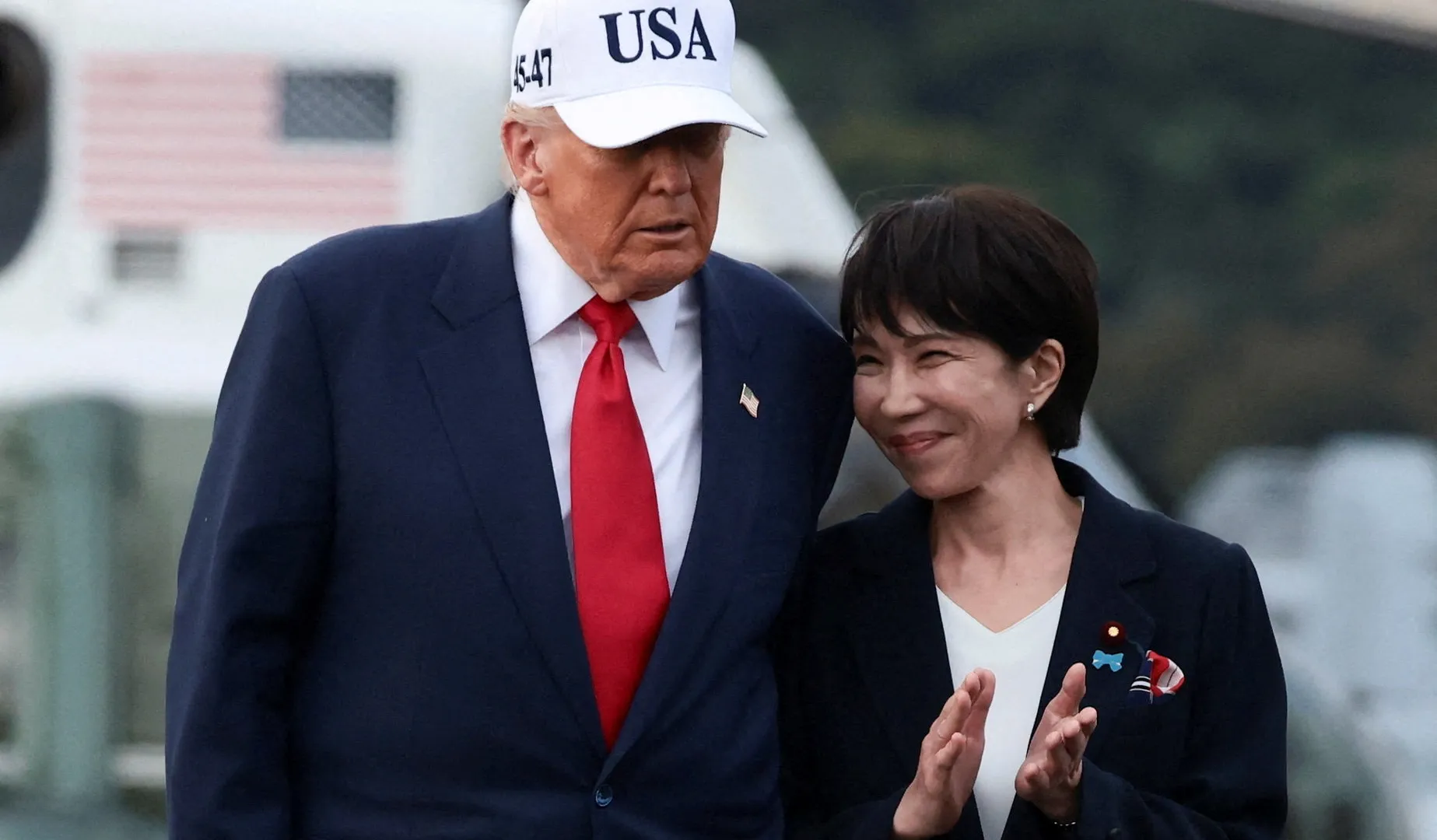
Trump is expected to raise the issue of warships when he meets with Japanese Prime Minister Sanae Takaichi at the White House on Thursday, according to Al Jazeera correspondent Jack Barton.

“People do expect him to put pressure on Takaichi again to send warships to the Strait of Hormuz. It makes sense in a way because Japan is so dependent on energy supplies” from the Middle East, Barton said on Thursday from Seoul.

Japan’s Maritime Self-Defence Force is one of the largest and most advanced navies in the world, he said, which makes it an attractive target for the Trump Administration.

Although Japan and the US share a mutual defence, Tokyo’s pacifist constitution places restrictions on when it can deploy its Self-Defense Force. Legal scenarios include when it is attacked or facing a “survival-threatening” scenario, as well as acting in “collective self-defence” of its allies.

Takaichi told legislators this week that her government is considering what can legally be done to protect Japanese ships and interests, according to Japanese public broadcaster NHK World, although deployment is still a hypothetical scenario.

Japan relies heavily on Middle Eastern oil imports, of which 70 percent pass through the Strait of Hormuz, according to Japanese media. Tokyo began releasing oil from its strategic reserve on Monday to make up for the shortfall.

Stephen Nagy, a professor at the International Christian University, Tokyo, told Al Jazeera it was not unexpected that the US – a treaty ally – would call on it for help, but Japan will need to consider what is expected.

“The question is if they are going to be on the front line of the attack from Iran or if they are going to provide some kind of supporting role, such as anti-mining activities, refuelling missions, maritime domain awareness,” he said.

“It’s not so much of a problem going there and being involved in the challenges associated with the Hormuz Strait; what is more important is what exactly they are going to do in that role. I think the Japanese are going to find a way to legally add value to the Trump administration, but don’t expect warships there fighting Iranian proxies,” he continued.

South Korea finds itself in a similar predicament as it is both a US treaty ally and a country that is heavily dependent on Middle Eastern oil and gas exports.

Seoul last week took the extraordinary measure of imposing a price cap on domestic fuel prices for the first time since the 1997 Asian financial crisis, to keep prices from rising too quickly for consumers. Despite their concerns, legislators continue to urge caution from the government in deploying its navy or military assets to the Middle East, according to Al Jazeera’s Barton.

In-Bum Chun, a retired South Korean lieutenant general, told Al Jazeera that it is not immediately clear whether Seoul’s Mutual Defense Treaty with the US applies to the Strait of Hormuz.

Seoul must also weigh helping the US against maintaining a credible deterrence against North Korea. Recent media reports suggest that the US is considering moving some of its Terminal High Altitude Area Defense (THAAD) missiles from South Korea to the Middle East. The missiles were installed to deter North Korea, and their removal, along with naval assets, could make voters nervous.

“Seoul must also consider the persistent threat from North Korea and the fact that a South Korean warship is already deployed to the Middle East,” Chun told Al Jazeera. “At the same time, because about 70 percent of Korea’s oil imports pass through the Strait of Hormuz, freedom of navigation is not an abstract principle but a core national interest. These competing realities must all be weighed before any final decision is reached.”

Source link

Strikes kill two PMF fighters in northern Iraq amid wider war, group says | US-Israel war on Iran News

Air strikes come hours after pro-Iran armed group Kataib Hezbollah announces conditional suspension of US embassy attacks.

Air strikes have killed two fighters from the Popular Mobilisation Forces (PMF) in northern Iraq, the paramilitary group says from one of the fronts in the sprawling war engulfing the Middle East.

The two attacks targeted PMF positions early on Thursday in the Nineveh region, where Mosul city is located, and a military airport in Salah al-Din province, according to statements from the PMF, a predominantly Shia group that is part of Iraq’s security apparatus and includes several groups aligned with Iran.

Recommended Stories

list of 3 itemsend of list

The PMF blamed the attack on Israel and the United States. Iraq has been drawn into the US-Israeli war on Iran, now in its third week.

The PMF was formed in 2014 as a volunteer force supporting Iraqi security forces in the fight against ISIL (ISIS).

Strikes have targeted Iran-backed groups, which in turn have claimed near-daily attacks on US interests in Iraq and across the region.

Elsewhere, a fire broke out at a naval base in southern Iraq when it was hit by a drone overnight. An Iraqi security source told Al Jazeera that a drone crashed into a water treatment station at the Umm Qasr naval base near the border with Kuwait.

Footage from the scene circulating on social media and verified by Al Jazeera showed flames and smoke rising from the site.

US embassy attacks to be suspended

Hours before the attacks on PMF fighters, the pro-Iranian armed group Kataib Hezbollah said its secretary-general had “issued orders to suspend operations targeting the US embassy in Baghdad for a period of five days”.

Designated by Washington as a “terrorist organisation”, Iraq’s Kataib Hezbollah listed several conditions of the suspension, including Israel ceasing its bombardment of the southern suburbs of Beirut.

Kataib Hezbollah also demanded “a commitment to refrain from bombing residential areas in Baghdad and other provinces”.

Whenever “the enemy violates” the truce, “the response will be immediate”, the group said, warning of more strikes after the five-day period.

The US embassy has been targeted by drone and rocket attacks several times in recent days. Air defences have intercepted most of the projectiles.

The embassy is in the Green Zone, a heavily fortified district in central Baghdad that houses Iraqi government institutions and embassies.

A US diplomatic and logistics centre at Baghdad International Airport that houses military personnel has also been regularly targeted.

Source link

U.S. eases Venezuela oil sanctions as Trump seeks to boost world oil supply during Iran war

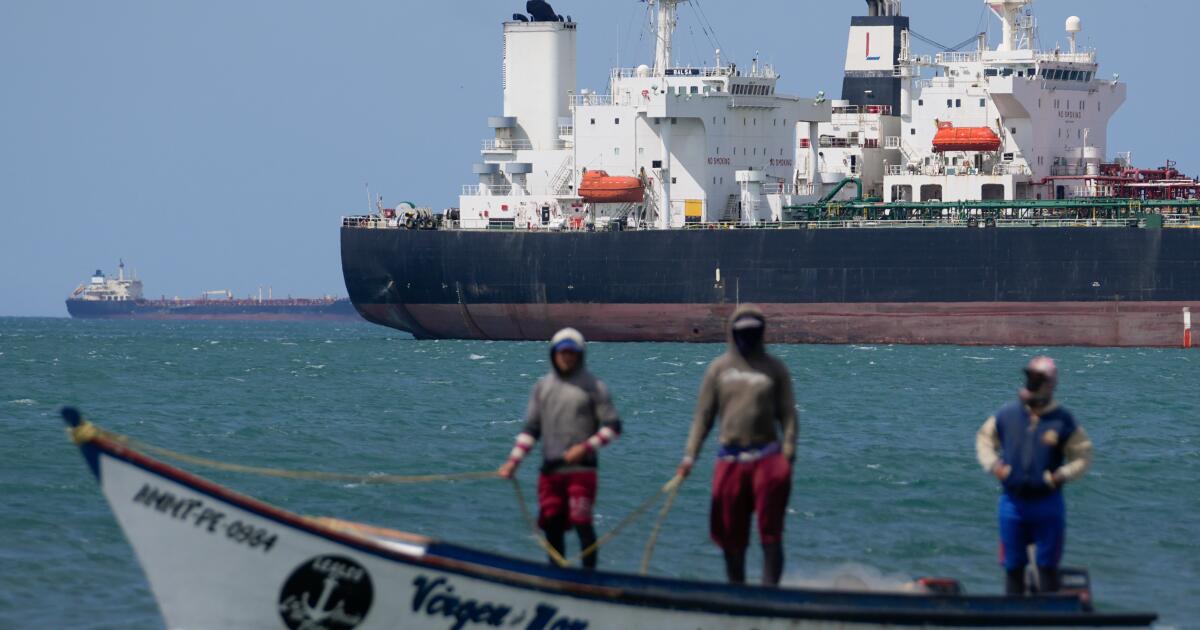
U.S. companies will be allowed to do business with Venezuela’s state-owned oil and gas company after the Treasury Department eased sanctions, with some limitations, on Wednesday as the Trump administration looks for ways to boost world oil supplies during the Iran war.

The Treasury issued a broad authorization allowing Petróleos de Venezuela S.A, or PDVSA, to directly sell Venezuelan oil to U.S. companies and on global markets, a massive shift after Washington for years had largely blocked dealings with Venezuela’s government and its oil sector.

Separately, the White House said President Trump would waive, for 60 days, Jones Act requirements for goods shipped between U.S. ports to be moved on U.S.-flagged vessels. The 1920s law, designed to protect the American shipbuilding sector, is often blamed for making gas more expensive.

The moves highlight the increased pressure that the Republican administration is under to ease soaring oil prices as the United States, along with Israel, wages a war with Iran without a foreseeable end date. Global oil prices have since spiked as Iran halted traffic through the narrow Strait of Hormuz, where one-fifth of the world’s oil typically passes through from the Persian Gulf to customers worldwide.

The Treasury’s license is designed to incentivize new investment in Venezuela’s energy sector and is intended to benefit both the U.S and Venezuela, while increasing the global oil supply, a Treasury official told the Associated Press. The official was not authorized to discuss the matter publicly and spoke on condition of anonymity.

Since the ouster and arrest of Nicolás Maduro as Venezuela’s president during a U.S. military operation in January, Trump has said the U.S. would effectively “run” Venezuela and sell its oil.

The U.S. license provides targeted relief from sanctions, but does not lift the penalties altogether. The license allows companies that existed before Jan. 29, 2025, to buy Venezuelan oil and engage in transactions that would normally be banned under American sanctions, reopening trade for a major oil producer to global markets.

There are some limits.

Payments cannot go directly to sanctioned Venezuelan entities such as PDVSA, but must be sent instead to a special U.S.-controlled account. In other words, the U.S. will allow the oil trade but will control the cash flow.

Additionally, deals involving Russia, Iran, North Korea, Cuba and some Chinese entities will not be allowed. Transactions involving Venezuelan debt or bonds will not be allowed.

The license is expected to give a massive boost to Venezuela’s oil-dependent economy and help encourage companies that have been apprehensive to invest. The decision is part of the Trump administration’s phased-in plan to turn around Venezuela. But critics of the acting Venezuelan government argue that the move rewards Venezuela’s leadership — all loyal to Maduro and the ruling party — while repression, corruption and human rights abuses continue.

Many public sector workers survive on roughly $160 per month, while the average private sector employee earned about $237 last year, when the annual inflation rate soared to 475%, according to Venezuela’s central bank, and sent the cost of food beyond what many can afford.

Venezuela sits atop the world’s largest oil reserves and used them to power what was once Latin America’s strongest economy. But corruption, mismanagement and U.S. economic sanctions saw production steadily decline from the 3.5 million barrels per day pumped in 1999, when Maduro’s mentor, Hugo Chávez, took power, to less than 400,000 barrels per day in 2020.

A year earlier, the Treasury Department under the first Trump administration locked Venezuela out of world oil markets when it sanctioned PDVSA as part of a policy punishing Maduro’s government for corrupt, anti-democratic and criminal activities. That forced the government to sell its remaining oil output at a discount — about 40% below market prices — to buyers such as China and in other Asian markets. Venezuela even started accepting payments in Russian rubles, bartered goods or cryptocurrency.

The new license does not allow payments in gold or cryptocurrency, including the petro, which was a crypto token issued by the Venezuelan government in 2018.

Meantime, White House press secretary Karoline Leavitt said the Jones Act waiver would help “mitigate the short-term disruptions to the oil market” during the Iran war and would “allow vital resources like oil, natural gas, fertilizer, and coal to flow freely to U.S. ports.”

Hussein and Cano write for the Associated Press. Cano reported from Caracas, Venezuela. AP writer Seung Min Kim contributed to this report.

Source link

Saudi FM warns Iran that patience in Gulf not ‘unlimited’ amid attacks | US-Israel war on Iran News

Saudi Arabia’s Foreign Minister warns Iran that regional neighbours have ‘significant’ capabilities with which to respond to Tehran’s aggression.

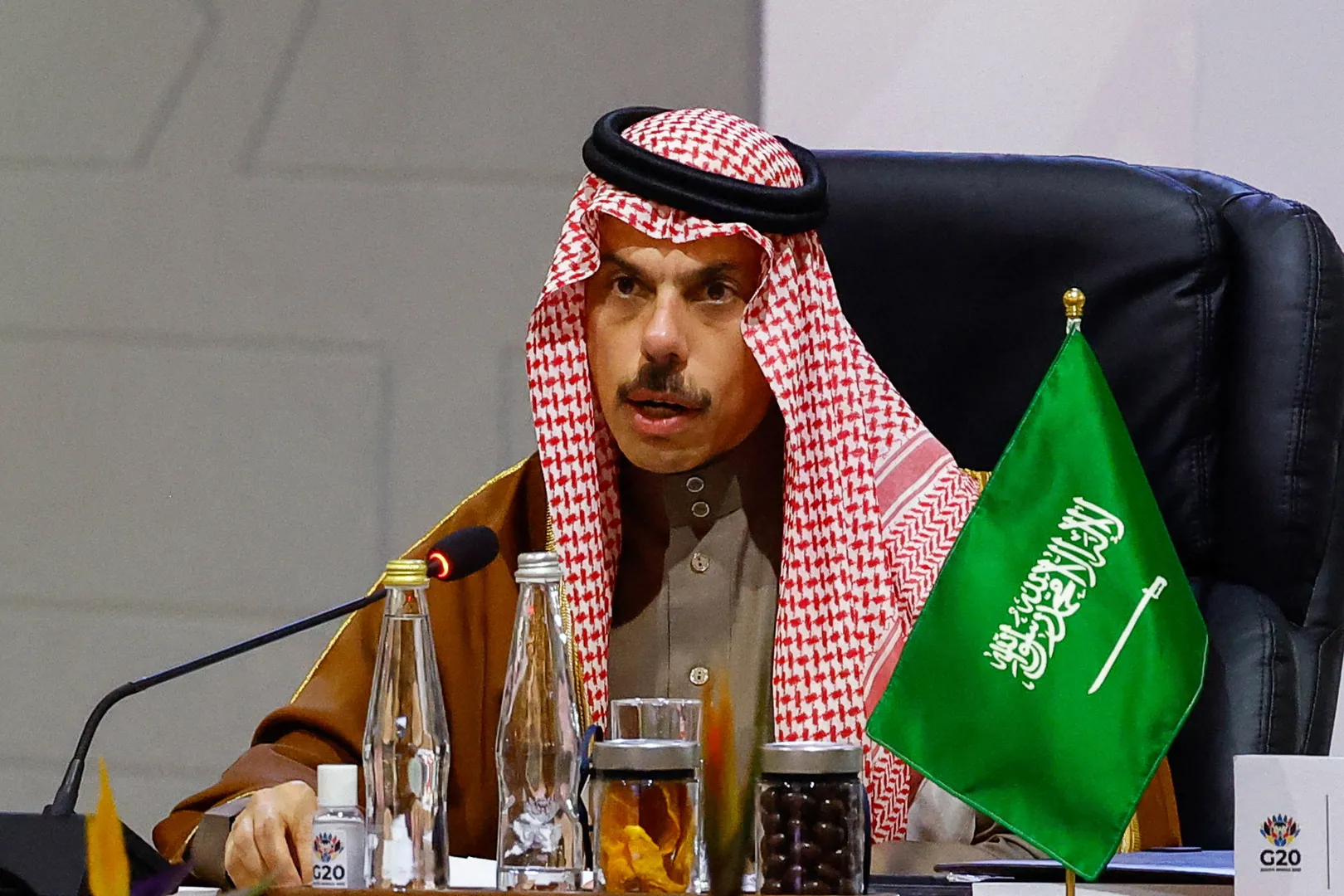
Saudi Arabia’s Foreign Minister Prince Faisal bin Farhan Al Saud has warned Iran that tolerance of its attacks on his country and those of neighbouring Gulf states is limited, calling on Tehran to immediately “recalculate” its strategy.

Warning that Saudi Arabia and other Gulf states have “very significant capacities and capabilities” that could be drawn on should they “choose to do so”, the foreign minister told a news conference early on Thursday that Iran had carefully planned its strategy for striking regional neighbours, despite denials from Tehran’s diplomats.

Recommended Stories

list of 4 itemsend of list

“The level of accuracy in some of this targeting – you can see it in our neighbours as well as the kingdom – indicates that this is something that was premeditated, preplanned, preorganised and well thought out,” Prince Faisal said.

“I’m not going to lay out what would and would not precipitate a defensive action by the Kingdom [of Saudi Arabia] because I think that is not a wise approach to signal to the Iranians,” the foreign minister continued.

“But I think it’s important for the Iranians to understand that the kingdom, but also its partners who have been attacked and beyond, have very significant capacities and capabilities that they could bring to bear should they choose to do so,” he said.

“The patience that is being exhibited is not unlimited. Do they [the Iranians] have a day, two, a week? I’m not going to telegraph that,” he added.

“I would hope they understand the message of the meeting today and recalculate quickly and stop attacking their neighbours. But I am doubtful they have that wisdom.”

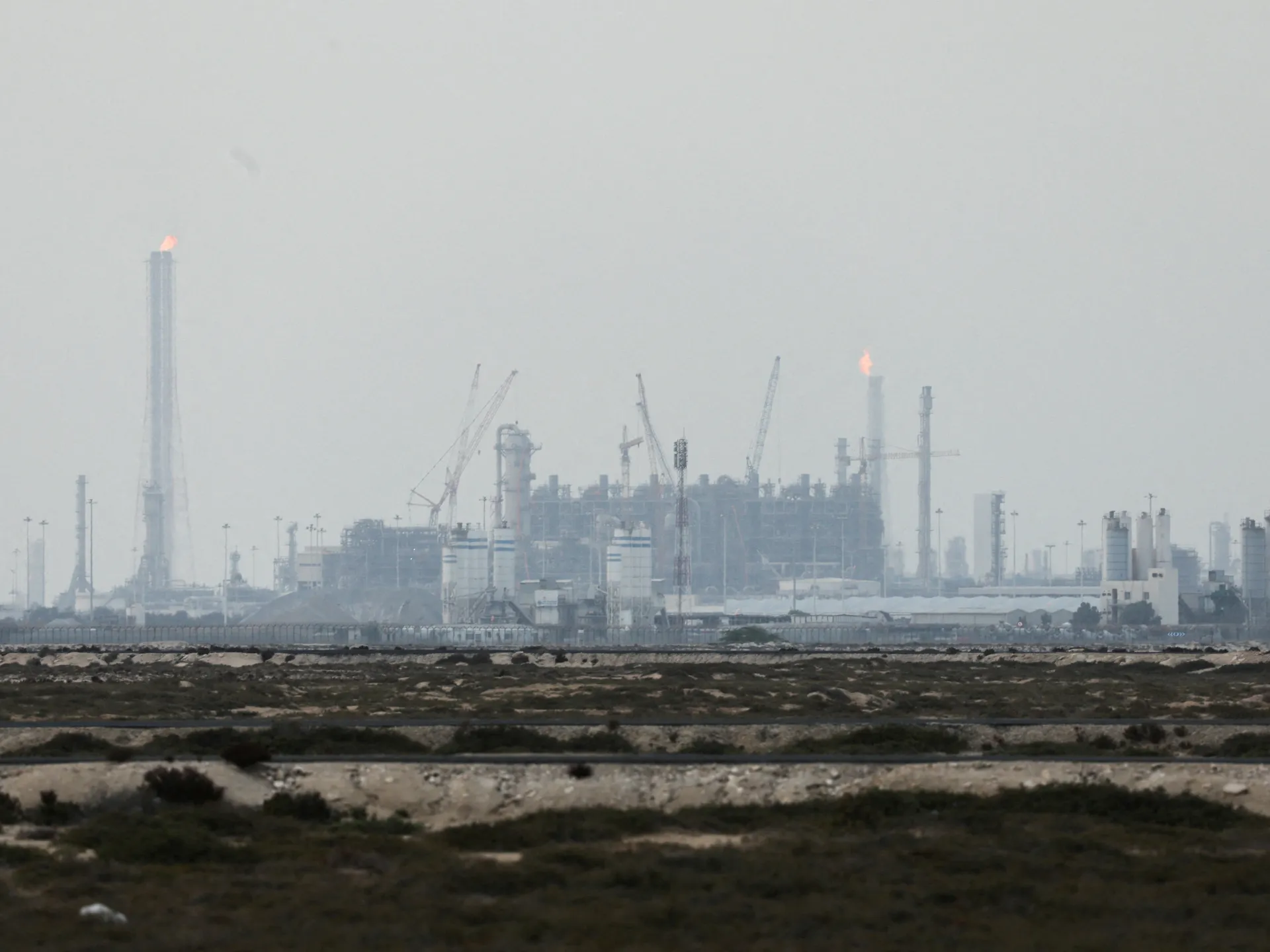
Prince Faisal’s warning followed a meeting of foreign ministers from Arab and Islamic countries in the Saudi capital earlier in the day to discuss the expanding war in the region, which on Wednesday saw Iranian attacks on Gulf energy sites, including Qatar’s Ras Laffan gas facility, where significant damage was reported, and the United Arab Emirates’ Habshan ⁠ gas facility.

Qatar’s Ministry of Foreign Affairs expressed its “strong condemnation and denunciation of the blatant Iranian attack targeting Ras Laffan Industrial City”, located 80km (50 miles) northeast of the Qatari capital Doha, which is the world’s largest liquefied natural gas (LNG) production facility, producing some 20 percent of the world’s LNG supply.

Iran’s Islamic Revolutionary Guard Corps (IRGC) had warned earlier that oil and gas facilities in Qatar, Saudi Arabia and the UAE would face retaliation for an Israeli strike on Iran’s South Pars gasfield.

Iranian state media reported that facilities linked to the country’s huge offshore South Pars field – located off the coast of southern Iran’s Bushehr province – had come under attack.

Saudi Arabia’s Ministry of Defence also said on Wednesday that its air defences had intercepted four Iranian ballistic missiles that targeted Riyadh and two launched towards the country’s eastern region.

Air defences in the UAE dealt with 13 ballistic missiles and 27 drones, according to the country’s Defence Ministry, while operations ⁠were ⁠suspended at the Habshan ⁠gas facility as authorities responded to ⁠incidents caused by fallen debris after the successful interception of a ‌missile.

The Saudi foreign minister also told the news conference on Thursday that while the war will end one day, it will take much longer to restore relations with Iran as trust “has completely been shattered” due to Tehran’s tactics of targeting its neighbours.

“We know for a fact that Iran has been building this strategy over the last decade and beyond,” Prince Faisal said.

“This is not something that is a reaction to an evolving circumstance where Iran is improvising. This has been built into their war planning: targeting their neighbours and using that to try and put pressure on the international community,” he said.

“So when this war eventually ends, in order for there to be any rebuilding of trust, it will take a long time. And I have to tell you, if Iran doesn’t stop … immediately, I think there will be almost nothing that can re-establish that trust,” he added.

Source link

What are Iran’s options as war goes on? | US-Israel war on Iran

Tehran defiant as US and Israeli attacks continue.

Relentless United States and Israeli attacks on Iran. Senior officials killed, with thousands of air strikes across the country.

Iran has retaliated, hitting Israel and its Gulf neighbours, targeting energy facilities and supply routes.

So what are Iran’s options now?

Presenter: Imran Khan

Guests:

Elijah Magnier – Military and political analyst specialising in wars in the Middle East

Setareh Sadeqi – Assistant professor in the Faculty of World Studies at the University of Tehran

Mehran Kamrava – Iranian studies unit at the Arab Center for Research and Policy Studies

Source link

Nigeria’s President Tinubu meets royals in UK state visit | US-Israel war on Iran News

With trade between the two countries at a record high, Charles is using the two-day visit to highlight the pair’s deep cultural and commercial links.

The UK’s King Charles III has welcomed Nigerian President Bola Tinubu at Windsor Castle in the first state visit by the leader of Africa’s most populous nation in nearly four decades.

More than 1,000 soldiers were out in force on Wednesday for the diplomatic show of soft power by the royal family.

Recommended Stories

list of 3 itemsend of list

With trade between the two countries at a record high, Charles is using the two-day visit to highlight the pair’s deep cultural and commercial links.

Tinubu has made less formal visits to the United Kingdom several times during his tenure, and the two countries remain major partners in trade, aid and defence. London is also home to a large Nigerian diaspora of about 300,000 people.

Nigeria’s presidency said the visit signalled a “renewed chapter” and reflected a shared commitment to “advancing trade and strengthening diplomatic ties”.

Calling the visit “historic”, London announced Nigerian companies, including banks, are expanding operations and creating hundreds of jobs in the UK, strengthening it as a global hub for African business.

Nigerian flags and Union Jacks

King Charles and Queen Camilla greeted the president and his wife in Windsor, west of London, as artillery fired salutes.

Both Nigerian flags and Union Jacks fluttered amid the procession.

The Nigerian president and his wife earlier chatted with heir-to-the-throne Prince William and his wife Catherine, at a hotel in the town.

The party then rode in carriages to the historic Windsor Castle.

Later, the king and queen showed the president and first lady items from the UK’s colonial rule of Nigeria, which existed until 1960.

Later on Wednesday evening, a lavish state banquet took place.

On Thursday, Tinubu is expected to meet British Prime Minister Keir Starmer, as well as members of the Nigerian community abroad, according to the official schedule.

Missing from the official schedule is the traditional meeting between the visiting head of state and the British opposition.

Conservative Party leader Kemi Badenoch, who is of Nigerian descent, has repeatedly publicly criticised the country she was raised in over corruption and violence.

The last Nigerian state visit to the UK took place in 1989, although Tinubu was received by Charles in September 2024.

Before the death of his mother, Queen Elizabeth II, in 2022, Charles also visited Nigeria four times as prince of Wales.

Tinubu’s visit went ahead, despite a deadly bombing in northeastern Nigeria’s Borno State on Monday, which killed 23 people and injured more than 100, with the president condemning the attacks and insisting “Nigeria will not succumb to fear.”

Source link

Israel kills Iran’s spy chief; government seen as ‘largely degraded’

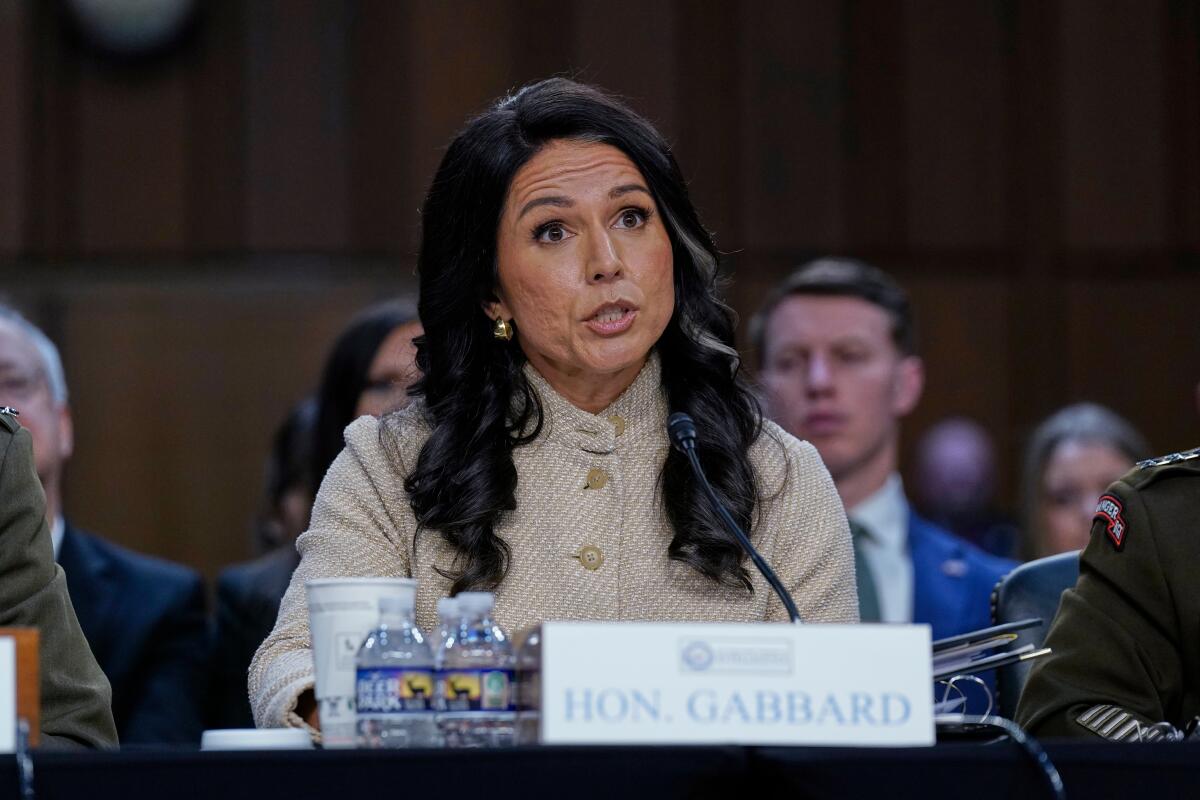
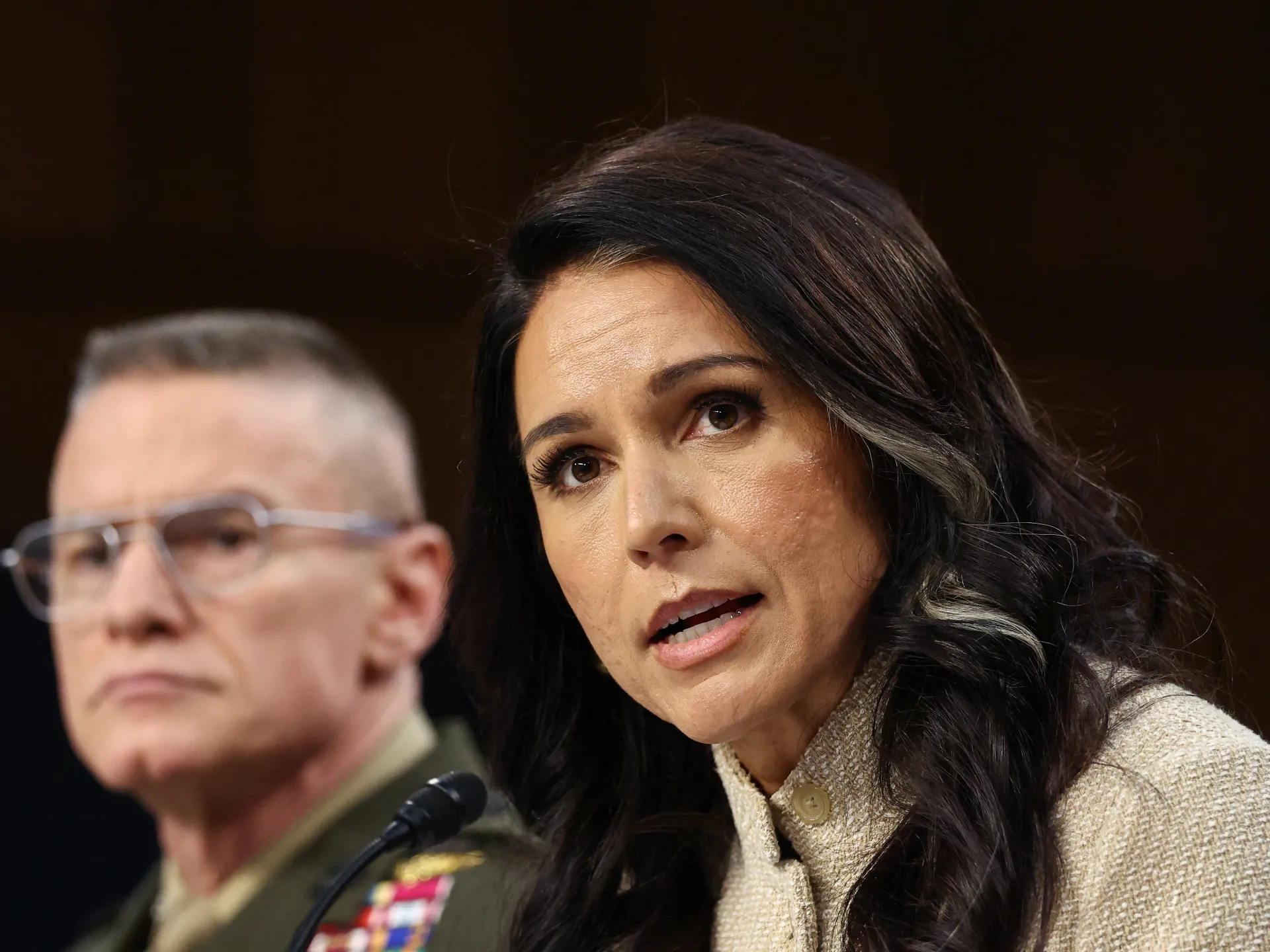
The Iranian government remains “intact but largely degraded,” National Intelligence Director Tulsi Gabbard told Congress on Wednesday, as Israel continued to hunt down the Islamic Republic’s leadership with an overnight airstrike that killed the nation’s spy chief.

The death of Intelligence Minister Esmail Khatib, announced Wednesday by Israel, was the third high-level assassination in roughly 24 hours in a series of strikes that have hollowed out Tehran’s leadership ranks.

Israel ordered strikes Tuesday that killed Iranian security chief Ali Larijani and Basij paramilitary commander Gholamreza Soleimani.

Additional senior Iranian figures could be targeted, Israeli Defense Minister Israel Katz said Wednesday. “Israel’s policy is clear and unequivocal: No one in Iran has immunity — everyone is a target,” Katz said.

Ayatollah Mojtaba Khamenei, Iran’s new supreme leader, issued a rare statement Wednesday addressing Larijani’s assassination.

“Undoubtedly, the assassination of such a person shows the extent of his importance and the hatred of the enemies of Islam towards him,” he wrote, according to the Associated Press. “All blood has its price that the criminal murderers of the martyrs must pay soon.”

Tehran responded with renewed missile and drone attacks on Israel and U.S.-aligned countries across the Persian Gulf, further disrupting strained energy infrastructure and shipping lanes. Fighting has halted oil and gas production throughout the region, as shipping was stalled through the Strait of Hormuz, a key artery for global oil supplies.

The war has triggered a severe global oil shortage that has destabilized electronics, agriculture, pharmaceutical and energy supply chains.

Exacerbating those disruptions, the U.S. and Israel carried out a coordinated attack on the South Pars natural gas field on Wednesday. The strikes drew swift condemnation from Qatar, a U.S. ally that shares the reservoir with Iran. The Qatari Foreign Ministry called the attack “dangerous and irresponsible” and “a threat to global energy security.”

The attack is a major blow to Iran’s supply of electricity too, as most of the country’s energy grid relies on gas, analysts said. The field accounts for about 75% of Iran’s natural gas production.

Tehran promised to respond with more attacks on its Mideast neighbors, the Associated Press reported.

Meanwhile, near-constant Israeli strikes in Beirut and southern Lebanon have displaced over 1 million people, and killed 968 civilians, according to the Lebanese Health Ministry.

With the war in its third week, deaths now number in the thousands across Iran, Israel and neighboring countries.

International reaction has sharpened as the fighting showed no sign of relenting. Russia condemned the “murder and liquidation” of sovereign leadership and called for an immediate ceasefire, while European leaders voiced growing alarm about the war’s trajectory and the risks of broader destabilization.

Director of National Intelligence Tulsi Gabbard testifies Wednesday before the Senate Committee on Intelligence.

Director of National Intelligence Tulsi Gabbard testifies Wednesday before the Senate Committee on Intelligence.

(Jose Luis Magana / Associated Press)

All allies in the North Atlantic Treaty Organization have refused to heed President Trump’s call to send warships to the Strait of Hormuz, signaling a deepening rift in the world’s most powerful military alliance. Trump has sought to sever the U.S. from the alliance.

“We no longer ‘need,’ or desire, the NATO Countries’ assistance — WE NEVER DID! “ he wrote on social media Tuesday.

Trump on Wednesday signaled little appetite for de-escalation, floating the prospect of a decisive military endgame.

“I wonder what would happen if we ‘finished off’ what’s left of the Iranian Terror State,” he wrote on his social media website.

The president visited Dover Air Force Base in Delaware on Wednesday, where the remains of six U.S. service members killed in the crash of a refueling aircraft were returned to their families. The visit marks the second time since the Feb. 28 launch of the war with Iran that Trump has attended the solemn military ritual known as a dignified transfer, the Associated Press reported.

At a Senate Intelligence Committee hearing on “worldwide threats” Wednesday, Democrats grilled Gabbard and other intelligence leaders over their preparation for Iranian retaliation against Mideast energy infrastructure, civilian areas and American military sites and personnel.

Trump has maintained that the U.S. was caught off guard by Iran’s retaliatory strikes.

“Nobody expected that. We were shocked,” he said at a Kennedy Center board meeting Monday. Later in the day, when asked at an Oval Office news briefing whether he had been warned about the possibility of Iranian retaliation, Trump reiterated his surprise.

“Nobody, nobody, no, no, no. The greatest experts — nobody thought they were going to hit,” he said.

Last year, intelligence agencies testified to Congress that Iran was capable of inflicting substantial damage on an attacker, executing regional strikes and disrupting shipping, “particularly energy supplies, through the Strait of Hormuz,” Sen. Ron Wyden (D-Ore.) said at the hearing, reading from last year’s worldwide threats report.

“In other words, every problem we’re seeing now was not only foreseeable, but was actually predicted by the intelligence agencies,” Wyden told Gabbard. “It’s hard to see how you can sit here and say that the intelligence agencies couldn’t provide a clear warning that if attacked, the Iranians would respond by attacking our people.”

Gabbard refused to confirm whether intelligence agencies briefed the president on the subject, saying she “won’t divulge internal conversations.”

She also testified that U.S. strikes on Iran had “obliterated” the country’s nuclear enrichment program, including underground facilities, and said officials are now watching to see whether Tehran attempts to rebuild. So far, she said, Iran has not restarted the program.

But Sen. Jon Ossoff (D-Ga.) challenged that assessment, noting that Trump had used the same word — “obliterated” — to describe strikes just months before. He pressed Gabbard on how serious the nuclear threat was leading up to the February operation, given that timeline.

The intelligence community assessed that Iran “maintained the intention to rebuild and to continue to grow their nuclear enrichment,” Gabbard said adding that the “only person” who can determine what constitutes an imminent threat is the president.

“False,” Ossoff shot back. “It is precisely your responsibility to determine what constitutes a threat to the United States.”

Source link

Contributor: The U.S. desperately needs functional counterterrorism

On Monday came the latest evidence of dysfunction within the Trump administration’s counterterrorism apparatus, when Joe Kent, the director of the National Counterterrorism Center, resigned, citing his opposition to the war in Iran. But the disarray is not new.

In July 2025, Sebastian Gorka, the senior director for counterterrorism on President Trump’s National Security Council, announced that he was “on the cusp of releasing the unclassified new presidential U.S. counterterrorism policy.” Yet eight months later, while America wages war on a notorious state sponsor of terrorism, the strategy has yet to be released.

Meanwhile, the Department of Homeland Security has not published a National Terrorism Advisory since September and has failed to issue the annual Homeland Threat Assessment report since Trump returned to office. This remains the case, even as counterterrorism experts have warned about the possibility of Iranian-backed sleeper cells being activated because of the current conflict with Iran.

Without a strategy that clearly lays out American priorities and responses, America’s counterterrorism defenses are divided, disorganized and under-resourced. It is this malfunction that left Trump answering a question about whether Americans should expect more violence in the homeland with an effective shoulder shrug: “I guess.”

The homegrown backlash to the Iran conflict began on March 1, when a naturalized U.S. citizen opened fire at a bar in Austin, Texas. The gunman, who was wearing clothing pointing to his support of Iran, killed three before being killed by police gunfire. On March 7, two Islamic State-inspired teens hurled improvised explosive devices at a group of far-right protesters outside the New York City mayor’s mansion. March 12 then saw two attacks. First, a shooting erupted at Old Dominion University, as a former U.S. National Guardsman who had been prosecuted for Islamic State-related plotting killed an ROTC instructor. Then, a U.S. citizen with family ties to Lebanon drove his vehicle into Temple Israel in West Bloomfield, Mich., before dying in an exchange of gunfire with synagogue security officers.

In three of the four attacks, further violence was stopped by heroic takedowns on scene. Perhaps most notably, the Old Dominion attacker was neutralized by students, who stabbed the gunman to death. The heroic stories, while worth uplifting, underscore a bleaker truth: amid war abroad, Americans have been forced to take counterterrorism into their own hands in their own communities, left to fend for themselves against AR-15s, improvised explosive devices and weaponized vehicles.

The diversity of the attacks and the perpetrators makes matters worse. The attackers include a U.S. National Guard veteran who served several years in prison on terrorism charges, two teenagers who traveled to a different state with violent intentions, a man with an apparently long history of mental illness, and a U.S. citizen who lost family members in the latest Israeli-Hezbollah hostilities. Their targets also point to a complex and unpredictable terrorism environment.

Absent more predictable trends, law enforcement will be spread thin, asked to protect an impossible array of locations across the country against an impossible diversity of threats. In this environment, an effective national counterterrorism strategy would likely point to stopping terrorism further upstream, interrupting radicalization and violent mobilization at an earlier stage. Yet the Trump administration has effectively eviscerated its prevention infrastructure, largely dismantling the Department of Homeland Security’s Center for Prevention Programs and Partnerships.

Notably, too, none of the attacks to date seem to be coordinated or directed by the Iranian regime, with the war instead inspiring Western lone actors to attack their own communities. Yet Iran has long engaged in assassination plots in the United States, often by enlisting third-party criminal groups, and may yet seek to activate such a program. As journalists Peter Beck and Seamus Hughes warn: “Iran’s past calculus was low-grade operations in the United States, enough to keep the FBI busy but not large enough to trigger serious military consequences. With the latter now already a reality, the Islamic Republic has less to lose by orchestrating bolder attacks.”

The Trump administration has repeatedly invoked Iran’s history of support for terrorist proxies to justify the conflict: On March 2, for instance, Trump explained that one of the operation’s objectives was “ensuring that the Iranian regime cannot continue to arm, fund and direct terrorist armies outside of their borders.” Indeed, should it follow its historical model, Iran will likely continue to make external operations and inspired violence a significant part of its response, adding sleeper cell activation and sponsored individuals to the ranks of homegrown violent extremists who have so far plagued America’s homeland since hostilities broke out. But without a more defined strategy, America will likely struggle to mount an effective response.

If, as the old saying goes, “all politics is local,” then the modern-day corollary in an era of smartphones is, “all conflict is global.” Whenever there is a war in the Middle East, as kicked off in Gaza following the Hamas terror attacks in southern Israel on Oct. 7, 2023, it exacerbates the terrorism threat landscape around the world, including in the West. When images and videos of the errant U.S. missile attack on a girls’ school flood the internet, it raises the temperature, making attacks by lone actors and other violent extremists with only tangential connections to the conflict more likely.

The breadth of the violence, however, was not guaranteed or pre-ordained. As a Shiite-majority nation, Iran has long held fractious and even hostile relationships with Sunni jihadist actors. The extent of the violence indicates a broader anti-American sentiment prevailing across diaspora communities, likely precipitated by the decades-long war on terror, greatly aggravated by Israeli abuses in Gaza since Oct. 7, 2023, and punctuated by the killings of schoolchildren. The Iran war, in other words, seems to be superseding earlier grievances and instead uniting disparate extremist forces against the United States.

In this environment, the Trump administration needs to stop being so cavalier about counterterrorism. Devoid of an actual strategy and without a director of the National Counterterrorism Center, the United States is even more vulnerable to an attack on the homeland than it would be with those in place. Writing on X, Robert A. Pape, a longtime scholar of terrorism, posted: “After tracking terrorism for 25 years, this is a flashing red light — as bright as I’ve seen prior to a serious attack.”

Only a serious approach to countering terrorism will keep the United States safe, and this is the moment for the Trump administration to demonstrate that it recognizes the stakes. In counterterrorism, inattention can be deadly.

Jacob Ware is a terrorism researcher and the co-author of “God, Guns, and Sedition: Far-Right Terrorism in America.” Colin P. Clarke is the executive director of the Soufan Center. His research focuses on terrorism, counterterrorism and armed conflict.

Source link

Qatar says Iran missile attack sparks fire, causes damage at gas facility | US-Israel war on Iran News

Qatar’s Foreign Ministry strongly condemns attack that caused “extensive damage” at the Ras Laffan complex.

Qatar’s Ministry of ⁠Interior says civil ⁠defence teams are responding to a fire at the country’s main gas facility after an Iranian attack.

In a statement on Wednesday, QatarEnergy said there was “extensive damage” following the “missile attacks” on Ras Laffan Industrial City.

“All personnel have been accounted for and no casualties have been reported at this time,” the world’s largest liquefied natural gas (LNG) producer added.

The announcements came hours after Iran threatened to attack oil and gas facilities across the Gulf region in retaliation for an Israeli attacks on its South Pars gasfield as the fallout from the United States-Israeli war on the country continues to escalate.

Iran’s warning was directed at Qatar’s Mesaieed Petrochemical Complex, Mesaieed Holding Company and Ras Laffan Refinery; Saudi Arabia’s Samref Refinery and Jubail Petrochemical Complex; and the United Arab Emirates’s Al Hosn Gas Field.

In a statement, Qatar’s Foreign Ministry strongly condemned “the brutal” Iranian targeting of Ras Laffan Industrial City.

“Qatar considers this assault a dangerous escalation, a flagrant violation of its sovereignty, and a direct threat to its national security,” it said.

On March 2, Qatar suspended LNG production following an attack on at its giant Ras Laffan facility, as well as on a water tank at a power plant in Mesaieed Industrial City.

Source link

US intel chief Gabbard says Iran was not rebuilding enrichment prior to war | US-Israel war on Iran News

Washington, DC – Tulsi Gabbard, the director of US National Intelligence, said that the United States intelligence community had assessed that Iran was not rebuilding its nuclear enrichment capabilities following US and Israeli attacks last year.

The revelation on Wednesday appeared to undercut one of President Donald Trump’s key justifications for joining Israel in launching the latest war against Iran.

Recommended Stories

list of 3 itemsend of list

Trump and his top officials have repeatedly cited Iran’s nuclear ambitions as one of the main reasons for abandoning ongoing diplomatic talks in favour of military action.

“As a result of Operation Midnight Hammer,” Gabbard said in written testimony to the Senate intelligence committee, referencing the June 2025 US strikes on Iran’s nuclear facilities, “Iran’s nuclear enrichment program was obliterated”.

“There have been no efforts since then to try to rebuild their enrichment capability,” Gabbard said in the written testimony.

Notably, Gabbard did not read that portion of her testimony, which was provided to members of the committee, during her publicly televised oral testimony. When pressed on why she omitted the portion, Gabbard said simply that she did not have enough time. She did not deny the assessment.

“You chose to omit the parts that contradict Trump,” Senator Mark Warner, a Democrat, responded.

Trump has repeatedly said the June 2025 attacks, which came at the end of a 12-day war between Israel and Iran, had “obliterated” Iran’s nuclear capacity, even as he warned that Iran’s alleged nuclear ambitions presented an immediate threat to the US.

Tehran has for years denied it is seeking a nuclear weapon. Nuclear and arms monitors have maintained that even if Tehran were seeking a nuclear weapon, it did not represent a short- or medium-term threat.

The foreign minister of Oman, who had mediated the latest round of US-Iran indirect nuclear talks ahead of the war, has refuted Trump officials’ claims that the most recent negotiations were not yielding any progress.

The Guardian newspaper also reported this week that the United Kingdom’s national security adviser, Jonathan Powell, had attended the final session of talks and assessed that the Iranian position did not justify an immediate rush to war, citing sources familiar with the situation.

The administration has not settled on any single justification for launching the war, also pointing to Iran’s ballistic capabilities, its potential threat to Israel and US forces in the Middle East, and the totality of the Iranian government’s actions since the 1979 Islamic Revolution.

The concept of an “imminent threat” is significant in determining the legality of Trump’s decision to strike a sovereign country under international law.

It is also significant for US domestic law, under which presidents can commit the military only in instances of immediate self-defence. Only Congress can officially declare war or authorise extended military campaigns.

Iran’s government ‘intact but largely degraded’

The White House said earlier this week that Iran’s ballistic missile capacity was “functionally destroyed”, with the Iranian navy “effectively destroyed” and the US and Israel dominating the country’s airspace.

Experts have assessed that Iran still maintains the military capacity to inflict significant damage in the region, and it has continued to wield its military influence over the Strait of Hormuz.

Gabbard, meanwhile, offered a more sober assessment than the White House, saying that despite the killings of Iranian supreme leader Ayatollah Ali Khamenei, top military officials, and most recently the head of the Supreme National Security Council, Ali Larijani and the intelligence minister, Esmail Khatib, “the regime in Iran ⁠appears to be intact but largely degraded by Operation Epic Fury”.

“Even so, Iran and its proxies remain capable of and continue to attack US and allied interests in ⁠the Middle East. If a hostile regime survives, it will seek to begin a years-long effort to rebuild its missiles and UAV [drone] forces,” she said.

Gabbard also listed Iran, alongside Russia, China, North Korea and Pakistan, as among the countries “researching and developing an array of novel, advanced, or traditional missile delivery systems, with nuclear and conventional payloads, that put our homeland within range”.

The Washington, DC-based Arms Control Association has said that US intelligence as of 2025 had said it may take Iran until 2035 or longer to develop a missile capable of hitting the US, if it did indeed seek to do so.

High-profile resignation

Gabbard spoke a day after a top official in her agency, Joe Kent, the director of the US National Counterterrorism Center, resigned in opposition to Trump’s war with Iran.

In his resignation, Kent said that Iran “posed no imminent threat” to the US and that Trump’s decision to enter the war went against his “America First” pledges.

Kent is the first high-profile member of the Trump administration to step down in response to the war.

Gabbard herself had previously been a vocal opponent to indefinite military engagement in the Middle East and war with Iran. A former member of the US House of Representatives from Hawaii, she left the Democratic Party and supported Trump, in part, due to his anti-war vows.

However, in a post on X on Tuesday, Gabbard defended Trump’s decision to go to war.

“As our Commander in Chief, he is responsible for determining what is and is not an imminent threat, and whether or not to take action he deems necessary to protect the safety and security of our troops, the American people and our country,” she said.

She said her agency’s role was to funnel US intelligence to Trump.

“After carefully reviewing all the information before him, President Trump concluded that the terrorist Islamist regime in Iran posed an imminent threat and he took action based on that conclusion,” she said.

Source link

Trump will pay his respects in Delaware to 6 U.S. service members killed in the Middle East

President Trump is set to pay his respects on Wednesday at a Delaware military base when the remains of six U.S. service members killed in the crash of a refueling aircraft are returned to their families.

It will be the second time since launching the war with Iran on Feb. 28 that the Republican president will attend the solemn military ritual known as a dignified transfer, which he once described as the “toughest thing” he has had to do as commander in chief.

All six crew members of a KC-135 Air Force refueling aircraft were killed last week in a plane crash over friendly territory in western Iraq while supporting operations against Iran. They were from Alabama, Indiana, Kentucky, Ohio and Washington state.

“Every person on that aircraft carried a weight most Americans will never see, and they carried it with professionalism, courage, and a level of quiet excellence that deserves to be recognized,” retired Lt. Col Ernesto Nisperos, a friend of one of those killed, said in a text message Wednesday.

The crash brought the U.S. death toll in Operation Epic Fury to at least 13 service members. About 200 U.S. service members have been injured, including 10 severely, the Pentagon has said.

Trump last traveled to Dover Air Force Base on March 7 for the dignified transfer of six U.S. service members who were killed by a drone strike at a command center in Kuwait. He saluted as flag-draped transfer cases containing the remains of the fallen service members were carried from military aircraft to vehicles waiting to take them to the base’s mortuary facility to prepare them for their final resting place.

“It’s the bad part of war,” he told reporters afterward. Asked then if he worried about having to make multiple trips to the base for additional dignified transfers as the war continued, he said, “I’m sure. I hate to do it, but it’s a part of war, isn’t it?”

U.S. Central Command, which oversees military operations in the Middle East, said that the crash followed an unspecified incident involving two aircraft in “friendly airspace” over Iraq but that the loss of the aircraft during a combat mission was “not due to hostile or friendly fire.” The circumstances were under investigation. The other plane landed safely.

The crash killed three people assigned to the 6th Air Refueling Wing at MacDill Air Force Base in Florida: Maj. John A. “Alex” Klinner, 33, who served in Birmingham, Ala.; Capt. Ariana Linse Savino, 31, of Covington, Wash.; and Tech. Sgt. Ashley Pruitt, 34, of Bardstown, Ky.

Klinner, who left behind a wife, a 2-year-old son and 7-month-old twins, was known for his steady command and goofy nature, as well as a willingness to help others. Pruitt’s husband described her as a “radiant” woman who lit up the room. Savino was a friend, mentee and “source of positive energy” who was proud of her Puerto Rican heritage and inspired young Latinas, said Nisperos, who is serving as spokesman for her family.

“She had had this warmth that made you feel seen, a strength that showed up in everything she touched, and a spark — that spice — that made her unforgettable,” Nisperos said. “If you knew her, even for a moment, you knew you were in the presence of someone who was going to change the world.”

The three others were assigned to the 121st Air Refueling Wing at Rickenbacker Air National Guard Base in Columbus, Ohio: Capt. Seth Koval, 38, a resident of Stoutsville, Ohio, who was from Mooresville, Ind.; Capt. Curtis Angst, 30, who lived in Columbus; and Master Sgt. Tyler Simmons, 28, of Columbus.

Koval grew up dreaming of becoming a pilot, according to his wife, who described him as a loving, generous “fixer of all things.” Angst’s family said his life was defined by service, generosity and “a genuine love for people.” Simmons loved confiding in his 85-year-old grandmother and working out with her, Sen. Jon Husted said Tuesday, when he and Sen. Bernie Moreno honored the Ohio airmen on the Senate floor.

“To the mom and dad of these three young soldiers, I can’t even process what you’re going through. I can’t even imagine the emotions that you’re feeling,” Moreno said. “Just know that America is grateful beyond words for the sacrifice that your heroic young sons made.”

Superville writes for the Associated Press. AP writers Holly Ramer in Concord, N.H., and Hallie Golden in Seattle contributed to this report.

Source link

Fed holds interest rates steady amid Iran war, poor inflation report

March 18 (UPI) — The Federal Reserve announced that it is leaving its benchmark interest rate untouched Wednesday in its first Federal Open Market Committee statement since the start of the war with Iran.

The Fed’s benchmark interest rate remains at a 3.5% and 3.75% range as the committee held on to its projection of at least one rate cut coming this year.

“Available indicators suggest that economic activity has been expanding at a solid pace,” the FOMC statement said. “Job gains have remained low and the unemployment rate has been little changed in recent months. Inflation remains somewhat elevated.”

As for the war in Iran, the statement said its impact on the U.S. economy is “uncertain.”

The Fed continues to pursue monetary policies it believes will bring the rate of inflation down to 2%. In its statement it said it is “committed to supporting maximum employment,” in pursuit of its target.

Economic reports that inform the Fed’s decision have indicated pressures from inflation remain and economic growth has slowed.

Wednesday’s announcement comes on the heels of a producer price index report earlier in the day that showed the largest increase to the index for final demand goods since August 2023.

Last week, the U.S. Bureau of Labor Statistics reported that nonfarm payrolls fell by 92,000 in February. The unemployment rate increased to 4.4%.

These reports have economists and traders cooling on the potential for interest rate cuts. Eugenio Aleman, chief economist at Raymond James, said in a statement that the wholesale inflation report on Wednesday, “likely reinforces a hold decision.”

Data from the producer price index report predates the beginning of the war with Iran.

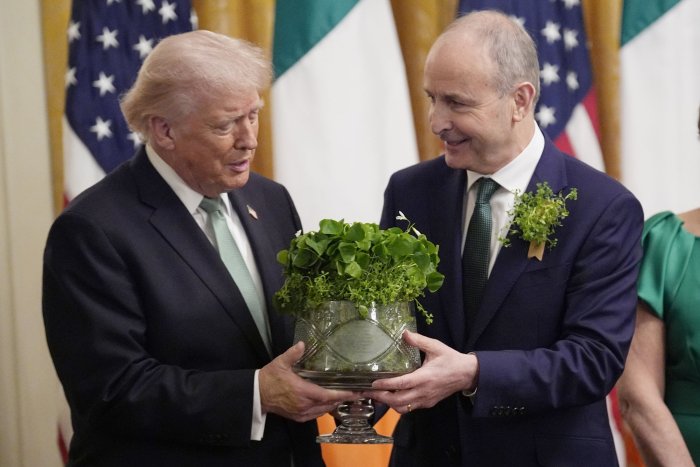
President Donald Trump receives a bowl of shamrocks from Irish Taoiseach Micheal Martin to celebrate St. Patrick’s Day at the White House on Tuesday. Photo by Yuri Gripas/UPI | License Photo

Source link

How Los Angeles’s Iranian diaspora is confronting the US war on Iran | US-Israel war on Iran News

Concerns over US involvement

The war has reignited a debate within the Iranian diaspora about what role the US should play in Iran’s future.

This question is more than a distant geopolitical issue for Iranians in Los Angeles.

Many residents explained that their family histories had been shaped by US involvement in the region, whether it was through US support for Iran’s fallen monarchy or through the US decision to back Iraq’s invasion of Iran in 1980.

Aida Ashouri, a human rights lawyer who is running to be Los Angeles city attorney, was among those publicly condemning the latest US campaign in Iran at the city hall protest on February 28.

“This is a US imperialist war, and we have to make that clear,” she said. “Call a spade a spade. This war is not to liberate the women of Iran or the people of Iran.”

Ashouri was born during the Iran-Iraq war in the 1980s. Her hometown, Isfahan, was also bombed in June last year during the US and Israel’s 12-day war with Iran.

For Ashouri, it was telling that the US and Israel once again launched the first strike in the current conflict. For many legal experts, that made the conflict an unprovoked war of aggression, in violation of international law.

“A war implies two sides are actively engaged, but Iran has done nothing to be involved,” Ashouri said.

“This is a unilateral military invasion, an aggression of the United States and Israel. They are the ones with the power to end it by stopping the bombing.”

She and other protesters drew parallels between the current Iran war and the US-led wars in Iraq and Afghanistan, launched in 2003 and 2001, respectively.

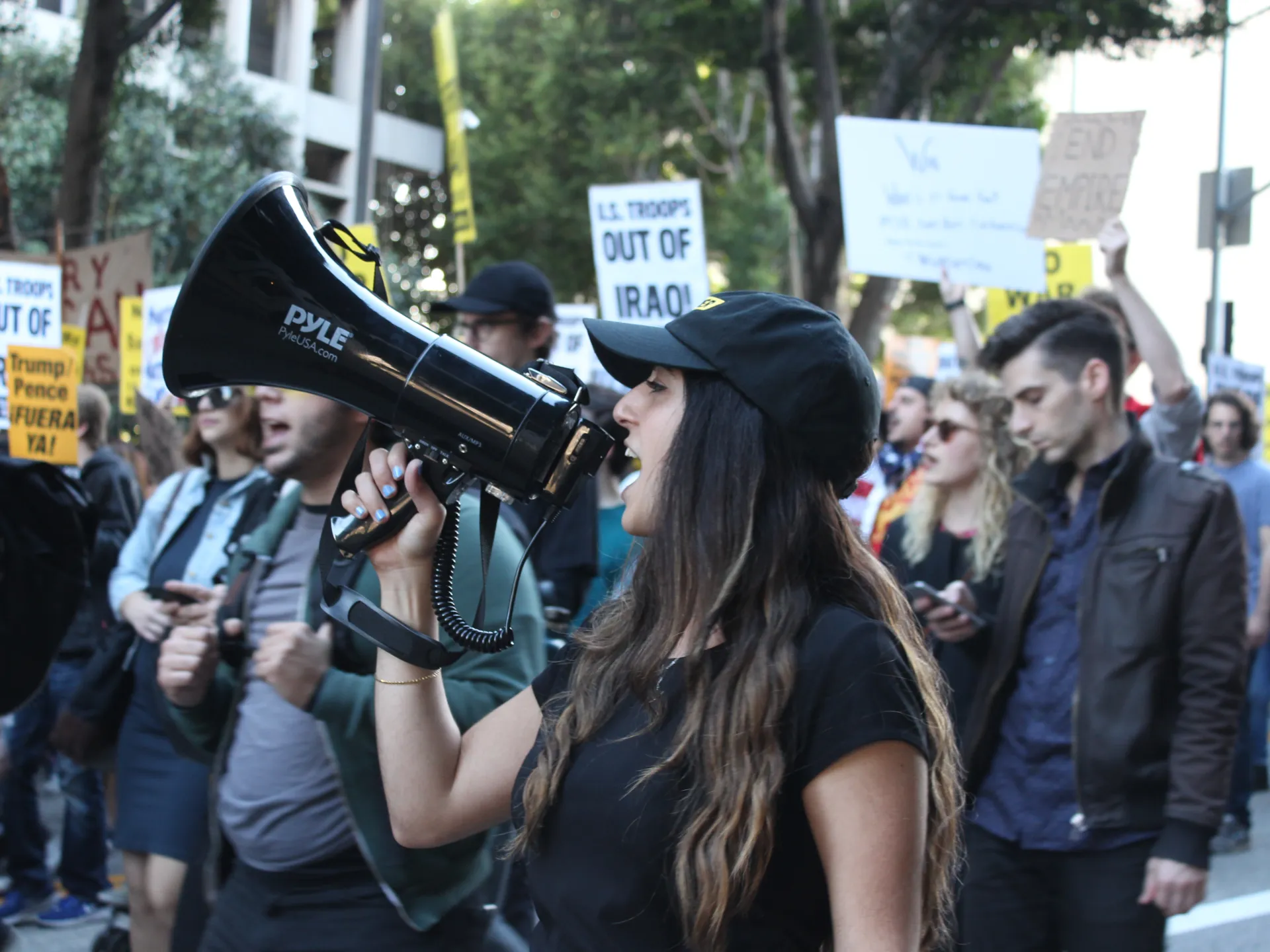
“I lived through the shadow of the war on terror, all the propaganda talking points,” said Shany Ebadi, an Iranian American antiwar organiser with the ANSWER Coalition. “What the Trump administration is saying reminds me a lot of the Iraq war.”

As someone who follows the news closely, Ebadi remembers feeling alarm when the first strikes were launched in February.

“When I got the breaking news notification of the initial attack, my whole body felt paralysed. I felt anger and frustration,” she said.

She and Ashouri both said they fear the military operation in Iran could spark a regional war that might further destabilise not just Iran, but the entire Middle East.

“I fear that war will repeat the disasters seen in Palestine, Iraq, Libya, and Afghanistan,” Ashouri said, listing countries targeted in the US’s “war on terror” over the past two and a half decades.

The question of whether bombs can pave the way to freedom in Iran is a simple one for Ashouri and her fellow antiwar activists. The answer, they say, is simply no.

Source link

Trump’s failed strong-arming of allies on Iran shows that pressure is losing its effect

We’ve long had your back, now it’s our turn. That is how the famously transactional President Trump is framing his demands that allies help him with the Iran war. He wants to call in IOUs for decades of U.S. security guarantees.

The string of refusals indicates his stock of European goodwill is low. He has put allies through the wringer since returning to the White House, bullying them over tariffs, Greenland and other issues, and disparaging the sacrifices their soldiers made alongside U.S. troops in Afghanistan.

Now he’s demanding — not just requesting — that they send warships to help the U.S. unblock the Strait of Hormuz, through which a fifth of the world’s traded oil passes — essentially mop up behind the conflagration that he and Israel ignited in the Middle East.

The reply has been a “global raspberry.”

That’s how a veteran French defense analyst, François Heisbourg, described allied responses.

No close ally has come forward with immediate help. Britain is flat-out refusing to be drawn into the war. France says the fighting would have to die down first. Others are non-committal. China, which is not an ally but was also asked to help, is ignoring Trump’s call.

“This is not Europe’s war. We didn’t start the war. We were not consulted,” European Union foreign policy chief Kaja Kallas said Tuesday.

Trump’s frustration with the ‘Rolls-Royce of allies’

Trump has singled out the refusal from the United Kingdom. Prime Minister Keir Starmer cultivated ties with Trump and reached an early trade deal with the administration, but is now among allies who refuse to join a regional war with no clear endgame.

The U.K. “was sort of considered the Rolls-Royce of allies,” Trump said Monday, adding that he’d asked for British minesweeping ships.

“I was not happy with the U.K,” Trump said. “They should be involved enthusiastically. We’ve been protecting these countries for years.”

Starmer said Britain “will not be drawn into the wider war” and that British troops require the backing of international law and “a proper thought-through plan” — suggesting those were not in place.

He initially refused to let U.S. bombers attack Iran from British bases before accepting their use for strikes on Iran’s ballistic missile program.

Retired Lt. Gen. Ben Hodges, former commanding general of the U.S. Army in Europe, said allies are “looking at the United States in a way that they never have before. And this is bad for the United States.”

Having previously appeased Trump, some European leaders are “starting to realize that there’s no benefit or value in using flattery,” he said.

European leaders say it’s not their war

Going to war without consulting allies was in keeping with Trump’s America-first outlook.

“My attitude is: We don’t need anybody. We’re the strongest nation in the world,” he said Monday.

But failing to get an international mandate, as the U.S. did before intervening in the 1990 Gulf War, is boomeranging.

“It is not our war; we did not start it,” German Defense Minister Boris Pistorius said. “We want diplomatic solutions and a swift end to the conflict. Sending more warships to the region will certainly not contribute to that.”

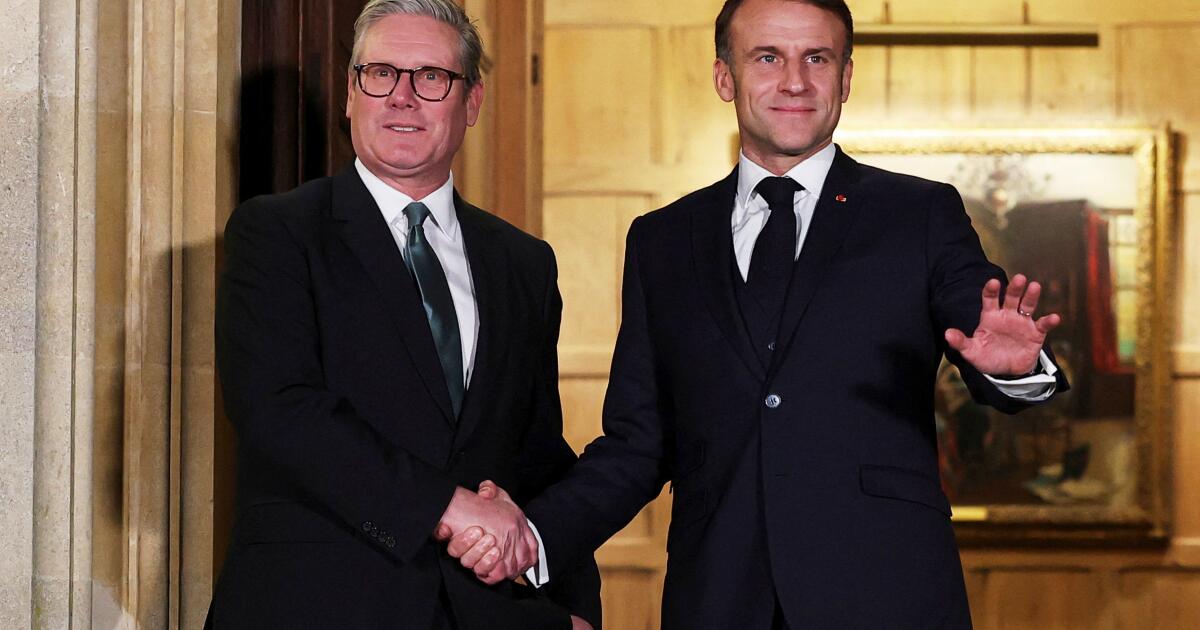
French President Emmanuel Macron envisions possible naval escorts in the Strait of Hormuz — but only once fighting has died down.

“France didn’t choose this war. We’re not taking part,” he said.

After bruising tariff battles with Trump last year, the first months of 2026 have further strained alliances. Trump’s renewed pressure for U.S. control of Greenland, including a tariff threat against eight European nations, and his false assertion that allied troops avoided front-line fighting in the Afghanistan War, upset partners in the NATO military alliance.

“Allies, or at least the Europeans, aren’t willing to be at the beck and call of a demand from Donald Trump,” said Sylvie Bermann, a French former ambassador to China, the U.K. and Russia.

“And even in asking for a helping hand, he is doing so in a brutal manner, saying: ‘You’re useless, we’re the strongest, we don’t need you, but come,’” she said.

A dangerous mission

Retired naval officers say that unblocking the Strait of Hormuz with military escorts while the war rages and without Iran’s consent would be dangerous.

France, which has rushed its Charles de Gaulle aircraft carrier to the Mediterranean, is working with other countries to prepare such a mission once the air war has subsided. French military spokesman Col. Guillaume Vernet said any escorting would be conditional on talks with Iran, and Macron has publicized two calls in eight days with Iranian President Masoud Pezeshkian.

That has won points with Trump.

“On a scale of zero to 10, I’d say he’s been an eight,” Trump said Monday. “Not perfect, but it’s France. We don’t expect perfect.”

But he’s fuming at other allies.

“We will protect them, but they will do nothing for us, in particular, in a time of need,” Trump said Tuesday.

Trump has leverage, including in Ukraine

Allies in Europe and Asia need oil, gas and other products from the Middle East to flow again. That gives Trump some leverage.

Allies also know from experience that resisting Trump carries risks of retaliation.

“It really could be anything. Are the Europeans prepared for that?” asked Ed Arnold, a former British army officer and now a researcher at the Royal United Services Institute, a London think tank.

European allies need Trump’s continued blessing for U.S. weaponry, intelligence, and other support for Ukraine, as well as financial pressure on Russia. The U.S. has started to chip away at some sanctions on Moscow by temporarily allowing shipments of Russian oil to ease shortages stemming from the Iran war. Allies also want him to reengage in talks to end the war.

“That was what kept European leaders quiet for a lot of last year in the face of the rhetoric and actions,” said Amanda Sloat, a former U.S. national security adviser who now teaches at Spain’s IE University.

“It is also the thing that is making them a little bit nervous now.”

Leicester and Burrows write for the Associated Press. Burrows reported from London. AP journalists Jill Lawless in London, Lorne Cook in Brussels, Suman Naishadham in Madrid, Geir Moulson and Kirsten Grieshaber in Berlin, Simina Mistreanu in Taipei, Taiwan, and Mari Yamaguchi in Tokyo contributed to this report.

Source link

Japan’s leader heads to Washington for a visit complicated by the Iran war fallout

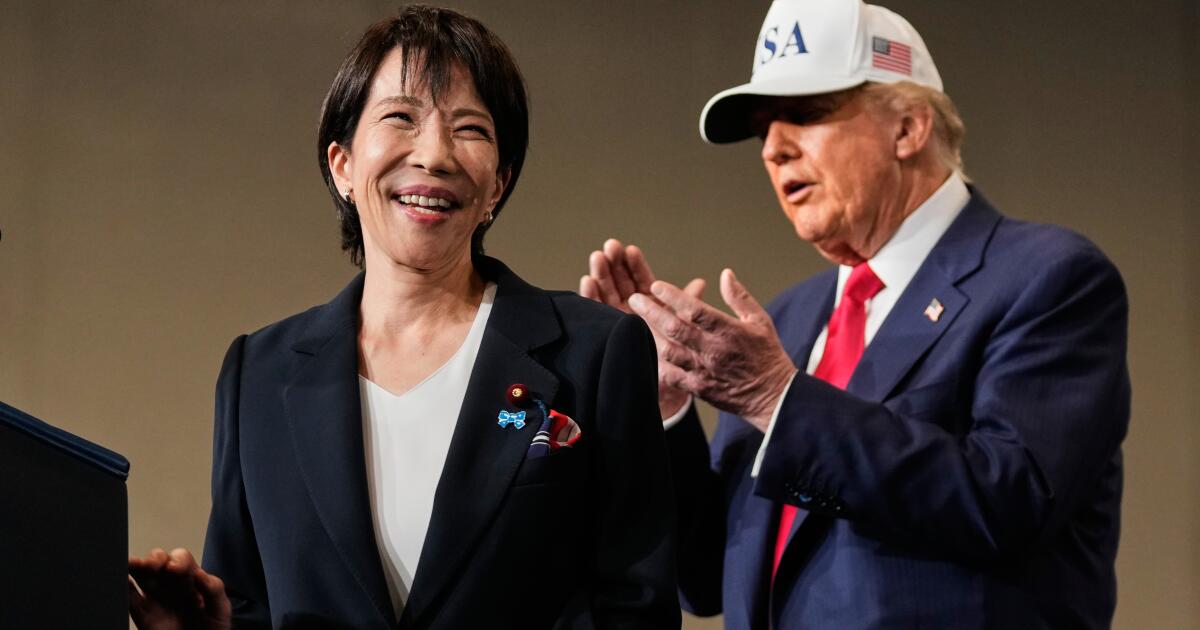
Japanese Prime Minister Sanae Takaichi is traveling Wednesday to the United States for what she expects to be a “very difficult” meeting with President Trump after he called on Japan and other allies to send warships to secure the Strait of Hormuz.

The three-day visit to Washington was originally expected to focus on trade and strengthening the U.S.-Japanese alliance as China’s influence grows in Asia. It is now expected to be overshadowed by the war the United States and Israel launched against Iran on Feb. 28.

”I think the U.S. visit will be a very difficult one, but I will do everything to maximize our national interest and to protect the daily lives of the people when the situation changes daily,” Takaichi told parliament on Wednesday, hours before her departure.

Takaichi held her first meeting with Trump in October in Tokyo, days after becoming Japan’s first female prime minister. A hard-line conservative, Takaichi is a protege of former leader Shinzo Abe, who developed a close friendship with Trump.

Her initial plan was to focus largely on China and strengthen the Japan-U.S. alliance ahead of Trump ‘s highly anticipated diplomatic trip to China that had been planned for months. The White House announced Tuesday that it is being delayed due to the war in the Middle East.

Takaichi will be in the hot seat figuring out what best to offer to Trump. Experts say showing commitment and progress in investment deals is key to a successful summit.

Japanese officials say the two sides will work to deepen cooperation in regional security, critical minerals, energy and dealing with China.

No plan to send warship to the Strait of Hormuz

A key U.S. ally in Asia, Japan has carefully avoided clear support for the U.S.-Israel strikes on Iran or a decision over a warship deployment. That’s mainly because of Japan’s constitutional constraints but also due to a legal question over the U.S. action and strong public opinion against it.

She told parliament that Japan hopes to see a de-escalation of the war, which has disrupted deliveries of oil and gas that Japan is highly dependent on.

“Without early de-escalation of the situation, our economy will be in trouble,” she said. “Early de-escalation is important for both the U.S. and global economy.”

Japan also hopes to secure its traditional ties with Iran, where most of Japanese oil imports come from.

Takaichi and her ministers have denied that Washington officially requested Japanese warships sent to the Strait of Hormuz. Trump on X asked a number of countries, including Japan, to volunteer. He then said he no longer needs them, complaining about a lack of enthusiasm.

That takes some pressure off Takaichi.

“We have no plans to send warships right now,” Takaichi told the parliamentary session Wednesday. A dispatch for survey and intelligence missions are possible but only after a ceasefire, she said. Some Japanese experts have commented that minesweeping would be a mission that the country could carry out when hostilities end.

“I will clearly explain what we can do and cannot do based on the Japanese law,” Takaichi said. “I’m sure (Trump) is fully aware of the Japanese law.”

China and security

Takaichi wants to discuss China’s security and economic coercion and ensure the U.S. commitment in the Indo-Pacific region, especially as some U.S. troops stationed in Japan are being shifted to the Middle East — a change seen by Japan as a potential risk for Asia as China’s clout grows.

Takaichi plans to reassure Trump of Japan’s military buildup, emphasizing the acceleration of long-range missile deployment to enhance offensive capabilities. This breaks from Japan’s postwar self-defense-only principle and reflects closer alignment with the U.S.

At the summit, Takaichi is expected to convey Japan’s interest in joining America’s “ Golden Dome “ multi-billion dollar, multi-layered missile defense system.

Japan considers China a growing security threat and has pushed a military buildup on southwestern islands near the East China Sea.

Takaichi has pledged to revise Japan’s security and defense policy by December and seeks to further bolster Japan’s military with unmanned combative weapons and long-range missiles.

Her government is to scrap a lethal arms exports ban in the coming weeks to promote Japan’s defense industry and cooperation with the United States and other friendly nations.

Oil in Alaska, rare earths in Japan

A resource-poor nation, Japan is seeking to diversify oil suppliers and is finalizing a Japanese investment for increased oil production in Alaska and stockpiles in Japan, according to media reports. A Japanese investment in small modular reactors and natural gas in the U.S. is also a possibility.

If agreed, the projects would be part of a $550 billion investment package that Japan pledged in October. In February, the two sides announced Japan’s commitment to the $36 billion first batch of projects — a natural gas plant in Ohio, a U.S. Gulf Coast crude oil export facility and a synthetic diamond manufacturing site — whose progress is also to be disccused with Trump.

Japan reportedly plans to propose a joint development of rare earths discovered in undersea soil around the remote Japanese island of Minamitorishima as part of the investment package.

Diplomatic and trade disputes have escalated further since Takaichi’s comment that any Chinese military action against Taiwan could be grounds for a Japanese military response.

Yamaguchi writes for the Associated Press.

Source link

Israel says it killed Iranian intelligence chief Khatib | US-Israel war on Iran

NewsFeed

Israel’s Defence Minister Israel Katz said an overnight strike killed Iran’s Intelligence Minister Esmail Khatib. There has been no confirmation from Iran but Katz says Israel’s military is authorised to target senior Iranian officials without additional approval from the government.

Source link

How Iran defied Trump threats to emerge as Strait of Hormuz gatekeeper | US-Israel war on Iran News

As United States President Donald Trump tries to build a coalition of navies willing to open the Strait of Hormuz, some countries are negotiating safe passage directly with Iran, underscoring a new de facto reality, analysts say: Regardless of military results, Tehran is calling the shots on who gets to use the world’s most important energy waterway.

After US-Israeli strikes on Iran began on February 28 and killed Supreme Leader Ali Khamenei, the Iranian military leadership responded by focusing on its most potent form of leverage – Iran’s geography. The country controls the northern shore of the Strait of Hormuz, through which 20 percent of global crude oil and natural gas supplies pass. It is 33km (20 miles) wide at its narrowest point, so any naval force that wants to cross it becomes easy prey for Iranian attacks coming from the mainland.

Recommended Stories

list of 3 itemsend of list

Considering insurance companies’ low appetite for risk, it took relatively few attacks on vessels in the strait – or just the threat of them – to undermine market confidence and send insurance premiums shooting up, causing a near paralysis in maritime traffic. About 20 vessels have been attacked since the start of the war.

“Iran has effectively proven that it dictates the terms of passage through the strait. They have now shown they are the gatekeeper of this important chokepoint. This will elevate the status of Iran in the geography of the Gulf,” said Andreas Krieg, an associate professor in Security Studies at King’s College London and a fellow at King’s Institute of Middle Eastern Studies. This will be the new reality for the foreseeable future, he added.

Meanwhile, crude prices have risen above $100 a barrel, more than 20 percent higher than pre-war prices, forcing countries to make the biggest releases of emergency reserves in history. Gas prices have risen by more than 40 percent since the war began.

Trump initially floated the idea of ordering the US Navy to escort vessels through the waterway. He then appealed to some countries to send warships and warned NATO members they would face “a very bad” future if these allies failed to help in opening the strait. But the appeal was either turned down or received noncommittal responses. Japan said it had no plans to deploy naval vessels. Australia ruled out sending ships. The United Kingdom said it would not be drawn into the wider war. Germany sent a clear message: “This is not our war”.

Others decided to take action – but not of the kind that Trump asked for. On Saturday, two India-flagged gas tankers passed through the strait after days of negotiations between New Delhi and Tehran, including a phone call between Indian Prime Minister Narendra Modi and Iranian President Masoud Pezeshkian. Ships from Pakistan, Turkiye and China also have transited through the Strait of Hormuz. The Financial Times has reported that Italy and France have also reached out to Iran for deals although Italian authorities have rejected making such an overture.

Meanwhile, Windward, a maritime intelligence tracking group, said that while traffic in the strait on Tuesday remained 97 percent below average, a growing number of ships have been passing through Iran’s territorial waters, suggesting that Tehran is allowing “permission-based transit”.

‘It is up to us to decide’

There is a precedent for US naval forces to escort convoys through the strait dating back to the Iran-Iraq War in the 1980s. But today’s scenario is different, experts said. Back then, the US, while it was backing Iraqi leader Saddam Hussein, was not a direct party to the conflict. Iran was still in a post-revolutionary process of consolidating power, and its Islamic Revolutionary Guard Corps was nowhere near as organised as it is today.

Today, Iran has drones that its factories are capable of producing on a large scale and has been using them. Iranian forces could also use small boats to assault tankers, deploy mines and engage in other guerrilla-style tactics. While there are conflicting reports on whether Iran has placed mines in the strait, experts said it would be a counterproductive move for Tehran because it would disrupt the passage for any ships – Iranian vessels included – and it would take away from Tehran the power to choose who may pass.

Iranian officials are aware of their geographic advantage. “This is up to our military to decide,” Iranian Foreign Minister Abbas Araghchi said on Sunday, referring to who will be allowed to use the strait.

Pro-government figures increasingly frame the Strait of Hormuz as a strategic bargaining tool beyond the war itself, suggesting the waterway could be used to extract compensation, sanctions relief or broader economic concessions after the war, Hamidreza Azizi, an expert on Iran and visiting fellow with the German Institute for International and Security Affairs, commented on X.

Recent attacks seem to suggest that Iran wants to increase its pressure on the energy market.

On Tuesday, a drone attack caused a fire at the port of Fujairah, the United Arab Emirates’s only crude export terminal. It is located outside the eastern entrance of the Strait of Hormuz, allowing its exports to circumvent it. The Iran-backed Houthis in Yemen could also further squeeze oil prices by disrupting the Bab al-Mandeb strait. That would force the US to operate across multiple maritime theatres. So far, the Houthis have not carried out such attacks, but this month, they said they were ready to strike at any ‌moment.

Still, the US is focused on applying maximum pressure on Tehran and forcing it to open the Strait of Hormuz. The US Central Command, the US military’s combat command responsible for operations in the Middle East, said early on Wednesday that its forces had used 2,270kg (5,000lb) bunker-busting munitions against antiship missile sites along Iran’s coastline near the Strait of Hormuz.

Trump has also ordered amphibious ships carrying thousands of US Marines to move to the Middle East, and some experts believe the US might try to seize Kharg Island, a tiny piece of land in the northern Gulf where 90 percent of Iranian crude oil is exported from. The US has already bombed what it said were military sites on the island.

Such an operation, however, might do little to force Iran into opening the Strait of Hormuz, Krieg said. The island is 500km 310 miles) from the strait, and should the US take control of it, it would expose US Marines to Iranian fire. Should Iran see its key terminal being seized, it could also opt to mine the strait outright, having fewer reasons to allow some vessels to pass through.

“The issue with the Strait of Hormuz is really not a military one. … It’s a market issue, and confidence cannot be restored by the military. Confidence can be restored through diplomacy only,” Krieg said.

Source link

‘5 Lesbians Eating a Quiche’ becomes an immersive experience in L.A.

Anxieties due to war. A culture inhospitable to LGBTQ+ communities. And an underpinning of loneliness and suppressed yearning.

The play “5 Lesbians Eating a Quiche” is set in 1956, but its themes resonate in 2026. The United States is at war. Attacks on gay marriage and other LGBTQ+ rights remain a cornerstone of today’s conservative movement. A reimagining of the 2011 production, one popular with universities and fringe festivals, seeks to further modernize the show in which a morning gathering quickly turns into a stay in a Cold War-era bomb shelter after near nuclear annihilation.

When I arrived at the back room of a Glendale church, I was given a new name. It was clear that “Todd” was not welcome here. “Joan” turned out to be a suitable replacement, and I was immediately asked how my life had been since my husband had died. For on this night I would no longer be occupying the role of a straight white male. Every audience member is asked to take on the persona of a widow, for losing a husband appeared to be a perquisite to enter this meeting of the Susan B. Anthony Society for the Sisters of Gertude Stein.

How did he die, I was asked. “Ski accident,” I blurted out. “Yours?” A camping travesty that led to a bear mauling, I was told. Ad-libbing, in addition to quiche, was on the menu tonight. Metaphors, absurdities and seriousness intermingle in this production from New Forms LA and directed by Marissa Pattullo.

Pattullo’s vision for “5 Lesbians Eating a Quiche” ramps up the interactivity, seeking to transform a largely traditional proscenium show, albeit one with a few moments of fourth-wall breaking, into one that is centered around audience participation. Staged in a flex space without a tinge of irony at the Glendale Church of the Brethren, “5 Lesbians,” written by Evan Linder and Andrew Hobgood, has been reconstructed as a largely immersive production, that is one that asks audiences to lean in and interact.

An actor on all fours on a table eating a quiche.

Jessica Damouni’s Ginny Cadbury devouring breakfast in “5 Lesbians Eating a Quiche,” a show that unfolds as a giant metaphor.

(New Forms LA)

While there is a small stage, it is used sparingly. The five-person cast roams the room, sitting at various circular tables to blur the lines between script and improvisation. Typically a svelte 75-minute show, on the night I saw the production it swelled to about two hours, allowing time for drinks, mingling and, of course, the eating of a quiche. Pattullo has added an intermission, with quiches courtesy of Kitchen Mouse and Just What I Kneaded included in the ticket.

For quiche, I was told often, was the primary topic of conversation at the Easter-timed meeting, so much so that it was clear within moments that this was a gathering not of breakfast enthusiasts but of the repressed. The hidden meaning is no secret; it’s in the title of the play.

“It’s a giant metaphor,” Pattullo, 30, says. The show, she adds, “keeps finding ways to make sense with the times, whether it’s Trump being elected, or we’re at war. Or gay marriage. All of those things. A bomb going off and being trapped inside. It speaks to whoever is watching it.”

Pattullo, who splits time building New Forms LA and serving tables at Los Feliz’s Little Dom’s, first discovered the show while in college in the Midwest. It immediately resonated, and Pattullo has been tinkering with ways to perform it live ever since. During the worst of the COVID-19 pandemic, she staged an online version of the show, and debuted it as an immersive production last winter. It’s back for two weekends this month.

“5 Lesbians” makes a relatively smooth transition to the immersive format. Perhaps that’s because the audience, in the script, is cast as attendees of the Susan B. Anthony Society for the Sisters of Gertude Stein’s brunch meeting, whose motto is “no men, no meat, all manners.” For about the first 30 minutes of the show we largely interact with the actors. Dale Prist (Nicole Ohara) has hidden ambitions. Vern Schultz (Chandler Cummings) seems ready for the group to cut its charade. Lulie Stanwyck (Noelle Urbano) is fighting so hard to stay prim and proper that she feels on the verge of bursting.

“I really like to play,” Pattullo says, referencing how “5 Lesbians” lends itself to improvisation. “Some of the girls I think are very ‘stick to the script.’ I’m like, ‘Stray from the script.’ If people come in late, call them out. If people are talking, call them out. You can adjust and improvise in immersive theater. Having a script but being able to break from it, is really fun for me. It tickles me.”

Three actors in 1950s period garb surround a table with breakfast.

Wren Robin (Emily Yetter), Vern Schultz (Chandler Cummings) and Lulie Stanwyck (Noelle Urbano) protect breakfast in “5 Lesbians Eating a Quiche.”

(New Forms LA)

There’s an underlying tension in the show because it walks a line between silliness and graveness. Ultimately, “5 Lesbians” is about finding joy in dark times, and moments inspire uncomfortable laughter, such as jokes about gay marriage being legal in four years’ time (1960) or Ginny Cadbury (Jessica Damouni) devouring a quiche in a way that leaves nothing to the imagination. But it’s also a show about how stressful moments can bring about vulnerability and community, as the whole church practically exhaled when Wren Robbin (Emily Yetter) finally let her hair down and expressed who she truly was.

“5 Lesbians Eating a Quiche”

“Even when we did it back when I was in college, Trump had just won, so it just feels like it’s keeping relevant,” Pattullo says. The timeliness, she says, makes it such an amusing play to perform.

Pattullo will sometimes, depending on cast availability, take on a role in the show. It’s a chance, she says, to amplify the play’s wackiness, which she believes helps puts audiences at ease and makes its difficult subject matter easier to digest. She tries to create the most outlandish tale possible for when relaying to guests one on one how her husband perished.

“My story was a raccoon attack,” she says. “Because my husband thought the raccoon was behaving with foreign intent, like the raccoon was a spy or something. It was just stupid.”

Or it was evidence of how immersive theater can delight when it deviates from the script.

Source link