Wave of Israeli air attacks launched as ground offensive widens in south where Hezbollah are fighting Israeli forces.
Published On 18 Mar 202618 Mar 2026
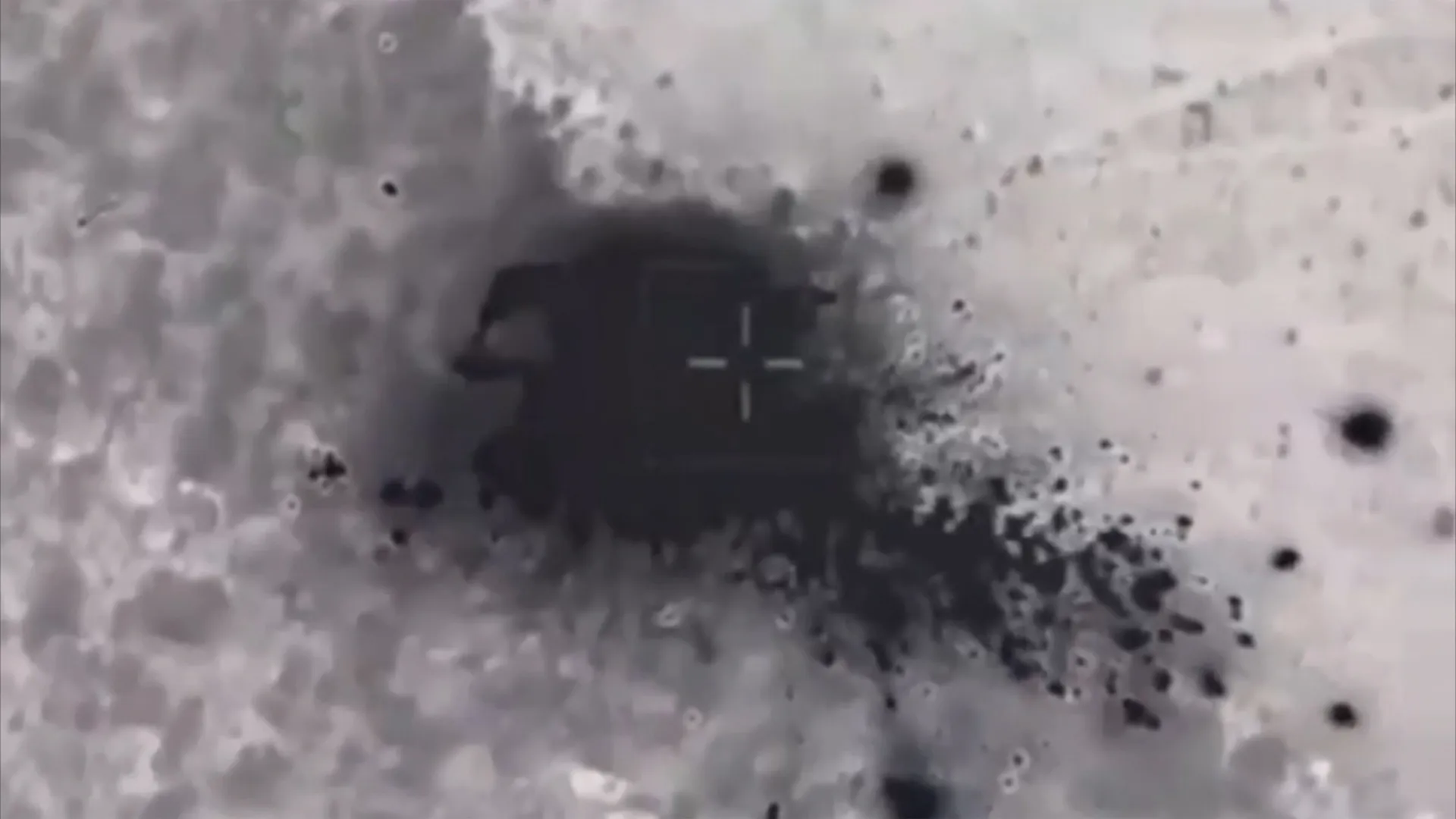
Israel has attacked a building in Bashoura, a neighbourhood in the heart of Beirut, Lebanon’s National News Agency (NNA) reported, with a blast and smoke rising over the area shortly after Israel issued an evacuation threat for the site.
The attack was part of a deadly wave of Israeli strikes across Lebanon that killed at least 20 people and wounded 24 on Wednesday, according to the country’s Ministry of Public Health, with raids stretching from the capital through southern and eastern parts of the country, a devastating front in the wider United States-Israel war against Iran embroiling the region.
Recommended Stories
list of 2 itemsend of list
At least six people were killed in the air strikes in Beirut, with dozens injured.
Al Jazeera’s correspondent in Beirut, Zeina Khodr, reported that intense Israeli attacks hit multiple regions across Lebanon, including central Beirut, overnight.
Speaking from in front of a 15-storey building struck in one of the attacks, Khodr said its lower floors had been targeted a week earlier. In the early hours, however, the structure was completely demolished, with the Israeli army claiming Hezbollah had stored cash there.
“You can see the widespread damage across this whole neighbourhood,” Khodr said.
Israel’s military said it had launched what it described as limited ground operations in southern Lebanon, issuing evacuation threats for residents of four towns near the Zahrani River and the Tyre area, warning them to head north immediately.
Lebanon’s NNA also reported strikes on Tyre and the nearby area of Al-Burj Al-Shamali in the pre-dawn hours.
At least four people were killed in an Israeli attack that targeted four houses in the town of Sahmar in eastern Lebanon’s Bekaa Valley.
The intensifying assault has now killed at least 912 people in Lebanon, including 111 children, and wounded more than 2,200 since Israel launched its offensive on March 2, according to Lebanese Health Ministry figures.
More than one million people have been forced from their homes. The United Nations warned on Tuesday that Israeli attacks on residential buildings and civilian infrastructure may constitute war crimes under international humanitarian law.
A spokesperson for the UN human rights office said that deliberately targeting civilians or civilian objects “amounts to a war crime”, adding that Israel’s sweeping displacement orders for southern Lebanon may themselves violate international law.
Khodr said that Hezbollah’s secretary general, Naim Qassem, last night laid down conditions for the war to end, including Israel stopping attacks, displaced people being permitted to return to their homes, those detained over the last two years by Israel being released and the Israeli army withdrawing.
Across southern Lebanon, Khodr said Hezbollah was “still present in the area, trying to repel the Israeli army’s advance”, adding that Hezbollah’s aim was not just territorial control of the region, but preventing Israel from gaining new positions in the country.
The conflict was ignited on February 28 when US and Israeli forces assassinated Iranian Supreme Leader Ali Khamenei in Tehran, prompting Hezbollah to launch rockets into northern Israel on March 2.
Israel has since killed more than 2,000 people across Iran and Lebanon in its attacks.
German Chancellor Friedrich Merz, a staunch Israeli ally, added his voice to growing international concern, warning that Israel’s ground offensive in Lebanon was an “error” that risked worsening what he described as an already dire humanitarian situation.
Qatar, UAE, Kuwait and Saudi Arabia report new blasts, interceptions, with war edging to 3-week mark.
Published On 18 Mar 202618 Mar 2026
Iran has fired missiles and drones at several Gulf Arab nations, which have sought to intercept them, in a now-daily fallout from the United States-Israel war launched on Iran nearly three weeks ago that has engulfed the Middle East with deaths, destruction, assassinations, and an energy crisis spreading far beyond the region.
Early Tuesday, Qatar’s Ministry of Defence said its armed forces intercepted a missile attack against the country.
Recommended Stories
list of 4 itemsend of list
The Kuwait National Guard said it shot down an unmanned aircraft at dawn. The statement came hours after the Kuwaiti army said it was intercepting hostile missile and drone attacks.
The UAE, Saudi Arabia and Bahrain have also reported intercepting missiles and drones in recent hours.
Saudi Arabia’s Ministry of Defense reported the interception and destruction of a drone in the Eastern Region.
Earlier Tuesday, the UAE Ministry of Defence said the country’s air defences were “currently responding to incoming missile and drone threats from Iran”. The announcement came four hours after another reported attack from Iran. Later, a loud bang was heard in Dubai as authorities said air defences were dealing with a missile threat.
Al Jazeera’s Zein Basravi, reporting from Dubai, said, “The UAE has been the hardest hit by Iran’s retaliation. For instance, there have been 3000 different projectiles – missiles and drones – fired at GCC countries by Iran in terms of its retaliation. More than half, well over half, have targeted places in the UAE. Overnight was no different … Multiple explosions heard throughout the city.
“That glow of defensive weapons and interceptions in the night skies, something that has become all too familiar, not just in Dubai, but in cities across the GCC. Once again seen over the skies here.
“Dubai’s media office confirming that they were the result of air defence interception operations,” he added.
There have been several deaths in the Gulf nations, where an economic effect is also being acutely felt since the war began.
Gulf economies bear brunt of Iran war
The economies of the Gulf are suffering some of the worst damage.
Iran has launched continuous attacks on Gulf states since the onset of the conflict on February 28, arguing that it is attacking military bases used by the US for the war. Gulf nations have rejected Tehran’s claims, insisting the attacks on them are unjustified.
The Iranian strikes have upended energy production and inflicted major disruption to tourism and travel, putting the region at risk of some of the most severe economic harm since the 1990-1991 Gulf War.
After nearly three weeks of war, the economic effect on the region has already been substantial.
Middle Eastern oil producers’ daily output declined from 21 million barrels to 14 million barrels after a little more than a week of conflict as they deal with the closure of the Strait of Hormuz, according to Rystad Energy.
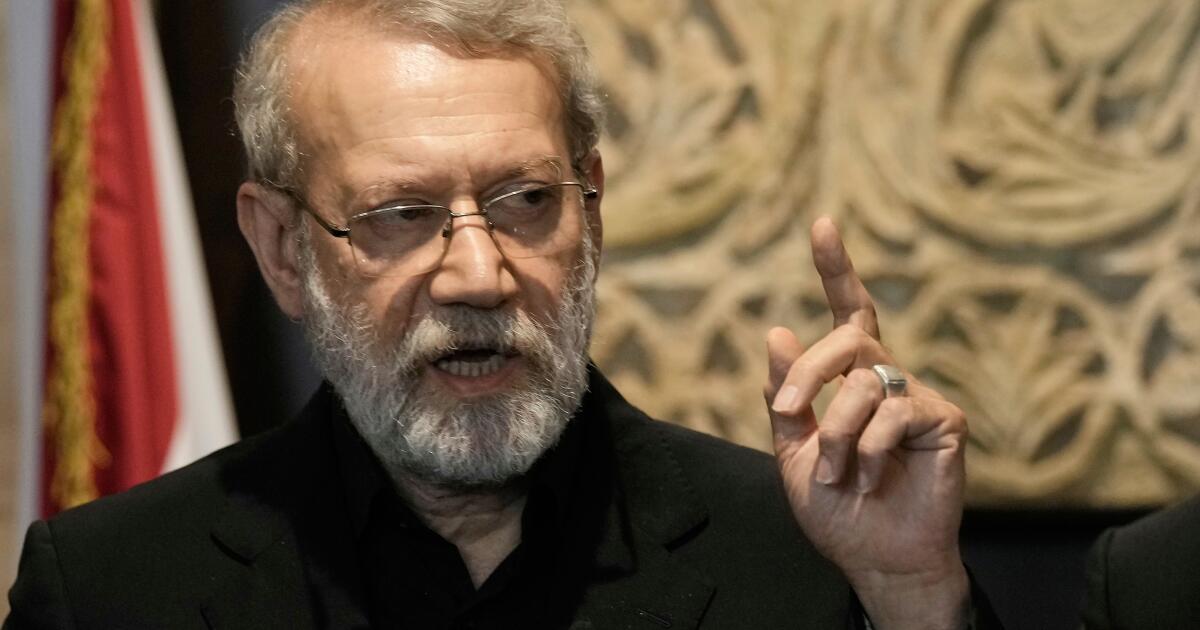
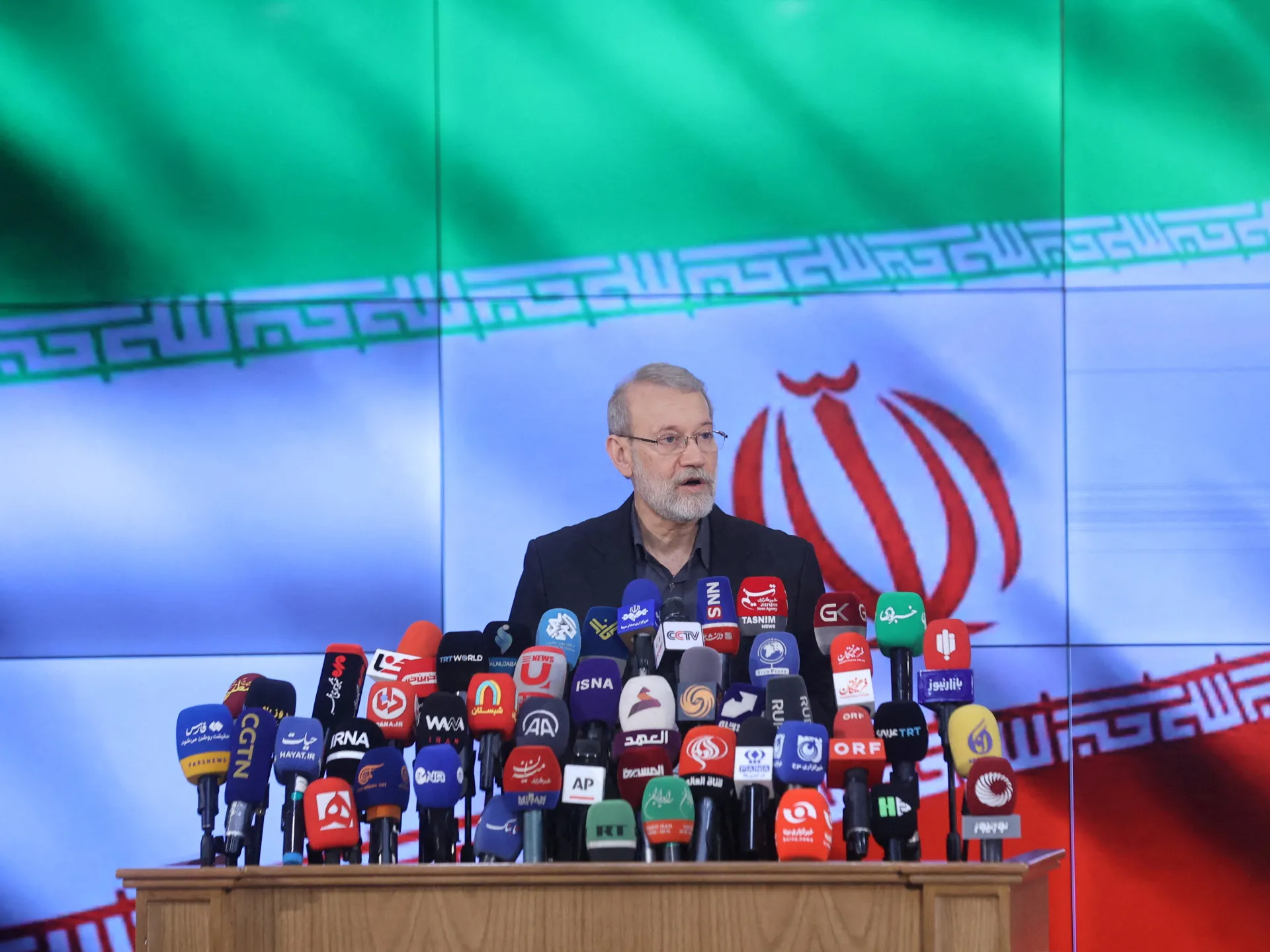
BEIRUT — Iran’s top security official, Ali Larijani, has been killed in an Israeli airstrike, a move that represents a palpable hit to an Iranian leadership that has shown little interest in compromise after almost three weeks of war with the U.S. and Israel.
Killing Larijani, who led Iran as de facto wartime leader after Supreme Leader Ayatollah Ali Khamenei died on the first day of the war, eliminates a veteran official seen as the consummate insider despite not having the religious credentials for the Islamic Republic’s highest offices. Israel, in an announcement Tuesday, said the attack occurred the night before.
For all his bellicose comments since the war began, Larijani was also seen as a pragmatist, and observers say his death might strengthen the resolve of what’s left of Iran’s leadership, rather than induce a willingness to compromise.
His post as secretary of Iran’s Supreme National Security Council gave Larijani control of the country’s top security body, where he tasked government forces with subduing anti-regime protests in January. Thousands of Iranians were killed.
Also killed in the Israeli strikes was Gen. Gholamreza Soleimani, the head of the Basij, the volunteer auxiliary wing of the Islamic Revolutionary Guard Corps and an integral part of the state’s ability to keep order.
“Larijani and the Basij commander were eliminated overnight and joined the head of the annihilation program, Khamenei, and all the eliminated members of the axis of evil, in the depths of hell,” Israeli Defense Minister Israel Katz said in a statement Tuesday.
Israeli officials have employed “axis of evil” to refer to Iran and its allies, including the militant groups Hamas and Hezbollah.
Larijani had served as parliamentary speaker for 12 years and became the point man on nuclear negotiations as well as relations with allies such as China and Russia. He often acted as the government’s representative in the media.
Iranian officials confirmed that Larijani and Soleimani had been killed. They said Larijani’s son, the head of his office and several guards were also killed in the strikes.
Soon after Katz’s announcement, Iranian authorities released an undated note said to have been written by Larijani in which he honored Iranian sailors killed in a U.S. attack. The image of the note was also posted to Larijani’s account on X.
There was no explanation why the note was released and whether it is signified Larijani was still alive.
“We are undermining this regime in the hope of giving the Iranian people an opportunity to remove it,” said Israeli Prime Minister Benjamin Netanyahu.
Netanyahu and President Trump have repeatedly called on ordinary Iranians to topple the government.
Though assassinating Larijani counts as yet another intelligence coup for Israel and the U.S., both may come to regret the loss of a figure who, despite his defiant rhetoric since the war began Feb. 28, was considered by some analysts as a realist.
His killing adds to the evisceration of Iran’s upper echelons, raising the question of who is left to negotiate an end to the war, or have enough influence to make Iran’s deep state accept compromise.
Some observers say that’s the point.
“Why did the Israelis take out Larijani in this moment? Because Netanyahu is focused on blocking Trump’s pathways for a ceasefire and follow-up negotiations with Iran,” said Ellie Geranmayeh, a senior policy fellow at the European Council for Foreign Relations, adding that “Larijani would have been the man to get that job done.”
Khamenei’s assassination, Geranmayeh said, had already empowered more hard-line figures in government, and Larijani’s death “could act as an accelerator to that path.”
“Israel seems to be turning its attention to targeting those that could push for a political solution to the current crisis,” she said.
Larijani’s death would add to the murkiness surrounding Iran’s leadership. After Khamenei was killed and it remained unclear who would replace him, Trump added to the uncertainty by saying that the country’s new leader would need his approval, but also that the U.S. had killed many of the leaders whom he would have deemed acceptable.
After Khamenei’s son, Mojtaba Khamenei, was named the new supreme leader, Trump expressed his displeasure but repeatedly dodged questions about what the transition under the younger Khamenei would mean for the U.S. war effort.
After the elder Khamenei’s death, Larijani emerged as a high-profile voice for Iran, saying that Trump must “pay the price” for the U.S. strikes on the country.
In response, Trump acted as if he didn’t know who Larijani was.
“I have no idea what he’s talking about, who he is. I couldn’t care less,” Trump told CBS News.
Benjamin Radd, a political scientist and senior fellow at the UCLA Burkle Center for International Relations, said Larijani was perceived to be “the last of the competent bunch” within the Iranian leadership — an intellectual who had a complex understanding of the geopolitical reality on the ground, who had negotiated with the U.S. in the past, and who was “adept at maneuvering” all the various parts of the Iranian power structure.
Radd said Larijani “lost that mantle of being the pragmatist” when he strongly backed the deadly January crackdown on protesters, for which he was “more responsible than anyone else.”
He “absolutely was responsible for a tremendous amount of carnage and death and destruction,” Radd said.
And yet, with his death, “all of that diplomatic, institutional experience” that he did have “is gone” from the Iranian leadership, Radd said.
Those left in power, he said, are “generally not the sharpest people, they’re not the people who understand the subtleties of diplomacy, of what negotiating with the U.S. is like.”
Bulos reported from Beirut and Rector from Colorado.
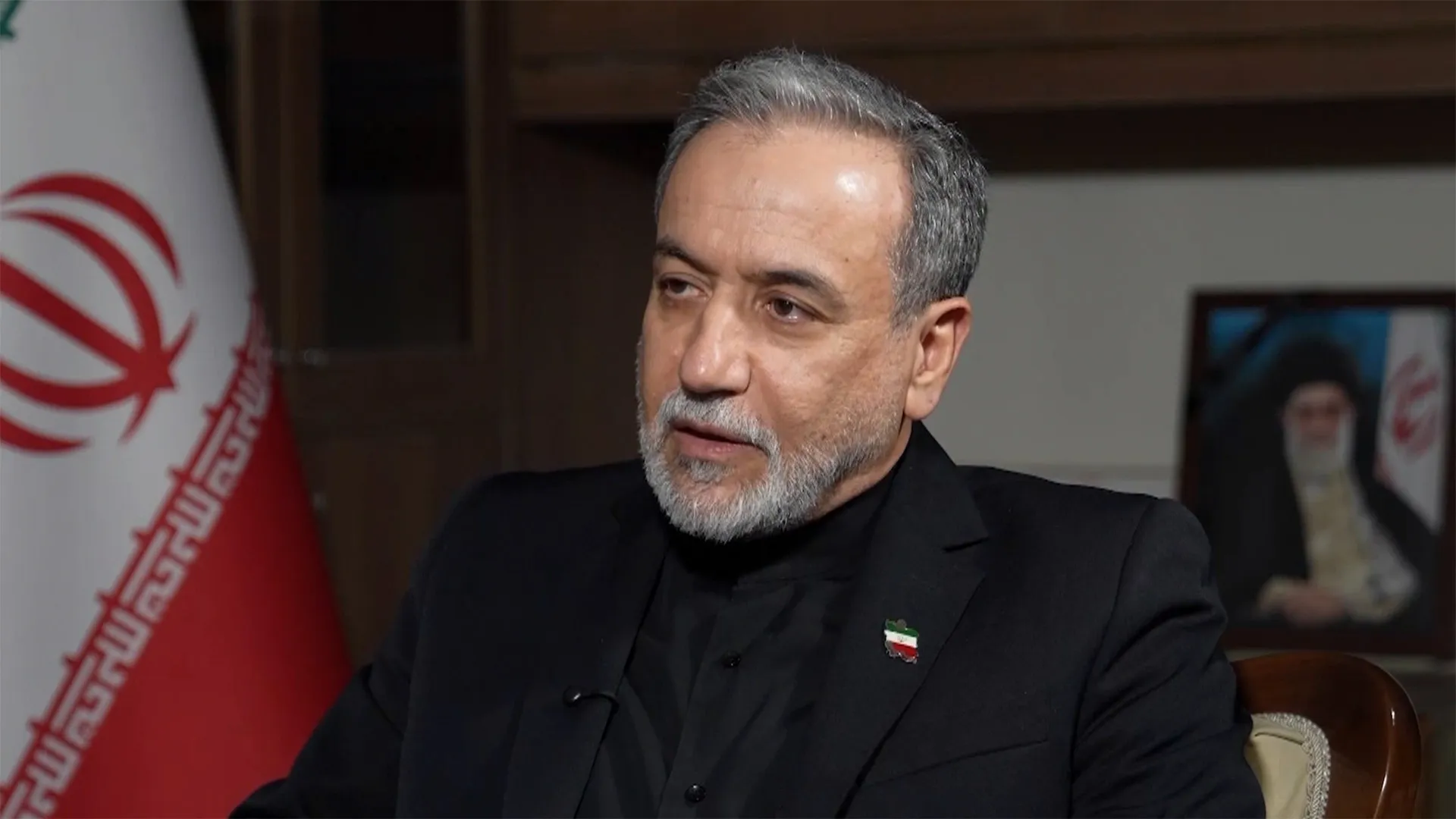
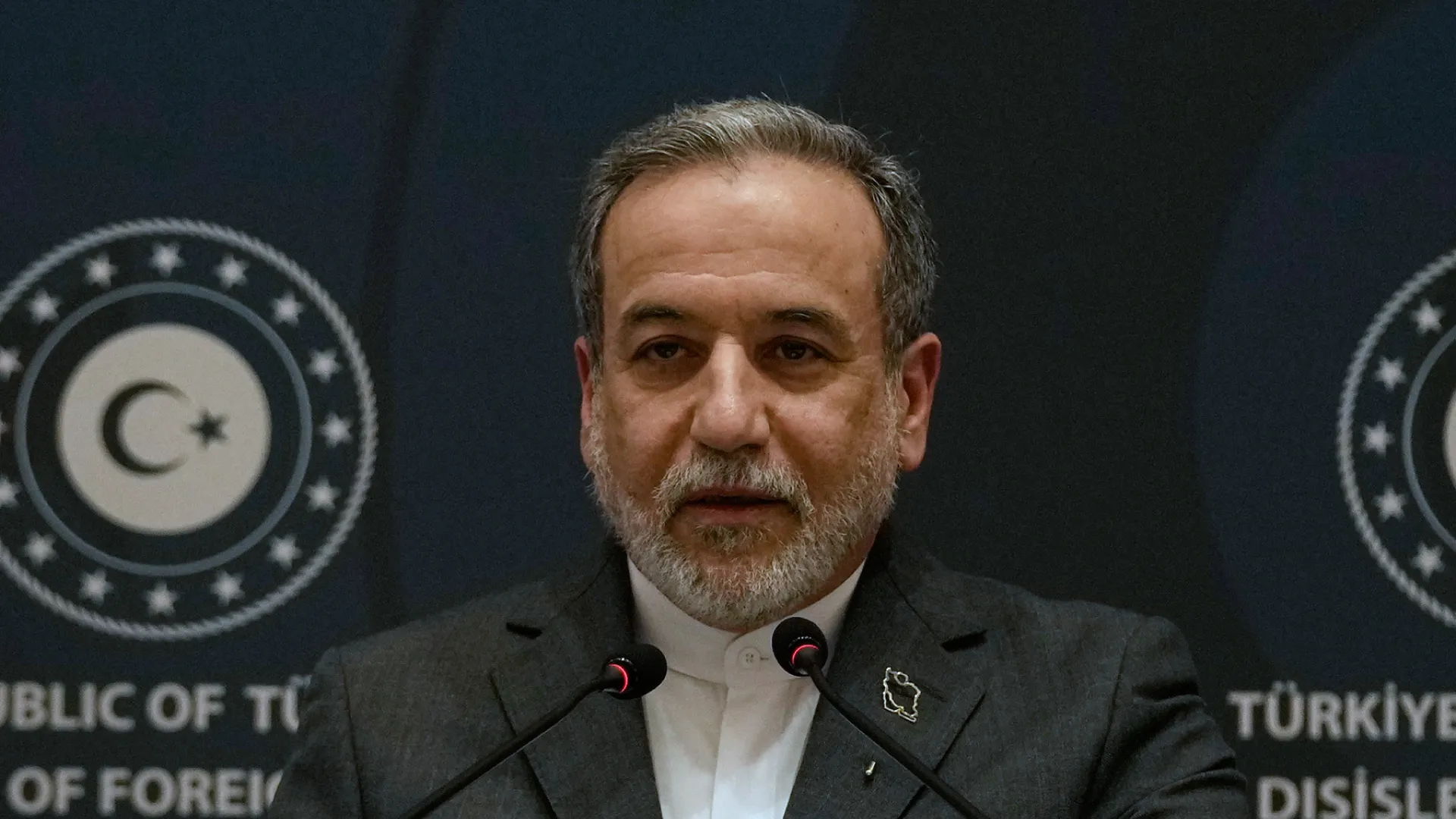
Iran’s foreign minister is pushing back after the killings of top officials Ali Larijani and Basij commander Gholamreza Soleimani. Abbas Araghchi says the Islamic Republic is built to withstand shocks, insisting that no single figure, no matter how powerful, can destabilise the system.
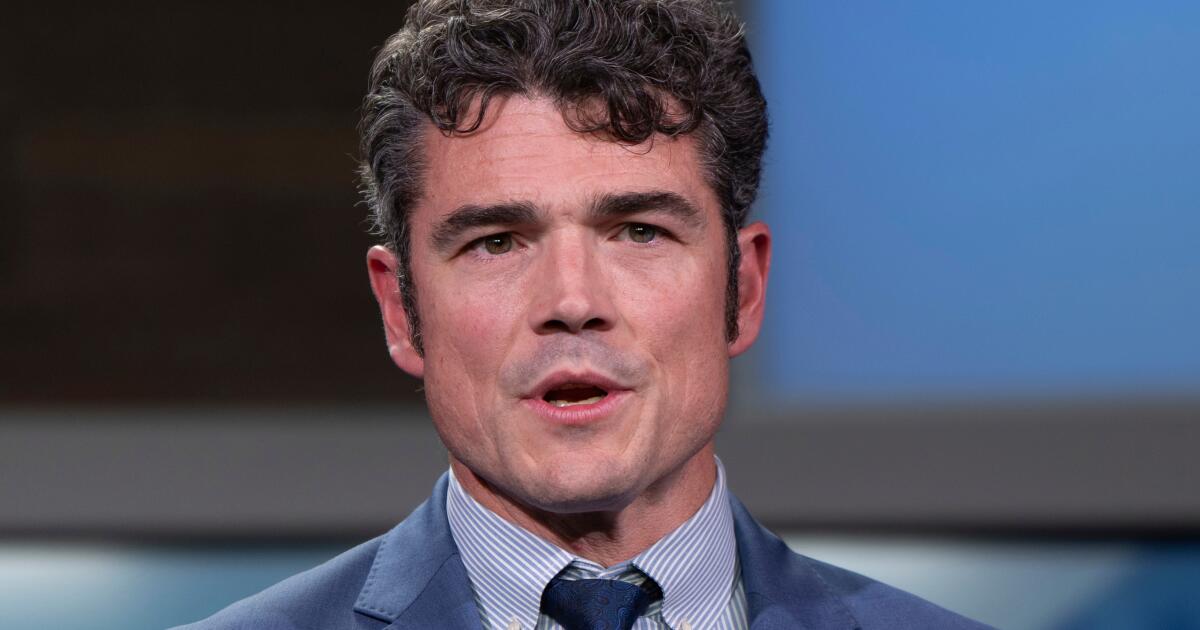
WASHINGTON — Joe Kent, the director of the National Counterterrorism Center, abruptly resigned Tuesday, becoming the most senior national security official to break publicly with the Trump administration over its military campaign against Iran.
In a statement posted on social media, Kent said he “cannot in good conscience” continue serving in the administration, contending that Iran had “posed no imminent threat to our nation” and that the United States had been drawn into the conflict through “pressure from Israel and its powerful American lobby.”
“I cannot support sending the next generation off to fight and die in a war that serves no benefit to the American people nor justifies the cost of American lives,” Kent wrote in a letter addressed to President Trump. “I pray that you will reflect upon what we are doing in Iran, and who we are doing it for.”
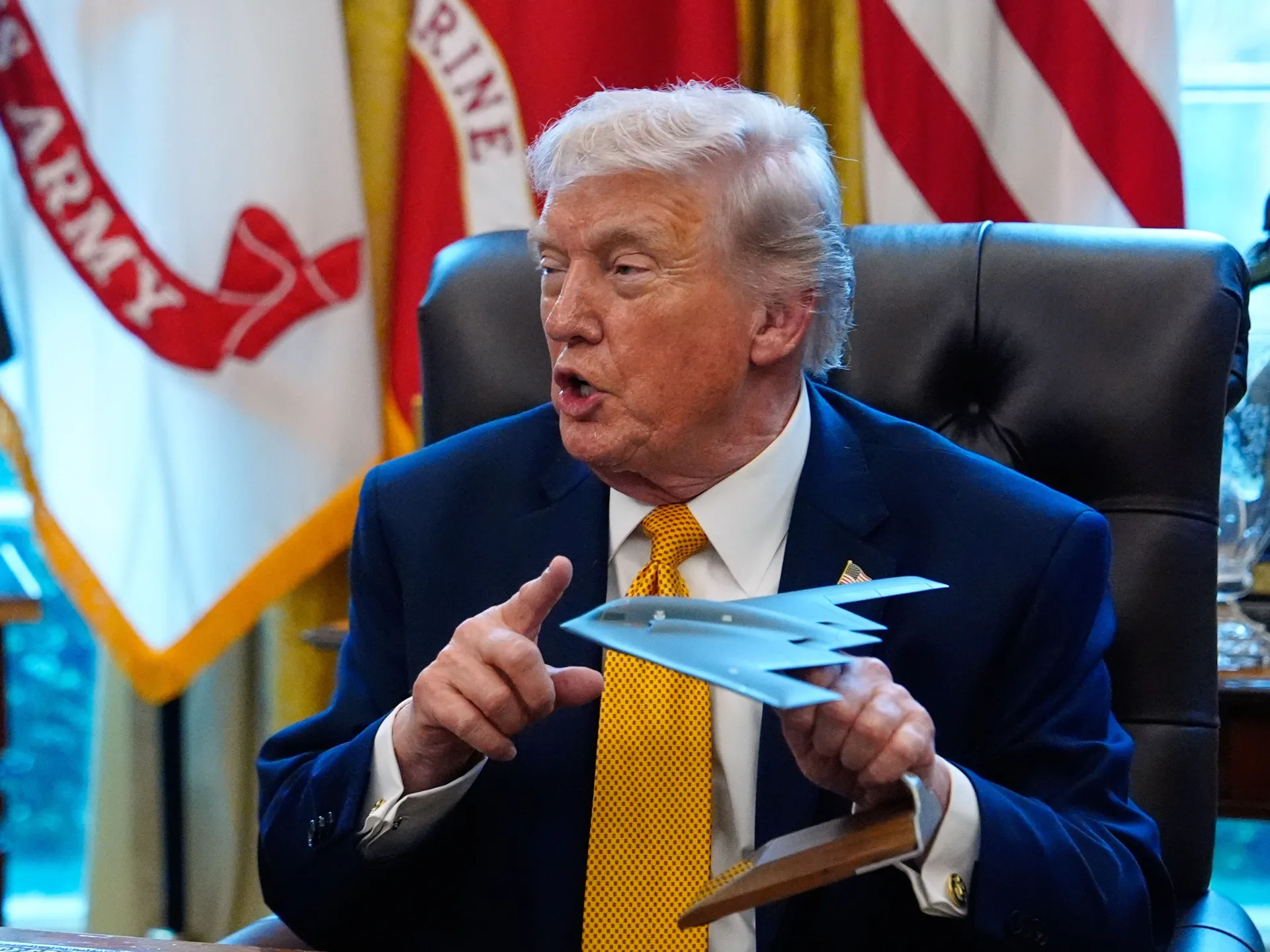
Trump, speaking in the Oval Office, dismissed Kent’s concerns, telling reporters that he had long believed the counterterrorism director — whom he nominated to the post in February 2025 — was “very weak on security.” The president insisted that Iran has been a threat to the U.S. “for a long time,” and said that it was a “good thing” Kent is leaving.
The resignation came at an uncertain moment for the administration. The war, which has repeatedly been sold to Americans as “short term” and contained, is now in its third week, with fraying alliances, renewed missile and drone fire on gulf Arab nations from Iran, new Israeli strikes on Iran and Lebanon, mounting casualties and no clear exit strategy.
“If we left right now it would take 10 years for them to rebuild,” Trump told reporters. “We’re not ready to leave yet, but we’ll be leaving in the near future. We’ll be leaving pretty much in the very near future.”
The uncertainty was compounded Tuesday by Israel’s killing of Ali Larijani, the head of Iran’s Supreme National Security Council, as well as Gholamreza Soleimani, the head of the Basij, Iran’s militia force.
Trump made reference to the Iranian officials killed without naming them, saying one was “their actual top” and the other was responsible for the killing of 32,000 Iranian protesters in recent weeks.
“It’s an evil group,” he said.
Effect of Larijani’s killing
Iranian officials confirmed the deaths of Larijani and Soleimani via state media Tuesday. In addition to killing the Basij leader, Israel reported striking more than 10 Basij posts, part of an effort to destroy the Islamic Republic’s ability to contain internal unrest and protests.
Benjamin Radd, a political scientist and senior fellow at the UCLA Burkle Center for International Relations, said Larijani’s killing would greatly diminish the Iranian diplomatic and institutional experience, as he was perceived to be “the last of the competent bunch” in power.
Those remaining in power are “generally not the sharpest people, they’re not the people who understand the subtleties of diplomacy, of what negotiating with the U.S. is like,” which clears a path for “a country run by a military junta” comprising Islamic Revolutionary Guard Corps leaders, Radd said.
“We’re really going to be moving more toward a military-style dictatorship — behind a clerical robe, if you will,” he said.
The battlefield developments have done little to reassure Washington’s closest allies, most of which have declined to join the fight despite Trump’s recent pleas to allied nations to send warships to help reopen the Strait of Hormuz, a crucial oil route that has been threatened by Iran’s war efforts.
In a social media post Tuesday, Trump said the United States had been informed by most of its allies in the North Atlantic Treaty Organization that they “don’t want to get involved” in the expanding Middle East war — and he claimed the American military no longer needs or wants their help.
“In fact, speaking as President of the United States of America, by far the Most Powerful Country Anywhere in the World, WE DO NOT NEED THE HELP OF ANYONE!” Trump wrote.
Trump cannot unilaterally remove the U.S. from NATO. In 2023, Sens. Tim Kaine (D-Va.) and Marco Rubio (R-Fla.) — who is now Trump’s secretary of State — successfully pushed a measure barring any president from removing the U.S. from the treaty organization without approval from the Senate or an act of Congress.
“The Senate should maintain oversight on whether or not our nation withdraws from NATO. We must ensure we are protecting our national interests and protecting the security of our democratic allies,” Rubio said at the time.
Some experts viewed Trump’s latest remarks about not needing NATO allies as a result of him having misplayed his hand at the start of the conflict with Iran, which has attempted to widen the war by targeting Gulf Cooperation Council nations in the region.
When Trump started demanding that many other nations join the U.S. in the war effort, or at least in safeguarding the Strait of Hormuz, it was “an attempt on Trump’s side to widen the war the other way,” Radd said, based in part on the fact that other nations, including China and in Europe, are much more reliant on oil from the region than the U.S.
However, it was a “clumsy” move by Trump given his alienation of NATO allies in the past, including during a major speech in Davos, Switzerland, in January, in which the president was “basically shaming and criticizing NATO and European states,” Radd said.
Calling on allies to “step up” after ridiculing them was “ham-handed,” Radd said.
Intelligence official’s departure
In Washington, Kent’s resignation exposed new divisions over the administration’s handling of the war.
On Capitol Hill, House Speaker Mike Johnson (R-La.) told reporters that he did not know where Kent was “getting his information” to conclude that Iran posed no imminent threat to the U.S. He said Trump administration officials in classified briefings have asserted that “they had exquisite intelligence and they understood that this was a serious moment for us.”
“The president felt that he had to strike first to prevent mass casualties,” Johnson said.
Several Democrats called on Kent to appear before Congress and tell the American people more about why the administration dragged the U.S. into war in Iran.
“If even officials like Joe Kent do not believe Iran posed an imminent threat, why are we sending more Americans to die in this war?” Rep. Ro Khanna (D-Fremont) wrote on X.
White House Press Secretary Karoline Leavitt said Kent’s letter contained “many false claims,” including that Iran posed no imminent threat to the U.S.
“This is the same false claim that Democrats and some in the liberal media have been repeating over and over,” Leavitt wrote on X. “As President Trump has clearly and explicitly stated, he had strong and compelling evidence that Iran was going to attack the United States first.”
She said that evidence, which has never been detailed publicly, “was compiled from many sources and factors,” and that Trump “would never make the decision to deploy military assets against a foreign adversary in a vacuum.”
Leavitt then repeated past justifications for the attack, including that Iran sponsors terrorism abroad and that it was building out its missile capabilities as “a shield” for protection as it continued to develop nuclear capabilities.
The press secretary previously said that Trump had a “feeling” that Iran was going to attack the U.S. or its assets. The president has alleged, without evidence, that Iran was within weeks of having a nuclear weapon.
Leavitt said the added assertion by Kent that Trump decided to attack Iran “based on the influence of others, even foreign countries, is both insulting and laughable.”
Kent, a former political candidate with connections to right-wing extremists, was confirmed in July as head of the National Counterterrorism Center, which analyzes and detects terrorist threats. Before joining the Trump administration, Kent ran two unsuccessful campaigns for Congress in Washington state. He also served in the military, serving 11 deployments as a Green Beret, followed by work at the CIA.
Democrats strongly opposed Kent’s confirmation in the Senate, in part because they were concerned about his ties to far-right figures and promotion of conspiracy theories. During his 2022 congressional campaign, Kent paid Graham Jorgensen, a member of the far-right military group the Proud Boys, for consulting work. He also worked closely with Joey Gibson, the founder of the Christian nationalist group Patriot Prayer, and attracted support from a variety of far-right figures.
During his Senate confirmation hearing, Kent refused to distance himself from a conspiracy theory that federal agents instigated the Jan. 6, 2021, attack at the U.S. Capitol, as well as false claims that Trump, a Republican, won the 2020 election over Democrat Joe Biden.
Democrats grilled Kent on his participation in a group chat on Signal where Trump’s national security team discussed sensitive military plans.
Republicans, meanwhile, were drawn to Kent’s experience in the military and intelligence.
Sen. Tom Cotton (R-Ark.), the GOP chair of the Intelligence Committee, said in a floor speech that Kent had “dedicated his career to fighting terrorism and keeping Americans safe.” On Tuesday, Cotton said that he disagreed with Kent’s “misguided assessment” on Iran.
“Iran’s vast missile arsenal and support for terrorism posed a grave and growing threat to America. Indeed, the ayatollahs have maimed and killed thousands of Americans,” Cotton said. “President Trump recognized this threat and made the right call to eliminate it.”
Other conservatives — including former Rep. Marjorie Taylor Greene and commentator Candace Owens — called Kent an “American hero.”
Ilan Goldenberg, a former Biden administration official who dealt with the Middle East, wrote on X that while he disagrees with the Iran war, Kent claiming that Israel pressured Trump into the conflict is “ugly stuff that plays on the worst antisemitic tropes.”
“Donald Trump is the President of the United States and he is the one ultimately responsible for sending American troops into harms way,” he said.
Ukrainian President Zelenskyy says Moscow and Tehran are ‘brothers in hatred’; claims Iran’s drones ‘contain Russian components’.
More than 200 Ukrainian military experts are in the Gulf region and wider Middle East helping governments in their defence against Iran’s drone attacks, Ukraine’s President Volodymyr Zelenskyy has said.
In an address to dozens of members of the United Kingdom Parliament in London on Tuesday, the Ukrainian leader said 201 Ukrainian anti-drone experts are in the region and another 34 “are ready to deploy”.
Recommended Stories
list of 4 itemsend of list
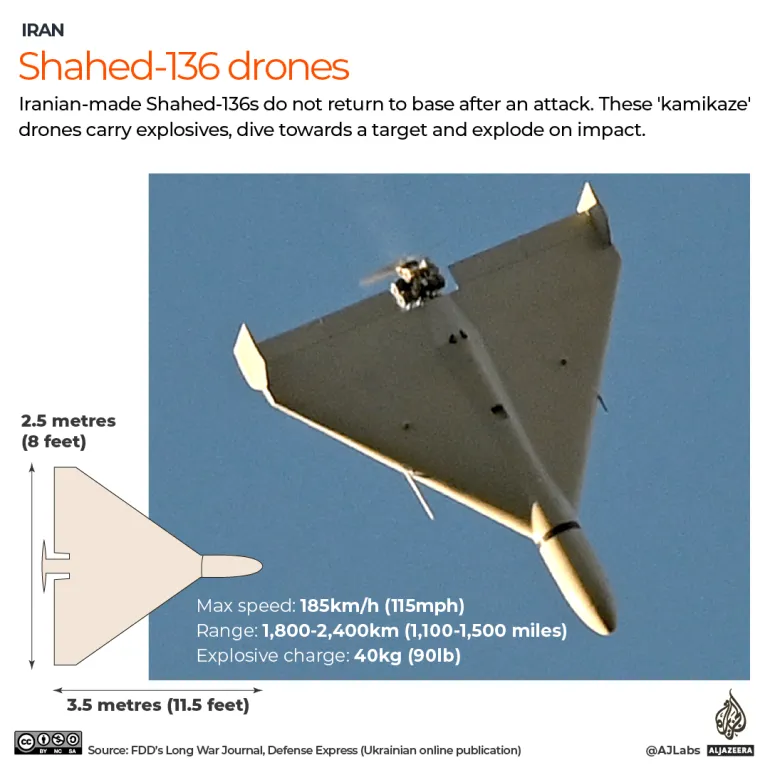
“These are military experts, experts who know how to help, how to defend against Shahed drones,” Zelenskyy said in his speech, referring to the Iranian-designed “kamikaze” drones that Russia has been using in its war against Ukraine since 2022.
“Our teams are already in the Emirates, Qatar, Saudi Arabia, and on the way to Kuwait,” the Ukrainian leader said.
“We are working with several other countries – agreements are already in place. We do not want this terror of the Iranian regime against its neighbours to succeed,” he said.
Last week, the Ukrainian leader said military teams had been sent to several Gulf states and Jordan.
Zelenskyy, who met with UK Prime Minister Keir Starmer and NATO chief Mark Rutte earlier on Tuesday, said Russia had received the Shahed-136 drones from the Iranians, who had “taught Russia how to launch them and gave it the technology to produce them”.
“Russia then upgraded them. And now we have clear evidence that Iranian Shaheds used in the region contain Russian components,” Zelenskyy said, describing the drones as designed for “low-cost destruction of expensive critical infrastructure”.
“So what is happening around Iran today is not a faraway war for us, because of the cooperation between Russia and Iran,” he said.
“The regimes in Russia and Iran are brothers in hatred, and that is why they are brothers in weapons. And we want regimes built on hatred to never win – in anything,” he added.
The Ukrainian leader then addressed his country’s newly developed prowess in drone warfare and manufacturing, claiming that 90 percent of Russian losses on the front lines in Ukraine are being “caused by our drones”.
Ukraine has moved on from making sea and aerial drones to producing interceptors that target drones, he said, adding that Ukraine is capable of producing at least 2,000 interceptors per day – half of which are required for its own defence and the remainder available for use by Kyiv’s allies.
“If a Shahed needs to be stopped in the Emirates – we can do it. If it needs to be stopped in Europe or the United Kingdom – we can do it. It is a matter of technology, investment, and cooperation,” he said.
While Ukraine has become one of the world’s leading producers of sophisticated, battlefield-proven drone interceptors, US President Donald Trump has said he does not need Ukraine’s help with countering Tehran’s drones targeting military targets in the Middle East.
After meeting with Zelenskyy at 10 Downing Street, Starmer said Russian President Vladimir Putin “can’t be the one who benefits from the conflict in Iran, whether that’s oil prices or the dropping of sanctions”.
During Zelenskyy’s visit on Tuesday, London and Kyiv signed a deal on a “defence partnership”, which is said to combine “Ukraine’s expertise and the UK’s industrial base to manufacture and supply drones and innovative capabilities”.
Witness videos captured missile interceptors launching and burning debris raining from the sky near the Dubai International Convention and Exhibition Centre.
A man was rescued from under the rubble of a destroyed building following an Israeli strike in the Iranian city of Hamedan, as the US and Israel continue to bombard the country.
The United Nations is warning that rapidly escalating drone warfare in Sudan has killed more than 200 people in little over a week as schools, hospitals, and civilian infrastructure become targets.
SACRAMENTO — As gas prices surge in California and nationally due to the war in Iran, two Democrats running for California governor are calling for the state to temporarily suspend its fuel tax or ease refinery regulations in an effort to lower costs.
Standing in front of a gas pump in a video posted to social media, San Jose Mayor Matt Mahan said the costs are “becoming an emergency for working families, and I think we ought to act like it.”
The moderate Democrat called on state lawmakers to suspend California’s gas tax, which at 61 cents per gallon is the highest in the nation.
Former Los Angeles Mayor Antonio Villaraigosa also called for an “immediate moratorium” on regulations that he blamed for “overburdening” California refineries and working families.
“These failed policies are not only hurting tens of millions of Californians, they are terrible for the environment because they have forced California to depend on imported foreign oil from the Middle East,” Villaraigosa said in a statement.
The cost of living in California, including the price at the pump, remains a pivotal issue for voters in the state, and has become central to the moderate-leaning campaigns of Mahan and Villaraigosa as they attempt to distinguish themselves in the tightly contested race for governor.
According to AAA, the average price for a gallon of regular gasoline in California on Monday was $5.52, the highest in the nation and more than 50 cents higher than any other state. The national average was $3.71, up from the previous month’s average of $2.92.
Gasoline prices in California are often among the highest in the country for a number of reasons, including environmental rules that require a unique blend of cleaner-burning fuel.
The state also relies mostly on crude oil imported from other countries including Brazil, Iraq and Guyana and processed at in-state refineries. In 2025, 61% of oil processed at California refineries was imported, compared with 23% that was produced in the state, according to data from the California Energy Commission.
Republicans have long supported suspending the gas tax and cutting regulations in order to lower prices at the pump.
Steve Hilton, a GOP candidate for governor and former Fox News host, outlined a plan to lower California gas prices to $3 per gallon by slashing regulations including the low-carbon fuel standard, the rule that requires cleaner-burning gas in order to reduce tailpipe emissions.
The other major Republican in the race, Riverside Sheriff Chad Bianco, supports suspending the gas tax, according to his website.
The current price spike echoes 2022, when Russia invaded Ukraine and disrupted global oil markets.
As prices eventually fell around the rest of the country that year, they remained high for months in California, leading Gov. Gavin Newsom to wage war against oil and gas companies. He accused them of price-gouging drivers and backed laws requiring companies to report their profit margins and keep a supply of fuel on hand to prevent shortages and price spikes.
The governor backed off his battle with the oil companies last year after two refineries announced plans to close. In September, he signed legislation to permit 2,000 new oil wells in Kern County, reflecting an acknowledgement that his war on oil companies threatened to send California’s gas market spiraling.
Republican state lawmakers in 2022 pushed for a temporary suspension of California’s excise tax on gasoline, arguing that it would provide immediate relief to California drivers. That effort was rebuffed by Newsom and Democratic lawmakers, but they later approved $9.5 billion in tax refunds to Californians, providing as much as $1,050 to families as financial relief from record-high gasoline prices and other rising costs.
In 2017, the Democratic-controlled Legislature passed Senate Bill 1, which then-Gov. Jerry Brown signed into law, levying the state’s first gas tax increase in 23 years to fix California’s roads and bridges in disrepair. Under the law, the tax increases each year on July 1 based on the growth in the California Consumer Price Index.
California voters remain conflicted on the state’s regulation of the oil industry, according to an August survey by the Public Policy Institute of California. It found that more than 60% of adults support goals to reduce greenhouse gas emissions and generate electricity from renewable energy sources.
But majorities also said the costs of gasoline and utility bills is a major problem for them personally, according to the poll.
Mahan and Villaraigosa are the only two Democrats who have publicly called to roll back regulations on the state’s oil and gas market, illustrating the political murkiness at the nexus of California’s climate and affordability challenges.
Still, Democratic lawmakers – who hold supermajorities in the state Senate and Assembly – continue to shut down proposals to pause the gas tax, arguing that the state would lose out on much-needed money for roads.
“If anyone has a proposal about how to backfill (transportation) revenues, I’m up for that conversation, but so far, it’s just a bulls— political talking point,” said Assemblymember Cottie Petrie-Norris (D-Irvine).
Petrie-Norris chairs the Assembly Utilities and Energy Committee and has helped lead legislative efforts to stabilize California’s fuels market without retreating from goals to achieve carbon neutrality.
”When I ask people, ‘Do you want affordable gas, clean air or safe roads?’ they say yes. So they want us to do all three of these things,” she said. “We’ve got to be honest with Californians about trade-offs so that we can have real conversations.”
Mahan pushed back on the importance of collecting gas tax revenue.
“The truth is we have the highest taxes in the country and a $350-billion budget, and we ought to be able to pave our roads and enable working families to put food on the table,” he said in an interview. “I just reject the notion that the sky is going to fall if we provide temporary relief to working families who are being pushed to the brink by a war that they didn’t ask for.”
The San José mayor said the state should suspend the fuel tax “for the duration of the war” in Iran “or as long as gas prices are over $5 a gallon” in the state. He also called for “massive regulatory overhaul that brings down costs across the board,” including rules on refineries.
If elected governor, Villaraigosa said he would “reform and overhaul” the California Air Resources Board, which enacts many of the state’s environmental laws — including the low carbon fuel standard and cap-and-invest program.
“We can no longer allow bureaucrats who live in a bubble — with no accountability for the harm they are causing our economy and our people — to have so much power over the lives of every Californian,” Villaraigosa said in a statement.
The Middle East conflict risks adding a staggering 45 million to acute hunger levels, warns the UN’s World Food Programme.
Published On 17 Mar 202617 Mar 2026
Share
Tens of millions more people will face acute hunger if the United States-Israel war on Iran, and its reverberations through Iran’s retaliation, continue through to June, the United Nations warned.
“If the Middle East conflict continues through June, an additional 45 million people could be pushed into acute hunger by price rises,” Carl Skau, the deputy executive director of the UN’s World Food Programme (WFP), said on Tuesday.
Recommended Stories
list of 4 itemsend of list
“This would take global hunger levels to an all-time record, and it’s a terrible, terrible prospect,” Skau said, with 319 million people, already a historic high, currently acutely food insecure.
The US-Israeli attacks on Iran that began on February 28 have choked up key humanitarian aid routes, delaying life-saving shipments to some of the world’s worst crises.
Skau said shipping costs are up 18 percent since the war began and that some have had to be rerouted.
The extra costs come on top of deep spending cuts by the WFP, as donors focus more on defence, he added.
Hunger crises in Gaza, Sudan
In Gaza, residents are rushing to stockpile dwindling goods as border closures and the Iran war further strain already fragile supplies, with shortages worsening across the besieged enclave as Israel presses on with its genocidal war there.
Israel is set to partially reopen Gaza’s Rafah crossing with Egypt on Wednesday, ending a two-week shutdown that has deepened an already catastrophic humanitarian crisis in the decimated territory.
Israel shut the crossing the same day it and the US launched strikes on Iran, citing “security” reasons.
The World Health Organization’s regional director for the Eastern Mediterranean warned last week that only about 200 trucks a day were entering Gaza, far short of the estimated daily requirement of 600.
Meanwhile, more than 21 million people in Sudan, nearly half of the population, face acute hunger. Famine has been confirmed in areas where months of fighting have made access for aid workers largely impossible.
In January, the UN warned that aid to Sudan could run out within months unless hundreds of millions of additional dollars are pledged.
Three years of brutal war between the military government and paramilitary Rapid Support Forces have killed tens of thousands of people and displaced 14 million.
Eighteen days into the war in Iran, and the scorecard for global equity markets makes for uncomfortable reading.
ADVERTISEMENT
ADVERTISEMENT
European benchmark indices have shed around 7% since hostilities began — the Euro STOXX 50 down 6.5%, Germany’s DAX off 7%, France’s CAC 40 down 7.2%, and Italy’s FTSE MIB lower by 6.4% — dwarfing the more modest 2.5% decline in the US S&P 500, which benefits from America’s status as the world’s largest oil producer and its relative insulation from the energy shock.
Yet the headline numbers tell only half the story.
Beneath the surface, an extraordinary divide has opened up — between European companies that thrive on expensive energy, and those being crushed by it.
The energy shock reshaping the continent
The conflict’s most immediate economic consequence has been a seismic repricing of energy.
Iran’s effective closure of the Strait of Hormuz — through which 20% of the world’s petroleum flows — caused Brent crude to surge from around $70 to nearly $120 per barrel within days.
As of Tuesday, Brent sits at approximately $105, a 42% rally from pre-war levels.
In an attempt to cap the oil price surge, the International Energy Agency coordinated a historic intervention.
More than 30 nations in Europe, North America, and northeast Asia agreed to release a combined 400 million barrels of oil from emergency reserves — the largest such action in the IEA’s 50-year history.
Yet the oil market has sent a clear signal that even this enormous release is nowhere near enough to address the unprecedented supply disruption, with crude prices surging more than 17% since the announcement.
Natural gas has been hit even harder. The Dutch TTF benchmark — Europe’s most important gas price reference — has surged 60% to €52 per megawatt-hour.
In a note this week, Goldman Sachs energy analyst Samantha Dart warned this week that approximately 80 million tonnes per annum of LNG supply — 19% of the global total — is currently offline following the Strait’s disruption and the shutdown of Qatar’s LNG production facilities.
Her team maintains a TTF forecast of €63/MWh for the second quarter of 2026, warning that tightening European physical balances could push prices into the gas-to-oil switching range before the conflict resolves.
The winners: Energy, renewables and fertilizer
The clearest beneficiaries have been European oil and gas producers, whose revenues move in lockstep with the commodity the war has repriced so dramatically.
Norwegian energy giant Equinor has surged 23.7% since the start of the month, as investors pile into one of the continent’s largest oil and gas producers with substantial assets well outside the conflict zone.
Fellow Norwegian producer Vår Energi is up 19.9%, while Aker BP has gained 17.1%. Italy’s Eni is up 14.7%, and Portugal’s Galp Energia has added 13.6%.
The most striking gains, however, have come from an unexpected corner: biofuels.
German renewable fuels producer Verbio SE has shot up 30.4%, and Finland’s Neste Oyj — the world’s largest producer of renewable diesel — has gained 28.1%.
As conventional fossil fuels become more expensive and supply chains more precarious, energy alternatives become dramatically more attractive to both buyers and investors.
German gas utility Uniper SE, which has spent recent years diversifying away from Russian supply, has rallied 19.1%.
The fertiliser sector has also attracted significant gains, with K+S rising 15.3% and Yara International rising 15.0%.
The moves reflect a commodity supply crisis hiding in plain sight: around one third of global seaborne fertiliser trade — roughly 16 million tonnes — passes through the Strait of Hormuz, including 43% of seaborne urea exports, 44% of sulphur, and over a quarter of traded ammonia.
The losers: Steel, airlines and construction
On the other side of the ledger, the losses have been equally dramatic. Energy-intensive industries and businesses exposed to higher costs with little pricing power have been savaged.
Airlines have taken some of the heaviest punishment. Wizz Air — the Budapest-based low-cost carrier with heavy exposure to Central and Eastern European routes — has collapsed 31.2%.
Air France-KLM has lost 22.1% and easyJet has dropped 21.8%. All three face the same brutal arithmetic: jet fuel costs have surged, hedging programmes offer only partial and temporary protection, and there is limited ability to pass costs on to passengers quickly enough to protect earnings.
Steel producers have been hit with similar force. Salzgitter has fallen 27.9%, thyssenkrupp is down 27.3%, and ArcelorMittal has shed 19.1%, joined by stainless steel specialist Aperam, which has dropped 24.5%.
Steel production ranks among the most energy-intensive industrial processes on earth, and mills operating on thin margins face an immediate profitability crisis when gas prices surge 60% in such a short period.
Spanish engineering contractor Técnicas Reunidas has dropped 23.7%, a casualty of its deep exposure to Middle Eastern energy infrastructure projects now thrown into uncertainty by the conflict.
Construction group Webuild has fallen 26.6%, reflecting broader fears that an energy-driven slowdown will freeze infrastructure investment across Europe’s most exposed economies.
Mining company Hochschild rounds out the list, down 21%, rising energy costs compress margins and risk appetite for smaller extractive names evaporates.
Europe enters this crisis in a structurally vulnerable position.
Despite having dramatically reduced its dependence on Russian pipeline gas since the invasion of Ukraine, the continent remains acutely sensitive to energy supply disruptions — and gas storage levels heading into 2026 offer less of a buffer than in prior years.
As the U.S. wades even deeper into the conflict with Iran, some Democratic and progressive political figures are trying to figure out how to connect the public’s wariness about war with concerns about affordability and the widespread reaction against President Trump’s xenophobic immigration policies.
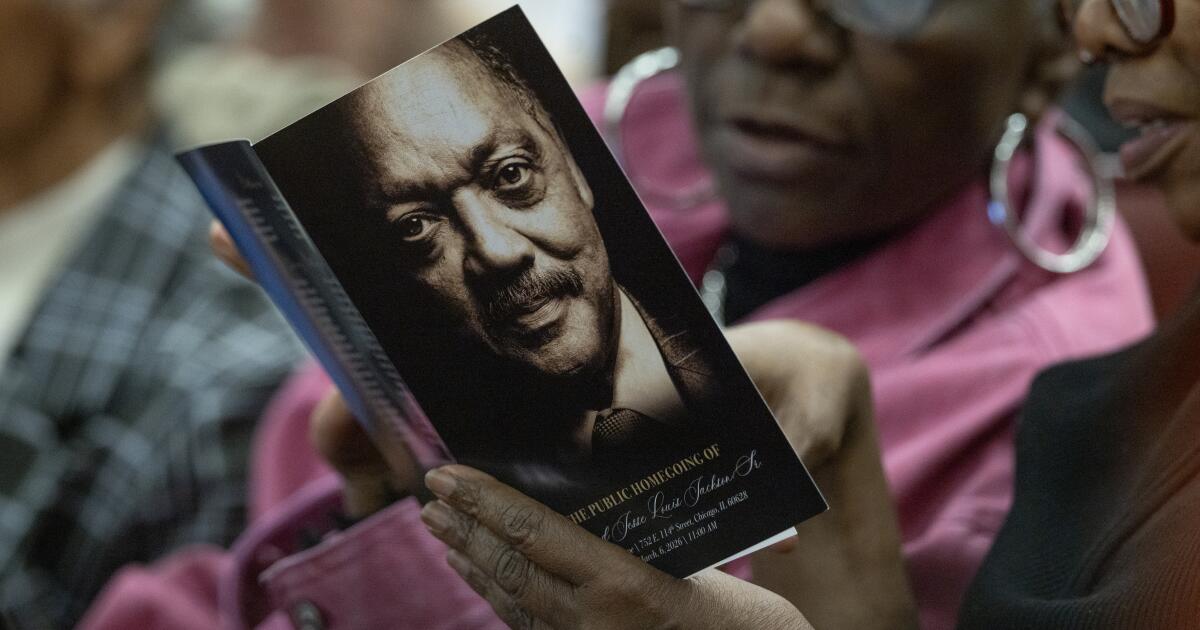
If you’re looking for a template to do it well, one can be found in the words and actions of a political figure who recently passed away: the Rev. Jesse Jackson.
For while attention after his death has rightfully focused on Jackson’s long involvement with the civil rights movement, the more telling lesson for this moment is how his presidential campaigns connected a concern for addressing domestic disenfranchisement with a resolute stance against U.S. military adventures — a message that built on and echoed the Rev. Martin Luther King Jr.’s landmark 1967 speech against the Vietnam War, economic exploitation and racial injustice.
Jackson’s candidacies in 1984 and 1988 emerged at a moment when the social compacts forged by the labor, civil rights and women’s movements of the 20th century were being systematically undone. Deindustrialization was hollowing out working-class communities. Reaganism was consolidating power around tax cuts for the wealthy, deregulation and attacks on unions. A new corporate consensus was hardening — one that increasingly shaped both major parties — prioritizing financial elites while disciplining labor and shrinking the public sphere.
Sound familiar?
Jackson refused to accept that such a right-wing and corporate realignment was inevitable. His Rainbow Coalition was far more ambitious than a candidate-centered campaign. It was an attempt to build an organized, multiracial, cross-class political front capable of contesting the direction of the country itself.
The Rainbow brought together constituencies that conventional political wisdom said could not unite — Black voters in the South, industrial workers in the Midwest, family farmers in crisis, Latino and Native organizers, Arab American activists, peace advocates, labor insurgents and progressive whites.
Jackson’s platform did not treat these groups as symbolic additions to a coalition; it linked their material interests. Farmers facing foreclosure were not an afterthought — the farm crisis was up front. Deindustrialized workers were not rhetorical props — trade, jobs and industrial policy were central. Civil rights were braided together with economic justice.
And crucially, Jackson insisted, as King had, that economic populism could not be separated from anti-militarism.
At the height of the Cold War, amid Reagan’s military buildup and interventionist doctrine, Jackson argued that bloated Pentagon budgets were not abstract line items. They were resources diverted from schools, healthcare, housing and jobs. He connected the violence of abandonment at home to the violence of intervention abroad — and his campaign called for redirecting military spending toward human needs and for diplomacy over escalation.
When Jackson thundered that we should “choose the human race over the nuclear race,” this was not a simple turn of phrase. It was integral to the Rainbow’s moral and economic logic. A government that prioritizes war over welfare, weapons over workers, cannot sustain democratic life.
That clarity feels especially salient today, as the United States continues to pursue military interventions and proxy conflicts whose legality and human cost are deeply contested. Once again, defense budgets swell while public goods strain. Once again, dissent against war is treated as disloyalty. Jackson rejected that false choice decades ago. He understood that militarism abroad reinforces inequality and immorality at home.
Jackson’s 1988 campaign captured millions of votes, won primaries and caucuses across the country and forced issues into the Democratic Party that party elites preferred to sideline. He demonstrated that a progressive program grounded in the lived experiences of ordinary people — rural collapse, urban disinvestment, plant closures, racial injustice and war — could assemble a national constituency.
Unfortunately, after Jackson’s last campaign, the Rainbow’s experiment in independent organizational life was folded too tightly into the mainstream Democratic Party. While that seemed a strategy to achieve a broader front, it meant that the progressive anchor was unmoored — and the effort dissolved before it could truly mature.
But the lessons of that era may be more relevant than ever.
Today, we again confront an ever-ascendant rightward turn buttressed by concentrated corporate power and normalized militarism. As in Jackson’s day, some leaders seek to deflect our attention, blaming economic challenges on the proximate “other” — in his era, Black women taking welfare, in our era, immigrants taking jobs — rather than those with power.
Jackson understood that defeating reactionary politics required isolating it — not only morally, but structurally — by assembling a coalition larger than the right’s base and rooted in shared material demands. He understood that hope had to be organized and that peace had to be part of prosperity. His campaigns showed that racial justice, labor rights, rural survival, gender equality and anti-war politics were not competing claims but interlocking ones.
Protest has surged in the United States, particularly after the excesses in Minnesota. But protest alone does not prevent consolidation. Nor do narrow electoral bargains that leave the underlying corporate and military consensus intact.
At a time when both parties remain deeply entangled with corporate and defense interests, remembering the promise of the Rainbow is not nostalgia. It is instruction.
Rishi Awatramani is a postdoctoral scholar in sociology at USC, where Manuel Pastor is a professor of sociology and the director of the Equity Research Institute.
Israel’s Defence Minister Israel Katz says Ali Larijani, Iran’s security chief, has been killed in an Israeli strike overnight. There has been no confirmation from Iran.
Islamabad, Pakistan — The war launched by the United States and Israel on Iran has already killed more than 1,400 people, set off retaliatory attacks by Tehran targeting Gulf nations and Israel, and pushed global oil prices above $100 a barrel.
Now, eighteen days into the conflict, aid agencies and countries neighbouring Iran are increasingly concerned about a potential refugee crisis.
Recommended Stories
list of 4 itemsend of list
The United Nations refugee agency, UNHCR, estimates that 3.2 million people have already been displaced in Iran since US-Israeli strikes began on February 28. For now, the number of people physically crossing Iran’s borders remains comparatively modest. But this is what could happen next, and has put Iran’s neighbours on high alert.
Iran borders seven countries: Afghanistan, Armenia, Azerbaijan, Iraq, Pakistan, Turkiye and Turkmenistan. Iraq shares the longest frontier, stretching for almost 1,600km (994 miles).
Each of these states faces its own political pressures, economic limitations and security concerns.
But pressure on the ground in Iran is mounting. The country’s Red Crescent Society reports that more than 10,000 civilian sites have been damaged since the war began, including 65 schools and 32 medical facilities, while more than 1,400 people have been killed in the US-Israel attacks. Strikes have hit residential areas in Tehran, Shiraz and Isfahan.
Meanwhile, commercial flights out of Iran have been suspended as airspace is closed.
Eldaniz Gusseinov, head of research at the geopolitical advisory firm Nightingale International, noted that because strikes have so far been concentrated largely on Tehran and western and southwestern Iran, other parts of the country — especially provinces bordering Turkmenistan, Afghanistan and Pakistan are absorbing much of the internal displacement.
“If the strike pattern remains the same, internally displaced people inside Iran will increasingly concentrate in provinces located near those states, creating the preconditions for cross-border movement,” the Almaty-based analyst told Al Jazeera.
And things could get worse. If Tehran, a city of about 10 million people, were to lose its electricity grid or water supply in a US-Israel attack, for instance, residents could be forced to leave en masse.
“Infrastructure destruction does not produce the gradual, manageable flows that the Syrian war initially generated. It produces sudden, massive displacement, driven by the collapse of basic urban services,” Gusseinov said.
Turkiye fears repeat of Syrian migration crisis
Among Iran’s neighbours, only Turkiye, Iraq and Pakistan have extensive experience of hosting large refugee populations.
Imtiaz Baloch, an independent researcher focusing on conflicts in Pakistan and Central Asia, said that if the crisis in Iran deepens, many Iranians could seek refuge in neighbouring states, particularly Iraq and Turkiye.
Analysts say no country faces greater political exposure than Turkiye.
“Turkiye is currently hosting many refugees from Syria and other countries. A new influx of Iranian migrants would likely intensify the humanitarian burden and create new challenges for both host countries and international relief agencies in the coming days,” Baloch said.
Turkiye shares a 530km (329-mile) border with Iran and allows visa-free entry for Iranian citizens. It already hosts the world’s largest refugee population, including roughly 3.6 million Syrians, and anti-immigrant sentiment has hardened within domestic politics over the past decade.
Turkiye’s interior minister, Mustafa Çiftçi, said earlier in March that the government had prepared three contingency plans for the war in Iran.
The first involves intercepting migration flows within Iranian territory before they reach the border. The second proposes establishing buffer zones along the frontier. The third would allow refugees to enter Turkiye under controlled conditions as a last resort.
Turkish authorities say they have already strengthened the border with Iran, adding 380km (236 miles) of concrete wall, 203 optical towers and 43 observation posts – undertaken, according to a Turkish Ministry of National Defence statement issued in January, as the US was building up its armada in the Gulf late last year.
“Although there is currently no mass migration detection at our borders, additional measures have been taken on the border line, and these measures will be implemented if needed,” the Defence Ministry stated on January 15.
So far, this has not been necessary. According to Turkish government data on the movement of people from Iran, 5,010 entered Turkiye from between March 1 and 3, while 5,495 exited.
But Turkiye has felt the effects of the war’s spillover in other ways. On March 9, NATO confirmed it had intercepted an Iranian ballistic missile over Turkish airspace. The debris landed near Gaziantep, in the western-most part of the country, about 50km (31 miles) from the Syrian border. Iran denied that it was behind the attack on Turkiye.
Crisis on an unprecedented scale?
What makes the current situation in Iran particularly urgent is the scale of its population, say analysts.
Syria had approximately 21 million people at the start of its civil war. Iran has roughly 90 million. The Syrian conflict caused more than 13 million people to be displaced, including more than 6 million who fled the country.
A proportionate displacement from Iran would represent a humanitarian crisis with few modern parallels. To put it into perspective, if a country of 90 million experienced the exact same scale of crisis as Syria, nearly 56 million people would be forced to flee their homes, and nearly 26 million of them would become international refugees.
Gusseinov said such a scale of displacement and the capacity of international aid agencies is “fundamentally mismatched”.
Furthermore, Iran itself hosts one of the world’s largest refugee populations: about 3.7 million displaced people, most of them from Afghanistan.
“Any mass displacement from Iran, therefore, creates a dual crisis: Iranian civilians fleeing outward, and Afghan and Iraqi refugees who were already in Iran being displaced a second time, or pushed back to countries that cannot absorb them,” he said.
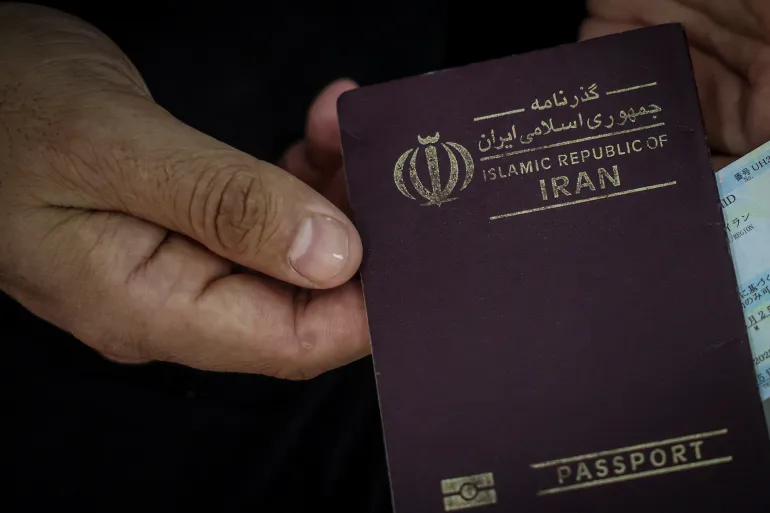
Hamid Shirmohammadzadeh, 35, who arrived in Turkiye from Iran, shows his passport while staying at a hotel in Van province, Turkiye, March 5, 2026 [Dilara Senkaya/Reuters]
Iraq and the South Caucasus face difficult choices
Although most population movement is still taking place within Iran rather than across its borders, Iran’s neighbours do have cause for concern, analysts say.
“Iran’s neighbouring countries are already dealing with their own crises, which limits their ability to absorb a potential refugee influx. Countries such as Syria, Iraq, Azerbaijan, Pakistan, and Afghanistan are facing varying degrees of economic, political, or security challenges. These internal pressures make it difficult for them to accommodate a large influx of refugees,” Gusseinov told Al Jazeera.
Iraq, which shares Iran’s longest border, faces a particularly complex situation.
The country is not only a potential destination for Iranian refugees, but has also been caught in military exchanges between Washington and Tehran. US forces have targeted armed groups operating from Iraqi territory, while Iran and pro-Iran armed groups have struck – or attempted to strike – US military and diplomatic positions inside the country.
The UN’s International Organization for Migration says disruptions on the Iranian side of the border have led to the closure of several crossing points, although Iraqi crossings remain technically open. Meanwhile, the UNHCR says it is monitoring developments closely, and that the Iraqi government would lead any emergency refugee response.
The semi-autonomous Kurdish region of northern Iraq, which, unlike the rest of the country, still allows visa-free entry for Iranian passport holders, adds another layer of complexity.
The region hosts several Kurdish armed groups, some of which have reportedly been in discussions with Washington about receiving military support in return for joining the war against Iran. The development has prompted Iran’s Revolutionary Guard Corps (IRGC) to strike Kurdish positions inside Iraqi territory.
Baghdad has publicly stated that it will not allow its territory to be used to infiltrate Iran, but experts on the region say its ability to enforce the position is limited.
Further north, the South Caucasus states of Armenia, Azerbaijan and Georgia have each expressed concern while attempting to carefully balance relations with both Washington and Tehran.
Azerbaijan has closed its land borders to routine traffic, requiring government approval for any crossing, while Armenia’s border with Iran, which is just 44km (27 miles) long, remains open.
“Armenia is a small economy already absorbing Russian and Ukrainian migrants,” Gusseinov said.
(Al Jazeera)
Pakistan and Afghanistan confront overlapping crises
To Iran’s east lie Pakistan and Afghanistan, each grappling with existing refugee pressures.
According to the UNHCR, since October 2023, about 5.4 million Afghans have returned to Afghanistan from Iran and Pakistan, many not by choice.
Following the withdrawal of US troops from Afghanistan and the Taliban’s return to power in August 2021, a huge wave of Afghans sought refuge across the country’s borders, fearful of economic collapse and security threats.
The UN and international migration agencies estimate that between 1 and 1.5 million Afghans fled to Iran in the immediate aftermath of the US withdrawal, pushing the total Afghan population in Iran to upwards of 5 or 6 million.
Concurrently, hundreds of thousands of newly displaced Afghans crossed into Pakistan, joining a long-established refugee community there and swelling the total number of Afghans in the country to more than 3 million.
In response to this influx and citing domestic economic and security pressures, both Pakistan and Iran initiated aggressive mass deportation campaigns, forcing millions back into Afghanistan. Between late 2023 and the end of 2025, between 2.8 million and 3.5 million Afghans are thought to have been sent back.
Pakistan’s stringent repatriation plans pushed out more than 1.3 million people, while Iran drastically accelerated its expulsions, deporting nearly 2 million individuals in 2025 alone.
According to the UNHCR, in 2026 so far, more than 232,500 Afghans have returned to their country, including 146,206 from Pakistan and 86,253 from Iran.
The primary concern now is that the war in Iran could accelerate these returns, pushing people into communities already struggling to cope and potentially triggering further onward migration. The UNHCR has also warned that largescale and hurried returns of refugees could trigger further instability in the region.
Further complicating the situation, Pakistan and Afghanistan have been engaged in fighting, as Islamabad claims that Afghanistan is providing a safe haven to armed groups launching attacks at Pakistan. Kabul has consistently denied the presence of any such groups on its soil.
Another bout of hostilities in October 2025 led Pakistan to close its borders with Afghanistan. Since then, Afghanistan’s trade and economic ties with Iran have deepened.
“Destabilisation of the Iranian economy, therefore, hits Afghanistan through two channels simultaneously: reduced trade flows and refugee return surges,” Gusseinov said.
Meanwhile, Pakistan faces its own geographical and security challenges.
The country’s border with Iran runs through Balochistan, its largest but most volatile province, where separatist sentiment has simmered for decades. The province has seen an increasing number of attacks by armed groups seeking independence from Pakistan. In February this year, Pakistan’s military concluded a weeklong security operation in the province, and claimed it had killed 216 fighters in targeted offensives.
While Balochistan’s provincial officials say they have sufficient resources to accommodate refugees if large numbers begin arriving across the southern border, researcher Baloch said the reality was more complicated. Any refugee crisis, he said, could make the situation in Balochistan difficult for Islamabad to manage.
“Balochistan’s porous border is next to Iran’s Sistan and Baluchestan province, a region that has historically been home to various separatist groups. Any significant influx of refugees across this border could impose additional security and economic costs on Pakistan,” Baloch said.
“Right is right, wrong is wrong, and Trump’s wrong.” Former Marine Brian McGinnis, whose hand was broken by police and a congressman earlier this month in a protest at the US Capitol, says Donald Trump is “wrong” when it comes to the joint US-Israeli war on Iran.
“Reckless war of choice.” US House of Representatives Democratic leader Hakeem Jeffries criticised Donald Trump for what he called a failure to adequately prepare for the consequences of launching a war on Iran.
WASHINGTON — President Trump expressed frustration Monday that U.S. allies were not enthusiastic about sending warships to protect merchant vessels passing through the Strait of Hormuz, a sign of Washington’s growing isolation as it tries to stabilize one of the world’s most critical shipping lanes amid its war against Iran.
Trump declined to name the “numerous countries” he said had agreed to help reopen the oil route, which has come under the threat of retaliation from Iran, but was annoyed that most longtime allies were hesitant about joining his international police force. He said they should be “jumping to help us.”
“Some countries that we have helped for many, many years, we’ve protected them from horrible outside sources and they weren’t that enthusiastic — and the level of enthusiasm, it matters to me,” Trump said at the White House.
For Trump, securing allies’ help is as much a domestic economic need as it is international diplomacy. Since the hostilities against Iran began on Feb. 28, Tehran has retaliated by targeting regional oil facilities and at least 20 vessels operating in and around the Persian Gulf, the Strait of Hormuz and the Gulf of Oman.
The result has been “the largest supply disruption in the history of the global oil market,” according to the International Energy Agency, and it has led to international oil prices surging more than 30% to over $100 a barrel as the war entered its third week with no clear end in sight.
The diplomatic friction, meanwhile, reflects the limits of Trump’s influence at a moment when the global economy is absorbing one of the worst oil supply shocks in modern history, a dynamic that has prompted Trump to warn that countries refusing to help may find Washington a far less generous partner in turn.
Despite Trump‘s demands, several key allies have publicly rebuffed his calls for support.
French President Emmanuel Macron formally rejected the request, saying that France would maintain a “defensive and protective” posture focused on stability rather than escalation.
German Foreign Minister Boris Pistorius was blunter, saying, “This is not our war; we didn’t start it.”
British Prime Minister Keir Starmer also declined to commit, saying the U.K. “will not be drawn into the wider war.” Italy, Spain, Australia and Japan similarly declined, while South Korea and China have not publicly stated their intentions.
The rejections seems to have only sharpened Trump’s demands. At one point during an event Monday, the president turned to House Speaker Mike Johnson (R-La.) and said he would share a list of nations that declined to help, suggesting Congress could have a role in any retaliatory measures against reluctant allies.
“Why are we protecting countries that don’t protect us?” Trump said.
Yet Trump also sent conflicting signals about how much allied help he actually needs. At one point he claimed the United States did not require assistance from other countries.
“We don’t need them, but it’s interesting — I am doing it, in some cases, not because we need them, but because I want to see how they react,” Trump said.
On the threat to merchant ships, Trump projected uncertainty. He said the possibility of mines was “enough to keep people” from transiting the waterway, but said that “we don’t even know” if Iran has placed any mines in the strait.
“They may have no mines,” he said. “We hit every one of their mine ships. Every one of them is gone — but it only takes one.”
Speaking aboard Air Force One on Sunday, Trump also sent mixed messages about the threats and the need for help. He said the United States was coordinating with roughly seven countries to deploy naval forces to “police the straits — before adding, in the same remarks, that “maybe we shouldn’t even be there at all.”
He suggested American forces should not be there because other nations depend more heavily on oil shipments through the oil route, an about-face that drew criticism from allies, who said it created confusion about Washington’s strategy in a conflict the United States had itself started.
“To keep the strait open, I have a very hard time believing that China and the other countries the president enlisted are really going to be escorting ships through the strait. That just really doesn’t add up to me,” Sen. Adam Schiff (D-Calif.) said in an NBC “Meet the Press” interview Sunday.
“The bottom line is, we really don’t know how long this war is going to be,” he added.
Trump, however, is keeping the pressure on allied countries, making the future of the conflict more open-ended depending on their response.
Trump insisted Monday that “numerous countries have told me they are on their way,” but said he would “rather not say” who they are.
He then said the tepid responses from some U.S. allies had reinforced his skepticism about the value of the NATO alliance, echoing comments he made over the weekend when he warned that a failure to assist would be “very bad for the future of NATO” and that the U.S. would “remember” those who did not step up.
When asked if he was confident Macron will help with the reopening of the strait, Trump told reporters: “Yeah, I mean sure. … I think he’s gonna help. I mean I’ll let you know.”
Europe has nonetheless been drawn deeper into the conflict.
The U.K. initially refused to support U.S. military operations, but softened its position after Trump mocked Starmer as “no Winston Churchill” and called Britain a “once great ally.” France also said last week that it was preparing a separate “purely defensive” naval mission to escort commercial vessels through the strait once it was safe to do so.
Moving forward, it is unclear how the European Union and other nations around the world will respond to Trump’s pressure.
“Nobody wants to go actively in this war. And of course, everybody is concerned what will be the outcome,” Kaja Kallas, the European Union’s top diplomat, said Monday after a meeting of foreign ministers in Brussels. “This is not Europe’s war, but Europe’s interests are directly at stake.”
‘For 40 years, we’re protecting you’: US President Donald Trump criticises allies’ reluctance to commit forces to open the key waterway for Gulf oil exports.
Offering another rationale for the US-Israeli war on Iran, Donald Trump claimed he ordered strikes to prevent a nuclear conflict that would have turned into World War III. He also said not even the “greatest experts” thought Iran would retaliate with attacks on Gulf states.
As the war US-Israeli war on Iran enters its third week, Iran’s Foreign Minister Abbas Araghchi has said that his country has shown it is ready to take the war “as far as necessary” and that the conflict must end in a way “that our enemies will never again consider repeating these attacks”.