Itamar Greenberg laughed when asked if he thought he should be afraid. The 19-year-old Israeli antiwar activist had just described being spat on in the street and is the target of an online hate campaign.
“Yes!” he finally responded. “If I thought about it, I probably should be. I just don’t have time.”
Voices like Greenberg’s are rare in Israel at a time when public clamour for war is growing, and genocidal language already familiar to millions of Palestinians is reemerging, but with a different target – Iran.
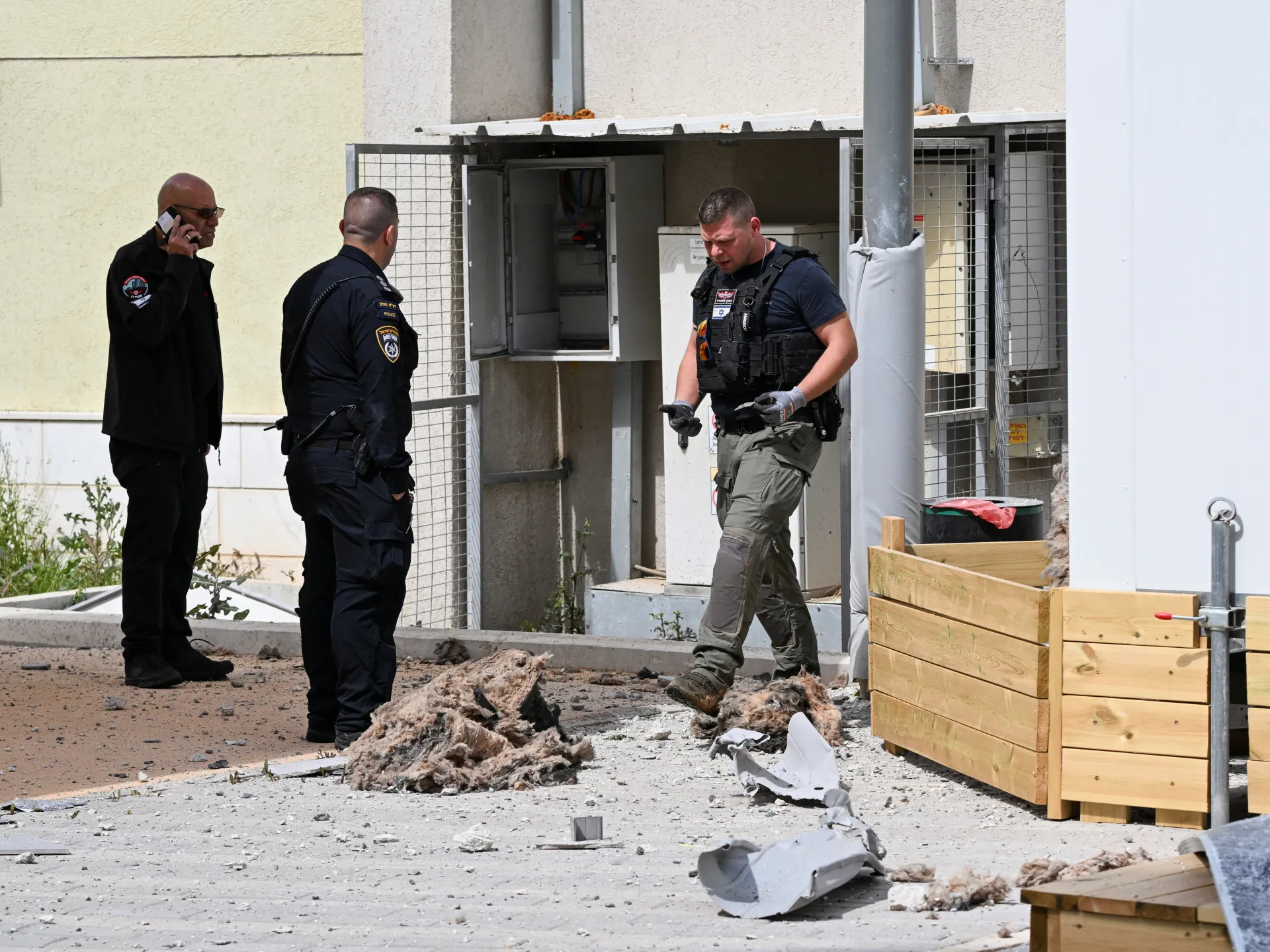
Officially, 11 Israelis have been killed in Iranian strikes since the US and Israel launched their war on Iran on February 28. What the actual number might be, or how many of Iran’s ballistic missiles may have penetrated the country’s Iron Dome defence shield, is unknown.
Speaking at the site of an Iranian missile strike in West Jerusalem, shortly after the start of the US-Israeli attacks on Iran, Israeli Prime Minister Benjamin Netanyahu returned to the use of apocalyptic language that has characterised the genocide his country has conducted in Gaza. Comparing Iranians with the Jewish people’s biblical foe, Amalek, who the Jews had been divinely ordered to wipe from the face of the planet, Netanyahu told reporters: “In this week’s Torah portion, we read, “‘Remember what Amalek did to you.’ We remember, and we act.”
So far, Iran claims to have launched strikes across Israel, saying its missiles and drones hit military sites, symbolic infrastructure, and even Netanyahu’s office. Tehran has described the attacks as precise and strategic, rather than indiscriminate and part of a broader regional response. Iran also claims to have targeted locations such as Tel Aviv, Ben Gurion airport and Haifa.
However, Israeli officials have denied many of the specific claims. Netanyahu’s office dismissed Iranian assertions about hitting his office, or affecting his condition, as “fake news”, with stringent reporting restrictions on Iranian strikes within Israel making confirmation either way difficult.
What is clearer is that against the drumbeat of Iranian strikes, the fervour for war appears to be increasing among the public. A poll carried out last week by the Israel Democracy Institute (IDI) suggested overwhelming public support for the war, with 93 percent of Jewish-Israeli respondents expressing support for the strikes on Iran, and 74 percent expressing support for Netanyahu, the country’s historically divisive prime minister.
“No one’s talking about opposition to the war,” Greenberg said, describing an environment in which figures from across Israel’s media and political landscape – with the exception of the left-wing Hadash party and antiwar organisations such as Greenberg’s Mesarvot – had lined up behind the war. “It’s also getting increasingly violent,” he said.
“We held a protest on Tuesday, where the police were already waiting. They beat and arrested us. I was illegally strip-searched,” he said, describing it as efforts intended to humiliate him.
Greenberg is no stranger to such tactics. Six months ago, after being arrested for protesting the genocide in Gaza, prison guards had threatened to carve a Star of David on his face, a permanent reminder of what they thought his priorities should be.
It’s not just antiwar activists who have faced the brunt of the Israeli security establishment’s force.
“The atmosphere is very violent,“ lawmaker Ofer Cassif of the Hadash party told Al Jazeera. “When I leave the house, I’m more worried by the danger posed by a physical attack by fascists than I am by any missile,” he said.
Hadash and lawmakers like Cassif have been targeted by physical threats and attacks throughout the Gaza war. But criticism of the Netanyahu government’s handling of Israeli captives in Gaza meant that opposition to the Gaza war was – comparatively – more socially acceptable. When it comes to Iran, the current climate is toxic, Cassif said.
“We’re often accused of supporting the regime in Tehran,” Cassif explained of the attempts to delegitimise their opposition to the war.
“We’re unequivocally not. We want to see that regime go, but we’re not going to allow Netanyahu to say he’s doing this for the Iranian people. He isn’t. That’s not just rhetoric, that’s fact. The Israeli leadership was just as supportive of the shah as the US, and he was a murderous dictator no less than the current regime,” Cassif said, referring to Mohammad Reza Pahlavi, the leader of Iran before the Islamic revolution.
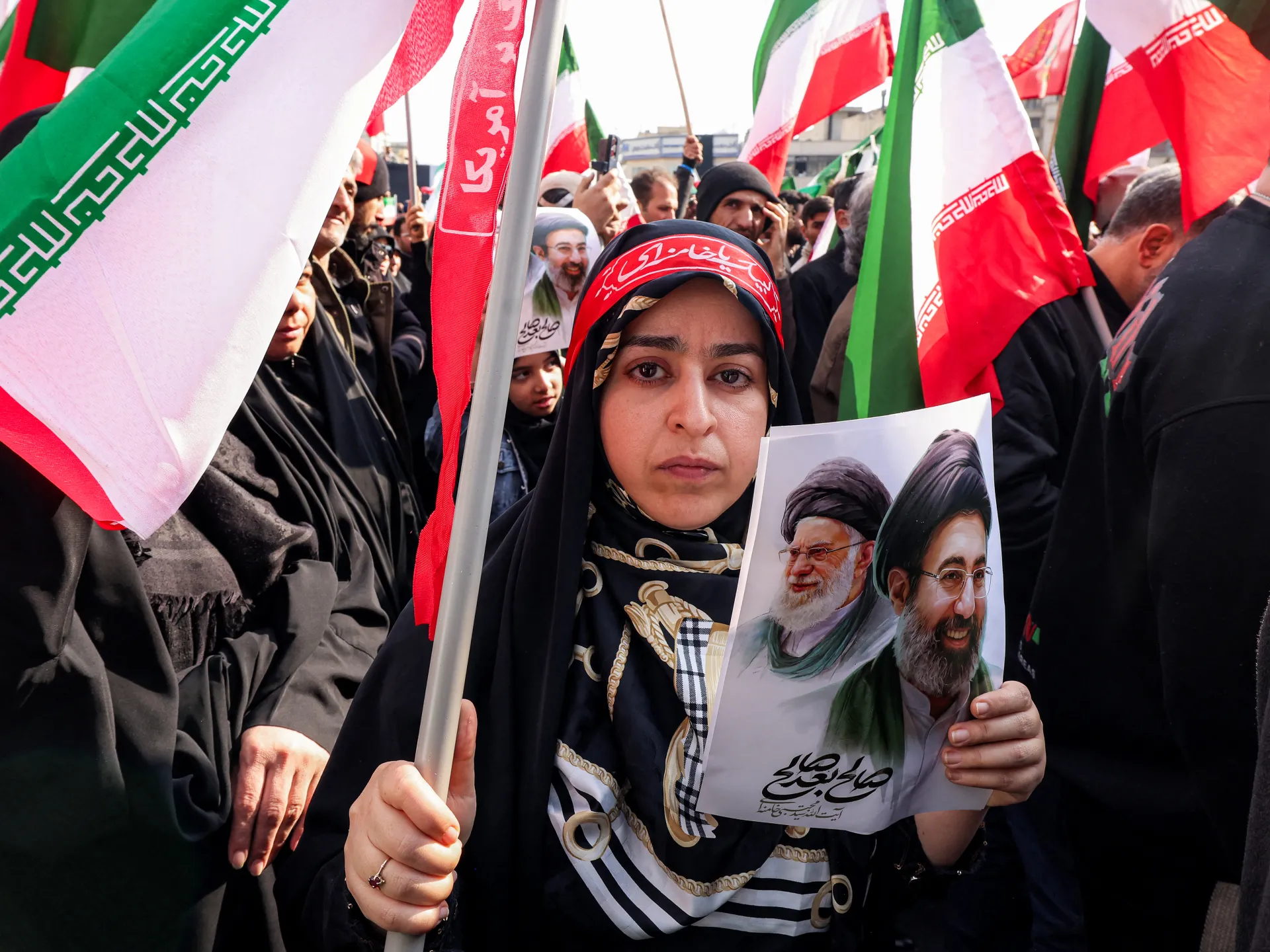
For now, analysts and observers in Israel describe a society that believes it is almost engaged in a holy war.
“They brought an antiwar activist onto one of the light news programmes,” political analyst Ori Goldberg said from near Tel Aviv, “and she was treated like you would a flat-earther. It’s as if it’s inconceivable that anyone would oppose this war.
“Israel has become a society with no middle ground, no capacity for conversation. It’s as if our entire existence is dependent on our ability to do anything we want. And if the world tries to stop that, then the world’s anti-Semitic, and we all burn.”
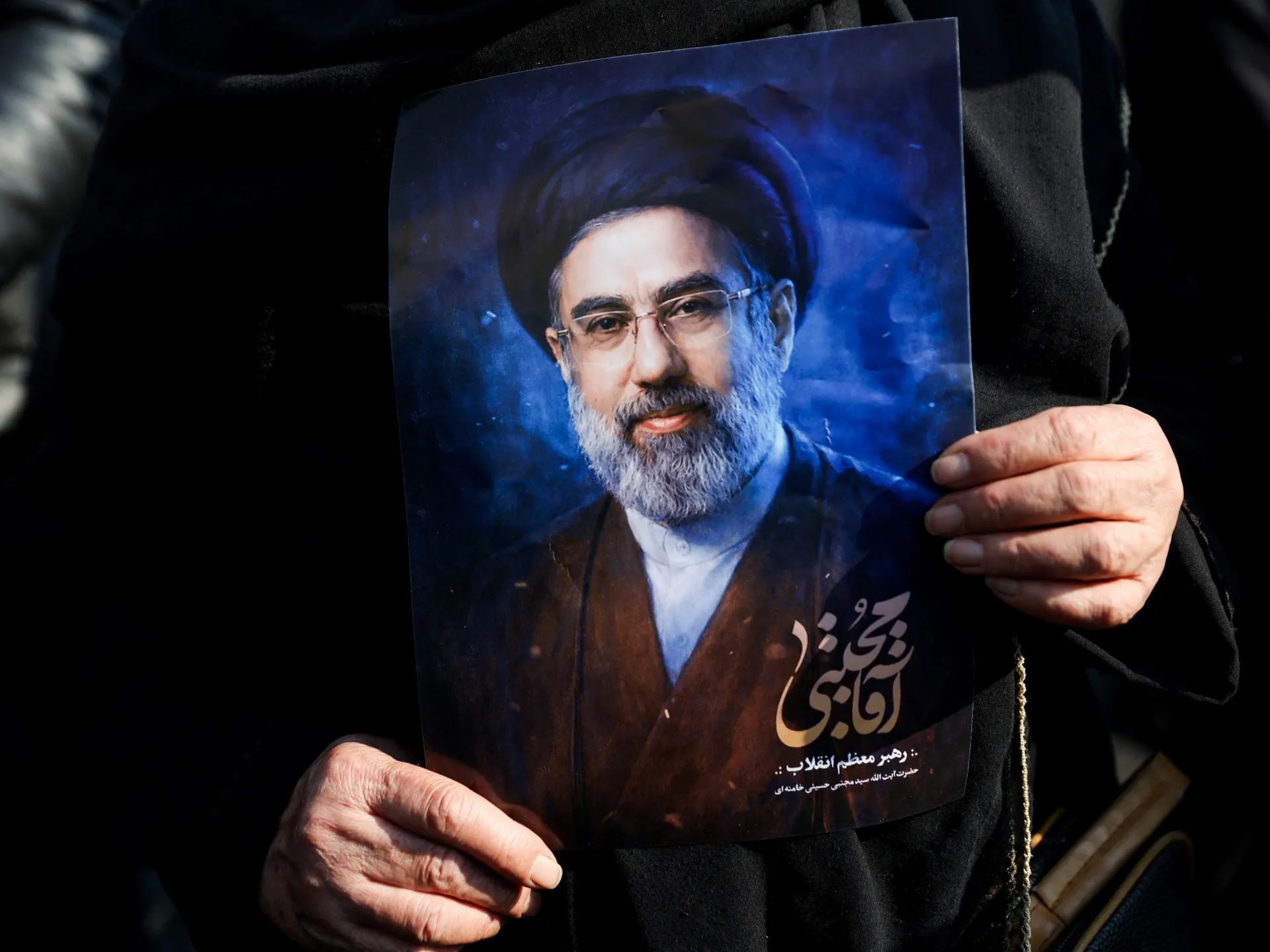
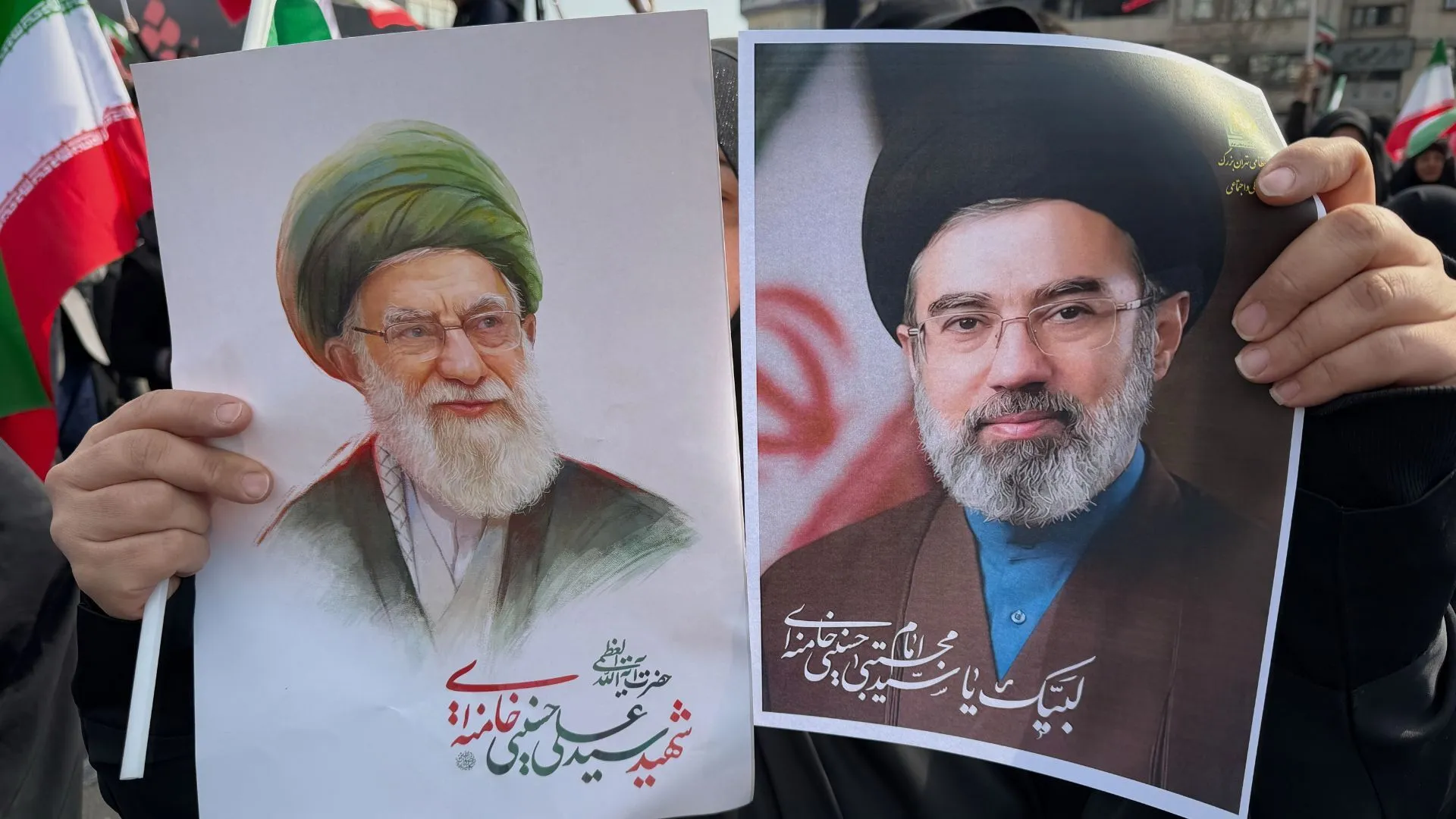
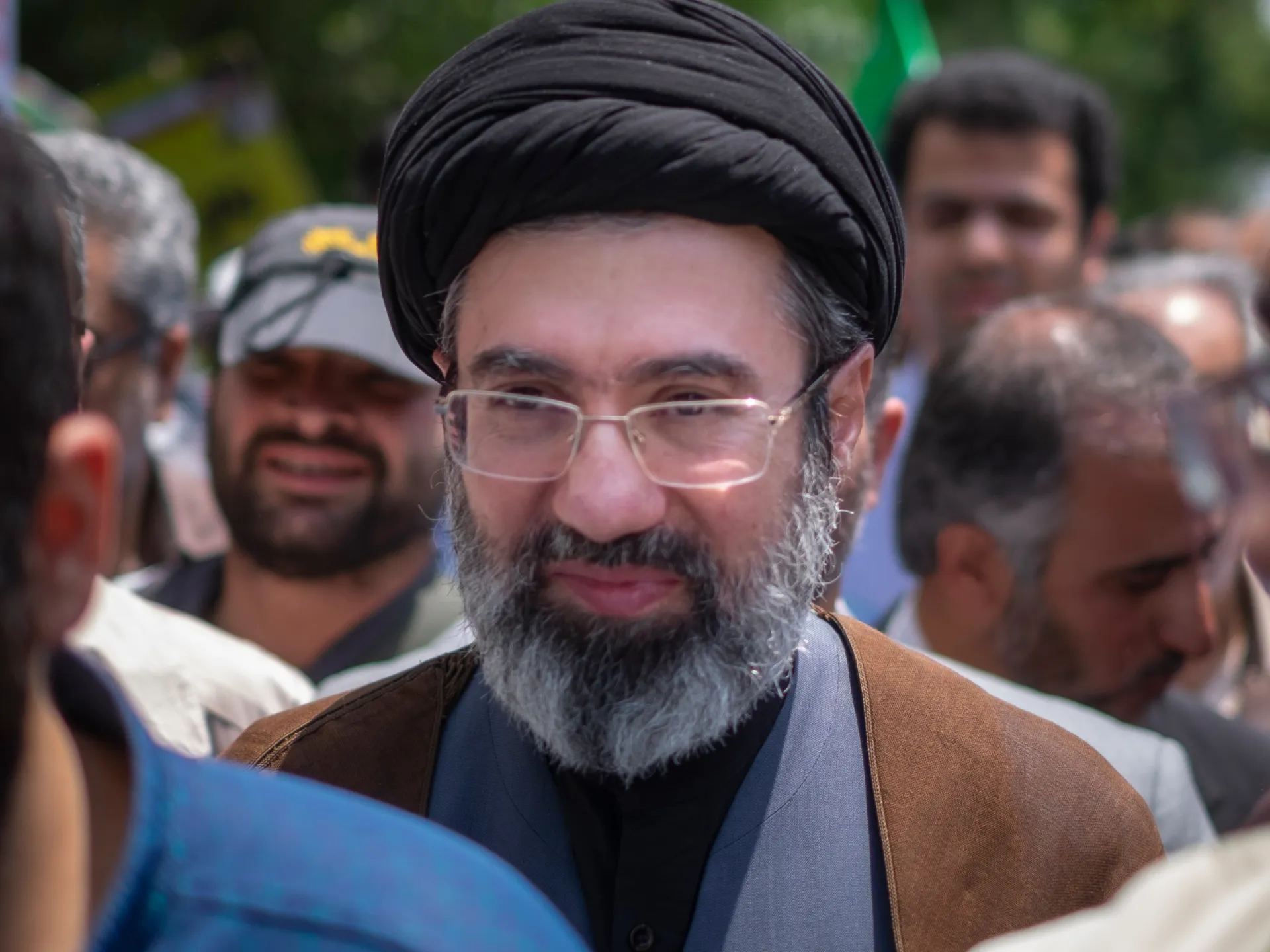
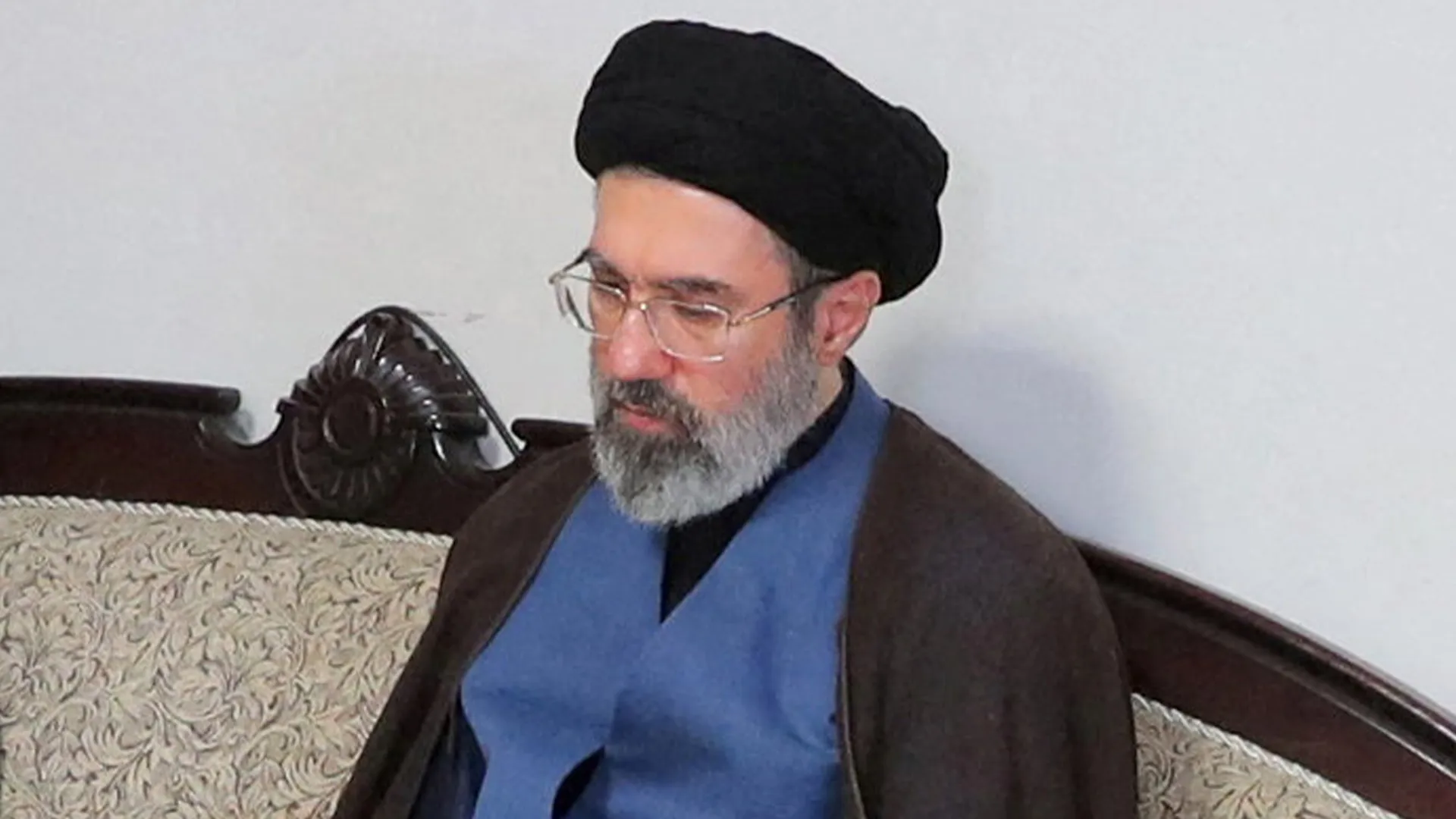
Iran’s new Supreme Leader Mojtaba Khamenei has never held a formal position in government, but his appointment as his late father’s successor amid the US-Israeli war on his country was not unexpected.
Iran’s Assembly of Experts appointed the 56-year-old mid-ranking religious scholar to the position on Sunday, just over a week after his late father, Ayatollah Ali Khamenei, was killed in United States-Israeli strikes.
Recommended Stories
list of 3 itemsend of list
Khamenei, who has strong ties with the Islamic Revolutionary Guard Corps (IRGC) and his late father’s still-influential office, is seen as a hardliner who will provide continuity in the country.
His appointment, which came after he lost both his father and his wife in strikes, was interpreted as a defiant choice signalling continuity as the Islamic Republic faces the biggest crisis in its 47-year history.
Khamenei received immediate backing from figures in Iran’s political and security establishment, including IRGC leaders, President Masoud Pezeshkian and Ali Larijani, secretary of the Supreme National Security Council.
Outside the country, reactions were mixed:
Oman
Oman was a mediator in recent talks between Iran and the United States, which collapsed when the US and Israel unleashed their war on Iran last month.
Oman’s Sultan Haitham bin Tariq Al Said on Monday sent a “cable of congratulations” to Khamenei on his appointment as Iran’s new supreme leader, according to the official Oman News Agency.
Iraq
Iraqi Prime Minister Mohammed Shia al-Sudani also congratulated Khamenei on his appointment on Monday.
“We express our confidence in the ability of the new leadership in the Islamic Republic of Iran to manage this sensitive stage, and continue to strengthen the unity of the Iranian people in facing the current challenges,” al-Sudani said in a statement.
He reaffirmed Iraq’s solidarity and support for Iran and “all steps aimed at ending the conflict and rejecting military operations against its sovereignty, in order to preserve the stability of other countries in the region”.
United States
US President Donald Trump had previously dismissed Mojtaba Khamenei as a “lightweight”, and insisted he should have a say in appointing a new Iranian leader, which Tehran rejected.
On Monday, Trump told NBC News, “I think they made a big mistake. I don’t know if it’s going to last. I think they made a mistake.”
Later on Monday, he told CBS News: “I have no message for him.”
Trump said he has someone in mind to lead Iran, but did not elaborate.
Israel
The Israeli military has already threatened to kill any replacement for the late Ali Khamenei.
Israel’s Foreign Ministry said Monday that Mojtaba Khamenei was a “tyrant” like his slain father, and would continue what it described as the Iranian “regime’s brutality”.
In a post on X featuring a picture of Mojtaba Khamenei and his father Ayatollah Ali Khamenei, holding guns, the ministry wrote: “Mojtaba Khamenei. Like Father Like Son”.
“Mojtaba Khamenei’s hands are already stained with the bloodshed that defined his father’s rule. Another tyrant to continue the Iranian regime’s brutality,” said the ministry.
Russia
Russian President Vladimir Putin on Monday pledged “unwavering support” to Iran.
“I would like to reaffirm our unwavering support for Tehran and solidarity with our Iranian friends,” Putin said in a message to Khamenei, adding that “Russia has been and will remain a reliable partner” to Iran.
“At a time when Iran is confronting armed aggression, your tenure in this high position will undoubtedly require great courage and dedication,” the Russian leader said.
China
China’s Foreign Ministry spokesman Guo Jiakun told reporters on Monday that Iran’s decision to appoint the younger Khamenei was “based on its constitution”.
“China opposes interference in other countries’ internal affairs under any pretext, and Iran’s sovereignty, security, and territorial integrity should be respected,” he said when asked about the threats against the new leader.
Beijing is a close partner of Tehran and condemned the killing of the former supreme leader, but it has also criticised the Iranian counterstrikes against Gulf states.
Yemen’s Houthis
Yemen’s Houthi rebels on Monday welcomed the appointment of the new supreme leader.
“We congratulate the Islamic Republic of Iran, its leadership and people, on the selection of Sayyid Mojtaba Khamenei as Supreme Leader of the Islamic Revolution at this important and pivotal juncture,” the group said in a statement on Telegram.
It called his selection “a new victory for the Islamic Revolution and a resounding blow to the enemies of the Islamic Republic and the enemies of the nation”.
Dozens of civilians, including children, wounded by an Iranian drone strike in Bahrain. France deploying warships to secure shipping commerce in the Strait of Hormuz. Australia taking heat from President Trump over its handling of the Iranian women’s soccer team. Markets across Asia plunging as the price of oil surged.
Lebanon reporting half a million people displaced by fighting between Israel and Hezbollah. The U.S. State Department telling nonessential staff to get out of Saudi Arabia after attacks there killed workers from India and Bangladesh. Ukrainian anti-drone experts turning their attention from their war with Russia to help intercept Iranian attacks. The defense minister of ever-neutral Switzerland saying his country believes the U.S.-Israeli war violates international law.
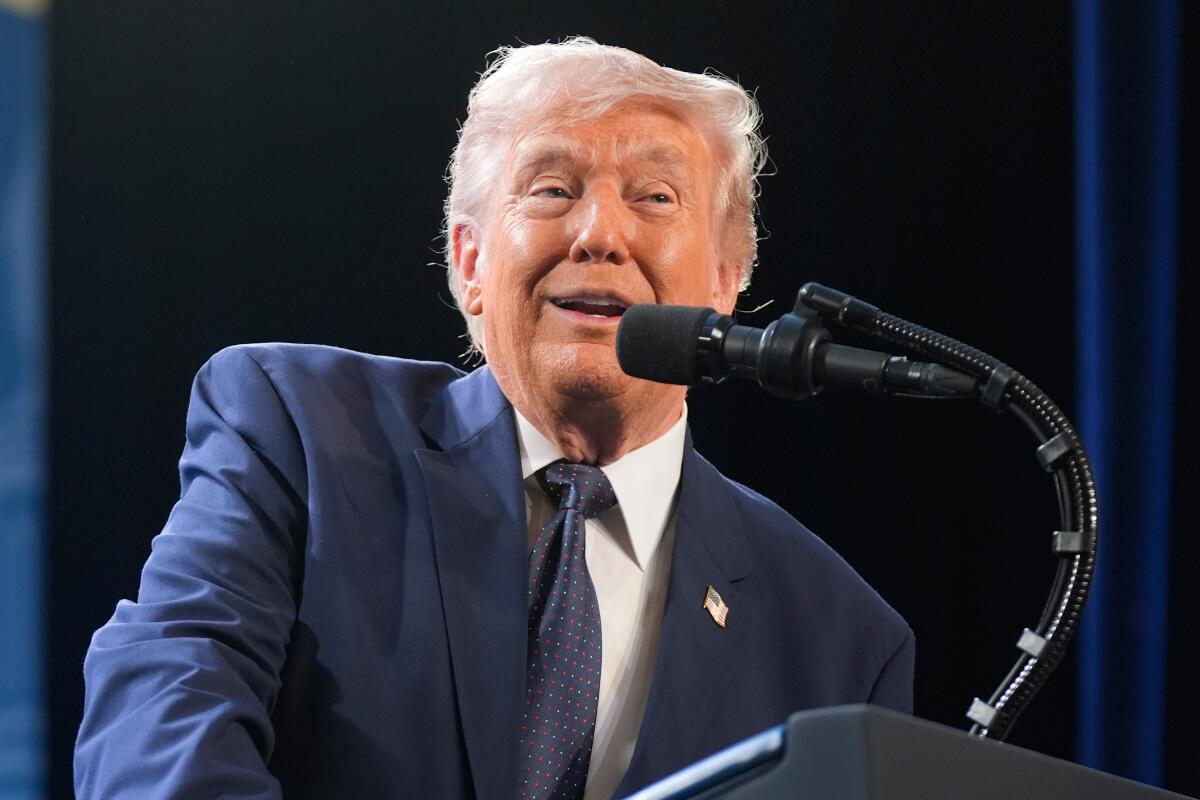
In less than two weeks, the Trump administration has instigated a truly global conflict — and with no quick and clear path to resolution, despite Trump insisting to congressional Republicans gathered at his Miami resort Monday that it would be a “short term excursion.”
“Short term! Short term!” Trump said in a bullish speech about the conflict, in which he said “the world respects us right now more than they have ever respected us before.”
“We’re counting down the minutes until they will be gone,” he said of Iran’s remaining leadership, while adding that the U.S. “will not relent” until Iran is “totally and decisively defeated.”
The war is not isolated to Iran, though it has certainly caused devastation there — with more than 1,300 deaths reported and toxic clouds from strikes on fuel depots hovering over Tehran, a city of some 10 million people.
The war’s effects also are not limited to the Middle East, though they are widespread there — as Israel has pushed into Lebanon and Iran has launched a wave of retaliatory strikes on U.S. allies across the Persian Gulf. The fighting has grounded regional air traffic, threatened desalination facilities that provide drinking water to millions and undermined the safe reputation of modern metropolises such as Dubai and Abu Dhabi.
Unlike the recent U.S. incursion into Venezuela to capture and oust President Nicolás Maduro, the U.S. war on Iran has been met with stiff resistance militarily, drawn in a slew of allies, reignited proxy battles, drastically destabilized the oil trade and shifted dynamics between the U.S. and other major powers such as China and Russia.
China, which gets upward of 50% of its crude oil imports through the Strait of Hormuz, has largely stayed out of the conflict, though China’s Foreign Minister Wang Yi said Sunday that the war “should never have happened” and “benefited no one.”
Trump said Monday that the U.S. is less harmed by strait disruptions, and was “really helping China” by securing the strait.
Russia, meanwhile, has emerged the lone winner of energy disruptions in the region, said Robert David English, a UCLA international policy analyst — as the Trump administration considers reducing oil sanctions on Russia to take pressure off of Mideast sources.
Trump said he had a “good talk” with Russian President Vladimir Putin about Iran on Monday. He also said the U.S. was going to suspend sanctions against other countries in order to alleviate strain on oil markets while the Iran conflict persists, but did not provide specifics.
The scope of the war has been dictated in part by Iran, which has historically limited its responses to U.S. strikes but warned after the U.S. bombed its nuclear sites last summer that it would treat any new attacks — large or small — as an act of war, and respond in kind.
Its strikes on U.S. facilities and allies throughout the region reflect that strategy, and are aimed in part at making the war more politically costly for the U.S. by straining global markets and its regional allies, experts said.
However, “you can’t attribute the increasingly global characteristics of the conflict solely to an Iranian strategy, because wars in this region tend to spill over the longer they last, with unintended consequences” including “bringing in all kinds of actors that don’t want to be involved,” said Kevan Harris, an associate professor of sociology who teaches courses on Iran and Middle East politics at the UCLA International Institute.
That can serve as a deterrent to starting wars in the region, he said, but “also makes them more difficult to wind down.”
The surge in oil prices to nearly $120 a barrel Monday — before a remarkable reversal to below $90 by the time U.S. stocks closed — is one of the furthest-reaching effects of the war, and one that clearly had Trump’s attention.
“Short term oil prices, which will drop rapidly when the destruction of the Iran nuclear threat is over, is a very small price to pay for U.S.A., and World, Safety and Peace. ONLY FOOLS WOULD THINK DIFFERENTLY!” Trump wrote on social media Sunday.
How long prices will remain elevated or volatile is a matter of debate, but Trump’s “short term” projections have been undercut by increasing strikes on oil and gas facilities in the region.
“If you can tolerate oil at more than $200 per barrel, continue this game,” Ebrahim Zolfaghari, a spokesperson for Iran’s Islamic Revolutionary Guard Corps, said Sunday.
Prices at the pump have surged for average Americans, some of whom were attracted to Trump’s candidacy because of his promises to avoid foreign wars and focus on driving down the cost of living for U.S. citizens.
Now, Trump and other administration officials are facing questions about their own role in putting the world at war, and offering various different justifications. They’ve asserted without proof that the U.S. faced an imminent threat of attack from Iran. Trump has repeatedly hinted that his goal was removing the government.
President Trump speaks at the Republican Members Issues Conference on Monday at Trump National Doral Miami in Doral, Fla.
(Mark Schiefelbein / Associated Press)
In the meantime, Iran has shown no signs of bowing to Trump, rejecting his calls for “surrender” and for him to have a say in naming their next leader. Iran installed Mojtaba Khamenei after Trump said the hard-liner son of the late Ayatollah Ali Khamenei would be “unacceptable.”
The choice was hailed by the president of Azerbaijan and the leader of Yemen’s Houthi rebels, among other allies.
To date, seven U.S. service members have been killed in the conflict, according to U.S. officials. Every day, U.S. taxpayers are on the hook for nearly $1 billion in war costs, according to one estimate. Democrats have slammed Trump for both.
“This war is coming from the same President that is building a $400 million ballroom in the White House. The same President that says $100 for a barrel for oil is worth it. The same President that doubled healthcare premiums for millions of Americans. But we have money for another endless war?” Sen. Alex Padilla (D-Calif.) wrote Monday on X.
Other world leaders focused on the global economic impact.
Traffic through the Strait of Hormuz, which transports about 20% of the world’s oil, has nearly halted, while producers in Saudi Arabia, Iraq, Kuwait and the United Arab Emirates ceased oil operations without open routes for export.
In response, French President Emmanuel Macron suggested French and other allied naval assets could escort oil tankers in the strait, shifting the security burden there from Washington onto Europe, leaving European vessels vulnerable to hostilities and potentially drawing the European Union deeper into the conflict.
Already, they’ve agreed to allow the U.S. to use bases in their territories, though the U.S. and Spain got into a spat after Spain rejected U.S. use of its bases and Trump threatened U.S. trade with the country.
Macron on Monday also threw additional military support behind Cyprus, following a meeting with Cypriot President Nikos Christodoulides and Greek Prime Minister Kyriakos Mitsotakis at a Cyprus air base.
France will dispatch an additional 11 warships to operate across the eastern Mediterranean, the Red Sea and the Strait of Hormuz, Macron said, after an Iranian drone struck a British military base on Cyprus on Monday.
“When Cyprus is attacked, it is Europe that is attacked,” Macron said.
Located just 150 miles from Israel in the eastern Mediterranean, the island of Cyprus has emerged as a strategic — and exposed — nerve center in the U.S. offensive against Iran. It hosts vital British military bases and acts as an intelligence, surveillance, and logistics hub in countering Iranian influence and proxy attacks.
Britain’s Defense Secretary John Healey said Monday that the United Kingdom was conducting air defense to support the UAE, and that Typhoon jets had taken out two drones — one over Jordan and the other headed to Bahrain.
Trump suggested Monday that the U.S. was on the path toward victory, but acknowledged it had not accomplished all of its goals.
“We’ve already won in many ways, but we haven’t won enough,” he said — adding the conflict will end “pretty quickly.”
He said Iran had been “very foolish, very stupid” when it attacked its neighbors, hurting its own chances of success in resisting the U.S.
“Their neighbors were largely neutral, or at least weren’t gonna be involved, and they got attacked,” Trump said. “And it had the reverse effect. The neighbors came onto our side, and started attacking them.”
Iran may still attempt to widen the conflict’s economic and geopolitical impact to keep up pressure and push for a ceasefire in its favor, but that could also backfire, said Benjamin Radd, a political scientist and senior fellow at the UCLA Burkle Center for International Relations.
“Iran’s becoming increasingly like North Korea in this sense,” he said, “isolating itself further.”
Russian president spoke as oil prices surged past $100 per barrel, reaching levels unseen since start of Ukraine war.
Published On 9 Mar 20269 Mar 2026
Share
Russian President Vladimir Putin has said that Russia is ready to conditionally supply oil and gas to Europe as the US-Israeli war on Iran brings shipments through the Strait of Hormuz to a halt.
The Russian president said in televised comments on Monday that Moscow was ready to work again with European customers, which largely stopped buying from his country in a bid to stop funding its war on Ukraine, if they wanted to return to long-term cooperation.
Recommended Stories
list of 3 itemsend of list
European countries, however, have spent the past four years sharply reducing their reliance on Russian oil and gas in response to Moscow’s war in Ukraine and subsequent European Union and Group of Seven (G7) sanctions.
The EU banned maritime imports of Russian crude in 2022, while Russia’s pipeline exports to Hungary and Slovakia have been effectively halted since January due to damage to the Druzhba oil pipeline via Ukraine.
“If European companies and European buyers suddenly decide to reorient themselves and provide us with long-term, sustainable cooperation, free from political pressures, free from political pressures, then yes, we’ve never refused it. We’re ready to work with Europeans too,” said Putin at a meeting with government officials and heads of Russia’s top oil and gas producers.
He said that Russian companies should take advantage of conflict in the Middle East, which has seen Iran effectively halt shipping in the Strait of Hormuz, one of the world’s key oil transit chokepoints that carries roughly a fifth of global oil and liquefied natural gas.
The Russian president spoke as oil prices exceeded $100 per barrel on Monday, reaching peaks unseen since he launched his country’s full-scale invasion of Ukraine in 2022.
Brent crude, the international benchmark, rose by more than 30 percent on Sunday, at one point topping $119 a barrel, as fears grew of prolonged disruption to global energy supplies.
G7 nations said on Monday that they were prepared to implement “necessary measures” in response to surging global oil prices, but stopped short of committing to release emergency reserves.
Putin’s comments came hours after Hungarian Prime Minister Viktor Orban urged the European Union to suspend sanctions on Russian oil and gas to counter prices sent soaring by the war in the Middle East.
Last week, Putin had instructed the government to consider switching remaining Russian oil and gas flows away from Europe, before the European Union starts enforcing its decision to completely ban Russian fossil fuels.
Before the Ukraine war, Europe was buying more than 40 percent of its gas from Russia. By 2025, combined sales of pipeline gas and LNG from Russia accounted for only 13 percent of total EU imports.
The loss of the European market during the Ukraine war forced Russia to sell oil and gas at steep discounts to Asia.
Mojtaba Khamenei replaces his assassinated father Ayatollah Ali Khamenei.
A new supreme leader in Iran – Mojtaba Khamenei – has replaced his assassinated father.
His selection sends a defiant message to the United States and Israel as they attack the country.
So, who is Iran’s new leader – and what does his appointment mean?
Presenter: Tom McRae
Guests:
Hassan Ahmadian – Associate professor at the University of Tehran
Mehran Kamrava – Professor at Georgetown University in Qatar and director of the Iranian Studies Unit at the Arab Center for Research and Policy Studies
Alex Vatanka – Senior fellow at the Middle East Institute in Washington, DC
Tedros Adhanom Ghebreyesus says children, the elderly at particular risk after damage to Iranian petroleum facilities.
Published On 9 Mar 20269 Mar 2026
Share
The head of the World Health Organization has warned that recent Israeli attacks on oil facilities in Iran could have negative effects on public health, with Iranian children and the elderly among the most vulnerable.
Tedros Adhanom Ghebreyesus said in a statement on Monday that damage to Iranian petroleum facilities “risks contaminating food, water and air”.
Recommended Stories
list of 3 itemsend of list
Those hazards “can have severe health impacts especially on children, older people, and people with pre existing medical conditions”, Tedros warned in a post on X. “Rain laden with oil has been reported falling in parts of the country.”
The Iranian authorities said oil facilities in the capital, Tehran, and the nearby province of Alborz were targeted on Saturday in the United States-Israeli war against the country, the Fars news agency reported.
Israel said it struck “a number of fuel storage facilities in Tehran” that were used “to operate military infrastructure”.
The strikes sent massive flames and clouds of thick, black smoke into the sky above Tehran, with Al Jazeera’s Tohid Asadi reporting that black raindrops fell early on Sunday morning.
The attacks on Iran’s energy infrastructure came as the US and Israeli governments had vowed to continue to bombard the country despite mounting international concern over the widening conflict.
Iran has retaliated to the US-Israeli strikes by launching missiles and drones at targets across the Middle East, including energy infrastructure in nearby Arab Gulf states.
Human rights groups have condemned both Iran and the US and Israel for targeting civilian infrastructure.
Agnes Callamard, the head of Amnesty International, said on Monday that “Israel should have taken all feasible precautions to avoid or minimize the risks to civilians when targeting oil refineries” in Iran.
“The incidental harm to civilians, including the release of toxic substance, appears to indicate that too little precautions were taken and that the incidental harm to civilians is disproportionate,” she wrote on X.
“The scenes of catastrophe described by Iranians after Tehran’s oil depots were bombed are yet another demonstration that ultimately, whatever they may say, the US and Israel’s attacks on Iran are harming first and foremost civilians, including children.”
Thick clouds of smoke rise over Tehran after the attacks on Iranian oil infrastructure, on March 8, 2026 [Majid Asgaripour/WANA via Reuters]
EU economy and finance ministers are gathering in Brussels on Monday and Tuesday to discuss how to respond to surging energy prices and anticipated inflation amid the ongoing strikes and counter-strikes in the Middle East.
ADVERTISEMENT
ADVERTISEMENT
“We are ready to take necessary and coordinated steps in order to stabilise markets, such as strategic stockpiling,” French Economy Minister Roland Lescure told journalists on Monday after chairing a meeting of G7 finance ministers.
Asked whether G7 finance ministers had agreed on releasing the system’s strategic stockpile, Lescure said: “We are not there yet.”
“What we’ve agreed upon is to use any necessary tools to stabilise the market, including the potential release of necessary stockpiles. The work is going to keep being done in the next couple of days”, the French minister said.
German Vice-Chancellor Lars Klingbeil said on Monday that his country is open to unlocking the oil reserve, but that “this is not the right time”.
The International Energy Agency’s member countries currently hold over 1.2 billion barrels of public emergency oil stocks, with a further 600 million barrels of industry stocks held under government obligation.
Oil prices have rocketed since the Israeli and US attacks on Iran on 28 February, which killed some 40 Iranian leaders, including the country’s supreme leader, Ayatollah Ali Khamenei. The conflict has now expanded into other countries in the region, including Lebanon and Gulf countries, with retaliatory attacks by Iran hitting civilian energy facilities and US bases.
Mojtaba Khamenei, the former Ayatollah’s son, was elected as successor on Monday, providing continuity in leadership for the current regime.
The price for a barrel of Brent crude, the international benchmark, surged to $119.50 early on Monday, but later traded around $107.80 after the Financial Times indicated that the use of reserve oil to respond to the crisis was on the table.
Leading European stock market indexes started the week with a big sell-off, following a major drop across Asian markets and surging oil prices.
The war is showing no sign of de-escalation. On 4 March, Qatar announced the suspension of its LNG production; then, over the weekend, Israel struck Iranian energy infrastructure while passage through the critical Strait of Hormuz remained suspended.
Energy prices in Europe will be affected, and inflation is likely to rise in the coming months. However, some EU diplomats and the European Commission indicates that the current situation presents significant differences from the energy crisis Europe experienced when the war in Ukraine started in February 2022.
“Thanks to the decisive actions we have taken over the past years, Europe’s energy system is better prepared and way more resilient today. Our energy sources are more diverse and cleaner. Our coordination is stronger,” European Commissioner for Energy Dan Jorgensen wrote on X on 6 March.
He called on the bloc to double down on the energy transition and continue to expand clean and homegrown renewable energy and energy efficiency efficients, all while modernising Europe’s energy infrastructure.
Spanish Economy Minister Carlos Cuerpo told journalists on Monday that the EU should take inspiration from the response to the 2022 crisis as it formulates its response to the war.
A different crisis?
This crisis is also structurally different from the one that exploded in 2022, an EU government official told Euronews.
When Russia’s full-scale invasion of Ukraine began, Europe needed an “infrastructure reset” with a new portfolio of suppliers, the official said – whereas in the current case, “the release of reserves and re-opening of routes could see prices going down faster”.
However, the situation remains extremely volatile, as it is highly dependent on when the Strait of Hormuz will reopen and when production will resume in top LNG-exporting countries.
Discussions on Monday and Tuesday among EU ministers are expected to touch upon energy prices with the European Commission, while euro-area ministers are set to discuss with the European Central Bank how the war could impact inflation and the overall macroeconomic outlook.
While EU ministers are not expecting to put forward a common strategy on the table by the end of the meetings, the EU institutions will present an update of the situation. Most of the member states will likely present their remarks based on their national assessment of the war’s impact, an EU diplomat told Euronews.
Tehran, Iran – Commanders, politicians and religious authorities in Iran are rallying around the flag and hinting at a prolonged war after Mojtaba Khamenei was selected as supreme leader as the country is under fire from the United States and Israel.
The 88-member Assembly of Experts, made up of religious leaders, approved the second son of Ayatollah Ali Khamenei as his successor after he was killed on February 28, the first day of the war. The younger Khamenei was tasked with steering the “holy establishment of the Islamic Republic”, state television said overnight into Monday.
Recommended Stories
list of 3 itemsend of list
The 56-year-old Mojtaba Khamenei has hardly made any public appearances or remarks but is believed to have acted as a powerbroker with deep connections to the Islamic Revolutionary Guard Corps (IRGC). His ascension signals continuity for the theocratic establishment that came to power after the 1979 Islamic revolution.
The IRGC, which was originally created to operate in parallel to the country’s regular army to safeguard the establishment but has since turned into a major military and economic force, was among the first to pledge allegiance to the new leader.
It said its forces are prepared to “fully obey and sacrifice for the divine commands” of Khamenei to “maintain the values of the Islamic revolution and safeguard the legacies” of the first two supreme leaders, Ali Khamenei and Ruhollah Khomeini.
The aerospace, ground, naval and other major forces of the IRGC issued separate statements of support.
The Iranian army, the high command of police and the Defence Council also said they were prepared to take orders from Mojtaba Khamenei, and Intelligence Minister Esmaeil Khatib said his selection shows that “Islamic Iran knows no dead ends and always has a bright outlook of victory.”
The powerful 12-member constitutional watchdog known as the Guardian Council called the selection of Mojtaba Khamenei a “balm for the pain” of losing his father while influential seminaries across the country and the heads of government, the judiciary and parliament issued similar statements.
Ali Larijani, the secretary of the Supreme National Security Council, appeared relatively less enthusiastic but emphasised that the process was done legally so he backs it.
“During the recent period, many negative narratives and campaigns were carried out, but the transparent and lawful process undertaken by the Assembly of Experts provided a clear response to those narratives,” he told state media in an apparent reference to media reports that he and some others were opposed to the choice.
Larijani stressed that the office of the supreme leader must be assisted by all as a “symbol of national unity” and expressed hope that during Mojtaba Khamenei’s time, “Iran is aligned with the path of development, economic conditions are improved, and more calm and welfare is provided for the people”.
All who praised the new leader referred to him as “ayatollah”, indicating that his religious standing has been upgraded from the lower rank of hojatoleslam as part of his ascension to the highest political and religious office in the country.
Hardline state-affiliated media and supporters went as far as calling him “imam”, a title used to describe significant religious figures and regularly used by state media to describe his father and Khomeini, the first supreme leader.
State television broadcast images of the news of Khamenei’s selection being announced at important mosques in Tehran, Mashhad, Isfahan and other cities across the country.
Mass text messages sent by the state to Iranians invited people to gather at Enghelab (Revolution) Square in downtown Tehran and spots in other cities on Monday afternoon to “renew the covenant with the martyred imam of the Muslim nation and pledge allegiance to the supreme leader selected by the Assembly of Experts”.
Israeli and US warplanes bombed Tehran and Isfahan in the afternoon, two days after sweeping attacks on the capital’s oil reserves and refineries left thick black smoke hanging over the city.
Rocky road ahead
The younger Khamenei faces myriad challenges, most prominently the threat of assassination in the foreseeable future as the US and Israel have promised to keep taking out Iranian leaders.
Some local and Israeli media have claimed he may have been wounded in a strike, but details were unclear. There was no clarity from officials on whether Khamenei is expected to make an appearance anytime soon.
US President Donald Trump has repeatedly said he is unhappy with the selection and will aim to kill the new leader because he wants the US to play a role in deciding Iran’s future leadership.
The younger Khamenei’s ascension suggests more hardline factions in Iran’s establishment retain power and could indicate that the government has little desire to agree to new negotiations with the US in the short term.
The commanders of the IRGC and the army have continued shooting projectiles since his selection with one IRGC commander telling state television that the country is capable of keeping up considerable attacks for at least six months.
US officials have also expressed eagerness to continue the war in pursuit of their objectives, including dismantling Iran’s nuclear and missile programmes and cutting off support to regional allies in the “axis of resistance”.
Its members – including Hezbollah in Lebanon, the Houthis in Yemen and armed groups in Iraq – released statements backing Khamenei’s selection.
Khamenei is also leading Iran at a time when the US is trying to curb its oil exports, a key revenue stream, while tightening sanctions that have heavily damaged the Iranian economy.
The Strait of Hormuz is expected to remain a flashpoint area as shipping is disrupted. Iran is also experiencing one of its highest inflation rates in decades at about 70 percent with annual food inflation rates shooting above 100 percent, according to the Statistical Centre of Iran.
The national currency is among the least valuable and most isolated in the world. The government continues to promise that Iran’s population of about 92 million people does not need to worry about shortages of essential goods like food and fuel because contingency plans are in motion.
French President Emmanuel Macron has said France and its allies are preparing a “purely defensive” mission to escort vessels through the Strait of Hormuz once the “most intense phase” of the US-Israeli war on Iran ends.
Speaking in Cyprus on Monday, Macron said the “purely escort mission” must be prepared by both European and non-European countries.
Recommended Stories
list of 3 itemsend of list
Its purpose “is to enable, as soon as possible after the most intense phase of the conflict has ended, the escort of container ships and tankers to gradually reopen the Strait of Hormuz”, the French president said, without providing further details.
Macron’s comments come as global oil prices have surged amid continued attacks by the United States and Israel against Iran, as well as retaliatory Iranian missile and drone strikes across the wider region.
The war has effectively shut down the Strait of Hormuz, a strategic Gulf waterway through which about 20 percent of the world’s oil supplies pass, while Iranian attacks on energy infrastructure in the Middle East also have raised concerns.
Responding to Macron’s comments, top Iranian security official Ali Larijani said, “It is unlikely that any security will be achieved in the Strait of Hormuz amid the fires of the war ignited by the United States and Israel in the region.”
Larijani added in a social media post that security is also unlikely to be restored as a result of plans designed by “parties that were not far removed from supporting this war and contributing to its fanning”.
While European countries have been largely sidelined as the war escalates, several – including France, the United Kingdom and Greece – have sent military assets to Cyprus following an Iranian-made drone attack on a British base on the island.
Greece has dispatched four F-16 fighter planes to the Paphos airbase and its two state-of-the-art frigates Kimon and Psara are patrolling offshore Cyprus, tasked with intercepting any missiles or drones.
Last week, Macron ordered the French frigate Languedoc to waters off Cyprus to bolster the country’s anti-drone and anti-missile defences.
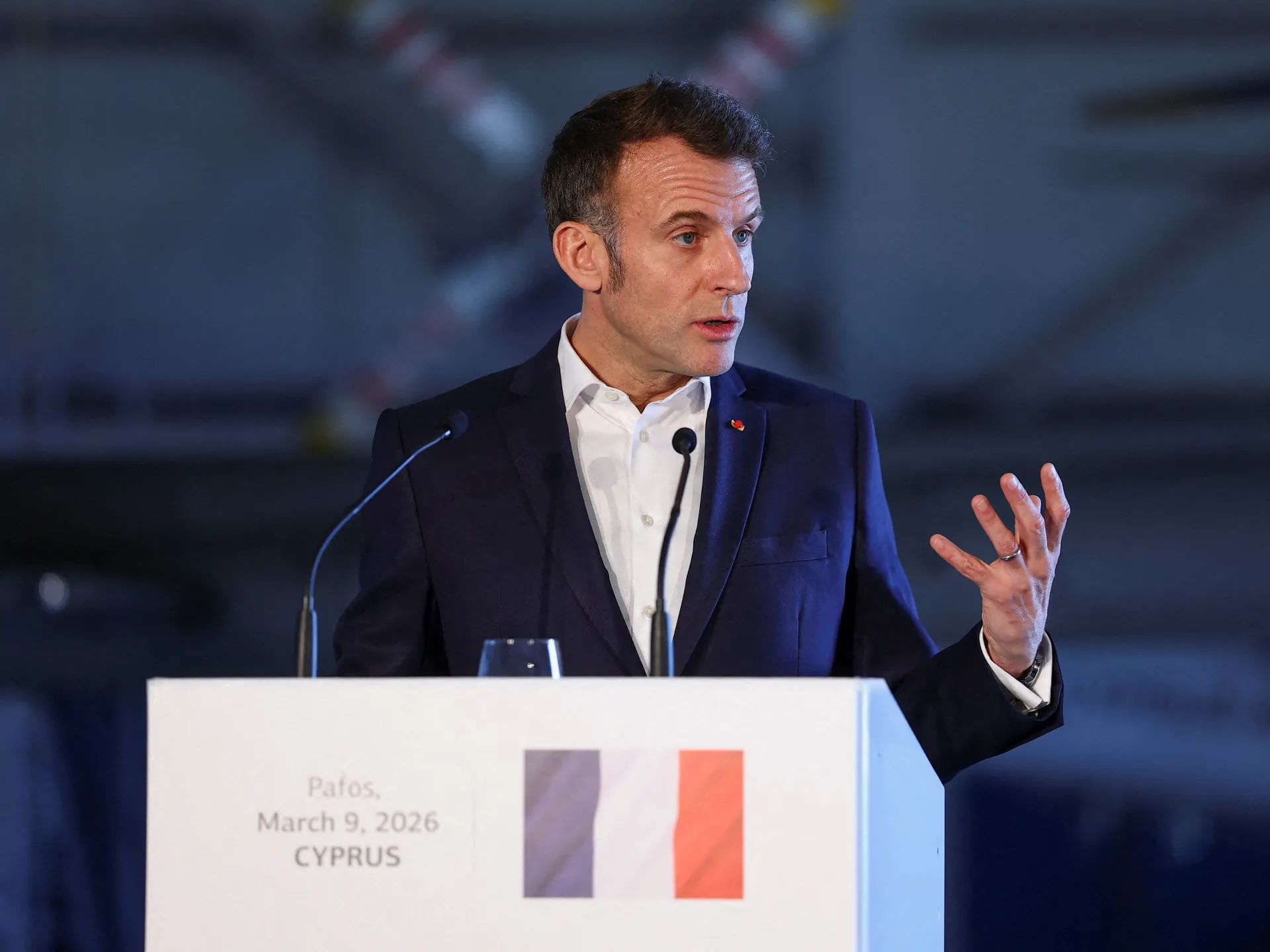
“When Cyprus is attacked, then Europe is attacked,” Macron said after meeting with Cypriot President Nikos Christodoulides and Greek Prime Minister Kyriakos Mitsotakis in Paphos on Monday.
The French president said he would also deploy a total of eight warships, two helicopter carriers and the nuclear-powered aircraft carrier Charles de Gaulle to the Eastern Mediterranean and the wider Middle East region, calling the move “unprecedented”.
France’s objective “is to maintain a strictly defensive stance, standing alongside all countries attacked by Iran in its retaliation, to ensure our credibility, and to contribute to regional de-escalation”, Macron said.
“Ultimately, we aim to guarantee freedom of navigation and maritime security.”
With the closure of the Strait of Hormuz sending oil prices soaring, finance ministers from the Group of Seven (G7) countries met in Brussels on Monday to discuss how to respond.
Crude oil prices have increased by about 50 percent since the US and Israel launched the war last month, with international benchmark Brent crude prices surpassing $100 a barrel on Monday.
French Finance Minister Roland Lescure told reporters that the G7 ministers did not make a decision on the potential release of emergency oil stocks amid the war. “What we’ve agreed upon is to use any necessary tools if need be to stabilise the market, including the potential release of necessary stockpiles,” Lescure said.
Paul Hickin, editor-in-chief and chief economist at Petroleum Economist, said getting the Strait of Hormuz reopened is the main priority. “That’s not going to happen in any shape or form until there’s a resolution to the conflict,” Hickin told Al Jazeera.
He explained that several countries in the Middle East, such as Kuwait and Iraq, are dependent on the strait to get their energy supplies to market.
“Kuwait and Iraq and those producers, they are really having a shut-in, and it will take a little bit of time to get back up and running,” said Hickin.
“That is the big risk, the knock-on effect … Getting those ships back, getting that infrastructure back up and running, it’s a slow process. So prices won’t come back down as quickly as many may think.”
Ukrainian President Volodymyr Zelenskyy has said that Kyiv could provide defensive systems as well as assistance to civilians and American soldiers “deployed in certain countries” in the Middle East as the war in Iran continues.
He has reportedly proposed an exchange of Ukrainian defensive technology to combat Iranian drones in return for advanced US defensive systems to use in the war against Russia.
The US-Israel-Iran conflict, which started 10 days ago when the United States and Israel launched strikes on Iran and killed Iran’s supreme leader, Ayatollah Ali Khamenei, has continued to escalate. Iran has responded with strikes on Israel and US military assets and other infrastructure in Kuwait, Bahrain, Qatar, Saudi Arabia and the United Arab Emirates.
As Gulf and other Middle Eastern states continue to attempt to intercept incoming drones and missiles with US-supplied air defences, the US has asked Ukraine to contribute some of its own air-defence systems.
Here is what we know.
What has the US requested from Ukraine and why?
The US has asked for Ukraine’s help in defending Washington’s allies in the Middle East against Iranian missile attacks on infrastructure and US military assets, Ukraine’s president confirmed last week.
At the moment, the US is using air defence systems such as the Patriot, Terminal High Altitude Area Defense (THAAD) batteries and Airborne Warning and Control System (AWACS) aircraft, to intercept Iranian drones and missiles targeting its military assets in the region. The Patriot Advanced Capability-2 (PAC-2) and PAC-3 are advanced surface-to-air missile defence systems.
However, these types of systems are extremely expensive, costing millions of dollars for each interceptor missile fired, and there are concerns that supplies of US interceptor missiles could run low.
“We received a request from the United States for specific support in protection against ‘shaheds’ in the Middle East region,” Zelenskyy wrote in an X post on March 5.
Shahed drones, particularly the Shahed-136, are Iranian-designed “kamikaze” or loitering munitions which are very low cost compared to the interceptors being used by the US. Costing roughly $20,000-$35,000 each, these GPS-guided drones are about 3.5m (11.5 feet) long and fly autonomously to pre-programmed coordinates to strike fixed targets with explosive payloads. They blow up as they hit their targets.
Over the course of the Iran war, Shahed-136 drones have targeted Middle Eastern countries including Saudi Arabia, Bahrain, Qatar and the UAE where US military assets and troops are hosted. Experts estimate that Iran has thousands of these drones.
Iran has also been supplying Moscow with many thousands of Shahed drones during Russia’s war on Ukraine.
During the course of Russia’s four-year war on Ukraine, Ukraine’s domestic arms industry has been forced to innovate, building low-cost interceptor drones priced at roughly $1,000 to $2,000 to counter Russian attacks with imported Iranian Shahed-136s.
Kyiv is now mass-producing these low-cost interceptor drones.
“The role of Shahed-type drones in long-range attacks has become more prominent in Ukraine after Russia took Iranian technology, improved it, and built it in previously unimaginable numbers,” Keir Giles, a Eurasia expert for the UK-based think tank Chatham House, told Al Jazeera.
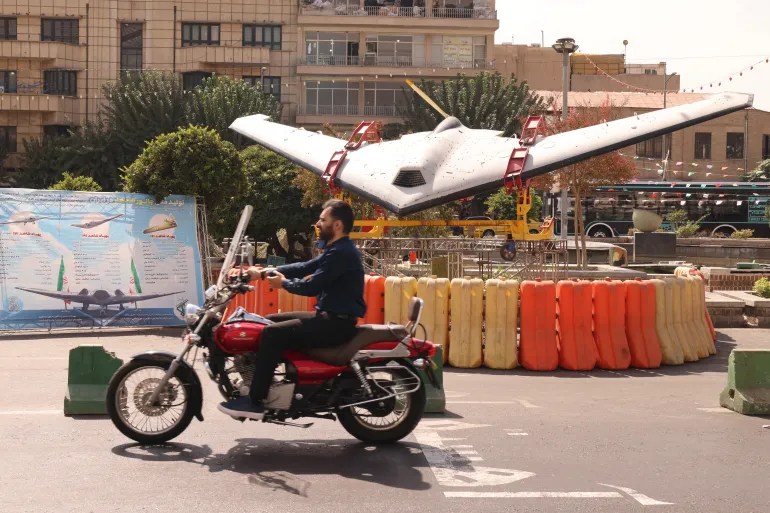
A man rides a motorcycle past a Shahed drone in Tehran’s Baharestan Square on September 27, 2025, as part of an exhibit to mark the ‘Sacred Defence Week’ commemorating the 1980-88 Iran-Iraq War [Atta Kenare/AFP]
What has Zelenskyy said?
Zelenskyy has posted several statements on social media confirming that he is ready to help Middle Eastern countries defend their territories by providing technical expertise.
“Ukrainians have been fighting against ‘shahed’ drones for years now, and everyone recognises that no other country in the world has this kind of experience. We are ready to help,” he wrote on X on March 5.
“I gave instructions to provide the necessary means and ensure the presence of Ukrainian specialists who can guarantee the required security.
“Ukraine helps partners who help ensure our security and protect the lives of our people.”
It is understood that Ukraine is in talks with several Middle Eastern countries about this.
On Monday, Zelenskyy said Ukraine has deployed interceptor drones and a team of specialists to help protect US military bases in Jordan.
Zelenskyy wrote on X that he has also spoken directly to Saudi Crown Prince Mohammed bin Salman (MBS) about “countering threats from the Iranian regime”.
He also said he had spoken with the leaders of Bahrain, Jordan, Kuwait, Qatar and the UAE.
Zelenskyy has repeatedly stressed that Ukraine must not weaken its own air defences. However, it is mass-producing this equipment now, and may well be able to afford to share.
“The fact that there are surplus capabilities ready to be sent to the US and the Middle East is unsurprising because Ukraine has led this innovation,” Giles said.
Zelenskyy has therefore proposed an exchange of air defence systems with the US ones being used in the Middle East.
“We ourselves are at war. And I said, completely frankly, that we have a shortage of what they have. They have missiles for the Patriots, but hundreds or thousands of ‘shaheds’ cannot be intercepted with Patriot missiles – it is too costly,” Zelenskyy said.
“Meanwhile, we have a shortage of PAC-2 and PAC-3 missiles. So, when it comes to technology or weapons exchange, I believe our country will be open to it.”
Zelenskyy may also have good political reasons for extending help, analysts say.
“The US has declined support for Ukraine on the ground that it had insufficient supply of air defence munitions, and now more of those Patriots have been fired in the Middle East in a few days, than have been supplied to Ukraine in four years,” Giles said.
“Zelenskyy will be aware that in providing this assistance, he is not only shaming the US, but also directly supporting potential friends and partners in the Middle East, who before now have been ambivalent to the situation in Ukraine,” Giles said.
Who else has sent defensive backup to the Gulf?
European countries including the United Kingdom, France, Spain, Portugal, Greece and Italy have pledged to provide defensive backup to Gulf nations over the past week. Additionally, Australia said it was deploying military assets to the region.
Wary of becoming directly involved in the US-Israeli war on Iran, European countries have nevertheless been drawn into the conflict by attacks on a British base on Cyprus in the Mediterranean and Iranian strikes on Western allies in Gulf countries that host US troops in military bases.
What will happen next?
Just as Ukraine is getting involved in the war, Russia might too, say experts.
“We should not be surprised if before long, as well as Russian technology in Iranian drones, we see Iran launching Shaheds manufactured in Russia,” Giles said.
He described Russia as a “primary beneficiary of current US actions,” pointing to how the surge in oil prices, the relaxation in US curbs on Russian energy exports to keep crude and gas prices under control, and the diversion of air defence munitions from Europe to the Middle East all helped Moscow. These, he said, “are all lifelines for Russia”.
Ministry of National Defence says no casualties or damage after missile shot down over southern city of Gaziantep.
Published On 9 Mar 20269 Mar 2026
Share
The Turkish Ministry of National Defence says NATO air defences have intercepted a ballistic missile launched from Iran towards Turkiye as concerns grow that the United States-Israel war against Iran will escalate.
The missile was intercepted on Monday over the Sahinbey district of Gaziantep in southern Turkiye, the ministry said in a statement. No casualties or damage were reported.
Recommended Stories
list of 3 itemsend of list
“Ankara emphasized its capability and determination to protect national airspace and border security, while warning that further escalation in the region must be avoided,” the statement said.
The ministry also urged all sides, especially Tehran, “to refrain from actions that could endanger civilians or undermine regional stability”.
Monday’s incident was the second time an Iranian ballistic missile was fired towards Turkiye since the US and Israel launched a war against Iran on February 28, according to local authorities.
The US-Israeli attacks have prompted a wave of Iranian missile and drone strikes across the wider region, including on targets in Arab Gulf countries.
Iran did not immediately comment on the Turkish ministry’s statement.
NATO spokesperson Allison Hart confirmed that the military alliance had intercepted “a missile heading to Turkiye”. “NATO stands firm in its readiness to defend all Allies against any threat,” Hart said in a post on X.
Iran denied firing a ballistic missile towards Turkiye on Wednesday after Turkish authorities said NATO air defences shot down a projectile over the Eastern Mediterranean.
NATO condemned that launch, expressing its “full solidarity” with Turkiye.
“This is a tangible demonstration of the Alliance’s ability to defend our populations against all threats, including those posed by ballistic missiles,” NATO said of the interception.
Article 5 of the alliance’s North Atlantic Treaty says an attack on one NATO country will be considered an attack on all. It also commits each NATO member state to taking action deemed necessary “to restore and maintain” security.
In an interview with the Reuters news agency last week after the first ballistic missile heading towards Turkiye was shot down, NATO chief Mark Rutte said there was no talk of invoking Article 5.
Iranian authorities have said they are firing at US military bases and other US- and Israel-linked targets across the region in self-defence, but civilian infrastructure has also been attacked.
“Iran’s targets are not just US bases; they are, in fact, primarily large-scale infrastructure and civilian targets as well,” said Rob Geist Pinfold, a lecturer in defence studies at King’s College London.
“This is not a mistake. This is by design,” Pinfold told Al Jazeera, explaining that Tehran is seeking to “unleash as much chaos as possible to destabilise the region and global markets” in an effort to force Washington to abandon the war.
“We’ve seen that Iran is targeting every single [Gulf Cooperation Council] state. It’s prepared to burn its bridges with all of them to pursue this very uncertain and high-risk strategy,” he said.
“It really shows you how Iran feels like it’s facing an existential threat. For them, this is a real do-or-die moment.”
G7 finance ministers discussed a coordinated release of emergency oil reserves on Monday but failed to reach agreement, with France’s Roland Lescure saying the group was “not there yet” on a deal.
ADVERTISEMENT
ADVERTISEMENT
The G7 was exploring a coordinated release of emergency oil reserves to tamp down fears of an impending shortage but stopped short of a deal.
Japan’s finance minister, Satsuki Katayama, said the International Energy Agency (IEA) explicitly requested the coordinated release during the G7 meeting, according to Bloomberg.
Brent crude briefly hit $119.50 a barrel on Monday morning, its highest level since 2022, having jumped roughly 25% since Friday as the Iran war intensified, raising fears over global production and shipping.
At the time of writing, oil prices pared gains and are trading slightly below $100 a barrel, as markets remain highly volatile.
Stock markets fell worldwide on concerns the global economy would not be able to absorb a sustained oil price shock.
Equity markets drop over uncertainty
At the open on Monday, the S&P 500 fell 1.3%, coming off its worst week since October. The Dow Jones Industrial Average was down 1.5% and the Nasdaq composite 1.2% lower.
The most immediate pain on Wall Street is hitting companies with large fuel bills. Carnival lost 7.3%, United Airlines sank 6.9% and Old Dominion Freight fell 3.8%.
Retailers dependent on long-haul shipping, whose customers are also facing higher petrol costs, also struggled. Best Buy fell 4.4% and Williams-Sonoma dropped 4%.
The moves followed steeper losses in European and Asian markets, where economies are more exposed to imported oil and gas. South Korea’s Kospi sank 6%, Japan’s Nikkei 225 dropped 5.2% and Europe’s Euro Stoxx 50 tumbled 1%.
Potential stagflation scenario
Since the war with Iran began, the central worry for financial markets has been how high oil prices will go and how long they will stay there.
If prices stay very high for very long, household budgets already stretched by high inflation could break under the pressure.
Meanwhile, companies would see their own bills jump for key items such as fuel and stock items, as well as for powering their data centres.
It all raises the possibility of a worst-case scenario for the global economy: stagflation, or a period when economic growth stagnates and inflation remains persistently high.
Late on Sunday, President Donald Trump countered this narrative by assuring that high oil prices at the moment are both worth the cost and only temporary.
“Short term oil prices, which will drop rapidly when the destruction of the Iran nuclear threat is over, is a very small price to pay for U.S.A., and world, safety and peace,” he said in a post on Truth Social.
In the bond market, the yield on the 10-year Treasury held at 4.15%, where it ended Friday.
Worries about high inflation and oil prices are applying upward pressure on Treasury yields, while risks of a slowing economy are pulling in the opposite direction.
Concerns about stagflation deepened on Friday following a surprisingly weak US jobs report showing that employers cut more jobs last month than they added.
Travel in the region continues to be severely disrupted
15:18, 09 Mar 2026Updated 16:20, 09 Mar 2026
Thousands of tourists have been stranded across the Middle East following the US-Israeli air attacks against Iran
Travel expert Simon Calder has shared his thoughts on the prospect of ‘normality’ returning to airports in the Middle East. Flights to and from the region continue to be severely disrupted in the wake of the US-Israeli attacks on Iran.
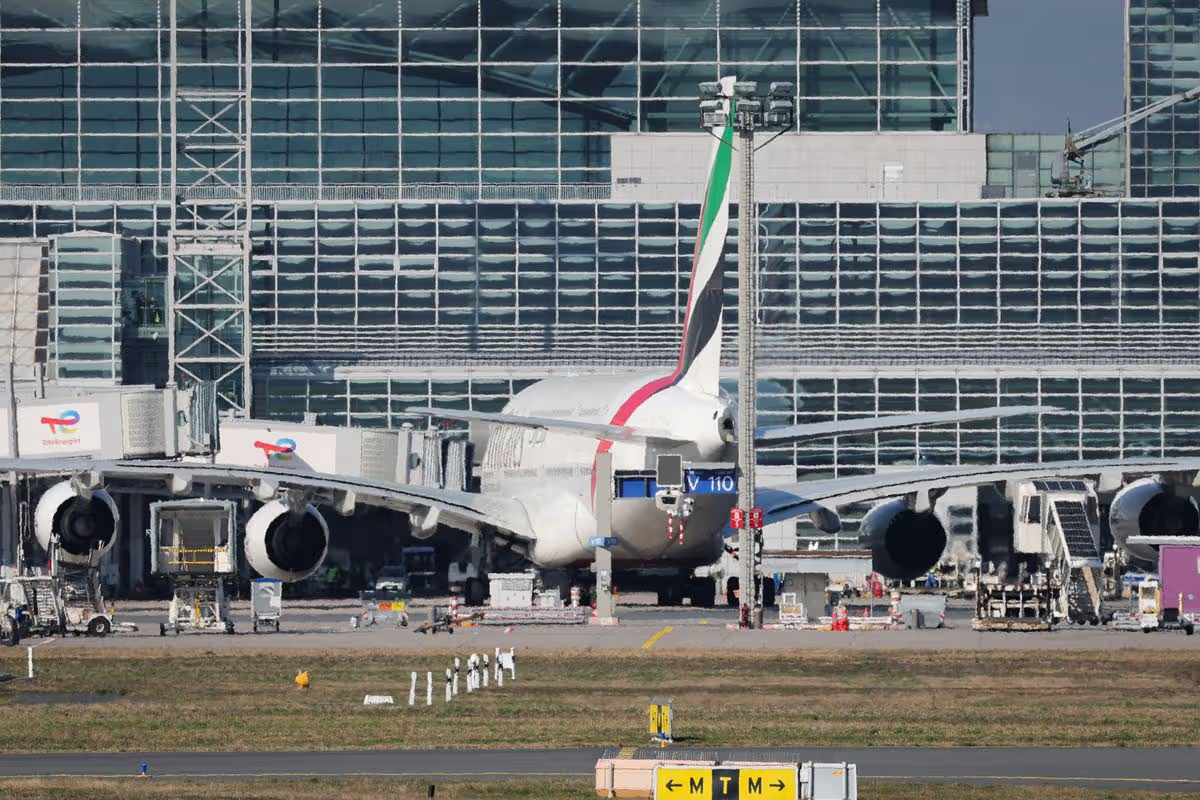
A multitude of flights to and from Dubai, Qatar, and Abu Dhabi – all three being vital transport hubs for individuals travelling to and from the Gulf and Asia – have been cancelled. Approximately half a million passengers typically utilise these airports daily.
More than 37,000 Brits have made their way back to the UK from the Middle East since the crisis response commenced, with it believed that tens of thousands more remain stranded.
Mr Calder has been regularly updating on the crisis, which began on February 28. He stated that whilst he anticipates an increase in the number of flights departing from the region, there’s no definitive end to the disruption in sight.
Content cannot be displayed without consent
“There are tickets now being sold by Etihad out of Abu Dhabi,” he revealed. “Which is an interesting development. On top of that, I expect there to be a ramp-up in flights out of Doha and out of Dubai, but at the moment we are still a long way away from anything that could be described as normality, whatever that looks like.
“You know, the idea that you have half a million people flying to, through, and from the three big hubs of Dubai, Doha, and Abu Dhabi every day. And it’s an interesting question as to what on earth happens when, of course, the war is finally over, which cannot come soon enough. But anyway, so I hope that people will be able to get out.”
On Monday, 16 out of the 18 scheduled flights from the UK to Qatar were cancelled due to ongoing airspace closures, according to aviation analytics firm Cirium.
Eleven out of 33 flights from the UK to the United Arab Emirates – encompassing Dubai and Abu Dhabi – were also scrapped. It’s anticipated that clearing the backlog of stranded passengers caused by the conflict will take weeks.
“British Airways has taken the view that we’re not going into Dubai or Abu Dhabi or Doha,” Mr Calder explained. “If you want to fly out, we’re happy to do that, but we’re going to be arranging flights from Muscat and looking at Friday night’s Virgin Atlantic flight to Dubai, that was arguably a good call because the effect was that the flight got to within maybe a couple of hundred miles of Dubai over Saudi Arabia and then turned around because of the attack on Dubai airport.
“It flew back, couldn’t get all the way back, went to Budapest to refuel and then continued to Heathrow. So it was roughly, I think, something like an 18-hour flight to nowhere.”
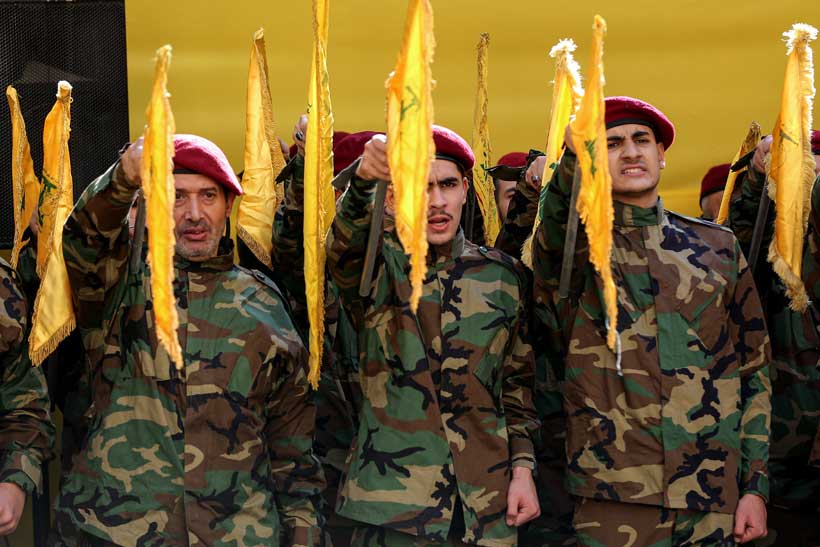
Hezbollah reported on Monday that its fighters engaged Israeli troops in eastern Lebanon during an overnight airborne raid, marking the second such operation in the area in recent days. The conflict between Israel and the Iran-backed group has drawn Lebanon deeper into the regional war, which began after Hezbollah opened fire to avenge the killing of Iran’s former supreme leader.
The Israeli military has not immediately commented on the latest Hezbollah claim. In previous operations, the military carried out airstrikes across Hezbollah-controlled southern Beirut, including targeting financial institutions like Al-Qard Al-Hassan. Lebanese authorities report nearly 400 people have been killed in the country since March 2, including 83 children and 42 women, though the toll does not distinguish combatants from civilians. Israel confirmed two soldier deaths in southern Lebanon—the first Israeli military casualties since the outbreak of hostilities.
Expanding Operations
Hezbollah stated that around 15 Israeli helicopters flew over eastern Lebanon after midnight, deploying troops observed approaching Lebanese territory from Syria. The region, the Bekaa Valley, is a stronghold of Hezbollah’s political and security apparatus. This follows a similar Israeli raid near Nabi Chit on March 2–3, which Lebanese officials said killed 41 people. Israel described that previous operation as an attempt to recover the remains of Ron Arad, a navigator missing since 1986.
Civilian Displacement and Urban Strikes
The war has prompted mass displacement, with hundreds of thousands fleeing southern Lebanon and Beirut’s southern suburbs, known as Dahiyeh. Israeli strikes have also hit locations outside Hezbollah strongholds. On Sunday, a drone strike in Beirut’s Rouche seafront district reportedly killed five senior commanders of Iran’s Revolutionary Guards Quds Force, illustrating the widening geographic and operational scope of the conflict.
Strategic Posturing
Israel has reinforced its military presence in southern Lebanon, establishing forward defensive positions in anticipation of potential Hezbollah attacks into Israel. The military maintains troops at five positions in the region, a posture originating from the 2024 war with Hezbollah.
Analysis: Escalation Risks
The repeated incursions and airstrikes signal a deepening and increasingly unpredictable phase of the Israel-Hezbollah conflict. Hezbollah’s engagement of Israeli forces in eastern Lebanon demonstrates its capacity to operate beyond the southern front, potentially broadening the battlefield.
For Israel, the operations appear aimed at both tactical objectives such as neutralizing high-value targets—and broader deterrence, signaling its intent to strike Hezbollah assets and Iranian-linked operatives throughout Lebanon. For Lebanese civilians, however, the widening conflict exacerbates humanitarian pressures, including casualties, mass displacement, and infrastructure destruction.
The situation underscores the risk of further regional escalation, with Syria and Iran-linked actors already drawn into the conflict, raising the possibility of a protracted war with extensive human and geopolitical costs.
Iran has named Mojtaba Khamenei as its new supreme leader, just over a week after the assassination of his father, Ayatollah Ali Khamenei, in joint United States-Israeli strikes that have plunged the entire region into a sprawling war.
The 56-year-old, who will now be charged with leading the Islamic Republic through the biggest crisis in its 47-year history, was named by clerics as his father’s successor on Sunday.
Key leaders, Iran’s powerful Islamic Revolutionary Guard Corps (IRGC), and the armed forces were quick to pledge their backing to the new leader.
Ali Larijani, secretary of the Supreme National Security Council, who has been tasked with steering Iran’s security strategy since the US and Israel launched their all-out offensive, called for unity around the new supreme leader.
Parliament Speaker Mohammad Bagher Ghalibaf welcomed the choice, saying that following the new supreme leader was a “religious and national duty”.
Mojtaba Khamenei has never run for office or been subjected to a public vote, but has for decades been a highly influential figure in the inner circle of the supreme leader, cultivating deep ties to the IRGC.
In recent years, Khamenei has increasingly been touted as a top potential replacement for his father. His selection could be a sign that more hardline factions in Iran’s establishment retain power, and could indicate that the government has little desire to agree to a deal or negotiations in the short term as the war enters its second week.
Al Jazeera’s Ali Hashem described Khamenei as his “father’s gatekeeper”.
“He adopts the positions of his father with respect to the United States, with respect to Israel. So we are expecting a confrontational leader. We’re not expecting any moderation,” he said.
“However, if this war comes to an end and he is still alive, and he is able to continue running the country, there is going to be big potential… to find new routes for Iran,” Hashem said.
Rami Khouri, a distinguished public policy fellow at the American University of Beirut, said Khamenei’s appointment signals “continuity” and that it remains to be seen whether the new supreme leader will push for negotiations to end the war.
Either way, he said, the appointment was “an act of defiance”. Iran is “telling the Americans and Israelis, ‘You wanted to get rid of our system? Well … this is a more radical person than his father who was assassinated,’” he said.
Heidari Alekasir, a member of the Assembly of Experts that was tasked with choosing the supreme leader, said the candidate had been picked based on the late Khamenei’s advice that Iran’s top leader should “be hated by the enemy” instead of praised by it.
“Even the Great Satan [US] has mentioned his name,” the senior cleric said in reference to US President Donald Trump’s earlier statement that Mojtaba Khamenei would be an “unacceptable” choice for him to lead Iran.
Israel’s military had previously warned any successor that “we will not hesitate to target you”.
On Sunday, Trump again promised to exert influence over who is selected as Iran’s next supreme leader, saying that, without Washington’s approval, whoever is picked for the role is “not going to last long”.
The selection of Khamenei’s son is certain to enrage Trump.
Supreme leader not decided by ‘Epstein’s gang’
The 88-member Assembly of Experts said on Sunday that it “did not hesitate for a minute” in choosing a new supreme leader, despite “the brutal aggression of the criminal America and the evil Zionist regime”.
Earlier, the clerical body had indicated it had reached a majority consensus on its choice, without naming who it was, with one member saying, “The path of Imam Khomeini and the path of the martyr Imam Khamenei has been chosen. The name of Khamenei will continue.”
Mojtaba Khamenei studied under conservative clerics in the seminaries of Qom, the heart of Shia theological learning, and holds the clerical rank of hojjatoleslam, a mid-level clerical ranking.
Ali Khamenei, who led Iran for 37 years, succeeding Ayatollah Ruhollah Khomeini, who had led the 1979 revolution, was killed in a US-Israeli strike on Tehran on February 28, at the outset of the war, which has now unleashed chaos throughout the Middle East.
The Israeli military has already threatened to kill any replacement for Khamenei, while Trump said the war may only end once Iran’s military and leaders have been wiped out.
“He’s going to have to get approval from us,” Trump told ABC News. “If he doesn’t get approval from us, he’s not going to last long,” Trump said on Sunday of any new supreme leader.
Iranian officials have rejected Trump’s push to be involved in the selection of the next leader, insisting that only Iranians can decide the future of their country.
On Friday, Iranian Parliament Speaker Mohammad Bagher Qalibaf appeared to ridicule the US president’s demands.
“The fate of dear Iran, which is more precious than life, will be determined solely by the proud Iranian nation, not by [Jeffrey] Epstein’s gang,” Ghalibaf wrote on X, referring to the late sex offender who had ties to rich and powerful figures in the US.
Dark skies
As clerics selected the new supreme leader, a dark haze hung over Tehran after Israel struck five oil facilities in and around the capital city overnight, setting them ablaze and filling the skies with acrid smoke.
As the war extended into its ninth day, the IRGC said they had enough supplies to continue their drone and missile attacks across the Middle East for up to six months.
IRGC spokesman Ali Mohammad Naini said Iran had so far used only first- and second-generation missiles, but would use “advanced and less-used long-range missiles” in the coming days.
Trump again refused to rule out sending American ground troops into Iran, but continued to insist that the war was all but won, despite the ongoing Iranian missile and drone strikes.
Analysts warn there is no clear path to ending the conflict, which US and Israeli officials say could last a month or longer.
Crude oil prices rise by as much 20 percent as sprawling regional conflict threatens global energy supplies.
Published On 9 Mar 20269 Mar 2026
Share
Oil prices have surged past $100 a barrel for the first time since Russia’s invasion of Ukraine, amid the widening fallout of the United States and Israel’s war on Iran.
Brent crude, the global benchmark, rose by as much as 20 percent on Sunday, topping $111 a barrel, as fears grew of prolonged disruption to global energy supplies.
Recommended Stories
list of 4 itemsend of list
US President Donald Trump, who campaigned heavily on cost-of-living concerns in the 2024 election, brushed off the surge.
“Short term oil prices, which will drop rapidly when the destruction of the Iran nuclear threat is over, is a very small price to pay for U.S.A., and World, Safety and Peace,” Trump said in a post on Truth Social.
“ONLY FOOLS WOULD THINK DIFFERENTLY!”
Crude oil prices have surged by about 50 percent since the US and Israel launched joint strikes on Iran on February 28.
Iranian threats and attacks in response have brought an effective halt to shipping in the Strait of Hormuz, a conduit for about one-fifth of the global oil supply.
Iraq, the United Arab Emirates and Kuwait, three of the biggest producers in The Organization of the Petroleum Exporting Countries (OPEC), have been forced to cut production amid dwindling crude storage capacity due to the collapse of shipping through the waterway.
Iran and Israel have also launched strikes on key energy facilities in Iran amid the sprawling regional conflict.
Stocks in Asia fell sharply on Monday morning, as investors braced for the fallout of rising energy prices.
Japan’s Nikkei 225 plunged about 6 percent in early trading, while South Korea’s KOSPI tumbled nearly 7 percent.
US stock futures, which are traded outside regular market hours, also saw substantial losses.
Futures tied to Wall Street’s benchmark S&P 500 were down by 1.7 percent, while those for the tech-heavy Nasdaq Composite fell by 1.90 percent.
Marches on 115th anniversary of IWD place focus on issues like US-Israeli war on Iran and Donald Trump’s links with sex offender Jeffrey Epstein.
Thousands of demonstrators have taken to the streets around the world to mark International Women’s Day, taking a stand on a number of issues including the US-Israeli war on Iran and gender-based violence.
In Spain, where the government drew the ire of the United States for refusing to allow it to use Spain’s military bases for strikes against Iran, thousands of women took to the streets of major cities to call for an end to the war.
Recommended Stories
list of 3 itemsend of list
“It is within our power to stop the war, to stop the barbarity, and to win rights,” said Yolanda Diaz, Spain’s second deputy prime minister. “We proclaim ourselves in defence of peace, in defence of the Iranian people, in defence of Iranian women.”
On the first day of the joint US-Israeli war on Iran, strikes on a primary school in the city of Minab killed 165 girls, most between the ages of seven and 12, during class hours – the deadliest single attack on civilians so far.
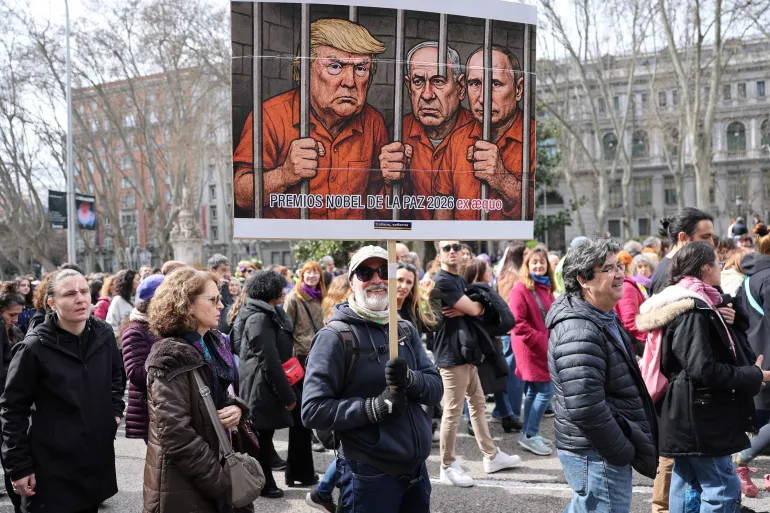
A banner mocks US President Donald Trump, Israeli Prime Minister Benjamin Netanyahu and Russian President Vladimir Putin at an International Women’s Day rally in Madrid, Spain on March 8, 2026 [Thomas Coex/AFP]
In France, where more than 150 demonstrations were held, 73-year-old rape survivor Gisele Pelicot led a march calling for an end to sexual violence, telling a crowd in Paris, “We won’t give up”.
Pelicot became a global symbol in the fight against sexual violence after she waived her right to anonymity during the 2024 trial of her ex-husband and dozens of strangers who raped her while she was unconscious.
Across the Atlantic, activists gathered at Zorro Ranch in the US town of Albuquerque, New Mexico, where the late convicted sex offender Jeffrey Epstein is alleged to have sexually abused and trafficked underage girls and young women.
“The years-long cover-up and protection of Jeffrey Epstein’s allies and co-conspirators exposed a culture of impunity that tells survivors their pain is negotiable when powerful men are involved,” said Rachel O’Leary Carmona, executive director of Women’s March.
In New York, protesters gathered outside Trump Tower for a “Believe Survivors” demonstration after this week’s publication of FBI documents by the US Justice Department describing interviews with a woman who alleged President Donald Trump sexually assaulted her when she was a minor.
People protest outside Trump Tower during a ‘Believe Survivors’ demonstration against US President Donald Trump and the late convicted sex offender Jeffrey Epstein on International Women’s Day in New York City, on March 8, 2026 [Angelina Katsanis/Reuters]
In Puyo, an Amazonian town in Ecuador, members of various Indigenous groups gathered to raise their voices about the degradation of the environment, and oil and gas expansion. “We want to live in a healthy environment and in harmony with the forest, so we are asking for respect and that public policies for nature are put in place,” said Ruth Penafiel, 59, from the Kichwa community in the northern Amazon.
In Brazil, Sunday’s marches channeled outrage over the alleged gang rape of a 17-year-old girl in Rio de Janeiro’s Copacabana neighbourhood in January. The case gained national attention this week when four suspects handed themselves over to authorities.
A woman with tape reading ‘living is my right’ over her mouth takes part in a march marking International Women’s Day on Copacabana beach in Rio de Janeiro, on March 8, 2026 [Silvia Izquierdo/AP]
In Pakistan’s capital, Islamabad, police briefly detained several women’s rights activists attempting to hold a rally in defiance of a government ban on public gatherings imposed amid a surge in militant violence in the country. Aurat March, a network of women’s rights activists, condemned the crackdown, saying participants had been peacefully exercising their right to protest.
Women’s rights activists shouted slogans during a protest in Istanbul, Turkiye. In China and Russia, vendors sold flowers wrapped in pink. And in Phnom Penh, Cambodia, local workers lifted fists and umbrellas as they celebrated.
International Women’s Day, officially recognised by the United Nations in 1977, marks its 115th anniversary this year.
Author Diana Gabaldon knew readers had been mentally casting the timeless main couple at the center of her “Outlander” book saga since the first novel’s release in the early ‘90s — particularly its leading man, a tall and burly Scottish Highlander with striking red hair. She recalls a 50-year-old German actor who, she says, “always looked like he’d been dipped in cooking oil” among the imaginary candidates. Another was a 5-foot-4-inch race car driver. She quickly learned not to weigh in.
“They would keep asking me who I’d like to play Jamie — ‘Nobody,’ I kept saying because on the rare occasion when I mentioned some possibility, the immediate response would be shrieks of dismissive outrage and heapings of scorn that went on for days (online),” she says over email. Besides, she felt the whole notion of considering prospects was pointless because, as she puts it, it’s not like Hollywood would want to adapt a 300,000-word book anyway.
However, Ronald D. Moore and Maril Davis, longtime collaborators through their Tall Ship Productions banner under Sony Pictures Television, did. And Gabaldon was thrust back into the casting debacle, watching test videos and learning not to judge a book by its cover — or actors (in this case, Sam Heughan and Caitriona Balfe) by the photos that pop up in a Google search: “Sam doesn’t look like Jamie, and Caitriona doesn’t look like Claire, but both of them can be those people, and that’s all that matters,” she says. And they were those people.
In 2014, the duo brought to the screen the epic story of Claire Randall, a British combat nurse who is mysteriously transported back to 1743 Scotland and marries Scottish warrior Jamie Fraser to survive. Together, they ignite a passionate romance that traverses decades and endures brutal separations, wars and time travel. After spinning its own sweeping narrative for more than a decade, the Starz series is launching its eighth and final season on Friday.
In “Outlander,” Claire Randall (Caitriona Balfe) is a British combat nurse who is mysteriously transported back to 1743 Scotland and marries Scottish warrior Jamie Fraser (Sam Heughan) to survive.
(Ed Miller / Starz)
And it won’t exactly be a by-the-book ending. The final season pulls from the remaining material in Book 8, as well as Book 9 — Gabaldon is working on a 10th installment, “A Blessing for a Warrior Going Out” — leaving Matthew B. Roberts, the showrunner, and the writing team to craft an original ending for television. In a signal of how much pressure there was to do right by the beloved fictional couple, four endings were written and filmed.
“Diana’s been involved since Day 1 — she reads everything, she sees everything,” Roberts said by video conference. “I told all the endings that were going to be written. She briefed me a little bit of where she might be going, not the ending of the books, but just where the book might be going. I wanted to at least incorporate some of that in some of the endings that were written.”
Can it be anything other than a happy ending? Maybe the clue is in “I Love Lucy.” Lucy and Ricky Ricardo‘s love story was often a reference point for Roberts throughout his time on “Outlander.”
“No matter what trouble Lucy got in, no matter what she was doing, never did you think they were ever going to break up,” he says. “That’s Jamie and Claire, no matter what happens, no matter what he goes through or what she goes through, no matter what trouble or what they tell each other sometimes, we’ll never think they break up. And the audience knows that too, and we knew, if you just stayed true to that, then that love story would be successful.”
Ahead of the show’s final season premiere, The Times spoke with Balfe and Heughan to get their thoughts on bringing the historical romance to life and the journey to reach the final chapter.
In the spirit of the Season 8 premiere, which has a moment where Claire and Jamie reflect on the early days of their story, let’s travel back in time. Do you remember how this series was first presented to you and what went through your mind?
Balfe: I think the logline I saw was “nurse goes back to Scotland and then goes back 200 years in time and meets a Highlander.” I think I had two lines. That was all I had.
Heughan: It sounded like it was never gonna work. I found out it was a book series, and I think we both read it, didn’t we?
Balfe: Yeah, I read the book in four days before we tested. You’d already been cast at that point … I was living in L.A. I had tiny bit parts in a few films, and I was definitely struggling. I had booked to go on a trip to India, sent my passport into the Indian embassy. Of course, that’s exactly when I found out that maybe I had to travel to London for this test.
Heughan: At the time, I had failed attempts at pilot season, and I was back in London working in a bar and thinking, “I can’t afford to do this and I’m 34 years old. I should probably think about giving up.” Because there was no way I could support myself. I wasn’t loving it.
Balfe: You were 33, by the way.
Heughan: Oh, yes. I was younger. Then this thing came through. And actually, to be honest, the logline and perhaps the dialogue, when I read it, I just thought, “I know this guy.” There just was something very familiar.
“At the time, I had failed attempts at pilot season, and I was back in London working in a bar and thinking, ‘I can’t afford to do this and I’m 34 years old. I should probably think about giving up,’” says Heughan.(Sophia Spring / For The Times)
Tell me about the decision to say goodbye to this show and these characters. Does it feel like the right time?
Balfe: By the time we got to Season 7, that was our last season that we were contracted for, and there were conversations going around that they — the writers — felt that they had eight seasons [for this story]; that that was sort of an organic finish to it. But we were more than halfway through Season 7 before anyone came to talk to us. Actually, we had all scripts, bar the last two. And it wasn’t ending. Before they came to us, it was like, “How is this gonna happen? Are they going to wrap it up in two episodes or are they coming to us?” It was a lot of pressure in a very short amount of time to decide, “OK, do we just wrap this up in two episodes or do we try and give it a season to properly say goodbye?” There’s a lot of people’s jobs, and there’s a lot of people’s livelihoods, and there’s a whole ecosystem around it. We felt that it needed that kind of time.
Heughan: A lot of thought went into it. I think we were ready to move on or do something else. But also, there was this itch, like we hadn’t finished it and it didn’t feel satisfying for us and for the fans. We wanted to come back and really tie it up properly.
The final season focuses on Claire and Jamie’s struggles during the Revolutionary War, with the war having followed them home. What intrigued you about this final onscreen chapter of their story?
Heughan: Jamie’s concerned about himself in the foremost because he has this information that he’s going to die. But they’ve fought for eight seasons to stay together and to protect everyone they love and the greater community and I think that continues, but there’s so many more distractions or more challenges along the way in this season from the inside.
Balfe: And the Revolutionary War has been circling them for a very long time. It was time for the culmination —
Heughan: [Laughs] Instead of saying “War is coming,” it’s “War is here.’
“There’s a lot of people’s jobs, and there’s a lot of people’s livelihoods, and there’s a whole ecosystem around it. We felt that it needed that kind of time,” says Caitriona Balfe, right, with Sam Heughan, about finishing the “Outlander” story with an eighth season.
(Sophia Spring / For The Times)
The fandom around this property is active and devoted. There’s good that can come from that — the engagement, the creativity — but some bad too, like when things get toxic. What was the learning curve of playing this beloved fictional couple and navigating the fandom?
Balfe: It was a bit of a baptism of fire.
Heughan: We were both quite green when we were thrust into it and engaged wholeheartedly.
Balfe: The landscape is very different. Twitter was Twitter before it was death pit, Instagram was far more innocent as well. In the beginning, it was really nice. I wasn’t a mom. I had loads of time on my hands — well, not really, because we were shooting all the time — but anytime I did, it used to be nice and we would do these quick Q and As. That one-on-one connection with the fans was really, really lovely. I do think there was a moment where … the tide shifted, and this sort of shipper-dom got very intense. I was getting married, and that was having an impact on the people in my life and and I think I had to then step away because I was like, “OK, this doesn’t feel good for everyone in my life.”
Heughan: Look, I think it’s still there. It is a strange one to get your head around. People, in one way, are uber fans of the show, but in other ways, they’re overtly intrusive in your life. But it is a small minority. I think … perhaps we’ve done our job that well? It’s not just about Jamie and Claire, it’s about that person behind it and their life behind it, and their family behind it, that people want to get invested in. I don’t know if it’s a great thing for actors, to be honest, but in this current environment, we’re always asked to give more of ourselves to engage with fans, but it’s been something we’ve had to learn on the job.
Balfe: And I think there are times in your life when you have more capacity to be more open, and there’s times in your life where you need to shut off a little bit more. The overall reception from the fans have been so positive and so supportive of things that we’ve done in our lives, and that is the thing that I choose to focus on with it.
“Outlander” isn’t strictly a romance, but that’s what gives it power. You’ve spent more than a decade in this space. What have you learned about how that romance space functions and what the fans seek from these stories?
Balfe: I was sort of unaware of the need and the appetite that people have for it. Nowadays it’s served an awful lot better, but I think it was an underserved demographic. Or it was not given the due that people needed. It’s sometimes looked on as the second-class citizen of storytelling, in many ways, but I think it’s a genre that allows you to really look at the beauty of humanity and … the core things that we care about, which is love and family and connection.
Heughan: And comfort. It’s comforting. This show proves that there’s a real appetite.
Balfe: There’s many more shows now. Everybody’s talking about “Heated Rivalry.” There’s “Bridgerton.” Maybe it’s the emancipation of women in the last 50 years. It’s like they are finally like, “Well, we want our TV that speaks to us as sexual beings and as mothers and as matriarchs and as professionals and whole round of people.” Our show did that a lot.
“There’s many more shows now,” Balfe says of series that serve up romance. “Everybody’s talking about ‘Heated Rivalry.’ There’s ‘Bridgerton.’ It’s like they are finally like, ‘Well, we want our TV that speaks to us as sexual beings and as mothers and as matriarchs and as professionals and whole round of people.’ Our show did that a lot.”(Sophia Spring / For The Times)
Have you taken stock of just how much Claire and Jamie have gone through as a couple?
Balfe: How many near-death experiences?
Heughan: Yeah, how many times they’ve nearly died or been attacked or assaulted.
Balfe: How many people they’ve killed. Claire, she’s like a serial killer.
I was wondering, because it’s the last season, you can’t get in trouble now, where would Caitriona or Sam have called it quits in this relationship? Like, this is too much, I need to move on.
Balfe: I don’t know if Caitriona would have gone back 200 years in time.
Heughan: When she fixes his shoulder — that’s pretty painful. She gets him in a lot of trouble and he puts himself in a lot of trouble. I wouldn’t have gone past Episode 1 [he mumbles].
Balfe: See! I would have gone to Season 3.
Heughan: No, I think when he sends her through the stones and is like, “That’s it. She’s gone.” But she keeps coming back. I thought I got rid of her, finally!
Caitriona, you make your directorial debut on the show this season with Episode 2. Tell me about that experience.
Balfe: It was so fun. They gave me Episode 2, which allowed me to do my prep before we started. I was so lucky that Jan Matthys, who is the director of Episode 1, was an incredible mentor to me throughout the process. I just got to work with these guys in a totally new way, which was so amazing. I was buzzing. The whole first 10 weeks [of this season] felt like the very first 10 weeks again because you’re learning all these new skills and you’re just in such high operating point; you have to make decisions on the fly, I was also in scenes. It was just mad, but brilliant.
Heughan: You were also probably happy to take the corset off.
Balfe: To be able to walk around in proper wet weather gear and trousers and be able to go to the bathroom — not to be TMI, but it was so good.
They did not give me the easiest episode. Every day had its thing — obviously, the bear attack sequence. Three days before we were filming that, that was a cougar; we were going to have a live cougar. There was a whole thing planned. And a cougar attacks in a very different way than a bear does. So my whole shot list had to go out of the window and I had to rethink the whole thing. But that was kind of fun.
The final season of “Outlander” focuses on Claire (Balfe) and Jamie’s (Heughan) struggles during the Revolutionary War, with the war having followed them home.
(Robert Wilson / Starz)
Finales can be tough, given how viewers chime in on social media. You can’t please everyone. But what was your vision for the ending of “Outlander”?
Balfe: I didn’t really have one. I would not want to have had Matt’s job because that’s a really heavy load to bear, trying to finish this out. But I would say the season was unusual. Normally, we would get an overview of the season before we start. This season, we went into it blind so we weren’t getting sort of any info about what was going to happen. Through the whole season, it was like finding out as the scripts came what was happening. And to be honest, we still don’t really know the ending. We know bits that were filmed, but [not] how he’s going to edit it.
Heughan: I definitely had a firm belief about a certain element of it. I spoke to a few people — few other execs and producers — and there was a common consensus, and I think that might be one of the directions, but it’s going to be a surprise for us when we watch it. I don’t know when we are going to watch it.
Multiple endings were filmed.
Balfe: There was a few different things filmed.
Heughan: Hard to know what’s [going to make it] — it’s all in a same direction. But what direction that is …
Would you call it a happy ending?
Heughan: I don’t know. It was such a secret on the call sheets and stuff.
Balfe: There was different versions of scripts that went out.
Heughan: There were fake people put in. There was a reduced crew.
Iranian state television has announced that the Assembly of Experts has chosen Mojtaba Khamenei as supreme leader after a “decisive vote”. He’s the son of Ayatollah Ali Khamenei who was killed by the United States on February 28.
VICKY Pattison and her husband Ercan Ramadan are making their way back to the UK after becoming stranded in Dubai amid the Iran war.
Last Saturday (February 28), Iran launched a barrage of rockets at nations across the Middle East after vowing revenge for Trump and Israel’shuge blitz on the rogue nation.
Sign up for the Showbiz newsletter
Thank you!
Vicky and Ercan shared an update after fleeing Dubai in favour of nearby OmanCredit: InstagramThe pair shared they chartered a bus to take them and their friends across the borerCredit: InstagramThe star thanked the company for their help amid the crisis, and assured fans she was OKCredit: InstagramThe pair travelled for 11 hours, including spending three hours at the border on the busCredit: Instagram
Vicky was en-route with Ercan for a planned trip to Australia and New Zealand, and had a planned stop in Dubai when the attacks started.
She’s since only given small updates, noting how she didn’t want to speculate to scare her followers and was “limiting time spent on social media due to a growing amount of misinformation that feels really counterproductive to staying calm.”
However, she returned to Instagram today to share “a little update” on where she and Ercan were, after Dubai airport was also subject to a drone attack amid the evening of strikes, with both Iranian and Iraqi airspace closed as the conflicts intensify.
Sharing a photograph of herself and Ercan with a group of other people on a mini-bus this afternoon, she apologised for the “radio silence” over the past week, noting things were “changing so rapidly” and she didn’t want to say anything that could be deemed insensitive.
“We really appreciate all your messages of concern and just wanted to reassure everyone that we’re fine,” she wrote.
“After three cancelled flights and the realisation that we definitely weren’t going to make it on to Australia and New Zealand we wanted to try and get home as quickly and safely as possible.
“I understand that there are a lot of people still in Dubai feeling really calm and safe however, we wanted to be back to our babies, work and normality and we felt like Oman was our best option.”
The star went on to explain that she had arranged a public transfer van with friends, with the team driving for 11 hours to get to Oman – including two to three hours to cross the border.
“For anyone stuck in Dubai and wanting to get home via Oman, I will put more information on @vickysvacays,” she said. “I just don’t want to overwhelm or bore anyone on here.
“We are going to try and enjoy our last days away and explore Oman hopefully 🥹”
“The last week has been quite unsettled and we understand people feeling unsafe and uncertain,” she added. “We have experienced moments like that, but ultimately feel like it’s important we acknowledge our position of privilege.
“We are extremely grateful to be making our way home and are thinking of anyone feeling fearful or unsettled, anywhere in a world that is rapidly becoming an increasingly scary place to be.”
“Finally just a little Thankyou to @addressbeachresort and [the UAE government] for keeping us safe, calm and informed when possible 🩵”
Friends and fans were quick to send their well-wishes to the star, saying they were glad she and Ercan were somewhere safe.
“Glad you’re both okay! Not what you had planned, but such is life. Not long until you’re reunited with the boys” wrote one.
Candice Brown added: “So glad you are on your way back darling x”
“So happy you’re both safe, sending you all the love” wrote another.
Vicky and Ercan have limited their social media use to prevent spreading misinformationCredit: AlamyThe star said she was “extremely privileged” to charter a bus to drive her and her friends across the borderCredit: InstagramVicky and Ercan were in Dubai while on route to go to AustraliaCredit: Instagram/vickypattisonThe couple have said that they are safeCredit: Instagram