



war

‘No endgame’: Why US Democrats say Iran war hearing has them worried | US-Israel war on Iran News

A group of Democrats in the United States Senate is demanding public hearings on the country’s war against Iran after receiving a series of classified briefings from officials in President Donald Trump’s administration.

Lawmakers say the White House has not clearly explained why the US entered the conflict, what its goals are, or how long it may last.

Republicans currently hold a narrow, 53-47 Senate majority, which gives them the power to control what legislation comes to the floor for debate.

Some Democrats have expressed frustration after the latest closed-door briefing. Trump has not ruled out sending US ground ⁠troops into Iran.

“I just came from a two-hour classified briefing on the war,” Senator Chris Murphy from the state of Connecticut said on Tuesday. “It confirmed to me that the strategy is totally incoherent.

“I think this is pretty simple: if the president did what the Constitution requires and came to Congress to seek authorisation for this war, he wouldn’t get it – because the American people would demand that their members of Congress vote no,” he added.

Here is what we know:

What has happened so far?

Since the US and Israel launched attacks on Iran on February 28, senior officials, including Secretary of State Marco Rubio and Defense Secretary Pete Hegseth, have held several closed-door meetings to brief Congress members on the military campaign and its progress.

Because the meetings are classified, lawmakers are restricted in what they can publicly disclose about the information they received.

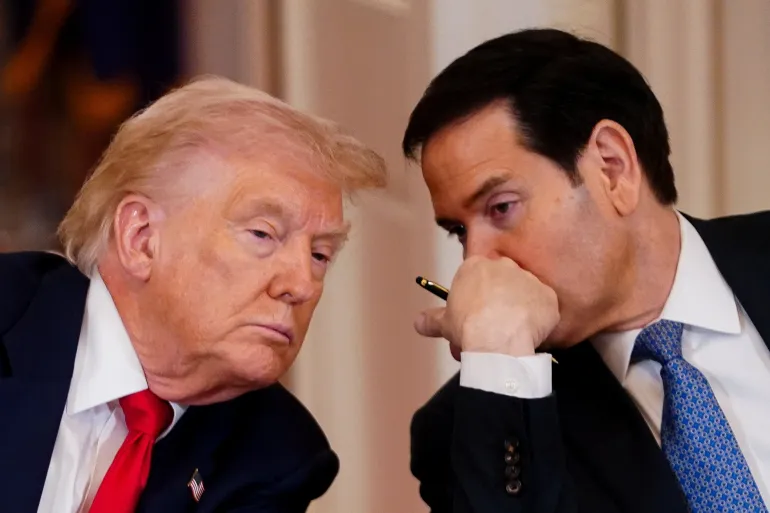
U.S. President Donald Trump listens to U.S. Secretary of State Marco Rubio
US President Donald Trump listens to Secretary of State Marco Rubio [File: Nathan Howard/Reuters]

What are Democrats saying?

Several Democratic senators have said they left the briefings frustrated, arguing that the administration had not provided clear answers about the war’s objectives, timeline or the long-term strategy guiding their approach to the conflict.

Earlier this week, six Democratic senators also called for an investigation into a strike on a girls’ school in Minab, in southern Iran. Reports indicate the attack, which investigators say involved US forces, killed at least 170 people, most of them children.

“There seems to be no endgame,” Democratic Senator Richard Blumenthal said. “The president, almost in a single breath, says it’s almost done, and at the same time, it’s just begun. So this is kind of contradictory.”

Senator Elizabeth Warren from Massachusetts raised concerns about the cost of war.

“The one part that seems clear is that while there is no money for 15 million Americans who lost their health care, there’s a billion dollars a day to spend on bombing Iran,” Warren said on Tuesday.

“The one thing Congress has the power to do is to stop actions like this through the power of the purse,” she added.

Others seem worried that a ground deployment could take place.

“We seem to be on a path toward deploying American troops on the ground in Iran to accomplish any of the potential objectives here,” Blumenthal, of Connecticut, told reporters after Tuesday’s classified briefing.

“The American people deserve to know much more than this administration has told them about the cost of the war, the danger to our sons and daughters in uniform and the potential for ⁠further escalation and widening of this war,” he added.

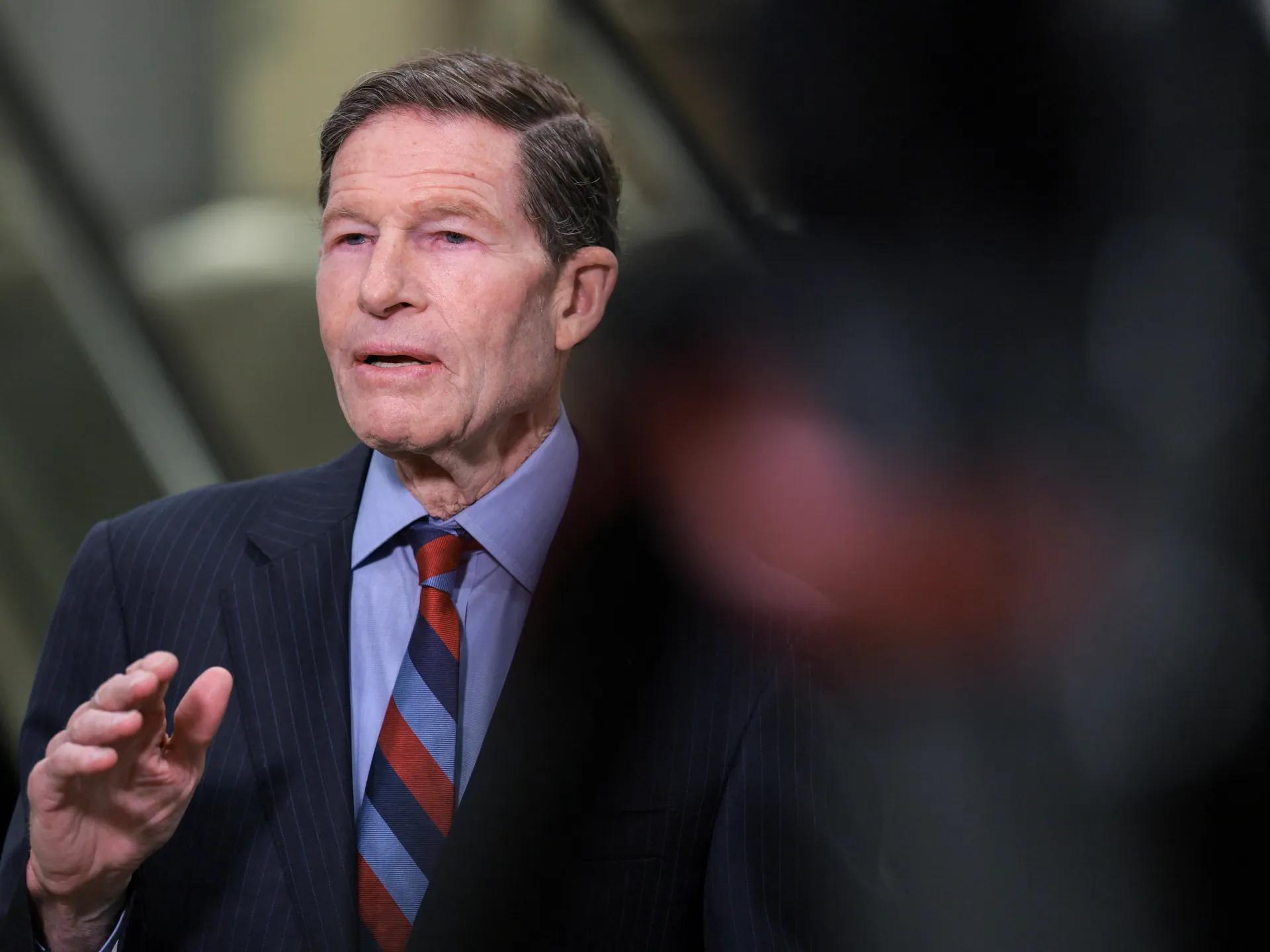
Richard Blumenthal
Democratic Senator Richard Blumenthal of Connecticut [File: Ben Curtis/AP]

What are Republicans saying?

Republicans, who have slim majorities in both houses of Congress, have almost unanimously backed Trump’s campaign against Iran, with only a handful expressing doubt about the war.

Some Republican leaders say the strikes are necessary to curb Iran’s military capabilities, missile programme and regional influence.

They have also argued that the operation is limited in scope and designed to weaken Iran’s ability to threaten US forces and allies in the region.

Republican Representative Brian Mast of Florida, chairman of the House Foreign Affairs Committee, last week publicly thanked Trump for taking action against Iran, saying the president is using his constitutional authority to defend the US against the “imminent threat” posed by Tehran.

But some Republican members of Congress have voiced concerns.

Representative Nancy Mace from South Carolina said she did “not want to send South Carolina’s sons and daughters into war with Iran”, in a post on X.

Rand Paul, a Republican senator from Kentucky, accused the Trump administration of changing its narrative and rationale for the war on a daily basis.

“We keep hearing new reasons for war with Iran—none convincing,” he wrote on X. “‘Free the oppressed’ sounds noble, but where does it end? We’ve been told for decades Iran is weeks from a nuke. War should be a last resort, not our first move. A war of choice is not my choice.”

Why does the debate matter?

The dispute has revived a long-running debate in Washington, DC, about the limits of presidential war powers.

Under the US Constitution, Congress has the authority to declare war, but modern presidents have frequently launched military operations without formal congressional approval, often citing national security or emergency threats.

The law allows the president to deploy US forces for up to 60 days without congressional authorisation, followed by a 30-day withdrawal period if Congress does not approve the action.

Some lawmakers and legal experts say the war on Iran highlights the need for stronger congressional oversight of military action.

“In the 1970s, we adopted something called the War Powers Resolution that gives the president limited ability to do this,” said David Schultz, a professor in the political science and legal departments at Hamline University.

“And so, either you could argue that what the president is doing violates the Constitution by… not [being] a formally declared war; or b, it exceeds his authority, either as commander-in-chief or under the War Powers Act,” he added.

“And therefore, you could argue that domestically, his actions are illegal and unconstitutional,” Schutlz said.

The Trump administration has argued that the February 28 strikes were justified as a response to an “imminent threat”, a rationale often used by presidents to justify military action without prior congressional approval.

However, US intelligence agencies had themselves said before the start of the war that they had no evidence of an imminent Iranian threat to the US or its facilities across the Middle East.

Source link

An intercepted drone burns and falls over Erbil in Iraq | US-Israel war on Iran

Footage from the ground in Erbil, Iraq shows several drones over the city’s airspace and the wrecking of a drone falling through the sky onto the city.

Footage from the ground in Erbil, Iraq shows several drones over the city’s airspace and the wrecking of a drone falling through the sky onto the city.

Source link

Democrats say White House offers no clarity on Iran war goals after 11 days | US-Israel war on Iran News

Washington, DC – Several Democrats in the United States have emerged from a classified briefing about the war on Iran, saying they still have little clarity about President Donald Trump’s justifications and end goals, even 11 days into the conflict.

“I emerge from this briefing as dissatisfied and angry, frankly, as I have from any past briefing in my 15 years,” said Senator Richard Blumenthal, following Tuesday’s briefing to the Senate Armed Services Committee.

Recommended Stories

list of 3 itemsend of list

Their statements marked the latest wave of condemnation from congressional Democrats, who have a slim minority in the Senate and the US House of Representatives.

Party members in both chambers had recently voted in near unison on resolutions seeking to halt the war, which the US and Israel launched on February 28.

But their efforts to pass a “war powers resolution” to rein in Trump failed amid widespread Republican opposition.

More recently, Democrats have pledged to delay proceedings in the Senate unless top officials from the Department of State and the Pentagon testify under oath about the war.

Following Tuesday’s briefing, Democrats like Blumenthal argued that the Trump administration owes the US public more clarity about the war.

Blumenthal added that the meeting piqued concerns that US forces may be deployed to either Iraq or Iran.

“I am left with more questions than answers, especially about the cost of the war,” he said.

“I am most concerned about the threat to American lives of potentially deploying our sons and daughters on the ground in Iraq. We seem to be on a path towards deploying American troops on the ground in Iran to accomplish any of the potential objectives.”

Senator Elizabeth Warren, meanwhile, said that the Trump administration “cannot explain the reasons that we entered this war, the goals we’re trying to accomplish and the methods for doing that”.

She also pointed to the high cost of the military operations against Iran, which some have estimated to exceed $5.6bn in the first two days alone.

Warren pointed out that Republicans cut healthcare subsidies last year in an effort to reduce federal spending, but appear to have no problem approving military expenses.

“While there is no money for 15 million Americans who lost their healthcare”, she noted, “there’s a billion dollars a day to spend on bombing Iran”.

While approached by reporters, Senator Jacky Rosen indicated she was limited in her ability to comment on classified briefings. Still, she offered brief remarks to voice her frustration.

“I can tell you what I heard is not just concerning. It is disturbing,” she said. “And I’m not sure what the end game is or what their plans are. They certainly have not made their case.”

‘On our timeline and at our choosing’

The latest round of criticism came shortly after US Secretary of Defense Pete Hegseth pledged to conduct the “most intense day” of strikes since the war began.

As of Tuesday, the war had killed at least 1,255 people in Iran, 394 people in Lebanon, 13 in Israel, six in Iraq and 14 across the Gulf.

Trump has repeatedly said the war would not be prolonged, but his officials have offered shifting timelines. Hegseth, for instance, said the fighting would not stop “until the enemy is totally and decisively defeated”.

“We do so on our timeline and at our choosing,” he said.

The Trump administration has also offered an array of justifications for launching the war, which came amid indirect talks with Iran on the future of its nuclear programme.

Trump has blamed Iran’s nuclear ambitions for the conflict, though Tehran has denied seeking a nuclear weapon, and his administration has also said the war was necessary to end Iran’s ballistic missile programme.

Experts have said that available evidence does not support the Trump administration’s claims that either posed an immediate threat to the US.

US Secretary of State Marco Rubio told reporters last week that the US attacked because its close ally Israel had planned to attack Iran, which would have led to retaliation against US assets.

Rubio and Trump subsequently backed away from the circular rationale, with Trump claiming last week that Iran was the one planning to strike first.

Another rationale the Trump administration offered is that the totality of Iran’s actions since the 1979 Islamic revolution represented a threat to the US, thereby necessitating an attack.

Trump and his top officials have not provided evidence for any of their claims.

Calls for hearings, investigation

Democrats have been largely sidelined since the war began. Only a handful of Republicans have joined the left-leaning party in its efforts to rein in Trump through legislative means.

Under the US Constitution, only Congress can declare war. But presidents can still use the military to respond to imminent threats in instances of self-defence.

Still, there are limits to how long such operations can proceed. Under the 1973 War Powers Resolution, presidents must withdraw forces within 60 to 90 days of an unauthorised military campaign, or else seek congressional approval.

Trump, however, has denied he needs congressional backing for the military campaigns he has conducted since returning to office.

The latest attacks in Iran have sparked widespread public opposition, with polls suggesting a majority of US citizens oppose the war effort.

Earlier this week, six Democratic senators called for an investigation into a strike on a girls’ school in Minab, in southern Iran. Several investigations have indicated that the US was responsible for the attack, which killed at least 170 people, mostly children.

Last week, nearly 30 members of Congress called for an investigation into reports that US military leaders had used biblical motivations to justify the war to subordinates.

Some reportedly invoked “religious prophecy and apocalyptic theology” in statements to other enlisted personnel.

On Monday, Senator Cory Booker said Democrats had “collectively agreed” to use an array of procedural mechanisms in the chamber to block legislative business until Trump officials agree to testify under oath.

“Each individual senator has a tremendous amount of power to disrupt the normal functioning of the Senate, as well as certain privileges that we can exercise,” Booker said.

“And what we have agreed right now is that we’re not going to let the Senate continue business as usual, which seems to be ignoring the urgent issues the American people are dealing with.”

Source link

War with Iran fuels Russian oil boom — and trouble for Ukraine

Russia is emerging as one of the few early economic beneficiaries of the war with Iran, as disruptions to energy infrastructure drive up demand for Russian exports and the world casts its gaze to the Middle East and away from Moscow’s war in Ukraine.

The U.S. and its European counterparts slapped severe sanctions on Russia in March 2022, barely a month into Russian President Vladimir Putin’s full-scale invasion of Ukraine. The effect was a stranglehold on Russia’s exports, depriving Putin’s war effort of at least $500 billion, experts say. But over the last week, as President Trump’s war in the Middle East choked energy markets worldwide, the White House began easing its restrictions on Moscow.

“It is traitorous conduct for you to help Russia,” California Rep. Ted Lieu (D-Torrance) said on X, demanding the Trump administration reverse course. “Russia is giving intelligence info to Iran that helps Iran target American forces.”

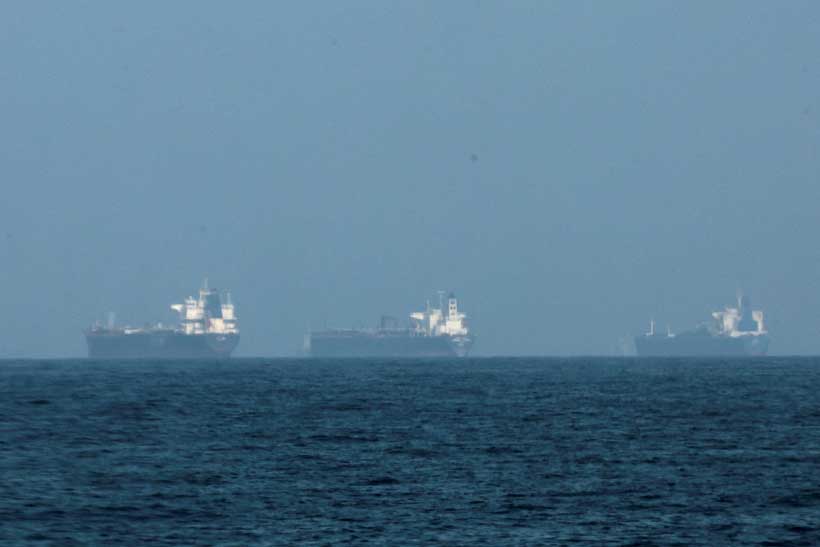
Crude droplets rained over Tehran after Israeli airstrikes decimated oil depots, draping the Iranian capital in a dense smog. Iranian counterattacks have also targeted refineries and oil fields in Saudi Arabia and Bahrain. Crude oil prices have surged, and traffic through the Strait of Hormuz has all but ceased, sending energy importers in search of alternate sources.

Those spikes are giving Russia, one of the world’s largest oil and gas exporters, a rare advantage. After spending a decade as the world’s most sanctioned nation over his aggression in Ukraine, Putin is finally starting to regain some leverage in global markets.

“In the current economic situation, if we refocus now on those markets that need increased supplies, we can gain a foothold there,” Putin said at a meeting at the Kremlin on Monday, according to Russian state media. “It’s important for Russian energy companies to take advantage of the current situation.”

On March 4, the Treasury Department issued a temporary 30-day waiver allowing Indian refiners to purchase Russian oil. The appeal by the Trump administration was described as a way to ease demand for Mideast oil, but was criticized as a reversal of sanctions placed against Putin meant to deny him the capital needed to fund his occupation of eastern Ukraine.

Now, Moscow is poised to press that advantage further, after Trump said Monday he will further lift sanctions on oil-producing countries to ease the trade friction and reintroduce additional oil and gas supplies. The only countries with U.S. oil sanctions are Russia, Iran and Venezuela.

“So, we have sanctions on some countries. We’re going to take those sanctions off until this straightens out,” Trump said at a news conference at his golf club in Doral, Fla. “Then, who knows, maybe we won’t have to put them on — they’ll be so much peace.”

The surprise concession to Moscow comes as reports suggest Russia is assisting Iran in targeting U.S. personnel.

Trump’s announcement followed an unscheduled hourlong call with Putin about the situation in the Middle East.

The war has also set the stage for Russia to make gains in Ukraine, as hostilities draw the global spotlight away from Kyiv and its struggle to hold back the bigger Russian army. U.S.-brokered talks between the two adversaries have been sidelined as Washington shifts focus to its war in Iran.

“At the moment, the partners’ priority and all attention are focused on the situation around Iran,” Ukrainian President Volodymyr Zelensky said on X. “We see that the Russians are now trying to manipulate the situation in the Middle East and the Gulf region to the benefit of their aggression.”

Putin is unlikely to intervene militarily on Iran’s behalf, according to Robert English, an international foreign policy expert at USC. Instead, Putin is expected to play his position carefully, reap the economic rewards, and keep focused firmly on Ukraine at a time when key air defense systems are diverted from Ukraine to the Persian Gulf.

“Russia is winning the Iran-U.S.-Israel war, at least so far. Oil and natural gas prices have soared, filling Putin’s Ukraine war chest,” he said. “Russia is gathering forces for a big spring offensive in Eastern Ukraine, and it’s not even front-page news.”

Ukraine has dispatched drone interceptors and ordered its anti-drone experts to pivot from their war with Russia to help Western allies help intercept Iranian attacks. Zelensky’s allegiance may not pay off, English said.

“When will Ukraine see the benefits of helping the U.S. with anti-drone technology? No time soon, apparently,” he said.

Even several weeks of interruption in Gulf energy supplies could bring the largest windfall to Russia, the Associated Press reported, citing energy analysts.

The economic turmoil caused by the war has exposed vulnerabilities in Europe’s energy system, particularly its lingering dependence on Russian fuel.

Despite sanctions, the European Union remains a major purchaser of Russian natural gas and crude oil. Russian gas accounted for approximately 19% of E.U. gas imports in 2025. Allied Europeans have agreed to completely stop importing Russian liquefied natural gas, oil and pipeline gas by late 2027.

Putin expressed no desire Monday to rescue the European market now that U.S.-Israeli escalations and Iranian retaliation have choked oil production and shipping. The Russian president instead proposed to divert volumes away from the European market “to more promising areas” like the Asia-Pacific region, Slovakia and Hungary, which he said were “reliable counterparties.”

European leaders have been criticized for being “stunned, sidelined, and disunited” since hostilities began in late February. Excluded from the initial military planning by the U.S. and Israel, Europe entered the conflict with gas storage at only 30% capacity, the lowest levels in years. Instead of bold action, English said, European leaders have quarreled over internal divisions and rivalries.

“Sky-high energy prices are the underlying cause of many of these frictions, as Europe struggles now more than ever to find affordable alternatives to the cheap Russian petroleum,” English said.

Antonio Costa, president of the European Council, told European leaders in Brussels on Tuesday that rising energy prices and the world’s shifting attention risk strengthening the Kremlin at a critical moment in the war in Ukraine.

“So far, there is only one winner in this war,” Costa said. “Russia.”

Source link

140 U.S. troops wounded in Iran war, Pentagon says

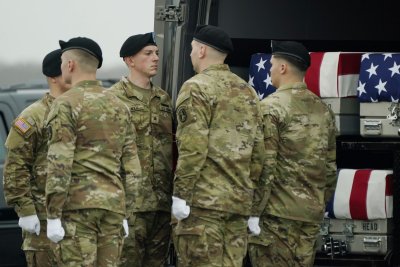
The remains of six U.S. soldiers killed in an Iranian drone strike in Kuwait are returned to the U.S. during a dignified transfer at Dover Air Force Base, Delaware, on Saturday. The six members of the Army Reserve died March 1 when a drone hit a command center in Port Shuaiba, Kuwait, one day after the U.S. and Israel launched a military campaign against Iran. Photo by Leigh Vogel/UPI. | License Photo

March 10 (UPI) — The U.S. Department of Defense estimates that about 140 U.S. troops have been wounded since the United States began its military operation against Iran last month.

The injuries are in addition to seven U.S. service members who have been killed in retaliatory strikes by Iran. Pentagon spokesperson Sean Parnell said in a statement that a “vast majority” of those wounded have suffered “minor” injuries.

Of about 140 injured, 108 returned to duty.

“Eight service members remain listed as severely injured and are receiving the highest level of medical care,” Parnell said.

White House Press Secretary said earlier Tuesday that about 150 troops have been injured in combat.

President Donald Trump said Tuesday that he expects the war to end “very soon” but added that he seeks to “end this long-running danger once and for all.”

“We’re achieving major strides toward completing our military objective,” Trump said Monday.

In the two days after the United States launched its first strike on Iran, the Pentagon spent $5.6 billion worth of resources. Secretary of Defense Pete Hegseth said Tuesday morning that “Today will be, yet again, our most intense day of strikes inside Iran.”

Source link

G7, EU Leaders to Hold Talks on Soaring Energy Prices Amid Iran War

G7 energy ministers will hold a call on Tuesday to discuss sharply rising energy prices triggered by the ongoing war in Iran, officials said. A separate call later in the day will see European Union leaders addressing similar concerns, reflecting heightened global anxiety over fuel supply and costs.

Oil prices surged to their highest levels since mid-2022 on Monday, driven by fears of reduced Gulf output and disruptions to tanker traffic through key shipping routes. Even before the Iran conflict, European energy prices were generally higher than those in the United States and China.

G7 Prepares Response, But Stops Short of Releases

G7 finance ministers signalled readiness to take “necessary measures” in response to the price surge but did not commit to coordinated emergency releases of strategic oil reserves.

The G7, which includes United States, Canada, Japan, Italy, Britain, Germany, and France, will hold the call at 1245 GMT. French Finance Minister Roland Lescure, whose country holds the G7 presidency this year, said that Europe and the U.S. currently do not face immediate supply shortages.

EU Leaders Target Competitiveness and Energy Costs

Later on Tuesday, EU leaders will discuss energy prices and competitiveness, joining German Chancellor Friedrich Merz, Italian Prime Minister Giorgia Meloni, Belgian Prime Minister De Wever, and others.

The EU is highly exposed to global energy volatility, importing more than 90% of its oil and roughly 80% of its gas. EU Commission President Ursula von der Leyen has pledged proposals at next week’s EU summit to address rising prices.

Officials have already discussed measures including adjustments to energy taxes and potential amendments to the EU carbon price, which contributes around 11% to industrial power costs.

Coordinated Action Sought but Uncertain

The calls by the G7 and EU reflect a growing urgency to manage energy price shocks caused by the Iran war. While governments have the tools to intervene, officials are balancing the need to stabilize prices with broader fiscal and strategic considerations.

With oil and gas markets highly sensitive to geopolitical developments, both G7 and EU leaders face pressure to act quickly to prevent price spikes from translating into economic slowdowns or political unrest across their regions.

With information from Reuters.

Source link

Hegseth threatens ‘most intense day of strikes’ as Iran war injures about 140 Americans

Some 140 American service members have been wounded since start of the Iran war, with eight of them “severely injured” and receiving medical care, the Pentagon said Tuesday.

“The vast majority of these injuries have been minor, and 108 service members have already returned to duty,” Pentagon spokesperson Sean Parnell said in a statement.

The casualty toll adds to the seven American troops killed so far in the war, which entered its 11th day with no clear sign of slowing down as U.S. officials indicated that the military campaign was likely to intensify.

Iran, too, took new actions that could escalate the conflict, reportedly laying mines in the Strait of Hormuz, a potentially devastating development for the global energy market.

President Trump said that if Iran put mines in the strait and did not remove them immediately, the U.S. military would hit Iran “at a level never seen before.”

“If, on the other hand, they remove what may have been placed, it will be a giant step in the right direction!” Trump wrote on Truth Social.

The warning was yet another escalation that came after Defense Secretary Pete Hegseth said Tuesday would bring the “most intense day of strikes” inside Iran, a fighting tempo that is at odds with Trump’s own assessment that the war is “very complete” and could end “very soon.”

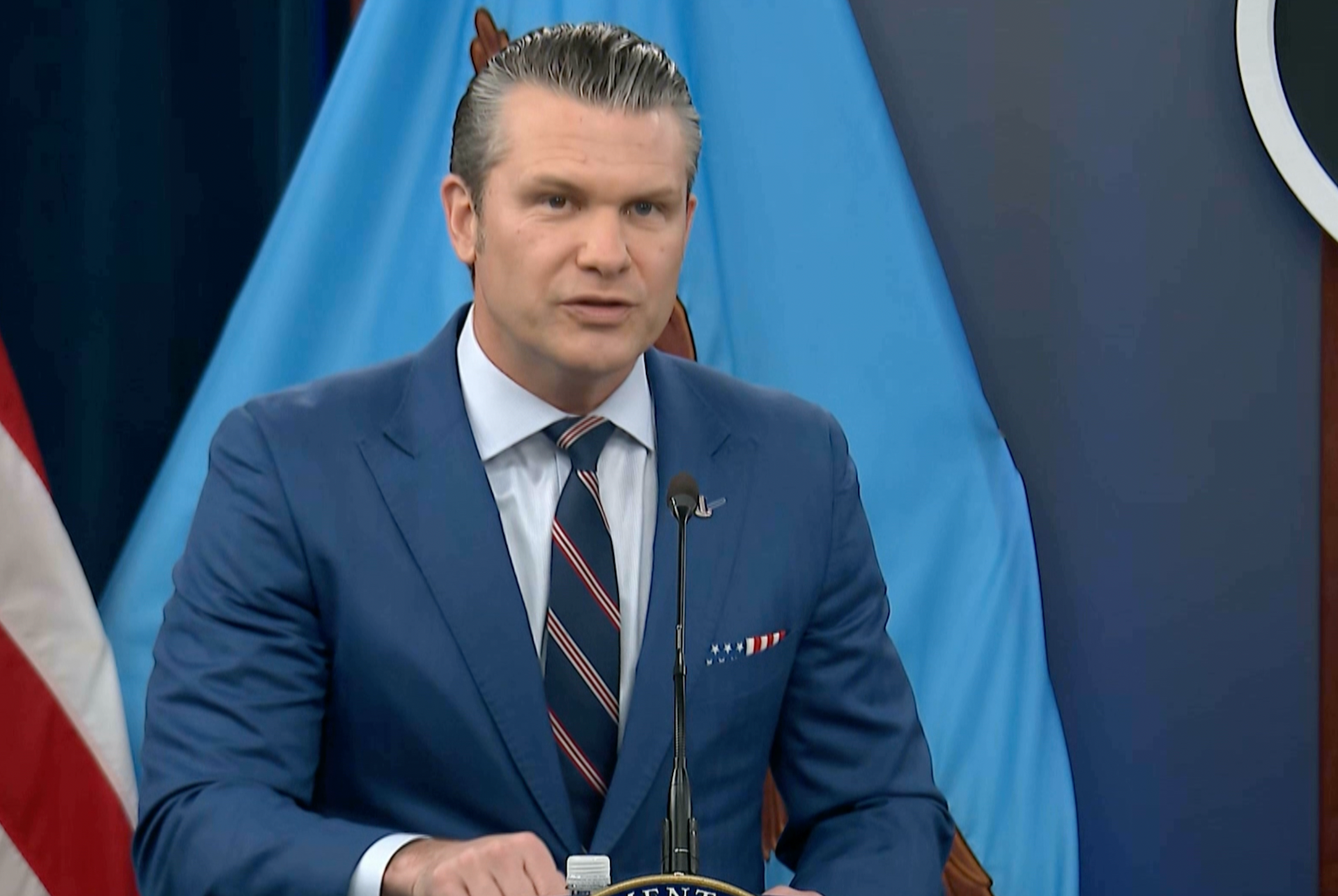
At a Pentagon news conference, Hegseth said “the most fighters, the most bombers, the most strikes” would be deployed, but declined to say how much longer U.S. forces would be expected to fight in the region. He instead said the president will be the one to “control the throttle.”

“It’s not for me to say whether this is the beginning, the middle, or the end. He will continue to communicate that,” Hegseth told reporters.

That deference places the focus squarely on Trump, who a day earlier delivered mixed signals about the duration of the war, telling reporters at one point that the war is “very much complete” and a later time that it is “the beginning of building a new country.”

At a briefing on Tuesday, White House Press Secretary Karoline Leavitt said the U.S. military was “way ahead of schedule” on reaching its objectives in Iran, but reiterated that the president alone will decide what victory looks like.

“President Trump will determine when Iran is in a place of unconditional surrender and when they no longer pose a credible and direct threat to the United States of America and our allies,” Leavitt said.

The president’s shifting positions on the war’s conclusion have played out as Trump threatens to hit Iran “twenty times harder” if it attempts to halt the flow of oil in the Strait of Hormuz, a key channel for the world’s oil supply — and as Democrats in Congress says they are growing concerned about the possibility of Trump sending U.S. ground troops inside Iran.

“We seem to be on a path toward deploying American troops on the ground in Iran to accomplish any of the potential objectives here,” Sen. Richard Blumenthal (D-Conn.) told reporters after being briefed on the Iran war.

When asked about Democrats’ concerns, Leavitt said Trump “wisely … does not rule options out as commander-in-chief.”

“I would hesitate to confirm anything that a Democrat says right now about the president’s thinking,” she added.

U.S. says Iran’s fire power is diminishing

As Washington plans out its next steps, the war has shown little signs of slowing. U.S. military officials say Iran’s military capabilities are eroding under sustained strikes that have targeted “deeply buried missile launchers” and made “substantial progress toward destroying” Iran’s navy.

Hegseth said “the last 24 hours have seen Iran fire the lowest amount of missiles they have fired yet.”

Gen. Dan Caine, chairman of the Joint Chiefs of Staff, told reporters that Iran’s ballistic missile attacks “continue to trend downward 90%” since the start of the war, and that drone attacks have decreased by 83%.

U.S. forces are also targeting Iran’s “industrial base in order to prevent the regime from being able attack Americans, our interests and our partners for years to come,” Caine said.

Caine said the Iranian military is adapting to the U.S. strategy, but remains confident in Washington’s ability to overpower Tehran. “They are adapting, as are we, of course. We have very entrepreneurial war fighters out there,” he said. “We are watching what they are doing, and we are adapting faster than they are.”

Asked whether Iran had proved to be a stronger adversary than anticipated, Caine said: “They are fighting, and I respect that, but I don’t think they are more formidable than what we thought.”

Iran, meanwhile, has refused to bow down to Trump’s demands and has issued warnings of its own.

Ali Larijani, Iran’s top national security official, called Trump’s threat against their targets on the Strait of Hormuz “hollow” and told him that he should instead focus on taking care of himself so that he is not “eliminated.”

Iran’s parliament speaker, Mohammed Bagher Qalibaf, however, said Iran was determined to keep fighting and was “definitely not looking for a ceasefire.”

“We believe that the aggressor should be punched in the mouth so that he learns a lesson so that he will never think of attacking our beloved Iran again,” Qalibaf said.

New attacks on neighbors

Meanwhile, Iran launched new attacks at Israel and gulf Arab countries. In Bahrain, authorities said an Iranian attack hit a residential building in the capital, Manama, killing a 29-year-old woman and wounding eight people.

Saudi Arabia said it destroyed two drones over its oil-rich eastern region and Kuwait’s National Guard said it shot down six drones. In the United Arab Emirates, firefighters battled a blaze in the industrial city of Ruwais — home to petrochemical plants — after an Iranian drone strike. No injuries were reported.

In Tel Aviv, explosions could be heard as Israel’s defense systems worked to intercept barrages from Iran.

Along with firing missiles and drones at Israel and at American bases in the region, Iran has also targeted energy infrastructure and traffic through the Strait of Hormuz, a vital waterway for traded oil, sending oil prices soaring. The attacks appear aimed at generating enough global economic pain to pressure the U.S. and Israel to end their strikes.

Brent crude, the international standard, spiked to nearly $120 on Monday before falling back but was still at around $90 a barrel Tuesday, nearly 24% higher than when the war started on Feb. 28.

“The president and his energy team are closely watching the markets, speaking with industry leaders and the U.S. military is drawing up additional options, following the president’s directive to continue keeping the Strait of Hormuz open,” Leavitt said. “I will not broadcast what those options look like but just know the president is not afraid to use them.”

So far, the president has offered to have the U.S. Navy escort oil tankers.

The White House has insisted that soaring gas prices are temporary, but the shock in the energy markets has already prompted the Trump administration to lift oil-related sanctions on some countries, including Russia.

“We are going to take those sanctions off until this straightens out,” Trump said Monday. “And then who knows, maybe we won’t have to put them on because there will be so much peace.”

The war has created an opportunity for Russia to make gains in Ukraine, as hostilities draw the global spotlight away from Kyiv and its struggle to hold back the bigger Russian army. U.S.-brokered talks between the two adversaries have been sidelined as Washington shifts focus to its war in Iran.

As Russia enjoys economic gains from the war-fueled energy crisis in the Middle East, Russian President Vladimir Putin has been gathering forces for a renewed offensive in eastern Ukraine.

Key air defense systems have already been diverted from Ukraine to the Persian Gulf, and Ukrainian President Volodymyr Zelensky has dispatched drone interceptors to the region and ordered anti-drone experts to pivot from their war with Russia to help Western allies help intercept Iranian attacks.

“At the moment, the partners’ priority and all attention are focused on the situation around Iran,” Zelensky said on X. “We see that the Russians are now trying to manipulate the situation in the Middle East and the gulf region to the benefit of their aggression.”

Times staff writers Gavin J. Quinton and Michael Wilner, in Washington, D.C., contributed to this report, which also includes reporting from the Associated Press.

Source link

Russian attack kills four in Ukraine’s Sloviansk as both sides claim gains | Russia-Ukraine war News

Ukrainian and Russian officials have claimed battlefield successes in the more than four-year war, as Russian air attacks on Ukraine continue.

At least four people were killed in Russian attacks on the Ukrainian town of Sloviansk, regional authorities said on Tuesday.

Recommended Stories

list of 3 itemsend of list

The governor of Sloviansk, Vadym Filashkin, confirmed the death toll on Tuesday and said 16 others were wounded, including a 14-year-old girl. He said Russian forces dropped three guided bombs on the city.

There was no immediate comment from Moscow on the attack.

Overnight drone strikes on three other Ukrainian cities wounded at least 17 people, including two children, emergency services said.

Ukraine’s air force said that it shot down 122 out of 137 drones that Russia launched during the night.

Warring parties claim advances

Ukrainian forces have recently retaken nearly all the territory of the southeastern Dnipropetrovsk industrial region during a counteroffensive, driving Russian troops out of more than 400 square kilometres (150sq miles), Major-General Oleksandr Komarenko said in an interview published Tuesday by local media outlet RBC-Ukraine.

He described the overall situation on the front line as difficult but under control, with the heaviest fighting continuing near Pokrovsk in eastern Ukraine and Oleksandrivka in the south, where he said Russian forces have concentrated their main effort.

There was no independent verification of his description of the military situation.

The Institute for the Study of War, a Washington-based think tank, said late Monday that recent Ukrainian counterattacks “are generating tactical, operational and strategic effects that may disrupt Russia’s spring-summer 2026 offensive campaign plan”.

Meanwhile, Russian President Vladimir Putin claimed that Russian forces have extended their gains in Ukraine’s eastern Donbas region, whose capture Moscow has made one of the goals of its invasion. Ukraine controlled about 25 percent of the Donbas six months ago, but it now holds just 15-17 percent, Putin said.

In Russia, the governor of the border region Bryansk, said a Ukrainian missile strike on Bryansk city had killed at least six people and wounded 37 others.

Alexander Bogomaz said those killed were civilians and that the wounded were admitted to the Bryansk Regional Hospital.

Ukrainian President Volodymyr Zelenskyy said the attack hit a Russian missile plant.

At the same time, a United Nations investigation found that the deportation and transfer of Ukrainian children since Russia invaded Ukraine in 2022 had amounted to “crimes against humanity”.

The International Criminal Court issued arrest warrants for President Vladimir Putin and five other Russian officials in 2023 over the alleged illegal deportation of children, which Moscow denies and said it has been evacuating people voluntarily from a warzone.

Trilateral talks ‘next week’

United States special envoy Steve Witkoff told the CNBC news outlet on Tuesday that the next round of trilateral talks between Ukraine, Russia and the US would likely be “sometime next week”.

Trilateral talks were first held in January in the United Arab Emirates; a second meeting was held in February in Geneva, Switzerland. Last year, Russia and Ukraine also held three rounds of talks in Turkiye, yet so far the two countries remain no closer to a deal as key issues, including Russia’s control of Ukrainian territory, are yet to be resolved.

Moscow has repeatedly said it would only agree to a deal that allows it to retain the territories it has seized, while Ukraine has said its territory must be returned in any deal.

Ukrainian President Volodymyr Zelenskyy said Turkiye was prepared to host the next round of trilateral talks after speaking with his Turkish counterpart, President Tayyip Erdogan, on Tuesday.

Source link

Duterte’s drug war faces judgement at the ICC | Rodrigo Duterte

As world institutions wobble, The Hague has unexpectedly become the stage for a reckoning long denied in the Philippines.

Proceedings at the International Criminal Court (ICC) in late February offered a rare glimpse of accountability at a moment when global norms feel increasingly fragile. The court held a hearing in the case against former Philippine President Rodrigo Duterte to confirm charges for crimes against humanity committed during the so‑called “war on drugs”.

For the families of those killed in the “drug war” watching tearfully from the public gallery, this hearing marked the first real step towards justice after years of violence, denial, and dehumanisation of their loved ones. As a Filipino lawyer and counsel for the victims, Joel Butuyan, told the court, “Truth is the antidote to the virus of impunity.”

A three-judge panel – women from Romania, Mexico and Benin – heard arguments from prosecutors, victims’ counsel, and Duterte’s defence lawyer. Their task was not to determine guilt, but to assess whether there is sufficient evidence for the case against Duterte to proceed to trial.

The case focuses on 49 incidents of alleged murder and attempted murder, involving 78 victims, including children, between November 2011 and March 2019, when the ICC still had jurisdiction over the Philippines. In March 2018, soon after the former ICC prosecutor announced a preliminary inquiry into the situation of the Philippines, Duterte withdrew the Philippines from the court’s membership, which became final one year later.

The case against Duterte covers his tenure as mayor of Davao City, in the southern Philippines, and the period after he was elected president in 2016. The prosecutors emphasised that the specific incidents they focused on represent only a fraction of the thousands of killings attributed to police and hired hitmen during Duterte’s anti-drug campaign.

I sat in the public gallery alongside victims’ families, activists, clergy, journalists, and lawyers who had traveled from the Philippines to witness a moment many never thought possible. Duterte’s supporters were there, too. But Duterte himself was absent as he waived his right to be present. His written statement declared that he did not recognize the court’s jurisdiction and claimed he had been “kidnapped”. His refusal to appear was obviously a disappointment for the victims’ families, hoping to see him in the dock.

Still, his voice echoed through the courtroom. Prosecutors played video after video of Duterte urging police to kill drug suspects and ignore legal restraints. In one chilling 2016 address, he warned: “If I become the president, I will order the military and the police to hunt down the drug lords, the big ones, and kill them.”  Duterte’s lawyer argued that the prosecutors were selective in their approach to the speeches and that they missed critical information that would exonerate Duterte, including references to using force in self-defence.

Human Rights Watch has been reporting on Duterte’s “drug wars” since 2009, when we detailed the operations of the “Davao Death Squad” that targeted street children, petty criminals and drug suspects when Duterte was mayor. A 2017 Human Rights Watch report showed how Duterte’s “drug war” escalated nationwide after he was elected president.

The panel now has 60 days to decide whether the case will proceed to trial. But while the ICC deliberates, drug-related killings in the Philippines continue, though reduced from their peak during the Duterte administration.

Domestic accountability remains woefully inadequate. Nearly 10 years after the nationwide “drug war” began, five cases have resulted in convictions of a total of nine police officers. The vast majority of those responsible, including senior officials, remain untouched.

The political context is also fraught. Sending Duterte to The Hague may have suited the current president, Ferdinand Marcos Jr,  allowing him to distance himself from the bloodiest excesses of his predecessor. But several of Duterte’s alleged co‑perpetrators – senior police officers and officials who helped transplant Davao City’s “neutralisation” strategies to the national stage – still wield influence or have gone into hiding.

The security architecture that enabled the killings within the national police force remains largely intact. With the wrong political signal, the violence could easily surge again.

Marcos now faces a defining choice. He can continue outsourcing justice to the ICC while tolerating a culture of impunity at home. Or he can demonstrate genuine commitment to accountability and the rule of law. Doing so would require a clear, public repudiation of the decade-long police operation underpinning the anti-drug campaign, and an explicit assurance that its methods are no longer acceptable state policy.

Marcos should also empower the Department of Justice to pursue investigations and prosecutions in earnest, and take steps to rejoin the ICC, which would, in turn, help strengthen domestic accountability efforts. Without credible domestic action, promises of reform will ring hollow.

This is a moment of reckoning for the Philippines. Families who have waited years for answers deserve more than political convenience; they deserve justice. Whatever the ICC decides in the coming months, the Philippine government need not – and should not – wait. Ending impunity and honouring the dignity of victims begins at home.

The views expressed in this article are the author’s own and do not necessarily reflect Al Jazeera’s editorial stance.

Source link

IEA due to meet as member states mull releasing oil reserves amid Iran war | US-Israel war on Iran News

International Energy Agency chief says talks aim to assess conditions as US-Israel war on Iran fuels global uncertainty.

The International Energy Agency (IEA) is set to hold an emergency meeting to assess the situation in the Middle East as the US-Israeli war on Iran continues to roil global energy markets.

Fatih Birol, the agency’s executive director, said representatives of IEA member states would meet on Tuesday to assess “the current security of supply and market conditions” amid the conflict.

Recommended Stories

list of 3 itemsend of list

“I have convened an extraordinary meeting of IEA member governments, which will take place later today to assess the current security of supply and market conditions to inform a subsequent decision on whether to make emergency stocks of IEA countries available to the market,” Birol said.

This week, oil prices hit their highest levels since mid‑2022 amid concerns of prolonged shipping disruptions linked to the war and reduced output from some key producers in countries that have been targeted by retaliatory Iranian strikes.

While the market reversed late in the day on Monday, with benchmarks falling below $90 a barrel, uncertainty persists around how long the United States-Israel war will drag on.

The Strait of Hormuz, a critical Gulf waterway through which about one-fifth of the world’s oil supplies passes, has effectively been shut down as a result of the war.

“If this drags on, it is not just going to be energy prices” that are affected, Al Jazeera’s Osama Bin Javaid explained. “It is going to have an impact on global economies.”

Bin Javaid noted that the extraordinary IEA meeting comes after Group of Seven (G7) countries met to discuss possible actions to help stabilise global energy markets.

European governments have been on edge about the prospect of a repeat of the energy crisis they faced in 2022, when prices surged to record peaks after Russia’s full-scale invasion of Ukraine.

“The IEA will ⁠be presenting an ⁠in-depth analysis of the pros and ⁠cons of releasing stocks ⁠now,” the European Union’s Energy Commissioner ‌Dan Jorgensen said before the agency’s meeting.

Earlier on Tuesday, G7 energy ministers stopped short of deciding on the release of strategic oil reserves in a call, instead asking the IEA to assess the situation before acting.

“Everyone is willing to take measures to stabilise the market, including the United States,” French Finance Minister Roland Lescure told reporters after the latest talks.

“We have asked the IEA to elaborate scenarios for a potential oil stock release; we need to be ready to act at any moment,” he added.

EU leaders also will discuss competitiveness, including energy prices, on a call later in the day with German Chancellor Friedrich Merz, Italian Prime Minister Giorgia Meloni, Belgian Prime Minister Bart De Wever, and others.

Source link

US defence chief ends Iran war briefing with prayer for troops | US-Israel war on Iran

NewsFeed

Secretary of War Pete Hegseth recited a prayer for US troops attacking Iran, asking for strength and protection, during a Pentagon briefing. American and Israeli officials have been criticised for pushing rhetoric suggesting that the campaign against Iran is a religious war.

Source link

These lawmakers were shaped by combat after 9/11. Now they’re grappling with a new Mideast war

As Congress responds to President Trump’s attack on Iran, lawmakers who served on the front lines of Iraq and Afghanistan are making their voices heard in a war debate that has taken on intensely personal meaning.

Many admit mixed feelings, taking satisfaction in seeing vengeance taken on the leadership of an Iranian regime that has targeted U.S. service members for decades, yet fearful that another generation of soldiers could soon face the same combat experiences that they did.

“Do I take gratification? You know there’s the Marine side of me: Yeah, of course,” said Arizona Democratic Sen. Ruben Gallego, whose company suffered some of the heaviest losses on the U.S. side during the Iraq War. “I know they killed a lot of American soldiers, American Marines. But do I also understand that I have a responsibility not to let my lust for revenge drive my country into another war?”

Experiences in the post 9/11 wars are also coloring the decisions of the Trump administration, given that top officials, including Vice President JD Vance and Defense Secretary Pete Hegseth, were once deployed to Iraq.

Gallego, like others on Capitol Hill, leaned heavily on his firsthand experience of fighting in the wars after the Sept. 11, 2001, attacks as he assessed the Iran conflict. Lawmakers wore bracelets etched with the names of friends killed in battle, told stories of coming under attack from Iran-backed militant groups and reflected on their own life-changing injuries suffered during combat.

Veteran lawmakers are wary of war

While the initial votes on Iran saw Congress divide mostly along party lines, with Republicans backing Trump’s actions and Democrats warning of an extended conflict, veterans in both parties share deep reservations about entering the conflict.

“As somebody who knows a lot of friends that didn’t come home and a lot of Gold Star families, that’s why the week before the attack, I was actually one of the ones that was talking about caution and why we needed to avoid at all costs getting into another long, drawn-out Middle Eastern war,” said Republican Rep. Eli Crane of Arizona, a former Navy SEAL who left college to enlist the week after the Sept. 11 attacks.

Crane said his concerns were partially assuaged by briefings from the Trump administration that indicated to him the president is not planning a drawn-out war. He voted against a war powers resolution that would have halted attacks on Iran unless Trump got congressional approval.

But Crane said wars are never straightforward. “I’ve been on military operations that did not go to plan many times, and so I understand the nature,” he said, adding that he was calling for the Trump administration to approach the conflict with “humility and caution.”

Gallego and other Democrats worried that it was too late for that approach. They paid tribute to the six U.S. military members who were killed in a drone strike in Kuwait and worried that there could soon be more American casualties. A seventh service member died on Sunday from wounds suffered during a March 1 attack in Saudi Arabia.

“War is dirty, and mistakes happen,” Gallego said. The longer the conflict drags on, he added, the greater the chance there will be for U.S. military members to be killed. He experienced that firsthand in Iraq when friends would be killed by seemingly random shots from enemy combatants.

Still, many Republicans argued that it was necessary to attack Iran to stop a regime that for decades has helped train and arm militant groups throughout the Middle East. Republican Rep. Brian Mast, who chairs the House Foreign Affairs Committee, led the debate on the House floor against the war powers resolution.

Mast, who served as an Army bomb disposal expert, now uses prosthetic legs after receiving catastrophic injuries from an improvised explosive device in Afghanistan. “Me especially, many of my other colleagues, no one wants to see our military go into combat or war,” he said.

Then he added, “But Iran’s terror, which has caused the deaths of thousands of Americans, it has to stop.”

Trying to push soldiers to forefront of war debate

Important questions loom for Congress as the conflict with Iran unfolds and spreads to other parts of the Middle East. The price of the operation is already likely running into the billions of dollars, likely forcing the Trump administration to soon seek billions in funding from Congress. The outbreak of war has also scrambled global alliances and the future of U.S. foreign policy.

Shadowing it all is the potential of another drawn-out conflict. Lawmakers said they owe it to their fallen comrades to ensure that doesn’t happen.

“To me, it’s to speak out. It’s to say another generation should not go fight in an open-ended, ill-conceived regime change war in the Middle East,” said Democratic Rep. Pat Ryan, his hand moving to a bracelet etched with the names of friends who were killed during his two Army combat tours in Iraq.

Others remembered how frustrated they became with Washington during their service, especially as soldiers tried to fight with insufficiently armored vehicles and not enough troops.

“I know what it was like to be on the very end of the receiving line of the decisions made in Washington,” said Democratic Rep. Jason Crow, who entered the Army as a private before being promoted to a captain and deployed to both Iraq and Afghanistan.

Crow said that front-line soldiers often suffered “because people stopped asking tough questions. People stopped being held accountable. Congress stopped voting on it.”

Another veteran, Democratic Sen. Tammy Duckworth of Illinois, said that was one of the reasons she sought a congressional seat in the first place. As a Blackhawk helicopter pilot with the Illinois National Guard, Duckworth lost her legs when her helicopter was hit by a rocket-propelled grenade in Iraq.

“I ran for Congress so that when the drums of war started beating once again, I’d be in a position to make sure that our elected officials fully considered the true cost of the war,” she said. “Not just in dollars and cents but in human lives.”

Groves writes for the Associated Press.

Source link

With U.S. at war with Iran, political upheaval could hit World Cup

Twelve days ago the U.S., a World Cup host country, launched a full-scale bombing campaign against Iran, a country that has qualified to play in the tournament. That’s never happened before.

Five days later, that same World Cup host began military operations inside the borders of Ecuador, another World Cup qualifier, half a world away. That’s never happened before either.

With the tournament scheduled to kick off in three months, those events have soccer scholar Jonathan Wilson questioning whether it’s wise for the World Cup to go on at all.

“It seems to me, for each passing day, it’s less and less likely that the World Cup can happen,” he said.

That take seems unduly alarmist said David Goldblatt, a British sportswriter and sociologist who is a visiting professor at Pitzer College in Claremont. Anything short of a full-scale war inside the U.S. would not be enough to pull the plug on the tournament now, he said. Especially with FIFA expecting revenues of as much as $11 billion.

“I mean, it’s not a good look,” Goldblatt conceded. “And certainly when set against FIFA’s official pronouncements on its role in encouraging world peace and cosmopolitan celebrations of a universal humanity, none of that sits terribly easily.

“But in terms of actually running the World Cup, I don’t think it’s going to make very much difference at all.”

However, with the Trump administration open to engaging in more international conflicts, there’s little doubt this World Cup, the largest and most complex in history, will also be the most political in history as well.

Complicating things further is the fact the current conflict in the Middle East hasn’t been limited to just the U.S. and Iran. Iranian missiles have hit both Qatar and Saudi Arabia, among other countries, and Jordan has fired on U.S. assets.

Those three countries are World Cup qualifiers as well.

The fate of a soccer tournament pales in importance to the death and destruction the conflagration in the Middle East has produced, of course. But the need for unity is the very reason there’s a World Cup in the first place.

When French soccer administrator Jules Rimet founded the tournament 96 years ago, he believed soccer could be a tool for international peace. And in the early years of the tournament, Rimet, FIFA’s longest-serving president and a talented diplomat, was able to limit the impact of geopolitics on the World Cup, watering down Mussolini’s influence on the 1934 World Cup, for example, and steering the 1938 tournament away from Hitler’s Germany.

FIFA President Gianni Infantino has taken a far different approach, courting President Donald Trump’s support despite his growing number of global conflicts.

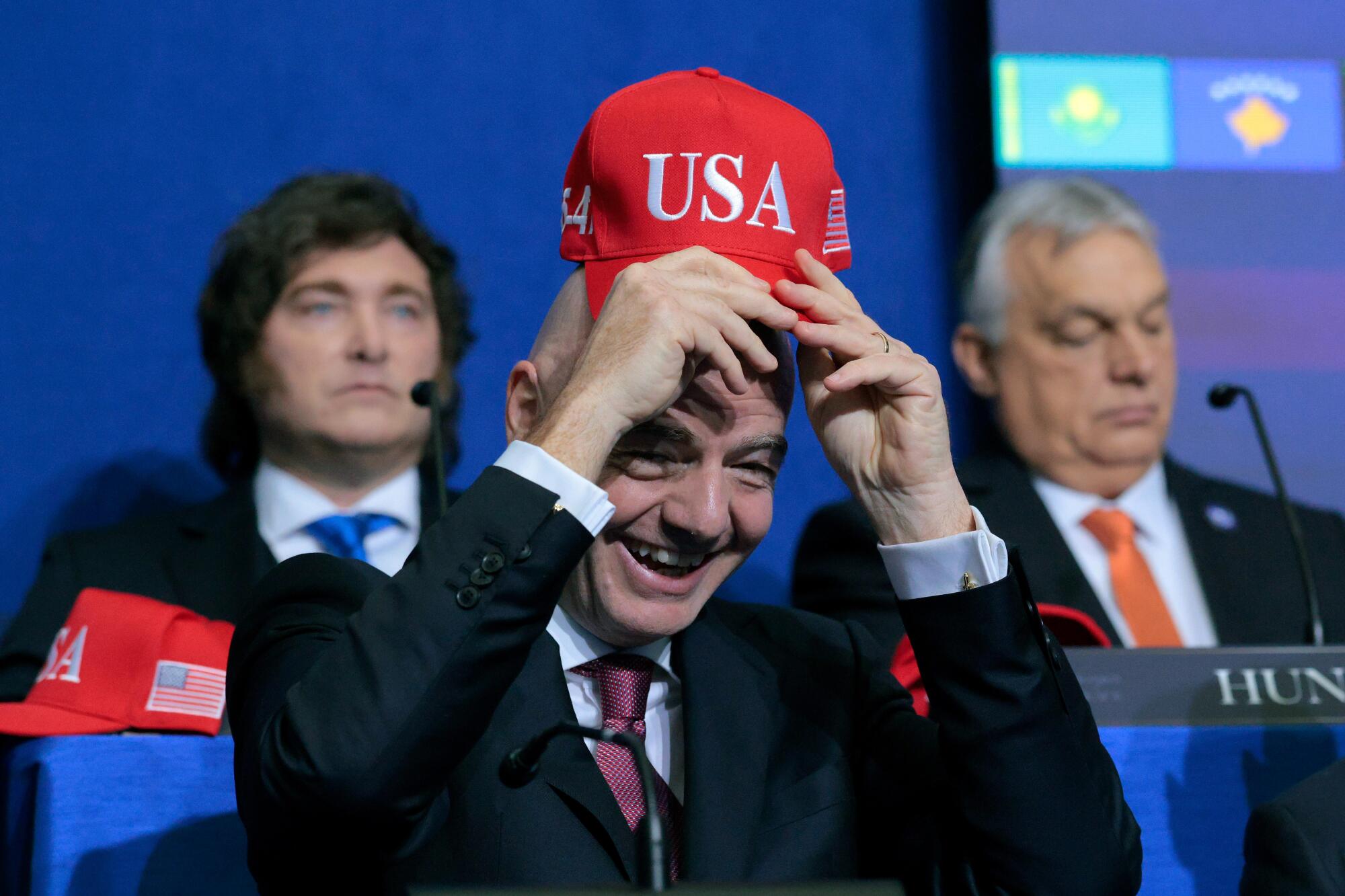
A week before bombs began falling on Iran, Infantino appeared at the inaugural meeting of Trump’s Board of Peace wearing a red cap with ‘USA’ on the front and the numbers ‘45-47’ — a reference to Trump’s non-consecutive presidencies. That act was so blatantly partisan, IOC president Kirsty Coventry said her organization would investigate whether Infantino, an IOC member, breached the terms of the group’s charter, which requires members to act independent of political interests.

FIFA president Gianni Infantino holds up a USA hat as he attends the inaugural meeting for the Board of Peace.

FIFA president Gianni Infantino holds up a USA hat as he attends the inaugural meeting for the Board of Peace at the Institute of Peace in Washington on Feb. 19.

(Chip Somodevilla / Getty Images)

“Infantino has absolutely breached every FIFA protocol on neutrality,” said Wilson, author of “The Power and Glory: The History of the World Cup.”

“Absolute neutrality is always impossible and not desirable, but it has clearly gone way, way, way beyond. The peace prize looked grotesque at the time. It looks even worse now. And I can’t see how the future will look kindly on Infantino. I think Infantino has to some extent legitimized Trump.”

This is hardly new behavior from Infantino, who had close relationships with Vladimir Putin ahead of the 2018 tournament played in Russia and Qatar’s leaders ahead of the 2022 tournament despite their well-known human rights violations.

The list of countries Infantino is asking to overlook poor relations with the country hosting the majority of World Cup games this summer is growing.

Consider that Denmark, which administers Greenland, an autonomous territory Trump has also threatened to invade, can qualify for the tournament in a European playoff that will take place later this month. Then there’s World Cup qualifiers Haiti, Ivory Coast and Senegal, who aren’t at war with the U.S. but whose citizens have been banned from entering the country to cheer for their teams. That completely contradicts a promise from Infantino, who said “everybody will be welcome” at the 2026 World Cup.

“If I had a crystal ball I could tell you now what is going to happen,” Heimo Schirgi, the World Cup chief operating officer for FIFA, said Monday. “But obviously the situation is developing. It’s changing day by day and we are monitoring closely. [But] the World Cup will go on right? The World Cup is too big and we hope that everyone can participate that has qualified.”

Goldblatt, the Pitzer professor, said Infantino’s action are understandable since he has few cards to play against Trump.

President Trump speaks as he receives the FIFA Peace Prize while FIFA president Gianni Infantino applauds Friday.

President Trump speaks as he receives the FIFA Peace Prize as FIFA president Gianni Infantino applauds on Dec. 5 the Kennedy Center in Washington.

(Patrick Smith / Getty Images)

“What’s Infantino going to do? What levers can you pull?” he asked. “You can threaten to take it away. That’s not happening. Moral admonishment? Who’s going to take that from FIFA? It is a farcical idea that anybody thinks that the president of FIFA has any kind of collective moral authority or any role as a spokesperson for the progressive part of the world.

“They may fantasize that this is the case. But it is morally and politically absurd that any of us should expect that of these people. So if you are Infantino and that is the case, you know what works with Trump? What works is flattery. So of course he’s gone down that path.”

The games, Goldblatt said, will go on even if bombs are still falling. And that may not be an entirely bad thing.

“Football’s a great distraction. That’s partly why it’s so popular,” he said. “It will be virtually impossible, if the war continues, for that not to be a central element of like, the meaning and the purpose of what we’re all doing here.

“How we’ll feel and what it will look like, I don’t know. It will be very strange. Football is unpredictable and extraordinary. Something will happen that will warm our souls.”

You have read the latest installment of On Soccer with Kevin Baxter. The weekly column takes you behind the scenes and shines a spotlight on unique stories. Listen to Baxter on this week’s episode of the “Corner of the Galaxy” podcast.

Source link

Russia the only ‘winner’ of US-Israel war on Iran: EU Council president | US-Israel war on Iran News

Antonio Costa says Russia benefits from soaring global energy prices and attention being diverted from war in Ukraine.

European Council President Antonio Costa has said Russia is the only country benefitting from the US-Israeli war on Iran, as global energy prices soar and attention from Moscow’s four-year conflict with Ukraine is diverted.

Now in its 11th day, the war has spiralled rapidly throughout the region as Iranian forces hit back at US and Israeli targets, as well as facilities in the Gulf. It has also slowed oil and natural gas flows through the strategic Strait of Hormuz to a near standstill, pushing fuel prices upwards and threatening far-reaching impacts on a number of industries.

Recommended Stories

list of 3 itemsend of list

“So far, there is only one winner in this war – Russia,” Costa said in a speech to European Union ambassadors in Brussels on Tuesday.

“It gains ‌new resources to finance its war against Ukraine as energy prices rise. It profits from the diversion of military capabilities that could otherwise have been sent to support Ukraine. And it benefits from reduced ⁠attention to the Ukrainian front ⁠as the conflict in the Middle East takes centre stage.”

Costa stressed the need for the EU to protect ⁠the international rules-based order, which he said was now being challenged ⁠by the United States, ⁠and for all parties in the Middle East to return to the negotiating table.

“Freedom and human rights cannot ‌be achieved through bombs. Only international law upholds them,” he said. “We must avoid further escalation. ‌Such ‌a path threatens the Middle East, Europe, and beyond.”

The US and Israeli attack on Iran triggered the biggest spike in oil prices on Monday since the turmoil following Russia’s invasion of Ukraine in 2022.

INTERACTIVE - Strait of Hormuz - March 2, 2026-1772714221

Costa’s comments came as the Kremlin said all parties wanted to continue US-mediated Russia-Ukraine peace talks, but that no date or venue had been agreed yet for the next round.

Russia and Ukraine held three rounds of talks in Turkiye last year and have conducted several more US-mediated sessions in Abu Dhabi and Geneva this year. But they remain far apart on key issues, especially on Russia’s demand for Ukraine to cede control of the whole of its eastern Donetsk region.

On Monday, US President Donald Trump and his Russian counterpart, Vladimir Putin, held their first phone call of the year, during which they discussed the wars in Iran and Ukraine.

The Kremlin said the possibility of lifting US sanctions on Russian oil had not been discussed in any detail with Washington, but that US actions were aimed at stabilising global energy markets.

Following this call, Putin said Russia, the world’s second-largest oil exporter and holder of the biggest natural gas reserves, was ready to work again with European customers if they wanted to return to long-term cooperation.

Before the Ukraine war, Europe was buying more than 40 percent of its gas from Russia. By 2025, combined sales of pipeline gas and LNG from Russia accounted for only 13 percent of total EU imports.

Also on Monday, Trump said his administration would lift some sanctions on oil-producing countries to keep energy prices down – though he did not say which ones.

Washington currently maintains sanctions on the oil sectors of Russia, Iran and Venezuela.

The Reuters news agency, citing multiple unnamed sources, reported that Trump was considering easing sanctions on Russia as part of his plans to keep oil prices down.

US Treasury Secretary Scott Bessent last week announced a 30-day waiver on sanctions on Russian oil sales to India to help it cope with the cuts to Middle East supply.

Source link

Markets Bet on Quick End to Iran War Despite Threats from Both Sides

Investors placed strong bets on Tuesday that Donald Trump could bring the war in Iran to a rapid conclusion, even as both sides escalated threats. The Islamic Revolutionary Guards Corps of Iran declared that no oil would leave the Middle East until U.S. and Israeli attacks cease, prompting Trump to threaten that any attempt to block tanker traffic would be met with strikes “twenty times harder.”

Despite the rhetoric, markets quickly reversed the historic surge in crude prices seen on Monday. Brent crude briefly surged to nearly $120 a barrel, a level not seen since mid‑2022, but fell back to around $92 by Tuesday morning. Futures volumes were low, reflecting both caution and the fact that traders were recalibrating risk based on Trump’s comments that the U.S. was “very far ahead” of his initial four- to five-week timeframe for the conflict. Asian and European share prices staged a recovery from earlier steep falls, signaling that markets were treating Trump’s statements as a de-escalation signal, even if the on-the-ground situation remained dire.

Analysts noted that while the market’s reaction reflects optimism about a short conflict, underlying risks remain. Suvro Sarkar of DBS Bank observed that benchmark Middle Eastern grades like Murban and Dubai crude remain above $100 per barrel, meaning the fundamental pressures on supply have not dissipated.

On the Ground: Intensified Conflict

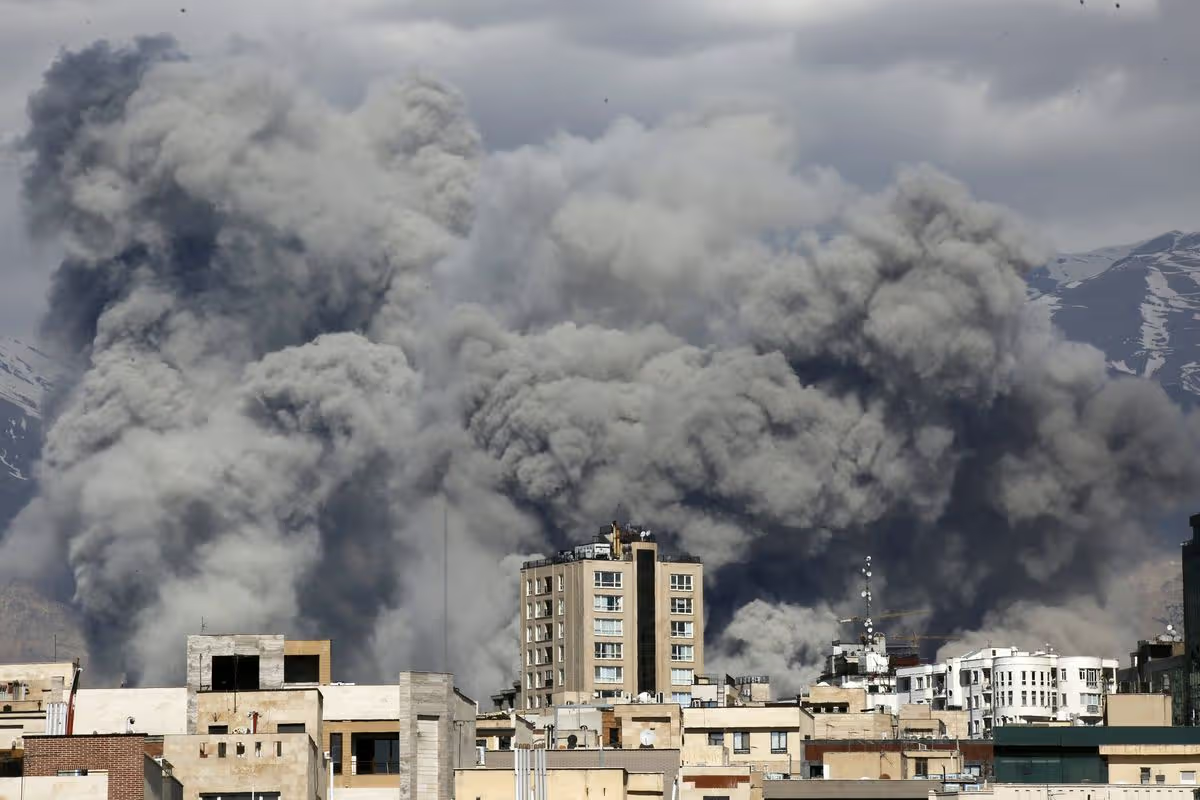
Meanwhile, the human and strategic realities on the ground remain stark. Tehran residents described the heaviest bombardment of the conflict yet, with strikes across the city leaving civilians fearful and homes damaged. One resident said, “It was like hell. They were bombing everywhere, every part of Tehran… my children are afraid to sleep now. We have nowhere to go.”

Israel is simultaneously operating under the assumption that Trump could end the war at any moment, sources familiar with its military plans told Reuters. This has encouraged Israeli forces to maximize damage on Iranian targets before any potential ceasefire, highlighting the tension between the short-term operational calculus and long-term strategic objectives.

Iran’s appointment of hardliner Mojtaba Khamenei as Supreme Leader signals defiance against U.S. pressure to influence Iranian leadership, underscoring Tehran’s unwillingness to yield to external demands despite the military pressure.

Strategic Implications: Oil, Leadership, and Geopolitics

The war has effectively halted shipments through the Strait of Hormuz policy measures such as easing sanctions on Russia and releasing strategic oil reserves, are interpreted by markets as mitigating factors that could prevent a prolonged energy crisis.

However, the underlying political and military dynamics suggest that a rapid resolution may not meet all stated U.S. objectives. Ending the conflict quickly to restore oil flows would likely leave Iran’s leadership intact, which contrasts with Trump’s previous maximalist demands for influence over Iran’s succession. Israel’s objectives diverge further, as it continues to seek regime change and to weaken Tehran’s ability to strike beyond its borders, while U.S. officials emphasize missile and nuclear containment.

Human and Regional Costs

The war has already inflicted significant human costs. Iran’s U.N. ambassador reported at least 1,332 civilian deaths and thousands wounded since the airstrikes began. Iranian missile and drone strikes targeting Gulf states have damaged infrastructure, closed airports, and disrupted hotels, while retaliatory Israeli strikes in Lebanon have killed scores amid ongoing efforts to neutralize Hezbollah.

Domestically, Iran has suppressed dissent and anti-government protests following the death of Ali Khamenei, further complicating the social dynamics that external military action interacts with. Large-scale rallies in support of Mojtaba Khamenei demonstrate public mobilization in favor of the hardline leadership, which may limit the U.S. and Israel’s capacity to influence internal political outcomes even after the war concludes.

Analysis: Financial, Strategic, and Geopolitical Interplay

Markets are betting on a short conflict because of political signaling, but the broader picture is far more complex. Oil prices remain sensitive to supply disruptions, and the potential for renewed escalations persists. The market response highlights how sentiment can temporarily override fundamental risks, yet volatility is likely to continue as long as strategic objectives, military operations, and leadership decisions remain unresolved.

From a geopolitical perspective, the conflict illustrates the tension between military objectives and economic consequences. A rapid end to the war would stabilize energy markets and global growth expectations but may leave U.S. and Israeli goals partially unmet. Conversely, prolonging the conflict to pursue maximalist aims risks a sustained oil shock, regional instability, and wider economic fallout, echoing lessons from past Middle East crises in the 1970s.

Analysts emphasize that energy markets, geopolitical strategy, and human costs are tightly intertwined: traders respond quickly to political statements, but the underlying realities strikes, leadership decisions, and supply chain vulnerabilities ensure that uncertainty will remain high. The delicate balance between military pressure, diplomacy, and market psychology will determine whether the Iran conflict resolves quickly or evolves into a more protracted crisis.

With information from Reuters.

Source link

Could the US-Israel war with Iran fuel global inflation? | Business and Economy

Oil prices are swinging as markets react to every twist in the conflict.

The United States and Israel’s war on Iran has caused the largest energy supply shock in decades.

The Strait of Hormuz is in effect closed, and attacks are being carried out on energy facilities in the Middle East, rattling oil markets.

From Americans filling their tanks at the pump to European factories and Asian economies, the impact is already being felt.

US President Donald Trump says the rise in oil prices is a “very small price to pay” for “safety and peace”. But investors warn that if the conflict drags on, there’s danger of stagflation.

Source link

US consumers express dismay over rising gas prices after attack on Iran | US-Israel war on Iran News

Surging energy prices caused by the US-Israel war on Iran could ripple across the United States economy, heaping further strain on consumers at a time when cost-of-living issues are already a primary concern.

The price of crude oil increased from about $67 per barrel before the war began on February 28 to nearly $97 on Monday, as the conflict snarls production and transport in one of the most energy-rich regions on earth. Oil temporarily passed $100 per barrel on Sunday before slightly easing back.

Recommended Stories

list of 3 itemsend of list

The price tracker GasBuddy reported on Monday that the average price of gas in the US has risen by 51 cents per gallon over the last week.

“Yes, yes, definitely,” said 52-year-old Alma Newell when asked if she was worried about price increases at a gas station in the coastal city of Goleta, California.

Newell said she is out of work with a shoulder injury and worried that rising costs could stretch her already limited budget.

“The prices have a big impact because I’m not working right now,” she said. “Food and rent are already very expensive.”

“It’s crazy,” she added. “Because the war is so unnecessary.”

Cost of living issues

Rising prices could deepen frustration with the administration of US President Donald Trump and put greater political pressure on the White House, already struggling to address cost-of-living issues with the crucial midterm elections set to take place later this year.

“I think the current price increase in oil suggests the US will see $3.50 to $4 gasoline by next week, and $5 diesel this week,” said Gregory Brew, a senior analyst on Iran and oil at the Eurasia Group.

The highest recorded average for gas prices at the pump was in June 2022, when prices soared to $5.034, months after the Russian war on Ukraine started, according to Gas Buddy, which tracks fuel prices going back to 2008.

“The impact 1773123967 is more political than economic, as high gasoline prices generate negative press and can add to the perception that the government is not properly handling the economy. That means Trump will feel more political pressure to end this war quickly.”

A Pew Research Center poll in early February suggested widespread anxiety about the rising cost-of-living before the US and Israel launched attacks on Iran, with 68 percent of respondents saying they were very or somewhat concerned about gas prices.

“I’m not too worried myself because I have a hybrid car and ride my bike,” said 72-year-old Bjorn Birmir at the gas station in Goleta, California. “But for people in general, it will make life more expensive. Prices are already high, and it will make them even higher.”

Ongoing disruptions

The disruptions caused by the war include the shuttering of the Strait of Hormuz, a key node in global transit and shipping. Iran has long said that it could close down the strait in the event of a showdown with the US and Israel.

About 20 percent of global oil and a significant portion of natural gas pass through the strait, predominantly to Asia, supplies that are now stranded as traffic through the narrow waterway has ground to a halt. Iranian attacks on energy infrastructure in countries across the region have also led some countries to scale back production.

Other economic sectors are also feeling the squeeze.

Goods such as fertiliser, vital for agricultural production, are seeing price increases just ahead of the spring planting season in the Northern Hemisphere. About one-third of the global fertiliser trade passes through the Strait of Hormuz.

Effects of the war could ripple throughout the global economy, with poor countries especially hard-hit. Pakistan announced a series of austerity measures and cuts to fuel subsidies on Monday, while Bangladesh shuttered universities and announced restrictions on fuel use as a result of the war.

US officials and countries around the world have already discussed measures to help ease the shock of rising energy prices, including the potential release of strategic oil reserves in a bid to temporarily boost global supply.

The G7 said on Monday that it would take “necessary measures” to support energy supplies, but held off on announcing the release of strategic reserves, with energy ministers set to meet on Tuesday to discuss the matter further.

The US has a strategic oil reserve of more than 415 million barrels, one of the largest in the world, that it could release in coordination with allied countries.

But it is unclear when these measures would kick in and how long such steps could help fill the gaps created by the war.

Rachel Ziemba, adjunct senior fellow at the Center for a New American Security, says that much depends on whether the war is brought to a speedy conclusion or continues on for weeks or even months, with the possibility of further escalation.

Thus far, neither the US and Israel nor Iran has suggested it are willing to stop the war anytime soon, although Trump told CBS News on Monday that “the war is very complete, pretty much”, comments that helped ease some of the price swings in oil and stocks.

“If the war continues, we would see oil prices not only remain elevated, but perhaps rally further as markets price in a more protracted outage,” said Ziemba. “There’s also the question of, when it does end, how much damage will be done to infrastructure and just how quickly supplies could come back online.”

Initial polling has suggested that the war is unpopular in the US, with a Quinnipiac University poll released on Monday finding that 53 percent of voters who responded oppose Trump’s military action in Iran, including 60 percent of political independents.

That lack of popular support could present a political headache for Trump and his Republican Party if voters connect the war to increasing prices. Thus far, Trump has largely dismissed concerns about the war’s possible impact on the rising cost of living.

“Short term oil prices, which will drop rapidly when the destruction of the Iran nuclear threat is over, is a very small price to pay for USA, and World, Safety and Peace,” Trump said in a Truth Social post on Sunday. “ONLY FOOLS WOULD THINK DIFFERENTLY!”

Source link

BBC nuclear war drama ‘too horrifying’ for TV banned for 20 years – now on iPlayer

The BBC war drama depicts a fictional nuclear attack on Britain by Russia and its devastating aftermath – and was so disturbing it was banned from broadcast for two decades

In the face of escalating conflicts worldwide – from the intensifying US-Israel joint operation against Iran in the Middle East, Israel’s ongoing war on Gaza following Hamas’ October 2023 attack, to the four-year-long Russia-Ukraine war still in progress – it’s no exaggeration to say we’re witnessing a catastrophic level of global unrest.

Amidst this turmoil, the looming threat of nuclear warfare is ever-present. The aftermath of such a conflict would bring about unimaginable destruction and devastation – the fallout is too horrific to contemplate.

This chilling scenario was portrayed in a BBC documentary from 1965, a film so disturbing it was banned from television broadcast for two decades by the British Broadcasting Corporation itself.

At the time, the corporation justified its decision to prohibit the documentary, stating: “The effect of the film has been judged by the BBC to be too horrifying for the medium of broadcasting. It will, however, be shown to invited audiences..”

The controversial pseudo-documentary finally aired in Great Britain on 31 July 1985, twenty years after its initial scheduled screening date of 6 October 1965. This broadcast coincided with the week leading up to the 40th anniversary of the Hiroshima bombing, reports the Express.

The War Game is currently available for free streaming on BBC iPlayer or can be bought for £5.99 on Amazon Prime Video.

Written, directed and produced by Peter Watkins for the BBC, The War Game depicted a fictional nuclear strike on Britain by the Soviets and its devastating consequences.

The docu-film’s official synopsis states: “In this British documentary, a hypothetical Chinese invasion of South Vietnam triggers a new world war between East and West. In the town of Rochester, Kent, the anticipation of a nuclear attack leads to mass evacuations.

When a stray missile actually explodes, the ensuing firestorm blinds all those who see it. It’s not long before the fabric of society is ripped apart owing to radiation poisoning, a lack of infrastructure and rioting for food and other necessities.”

On 13 April 1966, The War Game had its premiere at the National Film Theatre in London, where it screened until 3 May. Barred from broadcast, the 47-minute docu-drama subsequently appeared at numerous international film festivals, including Venice, where it secured the Special Prize.

The recognition continued – the prohibited BBC production went on to claim the Academy Award for Best Documentary Feature in 1967, alongside two BAFTAs for Best Short Film and the UN Award.

Boasting a near-flawless 93% approval rating on review aggregator site Rotten Tomatoes, The War Game has earned widespread acclaim from critics and viewers.

One reviewer commented on the docu-drama: “Nothing that you have heard or read can fully prepare you for Peter Watkins’ 1965 faux documentary on the aftermath of a nuclear attack on Great Britain.”

Another reviewer added: “One of the most disturbing, overwhelming, and downright important films ever produced.”

A third critic described it as essential viewing, noting: “It was produced by the British Broadcasting Corp. but never televised because it was felt its showing would be both horrifying and depressing. It is. It also is realistic, informative and shattering. It is a movie that everyone should see.”

Whilst one critic said: “Still packs a whallop. Will stick with you for life. Don’t say I didn’t warn you,” another commented on the nuclear war drama, “One of the most skillful documentary films ever made.”

Viewer reactions mirror this sentiment, with one audience member writing in an extensive review: “The War Game, although created as a TV movie for the BBC for the 20th anniversary of the bombing of Hiroshima and Nagasaki, is easily the one of the most disturbing movies I have ever seen, on par only with Gus van Sant’s “Elephant. ” It accurately portrays the effects and aftermath of a nuclear attack and uses a handheld documentary style that makes everything chillingly real.

“There were several times during the film when I had to remind myself that Britain had never suffered a nuclear attack and the footage I was looking at was not real. There are very few films that have left me in the state that this one did when it was over. Much like “Schindler’s List” or “American History X,” this is the kind of movie I think everyone should watch because it is so incredibly informative and brings the viewer so much closer to understanding the pain and monstrosity of a nuclear attack.”

Another viewer described it as: “A harrowing punch in the gut that nothing prepared me for. Unforgettable.”

Meanwhile, one audience member remarked about Watkins’ drama: “Really shook me up and left me reeling for a while after seeing it. Peter Watkins ruined my 3 day weekend with this masterfully done piece of film. Needs to be required viewing for every being capable of understanding images and sound.”

The War Game can be streamed free of charge on BBC iPlayer until July 2026, or purchased for £5.99 through Amazon Prime Video.

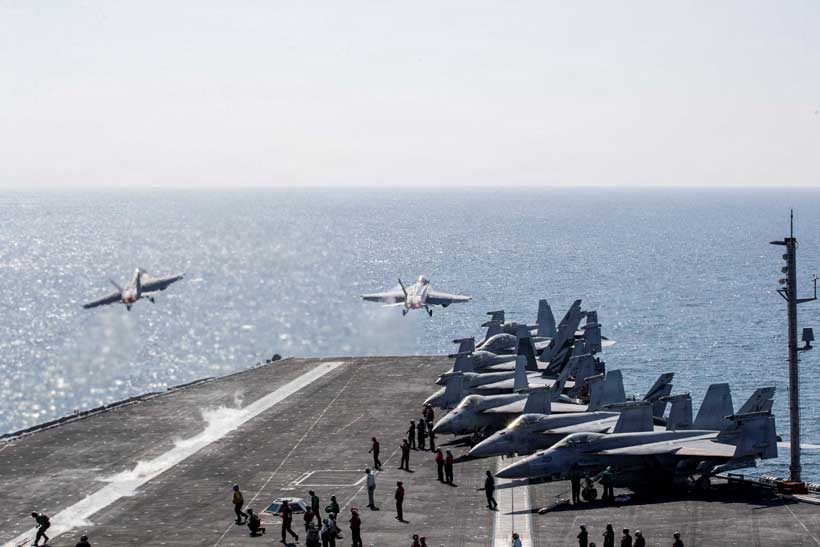
Source link

Australia to send missiles to UAE, surveillance plane to help Gulf defence | US-Israel war on Iran News

Australian Prime Minister Anthony Albanese said air-to-air missiles and a reconnaissance plane will be sent to region amid conflict with Iran.

Prime Minister Anthony Albanese said Australia will deploy a long-range reconnaissance aircraft and send air-to-air missiles to help countries in the Gulf region defend against Iranian attacks.

“The Iranian conflict in the Middle East began just over a week ago, and Iran’s reprisal attacks continue to escalate, already at a scale and depth we haven’t seen before. Twelve countries across the region, from Cyprus through to the Gulf, are continuing to be targeted,” Albanese said in a news conference on Tuesday.

Recommended Stories

list of 4 itemsend of list

He said the Royal Australian Air Force will send an E7A Wedgetail surveillance aircraft and supporting personnel to “protect and secure airspace above the Gulf” for the next four weeks, and help the region with its “collective self-defence”.

Australia will also send advanced medium-range air-to-air missiles to the United Arab Emirates, he said, following a phone call with UAE President Mohammed bin Zayed Al Nahyan.

Albanese cited the 115,000 Australians living in the Middle East – among them, 24,000 in the UAE – as a major factor behind the deployment of military assets.

“Helping Australians means also helping the United Arab Emirates and other Gulf nations defend themselves against what are unprovoked attacks,” he told reporters, stressing that the deployments were for defensive purposes only.

“My government has been clear: We are not taking offensive action against Iran, and we are clear we are not deploying Australian troops on the ground in Iran,” he said.

Some 2,600 Australians have left the Middle East since last week, Albanese said, but “significant challenges” remain in helping those who want to leave but remain in the region.

The prime minister’s announcement was immediately slammed by the opposition Greens party, which said Australia risks becoming embroiled in another US-led “forever war”.

Australia joined the US-led invasions of Afghanistan and Iraq in 2001 and 2003, and lost more than 50 personnel during the conflicts, according to the Australian War Memorial.

Greens Senator Larissa Waters said she feared more Australian lives were at risk with the announced deployments, which the government, led by the Labor Party, said would be accompanied by 85 Australian personnel.

“Australians do not want to get dragged into Trump and Netanyahu’s illegal war on Iran. Labor shouldn’t be sending troops to help a military that’s killed 150 schoolchildren in a primary school bombing. That will only escalate an illegal conflict that’s already spiralling out of control, and leave Australia trapped in yet another forever war,” Waters said in a statement on Tuesday.


“Every day Trump and Netanyahu’s demands of Australia keep growing. It was refuelling US spy planes yesterday, a recon jet and missiles today, and could be ever more troops tomorrow. Labor has no red lines when it comes to appeasing Donald Trump and Benjamin Netanyahu,” she said, referring to the US president and Israeli prime minister, respectively.

Albanese said separately on Tuesday that Canberra has formally granted asylum to five members of Iran’s women’s football team, who were visiting Australia for the Asian Football Confederation Women’s Asian Cup 2026 in Queensland.

Albanese said the women had been issued with humanitarian visas and moved to a safe location with the assistance of Australian Federal Police.

“Australians have been moved by the plight of these brave women. They’re safe here, and they should feel at home here,” Albanese told reporters.

Source link

Known Unknowns and Unknown Unknowns: The US-Israeli War on Iran

Modern wars are fought not only with weapons but with assumptions—and the most dangerous assumptions are often invisible to those making them. Donald Rumsfeld’s distinction between known unknowns (questions we recognize but cannot answer) and unknown unknowns (risks we have not even framed as questions) captures something essential about the current confrontation between the United States, Israel, and Iran.

The Nuclear Material Problem

The June 2025 12-day war struck several of Iran’s nuclear facilities but left the most consequential question unanswered: where is the material? The March 2026 campaign has struck deeper, targeting hardened and dispersed sites that June’s operations left intact. Yet the fundamental uncertainty has not resolved—it has compounded. Iran reportedly retains roughly 400 kilograms of uranium enriched to 60%, approaching weapons-grade, and the precise location of that stockpile is now more opaque than before. On March 2, the International Atomic Energy Agency (IAEA) reported the entrance buildings of Iran’s underground Natanz enrichment plant had been bombed, but without inspection access, the agency cannot reconstruct a monitoring baseline.

The strategic paradox is acute. Any Iranian government—this one or a successor—must now confront a nuclear-armed Israel and a United States willing to strike Iranian territory twice in nine months. Under those conditions, nuclear capability looks less like a provocation and more like a rational insurance policy. The war may have permanently entrenched the very incentive it was designed to dismantle. A further risk of escaping conventional arms-control frameworks is if Iranian institutions fragment, specialized nuclear expertise disperses internationally, potentially becoming available to states or non-state actors.

Regime Change and What Follows

The war’s stated objective rests on uncertain ground. Intelligence assessments before the conflict reportedly concluded that even a large-scale assault was unlikely to produce regime collapse—yet the campaign proceeded anyway. The Iranian state has shown remarkable institutional resilience, with no visible defections among senior leadership, a government operating under its constitutional framework, and a regime that has absorbed the Iran-Iraq War, the Green Movement, and decades of sanctions.

War has accelerated the succession question around Ali Khamenei. One trajectory involves Mojtaba Khamenei, whose rise would mean dynastic continuity rather than transformation; another sees the IRGC consolidating power—equally misaligned with Western hopes. The question of what comes after was not answered before the bombs fell.

Retaliation, Major-Power Shadows, and Strategic Incoherence

Iran’s retaliation has demonstrated its asymmetric reach. The IRGC claims attacks on at least 27 bases hosting American troops across the region, alongside Israeli military facilities. Tehran appears to be pacing its response, sustaining an attrition campaign designed to exhaust interceptor stocks rather than overwhelm them in a single strike.

The major power dimensions compound this. Russia has reportedly been providing intelligence on American naval deployments; Chinese-linked entities have allegedly tracked US forces via satellite. Meanwhile, strategic incoherence in Washington compounds every other risk. Vice President J.D. Vance and Secretary of Defense Pete Hegseth have framed this as a limited campaign against nuclear infrastructure; Trump has simultaneously floated regime change on social media.

The Munitions Race

The deepest structural vulnerability may not lie on the battlefield but in the arithmetic of an industrial system never designed to fight this kind of war. The first 36 hours consumed more than 3,000 precision-guided munitions and interceptors. Joint Chiefs Chairman General Dan Caine had warned that stockpiles were already significantly depleted before the first strike. Secretary Marco Rubio subsequently acknowledged that Iran produces an estimated 100 missiles a month versus roughly six or seven high-end interceptors that American industry can manufacture in the same period.

That deficit has a history. The US likely expended 100 to 150 THAAD interceptors and 80 SM-3s supporting Israel during June’s Twelve-Day War. Those stocks were never fully replenished. The bottlenecks are physical as well as financial. Lockheed Martin’s plan to raise PAC-3 MSE production to 2,000 units per year addresses a six-to-seven-year horizon, not the current emergency.

The drone dimension adds a layer officials have been slow to acknowledge. Hegseth and Caine admitted in a closed-door briefing that Iran’s Shahed drones present a challenge US air defenses cannot fully meet. The Shahed flies low and slow—hard to detect and poorly matched to the high-end interceptors THAAD and SM-3 are optimized to defeat. Intercepting a drone can cost roughly five times what it costs to manufacture one.

This crystallizes the war’s most consequential known unknown: how much of Iran’s arsenal reflects genuine capability, and how much reflects deliberate restraint? The IDF assessed Iran possessed roughly 2,500 ballistic missiles on February 11.

The search for emergency solutions has produced one remarkable geopolitical inversion. The Pentagon has approached Ukraine about purchasing drone interceptors. They are low-cost systems Ukrainian manufacturers developed specifically to hunt Shaheds, built from years of adapting to exactly the threat now confounding American air defenses in the Gulf. The US is buying drone killers from a country it recently all but abandoned! The implications extend to the Indo-Pacific. Every interceptor fired over the Gulf of Bahrain is one fewer available in the Taiwan Strait.

The Energy Shock

The Strait of Hormuz has moved from a textbook chokepoint to a live emergency. Tanker traffic has come to a near standstill. War-risk insurance premiums have made commercial passage unviable even where it remains physically possible. At least five tankers have been struck across the Gulf, the Gulf of Oman, and nearby waters. Approximately 20 million barrels of oil per day—a fifth of global consumption—normally transit the strait, alongside roughly 20% of global LNG trade. Traders are warning that oil prices could surge past $100 a barrel if the conflict in Iran continues to escalate. Goldman Sachs Research estimates that a full one-month closure would add $15 per barrel, assuming no compensating measures like spare pipeline utilization or releases from strategic petroleum reserves. Bank of America sees tail risk far higher, estimating a prolonged shutdown could add $40–$80 per barrel above current prices.

The LNG dimension may prove more immediately damaging than oil. QatarEnergy has halted production at Ras Laffan, the world’s largest LNG facility, after Iranian drone attacks. This has already caused European natural gas futures to spike. If global LNG tightens, Europe must compete with Asian buyers on price. That competition may, in turn, force Europe back toward Russian gas, quietly reversing one of the most consequential geopolitical achievements of the post-Ukraine sanctions era.

The exposure is global and unevenly distributed. China, India, Japan, and South Korea account for roughly 75% of Hormuz crude exports and 59% of its LNG flows. South Korea has warned it could exhaust LNG reserves within nine days and has announced a 100 trillion won stabilization fund. India is pivoting toward Russian crude. These developments structurally benefit Moscow regardless of the war’s outcome.

The fertilizer dimension compounds the energy shock with a slower fuse. Nitrogen fertilizers are manufactured from natural gas; roughly a third of globally traded urea transits Hormuz. QatarEnergy’s halt removes fertilizer output simultaneously with LNG. Urea prices have already surged $60 to $80 per ton at New Orleans, with the spring planting window closing. The food-price consequences will not appear in grocery stores for months. But they are already locked in.

The Gulf Security Paradox

For decades the Gulf states managed their rivalry with Iran below the threshold of open confrontation, relying on the American security umbrella while avoiding direct entanglement. The war has collapsed that strategy. The Gulf states did not arrive at this crisis as Iran’s adversaries but rather as reluctant bystanders who had invested enormous diplomatic capital in preventing it. They gave ironclad assurances to Tehran, both before the war and up to its eve, that their territories would not serve as launchpads. That Iran responded by striking these same neighbors is a strategic miscalculation of historic proportions and a moral failure that may poison relations for a generation.

This has opened a structural debate now conducted in public. Is American military presence a protective shield or a magnet for retaliation? Citizens and analysts are asking why Gulf states should bear the risk of hosting US forces when Washington appears unable to protect them. Undoubtedly, Tehran understands this dynamic. Drone strikes on UAE-based data centers targeted Gulf publics’ confidence in the connectivity model as much as American commercial interests. The UAE and Saudi Arabia have staked their post-oil futures on projecting stability and attracting mobile capital. Intercepting most of the incoming fire is not sufficient when global firms are deciding where to invest next decade.

The crisis confronts the Gulf Cooperation Council with a strategic fork. One path leads toward deeper collective security, featuring integrated missile defense, expanded intelligence sharing, and coordinated maritime protection that could reduce dependence on any single external patron. The other leads toward renewed fragmentation as internal rivalries re-emerge.

Former Qatari prime minister Hamad bin Jassim bin Jaber Al Thani warned that the Gulf “must not be dragged into a direct confrontation with Iran,” arguing that such a clash would “deplete the resources of both sides and provide an opportunity for outside forces to control us under the pretext of helping us escape the crisis.” Yet the same crisis that could finally catalyze genuine Gulf collective security could just as easily deepen the divisions that have historically prevented it.

The Mediator’s Dilemma and the Meta-Unknown

The conflict has also damaged the diplomatic architecture that previously helped manage US-Iran tensions. Oman and Qatar built genuine credibility as intermediaries through years of patient back-channel work. Effective mediation requires neutrality. When conflict spreads into the territory of potential mediators, that credibility erodes. Iran’s decision to strike the very states whose neutrality made diplomacy possible may have burned the bridges needed to end the war—which is perhaps the most consequential unknown unknown in the entire conflict, second only to the US twice striking Iran in the span of nine months while negotiations were still ongoing.

At the deepest level lies a question no intelligence assessment can answer: whether the strategic logic of the war is coherent at all. Negotiations failed because each side demanded outcomes the other could not accept. The same incompatibility that made diplomacy impossible may make military victory equally elusive. Iran cannot surrender unconditionally without ceasing to be the Islamic Republic. And the conditions that make nuclear deterrence attractive to any Iranian government—this one or a successor—have not been removed by the strikes; they have been reinforced.

Conclusion

In sum, the US-Israeli campaign against Iran has illuminated the limits of military certainty. Known unknowns—munition shortages, asymmetric retaliation, and energy vulnerabilities—interact with unknown unknowns—nuclear dispersal, regime succession, and Gulf fragmentation—to create a conflict whose trajectory is inherently unpredictable. Rather than eliminating threats, the strikes may have entrenched incentives for nuclear retention, incentivized strategic caution, and stressed regional and global systems. The coherence of the war itself is in question, as military action and diplomacy pull in contradictory directions. Ultimately, the conflict underscores that modern warfare is as much about managing uncertainties as it is about destroying targets.

Source link

Trump’s Iran Uranium Plan Risks a Wider War

The reported idea of a special operation to seize Iran’s uranium should alarm anyone who still thinks there is a line between pressure and recklessness. Sending foreign forces into Iranian territory to capture nuclear material would be far beyond coercion. It would be war in plain sight. That risk looks even sharper when it is paired with talk of unconditional surrender and a revived maximum pressure campaign. Officials call that flexibility. In practice, it often creates confusion and a dangerous illusion of control.

Strategic Ambiguity Has Limits

Trump has long preferred threat inflation as a negotiating tool, and his administration’s National Security Presidential Memorandum on Iran makes clear that Washington wants to deny Tehran every path to a bomb. But there is a difference between pressure meant to shape diplomacy and rhetoric that drifts toward occupation logic. A raid assumes the United States can enter a sovereign state, take possession of fissile material, and leave without igniting a larger conflict. That is not strategy. It is a gamble.

A Raid Would Not Stay Small

Iran is not an isolated militia camp. It is a large state with layered security organs, missile capacity, regional partners, and a long memory of external intervention. Any attempt to seize uranium by force would expose American troops, bases, shipping lanes, diplomats, and partners to retaliation across several fronts. Even before talk of a raid, Washington and Tehran had been engaged in indirect nuclear talks in Oman. Replacing diplomacy with a ground mission would not create leverage. It would destroy what remains of a controlled bargaining space.

The Nuclear Picture Is Already Murky

The hardest fact in this debate is that the nuclear picture is already uncertain. In its February 2026 safeguards report, the IAEA said it could not verify the current status of facilities hit in June 2025. Reuters later highlighted that same report’s estimate that Iran had 440.9 kilograms enriched up to 60 percent before the strikes, while the Associated Press noted the wider stockpile had reached 9,874.9 kilograms of enriched uranium in total. Reuters also reported a cat-and-mouse hunt for missing material and confirmed that tunnel entrances at Isfahan were hit. Those facts do not make a commando operation look cleaner. They make it look less knowable.

Force Has Already Damaged Oversight

This is the contradiction hawks avoid. Military action may damage buildings, but it can also damage the inspection system needed to track what survives. The IAEA chief said that returning to Iranian sites was the top priority after the attacks because the agency had lost visibility. Reuters warned even before the war that any new Iran deal would have to address serious watchdog blind spots. Rafael Grossi had already reminded the Security Council that nuclear facilities must never be attacked and later stressed that inspectors must be allowed to do their job. Once oversight is broken, claims about perfect control become less credible.

Pressure Without Diplomacy Can Harden Iran

Advocates of seizure argue that urgency changes the rules. Their point is easy to grasp. If material has been moved, hidden, or split across sites, then delay is dangerous. But urgency cuts both ways. The less certainty there is, the more any raid grows in scope. A supposedly limited mission can quickly expand into repeated searches, broader strikes, and pressure for a longer presence. That trajectory sits uneasily with both the basic ban on the use of force in the UN Charter and the logic of the Nuclear Non-Proliferation Treaty, which depends on verification and compliance, not theatrical confiscation. Reuters has also shown that the damage from earlier strikes was difficult to measure and that U.S. officials later said there was no known intelligence that Iran had moved the uranium. That uncertainty is exactly why fantasies of a clean raid should be treated with suspicion.

Containment Is Less Dramatic, but Safer

There is another reason to reject this path. Public overstatement can create policy traps. Trump has already brushed aside internal caution, including when Reuters reported that he said his own intelligence chief was wrong about Iran’s program. Tehran, for its part, has insisted through officials speaking to Reuters that it will not give up enrichment under pressure. That is not a recipe for surrender. It is a recipe for concealment and hardening. Serious policy should focus on intelligence work, restored IAEA access, sustained diplomatic pressure backed by credible penalties, and a clear effort to prevent a regional war that would leave the uranium question even murkier.

The appeal of seizure is obvious. It sounds decisive and final. But nuclear crises rarely yield to cinematic solutions. They are managed through verification, containment, bargaining, and steady pressure, not through fantasies of absolute control. If this idea is truly being weighed in Washington, it should be rejected before rhetoric turns into mission planning. A ground effort to capture uranium inside Iran would not settle the problem. It could widen the war, shatter what diplomacy still exists, and leave the world with the same material, less oversight, and far more bloodshed.

Source link