US Midterm Elections 2026

The US midterms will test the limits of Trump’s power | US Midterm Elections 2026

On November 3, as Americans vote in the midterm elections, the United States faces a defining test of presidential power, constitutional accountability and democratic resilience. The election will determine control of Congress, but its stakes extend far beyond partisan fortunes. At issue is whether constitutional checks and balances can constrain President Donald Trump, whether election officials can withstand political pressure, and whether the government will respect the voters’ verdict when the outcome threatens its interests.

The battle for control of elections

The administration’s efforts to reshape election procedures have encountered substantial judicial resistance. According to an October 20 review by the Brennan Center for Justice, at least 34 federal district court decisions had temporarily or permanently blocked administration initiatives involving election procedures and demands for voter registration records. The rulings included decisions by judges appointed by presidents of both parties, including Trump himself.

These decisions demonstrate that judicial oversight remains an important constitutional safeguard. Yet repeated litigation exposes a vulnerability: courts often intervene only after disputed measures have been introduced, leaving states to challenge policies that can generate uncertainty close to Election Day.

The controversy intensified on October 26, when a federal appeals court declined to order California to set aside ballots from approximately 20,000 registered voters whom the Justice Department alleges may be noncitizens. The court ruled that the lower court had not been given adequate opportunity to consider the government’s request. The underlying dispute remained unresolved.

The administration maintains that its actions protect electoral integrity. But investigating credible allegations of wrongdoing is fundamentally different from restricting eligible voters on the basis of unverified suspicions. Election security requires accurate voter rolls, but it equally requires protecting citizens from erroneous challenges.

Repeated allegations of fraud can undermine confidence even when evidence fails to establish that an election has been compromised. The danger is that routine election administration becomes suspect in the public mind, regardless of the facts.

Congress as a constitutional check

Republicans hold narrow majorities in both chambers of Congress, placing control of the House and potentially the Senate within reach of Democrats.

A Democratic House majority would strengthen the opposition’s ability to investigate administration policies, subpoena officials and scrutinise executive decisions. Immigration enforcement, election procedures, federal spending and the implementation of executive orders could face intensified oversight.

Such scrutiny could expose misconduct where evidence supports it and compel officials to explain decisions otherwise shielded from meaningful examination. Yet investigations do not automatically produce accountability. Subpoenas can trigger prolonged legal battles, and congressional hearings alone cannot force policy changes.

Control of the Senate would give Democrats greater influence over presidential nominations and judicial appointments. Nevertheless, Trump would retain his veto power and substantial executive authority. Even unified Democratic control of Congress would not automatically reverse his agenda.

The deeper question is whether Congress will exercise its constitutional responsibilities independently or allow partisan loyalty to take precedence over institutional accountability. Checks and balances cannot function effectively if one branch declines to challenge another when circumstances demand it.

The test after election day

Perhaps the most consequential confrontation will come after the ballots are cast.

Trump’s response to his 2020 presidential defeat remains a critical precedent. He challenged the result, made unsubstantiated allegations of fraud, and pressured Georgia officials to find enough votes to reverse his loss. On January 6, 2021, a mob attacked the Capitol as Congress met to certify the presidential election.

That history does not establish that similar events will recur in 2026. It does, however, make scrutiny of potential election disputes essential.

The danger may lie not in a single intervention capable of changing the result, but in successive confrontations: challenges to ballot counting, pressure on state officials, demands for investigations and attempts to portray ordinary procedures as evidence of fraud. Even unsuccessful efforts can delay resolution and weaken public confidence.

Candidates have every right to pursue legitimate legal challenges. Courts must consider credible evidence, and election officials must correct documented irregularities. But allegations are not proof, and no president can simply declare an unfavourable result invalid.

An election can also be damaged without a single vote being changed. Intimidation of election workers, unfounded accusations and efforts to discredit established procedures can erode public acceptance of legitimate outcomes.

The distinction between lawful scrutiny and political interference is therefore fundamental. Electoral integrity depends on evidence, consistent procedures and respect for the law – not on whether the outcome favours the governing party.

Courts cannot defend democracy alone

Judicial intervention demonstrates that constitutional safeguards remain operational. Courts can invalidate unlawful executive actions, but they cannot independently administer elections across thousands of jurisdictions or guarantee that political leaders will respect every ruling.

Nor can judicial decisions alone restore public confidence after sustained efforts to discredit electoral institutions. Democracy depends on Congress exercising oversight, election officials counting ballots accurately, courts acting impartially and political leaders respecting lawful outcomes.

The willingness of judges appointed by presidents of both parties to rule against administration initiatives reinforces a fundamental principle: constitutional protections cannot depend on partisan alignment. Their effectiveness rests on whether institutions apply the same rules regardless of who benefits.

The broader danger is institutional erosion. Repeated confrontations can weaken public confidence, discourage election workers and normalise the idea that constitutional constraints are obstacles to political power rather than obligations governing its exercise.

A verdict beyond the ballots

The November 3 midterms will not resolve the struggle over presidential power. If Republicans retain Congress, Trump will continue to benefit from congressional majorities, although judicial and state-level checks will remain. If Democrats gain one or both chambers, the administration will face greater scrutiny, but substantial executive authority will persist.

Neither outcome guarantees effective constitutional government. The decisive issue is whether institutions exercise their lawful responsibilities and whether political leaders accept that presidential power is neither unlimited nor permanent.

American democracy has survived profound crises, but resilience should not be confused with invulnerability. Checks and balances work only when institutions enforce them and political leaders respect their limits.

The midterms are therefore about more than congressional arithmetic. They will test whether votes are counted according to law, disputes are resolved through established procedures and electoral outcomes are respected regardless of partisan consequences.

The ballots will determine who controls Congress. What follows will reveal whether American institutions can still uphold a principle fundamental to democratic government: no president stands above the law, no party owns the electoral process, and no exercise of political power is beyond accountability.

On November 3, Americans will vote to determine the composition of Congress. The aftermath will test something more enduring: whether the constitutional restraints that have sustained American democracy remain binding when their enforcement carries the highest political stakes.

The views expressed in this article are the author’s own and do not necessarily reflect Al Jazeera’s editorial stance.
Source link

California’s Bay Area debates data centres ahead of US midterm elections | US Midterm Elections 2026 News

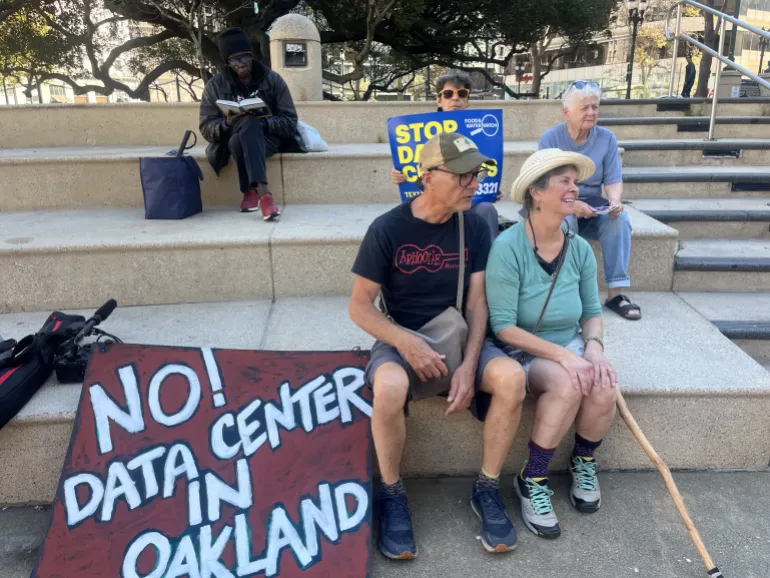
Oakland, California – Protesters dressed as cardboard robots chanted and danced to a drumbeat as they protested against new data centres outside Oakland City Hall last month.

Their concerns largely focused on how the centres — which process large amounts of digital information — might strain the energy grid.

Recommended Stories

list of 3 itemsend of list

The result, they argued, would not only be environmental harm but also sky-high electricity bills for local households.

“Power prices have gone up so much in Oakland that some people are thinking of shutting off their power,” said Carlos Gutierrez, an activist for Communities for a Better Environment, an environmental justice group.

“And the city is planning to provide power to a data centre instead.”

Opposition to data centres is growing across the United States, as residents express concern about their rapid expansion.

More than 3,000 data centres already operate in the country, with more than 1,500 others in development, according to the Pew Research Center.

But the backlash is perhaps most striking in California’s San Francisco Bay Area, a region considered to be the heart of the artificial intelligence (AI) boom.

Major AI companies such as Anthropic, OpenAI and Meta are based in the Bay Area, and the industry’s growth has been credited with fuelling a local economic renaissance.

Data centres house the advanced computer chips and servers needed to run AI-powered services such as Anthropic’s Claude and OpenAI’s ChatGPT.

But they also require 24-hour power and a large supply of water to cool their processors.

Even with such cooling technology, data centres are notorious for emitting heat, leading to an increase in land surface temperatures as high as 9 degrees Celsius (16 degrees Fahrenheit).

A couple sits on the steps of Oakland City Hall in California next to a sign that reads, ‘No data center in Oakland’
A couple sits on the steps of Oakland City Hall in California next to a sign that reads, ‘No data center in Oakland’ [Saumya Roy/Al Jazeera]

A midterm election issue

Concerns about the cost of rapid data centre growth, both environmentally and financially, have catapulted the issue into the discourse around Tuesday’s midterm elections.

In the final two months before the vote, at least seven Bay Area cities, including San Francisco and Richmond, have passed temporary moratoriums on data centre construction.

They include Oakland, which passed a data centre moratorium on October 6, after days of protest.

Local politicians competing in Tuesday’s midterms have also used the topic as a wedge issue, to rally support among certain pockets of voters.

One of the most closely watched races in the Bay Area is for the seat left vacant by longtime Democratic leader Nancy Pelosi. After 39 years in the House of Representatives, Pelosi is retiring at the end of the year.

Two Democrats are competing in Tuesday’s election to fill her position in Congress: San Francisco Supervisor Connie Chan and state Senator Scott Wiener.

Each one has staked out a different position on AI data centres. Wiener, for instance, opposes any ban on data centres.

“A blanket data centre moratorium could undermine AI regulation,” he told the publication Mission Local.

Chan, meanwhile, has pledged to seek a nationwide moratorium on data centres, at least until responsible AI regulation is put in place.

“Let’s start with a moratorium on data centres. Allow us to have that moment to regulate artificial intelligence,” she said at a debate in October.

Chan played a leading role in passing San Francisco’s moratorium in early October.

A poll from the University of Southern California showed Wiener leading Chan 47 percent to 41, as of mid-October.

Congressional candidate Connie Chan, Speaker Emeritus Nancy Pelosi and former San Francisco mayor Willie Brown stand together during an electoral rally in San Francisco, California, U.S., May 29, 2026. REUTERS/Manuel Orbegozo
Congressional candidate Connie Chan, left, stands next to outgoing US Representative Nancy Pelosi and former San Francisco Mayor Willie Brown at a campaign event in San Francisco, California, on May 29, 2026 [File: Manuel Orbegozo/Reuters]

“Right now, data centre opposition is an issue that unifies the US public like no other,” said Shum Preston, a political analyst based in San Francisco.

So far, there has been relatively little opposition to the data centre moratoriums in local hearings. But he speculates that there may be several reasons for the lack of pushback to the bans.

Among them are the surveys indicating widespread public backlash to data centre creation.

An October CNBC poll found that 63 percent of registered US voters oppose building data centres within 16 kilometres, or 10 miles, of their homes.

“Data centres poll very poorly, and developers probably don’t want to put their supervisor friends in trouble ahead of elections. So they probably let this pass,” Preston said.

He also signalled that the short-term nature of the moratoriums may be a factor.

Certain Bay Area cities like San Francisco, Brisbane and Oakland paused construction on data centres for 45 days, with the option to extend the ban later.

Opponents of the moratoriums “will be more vocal when” the 45 days end, Preston said. By that time, the heat of the midterm election season will also have settled, he added.

“That’s when the hearings will get more contentious,” he said.

Opponents of data centres have cited environmental costs as well as higher utility bills as reasons to ban their construction
Opponents of data centres have cited environmental costs as well as higher utility bills as reasons to ban their construction [Saumya Roy/Al Jazeera]

Not long enough?

Another hurdle facing the moratoriums is the lack of transparency surrounding data centre construction.

Supervisor Shamann Walton, who sponsored San Francisco’s moratorium ordinance, has argued that the city’s definition of “data centres” is outdated.

Created in 2001 — long before the AI boom — the city planning code defines data centres as “internet service exchanges”, a definition that may not accurately characterise the technology today.

Walton said the outdated language has made it hard for authorities to count how many data centres exist in the city.

Not being able to identify data centres can also prevent city officials from monitoring their power and water usage.

“We cannot use 2001 rules to regulate 2026 technology,” he said in a September 14 statement.

Another issue is the time it takes to carry out the necessary environmental assessments. The moratoriums may not offer enough time for a comprehensive review.

“Forty-five days is hardly enough time to document and study the impacts and then frame regulations,” said Roger Lin, senior attorney at the Center for Biological Diversity, a US environmental nonprofit.

He added that legal barriers limit access to such information from the data centres themselves.

“Data centres often have nondisclosure agreements, so even local air quality boards may not know the impact of data centres on air quality,” said Lin.

Supporters tout economic benefits

Still, AI industry supporters have touted the growth of the data centres as evidence of a flourishing industry, with positive downstream effects for US communities.

Anthropic, for instance, is preparing an initial public offering (IPO) that is likely to raise billions of dollars.

But critics warn that the company’s growth may not translate into an economic boom for the San Francisco Bay Area overall.

Instead, residents fear unequal economic growth that primarily benefits the wealthy. Already, San Francisco faces some of the highest and fastest-growing home rental prices in the country.

At a hearing at San Francisco City Hall, a resident vented their frustrations about the data centres to the supervisors.

“This city is less for humans and more for robots and billionaires,” the resident said.

Source link

US midterms present a test for Republican redistricting in Texas and beyond | US Midterm Elections 2026 News

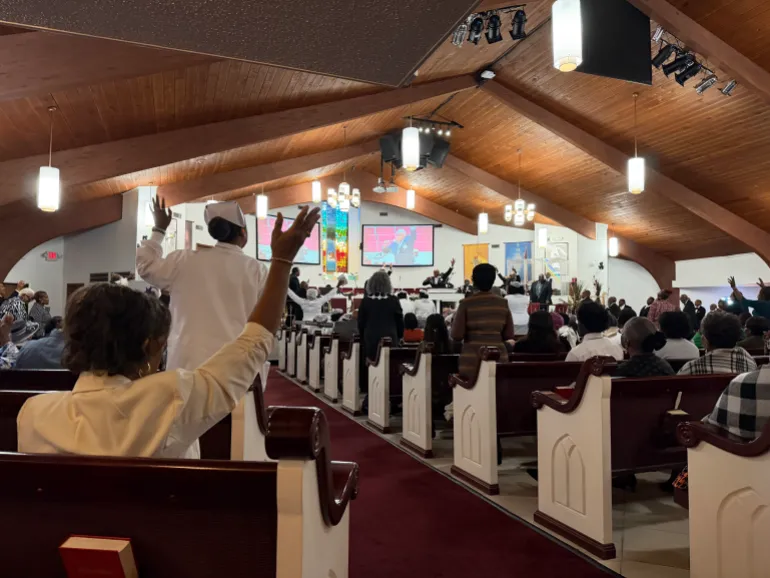
Houston, Texas – The gospel music from Mount Hebron Missionary Baptist Church spills into the streets of Sunnyside, a predominantly Black neighbourhood in southern Houston.

It is a familiar scene on any given Sunday: hands in the air, immaculate bow ties on starched shirts, fabric flowers adorning perfectly pastel hats. But with the US midterm elections just two days away, the service held a special significance on the front line of a US redistricting battle.

Recommended Stories

list of 3 itemsend of list

Mt Hebron had long been located in the ninth congressional district, its politically engaged Black voters for two decades helping to elect Democrat Al Green, a flamboyant presence in Congress known for his cane-waving opposition to US President Donald Trump.

But following an appeal from Trump, the Republican state legislature last year conducted rare mid-decade redistricting, redrawing the church and its Black community into the Black-majority 18th district.

Critics call the process “cracking and packing”, diminishing the representation in Congress of minority groups, particularly heavily Democratic Black communities, by consolidating their voting power into fewer districts.

“It’s kind of one and the same when we talk about the voting and the civil rights,” said Pastor Max Miller, who has served at the church for 18 years.

“They are trying to manipulate and monopolise the vote and minimise the people who are in those districts,” said Miller. “We see so much rolling backwards that it looks like they’re trying to take a script from an old song and turn back the hands of time.”

Mount Hebron Missionary Baptist Church in Houston, Texas
Mount Hebron Missionary Baptist Church in Houston, Texas [Joseph Stepansky/Al Jazeera]

As a result of the redistricting, Green was forced to run in a primary against 18th district incumbent Christian Menefee, another Black Democrat. He lost, and Houston lost one of its Black representatives in Congress.

The ninth district, meanwhile, was redrawn to favour Republicans, one of at least five US congressional seats the party hopes to pick up in the midterm vote.

The machinations have resonated with worshippers at Mt Hebron.

“I don’t like the redistricting at all because Al Green was moved out,” said 97-year-old Alice Jefferson, who had followed the congressman throughout his political career. “He always had good advice for the people.”

Voter Alice Jefferson, 97, is seen in the Sunnyside neighbourhood of Houston, Texas
Voter Alice Jefferson, 97, is seen in the Sunnyside neighbourhood of Houston, Texas [Joseph Stepansky/Al Jazeera]

Janice Ray, a 61-year-old home health aide and entrepreneur, said state lawmakers were “trying to move people out of the district that they’re familiar with”.

“To me, it was all a bunch of BS,” she said. “There was no reason for it.”

“But we’ll stand firm, regardless of what they try to do,” Ray added. “Because just like it was changed, it can always be changed back.”

‘Voices have been weakened’

The redistricting process has undergone a generational transformation this election season, one that, experts say, has degraded longstanding guardrails protecting minority voting power.

“In political science, we have what we call descriptive representation,” Michael Adams, a professor at Texas Southern University in Houston, told Al Jazeera. “In terms of descriptive representation, minorities and others feel that if they can elect someone who reflects their values, for example, and who may look like them, their voting can be defined as one voice.”

“And certainly with not having an additional Black member of Congress representing Houston, a significant segment of Black voters may feel that their voices have been weakened,” he said.

Texas was only the beginning.

This year Republican and Democratic state legislatures across the country joined the spree: Republicans successfully redistricted in Missouri, North Carolina, Tennessee, Louisiana, Alabama, Florida and Ohio; Democrats did so in California, while a court-ordered map in Utah handed Democrats a favourable seat. A Democratic push in Virginia was subsequently invalidated.

Redrawing maps mid-decade, and not waiting for the latest demographic numbers from the US census, was already atypical. But many of the maps drawn this year would have been deemed illegal in previous cycles.

Section 2 of the landmark Voting Rights Act of 1965, initially passed to counter blatantly racist voting practices in the US, had long prohibited redrawing congressional maps to dilute the electoral power of minority voters.

In April, the conservative-dominated US Supreme Court ruled that anyone challenging such a map must prove “racist intent”. Critics have said the ruling effectively allows for racial gerrymandering, with proving such an intent an unreasonably high bar.

But critics of Section 2 of the Voting Rights Act have said drawing maps to protect minority voting power is in itself discriminatory.

Defenders in Texas, meanwhile, have said the redistricting was based on the shifting political makeup of the state, and not racial gerrymandering.

“This plan includes political considerations, public testimony, recognition of population growth and recent changes in voter trends,” State Representative Todd Hunter, a Republican, said shortly after the new map’s passage last year.

“Each of these newly drawn districts now trend Republican in political performance. While there’s no guarantee of electoral success, Republicans will now have an opportunity to potentially win these districts,” he said.

A political test

There are no guarantees that a party’s redistricting plans will actually work.

Following the tit-for-tat map redrawings, Republicans hoped to net at least 13 seats nationally. Polling has suggested their gains may be much more muted.

All told, about 35 million US voters will be casting ballots in newly redistricted seats this election.

“Redistricting can change the political boundaries, but it can’t guarantee how voters will behave,” Brandon Rottinghaus, a professor at the University of Houston, told Al Jazeera.

In Texas, the Republican map was drawn largely based on recent Latino voting trends. The demographic swung heavily for Trump in the state in 2024, despite once being considered a reliable Democratic voting bloc.

Beyond the ninth congressional district in Houston, Republicans hoped to pick up four other districts, most based in South Texas, with an eye on shifting Latino sentiment.

But the political tides have again turned. Trump’s popularity has tanked among Latino voters, fuelled in part by unrest over the economy and the administration’s aggressive deportation campaign.

It remains to be seen how that will reflect at the ballot box when Texas voters pick a senator, governor, members of Congress and a slate of state and local officials.

“These districts are a test of whether political dissatisfaction can overcome an aggressively partisan map,” Rottinghaus said.

‘Trying to mobilise’

With new boundaries come new opportunities.

The ninth district is now considered Republican-favoured, but its large population of low-propensity Latino voters creates a pathway for a Democratic victory, according to Dayana Iza, Texas state director of Mi Familia Vota, a Latino voting organisation that has focused resources on the congressional race.

The state legislature “kept a big portion of Latino voters there, but the reality is that the Latino percentage in that district that votes is very, very low,” Iza told Al Jazeera. “So that then became a district that we are trying to mobilise in terms of turnout.”

On the Saturday ahead of the November 3 vote, Democratic candidate Leticia Gutierrez and State Senator Molly Cook zigzagged through a neighbourhood of single-family homes in eastern Houston.

US congressional candidate Leticia Gutierrez, left, and Texas State Senator Molly Cook knock on doors in Houston, Texas
US congressional candidate Leticia Gutierrez, left, and Texas State Senator Molly Cook knock on doors in Houston, Texas [Joseph Stepansky/Al Jazeera]

Any path to victory, Gutierrez assessed, would be based on face time and a chance to connect with disillusioned voters.

“This community here has an average annual income of $63,000 a year. I make a little over that, and it’s difficult,” Gutierrez told Al Jazeera. “At this point, it’s not a left or a right thing anymore. This is an affordability crisis.”

“You’ve heard some of the voters out here say this is the first time someone actually came to my door,” she added. “That means a lot, and so we want to continue to do that.”

Among the residents was Christian Garcia, a 53-year-old who works at a local chemical plant and has not voted since moving to Texas from Puerto Rico in 2014. He said he is focused on his family, saving enough for retirement and eventually leaving some money behind for his adult children.

Voter Christian Garcia stands in his garage in Houston, Texas
Voter Christian Garcia stands in his garage in Houston, Texas [Joseph Stepansky/Al Jazeera]

In the past, Garcia said, he felt voting was “wasting my time”.

“You know, it’s a lot of corruption and things,” said Garcia. “I just don’t believe in anybody anymore.”

Down the block, Esmeralda Gil, a 39-year-old teacher, said she hoped for a Democratic surge.

Gil questioned why taxes, particularly on housing, seemed so high, while so many struggled to access healthcare.

“We need affordable healthcare and affordable housing,” she said.

Source link

Trump approval rating near record low on eve of US midterm elections: Poll | US Midterm Elections 2026 News

Only 32 percent of voters approve of Trump’s job performance in the latest Reuters/Ipsos poll.

Ahead of the United States midterm elections, President Donald Trump’s job approval rating continues to sit near a record low, according to a Reuters/Ipsos poll.

Some 32 percent of respondents approved of Trump’s handling of the presidency, 1 percentage point above his rating two weeks ago.

Recommended Stories

list of 3 itemsend of list

Meanwhile, the Republican Party continues to be unpopular among those polled: When asked whether they would vote for a generic Democrat or Republican candidate, 46 percent of respondents preferred Democrats compared with 38 percent preferring Republicans.

Trump himself is not on the ballot, but he has repeatedly told his supporters to vote as if they are voting for him. If the Republican Party loses control of the US Congress, Trump has warned, Democrats may seek to impeach him for a third time.

Trump’s approval rating has dropped steadily, polls suggest, especially since the launch of the US-Israel war on Iran on February 28. The conflict has driven up petrol and diesel prices and has had secondary effects for US consumers worried about inflation and the economy.

The president embarked on a nearly monthlong campaign blitz ahead of the November 3 midterms in an effort to shore up support for Republican candidates, who are trying to retain control of the US House of Representatives and Senate.

Trump wrapped up his campaigning on Monday afternoon with a rally in Washington, DC, at the Lincoln Memorial Reflecting Pool. The president has devoted significant attention to the site as part of his attempt to renovate the capital. The job ran months late and cost more than 10 times its original estimate, with a special liner for the pool that Trump touted peeling away soon after it was installed.

“It was a work of art that never worked, but now it will work,” Trump said at the rally. He spent much of his speech on his renovation plans for the city, including a “Triumphal Arch”, which is facing legal challenges.

Trump seemed to acknowledge on Monday that his campaigning might not deliver the results he wants for his party, but said this was the political norm for midterm elections.

“For some reason, the sitting president doesn’t win the midterms,” Trump said. “But we gave this a very strong shot.”

Source link

War, tariffs and China: What the US midterms mean for the Asia-Pacific | US Midterm Elections 2026 News

Kuala Lumpur, Malaysia – Across the Asia-Pacific region, governments and businesses reeling from the energy shock of the United States and Israel’s war on Iran are watching Tuesday’s US midterm elections closely.

Many want to see “enormous changes” during the rest of President Donald Trump’s term, analysts say, from the war on Iran to his policies on trade and tariffs. But few expect that to happen, even with the Democrats poised to take the House of Representatives, and potentially the Senate, from Trump’s Republican Party.

Recommended Stories

list of 3 itemsend of list

“Of course, everybody is watching,” said Steven Okun, a trade specialist and the chief executive of APAC Advisors, a Singapore-based consulting firm. “It’s great political theatre.”

Outside the Middle East, no region has been hit harder by the war on Iran than the Asia-Pacific. Before the start of the conflict in January, the region took in most of the Gulf oil and gas that passed through the Strait of Hormuz.

When Iran closed the chokepoint in response to the US and Israel’s strikes, much of the region was left facing shortages.

The Philippines, which relies on the Gulf for more than 90 percent of its crude oil imports, has been under a national energy emergency since March. Soaring fuel costs have drained the foreign exchange reserves of the region’s poorest economies – Cambodia, Laos, Myanmar and East Timor, according to the Institute of Southeast Asian Studies (ISEAS)-Yusof Ishak Institute in Singapore. Indonesia, Malaysia, Thailand and Vietnam have also spent heavily on fuel subsidies to shield consumers, it said.

Public opinion in the Asia-Pacific region remains firmly opposed to the war, but Okun said a Democratic-controlled US Congress was unlikely to force Trump to end the eight-month conflict.

“With Iran, I don’t see [a Democrat-controlled Congress] having much change at all, other than the fact that the war will be investigated and there will be oversight hearings,” Okun told Al Jazeera. “We might even see an impeachment of the secretary of defence, but it doesn’t change the overall impact of the war.”

Under the US Constitution, Congress holds the power to formally declare war, but Trump has claimed the attacks on Iran were in self-defence and has so far ignored congressional resolutions directing him to withdraw US forces from hostilities. If a Democrat-controlled Congress passes legislation restricting military operations or cutting funding for them, Trump can veto it. Overriding a veto requires a two-thirds majority in both chambers, which Democrats are almost certain to fall short of.

‘Tariffs don’t change’

On trade and tariffs, too, analysts see little room for Congress to rein in Trump.

The US president rattled global markets last year when he imposed “reciprocal” tariffs of 10 percent to 50 percent on some 90 countries, with the aim of shrinking the US trade deficit. Asia was again hit harder than most. Cambodia faced a 49 percent tariff and Laos 48 percent. Vietnam was slapped with 46 percent and Myanmar 45 percent.

After the Supreme Court struck down those tariffs in February, the Trump administration turned to other tools. In July, it imposed tariffs of 10 percent and 12.5 percent on goods from 60 trading partners, accusing them of failing to stop imports made with forced labour. In Asia, the list includes China, Japan, South Korea and seven Southeast Asian nations – Cambodia, Indonesia, Malaysia, the Philippines, Singapore, Thailand and Vietnam.

“In some ways, the new Congress is not going to matter to the Asia Pacific because it’s not going to affect trade policy,” Okun said. “Congress cannot change that … Tariffs don’t change. The war doesn’t change.”

Still, some analysts see a narrow opening.

Stephen Olson, a visiting fellow at the ISEAS-Yusof Ishak Institute, argued in a recent essay that a “strong rebuke of ‘Trumpism’” at the polls could embolden a pro-free-trade wing of the Republican Party that has been “intimidated into standing down during the Trump presidency”.

That, Olson wrote, offers “a glimmer of hope” for Southeast Asian countries that depend on the US market. A Democratic-controlled Congress, he said, could also push for carve-outs and exceptions that would give the region’s exporters “a modicum of relief”. But any deeper shift in US trade policy, he added, will have to wait for the 2028 presidential election.

Joshua Kurlantzick, a senior fellow for Southeast Asia and South Asia at the Council on Foreign Relations, said the region’s wish list goes beyond trade to security.

“I think nearly all of Asia would like to see enormous changes, across many domains, during the rest of Trump’s term,” he told Al Jazeera. “But I think much of the region believes this will not happen.”

Besides “more stability” in trade and tariff policy, Asia-Pacific countries “would like to feel more stable in security guarantees from the US,” he said. They would also like a “more clear, obvious US presence” in the South China Sea, where China’s claims overlap with those of five Southeast Asian nations, and in the Taiwan Strait, which separates China from Taiwan, the self-governed island Beijing claims as its territory.

Businesses will also be watching whether a major Republican loss leads to “greater GOP willingness in Congress to stand up to Trump, along with Democrats, on issues important to companies in Asia,” Kurlantzick said, including tariffs, trade policy, arms sales and “overall economic unpredictability”.

US-China ties

One area where analysts do expect some change is US policy on Chinese technology.

The new Congress, whichever party controls it, will pass tougher restrictions on China, said Okun at APAC Advisors.

These include the Remote Access Security Act, which would extend export controls to remote access of US goods, software or technology and the Chip Security Act, which would require companies to verify that advanced artificial intelligence (AI) chips remain in authorised locations, to prevent diversion to foreign adversaries. It also includes the Multilateral Alignment of Technology Controls on Hardware Act, known as the MATCH Act, which would press allies to bring their controls on chipmaking equipment in line with Washington’s, to keep advanced chipmaking technology out of China’s hands.

“The next Congress is going to pass them regardless of midterms because both parties agree on them,” Okun said. “The person who is least restrictive now on China is the US president,” he added, referring to Trump’s courting of China’s President Xi Jinping.

The two men have met twice this year as ties have warmed after a bitter and costly trade war last year. To preserve the fragile trade truce, Trump has also held off approving a $14bn package of arms sales to Taiwan, which would be the largest ever for Taipei.

Some analysts meanwhile worry that a lame-duck Trump, hemmed in at home by a Democratic Congress, could turn more forcefully to foreign policy.

“We should not be surprised by continued erratic foreign policy,” said James Guild, an assistant professor at the Indonesian International Islamic University.

“The Democrats have a poor record of effectively opposing and holding Trump accountable using conventional tools of congressional oversight,” Guild said. “We will have to wait and see if they rise to the moment this time.”

Source link

Mamdani’s progressive allies vie for seats in Congress | US Midterm Elections 2026 News

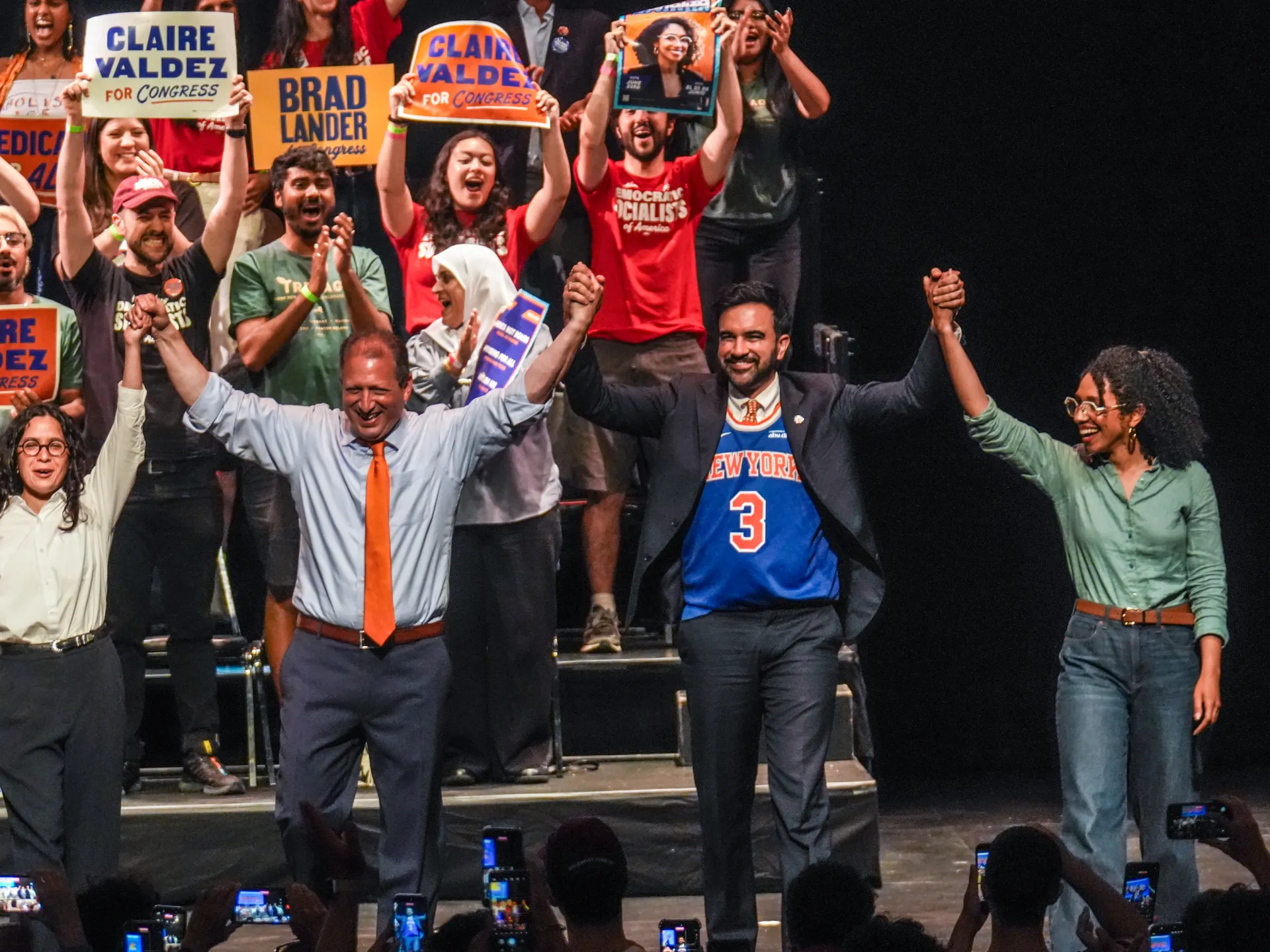
In June, New York City Mayor Zohran Mamdani stood before a packed house of voters, rallying support for a new wave of candidates hoping to build on his progressive momentum by winning seats in Congress.

Inside Brooklyn’s historic Kings Theatre, the crowd answered chants of “Abolish ICE”, “Tax the rich” and “Free Palestine” with roaring applause, leaving little if any room for doubt about what the audience wanted from its politicians.

Recommended Stories

list of 4 itemsend of list

Within days, all three congressional hopefuls endorsed by Mamdani – Claire Valdez, Brad Lander and Darializa Avila Chevalier – had won their Democratic primaries, becoming the party’s candidates in the midterm election.

Lander, the former New York City comptroller, defeated Congressman Dan Goldman in a race in which Israel was the defining issue.

Avila Chevalier, a community organiser, unseated longtime Congressman Adriano Espaillat. Valdez, a lawmaker in the New York State Assembly and member of Democratic Socialists of America (DSA), won the contest to succeed retiring Congresswoman Nydia Velazquez.

Both Valdez and Avila Chevalier had the backing of New York City’s DSA chapter.

The candidates’ heavily Democratic districts mean they are likely to win congressional seats in Tuesday’s midterm elections. The June Democratic Party primaries effectively served as the main event for voters.

In the final hours before Tuesday’s midterm election, New York City – a place colloquially dubbed the city that never sleeps – is more politically sleepy, with canvassers a bit harder to find than they were in the final stretch before the primaries.

For the three progressive candidates, the past few months have been a test of how to turn bold campaign promises into policy they can actually deliver. The often slow minutiae of daily governance stand in stark contrast to buzzword-laden campaign slogans on the posters and signs galvanising their base of voters.

Unique paths to politics

The three congressional candidates’ platforms overlap on issues like abolishing Immigration and Customs Enforcement (ICE), ending US military aid to Israel and establishing a public healthcare system dubbed Medicare for All. But their paths into progressive politics differ.

Lander spent years in the New York City government, most recently as comptroller overseeing the city’s finances. After losing to Mamdani in the 2025 Democratic mayoral primary, he backed Mamdani in the election.

But Lander’s congressional campaign against incumbent Goldman brought him national attention, with Israel and Palestine emerging as the defining issue in the race to lead a district with one of the largest Jewish populations in the United States.

Lander has described Israel’s military campaign in Gaza as genocide and its occupation of Palestinian territory as apartheid. He also identifies as a Zionist who embraces pro-Palestinian activism, arguing that the positions are not mutually exclusive. Lander has long supported a two-state solution.

“It’s straightforward that some approach to more shared safety for Israelis and Palestinians and for Jews and Muslims and everybody else here makes more sense,” Lander said. “I also want to be able to listen across those divides and have thoughtful policy debates.”

Two weeks before Tuesday’s election, Israeli forces detained Lander in the occupied West Bank while he was volunteering to help with the olive harvest. Israeli authorities have since revoked his travel documents for a planned return visit.

“The main story I come home with is not the story of my detention or the revocation of my travel authorisation,” Lander said. “The main story that I come with is the ethnic cleansing of Palestinians in the West Bank, which I just saw with my own eyes.”

Lander has also long called for ICE to be abolished, including during President Donald Trump’s first term in office.

Pro-Palestinian activism 

Avila Chevalier’s political rise was similarly shaped by immigration and Palestinian rights, though she has taken a more uncompromising approach.

After interning at a youth organisation in Nablus in the occupied West Bank in 2014, she returned to the US and became an advocate for Palestinian communities.

Her “Babies Not Bombs” platform calls for redirecting military spending, including aid to Israel, towards domestic priorities such as childcare and healthcare.

“It’s important for us to see our budgets as moral documents,” Avila Chevalier told Al Jazeera. “Our resources should be going towards the things that make our lives dignified and make our communities thrive – not towards war, not towards ICE or things that are harming our communities.”

Valdez, meanwhile, came to progressive politics through the labour movement. A former union-organiser-turned-state-assemblymember, she supports stronger labour protections, including federal legislation such as the Protecting the Right to Organize (PRO) Act to make union organising easier.

Valdez also backs national rent control and a government-run healthcare system to provide wider healthcare access than the country’s private-sector insurance model.

“Public programmes and entitlements have been under attack by the right,” Valdez told Al Jazeera as she exited a polling location in her district on the first day of early voting. “I think not just clawing those back but really advancing a vision for what those things should be will be top priorities.”

Abolishing ICE and ending military aid to Israel are lofty, ambitious goals, and neither is likely to be achieved without navigating competing interests in Congress and the White House. With the balance of congressional power potentially shifting towards Democrats in the midterms, the newcomers will have to decide which priorities to pursue first.

That means looking for more immediate wins comparable to Mamdani’s move to fill 200,000 potholes when he took office as mayor, according to progressive political strategist Nomiki Konst.

“[Get] on the same page about an issue that we all agree on and leverage that in the Democratic Congress because there’s no better time than the beginning,” Konst told Al Jazeera.

For Lander, one such measure is banning members of Congress from trading individual stocks.

“Maybe that restores a little bit of trust,” Lander said. “People say that’s gross that members of Congress trade stocks. At least this new Congress is doing something, you know, to show me they’re not just all in it for themselves.”

Lander also sees an opportunity to restore enhanced government subsidies that expired at the end of 2025, raising premiums for many people who buy their private-sector insurance plans individually.

“We can say we’re not going to pass a budget that doesn’t do that and force Republicans to vote one way or the other and see what Trump does,” Lander said.

For Avila Chevalier, an early priority would be her “Babies Not Bombs” agenda, redirecting funding towards domestic needs. Valdez wants to pass the PRO Act.

Alexandria Ocasio-Cortez sets a precedent

The three would not be the first progressive New Yorkers to enter Congress promising major change.

Alexandria Ocasio-Cortez won her legislative seat in 2018 by defeating longtime incumbent Joe Crowley. Since then, she has occasionally worked with Republicans on shared priorities.

In 2025, Ocasio-Cortez introduced legislation with Republican Representative Anna Paulina Luna of Florida to cap credit card interest rates at 10 percent, echoing a proposal from Senator Bernie Sanders of Vermont and Republican Senator Josh Hawley of Missouri.

The question, Konst says, is whether Mamdani’s endorsed candidates can turn ideological commitments into legislative results. Doing so will require compromise, including setting aside some priorities to advance others.

Avila Chevalier is under the microscope after calling for New York City Police Commissioner Jessica Tisch to resign over a man being shot in his car by ICE while his child was in the backseat. Avila Chevalier said she was later shoved to the ground by New York City police officers during protests following the shooting.

Mamdani reportedly appointed Tisch on the recommendation of Governor Kathy Hochul, whose support was important to Mamdani’s mayoral campaign. An Atlantic magazine report suggested that her endorsement of Mamdani, whose more progressive platform included universal childcare and government-operated grocery stores, hinged on Tisch’s appointment.

“Everybody wants to have their agenda passed, right? I think being really thoughtful about when to hold fire, when to fire, when to be bold, when to hold back, and when to say what you feel so you’ll get the most support,” Konst said.

But Avila Chevalier said she is willing to work with anyone to advance her priorities.

“There is always something that two people can agree on. And that’s where I plan on starting because I think organising is about meeting people where they’re at,” Avila Chevalier said.

“There are so many folks who really want to see healthcare transformed in this country, who really want to see a moratorium on data [centres]. That is a bipartisan issue for so many.”

Source link

US midterms 2026: What polls reveal about Democratic, Republican voters | US Midterm Elections 2026 News

Americans will vote in the US midterm elections on Tuesday, with the economy, the cost of living, and immigration among the top issues. While Democrats and Republicans share concerns about the rising cost of living, recent surveys suggest differences in how they view the economy, President Donald Trump, and other key issues.

In an NBC poll released on Sunday, 75 percent of respondents said they were dissatisfied with the state of the US economy, and 51 percent said they were dissatisfied with their personal financial situation.

Recommended Stories

list of 3 itemsend of list

Other surveys conducted in October also offer a look into how voters from both parties felt about their finances and which issues mattered most.

Here is what we know:

What issues matter most to Democrats and Republicans?

The economy is the main concern for US voters, but Democrats and Republicans vary on the importance of issues like healthcare, immigration, and crime.

A Pew Research Centre survey, conducted between September 28 and October 4, suggested that 84 percent of registered voters considered the economy very important to their midterm vote. It was the top issue for 82 percent of respondents who prefer Republican candidates, and 88 percent for those who back Democrats.

However, the two groups differed on other issues.

About 85 percent of Democratic Party supporters considered the future of democracy very important, compared with 69 percent of Republicans. Healthcare was a priority for 82 percent of Democrats, compared with 53 percent of Republicans.

Republican supporters were more concerned about immigration, with 72 percent saying it was very important, compared with 53 percent of Democrats.

Violent crime was also more important to Republican supporters, at 64 percent, compared with 37 percent Democrats.

A KFF survey, conducted by the Kaiser Family Foundation, an independent nonprofit, from September 16 to 21, suggested 42 percent of registered voter respondents trusted Democrats more to handle healthcare costs, compared with 22 percent who trusted Republicans.

On the cost of living, 39 percent trusted Democrats more, while 25 percent preferred Republicans.

What grade do Democrats and Republicans give Trump’s second term?

Views of President Trump and his economic policies remain divided along party lines.

In the Pew Research Centre survey, 91 percent of Democratic respondents and those who leaned Democratic believed Trump’s economic policies had made things worse.

Among Republican supporters, 39 percent said his policies had improved the economy, 35 percent said they made conditions worse, and 25 percent said they had little effect.

In the November 1 NBC News poll, 40 percent of registered-voter respondents approved of Trump’s overall job performance, compared with 60 percent who disapproved.

How do Democrats and Republicans feel about the economy?

Americans are concerned about rising costs, but Democrats are more likely than Republicans to express negative feelings about economic conditions.

In an October Pew Research survey, 36 percent of Republicans rated the US economy as excellent or good, compared with just 9 percent of Democrats or Democrat-leaning voters.

However, the majority in both groups expressed concern about the cost of essential goods and services.

According to PEW, 82 percent of Democrats and Democratic leaners were concerned about food and consumer prices, compared with 62 percent of Republicans and Republican leaners.

Healthcare costs concerned 80 percent of Democrats and 57 percent of Republicans, while petrol and energy prices worried 81 percent of Democrats and 65 percent of Republicans.

A Fox News poll released on October 14 also had 74 percent of registered voter respondents rating the economy negatively, and 60 percent identified the cost of living as their biggest economic concern.

The November 1 NBC News poll found that 53 percent of Republican respondents were dissatisfied with the state of the economy.

The Pew Research Center also found that abortion and gun policy were less central to Democratic respondents in comparison with 2022. Among Republican voters, education policy and energy policy were less important than they were four years ago.

Are Americans satisfied with their financial situation?

In the NBC poll, 51 percent of registered voters were dissatisfied with their personal financial situation, compared with 49 percent who were satisfied.

It was the first time in 30 years of NBC polling that dissatisfaction with personal finances outweighed satisfaction.

In an NPR/PBS News/Marist poll on October 19-20, 38 percent of likely voters said their finances had gotten worse over the past year, 44 percent said they had remained about the same, and 15 percent said they had improved.

A total of 51 percent of Democratic likely voters said their finances had deteriorated, compared with 21 percent of Republicans.

In a Reuters/Ipsos survey conducted from September 30 to October 5, 71 percent of Democrats and 57 percent of Republicans said their incomes had not kept pace with rising prices.

Eric Ham, a former Democratic congressional staffer and Senate national security adviser, said that Trump’s global tariffs and the US-Israel war on Iran had added to the financial pressure on American households.

“Americans are paying more not just in terms of self-inflicted wounds that President Donald Trump implemented through tariffs, but also if you look at this war of choice,” Ham told Al Jazeera.

Are Democrats or Republicans more enthusiastic about voting?

Democratic voters reported higher enthusiasm about participating in the elections.

In the Marist poll, 91 percent of likely Democratic voters were enthusiastic or very enthusiastic, compared with 86 percent of Republicans and 76 percent of Independents.

John Fury, a former Republican congressional staffer, said the final days of campaigning were focused on turnout.

“This is not a persuasion election. This is a get-out-the base election,” Fury said.

In a KFF survey, Democratic candidate supporters were 25 percentage points more likely than Republican supporters to describe themselves as “more motivated” than usual to vote (63 percent versus 38 percent).

The November 1 NBC News poll also reported high interest in the elections, with 70 percent of registered voters rating their interest at nine or 10 on a 10-point scale.

Who are Americans planning to vote for?

Surveys conducted in the final weeks before the election suggested voters preferred Democratic candidates or Democratic control of Congress over Republicans.

An NBC poll conducted on October 28-30 and published on November 1 suggested that 52 percent of registered voters preferred Democratic control of Congress compared with 45 percent who preferred Republican control.

Similarly, the Reuters/Ipsos poll conducted from October 22 to October 26 suggested that 53 percent of likely voters would vote for or lean towards the Democratic candidates in their district, compared with 44 percent who supported Republicans.

These surveys measure voting sentiment, but they do not reflect the results of the individual races.

Source link

Trump asks Supreme Court to block 20,000 California ballots before midterms | US Midterm Elections 2026 News

California says the move to block ballots from suspected noncitizens could disenfranchise eligible voters.

The administration of United States President Donald Trump has asked the Supreme Court to stop California from counting mail-in ballots from more than 20,000 voters it claims are not US citizens.

The emergency request, filed on Monday, just one day before the midterm elections, is the latest development in a legal battle between the administration and California, a Democratic stronghold and the most populous US state.

California says the move could disenfranchise thousands of eligible voters.

The Department of Justice wants California to set aside ballots from voters on a list compiled by the Department of Homeland Security until after their citizenship status is confirmed.

But California says the list is unreliable and could include thousands of US citizens.

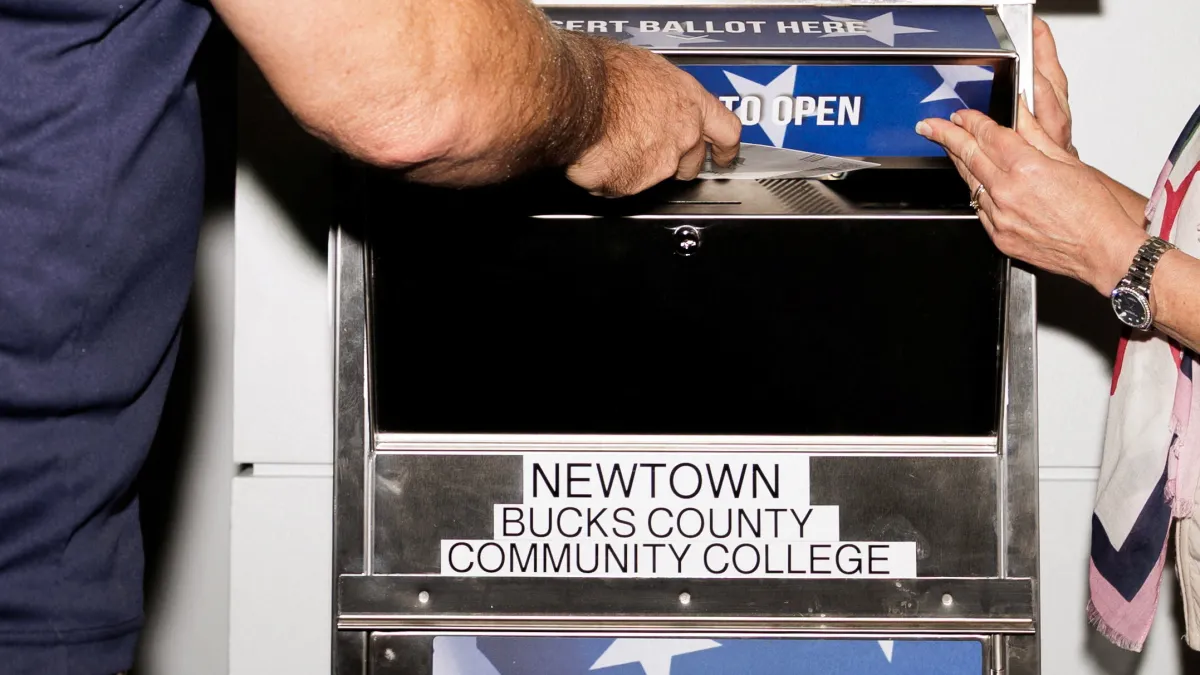
Voting has been under way since early October, and state officials say it would be nearly impossible to separate the ballots in question.

Last week, a federal judge rejected the administration’s request, raising concerns about the reliability of the data on the list.

“If the executive can discount votes and threaten an ongoing election due to unproven allegations, then our democracy is in danger,” Judge David Carter wrote.

The administration has turned to the Supreme Court after a federal appeals court also rejected the request on Friday.

The dispute comes as Republicans fight to retain control of Congress in Tuesday’s elections.

Trump has repeatedly made false claims about widespread voter fraud, but studies and state audits have shown that ineligible voting, including by noncitizens, is rare.

Source link

Iran says US talks could resume ‘within a short period’ if demands are met | Government

Iran’s Foreign Ministry spokesperson Esmaeil Baghaei said Qatar is facilitating indirect talks based on Iran’s seven-step peace plan, which Tehran says could now be implemented within two days if Tehran’s demands are met.

Source link

US midterms: 1 day to go – Democrats rally around El-Sayed amid attacks | US Midterm Elections 2026 News

With one day to go before the United States midterm elections, campaigning has reached a fever pitch with Democratic and Republican leaders pulling out all the stops to mobilise voters.

Democrats are hoping to flip control of both chambers of Congress, which is currently controlled by US President Donald Trump’s Republican Party.

Recommended Stories

list of 3 itemsend of list

All 435 seats in the House of Representatives and 35 of the Senate’s 100 seats are up for grabs on Tuesday. Voting will also be held to elect governors in 36 of the 50 US states.

With the cost-of-living crisis, exacerbated by the US-Israel war on Iran, becoming one of the key talking points of these elections, here’s where things stand as of Monday:

What’s happened on the campaign trail in the past 24 hours?

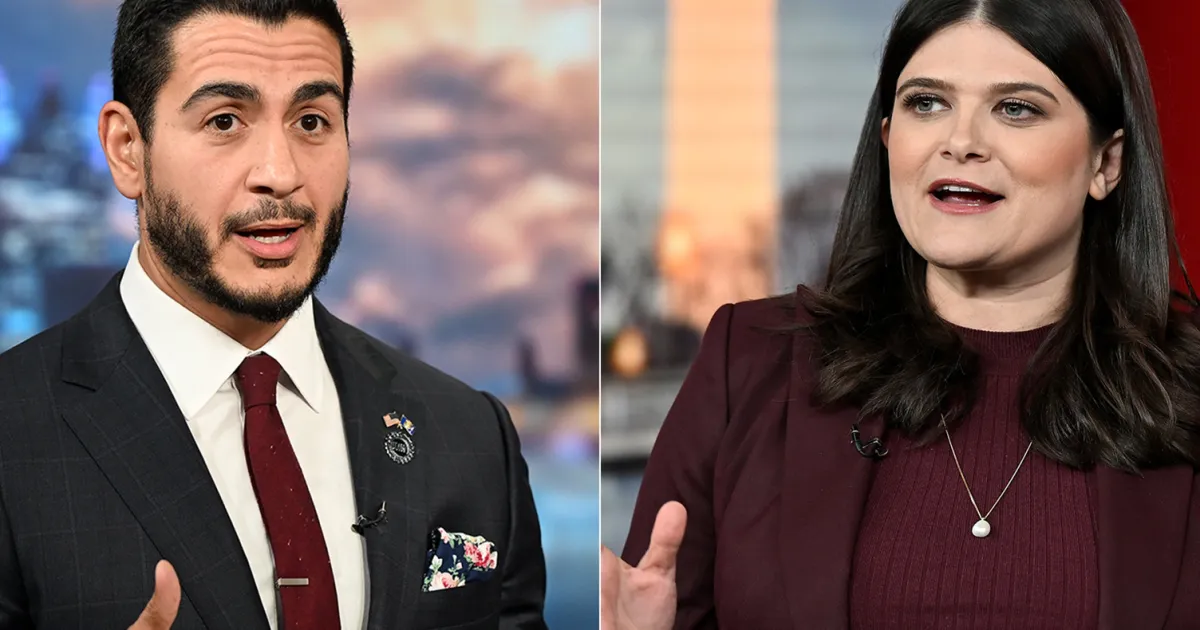
In a dramatic political development on Sunday, Democratic Congresswoman Haley Stevens threw her support behind Republican Senate candidate Mike Rogers over her own party’s nominee, Abdul El-Sayed, in Michigan – one of the most closely watched races of the US midterm elections. Stevens had lost Michigan’s Democratic Senate primary in August to El-Sayed.

Her announcement followed weeks of tension with El-Sayed over US support to Israel, which has been accused of committing genocide in Gaza. El-Sayed has opposed military support to Israel, arguing that Prime Minister Benjamin Netanyahu pushed the US into the Iran war. Stevens has accused El-Sayed of anti-Semitism for his criticism of Israeli actions in Gaza.

El-Sayed said a vote for his rival Rogers “is going to be a vote for Donald Trump” as his campaign reportedly saw a fundraising surge after Stevens crossed party lines.

Democratic leaders have rallied behind El-Sayed, who has faced Islamophobic attacks during the campaign.

The chairman of the Democratic Party in Michigan criticised Stevens. “She does not speak for that larger community,” Curtis Hertel said in an interview with CNN.

The leader of the Democrats in the Senate, Chuck Schumer, slammed Stevens over her endorsement of the Republican candidate.

“This is a despicable betrayal from Representative Stevens,” he posted on X.

“Senate Democrats are united in our support for Abdul El-Sayed, because we know he will fight for the economic interests of working families in Michigan, unlike Mike Rogers, who is a tool of Donald Trump and billionaire donors.”

Meanwhile, the advocacy group Michigan Jews for Democracy has backed El-Sayed.

“Haley Stevens does not speak for Michigan’s Jewish community,” it said in a statement, which rejected her “attempt to divide our community” two days before the election.

While Democrats have been angered by Stevens’s action, Trump celebrated her decision.

During a rally in Iowa later on Sunday, the US president said he would “love” it if Stevens joined the Republican Party. “Haley said what few people are willing to say,” Trump added. “It’s a thing called bravery.”

The question now is whether Stevens’s endorsement could persuade some of her supporters to back Rogers or discourage them from voting altogether.

Polling suggested El-Sayed has largely consolidated Democratic support, according to the Reuters news agency.

Judge dismisses Trump’s Alaska election lawsuit

Meanwhile, a ⁠federal ⁠judge has thrown out a Trump administration ⁠lawsuit seeking to block Alaska from ⁠certifying a loss by Republican Senator Dan Sullivan. The administration has argued that a rival on the ballot with the same name could change the outcome.

Sullivan pledged to accept the election outcome, days after the US Department of Justice filed a lawsuit seeking to decertify the results of the Senate race if he loses.

“I’m going to accept the election results,” Sullivan, an ally of Trump, told CNN on Sunday.

Alaska’s Senate race is one of seven key toss-up races that will likely decide whether Republicans keep their majority in the upper chamber of the US Congress.

How many Americans have already voted?

This year, out of about 210 million registered voters, 54.5 million had voted early as of 10am US East Coast time (15:00 GMT) on Sunday, according to a University of Florida analysis. This includes 30 million in-person votes and 24 million mail-in ballots.

In the 2022 midterm elections, 46 million people voted early.

Early voting enthusiasm has been higher among Democrats this year with more than 11 million registered Democrats having voted early, compared with about 8 million registered Republicans, according to the university’s analysis.

Early voting has particularly surged in the state of Texas, a key battleground, where more than 7.7 million people have voted early.

According to an Associated Press polling analysis, in South Carolina, where Trump won by nearly 18 percentage points in 2024, early voting has surged 83 percent compared with the same point in 2022. The state has open races for governor and US Senate this year.

Kansas, Michigan and Maine have also seen a surge in early voting.

Early turnout figures, however, don’t show which candidates voters have chosen or what the final results will be.

Source link

How the president’s party has fared in every US midterm election since 1946 | US Midterm Elections 2026 News

On Tuesday, Americans head to the polls for the United States midterm elections, held halfway through a president’s four-year term. Voters will choose all 435 members of the US House of Representatives and 35 of the Senate’s 100 seats. The voting will decide which party controls Congress for the next two years.

Although the president’s name won’t appear on the ballot, the vote is widely seen as a verdict on the presidency, and the president’s party almost always pays the price.

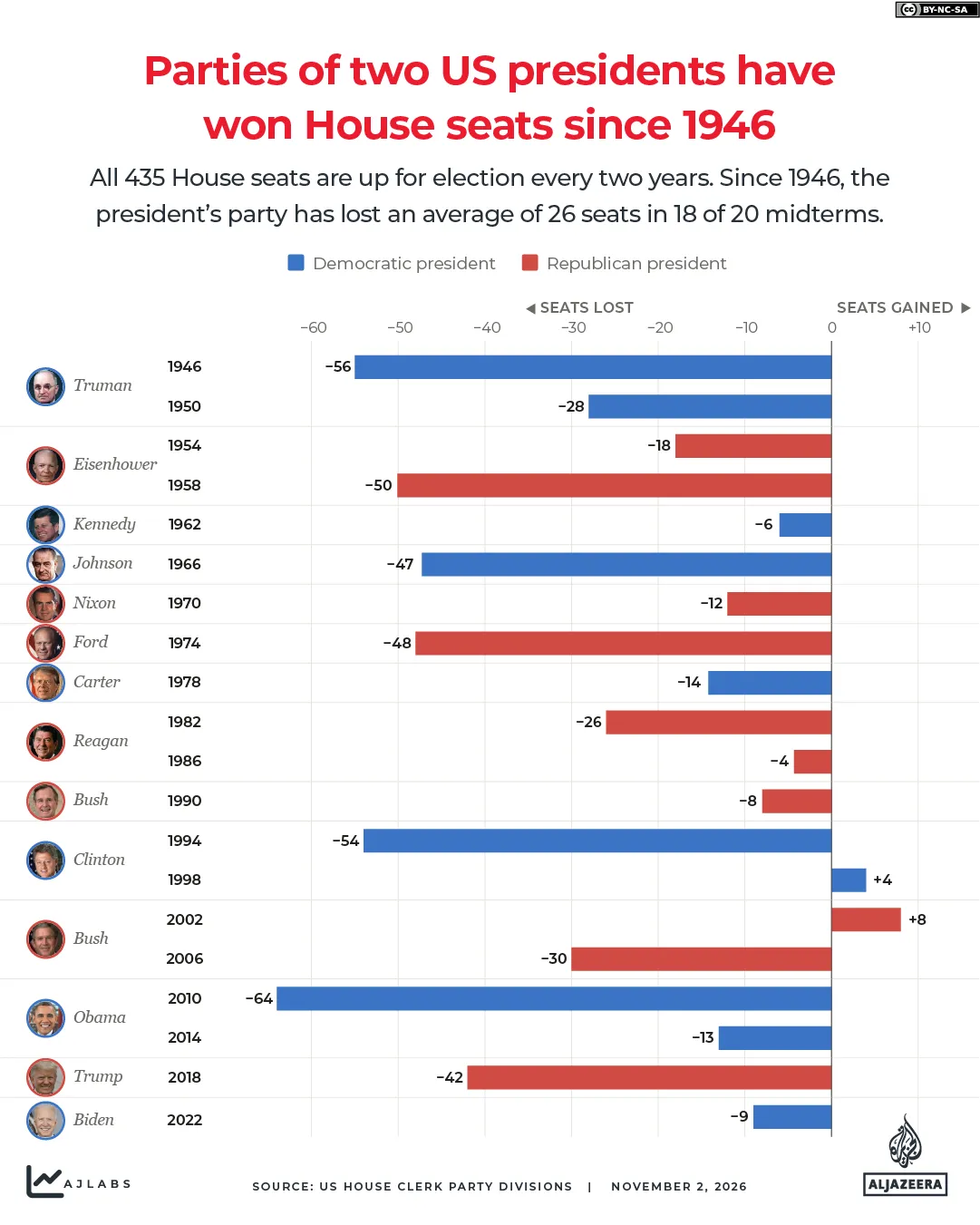
In 18 of the 20 midterms held from 1946 to 2022, voters took House seats away from the party in control of the White House. The average loss was 26 seats. Only Bill Clinton’s Democrats in 1998 and George W Bush’s Republicans in 2002 bucked the trend.

Political scientists call this the “presidential penalty”, or the “midterm penalty”. The president’s party tends to lose seats simply because it holds power as voters use the midterms to put a check on the White House.

The House: 18 losses in 20 midterms

The chart below shows how many House seats the president’s party has won or lost in each midterm since 1946 from Harry S Truman to Joe Biden.

INTERACTIVE - US midterm elections Two presidents have wonHouse seats since 1946-1793603566
(Al Jazeera)

Democratic presidents have suffered the biggest midterm defeats since 1946. On average, their party has lost about 29 House seats in a midterm, compared with about 23 under Republican presidents.

The largest loss came in 2010, two years after Barack Obama became the first African American elected president, when Democrats lost 64 House seats and Republicans took control of the chamber. The Democrats under Truman lost 56 seats in 1946, and under Clinton, they lost 54 in 1994, each time losing control of the House.

The worst Republican defeats came under Dwight D Eisenhower when the party lost 50 seats in 1958 and Gerald Ford when it lost 48 in 1974. Donald Trump’s first midterm in 2018 cost Republicans 42 seats and control of the House.

Big losses often cost the president’s party its majority. In seven of the 20 midterms since 1946 (1946, 1954, 1994, 2006, 2010, 2018 and 2022), the House changed hands.

The Senate: 13 losses in 20 midterms

The president’s party has lost Senate seats in 13 of the 20 midterms since 1946 but lost control of the chamber in only six: 1946, 1954, 1986, 1994, 2006 and 2014.

Unlike the House of Representatives, where every seat is up for election every two years, only about a third of the Senate’s 100 seats are contested in each cycle because senators serve six-year terms and their elections are staggered. That means which states are voting can matter as much as the national mood.

Eisenhower’s Republicans suffered the biggest Senate loss in the period, giving up 13 seats in 1958. Truman’s Democrats lost 12 in 1946, and Obama’s Democrats lost nine in 2014, handing control of the chamber to Republicans.

At times, the two chambers have moved in opposite directions. In 1982, Ronald Reagan’s Republicans lost 26 House seats but gained one in the Senate. In 2018, Trump’s Republicans lost the House but added a Senate seat, and in 2022, Biden’s Democrats lost the House while gaining one seat in the Senate.

These split results show that a backlash against the president does not land evenly across Congress. A party can hold its ground on a favourable Senate map while losing competitive House districts.

INTERACTIVE - US midterm elections Six presidents have wonSenate seats since 1946-1793603568
(Al Jazeera)

What does it mean to lose the House or Senate?

Losing seats and losing control are not the same thing. Lyndon Johnson’s Democrats lost 47 House seats in 1966 but kept their majority. Twenty years later, Reagan’s Republicans lost only four House seats but lost the Senate after an eight-seat setback.

Control of the chambers decides who sets the agenda and passes legislation. A bill must pass both chambers before it reaches the president for his approval or veto, so an opposition majority in either can block the president’s plans.

A House majority can also mean a party is able to launch investigations and impeach a president while a Senate majority can reject the president’s nominees, including federal judges, who serve for life.

This year, Democrats need to gain three seats to win the House and four to win the Senate. A 50-50 split in the Senate would leave Republicans in control because Vice President JD Vance may cast tie-breaking votes.

INTERACTIVE - US midterm elections results-1793605059
(Al Jazeera)

Source link

Write-In Ralph: South Carolina Republicans challenge Trump’s Senate pick | US Midterm Elections 2026 News

Charleston, South Carolina – Avery Milton thought he was a die-hard supporter of US President Donald Trump. The 28-year-old South Carolina native had voted for Trump in the past three elections and believed in his promise to put America first. But ahead of the midterm elections, the president has left him feeling betrayed.

“He stabbed us in the back during his second term,” Milton told Al Jazeera.

Recommended Stories

list of 3 itemsend of list

Milton’s disillusionment is not isolated. He said many people close to him share this frustration, particularly younger conservatives around his age who are starting families and entering the workforce. Trump launching a war on Iran, after campaigning on a promise to avoid new wars, was a particular breaking point.

Now, Milton is helping lead a grassroots effort to write in Republican Congressman Ralph Norman for the US Senate, rather than support the party nominee, Senator Darline Graham, who has Trump’s endorsement.

A write-in candidate is someone whose name does not appear on the ballot but can still be chosen by voters who write it in themselves. The option is often used to indicate dissatisfaction with the official candidates, but rarely leads to a victory. One of those rare victories happened in 2010, when Senator Lisa Murkowski of Alaska won after launching a write-in campaign, having lost her Republican primary that year.

In the 2022 South Carolina Senate race, write-in votes accounted for just 0.1 percent of all votes cast.

Despite the president’s endorsement, Graham has struggled to unite conservatives behind her, potentially giving Democratic challenger Annie Andrews an opening in a state that has not elected a Democrat to the US Senate since 1998.

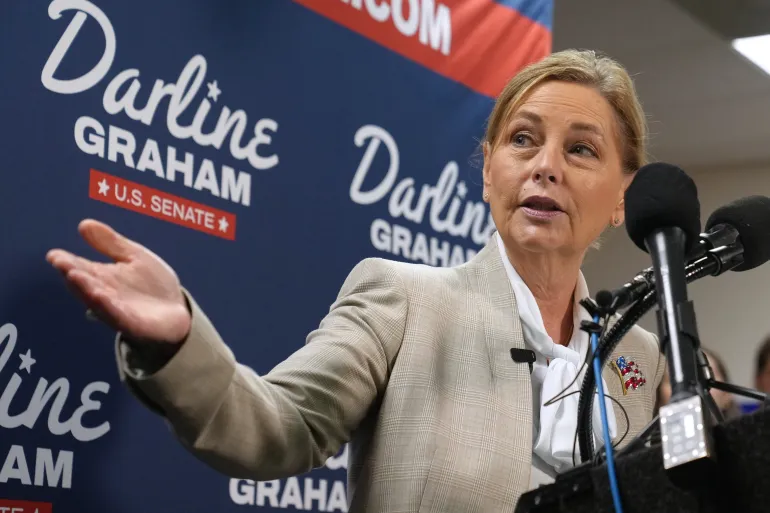
FILE - Sen. Darline Graham, R-S.C., gestures during a news conference, Aug. 24, 2026, in Columbia, S.C. (AP Photo/Meg Kinnard, File)
Senator Darline Graham speaks at a news conference on August 24, 2026, in Columbia, South Carolina [Meg Kinnard/AP]

Darline’s unlikely path to Republican Senate candidate

After the sudden death of Republican US Senator Lindsey Graham on July 11, his younger sister, Darline, was appointed to serve out the remainder of his term.

Her appointment followed a tradition of family members succeeding deceased lawmakers, most commonly their spouses. But she made history as the first sibling appointed to fill a Senate vacancy.

Graham initially described the role as an opportunity to finish her brother’s work during the remaining months of his term. But days later, Trump urged her to run for a full six-year term, posting “RUN, DARLINE, RUN!” on Truth Social and promising his “complete and total endorsement” if she entered the race. Three days later, Graham announced on Fox News that she would run.

For some Republicans, the transition from temporary appointment to a full-term campaign happened too quickly. Milton said he felt the appointment had effectively “installed” a candidate.

Graham went on to defeat Republican Ralph Norman in the state’s August primary elections.

Norman, who represents South Carolina’s fifth congressional district, has repeatedly declined to campaign alongside Graham since losing the primary. He has made clear that his support for Graham is limited.

“You have to earn the vote. She hasn’t done that,” he told The Wall Street Journal. “The campaign has been about trying to prop up a candidate.”

The tensions have been particularly pronounced in Upstate South Carolina, where Norman has considerable support. Milton said Graham has done little to reach voters there during the campaign, aside from private dinners and appearances alongside Trump.

“She [Graham] never tried to reach out to everyday people here Upstate. And that spoke volumes about how this South Carolina GOP establishment feels about the grassroots conservatives. They just really don’t care,” Milton said.

Frustrated by what he saw as a failure to represent grassroots conservatives, Milton helped launch the Write-In Ralph movement, building a website and giving the campaign a public platform.

Milton said he and other supporters wanted a senator who would think independently, rather than simply fall in line with party leadership.

“We don’t necessarily want somebody that’s a rubber stamp for everything,” he said, adding that he wanted someone willing to “think of all the sides of an issue and policy”.

U.S. Rep. Ralph Norman, R-S.C., left, looks on as Sen. Darline Graham, R-S.C., speaks during a special GOP Senate runoff debate to replace the late Sen. Lindsey Graham, R-S.C., on Tuesday, Aug. 18, 2026, in Newberry, S.C. (AP Photo/Meg Kinnard)
US Representative Ralph Norman, left, looks on as Senator Darline Graham speaks during a special Republican Senate run-off debate to replace late Senator Lindsey Graham, on August 18, 2026 [Meg Kinnard/AP]

South Carolina’s independents

A sizeable group of South Carolina voters does not identify with either major party.

While the state does not register voters by party, a New York Times/Siena poll conducted in October suggested that 30 percent of likely voters identified as independents. Among those voters, Democratic Senate candidate Andrews led Graham by 20 percentage points.

The findings point to a potential blind spot for Republicans seeking to consolidate support around Trump’s Make America Great Again (MAGA) coalition.

John Connolly, a 77-year-old retiree who lives in South Carolina’s Lowcountry, is one example of a voter whose political allegiances have shifted over time. He sees Graham’s appointment as part of a political culture that rewards loyalty over experience.

“I see her as nothing more than a puppet,” he told Al Jazeera. “To nod her head yes whenever she’s told to.”

Leila Ali, a regional campaign adviser who has spent more than a decade working with grassroots organisations across the US South, said political strategists often underestimate the diversity of the Southern electorate.

“The biggest thing that people get wrong is that they think the Southern vote is this monolith,” she told Al Jazeera.

Ali pointed to South Carolina’s early voting figures as evidence of that engagement. Nearly 950,000 early votes have been cast in the state, according to the state’s Election Commission, setting a new record for early voting in a midterm election.

An increasingly close Senate race

The stakes of this race have become increasingly apparent as the November 3 election approaches.

Despite Trump winning South Carolina by nearly 18 percentage points in 2024, he has made two trips to South Carolina in three months to campaign for Graham – an extraordinary show of presidential attention.

And polling suggests the race is far more competitive than Republicans might have expected. The October New York Times/Siena College poll had Graham and Democratic challenger Annie Andrews tied at 48 percent among likely voters.

South Carolina Democratic Senate candidate Dr. Annie Andrews speaks to supporters during a campaign stop Thursday, Oct. 29, 2026, in Columbia, S.C. (AP Photo/Sam Wolfe)
South Carolina Democratic Senate candidate Annie Andrews speaks to supporters during a campaign stop on October 29, 2026, in Columbia, South Carolina [Sam Wolfe/AP]

For Democrats, this division offers a rare opening in a deep-red state where the party has struggled to compete.

Even with the race tightening, Republicans like Milton are willing to risk a Democratic victory by writing in Ralph Norman on their ballot. And if Graham loses, Milton says the blame should not fall on the write-in effort.

“They’re going to try to point the finger on this Write-in Ralph movement,” he said. “But I just want to make something very clear: that would assume that our votes would have gone to Darline anyway, and that’s just not the case.”

Source link

US midterms: What to know about independent voters and candidates | US Midterm Elections 2026 News

As Americans head to the polls on Tuesday in the much-anticipated midterms, the record number of voters identifying as independent could prove decisive for control of the US Congress and state legislatures.

Nearly half of US voters – as many as 117 million adults – now identify as politically independent, with the two major parties, Democrats and Republicans, jockeying for their votes.

Recommended Stories

list of 4 itemsend of list

At the same time, independent or third-party candidates win few federal or state seats. The Democratic and Republican parties have dominated US politics, from state legislatures to the US Congress and the presidency, for generations.

“The whole [electoral] system is built to frustrate the independence of voters,” says Rick Bennett, the former Republican Party chair in Maine, where he is running to become only the third independent governor in the state’s history.

Bennett’s candidacy runs headlong into one of the most stubborn contradictions in US politics: While millions of eligible voters reject Republican and Democratic labels, far fewer will cast their ballots for independent candidates.

“For decades, candidates outside the Democratic and Republican parties have struggled to achieve [a high] level of support,” political scientist AJ Simmons said. “[But] 2026 is shaping up to be one of the strongest election cycles for independent candidates in recent memory.”

Who are independents and how will they vote?

According to the Pew Research Center’s annual National Public Opinion Reference Survey, 44 percent of US adults identify as politically independent. This is in contrast to 29 percent who identify as Democrat and 28 percent as Republican.

But there is a caveat: Most self-described independents still gravitate towards one of the major parties. Independents who express absolutely no partisan leaning make up only about 7-10 percent of the total electorate.

These “true” independents are sought after by candidates because they are persuadable, the core of the coveted so-called swing vote in a deeply divided and partisan electorate and political system.

In the 2026 midterm elections, 52 percent of likely independent voters are supporting Democrats, while 39 percent back Republicans, polling firm Marist suggests.

Frustration with President Donald Trump is permeating the midterm electoral landscape, with independent respondents more than three times as likely to say their vote is mainly against the president, and 28 percent saying they are voting for “change”.

Why does the US have a two-party system?

The US does not legally restrict elections to two parties, and many local officials are not party-affiliated.

But for more powerful federal and statewide seats like Tuesday’s House of Representatives and Senate races, the winner-take-all electoral system and single-member congressional districts work against outsiders and can discourage voters from backing them.

Even substantial support for a minor party is rarely concentrated enough in one district to win a congressional seat.

Voters, too, can unknowingly reinforce the system.

Polling trends and data further suggest that voters who identify as or prefer an independent will often instead back a Republican or Democrat they see as more politically viable. Voters are also reluctant to support “spoilers”, who may peel away votes from one of the two major-party candidates.

Why do third parties struggle to win US elections?

Bernard Tamas, a political scientist at Valdosta State University who studies third parties, said that although laws are often blamed for keeping third-party candidates off the ballot, “there is very little evidence that legal barriers are undermining these candidates”.

The real barrier, he says, is money.

A total of $14.8bn was spent on federal elections during the 2024 presidential cycle, and the 2026 midterms are projected to surpass that, reaching up to $11.6bn in political advertisement spending alone.

The Democratic National Committee (DNC), which heads the Democratic Party, raised nearly $252.3m during the 2026 midterm campaign cycle while the Republican National Committee (RNC) took in about $341m.

Unlike other democracies, the US “offers virtually no public support” or funding to political parties and does not set limits on campaign spending”, Tamas said. Independent candidates “raise very little money” and are less well known by voters.

Why don’t more Americans vote independent?

Lesley Shedd, a Republican strategist, told Al Jazeera that the surge in voters identifying as independents obscures their support for one of the two major parties.

“When somebody says they are independent, they really are a Republican or Democrat but they maybe don’t agree with the party on absolutely every issue,” Shedd said. “Or they [just] don’t want to feel as though they are part of the culture of the swamp of [Washington] DC.”

The real test for independent candidates is persuading Americans to vote for them, not just a “protest vote” against the system. And voters are reluctant to cast a “wasted” ballot, Simmons said, given the most competitive candidates are Democrats or Republicans.

There are efforts to support independent candidates. The Independent Leadership Council, launched in July by former Democrat-turned-independent Senator Joe Manchin, provides donors and campaign resources for independent congressional candidates. The project has raised more than $10m.

But the longer-term test, analysts maintain, is whether independent candidates can be viable across multiple races and election cycles.

Will third-party candidates influence the 2026 midterms?

There is currently one independent in the US House and two in the US Senate. None holds a state governor seat.

Bennett, the independent Maine candidate, is one of just 11 independent or third-party candidates vying for gubernatorial or US Senate seats whom Simmons expects to surpass the 5 percent vote threshold often used to gauge electoral viability.

Additionally, Simmons sees several ways independent congressional hopefuls could throw the midterm map into disarray, mainly in two key states: Nebraska and Montana.

He identified Nebraska’s independent Senate candidate Dan Osborn, a 51-year-old Navy veteran, as the “most likely alternative candidate to win” across the country, given the race has been deemed a toss-up by RealClearPolling, an election analysis website.

The Nebraska Democratic Party chose not to field a replacement nominee after its candidate withdrew, leaving Osborn as the principal challenger to Republican Pete Ricketts.

In Montana, Simmons sees another opening for an independent, though the race is complicated by the possibility of an unpredictable “spoiler” effect.

Seth Bodnar, a former University of Montana president and Army veteran, is running against Republican Kurt Alme for the US Senate seat. He is being backed by the Independent Leadership Council, which is also supporting California Congressman Kevin Kiley, who left the Republican Party to seek re-election as an independent.

Democratic US Senate candidate Alani Bankhead could siphon off support from the same centre-left and anti-Republican pool of voters that Bodnar draws from, risking a three-way vote and potentially leaving the Republican to collect the spoils.

“Montana is the second most likely,” Simmons said, adding that “if that were to happen, the Republican Party would be having an extraordinarily bad night”.

In Idaho and South Dakota, independent candidates are not forecast to win, but they are expected to make Republicans pay for treating those seats as safe, diverting money, campaign time and attention to races Republicans may have otherwise taken for granted.

The greatest impact of independents may be the pressure they have historically brought to bear on the major parties to “implement a new policy or govern more effectively”, Simmons said.

Source link

Trump leans into Islamophobia and conspiracy in last-ditch campaign rallies | US Midterm Elections 2026 News

Trump attacks Muslim politicians Abdul El-Sayed and Ilhan Omar in his two last rallies on the campaign trail.

United States President Donald Trump has doubled down on Islamophobic rhetoric and conspiracy theories about the Democratic Party at campaign events in Iowa and Kansas, days before the US votes in crucial midterm elections that will decide who controls Congress during Trump’s last two years as president.

The president repeated his claim that Abdul El-Sayed, a Democratic US Senate hopeful from Michigan, is a “jihadist” at both rallies on Sunday, and joked that if he gets elected, the Senate will have to install metal detectors to scan him before he enters the building.

Recommended Stories

list of 3 itemsend of list

“We’ll have a hundred senators, and most of them will go directly [into the Senate]… We’re gonna have to get a special metal detector for Abdul,” Trump said, drawing laughter from the crowd.

He also repeated unfounded claims that El-Sayed is a member of the transnational Muslim Brotherhood, branches of which the US has deemed foreign “terrorist” organisations.

At both events, Trump repeatedly urged his supporters to make sure they go out and vote, asking them to “pretend I’m on the ballot”, as he sought to energise Republican voters ahead of what polling suggests could be a bruising election for the party.

The two rallies were cancelled last week but were suddenly rescheduled. They will be Trump’s final travelling events before the election.

Both speeches were interrupted multiple times by hecklers.

In Iowa, the president said he would “love” Democratic Representative Haley Stevens, who lost to Abdul El-Sayed in the primaries, to switch parties, after she endorsed El-Sayed’s Republican opponent, Mike Rogers.

At both rallies, he took aim at US Representative for Minnesota Ilhan Omar, whom Trump claims, without evidence, was previously married to her brother and had children with him.

In Kansas, Trump attacked the Democratic Senate hopeful Adam Hamilton, a church pastor, for his support for trans rights, and called him a “stiff” who reads his sermons from teleprompters.

The US-Israel war on Iran, the cost of living, immigration, perceived media bias against him, and the administration of former President Joe Biden also featured heavily in Trump’s two speeches.

Two critical races

While Iowa and Kansas are represented mostly by Republican lawmakers, polling suggests Democrats could flip both states.

Kansas has five federal congressional seats up for election in the midterms: one Senate seat and all four House seats. The state last elected a Democratic senator in 1932.

In Iowa, the Senate race is too close to call, but polling suggests that two Iowan state representative seats up for grabs are leaning Democrat.

The US will vote in the midterm elections on November 3.

Supporters watch US President Donald Trump speaks at a midterm campaign rally at Five Flags Center in Dubuque, Iowa on November 1, 2026. (Photo by Brendan SMIALOWSKI / AFP)
Supporters watch US President Donald Trump speak at a midterm campaign rally at Five Flags Center in Dubuque, Iowa, on November 1, 2026 [Brendan Smialowski/AFP]

Source link

Muhammad Ali’s daughter and grandson endorse El-Sayed | Elections

The daughter of the late champion boxer Muhammad Ali, and her son, have endorsed Abdul El-Sayed’s runs for the US Senate at church service in Detroit. Khalilah Ali and her son, Jacob Ali-Wertheimer said El-Sayed is part of Muhammad Ali’s legacy.

Source link

High-ranking US Democratic senator suffers stroke | Politics News

Senator Chris Murphy, a fierce Trump critic who is not up for re-election in the midterms, is ‘alert’ after a stroke.

United States Senator Chris Murphy, a high-ranking Democratic legislator, has suffered a stroke but is “awake and alert”, his senior aide said.

Murphy remained hospitalised on Sunday after seeking medical care for numbness in his arm the day before, his chief-of-staff, Allison Herwitt, said in a statement.

Recommended Stories

list of 3 itemsend of list

She said he was “responding well to treatment” at John Hopkins, one of the country’s top hospitals.

“The doctors are encouraged by his progress, he is awake and alert, and we are optimistic he will make a full recovery,” Herwitt said.

Murphy is not up for re-election in Tuesday’s midterms that will decide which party controls Congress, but is considered a potential presidential candidate in 2028.

A 20-year senator from the state of Connecticut, Murphy serves as a top Democrat on two powerful Senate committees: appropriations, which decides how US government funds are allocated, and foreign relations.

Murphy toured the Middle East in October, the first regional trip by a US Democrat since the US-Israel war on Iran began in February.

He has been a fierce critic of US President Donald Trump and the Iran war, pledging that Democrats will withhold funding for the war if they win the Senate on Tuesday.

He accused the US Defense Department of denying him access to a US military base in Qatar during his trip last month and has pledged to investigate Trump and his family for alleged corruption if Democrats win the Senate.

Trump said he was “really surprised” to learn about Murphy’s stroke, adding that “nobody wants to have that”.

Source link

Democrat Haley Stevens heckled as she backs El-Sayed rival | US Midterm Elections 2026

US Democrat Haley Stevens from Michigan was heckled as a ‘traitor’, after endorsing Republican Mike Rogers in the US Senate contest against her party’s candidate Abdul El-Sayed. Stevens lost to El-Sayed in the Democratic primary contest.

Source link

Carney signals progress on Canada-US trade deal talks as midterms loom | US Midterm Elections 2026 News

Canadian PM Carney announces progress in Canada-US trade deal talks ahead of US midterm elections on November 3.

Canadian Prime Minister Mark Carney has announced progress towards a future trade deal with the United States, which could help ease tensions between the two North American neighbours.

The Sunday announcement came just two days before the November 3 US midterm elections, which will determine control of the US Congress.

Recommended Stories

list of 4 itemsend of list

“Good conversation with US President Donald Trump on the future of Canada-U.S. trade,” Carney posted on X on Sunday.

Ties between Ottawa and Washington have been strained by an escalating trade war, with Canada and the US imposing billions of dollars in tariffs on each other’s goods in recent months.

“Teams from both countries will be working in the coming weeks to deliver that outcome,” Carney said. “This builds on recent constructive discussions on the outlines of a mutually beneficial trade deal.”

In his second term, Trump has upended global trade by imposing tariffs on many of the US’s allies, including Canada – one of the US’s biggest trading partners.

In August, high-level trade talks between Ottawa and Washington broke down, and Trump imposed a 50 percent levy on $20bn of Canadian goods, or 5.5 percent of its exports. Canada responded with equivalent tariffs on US steel, dairy, appliances, farm equipment, pulp and paper, and electronics.

Trump said last week that he expected a new trade agreement with Canada to be reached “pretty soon”, but offered no details.

The trade tensions with Canada have become an issue in the midterm elections, particularly in Michigan and Maine, where Republican candidates have faced pressure over tariffs that have hurt local businesses.

Canada has sought to diversify its trade options and recently welcomed a European Union offer to become an “associate member”.

Carney praised the proposal’s ambition, describing his goal as a “unique alliance” rather than conventional EU membership.

Source link

How will the Iran war shape the outcome of the US midterm vote? | US Midterm Elections 2026 News

The conflict has become a central issue ahead of Tuesday’s polls.

The war on Iran has emerged as a major campaign issue in the United States midterm elections.

Voters are preparing to cast their ballots on Tuesday, November 3, and for many, the effects of the Iran conflict at home are top of mind.

Fuel prices have skyrocketed, driving up the prices of other goods, too.

Polls suggest many Democrats – and Republicans – say this conflict was not worth the consequences.

So will the election shift the Senate and House of Representatives in Democrats’ favour? And what would that mean for the rest of President Donald Trump’s time in the White House?

Presenter: Mohammed Jamjoom

Guests:

Hassan Ahmadian – Associate professor at the University of Tehran and deputy director of the Middle East Scientific and Strategic Studies Center

Patrick Mara – Chairman of the Washington, DC Republican Party

James Butler – Democratic Party strategist

Source link

Legal filing questions Trump’s claims of non-citizen voting in California | US Midterm Elections 2026 News

A new court filing has cast further doubt on the accuracy of a list of “likely non-citizen” voters that the administration of United States President Donald Trump sent to the state of California ahead of the midterm elections.

On Saturday, the Coalition for Humane Immigrant Rights (CHIRLA), an advocacy group, submitted an analysis to the court conducted by two data scientists from the University of California, Los Angeles (UCLA).

Recommended Stories

list of 3 itemsend of list

It found that more than four in every 10 names on the list were not on California’s voter rolls.

It also found that thousands of potentially eligible US citizens were incorrectly identified as ineligible to vote.

The Trump administration’s list, delivered to California in early October, had suggested that as many as 20,930 “likely non-citizens” were registered on the state’s voter rolls.

That list has formed the basis of a lawsuit, filed on October 15, that calls on California to sequester any ballots sent to those “likely non-citizens”, preventing them from being tallied as part of voting results.

The lawsuit is unfolding in the final days before Tuesday’s pivotal midterm elections, which will decide which party controls the US Congress, as well as key state and local offices.

Trump has expressed fear that, if his Republican Party loses its majorities in the two chambers of Congress, he could be impeached.

The Republican leader also has a track record of spreading false information about elections, including that his defeat in the 2020 presidential race was the result of a “rigged” vote.

He has often targeted California in his criticism. The state – the most populous in the country – is considered a longtime left-wing stronghold. It will elect 52 seats to the 435-member House of Representatives in Tuesday’s elections.

Already, Trump has accused California of “cheating” in its June 2 primary elections, after several Republican candidates underperformed, including Los Angeles mayoral hopeful Spencer Pratt.

Under the US Constitution’s Elections Clause, election administration falls solely to the states, though Congress may pass regulations governing voting.

Critics, including California’s Democratic Governor Gavin Newsom, have cited that fact in their rebuttal to Trump’s lawsuit.

All 50 states already prohibit non-citizen voting in federal elections and undertake measures to prevent voter fraud, which is considered exceedingly rare.

Other states that have received similar lists of “likely non-citizen” voters have also found significant errors in the Trump administration’s accounting. Nevada, for example, found that none of the names included on that list were non-citizen voters.

Such errors have raised concerns that eligible citizens would see their votes denied if the Trump administration wins its California lawsuit.

Still, the Trump administration has threatened state officials with prosecution over the potential for non-citizen voting.

It has also vigorously pursued its lawsuit through federal court. On Friday, the 9th Circuit Court of Appeals in San Francisco rejected the complaint a second time, determining it unconstitutional.

“We decline the United States’s invitation to contravene the Elections Clause by undermining the Constitution’s plain text,” the court majority wrote in its ruling.

In Saturday’s court filing, the data scientists from UCLA’s Voting Rights Project found that 8,880 names on the list were not listed anywhere in California’s current voter files, a proportion of 42 percent.

Many other names on the list were either confirmed as US citizens or may correspond to US citizens.

“This review proves, at least as a preponderance of the evidence, that demands of election officials under criminal and civil threats, endangers the voting rights of plaintiff CHIRLA’s members and clients,” the filing said.

It was co-signed by the Democratic candidate to succeed Newsom as governor, Xavier Becerra.

Source link

Michigan Muslims helped elect Trump. Now their faith is under fire | US Midterm Elections 2026

Michigan’s Muslim voters helped Donald Trump win in 2024. Now, Abdul El-Sayed is running to become the US’ first Muslim senator, his faith and loyalty are under attack. Al Jazeera’s Mikail Malik spoke to Muslim Americans in Dearborn.

Source link