A Gallup survey highlights a deep – and historic – partisan divide over confidence in the country’s elections.
Published On 7 Oct 20267 Oct 2026
With less than a month to go before the United States’ pivotal midterms, a new survey found that most independent voters and supporters of President Donald Trump’s Republican Party do not believe the elections will be honest.
Polling from Gallup, released on Wednesday, found 37 percent of Republicans and 35 percent of independents have confidence in the country’s electoral system, significantly lower than US Democrats (63 percent).
Recommended Stories
list of 3 itemsend of list
Overall, 49 percent of Americans said they were confident in the honesty of elections, while 51 percent said they were not. Those figures are unchanged from the country’s last midterm election in 2022.
This “marks a change from 2025, the first year of Trump’s second term, when confidence was nominally higher among approvers (51 percent) than disapprovers (45 percent)”, Gallup wrote in a statement highlighting the results of the survey.
The numbers highlight a deep, historic partisan divide over confidence in US elections.
“Since 2025 and Trump’s return to the White House, the relationship between leadership approval and confidence in elections has disappeared,” Gallup wrote.
Gallup said that the US is the only country out of more than 100 polled annually over the past 15 years to show this pattern – trust in US election integrity is markedly higher among those who disapprove of the country’s leadership under Trump (52 percent) than those who approve (41 percent).
In more than 100 countries where the polling organisation tracks views of national leadership and confidence in elections, people who approve of their governments have generally been more likely to trust their country’s elections.
In 2025, 70 percent of people globally who approved of their national leadership expressed confidence in the honesty of their elections, compared with 30 percent among those who disapproved.
“The current US pattern is highly unusual compared with the rest of the world,” Gallup wrote.
Under former US President Joe Biden, 81 percent of Americans who approved of the government expressed confidence in elections, compared with just 30 percent of those who disapproved, according to Gallup.
Gallup said the unusual divide could have implications for the November elections, raising questions about whether some voters will view the results as legitimate.
The White House did not respond to a request for comment.
Members of the Republican Party have joined Democrats in questioning remarks made by United States President Donald Trump about the California cities of Los Angeles and San Diego.
Much of the backlash came on Tuesday, a day after Trump told a midterm rally in Nebraska that Americans should be willing to make sacrifices to gain victory in the US-Israeli war against Iran.
Recommended Stories
list of 3 itemsend of list
Those sacrifices, he implied, could include the destruction of American cities, in case of an Iranian attack.
“It’s a small price to pay for keeping the world safe, keeping our country safe,” Trump said, seemingly in reference to the knock-on effects of the war, including rising fuel and fertiliser prices.
“They can take out a city. Let them take out Los Angeles. Let them take out San Diego. This is a very small price to pay, and it’s going to be over with very soon.”
Trump has downplayed the impact of the war – now in its eighth month – despite polling that shows the conflict is widely unpopular in the US. He has also repeatedly promised the war would end soon, though no lasting ceasefire has been reached so far.
The fallout from his Nebraska remarks was swift. Gavin Newsom, an outspoken critic of Trump and the Democratic governor of California, said the president was “deranged”.
“This is not only madness. This is dangerous,” Newsom said in a video on the social media platform X, in which he called for Congress to rein in Trump’s behaviour.
Newsom, a possible contender in the 2028 presidential race, has clashed repeatedly with Trump.
Last year, the two faced off over Trump’s decision to deploy federal troops to California, as part of an effort to support a crackdown on undocumented immigration in the Los Angeles area.
In December, a federal judge ruled that the deployment had been illegal and ordered its end. Newsom, who opposed the deployment, cited that conflict in his remarks about Trump’s Nebraska rally.
“The president of the United States – the same one who sent in the National Guard into Los Angeles, sent 700 active duty Marines to the second largest city in the United States of America – just invited Iran to take out Los Angeles and San Diego,” Newsom said.
He added that Trump’s remarks should convince those who “didn’t think the November election mattered” to vote in the upcoming midterms.
Some from Trump’s own party have also expressed shock at his remarks.
Jim Desmond, a Republican running in a competitive race for the House of Representatives near San Diego, was among those who distanced themselves from Trump’s statement.
“I vehemently disagree with President Trump’s comments. America must stand up to Iran and defend our interests, but the first responsibility of our Commander in Chief is to protect the American people and our homeland,” Desmond wrote on X.
“No American city is expendable, and no American family should ever be treated as collateral damage.”
US Representative Kevin Kiley, an independent who caucuses with Republicans and is running for re-election in northern California, also called Trump’s comments “unhelpful”.
But the White House has dismissed criticism of the remarks, calling it part of a “media freakout” that “is not rooted in reality”.
“He was clearly stating U.S. cities would have been threatened if a nuclear Iran hadn’t been stopped,” White House Director of Communications Steven Cheung wrote on social media.
“America is safer because of the President. Iran has no nuclear, no navy, no air force, and no money.”
California has the largest population and economy of any state in the US. Because of its population, it also has the most seats in the House of Representatives, at 52.
All 435 seats in the House of Representatives are up for grabs in November’s midterms, along with a third of the Senate. Also on the ballot are key state and local races.
With Republicans’ control of Congress on the line, the results of the midterms are expected to weigh heavily on the final two years of Trump’s second term.
Donald Trump still decides who gets to call themselves MAGA – but what happens when that power has to pass to someone else?
Josh Rushing is joined by Rina Shah, a Republican strategist and one of the original Never Trumpers, and Emma Doyle, former deputy chief of staff in Trump’s first administration, to ask whether MAGA can outgrow its frontman, or whether, as both guests agree, MAGA simply is Donald Trump.
Contributors: Rina Shah – Republican strategist and political commentator Emma Doyle – Former White House deputy chief of staff
Hispanic voters are twice as likely to favour Democratic Party over Trump’s Republican Party in the November elections.
Published On 5 Oct 20265 Oct 2026
A new poll from the news agency Reuters and the research firm Ipsos has found that United States President Donald Trump’s approval rating remains at a record low as the midterm elections approach in November.
The six-day survey, completed on Monday, found that just 32 percent of US voters approve of the job Trump is doing as president.
Recommended Stories
list of 3 itemsend of list
While that low rate has held steady since September, the latest Reuters-Ipsos poll suggests his support among Latino voters is continuing to slide.
Trump’s approval rating shrunk this month to 24 percent among Hispanic voters, its lowest point in either of his two terms in office.
The Republican leader had previously made substantial inroads with that constituency.
The Pew Research Center estimated that Trump and his Democratic rival, Kamala Harris, were within three percentage points of each other in the 2024 presidential race, earning 48 percent and 51 percent of the Hispanic vote, respectively.
That rate marked a significant jump for Trump over the 2020 election, when he only earned 36 percent of the Hispanic vote.
Experts have credited the boost in Hispanic support with helping Trump win the 2024 race. His 2020 bid, by contrast, ended in defeat to Democrat Joe Biden.
The Monday poll found that Trump’s gains among Hispanics have largely evaporated.
About 52 percent plan to vote for the Democrats in the November midterms, compared to 26 percent for Republicans.
The upcoming midterm is largely viewed as a referendum on Trump’s second term and will decide whether the Republicans maintain their majorities in the US House of Representatives and the Senate.
Democrats have seized on Trump’s low approval ratings, hoping to translate frustration with the president into voter momentum for their party.
A Democratic majority in one or both houses of Congress would place substantial constraints on Trump’s agenda for the remainder of his time in office.
But Trump has also faced rumblings from within his Republican Party as the November 3 midterms approach.
One Republican incumbent, Representative Maria Elvira Salazar of Florida, released a campaign advertisement last month that addressed Trump directly, saying, “The same Hispanics who helped you get to the White House in 2024 feel betrayed today.”
She cited Trump’s hardline immigration crackdown as a source of tension. “Some of your immigration enforcement efforts have gone too far,” she said, pointing to the detention and deportation of immigrants with no criminal record.
Experts have also warned that the president’s shrinking popularity, driven in part by concerns about the cost of living and his decision to launch a war on Iran, could weigh down Republican candidates in key races across the country.
Still, Trump has continued to express confidence about the prospects of his Republican Party in the upcoming midterms.
He has also defended his decision to place himself at the centre of the Republican election campaign strategy. Trump recently launched a 32-day blitz of cross-country rallies ahead of the November 3 midterms.
“Just so you understand, they all want me to go,” Trump said, denying that some Republicans would prefer he keep his distance. “They all want me to go campaign.”
Trump tells a rally in Ohio that he believes there will be a “big surprise” in the upcoming elections.
Published On 4 Oct 20264 Oct 2026
US President Donald Trump has continued rallying for Republican candidates while visiting Ohio, proposing a defiant outlook on his party’s chances in the November 3 midterm elections.
Trump told a rally in Vandalia, Ohio, that he believes there will be a “big surprise” in the upcoming elections, claiming his Democratic opponents do not know what is happening.
Recommended Stories
list of 3 itemsend of list
Polls have suggested that Democrats could gain ground in the midterms, but the US president said Republicans would do better than critics expect.
“Just get out and vote,” Trump said as he rallied for US Senator Jon Husted, gubernatorial candidate Vivek Ramaswamy and other Republicans.
“If you do that, we’re going to win, and we’re going to win big,” he said.
Ohio’s Senate race
Multiple incumbent Republican senators across the country face tough political headwinds, with Trump’s popularity falling in recent months as higher petrol prices and those for other staples persist amid the US-Israel war on Iran.
Husted, a Republican in a competitive Ohio race against Democrat Sherrod Brown, hopes the president can motivate supporters who might otherwise skip midterm elections.
Trump garnered more than 55 percent of the Ohio vote in the 2024 presidential election, but economic concerns since then have sunk his approval ratings.
Ohio petrol prices increased 35 percent over the past year to $4.16 per gallon (3.8 litres) on average, according to the American Automobile Association (AAA), which compiles data on automobile travel. Trump’s trade policy with Canada has also led to retaliatory Canadian tariffs that affect about $3bn worth of Ohio exports, based on 2025 figures, Canadian broadcaster CBC reported.
Talking to reporters shortly before addressing Saturday’s rally, Husted said the US has to win the Iran war “on our terms” and, in the interim, he is “showing people that I’m fighting for lower prices”.
Hot political issue
Trump extensively promoted his administration’s action on data centres, mainly those built for AI, during the rally, saying he was seeking to ensure they “benefit local communities” and praising Husted for an unsuccessful attempt to push forward legislation on the issue.
“Look, there’s so much money to be made for Ohio. You can’t just turn them off. They’ll go to China,” he said, repeating his defence of data centres.
Data centres have become a hot political issue, drawing bipartisan opposition in races across the country, with voters concerned about their impact on electricity prices, farmland and water supplies.
The issue became especially acute in Ohio, where Husted has been repeatedly attacked for his role in attracting data centres to the Midwestern state as lieutenant governor.
The Republican-controlled Senate tried to advance legislation this past week sponsored by Husted that would ask utility regulators to effectively charge large power users more, as consumers struggle with high energy costs. But it was blocked by nearly all Democrats.
“Senator Jon Husted gave billions in tax breaks to Big Tech to make sure they would build their data centres in Ohio,” Brown wrote on X on Friday, ahead of Trump’s visit. “Now, he’s making Ohioans foot the bill.”
Washington, DC – Democrats have the momentum; Republicans are surging in defence and cash.
That narrative has emerged ahead of the United States midterm elections in November, as races across the country enter their final stretch.
Recommended Stories
list of 3 itemsend of list
With control of the US House of Representatives and the US Senate at stake, Democrats begin October with a surprisingly rosy outlook as more congressional seats are seen as in play.
Republicans, meanwhile, appear to be in damage control, pouring millions of dollars into races once seen as secure victories while injecting more funding into a handful of marquee showdowns.
The party’s standard bearer, President Donald Trump, who has embraced the notion of the election being a referendum on his leadership, enters the final month with staggeringly low approval ratings.
The most recent Associated Press-NORC polling, released on Thursday, showed Trump with 31 percent approval, the lowest during either of his two terms. Only 26 percent of respondents approved Trump’s handling of the economy, dipping two points below his predecessor, former President Joe Biden’s lowest rating on the topic.
Surveys continue to show voters rank the economy as their top issue, with topics like gas prices, made higher by the US-Israel war with Iran, dominating their concerns. Immigration and corruption have also regularly ranked high.
“The broad stroke is that Americans are disappointed, bordering on angry that President Trump hasn’t delivered on the core promises he made when he won re-election,” according to Henry Olsen, a senior fellow at the conservative Ethics and Public Policy Center in Washington, DC.
House looking solid for Dems
Political trackers have long projected Democrats will take control of the US House of Representatives in the November 3 vote.
Winning a majority in the 435-member chamber from Republicans would give the party renewed legislative power to assert leverage over Trump, while launching investigations into his administration’s dealings. Top Democrats have already signalled that probes into Trump’s family business dealings would be top priorities.
Two election non-partisan prediction authorities, the Cook Political Report and the University of Virginia’s Sabato’s Crystal Ball, have recently assessed that the likelihood of Democrats taking the House has only increased.
The Cook Political Report recently shifted 15 House races in the direction of Democrats, moving some considered “toss-ups” to “leans Democrat” and some previously considered “lean Republican” to “toss-ups”.
One such shift was for a Texas border district represented by Republican Monica De La Cruz. Her district was emblematic of a wider Latino shift towards Trump in 2024. Once seen as holding the advantage over her challenger, Democrat Bobby Pulido, Cook now rates her race as a “toss-up”.
All told, the political analysis clearinghouse now predicts Democrats are on track to win 5 to 15 House seats.
Senate in play
With 30 days left to go, “there’s much more drama in the Senate than the House races”, according to Kyle Kondik, the managing editor at Sabato’s Crystal Ball.
Once considered a pipe dream for Democrats, who need a net gain of at least four seats to win a slim majority, the 100-member chamber has moved within a more comfortable striking distance.
Unlike in the House, where every seat is up for re-election, only 35 Senate seats are up for grabs in this cycle, creating a far narrower pathway to control.
“The trajectory of the polling since Labor Day (September 7) has generally been that a bad Republican environment is just getting worse,” Kondik said, adding that “the Senate just seems to get more and more competitive as the cycle has gone on”.
To be sure, the quality of polling can vary across the country, with Kondik cautioning that gauging the political temperature of the Midwest has been particularly challenging for pollsters.
Still, in North Carolina, former Democratic Governor Roy Cooper is expected to trounce former Republican National Committee chairman Michael Whatley in the race for a Senate seat currently held by Republicans. Top conservative donors have already begun to divert funds from the contest.
Surveys have consistently shown Democrats leading in three other races for seats currently held by Republicans: Democrat James Talarico against Republican Ken Paxton in Texas; Democratic challenger Sherrod Brown against Republican incumbent Senator John Husted in Ohio; and Democratic Mary Peltola against Republican Dan Sullivan in Alaska.
Races for Republican held seats in Iowa, between Republican Ashley Hinson and Democrat Josh Turek, and in Maine, between Republican incumbent Susan Collins and Democratic challenger Troy Jackson, remain separated by less than one point, according to Real Clear Politics polling averages.
Democrats, meanwhile, have consistently led in polling in Senate races in Georgia, New Hampshire and Michigan for seats the party currently holds.
Big money in the race
For Republicans, salvation could be in the spending, with this year’s race continuing a US phenomenon of small fortunes poured into politics.
All told, at least $4bn had been spent on gubernatorial and congressional midterm advertising buys as of September 17, putting the race on track to become “perhaps the most expensive midterm on record”, according to Michael Franz, co-director of the Wesleyan Media Project.
Republicans entered September with a considerable funding edge. The Republican National Committee had $125.6m on hand, with the Democratic National Committee trailing far behind with $16.9m and $17.6m in debt.
When accounting for the three major committees associated with both groups, the Republican Party had $233.4m in cash, according to a CNBC analysis, while the Democratic Party had $130.4m.
Trip Yang, a Democrat strategist based in New York City, told Al Jazeera such spending can be deployed to help boost a candidate’s name recognition or to tear down a competitor.
According to AdImpact, Republicans and their allies were set to spend $888m on advertising from mid-September to election day, with Democrats and their supporters set to spend $666m.
The firm found pro-Republican ad spending would be particularly pronounced in the key Senate races in Ohio, Texas and Michigan, outpacing Democratic spending by at least $24m in each state.
Trump’s unpopularity, Yang said, means “Republicans spending millions or hundreds of millions of dollars improving their candidates’ images by itself may not be enough”.
“If you’re a little bit handicapped because your president is so toxic, you try to spend your hundreds of millions of dollars attacking the Democrats to make it more of a food fight,” he said.
A New York Times analysis estimated by the end of August at least $1bn in so-called “dark money” had been poured into the midterms. The term refers to spending where the donor’s identity is shielded, typically through nonprofit and shell-company donations to Super PACs.
Industry groups, including those supporting Crypto, AI and online betting firms, are expected to be top spenders in key races, although their support tends to cut across partisan lines.
Trump, meanwhile, has pledged to spend between $400m and $500m from his MAGA Inc Super PAC, though it has so far spent about $15m to support Paxton’s Senate bid in Texas.
Pro-Paxton ad reservations far outpaced Talarico in September, according to AdImpact data analysed by NPR, with $94m spent compared with $30m to support the Democrat.
The Trump factor
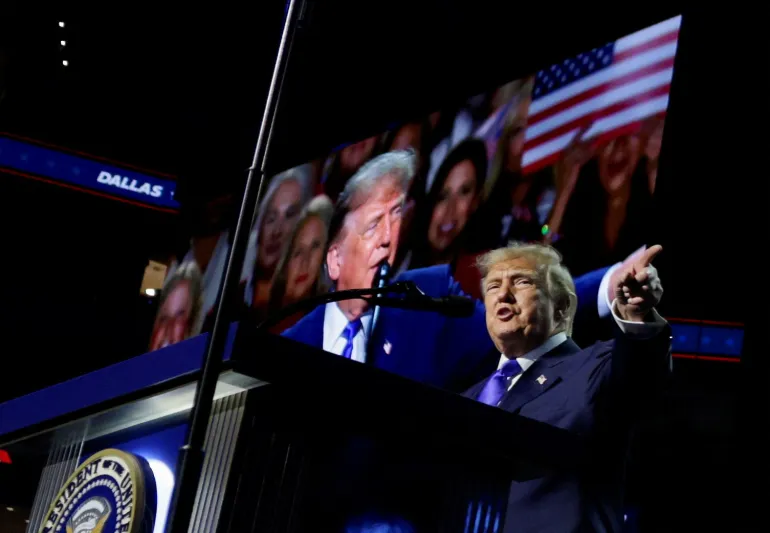
Trump has pledged to spend the final days before the election in non-stop campaign mode, after urging supporters during his Republican Midterm Convention in Dallas, Texas, to “vote like I’m on the ballot”.
His plan to criss-cross the country for rallies underscores a “base turnout” strategy meant to energise voters already loyal to the party, according to conservative analyst Olsen.
“But the Republican problem is a persuasion problem with people in the middle,” Olsen said. “[Trump’s campaigning] might help with some turnout … but their real problem is persuasion, and it’s not something that’s going to help with that in the slightest.”
Polls have spelt trouble for Republicans when it comes to swaying independents, with a PBS News, NPR and Marist poll from September 23 showing unaffiliated voters breaking for Democrats at 57 percent compared with 32 moving towards Republicans.
US President Donald Trump participates in a midterm election rally for Oklahoma Republican gubernatorial candidate Mike Mazzei at the Choctaw Event Center in Durant, Oklahoma, US, October 1, 2026. [Nick Oxford/Reuters]
The scenario has created a dilemma for some top Republican candidates over whether to break from the president on his most controversial actions, according to Lee Miringoff, the director of the Marist University Institute for Public Opinion.
Senate candidates Ashley Hinson in Iowa, Jon Husted in Ohio and Mike Rogers in Michigan all recently put daylight between themselves and Trump on the war with Iran.
One Republican House candidate, Representative Maria Elvira Salazar, has criticised Trump’s aggressive immigration enforcement policies as she seeks to rally Latino voters in South Florida.
Trump, in turn, reposted a social media message calling Salazar a “backstabber”.
“You need to have, you know, something else going for you other than endorsement of Trump,” said Miringoff. “Some Republicans are starting to have self-preservation kick in because they’re concerned.”
What can change?
Achieving a wide-scale shift in public opinion remains a tall order for Republicans in the final stretch of the race.
Many of the defining issues are unlikely to change before November, with Trump signalling a possible escalation with Iran following the vote as he has downplayed the prospect of short-term affordability relief.
At the same time, the US president has also not ruled out actions that rights groups say could upend voter turnout. Most recently, he refused to commit to not invoking the Insurrection Act or declaring a state of emergency surrounding the vote during an interview with Time magazine.
Miringoff said he believed that the “potential for more than just a marginal shift is there”, as he assessed some Democratic candidates have struggled to present clear visions beyond opposition to Trump.
“The result isn’t formed in concrete,” he said, “to the degree that there’s going to be a lot of money still spent.”
Analyst Olsen saw less remaining wiggle room for the party.
“Republicans have the time and the resources to change the outcome with respect to a few close Senate races,” Olsen said. “But to change direction, they would need something that would be apocal.”
United States President Donald Trump has kicked off a 32-day campaign tour ahead of the November midterm elections that could see his Republican Party hurt by his handling of the war on Iran and the economy.
On Thursday, Trump travelled from Washington, DC, for back-to-back rallies in Texas and Oklahoma.
Recommended Stories
list of 3 itemsend of list
At his first stop in Denton, Texas, Trump sought to shift the narrative around his drooping approval ratings, offering a personal assessment of his administration’s performance.
“I give us an A+ on the government, on economics, on everything,” Trump told a crowd of supporters at the Peterbilt Motors Company, a truck manufacturer.
The president also blamed unfair media coverage for his growing unpopularity, arguing that his pre-election rally blitz was necessary to set the record straight.
“We’re doing an extremely poor job of promotion and an extremely great job of running the country,” Trump said.
But Trump’s poll numbers have raised concerns about Republican prospects ahead of the November 3 midterm election.
Trump himself is not on the ballot, but Republican candidates across the country are seeking to defend the right-wing party’s majorities in both chambers of Congress, as well as key state and local offices.
The economy and Trump’s war on Iran are expected to weigh heavily on the election outcome.
On Thursday, The Associated Press and the NORC Center for Public Affairs Research released new poll results showing that 71 percent of Americans disapprove of the war, which has driven up the price of fuel.
About half of survey respondents also said they were worried they would not be able to afford food and petrol. Only 26 percent approved of Trump’s handling of the economy.
Taking centre stage
Still, despite record low approval ratings, Trump has positioned himself as key to the Republican midterm strategy.
At a first-of-its-kind Republican midterm convention in September, Trump encouraged voters to consider his record while at the ballot box. “I’m asking you to pretend that I’m on the ballot,” he said.
During Thursday’s tour, he touted the impact of his tariff campaign, which he credited with creating thousands of manufacturing jobs.
“For decades, you were heartlessly betrayed by politicians, lousy politicians, who let foreign trade cheaters plunder your wages, loot your factories, close up your jobs,” Trump told Peterbilt workers. “They’d still be doing it if I wasn’t here, believe me.”
Trump’s tariffs, however, have been highly controversial, prompting a series of court challenges. Critics have argued that the sweeping import taxes surpass the president’s constitutional powers.
Trump also used his stump speech to ease concerns about the US-Israel war on Iran, which began on February 28. Both sides have declared victory, though a ceasefire remains elusive.
“Just as I promised, I’m ensuring that Iran will be very quickly ended. I will tell you the energy prices are going to be rapidly, rapidly coming down,” Trump said.
“We’ll win very easily right now,” he added. “I believe right after the election we’ll win, but maybe before the election.”
The war, however, resulted in Iran stopping commercial traffic through the Strait of Hormuz, a key waterway for the global fuel trade.
The price of diesel — the fuel the trucks built at the plant use — soared to record highs of more than $6 per gallon (3.8 litres) last week. Petrol prices have similarly skyrocketed.
Hurting or helping his fellow Republicans?
Trump, however, has acknowledged that the stakes are high for his presidency in the upcoming midterms.
All 435 seats in the House of Representatives are up for grabs, as are 35 seats in the 100-member Senate.
Losing Republican control of either chamber could create roadblocks for Trump’s legislative agenda during the final two years of his second term.
But Trump has also expressed concern that he could be impeached for a third time, after two prior impeachments during his first presidency.
At Thursday’s second stop, in Durant, Oklahoma, the Republican leader repeated that fear. “Pretend I’m running, please,” he told the crowd. “If we don’t win, they’ll end up impeaching me.”
Many of the places Trump is scheduled to visit this month are perceived as reliably Republican voting districts. Following his stops in Texas and Oklahoma on Thursday, Trump will be heading to Alabama, Ohio and Nebraska in the coming days.
Still, some elections that ordinarily would be considered shoo-ins for Republicans have grown more competitive in recent months.
In Texas, for instance, no Democrat has won a statewide race since the 1990s. But this year, Republican Ken Paxton, the state’s attorney general, is struggling to win a Senate contest against Democrat James Talarico.
During both of Thursday’s stops, Trump sought to bolster Paxton’s prospects. At the Peterbilt factory, for instance, he called Paxton “the greatest attorney general in the United States of America”.
“We gotta get this guy elected,” Trump said, before pivoting to criticisms of Talarico, whom Republicans have sought to paint as out of touch with Texas’s large beef industry.
“He’s a vegan,” Trump said of Talarico, repeating an unsubstantiated rumour. “And vegans don’t do well in Texas.”
But leaked audio appeared to show Paxton lamenting the negative impact Trump had by holding the Republican midterm convention in Texas last month.
Trump has nevertheless used his pre-election tour to highlight social issues he feels will help rally voters to the Republican cause.
On Thursday, he returned to familiar subjects like immigration and transgender rights, which he depicted as a part of the Democrats’ “radical” agenda.
“They want women in men’s sports. They want open borders. They want transgender mutilation for your children,” Trump said. “What the hell are you thinking about, you liberals?”
The president also used his Texas appearance to push back against critics of data centres, despite bipartisan concern.
Critics worry that the rapid growth of artificial intelligence (AI) has fuelled the proliferation of data centres, which require large amounts of electricity and water to process mass data quantities.
While Trump has dismissed fears about AI as largely unfounded, a poll last month found 53 percent of Americans are “extremely” or “very” concerned about the technology’s environmental impacts.
Even fellow Republicans in Texas are responding to public pressure about the growing number of data centres, more than 300 of which are operational, with hundreds more in progress.
In August, Governor Greg Abbott called for an audit of all data centres to map their water and electricity usage, and the following month, Paxton in his role as state attorney general launched an investigation into whether they were complying with water reporting requirements.
Trump nevertheless used his Texas rally to tout the expansion of such enterprises.
“It’s a huge thing. It’s bigger than the industrial revolution,” he said, dismissing the concerns as part of a “scam”. He then explained he had urged AI companies to “take care of the people”.
“They’re making a fortune for the communities,” he added.
Political strategist Celinda Lake says that young voters don’t usually cast their ballots in midterm elections, but they’re ‘very unhappy about the war’ and the rising cost of living in the US. Democrats see the youth vote as a key trigger to flip power in Congress.
Rising goods and fuel costs are cited as key factors in the sharp drop in consumer confidence.
Published On 29 Sep 202629 Sep 2026
United States consumer confidence has fallen to its lowest level since 2014, just over one month before the congressional midterm elections.
Consumers pointed to higher costs for goods and services as the primary reason for the decline, according to The Conference Board, which released its monthly report on Tuesday.
Recommended Stories
list of 4 itemsend of list
“The Consumer Confidence Index deteriorated notably in September, following two prior months of softening,” Dana M Peterson, chief economist at The Conference Board, said in a release announcing the report.
Consumers pointed to higher prices at the pump as one of the driving factors. The average price for a gallon (3.78 litres) of petrol has jumped 37 cents over the past month, according to the American Automobile Association (AAA), which tracks daily petrol prices. The average price stood at $4.45 on Tuesday, compared with $4.08 a month ago.
“Oil and gas prices in particular rose to new heights, reflecting September’s surge in fuel costs. Comments about war/conflict eased this month but remained elevated,” Peterson said.
The consumer confidence report comes a day ahead of a key inflation report that the Federal Reserve uses to gauge the state of inflation, the personal consumption expenditures (PCE) index, which was up 3.7 percent in June from a year earlier.
The US central bank raised interest rates for the first time in three years earlier this month, driving up costs of credit cards and car and bank loans. It is set to make another decision on interest rates at its October 27-28 meeting, putting pressure on Republicans as consumer sentiment tumbles across political affiliations.
Consumer confidence fell among all political affiliations, according to the report, the second-to-last major consumer confidence reading before the midterm elections, which will determine the balance of power in Washington, DC.
US consumers think the Democratic Party would handle the economy better than their Republican counterparts, with 42 percent saying Democrats would do a better job compared with 34 percent for Republicans, according to a recent Marist poll.
US markets are only slightly lower as the trading day comes to a close. The tech-heavy Nasdaq closed down 0.08 percent, the Dow Jones Industrial Average declined 0.2 percent and the S&P 500 was down 0.1 percent.
As US President Donald Trump announced a $15bn steel megaplant while seated at his Oval Office desk on Monday, he had a lineup of mostly US politicians standing behind him – from cabinet members to elected representatives from Iowa, where the mill is to be built. There was one exception: an Indian man with a receding hairline and a lilac pocket handkerchief, standing behind the US president’s right shoulder.
Ravi Ruia is a cofounder of the Essar Group, which owns Mesabi Metallics, the Minnesota-based firm that’s building the steel mill, which is expected to be the United States’s largest once it is complete. A decade earlier, in October 2016, his brother Shashi was in the photo frame with a different president during the signing of another major deal: Russian leader Vladimir Putin.
Steel and metallics aren’t Essar’s only association with minerals and natural resources. The conglomerate had been involved for years with oil, before it sold one of India’s largest private oil refineries to a Russian-led consortium in 2016 for nearly $13bn. Essar Oil was rebranded as Nayara Energy.
Today, Nayara Energy is half-owned by Russian gas major Rosneft, which is under heavy US and European sanctions over Moscow’s war on Ukraine. Nayara has also emerged as a supplier of petroleum products to Russia at a time when the country is facing a fuel crisis following multiple Ukrainian attacks on its oil and gas depots.
And as part of a 99-year deal, Nayara is continuing to use Essar’s branding in India, where the company runs thousands of petrol stations. Nayara is under European Union sanctions.
The White House is touting the Iowa steel project, unveiled just before the US midterm elections, as a major economic win for Americans, promising hundreds of jobs and billions of dollars in revenue. And there is no evidence that the steel project is in violation of any Russia-specific US sanctions.
But Trump’s announcement of a mega project with an Indian firm closely tied to Russian investments under Western sanctions underscores how the US has struggled to isolate Moscow economically despite an unprecedented economic pressure campaign.
And the timing of the steel mill announcement raises questions, because it comes days after Trump signed a law that empowers him to punish countries that buy Russian oil with up to 100 percent tariffs. India is Russia’s second-largest oil buyer. But the legacy Indian conglomerate that best epitomises the country’s links to Russian energy is now also behind the US’s biggest steel factory.
Rewant Ruia, left, chairman of Mesabi Metallics, and Ravi Ruia, centre, board member of Mesabi Metallics and director of Essar Capital, listen as US President Donald Trump delivers remarks in the Oval Office at the White House on September 28, 2026, in Washington, DC [Kevin Dietsch/Getty Images]
What’s the steel factory project about?
The new project would integrate its iron ore mining operations in Minnesota’s Mesabi Iron Range with the upcoming steel complex in Iowa.
The White House and the company’s announcements said that the Iowa steel plant is expected to create at least 1,750 permanent jobs – “while continuing to work with suppliers and businesses throughout Iowa and the Midwest” – and support up to 6,000 construction jobs.
Washington also noted that the mill will produce 7.5 million tonnes of steel per year in its first phase, expected to rise to 10 million tonnes. First steel production is expected in 2030.
The first phase of the project is expected to generate $95bn in total economic impact during construction and its first 10 years of operation, according to the White House.
Trump’s commerce secretary, Howard Lutnick, told the reporters that “these are your 232 tariffs, the steel tariffs at work.” He added: “Without those tariffs, this mine and steel plant doesn’t get built.”
Trump chipped in, too. “Soon after my inauguration, I imposed powerful 50 percent tariffs on all foreign steel, and now our steel industry is roaring back to life,” Trump said. “Everyone’s building their plant here because they don’t want to pay tariffs.”
But the steel project is also evidence of how countries and companies have skirted US economic pressure – and how it gives them leverage to continue to do so.
An Essar petrol station with pumps showing no fuel in Stanley, County Durham, UK, September 27, 2021 [Lee Smith/Reuters]
What are Essar’s ties to Russia?
Essar Oil, the group’s energy arm, began refining crude in 2008 at its refinery in Vadinar on the coast of the western Indian state of Gujarat.
But by 2016, the company was in deep debt, listed as a defaulter by the Reserve Bank of India, the country’s central bank, and desperately looking for a buyer who would take over its oil operations. The timing was opportune. President Putin in Russia was at the time trying to get Rosneft, his country’s energy giant, to offload some stakes in exchange for foreign capital.
Indian Prime Minister Narendra Modi played matchmaker, helping stitch together a series of deals between 2014 and 2016 that helped Rosneft and Essar. First, Indian public sector oil majors bought stakes in Rosneft, giving it the cash it needed. Rosneft, in turn, joined hands with other investors to buy the Vadinar refinery, freeing Essar from its debts.
Essar Oil became Nayara Energy – a company in which Rosneft owns a 49 percent stake, and United Capital Partners, a Russian asset management company, owns another 49 percent. The buyers paid Essar $12.9bn for the deal. As part of the agreement, Nayara got to use Essar’s branding – including on thousands of petrol stations across India – for 99 years.
Logo of Nayara is seen at its fuel station on the outskirts of Ahmedabad, India, November 16, 2022 [Amit Dave/Reuters]
Is Nayara under Western sanctions?
Yes. The European Union imposed sanctions on Nayara in July last year as part of the broader 18th package of sanctions against Russian oil.
The sanctions banned the import of petroleum products processed using Russian crude oil and restricted the refinery’s access to EU shipping insurance, as well as financial and other services.
Nayara’s Vadinar refinery in western India has been processing only Russian oil since other suppliers backed out following the sanctions. Since then, Nayara has relied on international traders to import crude and export refined fuels.
In July this year, Nayara Energy sold petroleum to Russia as Ukrainian attacks targeted oil refineries across the country, triggering a fuel crisis.
In recent months, Ukrainian forces have targeted Russian oil facilities, setting them ablaze and causing long lines for fuel across the country, including in the capital, Moscow. The fuel crisis, unprecedented for Russia, a country that is one of the world’s biggest energy producers, has led to rationing in many regions.
These Russian links have brought Nayara Energy under wider scrutiny, prompting companies, including SAP, to suspend services to the refiner, citing sanctions and obligations under EU law.
Nayara challenged the move in the Delhi High Court, which ordered SAP India to restore its services earlier this month.
Are Essar or the steel plant violating any sanctions?
While Nayara is under EU sanctions, Essar does not face any US or EU sanctions.
In October 2016, after Essar struck its deal with Rosneft and United Capital Partners to sell the Vadinar refinery, the US – at the time under the Barack Obama administration – said that the agreement was not in violation of any sanctions.
“I don’t think we see any violation of any US-EU sanctions stemming from this deal,” State Department spokesperson Mark Toner said at the time. Essar also said that the deal was compliant with US sanctions.
There is no evidence of any sanctions breach in Essar’s investment in Mesabi, or in the planned investment to set up the steel factory in Iowa.
But Essar’s relations with Russia have nevertheless attracted scrutiny, including in the United Kingdom, where the Ruia brothers have long had major investments.
At the time of the sale of the Vadinar refinery to Russian buyers, the Russian bank VTB also gave Essar a $3.9bn loan for debt reconstruction.
The bank was hit by major US and EU sanctions in February 2022, right after Russia’s full-fledged invasion of Ukraine. Essar, reporting published in April 2026 by The Guardian and investigative journalism platform SourceMaterial, showed, moved the VTB loan to Mauritius, a tax haven, allegedly to avoid the sanctions. Essar owns the Stanlow oil refinery in the UK.
US President Donald Trump waves as he walks to board Marine One as he departs from the South Lawn of the White House in Washington, DC, on September 26, 2026 [AFP]
Why is the timing of the steel plant announcement significant?
Trump’s Republican Party is heading for crucial midterm congressional elections in November, while his approval rating has been plumbing all-time lows in the face of voter concerns about inflation, the cost of living, and the war on Iran.
In his second term, Trump has made tariffs and a revival of US manufacturing a cornerstone of his economic vision, claiming that higher barriers to imports will drive investment back to the US.
Moreover, Washington introduced legislation that would allow the president to impose tariffs of up to 100 percent on imports from countries that continue economic engagement with Russia or Iran, aiming to put pressure on countries that continue buying Russian energy.
New Delhi is particularly exposed since it became one of the largest buyers of discounted Russian crude after the invasion of Ukraine in 2022. Trump imposed an additional 25 percent tariff on Indian imports in 2025 over the issue, before removing it in February 2026 after India committed to stop buying Russian crude.
Russia has remained India’s largest source of crude, although purchases have declined as the threat of US penalties has grown. The news agency Reuters reported that India imported approximately 2.1 million barrels per day of Russian crude in August.
There is also a recent parallel to underscore the incentives for investment in Trump’s US. In May this year, Washington moved to dismiss the criminal fraud and bribery charges against Indian billionaire Gautam Adani, while his lawyers had told the Justice Department that Adani was prepared to invest $10bn in the United States. A federal judge subsequently dismissed the criminal case in August.
Amid tight Iowa midterm races, President Trump emphasises steel industry revival with project announcement.
Published On 28 Sep 202628 Sep 2026
Just weeks before the midterm elections, United States President Donald Trump has announced that a Minnesota-based steel manufacturer intends to build a $15bn steel mill project in Iowa, as the White House tries to highlight its focus on domestic manufacturing.
On Monday, joined by executives from Mesabi Metallics, which recently opened Minnesota’s first new iron ore mine in 50 years, Trump announced the project. It is expected to begin production in 2030 and could bring more than 1,700 jobs to the region, with an initial production capacity of 7.5 million tonnes per year.
Recommended Stories
list of 4 itemsend of list
The first phase of construction for the project will generate 5,000–6,000 construction jobs, a White House official told Al Jazeera.
The plant in Iowa will use iron ore from the Mesabi Iron Range in nearby Minnesota. Mesabi, which is owned by Indian conglomerate Essar Group, invested more than $2.5bn to build the mine in Minnesota.
“President Trump is delivering on his promise to rebuild American industry, re-shore manufacturing, and create new jobs. Today’s announcement underscores the president’s historic efforts to revitalize the US steel industry—supporting local communities, strengthening supply chains, and protecting our national security,” White House Spokeswoman Taylor Rogers said in a statement to Al Jazeera.
The steel industry has loomed over the first half of Trump’s second term in office. The president imposed 50 percent tariffs on steel and aluminium imports last year in an effort to boost domestic production, but also threatened to increase prices of products that use those materials, from soda cans to washing machines to cars.
“These are your 232 tariffs, the steel tariffs at work. Without those tariffs, this mine does not get built, and this steel plant does not get built”, US Commerce Secretary Howard Lutnick said in the Oval Office on Monday.
Trump also solidified the US government’s stake in US Steel, which was acquired by Japan’s Nippon Steel in June 2025. As part of the deal, the US government received a so-called “golden share”, which gives the president the authority to appoint a board member to weigh in on decisions that would impact domestic steel production.
Midterm stakes
The announcement comes a little more than a month ahead of the US midterm elections, and the economy is top of mind for US voters.
Among Republicans, Trump is losing steam on his handling of economic issues, with a new September 21 Ipsos poll finding that 56 percent approve of his handling of the economy, down from 80 percent.
Iowa is in play as a seat Democrats could flip in the midterm elections, with Republican Ashley Hinson facing Democrat Josh Turek in November and with polls suggesting a tight race.
Hinson joined the president in the Oval Office for the announcement.
A poll conducted by the Republican-aligned pollster the Trafalgar Group showed Hinson with a two-point lead, while an InsiderAdvantage poll, which is considered more nonpartisan, found Turek leading by two points.
Voting rights groups have warned system may falsely identify voters as non-citizens, leading to disenfranchisement.
Published On 25 Sep 202625 Sep 2026
The United States Supreme Court has allowed the administration of US President Donald Trump to use a controversial voter verification system just weeks away from the midterm election in November.
The court’s emergency order on Friday allows the Department of Homeland Security to use the Systematic Alien Verification for Entitlements, or SAVE, programme in its efforts to verify the eligibility of voters on state voter rolls.
Recommended Stories
list of 3 itemsend of list
Voting rights groups have argued the use of the system, which was revamped under the Trump administration in 2025, risks falsely identifying individuals as non-voters, potentially leading to individuals being wrongfully purged from voter rolls.
Those challenging the administration’s use of the database have charged that information on citizenship can be out of date. They pointed to a Travis County, Texas election official who found that up to 25 percent of the “non-citizens” identified by the system in the jurisdiction were in fact US citizens.
US states oversee election administration under the country’s constitution and are not required to use the SAVE system, but several Republican-led state governments have voluntarily opted to use the database.
Still, it was not immediately clear if Friday’s decision would have any meaningful impact on the midterm elections on November 3, in which voters will determine which parties control the US House of Representatives and the Senate.
Existing law blocks most states from systematically purging voters from their rolls within 90 days of an election. The emergency order is not also the final say on the matter, only granting the administration the ability to use the system until the court makes a final ruling.
The three liberal justices on the panel, which has a 6-3 conservative supermajority, issued a dissenting opinion, saying the majority disregarded “the harms that the modified SAVE system has caused, and will likely continue to cause, to lawful voters”.
The Citizens for Ethics watchdog group charged that the decision “puts millions of Americans at risk of being unlawfully targeted by the admin’s unreliable voter purge system weeks before the midterms”.
Trump has focused heavily on election administration in the run-up to the midterm vote, which could serve as a major check on his authority in the final two years of his term.
He has for years claimed, without evidence, that US elections are marred by widespread fraud and has repeatedly falsely claimed the 2020 presidential election, which he lost to Democrat Joe Biden, was “stolen”.
Evidence has suggested that fraud of any kind, including instances of non-citizens voting in the US, has been glancingly rare in the country.
In September, the Supreme Court rejected a bid from Trump to restrict mail ballot procedures before the midterm election.
The former vice president joins Abdul El-Sayed on the campaign trail in Detroit to bolster Democratic unity in a key swing state.
Published On 22 Sep 202622 Sep 2026
Democratic Senate candidate for the US state of Michigan Abdul El-Sayed says he wants former Vice President Kamala Harris’s campaign stop in Detroit to unify Democrats in the key swing state ahead of the final sprint to lock down a victory in November’s midterm elections.
The visit comes as the Democratic Party works to bridge deep internal factions that were glaringly evident during a hotly contested primary last month between El-Sayed and four-term Democratic congresswoman Haley Stevens, who had overwhelming support from the Democratic Party establishment and pro-Israel political action committees.
Recommended Stories
list of 3 itemsend of list
“We’re building an electoral coalition here,” El-Sayed said on Tuesday, speaking about the economy hours ahead of a planned appearance with the former vice president. He added that her presence in Michigan, “speaking to communities that were really empowered by her voice throughout her political career”, will serve to further unite and strengthen the Democratic Party.
Black voters could prove especially paramount for El-Sayed, who faces pressure among white Jewish voters who typically back Democrats. The joint appearance targets Wayne County, the state’s largest Democratic stronghold and home to Detroit’s predominantly Black electorate, which El-Sayed failed to carry during the August Democratic primary.
The move follows Harris’s 2024 electoral defeat to US President Donald Trump in Michigan, a state heavily influenced by its critical Arab-American voting bloc. As a result of her pro-Israel policies, many Arab Americans in Michigan, who had voted reliably blue for years, ditched the party altogether, refusing to support Harris in her presidential bid.
El-Sayed also issued a call for solidarity ahead of the midterms, affirming that the 2024 presidential election “ended where it did because we could not find the places of agreement to be able to bring people together or move in the direction that we need to move”, emphasising that he and Harris both want to focus on helping voters who are struggling economically.
At the time, many advocates had argued that as long as Harris maintained her pledge to continue to arm Israel and refused to distance herself from former President Joe Biden’s unconditional support for the US ally, nothing would help her standing with Arab and Muslim voters.
All eyes are on November’s consequential race where El-Sayed will go head to head with former Representative Mike Rogers, the Trump-backed Republican Senate nominee, who ran unopposed in the Republican primary.
Rogers’ campaign framed Harris’s visit as a sign of weakness for both Democrats.
El-Sayed rejected the criticism at the Detroit event, emphasising that assembling a winning coalition requires confronting past differences directly rather than avoiding them.
“We don’t have to agree on everything to understand what is at stake,” El-Sayed said, urging voters to rally around shared economic priorities. “The only way forward is by doing the hard work of bringing people into the same room and moving together.”
A member of Donald Trump’s political party has issued a rare call for a congressional investigation into the foreign dealings of the United States president’s eldest son.
US Senator John Curtis, a Republican from the state of Utah, on Tuesday said “questions have arisen” about Donald Trump Jr’s relationships with foreign business figures and acceptance of “significant gifts”, alleging he may have personally benefited from his relationship with the president.
Recommended Stories
list of 3 itemsend of list
In a letter to the Republican and Democratic leaders of the US Senate Judiciary Committee, Curtis referenced a ProPublica report that found Trump Jr’s Bahamian wedding party in May was funded by a Russian oligarch.
“These reports raise legitimate questions about foreign access to members of a sitting president’s family and whether such relationships can create actual or perceived expectations of favorable treatment,” Curtis wrote. “They also may create expectations of a returned favor that would not be in the best interests of the American people or our allies, and could even create national security vulnerabilities.”
The letter comes as a small but slowly growing number of Republicans have spoken out against Trump, who has largely avoided criticism from members of his own party. But record-low approval ratings sparked by the war in Iran and concerns over the cost of living in the US have forced some Republicans to reconsider that support as they face growing prospects of major losses in the congressional midterm elections.
If Democrats retake one, or both, chambers of the US Congress in November, investigations into Trump, including his family’s dealings, are likely. But those probes are less likely under Republicans wary of the president’s wrath.
A spokesperson for the Senate Judiciary Committee, which is under Republican control, told the Associated Press that it had received Curtis’s letter but did not say whether there would be an investigation.
Trump vs Biden
Curtis, who isn’t up for re-election until 2030, also called on the chamber’s panel to subpoena Trump Jr, as well as the son of former US President Joe Biden, a Democrat.
“The country should not have to accept one standard for the family of a Republican president and another for the family of a Democratic president,” Curtis wrote, referencing the scrutiny and investigation Biden’s son Hunter faced from Republicans.
Hunter Biden responded to Curtis’s letter in a post on social media, calling for the Senate committee to “bring it on” as he vehemently denied any foreign business dealings while his father was president.
“I’ll sit next to Don Jr. and testify any time, any place,” Biden wrote on X as he called for the president’s youngest son, Eric, and son-in-law, Jared Kushner, who serves as a US envoy, to testify as well. “No need for a subpoena. Let’s all do it tomorrow.”
After the ProPublica report, Trump Jr and his wife, Bettina, released a joint statement on social media saying the Russian oligarch, Umar Kremlev, was a “dear friend” who “very generously hosted two incredible nights of celebrations for us AFTER our wedding”.
The president, who did not attend the wedding, said his son had reimbursed Kremlev.
“It’s totally allowed, and a lot of people give parties and things like that — but it’s totally allowed,” Trump said. “But as I understand it, he paid him back. He didn’t want it.”
US Senator Dick Durbin, the ranking member on the Senate Judiciary Committee, said that while Biden’s son “has already given a sworn deposition to Congress”, Trump Jr “has not”.
“For the committee to ignore this matter is to run the risk of being complicit in a coverup,” Durbin said. “I will join in supporting Senator Curtis’ request of the Senate Judiciary Committee.”
Curtis’s office did not immediately reply when asked by Al Jazeera what prompted the senator’s letter and whether any fellow Republicans have indicated if they would support an investigation into the president’s family.
The United States Supreme Court has rejected Donald Trump’s bid to restrict voting by mail ahead of the November midterm elections, in a setback to the US president’s efforts to change rules governing elections.
The ruling on Monday by the conservative supermajority court allows states to continue sending out mail ballots as they have done for years, dealing a blow to Trump’s plans to stop the ballots before the elections and halting possible last-minute legal actions as voting begins in some states.
Recommended Stories
list of 4 itemsend of list
Trump has repeatedly cast doubt on the security of mail-in voting, citing debunked claims of widespread election fraud associated with it. That is despite the president voting by mail himself, including during the 2024 election.
Mail ballots, in place for decades, have been found to increase voter turnout and currently account for a third of all votes cast in the US.
Here’s what we know about the legal challenge to overturn them:
President Trump speaks at the Republican National Midterm Convention in Dallas, Texas, US, September 9, 2026 [Evan Vucci/Reuters]
What are mail-in votes?
Voting by post works by sending ballots to the homes of registered voters, who then mail them back before a deadline.
Eight states, several of them Democratic-leaning – California, Colorado, Hawaii, Nevada, Oregon, Utah, Vermont and Washington – as well as the District of Columbia, allow all elections to be conducted entirely by mail.
Others only allow smaller elections to be conducted by mail.
Although there are cases of forgery or repeat voting, they are rare and amount to just four in 10 million mailed votes, according to the Brookings Institution.
What has Trump said about the mail-in votes?
Trump falsely blamed his 2020 presidential election loss on mail-in voting fraud. He and his supporters also opposed changes made during the COVID pandemic to expand mail-in voting.
During the 2020 Republican National Convention, Trump called mail-in voting changes “the greatest scam in the history of politics”.
His attempt to push the SAVE America Act, which calls for sweeping voting laws, has stalled in the US Senate. The bill, passed in the House of Representatives in February, faces opposition over concerns that millions of voters will be disenfranchised.
How did Trump target mail-in votes?
In March 2026, Trump signed an executive order directing the US Postal Service to take control of mail voting by designing new envelopes with special barcodes that would allow the federal government to ensure ballots are only from eligible voters.
For the midterms, that move would force all states to adopt a uniform envelope style in a short time.
The order also required states to provide the US Postal Service with a list of eligible voters ahead of elections. Several government departments, including Homeland Security and US Citizenship and Immigration Services, would also have the voters’ lists.
The postal agency was additionally empowered to deny mailed ballots if they did not comply with new standards or were not associated with registered voters on the states’ lists.
What happened to the order?
Democrats and activists challenged the order in several courts, resulting in a series of back-and-forth rulings between May and August.
US District Judge Indira Talwani imposed an injunction against the rule in June on the basis that it likely violated the US Constitution. Talwani also noted in her injunction that Trump’s executive order would be impossible to apply when the midterms were already so close.
But her ruling was overturned by the conservative-majority Supreme Court in late August in a temporary judgement.
The Supreme Court had not decided at the time whether Trump’s move was constitutionally legal. Rather, it only sided with the Trump administration on procedural grounds after the administration argued that Democrats sued too soon.
What does the latest judgement mean?
In the latest and final decision, the Supreme Court refused to lift Judge Talwani’s injunction.
In a brief written order that did not go into detail, the court noted that the administration was likely to fail in its push to restrict mail-in votes ahead of the midterms.
Justice Brett Kavanaugh, who was appointed by Trump, voted with the majority against the administration, though he indicated he could support the policy at a later stage. Two judges, Samuel Alito and Clarence Thomas, dissented.
Critics have long warned that restricting mail-in ballots could disenfranchise some voters who typically rely on this method.
It could also disrupt the delivery of mailed votes, as some states, including Alabama, North Carolina and Wisconsin, have begun sending in midterm ballots.
A quarter-century after the attacks on September 11, 2001, officials across the United States have taken part in tributes and memorials to honour the 2,977 victims and those who risked their lives as part of the rescue efforts.
The incident is considered the deadliest “terrorist” attack in US history.
Recommended Stories
list of 3 itemsend of list
Four planes were hijacked. Two crashed into the World Trade Center, causing its Twin Towers to collapse. A third struck the Pentagon outside Washington, DC. And the fourth plummeted into a field in Shanksville, Pennsylvania, after passengers and crew rose against their attackers.
Through social media messages, public speeches and appearances at ceremonies, US leaders on Friday took different approaches to remembering the lives of the thousands who perished on the fateful day.
Here’s what they said:
US President Donald Trump
US President Donald Trump speaks at the Pentagon in Arlington, Virginia, on Friday [Saul Loeb/AFP]
US President Donald Trump chose to stay in Washington, DC, to observe the 25th anniversary.
During the attacks, 184 people died near the capital when American Airlines Flight 77 struck the Pentagon, the headquarters of the US military.
Trump opted not to attend a Friday ceremony at the World Trade Center site in New York, where all his living presidential predecessors were in attendance.
His vice president, JD Vance, travelled to New York instead. The ceremony at the World Trade Center has a policy of not allowing political speeches.
In his remarks at the Pentagon, Trump described what happened as “true evil”. He also paid tribute to those who died in the attacks.
“We will honour their lives, we will cherish their beautiful memories, and we will protect this country and its freedoms for every future generation,” Trump said.
The president also praised US troops as he appeared to link the 9/11 attacks with his administration’s war against Iran.
“We will never, ever forget. That’s why we fight today. We don’t have a choice. There can only be victory,” Trump said.
“We salute the service members working right now to ensure the world’s number one sponsor of terror – the Islamic Republic of Iran – will never, ever have a nuclear weapon,” he later added.
US Secretary of Defense Pete Hegseth
US Secretary of Defense Pete Hegseth speaks at the Pentagon in Arlington, Virginia, on Friday [Saul Loeb/AFP]
US Defense Secretary Pete Hegseth also spoke at the Pentagon, delivering his remarks shortly before Trump’s.
He warned the audience to practice “eternal vigilance” against what he called continued threats.
“There are still enemies who hate us. Every day, enemies plot to curb our power and kill our citizens, including from Islamic terrorists abroad and at home,” he said.
He proceeded to seemingly use the 9/11 attacks as justification for the US-Israeli war against Iran, which started on February 28.
“Over the past six months, we have laid waste to the world’s most prolific state sponsor of terrorism,” Hegseth said, referring to Iran. “Our warriors have fought an Islamic theocracy that has wished us death for nearly half a century, that cheered on 9/11.”
He went on to claim that the US military has destroyed Iran’s defences and that the US controls the Strait of Hormuz, a vital waterway for international trade.
Iran has stopped commercial traffic through the strait since the start of the war.
“We’re still sending terrorists where they belong, to hell, and tankers to the bottom of the ocean where they belong,” Hegseth said. “And we’re ensuring that Iran will never have a nuclear weapon. The economic pressure tightens every day. We control the strait. We will finish this fight.”
New York City Mayor Zohran Mamdani
Former New York City Mayor Rudy Giuliani and New York City Mayor Zohran Mamdani attend the 25th anniversary commemoration of the attacks on September 11, 2001, on Friday [Barry Williams/AFP]
New York City Mayor Zohran Mamdani attended the New York memorial service, alongside the city’s former mayor, Rudy Giuliani, who led the city through the attacks.
Before the event started, Giuliani shook hands with the mayor, despite previously calling on Mamdani not to attend the event.
Mamdani, the city’s first Muslim mayor, had recently come under fire from some conservative politicians and victims’ family members who said his presence at the memorial would offend them.
A Change.org petition garnered more than 100,000 signatures from those who wished to express concern about Mamdani’s participation.
Like all politicians attending the service at the National September 11 Memorial, Mamdani was not permitted to speak.
Instead, the mayor released a video on social media remembering those who were killed and challenging the public to honour their memory by doing good works.
“Twenty-five years later, we have a sacred obligation to those who were stolen from us. To care for one another as they cared for strangers. To live lives worthy of the sacrifices they made. And to build a city worthy of their courage. A city where we run toward one another,” Mamdani said.
“That is how we’ll remember.”
On Tuesday, Mamdani also released a trove of previously undisclosed documents suggesting city officials tried to downplay – or even mislead – first residents about the dangerous air quality following the attacks.
US Senate candidate Abdul El-Sayed
Democratic candidate for US Senate Abdul El-Sayed participates in a town hall event in Waterford, Michigan [File: Emily Elconin/Getty Images via AFP]
Democratic Senate candidate Abdul El-Sayed took to the social media platform X to honour the lives lost during what he described as a “cruel act of terror”.
El-Sayed is locked in a tight midterm race in Michigan against his Republican opponent, former US Representative Mike Rogers.
Michigan’s open Senate seat is considered a must-win seat for Democrats, if they hope to take back control of the US Senate.
Rogers has sought to create controversy over El-Sayed’s past comments about the September 11 attacks. He has pointed to audio of El-Sayed reportedly saying, “9/11 scarred our country in profound ways, but what we did after 9/11 scarred millions of other people.”
During the Republican Party’s first-ever midterm convention in Dallas, Texas, on Thursday, Rogers blasted El-Sayed, who is Muslim, for being sympathetic to terrorists. He also sought to highlight El-Sayed’s links to left-wing internet commentator Hasan Piker.
“I never imagined that, 25 years after 9/11, I would be running against somebody who campaigns with Hasan Piker, who thinks America deserved it,” Rogers said. “Yep, but here we are.”
On Friday, however, El-Sayed used his social media post to push back against Rogers’s attacks.
“Nothing can justify the murder of innocent civilians. Nothing,” El-Sayed wrote.
He also called on Americans to help build a country that was “more inclusive, more empowering, more just” in tribute to the lives lost.
“They didn’t just attack America that day. They attacked the idea of America,” El-Sayed said of the 19 al-Qaeda hijackers who participated in the attacks.
“The notion of a nation brought together by ideals where it doesn’t matter how you pray or if you pray at all. A place where freedom and commitment to justice bind us, even if at times we struggle to fully realise it.”
Pennsylvania senator who has clashed with party over Israel support says he will reject ‘the extremes and socialism’.
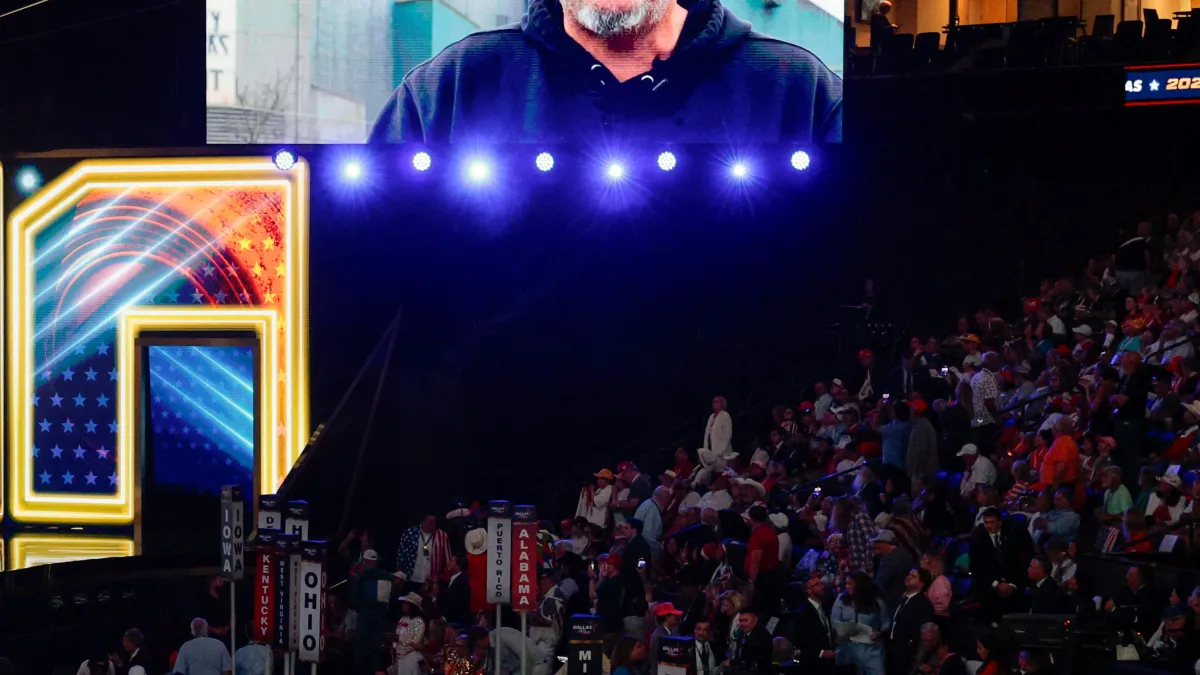
Pennsylvania Senator John Fetterman, a Democrat who has distanced himself from his party, has appeared in a video recording on the first day of the Republican Party’s two-day midterm convention in the United States.
The video on Wednesday was a surprise for those who attended the conservative gathering in Dallas, Texas, where President Donald Trump is seeking to galvanise support ahead of the November elections.
Recommended Stories
list of 3 itemsend of list
“Yes, I’m Senator John Fetterman, Pennsylvania. Yes, I’m a Democrat. Why am I here talking to you today? Because, well, I’m a common-sense Democrat,” Fetterman said as he introduced his Republican colleague, Senator Dave McCormick of Pennsylvania.
Fetterman, a 57-year-old first-term senator, has cast himself as an outsider within the Democratic Party.
He has offered outspoken support for Israel and the war on Iran, even as voters and progressive voices in his party criticise those elements of US foreign policy.
“I’m always going to stand with America. I’m always going to reject the extremes and socialism and that anti-American way of life,” Fetterman said in the video clip.
But his appearance at the Republican Party’s first-ever midterm convention is likely to exacerbate criticism from his Democratic colleagues.
US Representative Brendan Boyle, another Pennsylvania Democrat, has repeatedly questioned Fetterman’s party allegiance, as well as his commitment to public service. He renewed that sentiment after Wednesday’s video aired.
“A year ago I labeled John Fetterman ‘Trump’s favorite Democrat.’ Tonight, he yet again proves why,” Boyle wrote on social media.
Fetterman has also faced questions about his fitness for office following a series of reports that detail his apparent lack of enthusiasm for his Senate responsibilities.
A recent Wall Street Journal article found that the senator had cancelled meetings with constituents.
In one case, The Wall Street Journal said he skipped a June meeting with injured military veterans, citing illness, only to show up later for a Fox News interview about Israel and its joint war with the US on Iran.
His approval rating is now higher among Republicans in Pennsylvania than among members of his own party.
Last month, a poll from The New York Times, Siena College and The Philadelphia Inquirer suggested that 73 percent of Pennsylvania Republicans approved of Fetterman’s performance, up from 25 percent in 2024.
Meanwhile, Democratic support in the state had slid dramatically over the last two years, slipping from 74 percent to 22 percent. Some 63 percent of Democratic respondents held an unfavourable view of him.
While Fetterman has depicted himself as a maverick within the Democratic Party, he has denied that he would switch parties to become a Republican.
“I’m not going to be a Republican, but I’m going to be a Democrat that’s going to have a conversation with whoever is playing it straight,” he said in a recent interview with Fox News.
Still, speculation about Fetterman’s party credentials has continued as the midterms near.
The election on November 3 will decide which party controls Congress for the final two years of Trump’s term.
Republicans currently hold a small majority in the House of Representatives and Senate, but they could face a setback at the polls as voters express frustration over cost of living issues and Trump’s deepening unpopularity.
Still, reclaiming the Senate especially could be an uphill climb for Democrats. Only a third of Senate seats are up for re-election this year, compared with all 435 House seats.
The United States Republican Party – and its talisman President Donald Trump – is descending on Dallas, Texas, to host a rare convention before the midterm elections in November.
Usually reserved for presidential election cycles, Trump’s call to hold the high-cost event before the November 3 midterm vote has underscored both the president’s unorthodox campaign style and the urgency of the political moment for his Republican Party.
Recommended Stories
list of 3 itemsend of list
Trump’s approval rating has tanked in the lead-up to the midterm vote, with polls pointing to a panoply of factors, most notably the US-Israel war on Iran and its knock-on economic effects for US consumers.
The lack of enthusiasm threatens what are already considered long-shot odds in the Republicans’ effort to hold on to control of the House of Representatives. Shifting public opinion has also put control of the Senate increasingly in play, although Democrats still face an uphill battle to pull off an upset.
A loss of control in either chamber would serve as a major check on Trump’s authority in the final two years of his second term.
But not all Republicans have bought into Trump and the party’s claims that the convention will spur voter turnout.
Several, particularly those in the tightest races, have kept the event at arm’s length amid concerns that associating with the president could only further mobilise his detractors.
Here’s what to know:
When and where is the Republican midterm convention?
The convention will be hosted at the American Airlines Center in Dallas, Texas, on Wednesday, September 9 and Thursday, September 10.
The event is expected to run from 3pm to 9pm Central Time (20:00 to 02:00 GMT) on both days.
Trump is scheduled to speak on both nights, including a Wednesday address and the convention’s closing keynote on Thursday from 8pm to 9pm Central Time (01:00 to 02:00 GMT on Friday).
US Vice President JD Vance will close out night one with a speech.
A person takes pictures of signage during preparation for the Republican National Committee (RNC) Midterm Convention at the American Airlines Center on September 7, 2026 in Dallas, Texas [Brandon Bell/Getty Images via AFP]
Is this a typical political convention?
Not at all.
The Republican National Committee (RNC), the party’s official organising body, has billed the Dallas midterm convention as a “first in American political history”.
Both Democratic and Republican national conventions have historically capped the primary season before a presidential election. The emphasis has historically been on the presidential nomination process during the largely ceremonial events.
During those conventions, so-called “delegates” from every state pledge their votes for a candidate based on the primary election outcome from their home state.
A candidate who secures the required majority of delegates formally becomes the party’s presidential nominee at the convention.
Parties also typically hold several smaller meetings surrounding the event to establish and release the party’s official platform.
Why are Republicans holding a midterm convention in 2026?
To start with, there will be no nominating process – presidential or otherwise – during the event, as there is no presidential election in 2026.
Instead, the convention has taken the shape of a supercharged campaign rally and fundraiser.
It has been pitched as an opportunity to introduce candidates in punishing races to potential donors and to give a clear, if Trump-dominated, party message as the races enter their final stretch.
The RNC has promised “a primetime showcase for President Trump’s success, candidates, and causes that have propelled the 2026 midterms to unprecedented focus”.
What’s on the schedule?
There will be quite a lot. The official programme lists “53 items and speakers” on night one, followed by 56 more on night two.
The first night will focus on issues including tax cuts, healthcare affordability, immigration, border policy, trade and domestic manufacturing.
The second night will focus more on affordability and families, including policies related to taxes on tips, overtime and Social Security.
The subject areas hew closely to Trump’s wider political messaging.
The official programme gives relatively little attention to several other subjects. The US-Israel war with Iran and Trump’s aggressive tariff policy receive scant mention.
Who else is speaking?
Trump and Vance are the convention’s marquee speakers, but an array of prominent Republicans and candidates are expected to feature across the two-day programme.
Texas Attorney General Ken Paxton is likely to get a healthy amount of stage time. Paxton is running for Senate against Democrat James Talarico, whose early lead in polling has raised alarm bells for Republicans. A Democrat has not won statewide office in Texas since 1994.
“We’re going to have a lot of speakers, and the ones we want to focus on will be obviously Ken Paxton,” Trump told reporters last week. “We gotta get him elected.”
The race is particularly personal for Trump, who endorsed MAGA-aligned Paxton over Republican Senator John Cornyn, a four-term incumbent seen by many as the surest challenger for Talarico.
Will Trump’s convention help Republicans in the midterms?
It remains to be seen whether the convention will help to turn out voters in a meaningful way.
Trump has proven a canny campaigner in the past, leveraging his eye for television spectacle to build support and turn out low-propensity voters. But several factors could limit the impact.
Trump’s Thursday night speech conflicts with the opening games of the National Football League (NFL) season. The event also runs up against several memorial events for the September 11, 2001 attacks throughout the week.
Some Republican officials have also reportedly criticised the hasty announcement of the event, which Trump called for in late June, raising questions over whether organisers will indeed be able to achieve the spectacle envisioned.
For his part, Trump enters the convention with his approval rating continuing to tank, hovering at a 38 percent average in major polls. Several of the most recent polls, including a Reuters-Ipsos poll and a Financial Times-Focaldata poll conducted in late August, reflected only a 33 percent approval.
Trump entered office in January 2025 sitting at about 52 percent approval.
Why are some Republicans skipping?
To be sure, several Republicans in key races have said they will attend the convention.
They include former Congressman Mike Rogers, who is running against Democrat Abdul El-Sayed for an open Senate seat in Michigan; Ohio Senator Jon Husted, who is facing an unnerving challenge from former Democratic Senator Sherrod Brown; and Georgia Congressman Mike Collins, who is seeking to unseat Democratic Senator Jon Ossoff.
Others have been wary.
Trump’s policies in his second term have cast a long shadow, leaving many candidates calculating whether attendance could backfire and instead energise voters opposed to Trump.
Democratic primary turnout in several key states – including Michigan, Wisconsin, Texas and Georgia – has soared this year, while Republican turnout has remained steady but unextraordinary, as reported by The Associated Press news agency. That has been a worrying sign for Republicans.
Maine Senator Susan Collins, a Republican incumbent seen as vulnerable in her race against Democrat Troy Jackson, has been among those who have said they will not attend.
Several candidates in key House races have pointed to prior commitments.
Representative Mariannette Miller-Meeks told The Bulwark she preferred to spend her time in her home district in Iowa, where she faces a challenge from Democrat Christina Bohannan.
“Because I have a district that I have to be in and take care of, so I’ll be in my district,” she explained about her decision.
Miller-Meeks eked out a victory over Bohannan in 2024, winning by a margin of just 0.1 percent.
Are Democrats countering?
Several left-leaning groups are organising protests.
House Democratic leader Hakeem Jeffries has announced that four Democratic lawmakers will travel to Dallas for counterprogramming during the Republican convention.
However, the cash-strapped Democratic National Committee (DNC) has avoided holding its own midterm convention.
The committee went into debt in the wake of the 2024 presidential election, even putting up its Washington, DC-based headquarters as collateral for a $15m loan, the NOTUS news site reported in July.
The RNC has not yet released a final price tag for its convention.
Voters in two US states — New Hampshire and Rhode Island — will head to the polls this week to select Democratic and Republican candidates for this November’s United States midterm elections.
In what’s been a campaign season full of unexpected twists and turns, from the continued growth of the Democrats’ progressive arm to mixed results for President Donald Trump-endorsed Republican candidates, the contests mark some of the last primaries before the US makes a final determination on which party will control both chambers of the US Congress.
Recommended Stories
list of 3 itemsend of list
Before that happens, candidates in some of these New England states’ most notable races will have to contend with some of this midterm’s biggest themes: How much Republicans should align with Trump, and whether a Democratic incumbent can fight off a primary challenger.
Here are the races to watch:
US Representative Chris Pappas of New Hampshire announces his bid to succeed retiring US Senator Jeanne Shaheen, a fellow Democrat, in Manchester, New Hampshire, the US [File: Robert F. Bukaty/AP Photo]
In New Hampshire, a battle to replace a retiring senator
When does voting in New Hampshire start? Opening times for polling locations vary across the state, but all polls must open on Tuesday, September 8 by 11am (15:00 GMT).
When does voting in New Hampshire end? Closing times also vary, but state law stipulates polls cannot close earlier than 7pm (23:00 GMT).
The most notable race in New Hampshire will determine the two candidates who will face off to replace outgoing Democratic Senator Jeanne Shaheen.
US Representative Chris Pappas has emerged as the frontrunner to win the Democratic nomination. On the Republican side, John Sununu holds the benefit of strong name recognition from being a part of the state’s most prominent political dynasty.
Democrats have hoped to retain this seat, a critical must-keep as they look to take back the US Senate currently controlled by Republicans. But recent polling of likely voters conducted by Senate Republicans’ campaign arm shows Sununu leading Pappas by one point. The survey, conducted in the final days of August, found nearly one in four voters are undecided.
However, both candidates, if they win their primaries on Tuesday, may have to confront actions by their party’s top figures, who could complicate their campaigns.
In the Democratic primary, Pappas remains the favourite, but his lead has dropped by double digits, according to some polls.
Pappas’s closest opponent is democratic socialist Karishma Manzur, who has picked up support, in part, over her calls to “end US complicity in the genocide of Palestinians”. While Pappas has stressed the importance of the current US-Israel relationship, the congressman has also said he supports a two-state solution and “increasing” aid to Gaza.
Manzur has criticised Pappas for connections to political donors, including those connected to Israel.
Former US Vice President Kamala Harris endorsed Pappas last week. Harris’s support, which Pappas said he was “proud” to receive, could help him across the finish line in the state’s Democratic primary, where most of the party’s voters lean more moderate. Pappas has served in the US House since 2019 and has held elected office almost continuously since graduating from college in 2002. He defeated Karoline Leavitt in his 2022 reelection bid before her stint as Trump’s White House press secretary.
In the Republican primary, Sununu is running to recapture the Senate seat he once held before being defeated by Shaheen in 2008. He faces Scott Brown, also a former senator who once held Massachusetts US Senator Elizabeth Warren’s seat, along with seven other opponents.
Sununu has been trying to put distance between himself and Trump. Trump is, however, backing Sununu over Brown in the primary, despite an ongoing war of words he’s had with Sununu’s family over the years — Sununu’s father and brother have both served as governor, and all have been critical of Trump.
Brown won a special election in Massachusetts after the death of Senator Ted Kennedy in 2009, lost his seat three years later, and unsuccessfully challenged Shaheen in 2014. In Trump’s first administration, Brown served as the US Ambassador to New Zealand and Samoa.
Rhode Island Governor Dan McKee speaks at the local Democratic Party headquarters in Johnston, Rhode Island, the US [File: David Goldman/AP Photo]
In Rhode Island, can an unpopular sitting Democratic governor fight off a challenge?
When does voting in Rhode Island start? With the exception of one town, voting starts on Wednesday, September 9 at 7am (11:00 GMT).
When does voting in Rhode Island end? Polls close at 8pm on Wednesday (00:00 GMT on Thursday).
Unlike other states this election cycle, the biggest race in Rhode Island is for governor, not for seats in the US Congress.
Vulnerable Democratic Governor Dan McKee is fighting off a strong primary challenge from pharmacy executive Helena Foulkes.
The highly unpopular incumbent has trailed Foulkes, whose grandfather and uncle were both lawmakers in the neighbouring US state of Connecticut, by as much as 38 points, according to a recent poll. Foulkes has also outraised McKee.
This race is a rematch of a bitter, hard-fought primary four years ago, when McKee, who had been elevated to governor when his predecessor became former US President Joe Biden’s commerce secretary, narrowly beat Foulkes in a crowded race.
While most of this year’s competitive midterm primaries have centred on ideological or generational differences, the outcome of this race could come down to complaints about a freeway bridge in Providence, the state’s largest city, that was partially closed in 2023 due to safety issues.
The resulting congestion and economic fallout caused by the closure have fuelled strong voter resentment towards McKee, one of the most endangered elected Democrats this cycle. Should McKee be unsuccessful in warding off Foulkes, he would become the first sitting US governor to lose a primary in eight years.
In the Republican primary, Aaron Guckian and Elaine Pelino are vying for the nomination. Guckian is a state trade association executive and was the nominee for lieutenant governor in 2022. He won the two-way primary that year with about 68 percent of the vote. Pelino is a former actress and first-time candidate. The state’s Republican Party has endorsed Guckian.
It’s been 20 years since Rhode Island elected a Republican governor.

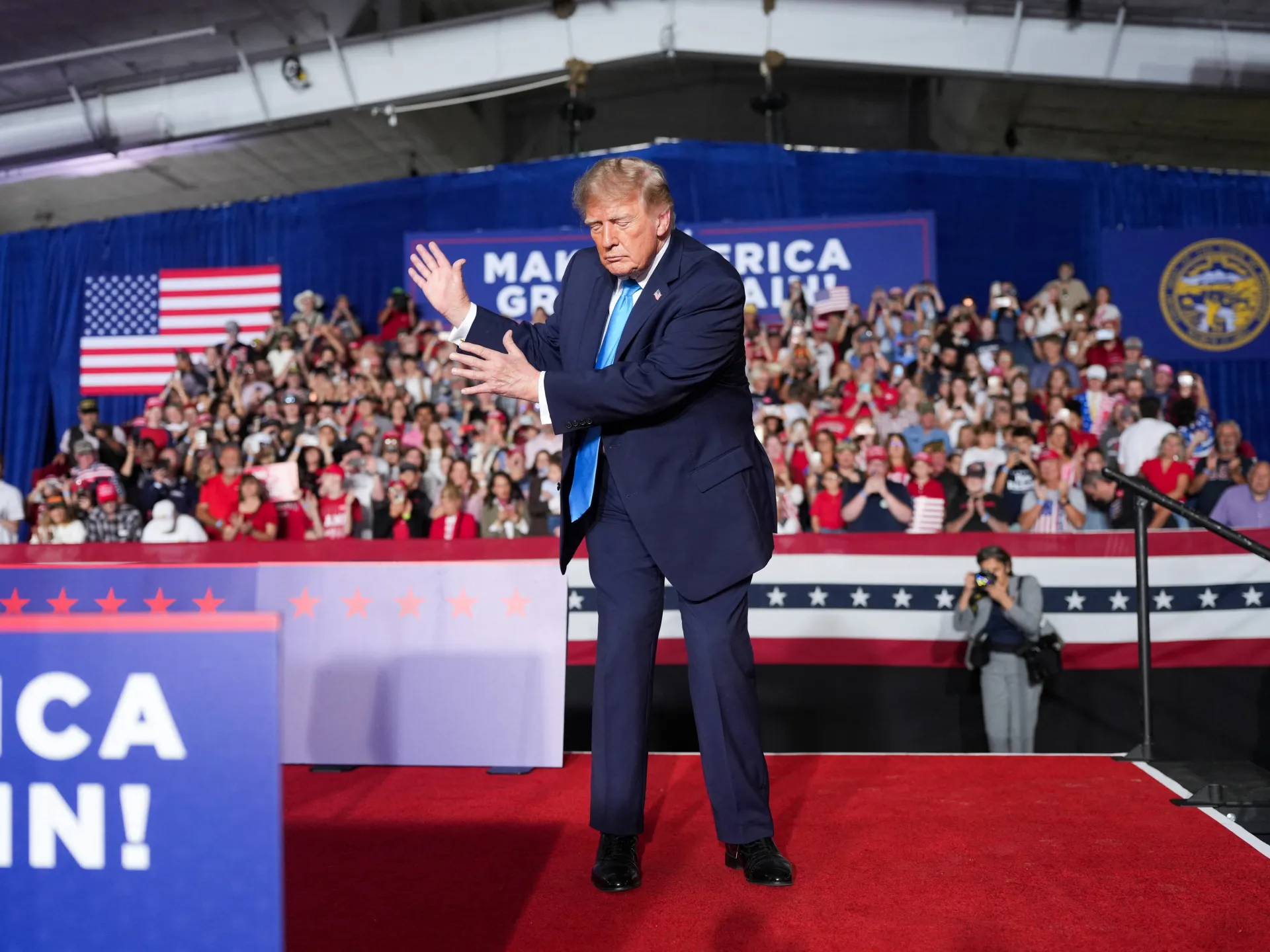
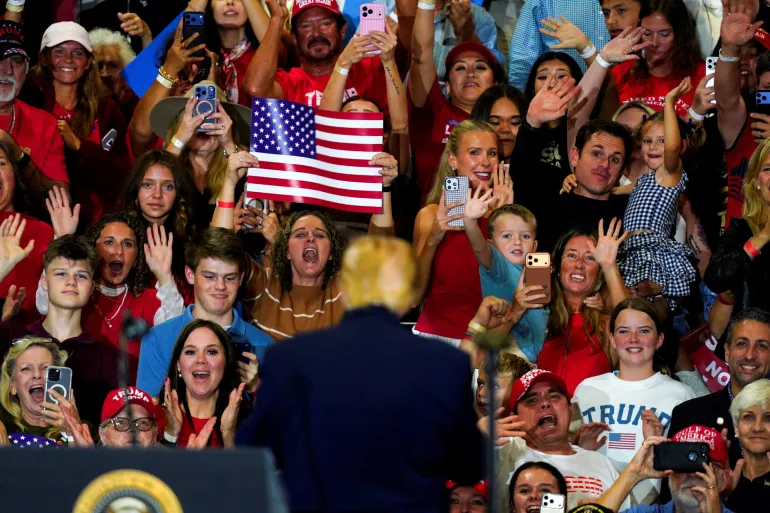

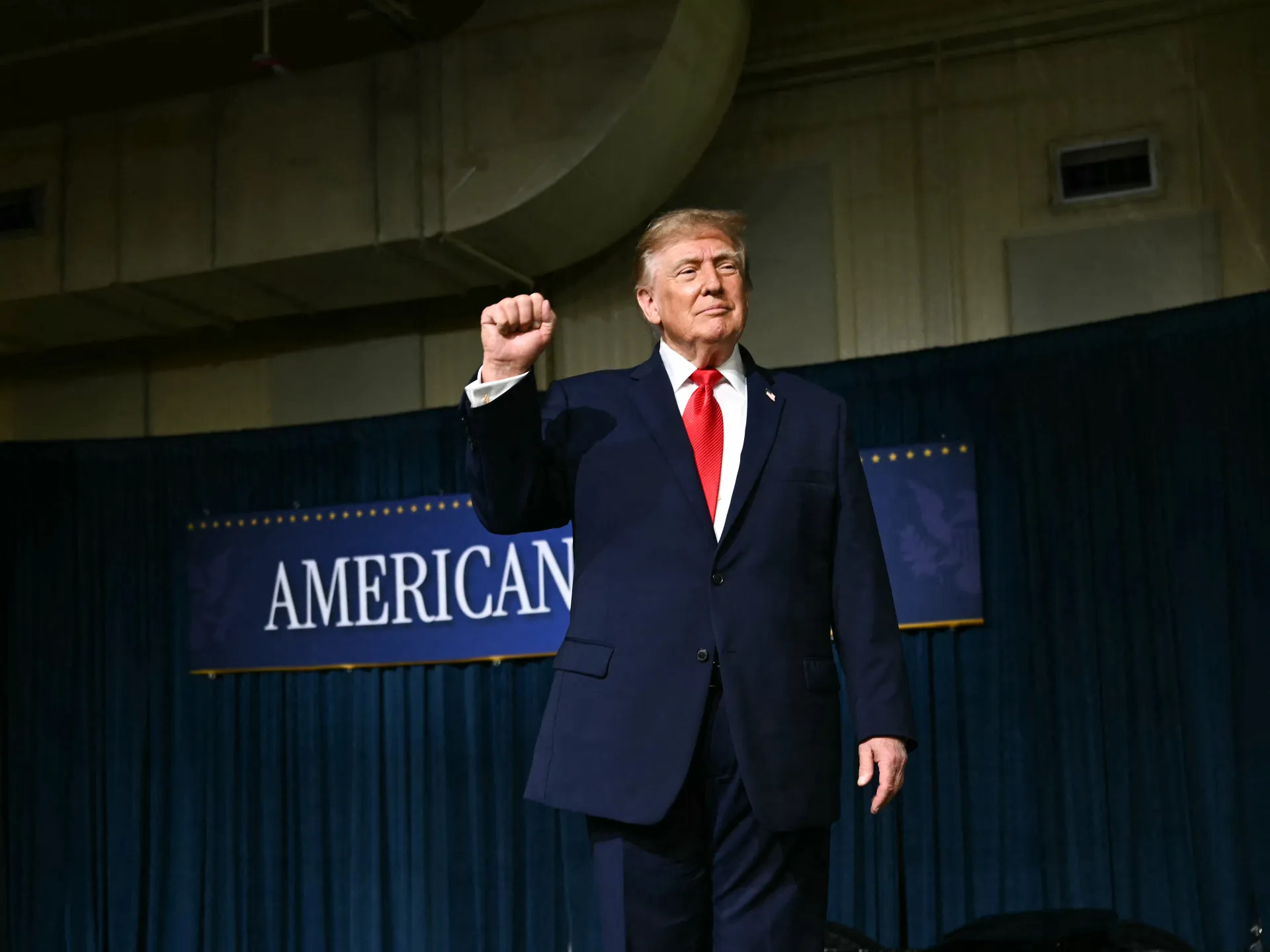
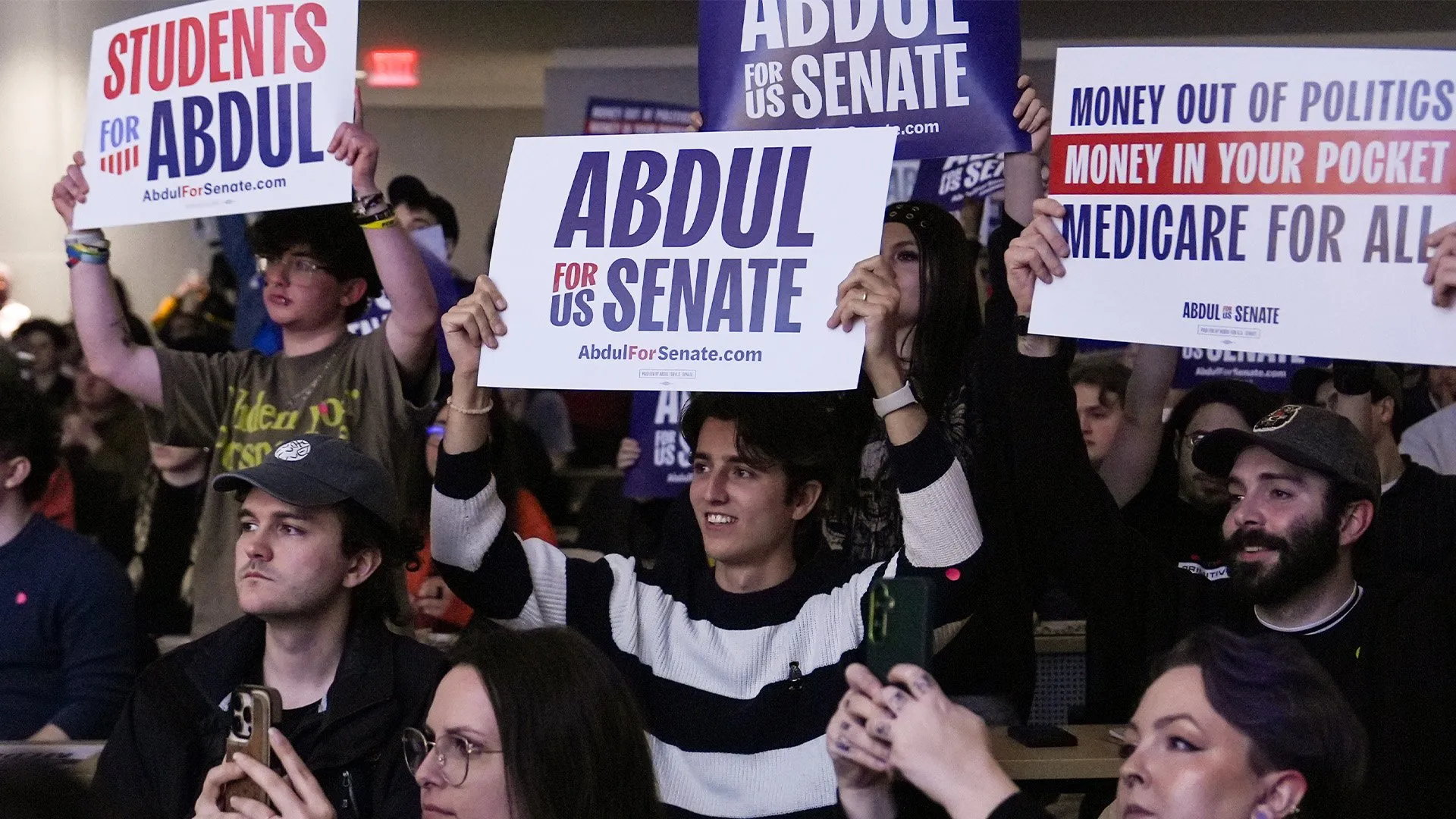
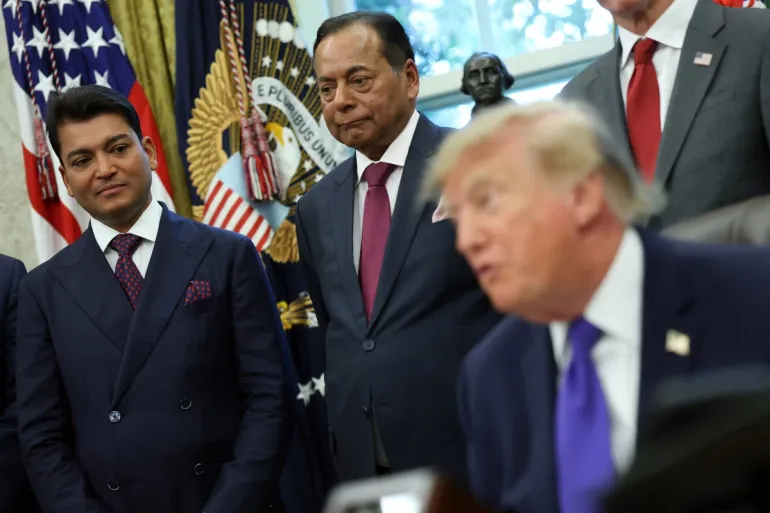


![US President Donald Trump waves as he walks to board Marine One as he departs from the South Lawn of the White House in Washington, DC, on September 26, 2026 [AFP]](https://i0.wp.com/occasionaldigest.com/wp-content/uploads/2026/09/1790693783_407_afp_6ab7d4f7ee67-1790432503.jpg?w=640&ssl=1)