US-Israel war on Iran

Women’s football team to be welcomed home with open arms, Iran says | Football News

The Iranian women’s footballers returning to the country after their Asian Cup campaign in Australia will be welcomed home “with open arms”, Iran’s Ministry of Foreign Affairs has said.

Ministry spokesperson Esmaeil Baghaei urged the players to “come home” on Tuesday, hours after five members of Iran’s squad sought asylum in Australia following their team’s exit from the tournament.

Recommended Stories

list of 3 itemsend of list

“To Iran’s women’s football team: don’t worry – Iran awaits you with open arms,” Baghaei wrote on X.

His post came shortly after the office of Iran’s general prosecutor said the remaining members of the team were invited back to the country “with peace and confidence”.

“These loved ones are invited to return to their homeland with peace and confidence, and in addition to addressing the concerns of their families,” the general prosecutor’s office was quoted as saying by Iran’s Tasnim news agency.

Australia’s decision to provide visas to five players came amid uncertainty and concerns for the team’s safety following their decision to stand in silence during Iran’s anthem before their first match of the tournament on March 3.

The players sang and saluted the anthem in their remaining two matches, on Thursday and Sunday, prompting fears that they could face punishment upon their return home.

Australian Minister for Home Affairs Tony Burke told a news conference on Monday that he had informed the five members “that they are welcome to stay in Australia, that they are safe here, and they should feel at home here”.

He added that he had also offered the other team members the chance to stay in Australia.

The Department of Home Affairs named the five team members as captain Zahra Ghanbari, midfielders Fatemeh Pasandideh, Zahra Sarbali Alishah, Mona Hamoudi, and defender Atefeh Ramezanizadeh.

An undated and unplaced photo released by Australia's Department of Home Affairs shows Home Affairs minister Tony Burke (3/R) with five Iranian women football players who applied for asylum after competing in the Women's Asia Cup tournament being played in Australia. Australia has granted asylum to some of Iran's visiting women's football team over fears they faced persecution at home for not singing the national anthem before a match, Home Affairs Minister Tony Burke said on Tuesday. (Photo by HANDOUT / AUSTRALIAN DEPARTMENT OF HOME AFFAIRS / AFP) / ----EDITORS NOTE ----RESTRICTED TO EDITORIAL USE MANDATORY CREDIT " AFP PHOTO / DEPARTMENT OF HOME AFFAIRS" NO MARKETING NO ADVERTISING CAMPAIGNS - DISTRIBUTED AS A SERVICE TO CLIENTS
An undated and unplaced photo released by Australia’s Department of Home Affairs shows Home Affairs Minister Tony Burke, third left, with five Iranian women football players who applied for asylum [Handout/Australian Department of Home Affairs via AFP]

The players’ decision to stand in silence during Iran’s anthem before their match against South Korea was labelled as the “pinnacle of dishonour” by a commentator on Iran’s IRIB state broadcaster.

The announcement to grant the players visas came after United States President Donald Trump, who is currently waging war on Iran alongside ally Israel, said he had spoken to Australian Prime Minister Anthony Albanese about the “delicate situation” faced by the team, and that Albanese was “on it!”

Iran’s Baghaei dismissed Trump’s statement, questioning the US president’s claims of “saving” the players after new footage of a February 28 attack on an Iranian elementary girls’ school in Minab, which killed 165 students, suggested that the site of the school was likely hit by a Tomahawk missile – a weapon used by the US that Israel and Iran do not possess.

The US had previously accused Iran of the attack.

“They slaughtered more than 165 innocent Iranian schoolgirls in a double-tap Tomahawk attack in the city of Minab, and now they want to take our athletes hostage in the name of ‘saving’ them?” Baghaei said.

Following the Australian government’s decision to grant humanitarian visas to five Iranian players, they were moved to an undisclosed location under police protection, Australian officials were quoted as saying by the Reuters news agency.

Iranian media quoted Farideh Shojaei, vice president for women’s affairs at the Iranian Football Federation, as saying the team had left the hotel through the back door with the police.

“We have contacted the embassy, the football federation, the ‌Foreign Ministry and anywhere possible to see what will happen,” she said.

“We have even spoken with the families of these five players.”

Some of the Iranian players left their hotel in the northeastern city of Gold Coast on Tuesday afternoon on a bus that was surrounded by members of the diaspora protesting against the Iranian government. They flew to Sydney airport on Tuesday evening before being transferred to the international terminal.

It was not clear how many players arrived at the airport or where they were going.

Members of the Iranian community in Australia block the path of a departing bus transporting members of the Iranian Women’s Asia Cup football team to the airport, outside the Royal Pines Resort on the Gold Coast on March 10, 2026. Five players from Iran's visiting women's football team claimed asylum in Australia on March 10, seeking protection after they were branded "traitors" at home for refusing to sing the national anthem. (Photo by Patrick HAMILTON / AFP)
Members of the Iranian community in Australia block the path of a departing bus transporting Iran’s squad to the airport on the Gold Coast [Patrick Hamilton/AFP]

Trump initially posted on social media that Australia was “making a terrible humanitarian mistake” by allowing the team to be sent back home, apparently unaware that Australia had been in secret talks with the women for several days.

Trump said members of the team would “likely be killed” if forced to return to Iran. “The US will take them if you won’t,” he added.

In a later post, Trump said he had spoken to Albanese and that the Australian leader was “doing a very good job having to ⁠do with this rather delicate situation”.

The Iranian general prosecutor’s office said “some members of our country’s women’s football team have, unintentionally and emotionally provoked by the enemy’s conspiracy and mischief, behaved in a way that has caused the delusional excitement of the criminal leaders of the imposed American-Zionist war.”

The US and Israel attacks on Iran have killed 1,255 people in the country and left 1,200 injured after 11 days.

Tehran has responded by launching waves of missiles and drones at Israel and towards several military bases in the Middle East where US forces operate.

Source link

Russia the only ‘winner’ of US-Israel war on Iran: EU Council president | US-Israel war on Iran News

Antonio Costa says Russia benefits from soaring global energy prices and attention being diverted from war in Ukraine.

European Council President Antonio Costa has said Russia is the only country benefitting from the US-Israeli war on Iran, as global energy prices soar and attention from Moscow’s four-year conflict with Ukraine is diverted.

Now in its 11th day, the war has spiralled rapidly throughout the region as Iranian forces hit back at US and Israeli targets, as well as facilities in the Gulf. It has also slowed oil and natural gas flows through the strategic Strait of Hormuz to a near standstill, pushing fuel prices upwards and threatening far-reaching impacts on a number of industries.

Recommended Stories

list of 3 itemsend of list

“So far, there is only one winner in this war – Russia,” Costa said in a speech to European Union ambassadors in Brussels on Tuesday.

“It gains ‌new resources to finance its war against Ukraine as energy prices rise. It profits from the diversion of military capabilities that could otherwise have been sent to support Ukraine. And it benefits from reduced ⁠attention to the Ukrainian front ⁠as the conflict in the Middle East takes centre stage.”

Costa stressed the need for the EU to protect ⁠the international rules-based order, which he said was now being challenged ⁠by the United States, ⁠and for all parties in the Middle East to return to the negotiating table.

“Freedom and human rights cannot ‌be achieved through bombs. Only international law upholds them,” he said. “We must avoid further escalation. ‌Such ‌a path threatens the Middle East, Europe, and beyond.”

The US and Israeli attack on Iran triggered the biggest spike in oil prices on Monday since the turmoil following Russia’s invasion of Ukraine in 2022.

INTERACTIVE - Strait of Hormuz - March 2, 2026-1772714221

Costa’s comments came as the Kremlin said all parties wanted to continue US-mediated Russia-Ukraine peace talks, but that no date or venue had been agreed yet for the next round.

Russia and Ukraine held three rounds of talks in Turkiye last year and have conducted several more US-mediated sessions in Abu Dhabi and Geneva this year. But they remain far apart on key issues, especially on Russia’s demand for Ukraine to cede control of the whole of its eastern Donetsk region.

On Monday, US President Donald Trump and his Russian counterpart, Vladimir Putin, held their first phone call of the year, during which they discussed the wars in Iran and Ukraine.

The Kremlin said the possibility of lifting US sanctions on Russian oil had not been discussed in any detail with Washington, but that US actions were aimed at stabilising global energy markets.

Following this call, Putin said Russia, the world’s second-largest oil exporter and holder of the biggest natural gas reserves, was ready to work again with European customers if they wanted to return to long-term cooperation.

Before the Ukraine war, Europe was buying more than 40 percent of its gas from Russia. By 2025, combined sales of pipeline gas and LNG from Russia accounted for only 13 percent of total EU imports.

Also on Monday, Trump said his administration would lift some sanctions on oil-producing countries to keep energy prices down – though he did not say which ones.

Washington currently maintains sanctions on the oil sectors of Russia, Iran and Venezuela.

The Reuters news agency, citing multiple unnamed sources, reported that Trump was considering easing sanctions on Russia as part of his plans to keep oil prices down.

US Treasury Secretary Scott Bessent last week announced a 30-day waiver on sanctions on Russian oil sales to India to help it cope with the cuts to Middle East supply.

Source link

Could the US-Israel war with Iran fuel global inflation? | Business and Economy

Oil prices are swinging as markets react to every twist in the conflict.

The United States and Israel’s war on Iran has caused the largest energy supply shock in decades.

The Strait of Hormuz is in effect closed, and attacks are being carried out on energy facilities in the Middle East, rattling oil markets.

From Americans filling their tanks at the pump to European factories and Asian economies, the impact is already being felt.

US President Donald Trump says the rise in oil prices is a “very small price to pay” for “safety and peace”. But investors warn that if the conflict drags on, there’s danger of stagflation.

Source link

US consumers express dismay over rising gas prices after attack on Iran | US-Israel war on Iran News

Surging energy prices caused by the US-Israel war on Iran could ripple across the United States economy, heaping further strain on consumers at a time when cost-of-living issues are already a primary concern.

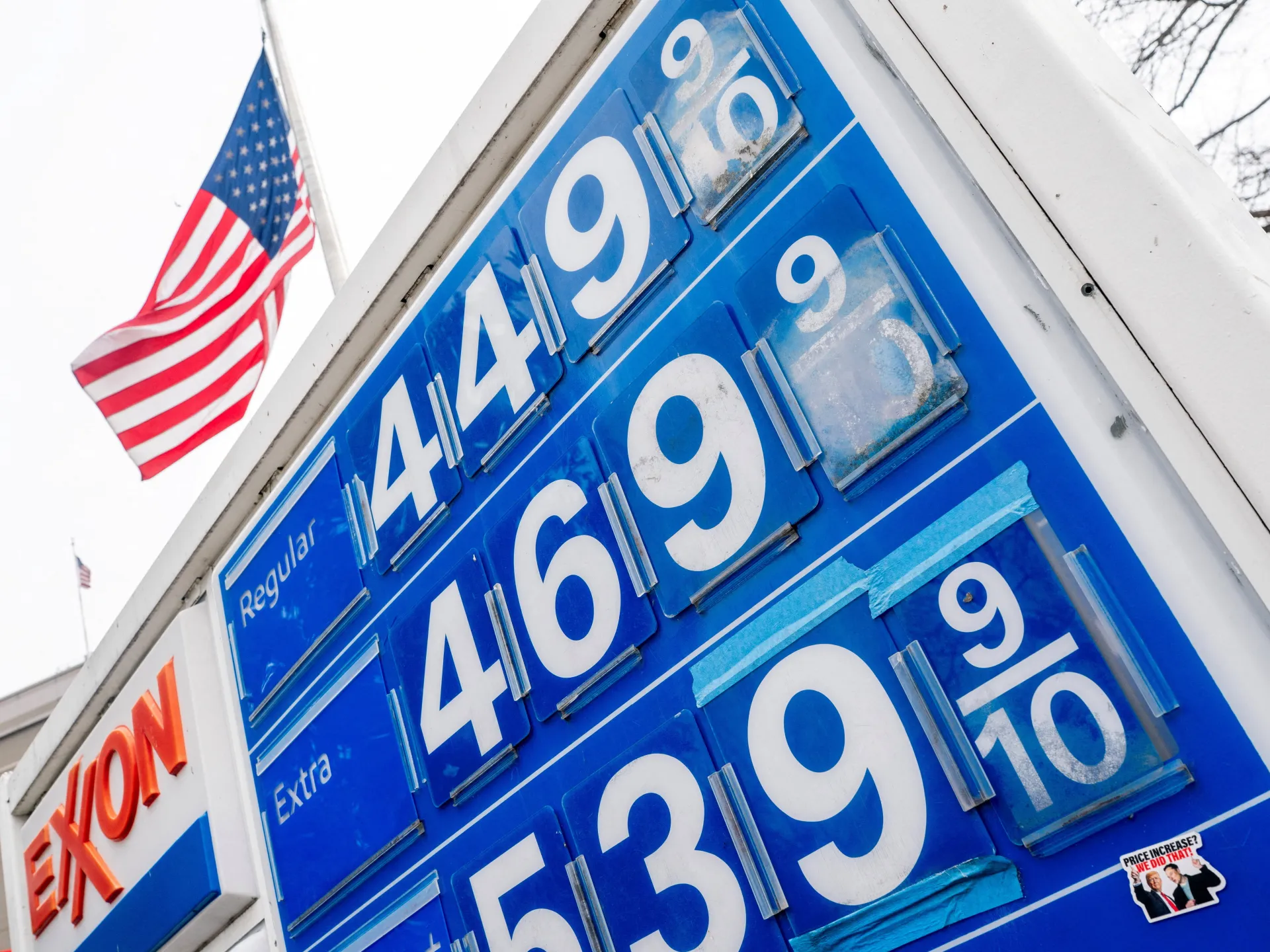
The price of crude oil increased from about $67 per barrel before the war began on February 28 to nearly $97 on Monday, as the conflict snarls production and transport in one of the most energy-rich regions on earth. Oil temporarily passed $100 per barrel on Sunday before slightly easing back.

Recommended Stories

list of 3 itemsend of list

The price tracker GasBuddy reported on Monday that the average price of gas in the US has risen by 51 cents per gallon over the last week.

“Yes, yes, definitely,” said 52-year-old Alma Newell when asked if she was worried about price increases at a gas station in the coastal city of Goleta, California.

Newell said she is out of work with a shoulder injury and worried that rising costs could stretch her already limited budget.

“The prices have a big impact because I’m not working right now,” she said. “Food and rent are already very expensive.”

“It’s crazy,” she added. “Because the war is so unnecessary.”

Cost of living issues

Rising prices could deepen frustration with the administration of US President Donald Trump and put greater political pressure on the White House, already struggling to address cost-of-living issues with the crucial midterm elections set to take place later this year.

“I think the current price increase in oil suggests the US will see $3.50 to $4 gasoline by next week, and $5 diesel this week,” said Gregory Brew, a senior analyst on Iran and oil at the Eurasia Group.

The highest recorded average for gas prices at the pump was in June 2022, when prices soared to $5.034, months after the Russian war on Ukraine started, according to Gas Buddy, which tracks fuel prices going back to 2008.

“The impact 1773123967 is more political than economic, as high gasoline prices generate negative press and can add to the perception that the government is not properly handling the economy. That means Trump will feel more political pressure to end this war quickly.”

A Pew Research Center poll in early February suggested widespread anxiety about the rising cost-of-living before the US and Israel launched attacks on Iran, with 68 percent of respondents saying they were very or somewhat concerned about gas prices.

“I’m not too worried myself because I have a hybrid car and ride my bike,” said 72-year-old Bjorn Birmir at the gas station in Goleta, California. “But for people in general, it will make life more expensive. Prices are already high, and it will make them even higher.”

Ongoing disruptions

The disruptions caused by the war include the shuttering of the Strait of Hormuz, a key node in global transit and shipping. Iran has long said that it could close down the strait in the event of a showdown with the US and Israel.

About 20 percent of global oil and a significant portion of natural gas pass through the strait, predominantly to Asia, supplies that are now stranded as traffic through the narrow waterway has ground to a halt. Iranian attacks on energy infrastructure in countries across the region have also led some countries to scale back production.

Other economic sectors are also feeling the squeeze.

Goods such as fertiliser, vital for agricultural production, are seeing price increases just ahead of the spring planting season in the Northern Hemisphere. About one-third of the global fertiliser trade passes through the Strait of Hormuz.

Effects of the war could ripple throughout the global economy, with poor countries especially hard-hit. Pakistan announced a series of austerity measures and cuts to fuel subsidies on Monday, while Bangladesh shuttered universities and announced restrictions on fuel use as a result of the war.

US officials and countries around the world have already discussed measures to help ease the shock of rising energy prices, including the potential release of strategic oil reserves in a bid to temporarily boost global supply.

The G7 said on Monday that it would take “necessary measures” to support energy supplies, but held off on announcing the release of strategic reserves, with energy ministers set to meet on Tuesday to discuss the matter further.

The US has a strategic oil reserve of more than 415 million barrels, one of the largest in the world, that it could release in coordination with allied countries.

But it is unclear when these measures would kick in and how long such steps could help fill the gaps created by the war.

Rachel Ziemba, adjunct senior fellow at the Center for a New American Security, says that much depends on whether the war is brought to a speedy conclusion or continues on for weeks or even months, with the possibility of further escalation.

Thus far, neither the US and Israel nor Iran has suggested it are willing to stop the war anytime soon, although Trump told CBS News on Monday that “the war is very complete, pretty much”, comments that helped ease some of the price swings in oil and stocks.

“If the war continues, we would see oil prices not only remain elevated, but perhaps rally further as markets price in a more protracted outage,” said Ziemba. “There’s also the question of, when it does end, how much damage will be done to infrastructure and just how quickly supplies could come back online.”

Initial polling has suggested that the war is unpopular in the US, with a Quinnipiac University poll released on Monday finding that 53 percent of voters who responded oppose Trump’s military action in Iran, including 60 percent of political independents.

That lack of popular support could present a political headache for Trump and his Republican Party if voters connect the war to increasing prices. Thus far, Trump has largely dismissed concerns about the war’s possible impact on the rising cost of living.

“Short term oil prices, which will drop rapidly when the destruction of the Iran nuclear threat is over, is a very small price to pay for USA, and World, Safety and Peace,” Trump said in a Truth Social post on Sunday. “ONLY FOOLS WOULD THINK DIFFERENTLY!”

Source link

Australia to send missiles to UAE, surveillance plane to help Gulf defence | US-Israel war on Iran News

Australian Prime Minister Anthony Albanese said air-to-air missiles and a reconnaissance plane will be sent to region amid conflict with Iran.

Prime Minister Anthony Albanese said Australia will deploy a long-range reconnaissance aircraft and send air-to-air missiles to help countries in the Gulf region defend against Iranian attacks.

“The Iranian conflict in the Middle East began just over a week ago, and Iran’s reprisal attacks continue to escalate, already at a scale and depth we haven’t seen before. Twelve countries across the region, from Cyprus through to the Gulf, are continuing to be targeted,” Albanese said in a news conference on Tuesday.

Recommended Stories

list of 4 itemsend of list

He said the Royal Australian Air Force will send an E7A Wedgetail surveillance aircraft and supporting personnel to “protect and secure airspace above the Gulf” for the next four weeks, and help the region with its “collective self-defence”.

Australia will also send advanced medium-range air-to-air missiles to the United Arab Emirates, he said, following a phone call with UAE President Mohammed bin Zayed Al Nahyan.

Albanese cited the 115,000 Australians living in the Middle East – among them, 24,000 in the UAE – as a major factor behind the deployment of military assets.

“Helping Australians means also helping the United Arab Emirates and other Gulf nations defend themselves against what are unprovoked attacks,” he told reporters, stressing that the deployments were for defensive purposes only.

“My government has been clear: We are not taking offensive action against Iran, and we are clear we are not deploying Australian troops on the ground in Iran,” he said.

Some 2,600 Australians have left the Middle East since last week, Albanese said, but “significant challenges” remain in helping those who want to leave but remain in the region.

The prime minister’s announcement was immediately slammed by the opposition Greens party, which said Australia risks becoming embroiled in another US-led “forever war”.

Australia joined the US-led invasions of Afghanistan and Iraq in 2001 and 2003, and lost more than 50 personnel during the conflicts, according to the Australian War Memorial.

Greens Senator Larissa Waters said she feared more Australian lives were at risk with the announced deployments, which the government, led by the Labor Party, said would be accompanied by 85 Australian personnel.

“Australians do not want to get dragged into Trump and Netanyahu’s illegal war on Iran. Labor shouldn’t be sending troops to help a military that’s killed 150 schoolchildren in a primary school bombing. That will only escalate an illegal conflict that’s already spiralling out of control, and leave Australia trapped in yet another forever war,” Waters said in a statement on Tuesday.


“Every day Trump and Netanyahu’s demands of Australia keep growing. It was refuelling US spy planes yesterday, a recon jet and missiles today, and could be ever more troops tomorrow. Labor has no red lines when it comes to appeasing Donald Trump and Benjamin Netanyahu,” she said, referring to the US president and Israeli prime minister, respectively.

Albanese said separately on Tuesday that Canberra has formally granted asylum to five members of Iran’s women’s football team, who were visiting Australia for the Asian Football Confederation Women’s Asian Cup 2026 in Queensland.

Albanese said the women had been issued with humanitarian visas and moved to a safe location with the assistance of Australian Federal Police.

“Australians have been moved by the plight of these brave women. They’re safe here, and they should feel at home here,” Albanese told reporters.

Source link

‘No middle ground’: Israelis back Iran war, despite taking mounting hits | US-Israel war on Iran News

Itamar Greenberg laughed when asked if he thought he should be afraid. The 19-year-old Israeli antiwar activist had just described being spat on in the street and is the target of an online hate campaign.

“Yes!” he finally responded. “If I thought about it, I probably should be. I just don’t have time.”

Voices like Greenberg’s are rare in Israel at a time when public clamour for war is growing, and genocidal language already familiar to millions of Palestinians is reemerging, but with a different target – Iran.

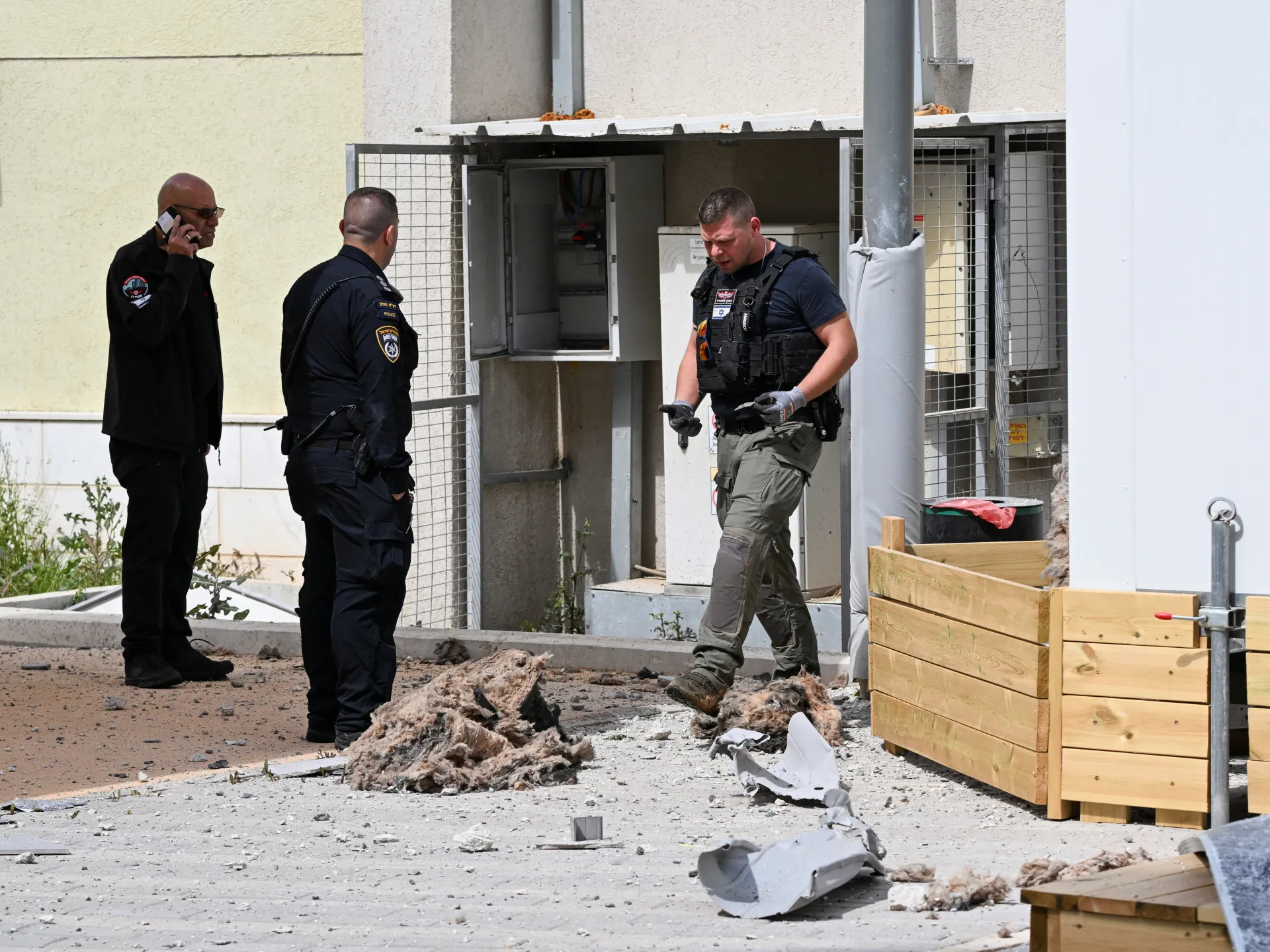
Officially, 11 Israelis have been killed in Iranian strikes since the US and Israel launched their war on Iran on February 28. What the actual number might be, or how many of Iran’s ballistic missiles may have penetrated the country’s Iron Dome defence shield, is unknown.

Speaking at the site of an Iranian missile strike in West Jerusalem, shortly after the start of the US-Israeli attacks on Iran, Israeli Prime Minister Benjamin Netanyahu returned to the use of apocalyptic language that has characterised the genocide his country has conducted in Gaza. Comparing Iranians with the Jewish people’s biblical foe, Amalek, who the Jews had been divinely ordered to wipe from the face of the planet, Netanyahu told reporters: “In this week’s Torah portion, we read, “‘Remember what Amalek did to you.’ We remember, and we act.”

So far, Iran claims to have launched strikes across Israel, saying its missiles and drones hit military sites, symbolic infrastructure, and even Netanyahu’s office. Tehran has described the attacks as precise and strategic, rather than indiscriminate and part of a broader regional response. Iran also claims to have targeted locations such as Tel Aviv, Ben Gurion airport and Haifa.

However, Israeli officials have denied many of the specific claims. Netanyahu’s office dismissed Iranian assertions about hitting his office, or affecting his condition, as “fake news”, with stringent reporting restrictions on Iranian strikes within Israel making confirmation either way difficult.

What is clearer is that against the drumbeat of Iranian strikes, the fervour for war appears to be increasing among the public. A poll carried out last week by the Israel Democracy Institute (IDI) suggested overwhelming public support for the war, with 93 percent of Jewish-Israeli respondents expressing support for the strikes on Iran, and 74 percent expressing support for Netanyahu, the country’s historically divisive prime minister.

“No one’s talking about opposition to the war,” Greenberg said, describing an environment in which figures from across Israel’s media and political landscape – with the exception of the left-wing Hadash party and antiwar organisations such as Greenberg’s Mesarvot – had lined up behind the war. “It’s also getting increasingly violent,” he said.

“We held a protest on Tuesday, where the police were already waiting. They beat and arrested us. I was illegally strip-searched,” he said, describing it as efforts intended to humiliate him.

Greenberg is no stranger to such tactics. Six months ago, after being arrested for protesting the genocide in Gaza, prison guards had threatened to carve a Star of David on his face, a permanent reminder of what they thought his priorities should be.

It’s not just antiwar activists who have faced the brunt of the Israeli security establishment’s force.

“The atmosphere is very violent,“ lawmaker Ofer Cassif of the Hadash party told Al Jazeera. “When I leave the house, I’m more worried by the danger posed by a physical attack by fascists than I am by any missile,” he said.

Hadash and lawmakers like Cassif have been targeted by physical threats and attacks throughout the Gaza war. But criticism of the Netanyahu government’s handling of Israeli captives in Gaza meant that opposition to the Gaza war was – comparatively – more socially acceptable. When it comes to Iran, the current climate is toxic, Cassif said.

“We’re often accused of supporting the regime in Tehran,” Cassif explained of the attempts to delegitimise their opposition to the war.

“We’re unequivocally not. We want to see that regime go, but we’re not going to allow Netanyahu to say he’s doing this for the Iranian people. He isn’t. That’s not just rhetoric, that’s fact. The Israeli leadership was just as supportive of the shah as the US, and he was a murderous dictator no less than the current regime,” Cassif said, referring to Mohammad Reza Pahlavi, the leader of Iran before the Islamic revolution.

For now, analysts and observers in Israel describe a society that believes it is almost engaged in a holy war.

“They brought an antiwar activist onto one of the light news programmes,” political analyst Ori Goldberg said from near Tel Aviv, “and she was treated like you would a flat-earther. It’s as if it’s inconceivable that anyone would oppose this war.

“Israel has become a society with no middle ground, no capacity for conversation. It’s as if our entire existence is dependent on our ability to do anything we want. And if the world tries to stop that, then the world’s anti-Semitic, and we all burn.”

Source link

World reacts to appointment of Mojtaba Khamenei as Iran’s supreme leader | US-Israel war on Iran News

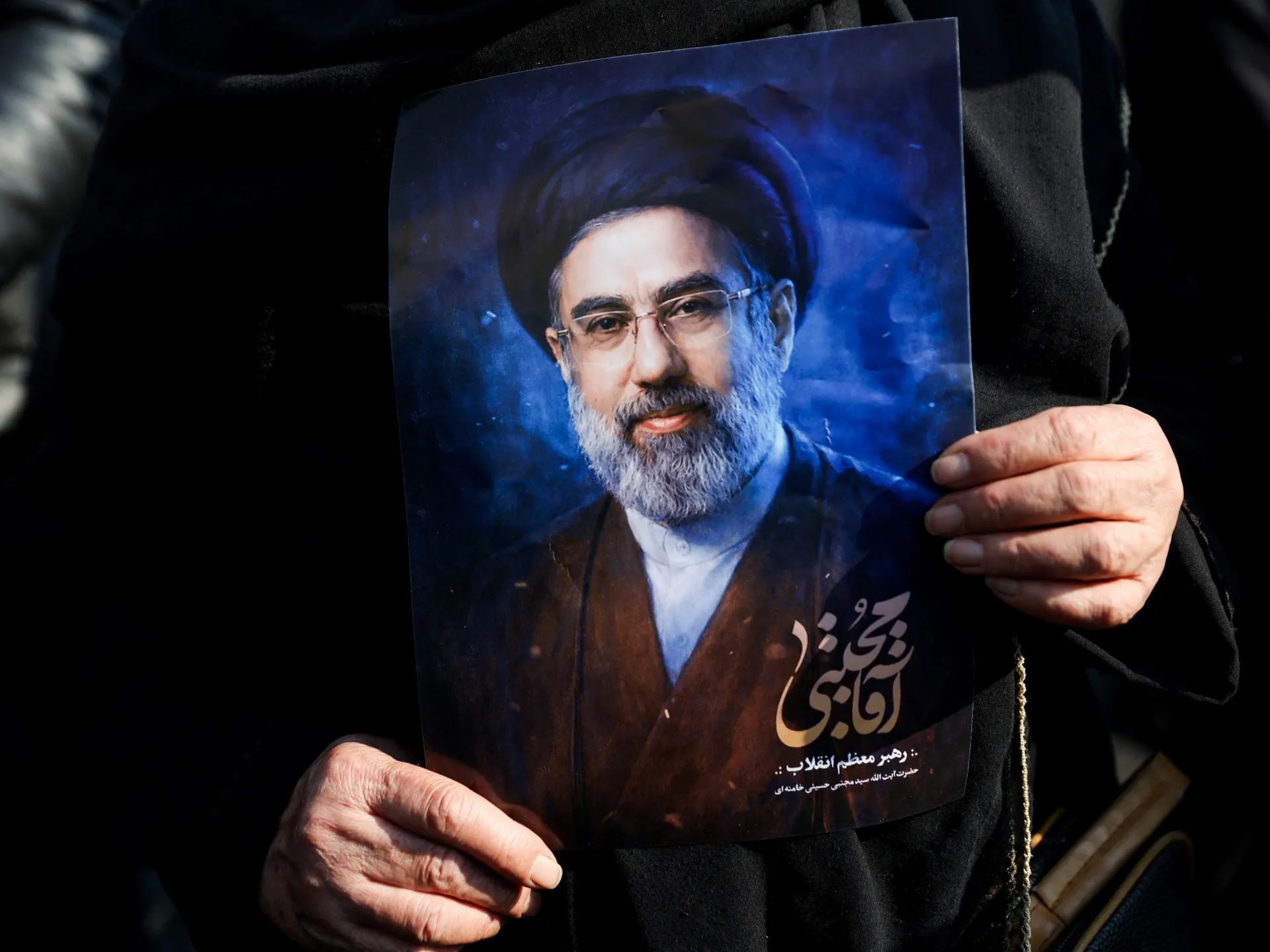
Iran’s new Supreme Leader Mojtaba Khamenei has never held a formal position in government, but his appointment as his late father’s successor amid the US-Israeli war on his country was not unexpected.

Iran’s Assembly of Experts appointed the 56-year-old mid-ranking religious scholar to the position on Sunday, just over a week after his late father, Ayatollah Ali Khamenei, was killed in United States-Israeli strikes.

Recommended Stories

list of 3 itemsend of list

Khamenei, who has strong ties with the Islamic Revolutionary Guard Corps (IRGC) and his late father’s still-influential office, is seen as a hardliner who will provide continuity in the country.

His appointment, which came after he lost both his father and his wife in strikes, was interpreted as a defiant choice signalling continuity as the Islamic Republic faces the biggest crisis in its 47-year history.

Khamenei received immediate backing from figures in Iran’s political and security establishment, including IRGC leaders, President Masoud Pezeshkian and Ali Larijani, secretary of the Supreme National Security Council.

Outside the country, reactions were mixed:

Oman

Oman was a mediator in recent talks between Iran and the United States, which collapsed when the US and Israel unleashed their war on Iran last month.

Oman’s Sultan Haitham bin Tariq Al Said on Monday sent a “cable of congratulations” to Khamenei on his appointment as Iran’s new supreme leader, according to the official Oman News Agency.

Iraq

Iraqi Prime Minister Mohammed Shia al-Sudani also congratulated Khamenei on his appointment on Monday.

“We express our confidence in the ability of the new leadership in the Islamic Republic of Iran to manage this sensitive stage, and continue to strengthen the unity of the Iranian people in facing the current challenges,” al-Sudani said in a statement.

He reaffirmed Iraq’s solidarity and support for Iran and “all steps aimed at ending the conflict and rejecting military operations against its sovereignty, in order to preserve the stability of other countries in the region”.

United States

US President Donald Trump had previously dismissed Mojtaba Khamenei as a “lightweight”, and insisted he should have a say in appointing a new Iranian leader, which Tehran rejected.

On Monday, Trump told NBC News, “I think they made a big mistake. I don’t know if it’s going to last. I think they made a mistake.”

Later on Monday, he told CBS News: “I have no message for him.”

Trump said he has someone in mind to lead Iran, but did not elaborate.

Israel

The ⁠Israeli ⁠military has already threatened to kill any replacement for the late Ali Khamenei.

Israel’s Foreign Ministry said Monday that Mojtaba Khamenei was a “tyrant” like his slain father, and would continue what it described as the Iranian “regime’s brutality”.

In a post on X featuring a picture of Mojtaba Khamenei and his father Ayatollah Ali Khamenei, holding guns, the ministry wrote: “Mojtaba Khamenei. Like Father Like Son”.

“Mojtaba Khamenei’s hands are already stained with the bloodshed that defined his father’s rule. Another tyrant to continue the Iranian regime’s brutality,” said the ministry.

Russia

Russian President Vladimir Putin on Monday pledged “unwavering support” to Iran.

“I would like to reaffirm our unwavering support for Tehran and solidarity with our Iranian friends,” Putin said in a message to Khamenei, adding that “Russia has been and will remain a reliable partner” to Iran.

“At a time when Iran is confronting armed aggression, your tenure in this high position will undoubtedly require great courage and dedication,” the Russian leader said.

China

China’s Foreign Ministry spokesman Guo Jiakun told reporters on Monday that Iran’s decision to appoint the younger Khamenei was “based on its constitution”.

“China opposes interference in other countries’ internal affairs under any pretext, and Iran’s sovereignty, security, and territorial integrity should be respected,” he said when asked about the threats against the new leader.

Beijing is a close partner of Tehran and condemned the killing of the former supreme leader, but it has also criticised the Iranian counterstrikes against Gulf states.

Yemen’s Houthis

Yemen’s Houthi rebels on Monday welcomed the appointment of the new supreme leader.

“We congratulate the Islamic Republic of Iran, its leadership and people, on the selection of Sayyid Mojtaba Khamenei as Supreme Leader of the Islamic Revolution at this important and pivotal juncture,” the group said in a statement on Telegram.

It called his selection “a new victory for the Islamic Revolution and a resounding blow to the enemies of the Islamic Republic and the enemies of the nation”.

Source link

Where do the 35 million foreigners living in the GCC come from? | Infographic News

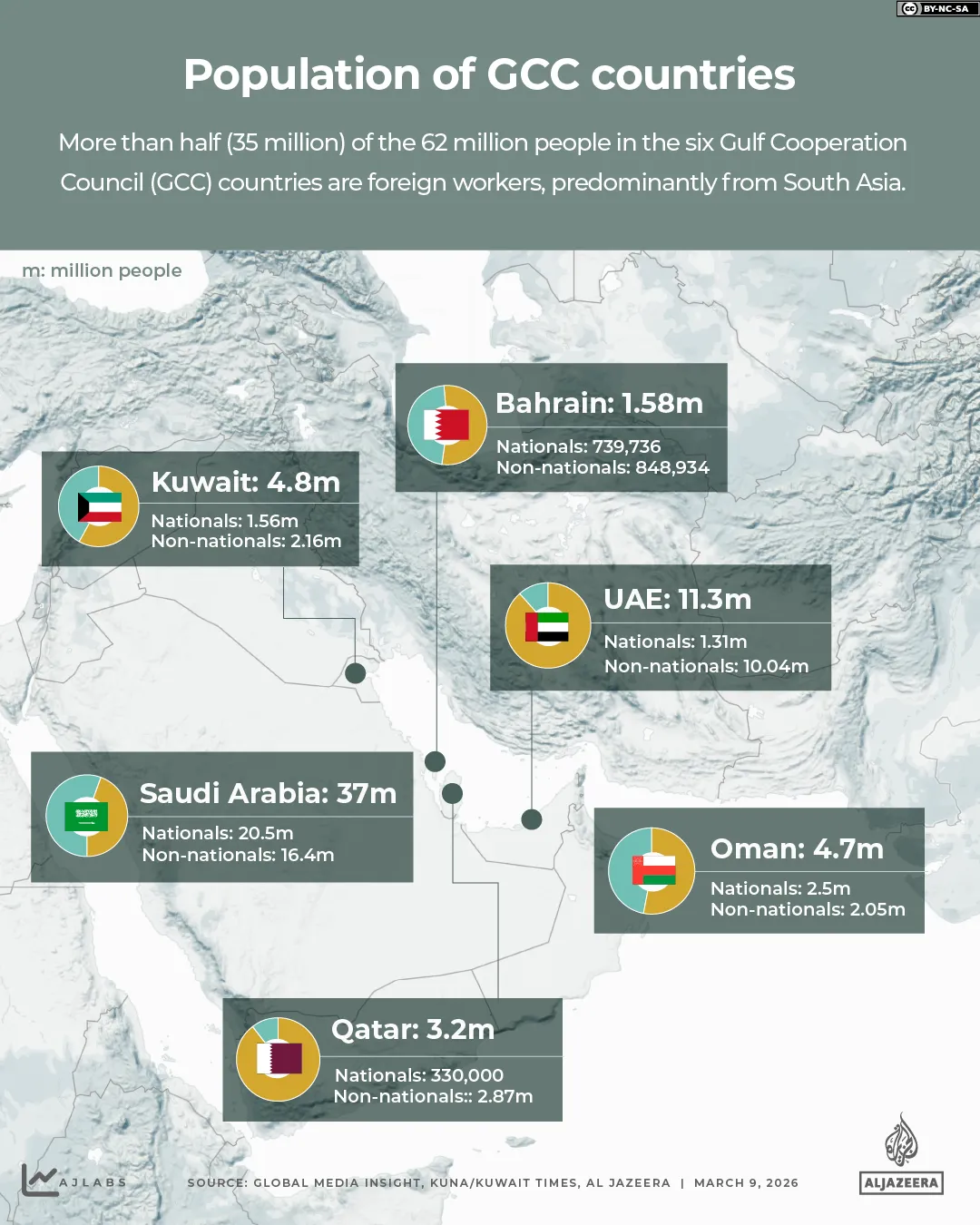
More than half of the 62 million people in the six Gulf Cooperation Council (GCC) countries are foreign workers.

Nearly 62 million people living in the six Gulf Cooperation Council (GCC) countries have been caught in the crossfire of the latest US-Israel war on Iran.

Known for their economic opportunities, these countries, including Bahrain, Kuwait, Oman, Qatar, Saudi Arabia and the United Arab Emirates (UAE), collectively host nearly 35 million foreign workers from around the world, predominantly from South Asia.

Recommended Stories

list of 4 itemsend of list

With the exception of Saudi Arabia and Oman, foreign workers make up the bulk of the populations of people living in the remaining four GCC countries.

The map below illustrates the national and non-national populations in each of the GCC countries.

Interactive_WhereDo_Expats_GCC_MARCH9_2026

Where do GCC foreign workers come from?

Generations of foreign workers in the GCC countries have significantly contributed to the workforce, including labourers, construction workers, household staff, security personnel, and cleaners, all vital to building the modern infrastructures that Gulf nations are known for.

Millions consider the Gulf their home, despite holding nationalities from other countries.

Additionally, highly skilled foreign workers have a long history in industries such as banking, finance, technology, engineering, aviation, medicine and the media.

According to Global Media Insight, a digital marketing agency based out of the UAE,  the 10 largest groups of non-nationals living across the six GCC countries are from:

  • India: 9.1 million
  • Bangladesh: 5 million
  • Pakistan: 4.9 million
  • Egypt: 3.3 million
  • Philippines: 2.2 million
  • Yemen: 2.2 million
  • Sudan: 1.1 million
  • Nepal: 1.2 million
  • Syria: 694,000
  • Sri Lanka: 650,000

Interactive_WhereDo_Expats_GCC_COUNTRY_NATIONALITY_MARCH9_2026

Saudi Arabia

Saudi Arabia is the largest of the six GCC countries, with a population of nearly 37 million.

riyadh
Aerial view of Riyadh city is seen from Mamlaka tower, a 99-story skyscraper, in Riyadh, Saudi Arabia [Amr Nabil/AP Photos]

The oil-rich country has a local population of about 20.5 million and an additional 16.4 million foreign residents.

The five largest groups of non-nationals living in Saudi Arabia are people from:

  • Bangladesh: 2,590,000
  • India: 2,310,000
  • Pakistan: 2,230,000
  • Yemen: 2,210,000
  • Egypt: 1,800,000
  • Sudan: 1,000,000

The UAE

The United Arab Emirates has the second-largest population in the GCC, totaling some 11.3 million people.

Dubai skyline
Dubai skyline is visible with the Burj Khalifa, the world’s tallest building, during the COP28 U.N. Climate Summit, in Dubai, United Arab Emirates, Thursday, November 30, 2023 [Kamran Jebreili/ AP Photo]

It consists of seven emirates, including the capital Abu Dhabi, Dubai, Sharjah, Ajman, Umm Al Quwain, Ras Al Khaimah, and Fujairah.

Emiratis make up nearly 12 percent of the population, with foreigners at almost 88 percent.

The five largest groups of non-nationals living in the UAE are from:

  • India: 4,360,000
  • Pakistan: 1,900,000
  • Bangladesh: 840,000
  • Philippines: 780,000
  • Iran: 540,000
  • Egypt: 480,000

Kuwait

With a population of 4.8 million, Kuwait has the third-largest population in the GCC.

Kuwait
A drone view shows Kuwait City in Kuwait, February 28, 2026 [Stephanie McGehee/Reuters]

Approximately 1.56 million are Kuwaiti citizens, and 2.16 million are foreign workers.

The five largest groups of non-nationals living in Kuwait are from:

  • India: 1,000,000
  • Egypt: 700,000
  • Bangladesh: 350,000
  • Philippines: 250,000
  • Pakistan: 200,000
  • Nepal: 120,000

Oman

Oman’s population stands at approximately 4.7 million people. Oman’s 2.5 million citizens account for nearly 59 percent of the population, while the remaining 2.05 million (or 41 percent) are foreign workers.

Oman
General view of old Muscat the day after Oman’s Sultan Qaboos bin Said was laid to rest in Muscat, Oman, January 12, 2020 [Christopher Pike/Reuters]

The five largest groups of non-nationals living in Oman are from:

  • India: 766,735
  • Bangladesh: 718,856
  • Pakistan: 268,868
  • Egypt: 46,970
  • Philippines: 45,213
  • Uganda: 20,886

Qatar

Qatar skyline
The Doha skyline, seen here [Showkat Shafi/Al Jazeera]

Qatar has a population of some 3.2 million people, with 2.87 million foreign workers accounting for about 88 percent of them. Qatari citizens number around 330,000, making up 12 percent.

The five largest groups of non-nationals living in Qatar are from:

  • India: 700,000
  • Bangladesh: 400,000
  • Nepal: 400,000
  • Egypt: 300,000
  • Philippines: 236,000
  • Pakistan: 180,000

Bahrain

With a total population of 1.58 million, Bahrain has the smallest population in the GCC. Bahraini citizens make up just under half of the population.

Manama
A general view of residential buildings in the Juffair district of Manama, Bahrain, June 22, 2025 [Hamad I Mohammed/Reuters]

The five largest groups of non-nationals living in Bahrain are from:

  • India: 350,000
  • Bangladesh: 150,000
  • Pakistan: 120,000
  • Philippines: 80,000
  • Egypt: 60,000
  • Nepal: 35,000

Source link

Putin says Russia can supply oil, gas to Europe as energy prices soar | US-Israel war on Iran News

Russian president spoke as oil prices surged past $100 per barrel, reaching levels unseen since start of Ukraine war.

Russian President Vladimir Putin has said that Russia is ready to conditionally supply oil and gas to Europe as the US-Israeli war on Iran brings shipments through the Strait of Hormuz to a halt.

The Russian president said in televised comments on Monday that Moscow was ready to work again with European customers, which largely stopped buying from his country in a bid to stop funding its war on Ukraine, if they wanted to return to long-term cooperation.

Recommended Stories

list of 3 itemsend of list

European countries, however, have spent the past four years sharply reducing their reliance on Russian oil and gas in response to Moscow’s war in Ukraine and subsequent European Union and Group of Seven (G7) sanctions.

The EU banned maritime imports of Russian crude in 2022, while Russia’s pipeline exports to Hungary and Slovakia have been effectively halted since January due to damage to the Druzhba oil pipeline via Ukraine.

“If European companies and European buyers suddenly decide to reorient themselves and provide us with long-term, sustainable cooperation, free from political pressures, free from political pressures, then yes, we’ve never refused it. We’re ready to work with Europeans too,” said Putin at a meeting with government officials and heads of Russia’s top oil and gas producers.

He said that Russian companies should take advantage of conflict in the Middle East, which has seen Iran effectively halt shipping in the Strait of Hormuz, one of the world’s key oil transit chokepoints that carries roughly a fifth of global oil and liquefied natural gas.

The Russian president spoke as oil prices exceeded $100 per barrel on Monday, reaching peaks unseen since he launched his country’s full-scale invasion of Ukraine in 2022.

Brent crude, the international benchmark, rose by more than 30 percent on Sunday, at one point topping $119 a barrel, as fears grew of prolonged disruption to global energy supplies.

G7 nations said on Monday that they were prepared to implement “necessary measures” in response to surging global oil prices, but stopped short of committing to release emergency reserves.

Putin’s comments came hours after Hungarian Prime Minister Viktor Orban urged the European Union to suspend sanctions on Russian oil and gas to counter prices sent soaring by the war in the Middle East.

Last week, Putin had instructed the government to consider switching remaining Russian oil and gas flows away from Europe, before the European Union starts enforcing its decision to completely ban Russian fossil fuels.

Before the Ukraine war, Europe was buying more than 40 percent of its gas from Russia. By 2025, combined sales of pipeline gas and LNG from Russia accounted for only 13 percent of total EU imports.

The loss of the European market during the Ukraine war forced Russia to sell oil and gas at steep discounts to Asia.

Source link

Who is Iran’s new supreme leader, Mojtaba Khamenei? | US-Israel war on Iran News

Mojtaba Khamenei replaces his assassinated father Ayatollah Ali Khamenei.

A new supreme leader in Iran – Mojtaba Khamenei – has replaced his assassinated father.

His selection sends a defiant message to the United States and Israel as they attack the country.

So, who is Iran’s new leader – and what does his appointment mean?

Presenter: Tom McRae

Guests:

Hassan Ahmadian – Associate professor at the University of Tehran

Mehran Kamrava – Professor at Georgetown University in Qatar and director of the Iranian Studies Unit at the Arab Center for Research and Policy Studies

Alex Vatanka – Senior fellow at the Middle East Institute in Washington, DC

Source link

WHO chief raises alarm after Israeli attacks on Iranian oil facilities | US-Israel war on Iran News

Tedros Adhanom Ghebreyesus says children, the elderly at particular risk after damage to Iranian petroleum facilities.

The head of the World Health Organization has warned that recent Israeli attacks on oil facilities in Iran could have negative effects on public health, with Iranian children and the elderly among the most vulnerable.

Tedros Adhanom Ghebreyesus said in a statement on Monday that damage to Iranian petroleum facilities “risks contaminating food, water and air”.

Recommended Stories

list of 3 itemsend of list

Those hazards “can have severe health impacts especially on children, older people, and people with pre existing medical conditions”, Tedros warned in a post on X. “Rain laden with oil has been reported falling in parts of the country.”

The Iranian authorities said oil facilities in the capital, Tehran, and the nearby province of Alborz were targeted on Saturday in the United States-Israeli war against the country, the Fars news agency reported.

Israel said it struck “a number of fuel storage facilities in Tehran” that were used “to operate military infrastructure”.

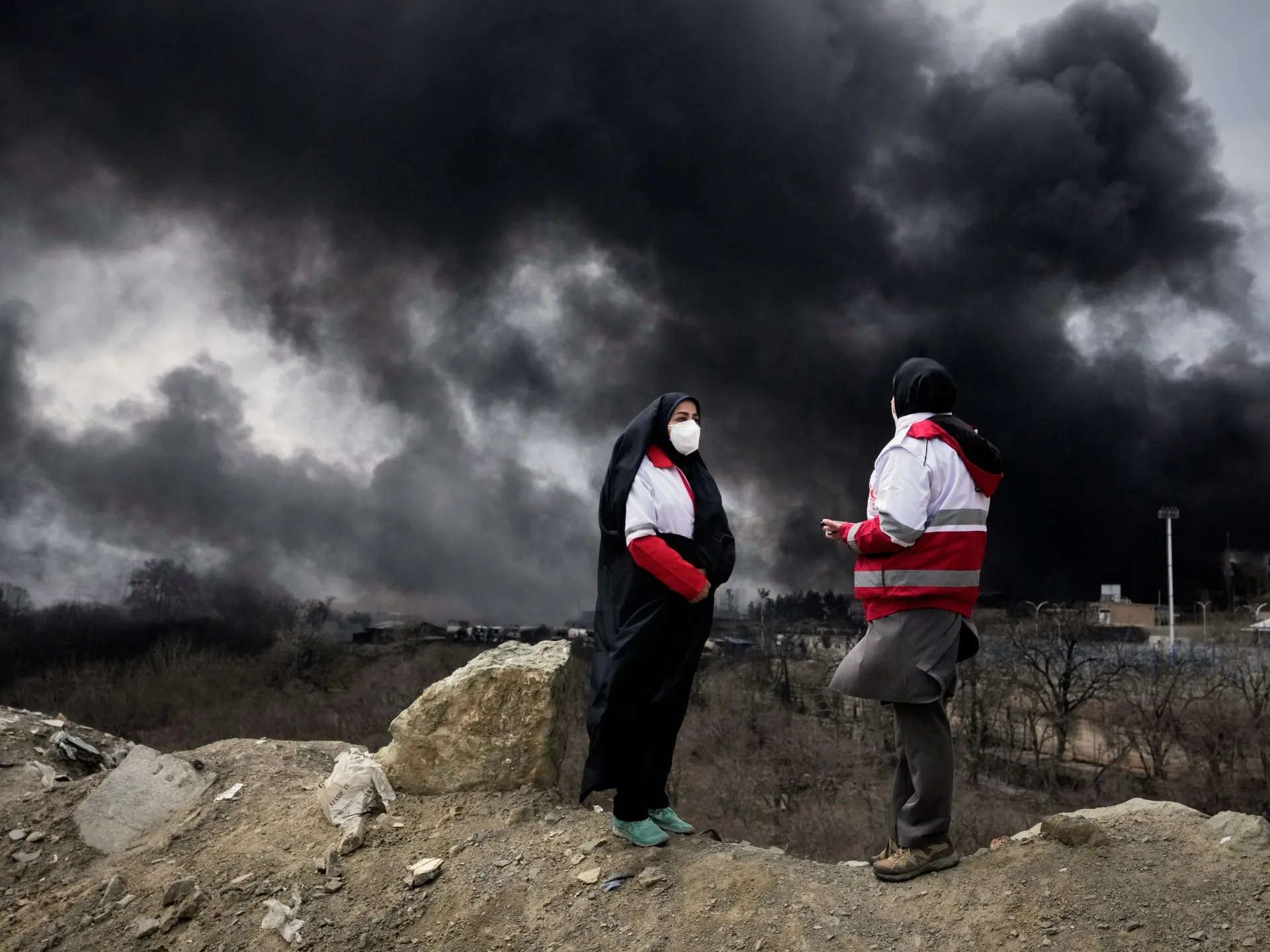
The strikes sent massive flames and clouds of thick, black smoke into the sky above Tehran, with Al Jazeera’s Tohid Asadi reporting that black raindrops fell early on Sunday morning.

The attacks on Iran’s energy infrastructure came as the US and Israeli governments had vowed to continue to bombard the country despite mounting international concern over the widening conflict.

Iran has retaliated to the US-Israeli strikes by launching missiles and drones at targets across the Middle East, including energy infrastructure in nearby Arab Gulf states.

Human rights groups have condemned both Iran and the US and Israel for targeting civilian infrastructure.

Agnes Callamard, the head of Amnesty International, said on Monday that “Israel should have taken all feasible precautions to avoid or minimize the risks to civilians when targeting oil refineries” in Iran.

“The incidental harm to civilians, including the release of toxic substance, appears to indicate that too little precautions were taken and that the incidental harm to civilians is disproportionate,” she wrote on X.

“The scenes of catastrophe described by Iranians after Tehran’s oil depots were bombed are yet another demonstration that ultimately, whatever they may say, the US and Israel’s attacks on Iran are harming first and foremost civilians, including children.”

Smoke continues to rise after a reported strike on fuel tanks in an oil refinery, amid the U.S.-Israeli conflict with Iran, in Tehran, Iran, March 8, 2026. Majid Asgaripour/WANA (West Asia News Agency) via REUTERS ATTENTION EDITORS - THIS PICTURE WAS PROVIDED BY A THIRD PARTY REFILE - ADDING INFORMATION "CONTINUES TO RISE AFTER A REPORTED STRIKE ON FUEL TANKS IN AN OIL REFINERY".
Thick clouds of smoke rise over Tehran after the attacks on Iranian oil infrastructure, on March 8, 2026 [Majid Asgaripour/WANA via Reuters]

Source link

France preparing to escort ships in Strait of Hormuz when war calms: Macron | US-Israel war on Iran News

French President Emmanuel Macron has said France and its allies are preparing a “purely defensive” mission to escort vessels through the Strait of Hormuz once the “most intense phase” of the US-Israeli war on Iran ends.

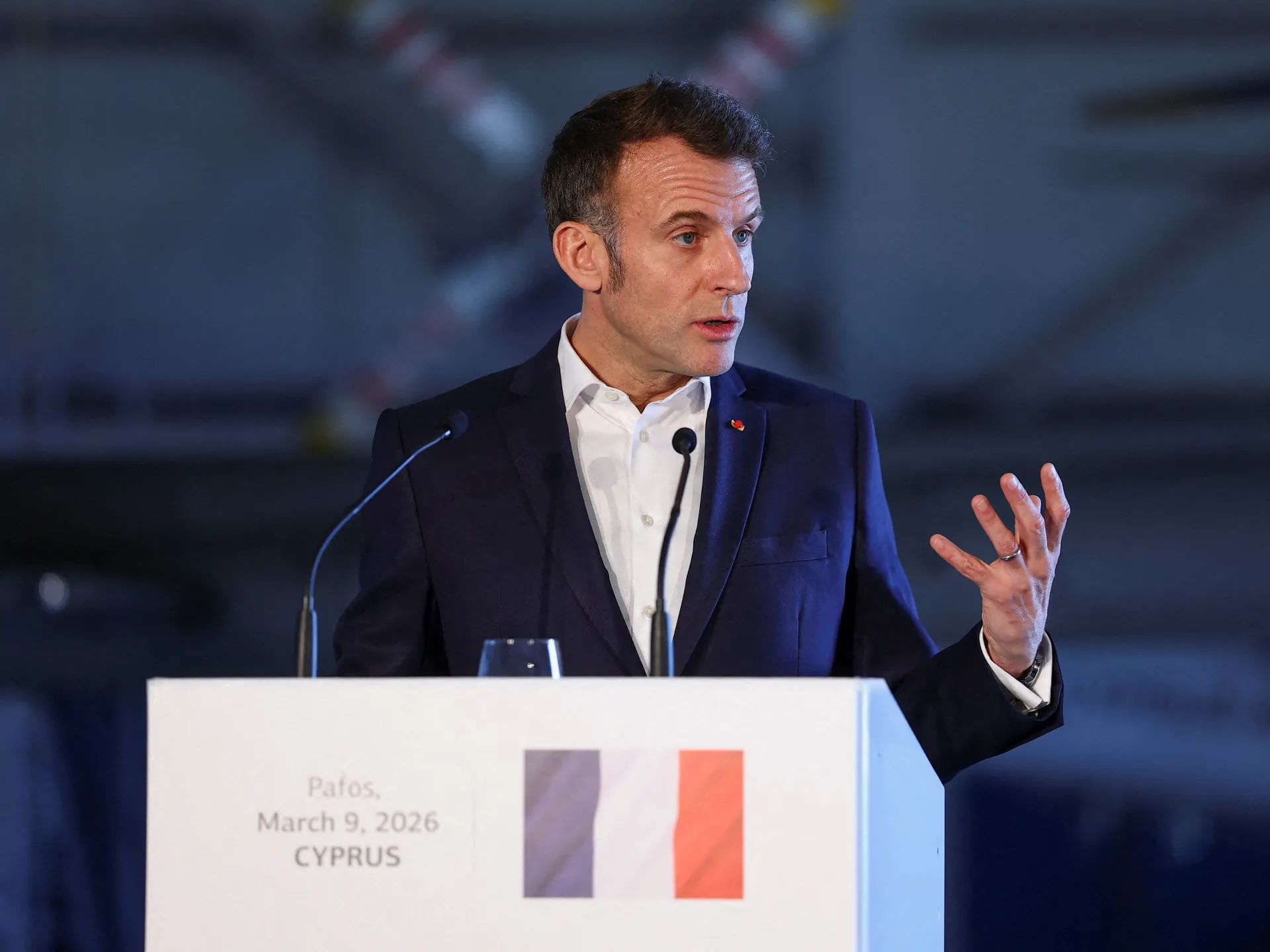
Speaking in Cyprus on Monday, Macron said the “purely escort mission” must be prepared by both European and non-European countries.

Recommended Stories

list of 3 itemsend of list

Its purpose “is to enable, as soon as possible after the most intense phase of the conflict has ended, the escort of container ships and tankers to gradually reopen the Strait of Hormuz”, the French president said, without providing further details.

Macron’s comments come as global oil prices have surged amid continued attacks by the United States and Israel against Iran, as well as retaliatory Iranian missile and drone strikes across the wider region.

The war has effectively shut down the Strait of Hormuz, a strategic Gulf waterway through which about 20 percent of the world’s oil supplies pass, while Iranian attacks on energy infrastructure in the Middle East also have raised concerns.

Responding to Macron’s comments, top Iranian security official Ali Larijani said, “It is unlikely that any security will be achieved in the Strait of Hormuz amid the fires of the war ignited by the United States and Israel in the region.”

Larijani added in a social media post that security is also unlikely to be restored as a result of plans designed by “parties that were not far removed from supporting this war and contributing to its fanning”.

While European countries have been largely sidelined as the war escalates, several – including France, the United Kingdom and Greece – have sent military assets to Cyprus following an Iranian-made drone attack on a British base on the island.

Greece has dispatched four F-16 fighter planes to the Paphos airbase and its two state-of-the-art frigates Kimon and Psara are patrolling offshore Cyprus, tasked with intercepting any missiles or drones.

Last week, Macron ordered the French frigate Languedoc to waters off Cyprus to bolster the country’s anti-drone and anti-missile defences.

“When Cyprus is attacked, then Europe is attacked,” Macron said after meeting with Cypriot President Nikos Christodoulides and Greek Prime Minister Kyriakos Mitsotakis in Paphos on Monday.

The French president said he would also deploy a total of eight warships, two helicopter carriers and the nuclear-powered aircraft carrier Charles de Gaulle to the Eastern Mediterranean and the wider Middle East region, calling the move “unprecedented”.

France’s objective “is to maintain a strictly defensive stance, standing alongside all countries attacked by Iran in its retaliation, to ensure our credibility, and to contribute to regional de-escalation”, Macron said.

“Ultimately, we aim to guarantee freedom of navigation and maritime security.”

With the closure of the Strait of Hormuz sending oil prices soaring, finance ministers from the Group of Seven (G7) countries met in Brussels on Monday to discuss how to respond.

Crude oil prices have increased by about 50 percent since the US and Israel launched the war last month, with international benchmark Brent crude prices surpassing $100 a barrel on Monday.

French Finance Minister Roland Lescure told reporters that the G7 ministers did not make a decision on the potential release of emergency oil stocks amid the war. “What we’ve agreed upon is to use any necessary tools if need be to stabilise the market, including the potential release of necessary stockpiles,” Lescure said.

Paul Hickin, editor-in-chief and chief economist at Petroleum Economist, said getting the Strait of Hormuz reopened is the main priority. “That’s not going to happen in any shape or form until there’s a resolution to the conflict,” Hickin told Al Jazeera.

He explained that several countries in the Middle East, such as Kuwait and Iraq, are dependent on the strait to get their energy supplies to market.

“Kuwait and Iraq and those producers, they are really having a shut-in, and it will take a little bit of time to get back up and running,” said Hickin.

“That is the big risk, the knock-on effect … Getting those ships back, getting that infrastructure back up and running, it’s a slow process. So prices won’t come back down as quickly as many may think.”

Source link

What defence support could Ukraine offer Middle East states amid Iran war? | US-Israel war on Iran News

Ukrainian President Volodymyr Zelenskyy has said that Kyiv could provide defensive systems as well as assistance to civilians and American soldiers “deployed in certain countries” in the Middle East as the war in Iran continues.

He has reportedly proposed an exchange of Ukrainian defensive technology to combat Iranian drones in return for advanced US defensive systems to use in the war against Russia.

The US-Israel-Iran conflict, which started 10 days ago when the United States and Israel launched strikes on Iran and killed Iran’s supreme leader, Ayatollah Ali Khamenei, has continued to escalate. Iran has responded with strikes on Israel and US military assets and other infrastructure in Kuwait, Bahrain, Qatar, Saudi Arabia and the United Arab Emirates.

As Gulf and other Middle Eastern states continue to attempt to intercept incoming drones and missiles with US-supplied air defences, the US has asked Ukraine to contribute some of its own air-defence systems.

Here is what we know.

What has the US requested from Ukraine and why?

The US has asked for Ukraine’s help in defending Washington’s allies in the Middle East against Iranian missile attacks on infrastructure and US military assets, Ukraine’s president confirmed last week.

At the moment, the US is using air defence systems such as the Patriot, Terminal High Altitude Area Defense (THAAD) batteries and Airborne Warning and Control System (AWACS) aircraft, to intercept Iranian drones and missiles targeting its military assets in the region. The Patriot Advanced Capability-2 (PAC-2) and PAC-3 are advanced surface-to-air missile defence systems.

However, these types of systems are extremely expensive, costing millions of dollars for each interceptor missile fired, and there are concerns that supplies of US interceptor missiles could run low.

“We received a request from the United States for specific support in protection against ‘shaheds’ in the Middle East region,” Zelenskyy wrote in an X post on March 5.

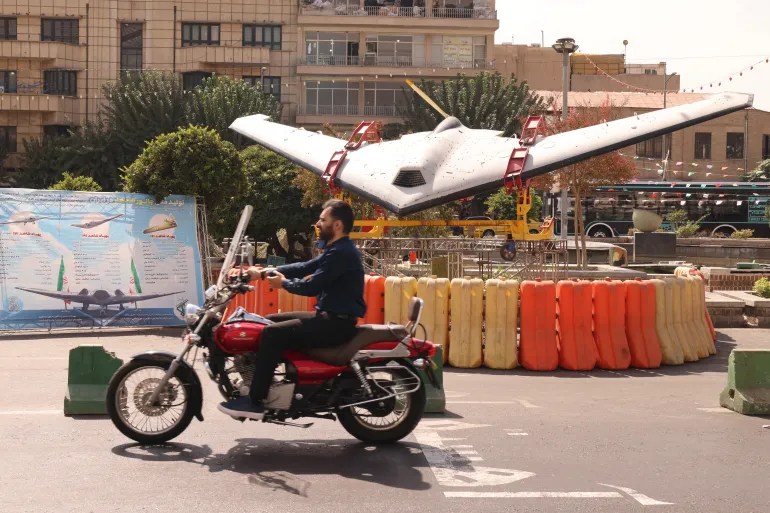
Shahed drones, particularly the Shahed-136, are Iranian-designed “kamikaze” or loitering munitions which are very low cost compared to the interceptors being used by the US. Costing roughly $20,000-$35,000 each, these GPS-guided drones are about 3.5m (11.5 feet) long and fly autonomously to pre-programmed coordinates to strike fixed targets with explosive payloads. They blow up as they hit their targets.

Over the course of the Iran war, Shahed-136 drones have targeted Middle Eastern countries including Saudi Arabia, Bahrain, Qatar and the UAE where US military assets and troops are hosted. Experts estimate that Iran has thousands of these drones.

Iran has also been supplying Moscow with many thousands of Shahed drones during Russia’s war on Ukraine.

During the course of Russia’s four-year war on Ukraine, Ukraine’s domestic arms industry has been forced to innovate, building low-cost interceptor drones priced at roughly $1,000 to $2,000 to counter Russian attacks with imported Iranian Shahed-136s.

Kyiv is now mass-producing these low-cost interceptor drones.

“The role of Shahed-type drones in long-range attacks has become more prominent in Ukraine after Russia took Iranian technology, improved it, and built it in previously unimaginable numbers,” Keir Giles, a Eurasia expert for the UK-based think tank Chatham House, told Al Jazeera.

Shahed drone
A man rides a motorcycle past a Shahed drone in Tehran’s Baharestan Square on September 27, 2025, as part of an exhibit to mark the ‘Sacred Defence Week’ commemorating the 1980-88 Iran-Iraq War [Atta Kenare/AFP]

What has Zelenskyy said?

Zelenskyy has posted several statements on social media confirming that he is ready to help Middle Eastern countries defend their territories by providing technical expertise.

“Ukrainians have been fighting against ‘shahed’ drones for years now, and everyone recognises that no other country in the world has this kind of experience. We are ready to help,” he wrote on X on March 5.

“I gave instructions to provide the necessary means and ensure the presence of Ukrainian specialists who can guarantee the required security.

“Ukraine helps partners who help ensure our security and protect the lives of our people.”

It is understood that Ukraine is in talks with several Middle Eastern countries about this.

On Monday, Zelenskyy said Ukraine has deployed interceptor drones and a team of specialists to help protect US military bases in Jordan.

Zelenskyy wrote on X that he has also spoken directly to Saudi Crown Prince Mohammed bin Salman (MBS) about “countering threats from the Iranian regime”.

He also said he had spoken with the leaders of Bahrain, Jordan, Kuwait, Qatar and the UAE.

Zelenskyy has repeatedly stressed that Ukraine must not weaken its own air defences. However, it is mass-producing this equipment now, and may well be able to afford to share.

“The fact that there are surplus capabilities ready to be sent to the US and the Middle East is unsurprising because Ukraine has led this innovation,” Giles said.

Zelenskyy has therefore proposed an exchange of air defence systems with the US ones being used in the Middle East.

“We ourselves are at war. And I said, completely frankly, that we have a shortage of what they have. They have missiles for the Patriots, but hundreds or thousands of ‘shaheds’ cannot be intercepted with Patriot missiles – it is too costly,” Zelenskyy said.

“Meanwhile, we have a shortage of PAC-2 and PAC-3 missiles. So, when it comes to technology or weapons exchange, I believe our country will be open to it.”

Zelenskyy may also have good political reasons for extending help, analysts say.

“The US has declined support for Ukraine on the ground that it had insufficient supply of air defence munitions, and now more of those Patriots have been fired in the Middle East in a few days, than have been supplied to Ukraine in four years,” Giles said.

“Zelenskyy will be aware that in providing this assistance, he is not only shaming the US, but also directly supporting potential friends and partners in the Middle East, who before now have been ambivalent to the situation in Ukraine,” Giles said.

INTERACTIVE_THAAD_GAZA_ISRAEL_IRAN_MISSILE_INTERCEPTOR_FEB25, 2026-1772104791

Who else has sent defensive backup to the Gulf?

European countries including the United Kingdom, France, Spain, Portugal, Greece and Italy have pledged to provide defensive backup to Gulf nations over the past week. Additionally, Australia said it was deploying military assets to the region.

Wary of becoming directly involved in the US-Israeli war on Iran, European countries have nevertheless been drawn into the conflict by attacks on a British base on Cyprus in the Mediterranean and Iranian strikes on Western allies in Gulf countries that host US troops in military bases.

What will happen next?

Just as Ukraine is getting involved in the war, Russia might too, say experts.

“We should not be surprised if before long, as well as Russian technology in Iranian drones, we see Iran launching Shaheds manufactured in Russia,” Giles said.

He described Russia as a “primary beneficiary of current US actions,” pointing to how the surge in oil prices, the relaxation in US curbs on Russian energy exports to keep crude and gas prices under control, and the diversion of air defence munitions from Europe to the Middle East all helped Moscow. These, he said, “are all lifelines for Russia”.

Source link

Turkiye says Iranian ballistic missile intercepted by NATO air defences | US-Israel war on Iran News

Ministry of National Defence says no casualties or damage after missile shot down over southern city of Gaziantep.

The Turkish Ministry of National Defence says NATO air defences have intercepted a ballistic missile launched from Iran towards Turkiye as concerns grow that the United States-Israel war against Iran will escalate.

The missile was intercepted on Monday over the Sahinbey district of Gaziantep in southern Turkiye, the ministry said in a statement. No casualties or damage were reported.

Recommended Stories

list of 3 itemsend of list

“Ankara emphasized its capability and determination to protect national airspace and border security, while warning that further escalation in the region must be avoided,” the statement said.

The ministry also urged all sides, especially Tehran, “to refrain from actions that could endanger civilians or undermine regional stability”.

Monday’s incident was the second time an Iranian ballistic missile was fired towards Turkiye since the US and Israel launched a war against Iran on February 28, according to local authorities.

The US-Israeli attacks have prompted a wave of Iranian missile and drone strikes across the wider region, including on targets in Arab Gulf countries.

Iran did not immediately comment on the Turkish ministry’s statement.

NATO spokesperson Allison Hart confirmed that the military alliance had intercepted “a missile heading to Turkiye”. “NATO stands firm in its readiness to defend all Allies against any threat,” Hart said in a post on X.

Iran denied firing a ballistic missile towards Turkiye on Wednesday after Turkish authorities said NATO air defences shot down a projectile over the Eastern Mediterranean.

NATO condemned that launch, expressing its “full solidarity” with Turkiye.

“This is a tangible demonstration of the Alliance’s ability to defend our populations against all threats, including those posed by ballistic missiles,” NATO said of the interception.

Article 5 of the alliance’s North Atlantic Treaty says an attack on one NATO country will be considered an attack on all. It also commits each NATO member state to taking action deemed necessary “to restore and maintain” security.

In an interview with the Reuters news agency last week after the first ballistic missile heading towards Turkiye was shot down, NATO chief Mark Rutte said there was no talk of invoking Article 5.

Iranian authorities have said they are firing at US military bases and other US- and Israel-linked targets across the region in self-defence, but civilian infrastructure has also been attacked.

“Iran’s targets are not just US bases; they are, in fact, primarily large-scale infrastructure and civilian targets as well,” said Rob Geist Pinfold, a lecturer in defence studies at King’s College London.

“This is not a mistake. This is by design,” Pinfold told Al Jazeera, explaining that Tehran is seeking to “unleash as much chaos as possible to destabilise the region and global markets” in an effort to force Washington to abandon the war.

“We’ve seen that Iran is targeting every single [Gulf Cooperation Council] state. It’s prepared to burn its bridges with all of them to pursue this very uncertain and high-risk strategy,” he said.

“It really shows you how Iran feels like it’s facing an existential threat. For them, this is a real do-or-die moment.”

Source link

Israeli attacks on Iran fuel sites aim ‘to break resilience of people’ | Climate Crisis

Israeli strikes on fuel depots and petroleum logistic sites in Tehran on Sunday saw apocalyptic images coming out of the Iranian capital, as the spilled oil ignited a river of fire, and thick black smoke blanketed the city of 10 million, leaving streets and vehicles covered with soot.

Israel and the United States claimed they were targeting Iranian military and government sites, but government officials and people say civilian structures such as schools, hospitals and major landmarks are increasingly coming under attack. At least 1,255 people have been killed in the strikes since February 28.

What Israeli and US military planners frame as a calculated degradation of state infrastructure is being described by local officials and environmental experts as an act of total warfare, and collective punishment.

Shina Ansari, head of Iran’s Department of Environment, described the systematic destruction of the oil depots as a blatant act of ecocide.


The attacks systematically targeted four major storage facilities and a distribution centre, including the Tehran refinery in the south and depots in Aghdasieh, Shahran, and Karaj. In the Shahran district, witnesses reported unrefined oil leaking directly into the streets as temperatures hovered around 13C (55F).

Ansari from Iran’s Department of Environment stated that the environment remains the silent victim of the war, noting that the incineration of vast fuel reserves has trapped the capital under a suffocating shroud of pollutants.

The medical and environmental fallout is immediate and severe. The Iranian Red Crescent Society warned that the smoke contains high concentrations of toxic hydrocarbons, sulphur, and nitrogen oxides. The organisation noted that any rainfall passing through these plumes becomes highly acidic, posing risks of skin burns and severe lung damage upon contact or inhalation.

Ali Jafarian, Iran’s deputy health minister, told Al Jazeera that this acid rain is already contaminating the soil and water supply. Jafarian added that the toxic air poses a life-threatening risk to the elderly, children, and those with pre-existing respiratory conditions, prompting authorities to advise residents to remain indoors.

The destruction has also forced the Iranian Ministry of Petroleum to slash daily fuel rations for civilians from 30 litres [8 gallons] to 20 litres [5 gallons]. At least four employees, including two tanker drivers, were killed in the depot strikes.

The strategic bombing myth

Major General Mamoun Abu Nowar, a retired Jordanian military analyst, told Al Jazeera that the primary objective of the strikes is to break the resilience of the Iranian people and paralyse the country’s logistics and economy.

“They are preparing the Iranian environment for an uprising against the regime,” Abu Nowar said, adding that the broader goal is to halt state operations and curb Tehran’s regional influence.

However, Abu Nowar raised urgent concerns about the specific munitions deployed, urging Iranian authorities to investigate the bomb fragments given the unusual density of the smoke and the resulting acid rain.

Some military strategists argue that striking an adversary’s vital infrastructure can paralyse the state from the inside out, bypassing the need to fight its military forces directly.

Modern warfare has increasingly relied on this strategic bombing via precision drones and missiles to destroy morale and incapacitate an adversary’s ability to wage war. For Israel, which is engaged in a genocidal war in Gaza and wider regional conflicts, targeting oil depots is viewed as a way to send a coercive message while avoiding a ground war.

However, Adel Shadid, a researcher in Israeli affairs, told Al Jazeera Arabic that the strategy is designed to make life hell for ordinary Iranians in hopes of sparking an uprising. Shadid noted a glaring contradiction in the rhetoric of Israeli Prime Minister Benjamin Netanyahu, who claims to support the Iranian people while overseeing the destruction of their basic means of survival.

Raphael S Cohen, director of the Strategy and Doctrine Program at the RAND Corporation, notes that such bombing campaigns consistently fail to achieve their primary goal of breaking a population’s will. Instead, Cohen argues, strategic bombing typically produces a rally-around-the-flag effect, unifying societies against a common foe rather than causing them to capitulate.

Historical echoes and retaliation

The reality of targeting oil infrastructure rarely aligns with sterile military theory, as history shows that such tactics reliably produce devastating, long-term environmental consequences.

During the 1991 Gulf War, the torching of Kuwaiti oil wells created a regional environmental catastrophe. Similarly, during the battle against ISIL (ISIS) in Iraq, the burning of the Qayyarah oil fields created a “Daesh Winter” that blocked out the sun for months.

The fires released vast quantities of toxic residues, including sulphur dioxide and polycyclic aromatic hydrocarbons, causing severe respiratory illnesses, soil acidification, and long-term carcinogenic risks for the local population.

Meanwhile, Mokhtar Haddad, director of the Al-Wefaq newspaper, told Al Jazeera Arabic that the targeting of energy hubs could trigger a global energy war.

According to Al Jazeera’s Sohaib al-Assa, reporting from Tehran, the Islamic Revolutionary Guard Corps (IRGC) has already retaliated by striking the Haifa oil refinery and targeting a US base in Kuwait, signalling that the conflict is no longer confined to military targets.

On Monday, Bahrain’s state-run oil company Bapco declared force majeure after waves of Iranian strikes targeted its energy installations. Iran has also been accused of also targeting energy facilities in other Gulf Cooperation Council (GCC) countries.

Source link

Iran’s IRGC backs Mojtaba Khamenei as new supreme leader | Islamic Revolutionary Guard Corps

NewsFeed

Iran’s Islamic Revolutionary Guard Corps has pledged allegiance to Mojtaba Khamenei, the country’s newly-elected supreme leader. While some Iranians have celebrated, many are dismayed the 56-year-old cleric, accused of human rights abuses, has ascended to the country’s highest office.

Source link

Iran names Khamenei’s son as new supreme leader after father’s killing | US-Israel war on Iran News

Iran has named Mojtaba Khamenei as its new supreme leader, just over a week after the assassination of his father, Ayatollah Ali Khamenei, in joint United States-Israeli strikes that have plunged the entire region into a sprawling war.

The 56-year-old, who will now be charged with leading the Islamic Republic through the biggest crisis in its 47-year history, was named by clerics as his father’s successor on Sunday.

Key leaders, Iran’s powerful Islamic Revolutionary Guard Corps (IRGC), and the armed forces were quick to pledge their backing to the new leader.

Ali Larijani, secretary of the Supreme National Security Council, who has been tasked with steering Iran’s security strategy since the US and Israel launched their all-out offensive, called for unity around the new supreme leader.

Parliament Speaker Mohammad Bagher Ghalibaf welcomed the choice, saying that following the new supreme leader was a “religious and national duty”.

Mojtaba Khamenei has never run for office or been subjected to a public vote, but has for decades been a highly influential figure in the inner circle of the supreme leader, cultivating deep ties to the IRGC.

In recent years, Khamenei has increasingly been touted as a top potential replacement for his father. His selection could be a sign that more hardline factions in Iran’s establishment retain power, and could indicate that the government has little desire to agree to a deal or negotiations in the short term as the war enters its second week.

Al Jazeera’s Ali Hashem described Khamenei as his “father’s gatekeeper”.

“He adopts the positions of his father with respect to the United States, with respect to Israel. So we are expecting a confrontational leader. We’re not expecting any moderation,” he said.

“However, if this war comes to an end and he is still alive, and he is able to continue running the country, there is going to be big potential… to find new routes for Iran,” Hashem said.

Rami Khouri, a distinguished public policy fellow at the American University of Beirut, said Khamenei’s appointment signals “continuity” and that it remains to be seen whether the new supreme leader will push for negotiations to end the war.

Either way, he said, the appointment was “an act of defiance”. Iran is “telling the Americans and Israelis, ‘You wanted to get rid of our system? Well … this is a more radical person than his father who was assassinated,’” he said.

Heidari Alekasir, a member of the Assembly of Experts that was tasked with choosing the supreme leader, said the candidate had been picked based on the late Khamenei’s advice that Iran’s top leader should “be hated by the enemy” instead of praised by it.

“Even the Great Satan [US] has mentioned his name,” the senior cleric said in reference to US President Donald Trump’s earlier statement that Mojtaba Khamenei would be an “unacceptable” choice for him to lead Iran.

Israel’s military had previously warned any successor that “we will not hesitate to target you”.

On Sunday, Trump again promised to exert influence over who is selected as Iran’s next supreme leader, saying that, without Washington’s approval, whoever is picked for the role is “not going to last long”.

The selection of Khamenei’s son is certain to enrage Trump.

Supreme leader not decided by ‘Epstein’s gang’

The 88-member Assembly of Experts said on Sunday that it “did not hesitate for a minute” in choosing a new supreme leader, despite “the brutal aggression of the criminal America and the evil Zionist regime”.

Earlier, the clerical body had indicated it had reached a majority consensus on its choice, without naming who it was, with one member saying, “The path of ⁠Imam Khomeini and ⁠the path of the martyr Imam Khamenei has been ⁠chosen. The name of ⁠Khamenei will continue.”

Mojtaba Khamenei studied under conservative clerics in the seminaries of Qom, the heart of Shia theological learning, and holds the clerical rank of hojjatoleslam, a mid-level clerical ranking.

Ali Khamenei, who led Iran for 37 years, succeeding Ayatollah Ruhollah Khomeini, who had led the 1979 revolution, was killed in a US-Israeli strike on Tehran on February 28, at the outset of the war, which has now unleashed chaos throughout the Middle East.

The ⁠Israeli ⁠military has already threatened to kill any replacement for Khamenei, while Trump said the war may only end once Iran’s military and leaders have been wiped out.

“He’s going to have to get approval from us,” Trump told ABC News. “If he doesn’t get approval from us, he’s not going to last long,” Trump said on Sunday of any new supreme leader.

Iranian officials have rejected Trump’s push to be involved in the selection of the next leader, insisting that only Iranians can decide the future of their country.

On Friday, Iranian Parliament Speaker Mohammad Bagher Qalibaf appeared to ridicule the US president’s demands.

“The fate of dear Iran, which is more precious than life, will be determined solely by the proud Iranian nation, not by [Jeffrey] Epstein’s gang,” Ghalibaf wrote on X, referring to the late sex offender who had ties to rich and powerful figures in the US.

Dark skies

As clerics selected the new supreme leader, a dark haze hung over Tehran after Israel struck five oil facilities in and around the capital city overnight, setting them ablaze and filling the skies with acrid smoke.

As the war extended into its ninth day, the IRGC said they had enough supplies to continue their drone and missile attacks across the Middle East for up to six months.

IRGC spokesman Ali Mohammad Naini said Iran had so far used only first- and second-generation missiles, but would use “advanced and less-used long-range missiles” in the coming days.

Trump again refused to rule out sending American ground troops into Iran, but continued to insist that the war was all but won, despite the ongoing Iranian missile and drone strikes.

Analysts warn there is no clear path to ending the conflict, which US and Israeli officials say could last a month or longer.

Source link

Oil soars past $100 a barrel amid Iran war | Oil and Gas

DEVELOPING STORY,

Crude oil prices rise by as much 20 percent as sprawling regional conflict threatens global energy supplies.

Oil prices have surged past $100 a barrel for the first time since Russia’s invasion of Ukraine, amid the widening fallout of the United States and Israel’s war on Iran.

Brent crude, the global benchmark, rose by as much as 20 percent on Sunday, topping $111 a barrel, as fears grew of prolonged disruption to global energy supplies.

Recommended Stories

list of 4 itemsend of list

US President Donald Trump, who campaigned heavily on cost-of-living concerns in the 2024 election, brushed off the surge.

“Short term oil prices, which will drop rapidly when the destruction of the Iran nuclear threat is over, is a very small price to pay for U.S.A., and World, Safety and Peace,” Trump said in a post on Truth Social.

“ONLY FOOLS WOULD THINK DIFFERENTLY!”

Crude oil prices have surged by about 50 percent since the US and Israel launched joint strikes on Iran on February 28.

Iranian threats and attacks in response have brought an effective halt to shipping in the Strait of Hormuz, a conduit for about one-fifth of the global oil supply.

Iraq, the United Arab Emirates and Kuwait, three of the biggest producers in The Organization of the Petroleum Exporting Countries (OPEC), have been forced to cut production amid dwindling crude storage capacity due to the collapse of shipping through the waterway.

Iran and Israel have also launched strikes on key energy facilities in Iran amid the sprawling regional conflict.

Stocks in Asia fell sharply on Monday morning, as investors braced for the fallout of rising energy prices.

Japan’s Nikkei 225 plunged about 6 percent in early trading, while South Korea’s KOSPI tumbled nearly 7 percent.

US stock futures, which are traded outside regular market hours, also saw substantial losses.

Futures tied to Wall Street’s benchmark S&P 500 were down by 1.7 percent, while those for the tech-heavy Nasdaq Composite fell by 1.90 percent.

Source link

Iran names Ayatollah Khamenei’s son as new leader after father’s killing | US-Israel war on Iran

NewsFeed

Iranian state television has announced that the Assembly of Experts has chosen Mojtaba Khamenei as supreme leader after a “decisive vote”. He’s the son of Ayatollah Ali Khamenei who was killed by the United States on February 28.

Source link