US-Israel war on Iran

Are Middle East attacks pushing Asia towards an energy crisis? | US-Israel war on Iran

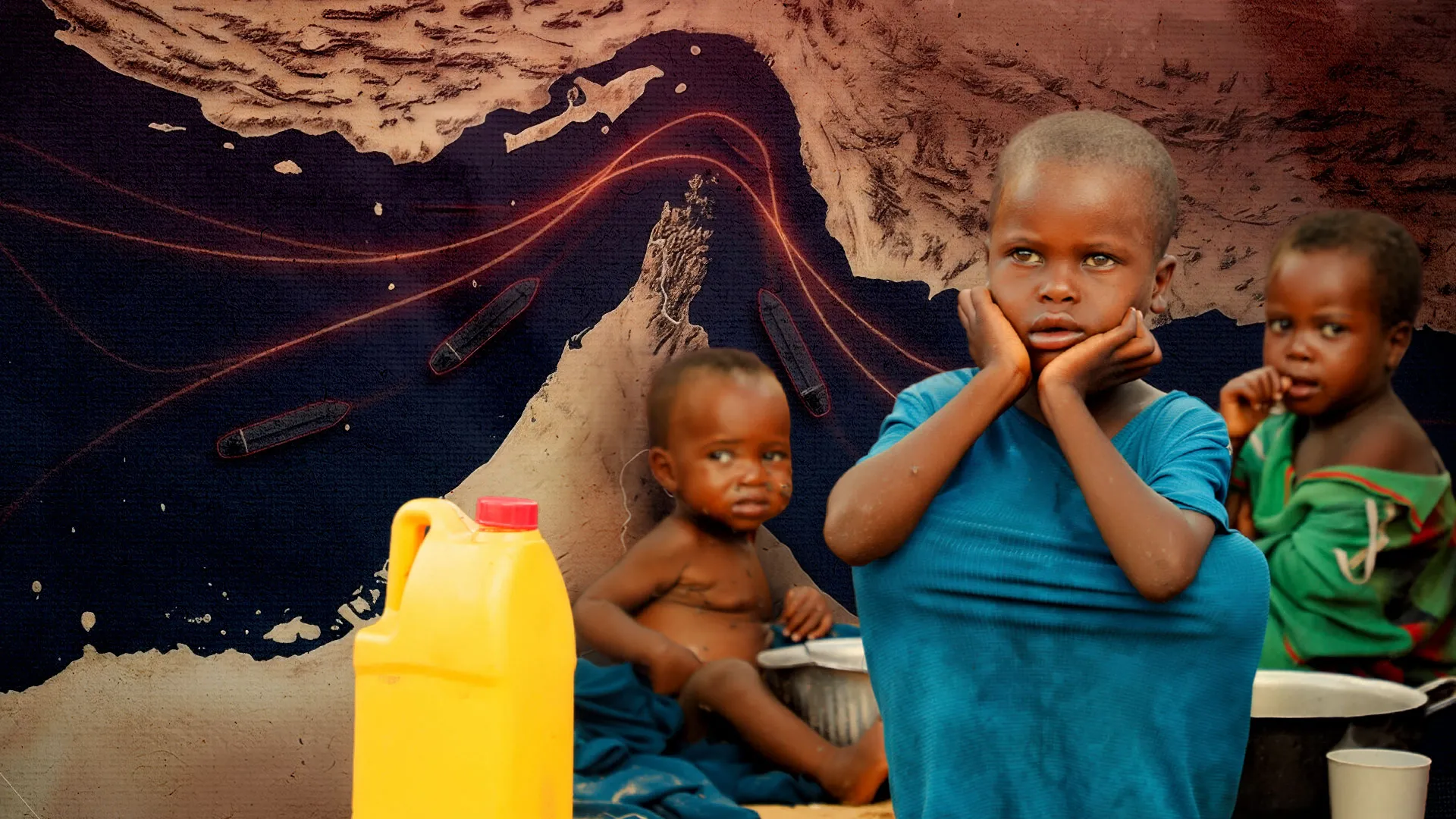
Energy facilities in the Middle East are under attack, including Qatar’s LNG, pushing prices higher.

In a sharp escalation in the Middle East conflict, energy production itself is now in the firing line.

Iran targeted facilities across the Gulf – including the world’s largest liquefied natural gas hub in Qatar.

It was retaliation for an Israeli strike on an Iranian gasfield hours earlier.

Energy prices are soaring, and countries from Asia to Europe are scrambling for alternative supplies.

But, for Asia – the world’s largest LNG buyer – this is a severe energy shock.

The region depends on Gulf supplies to keep its lights on, its factories running, and its people fed.

Source link

Iranian attacks amount to violation of sovereignty, Gulf states tell UN | US-Israel war on Iran News

GCC states, UN rights chief Volker Turk warn of grave repercussions amid war on Iran.

Gulf states’ representatives have told the United Nations Human Rights Council that Iranian attacks on their territories amount to a gross violation of state sovereignty, as the UN’s rights chief warned that the Middle East is nearing an “unmitigated catastrophe” as the US-Israel war on Iran approaches the one-month mark.

Saudi Arabia’s representative to the UN, Abdulmohsen Majed bin Khothaila, condemned Iranian attacks during ⁠an emergency meeting called by Gulf states in Geneva on Wednesday, saying the Gulf Cooperation Council (GCC) member states were being attacked despite not being involved in the conflict.

Recommended Stories

list of 3 itemsend of list

“[Iranian attacks] violate the UN Charter and international law. We must call things by their name,” Majed bin Khothaila said.

“To target a neighbour is a violation of the principles of good neighbourly relations. To target a mediator betrays all efforts aimed at peace and undermines any constructive initiative. To target states that are not party to the hostilities amounts to unacceptable and unjustifiable attacks that cannot be passed over in silence.”

Qatar’s representative to the UN, Hend bint Abd al-Rahman al-Muftah, said Iran’s attacks had “grave repercussions” that were “not only affecting peace and security in the world, but also human rights”.

“These attacks amount to a great source of concern for us, and we can no longer remain silent,” she added.

“To attack the electricity and desalination plants also involves serious environmental consequences and undermines rights that should be guaranteed by human rights provisions.”

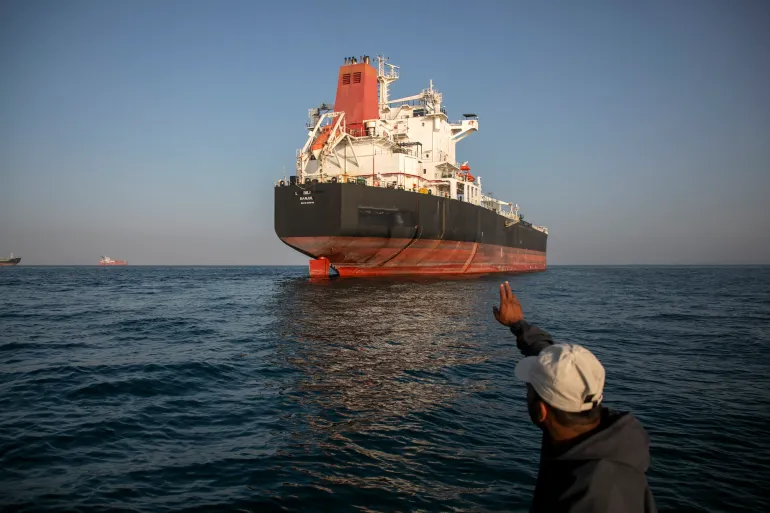
The Qatari representative also noted that the de facto closure of the Strait of Hormuz was “a source of great concern, given the dire consequences it can have on the economy and supply routes”.

Kuwait’s ambassador, Naser Abdullah Alhayen, told the council that the Gulf was “seeing an existential threat to international and regional ⁠security”.

“This aggressive approach is undermining international law and sovereignty,” Alhayen added.

The UN’s rights chief, Volker Turk, warned that the war has created an “extremely dangerous and unpredictable” situation that is pushing the Middle East towards an “unmitigated catastrophe”.

“The only guaranteed way to prevent this is to end the conflict, and I urge all states, and particularly those with influence, to do everything in their power to achieve this,” he said.

Al Jazeera’s Zein Basravi, reporting from Dubai, said the “GCC countries are looking for a seat at the table” at negotiations between the United States and Iran.

“As Iran is going to look for guarantees going forward from the US and Israel, Gulf states will be looking for guarantees from Iran,” he said.

Basravi added that while the volume of incoming attacks in Gulf countries seemed to be going down in recent days, a small attack from Iran “can still create the same level of disruption since the beginning of the war”.

Source link

‘A heinous crime’: Air strikes kill seven fighters in Iraq’s Anbar | US-Israel war on Iran News

Police source tells Al Jazeera the attack hits positions of the Iran-aligned PMF, which the US has increasingly targeted.

An aerial attack on a military base in western Iraq’s Anbar province has killed seven fighters and wounded 13, according to Iraq’s Ministry of Defence.

The strikes on Wednesday targeted the military healthcare clinic at the base in Habbaniyah, according to the ministry. It called the attack “a heinous crime” that violated “all international laws and norms”.

Recommended Stories

list of 3 itemsend of list

An Iraqi police source told Al Jazeera the attack targeted positions of the Iraqi military’s Popular Mobilisation Forces (PMF), a paramilitary force that includes some Iran-aligned brigades and reportedly shares the base with members of Iraq’s regular army.

“What we understand from the military here is that air strikes were carried out and then further strikes carried out on that same position,” said Al Jazeera’s Assed Baig, reporting from Baghdad. He said it appeared to be the first time the PMF was hit alongside the broader Iraqi military.

Iraq has denounced the attack as the country has been dragged into the United States-Israeli war on Iran. On Tuesday, Iraqi Prime Minister Mohammed Shia al-Sudani’s office said Baghdad would summon the Iranian and US ambassadors over the recent strikes.

‘Right to respond’

A security official quoted by the AFP news agency said the strike occurred at the same base that suffered a deadly attack the day before.

Tuesday’s strike, which the PMF blamed on the US, was the deadliest in Iraq since the start of the war on Iran on February 28, It killed 15 fighters, including a commander.

The attack prompted Iraq’s government to grant the PMF a “right to respond” to any attack against it, a position Baghdad reaffirmed on Wednesday.

“We reserve our full right to take all necessary measures to respond to this aggression within the established legal frameworks,” the Defence Ministry said.

Since the war began, pro-Iran armed groups have claimed responsibility for attacks on US interests in Iraq and across the region while strikes have also targeted these groups, including at government-linked positions.

The US Department of Defense has acknowledged that combat helicopters have carried out strikes against pro-Iran armed groups in Iraq during the current conflict.

Baig said the latest strikes demonstrate “an escalation in terms of the PMF being targeted”.

“Increasingly, Iraq is becoming a battlefield between Iraqi armed factions and the United States,” he said.

Source link

US talking to itself, says Iran as Trump claims wheels of diplomacy turning | US-Israel war on Iran News

Iran’s military has said the United States is failing in its war and negotiating with itself to save face, dismissing claims by US President Donald Trump that talks are under way to end the conflict.

“Has the level of your inner ⁠struggle reached the stage ⁠of you negotiating with yourself?” Ebrahim Zolfaqari, spokesperson for the unified command of Iran’s armed ⁠forces, Khatam al-Anbiya Central Headquarters, said on Wednesday in comments carried by Iran’s semiofficial Fars news agency.

Recommended Stories

list of 3 itemsend of list

“Don’t call your failure an agreement,” he added, mocking US leadership.

The statement is the latest official Iranian denial that Tehran is engaged in diplomacy with Washington, even as Trump insists talks are ongoing and reports circulate of the US sending a peace proposal.

Speaking to reporters at the White House yesterday, the US president said Washington is speaking to the “right people” in Iran, which he claimed wants to make a deal “so badly”.

“They are talking to us, and they’re making sense,” said Trump.

Trump’s position marks a stark shift from days earlier, when he threatened to strike Iran’s power plants if Tehran did not fully reopen the Strait of Hormuz, where it has threatened vessels from “enemy” nations. Hours before the ultimatum expired on Monday – and US markets reopened for the trading week – Trump said he would delay any planned attack by five days, citing diplomatic progress. Iranian officials denied this.

Zolfaqari said there would be no return to previous oil prices or the prior regional order “until our will is done”.

‘Obscurity in Iran’

Questions over possible diplomacy were amplified by US media reports that Washington had sent Tehran a 15-point plan to end the war.

The Wall Street Journal, quoting unnamed officials, reported that the plan calls on Iran to dismantle its three main nuclear sites, end any enrichment on its soil, suspend its ballistic missile programme, curb support for its regional allies and fully reopen the Strait of Hormuz. In return, Iran would have nuclear-related sanctions lifted and the US would assist the country’s civilian nuclear programme, according to the Journal.

Al Jazeera’s Mohamed Vall, reporting from Tehran, said there is “total confusion” in Iran over the status of potential negotiations.

“Contrary to the clarity with which Donald Trump seems to speak, there is obscurity in Iran,” said Vall. “What we hear instead are the officials and politicians here saying the complete opposite. They say there is no negotiation.

“There is total confusion, total obscurity, and it’s really making this situation very interesting and very strange,” he added.

While there is a “cloud of mistrust” between the US and Iran, Tehran is engaged diplomatically with several regional countries, including Pakistan, said Al Jazeera’s Tohid Asadi, also reporting from Tehran. Islamabad, which appears to have emerged as a possible mediator in the conflict, delivered the US’s plan to Tehran, according to The New York Times.

Israel, Iran trade strikes

Amid the competing claims about negotiations, Israel continued to strike Iran, and the US reportedly prepared to send more troops to the Middle East.

Israel’s military said it carried out a series of late-night strikes on infrastructure in Tehran. Iran’s Fars news agency reported at least 12 people killed and 28 wounded in an “enemy attack” on the residential area of Varamin in southern Tehran.

Iran, for its part, claimed to fire more missiles at Israel, including targeting a military base in the northern Israeli city of Safad, as well as sites in the cities of Tel Aviv, Kiryat Shmona and Bnei Brak. There were no immediate reports of casualties from that missile salvo, though an earlier rocket attack by Hezbollah killed one woman in northern Israel.

Meanwhile, the US was expected to send at least 1,000 soldiers from the Army’s elite 82nd Airborne Division to the ⁠Middle East, adding to some 50,000 US soldiers already in the region, the Reuters and AP news agencies reported.

“As the US is preparing for peace talks, it’s also preparing for war,” said Al Jazeera’s John Hendren from Washington, DC. “Diplomacy and military moves are going on at the same time.”

Source link

From Pakistan to Egypt, Iran war drives up fuel prices in the Global South | Business and Economy News

As the United States-Israeli war with Iran sends tremors through the global economy, the poorest members of the Global South are the most exposed to the fallout.

In Asia, Africa and the Middle East, developing economies are bearing the brunt of surging energy costs prompted by the closure of the Strait of Hormuz and attacks on oil and gas facilities across the Gulf.

Recommended Stories

list of 4 itemsend of list

From Pakistan to Bangladesh and Sri Lanka, through to Jordan, Egypt and Ethiopia, policymakers are facing the double whammy of being both heavily dependent on imported energy and having limited financial firepower to absorb the shock of spiking prices.

In Pakistan, which imports about 80 percent of its energy from the Gulf and has lurched between economic crises for years, authorities have scrambled to roll out measures to conserve fuel.

Facing the depletion of the country’s petrol and diesel reserves within weeks, officials have closed schools, introduced a four-day working week for government offices, ordered half of the country’s public sector employees to work from home, and slashed fuel allowances for official business.

Pakistani Prime Minister Shehbaz Sharif said last week that he had decided against a proposed hike in petrol and diesel prices before the Eid Al-Fitr celebration, saying the government would “bear the burden” of rising costs.

Sharif’s announcement came after the government had earlier this month approved a 55 rupee ($0.20) rise in the price of a litre (0.26 gallons) of petrol or diesel.

While government subsidies have helped cushion the blow for the public, there are fears that petroleum prices will surge and bring economic activity to a halt if the war drags on, said S Akbar Zaidi, the executive director of the Institute of Business Administration in Karachi.

“The overall shock is quite severe, although it has not been fully passed on to consumers and to industry,” Zaidi said.

“I expect the next few weeks to make things far worse once the disruption and price factors pass through.”

bangldesh
A man gets his motorcycle refuelled at a petrol station in Dhaka, Bangladesh, on March 9, 2026 [Munir Uz Zaman/AFP]

In Bangladesh, which imports about 95 percent of its oil and is expected to run through its fuel reserves within days, petrol pumps in some districts have run dry despite the introduction of fuel rationing.

Sri Lanka, which imports about 60 percent of its energy needs and is still reeling from an economic meltdown that began in 2019, has declared every Wednesday a public holiday and introduced a mandatory fuel pass for vehicle owners to conserve petrol and diesel, stockpiles of which are projected to run dry within weeks.

In Egypt, one of the biggest energy importers and among the most indebted economies in the Middle East, the government has ordered malls, shops and cafes to close by 9pm on weekdays and 10pm during weekends, and cut back on public lighting.

Facing growing pressure on public finances due to the government’s heavy subsidisation of fuel prices, Egyptian officials on March 10 announced price hikes of between 15 and 22 percent for petrol, diesel and cooking gas.

While acknowledging the burden on the public, Egyptian President Abdel Fattah el-Sisi said the move was necessary to avoid “harsher and more dangerous outcomes”.

“For a majority of developing economies, especially those already grappling with debt and high import dependence, they are facing a potent mix of inflation, currency pressures and fiscal strains,” said Yeah Kim Leng, a professor of economics at the Jeffrey Cheah Institute on Southeast Asia at Sunway University in Kuala Lumpur, Malaysia.

“The hardest hit are net energy and food importers, especially those with fragile macroeconomic foundations and pre-existing vulnerabilities that typified countries with low per capita income and high poverty rates,” Yeah added.

Pakistan, Bangladesh, Sri Lanka, Jordan, Senegal, Egypt, Angola, Ethiopia and Zambia are among the most at risk, according to a recent analysis by the Washington-based Centre for Global Development, which looked at factors including dependence on fuel imports, public debt levels and foreign exchange reserve/import ratios.

Currency depreciation

The weakening of many developing countries’ currencies against the US dollar – the result of investors buying the greenback amid heightened geopolitical uncertainty – has compounded the situation by further driving up costs.

“Countries such as Indonesia and the Philippines have already seen their currencies at near record lows even before the start of the conflict, making imports, including oil, much more expensive,” said Azizul Amiludin, a non-resident senior fellow at the Malaysia Institute of Economic Research in Kuala Lumpur.

Much as the fallout of the war poses particular challenges for governments in developing countries, the effect on citizens is disproportionate, too.

In less advanced economies, citizens spend much more of their pay cheques on fuel and food, leaving them more exposed to rising living costs.

At the same time, governments in developing countries have less capacity to provide a safety net for those at risk of falling through the cracks.

“In vulnerable economies, governments often attempt to shield their populations from price hikes by subsidising fuel and food,” said Yeah, the Jeffrey Cheah Institute professor.

“However, with depleted fiscal buffers and shrinking revenues, this becomes unsustainable. The ensuing austerity, combined with hyperinflation, can trigger widespread social unrest and a full-blown fiscal crisis.”

pakistan
Motorcyclists crowd a filling station and wait their turn to get fuel, in Lahore, Pakistan, on March 6, 2026 [K M Chaudary/AP]

With the US and Israel barely a month into their war and no clear timetable for its end in sight, many analysts expect things to get worse before they get better.

Khalid Waleed, a research fellow at the Sustainable Development Policy Institute in Islamabad, said rising transport costs would soon be felt at supermarket checkouts.

“Diesel is the backbone of Pakistan’s freight and agricultural economy,” Waleed said.

“Trucking costs have started climbing, and that will feed into everything from flour to fertiliser in the weeks ahead.”

Once Pakistan’s wheat harvest gets under way in April, food prices could spike well beyond their current levels, Waleed said.

“Combine harvesters, threshers, tractors for haulage from field to market, and the trucks that move grain from fields to flour mills and storage facilities all run on high-speed diesel,” he said.

“For a country where wheat flour is the single largest item in the food basket of the bottom two income quintiles, this is not a marginal concern,” Waleed added.

“If diesel prices stay elevated through April and May, Pakistan will harvest its wheat at the most expensive input cost in years, and that cost will transmit directly into food inflation at a time when households have almost no capacity left to absorb further price shocks.”

Source link

Parsi: No deal ‘’without both sides giving something to the other’ | US-Israel war on Iran

NewsFeed

Trita Parsi, Vice President of the Quincy Institute, argues that Iran is unlikely to agree to end the war without sanctions relief, while there is little sign Donald Trump is willing to offer meaningful concessions, adding that a deal remains unlikely until then.

Source link

What we know about the US’s 15-point plan Iran proposal | US-Israel war on Iran

NewsFeed

US media is reporting the Trump administration has proposed a temporary ceasefire and a 15-point plan to end the war on Iran. The reports emerge as Trump claims the US is already talking to Iranian officials – a claim Iran has vehemently denied.

Source link

Palestinian refugees in Lebanon face another forced displacement | Israel attacks Lebanon

NewsFeed

After Israel’s bombing of Beirut’s southern suburb of Dahiyeh, Palestinian refugee Dalal Dawali once again finds herself forcibly displaced. She and her children joined hundreds of families fleeing to Beddawi camp in north Lebanon. Al Jazeera’s Justin Salhani tells her story.

Source link

US says they’re talking, Iran says they’re not. Who’s telling the truth? | US-Israel war on Iran News

United States President Donald Trump is insistent that “productive” negotiations have taken place with Iran to end the war he launched with Israel’s Prime Minister Benjamin Netanyahu almost a month ago. The major problem with that narrative is that Iran’s top officials have repeatedly denied it.

Amid the fog of war and the propaganda being pushed by all sides, it is hard to know who to believe. But an analysis of what each side has to gain from any negotiations – and a potential end to the conflict – could bring more clarity.

Recommended Stories

list of 3 itemsend of list

Trump’s comments that there were “major points of agreement” after “very good” talks with an unnamed “top” Iranian figure came as stock markets opened in the US for the start of the trading week. The five-day deadline he gave for a positive response from Iran also happens to coincide with the end of the trading week.

Many have cynically noted that timing, especially as it comes after a two-week period in which oil prices have fluctuated in line with events in the Middle East, leading to a high of about $120 a barrel last week.

Trump’s talk of negotiations may also give time for more US troops to arrive in the Middle East, if Washington decides to conduct some form of ground invasion of Iranian territory.

Among those questioning Trump’s motives was the man believed by some to be the senior Iranian official Trump was referencing: the Iranian parliamentary speaker, Mohammad Bagher Ghalibaf.

“No negotiations have been held with the US, and fakenews is used to manipulate the financial and oil markets and escape the quagmire in which the US and Israel are trapped,” Ghalibaf wrote on social media.

The impact on stock markets and oil prices is not just relevant to the US and Trump, but also to Iran. However, for Tehran, the benefit comes in the damage the war is doing to the US and global economies.

The Iranian state wants the US to feel economic pain from the war, as a means of deterrence for any future Israeli or US attack on Iran.

Therefore, as much as it is in the US interest to play up talk of negotiations in order to calm the markets, it is also in Iran’s interest to downplay any talk to do the exact opposite, and not give the Trump administration any breathing space.

US benefits?

Consequently, both sides have their own narratives on negotiations, and public comments will do little to inform us as to whether those negotiations are really taking place, or in what form they may be.

That instead leads us into what each side has to gain from negotiations, and an actual end to the war at the current stage.

Trump appears to have underestimated the consequences of the conflict that he launched with Netanyahu on February 28, and the ability of the Iranian state to withstand the attacks against it without collapsing.

“They weren’t supposed to go after all these other countries in the Middle East … Nobody expected that,” he said last week, adding that even “the greatest experts” didn’t believe that.

Leaving aside that experts – including US intelligence officials – had repeatedly made those warnings, reality has now made Trump aware of the consequences he had previously ignored.

While some allies and supporters may continue to push him to plough on with the conflict, Trump has previously shown himself amenable to cutting deals to extricate himself from difficult situations, and it is not far-fetched to see the benefits of doing so in this instance.

The US president has already ordered his government to issue temporary sanctions waivers on some Iranian oil, in an effort to calm oil prices. This is the first time Iran has lifted sanctions on any Iranian oil since 2019, and it will not be lost on Iran that the waivers have come as a result of their policy to expand the conflict to the wider Gulf and the Strait of Hormuz, a key waterway through which a fifth of the world’s oil and liquified natural gas transits.

The war was already unpopular in the US – and now even more so, as consumers see the impact on petrol prices and potentially other areas of the economy, all in the run-up to congressional elections later this year, in which Trump’s Republicans are likely to do poorly.

Trump, therefore, has the options of extending this war – and suffering the economic and political cost, or ending it – and facing the criticism that he was unable to finish what he termed as a “short-term excursion”.

The Iranian perspective

But whatever Trump wants to do, the decision is not totally in his hands. Iran, attacked for the second time in less than a year, now appears to have less of an incentive to end the war without the establishment of an effective deterrent to another in the future.

Gone are the days of the telegraphed attacks on US assets and the slow climb up the escalation ladder. From the outset of the current war, it was clear that Iran had changed its tactics and was not as interested in restraint.

It is now arguably in the Iranian state’s benefit to drag out the conflict and inflict more suffering on the region, if it wants to ensure its survival.

There may also be a belief that interceptor stocks in Israel are running low, allowing Iran to strike targets more effectively. The thinking – particularly among the hardliners who now appear to be in the ascendancy in Iran – will be that now is not the time to stop, and allow those interceptor stocks to replenish.

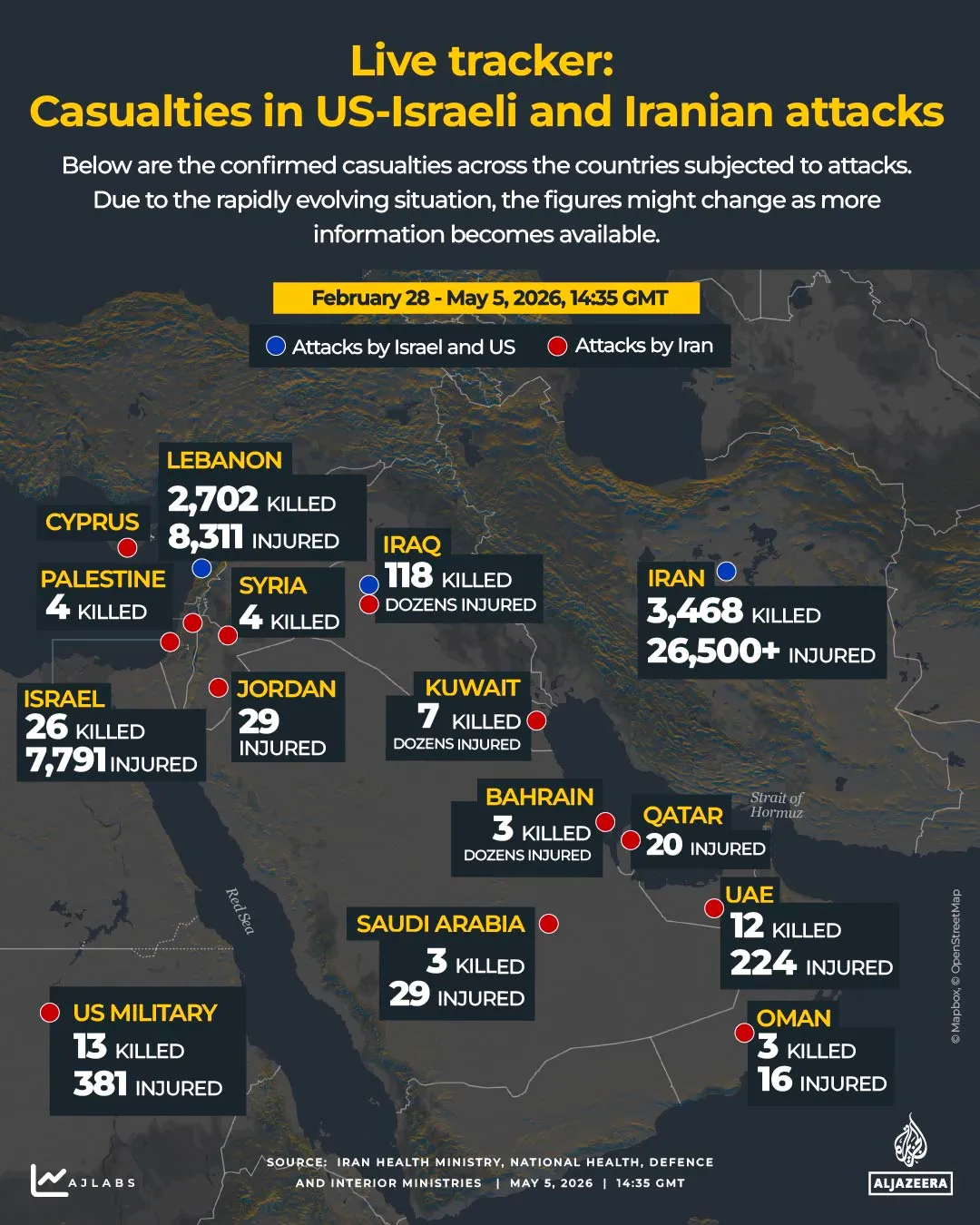
And yet, Iran is suffering. More than 1,500 people have been killed across the country, according to the government. Infrastructure has been heavily damaged, and the power grid could be next. Relations with Gulf neighbours have nosedived, and, after repeated Iranian attacks, are unlikely to return to their previous levels after the conflict.

More moderate voices in Iran will look at that and think that things could easily get worse. They can argue that some form of deterrence has been achieved, and that the time is now ripe to talk. And if they can get some concessions – such as a promise of no future attacks, or greater authority in the Strait of Hormuz – they may decide that the time is right to make a deal.

Source link

Iran names successor to security chief killed in US-Israeli attack | US-Israel war on Iran News

Mohammad Bagher Zolghadr, ex-IRGC commander, to replace late Ali Larijani as chief of Iran’s Supreme National Security Council.

Iran has named Mohammad Bagher Zolghadr, a former commander of Iran’s Islamic Revolutionary Guard Corps (IRGC), as the successor to Ali Larijani, head of the country’s Supreme National Security Council (SNSC), who was killed in a US-Israeli air strike earlier this month.

President Masoud Pezeshkian’s deputy of communications announced the appointment on X on Tuesday.

Recommended Stories

list of 3 itemsend of list

The SNSC, formally chaired by Pezeshkian, coordinates security and foreign policy and includes top military, intelligence and government officials, in addition to representatives of Supreme Leader Mojtaba Khamenei.

Zolghadr, who served in the 1980s war against Saddam Hussein’s Iraq, went on to become head of the IRGC’s joint staff for eight years and then deputy commander-in-chief of the elite force for another eight years.

In 2005, he was named deputy interior minister for security and police in the government of then-President Mahmoud Ahmadinejad, a move that was seen at the time as bolstering the IRGC’s influence in politics.

Since 2023, he has been the secretary of the Expediency Council, a powerful body that plays both an advisory and mediating role between Iran’s various power structures and the supreme leader.

Zolghadr’s new position consolidates the IRGC’s growing clout in Iran amid growing uncertainty regarding decision-making at the top of the system. Mojtaba Khamenei has not been seen in public since he succeeded his assassinated father, Ayatollah Ali Khamenei, in early March.

Larijani, one of the most prominent non-clerical figures in Iranian politics, was killed last Tuesday in a week that saw the war spiralling throughout the region, upending global energy markets and roiling the world economy.

On Tuesday, the war showed no sign of de-escalation after US President Donald Trump’s claim that he was speaking to an unidentified “top person”, as he extended by five days a deadline to hit Iran’s power plants.

Iran’s Parliament Speaker Mohammad Bagher Ghalibaf said “no negotiations” were under way, accusing Trump of seeking “to manipulate the financial and oil markets”.

Source link

Moment rescuers find man alive under the rubble in Tehran | US-Israel war on Iran

NewsFeed

Rescuers have pulled a man alive from the rubble after US-Israeli strikes hit a residential area on the outskirts of Tehran, the Iranian Red Crescent said. The US and Israel have continued to strike Iran, despite President Trump’s claims of diplomatic progress.

Source link

Keir Starmer’s policy on the Iran war is a recipe for catastrophe | US-Israel war on Iran

In March 2003, a million people took to the streets of London to oppose the illegal invasion of Iraq. Seeing straight through the lie that Iraq possessed weapons of mass destruction, protesters warned the British government in no uncertain terms: This action would trigger a spiral of misery, hatred and death.

More than 20 years on, most people now recognise the Iraq war for what it was: a catastrophic mistake that fuelled a string of subsequent conflicts and instability. The United Kingdom had followed the United States into an illegal war – and more than a million Iraqi men, women and children paid the price.

Unfortunately, not everybody has learned the lessons from the past. It has been almost a month since the US and Israel launched their attacks on Iran. More than 1,400 Iranians and more than 1,000 Lebanese people have been killed.

In seeking to justify the bombing, US President Donald Trump spoke of the need to eliminate “imminent threats from the Iranian regime”, whose “menacing activities directly endanger the United States, our troops, our bases overseas and our allies throughout the world”. He said the goal was to make sure Iran “will never have a nuclear weapon”. Sound familiar?

The first casualty of war is the truth, so let us get the facts straight: These are lies that have been peddled to justify an illegal and unprovoked war. As the National Counterterrorism Center Director, Joe Kent, said in his resignation letter last week, Iran “posed no imminent threat to our nation” and that it was “clear that [the US] started this war due to pressure from Israel and its powerful American lobby”.

There is only one nuclear-armed state in the Middle East: Israel. Next month’s UN Conference of the Parties to the Treaty on the Non-Proliferation of Nuclear Weapons would have been the perfect place to call for an end to the nuclear arms race. A diplomatic solution was possible, but the US and Israel chose war instead. In doing so, they have jeopardised the safety of humankind around the world. So, too, have those nations that have decided to lend support to their war of aggression.

Shortly after the attacks on Iran began, British Prime Minister Keir Starmer gave the US permission to use British military bases for strikes on Iranian missile sites. Last week, his government agreed to let the US use British bases to strike Iranian sites targeting the Strait of Hormuz.

The UK could have followed in the footsteps of Spain and said, “No way, absolutely not. We will not be involved in this illegal war in any way whatsoever.” Instead, it has dragged itself into another catastrophic conflict.

Astonishingly, the prime minister still maintains that the British government is not involved – a line that has been regurgitated by many across our media. He says the UK is allowing its sites to be used only for “defensive” strikes. What nonsense.

The reality is, if a bomber takes off from Royal Air Force base Fairford and bombs targets in Iran, we are involved in that act of aggression. If civilians die, will their families stop mourning when they are told that they were bombed for “defensive purposes”? No matter how Starmer dresses it up, he cannot change the truth: The UK is directly involved in this war.

Mark my words: This is a historic mistake that jeopardises the safety of us all. That’s why, earlier this month, I tabled a bill in the House of Commons that would require parliamentary approval for any British involvement in military action. That includes the use of British bases by other nations.

So far, the prime minister has refused to pass this legislation. With no debate, no discussion and no vote, he is dragging Britain into another disastrous illegal war.

Just like with the invasion of Iraq in 2003, today, those of us who oppose the war on Iran are accused of giving succour to authoritarian regimes and leaders. Whatever one thinks of the governments of various places, there is no basis in law for an attack to bring about regime change. There is no basis in history that bombing from the sky would bring about human rights either.

Trump couldn’t care less about people’s human rights. Whether it’s in Iran, Venezuela or Cuba, he is interested in one thing and one thing only: seizing resources and political control around the world.

If the UK cares about international law, it would be standing up to Trump, not bending over backwards to appease him.

The story of US-led foreign interventions is a story of chaos, instability and misery. How many more of these catastrophic failures do we need before we learn the lesson? And what will it take for the UK to finally defend a consistent, ethical foreign policy based on international law, sovereignty and peace?

The views expressed in this article are the author’s own and do not necessarily reflect Al Jazeera’s editorial stance.

Source link

Iran launches waves of missiles towards Israel | US-Israel war on Iran News

Iran has launched a round of missiles targeting Israel, causing damage and injuries in Tel Aviv, as uncertainty swirled over possible talks to end the three-week US-Israel war on Iran.

The missiles triggered air raid sirens in Israel on Tuesday, including in Tel Aviv, where gaping holes were torn through a multistorey apartment building. It was not immediately clear whether the damage was caused by a direct hit or debris from an interception.

Israel’s Magen David Adom emergency medical service said: “Six people were lightly injured at four different sites.”

Police in Tel Aviv said they were dealing with “several impact sites of munitions”.

Israel’s National Fire and Rescue Authority said the search was on for people trapped in one building in Tel Aviv, adding that civilians were found in a shelter in another damaged building.

Meanwhile, the Israeli military said on Tuesday that its jets carried out a wave of strikes in central Tehran on Monday, targeting key command centres, including facilities associated with the Islamic Revolutionary Guard Corps’ intelligence arm and the Iranian Intelligence Ministry. It said more than 50 additional targets were hit overnight, including ballistic missile storage and launch sites.

Source link

Have Israel, the US and Iran violated international law? | US-Israel war on Iran News

Civilian targets have been struck by all three warring parties.

Schools and hospitals bombed; strikes on apartment buildings; energy facilities targeted and attacks on neighbouring states.

Have Israel, the United States and Iran broken international law in the war? Or what legal justification might they claim?

Presenter: James Bays

Guests:

Geoffrey Nice – Human rights lawyer and former International Criminal Court prosecutor

Brian Finucane – Senior adviser with the US programme at the International Crisis Group and former legal adviser at the US State Department

Nicholas Tsagourias – Professor of international law at the University of Sheffield

Source link

Trump can declare victory in Iran – and he should | US-Israel war on Iran

Since Donald Trump entered the political fray, critics have opined that if he ever faced a direct confrontation with Iran as United States president, the result would be chaos, endless war, and global instability. They have been proven wrong once again.

Today, the world is witnessing the swift decisive assertion of US power that is leading to a clear military victory over a terrorist state that has long threatened US as well as global peace and security.

For too long, US foreign policy was dominated by hesitation disguised as sophistication. US presidents, Democrat and Republican, advocated for “containment”, “strategic patience”, and “measured responses”, while adversaries grew bolder and more brazen. Iran expanded its influence across the Middle East, funded proxy militias, threatened global energy supplies, and openly challenged Washington’s credibility by attacking US interests, personnel and assets.

Trump rejected the conventional Washington approach even before assuming public office. He never believed that endless negotiations or carefully worded diplomatic statements would deter a regime that only yields to power. His critics called it recklessness. What it actually was, was clarity.

Instead of drifting into another conventional decade-long war, Trump chose a simple formula: hit hard, hit fast, and make it clear that the US will not capitulate to threats.

Today, most of the foreign policy establishment still defines “victory” the way it did in the 20th century: overthrow the regime, occupy the country, and rebuild its government in our liking. That post-World War II and Cold War model worked in Europe, Asia and Latin America. It did not in the Middle East. Iraq and Afghanistan proved that nation-building can be a futile endeavour.

Trump understands something Washington does not want to admit: the exercise of American power should not be to build democratic societies. It should be to eliminate threats.

From the outset, the Trump administration made clear that it was launching the attacks to control the outcome.

If Iran’s military leadership has been weakened, if its ability to threaten US forces and allies has been reduced, and if its nuclear ambitions have been significantly set back, then the mission has already succeeded, and it is time to end the war.

When Trump declares victory, he will not do it quietly. He will say it directly: America struck, America won, and America did so without engaging in another endless war.

Timing has always been one of Trump’s political talents. He understands momentum better than any of his predecessors of the past few decades did. If the military objectives have already been largely achieved, waiting months to say so would only weaken the message.

Declaring victory at the moment of peak strength sends a powerful signal — not just to Iran, but to the entire world.  It ratifies that the US has red lines again. It makes clear that threats will be met with force, not speeches. And most importantly, it declares that the US is once again confident enough to act decisively.

Critics on the American left will predictably label any Trump victory “premature” and his methods “illegal” and reckless. But their genuine discomfort with his success has more to do with the use of American firepower to achieve objectives that they believe can or should only be had through diplomacy and multilateral rather than unilateral actions.

Trump’s “America First” foreign policy builds on US President Ronald Reagan’s peace through strength mantra by being willing to pre-emptively exercise American might to demonstrate American resolve and deter adversaries. It has proven effective before, and it is proven effective again today.

It destroys the critics’ primary thesis — that American strength must always be restrained, that military power should be used cautiously, and that multilateral strategies are a prerequisite.

Trump’s Iran victory speech will not be lofty and replete with platitudes. It will be direct, simple, and unabashedly America First.

He will explain that the US acted because it had to do so. He will declare that the imminent threat of a nuclear Iran has been eliminated. He will say American lives were saved. And he will end by stating that the world is safer because of this sacrifice by the American people.

Through Trump’s America First foreign policy, the US will act decisively and unilaterally. It will not apologise for defending its interests. And it will prove that acting boldly can change the course of events in a matter of weeks, not years.

After decades of vacillation, Trump’s message to the world is simple: America’s back and American interests come first.

America did not need another endless war. It needed a president willing to act.

And that is exactly what it got.

The views expressed in this article are the author’s own and do not necessarily reflect Al Jazeera’s editorial stance.

Source link