Donald Trump gives conflicting messages on prominence of Iran war in upcoming talks, with his administration emphasising trade.
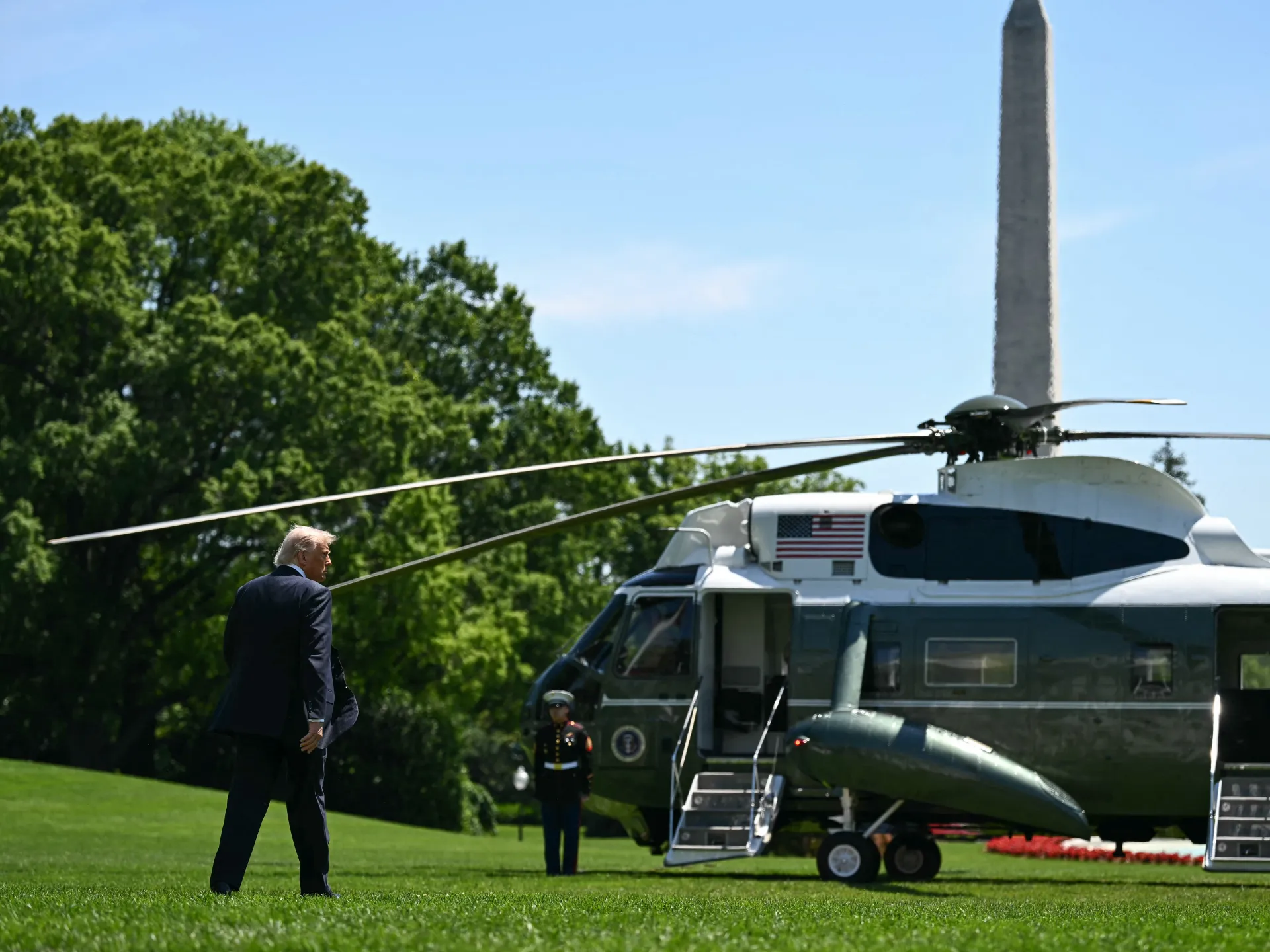
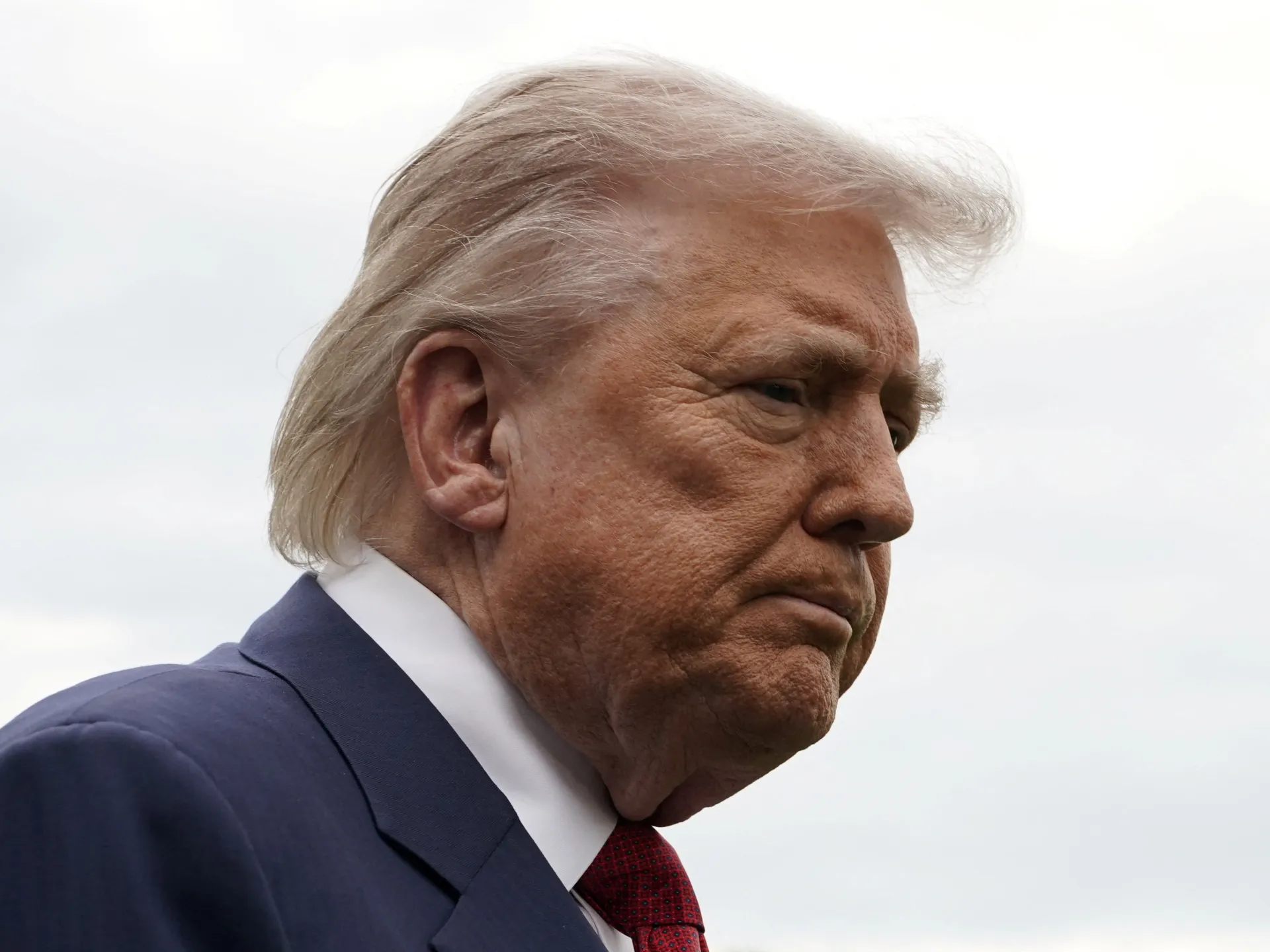
United States President Donald Trump has departed the White House en route to Beijing, where he will meet with his Chinese counterpart Xi Jinping.
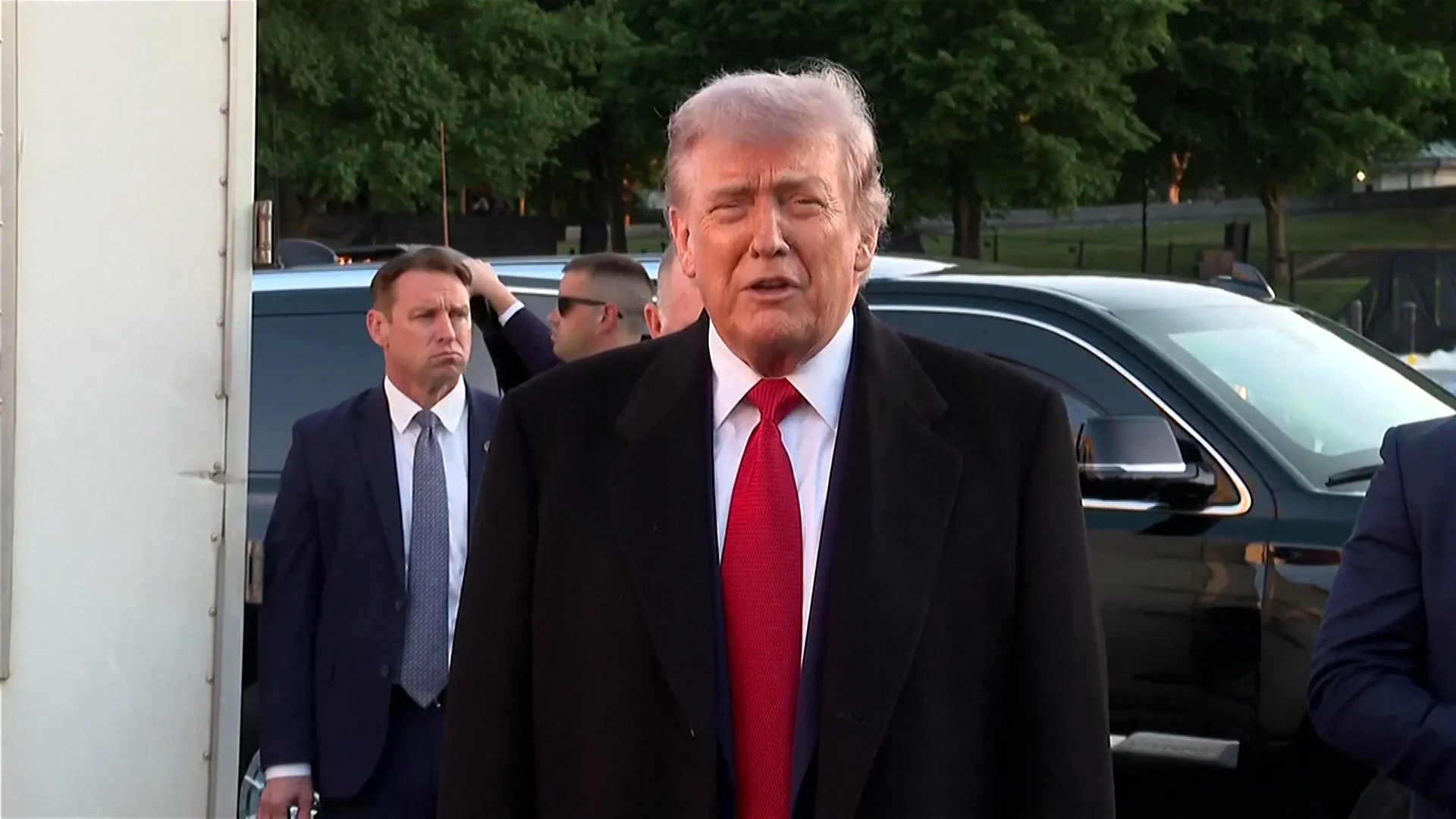
Trump spoke briefly with reporters on Tuesday as he boarded the Marine One helicopter. He was then set to arrive in China aboard Air Force One on Wednesday, ahead of the planned meetings on Thursday and Friday.
Recommended Stories
list of 3 itemsend of list
United States officials have taken pains in recent days to downplay how big a topic the US-Israel war on Iran will be during Trump’s visit.
Beijing has made its opposition to the war clear, at times asserting behind-the-scenes pressure on its trading partner Iran. However, it has largely avoided being pulled into the fray.
In recent days, US Secretary of State Marco Rubio and Treasury Secretary Scott Bessent have stepped up their calls for China to use its influence to help reopen the Strait of Hormuz, through which about 20 percent of the world’s oil supply flowed before the war began.
But Trump again gave conflicting messages on Tuesday about how much the war would feature in his meetings in China.
“We’re going to have a long talk about it. I think he’s been relatively good, to be honest with you,” Trump said of his plans to discuss the conflict – and how it has roiled global oil markets – with Xi.
Minutes later, he added, “We have a lot of things to discuss. I wouldn’t say Iran is one of them, to be honest with you, because we have Iran very much under control.”
“I don’t think we need any help with Iran. We’ll win it one way or the other, peacefully or otherwise,” he said.
Trade to loom large
The upcoming meetings will be the first face-to-face exchanges since the leaders of the world’s two largest economies met on the sidelines of the Asia-Pacific Economic Cooperation (APEC) summit in Busan, South Korea, in October 2025.
It is the second time Trump will travel to China as president, and the first time since his second term began on January 20, 2025. Xi is expected to travel to the US later this year.
Beyond the war, the US administration has stressed that trade will be a top subject discussed, with Trump seeking a series of business deals and agreements.
Underscoring that initiative, Trump invited an array of US business leaders to accompany him on the trip, including Tesla CEO Elon Musk, who had previously chaired Trump’s so-called Department of Government Efficiency (DOGE), and Apple CEO Tim Cook.
Both sides are expected to seek to avoid a return to the tariff war that defined Trump’s early days in office, which saw Trump set tariffs on Chinese goods at 145 percent, while China announced a further tightening of rare-earth export controls that would have hurt US industry.
The two sides reached a fragile truce in October of last year.
China’s continued support for Iran’s ballistic programme and its defence of Tehran’s nuclear programme has also risked again derailing relations.
Last month, Trump threatened to impose a 50 percent tariff on China after reports that Beijing was preparing to deliver a shipment of new air defence systems to Iran. He later backed away from the threat, claiming that he had received written assurance from Xi that he would not provide Tehran with weaponry.
Days later, Trump said that the US Navy had intercepted a Chinese vessel carrying a “gift” for Iran. Neither side offered further details of the incident.
Xi was also expected to push Trump on US arms sales to Taiwan, the self-governing island that China claims as its own.
US president lauds Islamabad, but his Republican ally says he does not trust Pakistan to facilitate Iran diplomacy.
Published On 12 May 202612 May 2026
Donald Trump has reasserted his support for Pakistan to serve as a mediator between Iran and the United States after Senator Lindsey Graham, a close ally of the US president, disparaged Islamabad’s diplomacy.
In remarks on Tuesday, the US president lauded Pakistan’s Prime Minister Shehbaz Sharif and its army chief Asim Munir, who helped negotiate a fragile ceasefire in Iran that came into effect last month.
Recommended Stories
list of 3 itemsend of list
Trump added he is not reconsidering Pakistan as a mediator.
“They’re great. I think the Pakistanis have been great. The field marshal and the prime minister of Pakistan have been absolutely great,” Trump told reporters.
Hours earlier, Graham had pressed Pentagon chief Pete Hegseth and top US general Dan Caine about a CBS News report claiming that Pakistan is allowing Iran to park military assets on its airfields, in order to shield them from potential US and Israeli attacks.
Both officials declined to comment on the veracity of the report, citing the sensitive nature of the talks between the US and Iran.
Asked by Graham whether it would be “consistent” for Pakistan to act as a fair mediator if the CBS report is confirmed, Hegseth said, “I wouldn’t want to get into the middle of these negotiations.”
The Republican senator quickly interrupted the defence secretary.
“I do. I want to get in the middle of those negotiations,” Graham said.
“I don’t trust Pakistan as far as I can throw them. If they actually have Iranian aircraft parked in Pakistan bases to protect Iranian military assets, that tells me maybe we should be looking for somebody else to mediate. No wonder this damn thing is going nowhere.”
The senator — an outspoken foreign policy hawk who has been calling for regime change in Iran — is seen as one of the most influential figures in Trump’s circle.
Graham has also been one of the most vocal supporters of the war with Iran, repeatedly cautioning Trump against agreeing to a deal that would include concessions to Tehran.
Weeks before the war broke out on February 28, Graham met the US president in Florida, where he handed Trump a hat that says, “Make Iran Great Again.”
Pakistan has been pushing to revive the stalled diplomacy between Iran and the US, following the April 8 ceasefire agreement.
In late April, the US president announced he was sending his envoys to Pakistan to meet Iranian officials, but he called off the trip after Iran pushed the US to lift the naval blockade against its ports as a condition for resuming the talks.
US Department of Energy moves to transfer 53.3 million barrels amid rising oil prices.
Published On 12 May 202612 May 2026
The United States has announced its latest release of emergency oil stockpiles in coordination with the International Energy Agency (IEA).
The US Department of Energy said on Monday that it had begun transferring 53.3 million barrels from the strategic petroleum reserve after awarding contracts to nine companies under its emergency exchange programme.
Recommended Stories
list of 4 itemsend of list
Trafigura Trading LLC, a Texas-based commodities trading company, was granted the biggest haul of nearly 13 million barrels, with Marathon Petroleum Corporation and ExxonMobil set to receive 12.4 million barrels and 11.4 million barrels, respectively.
Macquarie Commodities Trading US, Atlantic Trading & Marketing, BP Products North America, Energy Transfer Crude Marketing, Mercuria Energy America and Phillips 66 will receive between 1.05 million and 6.55 million barrels each, according to the Energy Department.
Under the department’s exchange scheme, participating firms are required to replenish the stockpile with new barrels at a later date.
“These actions continue to move oil swiftly into the market, address near-term supply needs, and ensure that the Strategic Petroleum Reserve remains strong through the return of premium barrels,” Kyle Haustveit, the head of the department’s Hydrocarbons and Geothermal Energy Office, said in a statement.
The transfer comes after US President Donald Trump’s administration agreed in March to release 172 million barrels of crude as part of the IEA’s coordination of the largest unloading of global stockpiles in history.
Oil prices have surged since the US and Israel launched their war on Iran in late February, with Tehran’s retaliatory blockade of the Strait of Hormuz paralysing one of the world’s most important trade routes.
Maritime traffic in the strait has ground to a halt amid Iranian threats against commercial shipping, disrupting about one-fifth of the global oil trade.
Oil prices continued to edge higher on Monday after Trump dismissed Iran’s latest peace proposal and warned that the ceasefire between the sides was “on life support”, dampening hopes for a quick resolution to the conflict.
Facing growing public discontent over rising fuel prices, Trump on Monday also pledged to waive the 18.4 cents-per-gallon federal tax on petrol, though taxation is the purview of the US Congress.
Futures for Brent crude, the international benchmark, were up about 1 percent in Asia on Tuesday morning, topping $105 a barrel.
Senator Hawley plans legislative action supporting President Trump’s bid to waive the petrol tax amid rising consumer costs.
United States President Donald Trump said he will cut the 18-cent federal tax on petrol to offset surging prices that have continued to soar after his comments that the US ceasefire with Iran is on “life support”.
On Monday, Trump said he would suspend the petrol tax, but did not specify an end date.
Recommended Stories
list of 4 itemsend of list
“Yup, we’re going to take off the gas tax for a period of time, and when gas goes down, we’ll let it phase back in,” Trump told CBS News.
Trump later told reporters that he would waive the tax, which generates $2.5bn in funds used for US roadway infrastructure, “till it’s appropriate”.
The US administration hinted at the idea on Sunday, when US Energy Secretary Chris Wright told the NBC News programme Meet the Press that the White House was considering suspending the tax.
While the Republican president claimed he would waive the tax, that is not within the White House’s authority. Suspending a federal tax requires an act of the US Congress.
However, key Trump ally Senator Josh Hawley, a Republican from Missouri, said on the social media platform X that he would introduce legislation on Monday to do that.
In March, Senator Mark Kelly, a Democrat from Arizona, proposed suspending the tax until October.
“I anticipate it would pass, but there could be a procedural delay. It also suggests that President Trump doesn’t see a quick end to the reduced volumes and is trying to cushion the American consumer,” Rachel Ziemba, adjunct senior fellow at the Center for a New American Security, told Al Jazeera.
“The impact could be greater in states that have also reduced their own petrol taxes and could reinforce differentiation between petrol prices by region.”
US states also tax petrol, with Indiana, Kentucky and Georgia moving to make cuts to give consumers some relief at the pump.
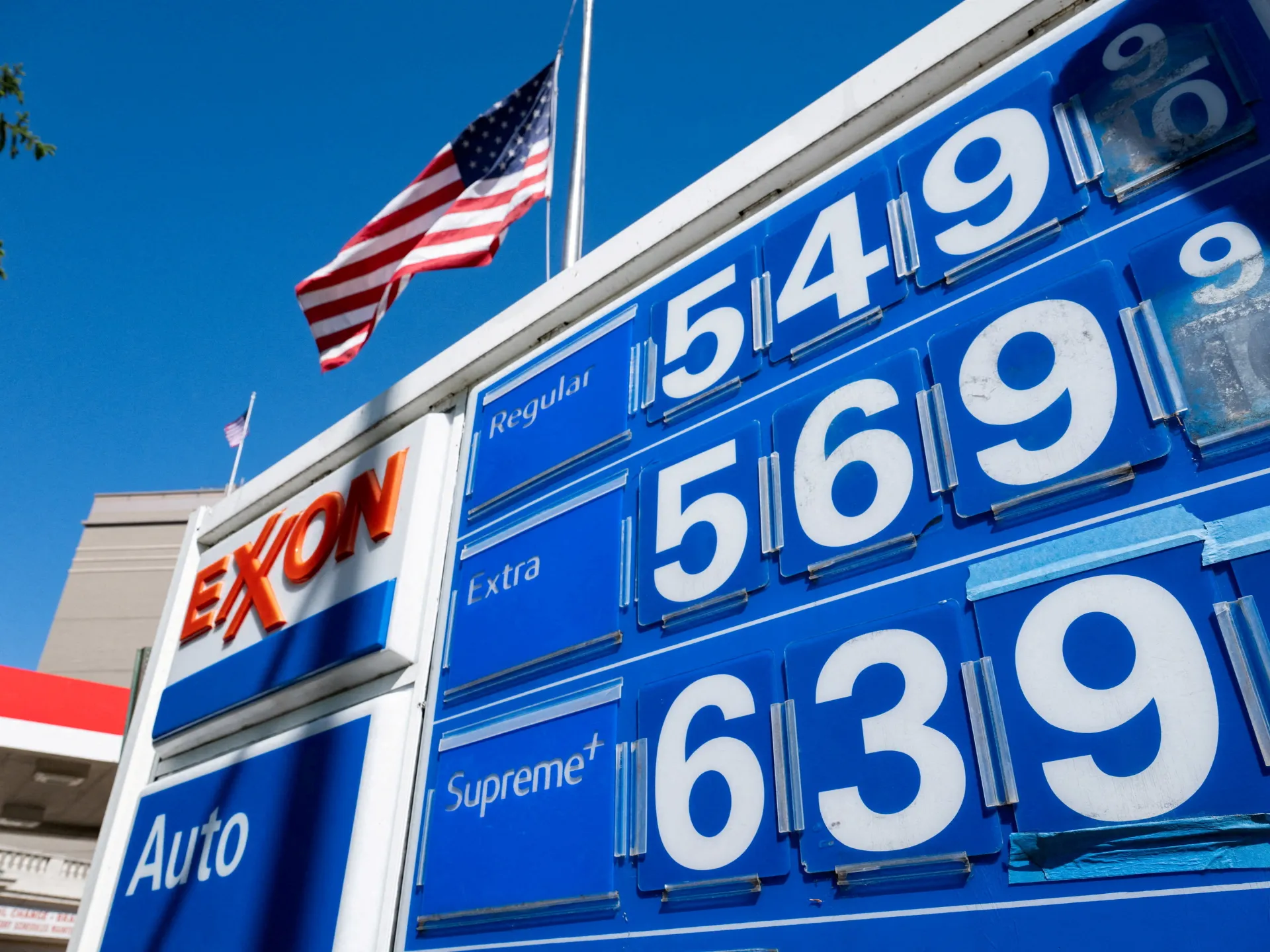
Petrol prices have continued to climb since the initial strikes of the US-Israel war on Iran on February 28. The average price for a gallon (3.78 litres) of regular petrol is $4.52, according to the American Automobile Association, which tracks daily petrol prices, compared with $2.98 when the strikes first began.
However, news of the stumbling ceasefire has sent oil prices surging. Brent crude futures were up $3.17, or 3.13 percent, at $104.46 a barrel, while US West Texas Intermediate crude was at $98.32 a barrel, up $2.90, or 3.04 percent. Brent reached a session high of $105.99 and WTI hit a peak of $100.37.
On Wall Street, stocks for oil and gas giants are trending upward. Shell was up 1.6 percent in midday trading, Exxon rose 3.1 percent, BP gained 2 percent, and Chevron climbed 1.7 percent.
Airline bailout?
Trump was also asked by CBS on Monday whether a bailout was planned for the airline industry, which has taken a hit since the war on Iran began.
The president told the outlet that a bailout had not “really been presented” and that “the airlines are doing not badly”.
However, earlier this month, budget carrier Spirit Airlines ceased operations after 34 years. Court documents said the airline shut down because of “recent geopolitical events resulting in a massive and sustained increase in fuel prices”.
That comes as other major US carriers raise prices. In April, United Airlines said it would raise fares by 20 percent amid a surge in jet fuel costs.
Strikes come after forced displacement warnings by Israel for nine towns in southern and eastern Lebanon.
Published On 11 May 202611 May 2026
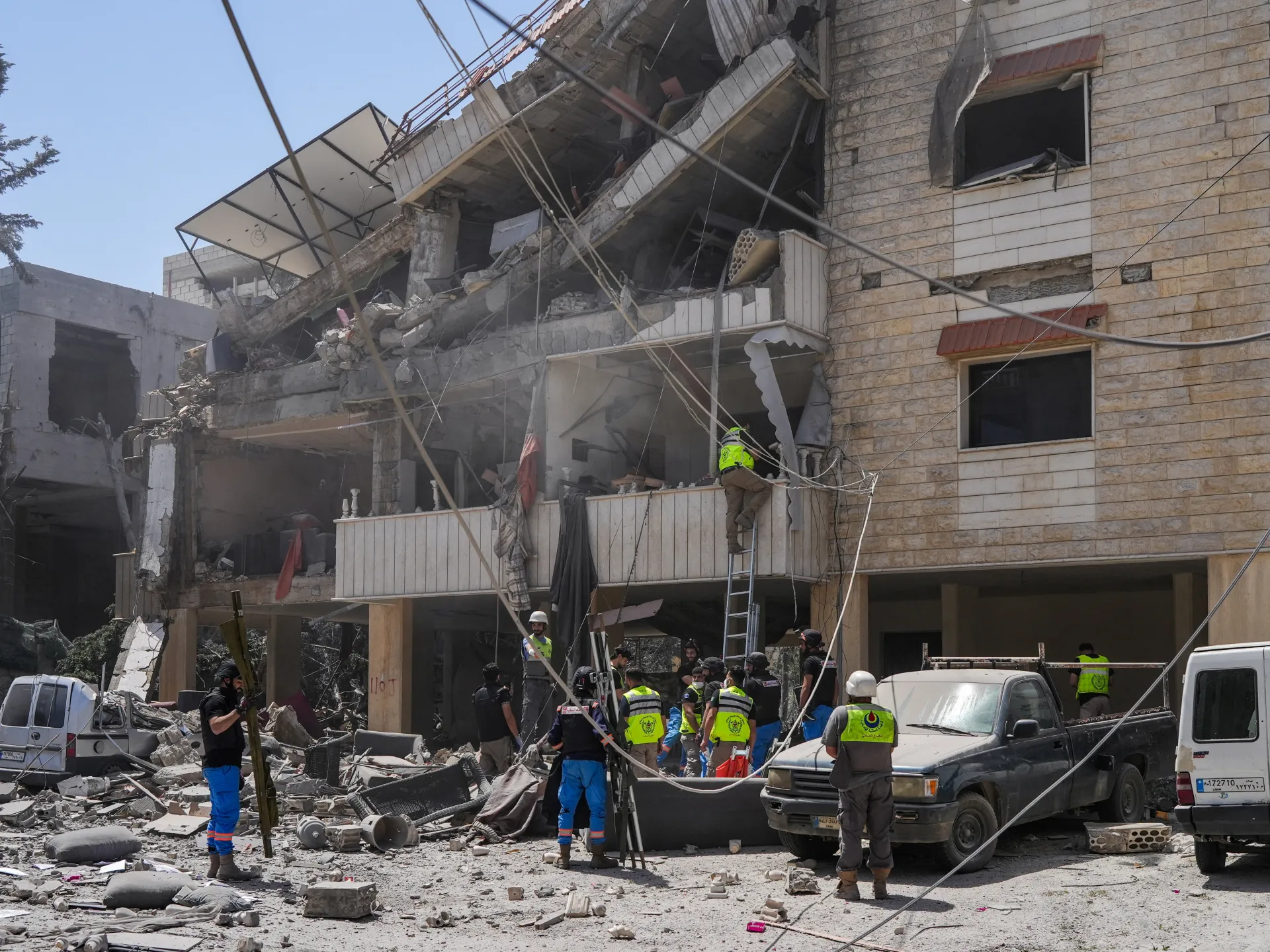
Israeli strikes in southern Lebanon have killed at least four people and wounded eight others, according to Lebanese media.
The state National News Agency (NNA) reported injuries to two medics as they rushed to offer aid to victims of the latest attacks by the Israeli military in violation of the official ceasefire.
Recommended Stories
list of 4 itemsend of list
The medics were wounded when an air strike hit a civil defence team affiliated with the Islamic Health Society in Toul in Nabatieh, as they responded to an earlier attack, NNA said.
Two men were killed and five others injured in an air raid on the town of Ebba in Nabatieh.
NNA added that a drone strike on a car in the town of Haris in Bint Jbeil district killed one man and injured his brother.
Israeli warplanes targeted the home of a former municipal chief in Sajd, while other strikes were reported in Kfar Rumman and Safad al-Battikh. No casualty information was immediately available.
Forced displacement threat
Ahead of the attacks, the Israeli army issued a forced displacement threat for nine towns in southern and eastern Lebanon.
They are: Rihan, Jarjou, Kfar Rumman, Nmairiyeh, Arabsalim and Harouf in Nabatieh, and Jmayjmeh, Mashghara and Qlayaa in eastern Lebanon.
Posting on X, army spokesman Avichay Adraee urged residents there to evacuate due to what he called Hezbollah infrastructure in the towns.
The Israeli military said a soldier was killed by a drone launched by Hezbollah near the border. Also in southern Lebanon, three Israeli soldiers were injured by a booby-trap drone explosion.
Israeli forces continue to exchange fire with Hezbollah and carry out attacks, despite the ceasefire which began on April 17 and later extended to mid-May.
Since March 2, Israeli attacks have killed at least 2,840 people in Lebanon, injured almost 8,700 and displaced more than a million, according to Lebanese figures.
The United States is preparing to host more peace talks between Israel and Lebanon in Washington on Thursday and Friday. Hezbollah has criticised the Lebanese government for taking part.
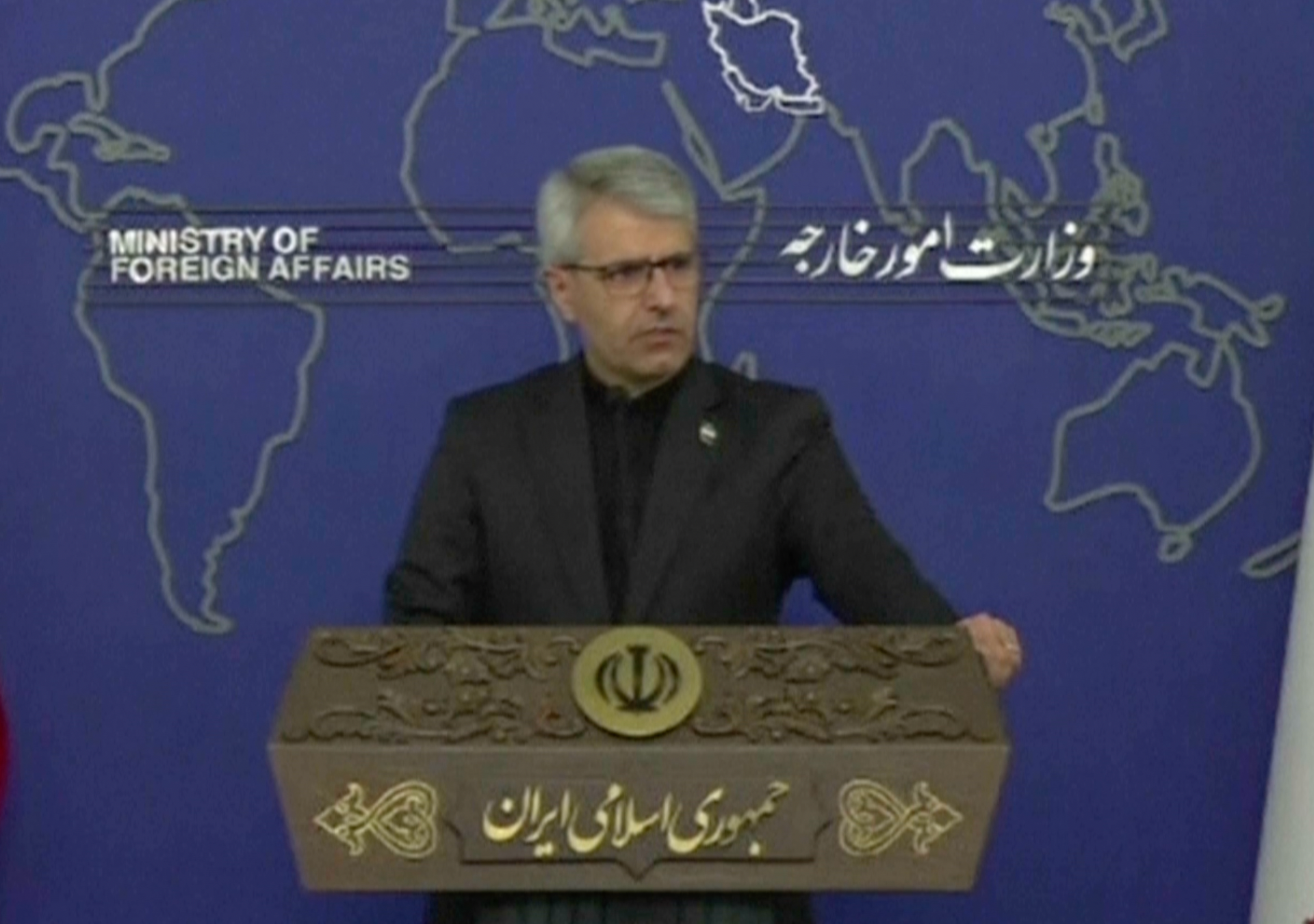
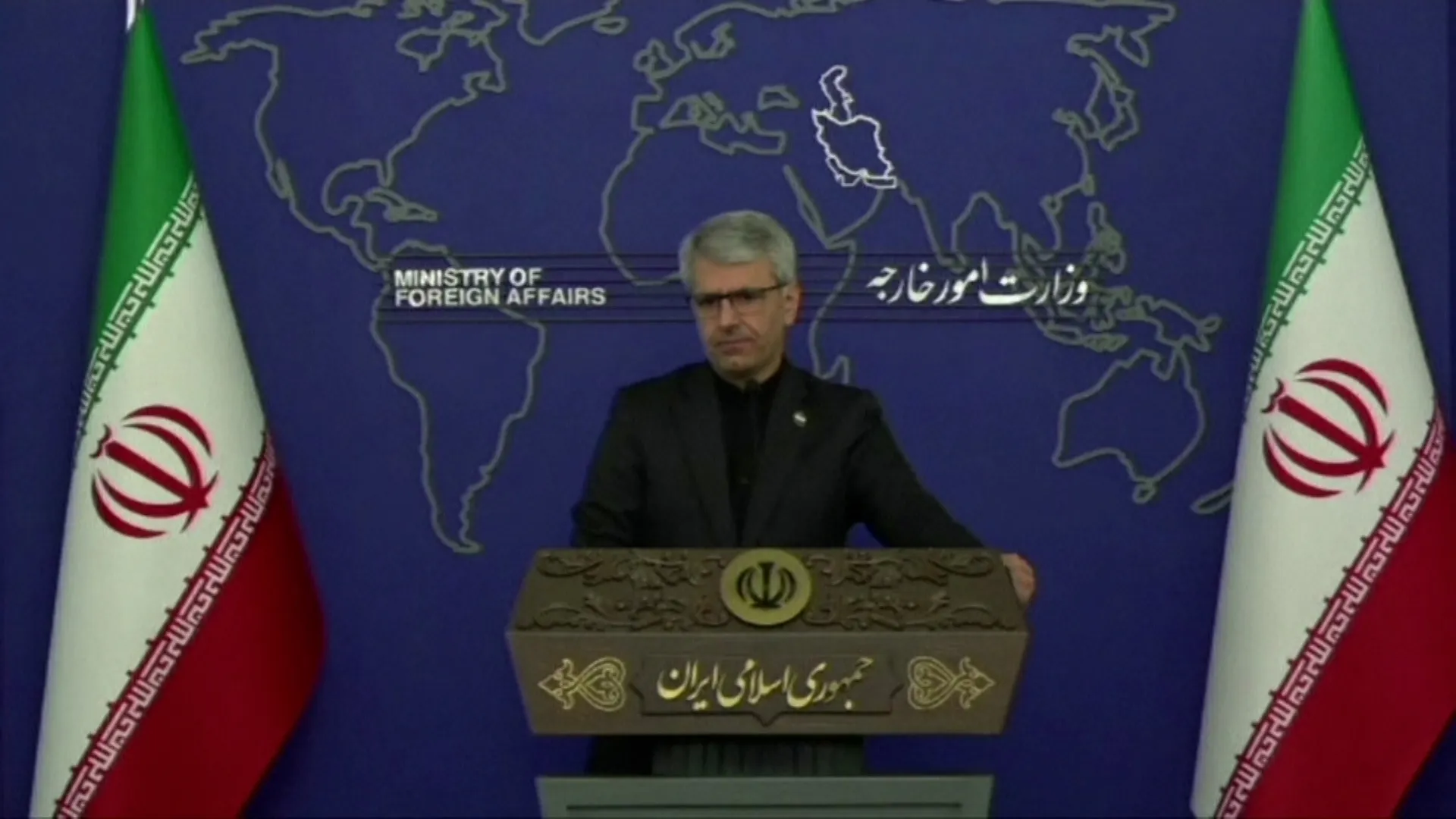
Iran’s Foreign Ministry spokesperson Esmail Baghaei says Tehran’s response to the latest US proposal to end the war was “not excessive.” He says it’s the US that continues to make “unreasonable demands” during negotiations over ending the war and reopening the Strait of Hormuz.
Iranian foreign ministry spokesman Esmaeil Baqaei says Iran’s latest response to the US had asked for an end to the war, removal of the naval blockade, and release of assets.
The US had dismissed the Iranian response, Baqaei said, as it clings to its ‘unreasonable demands’.
Official says US president will likely ‘apply pressure’ on China over Beijing’s purchase of Iranian oil amid war.
Published On 10 May 202610 May 2026
Donald Trump is set to arrive in Beijing on Wednesday evening to discuss the Iran war and other issues with his Chinese counterpart President Xi Jinping.
White House Principal Deputy Press Secretary Anna Kelly said an opening ceremony and meeting will be on Thursday morning, and the trip will conclude on Friday. The US plans to host the Chinese leader during a reciprocal visit later this year.
Recommended Stories
list of 3 itemsend of list
Kelly said that this week’s trip would be of “tremendous symbolic significance” and focus on “rebalancing the relationship with China and prioritising reciprocity and fairness to restore American economic independence”.
Trump’s visit, initially scheduled for earlier this year but postponed in March due to the US-Israel war on Iran, comes as the US president struggles to contain the fallout from the war, both at home and abroad.
A senior administration official told news outlets in an anonymous briefing on Sunday that Trump could “apply pressure” to China on Iran in areas such as oil sales and Tehran’s purchase of potential dual-role military-civilian goods.
US Treasury Secretary Scott Bessent last week accused China of “funding” Iran.
“Iran is the largest state sponsor of terrorism, and China has been buying 90 percent of their energy, so they are funding the largest state sponsor of terrorism,” Bessent told Fox News.
Iran closed the Strait of Hormuz in response to US-Israeli attacks, restricting passage through a key artery of global energy transport.
China has said that it wants to see the war end and hosted Iranian Foreign Minister Abbas Arraghchi last week. At the same time, Beijing has refused to recognise Washington’s “unilateral” sanctions on Iran’s oil sector.
Disruptions stemming from the war have disrupted the global economy, with Asian states that depend on imports from the Middle East especially hard hit.
Trump could also bring up China’s support for Russia during the talks, along with trade and rare earth minerals, a vital resource for the US tech sector. Business executives from aerospace manufacturer Boeing and a handful of agricultural companies are set to travel with the US delegation.
The anonymous administration official said that no change was expected regarding the US stance on Taiwan, a main sticking point in relations between Washington and Beijing. China considers the self-ruling island a part of its territory, but the US has deep security and economic commitments to Taiwan.
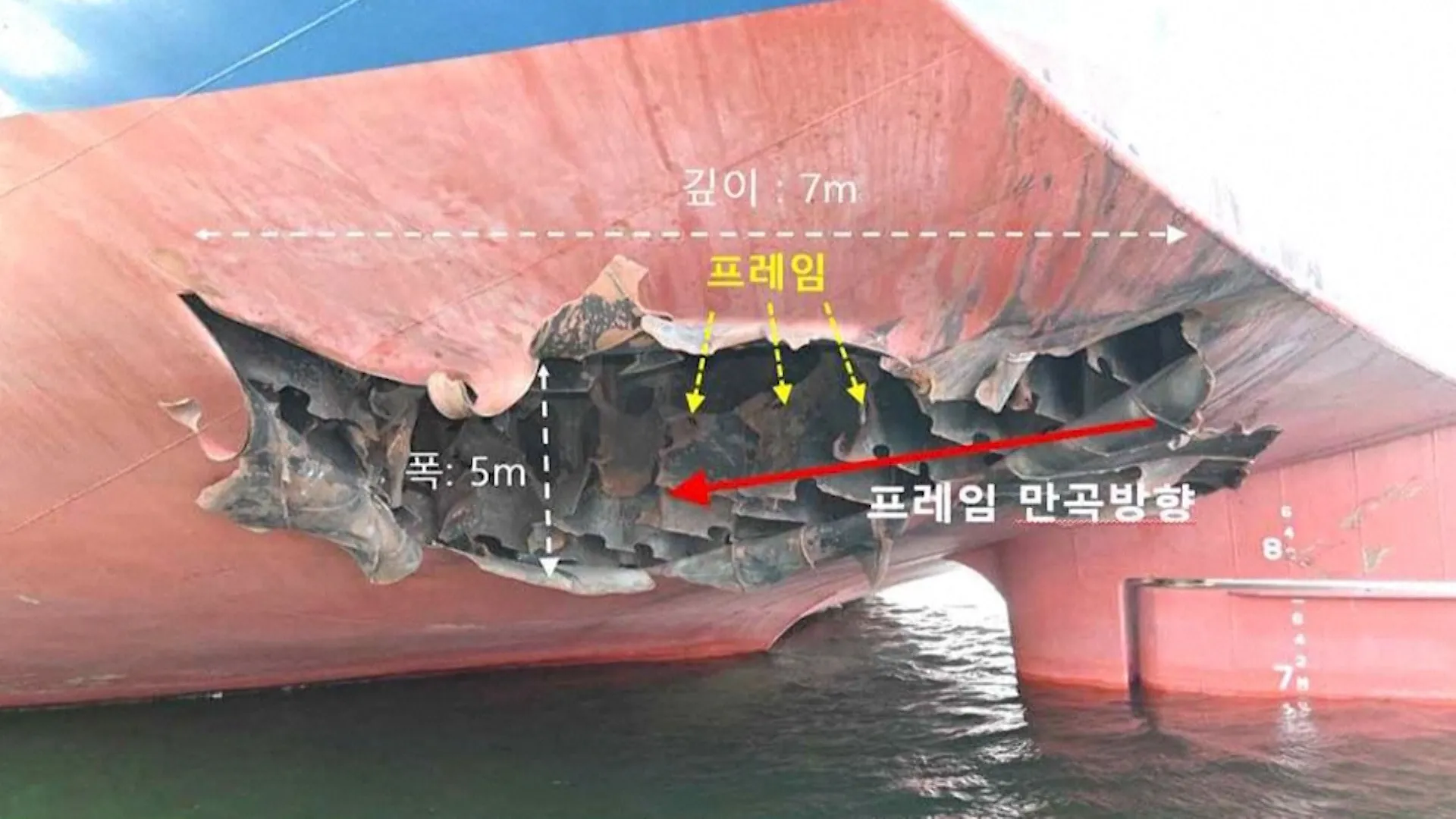
South Korea says it is investigating an incident on May 4 when two unidentified objects struck a Korean-operated cargo ship in the Strait of Hormuz.
The strike caused a fire and damaged the vessel’s stern.
President Donald Trump has warned that the United States will target any Iranian trying to reach the country’s highly enriched uranium, saying that the nuclear material is under constant surveillance by the US military.
In an interview with the syndicated TV show Full Measure that aired on Sunday, Trump appeared to play down the significance of the uranium, which is believed to be buried under the rubble of nuclear facilities, remaining in Iran for now.
Recommended Stories
list of 3 itemsend of list
“We’ll get that at some point, whenever we want. We have it surveilled,” Trump said.
“I did a thing called Space Force, and they are watching. If somebody walked in, they can tell you his name, his address, the number of his badge … If anybody got near the place, we will know about it, and we’ll blow them up.”
Iran’s highly enriched uranium is one of the major sticking points between Washington and Tehran in ceasefire negotiations to end the 10-week US-Israel war on Iran.
The US wants Iran to transfer the uranium outside the country and completely shut down its nuclear programme, but Tehran has stressed that it will not give up its right to a domestic enrichment programme.
Several international media reports have said that the uranium remains under nuclear sites that the US bombed in June 2025, but Tehran has not confirmed the location of the nuclear material.
Last month, Trump announced that Iran had agreed to allow Washington to retrieve the uranium and bring it to the US – claims that Tehran quickly dismissed.
Trump told Reuters on April 17 that the US would work with Iran “at a nice leisurely pace, and go down and start excavating with big machinery” to retrieve the uranium stockpile at the sites.
“We’ll bring it back to the United States,” he added.
Iran’s Foreign Ministry spokesperson Esmaeil Baghaei denied Trump’s claim. “Enriched uranium is as sacred to us as Iranian soil and will not be transferred anywhere under any circumstances,” he said.
Iran is estimated to have more than 400kg (882lb) of uranium enriched at 60 percent purity.
Uranium enrichment is a complex process of isolating and garnering the most radioactive variety – isotope – of the element to produce nuclear fuel.
When enriched to around 90 percent purity, uranium can be used to make nuclear weapons.
In 2015, Iran agreed to a multilateral deal that saw Tehran scale back its nuclear programme and cap its uranium enrichment at 3.67 percent under strict international supervision in exchange for lifting sanctions against its economy.
Trump nixed that agreement – known as the Joint Comprehensive Plan of Action (JCPOA) – and started reimposing sanctions on Iran.
In response, Tehran – which denies seeking a nuclear weapon – began to advance its enrichment programme well beyond the limits set by the JCPOA.
Trump has argued that the ongoing conflict with Iran aims to prevent the country from acquiring a nuclear bomb.
Asked about the rising oil prices due to the war, Trump said: “We cannot let Iran have a nuclear weapon because they’re crazy.”
The average price of one gallon (3.8 litres) of petrol or gasoline in the US has risen to more than $4.50 due to supply issues linked to the Iranian blockade in the Strait of Hormuz, fuelling inflation. It was less than $3 before the war.
Despite the truce that came into effect last month, skirmishes have erupted in the Gulf over the past week as the US continues to enforce a siege on Iranian ports amid Tehran’s Hormuz blockade.
Iranian state-affiliated news outlets reported on Sunday that Iran has delivered its response to the latest US proposal to end the war to Pakistan, which is mediating the talks.
But Trump said the war is not over while reiterating his claim that Iran has been “defeated”.
“They are defeated, but that doesn’t mean they’re done,” the US president said. “We could go in for two more weeks and do every single target. We have certain targets that we wanted, and we’ve done probably 70 percent of them, but we have other targets that we could conceivably hit.”
Tehran, Iran – Skyrocketing inflation is jeopardising food security among households in conflict-hit Iran, new figures show, as diplomatic efforts to end the war launched by the United States and Israel intensify.
“The people must realistically understand the conditions and restrictions of the country,” President Masoud Pezeshkian told a group of officials who gathered on Sunday to discuss rebuilding structures damaged or destroyed in US and Israeli attacks.
“It is natural that there are difficulties and problems in this path, but through people’s cooperation and reliance on national cohesion, problems can be solved,” he was quoted as saying by state media.
Pezeshkian’s comments came a day after the Statistical Center of Iran (SCI) said Farvardin, the first month of the Persian calendar year that ended on April 20, had an inflation rate of 73.5 percent compared to the same month of the previous year. The SCI also noted that inflation was five percent higher in Farvardin compared to the previous month.
The Central Bank of Iran, which reports figures based on a different method and with different data sets, reported a slightly lower inflation rate of 67 percent for Farvardin compared to a year earlier, and a seven percent monthly increase.
Although not matched, both figures indicate a considerably accelerating pace for general inflation, which has been among the highest in the world over recent years, and is continuously making Iranians poorer.
A Tehran resident told Al Jazeera she could no longer afford some of the items she could just last month.
“And it’s not just me – I think most people in society right now can’t afford many of the things they want,” she said.
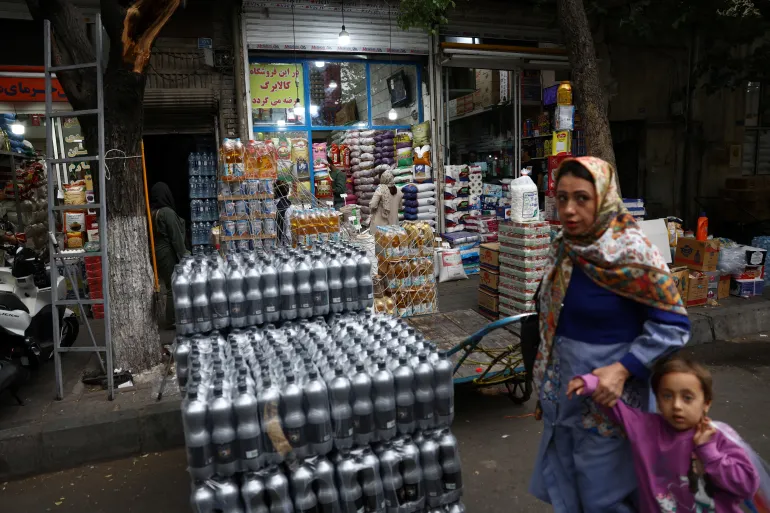
Figures from the institutions also showed that food inflation is much higher than headline inflation, meaning that people are increasingly forced to pay an expanding share of their shrinking salaries on basic items.
The SCI reported a staggering 115 percent food inflation rate for the first month of the year, compared to the same period the year before, with several staple items more than tripling in price.
Solid vegetable oil had the highest increase at 375 percent, followed by liquid cooking oil at 308 percent; imported rice at 209 percent; Iranian rice at 173 percent; and chicken at 191 percent. The lowest price hikes were for butter, at 48 percent, followed by infant formula at 71 percent and pasta at 75 percent.
Majid, a young man who works at a liver kebab shop in the capital, said the eatery has increased prices three times in recent months.
“The price of liver has doubled. When we ask suppliers why, they either say there’s a shortage or that sheep are being exported. Honestly, there’s no real oversight,” he said.
The state-run Consumers and Producers Protection Organization said in a directive sent to 31 governors across Iran on Sunday that new price hikes for cooking oil are “illegal” and “must be returned to previous levels”, without saying how officials expected that to happen amid deteriorating economic conditions.
The country’s embattled currency, the rial, has also been registering new all-time lows over the past two weeks. On Sunday afternoon, it stood at about 1.77 million against the US dollar in Tehran’s open market after marginally recovering. The rate was about 830,000 per US dollar a year ago.
Subsidies and ‘enemy plots’
The response from the government has included offering subsidies and coupons, while trying to crack down on acts such as hoarding that are perceived to be contributing to price hikes.
But this has not been accompanied by a clear macroeconomic stabilisation package as the US presses on with a naval blockade of Iranian ports.
As Iranian media reported on Sunday that Tehran had sent an official response to the text for an agreement earlier proposed by the US through mediator Pakistan, Pezeshkian said, “If there is talk of negotiations, it does not mean surrender.”
People walk through a local market in Tehran [File: Majid Asgaripour/WANA via Reuters]
The government hands out monthly cash subsidies and electronic vouchers to buy essential goods at select stores, which together amount to less than $10 each month per person. Authorities are considering raising the amount, but a hefty budget crunch has made that more difficult.
Pezeshkian and Central Bank chief Abdolnasser Hemmati have said they are aware of the price increases, but have blamed the war that began in late February while coordinating with the judiciary to act against price gauging and hoarding.
A number of lawmakers in Iran’s hardline-dominated parliament, as well as state television hosts and outlets linked to the Islamic Revolutionary Guard Corps (IRGC), have said the price surges are suspicious. They have described the runaway prices as being part of an “economic revenge” campaign by enemies who suffered failures in the military arena.
“I want the people of Iran not to be fooled by the enemy-made price hikes,” a guest on state television’s Ofogh network said on Saturday. “Great things have happened, and great things are ahead. The economic achievements of the war are unrivalled by any other period.”
But some of the economic pain continues to be inflicted as a direct result of a near-total internet shutdown now being imposed by Iranian authorities for a 72nd day.
Numerous officials in the government, internet infrastructure firms, telecommunication companies and other state-linked organisations have emphasised that they are against a tiered internet system that is now being implemented. But they have said they bear no responsibility, since the blackout, which is expected to remain in place until the war ends, is ordered by the Supreme National Security Council.
In the meantime, the combined impact of local mismanagement, Western sanctions, blockade, war and the internet shutdown is squeezing people and businesses hard.
“The startup ecosystem of the country is dead, we are searching for a tombstone for it,” the Guild Association of Internet-based Businesses said in a statement on Saturday.
A fragile ceasefire in the US-Israel war on Iran is coming under growing strain as several Gulf countries have reported drone attacks.
Qatar said on Sunday that a drone struck a cargo ship in Qatari waters, sparking a fire, while Kuwait and the United Arab Emirates said they repelled drone attacks.
Recommended Stories
list of 3 itemsend of list
Though no Gulf country reported casualties in the latest attacks, they have put pressure on the fragile ceasefire, which took effect on April 8.
Qatar’s Ministry of Defence said the freighter had been arriving in the country’s waters from the UAE capital, Abu Dhabi, and was hit by a drone northeast of the port of Mesaieed.
“The vessel continued its journey toward Mesaieed Port after the fire was brought under control,” the ministry said.
The United Kingdom Maritime Trade Operations (UKMTO) said a bulk carrier reported being struck by an “unknown projectile”, and a small fire had been extinguished, but there were no casualties from the incident. “There is no reported environmental impact,” it said.
Kuwait’s Defence Ministry said a “number of hostile drones” were detected in the country’s airspace at dawn. In a post on X, a spokesperson said the drones were dealt with “in accordance with established procedures”, but did not specify where the drones were launched from.
The UAE Defence Ministry said two Iranian drones were intercepted.
“UAE air defence systems successfully engaged two UAVs launched from Iran,” the ministry said in a statement on X.
Ceasefire tested
The Trump administration has said the truce is still in effect, but a naval battle has been taking place in the Gulf region, with Iran restricting traffic through the Strait of Hormuz, a strategic waterway through which a fifth of traded oil transited before the war, and the United States imposing a blockade of Iranian ports.
Several attacks have been reported on ships in the Gulf and the countries in the region over the past week.
On Friday, the US struck two Iranian oil tankers, saying they were trying to breach its blockade of Iran’s ports.
On Tuesday, the UAE said it came under attack from Iranian missiles and drones for the second day in a row. Iran’s Islamic Revolutionary Guard Corps (IRGC), however, denied the claim.
The IRGC Navy on Sunday reiterated its warning that any attack on Iranian oil tankers or commercial vessels would be met with a “heavy assault” on one of the bases in the region used by US forces and enemy ships.
The spokesperson for the Iranian parliament’s foreign policy and security committee, Ebrahim Rezaei, said Tehran’s “restraint is over”.
“Any aggression against our vessels will be met with a heavy and decisive Iranian response against American vessels and bases,” Rezaei wrote on X.
“The clock is ticking against the Americans’ interests; it is to their benefit not to act foolishly and sink themselves deeper into the quagmire they have fallen into. The best course is to surrender and concede concessions. You must get used to the new regional order,” he added.
Talks to end the war
While the truce remains in effect, President Donald Trump has repeatedly threatened to resume the US bombardment if Iran does not accept a deal which includes reopening the Strait of Hormuz and rolling back its nuclear programme.
Iran is still mulling its response to a 14-point proposal by Washington, with Iranian frozen assets and war reparations among other main sticking points.
In a meeting with US Secretary of State Marc Rubio on Saturday, Qatar’s Prime Minister Sheikh Mohammed bin Abdulrahman bin Jassim Al Thani pushed for all parties to respond to the ongoing mediation efforts and to reach an agreement for lasting peace.
Qatar’s prime minister also held a phone call with Iran’s Foreign Minister Abbas Araghchi, the Qatari foreign ministry reported on Sunday.
Sheikh Mohammed told Araghchi that Iran’s use of the Strait of Hormuz as a “pressure card” would only deepen the crisis in the Gulf, and said all parties in the conflict should respond to mediation efforts to end the war.
Reporting from Tehran, Al Jazeera’s Tohid Assadi said when it comes to diplomatic engagement, it seems that the US and Iran want the content of any negotiations to remain private.
Meanwhile, there is a mixture of different sentiments among Iranian citizens, he noted.
“Since the early days of the war, people have gathered to show their sense of nationalism and support for the political establishment,” he said.
“But we also know that there is a sense of frustration, especially when it comes to soaring prices and economic difficulties,” he added.
At a meeting on the reconstruction after damage caused by the war, President Masoud Pezeshkian said negotiations with the US on ending the war do not mean Iran is surrendering.
“The goal is to realise the rights of the Iranian people and defend national interests with authority,” he said.
US President Donald Trump says the ceasefire with Iran is still in effect, despite American and Iranian forces trading fire in the Strait of Hormuz on Thursday. Trump threatened pain for Tehran unless it signs a truce quickly.
Iran said on Wednesday that it was reviewing a United States peace proposal that sources said would formally end the war, while leaving unresolved the key US demands that Iran suspend its nuclear programme and reopen the Strait of Hormuz.
An Iranian Foreign Ministry spokesperson quoted by Iran’s ISNA news agency said on Wednesday that Tehran would convey its response. US President Donald Trump said he believed Iran wanted an agreement.
“They want to make a deal. We’ve had very good talks over the last 24 hours, and it’s very possible that we’ll make a deal,” Trump told reporters in the Oval Office on Wednesday.
A day before, Trump paused “Project Freedom” to reopen the blockaded strait, citing progress in peace talks. The de facto blockade of the waterway threatens to cause a global recession. Iran has been pressing to keep Hormuz under its control, through which a fifth of global oil and gas supply passes.
Here is more about the US proposal to end the war, and how experts think Iran would respond.
What is the latest US proposal to end the Iran war?
US media outlet Axios said the two sides were “getting close” to an agreement on a 14-point document. Under the memorandum, Iran would agree not to develop a nuclear weapon and halt enrichment of uranium for at least 12 years, it said.
The US would lift sanctions and release billions of dollars in frozen Iranian assets, and both sides, which have imposed competing blockades in the Strait of Hormuz, would reopen the critical waterway within 30 days of signing.
Iran has been under US sanctions for decades, and the lifting of some sanctions under the 2015 nuclear agreement was reversed after Trump walked out of the landmark deal signed under his predecessor, President Barack Obama. Billions of dollars of Iranian assets remain frozen in foreign banks due to the sanctions.
It is unclear how this memorandum differs from a 14-point plan proposed by Iran last week.
The Reuters news agency reported on Thursday, citing a source briefed on the mediation, that the US negotiations were being led by Trump’s envoy Steve Witkoff and son-in-law Jared Kushner. If both sides agreed on the preliminary deal, that would start the clock on 30 days of detailed negotiations to reach a full agreement.
The full agreement would end the competing US and Iranian blockades on the strait, lift US sanctions and release frozen Iranian funds. It would also include certain curbs on Iran’s nuclear programme, which was allowed by the United Nations nuclear watchdog.
While the sources said the memorandum would not initially require concessions from either side, they did not mention several key demands Washington has made in the past, which Iran has rejected, such as curbs on Iran’s missile programme and an end to its support for armed proxy groups in the Middle East.
The sources also made no mention of Iran’s existing stockpile of more than 400kg (900lb) of near-weapons-grade uranium.
Israeli Prime Minister Benjamin Netanyahu, Trump’s ally, said on Wednesday the two leaders agreed that all enriched uranium must be removed from Iran to prevent it from developing a nuclear bomb.
The US and Israel bombed Iranian nuclear sites last June during the 12-day war, after which Trump claimed that Tehran’s nuclear programme was obliterated. A significant portion of Iran’s enriched uranium stockpile remains buried inside the bombed nuclear sites.
Tehran denies wanting to acquire a nuclear weapon. It insists its programme is for civilian purposes as allowed within its position as a signatory to the non-proliferation treaty.
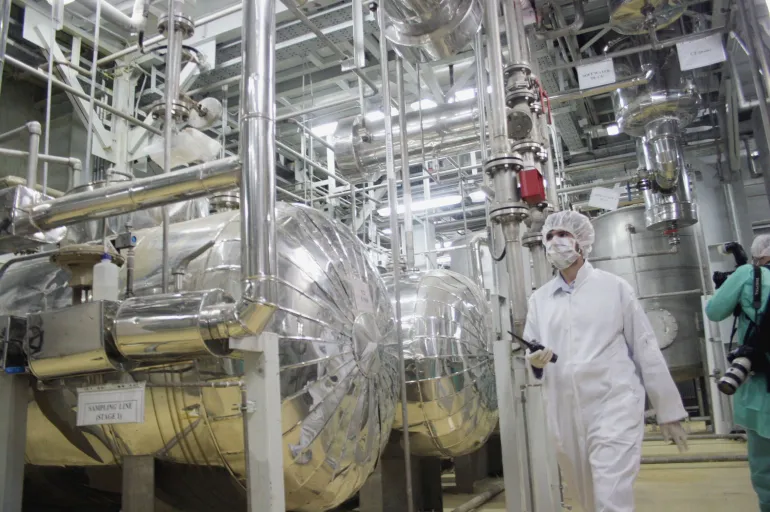
A worker walks inside of an uranium conversion facility on March 30, 2005 just outside the city of Isfahan, about 254 miles (410 kilometers), south of capital Tehran, Iran. President wants Iran to end its nuclear programme [File: Getty Images]
Could Iran agree to this proposal?
Iran has yet to formally respond to the latest US proposal. However, Iranian leaders have pushed back against it.
Iranian lawmaker Ebrahim Rezaee, a spokesperson for the parliament’s powerful foreign policy and national security committee, described the text as “more of an American wish-list than a reality”.
Iran’s Parliament Speaker Mohammad Bagher Ghalibaf appeared to mock reports that the two sides were close, writing on social media in English that “Operation Trust Me Bro failed.”
Al Jazeera’s Resul Serdar Atas, reporting from Tehran, said on Thursday that Iran is still reviewing the US proposal, after which a response is expected to be given to the Pakistani mediators later today.
The Pakistani Ministry of Foreign Affairs said on Thursday that it welcomes the news of a potential agreement between Iran and the US, adding that it will not disclose additional information at this stage.
“As mediators, we will not lose the trust of both parties by revealing details,” it said in a statement quoted by Al Jazeera Arabic.
Atas said, “Iranians are saying that, at this stage, they’re not negotiating their nuclear programme; it’s only about ending the war on all fronts.”
He added that Tehran wants direct guarantees from the UN Security Council, a lifting of sanctions and the reopening of the Strait of Hormuz.
“If that is achieved, in a second phase, they’re ready to discuss their nuclear programme.”
Al Jazeera’s Almigdad Alruhaid reported from Tehran on Tuesday that Iran has set “a very firm red line” on the nuclear file. “The nuclear enrichment programme is non-negotiable,” he said.
According to former US Assistant Secretary of State Mark Kimmitt, Trump’s reported demand that Iran halt all uranium enrichment is unrealistic and unlikely to be accepted by Tehran.
“If there is anything the Iranians are going to insist upon in these negotiations, it is their right to enrich uranium to the 3.67 percent level, which is allowed under nuclear non-proliferation treaties,” he told Al Jazeera.
Kimmitt added that even the 2015 nuclear deal permitted Iran to continue enrichment. Iran boosted its enrichment up to 60 percent after Trump withdrew from the deal in 2018, during his first term.
However, Kimmitt postulated that Trump might want Iran’s existing stockpile of enriched uranium outside of Iran. He added that Iran might either agree to move the enriched uranium outside the country or dilute it down to a non-enriched state.
Alruhaid, the Al Jazeera correspondent, however, said Iran is resisting handing over its existing stockpile of enriched uranium.
Iran is believed to have about 440kg (970lb) of uranium enriched to 60 percent. A 90 percent threshold of enriched uranium is needed to produce a nuclear weapon.
Al Jazeera’s Alruhaid said “the sovereignty on the Strait of Hormuz is becoming one of the main issues on the negotiating table.
“We are seeing the Iranians are tightening their control. They are setting new protocol, new mechanism for controlling that strategic chokepoint for each vessel that is to pass through.”
The US allies in the Gulf, who faced the brunt of Iranian retaliatory strikes, have been pushing for the restoration of navigation in the strait without any conditions. Iran carried out attacks on the Gulf nations, mainly targeting US military assets, after the US and Israel launched attacks on it on February 28.
Trump has repeatedly played up the prospect of an agreement that would end the war, so far without success. The two sides remain at odds over a variety of difficult issues, such as Iran’s nuclear ambitions and its control of the Strait of Hormuz.
A Pakistani source and another source briefed on the mediation told Reuters that an agreement was close on a one-page memorandum that would formally end the conflict, the agency reported on Thursday.
This agreement would kick off discussions to unblock shipping through the strait, lift US sanctions on Iran and set curbs on Iran’s nuclear programme, the sources said.
Al Jazeera, however, could not confirm the veracity of the reports.
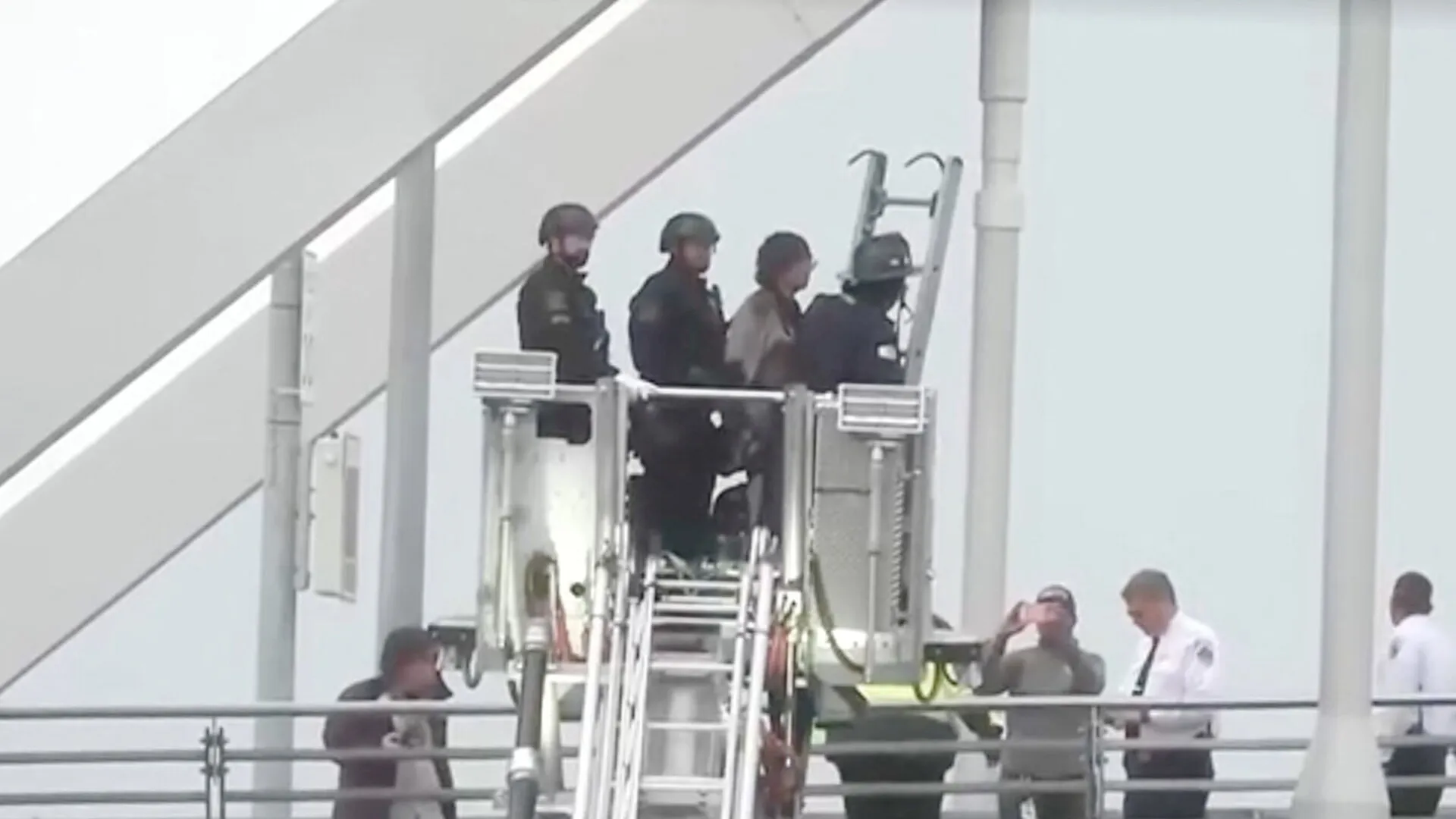
Police have arrested an anti-war protester after he ended a five-day sit-in atop Washington’s Frederick Douglass Memorial Bridge. Guido Reichstadter, opposed to the war on Iran, started the protest to rally others into non-violent opposition.
Iran’s Foreign Minister Abbas Araghchi is in Beijing, seeking support on a deal with the US, while US President Trump will be in China next week, and Iran will be on the agenda.
Why is everyone turning to China? What role is Beijing playing in the US-Israel led war on Iran?
United States Secretary of State Marco Rubio told reporters on Tuesday that Operation Epic Fury – the US-Israeli strikes on Iran which commenced on February 28 and prompted a regional conflict – had concluded as its objectives had been achieved. Washington now prefers “the path of peace”, Rubio said.
On the same day, US President Donald Trump announced that the US military operation to escort stranded ships out of the Strait of Hormuz – “Project Freedom”, which was launched the day before – had been paused.
So, does this mean the US-Israel war on Iran is over?
What did Rubio say about Operation Epic Fury?
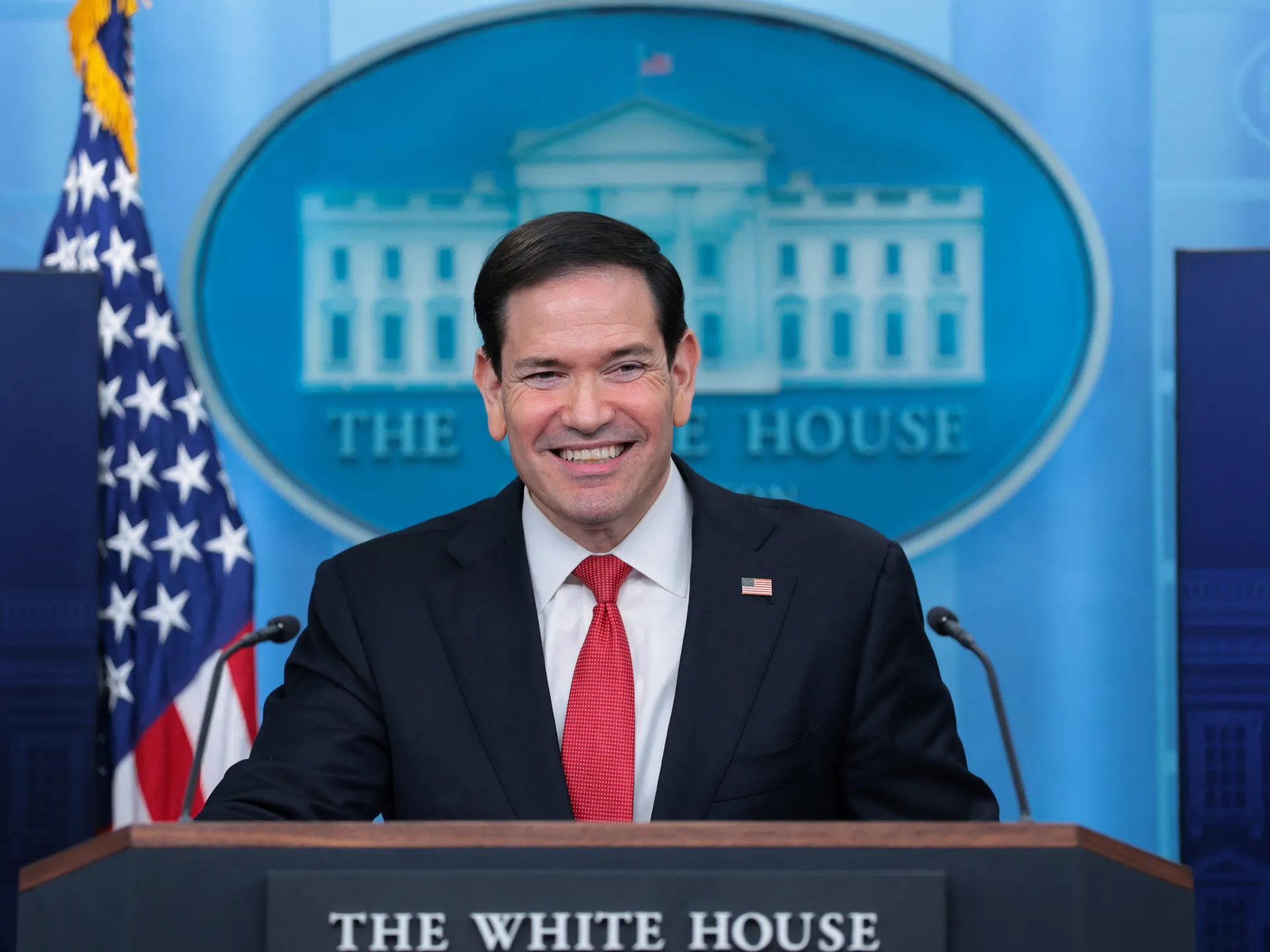
In a media briefing at the White House on Tuesday, Rubio told reporters that Operation Epic Fury was over.
“The Operation Epic Fury is concluded. We achieved the objectives of that operation,” Rubio said.
“We’re not cheering for an additional situation to occur. We would prefer the path of peace. What the president would prefer is a deal,” he said, referring to Pakistan’s efforts to arrange direct talks between Iran and the US.
The first round of these, in Islamabad last month, ended without a resolution. Both sides have submitted new proposals since then.
“The on-again, off-again talks with Iran, alongside Trump’s abrupt about turn on ‘Operation Freedom’ to guide vessels out of the Strait of Hormuz has created unwelcome frenzy in the Gulf,” Burcu Ozcelik, a senior research fellow for Middle East security at UK-based think tank Royal United Services Institute (RUSI), told Al Jazeera.
“It also reflects the highly fraught and almost frantic diplomatic backchannelling aimed to extract deep concessions from Tehran on the nuclear issue that will lock in commitments that exceed previous conditions, and which will convince the US to lift the blockade on Iranian ports and unlock sanctions relief – thereby effectively ending the war.”
Ozcelik explained that Iran, on the other hand, wants guarantees that this will be the end of the war, rather than just a pause.
What did Trump say about Project Freedom?
The same day, Trump told reporters that Project Freedom had been paused “based on the request” of Pakistan and other countries, and the “fact that Great Progress has been made towards a Complete and Final Agreement” with representatives of Iran.
Project Freedom was the US forces’ operation to escort stranded ships through the Strait of Hormuz that Trump announced the day before. It had appeared to signal a direct challenge to Iran’s closure of the strategic waterway, through which 20 percent of the world’s oil and liquefied natural gas (LNG) supplies are shipped in peacetime. Iran’s threats to attack ships in the strait have blockaded it since the US-Israel attacks on Iran began. Then, the US announcement of a naval blockade on Iranian ports added to the standoff around the strait.
After Trump announced Project Freedom, Iran said ships trying to use the strait without permission from the Islamic Revolutionary Guard Corps (IRGC) would be fired on, igniting fears of a return to war. His announcement triggered a war of words between the US and Iran, with claims and counterclaims about strikes continuing throughout the day.
First, Iran’s Fars agency claimed it had hit a US warship with drones after it ignored orders to turn back from the Strait of Hormuz. US Central Command (CENTCOM) denied a US ship had been struck, however, and instead claimed to have sunk at least six IRGC vessels. Iran denied that. Tehran then published a new map extending its claimed area of control over the strait into UAE waters, raising fears of a new regional confrontation.
The UAE accused Iran of launching strikes on its Fujairah port, the site of an important oil pipeline, which sparked a fire in an oil refinery.
On Tuesday, the US operation had been stopped, according to Trump.
“We have mutually agreed that, while the [US] Blockade will remain in full force and effect, Project Freedom (The Movement of Ships through the Strait of Hormuz) will be paused for a short period of time to see whether or not the Agreement can be finalized and signed,” he wrote on his Truth Social platform.
Iran has not immediately responded to this.
Shahram Akbarzadeh, a professor in Middle East and Central Asian politics at Australia’s Deakin University, told Al Jazeera that while it is difficult to determine exactly why Trump has paused Project Freedom, the pause comes against the backdrop of growing antiwar public opinion in the US.
“At the same time, Trump may be losing patience with the war; he says he has time to drag this out,” Akbarzadeh said.
“But in reality, Trump has a short attention span and needs to secure a win – soon. Pausing Project Freedom allows diplomacy to pick up pace, bringing US and Iran closer to a deal that Trump would label as a win.”
Is this the end of the war on Iran?
Not exactly. Akbarzadeh said pausing Project Freedom could serve as “the beginning of the end for the war”.
“We know that the Iranians are desperate for an end, so there is little chance of them resuming attacks on US Navy if Trump sends explicit signals that diplomacy has a green light,” he said.
However, he added, “The problem is that we have been here before. Earlier opportunities were squandered because Israel insisted that the US could get a better deal or because Trump misread the situation and expected the military option to grant him more concessions.”
What happens next?
It is difficult to predict this, but neither side appears to want a return to full-scale war, so both are likely to prioritise a diplomatic way out, Akbarzadeh said.
Still, “neither can afford to be seen as the loser,” he added. “They feel their public image needs to be preserved for their own respective domestic audience. This complicates negotiations and reaching a deal.”
Ozcelik said what happens next “will be determined by what the fractured leadership in Tehran commits to on the nuclear file.
“While it has rejected that talks involve curbs on Iran’s nuclear programme, this type of posturing has aimed to assuage domestic, hard-line and Iranian nationalists who are rattled by the US-Israel strikes and see nuclear issues from a nationalist, sovereign rights perspective.”
She predicted that the United Nations may soon issue a formal condemnation of Iran for unilaterally blockading the Strait of Hormuz.
“But the real pressure, mounting by the day, is the economic one – that shutting the strait is imposing punishing costs on Iran’s economic recovery prospects,” she said.
“Despite rhetoric on resilience and survival, the remaining Iranian leadership is undeniably concerned about the costs of the war. The possibility of renewed military strikes against Iranian critical infrastructure and the destabilising impacts these would inevitably have might be finally forcing Tehran’s hand,” Ozcelik concluded.
Iran’s football chief says the country’s preparations for the World Cup remain on track, but its participation will depend on a guarantee of respect for the Iranian armed forces by tournament cohosts the United States.
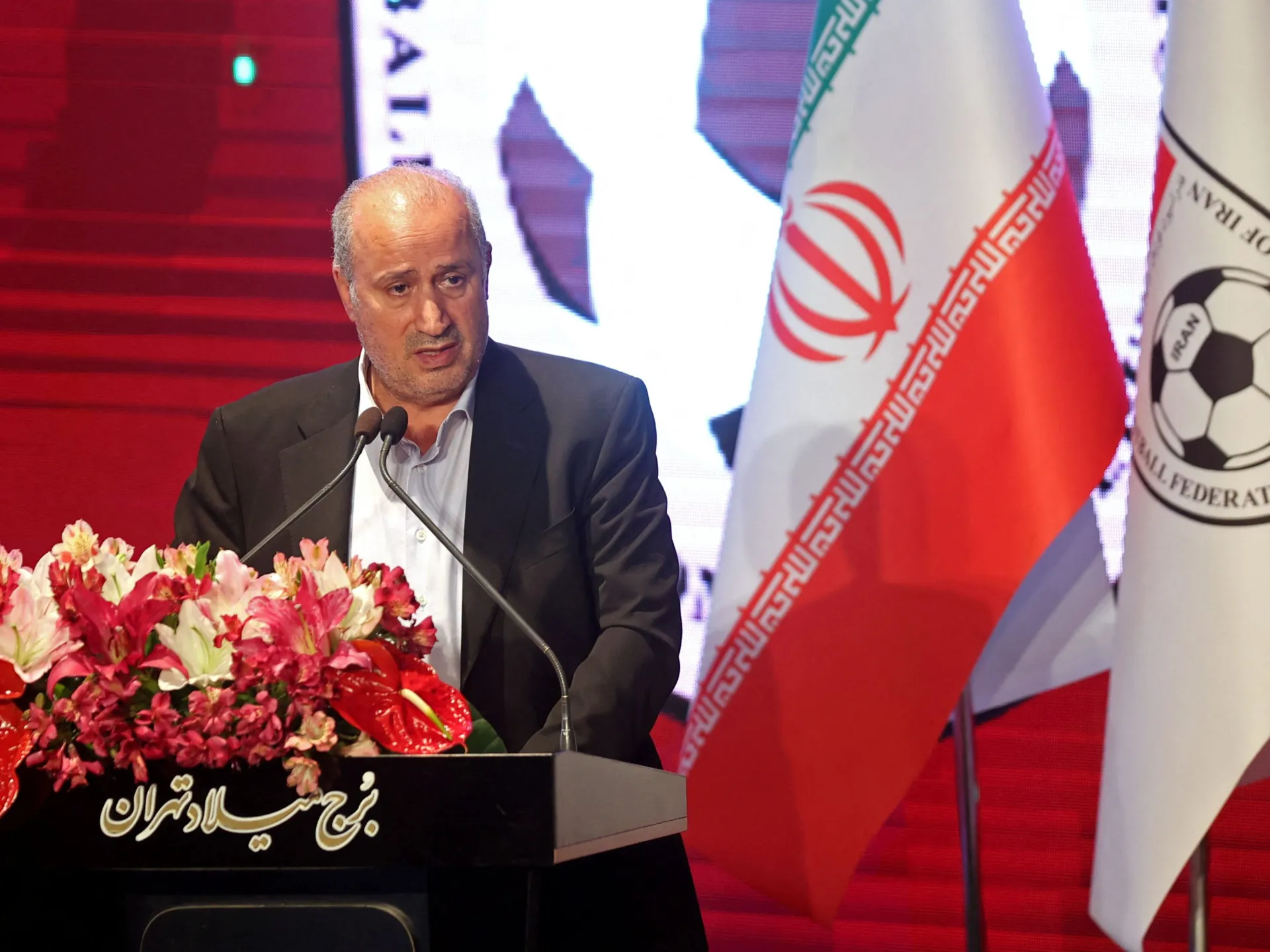
The Iranian Football Federation (FFIRI) will seek reassurance from FIFA that the US will not insult the Islamic Revolutionary Guard Corps (IRGC) during the World Cup, FFIRI President Mehdi Taj said on Tuesday.
“[The] Americans, if they guarantee not to insult our military institutions and the IRGC, we’ll go,” Taj told state broadcaster IRIB.
“If they give such a guarantee that an incident like Canada doesn’t happen and they definitely assure it, we will go,” he added.
The delegation members, including Taj, turned back upon arrival at Toronto’s Pearson airport despite holding valid visas, citing what was described as the “unacceptable behaviour of immigration officials”.
“They [delegation] returned to Turkiye on the first available flight due to the unacceptable behaviour of immigration officials at the airport and the insult to one of the most honourable organs of the Iranian nation’s armed forces,” the FFIRI said in a statement following the incident.
In 2024, Canada listed Iran’s IRGC as a terrorist organisation, and statements from the Canadian government indicated that Taj was denied entry due to his alleged ties with the IRGC.
“IRGC officials are inadmissible to Canada and have no place in our country,” the Canadian government said.
The US and Israel launched a war on Iran on February 28.
At least 3,468 people have been killed in US-Israeli attacks, according to Iran’s Ministry of Health. More than 26,500 people have been injured, including at least 4,000 women and 1,621 children.
Iranian forces retaliated, launching attacks on Middle East countries where US troops are deployed, as well as Israel.
‘Our host is FIFA, not Mr Trump’
Taj, who was speaking in Tehran, will meet FIFA President Gianni Infantino and Secretary-General Mattias Grafstrom at the organisation’s headquarters in Zurich this month.
During the meeting, Taj said he will seek guarantees that the Iranian team and accompanying officials would not face entry restrictions or “disrespect”, particularly towards Iran’s state institutions.
“We need a guarantee there, for our trip, that they have no right to insult the symbols of our system – especially the Islamic Revolutionary Guard Corps,” he said.
“This is something they must pay serious attention to. If there is such a guarantee and the responsibility is clearly assumed, then an incident like what happened in Canada will not happen again.”
The Iranian team is going full-speed ahead with its preparations for the World Cup, and football officials have outlined the team’s training and preparations for the tournament, which include camps at home and in neighbouring Turkiye before travelling to the US.
The squad will depart for Turkiye on Monday for their final leg of preparations before travelling to the US in June.
Team Melli will kick off their campaign against New Zealand in Los Angeles on June 15, before taking on Belgium at the same stadium on June 21 and facing Egypt in their final group match in Seattle on June 26.
Taj insisted Iran had earned the right to play in the World Cup as one of the first teams to have qualified for the tournament.
“We are going to the World Cup because we qualified,” the Iranian official said. “Our host is FIFA, not Mr Trump or America.”