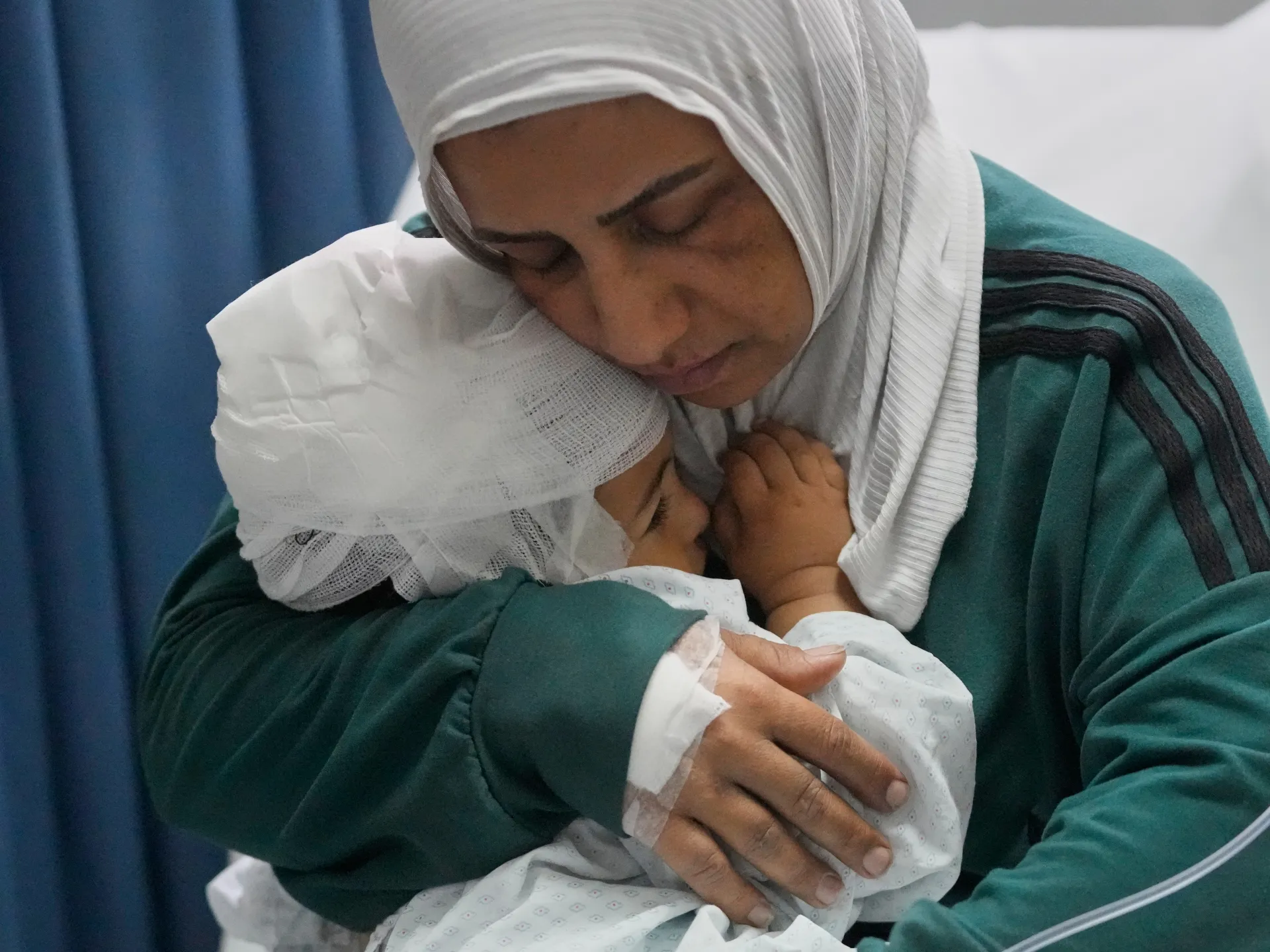
Iran war live: US strikes Iranian site as tensions rise in Strait of Hormuz
The Lebanese Health Ministry reports that Israeli attacks have killed 3,269 people since March 2.
Source link
The Lebanese Health Ministry reports that Israeli attacks have killed 3,269 people since March 2.
Source link
Markets betting a deal will reopen the Strait of Hormuz and soothe the deep global economic uncertainty cast by the closure of the vital oil & gas route.

Published On 27 May 202627 May 2026
The United States stock market has been hovering near record highs and oil prices have plunged amid new hope that a ceasefire deal between the US and Iran is close.
The rally came on Wednesday as negotiations continued between Washington and Tehran, with markets betting that a deal would reopen the vital Strait of Hormuz, easing oil and gas supply concerns and soothing the deep uncertainty afflicting the global economy.
list of 3 itemsend of list
Oil prices declined sharply after Iran’s state broadcaster said it had obtained a preliminary document outlining a framework for a potential deal.
The price of US crude fell 5.5 percent to settle at $88.68, while Brent crude, the international oil benchmark, decreased to $92 after prices traded above $100 last week.
The report suggested that Iran would allow traffic through the strait at pre-war levels within 30 days. It added that the US would lift its naval blockade on Iranian ports.
Prices remained subdued even after the White House dismissed the report as a “complete fabrication”.
The S&P 500 rose 0.1 percent and added to its all-time high set the day before. The Dow Jones Industrial Average was up 243 points, or 0.5 percent, with an hour remaining in trading, and the Nasdaq composite was 0.1 percent higher.
Wednesday is far from the first time markets have rallied amid reports of a possible end to the war, only to slump once more as negotiations fail to deliver a resolution.
However, the strength of the current surge reflects statements over the past week that suggest the two parties may be closer than ever to reaching a deal.
President Donald Trump said during a cabinet meeting on Wednesday that US officials were not yet satisfied with the agreement, “but we will be”.
“I think they’re starting to give us the things that they have to give us,” he said. “And if they do, that’s great, and if they won’t, then the man on my left will have to finish them off,” he said, pointing at Defense Secretary Pete Hegseth.
It remains unclear whether the two parties have come to an understanding on the major sticking points, including the fate of about 440 kilogrammes (970lbs) of highly enriched uranium; Iran’s nuclear infrastructure, which the US has long insisted it wants to see dismantled in its entirety; Tehran’s ballistic missiles and its support for armed groups in the region.
It is also not clear whether a halt in hostilities in Lebanon would be part of a deal. Iranian officials have repeatedly said that any agreement would have to include that. However, Prime Minister Benjamin Netanyahu this week ordered the Israeli military to step up its attacks against Hezbollah.
There are also questions on whether Washington would agree to lift its sanctions against Iran and release millions in frozen assets.
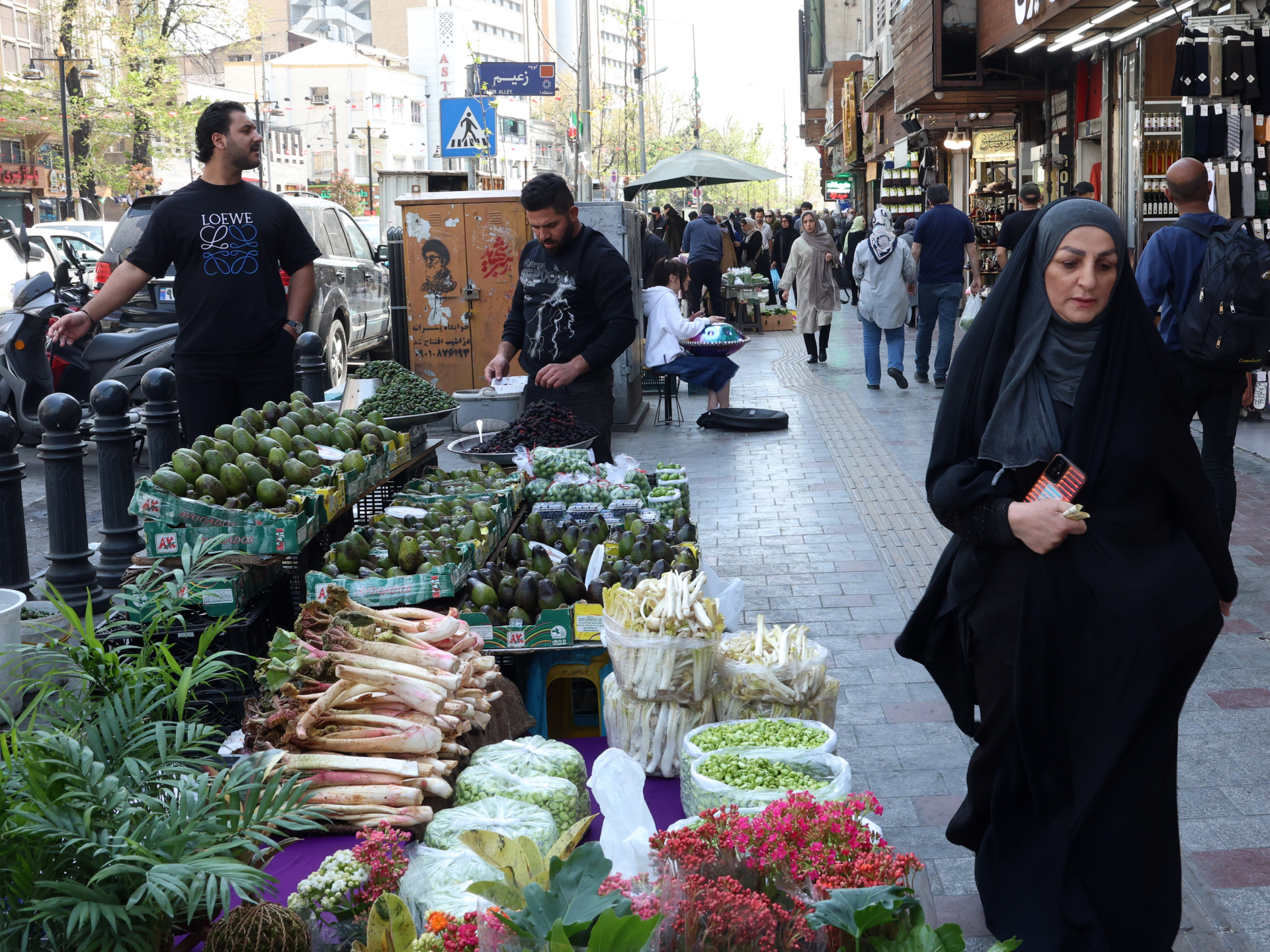
Eid al-Adha, one of the most important dates in the Islamic calendar, comes at a critical time for Iranians this year.
Meat from sacrificed animals is often eaten at Iranian tables, but a blockade on Iranian ports and sanctions by the US has led to escalating costs across the country.
Unlike Nowruz, the Persian New Year, Eid al-Adha is not as widely celebrated in Iran, but mosques and other institutions still observe the ritual of animal sacrifice, known as qurbani, through authorised livestock and slaughter centres.
Here, animals are sacrificed according to Islamic law in a hygienic environment. But another goal of the network is to control runaway inflation by offering meat at lower prices than market rates.
A Tehran municipality body announced on Tuesday that each kilogramme of sacrificial meat would be sold at 7.4 million rials ($4.30) at designated shops.
The price for a similar cut on the market can be more than three times that, depending on its quality and the location of the butchers. The minimum wage is currently less than $100 per month in Iran.
“I usually buy meat for a stew or a few dishes around every three weeks; for some families in the neighbourhood, it has become a sort of luxury,” said a middle-aged woman, who lives with her husband and son in Tehran.
She told Al Jazeera that chicken, eggs and legumes have become replacements for red meat, but the costs of these staples have significantly increased, too.
Masoud Rasouli, a meat-packing industry representative, told the state-linked Mehr news agency earlier this week that demand for red meat has decreased by 50 percent compared with last year.
He said some meat was imported to counter any effects of the US blockade, but local demand is currently so low that “existing livestock population is enough for all the needs of the market”.
Data released by the state-linked Iranian Labour News Agency this week showed that the current cheapest government-announced price for one kilogramme of meat during Eid is equal to the price of a 50kg live sheep 10 years ago.
According to the Statistical Center of Iran, year-on-year inflation stood at more than 73 percent in the first month of the Persian calendar year that ended in late April.
Iranian rice was up by 173 percent and chicken by 191 percent in that month compared with a year before, while liquid cooking oil more than quadrupled. Figures for the next month are expected to be worse.
Price-control measures – which have been implemented by authorities to fight a decade of rampant inflation – have been unable to adequately compensate for the ever-decreasing purchasing power of Iranian households living under local mismanagement and US sanctions – and now war and a blockade.
A young man working at a butcher shop in southwestern Tehran said they have had to increase prices several times over recent months after suppliers announced hikes.
“Our sales were a bit higher today because of the Eid, but we see even our most frequent customers far less these days. Most of the conversations with the customers are about the prices,” he told Al Jazeera.
Iran and the US have been holding negotiations through regional mediators to potentially end the war. But amid exchanges of fire and inflexibility over demands, no breakthrough has emerged even as both sides say a memorandum of understanding has mostly been negotiated.
Beyond greetings and congratulatory phone calls with regional peers, Iranian authorities also used the Muslim festival this year to issue political messages.
On Wednesday morning in the capital, the authorities organised a large prayer to mark Eid at the University of Tehran, which was led by ultraconservative Ayatollah Ahmad Khatami.
He said that “submitting to humiliation” is an example of “evil” and the height of vice, at a time when he believes the other side, the US, seeks a surrender from Iran.
“Your enemies, the Iranian nation’s enemies, and this mad enemy sitting in the Black House – which is wrongly referred to as the White House – want your humiliation. But this madman will take that wish to his grave,” he said about US President Donald Trump.
Khatami, a member of the powerful Guardian Council and the clerical Assembly of Experts, also praised the supporters of the government who have taken to the streets every night for almost three months and said this “unprecedented” phenomenon would be repeated on the nights of Eid al-Adha.
President Masoud Pezeshkian had a relatively softer approach, but his comments were still laden with religious symbolism.
“In today’s turbulent world, where the fire of tyranny, occupation, and the arrogance of the hegemonic powers burns bright, Eid al-Adha conveys the message of dignity, liberty, and fearlessness in the face of the pharaohs of our time,” he said.
Foreign Minister Abbas Araghchi said in a message on Wednesday that he hoped for harmony in the Muslim world, amid this difficult time for the region.
“We pray that, by the auspiciousness and blessing of this great Eid, we will witness the deepening and strengthening of Islamic solidarity for cooperation and mutual assistance in confronting war, discrimination and occupation, especially in the West Asia region, and that our world will return to the path of reviving peace and justice,” he said.
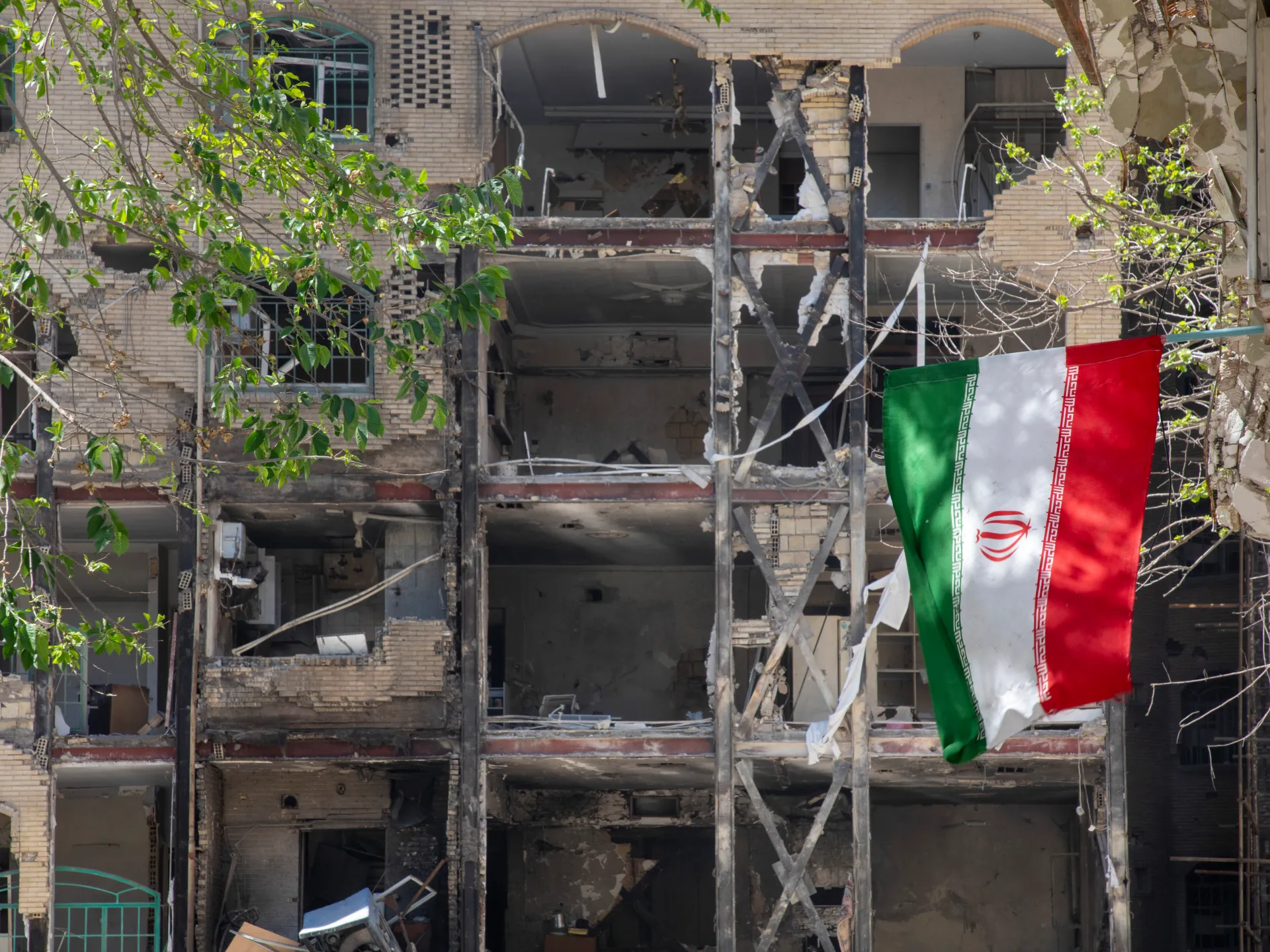
Iranian and US forces have continued to exchange strikes despite an April ceasefire, fuelling tensions across the Gulf and the Strait of Hormuz, while raising fears the fragile truce could unravel as mediation efforts continue in Doha.
On Monday, the United States Central Command (CENTCOM) said it carried out new strikes on southern Iran, targeting missile sites and boats allegedly attempting to place naval mines. It said the attacks had been carried out in “self-defence” to protect US troops from threats posed by Iranian forces.
list of 4 itemsend of list
On Tuesday, the Islamic Revolutionary Guard Corps (IRGC) said it had downed a US drone and fired at a jet and another drone that entered Iranian airspace, according to state media. Iran also said it retained the “legitimate and definite” right to respond to any violations of the ceasefire.
Since a temporary ceasefire was announced on April 8, Iran has continued to control shipping through the Strait of Hormuz, through which one-fifth of the world’s oil and natural gas supplies are shipped in peacetime, while US forces have enforced a corresponding blockade on Iranian ports. Negotiations for a long-term ceasefire are ongoing, but repeated military flare-ups in the meantime underscore the deep mistrust between the two sides, experts say, as Iran and the US jostle for leverage amid a back-and-forth of peace proposals from both sides.
Here is what has happened since the ceasefire:
The US and Israel launched strikes on Iran on February 28, as negotiations between Washington and Tehran progressed via mediators, amid claims that Iran was developing nuclear weapons. While the US and Israel provided no evidence to support their allegation, Iran continued to deny. It responded with missiles and drones targeting Israel and US military and infrastructure assets in the Gulf region and the wider Middle East.
On April 8, following mediation by Pakistan, the two sides agreed to a two-week pause in fighting to allow for further negotiations. Delegations from both countries met in Islamabad on April 11 and 12, but failed to reach a broader agreement, with draft proposals exchanged through Pakistani mediators in an attempt to end the conflict. The ceasefire was extended to allow for more proposals to be exchanged.
At least 3,468 people – aged between eight months and 88 years – have been killed in US-Israeli attacks on Iran since February 28, according to its Ministry of Health. They included seven infants, 376 children and 496 women.
At least 26 Israelis have been killed and 7,791 wounded in Iranian attacks, while the US military has confirmed 13 combat-related deaths across the region. Dozens of people were also killed in the Gulf countries. Lebanon remains the worst hit in the region, where, despite a ceasefire, Israel continues to carry out attacks amid its ground invasion. More than 3,200 people have been killed, according to the Lebanese Ministry of Public Health.
The ceasefire faced near-immediate strain when Kuwait said seven drones entered its airspace on April 10. It accused Iran and allied armed groups of the attacks.
Kuwait’s Ministry of Foreign Affairs condemned what it described as violations of its sovereignty and airspace. Separately, the US Department of State accused Iran-linked armed groups in Iraq of launching attacks from Iraqi territory. However, Iran denied any role in the attacks, saying it had not targeted any Gulf country since the ceasefire began.
Four days into the ceasefire – and following the collapse of direct talks in Islamabad – the US announced a naval blockade targeting maritime traffic entering and leaving Iranian ports, after talks mediated by Pakistan collapsed. The US argued that Iran had benefitted from continuing to export oil, while the Strait of Hormuz was closed to nearly all other shipping.
The blockade formally came into effect the following day, although Washington said vessels travelling to non-Iranian ports would be allowed past.
Iran condemned the move as “illegal”, warning that ports in the Gulf region would not be safe if Iranian ports were threatened.
The blockade came after Iran tightened its control over shipping in the Strait of Hormuz, restricting some foreign ships while allowing passage to countries it viewed as friendly.
The International Maritime Organization has said no country has the right to block shipping in international transit straits.
On April 18, Iranian forces fired on two Indian ships in the Strait of Hormuz, which it said did not have permission to pass.
Maritime tensions escalated further on April 20, when US forces seized an Iranian container ship near the Gulf in a move Iran described as an “act of piracy“. CENTCOM and US President Donald Trump said the vessel, the Iran-flagged Touska, had ignored orders to withdraw from its route through the Strait of Hormuz.
Days later, on April 22, the IRGC fired on three ships in the strait and seized two foreign container vessels, the Panama-flagged MSC Francesca and the Liberian-flagged Epaminondas, saying they lacked authorisation to transit the waterway.
The incident came the day after Trump extended the ceasefire while maintaining the US naval blockade on Iranian ports.
On May 4, the United Arab Emirates accused Iran of launching missiles and drones at the country, triggering a fire at an oil refinery in Fujairah and wounding three Indian nationals.
The UAE said its air defences had intercepted 12 ballistic missiles, three cruise missiles and four drones launched from Iran. Abu Dhabi condemned what it described as “unprovoked Iranian attacks” on civilian infrastructure.
The UAE said the attacks were the first on its territory since the ceasefire had commenced on April 8. The strikes came as Trump launched a new effort to escort stranded oil tankers through the Strait of Hormuz, much of which had remained closed since the war began.
Iran’s military warned commercial vessels against accepting US escorts and threatened to attack if they entered the strait. Trump abandoned the effort after one day.
On May 14, an Indian cargo ship transporting livestock from Africa to the UAE sank off the coast of Oman, while the United Kingdom Maritime Trade Operations reported that “unauthorised personnel” boarded another vessel near Fujairah and redirected it towards Iran.
India condemned the attack, saying commercial shipping and civilian sailors continued to be targeted despite the ceasefire.
A drone strike has sparked a fire on the perimeter of the Barakah Nuclear Energy Plant in the United Arab Emirates (UAE), raising new concerns over a potential new regional escalation amid a fragile ceasefire between Iran and the United States.
Authorities in Abu Dhabi said the blaze broke out at an electrical generator outside the plant’s inner perimeter in the Al Dhafra region on Sunday. No injuries were reported, and officials said radiation levels remained normal. The UAE did not specifically blame Iran, but said the drones had been launched from the “western border”.
Saudi Arabia also said it intercepted three drones fired from Iraqi airspace. The Saudi defence ministry said it would take “necessary operational measures” in the event of any attempt to violate its sovereignty and security.
Diplomatic efforts to secure a broader peace agreement are continuing. Senior officials from Iran travelled to Qatar this week for negotiations aimed at ending the US-Israel war on Iran, with discussions reportedly focused on the release of frozen Iranian assets.
Iran is also seeking sanctions relief for its oil and petrochemical exports during a proposed 60-day period to hold talks about its nuclear programme. A further proposed 30-day timeframe would see the US lift its blockade of Iranian oil ports while Tehran restores commercial shipping through the Strait of Hormuz.
Tehran is also seeking guarantees related to a ceasefire in Lebanon, where Israel continues to strike and occupy towns and villages in the south of the country. Meanwhile, Trump is reportedly attempting to link the negotiations to efforts for Saudi Arabia, Qatar and Pakistan to normalise ties with Israel under the Abraham Accords.
Analysts say any agreement remains politically sensitive, with deep distrust persisting as all sides seek leverage to secure a deal they can present domestically as a victory.
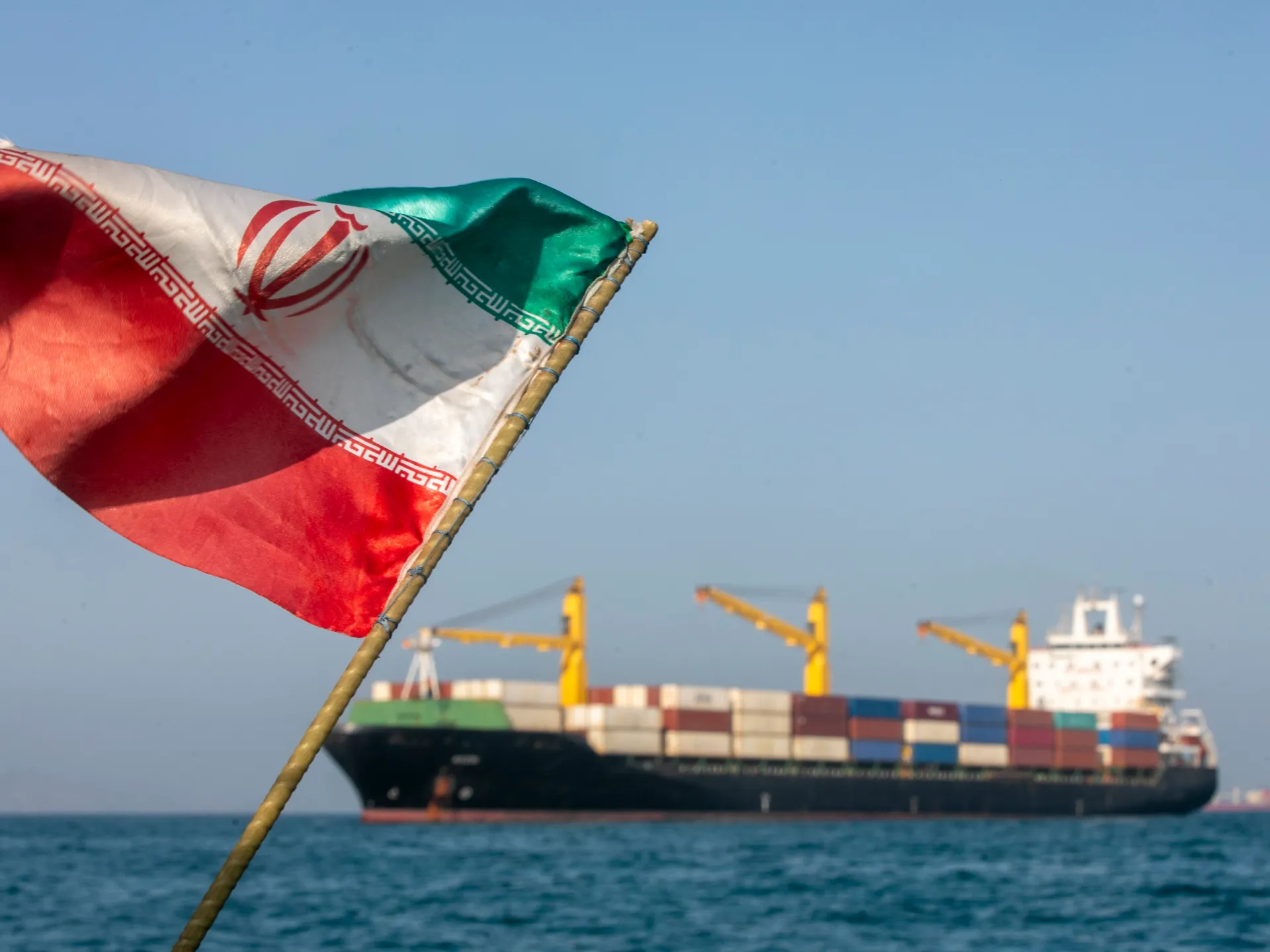
Tehran, Iran – “The fundamental principle is distrust towards America” – this is how senior lawmaker Abbas Moghtadaei described the situation to state television on Tuesday afternoon.
It came after an Iranian delegation, led by Parliament Speaker Mohammad Bagher Ghalibaf, returned to Tehran from Qatar amid efforts to reach an understanding with the United States on ending the nearly three-month-long war on the country.
Hours earlier, the Ministry of Foreign Affairs accused Washington of committing a “blatant violation” of the shaky ceasefire reached on April 8 by attacking the southern province of Hormozgan on Monday night. It added that the strikes validated the “deep suspicion” Iran harboured towards the US.
The Islamic Revolutionary Guard Corps (IRGC) said Iranian armed forces fired back and shot down a US-made RQ-4 drone, using a domestically-made air defence system called Arash-e Kamangir – named after a hero in Persian mythology. State television aired footage of the remains of a downed drone.
The US military said it was hitting missile launch sites and Iranian boats attempting to lay sea mines in a “defensive” move, but IRGC commanders said they have the right to retaliate.
On Tuesday afternoon, a tanker reported an external explosion and fuel leak some 60 nautical miles (about 111 kilometres) east of Oman’s capital city Muscat, according to British maritime intelligence. Iranian officials did not comment on the incident.
The escalation comes as the two sides try to hammer out the final details of a Memorandum of Understanding (MoM) that could potentially facilitate increased transit through the Strait of Hormuz, which has largely frozen since the US and Israel launched a wave of strikes on Iran on February 28.
The deal would also grant Iran access to some of its own overseas funds that have been frozen due to US sanctions and offer a pathway for a future agreement over the country’s nuclear programme.
Nicole Grajewski, an assistant professor at Sciences Po’s Center for International Research, said many in the Iranian leadership appear concerned that an agreement could simply provide operational pause, intelligence access or political cover before the US and Israel launch another round of large-scale attacks on the country.
“For the deal to be politically sellable internally, Tehran likely needs to frame it not as capitulation under military pressure but as a managed stabilisation that preserved core sovereign red lines,” she told Al Jazeera.
“That probably means maintaining some form of enrichment capability for now, avoiding immediate surrender of the stockpile, securing meaningful sanctions or asset relief, and preserving regional deterrence structures, at least formally outside the agreement.”
From relatively moderate Iranian politicians in the government to the most hardline military-security factions, all have pledged that the Islamic Republic will not accede to a deal that amounts to “surrender”.
President Masoud Pezeshkian told state television earlier this week that he wants to assure the international community “we are not after nuclear weapons, we are not after insecurity in the region”.
But Majid Mousavi, the influential aerospace commander of the IRGC, wrote in a post on X, in reference to former Supreme Leader Ayatollah Ali Khamenei: “As our martyred imam said, negotiating with the enemy is pure loss.”
Mousavi said he would follow the orders of the country’s new supreme leader, Khamenei’s son Mojtaba, who said in a message to mark the Muslim festival of Eid al-Adha on Tuesday, that “nations and territories of the region will no longer be the shield of American bases”. He also predicted that Israel would no longer exist in 15 years’ time, as foreshadowed by his slain father.
Ali Abdollahi, the commander of the Khatam al-Anbiya Central Headquarters and a leading figure in the war, made a first public appearance on Monday to urge the Iranian armed forces to make the “defeat” of the enemy a priority.
“The Americans talk too much and keep changing their story in a moment. We’ve said many times that we will show on the battlefield what we are capable of,” he told state television on the sidelines of a ceremony in Tehran to commemorate Iranian leaders killed during the war.
In his first public message as the secretary of the Supreme National Security Council, released on Monday, Mohammad Bagher Zolghadr, who is also a top IRGC general, pledged, “there will be no retreat”.
IRGC commander Ahmad Vahidi has also expressed readiness to resume military confrontations with the US if necessary.
Alex Vatanka, senior fellow at the Middle East Institute, said decision-makers in Tehran are not just concerned about a ‘bad deal’ but also one that could force Iran to give up key leverage in the event of future disputes.
“Hardliners are especially alarmed by any discussion involving Hormuz, sanctions sequencing or nuclear concessions because they increasingly view coercive leverage, especially maritime pressure, as Iran’s main post-war bargaining asset,” he told Al Jazeera. That is why the debate inside Tehran has shifted from ‘should we negotiate?’ to ‘what exactly are we giving up?” he told Al Jazeera.
For a deal to succeed, the Iranian leadership will need to believe that some sanctions relief will be tangible and fast, he added.
Iran will also seek to preserve enough of a deterrence mechanism and symbolic dignity to avoid looking defeated, and ensure that the agreement prevents another war from breaking out in the future.
But as it stands – and there is scant information on it – Vatanka said the emerging memorandum “looks less like a historic peace settlement and more like a ceasefire-management mechanism designed to buy time, reduce immediate war risks, reopen parts of Hormuz, and defer the hardest nuclear questions into later rounds”. This would mean lingering suspicion and uncertainty would persist.
Iranian state media pundits have also claimed that senior Iranian figures would be vulnerable to assassination if military operations resume.
“If the US, at any point during the current agreement talks, gains access to our supreme leader, it will strike without any consideration for its other interests or consideration for intermediaries like Pakistan and Qatar,” Nima Akbarkhani, an IRGC-linked pundit, said on state television on Tuesday.
Ali Samadzadeh, another state-linked analyst, claimed the emerging US-Iranian agreement could even be a “honeypot” scheme to draw out leaders.
According to US media outlets, Khamenei, who has not been seen or heard from in public since the start of the war, except for written messages attributed to him, is hiding in an undisclosed secure location where even many government officials have no access to him. US officials have said this has slowed the process of talks.
Sciences Po’s Grajewski said over the next few days, the key issue for the Islamic Republic will be securing internal approval. Hardline factions will also scrutinise any concessions made to the US, even those made as part of a crisis-management memorandum that leaves more difficult issues to be faced at a later date.
“So, the realistic outcome in the near term is probably an unstable interim arrangement rather than a comprehensive settlement,” she said.
“Whether it evolves into something more durable depends almost entirely on whether the follow-on nuclear negotiations produce concrete mechanisms both sides can live with.”
EXPLAINER
Israeli strikes kill 31 in Lebanon as attacks intensify and displacement orders spread.

Published On 27 May 202627 May 2026
Israeli attacks across southern Lebanon killed at least 31 people and wounded 40 others on Tuesday, as Israeli forces intensified strikes and issued dozens of displacement orders for towns and villages in the country’s south and east.
Panic spread across southern Lebanon as residents fled the escalating assault, with Israeli ground forces reportedly pushing deeper into Lebanese territory amid fears of a wider offensive.
Meanwhile, Iranian officials condemned what they called “blatant violations” of the ceasefire by the United States after attacks on southern Iran on Monday, saying the strikes had further damaged already fragile diplomatic efforts.
Here is what we know:
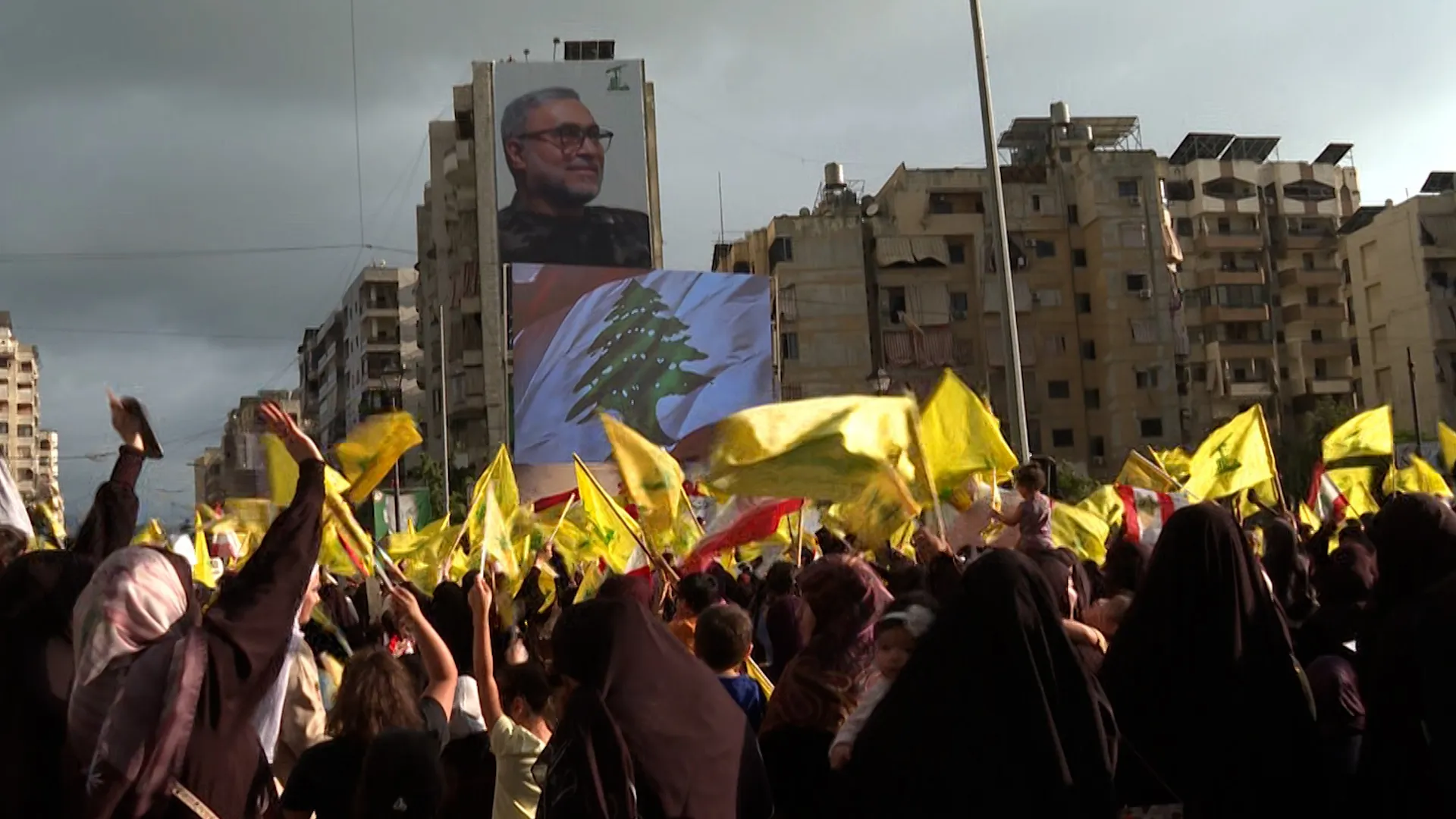
People in Lebanon have gathered to observe Liberation Day, which marks the date in 2000 when Israel ended its 22-year occupation of southern Lebanon. Al Jazeera’s Zeina Khodr explains how this year’s celebrations come as occupation returns to the country’s south.
Published On 25 May 202625 May 2026
Share
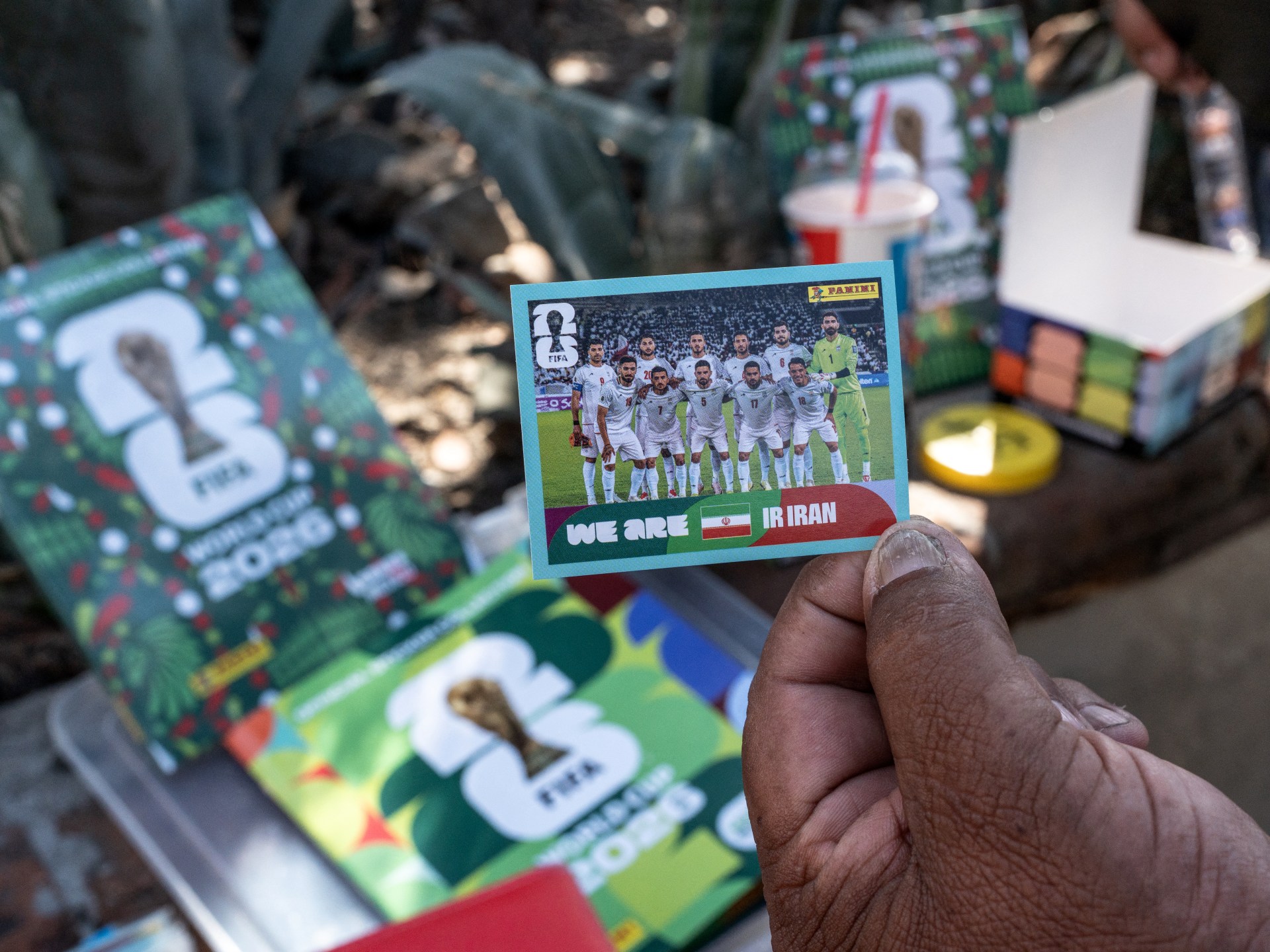
Mexican President Claudia Sheinbaum has announced that her country will host the Iranian national football team during the upcoming FIFA World Cup, due to tensions with the United States.
On Monday, Sheinbaum said that FIFA, the global football governing body, had approached Mexico about hosting Iran, after the US said it did not wish to do so.
list of 3 itemsend of list
“We have no reason to deny them the possibility of staying in Mexico,” Sheinbaum said during her daily media conference.
Previously, Iran had been scheduled to play all three of its group matches in the US.
But the administration of US President Donald Trump has previously said it is not “appropriate” for Iranian team members to be in the country, “for their own life and safety”.
It has yet to grant the Iranian team the necessary visas to travel to the US, despite Trump’s assertion that players and staff would be “welcome”.
Since February 28, the US and Israel have been at war with Iran, and peace negotiations are tense but ongoing.
The head of Iran’s football federation, Mehdi Taj, confirmed on Sunday that the team planned to move its training base from Tucson, Arizona, to the Mexican border city of Tijuana.
Taj explained that team leaders got approval for the move after meeting with FIFA officials in Istanbul, as well as holding an online conference with FIFA’s Secretary General, Mattias Grafstrom.
Switching the team’s base to Mexico, Taj said, would help avoid visa complications, with the team able to travel directly to Mexico aboard Iran Air flights.
But the US-Israeli war against Iran has cast a pall over the World Cup, making the Iranian team’s participation uncertain.
Roughly 3,468 people have been killed in Iran since February’s war began, and more than 26,500 have been injured. Further fatalities have been reported across the region.
The war has also thrown the global economy into turmoil, driving up the costs of fuel and agricultural fertiliser, among other goods.
Iran’s football team has long been a top squad in its region: It currently ranks near the top of the Asian Football Confederation. Its participation in the 2026 tournament marks its fourth straight World Cup qualification.
Trump, however, has sent mixed messages about Iran’s presence at the World Cup, suggesting at times that Iran should sit out the tournament. At other moments, he has expressed ambivalence.
In March, for instance, Politico asked Trump about Iran’s presence at the World Cup. Trump reportedly responded, “I really don’t care”, before calling Iran a “badly defeated country”.
The US, Mexico and Canada are co-hosting the games, with 78 matches in the US alone, including the final. Kick off is on June 11.
Iran is set to play its first two Group G matches in Los Angeles against New Zealand on June 15 and Belgium on June 21, before facing off against Egypt in Seattle on June 26.
The Trump administration’s hardline approach to immigration has raised additional concerns about whether the US will be a welcoming host for fans from around the world.
Already, Trump has moved to suspend visa processing for applicants from nearly 75 countries, including Iran, Brazil, Colombia, Ivory Coast and Senegal, which have teams at the World Cup.
Residents from some of those countries, however, are not required to receive visas to enter the US for short-term visits.
On Monday, Sheinbaum explained that she had been approached by the Iranian team and FIFA officials for help hosting players and staff.
“The United States doesn’t want the Iranian team to spend the night,” Sheinbaum said. “So they asked us, ‘Can we stay the night in Mexico?’ We said sure, no problem.’”
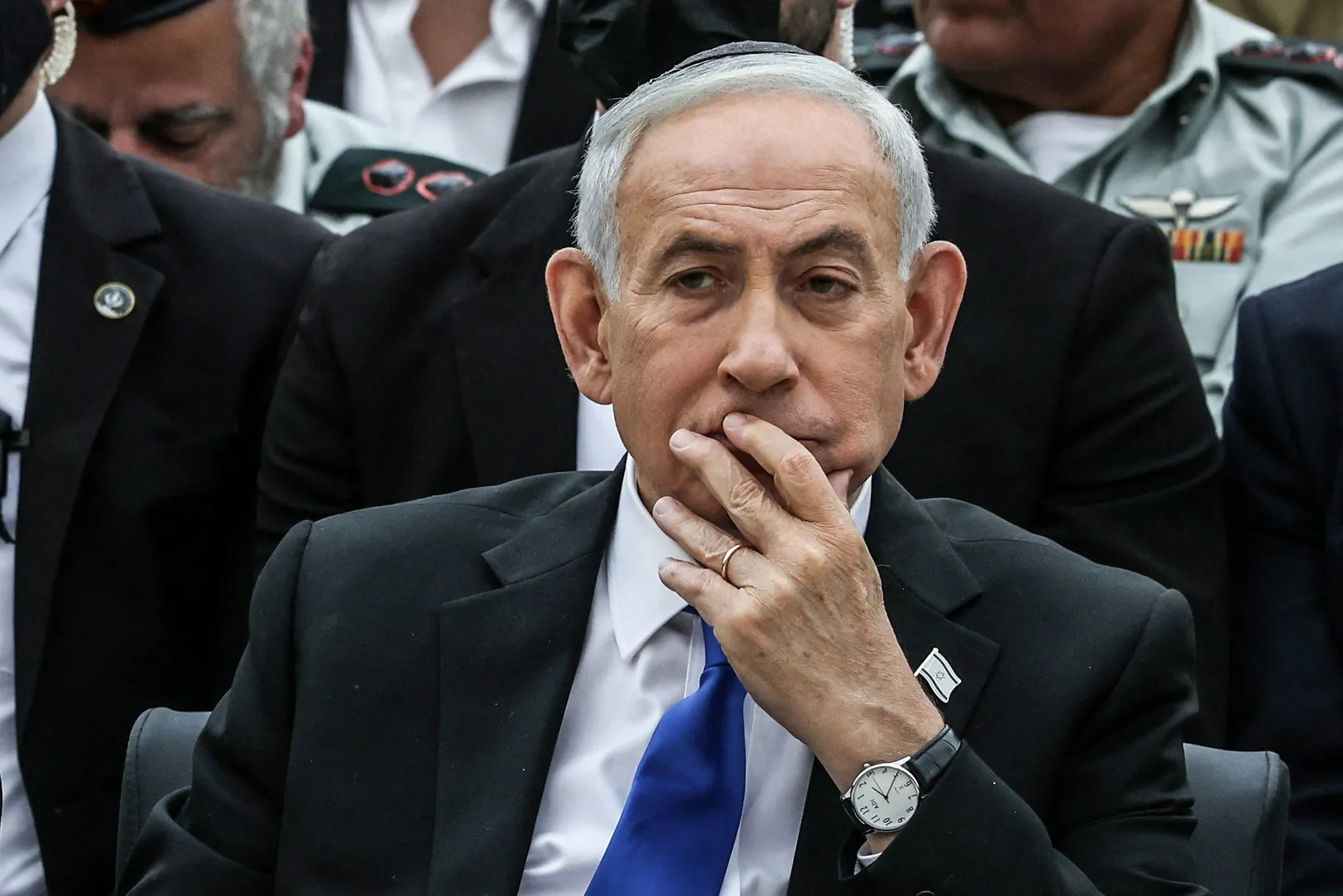
As the US and Iran move closer to a peace deal, Israel says it reserves the right to keep attacking regional ‘threats’, including in Lebanon, despite any US‑brokered ceasefire. Meanwhile, criticism within Israel is growing over Netanyahu’s handling of the war.
Published On 25 May 202625 May 2026
Share
Japan’s stock market surges to record high on hopes of an end to US-Israel war on Iran.

Published On 25 May 202625 May 2026
Oil prices have fallen sharply amid tentative hopes for a deal to end the US-Israel war on Iran.
Brent crude, the primary benchmark for global oil prices, fell about 5 percent on Sunday as US President Donald Trump gave mixed signals on the prospects for a permanent end to the conflict.
list of 4 itemsend of list
Brent futures for July stood at $98.47 a barrel as of 01:05 GMT, down about 9 percent from a month ago but still up by more than a third compared with before the start of the war.
Japan’s benchmark stock index, the Nikkei 225, surged more than 3 percent in morning trading, hitting an all-time high after closing at a record peak on Friday.
Trump said in a social media post on Sunday that negotiations with Tehran were proceeding in an “orderly and constructive manner”, but he had instructed officials “not to rush into a deal”.
“Both sides must take their time and get it right. There can be no mistakes!” Trump wrote on Truth Social.
Trump’s remarks came after he raised hopes for a breakthrough on Saturday by announcing that a deal had been “largely negotiated,” with the terms including the reopening of the Strait of Hormuz.
“Fundamentally, there is no change to the underlying picture, where 10-11 million barrels per day of crude oil continue to be shut-in for every day the Strait of Hormuz remains shut,” June Goh, a senior oil market analyst at Sparta in Singapore, told Al Jazeera.
“However, markets are expecting a gush of 100 million barrels of crude oil from the stranded ships to flow out once the deal is in place.”
Goh said markets are likely to remain on edge for some time after any deal is finalised.
“Sparta estimates still about three to six months required to get everything back to status quo, including time to bring production and refineries back online,” Goh said.
Iran has effectively blockaded the strait since the start of the war in late February, disrupting about one-fifth of the global oil trade.
The US has imposed its own blockade of Iranian ports since mid-April, further disrupting commercial shipping in the waterway.
In his Truth Social post on Sunday, Trump said the US blockade would remain “in full force and effect until an agreement is reached, certified, and signed”.
US president says any potential agreement with Tehran will be ‘good and proper’ as mediation efforts continue.

Published On 24 May 202624 May 2026
Share

For nearly 20 years, Mario Habib has run a barbershop in Beirut’s Furn el Chebbak neighbourhood – through wars, economic collapse and political crisis in Lebanon. Mario says many customers now come not just for haircuts, but for relief, conversation and a sense of normal life in a country where, as he puts it, ‘normal life itself became the dream’.
Published On 24 May 202624 May 2026
Share
President Donald Trump was able to purge his most vocal critics within the Republican Party, as Americans voted for the congressional candidates who will run in November’s midterm elections.
One of the most prominent politicians to be unseated was Representative Thomas Massie, who pushed for the release of the Epstein files.
The Democratic Party partially released a report about performance that noted “a persistent inability or unwillingness to listen to all voters”.
Host Steve Clemons asks former Trump aide Hogan Gidley, and Matt Duss – former adviser to Senator Bernie Sanders – about the challenges facing both parties.
Published On 24 May 202624 May 2026
Share
Tehran, Iran – Iran and the United States have evoked historical and geographical references to the MENA region as the world awaits the announcement of a possible deal to end the conflict between the two countries.
Iranian officials have revived key moments in the nation’s history to drive forward a message of a David-versus-Goliath battle between the two sides, with the underdog ultimately victorious.
This comes as US President Donald Trump announced that a deal with Iran had been “largely negotiated”, with Tehran also indicating there could be an agreement soon. Both sides have been keen to portray any deal to end their 66-day conflict as a victory.
Iran’s Foreign Ministry spokesman Esmaeil Baghaei drew parallels to the march of the Romans against the Persians in the third century, with the invading party ultimately being forced to “come to terms” with the latter.
Baghaei also posted an image of Roman Emperor Valerian after he was captured by Persia’s King Shapur I in the year 260. It is an illustration repeatedly drawn on by Iranian authorities in recent months to evoke nationalist sentiments and promote the idea that the country is again bravely standing up to another invading force.
Sunday also happened to mark the anniversary of a more recent conflict, when Iran – under a new revolutionary government still in place today – fought an eight-year war with its neighbour, Iraq, from 1980 to 1988.
Every year, the Islamic Republic celebrates the 1982 recapture of Khorramshahr, a city with an Arabic-speaking majority in the western Iranian province of Khuzestan.
Khorramshahr marked a turning point for the Iranian side in a protracted war that killed hundreds of thousands from both sides, with that battle being one of the bloodiest.
It has been used in government discourse and messaging during the latest war with the US and Israel to symbolise the country’s long history of resistance and determination to maintain the sovereignty of its lands.

Ahmad Vahidi, the commander-in-chief of Iran’s Islamic Revolutionary Guard Corps (IRGC), used the battle to signal that Tehran would continue to fight the US and Israel in the region.
“The liberation of Khorramshahr is a lasting model for victory in future Khorramshahr, and the liberation of Quds sharif [Jerusalem], and the destruction of the evil Zionist regime by the axis of resistance and the fighters of the Islamic world,” he said, in reference to Israel.
Masoud Pezeshkian, Iran’s relatively moderate president, linked the event to the current standoff.
“Iran’s Khorramshahr today is the Persian Gulf and the Strait of Hormuz,” he wrote on X. “Resistance, sacrifice and fighting off aggression are rooted in the culture of this land.”
Mohammad Mokhber, an adviser to Iran’s slain Supreme Leader Ayatollah Ali Khamenei, said both former Iraqi leader Saddam Hussein and US President Donald Trump failed to fully recognise Iran’s power when starting a war.
“The first was buried in the trenches of Khorramshahr, while the second has been afflicted with a political crisis in a quagmire created by the Zionist regime,” he wrote on X.
Kazem Gharibabadi, a member of Iran’s negotiating team and its deputy foreign minister for international affairs, linked the issue of Khorramshahr with the United Nations Charter and the country’s current concerns.
“Any nation that falls victim to aggression and occupation has an intrinsic right for legitimate defence to safeguard its territory, independence and integrity,” he said.
Gharibabadi added that Tehran is currently following the same logic of “peace-seeking paired with power, diplomacy paired with integrity and decisive defence”.
First Vice President Mohammad Reza Aref said the recapture of the city in 1982 showed that the new government could defeat aggression on its own terms.
Tehran now aims to “overcome our savage enemy” through holding its ground, he wrote on X.
The latest barrage of messaging from leaders in Tehran came after Trump appeared to suggest that he wanted to take control of Iran.
On his Truth Social account on Saturday, the US president posted a photo of the US flag covering the map of Iran, with the question: “United States of the Middle East?”
In response, the X accounts of multiple Iranian embassies abroad posted a US map covered with the flag of the Islamic Republic, with the question: “United States of Iran?”
The Trump administration has emphasised that it wants a long-term suspension of uranium enrichment in Iran and the extraction of high-enriched nuclear material from the country.
It also wants the Strait of Hormuz – through which one-fifth of the world’s oil shipments normally pass, but which Iran has blockaded – reopened fully without any tolls from Iran, officials have said.
Israeli officials have remained largely silent about a US deal with Tehran, but have reportedly been pushing to resume the war.
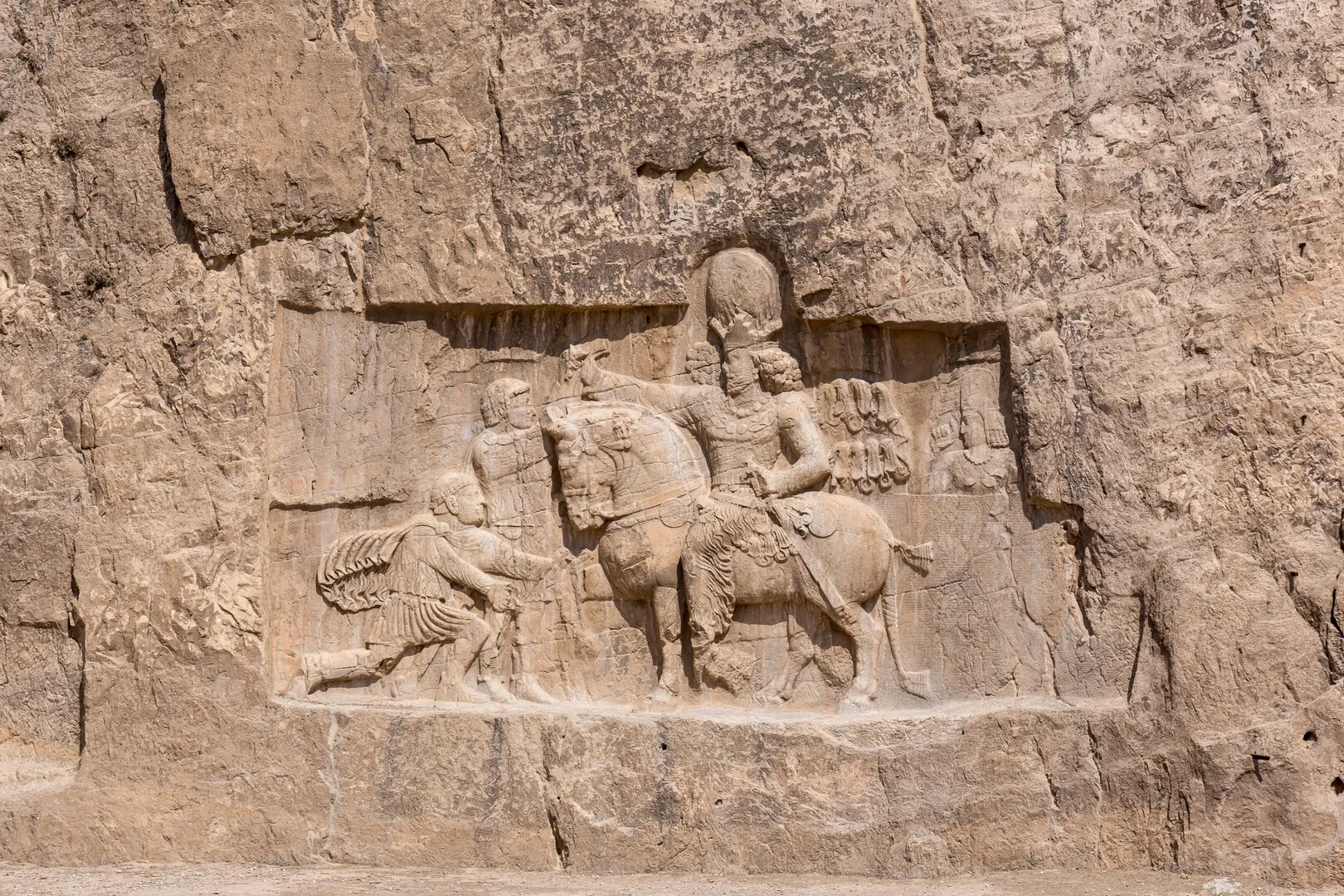
Iran’s foreign ministry spokesman has invoked ancient Persia’s victory in the face of a failed invasion by the Roman Empire. The post suggests the US has been forced to make concessions in a deal to end its war on Iran on Tehran’s terms.
Published On 24 May 202624 May 2026
Share
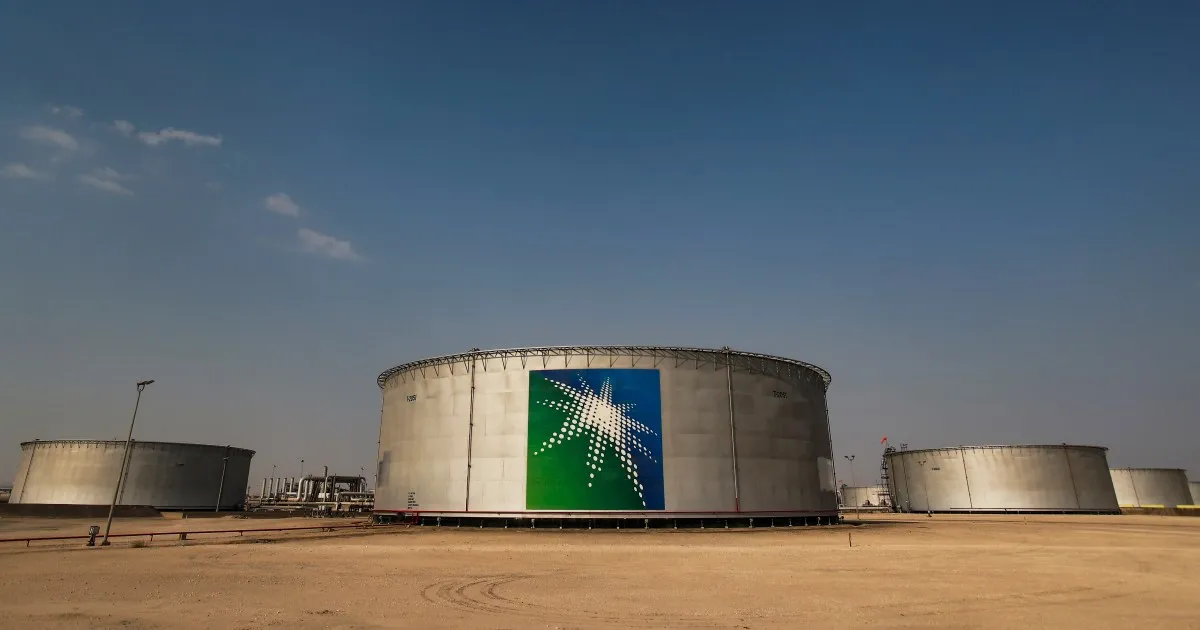
The crisis caused by the US-Israel war on Iran has affected the member states of the Gulf Cooperation Council (GCC) at different levels.
Oman has barely felt any shock as its ports and terminals continue operating as usual. Saudi Arabia and the United Arab Emirates have been able to reroute some oil exports through terminals in Yanbu and Fujairah, respectively, to bypass the Strait of Hormuz. Kuwait, Bahrain and Qatar, on the other hand, have been practically cut off from the global market and are facing the prospect of economic contraction.
Under these circumstances, the GCC states more than ever need to demonstrate unity and address the crisis through collective action. The issue of solidarity is not about showing benevolence to neighbours. It is about setting up mechanisms now that can diminish the consequences and value of any future threat of closure. It is about the survival of the whole idea of GCC unity and the leverage it has on the global scene.
Even if some sort of agreement is reached between the warring sides today, the GCC will continue to suffer under the shadow of the nearly three-month closure. States face the risk of losing clients due to the risk of not fulfilling their obligations or being perceived as a risky supplier. Only a joint effort can stop a free fall.
So far, self-interested approaches are winning over collective action. For instance, the UAE’s exit from OPEC was largely driven by the perception of the Emirati leadership that the Strait of Hormuz crisis was an opportunity to grab greater oil market share.
If this trend of unilateral crisis response continues, it would have grave economic consequences for the whole GCC and threaten its existence. With no burden-sharing mechanism, Gulf countries would end up competing against each other in a zero-sum game. This would reduce the influence the GCC has as a regional bloc and diminish its ability to sway energy markets.
Up until now, there have been some demonstrations of solidarity in rhetoric. During the GCC consultative meeting in Jeddah on April 28, Gulf leaders attempted to show unity and discuss possible ways out of the crisis. The meeting led to discussions about what the GCC states could do in practical terms, yet there are still no signs that these discussions have moved beyond the expert level.
Nevertheless, there are practical steps the GCC can take now that could help address the present crisis and ensure stability in the face of future risks. One of them could be the introduction of swap arrangements.
There are three relevant swap mechanisms that the GCC could consider: physical, contractual and quality swap deals. Physical and contractual swap deals allow one party to deliver an equivalent commodity to fulfil a contract on behalf of another.
A quality swap, on the other hand, exchanges one grade or product for another to align the feedstock needs of refineries or optimise transport costs.
Thus, instead of Kuwaiti, Qatari or Bahraini cargo physically passing through the Strait of Hormuz, a buyer can receive an acceptable substitute at Yanbu, Fujairah, Duqm, Ras Markaz, Sohar, Qalhat, Singapore, India, Korea, Japan or Europe, while the parties involved settle the accounts through future delivery, cash compensation, product exchange, or a retained-volume fee.
The swap does not require the trapped commodity to move immediately. It requires a transparent title, valuation and reconciliation, so that a substitute commodity can be delivered to the end user.
The strongest swap deals, therefore, resemble clearing systems. They are most reliable when they are established before the crisis, but they can also be assembled during a crisis if the parties already have pre-existing experience of trading, a trusted customer base or alternative physical infrastructure to be utilised.
In fact, the swap deals are not something completely unfamiliar to the GCC member states. In 2013, when Egypt failed to fulfil its contractual gas obligations, Qatar agreed to export its own liquefied natural gas (LNG) directly to the customers that Egypt otherwise could not serve while it channelled its gas for domestic needs.
In 2021, the UAE’s Emirates National Oil Company (ENOC) won a tender to swap 84,000 tonnes of Iraqi fuel oil for 30,000 tonnes of Grade B fuel oil and 33,000 tonnes of gas oil to supply to Lebanon. In 2024, the state-owned Oman LNG conducted about two swap tenders per month, with Atlantic cargoes originating from the United States delivered to Spain, while the company delivered its LNG to clients in Asia.
All of these examples show that Gulf countries and their national energy companies have the required expertise to carry out intra-GCC swaps.
The most practical way to implement such deals now would be to establish an energy swap facility through a coordinated clearing mechanism among national oil companies, major regional refiners, selected traders, insurers, banks and key Asian and European buyers.
Its function would be to match blocked obligations with delivery alternatives and to reconcile the value later.
The implementation of any swap arrangement would require substantive effort to operationalise, not to mention a high level of political will, trust and mutual determination. Moreover, at present, there are physical limitations before any arrangement, as the GCC infrastructure does not have the capacity to reroute export volumes that pass through the Strait of Hormuz completely.
In the immediate term, swap arrangements imply that one group of countries – Saudi Arabia, Oman and the UAE – would sacrifice a bit of income and market share to the advantage of the others, namely Qatar, Bahrain and Kuwait, by allocating part of their current export, storage or transport capacities. But in the longer term, all would benefit.
The critical call is on Saudi Arabia, which has the largest options to bypass Hormuz and provide the largest pool of deliverable crude. Its command of customer credibility, global familiarity with Saudi oil grades, Red Sea export infrastructure and Aramco’s trading capacity make it the main pillar of any future swap system.
Complementing its role as market regulator within OPEC/OPEC+ with the leadership within the GCC, Riyadh can help stabilise the market by covering priority cargoes for strategic buyers.
The UAE can also play a major role by utilising its export capacity through Fujairah, and so can Oman, which has crude storage capacity at Ras Markaz, refining capacity at Duqm, LNG experience and ports that can receive and dispatch cargoes without having to cross the Strait of Hormuz.
If such swap deals are implemented, they can strengthen the GCC unity and help the members avoid internal economic rivalry in the future. More importantly, they can encourage the launch of a larger regional infrastructure drive that would lessen dependence on the Strait of Hormuz and diminish its value as a geopolitical tool to be used against the Gulf.
If there are a well-functioning swap mechanism and infrastructure in place that can be used whenever a threat of closure is made, then clients would feel more confident in continuing their relationships with all Gulf suppliers. In the longer term, this could serve as the GCC’s insurance against any new turbulence in the region.
The views expressed in this article are the authors’ own and do not necessarily reflect Al Jazeera’s editorial stance.
Iran were expected to fly from Turkiye to Arizona to continue World Cup 2026 preparations but will switch to Mexico.

Published On 23 May 202623 May 2026
Iran will base their squad in the Mexican border city of Tijuana during this year’s World Cup after football’s world governing body FIFA approved a request to move their training camp from Arizona, the head of Iran’s football federation said on Saturday.
“We will be based in the Tijuana camp, which is near the Pacific Ocean and on the border between Mexico and the United States,” Iran’s Football Federation President Mehdi Taj said in a video posted on its Telegram social media account.
list of 4 itemsend of list
Taj added that the switch would help avoid visa-related complications following the US-Israel war on Iran, and that the squad would be able to fly directly to Mexico with Iran Air.
Iran will play their first two Group G matches in Los Angeles, against New Zealand on June 15 and Belgium on June 21, before facing Egypt in Seattle on June 26.
“The total distance between us and the venue of our games in Los Angeles is 55 minutes by flight,” Taj said, adding that Tijuana was closer to their match venues than the team’s previously planned camp in Arizona.
Iran has faced uncertainty for months over travel and security arrangements for the World Cup, which will be cohosted by the United States, Canada and Mexico, and had asked for their games to be moved from the US.
Iranian officials said this month that their players and staff had yet to receive US visas, less than a month before the start of the tournament. They began visa applications during their stay in Turkiye for pre-tournament training.
Taj said FIFA had been asked for guarantees over visas, security and the treatment of the Iranian delegation.
Iran are due to play Gambia in a friendly on May 29 before coach Amir Ghalenoei names his final 26-man World Cup squad by FIFA’s June 1 deadline.
The World Cup is from June 11 to July 19.
Latest Truth Social post comes amid ‘delicate diplomacy’, expert says, as US and Iran indicate progress in talks.
Washington, DC – President Donald Trump has posted a photo of the United States flag covering the map of Iran, with the question: “United States of the Middle East?”
The post on Truth Social on Saturday represented another potentially incendiary message from Trump amid ongoing negotiations for a more lasting ceasefire in the US-Israeli war with Iran, experts said.
list of 3 itemsend of list
It carries the potential to roil both regional allies and foes alike given Washington’s past intervention in the Middle East, most notably during the US invasion of Iraq from 2003 to 2011, as well as the Trump administration’s push to increase its influence abroad.
The sentiment also appears to run counter to the Trump administration’s repeated statements that it is not seeking a prolonged occupation of Iran. The US has maintained it is not seeking outright regime change in its war, which it launched alongside Israel on February 28, but that it would welcome such change as a byproduct of the military campaign.
Even for a president known for outlandish social media posts and conflicting messaging on the war, the post could have implications for ongoing negotiations aimed at a more lasting ceasefire, according to Vali Nasr, professor of international affairs and Middle East studies at Johns Hopkins University.
He pointed to Trump’s threat in early April that an “entire civilisation will die” if Iran did not agree to a deal at the time. Hours later, both sides agreed to a pause in fighting.
That pause has held since, save for a handful of flare-ups, with the US continuing to blockade Iranian ports and Tehran effectively closing the Strait of Hormuz.
“First he declared he wanted to eradicate Iran’s civilisation now he is declaring that he wants to turn Iran into an American property,” Nasr wrote on X.
“It is this kind of grotesque behaviour that undermines diplomacy and unites Iranians in defence of their country,” he added. “In the middle of delicate diplomacy he casts doubts on America’s true intentions.”
The White House did not immediately respond to a request for comment.
On Saturday, both US and Iranian officials indicated a new deal may be within reach.
Trump told CBS News both sides were “getting a lot closer”. US Secretary of State Marco Rubio said an update could be coming shortly, the broadcaster reported.
Iranian Foreign Ministry spokesperson Esmaeil Baghaei said the two sides were “currently working to finalise” a memorandum of understanding, and that “the opinions have been converging”.
Still, there have been no official announcements related to key sticking points in the standoff, including the future of Iran’s nuclear programme, the fate of its highly enriched uranium stockpile, and its future influence over the Strait of Hormuz.
Trump regularly uses his Truth Social account, which he launched after being briefly banned from Twitter, now X, in the wake of the 2020 election, to make major announcements, attack political enemies, and post AI-generated images and videos.
The foreign policy of his second term has been defined by efforts to grow US influence abroad, particularly in the Americas. That has included the military abduction of Venezuelan leader Nicolas Maduro, continued threats against Cuba, and vows to take control of Greenland, the semi-autonomous Danish territory in the North Atlantic.
The Trump administration has adopted the term the Donroe Doctrine, a reference to the 1823 Monroe Doctrine, which sought to diminish European influence in the Western Hemisphere.
On Saturday, Trump also posted an image of his face peering over a mountain range in Greenland.
“Hello, Greenland!” it said.
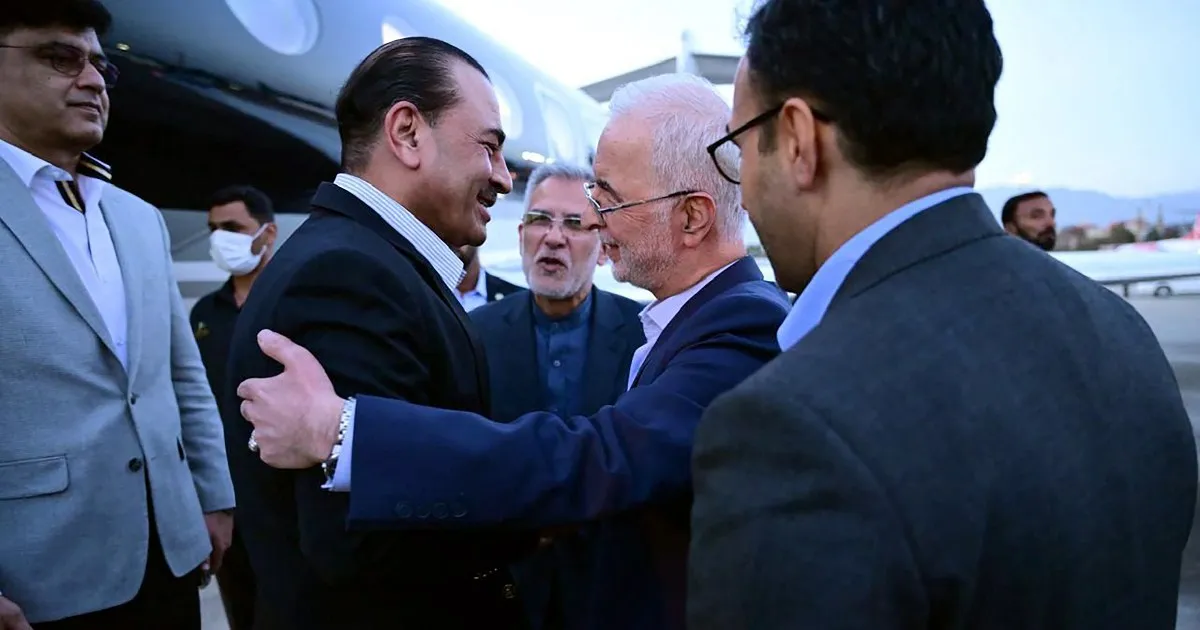
Israeli attacks on Lebanon have killed at least 3,111 people since March 2, with 9,432 injured, according to Lebanese Health Ministry.
Published On 23 May 202623 May 2026
Share
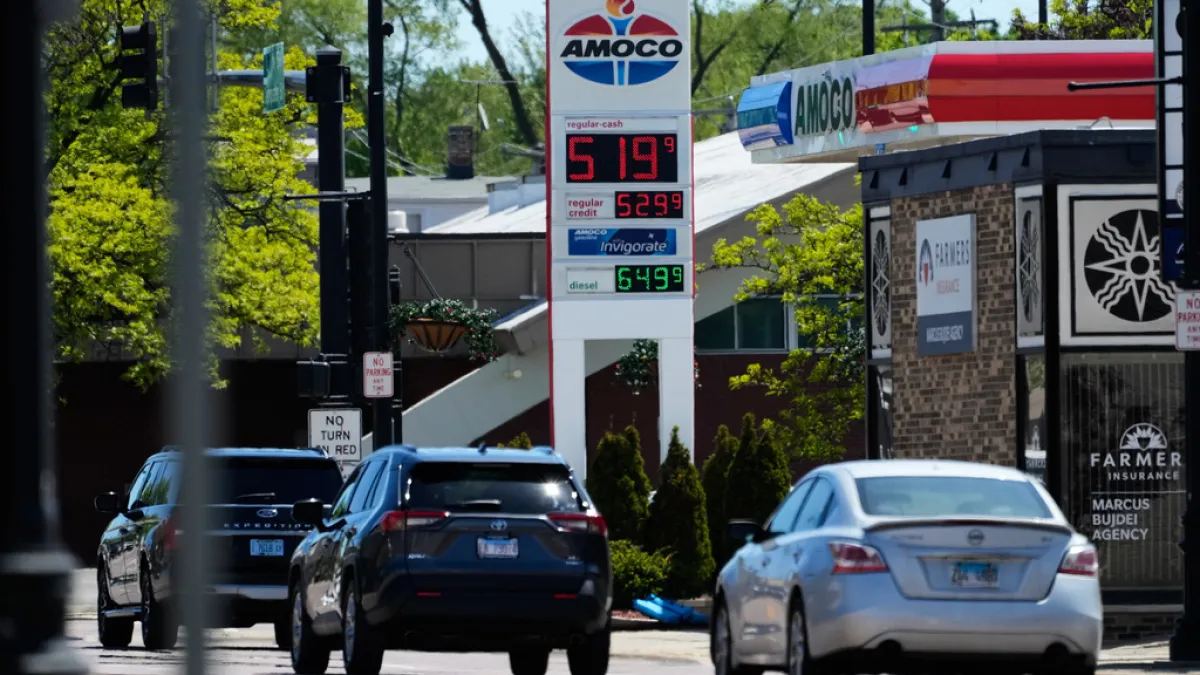
As petrol prices rise, new survey suggests economic confidence in the US is at -45, the worst since 2022.
Published On 22 May 202622 May 2026
Only 16 percent of Americans view the economy in the United States as “good” or “excellent”, a new Gallup poll suggests, as inflation continues to rise amid the war on Iran.
The survey, released on Friday, deepens US President Donald Trump’s political woes ahead of the midterm elections in November, which will determine whether his Republican Party can retain control of Congress.
list of 3 itemsend of list
The survey, dubbed Gallup’s Economic Confidence Index, showed confidence in the economy has dropped to -45.
Forty-nine percent of respondents said economic conditions are poor and 34 percent rated them as fair. At the same time, 76 percent said they think the economy getting worse, while 20 percent said it is getting better.
The index averages the results on economic conditions, currently at -33 and economic outlook, currently at -56.
It was the worst set of findings on the economy that the index recorded since 2022 when the cost of living rose after the COVID-19 pandemic and Russia’s invasion of Ukraine.
Petrol costs in the US have skyrocketed since the start of the conflict with Iran late in February. The average price of one gallon (3.8 litres) of gasoline has risen to $4.55 from less than $3 before the US and Israel launched the war.
According to official government reports, consumer prices overall rose in March and April due to the energy crisis.
Iran has responded to the US and Israeli strikes – which killed several top officials, including Supreme Leader Ali Khamenei, as well as hundreds of civilians – by closing the strategic Strait of Hormuz, sending oil and gas prices soaring.
The US has also imposed a naval siege on Iranian ports, deepening the strain on energy supplies across the world.
Despite the ceasefire that began in April, the blockades have persisted in the absence of a permanent end to the war, and Iran is now claiming sovereignty over Hormuz, which operated as a free international passageway before the war.
Parts of the strait run through Iranian and Omani territorial waters.
Although the US is one of the world’s largest oil producers, energy prices are set globally, so the disruption has spiked costs for American consumers.
As a candidate, Trump promised to be a president of “peace”, saying he would pursue “America first” policies that would prioritise domestic issues over foreign interventions.
But the US president joined Israel in attacking Iran without direct provocation. His administration argues that the military campaign is necessary to prevent Tehran from obtaining a nuclear weapon.
Iran denies seeking nuclear weapons. And Trump’s own intelligence chief Tulsi Gabbard has said that Tehran is not building a nuclear bomb.
Trump has repeatedly argued that the cost of the war is worth it, stressing that petrol prices will drop rapidly once the conflict is over.
Last month, the US State Department released a legal justification of the war, saying that Washington joined the conflict “at the request of and in the collective self-defence of its Israeli ally, as well as in the exercise of the United States’ own inherent right of self-defence”.
The Gallup survey on Friday is the latest in a series of negative polls for the Trump administration.
A New York Times/Sienna poll released earlier this week suggested that only 31 percent of voters approve of Trump’s handling of the war with Iran.
Earlier this month, the US president suggested the economic fallout from the war and its effect on people in the US do not play a role in his approach to Iran.
“I don’t think about Americans’ financial situation. I don’t think about anybody,” he said. “I think about one thing: We cannot let Iran have a nuclear weapon. That’s all. That’s the only thing that motivates me.”
EXPLAINER
US and Iran continue mediated talks, exchanging draft proposals aimed at reaching a formal agreement.
Published On 22 May 202622 May 2026
Iran and the United States are continuing mediated talks aimed at ending the conflict, with Iranian media reporting that both sides are exchanging messages and draft proposals to establish a formal framework for an agreement.
Al Jazeera’s correspondent Almigdad Alruhaid reported from Tehran that Pakistani officials were engaged in “intense mediation activity” between the two countries.
The diplomatic push comes as US Secretary of State Marco Rubio said there were “some good signs” for a possible breakthrough. However, US President Donald Trump also warned Washington could take “very drastic” action if Iran refuses to give up its uranium stockpiles.
Here is what we know:
‘War crime’ on medical research centre: Iran has accused the US and Israel of committing a “war crime” by bombing the Pasteur Institute of Iran early in the war, after The Lancet journal warned that the attack severely damaged a key pillar of the country’s public health system.
US forces at ‘peak readiness’: CENTCOM said the USS Abraham Lincoln strike group remains at “peak readiness” in the Arabian Sea, sharing images of warplanes taking off as Washington maintains pressure on Iran amid ongoing mediation efforts.
Palestinian envoy condemns aid blockade: Palestine’s UN envoy Riyad Mansour said Israel is continuing to collectively punish more than two million Palestinians through its blockade on aid and ongoing attacks, warning the world must not become “accustomed to seeing Palestinians killed”.
Acting Navy Secretary Hung Cao’s remarks come as US President Donald Trump gives mixed signals on the sale.

Published On 22 May 202622 May 2026
A top United States military official has said Washington is pausing a $14bn arms sale to Taiwan to conserve munitions for its war on Iran.
Acting Navy Secretary Hung Cao provided the update to lawmakers during a Senate hearing on Thursday, a week after the weapons sale took centre stage in talks between US President Donald Trump and Chinese leader Xi Jinping in Beijing.
list of 4 itemsend of list
“Right now, we’re doing a pause in order to make sure we have the munitions we need for Epic Fury – which we have plenty,” Cao told the Senate Appropriations Subcommittee on Defense.
“But we’re just making sure we have everything, but then the foreign military sales will continue when the administration deems necessary.”
Cao said any decision to move forward with the sale – which would be the largest ever weapons transfer to Taiwan – would be made by Secretary of Defense Pete Hegseth and Secretary of State Marco Rubio.
The war has been paused since the US and Iran agreed to a ceasefire on April 8, but the sides have yet to reach a permanent peace deal.
The US Congress approved the weapons package for Taiwan in January, but the sale requires Trump’s sign-off to move forward.
If approved, the sale would surpass a record-breaking $11bn arms package for Taiwan approved by Trump in December.
Taiwanese Premier Cho Jung-tai told reporters on Friday that Taiwan would continue to pursue arms purchases, according to Taiwanese news outlet FTV News.
William Yang, senior analyst for northeast Asia at the Crisis Group, said in a social media post that the pause will “exacerbate anxiety and scepticism about US support in Taiwan and make it difficult for the Taiwanese government to request additional defence budget for the foreseeable future”.
Trump, who has confirmed that he discussed the arms sale with Xi, said last week in an interview with Fox News that he “may” or “may not” approve the package.
Trump has also suggested that the package could be used as a “negotiating chip” – despite a decades-old precedent against consulting with Beijing on arms sales.
China claims self-governing Taiwan as part of its territory, and objects to Washington’s ongoing but unofficial support for Taipei.
The US government does not officially recognise Taiwan but is committed to helping the island to defend itself under the 1979 Taiwan Relations Act, enacted shortly after Washington severed diplomatic ties with Taipei.
Trump has continued to test the status quo on Taiwan in other ways, saying earlier this week that he would consider speaking to Taiwanese President William Lai Ching-te about the arms deal.
Such a move would break with four decades of diplomatic protocol against direct talks with the Taiwanese leader and almost certainly provoke an angry response from Beijing.
Trump held a phone call with former Taiwanese President Tsai Ing-wen after his 2016 election win, but their talks took place before he was sworn in as president.