US-Israel war on Iran

Pakistan’s Naseem Shah under fire after criticism of politician’s PSL visit | Cricket News

Pakistan’s Naseem Shah under fire for slamming politician’s presence at start of closed-doors PSL game in Lahore.

The Pakistan Cricket Board has attacked fast bowler Naseem Shah for criticising a politician’s presence at the start of the opening game of the Pakistan Super League, which is being played behind closed doors.

Fans are barred from attending games at the country’s premier domestic tournament, which was originally scheduled for six venues but now reduced to just two — Lahore and Karachi.

Recommended Stories

list of 3 itemsend of list

The Middle East conflict has resulted in exorbitant fuel hikes in the region, and Pakistan’s government is urging people to restrict travel and to work from home.

Chief Minister of Punjab Maryam Nawaz was invited to Lahore’s Gaddafi Stadium on Thursday, along with other dignitaries, and was introduced to officials of the eight franchises and players ahead of the opening game of the tournament between defending champion Lahore Qalandars and first-timers Hyderabad Kingsmen.

Shah commented on a tweet about the opening game by the PCB, with the bowler saying on X, “Why is she treated like the queen at Lord’s?” in an apparent reference to Nawaz’s presence at the stadium. He deleted the post soon afterwards and later said his account had originally been hacked.

A view of the Gaddafi Stadium, where opening cricket match of the Pakistan Super League between Lahore Qalandars and Hyderabad Kingsmen, is taking place without spectators
A view inside the Gaddafi Stadium, where the opening cricket match of the Pakistan Super League between Lahore Qalandars and Hyderabad Kingsmen took place without spectators [KM Chaudary/AP]

The PCB said in a statement that Shah had been issued a notice for violating the terms of his central contract as well as media policy and regulations.

“The show-cause notice has been served in accordance with the PCB’s disciplinary framework,” the PCB said. “Naseem Shah is required to provide a response within the stipulated time. Upon receipt and review of his response, the PCB will decide on any further action in line with the regulations.”

Last year, Pakistan all-rounder Aamer Jamal was slapped with a fine of $4,000 for displaying a slogan in favour of cricket great Imran Khan, Pakistan’s imprisoned former prime minister.

Shah is scheduled to play for new PSL franchise Rawalpindi Pindiz in Saturday’s game against Peshawar Zalmi, led by former Pakistan all-formats captain Babar Azam.

Shah, a right-arm fast bowler, has taken a total of 152 wickets while representing Pakistan in 20 Test matches, 34 one-day internationals and 37 T20 games.

Source link

The war on Iran faces a MAGA backlash | US-Israel war on Iran

Four weeks into the war on Iran, the White House continues to confuse the public and the press with constant pivots and contradictions.

Now the administration faces even more pressure as many of its own supporters have started to turn against it. This war has split up the MAGA movement, with an intriguing debate currently happening outside the mainstream and in the midst of their own media sphere.

Contributors:
Jamal Abdi – President, National Iranian American Council
Jude Russo – Managing editor, The American Conservative
Ben Lorber – Senior research analyst, Political Research Associates

On our radar

This week, the Israeli parliament approved the first vote on a bill that introduces a mandatory death penalty by hanging. This applies to any Palestinian convicted of killing Israelis in attacks defined as “terrorism” or motivated by “hatred”. Ryan Kohls reports on how this bill has been promoted in the media.

Memes, trash talk and AI – the online war between Washington and Tehran

The propaganda war in the ongoing war on Iran has taken a new form.

Beyond the traditional tactics, both the US and Iran are increasingly using memes and trash-talk mockery of the adversary through AI-driven animations, designed with virality in mind. We look at the strategies behind the different messaging coming out of Washington, Tel Aviv and Tehran.

Featuring:
Meredith Clark – Professor, University Of North Carolina
Roger Stahl – Documentarian and author, Militainment, Inc.
Marc Owen Jones – Associate professor, Northwestern University In Qatar

Source link

US-Israel war on Iran: What’s happening on day 29 of attacks? | US-Israel war on Iran News

Tensions continue to rise with Iran warning a ‘heavy price’ will be paid after Israeli attacks on nuclear and industrial sites.

President Donald Trump said he is “very disappointed” with NATO’s response to the United States-Israeli war on Iran, accusing the alliance of failing to support Washington despite years of US military spending on its allies.

Meanwhile, Iran warned a “heavy price” will be paid after Israeli attacks on nuclear and industrial sites, with Tehran accusing the US and Israel of “playing with fire” by targeting energy infrastructure. Iran also said there was no radioactive leak following attacks on two nuclear facilities.

The warnings come as fighting and tensions continue to escalate across the Middle East, with growing fears of a wider conflict.

Here is what we know:

In Iran

  • Israel hits Tehran: Israel’s military said it launched attacks on Iranian “regime targets” early Saturday.
  • Hopes for Iran talks this week: US envoy Steve Witkoff said he expects meetings with Iran “this week” and is waiting for Tehran’s response to a 15-point peace plan.
  • Iran pledges “heavy price” for plant strikes: Iran’s Foreign Minister Abbas Araghchi said Tehran would exact a “heavy price for Israeli crimes” after attacks on nuclear sites and two of the country’s largest steel factories.
  • Iran feels “forced” into talks: Al Jazeera’s Mohamed Vall, reporting from Tehran, said many Iranians believe they are being pushed into negotiations that are not in their favour, with the sense that “the Americans are bombing their way towards a negotiation table.” Rather than relying on US or Israeli promises, he said Iran is relying on “its missiles, its drones, and the resolve of its soldiers”.
  • Russia likely aiding Iran with satellite intelligence: Al Jazeera’s Mansur Mirovalev reported Iran is likely receiving data on US military assets from Russia’s Liana spy satellite system, according to a space programme expert.

War diplomacy

  • Trump criticises NATO over Hormuz: Trump said NATO allies “weren’t there” when asked to help secure the Strait of Hormuz, despite the US spending “hundreds of billions” protecting them. “I’ve always said NATO is a paper tiger. And I always said we help NATO, but they’ll never help us.”
  • Possible Pakistan meeting: Turkiye said talks with Pakistan, Saudi Arabia, and Egypt could take place in Pakistan this weekend as Islamabad mediates between Iran and the US.
  • UN nuclear watchdog urges “restraint”: The International Atomic Energy Agency repeated its call for “restraint” in the Middle East war after Israel struck two Iranian nuclear facilities, including a uranium processing plant.
  • “Regime change” unlikely: The war is unlikely to lead to “regime change” in Iran, said German Chancellor Friedrich Merz. “If that’s the goal, I don’t think you’ll achieve it. It’s mostly gone wrong” in past conflicts, he said, pointing to the Afghanistan war.

In the Gulf

  • Saudi Arabia intercepts missile: Saudi Arabia said it “intercepted and destroyed” a missile targeting the capital Riyadh. Meanwhile, at least 12 US military personnel were wounded, including two seriously, in an Iranian attack on an airbase in the kingdom, The Associated Press and Reuters news agencies reported on Friday.
  • United Arab Emirates: The UAE’s Ministry of Defence reported that air defence systems and fighter jets intercepted and shot down incoming missiles and drones from Iran.
  • Kuwait: Though experiencing some slower nights recently, residents in Kuwait say they have grown accustomed to the disruption of alarms sounding throughout the night.

In the US

  • US aims to finish war in “weeks”: Secretary of State Marco Rubio said Washington expects to complete its Iran war objectives in the “next couple weeks”, leaving Iran “weaker”.
  • US soldiers wounded: More than 300 American soldiers have been wounded since the start of the war on February 28, US Central Command said.

In Israel

  • Direct attacks: Israel continues to face significant incoming fire on multiple fronts. Iran launched a missile salvo that struck a busy commercial street in Tel Aviv.
  • Man killed: Israeli emergency responders said a man was killed in Tel Aviv on Friday, and several others were wounded across the country after the military reported missiles fired from Iran.

In Lebanon, Yemen, occupied West Bank

  • Houthis warn they’ll join the fight: Yemen’s Houthi rebels warned they would enter the war if attacks on Iran continue or if more countries join the conflict. The Houthis have in the past attacked shipping in the Red Sea in response to regional conflicts, but have so far not intervened in this war.
  • Israel expands ground war in Lebanon: Israeli troops entered Khiam and clashed with Hezbollah near Tyre as Israel pushes to create a “security zone” up to the Litani River. Hezbollah said it attacked Israeli tanks and fired at a warplane over Beirut.
  • Israel cites Hezbollah threat: Al Jazeera’s Rob McBride, reporting from Amman, said Israel is using the threat from Hezbollah in the north to justify expanding its ground incursion into southern Lebanon to push Hezbollah back and create a “buffer zone”.
  • Hezbollah escalation: Hezbollah forces have fiercely resisted the Israeli advance, claiming to have carried out 82 operations against Israeli troops within 24 hours.
  • West Bank violence continues: Israeli forces killed three Palestinians in the occupied West Bank, including a 15-year-old boy in Dheisheh refugee camp and two men in Qalandiya.

Oil, food, and gas crises

  • Strait of Hormuz: To prevent a “massive humanitarian crisis”, the United Nations has established a new task force led by Jorge Moreira da Silva. It aims to ensure ships carrying fertiliser and raw materials can safely cross the strait, warning that maritime trade disruptions could severely affect global agricultural production and humanitarian needs.
  • Egypt imposes business curfew: Egypt has ordered shops, restaurants, and shopping malls to close at 9pm (19:00 GMT) from Saturday, hoping to curb energy bills that have more than doubled because of the Iran war.
  • Overnight queues in Ethiopia: Many Ethiopians slept in their cars in hours-long queues for petrol as shortages caused by the war began to take their toll. The Horn of Africa country is particularly vulnerable as it imports all its petrol, primarily from the Gulf.
  • Tea stuck in Kenya: Between 6,000 and 8,000 tonnes of tea worth $24m is stuck at Kenya’s port of Mombasa because of the war, trade officials said. About 65 percent of the East African tea market has been affected by the war that began on February 28. This is happening because the war is disrupting shipping routes through the Red Sea and the Strait of Hormuz, which are key routes for trade between Asia, the Middle East and Europe.

Source link

Uproar in Bahrain after detainee dies in police custody | US-Israel war on Iran

NewsFeed

Rights groups in Bahrain say a 32-year-old man, arrested for opposing the war on Iran, was killed in police custody. Bahraini authorities dispute the account, but activists say the incident is part of a widening crackdown on opposition to the war.

Source link

Houthis warn ‘fingers on the trigger’ as US-Israel war on Iran continues | US-Israel war on Iran News

The Iran-aligned Yemeni group have the ability to target key shipping lanes around the Arabian Peninsula.

Yemen’s Iran-allied Houthis say they are prepared to intervene ⁠militarily if ⁠other countries join the United States and Israel in their war against Iran, or if the Red Sea is used to launch attacks on their ally.

“We confirm that our fingers are on the trigger for direct military intervention” if any new alliances join Washington and Israel against Iran and its ⁠allies, or if the Red Sea is used for “hostile operations” against Iran, the group’s military spokesperson Yahya Saree said in a televised speech on Friday.

Recommended Stories

list of 3 itemsend of list

Saree also said the Houthis were prepared to act if what he called the escalation against Iran and the “axis of resistance” continued, ‌but did not say what form any intervention would take.

The warning raises the prospect of a broader regional war, particularly given the Houthis’ ability to strike targets far beyond Yemen and disrupt shipping lanes around the Arabian Peninsula.

The Yemeni rebel group has controlled the capital Sanaa and much of the country’s northwest since 2014.

After Israel launched its genocidal war on Gaza in October 2023, the Houthis targeted vessels in the Red Sea and carried out drone and missile attacks against Israel, saying that they are acting in solidarity with Palestinians under fire in Gaza.

Israel and the US have regularly struck the war-torn country, targeting civilian infrastructure, including residential buildings and the main international airport, while killing dozens at a time.

But in May, the Houthis and the US agreed to a truce, which included a Houthi agreement to stop attacks on US shipping in the Red Sea.

The group later stopped attacks on Israel and Israeli-linked shipping after the October Gaza ceasefire deal.

In his speech on Friday, Saree also said the group would not allow the Red Sea to be used to carry out “hostile operations” against Iran or any Muslim country.

He ⁠warned against any further tightening of what he described as “the blockade on Yemen”.

Saree called for an immediate halt to ⁠US and Israeli attacks on Iran, the Palestinian territory, Lebanon and Iraq.

Source link

Guns in the streets as US, Israel intensify month-long attacks across Iran | US-Israel war on Iran News

Tehran, Iran – Heavily armed state forces continue to control Iran’s streets, despite the United States and Israel launching more strikes and preparing for a potential ground attack, as the nearly one-month war proceeds with no clear end point on the horizon

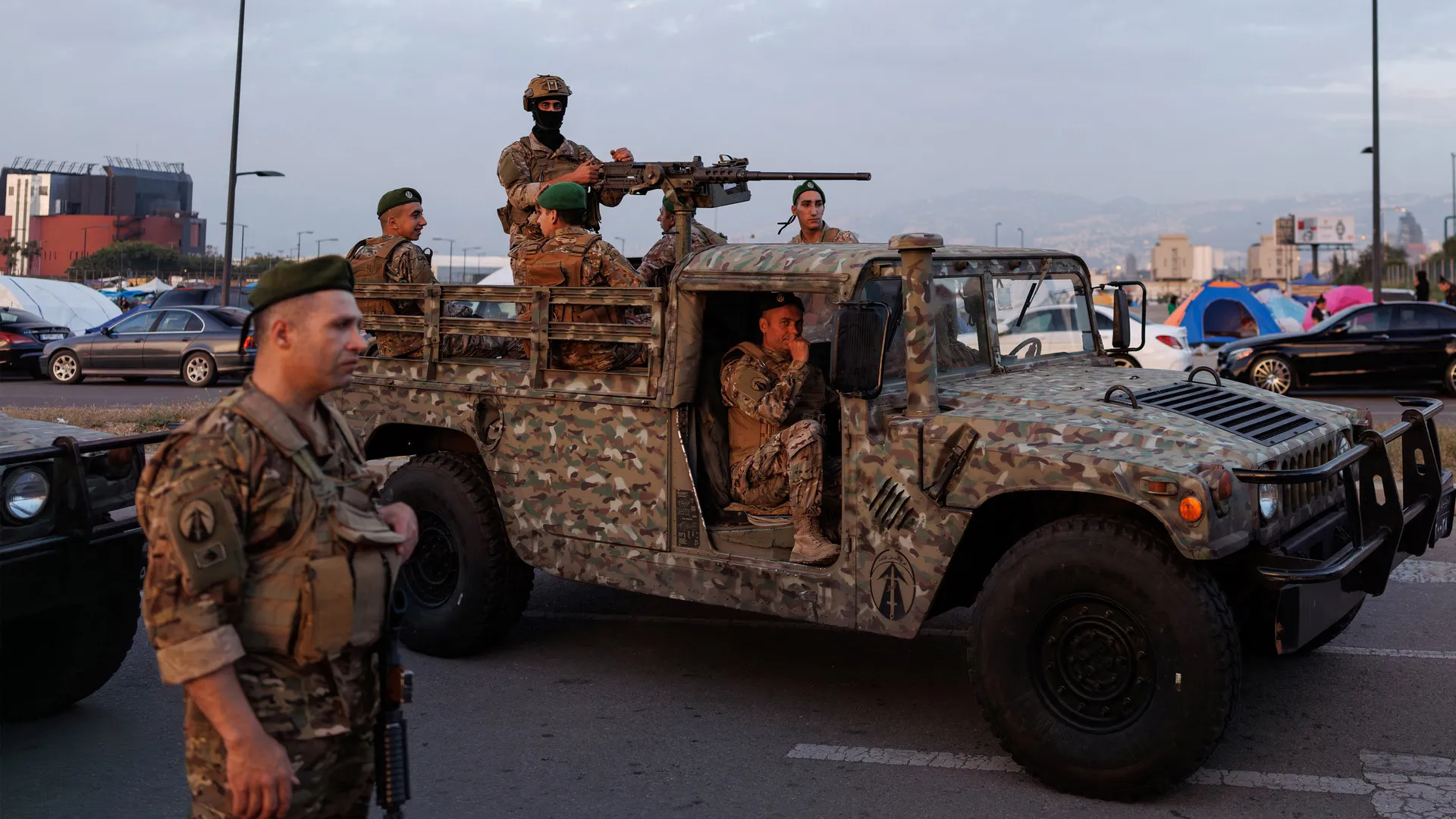
Checkpoints, roadblocks and patrols, some manned by masked forces wielding assault rifles and machine guns mounted on pick-up trucks, have become a common sight in Tehran.

Recommended Stories

list of 4 itemsend of list

Many of the checkpoints, operated by the paramilitary Basij force of the Islamic Revolutionary Guard Corps (IRGC), police or plainclothes forces, have been targeted by deadly drone strikes over the past two weeks. They are, therefore, often on the move, or positioned on highways, in tunnels, and under bridges.

“I counted 40 cars moving through my neighbourhood late last night while honking, flashing their blinkers, waving flags and escorting a pick-up truck that had massive speakers fitted at the back and somebody shouting religious slogans from inside,” a resident of western Tehran told Al Jazeera on Friday, asking to remain anonymous for security reasons.

He said local residents have been invited from the loudspeakers on multiple occasions to join gatherings at the neighbourhood’s mosque to denounce the US and Israel and express support for the theocratic establishment that has been in power since Iran’s 1979 Islamic revolution.

Such state-backed gatherings are taking place in numerous mosques, as well as city squares and streets. But they come as the US and Israel urge Iranians to stay in their homes and wait for a “clear signal” to take to the streets and overthrow the Islamic Republic.

For their part, Iranian state television and other state-affiliated media outlets have encouraged supporters to maintain control on the streets, and have been increasingly releasing footage of armed pro-state people, including women, carrying guns.

Rahim Nadali, the IRGC’s deputy for cultural affairs in Tehran, claimed on state television on Wednesday night that people of all ages have expressed readiness to join intelligence and security patrols and checkpoints.

“We have brought the age limit [down] to over 12 years. So now, children aged 12 or 13 years are going to participate in this space,” he said.

‘Sinking feeling in your gut’

A series of new air raids landed across Iran on Friday afternoon, hitting a civilian nuclear site, as well as power posts and production lines for steel and other industrial factories, according to Iranian authorities.

Washington has also deployed thousands more soldiers to the region while signalling that an attempt to occupy one or more islands on Iran’s southern shores may be imminent.

Iranian officials have promised to retaliate strongly if that happens, including by striking critical infrastructure across the region.

Javad Mogoei, a prominent IRGC-linked media personality, released a video from the island of Qeshm earlier this week, suggesting that the IRGC could launch missiles and drones at Iranian islands if they were occupied by the US.

Despite that potential for even further escalation, and while numerous areas in Tehran have been struck by bombs dropped from Israeli and US warplanes, the city continues to function as people try to practise a semblance of a normal life.

Some people visit friends and loved ones indoors, while others go on daytime walks to hold a routine or work out at gyms that are open for limited hours.

“It looks like the war will last for weeks, if not months, so we can’t afford to get drowned in all the anxieties and fears that come with it,” said another resident of the capital, who had sought safety in one of Iran’s northern provinces earlier in the war, but returned last week.

“But you still can’t help but get that sinking feeling in your gut for a moment, not knowing whether you will be next when you hear the jets flying over,” he said.

Another resident, a woman who lives in the more affluent northern areas of Tehran where multiple senior officials have been assassinated in residential buildings since the start of the war, said she finds herself worried.

“My mind sometimes automatically goes back to the concern that some official might be living in an adjacent alley or a nearby home, and my family could become collateral,” she said, adding that she has only been outside her home three times over the past month to buy essentials or visit immediate family.

Iranian authorities have said nearly 2,000 people have been killed since February 28 by US and Israeli attacks, and a large number of residential units, hospitals, schools and civilian vehicles have been affected.

Economy under strain

More businesses are expected to reopen when the country’s official working week starts on Saturday, following the holidays for Nowruz, the Persian New Year.

But the internet has been completely blocked to the civilian population for nearly a month, the longest recorded shutdown in Iran. The internet shutdown has tormented the country’s more than 90 million population and further squeezed an economy plagued by an inflation rate of about 70 percent.

State media released footage of President Masoud Pezeshkian personally visiting a hypermarket in Tehran on Friday to make sure that all essential goods are available to the population, and ensure that vendors refrain from jacking up prices or engaging in hoarding.

The government also continues to hand out a small cash subsidy, which it began doing after nationwide protests initially driven by the country’s economic situation in January.

The United Nations and international human rights groups say many thousands of protesters were killed by state forces, mostly on the nights of January 8 and 9, amid another total internet shutdown, but the Iranian government blames “terrorists” and “rioters” backed by the US and Israel for the unrest.

Iranian authorities have warned that anyone who takes to the streets to protest the establishment during the ongoing war will be treated as an “enemy”. They have also announced multiple war and protest-related executions, many hundreds of arrests over security charges, and confiscation of assets belonging to Iranians found to be dissidents inside or outside the country.

Iran’s judiciary announced asset seizures on Thursday for Ali Sharifi Zarchi, a former professor of bioinformatics and artificial intelligence at Iran’s top institution of higher education, the Sharif University of Technology.

He was found by authorities to have “transformed into an anti-Iran element and supporter of the Zionist regime”, in reference to Israel, due to his tweets and interviews in recent months in opposition to the Islamic Republic while based outside the country.

“The modest belongings you confiscated were the result of 25 years of teaching adolescents and young people, and of striving for Iran. They are a small sacrifice for even a single smile from the families of the children and youths whom you unjustly massacred” during nationwide protests in January 2026, late 2022 and early 2023, and November 2019, Sharifi Zarchi said in a post on X in response.

Source link

How important are the Gulf economies to the world? | US-Israel war on Iran News

Impact of US-Israeli war on Iran poses serious risks beyond energy sector.

The US-Israeli war on Iran is hitting Gulf Arab nations hard – but with a wider impact in today’s interlinked world.

As well as global oil and gas supplies, Gulf states play a critical role in many economies.

So how are they connected – and what could be at risk?

Presenter: James Bays

Guests:

Nikolay Kozjharnov – Research associate professor in energy security at the Gulf Studies Center at Qatar University

Cornelia Meyer – Macroeconomist and oil and gas specialist

Torbjorn Soltvedt – Associate director at global risk intelligence company Verisk Maplecroft

Source link

US diplomat Marco Rubio denounces settler violence, tolls in Hormuz strait | Donald Trump News

United States Secretary of State Marco Rubio has offered wide-ranging remarks upon his departure from the latest Group of Seven (G7) ministers’ meeting in France, denouncing Iran’s continued chokehold on the Strait of Hormuz as well as settler violence in the occupied West Bank.

Standing on an airport tarmac on Friday, Rubio fielded questions from journalists about reports that Iran plans to implement a tolling system in the strait, a vital waterway for the world’s oil supply.

Recommended Stories

list of 3 itemsend of list

Rubio used the topic to double down on pressure for countries to participate in securing the Strait of Hormuz, a demand US President Donald Trump has repeatedly made.

“One of the immediate challenges we’re going to face is in Iran, when they decide that they want to set up a tolling system in the Strait of Hormuz,” Rubio said.

“Not only is this illegal, it’s unacceptable. It’s dangerous for the world, and it’s important that the world have a plan to confront it. The United States is prepared to be a part of that plan. We don’t have to lead that plan, but we are happy to be a part of it.”

He called on the G7 members — among them, Japan, Canada, France, the United Kingdom, Italy, Germany and the European Union — as well as countries in Asia to “contribute greatly to that effort”.

Rubio calls toll plan ‘unacceptable’

The Strait of Hormuz is a key artery for the global transport of oil and natural gas, and prior to the start of the US and Israel’s war against Iran on February 28, an average of 20 million barrels of oil per day passed through the waterway.

That amounted to roughly 20 percent of the world’s liquid petroleum supply.

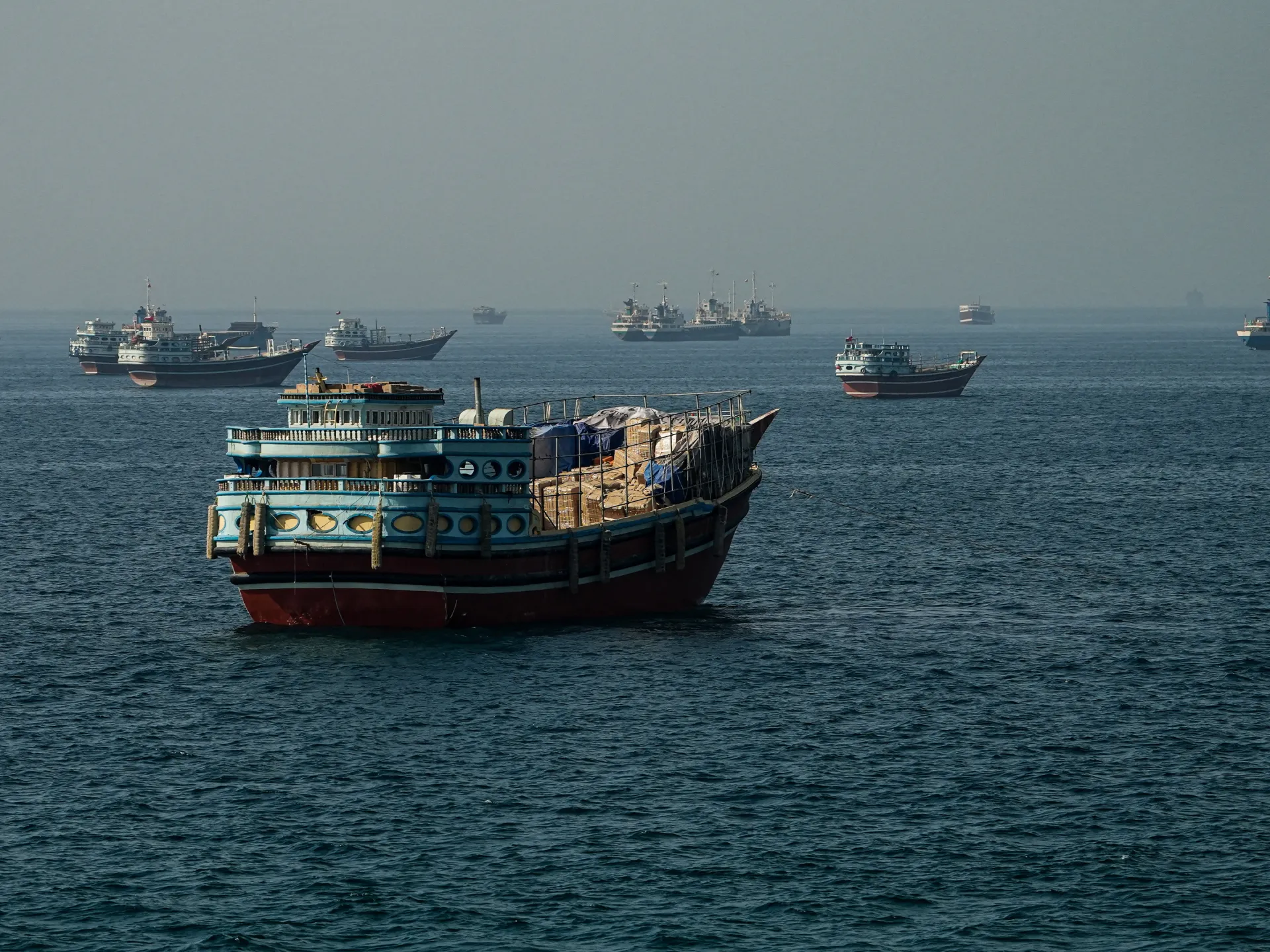
But since the outbreak of war, Iran has pledged to close the Strait of Hormuz, which borders its shores. The threat of attacks has ground most of the local tanker traffic to a standstill, though a few vessels, some linked to Iran or China, have been allowed to pass through.

Media reports suggest that Iran is setting up a “tollbooth system” that would require passing ships to put in a request through Iran’s armed forces, the Islamic Revolutionary Guard Corps (IRGC). There would also be a fee to secure passage.

“ They want to make it permanent. That’s unacceptable. The whole world should be outraged by it,” Rubio said on Friday.

He added that he conveyed a warning about the polling scheme to his colleagues at the G7.

“All we’ve said is, ‘You guys need to do something about it. We’ll help you, but you guys are going to need to be ready to do something about it,’” Rubio said.

“Because when this conflict and when this operation ends, if the Iranians decide, ‘Well, now we control the Strait of Hormuz and you can only go through here if you pay us and if we allow you to, that’s not only is it illegal under international law and maritime law. It’s unacceptable, and that can’t be allowed to exist.”

The Trump administration, however, has struggled to rally allies and world powers to join the US in its offensive against Iran.

Legal experts have criticised the initial strikes against Iran as an unprovoked act of aggression, though the Trump administration has cited a range of rationales for launching the attack, including the prospect that Iran may develop a nuclear weapon.

Many of the US allies in Europe have maintained that they would limit their involvement to defensive actions. Trump, meanwhile, has accused members of the NATO alliance of being “cowards”, adding in a social media post, “We will REMEMBER.”

In a statement following the G7 meeting, member countries reiterated their stance that there should be an “immediate cessation of attacks against civilians and civilian infrastructure”.

They also underscored the “absolute necessity to permanently restore safe and toll-free freedom of navigation in the Strait of Hormuz”. But the statement fell short of pledging any resources or aid to the US and Israeli war effort.

Achieving goals ‘without any ground troops’?

It is unclear when the war might end. On Saturday, it reaches its one-month anniversary, having stretched for four weeks.

Rubio on Friday echoed Trump’s assessment that the war was going as planned and that the US was achieving its objectives, including to destroy Iran’s navy, missile stockpiles and uranium enrichment programme.

“ We are ahead of schedule on most of them, and we can achieve them without any ground troops, without any,” he said, addressing an oft-raised concern about the prospect of US troops being deployed to Iran.

Rubio also briefly addressed the increasing levels of Israeli settler violence against Palestinians in the occupied West Bank.

Footage has shown settlers this month torching Palestinian homes and vehicles, as well as assaulting residents.

On March 19, the United Nations estimated that more than 1,000 Palestinians have been killed in the West Bank since Israel began its genocidal war in Gaza in October 2023. The international body underscored that a quarter of the victims were youths.

“ Well, we’re concerned about that, and we’ve expressed it. And I think there’s concern in the Israeli government about it, as well,” Rubio responded, adding that it was a “topic we follow very closely”.

He suggested that the Israeli government may take action to stop the violence, though critics argue that Israel has largely turned a blind eye to settler violence.

“Maybe they’re settlers, maybe they’re just street thugs, but they’ve attacked security forces, Israelis, as well. So, I think you’ll see the government going to do something about it,” Rubio said.

Upon taking office for a second term in January 2025, President Trump also moved to cancel sanctions against Israeli settlers accused of grave abuses in the West Bank.

Source link

Is Europe heading to an energy crisis? | US-Israel war on Iran

Europe is bracing for a supply crunch and a price shock as the Iran conflict drags on.

It diversified energy supplies, built LNG terminals and reduced its dependence on Russia.

Europe thought it had learned its lesson after the war in Ukraine.
But today it’s facing another energy shock.

And this time it may be even worse, as the war in Iran disrupts supply through the Strait of Hormuz.

It’s happening when EU gas reserves are unusually low.

That means Europe will be competing with Asia to fill its storage tanks, which might force the price of LNG even higher.

Electricity bills are climbing.

Industry is under pressure.

Governments are stepping in to cushion the blow.

Source link

Lebanon faces ‘humanitarian catastrophe’ under Israeli assault: UN | Israel attacks Lebanon News

Displaced Lebanese families ‘living in constant fear’ under Israeli bombardment, warns UN Refugee Agency official.

Lebanon faces the threat of a “humanitarian catastrophe”, the United Nations Refugee Agency (UNHCR) has warned, as Israel expands its weeks-long bombardment and ground invasion of the country.

UNHCR’s Lebanon representative Karolina Lindholm Billing said on Friday that Israeli strikes and forced displacement orders have affected people living across the country – from southern Lebanon to the Bekaa Valley, the capital Beirut, and further north.

Recommended Stories

list of 3 itemsend of list

More than 1.2 million people have been forced from their homes since Israel’s intensified attacks against its northern neighbour began in early March, according to UN figures.

“The situation remains extremely worrying and the risk of a humanitarian catastrophe … is real,” Lindholm Billing told reporters during a briefing in Geneva.

She noted that, as displacement numbers continue to rise, Lebanon’s already overstretched shelter system is struggling to meet families’ needs.

“Just last week, there were strikes that hit central Beirut, including in densely populated neighbourhoods … where many people had tried to find safety in collective shelters,” Lindholm Billing said.

“The families are … living in constant fear, and the psychological toll, particularly on children, will last far beyond this current escalation.”

Israel launched intensified attacks across Lebanon after Hezbollah fired rockets towards Israeli territory following the February 28 assassination of Iranian Supreme Leader Ayatollah Ali Khamenei in the US-Israel war on Iran.

The Israeli military has carried out aerial and ground attacks across the country while issuing mass forced displacement orders for residents of the country’s south, as well as several suburbs of Beirut.

On Friday afternoon, the Israeli military said it had begun a wave of air strikes on Beirut. It also issued more forced displacement orders for several areas in the city’s southern suburbs, including the neighbourhoods of Haret Hreik and Burj al-Barajneh.

Hezbollah has continued to fire rockets into northern Israel and confront Israeli troops in southern Lebanon, with leader Naim Qassem stressing this week that the group had no plans to stop fighting “an enemy that occupies land and continues daily aggression”.

Israeli Prime Minister Benjamin Netanyahu also announced plans to expand the country’s ground invasion in southern Lebanon, saying the military would create “a larger buffer zone” in Lebanese territory.

Rights groups have condemned the expanded operation and warned that preventing Lebanese civilians from returning to their homes in the south may amount to the war crime of forced displacement.

“Israel’s tactics of mass expulsion in Lebanon raise serious risks of forced displacement,” Human Rights Watch said on Thursday. “Forced displacement and collective punishment are war crimes.”

epa12853726 Displaced residents sit outside a tent in a local school after fleeing their homes in southern Lebanon following Israeli airstrikes, in Beirut, Lebanon, 27 March 2026. According to the Disaster Management Unit of the Lebanese government, as of 27 March 2026, more than 1,785,000 people have been internally displaced in collective shelters in Lebanon since the escalation began on 02 March. EPA/WAEL HAMZEH
Displaced residents sit outside a tent in a local school in Beirut after fleeing their homes in southern Lebanon, on March 27, 2026 [Wael Hamzeh/EPA]

The Israeli military’s destruction of civilian homes and several bridges linking southern Lebanon to the rest of the country has also fuelled concerns that Israel is trying to isolate the area.

During Friday’s news briefing, UNHCR’s Lindholm Billing noted that the destruction of the bridges has made accessing southern Lebanon “increasingly difficult”.

“The destruction of key bridges in the south has cut off entire districts … isolating over 150,000 people and severely limiting humanitarian access with essential items to reach them,” she said.

Reporting from Tyre in southern Lebanon on Friday afternoon, Al Jazeera’s Obaida Hitto also stressed that Israel’s forced evacuation orders are “causing a lot of panic” among residents.

“Evacuation orders are happening in areas that were previously thought to be safe,” he said, adding that the destruction and damage to bridges over the Litani River in the south has made the prospect of finding safety more difficult.

“This is putting the government in Beirut in a very difficult situation to try and respond to the humanitarian crisis quickly growing in the south of the country,” Hitto said.

Source link

‘Raising 10 red flags’: Is Israel’s army exhausted? | US-Israel war on Iran News

Israel’s Chief of Staff Lieutenant General Eyal Zamir issued a stark warning to the country’s cabinet this week: unless urgent measures are taken, the Israeli army is on the brink of collapse.

According to a report by Israel’s Channel 13 on Thursday, Zamir told ministers that he was “raising 10 red flags”, urging the government to move quickly on long-delayed legislation to alleviate the strain on its “exhausted” military.

The army has been overseeing what rights groups and the United Nations have determined is a genocide in Gaza, the de facto annexation of the occupied West Bank and numerous incursions into Lebanon and Syria.

Addressing ministers, Zamir stressed the need for a “conscription law, a reserve duty law, and a law to extend mandatory service”, adding that without these measures, “before long, the [Israeli military] will not be ready for its routine missions and the reserve system will not last”.

Israeli Prime Minister Benjamin Netanyahu has since said that plans will be made to extend mandatory military service. However, this is not the first time the alarm has been raised that the military is straining under the pressure of repeated operations, which have seen it involved in the killings of tens of thousands of civilians across the Middle East.

The first came as early as June 2024, just eight months into the genocidal war on Gaza, when France24 reported on shortfalls in troop numbers, exhaustion and a lack of supplies.

That situation has only worsened since.

So, how large was the army before October 2023, how active has it been and how has the current era of unprecedented regional aggression sapped the military’s reserves? Here is what we know.

Israeli soldiers
Israeli Prime Minister Benjamin Netanyahu visits Israeli soldiers in Rafah, in the southern Gaza Strip, in this handout picture from July 18, 2024 [File: Avi Ohayon/GPO/Handout via Reuters]

How suited is the Israeli army to its country’s forever wars?

Not very.

Launched in 1948, the idea of an Israeli military made up of a relatively small standing army backed by a large reserve corps of mobilised citizenry was the plan from the outset in order to instil a narrative of social cohesion, national identity and shared responsibility within the new country’s populace. Reservists would move between civilian life and military service to achieve this.

Before the war on Gaza began on October 7, 2023, Israel’s standing army numbered just 100,000. This was immediately bolstered by calling up 300,000 reservists, pulling Israel’s “citizen soldiers” from their jobs and families to take part in the bombardment and ground invasion of Gaza in response to the Hamas-led assault on southern Israel.

Ultimately, this means that the majority of troops serving are reservists rather than career soldiers.

Where are Israeli troops now?

On March 1, the day after US-Israeli strikes on Iran began, Israel announced the mobilisation of another 100,000 reserve soldiers.

That was in addition to 50,000 reservists currently on duty as a result of the Gaza war.

At the time, military sources said the additional troops would bolster existing positions along the border with Lebanon, its frontier and occupied positions within Syria, as well as in the Gaza Strip and the occupied West Bank.

Additionally, Israel’s Home Front Command called up 20,000 reservists, primarily for search and rescue operations, with reinforcements also deployed to the Israeli Air Force, Navy and Intelligence Directorate.

Israel has since deployed “thousands” of those troops to take part in its invasion of southern Lebanon, which it resumed in response to rocket fire from Iranian ally Hezbollah on March 3.

Addressing the same security cabinet meeting as Zamir, Central Command chief Major General Avi Bluth told ministers that government policies in the occupied West Bank were also placing increasing pressure on the military’s already stretched manpower.

According to the report, Bluth told ministers that over the past year, the government has approved the construction of multiple illegal settlements in the Jordan Valley and elsewhere in the West Bank as part of a wider operation characterised by rights groups and more than 20 countries as Israel’s “effective annexation” of the occupied Palestinian territory.

Bluth added: “This is your policy, but it requires security and a full protection package, because the reality on the ground has completely changed – and that requires manpower.”

Are Israeli troops exhausted?

According to many of the army’s own members, particularly reservists, they are.

Speaking to the Ynet News outlet, which is typically supportive of Netanyahu and his ruling Likud party, one reservist told the newspaper in December of his decision not to report for duty.

“We have battles to fight at home,” he said, explaining his decision. “There are guys on the team who were fired from their jobs, others whose families are barely staying afloat, or who have been dragging out their studies for a very long time. This is a problem, a complexity that is hard to describe.”

Resentment of the apparent exemption offered to members of Israel’s ultra-religious Haredim community, whose refusal to enlist for service is often overlooked by politicians, is also growing, Israeli media reports.

Responding to Zamir’s comments to the security cabinet, Israel’s opposition leader, Yair Lapid, took to Twitter to address the government directly.

“The government must stop the cowardice, immediately halt all budgets to the Haredi draft dodgers,” he said of the extensive social benefits many in Israel’s ultra religious community rely upon. “Send the military police after the deserters, draft the Haredim without hesitation,” he said.

“The warning has been given. It’s on your heads. It’s in your hands. You cannot continue to abandon Israel’s security, in wartime, for petty politics.”

Source link

Saudi, UAE, Iraq: Can three pipelines help oil escape Strait of Hormuz? | US-Israel war on Iran News

As the United States-Israeli war on Iran enters its fourth week this weekend, pressure on oil and gas markets continues to mount due to severe disruption to shipping traffic through the Strait of Hormuz as well as attacks on and around key energy facilities in the Gulf.

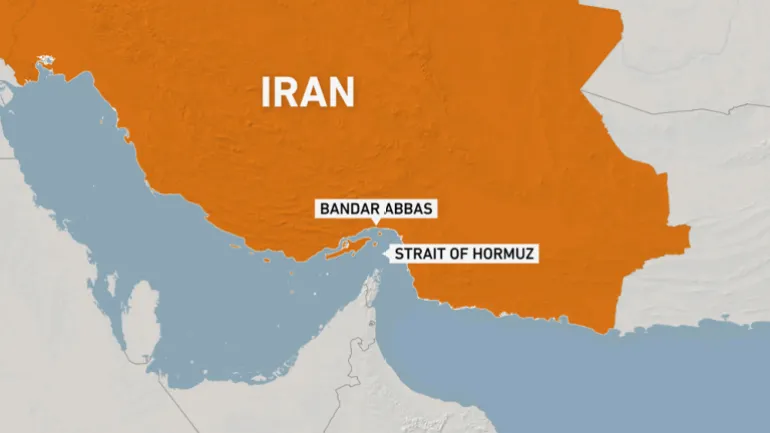
In peacetime, 20 percent of the world’s oil and gas is shipped from producers in the Gulf through the Strait of Hormuz – the only route to the open ocean – including 20 million barrels of oil per day.

To bridge the shortage its closure has caused, countries in the Middle East are exploring alternative routes to get energy exports out.

In this explainer, we look at three major pipelines in the Middle East that producers may be pinning their hopes on, and whether they can fill the gap.

What has happened in the Strait of Hormuz?

On March 2 – two days after the US and Israel began strikes on Iran – Ebrahim Jabari, a senior adviser to the commander-in-chief of Iran’s Islamic Revolutionary Guard Corps (IRGC), announced that the strait was “closed”. If any vessels tried to pass through, he said, the IRGC and the navy would “set those ships ablaze”. Since then, traffic through the strait has plunged by more than 95 percent.

Iranian officials have most recently stated that the strait is not completely closed – except to ships belonging to the US, Israel and those who collaborate with them – but have also laid down new ground rules. Any vessel must secure Tehran’s approval to transit through the narrow waterway.

As a result, over the past fortnight, countries have been scrambling to do deals with Iran to secure safe passage and a few, mostly Indian, Pakistani and Chinese-flagged tankers have been allowed to pass.

On Thursday, Malaysian Prime Minister Anwar Ibrahim thanked Tehran for granting Malaysian vessels “early clearance” through the strait.

Meanwhile, about 2,000 ships flying the flags of other nations are stuck on either side of the strait.

INTERACTIVE - Strait of Hormuz - March 2, 2026-1772714221
(Al Jazeera)

Which oil pipelines could serve as alternate routes?

The only alternative to shipping oil is piping it across land or under the sea. Three oil pipelines could work as ways around the Strait of Hormuz, including:

Saudi Arabia’s East-West Pipeline

The East-West pipeline is also known as the Petroline and is operated by Saudi oil giant Aramco. Aramco is one of the world’s largest companies, with a market capitalisation exceeding $1.7 trillion and annual revenues of $480bn. The oil giant controls 12 percent of global oil production, with a capacity of more than 12 million bpd.

It is a 1,200km (745-mile) pipeline which runs from the Abqaiq oil processing centre close to the Gulf in Saudi Arabia to the Yanbu port on the Red Sea, on the other side of the country.

However, the pipeline does not have the capacity to fully make up for the Hormuz closure.

In 2024, about 20 million barrels per day (bpd) passed through the Strait of Hormuz, according to data from the United Nations. Crude oil and condensate made up 14 million bpd of this, while petroleum was the remaining 6 million bpd.

The East-West pipeline has the capacity of transporting up to 7 million bpd. On March 10, Aramco said about 5 million bpd could be made available for exports, while the rest could supply local refineries.

Since the US-Israeli war on Iran began at the end of February, Saudi Arabia has ramped up its oil flow through this pipeline. In January and February, an average of 770,000 bpd flowed through the pipeline, according to data from Kpler, a data and analytics company. By Tuesday this week, this had increased to an average of 2.9 million bpd.

However, using the Saudi pipeline still carries a risk.

The Houthis, an Iran-backed Yemeni armed group whose attacks on ships in the Red Sea caused global shipping chaos during Israel’s genocidal war in Gaza from 2023 to 2025, could target the Bab al-Mandeb Strait, which connects the Red Sea to the Gulf of Aden, and the Indian Ocean beyond.

An unnamed Houthi leader told the Reuters news agency that the Houthis remain ready to attack the Red Sea again in solidarity with Tehran, the agency reported on Thursday.

“We stand fully militarily ready with all options. As for other details having to do with determining zero hour they are left to leadership and we are monitoring and following up with the developments and will know when is the suitable time to move,” the Houthi leader said.

The Bab al-Mandeb is the southern outlet of the Red Sea, situated between Yemen on the Arabian Peninsula and Djibouti and Eritrea on the African coast.

It is one of the world’s most important routes for global seaborne commodity shipments, particularly crude oil and fuel from the Gulf bound for the Mediterranean via the Suez Canal or the SUMED pipeline on Egypt’s Red Sea coast, as well as commodities bound for Asia, including Russian oil.

The Bab al-Mandeb is 29km (18 miles) wide at its narrowest point, limiting traffic to two channels for inbound and outbound shipments.

Iran could open a new front in the Bab al-Mandeb Strait if attacks are carried out on Iranian territory or its islands, Iran’s semiofficial Tasnim cited an unnamed Iranian military source as saying on Wednesday.

INTERACTIVE - MIDDLE EAST OIL - MARCH 27, 2026-1774616473
(Al Jazeera)

UAE’s Abu Dhabi Crude Oil Pipeline

The Abu Dhabi Crude Oil Pipeline is also called the ADCOP or the Habshan-Fujairah pipeline.

The 380km pipeline runs from Habshan, an oil and gasfield in the southwestern area of Abu Dhabi, United Arab Emirates, to the port of Fujairah on the Gulf of Oman.

The pipeline, which became operational in 2012, has a capacity of about 1.5 million barrels per day (bpd). It is unclear how much is now being transported through the pipeline.

However, oil exports from Fujairah do appear to have risen in the past month despite the closure of the strait, averaging 1.62 million bpd in March compared with 1.17 million bpd in February, according to Kpler analyst Johannes Rauball, who spoke to Reuters.

Iraq-Turkiye Crude Oil Pipeline

The Iraq-Turkiye Crude Oil Pipeline, also called the Kirkuk-Ceyhan Pipeline, links Iraq to the Mediterranean coast of Turkiye.

The pipeline, which has the capacity of 1.6 million bpd, currently carries about 200,000bpd.

Iraq is among the top five global producers of oil and is the second largest within the Organization of the Petroleum Exporting Countries (OPEC), exceeding 4 million bpd.

Can these pipelines replace the Strait of Hormuz?

No. While these pipelines can take on some of the capacity of Hormuz, their combined capacity is only about 9 million bpd, compared with about 20 million bpd for the strait.

Additionally, these pipelines are land-based and within the range of Iranian missiles and drones, which makes them just as vulnerable to attacks and damage in the ongoing conflict as ships travelling through the strait. Throughout the war, energy infrastructure all over the Gulf has suffered strikes.

Are there other options?

Theoretically, oil can be transported on trucks, but this is costly, slow and inefficient.

A standard truck can carry anywhere between 100 to 700 barrels per day, depending on the number of trips. Hundreds of thousands of barrels would be needed to meet needs, requiring thousands of trucks, which could also be targeted in strikes.

Source link

Qatari PM and US officials discuss strategic ties amid Iran war | US-Israel war on Iran News

The meeting held in Washington, DC reviewed the ‘close strategic cooperation’ between Doha and Washington, Qatar’s foreign ministry said.

Qatar’s prime minister has held talks with senior US officials in Washington, DC, amid the ongoing US-Israeli war on Iran and fallout across the Gulf.

Sheikh Mohammed bin Abdulrahman bin Jassim Al Thani, who also serves as Qatar’s foreign minister, met US Vice President JD Vance and US Secretary Scott Bessent, Qatar’s Ministry of Foreign Affairs said on Friday.

Recommended Stories

list of 4 itemsend of list

They reviewed ways to strengthen the “close strategic cooperation” between Doha and Washington, “especially the defence partnership in light of the conditions the region is experiencing”, the ministry said.

Both sides stressed “ensuring the sustainability of energy supplies and maintaining the continued flow of liquefied natural gas from the State of Qatar to global markets”, in a way that “supports global energy security”, it added.

Vance hailed the “robust strategic partnership”, praising Qatar’s “active role in promoting regional stability and enhancing global energy security”.

The Gulf has been in a state of heightened tension since February 28, when the US-Israeli war on Iran began, which has killed more than 3,000 people across the region, a vast majority of them in Iran and Lebanon.

Tehran has since launched drone and missile attacks aimed at Israel, as well as Jordan, Iraq, and Gulf states. Iran insists it is targeting US assets in the Gulf, but the region’s leaders have urged Iran to cease attacks as they endanger civilians.

Qatar, earlier this month, said Iranian missile attacks on the Ras Laffan Industrial City, the country’s main gas facility, caused “significant damage”.

The war has created an unprecedented global energy crisis as Iran has effectively closed off the Strait of Hormuz, through which one-fifth of the world’s oil passes.

Meeting with Hegseth

On Thursday, Sheikh Mohammed also held a meeting in Washington with US Secretary of Defense Pete Hegseth, the Foreign Ministry said.

“The meeting took place in Washington on Thursday and focused on ways to support and develop defence and security collaboration amid regional challenges,” it added.

“Both sides stressed the importance of continued coordination and consultation on regional issues to promote security and stability locally and internationally.”

On Wednesday, the Qatari Cabinet renewed its condemnation of Iranian attacks on Qatar and its neighbours, calling for an immediate halt.

Source link

What is LNG and what is it used for? | US-Israel war on Iran News

The United States-Israeli war on Iran has hit critical liquified natural gas (LNG) supplies in the Gulf, triggering the most severe disruptions in recent years to the global energy market.

Shipping through the critical Strait of Hormuz, which accounts for 27 percent of the world’s maritime oil trade and 20 percent of LNG, has been brought to a near standstill, with oil-producing nations such as Saudi Arabia rerouting oil through alternative pipelines and Qatar halting LNG production.

Recommended Stories

list of 4 itemsend of list

Natural gas makes up about a quarter of global energy consumption, raising concerns about how much the disruption to LNG will affect those most reliant on gas.

INTERACTIVE - REGIONAL GAS FACILTIES-MARCH27, 2026

What is LNG?

Natural gas is formed over millions of years from decomposed organic matter subjected to intense heat and pressure beneath the Earth’s surface.

LNG is natural gas cooled to -162 degrees Celsius, known as cryogenic processing, shrinking it to a 600th of its gaseous volume.

In its liquid state, LNG is colourless, odourless and non-flammable, making it safe and efficient to transport across vast distances.

WHAT IS LNG

Composition and purification

Before liquefaction, the gas is purified through water-based solvents and molecular sieve beds to remove impurities including carbon dioxide, hydrogen sulphide, water and mercury.

Heavier hydrocarbons are then separated from methane and ethane through fractionation, and stored, used or sold as byproducts. The result is a fuel typically composed of 85 to 95 percent methane, with small amounts of ethane, propane, butane and nitrogen.

Storage and transport

LNG is stored in large insulated tanks without the need for high-pressure infrastructure. It is then pumped onto double-hulled carriers and shipped to terminals around the world.

Regasification

At its destination, LNG is heated using seawater or a warm water bath until it vaporises, a process known as regasification, before being moved through pipelines for consumption. It is sometimes blended with nitrogen or propane to ensure compatibility with local gas networks.

What is it used for?

Once LNG is returned to a gaseous state at import terminals, it is dispersed through pipelines for use in homes, businesses and industries around the world.

Residential uses include cooking, heating and generating electricity. In many parts of the world, LNG also supports hot water systems in homes and heating for commercial buildings.

It is used for power generation broadly, offering a comparatively low-carbon alternative to coal and oil.

In industry, it is used for fertilisers, plastics, paints and medicines. It is also used in transport to fuel heavy-duty vehicles and ships.

A man walks through a mustard field during the spring season on the outskirts of Srinagar, the summer capital of Indian Kashmir, India, 24 March 2026. EPA/FAROOQ KHAN
A man walks through a mustard field during the spring season on the outskirts of Srinagar, the summer capital of Indian-administered Kashmir, on March 24, 2026 [Farooq Khan/EPA]

Gulf nations export close to half the world’s traded urea – commonly used in fertilisers globally, leaving international agriculture deeply vulnerable to any interruption in the LNG shipping lane through the Strait of Hormuz.

The disruption has already forced fertiliser producers across the region to suspend or reduce operations, since natural gas is both the primary feedstock and the fuel that powers the manufacturing process.

RAS LAFFAN INDUSTRIAL CITY, QATAR - MARCH 3: A picture of Qatar Energy's operating facilities on March 3, 2026 in Ras Laffan Industrial City, Qatar. Qatar Energy announced a complete halt to liquefied natural gas (LNG) production at its Ras Laffan and Mesaieed facilities on March 2, 2026, after Iranian attacks targeted energy facilities. (Photo by Getty Images)
A picture of QatarEnergy’s operating facilities on March 3, 2026, in Ras Laffan Industrial City, Qatar. QatarEnergy announced a complete halt to liquefied natural gas (LNG) production at its Ras Laffan and Mesaieed facilities on March 2, 2026, after Iranian attacks targeted energy facilities [Getty Images]

QatarEnergy’s decision to halt gas production following attacks on its LNG infrastructure brought the world’s single largest urea plant to a standstill. In addition, the Omani port of Salalah on the Arabian Sea has been closed, which holds an ammonia storage terminal. The port was hit in a drone attack on March 11.

INTERACTIVE - LNG BY PRODUCTS - MARCH 27, 2026

What are the by-products?

While LNG is primarily valued as an energy source, the processing and liquefaction of natural gas yield a range of by-products with industrial and medical applications.

The most notable by-product is helium, which is extracted during cryogenic processing at LNG facilities using distillation to separate the concentrations of helium from the gas.

Global helium production is estimated to be about 180 million cubic metres annually. The disruption to LNG facilities in Qatar means some 5.2 million cubic metres of helium is taken out of the market each month, accounting for about a third of global monthly production.

Helium is used primarily as a cooling agent for superconducting magnets in MRI and CT scanners, with the average MRI machine needing about 1,700 litres of liquid helium, and some older MRIs needing replenishment every two to three years.

FILE - A brain-scanning MRI machine is seen in Pittsburgh, Nov. 26, 2014. (AP Photo/Keith Srakocic, File)
A brain-scanning MRI machine is seen in Pittsburgh, United States, on November 26, 2014 [File: Keith Srakocic/AP]

Helium is also critical to the data centre industry, where it is used to conduct heat away from silicon, preventing parts of semiconductors from being damaged.

The natural gas value chain generates petrochemical derivatives that also form feedstock for manufactured goods.

For example, ethane and propane are cracked to produce ethylene and propylene, which are materials used in plastics such as IV bags, syringes and other medical-grade plastics.

Which countries supply LNG?

According to the International Gas Union (IGU) 2025 World LNG Report, some 411.24 million tonnes (mt) of LNG were traded in 2024.

The largest exporter of LNG is the United States, which in 2024 exported a total of 88.4mt, followed by Australia (81mt), Qatar (77.2mt), Russia (33.5mt) and Malaysia (27.7mt).

Together, the top five countries account for more than three-quarters of global supply.

Which countries import it?

China was the largest importer of LNG with 78.6mt imported in 2024, followed by Japan (67.7mt), South Korea (47.1mt), India (26.1mt) and Taiwan (21.8mt). The top five importers accounted for nearly 59 percent of all global LNG imports in 2024.

South Asian nations such as Pakistan and Bangladesh are also at high risk from the current conflict.

FILE PHOTO: Motorists queue to refuel their motorcycles at a fuel station amid concerns over fuel supply amid the U.S.-Israel conflict with Iran, in Dhaka, Bangladesh, March 15, 2026. REUTERS/Mohammad Ponir Hossain/File Photo
Motorists queue to refuel their motorcycles at a petrol station amid concerns over supplies amid the United States-Israeli conflict with Iran, in Dhaka, Bangladesh, on March 15, 2026 [Mohammad Ponir Hossain/Reuters]

Pakistan’s primary energy source is natural gas, which accounts for 28 percent of electricity generation for the country of more than 250 million people.

In Bangladesh, with a population of about 176 million, gas accounts for half of all electricity generation.

Qatar and the United Arab Emirates supply about 99 percent of Pakistan’s LNG imports and 72 percent of Bangladesh’s, according to trade intelligence firm Kpler.

Earlier in the month, Pakistan introduced emergency measures to tackle the energy shock, including moving to a four-day workweek for government employees and announcing spring holidays for schools from March 16 to the end of the month.

As a precautionary measure, the Bangladeshi government has also reduced gas supplies. Bangladesh is seeking nearly $2bn in loans from international lenders in a bid to fund energy inputs and keep prices stable.

Some petroleum gas tankers heading to India have managed to pass through the Strait of Hormuz despite the conflict — at least one Pakistani tanker has crossed the strait, too. In India, where 5 percent of electricity generation comes from gas, they are now relying more on coal as LNG disruptions continue. India gets about half of its LNG from the Gulf.

COUNTRIES THAT IMPORT LNG-1774601653


On March 9, an Indian government order redirected natural gas and regasified LNG to priority sectors, with curtailments affecting consumers and the petrochemical industry, according to S&P Global.

Source link