US-Israel war on Iran

US-Israeli strike kills 15 at Isfahan factory, Iranian media says | US-Israel war on Iran News

Iranian media report the deaths in central Iran as Tehran launches new missile salvoes at Israeli targets.

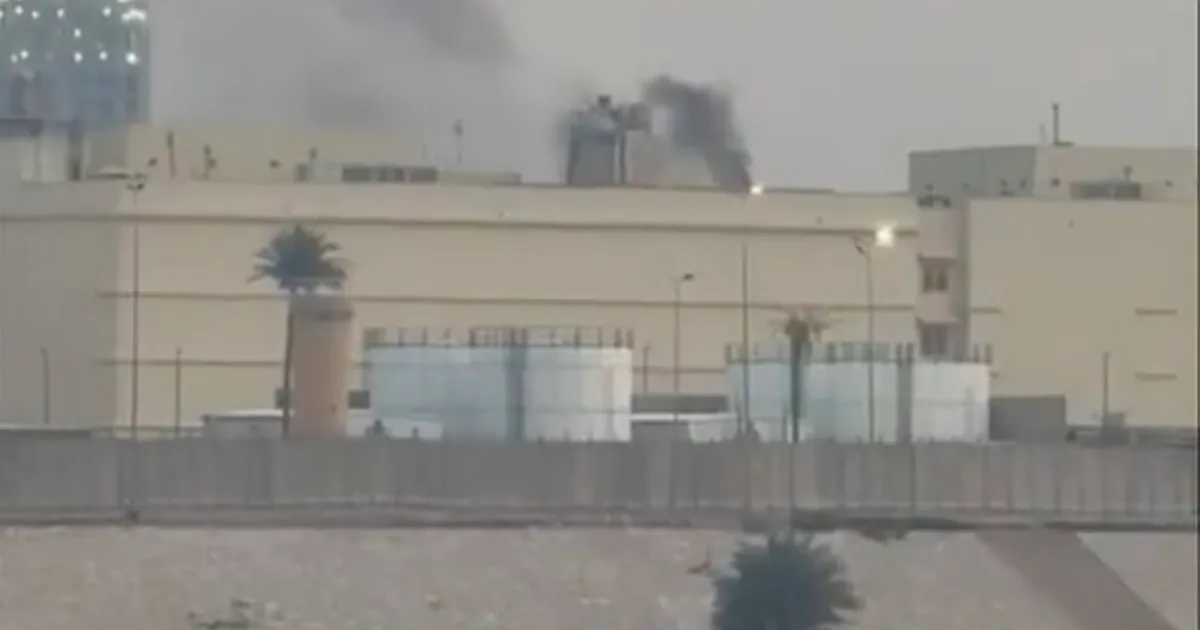
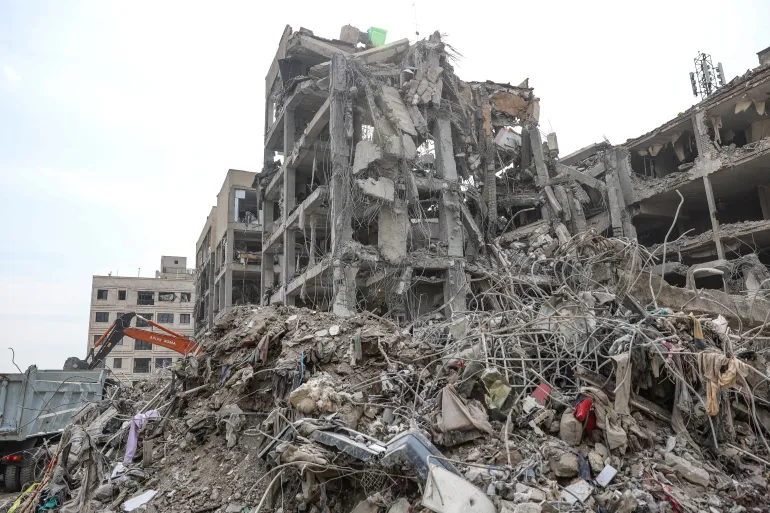
A missile strike on an industrial area of the central Iranian city of Isfahan has killed at least 15 people, with workers having been inside a factory at the time of the attack, Iranian media reports.

The strike hit a factory producing heating and cooling equipment on Saturday, a working day in Iran, according to the semi-official Fars news agency, which attributed the attack to US and Israeli forces.

Recommended Stories

list of 3 itemsend of list

It came on the 15th day of a conflict that Iran’s Ministry of Health says has now killed at least 1,444 people and wounded more than 18,500 since the US-Israeli attacks began on February 28.

Cities across Iran have been repeatedly targeted following the onset of hostilities.

On March 8, shelling damaged Russia’s consulate in Isfahan, injuring staff, with Moscow calling the strike a “blatant violation” of international conventions.


Iran’s Ministry of Culture said on Saturday that 56 museums and historic sites had been damaged, including Naqsh-e Jahan Square, a 17th-century centrepiece of Isfahan, and the UNESCO-listed Golestan Palace in Tehran.

UNESCO said it was “deeply concerned,” noting that four of Iran’s 29 World Heritage Sites had been affected.

Separately on Saturday, Iran’s army confirmed that Brigadier General Abdullah Jalali-Nasab had been killed in an Israeli attack, saying he was “martyred while defending the country”.

Earlier, US forces also struck Kharg Island, which handles roughly 90 percent of Iran’s crude exports, though a regional official said operations were continuing normally, and there were no casualties.

US President Donald Trump had previously threatened to target the island’s oil infrastructure if Tehran continued to disrupt the Strait of Hormuz.

Any prospect of negotiations appears remote. The Trump administration has rebuffed regional efforts to broker a ceasefire, with a senior White House official telling the Reuters news agency the president is focused on pressing ahead.

“He’s not interested in that right now, and we’re going to continue with the mission unabated,” the official said.

Iran has equally ruled out talks while the attacks continue, Reuters reported, citing an anonymous Iranian official.

Iranian Minister of Foreign Affairs Abbas Araghchi struck a defiant tone on Saturday, saying the US security framework in the region had “proven to be full of holes” and calling on neighbours to “expel foreign aggressors”.

Israeli Minister of Defence Israel Katz said the war was entering a “decisive phase”, which would “continue as long as necessary”.

Iran launched new missile salvoes at Israel on Saturday, with explosions heard over Jerusalem, according to reporters from the AFP news agency.

Six waves of missiles, some carrying cluster bomb warheads, struck wide areas of the country, the Israeli army said. In Eilat, a cluster munition impact injured three people, including a 12-year-old boy, according to The Times of Israel.

Source link

Trump administration threatens news outlets over critical coverage of Iran | US-Israel war on Iran News

The administration of President Donald Trump has warned that news outlets could have their broadcasting licences revoked over critical reporting on the war against Iran, accusing the media of “distortions”.

Federal Communications Commission Chairman Brendan Carr said in a social media post on Saturday that broadcasters must “operate in the public interest”, or else lose their licences.

Recommended Stories

list of 3 itemsend of list

“Broadcasters that are running hoaxes and news distortions — also known as the fake news — have a chance now to correct course before their license renewals come up,” Carr wrote.

The warning was the latest apparent threat from Carr, who has repeatedly attracted scrutiny for statements that appear to pressure broadcasters to conform with Trump priorities.

Last year, for instance, Carr called on the channel ABC and its distributors to “find ways to change conduct, to take action” on comedian Jimmy Kimmel, whose late-night show had been critical of the president.

“We can do this the easy way or the hard way,” Carr said of Kimmel on a podcast. ABC temporarily suspended Kimmel’s show in the aftermath of those comments.

Carr’s latest statement prompted swift condemnation from politicians and free-speech advocates, who likened his remarks to censorship.

“This is a clear directive to provide positive war coverage or else licenses may not be renewed,” Senator Brian Schatz of Hawaii wrote.

“This is worse than the comedian stuff, and by a lot. The stakes here are much higher. He’s not talking about late night shows, he’s talking about how a war is covered.”

Aaron Terr, the director of public advocacy at the Foundation of Individual Rights and Expression (FIRE), likewise denounced Carr for seeking to silence negative war coverage.

“The First Amendment doesn’t allow the government to censor information about the war it’s waging,” Terr said.

Trump denounces war coverage

Carr’s latest statement came in response to a social media post from Trump, accusing the “fake news media” of reporting that US refuelling planes had been struck in an Iranian attack in Saudi Arabia.

“The base was hit a few days ago, but the planes were not ‘struck’ or ‘destroyed’,” Trump said in a Truth Social post. “Four of the five had virtually no damage, and are already back in service.”

He added that reporting to the contrary was intentionally misleading. “Lowlife ‘Papers’ and Media actually want us to lose the War,” he wrote.

The president and his allies have faced accusations that they use the power of the state to penalise dissent and critical news coverage, raising concerns about press freedom.

Polling shows that the war, launched by the US and Israel on February 28, is largely unpopular in the US.

A recent Quinnipiac poll found that 53 percent of voters oppose the military action against Iran, including 89 percent of Democrats and 60 percent of independent voters.

The war has also been condemned by legal experts as a clear violation of international law, which prohibits unprovoked attacks.

Trump, however, has offered shifting rationales as to why he believes Iran posed an imminent threat to US security.

He has also asserted that the war is proceeding successfully, despite ongoing Iranian attacks on US forces across the region and the shutdown of the Strait of Hormuz, a key trade artery.

“We’ve won. Let me tell you, we’ve won,” he told a rally this week in Kentucky. “In the first hour, it was over.”

His administration, meanwhile, has blamed the news media for turning public opinion against the war.

“Yet some in this crew, in the press, just can’t stop,” Secretary of Defense Pete Hegseth said during a briefing on Friday.

A former Fox News host, Hegseth called for “patriotic” reporters to write more optimistic headlines instead. He denounced TV banners that read, for example, “Mideast war intensifies.”

“What should the banner read instead? How about ‘Iran increasingly desperate’? Because they are. They know it, and so do you, if it can be admitted,” Hegseth said.

He criticised the news outlet CNN, in particular, for a report asserting that the Trump administration had underestimated the chances of Iran closing the Strait of Hormuz.

Hegseth quipped that he hoped a prospective deal would soon place CNN under the control of David Ellison, son of close Trump ally and tech executive Larry Ellison.

“The sooner David Ellison takes over that network, the better,” he added.

Source link

US attacks military sites on Iran’s Kharg island, home to vast oil facility | US-Israel war on Iran News

United States President Donald Trump has said the country’s military bombed military installations on Iran’s Kharg island, warning the area’s critical oil facilities could be next if Iran continues to block the Strait of Hormuz.

Iran, in turn, threatened on Saturday to reduce US-linked oil facilities to “a pile of ashes” if oil structures on the island were attacked, as the US-Israel war on Iran, now in its punishing third week, spilled over into a global oil price crisis already in the making.

Recommended Stories

list of 3 itemsend of list

Kharg island is where more than 90 percent of Iran’s oil is exported. Crude oil prices have surged more than 40 percent since the war began.

Trump said on Friday that US forces had “totally obliterated” all military targets on Iran’s Kharg island oil export hub, describing it in a social media post as “one of the most powerful bombing raids in the History of the Middle East”. He provided no evidence of that.

The US president said he had chosen not to “wipe out” oil infrastructure on the Iranian island, for now.

“However, should Iran, or anyone else, do anything to interfere with the Free and Safe Passage of Ships through the Strait of Hormuz, I will immediately reconsider this decision,” he added.

Iran’s semi-official Fars news agency reported, quoting sources, that more than 15 explosions were heard on Kharg island during the US attacks.

The sources said the attacks targeted air defences, a naval base, and airport facilities, but caused no damage to oil infrastructure. Iran’s Fars news agency reported thick smoke was seen rising from the island.

Al Jazeera’s Mohamed Vall, reporting from Tehran, said Iran’s potential retaliatory attacks on Gulf oil facilities would be a “catastrophic scenario” for the region, and for the “entire industry of oil and gas”.

“The Iranians are keeping this, apparently, as a card to use,” he said. “They’ve been talking about restraint and the possibility of that restraint ending if the Iranian oil facilities are attacked, as the Americans are hinting and threatening.”

US ground operation in the works?

Meanwhile, 2,500 more Marines and an amphibious assault ship are being sent to the Middle East, a US official told the AP news agency.

Elements from the 31st Marine Expeditionary Unit and the amphibious assault ship USS Tripoli have been ordered to the region, according to the source, who spoke on condition of anonymity to discuss sensitive military plans.

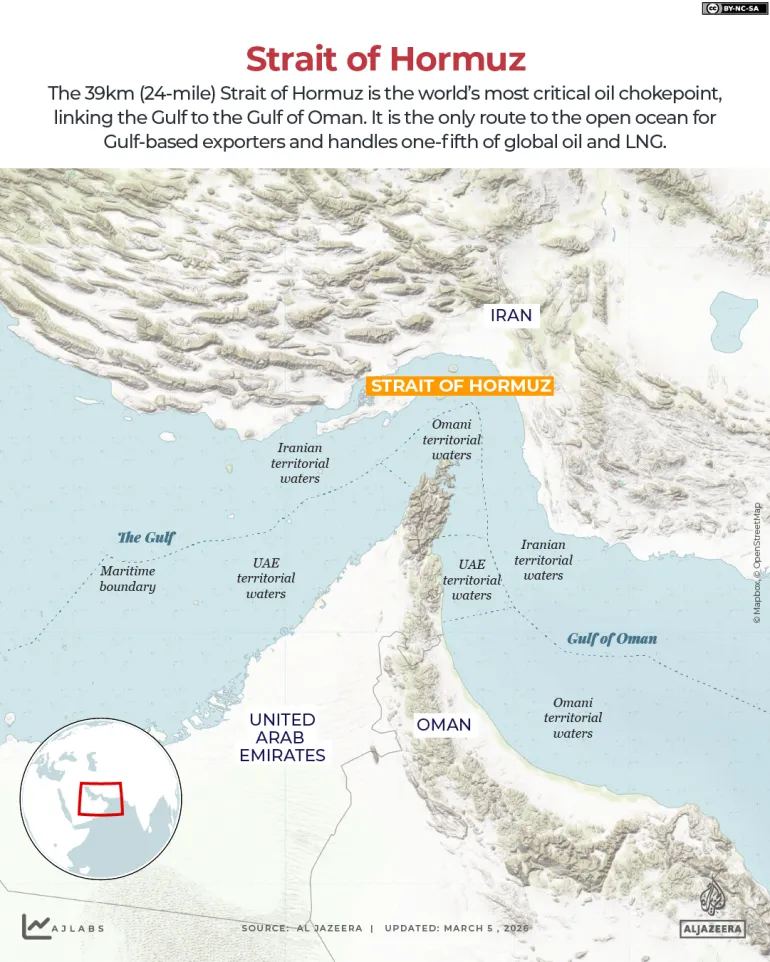
INTERACTIVE - Strait of Hormuz - March 2, 2026-1772714221
(Al Jazeera)

Marine Expeditionary Units are able to conduct amphibious landings, but they also specialise in bolstering security at embassies, evacuating civilians, and providing disaster relief.

“What we’re to make of this is that the US is very slowly increasing its military posture in terms of prosecuting the war, and that it is not intending to wrap things up any time soon,” Al Jazeera’s Rosiland Jordan reported from Washington.

The deployment does not necessarily indicate that a ground operation is imminent or will take place.

Trump dismisses prospect of deal

Following the attack on Kharg island, Iran would be “wise to lay down their arms, and save what’s left of their country”, Trump wrote on his Truth Social platform.

“The Fake News Media hates to report how well the United States Military has done against Iran, which is totally defeated and wants a deal – but not a deal that I would accept!” he posted separately, providing no evidence Tehran was seeking any sort of deal.

At least 1,444 people have been killed and 18,551 injured by US-Israeli attacks on Iran since February 28, Iran’s Ministry of Health says.

Al Jazeera’s Tohid Asadi, reporting from Tehran, said US-Israeli air attacks hit targets across the country, including in Tehran, Karaj, Isfahan and Tabriz. He said this was a sign that “we are not close to de-escalation.

“Iranian officials are talking about retaliatory strikes, with the Islamic Revolutionary Guard Corps talking about using what they call their most advanced weaponry, including Heidar missiles, to target Israeli territories and US bases in the region,” he said.

Source link

Israel kills 12 medics in attack in southern Lebanon as war ravages nation | US-Israel war on Iran News

Israel’s attack, echoing similar carnage it wrought in Gaza, kills doctors, paramedics and nurses who were on duty.

An Israeli strike on a health centre in southern Lebanon has killed 12 medical workers, the Lebanese Ministry of Public Health said, as its devastating assault continued amid a wider regional war launched by the United States and Israel on Iran 15 days ago.

The attack late on Friday occurred in the village of Burj Qalaouiyah in the Bint Jbeil District, and killed doctors, paramedics and nurses who were on duty, Lebanon’s health ministry said.

Recommended Stories

list of 4 itemsend of list

The carnage echoed Israel’s constant targeting of medics and hospitals that decimated Gaza’s healthcare system during its genocidal war on the Palestinian enclave and which contravenes international humanitarian law.

Israeli strikes have so far killed 18 paramedics among 773 people reported killed in Lebanon since fighting between Hezbollah and Israel reignited March 2, after a US-Israeli assault on Iran began on February 28, with the conflict now embroiling much of the region.

According to Al Jazeera’s Heidi Pett, reporting from Beirut, the toll of medics was preliminary as rescue teams continued searching for missing people.

“You can see how deadly some of these individual air strikes have been, not just across the south, but of course, we are seeing air strikes hitting across the capital, Beirut,” said Pett.

Lebanon’s Ministry of Health said it was the second attack on the health sector within hours, after another Israeli strike on the southern village of Souaneh killed two paramedics and wounded five others when it hit a paramedic centre.

The ministry condemned the attack and denounced what it called as continued violence against health workers.

At least four people were also killed in an Israeli air raid on Taamir Haret Saida in the country’s south, the Lebanese News Agency (NNA) said.

Meanwhile, Hezbollah overnight claimed it fired suicide drones against Israeli troops in the northern town of Ya’ara inside Israel.

It was the 24th military operation announced by the group on Friday.

The Lebanese armed group also said it launched rocket attacks targeting Israeli soldiers in southern Lebanon, one in the town of Kfar Kila, and the other in the city of Khiam.

Late on Friday, Hezbollah leader Naim Qassem said his group is ready for a “long confrontation” with Israel as the war continues.

“This is an existential battle, not a limited or simple battle,” he said.

Damage in Israel from Iranian ‘cluster missiles’

Meanwhile, Iran’s retaliatory attacks against Israel continued.

Rocket and missile strikes early on Saturday targeted the Upper Galilee region of northern Israel, Channel 12 reported.

The news outlet said that a “limited number of launches” were either “intercepted” or exploded in open areas.

A post on X from Israel’s public broadcaster KAN featured several vehicles damaged in the strikes.

Alarms were raised for suspected rocket and missile fire in Manara, Margaliot, Kfar Giladi, Misgav Am, Tel Hai, Metula, Kfar Giladi and Kfar Yuval throughout the early morning on Saturday.

“A lot of the damage that we are being told about at the moment seems to be coming from these cluster missiles that Iran has been launching pretty much consistently for the last week at least and they scatter over a large area,” said Al Jazeera’s Rory Challands, reporting from Amman, Jordan.

“They disperse these submunitions bomblets. Each of those has about 2.5 kilogrammes (5.5 pounds) of explosives in them. You can see why that does quite some damage when it scatters and hasn’t been intercepted by the Israeli air defence.”

Source link

Yemeni ports face shipping fee hike amid Iran conflict | US-Israel war on Iran News

Mukalla, Yemen – A reported decision to impose thousands of dollars in fees on shipping headed for Yemen has experts worried that the price of imported goods and food will increase in the war-torn country, as it starts to feel the economic impact of the United States and Israel’s conflict with Iran.

Local traders and officials have said that international shipping companies informed importers earlier this month of the imposition of new fees of about $3,000 on each container bound for Yemen, described as “war risk” fees. The surprise move prompted government officials to scramble to assess and address its potential repercussions.

Recommended Stories

list of 3 itemsend of list

Because Yemen imports nearly 90 percent of its food and other essential commodities, economists and humanitarian organisations warn that the rise in shipping and insurance costs could quickly translate into higher prices for fuel, food and other goods, further worsening an already dire humanitarian situation.

Mohsen al-Amri, transport minister in Yemen’s internationally-recognised government based in the southern city of Aden, said he had instructed that the fees not be paid by ships already docked at Yemeni ports or those bound for the country, insisting that the ports remain safe.

“Our ports are far from the areas of geopolitical tension in the Gulf and the Strait of Hormuz, making the imposition of ‘risk’ fees on shipments to these relatively safe areas unjustified from both operational and security perspectives,” he said in a social media post last week.

Al Jazeera has reached out to shipping companies to confirm details of the fee, but has yet to receive responses.

For more than a decade, Yemen has been gripped by a bloody war between the Saudi-backed government, based in Aden, and the Iran-aligned Houthi movement, which controls the capital, Sanaa. The conflict has killed and wounded thousands of people and displaced millions, creating what the United Nations once described as the world’s worst humanitarian crisis. Hostilities have significantly declined since April 2022, when the warring parties agreed to a temporary United Nations-brokered truce.

‘High-risk’

Abdulrab al-Khulaqui, deputy chairman of the Yemen Gulf of Aden Ports Corporation, said Yemeni ports have long been classified as high-risk, prompting shipping companies to impose war-risk surcharges. These can reach about $500 per each 20-foot container and $1,000 per each 40-foot container, on top of regular shipping costs.

Al-Khulaqui said that the $3,000 fee now being demanded was “very high and unusual”, but was justified by shipping companies because they regard Yemeni ports as unsafe, despite their distance from Iran.

Although the Houthis are allied to Iran and previously attacked shipping in the Red Sea following Israel’s genocidal war on Gaza, the Yemeni group has yet to intervene in the US-Israel-Iran conflict. Other Yemeni parties are also not involved, making Yemen one of the few regional countries yet to see any violence related to the fighting.

In addition to barring local traders from paying the new charges, the Yemeni government is considering other measures to pressure shipping companies to cancel the fees, including threatening to stop vessels belonging to those companies from docking at Yemeni ports. Authorities may also allow traders to contact exporters directly in countries of origin to negotiate any additional charges.

The new surcharges come as the United Nations has again sounded the alarm over Yemen’s worsening humanitarian situation, saying nearly 65.4 percent of the population – about 23.1 million people – will require urgent humanitarian assistance and protection services this year. This marks an increase of roughly 3.5 million people compared with 2025.

“Yemen continues to face an escalating food security crisis entering 2026,” the World Food Program said in its February Yemen Food Security Update, released on March 5. “January data revealed that 63 percent of households nationwide are struggling to meet their minimum food needs, including 36 percent facing severe food deprivation.”

Bypassing Yemen’s ports

In addition to rising insurance fees on shipments to Yemen, the war in Iran and potential disruptions in the Strait of Hormuz could cut vital supply routes from regional hub ports such as Jebel Ali in the United Arab Emirates.

Mustafa Nasr, head of the Studies and Economic Media Center, told Al Jazeera that shipping companies may begin seeking alternative hub ports to deliver goods to Yemen, which could increase costs and cause delays.

“The closure of Jebel Ali port would force shipping lines to seek alternative ports that may be farther away and involve significantly higher transportation costs,” he said.

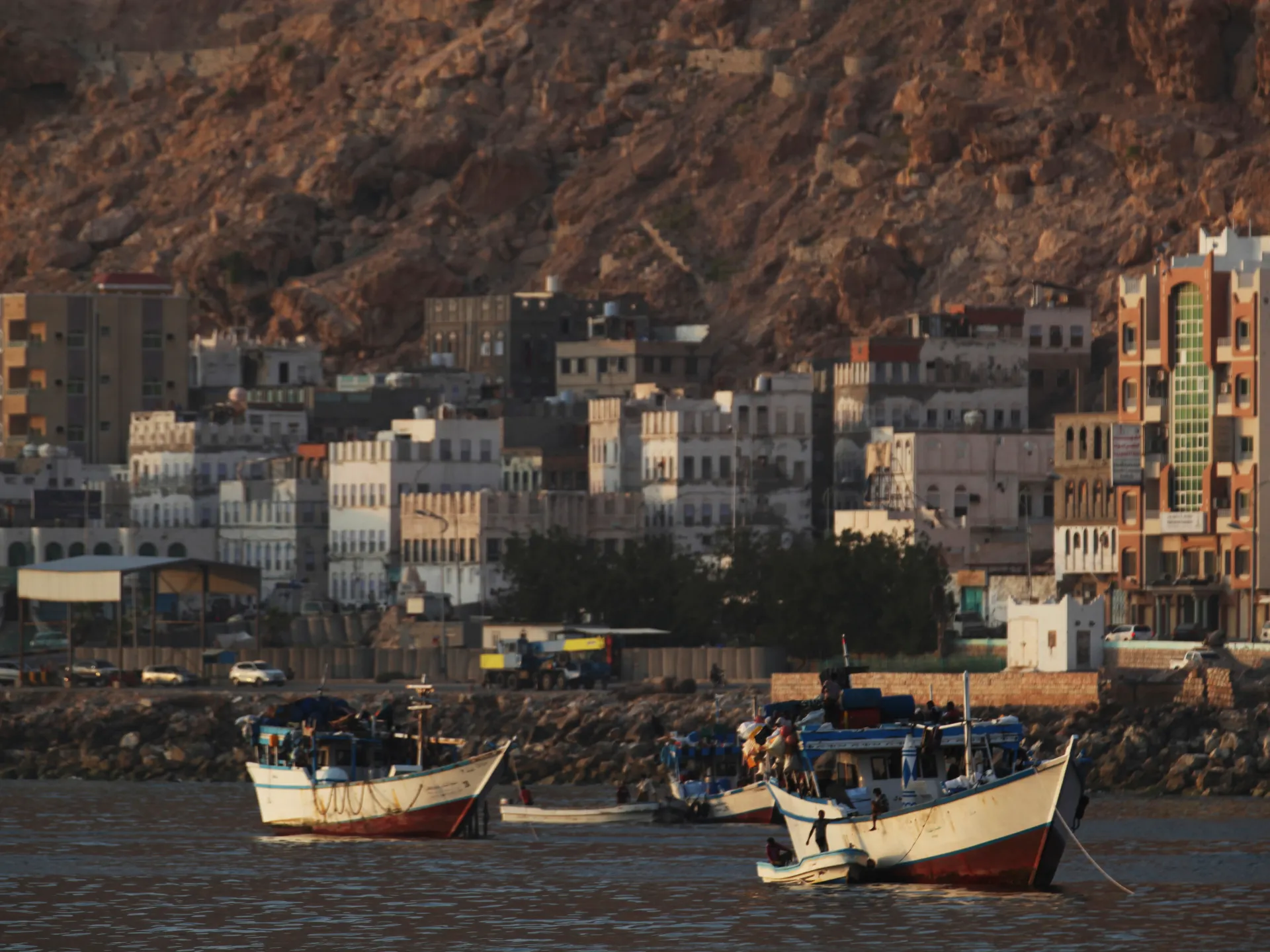
Nabil Abdullah Bin Aifan, manager of the government-run Maritime Affairs Authority in Hadramout province and a maritime researcher, said most goods arriving at Mukalla port – the province’s main seaport – are transported on wooden dhows from Dubai.

He said that if disruptions occur in the Strait of Hormuz, traders may turn to alternative regional hub ports such as Salalah in Oman or Jeddah in Saudi Arabia.

“Large ships come to Dubai to unload their containers, and traders then unload the goods from the containers and load them onto those primitive ships, which have no insurance,” Bin Aifan told Al Jazeera.

For now, wheat shipments from Ukraine and goods transported from China to Yemen may see price increases due to rising insurance costs, while products imported from Gulf countries could disappear from the market.

Shipping lines may also consider routing cargo through the Cape of Good Hope rather than the Gulf, Bin Aifan said.

“Even before the recent developments involving Iran, ports in our region were considered high risk. However, after the relative calm that followed the halt to Houthi attacks in the Red Sea, confidence gradually returned and ships began sailing back to the region. Now, the war has brought the problem back again,” he said.

All of this means that Yemenis, already struggling with poverty and hunger after years of war, will likely have to pay more for imported food and goods.

Abdullah al-Hadad, an English teacher from the city of Taiz with 40 years of experience in the profession, said that his monthly salary – less than $80 – is already not enough to cover his basic needs. Meat and fish have become luxuries for his family, and he still owes nearly one million Yemeni riyals (about $670) to a local grocery shop.

To make ends meet, he works additional jobs as a taxi driver and in a grocery store, while his children also work after school to help support the family and pay for medication for his 10-year-old son, who has autism.

“What I suffer from as a government employee is the extremely low salary, which does not even cover basic necessities such as bread, tea, salt and sugar,” al-Hadad told Al Jazeera.

“Other foods that are essential for a healthy diet, like meat or fish, have become a distant dream.”

Source link

Experts doubt Hegseth claim no need to ‘worry about’ Hormuz | US-Israel war on Iran

NewsFeed

“The US Navy at this point can’t even get anywhere close to the Strait of Hormuz without being attacked.” Experts are pouring cold water on Pete Hegseth’s claims that the US is working effectively to reopen the world’s most crucial shipping lane.

Source link

Analysts say US threat of ‘no quarter’ for Iran violates international law | US-Israel war on Iran News

Rights groups have slammed United States Secretary of Defense Pete Hegseth for saying that “no quarter” will be shown to Iran, as the US and Israel continue their military campaign against the country.

“We will keep pressing. We will keep pushing, keep advancing. No quarter, no mercy for our enemies,” Hegseth told reporters on Friday.

Recommended Stories

list of 3 itemsend of list

Under the Hague Convention and other international treaties, it is illegal to threaten that no quarter will be given.

Domestic laws, such as the 1996 War Crimes Act, also prohibit such policies. US military manuals likewise warn that threats of “no quarter” are illegal.

Brian Finucane, a senior adviser at the International Crisis Group, a think tank, said Hegseth’s comments appear to run afoul of those standards.

“These comments are very striking,” Finucane told Al Jazeera over a phone call. “It raises questions about whether this belligerent, lawless rhetoric is being translated into how the war is being conducted on the battlefield.”

But Hegseth has publicly dismissed concerns about international law, claiming he would abide no “stupid rules of engagement” and no “politically correct wars”.

His rhetoric has provoked concern among some experts that measures designed to prevent civilian harm are being ignored in favour of a campaign of “maximum lethality”.

Hegseth’s remarks also come after a US strike on a girls’ school in southern Iran that killed more than 170 people, most of them children. The war has left at least 1,444 Iranians dead and millions more displaced.

‘Inhumane and counterproductive’

Prohibitions against declaring “no quarter” go back more than a century, part of an effort to impose restraints on conduct during war.

The Nuremberg trials after World War II upheld that legal standard, as Nazi officials were prosecuted, in some cases, for denying quarter to enemy forces.

“The basic idea is that it’s both inhumane and counterproductive to execute people who have laid down their arms,” said Finucane.

He added that the “mere announcement” of “no quarter” from a government official can itself be a war crime.

The US and Israel have already faced allegations of violating international law during their war against Iran. Experts have condemned their initial strike on February 28 as “unprovoked”, deeming the conflict an illegal war of aggression.

Iranian officials also protested after a US submarine sank a military vessel, the IRIS Dena, off the coast of Sri Lanka, as it returned from a ceremonial naval exercise in India. That attack killed at least 84 people.

While warships are considered legal military targets, Iran has said that the ship was not fully armed, raising questions about whether it could have been interdicted rather than sunk.

US forces also purportedly declined to help rescue sailors from the Dena, even though the Geneva Convention largely requires aid to the shipwrecked. The Sri Lankan navy ultimately helped collect survivors from the wreckage.

Responding to the attack, Hegseth described the sinking of the ship as a “quiet death”. He also told reporters, “We are fighting to win.”

US President Donald Trump himself remarked that he asked why the ship had been sunk, not captured.

“One of my generals said, ‘Sir, it’s a lot more fun doing it this way,’” Trump said.

‘Serious red flag’

The US military has faced criticism for killing civilians in military operations for decades.

That includes during the so-called “global war on terror”, when airstrikes resulted in thousands of civilian deaths, including a 2008 attack on a wedding party in Afghanistan.

Even before the war with Iran, the Trump administration had faced accusations that it violated international law by attacking alleged drug-trafficking vessels in the Caribbean Sea and eastern Pacific Ocean.

At least 157 people have been killed in those attacks since they started on September 2.

The Trump administration, however, has never identified the victims nor presented evidence against them. Scholars have condemned the attacks as a campaign of extrajudicial killings.

Analysts say that the Pentagon’s policies of emphasising lethality at the expense of human rights concerns has carried over into its war against Iran.

“Death and destruction from the sky all day long. We’re playing for keeps. Our warfighters have maximum authorities granted personally by the president and yours truly,” Hegseth said during a briefing on March 4.

“Our rules of engagement are bold, precise and designed to unleash American power, not shackle it.”

Sarah Yager, the Washington director at Human Rights Watch, called such rhetoric alarming.

“I’ve been engaging with the US military for two decades, and I’m shocked by this language. Rhetoric from senior leaders matters because it helps shape the command environment in which US forces operate,” Yager said.

“From an atrocity-prevention perspective, language that dismisses legal restraints is a serious red flag.”

While the impact of Hegseth’s rhetoric on combat operations is not certain, a recent report from the watchdog group Airwars found that the pace of the US and Israeli assault on Iran has far outstripped other military operations in modern history.

Reports indicate that the US dropped nearly $5.6bn worth of munitions in the first two days of the war alone. Airwars says the US and Israel hit more targets in the first 100 hours of the Iran war than in the first six months of the US campaign against ISIL (ISIS).

Following Hegseth’s remarks on Friday, Senator Jeff Merkley condemned the Pentagon chief as a “dangerous amateur”. He cited the attack on the Iranian girls’ school as an example of the consequences.

“His ‘no hesitation’ engagement rules set the stage for failing to distinguish a civilian school from a military target,” Merkley wrote in a social media post.

“The result, more than 150 dead schoolgirls and teachers from an American missile.”

Source link

Qatar’s interior minister says security situation ‘stable’ amid Iran war | US-Israel war on Iran News

Sheikh Khalifa bin Hamad says Qatar will ‘not hesitate’ to ensure its stability as US-Israeli war on Iran continues.

Qatar’s Interior Minister Sheikh Khalifa bin Hamad has said the situation in the Gulf country is “stable” amid Iranian drone and missile attacks launched across the Middle East in response to the US-Israeli war on Iran.

In an interview with Qatar Television on Friday, Sheikh Khalifa said the Qatari government had a plan in place to deal with the prospect of more Iranian attacks amid a regional war.

Recommended Stories

list of 3 itemsend of list

“The security situation in the country is stable, and we will not hesitate to take any measure that ensures the stability of our nation,” he said.

The interior minister said Qatar’s early warning system has been effective as authorities responded to reports of falling missile fragments at more than 600 sites across the country.

He added that Qatar has enough water to last for several months, as well as food reserves that will cover the nation’s needs for a year and a half.

Sheikh Khalifa’s remarks come as Qatar and other countries in the Gulf region have faced a barrage of Iranian attacks since the United States and Israel launched a war against Iran on February 28.

While Iran has said it is targeting US and Israeli military interests in the wider Middle East, the strikes have hit civilian infrastructure, including oil and gas facilities.

That has prompted a slowdown in regional energy production, which – coupled with Iran’s closure of the Strait of Hormuz, a key Gulf waterway – has raised concerns around the war’s effects on global economies.

Earlier this week, the United Nations Security Council passed a resolution denouncing the Iranian attacks on Gulf Cooperation Council (GCC) countries.

Sheikha Alya Ahmed bin Saif Al Thani, Qatar’s ambassador to the UN, had condemned the firings as “a clear violation of international law and the UN Charter”.

The attacks, she told reporters in New York on Wednesday, “impacts deeply the foundation of understanding upon which bilateral relations between our countries have been built”.

Source link

What is Israel’s endgame in Lebanon? | Israel attacks Lebanon

Israel seizes more territory in southern Lebanon and threatens to keep holding it.

It took just two days for Lebanon to be dragged into the US-Israeli war against Iran.

After a ceasefire between Israel and Hezbollah came into effect in Lebanon in November 2024, cross-border violence did not really end.

Now, nearly one million people have been forced from their homes.

The UN chief said Lebanon is part of a war it did not choose, but Israel is ramping up its offensive.

The Israeli defence minister says that if the Lebanese government will not rein in Hezbollah, Israel will.

So, what happens if it does? And what does that mean for civilians?

Presenter: James Bays

Guests:

Nadim Houry – Executive director of the Arab Reform Initiative

Maureen Philippon – Norwegian Refugee Council’s country director for Lebanon

Nicholas Noe – Editor-in-chief of the Beirut-based news service, Mideastwire.com

Source link

Thousands march worldwide in solidarity with Palestine, Iran on al-Quds Day | US-Israel war on Iran News

Tens of thousands of people have gathered around the world for al-Quds Day, an annual event on the final Friday of Ramadan demonstrating solidarity with Palestine and opposition to Israeli occupation.

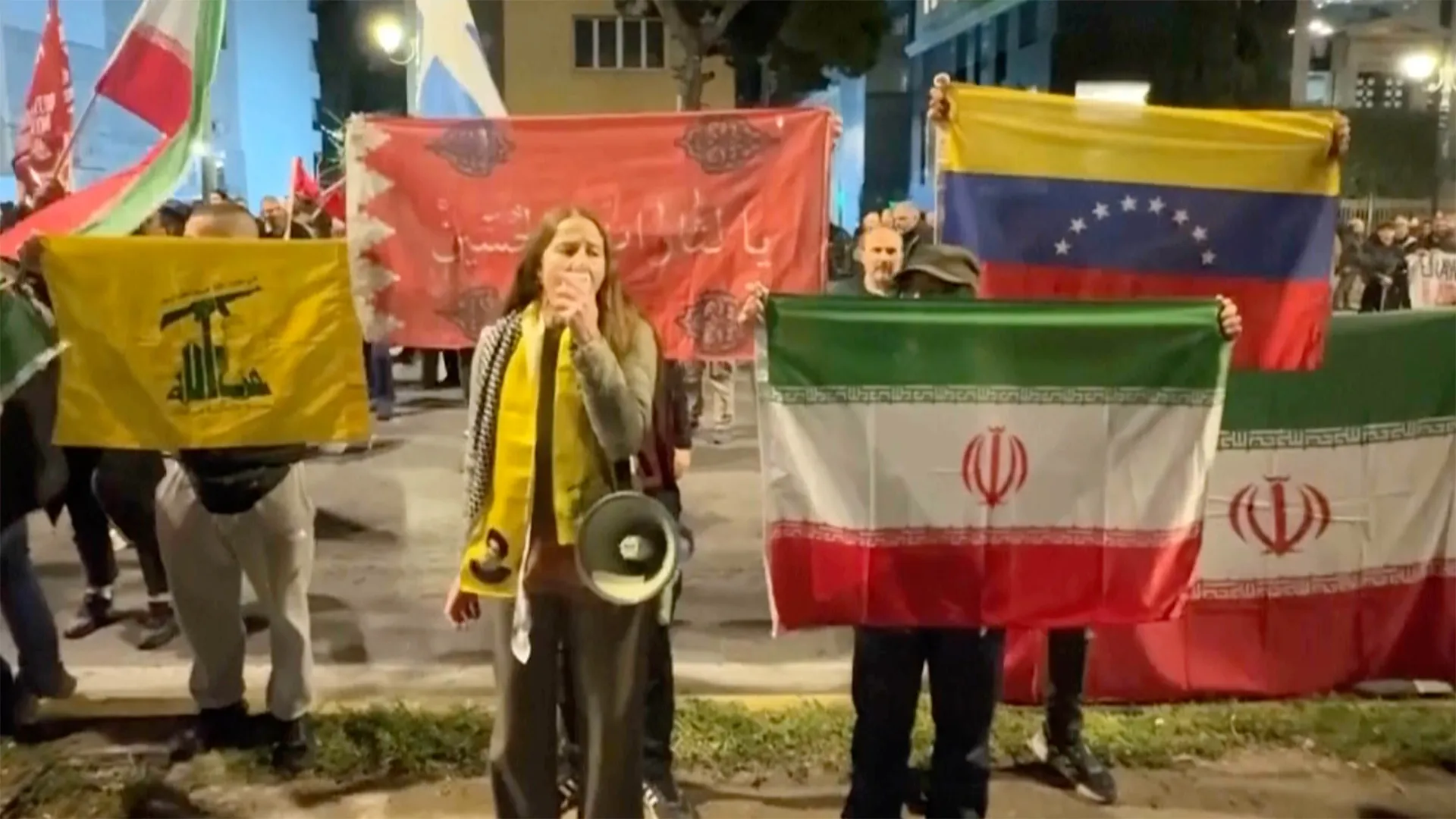
Rallies took place across numerous countries, including Iran, Malaysia, Indonesia, Kashmir and Yemen. In Tehran, thousands marched, chanting “death to Israel” and “death to America” as the United States-Israeli military campaign entered its 14th day of conflict.

The event has long been associated with Iran, and was established by the country’s first supreme leader, Ayatollah Ruhollah Khomeini, in 1979.

This year’s observance coincided with the US-Israel attack on Iran that has killed at least 1,444 people, including the Iranian supreme leader, Ali Khamenei.

Crowds turned out in Tehran and other cities, despite ongoing US and Israeli strikes in the region during the commemoration, state media reported.

Demonstrators worldwide expressed solidarity with both Palestinians and Iranians. In Kashmir, protesters burned mock coffins bearing images of US President Donald Trump and Israeli Prime Minister Benjamin Netanyahu while shouting slogans against the United States and Israel.

For the first time in 40 years, the United Kingdom banned London’s al-Quds Day march, citing risks of public disorder related to the “volatile situation in the Middle East” and potential confrontations between opposing groups. This marks the first protest ban since 2012, when authorities prohibited marches by the far-right English Defence League.

According to Iran’s Health Ministry, another 18,551 people have been injured in US-Israeli attacks on Iran since February 28.

Source link

Force majeure: What is it and why have some Gulf countries invoked it? | US-Israel war on Iran News

Gulf countries, including Qatar, Bahrain and Kuwait, have declared force majeure on gas exports following the United States-Israel war on Iran, now in its third week, and the disruptions to shipping through the Strait of Hormuz, as Tehran has retaliated across the region, targeting US assets.

QatarEnergy was among the first to halt production, shutting down gas liquefaction on March 2 and sending ripples through global energy markets. Kuwait Petroleum Corporation and Bahrain’s Bapco Energies followed days later, while India invoked emergency measures to redirect gas supplies to priority sectors.

Oil prices also soared to more $100 a barrel as war intensified and uncertainty grew over energy shipments through one of the world’s most critical maritime chokepoints.

Here’s what we know about force majeure and what Gulf countries invoking it means for global oil and gas markets.

What is force majeure?

Force majeure, from the French meaning “superior force”, is a clause in contracts that allows a party to be excused from its obligations when an event beyond its control prevents performance.

This legal move can allow a party to suspend its obligations temporarily, be released from them partially or fully, or adjust them to reflect the new circumstances.

Why are Gulf countries invoking force majeure?

Companies in Qatar, Kuwait and Bahrain have invoked it following severe disruptions to shipping through the Strait of Hormuz caused by US-Israeli military strikes against Iran that started on February 28.

Following these attacks, a commander in Iran’s Islamic Revolutionary Guard Corps (IRGC) said on March 2 that the Strait of Hormuz was closed and warned that any vessel attempting to pass through would be attacked, a statement echoed by Iran’s new supreme leader, Mojtaba Khamenei, on Thursday.

As a result, Gulf companies started invoking force majeure, in order “to avoid paying damages or other financial penalties under their contracts”, Ilias Bantekas, a professor of transnational law at Hamad bin Khalifa University in Qatar, told Al Jazeera.

“These companies are most likely unable to fulfil their obligations, for example, to deliver shipments of oil and gas to other countries, or for shippers to transport them across the Arabian Gulf,” he said.

Does war automatically qualify as force majeure?

No. For war to qualify as force majeure, it must either be covered by the contract or actually prevent one or both parties from performing their obligations.

Companies and states typically include force majeure clauses that define which events qualify, meaning that when force majeure is invoked, the parties rely on provisions they previously agreed upon.

“War can always be foreseen, but perhaps not at the level at which it is being waged right now,” Bantekas said, adding that under general contract provisions, ships carrying goods are usually expected to find another route, “even if it is more costly to them”.

“What we could never have foreseen is that the Strait of Hormuz could be closed to shipping altogether, even if Iran were attacked in the brutal way it is now. I think that, on its own, could be sufficient to constitute a force majeure event,” he said.

“However, only a court would have the authority to make a definitive determination as to whether this kind of war, under these particular circumstances, amounts to force majeure,” he added.

Will LNG and oil markets be affected?

Yes. QatarEnergy’s declaration of force majeure alone has already significantly disrupted the global LNG market, as Qatar accounts for nearly 20% of global supply.

Gas prices soared immediately following the country’s halt of gas production, and global gas markets are expected to experience shortages for weeks, if not longer.

“The lack of visibility over the likely duration of force majeure, and of the broader military conflict, is injecting extreme uncertainty into global oil, gas and LNG prices,” Seb Kennedy, global gas and LNG analyst, told Al Jazeera.

“Prices will necessarily keep rising as volumes are withheld from the market, until price pain triggers demand destruction in price-sensitive areas of the economy,” he noted.

Which other countries have invoked force majeure?

On Tuesday, India invoked force majeure to redirect gas supplies from non-priority sectors to key users after disruptions to liquefied natural gas shipments through the Strait of Hormuz, according to a government notification.

But India’s measures are a “domestic demand-management response”, Kennedy said, as its government is relocating its limited gas supplies internally “to protect critical sectors such as households, small businesses, power generation and city gas distribution”.

INTERACTIVE - Oil soars past $100 a barrel - March 9 , 2025-1773125106
(Al Jazeera)

Kennedy said the move reflects the difficult choices facing LNG-dependent economies, where governments may prioritise households and power generation over industrial users.

This prioritisation of LNG for domestic use “highlights the tough choices facing LNG-dependent countries”, he noted.

Aside from India, Omani trading house OQ also declared force majeure to a customer in Bangladesh after the Qatari supply was halted.

How will this affect US and European markets?

US LNG exporters are likely to benefit from the disruption. Analysis by Energy Flux estimates that US LNG exporters could generate about $4bn in windfall profits in the first month of the disruption alone.

If the situation persists, “US LNG windfall profits could reach $33bn above the pre-Iran average within four months. Over eight months, that figure rises to $108bn,” says Kennedy.

INTERACTIVE-CRUDE OIL-USED-MARCH 9-2026-1773138980
(Al Jazeera)

These gains largely come at the expense of European consumers, Kennedy notes, as Europe is the main destination for US LNG and remains heavily reliant on those supplies to refill gas storage and ensure winter supply security.

European stock markets fell last week, while the region’s natural gas prices rose sharply again.

What does this mean for Asian markets?

Major Asian economies such as India, China and South Korea rely heavily on imported LNG.

On the other hand, Southeast Asia alone has significant fossil fuel resources, but the region still depends heavily on imported oil and gas, much of which is transported through the Strait of Hormuz.

“Wealthier buyers such as Japan and South Korea can generally outbid others to secure cargoes during periods of extreme scarcity,” Kennedy said, noting that price-sensitive importers, especially in South and Southeast Asia, tend to be “forced out of the market” whenever prices soar, “leading to demand destruction, fuel switching, or industrial curtailment”.

“In that sense, the crisis does not hit all LNG importers equally: It becomes a contest of balance sheets as much as a question of physical supply.”

Can force majeure be challenged?

If a force majeure clause is written in the contract, then it stands because the parties have consented to it.

Contrary to that, if it has not been written in the contract, then any unforeseen event would potentially be open to legal challenge, and it becomes a matter of convincing the courts that the event could never have been foreseen and that it makes obligations on one of the parties impossible to perform.

“However, in the present circumstances, the stronger parties – the ones waiting for deliveries of oil and gas elsewhere in the world – may actually be harming themselves if they refuse to accept force majeure,” Bantekas said.

“Doing business with Gulf countries could become more difficult in the future, and premiums would likely rise significantly. So, I do not think they will be taking these matters to court,” he noted.

Source link

Iran war: What is happening on day 14 of US-Israel attacks? | US-Israel war on Iran News

Heavy Israeli strikes have hit Tehran, Iran, as its allies launch attacks across Gulf states, and shipping through the Strait of Hormuz has been severely disrupted, sending global oil prices soaring.

Meanwhile, political pressure is mounting in Washington as the conflict spreads across the region.

Recommended Stories

list of 1 itemend of list

Here is what we know about what has been happening in the past 24 hours:

In Iran

Supreme leader speaks: Appointed last week following the assassination of his father, Iran’s new Supreme Leader Mojtaba Khamenei has issued his first statement, warning that attacks on Israel and US military assets and infrastructure in the Middle East will continue unless bases hosting US forces in the region are closed.

Heavy strikes on Tehran: The Israeli military has launched a new “extensive wave” of air attacks on Iran’s capital, Tehran, leaving the city covered in thick smoke on Friday morning.

Strait of Hormuz closure and surging oil prices: The Strait of Hormuz, which connects the Gulf to the Gulf of Oman, is closed, causing Brent crude oil prices to surge past $100 per barrel. The strait, which falls into the territorial waters of Iran and Oman, is the only waterway to the open sea available to oil and gas producers in the Gulf. Iran has stated that the strait is under Iranian control and US-and Israel-linked ships are banned. Other vessels must receive Iranian permission to pass.

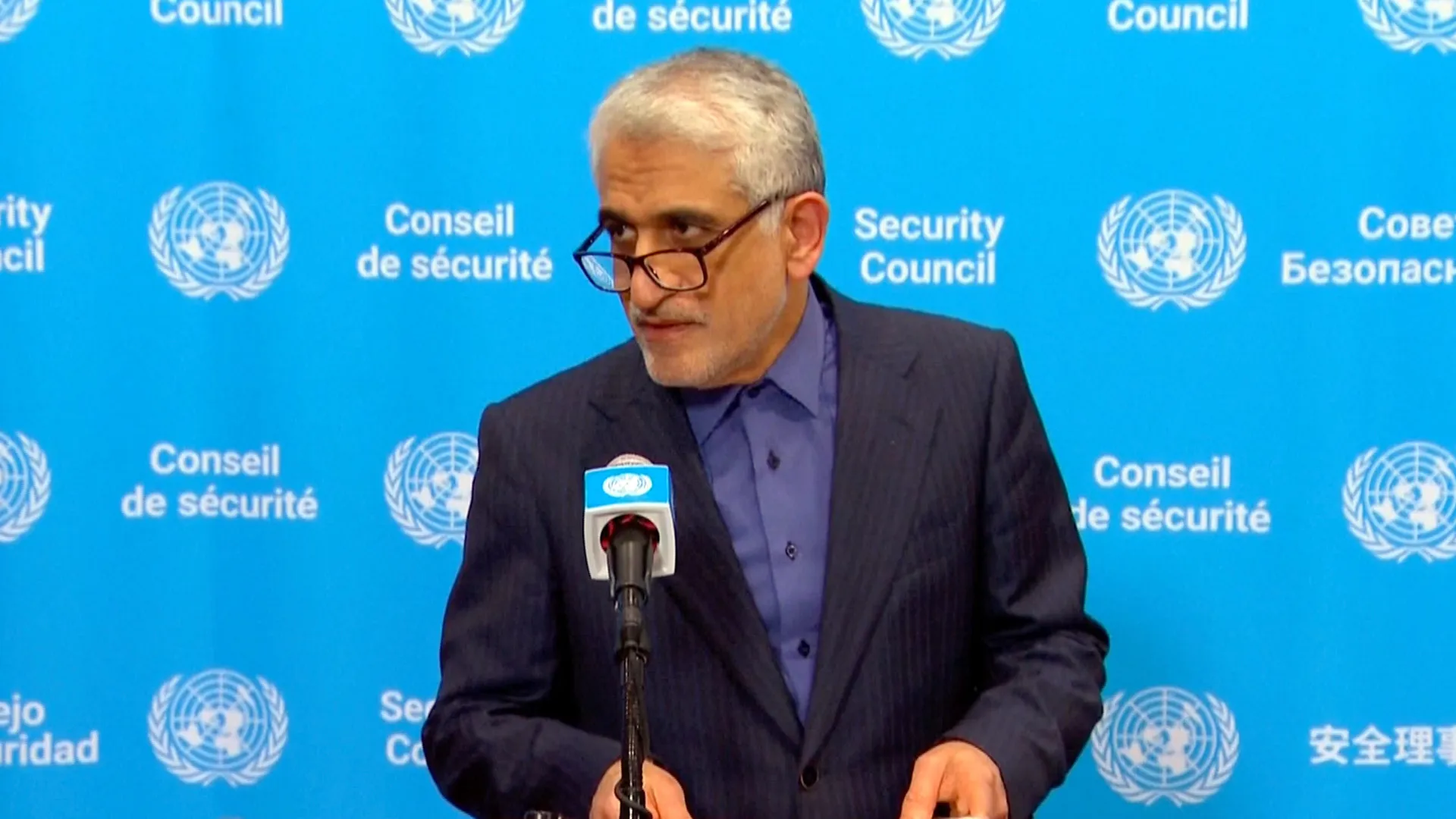
Civilian casualties: Iran’s ambassador to the United Nations, Amir Saeid Iravani, said at least 1,348 civilians have been killed, with victims ranging in age from eight months to 88 years old.

A navy vessel is seen sailing in the Strait of Hormuz
A navy vessel is seen sailing in the Strait of Hormuz [Sahar Al Attar/AFP]

In Gulf countries

Regional retaliation and attacks: Iran has launched waves of drones and missiles towards Gulf countries that host US military assets and troops, and has targeted oil tankers and facilities.

Bahrain: The nation has reported intercepting 114 missiles and 190 drones since the war began on February 28.

Saudi Arabia: The country intercepted 10 drones over its eastern region and later destroyed an additional 28 drones that breached its airspace.

Attacks on the UAE: The country has strongly condemned Iranian strikes on the region, and said they have hit Dubai International Airport and some hotels.

Evacuations: Australia has ordered all “non-essential” officials to leave the United Arab Emirates and Israel, and urged its citizens to evacuate the Middle East while it is still safe to do so

Qatar’s response: Qatar’s airspace is officially closed, but Qatar Airways has scheduled more than 140 special flights to help repatriate stranded residents and citizens.

Qatar has strongly rejected Israeli media claims that it intentionally paused liquefied natural gas (LNG) production to manipulate US energy prices; officials clarified that the suspension was actually forced by an Iranian drone attack.

A view of the damaged part of the Dubai Creek Harbour Tower after it was hit by an Iranian drone attack in Dubai,
A view of the damaged part of the Dubai Creek Harbour tower after it was hit by an Iranian drone attack in Dubai, United Arab Emirates [EPA]

In the US

Trump claims war moving ‘rapidly’: US President Donald Trump told reporters the war against Iran was moving “very rapidly”.

“It’s doing very well, our military is unsurpassed,” he said at the White House, not directly responding to the latest comments from Iran’s new supreme leader.

Domestic opposition: More than 250 US organisations have signed a letter calling on Congress to halt funding for the war. They argue the $11.3bn spent in the first six days of the conflict is diverting crucial funds from urgent domestic needs, such as food benefits.

No ‘need’ for ground troops in Iran: US Senator Lindsey Graham has played down the possibility of US troops being deployed to Iran, but suggested the war could continue for some time. “I don’t see this conflict ending today,” the Republican senator told reporters in Washington, DC.

INTERACTIVE - DEATH TOLL - tracker - war - US Israel and Iran attacks - March 12, 2026-1773319244

In Israel

New missile wave launched at Israel: The Israeli military said early on Friday that Iran had fired a new barrage of missiles towards Israel, and instructed people in affected areas to head to shelters.

Israel strikes Basij force: Israel’s military said it had struck checkpoints set up in Tehran by the Basij force of Iran’s Revolutionary Guards as part of efforts to undermine control by the authorities.

Regime change: Israeli Prime Minister Benjamin Netanyahu said Israel can create conditions for regime change, but it is up to Iran’s people to take to the streets. He also said Israel is aiming to stop Iran from moving nuclear and ballistic projects underground.

In Lebanon, Iraq

Downed US aircraft: A US KC-135 refuelling aircraft crashed in western Iraq. While the Islamic Resistance in Iraq claimed it shot the aircraft down using air defence systems, US Central Command (CENTCOM) stated the aircraft went down in “friendly airspace” and was not the result of hostile fire.

Iraqi port closures: Iraq has shut its port operations after an Indian crew member was killed during an attack on a US-owned oil tanker in Iraqi waters.

Six French soldiers hurt: A drone attack wounded six French soldiers in Erbil, in Iraq’s autonomous Kurdish region, President Emmanuel Macron said on Thursday.

Deadly attacks in southern Lebanon: Israeli bombardments continue on southern towns and villages. A strike on the village of Arki, near Sidon, killed nine people, including five children.

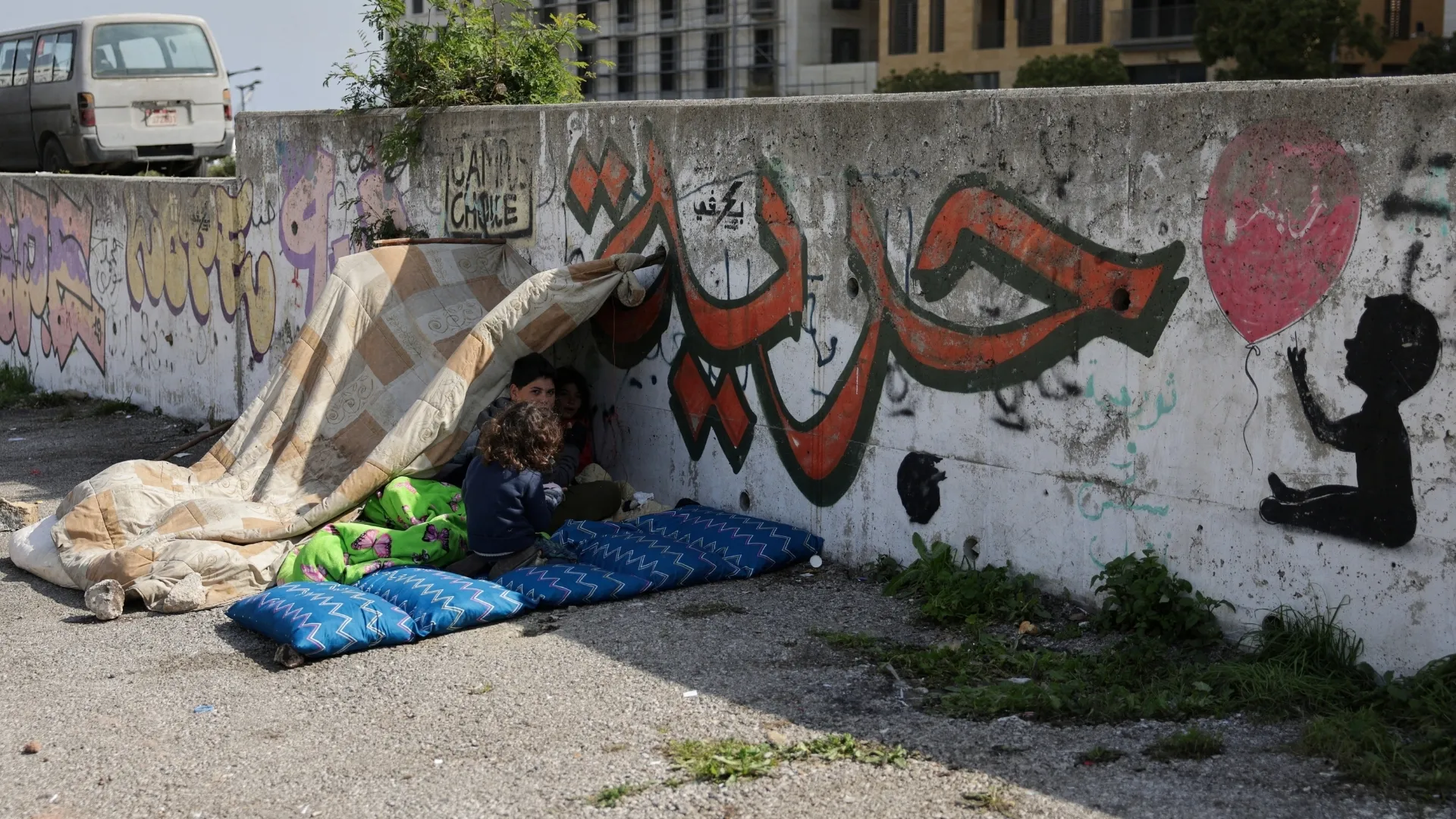
Mounting death toll and mass displacement: Lebanese officials have reported that at least 687 people have been killed in Israeli attacks on Lebanon since last Monday, including 98 children. The intense bombardments have displaced an estimated 700,000 to 750,000 people from their homes.

Source link

Oil stays above $100 a barrel amid Iran’s stranglehold on Strait of Hormuz | US-Israel war on Iran News

Energy markets remain on tenterhooks as the prospect of prolonged war in the Middle East grows.

Oil prices have again risen above $100 per barrel as energy markets see little relief amid the biggest disruption to global energy supplies in a generation.

Brent crude, the international benchmark, surged more than 9 percent on Thursday as traders weighed the prospect of weeks, or even months, of turmoil in energy markets as the United States and Israel wage war on Iran.

Recommended Stories

list of 4 itemsend of list

Brent futures, which are traded outside of regular market hours, were priced at $101.13 as of 03:00 GMT.

Asian stock markets, including exchanges in Tokyo, Seoul and Hong Kong, opened sharply lower on Friday, following steep losses on Wall Street overnight.

The latest surge in oil prices came after Iran’s Supreme Leader Mojtaba Khamenei pledged to maintain the effective closure of the Strait of Hormuz, which normally transports about one-fifth of global oil supplies.

In a statement read out on his behalf on Iranian state television, Khamenei described Tehran’s threats against shipping in the waterway as a “lever” that “must continue to be used”.

US President Donald Trump struck a similarly defiant tone on Thursday, posting on Truth Social that stopping Iran from getting nuclear weapons was of “far greater interest and importance” than rising oil prices.

‘Lack of tangible goals in this war’

Traffic through the strait has effectively ground to a halt due to Iranian threats, with only a handful of vessels passing through each day, many of them claiming links to China, Iran’s key economic partner.

According to the United Kingdom Maritime Trade Operations (UKMTO) centre, no more than five ships have passed through the waterway each day since the US and Israel launched joint strikes on Iran on February 28, compared with an average of 138 daily transits before the war. At least 16 commercial vessels have been attacked in the region since the start of the conflict, according to the UKMTO.

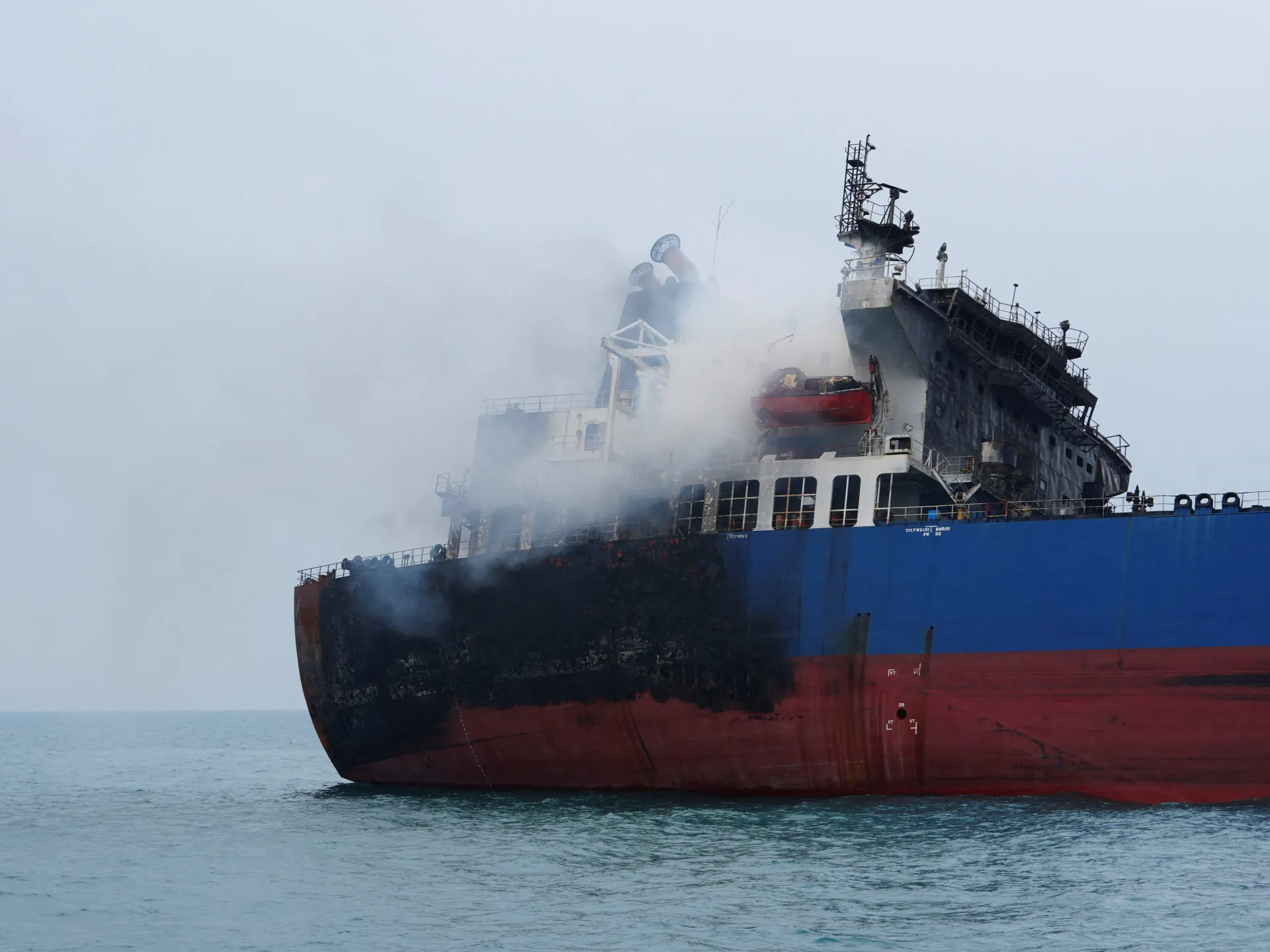
Tehran has claimed responsibility for several of the attacks, including a strike on Wednesday that crippled a Thai-flagged vessel off the coast of Oman.

Efforts to bring calm to the market have so far done little to tame prices, which are up nearly 40 percent compared with before the start of the war.

The International Energy Agency’s (IEA) announcement on Wednesday that member countries would release 400 million barrels of oil from emergency stockpiles drew a tepid response among traders eyeing a daily shortfall in global supplies estimated at 15-20 million barrels.

The US Department of the Treasury’s issuance on Thursday of a temporary licence authorising countries to purchase sanctioned Russian oil that has been stranded at sea also failed to move the market, with Brent crude staying above $100 a barrel after the Treasury announcement.

“The key problem is a lack of tangible goals in this war,” said Adi Imsirovic, an energy security expert at the University of Oxford.

“It makes it hard for oil traders to see the light at the end of the tunnel,” he said.

Trump has repeatedly floated the possibility of using the US Navy to escort commercial shipping through the strait, but the Pentagon has yet to conduct such operations amid concerns about the risks posed by Iranian attacks in the narrow waterway.

In an interview with CNBC on Thursday, US Energy Secretary Chris Wright said that Washington was “not ready” to provide navy escorts but that such operations could begin by the end of the month.

“It’ll happen relatively soon but it can’t happen now,” Wright said.

Source link

Netanyahu says Israeli strikes killed Iranian nuclear scientists | US-Israel war on Iran

NewsFeed

Israeli Prime Minister Benjamin Netanyahu said several Iranian nuclear scientists were killed in Israeli strikes. He also said a “new path of freedom” for Iran was approaching and told Iranians the country’s future ultimately depends on them.

Source link

Iran envoy says Tehran will keep Strait of Hormuz open | US-Israel war on Iran

NewsFeed

Iran’s UN ambassador Amir Saeid Iravani said Tehran will not close the Strait of Hormuz and remains committed to freedom of navigation. His remarks came after Supreme Leader Mojtaba Khamenei said the waterway would remain closed to pressure Iran’s enemies. 

Source link

How will the war on Iran impact the US economy? | US-Israel war on Iran News

New York City, United States – Rising prices on the back of US-Israel strikes on Iran are adding to the economic pressure facing US consumers despite efforts by US President Donald Trump to paint the war as a success.

On Wednesday, Trump declared, “We won – in the first hour it was over.”

Recommended Stories

list of 4 itemsend of list

Trump’s declaration comes even as the Strait of Hormuz remains closed, cutting off oil from the Gulf amid warnings from Iran, which continues to strike ships, that oil could reach $200 per barrel.

Oil prices spiked above $100 per barrel on Sunday and again today.

The magnitude of the economic pressure on consumers will depend on how long the war lasts and, crucially, how soon shipping traffic can return to the Gulf.

“If it drags on and especially if it remains at this intensity, prices will be higher, and more volatile for consumers,” said Rachel Ziemba, an adjunct senior fellow at the think tank Center for a New American Security.

“If it ends quickly, and it’s a credible and stable end, then we could see prices fairly quickly normalising”.

If the war lasts more than a few weeks, however, observers say the US economy is more likely to see deepening impacts, like 1970s-style “stagflation” or a recession.

When might we see a recession?

On Thursday, the International Energy Agency said in a report that “the war in the Middle East is creating the largest supply disruption in the history of the global oil market.”

According to Sam Ori, who directs the Energy Policy Institute at the University of Chicago, in the past, when oil prices have reached 4 percent to 5 percent of gross domestic product and stayed elevated, “that’s always triggered a recession.”

The US will not hit that threshold as quickly as it would have in the 1970s, when its economy was more deeply dependent on foreign oil, Ori said, but added he expected a recession if prices remained about $140 a barrel for most of the year.

Alternatively, “the indefinite closure of the Strait of Hormuz would so vastly exceed that number, it would not take a year,” he said.

Ori, who used to run an oil shock war game for US officials, said he would have been “laughed out of the room” if he had proposed a scenario where the strait was closed for six months, because many analysts see it as “too big to fail”.

Ori says that assessment is still likely, but recent developments “are chipping away at that level of certainty”.

The Gulf, which separates the Arabian Peninsula and Iran, provides more than one-fifth of the world’s oil supply via tanker ships through the Strait of Hormuz.

The severity of that threat to the global economy is the “strongest indicator that this is going to get resolved pretty fast, because it’s impossible to fathom what would happen if it didn’t”, Ori said.

He added that the conflict has now entered a phase in which it may be moving out of US control, especially as some countries have turned off the oil wells as they run out of storage.

While those events have now been baked into oil prices, the things that he is on the lookout for include “successful mining of the strait, some kind of structural blockage, or a battlespace development that binds the US into a longer, drawn out conflict”, outcomes that could signal a total loss of the strait for an unknown amount of time and create the “conditions for a complete meltdown”.

Higher prices

The war is already driving petrol prices up for US consumers.

Patrick DeHaan, who leads petroleum analysis for the app GasBuddy, said that the national average as of Wednesday is now $3.59 per gallon ($0.95 per litre) – up 65 cents since February.

The highest increases are near the coasts, where US petrol, diesel and jet fuel supplies are more easily diverted to meet global demand, according to DeHaan.

An end to the conflict could lower petrol prices within weeks, DeHaan said, but “every week that this goes on, we could see another 25 to 40 cent increase”.

Robert Rogowsky, an adjunct professor at Georgetown University’s School of Foreign Service, said lower-income people in particular, “will pay the price for this inflationary burst”.

As the war continues, it will also nudge up prices for consumer goods.

Peter Sand, chief analyst for freight intelligence platform Xeneta, said the backup at the Strait of Hormuz is already causing congestion at ports worldwide.

In the short term, consumers should not feel much of a pinch, Sand said. But if the conflict lasts for a month, some goods will be delayed, “and of course, the price tag on those goods also goes up.”

The war also means that the Red Sea, mostly closed in 2025 due to Houthi attacks, will likely stay closed throughout 2026, Sand said. It was expected to reopen, which could have lowered consumer prices.

Oil and oil byproducts from the Gulf are also used directly in consumer goods, like plastics, pharmaceuticals and fertilisers. Shortages now may mean higher prices later.

Fertilisers from the Gulf, for example, are needed soon for spring planting. Delays could affect crops next year.

A shortage of helium from the Gulf could also impact semiconductor manufacturing, delaying car manufacturing and other industries, Ziemba said.

The spectre of 1970’s-style ‘stagflation’

Higher consumer prices could increase the risk of “stagflation”, when stagnant economic growth occurs alongside high unemployment and high inflation.

That is how the US economy responded to the oil price shocks of the 1970s.

Severin Borenstein, faculty director of the Energy Institute at the University of California, Berkeley’s Haas School of Business, said, “There’s certainly concern about stagflation again.”

That combination of high inflation plus high unemployment, Borenstein said, “is just really tough for the Fed to deal with”.

“They can either juice the economy or slow it down, and the two problems call for opposite solutions”, Borenstein said.

The Fed can lower interest rates to prompt spending and hiring, which can make inflation worse, or it can raise interest rates to lower inflation, which can slow hiring.

Ziemba said higher oil prices likely point to “inflation remaining stickier, which means it’s harder for the Fed to cut interest rates.”

As a result, “mortgage rates and other long-term interest rates might be stuck at their current levels,” Ziemba said. Mortgage rates, which were at 5.99 percent on February 27, are up to 6.29 percent as of March 12.

Even if the war ends tomorrow, it may already be accelerating longer-term shifts.

Rogowsky called US attacks on Iran “an injection of adrenaline” into a realignment already under way, as middle powers seek to reduce their reliance on the US.

That realignment “will affect our terms of trade, which will have a distinct impact on our economy”, Rogowsky said.

Logistics consultant David Coffey said for some businesses, the war is expediting conversations about risk. “They may have been assuming ‘Yes, there’s risk in the Middle East,’ but they may not have been assuming that this would kick off”, Coffee said.

Making supply chains more secure could raise costs for consumers, he said.

Military spending and the US budget

Meanwhile, Heidi Peltier, a senior researcher at Brown University’s Costs of War Project, said war also means long-term expenses around debt payments and veterans’ healthcare.

“We have spent at least $1 trillion in interest on the Iraq and Afghanistan wars – and rising, because it’s not like we’ve paid off any of that principal”, Peltier said.

Military spending, she said, also tends to create fewer jobs than government investment in education or healthcare. “If we’re spending money on this, what are we not spending money on?” Peltier asked.


Source link

US military ‘not ready’ to escort oil ships through Hormuz, official says | US-Israel war on Iran News

The United States military is “not ready” to accompany oil ships through the Strait of Hormuz, a top official in President Donald Trump’s administration says as Iran continues to block the strategic waterway.

US Energy Secretary Chris Wright told the CNBC business news channel on Thursday that the markets are experiencing a “short-term disruption”, predicting that the war would go on for “weeks, not months”.

Recommended Stories

list of 3 itemsend of list

Despite Trump’s repeated threats, Iran has largely succeeded in shutting down the strait, which links the Gulf to the Indian Ocean. The closure has sent oil prices soaring.

Wright described the effects of the crisis as “short-term pain for long-term gain”, arguing that the US is “destroying” Iran’s ability to threaten the energy market.

Last week, Trump suggested that the US Navy would escort ships through the Gulf, but Wright said on Thursday that the move “can’t happen now”.

“We’re simply not ready. All of our military assets right now are focused on destroying Iran’s offensive capabilities and the manufacturing industry that supplies their offensive capabilities,” the energy secretary said.

“We don’t want this to be a brush-off for a year or two. We want to permanently destroy their ability to build missiles, to build roads, to have a nuclear programme.”

His comments came as Iran’s new supreme leader, Mojtaba Khamenei, affirmed in his first public comment since being selected to succeed his assassinated father, Ali Khamenei, that the Strait of Hormuz should remain closed during the war.

“The will of the people is to continue effective and deterrent defence,” Khamenei said in a written statement. “The tactic of closing the Strait of Hormuz must also continue to be used.”

The Iranian military has said it would “welcome” the US Navy escorting oil ships, suggesting it is prepared to strike US forces in the narrow waterway.

On Wednesday, three commercial vessels were attacked near the strait.

Wright announced earlier this week on social media that the US Navy had escorted an oil ship through the strait, then quickly deleted the post. The White House subsequently confirmed that the claim was not true.

It is not clear why the statement was released and then retracted.

Assurances by US officials that Washington would open the strait have temporarily calmed markets, only for prices to spike again.

The price of a barrel of oil peaked at about $120 on Sunday, up from about $70 before the US and Israel launched the war on February 28. It has been yo-yoing between $80 and $100 for the past few days.

In addition to the marine blockade, Iran has targeted oil installations across the Gulf.

As one of the world’s largest oil producers, the US is largely self-sufficient. But possible shortages in Asia and Europe have put a strain on prices globally.

According to data from the American Automobile Association, the average price of one gallon (3.78 litres) of petrol in the US is now $3.60, up from $2.94 last month.

Rising energy prices could fuel inflation and affect the cost of basic goods, including food.

But Trump suggested on Thursday that the US is benefitting from skyrocketing oil prices.

“The United States is the largest Oil Producer in the World, by far, so when oil prices go up, we make a lot of money,” the US president wrote in a social media post.

“BUT, of far greater interest and importance to me, as President, is stopping an evil Empire, Iran, from having Nuclear Weapons, and destroying the Middle East and, indeed, the World.”

Iran denies seeking a nuclear weapon, and Trump reiterated for months before the current conflict that US strikes against Iranian facilities in June had “obliterated” the country’s nuclear programme.

Source link

Iran’s president sets terms to end the war: Is an off-ramp in sight? | US-Israel war on Iran News

Iranian President Masoud Pezeshkian has laid out terms for ending the war with the United States and Israel in what analysts say is a possible sign of de-escalation from Tehran as the US-Israel war on Iran entered its 13th day on Thursday.

In a post on Wednesday on social site X, Pezeshkian said he had spoken to his counterparts in Russia and Pakistan, and that he had confirmed “Iran’s commitment to peace”.

Recommended Stories

list of 4 itemsend of list

“The only way to end this war – ignited by the Zionist regime & US – is recognizing Iran’s legitimate rights, payment of reparations, and firm int’l guarantees against future aggression,” Pezeshkian wrote.

This is a rare posture from Tehran, which has maintained a defiant stance and initially rejected any possibility of negotiations or a ceasefire when war broke out nearly two weeks ago.

Pezeshkian’s statement comes as pressure mounts on the US to halt what has become a very costly mission. Analysts say speculation from Washington that Iran would quickly submit after the killing of Supreme Leader Ayatollah Ali Khamenei were misguided.

Tehran is likely going to determine the end of this war, not the US or Israel, because of its ability to inflict economic pain broadly, they say.

Amid a military pummelling by the US and Israel, Iran has launched heavy retaliatory strikes at US assets and other critical infrastructure in Gulf countries, upsetting global supplies. It has also adopted what analysts call “asymmetric” tactics – such as disrupting the critical Strait of Hormuz and threatening US banking-linked entities – to inflict as much economic pain on the region and wider world as it can.

This is what we know about Pezeshkian’s stance and what the pressures are on both sides to draw the conflict to a close, quickly.

Emergency personnel work at the site of a strike
A building lies in ruins after a strike, amid the US-Israeli conflict with Iran, in Tehran, Iran, on March 12, 2026 [Majid Asgaripour/WANA (West Asia News Agency) via Reuters]

What has the war cost so far?

Economically, both sides have weaponised energy. Israel first targeted Iran’s oil facilities in Tehran on March 8, prompting an outcry from global health experts over the potential risk of air and water pollution.

Iran has, meanwhile, tightened its chokehold on the Strait of Hormuz shipping route – the only route to open sea for oil producers in the Gulf – with its military promising on Wednesday that it has the capabilities to wage a long war that could “destroy” the world economy.

Attacks on ships in the strait, through which about 20 percent of global oil and gas traffic normally passes, have effectively closed the route.

Oil prices rocketed above $100 per barrel late last week, up from around $65 before the war, with ordinary buyers feeling the increases at pumps in the US, Europe and parts of Africa.

On Wednesday, Iran upped the ante, saying it would not allow “a litre of oil” to pass through the strait and warned the world to expect a $200-per-barrel price tag.

“We don’t know how quickly it’ll revert back,” Freya Beamish, chief economist at GlobalData TS Lombard, told Al Jazeera. “We do think it’ll revert back to $80 in due course, but the ball is to some degree in Iran’s court,” she said, adding that because Iran needs oil revenue, the price hikes are expected to be time-limited.

The International Energy Agency agreed on Wednesday to release 400 million barrels from the emergency reserves of several member states but it is not yet clear what impact that will have, nor how quickly this quantity of oil can be released.

Tehran has also been accused of directly attacking oil facilities in neighbouring countries this week. Iraq shut all its oil port operations on Thursday after explosive-laden Iranian “drone” boats appeared to have attacked two fuel tankers in Iraqi waters, setting them ablaze and killing one crew member.

A drone was filmed striking Oman’s Salalah oil port on Wednesday, although Tehran has denied involvement.

What are Iranian officials saying about ending the war?

There has been conflicting messaging from the Iranian leadership.

Iran’s elite army unit and parallel armed force, the Islamic Revolutionary Guard Corps (IRGC), continues to show defiance, issuing threats and launching attacks on Israel and US military assets and infrastructure in neighbouring Gulf countries.

However, the political leadership has appeared more inclined towards diplomacy, analysts say. On Wednesday, President Pezeshkian said that ending the war would take the US and Israel recognising Iran’s rights, paying Iran reparations – although it’s unclear how much is being asked for – and providing strong guarantees that a future war will not be waged.

In a video recording last week, he also apologised to neighbouring countries for the strikes and promised that Iran would stop hitting its neighbours as long as they do not allow the US to launch attacks from their territory.

“I personally apologise to the neighbouring countries that were affected by Iran’s actions,” the president said, adding that Tehran was not looking for confrontations with its neighbours.

However, it is not known how much sway the political leadership has over the IRGC. Hours after the president’s apology last week, air defence sirens went off in Saudi Arabia, Qatar, the UAE and Bahrain, as strikes continued on the Gulf.

So, what is Iran’s actual position?

“Iran wants to go to the end to make sure that the United States and Israel never attack Iran again … so this has to be the final battle,” Al Jazeera’s Resul Serdar Atas explained.

Indeed, the IRGC sees this as an existential war, but the timing of Pezeshkian’s statement about ending the conflict also shows Tehran is pressured economically, politically and militarily, Zeidon Alkinani of Qatar’s Georgetown University told Al Jazeera.

“These differences and divisions [between IRGC and political leaders] always existed even prior to this war but we may notice it now more, given the fact that the IRGC believes that it has the right to take the front seat in leading this regional war, which is why a lot of the statements and positions are contradicting with the official ones from Pezeshkian,” he said.

The IRGC reports directly to Iran’s Supreme National Security Council (SNSC) and not to the country’s political leadership. That council is led by Ali Larijani, a top politician and close aide to the late supreme leader, Ali Khamenei, who analysts describe as a “hardliner”.

In a post on X on Tuesday, Larijani responded to threats from Trump about attacks on the Strait of Hormuz, saying: “Iranian people do not fear your hollow threats; for those greater than you have failed to erase it … So beware lest you be the ones to vanish.”

The newly elected supreme leader, Mojtaba Khamenei, was once in the IRGC and was put forward by the unit as the next ayatollah after his father was killed on the first day of the war, analysts say. He is thus not expected to follow the reformist, diplomatic ideals of President Pezeshkian and other political leaders which his father managed to marry with the IRGC militarised stance, they say.

Mojtaba Khamenei, son of Iran's supreme leader Ayatollah Ali Khamenei, attends a gathering.
Mojtaba Khamenei, son of Iran’s late Supreme Leader Ayatollah Ali Khamenei, attends a gathering in Tehran on March 2, 2016. Iran marked the appointment of Ayatollah Mojtaba Khamenei to replace his father as its supreme leader with a barrage of missiles against Israel and the Gulf states [File: Rouhollah Vahdati/ISNA via AFP]

What do the US and Israel say about ending the war?

There have also been conflicting messages from the Trump administration and Israel regarding when the war mission on Iran, codenamed Operation Epic Fury, is likely to end.

Trump told US publication Axios on Wednesday that the war on Iran would end “soon” because there’s “practically nothing left to target”.

“Anytime I want it to end, it will end,” he added. He had said earlier on Monday that “we’re way ahead of our schedule” and that the US had achieved its goals, even as speculation mounts about a possible US ground mission.

On the other hand, Israel’s Defence Minister Israel Katz said on Wednesday that the war would go on “without any time limit, for as long as necessary, until we achieve all the objectives and decisively win the campaign”.

Analysts say Trump’s stance that the conflict will be quick reflects increasing pressure on his administration ahead of upcoming mid-term elections in November.

Trump’s advisers privately told him this week to find a quick end to the war and avoid political backlash, according to reporting by The Wall Street Journal. That came as polls from Quinnipiac University and The Washington Post suggested that most Americans are opposed to the war in Iran.

In his 2024 presidential campaign, Trump promised to lower prices, and inflation had stabilised at 2.4 percent ahead of the war, according to government data released on Wednesday. Analysts speculate the conflict will likely push it back up.

The US spent more than $11.3bn in the first six days of the war, Pentagon officials told lawmakers in a classified briefing on Tuesday, Reuters reported this week – nearly $2bn a day.

The Washington-based think tank, Center for Strategic and International Studies (CSIS), estimated that the war cost Washington $3.7bn in its first 100 hours alone, or nearly $900m a day, largely due to its expenditure on costly munitions.

“It’s quite ironic that [Trump] chose a war that would make affordability worse, not better,” Rebecca Christie, a senior fellow at the Bruegel think tank, told Al Jazeera’s Counting the Cost.

“Every time the US loses even one object, air defence or a plane or something like that, that represents an awful lot of money that could have been used on some of these issues that have an impact on people’s day-to-day lives in the United States.”

Source link