The United States Department of Justice has filed 40 new cases seeking to strip naturalised Americans of their citizenship over alleged crimes they have committed.
In a statement on Monday, federal prosecutors said they were targeting individuals accused of “serious offenses”, including money laundering, child sexual abuse, visa fraud and tax evasion.
Recommended Stories
list of 3 itemsend of list
The statement touted the 40 cases as the largest volume of denaturalisation petitions submitted in such a short period under President Donald Trump. The petitions were filed from late August through early October.
“Today’s announcement marks the largest denaturalization effort in modern history,” said Attorney General Todd Blanche.
“Under President Trump’s leadership, the Department of Justice will continue to employ the denaturalization process to maintain our national security and protect the American people.”
The 40 citizens targeted in Monday’s announcement include people from a range of countries, including Mexico, Pakistan, China and Sierra Leone.
They are accused of concealing criminal acts and other facts about themselves as they sought to obtain citizenship. Their criminal convictions largely came after they took their oaths of citizenship.
Two people on the list are also accused of engaging in espionage on behalf of China. Committing these crimes before they became citizens, the Department of Justice alleges, meant these individuals lacked “good moral character” and should have been denied citizenship.
Expanded use of denaturalisation law
The laws to denaturalise US citizens have been used for decades, but historically, they have been reserved for serious crimes.
After World War II, for instance, the US government moved to denaturalise dozens of citizens accused of concealing involvement in the Holocaust or engaging in war crimes.
Notable cases include that of Emma Goldman, a Lithuanian-born anarchist and women’s rights activist who was jailed in 1917 for her antiwar activities, before being denaturalised and deported to the Soviet Union.
But the practice has become much less frequent since the end of the Cold War.
Top officials in the Trump administration, however, have sought to expand denaturalisation as part of a push to conduct the largest deportation operation in US history.
Under US law, prosecutors can ask courts to strip citizenship from those born outside the country if they wilfully concealed a “material fact” during their citizenship application that would have otherwise disqualified them.
But Trump’s efforts to widen denaturalisation proceedings have received pushback from human rights groups, which argue they could leave people stateless.
Critics have also warned that Trump has sought to leverage denaturalisation against specific groups he perceives to be political rivals or enemies.
Last year, for instance, the Trump administration indicated it would seek to denaturalise large numbers of Somali Americans after allegations emerged in Minnesota of daycare fraud involving the Somali diaspora.
“Send them back from where they came, Somalia, perhaps the worst, and most corrupt, country on earth,” Trump wrote at the time.
Members of Trump’s Republican Party, notably Representative Andy Ogles, have also floated the possibility of yanking citizenship from New York City Mayor Zohran Mamdani, who was born in Uganda. Trump himself has falsely suggested Mamdani may be in the country illegally.
At one point, Trump even floated the idea of withdrawing citizenship from tech entrepreneur Elon Musk, a close ally and adviser to his second administration, after the two men had a falling-out in 2025.
Trump has also pushed to do away with birthright citizenship, which is granted to virtually all children born in the US. The few exceptions include the babies of diplomats and foreign military forces.
Birthright citizenship is protected under the US Constitution and cannot be taken away the way naturalised citizenship can.
In June, the US Supreme Court struck down Trump’s efforts to dismantle birthright citizenship, but legal battles continue after the president issued a second executive order also seeking to restrict how birthright citizenship is applied.
Hispanic voters are twice as likely to favour Democratic Party over Trump’s Republican Party in the November elections.
Published On 5 Oct 20265 Oct 2026
A new poll from the news agency Reuters and the research firm Ipsos has found that United States President Donald Trump’s approval rating remains at a record low as the midterm elections approach in November.
The six-day survey, completed on Monday, found that just 32 percent of US voters approve of the job Trump is doing as president.
Recommended Stories
list of 3 itemsend of list
While that low rate has held steady since September, the latest Reuters-Ipsos poll suggests his support among Latino voters is continuing to slide.
Trump’s approval rating shrunk this month to 24 percent among Hispanic voters, its lowest point in either of his two terms in office.
The Republican leader had previously made substantial inroads with that constituency.
The Pew Research Center estimated that Trump and his Democratic rival, Kamala Harris, were within three percentage points of each other in the 2024 presidential race, earning 48 percent and 51 percent of the Hispanic vote, respectively.
That rate marked a significant jump for Trump over the 2020 election, when he only earned 36 percent of the Hispanic vote.
Experts have credited the boost in Hispanic support with helping Trump win the 2024 race. His 2020 bid, by contrast, ended in defeat to Democrat Joe Biden.
The Monday poll found that Trump’s gains among Hispanics have largely evaporated.
About 52 percent plan to vote for the Democrats in the November midterms, compared to 26 percent for Republicans.
The upcoming midterm is largely viewed as a referendum on Trump’s second term and will decide whether the Republicans maintain their majorities in the US House of Representatives and the Senate.
Democrats have seized on Trump’s low approval ratings, hoping to translate frustration with the president into voter momentum for their party.
A Democratic majority in one or both houses of Congress would place substantial constraints on Trump’s agenda for the remainder of his time in office.
But Trump has also faced rumblings from within his Republican Party as the November 3 midterms approach.
One Republican incumbent, Representative Maria Elvira Salazar of Florida, released a campaign advertisement last month that addressed Trump directly, saying, “The same Hispanics who helped you get to the White House in 2024 feel betrayed today.”
She cited Trump’s hardline immigration crackdown as a source of tension. “Some of your immigration enforcement efforts have gone too far,” she said, pointing to the detention and deportation of immigrants with no criminal record.
Experts have also warned that the president’s shrinking popularity, driven in part by concerns about the cost of living and his decision to launch a war on Iran, could weigh down Republican candidates in key races across the country.
Still, Trump has continued to express confidence about the prospects of his Republican Party in the upcoming midterms.
He has also defended his decision to place himself at the centre of the Republican election campaign strategy. Trump recently launched a 32-day blitz of cross-country rallies ahead of the November 3 midterms.
“Just so you understand, they all want me to go,” Trump said, denying that some Republicans would prefer he keep his distance. “They all want me to go campaign.”
Student groups call for the abolition of Greek life and punitive action in wake of fraternity assault allegations.
Published On 5 Oct 20265 Oct 2026
Protesters in the United States have shattered a glass door at Cornell University’s main administrative headquarters and spray-painted messages on the building’s walls as backlash continues following allegations about a 2024 gang rape at a local fraternity.
In the early hours of Monday, the glass panes on an entrance door for the building, Day Hall, were smashed, leaving shards strewn across the floor.
Recommended Stories
list of 3 itemsend of list
Activists, outraged at the school’s handling of the case, also graffitied nearby walls with slogans like “At Cornell rapists are protected protesters are expelled” and “Smash the patriarchy”.
The predawn incident came ahead of a rally demanding “justice for survivors” by student groups on Monday.
Cornell spokesperson Kyle Kimball said Monday that the university was investigating the vandalism.
“We understand the frustration and strong emotions being expressed across our community,” Kimball said. “Those concerns deserve to be heard, but damaging property is not the answer.”
Cornell, a prominent Ivy League university in the state of New York, has been at the centre of a national firestorm over sexual violence on US campuses, after an anonymous student, Jane Doe, filed a civil lawsuit last month alleging a gang rape at the fraternity Chi Phi.
Her complaint accuses seven former students of perpetrating “heinous criminal sexual acts” against her during a fraternity party on the night of October 19, 2024, after she says she was pressured to drink and take the drug ketamine.
The fraternity, Cornell University and others are named as co-defendants in the suit. Lawyers for two of the former students have rejected claims that they participated in sexual assault.
The case has elicited outcry over how sexual assault is handled on campuses across the country.
At Monday’s demonstration, students demanded an overhaul of the university’s sexual assault complaint process, the termination of certain school officials and stricter disciplinary action against alleged abusers.
In a statement to the student news outlet The Cornell Daily Sun, student organisers wrote that they were calling for the “abolition” of the Interfraternity Council system on campus and the “expulsion/revocation of degrees for all Chi Phi members involved in the rape”.
They also demanded that Cornell’s Office of Student Conduct and Community Standards be replaced by a “democratic disciplinary system”. Monday’s protest, they added, was designed to draw attention to the systemic failures that allow sexual violence to occur.
“We wanted to ensure that Day Hall, the centre of Cornell’s administrative function, was not able to continue business as usual,” the students told the campus paper.
The alleged crime at the fraternity, they wrote, was part of a “rampant pattern of sexual assault perpetrated by members of Greek life at Cornell University and hundreds of other academic institutions throughout the country”.
Under pressure by New York Governor Kathy Hochul and Attorney General Letitia James, the university announced this week it would be appointing a law firm to conduct an independent internal review of how it initially handled the case.
A transcript, obtained by US media, shows that although no charges were filed, Doe told campus police at the time that she could “say with 100% confidence I was raped”.
Her lawsuit also alleges that Cornell “afforded” the accused fraternity members “the opportunity to mitigate their conduct by submitting essays” to the school. Two were later expelled, and another two were suspended.
Russian authorities quarantine hospital, monitor 200 contacts after suspected pneumonic plague death in Siberia.
Published On 5 Oct 20265 Oct 2026
President Donald Trump says the United States is ready to help Russia with a suspected pneumonic plague outbreak.
“We are looking at it very strongly. We just heard about it,” Trump said, adding that he had not spoken to Russian President Vladimir Putin about it but is prepared to offer US support.
Recommended Stories
list of 3 itemsend of list
“It’s a disease we used to be able to control,” Trump said. “Even with great advancement, the germs have really become relatively stronger than they were, and things that used to work on pneumonia don’t work anymore … anyone that has that kind of problem, we will help.”
The World Health Organization (WHO) said based on unofficial information it has received, the “public health risk to the general population appears to be low”.
Earlier on Monday, US Secretary of State Marco Rubio downplayed the danger as well. “I don’t think it’s cause for alarm, but it is cause for focus and a cause to just keep an eye on it,” Rubio said.
Russian authorities have quarantined a hospital and are tracing the contacts of an employee at a plague research institute in the remote Siberian region of Irkutsk who died of a suspected pneumonic plague infection. Local media identified the employee as 28-year-old laboratory technician Darya Shipilova.
Official details about the incident have been limited, and Russian media reports say authorities in Irkutsk have placed nearly 200 people under medical observation.
On Sunday, Russia’s official TASS news agency reported that the country’s consumer protection agency, Rospotrebnadzor, said an employee at the Irkutsk Anti-Plague Research Institute of Siberia and the Far East was diagnosed with “pneumonia of unknown aetiology” or origin. The agency also said it had expanded sample testing from the patient and found no microorganisms associated with her work.
On Saturday, the governor of neighbouring Buryatia region said in a post on his Telegram channel that a woman in Irkutsk had “died, maybe of the plague”.
In a statement to Al Jazeera, a US State Department official said: “We encourage Russian authorities to share accurate information quickly and openly.”
Pneumonic plague is caused by the bacterium Yersinia pestis, usually found in small mammals and their fleas. According to the WHO, the plague is highly infectious and can be fatal if not treated early.
The plague comes in three forms affecting different parts of the body. Pneumonic plague, an infection of the lungs, triggers the patient to cough out infectious airborne droplets.
If identified quickly, antibiotics can treat the disease. Left untreated, it can be fatal in one to six days.
US Secretary of State Marco Rubio has arrived in Reykjavik, Iceland, for the first leg of a four-day European tour in which he will also visit Greece and Portugal.
“Economic and security collaboration” top the agenda for his talks on Monday with Icelandic officials, according to a statement from the Department of State.
Recommended Stories
list of 4 itemsend of list
Ahead of his departure, he told reporters he would not directly tie the United States’ decision to remove its B-1 bombers from the British base of Fairford to last week’s incident.
“I wouldn’t just directly tie that to the move that was made,” Rubio told reporters, adding that “the Department of War is constantly reallocating resources where they need to be”.
Rubio asserted confidence in the security of all US bases and praised United Kingdom authorities’ cooperation.
Five British men were arrested near the British airbase at Fairford on suspicion of preparing “terrorist acts”, and were later released on bail. A sixth man, a dual UK-Iranian national arrested separately in London, has also been released on bail.
B-1 bombers were returned to the US. They had been used for strikes on Iran.
A NATO military source had, however, said: “It is still believed that Iran poses an acute threat to US assets in the UK”.
Iran’s Revolutionary Guards previously said the Fairford base was a legitimate target, but Tehran denied any links to last week’s incident.
Rubio is also visiting Greece to lead the US delegation for the sixth US-Greece Strategic Dialogue, focusing on defence cooperation and regional and energy security, and will wrap up his tour in Lisbon, where he will discuss defence, economic and technology cooperation.
The latest attack brings the death toll from US military boat strikes to at least 235 from 70 maritime strikes across the region.
Published On 5 Oct 20265 Oct 2026
The United States has conducted another strike on an alleged drug trafficking boat in the Caribbean, killing four, according to the US military.
US Southern Command said late Sunday that it struck alleged drug traffickers operating along “established narco-trafficking routes” in the eastern Pacific and Caribbean, following its standard reporting pattern for military operations of suspected cartels across the multinational maritime zones.
The latest attack brings the death toll from US military boat strikes to at least 235 deaths across 70 attacks, since the administration of US President Donald Trump first launched its counter-narcoterrorism campaign, termed Operation Southern Spear, in September of last year.
At the time, Trump characterised the fight against cartels in Latin America as an active “armed conflict” while defending the strikes as a necessary escalation to curb illicit drug trafficking and reduce fatal US overdoses.
The move comes as United Nations experts warn that the strikes violate international law and could amount to crimes against humanity.
Despite releasing footage on X showing the explosion that destroyed the moving vessel, the US military has offered no evidence that the targeted boat was ferrying drugs.
The Trump administration has been actively seeking regional security agreements across Latin America to expand joint military operations against what it has designated as criminal cartels. The deals come under the US-led Shield of the Americas coalition, launched in March. The president has pledged the undertaking will use “unmatched military might” to dismantle drug cartels while simultaneously countering Chinese economic influence in the Western Hemisphere.
During a visit to Panama in August, Defense Secretary Pete Hegseth announced that Colombia, Guatemala and Honduras had agreed to joint counter-crime military operations on their soil, a statement Guatemala quickly disputed to clarify its sovereignty and boundaries within the 19-member alliance.
Days later, the United States speedily sent B-1 bombers stationed there, which were used to strike Iran in its ongoing war, back home. About a dozen had been stationed at the air base.
The foiled incident resulted in no charges and the release of five suspects, and subsequently a separate British-Iranian suspect. But the US cited concerns about more potential attacks for its decision to withdraw its fleet. Tehran has denied any link to the alleged plot to target the base.
RAF Fairford was a pit stop for US bombers during the war – but more importantly, it allowed Washington to rapidly unleash intensive strikes on Iran, say analysts.
They added that their withdrawal reduces Washington’s ability to rapidly generate and sustain bombing missions, but it will not prevent the US from continuing to strike Iran.
“The United States has lost a convenient launchpad, not its underlying strike capability,” Dania Thafer, executive director of the Gulf International Forum and a lecturer at Georgetown University, told Al Jazeera.
Long bombing campaigns made more demanding
The analysts were in agreement that the British base gave the US a faster and more efficient way to sustain strikes on Iran.
The bombers at the Fairford base were officially stationed there for defensive strikes – at the behest of the UK government – and likely had a modest targeting list, said Christoph Bergs, an analyst at the world’s oldest defence and security thinktank, the Royal United Services Institute.
“Their withdrawal reduces the capacity to quickly surge sorties against Iran, reducing the threat level somewhat,” Bergs told Al Jazeera.
Thafer explained that while the loss of the bombers does not remove the US’s ability to strike or escalate, “depending on where other assets are positioned, it could make a prolonged bombing campaign more demanding”.
The removal of B-1 bombers imposes a number of tactical costs, says Arun Dawson. He is a PhD candidate at King’s College London’s Freeman Air and Space Institute and a researcher with the UK Nuclear Deterrence Network.
Unlike the more modern B-2 stealth bomber designed to make enemy tracking difficult – which has also previously been stationed at RAF Fairford – “the B-1’s principal advantage is its conventional weapons payload – the largest of any aircraft in the US military”, Dawson told Al Jazeera. The B-1 carries at least 34 tonnes of ordnance, he said.
“This makes the B-1 particularly effective at delivering large volumes of precision-guided weapons against multiple targets during a prolonged air campaign,” said Dawson.
“In the Iran war, those targets may include air-defence infrastructure, ballistic missile sites and IRGC facilities,” he added, referring to the Islamic Revolutionary Guards Corps.
With the B-1s withdrawing, the US may now have to rely more heavily on longer-range missions from the US or other distant bases, increasing flight times, crew fatigue and the need for aerial refuelling, he explained.
Still, the US may have made the withdrawal decision based on an examination of risks, said Dawson.
“Their abrupt departure suggests that specific threats may have been directed at the aircraft, their crews or the base itself,” he said.
Washington may have also calculated that temporarily withdrawing the bombers could protect it for future operations, especially if the US does not expect the Iran war to intensify any time soon, said Dawson.
For David Des Roches, a professor at the Thayer Marshall Institute and a former Pentagon official, the B-1 withdrawal suggests that the risks outweighed the benefits of keeping the jets at the UK airbase.
The security incident last week “exposed a vulnerability” as the aircraft were “out in the open” and only about 300 yards (275 metres) from where the public could see them.
“So they were very vulnerable to, say, drone attacks or other kind[s] of mortar attacks,” he told Al Jazeera.
“Just a small drone or any kind of a drone with explosives on board could conceivably cause significant damage,” said Des Roches.
The former Pentagon official acknowledged that the deployment of the US bombers means “you lose a little bit of operational ability,” but said that given the threat seen at Fairford, “we should have had overhead cover for all of our aircraft, globally, years ago”.
Can the bombers go elsewhere?
The US has two potential options if the bombers are to be redeployed: to Diego Garcia, the remote coral atoll in the central Indian Ocean hosting both a US and UK military base; or to its many US bases in the Gulf.
Thafer pointed out that Diego Garcia offers greater protection from potential Iranian attacks, but requires longer flight distances.
Rerouting the bombers to Diego Garcia will also depend on how quickly additional aircraft can be folded into the local basing infrastructure, pointed out Bergs.
Stationing them in the Gulf closer to Iran would give them the advantage of shortened transit times, reduced tanker requirements and the ability to generate sorties more rapidly, said Dawson.
But basing in the Gulf region, the analysts agreed, will require more deliberate negotiations around risk mitigation, given that these countries have taken the brunt of Iranian counterstrikes throughout the war. They also want to avoid being seen as direct participants in a US campaign against Iran.
Fairford had therefore offered a “useful” middle ground between the two options, said Thafer.
But with Fairford no longer an option, Diego Garcia would be the more obvious choice, Dawson said, offering not only greater distance from Iran but also a more secure operating environment. It has infrastructure designed to support large-scale US air operations, he said.
US capabilities in the war ahead
For now, the withdrawal appears to blunt rather than eliminate US bombing capacity against Iran.
However, the practical impact on US military options will depend largely on whether the administration sees a need for such strikes now, or whether the threat posed by similar aircraft stationed at Diego Garcia is sufficient for the time being, said Bergs.
The expected arrival of the Theodore Roosevelt carrier strike group and the Makin Island Marine Expeditionary Force to the Middle East by November, meanwhile, will add significant US carrier-based air power in the region, said Dawson.
“Aircraft for aircraft, carrier fighters cannot substitute for the B-1’s enormous payload, but there are many more of them, giving commanders additional options for shorter-range strikes,” he said.
What this episode highlights, said the researcher, is the importance – and the vulnerability – of the US’ alliances and overseas basing.
Washington has long enjoyed access to a global network of military facilities – which has been key for its ability to project power rapidly and at scale, he said.
But if those bases face attacks or political restrictions – the implications would extend beyond the Iran war, warned Dawson.
They would affect “how the US military structures its forces, distributes its assets, generates combat power and sustains operations overseas”.
Sixty-nine years ago this day, the Soviet Union launched Sputnik 1, the first satellite to orbit Earth, opening the Space Age and setting off a race with the United States.
Ten years later, on October 10, 1967, the Outer Space Treaty came into force.
Recommended Stories
list of 3 itemsend of list
In 1999, the United Nations started observing World Space Week – from October 4 to 10 – to celebrate the contribution of space technology for the benefit of humanity. Schools, space agencies, museums and astronomy clubs around the world hold stargazing nights, science classes, exhibitions and talks by astronauts and scientists.
Today, more than 80 countries have put satellites into orbit, and people from over 50 of those have travelled to space.
In this visual explainer, Al Jazeera looks at which countries have done so, how many space travellers have been women, and what comes next for human spaceflight.
The first man in space – Yuri Gagarin
On April 12, 1961, Soviet astronaut Yuri Gagarin became the first human in space.
On board the Vostok 1 spacecraft, he completed one orbit of Earth at about 27,400km/h (17,025mph) during a 108-minute flight. He later ejected from the spacecraft and landed by parachute.
The mission demonstrated that humans could survive launch, weightlessness and re-entry, giving the Soviet Union a major early victory in the Cold War Space Race.
Yuri Gagarin, the world’s first spaceman [File: Getty Images]
Six years later, on October 10, 1967, the Outer Space Treaty entered into force. Signed by the US, the United Kingdom and the Soviet Union, it established that space should be explored and used peacefully and that no country could claim it as territory.
Less than two years later, NASA’s Apollo 11 mission landed the first humans on the moon. On July 20, 1969, Neil Armstrong became the first person to walk on its surface.
Astronaut Neil Armstrong, in training for the projected Apollo 11 lunar landing mission, is being suited up for the first full dress rehearsal of activities he is to perform during the projected moon landing [File: Getty Images]
Where does space begin?
There is no single agreed boundary for where space begins: most international bodies use the Karman line, 100km (62 miles) above Earth, while the US military, NASA and the Federal Aviation Administration count anyone who flies above 80km (50 miles).
Either way, it is closer than it sounds: if Earth were the size of an apple, space would begin about as far from the surface as the thickness of its skin.
Which countries have sent people to space?
By the Karman line measure, at least 746 people from 52 countries have travelled to space, including professional astronauts and paying tourists.
Some hold dual nationality, and some flew for countries that no longer exist, such as the Soviet Union.
The graphic below breaks down space travellers by country.
Two countries still dominate the list. The US has sent 369 people to space, and the Soviet Union and Russia have sent 138 combined. China, the third country to launch people on its own rockets, has sent 29.
American astronaut Alan Bartlett Shepard Jr, commander of NASA’s Apollo 14 lunar landing mission at the Kennedy Space Center in Florida, on November 14, 1970 [Space Frontiers/Getty Images]
One in seven space travellers is a woman
Space remains a male-dominated frontier. Science fiction may be full of women commanding starships, but of the 746 people who have travelled to space, only 112, or 15 percent, have been women, about one in seven.
Soviet astronaut Valentina Tereshkova became the first woman to travel to space in June 1963. The US did not follow for another 20 years, until Sally Ride flew in June 1983.
The share of women is rising, though, largely because of commercial flights. More than half of the women who have flown since 2020 went up as paying passengers or guests on Blue Origin’s suborbital rocket.
Valentina Tereshkova, who became the first woman in space in 1963, at the Science Museum in London, March 15, 2017 [Leon Neal/Getty Images]
The typical space traveller is 40
Most people who have flown to space were in their 30s or 40s on their first flight, which together account for 85 percent. The median age is 40. Commercial flights have widened that range.
The youngest traveller, Oliver Daemen, was 18 when he flew in 2021. The oldest, Ed Dwight, was 90 years and eight months old when he flew in 2024, about two months older than William Shatner had been on his flight three years earlier.
What comes next for human spaceflight?
In April 2026, the Artemis II crew flew around the moon and reached about 406,771km (252,756 miles) from Earth, breaking the distance record set by Apollo 13 in 1970.
Next is Artemis III in 2027, a rehearsal in Earth orbit to test docking with lunar landers built by SpaceX and Blue Origin. NASA is targeting 2028 for Artemis IV, which aims to land astronauts near the moon’s south pole, the first crewed landing since 1972.
India plans its first crewed Gaganyaan flight in 2027, making it the fourth country to launch people on its own rocket. China aims to land astronauts on the moon around 2030.
A Russian agency links the lab worker’s death to ‘pneumonia of unknown’ origin.
Published On 5 Oct 20265 Oct 2026
An employee of a Russian anti-plague institute in the remote Siberian region of Irkutsk has reportedly died of a suspected pneumonic plague infection, according to a United States official.
“We are aware of reports of a fatal case of suspected pneumonic plague in Irkutsk Oblast, Russia. We are monitoring the situation closely with the CDC [Centers for Disease Control and Prevention] and our other interagency partners,” a State Department official told Al Jazeera
Recommended Stories
list of 3 itemsend of list
“Many details have not been confirmed. We encourage Russian authorities to share accurate information quickly and openly,” the official said.
Alexei Tsydenov, the governor of the Buryatia region, said in a post on his Telegram channel on October 3 that a woman in the neighbouring Irkutsk region had “died, maybe of the plague”.
Russia’s official TASS news agency reported on Sunday that the country’s consumer watchdog, Rospotrebnadzor, said in a statement that an employee of the Irkutsk Anti-Plague Research Institute of Siberia and the Far East had been diagnosed with “pneumonia of unknown aetiology”.
The watchdog also said it expanded testing of samples from the patient and found no microorganisms associated with her professional activities.
Pneumonic plague is caused by the bacterium Yersinia pestis, usually found in small mammals and their fleas. According to the World Health Organization (WHO), the plague is highly infectious and can be fatal if not treated early.
Local media named the woman who died as 28-year-old laboratory technician Darya Shipilova.
Media reports say that authorities in Siberia’s Irkutsk region have placed nearly 200 people under medical observation.
Debris found off Nantucket island after the air ambulance disappeared while flying from Bermuda to Boston.
Published On 5 Oct 20265 Oct 2026
The United States coastguard has suspended its search for six people on board a medical transport jet that crashed while flying from Bermuda to Boston.
“Suspending a search is not an easy decision,” Rear Admiral Matthew Lake, commander of the coastguard’s Northeast District, said in a statement on Sunday.
Recommended Stories
list of 2 itemsend of list
The search was called off after teams spent about 66 hours covering 4,445 miles (7,150km) by air and sea and confirmed that debris found off the shore of Massachusetts’s Nantucket Island came from the aircraft.
The Gulfstream G100 carried two pilots, two medical staff, a patient and a relative, Clarence Togeretz, director of flight operations at Canada-based Latitude Air Ambulance, told Canada’s public broadcaster CBC.
The four crew members were Canadian, and the two passengers were Bermudian, according to authorities.
In a statement on Sunday, Latitude Air Ambulance said, “Given the information shared by authorities and the conclusion of the search-and-rescue phase, we must now face the heartbreaking reality that the four members of our Latitude team, our patient and the patient’s family escort, who were aboard Heartbeat 104, are presumed to have died.”
Attention has turned to what happened in the jet’s final minutes, when flight-tracking data showed a steep descent and air traffic controllers struggled to re-establish contact.
Authorities have not determined what caused the aircraft to come down.
The aircraft had flown to Bermuda to collect the patient and was heading to Boston Logan International airport.
The US Federal Aviation Administration alerted the coastguard at about 2am on Saturday (06:00 GMT) after contact with the jet was lost.
Lake said at a Sunday news conference that the water around the debris was about 80 to 90 feet (24-27 metres) deep.
He offered condolences to the families of those on board and thanked the agencies involved in the operation.
Latitude Air Ambulance specialises in medical evacuation and repatriation flights, carrying patients home from other countries.
The company says its missions are normally staffed by two pilots and medical personnel.
Last month, a woman identified as Jane Doe filed a lawsuit against Cornell University, the fraternity Chi Phi and the seven fraternity members she accused of gang-raping her on the night of October 19, 2024.
Her allegations have triggered a nationwide reckoning in the United States over the prevalence of sexual assault on college campuses.
Recommended Stories
list of 3 itemsend of list
But the case has also reignited efforts to reform laws in the state of New York.
While the left-leaning state has long presented itself as a leader in women’s rights, advocates say sexual assault survivors still face pervasive legal barriers when they seek justice.
Erica Vladimer, a lawyer and founding director of Harassment-Free New York, a survivor-led nonprofit, told Al Jazeera that much of the legislation currently in the spotlight is the culmination of years, if not decades, of work.
“These are bills that we have been fighting for for years when sexual violence is not in the news,” Vladimer said.
She drew a line between the #MeToo movement, which began in 2017 as an online campaign to denounce sexual misconduct, and the current wave of outrage following Doe’s allegations.
“It speaks to the fact that the #MeToo movement is not dead. It is a movement, not a moment,” Vladimer said.
Already, leaders in Albany, the state capital, have signalled they would take action following the Cornell case.
On Wednesday, the New York Assembly announced it had formed a working group to examine the state’s sexual-assault laws and develop recommendations for the 2027 legislative session.
Still, advocates say more concrete measures are needed to address the crisis.
“I appreciate that this work is happening,” said Lindsey Boylan, a New York City Council candidate. “It doesn’t undo the fact that rape culture is pervasive in the United States and very much so alive and well in New York.”
Boylan was the first woman to publicly accuse former New York Governor Andrew Cuomo of sexual harassment in another high-profile misconduct case, back in 2020. She is among those calling for greater reform.
Here are some of the measures advocates are pushing state lawmakers to adopt or amend:
‘Voluntary intoxication’ statute
The Cornell University case has brought renewed attention to New York’s “voluntary intoxication” statute, a legal loophole that can make it harder to prosecute sexual assault when a person has willingly consumed alcohol or drugs.
New York Governor Kathy Hochul pledged on Friday to work with lawmakers to close the gap.
“It should not matter whether they chose to use drugs or alcohol. Voluntary intoxication is not a license for sexual assault or gang rape. Period,” Hochul said.
Under the current state law, a person who voluntarily drinks or takes drugs is not considered “mentally incapacitated” during an assault, even if they become too intoxicated to consent.
That can make it harder for prosecutors to bring a sex-crime charge. The law primarily recognises incapacitation in the context of sexual assault when a person was involuntarily intoxicated, unconscious or otherwise “physically helpless”.
That distinction has become central to the Cornell case. Doe has acknowledged that she consumed substances before the alleged rape, saying that she was pressured into drinking alcohol and taking the dissociative drug ketamine.
The Tompkins County district attorney initially declined to bring charges, pointing to the law’s stance on “voluntary intoxication”. But the investigation has since been reopened, amid public pressure.
New York is one of 19 states in the US that distinguish between “voluntary” and “involuntary” intoxication when it comes to determining consent in sexual violence cases.
But the Cornell case has spurred a push to remove the distinction from the law books. Critics have argued that sexual assault is no less grievous if a victim is drunk or has chosen to take drugs.
“I mean, to have New York, a supposedly progressive state, penalise people who are sexually abused for drinking is disgusting,” Boylan told Al Jazeera.
Vladimer, for her part, explained that distinguishing between “voluntary” and “involuntary” intoxication as a means for pursuing sexual assault cases shifts the focus onto the actions of victims, rather than perpetrators.
“We essentially have codified victim-blaming by saying if you become voluntarily intoxicated and then are sexually assaulted, you essentially cannot seek justice in our court system,” Vladimer told Al Jazeera.
In June, the New York state Senate unanimously passed a bill to allow sexual assault charges regardless of whether a victim is intoxicated voluntarily or involuntarily.
But the legislation has yet to be taken up in the state Assembly.
Students look on at Cornell University’s campus in Ithaca, New York, on October 1 [Lauren Petracca/Reuters]
The rape-shield gap
New York’s rape-shield protections limit the use of evidence about a complainant’s sexual history and conduct in criminal proceedings. But those protections do not currently extend to civil cases.
This distinction could matter in the Cornell case because Doe filed a civil lawsuit.
Vladimer said questions about a survivor’s behaviour could come up in the discovery process of a civil case, as well as in court.
“There is the potential of her having to face questions about things like her sexual history,” Vladimer said.
Bridie Farrell, the director of victim rights advocacy and legislation at the law firm Weitz and Luxenberg, told Al Jazeera that she has seen major differences in how male and female survivors are questioned in civil cases where this practice is still permitted.
In one case involving a brother and sister who were both sexually assaulted, Farrell said the man was not questioned about his sexual history while the woman was “grilled on it”.
A bill sponsored by State Senator Liz Krueger would extend rape-shield protections to civil proceedings. The measure passed the Senate in June and is currently before the Assembly Judiciary Committee.
A student walks through an archway at Myron Taylor Hall on the Cornell University campus in Ithaca, New York, on October 1 [Lauren Petracca/Reuters]
Retaliatory defamation lawsuits
Advocates are also pushing for legislation to prevent retaliatory defamation lawsuits.
Boylan said she has spent more than $2m defending herself in legal proceedings connected to her accusations against Cuomo, who stepped down as New York governor in 2021.
He has repeatedly denied any allegations of wrongdoing, despite a state attorney general’s report that concluded he “engaged in conduct constituting sexual harassment”.
“Every step of the way, we have a system that penalises people for speaking up about their own harm,” Boylan said.
Boylan and Charlotte Bennett, a former aide who also accused Cuomo of sexual harassment, are proponents of the Speak Your Truth Act, which would provide legal protections for people who publicly report sexual assault, harassment or discrimination.
The bill, sponsored by Assembly member Jessica Gonzalez-Rojas, would make certain communications about sexual assault, harassment or discrimination privileged when they are made without malice.
It would also allow survivors of sexual misconduct who successfully defend themselves against a defamation lawsuit to recover legal fees and costs. The bill remains in an Assembly committee.
Cornell University and local officials in Ithaca, New York, have faced questions about how they handled the Jane Doe case [Lauren Petracca/Reuters]
A recent win, a long way to go
For Bridie Farrell, the victims’ rights advocate, the fight for legal change is personal.
Farrell was a 15-year-old competitive speed skater in 1997 when she said she was sexually abused by her 33-year-old teammate and mentor. She came forward with her story of abuse in 2013.
By then, the statute of limitations in her case had expired. Farrell later became an advocate for changes to New York’s laws, helping to pass the Child Victims Act in 2019 that extended the time available for survivors of childhood sexual abuse to pursue criminal and civil claims.
The law allowed Farrell to file her own case, which she did in 2020. She tells Al Jazeera that a trial has finally been scheduled for June 2027.
“Before we passed the Child Victims Act in 2019, New York was one of the worst in the country,” Farrell said of the situation for sexual assault survivors seeking justice.
Farrell considers the legal impediments to Doe’s case — like the “voluntary intoxication” statute — all too predictable. “I’m not surprised if we haven’t updated a law that is archaic,” she said.
Still, lawmakers have signalled willingness to reform such laws. In announcing the state Assembly’s working group on sexual-assault laws, Speaker Carl Heastie pledged to “thoughtfully” consider how the state can strengthen its laws.
“The allegations being reported out of Cornell University are truly horrifying,” Heastie said on Wednesday. “We want to do everything we can to ensure victims of sexual assault see justice served.”
But survivors and sexual violence advocates say the Cornell case points to problems that go beyond any single law. They hope to see widespread systemic and societal change.
“Changing legislation is incredibly important. But legislation in a lot of cases can only go [as far as] the paper that it’s written on,” Boylan said. “It would be amiss to orient this horrible, tragic, unacceptable, infuriating case in isolation without looking at the broader rape culture of our state and our country.”
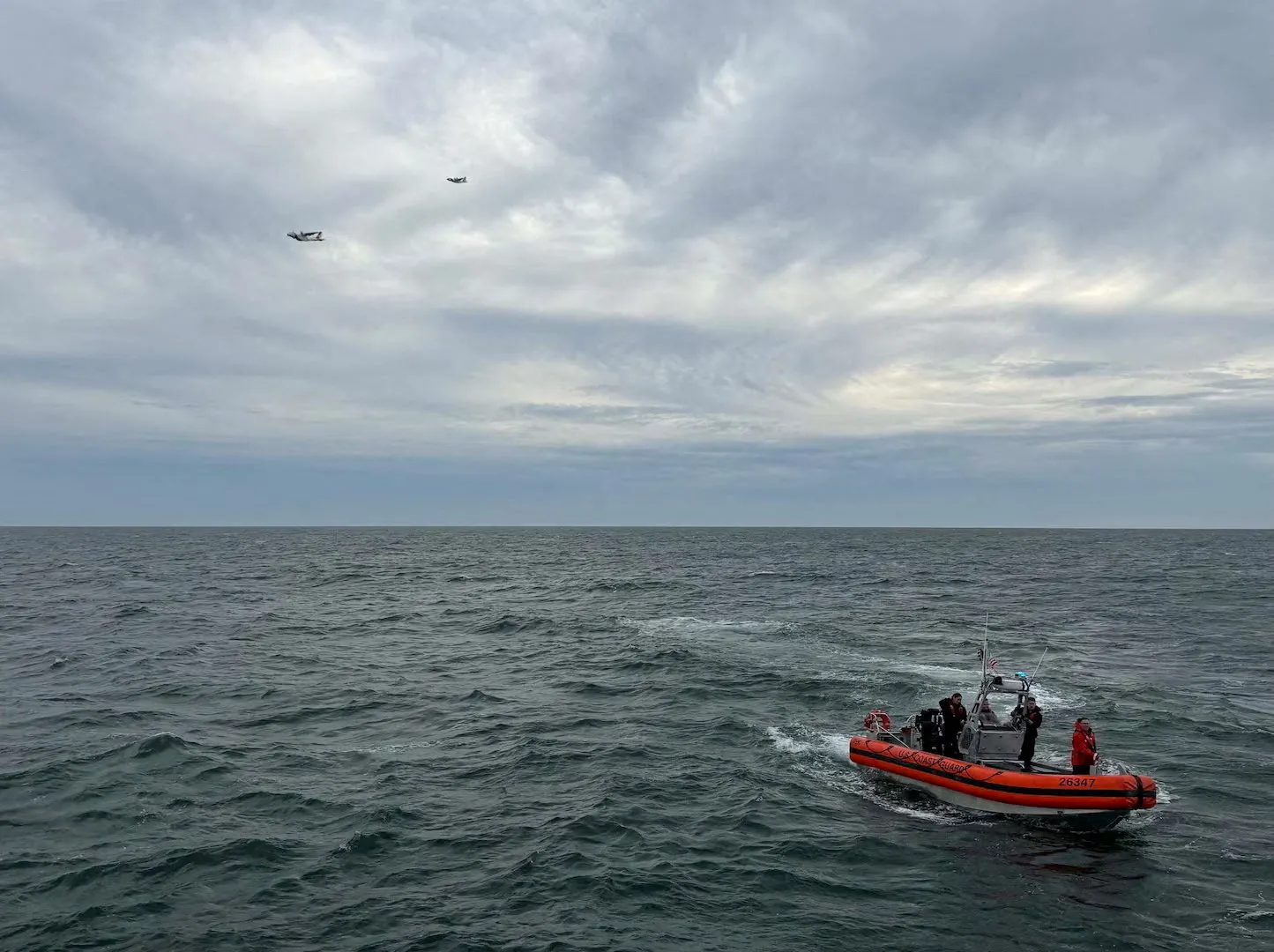
The US Coast Guard says a field of debris found near Nantucket, Massachusetts, is believed to be from an emergency medical plane that went missing over the Atlantic Ocean late Saturday night with six people on board.
Cacan Sullivan’s goal came after teenager Julian Hall, 18, had given Mauricio Pochettino’s side the lead in Mexico friendly.
Published On 4 Oct 20264 Oct 2026
Cavan Sullivan became the youngest US international goalscorer in history as the United States defeated archrivals Mexico 3-0 in a friendly international in Arizona on Saturday.
Sullivan, who is poised to join English Premier League side Manchester City next year, netted a superbly taken goal in the 62nd minute to double the USA lead at the State Farm Stadium in Glendale.
Recommended Stories
list of 4 itemsend of list
At 17 years and five days, Sullivan beat Mathis Albert’s five-day-old record as the youngest US goalscorer.
Albert, aged 17 and 31 days, scored during Tuesday’s 4-2 defeat of Chile.
“These are the moments you dream of when you’re three, four, five or six-years-old,” Sullivan said.
“I manifested this moment, not just these past couple of hours when I found out I was starting, but my whole life,” he added.
Sullivan’s strike came after another teenager — 18-year-old Julian Hall — had given Mauricio Pochettino’s side the lead in the 28th minute.
Hall’s goal was his third in as many games since being handed his international debut by US coach Pochettino in last week’s defeat of Peru. Hall also scored in the victory over Chile.
The loss puts more pressure on Mexico coach Rafael Marquez, who is still seeking his first win since taking over following the World Cup.
Mexico dominated possession and territory early on but were unable to find a way through a well-organised United States defence.
Instead, it was the hosts who took the lead just before the half-hour mark with a superbly worked goal from Hall.
Gio Reyna surged into the penalty area to collect a pass from Alex Freeman and ghosted past Mexico midfielder Erik Lira to reach the byline.
Reyna’s low cross was parried away by Mexico goalkeeper Raul Rangel, but only as far as Hall, who lashed in from close range to make it 1-0.
Mexico’s best chance came early in the second half when Roberto Alvarado’s rasping shot from the edge of the area was tipped over the bar by US goalkeeper Diego Kochen.
Pochettino’s side doubled their lead on 62 minutes when Sullivan’s persistence in chasing down a long ball was rewarded after Rangel mishit a pass to the American outside his area.
Sullivan coolly took his time and chipped home from long range to make it 2-0.
“I just remember chipping the ball, hoping it didn’t hit the crossbar or go over,” Sullivan said of his strike. “I was getting nervous when it was in the air and then everything was a blur.”
A miserable night for Mexico got worse shortly afterwards when substitute Luis Chavez was shown a red card for shoving a hand into the face of Sebastian Berhalter in the 68th minute.
The United States completed the scoring in the 84th minute when Malik Tillman latched onto a poor Mexico backpass and smashed a shot into the top corner for 3-0.
Iran’s Foreign Ministry says reopening the strait has been its main goal, while the US continues to focus on nuclear talks.
Published On 4 Oct 20264 Oct 2026
The Strait of Hormuz is going to remain closed until the United States accepts Tehran’s seven-day plan to reopen the waterway, Iran’s top negotiator and parliament speaker has said.
Iranian state-linked news agency Nournews, quoting Mohammad Bagher Ghalibaf, reported on Sunday that Washington made “some proposals through a mediator” days after the US replied to Iran’s diplomatic proposal.
Recommended Stories
list of 4 itemsend of list
The US should know “that the era of wasting time and dictating unilateral demands is over”, Ghalibaf said, adding Iran’s position remains “clear and definite”.
He emphasised that “the Strait of Hormuz will not open until our seven conditions based on the Islamabad memorandum are met”, and that Iran is “present on the military battlefield and will confront them with new surprises”.
He added that Iran was neither “excited” nor “intimidated” by the latest US proposals and would “both fight and negotiate”.
US President Donald Trump ruled out an Iranian proposal to reopen the Strait of Hormuz last week, hours after Iran put forward a roadmap to reopening the strait, through which one-fifth of global oil and natural gas is shipped during peacetime.
Last month, Trump threatened to “annihilate” Iran in his speech on the floor of the United Nations General Assembly (UNGA).
On Sunday, Iranian Foreign Minister Abbas Araghchi also said Iran is “serious about finding diplomatic solutions just as we are serious about defending ourselves”.
Speaking to foreign ambassadors and diplomats in Tehran, Araghchi said Iran had clearly explained its conditions for reopening the strait and that Tehran hoped Washington would choose diplomacy and accept its proposal.
However, Araghchi warned that if the US takes military action again, Iran is “more prepared than before and will take whatever action is necessary to defend ourselves”.
Iranian Ministry of Foreign Affairs spokesman Esmaeil Baghaei added that Tehran used the UNGA platform last month to provide world leaders with its position on ending the US-Israel war on Iran.
He said the US has continued to focus on nuclear talks, while reopening the strait has been Iran’s main goal.
“We are at this stage mainly focusing on the strait, and our principal concern is to reach a solution and to have peace and stability restored within this waterway,” Baghaei said.
The Strait of Hormuz has been largely blocked and disrupted for more than seven months, since the US and Israel launched strikes on Iran on February 28, driving one of the worst maritime shipping disruptions in decades.
About one-fifth of global oil and natural gas is shipped through the Strait of Hormuz during peacetime, as the US-Israel war on Iran has created several trade chokepoints [File: Al Jazeera]
Michael Kotlikoff expresses deep sorrow over the case, calling it one of the most challenging periods for Cornell.
Published On 4 Oct 20264 Oct 2026
Cornell University’s president, Michael Kotlikoff, has called the alleged 2024 gang rape of a student at a fraternity house “deeply disturbing”, pledging greater transparency amid mounting outrage over how the school handled the case.
“My heart aches when I think of what she experienced,” Kotlikoff said in an eight-minute video message to the Cornell community on Saturday.
Recommended Stories
list of 3 itemsend of list
He characterised the past week as one of the most difficult in the university’s history and said it would weigh on the university for years to come. “It raises heartbreaking and troubling issues about sexual assault, dehumanisation and aspects of party culture, alcohol and drug use,” he said.
The woman, identified in court documents as Jane Doe, alleges she was sexually assaulted by multiple members of the Chi Phi fraternity in 2024 and has sued the university and seven former students.
Scrutiny over Cornell’s handling of the case intensified after New York Governor Kathy Hochul said newly released information had undermined her confidence in the local prosecutor, who initially declined to bring charges.
Hochul subsequently appointed state Attorney General Letitia James as special prosecutor to take over the criminal investigation, saying she would “not allow anyone to sweep this case under the rug”.
New York Governor Kathy Hochul, left, and New York Attorney General Letitia James attend a news conference in New York City on October 2, 2026, regarding an investigation into alleged sexual assault at Cornell University [Jeenah Moon/Reuters]
The case has also renewed scrutiny of the “voluntary intoxication loophole” in New York law that makes it difficult to prosecute sexual assaults involving victims who voluntarily consumed alcohol or drugs, even if they later became too intoxicated to consent.
Tompkins County District Attorney Matthew Van Houten had cited the legal provision in defending his original decision not to pursue charges. Hochul has pledged to push for changes to it.
At a student assembly hearing on Thursday, several speakers called for Kotlikoff’s resignation.
In Saturday’s video, Kotlikoff reaffirmed his support for an independent review of the university’s handling of the case and said Cornell’s Board of Trustees would announce details next week. He also called for a “serious look at the role of fraternities and sororities in campus life”.
James’s appointment has placed the case under a prosecutor whose office has repeatedly clashed with President Donald Trump. She has separately described the case as “an active criminal investigation”.
Latest polls suggest Lula’s lead over Bolsonaro is narrowing, with neither candidate likely to win outright on Sunday.
Published On 4 Oct 20264 Oct 2026
Brazilian President Luiz Inacio Lula da Silva and right-wing Senator Flavio Bolsonaro have wrapped up their election campaigns, each voicing confidence in victory ahead of Sunday’s tightly contested first-round presidential vote.
Lula, 80, closed his re-election bid on Saturday with a march through Sao Paulo, Brazil’s economic powerhouse, drawing what his campaign called a record crowd for a closing rally.
Recommended Stories
list of 3 itemsend of list
“Tomorrow, we’re going to win the elections in the first round,” he told supporters, describing Sunday’s vote as a choice between “democracy and barbarism” and promising to “defeat the far right”.
He has also framed the election as a test of Brazil’s sovereignty, warning against “meddling” by Washington.
Bolsonaro led a motorcycle caravan through towns in Sao Paulo state, echoing the campaign style of his father, before rallying later in Rio de Janeiro. “I am convinced that everything is in place for us to win this election in the first round,” he said.
The 45-year-old is the son of former President Jair Bolsonaro, a close ally of US President Donald Trump. The former leader, 71, is serving a 27-year prison sentence for attempting to overturn his 2022 election loss to Lula.
The younger Bolsonaro was photographed at his rally holding a portrait of his father.
Trump has not formally endorsed Bolsonaro but has said he is watching the election “very closely”, a level of US interest that has become a flashpoint in the campaign.
Lula’s supporters have seized on it as evidence Washington is trying to meddle in the elections, while some Bolsonaro supporters, frustrated by the cost of living, say they would welcome US pressure if it helped force change at home.
Polls released on Saturday suggested Lula was still ahead but his lead was narrowing, with neither candidate likely to win outright on Sunday. Such a result would send the race to a run-off on October 25 between the two frontrunners, a contest polls suggest would also be close.
It is a far tighter race than Lula’s last victory in 2022, when he beat the elder Bolsonaro by less than two percentage points.
Meanwhile, the Bolsonaro campaign has faced scrutiny over a film-funding scandal. Flavio Bolsonaro is under investigation over financing for Dark Horse, a biopic about his father, bankrolled by a jailed banker tied to one of Brazil’s biggest financial scandals.
Brazil’s Supreme Court authorised federal police in April to investigate whether Flavio Bolsonaro made defamatory statements about Lula.
Bolsonaro has pledged to seek his father’s release from prison if elected, and has echoed his father’s unsubstantiated claims questioning the reliability of Brazil’s electronic voting system, which analysts say could be laying the groundwork to contest the result if he loses.
Beyond the presidency, Brazil’s nearly 160 million registered voters will also choose lawmakers, governors and senators on Sunday.
United States President Donald Trump has increased the pressure on US Senate Republicans to make Daylight Saving Time permanent, singling out one of the body’s members for stalling legislation to end the twice-a-year changing of clocks.
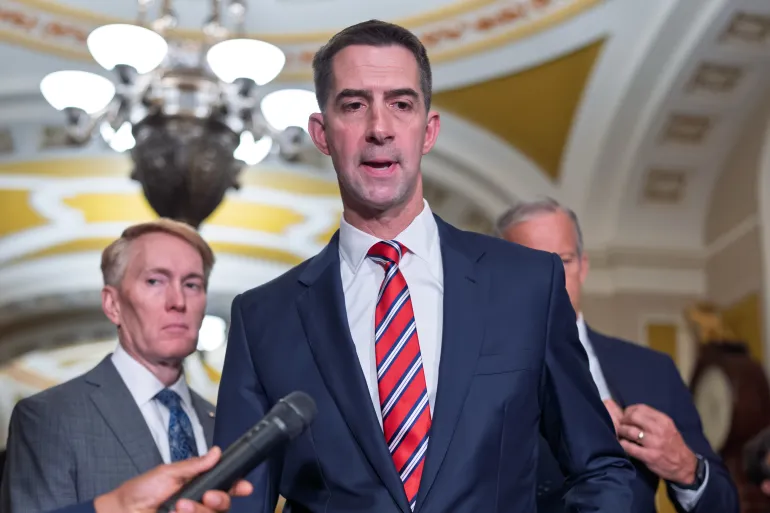
In a social media post on Saturday, Trump blasted US Senator Tom Cotton for “holding up” the Sunshine Protection Act, which Trump has personally opted to call the “No More Changing of Clocks Act”.
Recommended Stories
list of 3 itemsend of list
“For some reason, Tom is stopping the Bill and, in the Senate, it’s very easy to do, it only takes one!” Trump wrote on his Truth Social account about the Arkansas Republican. “It should pass overwhelmingly, in a Bipartisan fashion”.
“Nobody wants to spend their precious time running all over the place, turning Clocks back twice a year and, having sunshine in the afternoon is better than early in the morning!” he added.
Trump went even further, publishing what he claimed was Cotton’s phone number as he implored Arkansas residents to pressure him. The move echoed a moment during the 2016 Republican presidential primaries, when then-candidate Trump gave out US Senator Lindsey Graham’s number after the former rival criticised him.
US Senator Tom Cotton speaks to reporters at the US Capitol in Washington [File: J. Scott Applewhite/AP Photo]
Al Jazeera called the number listed in Trump’s post, but an automated message stated the voicemail box was full. Cotton’s spokesperson and the White House did not respond to requests for comment.
The president has routinely pushed Senate Republicans to pass legislation mandating year-round daylight saving, which would end Americans’ decades-long practice of changing their clocks twice a year to increase daylight hours. On Friday, Trump urged the US Senate to approve the bill, which passed the US House in July by a 308-117 vote.
Cotton has previously opposed the bill, arguing in a US Senate floor speech last year that farmers, construction workers, commuters and children heading to school would begin their days in the dark during the winter.
Trump disputed that argument in a separate post on Saturday, saying the bill “would be a very nice and easy WIN for the Republican Party”.
“If Tom Cotton were putting Arkansas first, he would give them an extra hour of daylight and, more importantly, they wouldn’t have to run all over their houses, farms, workplaces, and everywhere else, twice a year, having to change their Clocks, and often forgetting to do so”, Trump wrote.
Trump, an avid golfer, also highlighted what he considered to be another selling point of the bill: the North American Professional Golfers’ Association (PGA) tour.
“The PGA TOUR, as an example, needs more Daylight in the afternoon in order to finish their Tournaments”, he wrote in a post, which included a letter from PGA Tour CEO Brian Rolapp supporting the bill. “Likewise, regular Golfers, Tennis Players, Hunters and, perhaps more importantly, Farmers who want more Daylight to play or work.”
The US president, who spent part of Saturday at his golf club in Sterling, Virginia, indicated in a subsequent post that he had received personal feedback on the proposal: “I don’t know about anyone else, but a table full of very distinguished people just told me that they HATE, immediately after a mandatory time change, going home at night – and it’s DARK. It’s depressing!”
In 1974, the US Congress briefly adopted year-round daylight saving time in response to the country’s energy crisis. But Congress repealed the law less than a year later over safety concerns as children commuted to school before sunrise.
US senators left Washington this week and have no set plans to return until after the November 3 midterm elections.
Some members, such as Senator John Kennedy, weren’t optimistic that Senate Republican Leader John Thune would bring the bill up for a vote before polling day.
“It’s dead as disco,” the Louisiana Republican told Reuters this week of Trump’s push to make daylight saving time permanent. “My sense is it would have trouble passing … I don’t think the leader is going to bring it up.”
Washington, DC – Democrats have the momentum; Republicans are surging in defence and cash.
That narrative has emerged ahead of the United States midterm elections in November, as races across the country enter their final stretch.
Recommended Stories
list of 3 itemsend of list
With control of the US House of Representatives and the US Senate at stake, Democrats begin October with a surprisingly rosy outlook as more congressional seats are seen as in play.
Republicans, meanwhile, appear to be in damage control, pouring millions of dollars into races once seen as secure victories while injecting more funding into a handful of marquee showdowns.
The party’s standard bearer, President Donald Trump, who has embraced the notion of the election being a referendum on his leadership, enters the final month with staggeringly low approval ratings.
The most recent Associated Press-NORC polling, released on Thursday, showed Trump with 31 percent approval, the lowest during either of his two terms. Only 26 percent of respondents approved Trump’s handling of the economy, dipping two points below his predecessor, former President Joe Biden’s lowest rating on the topic.
Surveys continue to show voters rank the economy as their top issue, with topics like gas prices, made higher by the US-Israel war with Iran, dominating their concerns. Immigration and corruption have also regularly ranked high.
“The broad stroke is that Americans are disappointed, bordering on angry that President Trump hasn’t delivered on the core promises he made when he won re-election,” according to Henry Olsen, a senior fellow at the conservative Ethics and Public Policy Center in Washington, DC.
House looking solid for Dems
Political trackers have long projected Democrats will take control of the US House of Representatives in the November 3 vote.
Winning a majority in the 435-member chamber from Republicans would give the party renewed legislative power to assert leverage over Trump, while launching investigations into his administration’s dealings. Top Democrats have already signalled that probes into Trump’s family business dealings would be top priorities.
Two election non-partisan prediction authorities, the Cook Political Report and the University of Virginia’s Sabato’s Crystal Ball, have recently assessed that the likelihood of Democrats taking the House has only increased.
The Cook Political Report recently shifted 15 House races in the direction of Democrats, moving some considered “toss-ups” to “leans Democrat” and some previously considered “lean Republican” to “toss-ups”.
One such shift was for a Texas border district represented by Republican Monica De La Cruz. Her district was emblematic of a wider Latino shift towards Trump in 2024. Once seen as holding the advantage over her challenger, Democrat Bobby Pulido, Cook now rates her race as a “toss-up”.
All told, the political analysis clearinghouse now predicts Democrats are on track to win 5 to 15 House seats.
Senate in play
With 30 days left to go, “there’s much more drama in the Senate than the House races”, according to Kyle Kondik, the managing editor at Sabato’s Crystal Ball.
Once considered a pipe dream for Democrats, who need a net gain of at least four seats to win a slim majority, the 100-member chamber has moved within a more comfortable striking distance.
Unlike in the House, where every seat is up for re-election, only 35 Senate seats are up for grabs in this cycle, creating a far narrower pathway to control.
“The trajectory of the polling since Labor Day (September 7) has generally been that a bad Republican environment is just getting worse,” Kondik said, adding that “the Senate just seems to get more and more competitive as the cycle has gone on”.
To be sure, the quality of polling can vary across the country, with Kondik cautioning that gauging the political temperature of the Midwest has been particularly challenging for pollsters.
Still, in North Carolina, former Democratic Governor Roy Cooper is expected to trounce former Republican National Committee chairman Michael Whatley in the race for a Senate seat currently held by Republicans. Top conservative donors have already begun to divert funds from the contest.
Surveys have consistently shown Democrats leading in three other races for seats currently held by Republicans: Democrat James Talarico against Republican Ken Paxton in Texas; Democratic challenger Sherrod Brown against Republican incumbent Senator John Husted in Ohio; and Democratic Mary Peltola against Republican Dan Sullivan in Alaska.
Races for Republican held seats in Iowa, between Republican Ashley Hinson and Democrat Josh Turek, and in Maine, between Republican incumbent Susan Collins and Democratic challenger Troy Jackson, remain separated by less than one point, according to Real Clear Politics polling averages.
Democrats, meanwhile, have consistently led in polling in Senate races in Georgia, New Hampshire and Michigan for seats the party currently holds.
Big money in the race
For Republicans, salvation could be in the spending, with this year’s race continuing a US phenomenon of small fortunes poured into politics.
All told, at least $4bn had been spent on gubernatorial and congressional midterm advertising buys as of September 17, putting the race on track to become “perhaps the most expensive midterm on record”, according to Michael Franz, co-director of the Wesleyan Media Project.
Republicans entered September with a considerable funding edge. The Republican National Committee had $125.6m on hand, with the Democratic National Committee trailing far behind with $16.9m and $17.6m in debt.
When accounting for the three major committees associated with both groups, the Republican Party had $233.4m in cash, according to a CNBC analysis, while the Democratic Party had $130.4m.
Trip Yang, a Democrat strategist based in New York City, told Al Jazeera such spending can be deployed to help boost a candidate’s name recognition or to tear down a competitor.
According to AdImpact, Republicans and their allies were set to spend $888m on advertising from mid-September to election day, with Democrats and their supporters set to spend $666m.
The firm found pro-Republican ad spending would be particularly pronounced in the key Senate races in Ohio, Texas and Michigan, outpacing Democratic spending by at least $24m in each state.
Trump’s unpopularity, Yang said, means “Republicans spending millions or hundreds of millions of dollars improving their candidates’ images by itself may not be enough”.
“If you’re a little bit handicapped because your president is so toxic, you try to spend your hundreds of millions of dollars attacking the Democrats to make it more of a food fight,” he said.
A New York Times analysis estimated by the end of August at least $1bn in so-called “dark money” had been poured into the midterms. The term refers to spending where the donor’s identity is shielded, typically through nonprofit and shell-company donations to Super PACs.
Industry groups, including those supporting Crypto, AI and online betting firms, are expected to be top spenders in key races, although their support tends to cut across partisan lines.
Trump, meanwhile, has pledged to spend between $400m and $500m from his MAGA Inc Super PAC, though it has so far spent about $15m to support Paxton’s Senate bid in Texas.
Pro-Paxton ad reservations far outpaced Talarico in September, according to AdImpact data analysed by NPR, with $94m spent compared with $30m to support the Democrat.
The Trump factor
Trump has pledged to spend the final days before the election in non-stop campaign mode, after urging supporters during his Republican Midterm Convention in Dallas, Texas, to “vote like I’m on the ballot”.
His plan to criss-cross the country for rallies underscores a “base turnout” strategy meant to energise voters already loyal to the party, according to conservative analyst Olsen.
“But the Republican problem is a persuasion problem with people in the middle,” Olsen said. “[Trump’s campaigning] might help with some turnout … but their real problem is persuasion, and it’s not something that’s going to help with that in the slightest.”
Polls have spelt trouble for Republicans when it comes to swaying independents, with a PBS News, NPR and Marist poll from September 23 showing unaffiliated voters breaking for Democrats at 57 percent compared with 32 moving towards Republicans.
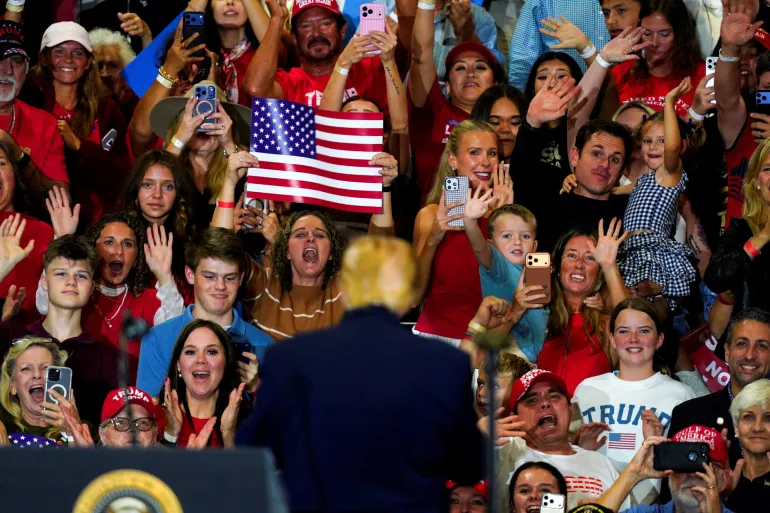
US President Donald Trump participates in a midterm election rally for Oklahoma Republican gubernatorial candidate Mike Mazzei at the Choctaw Event Center in Durant, Oklahoma, US, October 1, 2026. [Nick Oxford/Reuters]
The scenario has created a dilemma for some top Republican candidates over whether to break from the president on his most controversial actions, according to Lee Miringoff, the director of the Marist University Institute for Public Opinion.
Senate candidates Ashley Hinson in Iowa, Jon Husted in Ohio and Mike Rogers in Michigan all recently put daylight between themselves and Trump on the war with Iran.
One Republican House candidate, Representative Maria Elvira Salazar, has criticised Trump’s aggressive immigration enforcement policies as she seeks to rally Latino voters in South Florida.
Trump, in turn, reposted a social media message calling Salazar a “backstabber”.
“You need to have, you know, something else going for you other than endorsement of Trump,” said Miringoff. “Some Republicans are starting to have self-preservation kick in because they’re concerned.”
What can change?
Achieving a wide-scale shift in public opinion remains a tall order for Republicans in the final stretch of the race.
Many of the defining issues are unlikely to change before November, with Trump signalling a possible escalation with Iran following the vote as he has downplayed the prospect of short-term affordability relief.
At the same time, the US president has also not ruled out actions that rights groups say could upend voter turnout. Most recently, he refused to commit to not invoking the Insurrection Act or declaring a state of emergency surrounding the vote during an interview with Time magazine.
Miringoff said he believed that the “potential for more than just a marginal shift is there”, as he assessed some Democratic candidates have struggled to present clear visions beyond opposition to Trump.
“The result isn’t formed in concrete,” he said, “to the degree that there’s going to be a lot of money still spent.”
Analyst Olsen saw less remaining wiggle room for the party.
“Republicans have the time and the resources to change the outcome with respect to a few close Senate races,” Olsen said. “But to change direction, they would need something that would be apocal.”
The Group of Seven countries has agreed to release 100 billion barrels of crude oil and diesel from emergency reserves over several months in an effort to reduce soaring energy prices after pressure from US President Donald Trump.
The US and Israel’s war on Iran, as well as Russia’s war on Ukraine, have triggered a spike in global oil and diesel prices.
Recommended Stories
list of 3 itemsend of list
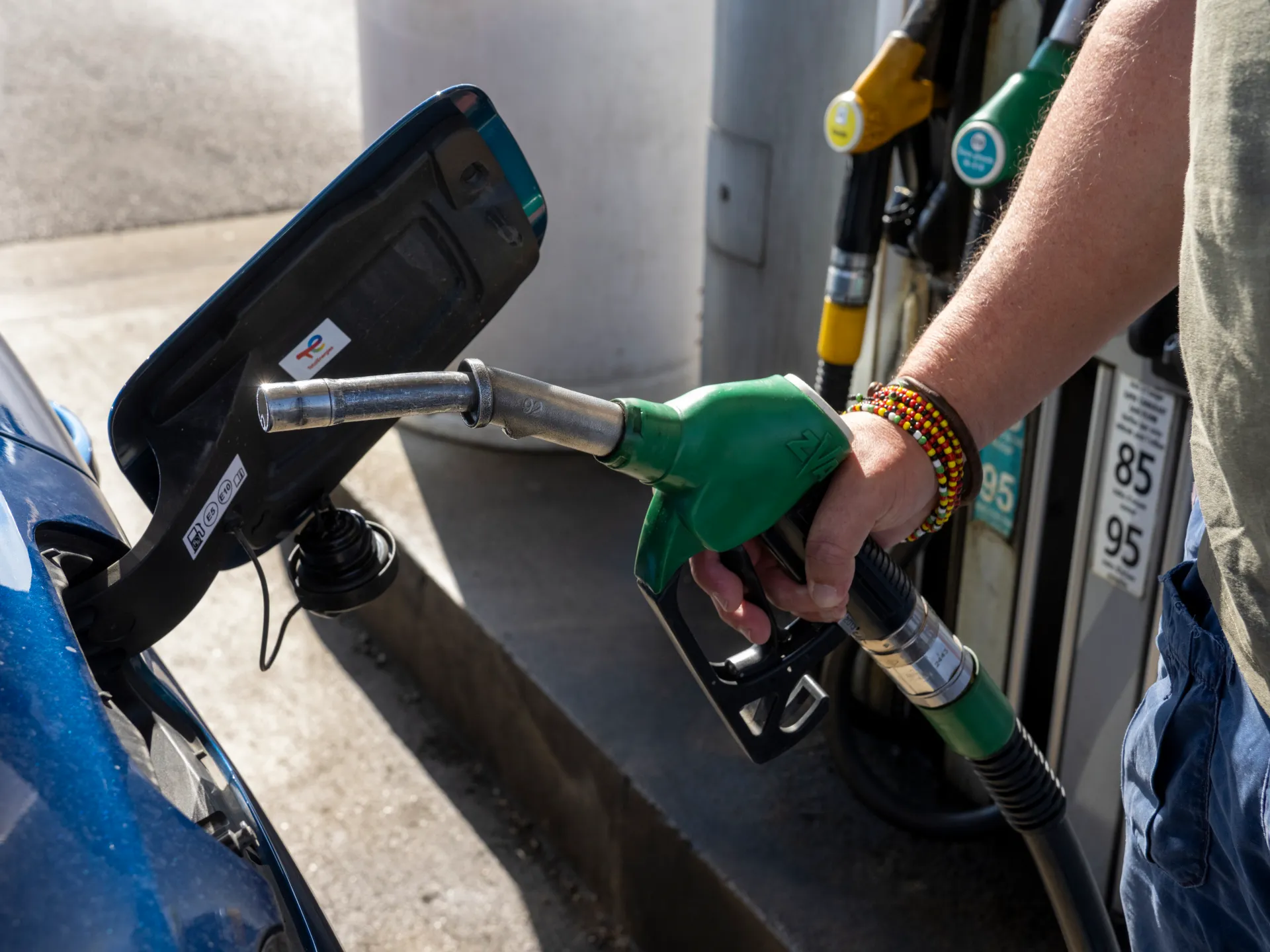
Oil prices jumped on Thursday and settled up more than $4 a barrel. Global diesel prices also hit a record high last Friday with the average price for a gallon (3.79 litres) of diesel at $6.50, up from $5.61 a month earlier, according to the American Automobile Association (AAA).
In a statement on Thursday, G7, which includes the US, UK, Canada, Japan, Germany, Italy and France, with the EU also represented, said there will also be a “substantial diesel release within the first 20 days” and discussions over “additional diesel releases as necessary” will be held in the coming days.
Will the G7’s energy release stabilise the global energy market?
Here’s what we know:
What has the G7 announced?
After a video conference of G7 leaders chaired by French President Emmanuel Macron on Friday, the group said in a joint statement: “Taking into account commitments that have already been fulfilled, we will implement our commitments with a coordinated release through the IEA of 100 million barrels.”
Earlier this week, the International Energy Agency’s (IEA) Executive Director Fatih Birol said that members had released about two-thirds of the 400-million-barrel agreement.
The G7 energy release will begin immediately and last for four months and will include a substantial diesel release for 20 days. It is not clear how many oil and diesel stocks each member of the group will release.
“We will convene in the context of the IEA in the coming days to discuss the possibility of additional diesel releases as necessary,” the statement said.
“We will coordinate maintenance schedules across G7 refineries to prevent simultaneous capacity shutdowns and temporarily increase utilization rates where feasible,” it added.
The G7 also urged member countries to refrain from imposing export restrictions on energy products among themselves.
Earlier this week, the Trump administration had threatened to impose a ban on US diesel exports and also pressured Europe to release its emergency diesel stocks to help ease soaring diesel prices.
Why are oil and diesel prices so high?
Global energy prices have been soaring due to the US and Israel’s war on Iran, which has disrupted energy exports from the Gulf. Meanwhile, the Ukraine attacks on Russian energy installations have also disrupted global energy supplies.
Former head of the International Energy Agency’s Oil Industry and Markets Division Neil Atkinson told Al Jazeera that there are three key factors contributing to the decline in global diesel supply.
First, “there isn’t diesel coming out of the Middle East to Europe, and Europe took quite a lot of diesel from Saudi Arabia and from Kuwait.”
Second, “Russia has now ceased to export diesel at all” due to “the attacks by Ukraine on Russian refineries”.
“And China is no longer exporting diesel,” he added.
“We’re in a situation where demand remains relatively high and is likely to stay high because of the agricultural harvesting season.”
According to data from the Joint Organizations Data Initiative (JODI) and the Organization of Petroleum Exporting Countries (OPEC), the United States is the world’s largest producer and exporter of diesel. It produces around 240.5 million tons and exports around 1.26 million barrels of diesel per day.
Russia is the world’s second-largest exporter of diesel, supplying 783.4 thousand barrels per day to the global market. Saudi Arabia is the world’s second-largest producer of diesel at 58.4 million tons, but it consumes large portion of its diesel domestically.
Will the G7 energy release bring prices down?
After the G7 announcement, French President Macron, who had co-chaired the meeting, said the group’s move to release the oil will “bring down the prices of petroleum products, particularly diesel.”
The price of Brent crude oil, the international benchmark, briefly dropped below $100 a barrel after the G7 announcement, but rose to around $102 in the evening.
Naeem Aslam, Chief investment Officer at Zaye Capital Markets, told Al Jazeera that the G7 energy release was “very much needed”, but the group’s announcement was just to ease off the pressure on the energy market.
“The actual structure changes about who is going to release [the energy stocks] and what and where the bans will be lifted, remains an important component in terms of the market,” he said.
Aslam added that by Sunday night especially before the markets open, the added pressure on energy prices will come off. “But going into Monday morning…we could potentially see the reversal in the market,” he added.
Atkinson, the energy expert, said the G7’s fuel release is welcome but “doesn’t deal with the fundamental problem that the global supply remains lower than normal”.
Atkinson told Al Jazeera that “seven months after this war started in the Middle East, we are still in a situation where the global supply of crude oil or products remains significantly below pre-war levels.”
“We are now in a situation where the focus is on end use of products, mainly diesel, which is what we’re talking about here,” he added.
What has Trump said?
Soaring diesel prices have been a source of tension for the Trump administration and Republicans who fear this will cost them votes in the upcoming November midterm elections.
Last week, Trump pressured Ukraine to stop attacking Russian diesel facilities amid the war.
Then, on Thursday this week, the US president told reporters that his administration “may” ask European countries to release diesel stocks, shortly after Treasury Secretary Scott Bessent urged Europe to “immediately” tap its reserves.
Trump also threatened to impose a ban on US diesel exports if Europe did not release emergency diesel stocks.
But on Friday, Trump told reporters at the White House that Washington would not impose a diesel export ban. He said the plan was never really on the table.
“Europe has a lot of diesel, and they’re going to be making a major world contribution, and so are we. And we’re not going to be doing the export ban. We’re going to be doing what we’re supposed to do,” Trump said.
“Trump is scared by diesel prices above $6, which is a price jump of 70 percent compared to before he started the war. This is likely to get worse with US diesel inventories at their lowest seasonal level since records began in 1982. So if there is not enough diesel being produced because of the US-Israeli war on Iran, and diesel reserves have been used up, the only way to bring more diesel to the US market is by exporting less,” Frederic Schneider, a nonresident senior fellow at the Middle East Council on Global Affairs, told Al Jazeera on Friday.
After the G7 announcement, Trump wrote on his Truth Social platform: “Europe has just agreed to release a massive amount of their heavily stocked Diesel Oil. The process will begin immediately.”
The White House is also reportedly preparing an executive order to tackle record-high US diesel prices that could be unveiled as early as next week, two people familiar with the process told the Reuters news agency.
Schneider noted that countries are also concerned about high energy prices since diesel and gasoline are important for economies and fulfil different roles.
“While gasoline fuels cars, diesel fuels anything from trucks, freight trains, ships, tractors, harvesters, construction machinery, mining equipment and backup generators. This means gasoline is used more by consumers while diesel is mostly used by producers, meaning a diesel price shock spreads into the price of almost everything else, most prominently food, building materials and anything delivered by truck,” he added.
Farmers are hit twice because diesel prices are rising at the same time as fertiliser prices, both of which have been pushed up by the closure of the Strait of Hormuz.
“A higher diesel price therefore acts like a tax on production and logistics, while higher gasoline prices act like a tax on consumers directly. Like higher gasoline prices, higher diesel prices risk stagflation by pushing up inflation while simultaneously squeezing margins in transport and agriculture, meaning central banks find [themselves] in a dilemma between cutting rates [helping producers] and raising rates [cutting inflation],” he said.
US country music star Zach Bryan wore a ‘Free Palestine’ shirt while performing at Gillette Stadium, owned by US businessman Robert Kraft. The pro-Israel billionaire recently prevented Macklemore performing there on a Ed Sheeran tour, over pro-Palestine remarks.
Security threats prompt US and Australia to suspend diplomatic operations in Brazil before pivotal election day.
Published On 3 Oct 20263 Oct 2026
The United States has suspended consular services in Brazil, prompting Australia to close its embassy in the Brazilian capital, two days before Brazil’s presidential election on Sunday.
In a statement released on Thursday, the US embassy said it would suspend consular services starting on Friday and advised American citizens seeking assistance not to visit its embassy, consulates or other diplomatic facilities.
Recommended Stories
list of 3 itemsend of list
The statement cited security concerns but gave no further detail on the nature of the threat or any link to the election.
The US State Department said it was working closely with Brazilian counterparts to address the security concerns, adding that embassies and consulates routinely issue alerts about local threats and developments.
Australia’s ambassador to Brazil, Sophie Davies, said on social media that the Australian embassy would also close on Friday, citing the US alert, and advised Australians to avoid US diplomatic facilities.
Brazil’s federal police said they carried out preventive search and seizure warrants in Sao Paulo and the Federal District, the administrative region surrounding the capital, Brasilia, as part of an investigation into suspected plans that could threaten US diplomatic facilities.
Police said the operation followed cooperation with foreign intelligence agencies, but that investigators had found no evidence corroborating the initially reported threat, nor identified any suspects linked to criminal organisations.
An investigation was continuing after the seizure of communications equipment, according to the police.
The closures came two days before the Brazilian presidential election, which pits incumbent Luiz Inacio Lula da Silva, who is seeking re-election, against Senator Flavio Bolsonaro, son of former President Jair Bolsonaro. Jair Bolsonaro is serving a 27-year sentence for attempting a coup.
If neither candidate wins more than 50 percent of the vote on Sunday, a runoff will be held on October 25.
Edinho Silva, president of Lula’s Workers’ Party, called the closures “unprecedented”, saying: “It makes no sense at all. It’s one of Trump’s ways of trying to influence Brazilian public opinion.”
Lula’s allies have pointed to US tariffs and an effort by Washington to send officials to Brazil to “discuss electoral integrity” as evidence of foreign interference.
Brazilian intelligence officials briefed French and German delegations in Brasilia this month on what they described as US and Russian interference in the race.
US President Donald Trump has publicly praised Flavio Bolsonaro, a close ally, without formally endorsing him, saying he is “watching that election very closely”.


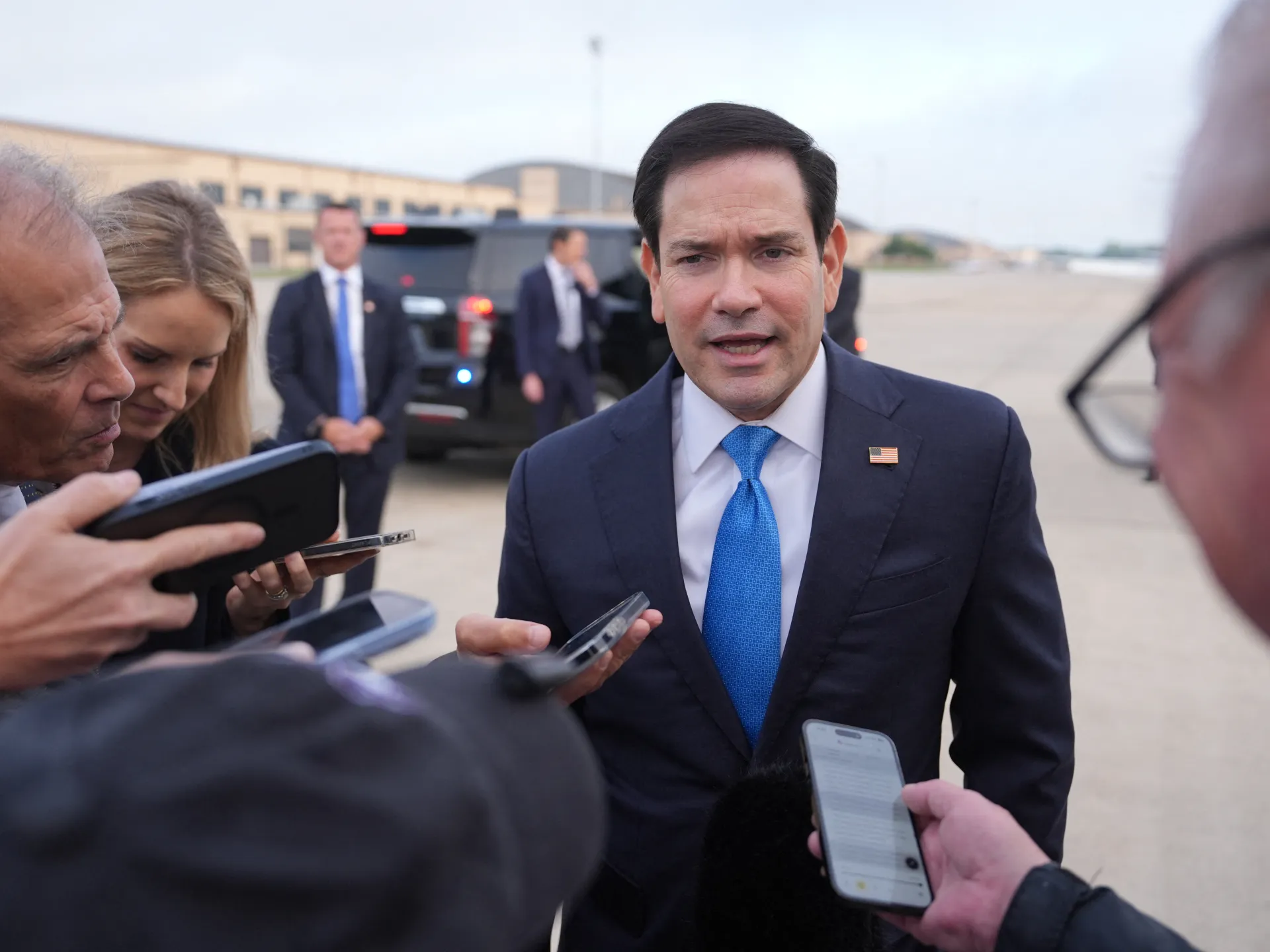

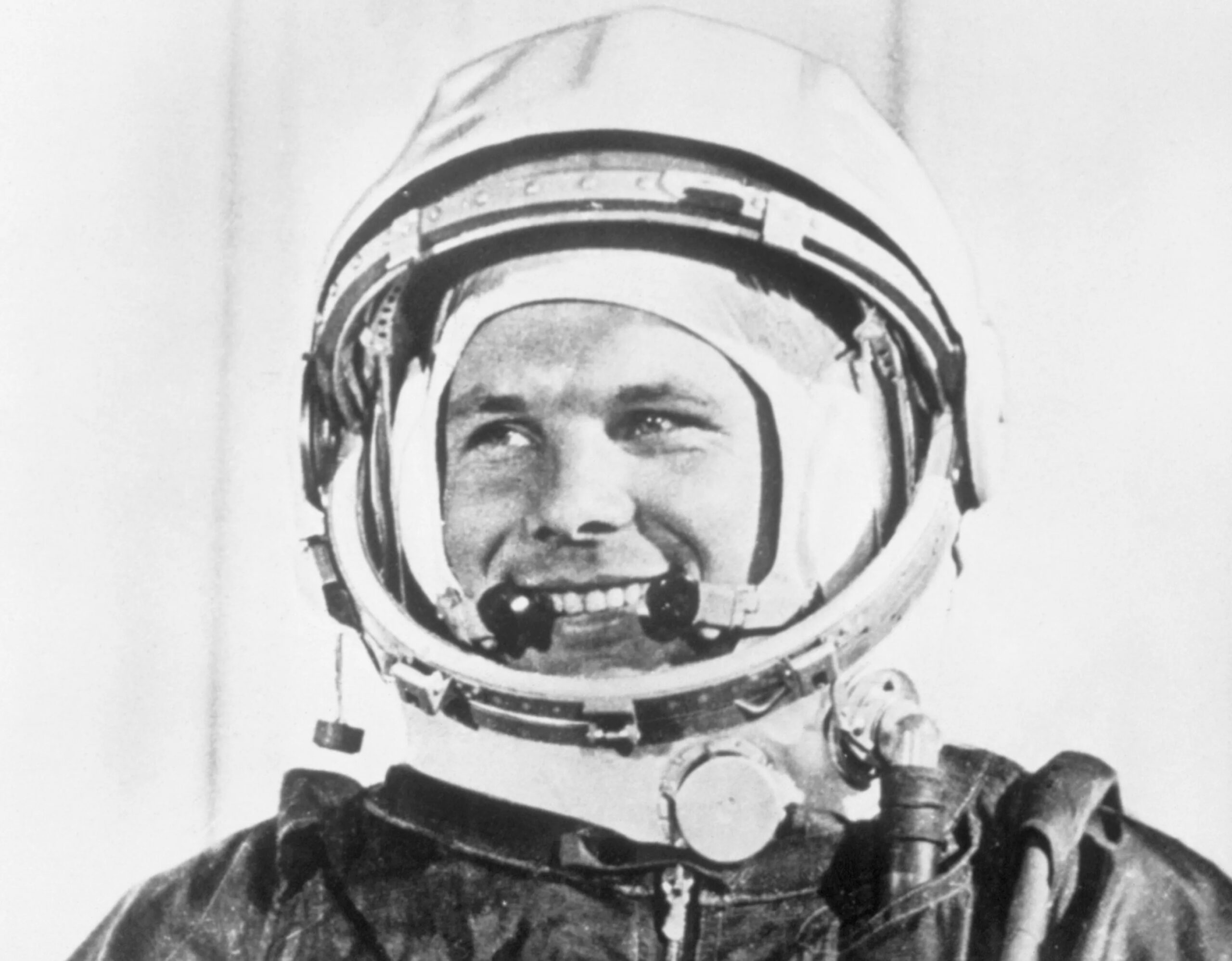
![Yuri Gagarin, the world's first spaceman. [Getty Images]](https://i0.wp.com/occasionaldigest.com/wp-content/uploads/2026/10/GettyImages-514885012-1791125806.jpg?w=640&ssl=1)
![Astronaut Neil A. Armstrong, in training for the projected Apollo 11 lunar landing mission, is being suited up for the first full dress rehearsal of activities he is to perform during the projected moon landing. [Getty Images]](https://i0.wp.com/occasionaldigest.com/wp-content/uploads/2026/10/GettyImages-515287304-1791126174.jpg?w=640&ssl=1)

![American astronaut Alan Bartlett Shepard Jr (1923 - 1998), Commander of NASA's Apollo 14 lunar landing mission at the Kennedy Space Center in Florida, 14th November 1970. [Space Frontiers/Getty Images]](https://i0.wp.com/occasionaldigest.com/wp-content/uploads/2026/10/GettyImages-1141685928-1791125972.jpg?w=640&ssl=1)