Smit Machchhar recalls mid-air disaster after co-pilot’s attack on flydubai flight to Tel Aviv.
Published On 2 Oct 20262 Oct 2026
Indian pilot Smit Machchhar, who was stabbed by his co-pilot in an alleged attempt to crash a Flydubai flight to Tel Aviv, has shared a public account of how he managed to open the cockpit door and let passengers take control of the plane despite his injuries.
Speaking on Friday from a hospital bed in Abu Dhabi via video call with Indian Prime Minister Narendra Modi, Machchhar said that he knew the aircraft was going down as he lay bleeding on the floor.
Recommended Stories
list of 3 itemsend of list
“I had suffered so many injuries that I had collapsed. At that time, I could feel that the aircraft was going down. I knew this was the last push, that the door was right there,” he said in a nearly 10-minute video released on the prime minister’s social media channels.
He added: “I was being hit even then, but I just opened the door and everyone came in.”
Machchhar, who has 17 years of aviation experience, including 11 as a captain, said that experience helped him grasp what was happening even while wounded.
He told Modi he had recited a Hindu devotional prayer during the ordeal.
“I know God himself saved me,” he said, in an emotional exchange with Modi, who is from the same home state of Gujarat.
Modi praised Machchhar’s bravery, saying his presence of mind had saved lives and the reputation of Indian pilots.
Machchhar said he allowed passengers and crew to overpower the co-pilot and let a second pair of Flydubai pilots take control and land the plane in Tabuk, Saudi Arabia.
The Flydubai flight was carrying 174 people as it briefly plunged around 17,000 feet (5,180 metres) before it was brought back under control.
UAE presidential adviser Anwar Gargash has called the incident a “terrorist act”, while Israeli Prime Minister Benjamin Netanyahu said the co-pilot had undergone “Islamist radical indoctrination” and appeared “suicidal”.
US President Donald Trump has warned that Iran would be “hit very hard” if found to be linked to the attack.
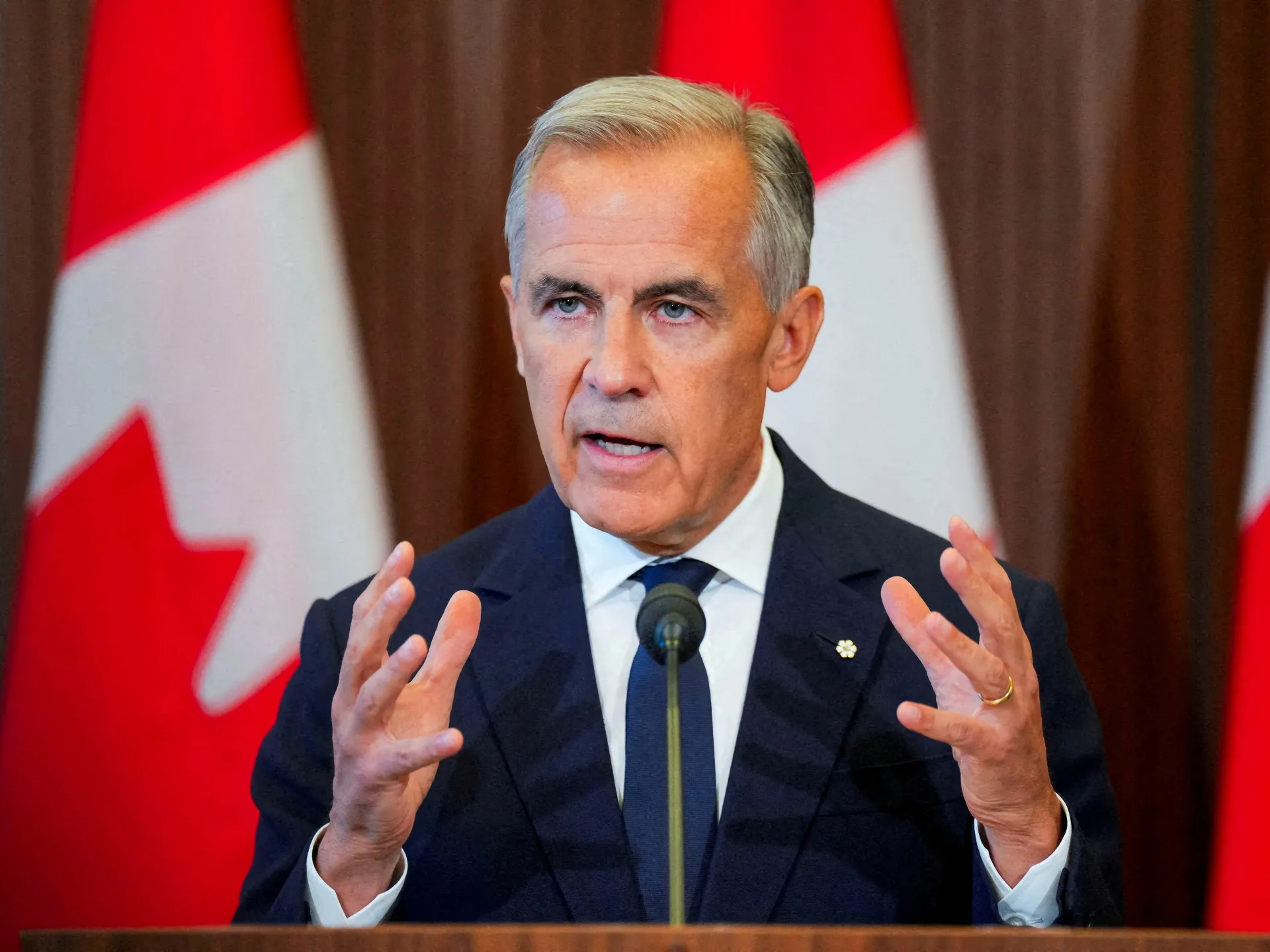
Toronto, Canada: As Canadian Prime Minister Mark Carney races to make the country less dependent on the United States, attract billions in new investment and get major projects built faster, his economic overhaul is running into resistance from a group that says it wants many of the same things: organised labour.
The latest clash, over the right to strike, comes after months of mounting pressure on Ottawa from Washington, DC.
Recommended Stories
list of 4 itemsend of list
US President Donald Trump, since taking up a second term in office last year, has imposed steep tariffs on Canadian goods and weakened trade agreements – perilous moves as Canada has historically sent close to 80 percent of its exports to its southern neighbour. He has repeatedly piled on with the tariff threats to make Canada the 51st US state.
Canada has responded with retaliatory tariffs, while a broader movement to “Buy Canadian” has taken hold. The hockey-inspired “elbows up” — meaning a readiness to defend against an opponent — has become a national rallying cry.
With trade talks stalled since August, Carney has moved with urgency to shore up the economy and invite new investments. Last month, he announced Bill C-39, known as the Building Canada Strong Act, promising to bring “speed, certainty and predictability” to investors.
Along with measures to speed up approvals for major projects, the bill would also give Ottawa clearer powers to intervene in legal strikes and lockouts in federally regulated workplaces — a provision that has put Carney on a collision course with unions.
Canada’s largest unions have come together against the changes. The largest, the Canadian Union of Public Employees (CUPE), had its national executive go as far as voting to defy the bill’s proposed limits on the right to strike if it passes Parliament without amendments.
CUPE National President Mark Hancock credited Carney’s handling of Trump and said the union’s 800,000 members, who work everywhere from hospitals to schools to municipal services, want to be part of “Team Canada”.
“But at what cost?” he said in an interview with Al Jazeera.
A fight over the right to strike
The controversy centres on Section 107 of the Canada Labour Code, which already gives the Labour Minister broad powers to step into disputes if needed to maintain “industrial peace”, end work stoppages and force the two sides into a binding arbitration.
Beginning in 2024, Ottawa used the provision eight times to intervene in disputes involving airlines, Canada’s two largest railways, three major ports and Canada Post and again during the Air Canada dispute in 2025 when flight attendants went on strike.
Unions have challenged the use of that law in court and had hoped the proposed C-39 would restrict, if not repeal, that clause while businesses wanted it strengthened.
The bill does neither. Instead, it introduces two conditions that the government would have to fulfil first before turning to Section 107.
Before stepping in, the government would have to appoint a special mediator, wait for a public report and consider whether a work stoppage is hurting the “national interest”.
Once a strike or lockout is underway, the minister could direct the Canada Industrial Relations Board to get operations running again and impose a binding process, such as arbitration.
A protester carries an effigy depicting Canada’s Prime Minister Mark Carney as people march to protest against the Canada Investment Summit in Toronto in September [File: Carlos Osorio/Reuters]
The government says those steps put clearer guardrails around a power that already exists, and Carney has said the bill “absolutely reinforces the right to strike”, according to the Canadian Broadcasting Corporation.
Unions have rejected this defence, pointing out that the meaning of “national interest” would ultimately be decided by the minister. They also argue that the prospect of government intervention is bound to change what happens at the bargaining table.
“The political lesson that employers will draw from it is simple,” Larry Savage, a professor of labour studies at Brock University, told Al Jazeera. “Hold out long enough, emphasise the economic damage, and then Ottawa will remove the union’s leverage for you.”
Disruption, Savage said, is precisely what gives a strike its power. “Every effective strike is disruptive,” he said.
Unions say they have already seen employers expect Ottawa to intervene.
Teamsters Canada alleges the Canadian National Railway (CN) and the Canadian Pacific Kansas City (CPKC) railroad companies were counting on Ottawa to step in when they locked out thousands of workers in 2024. Section 107 was invoked within hours.
“Companies have gotten used to the idea that if there is a labour dispute, they can just wait for the government to intervene,” Christopher Monette, Teamsters Canada’s director of public affairs, told Al Jazeera.
CUPE said it saw a similar dynamic at Air Canada in August 2025. Hancock said bargaining stalled after more than 10,000 Air Canada flight attendants voted overwhelmingly to strike because the airline was “expecting the government of Canada to step in and end the strike” — an account Air Canada disputed.
Less than 12 hours after workers walked out, Ottawa invoked Section 107. Air Canada CEO Michael Rousseau later told BNN Bloomberg the airline had expected the provision to be enforced and did not expect a strike.
“That was why they didn’t have a strategy on how to deal with the strike,” Hancock said.
Building Canada faster
The fight over the right to strike is also part of a much bigger argument taking shape around Carney’s economic agenda: Who gets a say in how Canada should change, and how quickly, in the name of making itself less vulnerable to the US?
Critics accuse Carney of using the economic threat from the US to push through changes that go well beyond responding to Trump’s trade war.
New Democratic Party leader Avi Lewis has accused him of using the “fear and disorientation around the trade war to push through a series of unpopular measures that he did not run on, has no mandate for and would never get away with under normal circumstances”.
A protester carries an effigy depicting Canada’s Prime Minister Mark Carney outside the Canada Investment Summit in Toronto [File: Carlos Osorio/Reuters]
That tension was on display in Toronto just a week before C-39 was introduced. Inside Canada’s first national investment summit, hundreds of global investors met with government officials and executives as Carney pitched a country ready to build.
Outside, hundreds of protesters marched through downtown towards the summit’s opening gala under the banner “The Many vs The Money”. The rally brought together labour, Indigenous, environmental and migrant-rights groups, with signs and speeches taking aim at everything from fossil fuel and military projects to AI and the use of public money to attract private investment.
For unions, C-39 has sharpened that debate, pitting the government’s promise of greater certainty for investors against workers’ ability to exert pressure through strikes.
But Jim Stanford, an economist and director of the Vancouver-based Centre for Future Work, questions how much of an economic threat strikes actually pose.
While work stoppages can be costly for individual companies, Stanford said, “It is very, very rare that you would see a noticeable and sustained impact on GDP, employment or incomes.”
Production and transportation are often delayed rather than permanently lost, he added, with businesses catching up once work resumes.
Stanford also questioned the idea that strikes are driving away investment, noting that more than 95 percent of collective bargaining ends without a work stoppage and saying there is “no empirical evidence whatsoever” that strikes have reduced investment.
“This is more of the government giving some icing on the cake for business. It’s not that this has to happen or else our investment won’t work,” he said.
There is also an economic cost to weakening the right to strike, Stanford argued. Workers need bargaining power to win higher wages, which can support consumer spending, productivity and worker retention.
“It may seem like labour peace is a good thing, but if it means that a worker’s share of the pie shrinks, then this actually hurts the economy.”
For labour leaders, that’s where Carney’s economic push goes too far.
“Canada’s unions are part of Team Canada. We have our elbows up,” Canadian Labour Congress President Bea Bruske said in a statement. “But we can’t have our elbows up against Trump with our hands tied at the bargaining table.”
Savage said the government’s “Team Canada” rhetoric risks treating workers’ bargaining power as a national liability.
“I don’t think Canada becomes stronger by telling workers in ports or railways or airlines that their rights have to be surrendered whenever employers invoke competitiveness or the national interest,” he said.
Mahan Air is excluded from the agreement as Baghdad says Washington granted its request for a waiver.
Published On 2 Oct 20262 Oct 2026
Iraq has agreed to let Iranian airlines, except Mahan Air, operate up to 40 flights a day to and from Najaf International Airport, saying the United States granted an exemption from its sanctions.
Prime Minister Ali al-Zaidi’s office announced the agreement on Friday, a day after Tehran urged Baghdad to lift restrictions that it said hurt pilgrims, patients, students and business.
Recommended Stories
list of 2 itemsend of list
The deal eases the links between the two Shia-majority neighbours since Washington sanctioned Iran’s aviation sector last month.
Al-Zaidi welcomed the “positive response shown by the US government to Iraq’s efforts and its cooperation in granting the necessary exemption”, the statement from his office said.
“Air travel does not merely represent transportation between two airports, but rather a bridge of communication between peoples,” it added.
Separately, Iraq’s Foreign Minister Fuad Hussein said the return of flights supports an Iraqi-US partnership premised on mutual respect.
Hussein also welcomed what he described as US understanding of the importance of respecting religious freedom and facilitating access for visitors to holy sites.
Security personnel stand guard as demonstrators gather outside the Al-Najaf Al-Ashraf International Airport in Najaf, demanding the facility to be reopened for flights from Iran [AFP]
Flights suspended
The US Treasury announced sanctions on September 8 against 36 entities linked to Iran’s aviation sector.
Foreign ground-handling companies then refused to service Iranian aircraft for fear of falling foul of US sanctions, and flights stopped at four Iraqi airports.
Soon after, Iraq’s government held direct talks with Washington, seeking an exemption.
Iraq’s ambassador to Tehran, Yasser al-Hajjaj, told Iran’s IRNA news agency that Baghdad had not ordered the halt in flights. The suspension also led to demonstrations outside Najaf airport and in Nasiriya, Karbala and Amarah, according to Iran’s Press TV.
Najaf is the main destination for Iranian flights in Iraq. Flights to and from the city carry Iraqi Shia Muslim pilgrims to Iran’s holy cities or Iranians visiting sacred sites in Iraq.
Iran’s ambassador to Baghdad, Mohammad Kazem al-Sadegh, told the Iranian news agency ISNA that there were “roughly 25 daily flights from Iran to Najaf and about 15 flights to Baghdad” before the ban.
“Around 12,000 to 13,000 people travel between Iran and Iraq and vice versa on Iranian airlines, which is not a small number,” he added.
In a statement shared on Thursday, Iran’s Foreign Ministry said that Washington’s “illegal and inhumane” extraterritorial enforcement of sanctions was disrupting Iran’s trade and air transport.
Restrictions remain
Flights between Najaf and Iran restarted late on Monday, according to the Iraqi News Agency.
However, flights with Iran are still suspended at Baghdad, Erbil and Sulaimaniyah airports, forcing passengers into land journeys of at least 12 hours and disrupting pilgrim traffic.
Al Jazeera has not verified the exemption with representatives in Washington.
US President Donald Trump says Europe agreed to release a ‘massive amount’ of diesel from emergency stockpiles as the US seeks to lower fuel prices. The proposed release could involve roughly 100 million barrels amid the US war on Iran and elevated fuel costs.
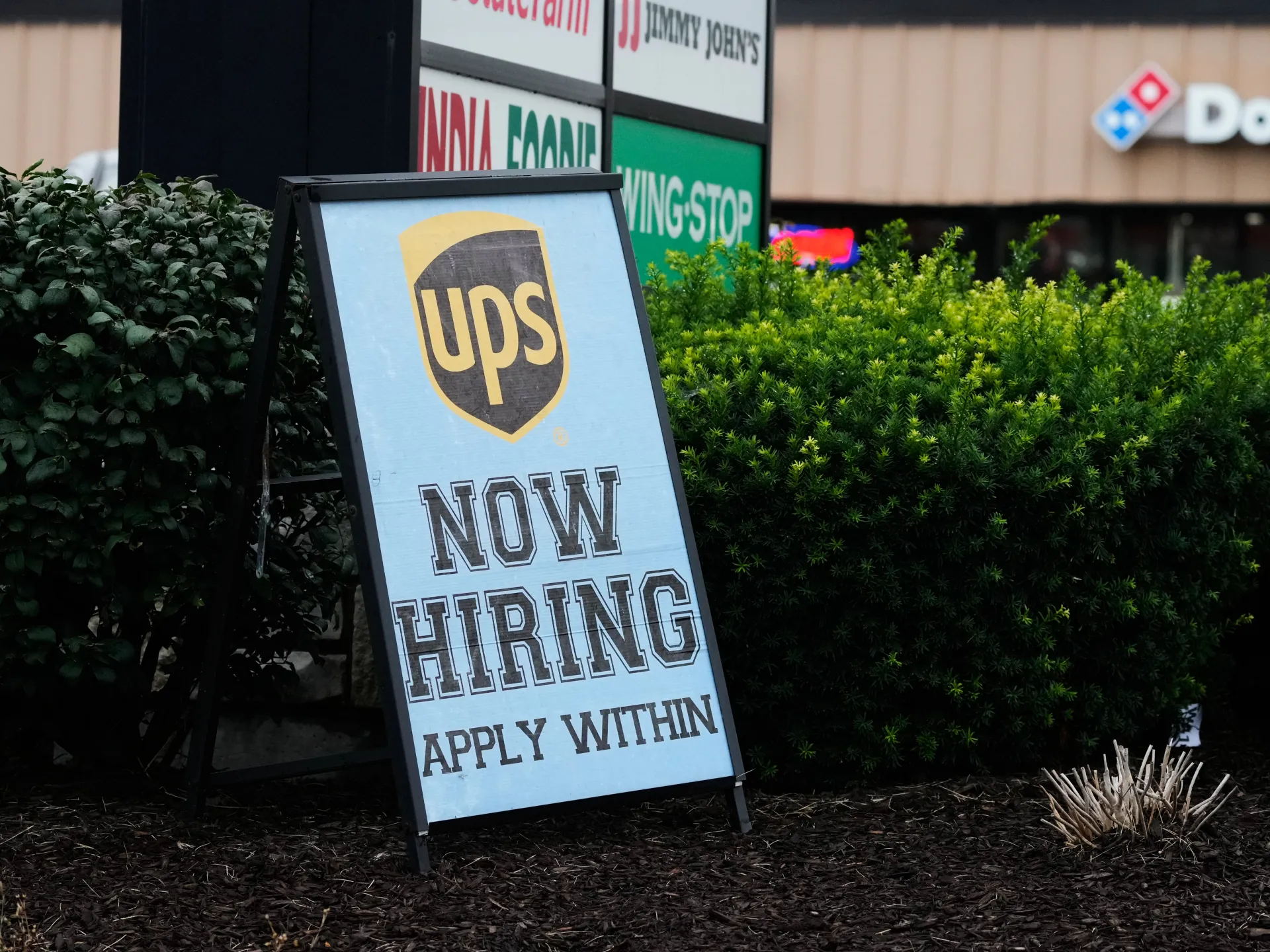
Job growth in the United States slowed in September, falling short of economists’ expectations as the unemployment rate rose in the final jobs report before the consequential midterm elections.
The US economy added 29,000 jobs in September, according to the Labor Department’s report released on Friday, far below economists’ expectations. Dow Jones had forecast 84,000 jobs, while economists polled by Reuters said they expected 90,000 job additions.
Recommended Stories
list of 3 itemsend of list
The unemployment rate also rose by 0.1 percentage point, from 4.1 percent to 4.2 percent.
The healthcare sector led the gains, accounting for the majority of new jobs. The industry added 17,000 jobs, marking a slowdown from an average of 33,000 jobs per month over the past year. Construction added 11,000 jobs, while manufacturing added 9,000.
Financial activities, which include sectors such as commercial banking and insurance, shed 7,000 jobs.
Most other sectors were largely unchanged, including retail, oil and gas extraction, and leisure and hospitality.
“Today’s disappointing report shows the labour market is grinding to a halt, marked by slow hiring and declining real wages that leave workers with very little leverage,” Kyle Moore, chief economist at the think tank The Century Foundation, said in remarks provided to Al Jazeera.
Previous jobs reports were also revised downward. July was revised from an initial gain of 21,000 jobs to a loss of 10,000 jobs. August was revised down by 29,000 jobs, from 162,000 to 133,000.
Wages grew by 3 percent, marking the slowest annual wage increase in five years.
Friday’s jobs report caps a week of weakening economic data before the consequential midterm election on November 3.
According to an AP-NORC poll released on Thursday, 61 percent of Americans polled said the US economy is worse off now than when Trump took office in January 2025.
“When businesses are barely hiring and raises aren’t keeping up with rising prices, it’s a stalled economy – and working families are stuck in it,” Breyon Williams, chief economist for Groundwork Collaborative, an economic policy think tank, said in a statement.
Trump has been trying to change the narrative on the slumping economy. On Monday, he said in a Truth Social post that “The United States has the BEST Employment Numbers in HISTORY.”
Stalling growth
On Tuesday, the US Labor Department released the Job Openings and Labor Turnover Survey, or JOLTS report, which showed little change, suggesting what economists call a low-hire, low-fire environment. That means those who have jobs are generally not leaving for new ones, while employers are maintaining the status quo rather than expanding.
On the other hand, ADP’s private payroll report, released on Wednesday, showed that 90,000 jobs were created across the private sector. The sheer number of layoffs fell, too, according to Challenger, Gray & Christmas. The report, released Thursday, showed that employers cut more than 43,000 jobs in September, marking an 18 percent decline in layoffs from August.
Friday’s jobs report comes before the Federal Reserve’s final policy decision before the midterm election. During its two-day policy meeting on October 27-28, the central bank will decide whether to raise, cut or maintain interest rates.
The odds increasingly suggest the Fed will hold rates steady in the 3.75-4.00 percent range, according to CME FedWatch, a tool that tracks the likelihood of monetary policy decisions. The FedWatch tool indicates there is currently a 77.3 percent chance that rates will hold steady, up from 35.8 percent this time last week.
US markets are trending upward on the heels of the report. The tech-heavy Nasdaq is up 1.5 percent, the Dow Jones Industrial Average is up 0.6 percent and the S&P 500 is up 1.1 percent in midday trading.
The price of gold, which is largely considered a safe investment during times of economic uncertainty, rose 1.1 percent to $4,223.49 amid the jobs report.
Judge Leibowitz’s decision underscores state jurisdiction over voter qualifications, limiting federal actions.
Published On 2 Oct 20262 Oct 2026
A United States federal judge has ruled that a law criminalising voting by noncitizens is unconstitutional, dealing a setback for President Donald Trump’s administration as it cracks down on alleged election fraud ahead of November’s midterm elections.
US District Judge David Leibowitz in Miami dismissed a federal case on Thursday against Chelsea Cox, a Florida resident originally from Jamaica who had been charged in October 2025 with illegally voting in the 2020 presidential election.
Recommended Stories
list of 3 itemsend of list
Leibowitz, who was nominated to the bench by former Democratic President Joe Biden, found that under the US Constitution, only individual states, not the US Congress, have the authority to set voter qualifications.
Since every state already requires US citizenship to vote, he wrote, it is up to Florida, not the Department of Justice, to prosecute Cox for breaking that rule. “Florida can and does,” he wrote, noting the state already has its own laws against the conduct Cox is accused of.
The ruling applies only to Cox’s case and it does not bind judges elsewhere, though about 45 similar cases remain pending nationwide. At least four other defendants have raised the same constitutional challenge.
Court filings show Cox entered the US as a tourist in 1999, overstayed her visa, and later used a fraudulent birth certificate from the US Virgin Islands, a US territory in the Caribbean, to obtain a Florida driver’s licence and register to vote in 2012.
Trump has falsely claimed that noncitizen voting, which is already illegal and rare, cost him the 2020 election, and has cast it as part of a broader effort by Democrats to dilute Republican support.
The Department of Justice has charged at least 60 people with the offence since Trump returned to office in January 2025.
Among 129 people charged with “voting by an alien” since 2021, none was accused of conspiring to sway an election, backing a candidate, or being paid to vote, according to Reuters. Most were found to be lawful permanent residents who had registered by mistake or on the incorrect advice of an election worker or government clerk.
Cox’s lawyer, Bruce Udolf, welcomed the ruling and said he hoped authorities would not now seek to deport her, citing her declining health conditions.
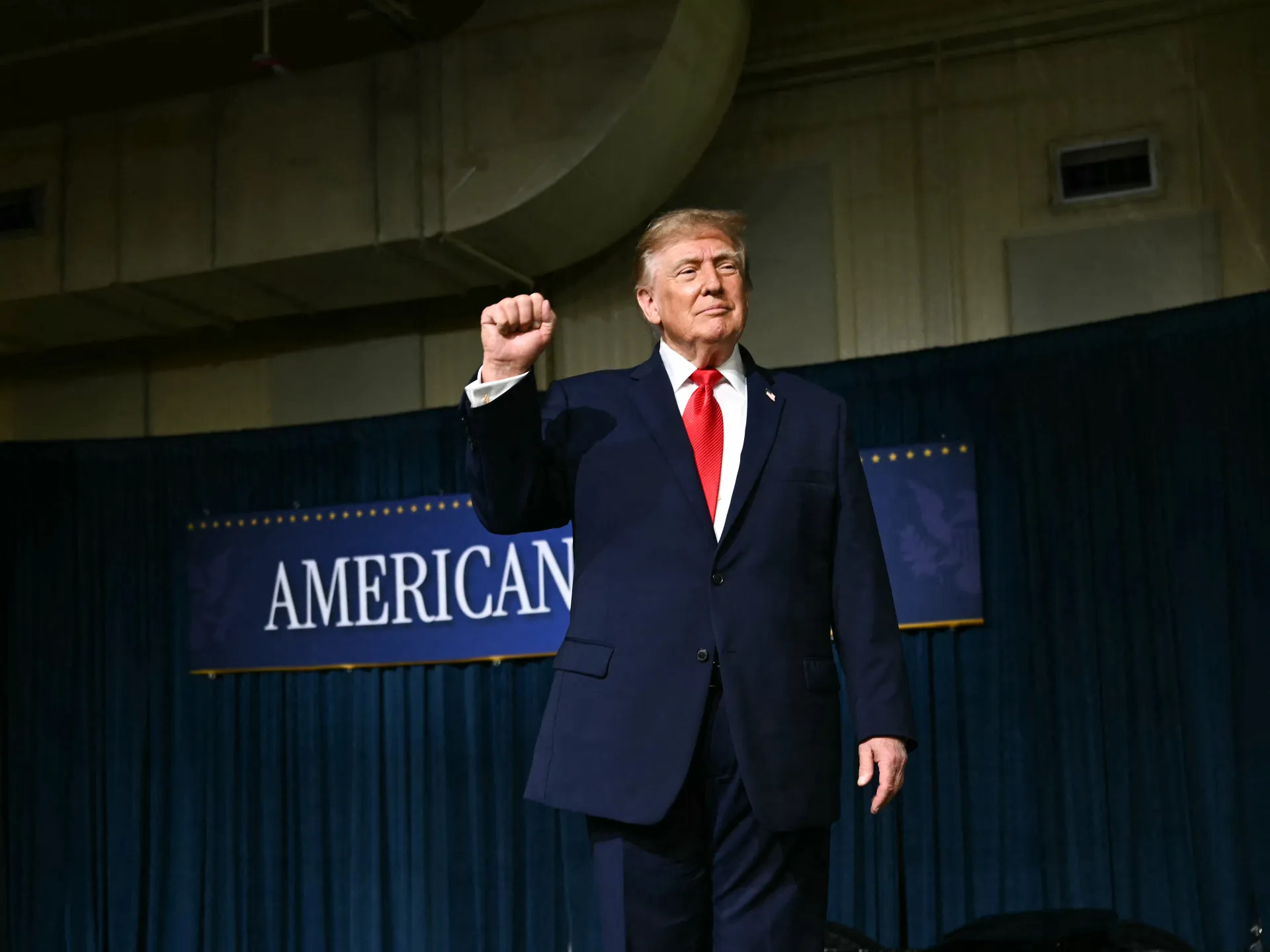
United States President Donald Trump has kicked off a 32-day campaign tour ahead of the November midterm elections that could see his Republican Party hurt by his handling of the war on Iran and the economy.
On Thursday, Trump travelled from Washington, DC, for back-to-back rallies in Texas and Oklahoma.
Recommended Stories
list of 3 itemsend of list
At his first stop in Denton, Texas, Trump sought to shift the narrative around his drooping approval ratings, offering a personal assessment of his administration’s performance.
“I give us an A+ on the government, on economics, on everything,” Trump told a crowd of supporters at the Peterbilt Motors Company, a truck manufacturer.
The president also blamed unfair media coverage for his growing unpopularity, arguing that his pre-election rally blitz was necessary to set the record straight.
“We’re doing an extremely poor job of promotion and an extremely great job of running the country,” Trump said.
But Trump’s poll numbers have raised concerns about Republican prospects ahead of the November 3 midterm election.
Trump himself is not on the ballot, but Republican candidates across the country are seeking to defend the right-wing party’s majorities in both chambers of Congress, as well as key state and local offices.
The economy and Trump’s war on Iran are expected to weigh heavily on the election outcome.
On Thursday, The Associated Press and the NORC Center for Public Affairs Research released new poll results showing that 71 percent of Americans disapprove of the war, which has driven up the price of fuel.
About half of survey respondents also said they were worried they would not be able to afford food and petrol. Only 26 percent approved of Trump’s handling of the economy.
Taking centre stage
Still, despite record low approval ratings, Trump has positioned himself as key to the Republican midterm strategy.
At a first-of-its-kind Republican midterm convention in September, Trump encouraged voters to consider his record while at the ballot box. “I’m asking you to pretend that I’m on the ballot,” he said.
During Thursday’s tour, he touted the impact of his tariff campaign, which he credited with creating thousands of manufacturing jobs.
“For decades, you were heartlessly betrayed by politicians, lousy politicians, who let foreign trade cheaters plunder your wages, loot your factories, close up your jobs,” Trump told Peterbilt workers. “They’d still be doing it if I wasn’t here, believe me.”
Trump’s tariffs, however, have been highly controversial, prompting a series of court challenges. Critics have argued that the sweeping import taxes surpass the president’s constitutional powers.
Trump also used his stump speech to ease concerns about the US-Israel war on Iran, which began on February 28. Both sides have declared victory, though a ceasefire remains elusive.
“Just as I promised, I’m ensuring that Iran will be very quickly ended. I will tell you the energy prices are going to be rapidly, rapidly coming down,” Trump said.
“We’ll win very easily right now,” he added. “I believe right after the election we’ll win, but maybe before the election.”
The war, however, resulted in Iran stopping commercial traffic through the Strait of Hormuz, a key waterway for the global fuel trade.
The price of diesel — the fuel the trucks built at the plant use — soared to record highs of more than $6 per gallon (3.8 litres) last week. Petrol prices have similarly skyrocketed.
Hurting or helping his fellow Republicans?
Trump, however, has acknowledged that the stakes are high for his presidency in the upcoming midterms.
All 435 seats in the House of Representatives are up for grabs, as are 35 seats in the 100-member Senate.
Losing Republican control of either chamber could create roadblocks for Trump’s legislative agenda during the final two years of his second term.
But Trump has also expressed concern that he could be impeached for a third time, after two prior impeachments during his first presidency.
At Thursday’s second stop, in Durant, Oklahoma, the Republican leader repeated that fear. “Pretend I’m running, please,” he told the crowd. “If we don’t win, they’ll end up impeaching me.”
Many of the places Trump is scheduled to visit this month are perceived as reliably Republican voting districts. Following his stops in Texas and Oklahoma on Thursday, Trump will be heading to Alabama, Ohio and Nebraska in the coming days.
Still, some elections that ordinarily would be considered shoo-ins for Republicans have grown more competitive in recent months.
In Texas, for instance, no Democrat has won a statewide race since the 1990s. But this year, Republican Ken Paxton, the state’s attorney general, is struggling to win a Senate contest against Democrat James Talarico.
During both of Thursday’s stops, Trump sought to bolster Paxton’s prospects. At the Peterbilt factory, for instance, he called Paxton “the greatest attorney general in the United States of America”.
“We gotta get this guy elected,” Trump said, before pivoting to criticisms of Talarico, whom Republicans have sought to paint as out of touch with Texas’s large beef industry.
“He’s a vegan,” Trump said of Talarico, repeating an unsubstantiated rumour. “And vegans don’t do well in Texas.”
But leaked audio appeared to show Paxton lamenting the negative impact Trump had by holding the Republican midterm convention in Texas last month.
Trump has nevertheless used his pre-election tour to highlight social issues he feels will help rally voters to the Republican cause.
On Thursday, he returned to familiar subjects like immigration and transgender rights, which he depicted as a part of the Democrats’ “radical” agenda.
“They want women in men’s sports. They want open borders. They want transgender mutilation for your children,” Trump said. “What the hell are you thinking about, you liberals?”
The president also used his Texas appearance to push back against critics of data centres, despite bipartisan concern.
Critics worry that the rapid growth of artificial intelligence (AI) has fuelled the proliferation of data centres, which require large amounts of electricity and water to process mass data quantities.
While Trump has dismissed fears about AI as largely unfounded, a poll last month found 53 percent of Americans are “extremely” or “very” concerned about the technology’s environmental impacts.
Even fellow Republicans in Texas are responding to public pressure about the growing number of data centres, more than 300 of which are operational, with hundreds more in progress.
In August, Governor Greg Abbott called for an audit of all data centres to map their water and electricity usage, and the following month, Paxton in his role as state attorney general launched an investigation into whether they were complying with water reporting requirements.
Trump nevertheless used his Texas rally to tout the expansion of such enterprises.
“It’s a huge thing. It’s bigger than the industrial revolution,” he said, dismissing the concerns as part of a “scam”. He then explained he had urged AI companies to “take care of the people”.
“They’re making a fortune for the communities,” he added.
Nearly 70 percent of Americans say the US-Israeli war is not worth fighting, marking a significant spike since July.
Published On 1 Oct 20261 Oct 2026
Approximately 70 percent of US adults in a new nationwide poll say the US-Israeli war has not been worth fighting, a five-point spike since July.
“Seventy-one percent of adults disapprove of how Trump is handling Iran and 69 percent say the war in Iran has not been worth fighting,” said the survey released on Thursday by The Associated Press-NORC Center for Public Affairs Research.
Recommended Stories
list of 3 itemsend of list
The poll, which surveyed more than 2,000 adults in the US, also suggested that Americans are deeply frustrated with US President Donald Trump’s handling of the economy and rising prices, with only 17 percent of US adults polled approving of his handling of the cost of living. Just 26 percent approved of his handling of the economy overall, marking a new low.
Public angst over fuel costs has surged, with about half of respondents now deeply concerned about being able to fill their tanks —up from 39 percent in July. Roughly half of respondents are also highly concerned about being able to afford food.
The data comes as Trump kickstarts his midterm campaign trail in an all-in effort to galvanise the Republican base, stumping first in Texas and Oklahoma amid widespread voter anxiety surrounding the war on Iran’s mounting economic fallout.
The poll also indicated that, despite their frustration, two-thirds of Republicans surveyed said that higher than usual prices are due to factors outside of Trump’s control, with about one-third saying it was directly related to Trump’s policies.
The sombre numbers suggest the president remains deeply unpopular nationally, with some Republicans also faulting him for failing to deliver on promised relief.
‘Pollsters are corrupt’
Overall, more than half of adult respondents said the national economy and the country as a whole are worse off since President Trump took office again in 2025.
In an interview with TIME magazine, published on Thursday, Trump was asked if the deeply unwanted war would threaten his party’s chances in November, to which he initially responded, “It’s possible,” before adding that “it should help, because Iran will not have a nuclear weapon.”
Confronted with sliding poll numbers, Trump said that the “pollsters are corrupt” and that the bad polls “are fake”, adding that he would beat anybody running today “by 20 points”.
Carney declared the pipeline a project of national interest, smoothening its way to a single federal regulatory review process.
Published On 1 Oct 20261 Oct 2026
Canada will fast track the approval process for a new proposed crude oil export pipeline to its west coast that could generate billions in revenue and boost economic growth, Prime Minister Mark Carney has said.
Carney made the announcement on Thursday to fast-track the pipeline, which is a crucial part of his bid to diversify the economy away from the United States and help lessen the effect of US President Donald Trump’s tariffs.
Recommended Stories
list of 4 itemsend of list
Carney said Ottawa is officially listing the Pacific Link pipeline, which had been announced in July, as a project of national interest. That will ensure it proceeds through a single federal regulatory review process. He said Ottawa aimed to complete the process by September 1, 2027.
“A pipeline to the west coast is part of our mission to transform our economy, to double our non-US exports over the next decade … [and] to unlock our full potential as a global energy superpower,” he told reporters in Fort McMurray, hub of Alberta’s tar sands industry.
Ottawa says the 1 million barrel a day project would create 140,000 jobs and generate more than 20 billion Canadian dollars ($14bn) in gross domestic product (GDP) per year and 100 billion Canadian dollars ($70bn) in government revenue by 2060.
Canada currently has just one east-west oil export pipeline in Canada, the 890,000-barrel-per-day Trans Mountain pipeline. An expansion of that pipeline was completed in 2024, but it is already running at capacity.
For years, Canada has sent more than 90 percent of its crude oil exports to the US via pipeline. A new oil export pipeline could make Canada a major global energy supplier, as Asia’s top importers seek oil from outside the Middle East in the wake of the Iran conflict.
Filling the pipeline, however, would require new tar sands expansions of the type no company has undertaken in more than a decade.
The pipeline will be built by government-owned Trans Mountain Corp in coordination with Pembina Pipeline Corp. Alberta estimates it could cost between 35.2 billion Canadian dollars and 43.7 billion Canadian dollars ($24.7bn – $30.7bn).
The majority owners will be the federal government and the government of Alberta. Indigenous communities will be offered a minimum of 10 percent ownership interest.
Previous oil pipeline projects in Canada have faced strong opposition from environmentalists and Indigenous groups, resulting in the cancellation of some projects and leading to cost overruns and construction delays with others.
Alberta separatism
Carney made the announcement alongside Alberta Premier Danielle Smith in Fort McMurray in the heart of Canada’s tar sands, a move meant to mend relations with oil-rich Alberta as separatists push for a referendum on leaving Canada.
Alberta is holding a public vote on October 19 on whether to hold a referendum on leaving Canada. Smith has long complained that Carney’s predecessor, Justin Trudeau, hindered Alberta’s energy industry and fuelled separatist sentiment.
Smith said she would vote to keep Alberta in Canada and called the roughly 22 percent support for separation in a recent poll “still too high for my liking”.
“I don’t like the fact that many of our fellow citizens have given up on Canada,” Smith said, adding that the pipeline was an example of how “cooperative federalism can work in action”.
Asked what message Albertans considering separation should take from the announcement, Carney said it demonstrated that “Canada is working” and showed what the country could achieve by acting together.
The case is the latest dispute over US President Donald Trump’s sweeping immigration crackdown.
Published On 1 Oct 20261 Oct 2026
The United States Supreme Court has agreed to hear a case focused on the Trump administration’s policy requiring millions of undocumented immigrants to remain in detention while they fight deportation.
The case, accepted on Thursday by the justices, is the latest dispute over US President Donald Trump’s sweeping immigration crackdown to reach the nation’s highest court.
Recommended Stories
list of 3 itemsend of list
At issue is whether migrants already living in the US have a legal right to a hearing where a judge can decide whether they should be released on bond from Immigration and Customs Enforcement (ICE) detention while their deportation cases are pending.
In July 2025, the administration introduced new guidance directing federal immigration authorities to detain undocumented immigrants without a bond hearing for the duration of their deportation proceedings, which can last for years.
The new policy, which has divided lower courts, reverses a decades-old interpretation that allowed some immigrants in the US to be released while their cases were pending in immigration court, according to Reuters news agency.
Most US federal appeals courts have ruled that immigrants cannot be detained without a bond hearing. But the 5th and 8th US Circuit Courts of Appeals have found that immigrants accused of illegally entering and remaining in the country must remain detained while their deportation cases proceed.
Trump administration attorneys told the Associated Press the split is “disrupting the orderly administration of immigration law”.
“The result is an unworkable patchwork of inconsistent immigration enforcement, where aliens present without admission are subject to mandatory detention in some circuits but are entitled to bond hearings and often released in others,” the lawyers wrote.
Millions could be affected
The Supreme Court case stems from a 2nd US Circuit Court of Appeals ruling involving Ricardo Aparecido Barbosa da Cunha, a Brazilian national who entered the US around 2004 or 2005.
Immigration officers arrested him in September 2025 while he was driving to work in the US state of Massachusetts. He was initially denied a bond hearing under the administration’s policy but was later released on bond, according to court documents cited by Reuters.
The American Civil Liberties Union (ACLU), which is representing the plaintiffs, told the Associated Press the Trump administration is trying to deny bond hearings for immigrants apprehended within the US rather than limiting the restriction to noncitizens stopped at the border.
“Millions of noncitizens could be affected by the government’s new interpretation,” ACLU attorneys wrote.
The Supreme Court is expected to hear arguments on Monday, when its new term starts.
TA419 hackers used deceptive tactics, impersonating real figures like a former White House AI official
Published On 1 Oct 20261 Oct 2026
Chinese hackers have been impersonating artificial intelligence (AI) experts in the United States, including a former government official, according to a new report from cybersecurity firm Proofpoint.
The report, released on Thursday, found that in July, a China-aligned hacking group called TA419 targeted a slate of US policy experts by impersonating prominent figures, including Lynne Edwards Parker, the former principal deputy director of the White House Office of Science and Technology Policy.
Recommended Stories
list of 4 itemsend of list
The hackers, who had been operating since April 2025, first sent otherwise harmless-looking emails intended to engage a target, such as requests to join an “AI Policy Advisory Committee”, and, once they responded, the target would be sent to a fake login page designed to steal their credentials.
The targets included policy experts at think tanks, defence contractors, universities and law firms in both the US and Japan.
The report used a technique that creates a fake browser pop-up window inside a legitimate webpage that mimics an authentic-looking sign-in prompt to deceive victims and make it harder for them to realise they are handing over their information to hackers.
Proofpoint did not specifically name the targets hacked, but the Reuters news agency was able to confirm at least one of them as Alex Engler, a former White House official who now heads the Penn Center on Media, Technology, and Democracy.
Engler told Reuters that he got one of the emails, but after checking with industry colleagues, he discovered that he had received the email from an impersonator.
In February, the same group was behind the impersonation of a “prominent” Anthropic employee in efforts to target AI policy experts. The cybersecurity firm behind the report believes that the group will continue to target think tanks and other policy experts and will continue to use the identity of real-world experts to do it.
Parker did not respond to Al Jazeera’s request for comment.
A medicine injected just twice a year could transform the fight against HIV.
In a 2024 clinical trial involving more than 2,000 young women in South Africa and Uganda, no participants who received lenacapavir contracted HIV.
Recommended Stories
list of 4 itemsend of list
Developed by United States pharmaceutical company Gilead Sciences, the injectable drug can be used to prevent HIV.
“It’s the most innovative tool that has reached the HIV arena for the last decade, because it’s the closest we have [to] a vaccine,” Carlota Baptista da Silva, global HIV lead at Doctors Without Borders (known by its French initials, MSF), told Al Jazeera.
The World Health Organization has recommended the long-acting injectable as an additional form of pre-exposure prophylaxis, or PrEP – medicine to reduce the risk of getting HIV.
But the arrival of the drug comes at a challenging juncture in the global fight against HIV.
International funding for HIV fell 18 percent in 2025, to $7.3bn, its lowest level in nearly two decades, according to the United Nations programme on HIV/AIDS (UNAIDS). The squeeze has already hit prevention programmes: The number of people receiving medicine to reduce risk fell from 1.4 million in 2024 to 1.1 million in 2025.
That makes the arrival of a highly effective, twice-yearly prevention option significant. The question of who can access it is now more urgent.
For MSF, the scientific question has largely been answered: lenacapavir can prevent HIV with remarkable efficacy.
The fight now is whether the rules governing manufacture, price and supply will allow that scientific breakthrough to reach the people who need it.
Why some countries are excluded
In the United States, lenacapavir costs about $28,000 per person annually. Generic versions are expected to cost about $40 a year.
A generic version is a copy of the original drug made by another manufacturer after the patent holder licenses the technology. It contains the same active ingredient, but it can be produced and sold at a much lower price.
In June 2025, the US Food and Drug Administration (FDA) approved lenacapavir for HIV prevention, giving people the option of an injection twice a year. But in several low- and middle-income countries, access to cheaper versions is not expected at scale until 2027.
Gilead is supplying its own version of lenacapavir at no profit for programmes supported by the Global Fund and the US President’s Emergency Plan for AIDS Relief (PEPFAR), with rollouts under way in countries including South Africa, Kenya, Zambia, Nigeria and Eswatini.
These are not the cheaper generic versions expected to cost about $40 per person a year. Gilead has licensed six manufacturers to produce those, with large-scale generic rollout expected in 2027.
At least 26 middle-income countries are excluded from Gilead’s generics agreement, MSF says, including countries with rising HIV infections and some that helped test the drug. Among them are Brazil, Mexico, Argentina and Peru.
“People should not really help generate the evidence for breakthrough medicine and then find that their country is excluded from affordable generic access,” da Silva said.
According to MSF, countries excluded from the licence accounted for close to 23 percent of new HIV infections globally in 2023.
Gilead has since announced a separate agreement with the Pan American Health Organization, creating an access pathway for 14 Latin American and Caribbean countries outside its generic licensing territory, including Brazil, Mexico, Argentina and Peru.
MSF argues that leaves those countries dependent on Gilead rather than able to automatically buy the cheaper generics.
MSF says it still cannot buy the drug
For more than a year, MSF says it has sought permission to purchase lenacapavir directly from Gilead for its medical programmes, without demanding a discounted price.
“Despite those requests, Gilead has not allowed MSF to purchase this medicine directly,” da Silva said.
That matters particularly in humanitarian emergencies, she argues. People displaced by conflict or disaster may struggle to take a prevention pill every day, while sexual violence and other vulnerabilities can increase the risk of HIV.
Daily PrEP pills are already available as an alternative to the injection. But unlike lenacapavir, they need to be taken consistently to provide protection. An injection offering six months of protection could be particularly valuable.
“People living through conflict [and] humanitarian crises cannot be the last in line for medical innovation,” da Silva said.
Gilead declined Al Jazeera’s request for an interview due to scheduling constraints. In its emailed statement, it said its access strategy combines no-profit supplies, royalty-free licensing and regional agreements. It didn’t reply to questions about why it won’t sell its drug to MSF, or why certain countries were excluded from its generics agreement.
The company plans to provide enough lenacapavir for up to three million people through 2028 as generic manufacturers scale up production, with large-scale generic rollout expected in 2027.
MSF says that is nowhere near the scale required, pointing to projections that close to 20 million people worldwide need access to PrEP to substantially reduce new HIV infections. That includes all forms of PrEP, not just lenacapavir.
But countries left outside Gilead’s generic licensing deal may have another option.
Can governments bypass the patent barriers?
World Trade Organization (WTO) rules allow governments, in some cases, to bypass a drug company’s patent so cheaper versions of a medicine can be made or imported without the company’s permission.
They can also authorise government use of patents and challenge patents they consider weak or unjustified. The 2001 Doha Declaration affirmed WTO members’ right to use such safeguards to protect public health.
Brazil has used them before in the fight against HIV. In 2007, after negotiations with pharmaceutical company Merck over the price of the HIV drug efavirenz failed, Brazil issued a compulsory licence allowing it to access cheaper generic versions of the medicine.
Nearly two decades later, activists are urging Brazil to consider using those powers again for lenacapavir if patent barriers prevent affordable generic access.
MSF says governments excluded from Gilead’s licence could consider those same legal safeguards for lenacapavir, including compulsory licensing, government-use authorisations and challenges to patents.
It is also calling on Gilead to ensure its agreements with generic manufacturers do not prevent them from supplying countries where patent barriers have been removed through such measures.
For MSF, the stakes go beyond lenacapavir. The way the drug is made available could determine whether one of the greatest advances in HIV prevention in decades reaches people based on need, rather than where they live or what their health systems can afford.
“For a humanitarian medical organisation, we should not have to spend more than a year trying to find a way to buy a WHO-recommended medicine,” da Silva said.
Witnesses say Tennessee officials were unable to execute Christa Pike after a lethal injection attempt.
Published On 1 Oct 20261 Oct 2026
Officials in the United States have failed to put a Tennessee woman to death for a murder she committed in 1995, after the lethal injection was halted for hours as courts considered a last-minute appeal to stay her execution.
Christa Gail Pike, 50 had been scheduled to die on Wednesday for a killing she committed at age 18, after the US Supreme Court overturned an appeals court ruling that stopped the lethal injection just an hour before it was to start.
Recommended Stories
list of 4 itemsend of list
Her death would have been Tennessee’s first execution of a woman in at least 200 years.
Following the top court’s ruling, officials attempted to go ahead with the execution as planned and appeared to give Pike two doses of the sedative pentobarbital, according to media witnesses.
At 7:46pm local time, prison officials closed the curtain separating Pike from the media viewing room. It was raised three minutes later, when witnesses said Pike could be heard loudly snoring.
The curtain was closed again at 8:06pm. Witnesses continued to hear Pike snoring until the microphone was switched off at about 8:53pm, when they were told to leave the area. The Associated Press news agency reported that emergency vehicles were seen coming and going from the prison.
The Tennessee Department of Correction did not immediately explain why the execution had not been completed.
Supreme Court ruling
Pike had initially been scheduled to die on Wednesday morning, and witnesses had already gathered at the Riverbend Maximum Security Institution in Nashville when the 6th Circuit US Court of Appeals voted 2-1 to issue a stay.
The appeals court said a delay was needed to consider whether Pike’s allegations of childhood sexual abuse were fully considered during her sentencing.
Later on Wednesday, the Supreme Court cleared the way for the execution to proceed. Its conservative majority did not explain the decision, while the three liberal justices dissented.
Justice Sonia Sotomayor wrote that vacating the stay “unnecessarily prevents” the appeals court from giving due consideration to Pike’s claim.
Tennessee’s attorney general had argued that delaying the execution traumatised the family of Pike’s victim, Colleen Slemmer, and rewarded what it called “abusive delay tactics”.
1995 killing
Pike and her boyfriend, Tadaryl Shipp, were convicted of the fatal stabbing and beating in 1995 of 19-year-old Slemmer, their classmate at a job training facility in Knoxville.
Shipp was 17 when the crime happened and received a sentence of life in prison with the possibility of parole. Pike was the only one sentenced to death.
Pike does not deny committing the killing, but her supporters argue the state should consider her age at the time, her mental illness and her allegations of severe sexual abuse, including that she was raped from early childhood.
“It is inconceivable that in the 21st century, the criminal justice system is poised to execute a survivor of rape and child sexual abuse whose jury never had the opportunity to consider those facts in weighing the defendant’s moral culpability,” her lawyers wrote in a filing.
After the killing, Pike was diagnosed with bipolar disorder and post-traumatic stress disorder. In her clemency petition, she said she had initially intended to fight Slemmer but killed her in a frenzied attack when she could not “put the brakes on”.
“I was a mentally ill 18-year-old kid. It took me numerous years to even realise the gravity of what I’d done. Even more to accept how many lives I affected. I took the life of someone’s child, sister, friend. It sickens me now to think I had the ability to commit such a crime,” Pike said in a statement.
Slemmer’s mother has said she wants Pike’s death sentence carried out after waiting decades for the execution.
Tennessee has not executed a woman for at least 200 years, according to the Death Penalty Information Center.
Since the Supreme Court reinstated the death penalty in 1976, 18 women have been executed in the US, representing about 1 percent of all executions, according to the centre.
US Secretary of Defense Pete Hegseth says he’s firing 20% of the military’s generals and admirals, as part of his ‘anti-woke’ overhaul. He also announced a new technology-focused warfare division co-led by Elon Musk.
Mammoth deal has raised questions about corporate consolidation and editorial independence in media.
Published On 30 Sep 202630 Sep 2026
A United States judge has entered an order giving the green light for the media giant Paramount to complete its $110bn acquisition of entertainment company Warner Bros., despite fears about the long-term impacts of media consolidation.
On Wednesday, US District Court Judge Araceli Martinez-Olguin approved a settlement between Paramount, Warner Bros, and a group of 12 states that had sued to block the merger.
Recommended Stories
list of 3 itemsend of list
In her ruling, Martinez-Olguin described the proposed deal as a “fair, reasonable, and good faith approach to address the competitive harms”.
Analysts have long raised concerns about the acquisition, one of the largest media mergers in history.
The coalition of states that sued to block the deal, led by California, had argued that combining Paramount with Warner Bros would effectively stifle media competition. They estimated that nearly one-third of all theatrical releases and basic cable programming would be consolidated under the merger.
But the states abandoned their lawsuit in favour of a settlement on September 21.
The five-year agreement requires Paramount to abide by theatrical film release quotas, committing to 30 releases per year in the US.
It also mandates that the combined company must keep negotiations with cable providers for Warner-owned channels separate from its deals for Paramount-owned channels.
The settlement approved on Wednesday also includes the creation of a five-member panel meant to safeguard the editorial independence of CNN and CBS, two major news networks.
But sceptics have pointed out that the merger puts a large swath of US media under the control of David Ellison, who leads Paramount.
Under Wednesday’s agreement, Ellison is in charge of appointments to the board that would oversee news independence.
The Paramount CEO is the son of billionaire Oracle founder Larry Ellison, a strong backer of pro-Israel causes who has close ties to the administration of President Donald Trump.
The founder of the film production company Skydance, David Ellison acquired Paramount last year as part of another controversial merger.
The 2025 Paramount-Skydance deal brought CBS under Ellison’s control. Ahead of the merger, sceptics questioned the abrupt cancellation of the CBS comedy show The Late Show with Stephen Colbert, which had been critical of Trump.
Ellison later installed Bari Weiss, a pro-Israel media figure, as the head of CBS News in a move that also raised questions about diminished independence within major journalism outlets.
Some critics depicted Wednesday’s settlement as a further capitulation to powerful corporate interests.
“Allowing one Trump-aligned, foreign-owned conglomerate to dominate American news and entertainment is a disastrous outcome,” Senator Elizabeth Warren of Massachusetts said in the wake of the settlement’s announcement.
But public officials like California Governor Gavin Newsom had called on his state’s Attorney General Rob Bonta to scrap the 12-state effort to block the deal and to pursue a settlement instead.
Paramount emerged victorious from a bidding war with the streaming giant Netflix in February to win control of Warner Bros’s holdings.
That includes a series of media and entertainment services, including the film studio Warner Bros Pictures, CNN and HBO Max. The Trump administration approved the deal without alterations in June.
Seven Minnesota judges face ethics complaint after speaking publicly about the US president’s immigration crackdown.
Published On 30 Sep 202630 Sep 2026
The United States Justice Department has filed a misconduct complaint against seven federal judges in Minnesota who spoke publicly about the pressure their courts came under during President Donald Trump’s immigration crackdown.
The judges spoke to The New York Times this month about dealing with a flood of cases during Operation Metro Surge, an immigration crackdown that led to thousands of arrests in the Minneapolis-St Paul area from December to February.
Recommended Stories
list of 4 itemsend of list
The Justice Department says it crossed an ethical line by talking publicly about the cases.
Attorney General Todd Blanche accused the judges of showing “obvious bias” against the Trump administration and called on them to step aside from any cases involving the Department of Homeland Security (DHS).
“When we have a situation like we have now, where you have a judge, a couple of judges, just not only violating the canons in our view but also showing bias in what they’re saying, we have no choice but to act,” Blanche told reporters.
The judges say they did nothing wrong. A spokesperson for Minnesota’s federal court system said legal experts had found that the judges were “well within the ethical rules” when they spoke to the newspaper.
The complaint is the latest in a series of clashes between the Trump administration and the judiciary, which has blocked some of the president’s policies and, in several cases, accused government lawyers of failing to follow court orders.
One of the judges named in the complaint, Patrick Schiltz, alleged that the government did not comply with nearly 100 court orders related to immigration enforcement in January alone.
In one ruling, he wrote that US Immigration and Customs Enforcement (ICE) “is not a law unto itself”.
Schiltz was nominated by Republican President George W Bush and previously clerked for conservative Supreme Court Justice Antonin Scalia.
He later told The New York Times that what happened in Minnesota’s federal courts during the crackdown “created a grave threat to the rule of law”.
Schiltz also pointed to guidance issued by a federal judicial ethics panel in February, saying that judges can speak publicly about issues such as the rule of law and judicial independence.
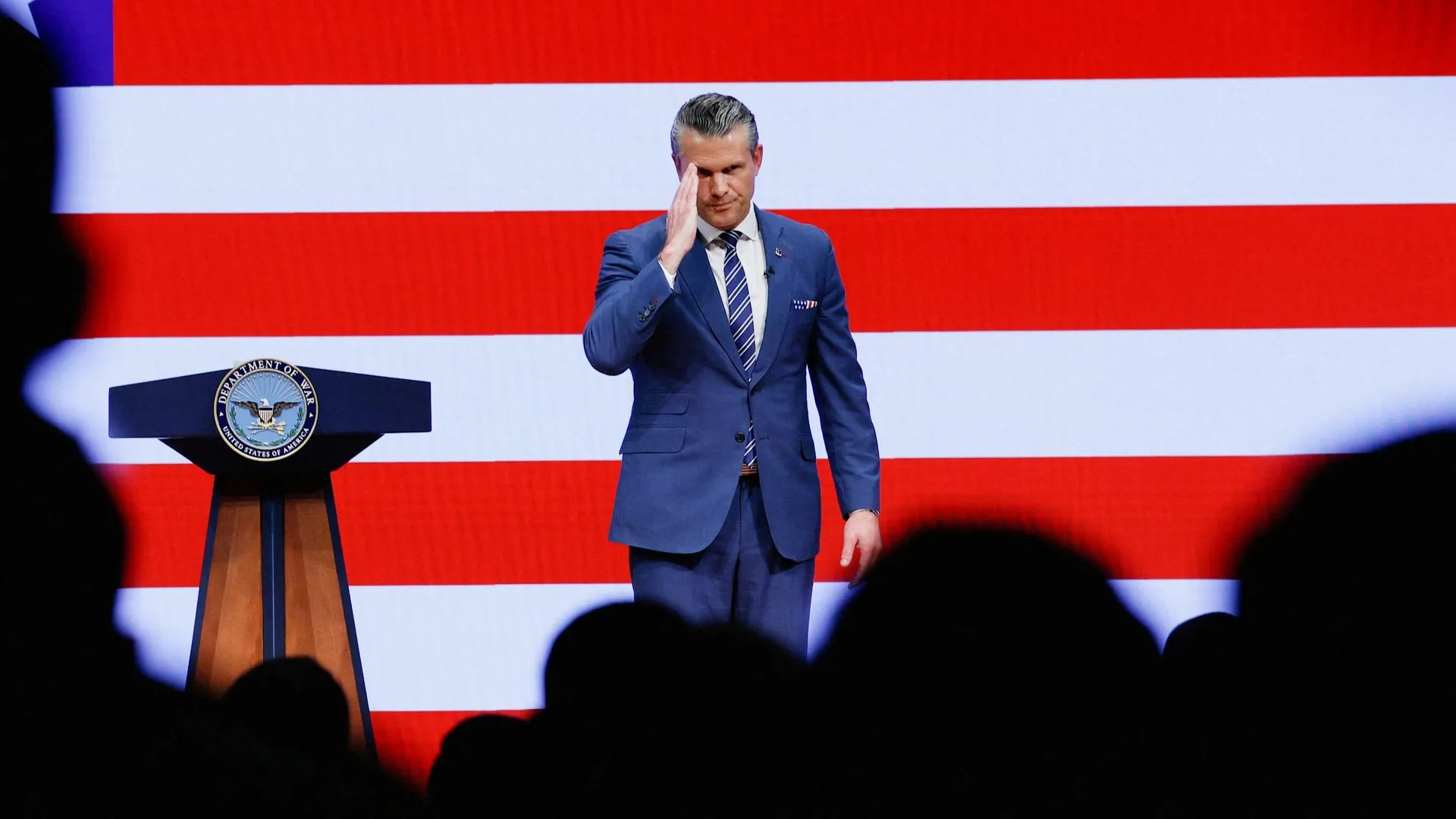
United States Defense Secretary Pete Hegseth plans to cut the number of positions in the US military reserved for generals and admirals by 20 percent, raising concerns about political interference in the military’s leadership amid strained relations with senior Pentagon officials.
An announcement is expected on Wednesday when Hegseth gives his “State of the Force” address to junior officers and enlisted personnel at Marine Corps Base Quantico in Virginia.
Recommended Stories
list of 4 itemsend of list
The Pentagon has presented previous cuts as a way to reduce bureaucracy. But analysts say Hegseth’s latest changes may be aimed at sidelining experienced commanders, discouraging dissent and appointing more officers loyal to President Donald Trump to the ranks.
So is the US military too top-heavy, and what could the cuts mean? Here’s what we know.
What is Hegseth planning?
Citing Pentagon officials, The Associated Press news agency has reported that Hegseth will double the 10 percent reduction in top-ranking personnel ordered last year, bringing the total decrease to 20 percent by January 1, 2027. The plan affects roughly 800 general and admiral positions across the one- to four-star ranks.
Congress sets statutory limits on the number of generals and admirals. A Congressional Research Service report recorded 848 active-duty generals and admirals in September 2025, below the authorised maximum of 857.
Cutting positions does not necessarily mean immediately dismissing everyone occupying them. An official told the Reuters news agency that some roles would be eliminated, while others would be assigned to lower-ranking officers.
Why are top-ranking military positions being removed?
The argument for reducing senior ranks predates Hegseth’s tenure, with supporters saying fewer layers of command would reduce administrative work and give officers closer to operations greater authority.
Walter Ladwig, a political scientist specialising in US foreign policy at King’s College London, said there is a credible case for reform. “Since the end of the Cold War, the overall size of the force has declined significantly, but we haven’t seen a corresponding reduction in the number of flag officers,” he told Al Jazeera.
“At the same time, we’ve seen headquarters and staffs proliferate.”
Trump and Hegseth have already fired or pushed into retirement more than two dozen military leaders since Trump took office in January 2025.
Those removed include General Randy George, the US Army’s top uniformed officer, in April, and Admiral Lisa Franchetti, the chief of naval operations, in February 2025. The administration also dismissed the only two women serving as four-star officers, alongside other senior female officers.
In February 2025, Trump also fired Air Force General CQ Brown as chairman of the US Joint Chiefs of Staff as part of a wider shake-up of top military leadership.
Other departures have been of civilian leaders. Army Secretary Dan Driscoll resigned in late August after reported disagreements over Hegseth’s handling of senior military personnel.
The dismissals, alongside blocked promotions, have raised questions about how the administration selects commanders and whether professional disagreements could jeopardise careers. Robert Ralston, a lecturer in political science and international studies at the University of Birmingham in the United Kingdom, said the proposed reductions should be weighed alongside these earlier decisions.
“These cuts appear to be part of a broader, sustained effort by Hegseth to fill the ranks based on political, rather than meritocratic, considerations,” he told Al Jazeera.
“Politics is driving these decisions, in my view.”
What political fallout could there be from this?
Democratic Senator Mark Kelly of Arizona criticised Hegseth’s changes at the Pentagon. “The US military doesn’t need more testosterone; it needs better leadership at this point,” Kelly told MS NOW’s Morning Joe programme last week.
“The consequences of firing all these admirals and generals are that we’re losing a portion, a good portion, of a generation of great leadership.”
David Galbreath, professor of war and technology at the University of Bath in the UK, told Al Jazeera that resistance from Congress and military leaders could complicate the changes.
He pointed to the opposition that arose to President Jimmy Carter’s plans to withdraw US ground troops from South Korea as an example of how military and congressional pressure can constrain a president.
“I suspect that after the election, we are likely to see a much more confrontational Congress with investigations and impeachments of Hegseth,” he said.
Whether that prediction comes true will likely depend on November’s congressional elections and whether the Republican Party retains control of both chambers of Congress.
What criticisms have been made of Hegseth?
Hegseth’s tenure at the Pentagon has been marked by controversy and tensions with senior officials. In March 2025, he shared details of forthcoming strikes on Yemen in a Signal chat group which inadvertently included The Atlantic’s editor-in-chief.
A number of US media reports about the dwindling supplies of weapons in the Middle East prompted his department to investigate leaks and restrict journalists’ access earlier this year. The New York Times reported in August that about 50 Joint Staff military and civilian officials had undergone polygraph tests amid growing mistrust inside the Pentagon.
Hegseth has meanwhile made ending what he calls “woke” culture a central priority, introducing new physical fitness requirements and abolishing diversity policies.
Ralston said the combination of dismissals and blocked promotions could damage morale and the military’s future leadership. “His relationship with senior military leaders has been adversarial, his scuttling of promotions has undoubtedly damaged morale, and will have long-term consequences for leadership pipelines within the Department of Defense,” he said.
King’s College’s Ladwig also described Hegseth’s relationship with senior Pentagon leaders as unusually confrontational but cautioned against interpreting every proposed cut as a power struggle.
“When a military is under civilian control, it means that the elected government has the right to determine defence priorities and reorganise the armed forces accordingly,” he said.
But Ladwig warned that the changes could encourage officers to hold back their professional recommendations when advising senior politicians. “That might create incentives for military officers to censor themselves rather than provide candid professional military advice, particularly if being politically aligned with the administration is seen as a path to success,” he said.
“This is a very worrisome pathology, and it’s the kind of thing that produces ineffective militaries in dictatorships.”
As Iran and the United States work with mediators to end seven months of hostilities, the reality in the Strait of Hormuz is shifting in ways that could prove to be a game-changer in ongoing negotiations.
According to the latest data from tanker-tracker websites, traffic through the key waterway has been steadily increasing, with some estimates putting oil and petroleum flow through the Strait of Hormuz at nearly 80 percent of what it was before the US-Israeli war on Iran began on February 28.
Recommended Stories
list of 3 itemsend of list
This could dent Iran’s leverage in reaching a favourable deal for itself in its attempts to end the fighting, which has seriously hampered its already heavily sanctioned economy, amid the US blockade of Iranian ships and ports.
Despite that, experts believe it would be a mistake to think normality in the Strait of Hormuz is imminent, or that Iran will fold easily despite growing economic hardship.
“The fact that oil is getting through the Strait of Hormuz is encouraging, but flows are not yet regarded as completely secure or guaranteed, particularly while the wider conflict remains unresolved,” Susannah Streeter, chief investment strategist at Wealth Club, told Al Jazeera.
Moreover, oil prices remain high globally, including in the US, where President Donald Trump faces a crucial midterm election that could see his party swept away in both houses of Congress.
Tanker insurance costs also remain elevated and energy flows through Hormuz are still far from secure, suggesting Iran’s leverage may be weakening rather than disappearing.
Oil flows through Hormuz recovering
The latest data from commodity analytics firm Kpler points to a significant recovery in oil exports from the Middle East.
Crude exports reached an estimated 16.328 million barrels per day (bpd) in September – their highest level since the war began in late February, the firm reported this week.
Flows through the Strait of Hormuz itself were expected to reach about 9.719 million bpd during the month. Saudi Arabia has driven much of the increase, with its exports rebounding from 2.446 million bpd in August to about 5.4 million bpd in September.
Kpler said Middle East crude exports have recovered to just under 80 percent of their pre-war level. But the figures remain about 3.2 million bpd below the 19.513 million bpd exported in February.
The data also does not include ships crossing Hormuz with their tracking systems switched off, meaning actual traffic could be higher.
Prior to the war, an estimated 120-140 vessels crossed through the waterway daily, roughly half of them oil tankers moving approximately 20 million barrels per day. At the height of the fighting, traffic through the waterway collapsed to as few as two tankers a day after Iran in effect closed the strait in retaliation for US-Israeli attacks.
Is Iran losing leverage?
The rebound in oil flow presents a challenge for Tehran. Iran has sought to use its ability to disrupt the Strait of Hormuz – one of the world’s most important energy chokepoints – as leverage against Washington’s military and economic pressure.
But if large volumes of oil can continue moving through the strait while Iran itself remains under a US naval blockade, Tehran’s bargaining power could diminish.
Iran, however, rejects any assessment that its control over the strait is slipping.
Islamic Revolutionary Guard Corps spokesperson Hossein Mohebbi on Tuesday said the ability of vessels to transit the waterway with US assistance did not mean Hormuz had returned to normal.
Oil prices are another indication that Iran has not lost all of its leverage.
Villagers stand near plastic containers at a fuel station to fill their water pumps, as India faces rising oil prices, in Halvad, Gujarat, India [File: Amit Dave/Reuters]
Brent crude fell 2.6 percent to $102.59 a barrel on Tuesday as traders focused on recovering Middle East exports. But it was still heading for a roughly 13 percent gain in September.
Chris Beauchamp, an analyst at IG, said markets were beginning to incorporate evidence of recovering flows but remained wary about how durable that recovery would be.
“It takes time for evidence to filter through to markets,” Beauchamp said. “Oil prices came off yesterday as the narrative began to take hold, and should continue to fall.”
But he said concerns persisted over whether the US protection system could withstand a renewed barrage of Iranian missiles and drones.
Streeter of Wealth Club said the market still had a geopolitical risk premium built into crude prices, despite the improving flows.
“Insurance costs for tankers also remain elevated because of the perceived risks of operating in the region, adding to the cost of transporting crude even as more ships make it through the waterway,” she said.
Moreover, Streeter warned that crude figures tell only part of the story. Flows of refined fuels, particularly diesel and gasoline, remain constrained, while damage to infrastructure has placed additional pressure on energy supply chains, she added.
There is another vulnerability, the investment strategist pointed out. Countries including the US have relied heavily on strategic oil reserves to cushion the impact of the disruption and help contain prices.
“With those stockpiles now significantly depleted, there is a thinner buffer if there is another disruption, which is helping to keep a floor under crude prices,” Streeter added.
‘Economic war’ on Iran
There is little doubt that economic pressure on Iran is intensifying, potentially increasing Tehran’s incentive to reach an agreement.
Official data from the Statistical Center of Iran earlier this month showed gross domestic product (GDP) contracting 10.1 percent year on year between March 21 and June 20, while the crucial oil and gas sector shrank 26.4 percent.
Iran has also been battling high inflation and a plunging currency as the US blockade constrains oil exports and foreign currency earnings.
Twelve-month average inflation reached 69.9 percent earlier in September, while the rial had fallen beyond 2.2 million to the US dollar in early September.
People shop at Tajrish Bazaar in northern Tehran, Iran [File: Abedin Taherkenareh/EPA]
In August, the US announced a fresh economic pressure campaign against Iran, promising to target Tehran’s financial interests across the world.
Mohammad Eslami, a research fellow at the University of Tehran, told Al Jazeera that Iran was facing an “economic war” alongside the military conflict.
“There is a US blockade of the Strait of Hormuz, which affects Iran’s revenues from oil exports and other products such as petrochemicals, which are important to Iran’s economy,” Eslami said. “As a result, Iran’s dollar revenues have been affected by the blockade.”
But he cautioned against judging Iran’s economy solely through the value of its currency.
“The exchange rate is a very important indicator, but it is not the only measure for explaining what is happening or the difficulties and challenges facing Iran’s economy,” Eslami said, adding that Iran has faced US economic pressure for “five decades”.
Can a deal be reached?
Despite the military and economic pressure, negotiations have not collapsed.
At the United Nations General Assembly last week, Tehran and Washington engaged in three hours of indirect talks, as US special envoys Steve Witkoff and Jared Kushner met with Iranian Foreign Minister Abbas Araghchi.
President Trump later described the encounter as “very good” and “very productive.”
Iran also proposed a seven-day roadmap under which the Strait of Hormuz could be reopened and normal maritime traffic restored if Washington meets Tehran’s conditions, a plan Trump categorically rejected.
Those conditions included ending the naval blockade on Iran, easing sanctions and releasing frozen Iranian funds.
However, on Wednesday, Reuters news agency reported that Araghchi had received US feedback on the proposal through Qatari mediators.
An official briefed on the talks said the main disagreement now centred on the sequencing of measures rather than the components of the plan.
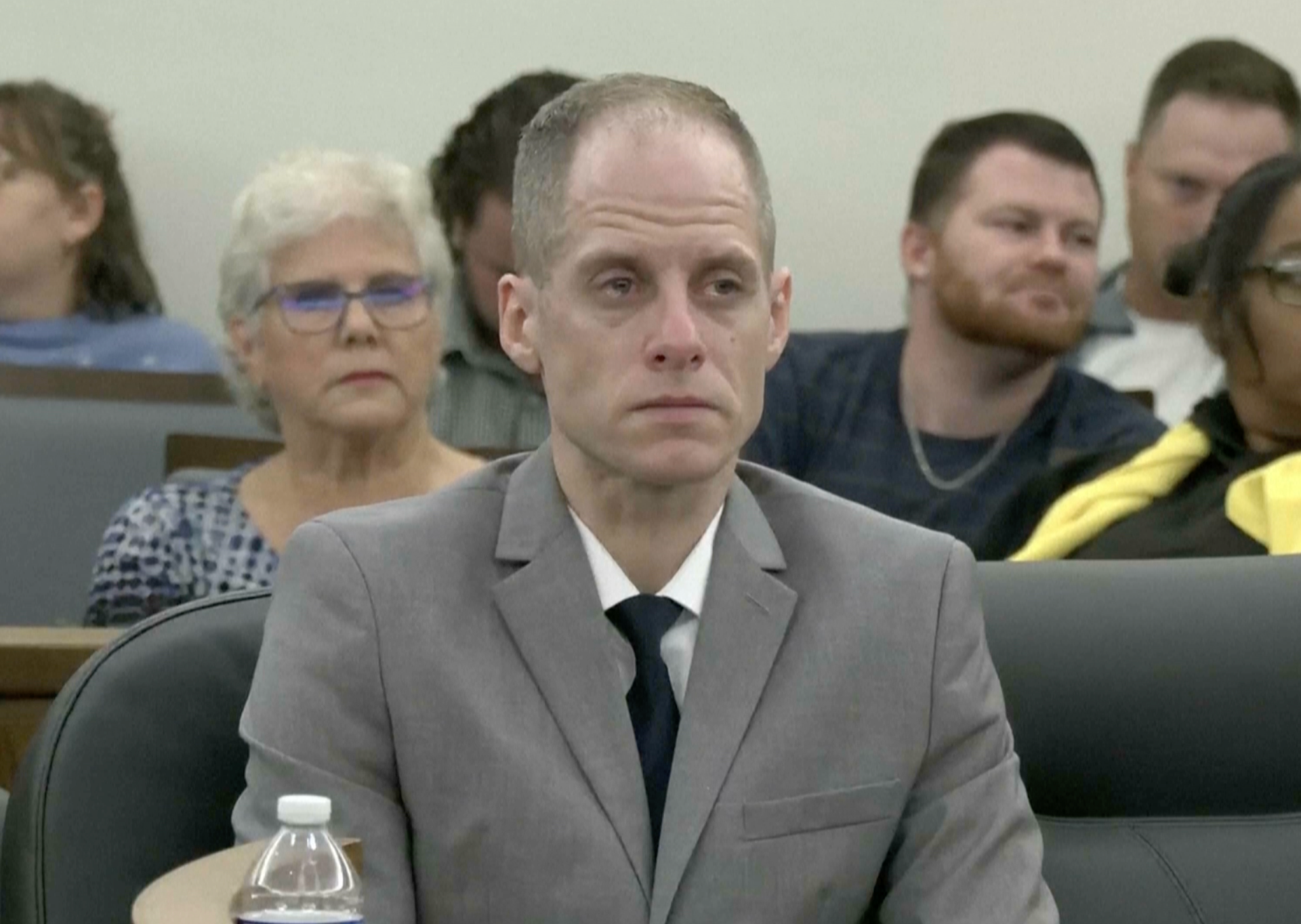
Former American Idol contestant Caleb Flynn has been found guilty of murdering his wife, Ashley, while he was having an affair. He will be sentenced on Monday and could get up to life in prison without the chance of parole.
The contest, which is in its 12th year, celebrates the resilience of the 2,200 brown bears that live in the preserve on the Alaska Peninsula.
Published On 30 Sep 202630 Sep 2026
After a week of fierce competition, Backpack emerged victorious as Fat Bear Week champion, the heftiest bear in Alaska’s Katmai National Park and Preserve.
The nonprofit running the longstanding contest announced on Tuesday that the bear, known for his pacifist nature, was the winner with more than 100,000 votes, giving him a close win over Bear 910 with just over 50 percent of the poll.
Recommended Stories
list of 3 itemsend of list
The contest, which is in its 12th year, celebrates the resilience of the 2,200 brown bears that live in the preserve on the Alaska Peninsula, which extends from the state’s southwest corner towards the Aleutian Islands. Fat Bear Week was started in 2014 as an interactive way to inform the public about brown bears, the coastal cousins of grizzlies.
Last year’s winner, Chunk — known officially as Bear 32 — clinched his victory at an estimated 1,200 pounds. He was handily defeated in the first round of competition this year by Bucky, who went on to lose a face-off against Backpack, known officially as Bear 89.
This September 9, 2026 photo provided by the National Park Service shows Bear 910 standing along the Brooks River in Katmai National Park and Preserve in Alaska [C. Loberg/National Park Service via AP]
The event this year featured 16 bears vying for the heavyweight title in a single-elimination, bracket-style tournament. All voting is done online, and the winner was declared on Tuesday evening after the final poll closed. The public could watch the bears on explore.org’s livestream cameras before deciding on their favourite.
“Fat bears are successful bears,” the nonprofit says on its website. These bears gorge themselves on the abundant salmon that return to the Brooks River starting in late June. It is there that they can stuff themselves to accumulate the fat reserves they will need to survive the winter. To be featured in the contest, the bears must frequent the area around the river.
Son of ex-champion
Backpack is the son of former Fat Bear Week champion Holly, who introduced him to the Brooks River when he was a first-year cub in 2006. His name was inspired by his habit of climbing onto his mother’s back when they swam the river. This year’s fans cheered on Backpack in the contest’s Instagram comments, noting his lineage and reputation as a gentle giant.
“Unlike many large adult male bears, Backpack hasn’t shown much aggression toward his competitors,” his contestant profile reads.
Backpack uses his “quiet strength” rather than brawling and is often seen in wildlife cameras sitting on a rock downstream, appearing to take in the scenery around him.
He defeated Bear 910, who is also the daughter of a former champion: 409 Beadnose.
Adult male brown bears typically weigh between 600 and 900 pounds (270-410kg) in midsummer. By the time they are ready to hibernate after feasting on migrating and spawning salmon, large males can weigh more than 1,000 pounds (454kg). Females are about one-third smaller. Bears may each eat as many as 30 fish a day this time of year, working hard to eat a year’s worth of food in about six months.
During winter hibernation, bears do not eat or drink and can lose one-third of their body weight.
Fat Bear Week’s contestants also included five bear families, in recognition of the record-high number of families and cubs at the river this summer. A mother must feed and protect her cubs while also eating enough calories to sustain herself through hibernation. Cubs often face the risk of attack from other bears due to territorialism or food scarcity.
Bear 132 and her three spring cubs advanced to the semifinals, but lost out to Bear 910.
She has become one of the largest and most experienced mother bears at Brooks River, according to her contestant profile. In mid-July, one of her cubs became separated from the family for several days, wandering the river corridor alone. The cub was reunited with the family a few days later.
US President Donald Trump and leading tech companies have signed a voluntary agreement to regulate AI that includes internal reviews and joint monitoring, but falls short of introducing concrete ‘guardrails’.
The resolution cites a ‘lack of accountability’ by Israel’s government and an ‘inability to secure justice’ by the US.
The United States Senate has blocked a resolution that would have required President Donald Trump’s administration to report on the killing of nine Americans in the occupied West Bank and on Israel’s treatment of Palestinian children in military detention.
The resolution failed 47-53 on Tuesday, with senators voting largely along party lines.
Recommended Stories
list of 4 itemsend of list
It was brought to the floor by Senator Chris Van Hollen, a Democrat from Maryland, and cited a “lack of accountability” from the government of Israeli Prime Minister Benjamin Netanyahu and an “inability to secure justice” from the US government.
Senator John Fetterman of Pennsylvania was the only Democrat to vote against advancing the resolution, while Senator Rand Paul, a Republican from Kentucky, joined Democrats in supporting it.
Van Hollen forced the vote under the Foreign Assistance Act of 1961, which allows individual members of Congress to demand a formal State Department report on the human rights practices of any country that receives US security assistance.
“Violence is raging in the West Bank, & despite the deaths of nine Americans, the wrongful detention of even more, & the daily torment of Palestinians, we have no accountability from the U.S. or Israeli govt”, Van Hollen wrote on X before the resolution was brought to a vote.
Nine Americans killed
The resolution called for an unclassified report within 30 days of adoption. It would have detailed investigations into the deaths of the Americans, the treatment of US citizens held in Israeli prisons, and the conditions facing Palestinian children in Israeli military detention.
The measure cited the deaths of nine American citizens in the occupied West Bank since January 2022, including Shireen Abu Akleh, a Palestinian-American journalist and Al Jazeera correspondent who was shot in the head and killed in May 2022 while reporting in the city of Jenin.
It also included Aysenur Ezgi Eygi, who was shot in the head and killed by an Israeli soldier in September 2024, and Sayfollah Kamel Musallet, who was beaten to death by Israeli settlers in July 2025.
The others were Amer Mohammad Saada Rabee, who was 14; Tawfic Abdel Jabbar and Mohamed Ahmad Alkhdour, both 17; Omar Assad; Khamid Ayyad; Nasrallah Abu Siyam; and Khamis Rabee Jabara.
The resolution also noted the arrests of several Palestinian-American children by Israeli forces.
Among them was Mohammed Ibrahim, a 16-year-old from Florida, who was arrested in February 2025 and held in pretrial detention for nine months without contact with his family. It noted that US embassy officials and lawyers who met him told his family that he had lost nearly a quarter of his body weight, contracted scabies, and was beaten and tortured.
Other Palestinian Americans who remain in custody include Adam Wajeh Abdelfattah Karakrah, 16, and Sama Safi, 20, a student detained in June in raids targeting students at Birzeit University.
The resolution cited rights groups that have documented the deaths of at least 44 Palestinians in Israeli military camps since the Hamas-led attacks of October 7, 2023. Those groups, it said, have documented widespread abuses, including beatings, sexual violence, harassment and threats, “pointing to systemic and deliberate mistreatment”.
It also went on to note a sharp escalation in Israeli settler pogroms in the occupied West Bank, and stressed that there have been no convictions for the killings of Palestinian civilians by Israeli settlers since 2020.