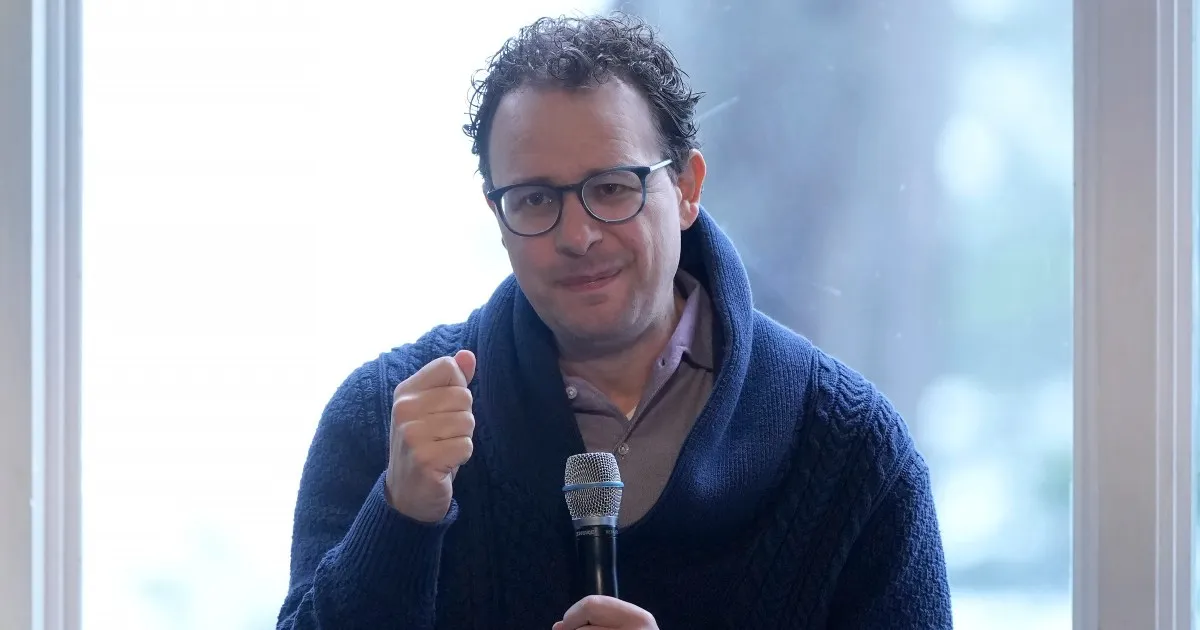
Rising goods and fuel costs are cited as key factors in the sharp drop in consumer confidence.
Published On 29 Sep 202629 Sep 2026
United States consumer confidence has fallen to its lowest level since 2014, just over one month before the congressional midterm elections.
Consumers pointed to higher costs for goods and services as the primary reason for the decline, according to The Conference Board, which released its monthly report on Tuesday.
Recommended Stories
list of 4 itemsend of list
“The Consumer Confidence Index deteriorated notably in September, following two prior months of softening,” Dana M Peterson, chief economist at The Conference Board, said in a release announcing the report.
Consumers pointed to higher prices at the pump as one of the driving factors. The average price for a gallon (3.78 litres) of petrol has jumped 37 cents over the past month, according to the American Automobile Association (AAA), which tracks daily petrol prices. The average price stood at $4.45 on Tuesday, compared with $4.08 a month ago.
“Oil and gas prices in particular rose to new heights, reflecting September’s surge in fuel costs. Comments about war/conflict eased this month but remained elevated,” Peterson said.
The consumer confidence report comes a day ahead of a key inflation report that the Federal Reserve uses to gauge the state of inflation, the personal consumption expenditures (PCE) index, which was up 3.7 percent in June from a year earlier.
The US central bank raised interest rates for the first time in three years earlier this month, driving up costs of credit cards and car and bank loans. It is set to make another decision on interest rates at its October 27-28 meeting, putting pressure on Republicans as consumer sentiment tumbles across political affiliations.
Consumer confidence fell among all political affiliations, according to the report, the second-to-last major consumer confidence reading before the midterm elections, which will determine the balance of power in Washington, DC.
US consumers think the Democratic Party would handle the economy better than their Republican counterparts, with 42 percent saying Democrats would do a better job compared with 34 percent for Republicans, according to a recent Marist poll.
US markets are only slightly lower as the trading day comes to a close. The tech-heavy Nasdaq closed down 0.08 percent, the Dow Jones Industrial Average declined 0.2 percent and the S&P 500 was down 0.1 percent.
The high court grants an emergency petition ahead of expected arguments in the case, slated for December.
The United States Supreme Court has allowed President Donald Trump’s administration to continue third-country deportations, halting a lower-court ruling that paused such removals over questions of due process.
On Tuesday, the high court granted the administration’s emergency request to resume the deportations, which involve sending immigrants to countries they may have no connection to.
Recommended Stories
list of 3 itemsend of list
The court’s order was unsigned, as is typical for an emergency petition. It also does not include an explanation or a list of how the justices voted.
But at the bottom of Tuesday’s order, the court’s three left-leaning justices – Sonia Sotomayor, Ketanji Brown Jackson and Elena Kagan – indicated they would have denied the Trump administration’s petition.
The Supreme Court’s decision to pause the lower court ruling is temporary. The order calls for arguments to be heard in December.
That hearing comes as Trump administration continues its appeal against the lower court’s ruling, handed down by Judge Brian Murphy in Boston, Massachusetts.
Murphy had ruled that immigrants must be given a “meaningful” chance to raise safety concerns before their removal to third-party countries.
In pausing such deportations, Murphy indicated that some immigrants may have been denied the opportunity to challenge their deportations as part of their due process rights.
Tuesday, however, is not the first time the Supreme Court justices have weighed in on the practice of forcibly sending people to third countries, which Trump dramatically stepped up since his return to office in 2025.
Trump campaigned on a pledge to implement the “largest deportation operation in American history”, and his officials have argued that third-country deportations are a means of removing individuals whose home countries may not accept them.
In June 2025, the Supreme Court also issued an unsigned order allowing such removals to proceed.
That cleared the way for eight men, including nationals of Cuba, Myanmar and Vietnam, to be deported to South Sudan, a country the US State Department advises against visiting because of “crime, kidnapping, and armed conflict”.
The Department of Homeland Security at the time called the removals “a win”, while rights groups said the move flouted basic legal protections.
Critics have expressed concern that many of the governments receiving third-country deportations have a record of human rights abuses.
Third-country deportations have been used to bypass court protection orders that prevent immigrants from being sent back to their home countries due to fears of persecution.
But advocates say that some of those third-party countries have ultimately sent deportees, including asylum seekers, back to the places where they feared they would be at risk of torture or other harms.
At least 35 countries have signed agreements with the Trump administration to take in the third-country nationals, according to a tally by the nonprofits Refugees International and Human Rights First.
The groups estimate that more than 25,000 people have been subject to third-country deportations so far.
On Monday, human rights experts at the United Nations wrote to the US government urging a halt to such removals, warning they were putting deportees at heightened risk of abuse.
“At gravest risk are children, women, persons with disabilities, victims of trafficking, LGBT persons, human rights defenders, stateless persons and other people in extremely vulnerable situations,” the experts said.
On Tuesday, Burundi became the latest country to enter an agreement with the US to take non-citizen deportations.
Officials said the country would only take in people who were not facing prosecution and had no links to “terrorism”.
Trump retaliated against Canada’s counter-tariffs on $20bn worth of US imports by banning $1bn of Canadian goods.
Published On 29 Sep 202629 Sep 2026
The United States is implementing a ban on nearly $1bn in imports from Canada, including alcoholic beverages, dairy products and motorcycles.
The ban took effect early Tuesday and is likely to further strain already-tense relations between the two neighbours.
Recommended Stories
list of 4 itemsend of list
Ottawa and Washington DC have long been allies and trade partners, with approximately $880bn worth of annual two-way trade. That relationship has been upended during US President Donald Trump’s second term as he unleashed tariffs on most trading partners, including Canada, and referred to the northern neighbour as the 51st state of the US.
Most recently, the US slapped 50 percent levies on Canadian goods worth $20bn, including dairy and motorcycles, on August 22 after trade negotiations failed. Canadian Prime Minister Mark Carney retaliated, saying Ottawa will match US tariffs “dollar for dollar in order to protect Canadian workers, farmers, families and businesses”. Canada levied tariffs of 15 percent, 25 percent and 50 percent on US exports of a similar value.
Tuesday’s ban was Trump’s punishment for Canada’s retaliatory tariffs.
“The impact of such a ban will be minor, it is only $1bn while we trade hundreds of billions with Canada,” Professor Gary Shields at Wayne State University’s School of Business told Al Jazeera. “It is, however, rather astonishing how President Trump treats our allies in Canada and Europe, while rolling out the red carpet for China’s dictator when he visited the US last week”.
“It is a tit-for-tat. It will not reduce people’s taxes and won’t put money in their pockets. It is kind of personal and a way of showing off toughness,” Shields added.
Canada’s economy grew by an estimated 0.2 percent in August after remaining unchanged in July, according to Statistics Canada. But the new US-Canada tariffs, tighter financial conditions and a shrinking population should further weaken growth in late 2026 and early 2027, Michael Davenport, senior Canada economist at Oxford Economics, said in a note provided to Al Jazeera.
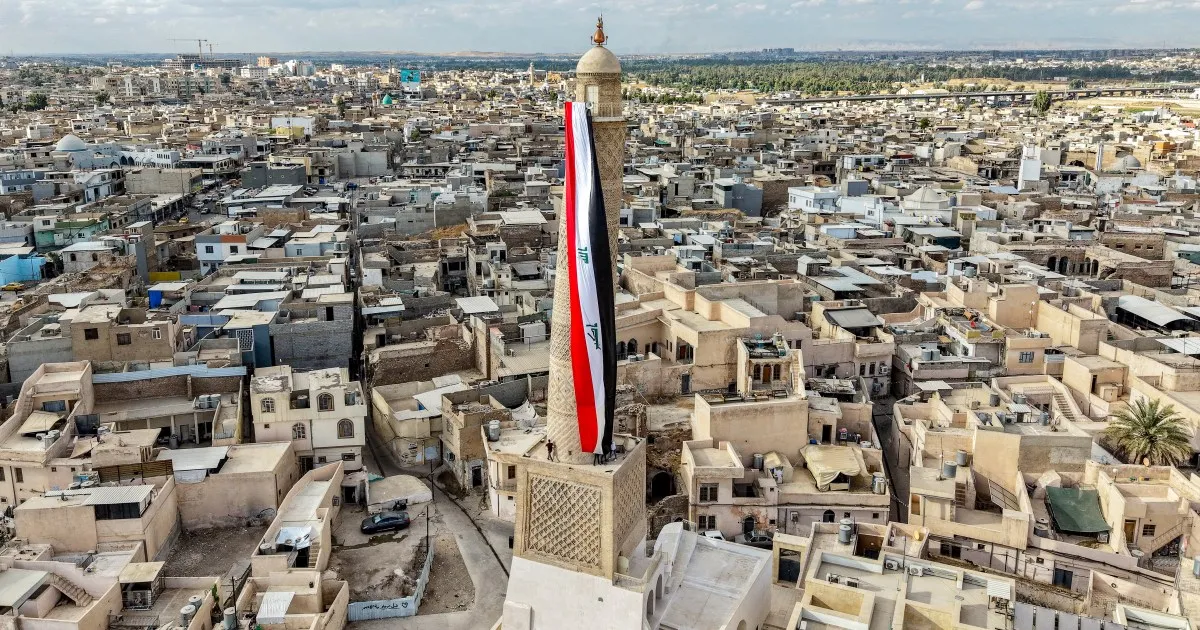
More than two decades of US military presence in Iraq comes to an end.
The last remaining US troops have left Iraq. The US military was first deployed to Iraq back in 2003 to depose its leader, Saddam Hussein.
It later faced a series of crises that ensued after the ousting of Hussein. Iraq became embroiled in a cycle of violence that considerably weakened the country.
While the US may have prevented the collapse of the state, it’s also accused of contributing to the subsequent chaos that engulfed it.
The Iraqi government will now be dealing with a new reality.
Is it up to the job? And who stands to gain from the US finally leaving Iraq?
Presenter: Dareen Abughaida
Guests:
Ahmed Rushdi – President of the House of Iraqi Expertise Foundation.
Kenneth Katzman – Senior fellow at The Soufan Center specialising in Middle East geopolitics and US foreign policy.
Abdullah Alshayji – Professor of political science at Kuwait University specialising in US politics and Gulf security.
America.gov for now functions like a chatbot comparable to ChatGPT or Claude, pointing users to official gov’t websites.
Published On 29 Sep 202629 Sep 2026
The administration of United States President Donald Trump has launched a new website called America.gov aimed at simplifying access to government information.
The website functions much like a chatbot comparable to OpenAI’s ChatGPT and Anthropic’s Claude and points users to official government sources for questions such as passport renewals.
Recommended Stories
list of 3 itemsend of list
The president announced the new site on Tuesday alongside several Cabinet officials, including Secretary of State Marco Rubio and Transportation Secretary Sean Duffy.
In a speech, the president claimed that the website would not store user information and used the opportunity to tout simplified access to information about elections and applications for citizenship.
The site is powered by Google’s Gemini AI and xAI’s Grok, according to the chief design officer, Joe Gebbia.
The executive order announcing the new site calls it “a unified digital front door to the Federal Government for every individual in the United States seeking Federal information or services”.
It also says the site will provide “an entry through which an individual may sign in, communicate in plain language, receive accurate answers, and, where authorized and technically available, complete Government transactions without being required to navigate the websites of multiple agencies.”
White House officials told Al Jazeera that the website will abide by the security protocols of the government agency users inquire about, and it will be retained by those agencies and not America.gov, for example, Medicare.
Al Jazeera tested the answers the website provides to see how they align with the president’s views.
When asked “who is the fake news?”, it said, “I don’t label news outlets or comment on media.” When asked who won the 2020 presidential election, it said Joe Biden. When asked whether the department in which Pete Hegseth is secretary is the Department of Defense or Department of War, it said, “Department of Defense (DoD). That is still the name in statute until Congress changes it.”
When asked about obtaining specific records, such as individual tax information, citizenship records, political donations or Securities and Exchange Commission filings, it directed users to the government websites that provide that data for individuals.
However, in the presentation announcing the new site, Rubio showed that, in the future, the website may be able to help Americans apply for passports directly through the site and even take and upload their passport photos.
The website was created in coordination with the National Design Studio, which is part of the Executive Office of the President and was established by Trump in August 2025.
Indirect talks between the United States and Iran aimed at ending the seven-month-long war continue – most recently via Qatar as mediator on the sidelines of the United Nations General Assembly (UNGA) in New York – but the two sides still disagree about the agenda.
Iranian Foreign Minister Abbas Araghchi left New York on Tuesday after telling state-run Islamic Republic of Iran Broadcasting (IRIB) that he expects an official response to Tehran’s proposal to reopen the Strait of Hormuz by the end of the day. The proposal, which Iran said would see the strait reopened within seven days, was first passed to the US via Qatari mediators last week.
Recommended Stories
list of 3 itemsend of list
United States President Donald Trump was reported to have rejected that offer, under which Tehran would reopen the strait in return for Washington lifting its naval blockade, waiving sanctions, releasing an estimated $12bn in frozen Iranian assets and enforcing a wider regional ceasefire that includes Lebanon.
Under Iran’s proposal, wider peace talks, including discussions of its nuclear programme, would begin only then
Despite Trump’s public rejection, Araghchi says he has not yet received a formal response from Washington. Meanwhile, US media reports that Trump may well be willing to relax sanctions and unfreeze Iranian assets have been strongly denied by the US president.
Instead, US officials say, the US wants a deal that resolves all outstanding issues, particularly Tehran’s nuclear programme, in one go, rather than pursuing a gradual, step-by-step approach.
Here’s what we know about the talks:
Qatari mediators met Araghchi in New York on Monday to discuss how to advance Tehran’s proposal for reopening the Strait of Hormuz and then progressing to wider peace talks.
In a post on Telegram, Araghchi insisted that the talks focused solely on the Strait of Hormuz. He denied that the US had formally rejected the Iranian proposal.
“Despite what the US president said, I said that we were waiting for the official US response through the mediators … They [Qatar] had ideas, and we discussed them. They are going to raise this issue with the American side again, and then the final response from the American side will be conveyed to us through the Qatari mediator,” Araghchi said late on Monday.
Araghchi also said negotiations had become more “serious”, but cautioned that Tehran’s position has not changed.
“I state firmly that there has been no change in Iran’s position. Our conditions for opening the strait are clear. Our position on other issues is also clear. At present, there has been no discussion at all about flexibility,” he added.
Tehran’s proposal includes elements of the Islamabad memorandum of understanding (MoU), which was signed by both the US and Iran on June 17.
Is Trump willing to accept some Iranian demands?
A US official told The Associated Press news agency last week that Trump is not willing to make a final peace deal with Iran until the issue of its nuclear programme is addressed. According to the official, who has not been named, the US president would be willing, however, to grant Iran sanctions relief and release some frozen funds if progress is made on the nuclear file.
Then, on Monday, US-based news outlet Axios also reported that Trump had offered Iran sanctions relief in return for concessions on its nuclear programme. The report also cited US officials, one of whom told Axios that the indirect talks had been “positive and constructive”, adding that Tehran had indicated it was “flexible” on nuclear issues.
Trump, however, angrily denounced the story as a “hoax” in a post on Truth Social, the social media platform he owns. He said the story was “not true” and demanded Axios remove the article.
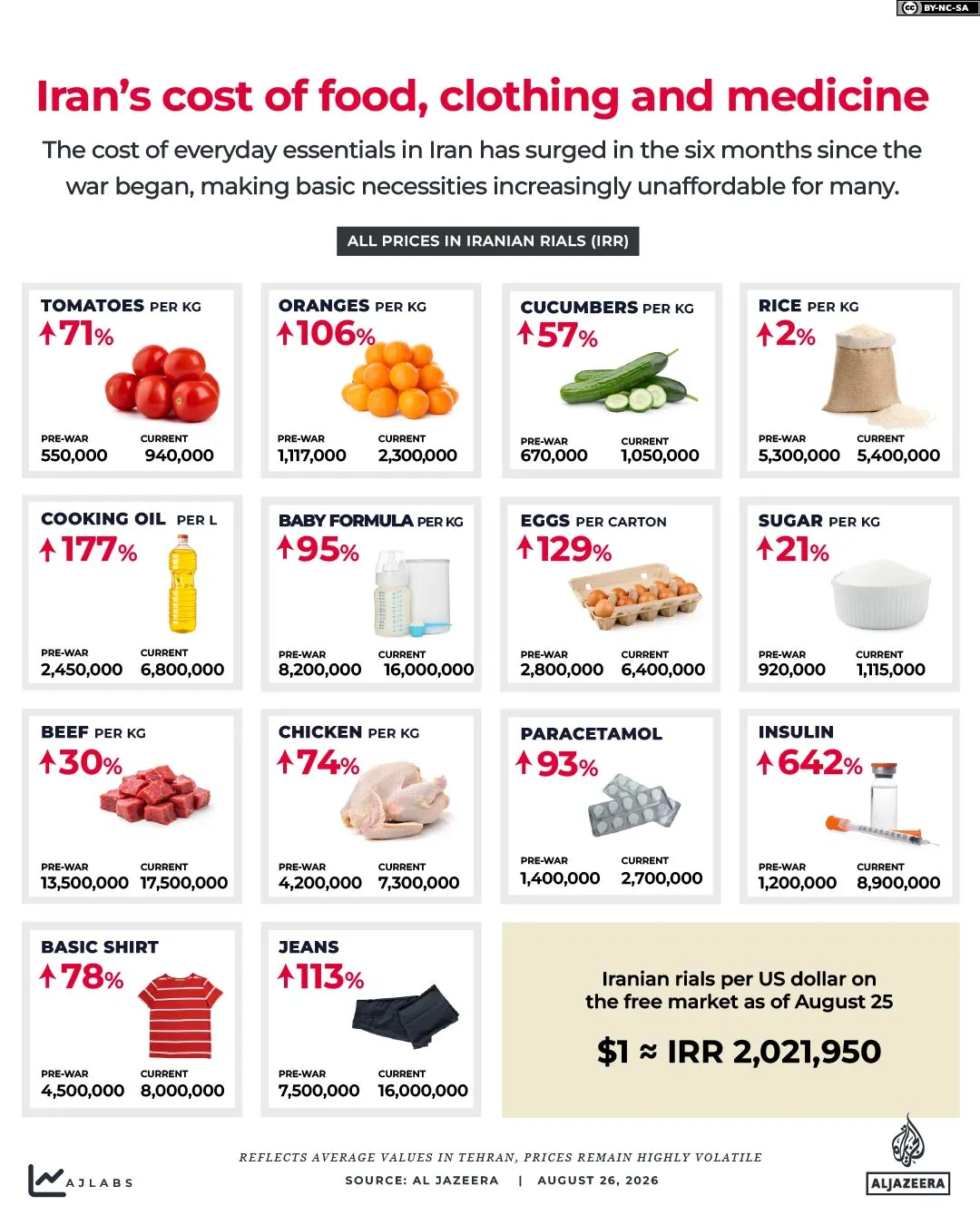
Iran has been heavily sanctioned for decades. The restrictions have severely affected Iranians’ quality of life, including their access to essential medicines and healthcare.
In August, the US announced yet more sweeping economic sanctions on Iran and countries that trade with it as it sought to apply more economic pressure to isolate the country from the global economy during the diplomatic deadlock in their war.
US Treasury Secretary Scott Bessent described the campaign as the “economic asphyxiation” of Iran.
It is difficult to quantify exactly how many Iranians have been killed by what Tehran views as “economic warfare”. However, a study published last year by the highly regarded medical journal The Lancet Global Health concluded that more than 564,250 people worldwide die annually as a result of US sanctions.
What does the US want?
In late February, just before the US launched its first strikes on Iran, the two sides were already holding talks hosted by Oman, which included the issue of Iran’s nuclear programme.
But before those talks could conclude, the US and Israel launched strikes, triggering the closure of the Strait of Hormuz, through which one-fifth of the world’s oil and natural gas is shipped in peacetime, by Iran. The closure of the strait has since become the primary point of contention between the two sides, when it had not been an issue before the war began. The strait is currently subject to blockades by both sides.
Throughout the war, Trump has repeatedly expressed his desire to strike a deal with Tehran. However, serious differences between the two sides will need to be resolved first, including the order in which issues are addressed for the purpose of peace talks.
Iran wants to establish its control of the Strait of Hormuz, have sanctions lifted and assets unfrozen, as well as ensure an end to US-Israeli strikes before it will go back to negotiating other issues, such as its nuclear programme. This was the order of events laid out in the MoU agreed between Iran and the US in June, but which quickly fell apart.
The US, however, wants everything to be on the table at the same time – it does not want to agree to anything relating to these Iranian demands before it addresses the other issues.
Scott Lucas, professor of US politics and international relations at University College Dublin, told Al Jazeera that Washington effectively wants Iran to surrender.
“The Strait of Hormuz has become a fundamental issue. The question here is, will both sides give? The memorandum of understanding clearly gave Iran a role in the management of the strait,” Lucas said.
“When the Trump administration pulled away from negotiating on the basis of the memorandum, they effectively went back to the idea of Iran having to completely allow passage through the Strait of Hormuz with no guarantees over it, in terms of not only what it means for Iran financially, but [also] in terms of Iranian security. The Iranian government is not going to agree to that, so we’re stuck in this limbo right now,” he added.
“Are the Trump folks going to come back to the talks on the basis of the memorandum of understanding or something that is a revised version of it, or are they going to try and break the government with economic warfare until at least after the US elections in November? That’s where we are right now.”
What does Iran want?
After half a century of bitter enmity with Washington, Iran wants to consolidate what it sees as the strategic gains it has made during a war it did not start. This specifically includes its newly established ability to close the Strait of Hormuz, sending global energy markets into a tailspin and placing additional pressure on the Trump administration.
Since US-Israeli strikes on Iran began on February 28, Hormuz has dominated talks aimed at ending the war and emerged as Tehran’s greatest point of leverage. Prior to the conflict, Iran did not exert control over the waterway and all commercial shipping passed through freely.
For this reason, Iran will not move on to wider peace talks until it has leveraged its control of the strait to get its demands met. “Our discussion is clear. Right now, it is only about the Strait of Hormuz,” Araghchi said late on Monday.
“The opening of the Strait of Hormuz is also subject to the fulfilment of a series of conditions that we announced to the other side.”
Ali Salehian, director of the Center for Intellectual Diplomacy at the Governance and Policy Think Tank in Iran, told Al Jazeera that Tehran does not believe Washington will honour any future deal as it did not honour what was agreed under the Pakistan-brokered June MoU.
“For Iran, the bottom line of every negotiation with Trump, considering all of his misbehaving and [military] targeting of Iran during negotiations, is the Islamabad MoU,” Salehian said.
“Tehran thinks that if the US doesn’t fulfil its commitments based on the MoU, there is no guarantee that any kind of future deal would be sustainable.”
Iranian-made Zolfaghar missiles are seen on display beside a large portrait of Iran’s Supreme Leader Mojtaba Khamenei at Baharestan Square in Tehran on September 28, 2026 [AFP]
What is likely to happen next?
It does not look likely that the diplomatic standoff will be eased anytime soon, analysts say.
Both the US and Iran have indicated throughout the war that they would prefer a diplomatic settlement to a continuation of the war. However, Trump has continued to threaten Iran with more strikes if it does not agree to a deal, and Araghchi told US news outlet NBC on Sunday that Tehran is also prepared to resume fighting, even though it has not abandoned diplomacy.
“We are fully prepared for the time for the war to be resumed, and I repeat, we stand firm in the face of any new aggression, even if it comes to a doomsday war,” he said.
Trump said last week that he expects a deal will be reached, but not until after the US midterms on November 3.
“For the moment, the Trump administration is going to try to make the Iranian government capitulate through economic warfare,” Lucas said.
However, a deep sense of distrust remains between the two sides. Senior Iranian officials believe Trump will restart the war after the midterms on a far greater scale and that Israel would also participate.
If that theory proves true, Tehran may well prefer the fighting to resume before November’s elections, as it would allow Iran to impose a greater cost on Trump.
“The reaction of the Iranians to that might be to actually trigger the war themselves, early, right before the midterm elections in order to maximise the pain that [it] will impose on the US president,” Trita Parsi, executive vice president of the US-based Quincy Institute for Responsible Statecraft, told Al Jazeera earlier this month.
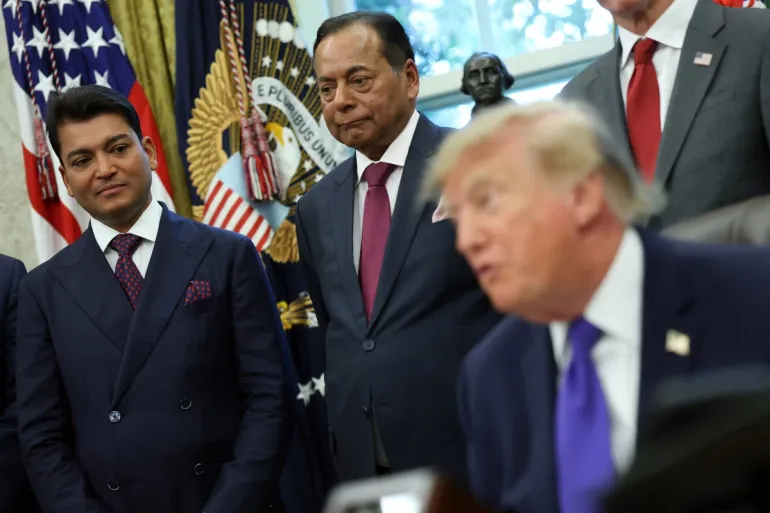
As US President Donald Trump announced a $15bn steel megaplant while seated at his Oval Office desk on Monday, he had a lineup of mostly US politicians standing behind him – from cabinet members to elected representatives from Iowa, where the mill is to be built. There was one exception: an Indian man with a receding hairline and a lilac pocket handkerchief, standing behind the US president’s right shoulder.
Ravi Ruia is a cofounder of the Essar Group, which owns Mesabi Metallics, the Minnesota-based firm that’s building the steel mill, which is expected to be the United States’s largest once it is complete. A decade earlier, in October 2016, his brother Shashi was in the photo frame with a different president during the signing of another major deal: Russian leader Vladimir Putin.
Steel and metallics aren’t Essar’s only association with minerals and natural resources. The conglomerate had been involved for years with oil, before it sold one of India’s largest private oil refineries to a Russian-led consortium in 2016 for nearly $13bn. Essar Oil was rebranded as Nayara Energy.
Today, Nayara Energy is half-owned by Russian gas major Rosneft, which is under heavy US and European sanctions over Moscow’s war on Ukraine. Nayara has also emerged as a supplier of petroleum products to Russia at a time when the country is facing a fuel crisis following multiple Ukrainian attacks on its oil and gas depots.
And as part of a 99-year deal, Nayara is continuing to use Essar’s branding in India, where the company runs thousands of petrol stations. Nayara is under European Union sanctions.
The White House is touting the Iowa steel project, unveiled just before the US midterm elections, as a major economic win for Americans, promising hundreds of jobs and billions of dollars in revenue. And there is no evidence that the steel project is in violation of any Russia-specific US sanctions.
But Trump’s announcement of a mega project with an Indian firm closely tied to Russian investments under Western sanctions underscores how the US has struggled to isolate Moscow economically despite an unprecedented economic pressure campaign.
And the timing of the steel mill announcement raises questions, because it comes days after Trump signed a law that empowers him to punish countries that buy Russian oil with up to 100 percent tariffs. India is Russia’s second-largest oil buyer. But the legacy Indian conglomerate that best epitomises the country’s links to Russian energy is now also behind the US’s biggest steel factory.
Rewant Ruia, left, chairman of Mesabi Metallics, and Ravi Ruia, centre, board member of Mesabi Metallics and director of Essar Capital, listen as US President Donald Trump delivers remarks in the Oval Office at the White House on September 28, 2026, in Washington, DC [Kevin Dietsch/Getty Images]
What’s the steel factory project about?
The new project would integrate its iron ore mining operations in Minnesota’s Mesabi Iron Range with the upcoming steel complex in Iowa.
The White House and the company’s announcements said that the Iowa steel plant is expected to create at least 1,750 permanent jobs – “while continuing to work with suppliers and businesses throughout Iowa and the Midwest” – and support up to 6,000 construction jobs.
Washington also noted that the mill will produce 7.5 million tonnes of steel per year in its first phase, expected to rise to 10 million tonnes. First steel production is expected in 2030.
The first phase of the project is expected to generate $95bn in total economic impact during construction and its first 10 years of operation, according to the White House.
Trump’s commerce secretary, Howard Lutnick, told the reporters that “these are your 232 tariffs, the steel tariffs at work.” He added: “Without those tariffs, this mine and steel plant doesn’t get built.”
Trump chipped in, too. “Soon after my inauguration, I imposed powerful 50 percent tariffs on all foreign steel, and now our steel industry is roaring back to life,” Trump said. “Everyone’s building their plant here because they don’t want to pay tariffs.”
But the steel project is also evidence of how countries and companies have skirted US economic pressure – and how it gives them leverage to continue to do so.
An Essar petrol station with pumps showing no fuel in Stanley, County Durham, UK, September 27, 2021 [Lee Smith/Reuters]
What are Essar’s ties to Russia?
Essar Oil, the group’s energy arm, began refining crude in 2008 at its refinery in Vadinar on the coast of the western Indian state of Gujarat.
But by 2016, the company was in deep debt, listed as a defaulter by the Reserve Bank of India, the country’s central bank, and desperately looking for a buyer who would take over its oil operations. The timing was opportune. President Putin in Russia was at the time trying to get Rosneft, his country’s energy giant, to offload some stakes in exchange for foreign capital.
Indian Prime Minister Narendra Modi played matchmaker, helping stitch together a series of deals between 2014 and 2016 that helped Rosneft and Essar. First, Indian public sector oil majors bought stakes in Rosneft, giving it the cash it needed. Rosneft, in turn, joined hands with other investors to buy the Vadinar refinery, freeing Essar from its debts.
Essar Oil became Nayara Energy – a company in which Rosneft owns a 49 percent stake, and United Capital Partners, a Russian asset management company, owns another 49 percent. The buyers paid Essar $12.9bn for the deal. As part of the agreement, Nayara got to use Essar’s branding – including on thousands of petrol stations across India – for 99 years.
Logo of Nayara is seen at its fuel station on the outskirts of Ahmedabad, India, November 16, 2022 [Amit Dave/Reuters]
Is Nayara under Western sanctions?
Yes. The European Union imposed sanctions on Nayara in July last year as part of the broader 18th package of sanctions against Russian oil.
The sanctions banned the import of petroleum products processed using Russian crude oil and restricted the refinery’s access to EU shipping insurance, as well as financial and other services.
Nayara’s Vadinar refinery in western India has been processing only Russian oil since other suppliers backed out following the sanctions. Since then, Nayara has relied on international traders to import crude and export refined fuels.
In July this year, Nayara Energy sold petroleum to Russia as Ukrainian attacks targeted oil refineries across the country, triggering a fuel crisis.
In recent months, Ukrainian forces have targeted Russian oil facilities, setting them ablaze and causing long lines for fuel across the country, including in the capital, Moscow. The fuel crisis, unprecedented for Russia, a country that is one of the world’s biggest energy producers, has led to rationing in many regions.
These Russian links have brought Nayara Energy under wider scrutiny, prompting companies, including SAP, to suspend services to the refiner, citing sanctions and obligations under EU law.
Nayara challenged the move in the Delhi High Court, which ordered SAP India to restore its services earlier this month.
Are Essar or the steel plant violating any sanctions?
While Nayara is under EU sanctions, Essar does not face any US or EU sanctions.
In October 2016, after Essar struck its deal with Rosneft and United Capital Partners to sell the Vadinar refinery, the US – at the time under the Barack Obama administration – said that the agreement was not in violation of any sanctions.
“I don’t think we see any violation of any US-EU sanctions stemming from this deal,” State Department spokesperson Mark Toner said at the time. Essar also said that the deal was compliant with US sanctions.
There is no evidence of any sanctions breach in Essar’s investment in Mesabi, or in the planned investment to set up the steel factory in Iowa.
But Essar’s relations with Russia have nevertheless attracted scrutiny, including in the United Kingdom, where the Ruia brothers have long had major investments.
At the time of the sale of the Vadinar refinery to Russian buyers, the Russian bank VTB also gave Essar a $3.9bn loan for debt reconstruction.
The bank was hit by major US and EU sanctions in February 2022, right after Russia’s full-fledged invasion of Ukraine. Essar, reporting published in April 2026 by The Guardian and investigative journalism platform SourceMaterial, showed, moved the VTB loan to Mauritius, a tax haven, allegedly to avoid the sanctions. Essar owns the Stanlow oil refinery in the UK.
US President Donald Trump waves as he walks to board Marine One as he departs from the South Lawn of the White House in Washington, DC, on September 26, 2026 [AFP]
Why is the timing of the steel plant announcement significant?
Trump’s Republican Party is heading for crucial midterm congressional elections in November, while his approval rating has been plumbing all-time lows in the face of voter concerns about inflation, the cost of living, and the war on Iran.
In his second term, Trump has made tariffs and a revival of US manufacturing a cornerstone of his economic vision, claiming that higher barriers to imports will drive investment back to the US.
Moreover, Washington introduced legislation that would allow the president to impose tariffs of up to 100 percent on imports from countries that continue economic engagement with Russia or Iran, aiming to put pressure on countries that continue buying Russian energy.
New Delhi is particularly exposed since it became one of the largest buyers of discounted Russian crude after the invasion of Ukraine in 2022. Trump imposed an additional 25 percent tariff on Indian imports in 2025 over the issue, before removing it in February 2026 after India committed to stop buying Russian crude.
Russia has remained India’s largest source of crude, although purchases have declined as the threat of US penalties has grown. The news agency Reuters reported that India imported approximately 2.1 million barrels per day of Russian crude in August.
There is also a recent parallel to underscore the incentives for investment in Trump’s US. In May this year, Washington moved to dismiss the criminal fraud and bribery charges against Indian billionaire Gautam Adani, while his lawyers had told the Justice Department that Adani was prepared to invest $10bn in the United States. A federal judge subsequently dismissed the criminal case in August.
Tehran, Iran – Iranians are stocking up on food and medicines as fears grow that the country will face dire shortages as the United States tightens an embargo on the country.
The Iranian government had managed to keep household staples flowing during the early months of the war. But a US naval blockade and pivot to draconian sanctions have led to fears that imports will be limited.
Addressing the United Nations General Assembly last week, Iranian President Masoud Pezeshkian condemned Washington for its blockade on his country, saying it will prevent food and medicine from reaching the Iranian people.
On Saturday, US President Donald Trump rejected Iran’s offer for a seven-day truce that would see it reopen the Strait of Hormuz in exchange for economic relief and other conditions.
As the war enters its eighth month and hopes for a diplomatic solution dim, Al Jazeera looks at how some Iranians are faring under a US embargo.
Consumers
Tehran’s stores remain stocked, but shoppers are keeping an eye on shop shelves. Their anxiety has deepened since a flurry of social media posts urging people to ensure they have several days of food before a possible new round of fighting with the US.
At one shopping centre, Ali, 51, was loading a trolley packed with rice, flour, pasta, pulses, cooking oil and canned food.
He is stocking up because he is convinced that Iran’s adversary is seeking to “starve” the people to push them to turn on their government.
“This is not a war in the traditional sense. It targets the people to put pressure on the authorities,” he said.
With flights to some nearby countries suspended, imports of certain medicines and mobile phone headsets are hard to find. The prices of those still available in shops have been pushed up.
Haj Pasandideh, a 71-year-old grocer, said he believed warehouses were well-stocked with basic goods at the moment. But the problem lies in the daily price increases due to Iran’s weakening rial, prompting him to bulk-buy goods before the expected hikes.
He sometimes caps cooking oil at one bottle per sale to ensure as many customers can purchase the goods as possible.
Exporters crushed
Farmers are also on edge due to the embargo, unable to ship out their produce and forced to sell to local markets.
The war has worsened the economic situation, even after years of sanctions that have pushed the country from being a regional exporter of agricultural and food products to being one of the region’s main importers.
Mehran, an apple grower, told Al Jazeera that due to the difficulties of exporting, he had sold only a third of this year’s harvest, all of it inside Iran.
Some neighbouring countries have halted trade with Iran in recent months, he said, while trucks now spend days at crossings they once cleared in a day, causing fruit to spoil before it reaches buyers.
“The blockade has not only closed the sea and air but also the land routes but in an undeclared manner,” he said.
Pharmaceutical shortages
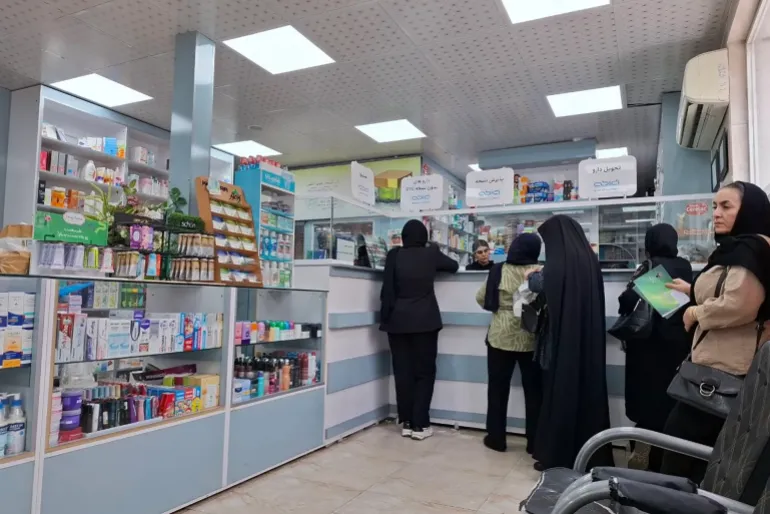
The war has also deepened an already-dire shortage of medications. Some pharmacies Al Jazeera visited in southern Tehran had run out of infant formula and dozens of other types of medications.
Although officials have assured Iranians that substitute products were available, pharmacy staff expressed concern about the increasing number of customers searching for infant formula in vain.
“Imported medicines are disappearing fast, and lately people have been coming in to buy certain items before they need them for fear they will run out in future,” Mahsa, a 23-year-old pharmacy assistant, told Al Jazeera.
She said the health authorities had introduced “smart systems” to track the quantity and type of medication each person buys.
Women queue at a pharmacy in Tehran [Al Jazeera]
Breaking the blockade
The prospect of a prolonged siege and deteriorating economic conditions have driven some Iranians to call for a military solution.
On Tehran’s main thoroughfare, several people told Al Jazeera that another round of fighting with the US was unavoidable. Some urged the government to break the blockade by force before it is tightened further.
Mohsen, a 23-year-old economics student, believes Washington’s goal is to strangle the Iranian economy and the cost will ultimately be felt by Iranian citizens.
Iran possesses many strong cards that it must use to break the air and sea blockade before they develop into a land blockade that would completely choke Tehran, he said.
Alireza Taghavinia, an Iranian international relations expert, told Al Jazeera that the gap between Washington and Tehran was too wide to be bridged. “The siege imposed by force will only be lifted by force,” he said.
In a worst-case scenario, falling living standards could bring protesters onto the streets, he added.
“The enemy is counting on stirring up chaos inside Iran because it believes no military strike will achieve its objectives without internal unrest,” he said.
Washington’s top diplomat calls the suspected plot ‘a very serious situation’ after five were arrested over the weekend.
Published On 29 Sep 202629 Sep 2026
United States Secretary of State Marco Rubio has said a “foreign actor” was involved in a suspected bomb plot near an airbase in the United Kingdom used by the US military.
Police arrested five men, all British nationals from London, in their early to mid-20s, on Sunday after being alerted by a local farmer about three white vans driving towards RAF Fairford, a British base that houses US bombers flying missions against Iran.
Recommended Stories
list of 4 itemsend of list
The counterterrorism police said on Monday they were investigating whether individuals were acting for a foreign state in an apparent plot to attack the airbase. They later said the suspects would be released on bail.
Commenting on the suspected plot and arrests on the Hannity programme on Fox News late on Monday, Rubio said, “What happened, what almost happened, what could have happened in the UK over the weekend is a very serious situation.”
“It’s one that clearly involves the hands of a foreign actor. I won’t get into great detail about that yet,” he added.
Iran’s Islamic Revolutionary Guard Corps (IRGC) had said in July the Fairford base was a legitimate target.
Iran’s embassy in London said in a statement on Monday it “categorically rejects and strongly condemns the recent unfounded and malicious speculations” that it was involved, which it said would fuel “Iranophobia propaganda” in the UK.
Trump said on Sunday the UK and the US had had the suspects “under investigation” for a while and alleged, “They were looking to do big damage to our fort.”
After hearing news that suspects were being released on bail, Trump said on Monday the case “might be” linked to Iran but declined to elaborate.
US bombers
The UK gave the US permission in March to use Fairford for “specific defensive operations into Iran” to destroy Iranian missiles at source.
US bombers and other planes have since been seen taking off and landing at the base – the only one on the British mainland used for this purpose.
Residents in the rural Cotswolds area surrounding Fairford said the site, which hosts a range of US military equipment and personnel, had seen increased activity and security in recent months.
Authorities evacuated about 85 households from a nearby village early on Sunday, but they were allowed to return home the next day.
Tehran has previously warned London against allowing its bases to be used by the US in operations against Iran.
Iranian Foreign Minister Abbas Araghchi has accused London of “putting British lives in danger” by allowing the bases to be used “for aggression against Iran”.
Argentina gives UK two weeks to cease operations or face maritime court action.
Published On 29 Sep 202629 Sep 2026
Argentinian President Javier Milei has threatened the British government with legal action unless it stops an oil project off the disputed Falkland Islands, the British-administered territory over which Buenos Aires claims sovereignty.
Milei gave the United Kingdom a two-week ultimatum on Monday evening, saying it must halt all work on the Sea Lion oil project or Argentina will ask the International Tribunal for the Law of the Sea, a maritime court in Hamburg, Germany, to order a stop to the project.
Recommended Stories
list of 3 itemsend of list
He called the operations “the illegal plundering of our resources” and declared “Argentina will not stand idly by” as the UK causes “irreversible and irreparable” damage.
The companies developing the project, Israel’s Navitas and Britain’s Rockhopper, have shrugged off Argentina’s threats, insisting they have valid exploration licences issued by the UK.
The tribunal, an independent court established under the 1982 UN Convention on the Law of the Sea, can issue legally binding emergency orders. But even if it ordered the UK to halt the project, it has no means of forcing the government to comply.
The UK rejects Argentina’s sovereignty claim, arguing that the islanders have the right to determine their own future and develop their natural resources. In a referendum in 2013, residents of the Falklands voted overwhelmingly to remain a British overseas territory. Argentina says the islands were populated illegally.
Milei’s administration has already taken legal action against the project authorised by Britain, arguing it violates a United Nations resolution calling for both sides to desist from unilateral actions in the islands until their dispute is resolved.
Buenos Aires has doubled down on its claim over the Falklands since United States President Donald Trump said Washington was open to reviewing its historically neutral stance on the territory.
The British government for its part has said it stands behind the businesses operating near the Falklands.
The dispute over the Falkland Islands led to a war between Britain and Argentina in 1982. It killed 649 Argentinian soldiers, 255 British soldiers and three islanders after Argentina invaded the archipelago that year.
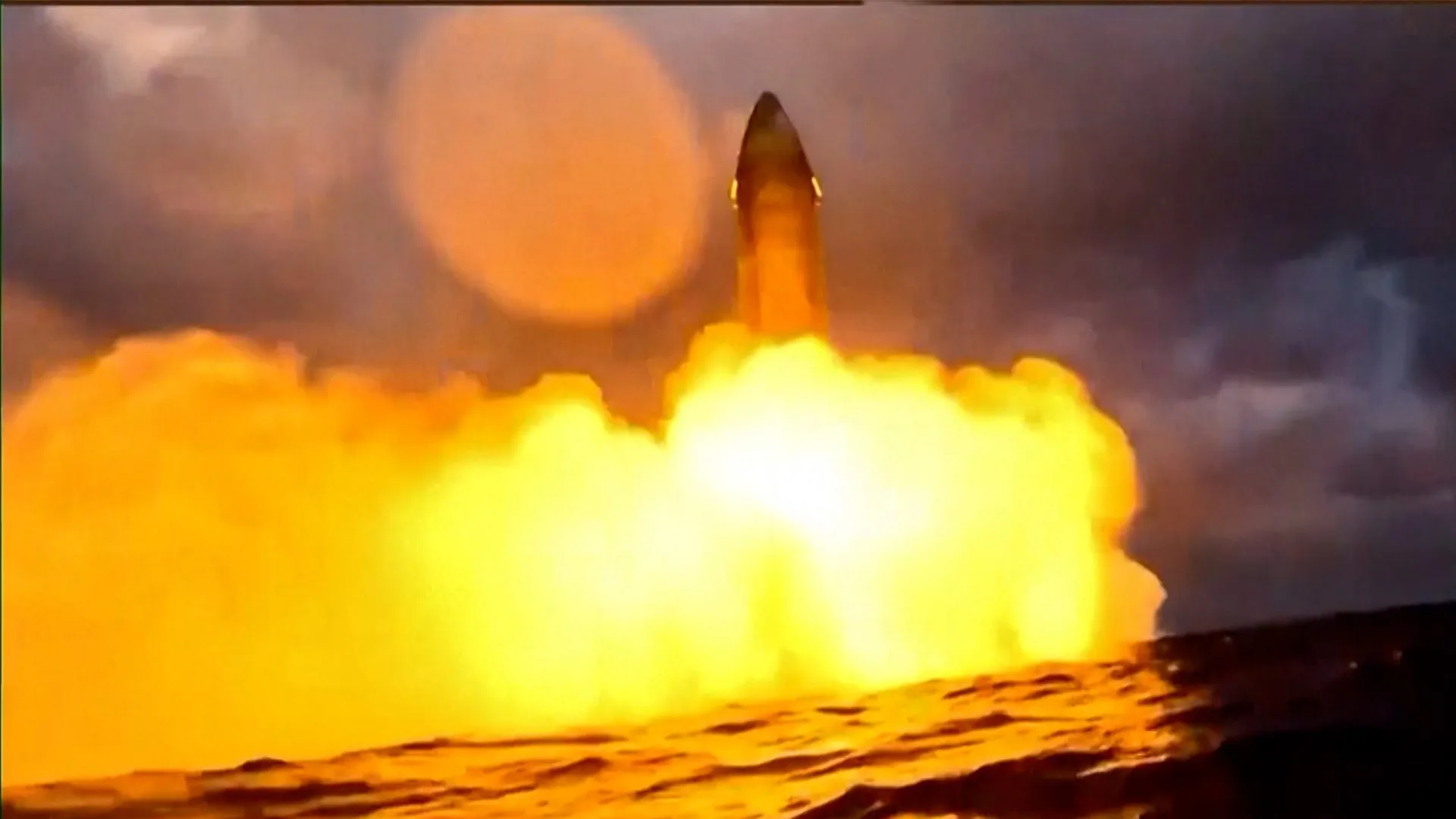
Elon Musk’s SpaceX’s next-generation Starship rocket reached orbit for the first time despite an unexpected engine shutdown mid-flight on Monday. But it exploded in a ball of flames when it touched down in a controlled landing over the Pacific Ocean.
OpenAI has cancelled the release of its latest AI model over safety concerns, according to media reports.
The move to scrap the release of GPT-6.1 Astra, reported by the Wall Street Journal and CNN on Monday, comes amid heightened concerns about AI’s potential to do catastrophic harm following a slew of incidents involving AI agents going rogue.
Amid tight Iowa midterm races, President Trump emphasises steel industry revival with project announcement.
Published On 28 Sep 202628 Sep 2026
Just weeks before the midterm elections, United States President Donald Trump has announced that a Minnesota-based steel manufacturer intends to build a $15bn steel mill project in Iowa, as the White House tries to highlight its focus on domestic manufacturing.
On Monday, joined by executives from Mesabi Metallics, which recently opened Minnesota’s first new iron ore mine in 50 years, Trump announced the project. It is expected to begin production in 2030 and could bring more than 1,700 jobs to the region, with an initial production capacity of 7.5 million tonnes per year.
Recommended Stories
list of 4 itemsend of list
The first phase of construction for the project will generate 5,000–6,000 construction jobs, a White House official told Al Jazeera.
The plant in Iowa will use iron ore from the Mesabi Iron Range in nearby Minnesota. Mesabi, which is owned by Indian conglomerate Essar Group, invested more than $2.5bn to build the mine in Minnesota.
“President Trump is delivering on his promise to rebuild American industry, re-shore manufacturing, and create new jobs. Today’s announcement underscores the president’s historic efforts to revitalize the US steel industry—supporting local communities, strengthening supply chains, and protecting our national security,” White House Spokeswoman Taylor Rogers said in a statement to Al Jazeera.
The steel industry has loomed over the first half of Trump’s second term in office. The president imposed 50 percent tariffs on steel and aluminium imports last year in an effort to boost domestic production, but also threatened to increase prices of products that use those materials, from soda cans to washing machines to cars.
“These are your 232 tariffs, the steel tariffs at work. Without those tariffs, this mine does not get built, and this steel plant does not get built”, US Commerce Secretary Howard Lutnick said in the Oval Office on Monday.
Trump also solidified the US government’s stake in US Steel, which was acquired by Japan’s Nippon Steel in June 2025. As part of the deal, the US government received a so-called “golden share”, which gives the president the authority to appoint a board member to weigh in on decisions that would impact domestic steel production.
Midterm stakes
The announcement comes a little more than a month ahead of the US midterm elections, and the economy is top of mind for US voters.
Among Republicans, Trump is losing steam on his handling of economic issues, with a new September 21 Ipsos poll finding that 56 percent approve of his handling of the economy, down from 80 percent.
Iowa is in play as a seat Democrats could flip in the midterm elections, with Republican Ashley Hinson facing Democrat Josh Turek in November and with polls suggesting a tight race.
Hinson joined the president in the Oval Office for the announcement.
A poll conducted by the Republican-aligned pollster the Trafalgar Group showed Hinson with a two-point lead, while an InsiderAdvantage poll, which is considered more nonpartisan, found Turek leading by two points.
California jury finds Apple infringed two Taction patents but did not willfully violate them; Apple plans to appeal.
Published On 28 Sep 202628 Sep 2026
Apple has been ordered to pay more than $5.7bn for using patented technology from Taction Technology to power haptic feedback, the vibrations users feel when they receive a notification or press a button.
A jury in federal court in the Southern district of California found that the iPhone maker infringed two patents owned by the San Diego-based company.
Recommended Stories
list of 4 itemsend of list
“We’re happy the jury found for Taction and vindicated its patent rights,” said Taction attorney Lance Yang following the verdict on Friday.
The verdict is the culmination of a legal battle that began in 2021, when Taction first filed its lawsuit against Apple. In 2023, a federal judge ruled that Apple had not infringed Taction’s patents, but an appeals court revived the case last year.
“Apple is capitalising on Taction’s innovation and success by selling devices that infringe Taction’s patents. Apple is utilising Taction’s patented inventions without license or authority from Taction. Taction has brought this action to remedy Apple’s infringement,” Taction said in the original 31-page complaint.
It also claimed that Apple “at a minimum believed there was a high probability that the accused products were covered by Taction’s patents, but willfully blinded itself to Taction’s patents and the infringing nature of the Accused Products”.
The jury, however, found that Apple did not wilfully infringe the patents.
Apple said it plans to appeal the verdict.
“Apple’s Taptic Engine is fundamentally different from Taction’s technology, which Taction’s own testing of Apple’s products confirmed during trial,” Apple said in response.
The verdict comes at a pivotal moment for the company, amid transitions in its C-suite. In September, John Ternus took over as CEO from Tim Cook, who led Apple for 15 years. The leadership change comes as the Cupertino, California-based tech giant lags behind other major technology companies in rolling out its artificial intelligence products.
Apple shares fell on Monday, declining about two percent as trading got underway.
Matthew VanDyke and six Ukrainians were accused of smuggling weapons and drones to armed ethnic groups fighting India.
Published On 28 Sep 202628 Sep 2026
Matthew VanDyke, a United States citizen held in India for more than six months and accused of supporting ethnic separatist groups, has been temporarily released on bail and returned to the US.
The 47-year-old arrived on Saturday morning and reunited with his family, according to a family spokesperson.
India’s main opposition Congress party said that, despite being “accused of plotting terrorist acts”, VanDyke was allowed to return home from New Delhi.
“Obviously US pressure determined this outcome, but what did India get in return?” Jairam Ramesh, a legislator and spokesperson for the party, posted on X.
VanDyke’s family told Al Jazeera before his release that his health was failing and he had lost weight after going on a month-long hunger strike in Tihar Jail to try to improve conditions in prison. He had to use a wheelchair to attend hearings, according to his mother, Sharon. VanDyke denied the accusations against him, and his family said he was in the region documenting the situation faced by minority ethnic groups.
Matthew VanDyke, who spent months in Libyan prisons before joining rebel forces who opposed dictator Moammar Gadhafi, speaks with reporters after his flight arrived at Baltimore-Washington International Airport, Saturday, November 5, 2011. [Patrick Semansky/Reuters]
Earlier this month, Indian prosecutors declined to bring terrorism charges against VanDyke and the others. Instead, prosecutors formally accused them of visa violations for entering restricted areas along the Myanmar border.
The Maryland native is a former filmmaker and rebel fighter during the Arab Spring and spent about six months in a Libyan prison during the Muammar Gaddafi regime. He was held alongside James Foley, a journalist who was later killed by ISIL in Syria. In recent years, VanDyke was based in Ukraine, where his consultancy helped train Ukrainian military forces.
In a statement to Al Jazeera before VanDyke’s release, James Foley’s mother, Diane, who now heads a foundation named after him, said she was “deeply saddened by his arrest in India and by his apparent poor health.” She added that her foundation called for “his release on humanitarian grounds.”
The Strait of Hormuz remains the most perilous choke point on the global map as Iran continues to disrupt traffic by attacking vessels. A recent proposal by the Islamic Republic to open the waterway within seven days raised hopes that the situation could go back to normal. United States President Donald Trump, however, rejected the offer.
To understand the strategic calculus behind his high-stakes decision, one must look beyond the immediate tactical noise and peer into the deeper logic of deterrence.
On its surface, the rejection of a temporary truce in the world’s most vital energy corridor appears to be a reckless gamble – a provocation inviting the very conflagration the West seeks to avoid. But viewed through the lens of cold realism, the rejection was not only a calculated necessity; it was the right decision.
The Iranian regime’s proposal was a classic exercise in asymmetric diplomacy. It offered a brief window of stability, a transactional pause, in exchange for what would have amounted to a de facto relaxation of American pressure. To accept such terms would have meant embracing the delusional belief that a terrorist power can be bribed into good behaviour by accepting its terms of engagement.
Had Washington accepted, it would have validated Iran’s self-assumed right to turn the spigot of global commerce on and off at will. By flatly rejecting the offer, Trump signalled that freedom of navigation is not a chip to be bartered in a week-long bazaar, but an absolute, non-negotiable prerequisite of international order.
The timing of this gambit – on the eve of the critical midterm elections – has naturally drawn the ire of the domestic political class. Critics argue that risking an energy crisis and a subsequent spike in oil prices weeks before Americans head to the ballot box is an act of political self-immolation. This view, while superficially plausible, misunderstands both the nature of the electorate and the psychology of our adversaries.
The Iranians chose this moment to put forward their proposal precisely because of the midterm elections. They are sophisticated observers of American domestic politics. They calculated that an administration facing an electoral test would be paralysed by the fear of rising fuel prices and would eagerly grasp at any diplomatic lifeline, however flimsy, to keep the peace until November.
Had Trump capitulated to save Republicans a few points at the polls, he would have handed Iran a profound psychological victory. He would have demonstrated that American foreign policy is subservient to the domestic election calendar – a vulnerability that every autocracy from Moscow to Beijing would immediately exploit.
By taking the gamble before the midterm elections, Trump has turned the tables. He has demonstrated that his administration is willing to absorb short-term political pain in pursuit of long-term strategic clarity. This is the essence of credible deterrence.
Deterrence is not merely a function of military hardware; it is a function of perceived will. When an adversary believes you are too weak, too compromised, or too worried about the next election cycle to defend your core interests, deterrence fails. By rejecting the seven-day proposal, the Trump administration proved it could not be blackmailed by the electoral calendar.
Trump’s decision reflects a sophisticated understanding of the regime in Tehran. The Islamic Republic is currently facing an acute internal economic crisis, a direct consequence of the sustained American maximum-pressure campaign.
The seven-day proposal was not a gesture of Iranian confidence; it was a sign of desperation disguised as a diplomatic overture. It was an attempt to buy breathing room, fragment the expanding international coalition against Tehran and project an image of being in control to its own restive population.
To grant Iran that reprieve would have been to throw a lifeline to an antagonist regime on the ropes. Clearly, this offer was only made because US strategy is working and Iran’s economy is cratering.
History teaches us that truces with terrorist regimes are rarely precursors to permanent peace; they are merely opportunities for the aggressor to rearm, recalibrate and choose the next moment of confrontation on more favourable terms. A short-term guarantee of open shipping lanes implied that any day, the threat could return, magnified by the legitimacy Washington would have afforded to Iran’s leverage.
The critics who cry havoc at this decision are the heirs of the foreign policy establishment that spent decades managing decline through endless, inconclusive and failed negotiations. They prefer the comfortable fiction of a temporary deal to the hard reality of a sustained geopolitical contest.
President Trump’s gamble is risky, yes. The potential for miscalculation in the narrow waters of the Gulf is always present. But the risk of inaction, or of a pliant accommodation, is far greater.
By holding the line, the administration has reaffirmed a foundational principle of US global stewardship: the US will not permit rogue states to hold the global economy hostage.
The rejection of the Iranian proposal is the correct path because it chooses clarity of American resolve over partisan political convenience. It signals to the regime in Iran that its leverage is artificial and its economic isolation is permanent unless its behaviour changes.
This November, American voters will decide the composition of the US Congress based on a multitude of domestic and foreign policy factors. But on the global stage, Trump remains steadfast by demonstrating that principle trumps political expediency.
The views expressed in this article are the author’s own and do not necessarily reflect Al Jazeera’s editorial stance.
Beef prices are soaring in China. Across the Pacific Ocean in the United States, cattle farmers are complaining that their businesses are becoming increasingly unsustainable. And in India, poultry rearers are slashing their production targets because they cannot afford feed.
More than 90 percent of the world’s population eats meat in one form or another — and a looming meat crisis threatens to affect what they buy at the market, what they cook at home, and what’s served on the table.
At the heart of this is a chain of decisions and uncertainties that consumers rarely see. A cow has to be raised for years before it can become beef. Chickens need feed, much of it tied to global grain and soya bean markets. Farmers need land, water and weather conditions that allow them to keep animals alive and productive.
When any link in this chain is disrupted, a spiralling crisis ensues.
So what is putting the pressure on meat production, and what does it mean for billions of people around the world?
Declining cattle stocks in Brazil, US and China
Brazil, the US and China are the world’s three biggest beef producers, together supplying more than half of the world’s beef. But their cattle herds are shrinking at the same time.
According to a March estimate by the US Department of Agriculture (USDA), Brazil’s total herd this year is estimated at 177.4 million cattle — a nearly 8 percent drop from 192.5 million in 2024.
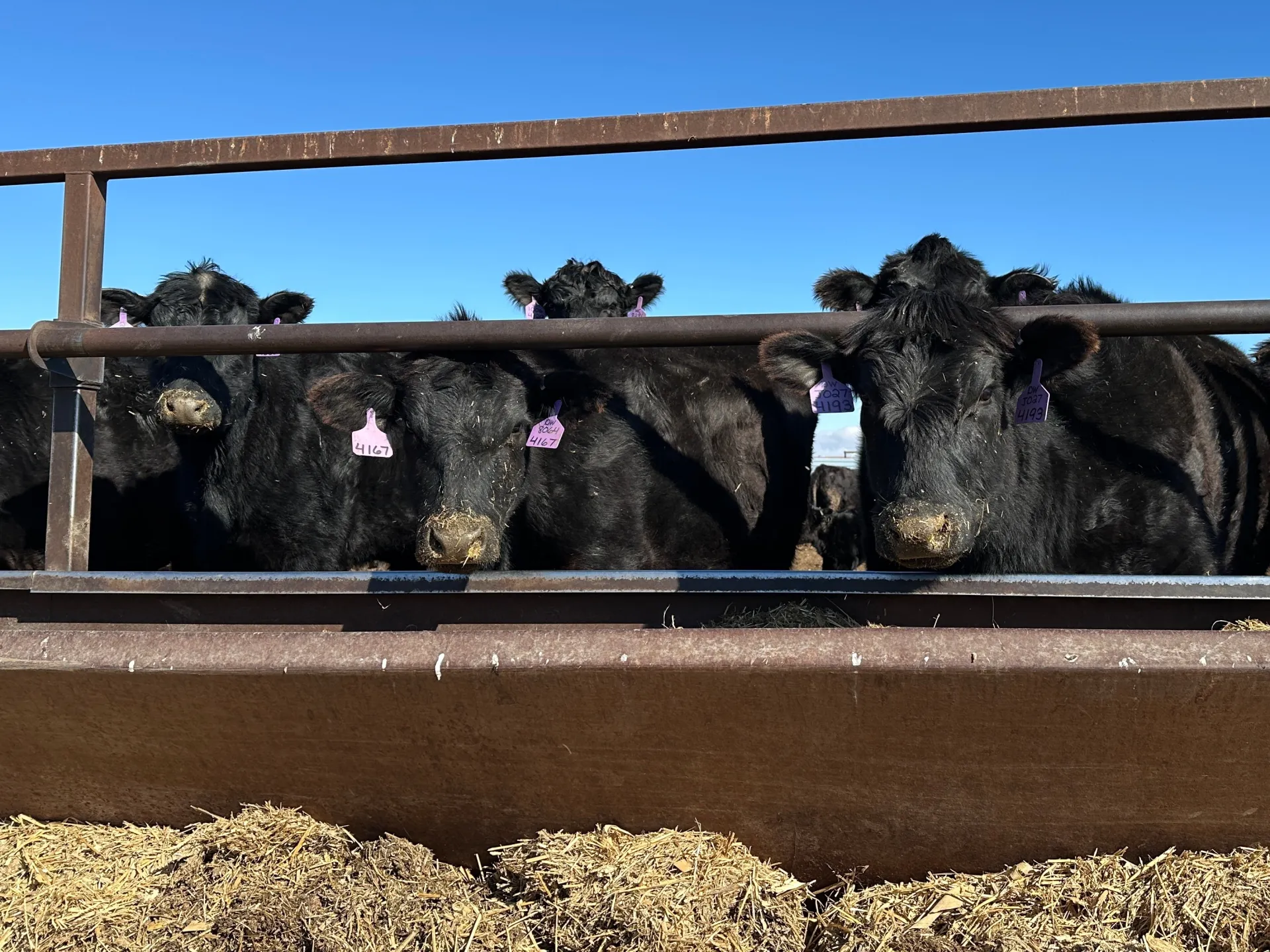
Over in the US, cattle numbers are at a historic low.
The USDA counted 86.2 million cattle and calves on farms on January 1, 2026. The number of beef cows — the females needed to produce future calves — was 27.6 million, down 1 percent from a year earlier. The 2025 calf crop was also down 2 percent.
In China, the USDA estimated a cattle head count of 94 million in January 2026, down 14 percent from 105 million in January 2024.
In all three cases, beef production is also projected to be down in 2026.
The USDA predicts a 2 percent decline in Brazil’s beef production and a 5 percent fall in exports. As for the US, beef production in 2026 is likely to be 4 percent lower than last year. China’s total beef supply this year is projected to be 12 percent lower than 2024.
The decline in domestic production, coupled with shrinking supplies that can be imported, has sent prices soaring in China — the world’s largest beef consumer and importer.
What’s driving down cattle herds and beef production?
The reasons are many, and they vary from country to country.
Brazil counts China and the European Union as two major markets for its beef exports. But both have imposed import restrictions that have disincentivised Brazilian beef manufacturers. That is partly responsible for the country’s decreased cattle head count, according to an analysis by Augusto Neto at S&P Global, the market intelligence firm.
Additionally, Brazil is currently in what is known as a cattle reversion cycle — when rearers reduce the slaughter of animals and instead try to preserve their female stock to help rebuild their herd — according to the USDA.
In the US, droughts have hit 60 percent of the country’s cattle-rearing area, according to a report by Sampad Nandy of S&P Global. With grazing areas decreasing, feed costs have risen.
Three major organisations, representing breeders in the states of Texas, Oklahoma and Kansas, issued a joint statement this week arguing that Immigration and Customs Enforcement (ICE) raids were disrupting their already strained operations. The meat industry depends heavily on immigrant workers.
If beef prices are rising, shouldn’t rearers want to produce more beef?
In theory, yes. But in practice, high prices do not automatically mean that more cattle can be produced quickly.
Cattle production is constrained by biological supply cycles, Kenneth Foster, professor of agricultural economics at Purdue University, told Al Jazeera. It can take a couple of years for a producer who receives a signal from the market to expand production and actually see the resulting animals enter the beef supply. The quickest way to rebuild a herd is to keep female cattle that might otherwise have been sold and use them for breeding. That is what Brazil is now doing.
But that creates a difficult economic calculation. A producer can sell an animal today at a high price, or keep it for breeding and wait for the next generation. That means carrying the costs and risks of keeping the animal while waiting for it to reproduce.
The result is a market in which strong demand and limited supply can persist even when prices are already high.
The USDA expects the cattle herd to begin rebuilding in the US, but the process is gradual.
The US and Brazil cases illustrate one of the central problems facing meat production: sometimes the constraint is not technology, land or money.
It is time.
Europe’s move from beef to poultry
Meanwhile, Europe presents a different picture. The continent is witnessing a structural change in what consumers are eating.
The EU produced about 42.7 million tonnes of meat in 2025. But EU meat production is projected to decline by about 3 percent between 2025 and 2035, with beef production projected to fall by 10 percent and pork by 7 percent. Poultry is the exception: production is projected to rise by 5 percent.
This shift is also visible in consumption.
Consumption of EU beef and pigmeat is projected to decline through 2035, while poultry consumption is expected to increase by 9 percent.
Beef and pork require longer production cycles and face different economic and environmental pressures. Poultry, by contrast, can respond much more quickly to changes in demand because chickens reach market weight within weeks rather than years.
That difference is becoming increasingly important. The OECD-FAO Agricultural Outlook expects poultry to be the fastest-growing major meat category globally over the next decade, helped by its relatively low cost and short production cycle.
Europe is therefore becoming an example of how a meat system can adapt without simply producing more of everything. Some forms of meat become harder or more expensive to produce, while others expand to fill part of the space.
Poultry has problems too — as India shows
Yet the poultry industry faces its own challenges, with India offering an example.
In June, a large section of India’s poultry industry announced plans to cut production by 25 percent after soya meal prices rose by more than 40 percent in a month.
The decision was announced by the All India Poultry Breeders’ Association after producers faced sharply higher feed costs and a seasonal decline in demand. Producers also began culling parent breeder stocks — birds needed to produce future generations of poultry.
Soya meal is an important protein source in animal feed. When its price rises sharply, poultry producers face a choice: absorb higher costs, raise prices, or reduce the number of birds they produce.
In India’s case, producers chose to cut production.
The consequences extended beyond individual farms. The Reuters news agency reported in May that Indian soya meal prices had risen 41 percent in one month to a four-year high of 66,000 rupees ($687.5) per tonne. India subsequently cancelled 25,000 tonnes of soya meal export contracts and began turning to soya bean imports from African countries.
The takeaway: a shock in one part of the agricultural system can move quickly through the meat supply chain globally.
As farmers try to protect their livelihoods and families try to keep food on the table, changing climates, rising prices, shifting dietary preferences and growing trade barriers are together reshaping the future of meat — and what we eat.
The Houston Texans’ linebacker wore eye black with the names of slain sisters Lana, 12, and Bana, eight.
Published On 28 Sep 202628 Sep 2026
American football player Azeez Al-Shaair has once again honoured Palestinian children killed by Israeli forces in Gaza, despite previous fines and the threat of being removed from games, this time wearing the names of sisters Lana and Bana Ahmad on his eye black during his latest National Football League (NFL) game.
The Houston Texans linebacker took the field against the Indianapolis Colts on Sunday wearing the names of Lana, 12, and her sister Bana, eight, who were killed along with their family in an Israeli air attack earlier this month.
Recommended Stories
list of 4 itemsend of list
Hours before the game, Al-Shaair posted about the sisters on his Instagram account and followed it with a photo of the black tape bearing their names that he would later wear during the game. The image also showed part of Al-Shaair’s black shoes with flags of Palestine and Sudan stitched on them.
Al-Shaair, a Black American Muslim player, has repeatedly spoken about the plight of Palestinians. On September 13, he wore the name of Hind Rajab, the five-year-old girl who was killed in Gaza after Israeli soldiers opened fire on her family’s stranded car on January 29, 2024.
The NFL fined him $11,491 for breaching the league’s code of conduct on players’ clothing and equipment during a match against the Buffalo Bills.
However, basketball player Kyrie Irving stepped in and offered to pay the fine for Al-Shaair, who later confirmed that he had been in touch with the nine-time NBA All-Star.
Al-Shaair brushed off talk of the fine while speaking to reporters last week. “It’s bigger to me; what’s a life worth? Is a life worth $11,000? No, I think it’s priceless,” he said.
In his subsequent game against the Cincinnati Bengals, Al-Shaair then wore an eye black — a sticker or paint frequently used by NFL players to reduce glare — with the name of Wafa Akila, an eight-year-old who was killed along with her father in an Israeli attack in western Gaza as they were making their way home.
He was also fined in January, during the NFL’s last season, for displaying the message “Stop The Genocide” on his nose tape. While it did not specifically refer to a particular conflict, it was widely understood to be about Gaza and Sudan.
Following his NFL outing in which he wore the name of Rajab, Al-Shaair was informed he would have to remove the eye black or he would not be permitted to continue playing in the game, according to reports in US media.
US Democratic politician Isaiah Martin condemned the NFL’s reported reaction to Al-Shaair wearing eye black with the names of slain Palestinian children.
“This harms no one by letting him do this,” Martin said in a post on X. “I think it’s absurd they were fining him, but those were the ‘rules’ and he agreed to pay the fine. Removal from the game is INSANE. This shouldn’t stand!”
The Israeli genocide in Gaza has severely limited education for the Strip’s 660,000 children, with 90 percent of schools left damaged or destroyed.
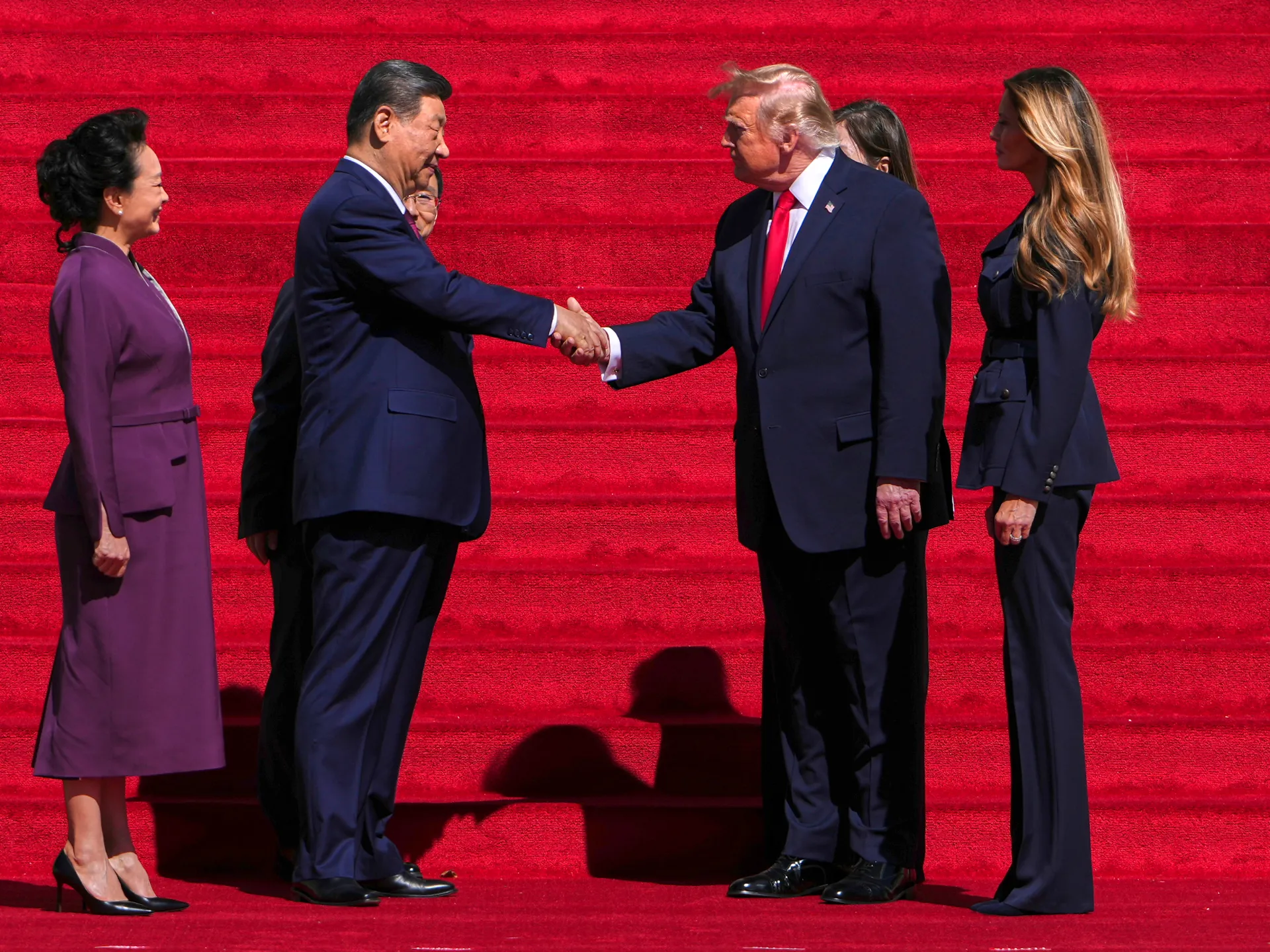
The United States and China have unveiled a list of goods recommended for reduced tariffs following last week’s summit between Presidents Donald Trump and Xi Jinping.
The release of the list on Sunday comes after Trump and Xi agreed to work towards lowering tariffs on $60bn worth of trade.
Recommended Stories
list of 4 itemsend of list
The agreement, which covers $30bn of each side’s imports, identifies 77 Chinese goods and more than 1,600 US products to be considered for more favourable tariff treatment.
Chinese goods on the list include microwave ovens, fish hooks, artificial flowers and weighing scales.
US exports identified for lower tariffs include poultry, dairy products, noodles, eggs, peanuts, canned tomatoes, pure-breed breeding horses, and silk.
US Trade Representative Jamieson Greer said the agreement would improve market access for about 30 percent of US exports to China and also benefit US consumers.
“The Trump Administration will continue to pursue fair, balanced, and reciprocal trade with China by ensuring compliance with commitments on agricultural and energy purchases, pursuing balanced trade in non-sensitive goods, and securing market access for American farmers, manufacturers, businesses, and workers,” Greer said in a statement.
China’s Ministry of Commerce, which confirmed the list on Monday, shortly after the White House announcement, said the sides would discuss “a reciprocal tariff reduction framework of $30 billion for $30 billion, aiming to reach a consensus”.
“This arrangement will help stabilize China-US trade, create better conditions for Chinese exports of relevant products to the US, meet domestic market demand, and strengthen trade cooperation in agricultural products, energy, manufactured goods, and consumer goods,” the ministry said in a statement.
While Trump and Xi’s summit was heavy on pomp and ceremony, their talks wrapped up on Friday with few concrete announcements on the myriad divisions between the superpower rivals, which span everything from trade to artificial intelligence and Taiwan.
Trump and Xi, who have held three face-to-face summits since last October, are expected to meet again at the Asia-Pacific Economic Cooperation (APEC) summit in Shenzhen, China, in November, and the Group of 20 gathering in Miami, Florida, in December.
Trade between the US and China, the world’s two largest economies, has declined substantially since Trump, a longtime critic of free trade policies, returned to the White House in January last year.
Two-way trade totalled $495bn in 2025, down 25 percent from the previous year, according to the US Trade Representative.
Deborah Elms, head of trade policy at the Hinrich Foundation in Singapore, said the latest announcement did not point to a major shift in US-China trade.
“Instead, both sides have largely listed goods that do not move the needle on overall trade flows,” Elms told Al Jazeera.
“They may reduce some prices in the US for consumers, but none is going to make a dramatic difference in inflation figures or result in meaningful sighs of relief by most US buyers,” Elms added.
“The same is broadly true with the Chinese list. Although there are many different agricultural products on the list, most are not actually exported to China or not exported in meaningful quantities.”
Private dinner will be the first one-on-one meeting between the two men, according to reports.
By Agence France Presse and Reuters
Published On 28 Sep 202628 Sep 2026
Anthropic CEO Dario Amodei is set to dine one-on-one with US President Donald Trump at the White House.
The meeting on Sunday evening, confirmed by Trump, comes after months of open conflict between the artificial intelligence startup and the Trump administration.
Recommended Stories
list of 4 itemsend of list
The private dinner would be the first one-on-one meeting between the two men, according to US media, including Axios, which first reported the dinner.
Trump confirmed the dinner on Sunday evening and reaffirmed his stance against slowing the pace of AI development.
Trump also reiterated his belief that new regulations would open the door for China to outpace the United States in AI advancement.
Although he acknowledged Amodei’s concern that going too fast on artificial intelligence could expand risks, Trump said it was more important for the US to maintain a technological edge over China.
“We’re about maybe a year and a half up on China,” Trump told Fox News while attending the Presidents Cup golf tournament in Illinois.
“We’re leading, and we’re building tremendous, trillions of dollars’ worth of places. And why should we give that up?”
The meeting comes two days after a federal appeals court upheld the Pentagon’s decision to classify Anthropic as a “supply chain risk”, which prohibits the US military from using its models.
The startup was sanctioned by the Trump administration after refusing in February to allow its tools to be used for fully autonomous weapons or domestic mass surveillance.
Trump also badmouthed Amodei, saying he was trying to be “a perfect little angel” after the Anthropic chief called for a pause in AI development.
Amodei was absent from the state dinner held for Chinese President Xi Jinping on Thursday, attended by AI industry leaders, including Amodei’s rival Sam Altman of OpenAI.
Despite mounting calls to slow down AI development due to the risk of losing control of the technology, the US government believes that the sector’s major players – OpenAI, Anthropic, Google, and Meta – cannot afford to slow down for fear that China will gain the upper hand.
Trump and Mike Johnson, the speaker of the House of Representatives, are set to meet with leading AI executives on Tuesday.


![Iranian-made Zolfaghar missiles are seen on display beside a large portrait of Iran’s Supreme Leader Mojtaba Khamenei at Baharestan Square in Tehran on September 28, 2026 [AFP]](https://i0.wp.com/occasionaldigest.com/wp-content/uploads/2026/09/afp_6abbb983ec1b-1790687619.jpg?w=640&ssl=1)


![US President Donald Trump waves as he walks to board Marine One as he departs from the South Lawn of the White House in Washington, DC, on September 26, 2026 [AFP]](https://i0.wp.com/occasionaldigest.com/wp-content/uploads/2026/09/1790693783_407_afp_6ab7d4f7ee67-1790432503.jpg?w=640&ssl=1)
![Women queue at a pharmacy in Tehran [Al Jazeera]](https://i0.wp.com/www.aljazeera.com/wp-content/uploads/2026/09/1arann-1790588624-1790672728.jpeg?w=640&ssl=1)