The US president has lashed out at European partners for declining to contribute military forces to the war on Iran.
United States President Donald Trump has reportedly discussed withdrawing from NATO, the transatlantic alliance that has been a central pillar of Western security for decades.
At a news briefing on Wednesday, White House Press Secretary Karoline Leavitt framed the US and Israel’s war on Iran as a “test” that the alliance had failed.
Recommended Stories
list of 3 itemsend of list
Despite Trump’s pressure, NATO allies had declined to contribute military forces to the war, outside of defensive manoeuvres.
Leavitt’s comments came shortly before Trump met with NATO Secretary-General Mark Rutte at the White House.
“I have a direct quote from the president of the United States on NATO, and I will share it with all of you. They were tested, and they failed,” Leavitt said.
“I would add, it’s quite sad that NATO turned their backs on the American people over the course of the last six weeks, when it’s the American people who have been funding their defence.”
Trump, she continued, was preparing to have “a very frank and candid conversation” with Rutte that afternoon.
In an interview with the news outlet CNN after their meeting, Rutte likewise described the encounter as “frank and open”. He reiterated his support for Trump, but added that NATO allies had offered support through logistics and access to bases.
“Did the president say he was going to try withdraw from NATO or, at the very least, not support NATO as much as other presidents have,” CNN host Jake Tapper asked Rutte.
“There is a disappointment, clearly. But at the same time he was also listening careful to my arguments of what is happening,” Rutte replied, before pivoting to praise of Trump’s leadership.
The US president has had a mixed relationship with NATO, sometimes threatening to pull US support and, at other times, reassuring allies of the US’s continued commitment to the alliance.
Since returning to the presidency in 2025, Trump has renewed his pressure campaign for NATO’s European partners to step up their defence spending.
Last June, at the 2025 NATO summit, he largely succeeded. The NATO members agreed to nonbinding commitments to increase their defence budgets to 5 percent of their gross domestic product (GDP) by 2035.
But Spain sought an exemption, leading Trump to denounce the country repeatedly over the past year.
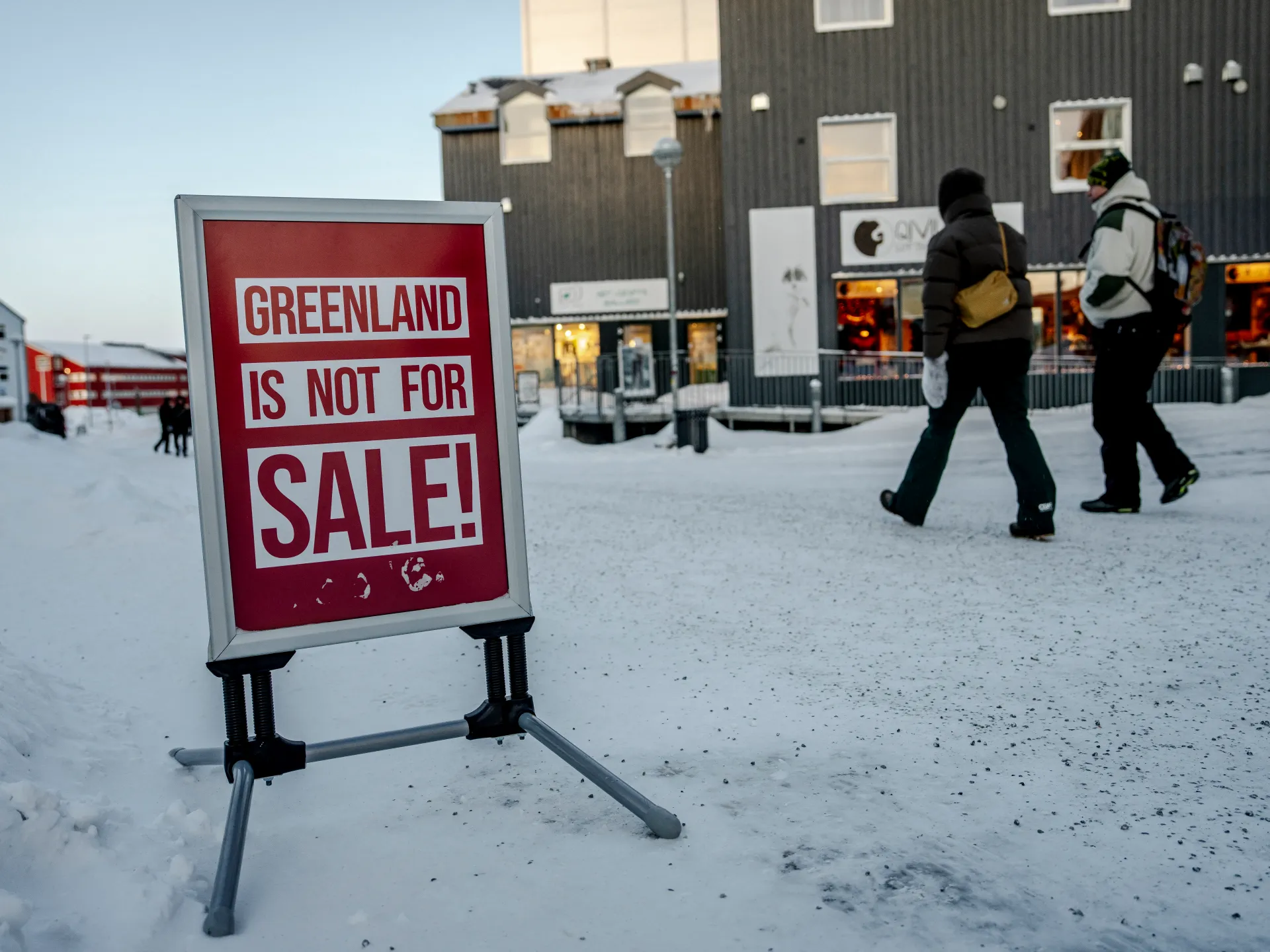
Tensions between the US and its European allies were further strained last year when Trump threatened to use military force to seize the self-governing Danish territory of Greenland, claiming that its ownership was essential for national security.
The US has eased away from those threats. But Trump has continued to assert that US ownership of Greenland is necessary, despite strong protests from the territory’s residents and European leaders.
After the US and Israel unilaterally launched a war against Iran on February 28, Trump lashed out at European countries for their lack of interest in contributing to the campaign.
Many legal scholars consider the war an act of aggression, in violation of international law.
The Wall Street Journal reported on Wednesday that the Trump administration is considering whether to close US bases or move troops out of countries such as Spain and Germany as punishment for their stance on the war.
When asked by reporters if Trump was considering leaving NATO, Leavitt said it was something the president “has discussed” and could address after his meeting with Rutte.
Trump and Rutte are considered to have a close relationship. Rutte has visited the White House multiple times during Trump’s second term, including in March, July, August and October of last year.
In the past, Rutte has warned that NATO “will not work” without US support.
Woods pleaded not guilty in his driving under the influence case in Florida last week after rolling his SUV.
Published On 8 Apr 20268 Apr 2026
Prosecutors are seeking Tiger Woods ‘ prescription drug records from a pharmacy, a week after his vehicle crashed in Florida and he was arrested on suspicion of driving under the influence.
Prosecutors in Florida on Tuesday said they planned to issue a subpoena seeking copies of all prescription medication records for the legendary golfer on file at Lewis Pharmacy in Palm Beach, Florida, from the start of the year through the end of last month.
Recommended Stories
list of 3 itemsend of list
Prosecutors in Martin County, Florida, want the times the prescriptions were filled, the number of pills, the dosage amounts and any instructions that accompanied the pills, such as warnings about driving while taking them, according to documents in an online court docket.
Any objections to the subpoena must be filed with the State Attorney’s Office within 10 days. Neither Lewis Pharmacy nor Woods’ attorney, Doug Duncan, immediately responded to emails seeking comment.
Woods pleaded not guilty in his driving under the influence case in Florida last week, hours after a sheriff’s report said deputies found two pain pills in his pocket and he showed signs of impairment after his SUV clipped a trailer and rolled over on its side.
Woods was travelling at high speeds on a beachside, residential road on Jupiter Island with a 30-mile per hour (nearly 50km per hour) speed limit when the accident occurred, authorities said. The truck had $5,000 in damage, according to an incident report. Woods agreed to a Breathalyzer test that showed no signs of alcohol, but he refused a urine test, authorities said.
Woods said last week that he is stepping away to seek treatment.
It’s the second time Woods has taken a leave following a car crash. In 2009, after his SUV ploughed into a fire hydrant and tree outside his home near Orlando, he took a leave of absence to work on being a better person. That lasted four months, and he returned at the Masters.
He was also in a 2021 car crash in Los Angeles that damaged his right leg so badly he said doctors considered amputation.
Americans are split on whether to trust Donald Trump’s instinct-driven approach to the Iran conflict. The range of opinions reflects a deeper unease about a president bypassing his cabinet and Congress in favour of gut decisions. Al Jazeera’s Heidi Zhou-Castro speaks with US citizens at the White House.
US vice president in Hungary calls Ukrainian leader’s ‘threatening’ remarks ‘completely scandalous’.
Published On 8 Apr 20268 Apr 2026
US Vice President JD Vance has said Ukraine’s prime minister made “scandalous” comments about Hungarian Prime Minister Viktor Orban, as he echoed Budapest’s accusations that Kyiv is trying to influence the upcoming elections there.
Vance’s remarks on Wednesday came during a visit to Budapest days before the far-right Orban, a Trump ally, faces the toughest challenge of his 16-year rule in an election on April 12.
Recommended Stories
list of 4 itemsend of list
Hungary’s strained relations with Ukraine have taken centre stage in the election campaign, with Budapest’s government accusing Kyiv of deliberately stopping flows of Russian oil through the Druzhba pipeline in an effort to sway the ballot.
Kyiv says the pipeline was damaged by a Russian drone attack in late January, and it is fixing it as quickly as it can.
Hungary responded by blocking a 90-billion-euro ($105bn) EU loan for Ukraine, prompting Ukrainian President Volodymyr Zelenskyy to say he could give the address of whoever was responsible to the Ukrainian army, who could “speak with him in their own language”.
‘Completely scandalous’
Speaking at a Hungarian university, Vance said Orban had told him about Zelenskyy’s remarks.
“It’s completely scandalous,” Vance said. “You should never have a foreign head of government … threatening the head of government of an allied nation.”
Vance then accused the media of double standards in their coverage of alleged foreign interference in the 2016 US presidential election and in the Hungarian vote.
“You saw this back in 2016 where a lot of the American media said that it was a true scandal that the Russian government bought like $500,000 of Facebook advertisements … That’s foreign influence,” he said.
“But what’s not foreign influence is when the European Union threatens billions of dollars withheld from Hungary because you guys protect your borders… What’s not foreign influence is when the Ukrainians shut down pipelines, causing suffering among the Hungarian people in an effort to influence an election.”
Budapest has been embroiled in a long‑running dispute with the European Union over issues ranging from judicial independence to the treatment of migrants.
Vance had already lambasted what he said was EU meddling in the Hungarian vote at a news conference on Tuesday.
A European Commission spokesperson said on Wednesday Brussels would use diplomatic channels “to convey our concerns to our US counterparts” following those comments, according to the Reuters news agency.
Before a single term has been negotiated, Trump is claiming total victory over Iran, but with leadership intact, enrichment continuing, and a new Strait of Hormuz toll that didn’t exist before the conflict, is this really a win? Al Jazeera’s Kimberly Halkett explains.
Islamabad, Pakistan – Just under 90 minutes remained until United States President Donald Trump’s deadline to destroy Iran’s “civilisation” late on Tuesday in Washington, DC, when he took to his favourite social media platform, Truth Social, again.
He said he had agreed to a two-week ceasefire with Iran after almost six weeks of bombing.
Recommended Stories
list of 4 itemsend of list
Soon after, Iranian Foreign Minister Abbas Araghchi confirmed the ceasefire on X, giving a world on edge a chance to breathe again.
Beyond the fact of the ceasefire, much remains unclear. Trump claimed Iran would allow unimpeded transit through the Strait of Hormuz while Araghchi said passage through the waterway would need to be done under the auspices of the Iranian armed forces. Other key differences quickly emerged: Was Lebanon included in the ceasefire? Has the US agreed to allow Iran to pursue uranium enrichment? Has Trump agreed to a 10-point Iranian list of demands or accepted that merely as a conversation starter?
But there also was a common glue that bound both Trump’s statement and Araghchi’s assertions: acknowledgement of Pakistan’s central role as the mediator that managed to persuade warring nations deeply distrustful of each other back to the negotiating table.
Trump said he agreed to the ceasefire “based on conversations with Prime Minister Shehbaz Sharif and Field Marshal Asim Munir, of Pakistan”, adding that they had “requested that I hold off the destructive force being sent tonight to Iran”.
Araghchi was even more profuse in his praise for Pakistan. “On behalf of the Islamic Republic of Iran, I express gratitude and appreciation for his dear brothers HE Prime Minister of Pakistan Sharif and HE Field Marshal Munir for their tireless efforts to end the war in the region,” he said in a statement, adding that Iran had accepted the ceasefire “in response to the brotherly request of PM Sharif”.
Sharif, who had publicly called on the US and Iran to accept a ceasefire a short time before, posted again 90 minutes later, highlighting what may be Pakistan’s most significant diplomatic achievement in years.
“With the greatest humility, I am pleased to announce that the Islamic Republic of Iran and the United States of America, along with their allies, have agreed to an immediate ceasefire everywhere including Lebanon and elsewhere, EFFECTIVE IMMEDIATELY,” he wrote, inviting both delegations to Islamabad on Friday “to further negotiate for a conclusive agreement to settle all disputes”.
By Wednesday afternoon, Sharif had spoken directly with Iranian President Masoud Pezeshkian too. Formal talks were expected to begin in Islamabad on Friday with a US delegation that could potentially be led by Vice President JD Vance, accompanied by Trump’s envoy Steve Witkoff and son-in-law Jared Kushner, who had previously been engaged in dialogue with Iran before the war.
The war, which began on February 28 when the US and Israel launched coordinated strikes that killed Supreme Leader Ali Khamenei and struck Iran’s military and nuclear infrastructure, has killed more than 2,000 people in Iran in five weeks, disrupted roughly a fifth of the world’s oil supplies and threatened to draw in regional powers.
That it has been paused, even temporarily, is the result of weeks of painstaking diplomacy that few believed Pakistan could deliver.
Early moves and a balancing act
Pakistan’s diplomatic engagement began almost immediately after the first US-Israeli attacks of the war, largely behind the scenes.
When the first strikes hit Tehran, Foreign Minister Ishaq Dar, who is also deputy prime minister, was in Saudi Arabia, attending a meeting of the Organisation of Islamic Cooperation. Within hours, Pakistan’s Ministry of Foreign Affairs issued a statement, and Dar called Araghchi to convey solidarity.
By March 3, Dar was addressing the country’s Senate, outlining Pakistan’s position. “Pakistan is ready to facilitate dialogue between Washington and Tehran in Islamabad,” he told lawmakers.
At home, meanwhile, protests erupted. In Karachi, demonstrators tried to storm the US consulate on March 1, leaving at least 10 people dead.
Pakistan’s Shia Muslim population, estimated at 15 to 20 percent of the country’s roughly 250 million people, was watching closely. As sectarian tensions rose, Munir summoned Shia clerics to Rawalpindi and warned that violence inside Pakistan would not be tolerated.
Violence breaks out in Karachi on March 1, 2026, when police try to disperse a protest called to condemn the killing of Iranian Supreme Leader Ali Khamenei [Ali Raza/AP Photo]
At the same time, Islamabad was dealing with multiple pressures. It remained engaged in what officials described as an “open war” against the Afghan Taliban. It was also grappling with rising fuel costs due to disruptions to shipping in the Strait of Hormuz and concerns over remittances from Pakistani workers in Gulf states.
On March 12, Sharif travelled to Jeddah with Munir to meet Saudi Crown Prince Mohammed bin Salman, expressing “full solidarity” while urging restraint against mounting Iranian attacks against Gulf countries.
It was a delicate balancing act. Pakistan had to maintain its mutual defence pact with Riyadh, signed in September, without being drawn into a direct confrontation with Iran, its southwesterly neighbour with which it shares a nearly 1,000km (620-mile) border.
Qamar Cheema, executive director of the Islamabad-based Sanober Institute, said Pakistan’s early condemnation of the US-Israeli strikes proved crucial.
“When Pakistan condemned American strikes,” he told Al Jazeera, “that was where Pakistan won over the Iranians as well. This role as a global peacemaker is the result of personal diplomatic investment in Iran and the protection of international law.”
Masood Khan, a former Pakistan ambassador to the United Nations and the US, said regional actors were looking for “reliability, impartiality, consistency, restraint and deliverables”.
“We fit the bill and delivered on all counts,” Khan told Al Jazeera. “We did not seek strategic opportunism. We earned their trust.”
War escalates as diplomacy deepens
On the night of March 16-17, Israeli strikes killed Ali Larijani, secretary of Iran’s Supreme National Security Council, and, since Khamenei’s death, one of the most powerful figures in Tehran.
On March 18, Israeli jets struck South Pars, the world’s largest natural gasfield, which Iran shares with Qatar and which accounts for roughly 70 percent of Iran’s domestic gas production.
The attack triggered a new wave of Iranian retaliation on Gulf energy infrastructure, sending oil and gas prices soaring.
Against this backdrop, Dar arrived in Riyadh on March 18 for a meeting of 12 foreign ministers convened by Saudi Arabia.
The gathering produced a joint statement condemning Israeli actions. Turkiye and Pakistan resisted harsher language that could have undermined Islamabad’s credibility with Tehran, according to officials aware of the deliberations in Riyadh.
It was in Riyadh that a quadrilateral mechanism also took shape, bringing together Pakistan, Saudi Arabia, Turkiye and Egypt.
Betul Dogan-Akkas, assistant professor of international relations at Ankara University, said the format emerged partly from divisions within Gulf diplomacy. While some Gulf countries, such as the United Arab Emirates, were by late March increasingly losing patience with Iran’s attacks and raising the prospects of hitting back, others, while also upset with Iran, were still pushing for de-escalation.
“The intra-GCC [Gulf Cooperation Council] disagreements over a ceasefire and a diplomatic dialogue with Iran created the need for exactly that kind of actor,” Dogan-Akkas told Al Jazeera, adding that Pakistan’s ties with both sides made it a natural choice for a mediator.
From March 22 to 23, officials confirmed that Munir spoke directly to Trump. The US president had already announced a five-day pause on strikes targeting Iranian energy infrastructure by then, signalling he was open to a diplomatic exit.
The foreign ministers of Pakistan, Turkiye, Egypt and Saudi Arabia gather in Islamabad on March 29, 2026, their second such meeting in 10 days [Handout/Pakistan’s Ministry of Foreign Affairs]
On March 23, Pakistan formally offered to host talks. Sharif echoed the offer publicly hours later on X, tagging Trump, Araghchi and Witkoff.
Initial reactions were mixed. Reports suggested talks could take place in Islamabad within days with Vance, Witkoff and Kushner named as possible members of a US delegation.
Iran, however, denied that negotiations were under way while the White House sought to dampen speculation. “The US will not negotiate through the press,” White House spokeswoman Karoline Leavitt said.
On March 26, Dar confirmed that the US had shared a 15-point proposal with Iran via Pakistan. It demanded commitments on Iran’s nuclear programme, limits on its ballistic missiles and the reopening of the Strait of Hormuz.
Tehran rejected the proposal and responded with a 10-point counteroffer, demanding an end to hostilities, sanctions relief, reparations, recognition of its sovereignty over the strait and the withdrawal of US forces from the region.
The positions remained far apart. But the fact that both proposals passed through Islamabad underscored Pakistan’s central role.
On March 29, the foreign ministers of Pakistan, Saudi Arabia, Turkiye and Egypt reconvened in Islamabad. Before the meeting, Sharif held a lengthy call with Pezeshkian, his second in five days.
After the talks, Dar travelled to Beijing, reflecting China’s growing involvement. He met Chinese Foreign Minister Wang Yi, and the two sides outlined a five-point initiative that included a ceasefire, early dialogue, civilian protection, restoration of shipping through the Strait of Hormuz and a larger UN role. On Tuesday, Trump confirmed that China appeared to have played a role in pushing Iran towards talks.
Some critics have described Pakistan’s role as that of a messenger, but Ishtiaq Ahmad, professor emeritus of international relations at Quaid-i-Azam University in Islamabad, rejected that notion.
“A messenger transmits, but Pakistan shaped the sequencing, timing and framing of proposals,” he told Al Jazeera. “It had leverage with all sides.”
Dogan-Akkas said Tehran’s choice of Pakistan as mediator was deliberate.
“I believe it is a strategic choice to not project a powerful middle power with a US military base as the mediator but to have another regional country convey the message,” she said.
The Munir factor
Central to Pakistan’s role was its army chief, Munir.
His relationship with Trump dates back to early last year when Pakistan arrested the alleged perpetrator of the Abbey Gate bombing in Kabul in 2021, which occurred as thousands of Afghans tried to flee after the Taliban takeover. Thirteen American service members were killed in that attack.
But their relationship truly took root after the brief conflict between Pakistan and India in May when Trump publicly claimed credit for brokering a ceasefire, a claim acknowledged by Pakistan but rejected by India.
General Asim Munir became Pakistan’s army chief in November 2022, and after the four-day conflict with India in May 2025, he was promoted to the rank of field marshal [Handout/Inter-Services Public Relations]
That episode opened a direct channel between Munir and the White House. He has since visited Washington, DC, twice, and Trump has publicly praised him on several occasions.
Pakistan also maintained connections with figures close to the Trump administration, including through business engagements involving Witkoff’s family.
Trump himself acknowledged Pakistan’s ties with Iran, telling reporters that Pakistanis “know Iran very well, better than most,” after hosting Munir for an unprecedented lunch in June.
However, Ahmad cautioned against overstating the personal dimension.
“The personal equation helped accelerate decision-making at a critical moment, but the mediation was not built on personalities alone,” he told Al Jazeera.
“It rested on institutional alignment between Pakistan’s civil and military leadership and on sustained engagement with Washington over the past year. Even if personalities shift, the channel Pakistan has built is now institutionalised,” he said.
Cheema argued that the calculus was also structural.
“Trump understands that in the entire Muslim world, this is the only nuclear-capable country, and it can change the course of history,” he told Al Jazeera, referring to Pakistan.
Countdown to a ceasefire
It was on Sunday on the Christian holiday of Easter when tensions peaked. As Pope Leo XIV called for peace from the Vatican, Trump issued a stark warning on Truth Social.
“Tuesday will be Power Plant Day, and Bridge Day, all wrapped up in one, in Iran,” he wrote, threatening to blow up all of Iran’s bridges and power facilities if it did not reopen the Strait of Hormuz.
Iran dismissed the remarks, but behind the scenes, Pakistani officials intensified their diplomatic efforts.
By Monday, Pakistan had put forward a two-phase ceasefire proposal with Munir in contact with Vance, Witkoff and Araghchi.
Trump initially rejected the plan. He set a final deadline of 8pm Washington, DC, time on Tuesday (midnight GMT) and, hours before it expired, warned of catastrophic consequences.
“A whole civilization will die tonight, never to be brought back again,” he posted. “I don’t want that to happen, but it probably will.”
According to officials, Munir continued engaging both sides in the final hours, even as much of the diplomacy remained out of public view, until Sharif’s public appeal came with about five hours remaining.
The breakthrough followed shortly after.
As Trump announced the ceasefire and Iran confirmed it, the immediate impact was visible.
Oil prices dropped by 16 percent. The Strait of Hormuz was set to reopen for the first time in five weeks. And Islamabad was ready to become the centre of diplomatic activity.
What comes next?
The temporary ceasefire is not a peace deal. Iran’s Supreme National Security Council described it as a victory while warning that “our hands are on the trigger.”
Key differences remained unresolved, and expectations for the upcoming talks are cautious.
Despite Sharif’s claim that Lebanon was included, Israeli Prime Minister Benjamin Netanyahu’s office said the arrangement does not cover Lebanon, and Israeli attacks there on Wednesday killed dozens of people and wounded hundreds.
Still, analysts said Pakistan’s role marks a significant shift.
A country that was not at the table for talks that resulted in the 2015 Iran nuclear deal or the Abraham Accords has now positioned itself at the centre of a major diplomatic effort.
“This is the first time Pakistan has simultaneously managed active conflict mediation between two adversaries under ongoing military escalation without direct contact between them,” Ahmad said.
Dogan-Akkas offered a more cautious assessment, noting that Pakistan does not have a long history of mediation compared with countries such as Kuwait, Oman or Qatar.
The outcome, she said, reflects Pakistan’s ties in the Gulf and its improving relationship with Washington rather than a deeply institutionalised mediation role.
When Pakistan quietly facilitated US Secretary of State Henry Kissinger’s secret trip to Beijing in 1971, its role remained unacknowledged for years.
This time, recognition came almost immediately, from both Washington and Tehran.
“Our effort this year is a continuation of the facilitation we undertook between the US and Iran in 2025,” Khan, the former envoy, said.
“But the stakes this time were very high. We did not want to see the richest bloc of the Muslim world decimated nor the world pushed towards a wider war.”
He added a note of caution.
“No relationships are, however, assured in perpetuity. Look at the Trump-Modi bonhomie in the first Trump administration and its unravelling now,” he said, referring to the warm friendship between the US president and Indian Prime Minister Narendra Modi, which appears to have cooled during Trump’s second term.
Even so, he argued, Pakistan has already secured a lasting gain.
“While ultimate success will depend on the outcome of the process, however, even at this preliminary stage, Pakistan has already carved a niche for itself in diplomatic chronicles,” Khan said.
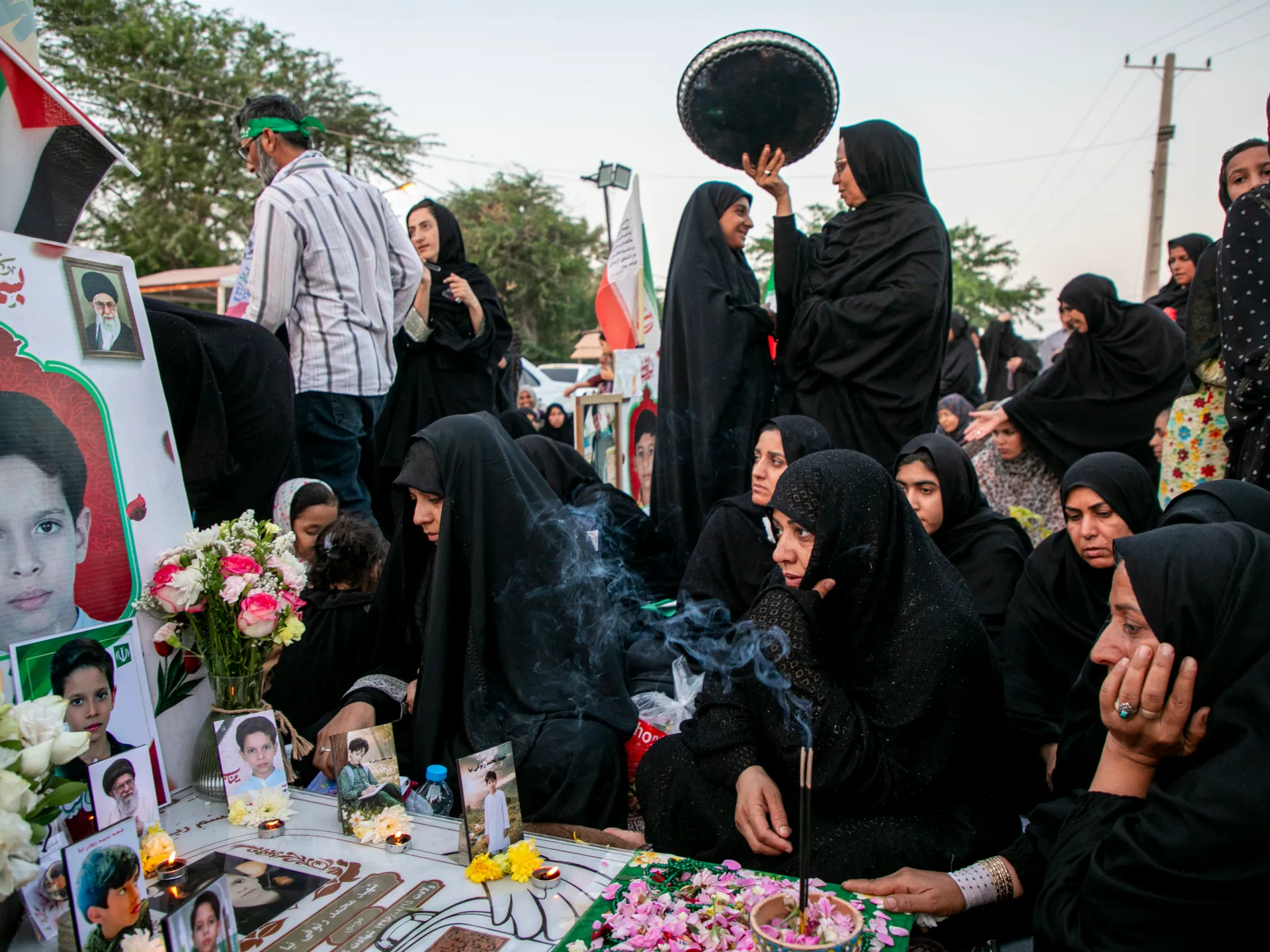
Iranians have commemorated the victims of the US strike on a girls school in Minab, that killed 168 people on the first day of the US-Israeli war on Iran. The vigil was held hours before the US and Iran agreed to a two-week ceasefire.
Israeli prime minister’s office welcomes US decision to suspend attacks on Iran, but says the two-week truce does not apply to Lebanon.
Published On 8 Apr 20268 Apr 2026
Prime Minister Benjamin Netanyahu’s office has announced that Israel backs the United States’s decision to suspend strikes against Iran for two weeks, but said the truce “does not include Lebanon”.
In a statement on X on Wednesday, Netanyahu said Israel supported US President Donald Trump’s efforts to ensure “Iran no longer poses a nuclear, missile and terror threat to America, Israel, Iran’s Arab neighbors and the world”.
He said the US has told Israel that it is committed to achieving these goals in the upcoming negotiations in Pakistan’s Islamabad on Friday.
But the two-week ceasefire “does not include Lebanon”, he added.
Netanyahu’s statement comes after Pakistani Prime Minister Shehbaz Sharif announced that the US, Iran and their allies “have agreed to an immediate ceasefire everywhere including Lebanon and elsewhere”.
Sharif said the move was “effective immediately”.
Lebanon was drawn into the war on March 2 after Iran-aligned Hezbollah launched attacks on Israel.
Hezbollah said the attacks were in retaliation for Israel’s killing of Iran’s Supreme Leader Ayatollah Ali Khamenei on February 28 as well as its near-daily violations of a ceasefire it agreed in Lebanon in November of 2024.
Israeli attacks on Lebanon have since killed more than 1,500 people and displaced more than 1 million people. The Israeli military has also launched an invasion of southern Lebanon and said it aims to seize more territory for what it calls a buffer zone.
There’s been no immediate comment from Hezbollah or Lebanon.
Celebrations have erupted in Iraq’s capital, Baghdad, following the announcement of a two-week ceasefire between Iran and the United States. Iraq had been pulled into the war with pro-Iran armed groups and US forces carrying out attacks on each other.
Tehran says the negotiations will be based on its 10-point proposal, which calls for control over Strait of Hormuz and lifting of all sanctions.
Iran has agreed to a two-week ceasefire with the United States, with its National Security Council saying talks with Washington will begin in the Pakistani capital, Islamabad, on Friday, based on Tehran’s 10-point proposal.
The statement on Wednesday came after US President Donald Trump said he was calling off a threat to end Iranian civilisation and “suspend” attacks on the country for two weeks.
Recommended Stories
list of 4 itemsend of list
Trump said the truce was contingent on Iran agreeing to the “complete, immediate and safe opening” of the Strait of Hormuz, the narrow waterway that connects the Gulf to the Arabian Sea and through which a fifth of the global oil supply passes.
Iran’s partial blockade of the strait – imposed in the aftermath of the US and Israel’s attacks on February 28 – has disrupted global trade, driving up oil prices and causing fuel shortages across the world.
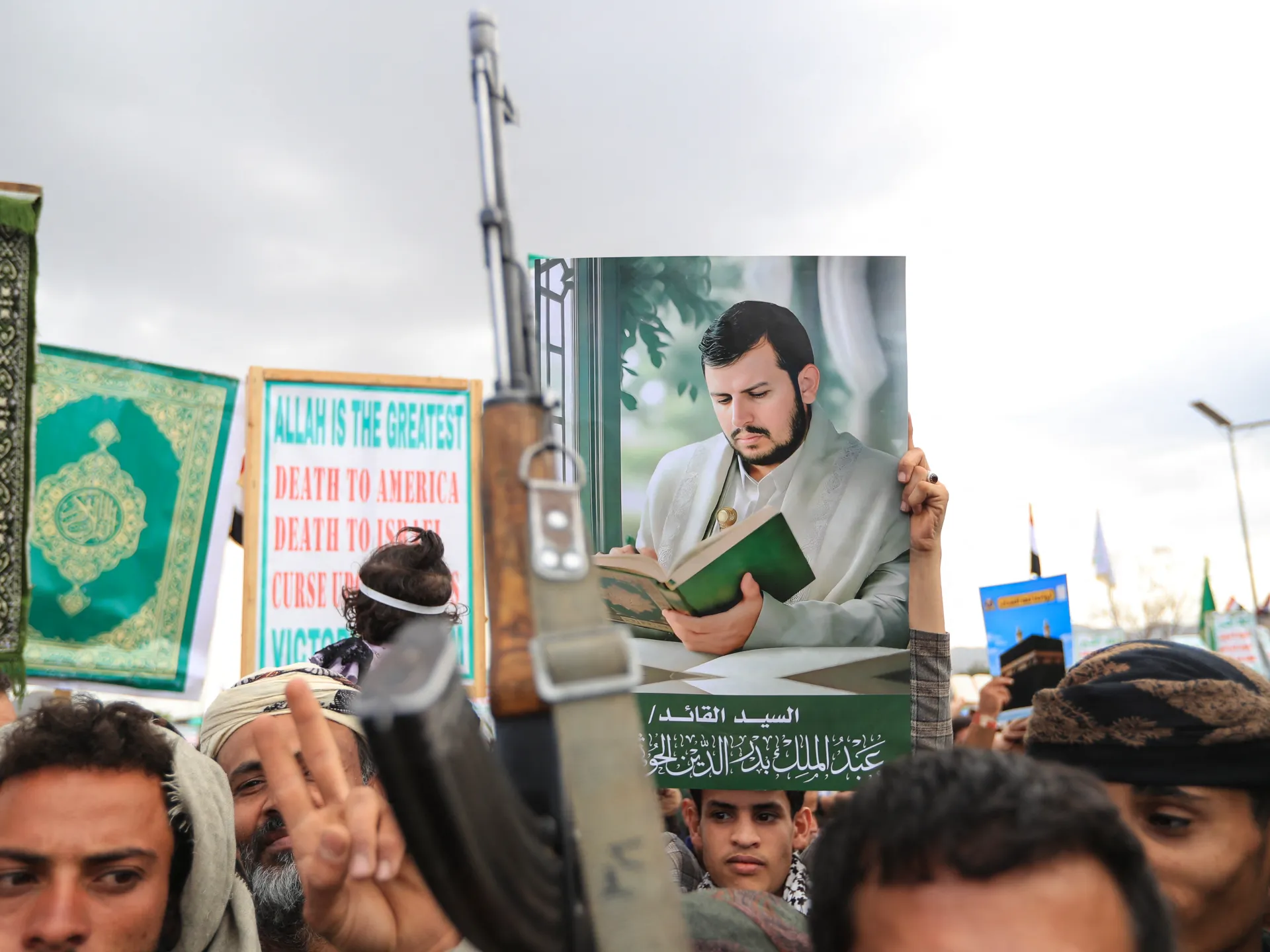
Iran’s retaliatory attacks have also reverberated across the Gulf and drawn in Lebanon’s Hezbollah and Yemen’s Houthis, both of which have launched attacks on Israel, significantly widening the conflict.
Trump said in his Truth Social statement that the US has received a 10-point proposal from Iran, “and believe it is a workable basis on which to negotiate”.
He said the US and Iran have agreed on “almost all of the various points of contention” and that the two-week period will allow the agreement to be “finalised and consummated”.
Iran’s Minister of Foreign Affairs Abbas Araghchi, speaking on behalf of the Iranian National Security Council, confirmed Tehran’s decision to halt the fighting.
“If attacks against Iran are halted, our powerful armed forces will cease their defensive operations,” he said in a post on X.
Araghchi said that safe passage through the Strait of Hormuz will be possible in coordination with Iran’s Armed Forces, and that the decision was taken in light of Trump’s acceptance “of the general framework of Iran’s 10-point proposal as a basis for negotiations”.
For his part, Pakistan’s Prime Minister Shehbaz Sharif said the warring sides had agreed to an “immediate ceasefire everywhere including Lebanon and elsewhere”.
The move is “EFFECTIVE IMMEDIATELY”, he wrote on X.
Sharif thanked the US and Iran and extended an invitation to “their delegations to Islamabad on Friday, 10th April 2026, to further negotiate for a conclusive agreement to settle all disputes”.
According to Iran’s National Security Council, its 10-point proposal calls for Iranian dominance and oversight of the Strait of Hormuz, which it said would grant it a “unique economic and geopolitical position”.
The proposal also calls for the withdrawal of all “US combat forces” from bases in the Middle East and a halt to military operations against allied armed groups across the region. It goes on to demand “full compensation” for war damages, as well as the lifting of all sanctions by the US, the United Nations Security Council and the International Atomic Energy Agency.
The proposal also calls for the release of frozen Iranian assets abroad and the ratification of any final agreement in a binding UN Security Council resolution.
The council said that while Tehran has agreed to talks, it does so “with complete distrust of the American side”.
It said Iran will allocate two weeks for these negotiations and that the time period “can be extended by agreement of the parties”.
The council added that Iran stood ready to respond with “full force” as soon as “the slightest mistake by the enemy is made”.
Al Jazeera’s Mike Hanna reports that the White House has confirmed the US has agreed to suspend all bombing and military attacks on Iran for two weeks, provided the Strait of Hormuz re-opens for safe passage. Trump’s announcement came close to an hour before an original threatened deadline, signalling a breakthrough towards diplomacy.
Billionaire investor Bill Ackman’s Pershing Square has proposed a takeover of Universal Music Group in a $64bn deal, the latest twist in his nearly five-year quest for the music label giant.
Pershing Square proposed a cash-and-shares offer on Tuesday through its acquisition vehicle that values Universal Music at about 30.40 euros ($35) per share, a 78 percent premium to the last closing price of 17.10 euros ($20), making the deal worth 55.75 billion euros ($64.31bn).
Recommended Stories
list of 4 itemsend of list
Universal Music Group (UMG) – the company behind international superstars, including Taylor Swift, Billie Eilish and Kendrick Lamar – is expected to move its listing to New York from Amsterdam, paving the way for more investors, including index funds, to own the company and ultimately lead to more robust earnings and a higher valuation.
Universal Music declined a Reuters news agency request for comment.
For Ackman, one of the world’s most voluble investors, who cemented his fame and fortune as an activist investor, forcefully pushing corporate America to adopt changes, this is a far friendlier approach, investors and industry analysts said.
Even as the music industry is flourishing, UMG’s share price has lagged, something Ackman is pledging to fix with this proposed deal.
Ackman’s letter to Universal Music Group’s board carried a mixed tone, at times complimentary of current management, led by chairman and chief executive Lucian Grainge, and critical of the company’s “underutilized balance sheet” and handling of its 2.7 billion euro ($3.1bn) investment in Spotify Technology.
Fears of AI disrupting the music industry have played a role in UMG’s lacklustre performance. Its share of the music market has been sliding, and streaming growth is decelerating, Wells Fargo analysts noted. In March, UMG delayed its plans for a US listing.
Nonetheless, Ackman will need the support of UMG’s top shareholders – Bollore Group, which holds an 18.5 percent stake, and Vivendi, which owns 13.4 percent – to push through any transaction. China’s Tencent is a significant shareholder. French billionaire Vincent Bollore’s family controls 80 percent of UMG’s voting rights.
Old target
Ackman first flirted with Universal Music Group in 2021, when his Pershing Square Tontine Holdings, a shell corporation created to take a private company public, zeroed in on its target. But Ackman shelved the complex deal in the wake of heavy US regulatory scrutiny. Instead, Pershing Square became one of UMG’s biggest investors in 2021, and Ackman sat on its board until last year.
Post transaction, Ackman said Grainge should remain Universal Music’s chief executive.
Ackman said he and former Hollywood super-agent Michael Ovitz met with Grainge over dinner “a couple of weeks ago” to discuss the potential merger.
“Lucian encouraged us to send it in,” Ackman said.
Ackman proposed adding new directors, including Ovitz – who shepherded the careers of Madonna and Michael Jackson – who would become the board chair. Additionally, two representatives from Pershing Square would get seats, he said, not saying yet whether he would be one of the directors.
Shares of UMG, which is listed in Amsterdam, were up 13 percent on Tuesday, while Bollore Group climbed 5 percent. Shares in Vivendi were up more than 10 percent.
Pershing bought a 10 percent stake in UMG from Vivendi ahead of its 2021 Amsterdam IPO and has since repeatedly pressed for a New York listing, arguing it would boost UMG’s share price and liquidity.
Pershing currently has a 4.7 percent stake, making it UMG’s fourth-biggest shareholder.
UMG’s shares have lost almost a third of their value since its IPO.
Even as global music revenues grow year after year, UMG and other major labels, like Sony and Warner Music, are scrambling to stay competitive as streaming services from Spotify, Amazon, Apple and Deezer take an ever greater share.
They are now also contending with disruptions brought on by the expansion of AI – from copyright disputes to the advent of song-generating AI tools – that threaten to upend how music is created, consumed and monetised.
One survey last year found that a staggering 97 percent of listeners could distinguish between AI-generated and human-composed songs.
Under Tuesday’s proposal, Pershing’s SPARC Holdings would merge with UMG, and the new entity would become a Nevada corporation listed on the New York Stock Exchange.
US President Donald Trump says he has agreed to extend his threatened deadline to attack Iran by two weeks, if Iran immediately re-opens the Strait of Hormuz. His Truth Social post came less than two hours before he had said Iran would face widespread attacks on civilian infrastructure.
A total 11 out of 15 members supported the resolution, which was already watered down to evade vetoes.
Published On 7 Apr 20267 Apr 2026
Russia and China have vetoed a United Nations Security Council (UNSC) resolution aimed at protecting commercial shipping in the Strait of Hormuz.
The draft text, on which a vote was held on Tuesday, was proposed by Bahrain. Eleven of the 15 members of the UNSC voted in favour, and two abstained. However, Russia and China said that the measure was biased against Iran.
Recommended Stories
list of 3 itemsend of list
Under the resolution, affected states would have been asked to “coordinate efforts, defensive in nature, commensurate to the circumstances, to contribute to ensuring the safety and security of navigation across the Strait of Hormuz”.
Shipping through the narrow waterway, through which a fifth of global oil and gas shipments previously passed, has effectively come to a standstill after Tehran threatened to attack vessels in response to the war launched against Iran by the United States and Israel on February 28.
The blockade has sent fuel prices soaring across much of the world and led some countries, particularly in Asia, to introduce restrictions on consumption and ration supplies.
A deadline set by US President Donald Trump for Iran to reopen the water passage or else face even worse bombardment is set to expire later on Tuesday, after he repeatedly issued – and delayed – similar threats.
The US ambassador to the United Nations, Mike Waltz, condemned the Russian and Chinese vetoes, saying they marked “a new low”, as Iran’s shutting of the strait was preventing medical aid and supplies from reaching humanitarian crises in the Congo, Sudan and Gaza.
“No one should tolerate that. They are holding the global economy at gunpoint. But today, Russia and China did tolerate it.”
France deplored the vetoes. “The aim was to encourage strictly, purely defensive measures to provide the security and safety for the strait without spiralling towards escalation,” its UN ambassador, Jerome Bonnafont, said.
Russia and China said the resolution was biased against Iran.
China’s UN envoy Fu Cong said adopting such a draft when the US was threatening the survival of a civilisation would have sent the wrong message.
Russia’s UN ambassador, Vasily Nebenzya, said Russia and China were proposing an alternative resolution on the situation in the Middle East, including maritime security.
Iran’s UN ambassador, Amir Saeid Iravani, praised the Chinese and Russian moves, saying “Their action today prevented the Security Council from being misused to legitimise aggression.”
The wording of the resolution had been the subject of behind-the-scenes negotiations for days.
An earlier version of the document had explicitly referred to Chapter 7 of the UN Charter, which grants the UNSC the authority to take measures ranging from sanctions to the use of military force.
But after China’s opposition, Bahrain had significantly weakened its draft, dropping any authorisation of the use of force.
An explicit reference to binding enforcement, included in an earlier draft, was also left out.
Donald Trump warned that “a whole civilisation will die tonight” if Iran does not open the Strait of Hormuz, ahead of a Tuesday night deadline for Tehran to comply. The comments follow a “pretty shocking” silence from US Congress on the US-Israeli war, Al Jazeera’s Kimberly Halkett explains.
The US-Israel war on Iran has sparked a global fuel crisis as thousands of tankers carrying crucial deliveries of oil and liquefied natural gas (LNG) remain stranded on either side of the Strait of Hormuz, currently under a blockade imposed by Iran.
On Saturday, Egypt’s government said it is among the “best-performing” countries in tackling the crisis because of the measures it has implemented to save on fuel.
Here is what we know about the steps Egypt is taking and whether other countries are doing the same.
Why has the Iran war caused an energy crisis?
Pressure on oil and gas markets is mounting due to the almost complete halt to shipping through the Strait of Hormuz as well as air strikes on and around key energy facilities in the Gulf as the United States-Israel war on Iran enters its sixth week.
One-fifth of the world’s oil and LNG is shipped from producers in the Gulf through the Strait of Hormuz in peacetime. This is the only route from the Gulf to the open ocean.
On March 2, two days after the US and Israel began strikes on Iran, Ebrahim Jabari, a senior adviser to the commander in chief of Iran’s Islamic Revolutionary Guard Corps (IRGC), announced that the strait was “closed”. If any vessels tried to pass through, he said, the IRGC and the navy would “set those ships ablaze”. Since then, traffic through the strait, carrying cargoes including 20 million barrels of oil each day, has plunged by more than 95 percent.
Now, Tehran is allowing just a handful of tankers through after reaching agreements with some countries to do so.
Besides this, energy infrastructure in the Middle East has suffered damage over the course of the war.
On March 24, QatarEnergy declared force majeure on some of its long-term LNG supply contracts after an Iranian attack on Qatar’s Ras Laffan LNG facility – the largest in the world – wiped out about 17 percent of the country’s LNG export capacity, causing an estimated $20bn in lost annual revenue and threatening supplies to Europe and Asia.
All of this disruption has sent energy prices soaring. On Tuesday, global oil benchmark Brent crude was around $109 per barrel, compared to around $65 per barrel right before the war started.
How is Egypt tackling the energy crisis?
Egypt’s Petroleum Ministry has announced rises in fuel prices ranging from 14 percent to 30 percent.
On March 28, Egyptian Prime Minister Mostafa Madbouly’s office told a press conference that the country’s energy import bill had increased from $1.2bn in January to $2.5bn in March.
Egypt is both one of the region’s largest energy importers and among its most heavily indebted economies. While domestic gas and oil account for the majority of its total energy supply, the country still relies on imported fuels, especially refined oil products and some natural gas, from Israel and the Gulf states.
Madbouly announced measures Egypt is taking to mitigate this and preserve state energy resources.
From March 28, shops, malls and restaurants are closing at 9pm (19:00 GMT) every day for one month, except Thursdays and Fridays.
On Thursdays and Fridays, the closing time will be 10pm (20:00 GMT).
Fuel allocations for government vehicles will be reduced by 30 percent.
Street lighting and street advertisement lighting will be cut by 50 percent.
From April 1, eligible employees will work remotely on Sundays, the first day of the working week. Some essential services, such as pharmacies, grocery stores and tourist facilities, will be exempted from this.
Which other countries have introduced energy conservation measures?
Besides Egypt, other countries are also taking steps to save energy.
Last week, Malaysia ordered civil servants to work from home to save energy in government offices.
In mid-March, it was revealed that government offices in the Philippines had moved to a four-day work week, officials in Thailand and Vietnam were being encouraged to work from home and limit travel, and Myanmar’s government had imposed alternating driving days.
Pakistan, which imports about 80 percent of its energy from the Gulf, announced on Monday of this week that markets and shopping malls would close at 8pm (15:00 GMT) across the country, except in Sindh province. The government’s statement added that food outlets would close at 10pm (17:00 GMT), which is also when marriage ceremonies at private properties and houses must end.
Bangladesh has reduced working hours for government and private workers and banking services hours in a bid to conserve electricity.
In Sri Lanka and Slovenia, authorities have introduced fuel rationing and purchase limits to manage shortages and soaring costs.
Global affairs journalist Tara Kangarlou notes a growing shift, as some Iranians who initially believed that the US and its allies could bring stability are now rejecting that idea after over a month of attacks.
Iran has proposed a 10-point peace plan to end the war as the United States and Israel intensify their attacks on Tehran and a deadline looms that was set by US President Donald Trump for Iran to open the Strait of Hormuz, whose near-closure has triggered a global energy crisis.
At the White House on Monday, Trump called the 10-point plan a “significant step” but “not good enough”.
Recommended Stories
list of 4 itemsend of list
Iran’s top university and a major petrochemical plant were hit on Monday after Trump threatened to target power plants and bridges until Tehran agreed to end the war and open the strait, through which 20 percent of the world’s oil and gas supplies pass.
Here is more about Iran’s 10-point plan and Trump’s response to it:
What is Iran’s 10-point plan?
On Monday, Pakistan, which has mediated talks in Islamabad aimed at ending the war, put forth a 45-day ceasefire proposal after separate meetings with US and Iranian officials. The Iranian and US negotiators have not met face to face about the 45‑day truce plan. In late March, Trump told reporters that his envoys were talking to a senior Iranian official, but this was not confirmed by Iran. Tehran has denied holding talks with US negotiators.
Iran’s state-run IRNA news agency said Tehran had conveyed its response via Islamabad. Iran reportedly rejected the proposed ceasefire, putting forward instead a call for a permanent end to the hostilities.
The Iranian proposal consisted of 10 clauses, including an end to conflicts in the region, a protocol for safe passage through the Strait of Hormuz, the lifting of sanctions and reconstruction, IRNA reported. The conflict has spread to the Gulf region and Lebanon, where 1.2 million Lebanese people have been displaced due to Israeli attacks.
Details about the 10 clauses have not been published.
How did the White House respond?
Speaking to reporters about Iran’s plan, Trump said: “They made a … significant proposal. Not good enough, but they have made a very significant step. We will see what happens.”
“If they don’t make a deal, they will have no bridges and no power plants,” he added.
In a profane Truth Social post on Sunday, Trump threatened to attack Iran’s civilian infrastructure, including bridges and power plants, if the Strait of Hormuz is not fully reopened. “Tuesday will be Power Plant Day, and Bridge Day, all wrapped up in one, in Iran. There will be nothing like it!!! Open the F****** Strait, you crazy bastards, or you’ll be living in Hell – JUST WATCH! Praise be to Allah,” he wrote.
The deadline is set for 8pm Washington time on Tuesday (00:00 GMT). Tehran has rejected this ultimatum and threatened to retaliate.
Human rights organisations and members of the US Congress have criticised Trump for threatening to attack civilian targets, which is considered a war crime.
The Axios news website reported that an unnamed US official who saw the Iranian response called it “maximalist”.
What other proposals have been on the table?
The last time the word “maximalist” was used to describe a peace plan in this war was late last month when Iran called a US plan “maximalist”.
An unnamed, high-ranking diplomatic source told Al Jazeera on March 25 that Iran had received a 15-point plan drafted by the US. The plan was delivered to Iran through Pakistan.
The source said Tehran described the US proposal as “extremely maximalist and unreasonable”.
“It is not beautiful, even on paper,” the source said, calling the plan deceptive and misleading in its presentation.
The 15-point plan included a 30-day ceasefire, the dismantling of Iran’s nuclear facilities, limits on Iran’s missiles and the reopening of the Strait of Hormuz.
In return, the US would remove all sanctions imposed on Iran and provide support for electricity generation at Iran’s Bushehr Nuclear Power Plant.
Iran has rejected a temporary ceasefire, arguing it would give the US and Israel time to regroup and launch further attacks. Tehran has pointed to Israel’s 12-day war on Iran in June. The US joined that conflict for one day, hitting Iran’s three main nuclear sites with air strikes. Trump claimed at the time that the US had destroyed Iran’s nuclear facilities but months later justified the current war by saying Iran posed an imminent threat.
The UN nuclear watchdog, however, said Iran was not in a position to make a nuclear bomb.
The US and Israel launched the war on February 28 as Washington was holding negotiations with Iran. On the eve of the war, Oman, the mediator of the talks, had said a deal was “within reach”.
Tehran has said for years that its nuclear programme is for civilian purposes and it does not intend to create nuclear weapons. It even signed a deal with the US in 2015 to limit its nuclear programme in exchange for sanctions relief. But Trump withdrew from the landmark deal in 2018 and slapped sanctions back on Iran.
In response, Iran decided to enrich uranium from 3.6 percent, which was allowed under the 2015 deal, to almost 60 percent after its Natanz nuclear facility was bombed in 2021. Iran blamed Israel. A 90 percent level of purity is required to make an atomic bomb.
Why does this matter?
With Tuesday’s deadline fast approaching, chances for a ceasefire appear remote as the two sides remain far from agreement and the conflict is now in its second month.
On Tuesday, Reza Amiri Moghadam, Iran’s ambassador to Pakistan, posted on X: “Pakistan positive and productive endeavours in Good Will and Good Office to stop the war is approaching a critical, sensitive stage …”
A workers’ union at the World Cup venue has asked FIFA to keep ICE agents away from the venue to alleviate their fears.
Published On 7 Apr 20267 Apr 2026
A union representing about 2,000 food service workers at the Los Angeles Stadium has asked FIFA to keep United States Immigration and Customs Enforcement (ICE) away from World Cup operations in the city and warned workers could strike if their concerns are not addressed.
Unite Here Local 11, which represents cooks, servers and bartenders at the Inglewood venue, said on Monday that the workers remain without a labour contract as the World Cup approaches.
Recommended Stories
list of 4 itemsend of list
The union laid out three main demands to FIFA and stadium owner Kroenke Sports & Entertainment: A public commitment that ICE and Border Patrol will play no role in the tournament, protections for union jobs and working conditions, and support for affordable housing for hospitality workers.
Acting director of ICE, Todd Lyons, has said ICE would play a “key part” in the World Cup, a prospect the union said threatened worker and guest safety in Los Angeles.
Local 11 said it also wanted assurances that artificial intelligence and automation would not be used during the tournament to eliminate union jobs.
The union linked its labour demands to broader concerns over housing costs in the Los Angeles area, particularly in Inglewood, and called for support for a workforce housing fund, restrictions on short-term rentals and tax measures aimed at funding affordable housing and immigrant family protections.
“FIFA and its corporate sponsors will pocket billions from Los Angeles while refusing to even acknowledge the cooks, servers, and stand attendants who make this event possible,” Kurt Petersen, co-president of Local 11, said in a statement.
The union said it had repeatedly sought meetings with FIFA since Los Angeles was chosen as a host city, but had been ignored.
The venue is known as the SoFi Stadium, but has been rebranded to the Los Angeles Stadium for the World Cup due to sponsor clashes.
Los Angeles is set to host eight World Cup matches at the stadium, the first being the US against Paraguay on June 12.