US Secretary of State Marco Rubio says the gang had also been classified as a ‘Specially Designated Global Terrorist’.
Published On 2 Jul 20262 Jul 2026
The US State Department has designated the Ecuadorean gang Chone Killers as a foreign “terrorist organisation”, imposing sanctions on a crime group that Washington has accused of carrying out attacks on civilians and public officials.
US Secretary of State Marco Rubio said the gang has also been classified as a “Specially Designated Global Terrorist”.
Recommended Stories
list of 3 itemsend of list
“Chone Killers has committed numerous attacks targeting civilians, law enforcement officers and government officials, including high-profile assassinations of public officials,” Rubio said in a statement announcing the designations.
The move against the Ecuadorian street gang is part of a broader campaign by US President Donald Trump’s administration on organised crime and drug trafficking in Latin America.
The Trump administration has designated several other Latin American gangs and drug cartels as “terrorist” organisations, including Venezuela’s Tren de Aragua and the Mexican Sinaloa cartel.
“The Trump administration, in partnership with Ecuador and President Daniel Noboa, will continue to protect our hemisphere by keeping illicit drugs off our streets and disrupting the revenue streams funding violent narcoterrorists,” Rubio said.
Rubio also alleged that Ecuadorean gangs help Mexican cartels transport and export illegal drugs, which he said fund “terrorism” and other criminal activity.
Ecuador’s Ministry of Foreign Affairs welcomed the US decision, saying it reflected Washington’s strong support for Noboa’s campaign against criminal organisations.
“The Government of Ecuador thanks the firm support of the United States for the decision by President Daniel Noboa to maintain an all-out fight against criminal organisations,” the Foreign Ministry said in a statement posted on X.
Noboa, a staunch ally of Trump, has imposed curfews and deployed the military to several provinces in a US-backed crackdown aimed at stamping out gang activity.
Constitutional lawyer Bruce Fein says the US was founded on the principle that governments exist to protect inalienable rights. He argues expanded presidential powers and unchecked authority represents a step backwards for US democracy.
Tielemans’s penalty late into stoppage time of extra time capped Belgium’s comeback from 2-0 down in Seattle.
Published On 2 Jul 20262 Jul 2026
Youri Tielemans struck a 125th-minute penalty as Belgium rallied from two goals down and defeated Senegal 3-2 after extra time in their World Cup last -32 clash in Seattle to keep alive their title hopes, which had looked dead and buried.
Senegal’s Lamine Camara slid in on Tielemans as the ball flashed across the face of goal and conceded the spot kick after a video assistant referee review, with the Belgian picking out the top corner to complete an extraordinary comeback on Wednesday.
Habib Diarra and Ismaila Sarr had given Senegal a deserved 2-0 lead, and they looked to be cruising through to the next round before Belgium netted twice in the final four minutes through Romelu Lukaku and Tielemans to force extra time.
Belgium now face the winner of Wednesday’s last-32 clash between cohosts United States and Bosnia and Herzegovina in the next round in Seattle on Monday.
It was cruel on Senegal, who controlled much of the 90 minutes, and struck the woodwork twice, but could not see out the game.
They became the fourth African side to bow out in a narrow defeat in the last 32 after South Africa, Ivory Coast, and the Democratic Republic of the Congo, and will wonder how they managed to let this one slip.
Senegal were inches away from the lead when Ismail Jakobs’s cross from the left was parried by Thibaut Courtois, but a stretching Sarr could only steer the loose ball onto the post.
When the African side did break the deadlock in the 25th minute, it was no surprise. Sadio Mane’s cross was headed goal-wards by Sarr, but his effort came off the post again.
This time, the loose ball fell kindly for Diarra, and he side-footed home from 7 yards.
Maxim De Cuyper forced an excellent save from Senegal goalkeeper Mory Diaw with a shot that looked to be heading into the top corner as Belgium trailed at the break.
Belgium brought on Lukaku for the ineffective Charles De Ketelaere at half-time, but were soon 2-0 down.
A stunning long pass from Moussa Niakhate was brilliantly controlled on the chest by Sarr, who held off two defenders before thundering the ball into the net in the 51st minute.
Belgium struggled to create clear-cut chances until the final five minutes, and almost out of nowhere turned the game on its head by netting twice in three minutes.
First, Lukaku turned the ball in at the near post from Thomas Meunier’s low cross, and Leandro Trossard’s ball into the box from deep was headed into the net by Tielemans.
Those two had been involved in a heated exchange earlier in the match, but it was all smiles and hugs when the equaliser went in, before Tielemans was central again in the winner.
President Donald Trump has sought to limit mail-in voting and has ordered his administration to impose limits on the practice.
Published On 1 Jul 20261 Jul 2026
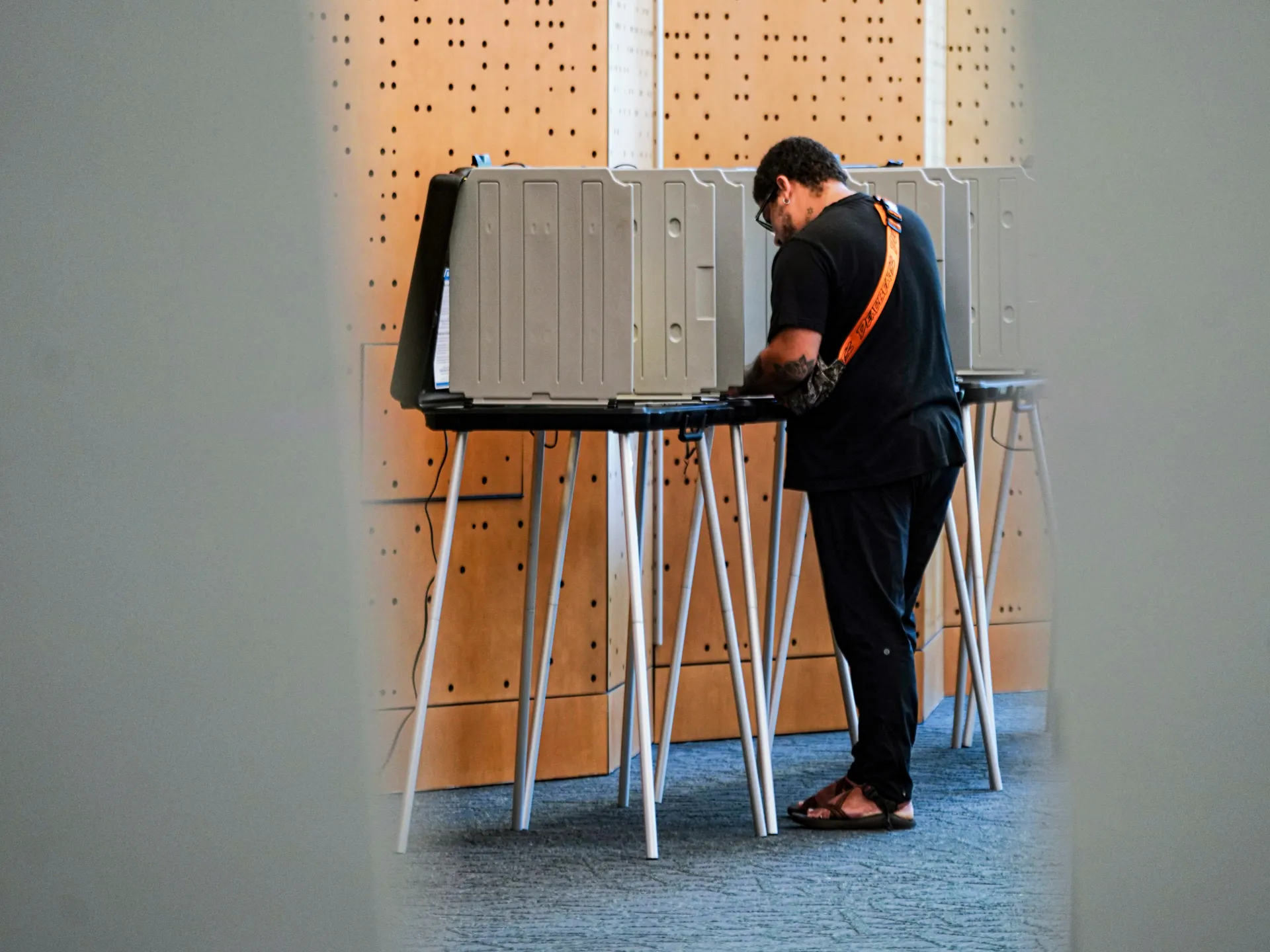
A federal judge in the United States has blocked proposed restrictions on mail-in voting that were championed by President Donald Trump.
On Wednesday in Washington, DC, District Judge Emmet Sullivan sided with the NAACP, a civil rights organisation, in its case against the US Postal Service (USPS).
Recommended Stories
list of 3 itemsend of list
Sullivan found that the restrictions would likely violate a 2021 settlement requiring expedited handling for mail-in ballots.
He therefore granted the NAACP’s motion to enforce compliance with the settlement, dealing another setback to the Trump administration’s efforts to reshape the US voting landscape.
“NAACP has plausibly suggested — and the Postal Service has not disputed — that the Proposed Rule is already having a ‘real impact on present day affairs’,” Sullivan wrote in his ruling.
The case revolves around a rule the Postal Service put forward in May that would require states to provide lists of absentee and mail-in voters. Ballots that do not conform to the list would be returned.
The proposed rule would also require a new envelope design for mail-in ballots, governing logos and barcode placements. Failure to comply would result in the Postal Service refusing to deliver the ballots.
The NAACP argued that the proposal would run afoul of a 2021 legal settlement that forces Postal Service officials to take “extraordinary measures” to ensure timely delivery of ballot mail.
The settlement “stipulated that the Postal Service agreed ‘to prioritize monitoring and timely delivery of election mail’”, Sullivan wrote in Wednesday’s ruling.
The decision comes less than five months before the November 3 midterm elections, which will decide whether Trump’s Republican Party retains control over both chambers of Congress.
Trump has expressed fears that he may be subject to a third impeachment if Democrats flip the legislature.
He has also spread unfounded theories that US elections are vulnerable to “vote rigging”, pointing to commonplace election tools like mail-in voting and electronic voting machines.
Elections are administered by state and local election officials, as established in the US Constitution. But the Postal Service’s proposed rule came as the result of efforts under the Trump administration to impose new limits on voting.
In March, Trump issued an executive order called “Preserving and Protecting the Integrity of American Elections”. In it, he directed the Department of Justice to take action against states that “fail to comply” with certain standards for mail-in ballots.
He also accused states that accepted absentee or mail-in ballots after Election Day of violating the law.
But in another blow to Trump, the Supreme Court on Monday upheld a state law that allows mail-in ballots to be counted even if they were received after Election Day, so long as they were postmarked on or before that date. The president’s executive order has also been blocked by lower courts.
Civil rights advocates applauded the court’s Wednesday decision and warned against Trump’s efforts to limit mail-in voting.
“The court today correctly recognized that USPS’s plan to create roadblocks to mail-in voting was inconsistent with its commitment to timely deliver election mail,” said Allison Zieve, director of the Public Citizen Litigation Group, which argued on behalf of the NAACP.
“USPS’s plan was unwise, unlawful, and a threat to the millions of voters who rely on mailed ballots to participate in our democracy.”
Sam Spital, the associate director-counsel of the Legal Defense Fund, which also argued for the NAACP, called the Postal Service’s proposed plan “a blatant attempt” to disenfranchise voters who rely on mailed ballots.
“Today’s decision recognizes that USPS cannot disregard its legal obligation to timely deliver mail-in ballots to all voters,” Spital said.
The US and Israel have signed a deal allocating land for a permanent US embassy in West Jerusalem, years after a temporary one was established during Trump’s first term in office. The move is yet another blow to the hopes of a future Palestinian capital.
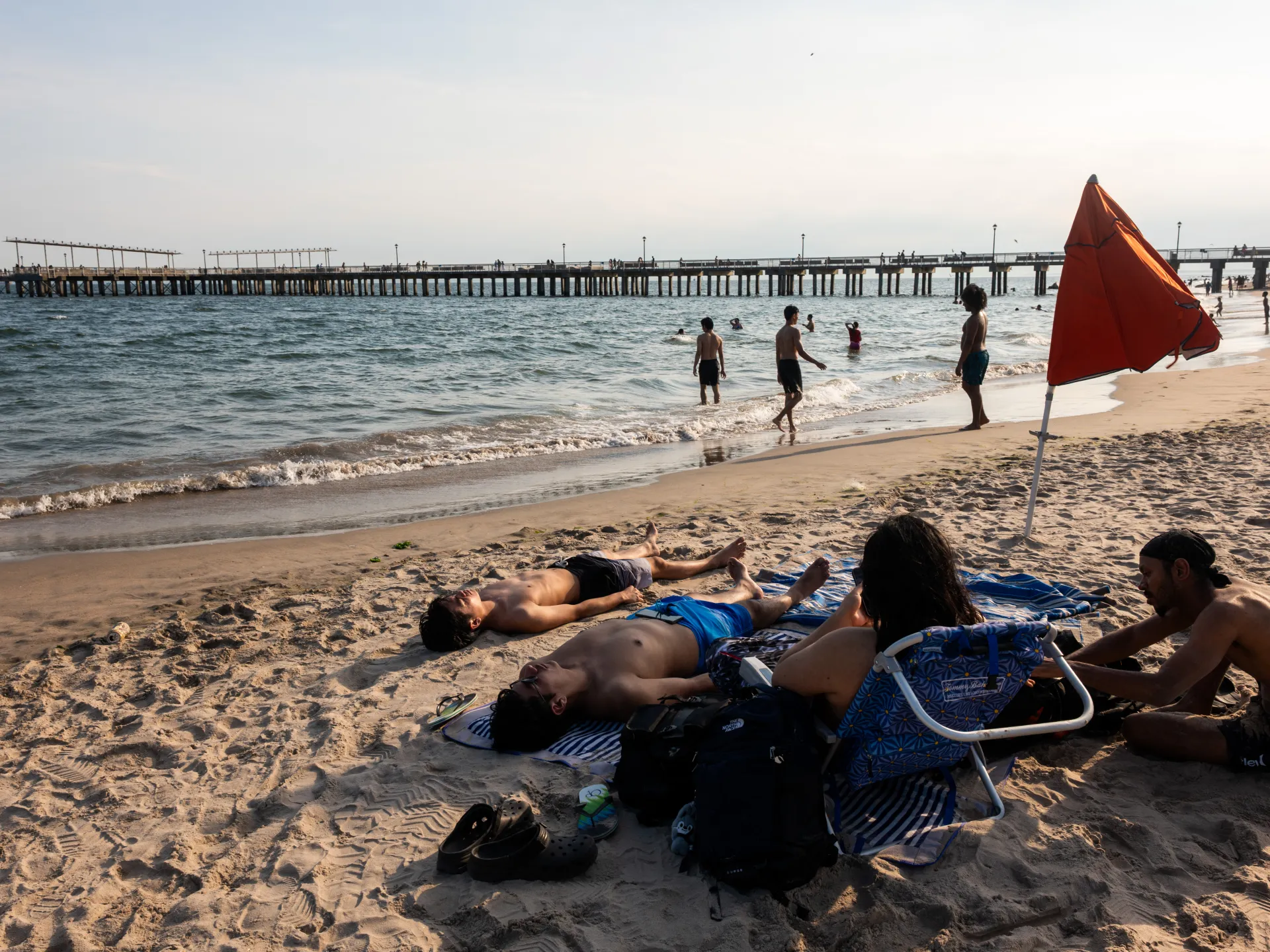
An intense heatwave is set to blanket much of the central and eastern United States this week as a “heat dome” settles over the region, bringing days of oppressively high temperatures and humidity ahead of the Fourth of July weekend and FIFA World Cup matches in several US cities.
Forecasters say in some places it could feel as hot as 46 degrees Celsius (115 degrees Fahrenheit). Dozens of temperature records could be broken, according to the National Weather Service (NWS), which called the conditions “dangerous”. More than 60 million people are currently under heat alerts.
Recommended Stories
list of 4 itemsend of list
At the centre of this week’s forecast is a weather phenomenon known as a heat dome. What is it, and why does it make heatwaves even more intense and unbearable?
What is a heat dome?
A heat dome is a large area of high pressure, formed when warm air flows northward, that acts like a lid over the atmosphere, trapping hot air close to the ground.
As the air sinks, it compresses and warms even more. At the same time, the pressure system helps prevent cooler air and storms from moving in, allowing heat to build at the surface and remain trapped there. With few clouds and little wind, the sun has more direct access to the ground, creating a heat feedback loop.
Heat domes are linked to prolonged heatwaves that can last for days.
How long will it last?
The heat dome is already building and is expected to strengthen over the coming days, spreading from the central US towards the east coast, with dangerous heat lasting several days into early July.
The hottest conditions are expected Thursday and Friday, according to the NWS, and are set to continue through the Fourth of July weekend, which marks the 250th anniversary year of the US, and forecasters say some areas across the Great Plains, the southeast, and the mid-Atlantic are likely to remain unusually hot into next weekend.
What will the highest temperatures be?
Many places are expected to see daytime temperatures in the high 30s Celsius (low 100s Fahrenheit), but humidity will make it feel much hotter. In parts of the central and eastern US, the heat index – a measure of how hot it feels when humidity is factored in – could climb between 40C and 46C (100F and 115F).
“That’s heat that’s impactful to anyone,” said NWS meteorologist Bryan Putnam. “It’s not just older adults or younger children or people who are spending a ton of time outdoors, maybe straining themselves a little more than normal. This is heat that really could impact everyone, especially with people outdoors going into the holiday weekend.”
The nights won’t bring much relief either, with temperatures expected to stay in the 20s Celsius (70s Fahrenheit) overnight, creating potentially miserable sleep conditions for those without air conditioning and making it harder for people to cool down.
“Even after the sun goes down, it’s still going to be very hot,” said AccuWeather senior meteorologist Alan Reppert. “We’re at a pattern that’s really going to be hot during the good portion of the afternoon and even into the evening hours.”
Which parts of the US will be hit the hardest?
The most dangerous conditions are expected in a broad corridor stretching from the Great Lakes to the East Coast, where several cities could experience their hottest day of the year so far. New York City, Philadelphia, Washington, Baltimore, Chicago, Indianapolis, Detroit and St Louis are all expected to be affected, with temperatures also soaring farther south in Dallas, Little Rock and Memphis.
Several of those cities are also hosting FIFA World Cup events. In Philadelphia, organisers have already changed Fan Festival hours to start later in the day.
Cities across the US are rolling out emergency measures as temperatures climb.
Chicago said it would open cooling centres and send city workers to check on vulnerable residents.
In New York City, Mayor Zohran Mamdani’s office announced what it called an “unprecedented” response to the heat, including hydration vans and pop-up cooling stations equipped with misting fans and cooling towels.
Washington, DC, where temperatures are expected to exceed 38C (100F) from Thursday through Saturday, the heat will coincide with Fourth of July celebrations, including what organisers say will be the largest fireworks display ever held on the National Mall.
What are some ways to stay cool?
The NWS says people should stay hydrated, avoid strenuous outdoor activity during the hottest part of the day and seek air conditioning or cooling centres where possible. If you’re spending time outside, wear loose, lightweight clothing and stay near shady areas.
Experts say one of the biggest risks during a prolonged heatwave is that the body doesn’t have time to cool down overnight, which can make the effects of the heat build up from one day to the next. They also recommend drinking water before you feel thirsty and limiting alcohol, which can increase the risk of dehydration.
“If somebody realises that they’re hot, but they’re not sweating, or if they begin to feel a little bit dizzy, those are some signs that they really need to take a break, get inside, find some cooling, and drink plenty of water,” said Geoff Cornish, assistant chief video meteorologist for the weather forecasting company AccuWeather. “And if they really begin to experience significant symptoms, they need to seek medical attention right away.”
Gallup survey says the financial toll of scams in the United States in 2025 was estimated at $68bn.
Published On 1 Jul 20261 Jul 2026
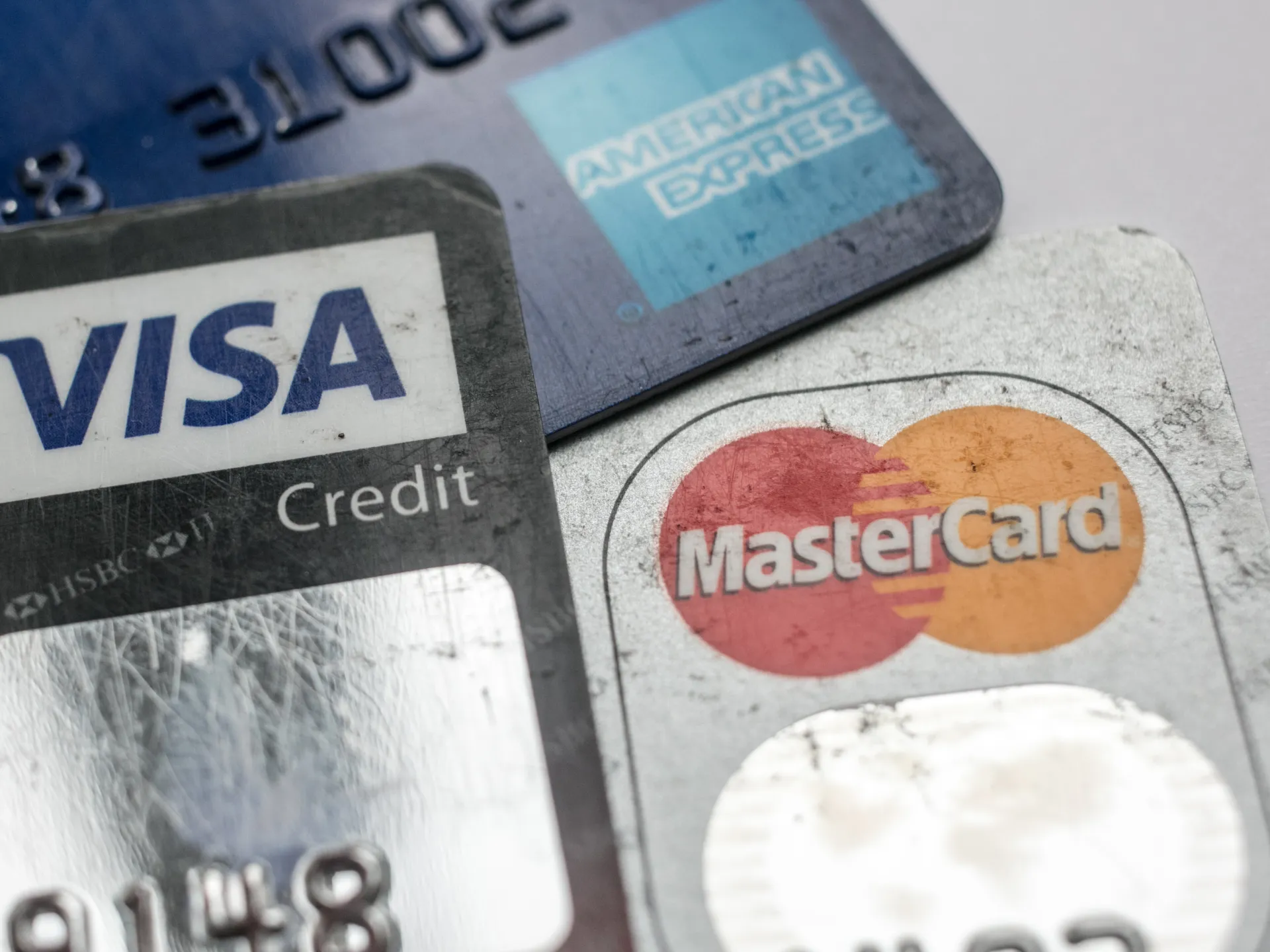
A tenth of adults in the United States directly or indirectly experienced a scam last year, adversely affecting their financial and emotional wellbeing, according to a new Gallup poll.
The report by Gallup released on Tuesday indicated that 6 percent of US adults were personally scammed in 2025, while 4 percent experienced a scam indirectly, with someone in their household affected.
Recommended Stories
list of 3 itemsend of list
Scams are a widespread problem in the country, with Gallup noting that they can leave victims more cautious, less likely to shop online, and more hesitant to engage with unfamiliar businesses.
“The data suggest the cost of scams extends beyond what can be measured in dollars, as nearly three in four victims say the experience negatively affected their mental health or wellbeing,” the report stated.
The poll suggested that people from lower-income households were more likely than wealthier people to report being scammed.
Adults with less than a bachelor’s degree were more likely to report being scammed than those with a bachelor’s degree or higher – 7 percent versus 4 percent, Gallup found.
Black (8 percent) and Hispanic (9 percent) adults were also more likely than white adults (5 percent) to say they had been scammed. However, victimisation rates did not differ by age, the report stated.
In more than half of the scams reported to Gallup, people lost $500 or less. However, the average loss per scam was $5,578, as some scams reached tens of thousands of dollars, the report said.
In total, the financial toll of scams in 2025 was estimated at $68bn, amounting to an average of $186m stolen each day.
One in five adults who were personally victimised or live in a household that was scammed in 2025 reported that it created a severe financial hardship for their household, with households earning less than $80,000 annually hit harder.
Emotional damage from scams, however, was more widespread, the survey indicated.
Among adults in households affected by scams, more than a quarter (28 percent) said the experience had a very negative impact on their mental health or wellbeing, while a further 45 percent describe the impact as moderately negative. Overall, nearly three-quarters (73 percent) of people reported that the scam adversely affected their mental health or wellbeing.
The emotional toll was also pervasive among those who live with someone who was scammed, the survey suggested.
The poll also indicated that the lifetime prevalence of being scammed is much higher than the 6 percent of people who were in 2025. Nearly a quarter (24 percent) of adults report having been scammed at some point in their lives, including 10 percent who said that they had fallen victim multiple times.
“At a time when institutional trust in the US is already weak, the prevalence of scams represents not just a personal financial threat, but a broader erosion of confidence in the businesses and systems used in everyday life,” the report said.
Gallup surveyed 5,173 US adults between January and February of this year.
Veteran mediator William Ury reflects on how the fine art of diplomacy is essential at holding the world together.
We are living in a time of deep rupture. From Gaza to Ukraine, Myanmar to Kashmir, the United States to Europe, polarisation has become the defining rhythm of our age. Dialogue is no longer just difficult – it is risky. Leaders speak in absolutes. Humiliation and fear spur violence. In this context, the role of the mediator is more fragile, more necessary, and more human than ever.
At the centre of this episode is William Ury, cofounder of Harvard’s Program on Negotiation and one of the architects of modern conflict resolution. Through his life’s work, we trace the hidden anatomy of peace: How trust is built when no one believes in it, how negotiations survive egos, trauma, and political pressure, and how humanity is preserved when everything pushes towards dehumanisation.
Ultimately, The Possibilist reveals that peace is not the domain of diplomats alone. It belongs to all of us. In our homes, our workplaces, and our communities, we all carry a form of power. Political power may change laws – but moral power, the power of empathy, courage, and presence, can change hearts.
Former lawyer Melat Kiros, 29, has criticised the Democrats for their support of Israel during its genocidal war on Gaza.
Published On 1 Jul 20261 Jul 2026
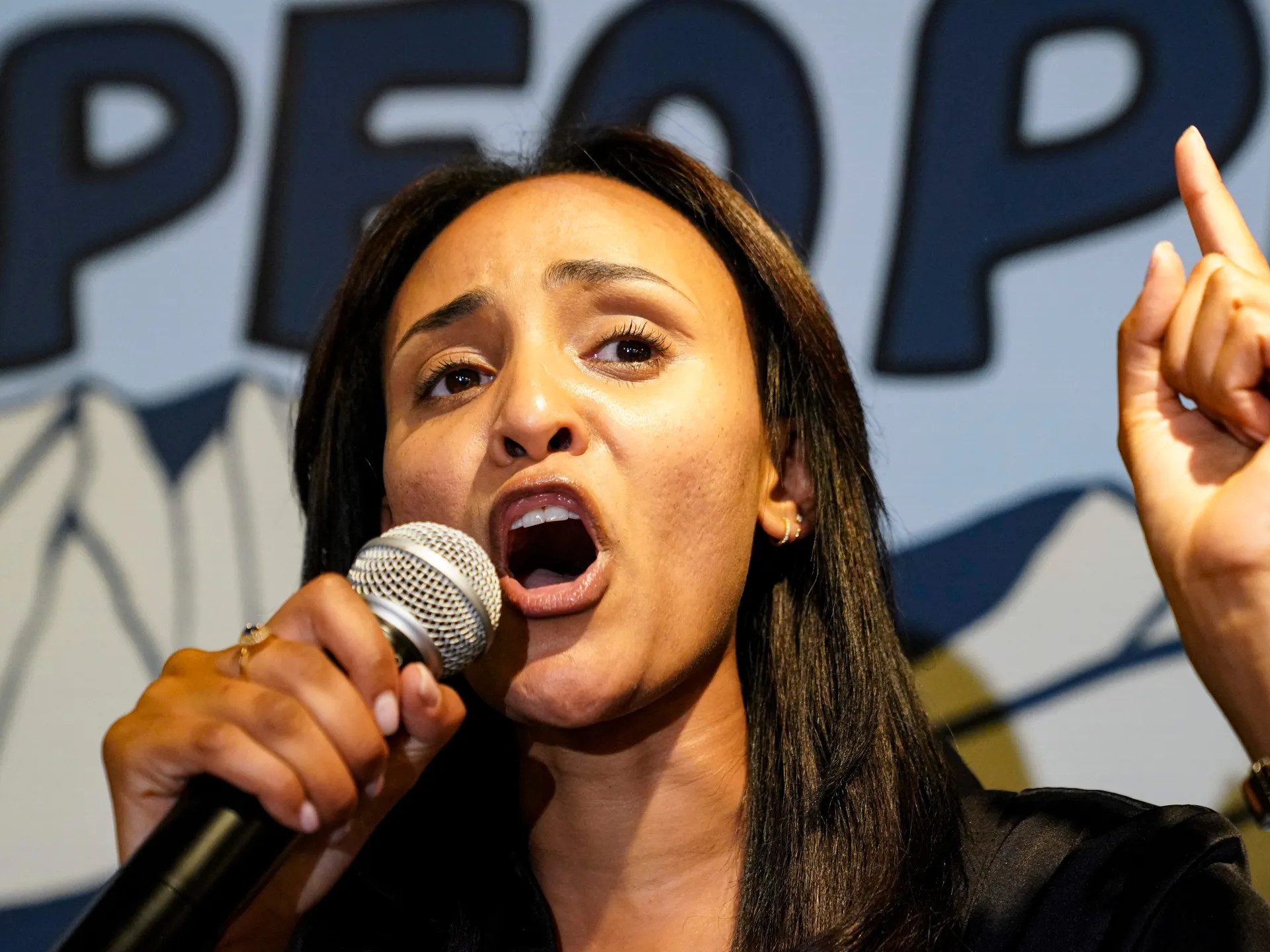
Democratic socialist Melat Kiros has defeated 15-term United States Representative Diana DeGette in the Democratic primary in a Denver-area district in Colorado, according to US media projections, the latest victory of a leftist over an establishment Democrat.
The race on Tuesday was called by multiple media outlets after 78 percent of the votes were counted and Kiros had a nearly 7,000-vote lead over DeGette.
Recommended Stories
list of 4 itemsend of list
Kiros, who moved to the US from Ethiopia as a baby, had faced controversy over her criticism of Democrats who support Israel and her alliance with socialist political commentator Hasan Piker.
She is now favoured to win November’s election in the overwhelmingly Democratic district.
Kiros, a 29-year-old former lawyer, was fired from her job after refusing to remove a post that criticised law firms for their stance on Israel and Palestine and has called Israel’s actions in Gaza genocide.
Kiros is the latest democratic socialist to oust an incumbent Democrat this summer.
In New York City, three candidates with ties to the Democratic Socialists of America and endorsed by Mayor Zohran Mamdani won their primaries.
Also on Tuesday, Colorado Attorney General Phil Weiser beat US Senator Michael Bennet for the Democratic nomination for governor, US media projected.
Weiser outraised and outspent Bennet in a race that was largely about who was best positioned to defend Colorado against President Donald Trump, who froze federal funds to the state and vetoed a major drinking water project in Colorado, where voters have trended Democratic in elections over the past 20 years.
The attorney general argued that he stood up to the Trump administration in court, where he fought against the funding freeze and the president’s attempt to end birthright citizenship.
Weiser is expected to be elected governor in November.
State Representative Manny Rutinel also won the Democratic nomination to challenge Republican US Representative Gabe Evans in a battleground district that Democrats consider a top pickup opportunity in the November 3 midterm elections, according to projections.
Rutinel, a progressive candidate, defeated moderate former state Representative Shannon Bird in a campaign that focused heavily on immigration. The district in Denver’s northern suburbs and nearby rural area is nearly 40 percent Latino.
Evans narrowly won his seat in 2024 but has a significant cash advantage over Rutinel, reporting $3.4m on hand in campaign funds to Rutinel’s $910,000.
Trump’s Republican Party now holds a slim majority in the US House of Representatives and Senate. Democrats need to net three seats to win control of the House in November and four to win the Senate.
Footage shows two NASA astronauts stepping outside the International Space Station to replace a malfunctioning wrist joint on a robotic arm. The joint failed during normal operations and did not move as expected. It took 7 hours and 20 minutes.
AI firm says it will begin restoring access to Claude Fable 5 and Mythos 5 after removal of export controls.
Published On 1 Jul 20261 Jul 2026
The United States government has lifted its restrictions on foreign access to Anthropic’s most powerful AI models, the company has announced.
Anthropic said late on Tuesday that it would begin restoring access to Claude Fable 5 and Mythos 5 from tomorrow after the US Department of Commerce notified the company that it had removed its export controls.
Recommended Stories
list of 4 itemsend of list
“We’re grateful to our users for their patience, and to everyone who worked with us on redeploying the models,” Anthropic said in a statement posted on X.
Anthropic’s announcement came shortly after US Commerce Secretary Howard Lutnick said that his department had been coordinating with the company on the approval of its frontier models.
“Over the past two weeks, we have worked closely with Anthropic to analyze and approve Fable 5 to ensure alignment across the US Government and strengthen America’s leadership in AI,” Lutnick said in a post on X.
Anthropic abruptly shut off Claude Fable 5 and Mythos 5 last month after US President Donald Trump’s administration ordered the company to restrict all foreign nationals, including company employees, from accessing the models.
On Friday, the San Francisco-based company said that it had been granted approval to provide the models to US organisations that “operate and defend critical infrastructure”, and that it was working with the government to restore general access for the public.
Trump has launched a slate of crypto-friendly policies since returning to the White House for a second term.
Published On 30 Jun 202630 Jun 2026
A new government report has shown that United States President Donald Trump made millions from cryptocurrency and settlements with media companies last year, raising questions about possible conflicts of interest.
On Tuesday, the US Office of Government Ethics released annual financial disclosure forms for both Trump and his vice president, JD Vance.
Recommended Stories
list of 3 itemsend of list
One 927-page document itemises all of Trump’s reported assets and income for 2025. They include more than $1.4bn from his family’s cryptocurrency ventures.
Trump received more than $500m from World Liberty Financial, a crypto venture he and his sons co-founded. The president also reported another $635m from the sale of his $TRUMP meme coins.
The report suggests that investments in digital assets now generate one of the largest tranches of Trump’s income, overtaking even the real estate empire he inherited from his father.
The revelation is likely to intensify scrutiny of Trump’s policies.
Since returning to the White House in January 2025, Trump has launched a slate of crypto-friendly policies as he seeks to make the US the “crypto capital of the world”.
Early in his second term, for instance, the president announced that his government would create a national strategic cryptocurrency reserve to help ensure the stability of certain digital assets.
He also hosted the first-ever White House cryptocurrency summit.
The forum included several technology leaders that had been under investigation during the administration of Trump’s predecessor, Democrat Joe Biden.
But Trump reversed those actions. In February 2025, for instance, the Securities and Exchange Commission announced it would drop charges against Coinbase, the largest US-based cryptocurrency exchange, after it was accused of acting as an unregistered broker.
Other digital currency firms came under suspicion for fraudulent transactions.
Trump has coupled the shift away from government oversight with efforts to champion new legislation, including the GENIUS Act.
The law, passed in Congress in July 2025, created a general regulatory framework that required stablecoin, a type of cryptocurrency, to be backed one-to-one by US dollars. Advocates said the law would help to make cryptocurrency more mainstream.
“The entire crypto community: For years, you were mocked and dismissed and counted out,” Trump said during the law’s signing ceremony. “You were counted out as little as a year and a half ago, but this signing is a massive validation.”
But Trump’s increasingly close ties to the cryptocurrency industry have drawn criticism for its potential for corruption.
Last week, five Democratic senators, including Elizabeth Warren and Richard Blumenthal, called on their Republican colleagues to join them in forcing Trump administration officials to testify under oath about their cryptocurrency dealings.
They pointed to investments from the United Arab Emirates (UAE) in World Liberty Financial, the company the Trump family co-owns with government envoy Steve Witkoff’s sons.
Those investments, they argued, “raise questions about what more the UAE may receive — or may have already received – at the expense of U.S. national security after investing in the Trump family crypto company”.
The five Democrats urged immediate hearings on the matter.
The high court strikes down campaign spending limits, citing First Amendment protections in a 6-3 decision
Published On 30 Jun 202630 Jun 2026
On the final day of rulings for the Supreme Court’s current term, the top US court overruled a case that would limit campaign spending by rejecting restrictions on coordinated spending efforts between political parties and their candidates on free speech grounds.
The court handed down the ruling on Tuesday in a 6-3 split, with the six conservative judges in the majority, citing free speech grounds, and the three liberal judges dissenting.
Recommended Stories
list of 4 itemsend of list
The Supreme Court ruled that a spending cap on campaign spending, with input from candidates, violates the United States Constitution’s First Amendment after a lower court upheld the limits.
The decision, stemming from a Republican-led lawsuit, strikes down a provision of a more than 50-year-old federal election law limiting coordinated party spending. Among the Republican candidates at the centre of the lawsuit is now Vice President JD Vance. Vance was running for the US Senate in Ohio when the lawsuit challenging the restrictions was filed in 2022.
The Federal Election Campaign Act of 1971 regulates fundraising and spending in US elections by limiting the amount that can be spent on a candidate, aiming to prevent corruption.
Under that law, spending by a political party to advocate for or against a candidate that is not coordinated with a candidate’s campaign is considered an “independent expenditure” – and not subject to a cap.
Spending that is coordinated between a party and a campaign, however, has been restricted.
Tuesday’s decision overruled a 2001 decision in which the Colorado Republican Federal Campaign Committee challenged the rule against the Federal Election Commission, but the high court had upheld the limits on a vote of 5-4.
In 2024, the US 6th Circuit Court of Appeals had also upheld the limits.
On appeal, the plaintiffs said that developments in campaign finance over the intervening decades, including shifts in the Supreme Court’s jurisprudence, had eroded the rationale for that 2001 ruling and urged the justices to overrule it.
Then, when Donald Trump took office, the Federal Election Commission declined to defend the provision of federal law challenged by Vance and the other plaintiffs. The Supreme Court appointed lawyer Roman Martinez to do so. It also granted a request by the Democratic National Committee, Democratic Senatorial Campaign Committee, and Democratic Congressional Campaign Committee to intervene to defend the spending limits.
These spending limits have varied by state, being lower in states with smaller populations and higher in those with larger populations. In 2025, restrictions ranged from about $127,000 to $3.9m for Senate candidates and from approximately $63,000 to $127,000 for House of Representatives candidates.
The Supreme Court issued its campaign finance ruling with the November midterm elections looming, as President Donald Trump’s fellow Republicans seek to retain control of Congress.
The three major Republican committees – the Republican National Committee, the National Republican Congressional Committee, and the National Republican Senatorial Committee — ended May with $256m in cash and no debt. That was more than double the roughly $126m held by their Democratic counterparts, who also carried more than $18m in debt.
Election implications
The Supreme Court has issued multiple rulings during its current term that have election implications.
The justices on Monday backed state laws that allow mail-in ballots received after Election Day to be counted, rejecting a Republican-led challenge to a five-day grace period in Mississippi and dealing a setback to Trump.
The court in April gutted a key provision of the 1965 Voting Rights Act, opening the door for Republican-led Southern states to dismantle Democratic-held majority-Black and majority-Latino districts ahead of the midterms. Black and Latino voters tend to support Democratic candidates.
That decision prompted several Republican-led states to pursue redrawn electoral maps ahead of the midterms in an effort to threaten US House seats long considered safely Democratic.
Grid operators warn the US heatwave could send electricity demand near record levels before the Fourth of July holiday.
Power grid operators in the United States are warning that a dangerous heatwave could put more strain on an electric grid already under pressure from surging energy consumption.
A stretch of extreme heat is expected to intensify across much of the central and eastern parts of the country this week, peaking from Tuesday through Thursday.
Recommended Stories
list of 3 itemsend of list
That heatwave is likely to continue through one of the busiest travel weekends of the year, as millions of Americans prepare for Fourth of July celebrations on Saturday.
Temperatures this week are forecasted to climb above 38 degrees Celsius (100 degrees Fahrenheit) from Boston to Washington, DC, pushing up demand for air conditioning.
The heatwave coincides with two major events on the US calendar. Saturday’s holiday marks the 250th anniversary of the US’s independence, and millions are expected to gather for barbecues, parades and fireworks.
The extreme temperatures also come as the FIFA World Cup has reached the knockout stage, with many host cities, including New York, Boston, Philadelphia and Washington, expected to feel the heat.
Humidity could push the heat index as high as 46 degrees Celsius (114 Fahrenheit) in some places, while overnight temperatures will offer little respite.
The US’s largest regional grid operator, PMJ Interconnection, is forecasting record summer electrical demand of 166.3 gigawatts for Thursday evening, surpassing the previous summer peak set two decades ago, in 2006.
The New York Independent System Operator (NYISO), the state’s grid operator, is also expecting electricity demand to approach record highs, while the Midcontinent Independent System Operator (MISO), which covers 15 states in the Midwest and South, could also see its peak demand record challenged.
Authorities at MISO say they will rely on PMJ for support in covering consumer needs.
In a May report, PMJ’s executives warned of a “fundamental mismatch between how fast demand is growing and how quickly new supply can be built and connected to the grid”.
New power plants, they said, now take twice as long to build and cost twice as much as they did a decade ago.
Meanwhile, there has been increasing pressure on electrical grids from new technology like data centres and electric vehicles.
In May, PMJ said hyperscale data centres were “adding load at an unprecedented pace”.
Experts say the artificial intelligence (AI) boom is colliding with climate change, with tools like ChatGPT, Gemini and Claude being processed in vast, energy-hungry data centres.
The most energy-intensive are the hyperscale facilities that require between 100 and 300 megawatts of electricity, enough to power hundreds of thousands of homes.
Many of those are concentrated in northern Virginia, which sits within PJM’s service territory and is widely described as the world’s largest data centre hub.
Researchers have also identified what they call a “data heat island effect”, finding that land surface temperatures around AI data centres rise by an average of 2 degrees Celsius (3.6 degrees Fahrenheit), with some locations seeing increases of up to 9 degrees Celsius (16.2 degrees Fahrenheit).
The National Weather Service in the US warns that long periods of extreme heat create significant stress on the body.
It has urged people to limit outdoor activity, stay hydrated and keep close to air conditioning or cooling centres.
A 2024 report from the Journal of the American Medical Association (JAMA) found that 21,518 deaths in the United States from 1999 to 2023 were heat-related.
The highest number came in the final year of the report’s analysis, 2023. That year, 2,325 people died from causes attributed to high temperatures.
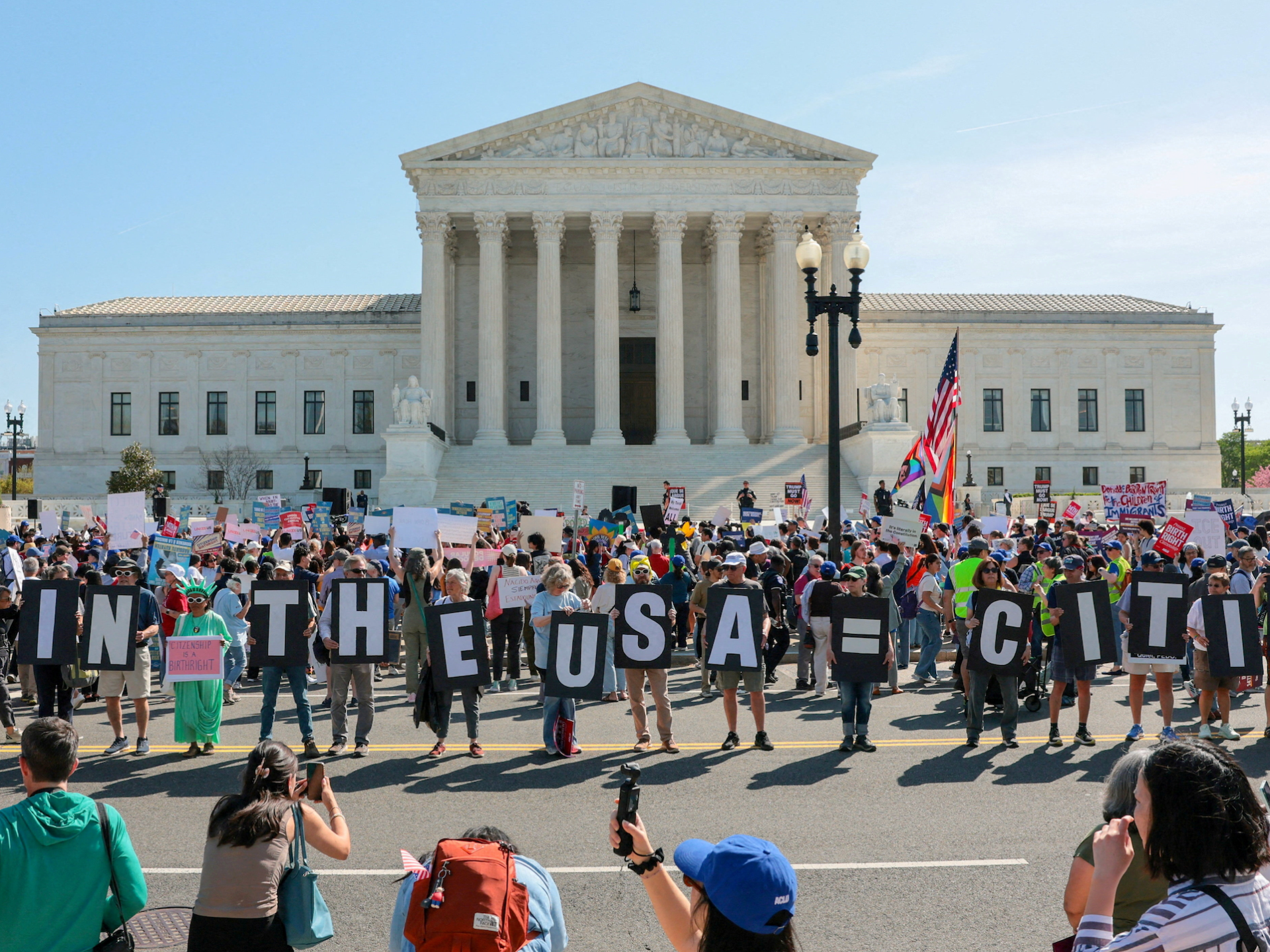
The US Supreme Court has blocked President Donald Trump’s executive order to end birthright citizenship for all individuals born on US soil, ruling that children born in the country remain entitled to citizenship under the Constitution.
The app said it will be rolling out usernames gradually, in a move meant to improve privacy.
Published On 30 Jun 202630 Jun 2026
Change is coming for some three billion users of the world’s favourite messaging platform, WhatsApp.
The social media app owned by Meta will allow users to be identified by usernames instead of phone numbers, it said on Monday. WhatsApp is used in more than 180 countries and 60 languages, the platform says.
Recommended Stories
list of 3 itemsend of list
Users will soon be able to reserve unique handles, with a wider rollout planned for later this year.
The move is designed to improve privacy on the platform amid longstanding scrutiny over its data protection practices.
So what is changing, and how can you grab a handle no one else has?
What change has WhatsApp announced?
Users will soon be able to swap the phone numbers displayed on WhatsApp with usernames, the company said. Under the new system, which will commence later this year, users will be able to choose to be “findable” and contacted by their handles only.
The app said it has already begun allowing some users to reserve unique usernames before a bigger rollout later this year.
Why is WhatsApp making this change?
The messaging platform said the change is designed to improve privacy features, for which it and its parent company Meta have come under scrutiny in the past.
“We have designed this as a core privacy feature,” Alice Newton-Rex, WhatsApp’s vice president of product, told reporters.
According to the company, there will be no public directory of usernames and no autocomplete suggestions, meaning users will need to know someone’s exact username to reach them for the first time.
“When someone new walks into your life – a classmate, a neighbour, someone you meet at an event – sharing a phone number can feel like a big step,” a WhatsApp company blog post stated.
“That’s because a phone number is personal and it’s tied to so many parts of your life. Sometimes you just want to chat without handing over your digits.”
The company told one user on X that it has added multiple new features to help users defend themselves from scammers.
Optional username keys – or short numbered codes – can be added, which would mean people can only contact a user if they have both their username and its key, for example.
WhatsApp also said it will limit the number of new people any one account can contact as a guard against spam accounts, and that its systems can now detect and block “abuse patterns”.
How will the new usernames work?
Companies, organisations and creators with existing accounts on Meta’s other social media platforms – Instagram and Facebook – will have the opportunity to claim their usernames as handles on WhatsApp as well.
Usernames will have to be three to 35 characters. To prevent impersonation, WhatsApp will hold back usernames for high-profile people or groups, such as celebrities, public figures and government entities.
To reserve a specific username, WhatsApp said a user must download the latest version of WhatsApp, go to the Settings tab, the Account tab, and then the Username tab.
The reservation must be done with a smartphone – it cannot be done on WhatsApp Web or Desktop.
When will this change come into effect?
WhatsApp said it will roll out usernames gradually over the coming months and will notify users on WhatsApp when the new feature is available in their country. It has not given specific timelines.
To be prepared, the company told users to “make sure you have the latest version of WhatsApp downloaded and keep an eye on your app”.
What are WhatsApp’s current privacy features?
WhatsApp’s current privacy settings are limited to blocking individual users and silencing unknown callers.
The Round of 32 has already delivered shocks, shootouts and scenes that will live long in World Cup memory.
After Paraguay stunned Germany and Morocco sent the Netherlands home on penalties, Tuesday brings three more games, with France, Norway and co-hosts Mexico all looking to avoid becoming the next big casualty.
Recommended Stories
list of 4 itemsend of list
Ivory Coast face Norway, France meet Sweden and Mexico take on Ecuador as three more places in the last 16 are decided.
Here is what we know:
What is Tuesday’s schedule?
Ivory Coast vs Norway (noon/17:00 GMT) at Dallas Stadium, Texas, in the US
France vs Sweden (5pm/21:00 GMT) at New York/New Jersey Stadium in the US
Mexico vs Ecuador (7pm/02:00 GMT on Wednesday) at Mexico City Stadium in Mexico
Ivory Coast have found European opposition difficult at the World Cup while Norway have traditionally fared well against African teams. They have lost only two of their 19 meetings with CAF nations across all competitions.
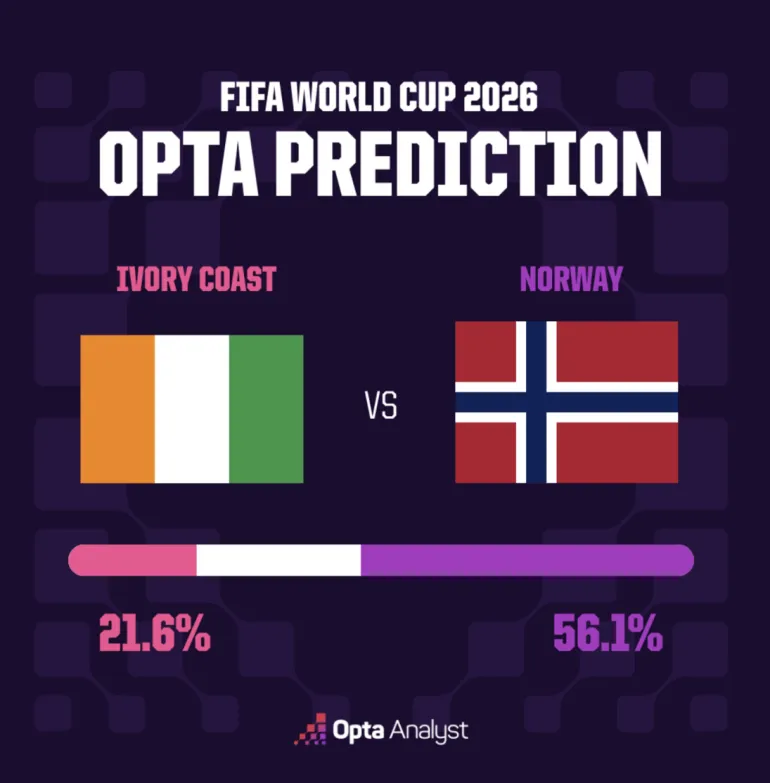
The Opta supercomputer calculates Norway as the clear favourites to progress.
Across 25,000 pre-match simulations, Norway won in normal time 56.1 percent of the time, while Ivory Coast claimed victory in 21.6 percent. A draw after 90 minutes, sending the tie to extra time, occurred in 22.3 percent of simulations.
Norway are also strongly backed to reach the Round of 16 and equal their best-ever World Cup finish, while Ivory Coast will need to produce one of the tournament’s biggest upsets to keep their campaign alive.
What is the prediction for France vs Sweden?
France and Sweden are familiar opponents, having met 23 times across all competitions. France hold the advantage with 12 wins to Sweden’s six, while five matches have ended level.
Despite that long history, this will be their first-ever meeting at a FIFA World Cup.
The Opta supercomputer gives France a commanding edge heading into the Round of 32.
Across 25,000 pre-match simulations, France won in normal time 75.1 percent of the time, underlining their status as one of the tournament favourites. Sweden were victorious in just 9.5 percent of simulations, while 15.4 percent of matches were level after 90 minutes and required extra time or penalties.
What is the prediction for Mexico vs Ecuador?
Mexico and Ecuador have met only once before at the FIFA World Cup, with El Tri claiming a 2-1 victory during the group stage of the 2002 tournament.
Recent meetings have been far more evenly matched. The sides are unbeaten against each other in their last three encounters, with all three ending in draws, raising the possibility that this Round of 32 tie could be decided beyond 90 minutes.
The Opta supercomputer gives the tournament co-hosts the edge but expects a competitive contest.
Across 25,000 pre-match simulations, Mexico won in normal time 47.1 percent of the time, compared with 23.7 percent for Ecuador. A draw after 90 minutes occurred in 29.2 percent of simulations, making extra time a realistic possibility.
Factoring in extra time and penalties, Mexico’s chances of reaching the Round of 16 rise to 61 percent, while Ecuador are given a 38.9 percent probability of progressing.
Which teams have advanced to the Round of 16 and who has been eliminated?
The tournament has now moved into the Round of 32. So far, these teams have advanced to the Round of 16:
Canada (defeated South Africa 1-0)
Brazil (defeated Japan 2-1)
Paraguay (defeated Germany on penalties after a 1-1 draw)
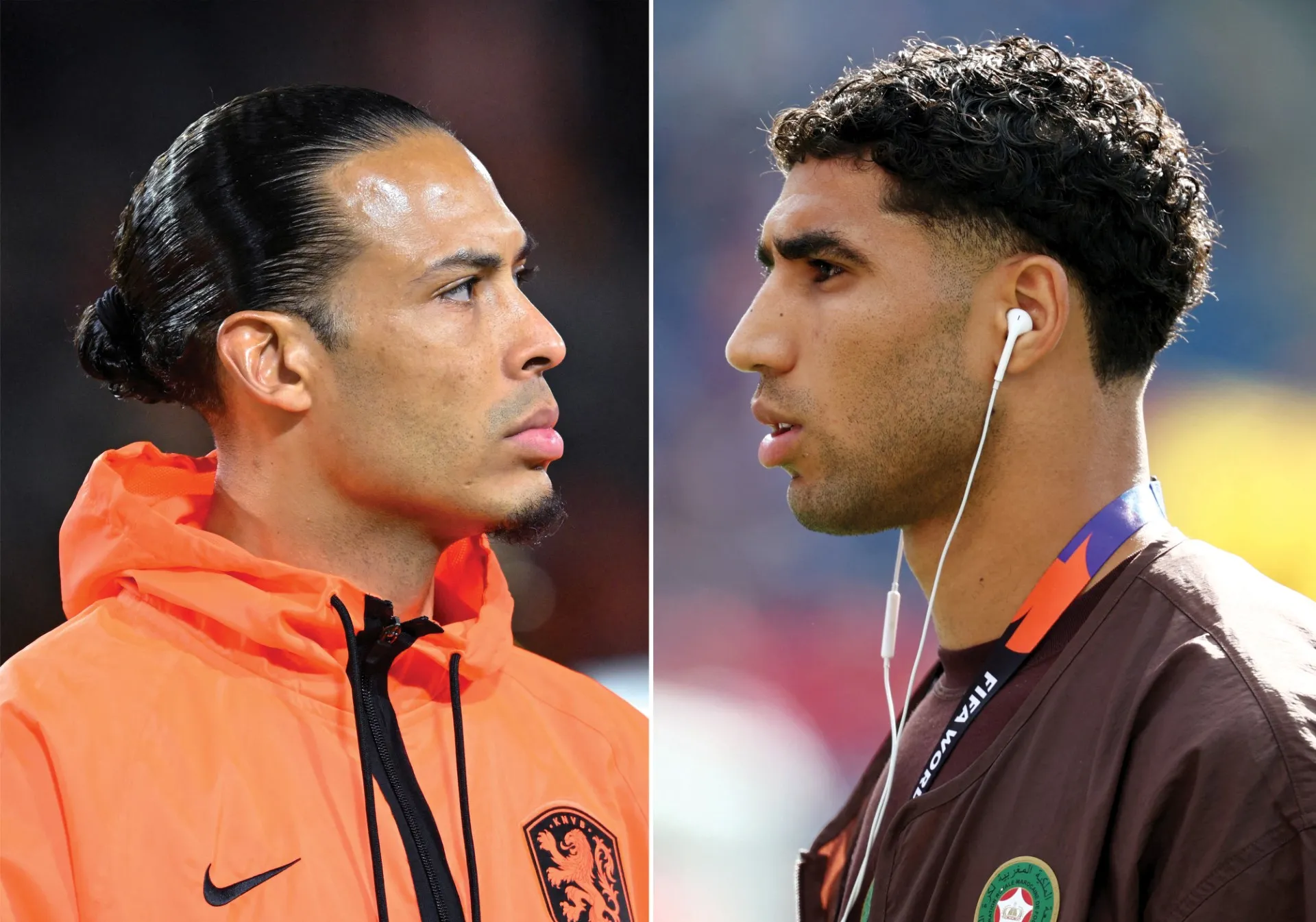
Morocco (defeated the Netherlands on penalties after a 1-1 draw)
What else is happening?
Morocco stuns Netherlands on penalties
Morocco beat the Netherlands 3-2 in a penalty shootout to reach the FIFA World Cup last 16 after a dramatic 1-1 draw following extra time in Monterrey.
Goalkeeper Yassine Bounou was the hero, saving Crysencio Summerville’s penalty before Ismael Saibari fired home the decisive spot-kick to send Morocco through.
Morocco will now face Canada in the Round of 16 in Houston on Saturday.
The match appeared to be heading for a Dutch victory after Cody Gakpo, playing just days after he and his partner announced the loss of their unborn child, put the Netherlands ahead midway through the second half.
Gakpo’s emotional World Cup goal
Cody Gakpo broke down in tears after scoring for the Netherlands against Morocco, just two days after he and his partner announced the loss of their unborn child.
The forward chose to remain with the squad despite the tragedy and received a standing ovation from Dutch fans when he was substituted in extra time.
Netherlands’ Cody Gakpo, kneeling, is congratulated by teammates after scoring his team’s first goal during the World Cup round of 32 soccer match between the Netherlands and Morocco [Ricardo Mazalan/AP]
Saibari celebrates with his mum
A heartwarming moment goes viral as Ismael Saibari, who scored the decisive penalty kick against Netherlands, celebrates Morocco’s big win with his mother on the pitch.
Germany suffers shock early exit
Germany’s campaign came to a stunning end on Monday as Paraguay pulled off one of the greatest upsets in tournament history, winning a dramatic Round of 32 tie on penalties.
Paraguay took a deserved 1-0 lead into half-time after Julio Enciso headed home from Matias Galarza’s cross in the 42nd minute.
Germany responded eight minutes into the second half when Kai Havertz glanced in Florian Wirtz’s cross to level the match at 1-1.
With neither side able to find a winner in extra time, the tie went to penalties. Havertz missed Germany’s opening spot-kick and the Germans failed to convert three of their five attempts, allowing Paraguay to seal a famous 4-3 shootout victory and book their place in the last 16.
Paraguay declares national holiday after stunning Germany
Paraguay President Santiago Pena declared Tuesday a national holiday after the country’s shock penalty shootout victory over Germany secured a place in the FIFA World Cup last 16.
Paraguay stunned the four-time world champions 4-3 on penalties after a 1-1 draw following extra time on Monday, pulling off one of the biggest upsets in World Cup history.
Paraguay became the second South American nation to declare a national holiday after a surprise World Cup victory over Germany. Ecuador was the first, doing so after its 2-1 group-stage win over the four-time champions.
Translation: Giant Paraguay! Today, an entire country celebrates. It celebrates the victory of a team that represents the deepest part of our identity: the grit, the faith, and the strength of a people who never give up. Thank you, Albirroja, for gifting us this immense joy and for once again uniting millions of Paraguayans under the same flag. Decree No. 6280: the best things are worth the wait. Let’s go Paraguay!
US homeland security chief celebrates Iran’s exit
US Homeland Security Secretary Markwayne Mullin said he “danced a happy dance” after Iran were eliminated from the World Cup.
Iran missed out on the Round of 32 on goal difference after a stoppage-time winner against Egypt was ruled out for offside, with their elimination confirmed when Algeria and Austria drew 3-3 on Sunday.
Speaking during a World Cup briefing on Monday, Mullin said he was “glad they’re done, and they’re not coming back”, adding he was happy when Iran’s visas were revoked and the team left US soil. He also said Iran had required more attention from US authorities than any other team at the tournament.
The comments add to Mullin’s public dispute with the Iranian team. Earlier in the tournament, he alleged members of Iran’s travelling delegation had attempted to bring someone with ties to the Islamic Revolutionary Guard Corps into the United States, an accusation the Iran Football Federation dismissed as “false, fabricated and entirely baseless.”
WhatsApp says the feature is designed to give its three billion users a new layer of control over who can contact them.
Published On 30 Jun 202630 Jun 2026
WhatsApp will let users go by usernames instead of phone numbers, closing a longstanding privacy gap on the app used by more than three billion people.
The Meta-owned platform said on Monday that it has begun letting users reserve unique usernames before a wider rollout later this year when people will be able to choose to be found and contacted only by their handles.
Recommended Stories
list of 4 itemsend of list
WhatsApp said the change was designed as a core privacy feature with no public directory of usernames and no autocomplete suggestions, meaning users will need to know someone’s exact username to reach them for the first time.
WhatsApp offers end-to-end encrypted communication across smartphones, tablets and desktop computers. Until now, it has allowed users to be contacted by anyone who has their phone number.
The app said in a blog post that over the “coming months”, users will get the option to be found and contacted only by their username, and not their number. It wasn’t more specific about the timeline.
“We have designed this as a core privacy feature,” Alice Newton-Rex, WhatsApp’s vice president of product, told reporters.
“People will need to know your exact username to contact you for the first time,” she said.
WhatsApp’s current privacy settings are limited to blocking individual users and silencing unknown callers.
The app also allows users to add a profile name, but that’s only displayed in chat groups for other people who don’t have the user’s contact info saved.
A scramble for unique usernames
While people in the United States still prefer text messaging to WhatsApp, the app is widely used in Europe, Asia and much of the rest of the world.
Catchy online handles are highly coveted, and users will likely scramble to claim a desirable one.
“I think a lot of people will go and get usernames, and that’s why we decided to open reservations early,” Newton-Rex said.
Companies, organisations and creators with existing accounts on Meta’s social media platforms, Instagram and Facebook, will get the chance to claim their usernames on WhatsApp.
Usernames need to be three to 35 characters. To prevent impersonation, WhatsApp will hold back usernames for high-profile people or groups, such as celebrities, public figures and government entities.
Kerr signs with the NWSL champions until 2030, returning to the US league after six years spent with Chelsea in England.
Published On 29 Jun 202629 Jun 2026
Australian striker Sam Kerr has signed with Gotham FC, the reigning champions of the National Women’s Soccer League (NWSL) in the United States, the club announced after the iconic player ended her dazzling career with Chelsea, which saw her win five Women’s Super League titles.
Kerr, who was a free agent, signed the contract on Monday that will see her play in New York through the 2030 season. She previously played in the city between 2015 and 2017.
The all-time leading regular-season goal-scorer for the North American league recorded 116 goals across all competitions with Chelsea and was the 2023 Ballon d’Or runner-up.
“This club was an important part of my journey, and to come back at this moment, with everything Gotham has built, is really special. The ambition here is clear, and I’m looking forward to helping this team compete for trophies and create more history,” Kerr said in a statement.
The signing is a fine coup for the NWSL, which saw several players exit for opportunities in Europe last year, and brings one of the game’s brightest talents to the biggest sports market in the US.
“Sam is one of the defining players of her generation and a game-changing talent who has consistently delivered at the highest levels of world football,” Yael Averbuch West, the president of football operations for Gotham, said.
“Bringing Sam back to Gotham is a landmark moment for our club, and we couldn’t be more excited.”
Kerr played 119 career regular-season games (113 starts) across her seven seasons with three teams in the NWSL, including three years with Sky Blue FC (now Gotham FC) from 2015 to 2017.
After playing the 2018 season with the Chicago Red Stars, Kerr played a season for the Perth Glory in her native Australia (2018-19) before returning to Chicago in 2019. She joined Chelsea in the Women’s Super League in late 2019.
Despite her six-and-a-half-year absence, her 77 regular-season goals are still an NWSL record. In 2017, she won the Golden Boot and MVP awards with Sky Blue FC after a season in which she scored 17 goals in 22 games.
Kerr will debut for Gotham after the NWSL’s transfer window opens on July 14. Gotham host the Washington Spirit on July 15 in the Queens Classic in New York.
Gabriel Martinelli scored the winner late in injury time to give five-time champions Brazil a 2-1 win over Japan in the World Cup round of 32 in Houston.
Martinelli, who had come on as a second-half substitute, scored in the sixth minute of stoppage time as the match on Monday appeared to be heading to extra time.
Brazil will next face either the Ivory Coast or Norway on Sunday in East Rutherford, New Jersey, in the round of 16.
Casemiro had earlier equalised with a header in the 56th minute off an assist from Gabriel Magalhaes after just missing another chance two minutes earlier. The shot sailed just out of reach of the outstretched hand of Japan goalkeeper Zion Suzuki and into the net.
Kaishu Sano stole a misplaced pass in midfield before his right-footed shot from above the half-circle put Japan ahead after 29 minutes.
Kaishu Sano celebrates scoring the first goal [Annegret Hilse/Reuters]
Vinicius Junior, who has scored four goals so far in the tournament, had a chance to put Brazil on top in the 58th minute, but his shot from the left was deflected by goalkeeper Suzuki and went past the far post.
Brazil had two chances to even the score early in the second half before breaking through late on. First, Suzuki blocked a header from Bruno Guimaraes in the 52nd minute. Soon after, Casemiro’s header bounced off a defender’s head and Suzuki’s face.
Japan have never won a World Cup knockout match.
The win was Brazil’s 12th in 15 games against Japan. The teams have also played to two draws, while Japan got their first win in the series in a friendly in Tokyo in October.
This was a match-up between two countries with deep ties, Brazil being home to about 2.7 million Japanese descendants, which is the largest Japanese population outside of Japan.
Those ties extend to football, where Brazil superstar Zico moved to Japan in 1991 to play for Kashima Antlers and help build Japan’s professional football network. He coached the Japan national team from 2002–06, leading the team to the World Cup in 2006.
That team lost to Brazil 4-1 in the only previous meeting between the teams at the World Cup.
Brazil won Group C after a draw with Morocco and victories over Haiti and Scotland.
Monday’s victory came on the anniversary of their first World Cup championship in Sweden in 1958, when a 17-year-old Pele scored two goals in the final against the host country.
Japan reached the round of 32 as runner-up in Group F after draws with the Netherlands and Sweden and a win over Tunisia. The loss snaps a 10-game unbeaten streak dating back to a 2-0 defeat to the United States in September.
Brazil players celebrate after the match [Annegret Hilse/Reuters]