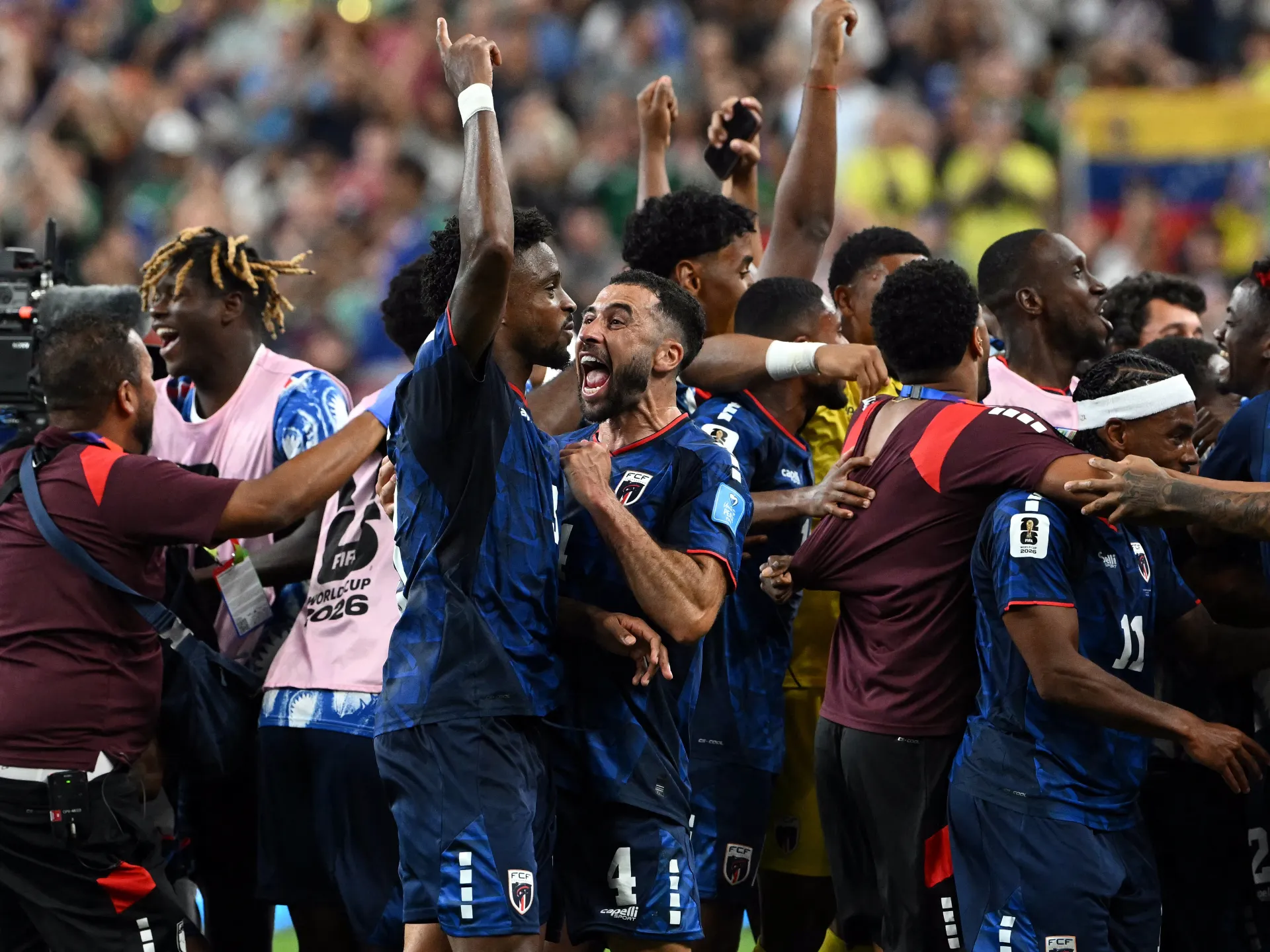
Gabriel Martinelli scored the winner late in injury time to give five-time champions Brazil a 2-1 win over Japan in the World Cup round of 32 in Houston.
Martinelli, who had come on as a second-half substitute, scored in the sixth minute of stoppage time as the match on Monday appeared to be heading to extra time.
Brazil will next face either the Ivory Coast or Norway on Sunday in East Rutherford, New Jersey, in the round of 16.
Casemiro had earlier equalised with a header in the 56th minute off an assist from Gabriel Magalhaes after just missing another chance two minutes earlier. The shot sailed just out of reach of the outstretched hand of Japan goalkeeper Zion Suzuki and into the net.
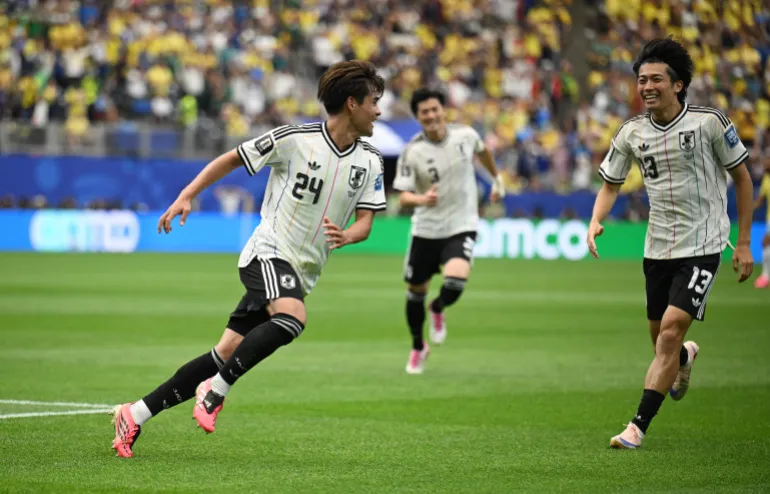
Kaishu Sano stole a misplaced pass in midfield before his right-footed shot from above the half-circle put Japan ahead after 29 minutes.
Kaishu Sano celebrates scoring the first goal [Annegret Hilse/Reuters]
Vinicius Junior, who has scored four goals so far in the tournament, had a chance to put Brazil on top in the 58th minute, but his shot from the left was deflected by goalkeeper Suzuki and went past the far post.
Brazil had two chances to even the score early in the second half before breaking through late on. First, Suzuki blocked a header from Bruno Guimaraes in the 52nd minute. Soon after, Casemiro’s header bounced off a defender’s head and Suzuki’s face.
Japan have never won a World Cup knockout match.
The win was Brazil’s 12th in 15 games against Japan. The teams have also played to two draws, while Japan got their first win in the series in a friendly in Tokyo in October.
This was a match-up between two countries with deep ties, Brazil being home to about 2.7 million Japanese descendants, which is the largest Japanese population outside of Japan.
Those ties extend to football, where Brazil superstar Zico moved to Japan in 1991 to play for Kashima Antlers and help build Japan’s professional football network. He coached the Japan national team from 2002–06, leading the team to the World Cup in 2006.
That team lost to Brazil 4-1 in the only previous meeting between the teams at the World Cup.
Brazil won Group C after a draw with Morocco and victories over Haiti and Scotland.
Monday’s victory came on the anniversary of their first World Cup championship in Sweden in 1958, when a 17-year-old Pele scored two goals in the final against the host country.
Japan reached the round of 32 as runner-up in Group F after draws with the Netherlands and Sweden and a win over Tunisia. The loss snaps a 10-game unbeaten streak dating back to a 2-0 defeat to the United States in September.
Brazil players celebrate after the match [Annegret Hilse/Reuters]
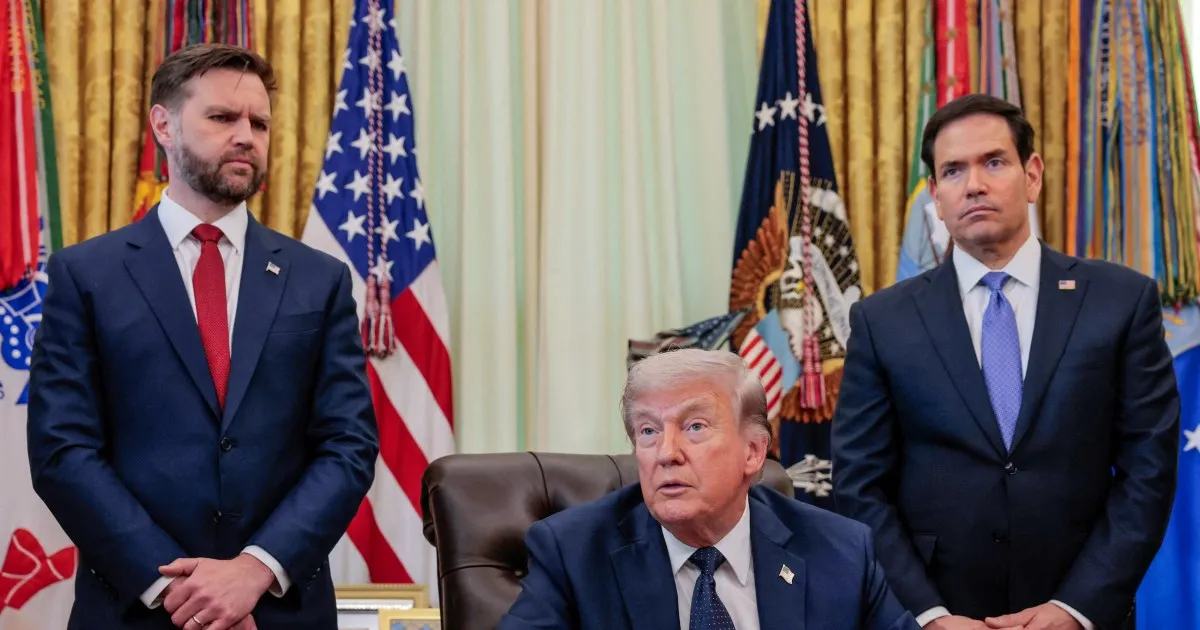
In a recent interview with the New York Times, Vice President JD Vance denied that there was an “intense rivalry” between him and Secretary of State Marco Rubio. And yet, reports and speculations about tensions between them continue to emerge, with the Rubio camp allegedly spreading rumours that Vance was thinking about pulling out of the presidential campaign before it even starts
In response, perhaps, during the past two weeks, the vice president has stepped out of his routine public persona that usually avoids controversy to make bold statements critical of Israel. Rubio, on the other hand, has continued to hold the party line of unconditional support for Israel. While Vance has led efforts to negotiate a peace deal with Iran, which have rattled Israel, Rubio has spearheaded efforts to pressure the Lebanese government into an agreement on Israel’s terms.
By becoming the face of Republican scepticism of Israel and clashing with his likely presidential election rival Rubio, Vance appears to be charting his own way to the presidency – one that distances the vice president from what increasingly seem to be unpopular foreign policy positions.
Rubio, until recently, had been on the upswing, assigned ever-more important responsibilities by Trump. He has been a leading voice within the administration for a hawkish approach that has encompassed military action from Venezuela to Iran, outweighing the counsel of the more isolationist Vance.
When it comes to Israel, Rubio has made a point of being as public and proactive as possible in his support for that country and its prime minister, Benjamin Netanyahu, supporting his appeal for the US to enter the war with Iran, and even going so far as to put his name on determinations leveraging claims of national security threats to deport foreign students critical of Israel.
While the bulk of his public statements have been directed at the Netanyahu government, it is hard not to read some of Vance’s recent comments as being directly responsive to Rubio’s actions not only abroad, but at home as well.
As Vance put it, “…pro-Israel people in the United States make two critical mistakes. One, on the one hand, is not delineating between America’s interest and Israeli interests because they’re not the same. But the second is always conflating criticism of a particular government with Jew hatred, because if everything is Jew hatred, then nothing is Jew hatred.”
But, if Vance is creating space between himself and Rubio (including, apparently, by eschewing the increasingly weaponised terminology of “antisemitism”), it must also be the case that there is a political case for his doing so. That case has yet to be tested on the Republican side, where the political elites well beyond Rubio continue to move in lockstep with Israel’s Netanyahu.
But Vance, as ever, is reading the base. The same polls that show an absolute collapse of Democratic grassroots support for Israel also show an unmistakable weakening of that support in the Republican base, with one recent survey finding that 57 percent of Republicans under 50 now hold negative views of Israel.
Despite the inability of Republican elected officials to rally support behind their criticism of Israel (neither of the two most visible examples, Representatives Marjorie Taylor Greene and Thomas Massie will re-enter Congress next year), the demand signal for more frank conversation has propelled right-wing commenters like Tucker Carlson and Candace Owens to ever-greater prominence. Looking into the social media landscape, Republican questioning of the Israel relationship – particularly under the banner question of whether it represents “America First” or “Israel First,” is inescapable.
Which is not to say it will be an easy path. As sitting vice president, Vance must defer to Trump; while the latter is currently frustrated with Netanyahu, there are no guarantees that the relationship will not warm up between now and 2028 – or that if Israel elects a new leader this autumn, that that person would not be able to rebuild much of Israel’s political capital in Washington.
And similarly, if Vance’s stance on Israel helps him capture the “America First” – which is no easy task given the cohesion within that movement of the Christian Zionist camp that remains strongly pro-Israel – he may then have to contend with a Democratic competitor who seizes the Israel-sceptic mantle more credibly.
Or not. It is still early, but the favoured nominee on the Democratic side appears to be California Governor Gavin Newsom, whose few forays into commentary on Palestine and Israel have quickly been walked back to appease the pro-Israel backers of the party establishment. Indeed, the Democrats will have their own complicated, and likely ugly, battle to fight when it comes to Israel.
What does appear certain, however, is that Israel will be a wedge issue in the upcoming election – and in the wake of the failed Iran war and increasingly unpopular attacks on free speech, both greatly driven by the government of Israel or its aligned lobbies, there is an opening here that Vance, given his competition with Rubio, would have been foolish to ignore.
So is Vance’s public criticism of Israel – and pro-Israel voices within his own party genuine, or calculated? As Vance put it in his book Hillbilly Elegy, “I don’t believe in epiphanies. I don’t believe in transformative moments, as transformation is harder than a moment. I’ve seen far too many people awash in a genuine desire to change only to lose their mettle when they realised just how difficult change actually is.”
Until now, little is harder in Republican politics than to go against the prevailing dogma on Israel. And while Vance has long demonstrated what might be termed isolationist tendencies, there is no reason to think that his recent comments represent an epiphany. Rather, like any politician, he is reading the tea leaves, and sensing an opportunity on the back of a change that is filtering across American public opinion.
Vance may not be committed to driving that change. But he may be smart enough to ride it.
The views expressed in this article are the author’s own and do not necessarily reflect Al Jazeera’s editorial policy.
US president says talks will take place on Tuesday, but Tehran has not confirmed the negotiations in Doha.
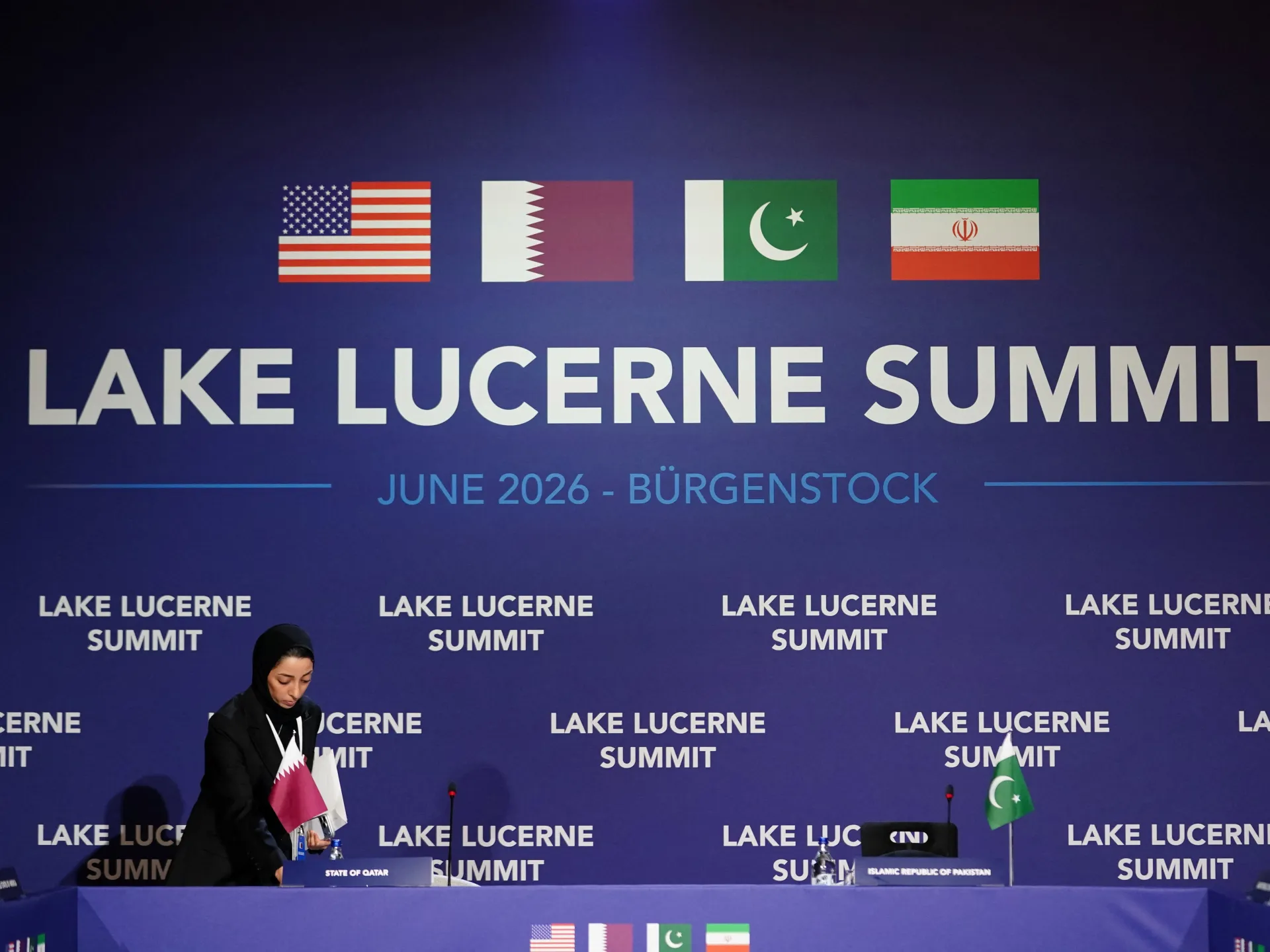
President Donald Trump says a meeting will take place between Iran and the United States in Qatar on Tuesday, suggesting that diplomacy is still on track despite the recent military skirmishes in the Gulf.
Trump’s announcement on Monday came less than two hours after a top Iranian official said that technical talks over the memorandum of understanding (MoU) between Washington and Tehran “are not planned” for this week.
Recommended Stories
list of 3 itemsend of list
“IRAN HAS REQUESTED A MEETING. IT WILL TAKE PLACE TOMORROW IN DOHA!” Trump wrote in a social media post.
Iranian Deputy Foreign Minister Kazem Gharibabadi said the meeting would take place after conditions are met, without providing details.
“Although consultations with Qatar, including regarding the follow-up of the implementation of the other party’s commitments, are ongoing as usual, the news from some media outlets that technical talks of the working groups will be held in Doha cannot be confirmed,” Gharibabadi told Tasnim news agency.
The two statements from Washington and Tehran appear to contradict each other, but it is possible that a breakthrough finalising the meeting occurred after Gharibabadi’s comment.
Iran, however, has not confirmed that talks have been scheduled.
White House spokeswoman Karoline Leavitt said special envoy Steve Witkoff and Trump’s son-in-law, Jared Kushner, will lead the US negotiating team in Doha.
“Special Envoy Witkoff and Jared Kushner will be flying to Doha for high-level meetings this week as we continue to discuss the memorandum of understanding,” she told Fox News.
Leavitt added that technical talks will take place on the sidelines of the high-level negotiations.
The US and Iran reached a deal to end the war earlier this month, kicking off a 60-day period of negotiations over the thorniest issues in the relationship – Tehran’s nuclear programme.
But the deal has been tested by Israel’s continuing attacks in Lebanon and Iran’s assertion of control over the Strait of Hormuz.
The first sentence of the 14-point MoU calls for a full ceasefire in Lebanon, “ensuring the territorial integrity and sovereignty” of the country.
But the US has sponsored a separate agreement between the Lebanese government and Israel that conditions Israeli withdrawal on the disarmament of Hezbollah across the country.
Hormuz has been another sticking point. Iran has rejected routes through the strait outside of its control and fired at ships passing through lanes not designated by Tehran.
The US has struck Iranian positions near the waterway, to which Iran responded with missile and drone attacks against American bases in Bahrain and Kuwait.
But diplomatic and de-escalation efforts appear to continue, despite the trading of attacks.
“As far as we’re concerned, we’re holding up our end of the ceasefire,” Leavitt said on Monday, but she warned that “violence will be met with violence” if Iran attacks commercial ships or US interests.
On Monday, Trump hailed the drop in oil prices that followed the deal, which lifted Tehran’s blockade on Hormuz and eased US sanctions on Iran’s energy products.
“GAS PRICES COMING DOWN, FAST! REPORT ANY ABUSES AT RETAIL LEVEL,” the US president wrote on his Truth Social platform.
The average price of one gallon (3.8 litres) of gasoline in the US has dropped to $3.86, down from a peak of $4.56 in May. It was less than $3 before the war.
Five wins to go. How can your team reach the final and win World Cup 2026? Click here.
Who: Brazil vs Japan What: FIFA World Cup 2026 – round of 32 Where: Houston Stadium, Houston, United States When: Monday, June 29, at 12pm (17:00 GMT) How to follow: We will have all the build-up on Al Jazeera Sport from 14:00 GMT ahead of our live text commentary stream.
Recommended Stories
list of 4 itemsend of list
Carlo Ancelotti faces his first major test as the Brazil coach when the record five-time world champions take on Japan, arguably the best Asian team at the tournament, in the round of 32.
Monday’s meeting in Houston offers Brazil the chance to exact revenge for their friendly defeat to Japan late last year, as the South American giants lock in on their target of a deep run in North America.
The odds are heavily in Brazil’s favour, but after Japan came out of a tricky group with flying colours, it would be foolish to write them off.
There is also a mutual respect and camaraderie between the nations, given the overwhelming Brazilian influence on professional football in Japan.
Al Jazeera tells you everything about the second game of the round of 32:
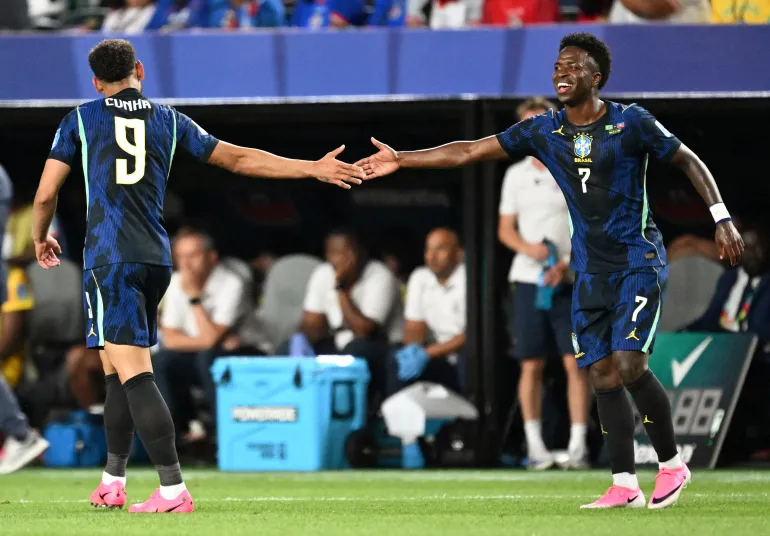
Of all the seven goals Brazil registered across three games, Real Madrid star forward Vinicius Jr scored four of them, while Matheus Cunha netted three. Bruno Guimaraes bagged the most assists (three).
Brazil’s forwards Matheus Cunha, left, and Vinicius Jr are spearheading Brazil’s attack at the World Cup [Roberto Schmidt/AFP]
Ancelotti in relaxed mood ahead of Japan clash
Since their low-key display in the first game, Brazil appear to be growing into the tournament, showing glimpses of their all-round potential, with some of the Selecao stars finding their rhythm.
Ancelotti knows Japan will be no pushovers, describing the record four-time Asian champions as “one of the best teams” in the world.
During Sunday’s pre-match press conference, the Italian was relaxed and betrayed no signs of feeling the pressure, despite Brazil being cast as the clear favourites for the knockout tie.
“We need a lot of things: A strong mind, a strong heart, a clear mind,” he told the media. “I think we have to be ready for anything that might take place in a knockout match, and a lot can happen in a knockout match.
“I think the team is ready. They’re motivated, they’re confident,” added Ancelotti, who is leading Brazil’s charge for a record-extending sixth world title.
How did Japan reach the round of 32?
Japan started their campaign by holding the Netherlands to a 2-2 draw before thrashing Tunisia 4-0 in the second game. They wrapped up the first round with a 1-1 draw with Sweden, which saw them finish with five points, confirming a second spot in Group F.
Ayase Ueda and Daichi Kamada are the joint top scorers for Japan so far, with two strikes each, while Keito Nakamura, Junya Ito and Daizen Maeda have also scored one each.
Japan’s Junya Ito, right, has scored once in the tournament, while Ayase Ueda, left, and Daichi Kamada, centre, have two goals each [Daniel Becerril/Reuters]
Dark horses Japan are ‘united’, says Moriyasu
Japan have lived up to their billing as the “dark horses” at the tournament, holding two formidable European sides – the Netherlands and Sweden – to draws.
After beating Germany and Spain en route to a round of 16 run at the 2022 World Cup, Japan have shown the world they are capable of pulling off upsets, especially on the sport’s biggest stage.
Japan coach Hajime Moriyasu said his side’s collective spirit can fire them into the last 16 again.
“All the players will do what they can for the team and contribute,” Moriyasu said on Sunday. “The team is united, and that feeling is getting even stronger now.”
Japan’s best finish at the World Cup has been reaching the round of 16 on four occasions: 2002, 2010, 2018 and 2022. They have never won a World Cup knockout game.
Brazil vs Japan: master vs the apprentice
Launched in 1993, Japan’s top-flight, the J-League, took much of its inspiration from Brazil and also employed plenty of their players.
Zico, the creative lynchpin of Brazil’s fabled 1982 World Cup team, was enticed out of retirement to join Kashima Antlers, while internationals Bismarck and Elivelton started a run of Brazil national team players making the move to Japan.
By the late 1990s, seven of the Brazil team that won the 1994 World Cup, including captain Dunga, had played or were playing for Japanese clubs and, by extension, lent their influence to a rapidly developing scene.
Brazil vs Japan predictions
Opta’s supercomputer has calculated a 58.3 percent probability of Brazil winning this fixture in regulation time, while Japan is assessed an 18.1 percent chance of victory.
The probability of going to extra time – or potentially penalties – is 23.6 percent.
Who will the winner face in the round of 16?
The winner of Brazil vs Japan will face either Norway or the Ivory Coast in the round of 16.
Brazil vs Japan: Kickoff time, TV channel
Brazil: CazeTV, TV Globo, GETV, Globoplay, sportv (2pm, Brasilia Time)
Japan: NHKBS1, DAZN, Fuji TV (2am on Tuesday, Japan Standard Time)
United Kingdom: ITVX, ITV1, STV Player, STV (6pm, British Summer Time)
To check the TV listings for your country, head to FIFA’s TV listing schedule here.
Brazil vs Japan: head-to-head
In the all-time head-to-head record, Brazil have only lost once to Japan (W11 D2 L1). In their only World Cup contest 20 years ago at Germany 2006, Brazil won 4-1.
Significantly, Japan’s sole victory over Brazil came in their most recent clash, a 3-2 victory in a friendly in October 2025 in which Brazil let a two-goal lead slip in Tokyo, with Ueda scoring the hosts’ winner.
Brazil vs Japan: Team news
Raphinha remains sidelined for Brazil due to a hamstring injury, while Japan’s Takefusa Kubo is out with a sprained knee.
Neymar, who made his first appearance for Brazil since October 2023 when he came off the bench in the last game, will be available to play more minutes against Japan. The star forward is working his way back to full fitness after dealing with a lingering calf injury.
Canada beat South Africa 1-0 thanks to a stoppage-time strike by Stephen Eustaquio from distance to reach the World Cup last 16 for the first time in their history.
From the prime minister to sport celebrities and fans on social media, Canadians have revelled in their team’s win.
Canada have enjoyed a historic run at the FIFA World Cup 2026, and it will continue thanks to Stephen Eustaquio’s 92nd-minute goal against South Africa, which sent the cohosts into the global tournament’s round of 16 for the first time.
The 29-year-old midfielder’s strike on Sunday rewrote Canadian football history, capping off a narrative that Jesse Marsch has been scripting since taking the reins two years ago.
Recommended Stories
list of 4 itemsend of list
“Think about how we talked about sticking to the plan, sticking to who we want to be, playing aggressive, accessing the quality, you guys showing your character,” an impassioned Marsch told his team as they circled around him on the pitch following their victory.
“You guys are Canadian heroes! Canadian heroes for the future children of this country, who play this sport. This sport has a big future because of you guys.
“You should be so proud of who you are. You should be so proud of this game. You went after it, moment after moment.”
The same words were echoed by Prime Minister Mark Carney, who had barely exited his flight and watched the final minutes of the game on his phone.
“What a game. What a team. What a country,” Carney wrote on social media.
Doug Ford, the premier of Ontario, where Eustaquio was born and raised before his family moved to Portugal, congratulated the team for advancing to the next round, as did Leader of the Opposition, Pierre Poilievre.
Mayor of Vancouver, Ken Sim, wrote to the team, saying: “You wore your hearts on your sleeves, gave everything on the field, and gave all of us a memory we’ll never forget.”
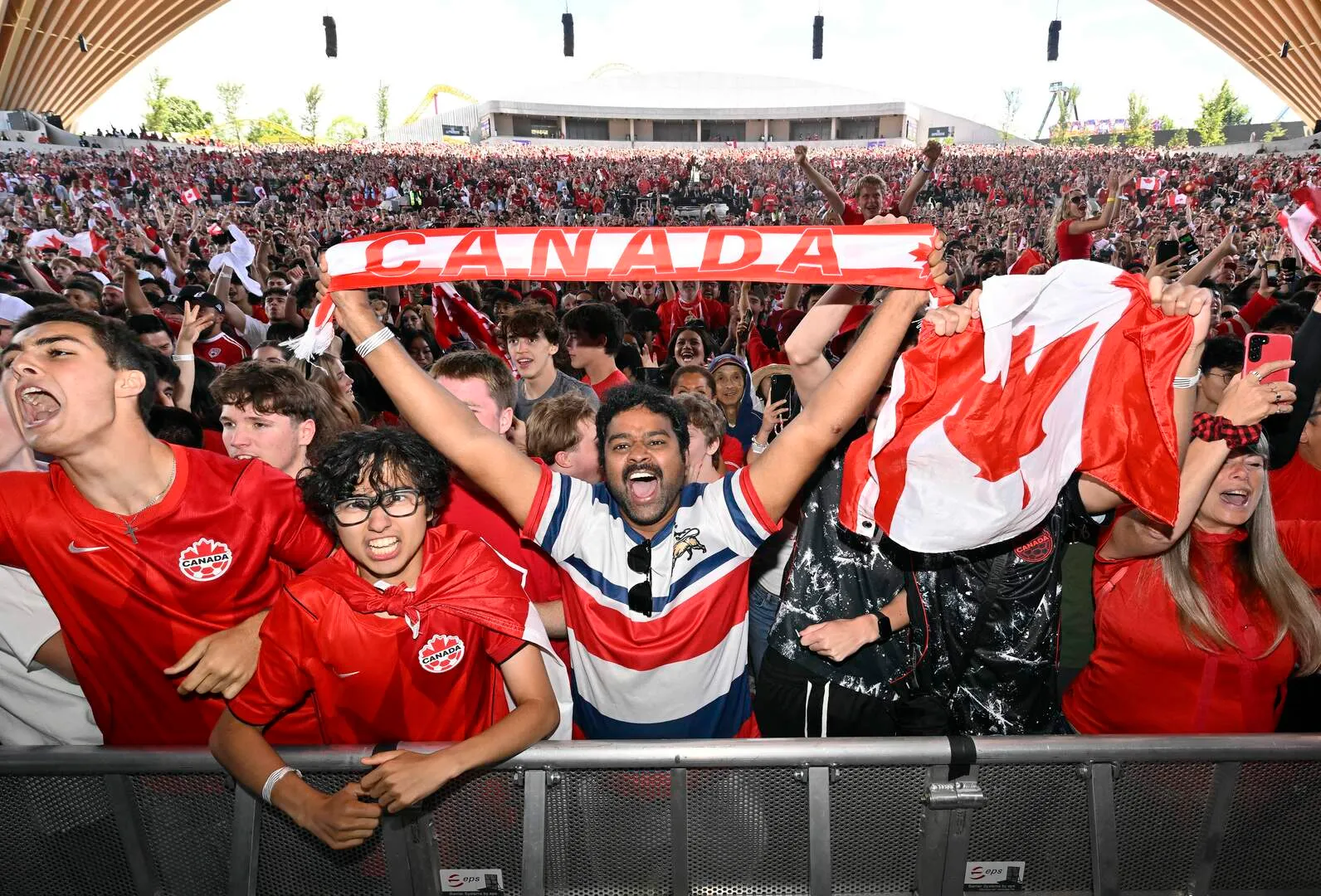
Social media was flooded with footage of Canada fans turning watch parties and fan festivals into a sea of red. Even Los Angeles Stadium, where Canada came down the West Coast to play South Africa, was thronged with fans supporting the World Cup cohosts.
Football enthusiasts and analysts on social media said the victory felt surreal for Canada, where sport like ice hockey, basketball and baseball enjoy far more popularity than football.
Fellow Canadian athletes joined in the social media celebrations. Multiple Olympic champion swimmer Summer McIntosh, tennis star Felix Auger-Aliassime, and Olympic champion runner Andre de Grasse were some of Canada’s top athletes to back the men’s football team after their win.
Famed Canadian astronaut Chris Hadfield also congratulated the team after wishing them well earlier on Sunday.
FC Bayern congratulated Alphonso Davies for returning to international duty after he sustained a hamstring injury with them in May, during the UEFA Champions League semifinal. The game saw a noticeable shift in pace and tactic when Davies was subbed in on the 74th minute.
From the opponent’s side, South African President Cyril Ramaphosa congratulated Canada for winning “with Bafana Bafana breathing down your necks”.
Former German footballer Bastian Schweinsteiger, however, who was called out by Ivory Coast manager Emerse Fae for racist undertones in his remarks on the African team, seemed unfazed by Canada’s historic win.
“Overall, not a convincing performance, but thanks to the clearer chances, progressing is fine. Alphonso Davies brought fresh wind after coming on as a substitute,” he wrote on social media.
“However, against the Netherlands or Morocco, the team will have to improve significantly.”
Tehran, Iran – Iran’s national football team has once again failed to realise the dream of reaching the knockout phase of the World Cup, with the wartime 2026 tournament stirring up a wide range of emotions among Iranians inside and outside the country for different reasons.
Team Melli ended its seventh appearance in the tournament after a 1-1 draw in Seattle on Friday against Egypt left them in third place in Group G, with only three points gleaned from three draws.
Recommended Stories
list of 3 itemsend of list
The team was eliminated a day later, after a series of other match results left them just outside of the tournament’s eight third-placed teams advancing to the next stage after FIFA expanded from 32 to 48 teams.
“This was very unlikely to happen, I couldn’t believe how we got out again, with just one spot away from advancing,” Milad, a resident of Tehran who watched all matches impacting Iran’s run at the World Cup, told Al Jazeera.
The circumstances were so peculiar that, among other things, they left the head coach pondering divine intervention, and state television accusing other teams of cheating and collusion.
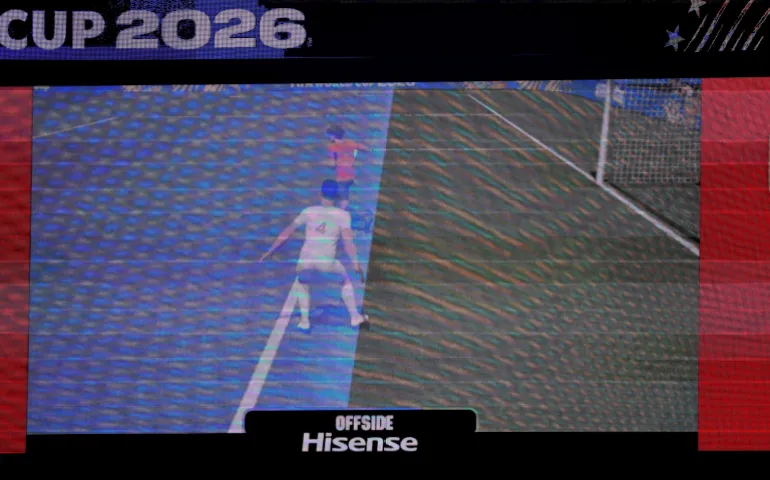
During the Egypt match, centre-back Shoja Khalilzadeh appeared to score a 93rd-minute winner that would have automatically sent Iran into the Round of 32, but VAR ruled it out after a few centimetres of his right foot were offside.
Video replay in the stadium shows Shoja Khalilzadeh of Iran as offside when he scored the second goal which was then dissallowed during the FIFA World Cup 2026 Group G match between Egypt and on June 26, 2026 in Seattle, Washington [Richard Heathcote/Getty Images] (AFP)
A member of the coaching staff had his nose broken after another staff member inadvertently headbutted him during emotional group celebrations of the goal before it was overturned.
Khalilzadeh’s goal celebration included posing with sunglasses, so Egypt – which advanced to the knockout phase – later taunted him with an Instagram picture of striker Mohamed Salah giggling while wearing sunglasses.
A disgruntled head coach Amir Ghalenoei told state television during a live post-match interview that he believed everyone enjoyed the match, but at times it seemed like “God was at odds with us” due to the lack of good luck – which also included Iran scoring three VAR-overturned goals during the competition, the highest of any team.
He also blamed tough conditions faced by the players and the entire staff during an unprecedented World Cup campaign, in which the main host country, the United States, has been at war with a participating nation, Iran, for the past four months.
The US military bombed several islands in the Strait of Hormuz in Iran’s southern waters just hours before kick-off in the Iran-Egypt match.
Football federation officials, as well as other staff and media personnel, were denied visas to travel to the US for the tournament, on grounds that included their alleged affiliation with the Islamic Revolutionary Guard Corps (IRGC), the force running war and politics in Iran.
The playing squad was only allowed in under unusually tight restrictions, and had to be mostly based in Mexico’s Tijuana instead of the originally designated Tucson in Arizona.
They had to enter the US within 24 hours of a match and leave on the same day, with only a slight easing allowing them to arrive two days early for the Seattle match.
‘Completely mad’
After the Egypt match, Iran needed just one of three things to go their way: Croatia had to lose to Ghana, but it won 2-1; DR Congo had to fail to beat Uzbekistan, but won 3-1; and Algeria vs Austria had to produce a winner, but the match ended 3-3.
Hours before the Algeria-Austria match, Javad Khiabani, a sports presenter infamous for decades of eccentric football commentary, released a video message in Arabic, addressed to the “Muslim brothers in Algeria”. He asked them to defeat Austria and allow Iran, a Muslim-majority country that has suffered war, to advance.
Other hosts of Iranian state television and radio channels broadcasting the match live went through an emotional rollercoaster after Algeria’s Riyad Mahrez scored deep into stoppage time, creating a 3-2 result that would have sent Iran through.
“Now, a Muslim country is doing something to keep another Muslim country in the knockout stage,” shouted another ecstatic commentator, again linking the sport with religion.
He and many Iranians watching at home were devastated moments later when Austria’s Sasa Kalajdzic used his first touch of the game to equalise with a header in the box. The result benefited both teams, because it sent both into the next round, with Austria facing Spain and Algeria facing better odds against Switzerland.
Some inside and outside Iran suggested the game was rigged, but Austria’s head coach Ralf Rangnick responded to match-fixing allegations by saying: “If Alfred Hitchcock had written such a drama, I probably would have said he was completely mad”.
Shoja Khalilzadeh #4 of IR Iran scores his team’s second goal that was ruled offside following a VAR review during the FIFA World Cup 2026 Group G match between Egypt and IR Iran at Seattle Stadium on June 26, 2026 in Seattle, Washington [Dean Mouhtaropoulos/Getty Images]
Killings that scarred society
For a second consecutive World Cup, Iran’s national football team did not enjoy unified support from Iranians inside or outside the country, due to the fallout from public protests against the Islamic Republic, the theocratic establishment that has governed Iran since the 1979 Revolution.
In January 2026, thousands of Iranians, including at least 230 children, were killed during nationwide anti-establishment protests that erupted across the vast country of over 90 million. The government, as with previous protests, put all the blame on “terrorists” organised by the US and Israel, but Amnesty International called it an “unprecedented deadly crackdown” by the state that also included a total internet shutdown.
Just months after the killings that scarred parts of Iranian society, some believe football players – who have all avoided commenting on the protests, but in some cases have backed the state – are not representatives of a unified Iran.
Outside the stadiums in the US during the World Cup, some anti-Islamic Republic Iranians protested using Iran’s pre-1979 lion-and-sun flag, as opposed to the official flag which features the word “Allah” in the centre, but most diaspora Iranians ended up cheering for the team in packed stadiums.
Mohammad Khakpour, a former Team Melli captain now based in the US, wrote in an Instagram post on Sunday that the fact Iranians had contrasting emotions after Iran’s elimination from the tournament carries a social message.
“When a part of the society feels that Team Melli is no longer representative of their emotions, pains or hopes, a chasm is created,” he said. “The people may not be happy from a football loss, but they may at times be happy about the collapse of an image that they do not consider to be true”.
Farhad, a 36-year-old resident of eastern Tehran, told Al Jazeera that decades from now, people may remember Team Melli not only as representing the Islamic Republic but also for the football record it left behind.
“Personally, I preferred it if they advanced, but I’m not devastated that they didn’t,” he said.
The memorandum of understanding (MoU) the United States and Iran have signed is not a peace treaty. It is not even a credible framework for one. A vocal chorus of critics has rushed to portray it as a humiliation – evidence that President Donald Trump was manoeuvred into negotiations and extracted a poor deal from a regime that outplayed him.
That reading mistakes a mirage for reality. The Trump administration entered these talks with a precise understanding of what the Iranian regime is, what it wants and what any agreement with it is actually worth. No one in that negotiating team harbours the illusion that Tehran intends to honour commitments that constrain its core ambitions. The MоU is not a peace settlement. It is a mutually understood pause – a tactical intermission chosen by both sides for reasons that have nothing to do with trust and everything to do with time.
To grasp why, one needs only consult Iran’s unbroken record. That record is not a matter of interpretation or political dispute. It is a documented history of agreements made, commitments given and obligations systematically abandoned whenever honouring them conflicted with the regime’s objectives.
The pattern is consistent enough to constitute a doctrine: Iran negotiates under pressure, signs what is necessary to relieve that pressure and resumes its course once the immediate threat has passed.
The deeply flawed 2015 Joint Comprehensive Plan of Action (JCPOA) was the most prominent recent demonstration of this cycle. Presented as a landmark of multilateral diplomacy, it was in practice a subsidised intermission – a breathing space Iran used to consolidate resources, sustain its proxy networks and continue advancing its strategic programme. The JCPOA did not change Iranian behaviour. It funded and protected it.
The Trump administration’s “maximum pressure” campaign was a direct response to that lesson: A regime of this kind cannot be managed through diplomatic lifelines. It can only be constrained by pressure severe enough to leave it no viable alternative to compliance.
The new MoU does not signal that Iran has changed. Its calculus remains what it has always been – survival and expansion, pursued through whatever tactical posture the moment requires. When pressure mounts, Iran negotiates. When pressure eases, Iran advances. Its negotiators are, by all available evidence, prepared to offer assurances they have no intention of keeping. This is not a failure of diplomatic craftsmanship. This is simply the nature of any negotiation with a regime like Iran’s.
Nowhere is this more apparent than in the Iranian nuclear programme. As a signatory to the Non-Proliferation Treaty, Iran has repeatedly committed to transparent cooperation with the International Atomic Energy Agency. It has repeatedly broken those commitments, blocking inspections, constructing clandestine enrichment facilities, destroying evidence and systematically deceiving the international community. The pattern is not one of occasional noncompliance. It is deliberate, sustained deception in pursuit of a single unwavering objective: the acquisition of a nuclear weapon.
A state genuinely committed to civilian nuclear energy has no need for a vast and enormously expensive domestic enrichment programme. Nuclear fuel can be purchased – from Russia, among others – at a fraction of the cost and without the international confrontation such a programme inevitably provokes.
Iran has chosen the far more costly and dangerous path for one reason: Enrichment is not a means to an end, but the end itself. Its rulers are committed to a nuclear weapon, and that commitment has survived changes in personnel, shifts in rhetoric and decades of pressure.
It will not be bargained away – and here lies the critical point that no amount of diplomatic optimism can paper over. Iran’s rulers are not pragmatic actors engaged in a conventional cost-benefit calculation. Their goals are theological and strategic in a way that places them beyond the reach of ordinary negotiation.
They do not govern in the interests of the Iranian people. The sanctions they have endured have devastated ordinary Iranians – driven up poverty, hollowed out the middle class, denied the population access to medicines and opportunity. None of that has moved the regime one degree from its course.
This is a regime that could, if it chose, transform its position entirely. It could make peace with its neighbours, normalise relations with the international community, shed the sanctions that have devastated its economy and dramatically improve the lives of Iranians. The price is not beyond reach: abandon the nuclear weapons programme, cease development of offensive ballistic missiles and end the sponsorship of terrorist proxies. Iran’s rulers have refused that bargain consistently and completely.
That is the essential context for understanding what the Trump administration is actually doing. It would be a serious misjudgement to read this MoU as evidence of American weakness or strategic confusion. The team that designed and executed the most effective pressure campaign against Iran in recent memory is not naive about this adversary.
Trump enters this pause knowing that Iran will not honour commitments that genuinely constrain it. He is not expecting otherwise. Neither side, in all likelihood, operates under any such illusion – which is precisely what makes the critics’ alarm about a “bad deal” somewhat beside the point.
You cannot be cheated by an agreement you never expected the other party to keep.
What this MoU represents is a mutually understood strategic pause, a breathing space both parties have chosen, for entirely different reasons, over immediate confrontation. Iran needs economic relief. A regime facing internal decay and a depleted treasury has strong incentives to buy time, replenish its resources and wait out what it calculates to be a finite window.
Tehran is acutely aware that Trump has roughly two and a half years remaining in office. From its perspective, survival through that period is itself a form of victory.
Washington’s calculus is different in kind. Keeping the Strait of Hormuz open is an immediate, non-negotiable goal – a choked strait means an energy price shock with global consequences. Beyond that, the US has its own repositioning to accomplish. Military inventories drawn down through recent operations are being restocked. Strategic options are being preserved and expanded.
A pause that enables that rebuilding, while avoiding a premature confrontation on unfavourable terms, is not a concession. It is preparation.
Trump has never wavered in his commitment to eliminating Iran as a strategic threat – not through wishful diplomacy, but through the kind of pressure that forecloses options. That commitment did not expire with the signing of this MoU. The question for Tehran is not whether American resolve exists but whether it can be outlasted. That is a wager the Iranian regime has made before and lost.
The international community will, as usual, observe from a careful distance. Many nations will urge Iran to be stopped while taking few steps to stop it, criticising US action and inaction with equal facility.
Trump understands this dynamic. It is the foundation of his approach to alliances – the insistence that partners bear proportionate burdens rather than simply drawing on American resolve while contributing little of their own.
The MoU will not resolve the Iranian problem. It was not designed to. When its terms expire or when Iran decides it has served its purpose, the nuclear programme will resume its advance, the proxies will be better resourced, and the Strait of Hormuz will once again become a flashpoint.
That outcome is not a possibility. Given Iran’s record, it is a near-certainty. The only consequential variable is whether the US and those willing to stand alongside it will be better positioned to act decisively when that moment arrives. Far from a mirage, the evidence suggests that is precisely what this administration is working to ensure.
The views expressed in this article are the author’s own and do not necessarily reflect Al Jazeera’s editorial policy.
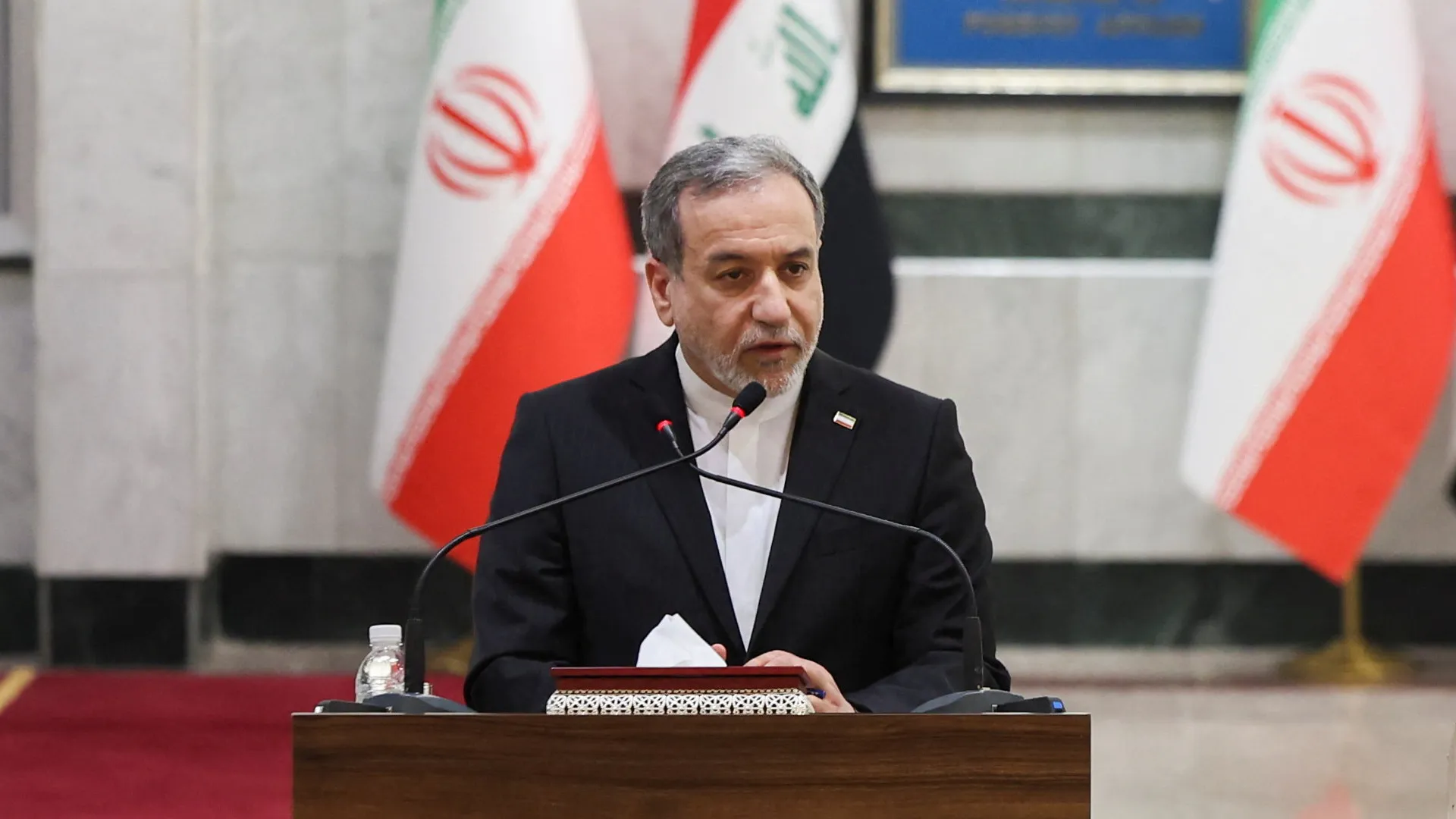
Iran’s foreign minister has urged ‘all parties not to interfere’ in the management of the Strait of Hormuz, after the US bombed Iran for a second day following a drone attack on a vessel. Abbas Araghchi says the MoU gives Tehran control of the waterway, during a press conference with his Iraqi counterpart in Baghdad.
Bahrain and Kuwait have condemned Iran’s retaliatory attacks after a second day of US strikes on Iran. Tehran University academic Hassan Ahmadian argues the US is trying to find its way out of the Memorandum of Understanding that Trump signed 10 days ago, ending the war.
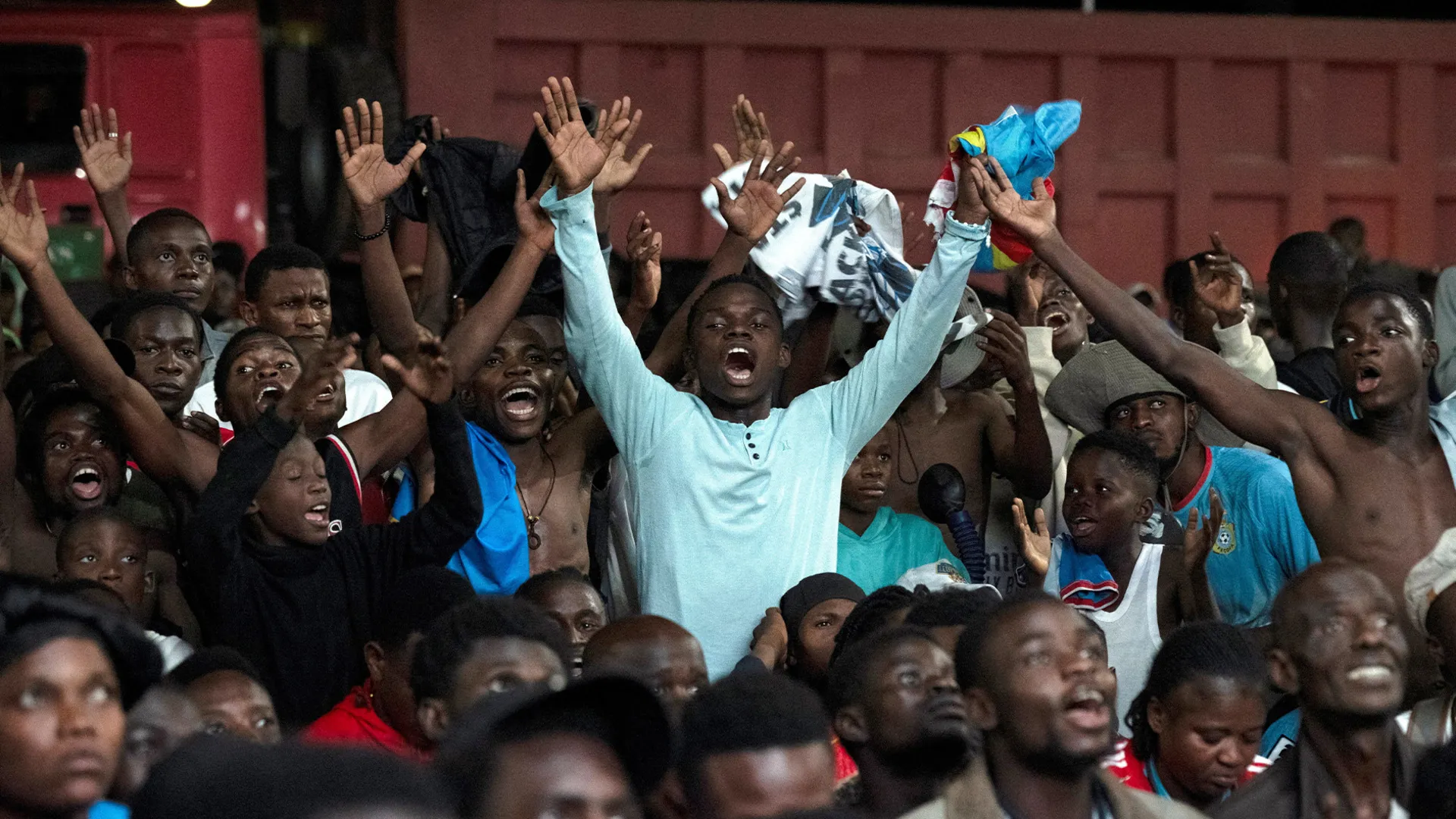
Democratic Republic of Congo fans erupted in celebration after their team secured a historic place in the World Cup knockout stage with victory over Uzbekistan. The Leopards will now face England in the Round of 32, their first-ever appearance beyond the group stage.
For a second day in a row, the United States has launched strikes on Iran, once again citing an attack against a commercial vessel as a motivation.
Saturday’s renewed attacks are the latest indication that a Middle East ceasefire, established as part of a June 17 memorandum of understanding between the US and Iran, might be at breaking point.
Recommended Stories
list of 3 itemsend of list
In a statement, US Central Command (CENTCOM), which directs military action in the Middle East, explained that the latest attacks came “at the Commander in Chief’s direction”.
“CENTCOM forces launched strikes today in direct response to continued Iranian aggression against commercial shipping,” the command centre wrote.
“U.S. military aircraft targeted Iranian military surveillance infrastructure, communication systems, air defense sites, drone storage facilities, and minelayer capabilities.”
Explosions were reported in southern Iran, around the village of Tahrui, near the port of Sirik, which was also the focal point of Friday’s US attacks. State media also indicated that Qeshm Island had been hit.
Responses to cargo ship strikes
Saturday’s strikes against Iran followed a similar playbook to Friday’s.
Early on Saturday morning, at about 4:30am Eastern US time (08:00 GMT), the Panama-flagged tanker Kiku was travelling through the Strait of Hormuz when it was reportedly hit by an unidentified projectile.
No crew members were injured, and no leakage was reported from its cargo.
CENTCOM said the ship had been carrying more than 2 million barrels of crude oil when it was hit by a “one-way attack drone”.
The website MarineTraffic.com indicates that the tanker left the Al Shaheen oilfield on Thursday and is due to dock in Fujairah, in the United Arab Emirates, on Sunday.
A similar sequence of events prompted Friday’s volley of US attacks.
In that case, a Singapore-registered container ship, the Ever Lovely, was struck by a drone as it sailed through the Strait of Hormuz on Thursday. No one on board was injured, and the boat continued on its travels.
But US President Donald Trump denounced the drone strike on Friday as a “foolish violation” of the June 17 memorandum.
By that evening, the US and Iran had exchanged fire, with the US targeting the area around Sirik, and Iran hitting US military installations in the Middle East.
CENTCOM referenced Friday’s actions in announcing the latest round of strikes.
“After yesterday’s U.S. strikes in response to the Iranian attack on M/V Ever Lovely, Iran was given a chance to honor the ceasefire agreement,” CENTCOM wrote.
Iran “elected not to”, it added, citing the Kiku drone strike. CENTCOM also maintained that commercial traffic through the Strait of Hormuz, a sticking point in ceasefire negotiations, would continue, with US military backing.
“U.S. forces remain vigilant, lethal, and ready,” CENTCOM said in its statement.
Controlling the strait
Central to the latest round of fighting is control over the Strait of Hormuz, a key artery for maritime traffic. Nearly 20 percent of the world oil supply passed through the narrow waterway in peacetime, as well as significant quantities of fertiliser and natural gas.
But after the US and Israel launched attacks on Iran on February 28, launching the present-day war, Tehran moved to shut down traffic through the strait, which sits between its shores and Oman’s.
Iran’s decision sent global fuel prices skyrocketing, and that generated pressure, both domestic and international, for the Trump administration.
The June 17 memorandum was designed to provide relief. Though it was a prelude to further negotiation, the deal called for the US, Iran and their allies to “declare the immediate and permanent termination of military operations on all fronts, including in Lebanon”.
It also outlined a 60-day period during which time Iran was to make its “best efforts” at allowing commercial traffic to transit through the Strait of Hormuz at no charge.
That part of the memorandum specified that Iran and Oman, the two countries that border the strait, would determine “future administration and maritime services” in the waterway.
But continued fighting in Lebanon has prompted Iran to threaten the strait’s closure once more.
Then, there is the question of the memorandum’s terms. Experts say the US and Iran have come to different understandings of how the June deal should be enforced.
Al Jazeera correspondent Resul Serdar Atas explained that Iran believes it should be allowed to restrict commercial traffic that does not have prior clearance to pass through the strait.
“Article Five of the memorandum of understanding, according to the Iranian officials, is clearly saying that any ship, whether it’s going through the Iranian territorial water or the Omani territorial water, has to be in full coordination with the Iranian authorities,” he said.
“But that is not understanding of Americans. The Americans are saying, ‘Well, if it is going through the Omani territorial waters, they do not need to coordinate with the Iranian authorities.’”
That, in turn, is leading to a disagreement over who is violating the terms of the ceasefire. The US sees Iran as violating the agreement by interfering with commercial vessels, while the Iranians perceive the US as breaking its commitment to stop fighting.
“That is the pattern,” Serdar Atas said. “For Americans, keeping the Strait of Hormuz open is quite important for the stability of the global economy. But for Iran, the Strait of Hormuz being under Iranian control is the ultimate deterrence and the biggest leverage.”
Tit-for-tat ‘could get out of hand’
Some of the hostilities are a result of the high level of distrust between Iran and the US, according Hassan Ahmadian, a professor at the University of Tehran.
He noted that Iran’s insistence that ships passing through the Strait of Hormuz receive its clearance could be read as a defensive action.
“I think the Iranians will not let go of this because obviously they want only commercial ships, according to the MoU, to pass through the strait. So any ship that doesn’t coordinate might be a military one, might carry military stuff,” Ahmadian said.
He believes that the latest flurry of US attacks may prompt Iran to halt any deliberations with the Trump administration as they seek to cement a peace deal.
The US side, meanwhile, is likely to face pressure from rising oil prices as the result of the renewed fighting, according to Harlan Ullman, a retired US naval officer and chairman of The Killowen Group, a global advisory firm.
Still, Ullman warned that the latest exchange of fire could spiral into an escalation in violence, rendering the memorandum of understanding moot.
“The agreements are very, very fragile, and this tit-for-tat could get out of hand,” Ullman said.
“If prices go up, as I suspect they will, that will be a moderating influence, and I think the United States will consider that rising oil prices are not good, and it will probably continue the negotiations. But right now, who knows?”
Every morning Marisol Winfrey Herrera’s three-and-a-half-year-old daughter Jo reminds her to turn off the tap while washing her hands and brushing her teeth.
When they leave home, she reminds her mother to keep a bottle of ice with them to offer it to homeless people, who they sometimes find wilting in the Tucson heat. At first, they press the ice-filled bottles on the homeless folks to help them revive, then they offer the water to drink and hydrate. At her daycare, Jo is taught water-saving habits to combat Tucson’s soaring heat.
It is what prompted Herrera to join No Desert Data Center, a residents’ group that opposes two large data centres coming up on either side of Tucson – the $3.6bn project on the city’s southeast edge and a $5bn project on its northwest side in the town of Marana, together known as Project Blue.
The group believes these would consume more water and power than the city set in the Sonoran Desert can afford.
“We are in the middle of a 30-year drought, which is now an extreme drought,” says Lisa Shipek, co-executive director of the Watershed Management Group, a Tucson-based nonprofit.
“Water was a unifying theme in our campaign. The Colorado River cuts are looming, and this project would take water away,” Herrera told Al Jazeera.
Water flows in the Colorado River, which provides much of Tucson’s water through the Central Arizona Project canal system, have dropped by 20 percent since the year 2000 compared with water flows in the 20th century due to climate change, melting snow caps and warmer weather, making water cuts to Tucson imminent as the state could face as much as 77 percent water cuts.
“We say Not One Drop for data centres,” says Herrera, speaking of the campaign’s particularly emotive appeal for residents as water cuts get deeper and temperatures rise, with Tucson recording the warmest weather in 125 years last July and August.
Beale Infrastructure, a San Francisco-based company that is owned by investment management company Blue Owl in New York, had asked the city of Tucson to acquire 290 acres that were outside city limits for Project Blue. That would make it the city’s largest water consumer and among its largest power consumers. Beale did not respond to an emailed request for comment.
But at city council meetings, City Councillor Kevin Dahl began seeing hundreds of residents turn up to express their opposition to the project.
“Not for many issues do we get so much response,” he said. Herrera was among those who went.
Pitting environment against unions
At council meetings, Beale executives proposed that Project Blue could be the economic engine the city needed. It would create a few thousand jobs for construction workers, ironmongers, plumbers and other such workers during the construction of the project and a few hundred after that.
“Sometimes people travel as far as Phoenix for work,” Dahl said about Arizona’s largest city, which is nearly a two-hour drive from Tucson.
The project could bring jobs closer. Beale also expected the project to generate nearly $250m in taxes for the city, county and state in the first 10 years.
This left councillors with a difficult decision to make, weighing the project’s economic benefits against allocating it a share of the city’s increasingly scarce water and power.
Tucson residents raised questions in a town hall about whether proposed rate hikes by TEP, their power utility, is due to capacity expansion for data centres [Photo Courtesy Kathleen Dreier]
Activists also raised concerns about whether Tucson Electric Power (TEP), the power utility, would raise rates for consumers so it could expand capacity to provide power for Project Blue. After raising rates by 10 percent in 2023, TEP proposed a 14 percent rate hike in June 2025 for grid upgrades made in the previous year.
Lee Ziesche, an activist from the Democratic Socialists of America who is campaigning to make TEP a public utility, said Project Blue could “lead to higher temperatures and higher rates” because of the heat island effect of the air conditioners and higher rates for power.
She often hears from residents that a rate hike would make it hard to pay bills or put on air conditioning, even as the number of 100-degree Fahrenheit (37.8 degree-Celsius) days has increased in Tucson, which is among the hottest cities in the United States.
The same concerns of needing ramped-up air conditioning would plague data centres too, experts say.
“The viability of data centres in Arizona will always be subject to climate change and heat risks,” says Kate Gordon, chief executive of California Forward, a think tank that works on a sustainable economy.
“The heat in Arizona makes energy less efficient, and servers heat up, so projects will need higher amounts of water and cooling, which developers have to balance against a possibly lower real estate and labour cost,” she said. “I am always amazed at how climate does not figure in business plans.”
Dahl and Andres Cano, a supervisor in Pima County, in which Tucson is located, had discussions with Beale representatives.
“We thought they would go elsewhere if the city did not acquire the land” for the project, Dahl said. Cano also came away with the same impression.
In August 2025, Tucson councillors voted unanimously not to acquire the land for the project or provide it with water and power. In December, Cano became one of only two supervisors in Pima County to oppose the project, and it was approved for construction in an unincorporated part of the county.
“It will create short-term construction jobs for what will ultimately be a project with few wins,” Cano said. “This pitted the environment and unions, but industry is not for unions. This will have just about 100 jobs when it is done.”
With no access to Tucson’s water supply, Beale decided to cool its servers with air conditioners rather than water and use a closed-loop water system, so it would recycle and reuse water.
But Vivek Bharathan, a spokesperson for the No Desert Data Center, said using air conditioners would increase power usage.
Nearly half of TEP’s power comes from fracking, he says. Data centre demand will only mean “more fracking somewhere else, climate and health consequences all along the way”.
The state’s largest data centre
Even as Project Blue was making its way through a fraught approval process, Beale announced another data centre project in the neighbouring farming town of Marana. It was to be spread over 600 acres (242 hectares), twice the size of Project Blue. The area was spread over two farm plots, one owned by the Mormon church and the other by a family trust of city council member, Herb Kai.
This project, too, is slated to bring thousands of construction jobs to a farming town as well as tax revenues.
Tucson residents are protesting upcoming data centres [Photo courtesy Kathleen Dreier]
But when Jackie McGuire, a mother of three and former Wall Street banker, heard about it, she and other residents launched a campaign to stop the land from being rezoned for a data centre. Residents wanted Marana to stay a farming town.
McGuire, who works as a research analyst, said the data centres’ servers and large air conditioners that would be installed to keep them running would raise the project’s cost and make Marana unbearably hot.
Temperatures rose by up to 2.2F (1.22C) downwind from data centres in the Phoenix area, a study published in May had found.
“The heat generated will be like one to two million space heaters,” McGuire says. “It can go up to 112 degrees [44.4C] here already. The heat island effect could make Marana uninhabitable.”
The Marana data centre will be provided power by TEP and Trico, which announced a 7.23 percent rate hike in January.
McGuire and other residents campaigned to have a referendum on whether the land could be rezoned for a data centre. Their plea was not successful, and the city council approved the rezoning of the land.
But the experience of the campaign had invigorated McGuire, and she decided to run for city council herself. The central issue of her campaign is to bring transparency to the data centre’s functioning.
Even as the campaigns in Pima County and Marana raged on, La Osa, the state’s largest data centre project, took shape in Tucson’s neighbouring Pinal County. The 3,300-acre project by the Vermaland real estate group was expected to house 59 data centres and two of its own natural gas facilities, as well as a utility-scale battery storage system.
But residents worried about noise pollution from protracted project construction and a possible increase in power costs.
“I’m worried about the constituents in that area, about the power bills going up, even though you’re saying that they’re going to pay for it,” Pinal County Supervisor Rich Vitiello said in a board of supervisors meeting on May 27.
In the face of such opposition, a La Osa lawyer spoke at the meeting to say the project had been scaled down and would now house 11 data centres from the 59 planned earlier.
‘A straw to the aquifer’
Sharing limited water has long been an emotive issue in the state, and the looming Colorado River cuts and data centre projects have brought such concerns to a head.
Arizona fought one of the longest-running cases, stretching more than three decades, in the US Supreme Court over the sharing of Colorado River water with California. Eventually, Congress adjudicated to provide California with a greater share of the water, which turbocharged its economic growth.
“No water can flow into Tucson and Phoenix unless California gets its full share,” says Jason Robison, co-director of the Gina Guy Center for Land and Water Law at the University of Wyoming College of Law. “Arizona has always been in a tough spot.”
It strengthened the state’s long-held tradition of conservation.
“Arizona communities have been preparing for the drought conditions we see today since 1980,” a spokesperson for the Arizona Department of Water Resources said in an emailed response.
Authorities have curtailed lawns in Tucson, he said, and educational campaigns of the kind Herrera’s daughter underwent are the norm.
It has meant that groundwater reserves go deep, and homeowners are assured of a water supply before it is given to data centres or farms.
“The use by data centres is low compared to farm use, especially alfalfa and hay,” says Eric Kuhn, retired general manager of the Colorado River Water Conservation District and co-author of Science Be Dammed: How Ignoring Inconvenient Science Drained the Colorado River.
However, “data centres are not under the same rules to replenish water” as other industries, says Sharon Medgal, director of the Water Resources Research Center at the University of Arizona. “So it adds a straw to the aquifer.”
Arizona’s governor, Katie Hobbs, who is up for re-election in November, has represented to the Bureau of Reclamation that the state is home to essential industry, including semiconductors, space and data centres, and so needs a higher share of water from the Colorado River. Water, as well as its use for data centres, has been an important issue in primary races across the state.
Construction began for Project Blue at the end of April. No Desert Data Centers’ activists arrived just after dawn to protest. Within days, they found subcontractors bringing in water to control dust on site from construction. County authorities cited Beale.
Then Beale began digging wells on site after reportedly receiving permits allowing that from the Arizona Department of Water Resources. This is likely for 31,000 gallons (more than 117,000 litres) a year, which is just enough for toilets and kitchens and will likely be recycled for reuse after.
“This may not yet be a winning story,” Bharathan, the spokesperson for the No Desert Data Center, said. “But it is a continuing story.”
By The Associated Press and Al Jazeera staff and The Associated Press
Published On 27 Jun 202627 Jun 2026
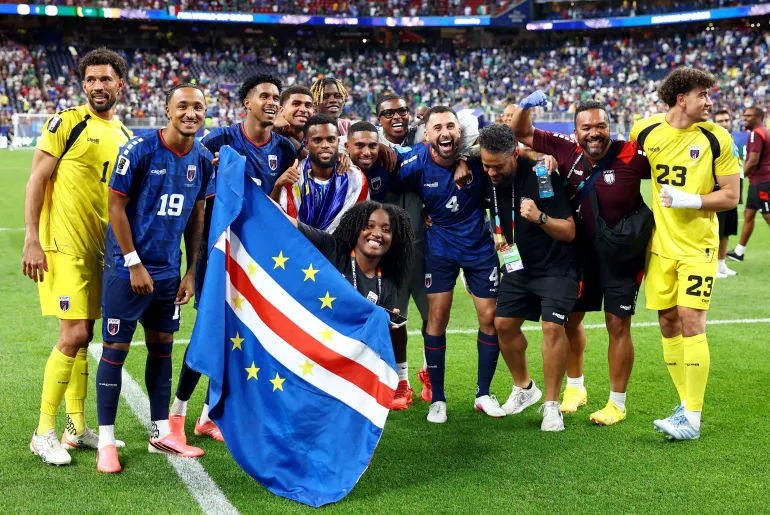
Tiny Cape Verde have become the history makers of World Cup 2026 by defying all odds to become the smallest country to earn a spot in the knockout stages of the competition.
Their improbable run through the group stage, with a third straight World Cup draw, was completed with a 0-0 draw against Saudi Arabia on Friday night to advance in the tournament.
Recommended Stories
list of 4 itemsend of list
Keeping goal for Cape Verde throughout has been Vozinha, 40, who has embodied the grit of his nation.
“We are small, but we have big hearts and we are fighters,” said the goalkeeper, who last season played for Chaves in Portugal’s second tier.
The island nation off the western coast of Africa, which is making its debut on football’s grandest stage, already held 2010 champion Spain to a 0-0 draw – a shock in itself to begin their campaign.
They then came from behind to get a 2-2 result against Uruguay – the winners of the inaugural World Cup in 1930.
“The team was very eager to show this to the whole world,” Cape Verde coach Bubista said while draped in his country’s flag after the Saudi Arabia game.
“We are proud of having arrived at this stage. We have shown that we are a small country, but that we fight for the things that we want to achieve.”
Cape Verde’s three points put the team in second place behind Spain, which beat Uruguay on Friday night and won the group.
Cape Verde will play reigning World Cup champion Argentina in Miami on July 3.
Drawing all three group matches doesn’t guarantee advancement at major football tournaments, but several teams have done it in the past. Those include: Wales in 1958, Ireland and the Netherlands in 1990, and Chile in 1998. New Zealand, however, also got three draws at the 2010 World Cup and were eliminated.
On the eve of the match, Bubista mused, “Everyone is entitled to dream and nothing is impossible.”
The Blue Sharks proved him right, overcoming seemingly insurmountable odds as this country of just 530,000 reached the round of 32.
A woman, her face painted with a flag of the archipelago, held a sign that read: “Small Islands, Big Dreams,” a dream that these underdogs have made reality as they continue their charmed run on the world stage.
They did it with another strong game from Vozinha, whose tournament success has helped him amass more than 16 million Instagram followers.
He had a save in first-half stoppage time, grabbing a header from Mohamed Kanno to keep Saudi Arabia scoreless. Another save came in the 66th minute when he leaped to deflect a shot from Mohammed Abu al-Shamat.
A third came in the 92nd minute when he stopped a shot by Abdullah al-Hamdan.
Cape Verde players and staff celebrate after the Saudi Arabia match [Phil Noble/Reuters]
“There is a lot of quality in our national team,” Vozinha said. “Maybe for many of you, you think the Cape Verdean player is not good enough. But we came here to show that we have a lot of quality and we are here to compete and our players can play everywhere in the big competition, in the big leagues.”
A group of shirtless men in the crowd each painted one letter of his name on their chests as they cheered Cape Verde.
But Vozinha had a much bigger fan among the crowd of 68,278 as his mother Ana Candida Evora watched from a luxury suite, waving a tiny Cape Verde flag. It was her second match of the tournament after missing Vozinha’s epic seven-save performance against Spain because of visa issues.
Cape Verde had a chance to score in the 50th minute, but Kevin Pina’s shot from distance was just above the crossbar. Another chance came in the 74th minute when Laros Duarte’s shot from the middle of the box was stopped by goalkeeper Mohammed al-Owais.
A last chance to score came in the final seconds when Nuno da Costa sent a shot from the middle of the box wide left.
But it didn’t matter because a couple of minutes after the final whistle, Spain completed its victory over Uruguay and set off a joyous celebration among Cape Verde’s players and fans, many of whom cried as they rejoiced.
Having led his squad to new heights, Bubista was asked if he could have imagined such a run entering the tournament.
“I’ve always said that sooner or later Cape Verde would be on such a stage,” he said. “Of course, it’s hard to have such a forecast, but I always knew.”
Saudi Arabia were eliminated after finishing with two points in the group stage.
“We were very poor in terms of creating things, controlling the game and creating actions,” coach Georgios Donis said. “And one cannot win a game this way. It would be very difficult.”
The 2026 World Cup will have 13 different kickoff times. You can use the Al Jazeera Sport widget to find out exactly when your team is playing in your local time.
Who: Colombia vs Portugal What: FIFA World Cup 2026 Group K match Where: Hard Rock Stadium, Miami When: Saturday, 7:30pm local time (23:30 GMT) How to follow: We’ll have all the build-up on Al Jazeera Sport from 20:30 GMT ahead of our live text commentary stream.
Recommended Stories
list of 4 itemsend of list
One of the biggest group games of the 2026 World Cup takes place in Miami on Saturday when Colombia face Portugal in a battle of Group K’s top two.
Colombia, powered by Luis Diaz and Daniel Munoz, have already booked their ticket to the round of 32 as the current table-toppers, while Cristiano Ronaldo-led Portugal, who are second, are also assured of a knockout berth.
Those standings could change after Saturday’s fixture at Hard Rock Stadium, where a capacity crowd is expected after tickets reportedly sold for thousands of dollars.
Al Jazeera tells you everything you need to know about Colombia vs Portugal:
Portugal expect ‘away’ atmosphere in Miami
Spearheaded by the larger-than-life presence of superstar Ronaldo, Portugal are a huge and popular draw globally – but for this match, Colombia will hold the spectator edge at Hard Rock Stadium.
With hundreds of thousands of Colombian Americans living in the Miami metropolitan area, the Colombian team has a partisan crowd behind them. In the lead-up, Portugal coach Roberto Martinez remarked that his side would be playing “away from home” while acknowledging the enormous hype around the final matchday for both teams.
Colombia vs Portugal is the most in-demand fixture of all 72 group-stage games, according to The Athletic, with five million ticket requests made in the first 24 hours of the Random Selection Draw in December.
“It means I had to buy tickets for my family in November,” Martinez quipped when asked about the fan dedication. “That’s what it means, because I knew it was going to be difficult to get tickets.”
“I think it’s fascinating. The passion of the game in a difficult moment in the world. Football still brings unity, it brings passion, it brings inspiration for the kids … So I hope football wins and inspiration of anyone that watches the game.”
While Colombia have reached the knockout stages with six points from two games, Portugal sit second on four points and are all but through. Finishing second could give them a tougher path in the knockout stage, with England or Croatia potential opponents.
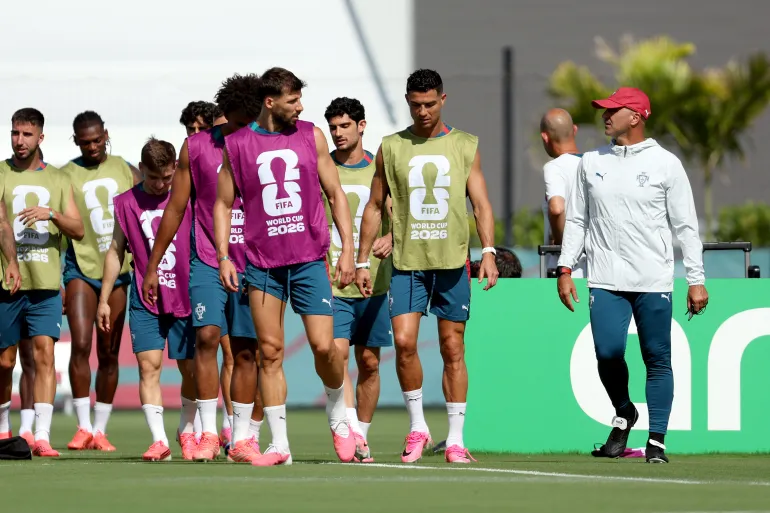
Portugal train ahead of their game against Colombia, where they’ll be aiming to earn the top spot [Leonardo Fernandez/Getty Images via AFP]
Colombia coach warns team against Ronaldo, Vitinha
Colombia coach Nestor Lorenzo said his team will need “special tactical discipline” against Portugal, whom he considers one of the favourites to win the tournament. The Colombians need to avoid defeat to advance as group winners, but Lorenzo was taking nothing for granted against the No 5 side in the FIFA world rankings.
“We’ll try to maintain our style and our footballing identity,” he said.
“But without a doubt, we have to pay attention to the other characteristics and strengths [that Portugal] has. It’s a very well-coached team. They have a coach and players who are at the elite level of world football … and that shows in their game.”
Lorenzo also said Colombia will be wary of the threat posed by Ronaldo, who scored twice in the last match, and Vitinha, the defensive midfielder known for his ball control, work rate and playmaking abilities.
“Both Vitinha and Ronaldo are decisive players. One in the organisation of the game and the quality of his playmaking, and the other in finishing,” he added. “So we absolutely cannot leave them alone or neglect them. Hopefully, the team collective will be well-oiled.”
Colombia are set to feature in the World Cup knockouts for the first time since 2018, having failed to qualify for the 2022 World Cup in Qatar.
Wing-back Daniel Munoz has been a standout player in the Colombia squad, with two goals in two games [Ulises Ruiz/AFP]
Colombia vs Portugal prediction
Opta’s supercomputer has calculated a 48.9 percent probability of Portugal winning this fixture, while Colombia is assessed a 26 percent chance of victory. There is a 25.1 percent probability of the game ending in a draw.
Overall, Colombia are favourites to finish on top of Group G, with a 53.32 percent probability, according to Opta.
Colombia vs Portugal: Kickoff time, TV channel
Colombia: DSPORTS, RCN TELEVISION SA, CARACOL, DGO (6:30pm Colombia Standard Time)
Portugal: RTP 1, RTP Play, LiveModeTV, SPORT.TV5 (00:30am on Sunday, Western European Summer Time)
United Kingdom: BBC iPlayer, BBC One, Red Button 1 (00:30 am on Sunday, British Summer Time)
To check the TV listings for your country, head to FIFA’s TV listing schedule here.
What’s the scenario in Group K?
Colombia (six points) and Portugal (four points) are assured of a round of 32 berth each as the top two teams. The Democratic Republic of the Congo are third with one point, and Uzbekistan bottom with zero.
The top two teams from each of the 12 groups, along with the eight best third-placed teams, will proceed to the round of 32.
DR Congo have to beat Uzbekistan to stand a chance of advancing via the third-place team route.
Can Portugal finish on top of Group K?
Yes, Portugal can topple Colombia from first place in Group K if they beat the South Americans. Currently, they have a two-point difference.
If Portugal draw with Colombia or lose to them, Ronaldo’s side will remain second.
What’s the benefit of winning a group?
Group winners start their knockout campaign against a third-placed team from another group.
In this case, the Group G winner will face a third-placed team from Group D, E, I, J or L in the round of 32 in Kansas City on July 3.
Form guide
(Last five games, latest first)
Colombia: W-W-W-W-L
Portugal: W-D-W-W-W
Both teams have a solid record over the last five matches, with Portugal edging Colombia with an unbeaten streak over that period.
Portugal thrashed Uzbekistan 5-0 and were held to a 1-1 draw by DR Congo in the first game of the World Cup. They defeated Nigeria and Chile in pre-World Cup friendlies and beat the USA in a March friendly.
Colombia defeated DR Congo 1-0 and Uzbekistan 3-1 at the tournament. Before that, they beat Jordan and Costa Rica in June friendlies but lost to France in a March exhibition fixture.
Portugal have scored six goals across two matches at the tournament, including a double from Cristiano Ronaldo [Ronaldo Schemidt/AFP]
Colombia vs Portugal: Team news
No injuries have been reported by either Colombia or Portugal.
Seattle, United States – There were goals. There were jubilations and heartbreak. There were raucous crowds, confrontations and comradery. There were protests, politics and Palestinian flags. There was a missed penalty. There was joy. There was disappointment.
Egypt’s 1-1 draw with Iran in Seattle at the FIFA World Cup on Friday had it all. Iran is still in contention to qualify as one of the eight best third-place finishers, depending on Saturday’s results.
Recommended Stories
list of 4 itemsend of list
Wild celebrations among the Egyptian fans erupted outside the stadium after the match, as the country proceeded past the World Cup group stages for the first time.
“The feeling is outstanding,” Daniel Salib, who was draped with an Egyptian flag, told Al Jazeera.
“After this game, and the game we played against New Zealand, and how we played against Belgium, we absolutely deserve it. So, I couldn’t be more proud of this country and this team.”
Egypt survived a late Iranian onslaught that saw Team Melli, as the Iran team is known, hit the woodwork and have a goal chalked off by VAR for offside.
Iran also had a penalty saved in the first half, but the entire match was action-packed, going blow-for-blow.
Iran supporter Saeed Nassef said he was disappointed with Friday’s result but hopeful that Iran would still make it through to the round of 32, all depending on the results of Sunday night’s games.
“The Iranian team did a beautiful job. They faced a lot of hardship, but we’re really happy how they played,” Nassef told Al Jazeera.
Protests
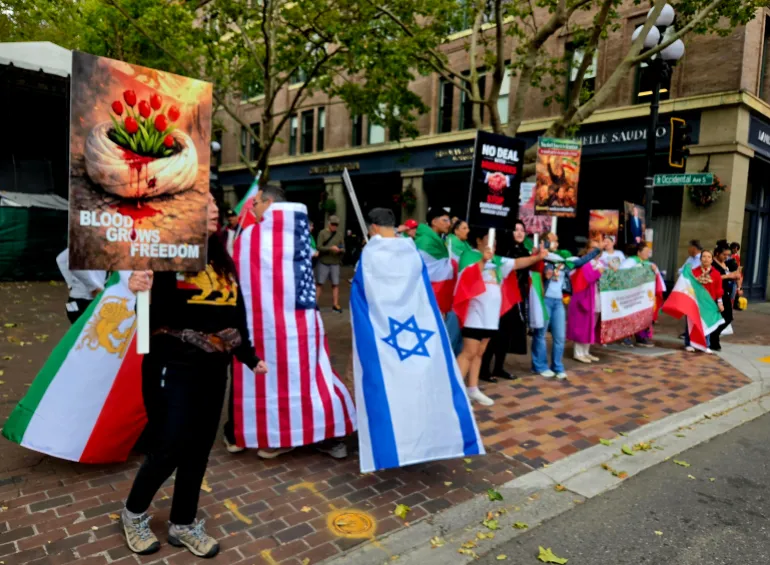
Protesters against the Iranian government had gathered outside the stadium, waving US and Israeli flags and holding up photos of Iranian opposition figure Reza Pahlavi.
Nassef, who carried the official Iranian flag, which features the name of God, was one of several fans who told Al Jazeera they faced harassment from opposition activists.
“We’re here to support the team. We’re here to support sports… It’s not cool for people to come here and say bad things because we are here to support the players. We want some happiness,” he said.
After the match, Al Jazeera witnessed a confrontation between antigovernment activists and a supporter carrying an Iranian flag.
The protesters hurled insults at the fan, calling him a “terrorist” and saying he should leave the country. They also engaged in expletive-laden Islamophobic chants.
The fan, who identified himself by his first name only as Milad, approached a man leading the chants on a megaphone and criticising Team Melli fans. He stood inches away from the protester before police officers intervened to pull them apart.
“My issue is not political. My issue is: Players, they play for the country, they play for the people. I support the people. That’s it,” Milad said.
“Good or bad, it doesn’t matter. Our people went and they tried to create joy for other people, and that’s all that matters,” he added.
But the commotion did little to overshadow the nearby festivities where Egyptians had gathered, singing and dancing at their country’s historic moment.
Protesters against the Iranian government outside the Seattle Stadium, June 26 [Ali Harb/Al Jazeera]
Electric atmosphere
Inside the stadium, the atmosphere was electric throughout the match – not an empty seat, not a quiet moment.
When the first half concluded, several sets of Iranian and Egyptian fans started taking pictures together.
The players also showed support for each other. After the final whistle, several Egyptian players consoled their Iranian counterparts, who were visibly upset with the result.
Throughout the 90 minutes, spectators appeared to be alternating in their chants between “Iran, Iran” and “Misr, Misr”, Arabic for Egypt, rather than chanting over each other.
There were a few pre-Islamic revolution Iranian flags in the crowd – featuring a regal lion and sun – but they were far outnumbered by the country’s official flag.
Some people waved LGBTQ+ pride flags and rainbow paraphernalia, due to the game being designated the World Cup’s “Pride Match”. But there did not appear to be any problems in the stadium, despite the hype around the issue.
The Egypt supporters boasted their ancient heritage with pharaohs’ headdresses and outfits.
“We’re so proud to be Egyptian and so proud of our national team,” said Karim Elshabini, who was sporting a gold and black pharaoh’s headpiece and a red Egypt football top.
“It feels amazing. Everybody’s vibing really well. People are really cool. The Egyptian fans, the Iranian fans, we’re all having a really good time.”
There were numerous Palestinian flags at the match, including a couple that were prominently displayed behind the goals.
Egypt fan Bilal Ali, who brought a Palestinian flag to the stadium, told Al Jazeera he would like to keep politics out of football, but with Israeli atrocities continuing in Gaza and elsewhere, he could not remain silent.
“I feel guilty sometimes when I get to [see] the game and our people in Palestine just get bombed and killed,” Ali added.
Several Egyptian and Iranian fans shouted “Free Palestine” as they walked past Ali with his flag.
Iranian fan Hameed with his children outside the Seattle Stadium, June 26 [Ali Harb/Al Jazeera]
‘Minab 168’
There was more than football at the game.
Hameed, an Iranian fan who wished to be identified by his first name only, wore a shirt that said Minab 168.
The message is meant to honour the victims of the school in southern Iran that was bombed on the first day of the US-Israel war on the country.
“I just want to remind the world that the plight of these kids who were bombed, either intentionally or not intentionally, should not be forgotten,” Hameed told Al Jazeera.
“This is why we should not have wars.”
He added that there must be a credible investigation into the incident.
“Politics aside, humanity needs to survive, and the only way to do it, whether the kids are being blown up in Palestine, in Lebanon, in Iran, in Sudan, in Congo, we’ve got to protect them,” Hameed said.
Political statements, flags and protests aside, at the final whistle, the moment belonged to Egypt with a historic sporting achievement.
“Seeing your country after all these years of cheering them, all the highs and lows, finally putting in all the high, good effort and getting good results is a surreal feeling,” said Rafael Youssef, who had the colours of the Egyptian flag painted on his cheek.
“I’m very happy for them, very happy to be here with them.”
US prosecutors reach into Somalia for a suspect in US fraud case.
Published On 27 Jun 202627 Jun 2026
Mogadishu, Somalia – United States prosecutors have reached across the world to seize a leading suspect in a Minnesota fraud case, arresting him in the Somali capital, Mogadishu.
Abdikerm Abdelahi Eidleh, 42, was taken into custody on Thursday, with US authorities announcing the arrest on Friday. His capture is the clearest sign yet that the pursuit of those behind the scheme has gone international.
Recommended Stories
list of 3 itemsend of list
Neither US nor Somali officials have disclosed how Eidleh was located. However, the Department of Justice said his arrest was the result of cooperation between the Federal Bureau of Investigation (FBI) and Somalia’s National Intelligence and Security Agency.
Prosecutors describe Eidleh as the alleged second-in-command to Aimee Bock, the convicted mastermind of a scheme built around Feeding Our Future, a Minnesota nonprofit that channelled federal money meant to feed needy children during the COVID-19 pandemic.
In 2022, the US charged 47 people over a roughly $250m fraud that exploited a federal child-nutrition programme, the largest pandemic-relief fraud prosecuted in the country to that point.
Eidleh fled to Somalia as the scheme unravelled. Bock was recently sentenced to more than 40 years in prison.
According to prosecutors, Eidleh recruited operators into the scheme and collected bribes and kickbacks, often disguised as consulting fees and funnelled through shell companies.
He is accused of setting up his own meal sites under the names of stand-in owners, falsely claiming they were serving thousands of children a day, and inventing supplier firms to bill the government for food never delivered.
“This is a big fish,” US Attorney for Minnesota Daniel Rosen told CBS News, calling Eidleh a key figure who recruited businesses and paid bribes to loot public money.
Crackdown on Somali community
The Trump administration has seized on the Feeding Our Future case to target Minnesota’s Somali community, the largest in the country, with about 84,000 people of Somali descent in the Minneapolis-St Paul area.
Most were born in the US or are naturalised citizens.
Somalia was placed among a list of countries on Trump’s travel ban when he returned to power in 2025 and he has also threatened to revoke the citizenship of naturalised Americans convicted of fraud.
Late last year, he also described Somalis as “garbage” in one of his many rhetorical attacks on both Somalia and the Somali American community.
Federal immigration enforcement agents flooded the Minneapolis area, and two people were killed by ICE agents – Renee Good in early January and the nurse Alex Pretti weeks later – igniting weeks of protest.
In January, Homeland Security Secretary Kristi Noem moved to end Temporary Protected Status, a designation shielding people from deportation to dangerous homelands, for about 1,100 Somalis, ending protections that had stood since 1991.
A federal judge blocked the termination in March, and the legal fight continues.
A double strike from Arsenal’s Leandro Trossard against New Zealand carried Belgium to top of Group G, ahead of Egypt on goal difference.
Published On 27 Jun 202627 Jun 2026
Belgium defeated New Zealand 5-1 to book their place in the knockout rounds of the 2026 World Cup on Friday, eliminating the All Whites from the tournament. The result secured the European nation’s first win of the World Cup, as they finished on top of Group G in Vancouver.
A double strike from Arsenal’s Leandro Trossard and goals from Kevin De Bruyne, Romelu Lukaku and Alexis Saelemaekers carried Belgium into the last 32 in first place ahead of Egypt on goal difference.
Recommended Stories
list of 4 itemsend of list
Egypt claimed the runners-up spot after a 1-1 draw with Iran in Seattle. The Iranians finished third in the group and face an anxious wait to know about their knockout fate.
Belgium dominated a lopsided first half and had alarm bells ringing in the New Zealand defence early on when Trossard’s angled shot cannoned off the inside of the upright only to be cleared off the line by Tyler Bindon.
Belgium looked poised to take the lead moments later when Jordanian referee Adham Makhadmeh pointed to the penalty spot after Trossard’s shot hit the arm of covering defender Finn Surman.
But VAR sent Makhadmeh to the monitor to take another look at the decision, which was subsequently overturned and New Zealand breathed again.
Yet Belgium did not have long to wait before the breakthrough and again it was Trossard who proved to be in the right place at the right time, bundling home from close range after De Bruyne’s corner sowed panic in the six-yard box.
Trossard effectively made the game safe five minutes into the second half, controlling a rebound in a crowded area to volley home past New Zealand goalkeeper Max Crocombe at the near post.
Kevin De Bruyne #7 of Belgium celebrates after scoring his team’s third goal [Emilee Chinn/Getty Images via AFP]
De Bruyne then stroked home an elegant low finish in the 66th minute to make it 3-0, a crucial goal which saw the Belgians leapfrog over Egypt into first place on goal difference.
Yet there was to be a dramatic end when New Zealand’s Elijah Just volleyed home a consolation strike from the edge of the area to make it 3-1.
That could have been potentially costly, with the goal suddenly bumping Belgium down into second place.
But Lukaku nodded home his team’s fourth in the 86th minute with his first touch just a minute after coming on as a substitute to return Belgium to the top of the table.
Saelemaekers completed the scoring with a shot from the edge of the area.