
France vs Paraguay LIVE: FIFA World Cup 2026 last 16
Live coverage and text commentary stream updates as Mbappe's France face Paraguay in the Round of 16 knockout game.
Source link
Live coverage and text commentary stream updates as Mbappe's France face Paraguay in the Round of 16 knockout game.
Source link
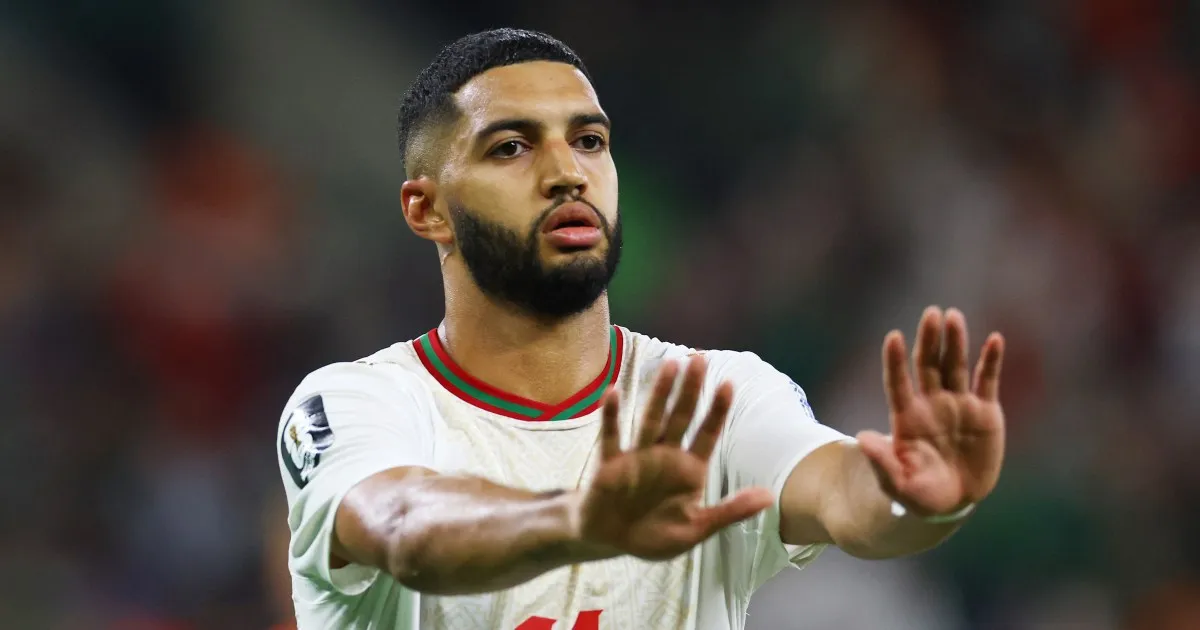
Live coverage and text updates as cohosts Canada play Morocco in the round of 16 knockout stage.
Source link

The United States is about to celebrate its 250th birthday, but as millions across the country prepare to gather this weekend for parades, concerts and festivals, an intense heat wave has settled over much of the eastern US.
Officials across the region are warning that the extreme heat could pose serious health risks over the Fourth of July weekend.
list of 3 itemsend of list
Here’s what you need to know about how the weather will affect the celebrations.
It has been 250 years since the United States adopted the Declaration of Independence on July 4, 1776. Unlike a typical Independence Day, this year’s celebrations are unfolding on a much bigger scale, capping years of preparation and planning.
Landing in the midst of a highly polarised moment in American politics, planning for the anniversary has also been contentious.
A decade ago, Congress tasked a bipartisan commission known as America250 with organising the celebrations.
But last year, US President Donald Trump issued an executive order to put his own “Freedom 250” planning committee in charge of many of the anniversary’s marquee events, including the Great American State Fair on the National Mall.
Initially, a variety of musicians were announced as performers for the fair, including country singer Martina McBride, the soul group The Commodores and the pop duo Milli Vanilli. But many withdrew in late May and early June over concerns over the fair’s affiliation with Trump.
Last week, in lieu of the performers, the US president delivered a speech to open the fair, billing himself as the “Number One Attraction anywhere in the World”.
He has also promised to mark the July 4 holiday in Washington, DC, with “the most spectacular TRUMP RALLY of them all”.

Among thousands of smaller, locally organised celebrations nationwide — including historical reenactments, picnics, concerts and fireworks displays — some of the highest-profile events include:
Some celebrations are already being disrupted, with organisers forced to adapt to extreme heat.
On Friday, the Great American State Fair temporarily closed as temperatures reached over 39 degrees Celsius (102 degrees Fahrenheit) in parts of Washington, DC.
But the capital was not the only area affected by the extreme heat.
In Philadelphia, for example, officials announced that the Salute to Independence Semiquincentennial Parade was cancelled, after initially planning to shorten the route to mitigate heat-related risks.
A celebration in Pennsylvania’s Lower Windsor Township was also rescheduled for July 8, while in nearby Norristown, officials cancelled another parade, citing safety concerns.
The heat is also affecting transportation. Amtrak announced several train cancellations in the northeast region and warned that other trains could face delays due to high temperatures, which can affect railway infrastructure.
“Extreme heat can cause rail, bridge and overhead wires to expand,” it said in a statement on Thursday. “As a precaution, Amtrak may enact heat restrictions, which can require locomotive engineers to operate trains at lower speeds, resulting in potential delays.”
While air temperatures in cities such as Philadelphia and Boston are expected to reach around 38 degrees Celsius (100 degrees Fahrenheit), high humidity can make it feel significantly hotter.
That’s because humidity makes it harder for sweat to evaporate and cool the body. Weather agencies use the heat index, often called the “feels like” temperature, to estimate what people will actually be experiencing.
Experts also warn that cities can become even hotter than forecasts suggest as concrete, asphalt and steel absorb heat.
“The number on your phone may actually not reflect the true temperature profile that you’re going out into,” Vijay Limaye, a climate scientist at the Natural Resources Defense Council, told The Associated Press.
Aside from changing or cancelling some Fourth of July events, cities across the eastern United States are rolling out broader measures to help people cope with the heat.
In New York City, for example, more than 200 teams of government workers and volunteers are checking on homeless residents and directing people to hundreds of cooling centres, including public buildings, mobile cooling vans and outdoor sites equipped with misting fans.
Mayor Zohran Mamdani urged people to stay inside and avoid “extraordinary temperatures”. He also asked residents to set their air conditioners to 26 degrees Celsius (78 Fahrenheit) to avoid straining the power grid.
Boston is offering residents free admission to several air-conditioned museums, while Providence, Rhode Island, has extended hours at public pools and water parks.
The National Weather Service (NWS) recommends drinking a lot of water, even if you don’t feel thirsty, especially if you’re spending an extended amount of time outside and taking hourly breaks in shade or air conditioning.
Health authorities also urge people to occasionally check in on seniors and other vulnerable populations.
Alcohol can make dehydration worse, so experts also recommend limiting drinking during long outdoor events.
Signs of heat illness include cramping, rapid pulse, heavy sweating, hot red skin, dizziness, confusion, nausea and vomiting, according to the NWS. If you see any of those warning signs, seek medical attention immediately.
At Mount Rushmore, Trump warns of ‘communist menace’, ties rhetoric to immigration ahead of November midterms.

Published On 4 Jul 20264 Jul 2026
United States President Donald Trump has used the opening weekend of the nation’s 250th anniversary celebrations to praise the US military and critique democratic socialists, warning of a “communist menace” that he claims poses a major threat to the country.
Speaking beneath the granite monument at Mount Rushmore on the eve of Independence Day on July 4, Trump invoked national identity and ideology ahead of the November midterm elections.
list of 3 itemsend of list
“We created the strongest and most powerful military. We won two world wars,” he said, claiming that the Cold War had left the US’s enemies “in the depths of history”.
He also said the US “beat Venezuela in one day” and “knocked the hell out of Iran”.
The address comes amid voter concerns over persistent inflation and elevated energy prices driven by the ongoing US-Israel conflict with Iran.
Briefly addressing the Iran war, Trump said Tehran is “dying to settle” and that Washington had granted “a week off for a funeral because we’re nice”, in reference to the days-long state funeral being held for late Iranian Supreme Leader Ali Khamenei, who was killed in a strike on the first day of the US-Israeli war.
A larger chunk of Trump’s address was focused on what he considers ideological threats at home.
“There is now a resurgence of the communist menace in our land, including from newcomers to our country who embrace ideas totally opposed to our way of life,” the president said, calling communism “the enemy of the Constitution”.
He pledged that “the citizens of the United States of America will vanquish communism quickly.”
Trump tied his anti-communist rhetoric to a hardline immigration stance, suggesting that left-wing political figures and certain undocumented arrivals should be removed from the country.
His remarks followed a string of recent progressive primary victories in US states including New York, Colorado and Texas.
He labelled the rise of democratic socialists the “greatest threat to our country since its founding”, comparing the movement’s potential impact with World War II and the September 11 attacks.
He closed the address by calling the anniversary “the beginning of the golden age of America.”
Speaking to Al Jazeera, Republican strategist Eli Bremer said parts of the speech were unifying enough that they “could have been delivered by Ronald Reagan … 45 years ago,” but added that “the gap between the American left and the American right has really never been wider”.
However, Democratic strategist and former Obama campaign adviser, Ameshia Cross, told Al Jazeera that Trump wants to wipe out the country’s diverse history.
Trump “is upset that there is a younger crop of Democrats who are running and winning across this country,” she said, adding that the speech reflected “a president who sees his grip on America steadily slipping away”.
She noted that it also came “on the heels of him losing a Supreme Court decision just a couple of days ago to eradicate birthright citizenship“.
The address highlighted the contrasting visions framing the country’s milestone anniversary.
In New York, progressive Mayor Zohran Mamdani offered an alternative narrative during a naturalisation ceremony, using a desk once belonging to George Washington to praise immigrants’ contributions and frame civic dissent as patriotism.
Democrats have also criticised the administration’s handling of the anniversary, alleging a conservative group took control of 250th-anniversary planning from a previously bipartisan congressional commission.


Lionel Messi opens scoring but Argentina taken to extra time by Cape Verde, which threatened greatest World Cup upset.
Published On 4 Jul 20264 Jul 2026
Reigning champions Argentina needed an extra-time own goal to overcome a Cape Verde side with incredible levels of resilience 3-2 in a thrilling contest and secure their spot in the last 16 of the World Cup.
The Africans, playing in their first World Cup, had twice come from a goal down on Friday to silence the vast majority of the crowd of 64,478 packed into a hot and humid Miami Stadium.
list of 4 itemsend of list
Six minutes into the second period of extra time, Lionel Messi swung a corner into the box, and Cristian Romero rose to head home off the arm of Cape Verde centre-back Diney Borges and finally set up a date with Egypt in Atlanta next Tuesday.
Messi had, almost inevitably, given Argentina the lead in the 29th minute with his seventh goal of the tournament, but Deroy Duarte equalised just before the hour mark.
The Blue Sharks held on to send the match into an additional half hour before Lisandro Martinez lashed a sumptuous shot into the roof of the net in the second minute of the first period of extra time to put Argentina ahead again.
Cape Verde were not done yet, however, and left back Sidny Lopes Cabral curled a beautiful shot into the top corner of the net in the 103rd minute of the contest to put the scores back on level terms at 2-2.
Lopes Cabral could have equalised again after Romero’s goal, but his finely struck free kick was saved by Argentina goalkeeper Emiliano Martinez, who had to be at his best to deny Cape Verde in the dying minutes.
Cape Verde were beaten but far from outclassed by the three-times world champions as they put in a fourth magnificent display of teamwork and grit at their first World Cup.
The only one of the four World Cup debutants to make it to the last 32 and ranked 67th in the world coming into the tournament, Cape Verde had hoped to frustrate Argentina as they did Spain, Uruguay and Saudi Arabia in group-stage draws.
They succeeded, while showing no shortage of quality of their own, for much of the game with a never-say-die desperation and a neat pass-and-move game.

Messi aside, Argentina were largely bereft of ideas against an obdurate defence and Cape Verde libero Kevin Pina was the most impressive player on the park for long periods of the contest.
It was Argentina who made the breakthrough in the 29th minute, however, when Lisandro Martinez lofted a long ball over the top of the defence to the feet of Messi.
The 39-year-old maestro took a touch with the outside of his left boot and buried it in the roof of Vozinha’s net for his 20th goal over six editions of football’s global showpiece.
Cape Verde knew they would need to score to keep their World Cup campaign alive and Duarte fired a shot at goal soon after half-time that drew a diving save out of Martinez.
Just before the hour mark, captain Ryan Mendes was freed down the right, and his pass into the box found the Dutch-born midfielder, who controlled the ball with his left foot before drilling it past Martinez with his right.
Messi had a chance to put Argentina back in front four minutes later when he was played through on goal, but Vozinha stood up well to keep his shot out of the net.
One of Messi’s trademark free kicks was tipped away by Vozinha in the 72nd minute, and Cape Verde defender Pico Lopes had to intervene to prevent Enzo Fernandez from scoring 10 minutes later.
Cape Verde held on to force the dramatic period of extra time, and they will now return home heroes having put their tiny island-nation firmly on the footballing map.
Back and forth over defence spending comes as NATO leaders set to meet in Ankara next week.

Published On 3 Jul 20263 Jul 2026
German Chancellor Friedrich Merz has defended his country’s NATO defence spending, shortly after US President Donald Trump re-upped his criticism of alliance members.
The statement on Friday came as NATO leaders were set to meet next week in Ankara. Trump has decried defence spending by members of the bloc throughout his political career, calling the balance of spending “ridiculous” and “one-sided” in his latest Truth Social posts on the issue earlier this week.
list of 3 itemsend of list
In one post, Trump said Germany’s spending was “MUCH LOWER” between 2014 and 2025 than the US or other NATO allies, which he again called “Ridiculous!”
When asked about the comment, Merz said Germany would double its defence budget within four years.
“This is the greatest effort we have ever made to strengthen our defence capabilities. In this respect, we have no reason to shy away from anyone,” Merz said.
“We will state this, with all due modesty, and we are doing so as the European Union’s largest member state, bearing a responsibility within Europe,” he said.
US and European ties have been strained throughout Trump’s first term from 2017 to 2021 and his current term, which began in January 2025.
However, while largely dismissive of the president during his first four years in office, several European leaders have sought a more amenable approach to the president this time around.
At the behest of the US, NATO leaders agreed to spend 3.5 percent of their countries’ GDP on core defence items, such as weapons and troops, by 2035, an increase of the previous goal set by the bloc of 2 percent of its GDP.
However, relations have since frayed over several issues, including Trump’s pledges to take control of the autonomous Danish territory of Greenland. Denmark is a member of NATO.
The US-Israeli war in Iran has also proven to be a major wedge, with Trump launching the conflict without consulting European allies who have dealt with the fallout of the closure of the Strait of Hormuz.
Trump had repeatedly condemned European allies for not joining the war effort.
Merz, meanwhile, roiled the president by saying in April the US had been “humiliated” by Iran. Trump, in turn, said the US would withdraw 5,000 troops currently stationed in Germany.
Speaking on Friday, Merz said Germany was ahead of schedule to reach its NATO commitments.
“We will reach the 3.5 percent benchmark set in The Hague as early as 2029,” he told reporters, “well ahead of the agreed deadline”.
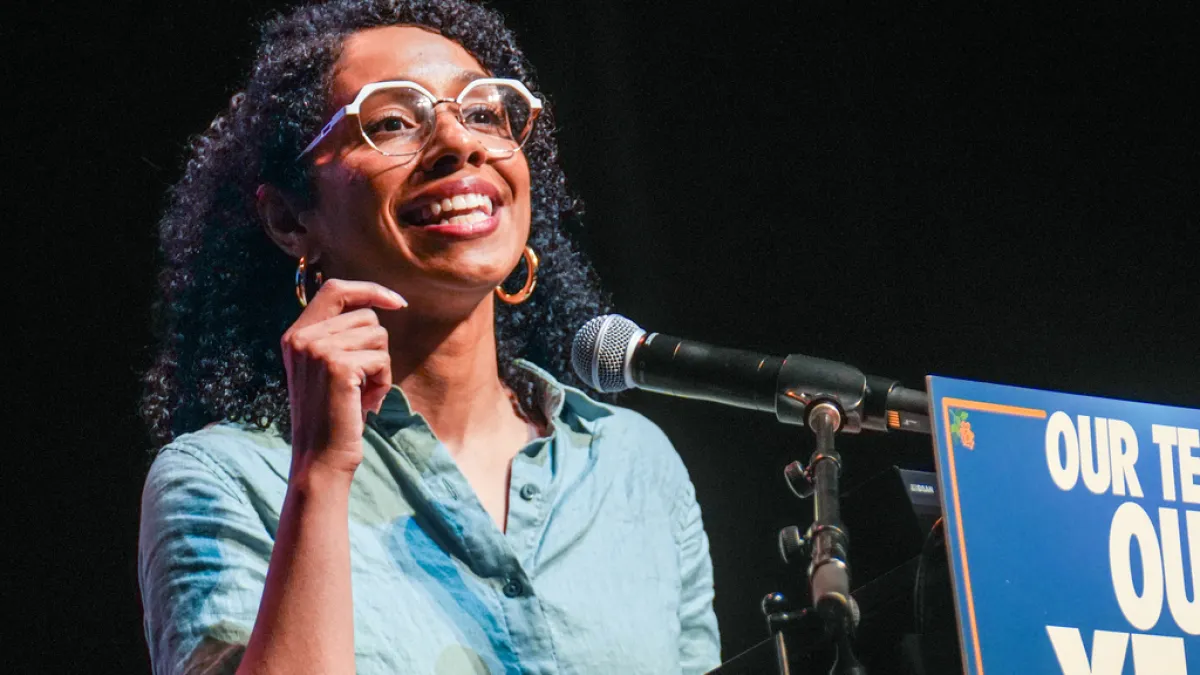
Over the past year, it may have appeared that the pro-Palestine protest movement in the United States has lost momentum in the face of smears, crackdowns, indifference and fatigue.
But a string of electoral wins by critics of Israeli abuses appears to indicate that activism’s success can only be measured in the long term.
list of 3 itemsend of list
In New York, Darializa Avila Chevalier, an activist who participated in the pro-Palestine protests at Columbia University, won a Democratic congressional primary against a five-term incumbent.
“It’s just so satisfying to feel like the tide is finally turning,” said Maryam Alwan, who participated in the Columbia protest in 2024.
“Public opinion has shifted to a point where it’s unavoidable and undeniable, and I think we’re finally starting to see the ripple effects of movements like the encampment that happened two years ago.”
Avila Chevalier’s win was one of several victories for pro-Palestine candidates in New York last week.
Last year, Zohran Mamdani was elected mayor of New York City, in part thanks to the efforts of young pro-Palestine activists who powered his campaign.
In Colorado on Tuesday, Melat Kiros, who was fired from her law firm in 2023 for a letter defending Palestinian rights supporters from accusations of anti-Semitism, ousted a House member who had been in Congress for nearly 30 years.
Candidates backed by supporters of Palestinian rights also won key races in Pennsylvania and New Jersey.
Avila Chevalier’s victory especially stands out in the context of the long-term impact of the student protests.
The democratic socialist nominee, who is likely to cruise to victory in a safe Democratic district in November, will represent large parts of Columbia University’s campus, where it all started.
Witnessing horrific atrocities in Gaza that were partly funded by their own government, students at Columbia set up the first encampment in support of Palestinians, kick-starting a national movement.
Students nationwide then turned their campuses into a front line for political activism against Israel’s genocidal war on Palestinians.
Dozens of encampments sprang up on campuses across the country in 2024 and chants of “free Palestine” rang out in schools from Seattle to Miami.
The students demanded an end to their own schools’ complicity in Israel’s abuses. They called for divestment from Israeli companies and weapons manufacturers.
A security crackdown soon ensued, leading to the arrest of hundreds of students and the removal of encampments.
Avila Chevalier herself was arrested in 2024 as an alumna taking part in the protests.
Many students faced academic disciplinary action and others were charged with alleged crimes related to the protests as politicians from both major parties portrayed the movement as anti-Semitic.
Then, Donald Trump returned to the White House in 2025 and went after student activists who were not US citizens, pushing to deport them.
With the encampments removed, the protests getting quieter and the activists going on the defensive to preserve their own personal reputations, safety and freedom, it appeared that the pro-Israel camp successfully suffocated the student movement.
But the story is not over yet, activists say, and the recent elections show it.
“There’s no words to describe the joy and satisfaction that comes from seeing Darializa, a former leader and organiser of the encampment, represent the school that arrested her,” Alwan said.
She added that while students may not have succeeded in securing divestment despite rallying and suffering personal costs, change is proving to be a “gradual process”, and public opinion is now more aligned with the protesters.
“We’re experiencing a new wave of hope,” Alwan told Al Jazeera.
Cameron Jones, who participated in the protests at Columbia, said Avila Chevalier was always supportive of younger activists and unafraid to speak up for Palestinian rights, even when it wasn’t popular.
“It’s really inspiring to see how, even though we have faced such immense repression and have been organising in such a hostile environment, the power of the people is still able to overcome all the barriers that are being set by the federal government, Columbia, the media,” Jones said of Avila Chevalier’s win.
The Columbia protests were part of Avila Chevalier’s political identity as she launched her campaign last year.
One of her criticisms of her now-defeated opponent, Congressman Adriano Espaillat, is that he did not adequately support Columbia activist Mahmoud Khalil as he was targeted for deportation by the Trump administration.
Heba Gowayed, a sociology professor at the City University of New York (CUNY), said the recent electoral wins for pro-Palestine candidates would not have been possible without the student protests of 2024.
“When we think about social movements, we think about them as bursts of action, as temporally limited things,” Gowayed told Al Jazeera.
“And when the students are dispersed and the students are expelled and the university doesn’t divest, we see that as the loss of a movement.”
She added that there have been many articles declaring the defeat of student protests and claiming they have petered out and questioning the lack of campus activism in the Trump era after the crackdown.
“But here we have Darializa’s win, Mamdani’s win and the win of the entire socialist slate,” she said. “This does not happen if those students don’t encamp; it just doesn’t happen.”
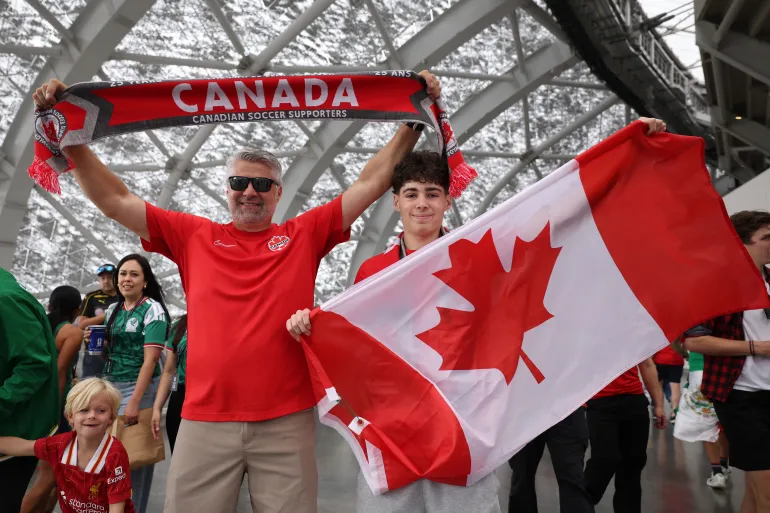
Four wins to go. How can your team reach the final and win the World Cup 2026? Click here to find out.
Who: Canada vs Morocco
What: FIFA World Cup 2026 – Round of 16
Where: Houston Stadium, Texas, US
When: Saturday, July 4, at noon (17:00 GMT)
How to follow: We will have all the build-up on Al Jazeera Sport from 14:00 GMT before our live text commentary stream.
list of 3 itemsend of list
The Round of 16 gets under way on Saturday with World Cup cohosts Canada taking on Morocco in Houston, Texas.
It marks a historic day for Canadian football, with the men’s team set to play in the last-16 for the first time in their history, thanks to a dramatic late victory over South Africa.
But in their bid to extend a dream run, Canada face a daunting challenge against Morocco, who stunned the Netherlands on penalties to punch their ticket to this round.
The African champions, semifinalists of the last edition, are unbeaten at this year’s tournament and have grown stronger with every game.
Al Jazeera tells you everything about Canada vs Morocco:
Canada came second in Group B with four points, securing a win over Qatar and a draw with Bosnia and Herzegovina. They lost to Switzerland in the final group game. The Canadians beat South Africa 1-0 in the round of 32.
Morocco were second in Group C with seven points, winning against Scotland and Haiti, and holding Brazil to a draw. In the Round of 32, they scored a late equaliser to force the game to extra time before beating the Netherlands 3-2 in a thrilling shootout.
Canada are the underdogs in this last-16 game, sitting 24 places below world number six Morocco in the FIFA rankings. But after breaking numerous records at the tournament – including earning their first World Cup point and winning their first game – their campaign is nothing less than a success.
“Preparing for Morocco is like a gory, horrible nightmare,” coach Jesse Marsch said. “[But] we want to be here and we expect to be here. So we know that everybody’s going to write us off, and in that is an opportunity.”
For Morocco, the game against Canada is just another hurdle in the deep run they are hoping for this summer in North America. Four years on from stunning Spain and Portugal to become the first Arab and African nation to reach the semifinals, Morocco have arrived with bigger ambitions and increased expectations.
“If we get things wrong, we’ll go home,” Morocco manager Mohamed Ouahbi said. “We need to ensure that we have all the tools and we’re using the tools in our arsenal to go as far as we can.”
Canada will be wary of Morocco’s talismanic forward Ismael Saibari, their top scorer with three goals and the newly signed Bayern Munich player who also scored the winning spot-kick to send them to the round of 16.
The Opta supercomputer gives Morocco a 52.7 percent likelihood of winning in regulation time, while Canada is at 21.7 percent.
The model estimates a 25.6 percent probability of the game going to extra time.
To check the TV listings for your country, head to FIFA’s TV listing schedule here.

The winner of the Canada vs Morocco match will face either France or Paraguay in the quarterfinals in Boston on Thursday.
The two teams have met four times, with Morocco winning on three occasions, while one game ended in a draw.
Canada are winless against Morocco, who won 2-1 in their last meeting, a group game at the 2022 World Cup in Qatar.
Ismael Kone is out with a broken ankle. Alphonso Davies played his first minutes at the tournament in the last game as a 75th-minute substitute and could start against Morocco.
No injuries have been reported in the Morocco camp.
(4-4-2): Crepeau (goalkeeper); Johnston, Bombito, Cornelius, Laryea; Buchanan, Saliba, Eustaquio, Millar; Oluwaseyi, David
(4-2-3-1): Bono (goalkeeper); Hakimi, Diop, Riad, Mazraoui; Bouaddi, El Aynaoui; Diaz, Ounahi, El Khannouss, Saibari


Miami, United States – Singing to the beat of the drum, jumping and dancing with joyful abandon, sporting their famous light blue and white shirts, and waving large flags bearing images of their heroes, Argentinian football fans have announced their team’s arrival in Miami in grand fashion.
A day before Argentina’s first knockout match of the FIFA World Cup 2026 – and their first fixture in the Sunshine State – the portion of Miami Beach known as Little Buenos Aires came to life as close to a thousand revellers geared up for Lionel Messi’s “homecoming” on Friday.
The defending champions and one of the pre-tournament favourites will take on the fairytale team of the World Cup – the small African island nation of Cape Verde.
The match at Miami Stadium will pit a team supported by one of the largest travelling fan bases of the tournament against an outfit that may not have strong backing in the stands but has endeared itself to the neutrals with its heroic performances.
Among Argentinian supporters, though, there’s no room for sympathy for the team punching above its weight.
For Adrian Elizondo, the logic is simple: “Messi deserves to win another World Cup.”
“It’s Messi’s last World Cup and since he’s the greatest player of all time, he deserves to walk away with another trophy,” Elizondo told Al Jazeera.
Elizondo believes there’s more to Argentina’s success than Messi.
“We have good players, a great coach and tens of thousands of people supporting the team. We make a big difference.”
A quick glance at the party-like atmosphere in Miami Beach reinforced Elizondo’s claim.
Miami, where Messi has been playing his club football since 2023, is home to at least 30,000 Argentinians, according to local census data.
Add to this mix another 20,000 fans following the team on their quest to defend the title in the United States and it becomes evident that Miami is “Messi Country”.
![Argentina fans gather in Miami before their team's World Cup match against Cape Verde, on July 2 [Hafsa Adil/Al Jazeera]](https://i0.wp.com/occasionaldigest.com/wp-content/uploads/2026/07/argentina-fans-in-miami-world-cup-1783064472.jpeg?w=640&ssl=1)
The crowd in North Beach, which is home to several decades-old Argentinian restaurants and cafes, started building more than 24 hours before kickoff and showed no sign of letting up as the evening went on.
Fans, from toddlers to supporters in their 70s, were seen walking towards the central area in Little Buenos Aires.
A small pocket of enthusiasts would begin singing “Muchachos” – the famous Argentinian football anthem – and hundreds of others would soon join in.
While the lyrics speak to the heartbreak of lost World Cup finals and past heroes, the mood among fans was festive, especially as Messi and Co broke a 36-year title drought four years ago in Qatar and emulated his hero Diego Maradona in leading them to a World Cup trophy.
For Argentina fans, Maradona and Messi are commonly considered the master and the protege. It’s part of their footballing folklore which is reinforced at every opportunity.
In Miami, as men, women and children danced on the streets, a group of supporters dressed in the shirts of Argentinian football club Newell’s Old Boys proudly stood in front of a banner connecting the two national heroes with the club.
![Argentina fans gather in Miami before their team's World Cup match against Cape Verde, on July 2 [Hafsa Adil/Al Jazeera]](https://i0.wp.com/occasionaldigest.com/wp-content/uploads/2026/07/20260702_201113-1-1783064477.jpg?w=640&ssl=1)
Jorge Martinelli travelled to Miami from Rosario, the club’s base, with his friends and proudly shared some facts about his hometown.
“Messi was born in Rosario and played in Newell’s youth teams before joining Barcelona, while Maradona came to the club in 1993,” he tells Al Jazeera.
Is there any other connection between the two iconic captains? Martinelli said: “Yes, it’s a cosmic connection.
“Many here believe Maradona is guiding the team from the heavens above,” he quipped.
Amid Martinelli’s explanation of the spiritual connection between the two, fans let off crackers to celebrate Miami’s favourite footballing son’s return to his adopted home.
The Rosario resident said he does not want to contemplate a future after Messi retires from international football.
“It will create a big hole in the national team, the same as what happened after Maradona,” he said.
For now, though, he believes Messi is the favourite to do what even the great Maradona couldn’t achieve: successfully defend the title.
“He [Messi] is here. He’s playing. Maradona is watching.”
World Meteorological Organization forecasts more likelihood of heatwaves, droughts and heavy rainfall due to El Nino.
Published On 3 Jul 20263 Jul 2026
The United Nations’ weather watchdog is warning governments and humanitarian organisations to brace for “extreme weather events” including heatwaves, droughts and heavy rainfall due to the El Nino weather phenomenon.
The World Meteorological Organization (WMO) said in a statement on Friday that El Nino conditions had already set in and are “forecast to strengthen rapidly” between July and September.
list of 3 itemsend of list
El Nino typically peaks between November and February.
The UN agency has activated climate information services and early warning systems to help governments and humanitarian agencies prepare support plans for farmers and vulnerable communities.
“El Nino conditions are already under way and are forecast to strengthen rapidly into a strong event – as accurately anticipated by WMO forecasts,” said WMO Secretary-General Celeste Saulo.
“This will intensify the chances of drought and heavy rainfall and the risk of heatwaves on land and marine heatwaves in many regions of the world.”
Saulo added that “advanced seasonal forecasts and early warnings are vital to save lives and cushion the impact on our economies and our communities.”
El Nino is a natural climate phenomenon that warms surface temperatures in the central and eastern equatorial Pacific Ocean, bringing worldwide changes in winds, pressure and rainfall patterns.
El Nino events typically occur every two to seven years and usually last between nine and 12 months. Not all regions of the world are affected.
Conditions oscillate between El Nino and its opposite La Nina – both phases of the El Nino-Southern Oscillation (ENSO) – with neutral conditions in between.
Even when ENSO is neutral, extreme weather can still occur.
On Thursday, the WMO reported that global ocean temperatures hit a new high in June, partly driven by El Nino.
The last El Nino contributed to making 2023 the second-hottest year on record and 2024 the all-time high, at about 1.55 degrees Celsius (2.79 degrees Fahrenheit) above the 1850-1900 pre-industrial average.
Activists found guilty of misdemeanour counts after blocking San Francisco’s Golden Gate Bridge in a 2024 Gaza protest.
Published On 3 Jul 20263 Jul 2026
A San Francisco jury has convicted seven pro-Palestine protesters of multiple misdemeanour charges for blocking the Golden Gate Bridge during a 2024 demonstration, but remains deadlocked on a more serious felony conspiracy charge.
The seven activists were each found guilty of six misdemeanour counts, including false imprisonment, obstruction of thoroughfare and unlawful assembly, San Francisco District Attorney Brooke Jenkins said in a statement on Thursday.
list of 3 itemsend of list
Local news outlet KQED named the seven as Bhavika Anandpura, River Allen, Rocky Chau, Conrad de Jesus, Sarah Ferrell, Em Tillotson, and Sara Cantor.
Cantor, who acted as a police liaison during the event, faced an additional misdemeanour conviction for refusing to disperse.
The demonstration, which took place on April 15, 2024 as part of a coordinated “Tax Day” protest, completely brought southbound lanes of the bridge to a standstill for four hours.
Protesters used vehicles to block traffic and chained themselves together through pipes to demand an end to US military aid to Israel during its genocidal war on Gaza. According to a report by CBS News San Francisco, the blockaded toll plaza usually records approximately 5,000 vehicles during those specific hours.
While prosecutors secured misdemeanour convictions, the jury remained deadlocked on the felony conspiracy charge, which could have carried a maximum sentence of 15 years in prison. Following weeks of trial and days of deliberation, the jury split 10-to-2 in favour of guilty on the conspiracy count, resulting in a mistrial on that charge, KQED reported.
Defence lawyers framed the deadlocked felonies as a significant victory against the government and prosecution. Public defender Nuha Abusamra, who represented one of the defendants, told local media that the outcome was a win, arguing that demonstrators acted out of moral necessity after institutional avenues, like writing to elected officials, failed.
District Attorney Jenkins emphasised the safety risks and human toll of the four-hour gridlock, noting that stranded motorists included medical workers missing hospital shifts and a mother unable to access water for her baby’s formula. “At this time, we will evaluate our options and consider next steps,” Jenkins said regarding a potential retrial on the conspiracy charge.
The defendants face up to five years in county jail for the misdemeanour counts and are scheduled for sentencing in August.
The group were originally part of the “Golden Gate 26” group of activists arrested on Tax Day in 2024 for shutting down the bridge to protest US financial support for Israel’s genocidal war on Gaza. While 19 of the demonstrators accepted pretrial diversion programmes, community service, and fines, the remaining seven chose to go to trial.

Switzerland remain unbeaten at the 2026 World Cup and will face either Colombia or Ghana in the next game.
Published On 3 Jul 20263 Jul 2026
Switzerland striker Breel Embolo struck early and winger Dan Ndoye added a second as their side cruised to a 2-0 win over Algeria on Thursday and into the last 16 at the FIFA World Cup, where they will meet Colombia or Ghana back in Vancouver next week.
Murat Yakin’s Swiss side put on a tactical masterclass, shifting formations and laying traps for Algeria before hitting them with two sucker-punch goals that decided a contest short on excitement, but full of intrigue and nuance.
list of 3 itemsend of list
Pitted against a familiar foe in Algeria coach Vladimir Petkovic, who had seven years at the helm of Switzerland between 2014 and 2021, Yakin set his team up to absorb early pressure and strike on the break, and that is exactly what they did.
Their opener was as simple as it was effective.

The Swiss won the ball in their own half and sent 20-year-old Johan Manzambi off down the left on the counter, and he squared for Embolo to steer the ball into the net from close range in the 10th minute.
The lead secured, Switzerland shifted to a five-man midfield out of possession, snuffing out the space and challenging the Algerians to play through them, but Petkovic’s charges struggled to break their opponents down.
Algeria’s best chance came in first-half stoppage time when Ibrahim Maza dragged a snap shot wide of the near post, one of the few efforts on goal they managed in the game.

The Swiss struck again almost immediately after the break, attacking down the right before a half-hearted clearance from Rafik Belghali ended up at the feet of Ndoye, and the winger placed his shot beyond the dive of goalkeeper Luca Zidane.
Algeria captain Riyad Mahrez could have pulled a goal back moments later, but he fired straight at a defender from a central position, summing up a frustrating evening for the Algerians.
With Granit Xhaka steering Switzerland’s defensive shape, they reverted to their original game plan of ceding possession and launching lightning-fast counterattacks, but the Algerians were wary of committing players forward, lest they concede again.
Despite the sellout crowd at BC Place, the last 15 minutes were played in virtual silence, only broken by cheers and then groans as Swiss substitute Fabian Rieder somehow contrived to miss with the goal at his mercy, scuffing his shot back across goal where a grateful Zidane was able to avert the danger.
Fortunately for Switzerland, it had no bearing on the outcome as they celebrated moving into a last-16 clash on Tuesday.

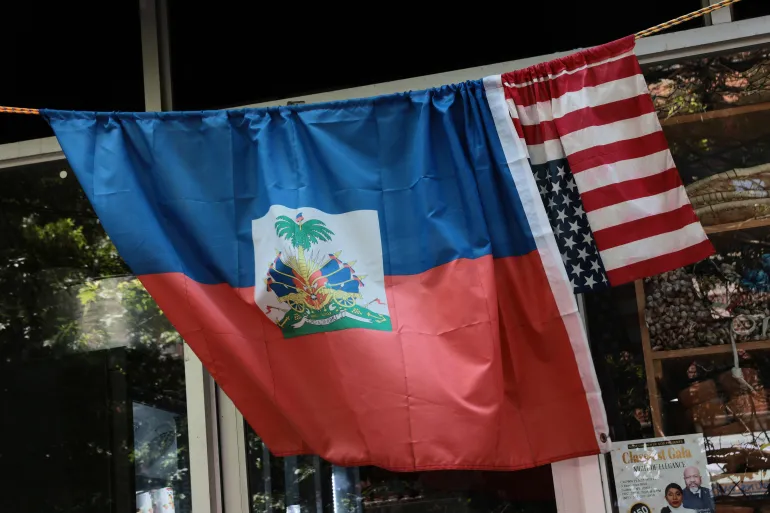
On June 25, the United States Supreme Court decision allowed President Donald Trump and his administration to end Temporary Protected Status (TPS) for Haitians, paving the way for their legal immigration status to be removed.
Trump has pushed to end TPS for several groups, as part of his efforts to restrict immigration into the US.
list of 3 itemsend of list
But lawmakers from both political parties have argued that stripping Haitians of their TPS status could create a caregiving crisis, given their presence in key industries like healthcare.
“Of the 350,000+ lawful Haitian TPS holders, roughly 1/3 work in our healthcare system. Immediately shutting off TPS will create a crisis in our hospitals, nursing homes, and in the [intellectual disabilities] community,” Republican Representative Mike Lawler wrote on the social media platform X.
Democratic Representative Ayanna Pressley echoed that sentiment in a statement.
“Seniors will lose their caregivers when we already have a caregiving crisis, and seniors will lose their ability to age in community with much-needed assistance,” she wrote.
The Temporary Protected Status programme allows nationals from countries experiencing crises, such as natural disasters or armed conflict, to live in the United States for up to 18 months. The federal government had previously renewed the designations, making them effectively permanent, before President Trump took office for a second term in 2025.
Lawler’s estimates about how many Haitians with TPS work in the US healthcare system are within the range of what the data show.
The Trump administration decision — and Supreme Court ruling — affect about 330,000 Haitians whose TPS-related work authorisations expire on July 10. They face deportation unless they qualify for another status. The ruling also applies to Syrians and Venezuelans.
About 158,000 Haitians in Florida have TPS, the majority of whom are in South Florida. The Sunshine State has the largest population of TPS recipients in the US: nearly 404,000 people. More than half are from Venezuela and about one-third are from Haiti, according to the nonpartisan Congressional Research Service.
With an ageing population and an existing caregiver shortage, healthcare experts say the end of TPS for Haitians will have a significant effect on the US healthcare industry.
Of the 330,000 Haitian TPS holders, about 13,000 work daily as nursing assistants, caring for 65,000 patients, The Boston Globe found. Another 8,000 Haitian caregivers serve 12,000 children and ageing people, according to Americans for Immigrant Justice, a Miami-based nonprofit law firm that provides free representation to low-income immigrants.
Experts said the TPS healthcare workforce exodus will be felt most acutely in New York, Massachusetts and Florida.
With its high populations of older people and immigrants, Florida is expected to be particularly hard-hit.
David Grabowski, a Harvard Medical School healthcare policy professor, said the decision will “have a major impact on nursing homes, assisted living facilities and home care agencies”.
Healthcare researchers say deporting Haitian recipients of Temporary Protected Status will add pressure on a strained system.
Immigrants who have TPS are more likely to work in healthcare, with one 2025 study finding that recipients represent 15 percent of all noncitizen healthcare workers. (TPS recipients make up about 2.1 percent of the total immigrant population.)
Immigrants make up a large share of direct care workers — people who are home health aides, personal care aides and nursing assistants.
There is already a national shortage of home health aides, personal care aides, nursing assistants and other long-term care and eldercare workers, but the US will need even more in the future. The US 65-and-up population is expected to rise from 58 million to 82 million by 2050 — a 42 percent increase.
Nearly half of US nursing homes report limiting admissions due to staffing shortages, and 19 percent recently met the minimum staffing levels set by the Centers for Medicare & Medicaid Services. In 2023, shortages of nurses and other employees caused about two-thirds of US hospitals to operate below capacity.
“People who run nursing homes, chronic care hospitals and home care agencies – they are all saying this is a crisis,” said Dr Steffie Woolhandler, a distinguished professor of public health at City University of New York’s Hunter College. “There has long been a shortage of folks who are willing to do direct care work as nursing aides, and there’s still a shortage now, so, of course, if the US deports them all, it’s just going to make it worse.”
Drishti Pillai, the director of immigrant health policy at the research nonprofit KFF, said, “The long-term care industry is already facing shortages prior to these immigration policy changes, so I think it’s accurate to say that this is going to further exacerbate the situation.”

Healthcare experts pointed to several reasons for TPS holders’ high numbers in direct care, including job availability, an easier certification process compared with other healthcare jobs, and prior experience caring for family members.
“We do not have sufficient native-born workers to fill all the caregiving jobs,” Grabowski, the healthcare policy professor, said.
These positions also typically have lower barriers to entry for licensure, or no English language requirements, experts said. Refugee settlement organisations often recommend the work to immigrants for those reasons.
The positions are “extremely difficult to fill” because they’re physically and emotionally demanding, with low pay and with little or no employee benefits, said Priya Chidambaram, senior policy manager with KFF’s programme on Medicaid and the uninsured.
Some Haitians also have experience caring for sick family members in their homes, given the lack of nursing home infrastructure in their home country.
In the end, experts said there will be many more people who need this care than people who will be able to provide it.
“This was true before the ruling,” Chidambaram said. “Now, the impact will only be worse.”
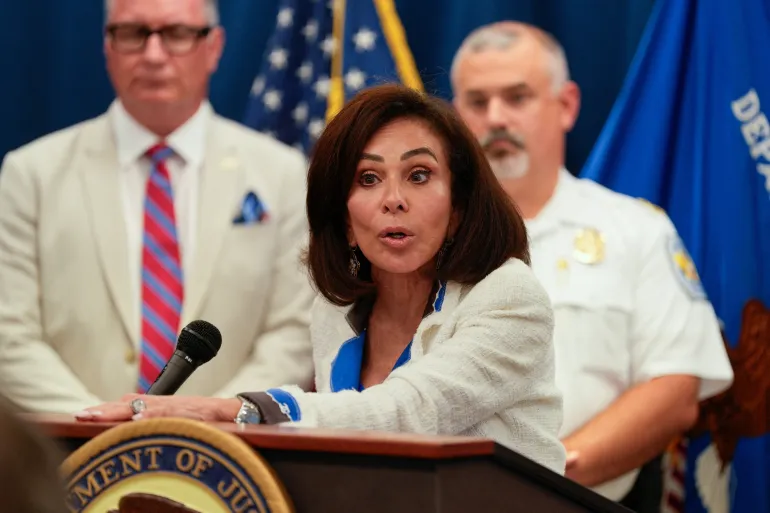
The administration of United States President Donald Trump has announced felony charges against a former Olympic athlete for allegedly harming the Lincoln Memorial Reflecting Pool in Washington, DC.
At a news conference on Thursday, US Attorney Jeanine Pirro accused professional canoeist David Hearn, 67, of deliberately vandalising the pool.
list of 3 itemsend of list
“Today, a grand jury has returned a felony indictment against a defendant, David Hearn, for felony destruction of property, for which he faces 10 years in prison,” Pirro, a Trump appointee, said.
She proceeded to call the destruction of national monuments “one of the most offensive images” she has ever seen.
“This unchecked vandalism and civil disorder turns into criminal behaviour, and that’s why we’re here today,” Pirro said. “They are an affront to the dignity of our shared history.”
But in media interviews, Hearn has denied any vandalism, saying that, like many Americans, he was simply curious about the Reflecting Pool when he visited on June 19.

The Reflecting Pool had been the subject of a renovation effort Trump began in April, as part of a wider initiative to reshape Washington, DC, through controversial construction and maintenance projects.
Trump awarded a no-bid contract to a firm to seal and resurface the granite pool in a colour he dubbed “American flag blue”. But observers noted that, as soon as the pool reopened in early June, it suffered an algae bloom, and blue paint began to peel from its bottom.
Faced with criticism about the $13.1m renovation contract, Trump countered that vandals had sabotaged the Reflecting Pool.
At least seven people, including Hearn, have been arrested on allegations they may have harmed the pool’s blue-painted bottom.
Hearn has maintained his innocence. He says he was cycling by the Reflecting Pool when he stopped to look at the peeling paint, and he reached in the water to feel it. He denies removing any part of the pool.
Pirro, however, described a different scene. She said National Park Service employees observed Hearn “forcefully and violently pulling up and removing the bottom liner with both hands”, damaging roughly 2 square feet — or around 0.18 square meters — of pool sealant.
“A parks employee actually told Hearn to stop his behaviour and stop what he was doing. Hearn reacted by shouting at that parks employee,” Pirro alleged.
Reporters confronted Pirro with questions about whether charging Hearn with a felony was disproportionately punitive, since similar cases have been considered misdemeanour offences.
One journalist asked Pirro if her decision to seek a felony indictment was influenced by Trump, who wrote on Truth Social that a 10-year prison sentence should “be fully enforced” for any attempted damage to the Reflecting Pool.
“I didn’t charge anything harshly. I charge according to the evidence,” Pirro replied. She argued that Hearn caused damage exceeding $1,000, thereby necessitating a felony charge.
She also dismissed comparisons with the millions of dollars in damage caused by Trump supporters during the attack on the US Capitol on January 6, 2021. Nearly all of those defendants were pardoned on the first day of Trump’s second term.
“Are you really talking about January 6th? I’m not,” Pirro told one reporter. A hearing in Hearn’s case is scheduled for July 9.

On Thursday, preparations for the July 4 fireworks show began at the Reflecting Pool, with large nets spread across the entire structure.
According to a police officer on the site, the nets are intended to catch the debris that could fall into the pool during the show. The site remains fenced off to visitors.
Still, many have come to look at the pool and see the controversial renovations firsthand.
Brian Williams, a 31-year-old from Roscoe, Georgia, praised Trump for his efforts to beautify the city. He said that algae was normal for a pool full of still water in the heat of summertime.
“I don’t think people have any business vandalising anything,” Williams added. “If you have something that you dislike about the president, don’t take it out on the people’s pool.”
But others were more sceptical of Trump’s claims. Jon Delgado, a 40-year-old Navy veteran from Collierville, Tennessee, expressed frustration at seeing the Reflecting Pool in its current state.
“I came here with my wife and my family to show them the beauty of America, the spirit of what we fought for,” he said. “To see it trashed like this, it just makes me angry.”
Delgado called Trump’s accusations about vandalism at the site “really crazy”.
“We have just got to ask ourselves: Is this where we’re at, in the state of America, that we’re believing something like this? You can look for yourself: This thing has pond scum all in it, and it stinks. There’s no vandalism,” he said.
Mikel Oyarzabal’s brace allows the European champions to dominate Austria and move on to the round of 16.
Published On 2 Jul 20262 Jul 2026
Spain coasted past Austria and into the FIFA World Cup last 16 on Thursday, thoroughly outclassing their opponents in a 3-0 knockout win, with a brace from Mikel Oyarzabal and a Pedro Porro header.
The European champions controlled possession and sliced through the Austrian defence in a typically dominant performance in Los Angeles, as Hollywood stars Penelope Cruz and Javier Bardem and singer Rosalia cheered on.
list of 4 itemsend of list
The win, which could have been by a greater margin – with a disallowed goal and a free kick off the woodwork – sets up a tantalising round-of-16 clash with either Portugal or Croatia.
“I’m happy to help the team and get through to the next round. Now we need to rest,” said Oyarzabal directly after full-time.
“They were a physical side and difficult to play against, but we played a good match. We’re happy to qualify,” he added.
As to whether he would prefer Portugal or Croatia in Monday’s last-16 match-up, Oyarzabal remarked: “It doesn’t matter who we face in the next round; I have friends in both teams.”
Los Angeles Stadium was a sea of red and excitement over the first visit by a bona fide World Cup favourite to the US’s second city.
Spain ratcheted up the pressure gradually through the first half, creating a string of chances after the first hydration break.
Marc Cucurella thought he had scored from a Lamine Yamal corner, but Pau Cubarsi was judged to have encroached on Austria’s goalkeeper.
Alexander Schlager then made a superb diving save, pushing Oyarzabal’s low shot around the post.
Austria’s defence finally buckled in the 36th minute. Pedri pinged a ball wide, left to Cucurella, whose cross to Oyarzabal was calmly side-footed past the goalkeeper.
Spain’s dominance grew further, with Yamal tormenting the Austrians, mainly from the right flank.
An Alex Baena free kick hit the crossbar, and Yamal’s close-range follow-up shot was well saved.
Austria spurned a rare chance at the other end. Romano Schmid played in a late-arriving and unmarked Stefan Posch, but a terrible first touch meant he lost the ball before even attempting a shot.

After the break, Spain continued knocking on the door without quite putting the game to rest.
Austria sent on two giant strikers, Sasa Kalajdzic and Marko Arnautovic, and immediately went long, with Kalajdzic putting a header over the bar.
But in the 66th minute, Spain struck again. Baena lifted a cross onto the head of Pedro Porro, who nodded in his first goal for Spain.
Some dogged defending kept the scoreline respectable, including a goal-line clearance by David Alaba from Yamal, who was substituted off to rest moments later.
Spain sprayed passes around the pitch as the final minutes ticked down, eliciting “Oles” from the crowd, as attention turned to a sterner test on Monday in Dallas.
In the 89th minute, a pinpoint Cucurella cross found a completely unmarked Oyarzabal in the penalty area, who slotted the ball home to seal the victory in style.
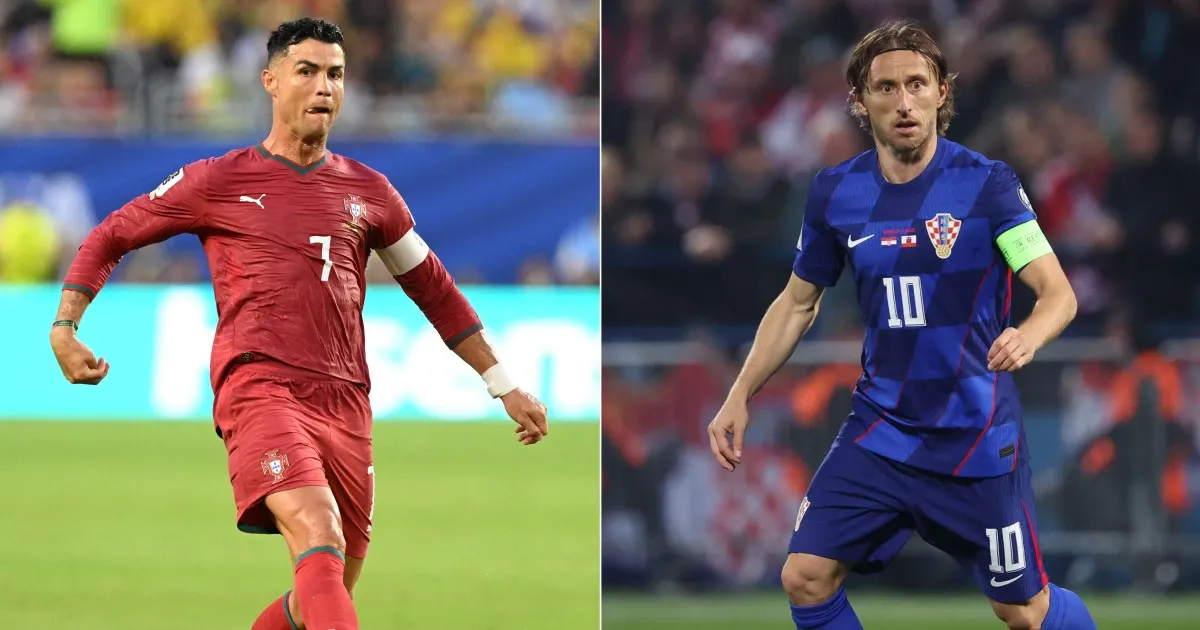
Live coverage and text updates, with team news, from our commentary stream as Ronaldo's Portugal target the last 16.
Source link
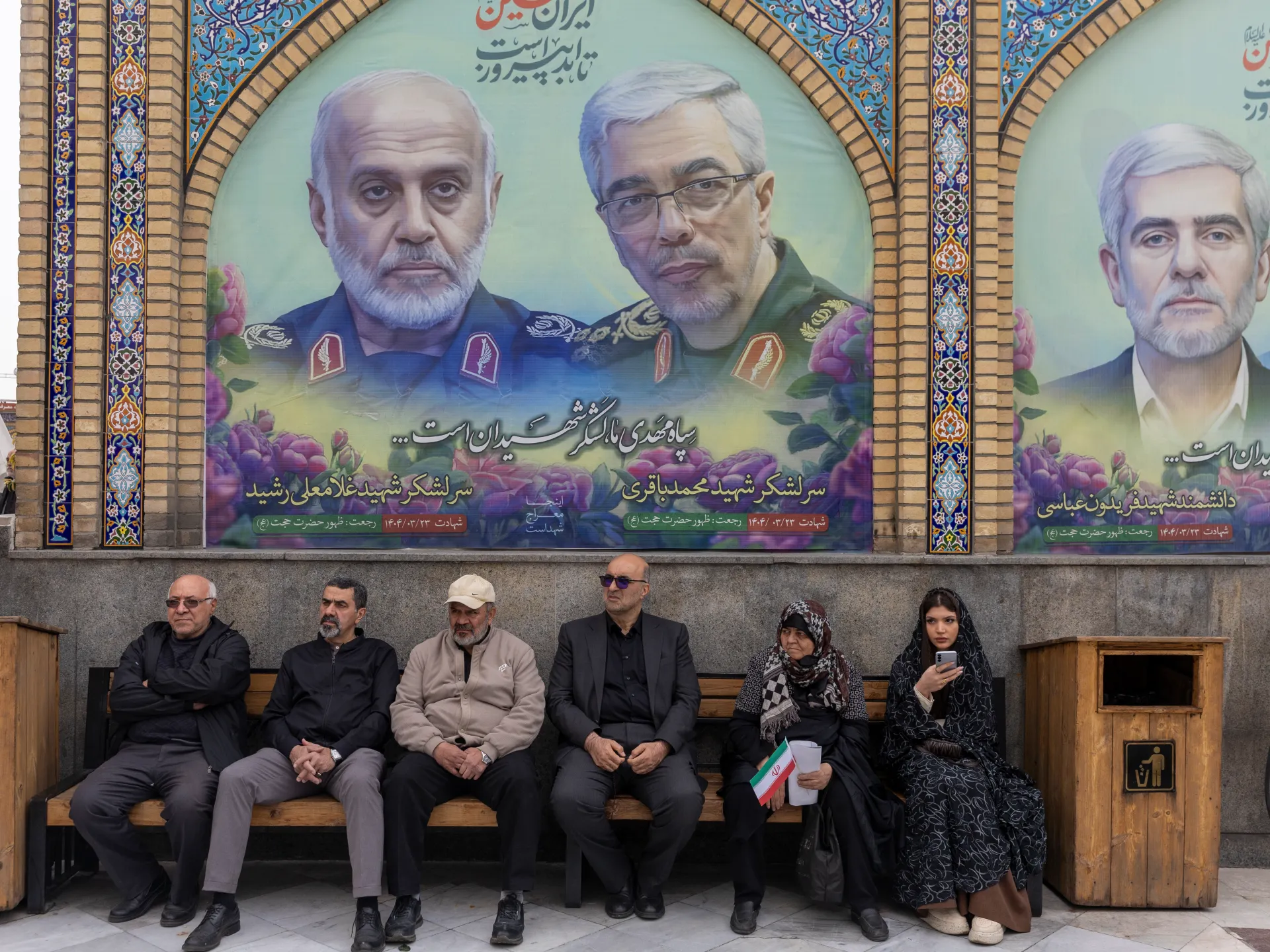
Maritime monitoring service TankerTrackers.com said on Thursday that a ship which Iranian media reported had run aground in the Strait of Hormuz has in fact been stuck in the same spot since March and is part of an operation managed by the notorious Iranian oil magnate Mohammad Hossein Shamkhani.
Here is what we know about Shamkhani, whom the US and EU allege is a central figure in Iranian and Russian shadow fleet operations, generating billions of dollars of oil revenues for both, and what happened to his ship in the Hormuz strait.
On Thursday, TankerTrackers.com reported that the ship that Iranian media said had run aground in the Strait of Hormuz after using a “US-suggested route” has actually been stuck in the same spot since March.
It identified the vessel as the Arista, and reported that while it is Comoros-flagged, it is in fact part of an operation managed by the sanctioned Iranian oil magnate Shamkhani.
Shamkhani is an Iranian oil shipping magnate who has multiple Western sanctions imposed on him. He is the son of the late Ali Shamkhani, a senior political adviser to Iran’s former Supreme Leader Ayatollah Ali Khamenei.
Ali Shamkhani led the Supreme National Security Council (SNSC) for a decade until 2023, making him the second-longest-serving security chief since 1979 after former President Hassan Rouhani, who was SNSC secretary for nearly 16 years.
He was reportedly killed in the first Israeli-US strikes on Tehran on February 28 , which triggered the war with Iran and also killed Khamenei, whose funeral begins tomorrow.
In March, the Sarajevo-based Organised Crime and Corruption Reporting Project (OCCRP) reported that following an investigation, Mohammad Hossein Shamkhani and his brother had used aliases and Caribbean “golden passports” to amass a $29m million property portfolio in Dubai.
The US Treasury, which has sanctioned the Shamkhani shipping empire, says it is part of a massive Iranian and Russian oil smuggling ring and that the Comoros‑flagged Arista aground in Hormuz is part of that network.
According to the US Treasury, the Shamkhani network makes use of “front” companies to buy Iranian and Russian oil for which it falsifies shipping documents. It switches the oil between vessels frequently via its shipping operations and sells the oil on to buyers who pay for it via their own front companies to obscure the flow of money.
Additional profits are funnelled through hedge funds and other money-laundering operations, the US Treasury alleges.
It said Shamkhani relies on a mix of crude oil, oil product and liquefied petroleum gas (LPG) tankers to generate billions of dollars for the Iranian and Russian regimes.
According to the European Commission, Shamkhani “uses the company Milavous Group Ltd to blend crude oil with various petroleum products from Russia and to rebrand for exporting purposes, thereby concealing their origin”.
Shamkhani is not known to have responded publicly to these allegations.
Shamkhani was first sanctioned by the US last July, amid a large number of Iran-related sanctions. In April, the US Treasury Department announced additional sanctions on Shamkhani’s network.
“Treasury is moving aggressively with Economic Fury by targeting regime elites like the Shamkhani family that attempt to profit at the expense of the Iranian people,” Treasury Secretary Scott Bessent said.
A statement from the US Treasury added that Shamkhani “heads a multi-billion dollar Iranian and Russian petroleum sales empire that enriches a family connected to the highest echelons of the Iranian regime at the expense of the Iranian people”.
The European Union sanctions tracker website says Shamkhani is also subject to EU sanctions, describing him as “a businessperson active in the Russian oil trade and a central player in Russia’s so-called ‘shadow fleet’.”
Russia’s shadow fleet is a network of hundreds of ageing, poorly regulated oil tankers that Russia uses to export crude and fuel while evading Western sanctions imposed after its invasion of Ukraine in 2022.
An August last year, the UK government also announced sanctions against Shamkhani including an asset freeze, director disqualification and travel ban. Minister for the Middle East Hamish Falconer said: “The UK is announcing sanctions against those who operate on behalf of Iran, fuelling its attempts to undermine stability in the Middle East and global security.
“Iran’s reliance on revenues from trading networks and connected organisations enables it to carry out its destabilising activities, including supporting proxies and partners across the region and facilitating state threats on UK soil.”

In an unexpected move, Boston traded the All-Star guard to division rivals Philadelphia for Paul George and draft picks.
Published On 2 Jul 20262 Jul 2026
Jaylen Brown’s time in Boston has come to a surprising end with the Celtics deciding to trade him to one of their most storied rivals.
Brown – the 2024 NBA Finals MVP, a five-time All-Star and the league’s fourth-leading scorer this past season – is getting traded by the Celtics to the Philadelphia 76ers, a person with knowledge of the deal’s terms said on Wednesday night.
list of 4 itemsend of list
Boston is getting Paul George, along with a slew of draft capital that could become two first-round picks and two second-round picks, said the person who spoke to The Associated Press on condition of anonymity because the trade does not yet have the required league approvals.
ESPN first reported the trade agreement, and the terms were later confirmed by The Boston Globe.
Add this news to the list of blockbuster moves across the NBA so far this off season.
LeBron James is leaving the Los Angeles Lakers as a free agent. All-Star-calibre players Giannis Antetokounmpo, Kawhi Leonard and Brandon Ingram are also on the move.
Now, this.
“Welcome to Philly, JB!” Pennsylvania Governor Josh Shapiro posted on social media. “Sixers get way better and, as a bonus, the Celtics got worse!”
It’s a move that breaks up what has been one of the league’s most successful 1-2 punches in Brown and Jayson Tatum, who helped carry the Celtics to the 2024 NBA title.
Tatum missed most of this past season while recovering from an Achilles tear that happened during the 2025 playoffs, meaning Brown had to carry even more of the load for Boston – and he wound up with career-best averages of 28.7 points, 6.9 rebounds and 5.1 assists per game.
It seemed, though, that Brown had felt underappreciated, especially after it became known that Boston had included him in trade talks with Milwaukee when Antetokounmpo was on the market.
“Nobody has won more combined regular-season and playoff games since I entered the league 10 years ago,” Brown posted on social media over the weekend. He’s right: The Celtics have won 523 games with Brown in the lineup, including playoff contests, which is six more than Denver has won with Nikola Jokic over that span.
Brown now gets to be part of a squad in Philadelphia alongside guard Tyrese Maxey and centre Joel Embiid, someone who Brown recently called a flopper on a livestream.
“Joel Embiid is a great player. One of the best bigs in f****** basketball history flops,” Brown said. “He know it. This ain’t breaking news.”
Brown, Maxey (the league’s fifth top scorer this past season) and Embiid (a two-time NBA scoring champion) could become a positively frightening trio in Philadelphia, and the Celtics deciding to play a role in creating such a triumvirate only adds to the intrigue surrounding why they wanted to trade Brown in the first place.
The trade ends a tremendously disappointing two-year stint for George, who was traded with two years left on a four-year, $212m free-agent contract. The 36-year-old never approached his nine-time All-Star form in Philadelphia, and his tenure was marred by a 25-game suspension last season for flunking a drug test.
He averaged just 16.7 points in his two seasons in Philadelphia after topping the 20-point mark in nine straight seasons with Indiana, Oklahoma City and the Los Angeles Clippers.

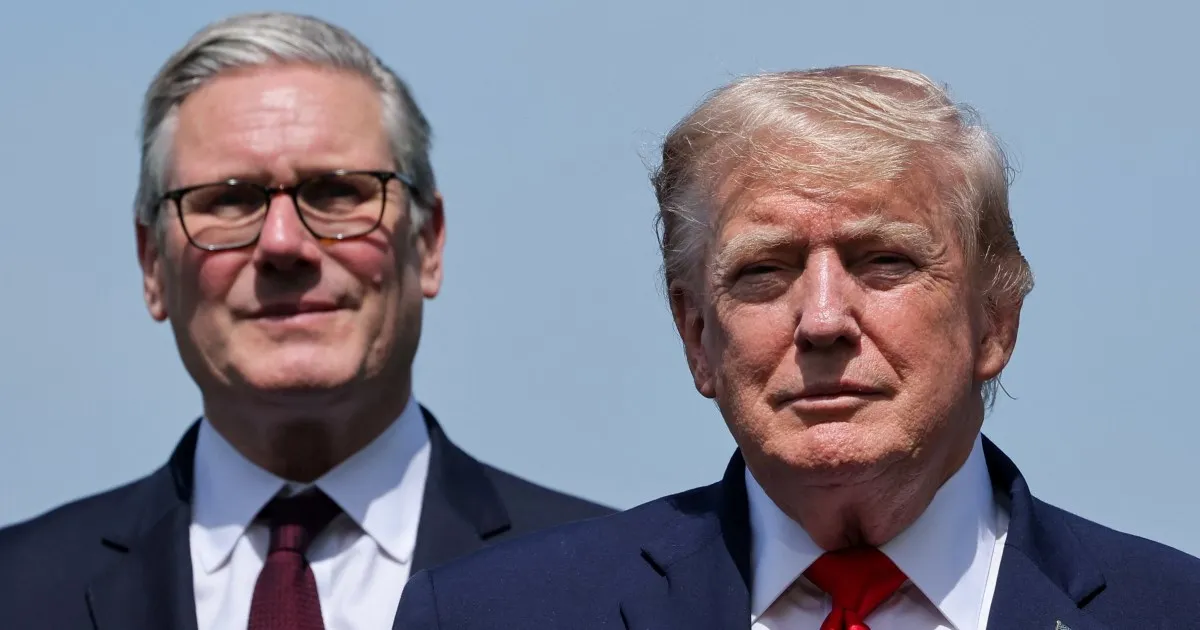
Research published in the British Medical Journal (BMJ) has found that a United Kingdom-United States pharmaceutical deal could cause 229,000 excess deaths as a result of the diversion of billions of pounds away from Britain’s National Health Service (NHS).
In December, the UK and US signed a pharmaceutical trade deal, under which the US government agreed not to impose tariffs on UK pharmaceutical and medical technology exports for the next three years.
list of 3 itemsend of list
In return, the British government committed to increasing NHS spending on new US medicines from 0.3 percent in 2026 to at least 0.6 percent of its gross domestic product (GDP) by 2036. This means that medicine spending overall should increase from 10 percent to 12 percent of the NHS budget.
UK politicians defended the deal with Science Minister Patrick Vallance saying in April that the arrangement gives patients across the NHS access to “life-changing new medicines that they previously would have been denied”.
“Not only this, but as the first country in the world to benefit from a zero percent tariff on pharmaceuticals to the US, Britain’s life sciences sector will be further boosted,” Vallance argued.
But the research published in the BMJ found that the commitment to spend so much more on new branded medicines over the next decade without any increase in NHS funding will “create substantial opportunity costs elsewhere, having a direct effect on population health”.
Samuel Cross, a professor in the department of pharmacology and therapeutics at the University of Liverpool, who coauthored the report, said the agreement “benefits pharmaceutical companies and comes at a cost of NHS patients”.
“There’s really no way to sugar-coat that. The numbers speak for themselves,” Cross told Al Jazeera.
Here’s what we know about the report:
The agreement signed on December 1 was hailed as a landmark deal between British Prime Minister Keir Starmer and US President Donald Trump on pharmaceutical trade and pricing.
The US agreed not to impose tariffs on UK pharmaceutical and medical exports for the following three years – until January 19, 2029.
According to a policy paper published by the British government, the preliminary understanding of the agreement recognised that the US and UK shared a “mutual interest in developing a global medicines system that supports development and commercialisation of new innovations”.
In February, Vallance disclosed that funding for the increased spending on medicines would come from the Department of Health and Social Care, which funds the NHS in England, rather than the Treasury.
The study in the BMJ forecast that if spending targets are met and the economy grows as forecast by the Office for Budget Responsibility, the NHS would need to spend an extra 1.3 billion pounds ($1.73bn) a year by 2028 – about 25 million pounds ($33.4m) a week. By 2036, this would rise to an extra 8.8 billion pounds ($11.74bn) a year – about 170 million pounds ($227m) a week). Over the course of the agreement, that would add up to about 44.7 billion pounds ($59.7bn) by the end of 2036.
“Costs are even higher if the impact on publicly funded adult social care is also considered – modelling of English local authority data indicates that every £1bn [$1.33bn] the NHS must find to fund this deal will increase the costs of adult social care by £118m [$157.5m] because of increases in morbidity and mortality,” the report found.
Ultimately, the study predicted, excess deaths are likely as a result.
“Even if we restrict attention to the direct effect of reductions in available NHS expenditure, by 2036 this deal is likely to result in roughly 229,000 excess deaths – more than during the COVID-19 pandemic between March 2020 and June 2022 (137,000). If the indirect effect on adult social care is also included, the increase in excess deaths is even greater (291,000),” the report stated.
The report added that the findings are “unsurprising” given the existing pressures on the NHS and the “large burden of unmet need in highly cost-effective areas of care”.
It also referred to shortfalls in NHS funding and pharmaceutical pricing as “opportunity costs”.
Cross said that in health economics, opportunity costs are the “key to all of this”.
“In the NHS, we have a finite budget – we’re not made of money – and if you take money away to pay for, in this case, more medicines. then that comes at an opportunity cost of the places that the money has been diverted away from,” he explained.
The research predicted that the greatest number of deaths would occur in cardiovascular, respiratory, gastrointestinal and cancer patients.
It added that there will also be broader harm caused to quality of life for patients in those sectors as well as “neurological, endocrine, musculoskeletal, and mental health problems”.
“Despite this evidence and reassurances that ‘frontline services’ will be protected, the NHS will need to fund this deal from allocations made six months before the deal was agreed. The evidence suggests that if additional public expenditure was available, it could be more effectively deployed within the NHS itself,” it added.
The report also called the government’s claims that the US-UK agreement would encourage pharmaceutical innovation in the country “uncertain”.
“Pharmaceutical research and development operate within a global market, of which the UK represents a relatively small share. As such, there is limited evidence that UK domestic pricing materially influences global investment decisions,” the report stated.
“Even so, evidence suggests in most cases the UK is already paying more than 100 percent of the long-term value of new medicines; incentivising production of new medicines under this deal will do long-term harm to the public health objective of the NHS,” it added.
Cross added that because money has in effect been diverted away from the NHS, there is no way for the government to offset the impact on the service.
“If the funds are used to pay for new medicines, we will lose positive health outcomes elsewhere, and that is as simple as that,” he said.
He called for the government to release an impact assessment to trigger a public discussion about how good the US-UK deal really is for Britain.
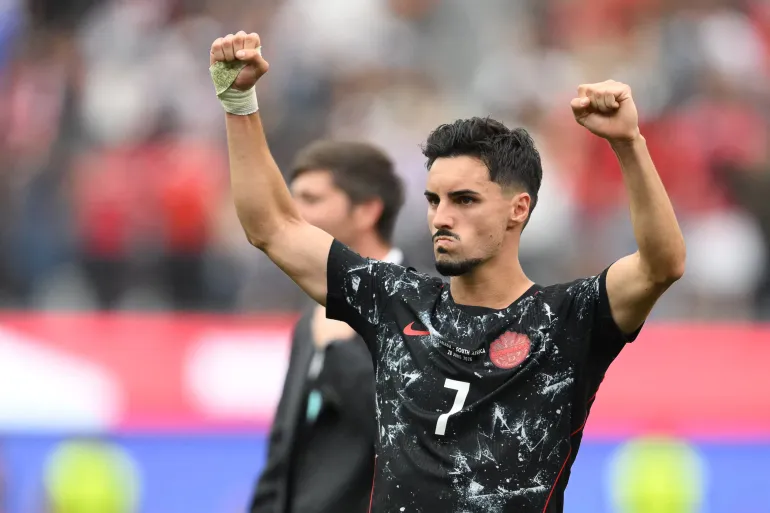
Toronto, Canada – The year was 2009, and a sculpted, spiky-haired, 24-year-old Ronaldo was greeted by hundreds of adoring fans in Toronto dying to catch a glimpse of the newly signed Real Madrid superstar as he graced the city with his presence for the first time.
Fast forward 17 years, and the visuals are almost identical, give or take a few differences.
list of 4 itemsend of list
Hundreds of Toronto residents took to the streets on Wednesday, lining highways, thronging downtown intersections, climbing onto each other’s shoulders and peeking out of high-rise buildings, all to get a 10-second glimpse of Ronaldo passing by, as Portugal arrived in the city ahead of their World Cup round of 32 clash with Croatia.
The last time the football icon was in Toronto was August 2009 when Real Madrid played a friendly against Toronto FC, coincidentally at the same stadium where Portugal will take on Croatia on Thursday evening.
Wednesday being a public holiday increased the chances of fans catching a glimpse of the 41-year-old football legend at what is likely to be his last ever World Cup, and potentially last World Cup match if Portugal are knocked out of the tournament.
The city was buzzing with Ronaldo fever right from the minute Portugal landed at Pearson airport early Wednesday afternoon.
Biker groups lined Gardiner Expressway to escort the Portuguese team bus to the Delta Hotel, where hundreds of fans gathered to get a glimpse of Ronaldo as he exited the bus, and then again when the team headed to Centennial Park for their training session.
Even at the grounds in Etobicoke, dozens of starstruck fans sporting red #7 jerseys stood outside the field as Ronaldo and the Portugal team warmed up on what was supposedly the hottest day of the year in Canada.
The fan frenzy was valid; for most Portugal fans in the city, this was the closest they would get to seeing the one and only Cristiano Ronaldo in person.
Sky-high ticket prices for the match, some as ludicrous as $30,000 Canadian dollars ($21,000), were unaffordable to the average football fan.
Tickets to the sold-out game have averaged $2,500-3,500 Canadian dollars over the past week on resale platforms, even though Ontario laws forbid third-party sales above face value.
“I’m a dad and a husband, and I couldn’t justify spending that kind of money on a ticket no matter how much I want to see Portugal play in Toronto,” Joey, 33, told Al Jazeera, as he closed out his shift at Bairrada Churrasqueira on the fringe of Little Portugal in Toronto.
“But it still feels surreal that Portugal is playing here in Toronto, who would have ever thought that,” the restaurant worker beamed, as he flipped chairs onto the tables before mopping the floor.
Joey, who declined to share his surname, was one of tens of thousands of Portuguese-Canadians who have called Toronto home for several decades now.
The first wave of immigrants arrived in the 1950s seeking better opportunities for themselves and their families. Just last year, the city inaugurated the Azores Parkette in the heart of Little Portugal to honour the 18 “pioneering men” who departed Sao Miguel, Azores, and landed on the shores of Halifax to build a new life.
So when Portugal take the field in Toronto Stadium on Thursday, it’ll be more than just a game for generations of hyphenated Canadians in the city; for them, it’s two worlds colliding in a once-in-a-lifetime moment.
For Shannon Medeiros, 46, the match holds even more significance. The football fanatic fell in love with the sport aged six, inspired by her father, who attended every game and coached her as she delved into the sport.
The game has been a crucial part of her life, and her family’s, since her father and his family arrived in Canada when he was 16 years old, in the 1950s.
Like many immigrants at the time, schooling had to be abandoned in favour of a job to help make ends meet for the family, which, in his case, arrived in Montreal with a single suitcase and lived in another family’s basement until they could afford a place of their own.
Football was the only non-negotiable, axiomatic staple in the Portuguese community that grew from a few hundred to more than 300,000 people.
“It’s something we do as a family now; that’s how much the game means to us,” said Medeiros, who now coaches her two sons in the sport the way her father did for her.
The storyline is almost identical to that of Stephen Eustaquio, Canada’s wonder boy who scored against South Africa to send his team to the World Cup round of 16 for the first time in history.

The Ontario-born, partially Portuguese-raised football star was guided into the sport by his father and his Portuguese background for a love of football. The sport was a way for the community to come together and enjoy a shared sense of identity, as Canada welcomed dozens of ethnicities decade after decade.
“The one thing you’ll see in the Portuguese community is how proud we are – of our heritage, our culture, to wear the jersey, put a flag up,” Medeiros told Al Jazeera.
A walk through Little Portugal during the World Cup would show you just that; flags split diagonally with Canada and Portugal in each half, fluttering on porches or glued to bedroom windows, an omnipresent CN Tower needle peeking above the neighbourhood anywhere you stand.
Medeiros admitted that while the team has not been playing to their full potential at the tournament, they have a strong chance of winning against Croatia. She’ll see whether her prediction comes true or not as she watches the game with her father at his house.
Elsewhere in the city, fans without match tickets are heading to sports bars, match screenings and fan festivals to see whether Ronaldo will score his first knockout-round goal at a World Cup that saw an unimpressive start for the Portuguese captain.
“I think Portugal will win 2-1, or maybe 3-1. But don’t tell my girlfriend I said that,” Josh Madeiros grinned, as he waited for his drink at Garrafeira. The Portuguese-Canadian 35-year-old will be supporting his side away from his girlfriend, who is Croatian.
He thought long and hard before admitting that Portugal’s team has had a shaky run so far, and that there’s only so much Ronaldo can do as a player in his forties.
“But he’s still my guy, and he’s still the GOAT [greatest of all time].”
The de facto US ambassador Raymond Greene says drones represent a ‘game-changing opportunity’ to enhance Taiwan’s security.
Published On 2 Jul 20262 Jul 2026
Taiwan needs a “hornet’s nest” of drones to help deter conflict and provide security, says the top United States diplomat to the self-governing island that China claims as part of its territory.
Speaking at a forum on drones in the central city of Taichung, Raymond Greene, director of the American Institute in Taiwan and the de facto US ambassador, said on Thursday that drones represented a “game-changing opportunity” to enhance Taiwan’s security and reinforce peace in the broader region.
list of 3 itemsend of list
The US, Taiwan’s most important international backer and arms supplier despite their lack of formal diplomatic ties, has strongly supported the government’s military modernisation plan and increased defence spending.
Taiwan has said it needs to bolster its defences in the face of a stepped-up threat from China.
China regards Taiwan as part of its territory and opposes Washington’s continued, though informal, backing of Taipei.
The US and Taiwan can anchor “democratic” drone production and strengthen the collective deterrence posture of the free world, Greene said.
“Fortunately for Taiwan, drones have significantly boosted defenders, even when facing overwhelming odds,” he added, referring to the war in Ukraine.
“Nothing will deter conflict more effectively than turning Taiwan into a hornet’s nest of air, surface and subsurface drones.”
While Taiwan’s government has prioritised drones and other asymmetric military systems, in May, the opposition-dominated parliament passed only two-thirds of the $40bn in extra defence spending that President William Lai Ching-te had asked for, earmarking funds only for US arms.
The government has now proposed a new 210 billion Taiwan dollars (US$6.59bn) package to pay for surveillance, coastal attack and small unmanned surface drones through the end of 2031.
However, in May, a senior US military official said Washington was putting a $14bn arms sale to Taiwan on hold to preserve munitions for the US-Israel war against Iran.
The Kuomintang (KMT), Taiwan’s main opposition party, this week proposed its own drone legislation with a spending cap set at 240 billion Taiwan dollars (US$7.5bn) over six years and annual spending capped at 40 billion Taiwan dollars (US$1.25bn).
Its plan would fund drones from the main budget rather than a special budget, which is what the government wants.
On Wednesday, Lai called the need for drones pressing.
“Facing changes in the geopolitical situation and the evolution of modern warfare, building asymmetric combat capabilities is a national defence project that is a race against time,” he said at a meeting of his Democratic Progressive Party.
Lai rejects Beijing’s sovereignty claims, saying only the island’s people can decide their future.
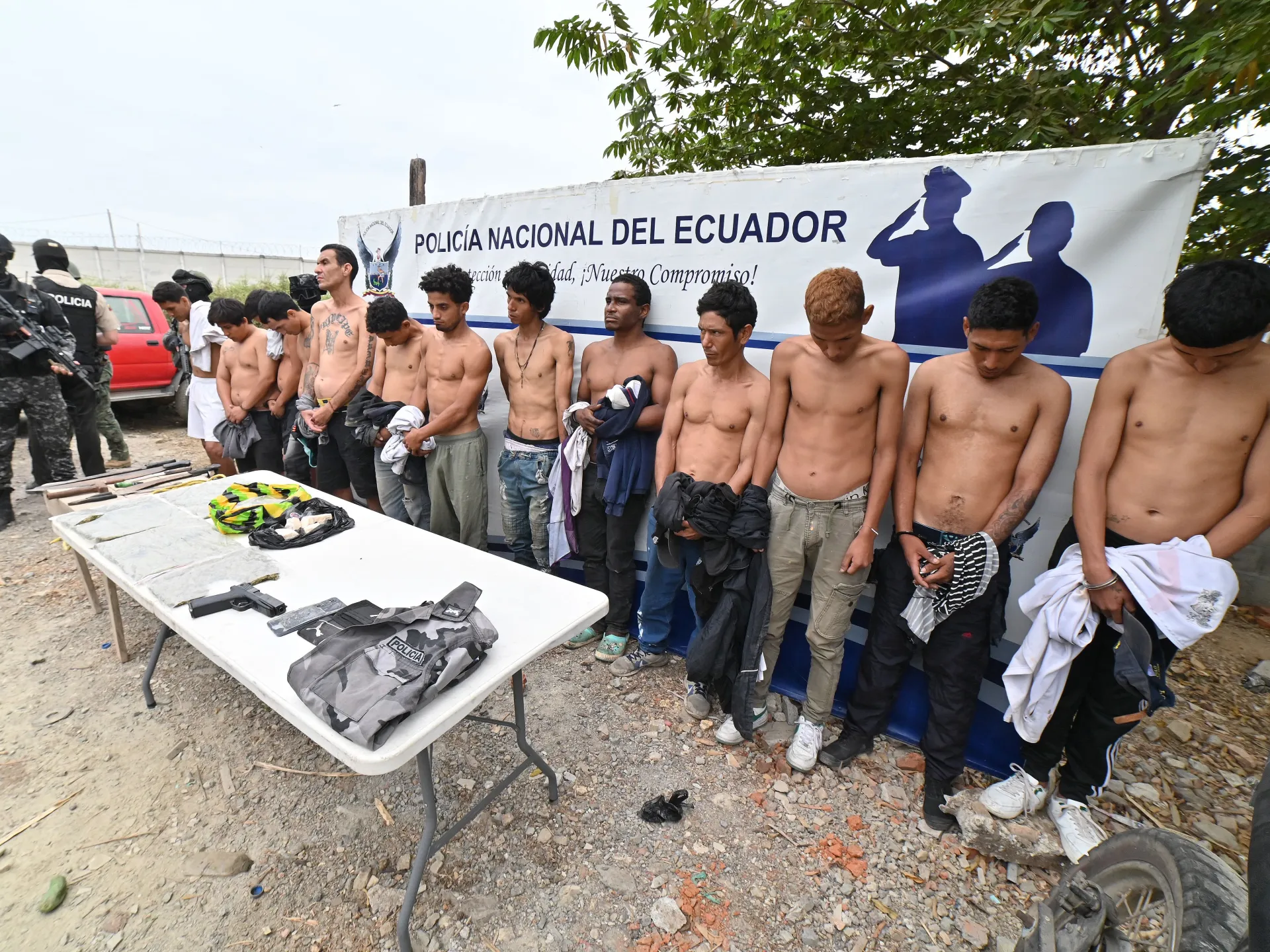
US Secretary of State Marco Rubio says the gang had also been classified as a ‘Specially Designated Global Terrorist’.
Published On 2 Jul 20262 Jul 2026
The US State Department has designated the Ecuadorean gang Chone Killers as a foreign “terrorist organisation”, imposing sanctions on a crime group that Washington has accused of carrying out attacks on civilians and public officials.
US Secretary of State Marco Rubio said the gang has also been classified as a “Specially Designated Global Terrorist”.
list of 3 itemsend of list
“Chone Killers has committed numerous attacks targeting civilians, law enforcement officers and government officials, including high-profile assassinations of public officials,” Rubio said in a statement announcing the designations.
The move against the Ecuadorian street gang is part of a broader campaign by US President Donald Trump’s administration on organised crime and drug trafficking in Latin America.
The Trump administration has designated several other Latin American gangs and drug cartels as “terrorist” organisations, including Venezuela’s Tren de Aragua and the Mexican Sinaloa cartel.
“The Trump administration, in partnership with Ecuador and President Daniel Noboa, will continue to protect our hemisphere by keeping illicit drugs off our streets and disrupting the revenue streams funding violent narcoterrorists,” Rubio said.
Rubio also alleged that Ecuadorean gangs help Mexican cartels transport and export illegal drugs, which he said fund “terrorism” and other criminal activity.
Ecuador’s Ministry of Foreign Affairs welcomed the US decision, saying it reflected Washington’s strong support for Noboa’s campaign against criminal organisations.
“The Government of Ecuador thanks the firm support of the United States for the decision by President Daniel Noboa to maintain an all-out fight against criminal organisations,” the Foreign Ministry said in a statement posted on X.
Noboa, a staunch ally of Trump, has imposed curfews and deployed the military to several provinces in a US-backed crackdown aimed at stamping out gang activity.