Emirates carries hundreds of thousands of UK passengers every year, including from London Heathrow, Gatwick, Manchester, Birmingham and Glasgow
15:34, 27 Apr 2026Updated 15:52, 27 Apr 2026
Emirates says it is entering a ‘new era’
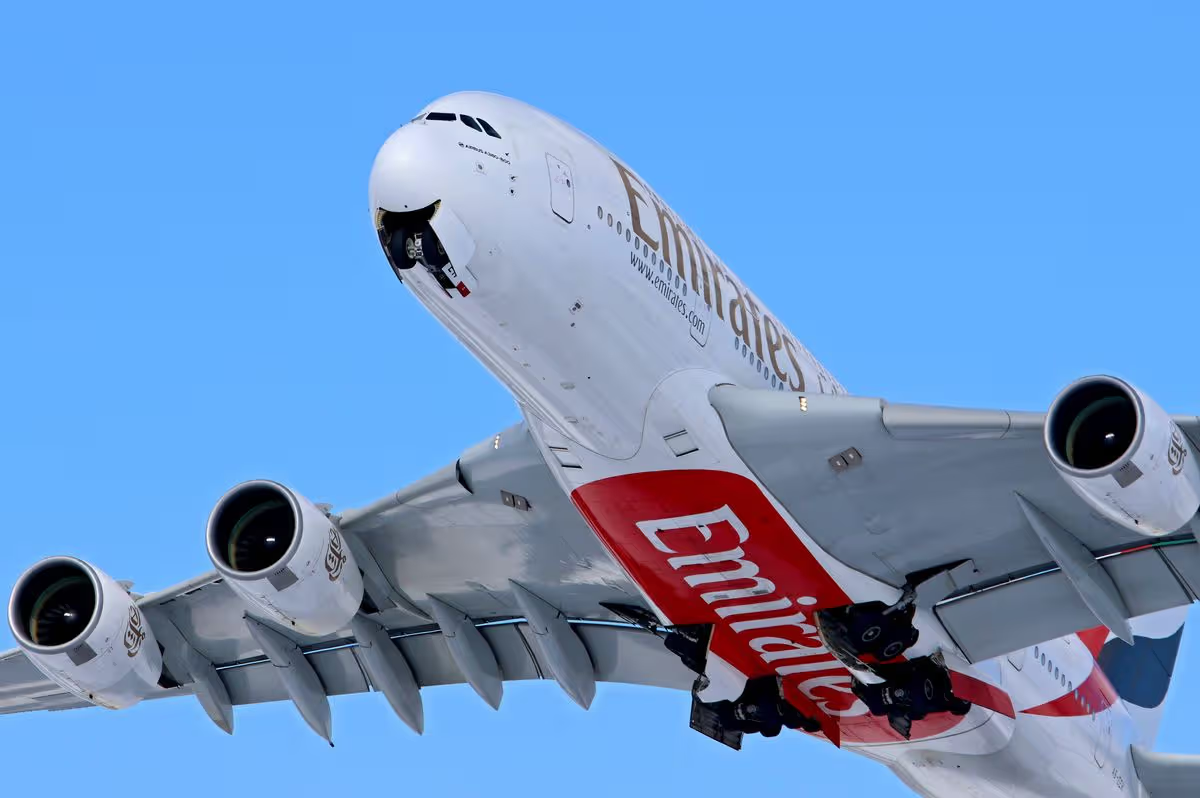
A major airline has issued an announcement to customers after an update to its service. Emirates carries hundreds of thousands of passengers on UK services every year going through airports including London Heathrow, Gatwick, Newcastle, Manchester, Birmingham and Glasgow.
Using its 615-seater A380s the route from London Heathrow to Dubai alone offers more than one million seats. Now those travelling on the aircraft will be able to access internet connections, which the airline hails as “better than at home” following the completion of the first installation of next-generation Starlink Wi-Fi onboard.
Making the announcement on Monday afternoon, the airline said: “Emirates A380 was one of the first commercial aircraft in the world to offer internet to its customers, with first generation systems offering a total aircraft bandwidth of less than 1 Mbps. Emirates’ installation of three Starlink antennas on each A380 will improve the Wi-Fi available onboard a thousand-fold – offering a ‘better than at home’ connectivity experience for customers, while flying at 40,000 feet.”
The first Emirates A380 aircraft equipped with Starlink made its return to Dubai this week, after its installation and certification were accomplished in Newquay. More A380s are scheduled for accelerated installation throughout 2026 allowing passengers to stream, game, browse, and work throughout their journey on personal devices.
The service will be complimentary for all customers. The airline has future plans to add Live TV streaming over Starlink, initially on personal devices and later integrated into seatback screens.
Making the announcement on X, the airline said: “Our A380 is entering a new era with next-gen @Starlink Wi-Fi onboard. Ultra-fast, complimentary connectivity across all cabins, customers can stream, browse and stay connected seamlessly at 40,000 feet. A fully connected journey, redefined.”
Content cannot be displayed without consent
And passengers were delighted to hear the news. One said: “Let’s go. The old system was under 1 Mbps.” Another added: “Please don’t ever ground this airplane.”
The “double-decker” Emirates Airbus A380 is the world’s largest passenger airliner. It is known for its onboard luxury including shower spas, onboard bars and lounge.
TUI, Jet2 and easyJet have all confirmed they will not add fuel surcharges to pre-booked or new package holidays and flights this summer
13:13, 26 Apr 2026Updated 13:13, 26 Apr 2026
TUI has confirmed it will not introduce fuel surcharges for passengers(Image: Getty Images)
Airline TUI has this afternoon released a statement for passengers worried about being slapped with surcharges on holidays they’ve already booked. The conflict in the Middle East has disrupted oil deliveries, raising the prospect of serious jet fuel shortages.
This has also caused fuel prices to skyrocket, leaving those who’ve already secured their holidays – and those preparing to – anxious they’ll be asked to stump up extra cash to offset the soaring costs facing airlines.
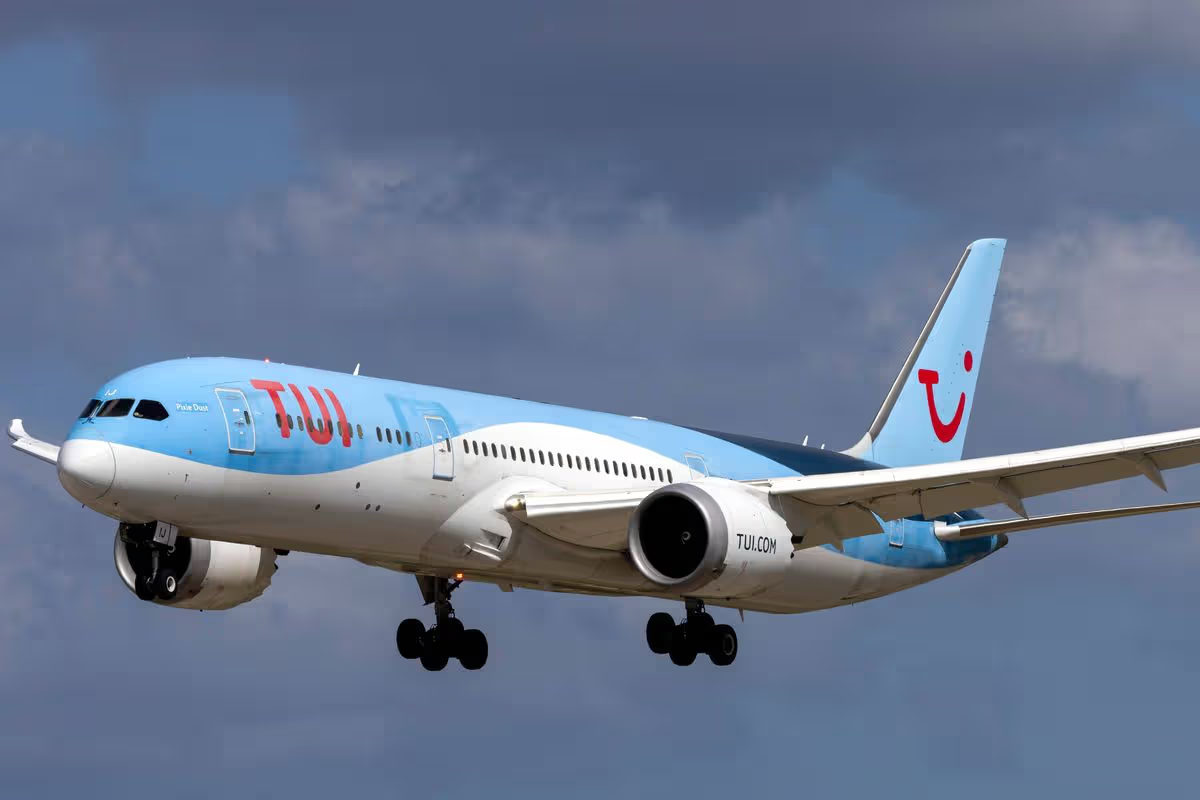
Jet2 and easyJet confirmed over the weekend that they will not be passing on any price increases to passengers via surcharges. Now, this afternoon, airline and tour operator TUI has announced it will not charge passengers additional fees.
Neil Swanson, Managing Director at TUI UKandI, said: “We understand that customers want both confidence and clarity when booking a holiday. Our teams are here to support people who are thinking about booking, and those who have already booked with TUI can be reassured that their holiday price is fixed, with no fuel surcharges added.”
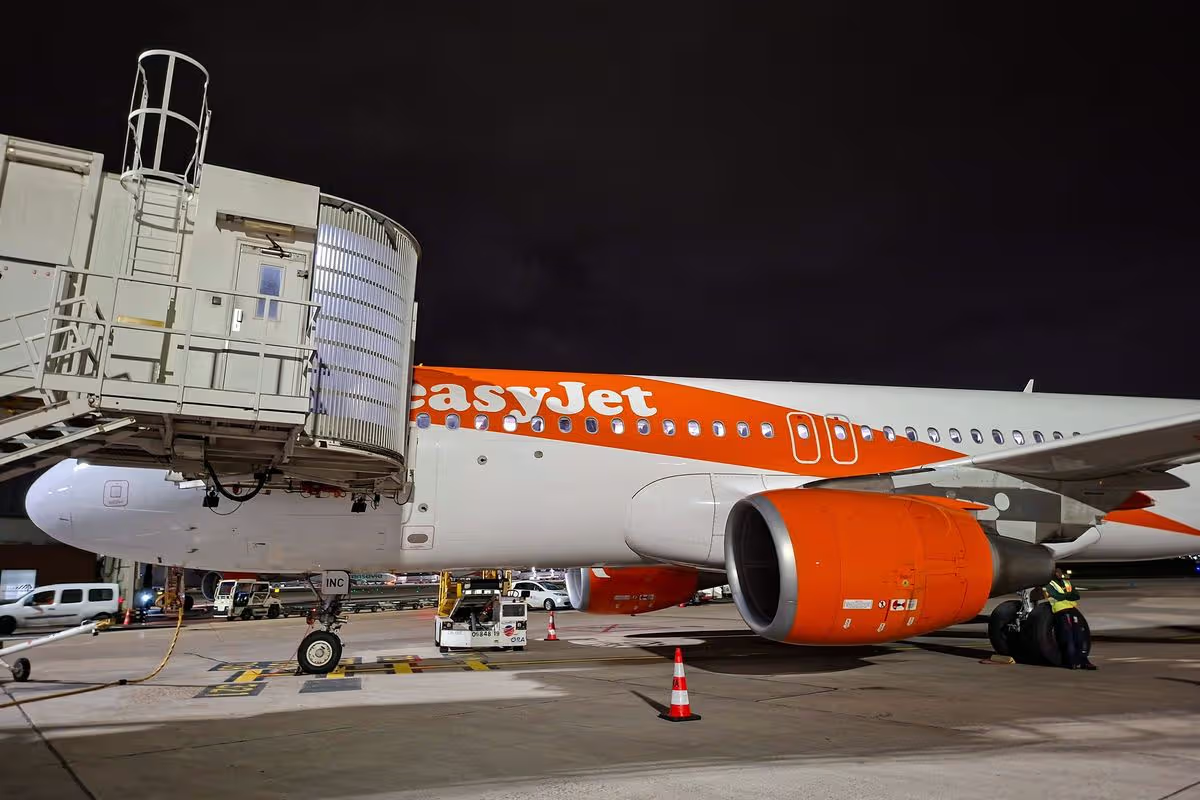
easyJet has issued a fresh statement confirming the airline and tour operator will not add surcharges to any pre-booked flights and package holidays, or future bookings. The company said travellers can book their package holidays with confidence thanks to its Best Price Guarantee and Ultimate Flexibility policy: “easyJet and easyJet holidays has confirmed that it will not introduce surcharges on its flights or package holidays, giving customers complete peace of mind when booking.
“No surcharges will apply to any pre‐booked easyJet holiday packages or to any new bookings for summer 2026.easyJet currently sees no disruption to its jet fuel supply and all flights and package holidays continue to operate normally.” Garry Wilson, CEO of easyJet holidays, said: “We know that holidaymakers may have questions about what recent global events might mean for their travel plans this summer so we are giving our customers absolute peace of mind that no surcharges will be added to their flights or package holidays.”
“Our operations remain unaffected, so customers can be confident that not only will their holiday go ahead as planned, but there will be no surprise extra payments, and they can enjoy their brilliant holidays at unbeatable prices.”
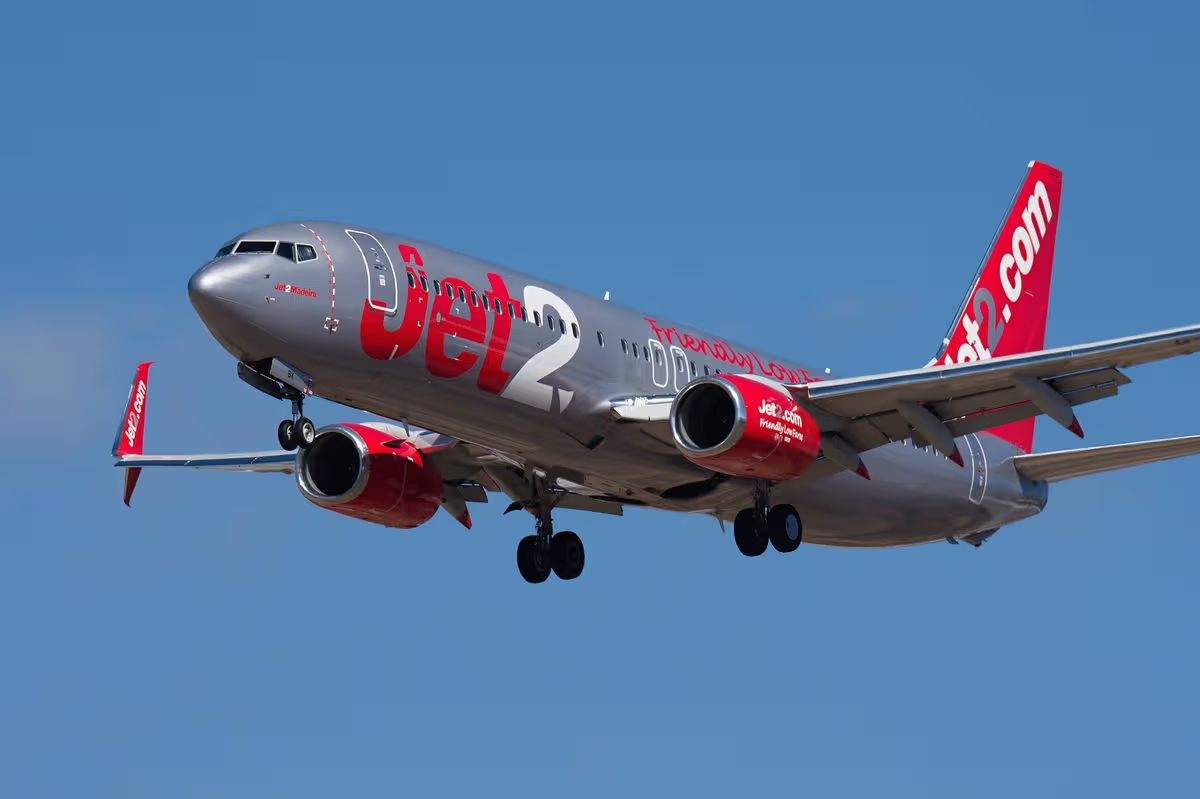
Jet2 has confirmed it won’t be slapping surcharges on any pre-booked flights or holidays to cover increased costs, including those related to jet fuel. In an effort to calm growing anxieties, the Department for Transport yesterday issued direct guidance to passengers with bookings through carriers such as Jet2, Ryanair, Wizz, easyJet and British Airways. Jet2 has axed surcharge provisions across all its flights and holidays, despite the carrier never having previously imposed them. The policy applies to all flights and holidays booked through any channel, be it online, via the mobile app, contact centre or independent travel agent. It does not cover tourist taxes, which are payable at the resort during the stay and are settled directly with the accommodation provider.
Steve Heapy, CEO of Jet2 said: “Holidaymakers should have every right to book their hard-earned break in the sun, without worrying about being hit with additional costs, and they can have that complete assurance when they book a flight or holiday with Jet2. As a result of today’s announcement, customers booking with Jet2 know that they are locking in their price without additional cost surprises later and we strongly believe that is the right thing to do by them. Ahead of a busy summer this is yet more evidence of why, on top of our incredible holidays and award-winning customer service, nothing beats a Jet2holiday.”
The DfT said on Friday: “There is no current need for passengers to change their travel plans. UK airlines buy jet fuel in advance, and airports maintain stocks to support their resilience. The government is working closely with the aviation industry to monitor risks and minimise disruption to passengers.
“If your flight is cancelled, you have clear legal rights, including the right to a full refund or re-routing. Read this factsheet for the full picture on the current situation and what it means for you.”
Meanwhile, IAG – the parent company of British Airways, Aer Lingus and Spain’s Iberia – has referred to “pricing adjustments to reflect these higher fuel costs”. A spokesperson commented: “We are not seeing jet fuel supply interruptions, but fuel prices have risen sharply and, despite our hedging strategy, which gives some shorter-term mitigation, we are not immune to the impact.”
Boss speaks out with pledge after big concerns about travellers being hit with ‘extra’ charges to cover soaring fuel
easyJet has issued a statement on if passengers will be hit with extra charges due to Iran crisis(Image: Getty Images)
easyJet has issued a major announcement for all holidaymakers with flights booked this summer. Concerns are mounting that the Iran situation, which has seen the crucial Strait of Hormuz closed and severely disrupted global oil supplies, could significantly affect jet fuel availability.
EU energy commissioner Dan Jorgensen has warned ‘it’s very likely that many people’s holidays will be affected, either by flight cancellations or very, very expensive tickets’ because of the crisis. Fears are growing that travellers could face additional charges from airlines attempting to manage spiralling fuel costs.
On Friday, Jet2 confirmed it would not impose surcharges on passengers – and now easyJet has released a fresh statement pledging the airline and tour operator will not add surcharges to any pre-booked flights and package holidays, or future bookings.
The company said travellers can book their package holidays with confidence thanks to its Best Price Guarantee and Ultimate Flexibility policy: “easyJet and easyJet holidays has confirmed that it will not introduce surcharges on its flights or package holidays, giving customers complete peace of mind when booking.
“No surcharges will apply to any pre‐booked easyJet holidays packages or to any new bookings for summer 2026.easyJet currently sees no disruption to its jet fuel supply and all flights and package holidays continue to operate normally.” Garry Wilson, CEO of easyJet holidays, said: “We know that holidaymakers may have questions about what recent global events might mean for their travel plans this summer so we are giving our customers absolute peace of mind that no surcharges will be added to their flights or package holidays.”
“Our operations remain unaffected, so customers can be confident that not only will their holiday go ahead as planned, but there will be no surprise extra payments, and they can enjoy their brilliant holidays at unbeatable prices.”
Jet2 has confirmed it will not impose surcharges on any pre-booked flights or holidays to offset rising costs, such as those linked to jet fuel. In a move to ease mounting concerns, the Department for Transport yesterday issued direct guidance to passengers booked with carriers including Jet2, Ryanair, Wizz, easyJet and British Airways.
Jet2 has scrapped the surcharge provision across all flights and holidays, despite the fact the airline has never previously applied them.
The policy covers all flights and holidays booked through any channel, whether online, via the mobile app, contact centre or independent travel agent. It excludes tourist taxes, which are payable at the resort during the holiday and are paid directly to the accommodation provider. Steve Heapy, CEO of Jet2 said: “Holidaymakers should have every right to book their hard-earned break in the sun, without worrying about being hit with additional costs, and they can have that complete assurance when they book a flight or holiday with Jet2. As a result of today’s announcement, customers booking with Jet2 know that they are locking in their price without additional cost surprises later and we strongly believe that is the right thing to do by them. Ahead of a busy summer this is yet more evidence of why, on top of our incredible holidays and award-winning customer service, nothing beats a Jet2holiday.”
The DfT stated on Friday: “There is no current need for passengers to change their travel plans. UK airlines buy jet fuel in advance, and airports maintain stocks to support their resilience. The government is working closely with the aviation industry to monitor risks and minimise disruption to passengers.
“If your flight is cancelled, you have clear legal rights, including the right to a full refund or re-routing. Read this factsheet for the full picture on the current situation and what it means for you.”
However, IAG – the parent company of British Airways, Aer Lingus and Spain’s Iberia – has spoken of “pricing adjustments to reflect these higher fuel costs”. A spokesperson said: “We are not seeing jet fuel supply interruptions, but fuel prices have risen sharply and, despite our hedging strategy, which gives some shorter-term mitigation, we are not immune to the impact.”
Passengers have been advised to check with their airlines before they travel
The Department for Transport has said ‘we recognise that families may be concerned’ amid jet fuel worries(Image: Getty)
The Government has said it is “closely monitoring” UK jet fuel stocks as airlines prepare for a potential shortage. UK airlines have insisted they are “not currently seeing a shortage of jet fuel” as they buy it in advance and airports maintain stocks, the Department for Transport (DfT) said in an update published on Friday evening.
But airports will also make it easier for airlines to cancel flights without running the risk of losing their allocated “slots” – scheduled times for take-off or landing which some UK airports assign to airlines – if fuel shortages prevent them from flying.
Passengers have been advised to check with their airlines before they travel – and ensure they have appropriate travel insurance, according to the DfT.
This comes as oil prices continue to soar on the back of the US-Israel war on Iran and the closure of the Strait of Hormuz.
“There is no current need to change upcoming travel plans,” the DfT statement said.
“Since the closure of the Strait of Hormuz, we have been closely monitoring UK jet fuel stocks and working with airlines, airports and fuel suppliers to ensure passengers keep moving and businesses are supported.
“Government regularly meets with industry to monitor risks, understand pressures and ensure clear communication with passengers, should circumstances change.”
It added: “We recognise that families may be concerned, and that aviation and tourism businesses are operating in challenging global conditions.
“We are working hand in hand with industry to help flights keep operating.”
The DfT said airlines will also no longer be required to follow the “use it or lose it” rule at UK airports, whereby airlines must use at least 80% of their allocated slots during a season to keep them for the following year.
“Airport Coordination Limited, the independent body that manages slot allocation at UK airports, has updated its guidance so that airlines will not lose their slots if fuel shortages prevent them from flying,” the DfT update said.
“Airlines can now apply for an exemption from the ‘use it or lose it’ rule in these circumstances.” A spokesperson for Jet2 said its flight schedule remains unaffected for the foreseeable future.
“We remain in continual dialogue with our fuel suppliers, as is standard practice,” the spokesperson said. “Based on the conversations we have been having, we see no reason not to look forward to operating our scheduled programme of flights and holidays as normal.”
The airline also confirmed there will be no surcharge on any booked flights or holidays to cover cost increases, including those linked to jet fuel.
“Amidst speculation that some airlines and travel companies may introduce such surcharges, which would mean their customers facing additional costs after making a booking, Jet2 has removed the surcharge provision across all flights and holidays, even though the company has never previously applied them,” the airline announced on Friday.
Steve Heapy, CEO of Jet2, said: “Holidaymakers should have every right to book their hard-earned break in the sun, without worrying about being hit with additional costs, and they can have that complete assurance when they book a flight or holiday with Jet2.
“As a result of today’s announcement, customers booking with Jet2 know that they are locking in their price without additional cost surprises later and we strongly believe that is the right thing to do by them.”
It is understood that Virgin Atlantic and easyJet are also expecting to operate as normal.
Travel expert Simon Calder has explored the latest challenges facing UK airlines and passengers amid jet fuel shortages caused by the Iran war
Robert Rowlands Deputy editor, money and lifestyle, content hub
15:53, 24 Apr 2026Updated 15:53, 24 Apr 2026
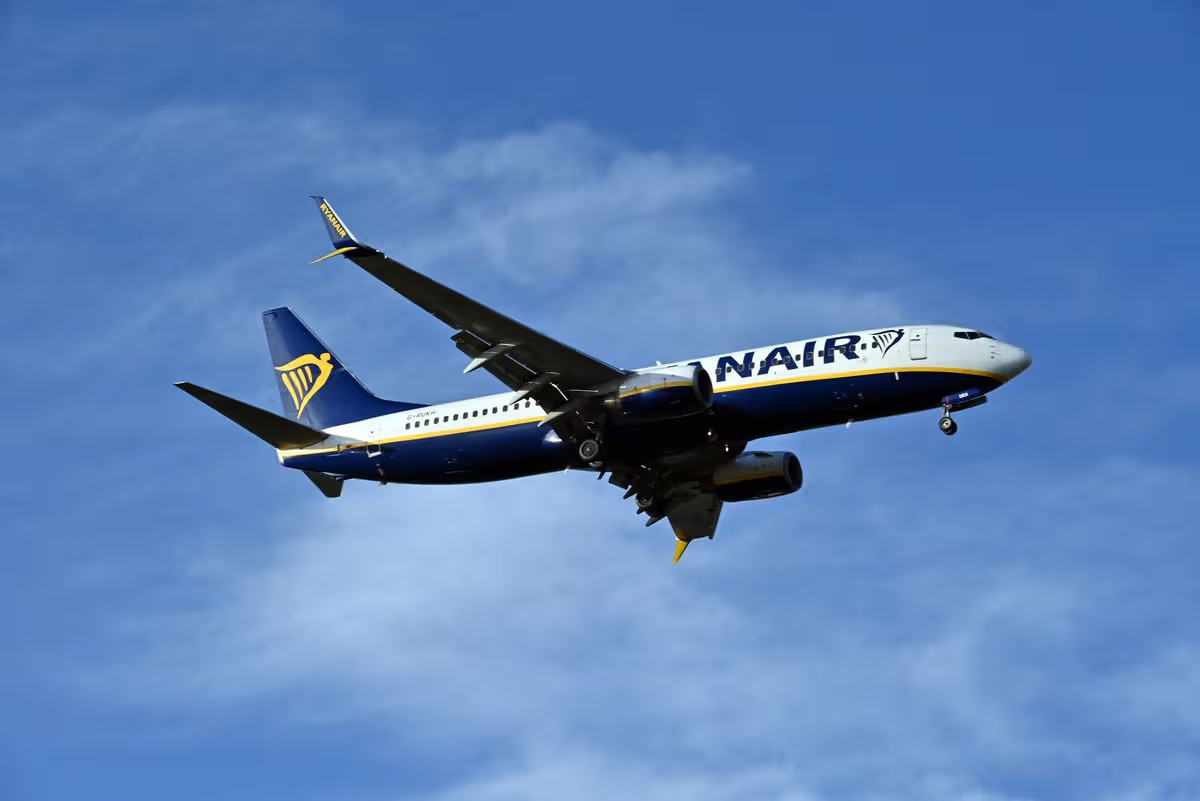
A Ryanair plane on final approach to Edinburgh airport, on January 28, 2026 – the airport was one of those discussed by Simon Calder in his podcast(Image: Getty)
Travel expert Simon Calder has released an update on his podcast about what to do should your flight be suddenly cancelled amid worldwide jet fuel shortages. The highly regarded travel journalist – well known for his frequent TV appearances and contributions to the Independent – has spoken with a prominent industry figure after seeing ‘so many people getting in touch feeling anxious about their holidays.’
He noted that many people were even contemplating whether to stay in England for their holidays. His remarks come as the Iran war continues to rumble on. The conflict, which began on February 28, has restricted the flow of oil and gas across the globe, placing pressure on markets and driving up the cost of jet fuel for airlines, reports the Liverpool Echo.
This week, jet fuel shortages have emerged as a significant concern, as statements from senior industry figures have sparked worry amongst ordinary travellers about the potential impact on their holidays this year. Dan Jorgensen, the EU energy commissioner, this week said: “Unfortunately, it’s very likely that many people’s holidays will be affected, either by flight cancellations or very, very expensive tickets. Even if we do everything we can do, if the jet fuel is not there, then it’s not there.”
Speaking on his podcast on Thursday, April 23, Simon began by saying: “You might be more inclined to stay in England because of all the headlines we’ve been seeing over the past couple of days. For example, Lufthansa of Germany said they were cancelling 20,000 flights.
“I’ve had so many people getting in touch feeling anxious about their holidays when I would hope they would be looking forward to them with great anticipation.” To tackle this, he spoke with Ted Wake, managing director of Kirker Holidays.
Simon put the question to him: “So just suppose I have booked a Kirker holiday. I’m maybe going to some of the great cities in Germany. Amazing cultural treasures to be found. And I’m flying maybe from Birmingham, from Edinburgh, from Glasgow, and suddenly Lufthansa cancels my flight. What do you do then as a tour operator?”
Ted responded: “We would find the nearest flight which would provide a sensible, practical alternative. We would liaise with the client about whether or not it was convenient for them and, if they’re in agreement, Kirker would pick up the tab for any logistical costs that have been incurred.
“There are occasions where tour operators like us might extend the client’s stay by an additional night and we might pick up the tab for that. But if you have booked through an ATOL-protected tour operator and the tour operator is mindful to nurture long-term relationships, it is in our interest to iron out the creases in that way.
“And you have mentioned some regional services there and it may be the case that Lufthansa cancel 1 or 2 of those but there will often be alternative flights, perhaps with a different carrier, and Kirker would pick up the tab for that as well as manage the logistical research in terms of what alternative flight could be suitable to ensure that people have a fabulous holiday.”
Ted’s remarks come just days after EU official Mr Jorgensen cautioned: “[Currently] it is primarily a crisis of prices and not yet a crisis of supply, but unfortunately we cannot be sure to prevent a crisis of supply, especially on jet fuel in the future, if the crisis continues.”
The International Energy Agency has similarly advised that severe supply disruptions could materialise within the next five or six weeks. It was against this backdrop that Simon addressed passenger concerns here in the UK.
Jet fuel flight cancellations and the EES
Ted highlighted that airlines are currently grappling with two distinct challenges – the jet fuel shortage and the new EES system. This system – the Entry/Exit System (EES) – is a new digital border arrangement that introduces additional checks for British travellers heading to numerous European destinations.
It launched this month. On your first visit following the change to a country within the so-called Schengen area (which encompasses many EU nations), you may be required to create a digital record upon arrival at an airport. You may be required to submit your fingerprints and have your photograph taken. The system has resulted in significant delays for some UK travellers since its introduction.
Ted discussed the jet fuel challenges confronting airlines and what this means for everyday passengers across the UK. He said: “I think Lufthansa has got a very comprehensive schedule. Twenty thousand flights isn’t a drop in the ocean but it’s a relatively small number if you look at the overall picture.
“I think other airlines within the UK market will be doing something similar. You might argue that it is a sensible logistical profit management exercise as well as a jet fuel situation, but I don’t see it having a major impact on consumers and if you book through a tour operator – of course, Simon, you tell your readers all the time and indeed your listeners for that matter – if you book through a tour operator, it’s a tour operator’s responsility to iron out all the creases so the consumer is not adversely impacted by the change.”
Jane Fallon has given her fans a health update after having her second surgery following her cancer diagnosisCredit: InstagramThe author who is the partner of Ricky Gervais, told fans earlier this month that she was suffering with breast cancerCredit: Getty
Posting a sweet pic alongside her cat Pickles on Instagram, Jane wrote: “Little update. So, my 2nd surgery went well.
“They got the clear margin they need on the original excision, which is great.
“They did hit a new little patch of precancerous cells on the other side of the new bit they took out but, thankfully, everyone agrees more surgery would be overkill.
“A huge % of pre cancer doesn’t develop into cancer.
“I saw the oncologist today & we’ve agreed the risks of radiation outweigh the benefits in my case.
“Which leaves Tamoxifen (or similar) or wait and see (my preferred option).
“I’m very nervous about going the drug route, because I know the side effects can be hideous, but I’m taking all the info on board & luckily there’s no pressure to make a quick decision.
“So, all good & I’m just looking forward to getting back to normal.”
Jane’s followers flocked to support her, including author Jojo Moyes who wrote: “Well done for getting through another surgery.
“Wishing you some reassuring news very soon x”
A fan added: “Happy to hear the update and it sounds very positive … yes take your time to decide , & so all the research … as of course you will x”
Another said: “That’s such uplifting news , so pleased your doing well. onwards and upwards x And cats will always upstage.”
This comes just days after Jane slammed a fake obituary that was published online after she was revealed she had cancer.
She said: “I’ve taken the post about the obituary down, because I don’t want people to think I’m upset by it. I’m not. P***ed off yes.
Breast Cancer Screening
Most women will have been told to check their own breasts for signs of lumps and bumps, but after a certain age you’ll be invited for a free NHS breast cancer screening.
You’ll automatically get your first invite for up to three years after you hit 50, as long as you’re registered to a GP surgery.
After that, you’ll be invited every three years until you turn 71.
If you’re a trans man, trans woman or are non-binary, you may be invited automatically, or you may need to talk to your GP surgery or call the local breast screening service to ask for an appointment.
If you have not been invited for breast screening by the time you are 53 and think you should have been, contact your local breast screening service.
But if you’re experiencing symptoms of breast cancer before you reach screening age, don’t wait to be invited – see a GP.
Do this even if you’ve recently had a breast screening.
“But more, I just want people to know that any photos you see of me in hospital, looking sad or with tubes sticking out of me are 100% fake – AI generated.”
Following her recent procedure, Jane told her followers she was feeling “remarkably fine” and in good spirits.
She assured people she wold update them once she had the medical all clear.
“Then 8-10 days wait for confirmation that they’ve got it all & the margins are clear (small % chance of more surgery if not),” Jane wrote.
She has been resting up at home with the support of cat Pickles.
Jane has been with comedian Ricky for more than 40 years after meeting back in 1982Credit: X/JaneFallonWhen Jane announced her diagnosis, Jane asked fans not to “panic” and said her prognosis was “excellent”Credit: InstagramJane is the author of 14 bestselling books such as Getting Rid of Matthew and Queen BeeCredit: Instagram/janefallon2
Several UK airlines may have to cancel flights or hike prices ahead of summer with travel experts warning passengers to ensure insurance is in check with ‘refund’ update
05:20, 23 Apr 2026Updated 05:20, 23 Apr 2026
EasyJet, Jet2 and Ryanair flight warning(Image: Pavel1964 via Getty Images)
As summer holidays are approaching and UK airlines are facing some disruptions due to the Middle East conflict, passengers have been urged to be aware of their refund rights.
Travel experts are warning holidaymakers to be aware of how to protect your plans before summer commences.
Fuel prices have nearly doubled since the war began, with the International Energy Agency describing the situation as potentially the largest energy crisis the world has faced.
A document has been submitted to ministers and the Civil Aviation Authority warning that if disruption “worsens” airlines in the UK will be forced to increase fares and cut flights.
Airlines UK, which represents a number of carriers, including EasyJet, Jet2, British Airways and Ryanair, say in the document that “the doubling of jet fuel costs (with fuel accounting for around one-third of airline costs) represents a major additional price shock”.
The letter is an attempt to get the government to step in to secure fuel supplies and give airlines more flexibility to cope with soaring costs.
One of the asks is to allow the temporary import and use of Jet A – a grade of jet fuel produced in the US, according to ITV.
The emergency document illustrates the financial fears of airlines, adding to the concern that flights may be cut or prices escalated.
A travel expert has warned that British travellers should ensure “travel insurance is in order” and “check booking terms” ahead of summer.
Airlines will still be required to offer full refunds, should flights be cancelled, or provide an alternative route.
The spokesperson for Ski Vertigo said: “This is a situation every traveller with a summer booking should be watching closely. Prices are already moving and the risk of cancellations is real, particularly on shorter intra-European routes where the economics are tightest.
“Our advice is to make sure your travel insurance is in order, check your booking terms, and keep a close eye on any communications from your airline.” They added: “If your flight is cancelled, airlines are still required to offer you a full refund or an alternative route, and their duty of care — covering meals, accommodation where needed, and rebooking — remains in place regardless of the reason for the disruption.
“However, because this crisis stems from a geopolitical conflict outside the airline’s control, it is likely to be treated as an extraordinary circumstance, which means financial compensation beyond a refund is unlikely in most cases.”
‘Unfortunately, it’s very likely that many people’s holidays will be affected, either by flight cancellations or very, very expensive tickets’
13:55, 22 Apr 2026Updated 14:53, 22 Apr 2026
Passengers have been told ‘it’s very likely that many people’s holidays will be affected’ by the European Union(Image: Getty Images)
The EU has issued a warning that Europe faces a “very serious crisis” as aviation fuel supplies begin to dwindle due to the conflict in Iran, and holidaymakers may need to alter their summer travel plans.
“Unfortunately, it’s very likely that many people’s holidays will be affected, either by flight cancellations or very, very expensive tickets,” Dan Jorgensen, the EU energy commissioner, told Sky News. “Even if we do everything we can do, if the jet fuel is not there, then it’s not there.”
Jorgensen added: “[Currently] it is primarily a crisis of prices and not yet a crisis of supply, but unfortunately we cannot be sure to prevent a crisis of supply, especially on jet fuel in the future, if the crisis continues.”
The International Energy Agency has cautioned that significant supply problems could emerge within the next five to six weeks.
Airlines are already implementing measures to curb demand: the Lufthansa Group, among Europe’s largest airline operators, has confirmed the scrapping of 20,000 flights over the coming months. Meanwhile, other carriers are hiking ticket prices on long-distance routes to offset rising fuel costs.
“If we had peace tomorrow and the Strait of Hormuz opens, I think we will manage without that happening, but I have to say that even in the best-case scenario, the price crisis will still last for quite some time,” Jorgensen warned.
“Gas infrastructure has been ruined to a degree that will take years to rebuild and this means for months and maybe years yet we will see much higher prices than we had before this crisis started.”
The head of Italy’s Civil Aviation Authority told Sky News that people should consider spending their summer holidays in their home countries.
“In the past petrol prices have reached and exceeded more than $100 without any significant side effects on air travel but this time, the psychological effect is having a destructive effect on passengers,” Pierluigi di Palma warned. “It is best to recommend holidays nearby, rediscovering beautiful places in our country. “For those who still want to risk taking a long trip, it’s a good idea to consider special insurance that can provide reassurance regarding a guaranteed refund in the event of a delayed or cancelled flight.”
The EU has unveiled a raft of measures aimed at curbing the impact of the energy crisis, including proposals to accelerate the rollout of renewable energy sources and incentives for households to install clean energy solutions such as heat pumps and solar panels. The bloc is also pushing member states to slash tax on electricity, in a bid to encourage more motorists to make the switch to electric vehicles.
A group representing British Airways, easyJet, Jet2, Loganair, Ryanair, TUI, UPS and Virgin Atlantic has given a stark warning to ministers about holidays this summer. According to ITV News, Airlines UK has told passengers, ‘you can forget your holidays’ according to Good Morning Host Susanna Reid.
The letter, which has gone to ministers and the Civil Aviation Authority, calls on the government and officials to change the rules to bring down passenger duty, allow more night flights, and also to scrap compensation for cancelled or delayed flights.
Presenter Susanna said: “You can forget about your summer holidays. That is the stark warning issued to some air passengers hoping to fly abroad this year. With the war in Iran doubling the price of jet fuel, airlines say they face having to increase fairs or cut flights altogether.”
Co host Ed Balls added: “UK operators are now calling on the government to bring in emergency measures. In a confidential letter seen by ITV News, they’re asking for help to protect fuel supplies, reduce taxes on tickets, and waive strict rules. on compensating passengers.”
ITV said airlines are urging the government to step in to protect business travel, holiday flights and freight operations from the economic fallout of the war in the Middle East. A confidential briefing document submitted to ministers and the aviation regulator, the Civil Aviation Authority, seen by ITV News, warns that if the disruption “continues or worsens,” airlines will be forced to cut flights and push up fares.
The document, from Airlines UK, which represents British Airways, easyJet, Jet2, Loganair, Ryanair, TUI, UPS and Virgin Atlantic, warns that jet fuel costs have doubled, with fuel accounting for around a third of airline operating costs.
Correspondent Nick Dixon said: “Airlines are now at the stage where they are monitoring their reserves of jet fuel very carefully, very closely. There’s no indication just yet of any immediate cancelled flights or fuel shortages, but the airlines clearly need a backup plan in the longer term. And they are pushing for that. Now, some of the airlines have already taken steps. Lufthansa, the European airline, has cancelled thousands of its short-haul flights in an effort to conserve jet fuel. EasyJet, Virgin Airlines, as well as others, have expressed a lot of concern about the coming weeks.
“Virgin Atlantic has cancelled one of its long-haul routes. EasyJet has said, really, beyond the next few weeks into mid-May, they’re not entirely clear on what they will do for jet. Let’s just take a look at what the airlines are asking from the government in this letter that you mentioned.”
In terms of the changes the airlines want, he said: “So firstly, they want to relieve or reduce air passenger duty to help bring down the cost of travel generally and holidays during this period. Allow for nighttime flights to keep things moving if the schedules are disrupted, and also to scrap compensation for cancelled or delayed flights caused by fuel shortages. All of that, of course, would have a huge impact. on passengers.
“What most passengers want to know is, will my holiday flight be affected? It may well be that if the airlines win concessions from the government, we start to see some tactical flight cancellations of what would otherwise be loss-making departures. Well, the Department for Transport has said that it’s continuing to work with fuel suppliers, with airlines, and international counterparts on our contingency emergency planning to ensure that people keep moving and businesses are supported while the conflict is ongoing. But it’s all quite vague really at the moment and very concerning for passenger passengers who have either spent hundreds if not thousands on flights or are looking to plan uh trips throughout the summer.”
The German airline is one of the biggest in Europe
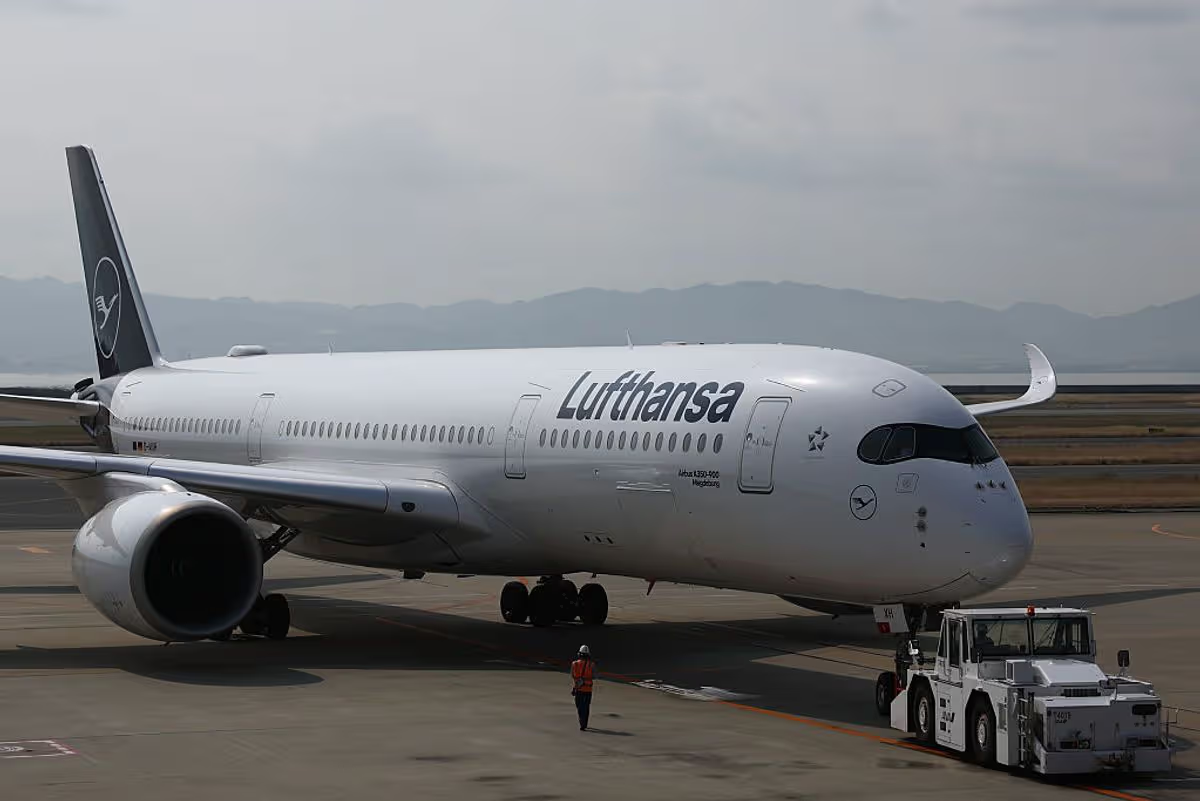
Lufthansa has announced it is cutting 20,000 flights (Image: Getty )
Lufthansa has issued a statement after energy bosses claimed Europe has six weeks’ supply of jet fuel left. Fatih Birol, executive director of the International Energy Agency (IEA), warned there could be flight cancellations ”soon” if oil supplies remain restricted by the Iran war.
When approached for comment, Lufthansa told the Mirror that it claims to be in a better position than most competitors regarding its kerosene requirements. A spokesperson for the airline said: “The Lufthansa Group has secured (‘hedged’) approximately 80 per cent of its kerosene requirements for 2026.
“And approximately 40 per cent for 2027 based, among other things, on the price of crude oil – both at pre-crisis price levels. With this level of hedging, we are in a better position than most competitors.”
It comes as the airline announced it will cut 20,000 short-haul flights from its schedule this summer to save money amid rising jet fuel costs. Most of these cuts are due to the shutdown of its unprofitable CityLine fleet and the retirement of its 27 planes. The airline pointed out that jet fuel prices have more than doubled and noted labour disputes involving its employees.
A statement on the Lufthansa Group website reads: “In total, 20,000 short-haul flights will be removed from the schedule through October, equivalent to approximately 40,000 metric tons of jet fuel, the price of which has doubled since the outbreak of the Iran conflict. The schedule adjustments reduce the number of unprofitable short-haul flights across the Lufthansa Group network.
“The planned consolidation of the European network is being carried out across Lufthansa Group’s six hubs in Frankfurt, Munich, Zurich, Vienna, Brussels, and Rome. Passengers will therefore continue to have access to the global route network, particularly long-haul connections. However, due to the increase in jet fuel prices, this will be achieved significantly more efficiently than before.”
On Tuesday, April 21, the Prime Minister discussed the Government’s work to ease pressures caused by the Iran conflict with ministers and officials at a meeting of the Middle East Response Committee. A government spokesperson said: “The discussion focused on the Government’s ongoing work to ease pressures being felt here in the UK.
“This included the diplomatic activity to promote progress on negotiations, and bring back security and stability for the region, and the military planning to restore freedom of navigation in the Strait of Hormuz. The Prime Minister acknowledged that the impact of the war in the Middle East will be felt beyond the end of the conflict, and stressed the importance of protecting British families.
“They discussed a range of ongoing contingency planning, such as our work with fuel suppliers, airlines and international counterparts, to ensure people keep moving and businesses are supported. UK airlines are clear that they are currently not seeing a shortage of jet fuel, and it is right that the Government continues to work with industry to ensure we closely monitor the situation.
“They said it was right that this Government is introducing wider measures to strengthen long-term resilience, including measures announced today to accelerate breaking the link between gas and electricity prices to support families and businesses under pressure and exposed to volatile gas prices.”
KERRY Katona has revealed she’s experiencing speech difficulties after she was rushed to hospital over stroke fears.
TheAtomic Kitten singer said she was with her partner Paolo Margaglione and her daughter Heidi who noticed that her mum’s face didn’t ‘appear right’.
Sign up for the Showbiz newsletter
Thank you!
Kerry Katona has shared a new health update after her recent hospital dashCredit: GettyThe TV personality said she’s suffering with aftereffects following the ordealCredit: Instagram / @kerryboutique.co.uk
Kerry, 45, was in London at the time of the incident, watching her eldest daughter Molly in a new play, when she fell unwell midway through the performance.
Although it was later ruled out as a stroke and most likely a result of stress, the mother-of-five said she’s still dealing with aftereffects.
Writing in her New column, she said: “I know I’m talking differently and I know my face looks different after my suspected stroke, but it’s actually loads better.
Kerry admitted that the terrifying ordeal had sent her anxiety through the roof.
She continued: “I’ve just got to try and not think about it, because I’m the worst hypochondriac in the world.
“It’s awful for my family, I think they’re all fed up and sick of me at this point.
“I have severe health anxiety, so when I start reading all the comments and I start learning all these new things that could be wrong, it makes me truly panic.”
Kerry opened up about the hospital dash earlier this month.
She told the Mirror: “I went to the toilet and noticed my face wasn’t right.
“And Heidi was like, ‘Mum, what’s wrong with your face?’ I started panicking. I discreetly left, went to my hotel and asked to see a doctor. I told the staff, ‘Something’s not right.’”
The mum-of-five was subsequently rushed to hospital in an ambulance.
“I got there, and they said, ‘We’re treating this as a stroke,’ so they blue-lit me in an ambulance from St Thomas’ to King’s College Hospital,” explains Kerry.
“They were shining lights in my eyes while my face and speech were getting worse.
“An hour ago I was watching our Molly in a play and now I’m being treated for a stroke. What the actual f**k? It just shows how quickly things can change.”
She said she felt ‘really scared’ and feared the worst but a stroke was later ruled out after a CT scan.
The Celebs Go Dating star revealed that her health scare was down to ‘delayed stress’ that can affect a person after they’ve ‘found peace’.
Following the incident, Kerry jetted off on holiday to Spain with her family to celebrate Dylan-Jorge’s 12th birthday but said she would see follow-up care when back in the country.
Kerry has Molly, 24, and Lilly-Sue, 23, with ex Brian McFadden; Heidi, 19, and Max, 17, with ex Mark Croft; and daughter Dylan-Jorge (known as DJ), 12, with late-husband George Kay.
Kerry exclusively told The Sun how things have been looking up for her ever since coupling up with new beau Paolo – 12 years her junior.
“Paolo is just a complete one-off,” she said.
“I’ve never met a human being like him. It actually makes me anxious, because I keep thinking it’s just too good to be true. I get emotional talking about him.
“I am so lucky I found him. I feel loved and wanted. I’ve never felt like that. I don’t think I’ve ever really truly been in proper love until I met Paolo. I don’t think I realised how starved I was of affection.
“I wasn’t even looking for a boyfriend or to get married again – I couldn’t think of anything worse. I wanted a pay cheque, exposure and a therapist [from the show]. Then I met him and thought, ‘You’re different.’”
Kerry said it was ruled out as a stroke but was likely the result of stressCredit: PA
THE closure of the Strait of Hormuz has resulted in the soaring price of jet fuel, which had led to fears of shortages across Europe.
Now, easyJet has issued an update for its passengers with growing fears that holidays could be affected from mid-May.
Sign up for the Travel newsletter
Thank you!
easyJet has issued a warning for its passengers due to fuel shortagesCredit: Getty TUI has also issued an update saying it will monitor flights from May 1Credit: Alamy
Javier Gándara, easyJetCEO for Spain and Portugal, has said that while the airline is continuing to operate as planned now, beyond three or four weeks and it’s “difficult to see” what will happen.
The three-week warning means easyJet passengers could face disruption from as soon as May 12.
However, Mr Gándara then added: “In Spain, we are in a comparatively better situation than neighbouring countries for two reasons.
“Firstly, because of all the crude oil that is imported and then refined here, only 11 per cent comes from the Middle East, which is the percentage affected by the closure of the Strait of Hormuz; the remaining 89 per cent comes from elsewhere.”
The travel giant said it is “monitoring” jet fuel shortages as a result of the Iran war, for all passengers flying from May 1.
On social media, one worried traveller asked the airline: “With the reported jet fuel shortages are you expecting holidays from May 1 to be affected?”
TUI responded: “We’re closely monitoring the developing situation in the Middle East and its potential impact on global aviation fuel supplies.
“At present, we’re not anticipating any immediate disruption to our flight schedules or holiday programmes from fuel shortages.“
The holiday chaos is caused from the ongoing Iran-US conflict with warnings that Europe could face jet fuel shortages due to the Strait of Hormuz remaining closed.
Getaways should not be seriously impacted immediately as airlines bought fuel far in advance at a fixed rate.
But if the crisis continues into June, operators may start adding a surcharge to holiday prices.
A limited number of flights may be cancelled, but mostly on well-served routes with alternatives.
If supplies start to dry up, cancellations would increase.
2. Am I entitled to a refund?
IF some or all of your holiday is cancelled by the provider, your refund depends on whether you booked your trip as a package holiday, or individually.
Your money tends to be much better protected with a package deal.
3. Is now a bad time to book?
There are some great deals, but book with caution.
You must take out travel insurance as, if your flight is cancelled, you may have protection against the cost of other elements of your holiday, such as accommodation.
Christina Applegate is speaking out amid reports of an extended hospitalization.
The acclaimed comedy actor, who was diagnosed with multiple sclerosis in 2021, has been the subject of regular news coverage in the years since her health first began to decline. TMZ on Thursday reported that she had been hospitalized in Los Angeles for undisclosed reasons, leading her friends and fans to extend messages of support.
“Thank you for the outpouring of love and well wishes,” Applegate said Monday in a social media post seemingly referencing such messages. The post included a photo of the actor’s recently released memoir, “You With the Sad Eyes,” and a coffee mug resting on what appears to be a home parapet.
She continued: “Health issues are a constant for me, but I’m a strong chick and I’m getting stronger and better every day. I’m taking a moment to focus on my health, but I’ll be back with more to say soon enough.”
Several of Applegate’s fellow actors offered support in the comments section, with Cheyenne Jackson writing, “Christina, just in case today’s mail got lost: We the public would like to formally submit that we adore you, support you, and RIDE AT DAWN FOR YOU ALWAYS.”
“Days of Our Lives” star Greg Rikaart echoed his sentiment: “Can’t think of anyone the collective culture roots for more than you.”
Applegate’s representative previously declined to comment on the hospitalization reports, telling Entertainment Weekly that the “Married … With Children” alum has “had a long history of complicated medical conditions that she has been refreshingly open about, as evidenced in her memoir and on her [‘MeSsy’] podcast.”
Applegate in March released “You With the Sad Eyes,” detailing everything from her unstable childhood to her decades-spanning acting career and the health issues that have plagued it.
“This book is not cathartic for me — let’s just go there,” Applegate recently told The Times. “I just needed to dump this s— out somewhere. It’s almost like you guys are now my therapists in the world.”
“There’s going to be really f— horrible s— and then we’re going to have fun stuff — because that’s what my editor told me to have (that’s a joke!) — and crap again,” the “Dead to Me” star said. “That’s my life.”
Following a major change made by Greece, the Foreign, Commonwealth & Development Office (FCDO) has updated the country’s travel advice for British holidaymakers
There’s been a major update for Brits travelling to Greece(Image: Getty Images)
The Foreign Office has issued an update on travel to Greece for Brits, and it’s good news.
Since the European Union’s (EU) Entry/Exit System (EES) was fully rolled out earlier this month, there have been major travel disruptions. Holidaymakers have reported substantial queues and delays at airports across Europe, with some lasting up to four hours, while hundreds have missed flights as they try to pass through the new digital border system.
In a bid to ease travel chaos, Greece has chosen to waive the EU requirement for Brits to submit fingerprints and facial scans at airport border controls. In a statement from the Greek Embassy, they announced: “Update for British passport holders travelling to Greece.
“In the framework of the implementation of the Entry/Exit System, as of 10 April 2026, British passport holders are exempt from biometric registration at Greek border crossing points.” There was no suggestion of how long the exemption would remain in place, but soon after, the Foreign, Commonwealth & Development Office (FCDO) revised its travel guidance for Greece.
In an update on Monday, 20 April, the FCDO stated: “Greek authorities have indicated that they will not collect biometric data (fingerprints and photos) for UK travellers as part of EES. Follow the advice of authorities on the ground. If you are a resident in Greece, make sure to show your residence documentation at passport control to ensure you are not registered in EES.”
Greece opted to ditch the new biometric security measures amid concerns about the significant travel chaos they were causing at airports, severely impacting holidaymakers. The relaxed EU rules from Greece are now hoped to improve travel for Brits into the country, allowing for a smoother journey without gruelling wait times and unnecessary delays.
Noting the impact of the EES, Luke Petherbridge, director of public affairs at ABTA, said: “While for many the travel experience remains smooth, we’re disappointed and frustrated to see some passengers being caught up in delays due to EES.
“Abta has been warning destinations and the (European) Commission for some time about the need for proactive steps to be taken to avoid delays, including the full use of contingency measures to stand down biometric checks at busier times, and adequate staffing, especially at peak times.”
The EES was fully implemented across European airports on April 10, 2026, and requires all Brits travelling to the Schengen area to “create a digital record” and register their biometric details, such as fingerprints and a photograph. It’s needed for their first arrival at the airport border in the Schengen area, and after the initial registration, the EES remains valid for three years.
Countries in the Schengen area include: Austria, Belgium, Bulgaria, Croatia, Czechia, Denmark, Estonia, Finland, France, Germany, Greece, Hungary, Iceland, Italy, Latvia, Liechtenstein, Lithuania, Luxembourg, Malta, Netherlands, Norway, Poland, Portugal, Romania, Slovakia, Slovenia, Spain, Sweden, and Switzerland.
However, as it stands, Greece is the only country to relax the EU requirements for Brits. The EES system is not required for travel into the Republic of Ireland and Cyprus, as they are not within the Schengen area.
As the European Union’s (EU) new Entry/Exit System (EES) is fully introduced, airlines have issued advice on what time Brits should arrive at the airport to avoid disruptions
11:45, 20 Apr 2026Updated 12:49, 20 Apr 2026
Brits have faced travel chaos amid the new border control system(Image: Getty Images/Stock Photo)
Airlines including TUI, easyJet and Jet2 have issued updates and travel advice amid the rollout of the European Union’s (EU) new Entry/Exit System (EES), urging travellers to arrive at the airport as ‘early as possible’.
Brits heading abroad have been hit with major travel disruptions following the rollout of the European Union’s (EU) new Entry/Exit System (EES). There have been reports of lengthy border control queues at European and UK airports, along with missed flights, as thousands of holidaymakers pass through the new digital border system for the first time.
The EES, which was fully implemented on Friday, 10 April, requires all Brits travelling to the Schengen area to “create a digital record” and register their biometric details, such as fingerprints and a photograph. It is required for their first arrival at the airport border in the Schengen area, and after the initial registration, the EES remains valid for three years.
The government noted that the EES “may take each passenger extra time to complete, so be prepared to wait longer than usual at the border.” Yet, travellers have reported gruelling delays of up to three hours and missed flights, and airlines have issued key advice to passengers as they grapple with the new digital border system.
TUI
In a travel alert on the EES, TUI advised passengers: “At some airports, you might still find longer queues, particularly at busy travel periods. We know this isn’t the travel experience you want before, or after your holiday – and it’s certainly not the one we want for you – so please know we’re doing all we can to support.
“To help your journey run as smoothly as possible, please allow a little extra time when passing through border control. Keep any essential medication in your hand luggage in case of delays, and when departing the EU, head straight to passport control after dropping your bags to avoid hold‑ups. Bringing some extra water for comfort is also a good idea.”
easyJet
In an “important update” released earlier this month, easyJet warned: “Airports across Europe may experience longer queues at passport control whilst the new European Entry /Exit System (EES) border checks are being completed.
“This will mean you may need to have your biometrics taken, including your face and fingerprints scanned.” They advised passengers to plan their travel to and through the airport as they may “experience longer queues”.
Travellers who need to drop off their bags should “go there as soon as it opens”, and then make their way through “security as early as possible”. They further cautioned that there could be additional checks at passport control before the gate, and that passengers should go to the gate or boarding area “as soon as it’s announced”.
easyJet added that travellers should ensure they have all the correct documents required for travel, although Brits do not need to do anything before arriving at the border for the EES. They further warned that there could be “longer queues” at their arrival airport.
Jet2
On expected delays from the EES, and how it could impact holidaymakers, Jet2 said: “There may be longer wait times at Border Control at some EU Airports, especially at busy times. Once you start your EES registration, it should take around 1-2 minutes per person to complete.
“There may be longer wait times than usual when you arrive in destination and before your flight back to the UK. Unfortunately, this is outside of our control. But remember, there’s nothing you can prep before you travel.”
Meanwhile, in response to a traveller following delays at Faro Airport, Jet2 advised on X: “We kindly recommend customers arrive to the airport as early as possible, to allow plenty of time to make it through.”
For travel back into the UK, Jet2 said: “You’ll also need to pass through EES when leaving the EU in the same way you do on arrival. Depending on how busy the airport is, this may result in longer wait times at passport control before boarding your flight to the UK. After checking in for your flight, please head straight to security and passport control in order to arrive at your gate in plenty of time.”
British Airways
On general information about the new digital system, British Airways explained on their website: “You should allow extra time to register your biometric details, such as fingerprints and a photo, the first time you enter the EU. There is no cost for EES registration, and your digital record will last three years before you need to register again.”
In response to a question on X about arrival times at the airport, a member of British Airways said: “Hi there. We ask customers travelling on our European short-haul flights to be there two hours prior to departure. It would be three hours if you’re travelling on a long-haul flight and one if you’re travelling on a domestic flight within the UK.”