At least 11 people believed to still be missing, with rescue operations underway.
Published On 17 Oct 202617 Oct 2026
The US coastguard has said it rescued 16 people from the Pacific Ocean after a boat sank off Mexico’s Baja coast.
The coastguard said on Friday it responded to a Mayday call reporting that a boat was sinking. The search is ongoing for 11 people believed to be still missing.
Recommended Stories
list of 3 itemsend of list
The boat went down about 225km (140 miles) west of Ensenada, Mexico.
A rescue helicopter reached the site about two hours after someone on the boat transmitted the Mayday call at about 1am (08:00 GMT) on Friday, said coastguard Lieutenant Santiago Tamburini.
It took about 90 minutes for the coastguard crew, which included a rescue swimmer, to pull the 16 people from the water, Tamburini said.
The people rescued were Mexican nationals, according to the Mexican consulate.
One survivor was being treated for a suspected shark bite and two were in critical condition, authorities said.
The rescued were flown by helicopter to San Diego, California, and transported to hospitals. The Mexican consulate in San Diego said it offered consular assistance.
The coastguard and US Navy are continuing to search the area with two helicopters, a fixed-wing plane, a cutter and a navy combat ship.
The boat sank in an area frequented by smugglers transporting migrants to the US. It is also popular with fishing and leisure boats.
Details about the boat’s origin, destination and what it was doing are not clear. No vessel, only debris, was found, and it was unclear what type of boat was involved, the coastguard said.
“Boats in that area can be for fishing, leisure, personal recreation. We just don’t know what they were doing out there. We all know it’s a suspected smuggling route,” Tamburini said.
A teacher fought the teenage shooter and a parent shot him dead, police say on Friday, a day after four people were killed.
Published On 17 Oct 202617 Oct 2026
The 16-year-old who killed three children and a teacher at an elementary school in the US state of Oregon was a former special-needs student at the school, police and school officials have said.
Bend Police Chief Mike Krantz identified the attacker on Friday, a day after the shooting at Silver Rail Elementary School, as Griffin J. John II.
Recommended Stories
list of 3 itemsend of list
He said the teenager attacked a classroom of special-needs students, where all the victims were shot.
Steven Cook, superintendent of Bend-La Pine Schools, said John was not enrolled in the local public school system at the time.
“That classroom was a special needs classroom, and the suspect was a special needs student in that school,” Cook told a news conference.
Krantz said John shot his way through locked doors with a 12-gauge shotgun, firing as many as 15 shots, and had about 44 rounds left when he was killed. Police are still trying to determine how he obtained the gun.
Under Oregon law, a minor may possess a shotgun if provided by a parent or with a parent’s consent.
The shooter’s mother, Shauntai Nickerson, separately told reporters outside her apartment: “I’m so sorry, I wish I could have done something.”
A teacher threw her phone at the gunman, then tackled and fought him, likely saving lives, Krantz said, calling her actions “heroic”. She was not injured.
A 36-year-old father, Kaylub Giamanco, who has two children at the school, then followed the gunman inside and shot him dead minutes after the first 911 call.
US President Donald Trump called Giamanco a “great hero”. “It’s a terrible thing, but thank goodness for a man that had a gun and knew how to use it,” Trump said.
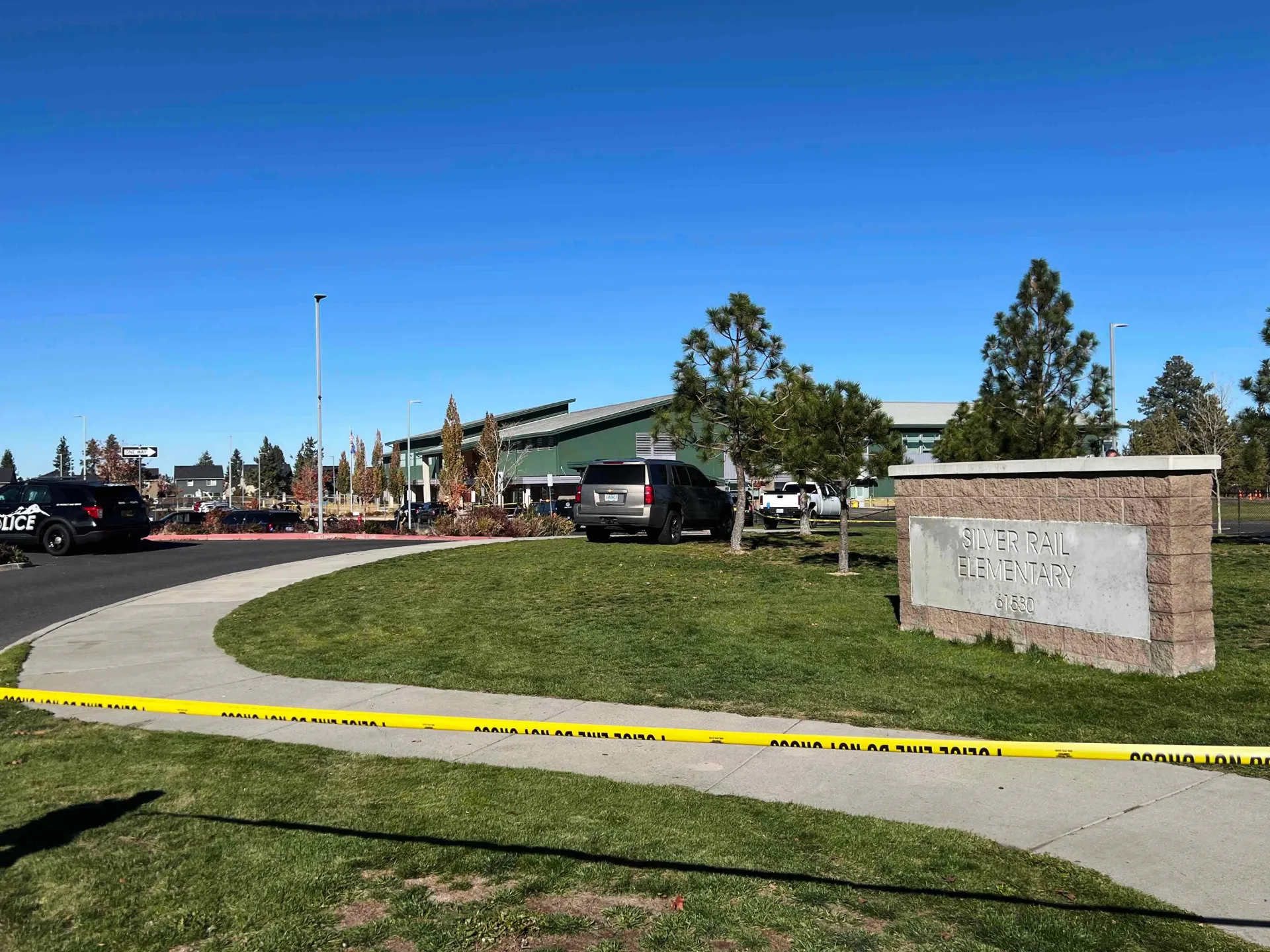
People mourn next to a cordoned-off area at Silver Rail Elementary School in Bend, Oregon, on October 16, 2026, the day after a shooting [David Ryder/Reuters]
The children killed were aged five, eight and 11, and the teacher was Meghan Lambert, 25, police said.
A seven-year-old child and a 54-year-old teacher were taken to hospital in critical condition.
The shooting is the 28th mass killing in the US this year, according to a database by The Associated Press, USA Today and Northeastern University.
The Gun Violence Archive in the US has documented 369 mass shootings in 2026, defined as incidents in which four or more people are shot.
The Everytown for Gun Safety group has counted at least 100 incidents of gunfire on school grounds this year, with 34 deaths.
Al Jazeera has confirmed that White House press secretary Katie Zacharia is “transitioning out” of her role after less than a week on the job. President Donald Trump said he had told Zacharia she “should reconsider” her role, citing harsh media and public scrutiny.
Ukrainian President Volodymyr Zelenskyy warned Russia’s ambitions extend beyond eastern Ukraine, saying its drone attacks threaten NATO. Speaking after an EU summit in Belgium, he also took a jibe at US President Donald Trump for saying he is harder to deal with than Putin.
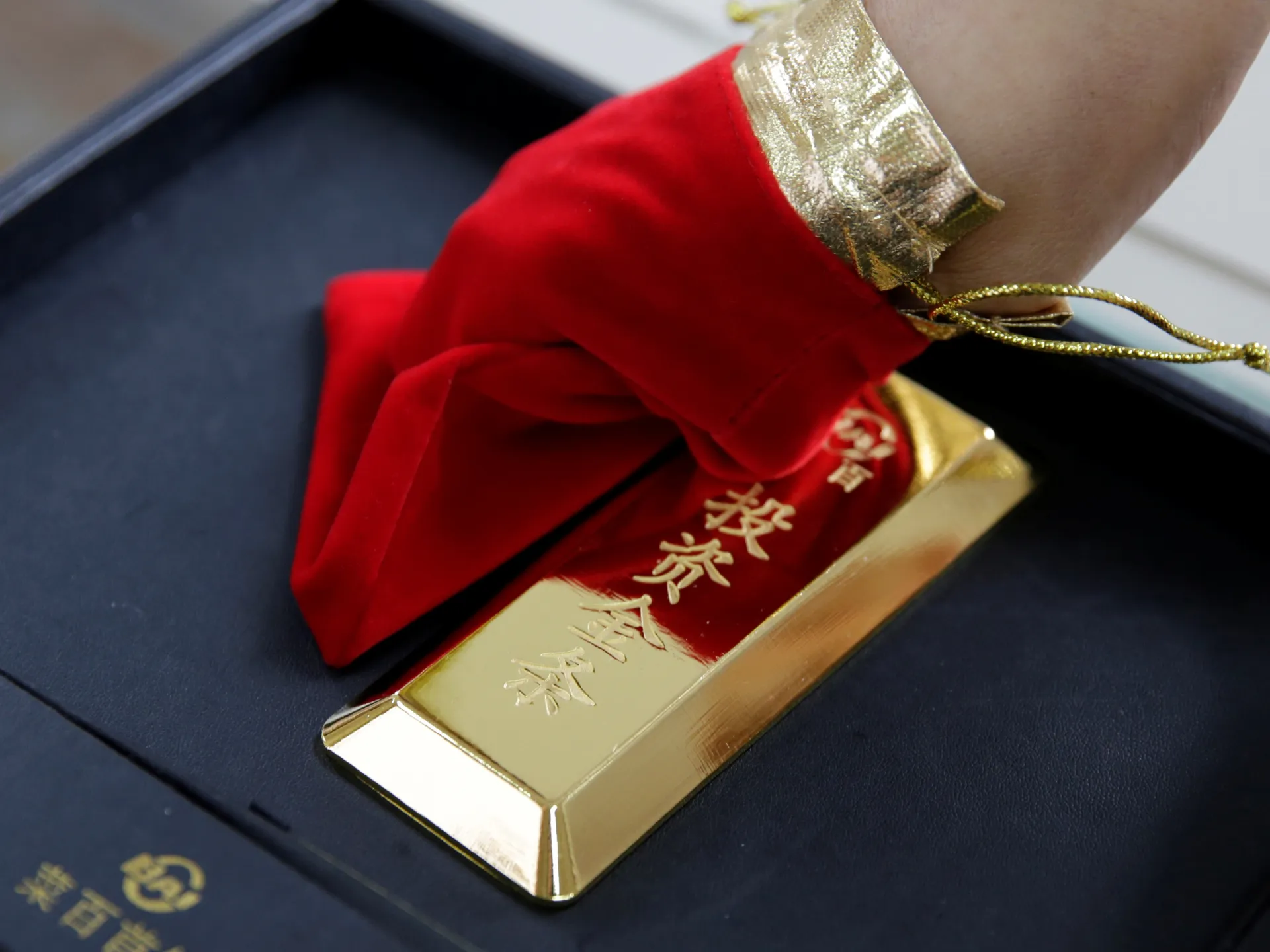
China is increasing its gold reserves in a bid to reduce its dependence on US dollar assets and protect against financial and geopolitical risks, analysts say, while households are turning to the precious metal amid uncertainty over the domestic economy.
The People’s Bank of China reported buying gold for a 23rd consecutive month in September, when the country’s central bank also made its largest monthly purchase in nearly three years. The sustained buying points to a longer-term effort to spread risk associated with its vast reserves, experts say.
Among concerns is high US debt and Western governments’ freezing of assets, which has highlighted the inherent risk in holding money overseas, particularly for emerging market and Global South economies. Gold bought and stored domestically offers protection against that risk because access does not depend on the will of another government.
But central bank buying and household demand for gold in China have different drivers. While Beijing is managing its financial exposure, private investors are seeking somewhere to preserve their savings. Here is what we know.
How much gold has China bought?
China’s central bank added approximately 23 tonnes of gold in September, bringing its reported holdings to about 2,410 tonnes, according to the World Gold Council. That was its largest monthly purchase since October 2023. Gold accounted for 8.5 percent of China’s total official reserves at the end of September, compared with 5.5 percent at the end of 2024.
Reserves are assets central banks hold to ensure they can meet international payments and respond to financial disruption. They usually include foreign currencies, foreign government debt and gold.
Private demand for gold within China has also risen, with purchases of gold bars and coins 28.4 percent higher in the first half of 2026 than during the same period last year, according to the China Gold Association. The buying of gold has continued amid falling prices, with gold down around 8.5 percent over the month.
The World Gold Council attributed the decline in gold prices partly to a stronger dollar and higher returns on US government debt. With interest rates going up in an attempt to curb inflation, these investments are attractive for buyers as they pay interest, making them more attractive to private investors than gold, which does not.
Why is China buying more gold?
A key objective is to reduce dependence on US government debt, known as Treasuries, according to Thu Lan Nguyen, head of commodity research at Commerzbank in Frankfurt.
China holds substantial reserves in dollar-based assets and, therefore, buying gold reduces its exposure to decisions taken in Washington. “China’s gold purchases are part of a broader effort to make its reserves more resilient,” Nguyen told Al Jazeera.
The freezing by Western countries of roughly $300bn in Russian Central Bank overseas assets following Moscow’s invasion of Ukraine in 2022 demonstrated how reserves held abroad can quickly become inaccessible.
The concern for China may be that a future confrontation with Washington could expose some of its overseas assets to similar restrictions. “Gold held domestically has a crucial advantage in this respect: it does not represent a claim on another country and is therefore much less exposed to sanctions or asset freezes,” Nguyen said.
“I would interpret it primarily as risk management,” she added, pointing to increased geopolitical tensions and economic and fiscal risks.
America’s rising debt, which hit $40 trillion for the first time in history earlier this year, adds another source of uncertainty. In February, the US Congressional Budget Office projected that federal debt held by the public would rise from 101 percent of the size of the US economy in 2026 to 120 percent in 2036. That provides context for concerns about Washington’s ability to repay that debt going forward should an economic crash occur. Much of this debt is held by China. Gold, therefore, offers a less volatile and risky asset to hold.
Chinese households have different motivations for buying gold. When confidence in other investments weakens, gold can become more attractive as a way to hold savings. “Strong demand for gold can partly reflect a search for alternative stores of value,” Nguyen said.
The World Gold Council has identified weak Chinese share markets as one factor supporting domestic demand for gold, while its property market is burdened by heavy borrowing and overbuilding, contributing to a fall in housing prices, making it a poorer investment.
What this means for the US dollar
Analysts warned that China’s increased buying of gold does not signal an imminent end to the dollar’s global dominance. “I would be cautious about describing this as a major shift away from the dollar,” Nguyen said. “The dollar remains by far the dominant global reserve currency.”
But a gradual shift could still matter if China and other central banks put more of their new reserves into gold, buying fewer US assets than they normally would. That could weaken one source of demand for US government debt. But the effect would depend on how widely and quickly the shift developed.
“The key point is, therefore, that this is likely to be a slow diversification process rather than a sudden abandonment of the dollar,” Nguyen said. She added that the consequences for the US economy would remain limited unless the trend broadened and accelerated substantially.
Central banks also need readily available foreign currency to support international payments and the dollar remains central to those transactions. So gold can provide financial protection, but it cannot directly replace all the functions of dollar reserves.
Who else is buying gold?
China is part of a wider trend, particularly among central banks in emerging economies, Nguyen said.
“The trend is particularly visible among emerging market central banks,” Nguyen said. “But sanctions are only part of the story.”
Poland has also become a more prominent buyer. Its central bank purchased 31 tonnes in the first quarter of 2026 and another eight tonnes in July, according to the World Gold Council.
Large holdings do not necessarily indicate recent purchases. India, for example, confirmed in June that its physical gold stock remained unchanged at about 880.5 tonnes. India’s gold reserves have changed little since mid-2025, according to the World Gold Council. It bought about four tonnes in 2025, down from 73 tonnes in 2024.
Despite China’s sustained buying, its reserves remain far smaller than those of the United States. Its holdings of about 2,300 tonnes at the end of 2025 amounted to less than one-third of the US stockpile of approximately 8,133 tonnes.
United States President Donald Trump has for the first time explicitly ruled out the use of a nuclear weapon against Iran, but has not denied US media reports that his administration is considering deploying the US’s most lethal non-nuclear munition, nicknamed the “mother of all bombs” in the near future.
In an interview published on Thursday by right-wing American news site Newsmax, Trump suggested he does not plan to use nuclear weapons, but also clarified that the devastating aerial weapon, the GBU-43/B Massive Ordnance Air Blast Bomb (MOAB – ‘mother of all bombs ) “is not nuclear”.
Recommended Stories
list of 4 itemsend of list
“I wouldn’t use nuclear. We don’t have to. We’re the greatest nuclear power in the world,” he told Newsmax.
The comments marked Trump’s first definitive statement on the nuclear topic following speculation about a possible atomic conflict earlier in the US and Israel’s war on Iran. They also appeared to confirm speculation that another phase of the war is imminent, likely after the US midterm elections on November 3.
Here’s what we know:
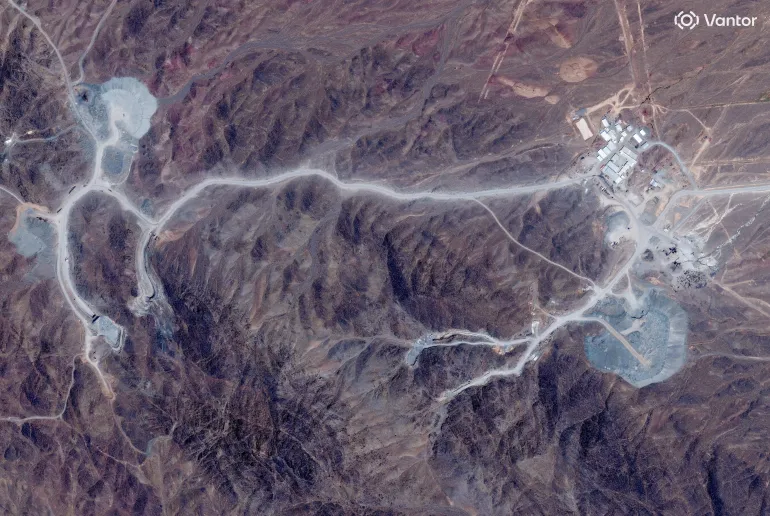
A satellite view of tunnel entrances on Pickaxe Mountain at the Natanz nuclear facility in Iran, June 30, 2026 [Vantor/via Reuters]
What did Trump say?
Trump told Newsmax that the US might indeed launch another strike on Iran’s nuclear sites, particularly on Pickaxe Mountain, where Tehran is believed to be hiding a nuclear facility deep under layers of granite.
He ruled out using a nuclear weapon or a tactical nuclear weapon.
“I wouldn’t use nuclear. We don’t have to. We’re the greatest nuclear power in the world,” he said.
He also clarified that the MOAB, which CNN reported the US government is considering using, “is not nuclear”.
Responding to a question about whether the MOAB is “tactical nuclear” – meaning smaller nuclear munitions – Trump reiterated that it is not.
“Well, the mother of all bombs is not nuclear,” Trump said. “It’s not nuclear at all. This is just an extremely large bomb.”
Trump declined to say whether he had authorised its use in Iran.
Trump also suggested renewed attacks are likely in the near future. The US cannot end the war now because it has to ensure Iran cannot produce a nuclear weapon, he argued, saying he believes that “if they had it, they would use it, in my opinion, instantaneously”.
Trump also reiterated that the war would end “very soon” whether by force or diplomacy and that oil prices would then drop.
When asked if he would put “troops on the ground”, Trump said: “No, I don’t see that, I don’t see it.” Earlier in the war, Trump had made comments regarding sending in troops, a move analysts said would be devastating for US soldiers because of Iran’s mountainous territory.
What is the ‘mother of all bombs’?
The MOAB carries a massive payload of about 8,500kg (18,000 pounds or 8.5 tonnes) of high explosives. It weighs 9,800kg (21,605 pounds or nearly 10 tonnes) – about the same as four cars – and is just over nine metres (about 30 feet) long. Stealth bombers are too small to carry it, so it has to be deployed by larger, Lockheed C-130 Hercules transporters.
It is designed to explode a few metres above the ground, sending out intense fireballs that can blast buildings and other hard-surface structures within a 1km radius, experts have told Al Jazeera. It is so powerful that a mushroom cloud from its blast has been seen 32km (20 miles) away in tests, the US Air Force has said.
“Its large explosive charge can produce devastating blast effects against exposed personnel, equipment and vulnerable structures,” Brussels-based military and weapons analyst Elijah Magnier said. “Its purpose is to generate an exceptionally powerful blast across a surface area.”
However, Magnier said there is doubt about whether using the massive surface explosive would be effective against deeply buried nuclear installations in Iran. He added that the terrain in Iran could be difficult for larger cargo aircraft to access.
What has Trump previously said about nuclear weapons?
Trump has never explicitly mentioned using a nuclear weapon, but he has also never ruled it out.
Speculation regarding whether Washington might use nuclear weapons was rife in the early days of the conflict, largely because of the extreme nature of Trump’s numerous threats against Tehran.
In April, for example, as Iran enforced a blockade on ships in the Strait of Hormuz, Trump posted on his Truth Social site that “…a whole civilisation will die tonight, never to be brought back again”, if Iran did not agree to a peace deal and reopen the strait.
He also threatened to destroy Iran’s infrastructure, saying a bombing campaign “will be Power Plant Day and Bridge Day, all wrapped up in one”, in Iran.
Experts widely interpreted his statements as a threat of nuclear destruction, but one that still failed to force Iran to the table.
Although Trump largely moved away from his sabre-rattling rhetoric in the following weeks, he reiterated at the United Nations General Assembly in New York last month that he could “annihilate” Iran. He also told the assembly that he believed a deal would emerge after the midterms.
What is a ‘tactical’ nuclear weapon?
“Tactical” nuclear weapons (TNW) are smaller nuclear munitions designed for the battlefield as opposed to strategic nuclear munitions designed for mass destruction.
Some perceive TNWs as having a lesser impact than an atomic bomb, but experts warn that their names are misleading and they can nevertheless be devastating. Their explosive yield, between 0.3 and 50 kilotons, can impact areas within a 500-600km radius.
The US dropped a 15-kiloton nuclear bomb on Hiroshima, meaning that weapon would today be considered a TNW. The US, North Korea and Russia have TNWs in their arsenals, although no country has ever used them. TNWs are not subject to any international treaties and are largely unregulated.
What might another US attack on Iran look like?
With Trump failing to rule out dropping the MOAB, analysts speculate that the US might launch another – perhaps final – intensive bombing campaign targeting Iran’s nuclear and defence sites, particularly Pickaxe Mountain.
The US could also continue its naval blockade on Iranian ports, while providing escorts for commercial ships through the Strait of Hormuz.
Iran has vowed to respond to escalatory strikes by targeting oil and digital infrastructure in neighbouring Gulf states.
Senior defence officials have also warned that Iran will invade its neighbours if the US launches a ground operation, although Trump appears to have ruled that out.
Earlier in the war, he hinted at the possibility of sending ground forces to retrieve some 400kg of “yellowcake” – highly enriched uranium that Washington and Israel claim Tehran has hidden underground.
Trump’s phone calls in March to Kurdish militia groups fighting Iran provoked speculation that Washington could coordinate with them for an invasion, although that did not happen.
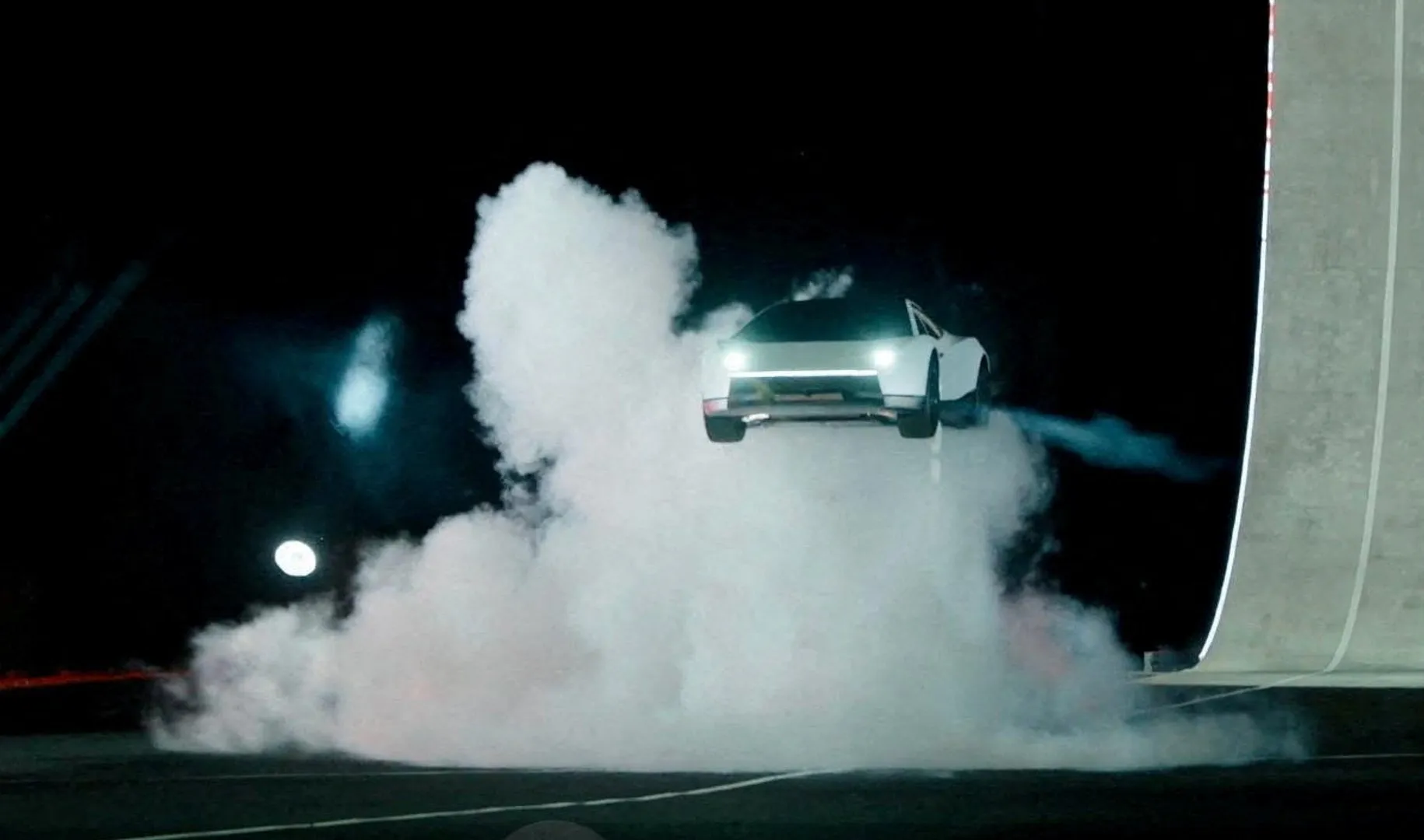
Tesla has unveiled an electric sports car that can drive upside down and use rocket-like thrusters to jump and turn mid-air. Developed with Elon Musk’s SpaceX, it can reportedly accelerate to 97km/h in under a second. First promised in 2017, the car is now expected in 2028.
Vibe coding allows people to use AI to build software without writing code themselves. And now, free AI-generated alternatives to popular programmes like Premiere Pro and Excel are emerging, sparking security concerns and hidden costs.
Authorities have indicated that the shooter was killed by gunfire, though details remain scant about the attack.
Published On 15 Oct 202615 Oct 2026
At least four people have been killed, including three children, in a shooting at an elementary school in Oregon, part of the northwestern United States, according to statements from law enforcement to CBS and CNN.
The shooting on Thursday took place at Silver Rail Elementary school in the city of Bend, about 160km (100 miles) southeast of Portland.
Recommended Stories
list of 3 itemsend of list
Authorities have said the shooter is dead, though it is unclear whether he is among the four people included in the initial death toll.
“We’re in the process at this time of going room by room and evacuating each of the people who are in that school,” said Sheila Miller, the communications manager for the Bend Police Department on Thursday. “This is the kind of thing we never want to see happen in Bend. It’s devastating.”
Miller said authorities received a call about a shot fired into a car outside the school at 12:59pm local time (19:59 GMT) and arrived on scene within minutes.
The suspect was shot and killed shortly after, though Miller said she did not know whether police or a bystander had subdued the alleged assailant.
The number and condition of those injured were not immediately known.
Kash Patel, the director of the Federal Bureau of Investigation (FBI), said in a post on social media that the agency was on the scene assisting local law enforcement in the investigation.
“We will make every resource they need available,” he wrote.
Oregon Governor Tina Kotek also said she was closely monitoring the situation.
Jeff Merkley, who represents Oregon in the US Senate, was among the political leaders to offer condolences in the wake of the shooting.
“My heart is with the Bend community and all of the students and families affected. No one should have to fear violence at school,” he wrote in a post on the social media platform X.
A round-faced man with dark-rimmed glasses, a moustache and short-trimmed hair, Ismael came to the US when he was only five years old.
Southern California became his home, and as an adult, he qualified for the Deferred Action for Childhood Arrivals (DACA) programme, which offered temporary protection against deportation.
He lost his DACA status, however, in 2015 after a conviction for driving under the influence.
His family remembers him as a caring son and uncle, always willing to buy his niece and nephew new clothes or school supplies.
“Ismael was always looking after his siblings. He just had a big heart,” said his brother, Jose Miguel Ayala. “He was very protective of not just us, but my mum and dad too.”
He was 39 years old when he was brought to the Adelanto ICE Processing Center.
Two weeks after his arrival, Ismael told his family that he developed a high fever and a painful sore on his backside.
On September 18, 2025, workers at Adelanto initiated a Code Blue alert for Ismael, signalling a life-threatening medical emergency. Medical staff rushed him from his dorm to the infirmary in a wheelchair.
ICE documents show that Ismael was given pain medication, an ointment and a fibre supplement.
But according to Physicians for Human Rights’ Cuneo, who reviewed the case, Ismael should have received a physical examination and antibiotics.
“That is a major failure,” Cuneo said.
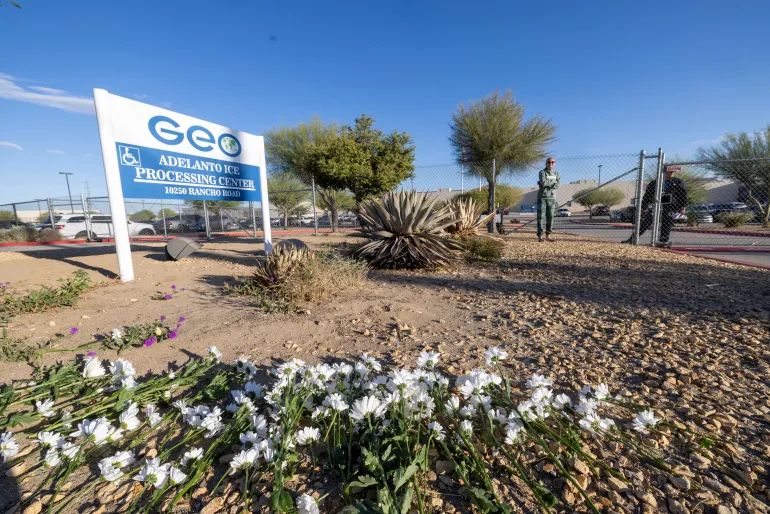
Demonstrators leave white flowers outside the Adelanto ICE Processing Center on September 29 in solidarity with those detained inside [Jill Connelly/AP Photo]
That weekend, hours after Lucia’s visit, Ismael’s condition worsened. Just after midnight on Sunday, ICE records say he was vomiting, shaking and sweating.
According to ICE documents, he was later sent to an intensive care unit, where he went into cardiac arrest within minutes of his arrival and subsequently died.
“I believe Ismael’s death could have fully been prevented by timely care,” Cuneo said. “It was a simple abscess that was not treated in a timely manner.”
Fault Lines obtained a coroner’s investigation that reveals Ismael was critically ill when he first arrived at the hospital, a fact that was left out of ICE’s public report on his death.
The coroner’s report also contradicts ICE’s timeline for Ismael’s death. It indicates Ismael went into cardiac arrest early on September 21, nearly a full day before he passed away. Medical staff, however, managed to restore his heartbeat after intubating him.
That conflicts with ICE’s report, which only notes his pulse stopping once: shortly before his death was announced on the morning of September 22. ICE described his condition on September 21 as “calm and cooperative”, but it signalled no heart problems.
“If they had given him the medical care and what he needed, maybe he would be here with us,” Lucia said.
In a statement about Ismael’s death, ICE said detainees receive “comprehensive medical care” throughout their time in custody.
But California’s Attorney General Rob Bonta told Fault Lines that his office found “the exact opposite” during its inspections of the state’s detention centres.
“We’ve gone to these facilities. We’ve gone into Adelanto. We have done our own physical inspections,” Bonta explained.
“If what the ICE spokesperson said was true, Mr Ayala-Uribe would be with us today.”
An internal mortality review committee also found that the care provided to Ismael at Adelanto “deviated beyond safe limits of practice”, according to a document obtained by US media earlier this year.
It also suggests that medical staff delayed responding to calls about Ismael’s declining health in the days leading up to his death.
Widespread voter disillusionment and pocketbook anxieties set a volatile stage for the GOP weeks before election night.
Published On 15 Oct 202615 Oct 2026
Voter sentiment across the United States is increasingly negative towards US President Donald Trump’s domestic and foreign policies, according to a new Associated Press-NORC Center for Public Affairs Research poll.
In the closing weeks before the November 3 US congressional midterm elections, 80 percent of Americans polled said the country needs substantial change or “complete and total upheaval” in how it is run, according to the survey of over 1,100 US adults released on Thursday.
Democrats and independents are much more likely than Republicans to want a total overhaul of the country’s direction, the survey found, but even Republican voters are still looking for some change. Slightly fewer than half, 45 percent, want substantial change, while 13 percent are seeking upheaval.
The results point to a pervasive appetite for legislative realignment that poses a risk to the Republican Party’s power as it looks to keep control of both houses of the US Congress.
Fuelled by soaring living costs, everyday economics is driving a majority of the electorate, with 85 percent of respondents saying the economy is one of the most significant issues in weighing their vote in the upcoming election. About eight in 10 registered voters disapprove of how Trump is handling the cost of living, and about three-quarters disapprove of his performance on the economy.
Only about one-third of registered voters overall have a “very” or “somewhat” favourable view of the Republican president, and a similar share approve of his performance as president.
More voters want Democrats to win control of Congress and have a more negative view of Republicans.
Immigration and crime rates are also top concerns for some voters, according to the survey results, with 45 percent of voters identifying them as top priorities, though the two issues are prioritised disproportionately by Republican voters who reference them more frequently than Democrats. Conversely, Democratic voters are more prone to name healthcare as their top priority.
Emerging cultural and technological concerns drew less immediate alarm across the board: 35 percent of voters ranked artificial intelligence as a substantial issue, while transgender issues sit significantly lower at 12 percent.
Healthcare is also considered a top issue for 69 percent of voters, while 64 percent cite the war on Iran as top-of-mind.
Despite their grievances, a majority of voters across both major American parties still value civic engagement.
About two-thirds of registered voters in the survey say it’s “extremely” important to vote in the upcoming election, while about two in 10 say it’s “very” important. Seventy-five percent of Democratic voters view it as “extremely” important, compared to roughly 60 percent of Republican respondents.
The United States has developed plans to strike Iran with the largest non-nuclear bomb in its military arsenal on Iran’s energy infrastructure and nuclear sites if President Donald Trump orders renewed combat operations, according to US officials cited by CNN.
Deploying the GBU-43/B Massive Ordnance Air Blast Bomb (MOAB), nicknamed the “mother of all bombs”, could significantly escalate the ongoing conflict at a time when fighting has lulled, experts say.
Recommended Stories
list of 4 itemsend of list
Concerns are also being raised, including within the Trump administration itself, over what such a move would even achieve. Officials familiar with military planning discussions told US news outlet CNN and Al Jazeera that deploying the MOAB would be unlikely to help the US achieve its stated strategic goals, including to destroy Iran’s nuclear capabilities.
Brussels-based military expert Elijah Magnier told Al Jazeera that using the MOAB would not even guarantee the destruction of Iran’s deeply buried underground nuclear installations and that such a strike would likely amount to little more than “political theatre”.
Here’s what we know:
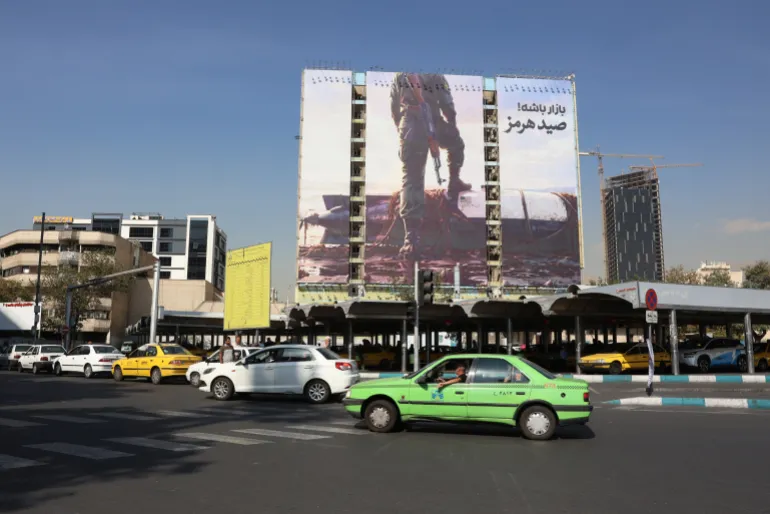
Iranians drive past an anti-US billboard depicting a member of Iran’s Revolutionary Guard (IRGC) with a US unmanned underwater vehicle that Iran claimed to have seized in the Strait of Hormuz and the slogan ‘Hormuz Catch’. In Vanak Square in Tehran, Iran, 14 October 2026, amid the ongoing conflict between Iran and the United States [Abedin Taherkenareh/EPA]
What is the MOAB?
The GBU-43/B Massive Ordnance Air Blast Bomb (MOAB) is a massive munition containing about 8,500kg (18,000 pounds or 8.5 tonnes) of high explosives. It weighs 9,800kg (21,605 pounds or nearly 10 tonnes) – about the same as four saloon cars – and is as long as a small yacht at just over 9 metres (about 30 feet).
The MOAB is typically deployed from the Lockheed C-130 Hercules cargo aircraft because it cannot fit in a stealth bomber.
The bomb, which was first manufactured between 2002 and 2003, has undergone 12 detonation tests.
Its name is a reference to former Iraqi President Saddam Hussein’s comments during the 1991 Gulf War when he invoked the “mother of all battles”.
The US has only deployed the MOAB once before – during its 2017 attacks on an Islamic State Khorasan Province (ISKP) cave and tunnel complex in Afghanistan. Afghan authorities claimed that while 94 Islamic State-Khorasan Province (ISKP) fighters were killed in the blast, no civilians were hurt. However, there were unconfirmed, local reports of civilian casualties and many homes were destroyed.
What is the ‘mother of all bombs’?
The GBU-43/B, the US’s most powerful non-nuclear bomb, was used once, against Islamic State-Khorasan…
GBU-43/B
Pallet is deployed from rear cargo door of MC-130H or C-17aircraft.
Released from the aircraft.
Cradle separates; GPS and fins guide it.
H6 explosives detonate.
A powerful shockwave spreads.
Hot gases, smoke and debris rise in a mushroom cloud.
1 of 4
What kind of damage can it cause?
Designed to explode a few feet above the ground, the MOAB sends out lethal waves of fire when it detonates, blasting away buildings, cave openings and other hard-surface structures.
“Its purpose is to generate an exceptionally powerful blast across a surface area,” Magnier said.
Military expert Colonel Nidal Abu Zeid told Al Jazeera the bomb does not require impact in order to detonate and that its massive blast will destroy everything above ground within a 1km (0.6-mile) radius.
It is likely that the US would aim to use the high-explosive MOAB to completely destroy Iran’s ground-force positions above ground, and to reach its underground facilities, including Pickaxe Mountain, which Trump has previously threatened to attack, Abu Zeid said.
However, Magnier said the bomb’s radius and level of destruction would depend greatly on the terrain it is used within and how populated the area is. He added that it may not be particularly effective against targets buried deep underground.
Some of Iran’s nuclear sites which the US may wish to target, such as the Fordow complex and an under-construction site at the Pickaxe Mountain, are heavily fortified and deeply buried.
“Its large explosive charge can produce devastating blast effects against exposed personnel, equipment and vulnerable structures,” Magnier said. “The Afghanistan operation demonstrates its intended application against a cave-and-tunnel position; it does not demonstrate an ability to destroy every kind of underground installation.”
While its blast can reach underground, the MOAB is not especially designed to punch through deep concrete or mountain rock in the way that a “bunker buster” bomb is. The US military’s most powerful bunker buster is the GBU-57 Massive Ordnance Penetrator. Weighing about 30,000 pounds (13,600kg), including a 2,700kg (6,000 pound) warhead, this precision-guided bomb is made of high-strength steel and built to penetrate up to 200 feet (61 metres) underground before exploding.
Would the US really use an MOAB?
It already has done – in Afghanistan in 2017.
However, besides not being guaranteed to hit underground targets effectively, Magnier told Al Jazeera it could be difficult to deploy the necessary aircraft in the regions of Iran where nuclear sites are located. Stealth bombers which are better suited to this terrain are not able to carry this size of bomb.
Using the bomb could also destroy infrastructure without inducing Iran to make any concessions, he added, noting that its deployment would risk turning “a spectacular event” into one that ultimately delivers few political results for Washington.
“The question I would put to any commander advocating its use is straightforward: What will this weapon accomplish that another available weapon cannot, and how will that result advance an achievable political settlement?,” Magnier said.
“If the answer centres on the spectacle of the explosion, the proposal is stronger as political theatre than as military strategy,” he added.
CNN reported that Trump, in private discussions, has been seeking a “definitive” end to the war that will prove Washington has been undefeated.
How might Iran respond?
A MOAB strike would likely prompt a major reaction from Iran, experts say, warning that Tehran could even invade its neighbours who host US military assets in response.
Iranian security officials have for months made comments regarding a possible invasion of countries like Kuwait to capture US troops and force Washington to surrender.
In May, during a pause in hostilities, Kuwait alleged that sailors from Iran’s Islamic Revolutionary Guard Corps (IRGC) infiltrated its Bubiyan Island, leading to an exchange of fire between Iranian and Kuwaiti forces. One Kuwaiti was injured and four Iranian soldiers were captured.
Iran denied that it had invaded the island and said the troops’ navigation system had malfunctioned.
On Tuesday, IRGC security adviser Mohammad Reza Naghdi warned that Iran could capture troops if Washington were to launch ground attacks, although military experts have long dismissed Trump’s earlier threats of an invasion due to Iran’s mountainous terrain.
“If the United States launches a ground attack, so many of its troops will be captured that it will be forced to raise the white flag,” he said.
Experts say Iran has been preparing for another round of war by stockpiling weapons, fortifying key nuclear and defence locations, and rallying its supporters.
In a television broadcast on Sunday, National Security Council chief Mohsen Rezaei threatened that Iran would attack regional digital infrastructure, including communication cables, data centres and artificial intelligence facilities in the United Arab Emirates and others, if American strikes resume.
Football’s global governing body is expected to change a rule that allowed a red card for USA forward Folarin Balogun to be controversially overturned during the World Cup, according to media reports on the agenda for Thursday’s FIFA council meeting in Zurich.
The decision-making body is convening for the first time since this year’s tournament, and a motion to prohibit such actions in the future will be top of the agenda. Members will also discuss the organisation’s funding, rules and other matters amid a turbulent time in the sport.
During the World Cup’s round-of-32 match, Balogun received a red card for stepping awkwardly on the right ankle of Tarik Muharemovic of Bosnia in a 2-0 win for the home team. It triggered an automatic one-game suspension.
However, United States President Donald Trump urged FIFA President Gianni Infantino to review the case, and Balogun’s red card was overturned, allowing him to play in the USA’s round-of-16 match against Belgium.
The decision to overturn Balogun’s red card ignited one of the tournament’s biggest controversies, with widespread criticism from football federations, former FIFA officials, experts and coaches.
The 37-member FIFA council is expected to vote on whether to prohibit disciplinary committees from overturning automatic match suspensions at the World Cup, but the Balogun controversy is unlikely to go away.
FIFA Vice President Debbie Hewitt is among the sport’s leaders who have asked Infantino to release all documents related to the case.
Thursday’s FIFA council meeting is the first since Infantino came under fire earlier this year for a now-shelved plan to sell a 20 percent stake in the World Cup’s commercial business to private investors.
Infantino has faced calls to resign from the leaders of three regional football confederations – UEFA (Europe), AFC (Asia) and CONCACAF (North and Central America and the Caribbean) – and their representatives will be present in Zurich for the FIFA meeting.
They will be joined by their counterparts from Africa, South America and Oceania.
Under the plan, Infantino proposed selling a minority stake in a FIFA commercial subsidiary to private investors, with a company launched by Joshua Kushner, the brother of Donald Trump’s son-in-law Jared Kushner, identified as the proposed lead investor.
The council will also address FIFA’s governance, with some of the sport’s most powerful figures determined to limit Infantino’s powers if they cannot force him out of office.
Infantino, 56, will stand for re-election in March 2027, with a November 18 deadline looming for potential candidates to submit their nominations.
Americans can rest easy – for the moment, at least. The fine folks at the Federal Bureau of Investigation have thwarted a major national security threat.
On October 9, the FBI arrested 35-year-old engineer Abdulrahman Alfozan, a Saudi citizen employed at the California-based artificial intelligence company OpenAI, the maker of the chatbot ChatGPT, and a firm that describes its mission as ensuring that “artificial general intelligence benefits all of humanity”.
A press release from the United States Department of Justice said that Alfozan was accused of installing a “surreptitious audio recording device” in an executive conference room at the OpenAI offices in San Francisco.
The statement quoted Director of National Intelligence Jay Clayton’s assessment that “this serious situation underscores why winning the global super intelligence race is a national security prerogative”. (For those who have not yet got the memo, US President Donald Trump recently decreed that the term “artificial intelligence” be changed to “super intelligence” or “SI.”)
FBI director Kash Patel concurred that “protecting American SI innovation is essential to safeguarding our nation’s economic strength and national security”, and assured everyone that the FBI would continue doing its part “to ensure our country maintains its competitive edge”.
So much for the separation of corporation and state in the world’s self-appointed greatest democracy.
The covert device was reported to have been concealed in toilet paper and attached to the back of a television monitor. The Gizmodo website has noted with amusement that, despite being cast as a “sophisticated” spying apparatus, the device in question can in fact be easily ordered online “for the low low price of $13.99”.
If convicted, Alfozan faces up to five years in jail and a fine of $250,000.
Now, some of you may still be asking what the big deal is – and why the US government is acting like it’s 1950 and the Soviets are stealing our nuclear secrets.
The spectacle becomes all the more curious when we consider that the company up in arms over the alleged attempted theft of its technology owes much of its existence – and massive valuation – to stealing stuff from people.
The day before Alfozan’s arrest, USA Today and several other newspapers sued OpenAI in a Manhattan federal court for copyright infringement and the unauthorised use of hundreds of thousands of news articles and other materials to develop ChatGPT.
And back in July, various US media outlets including the New York Times and the New York Daily News requested that a federal judge impose sanctions on OpenAI for “hiding and destroying evidence showing how ChatGPT was trained on stolen journalism”, as attorney Steven Lieberman put it.
The moral of the story, perhaps, is that when OpenAI steals things it’s to “benefit all of humanity” – but when a 35-year-old Saudi engineer does it, it’s a national security crisis.
In case we were not already bored to tears hearing about national security, US Attorney General Todd Blanche took to X on Tuesday to preach that the “theft of intellectual property involving cutting-edge super intelligence technology poses a serious threat to our national security”, necessitating continued “swift action … to protect American innovation and safeguard our nation”.
Of course, many Americans might wonder why “innovation” gets such special treatment when they themselves are so often on the receiving end of government abuse. The frequency with which US police officers murder unarmed Black people, for instance, would seem to indicate that there are far more literal threats to the nation’s security than a $14 device hidden in toilet paper.
But human security is of no interest to a corporatocracy increasingly dominated by AI, an industry that thrives on putting people out of jobs and that is deeply entwined in a number of sordid developments at home and abroad. Among them is mass surveillance, which combines AI-assisted violations of civil liberties and constitutional protections with good old police state “innovation”.
To that end, a bunch of US cops have taken advantage of new AI-powered technology, such as automated licence plate readers, to stalk their exes. Then there is the matter of the FBI and other government agencies buying up data en masse from tech companies in a bid to keep tabs, Big Brother-style, on everyone’s personal information at all times.
It makes you think twice about the sudden concern for “spying” in the Alfozan case.
As for threats to other people’s national security, OpenAI and like-minded tech companies that do business with the Pentagon have been complicit in recent US aggression – from Venezuela to Iran – as the US pursues its strategy for “Accelerating America’s Military AI Dominance” (concocted before Trump mandated the renaming of AI as SI).
Israel, too, has exploited OpenAI technology, among other US-made goodies, to conduct its contemporary apocalyptic exercises in the Middle East. Last year, the Associated Press news agency (AP) revealed that US tech giants had “quietly empowered Israel to track and kill many more alleged militants more quickly in Gaza and Lebanon through a sharp spike in artificial intelligence and computing services”.
The AP report went on to note that “the number of civilians killed has also soared, fueling fears that these tools are contributing to the deaths of innocent people”.
But while it might be news to the AP, that is unfortunately how a genocide works.
And as the US goes to war for AI dominance while the tech giants bank on a post-human world, one can’t help but feel that the toilet paper was a nice touch, indeed.
The views expressed in this article are the author’s own and do not necessarily reflect Al Jazeera’s editorial stance.
Coworker alerted police after receiving disturbing messages from 19-year-old suspect.
Published On 15 Oct 202615 Oct 2026
A teenager arrested in a Chicago suburb had shared a document expressing white supremacist views and outlined an alleged plan to carry out a mass shooting, potentially targeting a Hindu place of worship, police in the US state of Illinois have said.
Alexandros Paporakis, 19, of Palatine, was arrested on Sunday after an individual reported receiving concerning electronic communications from him, Palatine police said on Wednesday. It was not immediately clear whether he had legal representation.
Recommended Stories
list of 3 itemsend of list
Detectives searched Paporakis’s home and recovered a rifle, multiple loaded rifle magazines and hundreds of additional rounds of rifle ammunition.
“Among the recovered items was a tactical vest containing body armor and a patch displaying imagery associated with white supremacist extremism,” a police statement said.
Paporakis’s coworker reportedly told police that he openly identified himself as a white supremacist at work and said he “couldn’t wait” to kill Indian people, according to prosecutors from the Cook County State’s Attorney’s office.
Detectives recovered a document called “Why I fought: A.K.A.: (Aurora Shooter’s Manifesto)” which had sentiments expressing white supremacist and extremist ideologies, referencing violence towards South Asians, specifically Indians.
Authorities believed Paporakis was planning to carry out his attack on Sunday, possibly targeting a Hindu temple in Aurora, 40 miles (65km) southwest of Palatine.
“However, the specific intended location has not been confirmed and remains under investigation,” the police said, adding the FBI was assisting in the probe.
Police said Paporakis is facing felony charges of “making a terrorist threat” and possessing an unlawful weapon.
The suspect appeared for a detention hearing on Wednesday and his next court appearance is scheduled for the end of October.
Human rights advocates said hate against South Asians has surged in the United States in recent years due to rising anti-immigration policies and a rise in white supremacist ideology.
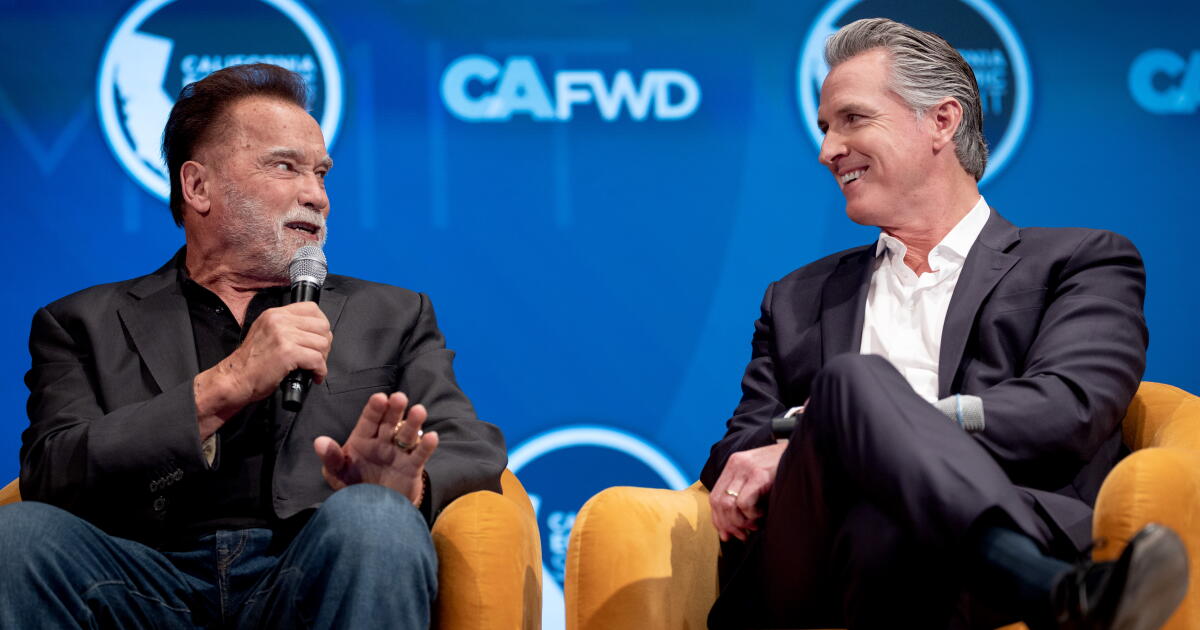
Former Gov. Arnold Schwarzenegger, a Republican, celebrated the 20-year anniversary of landmark climate legislation he signed while in office alongside Democrats including Gov. Gavin Newsom on Wednesday.
“California is the perfect example of what can be done when people work together and when we don’t look at this as a Republican or as a Democratic issue,” Schwarzenegger said at an economic conference in Long Beach, noting that Assembly Bill 32, the Global Warming Solutions Act had significantly reduced greenhouse gas emissions while creating more than a half a million clean-energy jobs.
“This is the message that is so important for the world,” he said, because the state’s policies have become a model for other states and nations.
Newsom noted that the state had met “audacious” goals for reducing greenhouse gas emissions, touting 39,000 megawatts of clean energy that have been installed in the last seven years, 23,000 megawatts of battery storage created, and that no flex alert has been issued in the state in four years.
“So we’re not in the goal-setting business; we’re in the how business,” he said.
He added that the clean energy transition is “the most critical national security issue in the United States of America,” with economic and supply chain leadership at stake as China surpasses the U.S. in electric vehicles, clean-energy manufacturing and the deployment of renewables.
The state already met the climate change legislation’s ambitious target — returning emissions to 1990 levels by 2020 — four years ahead of schedule. However, recent analyses indicate California is not on track to meet its future targets of cutting emissions 40% by 2030 and 85% by 2045.
The event as well as a luncheon the prior day in Santa Monica were rare displays of bipartisan unity at a time of heightened political polarization in the United States. Schwarzenegger and Newsom piled praise upon each other during the Wednesday afternoon discussion, hugging at the end.
At the luncheon, former Gov. Gray Davis, whom Schwarzenegger ousted from office in the 2003 recall election, as well as billionaire hedge-fund founder turned environmental warrior Tom Steyer, who unsuccessfully ran for governor this year, were among the Democrats in attendance, as well as former state Assembly Speaker Fabien Nunez and former state Sen. Fran Pavley, who were both pivotal in the passage of the climate-change legislation.
In addition to remarks highlighting the foundation of some of the nation’s bedrock environmental policies, such as former GOP President Richard Nixon creating the Environmental Protection Agency and signing the Endangered Species Act, there were moments of levity.
Schwarzenegger said he told fellow Republicans “f— you” when they balked at him naming Susan Kennedy, a Democrat, as his chief of staff, he said Tuesday.
During a breakout session at the Wednesday conference, he referenced his former wife, Maria Shriver, a scion of the Kennedy family, as he described his desire to hear from people on both sides of the aisle.
“So I had Democrats in my administration, and of course the Republican Party went nuts,” he said. “I didn’t care because, to me, I thought I wanted to hear what the Democrats were thinking. Plus, I was sleeping with one every night anyway.”
The President’s ally says conservatives “cannot give an inch” in Latin America as he accepts an award in Washington.
Published On 15 Oct 202615 Oct 2026
Argentine President Javier Milei has urged his ally, US President Donald Trump, to come out of the United States midterm elections in a stronger position, calling the vote important for the West as a whole.
Milei made the appeal on Wednesday at a Hispanic Heritage gala in Washington, where a Hispanic association gave him an award, ahead of November’s vote.
Recommended Stories
list of 2 itemsend of list
Conservatives, he said, “cannot give an inch in our reconquest of the hemisphere”, according to Agence France-Presse (AFP).
Milei flew into the US capital on Wednesday for meetings with investors and the gala. He is due to address the US Chamber of Commerce on Thursday.
Argentina’s President Javier Milei attends the Hispanic Heritage Gala in Washington, DC, on October 14, 2026 [Alex Wroblewski/AFP]
Milei’s lifeline
Trump firmly backed Milei a year ago, when his government also faced crucial legislative elections. He has called Milei his “favorite president”.
That backing, together with a currency swap agreement with the US Treasury, helped Milei to success in those polls, analysts have argued.
The centrepiece of the package, announced by Treasury Secretary Scott Bessent, was a $20bn swap with Argentina’s central bank, in which the US exchanged dollars for pesos. The swap came shortly after Milei’s party lost a key provincial election.
Trump made clear at the time that the support hinged on a Milei victory. “I’m with this man because his philosophy is correct,” he said ahead of a White House lunch with the Argentine leader. “If he wins, we’re staying with him. And if he doesn’t win, we’re gone.”
Trump also warned that the US would not be “generous” if Milei lost. The remarks unsettled Argentine markets, with the main stock index giving up earlier gains and falling about 2 percent, The Associated Press reported.
The package drew criticism in the US. Democratic lawmakers accused Trump of prioritising a foreign bailout while the US government was shut down.
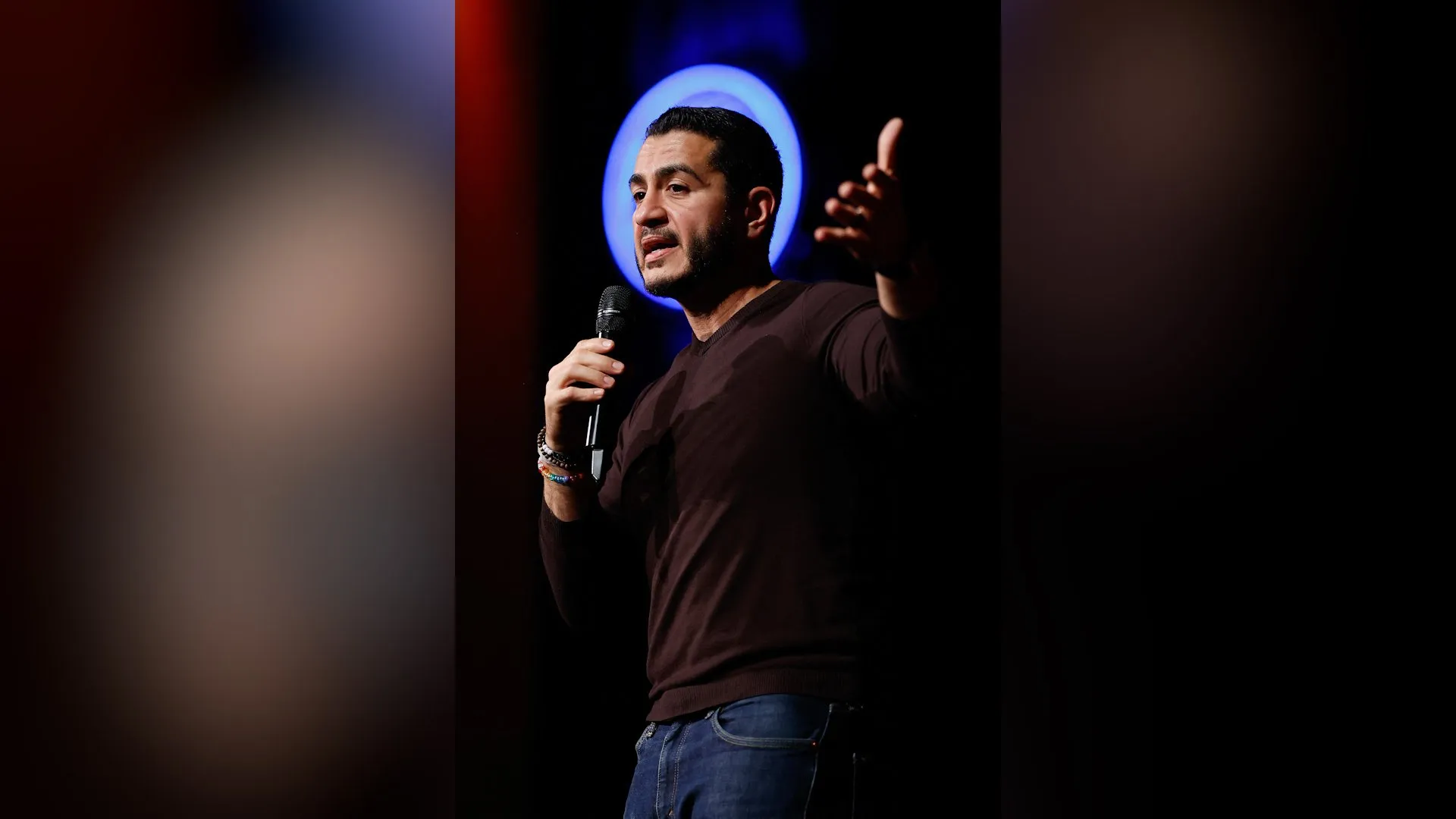
President Donald Trump says Michigan Senate candidate Abdul El-Sayed is a member of the Muslim Brotherhood. The organisation has wide support across the Middle East for its charitable work, but is designated a terrorist organisation by the US. El-Sayed denies ties to the group.
The 9th Circuit Court of Appeals nixed a trailblazing California law on Wednesday, permanently barring the state’s efforts to force federal immigration agents to display identification while on duty.
“As before, we conclude … the No Vigilantes Act attempts to directly regulate the United States in its performance of governmental functions,” Judge Mark J. Bennett wrote for the panel. “No set of circumstances exist under which the Act would be valid.”
The U.S. Justice Department first sued to block the ID requirement alongside a related law attempting to ban masks for federal agents and local police in the fall of 2025.
The joint case hit Los Angeles federal court at the beginning of this year amid a surge of immigration enforcement in Minneapolis that led to the shootings of civilians Renee Good and Alex Pretti by U.S. Immigration and Customs Enforcement agents.
By then, more than a dozen other states were pursuing similar statutes in an effort to rein in what many saw as lawlessness in President Trump’s sprawling deportation force.
Judge Christina A. Snyder ultimately blocked California’s law prohibiting the use of masks by law enforcement, on the grounds that it unfairly carved out an exception for state peace officers, but allowed the ID requirement for ICE agents and others to go forward, agreeing with the state that it was more akin to a speed limit on the highway than a direct regulation of the federal government.
“If a state law directly regulates the governmental conduct of the United States without congressional authorization, it is void irrespective of whether the regulated activities are essential to federal functions or operations, and irrespective of the degree to which the state law interferes with such functions or operations,” Bennett wrote.
The decision comes as ICE is quietly shedding many of the 12,000 new recruits it hired last year. Although public outrage over Trump’s militarized mass deportation efforts has diminished somewhat since the winter, it remains a potent election issue.
A Reuters/Ipsos poll from September showed more than 40% of Americans strongly disapprove of the president’s handling of immigration. Meanwhile, the share who fret over unauthorized immigration is nearly identical to the proportion who worry about the unchecked spread of measles — anxieties that pale in comparison with stress over the cost of living, the proliferation of data centers and the war with Iran, data show.
The US president has long been unhappy with inside information about his administration being leaked to the media.
United States President Donald Trump has suggested that those who leak information to the news media should be shot as punishment.
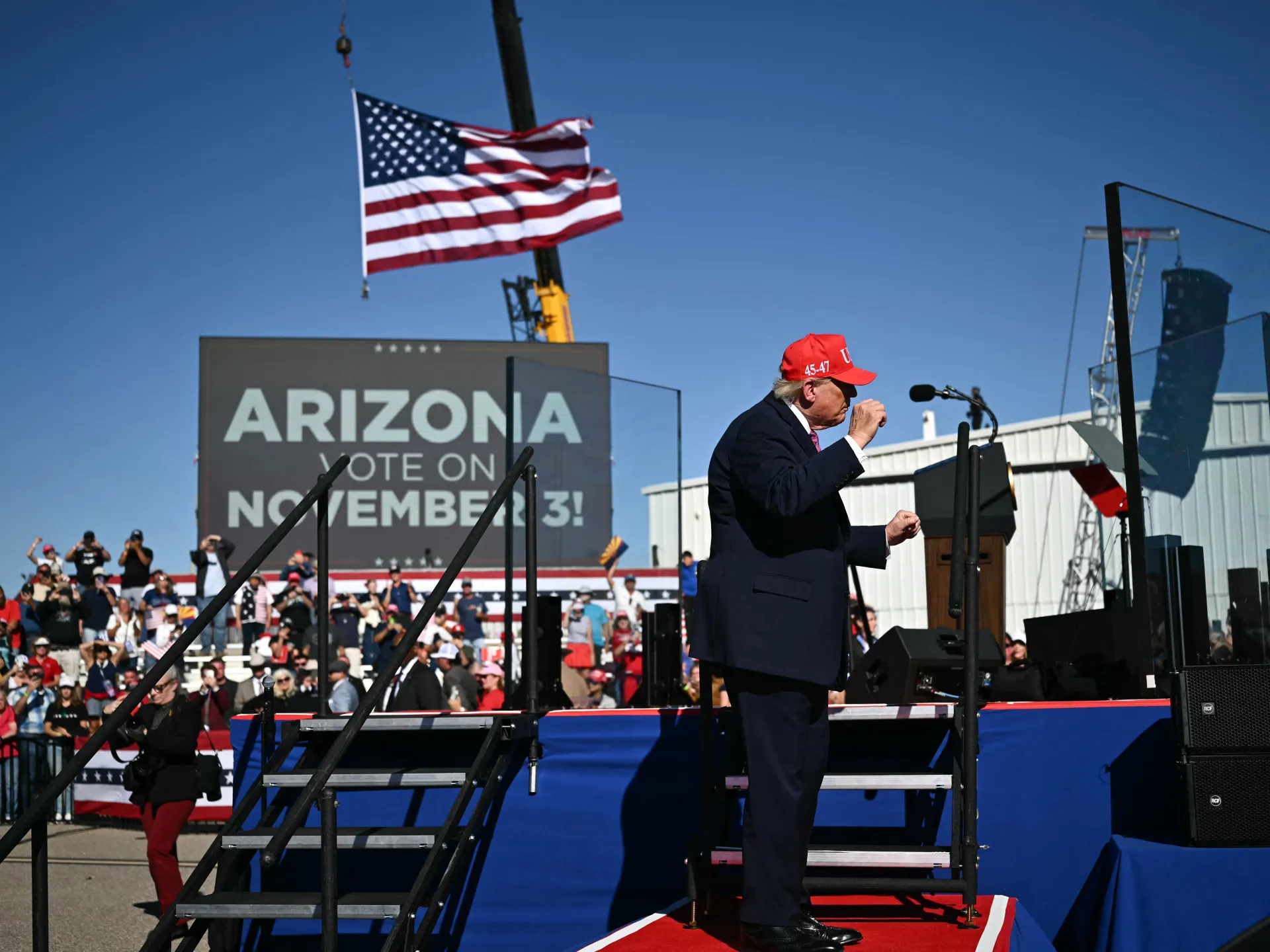
Trump made the remarks at a campaign rally in Bullhead City, Arizona, as he urged supporters to vote in the November 3 midterm elections.
Recommended Stories
list of 3 itemsend of list
“In my opinion, leakers should be shot,” Trump told the crowd. “In the old days, we used to shoot leakers, you know, when they leak what time you’re going to attack a country.”
Trump made the statement in an apparent reference to Operation Midnight Hammer, which saw the US launch a surprise attack on Iran in June 2025 during the 12-day war between Israel and Iran.
In the aftermath of the attack, several media outlets published findings from a preliminary report by the US Defense Intelligence Agency.
That report – which had not yet been released to the public – indicated that Iran was able to move some of its enriched uranium away from the sites the US had bombed.
It also suggested that the extent of the damage to Iran’s nuclear facilities was more modest than what Trump had asserted.
Trump, however, appeared to signal that the timing of the US attacks was among the leaked information. He accused the news media of putting military members in danger, calling out The New York Times and CNN in particular.
“They leaked the time we were leaving, the time we were arriving,” Trump said, claiming he had to reschedule the bombing campaign two days later as a result.
“Somebody leaked. Some sleaze-bag, they ought to go to jail or be shot. For the rest of their life, they should be in jail.”
Trump has long had an adversarial relationship with the news media, and he has previously called for harsh punishment against any official who passes on confidential information to news outlets.
After parts of the Defense Intelligence Agency report became public, he blamed lawmakers in the Democratic Party for its release.
“The Democrats are the ones who leaked the information on the PERFECT FLIGHT to the Nuclear Sites in Iran,” Trump wrote on social media at the time. “They should be prosecuted!”
Under Trump, the White House has taken aggressive action to track down the source of leaks.
Staff in his administration, as well as officers in the military, have also been asked to take polygraph tests.
Journalists at several news outlets, including The New York Times, The Washington Post and The Wall Street Journal, have also received subpoenas aimed at determining the sources of internal information made public.
The newspapers had reported on stories such as a botched Navy SEALs raid in North Korea and how Trump ignored internal Pentagon warnings against launching the Iran war.
Last year, the Department of Defense demanded that journalists who wished to access the Pentagon sign an agreement not to publish unauthorised material.
Much of the Pentagon press corps refused to agree, and a federal court struck down many of the new demands made on journalists at the department.
Trump has long raged against leakers, going back to his first term as president from 2017 to 2021.
Former White House official Alyssa Farah Griffin told a podcast in 2024 that Trump had called for leakers to be executed, after media outlets reported that he had taken shelter in a White House bunker during racial justice protests in 2020.
Trump appeared to reprise that sentiment in his speech to Arizona voters on Wednesday, less than three weeks before the November 3 midterms.
“Leakers should be dealt with very, very strongly,” Trump said. “To me, they are the scum of the earth.”