united states

Lionel Messi scores twice as Inter Miami defeat Rapids in MLS | Football News

Argentine forward’s brace included the match winner against Colorado Rapids in front of over 75,000 fans in Denver.

Lionel Messi scored a brace and ‌German Berterame headed another as Inter Miami earned a ⁠3-2 win over ⁠the Colorado Rapids in Major League Soccer (MLS) on Saturday in Denver.

Messi scored the go-ahead goal in the 79th minute. He started a run just inside midfield and went ⁠unchallenged until the box, where he blasted into the upper left corner for a 3-2 lead.

Recommended Stories

list of 4 itemsend of list

Rafael Navarro and Darren Yapi each scored for Colorado (4-4-0, 12 points) in front of 75,824 at Empower Field, the second-largest crowd in MLS history.

Miami (4-1-3, 15 points) took a 1-0 lead in the 18th minute after Colorado goalkeeper Zack Steffen’s pass was intercepted by Yannick Bright. Josh Atencio offered a hard challenge ‌and was shown a yellow card after video review.

Messi took the resulting penalty and rolled his shot straight down the middle as Miami took a 1-0 lead.

Colorado had a solid look at the goal when midfielder Wayne Frederick attempted a one-touch lob. Miami goalkeeper Dayne St. Clair was out of position and well beyond the penalty arc after heading away a loose ball, but Frederick’s attempt sailed ⁠over the open net.

In the fifth minute of first-half stoppage ⁠time, Miami extended their lead to 2-0, connecting on a series of passes deep in their attacking third. Messi got the run of play started with a tight touch pass to Rodrigo De ⁠Paul.

De Paul sent Mateo Silvetti on a run to the boundary line. His inward-spinning cross floated to the front of ⁠goal, where Berterame rose above the Colorado defence and ⁠tucked a header under the bar.

Navarro’s goal cut Miami’s lead to 2-1. He started a run in midfield and used a step-over move to get an open shot a few steps into the ‌box that tucked inside the left post past a diving St. Clair in the 58th minute.

In the 62nd minute, second-half substitute Yapi settled on a direct pass from Lucas ‌Herrington ‌and sizzled a shot past St. Clair for the equaliser.

Miami closed the win playing a man down as Yannick Bright was sent off with a red card in the 87th minute.

Lionel Messi in action.
Inter Miami forward Lionel Messi scores his 13th-minute penalty against the Colorado Rapids [Geneva Heffernan/AP]

Source link

LeBron, Lakers shock Rockets with Game 1 win in NBA playoffs | Basketball News

Despite missing leading scorers Luka Doncic and Austin Reaves, the LA Lakers and LeBron James defeat Houston in opener.

Luke Kennard scored a career playoff-high 27 points, LeBron James had 19 points and 13 assists, and the short-handed Los Angeles Lakers capitalised on Kevin Durant’s injury absence for a 107-98 victory over the Houston Rockets in the opener of their first-round playoff series on Saturday night.

Deandre Ayton had 19 points and 11 rebounds for the fourth-seeded Lakers, who pulled off an impressive win without their top two scorers.

Recommended Stories

list of 4 itemsend of list

Both teams played the opener without their most important player. Luka Doncic and Austin Reaves have been out indefinitely with injuries since April 2, while Durant was a late scratch with a bruised right knee.

Los Angeles thrived by hitting 60.6 percent of its shots while holding the Rockets to 37.6 percent shooting with pesky defence.

Alperen Sengun scored 19 points, and Jabari Smith Jr had 16 points and 12 rebounds for the fifth-seeded Rockets, who finished one game behind Los Angeles in the regular season. Amen Thompson added 17 points, but Houston’s young core got off to an inconsistent start after becoming the firm favourite in this series due to the Lakers’ injury woes.

Game 2 is on Tuesday night in Los Angeles.

Luke Kennard in action.
Guard Luke Kennard #10 led the Lakers with 27 points in Game 1 against Houston [Kirby Lee/Imagn Images via Reuters]

Kennard rallies Lakers in second half

The Lakers acquired Kennard from Atlanta in early February, and the NBA’s most accurate 3-point shooter became a key reserve before he seized a major role over the past two weeks in the absence of Los Angeles’s starting backcourt. He hit four 3-pointers in Game 1, while making nine of his first 12 shots.

Durant must wait at least one more game to make his Rockets playoff debut after banging knees with a teammate in practice on Wednesday. Reed Sheppard took his spot in the starting lineup and hit five 3-pointers while scoring 17 points, but the Rockets struggled for consistent half-court offence in Durant’s absence despite grabbing 21 offensive rebounds.

The Lakers took the lead for good on their first bucket of the second half, and they pushed their advantage to 16 points in the fourth quarter. Kennard scored 16 points after halftime, while the 41-year-old James began his 19th NBA postseason with an inspired, eight-assist first quarter, followed by several gritty baskets down the stretch.

Los Angeles also got a boost from veteran guard Marcus Smart, who had 15 points and eight assists with four 3-pointers in his Lakers playoff debut. Smart said before the series that success would come down to “willpower”, and the Lakers clearly had more for starters.

Bronny James began the second quarter playing alongside his famous father in the first significant playoff minutes of the 21-year-old’s career.

Source link

Iran reasserts control of Hormuz Strait as Trump warns against ‘blackmail’ | US-Israel war on Iran News

Top negotiator Mohammad Bagher Ghalibaf says US naval blockade of Iran’s ports is ‘a clumsy and ignorant decision’.

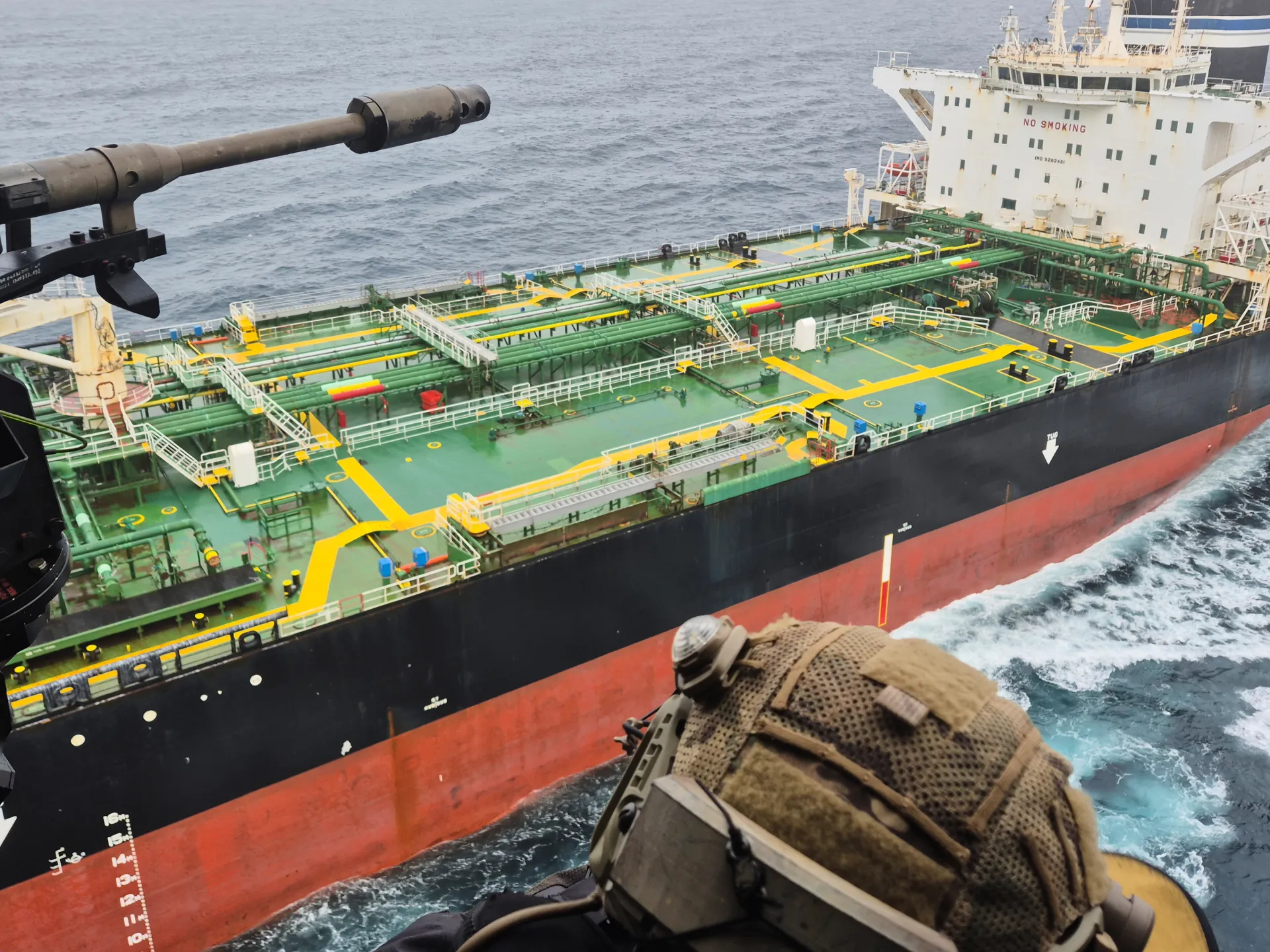
Iran’s Islamic Revolutionary Guard Corps Navy (IRGC) says the Strait of Hormuz is closed and that any ship that attempts to pass through the waterway will be targeted, a dramatic reversal less than 24 hours after the critical shipping lane was reopened.

In a statement carried by Iran’s Student News Agency, the IRGC navy said on Saturday the strait will be closed until the United States lifts its naval blockade on Iranian vessels and ports. It said the blockade was a violation of the ongoing ceasefire agreement in the US-Israel war on Iran.

Recommended Stories

list of 4 itemsend of list

“We warn that no vessel of any kind should move from its anchorage in the Persian Gulf and the Sea of Oman, and approaching the Strait of Hormuz will be considered cooperation with the enemy, and the offending vessel will be targeted,” it said.

Mohammad Bagher Ghalibaf, Iran’s parliament speaker and a senior negotiator in talks between Washington and Tehran on ending the war, said in a television interview that “the Strait of Hormuz is under the control of the Islamic Republic”.

“The Americans have been declaring a blockade for several days now. This is a clumsy and ignorant decision,” he added.

The reassertion of control came just hours after Iran had briefly reopened the strait, in line with a 10-day ceasefire between Israel and Lebanon. Oil prices dropped on global markets after Iranian Foreign Minister Abbas Araghchi said on Friday that the waterway was “completely open for all commercial vessels.”

More than a dozen commercial ships passed through the waterway before the IRGC reversed course.

Iranian gunboats reportedly fired on two commercial ships on Saturday, according to United Kingdom Maritime Trade Operations (UKMTO). India’s Ministry of External Affairs also said that two Indian-flagged ships were involved in a “shooting incident” in the strait.

Some merchant vessels in the region received radio messages from the IRGC Navy, warning that no ships were being allowed through the strait.

US President Donald Trump said Tehran could not blackmail Washington by closing the waterway and warned that he would put an end to the ceasefire if a deal before its expiry on Wednesday is not reached. Trump added that the naval blockade would “remain in full force”.

Iranian Supreme Leader Mojtaba Khamenei, meanwhile, said the navy was ready to inflict “new bitter defeats” on its enemies.

‘Two competing blockades’

Al Jazeera correspondent Zein Basravi said that Iran and the US are back where they were the previous day.

“Less than 24 hours ago, world leaders were praising what they thought was a breakthrough in this conflict, hoping Iran was signalling a confidence-building measure by opening the Strait of Hormuz, potentially leading to a ceasefire deal and a permanent end to the war,” he said.

“As disappointed as people may be, this isn’t entirely surprising. What we’re seeing now is a return to square one,” he added, saying there are now “two competing blockades in place”.

Al Jazeera’s Ali Hashem, reporting from Tehran, said Iran was using the strait to send a message.

“It’s clear that Iran is dealing with a situation in which they are not sure what’s on the table. So the Strait of Hormuz is once again the only space for engagement, even if it’s a negative engagement. And it’s the space where they are sending and conveying messages to the Americans, showing their leverage,” he said.

Source link

Mazzucato on the Iran war’s economic shock: Who pays the price? | Business and Economy

Redi Tlhabi speaks to economist Mariana Mazzucato on the Iran war’s economic fallout and who’s really paying the price.

The world is reckoning with the biggest oil supply disruption in history, one that has sent energy prices soaring, rattled stock markets and exposed the deep vulnerabilities of economies still hooked on fossil fuels. While millions face higher fuel and energy bills, top oil and gas companies are reportedly profiting about $30m per hour since the war began.

This week on UpFront, Redi Tlhabi speaks with renowned economist Mariana Mazzucato about what a genuine green industrial strategy looks like, why the World Bank has fallen short, and how her concept of the “common good economy” offers a new compass for governments navigating crises.

Source link

Trump joined by Joe Rogan as he signs order to speed up psychedelic review | Health News

The order calls on the federal government to relax restrictions on psychedelics, including ibogaine, for potential treatments.

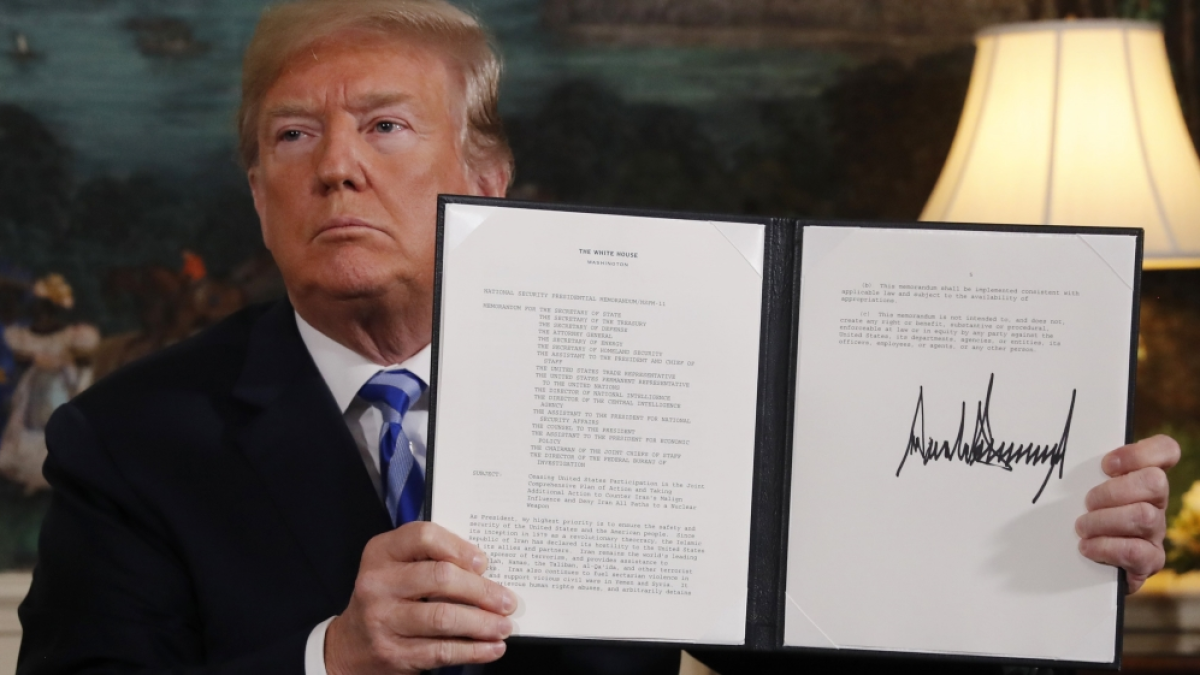
United States President Donald Trump has signed an executive order to speed up the review of a handful of psychedelic drugs, including the controversial ibogaine.

Trump was joined by podcaster Joe Rogan during Saturday’s Oval Office event.

Recommended Stories

list of 3 itemsend of list

Rogan, considered one of the most influential podcasters in the country, has been a leading proponent of ibogaine, which is derived from a plant that grows in West Africa and has been embraced by some military veteran groups as a treatment for post-traumatic stress.

Speaking at the event, Rogan recounted how he had previously texted information to Trump about ibogaine.

He recalled that the president quickly texted back: “Sounds great. Do you want FDA [Food and Drug Administration] approval? Let’s do it.”

Advocacy groups have long pushed for more research into the possible use of psychedelics to treat an array of issues, including depression.

“Today’s order will ensure that people suffering from debilitating symptoms might finally have a chance to reclaim their lives and lead a happier life,” Trump said at the signing.

“If these turn out to be as good as people are saying, it’s going to have a tremendous impact.”

At one point, the president quipped that he would be open to taking psychedelics himself: “Can I have some, please? I’ll take some.”

But he quickly pivoted away from the joke. “I don’t have time to be depressed. You know, if you stay busy enough, maybe that works, too. That’s what I do,” he said.

Increasing research into psychedelics has proven a rare issue with bipartisan support in the US, where ibogaine and other psychedelics remain banned under the federal government’s most restrictive category for illegal drugs.

Health Secretary Robert F Kennedy Jr had previously pledged to ease access to psychedelics for medical use.

Trump’s executive order calls on the Department of Health and Human Services to direct at least $50m to states that have enacted or are developing programmes to advance psychedelic drugs for serious mental illness.

It also arrives ahead of several actions from the FDA to loosen restrictions.

This week, the agency will issue so-called “national priority” vouchers for three psychedelics, which the agency’s commissioner, Marty Makary, said will allow certain drugs to be approved quickly “if they are in line with our national priorities”.

The FDA is also taking steps to clear the way for the first-ever human trials of ibogaine in the US. Previous research had been stalled by concerns over the drug potentially triggering fatal heart problems.

Ibogaine was first used by members of the Bwiti religion in African nations like Gabon for religious ceremonies.

Rogan’s endorsement helped boost Trump ahead of the 2024 presidential election. He has since publicly questioned the administration’s war with Iran, saying it runs counter to Trump’s campaign pledges.

Also present on Saturday was Marcus Luttrell, a former Navy SEAL whose memoir about his time in Afghanistan, Lone Survivor, was later made into a film.

He praised ibogaine during the ceremony: “It absolutely changed my life for the better.”

Source link

Trump claims on Iranian concessions trigger questions, rejections in Tehran | US-Israel war on Iran News

Tehran, Iran – United States President Donald Trump’s announcements about securing major concessions from Tehran have riled supporters of the Iranian establishment, prompting rejections and clarifications from the authorities.

Several current and former senior officials, state media and the Islamic Republic’s hardcore backers expressed anger, frustration, and confusion after the US leader made a series of claims, with days left on a two-week ceasefire reached on April 8.

Recommended Stories

list of 4 itemsend of list

Trump on Friday said Iran and the US would jointly dig up the enriched uranium buried under the rubble of bombed Iranian nuclear sites, and transfer it to the US. He claimed Iran had agreed to stop enriching uranium on its soil.

He also said the Strait of Hormuz had been opened and would never be closed again, while the US naval blockade of Iran’s ports remained in place, and sea mines were removed or were in the process of being removed.

Trump also emphasised that Iran would not receive billions of dollars of its own frozen assets abroad due to US sanctions, and that the 10-day ceasefire between Israel and Lebanon was completely unrelated to Iran.

Amid Pakistan’s ongoing efforts to mediate another round of negotiations, Iran’s Parliament Speaker Mohammad Bagher Ghalibaf, who led the Iranian delegation to the Islamabad talks earlier this month, rejected all of Trump’s claims.

“With these lies, they did not win the war, and they certainly will not get anywhere in negotiations either,” he posted on X early on Saturday.

By Saturday noon, the Khatam al-Anbiya Central Headquarters of the Islamic Revolutionary Guard Corps (IRGC) released a statement, saying the Strait of Hormuz is once again heavily restricted and under “strict management” of the armed forces. It cited continued “acts of piracy and maritime theft under the so-called label of a blockade” by Washington as the reason.

‘Haze of confusion’

In the hours it took between Trump’s flurry of announcements on Friday and official responses from Iranian authorities, supporters of the establishment voiced serious concerns about any major concessions.

“Is there no Muslim out there to talk to the people a bit about what is happening?!” Ezzatollah Zarghami, a former state television chief and current member of the Supreme Cyberspace Council that controls the heavily restricted internet in Iran, wrote on X.

Alireza Zakani, the hardline mayor of Tehran, said if any of Trump’s claims are true, then the Iranian establishment must beware “not to gift the vile enemy in negotiations what it failed to achieve in the field”.

A fan account on X for Saeed Jalili, an ultrahardline member of the Supreme National Security Council who has opposed any deals with the US for decades, said “dissent” may be at play. It said Supreme Leader Mojtaba Khamenei, who has not been seen or heard from outside of several written statements attributed to him, must release a voice or video message to confirm what is happening.

Jalili’s main account distanced itself from the comment, saying the fan account – which was subsequently deleted – was a sign of “infiltration” by enemies of Iran who were trying to sow discord.

Iranian state media released another written statement attributed to Khamenei on Saturday to mark Army Day, but made no mention of the political drama unfolding hours earlier, or the negotiations with the US.

The dissonance was clearly on display on state television and other state-linked media on Friday, especially those affiliated with the IRGC.

Multiple state television hosts and analysts harshly attacked Foreign Minister Abbas Araghchi because he tweeted on Friday that the Strait of Hormuz was “declared completely open for the remaining period of ceasefire, on the coordinated route as already announced by Ports and Maritime Organisation”.

One of the hosts demanded Araghchi must immediately clarify. Another said the top diplomat’s tweet was in English, and since the Iranian people do not have access to X due to the state-imposed near-total internet shutdown for seven weeks, the message was not directed at the people.

With a huge Hezbollah flag in the background, a furious presenter on state television’s Channel 3 claimed that Araghchi was somehow “the representative of the people of Lebanon, Yemen and Iraq” because they are a part of Iran’s “axis of resistance” of armed forces, so he should demand concessions on their behalf from Trump.

Morteza Mahmoudvand, a representative for Tehran in the Iranian parliament, went as far as saying Araghchi would have been impeached had it not been for “the excuse of war”.

The Fars and Tasnim news sites, which are affiliated with the IRGC, also heavily criticised Araghchi and called for further explanations on Friday evening, with Fars arguing that “Iranian society was plunged into a haze of confusion.”

Armed supporters in the streets

Critical comments from supporters of the Iranian government also flooded social media, including local messaging applications and the comments section of state-run sites.

“We took to the streets every night with clear demands, but you shook hands with the killer of our supreme leader and handed our strait to the Zionists,” one user wrote on Friday in the local app Baleh, in reference to Israel.

“After all these years of sanctions and war and costs imposed on the people, if you are to give up the uranium and the strait, then why did you play with the people’s livelihoods and the blood of the martyrs for so long?” another user wrote.

A large number of analysts and media personalities, including Hossein Shariatmadar, the head of the Kayhan newspaper, who was appointed by late Supreme Leader Ayatollah Ali Khamenei, also voiced criticism and demanded answers on Fars and other outlets.

Regardless of whether there will be more mediated negotiations in Pakistan or whether the war will continue, Iran continues to encourage and arm backers to take to the streets to maintain control.

State media on Friday aired footage of more armed convoys moving through the streets of Tehran while waving the flags of Lebanon’s Hezbollah, Iraq’s Hashd al-Shaabi and other groups. The video below shows women and children crewing heavy machineguns mounted on the back of pick-up trucks during a rally in downtown Tehran.

With no end in sight to the state-imposed internet shutdown that has wiped out millions of jobs in Iran, in addition to steel factories and other infrastructure that were destroyed, the Iranian economy continues to suffer.

The timing of the back-and-forth between Trump and the Iranian officials meant that oil prices dropped before Western markets closed on Friday, and the Iranian currency experienced more volatility.

The rial was priced at about 1.46 million against the US dollar on Saturday morning, the first day of the working week in Iran. But it shot back up to about 1.51 million after the IRGC announced the repeated closure of the Strait of Hormuz.

Source link

Gunfire reported by vessel in Strait of Hormuz | US-Israel war on Iran

NewsFeed

A maritime agency reported that a tanker was fired on by gunboats in the Strait of Hormuz. The United ⁠Kingdom ⁠Maritime Trade Operations agency says it received a report ⁠of a tanker being fired upon by what it ‌said were two gunboats linked to Iran’s Revolutionary Guard Corps. The vessel and ‌its crew were reported safe.

Source link

Iran closes Strait of Hormuz again over US blockade of its ports | US-Israel war on Iran News

Reports of Iranian gunboats opening fire on a tanker in strait, after Tehran said it is closing the waterway until the US lifts the blockade of its ports.

Iran says it has closed the Strait of Hormuz again, calling the decision a response to a continued blockade of its ports by the United States.

The Iranian military on Saturday said control of the strategic waterway, through which 20 percent of the global oil flows, has “returned to its previous state”, with reports saying Iranian gunboats fired at a merchant vessel as it attempted to ‌cross.

Recommended Stories

list of 4 itemsend of list

The closure of the strait came hours after it was reopened, with more than a dozen commercial ships passing through the waterway, after a US-mediated 10-day ceasefire deal was reached between Israel and Lebanon.

The Islamic Revolutionary Guard Corps (IRGC) on Saturday said in a statement, cited by the Iranian media, that the ongoing US blockade of Iranian ports represented “acts of piracy and maritime theft”, adding that the control over Hormuz is “under the strict management and control of the armed forces”.

“Until the US restores full freedom of navigation for vessels travelling from Iran to their destinations and back, the status of the Strait of Hormuz will remain tightly controlled and in its previous condition,” it said.

By 10:30 GMT on Saturday, no fewer than eight oil and gas tankers had crossed the strait, but at least as many ships appeared to have turned back, having begun to exit the Gulf, the AFP news agency reported.

The toing and froing over the strait cast doubt on US President Donald Trump’s optimism the day before, that a peace deal to end the US-Israel war on Iran was “very close”.

Trump had celebrated the reopening of the strait on Friday, but warned the US attacks would resume until Iran agreed to a deal, which included its nuclear programme.

“Maybe I won’t extend it,” Trump told reporters on board Air Force One about the temporary ceasefire agreement in place. “So you’ll have a blockade, and unfortunately we’ll have to start dropping bombs again.”

Asked whether a potential deal could be made in this short timeframe, Trump said: “I think it’s going to happen.”

But Iran says no date has been agreed for another round of peace talks, accusing the US of “betraying” diplomacy in all negotiations.

The conflicting and changing reports about the strait and how much freedom ships have to transit through it have deterred many vessels from crossing, according to John-Paul Rodrigue, a maritime shipping specialist at Texas A&M University.

“Ships have been attempting transit since the announcement, but it looks like many of them are heading back because the situation is unclear,” Rodrigue told Al Jazeera. “There is contradictory information being issued by all parties.”

Reporting from Tehran, Al Jazeera’s Tohid Asadi said “uncertainty is the name of the game” as far as the Strait of Hormuz is concerned.

“Iran is looking for a comprehensive end to the war across the region, security assurances, sanctions relief, the unfreezing of frozen assets, regional relations – and on top of all of that – the nuclear dossier and Iran’s stockpile of highly enriched uranium,” he said.

“But right now, uncertainty is the name of the game. The fragile situation makes it hard to talk about the possibility of successful negotiations down the road.”

Source link

Pakistan PM, army chief wrap up key trips in push for more US-Iran talks | US-Israel war on Iran News

Field Marshal Asim Munir leaves Tehran while premier Shehbaz Sharif heads home from Turkiye amid hopes of another round of US-Iran talks.

Pakistan’s army chief and the prime minister have wrapped up separate diplomatic visits aimed at advancing efforts to end the United States-Iran conflict, with Field Marshal Asim Munir leaving Tehran and Prime Minister Shehbaz Sharif returning from Turkiye.

Munir met Iran’s leadership and peace negotiators during a three-day visit to Tehran, a Pakistani military statement said on Saturday.

Recommended Stories

list of 4 itemsend of list

The visit demonstrated Pakistan’s “unwavering resolve to facilitate a negotiated settlement… and to promote peace, stability and prosperity,” the military said ahead of expected US-Iran talks in Islamabad in the coming days.

Munir held talks with the country’s president, foreign minister, parliament speaker and head of Iran’s military central command centre.

Parliament Speaker, Mohammad Bagher Ghalibaf, and Foreign Minister, Abbas Araghchi, led the Iranian delegation to Islamabad for peace talks with the US last week, the highest level face-to-face contact between Washington and Tehran in decades.

Those talks ended without agreement, and a ceasefire is due to expire on April 22.

But diplomacy has continued, with Pakistan’s Prime Minister, Shehbaz Sharif, visiting Saudi Arabia, Qatar and Turkiye to push the peace process.

His three-country trip concluded on Saturday, with Sharif and Foreign Minister Ishaq Dar departing a diplomacy forum in Antalya, according to statements from both officials.

“I leave Antalya [Turkish city] with fond memories and a renewed commitment to further strengthening the enduring fraternal bonds between our two nations, and to continuing our close cooperation to advance dialogue and diplomacy for lasting peace and stability in the region,” Sharif posted on X.

The flurry of diplomacy comes as further negotiations are expected in Pakistan in the coming days as Islamabad intensifies contacts with regional and global leaders in an effort to sustain momentum towards a US-Iran deal.

Pressure for a deal between the two countries has grown after Iran reimposed restrictions on the Strait of Hormuz, hours after its reopening following the start of a ceasefire in Lebanon. Tehran accused the US of violating a deal to reopen the strategically important waterway.

Donald Trump has said a second round of talks with Iran could be held in Pakistan in the coming days. The New York Post reported that Trump praised Munir, saying he was “doing a great job”.

Reporting from Islamabad, Al Jazeera’s Kamal Hyder said Munir landed back home on Saturday as Pakistan prepared for another round of US-Iran talks expected “within the next few days”.

“We have also seen a lot of praise from the Trump administration on social media, praising the Pakistani leadership. So all eyes are on Islamabad. Serious differences remain, but there is a flurry of diplomatic activity and a hope and expectation that some sort of breakthrough may happen,” he said.

Source link

Trump seeks ‘resolution’ of his $10bn lawsuit against IRS, spurring concern | Donald Trump News

Court filings have indicated that lawyers for President Donald Trump are seeking a resolution with the Department of Justice over a $10bn lawsuit he filed against the Internal Revenue Service (IRS).

But the trouble, critics say, is that such a settlement would leave Trump essentially negotiating with an executive branch under his control.

Recommended Stories

list of 3 itemsend of list

Friday’s court filing, however, emphasises the efficiency of seeking a settlement.

In the document, Trump’s lawyers call for the case to be paused for 90 days to allow a resolution to be hammered out.

“This limited pause will neither prejudice the parties nor delay ultimate resolution,” the filing says. “Rather, the extension will promote judicial economy and allow the Parties to explore avenues that could narrow or resolve the issues efficiently.”

How did the case start?

The case stems from an incident that began in 2017, when a worker named Charles “Chaz” Littlejohn was re-hired as a contractor through the government consulting firm Booz Allen.

While working on IRS files, Littlejohn stole copies of Trump’s tax returns, which had been the source of prolonged public scrutiny.

Until Trump, every president since Richard Nixon had released their tax returns as a gesture of transparency. Trump, however, claimed he could not, citing ongoing audits.

The tax returns Littlejohn stole were ultimately released to the media, and in 2020, The New York Times released a series of articles that showed Trump paid no income taxes in 10 of the 15 preceding years.

Other years, he paid relatively small sums, like $750, because he reported more losses than gains. ProPublica also ran stories based on the leaked tax returns, highlighting inconsistencies and Trump’s low tax payments.

Privacy law protects taxpayer information from being released by the IRS without explicit permission. Littlejohn was sentenced to five years in prison in 2024.

But in late January of this year, Trump filed a lawsuit arguing that he, his businesses and his sons Eric and Donald Jr had suffered “significant and irreparable harm” from the leaks.

The defendants in the lawsuit were the IRS and its overseeing body, the Treasury Department, both of which are part of the executive branch.

“Defendants have caused Plaintiffs reputational and financial harm, public embarrassment, unfairly tarnished their business reputations, portrayed them in a false light, and negatively affected President Trump and the other Plaintiffs’ public standing,” the lawsuit reads.

Questions of ethics and legality

But experts have warned that the lawsuit contains flaws that would normally prompt the Justice Department, also under Trump’s control, to seek dismissal.

The lawsuit, for instance, arrives at its whopping $10bn sum by supposedly tallying up media references to Trump’s leaked tax returns.

However, experts say the formula for damages is calculated by the number of unauthorised disclosures by a government employee, not by media re-printings.

Then there is the question of Littlejohn’s employment status. He was an outside contractor, not a government employee.

Trump also has to contend with the two-year statute of limitations in the case. The lawsuit contends that “President Trump did not discover the numerous violations” of his tax returns until January 29, 2024.

But critics point out he had posted on social media about his tax information being “illegally obtained” as far back as 2020, when The New York Times published its series.

Opponents say the lawsuit should be dismissed or at least delayed until Trump is no longer president. Otherwise, they argue it represents a conflict of interest, with Trump fundamentally negotiating with his own administration for a payout.

Controlling ‘both sides of the litigation’

Trump himself has acknowledged that such a payment would “never look good”. But he has justified the sum by saying it would be donated to charity.

“Nobody would care because it’s going to go to numerous very good charities,” he said in February.

Even that, legal experts argue, could run afoul of the Emoluments Clause in the US Constitution, which prohibits the president from profiting off his position, apart from his salary.

Government watchdogs have attempted to stop a settlement from unfolding. On February 5, for instance, the group Democracy Forward filed an amicus brief arguing the court should act to prevent an abuse of power.

“This case is extraordinary because the President controls both sides of the litigation, which raises the prospect of collusive litigation tactics,” the brief explains.

“To treat this case like business as usual would threaten the integrity of the justice system and the important taxpayer and privacy protections at the heart of this case.”

But the $10bn IRS lawsuit is not the only case Trump is seeking to settle with his own government. In 2023 and 2024, Trump filed administrative complaints seeking compensation for federal investigations he considered to be unfair.

One complaint concerns an FBI investigation into alleged Russian interference in the 2016 election, and the other is about the FBI’s raid of Trump’s Mar-a-Lago estate after he refused a subpoena to return classified documents.

For those complaints, Trump is reportedly seeking additional damages to the tune of $230m.

Source link

US judge blocks Justice Department bid to seize voter data in Rhode Island | Donald Trump News

Ruling is latest loss for Trump administration, which has sought access to state voter data ahead of the US midterms.

A federal judge in the United States has dismissed a Department of Justice lawsuit seeking to access voter data from Rhode Island.

The decision on Friday was the latest loss for the administration of President Donald Trump, which has sought to access voter data in dozens of states across the country.

Recommended Stories

list of 3 itemsend of list

In the ruling, US District Court Judge Mary McElroy sided with election officials and civil rights groups, writing that the Justice Department does not have the authority “to conduct the kind of fishing expedition it seeks here”.

Rhode Island Secretary of State Gregg Amore praised the ruling in a statement afterwards.

“The executive branch seems to have no problem taking actions that are clear Constitutional overreaches, regularly meddling in responsibilities that are the rights of the states,” Amore wrote.

“But the power of our democratic republic, built on three, coequal branches of government, is clearer than ever before.”

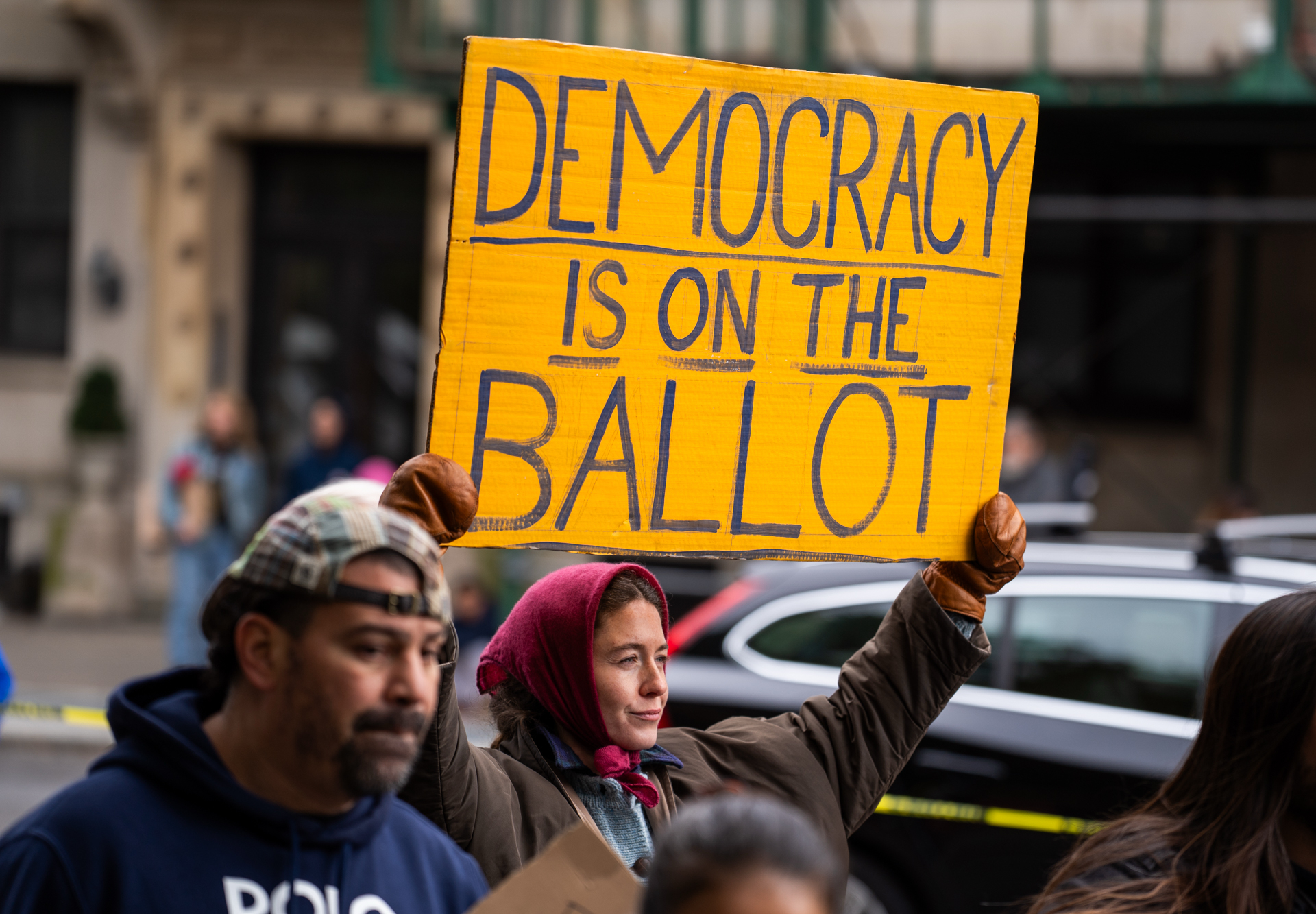
The Justice Department has sued at least 30 states for their voter information, maintaining it needs the information to secure election security. State officials have said that turning over the data raises an array of privacy concerns.

Under the US Constitution, state officials administer elections. Only Congress can pass laws related to how states oversee voting.

But Trump has sought to transform election administration, claiming that voting has been marred by widespread fraud.

In particular, Trump has continued to maintain that the 2020 election, in which he lost to former President Joe Biden, was “stolen”.

No evidence has ever been put forward to support the claims.

Federal judges have rejected attempts in California, Massachusetts, Michigan and Oregon to force the states to hand over voter files to the federal government. At least 12 states, however, have willingly provided or pledged to provide voter information to the Trump administration.

The push for voter information is one of several actions that have raised concerns over how the Trump administration will approach the midterm elections in November, which will decide the makeup of the US Congress.

He is currently calling on Republicans to pass the so-called SAVE America Act, a bill that would create higher documentation standards for voters to prove their citizenship when registering to vote and casting ballots.

The majority of Republican lawmakers have embraced Trump’s claim that the law is needed to prevent non-citizens from registering to vote, despite studies showing that instances of voter fraud are glancingly rare.

Critics say the measure would risk disenfranchising millions of voters, particularly those who have legally changed their names, which is a common practice in US marriages.

Source link

World reacts to Strait of Hormuz reopening amid US-Iran conflict | US-Israel war on Iran News

Iran’s Foreign Minister Abbas Araghchi and United States President Donald Trump have said that the Strait of Hormuz is open to commercial vessels.

Araghchi declared on Friday that the strategic waterwat was “completely open” in line with the ceasefire between Israel and Lebanon that took effect the previous day.

Recommended Stories

list of 3 itemsend of list

Trump affirmed on social media that the strait was open, later claiming that Iran had agreed to “never close the Strait of Hormuz again”. However, he also posted that the US naval blockade on Iranian ports would “remain in full force”.

In parallel, France and the United Kingdom hosted a meeting in Paris involving about 40 countries, which agreed to play a role in restoring freedom of navigation in the Strait of Hormuz once the US-Israeli war on Iran stops.

The blocking of tankers from using the strait, through which about 20 percent of the world’s crude flows on a typical day, has led to a global surge in fuel prices.

World leaders have welcomed the news with cautious optimism amid mixed messages from the US and Iran:

United States

“The Strait of Hormuz is completely open and ready for business and full passage, but the naval blockade will remain in full force and effect as it pertains to Iran, only, until such time as our transaction with Iran is 100% complete,” Trump wrote on Truth Social.

Minutes later, he issued another post saying the US Navy’s blockade on Iranian ships and ports “will remain in full force” until Tehran reaches a deal with the US, including on its nuclear programme.

Later, Trump told the news agency AFP that a deal to end the war on Iran was “close”, saying there were “no sticking points” left between Washington and Tehran.

Iran

Foreign Minister Abbas Araghchi posted on X that the strait was “declared completely open” and would remain open for the remaining period of the 10-day Israel-Lebanon ceasefire, which took effect overnight Thursday into Friday.

Some Iranian state media reports later appeared to contradict Araghchi’s announcement, with a senior military official telling state media that only nonmilitary vessels would be allowed to transit with permission from the Iranian Islamic Revolutionary Guard Corps (IRGC) Navy.

The Fars news agency, which is close to the IRGC, noted a “strange silence from the Supreme National Security Council”, the de facto top decision-making body in the country, as the status of the new supreme leader, Mojtaba Khamenei, remains unknown.

United Kingdom

UK Prime Minister Keir Starmer cohosted a summit on a potential military mission to secure the Hormuz Strait with French President Emmanuel Macron in Paris on Friday, with about 30 to 40 countries participating in person or by video conference.

On the sidelines, Starmer cautiously welcomed news of the strait’s reopening but said it must become “both lasting and a workable proposal”.

He said the UK and France would lead a “strictly peaceful and defensive” multinational mission to protect freedom of navigation as soon as conditions allow.

France

Speaking after the gathering, Macron said, “We all demand the full, immediate and unconditional reopening of the Strait of Hormuz by all parties.”

“We all oppose any restrictions or system of agreements that would, in effect, amount to an attempt to ⁠privatise the strait – and, of course, any toll system,” he added.

Macron’s office said roles for members of the international coalition working to reopen the strait could include “intelligence, mine-clearing capabilities, military escorts [and] communication procedures with coastal states”.

Germany

Chancellor Friedrich Merz said Germany could contribute mine clearance and intelligence capabilities to the international mission, but would need parliamentary support and a ″secure legal basis″ such as a UN Security Council resolution.

He said he wanted US involvement in the international mission to secure shipping through the Strait of Hormuz. “We believe this would be desirable,″ he said.

Trump later appeared to rebuff his overtures, saying on social media that he had received a call from NATO, but declined its assistance in no uncertain terms.

Finland

Finnish President Alexander Stubb, who participated in the Paris summit, said on X, “We welcome Iran’s announcement on opening the Strait. Lasting solutions require diplomacy,”

United Nations

United Nations Secretary-General Antonio ⁠Guterres on ⁠Friday welcomed the opening ‌of Strait of Hormuz by Iran ⁠and said ⁠it was “a ⁠step in the ⁠right ⁠direction”.

International Maritime Organisation

Arsenio Dominguez, secretary-general of the UN shipping agency said, “We are currently verifying the recent announcement related to the reopening of the Strait of Hormuz, in terms of its compliance with freedom of navigation for all merchant vessels and secure ‌passage.”

Shipping companies

The Norwegian Shipowners’ Association said several things had to be clarified before any ships can transit the strait, including the presence of mines, Iranian conditions and practical implementation.

“If this represents a step towards an opening, it is a welcome development,” said Knut Arild Hareide, CEO of the association, which represents 130 companies with some 1,500 vessels.

A spokesperson for Germany’s Hapag-Lloyd Shipping Company said, “We are now beginning to assess the new situation and the risks involved … For the time being, therefore, we are still refraining from passing through the strait.”

In a statement, Denmark’s Maersk said: “We have noted the announcement. The safety of our crew, vessels and customers’ cargo remains our priority. Since the outbreak of the conflict, we have followed the guidance of our security partners in the region, and the recommendation so far has been to avoid transiting the Strait of Hormuz.

“Any decision to transit the strait will be based on risk assessments and close monitoring of the security situation, with the latest developments also included in the ongoing assessments.”

Markets

Oil prices plunged after Iran’s announcement that passage for commercial vessels would remain “completely open” for the duration of a 10-day ceasefire in Lebanon.

“This news is having an immediate impact on markets,” said Kathleen Brooks, research director at XTB. “This is the biggest development so far during the ceasefire, and it gives hope that the war will end soon, and supply chains will return to some normality.”


Source link

US Congress extends controversial surveillance power under FISA for 10 days | Privacy News

The measure has long been criticised for allowing US intelligence agencies to collect citizen data without a warrant.

The United States Congress has temporarily extended a controversial surveillance law which allows federal intelligence agencies to collect the data of foreigners, including their contacts with US citizens.

The move allows a provision of the Foreign Intelligence Surveillance Act (FISA) to continue until April 30. The short-term extension was passed by the House of Representatives and approved by the Senate on Friday.

Recommended Stories

list of 3 itemsend of list

The patch comes after President Donald Trump’s efforts to secure a more lasting extension broke down.

Section 702 of FISA allows the National Security Agency (NSA) and other intelligence services to collect data from foreigners outside of the country.

That could include their interactions with US citizens, a prospect that has alarmed rights advocates.

Collecting such data, which can include correspondence on email and telecommunications platforms, typically requires a warrant approved by a court.

The process has been described by critics as a “backdoor search” that circumvents existing privacy laws.

Speaking after Friday’s vote, Senate Majority Leader John Thune said there was still some openness to reforming the law.

“We’ve got to pivot and figure out what can pass, and we’re in the process ⁠of figuring out how to do that here,” he told reporters.

Supporters of reform, who stretch across party lines, have long sought to repeal or amend Section 702.

While FISA was initially passed in 1978, Section 702 was added as an amendment in 2008.

The addition came amid the US’s “global war on terror”. But during its approval, revelations emerged that the administration of former US President George W Bush had already used the tactics Section 702 legalised.

Supporters, including Trump, maintain that reforming the provision would lead to a lapse in national security.

“I have spoken with many in our Military who say FISA is necessary in order to protect our Troops overseas, as well as our people here at home, from the threat of Foreign Terror Attacks,” Trump wrote in a Truth Social post on Wednesday.

He has pushed for the law to be extended for 18 months without changes. That effort initially appeared on track in the House but was ultimately scuttled by pushback from within Trump’s own Republican Party.

Among the detractors was Republican Congressman Thomas Massie, who has been a regular critic of Trump.

“I will be voting NO on final passage of the FISA 702 Reauthorization Bill if it does not include a warrant provision and other reforms to protect US citizens’ right to privacy,” he wrote ahead of the House vote.

Source link

Shipping firms seek clarifications before crossing Hormuz | US-Israel war on Iran News

Shipping companies said several things had to be clarified, including the presence of mines, Iranian conditions, practical implementations.

Shipping companies have cautiously welcomed Iran’s announcement that the Strait of Hormuz is open but said they would require clarifications, including about the risk of mines, before vessels move through the entry point to the Gulf.

Iran’s Foreign Minister Abbas Araghchi said on Friday that the Strait of Hormuz was open to all commercial vessels during a 10-day Lebanon ceasefire accord, prompting a fall in oil and other commodity prices while stock markets rose.

Recommended Stories

list of 4 itemsend of list

All commercial ships, including United States vessels, can sail through the strait, although their plans need to be coordinated with Iran’s Islamic Revolutionary Guard Corps, a senior Iranian official told the Reuters news agency.

Transit would be restricted to lanes which Iran deemed safe, adding that military vessels were still prohibited, the official said.

“We are currently verifying the recent announcement related to the reopening of the Strait of Hormuz, in terms of its compliance with freedom of navigation for all merchant vessels and secure passage,” said Arsenio Dominguez, secretary-general of the United Nations shipping agency, the International Maritime Organization.

The Norwegian Shipowners’ Association said several things had to be clarified before any ships could transit the strait, including the presence of mines, Iranian conditions and practical implementation.

“If this represents a step towards an opening, it is a welcome development,” said Knut Arild Hareide, CEO of the association which represents 130 companies with some 1,500 vessels.

Shipping association BIMCO cautioned members on returning to the strait.

“The status of mine threats… is unclear and BIMCO believes shipping companies should consider avoiding the area,” said Jakob Larsen, BIMCO’s chief safety and security officer.

The threat posed by mines in parts of the strait is not fully understood, and avoidance of the area by ships should be considered, a US Navy advisory on Friday, seen by Reuters, also said.

German shipping group Hapag-Lloyd on Friday said it was working for its ships to sail through the strait “as soon as possible”, but added that several questions remained.

“Our crisis committee is in session and will try to resolve all open items with the relevant parties within the next 24-36 hours,” it added.

Its Danish peer Maersk said it was closely monitoring the security situation and would act based on its risk assessment.

France’s CMA CGM and Norwegian oil tanker group Frontline declined to comment.

A recent route imposed by Tehran through its territorial waters near Larak Island would present navigational challenges even if vessels were not required to pay a toll, and would raise questions regarding compliance and insurance, said Matt Wright, lead freight analyst at data intelligence firm Kpler.

US President Donald Trump on Friday said Iran had agreed to never close the strait again, and that it was removing sea mines from it.

One of the world’s most important maritime chokepoints, disruption in the strait has forced shipping companies to suspend sailings, reroute cargo and rely on costly workarounds to keep goods moving in and out of the Gulf.

Source link

‘Most unique’ Airbnb where you stay inside 24-foot flower pot with rooftop lounge

Most people like to stay somewhere a little out of the ordinary when heading off on holiday or a short break, and one Airbnb shaped like a giant flower pot is certainly providing that

Many of us love to stay somewhere a little out of the ordinary when heading off on holiday or a short break, and one Airbnb is certainly delivering on that front. The Idaho Flower Pot is a charming, 24-foot tall Airbnb built in the shape of an enormous terra cotta flower pot. Nestled just south of Burley, Idaho, in the US, this eccentric getaway scooped Airbnb’s $100,000 (£74,000) “OMG! Fund” and sits on a working flower farm.

Inside, guests are treated to a 436-square-foot multi-storey space featuring tapered walls and a spiral staircase, with a queen-sized memory foam mattress in the loft and a pull-out sofa on the ground floor, sleeping between two and four people.

The bathroom boasts a lavish rainfall shower and a heated mosaic floor, while the kitchenette is kitted out with a two-burner induction hob and a compact fridge.

The décor features a striking “root” chandelier, bird lights, and a vintage record player.

Guests can also unwind on the rooftop patio, which offers a terrace at the top of the “pot” complete with loungers perfect for stargazing and sweeping views of the surrounding Albion Mountains.

There’s also a four-person hot tub and a flower-shaped fireplace to enjoy.

Travel influencer Anissa, known as @herjoliejourney on Instagram, shared her stay at the Idaho Flower Pot with her 64,500 followers on the platform.

Dubbing it “the most unique Airbnb in Idaho”, she added: “I’ve stayed in a lot of unique Airbnbs over the years, but nothing compares to sleeping inside a giant flower pot.

“We loved every minute of our stay and would absolutely come back again.”

Anissa posted footage from her visit, including stepping through the flower pot door, relaxing on the rooftop terrace, and shots of the bedroom and kitchen.

Followers adored the post, with it becoming viral and amassing more than 32,000 likes.

One person declared: “This is so cute,” while another commented: “Omg this is incredible! The attention to detail.”

Content cannot be displayed without consent

A third remarked: “Well this is something I never thought I’d see, I love it!”

The Airbnb is approximately a 2.5 to 3-hour drive from Salt Lake City and 45 minutes from Twin Falls.

Prices generally begin around $200 (£148) per night.

It’s worth noting that the rooftop patio and outdoor fire pit are accessible late spring through late autumn but may be shut in winter owing to snow.

You can view availability or reserve your stay via the official Airbnb listing.


Source link

Iran war’s big winners: Wall Street, weapons firms, AI and green energy | Business and Economy News

The International Monetary Fund has downgraded its global growth forecast for 2026 from 3.3 to 3.1 percent, citing the impact of the United States-Israeli war on Iran and the shutdown of the Strait of Hormuz on the world economy.

The war has damaged energy infrastructure across the Gulf, while critical exports like oil, gas, chemicals and fertiliser remain largely stranded by Iran’s shutdown of the strait and the subsequent US naval blockade of Iranian ports.

Recommended Stories

list of 4 itemsend of list

In the worst-case scenario of a prolonged war, the IMF said global growth could fall to 2.5 percent in 2026, with low-income and developing economies hit the hardest by soaring commodity and energy prices. The global shipping and logistics industry is facing a separate crisis.

But every economic crisis also has beneficiaries: despite the dire macroeconomic outlook, some corners of the global economy are thriving on the uncertainty.

Here’s a look at five industries that are doing well either despite – or because of – the darkening economic outlook.

Wall Street investment banks

Global investors have been on a rollercoaster since the start of US President Donald Trump’s second term last year. The president’s erratic decision-making, where he often issues an ultimatum one day and then changes it the next, has led traders to coin the term “TACO trade”, where TACO stands for “Trump Always Chickens Out”.

The recent volatility has made some investors anxious, but it’s been a boon to investment banks, which make millions in commissions and revenue from the surging volume of trade, according to Sean Dunlap, a director of equity research at Morningstar Research Services.

“Clients want to reposition, so they trade frequently,” he told Al Jazeera. “Spreads tend to increase, which increases the profitability for trade intermediaries like banks.”

First-quarter results for 2026 – released this week – showed that Morgan Stanley reported a profit of $5.57bn, up 29 percent year on year, while Goldman Sachs reported a profit of $5.63bn, up 19 percent year on year.

JP Morgan Chase also reported major gains, with first-quarter earnings of $16.49bn, up 13 percent year on year. The banks all cited high levels of trading, deal-making, and “robust client engagement” as the reasons behind surging profits.

The boomtime for banks could reverse course, however, if volatility persists for too long, Dunlap warned, because investors may become increasingly cautious and less willing to borrow money to make trades.

Prediction markets

As mainstream Wall Street banks reap profits, the crypto-based prediction platform Polymarket has been earning upwards of $1m a day since the start of the month by letting users make peer-to-peer bets on everything from sports tournaments to elections.

Polymarket has been doing well since the start of the war, but it revised its fee structure on March 30 to cash in even more on its popularity.

Rival platforms like Kalshi, Novig and Robinhood also follow the same business model, but Polymarket has been the standout winner of 2026 because it controversially allows users to bet on the outcome of conflicts like the Iran war.

Polymarket revised its fee structure on March 30 to cash in on its popularity. The change has already netted the platform more than $21m in fees since April 1, up from $11.6m for all of March and $6.23m for all of February, according to DefiLlama, a website that provides data analysis for decentralised finance platforms.

If the current trend continues, Polymarket could make $342m in fees this year alone, according to DefiLlama’s analysis.

Anonymous users have also made millions correctly predicting the dates of major events like the US-Iran ceasefire, but the outcomes for rank-and-file users are typically less impressive.

Researchers found that the top 1 percent of Polymarket users captured 84 percent of all trading gains, according to a new report released this month analysing 70 million trades from 2022 to 2025. The returns are so high that US federal regulators have pledged to crack down on insider trading in prediction markets following suspiciously well-timed bets on Iran war outcomes.

Aerospace and defence

Unsurprisingly, the aerospace and defence industries are booming this year due to major conflicts in Ukraine, Iran, Sudan, Gaza and Lebanon and a surge in global defence spending.

About half of the world’s countries have increased their military budgets over the past five years, according to an April report from the IMF, which means they are also buying everything from drones to missiles — more than ever before. Demand is growing particularly fast in Europe, where NATO countries have committed to raising defence spending to 5 percent of gross domestic product (GDP) by 2035.

The defence industry has, in turn, seen major gains on the stock market. The MSCI World Aerospace and Defence Index – which tracks aerospace and defence stocks across 23 global markets – reported net returns of 32 percent year on year at the end of March.

The defence index outpaced the MSCI World Index, which tracks 1,300 large and mid-cap companies across the same 23 markets. The index, which gives a broader overview of global stock markets, reported net returns of 18.9 percent over the same period.

Artificial intelligence

Last year, the United Nations Trade and Development (UNCTAD) office predicted that the AI industry would grow from $189bn in 2023 to $4.8 trillion by 2033, and the Iran war does not seem to have dented the outlook.

“Despite the shocks from the Iran war, we’re still seeing resilience in a lot of sectors like artificial intelligence and renewable energy,” said Nick Marro, lead analyst for global trade at the Economist Intelligence Unit.

One metric for the AI boom has been the high volume of semiconductor chips still being exported out of East Asia, he said. At the top of the chart is chipmaking powerhouse Taiwan, which reported record-breaking merchandise exports of $80.2bn in March, up 61.8 percent year on year, according to EIU analysis.

The surge was led by exports to the US, which grew by 124 percent year on year, the EIU said.

Taiwan Semiconductor Manufacturing Company, the world’s top chipmaker better known by its acronym “TSMC,” on Thursday posted a net income of 572.8 billion New Taiwan Dollars (NTD) ($18.1bn) for the first three months of 2026 – up 58 percent year on year in NTD.

Another metric, initial public offerings or “IPOs,” also shows that the industry is confident for the moment, with industry leaders Anthropic and OpenAI both planning to go public this year.

Renewable energy

The Iran war has highlighted the need to transition from fossil fuels not only for environmental reasons, but also for reasons of energy security. The war marks the third major energy shock this decade, following the COVID-19 pandemic and the 2022 Russian invasion of Ukraine.

The Iran war has “boosted” renewable energy “given the urgency to switch away from fossil fuels and diversify towards renewable sources,” Marro of the EIU said.

Even before the Iran war began, the International Energy Agency reported that global governments were already taking active measures to invest in renewable energy for geopolitical reasons.

According to an IEA report released this month, “150 countries have active policies to advance renewable and nuclear deployment, 130 have energy efficiency and electrification policies, and 32 have policies to incentivise supply chain resilience and diversification across critical minerals and clean energy technologies.”

The Iran war has triggered another flurry of policymaking in Asia, which typically buys 80 to 90 percent of the oil and gas that transits through the Strait of Hormuz. Since the shutdown, the region has been struggling to find alternative sources of energy, forcing governments to deploy emergency measures like fuel rationing and price caps.

South Korea, Thailand, India, Cambodia, Indonesia, Vietnam and the Philippines have all announced a variety of measures from tax breaks for at-home solar panels to commissioning new renewable energy projects – and even restarting nuclear reactors.

The surge in policymaking has been good for the renewable industry. The S&P Global Clean Energy Transition Index, which tracks 100 companies that produce solar, wind, hydro, biomass and other renewable energy across emerging and developed markets, is up 70.92 percent year on year.

Source link