united states

Massie race breaks spending record as pro-Israel groups target Trump critic | US Midterm Elections 2026 News

The race pitting a candidate endorsed by President Donald Trump against Congressman Thomas Massie, a rare Republican critic of Israel, has become the most expensive House of Representatives primary contest in the history of the United States.

The avalanche of spending, totalling more than $34m by Monday, according to official records, highlights the significance of the elections that could oust one of the few Republican opponents to the war with Iran.

Recommended Stories

list of 3 itemsend of list

In the final stretch of the campaign ahead of Tuesday’s vote, Massie has sought to highlight the oversized role of pro-Israel groups – including the American Israel Public Affairs Committee (AIPAC) – in the race.

He said the election will be a “referendum on foreign policy” and whether pro-Israel lobby groups will be able to “bully” members of Congress.

“You can tell that I’m ahead in the polls, and they’re desperate,” Massie told ABC News on Sunday.

“That’s why they’re sending the secretary of war to my district tomorrow. That’s why the president’s losing sleep and tweeting about this. That’s why AIPAC has dumped another $3m into my race this weekend.”

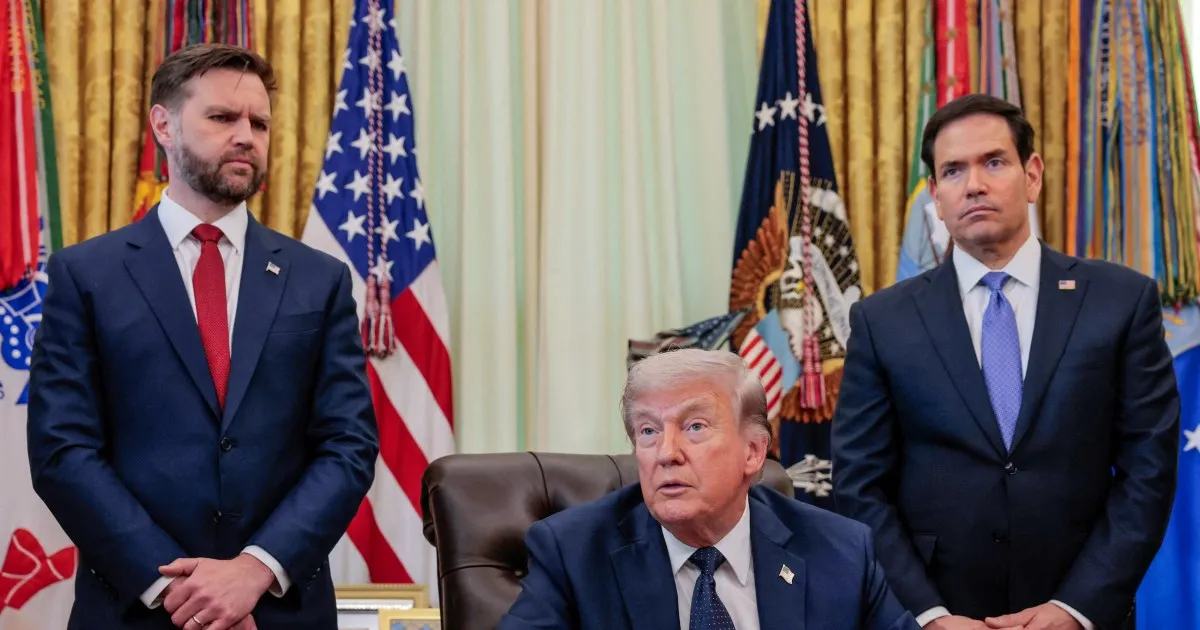
Trump has been incessantly bashing Massie on social media, and in an unusual move, Pentagon chief Pete Hegseth has travelled to Kentucky to campaign for Ed Gallrein, the Navy SEAL veteran challenging the congressman.

Massie has been critical of the unconditional US military aid to Israel and of the country’s abuses in Gaza and Lebanon. He has also helped spearhead the push for the release of government files related to the late sex offender Jeffrey Epstein.

The money

Despite the intensity of the race, the candidates have not raised record amounts of money themselves.

The bulk of the spending, more than $25.8m, has come from outside groups, known as super political action committees (super PACs).

Super PACs are usually used by special interest groups to spend heavily to oppose or support a candidate without the constraints of legal limits on direct campaign contributions.

Pro-Israel groups and donors have played a central role in the flood of funds and ads directed against Massie, with three groups linked to them spending more than $15.5m in the race, Federal Election Commission (FEC) data shows.

United Democracy Project (UDP), AIPAC’s election arm, has spent more than $4.1m.

The RJC Victory Fund, which is affiliated with the Republican Jewish Coalition, came in with around $3.9m.

MAGA KY has been the largest spender, at $7.5m.

The PAC’s finances have not been made fully public. But available records show that one of the group’s top funders is Paul Singer, a pro-Israel billionaire investor who has also made the largest individual donation to UDP over the past year – $2.5m.

MAGA KY also received funds from Preserve America PAC, a group linked to Israeli-American megadonor Miriam Adelson.

Details of the finances of Preserve America PAC remain unclear for this election cycle. But Adelson donated $106m to the PAC in 2024 to help elect Trump as president.

Trump has openly admitted that Adelson and her late husband Sheldon Adelson have influenced his Middle East policies.

Before the race in Kentucky’s Fourth Congressional District, the most expensive House primary was the 2024 election that ousted then-Democratic Congressman Jamaal Bowman, in which pro-Israel groups, including AIPAC, were also the largest spenders.

The third most expensive primary also involved AIPAC and its pro-Israel allies, who succeeded in helping defeat progressive Congresswoman Cori Bush in 2024.

The Trump factor

Beyond the millions of dollars in pro-Israel spending, Massie needs to survive another potent force in Republican politics – Trump’s wrath.

The US president has all but purged the party of lawmakers who have disagreed with him on major issues.

Most recently, Senator Bill Cassidy – who voted to convict Trump after the January 6, 2021, US Capitol riot – lost his primary to a challenger backed by the US president.

Trump is actively campaigning against Massie. In less than 24 hours between Sunday and Monday, the US president fired off three social media posts berating the congressman, calling him “weak”, “pathetic” and a “bum”.

“The worst Congressman in the long and storied history of the Republican Party is Thomas Massie,” Trump wrote on his Truth Social platform on Monday. “He is an obstructionist and a fool. Vote him out of office tomorrow, Tuesday. It will be a great day for America!”

However, Massie appears to have a few advantages that other Republican dissidents lacked.

Over the years, the congressman has built a reputation as a combative, principled libertarian and has gained popularity among right-wing commentators.

His campaign directly raised $5.5m, significantly more than Gallrein’s $3.1m, while also receiving outside support from pro-gun rights and libertarian PACs.

Massie has also been endorsed by some of his Republican colleagues, including Congresswoman Lauren Boebert, an outspoken right-wing lawmaker.

And due to the involvement of pro-Israel groups, Massie’s supporters are arguing that the race is not all about Trump, who remains popular amongst Republican voters.

“Why does Trump hate Massie? Is the congressman a secret liberal? Not at all,” right-wing commentator Tucker Carlson said in his newsletter on Monday.

“Unlike nearly everyone else in the Republican Party, Massie has refused to go along with the White House’s abandonment of the America First principles that got the president elected. He is one of the few honest people in politics. Everyone who cares about our country should root for him.”

Source link

Police say they are responding to ‘active shooter’ at San Diego mosque | Gun Violence News

BREAKING,

Authorities say they are deploying ‘significant resources’ to the scene of the incident at Islamic Center of San Diego.

Police in California have said they are responding to an active shooter at a mosque in San Diego.

Authorities called on residents in Monday to avoid the area of the incident at the Islamic Center of San Diego.

There have been no official reports of casualties, but the Associated Press news agency cited officer Anthony Carrasco as saying that he believes people have been shot.

The police department said later on Monday that the situation remains active but has been “contained” without providing further details. “We have significant resources on scene at this time,” the department said.

Aerial television footage shows a heavy police presence outside the mosque.

San Diego Mayor Todd Gloria said he is continuing to receive reports about the incident. “Emergency personnel are on scene and actively working to protect the community and secure the area,” he wrote on X.

The office of California Governor Gavin Newsom said he is following the situation and coordinating with local law enforcement agencies. “We are grateful to the first responders on the scene working to protect the community and urge everyone to follow guidance from local authorities,” the office said in a statement.

The mosque is in a heavily residential neighbourhood about 9 miles (14 km) north of downtown San Diego. It is the largest mosque in San Diego County, according to its website.

More to come…

Source link

Trump drops IRS lawsuit, sets up $1.7bn US anti-weaponisation fund | Courts News

United States President Donald Trump has withdrawn his $10bn lawsuit against the Internal Revenue Service (IRS) stemming from a leak of his tax returns and said his administration will create a $1.77bn anti-weaponisation fund that would compensate some of Trump’s political allies.

The court filing, released on Monday in Florida, did not disclose the terms of the deal, including whether either party settled.

Recommended Stories

list of 4 itemsend of list

However, the Department of Justice (DOJ) on Monday announced the establishment of a $1.77bn fund called the Anti-Weaponisation Fund that would “provide a systematic process to hear and redress claims of others who suffered weaponisation and lawfare”.

The DOJ said in its press release that it was part of the settlement agreement.

ABC News first reported last week that the president was prepared to drop the lawsuit as part of a deal that would create the fund to pay Trump allies who were perceived as wrongly investigated and prosecuted.

Trump, his adult sons Donald Trump Jr and Eric Trump, and the Trump Organization sued the IRS in January, arguing the agency should have done more to prevent a former contractor from disclosing their tax returns to media outlets during the president’s first term.

The case arose from former IRS contractor Charles Littlejohn’s leak of Trump’s tax returns to media outlets, including the New York Times and ProPublica, in 2019 and 2020.

Those returns showed that Trump paid little or no income taxes in many years, the Times reported in 2020.

Prosecutors charged Littlejohn in 2023 with leaking tax records of Trump and thousands of other wealthy Americans to the media, saying he was motivated by a political agenda. Littlejohn later pleaded guilty to improper disclosures, and a judge sentenced him to five years in prison.

Trump filed the lawsuit personally, not in his official capacity as president.

Political pushback

While the court filing did not mention the terms of any potential deal, news that the president would create a fund to protect his political allies sparked backlash.

Representative Jamie Raskin, a Democrat from Maryland, called the idea “unconstitutional”.

“This, of course, is a political grievance fund that Donald Trump can use to pay off his friends,” Raskin, the top Democrat on the House Judiciary Committee, said in an interview on Sunday with the ABC News programme This Week.

“If these people have a valid cause of action, they should bring it to the court like every other American does, and use the system of due process, and prove things by clear and convincing evidence, or a preponderance of evidence. Go and prove it. But the idea that Donald Trump can just pass it out like a pardon is absurd,” he said.

California Governor Gavin Newsom also criticised the president amid reports of the deal.

“Donald Trump wants to settle his joke lawsuit against his own IRS department to hand out $1.7 BILLION of OUR TAX DOLLARS to Jan. 6th insurrectionists and his cronies,” Newsom said in a post on X.

“It is an outrage that the American taxpayers are having to pay for this and that we have a president who is exercising such open corruption in front of everyone and expecting us to go along with it,” Representative Pramila Jayapal, a Democrat from Washington state, told the progressive MeidasTouch network.

Despite the criticisms, it is not clear who would specifically benefit from the funds.

Trump has long claimed that the DOJ under his predecessor, President Joe Biden, a Democrat, was weaponised against him, pointing to the criminal charges where he faced allegations that he conspired to overturn the results of the 2020 presidential election, which Trump lost by more than seven million votes, and that he retained classified documents at his Mar-a-Lago estate.

Merrick Garland, the attorney general during the Biden administration, denied allegations of politicisation. The Justice Department also investigated prominent Democrats, including Biden’s son Hunter Biden and former US Senator Bob Menendez, a Democrat from New Jersey.

“The machinery of government should never be weaponised against any American, and it is this Department’s intention to make right the wrongs that were previously done while ensuring this never happens again,” said Acting Attorney General Todd Blanche said in a release.

However, the Trump administration has actively pursued cases against perceived political enemies, including former FBI director James Comey and former Federal Reserve Chairman Jerome Powell, Fed Governor Lisa Cook, New York Attorney General Letitia James, Arizona Senator Mark Kelly, and California Senator Adam Schiff. 

The DOJ said that there is legal precedent for the fund, pointing to a programme called “Keepseagle” under the administration of former US President Barack Obama, a Democrat. That created a fund to address allegations of racism against the federal government.

The White House referred Al Jazeera to the DOJ for a request for comment. The DOJ did not respond.

The government watchdog group Citizens for Responsibility and Ethics (CREW) announced on X that it would be investigating how the funds would be used.

“While Americans are struggling with an affordability crisis, President Trump plans to use nearly $1.8bn in taxpayer money to pay off his friends and allies—including potentially the violent insurrectionists who attacked the Capitol on January 6th,” CREW’s president, Donald K Sherman, said in a statement provided to Al Jazeera.

“By settling his absurd $10bn lawsuit against his own administration, Trump and the Justice Department just engaged in the most brazen act of self-dealing in the history of the presidency, and did so quickly in order to avoid the scrutiny of the judicial process, while quite likely violating the Constitution’s Domestic Emoluments Clause in the process. This is one of the single most corrupt acts in American history.”

A long time coming

Lawyers for the president asked a federal judge in April to pause the case for 90 days while the two sides worked to reach a settlement or resolution.

“This limited pause will neither prejudice the parties nor delay ultimate resolution,” the filing in April said. “Rather, the extension will promote judicial economy and allow the Parties to explore avenues that could narrow or resolve the issues efficiently.”

When asked in February how he would handle any potential damages from the case, Trump said, “I think what we’ll do is do something for charity.”

“We could make it a substantial amount,” he said at the time. “Nobody would care because it’s going to go to numerous very good charities.”

The litigation against the IRS raised novel legal questions, including conflicts of interest, about whether a president can sue his own government. It is not clear if the judge will accept Trump’s withdrawal of the case.

Under the US Constitution, federal courts may only hear genuine disputes between litigants with opposing stakes in the outcome.

US District Court Judge Kathleen Williams in Miami, who oversees Trump’s lawsuit, wrote last month that it was unclear whether the parties to the lawsuit were “truly antagonistic to each other”.

Williams had set a court hearing for May 27 to hear arguments on whether she should dismiss the case on those grounds.

Source link

Iran’s World Cup team arrives in Turkiye amid US visa uncertainty | US-Israel war on Iran

NewsFeed

Iran’s national football team has arrived in Turkiye for a pre-World Cup training camp, but players are yet to receive visas for entry into the US. FIFA says it is confident Iran will be able to play in next month’s tournament despite the uncertainty.

Source link

Iran war day 80: Trump issues warning; Tehran ready to confront aggression | US-Israel war on Iran News

The fear of renewed US strikes in Iran looms while Israeli attacks continue in Lebanon despite extended ‘ceasefire’.

United States President Donald Trump has warned Iran that the “clock is ticking” to clinch a deal to end the war as reports have emerged that Washington and Israel might be planning to carry out air strikes on Iranian energy infrastructure.

“For Iran, the Clock is Ticking, and they better get moving, FAST, or there won’t be anything left of them,” Trump wrote on his Truth Social platform. “TIME IS OF THE ESSENCE!”

Iranian Ministry of Defence spokesperson Reza Talaei-Nik said on Sunday that the military is “fully prepared” to confront any new aggression from the US and Israel.

Saudi Arabia on Monday said it intercepted three drones, a day after a drone strike hit the Barakah Nuclear Energy Plant in the United Arab Emirates.

Meanwhile, Israel has continued its bombardment of Lebanon despite another “ceasefire” extension.

As the US-Israeli war on Iran continues for its 80th day, here is what we know:INTERACTIVE_LIVETRACKER_IRAN_US_ISRAEL_MIDDLEEAST_ATTACKS_MAY5_2026_GMT1435-1777992258

In Iran

  • Mohsen Rezaei, a member of Tehran’s Expediency Council and former Islamic Revolutionary Guard Corps commander, issued a warning to the US to lift its blockade of Iranian ports, saying the Iranian military is ready for further confrontation. Rezaei made this warning while speaking to state television.
  • Talaei-Nik said the Iranian armed forces are “fully prepared to confront any new potential attack by the US and the Israeli regime against the country”.

War diplomacy

  • Mikhail Ulyanov, Russia’s envoy to international organisations in Vienna, suggested in an X post that Iran appoint a special envoy to Moscow, similar to Tehran’s arrangement with China.
  • In an X post, Jean-Luc Melenchon, the leading figure of France’s left-wing La France Insoumise party, condemned “European complicity” in the US-Israeli strikes on Iran, which have triggered a wider regional war.

In the Gulf

  • The New York Times reported that the Israeli military has operated two “covert” outposts in Iraq’s western desert and killed a shepherd and a soldier in a bid to hide one of the sites near the town of al-Nukhaib.
  • After the drone attack on the nuclear facility caused a fire, the UAE Ministry of Defence said two other drones had been “successfully” dealt with after they were launched from the “western border”. It did not elaborate.
  • The drone that got through the UAE’s defences hit an electrical generator outside the inner perimeter of the Barakah Nuclear Energy Plant, the Abu Dhabi Media Office said. Radiological safety levels were unaffected, and there were no injuries, it said. The UAE’s Federal Authority for Nuclear Regulation later confirmed that the plant remained safe with no radioactive material released from the strike.
  • Saudi Arabia said the three drones it intercepted entered from Iraqi airspace and warned that it would take the necessary operational measures to respond to any attempt to violate its sovereignty and security.

In the US

  • Marjorie Taylor Greene, a former US congresswoman and a once-close ally of Trump, has warned in a post on X that any attempt to send US troops into Iran would trigger what she described as a “political revolution”.
  • Republican Senator Lindsey Graham, speaking to the NBC broadcaster, urged Trump to “hurt” Iran, including launching attacks on its energy sites, until it agrees to US terms on its nuclear programme. The US and Israel have hit civilian targets multiple times during the war on Iran. Attacks on civilian facilities are considered war crimes under international law.

In Israel

  • Israel’s Channel 13 reported that dozens of US cargo planes carrying ammunition from bases in Germany have landed in Tel Aviv.
  • Israeli media reported that the military is preparing for renewed hostilities with Iran. The public broadcaster Kan quoted an unnamed security official as saying that Israel would join any new US strikes and target Iranian energy infrastructure.

In Lebanon

  • Israeli strikes have continued in southern Lebanon, where Israel issued evacuation orders for four towns and villages and then struck two of those locations.
  • Strikes were also reported in Az-Zrariyah on a moving vehicle while another raid in Tayr Debba resulted in some significant casualty numbers, Al Jazeera’s Obaida Hitto reported from Tyre, Lebanon.

Global markets

  • Stalled peace efforts between Iran and the US caused oil prices to rise again on Monday. This pushed the price of the global benchmark Brent crude up to about $111 per barrel, close to its highest level in weeks.

Source link

US says China to buy billions in agricultural goods after Trump-Xi talks | Business and Economy News

China will buy ‘at least’ $17bn worth of US agricultural goods annually, the White House says.

China will buy “at least” $17bn worth of agricultural goods from the United States annually following US President Donald Trump and Chinese leader Xi Jinping’s summit in Beijing, the White House has said.

China will make the purchases through 2028, with the 2026 target applying to the remainder of the year on a proportionate basis, according to a fact sheet released on Sunday.

Recommended Stories

list of 4 itemsend of list

The White House said the deal is in addition to China’s commitment to buy at least 87 million metric tonnes of US soya beans, which was made at Trump and Xi’s summit in South Korea in October.

China will also restore market access for US beef by renewing the expired listings of more than 400 production facilities, and resume imports of poultry from states determined by the US Department of Agriculture to be free of avian influenza, according to the fact sheet.

Trump and Xi also agreed to establish two new bodies – the US-China Board of Trade and the US-China Board of Investment – to manage trade and investment between the sides, the White House said.

China has yet to confirm or comment on the White House’s announcement.

The Chinese Embassy in Washington, DC, did not immediately respond to a request for comment.

The White House’s update provides further clarity on the outcome of Trump and Xi’s two-day summit, which was heavy on pageantry and camaraderie but light on concrete agreements.

During their two days of talks in Beijing, Trump and Xi sought greater alignment on economic issues and trade, while largely skirting the sensitive issues of Taiwan and the US-Israel war on Iran.

In a readout after the summit wrapped up on Friday, the White House said the two sides had discussed ways to “enhance economic cooperation”, and that they agreed on the need to keep the Strait of Hormuz open and that Iran “can never have a nuclear weapon.”

Beijing did not explicitly state that Iran should not have nuclear weapons, but stressed the importance of reaching “a settlement on the Iranian nuclear issue and other issues that accommodates the concerns of all parties”.

Neither White House statement contained any mention of Taiwan, the self-governing island that Beijing views as an integral part of its territory.

The omission of any reference to the island – the defence of which Washington is committed to supporting under the 1979 Taiwan Relations Act – came after Xi warned of “clashes and even conflicts” between the superpowers if the issue is not “handled properly”.

After nearly a decade of tit-for-tat economic salvoes between Washington and Beijing, US-Chinese trade is down sharply from its peak.

Their bilateral trade in goods last year came to some $415bn, down from more than $690bn in 2022.

Source link

Trump holds prayer rally to ‘rededicate’ US as ‘one nation under God’ | Donald Trump News

The administration of United States President Donald Trump has hosted a nine-hour prayer event on the National Mall in Washington, DC, as part of its efforts to commemorate the country’s 250th anniversary.

Sunday’s event was called “Rededicate 250: A National Jubilee of Prayer, Praise and Thanksgiving”, and it took place from 9am to 6pm Eastern US time (13:00 to 22:00 GMT).

On the jubilee’s website, organisers explained that their aim was to mark “rededication of our country as One Nation to God”.

The event featured performers, pastors and civil rights leaders, as well as Trump’s Republican allies, among them Senator Tim Scott of South Carolina.

“Our rights don’t come from the government,” Scott told the crowd. “No, our rights come from God, the king of kings.”

Members of the Trump administration, including the president himself, also recorded video messages that were broadcast from the stage.

Trump’s video showed him seated behind the Resolute Desk in the White House, reciting a speech from the Book of Chronicles that God gave to King Solomon, promising protection to his followers and destruction to those who forsake him.

Secretary of State Marco Rubio, meanwhile, used his video to describe the US as a country uniquely shaped by the “Christian idea”.

“Before the Christian West, most societies – and civilisations, for that matter – thought in stagnant cycles: the flooding of the Nile, the return of the rains, the cycle of the harvest. History for them was a wheel to nowhere,” Rubio said.

“But our faith calls us outwards into the limitless darkness of the unknown. It tells us to go forth and preach the gospel to the world as a witness unto all nations and to the ends of the earth.”

The event was not without controversy, though. Critics pointed out that only one speaker, a rabbi, was non-Christian.

Some religious leaders even rejected the event as a political stunt, rather than a sincere testament to faith.

Paul Raushenbush, a reverend and president of the Interfaith Alliance, posted on social media that his objections did not stem from an “antipathy towards religion”. Rather, he said his faith compels him to cherish the “rich tapestry of beliefs” that come together in the US.

“Rededicate 250 is a betrayal of America’s founding values guaranteed in the First Amendment – which made clear that there shall be no establishment of religion by the government and that each one of us should be free to live out our beliefs in our own way,” Raushenbush wrote.

Traditionally, the Establishment Clause of the US Constitution has been interpreted as prohibiting the government from establishing or imposing religious beliefs on its citizens.

But critics argue the Trump administration has blurred the separation between church and state, including by having regular prayer services at the Department of Defense.

Trump, however, has accused the federal government of “anti-Christian bias“. He launched a task force last year to root out the purported discrimination.

Evangelical Christians form a pillar in Trump’s right-wing base of support. The demographic is a powerful force during election seasons in the US, and Trump has sought to rally Christian voters ahead of major votes.

Their views could reshape how the US Constitution is interpreted. A survey from the Pew Research Center released last week found a slight uptick in the number of US adults who believe Christianity should be named as the country’s official religion. Seventeen percent now share that view, up from 13 percent in 2024.

That said, Pew researchers noted that a majority of Americans, roughly 54 percent, still believe in the separation of church and state.

About 52 percent also said that “conservative Christians have gone too far in trying to push their religious values in the government and public schools”.

Source link

‘Won’t be anything left’: Trump issues threat to Iran amid stalled talks | Government News

United States President Donald Trump has reiterated his threats against Iran, as negotiations to end the conflict between the two countries continue to flounder.

In a Sunday morning post on his platform Truth Social, Trump warned that time was running short before a fresh wave of US military action might be launched.

Recommended Stories

list of 3 itemsend of list

“For Iran, the Clock is Ticking, and they better get moving, FAST, or there won’t be anything left of them,” Trump wrote in the short, two-sentence message. “TIME IS OF THE ESSENCE!”

The post was the latest example of Trump using violent rhetoric against Iran as his administration struggles to achieve its goals in the war.

Just a day earlier, Trump had posted an AI-generated image of himself atop a military ship, labelled, “It was the calm before the storm.”

The conflict began on February 28, when Israel and the US jointly attacked Iran.

Since then, Trump has put forward a range of objectives for the resulting war, including dismantling Iran’s missile arsenal, severing its relations with regional allies, and ending its nuclear enrichment programme.

On April 7, Trump coupled those demands with a social media post suggesting wholesale destruction in Iran. Critics have likened the post to a call for genocide.

“A whole civilization will die tonight, never to be brought back again. I don’t want that to happen, but it probably will,” Trump wrote.

Within hours of the post, the US and Iran agreed to a ceasefire that has been in place ever since, though both sides have accused each other of violations.

The US president had previously threatened to attack the country’s civilian infrastructure, including its power plants and bridges, which legal experts warn could amount to a violation of the Geneva Convention.

Separately, in a May interview with Fox News, Trump said Iranian officials will “be blown off the face of the earth” if they attack US vessels.

Iran has denounced such rhetoric and rejected Trump’s demands as excessive.

Mehr, a news agency sponsored by the Iranian government, issued a statement on Sunday saying that the US has offered “no tangible concessions” in its latest proposals.

It also accused the US of seeking to “obtain concessions that it failed to obtain during the war”, a strategy that “will lead to an impasse in the negotiations”.

Separately, a spokesperson for Iran’s armed forces, Abolfazl Shakarchi, was quoted as warning the US against further threats.

“Repeating any folly to compensate for America’s disgrace in the Third Imposed War against Iran will result in nothing but receiving more crushing and severe blows,” he told Mehr.

Reporting from Tehran, Al Jazeera correspondent Almigdad Alruhaid said that the Iranian government has indicated that violent rhetoric from the US will not be tolerated.

“From what we understand, this kind of language is not acceptable here in Tehran. They are projecting defiance rather than [giving] an immediate response to this kind of rhetoric,” Alruhaid said.

He added that the increasingly hostile remarks from both sides signal that the ceasefire could be at imminent risk of shattering.

“Behind all of this rhetoric, there is awareness that the diplomatic window right now is narrowing,” Alruhaid said.

“We do know that there is hard language, hard messaging from both sides — that the finger’s on the trigger on both sides.”

But Adam Clements, a foreign policy analyst, told Al Jazeera there could be a “domestic element” to Trump’s hardline rhetoric, including his latest flurry of messages.

“Of course, Iran would have to take it seriously,” Clements said of Sunday’s post.

“At the same time as well, President Trump is known for his bombastic tweets, his bombastic statements, perhaps for domestic audiences.”

Clements added that it will be critical to watch whether Trump’s statements are echoed by his officials in the coming days, and whether they are also matched by increased military activity.

“ The White House press office has been known to post these type of strange memes, or AI-generated memes and cartoons in the past,” he explained.

“So I think it’s necessary here to sometimes look past some of the political noise, some of the things for show, and really try to pay attention to these clear signals.”

Source link

Canadian FM: Is the US still a reliable ally? | Politics

Anita Anand discusses Donald Trump, NATO, Israel, China and Canada’s international role.

Canadian Foreign Minister Anita Anand discusses whether Canada can still depend on the United States – as well as defence spending, Arctic security, Gaza, Iran, China, India, and Canada’s push to diversify trade beyond the US.

Source link

News Analysis: Trump spent two days with Xi in Beijing. Was he outplayed?

As President Trump left Beijing on Friday, Chinese social media resurfaced a familiar nickname for the president — flattering at first glance — declaring that Chuan Jianguo, the “Nation Builder,” had returned.

It was not meant as a compliment. The nation he is building, according to the Chinese, is not the United States but their own, through a series of inadvertent yet costly mistakes inflicted by Trump at home and abroad.

  • Share via

If the Chinese government was self-assured entering Trump’s summit with Xi Jinping, then the results of the state visit, in which Beijing refused to offer Trump any meaningful deals or concessions, signal their unmistakable confidence in American decline.

Chinese government statements in local media stating as much made their way back to Trump as he was departing, aggravating the president, a U.S. official said. But the White House secured a clarification from the Chinese that seemed to placate Trump. America was only declining under President Biden, they said — not anymore.

President Trump and President Xi Jinping tour Zhongnanhai Garden in Beijing

President Trump and President Xi Jinping tour Zhongnanhai Garden on Friday in Beijing.

(Evan Vucci / Pool via Getty Images)

The Trump administration argues the trip was a success, having secured the display of conciliation and partnership the president had sought after years of increasingly dangerous acrimony.

Foreign policy hawks on China will be displeased with his new direction of friendship and cooperation with a government they view as openly hostile to the United States. But Trump seems to have reached a similar conclusion as past administrations, that China might require a relationship in pursuit of, as Xi put it, “constructive strategic stability.”

Trump was notably out of character throughout his stay here, deferential to his host, marveling at displays of Chinese power and reticent to speak with the press.

Five times over two days, Trump referred to Xi as his friend, taking every public opportunity to offer his compliments and pats on the back. None of it was reciprocated. The Chinese leader, Trump told Fox News in an interview, was “all business” in private, as well, apparently uninterested in his overtures of personal goodwill.

Presidents Xi and Trump tour Zhongnanhai Garden.

Presidents Xi and Trump tour Zhongnanhai Garden on Friday.

(Evan Vucci—Pool/Getty Images)

The summit may ultimately be remembered as the moment when Trump recognized a shifting power dynamic, where an American president had the rare and uncomfortable experience of entering a meeting clearly overmatched.

“I think the most important thing is relationship,” Trump said in the interview, describing the summit as “historic.”

“It’s all about relationship,” he added. “I have a very good relationship with President Xi.”

Taiwan was discussed ‘the whole night’

Little of substance was accomplished over two days of talks. But Chinese officials expected no less after warning Trump’s team before the summit that its minimal preparation had failed to lay the groundwork for diplomatic agreements.

Still, the lack of breakthroughs may come as a relief to some in Washington. Trump appears to have held to a long-standing U.S. line on Taiwan, for now, refusing to provide Xi with clarity on whether the United States would defend the self-ruled island if China tries to reclaim it by force.

The two men discussed the matter “the whole night,” Trump told Fox.

If China attacked, “they would be met harshly, and bad things will happen,” Trump said. Yet within the same answer, he questioned Taiwan’s “odds” against China if war were to break out, even with U.S. help, noting its proximity to the Chinese mainland and its vast distance away from the United States.

Whether Trump will proceed with arms sales to Taiwan — passed by Congress and obligated by law under the Taiwan Relations Act — is still an open question.

“If you kept it the way it is, I think China is going to be OK with that,” Trump said, referencing an ambiguous status quo around Taiwan’s status, “but we’re not looking to have somebody say, ‘Let’s go independent because the United States is backing us.’ ”

“Taiwan would be very smart to cool it a little bit,” he added. “China would be smart to cool it a little bit. They ought to both cool it.”

President Trump departs as President Xi looks on after a visit to Zhongnanhai Garden on Friday.

President Trump departs as President Xi looks on after a visit to Zhongnanhai Garden on Friday.

(Evan Vucci/ Pool via Getty Images)

Curious company

Trump’s choice of company in the U.S. delegation left the Chinese with questions over the purpose of the trip.

Lara Trump, a Fox News host and the president’s daughter-in-law, attended alongside her husband, Eric Trump, whose presence as a private citizen running the Trump Organization was a direct appeal to Beijing to treat the administration like a family business. Brett Ratner, director of the “Rush Hour” series and a documentary on the first lady that bombed at the box office, was given prime placement along with America’s top business leaders.

The last time a secretary of Defense attended a presidential state visit to China was on Richard Nixon’s famous trip in 1972. Chinese officials were unsure what to make of Pete Hegseth’s presence — whether it was meant to convey a softer stance, a hardening one, or simply an ignorance of basic diplomatic protocol.

Trump said he felt personally honored by the lavish welcome he received on the edge of Tiananmen Square, outside the Great Hall of the People, where China hosts all visiting dignitaries.

Before a lunch at Zhongnanhai, the secretive headquarters of the Chinese Communist Party, Trump asked Xi if he was special for getting to visit the compound. He was the fourth U.S. president to do so.

While the Trump administration offered itself glowing reviews of the outcome of the summit, the Chinese government offered little to say as he departed. And Chinese media highlighted Beijing’s resolute stance on American priorities — from trade to the Iran war — as evidence of Chinese confidence and American decline.

But all that business wasn’t the point of the trip, Trump told Fox’s Bret Baier. For the president, it was all personal.

“I want to thank President Xi, my friend, for this magnificent welcome,” Trump said in his toast at the state banquet, repeating the personal overture. “The American and Chinese people share much in common. We value hard work. We value courage and achievement. We love our families and we love our countries.

“Together, we have the chance to draw on these values to create a future of greater prosperity, cooperation and happiness and peace for our children,” Trump added. “We love our children. This region and the world — it’s a special world, with the two of us united and together.”

Source link

Republican Senator Cassidy loses Louisiana primary after opposing Trump | Politics News

Bill Cassidy is among seven Republican senators who voted to convict Trump after the January 6, 2021, Capitol attack.

US Senator Bill Cassidy has lost his Louisiana Republican primary after years of criticism from supporters of Donald Trump over his vote to convict the United States president during his 2021 impeachment trial linked to the January 6 Capitol attack that year.

Cassidy failed to secure enough support in the southern state on Saturday to advance to a run-off, finishing behind Representative Julia Letlow and State Treasurer John Fleming. The two will face each other in a second round of voting on June 27.

Recommended Stories

list of 4 itemsend of list

The result underlines Trump’s continued influence over the Republican Party as he targets politicians seen as disloyal, even as he faces growing political pressure over inflation, falling approval ratings and criticism of the US-Israeli war on Iran.

Cassidy was one of seven Republican senators who voted to convict Trump after the attack on the US Capitol by Trump supporters who sought to overturn Trump’s 2020 election loss. While several Republicans who broke with Trump chose not to seek re-election, Cassidy campaigned aggressively for a third six-year term and heavily outspent his rivals.

On the morning of the vote, Trump attacked Cassidy on social media, calling him “a disloyal disaster” and “a terrible guy”. Speaking after his defeat, Cassidy appeared to respond indirectly to Trump’s remarks. “Insults only bother me if they come from somebody of character and integrity,” he told supporters.

He added: “Our country is not about one individual. It is about the welfare of all Americans, and it is about the constitution.”

Letlow, meanwhile, embraced Trump’s backing during her victory speech. “I want to say thank you to a very special man, … the best president this country has ever had, President Donald Trump,” she said.

She later described Cassidy’s impeachment vote as evidence that he had “turned his back on Louisiana voters”. Trump celebrated Cassidy’s loss online, writing: “That’s what you get by voting to impeach an innocent man.”

The Louisiana race is the latest in a series of contests in which Trump has backed efforts to remove Republicans who opposed him. Earlier this month, several Indiana state senators were also defeated after they had rejected Trump’s redistricting plan aimed at winning more seats in the US Congress for Republicans.

Saturday’s elections also took place amid confusion after a recent US Supreme Court ruling weakening part of the Voting Rights Act related to electoral district maps.

While the Senate primary went ahead as planned, Louisiana officials postponed primary elections for the US House of Representatives to redraw district boundaries. Civil rights groups challenged the delay, arguing it violates both the US Constitution and the Louisiana Constitution.

Source link

Ronda Rousey vs Gina Carano fight: Rousey wins with a 17-second submission | Mixed Martial Arts News

Rousey won the fight with her signature armbar lock, forcing Carano into submission just 17 seconds into the bout.

Mixed martial arts (MMA) star Ronda Rousey has re-retired after demolishing fellow combat sports trailblazer Gina Carano in their long-awaited non-title comeback bout in Los Angeles, defeating her rival by armbar after just 17 seconds.

After a hype-filled build-up, the bout on Saturday was a jarring anti-climax, with Rousey flooring Carano almost immediately before wrestling her into an armbar to end the fight.

American stars Rousey, 39, and Carano, 44, are widely regarded as two of the most important female fighters in the history of MMA, helping to take the sport into the mainstream during their fighting heydays more than a decade ago.

Carano had parlayed her success into a Hollywood career, appearing in several action movie roles, but had not fought since 2009 before her appearance in Saturday’s featherweight bout.

Rousey, a 2008 Olympics judo bronze medallist who subsequently found huge success in the Ultimate Fighting Championship (UFC), retired from the sport in 2016 after suffering back-to-back defeats against Amanda Nunes and Holly Holm.

INGLEWOOD, CALIFORNIA - MAY 16: Gina Carano and Ronda Rousey stand with referee John McCarthy after their featherweight bout during the main card of Netflix's Ronda Rousey vs. Gina Carano at Intuit Dome on May 16, 2026 in Inglewood, California. Sarah Stier/Getty Images for Netflix/AFP (Photo by Sarah Stier / GETTY IMAGES NORTH AMERICA / Getty Images via AFP)
Gina Carano and Ronda Rousey stand with referee John McCarthy after their featherweight bout [Sarah Stier/Getty Images via AFP]

The fighters were lured back into the cage for Saturday’s card at the Intuit Dome with the promise of a bumper payday that will reportedly see each fighter earn several million dollars from the streaming giant.

Rousey (13-2-0 MMA) secured her 10th submission win, returning to the cage following an exit from MMA in December 2016.

She insisted afterwards her return to the ring was a one-off and ruled out the possibility of fighting again after paying tribute to Carano.

“Gina is the only person who could have brought me back into MMA – she’s my hero,” Rousey said. “She changed my world, and we changed the world, and I’ll never ever forget that or be able to pay that back enough.

“I’m so glad we finally got to share this moment.”

Asked about possibly extending her comeback, Rousey added: “There’s no way I could have ended it better than this. I want to have some more babies, got to get cooking.”

US Mixed Martial Arts (MMA) fighter Ronda Rousey reacts after defeating Gina Carano during their Featherweight Bout at the Intuit Dome in Inglewood, California, on May 16, 2026. (Photo by Patrick T. Fallon / AFP)
Ronda Rousey celebrates after defeating Gina Carano [Patrick T Fallon/AFP]

Carano (7-2-0 MMA) ⁠⁠had been inactive in the sport since August 2009, returning to MMA after a conversation last year at Rousey’s encouragement. She admitted the fight was too fast for her, regretting what ⁠⁠more she could have done in a short timeframe.

“I feel great,” Carano said after the loss. “I wanted to fight, ⁠⁠and I didn’t get that. But she trained. She ⁠⁠had her game plan. I have so much love and respect for her, and this was a victory in my life. She changed it. I woke up at 3am every morning thinking about ‌‌her. I fell back in love with mixed martial arts. There’s ‌‌so ‌‌many things to think about here. It’s just [that] the fight didn’t go my way.

“I wanted that to last longer – I felt like I was so ready, I felt so good,” she said. “But I haven’t been here for 17 years. I wanted to hit her.”

Carano, 44, is unsure whether she’ll return to MMA, choosing to keep the door open.

Carano said the mere fact of getting in shape for her return – she revealed before the bout she had shed more than 100 pounds (45kg) in the two years leading up to the contest – was a victory.

“Right now, just getting in the cage was a victory, getting here after 17 years is a victory. Fighting a legend was a victory. I feel great, I just wanted to fight, and I didn’t get to do that.”

US Mixed Martial Arts (MMA) fighter Ronda Rousey hugs Gina Carano after defeating her during their Featherweight Bout at the Intuit Dome in Inglewood, California, on May 16, 2026. (Photo by Patrick T. Fallon / AFP)
Rousey hugs Carano after defeating her [Patrick T Fallon/AFP]

Source link

Francesca Albanese on Israeli sexual violence suffered by Palestinians | Politics

Francesca Albanese speaks to Redi Tlhabi on sexual violence against Palestinians by Israeli forces and its coverage.

A recent New York Times article highlighted the sexual violence suffered by Palestinians at the hands of Israeli forces. But the allegations have been documented for years by human rights groups and Palestinian organisations. So why does the world only seem to pay attention when a Western news organisation does?

This week on UpFront, Redi Tlhabi speaks with UN Special Rapporteur Francesca Albanese about sexual violence, Israeli impunity – and the double standards of Western attention.

Source link

Abu-Bilal al-Minuki: ISIL’s shadow commander in West Africa | ISIL/ISIS News

The presidents of Nigeria and the United States have announced the killing of Abu-Bilal al-Minuki, described as the second-in-command of ISIL (ISIS).

Donald Trump first made the announcement in a social media post on Friday, without disclosing when or where the joint Nigerian-US military operation happened.

On Saturday, Nigerian President Bola Tinubu said in a statement that al-Minuki, also known as Abu-Mainok, was killed “along with several of his lieutenants” during a strike on his compound in the Lake Chad Basin.

The Nigerian army described it as “a meticulously planned and highly complex precision air-land operation” carried out on Saturday between midnight and 4am (23:00 to 03:00 GMT) in Metele, in Borno state in northeast Nigeria.

Borno has been the epicentre of a long-running campaign by the Boko Haram armed group and its splinter faction, the Islamic State West Africa Province (ISWAP), which is linked to ISIL.

Who was al-Minuki?

Little is publicly known about al-Minuki, who had been under US sanctions since 2023.

Before pledging allegiance to ISIL in 2015, al-Minuki was a prominent Boko Haram leader, according to the Nigerian army.

An army statement described him as a “key” operational and strategic figure who provided guidance to ISIL entities outside Nigeria on media operations, economic warfare and weapons manufacturing.

“His death removes a critical node through which ISIS coordinated and directed operations across different regions of the world,” the army said.

It added that al-Minuki oversaw ISIL-linked operations across the Sahel and West Africa, including attacks against “ethnic and religious minority communities”. In 2018, he was linked to the kidnapping of more than 100 schoolgirls in Dapchi, in northeastern Nigeria’s Yobe state.

Emerging power

Al-Minuki is believed to have risen through the ranks of ISWAP following the disappearance of veteran commander Mamman Nur in 2018.

His reported ability to operate discreetly and avoid public attention helped him maintain influence over operations, while evading detection by regional and international security forces.

Cheta Nwanze, chief executive of the Lagos-based advisory group, SBM Intelligence, said al-Minuki had previously been declared killed in 2024 after a military operation in Kaduna state.

“That earlier announcement did not produce a lasting degradation of ISWAP’s capabilities,” he told Al Jazeera, warning that eliminating a single commander may have a limited impact.

Nwanze said the group will be able to recover as long as a growing “ransom economy” in Nigeria – which raised some $1.66m between July 2024 and June 2025, according to an SBM intelligence report – “remains intact”.

“The ultimate tool for control is the man on the ground with a gun, and the ultimate backing for that man is a functional social contract, which sadly Nigeria does not have,” he said. “Until the economic logic that feeds these groups is disrupted, the cycle will continue.”

Experts say leaders such as al-Minuki have been central to coordination between local fighters and ISIL’s broader network, but are not irreplaceable due to the group’s decentralised command structure.

“The killing of al-Minuki will disrupt ISWAP operationally in the short term,” Alex Vines, the Africa programme director at the European Council on Foreign Relations, told Al Jazeera.

“ISWAP has proven resilient to leadership losses, suggesting this killing will not be strategically decisive on its own.”

‘Inclusive governance reforms’

ISWAP has recently intensified attacks along the Nigeria-Cameroon border, targeting military outposts and humanitarian convoys.

These operations are seen as part of a deliberate effort to consolidate territory and demonstrate the group’s continued relevance despite ongoing pressure, including after Trump accused Nigeria of not doing enough to protect Christians in the country’s north from attacks.

The Nigerian government has rejected the claim, insisting that Muslims are also being targeted by armed groups. In recent months, dozens of US troops have been deployed to Nigeria to help in the fight against armed groups by providing intelligence sharing and technical support.

Tinubu said Nigeria “appreciates” the partnership with the US “in advancing our shared security objectives,” adding that he looked forward “to more decisive strikes against all terrorist enclaves across the nation”.

Vines said al-Minuki’s killing was “a tactical win” for the Tinubu administration, but ISWAP remains a “serious security concern”.

As for the US, eliminating al-Minuki is likely to be framed as a victory against ISIL’s Africa network. It will also reinforce Nigeria’s importance “as a key security partner and a reminder that bilateral relations are much better than a year ago”, Vines told Al Jazeera.

Nwanze said the joint nature of the strike signalled a deepening of US‑Nigeria security cooperation, but the collaboration “will face limits”.

“Washington’s willingness to engage is likely contingent on narrow counter‑terrorism objectives, not on a wholesale commitment to rebuilding Nigeria’s fractured security architecture,” he added.

Mubarak Aliyu, a political and security risk analyst, called the elimination of al-Minuki “a remarkable operational success”. He stressed, however, that “broader, inclusive governance reforms remain fundamental to solving the long-term security challenges in the wider region”.

Source link

Mahmoud Khalil calls for deportation to be halted in light of new evidence | Israel-Palestine conflict News

The lawyers for Mahmoud Khalil, a former Columbia University student targeted for deportation by the United States government over his pro-Palestine advocacy, have called on an immigration appeals court to reopen and terminate his case.

The latest legal appeal points to new evidence, some of which was documented in media reports, that Khalil’s lawyers said it “suggests that the Trump Administration secretly engineered the outcome of his immigration case to make an example of him”.

Recommended Stories

list of 3 itemsend of list

It comes just over a month after the Board of Immigration Appeals issued a final order of removal for Khalil, who was first detained by immigration enforcement agents in March 2025, one of several students targeted for their participation in pro-Palestine campus protests that swept the US the previous year.

Khalil, a US permanent resident who is married to a US citizen, has long maintained that he has been unjustly targeted for his political views.

His legal team said on Friday that “apparent procedural abnormalities” support that view.

“It’s clear that the revelations of DOJ misconduct corroborate what we have known since Mahmoud was arrested–that the administration has reverse-engineered its desired outcome by weaponising a farcical proceeding littered with abnormalities,” Johnny Sinodis, a lawyer representing Khalil, said in a statement.

The new evidence includes a report by The New York Times that found that Khalil’s case had been flagged as high priority before it had arrived at the Board of Immigration Appeals, in what his lawyers say indicated the case was being “fast-tracked”.

The report, citing case documents, also found that the court had been instructed to treat Khalil’s case as if he were still in detention custody, which typically results in an expedited processing timeline.

Khalil was released from immigration detention in June 2025 following a federal judge’s order. An appeals court later ruled the judge did not have jurisdiction over the matter. He is also appealing that decision, during which time authorities are barred from re-detaining or deporting him.

The New York Times report also found that three judges at the Board of Immigration Appeals recused themselves from the case. While the reasons for the recusals were not made public, experts familiar with the board’s procedures have said the rate of recusals was extremely rare.

The Board of Immigration Appeals is meant to be independent. Like other immigration courts, it falls under the Department of Justice in the executive branch, which critics say makes it more vulnerable to interference.

Other federal courts fall under the independence of the judicial branch.

The Trump administration has framed Khalil’s deportation as part of a crackdown on anti-Semitism. They have presented no evidence to back the claims against him, and Khalil has never been charged with a crime.

This week, The Intercept news site reported that shortly after he was detained by immigration agents, the FBI had closed an investigation into a tip that Khalil had called for “violence on behalf of Hamas”, saying it did not warrant further investigation.

In targeting Khalil, US Secretary of State Marco had invoked a rarely used provision of the Immigration and National Act that allows the deportation of individuals deemed to be a national security threat based on “past, current or expected beliefs, statements, or associations that are otherwise lawful”.

The manoeuvre raised questions over freedom of speech and whether those protections extended to permanent residents like Khalil. The government later added the claim that Khalil had intentionally failed to disclose his past work for the UN agency for Palestinian refugees (UNRWA) on his immigration application.

Administration officials have repeatedly stood by the claims and maintained that Khalil received proper due process.

In a statement on Friday, Khalil said the administration “wants to arrest, detain, and deport me to intimidate everyone speaking out for Palestine across this country, and they are willing to violate longstanding US rules and procedures to do it”.

He added, “No lies, corruption, or ideological persecution will stop me from advocating for Palestine and for everyone’s right to free speech.”

Source link