united states

Oyarzabal scores two goals as Spain dominates Austria in World Cup knockout | World Cup 2026 News

Mikel Oyarzabal’s brace allows the European champions to dominate Austria and move on to the round of 16.

Spain coasted past Austria and into the FIFA World Cup last 16 on Thursday, thoroughly outclassing their opponents in a 3-0 knockout win, with a brace from Mikel Oyarzabal and a Pedro Porro header.

The European champions controlled possession and sliced through the Austrian defence in a typically dominant performance in Los Angeles, as Hollywood stars Penelope Cruz and Javier Bardem and singer Rosalia cheered on.

Recommended Stories

list of 4 itemsend of list

The win, which could have been by a greater margin – with a disallowed goal and a free kick off the woodwork – sets up a tantalising round-of-16 clash with either Portugal or Croatia.

“I’m happy to help the team and get through to the next round. Now we need to rest,” said Oyarzabal directly after full-time.

“They were a physical side and difficult to play against, but we played a good match. We’re happy to qualify,” he added.

As to whether he would prefer Portugal or Croatia in Monday’s last-16 match-up, Oyarzabal remarked: “It doesn’t matter who we face in the next round; I have friends in both teams.”

Oyarzabal sets the tone

Los Angeles Stadium was a sea of red and excitement over the first visit by a bona fide World Cup favourite to the US’s second city.

Spain ratcheted up the pressure gradually through the first half, creating a string of chances after the first hydration break.

Marc Cucurella thought he had scored from a Lamine Yamal corner, but Pau Cubarsi was judged to have encroached on Austria’s goalkeeper.

Alexander Schlager then made a superb diving save, pushing Oyarzabal’s low shot around the post.

Austria’s defence finally buckled in the 36th minute. Pedri pinged a ball wide, left to Cucurella, whose cross to Oyarzabal was calmly side-footed past the goalkeeper.

Spain’s dominance grew further, with Yamal tormenting the Austrians, mainly from the right flank.

An Alex Baena free kick hit the crossbar, and Yamal’s close-range follow-up shot was well saved.

Austria spurned a rare chance at the other end. Romano Schmid played in a late-arriving and unmarked Stefan Posch, but a terrible first touch meant he lost the ball before even attempting a shot.

Oyarzabal scores goal.
Oyarzabal scores his second goal against Austria in the 89th minute [Kiyoshi Mio/Imagn Images via Reuters]

‘Ole’

After the break, Spain continued knocking on the door without quite putting the game to rest.

Austria sent on two giant strikers, Sasa Kalajdzic and Marko Arnautovic, and immediately went long, with Kalajdzic putting a header over the bar.

But in the 66th minute, Spain struck again. Baena lifted a cross onto the head of Pedro Porro, who nodded in his first goal for Spain.

Some dogged defending kept the scoreline respectable, including a goal-line clearance by David Alaba from Yamal, who was substituted off to rest moments later.

Spain sprayed passes around the pitch as the final minutes ticked down, eliciting “Oles” from the crowd, as attention turned to a sterner test on Monday in Dallas.

In the 89th minute, a pinpoint Cucurella cross found a completely unmarked Oyarzabal in the penalty area, who slotted the ball home to seal the victory in style.


Source link

Who is Iranian oil tycoon Shamkhani whose ship is stranded in Hormuz? | Conflict News

Maritime monitoring service TankerTrackers.com said on Thursday that a ship which Iranian media reported had run aground in the Strait of Hormuz has in fact been stuck in the same spot since March and is part of an operation managed by the notorious Iranian oil magnate Mohammad Hossein Shamkhani.

Here is what we know about Shamkhani, whom the US and EU allege is a central figure in Iranian and Russian shadow fleet operations, generating billions of dollars of oil revenues for both, and what happened to his ship in the Hormuz strait.

What do we know about the stranded ship?

On Thursday, TankerTrackers.com reported that the ship that Iranian media said had run aground in the Strait of Hormuz after using a “US-suggested route” has actually been stuck in the same spot since March.

It identified the vessel as the Arista, and reported that while it is Comoros-flagged, it is in fact part of an operation managed by the sanctioned Iranian oil magnate Shamkhani.

Who is Mohammad Hossein Shamkhani and what are the allegations against him?

Shamkhani is an Iranian oil shipping magnate who has multiple Western sanctions imposed on him. He is the son of the late Ali Shamkhani, a senior political adviser to Iran’s former Supreme Leader Ayatollah Ali Khamenei.

Ali Shamkhani led the Supreme National Security Council (SNSC) for a decade until 2023, making him the second-longest-serving security chief since 1979 after former President Hassan Rouhani, who was SNSC secretary for nearly 16 years.

He was reportedly killed in the first Israeli-US strikes on Tehran on February 28 , which triggered the war with Iran and also killed Khamenei, whose funeral begins tomorrow.

In March, the Sarajevo-based Organised Crime and Corruption Reporting Project (OCCRP) reported that following an investigation, Mohammad Hossein Shamkhani and his brother had used aliases and Caribbean “golden passports” to amass a $29m million property portfolio in Dubai.

The US Treasury, which has sanctioned the Shamkhani shipping empire, says it is part of a massive Iranian and Russian oil smuggling ring and that the Comoros‑flagged Arista aground in Hormuz is part of that network.

How does Shamkhani’s oil shipping operation work?

According to the US Treasury, the Shamkhani network makes use of “front” companies to buy Iranian and Russian oil for which it falsifies shipping documents. It switches the oil between vessels frequently via its shipping operations and sells the oil on to buyers who pay for it via their own front companies to obscure the flow of money.

Additional profits are funnelled through hedge funds and other money-laundering operations, the US Treasury alleges.

It said Shamkhani relies on a mix of crude oil, oil product and liquefied petroleum gas (LPG) tankers to generate billions of dollars for the Iranian and Russian regimes.

According to the European Commission, Shamkhani “uses the company Milavous Group Ltd to blend crude oil with various petroleum products from Russia and to rebrand for exporting purposes, thereby concealing their origin”.

Shamkhani is not known to have responded publicly to these allegations.

What sanctions have been imposed on Shamkhani?

Shamkhani was first sanctioned by the US last July, amid a large number of Iran-related sanctions. In April, the US Treasury Department announced additional sanctions on Shamkhani’s network.

“Treasury is moving aggressively with Economic Fury by targeting regime elites like the Shamkhani family that attempt to profit at the expense of the Iranian people,” Treasury Secretary Scott Bessent said.

A statement from the US Treasury added that Shamkhani “heads a multi-billion dollar Iranian and Russian petroleum sales empire that enriches a family connected to the highest echelons of the Iranian regime at the expense of the Iranian people”.

The European Union sanctions tracker website says Shamkhani is also subject to EU sanctions, describing him as “a businessperson active in the Russian oil trade and a central player in Russia’s so-called ‘shadow fleet’.”

Russia’s shadow fleet is a network of hundreds of ageing, poorly regulated oil tankers that Russia uses to export crude and fuel while evading Western sanctions imposed after its invasion of Ukraine in 2022.

An August last year, the UK government also announced sanctions against Shamkhani including an asset freeze, director disqualification and travel ban. Minister for the Middle East Hamish Falconer said: “The UK is announcing sanctions against those who operate on behalf of Iran, fuelling its attempts to undermine stability in the Middle East and global security.

“Iran’s reliance on revenues from trading networks and connected organisations enables it to carry out its destabilising activities, including supporting proxies and partners across the region and facilitating state threats on UK soil.”

Source link

Jaylen Brown traded to Philadelphia 76ers from Boston Celtics | Basketball News

In an unexpected move, Boston traded the All-Star guard to division rivals Philadelphia for Paul George and draft picks.

Jaylen Brown’s time in Boston has come to a surprising end with the Celtics deciding to trade him to one of their most storied rivals.

Brown – the 2024 NBA Finals MVP, a five-time All-Star and the league’s fourth-leading scorer this past season – is getting traded by the Celtics to the Philadelphia 76ers, a person with knowledge of the deal’s terms said on Wednesday night.

Recommended Stories

list of 4 itemsend of list

Boston is getting Paul George, along with a slew of draft capital that could become two first-round picks and two second-round picks, said the person who spoke to The Associated Press on condition of anonymity because the trade does not yet have the required league approvals.

ESPN first reported the trade agreement, and the terms were later confirmed by The Boston Globe.

Brown latest NBA star to be traded, joins Antetokounmpo, Leonard

Add this news to the list of blockbuster moves across the NBA so far this off season.

LeBron James is leaving the Los Angeles Lakers as a free agent. All-Star-calibre players Giannis Antetokounmpo, Kawhi Leonard and Brandon Ingram are also on the move.

Now, this.

“Welcome to Philly, JB!” Pennsylvania Governor Josh Shapiro posted on social media. “Sixers get way better and, as a bonus, the Celtics got worse!”

It’s a move that breaks up what has been one of the league’s most successful 1-2 punches in Brown and Jayson Tatum, who helped carry the Celtics to the 2024 NBA title.

Tatum missed most of this past season while recovering from an Achilles tear that happened during the 2025 playoffs, meaning Brown had to carry even more of the load for Boston – and he wound up with career-best averages of 28.7 points, 6.9 rebounds and 5.1 assists per game.

It seemed, though, that Brown had felt underappreciated, especially after it became known that Boston had included him in trade talks with Milwaukee when Antetokounmpo was on the market.

“Nobody has won more combined regular-season and playoff games since I entered the league 10 years ago,” Brown posted on social media over the weekend. He’s right: The Celtics have won 523 games with Brown in the lineup, including playoff contests, which is six more than Denver has won with Nikola Jokic over that span.

Brown now gets to be part of a squad in Philadelphia alongside guard Tyrese Maxey and centre Joel Embiid, someone who Brown recently called a flopper on a livestream.

“Joel Embiid is a great player. One of the best bigs in f****** basketball history flops,” Brown said. “He know it. This ain’t breaking news.”

Brown, Maxey (the league’s fifth top scorer this past season) and Embiid (a two-time NBA scoring champion) could become a positively frightening trio in Philadelphia, and the Celtics deciding to play a role in creating such a triumvirate only adds to the intrigue surrounding why they wanted to trade Brown in the first place.

The trade ends a tremendously disappointing two-year stint for George, who was traded with two years left on a four-year, $212m free-agent contract. The 36-year-old never approached his nine-time All-Star form in Philadelphia, and his tenure was marred by a 25-game suspension last season for flunking a drug test.

He averaged just 16.7 points in his two seasons in Philadelphia after topping the 20-point mark in nine straight seasons with Indiana, Oklahoma City and the Los Angeles Clippers.

Paul George in action.
Former All-Star forward Paul George endured two disappointing seasons at the Philadelphia 76ers [File: Matt Slocum/AP]

Source link

An extra 229,000 deaths: Is that the cost of US-UK drugs deal? | Health News

Research published in the British Medical Journal (BMJ) has found that a United Kingdom-United States pharmaceutical deal could cause 229,000 excess deaths as a result of the diversion of billions of pounds away from Britain’s National Health Service (NHS).

In December, the UK and US signed a pharmaceutical trade deal, under which the US government agreed not to impose tariffs on UK pharmaceutical and medical technology exports for the next three years.

Recommended Stories

list of 3 itemsend of list

In return, the British government committed to increasing NHS spending on new US medicines from 0.3 percent in 2026 to at least 0.6 percent of its gross domestic product (GDP) by 2036. This means that medicine spending overall should increase from 10 percent to 12 percent of the NHS budget.

UK politicians defended the deal with Science Minister Patrick Vallance saying in April that the arrangement gives patients across the NHS access to “life-changing new medicines that they previously would have been denied”.

“Not only this, but as the first country in the world to benefit from a zero percent tariff on pharmaceuticals to the US, Britain’s life sciences sector will be further boosted,” Vallance argued.

But the research published in the BMJ found that the commitment to spend so much more on new branded medicines over the next decade without any increase in NHS funding will “create substantial opportunity costs elsewhere, having a direct effect on population health”.

Samuel Cross, a professor in the department of pharmacology and therapeutics at the University of Liverpool, who coauthored the report, said the agreement “benefits pharmaceutical companies and comes at a cost of NHS patients”.

“There’s really no way to sugar-coat that. The numbers speak for themselves,” Cross told Al Jazeera.

Here’s what we know about the report:

What is in the US-UK deal?

The agreement signed on December 1 was hailed as a landmark deal between British Prime Minister Keir Starmer and US President Donald Trump on pharmaceutical trade and pricing.

The US agreed not to impose tariffs on UK pharmaceutical and medical exports for the following three years – until January 19, 2029.

According to a policy paper published by the British government, the preliminary understanding of the agreement recognised that the US and UK shared a “mutual interest in developing a global medicines system that supports development and commercialisation of new innovations”.

 What did the research find?

In February, Vallance disclosed that funding for the increased spending on medicines would come from the Department of Health and Social Care, which funds the NHS in England, rather than the Treasury.

The study in the BMJ forecast that if spending targets are met and the economy grows as forecast by the Office for Budget Responsibility, the NHS would need to spend an extra 1.3 billion pounds ($1.73bn) a year by 2028 – about 25 million pounds ($33.4m) a week. By 2036, this would rise to an extra 8.8 billion pounds ($11.74bn) a year – about 170 million pounds ($227m) a week). Over the course of the agreement, that would add up to about 44.7 billion pounds ($59.7bn) by the end of 2036.

“Costs are even higher if the impact on publicly funded adult social care is also considered – modelling of English local authority data indicates that every £1bn [$1.33bn] the NHS must find to fund this deal will increase the costs of adult social care by £118m [$157.5m] because of increases in morbidity and mortality,” the report found.

Ultimately, the study predicted, excess deaths are likely as a result.

“Even if we restrict attention to the direct effect of reductions in available NHS expenditure, by 2036 this deal is likely to result in roughly 229,000 excess deaths – more than during the COVID-19 pandemic between March 2020 and June 2022 (137,000). If the indirect effect on adult social care is also included, the increase in excess deaths is even greater (291,000),” the report stated.

The report added that the findings are “unsurprising” given the existing pressures on the NHS and the “large burden of unmet need in highly cost-effective areas of care”.

It also referred to shortfalls in NHS funding and pharmaceutical pricing as “opportunity costs”.

Cross said that in health economics, opportunity costs are the “key to all of this”.

“In the NHS, we have a finite budget – we’re not made of money – and if you take money away to pay for, in this case, more medicines. then that comes at an opportunity cost of the places that the money has been diverted away from,” he explained.

Which health sectors will be worst affected?

The research predicted that the greatest number of deaths would occur in cardiovascular, respiratory, gastrointestinal and cancer patients.

It added that there will also be broader harm caused to quality of life for patients in those sectors as well as “neurological, endocrine, musculoskeletal, and mental health problems”.

“Despite this evidence and reassurances that ‘frontline services’ will be protected, the NHS will need to fund this deal from allocations made six months before the deal was agreed. The evidence suggests that if additional public expenditure was available, it could be more effectively deployed within the NHS itself,” it added.

The report also called the government’s claims that the US-UK agreement would encourage pharmaceutical innovation in the country “uncertain”.

“Pharmaceutical research and development operate within a global market, of which the UK represents a relatively small share. As such, there is limited evidence that UK domestic pricing materially influences global investment decisions,” the report stated.

“Even so, evidence suggests in most cases the UK is already paying more than 100 percent of the long-term value of new medicines; incentivising production of new medicines under this deal will do long-term harm to the public health objective of the NHS,” it added.

Cross added that because money has in effect been diverted away from the NHS, there is no way for the government to offset the impact on the service.

“If the funds are used to pay for new medicines, we will lose positive health outcomes elsewhere, and that is as simple as that,” he said.

He called for the government to release an impact assessment to trigger a public discussion about how good the US-UK deal really is for Britain.

Source link

Asian stocks slide on chip sell-off as markets await US jobs data

Published on

Most Asian stock markets dropped on Thursday, dragged down by a wave of selling in semiconductor shares, as European bourses made a subdued start and Wall Street looked set to open in the red before the release of key US employment figures.


ADVERTISEMENT


ADVERTISEMENT

The pullback centred on the technology sector, where investors retreated from the chip stocks that have powered much of this year’s rally, amid growing unease that the vast sums Big Tech is spending on AI could leave the market awash with supply.

South Korea’s Kospi bore the worst of it, tumbling around 5% as its heavyweight chipmakers slid. Memory specialist SK Hynix lost close to 8% and Samsung Electronics fell more than 6%.

In Tokyo, the Nikkei 225 shed about 1.5%, with chip-equipment maker Tokyo Electron down around 5.6%, while Taiwan’s Taiex slipped 1.1% as TSMC, the world’s largest contract chipmaker, gave up 1.8%.

The falls followed a rough session for chip stocks on Wall Street this Wednesday, where Micron Technology dropped more than 10% and Intel sank around 9%.

The moves stand in sharp contrast to a stellar year for Asian tech, with the Kospi and the Nikkei still up roughly 85% and 34% respectively in 2026.

On the other hand, Hong Kong’s Hang Seng rose about 0.8%, lifted by an 8.7% jump in electric-vehicle maker BYD after it reported a second straight monthly rise in sales, while India’s Sensex added 0.5%.

In Europe, markets opened flat as both the Euro Stoxx 50 and the broader pan-European Stoxx 600 traded within a 1% range at the start of Thursday’s session.

The UK’s FTSE 100, Germany’s DAX 30, France’s CAC 40 and Spain’s IBEX 35, all traded between 0.1% and 0.3% higher.

Italy’s FTSE MIB led the pack and rose about 0.4%.

Oil extends its slide and US jobs in focus

Crude prices fell again, trading below where they sat before the Iran war began in late February, as hopes grew that supplies through the Strait of Hormuz will steadily recover.

Brent crude, the international standard, eased around 1% to about $70.89 a barrel while WTI, the US benchmark, dropped 3% to roughly $69.

Attention now turns to the US, where stock futures edged lower ahead of the June employment report, brought forward a day because of Friday’s Independence Day.

Economists polled by Dow Jones expect around 115,000 jobs were added last month.

The figure carries extra weight under the new Federal Reserve chair, Kevin Warsh, with investors wary that a strong reading could harden the case for keeping interest rates higher for longer.

According to economists at Capital Economics, demand for AI may keep growing but at a slower pace than many expect, a caution that helped sour sentiment towards the sector.

Additional sources • AP

Source link

Taiwan needs to become a ‘hornet’s nest’ of drones, US diplomat says | Weapons News

The de ​facto US ambassador Raymond Greene says drones represent a ‘game-changing opportunity’ to enhance Taiwan’s security.

Taiwan needs a “hornet’s nest” of drones to help deter conflict and provide security, says the top United States ⁠diplomat to the self-governing island that China claims as part of its territory.

Speaking at a forum on drones in the central city of Taichung, Raymond Greene, director of the American Institute in ‌Taiwan and the de facto US ambassador, said on Thursday that drones represented a “game-changing opportunity” to enhance Taiwan’s security and reinforce peace in the broader region.

Recommended Stories

list of 3 itemsend of list

The US, Taiwan’s most important international backer and arms supplier despite their lack of formal diplomatic ties, has strongly supported the government’s military ⁠modernisation plan and increased defence spending.

Taiwan has said it needs to bolster its defences in the face of a stepped-up threat from China.

China regards Taiwan as part of its territory and opposes Washington’s continued, though informal, backing of Taipei.

The US and Taiwan can anchor “democratic” drone production and strengthen the collective deterrence posture of the free world, Greene said.

“Fortunately for Taiwan, drones have significantly boosted defenders, even when facing overwhelming odds,” he added, referring to the war in Ukraine.

“Nothing will deter conflict more effectively than turning Taiwan into a hornet’s nest ⁠of air, surface and subsurface drones.”

While Taiwan’s government has prioritised drones ⁠and other asymmetric military systems, in May, the opposition-dominated parliament passed only two-thirds of the $40bn in extra defence spending that President William Lai Ching-te had asked for, earmarking funds only for US arms.

The government has now proposed a new 210 ⁠billion Taiwan dollars (US$6.59bn) package to pay for surveillance, coastal attack and small unmanned surface drones through the end of 2031.

However, in May, a senior US military official said Washington was putting a $14bn arms sale to Taiwan on hold to preserve munitions for the US-Israel war against Iran.

The Kuomintang (KMT), Taiwan’s main opposition party, this ⁠week proposed its own drone legislation with a spending cap ⁠set at 240 billion Taiwan dollars (US$7.5bn) over six years and annual spending capped at 40 billion Taiwan dollars (US$1.25bn).

Its plan would fund drones from the main budget rather than a special budget, which is what the government wants.

On Wednesday, Lai ‌called the need for drones pressing.

“Facing changes in the geopolitical situation and the evolution of modern warfare, building asymmetric combat capabilities is a national defence project that is a race against ‌time,” ‌he said at a meeting of his Democratic Progressive Party.

Lai rejects Beijing’s sovereignty claims, saying only the island’s people can decide their future.

Source link

US designates Ecuador’s Chone Killers gang as ‘terrorist’ organisation | Crime News

US Secretary of State Marco Rubio says the gang ⁠had also been classified as a ‘Specially Designated Global Terrorist’.

The US⁠ State Department has designated the Ecuadorean gang Chone Killers as a foreign “terrorist organisation”, imposing sanctions on a crime ⁠group that Washington has accused of carrying out attacks on civilians and public officials.

US Secretary of State Marco Rubio said the gang ⁠has also been classified as a “Specially Designated Global Terrorist”.

Recommended Stories

list of 3 itemsend of list

“Chone Killers has committed numerous attacks targeting civilians, law enforcement officers and government officials, including high-profile assassinations of public officials,” Rubio said in a statement announcing the designations.

The move against the Ecuadorian street gang ‌is part of a broader campaign by US President Donald Trump’s administration on organised crime and drug trafficking in Latin America.

The Trump administration has designated several other Latin American gangs and drug cartels as “terrorist” organisations, including Venezuela’s Tren de Aragua and the Mexican Sinaloa cartel.

“The Trump administration, in ⁠partnership with Ecuador and President Daniel Noboa, will continue to protect our hemisphere by keeping illicit drugs off our streets and disrupting the revenue streams funding ⁠violent narcoterrorists,” Rubio said.

Rubio also alleged that Ecuadorean gangs help Mexican cartels transport and export illegal drugs, ⁠which he said fund “terrorism” and other ⁠criminal activity.

Ecuador’s Ministry of Foreign Affairs welcomed the US decision, saying it reflected Washington’s strong support for Noboa’s campaign against criminal organisations.

“The Government of Ecuador thanks ‌the firm support of the United States for the decision by President Daniel Noboa to maintain an all-out fight against ‌criminal ‌organisations,” the Foreign Ministry said in a statement posted on X.

Noboa, a staunch ally of Trump, has imposed curfews and deployed the military to several provinces in a US-backed crackdown aimed at stamping out gang activity.

Source link

Belgium stage 3–2 comeback win over Senegal to enter World Cup last 16 | World Cup 2026 News

Tielemans’s penalty late into stoppage time of extra time capped Belgium’s comeback from 2-0 down in Seattle.

Youri Tielemans struck a 125th-minute penalty as Belgium rallied from two goals down and defeated Senegal 3-2 after extra time in their World Cup last ⁠-32 clash in Seattle to keep alive their title hopes, which had looked dead and buried.

Senegal’s Lamine Camara slid in on Tielemans as the ball flashed across the face of goal and conceded the spot kick after a ⁠⁠video assistant referee review, with the Belgian picking out the top corner to complete an extraordinary comeback on Wednesday.

Habib Diarra and Ismaila Sarr had given Senegal a deserved 2-0 lead, and they looked to be cruising through to the next round before Belgium netted twice in the final four minutes through Romelu Lukaku and Tielemans to force extra time.

Belgium now face the winner of ‌‌Wednesday’s last-32 clash between cohosts United States and Bosnia and Herzegovina in the next round in Seattle on Monday.

It was cruel on Senegal, who controlled much of the 90 minutes, and struck the woodwork twice, but could not see out the game.

They became the fourth African side to bow out in a narrow defeat in the last 32 after South Africa, Ivory Coast, and the Democratic Republic of the Congo, and will wonder how they managed to let this one slip.

Senegal were inches away from the lead when Ismail Jakobs’s cross from the ⁠⁠left was parried by Thibaut Courtois, but a stretching Sarr could only steer the ⁠⁠loose ball onto the post.

When the African side did break the deadlock in the 25th minute, it was no surprise. Sadio Mane’s cross was headed goal-wards by Sarr, but his effort came off the post again.

This time, the loose ball fell kindly for Diarra, and he side-footed home ⁠⁠from 7 yards.

Maxim De Cuyper forced an excellent save from Senegal goalkeeper Mory Diaw with a shot that looked to be heading into the top corner as Belgium trailed ⁠⁠at the break.

Belgium brought on Lukaku for the ineffective ⁠⁠Charles De Ketelaere at half-time, but were soon 2-0 down.

A stunning long pass from Moussa Niakhate was brilliantly controlled on the chest by Sarr, who held off two defenders before thundering the ball into the net in the 51st minute.

Belgium struggled to create clear-cut chances until the final five minutes, ‌‌and almost out of nowhere turned the game on its head by netting twice in three minutes.

First, Lukaku turned the ball in at the near post from Thomas Meunier’s low cross, and Leandro Trossard’s ball into the box from ‌‌deep ‌‌was headed into the net by Tielemans.

Those two had been involved in a heated exchange earlier in the match, but it was all smiles and hugs when the equaliser went in, before Tielemans was central again in the winner.

Source link

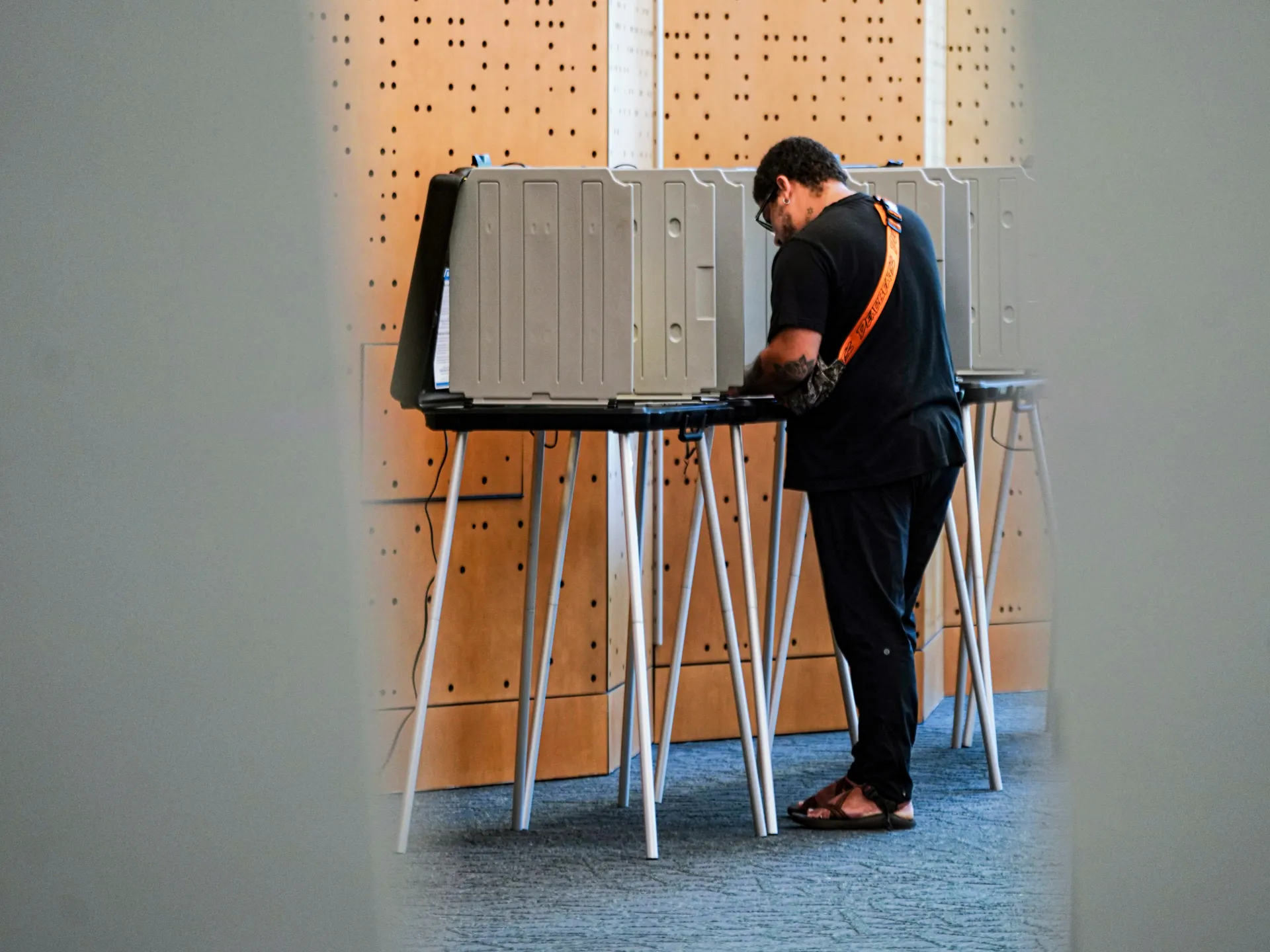
US judge sides with NAACP over proposed mail-in ballot restrictions | Elections News

President Donald Trump has sought to limit mail-in voting and has ordered his administration to impose limits on the practice.

A federal judge in the United States has blocked proposed restrictions on mail-in voting that were championed by President Donald Trump.

On Wednesday in Washington, DC, District Judge Emmet Sullivan sided with the NAACP, a civil rights organisation, in its case against the US Postal Service (USPS).

Recommended Stories

list of 3 itemsend of list

Sullivan found that the restrictions would likely violate a 2021 settlement requiring expedited handling for mail-in ballots.

He therefore granted the NAACP’s motion to enforce compliance with the settlement, dealing another setback to the Trump administration’s efforts to reshape the US voting landscape.

“NAACP has plausibly suggested — and the Postal Service has not disputed — that the Proposed Rule is already having a ‘real impact on present day affairs’,” Sullivan wrote in his ruling.

The case revolves around a rule the Postal Service put forward in May that would require states to provide lists of absentee and mail-in voters. Ballots that do not conform to the list would be returned.

The proposed rule would also require a new envelope design for mail-in ballots, governing logos and barcode placements. Failure to comply would result in the Postal Service refusing to deliver the ballots.

The NAACP argued that the proposal would run afoul of a 2021 legal settlement that forces Postal Service officials to take “extraordinary measures” to ensure timely delivery of ballot mail.

The settlement “stipulated that the Postal Service agreed ‘to prioritize monitoring and timely delivery of election mail’”, Sullivan wrote in Wednesday’s ruling.

The decision comes less than five months before the November 3 midterm elections, which will decide whether Trump’s Republican Party retains control over both chambers of Congress.

Trump has expressed fears that he may be subject to a third impeachment if Democrats flip the legislature.

He has also spread unfounded theories that US elections are vulnerable to “vote rigging”, pointing to commonplace election tools like mail-in voting and electronic voting machines.

Elections are administered by state and local election officials, as established in the US Constitution. But the Postal Service’s proposed rule came as the result of efforts under the Trump administration to impose new limits on voting.

In March, Trump issued an executive order called “Preserving and Protecting the Integrity of American Elections”. In it, he directed the Department of Justice to take action against states that “fail to comply” with certain standards for mail-in ballots.

He also accused states that accepted absentee or mail-in ballots after Election Day of violating the law.

But in another blow to Trump, the Supreme Court on Monday upheld a state law that allows mail-in ballots to be counted even if they were received after Election Day, so long as they were postmarked on or before that date. The president’s executive order has also been blocked by lower courts.

Civil rights advocates applauded the court’s Wednesday decision and warned against Trump’s efforts to limit mail-in voting.

“The court today correctly recognized that USPS’s plan to create roadblocks to mail-in voting was inconsistent with its commitment to timely deliver election mail,” said Allison Zieve, director of the Public Citizen Litigation Group, which argued on behalf of the NAACP.

“USPS’s plan was unwise, unlawful, and a threat to the millions of voters who rely on mailed ballots to participate in our democracy.”

Sam Spital, the associate director-counsel of the Legal Defense Fund, which also argued for the NAACP, called the Postal Service’s proposed plan “a blatant attempt” to disenfranchise voters who rely on mailed ballots.

“Today’s decision recognizes that USPS cannot disregard its legal obligation to timely deliver mail-in ballots to all voters,” Spital said.

Source link

US signs $1 lease with Israel to build permanent embassy in West Jerusalem | Construction News

NewsFeed

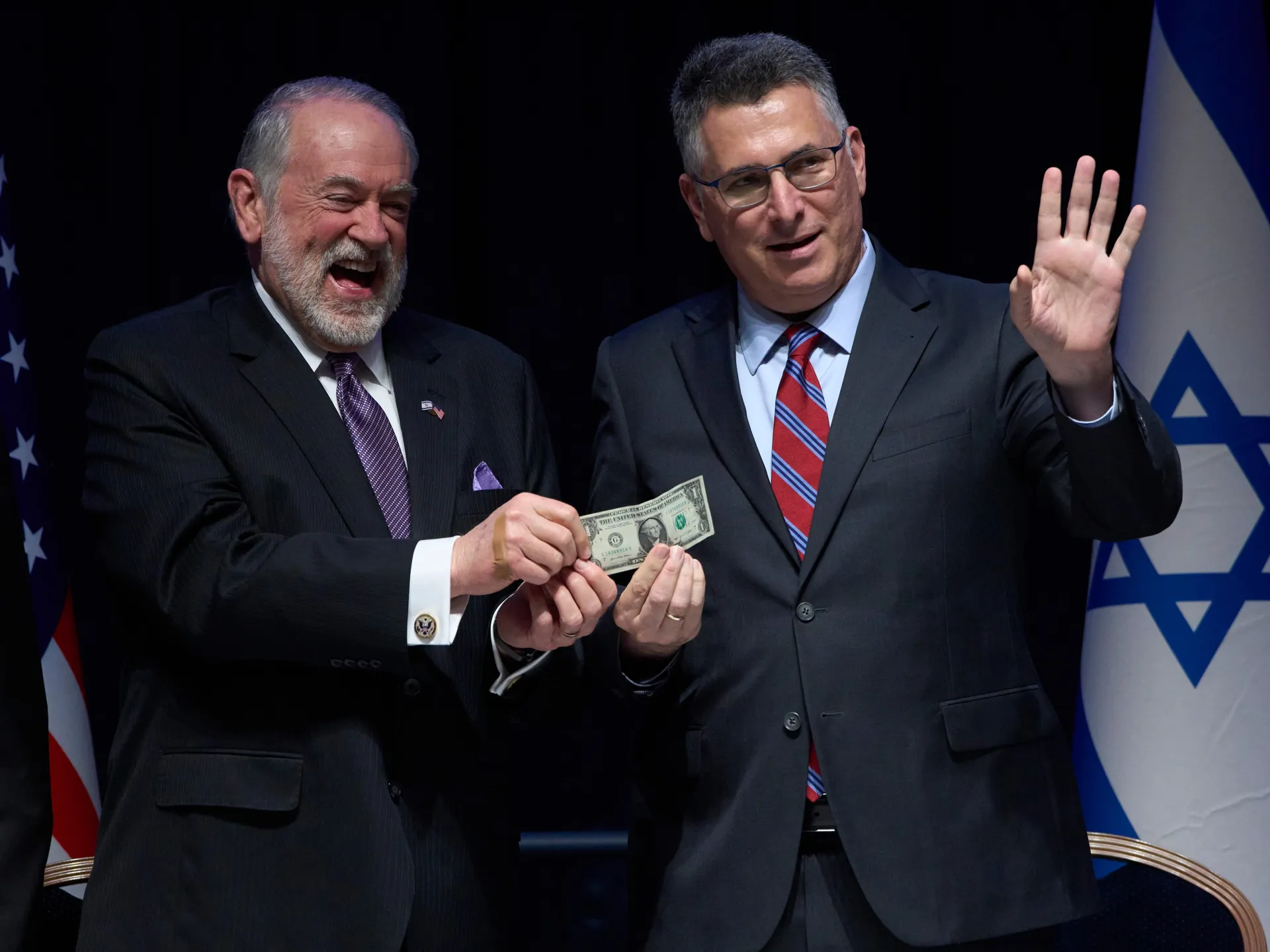
The US and Israel have signed a deal allocating land for a permanent US embassy in West Jerusalem, years after a temporary one was established during Trump’s first term in office. The move is yet another blow to the hopes of a future Palestinian capital.

Source link

Seven more sentenced over Texas ICE detention centre shooting | Courts News

US prosecutors have alleged those involved in the Prairieland Detention Center protest were linked to antifa.

Seven more people have been sentenced to prison over a protest that culminated in a police officer being shot outside an immigration detention centre last year.

A federal court in Fort Worth handed down the latest sentences on Wednesday. Critics, however, say the case could reshape how protest is prosecuted in the United States.

Recommended Stories

list of 4 itemsend of list

The case centres on a shooting outside the Prairieland Detention Center, near Dallas, Texas, that took place during an antigovernment protest.

Six of the defendants in Wednesday’s sentencing hearing had pleaded guilty to providing material support to “terrorism” and received prison terms ranging from nearly two to 15 years.

A seventh defendant, Ines Soto, was sentenced to 50 years in prison after being convicted of “providing material support to terrorists”, as well as charges related to rioting and conspiracy to carry an explosive.

The protest in question took place on the night of July 4, 2025. Activists had gathered outside Prairieland to denounce President Donald Trump’s push for mass deportation. Some set off fireworks. Others have been accused of vandalism.

Prosecutors said that, during the demonstration, former US Marine reservist Benjamin Song shot and wounded a police officer who had just arrived at the centre. Song had reportedly shouted, “Get out the rifles,” prior to opening fire.

The Trump administration has described the protest as an act of “terrorism”, and 19 people were ultimately arrested.

Some of those detained were not present at the Prairieland protest. But the Trump administration has designated antifa — a loose-knit, left-wing antifascist movement — as a “domestic terrorist organisation”, and it accused the protest’s supporters of being part of an “antifa cell”.

Prosecutors for the US Department of Justice also argued that bringing firearms, first aid kits and body armour to the protest showed nefarious intent.

“The sentences handed down today make clear that Antifa terrorists who attack law enforcement and federal facilities will face swift and uncompromising justice,” acting Attorney General Todd Blanche said in a statement last week.

But civil liberties advocates say the case could have broad implications for protesters nationwide.

It will also likely test the boundaries of the free speech rights protected under the First Amendment of the US Constitution.

The Justice Department touted last week’s initial round of sentencing as the first time alleged antifa members were sentenced on criminal charges since Trump issued his executive order designating the group a “domestic terrorist” body.

Lawyers for the defendants, however, have largely denied links to antifa and rejected the prosecution’s characterisation of the protest.

They argued there was no planned ambush and that those carrying firearms only did so for their own protection, as is allowed under the Constitution’s Second Amendment. The fireworks, they added, were meant as a show of support for immigrants detained inside Prairieland.

On June 23, the eight defendants who chose to stand trial were handed lengthy prison terms.

Song was sentenced to 100 years in prison after being convicted of attempted murder in the shooting. The seven others received sentences ranging from 30 to 70 years. They received a combined 450 years in prison.

One defendant, Daniel Rolando Sanchez Estrada, has argued his only crime was to move a box of belongings, including zines. Prosecutors, meanwhile, have characterised his actions as “transporting a box containing numerous Antifa materials” and attempting to conceal them.

Several of the defendants, including Song and Sanchez Estrada, have filed notices of appeal.

In handing down last week’s sentences, US District Judge Reed O’Connor said what happened was not a protest but an “assault on democracy” and that “the need to deter this type of conduct is high”.

Source link

What is a heat dome? The US heatwave explained | Weather News

An intense heatwave is set to blanket much of the central and eastern United States this week as a “heat dome” settles over the region, bringing days of oppressively high temperatures and humidity ahead of the Fourth of July weekend and FIFA World Cup matches in several US cities.

Forecasters say in some places it could feel as hot as 46 degrees Celsius (115 degrees Fahrenheit). Dozens of temperature records could be broken, according to the National Weather Service (NWS), which called the conditions “dangerous”. More than 60 million people are currently under heat alerts.

Recommended Stories

list of 4 itemsend of list

At the centre of this week’s forecast is a weather phenomenon known as a heat dome. What is it, and why does it make heatwaves even more intense and unbearable?

What is a heat dome?

A heat dome is a large area of high pressure, formed when warm air flows northward, that acts like a lid over the atmosphere, trapping hot air close to the ground.

As the air sinks, it compresses and warms even more. At the same time, the pressure system helps prevent cooler air and storms from moving in, allowing heat to build at the surface and remain trapped there. With few clouds and little wind, the sun has more direct access to the ground, creating a heat feedback loop.

Heat domes are linked to prolonged heatwaves that can last for days.

How long will it last?

The heat dome is already building and is expected to strengthen over the coming days, spreading from the central US towards the east coast, with dangerous heat lasting several days into early July.

The hottest conditions are expected Thursday and Friday, according to the NWS, and are set to continue through the Fourth of July weekend, which marks the 250th anniversary year of the US, and forecasters say some areas across the Great Plains, the southeast, and the mid-Atlantic are likely to remain unusually hot into next weekend.

What will the highest temperatures be?

Many places are expected to see daytime temperatures in the high 30s Celsius (low 100s Fahrenheit), but humidity will make it feel much hotter. In parts of the central and eastern US, the heat index – a measure of how hot it feels when humidity is factored in – could climb between 40C and 46C (100F and 115F).

“That’s heat that’s impactful to anyone,” said NWS meteorologist Bryan Putnam. “It’s not just older adults or younger children or people who are spending a ton of time outdoors, maybe straining themselves a little more than normal. This is heat that really could impact everyone, especially with people outdoors going into the holiday weekend.”

The nights won’t bring much relief either, with temperatures expected to stay in the 20s Celsius (70s Fahrenheit) overnight, creating potentially miserable sleep conditions for those without air conditioning and making it harder for people to cool down.

“Even after the sun goes down, it’s still going to be very hot,” said AccuWeather senior meteorologist Alan Reppert. “We’re at a pattern that’s really going to be hot during the good portion of the afternoon and even into the evening hours.”

Which parts of the US will be hit the hardest?

The most dangerous conditions are expected in a broad corridor stretching from the Great Lakes to the East Coast, where several cities could experience their hottest day of the year so far. New York City, Philadelphia, Washington, Baltimore, Chicago, Indianapolis, Detroit and St Louis are all expected to be affected, with temperatures also soaring farther south in Dallas, Little Rock and Memphis.

Several of those cities are also hosting FIFA World Cup events. In Philadelphia, organisers have already changed Fan Festival hours to start later in the day.

Cities across the US are rolling out emergency measures as temperatures climb.

Chicago said it would open cooling centres and send city workers to check on vulnerable residents.

In New York City, Mayor Zohran Mamdani’s office announced what it called an “unprecedented” response to the heat, including hydration vans and pop-up cooling stations equipped with misting fans and cooling towels.

Washington, DC, where temperatures are expected to exceed 38C (100F) from Thursday through Saturday, the heat will coincide with Fourth of July celebrations, including what organisers say will be the largest fireworks display ever held on the National Mall.

What are some ways to stay cool?

The NWS says people should stay hydrated, avoid strenuous outdoor activity during the hottest part of the day and seek air conditioning or cooling centres where possible. If you’re spending time outside, wear loose, lightweight clothing and stay near shady areas.

Experts say one of the biggest risks during a prolonged heatwave is that the body doesn’t have time to cool down overnight, which can make the effects of the heat build up from one day to the next. They also recommend drinking water before you feel thirsty and limiting alcohol, which can increase the risk of dehydration.

“If somebody realises that they’re hot, but they’re not sweating, or if they begin to feel a little bit dizzy, those are some signs that they really need to take a break, get inside, find some cooling, and drink plenty of water,”  said Geoff Cornish, assistant chief video meteorologist for the weather forecasting company AccuWeather. “And if they really begin to experience significant symptoms, they need to seek medical attention right away.”

Source link

Nearly three in four US scam victims report mental health harm, poll finds | Crime News

Gallup survey says the financial toll of scams in the United States in 2025 was estimated at $68bn.

A tenth of adults in the United States directly or indirectly experienced a scam last year, adversely affecting their financial and emotional wellbeing, according to a new Gallup poll.

The report by Gallup released on Tuesday indicated that 6 percent of US adults were personally scammed in 2025, while 4 percent experienced a scam indirectly, with someone in their household affected.

Recommended Stories

list of 3 itemsend of list

Scams are a widespread problem in the country, with Gallup noting that they can leave victims more cautious, less likely to shop online, and more hesitant to engage with unfamiliar businesses.

“The data suggest the cost of scams extends beyond what can be measured in dollars, as nearly three in four victims say the experience negatively affected their mental health or wellbeing,” the report stated.

The poll suggested that people from lower-income households were more likely than wealthier people to report being scammed.

Adults with less than a bachelor’s degree were more likely to report being scammed than those with a bachelor’s degree or higher – 7 percent versus 4 percent, Gallup found.

Black (8 percent) and Hispanic (9 percent) adults were also more likely than white adults (5 percent) to say they had been scammed. However, victimisation rates did not differ by age, the report stated.

In more than half of the scams reported to Gallup, people lost $500 or less. However, the average loss per scam was $5,578, as some scams reached tens of thousands of dollars, the report said.

In total, the financial toll of scams in 2025 was estimated at $68bn, amounting to an average of $186m stolen each day.

One in five adults who were personally victimised or live in a household that was scammed in 2025 reported that it created a severe financial hardship for their household, with households earning less than $80,000 annually hit harder.

Emotional damage from scams, however, was more widespread, the survey indicated.

Among adults in households affected by scams, more than a quarter (28 percent) said the experience had a very negative impact on their mental health or wellbeing, while a further 45 percent describe the impact as moderately negative. Overall, nearly three-quarters (73 percent) of people reported that the scam adversely affected their mental health or wellbeing.

The emotional toll was also pervasive among those who live with someone who was scammed, the survey suggested.

The poll also indicated that the lifetime prevalence of being scammed is much higher than the 6 percent of people who were in 2025. Nearly a quarter (24 percent) of adults report having been scammed at some point in their lives, including 10 percent who said that they had fallen victim multiple times.

“At a time when institutional trust in the US is already weak, the prevalence of scams represents not just a personal financial threat, but a broader erosion of confidence in the businesses and systems used in everyday life,” the report said.

Gallup surveyed 5,173 US adults between January and February of this year.

Source link

Trump made over €1 billion from crypto in first year back in office, new filing shows

The White House submitted a 927-page financial disclosure to the US Office of Government Ethics on Tuesday, offering the fullest picture yet of how US President Donald Trump’s fortune has grown since he returned to office in January 2025.


ADVERTISEMENT


ADVERTISEMENT

Barely established when he was sworn in, Trump’s crypto businesses now generate more revenue than large parts of the property empire he spent decades assembling with his family, earning the US president more than $1.2 billion (€1.05bn) last year.

Two ventures account for the bulk of the crypto windfall.

World Liberty Financial, the firm launched in 2024 by Trump’s sons and business partners, brought in more than $500 million (€438mn) from selling new crypto products, among them so-called governance tokens, which grant holders voting rights in certain company decisions but no ownership stake.

A separate business tied to the $TRUMP “meme” coin, a cryptocurrency bearing the US president’s face and name, generated a further $635 million (€557mn) from token sales.

Trump’s crypto activities appear to be a major driver of the near tripling of his personal fortune, which Forbes estimates rose from $2.3 billion (€2bn) to $6.5 billion (€5.7bn) between 2024 and 2026.

For many buyers, the story has been far less lucrative.

The $TRUMP coin, which briefly traded above $74 in the days after its launch, has since collapsed to under $2, while World Liberty’s tokens have shed around 80% of their value since they began trading last September.

Since the disclosure lists only revenue and not profit, the true scale of Trump’s personal gains cannot be known. However, the filing shows that the US president and his family collected fees and royalties up front, while many investors have seen the value of their holdings fall sharply.

Among those investors was Chinese-born crypto billionaire Justin Sun, who poured $75 million (€65.7mn) into the governance tokens and $200 million (€175.3mn) into both $TRUMP and $MELANIA meme coins.

A US fraud case against him was later paused before being resolved with a $10 million (€8.7mn) settlement. Sun has denied any connection between his spending and the outcome of his legal troubles.

After the release of the filing, the White House also rejected suggestions of any ethical concerns.

“Neither the President nor his family has ever engaged, or will ever engage, in conflicts of interest,” Principal Deputy US Press Secretary Anna Kelly said in a statement to AFP.

Kelly said US President Donald Trump had “proudly made the United States the crypto capital of the world.”

“All actions by President Trump and his administration are taken in the best interest of the American people, and any so-called ‘reporters’ pushing otherwise are recycling the same, tired, false narrative that Democrats and the legacy media have been pushing for a decade,” Kelly added.

Beyond crypto: Trump’s wider business empire

The filing also details an aggressive international expansion, with new hotel, resort and condominium agreements generating millions of dollars in countries that were negotiating with Washington over trade and security at the same time.

A development in the United Arab Emirates earned the Trump business around $10.4 million (€9.1mn) last year, one in Saudi Arabia roughly $9 million (€7.9mn), and projects in Qatar, Romania and Vietnam were $5 million (€4.3mn) apiece.

Closer to home, the US president’s established businesses boomed alongside all the new ventures.

Mar-a-Lago, Trump’s private club in Florida, generated around $77 million (€67.5mn), a jump of roughly 50% on the previous year, as heads of state and executives flocked to the property during his new term.

The disclosure also reveals the wide range of ways the Trump brand is now monetised.

The US president earned millions from a sprawling range of branded goods, from sneakers and watches to bumper stickers, with Trump-branded watches alone bringing in $4.7 million (€4.1mn), and more than $200,000 (€175,300) coming from the “God Bless the USA” Bible, a branded edition promoted with country singer Lee Greenwood.

Branded merchandise of this kind, sold by a sitting US president, has no precedent.

A 1978 law requires the president and vice president of the United States to declare their income as well as their assets.

First Lady Melania Trump’s income is also set out in her husband’s financial disclosure, including more than $10 million (€8.7mn) tied to a biographical Amazon documentary and over $500,000 (€438,250) from her memoir.

For comparison, US Vice President JD Vance reported between $1 million (€876,500) and $5 million (€4.4mn) in royalties from his 2016 book “Hillbilly Elegy”.

Critics have long argued that such arrangements blur the line between public office and private profit. The White House rejects the charge outright.

Source link

The Possibilist | Ep 8 | Documentary

Veteran mediator William Ury reflects on how the fine art of diplomacy is essential at holding the world together.

We are living in a time of deep rupture. From Gaza to Ukraine, Myanmar to Kashmir, the United States to Europe, polarisation has become the defining rhythm of our age. Dialogue is no longer just difficult – it is risky. Leaders speak in absolutes. Humiliation and fear spur violence. In this context, the role of the mediator is more fragile, more necessary, and more human than ever.

At the centre of this episode is William Ury, cofounder of Harvard’s Program on Negotiation and one of the architects of modern conflict resolution. Through his life’s work, we trace the hidden anatomy of peace: How trust is built when no one believes in it, how negotiations survive egos, trauma, and political pressure, and how humanity is preserved when everything pushes towards dehumanisation.

Ultimately, The Possibilist reveals that peace is not the domain of diplomats alone. It belongs to all of us. In our homes, our workplaces, and our communities, we all carry a form of power. Political power may change laws – but moral power, the power of empathy, courage, and presence, can change hearts.

A film by Fatima Lianes

Source link

Democratic socialist Kiros defeats longtime incumbent in Colorado primary | Politics News

Former lawyer Melat Kiros, 29, has criticised the Democrats for their support of Israel during its genocidal war on Gaza.

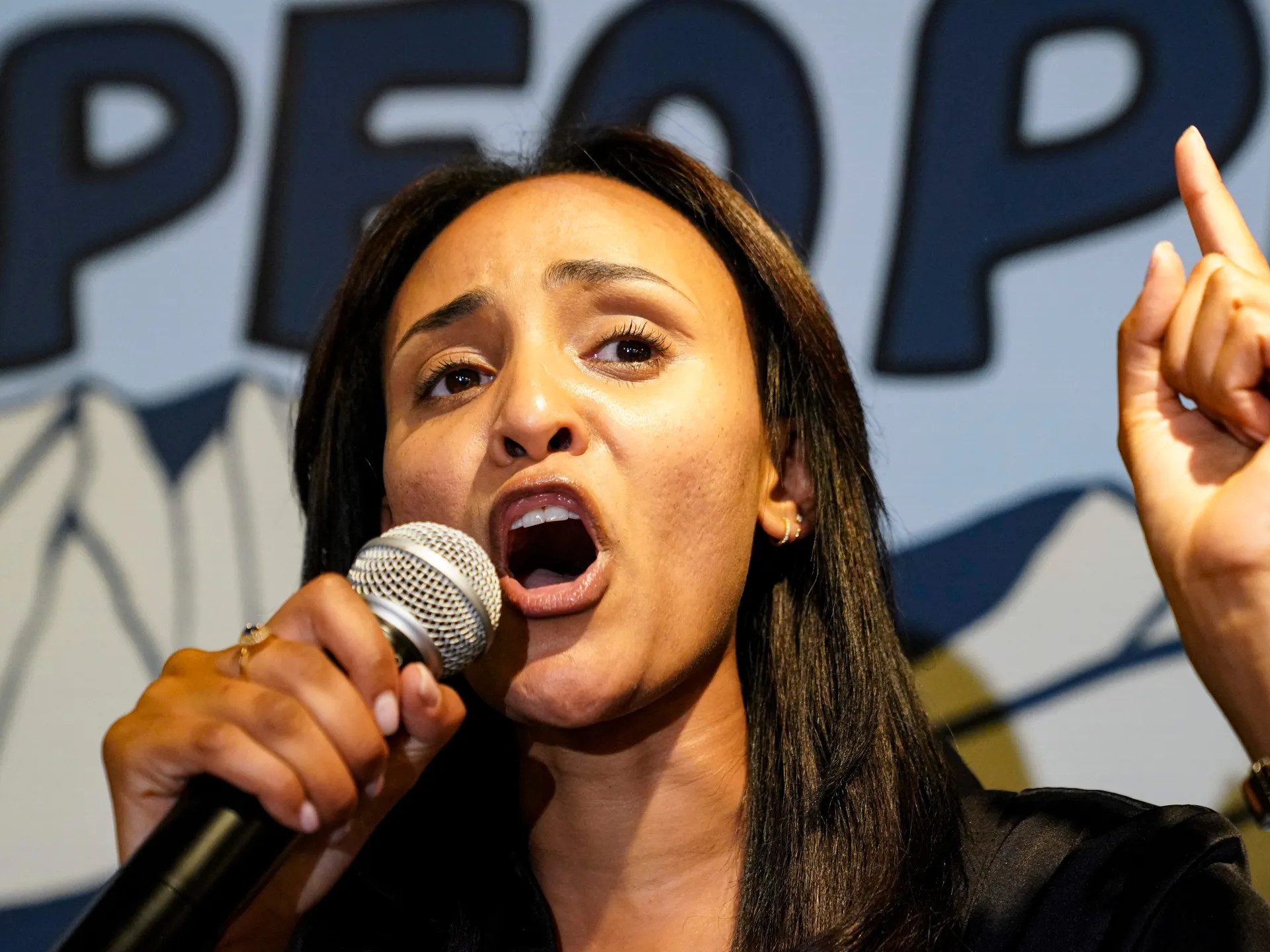
Democratic ⁠socialist Melat Kiros has defeated 15-term United States Representative Diana DeGette in the Democratic primary in a Denver-area district in Colorado, according to US media projections, the latest victory of ‌a leftist over an establishment Democrat.

The race on Tuesday was called ⁠by multiple media outlets after 78 percent ⁠of the votes were counted and Kiros had a nearly 7,000-vote lead over DeGette.

Recommended Stories

list of 4 itemsend of list

Kiros, who moved to the US from Ethiopia as a ⁠baby, had faced controversy over her criticism of Democrats who support Israel and her alliance ⁠with socialist political commentator Hasan Piker.

She is now favoured to win November’s election in the overwhelmingly Democratic district.

Kiros, a 29-year-old former lawyer, was fired from her job after refusing to remove a post that criticised law firms for their stance on Israel and Palestine and has called Israel’s actions in Gaza genocide.

Kiros is ‌the latest democratic socialist to oust an incumbent Democrat this summer.

In New York City, three candidates with ties ‌to ‌the Democratic Socialists of America and endorsed by Mayor Zohran Mamdani won their primaries.

Also on Tuesday, Colorado ‌Attorney General Phil Weiser beat ⁠US ⁠Senator Michael Bennet for the Democratic nomination for governor, ⁠US media projected.

Weiser outraised and outspent Bennet in a race ⁠that was largely about who was best positioned to defend Colorado against President Donald Trump, who froze federal funds ‌to the state and vetoed a major drinking water project in Colorado, where voters have trended Democratic in elections over the past 20 years.

The attorney general argued that he ⁠stood up to ⁠the Trump administration in court, where he fought against the funding freeze and the president’s attempt to ⁠end birthright citizenship.

Weiser is expected to be elected ⁠governor in November.

State Representative Manny Rutinel ⁠also won the ⁠Democratic nomination to challenge Republican US Representative Gabe ⁠Evans in a battleground district that Democrats consider a top ⁠pickup opportunity in the November 3 midterm elections, according to projections.

Rutinel, a progressive candidate, defeated moderate former state Representative Shannon Bird in ‌a campaign that focused heavily on immigration. The district in Denver’s northern suburbs and nearby rural area is nearly 40 percent Latino.

Evans narrowly won his ‌seat in 2024 but has a significant cash advantage over Rutinel, ‌reporting $3.4m on hand in campaign funds to Rutinel’s $910,000.

Trump’s Republican Party now holds a slim majority in the US House of Representatives and Senate. Democrats need to net three ⁠seats to win control ⁠of the House in November and four to win the Senate.

Source link

US lifts restrictions on powerful AI models Fable, Mythos, Anthropic says | Technology News

DEVELOPING STORY,

AI firm says it will begin restoring access to Claude Fable 5 and Mythos 5 after removal of export controls.

The United States government has lifted its restrictions on foreign access to Anthropic’s most powerful AI models, the company has announced.

Anthropic said late on Tuesday that it would begin restoring access to Claude Fable 5 and Mythos 5 from tomorrow after the US Department of Commerce notified the company that it had removed its export controls.

Recommended Stories

list of 4 itemsend of list

“We’re grateful to our users for their patience, and to everyone who worked with us on redeploying the models,” Anthropic said in a statement posted on X.

Anthropic’s announcement came shortly after US Commerce Secretary Howard Lutnick said that his department had been coordinating with the company on the approval of its frontier models.

“Over the past two weeks, we have worked closely with Anthropic to analyze and approve Fable 5 to ensure alignment across the US Government and strengthen America’s leadership in AI,” Lutnick said in a post on X.

Anthropic abruptly shut off Claude Fable 5 and Mythos 5 last month after US President Donald Trump’s administration ordered the company to restrict all foreign nationals, including company employees, from accessing the models.

On Friday, the San Francisco-based company said that it had been granted approval to provide the models to US organisations that “operate and defend critical infrastructure”, and that it was working with the government to restore general access for the public.

More to follow…

Source link

Donald Trump reports $1.4bn in cryptocurrency income in government filing | Donald Trump News

Trump has launched a slate of crypto-friendly policies since returning to the White House for a second term.

A new government report has shown that United States President Donald Trump made millions from cryptocurrency and settlements with media companies last year, raising questions about possible conflicts of interest.

On Tuesday, the US Office of Government Ethics released annual financial disclosure forms for both Trump and his vice president, JD Vance.

Recommended Stories

list of 3 itemsend of list

One 927-page document itemises all of Trump’s reported assets and income for 2025. They include more than $1.4bn from his family’s cryptocurrency ventures.

Trump received more than $500m from World Liberty Financial, a crypto venture he and his sons co-founded. The president also reported another $635m from the sale of his $TRUMP meme coins.

The report suggests that investments in digital assets now generate one of the largest tranches of Trump’s income, overtaking even the real estate empire he inherited from his father.

The revelation is likely to intensify scrutiny of Trump’s policies.

Since returning to the White House in January 2025, Trump has launched a slate of crypto-friendly policies as he seeks to make the US the “crypto capital of the world”.

Early in his second term, for instance, the president announced that his government would create a national strategic cryptocurrency reserve to help ensure the stability of certain digital assets.

He also hosted the first-ever White House cryptocurrency summit.

The forum included several technology leaders that had been under investigation during the administration of Trump’s predecessor, Democrat Joe Biden.

But Trump reversed those actions. In February 2025, for instance, the Securities and Exchange Commission announced it would drop charges against Coinbase, the largest US-based cryptocurrency exchange, after it was accused of acting as an unregistered broker.

Other digital currency firms came under suspicion for fraudulent transactions.

Trump has coupled the shift away from government oversight with efforts to champion new legislation, including the GENIUS Act.

The law, passed in Congress in July 2025, created a general regulatory framework that required stablecoin, a type of cryptocurrency, to be backed one-to-one by US dollars. Advocates said the law would help to make cryptocurrency more mainstream.

“The entire crypto community: For years, you were mocked and dismissed and counted out,” Trump said during the law’s signing ceremony. “You were counted out as little as a year and a half ago, but this signing is a massive validation.”

But Trump’s increasingly close ties to the cryptocurrency industry have drawn criticism for its potential for corruption.

Last week, five Democratic senators, including Elizabeth Warren and Richard Blumenthal, called on their Republican colleagues to join them in forcing Trump administration officials to testify under oath about their cryptocurrency dealings.

They pointed to investments from the United Arab Emirates (UAE) in World Liberty Financial, the company the Trump family co-owns with government envoy Steve Witkoff’s sons.

Those investments, they argued, “raise questions about what more the UAE may receive — or may have already received – at the expense of U.S. national security after investing in the Trump family crypto company”.

The five Democrats urged immediate hearings on the matter.

Source link

Supreme Court strikes down US campaign spending limits in landmark ruling | Courts News

The high court strikes down campaign spending limits, citing First Amendment protections in a 6-3 decision

On the final day of rulings for the Supreme Court’s current term, the top US court overruled a case that would limit campaign spending by rejecting restrictions on coordinated spending efforts between political parties and their candidates on free speech grounds.

The court handed down the ruling on Tuesday in a 6-3 split, with the six conservative judges in the majority, citing free speech grounds, and the three liberal judges dissenting.

Recommended Stories

list of 4 itemsend of list

The Supreme Court ruled that a spending cap on campaign spending, with input from candidates, violates the United States Constitution’s First Amendment after a lower court upheld the limits.

The decision, stemming from a Republican-led lawsuit, strikes down a provision of a more than 50-year-old federal election law limiting coordinated party spending. Among the Republican candidates at the centre of the lawsuit is now Vice President JD Vance. Vance was running for the US Senate in Ohio when the lawsuit challenging the restrictions was filed in 2022.

The Federal Election Campaign Act of 1971 regulates fundraising and spending in US elections by limiting the amount that can be spent on a candidate, aiming to prevent corruption.

Under that law, spending by a political party to advocate for or against a candidate that is not coordinated with a candidate’s campaign is considered an “independent expenditure” – and not subject to a cap.

Spending that is coordinated between a party and a campaign, however, has been restricted.

Tuesday’s decision overruled a 2001 decision in which the Colorado Republican Federal Campaign Committee challenged the rule against the Federal Election Commission, but the high court had upheld the limits on a vote of 5-4.

In 2024, the US 6th Circuit Court of Appeals had also upheld the limits.

On appeal, the plaintiffs said that developments in campaign finance over the intervening decades, including shifts in the Supreme Court’s jurisprudence, had eroded the rationale for that 2001 ruling and urged the justices to overrule it.

Then, when Donald Trump took office, the Federal Election Commission declined to defend the provision of federal law challenged by Vance and the other plaintiffs. The Supreme Court appointed lawyer Roman Martinez to do so. It also granted a request by the Democratic National Committee, Democratic Senatorial Campaign Committee, and Democratic Congressional Campaign Committee to intervene to defend the spending limits.

These spending limits have varied by state, being lower in states with smaller populations and higher in those with larger populations. In 2025, restrictions ranged from about $127,000 to $3.9m for Senate candidates and from approximately $63,000 to $127,000 for House of Representatives candidates.

The Supreme Court issued its campaign finance ruling with the November midterm elections looming, as President Donald Trump’s fellow Republicans seek to retain control of Congress.

The three major Republican committees – the Republican National Committee, the National Republican Congressional Committee, and the National Republican Senatorial Committee — ended May with $256m in cash and no debt. That was more than double the roughly $126m held by their Democratic counterparts, who also carried more than $18m in debt.

Election implications

The Supreme Court has issued multiple rulings during its current term that have election implications.

The justices on Monday backed state laws that allow mail-in ballots received after Election Day to be counted, rejecting a Republican-led challenge to a five-day grace period in Mississippi and dealing a setback to Trump.

The court in April gutted a key provision of the 1965 Voting Rights Act, opening the door for Republican-led Southern states to dismantle Democratic-held majority-Black and majority-Latino districts ahead of the midterms. Black and Latino voters tend to support Democratic candidates.

That decision prompted several Republican-led states to pursue redrawn electoral maps ahead of the midterms in an effort to threaten US House seats long considered safely Democratic.

Source link