Europe’s defense transformation is not a spending problem that more money will solve, rather it’s a doctrinal crisis, and the gap between the warfare Europe has been preparing for and the warfare Ukraine has demonstrated reveals that the continent’s most urgent investment is not in platforms but in fundamentally rethinking how its armies plan, target, and fight.
The Wake-Up Call That Came From an Exercise Field in Estonia
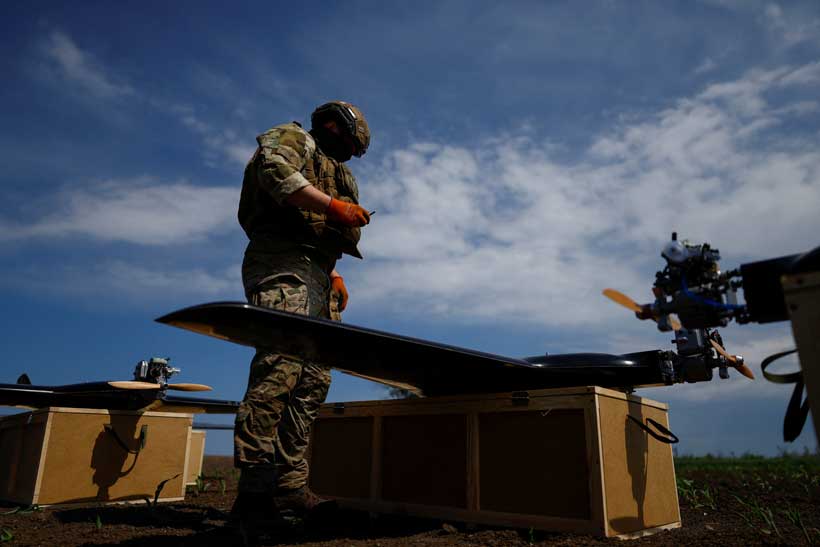
At Exercise Hedgehog 2025 in Estonia, roughly ten Ukrainian drone operators spent a day systematically destroying nearly twenty NATO armored vehicles in a simulated engagement. NATO forces tried to hide under tree lines. They parked armored vehicles in visible positions. They built command stations in exposed terrain. They did everything that Ukrainian soldiers have long since learned will get you killed. The Ukrainian operators, accustomed to battlefields where drone saturation is double what the exercise permitted, found it straightforward.
The exercise was designed to test readiness and interoperability. What it revealed instead was that NATO forces have not been forced by the realities of war to adapt the way Ukraine has. Movement patterns, command structures, and the basic assumptions about how to survive on a modern battlefield, all of it was calibrated for a threat environment that no longer exists. NATO’s deputy supreme allied commander in Europe, Air Chief Marshal Sir Johnny Stringer, said it plainly at a defense conference in London last week: “The threat we face is at 360 degrees.” The German army’s commander, Lieutenant General Christian Freuding, went further, saying that land warfare is “fundamentally changing” and that Europe must “fundamentally adapt how we will fight.” These are not politicians speaking. They are the senior military officials responsible for defending the continent, and they are saying, as clearly as their institutional language permits, that Europe is preparing for the wrong war.
To read the full analysis, please subscribe to our MD Briefing here
Stay ahead of the geopolitical week.
MD Briefing delivers expert analysis across five global fronts — the Indo-Pacific, energy, geoeconomics, European security, and the Middle East — every Monday morning. Free.
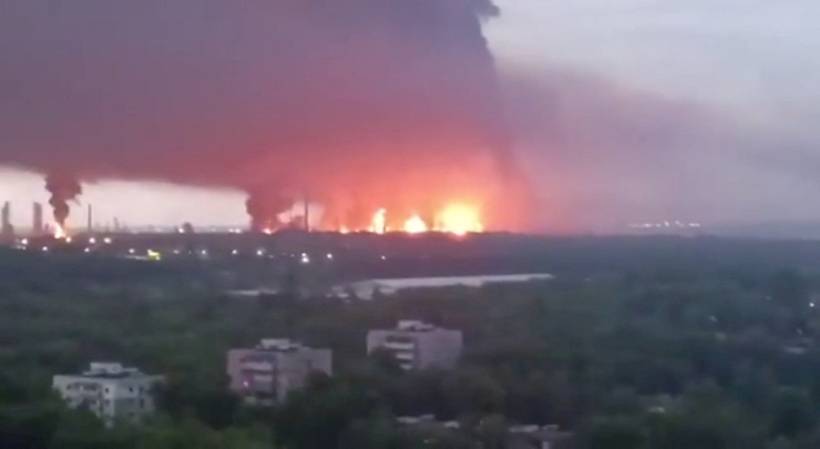
A well-known Russian city, Nizhny Novgorod, is incredibly famous for its place on the energy map as the location for the largest energy production and refinery for both local consumption and for exports to Europe. But the energy history has suddenly changed in early July 2026, primarily due to unexpected attacks by Ukrainian drones. The Ukrainian drone attacks, described in official reports, have left an indelible devastating mark on Lukoil-Nizhegorodnefteorgsitez (Norsi), considered the largest oil refinery of the Lukoil corporation in Kstovo (Nizhny Novgorod region), and had to suspend its routine refinery operations.
Reuters reported this serious military-related incident on July 3, citing two sources in Russia’s oil industry. According to The Moscow Times, a reputable foreign media outlet, the drone attack damaged the plant’s main primary processing unit, AVT-6, which provided 53% of the Norsi refinery’s capacity. Another unit, AVT-5, which accounts for 25% of the plant’s capacity, was disabled by a drone on June 24. As of July 2, Norsi (Russia’s fourth largest oil refinery and the second largest gasoline producer) stopped selling wholesale quantities of gasoline and diesel fuel on the St. Petersburg Commodity and Raw Materials Exchange.
As The Moscow Times reports, Norsi, which has an annual capacity to process 15 million tons of oil and produce 5 million tons of gasoline, became the fifth Russian refinery to halt production since the beginning of June. Gazprom Neft’s Moscow refinery ceased refining on June 16, with repairs, according to Reuters sources, potentially lasting until 2027. Tatneft’s Taneco refinery in Nizhnekamsk has been idled since June 12; the Kuibyshev refinery, since June 10; and the Volgograd refinery, since June 1.
Moreover, the authorities of the aggressor country will likely be unable to increase the capacity of Russian oil refineries damaged by BP-LA strikes in the coming month, local Russian media Kommersant reported. According to its source, refining volumes in July will “at best” remain at June levels, and only if there are no further attacks at the refineries.
Stay ahead of the geopolitical week.
MD Briefing delivers expert analysis across five global fronts — the Indo-Pacific, energy, geoeconomics, European security, and the Middle East — every Monday morning. Free.
Ukrainian Defense Forces attacked the Kstovo oil refinery on May 18 and 20, 2026. As a result of the repeated attacks, the AVT-6 primary oil refining unit was damaged, after which the refinery suspended operations.
On July 2, Sergei Sternenko, advisor to Ukrainian Defense Minister Mykhailo Fedorov, reported that drones had again attacked the Kstovsky refinery of Lukoil-Nizhegorodnefteorgsintez, and a major fire had broken out at the plant. Later that same day, the General Staff of the Armed Forces of Ukraine confirmed that the strike on the Kstovsky Oil Refinery was carried out by the Defense Forces, as a result of which the AVT-6 primary oil refinery unit was damaged. Ukrainian officers noted that this oil refinery is one of the largest in Russia and has a design capacity of about 17 million tons of oil per year.
Reports also circulated this early July that Russia has turned to fuel imports from India after Ukrainian strikes disrupted its refineries, a rare reversal for one of the world’s biggest fuel exporters that could bring African oil giants into focus if Moscow widens its search for alternative suppliers. The reports further indicated Russia to likely seek imports from Belarus, with which it has a strategic partnership, and both formed the Russia-Belarus Union. Moscow and Minsk have been working together productively in all areas, coordinating their efforts in countering external threats and coordinating challenges through various institutions of the Russia-Belarus Union.
But for African oil producers, such as Algeria, Angola, Libya, Nigeria, and Egypt, Russia’s fuel crisis could open a new window for countries with active refineries, as global markets seek more secure supplies after US-Iran tensions and disruptions around the Strait of Hormuz reshaped fuel trade. That possibility has gained attention because Russia is now turning to foreign imports to ease domestic shortages.
Meanwhile, Russia has not traditionally depended on African crude oil, but its worsening fuel shortages could make Africa’s oil producers and refiners more strategically important as Moscow seeks supply through direct purchases or alternative refinery routes, while sanctions pressure complicates access to Venezuela and Iranian oil networks.
India is the fourth-largest oil refiner in the world. Indian Minister of Petroleum and Natural Gas Hardeep Singh Puri said at a press conference held on July 2 that India was ready to support Russia with oil and gas supply. “We could potentially supply fuel to Russia if needed,” the minister said, explaining it depends on how the situation develops.
Russian Deputy Prime Minister Alexander Novak told TASS that Russia had sufficient fuel reserves to supply the domestic market, but the stir around the situation with gasoline had led to a demand increase of approximately 20-30%. However, he added, “the system’s logistics connections are currently being restructured to meet needs,” and this will take some time. He also stated that he could restrict exporting diesel to manufacturers “to further fill the domestic market.”
As Kremlin spokesman Dmitry Peskov stated on June 30, if Russia can reach cost-effective deals to import fuel, that could help stabilize the market. However, Peskov added that the Kremlin will not disclose which countries it is in contact with regarding possible fuel imports.
In the meantime, Russia has taken a few steps to control the situation. The government has already reduced the mandatory sales of gasoline on the exchange trading from 15% to 10% of the volume. The Kremlin’s presidential decree has been signed, aimed at stabilizing the domestic petroleum product market. Interfax sources explained that the gasoline volumes freed up by the measure would be used to supply agricultural producers and socially significant consumers. While Russia makes no request for fuel from Kazakhstan, Orenburg processing plants are receiving 28% of usual gas from Kazakhstan. In addition, Bashkortostan’s oil refineries are boosting output, owing to unprecedented emergency demand of fuel, and this is stabilizing the situational challenge.
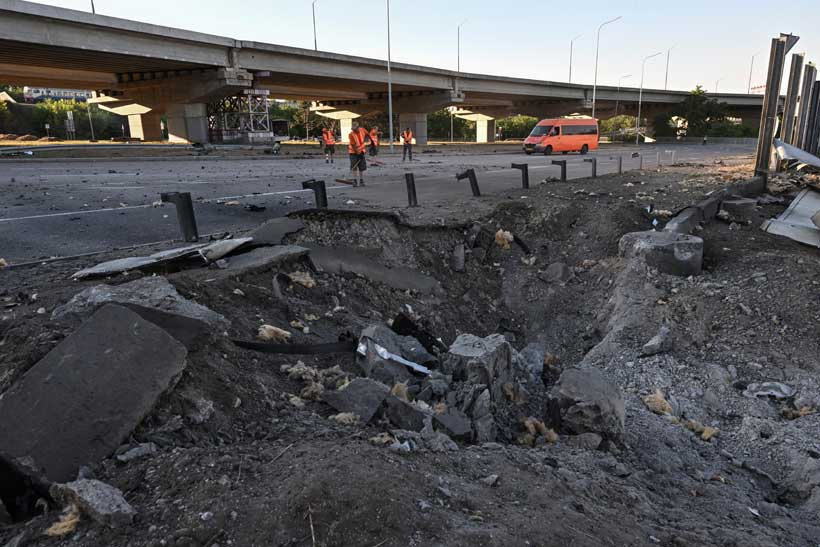
Ukrainian drones have attacked many cities, including Tver, Tula, Smolensk, Kaluga, Belgorod, Bryansk, Kursk, Rostov, Krasnodar, and Moscow regions, as well as the republic of Crimea and the Sea of Azov and the Black Seas.
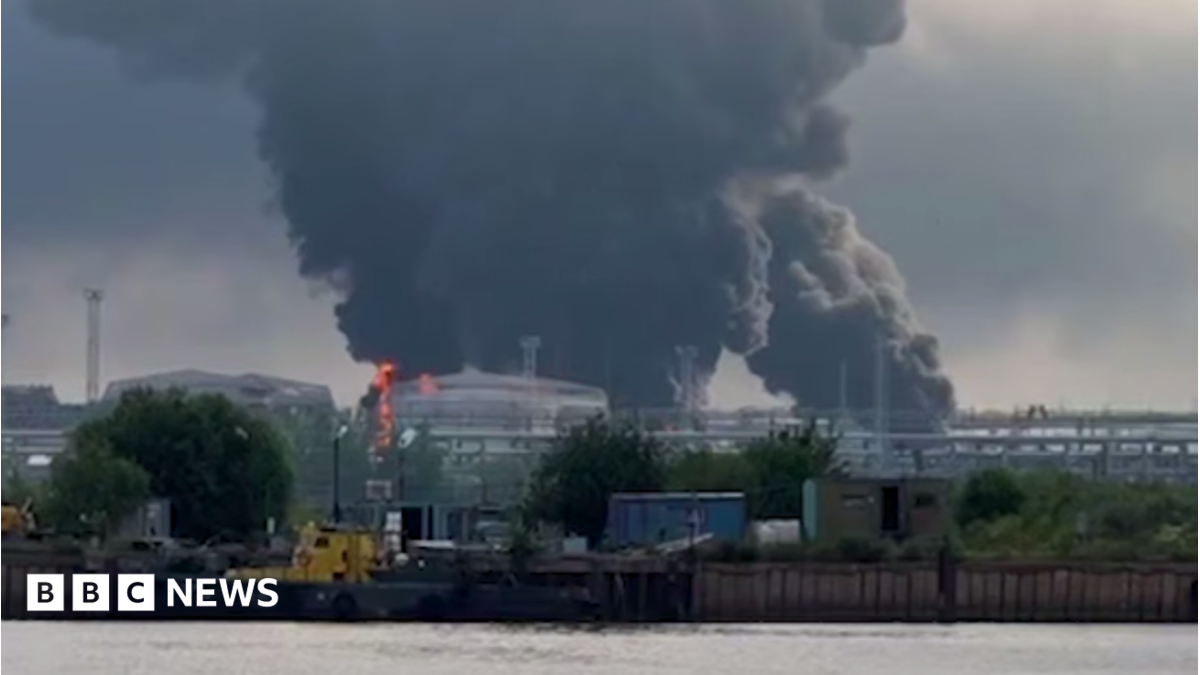
Ukraine has struck a major oil terminal in Russia’s second city of St Petersburg and other targets in the country’s north-west.
In a post on social media, President Volodymyr Zelensky wrote: “Ukraine’s defence forces struck port oil infrastructure that generates revenue for Russia’s war.” He also said an “important military target” was hit overnight in Kronstadt, a nearby naval base.
St Petersburg Governor Aleksandr Beglov said the city was under a “massive” drone attack, admitting the oil terminal was hit. He reported no casualties.
Ukraine has in recent months intensified its long-range drone attacks on Russia’s critical energy infrastructure, causing fuel shortages in a number of regions.
In his post on Saturday morning, Zelensky said the targets hit in St Petersburg and the surrounding region were about 850km (528 miles) from Ukraine’s border.
The extent of the damage was not immediately clear, but a video posted by the Ukrainian president showed a drone flying towards a target and a huge column of black smoke billowing from the area after the strike.
The BBC later verified that St Petersburg’s oil terminal was hit.
Ukraine’s military described the terminal as “one of the largest” in Russia, capable of producing 12.5 million tonnes of petroleum products per year.
The military also said a key naval base of the Russian Baltic Fleet in Kronstadt was hit.
Russia has not publicly commented on the claim.
Writing on Telegram, Governor Beglov said that 72 Ukrainian drones were shot down over St Petersburg and the wider Leningrad region.
He urged city residents to stay indoors until the drone threat was lifted. Mobile internet services may also be disrupted, he warned.
More than five million people live in St Petersburg.
In a separate development on Saturday, Ukraine’s military denied that the key eastern Ukrainian town of Kostyantynivka was now under full Russian control.
Military spokesman Maj Andriy Kovalyov told the BBC that “Kostyantynivka remains under the control of the Defence Forces of Ukraine”.
He admitted that there were “cases of infiltration by small infantry groups deep into the combat formations of our forces”, but added that those groups were being identified and destroyed.
His comments came a day after Russian President Vladimir Putin said that Russian control had been established over the town of Kostyantynivka in June.
Putin provided no evidence to back his claim.
Later on Saturday, Zelensky wrote on Telegram: “If Kostyantynivka is now under Russian control, then Putin will probably have no problem meeting me there and finding diplomatic solutions to finally end the war. But still, he will not cross the front line: the truth is very different from Putin’s words.”
Kostyantynivka is one of several heavily-fortified towns that make up Ukraine’s “fortress belt” in the Donetsk region, most of which is occupied by Russia.
President Putin launched a full-scale invasion of Ukraine in February 2022, and Moscow currently controls about 20% of Ukrainian territory.
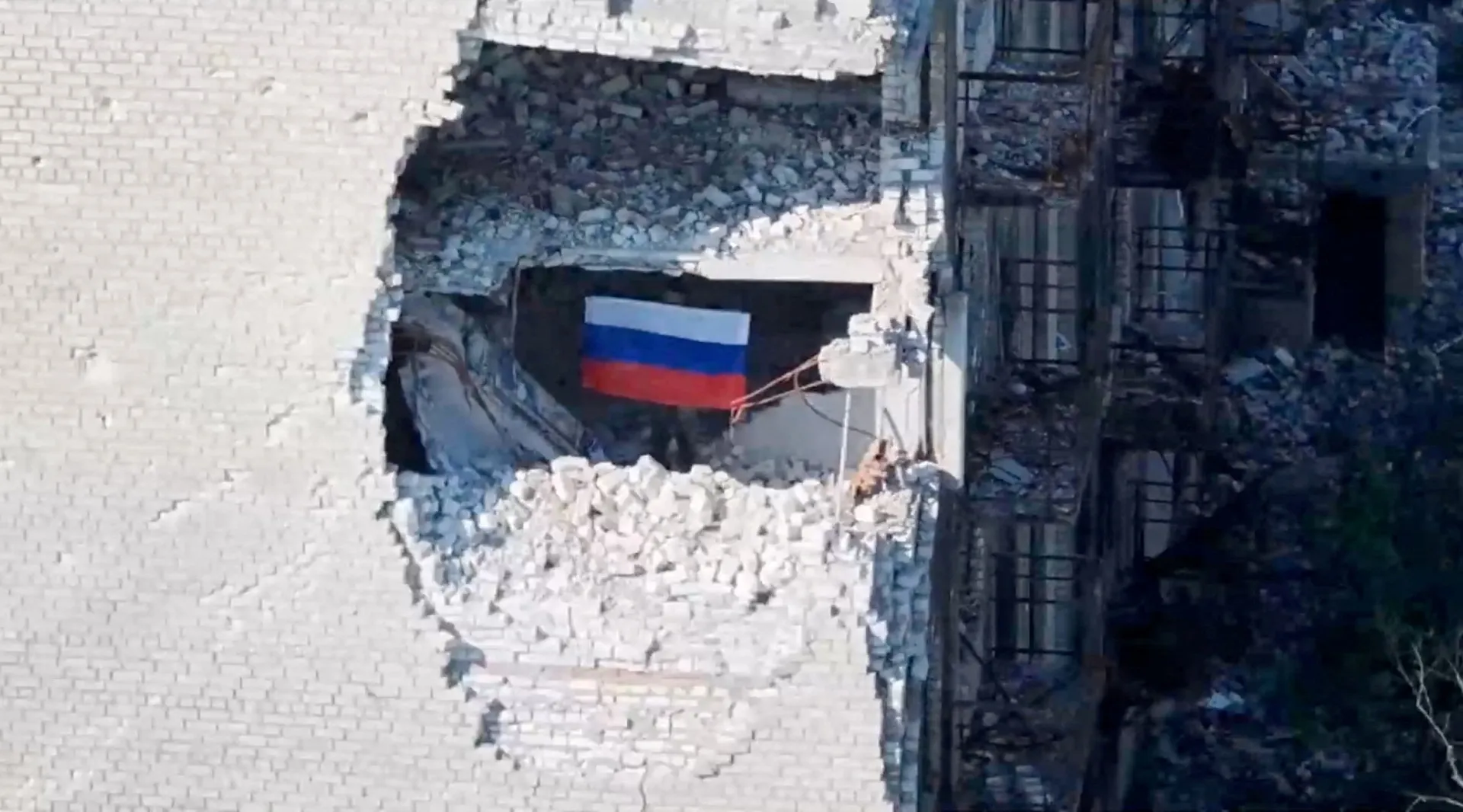
Russian forces have claimed capture of Kostiantynivka in eastern Ukraine’s Donetsk region after roughly a nine-month battle. The city sits within Ukraine’s “fortress belt,” a defensive network of cities forming Donbas’s main defensive line. Ukrainian officials denied the city fell.
Prosecutors allege a yacht was used in the sabotage of pipelines, with the suspect leading the operation.
By Reuters and The Associated Press
Published On 2 Jul 20262 Jul 2026
German federal prosecutors have filed charges against a 50-year-old Ukrainian national over a series of explosions that destroyed two Nord Stream underwater gas pipelines linking Russia to Europe in 2022.
The federal prosecutor’s office declined to comment on the specifics of the indictment on Wednesday against the accused, who is identified only as Serhii K in court documents under German privacy rules.
Recommended Stories
list of 4 itemsend of list
Serhii K is accused of attacking civilian energy infrastructure, causing an explosion, and destroying structures, according to the German public broadcaster ARD.
The underwater explosions damaged both the Nord Stream 1 and Nord Stream 2 pipelines so severely that no gas could be transported through them, knocking out the key routes for Russian gas to Europe for months after Moscow’s full-scale invasion of Ukraine in February 2022.
In a December 2025 detention filing by the Federal Court of Justice, prosecutors allege that Serhii K helped coordinate a team that used a sailing yacht, the Andromeda, to place explosive devices on the pipelines near Denmark’s Bornholm Island in September 2022.
According to those documents, Serhii K is suspected of acting as the on-board coordinator and team leader, not as a diver or bomb expert.
The Berlin law firm Menaker, which is representing the accused Ukrainian, has not provided any details on the indictment.
Federal prosecutors confirmed to the AFP news agency that Serhii K was the same suspect who was arrested in August 2025 in Italy and extradited to Germany the following November, and who was named at the time as Serhii Kuznietsov.
At the time of his arrest, German prosecutors said Kuznietsov had used forged identity documents to charter a yacht, which departed from the German city of Rostock to carry out the attacks.
Kuznietsov has denied being part of the sabotage operation. He said he was a member of the Ukrainian armed forces and in Ukraine at the time of the incident, a claim his defence team has said would give him “functional immunity” under international law.
Answering a question from Germany’s Der Spiegel magazine during a news conference in Dublin on Wednesday, Ukrainian President Volodymyr Zelenskyy said it was too soon to comment on the charges against Serhii K in detail.
“We have not officially received any details; at least I have not seen them”, Zelenskyy said. “It is too early to say yet,” he added.
Ukraine’s government has previously denied any involvement in the sabotage or knowledge of the plot to bomb the Nord Stream 1 and Nord Stream 2 pipelines.
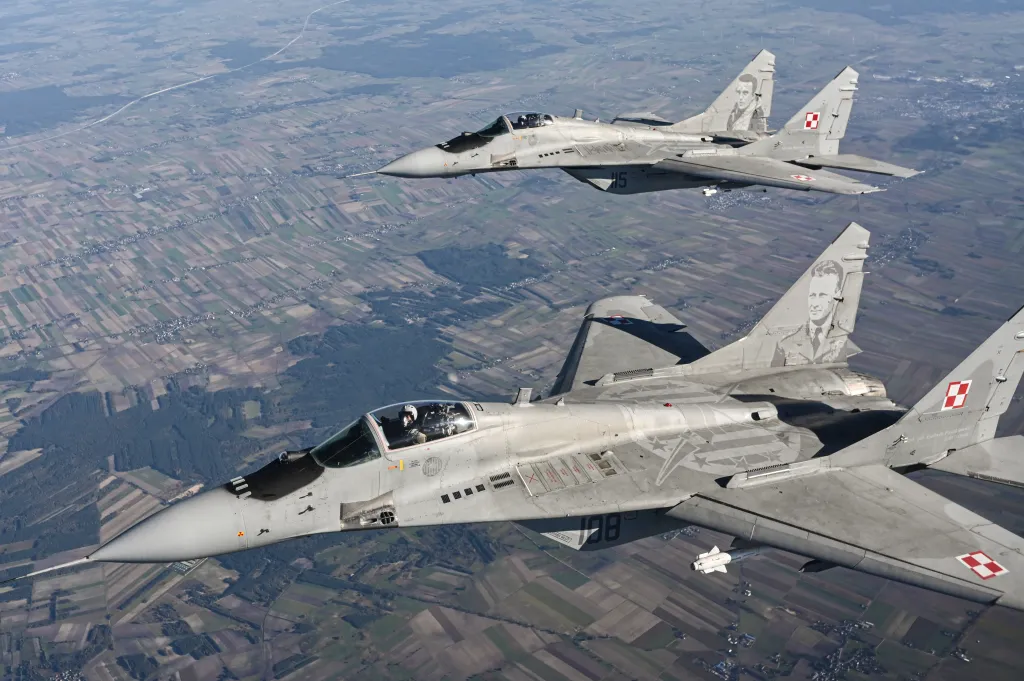
As we have previously reported, under former President Andrzej Duda, Poland donated 14 of its MiG-29s to Ukraine, becoming the first country to commit to supplying combat jets to Kyiv. However, under new Polish President Karol Nawrocki, who was elected last August, the country is now seeking something tangible in return for the Fulcrums.
“I proposed what I believe was a very partnership-based approach. MiGs in exchange for drones,” Władysław Kosiniak-Kamysz, who serves as defense minister and deputy prime minister, told the Polish Polsat News outlet. “The Ukrainians initially agreed, but they did not honor this arrangement, so there will be no MiGs for Ukraine because Poland does not have drones or the capability to use them.”
TWZ cannot independently confirm the Polish defense minister’s claims.
Poland has halted the transfer of Mikoyan MiG-29 Fulcrum fighters to Ukraine. (Photo by Omar Marques/Getty Images) Omar Marques
The Polish defense minister lauded Ukraine’s defense technology.
“Ukraine has such significant capabilities in the field of drones that, in return for the military equipment it has received, it could have shared its know-how with Poland and provided partial access to its technologies,” he said.
Kosiniak-Kamysz added that he was not criticizing the previous administration’s policies toward Ukraine.
“I’m not going to bash them over this issue; that’s far from my intention,” he told Polsat. “They did the right thing—in fact, I’d go further: I would have done the same. They acted correctly, and Ukraine was in a much more difficult situation back then.”
Kosiniak-Kamysz’s pronouncement about halting the Fulcrum transfer follows Nawrocki’s confirmation last December that Poland would transfer the additional MiG-29 fighter jets to Ukraine in exchange for counter-drone systems.
“After the unnecessary and unclear public uproar surrounding this issue—unfortunately, public opinion has been somewhat misinformed about this matter—we are seeking a symmetrical strategic partnership,” Nawrocki said during a press conference with Ukrainian President Volodymyr Zelensky. “This exchange of MiGs for anti-drone systems does not contradict our policy.”
It is unclear exactly what drone technology Poland was seeking or what Ukraine refused to provide. Ukraine has yet to comment on the matter. However, Kosiniak-Kamysz’s comments come as Polish-Ukrainian relations are spiraling downward.
Earlier this month, Nawrocki stripped Zelensky of the Order of the White Eagle, Warsaw’s top award, escalating a row between the allies over the memory of WWII.
“Zelensky had infuriated Warsaw this month by naming a military unit after an insurgent army that took part in massacres against Poles in WWII,” AFP reported.
Polish President Karol Nawrocki has approved the revocation of the Order of the White Eagle awarded to Ukrainian President Volodymyr Zelensky, saying Poland will not support EU membership for those who fail to reject the “cult of totalitarianism and violence.” pic.twitter.com/HRx7vHigTi
For much of this conflict, Poland has been one of Ukraine’s staunchest allies, serving as a logistics hub and providing military assistance. As we noted earlier in this story, Poland’s initial donation of MiG-29s opened the door for the transfer of dozens of others from several NATO nations. That was followed by the eventual provision of F-16 Vipers and later French Mirage 2000 fighters.
Despite receiving more modern fighters: “Zelensky has noted that Ukraine requires MiG-29 aircraft because its pilots are already trained to operate them,” according to the Ukrainian United24 media outlet. “He added that transitioning to F-16 fighters requires lengthy retraining, temporarily reducing combat readiness, whereas MiG-29s would allow Ukraine to maintain operational air capabilities more immediately.”
Regardless of the type, Ukraine has a great need for more combat jets. Its air force has lost at least 88 of various kinds since the start of the war, according to the Oryx open-source tracking group. Those figures are likely higher because Oryx only tabulates losses for which it has visual proof.
The list includes at least 38 MiG-29s, 20 Su-27 Flankers, four F-16s and a Mirage. Ukraine lost two more aircraft in recent days.
A MiG-29 Fulcrum went down during a nighttime combat mission in the central Poltava region on June 27, the Ukrainian Air Force reported, according to the Kyiv Post. Earlier this month, a Su-24M bomber crashed, resulting in the deaths of both crew members, the newspaper noted.
⚡️ Ukrainian MiG-29 crashes during combat mission, Air Force says, pilot ejects safely.
The pilot successfully ejected and was located by a search-and-rescue team, which evacuated him to a medical facility.https://t.co/6LwplqdS59
— The Kyiv Independent (@KyivIndependent) June 27, 2026
Meanwhile, as the Ukraine-Poland spat simmers, Kyiv has inked a number of deals to share defense technology with Arab states in the wake of the U.S.-Israeli war on Iran. Tehran has struck several Arab nations with missiles and drones in response to Operation Epic Fury, and they in turn reached out to Ukraine, which has gained air defense expertise after battling waves of Russian attacks for more than four years.
Earlier this week, Ukraine and Kuwait signed a bilateral defense cooperation agreement paving the way for joint defense projects, military-technical cooperation, and collaboration between the two countries’ defense industries.
I welcome the decision of the State of Kuwait to finalize the domestic legal procedures required for the entry into force of the Agreement between the Government of Ukraine and the Government of the State of Kuwait on Cooperation in the Military Field and Other Fields.
It is unclear how much these deals affected Poland’s MiG-29 decision, if at all. Nor is it known if there will be a cascading fallout on other drone deals Zelensky is trying to engineer with the U.S. and other nations. Regardless, while an additional 14 Fulcrums won’t change the course of the war for Ukraine, Poland’s refusal to provide them is another sign that a once-close relationship is now troubled.
Weekly insights and analysis on the latest developments in military technology, strategy, and foreign policy.
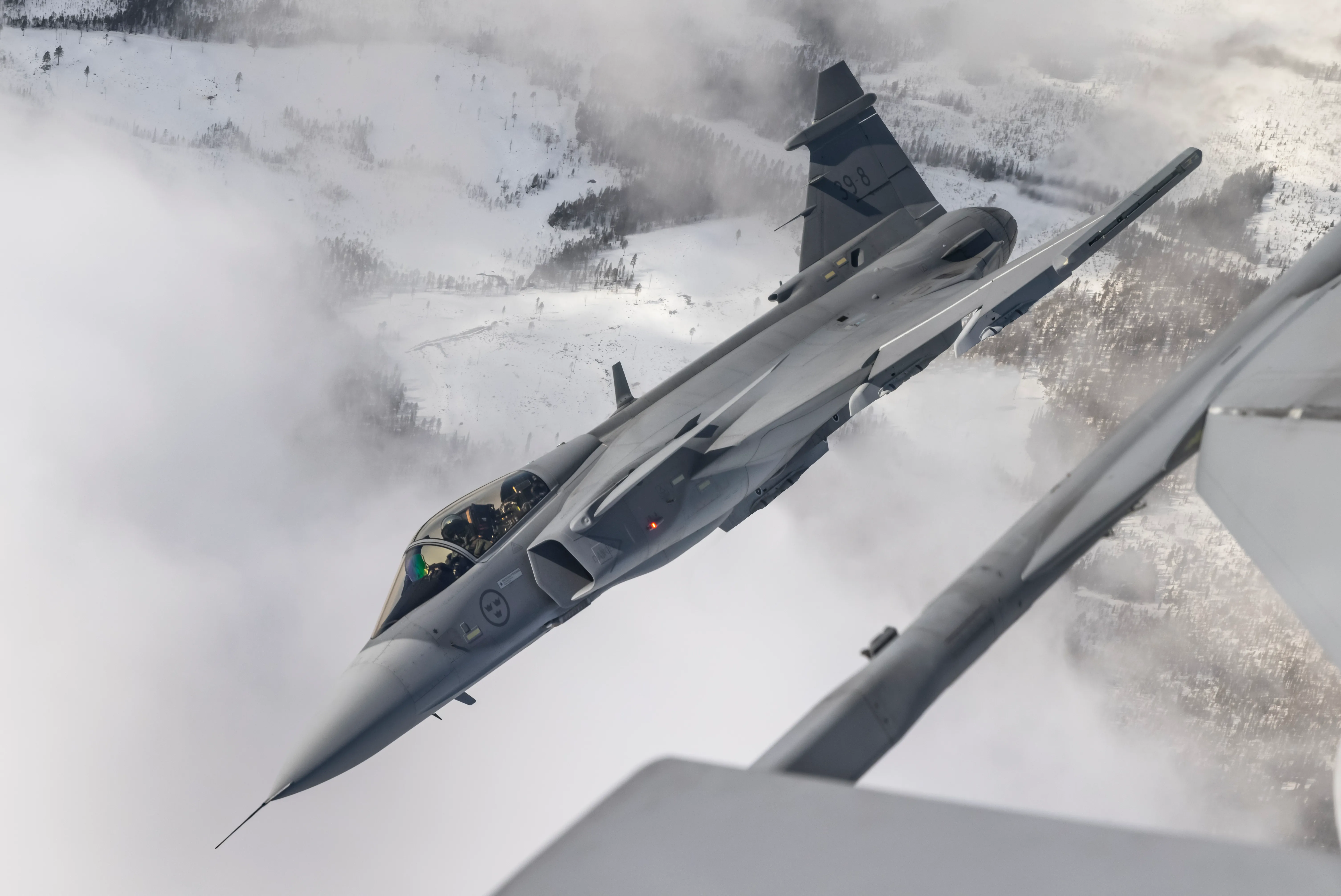
Swedish defense firm Saab announced today that it had signed a contract to provide 16 Gripen E fighters to Ukraine. Once they arrive in the country, the jets will likely provide Ukraine with its most capable combat aircraft, and the development comes after Stockholm agreed to donate up to 16 of the previous-generation Gripen C/Ds to Ukraine. Handover of the Gripen C/Ds in Ukraine is slated to take place in early 2027, while the Gripen Es are scheduled for delivery starting in 2029.
Strengthening our skies! Ukraine and Sweden signed a historic agreement to purchase 16 advanced Gripen E fighter jets. These jets will significantly boost our capabilities against drones, cruise missiles, and enemy aviation.
The deal was signed between Saab and the Swedish Defense Materiel Administration (FMV), the governmental procurement agency acting under the Swedish Ministry of Defense. The order is valued at around SEK 24.6 billion (approximately $2.5 billion) and will be booked in the third quarter of this year.
Saab is scheduled to deliver the new jets to the FMV between 2029 and 2030, after which they will be transferred to Ukraine.
A Gripen E in the northern part of Sweden. Saab “Jörgen Ericsson; Saab AB”
In addition to the 16 Gripen E fighters, the contract also includes spare parts and associated items and equipment.
“I am deeply proud that Sweden and Saab can now enable the provision of Gripen E to Ukraine, bringing a world-class fighter that will transform the Ukrainian Air Force’s capability. This will significantly strengthen Ukraine’s air defense and help ensure the nation can protect its people and safeguard its future,” said Micael Johansson, President and CEO of Saab, in a statement from the company.
The same statement also outlined particular features of the Gripen series that it says make it ideal for operations with the Ukrainian Air Force:
“Gripen is designed to address advanced threats in demanding environments. Operational flexibility and resilience enable operations from short stretches, temporary runways or roads, supporting dispersed operations and high availability. The software-based architecture facilitates continuous upgrades and adaptation to evolving operational requirements. With low maintenance requirements and fast turnaround, Gripen provides an advanced and cost-effective fighter capability that is easy to operate and maintain.”
A Gripen E during trials in Finland. Saab
These qualities, not restricted to, but notably baked into the Gripen design philosophy, are something we have explored as long ago as 2022, in the context of potential deliveries to Ukraine. In our previous coverage, we noted:
Designed during the Cold War to meet the Soviet threat, the Gripen was engineered for efficiency, durability, and ease of operation under wartime conditions. It was specifically designed to be serviced and rearmed by small teams — often including conscript personnel — while operating from dispersed locations such as roads and improvised airstrips instead of traditional air bases. The aircraft’s entire concept centers on maintaining combat operations in demanding environments, including prolonged cold-weather conditions.
Gripen – Always combat ready
Even with its existing fighters, the Ukrainian Air Force has developed tactics and equipment to operate these jets from dispersed locations around the country. Prior to the current conflict, Ukrainian fighters were training to make use of highways as alternatives to traditional runways.
Already, the Gripen C/D represents a significant advance, but, as noted, these are previous-generation jets, and they are secondhand aircraft drawn from Swedish stocks to expedite delivery.
A Gripen C launches infrared countermeasures. Saab
Compared to the Gripen C/D, the Gripen E, as you can read about here, is a very different proposition, despite its superficially similar appearance.
In contrast to the older jet, the Gripen E has a bigger fuselage that accommodates approximately 30 percent more fuel and has a more powerful General Electric F414 engine, plus a total of 10 hardpoints for weapons and other stores. The cockpit is entirely revised, and the pilot is provided with a single Wide Area Display (WAD), replacing the three separate displays in the Gripen C/D.
The Gripen E can carry up to seven MBDA Meteor beyond-visual-range air-to-air missiles, weapons also compatible with the Gripen C/D, although in the new aircraft these are integrated with the Leonardo ES-05 Raven active electronically scanned array (AESA) radar, and the Leonardo Skyward G infrared search and track (IRST) sensor.
Gripen E fires Meteor. Saab
The ES-05 Raven is set to be the first AESA fighter radar for Ukraine. Arrays of this kind bring a significant boost to modern combat aircraft. In comparison with traditional mechanically scanned array technology, an AESA can find and track a target at a much greater range, more quickly, and with a greater degree of accuracy. This also applies to smaller threats, including those with limited radar signatures, or flying at very low levels, which older radars find much harder to detect. This makes it especially relevant to hunting drones and cruise missiles, which are small targets often encountered by Ukraine en masse.
One particular feature of the ES-05 Raven on the Gripen E is the fact that the radar is mounted on a rotating repositioner, also known as a swashplate. As you can read about here, this enables the electronically scanned antenna, which is normally fixed in a forward position on fighter aircraft, to be slewed to the left and to the right in order to increase its field of view.
As we have discussed in the past, the Meteor would provide Ukraine with a class of air-to-air weapon that it badly needs to redress the balance against Russian fighter jets.
The Meteor is among the most capable air-to-air missiles in operational service anywhere in the world. Thanks to its ramjet propulsion, which can be throttled during different phases of flight, the Meteor is generally considered to be effective against certain types of targets out to around 130 miles.
The Meteor also features an active radar seeker for the terminal phase and a two-way datalink that feeds it with in-flight updates as it flies out to its target and provides information to the pilot in the launch aircraft.
The jet also includes a new Saab Electronic Warfare System (EWS), featuring a 360-degree spherical Missile Approach Warning System (MAWS).
Less obvious is the Gripen E’s avionics architecture, which is designed to enable the rapid insertion of new hardware and updated software applications to take on new missions. Customers are also able to design and develop their own software to introduce new technologies and systems to keep pace with ever-evolving threats.
A Gripen E seen from the cockpit of its wingman. Saab
Furthermore, Ukraine will be able to maximize the potential of its Gripens by operating them in conjunction with its two Saab 340 airborne early warning and control (AEW&C) aircraft equipped with Erieye radar that have been donated by Sweden.
The Saab 340 AEW&C can serve as an airborne fighter control platform by detecting and tracking Russian targets, prioritizing threats, and directing friendly fighters to intercept them. Using its datalink system, the aircraft can also provide mid-course guidance updates to missiles after launch. This allows fighter pilots to engage targets without necessarily activating their own radar. Instead, a missile can be assigned a target before launch, fired, and then receive continuous guidance updates from the AEW&C aircraft until it reaches the target. The Erieye radar is also notably effective when tracking ground and maritime targets.
Swedish defence industry continues to show why it matters for Sweden, Ukraine and Europe. Gripen is advanced, resilient and built for demanding conditions. This is the first step in Ukraine’s stated ambition to acquire up to 150 Gripen E/F aircraft over time. (4/4)
A similar letter of intent covers a plan for Kyiv to buy up to 100 Dassault Rafale F4 fighters from France over the next 10 years. These Rafales are at least as advanced as the Gripen Es, and superior in some respects, but there remain glaring questions about whether they can both be procured, especially in such numbers.
The Gripen E is an even bigger deal for Ukraine than the Gripen C/D. The Ukrainian Air Force has already received Western-supplied F-16s and a smaller number of Mirage 2000s, but still relies heavily on its Soviet-era fighters. The MiG-29 Fulcrum, in particular, has been continually adapted to carry new weaponry, both Western-supplied and locally developed, but these are all aging jets and the fleet overall has been steadily reduced by attrition.
One of the first F-16s received by Ukraine is seen in August 2024. Photo by Vitalii Nosach/Global Images Ukraine via Getty Images VITALII NOSACH
Taken together, the Gripen C/D and Gripen E will provide Ukraine with a modern, networked fighter force unlike anything it has operated before. Combined with long-range Meteor missiles and Erieye AEW&C support, the aircraft will significantly enhance Ukraine’s ability to challenge Russian airpower and defend its airspace, and it will also be able to deliver precise attacks against surface targets.
Perhaps more importantly, these Swedish-made jets will bring the Ukrainian Air Force into a new era in which it is spearheaded by advanced, Western-made combat aircraft.
Skaters from Russia and Belarus banned “exclusively in the interests of the safety of participants and the integrity of the competitions” can return to world championships and Grand Prix events next season.
The International Skating Union said Tuesday that the ban triggered by Russia’s 2022 military invasion of Ukraine is over. But skaters and officials from Russia and Belarus may compete only as neutral athletes, meaning without their national symbols of flag and anthem.
The figure skaters, speed skaters and short track speed skaters will be allowed to participate as long as they have not supported the war in Ukraine. A neutral skater is not eligible if they are in active service with the armed forces or a national security agency of Russia or Belarus; have taken active part in military operations in the war against Ukraine; and-or have actively and publicly supported that war.
In announcing the decision, the ISU council described the ban as a “protective measure” and emphasized that “those measures were expressly stated not to be a sanction, disciplinary measure or ineligibility decision.”
The war in Ukraine is in its fifth year since the full-scale Russian invasion began in February 2022. According to Global Conflict Tracker, Russia occupies roughly 20% of Ukrainian territory and fighting persists with ongoing Russian missile and drone attacks on Ukrainian cities. Meanwhile, Ukraine has launched retaliatory drone strikes deep into Russian territory targeting energy and military infrastructure.
Nearly 56,000 civilians have died or been injured, while 3.7 million people are internally displaced. Through 2025, Ukraine had received about $188 billion in aid from the United States and $197 billion from the European Union.
“The ISU continues to condemn all armed conflict around the world,” the ISU said in a statement. “The ISU continues to provide financial support to Ukrainian skaters through various initiatives, including the ISU Development Program, contributions to the Ukrainian Skating Federation, and a support program for displaced skaters.”
The ISU council’s decision to lift the ban on Russian skaters took into account “developments across the Olympic Movement and the differing approaches of other International Federations.”
While acknowledging that the lifting of restrictions had given rise to occasional protests at competitions, the participation of neutral Russian and Belarusian athletes in 2025-2026 Olympic qualification events and at the 2026 Milan Cortina Olympic Winter Games were completed “without related incident.”
Russian figure skaters Adeliia Petrosian and Petr Gumennik were cleared to compete with neutral status in Milan and both finished sixth in their events. Viktoriia Safonova of Belarus also competed as a neutral athlete.
“Skaters should not be held responsible for the actions of their governments,” the ISU posted. “Safety remains the guiding consideration for any further easing. The ISU will continue to monitor conditions at ISU events and will relax restrictions further only when satisfied that no safety or integrity issues arise, and reserves the right to reintroduce or increase restrictive measures should such issues emerge.”
Neutral athletes could face difficulty obtaining entry visas from countries hosting ISU events. The 2027 figure skating, short track and speed skating world championships will be hosted by Finland, South Korea and China, respectively.
The International Olympic Committee was instrumental in the ISU decision, advising sports bodies to readmit athletes from Belarus on May 7 without vetting for neutral status.
Search under way for suspect who fled scene after explosive device placed at entrance to residential building wounded three, authorities say.
Published On 30 Jun 202630 Jun 2026
Authorities in Monaco say at this stage have ruled out “terrorism” as a motive in an explosion that left three people wounded.
The powerful blast took place at the entrance to a residential building on Monday evening, after a man had apparently left a package there.
Prosecutor Stephane Thibault told reporters on Tuesday the suspect who fled on foot acted alone and remained at large.
security-camera footage showed the suspect walking in a street wearing a black jacket, light-coloured trousers, white shoes and a black hat that partly conceals his face.
Police have opened an attempted murder probe but are not qualifying it as a “terrorism” investigation, said Thibault, adding that the motive remained unclear.
‘Caught in the explosion’
One of the three injured is a woman in life-threatening condition, while her partner and a 13-year-old child suffered less severe injuries but remain in the hospital. Thibault did not provide their identities.
Media reports identified Ukrainian construction tycoon Vadym Yermolaiev as being among the injured. Ukrainian news site Ukrainska Pravda said he was targeted by Ukrainian sanctions in 2023 for alleged ties to Russia.
The three victims were “apparently returning home peacefully” in the early evening, according to surveillance footage, Christophe Mirmand, the minister of state for Monaco, told French news broadcaster LCI
“They were caught in the explosion as they crossed the threshold of their apartment building,” he said.
Ukraine’s Foreign Ministry said it was in touch with authorities in Monaco, saying the explosion wounded three people of Ukrainian descent, who are members of one family. It did not name them, but said Ukrainian authorities are checking their citizenship.
Yermolaiev, a multimillionaire Monaco resident, has been subject to sanctions from Ukraine since December 2023, which Ukrainian security services reportedly said stemmed from his alcohol business activity in Russian-occupied Crimea.
Monaco is a microstate with a population of 38,000 people, where many ultra-wealthy people reside. It is considered to be one of the safest places in the world, with an extensive surveillance network of thousands of security cameras covering most public spaces.
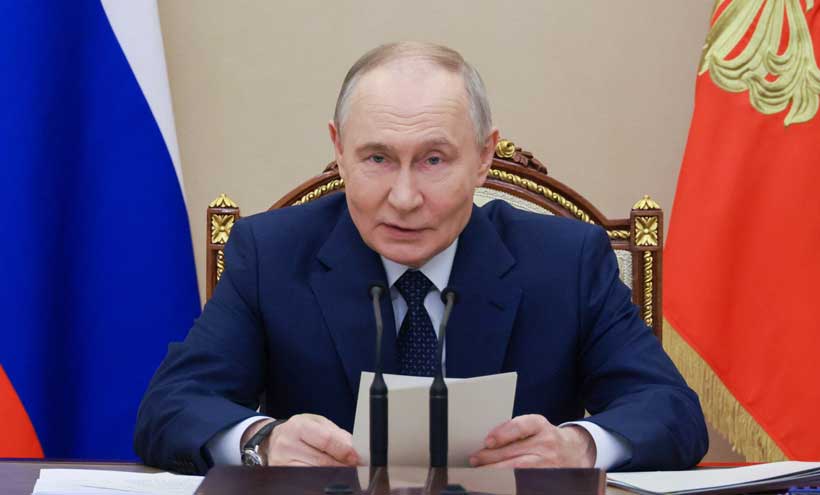
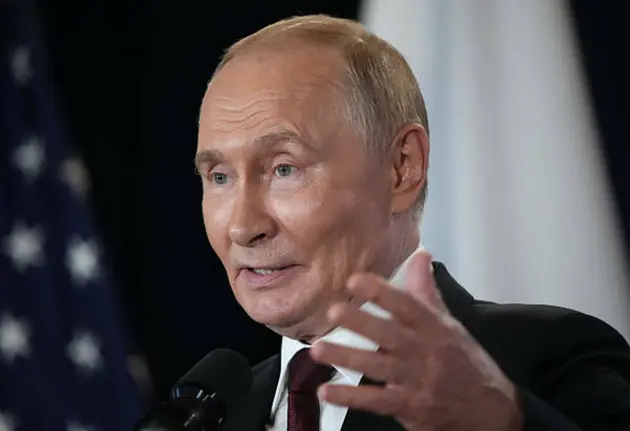
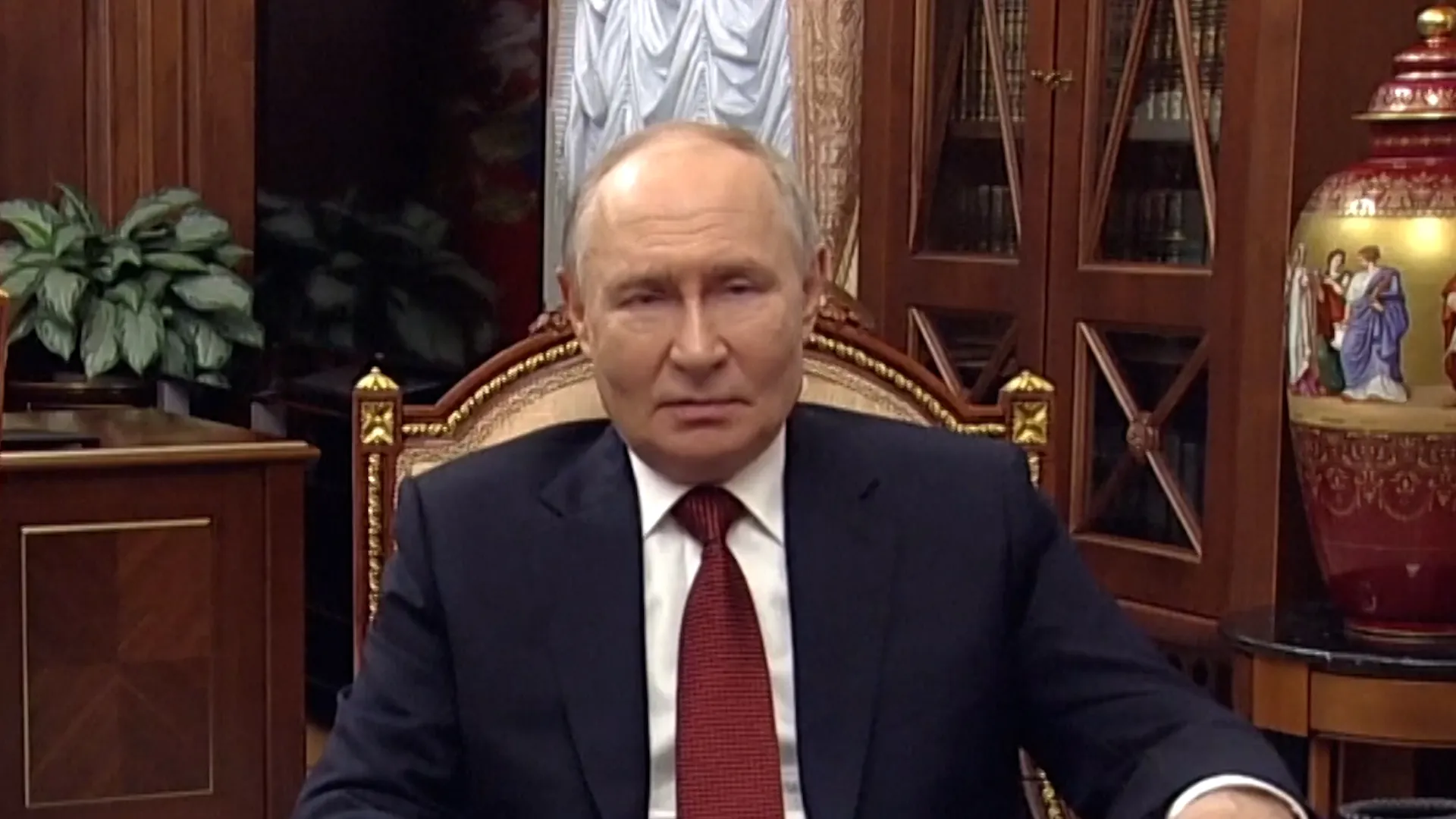
President Vladimir Putin announced that Russia will continue its efforts to fully capture four Ukrainian regions, dismissing Ukraine’s recent proposal to ease hostilities in the ongoing war. In a televised interview, he emphasized the need to enhance Russia’s air defense to respond to increased Ukrainian drone attacks targeting its oil industry. Despite acknowledging fuel shortages due to Ukrainian strikes, he asserted that Russia is managing these challenges effectively.
Putin claimed that Ukraine’s suggestion for a mutual halt to long-range strikes was merely a tactic to relieve pressure on its forces along the extensive front line. He expressed confidence in Russia’s military success, stating that their offensive actions are significantly more impactful and destructive. He rejected the idea of saving the Ukrainian government as part of Russia’s plans.
Ukrainian President Volodymyr Zelenskiy, who had proposed a meeting with Putin, received no response from the Russian leader. Putin described Ukraine’s attacks as attempts to distract Russia from achieving its goals of fully liberating the Donbas and other strategically important regions. He reiterated that Ukraine must relinquish its remaining positions in Donetsk as a crucial condition for any peace agreement, following Russia’s annexation of the four regions seven months after its invasion.
In addressing the drone attacks, Putin called for a rapid increase in the production of necessary air defense systems, claiming that the attacks would not affect the overall combat situation. He anticipated renewed U. S.-led diplomatic efforts to end the war, following the resolution of the U. S.-Israeli conflict with Iran. Furthermore, he indicated that Belarusian President Alexander Lukashenko could play a role in peace talks, without acknowledging Ukraine’s concerns regarding Belarus’s involvement in the conflict.
Russian President Vladimir Putin has admitted that the country is facing a “certain shortage” of fuel following Ukrainian drone strikes targeting its energy infrastructure, but insisted that “it’s not critical.”
“We need to minimize the consequences of terrorist attacks on
Russian President Vladimir Putin says Ukraine has proposed a mutual halt to long-range strikes and a meeting with Kyiv’s leadership. But, though he says he is considering the proposal, he believes the deal would benefit Ukraine more than Russia.
An image from a video provided by Ukrainian officials shows what purports to be a Russian oil refinery on fire Sunday after being struck by long-range weapons. Ukrainian President Volodymyr Zelensky has launched a 40-day campaign of strikes against Russian oil industry targets. Photo courtesy of the Ministry of Defense of Ukraine
June 28 (UPI) — Ukrainian long-range weapons struck two major Russian oil refineries on Sunday as President Vladimir Putin promised to ramp up security against Kyiv’s attacks in an address to United Russia party members.
Ukrainian President Volodymyr Zelensky announced in a social media post that the Slavyansk oil refinery in the Krasnodar region and another facility in the Yaroslavl region were hit, accompanying those claims were video showing buildings ablaze with thick smoke pouring into the sky.
The Slavyansk refinery is about 186 miles from the front lines of the Russian invasion in eastern Ukraine, while the Yaroslavl facility significantly farther away, at approximately at 434 miles.
Zelensky said Ukrainian forces celebrated the nation’s Constitution Day with the attacks, which continued Kyiv’s recent ramping up of its strikes on Russian infrastructure located far behind the front lines through the use of sophisticated long-range weaponry.
“We continue our operations that weaken Russia’s ability to wage this war,” Zelensky said. “Each of our long-range sanctions means fewer resources serving Russia’s war machine, and another step toward peace.”
Our warriors began Ukraine’s Constitution Day with great accuracy. Last night, our long-range sanctions reached two oil refineries in Russia. The Slavyansk oil refinery in the Krasnodar region was hit – about 300 kilometers from the frontline. We also reached a refinery in the… pic.twitter.com/MiKOSjszFF— Volodymyr Zelenskyy / Володимир Зеленський (@ZelenskyyUa) June 28, 2026
Sunday’s strikes appeared to be a continuation of Zelensky’s newly announced 40-day “influence campaign” of using intermediate- and long-range weapons against Russia’s oil infrastructure in a bid to bring Putin to the negotiating table.
The Russian-installed occupation authorities in the Crimean Peninsula announced a regional state of emergency on Friday amid gas shortages shortly after the initiation of campaign.
In Moscow, meanwhile, Putin on Sunday obliquely admitted Ukraine’s long-range strike campaign was affecting Russians’ lives, but then quickly dismissed those concerns.
In a speech to the 23rd congress of his United Russia Party, Putin vowed to improve security and defenses against Ukrainian attacks.
“The congress of United Russia, our leading political party, is taking place at a difficult time — it would be safe to say that it is a pivotal moment for our country and a period of radical and systemic transformation of the entire world,” the president said, while pointing the finger at “Western elites.”
“Once again, Russia is confidently repelling any attempts to deter our progress. We have sufficient resources, means, and political will, and nobody should doubt that,” he declared.
Putin did not mention the wide-scale gasoline shortages being felt around the country but vowed to ensure the security of Russia.
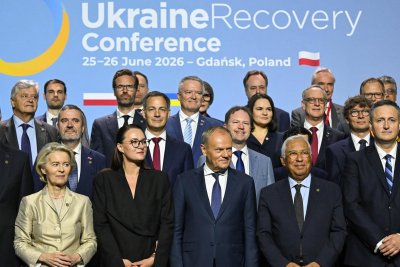
Polish Prime Minister Donald Tusk, center, European Commission President Ursula von der Leyen, left, European Council President Antonio Costa, second from right, and Ukrainian Prime Minister Yulia Svyrydenko, second from left, pose for a group photo at the opening session of the Ukraine Recovery Conference 2026 at the European Solidarity Centre in Gdansk, Poland, Thursday. Photo by Adam Warzawa/EPA
June 25 (UPI) — The European Union released $3.6 billion in funds of the Ukraine Support Loan for budget and defense needs, the bloc said Thursday.
The funds were released at the Ukraine Recovery Conference, where European Commission President Ursula Von der Leyen announced the funding, which is the first instalment of the new macro-financial assistance. The MFA is a segment of the Ukraine Support Loan, under which $102 billion will be offered to Ukraine in 2026 and 2027.
“As a country at war, Ukraine’s capaicty to defend its territory depends on the rapid availability of critical products in the required quantities and within very short timeframes,” a press release said. “The first instalment of the [$6.8] billion defense package to support drone procurement will be disbursed in the coming days.”
“This is indeed solidarity in action,” Von der Leyen said. “It shows Europe’s support for Ukraine is here to stay.”
The original plan in December was to use Russia’s frozen assets to fund the loan, but the Russian Central Bank sued a Belgian bank over the plan, so the EU had to find a new way to finance the loan.
Instead, they agreed to create the loan through joint debt. Hungary, Slovakia and the Czech Republic negotiated an exemption.
The payments are conditional on Kyiv’s reforms. If Ukraine reverses its ongoing fight against corruption, the EU could suspend the funds, Euro News reported.
The loan also requires Ukraine to buy weapons and ammunition made in Europe, with some exceptions depending on availability.
“Ukraine has the opportunity to analyze the situation on the battlefield and identify the range of products that they need, and then they have to inform us in the form of product schedules,” a Commission spokesperson told Euro News. “The priority remains to make purchases within the EU and Ukraine.”
“We continue to call on all our partners to maintain their support, because a strong and independent Ukraine is in all our interests,” Von der Leyen said Thursday. “Our ambition is not only to help Ukraine endure, it is also to help Ukraine grow and prosper as a free and European country.”
The United States is not expected to contribute funds to the loan.
FIFA’s inaugural U-15 World Cup in October has been opened to all of its member associates, paving way for Russia’s return.
Published On 25 Jun 202625 Jun 2026
A Russian team may be allowed to participate in a FIFA event for the first time since Moscow’s 2022 invasion of Ukraine after football’s global authority said its inaugural U-15 World Cup and Festival, set to be held in Azerbaijan in October, is open to all FIFA member associations.
FIFA banned Russia from international competition in February 2022 after it invaded Ukraine, but it lifted the suspension from the country’s U-17 boys’ and girls’ teams the next year.
Recommended Stories
list of 4 itemsend of list
However, Russian teams have remained absent from U-17 tournaments organised by FIFA and UEFA as several European countries, including Ukraine and England, continue to boycott Russia over its ongoing invasion of its neighbour.
“The first edition will be open to boys’ teams from all FIFA member associations, the second instalment in 2027 will feature girls’ teams only,” FIFA said on Wednesday about the U-15 World Cup and Festival.
“From 2028 onwards, all member associations will be invited to participate with both their boys’ and girls’ U-15 teams in two separate competitions.”
The U-15 event will kick off on October 22 and conclude nine days later.
Weekly insights and analysis on the latest developments in military technology, strategy, and foreign policy.
One of Russia’s biggest advantages in the war against Ukraine is its ability to launch tactical airstrikes from bases largely out of reach of kinetic responses. While we have frequently reported about Ukrainian attacks on these bases, they aren’t sustained enough to stop Russia from generating devastating sorties.
Now Ukraine and NATO are looking to the private sector for ways of changing that equation through what is being called the Airfield Denial Challenge. It offers a 250,000 Euro award to companies or individuals who come up with workable ideas to prevent Russia from being able to use its air bases.
🚀The NATO-Ukraine Joint Analysis, Training and Education Centre (JATEC) and NATO Allied Command Transformation (ACT) have announced the Persistent Airfield Denial Innovation Challenge to find a solution to block enemy airfields. (1/5) ⬇️ pic.twitter.com/8uKWWEI5pQ
“The Armed Forces of Ukraine (AFU) operational experience has firmly established that the ability of the adversary to project air power from secure rear-area airfields remains one of the most consequential asymmetries in the current conflict,” according to NATO’s Headquarters Supreme Allied Commander Transformation (SACT). “Enemy tactical aviation, operating from bases beyond the reach of conventional Ukrainian strike assets, continues to conduct strikes using guided aerial bombs, cruise missiles, and stand-off munitions against friendly forces, critical infrastructure, and civilian population centers.”
Objective control footage shows the aftermath of a FAB-250/500 airstrike carried out by a Russian Aerospace Forces (VKS) Su-34M fighter-bomber on a warehouse in Kharkiv used to store UAVs and their components. pic.twitter.com/vnynslqFiO
“Each sortie originates from an airfield. Every airfield is a node of vulnerability: if it can be persistently denied, the adversary’s air campaign is fundamentally disrupted at source,” SACT suggested.
You can see video from one of the Ukrainian attacks on Russian tactical aviation bases below.
Russia’s Morozovsk Airbase is currently under Ukrainian drone attack, with several explosions seen in the vicinity of the airfield.
Ukraine’s ongoing efforts to halt these attacks are insufficient, SACT posited.
“Current workarounds: manned strike aviation, ground-based long-range fires (MLRS, ballistic missiles), and conventional single-unit loitering munitions have demonstrated limited effectiveness against defended airfield targets,” SACT argued. “They lack the mass-effect, persistence, and EW (Electronic Warfare)-resilience required to simultaneously suppress airfield infrastructure across multiple aim points in a contested environment.”
Ukraine has carried out many strikes on airfields, including one on the Morozovsk airbase in Russia. (Google Earth) Google Earth
The “battlefield logic is clear,” the NATO subcommand added. “Point-defense and reactive interception of individual weapons must be complemented by persistent denial at the source.”
“We must find technologies that will help to permanently limit the enemy’s use of aviation infrastructure: aircraft, runways, fuel and ammunition storage facilities, and ground support infrastructure,” the Ukrainian Defense Ministry (MoD) explained. “Ukrainian miltech companies, startups, and engineering teams are invited to participate.”
SACT said the challenge is technically agnostic and that it is looking for ideas that include, but not are not limited to, the following:
• Uncrewed aerial systems of any configuration or range class
• Autonomous or semi-autonomous munitions and loitering systems
• Swarming and mass-effect approaches
• Alternative delivery mechanisms beyond conventional aerial platforms
Regardless of what type of solution is presented, it “must be capable of operating in GPS-denied and EW-contested environments, across all weather conditions and seasons, and must demonstrate a credible path to rapid fielding.”
In addition, SACT is looking for systems that can conduct sustained strikes deep into contested airspace, operate without “continuous human control,” be fully autonomous and deliver “sufficient mass and precision to suppress multiple aim points across an airfield simultaneously.”
SACT also wants systems that require minimal training, and have AI-assisted target acquisition that “reduces reliance on expert judgment.”
The solicitation comes with the understanding that whatever solutions are presented won’t be proven, but should be at least in the mid-to-upper tier of the military technology readiness level (TRL) scale. It includes systems ranging from those having “high fidelity” laboratory integration of components to those with prototypes “near, or at, planned operational systems.”
U.S. Army
Meanwhile, any solution that will take more than a year to be fielded won’t be considered.
The deadline for submissions is July 20. Ten finalists will be selected on August 11 and will be invited to a “pitch day” on Sept. 3, tentatively in Poland, to showcase their designs.
Whether this ambitious program will actually lead to the fielding of any systems that can persistently deny Russia the ability to launch aircraft is very much in question.
As we have frequently reported, Ukraine has one of the world’s most innovative defense technology infrastructures that has created drones, missiles and other weapons designed, tested and fielded under intense wartime conditions. However, it has still been unable to achieve the goals being sought by this challenge.
One of the big issues Kyiv faces is the limited amount of funds to pursue some of these advances and what the Atlantic Council has described as “Ukraine’s inability to mass produce sophisticated weapons or sustain stable military supply chains.”
Getting an idea into the hands of NATO, which has developed a half-billion dollar fund to develop weapons for Ukraine, could ultimately help turn an idea into a workable weapon to keep Russian tactical aviation at bay. Even if that happens, though, the time it would take to develop these weapons at a scale large enough to make a real difference would be a formidable endeavor.
Several Russian regions are facing fuel shortages because of Ukrainian attacks.
Published On 23 Jun 202623 Jun 2026
A Russian missile attack on the central Ukrainian city of Kryvyi Rih has killed at least three people, as Moscow struggles with the economic strain of the four-and-a-half-year Russia-Ukraine war.
Oleksandr Vilkul, the head of the Kryvyi Rih defence council, said in a post on Telegram on Tuesday that 25 people had been wounded in the attack, which he said used a cluster munition warhead.
Recommended Stories
list of 3 itemsend of list
“People died within 200 metres [660 feet] of each other because of this barbaric weapon,” Vilkul said, adding that a day of mourning would be marked on Wednesday.
Kyiv has previously accused Moscow of using cluster munitions, which scatter into smaller explosives when dropped.
Reacting to the attack, Ukraine’s President Volodymyr Zelenskyy called for more international pressure on Moscow to end the war and for quicker supplies of air defence systems.
“Every delay in implementing air defence agreements, every delay in supplies to protect Ukraine and Ukrainians is in effect a loss of life,” he wrote on Telegram.
Ukraine announced on Tuesday that its forces had targeted a railway bridge, a power plant and other key infrastructure in Russian-occupied Crimea.
Weakened rouble
Over the past few months, Russia and Ukraine have significantly ramped up attacks. As Moscow launches barrages of strikes on Ukraine, Kyiv in turn has targeted Russian refineries and infrastructure with its own drones.
Ukraine’s drone attacks have led to fuel shortages in Russia. Many regions across the country have reported restrictions on fuel sales and rising prices for oil products, creating concerns about the stability of Russia’s economy.
On Monday, the Moscow Exchange stock index fell by five percent before it rebounded slightly. It is still around its lowest level since March 2023, while the rouble weakened past the 75-mark against the US dollar for the first time since May 6.
The Kremlin dismissed concerns about the rouble’s weakness.
“The stability of the Russian economy, macroeconomic stability, is absolutely ensured,” government spokesperson Dmitry Peskov said on Tuesday.
Meanwhile, efforts to end the war have remained effectively frozen as United States President Donald Trump has shifted his focus to Iran.
Russian Foreign Minister Sergey Lavrov told foreign envoys in Moscow on Tuesday that the Americans seemed to be “abandoning any claim to the role of an objective mediator and are instead pursuing a course of escalating sanctions pressure on Russia”.
Ukraine says facility a ‘critical component’ in defence production as local Russian authorities confirm attack.
Published On 22 Jun 202622 Jun 2026
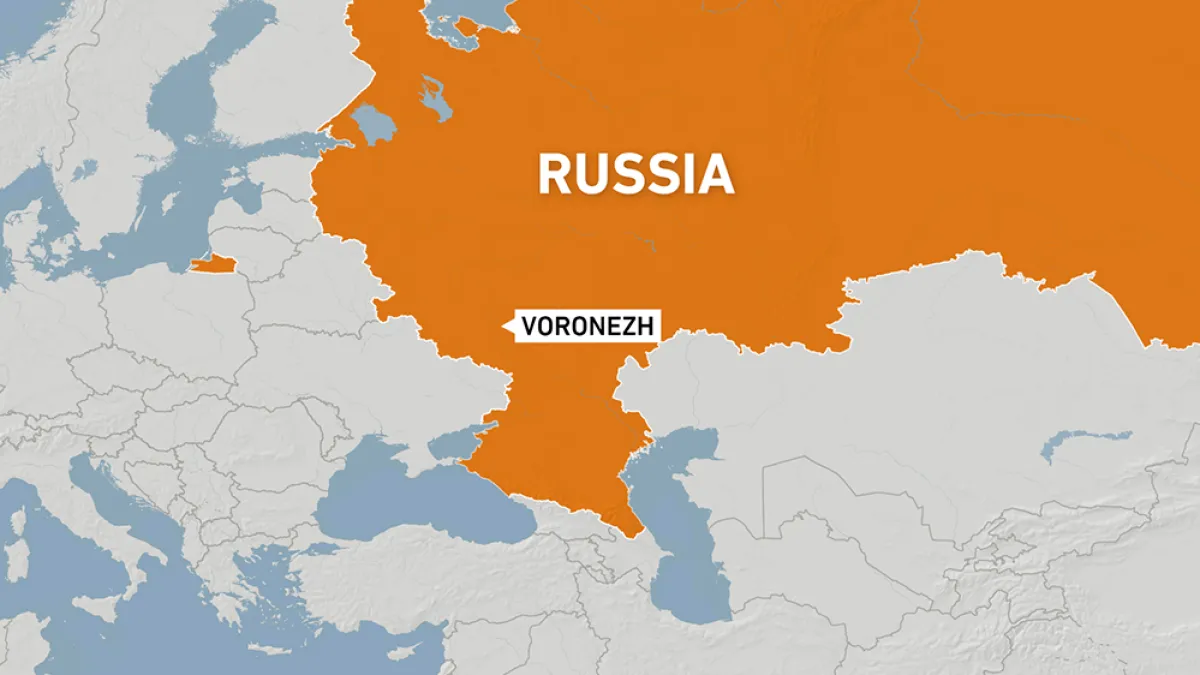
Ukraine’s military has said it struck a plant producing electronics for missiles in Russia’s Voronezh region, as well as the Dubna satellite communications centre in the Moscow region.
In a statement on Telegram on Monday, the Ukrainian General Staff said it had used air-launched cruise missiles to hit the plant in Voronezh, which it described as a “critical component” in Russia’s defence production.
Recommended Stories
list of 4 itemsend of list
Alexander Gusev, the Voronezh governor, said a production plant was damaged and three people were injured in the attack, without specifying the nature of the facilities.
Gusev said in a post on Telegram that air defence forces had destroyed several high-speed targets in the skies over Voronezh and warned residents of the danger of missile attacks.
The Ukrainian military also said it struck Russia’s Dubna satellite communications centre in the Moscow region, adding that heavy smoke was observed at the site and the extent of the damage was being assessed.
Eighty-four drones headed for Moscow were downed in the past 24 hours, the city’s Mayor Sergei Sobyanin said on Telegram.
He said emergency services had been dispatched to the areas where drones were downed, but gave no further information.
The airports of Sheremetyevo, Domodedovo and Vnukovo, as well as Zhukovskiy near the Russian capital, had temporarily suspended flights, the aviation watchdog said separately.
In total, Russian defence systems downed 301 drones overnight, local news agencies said, citing the Ministry of Defence. That tally included Russian-occupied areas of Ukraine.
The latest raids follow a drone attack that hit Moscow’s sole oil refinery last week, in one of the biggest air attacks on the city since Russia’s full-scale invasion of Ukraine in 2022.
Teenager killed in Ukraine
In Ukraine, authorities said a Russian drone attack early on Monday in the Sumy region killed a 13-year-old boy, his 36-year-old father, and his 73-year-old grandmother.
Regional governor Oleh Hryhorov said the 73-year-old was the mother of the man’s roommate.
Russian drone attacks in the southeastern Ukrainian city of Zaporizhzhia overnight and early on Monday killed two people and injured a further seven, Ukraine’s emergency services said.
Russia also hit the southern Odesa region with an Iskander ballistic missile on Sunday evening, killing one and injuring three people, regional governor Oleh Kiper said on Telegram. Vehicles and fuel storage tanks caught fire after the strike hit an agricultural facility, he said.
Elsewhere, the city of Sevastopol in Russian-annexed Crimea cancelled all open-air public events on Monday and will keep streetlights switched off, its governor, Mikhail Razvozhayev said, as he called on people to curb electricity usage.
Russian drones hit a Turkish dry cargo vessel, the Victress, which was sailing under the Panamanian flag, Ukraine’s navy said.
Deputy Prime Minister Oleksii Kuleba said a 58-year-old Egyptian cook was killed and eight other crew members, including Turkish and Indian nationals, had to evacuate on a lifeboat.
The leaders of Europe’s top military powers will meet on Wednesday in Berlin to discuss the Ukraine conflict and an upcoming NATO summit.
Chancellor Friedrich Merz plans to host the leaders of France, Britain, Italy and Poland, a spokesman said Monday, adding that the resignation announcement of British Prime Minister Keir Starmer had not changed those plans.
Gas sales in Russian-controlled Crimea have halted after Ukrainian drone strikes on the peninsula’s supply route. Drivers are now looking for other modes of transport.
Diplomatic sparring between Ukraine and Belarus escalated sharply on 19 June, when Ukrainian President Volodymyr Zelensky demanded that Belarus dismantle communications infrastructure allegedly used by Russia to extend the range of its strike drones. Zelensky has offered a week for such removals to take place, reportedly saying, “I am giving a week for it to be withdrawn; otherwise, we will do it ourselves.” This marks a severe deterioration in relations since Belarus allowed Russian forces to cross Ukraine’s northern border using Belarusian territory in 2022. Following Russia’s withdrawal from Ukraine’s northern regions, Belarus has not enabled further assaults from its own territory but has actively aided Russian efforts, in part, by allowing drones to operate over Belarusian territory to strike Ukrainian targets with less warning. These increased tensions follow recent statements from Belarusian President Alexander Lukashenko aimed at easing tensions, stating, “If Volodymyr Oleksandrovych was offended, I apologize to him for those words… Perhaps I shouldn’t have spoken so sharply about it. But, on the other hand, he should understand, as we often say: you get what you give.” As Zelensky applies pressure to Russia’s key European ally, Lukashenko’s response may determine whether his country will begin to withdraw support or play a larger part in this war.
Belarus’ Assistance in Putin’s Invasion
Belarus has played a vital role in Russia’s aggression since 2022, remaining one of Moscow’s most important enablers throughout the war. On the opening days of the conflict, 45,000 Russian soldiers crossed into the capital region of Kyiv. Since Russia’s withdrawal from northern Ukraine, Belarus has remained a tacit supporter of the invasion, finding auxiliary ways to support its key strategic ally’s actions in Ukraine without directly becoming involved itself. While weapons transfers and diplomatic support aid Moscow’s war effort, Belarus’ most valuable contributions come from two primary sources. First, Belarus’ expansive border with Ukraine. The two countries share a border that stretches over 1,000 kilometers. The existence of a Russian ally on Ukraine’s northern border introduces the risk of another attack from this direction, requiring the dedication of over 100,000 soldiers to the defense of a region that may not become active for the duration of the war. Second, neutral airspace was made available to long-range strike drones. Without this advantageous lane of attack, Russian drones, such as the Geran-2, must spend hours loitering over Ukrainian territory, where they are exposed to interception attempts while trying to reach their targets. Additionally, and central to Zelensky’s latest ultimatum, Belarus has reportedly allowed Russia to build a network of relays along Ukraine’s border to expand the range of its strike drones, allowing greater operational reach and improved resistance to electronic warfare.
Belarusian Capabilities
Threats made without the capability to enforce them are functionally pointless, suggesting that Zelensky believes Ukraine occupies a militarily advantageous position relative to Belarus. This warrants analysis of Belarus’ military capabilities to determine whether they pose a threat to Ukraine. As of 2022, Belarus reportedly maintained an active-duty army of approximately 48,000 soldiers, with inactive trained reserves and additional supporting personnel amounting to another 300,000 people. The country fields 1,200 main battle tanks and 3,400 other armored fighting vehicles, although it is unclear how many remain in active service. Many of these vehicles are of questionable utility, with Belarus operating mainly vintage Soviet equipment and few vehicles having been modernized to contemporary standards. The Belarusian Air Force fares slightly better, fielding 48 front-line fighter aircraft, of which 16 are new Su-30SM/SM2 airframes. The war and its rapidly changing dynamics have forced Belarus to invest in the modernization of its armed forces. However, in contrast to many Western modernization programs, which frequently involve high-value equipment deals, Belarusian efforts have focused more heavily on improving infantry capabilities. Belarus currently funds several programs for procuring modern armored vehicles and has recently made new equipment purchases from Russia, including the nuclear-capable intermediate-range ballistic missile known as Oreshnik. More transformative, however, are efforts to reform the country’s mobilization system and employment of experienced Wagner mercenaries to train Belarusian soldiers in drone-centric combat techniques. This could be interpreted either as an inability to afford more comprehensive reforms or as a deliberate shift away from traditional reliance on armored formations in favor of unmanned systems. Regardless of the motivation, these programs demonstrate substantive efforts to improve the military readiness of a vital ally to Russia.
Ukrainian-Belarusian Diplomatic Efforts
Zelensky’s demand follows months of escalating tensions between Belarus and Ukraine, contrasting Belarus’ traditionally ancillary role in Ukrainian foreign relations. Due to Belarus’ refusal to participate directly in combat operations, Kyiv had little incentive to press diplomatic issues and antagonize its northern neighbor. Until the recent flare-up, it was in Ukraine’s interest to keep Belarus on the sidelines while accepting the reality of Belarusian aid and weapons transfers that benefited Russia. Relations between the two countries followed a repeated cycle of saber-rattling, military posturing, de-escalation, and periods of calm. Lukashenko has repeatedly offered his services as a mediator between Russia and Ukraine, although Kyiv has rejected these offers because of Belarus’ close ties to Moscow. Tellingly, despite Belarus aiding its aggressor, Ukraine has maintained diplomatic ties with Minsk throughout the conflict. Lukashenko further offered to open bilateral talks with Kyiv in late 2025 in an attempt to reduce rising tensions. These efforts failed to bear fruit as relations deteriorated to their lowest point since the beginning of the war in May 2026. Following the construction of additional drone launching facilities in Belarus and an increase in Russian drone strikes, Ukrainian diplomacy shifted towards the application of direct pressure. Kyiv’s announcement that it had identified more than 500 strategic Belarusian targets in the event of conflict culminated in Zelensky’s ultimatum to dismantle Russia’s drone relay network within a week. The ultimatum suggests that Ukraine is abandoning its previous strategy of managing tensions with Belarus in favor of direct pressure. It also followed the largest Ukrainian drone strike on Moscow to date. Viewed in that context, Zelensky appears to be leveraging Ukraine’s growing long-range strike capabilities while simultaneously attempting to disrupt a component of Russia’s own drone warfare infrastructure.
President Volodymyr Zelenskiy warned that Russian forces are preparing for a large-scale attack on Ukraine, urging residents to be cautious and pay attention to air raid alerts. In his nightly address, he noted that recent Russian strikes have resulted in at least six deaths across various regions. There has been a pattern of heavy attacks on Kyiv and other major cities, with ten fatalities reported last Monday. The historic Pechersk Lavra monastery was also significantly damaged during these strikes.
Zelenskiy confirmed that Ukrainian military efforts would continue, targeting the oil sector. Recently, Ukrainian drones struck an oil refinery in Tyumen, western Siberia, and an oil facility in Moscow twice. On Saturday, Russian forces used glide bombs to attack the city of Zaporizhzhia, resulting in five deaths and ten injuries. Other attacks included a bombing near Sumy that killed one person, as well as drone strikes in the Kherson region and shelling in Poltava that injured three children.
Poland’s president, Karol Nawrocki, has decided to revoke the country’s highest honor, the Order of the White Eagle, from Ukrainian President Volodymyr Zelenskiy. This decision comes after Zelenskiy renamed a Ukrainian army unit to honor the Ukrainian Insurgent Army (UPA), a nationalist group responsible for massacring Poles during World War Two. Nawrocki’s statement emphasized that the revocation is not against the Ukrainian people or Poland’s security policy, yet it is expected to create significant diplomatic tensions between Poland and Ukraine ahead of a reconstruction conference in Gdansk.
Relations between Poland and Ukraine have been strained, despite Poland’s support for Ukraine in its conflict with Russia. Polish public opinion towards Ukraine has shifted negatively due to dissatisfaction over refugee issues, disputes about grain imports, and historical grievances. Ukrainian Foreign Minister Andrii Sybiha criticized the decision as a “strategic error,” stating that Poland escalated a conflict rather than seeking solutions. He asserted that foreign leaders should not dictate Ukraine’s history.
Former Polish President Lech Walesa also expressed discontent, saying he would no longer wear a Ukrainian flag badge, although he still supports Ukraine against Russian aggression. Some Ukrainians view the UPA as symbols of their resistance against oppressive regimes, while Poland remembers it as a perpetrator of the Volhynia massacres, which claimed many lives on both sides. Ukraine suggested that the name change was meant to honor the unit’s fight against Russia, not to offend Poland.
Zelenskiy’s chief of staff renounces Polish medal amid WW2 dispute
President Volodymyr Zelenskiy’s chief of staff, Kyrylo Budanov, announced he is giving up a Polish state medal after Poland’s President Karol Nawrocki revoked Zelenskiy’s top honor. This decision was made over a dispute related to a military unit named after Ukrainian insurgents linked to atrocities against Poles during World War II. Budanov described Nawrocki’s action as a “gift” to Russia and said it should lead to reflection rather than political conflict. Ukrainian Foreign Minister Andrii Sybiha called the revocation a “strategic error. ” Meanwhile, Polish Prime Minister Donald Tusk urged both leaders to stay calm amid rising tensions between the two nations.