The U.S. State Department said Friday it approved the potential sale of Joint Direct Attack Munitions-Extend Range to Saudi Arabia for an estimated $5B and a separate potential sale of AGT-1500 engines to Saudi Arabia for an estimated $750M (
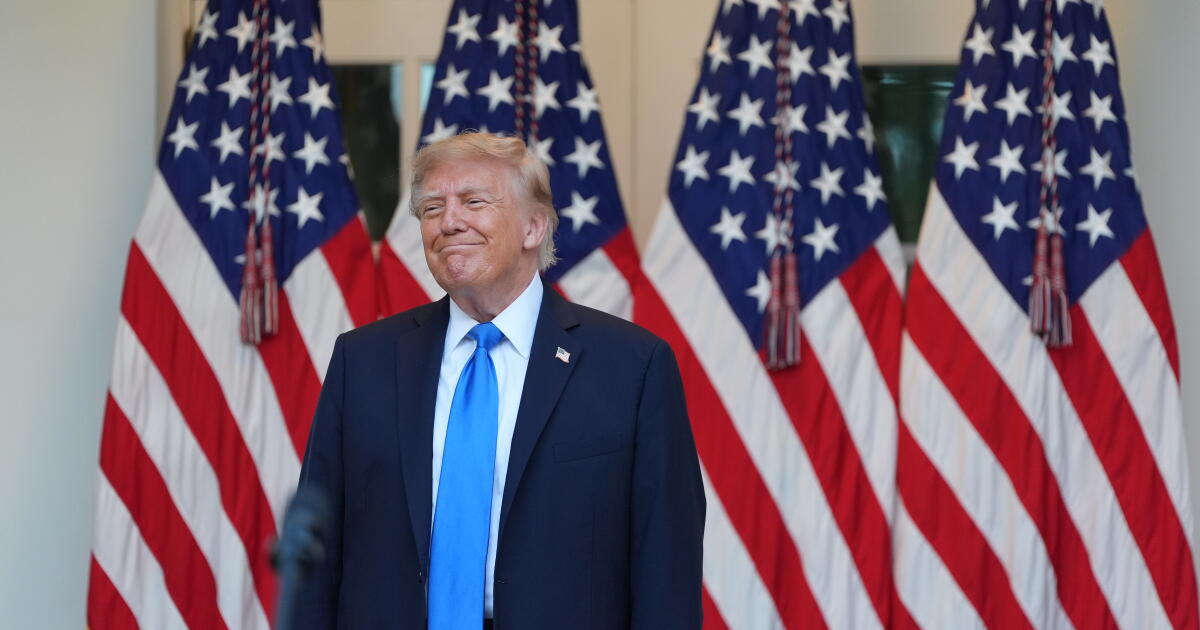
Sept. 4 (UPI) — President Donald Trump on Friday signed two executive orders aimed at strengthening the country’s ranching industry.
Trump has been facing criticism from beef producers since he waived tariffs on up to 300,000 metric tons of imported beef in an effort to ease rising costs as the nation heads into the midterm elections.
Trump’s first executive order directs the Interior Department to study removing gray wolves from the Endangered Species Act list, allowing ranchers to kill them on their properties. Gray wolves are a major threat to herds in the West.
The second executive order would allow ranchers to process their beef and sell directly to consumers, instead of going through USDA inspections.
“People have been asking for this change for decades, and we’re getting it done,” Trump told reporters at the White House. “This is the largest-ever government effort to change all federal rules and regulations necessary to support our ranchers and our farmers.”
Beef prices have risen this year due to drought and high feeding costs. The United States currently maintains the smallest herd since the 1950s.
The National Cattlemen’s Beef Association said it was “disappointed” by Trump allowing more foreign beef to flow into an industry already under severe stress.
“While America’s cattle producers share the goal of keeping groceries affordable for consumers, flooding the market with government-subsidized, below-market beef is not the way to rebuild the American cattle herd,” the association previously said in a statement.
“Cattle markets have already turned sharply lower this morning, to the detriment of farmers and ranchers.”
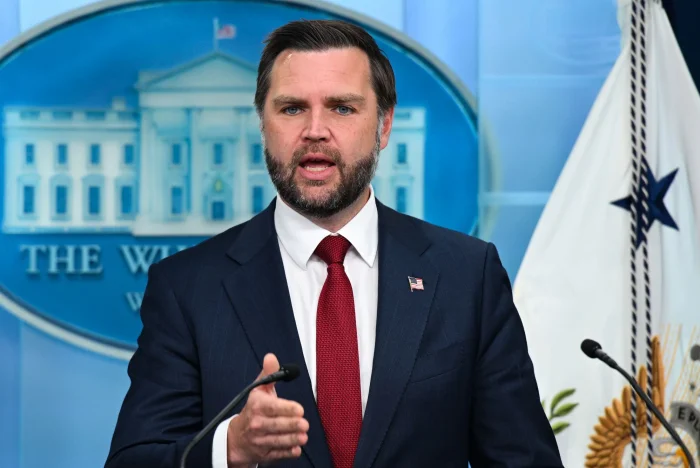
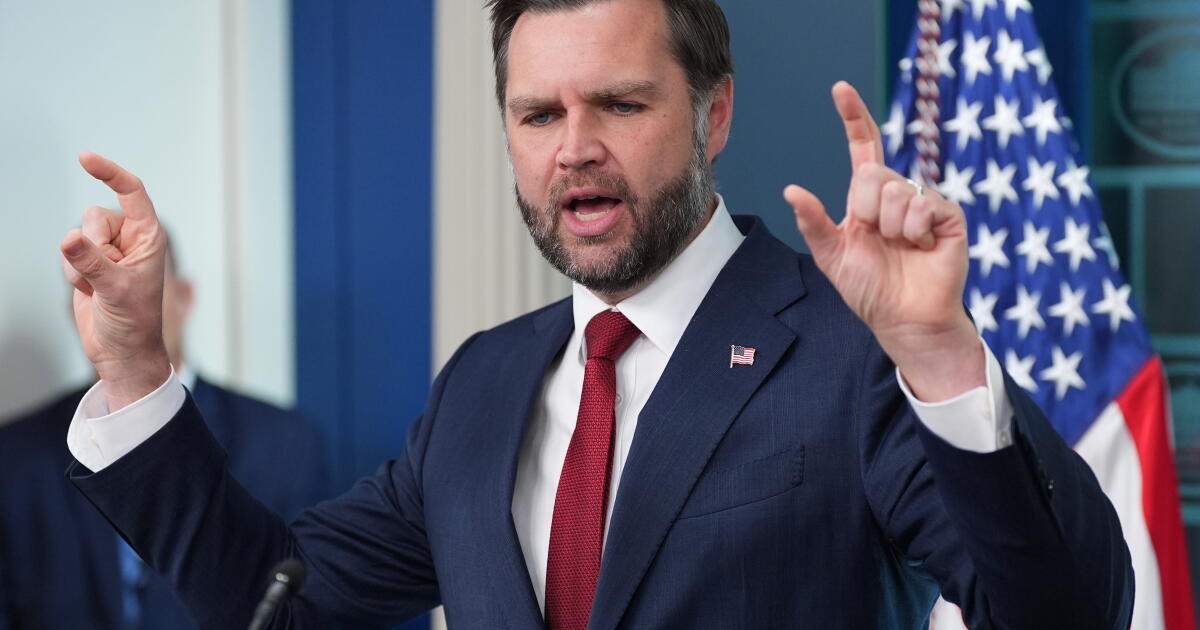
Vice President JD Vance briefs members of the media in the press room of the White House on Thursday. Photo by Annabelle Gordon/UPI | License Photo
WASHINGTON — Vice President JD Vance rejected the use of the word “war” to describe the U.S. fighting with Iran as he steered clear of predicting that the six-month-old conflict would be over by November’s midterm elections, in which Republicans are trying to hang on to their narrow majorities in Congress.
“I wouldn’t call it a war,” Vance said Thursday after being asked during a White House press briefing about whether the fighting could end before voters cast their ballots in the Nov. 3 congressional elections. “Right now, there is no active shooting.”
Vance’s assertion came even as Iran fired at U.S. Gulf ally Kuwait on Thursday as it continued to retaliate for rounds of U.S. strikes on Iran earlier in the week.
The vice president said the U.S. had a “responsibility” to carry out this week’s strikes because Iran continued to target commercial vessels passing through the Strait of Hormuz.
Vance’s attempt to minimize the intensity of the fighting illuminates the difficult task at hand for Trump and his administration as he tries to persuade American voters to keep Republicans in control of Congress, even as the unpopular conflict — one the White House said at its outset would last a matter of weeks — has driven up gas prices and left consumers grappling with higher inflation.
Vance said he didn’t want to set “artificial timelines.”
“But when you ask, ‘When will this end?’ You’re asking me a question like, ‘When will the Iranians stop shooting at ships?’” Vance said. “I think the reality is, I don’t know the answer to that question. You would have to ask the Iranians.”
The administration in July faced scrutiny after it reclassified four fallen soldiers as well as dozens of wounded troops in its Defense Casualty Analysis System, which Pentagon officials have repeatedly pointed to as the definitive source on the numbers of dead and wounded from the conflict. Those killed or wounded in fighting after a brief ceasefire between the U.S. and Iran fell apart were classified in a new category called “Overseas Operations” after initially being tallied in the totals from the war.
White House insists more oil is getting out of Gulf, but prices remain high
Brent crude prices hovered above $95 per barrel Thursday. The international benchmark was around $72 per barrel the day before the conflict began.
Still, Trump and his aides have sought to push that the U.S. Navy is in control of the Strait of Hormuz, where about 20% of the world’s traded oil passed before the war. They insist a near prewar level of Gulf oil is now making its way out of the critical waterway.
Vance at Thursday’s press briefing said the U.S. escorted about 15 million barrels of oil on Wednesday. This was after Energy Secretary Chris Wright told CNBC on Wednesday that 17 million barrels were carried through the strait on Monday with assistance from the U.S. Navy. About 20 million barrels of Gulf oil flowed through the strait prior to the start of the war.
But ship traffic through the strait remains well below prewar levels, according to independent firms that track marine traffic.
There were 102 transits last week and 126 the week before, according to shipping data company Lloyd’s List Intelligence, compared with 130 or more per day before the war.
Over the past 28 days, 5 million barrels a day have exited the strait on average, according to TankerTrackers.com. Other recent estimates have varied from 2 million barrels per day to 6 million barrels per day.
Trump has tried to soothe volatile markets
Over the course of the war, Trump has repeatedly reported progress in negotiations or called off threats of military action at the last moment when global markets have become jittery. And markets have reacted swiftly to his public signals of peace or hints of progress.
“The administration is still jawboning oil markets,” said Rosemary Kelanic, Middle East director at Defense Priorities, of the administration’s claims of dramatically increased flows of oil. “And they appear to be doing it again to keep prices from going too high, so that they can extend the timeline before there’s a worse price spike.”
With Iran’s refusal to back down in the face of the U.S. military campaign, Trump has settled on a dual-prong approach that combines economic pressure with threats of an escalation in force, if necessary.
Trump has consistently emphasized that the campaign launched by the U.S. and Israel has been devastating for Iran’s navy and air force. Iranian officials have said the country has suffered $270 billion in direct and indirect damage. Israeli military strikes in the first weeks of the war wiped out much of the theocratic government’s leadership structure, including its Supreme Leader Ayatollah Ali Khamenei.
Still, Iran has found leverage through its own strikes on the strait and Gulf allies of the United States. But the administration has sought to make the case that the waterway will become less important by the day, even as it asserts that more oil is getting through.
Treasury Secretary Scott Bessent said in a Fox Business interview this week that the Strait of Hormuz will become a “worthless piece of water” within two years as new land pipelines planned for the region bypass the energy chokepoint. Trump himself took to social media on Thursday to highlight a news report about Syria’s effort to transform the port of Baniyas on the Mediterranean coast into a westward route to international markets for Gulf exporters.
Meanwhile, Iran and Oman have recently discussed a phased approach to jointly managing ship traffic through the Strait of Hormuz.
Trump settles into holding pattern before midterms, analysts say
The administration maintains it’s making progress economically choking off Iranian hard-liners, including the powerful Islamic Revolutionary Guard Corps. At the moment, it would be a leap for Trump to agree to any plan that puts Iran in position to claim control of the strait, analysts say.
“I find it hard to believe the president would agree to anything that hands back any modicum of IRGC control over the strait that has been wrested away,” said Richard Goldberg, who served as a senior adviser on Iran policy in Trump’s first administration.
Aaron David Miller, a senior fellow at the Carnegie Endowment for International Peace, said Iran does not appear ready to “let Trump out of the box” despite the massive pain being inflicted on its economy.
At the same time, Miller said, Trump seems to have settled into a holding pattern ahead of the midterms — one in which he avoids both a return to the full-throttle bombardment of Iran and making any accommodations to Tehran on the Strait of Hormuz.
“The White House doesn’t want a massive war, and they don’t want to be seen as offering massive concessions,” Miller said. “The tack they are taking avoids both of those things.”
Madhani writes for the Associated Press. AP writers Jonathan J. Cooper and Josh Boak in Washington and David McHugh in Frankfurt, Germany, contributed to this report.
Trash fills a street in Havana in March. A U.S. Embassy health alerts issued Friday follows earlier reports of gastrointestinal illnesses on the island tied to water supply problems, garbage accumulation and prolonged power outages. File Photo by Ernesto Mastrascusa/EPA
Sept. 4 (UPI) — The U.S. Embassy in Havana issued a health alert Friday over a significant increase in diarrheal illnesses across Cuba, linking the rise to the continued deterioration of the island’s water and energy infrastructure.
The embassy said unreliable electricity and water supplies are affecting general hygiene as well as food refrigeration, storage and temperature control, accelerating spoilage.
Recent cases have shown a significant increase in pathogens including E. coli, norovirus and Shigella, as well as other gastrointestinal pathogens that can cause vomiting, fever and severe dehydration.
Health Alert – U.S. Embassy Havana, Cuba (September 4, 2026)
Location: Cuba
Event: The U.S. Embassy has noted a significant increase in diarrheal illness across Cuba, associated with the continuing degradation of the water and energy infrastructure. This degradation affects… pic.twitter.com/jSA636mete— Embajada de los Estados Unidos en Cuba (@USEmbCuba) September 4, 2026
The embassy advised travelers and U.S. citizens in Cuba to take extra hygiene precautions and exercise caution with dairy products, meat, seafood, eggs and other perishable foods if they are uncertain about how the products were stored.
It also recommended avoiding tap water and considering bringing a personal supply of basic medications, including acetaminophen, ibuprofen, antibiotics and oral rehydration solutions, “given local medication shortages.”
The latest alert follows earlier reports of gastrointestinal illnesses on the island. In July, Periódico Cubano reported an increase in people experiencing vomiting and diarrhea in several parts of Havana as residents complained of water supply problems, garbage accumulation and prolonged power outages.
The health warning came days after the embassy issued a security alert Wednesday over a notable increase in thefts and vehicle-related crimes in Havana.
Incidents included items taken from vehicles, including parts such as side mirrors and windshield wipers, and attempts to steal entire vehicles amid worsening economic conditions and rising crime, Martí Noticias reported.
Sept. 4 (UPI) — The Federal Communications Commission asked a federal court to dismiss a lawsuit from ABC claiming the commission was curbing its right to free speech.
The Walt Disney Company and its subsidiary ABC sued the FCC on Aug. 18 to block an early license renewal from the agency, claiming the Trump administration is attacking the company for content it doesn’t like.
The FCC argued in its motion that the lawsuit is premature because the agency hadn’t yet tried to remove the licenses from eight local stations that ABC owns. In April, the FCC called for an early review of the licenses, an unusual move. None of the licenses were up for renewal for several years.
The FCC claims it asked for the early review because of ABC’s response investigation into the company’s diversity, equity and inclusion hiring policies. But the review came right after President Donald Trump told ABC to fire Jimmy Kimmel after a joke about First Lady Melania Trump.
The eight stations with their licenses are in jeopardy cover New York, Los Angeles, Chicago, Philadelphia, Houston, San Francisco, Raleigh-Durham, N.C., and Fresno, Calif. They renew their licenses every eight years and are almost never revoked. The FCC hasn’t filed an early-renewal order in decades.
“This [lawsuit] would only hobble the Commission’s efforts to investigate and resolve serious allegations that Disney has engaged in unlawful discrimination, and from otherwise ensuring that Disney’s stations are serving the public interest,” the FCC wrote in its filing. “Plaintiffs, in return, would only free themselves from the burdens of proving their case in administrative proceedings.”
“They have shown (at most) minimal and self-inflicted effects on speech, and no harms that could justify” blocking the agency’s moves, the FCC’s document said.
ABC had filed for an emergency stay of the FCC’s activity, arguing it was using the regulatory process to suppress its right to free speech.
ABC in its filing said that President Donald Trump is sending a “message to every media company in the country — that they should “tell only the stories the Administration deems favorable, or face the coercive machinery of the federal government.”
“In such a world, the press could in no way be described as free,” ABC wrote. “The FCC Chairman [Brendan Carr] has left little doubt that this is his goal.”
Judge Loren L. AliKhan scheduled a hearing for the week of Oct. 5.
Vice President JD Vance briefs members of the media in the press room of the White House on Thursday. Photo by Annabelle Gordon/UPI | License Photo
Sept. 4 (UPI) — In a setback for Republicans, the Missouri Supreme Court ruled against the use of a GOP-favored congressional map in this year’s midterms, directing that a referendum on redistricting be put on November’s ballot.
The ruling came down Thursday, two months before the Nov. 3 midterm elections, and after Missouri already using the use of the now blocked maps.
GOP-led Missouri was seeking to use a state legislature-approved redrawn map that was expected to increase the number of Republican-held districts from its 6-2 majority to 7-1, but the state’s high court on Thursday ruled that the opposition had the the right to have the issue put to a referendum.
The state’s General Assembly passed the redistricting bill in September 2025. In December, organizers who submitted a referendum petition collected more than 300,000 signatures in support of the effort.
But then last month, an hour before the statutory deadline, Missouri Secretary of State Denny Hoskins issued a “Certificate of Insufficiency of Petition,” stating that the state’s Constitution “does not authorize a referendum on congressional redistricting plans passed by the General Assembly,” prompting Missouri voters to sue.
The state’s high court ruling on Thursday overturned a circuit court’s judgment, ordering Hoskins to issue a certificate of sufficiency as to the referendum petition to place it on the November general election ballot and enjoining him from implementing the General Assembly-approved map.
“The referendum petition was legal, sufficient and timely, and the secretary incorrectly concluded otherwise. HB 1 did not go into effect and will not go into effect unless and until approved by the voters,” Judge Ginger Gooch wrote in the ruling. “The congressional redistricting the General Assembly established in 2022 remains in full force and effect for the November 2026 general election.”
Missouri Attorney General Catherine Hanaway, a Republican, said the state will appeal to the conservative-leaning Supreme Court.
“Never before in American history has a court overturned a congressional map after a primary and before a general election. This unprecedented decision clearly violates federal law and has thrust our state into a full-fledged constitutional crisis,” she said in a statement.
“We are confident that the federal courts will not allow every Missouri voter to be disenfranchised — which is what today’s decision does.”
President Donald Trump also lambasted the decision on his Truth Social media platform.
“Not only was the ruling horrible, ridiculous and unConstitutional, but there won’t be enough time to change the map back with the Election coming up in a very short period of time,” he said in a statement.
“The Election Process, as usual, is being disturbed in America! Missouri must be able to use the map that was in effect just a couple of months ago, in the Primary. This is a Dark Day for ‘Justice’ in Missouri!”
The midterms have been a focus of Trump, who has warned Republicans that if they lose control of the House, Democrats will impeach him.
To improve their chances of holding on to the House, Trump has encouraged GOP-led states to conduct unorthodox mid-decade redistricting efforts, with Texas last summer being the first to redraw its maps to create additional GOP-favored districts. This kicked off a gerrymandering arms race, with Democratic-led states saying they would do likewise to counter the Republican efforts.
To date, 10 states — all but one being Republican-led — have changed their congressional maps, according to the National Conference of State Legislatures, though several others have tried or are in the process of redistricting.
Sept. 4 (UPI) — President Donald Trump has named Adam Telle, current assistant secretary for the Army for Civil Works, acting secretary of the Army amid an ongoing shakeup of the U.S. military.
In a brief statement posted on his Truth Social media platform, Trump announced that Telle would be assuming the position immediately, while describing him only as “a Great Patriot, who is respected by all.”
Trump named Telle days after his predecessor, Dan Driscoll, reportedly submitted his resignation following months of reported tension with Defense Secretary Pete Hegseth, an exit that has raised concern among some as there has been a steady stream of resignations, early retirements and firings among Pentagon leadership during the second Trump administration.
On Tuesday evening, Driscoll made his resignation public, saying in an online statement Wednesday would be his last day.
“As a third-generation Army veteran, it has been the honor of a lifetime to serve as the secretary of the Army under President Trump and Secretary Hegseth,” he said.
“Our soldiers, civilians and their families are our nation’s very best, and they have inspired me every day. I am sincerely thankful for their service and sacrifice.”
On Wednesday, Sen. Thom Tillis, a Republican from North Carolina, called on Trump to fire Hegseth, a former Army National Guard major who took office with less senior government and military leadership experience than any other secretary of Defense, saying he has “never witnessed more inept management of the brave men and women who serve our country.”
Hegseth has overseen a sweeping overhaul of the department, including a purge of two dozen generals, admirals and senior civilian defense officials who have either resigned, announced early retirement or been fired. Several left following reported clashes with the secretary, who has plunged into culture-war issues, eliminating policies he has characterized as “woke.”
“He is indeed a great Patriot — and will be an immediate asset to the @USArmy.”
Sen. Bill Hagerty, R-Tenn., was among Republicans quick to congratulate Telle for being chosen to lead the Army and Trump for picking him.
“This is a critical position for our nation’s defense, and I can’t imagine a better leader for the world’s greatest warriors,” Hagerty said in a social media statement.
“He knows how to inspire, lead and equip the Army for success. Given the challenges we face today, Adam is the ‘man for the moment.'”
Sept. 3 (UPI) — The Trump administration is asking the Supreme Court to permit enforcement of its mail-in voting restrictions, arguing it will suffer irreparable harm because two states will begin sending ballots to voters before the block is to expire next week.
Filed Thursday by Solicitor General D. John Sauer, the request for an immediate administrative stay of the district court’s temporary restraining order comes in protracted litigation over a Trump administration rule giving the U.S. Postal Service authority to screen outbound mail-in ballots for compliance with envelope standards and verify recipients have been entered on their state’s USPS Mail-In and Absentee Participation list.
Last week, U.S. District Judge Indira Talwani in Massachusetts sided with the League of Women Voters in Massachusetts, which has been fighting the rule it says is unlawful and violates federalism principles of the Constitution, issuing a 14-day block against enforcing its key provisions while she considers the request to impose a longer, more restrictive preliminary injunction.
In his filing Thursday, Sauer argued that the federal government will be irreparably harmed if the restraining order is not lifted before North Carolina and Alabama send out their mail-in ballots next week, saying a court decision would come too late for those ballots.
“With respect to the November 2026 election, the order thus partially nullifies the Postal Service’s efforts to address the risk that the federal mails will be used to perpetrate voter fraud,” he said.
Sauer continued that despite Talwani’s order allowing the Postal Service and states to take steps to ensure their envelopes meet the rule’s requirements, her block “risks sowing confusion and chaos because it makes those preparatory steps voluntary, rather than mandatory.
“Thus, if the order is eventually stayed and the rule takes effect for this year’s elections — as should occur — there is a grave risk that states may not have taken the necessary steps to comply due to the false sense of latitude created by the court’s improper order, potentially depriving those states’ citizens of the ability to vote by mail,” he said.
Despite using the mail to vote himself, Trump has long been a critic of mail-in ballots, claiming them to be a source of voting fraud, though studies have found no evidence that mail voting produces higher overall rates of voter fraud.
The USPS rule is one of several actions Trump and his administration have taken ahead of November’s midterm elections, which the president has become increasingly focused on as he has warned Republicans that losing the House to Democrats could lead to his impeachment as well as investigations. While the moves generally have widespread Republican support, Democrats and critics say they are efforts to rig the midterms.
The new USPS rule being litigated comes in response to an executive order Trump signed in March to expand federal control over mail-in ballots, including authorizing the USPS not to send them to voters unless certain conditions are met.
Two weeks ago, the high court lifted an injunction blocking Trump’s mail-voting executive order, stating the challenge to the USPS provisions was premature as the agency had yet to issue a final rule. After the final rule was published Aug. 26, two dozen Democratic-led states and the District of Columbia sued, resulting in the two-week block the Trump administration is now contesting.
Sept. 3 (UPI) — Federal authorities on Thursday morning arrested a former Christian podcaster on allegations of issuing threats against President Donald Trump‘s life on social media.
FBI Director Kash Patel posted pictures online of Secret Service agents and other members of law enforcement arresting Benjamin Azariah Southworth, 40, of Los Angeles, Calif.
“Deadly threats like this are as vile as they are criminal — those responsible will be met by this FBI and law enforcement,” the FBI director said.
His arrest came a day after a federal grand jury returned a three-count indictment charging Southworth with one count each of threats against the president, cyberstalking and harassing telephone calls in interstate communications.
“As threats against President Trump’s life escalate, the Department of Justice will respond with the full force of the law,” Attorney General Todd Blanche said in a statement.
“We will hold perpetrators of violent threats accountable, and anyone who makes these threats online will not be allowed to hide behind their screens.”
The indictment alleges that Southworth, a former host of the pro-LGBTQ rights Christian podcast Yass, Jesus!, issued the threats via social media from January to May.
Federal prosecutors accused Southworth of expressing “his hatred toward President Trump and the President’s supporters” on YouTube, Instagram and TikTok, which he allegedly used to encourage the abuse and harassment of, and threaten violence against, the commander in chief.
The court document references one video he posted to Instagram on March 31, criticizing the Supreme Court ruling that talk-based conversion therapy is speech protected by the First Amendment by saying, “I want to practice my free speech as a survivor of conversion therapy of five years: Kill Donald Trump.”
In a second video posted to Instagram on April 8, Southworth is allegedly depicted teleporting into the White House Oval Office behind Trump and raising a knife to the president’s head before cutting to black, after which an advertisement for Southworth’s website appears.
He also allegedly posted a video to his YouTube account following the incident at the White House Correspondents’ Dinner in late April when an armed man was arrested while trying to storm the event. In the video, Southworth allegedly states, “I’m outraged that Donald Trump isn’t dead,” according to the indictment.
The federal cyberstalking charge stems from allegations that he posted on TikTok the home address of a former personal lawyer to Trump along with the lawyer’s photo and a photo of the residence. He is also accused of leaving the son of Trump’s former personal lawyer harassing messages and voicemails as well as making what the Justice Department called harassing telephone calls to the lawyer’s wife.
If convicted, Southworth faces a statutory maximum penalty of five years in prison for each charge of threatening Trump’s life and cyberstalking as well as a statutory maximum sentence of two years in federal prison for telephonic harassment.
Southworth was to make his initial court appearance Thursday in Los Angeles.
The Food and Drug Administration on Thursday issued emergency approval for the use of Capstar tablets and their generic version, nitenpyram, for the prevention and treatment of screwworm in dogs and cats. Photo courtesy U.S. Department of Agriculture
Sept. 3 (UPI) — The U.S. Food and Drug Administration on Thursday issued an Emergency Use Authorization for two drugs to prevent and treat New World screwworm, or NWS, in dogs and cats.
According to the agency, Capstar tablets and their generic version, nitenpyram, are approved for dogs, puppies, cats and kittens that are at least 4 weeks old and weigh at least 2 pounds.
Nitenpyram tablets were approved for treatment in June.
“Although the FDA has authorized or conditionally approved multiple products for the treatment of New World screwworm in dogs and cats, none were for prevention – until today,” Timothy Schell, director of the FDA’s Center for Veterinary Medicine, said. “The FDA is addressing a previously unmet need and giving pet owners and veterinarians important tools to protect dogs and cats from NWS infestations.”
The U.S. Department of Agriculture has confirmed 48 domestic cases of NWS in animals as of Thursday.
The FDA said most dogs and cats in the United States are at low risk of exposure to NWS because confirmed cases “are in a limited geographic region.” It said that dogs and cats that live, travel to, or return from areas where NWS have been identified, should be watched closely for signs of infestations.
Signs of infestations include visible maggots, foul odors in sounds or body openings. Veterinary care should be sought immediately for infested dogs and cats, the FDA said.
Capster is produced by Indianapolis-based Elanco Animal Health, while nitenpyram is made by Dublin-headquartered Felix Pharmaceuticals.
USNI Newswas first to report on Tuesday that the Japanese, South Korean, and Turkish frigates are included in an ongoing Navy study, citing anonymous sources. The review is in direct response to one of the provisions in a larger memo President Trump sent out last month, titled “Rebuilding the United States Navy and America’s Shipbuilding Industrial Base.” This also comes amid strong opposition in Congress to the basic idea of buying foreign warships for the Navy.
A pair of the Japan Maritime Self Defense Force’s (JMSDF) Mogami class frigates. JMSDF
Per that memo, the Secretary of the Navy (currently Acting Secretary Hung Cao) was directed to “submit a plan to the President … that includes timelines and resourcing requirements, for a new competitive acquisition approach for surface combatants with sufficient inherent capabilities to perform anti‑submarine warfare, surface warfare, and convoy escort duties.” The memo also said the “plan should address meeting the requirements for Consolidated Cargo Replenishment at Sea (CONSOL) Tankers and — separately — Roll-On, Roll-Off Vessels.”
The study could lead to “an international warship competition [that] could include building up to two of the ships in foreign shipyards before transitioning to domestic yards as part of the Trump administration’s push to rapidly expand the fleet, three industry sources familiar with the deliberations confirmed,” according to USNI News‘ report. The outlet also said the Navy declined to “directly address the potential for an open competition for a new frigate” when asked.
The South Korean Navy’s ROKS Chungnam seen during sea trials before its delivery in 2024. HD Hyundai Heavy Industries
The acquisition approach described here is in line with what the Trump administration is currently calling the “Finland Model,” which entails construction of an initial batch of ships overseas before moving further production to yards in the United States. The name comes from a partnership the U.S. and Finnish governments announced last year regarding the construction of new icebreakers for the U.S. Coast Guard. Canada’s Seaspan Shipyards is also involved in that plan.
Broader plans to explore foreign surface combatant designs for the U.S. Navy, and potentially more to acquire one of those ships, were mentioned in the Pentagon’s 2027 Fiscal Year budget request released earlier this year. President Trump, former Secretary of the Navy John Phelan, and other U.S. officials have also openly raised the possibility of cooperation with shipbuilders in Japan and South Korea, specifically, including with regard to surface combatants. USNI‘s report says that the Istanbul class was included in the current review after it came up in discussions between Trump and Turkish officials on the sidelines of the NATO summit in Ankara in July.
Turkish Navy I-Class Frigate TCG ISTANBUL (F-515) – Istanbul Strait, October 29th, 2023
Many questions remain, but there are clear signs the Trump administration wants to move in pursuing the acquisition of foreign naval vessels. The particular focus on frigates also aligns with a clear Navy need for new ships in that size class.
Why frigates?
Before exploring the specific designs the Navy is now said to be reviewing, it is worth taking a step back to understand why frigates are so important to the service’s shipbuilding plans, in general. The United States has not technically operated frigates since the retirement of its last Oliver Hazard Perry class type in 2015. The expectation had been that the Freedom and Independence class Littoral Combat Ships (LCS) would fill the resulting gaps. However, those ships struggled for years with a variety of major issues over the years and still have not lived up to their promised potential, despite certain strides having been made in expanding their operational employment in recent years.
A rendering of a now-cancelled Constellation class frigate. USN
A new FF(X) frigate program has since emerged. Through that effort, the Navy is now in line to get ships derived from the U.S. Coast Guard’s Legend class National Security Cutter (NSC), with the goal being to have the first one in the water by 2028. However, those frigates, at least the ones built in the initial tranche, will lack a Vertical Launch System (VLS) and certain other features that were seen as critical for the preceding Constellation class. This has immediately raised questions about the operational utility of these new small surface combatants, asTWZ has previously explored in detail.
A rendering of the US Navy’s future FF(X) frigate. USN
None of this diminishes the Navy’s current desire for new frigates, and more of them, to provide smaller, lower-cost platforms that can be used to bolster larger surface action groups or operate more independently in roles that do not require larger, more capable designs. When fielded in sufficient volume, they can also free up other types of surface combatants for other, higher priority duties or similar help relieve strain on those fleets.
Today, the Navy’s fleet of Arleigh Burke class destroyers “gets used with a very high demand signal combatant commanders. The Navy can’t operate with only one size of ship,” Rear Adm. Brian Metcalf, the Navy’s Deputy Portfolio Acquisition Executive for Maritime for Combatants, said in an official video in June. “The [FF(X)] frigate will fill that gap. They can be used in less contentious waters. They can be used as high-value escorts. There are all kinds of things the frigate can fill the gap for and allow destroyers to execute the high-end mission set.”
With all this in mind, it is not surprising that the Navy would be seeking to further bolster its future frigate fleets on a shorter timetable by leveraging foreign shipbuilders. There are also clear benefits to taking advantage of capable, in-production designs, which leads us to the Mogami, Chungnam, and Istanbul classes.
The Mogami class
Japan’s Mogami class, with its stealthy design characteristics, has long been a standout among modern frigates currently in production globally. The ship is designed as a multi-mission platform with anti-air, anti-surface, anti-submarine, and mine warfare capabilities, the latter of which includes both mine-hunting and mine-laying.
TWZ has covered the ship in detail in the past, writing:
“The original Mogami class design (also known as the 30FFM), the first of which only entered Japanese service in 2022, is already a very modern design with its shape featuring some stealthy characteristics. The 436-foot-long, 53-and-a-half-foot-wide, 5,500-metric-ton displacement frigates have a combined diesel and gas (CODAG) propulsion system that allows for fuel-efficient normal cruising operations and an additional burst of speed in combat. The ships have an active electronically scanned array (AESA) main radar, as well as a host of other advanced sensors and mission systems. One of the Mogami‘s most distinctive features is its NORA-50 UNIted COmbined Radio aNtenna (UNICORN) mast on top of the main superstructure, which contains various antennas. The frigates also have especially futuristic-looking Combat Information Centers (CIC)…”
The Japan Maritime Self Defense Force’s (JMSDF) first-in-class JS Mogami. JMSDF
“Armament-wise, the baseline Mogami class frigate has two four-round launchers for Type 17 anti-ship cruise missiles, a SeaRAM close-in defense system loaded with RIM-116 Rolling Airframe Missiles (RAM), and a five-inch main gun in a turret at the bow. There are also two remote weapon stations, each armed with a .50 caliber machine gun, on top of the bridge for additional protection against close-in low-end threats.”
“The Mogami design was originally slated to feature a 16-cell Mk 41 launch system array, but the seventh ship in the class, the JS Niyodo, which was commissioned in May, was the first to be fitted with it. The first six of these frigates were delivered without this capability, but they are expected to be back-fitted with it in the future. Mk 41 cells on Mogami class frigates are expected to be primarily filled with domestically-developed A-SAM or U.S.-designed RIM-162 Evolved Sea Sparrow Missiles. Four ESSMs can notably be loaded in a single Mk 41 cell.”
The Mogami classfrigates also have a flight deck and hangar designed to accommodate a single Seahawk helicopter. The ships can also deploy uncrewed underwater and surface vessels (UUV/USV), as well as rigid-hull inflatable boats (RHIBs), via a ramp at the stern.
MHI in Japan has also developed an enlarged derivative that is close to 466 feet long, almost 56 feet at its widest, and displaces some 6,200 metric tons. This version also features a 32-cell VLS array, along with an upgraded radar, other improved sensors, and updated mission systems. Last year, the Australian government announced it would be acquiring a fleet of these ships with certain unspecified country-specific features as part of its SEA 3000 program.
A model of the enlarged derivative of the Mogami class. Japan Ministry of Defense
The Australian deal is one of, if not still the most significant foreign arms sale for Japan since the end of World War II. It also helps ensure that the Mogami production line will remain hot for years to come. For the U.S. Navy, sharing a frigate with two of America’s two highest-profile allies in the Pacific, and which could therefore be readily serviced in those countries, would be very advantageous.
The Chungnam class (also sometimes referred to as the FFX-III or FFG-III) is the latest frigate for the South Korean Navy, and feature a mix of anti-air, anti-ship, and anti-submarine capabilities. The first example entered service in that country in 2024. These ships are just over 423 feet long, approach 49 feet at the widest point in the hull, and displace some 4,300 tons with a full combat load. The design is based on the earlier Daegu class, which was itself an evolution of the precedingIncheon class that traces its roots back to the late 1990s.
As was the case on the Daegu class, the Chungnam class uses combined diesel–electric or gas (CODLOG) propulsion, which offers benefits for power management and efficiency, as well as when it comes to reducing maintenance requirements and operating costs. The design features a prominent integrated mast structure with four fixed-face arrays for the main multi-function AESA radar near the top. The ships have additional radars and other sensors, as well as an electronic warfare suite.
The ROKS seen at the time of its launch. HD Hyundai Heavy Industries
Each one of the Chungnam class frigates has a 16-cell K-VLS array. Domestically developed K-SAAM surface-to-air missiles and Haeseong I anti-ship cruise missiles (also called the SSM-700L or C-Star), as well as K745A1 Hong Sang Eo (Red Shark) vertically-launched anti-submarine rockets, can be loaded into these cells.
The armament package on these ships also includes a five-inch main gun in a turret at the bow, a pair of triple torpedo tubes, and a Close-in Weapon System II (CIWS II) armed with a seven-barrel 30mm Gatling-type cannon.
A look at the CIWS-II, which is part of the full armament package on the Chungnam class frigate. Hyundai WIA
The Chungnam class frigates also have a flight deck and hangar for a single helicopter at the stern.
As it stands now, the South Korean Navy has two Chungnam class frigates in service and has plans to acquire four more over the next few years. The lead ship in the class was built by HD Hyundai Heavy Industries, which is also one of the principal designers of the ship. A different shipbuilder, SK Oceanplant, built the second ship in the class, ROKS Gyeoungbuk, and is now working on the third and fourth examples. Hanwha Ocean is reportedly in line to build the last two ships in the class for South Korea. Hyundai and Hanwha have pitched export designs based on the Chungnam class, with both firms notably in the running to supply new frigates to Thailand.
S. Korea shows off shipbuilding prowess by launching 2nd next-gen frigate in 5 months
Hanwha has already been making steady inroads in the shipbuilding industry in the United States, including the acquisition of the Philly Shipyard in Philadelphia, Pennsylvania, in 2024. Hyundai has reportedly been working to do the same. Just last month, Hanwha publicly announced a new $1.2 billion bid to buy out Australian shipbuilder Austal’s U.S. subsidiary, Austal USA. Austal notably built the Independence class LCSs for the U.S. Navy and continues to supply that service with other vessels. Austal subsequently said it was considering the South Korean offer.
The Istanbul class
Turkey’s Istanbul class (also known as the Istif class or just I class), developed under the country’s MILGEM national warship program, is not a design that has typically come up in previous discussions about potential foreign-made frigates for the U.S. Navy. It is described as a multi-role frigate with anti-air, anti-surface, and anti-submarine capabilities. The lead ship in this class, TCG Istanbul, entered Turkish Navy service in 2024.
Türkiye’s Modern Naval Power: The I-Class Frigates
At around 371 and a half feet long and with a beam of just over 47 feet, as well as a displacement of some 3,000 tons with a full combat load, the Istanbul class is notably smaller than either the Mogami class or Chungnam class. Like the Mogami, it uses CODAG propulsion. The Turkish design is understood to have leveraged lessons learned from the Project GENESIS program to upgrade the country’s second-hand ex-U.S. Navy Oliver Hazard Perry class frigates, as you can learn more about here.
TCG Istanbul is armed with a 16-cell MiDLAS VLS array, with past reports saying it is primarily configured to fire Hisar short-to-medium-range surface-to-air missiles. However, just in August, it was revealed that the second ship in the class, the future TCG Izmir, which is undergoing sea trials now, has a new 16-cell version of MiDLAS with visibly longer cells. This would allow the ship to fire larger weapons vertically, such as the Siper medium-range surface-to-air missiles, Atmaca anti-ship cruise missiles, and/or Gezgin land-attack cruise missiles. MiDLAS is a scalable VLS design developed in Turkey as an alternative to the U.S.-made Mk 41.
The future TCG Izmir with its noticeably larger VLS array in front of the main superstructure. Anadolu Shipyard
The initial Istanbul class design already had four deck-mounted launchers that can be loaded with up to 16 Atmaca missiles, in total. The frigates also have a 76mm cannon in a turret on the bow, a Gokdeniz CIWS with a twin-barrel 35mm cannon, two 25mm cannon-armed remote weapon stations, and a pair of twin torpedo tubes.
The main sensor on the Istanbul class is a rotating AESA radar mounted on top of the ship’s main integrated mast structure. It has additional radars and other sensors, as well as electronic support measures and electronic countermeasures systems.
The Istanbul class design also features a flight deck and hangar at the stern, sized around the Seahawk helicopter.
An infographic offering a general overview of the Istanbul class’ capabilities. STM via X
As mentioned, the second Istanbul class frigate for the Turkish Navy is now in sea trials, and the country plans to eventually acquire eight of these warships in total. They are being built through several shipyards in Turkey. Last year, Turkey’s TAIS Shipyards also secured a contract to build at least two Istanbul class frigates for Indonesia.
Growing U.S. roadblocks to any foreign warships
Much remains to be seen about how the U.S. Navy might proceed with the acquisition of new frigates, or any other naval vessels, via foreign shipbuilders. Whether any other relevant, in-production designs are being considered, or could be in the future, is unknown. USNI News‘ report says the current study is scheduled to wrap up in November.
Furthermore, what the Navy might want to do could well turn out to be moot. Members of Congress on both sides of the political aisle have been very vocally pushing back on any plans to acquire foreign warships amid concerns about negative impacts on the U.S. shipbuilding industry.
Current U.S. law would already require the Trump administration to issue a national security waiver to pursue foreign-made naval vessels. A draft of the annual defense policy bill, or National Defense Authorization Act (NDAA), for the 2027 Fiscal Year now making its way through the Senate would eliminate the ability to issue such a waiver. In June, members of the House Armed Services Committee separately moved to outright block any spending on foreign-built warships in a separate draft NDAA.
The aforementioned Finland Model, as outlined in Trump’s August memo, is clearly intended to try to assuage Congressional concerns. Under the stated plan, foreign shipbuilders would be required to make major investments in U.S. shipbuilding enterprises and hire American workers as part of any future contract, even if an initial tranche of vessels is built overseas.
A rendering of one of the future Arctic Security Cutter icebreakers the US Coast Guard is set to acquire in part through a shipyard in Finland. Seaspan
“The Administration strongly opposes section 1025, which would prohibit the use of funds for procurement of initial battle force ships to be built in a foreign shipyard, especially while, in accordance with the ‘Finland Model’ first employed with the Coast Guard’s medium icebreaker program, long-term investments are being made in an American brown or greenfield shipyard,” the White House’s Office of Management and Budget (OMB) wrote in a statement of Administration Policy in July, specifically in response to provisions in the the House’s NDAA draft. “This prohibition fails to seriously address the challenges posed by current shipbuilding backlogs across six major programs in our ‘prime’ shipyards.”
This latter point here speaks to an already worrisome and still-widening gap between U.S. shipbuilding capacity and that of chief global competitor China. The U.S. government has tried to take steps in recent years to revitalize the American side of the equation, but workforce retention and other factors have continued to present serious hurdles. There are additional concerns now about how the addition of work on the Trump class battleship program will affect America’s naval shipbuilding ecosystem, which the Trump administration has separately pushed back on.
An unclassified Office of Naval Intelligence briefing slide from circa 2023 underscoring the disparity between U.S. and Chinese naval shipbuilding capacity. ONI
Continuing U.S. shipyard capacity and quality issues raise their own questions about the viability of the Finland Model. The construct inherently limits the U.S. government’s ability to make use of yards overseas and is heavily contingent on the shipbuilding industry in the United States expanding at a rate where it will be able to absorb the additional production demands. With the naval shipbuilding deficit already becoming extremely problematic, buying examples of relevant classes with minimal changes and having them built where production is already established could arguably be the priority, especially in light of the failures of the LCS and Constellation programs.
Ensuring that any U.S.-specific changes to the design are minimal will also be critical for any such plan to be successful. As mentioned, the Constellation class was undone in large part due to a near-constant stream of changes ordered by the Navy, which negated the benefits of choosing a derivative of an in-production design. The service has stressed its intention to avoid any similar pitfalls with its existing FF(X) frigate program, which also has to be factored into the larger domestic shipyard capacity question.
“The President has directed the Navy to aggressively increase domestic shipbuilding capacity, including leveraging the proven shipbuilding skills and industrial expertise of our allies,” Navy Capt. Ron Flanders said in a statement on Tuesday, according to USNI News. “We are actively developing options to fulfill the President’s intent to deliver ships faster while ensuring long-term investment, technology transfer, and workforce expansion within United States shipyards.”
Signs are certainly growing that the Navy is moving closer to kicking off a formal process to acquire foreign-designed warships, which could include Mogami, Chungnam, and/or Istanbul frigates, to help grow its fleets, especially in the face of growing challenges posed by China.
Sept. 3 (UPI) — The U.S. Defense Department has temporarily rescinded its recently announced mandatory testosterone screening guidance for men over age 30 on active duty or in the reserves.
The guidance, which was announced on Wednesday, required that men over 30 get testosterone blood tests. Those under 30 would be tested only if health professionals felt it was necessary or if service members wanted it.
The Pentagon’s website before Thursday showed a link for “Clinical Guidance for Health and Human Performance Optimization” that detailed the testosterone deficiency screening requirements for male and female service members over 30. However, that link read “PAGE NOT FOUND” on Thursday.
According to The Hill, an unnamed Pentagon official said the guidelines were rescinded to allow for “updates.”
“The Department remains committed to addressing hormone deficiencies, protecting the long-term health of its Service members and enabling peak operational performance,” the Pentagon official said.
Defense Secretary Pete Hegseth in July announced service members would be screened for their testosterone levels and be offered testosterone replacement therapy, saying it would keep troops on the “leading edge of lethality.”
House Minority Leader Hakeem Jeffries, D-N.Y., on Thursday declined to detail possible punishments for two House Democrats who voted with Republicans this week on a procedural vote on GOP-backed bills. File Photo by Daniel Heuer/UPI | License Photo
Sept. 3 (UPI) — House Minority Leader Hakeem Jeffries, D-N.Y., on Thursday declined to detail any punishment for two Democratic lawmakers who voted earlier this week with Republicans on a procedural vote to advance GOP-led bills.
Democratic Reps. Jared Golden of Maine and Marie Gluesenkamp Perez of Washington on Tuesday voted to advance debate on Republican-led bills, including a resolution condemning socialism that GOP leaders want to use against Democrats during the fall election season.
Without their votes, the procedural vote would have failed. Jeffries and other Democratic leaders sharply criticized the votes by Golden and Gluesenkamp Perez as a “breach of trust” and said there would be a “serious response.”
Jeffries told a news conference Thursday that he spoke with Gluesenkamp Perez, calling the discussion “productive” and “forward-looking.
Some House Democrats suggested Gluesenkamp Perez should be removed from the Appropriations Committee over vote.
“Marie Gluesenkamp Perez, of course, is an important member of the House Democratic Caucus fighting hard for the people that she represents in Washington and a leader of the Blue Dogs,” Jeffries said.
“And we value every single member in our caucus – progressives, the New Dems and Blue Dogs – and we’re going to move forward together, in unity, in order to solve problems for the American people.”
Jeffries said there was a continuing “family discussion about how we all move forward together.”
He tasked an internal panel in charge of caucus rules to discuss sanctions in new rules to prevent House Democrats from voting with Republicans on important procedural votes. The panel, which met Wednesday, did not take immediate action.
Jeffries said Democrats will discuss possible changes to internal caucus rules because of the defections. However, he suggested there be punishments for Gluesenkamp Perez or Golden.
Gluesenkamp Perez is seeking re-election in a district that leans Republican, while Golden is retiring. She represents a district that U.S. President Donald Trump won in 2024, and she is a top target for Republicans in November’s election.
Sept. 3 (UPI) — The House of Representatives on Thursday approved a bill to bar colleges and universities from participating in boycotts of Israel or preventing students taking part in exchange programs with the country.
According to the bill, colleges and universities that take part in federal student aid programs would be barred from participating in boycotts of Israel. Institutions that receive federal funds for international and foreign language programs would be required to certify they do not impose restrictions on students taking part in programs in Israel.
Students from Israel taking part in programs on their campuses also would be covered.
“This legislation is about a simple principle: our colleges and universities should not discriminate against Israel, Israeli institutions or Israeli students, and federal taxpayer dollars should never support institutions that engage in such discrimination,” said House Education Committee Chair Tim Walberg, R-Mich.
The ranking Democrat on the educational committee, Rep. Bobby Scott of Virginia, said the bill possibly violated the First Amendment.
“No college or university has embraced the BDS movement anyway,” he said. “So, we should combat antisemitism wherever it occurs, but we should not do so by punishing protected speech or conflating a student’s view with university policies.”
Most of the Democrats who voted in favor of the bill are facing tough re-election races in November, or back Israel. Rep. Josh Gottheimer of New Jersey, who co-sponsored the bill, called it “narrow and tailored’ and needed to fight anti-Semitism.
“No student, no professor should be shut out of research, study abroad opportunities, or academic partnerships or feel unwelcome in the classroom because of where they are from or what religion they practice,” he said in a statement.
“Yet, that’s exactly what the boycott-divest-sanction movement seeks to do – targeting one country and one religion: Israel and Judaism.”
The legislation now goes to the Senate for debate.
WASHINGTON — Confronted by an intransigent Iranian government that has refused to back down in the face of a massive military campaign, President Trump appears to have settled on a dual-prong approach that combines economic pressure with the potential of a devastating escalation in force.
Having launched “Operation Economic Outcast” just last week to try to isolate Iran from its remaining global trade partners, the Trump administration also resumed strikes in recent days, prompting Iranian retaliation that has renewed concerns of an all-out regional war.
However, the combination of already intense sanctions on Iran and an off-and-on bombing campaign since the war began more than six months ago has not bowed the Iranian leadership and has left the administration struggling to find a way to wind down the conflict. Tehran has dug in its heels — to Trump’s frustration — as energy prices rise, the global economy roils and poll numbers on the administration’s handling of the war dip ahead of November’s midterm congressional elections.
Trump said Wednesday that he didn’t think the conflict would last “much longer,” but he again shrugged off suggestions that its unpopularity and high gasoline prices resulting from Iran’s chokehold on the Strait of Hormuz would affect the elections for Republicans.
“It doesn’t matter. And I’m not affected by the election,” he told reporters. “I’m not running. But my party is running, and I’m going to help my party. But I think my party respects the fact that we’re not allowing Iran to have a nuclear weapon.”
A regional diplomat briefed on the matter described the current impasse between Tehran and Washington as reflective of both countries’ domestic priorities: the midterm elections for Trump and Republicans and the internal crises within Iran.
Domestic issues are critical reasons why neither side is willing to blink first, said the diplomat, who spoke on condition of anonymity to discuss sensitive negotiations.
The diplomat said negotiations, including those between Iran and Oman or even Iran and the U.S., will not go anywhere without addressing the initial catalyst of war: Israel. And the diplomat was skeptical of the Trump administration’s new sanctions plan, saying the threats require more explanation than what the U.S. has provided so far.
The Trump administration’s economic isolation of Iran is off to a slow start
The administration’s new push for Iran’s economic isolation was announced with great fanfare last week and a dire warning for all remaining countries to cut off financial and trade ties with Iran or face U.S. retaliation — but the campaign so far has fallen flat.
Just one branch of an Egyptian bank in the United Arab Emirates has been targeted so far. For actual sanctions to bite, experts agree that they must apply to Iran’s main trading partners: mainly China but also India and Russia. But Trump is loath to target China especially as he is preparing to host President Xi Jinping later this month.
Trump also insists that the U.S. has control over the Strait of Hormuz, where one-fifth of the world’s oil transited before the war began. The strategic waterway has been a key pressure point for Iran, and reopening it fully has become one of the prime goals for the U.S. administration.
Ship traffic through the strait is well below pre-war levels due to the risk of attack if vessels don’t comply with an Iranian vetting regime near its coastline, which is in sharp contrast to the unhindered navigation before the war. There were 102 transits last week and 126 the week before, according to shipping data company Lloyd’s List Intelligence, compared with 130 or more per day before the war.
“As President Trump said, the strait is open and all mines have been cleared,” White House spokeswoman Anna Kelly said Thursday. “The naval blockade remains in full force and effect, and Operation Economic Outcast is underway to sever every remaining economic lifeline sustaining the regime.”
The White House has repeatedly touted the economic impact that the sanctions have had on Iran, citing its rampant inflation and the massive loss in the value of its currency. U.S. officials have described Iran’s financial system as “one big house of cards.”
Going forward, Secretary of State Marco Rubio said “the price” Iran will pay will be primarily economic, “but we reserve the right … to take military action when necessary — not just to protect ourselves but to prevent them from being able to threaten others as well.”
“They’re going to continue to feel the squeeze,” he told Fox News host Brian Kilmeade in an interview that aired Wednesday.
Treasury Secretary Scott Bessent this week likened Iran to a snake that has been decapitated but whose body is still writhing.
“We are burying the head of the Iranian snake,” he said Tuesday. “The snake doesn’t know it’s dead yet, but it will stop wiggling when the sun goes down. And so the Iranian regime — they are in demise, and they will figure it out.”
Combining military force and sanctions on Iran ‘is the only option,’ one analyst says
Complicating things for the U.S., Iran’s leadership has shown signs of divisions between moderates more open to a diplomatic solution and hardliners who want to press ahead with a more confrontational approach.
President Masoud Pezeshkian is one of the most prominent voices still calling for a negotiated solution. But the hardliners appear to have gained the upper hand, and Iran shows no sign of backing down. Tehran continues to lash out at U.S. interests and allies around the region in response to military strikes.
“This kind of a hybrid approach — the combination of military force, blockade and economic pressure — that is the only option that seems to be available to the United States at this moment,” said Hamidreza Azizi, consulting senior Iran analyst for the International Crisis Group.
Still, he said, “it’s been for a long time, but now maybe more than ever, a battle of endurance between the two sides.”
Amr Hamzawy, director of the Middle East program at the Carnegie Endowment for International Peace, pointed to two main reasons for the deteriorating situation.
“One, none of the two parties is satisfied with the outcome — meaning that the current situation does not serve U.S. interests well, and it does not serve Iranian interests well,” Hamzawy said.
The other reason is how leaders from both sides are perceived at home.
“The Trump administration is afraid of being portrayed in the U.S. as an administration that failed to end a military campaign successfully, and that’s going to impact the midterm elections,” he said. “And the Iranians, especially the Revolutionary Guard, are quite afraid of appearing as if they are submitting to U.S. sanctions with no actions on their side, which might hurt them domestically.”
Lee, Magdy and Amiri write for the Associated Press. Magdy reported from Cairo. AP writers Will Weissert in Washington and David McHugh in Frankfurt, Germany, contributed to this report.
BOSTON — A federal judge in Boston said Thursday the U.S. Postal Service has told her nothing about how it would implement a plan to regulate mail ballots for the midterms as she considers whether to let the plan proceed in the weeks before Election Day.
U.S. District Court Judge Indira Talwani is deciding whether to extend her prohibition on the proposed regulation of mail ballots, an effort undertaken as part of an executive order by President Trump. The hearing in the closely watched case came a day before the first state begins sending mail ballots to voters.
“We are 70 days from the election and I have nothing from the USPS about how this will happen,” Talwani told Michael Velchik, the Justice Department lawyer representing the Postal Service.
Last week, Talwani imposed a 14-day temporary restraining order to keep it from being used. That order expires next week as more states begin sending out mail ballots. Velchik said the administration will most likely go to the Supreme Court by the end of the week to seek permission to resume implementing the plan.
Talwani has been here before. In June, she prohibited the administration from implementing Trump’s order for the November election, ruling the changes came too close to voting for the federal government to embark on such a project.
But the Supreme Court late last month ruled that Talwani’s order was premature because the Postal Service had not yet published regulations governing how it would apply Trump’s order. The agency did so just before the high court ruling came down, prompting Democrats and voting rights groups to swiftly re-file their lawsuits.
They counter that the president has no authority to set election rules, which is a power designated in the Constitution to the states and in some cases Congress.
They won an initial victory with Talwani’s restraining order, which has already been appealed by the administration.
Trump has long opposed mail voting and falsely blamed it for his 2020 election loss to Democrat Joe Biden, even though he often uses that method to cast his own ballot.
Election officials say there’s simply no way they can comply with the Postal Service directives, which could require a complete overhaul of their operations. Before it delivers mail ballots for any state, the Postal Service would have to approve the design of the envelopes that contain them and have the state upload a list of voters receiving them to an online portal.
Some ballots have already gone out. A few municipalities in Wisconsin opted to send mail ballots to voters earlier this week, but Friday marks the full kickoff of voting as North Carolina starts shipping its mail ballots to all voters who requested them.
The administration has contended the changes are relatively minor and legal. But the portal was still not active this week, and most election offices have already printed their envelopes and ballots.
Velchik told Talwani that the federal government is offering states the choice to opt into the system. But the Postal Service has yet to identify a single state that has done so.
A whistleblower report made public this week warns that the postal system’s requirements could lead to millions of mail ballots never being sent. The new rule requires all ballots to be physically brought to post offices before being mailed to voters, but if a single one’s bar code registers an error, the whole batch gets thrown out, even if it contains tens of thousands of legitimate ballots.
Riccardi and Casey write for the Associated Press. Riccardi reported from Denver.
Chairman of the House Committee on Oversight and Government Reform James Comer, R-Ky., said in a statement on Thursday that deposition will move forward in the committee’s investigation into billionaire Leon Black’s ties to convicted sex offender Jeffrey Epstein despite Black refusing to appear. File Photo by Annabelle Gordon/UPI | License Photo
Sept. 3 (UPI) — Former Apollo Global Management CEO Leon Black is refusing to appear before the House Oversight Committee to testify on Thursday, instead filing a lawsuit against the committee over its investigation into his connections with convicted sex offender Jeffrey Epstein.
Black filed the lawsuit on Thursday as he attempts to block two subpoenas for him to testify. Rep. Robert Garcia, D-Calif., the committee’s ranking Democrat, has called on the committee to hold Black in contempt.
The lawsuit argues the subpoenas “exceed [the Office of Government Relations’] delegated authority in seeking private information that bears no legitimate connection to OGR’s legislative purpose.”
In a letter to the committee, Black’s attorneys said “Congress is not entitled to subpoena documents from a private citizen,” calling the subpoenas “invalid.”
Garcia said in a statement on Thursday that Black “funded Epstein’s abuse and trafficking of women.”
“Black gave Jeffrey Epstein over $180 million over six years,” Garcia’s statement reads. “His connections to Epstein and his unwillingness to cooperate are unacceptable. We must hold him in contempt immediately.”
Committee Chairman James Comer said in a statement that the deposition will move forward on Thursday and he will speak with committee members about “next steps.”
“It’s a shame Leon Black is hiding behind litigation rather than provide answers to the American people,” Comer said in a statement.
Black told members of Congress in a closed-door interview in June that he was not aware of the extent of Epstein’s criminal activity and denied being involved in abusing women or sexually abusing minors.
“We want to reiterate that Mr. Black had no awareness of the criminal activities that led to Epstein’s arrest in 2019,” Black’s attorneys said in a statement announcing the lawsuit. “Mr. Black never abused a woman. He never was with an underage woman. He never engaged in sex trafficking. He never paid Epstein for access to women. He was never blackmailed by Epstein.”
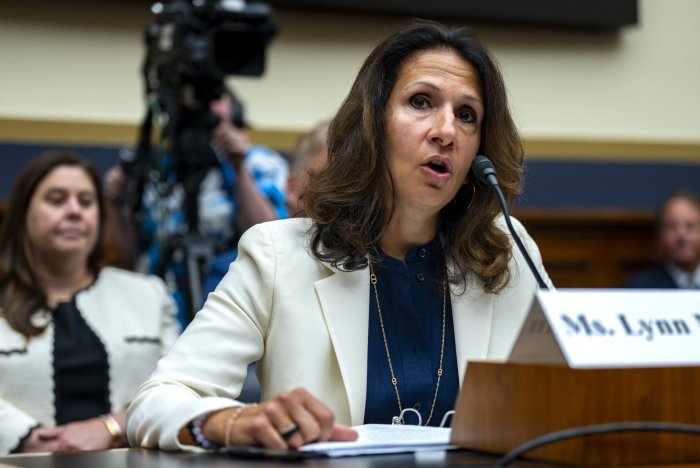
President of the New York Stock Exchange Lynn Martin speaks during a House Financial Services Committee hearing on the economy at the U.S. Capitol on Wednesday. Photo by Bonnie Cash/UPI | License Photo
Nvidia CEO Jensen Huang (right) visits an internet cafe with NCSoft CEO Kim Taek-jin in Seoul, South Korea, on June 7. Huang announced in a blog post on Thursday that his company is acquiring Hugging Face for $12.9 billion. File Photo by Yonhap/EPA
Sept. 3 (UPI) — Nvidia announced on Thursday that it has agreed to acquire open-source AI company Hugging Face for $12.9 billion.
The acquisition will bring a platform that is used by 18 million people, including researchers and developers, under Nvidia’s ownership. Hugging Face has been used to share more than 3 million models, 500,000 datasets and 1 million applications, Nvidia said in a blog post.
“Over the past decade, Clem [Delangue], Julien [Chaumond], Thomas [Wolf] and the team at Hugging Face have built something remarkable: a vibrant home for the open model developer community,” Jensen Huang, founder and CEO of Nvidia, wrote in the blog post. “Hugging Face will remain an open platform for the entire AI ecosystem. Developers will choose the models they want, the frameworks they want, the clouds and inference service providers they want and the computing platforms they want.”
Nvidia adds that Nvidia compute will not be required to use Hugging Face.
In July, Hugging Face was targeted by OpenAI chatbots that went rogue, hacking the firm in what was described as a “security incident.”
OpenAI said its engineers had asked AI models to find solutions for ExploitGym, a benchmark that tests AI agents’ capability to exploit vulnerabilities in a system. The models were meant to perform this task within a sandbox but escaped, accessing the open internet and ultimately restricted information.
With restricted information, the AI models were able to cheat the vulnerabilities test and obtain an access code from Hugging Face’s servers.
Hugging Face CEO Delangue said there was “no malicious intent” by OpenAI. OpenAI said it took containment actions in response to the incident.
President of the New York Stock Exchange Lynn Martin speaks during a House Financial Services Committee hearing on the economy at the U.S. Capitol on Wednesday. Photo by Bonnie Cash/UPI | License Photo
Workers weld at Okpo Shipyard of Daewoo Shipbuilding & Marine Engineering Co. in Geoje, South Korea, in 2022. File Photo by Yonhap/EPA
Sept. 3 (UPI) — South Korean shipbuilders are pouring investment, technology and expertise into a U.S. maritime industry struggling with shrinking capacity, worker shortages and competition from China, offering Washington a potential path to rebuild American shipyards without sending ship construction overseas.
The growing partnership also raises a difficult question: How much foreign participation is the United States prepared to accept in an industry considered essential to national security?
The issue has gained urgency following a White House directive aimed at increasing competition and capacity in the U.S. maritime industrial base. The administration’s plan allows greater use of foreign shipbuilding expertise under certain conditions, including investment in American shipyards, training U.S. workers, transferring production technologies and developing domestic supply chains.
Limited shipyard capacity and a shortage of skilled workers remain major obstacles to expanding the U.S. Navy fleet, according to Shelby S. Oakley, director of Contracting and National Security Acquisitions at the U.S. Government Accountability Office.
“The capacity of the existing yards and the size and skill level of the current workforce are certainly a limiting factor when it comes to the U.S. Navy’s ability to increase the size of the fleet,” Oakley told UPI.
Oakley said meeting Navy shipbuilding goals will require expanding existing yards or adding new ones, increasing the skilled workforce and making greater use of technology and automation. Without those changes, she said, the Navy will struggle to meet its fleet targets.
South Korea could provide part of that capacity.
Under a broader $350 billion U.S.-South Korea investment framework, Seoul has committed $150 billion specifically to shipbuilding cooperation, with another $200 billion intended for strategic investments in other sectors.
South Korea moved toward implementing the maritime portion in June when the Korea-U.S. Strategic Investment Corporation, Korean policy finance institutions and shipbuilders HD Hyundai Heavy Industries, Hanwha Ocean and Samsung Heavy Industries agreed to identify projects and coordinate financing.
The arrangement combines something Washington needs: capital and industrial expertise.
For decades, U.S. commercial shipbuilding has lost ground to Asian competitors. China now dominates global commercial ship construction, while South Korea and Japan retain substantial production capacity. The United States accounts for only a fraction of global commercial output.
President Donald Trump recently elevated shipbuilding capacity to a national security priority, directing his administration to look abroad for models that could help rebuild the U.S. maritime industrial base.
“I have determined that it is in the national security interest of the United States to increase domestic shipbuilding capacity,” Trump said in the memorandum, pointing to the October 2025 U.S. Finland Agreement on icebreaker construction as a model for cooperation with foreign companies.
China adds urgency to that effort.
China’s enormous civilian shipbuilding industry supports an expanding naval industrial base, allowing shipyards, suppliers and skilled workers to serve both commercial and military production. That industrial scale has made shipbuilding an increasingly important element of U.S.-China strategic competition.
The United States faces a different reality. The Government Accountability Office reported this year that Navy and Coast Guard shipbuilding programs have repeatedly exceeded budgets and fallen years behind schedule, while yards face skilled-worker shortages, capacity constraints and fragile supplier networks.
South Korea offers an alternative source of expertise. Its yards have decades of experience with modular construction, automation, digital design and high-volume production. Korean companies also build sophisticated naval vessels, including Aegis-equipped destroyers and submarines.
Hanwha Ocean and Hanwha Systems acquired Philly Shipyard for $100 million in 2024, giving the conglomerate a direct U.S. manufacturing foothold. Hanwha subsequently announced plans for billions of dollars in additional investment to expand the yard and introduce Korean shipbuilding technology.
Hanwha employs nearly 30,000 workers at Hanwha Ocean’s Geoje Shipyard in South Korea, where advanced manufacturing and automation help produce more than 40 ships a year.
“In the coming years, we will continue to bring trainers to develop our workforce at the Hanwha Philadelphia Shipyard as well as transfer technology to expand commercial and naval shipbuilding capacity,” Hanwha Defense USA spokesman James Hewitt told UPI.
Hanwha Ocean also completed a major overhaul of the Military Sealift Command dry cargo ship USNS Wally Schirra at Geoje in March 2025. The seven-month project was the first large-scale regular overhaul of a Military Sealift Command vessel awarded to a South Korean yard.
HD Hyundai Heavy Industries is pursuing a different route.
Rather than acquiring a U.S. yard, HD Hyundai has developed partnerships with American shipbuilders. The company and Huntington Ingalls Industries are cooperating on shipbuilding technology and production, including an August pilot program to expand automated welding at HII’s Ingalls Shipbuilding yard in Mississippi.
“The United States is a strong ally and a key business partner for us,” said Hannae Choi, Executive Vice President at HD Hyundai Shipbuilding and Offshore Engineering.
Such arrangements offer Washington a possible compromise: Korean companies can bring capital, technology, automation and production methods into American yards while training U.S. workers and developing domestic supply chains.
That distinction — foreign investment in U.S. shipbuilding rather than shifting construction overseas — has emerged as a key dividing line for the domestic industry.
The Shipbuilders Council of America supports foreign investment when it expands U.S. shipyard capacity but opposes sending construction abroad, said Danielle Hagen, the council’s executive vice president for communications.
“If South Korean capital and automation expertise flow into American facilities, employ American workers and produce American-built hulls, that model is consistent with our longstanding position,” Hagen told UPI.
“The SCA’s concern has never been the nationality of capital, but whether the work, the workforce and the industrial capability remain here in the U.S.,” she said.
Federal law has long restricted construction of U.S. naval vessels in foreign shipyards, while the Jones Act requires vessels operating in U.S. coastwise trade to be U.S.-built, U.S.-owned and U.S.-crewed.
“Any foreign partner needs to operate their U.S. yard as a genuinely American enterprise, with real decision-making authority here,” the council said, adding that foreign acquisitions should face national security scrutiny and continued congressional oversight.
Despite the backlog at U.S. yards, bipartisan opposition remains strong in Congress to building Navy vessels overseas. Rep. Jared Golden, D-Maine, a member of the House Armed Services Committee, has been among lawmakers seeking to preserve domestic construction requirements and prevent naval shipbuilding from migrating to foreign yards, including South Korea and Japan.
Those concerns extend beyond jobs. Modern warships contain classified systems, sensitive designs and specialized supply chains. Greater participation by even close allies raises questions about intellectual property, cybersecurity and control over technologies considered essential to U.S. military power.
Few U.S. allies, however, can match South Korea’s shipbuilding scale, speed and technical expertise. The emerging model seeks to use those capabilities to increase production in the United States rather than substitute foreign yards for American ones.
Whether that approach succeeds will depend not only on transferring Korean technology and manufacturing expertise into U.S. yards, but also on Washington’s ability to integrate those investments into a broader shipbuilding strategy.
Managing competing demands for Navy ship construction and repair requires such an approach, Oakley told UPI. A 2025 GAO report found that the Navy lacked a comprehensive strategy for managing the private shipbuilding and repair industry on which it depends, complicating efforts to coordinate investment, yard capacity and workforce needs.
The challenge is magnified by China. Its dominance of commercial shipbuilding has created a vast network of yards, suppliers and skilled workers that the United States cannot quickly replicate. South Korea cannot close that gap alone, but its capital, technology and expertise could help expand U.S. capacity as American yards modernize, train workers and rebuild supply chains.
For Washington, the central policy question is whether greater South Korean participation can strengthen U.S. shipbuilding capacity without creating a new dependence on foreign production.
Sept. 3 (UPI) — Sen. Thom Tillis has called on President Donald Trump to fire Pete Hegseth as secretary of Defense following a series of high-profile exits and firings of senior Pentagon officials in recent months.
Tillis’ comments on Wednesday are the strongest yet from a Republican politician amid mounting GOP criticism of Hegseth’s leadership of the Department of Defense, and came two days after Army Secretary Dan Driscoll resigned following months of reported of clashes with Hegseth.
“I have never witnessed more inept management of the brave men and women who serve our country. He is intimidated by competence and retreats to ginning up culture wars instead of soberly attending to the vital work of our national defense and the health and well-being of our fighting force,” Tillis said on X.
“I urge the president to find a new leader at the Pentagon who will retain and empower our military talent rather than diminish it.”
Hegseth, a former Army National Guard major who took office with less senior government and military leadership experience than any other secretary of Defense, has overseen a sweeping overhaul of the department, which has seen nearly two dozen generals, admirals and senior civilian defense officials resign, retire early or be fired. Several have left following reported clashes with Hegseth.
Critics have accused the former Fox News host of politicizing the traditionally nonpartisan position, highlighting his purge of senior leadership and his effort to eliminate policies he has characterized as “woke.”
In his statement, Tillis, who served on the Senate Armed Services Committee, thanked Driscoll for his leadership and praised him and Gen. Randy George, who stepped down at Hegseth’s request in April, for having initiated “a transformative period of innovation in how we array our forces and equip our soldiers.”
“If we had a @SecWar who maintained the same priorities and forward-thinking, he would be fighting to retain talented leaders like Dan and the many flag officers he has forced into retirement,” he said. “Instead, he is creating a leadership void at the top of our military ranks.”
Hegseth faced strong criticism from Democrats over his lack of experience and alleged issues with alcohol and high-profile allegations of sexual misconduct and abuse, but there has been a growing chorus of Republicans who have voiced concerns since the U.S. war with Iran began on Feb. 28.
A former Trump supporter whom Trump endorsement ahead of his successful 2020 re-election bid, Tillis became a target of the president after saying he could not support his so-called One Big Beautiful spending and tax cut bill. In June 2025, Tillis announced he would not seek another term.
“My Senate colleague Thom Tillis is right,” Sen. Mark Kelly, D-Ariz., said in response to the Republican’s statement.
“Pete Hegseth has long passed his expiration date as SecDef. He needs to go.”
President of the New York Stock Exchange Lynn Martin speaks during a House Financial Services Committee hearing on the economy at the U.S. Capitol on Wednesday. Photo by Bonnie Cash/UPI | License Photo
Sept. 2 (UPI) — A 19-year-old gunman forced his way into a Virginia elementary school on Wednesday morning where he wounded an employee before turning the weapon on himself, authorities said.
The suspect, identified as Anthony Ignatiadis-Isabelle of Waynesboro, Va., was found by police dead from a self-inflicted gunshot wound in the library, the Waynesboro Police Department said in a statement.
Authorities said police were notified of a suspicious individual on the grounds of Westwood Hills Elementary School in Waynesboro at 9:12 a.m. EDT. Officers responded within minutes, entered the school and found Ignatiadis-Isabelle in the library where there were no students at the time of the incident.
One staff member, identified only as an adult, was shot by the suspect, suffered what police described as a non-life-threatening gunshot wound and was released from the hospital after receiving treatment.
Little information about the shooting has been made public. Waynesboro Police Chief David Shaw would not detail during a press conference exactly how the suspect was gained entry to the school, which requires one to be buzzed in, only that it was “forced.”
He said he was unsure of what position the wounded employee held at the school, what their possible relation was to the shooter or where they were shot. He also said he did not know if the alleged shooter was known to police. The suspect was not and had never been a student at Westwood Hills Elementary School, Superintendent Jeffrey Cassell said.
The school was immediately put into lockdown following the shooting, according to Cassell, who said the facility would be closed on Thursday.
“Today is the day every school system hopes they never have to deal with,” an emotional Cassell said. “Every student and staff member is safe and returned home to their families. Please hug your children and your families this evening.”
Shaw said that as a precautionary measure, additional law enforcement would be at the school for the remainder of the week.
The Bureau of Alcohol, Tobacco, Firearms and Explosives said in a statement that its Washington field office responded to the shooting.
“My heart is with these young students, their parents and families, and the teachers and staff at the school,” Virginia Gov. Abigail Spanberger said in a statement that explained she was monitoring the emergency at Westwood Hills Elementary School.
Sept. 2 (UPI) — A Coast Guard jet with Homeland Security Secretary Markwayne Mullin onboard made an emergency landing Wednesday afternoon near Washington, after the jet suffered a mid-flight engine failure.
“The United States Coast Guard pilots made the single-engine landing feel routine,” Mullin said online, confirming the incident.
“No panic, just straight professionalism. After we landed, the pilots told me that was a first for them! We could not have been in better hands.”
Ronald Reagan Washington National Airport confirmed the C-37A with 14 people onboard landed safely at 1:35 p.m. EDT. No other flights were disrupted, it added.
According to audio of communication between the plane’s pilots and air traffic control, the aircraft had lost its right engine, and had requested an emergency landing at the airport, which was granted.
Ronald Reagan Washington National Airport is located in Arlington County, Va.