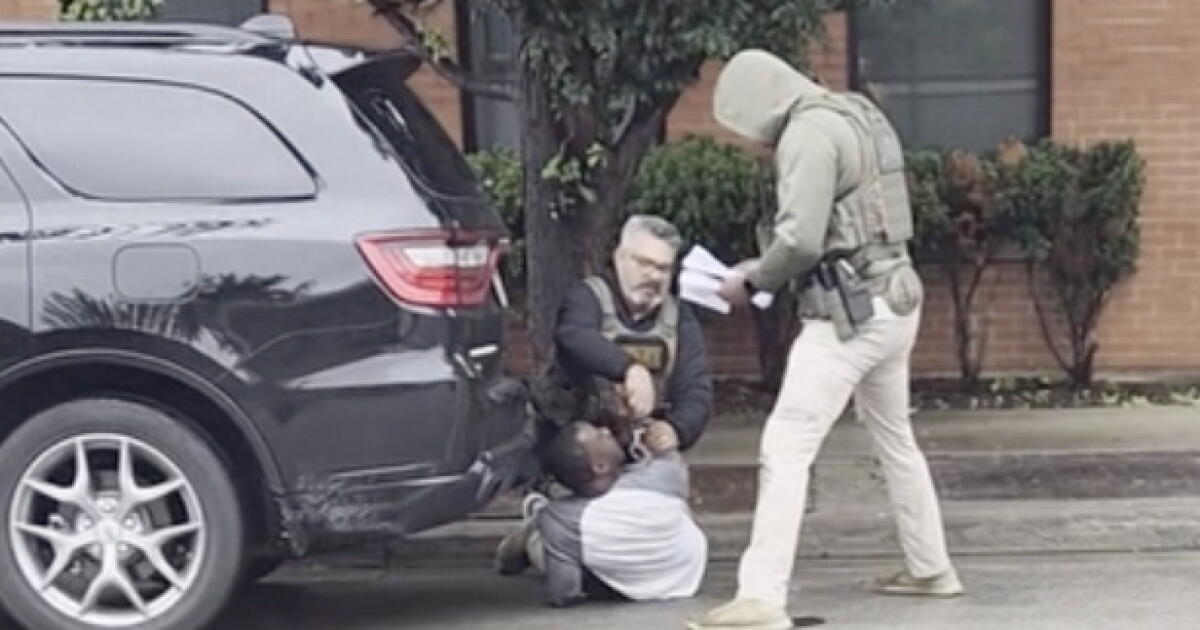
It’s never been a more terrifying time to be an undocumented immigrant in America. Despite countless protests and pushback, ICE agents continue to patrol the streets. In July, Colombian immigrant Johan Sebastián Durán Guerrero was shot and killed by an ICE officer in Biddeford, Maine, during a routine traffic stop.
But what about the white-passing undocumented immigrants that seem to slip through the system? The ones who blend in so seamlessly (despite the thick accents of some)? We forget they are also legally not supposed to be here. Specifically, those from Eastern Europe, Russia and the former Soviet Union. And what about those young, desperate women who suggestively posed for the camera as the Soviet Union collapsed all around them, hoping to be chosen by an American man?
Book Review
Ungrateful Immigrant Daughter: A Memoir From the Child of a Mail-Order Bride
By Katya Suvorova Alcove Press: 352 pages, $30
If you buy books linked on our site, The Times may earn a commission from Bookshop.org, whose fees support independent bookstores.
Katya Suvorova’s searing debut memoir, “Ungrateful Immigrant Daughter: A Memoir from the Child of a Mail-Order Bride,” out Sept. 29, is a heart-wrenching tale of immigration that pulls back the velvety red curtain to reveal one story behind the over-sexualized stereotypical post-Soviet mail-order bride narrative so ingrained in post-Cold War U.S. culture.
My own family legally immigrated to the U.S. from Soviet Belarus in the early 1990s. I grew up with the Western media narrative that Eastern European women were submissive sex symbols, desperate for financial security. Some boys in school even assumed I was “easy” because I was Eastern European.
Mostly told from a child’s point-of-view, Suvorova’s “Ungrateful” traces their journey in the ’90s from Russia to the U.S. and life thereafter, as white-passing undocumented immigrants who illegally crossed the border from Mexico — with the help of a man who replied to her mother’s mail-order-bride ad in a catalog. A catalog Suvorova would find years (and many rich American stepfathers) later while cleaning out the garage, and realize her mother had lied to her. She was not, in fact, a model, posing for a Coca-Cola ad, but a young woman with a small child desperate to leave Russia behind for the West. When Suvorova confronts her mother after finding the catalog, her mother replies: “Everyone was doing it.”
Mail-order brides shaped early colonial America. Men were often the first to settle small Western frontier towns and would in turn grow lonely for companionship. Newspaper ads for brides were normalized and proliferated in 19th century America. According to historian Elliott West, “Some mining camps in Idaho in 1870 had nine men for every woman.” The truth is that love didn’t enter the picture when it came to marriage until about the 19th century with the Victorians; before then, marriage was more like a business contract, with dowries and cows alike.
Letter brides remained ubiquitous in 20th century America and were not stigmatized until the 1970s and 1980s when it became more apparent that mail-order immigrant brides from developing Southeast Asian and Eastern European countries were being abused and exploited. It wasn’t until 2005 that the U.S. passed the International Marriage Broker Regulation Act (IMBRA), which requires background checks and other precautions meant to protect foreign brides from domestic abuse, violence and exploitation. You don’t have to dig deep to see this narrative proliferated in our culture. Jeffrey Epstein mostly recruited Eastern European women into his international sex-trafficking ring.
Author Katya Suvorova
(Alcove Press)
Suvorova and her mother were not spared such indignities. Abuse, both psychological and physical, permeates the pages of “Ungrateful.” From one of her earliest childhood memories of watching her mother being abused while stuck in a closet to later tales of her mother’s forced alcohol abuse and estrangement from her own mother (Suvorova’s beloved Babushka), expertly executed by her stepfather Adam — the abuse ran rampant. Suvorova herself is a victim, neglected by her mother and forced to act as a child bride to please one of the husbands. Eventually, Suvorova realizes that it wasn’t just her mother that was sold in a catalog to an American suitor, but her young daughter (Suvorova) as well. It’s no surprise that Suvorova is estranged from her mother, a topic she covers often on her social media.
Of course, there is also the “gold digger” stigma. Suvorova writes about girls in school accusing her mother of being a gold digger, intentionally choosing rich boyfriends that would eventually become rich husbands while they lived in poverty and couch surfed. Suvorova’s mother would use creative tactics to find these men: hang out in five-star hotels or fancy athletic clubs. She would have them buy her computers, clothes and expensive jewelry she could sell later. She always ordered the priciest thing on the menu and bought gift cards when the men gave her money for groceries in case the relationship did not work out. She passed down these survival tactics to Suvorova like gospel. But, ultimately, it wasn’t money that her mother was after, it was green cards for them both, the permanence and safety of American citizenship: the American Dream.
In 2012, I dressed up as a mail-order bride for Halloween. I was 22, about the age Suvorova’s mother was when they immigrated to the U.S. I wore a tight sleeveless red American Apparel dress. Shiny fake patent leather pumps. A white veil from Claire’s at the mall. I covered myself in bits of cardboard, packing tape and foam peanuts and overdid my makeup with several coats of mascara and thick black eyeliner. I thought this costume was funny, clever, appropriating and reclaiming the narrative that haunted me all my life. I thought because of where I was born, I was allowed to do this. A notoriously blunt girl who I sensed didn’t like me approached while I was waiting for the bathroom. “What are you, a slut?” she said, scanning me like a barcode.
Suvorova’s memoir effectively shows the risks immigrants were willing to take to escape the collapse of the Soviet Union and the corruption (ruled by the KGB) that followed. Without explicitly diving in, her writing sheds light on today’s Russian corruption and Putin’s endless war with Ukraine, which is ultimately a war against the West. In fact, Suvorova and many antiwar Russian immigrants today are terrified to return to their motherland due to fear of imprisonment and retaliation, as one Los Angeles woman in 2024 learned the hard way upon landing in Russia, receiving a 12-year prison sentence for donating $51 to a Ukrainian charity.
In the building I grew up in and my parents managed, a young Russian “model” and her mother lived with a much older Persian man. Without much inquiry, I simply assumed she was a mail-order bride running from a traumatic past in the motherland, ordered from a catalog to make him dinner and vacuum his carpet. Closer to my age than not, she became my friend. Gifted me jewelry. Babysat me while my parents drank tea with her mother. I later found out she cheated on the Persian man, laid out her wedding dress on the soiled carpet while he was at work, and moved herself and her mother to Las Vegas, where she started a successful business and bought a house.
Suvorova’s story is not just about the childhood trauma inflicted by her mail-order-bride mother, but it’s a redemption story about reuniting with her beloved maternal Babushka and biological father. It’s a story of self-discovery. Not unlike the bestselling memoir “Educated” by Tara Westover, who overcomes an abusive childhood in a rural survivalist Mormon family. Like Westover, Suvorova finds shelter in books, school and an education.
Like all contemporary creative nonfiction writers and memoirists who are not celebrities, Suvorova must have been told somewhere down the line that in order to sell her memoir she must gain a following on social media, and she’s done just that. With about 95,000 followers on Instagram, Suvorova uses the platform to reveal earnest roundups, tips, tragic tales of estrangement and survival, and summaries of deleted chapters of “Ungrateful” as blocks of text over grainy film photos of her as a child. Suvorova’s very active social media presence sheds light on the current state of memoir and nonfiction publishing: You must have a platform to be read.
In a bizarre meta twist of events, Suvorova must sell herself and her story on social media, like her mother sold herself (and in turn her daughter) to those American husbands. In a stroke of marketing genius, some early copies of “Ungrateful” come with book-branded condoms.
And despite revealing in the memoir that she eventually did become an American citizen, Suvorova has since moved to Europe. When I asked Suvorova over Instagram direct message why she and her husband left the U.S. for Europe, she replied: “We left because I didn’t feel safe publishing my book about growing up as an undocumented kid under the current Trump administration. I have to take medicine that, if I were detained and could not take it, would lead to organ failure. We knew ICE was detaining U.S. citizens as well and decided not to risk it. In order to still publish the book and not be detained, we left the U.S.”
How many of us have been cruel immigrant daughters (or sons)? Ungrateful. Spoiled. Unaware or unwilling to acknowledge how much our parents have sacrificed to get us here. In the case of Suvorova’s memoir — although, she does acknowledge her white privilege — she certainly has a lot to be ungrateful for.
Ruzova is a Soviet-born writer based in Los Angeles. Her essay “The Sauna” was a notable in Best American Essays 2025.
Details continue to come in, but police in the United Kingdom have declared a “major incident” and ordered evacuations near RAF Fairford after the arrest of “several men on suspicion of offenses under the explosives act,” the Gloucestershire Constabulary stated.
RAF Fairford is a major hub for U.S. military aircraft in the United Kingdom. It is a regular host of strategic assets, including bombers and U-2 spy planes. It also acts as a pit stop for other aircraft, including fighters, that are being ferried to and from the United States. Bomber strikes launched from Fairford were a central aspect of major U.S. combat operations against Iran earlier this year.
“A number of properties are currently being evacuated in the Whelford area following the declaration of a major incident,” the Gloucestershire Constabulary also announced today in light of the incident.
Emergency services in Fairford after a major incident has been declared, with armed police manning a cordon near the village of Whelford in Gloucestershire, near RAF Fairford, which is used by the United States Air Force (USAF). (Photo by Ben Birchall/PA Images via Getty Images) Ben Birchall – PA Images
The evacuations were spurred by the arrests.
“The Army’s specialist explosive ordnance disposal team are currently examining a number of vehicles,” Gloucestershire Constabulary added. “The local residents are being evacuated to a nearby leisure center.”
“A cordon is currently in place, but we’d like to reassure people that we believe this incident is contained,” the law enforcement agency explained. “We are working closely with our partners and are enacting the well-rehearsed plans we have in place.”
The incident began around 12:45 AM local time Sunday “when police received a call relating to three suspicious vehicles traveling towards RAF Fairford,” according to Gloucestershire police Assistant Chief Constable Richard Ocone. “Armed officers responded and subsequently arrested five men in the Whelford area on suspicion of committing offenses under the Explosives Act. The men were taken into custody, where they remain.”
“A 400-meter cordon has been put in place around the vehicles while the army’s explosive ordnance disposal unit examined them,” Ocene continued. “As a precaution, around 85 households have been advised to evacuate while these examinations take place.”
BREAKING:
The British authorities issue a first official statement on the suspected terror plot against RAF Fairford
They sent in a local low-ranking policemen to deliver a statement saying 5 men have been arrested and that people shouldn’t speculate about the case.
Video has emerged showing British military explosive ordnance disposal robots reportedly defusing the vans used by the suspects.
“We are aware of the current reporting, for questions regarding off-base incidents please contact the local authorities,” a U.S. Air Force spokesperson told us in response to our questions about whether the incident had raised force protection levels at RAF Fairford or other installations in the area hosting American forces. Unconfirmed reports by the local aviation spotter community claimed RAF Fairford had been placed under what is called FPCON Delta, the highest level of alert at U.S. military installations.
The incident at RAF Fairford has been escalating overnight, this is what is clear so far.
Gloucestershire Police has announced that they have arrested multiple men on suspicion of offences under the Explosives Act, and that they have declared a Major Incident.
“For operational security reasons we will not discuss specific force protection measures,” the Air Force spokesperson added. “The 501st Combat Support Wing and our fellow UK-based Wings remain vigilant and will take appropriate actions to ensure the safety and security of our U.S. service members, civilians, contractors, and their families. We constantly assess a variety of factors that determine what measures we institute or modify to protect our installations, our people and their families.”
It is unclear if airfield operations at RAF Fairford have been affected. U.S. Air Force officials did not immediately respond to our request for comment.
The British Defense Ministry did not immediately provide comment on this unfolding event.
RAF Fairford is a major hub for U.S. military aircraft, with strategic assets, like B-1B Lancer bombers, being forward deployed to the base and tactical and other assets often using it as a pit stop during flights ‘across the pond.’
A U.S. Air Force B-1B Lancer at RAF Fairford. (U.S. Air Force photo by Tech. Sgt. Robert M. Trujillo) Tech. Sgt. Robert Trujillo
As mentioned, RAF Fairford played a key role in major combat operations against Iran earlier this year. No connection has been established yet between today’s incident and any particular group, but the base has drawn direct threats from the regime in Tehran in the past.
“The American aggressor army, which used to launch cruise missiles from its vessels in the Indian Ocean in its aggression after the official resumption of the war, with the end of the missile reserves of the aforementioned vessels, yesterday switched to using B1 planes flying from Fairford Air Base, England,” Tasnim News Agency, a quasi-state outlet in Iran with ties to the country’s powerful Islamic Revolutionary Guard Corps (IRGC), claimed on Telegram on July 23. “As the officials of the Ministry of Foreign Affairs also stated, any base that is used to invade Iran’s territory is our legitimate goal.”
the enemy must pay the price for its breach of promises, and this time we will not allow America to use deceptive ceasefires to replenish its oil and ammunition stockpiles and then resume attacks once again.
Considering its importance to U.S. military operations, the base is a major potential target for nefarious actors, in general. Like other bases across Europe, it is a major potential target for Russia’s ‘hybrid war’ or ‘gray zone’ activities, as well.
Asked about the threats at the time, a British official told us that the country was prepared to defend itself.
“Our Armed Forces are ready to keep the United Kingdom safe from any kind of attacks, whether it’s on our soil or from abroad,” a government official told TWZ. “The UK stands ready 24/7 to defend itself. This includes through operating a layered approach to air and missile defense, provided by Royal Navy, British Army and Royal Air Force assets equipped with a range of advanced capabilities, working closely with our NATO allies.”
“In the Defense Investment Plan we have made air and missile defense a priority after years of underfunding, dedicating £790 million to enhance protection of the UK homeland and overseas bases from air, drone and missile threats,” the official added. “That is complemented by more than £2 billion of funding to deliver further air defense and counter-drone capabilities, and to upgrade and sustain our Typhoon fleet.”
This is a developing story.
UPDATE: 10:49 AM Eastern –
A Temporary Flight Restriction (TFR) has been imposed over Whelford, Gloucestershire, following the incident. It applies to all aircraft, including “any small balloon, any kite, any UAS and any parachute, including a parascending parachute or paramotor,” according to the FAA. “Pilots are forbidden to fly within the designated area without permission.”
Today marks the end of an era. Mark Swed — the last full-time classical music critic at a major American newspaper — has retired. On Thursday, members of The Times editorial staff gathered to celebrate Swed, but the mood was somewhat somber. Although we were glad for our beloved colleague, this was not a happy milestone for journalism — or classical music.
Swed is the rarest of writers: a critic with deep empathy and encyclopedic knowledge who can turn the sonic details of an orchestra playing Mahler’s Seventh Symphony into an epic journey for readers. At a time when orchestra leaders struggle to find new audiences for the art form, Swed’s writing did the job for them.
And in an era when everybody is an expert on TikTok, Swed’s informed criticism was a life raft in a sea of slop. He told us why the music mattered — in its historical context, as it related to the modern landscape, and what it meant to him personally. He made us better listeners, and most importantly, he made us curious. After reading his take, we wanted to run out to a concert, an opera or a new music festival.
That this particular kind of writing — and of seeing and explaining the world to readers — is going away with Swed, is truly a tragedy. Thankfully he is leaving of his own accord, and will hopefully continue to write a monthly column, but his loss still stings.
Like many, I watched with sorrow in February as the Washington Post slashed its staff, including its classical music critic, Michael Andor Brodeur. That blow came a little less than a year after the New York Times shook up its culture desk and reassigned its classical music critic, Zachary Woolfe, to serve as the obituaries editor. (The paper is now actively searching for a new classical music critic.)
A number of staffers spoke at Swed’s retirement lunch, and deputy A1 editor John Penner was among them. In his touching speech, Penner noted that Swed was the last of his kind, adding, “with no full-time critic writing anywhere in any newspaper about classical music, American journalism will be poorer, and its readers less informed, inspired and enlightened.”
Penner continued, saying what all of us gathered in that conference room knew to be true, “Mark’s 30 years at The Times coincided with this city’s Golden Age of classical music — the era of Salonen and Dudamel and Disney Hall. L.A. has been the most important and exciting music capital in the country, if not the world. (Why else would New York be stealing Gustavo from us now?) And central to that excitement and importance has been Mark’s writing and criticism. For my money, even when there were many music critics writing for many publications, Mark set the standard for classical music criticism, while opening our ears to new and under-appreciated music.”
Hear, hear.
I’m Arts editor Jessica Gelt wishing Swed a happy retirement and humbly asking him to come back to us now and again. This is your arts and culture news for the week.
You’re reading Essential Arts
Our critics and reporters guide you through events and happenings in the SoCal arts scene. In your inbox every Friday.
By continuing, you agree to our Terms of Service, which include arbitration and a class action waiver. You agree that we and our third-party vendors may collect and use your information, including through cookies, pixels and similar technologies, for the purposes set forth in our Privacy Policy such as personalizing your experience and ads.
The week ahead: A curated calendar
FRIDAY
Demand To Be Heard Festival The Sunflower Project presents a celebration centering the voices of survivors of abuse beginning with a screening of the film “Break The Silence: The Gabby Petito Story,” followed by a panel discussion with the Gabby Petito Foundation. Saturday and Sunday is the Resident Artist Showcase, featuring the work of six survivor/artists. Also Saturday are three three arts workshops focusing on music, candle making and body movement, respectively. Film screening, 6 p.m. Friday; 6:30 p.m. Saturday-Sunday, Resident Artist Showcase. Wisteria Theater, 7061 Vineland Ave., North Hollywood. Arts workshops, 11:30 a.m., 1 and 2:30 p.m. Art Share L.A. 801 East 4th Place, downtown L.A. towardsthesun.org
Jonah Elijah: Ambiguously Free The first U.S. museum solo exhibition by the L.A.-based contemporary painter and mixed-media artist features work that blends personal memories with broader mythologies, religion and history to explore Black culture. On view through December 16. Xela Institute of Art, 2176 Pacific Avenue, Long Beach. xela.art
Joshua Redman Quartet: Words Fall Short The saxophonist performs a new program of music with his ensemble — pianist Paul Cornish, bassist Philip Norris and drummer Nazir Ebo, plus special guest Skylar Tang, an up-and-coming Bay Area-born trumpeter and composer. 7:30 p.m. The Wallis, 9390 N. Santa Monica Blvd., Beverly Hills.thewallis.org
Melrose Gallery Walk Gallery spaces, including Hostler Burrows, Lawson-Fenning, Meg Turner, Object, Seventh House, The Window and 22RE, open their doors to celebrate the local design community. Free and open to the public. 5-8 p.m. Hostler Burrows, 6819 Melrose Ave. hostlerburrows.com
SATURDAY
Midterms: This Will Hurt Someone Brightwork newmusic performs a program of contemporary works inspired by civic life and social change, including Ted Hearne’s “Bye Bye Huey,” Natalie Dietterich’s “Philosophy of Furniture,” Ian Dicke’s “Get Rich Quick” (with video), Matt Marks’ “This Will Hurt Someone,” Hesam Abedini’s “What Remains” and “Frederic Rzewsk’s “Coming Together” (with video). 8 p.m. Sierra Madre Playhouse, 87 W. Sierra Madre Blvd. sierramadreplayhouse.org
Aperghis Trilogy Long Beach Opera performs three works by experimental composer Georges Aperghis: “Le corps à corps”,” Les Sept Crimes de l’amour,” “Récitations.” Directed by James Darrah Black. Christopher Rountree conducts. 7:30 p.m. The Queen Mary, 1126 Queen’s Way, Long Beach. longbeachopera.org
The Horror Show An immersive deep dive into the movie genre presented in six themed galleries: Gothic, Psychological, Science, Slasher, Religion and Ghosts, with behind-the-scenes looks at a range of titles that includes everything from Oscar winners to drive-in classics. But first, you must pass through “The Hallway,” bwahahaha. 10 a.m.–6 p.m. Wednesday–Monday, on view through July 25, 2027. Academy Museum, 6067 Wilshire Blvd. academymuseum.org
Senon Williams: here now, now gone, gone here A solo exhibition of the artist’s work, in which he collects materials such as nails, slips of paper, fragments of language and industrial remnants, then uses assemblage to rearrange them and discover deeper meaning. Noon-6 p.m. Tuesday-Friday, on view through Nov. 15. The Philosophical Research Society, 3910 Los Feliz Blvd. prs.org
Promised Lands: California’s Unratified Treaties and Native Resilience Archival materials, contemporary objects, images and voices from local tribal communities relate the complex history of the state with its indigenous people. 10 a.m.-4 p.m. Tuesday-Friday, 10 a.m.-5 p.m. Saturday-Sunday. Autry Museum of the American West, 4700 Western Heritage Way, Griffith Park. theautry.org
Rodgers & Hammerstein’s The Sound of Music Sing-A-Long Actor and comedian Melissa Peterman hosts the annual screening of the 1965 Oscar winner for best picture complete with a costume contest and more than a few of your favorite songs. 7:30 p.m. Hollywood Bowl, 2301 N Highland Ave. hollywoodbowl.com
Daymé Arocena’s Alkemi The Grammy nominee and Juno Award–winner blends Afro-Cuban beats with neo-soul, jazz and contemporary Latin pop. 7:30 p.m. The Wallis, 9390 N. Santa Monica Blvd., Beverly Hills. thewallis.org
San Pedro Festival of the Arts The 20th annual event, presented by Los Angeles Choreographers & Dancers, features 20 dance companies demonstrating a variety of styles and cultural traditions. 1-4:30 p.m. Peck Park, Upper Green near the Community Center, 560 N. Western Ave. triartsp.com
Tokio Ueyama: The Hollows Between Mountains The first museum exhibition in California of the Little Tokyo-based Japanese artist (1889–1954) features his drawings, prints, photographs and paintings as well as artists he was associated with, including Diego Rivera, Tōyō Miyatake, Edward Weston and Henrietta Shore. 11 a.m.-6 p.m. Wednesday–Sunday, on view through Feb. 28, 2027. UC Irvine Langson Orange County Museum of Art, 3333 Avenue of the Arts, Costa Mesa. langson.uci.edu
SUNDAY
Grant Gershon conducts the Los Angeles Master Chorale at Walt Disney Hall, Nov. 16, 2025.
(David Butow/For the Times)
Brahms’ Requiem The Los Angeles Master Chorale, led by Grant Gershon, opens its silver anniversary season with a program that also includes Bruckner’s “Te Deum.” 7:30 p.m. Walt Disney Concert Hall, 111 S. Grand Ave., downtown L.A. lamasterchorale.org
WEDNESDAY
Rubén Blades & Roberto Delgado Big Band: Fotografías Tour The Panamanian salsa greats perform classic Afro-Cuban music flavored with rock, jazz and Latin American influences. Silvana Estrada opens. 8 p.m. Hollywood Bowl, 2301 N Highland Ave. hollywoodbowl.com
Menopause The Musical: 25th Anniversary Tour Four women at a lingerie sale share their experiences with “the change” through parody songs of pop hits. 7:30 p.m. Bank of America Performing Arts Center, 2100 E. Thousand Oaks Blvd., Thousand Oaks. bapacthousandoaks.com
The Broadway production of “The Outsiders.”
(Matthew Murphy)
The Outsiders The Tony Award-winning musical adaptation of S.E. Hinton’s coming-of age-novel set in 1960s Tulsa arrives with Ponyboy Curtis and his fellow greasers facing off against the upper-class Socs. Through Oct. 18. Hollywood Pantages Theatre, 6233 Hollywood Blvd., Hollywood. Oct. 20-Nov. 1. Segerstrom Center for the Arts, 600 Town Center Drive, Costa Mesa. tour.outsidersmusical.com
THURSDAY
Laura Benanti: Nobody Cares The Broadway star sings original songs and shares stories with her trademark wit in this one-woman show. Directed by Annie Tippe. 7:30 p.m. Thursday-Saturday. 2 p.m. Saturday-Sunday. The Wallis, 9390 N. Santa Monica Blvd., Beverly Hills.thewallis.org
The Dance and the Railroad Asian American theater collective Artists at Play and Latino Theater Company team up for a rare revival of an early David Henry Hwang play set during the 1867 Chinese railroad workers’ strike. Directed by Katherine Chou. Previews, 8 p.m. Thursday and Oct. 2. 8 p.m. Thursday-Saturdays, 2 p.m. Sundays, through Nov. 1. Los Angeles Theatre Center, 514 S. Spring Street, downtown L.A. latinotheaterco.org
Mahler’s Symphony No. 2: Resurrection Alexander Shelley conducts the Pacific Symphony with soprano Miah Persson, mezzo-soprano Dame Sarah Connolly and the Pacific Chorale. 8 p.m. Thursday-Oct. 2. Segerstrom Center for the Arts, 600 Town Center Drive, Costa Mesa. pacificsymphony.org
The SoCal scene
Gov. Gavin Newsom mingles with guests at the Lucas Museum of Narrative Art opening party.
(Carlin Stiehl/For The Times)
I spent my Saturday night at the Lucas Museum opening party where I got to stand in the lobby by the nifty elevators watching Gov. Gavin Newsom talk to Kim Kardashian. Later, I went to Skywalker Grill and saw U.S. Rep. Nancy Pelosi sitting at a table next to Leonardo DiCaprio and his entourage. It would be an understatement to say that the night was both bizarre and memorable.
Times theater critic Charles McNulty (the paper’s only remaining arts critic) has kept exceptionally busy this fall season. Late last week he wrote a review of “The Ford/Hill Project” At REDCAT, which transforms Senate testimony from Anita Hill and Christine Blasey Ford into a docu-play that explores the details of two of history’s most consequential Supreme Court confirmation hearings. “The restraint imposed by the production adds to its power. There’s no need to editorialize. The proceedings skewer themselves,” McNulty writes.
Huguette Caland in Stone Doorway, France, 1970.
(Huguette Caland Estate)
McNulty also drove to San Diego to see the Old Globe’s world-premiere musical adaptation of John Carney’s “Begin Again,” which explores the stories of two music-industry vets who embark on a grassroots recording project. The show features a score by rocker Pat Monahan and Train. “‘Heartwarming’ is a cliche of theater reviewing that I have studiously tried to avoid, but I’m tempted to use the word in my review of ‘Begin Again’,” McNulty writes.
McNulty penned one of his harshest reviews since last year’s take down of “Hamlet” after he went to Atwater Village Theatre to see Echo Theater Company’s world premiere production of “The Peterson Show,” by Janine Nabers. “Unfortunately, the production is hamstrung by fundamental problems in the writing, directing and acting, all pointing to a failure of control. Control of the story, control of the tone and control of the cast,” McNulty wrote of the show, which is about the impact of disgraced Bill Cosby-like star on his TV family.
Meanwhile contributor Tara Anne Dalbow wrote a beautiful story about the late, great artist Huguette Caland in advance of the largest U.S. retrospective of her work, opening Sunday at the Hammer Museum.
Ernest “Ernie” Wolfe III, owner of an eponymous gallery on Sawtelle, is dying of a traumatic brain injury and his family is looking for homes for his 15,000 pieces of African Art. Contributor Jane Horowitz writes about Wolfe‘s legacy and the (sometimes controversial) origins of his collection.
As one chapter closes with Swed’s retirement, a new one begins as we welcome our new entertainment and arts reporter, Laura Zornosa, who hit the ground running by writing three great arts stories: The first is about the private art collection of Armand Hammer (including Mary Cassatt’s “Summertime,”) coming up for auction at Sotheby’s; the second, covering opening day at the Lucas Museum where Zornosa interviewed guests on their thoughts about the place; and the third is a fun news brief about how Los Angeles Chamber Orchestra commissioned fanfares from half a dozen film composers, including John Williams and Ludwig Göransson, curated by “none other than Seth MacFarlane (best known as the creator and star of “Family Guy”).”
Enjoying this newsletter? Consider subscribing to the Los Angeles Times
Coy Middlebrook has been named the new artistic director of the Wallis.
(Jeff Lorch / The Wallis)
The Wallis Annenberg Center for the Performing Arts announced the appointment of longtime creative staffer Coy Middlebrook as its new artistic director. “Coy brings an extraordinary depth of knowledge about The Wallis and its audiences, along with deep relationships throughout the performing arts nationally and internationally. He understands both the artistic possibilities of this institution and the importance of its relationship to our community. I am excited to work with him as we build a future that is artistically ambitious, deeply connected and open to everyone,” said Wallis Executive Director and Chief Executive, Jean Davidson, in a news release.
Meanwhile Theatre Commons LA (TCLA), the nonprofit organization created and launched a year ago as part of a concerted effort by some of the city’s most prominent theater leaders to unify the city’s sprawling theater scene, has announced its first Executive Director, David E. Shane. Shane previously served as director of program services at the Alliance of Resident Theatres/New York where, according to a news release, “he set the strategic vision and goals for a robust suite of programs serving over 450 of New York’s nonprofit theaters.” He is tasked with doing the same thing in L.A. and we wish him the best of luck.
— Jessica Gelt
And last but not least
The Getty Museum has acquired the recently rediscovered 17th-century painting “Portrait of the Count-Duke of Olivares” by Spanish artist Diego Velázquez (1599-1660). It will be displayed in the museum’s East Pavilion this fall. According to ArtNews, “The acquisition means a Velázquez painting will for the first time be represented in the collection of a West Coast museum.”
A British Excalibur uncrewed underwater vehicle (UUV) has fired a U.S. Mk 48 heavyweight torpedo in what is said to be a first-of-its-kind test for both countries. Though just a proof-of-concept so far, this is a significant new step for the United States and the United Kingdom toward future operational fleets of armed UUVs.
📰 U.S. NAVY UPDATE: U.S. Navy and Royal Navy Successfully Test Fire Torpedo from Unmanned Undersea Vehicle
📍WASHINGTON – On September 13, 2026, the U.S. Navy and the Royal Navy successfully conducted the proof-of-concept launch of an exercise U.S. Mk 48 Heavyweight Torpedo… pic.twitter.com/lVB4wYSwC0
— Office of the Chief of Naval Operations (@USNavyCNO) September 22, 2026
The test was also carried out under the umbrella of Pillar 2 of the trilateral Australia-United Kingdom-United States (AUKUS) defense cooperation agreement, which was first announced in 2021. AUKUS’ Pillar 2 covers a wide range of advanced technology cooperation, with particular focus on uncrewed platforms and autonomy. Pillar 1 of the agreement centers on support for Australia’s establishment of a nuclear submarine force.
For the September 13 test, the Mk 48 torpedo was slung under the Excalibur UUV. The nearly 40-foot (12-meter) long, 19-metric-ton submersible drone has a large internal payload bay, but it is reportedly not large enough to accommodate the Mk 48, which is the standard heavyweight torpedo in U.S. Navy service today. The 19-foot-long, 21-inch-diameter weapon has been successively upgraded over the years to expand its capabilities and improve its resistance to enemy countermeasures.
Screen captures from a video the US Navy released today showing the release of the Mk 48 torpedo from the Excalibur UUV during the test earlier this month. USN capturesA stock picture of a Mk 48-series torpedo. DODA US Navy infographic detailing just some of the upgrades to the Mk 48 series over the decades. The Navy has now moved on to the further improved Mk 48 Mod 8 variant. USN
The Royal Navy officially unveiled Excalibur, which was developed by U.K.-based MSubs under Project Cetus, last year. The external torpedo launch capability was the result of two additional efforts, called Project Broadsword and Trial Iron, according to the U.S. Navy release.
A picture of an Excalibur UUV at the time of its unveiling in 2025, giving a good general sense of its size. Royal Navy
The September 13 test “successfully validated the mechanical, electrical, and software integration of a U.S. kinetic payload onto an allied autonomous vessel, proving that allied forces can rapidly achieve weapon interchangeability,” the Navy’s release adds. “Approved in February 2026 by the Department of the Navy Rapid Capabilities Office (DONRCO), the project was executed in less than seven months.”
How the Excalibur UUV was controlled during the test and whether the torpedo was launched at a test target of some kind are unknown. TWZ has reached out for more information.
A look at the Excalibur UUV submerged, from the video the US Navy released today. USN capture
“BROADSWORD is a great example of how AUKUS Pillar II drives interoperability in across the alliance. Demonstrating the launch of a US torpedo from a UK extra-large unmanned underwater vehicle (XLUUV) is an important early step in developing lethality in our undersea autonomous systems,” U.S. Navy Vice Adm. Robert Gaucher, Director of Submarine Programs, did say in a statement. “We look forward to continuing to leverage the AUKUS partnership to keep pushing the potential warfighting advantages of unmanned undersea systems.”
“This successful test marks a historic first for allied undersea warfare,” U.S. Navy Adm. Daryl Caudle, Chief of Naval Operations, also said in a statement. “Proving that we can seamlessly launch a U.S. heavyweight torpedo from a Royal Navy autonomous underwater vehicle validates our shared vision for true interchangeability.
“This is a really important moment in our journey towards building a hybrid navy, which is where the Royal Navy will sail with crewed ships and submarines alongside uncrewed and autonomous vessels,” Luke Pollard, U.K. Minister of State for Defence Readiness and Industry, separately said in an interview with LBC radio. “It is a substantial increase in our lethality, to show that torpedoes can be fired not just by the Astute class hunter-killer submarines that we have in the Royal Navy, but also now by our uncrewed systems.”
A Royal Navy Astute class nuclear-powered attack submarine. UK Ministry of Defense
The U.S. Navy and the Royal Navy employ various tiers of UUVs operationally today, but primarily for mine-sweeping and reconnaissance and surveillance missions. Future fleets of submersible drones capable of carrying out attacks on other vessels will create entirely new operational possibilities. Operated closely together with crewed surface warships and submarines, torpedo-toting UUVs could be sent ahead into riskier environments and offer an immediate option for engaging any threats they might find. Even a bigger UUV like Excalibur would also be more challenging for opponents to spot and track than a traditional attack submarine.
Excalibur is also in a category of larger and more capable submersible drones that offer significant endurance and higher degrees of autonomy. Adding in the ability to launch torpedoes, in turn, then opens the door to new concepts for employing these UUVs in groups more independently of crewed companions. In the future, for instance, armed Excaliburs or similar UUVs might be deployed to a particular maritime choke point to not just monitor for enemy movements, but actively hold them at risk.
The Royal Navy’s Xtra Large Underwater Autonomous Vehicle – project CETUS
In addition, in general, UUVs offer a way to expand total undersea warfare capacity in a more cost-effective manner compared to acquiring and fielding more traditional submarines. The ability to have more presence below the waves at a lower price point also translates to more persistence across large areas, something that could be especially valuable across the broad expanses of the Pacific, as well as other bodies of water globally. This presents additional targeting challenges and uncertainty for opponents.
“In securing the North Atlantic, especially against those nations that wish to do us harm, like Russia, the ability for us to now say it’s not just where our submarines are that you need to worry about – it is about how we create greater deterrence and question marks in the eyes of our adversary, with uncrewed systems there as well,” U.K. Minister Pollard said in speaking with LBC.
Pollard’s remarks here speak to particular considerations the British government is faced with just in its backyard. This includes the so-called Greenland-Iceland-United Kingdom (GIUK) Gap, which is the main path through which Russian Navy submarines transit to and from bases in the northwestern end of that country and the Atlantic proper. There is also the English Channel and the nearby Baltic Sea. The Royal Navy has limited capacity with its crewed submarines to monitor this and other critical regional chokepoints. UUVs could then help take pressure off its fleet of just five (of a planned seven) Astute class submarines, helping free those boats up for the myriad other missions they are tasked with, including carrier escort and special operations support.
“By converting commercial and allied uncrewed undersea hulls into high-end strike assets, the partnership drastically alters the cost-exchange ratio in contested maritime environments,” the U.S. Navy’s press release today notes, as well.
There are still many questions still to be answered about future larger UUV operations, including just how they will be deployed and recovered. Video the U.S. Navy released today shows that the torpedo-armed Excalibur was launched into the water in Scotland using a commercial truck-mounted crane. U.S. shipbuilders Huntington Ingalls Industries (HII) and General Dynamics National Steel and Shipbuilding Company (NASSCO), among others, have been working on new options for launching and retrieving larger drone submersibles from surface warships. External carriage on the hulls of ships and/or submarines might also be an option in the future.
A picture from a test in 2022 of a prototype portable cradle for launching large UUVs developed by HII. The UUV seen here is that company’s Proteus design. HII
Additional torpedo and other munition options for UUVs beyond the full-size Mk 48 could also be on the horizon. The U.S. Navy has invested heavily in compact and lightweight torpedo designs that could be well suited for employment from underwater drones like Excalibur.
The U.S. Navy says it is working with its international partners on another similar UUV capability demonstration, but this time involving an Anduril Dive-XL, under what is dubbed Project Cutlass. This effort “will tackle advanced payload integration data, command and control architectures, and tactical employment scenarios to further mature uncrewed undersea capabilities,” according to the U.S. Navy’s release.
The Royal Australian Navy is already in the process of acquiring and fielding a militarized version of the Dive-XL, called Ghost Shark. It’s also worth noting that the Dive-XL evolved from the earlier Dive-LD design. The Dive-LD is in at least limited operational U.S. Navy service now, a fact that was revealed by Iran’s capture of one of these submersible drones earlier this month, as you can read more about here.
Excalibur’s ability to launch a standard Mk 48 heavyweight torpedo is already an important show of progress now toward a shared goal of a future underwater ecosystem that includes submersible drones that are able to attack other vessels.
At first glance, it looks like a typical Republican campaign advertisement. As images of President Trump flash across the screen, the 30-second spot says, “America will never be a communist country” and boasts about the “largest tax cuts in history.”
But there’s something different near the end — a bit of text at the bottom that says “paid for by the U.S. government.”
According to AdImpact, which tracks media spending, the advertisement cost $14,000 and it ran during conservative shows on Fox News and Newsmax.
The White House said in a statement the ad is “educational and unapologetically patriotic.”
“These public service announcements are about reminding Americans to love their country and understand what makes it worth defending, at home, at our borders, and abroad,” the White House statement said.
Fox News and Newsmax did not immediately return a request for comment.
The White House did not say what agency paid for the spot, which includes background music with singers crooning “love me” over and over.
The advertisement does not say who voters should support in the midterms, but it meshes with campaign messaging from Trump and other Republicans, particularly during the party’s unusual convention in Dallas earlier this month.
Democratic Rep. Jamie Raskin of Maryland, who is in line to chair the House Judiciary Committee if his party wins the majority in November, said in a social media post that it’s a violation of the Hatch Act for government employees to work on such a video.
“It is blatantly unethical under numerous federal ethics provisions proscribing the use of government resources for political campaigns,” Raskin wrote.
Republicans also criticized the ad.
North Carolina Sen. Thom Tillis, who is not running for reelection, referenced the former right-wing Hungarian prime minister to critique the advertisement.
“It’s inappropriate. It’s not like they need a GoFundMe page to have the dollars to do that sort of ad and they could do it. But using taxpayer dollars, it feels like Viktor Orban,” he said.
Louisiana Republican Sen. John Kennedy said he hadn’t seen the ad but questioned whether it was legal.
“I don’t generally like to see politicians use public money to pay for their own campaign ads,” he said.
Catalini writes for the Associated Press. AP writers Joey Cappelletti and Steven Sloan in Washington contributed to this report.
U.S. grain markets clawed back from early losses Friday after U.S. Trade Representative Jamieson Greer said details from President Trump’s meeting with China’s President Xi will be released on Monday.
CBOT grains had tumbled after the summit in Washington
NEW YORK — The nation’s cybersecurity agency on Thursday released an election infrastructure security plan 40 days before November’s midterms, laying out potential threats to election systems and listing services it would offer to election officials to protect the vote.
Election officials said the plan is both inadequate and belated after the administration gutted the agency’s election security work last year, prompting the officials to pay for private services to ensure they were prepared for the upcoming elections.
“For them to come in five weeks before the election, yeah, nice effort,” said Nevada’s Democratic Secretary of State Cisco Aguilar, who added that he would have liked to see the federal government provide more funding for cybersecurity, rather than Nevada taxpayers having to pay for it.
Homeland Security Secretary Markwayne Mullin had originally promised to release the plan by mid-August as part of the Trump administration’s move to kickstart election security assistance after a hiatus. He announced the plan at the same time he threatened election officials for not cooperating with the administration’s preferred methods to hunt down noncitizen voting, a phenomenon that research shows is extremely rare.
The U.S. Cybersecurity and Infrastructure Security Agency, which is housed under the Department of Homeland Security, has since its founding in 2018 helped warn state and local election officials about potential threats from foreign governments.
But CISA, as it’s known, was largely absent from that role in last year’s elections after the Trump administration dismantled much of its role in election security. The administration cut some 1,000 employees from CISA and slashed $10 million from two cybersecurity initiatives, including one dedicated to helping state and local election officials.
CISA has also gone the entirety of Trump’s second term without a Senate-confirmed director, instead cycling through a series of acting leaders.
Plan refers to ‘consistent’ support that many election officials say has been lacking
The 13-page document released Thursday warns of various threats to election security, including software vulnerabilities, hacks of voter registration databases, insider threats and physical security incidents, such as bomb threats that targeted several polling locations in the 2024 elections.
But it affirms that many longstanding election practices can address such threats and says the agency’s goal is “to ensure the American people can trust voting systems and know that physical safety measures will be in place when they go to their assigned polling locations to cast their votes.”
It states that DHS has “consistently supported CISA’s delivery of cybersecurity and physical security services to election officials,” something numerous election officials around the country have said isn’t true.
Multiple secretaries of state told the Associated Press that services previously provided by CISA, such as live tabletop exercises and penetration tests to evaluate security of their systems, were not available in the lead-up to this year’s midterms.
Minnesota Secretary of State Scott Simon, a Democrat, said in August that his office expects to spend roughly $250,000 on private vendors to conduct penetration testing, which can expose security vulnerabilities and recommend actionable fixes.
Shenna Bellows, the Democratic secretary of state in Maine, told the AP the same month that communications with CISA had been “sporadic and irregular, to say the least.” She said it would be helpful if the Trump administration could restore intelligence briefings that used to be granted to election officials about threats from foreign adversaries, but noted that trust with federal officials had been broken with the cuts to the agency.
Thursday’s plan doesn’t mention any specific 2026 threats from adversaries like Russia, Iran or China, all of whom have sought to meddle in U.S. elections — either directly through hacking or indirectly through influence campaigns.
Kris Warner, the Republican secretary of state in West Virginia, said Thursday that some of CISA’s assistance to his state had been continual throughout the Trump administration, including no-cost reviews of its public-facing websites for cybersecurity issues.
Warner acknowledged CISA had cut back under the Trump administration but said he views the agency “as a resource and not as a service provider” and said his office had last year hired a departing CISA election security advisor who has helped fill any gaps that may exist.
Report follows August call between CISA and election officials
In early August, two CISA officials — acting director Nick Anderson and assistant director for integrated operations Jim Harrell — joined a National Assn. of Secretaries of State call attended by a bipartisan group of secretaries of state, according to several election administrators.
The call grew tense when Arizona’s Democratic Secretary of State Adrian Fontes voiced his concerns about the withdrawal of federal resources.
Fontes told the AP at the time that he told the CISA officials he didn’t trust them. He said it seemed to him the officials were there “to cover their butts.”
“They even acknowledged on the call that it was too late for them to do anything for 2026,” he said.
Simon said the officials appeared interested in rebuilding relationships and previewing their future plans, which he appreciated. But he said the effort at goodwill came later than election officials needed.
“Secretaries of state have already moved on and sought other partners and other resources for the services that CISA has retreated from over the last year and a half,” Simon said.
In Michigan, a voting rights group has tried to fill the gap
In Michigan, where mail ballots have already been sent out for the Nov. 3 elections, Deputy Secretary of State Aghogho Edevbie said the state’s relationship with CISA has been “nonexistent” this year despite working together closely in previous election cycles.
“If the federal government wants to be helpful, they can’t do so at the 11th hour,” the Democrat said.
Ashiya Brown, the Michigan state director of the voting rights group All Voting Is Local, agreed. She noted the new plan says CISA has 10 regional directors to support election administrators but still doesn’t answer her biggest question.
“Does CISA still have the people and capacity to provide that support when clerks need it?” she asked. “I’m glad CISA has put forward a plan, but what matters now is whether the support described in it reaches local election officials before November.”
CISA has been hiring on its website for new positions, Brown said, but it’s unclear whether they are all staffed yet.
Meanwhile, Brown, a former security official with the Michigan Department of State, said her group has hired former CISA employees to help provide training and other support to election clerks and fill the gap.
Edevbie said even without collaboration with CISA, he is confident the state’s elections are secure.
“We are always prepared to defend our elections and to ensure that every voter who is eligible to cast a ballot can do so here in Michigan,” he said.
Swenson writes for the Associated Press. AP writers Jessica Hill in Las Vegas and Jacqueline GaNun in Lansing, Mich., contributed to this report.
ByCybele Mayes-OstermanAssociated Press/Report for America
CHICAGO — A U.S. citizen was left bloodied and injured on the side of the road in a Chicago suburb after a confrontation with immigration enforcement agents who mistook him for a fugitive, according to local police and a resident who tried to help the man.
The man, whose identity was not disclosed, was taken away in an ambulance after the encounter on Sunday in Evanston, a city around 12 miles north of downtown Chicago. He told police his head, neck and teeth were injured, according to a news release from the Evanston Police Department.
A federal agent told officers who responded to calls reporting an altercation at just before 10 a.m. that morning that five agents in separate vehicles were looking for a fugitive with a Chicago address and a warrant for his arrest, according to the release. The agents mistook the man for the fugitive, the agent told police.
When the man refused to give his identification, the agents tried to handcuff him, the agent said. After realizing he was a U.S. citizen and not the person they were seeking, they released him.
One police officer saw blood on the agent’s hands, according to the release. The agent told police he was injured while trying to handcuff the man, and that they left the area immediately after because they feared protesters who had gathered would attack them, it noted.
Police have visited the man at the hospital and photographed his injuries, and are investigating the encounter.
Local authorities investigating
Evanston Mayor Daniel Biss said in a post on X that the man was treated at St. Francis Hospital for minor injuries. The police department “continues to investigate the situation, and we will remain vigilant about federal activities,” he wrote.
U.S. Immigration and Customs Enforcement officers had “encountered an individual who resembled the target” of a “targeted enforcement operation,” the Department of Homeland Security said in a statement. “The individual was given lawful commands but was not cooperative and refused to identify himself.”
The officers “left the scene without further incident” after the man identified himself, according to the statement. “When ICE officers offered the individual assistance, he refused.”
Illinois authorities condemn bloody encounter
The incident drew condemnation from Illinois officials as backlash grows against ICE’s presence in communities around the country. ICE announced a record number of arrests last month, with nearly 51,000 people arrested.
“I am disgusted and outraged by reports of what happened in my hometown of Evanston on Sunday,” Illinois Rep. Jan Schakowsky said in a statement.
Eyewitnesses tell AP what they saw
Ryan Garton, 56, told the Associated Press that he saw the agents pinning down the man, who was Black, on the side of the road as he was driving home. He pulled over to document what was happening on video.
One agent had his knee on the man’s back and was “beating up on him,” Garton told the AP. “I’m a citizen, leave me alone,” Garton said the man screamed as the agent pinned him down. Around five people stood nearby and yelled at the agent to stop.
Garton said he urged the agent to get off the man so he could inspect his injuries, and that the agent acknowledged that he was already aware the man was a U.S. citizen. When the agent stepped away, Garton saw bloodstains in the shape of handprints on the man’s shirt.
“His upper right eye socket and temple were swollen as if he had been punched” and his face was scraped “as if it had been ground into the sidewalk,” he said.
The man told Garton that he had been walking to the pharmacy to pick up a prescription when the agents stopped him.
Michael Lipson, the owner of a store across the street from where the incident occurred, said he saw the agents wrestle the man to the ground as he repeatedly yelled that he is a U.S. citizen. The man’s face looked “badly messed up,” Lipson told the AP.
Lipson said the agents checked cards and papers from the man’s wallet before leaving them scattered on the road. Lipson laid out his sweatshirt for the man to rest on while Garton inspected his injuries.
The same day, ICE agents shot and wounded a man in Austin, Texas, the latest in a string of shootings by federal immigration agents that have prompted growing backlash against the Trump administration’s aggressive immigration tactics.
At least 10 people have died in encounters with immigration agents in President Trump’s second term, including a Colombian man shot dead in Maine in July by an agent with a history of violent behavior, and a Mexican man hit by a tractor trailer as he fled agents in Florida the same month. ICE agents fatally shot Renee Good and Alex Pretti, both U.S. citizens, during the Trump administration’s siege of Minneapolis, named “Operation Metro Surge,” earlier this year.
WASHINGTON — A federal judge in Rhode Island struck down a Trump administration directive that would have barred some immigrants from accessing certain federal programs, including Head Start preschools, community health clinics and adult education initiatives.
U.S. District Judge Mary McElroy, who was appointed by President Trump in 2019, temporarily barred his administration from moving forward with the rule last year, so it never was implemented. On Monday, she made the injunction permanent.
Officials from the Republican administration had said the directive would stop “illegal aliens” from accessing federal benefits by reclassifying broad swaths of social services programs under a Clinton-era law, the Personal Responsibility and Work Opportunity Reconciliation Act.
But the rule also would have swept up many immigrants in the U.S. legally, including work and student visa holders. It also would have barred services from Temporary Protected Status holders, who are granted work permits if the U.S. government determines conditions in their home country are too dangerous to return, along with recipients of Deferred Action for Childhood Arrivals, who were brought to the country illegally as children and receive temporary protection from deportation and work authorization.
Those groups, which are considered “nonqualified aliens” under the law, already are unable to access full Medicaid benefits and federally funded food aid and cash assistance.
The Trump administration issued its directive in July 2025. Democratic attorneys general from 20 states and the District of Columbia sued.
They said the change upended three decades of policy allowing people to access community health clinics, domestic violence shelters and Head Start centers without proving their immigration status. They warned the harms could spread, deterring any immigrant from seeking services and throwing up barriers even for U.S. citizens unable to document their legal status. The new rules also would have put administrative burdens on underfunded social service agencies, including Head Start operators, which might have been forced to close if they were unable to comply with the directive’s new requirements, the lawsuit said.
In her ruling, McElroy declared the directive “unlawful” and said the Trump administration did not follow the proper avenues to rewrite the rules. She called the administration’s actions “procedurally invalid.” She added that the administration still could pursue rule changes through the federal notice-and-comment process, which officials bypassed when they issued the directive last year.
Requests for comment were sent to the departments named as defendants in the wide-ranging lawsuit. The Administration for Children and Families, a division of the Department of Health and Human Services that oversees Head Start, said it does not comment on ongoing litigation. The Labor Department referred inquiries to the Justice Department, which did not immediately respond to a request for comment.
In a statement, New York Atty. Gen. Letitia James, who was among those who sued, hailed the judge’s ruling.
“From cancer screenings to food banks to early childhood education, the federal government’s attempts to decimate the social safety net would have been catastrophic for working families,” James said.
SALT LAKE CITY — A U.S. Postal Service letter carrier in Utah threw out more than 300 mail ballots that were being sent to voters for the state’s June primary, the Justice Department said Tuesday.
Acting Deputy Atty. Gen. Trent McCotter said during a news conference that Damon Matai Seei was arrested Tuesday and appeared in federal court in Salt Lake City to be arraigned.
The 34-year-old from Payson, Utah, pleaded not guilty to a felony charge of destruction or delay of mail. If convicted, he could face up to five years in federal prison. A message seeking comment was sent to his attorney.
Seei was delivering mail in Eagle Mountain, a conservative suburb of Provo, when he threw the ballots and other mail into a dumpster in a church parking lot not long after his shift started, McCotter said.
Melissa Holyoak, the U.S. attorney for Utah, said Seei indicated to authorities that he had no political agenda and did not intend to discard the ballots. He told investigators in an interview that he acted out of “laziness,” throwing away mail to “lighten his workload,” according to court documents.
In a written statement quoted in court filings, Seei said he felt overwhelmed that day by the quantity of mail, and he decided to toss out advertisements so he could focus on other deliveries.
He told law enforcement he had set aside the ballots at the beginning of his shift, prosecutors said, arguing it was implausible that Seei didn’t know they were in the discard pile.
Most voters in Utah cast ballots by mail or deposit them in drop boxes. Nationwide, nearly a third of voters use mail-in ballots.
All active registered voters in Utah are automatically sent ballots by mail, though that system is set to end in 2029 under a new state law requiring voters to opt in.
Several Eagle Mountain residents complained to Utah County Clerk Aaron Davidson that they never received their ballots, leading him to investigate. He determined that the rate of voter participation in the community was unusually low and learned through outreach that the number of voters who did not receive ballots was in the hundreds, according to court documents.
Seei is no longer employed by the Postal Service. The investigation remains ongoing, officials said.
Earlier this month, the U.S. Supreme Court rejected President Trump’s attempts to impose new Postal Service rules that would have restricted mail voting for the midterm elections.
Catalini and Schoenbaum write for the Associated Press.
In the first half of 2026, issuers raised $137.9B through 208 initial public offerings on U.S. markets, boosting capital raised by 398% from the year-ago period, according to data released by the U.S. Securities and Exchange Commission on Wednesday.
WASHINGTON — President Trump’s AI-fueled vision for a drone port he intends to install atop the new White House ballroom includes missile-bearing unmanned aerial vehicles and gun-toting troops, ostensibly to protect the 18-acre complex and the nation’s capital.
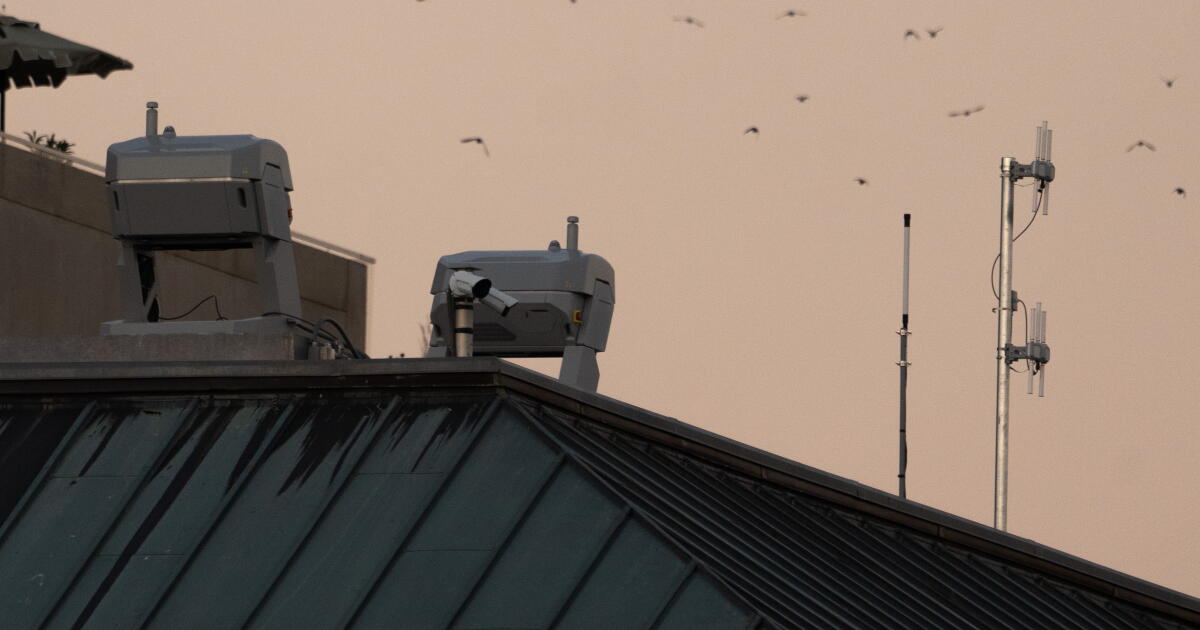
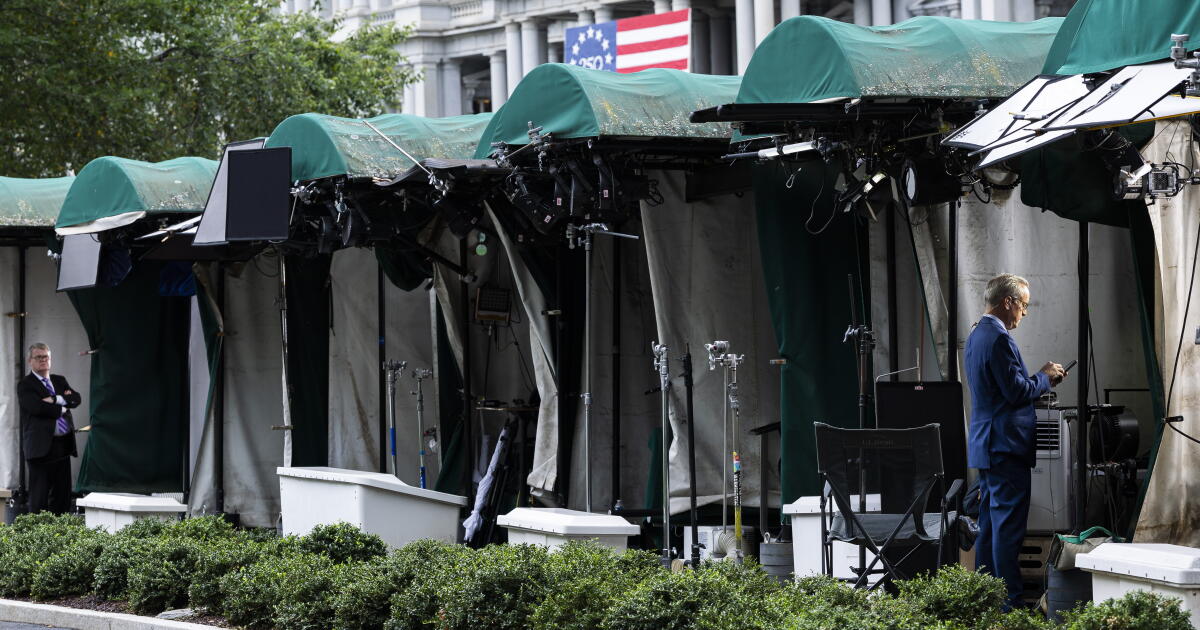
A few hundred feet away, a drone port, run by the U.S. Secret Service and not the military, is already quietly operational. Equipped with cameras and sensors to scope out potential threats from a bird’s-eye view, the small UAVs stand on alert in four gray weatherproof boxes until deployed at officers’ commands.
The agency is using a model known as “drone as first responder,” deploying speedy unarmed drones from outdoor stations to serve as flying cameras. That model has been adopted by hundreds of police agencies across the U.S., often powered by AI software to help dodge obstacles or track targets.
The existence of the surveillance drones on a Treasury Department building adjacent to the White House complex has not been previously reported, and could undercut Trump’s legal claims that the ballroom construction is necessary “to protect the White House and surrounding region from aerial attacks.” The need for the drone port underpinned Trump’s national security defense for the construction project — a justification he is now citing for the construction of a massive arch outside the gates of Arlington National Cemetery.
The installation is thus far markedly less imposing than the vision outlined by Trump, with its rows of futuristic attack drones, apparently modeled after those used in U.S. military strikes, that drone experts describe as outlandish.
“To be honest, if a drone was so close to the White House that it needed interdiction, it’s already gotten too far,” said Matt Sloane, co-founder of SkyfireAI, which makes software for drones used by public safety agencies.
It would be more realistic for the White House to build something akin to what the Secret Service is using next door, Sloane said: “The drone takes off and does some type of perimeter sweep or whatever, and then puts itself back in the box.”
The White House did not comment for the story. The Secret Service declined to comment on the specifics of its drone operations but said the new docks are separate from Trump’s ballroom drone port.
The details of Trump’s ballroom drone port remain murky
Security of the president and the White House complex is generally the domain of the Secret Service, which works in close concert with the White House Military Office and other military elements when needed.
Trump has said the drone port came at the request of U.S. military officials. Speaking to reporters in May, he said the building’s plans were expanded to meet the request: “They wanted more drone capacity,” he said. On social media, he boasted that the drone port might end up being the “most sophisticated” in the world.
What Trump is ultimately aiming to build, and how far it goes beyond what has already been installed, remains unclear. Beyond Trump’s AI images, some of which he filed in his appeal to the U.S. Supreme Court to lift lower courts’ blocks on the construction, the White House has not disclosed what kinds of drones will be used or for what tactical purpose.
The Secret Service is using smaller surveillance drones that are a fraction of the size of the attack drones depicted in Trump’s AI images. The U.S. Air Force bought similar drones from Skydio in April to protect bases across the Middle East. The company also supplied drones to help protect World Cup matches this year.
The Secret Service has been building out its drone- and counter-drone programs for years. But work has accelerated since the 2024 attempted assassination of Trump at a campaign rally in Butler, Pa., when the agency failed both to take action against a drone used by the shooter to scout out the attack and to fly one of its own to provide overwatch of the event.
In the weeks that followed, tethered and untethered surveillance drones became commonplace at campaign rallies and large events at the White House complex.
In an online video released by the agency highlighting their deployment, the Secret Service said the Skydio drones are used to provide “real-time situational awareness” and “aerial overwatch.”
“It allows you to see the threat before it becomes an issue, and to task assets accordingly,” Dustin Talbott, of the Secret Service’s Aviation and Airspace Security Division, said in the video. “We no longer wait for the threat to reveal itself. We find it first.”
Skydio did not provide comment for this story.
Trump’s drone port vision would face logistical hurdles
Trump has made it a priority to build a stronger drone presence around the White House, responding to an increase in political violence and the evolution of drone warfare.
Paul Eckloff, a former supervisor of the Secret Service’s presidential protection division, said the Russia-Ukraine war has highlighted the risks posed by drones, even off-the-shelf models that can cause massive damage. Drones now represent one of the largest emerging threats the White House must defend against, he said.
During Trump’s first term, conversations about drones often centered on their use in places like Iraq and Syria, said Javed Ali, who served on the National Security Council during at that time and now teaches national security at the University of Michigan. Since then, it has become a matter of domestic security, he said.
Yet there would be major logistical hurdles involved in putting a busy drone port on top of the White House, he said. “There’s a whole host of questions, like who is responsible for overseeing it, and how would there be any de-confliction with commercial airspace?” he said.
Complexities around federal oversight were laid bare this year when the U.S. military used a laser to shoot down a drone near El Paso, Texas, only to find it belonged to Customs and Border Protection. The mishap briefly led the FAA to close nearby airspace.
A drone hub at the White House would navigate crowded and complex airspace around Washington, not far from Reagan Washington National Airport and flight paths shared by other military aircraft.
Opponents say the White House is becoming a fortress
Trump started talking about the drone port in May, weeks after a federal judge halted ballroom construction but allowed work on security components to continue. Trump later went on to refer to the ballroom as a “military complex,” leaning on that security role as a legal justification.
The Supreme Court in August cleared Trump to continue construction as the legal challenge moves ahead.
Opponents say the president is going too far in his hardening of the White House, turning it into something closer to a fortress. Edward Lengel, a former chief historian for the White House Historical Assn., said Trump has militarized the White House at a scale that’s at odds with its legacy as “the people’s house.”
“It turns it into a big giant porcupine that has its spines pointing out against the people and against the world,” Lengel said.
Trump has argued that the White House was in “very bad condition” when he returned to office, saying it had become vulnerable to modern threats.
At times, he has expressed concerns about his own safety and the risks posed by drones and other air threats. Speaking at a Rose Garden dinner for law enforcement officials in May, Trump quickly glanced up from the lectern as a low bird flew overhead.
“I thought that was a drone,” Trump said, bringing laughs from the crowd. “They make them in all different sizes nowadays — they can be very destructive, as you’ve probably heard.”
WASHINGTON — The U.S. Supreme Court on Tuesday declined to intervene in a custody dispute over a 5-week-old child who was born in Texas after a surrogate refused a California couple’s wishes to have an abortion.
Justice Elena Kagan denied the request from McKenna West, who was seeking conservatorship over a baby boy she gave birth to in Dallas.
The brief order did not detail the legal reasoning, as is typical in emergency appeals. The decision came from Kagan because she handles appeals of cases out of California.
West had previously been rejected by other courts in her efforts to have a say in the treatment of the child, who was born with a life-threatening heart condition. She gave birth to the boy in Dallas, where most abortions are banned, after she refused the couple’s wishes to end the pregnancy.
West had asked the Supreme Court to halt a California court order that recognizes Omar Ahmed and Nausheen Gilkar as the parents of the child whom she calls Gabriel and they call Rumi.
Lawyers for the couple had urged the court to reject the request, questioning what an intervention would do for medical decision-making at an already chaotic time. They also accused West of overstating the prognosis for children born with the heart condition.
“Such chaos would be devastating for Respondents and, most importantly, their child,” the couple told the court.
The legal battle over surrogacy and abortion has attracted the attention and support of Republican officeholders and anti-abortion groups. West has said she believes the couple will not provide life-saving care, citing their request for an abortion at 23 weeks. Gilkar and Ahmed have denied those claims.
The boy was born Aug. 12 with hypoplastic left heart syndrome, a life-threatening condition that prevents normal blood flow to the organ. He underwent surgery soon after he was born. The couple’s attorney said in August that the newborn had been in critical condition and appeared to be “suffering from potential complications.”
Without treatment, children affected by the heart defect can die within days or weeks. Surgical repairs are not necessarily cures, and additional surgeries or heart transplants may be needed, according to the CDC.
Wilder and Whitehurst write for the Associated Press.
ByJacqueline Ganun and Bill BarrowAssociated Press/Report for America
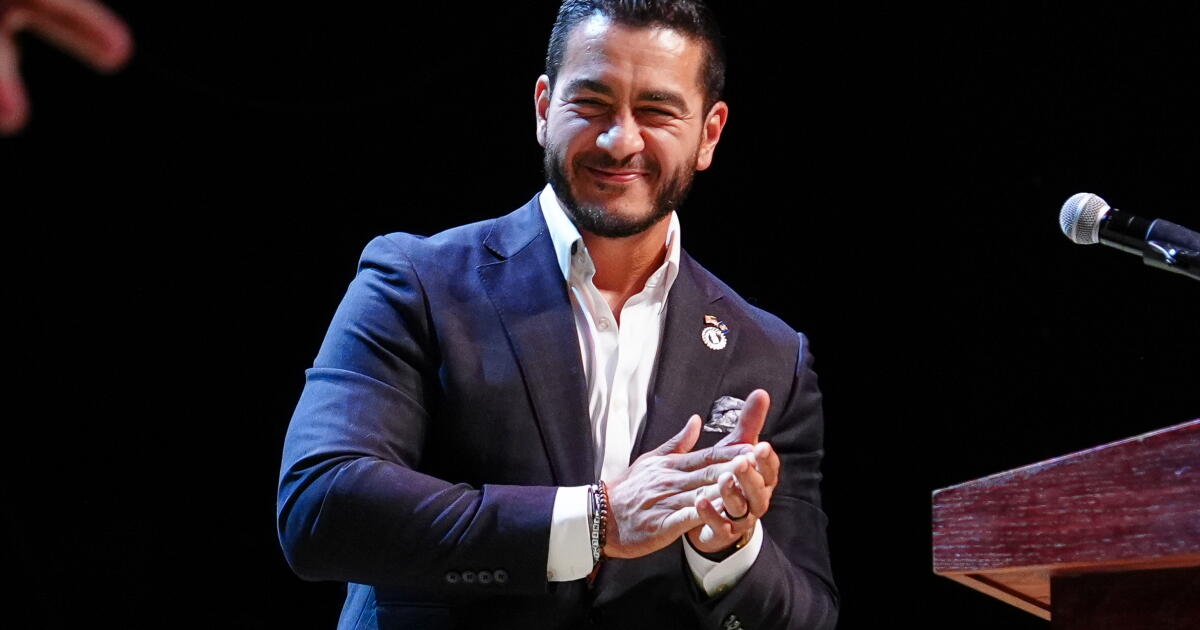
DETROIT — Michigan U.S. Senate nominee Abdul El-Sayed said Tuesday that he wants Kamala Harris’ midterm campaign stop in Detroit to unify Democrats in the key swing state where their party’s factions were on full display in a hotly contested primary earlier this year — and in Harris’ 2024 presidential defeat.
“We’re building an electoral coalition here,” El-Sayed said, speaking about the economy hours ahead of a planned appearance with the former vice president.
An unapologetic progressive, El-Sayed downplayed his differences with Harris over the Biden administration’s support for U.S. military aid to Israel. El-Sayed has called Israel’s military actions in Gaza a genocide against Palestinians. Israel rejects that position, but it aligns El-Sayed with many voters in Michigan’s large Arab American community and with progressives who withheld their votes from Harris in 2024, when the state tipped narrowly to Republican Donald Trump.
That election “ended where it did because we could not find the places of agreement to be able to bring people together or move in the direction that we need to move,” El-Sayed said, emphasizing that he and Harris both want to help voters who are struggling economically.
Harris, the first Black vice president, remains popular among Black voters who anchor the Democratic base in Detroit and who leaned in favor of El-Sayed’s primary opponent, Rep. Haley Stevens, in the August primary. El-Sayed said Harris, who will attend a roundtable on Black maternal health with him and separately join an event hosted by the Detroit chapter of the NAACP, is a critical advocate in helping him close ranks as he tries to defeat Republican Mike Rogers.
“Her presence here speaking to communities that were really empowered by her voice throughout her political career, I think will help us to continue to bring our coalition together,” El-Sayed said.
El-Sayed vs. Rogers is a critical contest for Senate control
The Democrat’s matchup against Rogers, a former congressman, will help determine control of the Senate for the final two years of Trump’s presidency. If Democrats hold the seat, which was opened by Sen. Gary Peters’ announced retirement, they’d still need to win at least four more currently held by Republicans to flip the chamber. A Rogers victory would narrow Democrats’ path to a majority.
Rogers’ campaign framed Harris’ visit as a sign of weakness for both Democrats.
“Abdul is so desperate that he’s parachuting Kamala Harris into Michigan to save his flailing campaign,” said Alyssa Brouillet, Rogers’ spokesperson.
Rogers has been campaigning in Detroit, a predominantly Black city where his campaign is optimistic he can pick up support from voters hesitant to support El-Sayed.
Black voters could prove especially critical as El-Sayed also faces pressure among white Jewish voters who typically back Democrats.
“Jews in Michigan are currently scared” by their Senate options, said Barry Goodman, a Democratic National Committee member and major Michigan fundraiser in the party. Goodman backed Stevens in the primary.
The race is also seen as another referendum on progressives’ viability in battleground races. El-Sayed is running to the left of the Democratic Party establishment, including advocating for universal healthcare.
Goodman described himself and many other Jewish Democrats as “holding our noses and voting for Abdul” because they “believe in the Democratic ticket and they believe that one man can help win the Senate but can’t destroy the Senate.” Other moderates, Goodman said, are still deciding whether to back Rogers or sit out the Senate race.
El-Sayed has attempted to soften his approach on Israel and Gaza. He has apologized for some past controversial comments and said he is committed to Jewish safety.
Michigan will also be a key state for the 2028 Democratic presidential primary
For Harris, the trip comes as questions swirl about her intentions to run for president again. Under the Democratic National Committee’s recently revised nominating calendar, Michigan now will hold the fifth presidential preference primary in 2028.
It’s unclear whether Harris will use the trip to restate or recalibrate her past statements on Israel. But campaigning with El-Sayed is notable, nonetheless, given her past tensions with Democrats’ left flank.
“She probably figures she won’t lose her establishment folks, so maybe she makes gains to her left,” Goodman said.
Harris has said she’s in no rush to announce whether she will run in 2028. But ahead of Election Day this November, she also has campaign stops planned in Nevada and Georgia, two other important states on the political map.
Ganun and Barrow write for the Associated Press. Barrow reported from Atlanta.
The Trump administration has proposed investing $5B in a new fund that would help Middle Eastern countries rebuild energy infrastructure battered in the Iran war and reduce their reliance on the Strait of Hormuz to transport oil and gas, according to U.S. and Middle
WASHINGTON — President Trump on Monday headed into a week full of high-stake meetings with world leaders after spending a 72-hour period banning reporters from the White House, mulling whether it was time to “blow … up” Iran, and proposing to house military drones and snipers in his triumphal arch in the nation’s capital.
The weekend — which also included the announcement of a security deal over Greenland and the creation of a new “A.I. Force” — captured an American president operating unpredictably across multiple fronts even as each one drew friction. The actions now stand to color the backdrop of a week that will feature meetings with world leaders at the United Nations General Assembly in New York and a state visit by Chinese President Xi Jinping in Washington.
Each of those moves carries its own political weight ahead of the diplomatic talks, but also ahead of the midterm elections, where these topics are front and center in key races.
Trump’s handling of the Iran war, its subsequent shocks to the global economy, his push to fast-track the development of artificial intelligence and the Greenland agreement are likely to come up in meetings with world leaders. His deal with Denmark to bolster U.S. military presence in Greenland, a territory Trump has repeatedly tried to annex, is expected to be signed Tuesday in New York, though action is still needed by the Danish and Greenland governments before it can be enforced.
While all the details of the Greenland deal are not public yet, Trump has said it is a “dream come true for the United States of America.”
“This solution is a great one for the United States of America, Denmark, Greenland and all of our Allies,” Trump wrote on social media Friday. “We look forward to working with the wonderful people of Denmark and Greenland toward a magnificent future with respect to this large, and highly strategic, parcel of land. We will be very protective of it.”
In an interview Sunday, Trump also indicated that he was trying to make a decision on Iran as the war stretches into its eighth month. The president said he would “probably be open” to meeting with Iranian President Masoud Pezeshkian during the U.N. General Assembly.
“My question is, if and when do I blow the entire nation up?” Trump told Fox News. “They better behave.”
Of all the actions Trump took, the press dispute has become the most contentious and drawn an immediate legal response. Three major news outlets — CNN, MS NOW and Politico — sued the Trump administration Monday for banning their reporters from the White House grounds, and major television networks suspended their pool coverage of the president’s activities.
In a joint statement, the organizations said the White House has acted “without notice or process” and called the arbitrary decision a “blatant violation” of the 1st Amendment.
Trump, meanwhile, argued Monday that the banned news outlets are “corrupt” and a “threat to our national security.”
Vice President JD Vance defended the press ban.
“He’s not banning media outlets. What he’s doing is saying we’re not going to give you special access to the White House if you engage in what is effectively propaganda,” Vance said Monday, arguing that the three outlets push out “negative” coverage of Trump.
The tense showdown between Trump and the White House press corps led to audio problems during the president’s ribbon-cutting ceremony for a new helipad on the South Lawn. Without television cameras and microphones set up by the major TV networks, it was impossible to hear what Trump was saying through the White House’s official YouTube stream, signaling further technical difficulties in the week ahead.
Behind the public displays of control, news reports have painted a picture of a president increasingly frustrated by the lack of credit he feels he is owed. At a recent closed-door meeting, reported by the Wall Street Journal, Trump told advisors he was aggravated that his allies hadn’t lauded him enough for his efforts to take over the Kennedy Center or other accomplishments made during his second term.
Trump has tried to put his name on the building’s facade and run into resistance from Democrats, arts patrons and a federal judge who blocked the move last week. Trump was then photographed aboard Air Force One looking at a large printout appearing to show demolition plans for the center.
Over the weekend, Trump posted on social media a link to a news article that claimed he was seeking to fix “safety hazards” at the performance center. He then posted an image of him watching the Western Hemisphere with the words, “His Hemisphere,” and wrote that his proposed triumphal arch near the National Mall would be used as a military complex for drones and snipers.
Trump also announced that he would be creating the “A.I. force,” modeled after the Space Force he launched during his first term, to ensure the country does not “in any way hinder or stifle the growth of the industry.” The announcement came amid growing backlash to data centers and the fast-paced development of artificial intelligence, an issue that in recent weeks has prompted stark warnings about the technology’s power and its threats to humanity.
Tech executives, including Dario Amodei and Sam Altman, have even called for a slowdown on the technology’s advancement and last week, four leading AI companies — Anthropic, OpenAI, SpaceXAI and Google — faced a lawsuit claiming they made an illegal deal to slow the pace of their respective AI development.
Trump’s announcement over the weekend comes as lawmakers, including congressional Republicans in tight races, have called for new guardrails on the technology.
Despite technology becoming a political flashpoint during the midterms, Trump has dismissed concerns about AI as a hoax and asserted that those who oppose data centers are intent on being “backwards and poor.”
Sen. John Kennedy (R-La.) is among the lawmakers who have called for action on regulating the technology, and he has warned that not doing so could come at a cost on Nov. 3.
“We really need to send a memo around explaining we’ve got midterm elections coming,” Kennedy told Politico. “I may send that out.”
Secretary of the Air Force Troy Meink made a bombshell admission this morning, disclosing that there are on-orbit weapons deployed right now to protect America’s interests in space. Those weapons support a Space Control mission set, and the U.S. Space Force has now also shared additional details about that directly with TWZ.
The first official painting commissioned by the Space Force, seen here, explicitly depicts a duel between a reusable spaceplane and a hostile ‘killer satellite.’ USSF
“Today, we continue to ensure we remain ready to meet the challenges of evolving threats, wherever they exist,” Meink said during his keynote address. “This is why the United States now has on-orbit space control weapons capable of defending the joint force against hostile adversary action.”
“That phrase was very well thought out. So whatever I said before is what I say again,” he said when asked if he could elaborate in any way on those capabilities at a question-and-answer session immediately following his speech. “It is critically important that we maintain our dominance not only in the air, but in space, and so we’ve had to take steps to make sure that when we’re threatened, we can take care of that.”
“Not going to go into specifics on the type of weapon,” Meink said when asked again if he could elaborate at a press roundtable with TWZ and other outlets on the sidelines of the Air, Space & Cyber Conference today. “Just like in air dominance, we need to maintain dominance in space as it becomes more and more important to how we function, how we operate militarily, and economically [and] civilian-wise.”
“There’s a lot of factors that go into how we talk about these things. We spend a lot of time talking about how we’re going to talk about these things,” Meink added at the roundtable when asked about why this disclosure was being made now and its implications for deterring adversaries.
“It is important from a deterrence perspective, but on the other hand, me talking about the details of what we’re doing would actually not benefit that deterrence,” he continued. “So I’m not going to talk about the specifics of what we’re doing, whether we’ve tested or not tested, or anything else.”
Secretary of the Air Force Troy Meink speaks during the change of responsibility ceremony for Chief of Space Operations Gen. Douglas Schiess on Sept. 3, 2026. USAF/Eric Dietrich
TWZ had separately reached out for more information after Meink made his initial remarks this morning.
“It is longstanding policy that the U.S. will protect and defend the Joint Force through all domains,” a Space Force spokesperson subsequently told us. “We are increasing readiness against existing threats, and the U.S. has on-orbit space control weapons capable of defending the Joint Force against hostile adversary action.”
“Space control encapsulates the mission areas required to contest and control the space domain – employing kinetic and non-kinetic means to affect adversary capabilities through disruption, degradation and even destruction, if necessary,” they continued. “These capabilities can be employed for offensive and defensive purposes at the direction of combatant commands. U.S. military operations are conducted in compliance with international law, including the Outer Space Treaty and LOAC [the Law of Armed Conflict].”
The Outer Space Treaty, which came into force in 1967, prohibits the United States and other signatories from placing nuclear weapons and other weapons of mass destruction (WMD) in orbit. It does not impose limits on the deployment of conventional weaponry. After receiving this initial statement from Space Force, TWZ followed up to ask whether the service was confirming that it has kinetic (e.g. physical interceptors) and non-kinetic space control weapons (e.g. electronic warfare jammers) now, and that any such weapons could be employed both offensively and defensively.
“We are confirming that the United States has on-orbit space control weapons capable of defending the Joint Force against hostile adversary actions,” the Space Force spokesperson said in response. “Beyond that, we will not discuss specific operational methods, payloads, technical characteristics, or employment concepts.”
A look inside a U.S. space command center. US Space Command
“As the Space Force continues to mature, our public discussion is intended to clarify doctrine and mission sets, not disclose sensitive operational details,” they added. “What is important is that the U.S. Space Force is committed to the long-term safety, security, and sustainability of the space domain, and our operations are guided by longstanding principles of professional military behavior and international law. That commitment remains central as space operations continue to mature and normalize.”
There are a wide range of means by which a platform on-orbit can attack another or otherwise defend against incoming threats. Not all of those options involve effects that are destructive or even irreversible, either. For instance, a laser could be used to blind optics on a target temporarily without damaging them. Electronic warfare suites could similarly disrupt a threat without causing any kind of permanent harm. Doing so could help provide extra time for a friendly asset to maneuver out of danger. There are, of course, also capabilities that do seek to damage and/or destroy a target, such as physical interceptors, grappling arms, aerosols that can be sprayed on optics and solar panels, or even just using one satellite as a kinetic weapon to smash into something else.
A U.S. Defense Intelligence Agency graphic highlighting some of the ways on-orbit attack can be carried out. DIA
So-called counter-space weapons, as a broad category, are also not limited to space-based capabilities. There are also direct-ascent anti-satellite (ASAT) interceptors launched from the surface and other capabilities deployed from within the Earth’s atmosphere. Prior to today, the only acknowledged anti-satellite weapons the U.S. military had in inventory were ground-based electronic warfare systems. In 2022, under President Joe Biden, the U.S. government had announced a self-imposed moratorium on destructive direct ascent anti-satellite weapons testing. Still, this would not have precluded development of those capabilities using other means, and it’s not even clear if that policy is still in place.
It is important to further note here that plans for new space-based anti-missile interceptors are at the core of the Trump administration’s Golden Dome missile defense initiative.
There is certainly no debate about the absolutely vital role that space-based capabilities – including early warning, general intelligence gathering, weapons guidance, near-real-time communications, and more – play in U.S. military operations today. Similarly, it is well-established at this point that America’s principal global competitors and potential adversaries, especially China and Russia, have been actively developing and fielding increasingly more threatening anti-satellite capabilities. China’s People’s Liberation Army (PLA) has also been dramatically expanding its own space-based capabilities, steadily eroding the U.S. military’s historic dominance in this domain and presenting new threats to U.S. forces.
“From the broadest perspective, maybe the most critical characteristic of the responsive and adaptive national security space architecture called for in the President’s Ensuring American Space Superiority executive order is that survivability matters at least as much as performance,” U.S. Space Force Gen. Stephen Whiting, head of SPACECOM, said in August at the annual Space & Missile Defense (SMD) Symposium. “In space, there is no safe harbor. You can’t dig a trench or build a shield. Our satellites are consistently or predictably in an opponent’s weapons engagement zone. And we can build the most high-performing, exquisite satellites in human history, but if they depend on fragile, targetable supporting infrastructure, their performance will drop to zero on the first day of the next war.”
U.S. Space Force Gen. Stephen Whiting, head of US Space Command, seen speaking at the 2026 DoDIIS Worldwide Conference on August 10, 2026. DIA
Whiting publicly declared at that time that having “credible, acknowledged” options for countering enemy capabilities in space, to include damaging or even destroying them, was a key priority for deterring hostile action and surviving if a major fight in orbit were to break out.
“Protective measures on satellites is just like thinking about protective measures on aircraft, okay? And we’re working through that,” Lt. Gen. Gregory Gagnon, head of the Space Force’s Combat Forces Command (CFC), also told TWZ and others more recently at a roundtable at AFA’s Warfare Symposium back in February. “I won’t provide specifics, because I want those protective measures to work, right? I don’t want to tell Beijing and Moscow what I’ve done.”
“But protecting and defending satellites can’t simply be done by protect and defend. You can’t run away from a bully forever. Sometimes you got to turn around and punch,” Gagnon continued. “So protect and defend, although necessary, is insufficient to deliver space control. We also need, as part of our joint force, the ability to attack.”
U.S. Space Force Lt. Gen. Gregory Gagnon, commander of USSF Combat Forces Command, at center, seen at Schriever Space Force Base, Colorado, in December 2025. USSF
Meink’s remarks today put Gagnon’s prior comments, in particular, in a whole new light.
The Secretary of the Air Force’s new disclosure has prompted additional questions beyond just what actual weapon systems the U.S. military has actually fielded in space. There are long-standing concerns about the potentially wide-reaching ramifications of increasingly weaponizing space. As Meink himself noted today, space-based communications and other capabilities are increasingly central to daily life, in general, and widespread, long-term disruption could have serious negative economic and other impacts.
At the roundtable today, Meink pushed back on a question about these concerns, citing Chinese and Russian anti-satellite developments.
“Is there a question in the room by anybody about whether or not the Chinese and Russians have been developing these sorts of weapons?” he said. “We are focused on making sure we can protect ourselves and operate in that environment.”
“Depends on where you sit, right, you know? But to say that it’s the responsibility for the U.S. government to protect its citizens from emerging threats makes perfect sense to me,” now-retired Chief of Space Operations Gen. Chance Saltzman said last year when asked a similar question in the context of the Golden Dome initiative’s plans for space-based interceptors. “And we clearly see a country like the PRC [People’s Republic of China] investing heavily in these kinds of threats, whether it’s hypersonic [weapons], whether it’s threats from space. And so now it’s time for the U.S. government to step up to the responsibilities to protect American citizens from those threats.”
Though many questions remain, it is now clear that the U.S. military is not just planning to, but has already fielded at least some weapon systems in orbit as the threat ecosystem outside the Earth’s atmosphere continues to expand and evolve.
In Philippe Caland’s semi-autobiographical 2003 film “Hollywood Buddha,” his mother, Huguette Caland, plays herself. Wearing her signature white smock, inscribed with a flurry of painted swirls, circles, letters and cross-stitches, the Lebanese artist makes precise gray-blue lines on a canvas spread across her dining room table as her son laments a fickle movie industry.
Filmed in her Venice home, the scene, her three children agree, was true to life. Caland worked constantly: on stretched canvas, on fabric folded in her lap, on a children’s menu, on the wall of her kitchen, or the sleeve of her smock. Whatever was at hand.
“Of course it could be frustrating,” said her daughter Brigitte, an elegant, soft-spoken scholar of Semitic languages who has managed Caland’s estate since her death in 2019.
Brigitte Caland, right, and Charley Caland — the daughter and granddaughter of the Lebanese-born painter, sculptor and fashion designer Huguette Caland — stand in Caland’s former L.A. home and studio.
(Robert Gauthier / Los Angeles Times)
Sitting in that very home, which Caland had built in 1997, Brigitte recalled the many times her mother invited her over only to continue working as they talked. “I’d go to leave, and she’d put the canvas away, beg me to come back, and as soon as I did, she’d start painting again.” Still, from early on, Brigitte understood the compulsion as evidence of her mother’s resolve. “She had this incredible drive to create.”
“Huguette Caland: A Life in a Few Lines,” opening Sunday at the Hammer Museum, traces that relentless drive across nearly 150 paintings, drawings, sculptures, garments and tapestries. Organized by the Museo Nacional Centro de Arte Reina Sofía in Madrid in collaboration with the Deichtorhallen Hamburg, the show comes to Los Angeles as the largest Caland survey in the country to date. Spanning five decades and installed chronologically, it features work from the 26 years she spent immersed in Venice’s creative community even as her practice was largely ignored.
It was Caland’s generous hospitality and boisterous wit that made her custom château a gathering place for a vibrant Westside art circle. Ed Moses, who lived around the corner, visited several times a week; Larry Bell, Frank Gehry, Robert Wilhite and others joined her for long meals and even longer parties. Her work surrounded them, and her studio, the grandest space in the house, stood open just beyond the living room. Yet her guests remained uninterested. “No one,” Brigitte said, “would walk the 10 steps.”
Huguette Caland in Stone Doorway, France, 1970.
(Huguette Caland Estate)
Curator Hannah Feldman sees that tension as central to Caland’s California years. “Instead of supporting and bolstering her as a creative in their midst, she became their salon host,” she said. The lack of recognition, Feldman argues, reverberates through Caland’s heavily impastoed portraits of Moses and her enigmatic late abstractions such as the rectilinear paintings in the “Silent Letter Series.”
“To draw a line is a way to contain one’s emotion, one’s anger, one’s anguish,” wrote Caland of her challenging relations with fellow artists in “Sketchbook 2” (1990-91). “My lines tell the story of my life, of people encountered along the path, people I loved, and found and even lost.”
Caland is perhaps best known for her cheeky, erotic paintings of fulsome body parts and for a biography too often reduced to cliché: the libertine daughter of Lebanon’s first post-independence president who left her husband and children in Beirut to pursue an art career in a less repressed Paris.
Huguette Caland, “Self-Portrait in Smock,” 1992
(Huguette Caland Estate)
Feldman hopes the exhibition, which spans fine-line drawings of entangled lovers and radiant topographical tapestries, will complicate that familiar account. “There’s joy, and there’s sex,” she said, “but there’s also pathos, vulnerability. The search for autonomy is not an easy one; it comes with conflict, strife.”
Caland’s freedom was no doubt hard-won. She first picked up a brush as a married mother of three in her thirties, and only after her father’s death. In her first painting, alternately titled “Soleil rouge” and “Cancer” (Red Sun/Cancer) (1964), hazy concentric circles gather in a crimson orb at the center of the monochromatic plane. Simultaneously a tumor and a light source, the refulgent motif holds grief and release.
Soon after, Caland enrolled in art classes at the American University of Beirut, relinquished much of her constricting couture wardrobe, and adopted a uniform of loose, flowing kaftans, which she would later turn into works of art in their own right. Archival photographs show a glamorous Caland arriving at an event in a floor-length garment bearing painted breasts, a belly button and a triangle of curly pubic hair.
Huguette Caland, “Bribes de corps,” 1973
(Huguette Caland Estate)
Caland moved to France in 1970, leaving her children (then 15, 13 and 12) in Beirut with their father, a French-Lebanese lawyer named Paul Caland. In paintings from that decade, Caland’s imagery of bodies swell, split, meld and dissolve. In “Enleve ton doigt” (Remove Your Finger) (1971), lipstick-red lips receive a pale finger reaching out from a crush of fantastical profiles; two years later, in “Self-Portrait” (Bribes de corps), Caland dispersed a sensual body across a pale pink field interrupted at the lower edge by a slight, shadowed cleft — either buxom cleavage or buttocks.
The distance from her children produced another kind of line: text. Philippe recalled receiving illustrated letters almost every week, filled with drawings, doodles and notes of affection. Most of these were later destroyed when the family house was bombed during the Lebanese Civil War of 1975. “I always knew my mother loved me,” Philippe said. “The family was not torn apart. She took a break, and in the end made a home for us in Paris, where we all landed when the war was raging.”
After the death of her lover, Romanian sculptor George Apostu, whose rough-hewn wood sculptures still populate the house’s patio, Caland’s children encouraged yet another departure. Her eldest son, Pierre, a businessman and former Olympic swimmer, paid for a stay at a friend’s Venice bed-and-breakfast, all but forcing his grieving mother out of Paris and to sunny L.A. Her initial reluctance gave way to affection. The light, arid climate and mountains sloping into the sea reminded her of Lebanon. “She liked that California land sounded like Caland,” Brigitte said.
Huguette Caland works at her home and studio in Venice, date unknown.
(Huguette Caland Estate)
After making Venice her primary residence, Caland collaborated with architect Neil Kaufman on the design for her enclosed château. Its towering, mostly unbroken face and narrow swimming pool suggested a rampart and a moat, but behind the concrete exterior, Caland eliminated every door save the guest bathroom. Long vertical windows opened onto a courtyard shaded by a sprawling olive tree. Art crowded the steep stairwell; it accumulated on scattered plywood and Formica tables and unraveled across the kitchen in an intricate mural composed of tessellated marks that recall Byzantine mosaics and tatreez, a form of traditional Palestinian embroidery.
“There was no distinction for her,” Brigitte said, between the home and the studio, art and life. Caland once described her “very, very mixed media” as including “every single exchange, a look, a smile, a brief encounter.”
That original interior survives in “Hollywood Buddha” and archival photographs. Philippe now lives in the house with his family, and although the concrete exterior remains intact, the rooms and the courtyard have been remodeled around their own aesthetics and routines. Along with the technicolor mural, Caland’s singular sensibility persists in scattered drawings, a bouquet of her preferred 30-inch paintbrushes and a pair of stiff-backed pews. Her presence, too, is felt in the people who now inhabit the space, like her granddaughter Charley, 25, whose easy warmth recalls qualities long ascribed to the matriarch.
The former Venice home and studio of the Lebanese-born painter, sculptor and fashion designer Huguette Caland. The home is still occupied by Caland’s family and no longer looks how it did when she was alive, but her spirit lives on in small details.
(Robert Gauthier / Los Angeles Times)
When the Hammer selected Caland for “Made in L.A. 2016,” the honor brought some measure of the local attention that had long eluded her. “If you had to pick one critical turning point for her career,” Pierre said, “it was the inclusion of her work in that show.” For the family, the coming survey fulfills one of her long-held ambitions.
“She told me, ‘Live your life day by day and plan it on a thousand years,’” Philippe said. Only later did he understand that the advice described her own life. “Today, her work is here,” he added. “She continues with it.”
Huguette Caland, “Le grand bleu,” 2012.
(Huguette Caland Estate)
The final painting in the exhibition, an oceanic large-format canvas titled “Le Grand Bleu” (The Great Blue) (2012), once hung high above the central hearth in the Venice house. Surrounded by undulating circles, spots and stripes, red-roofed Lebanese abodes and white-masted schooners traverse an unsettled horizon line. From the dining table below, where a young Charley often helped her grandmother fill blank planes with delicate dots, Caland could look up and see how far her line had taken her.
Within hours of a Feb. 28 missile attack that hit an Iranian school, some Pentagon personnel knew the U.S. was responsible, according to officials involved in an internal investigation of the incident. That probe found what the officials now describe as a cascade of preventable failures.
Two Tomahawk missiles struck the building and its grounds that Saturday, killing more than 150 people, including at least 123 children. The strikes devastated the two-story school, which was built on land that was part of a military compound in the southern Iranian town of Minab. In terms of child casualties, it’s the deadliest American military targeting error of the 21st century.
United Nations investigators said Thursday that there were reasonable grounds to conclude that the strike on Minab and another U.S. attack that took place on the same day amounted to war crimes. The U.S. has yet to publicly accept responsibility for the school strike, and President Trump has previously suggested it was Tehran’s fault. As recently as July 14, he told Fox News, “I don’t think anybody’s going to ever be able to say what happened there.”
But in interviews, officials with direct involvement in the Pentagon’s internal investigation have offered some of the first accounts of the probe. The strike didn’t result from a single catastrophic decision but an accumulation of smaller ones, they said, and their review has identified a series of missed opportunities to prevent the disaster. The officials, like more than two dozen others who provided descriptions of targeting procedures or background information for this story, asked not to be named to discuss sensitive matters.
In the final days of February, the Trump administration demanded an overwhelming aerial assault. More than 1,000 Iranian targets were hit within the first 24 hours alone. That order compressed the time frame for finalizing targets, the officials said, instilling an urgency that — combined with gaps in underlying information about the site, cuts in civilian protection personnel and an overreliance on artificial intelligence technology — set the stage for the deadly error.
Full details from the investigation remain tightly held. Officials who described it said they faced constraints on the amount of information they could share. Previous news reports have indicated that by early March, a preliminary internal review determined the U.S. was likely responsible for the Minab strike.
A report on the full Pentagon investigation, which commenced in March, hasn’t been released — though the officials said it has been all but complete for several months.
Adm. Brad Cooper, who heads U.S. Central Command and ordered the investigation, told members of Congress in May that he’s committed to providing transparency. Yet it’s not clear how much detail will be included, nor how much of the report ultimately will be released to the general public.
A child runs past a banner strung across the rubble of Shajarah Tayyebeh Elementary School showing portraits of the children and teachers killed there by a U.S. missile strike.
(Vahid Salemi / Associated Press)
A Pentagon spokesperson said the incident remains under investigation and declined to comment further.
In response to questions, including about when the White House was informed that the strike was a mistake, a senior administration official also cited the ongoing probe and added: “The United States does not target civilians.”
Last week, a report from the United Nations’ Independent International Fact-Finding Mission on Iran said that the U.S. had “failed in its obligation to do everything feasible to verify” that the school was a military target and that the failure “went beyond negligence.” The U.S. Department of Defense has declined to comment on the report.
U.S. officials have said that outdated intelligence was a problem. Although the site in Minab had been identified years earlier as a military compound, there was clear evidence that it had been modified and undergone a change of purpose, the officials said. Physical changes reflecting new construction — visible on satellite imagery — dated back almost a decade, they said, and the site operated openly as a school.
Analysis of commercially available satellite images shows construction of walls and entrances that separate the school site from the military base, work that appears to have been completed by 2017. An image from 2018 shows brightly painted walls alongside a soccer pitch, assembly rows and play markings on the ground.
Some U.S. intelligence analysts took notice, the officials said. Bloomberg reported in June that one analyst detected changes to the site as early as 2019, and logged remarks about the modifications in a system that wasn’t connected to the primary military intelligence database, which informs targeting.
Inside Centcom, which conducted the U.S. attack, some personnel relied too much on the artificial intelligence embedded in Maven Smart System, the officials said. Maven, which is made by Palantir Technologies Inc., allows users to view and coordinate complex military operations — from targeting to command and control — using AI-enabled software that fuses more than 150 different data inputs into a coherent set of information to inform commanders’ decisions.
In the past year, the Defense Department has rapidly made Maven a cornerstone of the U.S. military apparatus. Several former senior U.S. military officials now work for Palantir, including some with high-level security clearances in Centcom’s Tampa headquarters. Their role is to keep the software functioning inside secure military environments.
Some Centcom personnel expected Maven to flag stale information or inconsistencies in the underlying intelligence assembled for potential targets, the officials said. It’s not clear why they had such expectations.
A Palantir spokesperson said that the company “is not responsible for the underlying data nor identifying intelligence deficiencies” and that there’s no evidence that its software was at fault in the Minab strike.
Two people familiar with the firm’s Pentagon contracts said the government retains primary responsibility for the quality of the information that’s fed into Maven. But they said it’s not uncommon for personnel who use tools such as Maven to develop operational understandings that differ from contractual terms.
After the Minab strike, Palantir built new capabilities into Maven that “re-review underlying intelligence to identify factors that would disqualify a target and flag inconsistencies and inaccuracies that human review may have missed,” according to a person familiar with the matter. That work has already caught some anomalies, the person said.
The ‘kill chain’
As Feb. 28 approached, Pentagon officials were tasked with identifying strikes they thought would paralyze Iran’s military before Tehran had a chance to respond, the officials said.
High on Centcom’s list: the naval division of the Islamic Revolutionary Guard Corps, the most powerful force across the country’s military, economy and politics. It’s tasked with defending — and at times, disrupting — the Persian Gulf and the Strait of Hormuz. The Minab school site — with its uncorrected classification as a Revolutionary Guard facility — was fed into Maven along with other potential targets. It ultimately emerged as one of the recommended Day 1 targets, people involved in the investigation said.
As all targets do, the Minab site moved through a multi-stage assessment process known by the military as the “kill chain.” Steps in that process have traditionally involved intelligence analysts, imagery specialists, targeteers, lawyers, operational commanders and launch crews, according to U.S. military doctrine and interviews with current and former Defense officials. Today, Maven sits at the heart of those operations — between the initial intelligence inputs and the latter review stages, officials said.
In past conflicts, preparing lists of proposed targets — work that includes assessing how they align with an operation’s objectives — had taken hours for staffers to complete. Ahead of the U.S. attack on Iran, much of that work was condensed into several minutes via Maven, people involved in the Pentagon’s internal review said.
Officials involved in the investigation pointed to gaps that they said were left after Defense Secretary Pete Hegseth dismantled most of the Pentagon’s civilian harm mitigation, or CHM, units — cutting headcount across a number of teams by roughly 90% to fewer than 20 staff members, people with direct knowledge of the matter said. Centcom’s team was reduced from 10 to 1.
No CHM team member reviewed the Minab site before the strike, according to officials involved in the internal investigation. That was a consequence of the cuts in staffing but also a decision not to involve the group in planning and operations, the officials said. While not mandatory, that sort of review had become routine in recent years, they added. It’s unclear whether such checks, which include mapping the civilian environment, assessing noncombatant presence and developing lower-risk strike options, would have been enough to raise questions about the Minab site.
The Biden administration had built up civilian-harm-prevention capabilities within the Pentagon after an August 2021 drone strike in Kabul killed 10 civilians — based on the misidentification of an aid worker as a threat. Hegseth has characterized his subsequent cuts to those efforts as a shift away from “Biden-era, non-lethal programs.”
“America, regardless of what so-called international institutions say, is unleashing the most lethal and precise air power campaign in history,” Hegseth said at a news conference March 2, days after the Minab attack. “All on our terms with maximum authorities. No stupid rules of engagement, no nation-building quagmire, no democracy-building exercise, no politically correct wars.”
Under Hegseth’s leadership, the U.S. military has prioritized speed of delivery. People involved in the Pentagon probe said a rush to finalize targets shortly ahead of Feb. 28 contributed to the tragedy.
“Haste can lead to errors,” said Laurie Blank, who was appointed a special counsel at the Pentagon’s general counsel during the Biden administration from 2022 to 2024. She drew a distinction between planned targets and those that arise in the heat of battle. “A rush to hit pre-planned targets just isn’t the same thing,” she said, “especially when the operations are launched by choice and not in response to an attack where you are responding without time to plan.”
Why Minab?
A little more than 800 miles south of Tehran, the city of Minab sits on the critical Strait of Hormuz, at the crossroads of centuries-old trade routes and the nation’s modern military might. As the U.S. attack on Iran began, it was deemed a high-value target, according to people involved in the investigation.
As the strait’s significance grew in the 1980s, so did the number of military assets devoted to protecting it and projecting power into the Persian Gulf. The Revolutionary Guard’s missile units, naval facilities and logistics compounds operate alongside neighborhoods where fishermen, teachers and civil servants have lived for generations in the city of 76,000.
Shajarah Tayyebeh Elementary School was built almost a decade ago on land originally occupied by a Revolutionary Guard naval unit. The Pentagon had cataloged the site as a military base several years earlier — a determination that wasn’t updated before the February attack. The New York Times reported in June that targeting officials used satellite imagery that hadn’t been updated in seven years and that did not show a school at the site. Investigators have focused on the Defense Intelligence Agency’s failure to reclassify the location, officials involved in the inquiry said.
On Feb. 28, Minab awoke to clear skies. Shopkeepers unlocked their storefronts. Fishing crews unloaded ice chests along the docks. Children in green-plaid uniforms walked through the gates of the 260-student school, before heading into classrooms.
Firsthand descriptions of the events that took place in and around the school that day have been gathered by a group of human rights advocates, lawyers and digital forensics experts who’ve spent months reconstructing the attack. Members of the informal consortium — including some based in the U.S. and Europe — asked not to be named given the sensitivity of their outreach efforts with victims’ families. Their work and an assessment by the U.K.-based watchdog group Airwars — viewed as a highly reliable source by some Pentagon officials — provides the following account:
After the first reports of attacks on Iran emerged that Saturday morning, teachers called parents and asked them to collect their children, saying the school planned to close early. Shortly after 11 a.m., a first missile hit part of the school, triggering an explosion that reverberated across the neighborhood. Panicked shrieks filled the air. Teachers ushered children from the playground back inside to take cover in a prayer room.
Within minutes, a second missile struck, sending metal fragments across the school. Part of the roof collapsed. Only a few children inside the prayer room survived, buried beneath the rubble.
Rescue vehicles rushed to the scene while passersby helped the wounded. Some injured children were pulled from the rubble while dozens more, deceased, were slowly identified. One rescue crew member stumbled upon a child’s hand, detached and laying on the ground. He wept as colleagues continued to hunt through the debris alongside him.
Some parents were left to identify their dead children by fragments of clothing or belongings — a pencil case, bracelet or shoe — as many faces were no longer distinguishable. The father of Arash Gol-Azin didn’t learn the fate of his 7-year-old son until reaching the morgue. Only then did he spot him by identifying his sock.
Payam Akhavan, a Toronto-based lawyer who has practiced before the International Criminal Court and is an expert on civilian protection, said it’s important for investigators to determine what efforts U.S. officials made to try to ensure they were targeting a military installation.
“The Geneva Convention says you must take all feasible measures to determine that this is, in fact, a military objective,” said Akhavan, who spoke before Thursday’s U.N. report was published. “This does not mean that every mistake is a war crime, because mistakes will be made, even if you take all feasible measures.
“But if all feasible measures were not taken,” he added, “then that raises a question of criminal responsibility.”
At least 1,701 civilians were killed in the opening 39 days of the war, according to data compiled by the U.S.-based group Human Rights Activists in Iran. That’s an average of 43 people a day, and the group — viewed by some in the Pentagon as an authoritative source for Iranian casualty figures — said it’s a low estimate.
“We should be asking how so many civilians were killed amid an unprecedented tempo of strikes over just a matter of weeks,” said Skylar Thompson, the group’s deputy director.
More recently, Iranian officials and a United Nations body said the U.S. was responsible for a Sept. 1 strike on Kuhestak — some 20 miles south of Minab — that hit a residential area where a wedding party was underway and killed at least five people with dozens more injured. The U.S. is investigating the incident, Vice President JD Vance said earlier this month.
Target libraries
For decades, American military planners had maintained extensive target libraries in anticipation of potential conflict with Iran, encompassing everything from limited strikes to maritime war and major air campaigns. The list stretched into the thousands and included air bases, missile factories, nuclear facilities and ports, according to current and former U.S. officials familiar with the plans.
Some potential targets had remained on the books for years, accumulating layers of satellite imagery, intelligence reports and legal reviews.
But these catalogs can age quickly, according to people who’ve dealt with them. Buildings appear and disappear. Headquarters switch locations. Where a military barracks once stood, schools, hospitals and mosques may now exist. So the libraries’ contents require close and continual review well before any particular building or site winds up on a target list.
Maintaining the lists is critical but labor-intensive. Officials involved in the internal investigation of the Minab incident described gaps in vetting — or checking whether the underlying information is accurate, reliable and timely — that came well before the school site was selected.
Some of the most sensitive sites, such as Iran’s nuclear facilities — attacked by Israel in its 12-day war with Tehran in June 2025 — faced relentless attention from U.S. intelligence analysts ahead of the 2026 war, according to officials with direct knowledge of the matter. Less prominent locations, such as Minab, went months without receiving another close look, the officials added.
War planners start to think they’ll have time to revisit the less urgent sites, current and former Pentagon officials said.
That assumption evaporated during the final days of February as diplomatic talks between U.S. and Iranian officials in Geneva faltered and then collapsed on Feb. 26.
Work that had unfolded in previous conflicts over weeks or months — matching sites from the library, such as buildings, airfields or bases — was completed in a matter of days, according to officials involved in the inquiry. More than a thousand potential targets had to be reassessed and approved.
By the time the first Tomahawk missile bound for the Minab site left its launcher on a ship operating in the Arabian Sea, roughly three dozen people were involved along the kill chain, the officials said.
Most sat in secure facilities more than 7,000 miles away in Tampa, Fla., studying maps, imagery and databases in preparation for a war that, until 48 hours before the Minab attack, many officials had believed for decades wouldn’t occur.
Typically, part of their work entails refining a list based on satellite imagery and on-the-ground intelligence that’s used to create a pattern-of-life analysis reflecting human movements on the site and changes over time. In Iran, a bitter U.S. adversary for almost half a century, such intelligence was limited, especially in the south of the country, people involved in the probe said.
Additional steps in the kill chain address other types of issues. Lawyers assess whether each proposed target is a lawful military objective. Specialists estimate potential collateral damage. Weapons experts debate not only which missiles to fire but when.
Every stage leaves a record. Analysts sign off on each piece of the chain. They’re told to report any inconsistencies to superiors.
Then a series of questions is asked by the senior commander: Is the target lawful? Is there sufficient intelligence? And have reasonable precautions been taken to minimize civilian harm? In the early hours of Feb. 28, the answer to each question about the Minab site was yes, according to the officials involved in the probe.
The Pentagon’s internal investigators, who examined the satellite imagery, intelligence databases, targeting materials, operational chat logs and computer records that analysts used, concluded that there was high confidence throughout the kill chain that the Minab site was a Revolutionary Guard facility, according to people involved in the probe.
“Insufficient intel wasn’t really viewed as a concern before the war,” said one Pentagon official involved in the internal probe. “We were confident in our intel. Minab proved you should never be too confident.”
Political pawns
Government researchers and auditors have noted deficiencies in the primary intelligence database that’s used to develop strike targets, and the Pentagon is working to replace it with one that will introduce more automation. And Minab isn’t the first time that flawed intelligence has directed U.S. precision weapons toward the wrong target.
The accidental bombing of the Chinese Embassy in the Serbian capital Belgrade in 1999 killed three people and injured 27 others. A mistaken 2015 airstrike on a Doctors Without Borders hospital in Kunduz in Afghanistan killed 42 people. More recently, soon after the Pentagon’s civilian-harm-mitigation teams were disbanded, a strike on the Ras Ina port in Yemen in April 2025 resulted in at least 80 civilian deaths.
In the months since the attack, the children of Shajarah Tayyebeh Elementary have become symbols. Their faces were plastered on the backs of the seats of Iranian planes ferrying diplomats to Islamabad for talks with the U.S. in April. They adorn memorials on the streets of Minab. Some families have complained that their injured children haven’t received the treatment they need. Critics accuse Iranian officials of leveraging the school attack to their political advantage.
In the U.S., the disaster has become a different sort of political touchstone. Democratic lawmakers, who are seeking to take control of the Congress in the November election, are asking how the attack could have happened.
Sen. Jack Reed of Rhode Island, the ranking member on the Senate Armed Services Committee, accused the Pentagon of deliberately withholding the results of the investigation, and his Republican counterpart, Thom Tillis of North Carolina, called for congressional briefings on what went wrong.
That call is echoed by Sen. Richard Blumenthal, who also sits on the committee, which helps set spending caps for the Pentagon’s roughly $1-trillion annual budget.
“The administration should have been forthcoming within hours or days, and here we are months later and nothing has been provided,” Blumenthal said.