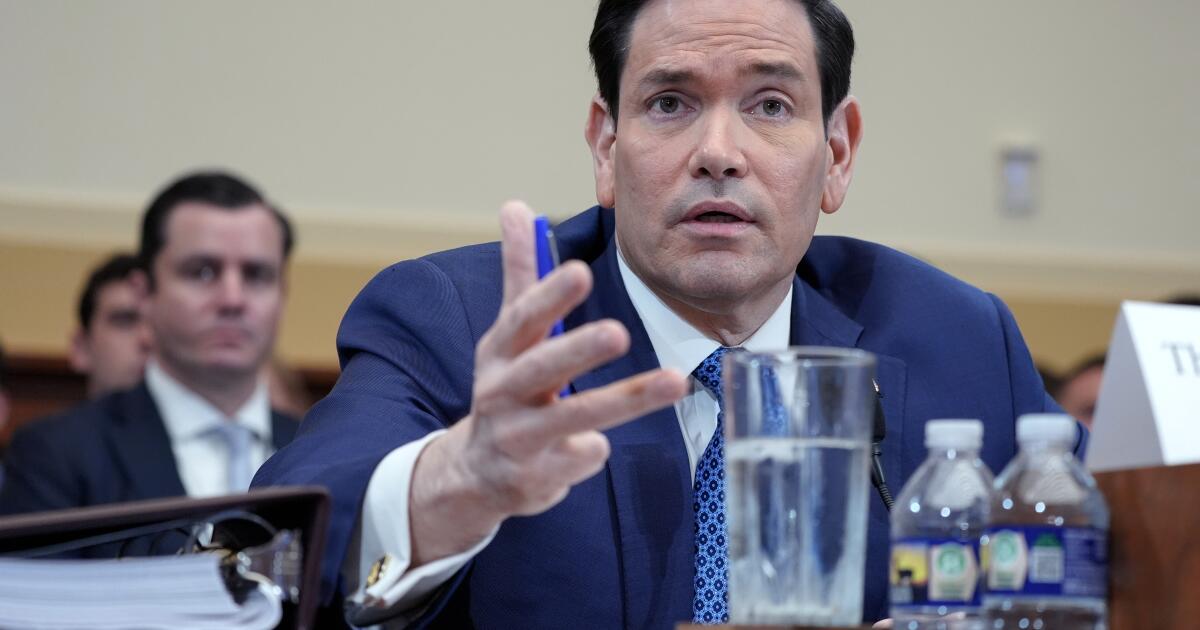
June 10 (UPI) — Billionaire Microsoft founder Bill Gates told the House Oversight Committee Wednesday that he had no knowledge of Jeffrey Epstein‘s crimes and that Epstein had uses Gates’ personal life to pressure him.
“I never witnessed nor had any indication that Epstein was engaged in ongoing criminal conduct. I never went to his island, his ranch, or his Florida home. I have never victimized anyone,” Gates said in his prepared opening remarks.
“While he may have sought to foster a personal relationship, I was never interested in that and never reciprocated. I learned Epstein had become aware of sensitive information about my personal life, including the fact that I had been unfaithful in my marriage. These affairs had nothing to do with my interactions with Epstein, but they were painful for my family.”
His testimony comes a day after Epstein’s former executive assistant, Lesley Groff, testified saying she knew nothing about Epstein’s crimes.
Gates told the House Oversight Committee Wednesday that he was introduced to Epstein in 2011. Epstein “claimed he could raise billions of dollars for global health from people for whom he provided tax and estate services.”
“I recall being aware that Epstein had faced prior legal issues, but I did not fully understand the extent of the crimes he committed. I accepted the introduction without applying the scrutiny I should have,” he said.
Gates said that Epstein used his knowledge of Gates’ cheating on his wife, “in addition to many lies that he layered on top,” to re-engage with him after Gates had cut off contact in 2014.
“He was unsuccessful in this effort, but it shows some of the ways he tried to leverage his interactions with me to further his agenda. I should never have met with Epstein in the first place,” Gates’ opening statement said.
Before the interview, Gates said he was ready to testify.
“I hope my testimony is helpful to the important work of the committee to find justice for the victims,” Gates said in a brief statement after he arrived in Washington, D.C.
In a statement to The Guardian, a representative for Gates said that he “welcomes the opportunity to appear before the committee” and said that “while he never witnessed or participated in any of Epstein’s illegal conduct, he is looking forward to answering all the committee’s questions to support their important work.”
Rep. Robert Garcia, D-Calif., told reporters earlier this week, “we want to know what did Mr. Gates know, who else was around that orbit, and why Mr. Gates continued to have a relationship with Mr. Epstein.”
Committee Chairman Rep. James Comer, R-Ky., told reporters Tuesday that “anything’s on the table.”
“He seems like he’s — according to his attorneys — I wouldn’t say eager to testify, but he’s willing to testify, and he hasn’t fought it. And I appreciate that.”
Gates became friends with Epstein in 2011, three years after he was convicted in Florida for soliciting an underage girl for prostitution. Epstein served 13 months in jail for that charge and became a registered sex offender.
Epstein died by suicide in jail in 2019.
Gates has publicly expressed regret for his friendship with Epstein. He has said he met with Epstein several times to discuss philanthropy but said it was “foolish” of him.
“Yes, I think I was quite stupid,” Gates said. “I thought it would help me with global health philanthropy; in fact, it failed to do that, and it was just a huge mistake.”
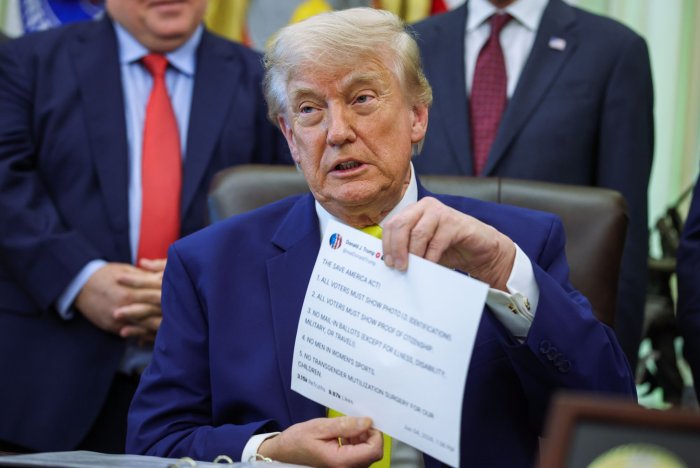
President Donald Trump discusses renovations to the Lincoln Reflecting Pool and makes an announcement on coal in the Oval Office at the White House on Thursday. Photo by Samuel Corum/UPI | License Photo
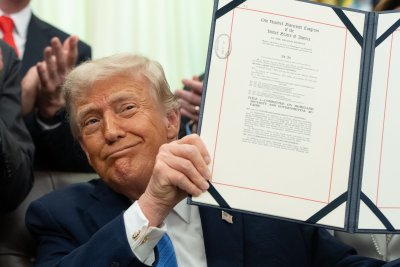
June 10 (UPI) — President Donald Trump signed a bill to fund the Department of Homeland Security’s immigration enforcement agencies through 2028 after months of battles to prevent it from happening.
“This morning I’m thrilled to sign the Secure America Act to immediately and fully fund the Department of Homeland Security through the end of my term, so we won’t have to be talking about it anymore,” the president said in the Oval Office.
The Senate passed the $70 billion funding package on Friday, and the House approved it on Tuesday.
Democrats fought the funding for months, refusing to agree to the bill unless there were reforms to the organization after two American citizens — Renee Good and Alex Pretti — were killed by federal agents in Minneapolis earlier this year. But the measure was passed via reconciliation, which only requires a majority vote instead of 60 votes needed to overcome a filibuster.
“We’ll give the heroes of ICE and Border Patrol — and that’s what they are, they’re heroes, what they have to go through to keep us safe — the support and resources they need to defend our borders, protect our homeland and to keep America safe,” the president added He also gave House Speaker Mike Johnson, R-La., credit for passing the bill with a slim majority in the House.
“Despite Democrat efforts to shut down ICE and Border Patrol, Republicans have now fully funded these agencies through President Trump’s entire second term to the tune of nearly $70 billion,” Sen. Lindsey Graham, R-S.C., in a statement. “Thanks to President Trump, our border has gone from its weakest point to its most secure point in less than two years.”
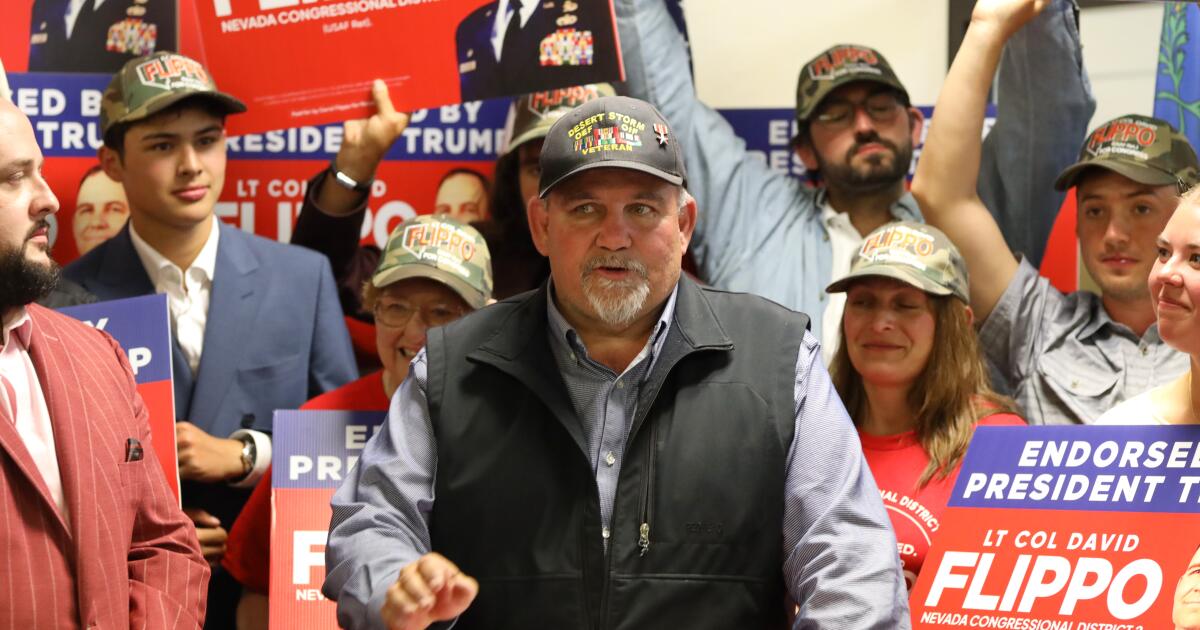
LAS VEGAS — Retired Air Force Lt. Col. David Flippo has won the Republican primary in Nevada’s 2nd Congressional District after securing President Trump’s endorsement in the closing weeks of the campaign.
The race, which was called Wednesday, put Trump opposite Republican Nevada Gov. Joe Lombardo and retiring Rep. Mark Amodei, who both backed former state Sen. James Settelmeyer. Amodei announced he was retiring after 15 years, opening up a competitive primary for Nevada’s only Republican-held House seat.
Flippo said he will fight “relentlessly” for secure borders, American energy, tax cuts, national defense and “the America First agenda our country needs.”
“Nevada deserves a fighter, and that’s exactly what I will deliver,” he said in a statement.
Democrats had hoped for a Flippo victory, thinking it would make it easier for them to win over less partisan voters in November in the conservative-leaning district. They nominated the chief of staff to state Atty. Gen. Aaron Ford, former majority floor leader Teresa Benitez-Thompson.
“I will ensure that Nevada families have an authentic Nevadan voice fighting for their needs in Washington DC,” Benitez-Thompson said in a Wednesday morning statement.
The 2nd District race is one of several Nevada contests that will be watched closely this year. In southern Nevada’s 3rd Congressional District, Democratic Rep. Susie Lee will face Marty O’Donnell, a composer known for writing the soundtrack to the video game “Halo.”
Trump won the 3rd district in 2024 and backed O’Donnell, who thanked Trump in his victory statement.
Tuesday’s primary also set the general election contest for governor, with Ford defeating a progressive candidate in the Democratic primary and moving on to face Gov. Lombardo. The incumbent, a former Clark County sheriff, is running on his record of public safety and job creation while pledging to work on housing affordability in a second term.
Ford is tying Lombardo to Trump in placing blame for soaring prices across the state and has pledged to lower costs for families. He would be the state’s first Black governor if elected in November.
In other races for statewide offices, Republican primaries for attorney general and secretary of state included several candidates who had pushed election conspiracy theories or been skeptical of election operations. Adriana Guzmán Fralick, who has expressed concerns about voting security, won the GOP nomination for attorney general and will face Democratic state Senate Majority Leader Nicole Cannizzaro.
The Republican primary for secretary of state, the office that oversees elections, included Jim Marchant, a former state lawmaker who has said the 2020 election “ was probably stolen,” and Sharron Angle, a former state lawmaker who was part of an effort to block the certification of Nevada’s 2020 election results. Another candidate who was competitive in the race, Shirley Folkins-Roberts, is an attorney who has denied that there is widespread voting fraud in Nevada.
In the 2nd District race, Flippo said he understands issues important to the region, including mining, water rights and fuel prices. He sought to turn Settelmeyer’s long political record into a liability, pointing to votes he said did not match conservative values.
He moved to the district this election cycle after losing a race in southern Nevada in 2024. The 2nd District covers all northern Nevada. It mostly rural but includes the major battleground county of Washoe, home to Reno.
1 of 2 | Rep. Nancy Mace, R-S.C., failed to advance in the Republican primary for South Carolina governor on Tuesday, falling out of the top two vote-getters to state Attorney General Alan Wilson and President Donald Trump’s choice Lt. Gov. Pamela Evette. File Photo by Bonnie Cash/UPI | License Photo
June 10 (UPI) — Maine Democrat Graham Platner secured his party’s nomination to challenge Sen. Susan Collins in November and Rep. Nancy Mace, R-S.C., failed to advance in her gubernatorial bid.
Primaries in Maine, Nevada, South Carolina and North Dakota shed some light on where voters stand heading into November’s midterms. Platner’s victory in Maine, running on a progressive platform seeking to shake up the establishment, came in spite of a series of controversies during his campaign.
Platner received nearly 75% of votes in his primary as of Tuesday. Among his main challengers was Maine Gov. Janet Mills, who suspended her campaign when pre-primary polls showed Platner with a commanding lead.
“Over the last nine months I have seen Mainers come together behind a vision to take back our power from corporations and billionaires,” Platner said Tuesday.
Democrats have targeted Collins’ seat as a key to earning a majority in the Senate.
“Over the past year, we have created a path to win a Democratic Senate majority and put a stop to the chaos and damage of the Trump administration by defeating the Republicans who enable his harmful agenda,” Senate Minority Leader Chuck Schumer and Sen. Kirsten Gillibrand, chair of the Democratic Senatorial Campaign Committee, wrote Tuesday. “In November, Maine voters will elect Graham Platner, and we will win a Senate majority.”
Trump’s endorsement in South Carolina’s gubernatorial race advanced to a June 23 runoff. State Lt. Gov. Pamela Evette and Attorney General Alan Wilson were the top two vote-getters on Tuesday but neither surpassed the 50% threshold. Trump endorsed Evette over Mace, who has often aligned with Trump throughout her career.
Mace was one of the few Republicans to criticize Trump and his administration over the release of files related to the investigation into convicted sex trafficker Jeffrey Epstein.
“I chose to expose the abusers of children. And apparently, I chose wrong if the goal was winning an election,” Mace posted on social media on Tuesday. “I’m at peace with that. Because when a candidate is OK with corruption and cover-ups — something is broken. That’s not a political opinion. That’s a moral emergency.”
The race for Republican Sen. Lindsey Graham‘s Senate seat in South Carolina has been set as the incumbent earned more than 50% of the vote to avoid a runoff election later this month. Graham will be challenged by Annie Andrews, a pediatrician who ran for Congress in 2022.
President Donald Trump discusses renovations to the Lincoln Reflecting Pool and makes an announcement on coal in the Oval Office at the White House on Thursday. Photo by Samuel Corum/UPI | License Photo
June 10 (UPI) — Iran said it launched strikes against U.S. military bases in neighboring countries in and around the Persian Gulf early Wednesday in retaliation for American “aggression” after U.S. forces conducted strikes on targets in southern Iran.
Khatam al-Anbiya Central Headquarters, Iran’s central command, said in a statement published by the state-run Islamic Republic News Agency that the “brave Army of the Islamic Republic and the Islamic Revolutionary Guard Corps” carried out a “powerful assault” on U.S. military assets in the region.
“The criminal U.S. military should know that if aggression against the Islamic Republic of Iran is repeated, even more severe and widespread attacks will be carried out against the designated target bank in the region, it added.
The statement was accompanied by a photo showing six ground-launched ballistic missiles blasting off from an undisclosed desert location but it was unclear if it was of Wednesday’s strikes as the image was undated and uncredited.
The IRGC claimed missiles were fired at Jordan’s Muwaffaq Salti airbase, where U.S. F-35 fighter jets and other aircraft operate out of, and that facilities in Kuwait and Bahrain were also attacked.
It said that the U.S. Fifth Fleet in Bahrain was targeted with drones.
The attacks had yet to be verified but Jordan’s armed forces said they downed five Iranian missiles targeting the country’s al-Azraq district, 60 miles east of the capital, Amman.
The Kuwaiti military, in a post on X just after 3 a.m. local time, said its air defenses were “currently intercepting hostile aerial targets.”
Bahrain’s interior ministry issued multiple alerts around the same time, advising residents that the air-raid siren had been sounded, urging them not to panic and to move to the nearest safe place to shelter immediately.
No deaths or injuries were reported.
The escalation came almost immediately after U.S. Central Command announced that it had completed “self-defense strikes” ordered by President Donald Trump in response to the downing of a U.S. Army Apache helicopter earlier Tuesday.
CENTCOM said in a statement early Wednesday that U.S. Air Force and Navy fighter jets struck Iranian air defense, ground control stations, and surveillance radar sites near the Strait of Hormuz “with precision munitions’ in an approximately four-hour-long operation.
“The operation was a proportional response to recent attacks on U.S. forces and international commercial ships transiting regional water,” said CENTCOM.
The ratcheting up of tensions prompted Beijing and Moscow to call on both sides to apply the brakes.
“China is deeply concerned over the latest developments regarding Iran. Relevant parties need to remain calm, exercise restraint, stop exacerbating confrontation and escalating tensions, take concrete actions to ease the situation, stick to political and diplomatic means for resolving disputes, and work for an early realization of a comprehensive and lasting cease-fire,” Chinese foreign ministry spokesman Lin Jian told reporters on Wednesday.
In a post on X, Russian Foreign Ministry spokesperson Maria Zakharova said Moscow was very worried about what she called “the new spiral of U.S.-Iran armed confrontation.”
She called on both parties to show restraint and halt military attacks immediately, adding that Russia stood ready to assist in finding and implementing “mutually acceptable negotiated solutions” to the crisis.
President Donald Trump discusses renovations to the Lincoln Reflecting Pool and makes an announcement on coal in the Oval Office at the White House on Thursday. Photo by Samuel Corum/UPI | License Photo
The 2026 FIFA World Cup is set to start Thursday with Mexico facing South Africa in Mexico City and South Korea taking on Czechia in Guadalajara, Mexico.
The tournament then heads north on Friday, with Canada facing Bosnia-Herzegovina in Toronto before the United States opens Group D play against Paraguay at SoFi Stadium.
Here’s everything you need to know about the matches through the opening days of the 39-day, 48-team tournament across the U.S., Mexico and Canada.
Here’s a look at Thursday’s matchups (all times Pacific):
Mexico vs. South Africa
Mexico’s Raúl Jiménez, left, celebrates after scoring during an international friendly against Serbia on June 4.
The buzz: Although the World Cup will be shared by three countries for the first time, Mexico gets the honor of playing the opening game. No country has played host to more World Cups than Mexico, which also staged the tournament in 1970 and 1986. Both times the first game was played in the iconic Azteca Stadium, where the World Cup kicks off again. The first two times the World Cup was played in Mexico, the home team made the quarterfinals and El Tri, playing under coach Javier Aguirre, a midfielder on the 1986 team, seems poised for another long run. Mexico is unbeaten in eight games this year, including wins over World Cup qualifiers Panama, Ghana and Australia and draws with Belgium and Portugal. Mexico has given up just one goal in the past eight months. South Africa, which played Mexico to a draw in the opening game of the 2010 World Cup, is winless in 2026.
South Korea vs. Czechia
South Korea’s Son Heung-min controls the ball in front of El Salvador’s Brayan Landaverde during an international friendly match on June 3.
The buzz: South Korea is one of five countries to have played in the past 11 World Cups — and it’s the only one of the five never to have won the tournament. And the only two times South Korea played in a North American World Cup, in 1986 and 1994, it failed to win a game. Still, with an offense led by LAFC’s Son Heung-min, the MLS leader in assists, and a defense anchored by Bayern Munich center back Kim Min-jae (aka The Monster), the Taegeuk Warriors are a formidable foe. Czechia, playing in the World Cup for just the second time as an independent nation, has been unimpressive in its tournament warm-ups; its last win over a World Cup qualifier was a 2-1 win over Norway 27 months ago.
Here’s a look at Friday’s matchups:
Canada vs. Bosnia-Herzegovina
Bosnia’s Edin Dzeko heads the ball during a World Cup qualifying match against Italy on March 31.
The buzz: Alphonso Davies has been ruled out of Canada’s World Cup opener in the hope that he will be available for the rest of the tournament. And his absence will be felt since Davies, sidelined since May 6 with a hamstring injury, is not only the team’s best player but also its captain. The injuries are piling up for Canada, which lost center back Moïse Bombito and forward Marcelo Flores to injuries after the World Cup roster had been determined. Under American coach Jesse Marsch, the team entered the top 30 in the FIFA world rankings for the first time, losing just five times in 29 matches, but still looking for its first victory in a World Cup match.
Bosnia, playing in the World Cup for the second time since gaining independence, is led by 40-year-old Edin Dzeko, the country’s all-time leader in caps and goals. It qualified for the World Cup by drawing Wales, then Italy, and beating both on penalty kicks in a pair of UEFA playoffs in March.
United States vs. Paraguay
U.S. forward Christian Pulisic controls the ball in front of Senegal’s Krepin Diatta during an international friendly on May 31.
(Jamie Squire / Getty Images)
Where: SoFi Stadium | Inglewood Time: 6 p.m. TV | Streaming: Fox, Telemundo | Fox One, Peacock
The buzz: With a goal and an assist in the Americans’ penultimate warm-up with Senegal, Christian Pulisic broke out of a career-long scoring drought and proved himself ready for the World Cup. But he’ll need help from his supporting cast if the U.S. is to get out of group play and this game could be key to that goal. Paraguay’s schedule over the past year featured several games with World Cup qualifiers, including wins over Mexico and Uruguay, draws with Japan and Ecuador and one-score losses to Brazil, Morocco and the U.S. Its leading scorer is midfielder Miguel Almirón, who plays in MLS with Atlanta United.
Here’s a look at Saturday’s matchups:
Qatar vs. Switzerland
Qatar’s Akram Afif plays during an international friendly against El Salvador on June 6.
(Luiza Moraes / Getty Images)
Where: Levi’s Stadium, Santa Clara Time: noon TV | Streaming: Fox, Telemundo | Fox One, Peacock
The buzz: Qatar made its World Cup debut four years ago and became the first host to exit the tournament without a point, losing all three group-play games by two goals each. The team has improved dramatically since then, beating Mexico to reach the quarterfinals of the 2023 CONCACAF Gold Cup. But its World Cup preparations were disrupted by war in the Middle East, which forced the cancellation of scheduled friendlies with Serbia and Argentina. As a result, the team has played just twice in the last seven months and hasn’t scored a goal since last December.
Switzerland, meanwhile, is ranked in the top 20 in the world by FIFA, has lost just twice — to No. 2 Spain and No. 10 Germany — in its past 17 tries and made the quarterfinals of the past two Euros.
Brazil vs. Morocco
Brazil’s Casemiro, right, celebrates with teammate Vinicius Junior after scoring against Panama during an international friendly match on May 31.
(Bruna Prado / Associated Press)
Where: MetLife Stadium, East Rutherford, N.J. Time: 3 p.m. TV | Streaming: FS1, Telemundo | Fox One, Peacock
The buzz: Group C gets off to a compelling start with sixth-ranked Brazil, the tournament’s only five-time champion, facing No. 7 Morocco, the surprise team of 2022. And both come in hot: Morocco has lost just one of its past 45 games, dating to January 2024, while Brazil has beaten World Cup qualifiers Egypt, Panama, Croatia, Senegal, South Korea, Paraguay, Colombia, Ecuador and Mexico over the past 24 months.
Barring a major stumble, both will make it out of group play but this game will likely determine which will go through as a group champion, giving it a much easier path through the knockout rounds.
Haiti vs. Scotland
Haiti’s Frantzdy Pierrot controls the ball in front of Tunisia’s Mohamed Amine Ben Hamida during an international friendly on March 28.
(Vaughn Ridley / Getty Images)
Where: Gillette Stadium, Foxborough, Mass. Time: 6 p.m. TV | Streaming: FS1, Telemundo | Fox One, Peacock
The buzz: Though lacking the sizzle of Brazil-Morocco, Group C’s other first-day matchup is no less important. With eight third-place teams advancing out of group play, a win here would give either Scotland or Haiti a solid shot at going through while a draw could doom both.
Haiti, participating in the World Cup for just the second time — and the first time since 1974 — hasn’t played at home in five years because of violence and instability in Haiti. But it thumped New Zealand 4-0 in one of its final World Cup tuneups and lost to three other World Cup qualifiers — the U.S., Saudi Arabia and Tunisia — by just a goal in the past year. All but three of the players on Haiti’s roster play for first- or second-division teams in Europe or the U.S.
Scotland had an easier time in qualifying and won its past two World Cup tuneups, beating Curacao and Bolivia by a combined score of 8-1. Its top player is Liverpool defender Andy Robertson but its oldest is goalkeeper Craig Gordon, at 43 the most senior player in the tournament.
Australia vs. Turkey
Australia goalkeeper Mathew Ryan warms up before an international friendly match against Mexico at the Rose Bowl on May 30.
(Luiza Moraes / Getty Images)
Where: BC Place, Vancouver, Canada Time: 9 p.m. TV | Streaming: FS1, Telemundo | Fox One, Peacock
The buzz: Turkey could be one of the surprise teams in the tournament after qualifying for the World Cup for the first time since 2002 with a pair of 1-0 wins over Romania and Kosovo. Turkey has risen five spots, to No. 22, in the FIFA world rankings in the past ninth months, its best showing in a decade. And in the last year it has beaten the U.S. and tied No. 2 Spain. Its best player is Inter Milan midfielder Hakan Calhanoglu, Turkey’s active leader in caps and goals.
Australia had its best-ever World Cup four years ago in Qatar, winning twice and advancing to the round of 16 for the first time since 2006. But it has struggled of late, losing four of its past six games to fellow World Cup qualifiers.
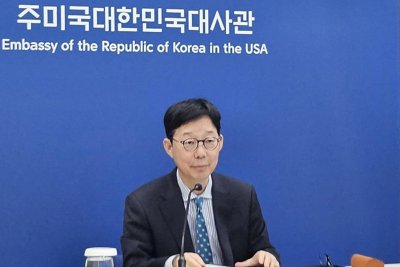
South Korean First Vice Foreign Minister Park Yoon-joo speaks during a press conference for South Korean correspondents at the South Korean Embassy in Washington, DC, USA, 20 May 2026. Photo by YONHAP / EPA
June 9 (Asia Today) — South Korea and the United States share the view that Seoul’s push to acquire nuclear-powered submarines would provide an important alliance capability, South Korea’s Foreign Ministry said Tuesday.
The ministry said the issue was discussed last week during the inaugural meeting to implement the South Korea-U.S. joint fact sheet, known as JFS, and that the talks proceeded on the premise that the submarines would be built in South Korea.
A Foreign Ministry official told reporters that the U.S. delegation did not raise any particular objection to domestic construction of the submarines.
U.S. President Donald Trump previously said on social media that South Korea’s nuclear-powered submarines would be built at Philly Shipyard in the United States, but officials from the two countries discussed the project on the premise of construction in South Korea, the official said.
“Both sides share the view that South Korea’s nuclear-powered submarines would be an important alliance capability for South Korea’s leading role in the defense of the Korean Peninsula,” the official said.
The official said the submarine plan is intended to strengthen security in response to conditions on the Korean Peninsula and is not aimed at any specific country.
On South Korea’s push to expand its uranium enrichment and spent fuel reprocessing rights, the official said the two sides agreed that strengthening their nuclear energy partnership serves their common interests and decided to begin full-scale talks on ways to make that happen.
South Korea faces the challenge of overcoming restrictions under its civil nuclear cooperation agreement with the United States, commonly known as the 123 Agreement, to expand enrichment and reprocessing rights.
Diplomatic circles have discussed options including a full or partial revision of the agreement or passage of separate special legislation.
“The joint fact sheet talks are aimed at strengthening South Korea-U.S. nuclear cooperation,” the Foreign Ministry official said. “In broad terms, this can be understood as looking at ways to adjust the current 123 Agreement.”
The launch meeting was held June 2-3 after a delay of about seven months. Foreign Ministry officials described the atmosphere as positive.
One official said the U.S. side gave the impression that it was serious about the talks. Another said the meeting proceeded in a constructive atmosphere.
Foreign Minister Cho Hyun also made an unannounced visit to a working lunch on the second day of the talks to encourage the delegations.
The government remains cautious, however, because of the details of the negotiations, concerns in the United States over nonproliferation norms and uncertainty surrounding Trump’s decision-making style.
“The overall perception of South Korea’s commitment to nonproliferation is the most important thing,” the Foreign Ministry official said. “We must make efforts to avoid sending unnecessary messages.”
President Lee Jae Myung’s remarks at his first-anniversary news conference Monday, where he criticized calls for South Korea to develop nuclear weapons as “truly irresponsible,” were seen as reflecting that concern.
The government is coordinating the schedule for follow-up talks with Washington.
The Foreign Ministry official said the two sides agreed to accelerate consultations. Several more full meetings led by the two countries’ national security councils are expected, along with frequent working-level talks by sectoral delegations.
DUBAI — The U.S. military said Tuesday it has begun strikes against Iran following the crash of a U.S. Army Apache helicopter off the coast of Oman that President Trump blamed on the Islamic Republic.
In a statement posted to social media, U.S. Central Command said the strikes would be “a proportional response to unjustified Iranian aggression.” It comes after Trump blamed Iran for downing the helicopter and vowed that the U.S. would respond.
Iranian state media reported that explosions were heard on an Iranian island in the Strait of Hormuz.
Trump had blamed Iran for shooting down a helicopter close to the Strait of Hormuz and said the United States must respond. Iran’s top diplomat said foreign military forces near the country’s territory “are at constant risk.”
The Apache helicopter that crashed went down after colliding with an Iranian drone, according to a U.S. official, who spoke on condition of anonymity to discuss an ongoing investigation.
It wasn’t clear whether the collision was intentional, and official statements only said the crash is under investigation. CNN, CBS News and other outlets earlier reported the Iranian drone collision.
Trump said Iran shot down the aircraft while it was on patrol over the Strait of Hormuz and declared that the U.S. “must, of necessity, respond to this attack,” in a post to social media.
The U.S. military later announced that it had begun strikes against Iran.
In the first known operation of its kind by the American military, a drone boat rescued the two aviators who were aboard the Apache attack helicopter when it went down near the critical shipping lane that Iran has effectively closed during its war with the U.S. and Israel.
Trump said in a social media post that military officials told him “the Iranians shot down one of our highly sophisticated Apache Helicopters.” Both service members “are safe and uninjured,” he added.
“Nevertheless, the United States must, of necessity, respond to this attack,” Trump wrote.
A woman walks past a mural depicting a U.S. aircraft carrier under missile attack in downtown Tehran, Iran on Monday.
(Vahid Salemi / Associated Press)
Soon after Trump made his accusation, Iranian Foreign Minister Seyed Abbas Araghchi said in a social media post that the strait is “thousands of miles away from U.S. shores.”
“Foreign forces in proximity to our territory are at constant risk on account of their own human errors, plain accidents, or potentially being caught in crossfire,” Araghchi wrote. “To reduce risk, best solution is for them to leave.”
The downing of the helicopter further strained a two-month ceasefire a day after Iran and Israel exchanged fire for the first time since the fragile truce took effect. Iranian state television said Tuesday that the Israeli attacks killed at least two members of the country’s air-defense units.
Since the U.S. and Israel began striking Iran on Feb. 28, the war has shaken the global economy, driven up energy prices around the world and made many basics, including food, more expensive.
Officials have been unable to turn the April ceasefire into a deal to permanently end the conflict, particularly as Israel intensifies and expands its military campaign in Lebanon against the Iranian-backed militia Hezbollah.
Army crew members picked up by drone boat
The Army aviators were rescued at 3:30 a.m. local time Tuesday, about two hours after their helicopter went down during a patrol off the coast of Oman, U.S. Central Command said.
The U.S. service members were spotted and picked up by a drone boat that took them to another location on the water, where they were picked up by a helicopter, said Capt. Tim Hawkins, a spokesman for U.S. Central Command. Hawkins initially said the drone took the two to shore, and he did not elaborate on the updated timeline.
It was the first known drone rescue at sea by the U.S. military, Hawkins said.
AH-64 Apache helicopters have been a key asset for the American military as it enforces a blockade on Iranian crude oil shipments and tankers, seeking to pressure Tehran into a deal. The helicopters have also been used by the United Arab Emirates to shoot down Iranian drones.
The drone used to perform the rescue was a 24-foot vessel called a Corsair, Hawkins said. It’s manufactured by Saronic Technologies.
The drone was assigned to the Navy’s Task Force 59, established in 2021 as the Navy’s first uncrewed and artificial intelligence unit that focuses on maritime security in the Middle East, including the Strait of Hormuz and the Suez Canal.
Trump insists an Iran deal is coming
Before he accused Iran of downing the U.S. helicopter, Trump had expressed renewed optimism over negotiations with Iran.
“We have a good chance” of signing a deal in “two or three days,” Trump said late Monday. But he did not provide any details on why there was reason for new optimism. In the two months since the U.S. and Iran agreed to an initial ceasefire, Trump has repeatedly predicted that a deal is near.
“We’re very close to having a very, very good, strong, powerful deal,” the president said.
Mediators, led predominantly by Pakistan, have been trying for weeks to get a deal across the line. However, both Iran and the U.S. have taken hard-line positions.
The U.S. wants to see Iran give up its stockpile of highly enriched uranium, which is believed to be entombed in the aftermath of American airstrikes that happened during the 12-day war in 2025. But Iran is refusing that and demanding relief from sanctions. It also wants the release of frozen assets even before a final agreement is in place, something rejected by Trump.
Before Trump’s comments on negotiations, Qalibaf said Monday that Trump’s remarks so far on a possible deal “contradicted the agreed-upon sections,” showing that the U.S. is “neither seeking a ceasefire nor dialogue.”
The continued fighting between Israel and Hezbollah is still a top Iranian priority as well. Lebanon’s army chief, Gen. Rodolphe Haykal, traveled to Pakistan on Tuesday. There, he met Pakistan’s army chief, Field Marshal Asim Munir, who has been a key figure in the Iran-U.S. talks.
Haykal’s visit comes as Lebanon’s government takes an increasingly hard line on Hezbollah but remains unable to disarm the powerful militia. Hezbollah thanked Iran on Tuesday for attacking Israel “in defense of our Lebanese people,” suggesting that Lebanon’s government should take this opportunity to improve relations with Tehran.
Israel issues a warning for Tyre, Lebanon
Meanwhile, the Israeli military issued an evacuation warning for Lebanon’s southern port city of Tyre, including the Christian quarter, which has so far been spared from airstrikes on the city.
Last week, Israel warned the Christian neighborhoods in Tyre that it believed Hezbollah members were among them. Many Lebanese Shiite Muslims fled to those areas as Israeli strikes hammered the Mediterranean coastal area over the past two weeks.
After last week’s warning, the Lebanese army deployed to the Christian district of Tyre in an effort to prevent Israeli attacks there and to show that Hezbollah has no armed presence in the area. But Avichay Adraee, the Israeli military’s Arabic-language spokesperson, posted on X on Monday that the Israeli military “will have to act against their terrorist activities in the neighborhood soon.”
Gambrell, Superville and Toropin write for the Associated Press. Superville and Toropin reported from Washington. AP writers Michelle L. Price in New York, Will Weissert in Washington, Bassem Mroue in Beirut, Munir Ahmed in Islamabad and Russ Bynum in Savannah, Ga., contributed to this report.
The Alibaba logo is displayed at a Alibaba office in Beijing, China, 09 June 2026. On 08 June, the Pentagon added Chinese companies Alibaba, BYD, and Baidu, among others, to a list of firms it said aid the Chinese military. Photo by JESSICA LEE / EPA
June 9 (Asia Today) — The U.S. Defense Department expanded its list of Chinese companies it says are linked to China’s military, adding about two dozen firms, including BYD, Alibaba, Baidu, WuXi AppTec and Unitree, according to U.S. media reports.
The annual list, known as the Section 1260H list of Chinese military companies, grew from last year as U.S. national security officials increased scrutiny of Beijing’s use of civilian technology to support military modernization.
The newly added companies span electric vehicles, e-commerce, cloud computing, artificial intelligence, biotechnology and robotics.
BYD is one of China’s leading electric vehicle makers. Alibaba operates e-commerce and cloud computing businesses, including in the United States. Baidu is active in internet search and artificial intelligence. WuXi AppTec is a major pharmaceutical and biotechnology services company, while Unitree is known for humanoid and quadruped robots.
The move shows the Trump administration is looking beyond semiconductors and AI chips as it assesses security risks tied to Chinese technology and industrial supply chains.
Chris McGuire, a fellow at the Council on Foreign Relations and former official at the State Department and National Security Council, said the action shows Washington is increasingly attentive to security risks from Chinese products in industries beyond semiconductors and AI.
China objected to the move.
A spokesperson for the Chinese Embassy in Washington said the Defense Department was overstretching the concept of national security and creating a discriminatory list targeting Chinese companies.
The updated list drew attention because it comes as Washington and Beijing have recently appeared to ease some trade tensions.
The United States had reportedly held back some measures against Chinese companies, including sanctions, high tariffs and cyber-related actions. An earlier version of the list expected in February was withdrawn ahead of a U.S.-China summit, according to U.S. media reports.
The summit, held in Beijing last month, focused heavily on trade issues.
Still, the Pentagon continues to view China as the United States’ main military competitor.
Craig Singleton, a senior fellow at the Foundation for Defense of Democracies, said the trade atmosphere may have improved after the summit, but Washington’s basic assessment has not changed.
He said U.S. officials still believe major Chinese civilian technology companies are connected to China’s military modernization.
Companies placed on the list are barred from doing business with the U.S. military. The designation does not automatically impose broad sanctions, but it can create reputational risk, reduce access to U.S. government-related business and increase scrutiny from investors and regulators.
The commercial effect can vary by company.
SZ DJI Technology, the Chinese drone maker placed on the list in 2022, has continued to maintain a strong position in the U.S. consumer drone market despite its designation.
The latest additions show that Washington’s concerns about China’s military-civil fusion strategy are expanding from advanced chips and AI models into broader technology and manufacturing ecosystems.
A woman applies sunscreen to her face. On Tuesday, the U.S. Food and Drug Administration said it will allow the first new permitted ingredient in over-the-counter sunscreens in 20 years. File Photo by Bill Branson/National Cancer Institute
June 9 (UPI) — The U.S. Food and Drug Administration on Tuesday added bemotrizinol to the list of permitted active ingredients in over-the-counter sunscreens, the first addition to that list since the 1990s.
The Department of Health and Human Services “is advancing innovation by bringing a new sunscreen ingredient to the U.S. market for the first time in 20 years,” HHS Secretary Robert F.Kennedy Jr said. “Bemotrizinol has been used safely in Europe for decades, and FDA’s action will increase competition and consumer confidence in sunscreen products.
The FDA said the ingredient has low levels of absorption through the skin and into the body and is generally recognized as safe and effective for adults and children 6 months old and older.
The American Chemical Society said that BEMT blocks ultraviolet A and ultraviolet B light rays and was first used in sunscreens in the European Union in 2000, with Canada, Australia and some countries in Asia following suit soon after.
UV B rays have more energy, cause visible sunburns and are the ones blocked by most U.S. sunscreens today. However, UV A rays can also cause skin cancers, the American Cancer Society said. They also cause skin cells to age and can cause indirect damage to cells’ DNA. The ACS said about 95% of the UV rays that reach the ground are UV A rays.
The FDA said an over-the-counter monograph drug, such as a sunscreen product, can enter the market without an approved drug application if it meets certain requirements. DSM Nutritional Products LLC submitted an OTC monograph order request to add BEMT, at concentrations up to 6%, as a new active ingredient in the OTC monograph for sunscreens. The FDA proposed to add BEMT in December, and the public could submit comments through Jan. 26.
Weekly insights and analysis on the latest developments in military technology, strategy, and foreign policy.
U.S. President Donald Trump says the Iranians shot down the AH-64 Apache that crashed near the Strait of Hormuz overnight and vowed to retaliate. As we noted earlier today, the crew was safely rescued by a drone boat, an unprecedented action, which you can read more about here.
“I have just been informed by our Great Military that last night the Iranians shot down one of our highly sophisticated Apache Helicopters while patrolling over the Strait of Hormuz,” Trump stated on Truth Social. “There were two pilots involved, both are safe and uninjured. Nevertheless, the United States must, of necessity, respond to this attack.”
Trump says that Iranian forces shot down the Army AH-64 Apache attack helicopter that went down over Hormuz yesterday.
Trump did not elaborate on how the Apache was shot down.
It’s worth noting that Iran’s small boats are known to be man-portable air defense systems (MANPADS) threats and also small FPV drones and loitering munitions, which Iran also possesses, have become a real threat to helicopters.
A U.S. official told Axiosan investigation “determined that an Iranian drone hit the helicopter, causing it to crash. The U.S. official said the investigation had not determined whether that was intentional.”
Trump did not say exactly how the U.S. will respond, but given past history of tensions in the region, an attack on Iranian facilities that could have been involved in the shoot-down would not be surprising. We have seen similar responses when Iran has fired at ships in the past.
Whether this will finally break the shaky ceasefire is an open question. Last week, Trump told reporters that he would consider resuming the war if Iran caused U.S. troop deaths.
“Yeah, if they killed U.S. troops, I think I would do that very quickly,” he said.
We have reached out to the White House and U.S. Central Command for additional details. CENTCOM declined comment.
UPDATE: 1:57 PM EDT –
Iranian official media has yet to explicitly confirm or deny involvement in the downing of the Apache. In a post on X addressing Trump’s claim, the FarsNews Agency offered a veiled threat from Mohammad Ghalibaf, speaker of the Iranian parliament.
“We prefer the language of diplomacy, but we speak other languages far more fluently,” Ghalibaf said on his own X account, repeated here by Fars. “Break your commitments, and we’ll switch to what we speak best. You ride the horse you saddled.”
🔴قالیباف: ما زبان دیپلماسی را ترجیح میدهیم، اما زبانهای دیگر را بسیار روانتر صحبت میکنیم
IRIB just repeated CNN’s report that the helicopter gunship was taken down by a Shahed drone.
🚨 CNN claims: Iran shot down US Apache helicopter with a Shahed drone
— IRIB (Islamic Republic of Iran Broadcasting) (@iribnews_irib) June 9, 2026
Press TV, meanwhile, took a rather cheeky approach.
“US President Donald Trump says Iran shot down ‘one of our highly sophisticated Apache helicopters while patrolling over the Strait of Hormuz,’” the outlet stated on X. “So much for the Iranian military having been ‘obliterated!’”
UPDATE: 4:20 PM EDT –
In a call with The Wall Street Journal, Trump tried to downplay the Apache downing, saying that it “wasn’t a big deal” and stressing that “the pilot is fine.”
Earlier today, Trump sought to play down the incident. In a phone call with the WSJ, Trump said that it “wasn’t a big deal,” stressing that “the pilot is fine.” He said he had the details on the incident and that “it was much different than you think.” https://t.co/arzskUbdSt
Exiting a classified congressional briefing, CENTCOM commander Adm. Brad Cooper offered a short answer to reporter questions about how the U.S. will respond to Iran downing the Apache.
“We’ll see,” he said, according to NOTUS reporter Joe Gould in a post on X.
Reporters asked Centcom’s Adm. Brad Cooper, exiting a classified congressional briefing, what the “response” would be to the downed U.S. helicopter.
In a post on X, CENTCOM announced its “forces began launching self-defense strikes against Iran at 5 p.m. ET today at the Commander in Chief’s direction, in response to yesterday’s downing of a U.S. Army Apache helicopter. The mission is a proportional response to unjustified Iranian aggression.”
We have reached out to the command for more details.
U.S. Central Command (CENTCOM) forces began launching self-defense strikes against Iran at 5 p.m. ET today at the Commander in Chief’s direction, in response to yesterday’s downing of a U.S. Army Apache helicopter. The mission is a proportional response to unjustified Iranian…
CENTCOM’s post follows reports from the official Iranian Mehr news agency about the sounds of explosions.
In a post on Telegram, the official Iranian Mehr news outlet is reporting that there have been “sounds of explosions heard in the Sirik port area.
According to Mehr, “the exact nature of these sounds is not yet clear, and none of the official military or law enforcement agencies have commented on the cause of these sounds so far.”
“Investigations to obtain accurate information about the nature of these explosions are ongoing,” Mehr added.
UPDATE: 5:42 PM EDT –
ABC News Chief Washington Correspondent Jonathan Karl was on the phone with Trump as CENTCOM announced the retaliatory strikes against Iran.
“I think it’s very important to respond,” Karl said Trump told him. “They shot down a helicopter, and we are responding as we speak…I believe the response should be very strong, very powerful, and that’s what this one is.”
I was on the phone with Trump as CENTCOM announced US retaliatory strikes against Iran. Here’s what he said:
“I think it’s very important to respond. They shot down a helicopter, and we are responding as we speak.”
He added: “This is a response to what they did they did with…
Tasnim is reporting that the U.S. strikes appear to be over for now.
“The wave of American attacks in the south has subsided, and after the hostile actions in Qeshm, Sirik, Jask and Mount Mubarake Jask, the situation is now reported to be calm,” the outlet claimed on Telegram. It also published a video it says shows “a suicide drone in the sky of Iraq.”
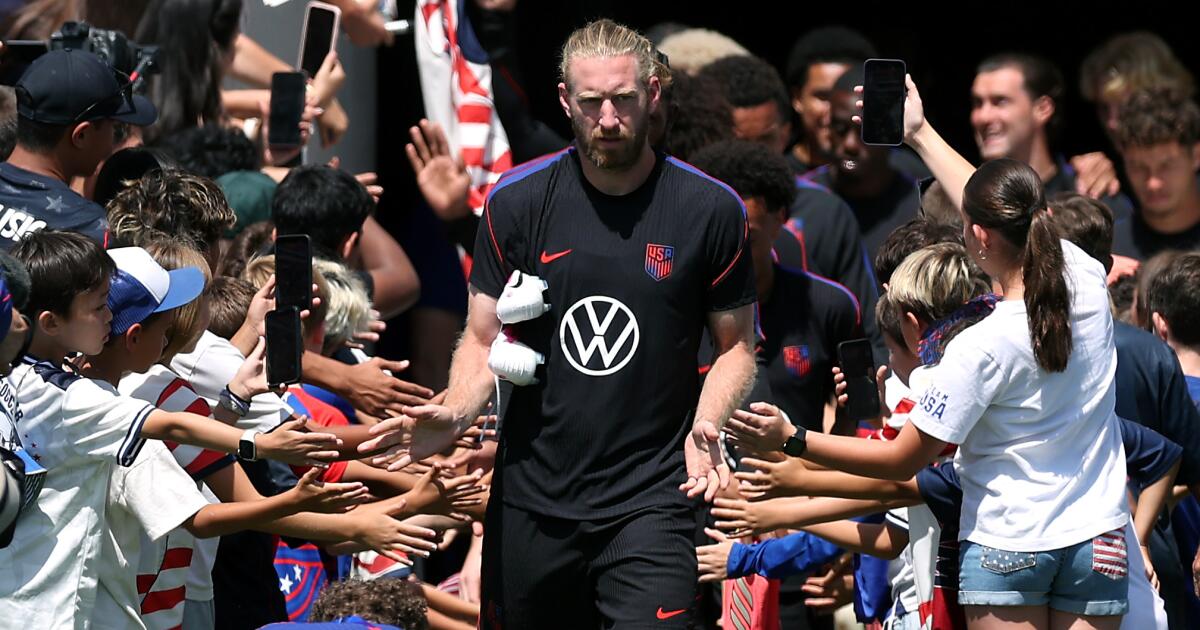
Tim Ream is the only player on the American World Cup team who was alive the last time the tournament was played in the U.S. But he was only 5, so the memories are kind of sketchy.
“I remember bits and pieces of 1994,” he said.
Still, it’s fallen on Ream, as both the captain and the oldest man on the roster, to prepare the team for what they’re about to experience when the U.S. opens play Friday at SoFi Stadium.
“I’ve tried to tell guys and tried to convey the message that this is a once-in-a-career [opportunity] and with that comes more expectation, more pressure,” he said. “But at the same time we have to enjoy it.
“It’s about just opening your eyes and taking everything in because this is unique, this is completely different from anything that any of us as players has experienced.”
Only 22 men in history have suited up for a home World Cup game on U.S. soil. Players including Alexi Lalas, Eric Wynalda, Cobi Jones and Marcelo Balboa parlayed that fame into broadcasting careers. Others have become coaches. Fifteen of them were inducted into the National Soccer Hall of Fame.
Ream, who played in the last World Cup in Qatar, said it’s difficult to compare the experience of that tournament with this one — especially since this one hasn’t started yet.
“It’s not our first rodeo, but it’s our first one on U.S. soil,” he said. “So it’s kind of our first rodeo in a way. It’s exciting.
“So take it in, enjoy it, embrace everything that it is. Because it’s so unique, it’s so special. And it’s not something that we will ever get to do again.”
Midfielder Cristian Roldan was also at the last World Cup, although he didn’t appear in a game. He says the energy is different this time around.
“You feel it when you’re there. You’re kind of isolated, you’re alone,” said Roldan, one of 13 players on this team who were also on the team in Qatar, half a world away. “But it’s different here. You see how many media members are here. You see how many people we’ve seen in training over the last few weeks. You feel that energy, you feel that support.
“Now it’s about translating that energy, that support, that pressure into something good.”
Goalkeeper Matt Turner agreed.
“This one, obviously, it’s a lot more tangible,” he told reporters Tuesday. “You guys are all here, right, real close to us. We have 5,000 fans for training yesterday. It’s very different. In Qatar, you’re in a lot more of a bubble.
“But us players, the ones that had the [World Cup] experiences, I think we’ve done a really good job of keeping that boundary.”
What’s lacking this time, Turner said, was the pressure of a qualifying campaign to bring the team together. Because the U.S. is one of the three host countries — alongside Mexico and Canada — it was assured a spot in 48-team field when it won the right to stage the tournament eight years ago. As a result it hasn’t played a competitive game in more than 11 months.
“The intensity of those games, the environments that you have to dip into and get results, you find out a lot about the players and find out a lot about the team,” he said. “This time around, it’s been different. We’ve had a lot of different looks, a lot of different players getting a chance to prove themselves and show themselves.
“It’s not anything bad or good. I just think it was a little bit different.”
Striker Folarin Balogun, one of 13 World Cup newbies on the U.S. team, said he doesn’t expect the gravity of the experience to hit him until he lines up for Friday’s opening game with Paraguay.
“It’s probably going to start to go more real to me when I’m preparing to go on to the pitch,” he said, sitting behind a table next to Ream. “I’m hearing the fans shouting and screaming, so I definitely think it’ll be real to me the closer I get.
“But you know, this is the first opportunity for me to play in the World Cup so I don’t really have any expectations.”
Balogun then looked over at a frowning Ream, who had just finished urging his teammates to be sure to stop and smell the flowers along this World Cup journey.
“Just trying to stay present, stay in the moment,” Balogun hastened to add. “You know, enjoying the experience. I think it can be a really memorable World Cup.”
June 9 (UPI) — An assistant of Jeffrey Epstein told members of the House Oversight Committee on Tuesday that she was unaware of his crimes but that he was a master manipulator.
Lesley Groff, Epstein’s then-executive assistant, told the committee that she believed the massage appointments she made for Epstein with young women and girls were with massage therapists, two sources told CNN. She said Epstein had every reason to keep his crimes secret from her.
Groff helped manage Epstein’s life, including making appointments with women, setting meetings with powerful people and arranging Epstein’s flights with the young women. She worked for Epstein for nearly 20 years, and her name was listed in the Epstein files more than 150,000 times.
Epstein, a billionaire financier and registered sex offender, died by suicide in prison in 2019.
Groff told the lawmakers that she wants to help and that since Epstein was arrested, she’s lost friends and her family has faced harassment.
Groff said Epstein didn’t sexually abuse her, one of the sources told CNN, and that she didn’t need the job. She said that Epstein and Ghislaine Maxwell told her not to associate with their friends, and they insisted that their business was none of hers.
Survivors told a different story.
Sharlene Rochard was skeptical that Groff didn’t know about the crimes.
“One of the hardest parts for survivors is hearing the people who were closest to Epstein claim they saw nothing,” Rochard told CNN. “That doesn’t match my experience. Survivors deserve answers, not claims of ignorance.”
In a previous statement, Groff’s lawyer told CNN that she worked for Epstein as “part of a professional staff that included in-house attorneys, accountants and other office staff” and that her job included making appointments for Epstein, “taking his messages and setting up high-level meetings with CEOs, business executives, scientists, politicians, celebrities, charitable organizations and universities.”
Committee Chairman Rep. James Comer, R-Ky., told MSNow that the panel has referred two names to the Department of Justice, though he didn’t identify them.
“I think the interviews that we’ve done have been very productive,” Comer told reporters on Tuesday morning.
“We’re bringing in the most important people in the whole Epstein criminal enterprise that are still alive, and hopefully we’ll get the proof to the American people that there’s an opportunity for accountability,” Comer said.
The committee is scheduled to interview Microsoft founder Bill Gates on Wednesday.
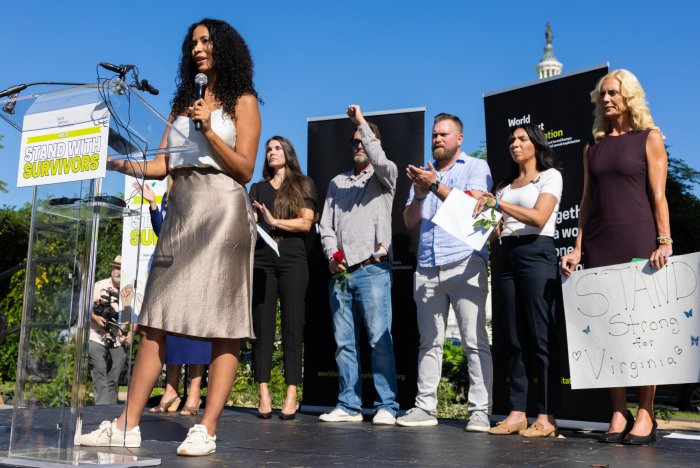
Lisa Phillips, a survivor of Jeffrey Epstein and Ghislaine Maxwell, speaks out during a rally with other survivors on Capitol Hill in Washington on September 3, 2025. Photo by Anna Rose Layden/UPI | License Photo
June 9 (UPI) — Two U.S. Army helicopter crew members were rescued and brought to safety within two hours after their Apache gunship crashed near the Strait of Hormuz.
U.S. President Donald Trump said early Tuesday that the two service personnel were “fine” and promised a report on the incident would be released in the next 24 hours or so.
U.S. Central Command said the pair were in a stable condition with spokesperson Capt. Tim Hawkins telling NBC News that a Task Force 59 unmanned surface vessel found and recovered the soldiers — the first time the U.S. military had carried out such an operation with a drone boat.
A source told the New York Times that it was yet to be established whether the aircraft came under Iranian fire, sustained a technical malfunction or encountered another issue.
The loss of a Hellfire missile-armed AH-64 Apache — which patrol the strait, downing Iranian drones and preventing small boats from attacking shipping — is a first for the U.S. military since the conflict started Feb. 28.
At least eight U.S. fighter jets and other military aircraft, plus more than two dozen uncrewed aerial vehicles, have been lost in both enemy and friendly-fire incidents but Monday’s crash was the first loss of a helicopter.
The Apaches play a key tactical role alongside F/A-18 and F-35s fighter aircraft in U.S. Central Command’s mission to counter the blockade of the vital international shipping route, which Iran has effectively put out of bounds to the vast majority of oil tankers and other commercial vessels.
However, the helicopters have been patrolling closer to Iran, including its islands in the Hormuz Strait and Persian Gulf, as part of Centcom’s effort to maintain the pressure on Tehran amid protracted negotiations to resolve the 100-day-long conflict.
Tehran did not immediately claim responsibility for the incident, according to Iran’s semi-official Mehr News Agency.
The confirmation from the U.S. side came hours after Iran and Israel sides paused airstrikes on each other at the request of U.S. President Donald Trump, who urged them to “stop shooting” because an agreement with Tehran to end the war was very close.
“We’re in the final throes of what will be a very, very good deal that will not allow in any way, shape, or form nuclear weapons. The strait will open up right away.
Trump said the Strait of Hormuz would reopen to international shipping immediately after the agreement was signed, which could be before the weekend, adding that there was a chance it could be far earlier, “in one hour, if you want to know the truth.”
President Donald Trump discusses renovations to the Lincoln Reflecting Pool and makes an announcement on coal in the Oval Office at the White House on Thursday. Photo by Samuel Corum/UPI | License Photo
NEW YORK — Donald Trump is set to be the first sitting U.S. president to attend an NBA Finals game, bringing strict security measures that will require New York Knicks fans to navigate an extensive safety perimeter around Madison Square Garden and an expected lengthy wait to get inside the building.
The security for Game 3 between the Knicks and San Antonio Spurs and the scene around the arena more closely resembled New Year’s Eve in Times Square, and for fans, it might seem more akin to a trip to the airport. They were asked to get to the game two hours early and will be required to provide a ticket to get past various checkpoints along with passing through a TSA-style magnetometer.
Trump’s appearance led the New York Police Department and Secret Service to establish a multi-block security perimeter around the arena, cancel a watch party outside and institute a no-bag policy for ticket-holders. Fans had gathered around the Garden to watch games during this playoff run, during which the Knicks have won 13 games in a row to reach the final for the first time since 1999 and move two victories from their first NBA title since 1973.
“The NYPD in coordination with the Secret Service made the decision for Game 3, where we have a presidential visit, that we could not support watch parties right outside of the Garden,” Police Commissioner Jessica Tisch said at a news conference Monday. “We are looking forward to bringing back watch parties for Game 4. But I think New Yorkers are used to presidents coming to town, and they understand that that generally means lockdowns of areas and that’s what you’re going to see tonight at the Garden.”
Trump has attended several major sporting events in his time as president, and the security measures have created major hassles for fans.
Thousands of fans missed the start of last year’s U.S. Open men’s singles final between Carlos Alcaraz and Jannik Sinner because of lengthy security lines. Even though the U.S. Tennis Association pushed back the start of the match by a half-hour, many fans still couldn’t get in because added measures meant that they had to go through screening not only when they arrived at the Billie Jean King National Tennis Center but again in front of the steps into Arthur Ashe Stadium, where Trump watched from a suite.
Asked his thoughts on Trump attending, Knicks center Mitchell Robinson said: “Cool, I guess. We can still get out there and play (no matter) who’s here and who’s not.”
Mayor Zohran Mamdani and other dignitaries are also expected to be at the game Monday night.
It was already hard enough for Knicks fans to get inside Madison Square Garden because of astronomical ticket prices. The get-in price for a ticket is higher than the average cost of monthly rent in New York, surging over $6,000. The best seats are tens of thousands of dollars. Mamdani said he bought his ticket for about $1,000 directly from Madison Square Garden.
The difficulty of seeing the game in-person has prompted fans to crowd bars, streets and watch parties all over the city. The watch party near the Garden has become a major event all through the playoffs, but with Trump attending, that event will be moved a few blocks away outside the security perimeter, at Bryant Park.
“We improvise,” said Knicks guard Jose Alvarado, who is a New York native. “We’re New Yorkers. We’re going to find a way to watch a game, and that’s what we’re doing.”
Whyno writes for the Associated Press. AP writer Brian Mahoney contributed to this report.
With its World Cup opener just four days away, the U.S. team moved into its temporary home in Irvine on Monday, where the players found thousands of new Southern California neighbors waiting in line to watch them kick a ball.
After the U.S. announced that Orange County Great Park would be its base for at least the group stage of the tournament, the City of Irvine held a raffle for passes to see the team train in its only public workout.
Thirty-two thousand people applied and 5,500 received access on a warm Monday morning to watch the team rush through a light 45-minute practice that was notable primarily because it was the first in which injured center back Chris Richards was fully involved. Richards tore two ligaments in his left ankle playing for Crystal Palace, his English club team, on May 17 and hadn’t played or fully trained since. The team is rushing to get him ready in the hopes he can play at some point in the three-game group stage.
But the practice was also notable because it was the first at Championship Soccer Stadium, about 50 miles southeast of SoFi Stadium in Inglewood, where the U.S. will open its World Cup on Friday against Paraguay.
“[The] environment and facilities are crazy. It’s more than we expect,” U.S. coach Mauricio Pochettino said of the venue. “We are so grateful.”
Championship Soccer Stadium is owned and managed by the city, which has leased it to the Orange County Soccer Club of the second-tier USL Championship. But the club was temporarily evicted in late April to make space for the national team — which is just fine with them.
U.S. men’s soccer player Chris Richards autographs the shirt of a young fan during a team practice Monday.
(Ronaldo Bolaños / Los Angeles Times)
“How can you not be excited about the host nation training in your facility?” said Dan Rutstein, president of business operations of the Orange County club.
“We’re proud to be associated with the U.S. national team. We wouldn’t want to ever block anything, even if we could.”
(And they couldn’t, the city said.)
The Great Park is a sprawling 500-acre complex built on the site of the former Marine Corps Air Station El Toro, which closed in 1999 after 56 years training pilots for conflicts from World War II through the first Gulf War. In 2001, voters approved a proposal to convert the space into a public park and nature preserve, one which now includes, among other things, five sand volleyball courts, four basketball courts, 25 tennis courts, 12 softball and baseball fields, the ice arena where the Ducks practice and 25 soccer fields, including the pristine one FIFA just installed inside the 5,500-seat stadium.
“The idea was that this would be a quality facility, a great park that we hope will rival San Diego’s Balboa Park and other great parks across the country,” Irvine mayor Larry Agran said. “It took a lot of nurturing, a lot of time, a lot of work.”
Bringing the World Cup — or at least a World Cup team — to Irvine also took a lot of time and work. Agran said the city put out feelers about hosting a training base five years ago and made the first cut in 2024 when the Great Park was placed on a list of options distributed to tournament qualifiers.
Over the next two years, Rutstein said, about a dozen national teams sent representatives to have a look while Sam Zapatka, the operations manager of the USMNT, said he scouted 27 facilities from Seattle to San Diego. After his first visit to the Great Park, however, he said he stopped looking and in March, the team announced it would train in Irvine.
On Monday, when the players filed out of the stadium’s locker room, which FIFA expanded and upgraded, they were greeted by rhythmic clapping and chants of “USA! USA!”
1
2
3
4
1.U.S. men’s soccer player Weston McKennie takes part in a training session at Orange County Great Park.(Ronaldo Bolanos / Los Angeles Times)2.(Ronaldo Bolanos/Los Angeles Times)3.U.S. men’s national soccer team coach Mauricio Pochettino waves to fans attending practice on Monday.4.Pochettino speaks to players after drills at Orange County Great Park on Monday.(Ronaldo Bolanos / Los Angeles Times)
“I think we’ve all been, I wouldn’t say overwhelmed, but possibly surprised by the excitement and the buzz,” said captain Tim Ream, who led the team onto the field. “Pulling up here with 5,500 fans ready to watch a training session is incredible.
“We get to train in an actual stadium with a good pitch. The support, really, from all the kids out there is amazing. You want to feel like you have a good home base, right? So really, we’re looking forward to being here.”
Especially after 5,000 of your neighbors show up for the housewarming party.
U.S. President Donald Trump discusses renovations to the Lincoln Reflecting Pool and makes an announcement on “Beautiful, Clean Coal” on Thursday in the Oval Office at the White House in Washington, D.C. A federal judge on Monday ruled that a H-1B visa fee imposed by Trump is illegal. Photo by Samuel Corum/UPI | License Photo
June 8 (UPI) — A federal judge ruled Monday that a $100,000 visa fee for U.S.companies seeking highly skilled workers from other countries is illegal. This voids the requirement set by President Donald Trumpby a presidential proclamation in September.
Judge Leo Sorokin said the policy violated the U.S. Constitution and the federal Administrative Procedure Act and that only Congress has the authority to change federal immigration policy to require the fee. The Trump administration says it will appeal the ruling.
“The president lacked the power or delegated authority to impose a tax on H-1B petitions,” Sorokin said in his decision, CNN reported.
A group of Democratic state attorneys brought the case in December. Letitia James, New York attorney general, was among them.
“Every day, thousands of people with H-1B visas serve New Yorkers as doctors, teachers and other skilled workers,” James said Monday, CNBC reported. “Today, a court put an end to this administration’s illegal attempt to destroy this critical program and the many jobs it makes possible.”
Before Trump’s proclamation, H-1B visa fees ranged from $2,000 to $5,000 per application, CNBC reported. These visas are meant for foreign professionals who hold at least a bachelor’s degree to work in more specialized fields. They’re valid for three years and can be renewed for another three years after that. The New York Times reported that about 85,000 of such visas are available annually, and that they are often used by universities and companies in the fields of technology, finance and medicine.
White House spokeswoman Taylor Rogers said in a statement to CNBC after the ruling that “President Trump has clear legal authority to restrict entry of any class of aliens he determines is not in America’s best interests, and that is exactly what he did.” She said the visa program “has been abused for decades.”
WASHINGTON — The State Department will offer a “premium” expedited service for foreigners seeking business or tourist visas to come to the United States that will set applicants back $750 — on top of the initial fee of $185.
In a notice to be published in the Federal Register this week, the department will unveil a pilot program that will allow visa applicants to pay the $750 to schedule an appointment for an interview within 10 days of the payment at select U.S. embassies and consulates.
The pilot program will run from July 1 to Dec. 31, according to internal documents obtained by the Associated Press and a State Department official, who spoke on condition of anonymity because the program has not yet been announced.
The move is a potential effort to ease conditions caused by the Trump administration’s push to make entering the United States more difficult. The administration has cracked down on most forms of migration for foreigners — demanding that bonds of up to $15,000 be paid for visa processing in some, mainly African, countries and requiring years of personal history, including social media accounts, to be vetted.
The new requirements have caused delays in visa processing around the world, prompting complaints.
Wait times for visa interviews for citizens of countries that are not part of the Visa Waiver Program can be several months if not longer. But paying the fee for the “optional premium add-on service” does not guarantee that a visa will be issued.
The embassies and consulates at which the expedited service will be available are to be announced before the program takes effect July 1. The pilot program will run through the end of the year but could be extended depending on demand.
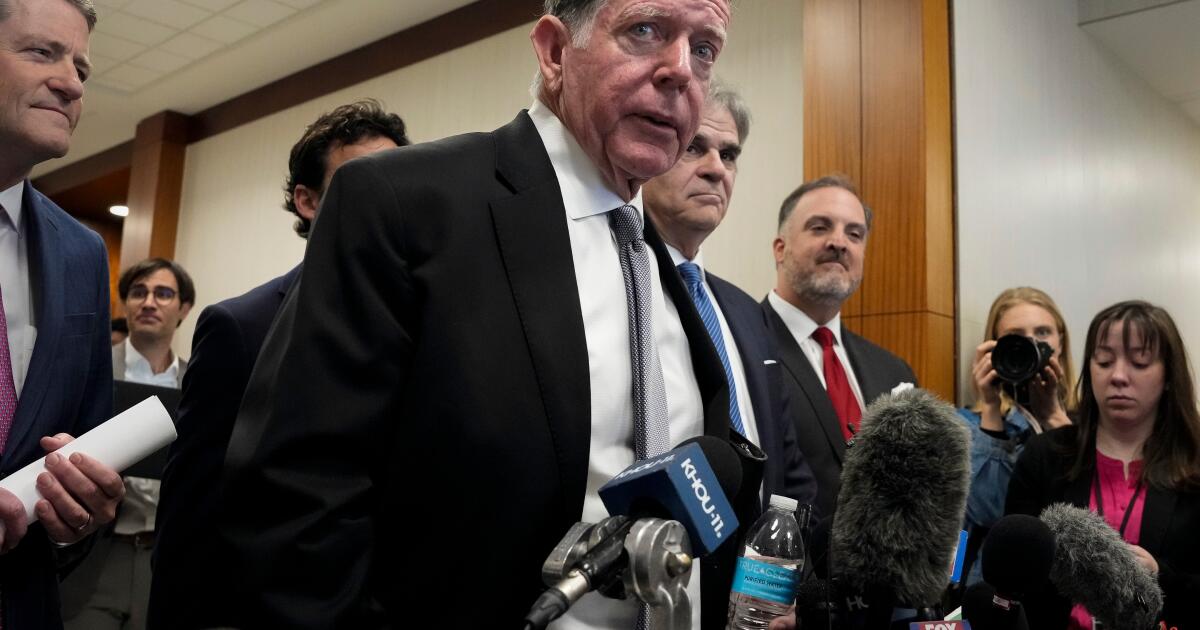
AUSTIN, Texas — A lawyer who represented Texas Atty. Gen. Ken Paxton for nearly a decade over accusations of corruption and securities fraud is supporting Democrat James Talarico — and not his former client — in one of the biggest U.S. Senate races.
Talarico on Monday drew attention to his campaign winning the endorsement of Houston attorney Dan Cogdell, who was part of Paxton’s defense team during the Republican’s historic impeachment trial in 2023 that ended in acquittal.
The legal troubles that shadowed Paxton in public office in Texas are a central attack line of Talarico’s campaign, though in his endorsement, Cogdell didn’t cite concerns about his client’s past.
Cogdell said he didn’t dislike Paxton as a person and felt that Texas lawmakers were right to eventually acquit the attorney general. But as a politician, Cogdell said, Paxton is too focused on appeasing President Trump.
“I worked my ass off for the man for nine years,” Cogdell said in an interview with the Associated Press. “But that’s a different inquiry, my obligation to Ken ended at the courthouse steps and my obligation as a citizen is to do what I think is the right thing.”
Cogdell said Texas needs a lot of work, pointing to education and health care, “and to simply bootlick or rubber stamp Trump, that’s not what we need in D.C. right now.” He also recently spoke to Talarico at length on Cogdell’s podcast.ty.
Asked for comment, an aide to Paxton’s campaign said Cogdell is a Democrat and called the endorsement unsurprising.
The lead defense attorney in Paxton’s impeachment trial, Tony Buzbee, reiterated that on X. Buzbee added that he was supporting Paxton in the race.
Cogdell described himself as a registered Democrat, although voters in Texas do not register by political party. He added, however, that he considers himself a moderate who has given more campaign contributions over the years to Republican candidates than Democrats.
Talarico has given Democrats hope of flipping the statewide seat in Texas blue as the party scrambles to retake control of the U.S. Senate in November.
Paxton’s insurgent campaign beat Sen. John Cornyn in the Republican Senate primary runoff last month, helped by a Trump endorsement in the final days of the race.
June 8 (UPI) — Nithya Raman will advance to a Los Angeles mayoral runoff in November, besting Spencer Pratt for second place in last week’s primary vote, sources including CNN and NBC News said Monday evening.
Raman, a City Council member, will run against incumbent Mayor Karen Bass; both are Democrats. Raman, a member of the Democratic Socialists of America, is considered a progressive challenger.
Raman emerged second Monday over Republican Spencer Pratt, a former reality TV star. Pratt was in second place as of primary day, but late-counted votes swung the tally toward Raman. They were part of a14-candidate field in the primary.
“Right now, we have a city that feels rudderless,” Raman told CNN before the primary. “So many positions that haven’t been filled, places where Angelenos feel abandoned on some of the most important issues facing this city. I will bring that urgency, I will bring that accountability, I will bring that focus that Los Angeles needs and that Angelenos need.”
Raman and Bass had close political ties before Raman entered the election late. Pratt campaigned on criticism of Bass’ response to the 2025 wildfires — he lost his house in last year’s Palisades fires — and homelessness.
NBC News reported that while President Donald Trump did not officially endorse a candidate in the election, he praised Pratt’s bid before the primary, saying, “I’d like to see him do well. He’s a character.”
June 8 (UPI) — On Monday, President Donald Trump officially nominated Todd Blanche, the acting attorney general, to take over the job for good, sending the nomination to the Senate. Blanche would replace Pam Bondi, the attorney general Trump fired in April.
Trump said several days ago that he would officially nominate Blanche, who used to be one of the president’s personal defense lawyers, for the role.
Now, the Senate must confirm Blanche through a majority vote. In a statement, Senate Judiciary Committee Chairman Chuck Grassley said that he will support Blanche, CNN reported.
“Blanche is well-qualified and has shown his dedication to restoring law and order across our country,” Grassley said. “The Senate Judiciary Committee’s work to process Blanche’s nomination is underway.”
CNN also reported that Sen. John Cornyn, R-Texas, who is also a member of the committee, said that he will ask Blanche about Trump’s $1.8 billion “anti-weaponization” fund, which was created after a settlement between the Internal Revenue Service and the president, his sons and the Trump Organization.
Blanche said last week that the fund, which some have called a way for Trump to reward his political allies (including those convicted in the Jan. 6, 2021, riots at the U.S. Capitol), is dead. However, he refused to put that in writing. On Thursday, Senate Republicans stopped an attempt by Democrats to ensure the fund’s permanent demise through an amendment to a bill to fund the Department of Homeland Security.
Blanche’s nomination also comes after he arranged for Trump and the other parties in the IRS lawsuit to have immunity from prosecution or enforcement actions on any tax returns filed before the settlement.