May 24 (UPI) — The United States on Sunday blamed the collapse of a U.N. nuclear nonproliferation conference on what it called some countries’ inability to take Iran’s threat to global nonproliferation seriously.
The nearly monthlong Review Conference of the Parties to the Treaty on the Nonproliferation of Nuclear Weapons ended Friday without consensus on an outcome document, which reviews implementation of the Cold War-era pact and sets recommendations and commitments for its 191 state parities.
Conference President Do Hung Viet of Vietnam said Friday, following weeks of work and four versions of an outcome document, that he would not put it forward for adoption as “the conference is not in a position to achieve agreement on its substantive work.”
The failure came amid mounting global insecurity, including the war in Iran, the modernization and expansion of nuclear arsenals and other geopolitical tensions, which complicated efforts to reach consensus.
The U.S. State Department on Sunday faulted on other NPT member states.
“The inability of some NPT States Parties to take Iran’s threat to global nonproliferation seriously will be addressed by the United States in our continuing engagements,” State Department spokesperson Thomas Pigott said in a statement.
He said the failure to adopt a document was made worse by what he described as Iran’s continued noncompliance with NPT-required safeguards and “its escalating nuclear activities.”
Pigott did not specify in the statement which activities he was referring to. The United States attacked Iran’s nuclear facilities in June, with President Donald Trump repeatedly claiming they were “obliterated.”
“For the NPT Review Conference to uphold its founding mandate, States Parties cannot turn a blind eye to Iran’s noncompliance, nor can violators be allowed to undermine the enforcement and accountability mechanisms at the core of the NPT,” he said.
Iran was quick to blame the United States, saying Washington’s “excessive demands” were at fault.
The United States was seeking to include language in the document concerning Iran, which accused the United States during the meeting of violating the treaty by attacking its nuclear facilities.
“The NPT Review Conference failed for the third consecutive time due to obstructionism by the United States and its allies,” Iran’s mission to the U.N. said in a social media statement.
Following the collapse of the conference, U.N. Secretary-General Antonio Guterres expressed his “disappointment.”
“The current international environment, marked by deep tensions and an elevated risk posed by nuclear weapons, demands urgent action,” his spokesperson, Stephane Dujarric, said in a statement.
“The secretary-general appeals to all states to make full use of all available avenues of dialogue, diplomacy and negotiation to reduce tensions, lower nuclear risks and, ultimately, eliminate the nuclear threat.”
It is the 11th meeting of the treaty states parties and the third in consecutive review conference to end without an agreement.
Daryl Kimball, executive director of the Arms Control Association, said the failure of the conference to call for “urgently needed” concrete actions to avert a new nuclear arms race was due to the five nuclear-armed states’ use of “aggressive diplomatic intimidation tactics against non-nuclear weapons states.”
He also said U.S. leadership as “sorely lacking.”
“The foundations of the NPT, the cornerstone of global efforts to reduce and eliminate the world’s greatest danger, are cracking due to inattention, intransigence and ineptitude,” Kimball said in a statement.
Nineteen people were injured when a stampede broke out Sunday at a beachfront motorcycle rally in South Carolina, local officials reported. Photo courtesy Horry County, S.C., Fire Rescue/Facebook
May 24 (UPI) — Nineteen people were injured Sunday during a stampede that broke out during a popular motorcycle rally in Atlantic Beach, S.C., local officials said.
Three of those hurt in the stampede were hospitalized with non-life threatening injuries while the others were treated for minor injuries and released in what Horry County Fire Rescue officials called a “mass casualty event.”
Crews were dispatched to South Ocean Boulevard in Atlantic Beach at 1:05 a.m. EDT on Sunday during the Black Pearl Cultural Heritage and Bike Festival, hailed as the largest African American motorcycle rally in the United States and held annually on Memorial Day weekend in the small South Carolina coastal town.
In a statement issued to media outlets, Interim Town Manager Titus Leaks said South Carolina Law Enforcement Division and state Department of Natural Resources personnel quickly took control of the situation, which they assessed was triggered by individuals who “had simply started running.”
“While any incident is unfortunate, it is also important to recognize that this isolated moment does not reflect the overall success of the event,” the statement said. “The Black Pearl Cultural Heritage and Bike Festival has been held for over 40 years and continues to attract visitors from across the country because of the positive experience it provides.”
Leaks characterized the incident as “a brief crowd reaction that was quickly identified and managed by law enforcement who were already in position.
“We planned ahead, we responded quickly, and we will continue to build on that to ensure the safety of everyone who visits Atlantic Beach.”
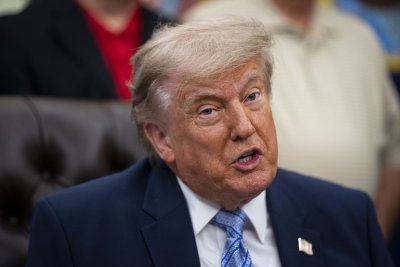
President Donald Trump speaks in the Oval Office at the White House in Washington, D.C., on Thursday. On Sunday, he urged negotiators on the deal with Iran to take their time and get it right. Photo by Al Drago/UPI | License Photo
May 24 (UPI) — President Donald Trump on Sunday urged his negotiators “not to rush into a deal” with Iran because “time is on our side.”
He made the comments in a post on Truth Social that also took aim at the Joint Comprehensive Plan of Action, the so-called Iran nuclear deal created in 2015 and which Trump withdrew from in 2018. In his post, Trump called it “one of the worst deals ever made by our country” and blamed former President Barack Obama and his administration.
“It was a direct path to Iran developing a Nuclear Weapon,” Trump wrote. “Not so with the transaction currently being negotiated with Iran by the Trump Administration – THE EXACT OPPOSITE, in fact!”
Trump said Saturday the deal with Iran had been “largely negotiated” and that final aspects were being worked out. On Sunday, he added that talks were “proceeding in an orderly and constructive manner.
“I have informed by representatives not to rush into a deal in that time is on our side,” he wrote.
“Both sides must take their time and get it right. There can be no mistakes!”
Secretary of State Marco Rubio also said Sunday that “significant progress” had been made and hinted that Trump may make an announcement on the issue “a little bit later today,” The New York Times reported.
“Suffice it to say some progress has been made, significant progress, although not final progress,” he said during a news conference in New Delhi.
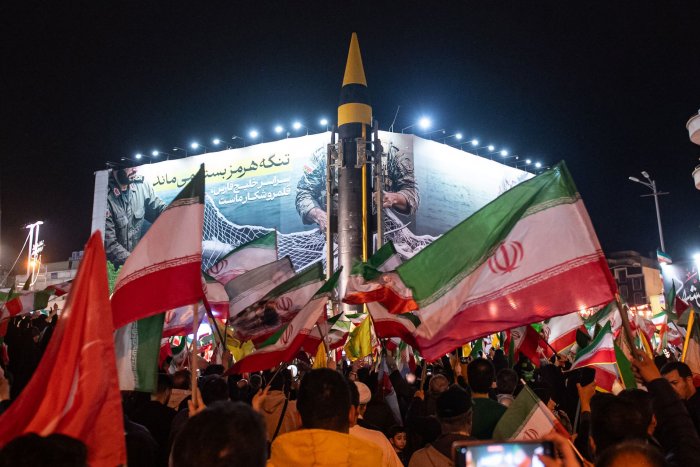
A missile identified as “Khorramshahr-4” was on display during a public rally in Tehran’s Enghelab Square on April 21, 2026. Photo by Behnam Tofighi/UPI | License Photo
The second World Cup to be played in the U.S. will kick off in less than three weeks but apparently some people can’t wait since the American team’s tournament roster was leaked to The Guardian on Saturday.
The Athletic said it had independently confirmed the 26-player list with multiple sources. U.S. Soccer is scheduled to formally release the team in a nationally televised event in Manhattan this week. Contacted by The Times for comment Saturday a U.S. Soccer spokesman said, “What I can tell you is we will make the official announcement Tuesday.”
But it’s the roster, and not the way in which it was released, that is of most importance here and among the striking omissions are midfielders Tanner Tessmann and Diego Luna. Tessmann had been called into six training camps under U.S. coach Mauricio Pochettino and was seen as a potential starter for the U.S. before being shut down by his French club, Lyon, at the end of the season, leaving his fitness for the World Cup in question.
Luna, who plays in MLS for Real Salt Lake, also has been a regular under Pochettino, playing in 17 of the U.S. team’s 18 games in 2025, scoring four goals and contributing four assists. But he missed time earlier this season because of a knee injury and sat out his club team’s last two games with a muscle problem.
Thirteen of the 26 players who were selected — including midfielders Tyler Adams, Gio Reyna, Christian Pulisic and Weston McKennie — were on the U.S. team in Qatar four years ago. They will be joined by defenders Miles Robinson and Chris Richards, who missed the last World Cup to injury, and forward Ricardo Pepi, one of the final cuts in 2022.
Richards was included on the roster confirmed by the Athletic despite tearing two ligaments in his left ankle in Crystal Palace’s penultimate Premier League match with Brentford last weekend. The final roster, which can include between 23 and 26 players, must be filed to FIFA by June 1. However teams can replace players up to 24 hours before their opening match in the event of injury or illness.
Reyna, one of the most gifted players in the U.S. talent pool, was named to the team despite having played just one full 90-minute game for club or country in the last four years. And in the last World Cup in Qatar, he was nearly sent home for a perceived lack of effort in training after he learned he wouldn’t be a starter in the tournament.
“No spot is guaranteed or safe,” he said of the World Cup during an interview earlier this month alongside his German club teammate Joe Scally, who also made the U.S. roster. “I want to be there. It’s a World Cup in your home country.
“It’s a dream come true.”
“It only happens every four years,” added Scally, who made the 2022 team but did not play in the tournament. “Everyone’s just super excited, especially to be in America. It’s going to be very special.”
Among the first-time World Cup selections are midfielder Malik Tillman, the German-born brother of LAFC midfielder Timothy Tillman; Mexican-born attacker Alejandro Zendejas, who plays for Club América in Liga MX; and Vancouver Whitecaps midfielder Sebastian Berhalter, son of Gregg Berhalter, the U.S. coach in the last World Cup.
The inclusion of Zendejas on the roster was a bit of a surprise since his last appearance with the national team came in September but he has played well with América this season.
After Tuesday’s roster announcement in New York, the team will fly to Atlanta for training camp ahead of friendlies with Senegal in Charlotte, N.C., on May 31 and against Germany on June 6 in Chicago. The U.S. opens World Cup play at SoFi Stadium in Inglewood on June 12, facing Paraguay.
ROSTER
Goalkeepers: Chris Brady (Chicago Fire), Matt Freese (New York City), Matt Turner (New England Revolution)
Defenders: Max Arfsten (Columbus Crew), Sergiño Dest (PSV), Alex Freeman (Villarreal), Mark McKenzie (Toulouse) Tim Ream (Charlotte FC), Chris Richards (Crystal Palace), Antonee Robinson (Fulham), Miles Robinson (FC Cincinnati), Joe Scally (Borussia Mönchengladbach), Auston Trusty (Celtic)
Midfielders: Tyler Adams (AFC Bournemouth), Brenden Aaronson (Leeds United), Sebastian Berhalter (Vancouver Whitecaps), Weston McKennie (Juventus), Christian Pulisic (AC Milan), Gio Reyna (Borussia Mönchengladbach), Cristian Roldan (Seattle Sounders), Malik Tillman (Bayer Leverkusen), Tim Weah (Marseille), Alejandro Zendejas (Club América)
May 24 (UPI) — The gunman who opened fire at the White House this weekend before being fatally shot by Secret Service officers has been identified as Nasire Best, unnamed sources confirmed to multiple media outlets.
The 21-year-old had previous encounters with the Secret Service and had previously posted threatening statements online, the sources told CBS News, NBC News and CNN. The sources said Best had never acted violently or brandished a weapon prior to Saturday evening, when police said he approached a checkpoint at the White House, pulled a firearm from his bag and opened fire.
Officers returned fire, striking Best, who was transported to a hospital where he was declared dead, Anthony Guglielmi, chief of communications for the Secret Service, said in the statement.
A bystander was also injured in the shooting and was in critical condition.
“It remains unclear whether the bystander was struck by the suspect’s initial gunfire or during the subsequent exchange of gunfire,” a Secret Service representative told CNN.
President Donald Trump, who was inside the residence at at the White House at the time of the shooting, was unharmed. In a post on Truth Social just after midnight Sunday, Trump thanked the Secret Service for their actions during the shooting.
“Thank you to our great Secret Service and Law Enforcement for the swift and professional action taken this evening against a gunman near the White House, who had a violent history and possible obsession with our Country’s most cherished structure,” Trump wrote.
Sources told CNN that Best had been detained in June 2025 and committed to the Psychiatric Institute of Washington for evaluation after he blocked an entry lane at the White House and proclaimed he was God. A month later, the Secret Service arrested him after he allegedly tried to enter a White House driveway. A judge told him to keep away from the White House.
Investigators at the time said they found that he had made statements online saying he wanted to hurt Trump and that he was the real Osama bin Laden, the mastermind behind the Sept. 1, 2001, terror attacks.
Trump also took the opportunity in his Truth Social post to renew his stance that the new ballroom he’s constructing would serve as added security at the White House.
“This event is one month removed from the White House Correspondent’Dinner shooting, and goes to show how important it is, for all future Presidents, to get, what will be, the most safe and secure space of its kind ever built in Washington, D.C. The National Security of our Country demands it!”
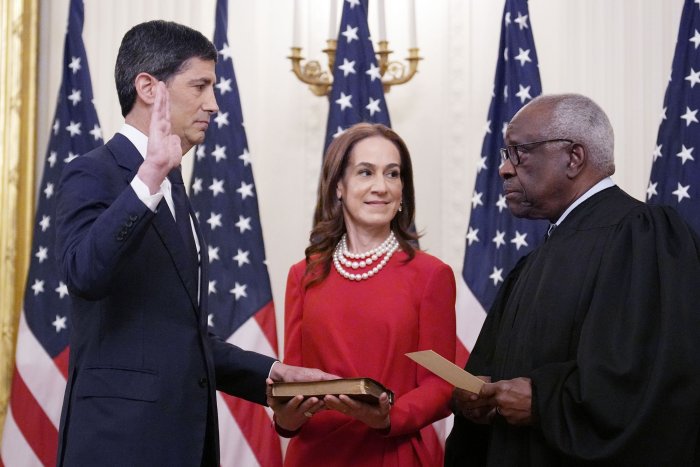
Kevin Warsh takes the oath of office as he is sworn-in as the new chairman of the Federal Reserve by Supreme Court Associate Justice Clarence Thomas in the East Room of the White House on Friday. Photo by Yuri Gripas/UPI | License Photo
The entrance of POSCO Tower Yeoksam in Seoul, photographed May 22, 2026. Photo by Hyojoon Jeon / UPI
May 22 (Asia Today) — POSCO International said Friday it plans to enter the U.S. rare earth separation, refining and permanent magnet business through a joint investment with ReElement Technologies.
The South Korean trading company said it signed an agreement with the U.S. firm to pursue a joint venture for rare earth separation and refining production in the United States.
The signing ceremony was held in Washington, D.C., with POSCO International CEO Lee Kye-in, ReElement Technologies CEO Mark Jensen, U.S. government officials and South Korean Embassy officials in attendance.
The companies plan to jointly invest $200 million to build a rare earth separation and refining plant with annual capacity of 6,000 tons. They also plan to develop an integrated production complex that can later produce permanent magnets.
Rare earth materials are used in electric vehicle motors, robots and artificial intelligence data centers. Heavy rare earths such as dysprosium and terbium are considered essential for high-performance permanent magnets.
POSCO International will lead management of the joint venture, while ReElement Technologies will provide core separation and refining technology.
The venture plans to produce neodymium-praseodymium oxide, dysprosium oxide and terbium oxide. It will first build annual production capacity of 3,000 tons before expanding to 6,000 tons.
Trial production is scheduled for the fourth quarter of 2027, with mass production targeted for 2028.
POSCO International said the project is part of its broader plan to build an integrated value chain from raw material sourcing to separation and refining, permanent magnets and electric vehicle motor cores.
“This joint venture is more than the establishment of a refining plant. It is the starting point for building a critical minerals value chain in the United States,” Lee said.
May 23 (UPI) — Secretary of Defense Pete Hegseth delivered a graduation speech to graduating West Point cadets Saturday, and told them they are “ready” for war.
“West Point is set apart. It’s special. It’s above politics,” Hegseth said at the U.S. Military Academy in West Point, N.Y., Saturday. “Success here is based on merit. It’s how you perform that matters.”
He accused former “foolish and feckless leaders” of pushing identity politics on the academy.
“The battlefield does not grade on a curve, and you can’t throw your pronouns at the enemy,” The Hill reported Hegseth said. “Combat is the ultimate test, and our best Americans must ace it.”
He said previous “woke and weak leaders” tried to transform the school into “woke Princeton.” Hegseth got a bachelor’s degree from Princeton.
“They embraced the [diversity, equity and inclusion] craze and tried to introduce diversity and inclusion studies,” Hegseth said. “They hired professors who advocated for anti-American ideologies right here in these halls, but no more.
“You are fit, not fat. You are disciplined, not distracted,” Hegseth told the cadets.
While he didn’t mention the war in Iran, he told the graduates that they “are stepping into the arena at a time when the stakes could not be higher.”
“We’re sending you to lead, we’re sending you to forge warriors, and we are sending you, perhaps, to war, and you are ready,” he said.
On stage were also Rep. Steve Womack, R-Ark., Rep. Pat Ryan, D-N.Y., Army Secretary Dan Driscoll and other military officials.
Last year, President Donald Trump delivered the graduation speech.
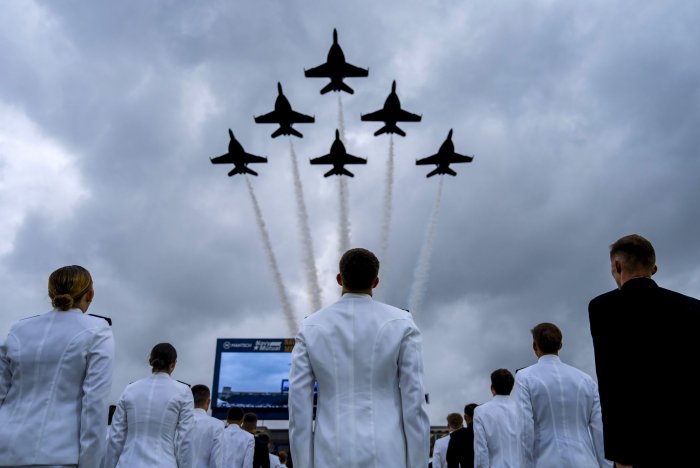
The Blue Angels perform a flyover during graduation and a commissioning ceremony at the U.S. Naval Academy in Annapolis, Md., on May 22, 2026. Photo by Bonnie Cash/UPI | License Photo
Health workers wearing full personal protective equipment on Saturday prepare to transport the body of person who died of Ebola for a safe burial at Sofepadi Hospital in Bunia, Ituri province, in the Democratic Republic of the Congo. Photo by EPA
May 23 (UPI) — The Centers for Disease Control and Prevention on Saturday added two more airports that travelers to the United States can be routed through for Ebola screening when entering the country.
The enhanced travel screening announced earlier this week by the CDC and the Department of Homeland Security is meant to screen people for the virus on entry to the country if they have been in the Democratic Republic of Congo, South Sudan or Uganda.
The outbreak, which started in the DRC and has spread to neighboring South Sudan and Uganda, is estimated to have 750 suspected cases and 177 suspected deaths, the World Health Organization on Friday said, adding that the “real scale of the outbreak is likely far larger.”
The CDC first issued restrictions on Thursday for Americans returning to the United States to be screened at Washington Dulles International Airport in Washington, D.C., before continuing on to their final destinations.
The two additional airports will be Hartsfield-Jackson Atlanta International Airport, which started to accept travelers at 11:59 p.m. EDT on Friday, and George W. Bush Intercontinental Airport in Houston, which will start to accept travelers on Tuesday, May 26, at 11:59 p.m. EDT, the CDC said on Saturday.
“These travelers will have their air travel re-routed to arrive at select airports,” CDC officials said in the update.
The enhanced health screening includes being escorted to a designated screening area; completing a questionnaire about their travel history and symptoms; having their temperatures checked using non-contact thermometers; and observation by CDC staff for signs of illness.
“Travelers with fever or other symptoms that could be Ebola will receive additional evaluation by a CDC public health officer,” the agency said.
“If the assessment shows that a traveler may be sick with Ebola, the traveler will be transferred to a hospital for further medical evaluation,” it said.
The WHO on Friday raised the national risk assessment during the outbreak in the DRC to “very high,” but officials said that global risk for infection with the Bundibugyo strain of the Ebola virus, for which there is no approved vaccine.
WHO Director-General Tedros Adhanom Ghebreysus during a meeting on Friday thanked the efforts of neighboring nations in Africa who have assisted during the outbreak, as well as the various regional and global health agencies that also have done so.
Although the United States last year pulled out of the WHO, the U.S. State Department said on Saturday that it has activated a dedicated Ebola Response Task Force that is led by “senior experts with direct experience managing prior Ebola outbreaks” in 2014 and 2018.
The department also has deployed a Disaster Assistance Response Team and provided $32 million in assistance to U.S. partners in the region, it said in a press release.
Kevin Warsh takes the oath of office as he is sworn-in as the new chairman of the Federal Reserve by Supreme Court Associate Justice Clarence Thomas in the East Room of the White House on Friday. Photo by Yuri Gripas/UPI | License Photo
1 of 5 | U.S. Secret Service officers investigate the scene of a shooting near the White House complex near 17th Street and Pennsylvania Avenue NW in Washington, D.C., on Saturday. Photo by Jim Lo Scalzo/EPA
May 23 (UPI) — The White House was locked down on Saturday evening after a man approached one of its checkpoints and opened fire at the executive mansion before being shot by the Secret Service.
Around 6 p.m. a man near 17th Street and Pennsylvania Avenue approached a White House entrance, pulled a firearm from his bag and started firing at the entrance, the Secret Service said in a statement.
Members of several media organizations, some who were reporting live, reported hearing what they thought were gunshots before the Secret Service told them to seek shelter inside the James S. Brady Press Briefing Room.
“Secret Service Police returned fire, striking the suspect, who was transported to an area hospital where he was pronounced deceased,” Anthony Guglielmi, chief of communications for the Secret Service, said in the statement.
“During the shooting, one bystander was also struck by gunfire,” Guglielmi said. “No injuries were sustained by officers.”
The bystander is in serious condition, CBS News reported.
The Secret Service said that President Donald Trump, who has been working at the White House all day amid negotiations to end the Iran war, was in the White House during the shooting, “however no protectees or operations were impacted.”
Reporters on the North Lawn reported that they heard what they thought was gunfire and ducked before Secret Service agents told them to “sprint to the press briefing room” to take cover.
Both the Secret Service and FBI quickly confirmed that both agencies were investigating reports of gunfire near the White House.
The White House was briefly locked down, and The Washington Post reported that its security gates remained locked hours after the incident.
The White House checkpoint the man fired at is located at 17th Street and Pennsylvania Avenue, which is near the Eisenhower Executive Office Building.
Although the suspect approached the White House, Fox News reported that he never actually got inside the general perimeter of the executive mansion.
Kevin Warsh takes the oath of office as he is sworn-in as the new chairman of the Federal Reserve by Supreme Court Associate Justice Clarence Thomas in the East Room of the White House on Friday. Photo by Yuri Gripas/UPI | License Photo
WASHINGTON — President Trump said Saturday that the United States and Iran have agreed on the basic terms of an agreement to end the two countries’ nearly three-month-long war and reopen the Strait of Hormuz.
“An Agreement has been largely negotiated,” Trump wrote in a social media post. “Final aspects and details of the Deal are currently being discussed, and will be announced shortly. In addition to many other elements of the Agreement, the Strait of Hormuz will be opened.”
Iran’s state television network quoted Foreign Ministry spokesman Esmail Baghaei as saying the draft pact will be a “framework agreement” that defers talks toward limiting Iran’s nuclear program until later. Trump did not mention the nuclear issue in his statement.
If that is the form the deal takes, it would represent at least a short-term concession from the president, who initially demanded a definitive end to Iran’s nuclear program as the price of peace.
Trump has also relaxed an earlier U.S. demand that Iran give up its right to enrich uranium and says he would be satisfied with a deal to “suspend” enrichment for 20 years.
Those signs of U.S. flexibility have raised alarm from Iran hawks, reportedly including Israeli Prime Minister Benjamin Netanyahu. They say they fear Trump is so intent on restoring the flow of oil from the gulf that he might agree to a deal that falls far short of U.S. goals.
Mark Dubowitz, a leading critic of past agreements with Iran, said he worries that Trump might settle for “a foolish agreement” to reopen the Strait of Hormuz.
“I’m concerned that the administration is looking to cut some ‘Phase One’ deal” in which Iran is given “significant sanctions relief in exchange for agreement to reopen the strait,” he said in an interview Friday. “I think that would be a foolish agreement. Iran would get real money, but they could continue to close the strait any time they wanted simply by making threats.”
Robert Kagan, a conservative foreign policy scholar at the Brookings Institution, wrote that a deal to reopen the strait while deferring the nuclear issue would amount to a U.S. “surrender.”
“On the present trajectory, Iran will emerge from the conflict many times stronger and more influential than it was before the war,” Kagan wrote in the Atlantic.
When the war began in February, Trump said he wanted not only to end Iran’s nuclear activities and destroy its ballistic missile program, but bring about regime change as well.
Instead, the nuclear talks have focused on narrower, more achievable goals: a “suspension” of nuclear enrichment for 20 years or less and removal or destruction of Iran’s highly enriched uranium, the essential ingredient for a nuclear weapon.
“A basic agreement shouldn’t be impossible to achieve,” said John W. Limbert, who worked on Iran policy at the State Department for three decades, and was one of the American hostages seized by Iranian militants in 1979. “The deal would be some kind of verifiable limits on the nuclear program in return for economic relief.”
“The fact that we’re talking about a suspension of all enrichment, and the question is whether it will be five years, 20 years or halfway in between — that’s important,” said Nate Swanson, an Iran expert who worked at the National Security Council under President Biden and Trump. “That sounds like you really have the basis for an agreement. … But don’t fool yourself to think that completely addresses the situation.”
Swanson said other issues, including Iran’s nuclear research and its advanced ballistic missiles, haven’t been addressed.
Despite signs of progress toward an agreement, the gaps between the two countries remain large.
Part of the problem is that both sides appear to believe they have won the war, said Danny Citrinowicz, a former Iran analyst at Israel’s defense intelligence agency.
Trump and other U.S. officials frequently assert that the United States has gained the upper hand by destroying Iran’s navy, air force and many of its missiles.
But the Iranians use a different scoring system, Citrinowicz said.
“Iran does not measure success the same way Washington often does,” he wrote in an email. “From Tehran’s perspective, simply holding firm in the face of American pressure can be framed as a win.”
“Tehran believes time is working against Trump politically and strategically,” he added. “Iran is prepared for prolonged confrontation; the United States, far less so.”
And even if a negotiated agreement is reached, the deals under discussion now won’t resolve all the conflicts between the two countries.
“An interim deal to buy time [is] probably where we end up,” Swanson said. “Buying time is not a bad thing. Ending a war is not a bad thing. But it’s not a comprehensive solution.”
Iran is moving its World Cup training base from Tucson, Ariz., to Tijuana, the president of the country’s soccer federation said Saturday, removing one of the final hurdles to its participation in this summer’s tournament.
Iran is scheduled to open World Cup play at SoFi Stadium, facing New Zealand on June 15. It will play Belgium in Inglewood six days later before finishing the group stage against Egypt in Seattle. But there had been questions over the Iranian team’s security in the U.S. after American and Israeli attacks on the country began nearly four months ago.
This World Cup will be the first in which a qualifying team will play in a host country with which it was at war. In March, shortly after the war began, Iranian officials began to question whether they should travel to the U.S. for the tournament — doubts that increased after President Trump posted on social media to say he did not believe it was appropriate for Iran to come “for their own life and safety.”
Because the World Cup is being shared with Mexico and Canada, Iran requested permission to move its base across the border, a request Mehdi Taj, president of the Iran Football Federation, said Saturday had been granted.
FIFA, the World Cup organizer, did not immediately confirm to move.
“All team base camps for the countries participating in the World Cup must be approved [by] FIFA,” Taj said in his statement obtained by the Associated Press. “Fortunately, following the requests we submitted and the meetings we held with FIFA and World Cup officials in Istanbul, as well as the webinar meeting we had yesterday in Tehran with the respected FIFA secretary general, our request to change the team’s base from the United States to Mexico was approved.”
Iran’s federation said moving the base camp will resolve potential visa issues since the team will enter the U.S. through Mexico. Taj that the team “may even be able to travel to and from Mexico using Iran Air flights.”
Tijuana is about 50 minutes by air from LAX, about 55 minutes quicker than a flight from Tucson. Iranians have been banned by the U.S. government from receiving visas to enter the U.S., although exceptions are to be made for athletes, coaches, and support personnel involved in the World Cup.
May 23 (UPI) — California Gov. Gavin Newsom on Saturday declared a state of emergency in Orange County, Calif., in response to a hazardous chemical incident there.
Residents and businesses started to be evacuated on Friday afternoon after a tank containing methyl methacrylate in Garden Grove, Calif., at the GKN Aerospace manufacturing plant started to leak vapor, KABC and The Orange County Register reported.
The tank started to heat on Thursday, started to bulge and reached what is called a “boiling liquid expanding vapor explosion,” Craig Covey, an Orange County Fire Authority division chief, told The Los Angeles Times.
More than 44,000 people have been evacuated from the area because officials are concerned that the tank could either explode or fail and begin to leak, though they said if the tank leaks — which is also bad — it means the chemical at least would no longer be at risk of igniting.
“The safety of Orange County residents is the top priority,” Newsom said in a statement.
“We are mobilizing every state resource available to support local responders and make sure the community has what they need to stay safe,” he said.
Methyl metacrylate, or MMA, is stored in liquid form and is used to make plastics.
The tank holds about 7,000 gallons of the chemical, which if it gets into the air can be toxic to people at high concentrations.
The tank also is surrounded by several others containing fuel and other chemicals, which has especially raised concern among the first responders because if it explodes, the others around it may ignite, as well.
If the tank fails and leaks, it will spread thousands of gallons of the chemical through a parking lot and the entire surrounding area, which also poses potential health and safety risks for nearby people.
The California Governor’s Office of Emergency Services said that it is coordinating resources between state and local partners to be sure that first responders “have all the resources necessary to safely respond to this dynamic situation.”
Newsom encouraged Orange County residents, and especially those in Garden Grove, to pay attention to potential evacuation requests as the situation continues to develop.
Kevin Warsh takes the oath of office as he is sworn-in as the new chairman of the Federal Reserve by Supreme Court Associate Justice Clarence Thomas in the East Room of the White House on Friday. Photo by Yuri Gripas/UPI | License Photo
May 23 (UPI) — Iran and Pakistan submitted a revised proposal Saturday to the United States in the hopes of ending the war and reopening the Strait of Hormuz.
Trump told Axios Saturday that he would meet with his negotiators to discuss the offer and would likely decide by Sunday. He said odds were a “solid 50/50” on whether he would be able to make a deal or “blow them to kingdom come.”
Trump conducted a call on Saturday with leaders from Saudi Arabia, the United Arab Emirates, Qatar, Egypt, Turkey and Pakistan, Axios reported.
“While I very much wanted to be with my son, Don Jr., and the newest member of the Trump Family, his soon to be wife, Bettina, circumstances pertaining to Government, and my love for the United States of America, do not allow me to do so,” the president said on Truth Social. “I feel it is important for me to remain in Washington, D.C., at the White House during this important period of time. Congratulations to Don and Bettina!”
Secretary of State Marco Rubio alluded to news coming possibly today.
“There may be news later today. I don’t have news for you at this very moment, but there might be some news a little later today. There may not be. I hope there will be, but I’m not sure yet,” Rubio told reporters in New Delhi on Saturday.
Sen. Lindsey Graham, R-S.C., told Axios that some leaders in the gulf have pushed Trump to strike Iran to weaken the regime and get better terms. But other leaders and the president’s advisors are urging him to take the deal that’s been offered. They say Iran can destroy Gulf oil operations if attacked.
“Count me as a strong skeptic that Iran can’t be prevented from terrorizing the Strait of Hormuz and that we can’t defend vital interests in the region after massive attacks against Iran — if they have been truly obliterated they shouldn’t be able to do either,” Graham said. “Time will tell. I am hoping for a good outcome still.”
Trump told Axios he’d meet with Steve Witkoff, Jared Kushner and Vice President Vance later Saturday.
“I think one of two things will happen: either I hit them harder than they have ever been hit, or we are going to sign a deal that is good,” Trump said.
Iranian Ambassador to Pakistan Reza Amiri Moghadam said on X that he discussed the “achievements of the negotiations with the officials of my country after returning from Tehran” with Pakistani Interior Minister Mohsin Naqvi.
“With conservative optimism, we can hope that, if the other side is adequately committed, a positive stride is taking shape which is the result of the positions of the Islamic Republic of Iran based on dignity, the steadfastness of the courageous armed forces and the resistance of the brave Iranian nation, as well as the initiative and dedicated endeavors of the Pakistani mediator,” Moghadam said.
An
image made with a drone shows an Amazon Web Services (AWS) data center in
Ashburn, Virginia, USA. Photo by JIM LO SCALZO / EPA
May 22 (Asia Today) — LS Electric Chairman Koo Ja-kyun called for stronger quality and delivery competitiveness as the South Korean company seeks to expand in the North American data center power infrastructure market.
Koo recently visited LS Electric’s Cheongju plant, a key production base for power equipment used in North American data centers, the company said Friday.
During the visit, Koo inspected switchgear production lines, the smart factory system and high-voltage circuit breaker lines.
“The U.S.-centered data center market does not allow even the slightest error in next-generation power grid fields such as direct current distribution,” Koo said. “Top-level high-end quality and flawless delivery capability are essential.”
He said the company should go beyond merely meeting customer standards.
“We must secure competitiveness strong enough to overwhelm global partners based on our smart manufacturing capabilities,” Koo said.
Industry officials say the expansion of artificial intelligence data centers has pushed the power infrastructure market into a “power supercycle,” driving demand for high-end power solutions such as high-voltage distribution equipment and circuit breakers.
Koo also called for early investment and technological innovation.
“The global power market is facing a major transition,” he said. “If we remain complacent, we will fall behind. Bold innovation that breaks through limits is necessary.”
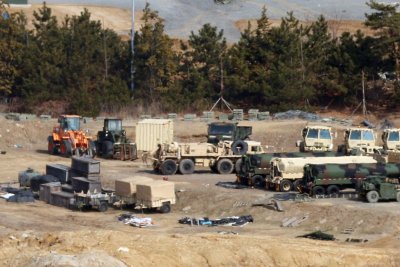
A launch vehicle of the Terminal High Altitude Area Defense (THAAD) system
is seen at a U.S. military base in Seongju, North Gyeongsang Province, South
Korea. The United States has been moving parts of its THAAD anti-missile system from
South Korea to the Middle East. Photo by YONHAP
/ EPA
May 22 (Asia Today) — Concerns are growing over possible security gaps in East Asia after the United States used large numbers of advanced interceptor missiles while defending Israel during the Iran conflict, according to a report published Wednesday.
The Washington Post reported Wednesday, citing recent Pentagon assessments, that the United States fired more than 200 THAAD interceptors during Operation Epic Fury to block Iranian ballistic missile attacks.
The figure reportedly amounts to about half of the Pentagon’s total THAAD interceptor inventory.
The United States also used more than 100 Standard Missile-3 and Standard Missile-6 interceptors launched from Navy warships, the report said.
By contrast, Israel reportedly used fewer than 100 interceptors each from its Arrow and David’s Sling missile defense systems, preserving more of its own stockpile and raising questions about uneven resource consumption between the allies.
Military experts told the newspaper the imbalance stemmed from a prearranged ballistic missile defense structure under which the United States assumed responsibility for the most advanced interception missions.
Israel has increasingly relied on the United States for ballistic missile defense while fighting simultaneous conflicts in Gaza, Lebanon and Yemen, stretching its military capabilities.
The report said growing U.S. missile consumption, combined with limited production capacity, is heightening anxiety in East Asia, where countries such as South Korea and Japan depend heavily on U.S. deterrence against threats from North Korea and China.
Kelly Grieco of the Stimson Center warned that “the bill could come due in a theater completely unrelated to Iran,” referring to East Asia.
The concerns follow earlier reports that U.S. Patriot missile stockpiles had fallen to about 25% of required levels, fueling fears of weakening missile deterrence across the region.
Analysts said any renewed hostilities involving Iran could deepen global security vulnerabilities further.
Weekly insights and analysis on the latest developments in military technology, strategy, and foreign policy.
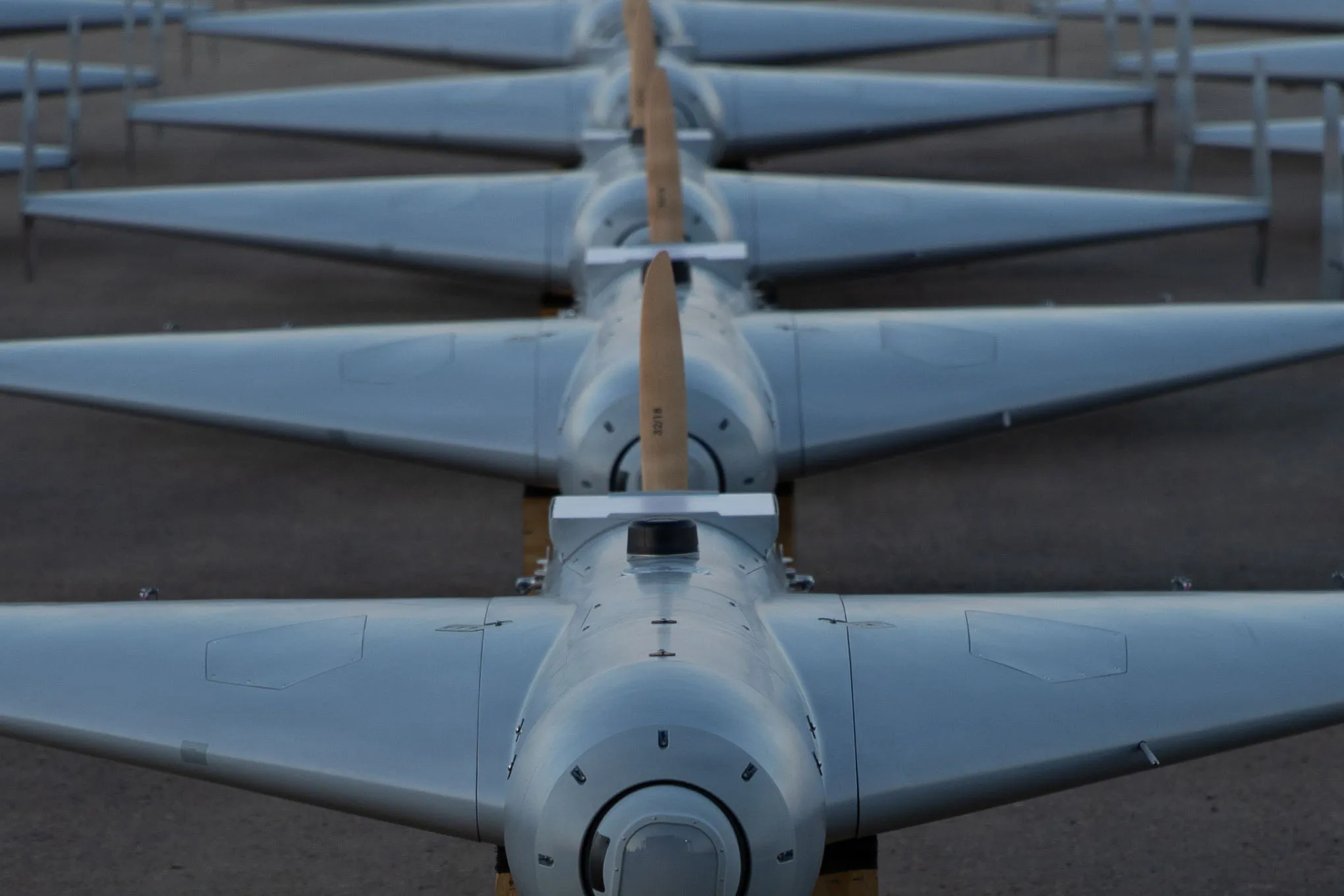
The U.S. military’s Low-Cost Uncrewed Combat Attack System, or LUCAS, the recently combat-proven long-range one-way attack drone designed for massed operations, will be equipped with Hivemind autonomy software from Shield AI. The company was selected for the integration effort by the Office of the Under Secretary of War for Research and Engineering (OUSW R&E) as part of an effort to bring AI-enabled swarming and autonomous teaming to LUCAS. The aim of incorporating swarming capabilities onto LUCAS, which is built by SpektreWorks, is something that officials told us about soon after the program broke cover.
The LUCAS program, developed by the Office of the Deputy Assistant Secretary of War for Prototyping and Experimentation under OUSW R&E, is intended to field ‘affordable mass’ by producing large numbers of relatively low-cost drones that can be deployed in coordinated waves to saturate enemy defenses and expand strike capabilities at scale. Each LUCAS drone costs around $35,000, which is a fraction of the price of available missiles with similar range.
Based on the Iranian Shahed-136, LUCAS was used in combat for the first time when a large number of them were fired against Iranian targets in the opening salvos of Operation Epic Fury, the U.S. part of the joint U.S.-Israeli attack on Iran that began on February 28 of this year.
“LUCAS, indispensable,” U.S. Central Command boss Adm. Brad Cooper told TWZ when asked how effective the drones had been and how much they helped preserve magazine depth, given their comparatively low cost and faster and easier production.
Meanwhile, the original Shahed-136, as well as Russian Geran-series developments of it, have rapidly become a signature weapon of the war in Ukraine, acting as Moscow’s primary standoff strike munition. For years now, Shaheds have led Russia’s campaign of bombardment against Ukrainian infrastructure and cities. While the Shahed has a range in excess of 1,000 miles, LUCAS, in its current configuration, is a bit smaller, with a range of around half that distance. A version of the current airframe used for the LUCAS program also serves in a target surrogate role for training and testing.
Under the new effort, Hivemind will act as an AI “pilot” for LUCAS, allowing groups of drones to coordinate movements, maneuver collaboratively, and adapt to changing battlefield conditions in real time. The effort will culminate in an operational demonstration this fall in which a single operator will direct a swarm of LUCAS drones, but initial flight tests with the software installed will take place before then, Shield AI told TWZ.
Speaking to TWZ at the annual SOF Week conference yesterday, Shield AI’s Brandon Tseng explained that much of the work on inserting the Hivemind AI pilot into LUCAS has already been proven by the company’s experiences working with Ukraine.
“LUCAS is a reflection of about two years’ worth of work with OUSW R&E, and a reflection of a lot of the work that we’re doing in Ukraine with one-way attack drones,” Tseng explained. “For the past several months, we’ve been shipping hundreds of AI pilots for one-way attack drones into Ukraine. Those drones have increased the probability of a kill. They have reduced [the] kill chain timeline, they have reduced the cost per effect, instead of, one out of every 10 of these one-way attack drones hitting their target, now they’re 10 out of 10 in terms of what we’re seeing, and it’s really about taking a lot of that development that we’ve done over in Ukraine and bringing it to a program like LUCAS to again increase probability of kill, reduce cost per effect, and increase probabilities of success.”
Low-cost Unmanned Combat Attack System (LUCAS) drones are positioned on the tarmac at a base in the U.S. Central Command (CENTCOM) operating area, Nov. 23, 2025. The LUCAS platforms were part of a one-way attack drone squadron CENTCOM deployed to the Middle East to strengthen regional security and deterrence. Courtesy Photo/U.S. Department of War
In the Ukrainian context, Tseng confirmed that its AI agents are employed across a range of uncrewed platforms. At one end of the scale, these include one-way attack drones with a range of around 62 miles and an overall cost of $8,000, out of which the AI pilot costs around $1,000. At the other end of the scale are much larger and more expensive drones and missiles, including cruise missiles from the Switzerland-based Destinus company.
Returning to the U.S. military, the current effort began with Shield AI working on collaborative autonomy with OUSW R&E, something that began before the second Trump administration. That work was carried forward until the company was one of several down-selected to provide AI pilots for LUCAS.
The effort could represent a significant step toward fielding collaborative autonomy, a long-term goal of massed drone operations, with teams of autonomous systems operating together in dynamic and highly challenging combat environments. These could include ones where GPS is denied and communications are degraded, due to heavy employment of electronic warfare by the enemy.
“LUCAS is about delivering affordable mass, but mass without coordination is limited in value,” Tseng, who is the president and co-founder of Shield AI, said in a media release. “Hivemind is the AI pilot that makes that mass intelligent. It’s the autonomy layer that enables teams of drones to sense, decide, and act at scale. We’re proud to partner with OUSW R&E to put this capability in the hands of the warfighter at the speed of relevance.”
Hivemind is intended to streamline the operation of networked uncrewed systems by allowing a single operator to monitor and direct, as needed, multiple platforms simultaneously during complex, highly-coordinated missions. Using Hivemind, human operators retain authority over strike decisions, while the autonomy software handles navigation, coordination, and general mission execution. The operator can override and redirect the swarm’s operations and redefine its objectives at any time. Automating the swarm’s operations as much as a possible accelerates the timeline from target detection to engagement across a kill chain. The swarm should also be able to collectively act faster than an enemy can react, overwhelming and potentially breaking its decision cycle.
A Low-cost Unmanned Combat Attack System (LUCAS) drone launches from the flight deck of the Independence class Littoral Combat Ship USS Santa Barbara (LCS 32) while operating in the Arabian Gulf, Dec. 16, 2025. U.S. Army photo by Spc. Kayla McGuire
“It’s our policy that the moral decision behind the use of lethal force is always made by a human, and so ‘human in the loop’ is certainly part of the game for that decision-making process,” Tseng highlighted. “Once you make that decision, in the same way, once you decide to launch a cruise missile, then the AI is actually helping ensure that that decision gets fulfilled.”
For the time being, the U.S. military demands a human operator is ‘in or on the loop’ for kinetic or otherwise potentially deadly actions, as opposed to letting autonomous weapons choose what targets to attack on their own without any extra authorization. While less controversial morally, this can also be a tactical hindrance, slowing the swarm’s potential and adding complexity and vulnerabilities to its operations. The debate around this choice will only get more heated as adversaries bypass this elected restriction in order to get an upper hand in future combat scenarios.
As we pointed out in our initial reporting on LUCAS’s emergence, the fact that some of the LUCAS drones already include miniature SATCOM terminals is very noteworthy. After all, ‘human in the loop’ swarming would not be possible without this form of communications at the beyond line-of-sight ranges these drones fly. At the same time, an entire swarm can be controlled in this manner, even if just a handful are equipped with SATCOM terminals. While a swarm can be mesh networked within line-of-sight, it has to relay all the important information back to an operator. By using some of the drones as SATCOM relay nodes, the entire swarm can be controlled remotely from most places on the planet.
A LUCAS drone equipped with a SATCOM antenna. (DoW)
Regardless, the Hivemind AI pilot will allow appropriately equipped LUCAS drones to perceive their environment, make decisions, and act autonomously without continuous human input. Unlike conventional autopilots tied to fixed flight paths, Hivemind is designed to dynamically adjust mission plans, react to unforeseen conditions, avoid obstacles, and carry out complex tasks with minimal operator oversight.
In terms of how an AI pilot can assist LUCAS drones, including providing autonomous mission execution and swarming in GPS-denied, communications-denied environments, Tseng likened the technology to that which is behind self-driving cars.
“We’re using a lot of the same technical approaches that Tesla or Waymo are using; we use sensors on board these drones and weapon systems to perceive our environment. We got a GPU [graphics processing unit, a specialized electronic circuit designed for digital image processing] that thinks about what to do and is programmed to think about the different missions that it’s executing in said environment, and then we take action, maneuvering the drone or the weapon system in the environment.”
Already, Hivemind has been inserted in a variety of other platforms, including aboard Anduril’s YFQ-44A under the U.S. Air Force’s Collaborative Combat Aircraft (CCA) program, the U.S. Navy BQM-177 test aircraft, the Airbus UH-72B Lakota helicopter, and the Destinus Hornet platform. The company says it has integrated AI pilots for 28 different platforms to date.
Tseng said the company wants to start flight testing with Hivemind in July. “I hope they make it operational as quickly as possible,” he added.
The path to operational service should be made easier by previous experience from Ukraine, where it took only eight weeks to put an AI pilot into one of their one-way attack platforms.
However, the final decision on fielding AI-equipped LUCAS drones rests with the customer. “It’s up to the government, and I’m not going to disclose timelines on when the government thinks about fielding it,” Tseng said of the Hivemind-equipped LUCAS drone.
While LUCAS drones without AI pilots have already achieved impressive results in the recent conflict with Iran, according to the Pentagon, Shield AI is meanwhile confident that the capabilities of the platform will be significantly enhanced once they are flying with AI onboard. The results should include increasing the probability of kill, lowering the cost per effect, and increasing overall mission success.
“If you have cheap one-way attack drones, but it takes 10 or 20 of them to destroy a target, they’re no longer that cheap, right?” Tseng contended. “But if all of a sudden you have cheap one-way attack drones, and one out of one can kill it, and now you can kill 20 targets, that is a really low cost per effect, and that’s what the United States is after at the end of the day.”
Another view of a Low-cost Unmanned Combat Attack System (LUCAS) drone launching from the USS Santa Barbara. U.S. Army photo by Spc. Kayla McGuire
Putting an AI pilot in the LUCAS drone is a big deal for the program. If it works as planned, it should help realize the long-held ambition of coordinated swarms of drones, not just drones being deployed en masse.
Using the software, multiple LUCAS drones will be able to share tasks and maneuver cooperatively, making saturation attacks even more effective. As well as the drones dynamically rerouting, avoiding air defenses, and otherwise adapting to changing battlefield conditions, an AI pilot makes it easier for missions to continue despite hostile jamming or loss of datalink connectivity. Indeed, using AI, drone swarms can maintain near-perfect combat efficiency even if it loses members. Drones can be configured with all different payloads, with the swarm’s makeup tailored to each mission, and the AI system can maximize their collective effectiveness at all times.
With flight testing of Hivemind-equipped LUCAS drones expected to start in only a couple of months, we should begin to get a better look at the transformation of these kamikaze drones from expendable individual weapons into groups of networked weapons that collectively equate to much more than the sum of their parts.
May 22 (UPI) — One civilian has died and 36 others — many of whom were first responders — were injured on Friday after a series of explosions in a New York City shipyard.
Two explosions occurred on a barge Friday afternoon along the North Shore of Staten Island, roughly an hour apart, with firefighters and another civilian also injured.
That area of the North Shore is mostly populated with industrial businesses, including various boating and barge companies, The New York Times and WPIX reported.
“What unfolded was a fast-moving emergency that claimed one life and left more than 30 civilians and first responders injured,” New York City Mayor Zohran Mamdani said in a statement on X.
“The fire is now under control,” he said. “We mourn the life that was lost today, and we hold their family in our hearts.”
The first explosion was heard just before 3:30 p.m. EDT, which saw more than 200 firefighters and medical personnel respond to the dry-docked barge.
The New York Post reported that people were trapped in confined spaces aboard the barge and, minutes before the second explosion, fire officials called for assistance for those already trapped.
In addition to the civilian who died and the injured civilian, CBS News reported that at least 34 Fire Department of New York firefighters had been injured, two of whom were significantly injured.
In his statement, Mamdani asked New Yorkers to keep the injured and their families in their thoughts and noted the sacrifices of firefighters who responded to the emergency.
“To the first responders who rushed toward danger without hesitation: thank you,” Mamdani said.
“As you do every day, you put yourselves in harm’s way so others could escape,” he said. “Our city owes you a debt of gratitude.”
May 22 (UPI) —SpaceX successfully launched an updated version of its Starship on Friday evening, meeting all goals the company said it was aiming for.
The launch was the first of the company’s V3 version of both the booster rocket and “Ship” upper stage, which is a key part of NASA’s Artemis series of missions to the moon and, potentially, to Mars.
SpaceX commentators said during the company’s official broadcast that the updated Starship, which delivered 22 simulator Starlink satellites into orbit and converted flight adjustments it will need when it lands instead splashing down in water, “delivered.”
The company had scrubbed the first attempted launch of the megarocket, the largest ever built, on Thursday because of an engineering issue that could not be fixed in time to make the scheduled launch window.
The mission for the 408-foot-tall Super Heavy rocket, which is powered by 33 newly redesigned Raptor engines, the same as Starship, was to successfully launch, ascend, separate from the second stage — Starship — and then perform boost back and landing burns before splashing down in the Gulf of Mexico.
After separation, Starship’s goals were to light its engines, enter a sub-orbital path and release a series of dummy Starlink satellites before performing a series of maneuvers and testing its newly designed heat shield.
When Starship splashed down in the Indian Ocean after its tests, SpaceX commentators said during the broadcast that the fireball when it hit the Indian Ocean was the goal, “as weird as that sounds.”
Kevin Warsh takes the oath of office as he is sworn-in as the new chairman of the Federal Reserve by Supreme Court Associate Justice Clarence Thomas in the East Room of the White House on Friday. Photo by Yuri Gripas/UPI | License Photo
This version of Starship is not the final one, but rather is a prototype of one of several that are planned for NASA’s return of Americans to the moon.
NASA’s planned Artemis III mission in 2028 is expected to test connecting the Orion crew capsule — which was tested on its first crew mission earlier this year — to both Starship and Blue Origin‘s Blue Moon space vessel, which has yet to take its first flight.
NASHVILLE — A federal judge on Friday dismissed a human smuggling case against Kilmar Abrego Garcia, finding that the Justice Department’s pursuit of criminal charges was designed to punish him for challenging his mistaken deportation to El Salvador last year.
The ruling amounted to an extraordinary rebuke of a Justice Department that under President Trump has repeatedly been accused of targeting defendants for political purposes. The Trump administration touted the charges against Abrego Garcia last year at a press conference in which then-Atty. Gen. Pam Bondi declared, “This is what American justice looks like.”
“The evidence before this court sadly reflects an abuse of prosecuting power,” U.S. District Judge Waverly Crenshaw, in Nashville, said in his ruling granting Abrego Garcia’s motion to dismiss for “selective or vindictive prosecution.” Without Abrego Garcia’s “successful lawsuit challenging his removal to El Salvador, the government would not have brought this prosecution.”
Abrego Garcia’s deportation became an embarrassment for Trump officials when they were ordered to return him to the U.S. In his motion to dismiss, Abrego Garcia claimed that the timing of the criminal charges and inflammatory statements about him by top Trump officials demonstrated that the prosecution was vindictive.
“Kilmar Abrego Garcia is a victim of a politicized, vindictive White House and its lawyers at what used to be an independent Justice Department,” his criminal defense attorneys said in a statement after Friday’s ruling. “We are so pleased that he is a free man.”
The Justice Department vowed to appeal, calling the judge’s order “wrong and dangerous.”
Crenshaw stopped short of finding the government acted with “actual vindictiveness,” a rarely met standard that usually requires evidence like a prosecutor admitting that charges were filed in retaliation against someone. But the judge did find there was enough evidence of “presumptive vindictiveness” — including the timing of the indictment, statements made by then-U.S. Deputy Aty. Gen. Todd Blanche, and the sustained oversight of the case by other top Justice Department officials — that the case against Abrego Garcia was thoroughly tainted.
The government’s own explanations weren’t convincing, Crenshaw wrote.
Abrego Garcia was charged with human smuggling and conspiracy to commit human smuggling, with prosecutors claiming that he accepted money to transport within the United States people who were in the country illegally.
The charges stem from a 2022 traffic stop in Tennessee for speeding. Body camera footage from a Tennessee Highway Patrol officer shows a calm exchange with Abrego Garcia. There were nine passengers in the car, and the officers discussed among themselves their suspicions of smuggling. However, Abrego Garcia was eventually allowed to continue driving with only a warning.
In the Friday ruling, Crenshaw wrote that the timing of the charges was central to the presumption of vindictiveness. Homeland Security had been aware of the traffic stop for two years and had closed the case against Abrego Garcia when it deported him. Once the U.S. Supreme Court ruled that he should be brought back to the U.S., they reopened the case. While the government bore the responsibility to rebut the presumption of vindictiveness, prosecutors did not call as a witness the person who reopened the case, to explain why. Instead they offered only “secondhand testimony.”
In a statement released by the group We are CASA, which has been supporting Abrego Garcia and his family, he thanked God for the dismissal of the criminal charges.
“Justice is a big word and an even bigger promise to fulfill; and I am grateful that today, justice has taken a step forward,” he said.
Abrego Garcia’s deportation violated a 2019 immigration court order granting him protection from deportation to his home country, after the judge found he faced danger there from a gang that targeted his family. Abrego Garcia is a Salvadoran citizen with an American wife and child who has lived in Maryland for years although he immigrated to the U.S. illegally as a teenager. The 2019 order allowed him to live and work in the U.S. under Immigration and Customs Enforcement supervision, but he was not given residency status.
Meanwhile, Trump administration officials have said Abrego Garcia cannot remain in the U.S. They have vowed to deport him to a third country, most recently Liberia.