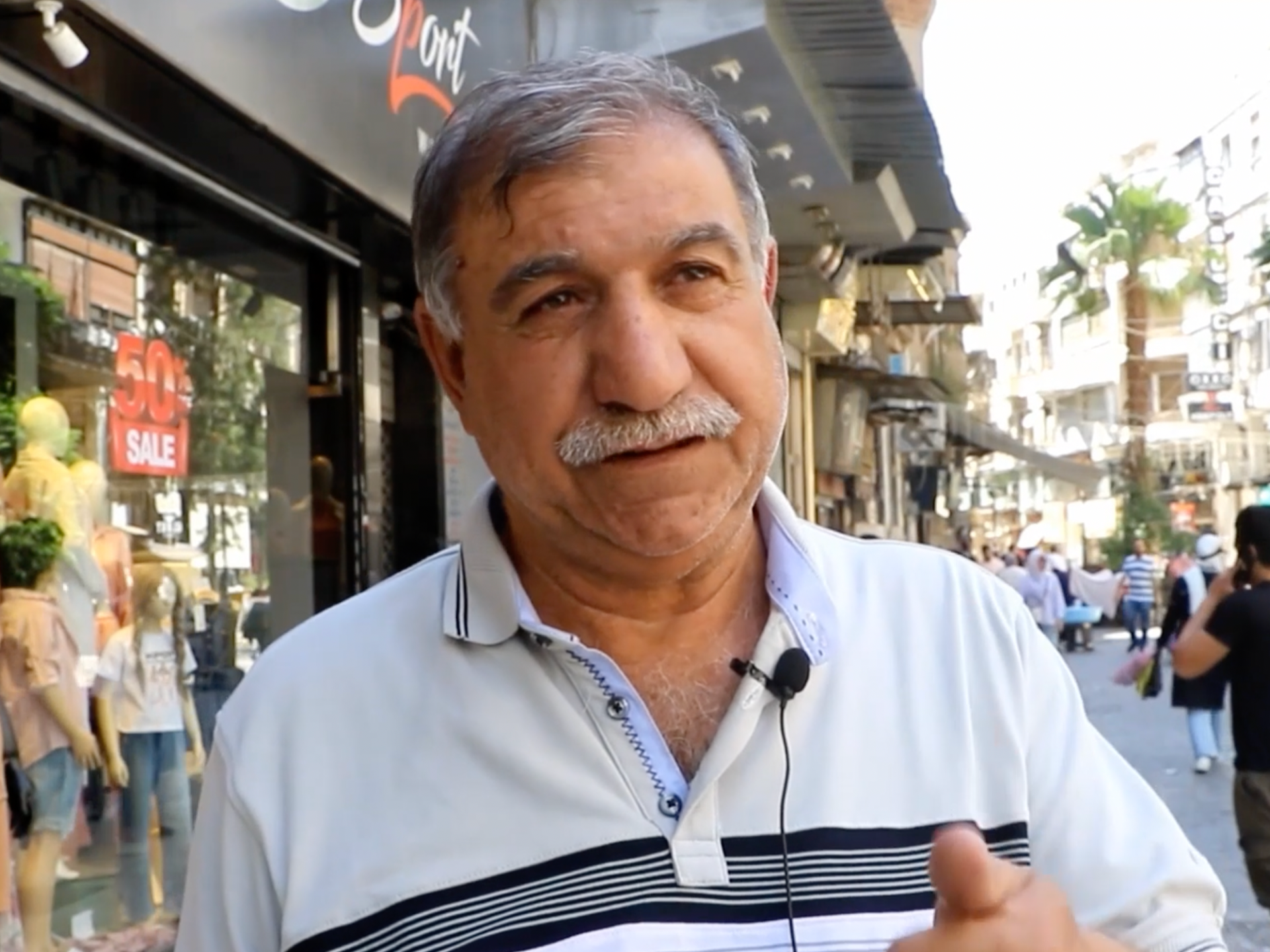
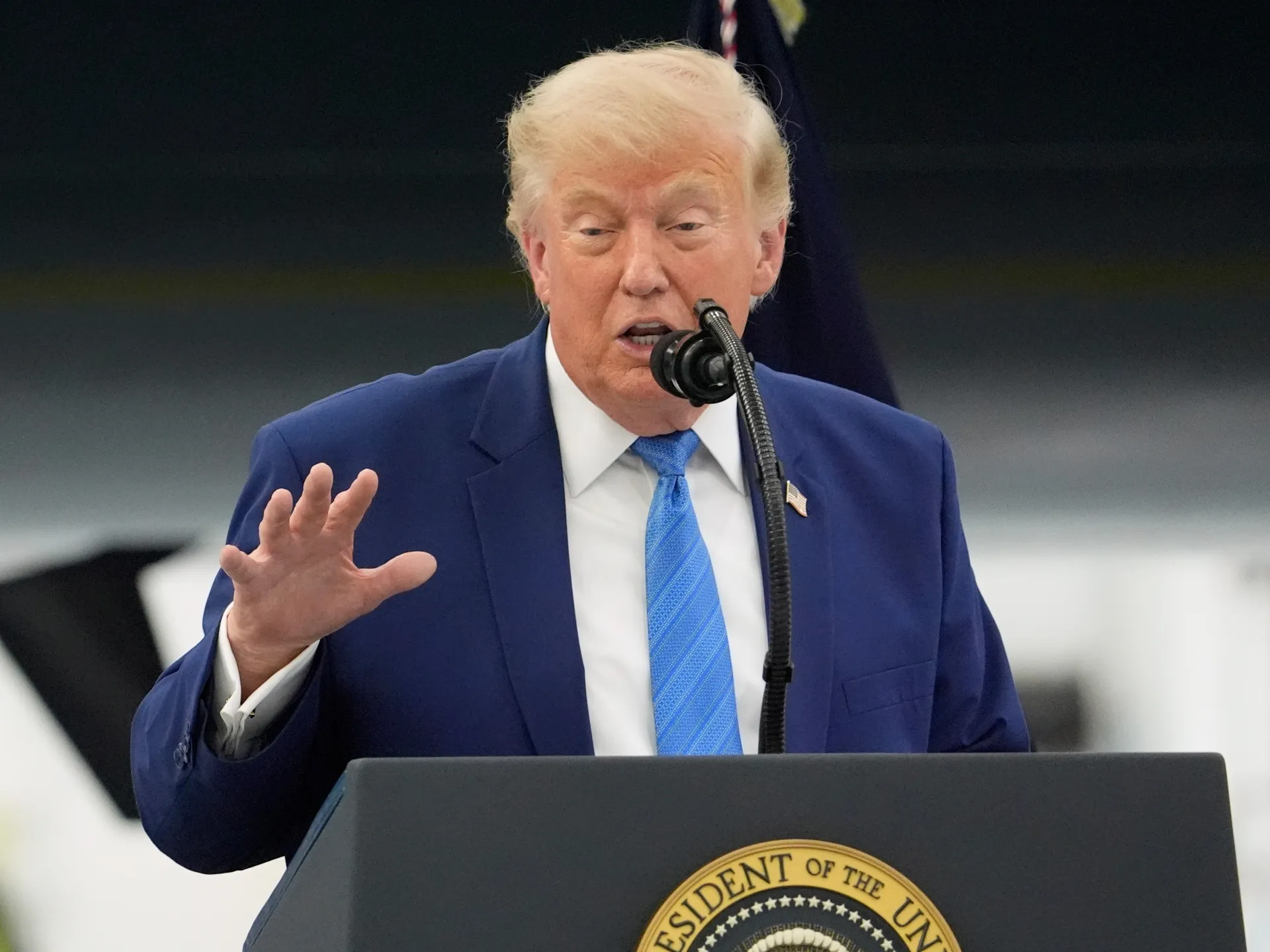
Residents in Damascus rejected US President Donald Trump’s suggestion that Syria should confront Hezbollah in Lebanon. They say Syria should avoid being drawn into new regional conflicts. In a rare critique, Trump told Israel to let Syria take on Hezbollah.
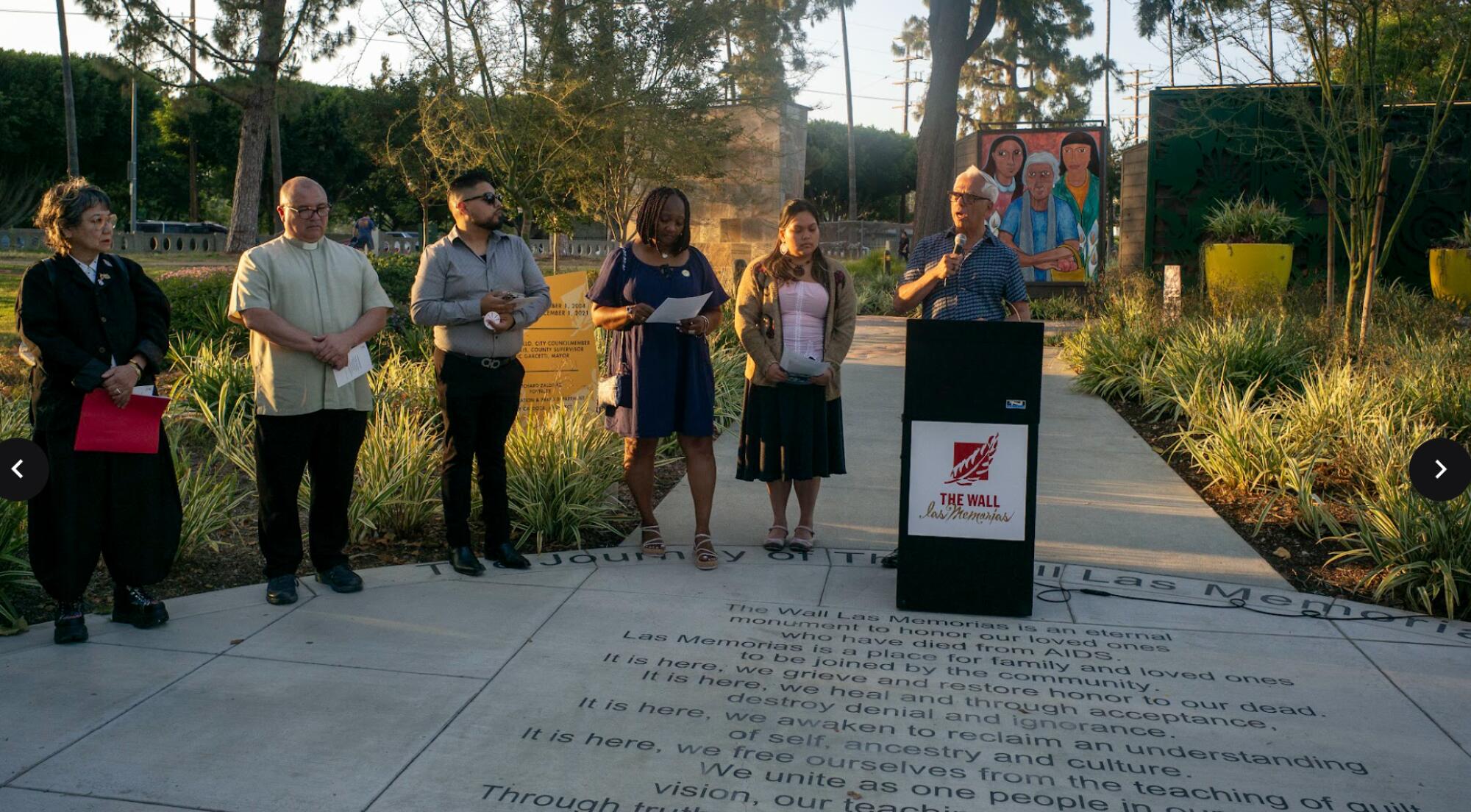
In Lincoln Park, past Plaza de la Raza cultural center and under swaying pine trees, stands a row of 10-foot wooden panels etched with names. Robert Zaldivar stood quietly in front of the names, surrounded by community members holding lit candles as memories of old friends resurfaced.
The panels bear nearly 2,000 names, and more are added every year. Each one represents an Angeleno, mostly Latinos, who died of AIDS. Zaldivar led the movement to erect this monument, named the Wall Las Memorias, which was finalized in 2004.
Inspired by his late best friend, who was HIV-positive, the Wall represents to Zaldivar the power of remembering those in his community affected by HIV and AIDS. It was designed in the shape of Quetzalcoatl, or the “Feathered Serpent,” an Aztec deity and symbol of rebirth.
Robert Zaldivar leads a sunset vigil at the Wall Las Memorias AIDS Monument in Lincoln Park on the anniversary of the first HIV diagnosis in L.A. on June 4, 2026.
(The Wall Las Memorias)
That day in early June, he hosted a sunset vigil, joined by AIDS Memorial Quilt founder and Harvey Milk mentee Cleve Jones, to recognize the lives lost since AIDS was first diagnosed 45 years prior, when the Centers for Disease Control and Prevention published a report detailing immunodeficiency in five young gay men in Los Angeles.
At Zaldivar’s feet was a poem, one he wrote in 1995 with his friend Anna Contreras.
It reads:
It is here, we free ourselves from the teaching of guilt. We unite as one people in our vision, our teaching, and our truth. Through truth we live, through knowledge we survive.
Contending with stigma and misinformation has been a constant struggle for people who are HIV-positive, he said, a struggle that Zaldivar hopes to make more visible now than it has been in previous decades.
“Sometimes it feels like there’s no other way to draw attention to this problem than to have a physical reminder,” Zaldivar said of the monument. “This reminds us of real people, as more than statistics.”
The statistics Zaldivar refers to include the continuing rise in HIV diagnoses in Latinos across the United States. The most recent CDC data show 39,000 people across the U.S. received an HIV diagnosis. And a Kaiser Family Foundation analysis revealed that between 2010 and 2022, there was a 24% increase in new cases among Latinos. In 2022 alone, Latinos made up 31% of new diagnoses, despite only representing 19% of the American population, the KFF study found.
“Just last week, we had two new diagnoses of HIV in our clinic,” said Bernardo Gomez, assistant manager of HIV resources at the Wall Las Memorias Project. “For context, we had 15 in the past six months, including straight women … I think what we’re seeing is a dangerous loss of support for outreach and education.”
Last year, President Trump released his presidential fiscal year budget for 2026, much of which went into effect last October. In it, he revealed significant cuts to HIV health programs — amounting to $1.5 billion.
The budget recommendation signaled the administration’s yearly priorities, and Trump’s fiscal plan and staffing cuts to HIV teams under the so-called Department of Government Efficiency (DOGE) showed a shift away from HIV prevention and healthcare, which advocates say has led to providers losing jobs and places for testing and resources to shrink. In L.A., the Latino community is feeling the brunt of the loss, Zaldivar said.
The biggest cut to HIV care in the 2026 budget affected the CDC, which lost around $3.6 million. Another devastating loss was $1.7 million cut from the Ryan White HIV/AIDS Program, which many L.A. resource centers report relying on to fund part of their programming and staffing.
Robert Gamboa, associate director of public policy at the L.A. LGBT Center, said that in Trump’s first term, his “Ending the Epidemic” program created hope for soon seeing the end of HIV in the U.S. — a hopefulness that he said was quickly dashed in his second term.
“Now there’s this 180-degree shift in policy, we see these enormous proposals pulling away from funding, and his lack of acknowledgment of World AIDS Day, and Pride in general,” Gamboa said. “The message of that is loud and clear: [The Trump administration] is telling our LGBT community, ‘We don’t care about you.’”
Since Trump’s inaugural address last year, Gamboa said executive orders have only solidified Trump’s shift away from LGBT organizations, “challenging the structural integrity of almost everything we’ve done.”
Gamboa said that last spring, the Department of Public Health, Division of HIV and STD Programs), which supplemented L.A. organizations with substantial HIV funding, sent out a notice that all of their contracts were terminated.
“Well, this caused a massive alarm all across L.A. County. Everyone started freaking out. We had to say, ‘We need an emergency allocation [from state funds] so that we can continue providing HIV services across California,’” Gamboa said. “We’re used to getting upwards of around $20 million in funding at the county level, and it wasn’t happening.”
Robert Zaldivar leads a sunset vigil at the Wall Las Memorias AIDS Monument in Lincoln Park on the anniversary of the first HIV diagnosis in L.A on June 4, 2026.
(The Wall Las Memorias)
Since then, nonprofit representatives have confirmed that the contracts were restored at reduced rates. However, the impact of the uncertainty shook the health services community and only caused further distrust among Latino patients.
“We’re already seeing [the impact in L.A.]. In the Latino community, there’s so much fear from the ICE raids. People are afraid to even leave their homes,” Gamboa said. “We’ve worked so hard in building trust and relationships with our communities of color. Now, they’re afraid to even come in. Many of the places they’ve gone to in L.A. County have already closed their doors and ceased services.”
Most recently, the Trump administration announced plans to cut millions in public health funding. This includes $1.1 million that would be slashed from the National HIV Behavioral Surveillance Project, an early-warning system for HIV outbreaks, established by the L.A. County Department of Public Health.
On the White House website, a page called “Cuts to Woke Programs” reads: “President Trump is committed to eliminating radical gender and racial ideologies that poison the minds of Americans.”
Gamboa said that organizations have been discouraged of using “LGBT” in their programming to avoid being defunded as part of the targeted “woke” programs.
“It really affects me,” said Gomez, who has been living with HIV since 1996. “How long will I have medicine?”
Gomez, who is the breadwinner of his family, says his monthly supply of medication costs $1,500 a bottle. “It’s so expensive, and I have insurance. For people without insurance, [the Ryan White program] is the only way they can afford treatment,” Gomez said. “I’m afraid of what will happen to them.”
Gomez takes antiretroviral therapy, a lifesaving medication that reduces the number of infected cells, making the disease less transmissible and prevents HIV from developing into AIDS. According to 2024 HRSA data, the Ryan White program provided antiretroviral therapy to 602,000 people, preventing the spread of HIV.
As the program loses funding, jobs providing HIV care have become more sparse — and programs like the Wall and the L.A. LGBT Center have become more essential to support the thousands left without life-saving care.
HIV program funds are trickling back into L.A. County for nonprofits this year; although some, like the Wall, maintain that it’s “not enough to address the need.” Up until last May, the organization shared that the county funded $1 million of its annual HIV reduction efforts. This year, that number was drastically reduced to $100,000 per six-month contract.
“Many of my social worker friends are off the streets [where they helped at-risk communities] due to just not having enough funding to do their jobs,” said Miguel Rodriguez, program coordinator of HIV testing and prevention at the Wall. “People think only gay men are affected, but basic sexual health for everyone is at risk here. Less [testing] means more infections and transmissions across the board.”
As Robert Zaldivar stresses, the only way to protect L.A.’s Latino HIV-positive community is to support remaining HIV services to get tested or donate to local service organizations.
“What we saw in the ’90s, I’m scared that it will repeat. I want people to remember how serious [HIV] is, and to educate,” Zaldivar said. “Keep getting tested. We don’t report your immigration status or sexuality. Just come in.”
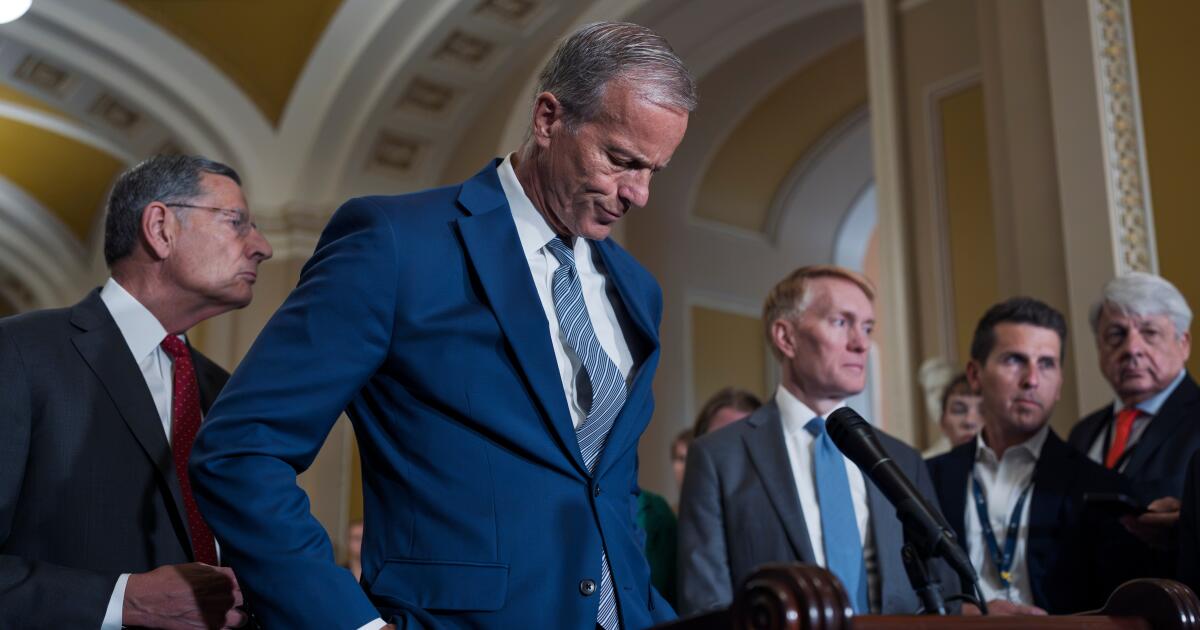
WASHINGTON — The Senate for the first time approved a war powers resolution Tuesday seeking to block U.S. military action against Iran, as lawmakers warily watch President Trump’s efforts to resolve a conflict that the administration launched on its own and now needs Congress to fund.
It was the 10th time the Senate has tried to stop the war, and the outcome, on a vote of 50 to 48, was a stunning turnaround from past efforts. While the resolution is largely symbolic, and does not fully carry the force of law, it reflects the growing concerns from a number of Republican lawmakers in both the House and Senate over both the war and the deal Trump struck with Iran to end it. The House approved the resolution earlier this month.
“Time after time, the vast majority of Senate Republicans sided with Trump and his war instead of the American people,” said Senate Democratic Leader Chuck Schumer of New York.
Schumer said Americans have paid the price for “Trump’s historic blunder in Iran. It’ll go down in the history books as one of the worst foreign policy forays America has ever made.”
In the past, as many as four GOP senators have voted for the war powers resolutions, and they did so Tuesday — Republicans Lisa Murkowski of Alaska, Susan Collins of Maine, Rand Paul of Kentucky and Bill Cassidy of Louisiana. One Democrat, Sen. John Fetterman of Pennsylvania, voted against the resolution.
On this vote, the absence of two Republicans, including Sen. Mitch McConnell of Kentucky, who was admitted to the hospital recently for an undisclosed matter, left the GOP without a full majority to halt the effort. Sen. Dave McCormick (R-Pa.) also missed the vote.
The vote also comes as the Pentagon is seeking $80 billion from Congress, mostly for the Iran war as it backfills munitions and stockpiles.
Trump to meet senators as Republicans balk at Iran deal
Trump himself is headed to the Capitol this week to meet with GOP senators as Vice President JD Vance has been overseas working to negotiate with Iran to end its nuclear ambitions — which had been among the stated rationales for the war.
The president is not pleased with the Republicans who have been critical of the deal he struck with Iran, according to one GOP senator granted anonymity to discuss the private dynamics.
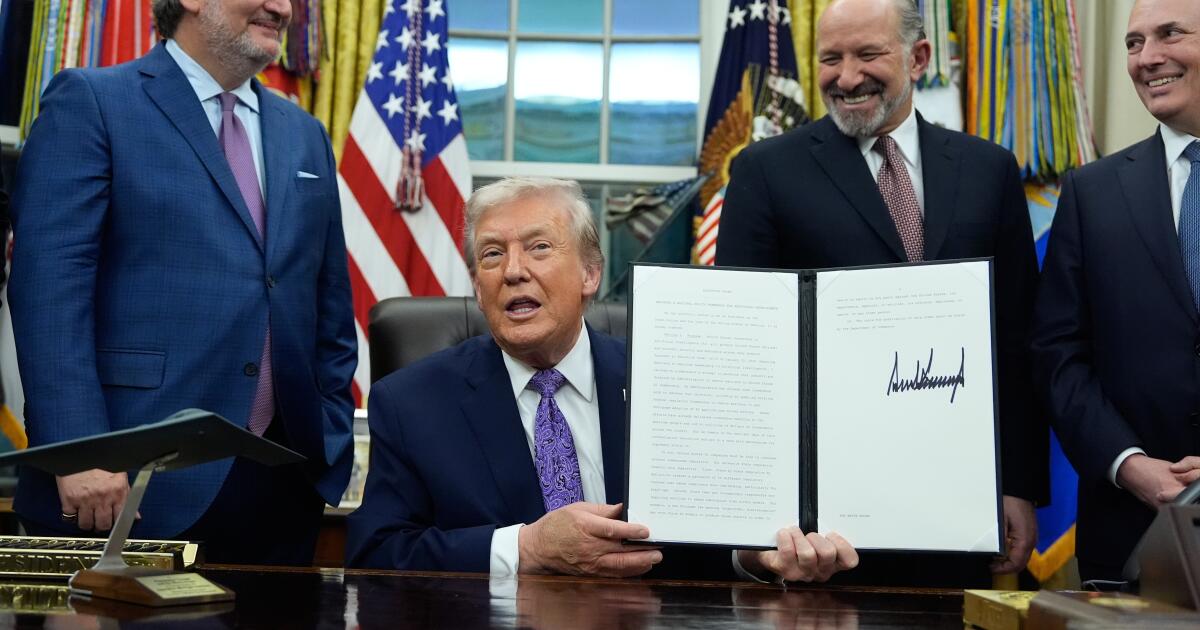
The terms of the Iran deal are spelled out in a memorandum of understanding that Trump signed last week, starting a 60-day clock for the sides to reach a broader agreement over ending Iran’s nuclear program.
But Republicans have particularly objected to the $300-billion fund to help Iran rebuild, which is far greater than the $1.7 billion then-President Obama refunded the country under his administration’s 2015 Iran deal.
“I believe President Trump is getting very poor advice on Iran,” Sen. Ted Cruz (R-Texas) said last week on his podcast after the deal was made public.
Democrats have repeatedly forced Iran votes
Over and again, Democrats have been forcing votes on the Iran war, almost since the U.S. and Israel launched missile strikes on Iran on Feb. 28.
Nearly each week they’re in session, the Senate Democrats have put forward war powers resolutions, but they have failed to amass the majority needed for passage in the narrowly split chamber, where Trump’s Republican Party holds the majority.
The House pushed its own version to passage earlier this month, with four Republicans joining all Democrats in approving the war powers resolution, over the objections of House Speaker Mike Johnson (R-La.) and the GOP leadership.
While such resolutions do not go to the president for his signature, passage stands as a powerful, if symbolic, statement from Congress and a rebuke of the administration’s military actions.
Sen. Tim Kaine, the Democrat from Virginia who has led his party’s efforts, said the pause in warfighting, as Trump’s team works to shore up a fragile ceasefire, provides the perfect time for Congress to step back and assess “what should the next chapter be.”
Hegseth seeks $80 billion from Congress for the Iran war
Defense Secretary Pete Hegseth is also on Capitol Hill this week, seeking roughly $80 billion in supplemental funding to shore up defense supplies in the aftermath of the Iran war, which is drawing scrutiny when many Americans are reeling from high gas prices and costs of living.
The Pentagon early on had estimated the war cost $11.3 billion during its first week, and experts have put the overall price tag at close to $100 billion.
The Defense Department’s funding request is part of a broader beef-up of military money the White House wants as part of its budget request this year.
The Trump administration is seeking $1.5 trillion in defense funding this year — a 50% increase — including $350 billion that it wants in a so-called budget reconciliation package. Johnson and GOP leaders are working to pass that package on their own, over the objections of Democrats, much the way they approved Trump’s big tax cuts bill last year.
The 2025 tax cuts package also included a sizable increase of about $175 billion for the military.
MACUNGIE, Pa. — President Trump visited a Mack Trucks facility in battleground Pennsylvania on Tuesday, attempting to shift attention to the U.S. economy in his first major public event outside the nation’s capital since he signed an interim agreement to end the Iran war.
The trip to Macungie, in the Allentown suburbs, came as Trump works to put the conflict — and the higher gasoline prices it caused — in the rearview mirror as the November midterm elections draw closer.
Trump had a private tour of the facility, but his speech often felt more like a reelection rally from two years ago than an effort to promote his second-term accomplishments.
The president listed longstanding political grievances, and made only passing mentions of promoting Republicans ahead of Election Day — while spending more time bragging about the UFC fight he staged on the White House lawn in honor of his own 80th birthday than he did the economy.
At one point, Trump even called UFC fighters Bo Nickal and Anthony Cassar to the stage and mused about whether he could beat either one of them in a wrestling match if he were to “work out for the next couple of months.”
It was Trump’s fifth second-term visit to Pennsylvania, a state whose support in 2016 and 2024 helped him to win the White House. The truck factory is in a district where incumbent Republican Rep. Ryan Mackenzie faces Democratic challenger Bob Brooks in November.
“For more than 100 years, this legendary company has been making trucks right here in eastern Pennsylvania,” Trump said, “building the heavy duty machinery that keeps our economy rolling, our factories moving, and our industries roaring all across the nation.”
His visit coincided with rising prices that could color the verdict voters render on Trump’s stewardship in the fall. About one-third of U.S. adults approved of Trump’s approach to the economy, according to a June Associated Press-NORC Center for Public Affairs Research poll. That’s in line with last month for Trump on the issue.
The Iran war, which began Feb. 28, has also been a politically difficult issue for the president. Most Americans continued to disapprove of his handling of Iran, according to the June AP-NORC poll, which was being fielded as Trump announced a tentative deal with Iran and concluded just before the interim agreement was signed last week. It found that 65% of U.S. adults disapprove of how the president is handling issues with Iran, unchanged from May.
Still, while most Democrats and independents view Trump’s actions negatively, only about 3 in 10 Republicans are unhappy.
This is the kind of district that matters in November elections
Trump addressed a cheering crowd from a stage erected on the factory floor, flanked by two red, white and blue trucks and rows of workers in fluorescent safety vests under a large “American Workers First” banner.
It’s the kind of district that may prove pivotal to Republicans holding narrow control of the House, where a loss could hobble the president’s final two years in office.
Mackenzie, a freshman lawmaker, is looking to hold on to a district Democrats have targeted to flip. Brooks, president of the state firefighters’ union, has support from Democratic Gov. Josh Shapiro, who’s also seeking reelection this year.
Trump urged the crowd to support Mackenzie, saying of his trip, “I’m not doing this for my health.” But he devoted more energy to issues such as the U.S.-Mexico border, opposing transgender rights and decrying “Marxist” judges, while also referencing his administration’s efforts to lower prescription drug prices.
“We gotta win the midterms,” Trump said, in one of the few references he made to the midterms. Later, however, he suggested it wasn’t actually a “political season,” perhaps because he himself won’t be on the ballot in November.
On Iran, Trump suggested that the country would be smart and keep negotiating during the ceasefire. “Otherwise we’ll have to finish the job, which will take about, maybe less than a week,” he said.
An odd moment came when the president offered, “The ideology of the Muslims is slightly different than the ideology of the Catholics. We have the Catholics and the Muslims slightly different.” He didn’t elaborate.
Biden came to the same plant previously
Trump’s predecessor, Democrat Joe Biden, visited the same Mack Trucks facility in 2021 to highlight regulations aimed at promoting manufacturing jobs. Manufacturing employment peaked in 1979 at nearly 19.6 million jobs. It trended downward after the 2001 recession and the 2007-9 Great Recession. The figure now stands at 12.6 million as of May, according to the Bureau of Labor Statistics.
In 2025, the truck facility got hit by market uncertainty, including sweeping tariffs that Trump’s administration imposed, and about 170 people were laid off, according to Mack spokesperson Kimberly Pupillo. She added that by the end of last year, almost 150 people were recalled to work and anyone laid off last year was given the chance to return.
There are about 2,800 workers at Mack, Pupillo said.
At a pizzeria down the road from the truck facility, workers and diners said they’d heard about the president’s visit and recalled Biden’s trip to the plant.
George Carver, a retired elementary school principal, said he wasn’t a fan of Trump’s. “I’m looking for a president who’ll clean up this mess,” he said, meaning improve the economy and better handle the war in Iran and immigration.
“I’m looking for someone who’s gonna tell the truth — that could be a Democrat or Republican,” Carver said.
Trump’s visit underscores Pennsylvania’s status as a crucial swing state.
Trump made a trip to Mount Pocono in December 2025 to road test messages that he’s addressing affordability; in July 2025, he was in Pittsburgh to tout tens of billions of dollars of recent energy and technology investments in the state; in June 2025, he was in West Mifflin to tell steelworkers he was doubling the tariff on steel imports to protect the industry; and in March 2025, he attended the NCAA wrestling championship in Philadelphia.
Denise Green, a retired software trainer, was among a handful of people protesting the visit outside a McDonald’s across the street from the plant.
Green said she was a former Republican who became a Democrat in 2007 because her original party backed policies where “all the money” was going to the rich.
Green said her key issue was Social Security funding, which she said she’ll need but is worried could run out.
FIFA president Gianni Infantino will be ‘enjoying the final’ with Trump and present the trophy together on July 19.
Published On 23 Jun 202623 Jun 2026
FIFA president Gianni Infantino has confirmed plans to include United States President Donald Trump in the trophy presentation ceremony at the World Cup final.
“We will be together with the president, enjoying the final, and handing the trophy to the winner – of course, together,” Infantino said during an interview with Fox News on Tuesday morning.
Recommended Stories
list of 4 itemsend of list
Asked to clarify that he and Trump would present the trophy together at the match on July 19 in East Rutherford, New Jersey, Infantino added: “Of course. We are together all the time.”
Trump notably participated in the ceremony at last year’s Club World Cup final, when Chelsea defeated Paris Saint-Germain 3-0 at the same venue.
Chelsea’s Reece James lifts the trophy as he celebrates with teammates after winning the FIFA Club World Cup, with US President Donald Trump and FIFA president Gianni Infantino also on stage [Jeenah Moon/Reuters]
He remained on stage as Chelsea lifted the trophy. Later, the trophy was spotted in the Oval Office, with Chelsea reportedly having received a replica version.
According to The Athletic, citing FIFA sources, Infantino has been aiming to attend as many matches as possible at the tournament.
So far, that has been up to two a day. Trump has yet to attend any matches in this year’s World Cup.
A federal appeals court on Tuesday allowed the Trump administration to resume carrying out speedy deportations of undocumented migrants throughout the United States, not just near the border.
A divided three-judge panel of the U.S. Court of Appeals for the District of Columbia Circuit threw out a lower court ruling that temporarily blocked President Trump’s expanded use of expedited removal. The ruling was a big victory for the Republican administration, which views the expansion of so-called expedited removal as a key tool for carrying out its mass deportation policy.
An attorney for the plaintiffs said the ruling “undermines the fundamental principle that people receive due process when the government seeks to deport them.”
“The Trump administration’s push for fast-track deportations will subject people to an unfair and error-prone system,” Anand Balakrishnan, senior staff attorney with the ACLU’s Immigrants’ Rights Project, said in a statement.
Trump appointed the two judges in the majority in Tuesday’s decision. The third was appointed by President Obama, a Democrat.
The plaintiffs had not “shown that the expedited-removal process denies its members notice and an opportunity to be heard,” Judge Justin R. Walker, one of the Trump appointees, wrote.
Expedited removal — quick deportation without a chance to appear before a judge — has previously been applied to migrants arriving by sea or caught at or near the border shortly after crossing.
In January, Trump expanded its use to undocumented migrants all over the U.S. Immigration agents began whisking migrants away from courthouses where they had gone for immigration proceedings and then removing them from the country within days.
U.S. District Judge Jia Cobb ruled in August that plaintiffs challenging the expansion had made a “strong showing” that it was trampling on people’s due-process rights, and she issued a stay order putting the policy on hold. Cobb was appointed to the federal bench by President Biden, a Democrat.
Many migrants living deep in the U.S. have been in the country for more than two years, making them ineligible for expedited removal under federal law. Cobb said the administration had not developed procedures to ensure they and other groups of migrants were not wrongly deported under the expedited process.
The plaintiffs had put forward “substantial evidence” that the expedited removal process, on the contrary, carried a high risk of error when applied more broadly, Cobb said. The ruling cited examples of people who had lived in the U.S. for far longer than two years but were still ordered to be removed in expedited proceedings.
The Trump administration appealed, arguing in a court filing that its expansion was legal, and protections were in place to prevent arbitrary removal.
Cobb’s ruling was an “egregious error” that was depriving the administration of an “essential tool to combat the unprecedented surge of illegal immigration over the past few years” and efficiently deport potentially millions of people, Justice Department attorneys argued in the October filing.
Vice President JD Vance, Pakistani Prime Minister Shehbaz Sharif and Qatari Prime Minister Mohammed bin Abdulrahman bin Jassim Al Thani speak ahead of talks between the United States and Iran at the Buergenstock resort in Obbuergen, near Lucerne, Switzerland, Sunday. The U.S. has waived Iran sanctions Tuesday. Photo by Urs Flueeler/EPA
June 23 (UPI) — President Donald Trump lifted sanctions on Iran releasing millions into the Iranian economy Monday,
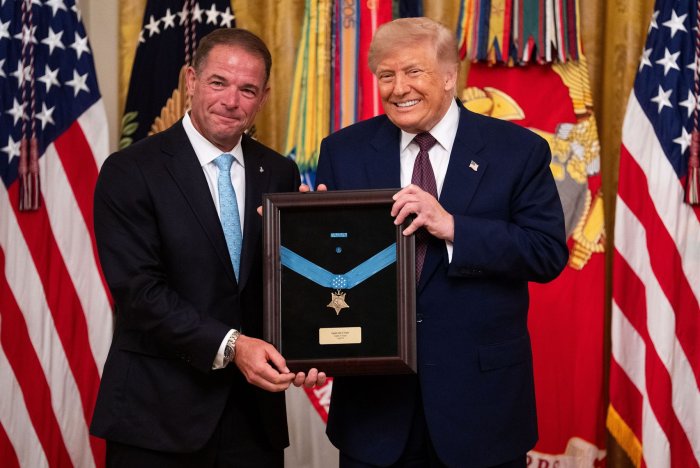
President Donald Trump presents a Medal of Honor to Tom Ripley on behalf of his father, John W. Ripley, during a Medal of Honor award ceremony in the East Room of the White House on Thursday. Photo by Aaron Schwartz/UPI | License Photo
allowing American dollar trade for the first time since 1979.
The U.S. Treasury on Monday issued a 60-day exemption allowing Iran to produce and sell crude oil, petrochemical and petroleum products in U.S. dollars through Aug. 21.
Under this general license, boats and entities that were sanctioned are also cleared to operate. The waiver could also open up allowing U.S. imports of Iranian oil, which hasn’t happened since the 1990s.
Trump defended the move on Truth Social Tuesday morning, saying that the money to Iran is to be used for food and supplies purchased from the United States.
“Despite their protestations and false statements to the contrary, coupled with the drumbeat of the Fake News, which is doing everything possible to make the U.S. Victory as small and insignificant as possible, Iran has fully and completely agreed to highest level Nuclear inspections long into the future (Infinity!!!). This will insure ‘Nuclear Honesty.’ If they did not agree to this, there would be no further negotiations!” the president posted.
“Based on this and other major concessions being made by Iran, I have agreed to allow the Hormuz Strait to remain OPEN, with no further Naval Blockade. However, all ships are remaining in place should it be necessary to reinstitute the Blockade, which seems, at this point, highly unlikely. The Money and/or Sanctions that the U.S. Treasury is releasing goes into escrow, controlled by the U.S.A., and will be used for the purchase of food and medical supplies, exclusively from the United States, including Corn, Wheat, and Soybeans from our great American Farmers. These are things that are desperately needed by Iran. This is a humanitarian crisis, and I feel it is necessary to help, NOW, before it is too late. Talks are going well!” he said.
Vice President JD Vance said Monday that during peace talks on Sunday, Iran agreed to invite the International Atomic Energy Agency back into the country for inspections.
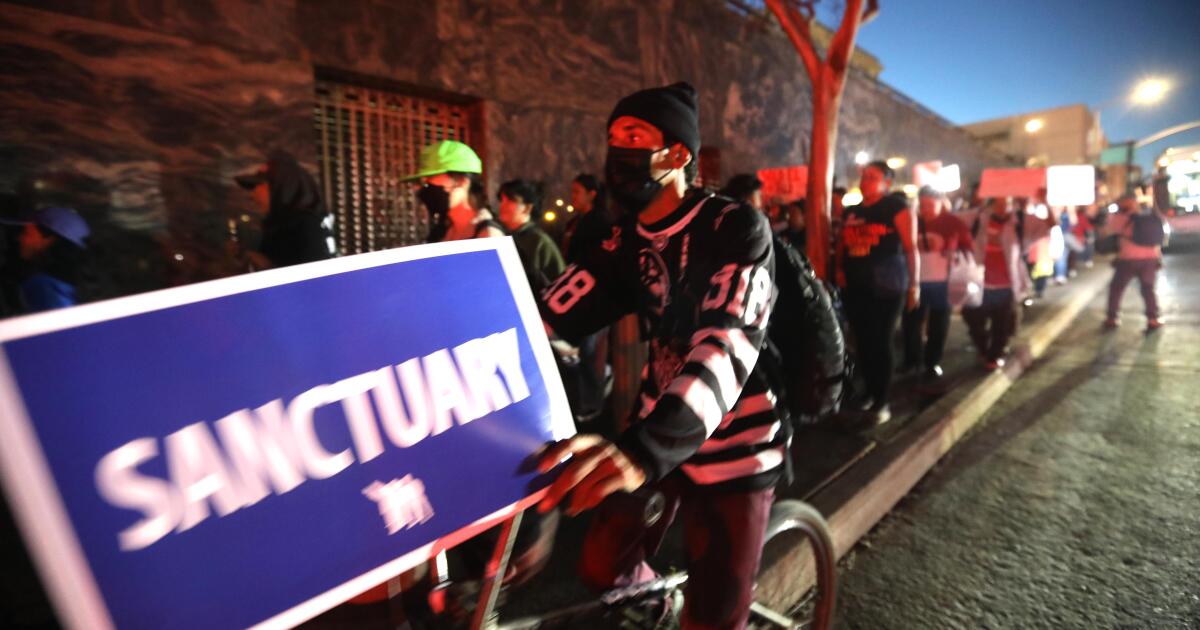
A federal judge has dismissed a lawsuit filed by the Trump administration that sought to block what it called L.A.’s “illegal” sanctuary city law.
In a weekend ruling, U.S. District Judge Fernando M. Olguin granted the city’s motion to dismiss the complaint, which alleged that the city ordinance violates the intergovernmental immunity doctrine by regulating and discriminating against the federal government.
Olguin ruled that the government’s allegations were “insufficient to establish that the Ordinance violates the intergovernmental immunity doctrine,” but granted the administration permission to file an amended complaint by July 3.
“The Ordinance does not directly regulate the federal government,” Olguin said in his ruling. “Rather, it ‘controls the actions of [the City’s] own agents and agencies.’”
The White House and the Department of Justice did not immediately respond to a request for comment.
Although the administration could refile its complaint, L.A.. City Atty. Hydee Feldstein Soto celebrated the dismissal as a legal victory.
“This order reinforces the well-established principle that local governments have the authority to decide how to use their personnel and resources,” Feldstein Soto said in a statement.
The lawsuit, filed by the Trump administration in California’s Central District federal court last June, said the country is “facing a crisis of illegal immigration” and that its efforts to address it “are hindered by Sanctuary Cities such as the City of Los Angeles, which refuse to cooperate or share information, even when requested, with federal immigration authorities.”
The lawsuit came as immigration agents descended on Southern California, arresting thousands of immigrants and prompting protests across the region.
“The situation became so dire that the Federal Government deployed the California National Guard and United States Marines to quell the chaos,” the lawsuit states. “A direct confrontation with federal immigration authorities was the inevitable outcome of the Sanctuary City law.”
The law was proposed in early 2023, long before Trump’s election, but it was finalized in the wake of his victory in November 2024.
Under the ordinance, city employees and city property may not be used to “investigate, cite, arrest, hold, transfer or detain any person” for the purpose of immigration enforcement. An exception is made for law enforcement investigating serious offenses.
The ordinance bars city employees from seeking out information about an individual’s citizenship or immigration status unless it is needed to provide a city service. They also must treat data or information that can be used to trace a person’s citizenship or immigration status as confidential.
“The goal of this ordinance, and of LAPD’s immigration-related policies … is to encourage victims of and witnesses to crime to feel safe coming forward to seek help from LAPD regardless of their immigration status,” Feldstein Soto said in her statement. “It does not obstruct or impede lawful federal immigration enforcement operations.”
The government in its original filing said that Trump campaigned and won the 2024 presidential election on a platform of deporting “millions of illegal immigrants.” By enacting a sanctuary city ordinance, the City Council sought to “thwart the will of the American people regarding deportations,” the lawsuit states.
“The Supremacy Clause prohibits the City of Los Angeles and its officials from singling out the Federal Government for adverse treatment — as the challenged law and policies do — thereby discriminating against the Federal Government,” the lawsuit says.
Trump’s Department of Justice contends that L.A.’s sanctuary city ordinance goes much further than similar laws in other jurisdictions by “seeking to undermine the Federal Government’s immigration enforcement efforts.”
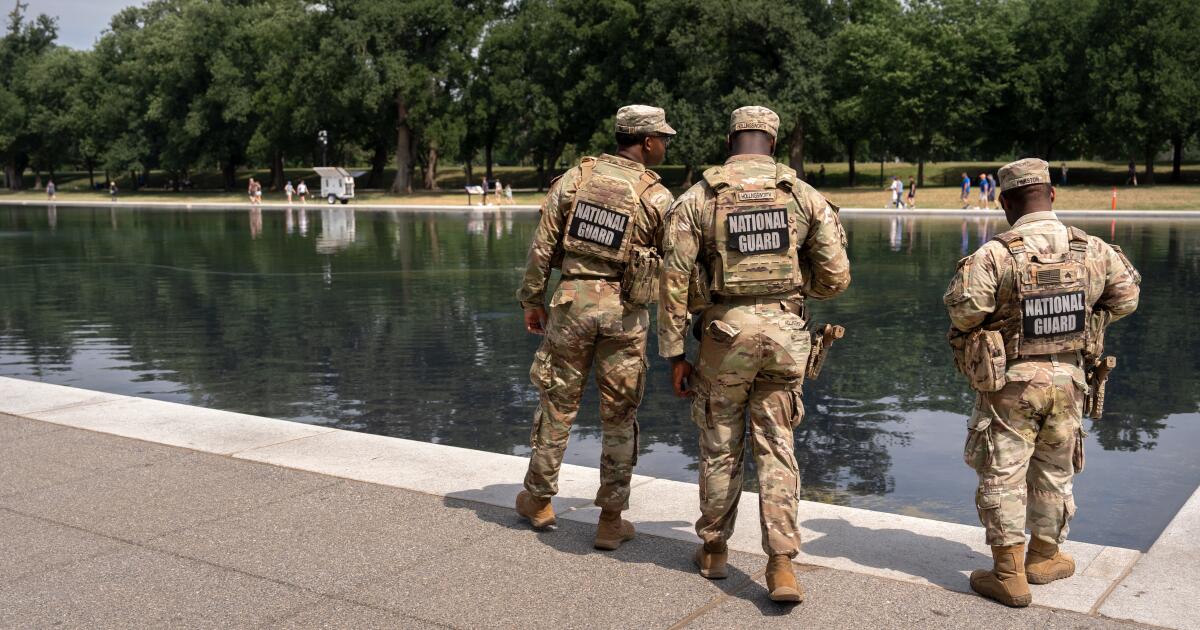
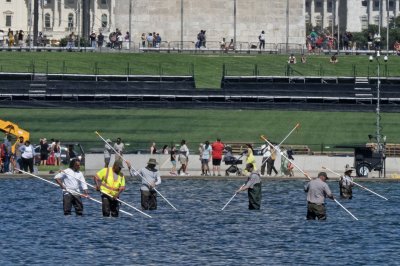
WASHINGTON — National Guard service members and U.S. Park Police were patrolling the deck around the Lincoln Memorial Reflecting Pool on Monday, as Donald Trump’s administration faces a self-imposed deadline to fix a botched renovation and cleaning efforts ahead of the nation’s 250th anniversary celebration.
The patrols come two days after Trump said authorities had made “multiple arrests” of people he insisted were responsible for damage to the peeling coating after an algae bloom occurred. The liner was installed as part of his $14-million-plus project.
The president has confirmed the problems likely require draining the pool again for liner repairs, and he promised a quick fix. But the timeline was not clear Monday, and the administration did not immediately respond to questions about a new round of work. Contractors and federal workers in recent days have been using chemicals and ozone nanobubbles to combat the algae.
Trump pitched the original improvements as intended to clean, beautify and reinforce an iconic site that he said had become dilapidated and dirty because of previous presidents’ neglect. Algae has plagued the pool for a century, and Trump insisted that a newly installed “American flag blue” coating, which he selected himself, would turn the pool into a gleaming expanse along the National Mall.
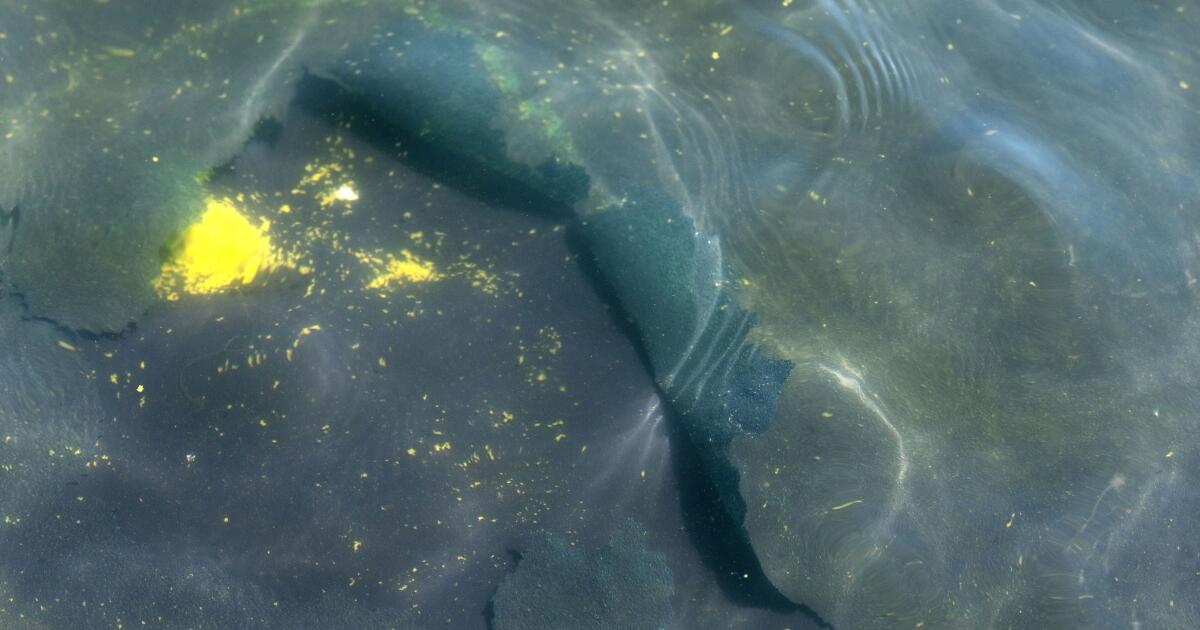
Yet within weeks of Trump declaring the rehabilitation completed in time for Independence Day, the water was plagued by a vivid green algae bloom that clouded the pool’s coating. An approximately 4-foot-square piece of the liner was observed Friday partially floating in the pool. The Associated Press observed additional pieces in the water Monday.
Via social media, the president has blamed the problems on “SICK, DERANGED PEOPLE!” He asserted Monday on Truth Social that intentional damages include a “300 foot long gash” and that “chemicals have been illegally placed in the water.” A day earlier, Trump posted, “Work will begin immediately on fixing the seriously vandalized Reflecting Pool.”
He has not substantiated those claims, and even if anyone has deliberately peeled the lining, that would not explain the algae bloom that appeared more intensely than what typically occurred before the renovation.
Images showing that Trump’s project apparently backfired boomeranged across social media last week, drawing crowds of onlookers eager to see the effects themselves. An unknown number ended up being detained by federal authorities.
One man arrested was David Hearn, 67, of Bethesda, Md. A former Olympic canoe racer, Hearn told the Associated Press that he reached into the pool because he wanted to examine the peeling new coating. He said he briefly touched a chunk that was still attached to the side of the pool, then let go shortly after a park worker told him to. Hearn said he was then detained by National Guard troops and Park Police for five hours before being released Friday night.
“I’m a curious citizen,” Hearn said in a telephone interview. “I reached down to see what it felt like. It was very rubbery.”
The Park Police did not immediately respond Monday to AP’s questions about how many arrests were made and whether any charges had been filed. Washington’s Metropolitan Police Department said Monday that the agency is not involved.
It was not immediately apparent what criminal or civil violation someone might commit reaching into the pool. Trump, in one of his Truth Social posts on the matter, threatened prison time for his unnamed assailants, referencing laws against defacing federal monuments.
Ellgren and Barrow write for the Associated Press. Barrow reported from Atlanta. Katie Vogel contributed reporting from Washington.
MINNEAPOLIS — A federal judge has blocked an attempt by the Trump administration to subpoena Minnesota Gov. Tim Walz and other state officials, calling it an effort to “harass and retaliate against them.”
In a ruling unsealed Monday, U.S. District Judge Patrick Schlitz found the “dominant purpose” of the subpoenas was to “coerce Minnesota officials into assisting the federal government with enforcing civil immigration law and to harass and retaliate against them for failing to do so.”
The subpoenas were served in January as part of an investigation into whether Walz and other officials obstructed or impeded law enforcement during a sweeping immigration operation in the Minneapolis-St. Paul area.
The subpoenas, which seek records, were sent to the offices of Walz, Atty. Gen. Keith Ellison, Minneapolis Mayor Jacob Frey, St. Paul Mayor Kaohly Her and officials in Ramsey and Hennepin counties.
The judge ruled that there appeared to be “extremely weak to nonexistent” connections between the information sought in the subpoenas and any possible criminal violation. The subpoenas seek materials “that largely if not entirely relate to constitutionally protected conduct,” the judge wrote, noting that Minnesota has the legal right not to devote its resources to enforcing federal immigration law.
The Justice Department “is not conducting a criminal investigation,” the judge wrote, “but is instead using the grand jury process for other (unlawful) purposes.”
The evidence that the subpoenas were issued for unlawful reasons is overwhelming, the judge said, arguing that the Justice Department “has struggled — without success — to identify a single plausible investigatory justification” for them.
Walz, in a statement, called the ruling “a victory for the rule of law and our democracy.”
“The U.S. Justice Department is pursuing criminal investigations into the President’s political opponents,” said Walz, the 2024 Democratic nominee for vice president. “This case was just one example of that, but we are seeing daily reminders of this administration’s lawlessness — in Minnesota and around the country. We all must continue to seek justice and uphold the rule of law.”
Ellison said “it should disturb every American that Donald Trump is weaponizing the criminal justice system against people he disagrees with.”
The subpoenas are “a politically motivated retaliation against our city for lawfully standing up to ICE and fighting for our residents,” Her said in a statement, referring to U.S. Immigration and Customs Enforcement.
Frey said the investigation was “never about justice, law, and order, but the absence of it.”
“Subpoenaing political opponents because they spoke on behalf of their constituents violates the core tenets of our democracy and human decency,” he said.
Frey also observed that criticizing government action is not a crime.
“One of the defining strengths of our democracy is the ability to challenge those in power without fear of retribution. Elected officials have both the right and the responsibility to speak honestly about how government decisions affect the people they serve,” he said.
Bauer and Richer write for the Associated Press. AP writer Eric Tucker in Washington contributed to this report.
U.S. President Donald Trump has said he is exploring ways to ensure Americans benefit directly from the rapid growth of artificial intelligence, raising the possibility of the government acquiring stakes in leading AI companies. The idea comes as firms such as OpenAI and Anthropic pursue valuations that could make them among the most valuable companies in the world, fueling debate over whether the public should share in the wealth generated by AI technologies.
Why the Idea Is Gaining Attention
The AI boom is expected to create enormous wealth for technology companies, investors and founders. Policymakers and advocates argue that because AI development relies heavily on public infrastructure, government research and vast amounts of publicly generated data, ordinary citizens should receive some of the financial benefits.
The debate has intensified as major AI developers seek billions of dollars to build data centers, chip infrastructure and advanced computing systems.
Option One: Taxing AI Companies Through Equity
One proposal would require AI companies to pay part of their taxes in shares rather than cash.
Under this approach, the government would gradually accumulate ownership stakes in AI firms without directly investing taxpayer money. Supporters argue that it would allow the public to benefit from future growth while avoiding large government expenditures.
Some advocates have gone further, proposing substantial government ownership stakes and board representation to give the public a direct voice in how AI companies operate.
Option Two: Equity in Exchange for Government Support
Another model would involve the government receiving equity stakes in return for financial assistance or incentives.
This approach mirrors previous arrangements in strategic industries where federal funding was provided in exchange for ownership interests. Given the enormous capital requirements of AI infrastructure, government funding could potentially become a source of financing for companies building advanced computing facilities, semiconductor plants and other critical projects.
Supporters argue this would allow taxpayers to benefit if publicly supported companies become highly profitable.
Critics contend that such arrangements could blur the line between regulation and investment, potentially creating conflicts between public policy goals and financial interests.
Option Three: Public Wealth Funds and Citizen Dividends
A third proposal focuses less on government ownership and more on distributing AI-generated wealth directly to citizens.
Under this model, revenue generated through AI-related taxes or investments would flow into a public wealth fund, which would then distribute dividends to Americans.
The concept resembles Alaska’s Permanent Fund, which uses energy revenues to provide annual payments to residents. Advocates argue a similar system could ensure that AI-driven economic gains are shared more broadly across society rather than concentrated among a small number of technology firms and investors.
Some AI companies have expressed interest in versions of this idea, including proposals for digital dividends funded by taxes on the sector.
Why AI Companies Matter
The debate carries major financial implications because leading AI developers are becoming increasingly valuable.
OpenAI and Anthropic have both reportedly taken steps toward potential public listings, while companies across the sector are raising unprecedented sums to fund AI expansion. Some analysts believe the industry could generate trillions of dollars in economic value over the coming decade.
As a result, even relatively small government stakes could potentially produce significant long-term returns.
Challenges and Obstacles
Any effort to give the government ownership in AI companies would face significant legal, political and economic hurdles.
Questions remain over:
How ownership stakes would be valued
Whether companies would voluntarily participate
The impact on private investment
Potential conflicts of interest for regulators
How revenues would be distributed to citizens
There is also likely to be strong opposition from free-market advocates who argue that government ownership could discourage innovation and distort competition.
What Happens Next
Trump has not outlined a specific mechanism for acquiring stakes in AI companies, and no formal proposal has been introduced.
However, the discussion highlights a growing debate over who should benefit from the AI revolution and whether existing economic structures are sufficient to distribute the gains from one of the most transformative technologies in modern history.
Analysis
The significance of Trump’s proposal lies less in whether the government ultimately acquires stakes in AI firms and more in what it signals about the future political debate surrounding artificial intelligence. As AI companies approach trillion-dollar valuations, pressure is likely to grow for policymakers to ensure that the economic gains extend beyond investors and technology executives.
The discussion mirrors earlier debates over natural resources, where governments sought ways to ensure that public assets generated public benefits. In this case, supporters argue that AI is built on public research, public infrastructure and publicly generated data, creating a rationale for broader wealth sharing.
At the same time, the proposal raises fundamental questions about the relationship between government and the private sector. Direct ownership stakes could provide taxpayers with financial upside, but they could also create tensions between the government’s role as regulator and its role as investor.
The debate is likely to become more prominent as AI companies grow larger, seek additional funding and exert greater influence over economic growth, employment and national competitiveness. Whether through equity ownership, taxation or public wealth funds, the central political question is increasingly becoming not whether AI will generate enormous wealth, but who will ultimately receive it.
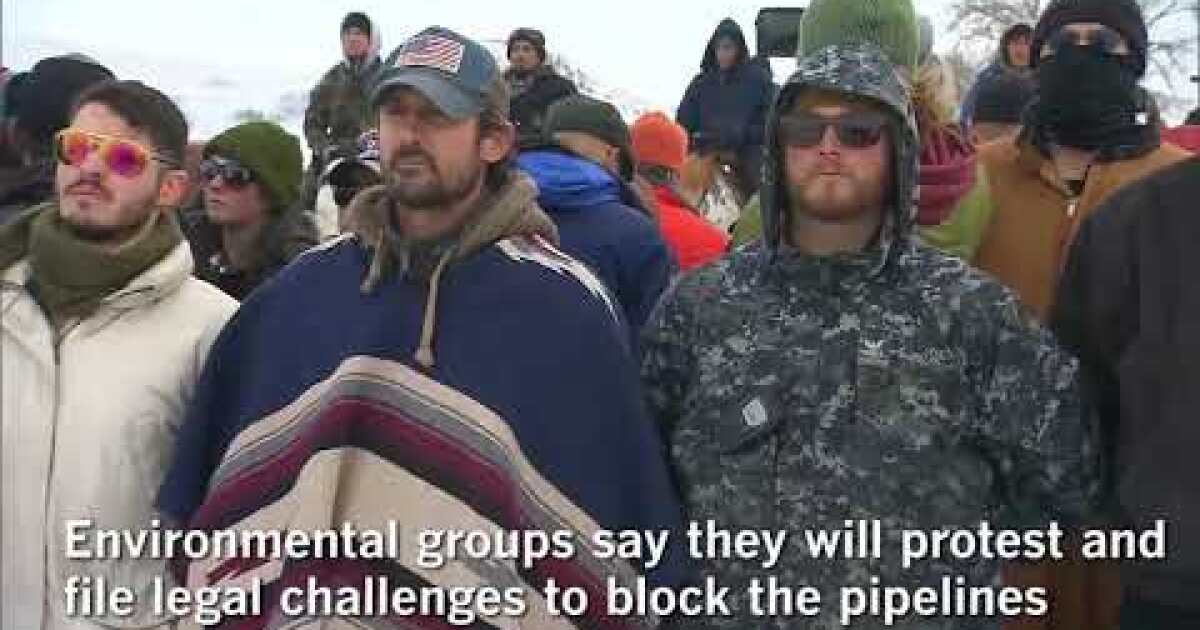
Reporting from Washington — The hotly contested Keystone XL and Dakota Access pipeline projects that President Trump brought back to life with the stroke of a pen Tuesday may still never get built — but for Trump, that isn’t necessarily the point.
The projects have become among the country’s most potent symbols of the clash between an oil and gas industry seeking to maintain the old order of energy production and the climate change movement pushing for a different direction.
Trump used the two proposed pipelines to send an unmistakable message during his first week in office: energy firms and their projects are back in favor.
When the Obama administration rejected Keystone in 2015 after years of protests and tens of millions of dollars spent by all sides, green-energy champions celebrated a seminal victory. The decision against the project came right before Obama signed a landmark global warming accord with dozens of other heads of state at a summit in Paris.
The Dakota Access project more recently became a national rallying point not only for environmental groups but for Native American tribes who said it threatened grounds they hold sacred. The Standing Rock Sioux Tribe has set up a camp to protest the pipeline, and the battle over it has become violent at times, with protesters clashing with police.
As the fight drew increasing national attention last year, the Obama administration dealt the project a potentially devastating blow that once again sent a strong message of opposition to fossil fuel projects. The U.S. Army Corps of Engineers denied the pipeline a crucial easement and announced it would look for alternatives to its planned route under a dammed section of the Missouri River called Lake Oahe.
Days before Obama’s term ended, the Corps of Engineers announced it would start an extensive environmental review that could add months — potentially years — to the permitting process and open the project to more public comment, creating new opportunities for opponents to block it.
Trump’s decision to revive the prospects for both projects comes as his administration jettisons much of Obama’s climate policy — including U.S. participation in the Paris accord — and promises to work aggressively to curb regulations that inhibit drilling and mining.
As the Trump administration moves swiftly to change direction, it also issued a gag order to the staff at the Environmental Protection Agency, which took a lead in Obama’s climate fight. Officials at the agency have been instructed not to interact at all with the news media and to freeze all contracts and grants.
Trump’s directives on the pipelines may pay political dividends. The angry opposition to the announcements comes mostly from places and groups that have never supported Trump. By contrast, the moves are likely to be well received by workers in Rust Belt communities who backed Trump in the election and now see him delivering on his promise to work for more jobs in middle America.
The decision on the Dakota Access pipeline instructed the Corps of Engineers to “consider” whether it can grant final approval for the project. It does not immediately clear the way for construction to resume, but strongly tilts in that direction, telling the Corps to consider skipping any additional environmental review.
Jan Hasselman, a lawyer for the advocacy group Earthjustice, called that directive illegal, saying it was “an insult to Standing Rock, and it continues a historic pattern of trampling on the rights of native people.”
Environmental groups call the $3.8-billion, 1,170-mile project — nearly all of which has already been built — a threat to clean air and water, as well as to farming communities.
On Keystone, the president emphasized the jobs aspect of the project by insisting that the pipeline be built exclusively with U.S. steel, which he said would generate still more jobs.
That demand may or may not be feasible. If it raises the pipeline’s cost, it could prove the death knell for a project that may no longer pencil out financially. The price of oil has plunged over the last couple of years to levels far below what Keystone’s designers had envisioned.
The order Trump signed on Tuesday invited TransCanada, the firm that developed Keystone, to submit a new application for a permit for the pipeline. It directed administration agencies to swiftly review that application and issue a new decision within 60 days. That would be in sharp contrast with the nearly eight years during which the project languished before Obama finally rejected it.
During the long delay, fighting Keystone became a rallying point for the environmental movement. While studies showed the effects of the single pipeline on the climate would be negligible — as would be its impact on boosting global oil production — resistance focused on the environmental movement drawing a line in the sand, demanding that public officials stop backing big, invasive infrastructure projects that feed the world’s oil habit and undermine the push for more green energy.
TransCanada immediately declared it would seize the new opening for its project, which is designed to ship 800,000 barrels of oil a day from the Canadian tar sands to refineries along the U.S. Gulf Coast.
In a statement, TransCanada vowed the pipeline would create thousands of jobs and boost the American economy, saying it “represents the safest, most environmentally sound way to connect the American economy to an abundant energy resource.”
Trump echoed the project’s supporters, saying the pipeline could generate 28,000 construction jobs. Opponents dispute that number, saying the new jobs would be less abundant than Trump claims and noting that in any case they would be temporary. They also say the project would undermine the potential creation of many more jobs in solar, wind and geothermal energy.
Trump’s directive provoked predictable outrage from environmental groups, which are vowing to mobilize just as they did before to block construction with mass protest and relentless legal challenges.
For all the heavy symbolism, however, the project’s impact on the world’s energy sector will ultimately be limited.
“In the end, this is all a tempest in a teapot,” said Andrew Hoffman, a professor of sustainable enterprise at the University of Michigan. The project, he said, ultimately would not lower prices at the pump or add significantly more greenhouse gases to the atmosphere.
“It is just one more battlefield between the left and the right about free commerce, the role of government and the influence of activists,” he said.
Halper reported from Washington and Yardley from Denver.
June 21 (UPI) — President Donald Trump said Sunday that work will begin “immediately” to repair the Lincoln Memorial Reflecting Pool, blaming vandalism for problems at the newly renovated Washington, D.C. landmark.
Trump repeatedly claimed over the weekend on social media that there had been arrests in connection with vandalism at the Reflecting Pool, which has been plagued by issues since undergoing a $15 million restoration ordered by the president.
From algae blooms to blue coating peeling off its bottom, the Reflecting Pool has been a target of criticism of the Trump administration, which has defended the restoration as necessary while blaming vandals for at least some of the damage.
In a social media statement on Sunday, Trump said he inspected the Reflecting Pool and was in disbelief at what he saw.
“I just inspected it, and could only say to myself, and those gathered around me, WOW, who would do such a thing? SICK, DERANGED PEOPLE!” he said.
It was unclear exactly what damage Trump was attributing to vandalism.
In a Saturday post, Trump referenced the need to drain the pool in order to conduct vandalism-related repairs, which was in addition to alleged vandalism to landscaping.
“They took some form of knife or blade, and put a 250 foot long gash into the beautiful facade of what took so much work, competence and money to build and complete,” he said.
“They also poured corrosive and destructive chemicals into the Pool.”
Trump first commented on the pool Saturday evening, saying in a statement that U.S. Park Police had arrested “multiple individuals for vandalizing our Nations magnificent Reflecting Pool.”
He then said hours later that “many additional people have been arrested having to do with the disgraceful Vandalism of our beautiful Reflecting Pool.”
UPI has asked U.S. Park Police for confirmation of arrests and damage to the pool caused by vandalism.
Trump first announced plans to restore the pool in November. Atlantic Industrial Coatings Limited was awarded $6.89 million in April to paint the bottom of the pool. The broader restoration has since been reported to cost about $15 million.
He announced June 6 that work on the pool was complete ahead of celebrations marking the 250th anniversary of the United States to be held alongside Trump’s 80th birthday.
But within days of the completion, the pool began experiencing issues. Videos posted online show the pool’s surface green with algae, while others show individuals reaching into the pool to handle the peeling blue paint.
On Friday, three-time U.S. Olympian David Hearn was arrested for allegedly damaging the pool. He has claimed in interviews with multiple news organizations that he only touched the edge of hardened paint that was peeling off the pool’s floor.
CHICAGO — A spate of shootings in Chicago has led to seven deaths and at least 38 injuries since Friday evening, police say, prompting President Trump to renew his call for a military intervention in the nation’s third-largest city.
It is the latest in a series of threats made and interventions ordered by the Republican president against a Democratic-led city, including Los Angeles.
“Why isn’t Governor Pritzker calling me for help. I could make Chicago a safe City in ONE MONTH, in ONE YEAR, it would be one of the safest!!!” Trump said in a Sunday morning post on social media.
The office of Illinois Gov. JB Pritzker, a potential 2028 Democratic presidential contender who has repeatedly rebuffed Trump’s calls for a military intervention, did not immediately respond to a request for comment.
Under Trump, National Guard troops have been deployed on crime-fighting missions in Democratic-led cities including New Orleans, Washington and Memphis, Tenn.; and Marines and Guardsmen were sent to L.A. last year amid protests over federal immigration raids.
Although Chicago Police Department data show a slight increase in shooting incidents compared with the first half of last year, violent crime rates have generally dropped in the city over the last few years, in parallel with national trends.
Preliminary information shared by Chicago police indicate there have been at least two dozen shooting incidents since 5 p.m. Friday. Those killed by gunfire include a 21-year-old shot in the chest Sunday, an 18-year-old shot in the armpit Saturday evening and a 50-year-old shot in the chest Friday.
At least 12 people in a crowd on a Chicago street suffered gunshot wounds Friday evening after an SUV pulled up and two people inside started shooting, police said.
The eight men and four women in the group ranged in age from 17 to 47. They were being treated at four hospitals. Police said another man suffered unknown injuries and refused medical treatment.
That shooting happened on Juneteenth, a holiday that celebrates the end of slavery in the U.S. Earlier Friday, former President Obama and former First Lady Michelle Obama welcomed the first visitors to his presidential center on the South Side.
“What should have been a night of celebration and community reflection for Juneteenth was shattered by a horrific act of violence,” Mayor Brandon Johnson said in an X post Saturday. “My thoughts and prayers are with the victims and their loved ones.”
“Violence has no place in our city, and those responsible will be held accountable,” he said.
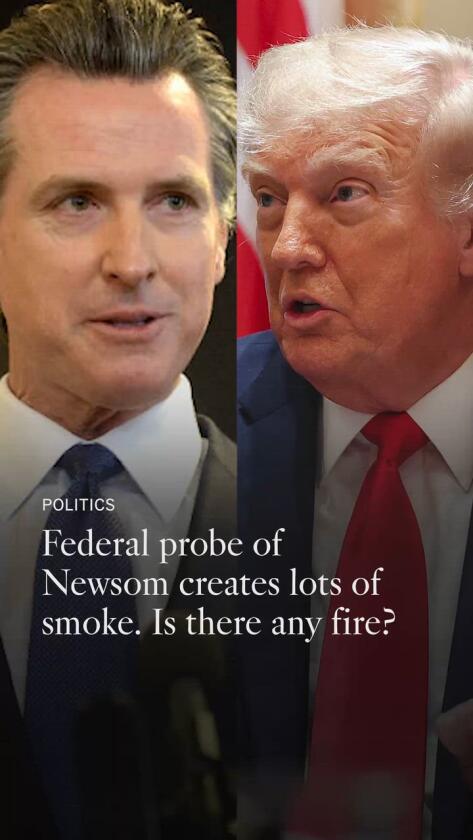
This is widely seen as a throw-me-in-the-briar-patch gift from President Trump, coming as California’s governor edges ever closer toward a 2028 run for the White House. The presumed effort to cut down a political foe could instead boost Newsom’s chances of winning the Democratic nomination, or so it’s being suggested.
After all, look at how Trump’s verbal bludgeoning elevated former Rep. Adam Schiff. The House has typically been a dead end for lawmakers seeking statewide office in California. Today, the former Burbank congressman and Trump tormentor is a United States senator.
In truth, however, it’s far too early to say how the investigation of Newsom and his wife plays out politically, not least because it’s unclear whether there’s merit to the probe or if it’s merely a fruitless search-and-destroy mission by Trump’s Department of Retribution, Vengeance and Settling Old Scores
Beyond that, the first ballots of the 2028 campaign won’t be cast for roughly a year and a half. The Democratic National Convention, where the party will install its nominee, doesn’t begin for another 778 days.
Your friendly political columnist won’t resort to that hoariest of cliches about such-and-such duration being a lifetime in politics. But for some perspective, let’s go back 778 days.
President Joe Biden was running for reelection and about to challenge Trump to a pair of early debates. Trump was sequestered in a New York City courtroom being prosecuted on 34 felony counts.
A lot happened in the weeks and months that followed, including Biden’s self-immolation on the debate stage and Trump’s criminal conviction. A lot more will happen in the weeks and months to come. There’s no telling what. But it’s safe to say the fight for the 2028 Democratic presidential nomination will not be decided by anything that’s taken place in June 2026.
With his exquisitely tuned political antennae, the governor jumped out front of the president by announcing last week the feds were targeting him and his wife. (Naturally, Newsom’s revelation was accompanied by a rage-bait email — subject line: “Because I am thinking of running for president” — that denounced the “political witch hunt” and asked for money.)
“After calling for my arrest last year, Donald Trump directed his Department of Justice to investigate me,” Newsom said in a 4 ½-minute, direct-to-camera video that framed the investigation before prosecutors had the chance. “And just in the last week, I’ve learned his campaign has reached my own home: To get me, he’s coming after my wife, Jen.”
Share via
Newsom and his wife both adamantly denied any wrongdoing and, of course, they must be presumed innocent until and unless proven otherwise.
But there was something a bit disingenuous about the governor’s chivalrous defense. Siebel Newsom, a documentary filmmaker who calls herself California’s “First Partner,” is no mere housewife baking cookies and holding teas, in the famous words of Hillary Rodham Clinton. (Hold the outrage, folks, this is not some retrograde criticism of career-seeking women.)
Among her many public-facing activities, Siebel Newsom heads The Representation Project, a nonprofit focused on challenging gender stereotypes. The organization has faced criticism for accepting donations from companies that lobby the governor, so it’s not unreasonable to ask whether those interests have improperly sought to influence Newsom by giving money to Siebel Newsom’s causes.
My Times colleagues reported that an investigation related to Siebel Newsom has been underway for about a year and was launched by federal prosecutors in Sacramento based on whistle-blower information provided in California. It was not, their source said, the result of a directive out of Washington.
“This is a huge problem,” Randall Eliason, former chief of the Public Corruption Section of the U.S. Attorney’s Office in Washington, told Politico. “In any political corruption prosecution, the defense almost always claims it is a ‘political witch hunt,’ that prosecutors are targeting him or her for some political reason.
“The best defense to that has always been [the Justice Department’s] tradition of independence from politics and long track record of pursuing corruption cases based only on the facts and law, without regard to political considerations,” Eliason said. “The Trump administration has abandoned that independence without even trying to hide it.”
The probe of Newsom and his wife presents more questions than answers.
It’s grody, but not criminal on its face, for lobbyists to curry favor with the governor by throwing cash at his wife’s endeavors — if, in fact, that’s been the case. Special interests spending money to gain access and influence is about as common in Sacramento and other capitals as statues, domed buildings and manicured lawns.
So why then are the feds investigating Newsom? Why now? Is there any fire, or is it all a lot of smoke?
Perhaps most important, where can you turn to get an impartial answer?
HARRISBURG, Pa. — Six months after President Trump warned states not to regulate artificial intelligence, they are increasingly doing just that.
Congress has stalled on producing federal regulations of artificial intelligence as states forge ahead and scrutinize how chatbots interact with children, how AI systems are used by employers and what developers must do to try to prevent an AI-caused catastrophe.
State lawmakers have stepped back from earlier, wider-ranging attempts to regulate AI that were vetoed or otherwise derailed by governors who viewed the measures as too onerous toward the industry’s development, including efforts to hold developers accountable for bias in AI systems.
But they are returning with legislation that is more targeted and, often, probes the corners of life where Americans interact with AI but may not know it.
Presidential power versus state power
Trump’s move to restrain states’ actions on AI drew criticism from members of both political parties and civil liberties and consumer rights groups who worried that banning state regulation would amount to a gift to AI giants, who enjoy little to no oversight.
Trump has made AI a top national and economic security priority, and he said that letting states clutter the regulatory playing field for an industry that’s spending trillions of dollars and driving the economy is too risky in the race with China for AI superiority.
Trump issued an executive order that directed the attorney general to create a task force to challenge state laws that are more than “minimally burdensome,” and directed the Commerce Department to draw up a list of problematic regulations. It also threatened to restrict funding from a broadband deployment program and other grant programs to states with AI laws.
The White House said it wouldn’t target state laws that seek to prevent fraud and protect consumers and children.
In the meantime, the Trump administration released a “national policy framework” in which it urged Congress to preempt state AI laws that are out of step with its regulatory worldview and to pass legislation to protect children, intellectual property rights and free speech. A recent bipartisan draft proposal in the House was met with withering criticism from key Democrats and Republicans.
The White House has given no indication that it has made good on its threat to enforce the president’s executive order by going to court against a state’s AI law or withholding money. In a statement, it said the Trump administration is “eager to work with partners” to enact its policy framework.
States seem largely unrestrained by Trump
Trump’s executive order didn’t seem to discourage states from trying to regulate how AI is used. More bills have been introduced this year than last, including by Republicans, said Justine Gluck, policy director of the Future of Privacy Forum, a nonprofit that advocates for data privacy in technology and whose members are from industry, academia and civic groups.
In Illinois, legislation on the desk of Democratic Gov. JB Pritzker piggybacked on elements of laws passed last year in California and New York that require developers of large advanced AI models to create protocols to prevent their systems from causing catastrophes such as a biological weapons attack, power outage or large-scale hack.
Illinois added a requirement that AI developers must get an independent auditor to review whether they are complying with their own policies. Analysts see it as a step toward requiring AI developers to take greater accountability for their products.
The bill’s sponsor, Democratic state Sen. Mary Edly-Allen, brushed aside Trump’s threat.
“I don’t know if you’ve met Illinois, but we’re pretty independent,” Edly-Allen told the Associated Press.
The bill drew nearly unanimous support, signaling a willingness by members of Trump’s party to cooperate with Democrats in filling the AI regulatory vacuum left by the federal government.
This kind of legislation is expected to expand to other states.
Regulating chatbots, especially for children
A growing number of states are imposing restrictions on how AI chatbots can interact with people, especially children. A mix of Republican- and Democratic-led states have passed such laws this year, including Colorado, Connecticut, Idaho, Iowa, Nebraska and Oregon.
In many cases, states want companies to tell people when they are interacting with AI instead of a human. Many want chatbots to be restricted in how they interact with minors, parents to have control over their child’s access, and data given to chatbots to be kept private.
In recent weeks, Connecticut enacted provisions for companion chatbots that sustain an ongoing relationship with a human. Under them, a chatbot must not be able to interact with someone under 18 unless it is programmed against encouraging self-destructive behavior and provides parents with tools to manage the child’s use.
Transparency in AI and decision-making
In California, lawmakers are advancing the “No Robo Bosses Act of 2026” to prohibit employers from relying solely on AI to fire or discipline workers, and an expansion of how the state regulates AI chatbots, including banning chatbot outputs to children from being used for advertising.
Colorado in May required companies that deploy AI systems in important areas such as employment, education, housing or banking to tell people when AI is being used to influence a decision made about them.
It was a stab at regulating what researchers say is the bias inherent in AI systems that sort through a consumer’s data and render consequential decisions — including who gets hired, a home loan or medical care. But it watered down a 2024 law aimed at preventing AI’s penchant to discriminate, amid pressure from Democratic Gov. Jared Polis.
In Connecticut, lawmakers required employers who are using employment-related AI systems to tell employees or job applicants that they are interacting with AI.
Meanwhile, Connecticut, Washington and Utah required AI developers to embed data into digital content that will allow users to determine whether the content — such as photos or video — has been created or altered by AI.
More laws are possible this year.
Some Republican-led states hold back
In Florida, the state House refused to advance what Republican Gov. Ron DeSantis called his AI “Bill of Rights” legislation. It included provisions to give parents control over their children’s access to companion chatbots and to require companies that use chatbots to tell consumers when they are interacting with AI instead of a human.
Florida House Speaker Daniel Perez, a Republican, said Trump had made it clear that the federal government should be in charge of AI regulation. DeSantis panned that idea, noting that the federal government isn’t acting.
In Utah, progress stalled on legislation modeled on laws in New York and California after the White House sent a one-sentence memo to lawmakers there to warn that it was “categorically opposed” to the bill.
A tarp covers the sign for the Donald J. Trump and The John F. Kennedy Memorial Center for the Performing Arts in Washington, D.C., last week as federal employees complied with a court order to remove Trump’s name from the building. Photo by Aaron Schwartz/UPI | License Photo
June 20 (UPI) — The board of directors at the John F. Kennedy Center for the Performing told a judge this week that the venue has no plans to schedule new programming and will likely remain closed for renovations.
U.S. District Judge Christopher Cooper in May ruled that the Kennedy Center’s board had decided to close the facility in July for two years of renovations and refurbishments without considering its responsibilities as a federal monument, ABC News and The Washington Post reported.
The May 29 ruling also ordered the center to remove President Donald Trump‘s name from the building, which it complied with last Friday, just hours before the court’s deadline to do so.
Trump made a sudden announcement in February that he planned for the center to be shut down for “construction, revitalization and complete rebuilding” over the course of a two-year period.
Matt Floca, executive director of the Center, told Cooper in a filing Friday that the board will be considering three potential paths forward — full closure, partial closure or a set of phased closures — but that public access to parts of the building would be maintained during any work there.
“Given present uncertainty as to future programming, management has deferred affirmative long-term programming or staff adjustments until the board selects a final operational path.
Performances and shows that were scheduled after the July closure date have already been canceled and are not expected to be rescheduled.
The public will continue to have access to various exhibits and smaller gatherings held there, including the John F. Kennedy exhibit — the facility was designed as a living memorial to the former president — during work there.
The Center’s board is expected to consider the three renovation options at a meeting in mid-July.
President Donald Trump presents a Medal of Honor to Tom Ripley on behalf of his father, John W. Ripley, during a Medal of Honor award ceremony in the East Room of the White House on Thursday. Photo by Aaron Schwartz/UPI | License Photo
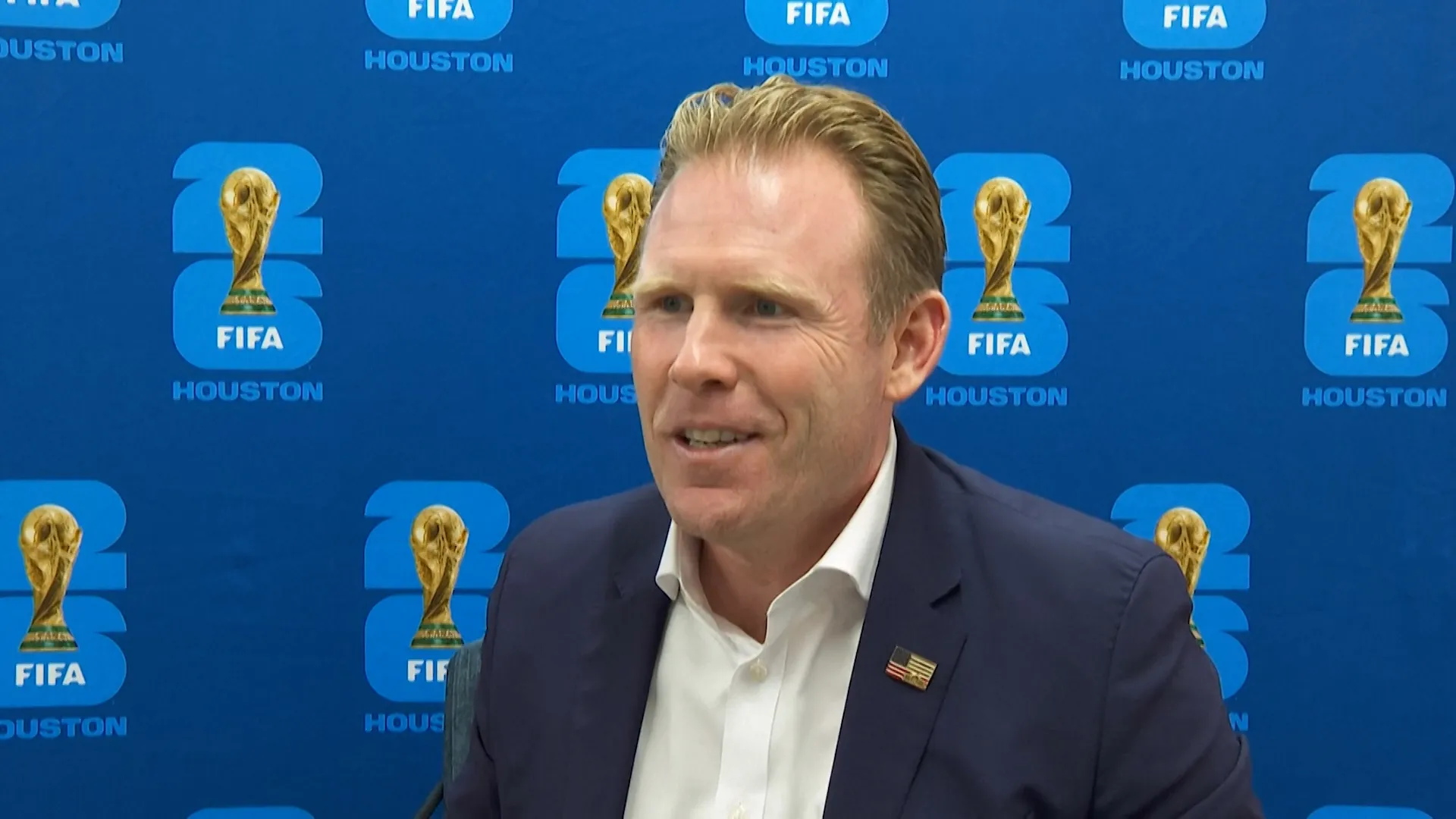
The chief of the White House World Cup task force says it’s “pretty amazing” Iran’s football team has been given visas for the tournament. Andrew Giuliani defended the US’s treatment of the team, which has been forced to base itself in Mexico and fly in and out for matches.
United States President Donald Trump has pledged there will be no tolls for passage through the Strait of Hormuz, unless they are collected by his own country.
Trump’s statement, made in a Saturday afternoon post on Truth Social, is the latest sign that a recently signed memorandum of understanding (MOU) may be unravelling.
Recommended Stories
list of 3 itemsend of list
“There will be NO TOLLS in the Hormuz Strait for 60 days during the Cease Fire Period, and there will be NO TOLLS after the 60 day period has expired,” Trump wrote, “unless they are imposed by and for the United States of America.”
Since the US and Israel launched a war against Iran on February 28, Iran has successfully used the Strait of Hormuz as a pressure point, closing the strategic waterway to traffic.
But under the terms of Wednesday’s ceasefire memorandum, the strait is supposed to reopen for an interim period of 60 days. During that time, Iran is barred from charging vessels for passage.
On Saturday, however, Iran’s joint military command said it had closed the Strait of Hormuz, citing a “clear breach” of the memorandum’s commitments.
US Central Command (CENTCOM), the agency that oversees military operations in the region, denied that report and maintained that the traffic continues to flow through the waterway.
The Strait of Hormuz has long been a flashpoint in the conflict between the US and Iran. Nearly 20 percent of the world’s oil and natural gas is transported through the strait, as well as about 30 percent of the global fertiliser trade.
Closure of the strait has caused global fuel costs to soar and has tested agricultural sectors across the world.
Trump had responded to Iran’s chokehold over the strait by imposing a US naval blockade on Iran’s ports in the region.
But that naval blockade was lifted under the terms of Wednesday’s memorandum. The deal also paused fighting on all fronts in the regional conflict, including in Lebanon.
The memorandum, though, was not intended as a long-term deal. It serves as a launching point for negotiations on key issues, including the future of Iran’s nuclear programme.
Several points of divergence also went unaddressed in the memorandum. Nowhere does the memo say that future tolls cannot be collected from the strait after the 60-day period expires.
Before the war, there was no charge for passage through the strait. Trump himself said in an interview with The New York Times that the waterway should remain “permanently toll-free”.
But he appeared to reverse course in Saturday’s post, once again floating the possibility that the US could extract tolls in the strait, while barring Iran from doing so.
No fees should be levied, Trump wrote, “unless they are imposed by and for the United States of America, should the deal not be completed”.
He explained that such a charge would compensate the US “for services rendered as the Guardian Angel to the countries of the Middle East for purposes of both past, present, and future reimbursement of costs”.
Trump used similar language in his New York Times interview earlier this week, floating the US becoming “the guardian of the Middle East” in exchange for 20 percent of its revenue.
Saturday’s post is not the first time Trump has mused about the US imposing tolls in the strait, either.
In April, for instance, he discussed the idea with reporters, saying, “What about us charging tolls? I’d rather do that than let them have them. Why shouldn’t we? We’re the winner. We won.”
There has been no indication that Trump’s plans have been officially presented to countries in the region, many of whom have struck a careful balance in their dealings with both the US and Iran during the war.
Iranian officials, meanwhile, have repeatedly said they will not rule out imposing tolls in the strait, framing the issue as a matter of sovereignty and regional negotiation. The strait sits between Iran and Oman.
Further discussions are expected on the matter in the coming weeks.
But such negotiations have been thrown into jeopardy amid ongoing Israeli military operations in Lebanon, which threaten to violate Wednesday’s ceasefire memorandum.
Iran claimed that Saturday’s closure of the strait was a result of new Israeli attacks in southern Lebanon, which killed dozens of people after the ceasefire was announced.
Iranian officials have also said that any upcoming talks should focus on proper implementation of the initial memorandum, and that the 60-day negotiating period stipulated in Wednesday’s deal would begin after that was settled.
Pakistan, a top mediator between the US and Iran, has said that follow-up talks are set to begin in Switzerland on Sunday.
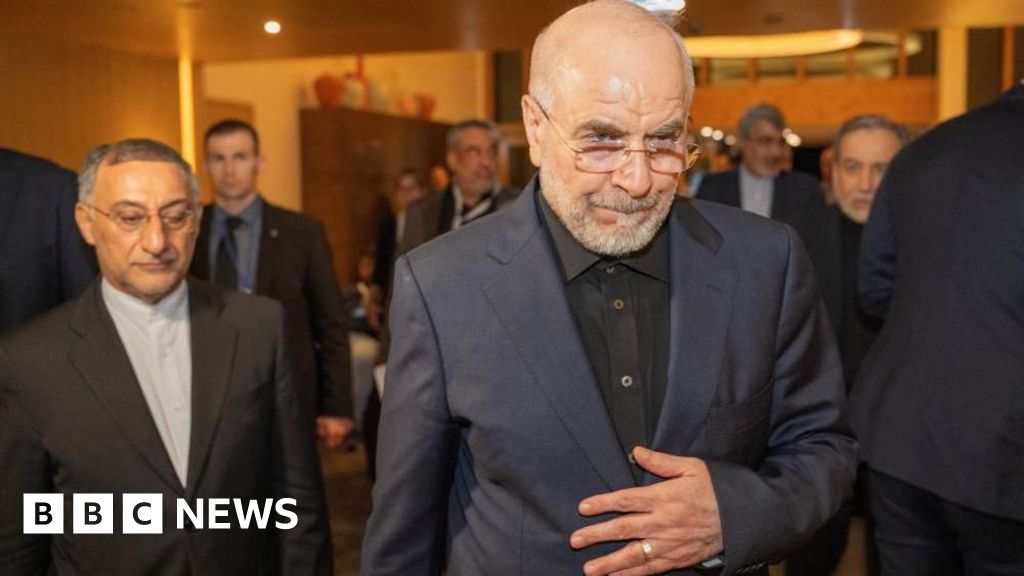
Switzerland’s Federal Department of Foreign Affairs has confirmed that an Iranian delegation, led by parliamentary Speaker Mohammad Bagher Ghalibaf and Foreign Minister Abbas Araghchi, has already arrived for the negotiations.
On the US side, Trump’s son-in-law Jared Kushner, special envoy Steve Witkoff and Vice President JD Vance are expected to attend.
WASHINGTON — The paint is peeling from the Lincoln Memorial Reflecting Pool after the renovation ordered by President Trump, and he is now alleging, without substantiation, that someone damaged it intentionally.
“We’ve had some real problems with Vandalism at the beautiful Reflecting Pool,” he posted on his social media site Friday night. “Just like three days ago, they destroyed the grass outside of the Pool, they’ve also done everything possible to hurt the inside surface that was just installed.” He offered no details to substantiate his claim.
Agencies responsible for law enforcement and upkeep on the National Mall — the U.S. Park Police, National Park Service and Department of the Interior — did not immediately respond to requests for comment.
The Washington Post reported that Park Police officers arrested someone Friday who they said was peeling paint from the pool, an act that would not explain the clouds of algae in green water and swaths of loose blue paint detached from the bottom.
Trump insisted something nefarious was going on. “No different than the chemicals that were used on the National Mall, they used something similar in the Reflecting Pool to try to destroy and demean our beautiful work,” he posted.
That was a reference to the discovery of large numbers etched in discolored grass on the National Mall the week before: “86 47,” apparently advocating to “86” — get rid of, in restaurant lingo — the 47th president.
Authorities claimed the numbers may be a threat against Trump, and they are investigating. Trump’s Department of Justice has tried — unsuccessfully so far — to prosecute Trump foe and former FBI Director James B. Comey for posting a photo of seashells arranged in the numerals “86 47.”
Trump’s claims of vandalism came after days of negative attention to the state of the Reflecting Pool, which has raised concerns about the no-bid contract of more than $14 million to refurbish. The president has said the pool rehab was needed as the nation’s 250th anniversary celebrations ramp up.
The pool was swiftly beset by an algae bloom that returned its waters to the greenish color that Trump had tried to replace by having the bottom painted “American flag blue.”
Federal workers treated the pool with hydrogen peroxide to kill the algae. Now, chunks of the blue paint are gone, exposing its rocky bottom.