Shoppers can improve their travel days with the £20 B&M product that’s ‘brilliant’ for holidays
B&M shoppers can upgrade their travel experience (stock photo)(Image: Getty)
B&M is selling a ‘noise-cancelling’ travel product that could be ideal for noisy trains, planes, and buses. Popular for selling budget-friendly essentials, the bargain store could have a new crowd-pleaser for holidaymakers.
The retailer is selling £20 Bluetooth headphones that help shoppers “tune in and block the world out.” Showcasing the Goodmans Noise-Cancelling Metallic Bluetooth Headphones online, B&M told shoppers the headphones are a “brilliant companion for commutes, travel, or working from home.” In recent years, many travellers have started using noise-cancelling headphones to relax and block out background noise.
Prices often range from around £20 to £400 across different brands. However, you don’t have to pay hundreds. Shoppers might be just as happy with the £20 B&M option, which offers 30 hours of playtime when using Active Noise Cancelling and up to 18dB noise reduction, according to B&M. The headphones are available in four colours: blue, pink, black, and silver. The tech also has a two-year manufacturer’s warranty.
B&M’s full product description states: “Tune in and block the world out with the Goodmans Noise Cancelling Metallic Headphones. Bluetooth connectivity and Active Noise Cancelling (ANC) technology make these a brilliant companion for commutes, travel, or working from home.
“ANC reduces unwanted background noise by up to 18dB, so you can focus on your music, calls, or podcasts without interruptions. With 30 hours of playtime with ANC active, you won’t be reaching for a charger anytime soon.
“The metallic-coated earcups give a sleek, stylish finish, while the extra soft cushions and premium padding keep things comfortable over long listening sessions. Earcup controls put volume, ANC mode, track navigation, and power on/off right at your fingertips.”
For shoppers looking for more headphones, B&M also sells SONY Wireless Bluetooth Headphones, on sale for £30. The product description said: “Enjoy immersive and high-quality listening experiences with the WH-CH520 SONY Wireless Bluetooth Headphones.
“Featuring an adjustable headband, soft ear pads, and a lightweight design, the SONY Wireless Bluetooth Headphones can be connected to two devices simultaneously with Multipoint Connection plus Fast Pair and Swift Pair. You can even personalise your sound settings and EQ settings for a personalised listening experience with the Sony Headphones Connect app!”
The description continued: “With up to 50 hours of battery life, you can listen to all your favourite music without worrying about running out of charge, and if your battery is running low, a three-minute quick charge can give you 1.5 hours of listening time.
“The WH-CH520 also has easy button operations, and can even be controlled with your voice, and since connection is easy with Swift Pair and Fast pair, these Sony Headphones are ideal for everyday use.”
Passengers flying on popular budget airlines this summer have been warned over a 32kg bag rule that many holidaymakers don’t know about, and it can see your suitcases turned away at check-in
Most airlines have a strict limit on how much one bag can weigh(Image: Getty Images/iStockphoto)
There are endless packing hacks online to help you minimise the amount you take on a plane, but let’s face it, some of us just like to take a lot of extra stuff when we go on holiday.
And it’s not always out of choice. If you’re travelling with a baby, or you need to pack medical equipment, the size of your suitcase can soon grow and the luggage scales at the airport could end up groaning under the weight of your luggage.
Some passengers who travel as a group will use a bag-pooling hack. This means their luggage allowance as a group is spread between multiple cases. For example, if you travel as a couple and buy two 20kg bags, you could have one that weighs 30kg and one that weighs 10kg. But this travel hack does have a major exception some travellers don’t know about.
Not only do airlines’ policies vary on bag-pooling, with each one having its own rules about whether you can use this method, there’s also a strict upper weight limit for a single piece of luggage.
This rule isn’t about the airlines trying to charge extra for luggage. Bags need to stay under a certain weight due to baggage handlers having restrictions on how much they can lift. For most carriers, this is a strict 32kg weight limit for a bag or any item being checked in. Anything tipping the scales over this weight could therefore be refused at the check-in desk.
Here’s a look at what the UK’s most popular airlines say about upper weight limits and whether they allow bag pooling on their flights.
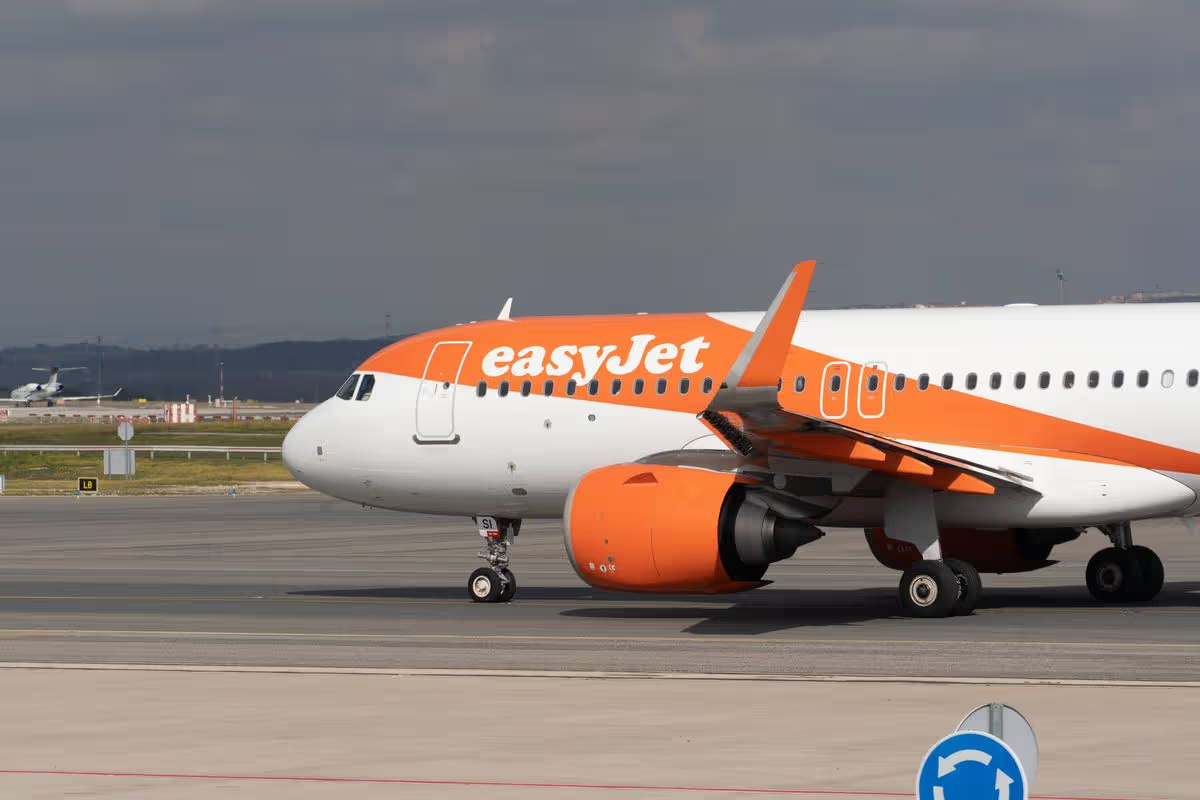
EasyJet
On easyJet’s website, it explains the rules about upper weight limits and sharing baggage allowances: “If you’re travelling with family or friends on the same flight and booking, you can pool your total weight allowance.
“This means that the total weight allowance can be split among the total number of bags booked, as long as no single item weighs more than 32kg. Maximum total size (length + width + height) = under 275cm.”
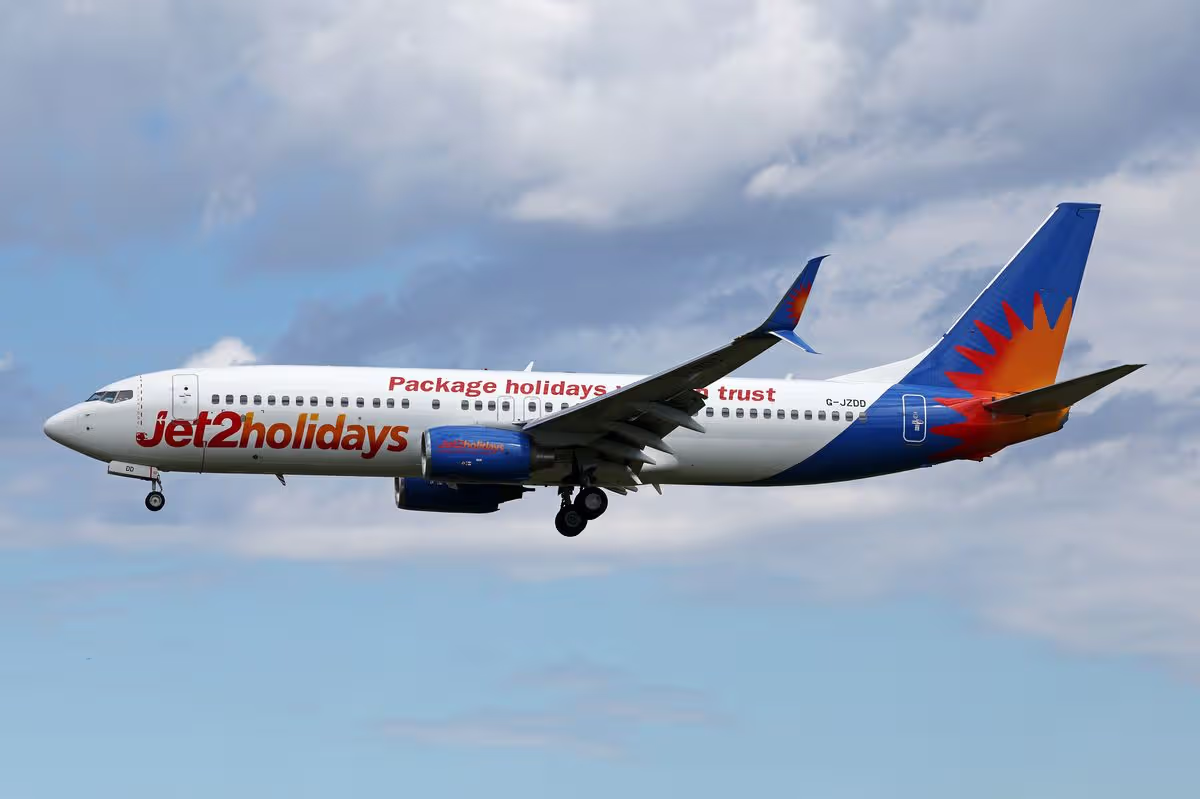
Jet2
Recently, a passenger with a booking for 10 people took to social media to ask Jet2: “If one person is over does all the weight pool together or does everyone individual need to be 22kg?” The airline replied: “Yes you are able to pool your luggage providing you do not go over your overall weight limit and no one bag weighs more than 32kg.”
The customer then followed up to ask: “So one person won’t be charged if their case is overweight slightly and the rest are under?”, to which Jet2’s customer service representative replied: “That’s correct. If one bag is slightly over, but others are under, you will still have room within your overall allowance and will not be charged.”
TUI
Passengers flying with TUI should check their booking to see whether the flight is operated by TUI airways itself, or another carrier. Some packages booked through TUI fly with third-party airlines.
TUI’s website states: “If you’re travelling with TUI Airways, you’re allowed to pool your luggage allowance with anyone else travelling on your booking. However, each bag can only weigh up to 25kg.
“If you’re unsure of your luggage allowance, then you can find this on your booking confirmation or by logging into Manage my booking”. Passengers who have booked a TUI package with a flight on a different airline should contact the company they are flying with directly for advice.
Ryanair
Ryanair’s FAQs are very clear about bag-pooling, saying: “Yes. Bag pooling is allowed between passengers with check-in bags on the same flight reservation. This means that if you have two 20kg Check-in Bags (40kg total) on your booking, one of those bags could weigh 15kg while the other weighs 25kg.”
But it was clear about its upper weight limit, saying: “However, no bag can weigh more than 32kg.”
Have a story you want to share? Email us at webtravel@reachplc.com
Not only is the suitcase a great price, but its wheels can be removed to help it meet the requirements. Ryanair is one of the most popular airlines in the UK, offering cheap flights to a number of destinations. Its bag rules state: “All fares include one small personal bag (40 x 30 x 20 cm) that must fit under the seat.”
Talking about the free bag, it adds that the small personal bag “such as a handbag or laptop bag” must adhere to its measurements and “fit under the seat in front of you. If you need additional baggage allowance, there are various options available to you.”
Content cannot be displayed without consent
It adds: “Additional options include Priority boarding with a second 10kg cabin bag, checked bags of 10kg, 20kg (up to 3), or 23kg (1 allowed). Infants have no cabin allowance but may bring a 5kg baby bag and two baby equipment items free.”
Focusing on the small personal bag size, and creating five TikTok videos on the bag alone, Chelsea Dickenson, who has appeared on shows like This Morning to share her tips, said she loves the suitcase and is “genuinely impressed with the quality for something that’s fairly affordable.”
Trying to fit the case into the bag size checker, she showed that it didn’t fit. That was until she took off the wheels.
It also remained below the red line, suggesting it met the airline’s standards, and thankfully, she got through security with no issues. Not only does it meet pre-boarding size requirements, but she also demonstrates that it fits neatly under the seat, describing it as “super slim.”
And if you’re wondering where you pop the wheels, she reveals: “It comes with a cloth bag that you can pop the wheels into. These are best put in your pocket – so remember to wear something with pockets big enough! Otherwise, you could pop it back in the suitcase.”
But be careful. In one of her videos on the £25 bag, she says she ended up losing a wheel and advises others to ensure the wheels click securely back into place when reattaching them.
What happens at the boarding gate if my cabin bags are bigger than my allowance?
Ryanair state: “You must adhere strictly to the baggage allowance on your booking. If your small bag or 10kg cabin bag does not fit in the baggage sizers, it will be refused at the boarding gate, or where available, placed in the hold of the aircraft for a fee at the level set out in our Regulations.
“You will be required to leave your bags at the aircraft steps, in the gate bag trolley, or as directed by Ryanair agents, for stowage in the hold.”
According to the Skyscanner comparison site holidaymakers can jet off on a summer break for less than £80 – and they shared the cheapest day to travel
A beautiful beach on Comino island, Malta(Image: Getty)
Millions of people across the UK have already booked their summer holidays, but there are still plenty of options for those yet to make plans. While travel can be costly, a trip abroad can cost less than £80 for the flights.
According to Skyscanner, UK travellers could find return flights for under £80 next month. Skyscanner is a travel comparison website that lets users search and compare flights from hundreds of airlines and travel providers. It also offers tools such as price alerts, flexible date searches, and its “Everywhere” feature, which helps travellers find the cheapest destinations.
The company says Dublin, Milan and Prague are among the cheapest places to visit in June. And for those holding out for a summer getaway in July and wanting a little extra time to save, these are the 10 destinations worth considering for a last-minute holiday.
Top 10 cheapest destinations in July 2026
Dublin, Ireland: Average return is £76 and the cheapest day to fly out is Tuesday
Milan, Italy: Average return is £103 and the cheapest day to fly out is Tuesday
Palma, Spain: Average return is £111 and the cheapest day to fly out is Tuesday
Ibiza, Spain: Average return is £137 and the cheapest day to fly out is Tuesday
Rome, Italy: Average return is £137 and the cheapest day to fly out is Tuesday
Alicante, Spain: Average return is £150 and the cheapest day to fly out is Tuesday
Budapest, Hungary: Average return is £162 and the cheapest day to fly out is Sunday
Faro, Portugal: Average return is £171 and the cheapest day to fly out is Monday
Marrakech, Morocco: Average return is £177 and the cheapest day to fly out is Tuesday
Valletta, Malta: Average return is £183 and the cheapest day to fly out is Tuesday
The comparison experts say the prices are based on the median cost of economy return flights booked through Skyscanner for travel in 2025 on the selected route and month, including taxes and fees.
Experts say many people assume their travel insurance automatically covers phones, tablets and other gadgets. But policies vary, so it’s worth checking the small print before you travel to avoid unexpected costs.
It notes: “Not all travel insurance policies include gadget cover. And travel insurance payouts for valuables are often low – as little as £200 for one item or £500 in total.”
Travellers are being urged not to get caught out and ways to avoid fees
Passengers could face fees of up to £125 at the airport(Image: Getty)
Millions of people across the UK fly with well-known airlines, such as Jet2, easyJet, Ryanair and TUI, and with the peak summer travel season mere weeks away, travellers are being issued handy luggage guidance. With Brits continuing to prioritise travel in 2026, particularly short-haul trips, city breaks and budget airline holidays, the way people pack is evolving.
More travellers are opting for hand luggage only to save time and avoid extra fees. Yet many are still being caught out by oversized cabin bags or overweight suitcases, facing charges of up to £60 at the gate or £65 for exceeding hold luggage limits, which can add up to £125.
As a result, travellers are increasingly looking for smarter, more organised ways to maximise space while staying within airline restrictions. In response to this shift, Nick Gaskin, Sales and Marketing Director at IT Luggage has shared practical advice to help travellers pack more efficiently, whether they’re travelling light with cabin bags or checking in a full suitcase.
Nick Gaskin said: “Packing well isn’t about fitting more in; it’s about travelling smarter. With more people choosing flexible, shorter trips and hand-luggage-only options, organisation and preparation can make a huge difference to the overall travel experience. A few simple habits can save time, reduce stress and help travellers feel more in control from departure to arrival.”
As hand-luggage-only travel becomes increasingly common, making every inch of space count is key. Nick recommends creating a micro essentials kit.
He explains: “Treat your cabin bag as a safety net. Include essentials like underwear, key toiletries – remembering liquid limits – medication and a charger. That way, you’re covered for delays or lost luggage without relying on airport shops.”
He added: “Pack one complete spare outfit”. Rather than throwing in random extras, pack a full outfit using crease-resistant fabrics. This ensures you stay comfortable and presentable if plans change or bags are delayed.
The specialist also suggests carrying a boarding pass backup. “Technology fails more often than people expect”, Nick explains. “Keeping a screenshot or printed boarding pass avoids stress if airport Wi-Fi or apps stop working at a critical moment.”
Keep in-flight items within reach, Nick says. Store items like headphones, snacks and lip balm in a small pouch that fits under the seat, so you don’t need to access the overhead locker mid-flight.
For longer trips or checked bags, organisation is key to avoiding overpacking and keeping belongings in good condition, Nick says. “Pack by outfit, not by item. Grouping complete outfits together — including accessories — makes getting ready easier and prevents packing combinations that don’t work,” he added.
Weigh as you go with packing cubes. “Packing cubes aren’t just for organisation — they’re great for managing weight,” says Nick. “Weigh each cube as you pack it. It’s much easier to adjust before everything goes in the suitcase than deal with excess baggage at the airport.”
Nick also recommends positioning shoes strategically. Place shoes heel-to-toe around the edges of your suitcase and fill them with socks or smaller items to maximise space and help them keep their shape, he said.
Separate clean and worn clothes. A lightweight laundry bag keeps worn clothes contained, helping maintain freshness and making unpacking simpler when you return home, Nick adds.
Combine rolling and folding. He said: “Rolling softer items like T-shirts saves space, while structured garments such as jackets should be folded to reduce creasing. A mixed approach delivers the best results.”
Photograph your packed suitcase. “Taking a quick photo before you travel is a simple but effective step,” Nick adds. “It can support insurance claims if luggage is lost and acts as a reminder of what you’ve packed.”
The airline shared an update for passengers in a post on social media
The airline posted an update for passengers(Image: Getty)
Ryanair has shared a ‘fuel update’ for passengers. The airline shared the news on social media, explaining that it is making changes to flights. Posting on YouTube, Ryanair shared an overview of its plans to improve flights over the coming years.
The video was titled: “Pathway to net zero carbon emissions goal.” As part of the changes, the airline said flights will produce less noise and require less fuel, among other benefits. Ryanair describes itself as Europe’s largest airline group.
In the post, Ryanair told customers: “We’ve developed a pathway to achieve our net-zero carbon emissions goal by 2050, which aligns with the Paris Agreement and the aviation industry’s Destination 2050 initiative. Ryanair’s pathway aims to show incremental progress in decarbonising in line with EU climate targets are possible.”
In the video, the airline highlighted key areas of change. Ryanair started by discussing the benefits of new technology, such as 210 ‘game-changer’ aircraft, which deliver 16% less fuel usage and 40% less noise.
Ryanair also shared how sustainable aviation fuel can reduce lifecycle emissions by 80%. As well as how measures, such as single-engine taxiing and dynamic flight planning, can improve efficiency.
On its website, Ryanair shared further details for passengers interested in its plans. The airline said 32% of its carbon-emission reduction targets would come from technological and operational improvements, 34% from increased use of sustainable aviation fuel, 10% from the Single European Sky initiative, and 24% from offsetting and similar measures.
Ryanair’s website says: “We have teamed up with Trinity College Dublin to put in place a number of innovative actions to accelerate the use of sustainable aviation fuel (SAF). By appointing best-in class researchers, we’ll achieve our goal of powering 12.5% of our flights with SAF by 2030.”
Destination 2050 describes itself as an industry alliance committed to climate-neutral European aviation. The website says: “We believe that together, policy-makers and the industry we can make net zero CO2 emissions happen by 2050. European aviation is committed to play its part and ensure that air transport can continue to grow sustainably in the future.
“By 2030, net CO2 emissions from intra-European flights would be reduced by 55% compared to 1990 levels through a combination of fleet renewal, sustainable aviation fuel (SAF), operational improvements and the EU Emissions Trading System (ETS) –in line with the new EU climate goal for 2030.”
Why is CO2 bad for the environment?
Carbon dioxide (CO2) is a greenhouse gas that holds heat in the Earth’s atmosphere. Although it is essential for maintaining the planet’s warmth, human actions have led to a significant increase in its levels, intensifying the greenhouse effect and causing global warming, severe weather events, and ocean acidification.
A travel agent warned holidaymakers the item must always be kept in hand luggage after the Civil Aviation Authority (CAA) launched an awareness campaign following a rise in flight disruptions
A travel agent has warned against packing one thing in your large suitcase (stock)(Image: J_art via Getty Images)
Anyone who has ever travelled by plane will be familiar with the restrictions on hand luggage items at airport security – from liquids exceeding 100ml to batteries, tools and frozen goods. Security staff will refuse to allow anything they deem hazardous to pass through, meaning any attempt to do so could hold up your travels or result in the item being confiscated.
There are certain items, such as vapes, however, which must be packed in hand luggage rather than in larger suitcases stowed in the hold. Jake Cullum-Hollins took to TikTok to warn his 50,000 followers that another such item – power banks – are frequently “ruining” people’s holidays.
Content cannot be displayed without consent
These are portable chargers that enable their owners to top up mobile phones, tablets and laptops while on the move – without requiring access to a mains socket.
“People still aren’t following the rules when it comes to packing these correctly,” Jake began in a video. “Due to the rising number of cases where flights are having to be delayed, diverted or even to make an emergency landing because of power banks, the Civil Aviation Authority (CAA) is launching a massive awareness campaign.”
Jake clarified the guidance is straightforward – any item containing a lithium battery must be carried in hand luggage. This includes laptops, tablets, vapes and, indeed, power banks.
“It is really important to check your airline’s rules when it comes to things like power banks,” the travel agent reiterated. “Because some of them are now saying you cannot charge your items while you are on the flight.”
Earlier this year, the International Civil Aviation Organisation (ICAO) published an addendum to its Technical Instructions for the Safe Transport of Dangerous goods by Air, which read: “The operator must adhere to for lithium cells or batteries (including power banks) carried aboard the aircraft for use or sale on the aircraft by the operator (such as electronic flight bags (EFBs), personal entertainment devices, card readers etc).”
The guidance continued: “Spare lithium batteries and power banks must be individually protected to prevent short circuits when not in use. For example:
Keep them in original retail packaging
Cover terminals with tape
Place each battery in a separate plastic bag or protective pouch
Power banks:
Must be carried in carry‑on baggage
Must be individually protected when not in use
Must not be recharged on board the aircraft
Should not be used to charge other portable electronic devices on board the aircraft
Maximum of two power banks per person
The ICAO also advised: “The conditions for the carriage and use of these electronic devices and spare batteries (including power banks) must be provided in the operations manual and/or other appropriate manuals by the operators to enable flight crew, cabin crew and other employees to carry out the functions for which they are responsible.”
Responding to Jake in the comments, one TikTok user noted: “Airlines then need to have more adequate charging facilities on planes. Even when there is a port on the plain to plug into, it’s either outdated or doesn’t have a strong enough current to actually charge the phone.”
Jake later pointed out: “You can charge your devices at airports before boarding the planes – usually plenty of charging points around. When your device is in airplane mode it uses hardly and battery. Most long haul flights also have plugs to charge things like phones and laptops.”
Car hire is at its peak over summer, with people using them to travel around the UK and beyond. And getting it right is easy with a bit of knowhow, says travel expert Jamie Holt
Car hire is a task completed by Brits in their hundreds of thousands every summer(Image: Getty)
Hiring a car is not particularly sexy nor glamorous – but it’s a task completed by Brits in their hundreds of thousands every summer. “We’re seeing families prioritise flexibility and convenience more than ever, whether that’s for a summer holiday abroad or a UK staycation,” says Jamie Holt, SIXT’s Head of Operations and Resident Travel Expert. “Whether it’s a week in Cornwall, a weekend in the Lake District, or driving straight from the airport to a resort abroad, people want the journey itself to feel easy and enjoyable.” Here he shares his top tips for getting it right.
Don’t leave it too late
Jamie says: “Summer is always busy, and family-friendly vehicles – SUVs, estates and 7-seaters- get booked up first, particularly during school holidays. Booking early gives you more choice, better value and the right vehicle for your trip. It’s also worth being realistic about space: once you add luggage, pushchairs and everything else, a slightly larger car makes the whole journey more comfortable.”
Embrace flexibility
Jamie says: “My biggest tip is to embrace the flexibility a car gives you – stop at a beach on the way down, visit smaller villages that are harder to reach by train, and avoid the pressure of fixed schedules. Make sure you plan for busy roads during peak weekends: setting off slightly earlier or later than the main rush makes a real difference. Keeping snacks, entertainment and chargers easily accessible helps too. We’re seeing more families turn short UK breaks into proper road trip experiences.”
Understand local rules when abroad
Jamie says: “Book in advance, especially in popular destinations where availability drops quickly in summer. Make sure you understand the local driving rules before you travel – speed limits, road signs and right-of-way rules can vary significantly. Check what’s included in your rental: unlimited kilometres, protection options and 24/7 breakdown assistance make a big difference abroad. And always take five minutes to familiarise yourself with the vehicle, the navigation system and local road apps before you set off.”
Book the right car for you
Jamie says: “Comfort and practicality should come first. People focus on price, but choosing the right vehicle completely changes the experience. At SIXT, we specialise in premium vehicles, so customers can expect a comfortable drive from the moment they collect the car. For summer, whether you’re heading on a UK road trip or hiring abroad, SUVs and larger family vehicles are popular because they offer the room and comfort that longer journeys demand. Think beyond getting from A to B; the journey should feel like part of the holiday.”
Take five minutes before setting off
Jamie says: “It makes a real difference, especially when driving somewhere unfamiliar or abroad. Before anything else, do a full walk-around of the car and take photos and videos – it only takes a moment and gives you peace of mind for the journey ahead. Check the navigation system, phone connectivity, charging points and child seat fittings before leaving the branch. Test how luggage fits in the boot rather than assuming it will all squeeze in later. Travel days can already feel hectic during summer, so a little preparation upfront helps everything run more smoothly.”
Plan, plan, plan
Jamie says: “Extra planning goes a long way during peak season. Whether you’re collecting from an airport, heading off on a staycation or navigating busy roads, giving yourself extra time helps. Keep an eye on live traffic updates and avoid the busiest routes where you can. If you’re travelling with children, build regular breaks into the journey. Hiring a car through SIXT already takes a lot off your plate – with flexible booking, 24/7 support and out-of-hours returns, families can focus on enjoying the trip.”
Hire straight from the airport
Jamie says: “Hiring straight from the airport removes unnecessary stress. After a flight, the last thing you want is to navigate train connections or wait for taxis with lots of luggage. Having a car ready means you continue your journey comfortably and on your own schedule – especially useful in destinations abroad where public transport is limited. We also see strong demand for same-day and short-notice bookings during summer, so flexibility is built in for when plans change.”
Look beyond the headline price
Jamie says: “Features like unlimited kilometres, vehicle protection and 24/7 breakdown assistance make a huge difference, particularly for families driving long distances or abroad. Adding an extra driver for longer trips is also worth considering – sharing the driving makes the experience more relaxed, especially with children. And for UK staycations, you can often book and collect from city centres and local branches, not just airports.”
Think about the journey as part of the holiday…
…”not just the transport,” says Jamie. “The smoother the travel day, the better the trip starts for everyone. Booking early not only gives you the widest choice of vehicle categories – it’s also where you’ll find the best rates, with SIXT’s prepay option offering great value and transparent pricing with no hidden fees. At SIXT, we’re making it easier than ever to hit the road – browse the premium fleet at sixt.co.uk or download the SIXT app to book from our nationwide network including city centres such as London, Manchester, and airports including Heathrow, Gatwick, Edinburgh and many more. SIXT gives people the freedom to travel on their own schedule, make spontaneous stops, and avoid the stress of crowded stations or peak-time public transport.”
The chain confirmed information exposed in the breach includes ‘certain guests names, email addresses, telephone numbers, and/or home addresses, along with other reservation details’
Hotel guests have been warned they might be targeted(Image: Getty)
Hotel guests have been warned to watch out for convincing scam messages after a data breach at a major hotel chain. Data including personal details of people booked to stay at one of the chain hotels was exposed over a six month period.
BWH Hotels, the parent company for WorldHotels, Best Western Hotels & Resorts, and Sure Hotels notified customers of the breach in an email when it said “certain guests’ names, email addresses, telephone numbers, and/or home addresses, along with other reservation details” had been accessed between October 14, 2025 and April 22. It added: “Importantly, payment and other financial information was not stored in the affected system and therefore was not accessed.”
It confirmed the firm had taken action to stop the unauthorised access and that it was also taking steps to strengthen safeguards to stop any further breaches. And they urged any affected customers to take steps to ensure any scammers did not take advantage of them, warning them to be extra vigilant about unexpected emails, texts, WhatsApp messages or calls referencing hotel stays.
Now privacy experts have warned the concern is not only what was stolen, but how that information could be used next. Hotel booking data can make follow-up scams look far more believable because criminals may be able to reference real stays, dates, locations or reservation numbers.
Peter Nguyen, a privacy expert from Protect My Data, says travellers should not dismiss this kind of breach just because payment details were not exposed. “A hotel reservation contains more useful information than people realise.
“A scammer does not always need your card number to target you. If they know your name, phone number, hotel, stay dates and booking reference, they can make a fake message look extremely convincing.
“That is the risk with travel data. It gives criminals context. Instead of sending a vague scam, they can contact you with details that feel personal and accurate.”
Nguyen says guests should be especially careful with any unexpected message claiming there is a problem with a booking, payment, refund or reservation. He warned a scammer could pretend to be from the hotel, a booking platform, customer support team or payment department.
The message may claim a card needs to be reverified, a stay could be cancelled, a refund is waiting, or extra information is needed before arrival. He said: “The most dangerous message is one that sounds helpful. It might say your booking needs confirming, your payment failed, or your refund is ready. Because it references a real hotel stay, people are more likely to click.
“If the message asks for payment, codes, logins or verification, do not engage through that message. Go directly to the hotel or booking platform yourself.”
Nguyen says WhatsApp and SMS messages are particularly risky because they feel more direct. “A text or WhatsApp message creates urgency. It feels like someone is dealing with your booking right now. That pressure makes people act faster than they would with an email.”
BWH Hotels’ own warning urged customers not to engage with suspicious communications asking for payment, codes, logins or verification, even if they reference a BWH Hotels property or an upcoming reservation.
Why reservation data is so valuable
Many people worry most about card details in a breach, but Nguyen says contact and booking information can still create serious risk. He explained: “Names, phone numbers and email addresses are the starting point for phishing. Add reservation details and the scam becomes much more targeted.”
“A criminal could send a message saying, ‘Your stay at this property on this date needs confirmation.’ That feels completely different from a generic scam email because it contains something real.”
He said postal addresses can also make scams more credible. He explained: “If a scammer has your address, they can make a fake message feel more official. They might use it in a fake invoice, refund notice, complaint response or identity check.”
Special requests may also reveal details guests did not expect to become part of a security issue. “People sometimes include personal information in hotel requests, such as accessibility needs, arrival times, family arrangements or reasons for travel. Even small details can help scammers tailor their approach.”
What guests should do now
Nguyen says anyone who has stayed with, or booked through, a BWH Hotels property during the affected period should be alert, but not panic. He added: “The first step is awareness. If you receive a message about a Best Western, WorldHotels or SureStay booking, slow down and verify it independently.”
He advised guests to avoid clicking links in unexpected messages. “Open the official hotel website yourself, use the original booking confirmation, or contact the property through a trusted number,” he said. “Do not use a number or link sent in a suspicious message.”
Guests should also be careful if they are asked to confirm personal information, he said. “A genuine hotel may need basic details to find your booking, but they should not ask for banking codes, account passwords or card security codes through an unexpected message.”
If someone has clicked a suspicious link or shared card details, Nguyen says they should contact their bank immediately. He warned: “Speed matters. If you entered payment details, call your bank straight away. If you entered a password, change it immediately, especially if you use it anywhere else.”
He also recommends securing email accounts, as email is often the route scammers use to reset other accounts. “Your email account is the front door to much of your digital life,” he said. “Use a strong, unique password and switch on two-factor authentication.”
Why this warning matters for summer travel
The breach comes as many travellers are booking summer stays, weekend breaks and last-minute trips. Nguyen says that makes hotel-related scams especially dangerous.
“Travel season gives scammers a huge advantage. People are expecting hotel messages, payment reminders and booking updates. That makes fake messages easier to hide among real ones.”
He says guests should be particularly wary of messages close to their check-in date. “A message sent shortly before a stay can create panic. If it says your room will be cancelled unless you act now, that is exactly when you need to stop.”
The safest rule, Nguyen says, is to treat unexpected booking messages as suspicious until proven otherwise. He said: “If a message knows your hotel and dates, that does not automatically make it real. It may simply mean the scammer has booking data. Do not let accurate details rush you into clicking. Verify through the official route every time.”
In its email, signed by Bill Ryan Chief Technology Officer of the hotel chain and sent last month, it said: “BWH Hotels, the parent company for WorldHotels, Best Western Hotels & Resorts, and Sure Hotels, takes the privacy and security of our guests’ personal information very seriously. We are writing to let you know that on April 22, 2026, we identified unauthorised activity in one of our web applications that houses certain guest reservation data.
“We have learned that certain guests’ names, email addresses, telephone numbers, and/or home addresses, along with other reservation details (e.g., reservation numbers, dates of stay, and any special requests) for reservations in our system were accessed by an unauthorised third‑party between October 14, 2025 and April 22, 2026, including yours. Importantly, payment and other financial information was not stored in the affected system and therefore was not accessed.
“Upon discovering the incident, we immediately took the application offline and revoked the unauthorised access. We have engaged leading external cybersecurity experts to support our incident response efforts and to assist with the further strengthening of existing safeguards.
“We advise guests to be extra vigilant when viewing any unexpected or suspicious communications about hotel stays. If you receive a suspicious communication such as an unexpected email, text, WhatsApp message, or telephone call that asks for payment, codes, logins, or “verification,” even if they reference a BWH Hotels property or an upcoming reservation, do not engage. Navigate to sites directly rather than clicking links.
As part of protecting your personal information and to prevent payments to fraudulent parties, here are some precautions you can take:
Stay alert for suspicious sender addresses, urgent or unexpected unsolicited requests, and strange links, especially any unexpected request for payment or personal information. Treat any suspicious request with caution. If you have a question regarding a suspicious request, please contact our customer service team
Scammers may create webpages that closely resemble legitimate hotel booking pages. Always review the web address before entering payment details. If a page looks unexpected or unfamiliar, stop and verify it with our customer service team before proceeding. If you entered or shared any payment (credit card) information in response to a scam, please immediately report it to your financial institution and follow security steps they recommend. If you have any questions, please contact BWH Hotels’ data protection office at dpo@bwh.com
One code can mean it takes longer to get through security. Here’s the code many travellers dread seeing on their boarding pass and what it means for their flight if they get it
11:40, 12 Jun 2026Updated 11:42, 12 Jun 2026
Getting through security may take longer(Image: Getty)
Navigating the airport can be an exhausting ordeal. In an ideal world, we’d sail through the security queue to give ourselves time to browse the perfumed duty free outlets or enjoy a relaxed coffee, but there are many bottlenecks where you can find yourself delayed.
One indication that your journey through the airport might not run as smoothly as you’d hope can be identified once your boarding pass has been printed. Check-in personnel will often add codes to your ticket alerting airport staff to watch for particular things, and there’s one code travellers really won’t want to encounter if they’re jetting off to the World Cup.
Those flying to or from the United States may notice SSSS on their boarding pass, which stands for Secondary Security Screening Selection or Secondary Security Screening Selectee. Essentially, this code indicates you’ve been chosen for extra inspection, and this can be for a wide range of reasons.
Certain airlines won’t print SSSS, but may have their own method of flagging that a passenger requires additional screening. For instance, Southwest Airlines reportedly uses a chequerboard pattern which appears on boarding passes.
Citizens of particular countries, such as those with sanctions or political tensions with the USA, may be more likely to encounter SSSS on their boarding pass. But the Transportation Security Administration (TSA) remains tight-lipped about the precise criteria that could see your name flagged in this manner, reports the Express.
The ACLU (American Civil Liberties Union) has previously claimed that “TSA maintains a “Selectee List” (sometimes called the “Automatic Selectee List”) of people who are automatically and intentionally selected for enhanced screening every time they fly.”
However, there are other factors that could see passengers flagged for additional screening, including making one-way bookings and purchasing tickets with cash. Travellers who have previously passed through high-risk countries, regularly visit ‘unusual’ destinations, or display other flight patterns deemed suspicious may also find themselves subjected to extra screening.
Having a name similar to someone on a Department of Homeland Security watch list could be yet another reason you end up with additional security checks, and could even result in you being denied boarding. Passengers who are repeatedly flagged for extra screening can apply for the DHS Traveler Redress Inquiry Program (DHS TRIP), and if approved they’ll receive a Redress Control Number to use when booking flights, which should make their travels considerably smoother.
If you do spot SSSS or a similar code on your boarding pass, there’s no need to panic. More often than not, it simply means you’ll require some additional time to clear security.
Typically this involves an enhanced pat-down, a manual inspection of carry-on bags, and possibly the use of a handheld metal detector as you pass through the security lane. Travellers should make sure they adhere to their airline’s advice on when to arrive at the airport, as this will guarantee they have sufficient time to clear any additional security checks.
In the USA, the TSA advises arriving a minimum of two hours before domestic flights and three hours ahead of international departures.
Have a story you want to share? Email us at webtravel@reachplc.com
Passengers wanting to fly with easyJet could get some pretty cheap deals
11:24, 12 Jun 2026Updated 11:27, 12 Jun 2026
Passengers flying with easyJet can use their helpful tool to secure the best deals(Image: Getty)
Booking flights can be expensive, with many people clicking on random days of the week to find the best deal. But did you know two days of the week are likely to be better than the rest?
Travel experts at easyJet say that while the ‘cheapest day to fly’ often depends on factors like destination and flight availability, there are two days of the week you really want to look out for. The airline says: “The cheapest day of the week to fly can vary depending on the destination, flights available, and time of year.
“However, we’d recommend being flexible with your dates and considering flying outside of peak weekend flight times. By booking to fly on Wednesday or Thursday rather than Friday, you can find bargain flights (and get more time at your destination!).”
What is the cheapest month to fly in?
The low-cost airline also noted that the start and end of the year are key periods to look for if you want a trip that won’t break the bank. It adds: “The cheapest month to fly often depends on the destination and the type of trip you’re planning.
“For traditional warm-weather destinations in Spain or Italy, you can often find the cheapest plane tickets in the winter months of January and February. If you’re booking a trip to the mountains or traditional winter destinations like Finland, you’ll often find cheaper flights in November or March.”
As one of the world’s largest airlines, it operates a fleet of 355 aircraft, connecting 164 airports in 38 countries through 1,207 routes. While booking flights during these specific days and months is not a guarantee of the best deal, it urges people to use its Low Fare Finder when searching for the cheapest flight dates to secure the best deals.
Mum blocked from easyJet flight and left £700 out of pocket
In other easyJet news, a mother was prevented from boarding an easyJet flight with her family and lost £700 after being caught out by a crucial passport rule.
Bolaji Omisade was looking forward to a family trip to Greece and arrived at London Gatwick Airport with her husband and three sons. However, after checking in at the airport, easyJet staff informed her that she was not permitted to board the flight.
Confused by the situation, she was informed at check-in that, although her passport had not yet expired, it was no longer valid for travel due to passport regulations. You can read the full story here to make sure that you don’t fall foul of the same rule.
The airline offered a reminder to passengers who should check the advice before travel
Jet2 has issued a travel reminder to passengers(Image: Getty)
Jet2 has guidance for all passengers travelling with soft-sided luggage. The airline has an important travel reminder on its website, which shares ‘top tips before travel‘ for all customers. The guidance highlights the importance of checking that baggage is strong and suitable for use before travel.
While many passengers use soft-sided suitcase, Jet2 wants customers to be aware they can be vulnerable. Highlighting the message on the advice page, the airline said: “Please ensure your baggage is strong and fit for purpose, to protect the contents and to withstand the normal baggage handling process.
“Soft sided cases and handles, wheels and locks can be particularly vulnerable.” Nonetheless, many customes might still choose to travel with soft-sided suitcases.
Regardless of their choice, passengers are asked to make sure they label all of their luggage carefully. Jet2 says: “Label each piece of baggage with your name, flight number, and phone number.”
When packing, customers are urged to ensure any important documents and items are packed inside their hand luggage. This includes any essential medications and cash. “Never pack cash, valuable items, perishable goods, important documents or essential medications in your checked baggage,” the advice stated.
Passengers are also urged to add a name tag to their bags and ensure all zips are closed before travel. Jet2’s guidance says: “Secure your baggage and ensure all pockets and zips are fully closed. Please note that the security authorities in some countries may open your bags without you present to make any necessary checks.
“At check-in, each item of checked baggage will be given a destination tag showing your flight number. Do not get rid of your checked baggage receipts (if given) until you pick up all checked baggage at your destination airport. Never carry unidentified items on behalf of other people.
“Take care when claiming your baggage at your destination, as many suitcases look the same. It is best to always check the name on the baggage tag.”
For passengers in need of new luggage, it could be worth browsing high street retailers, such as Dunelm, Primark, Home Bargains, B&M, or TK Maxx. Luggage options typically include both hard-sided and soft-sided suitcases and bags.
While some passengers might prefer to use soft-sided bags because they offer more flexibility than other suitcases, hard-sided suitcases could be preferable when you’re transporting fragile items.
MoneySavingExpert has shared important safety advice for holidaymakers
Millions of holidaymakers could be affected (stock photo)(Image: ITV)
MoneySavingExpert (MSE) has issued a travel warning to millions of people. Founded by journalist and broadcaster Martin Lewis, MSE regularly posts consumer advice for Brits. In the latest Money Tips Email, the experts offered advice for anyone booking holidays.
In the email, the team told readers: “Summer is coming, and if you’re booked to go away and haven’t got your insurance yet, you need to do it NOW, today, straight away!” As the experts pointed out, booking travel insurance as soon as you book your holiday offers the maximum protection, including cover if something happens that prevents you from travelling.
Before setting off, it’s also advised to get a Global Health Insurance Card if you’re travelling to Europe. In the alert, MSE revealed that over two million cards are expected to expire this year. As a result, millions could miss out on the benefits if they don’t renew ahead of upcoming holidays.
The UK Global Health Insurance Card enables holidaymakers to access healthcare without paying more than a local resident would while travelling in the European Economic Area.
The NHS explains: “The UK Global Health Insurance Card (GHIC) lets you get necessary state healthcare in the European Economic Area (EEA), and some other countries, on the same basis as a resident of that country. This may be free or it may require a payment equivalent to that which a local resident would pay.
“The UK GHIC has replaced the existing European Health Insurance Card (EHIC). If you have an existing EHIC you can continue to use it until the expiry date on the card. Once it expires, you’ll need to apply for a UK GHIC to replace it.”
While people are advised they should also take out travel insurance, it could help you avoid paying the excess if you need medical treatment during your trip. MSE said: “Going to the EU? Ensure you’ve a valid (free) GHIC/EHIC – over 2m expire this year.
“The ‘Global Health Insurance Card’ (GHIC) and its predecessor, the EHIC, give access to state-run hospitals or GPs, mainly in European countries, for the same price as a local. So if they don’t pay, you don’t either. Over two million expire this year, check yours.”
A UK GHIC is free, and you can apply through the NHS website. The NHS advises avoiding unofficial websites, which may charge an application fee. People can apply for a new card up to nine months before their current card expires.
The NHS says: “You can apply for a UK GHIC if you’re a resident in the UK. You can also add your family members to your application when you apply.”
The money-saving experts shared a tip for people booking expensive holiday destinations
The tip could help holidaymakers save money (stock photo)(Image: Getty)
A savvy travel tip could help holidaymakers save money on trips to expensive destinations. MoneySavingExpert (MSE), founded by journalist and broadcaster Martin Lewis, often shares money-saving tips for the public. According to a previous blog post from the MSE team, some travellers could save money by booking a hotel they don’t need.
The experts explained that package holidays can sometimes offer better deals than scheduled flights for certain destinations. So travellers could save money by booking their flight as part of a package deal, then booking their preferred accommodation, assuming they’re not keen on the hotel included with the package.
MSE said: “Scheduled flights to some destinations, such as Orlando and Sri Lanka, can be silly money, yet packages there can sometimes come in much cheaper. If you only need the flight, check if there’s a cheaper package holiday, then grab it but DON’T stay in the hotel.”
The guidance added that Martin has previously had success with the trick, helping a friend book a holiday to Sri Lanka. MSE said the passenger paid £300 for the holiday to cover their flights, when the cheapest scheduled deal was over £1,000.”
In another blog post dedicated to cheap package holidays, MSE reiterates the advice. The experts explained: “If you’re going away specifically for seven, 10 or 14 days to a traditional holiday destination, package holidays are often best. They can sometimes be much cheaper than booking a scheduled flight… even if you DON’T want to use the hotel.
“For example, we found flights for a seven-day trip to Florida for £689 per person – a package holiday for the same dates was just £662 per person. It won’t always work, but it’s worth a try.”
When checking flight prices, passengers may wish to compare prices on sites such as Skyscanner. Booking on different days could help customers find the best deals.
Skyscanner says: “Flight pricing changes constantly based on demand, season and route. There’s no fixed ‘cheapest day’ to book but with the right tools, you can stay informed.
“Historically, Skyscanner pricing trends have shown that some airlines release deals late on Mondays, which may lead to lower fares early in the week. Prices tend to rise again as the week progresses and demand increases.”
Some holidaymakers wait until the last minute for deals. Skyscanner explains: “On quieter routes or off-peak travel days, prices may drop as the departure date approaches. But on popular routes or peak dates, fares often increase as the flight fills up.”
Important message for anyone with a package holiday booked
09:50, 08 Jun 2026Updated 09:53, 08 Jun 2026
Simon Calder reminded people to give ‘immediate notice’ and to not wait if they encounter issues(Image: ITV)
Travel expert Simon Calder has shared important advice for anyone with a package holiday booked, as people are being urged to act ‘as soon as possible’. His message comes ahead of the peak travel season, and as new research by Citizens Advice has revealed that four million people have faced issues with their package holiday over the last year.
On today’s (June 8) episode of ITV’s Good Morning Britain, TV host Kate Garraway spoke to correspondent Nick Dixon about the findings. He said: “The complaints that we’ve been hearing about were involving all-inclusive holidays, with many saying they just didn’t ultimately match up to the glossy brochures we see online, or indeed at the travel agents.
“Citizens Advice say that they found 33% of holiday-related complaints ultimately were about things like poor quality hotels, bad food, facilities being unavailable as well – 19% down to customer service.” He added: “Things like long waits on the phone, complaints ignored and administration errors, and 25% of complaints ultimately led to stress, anxiety or upset.
“And if your dream holiday does turn into a wee bit of a nightmare, there are steps you can take… Many of us with these kinds of complaints about our holidays end up trying to fight for compensation, which is why it is so important to keep a record of everything just in case to have any chance of getting money back.”
British travel journalist and broadcaster Simon Calder then spoke to viewers, sharing a crucial message for those with a package holiday, especially if they encounter problems during their trip. He urged holidaymakers to act ‘immediately’.
Content cannot be displayed without consent
He said: “If you get to your destination and things aren’t right, maybe there’s a problem with your room, maybe the facilities are simply not as described, then you have to give the travel company immediate notice and allow them the opportunity to sort things out.”
How can I claim compensation for a holiday?
Reporting a problem right away is a legal concept called “mitigating your losses”. If you don’t allow the travel provider to address the room or facilities issue while you’re there, you could really hurt your chances of receiving a full refund or compensation.
Citizens Advice says: “If you’re still on holiday, tell the company or travel agent about the problem as soon as possible. You might be able to get it sorted quicker – like if there’s a problem with the room. If you don’t say anything until you get home, you might get less compensation or none at all.”
The person you need to contact depends on how you arranged your holiday. If you went for a package holiday, reach out to the customer service team of the tour operator you chose.
However, if you organised it yourself or set up a linked travel arrangement, you should contact the accommodation or service provider directly, such as the hotel or the company offering excursions. Make sure you include:
your booking reference
clear details of what went wrong
copies any evidence you have – like photos
copies of receipts
how much compensation you want
Citizens Advice adds: “It’s a good idea to send the letter by registered post and keep a copy, so you have proof that the holiday company received it. You can also email them – some of them have online forms. Keep a copy of what you send. If the company makes you an offer that you think is too low, you can ask for more. They might come back to you with a higher offer.”
A British man living in Benidorm has issued a stark message to those jetting out to the popular Spanish resort this summer – saying there’s certain places you want to avoid at night
10:14, 07 Jun 2026Updated 11:06, 07 Jun 2026
Stay safe while in Benidorm (stock)(Image: JOSE JORDAN/AFP via Getty Images)
A British expat living in Benidorm has issued a warning to holidaymakers heading to the popular Spanish resort this summer – revealing the three places he would avoid after dark. Benidorm remains one of the UK’s favourite holiday destinations, attracting millions of tourists every year with its beaches, bars and nightlife.
But according to one resident, there are a handful of spots visitors should think twice about walking through late at night. Sharing his advice on social media, the expat said: “This is a warning for anyone coming out to Benidorm. “This is the top three areas I would definitely avoid if coming to Benidorm in 2025 and the reasons why.”
Coming in at number three was a public pathway known locally as the “Yellow Brick Road”, which runs behind several hotels and leads towards the Rio Park area.
He explained: “Now it has been known for a few things, mainly small thefts like pickpocketing, that sort of thing.
“Now generally during the day it’s absolutely fine. I’d recommend avoiding it at night.”
Next on his list was Pueblo Alley, which he claimed can attract unwanted attention after dark.
He said: “And in at number two has got to be Pueblo Alley.
“And this is one I definitely recommend avoiding, especially late at night, as you do get the pickpockets hanging around this area and you also get the odd lady of the night.
Content cannot be displayed without consent
“So I definitely consider avoiding it. There’s plenty of other ways around.”
Topping his list was a location known as “Mugger’s Alley”, which has long gained a reputation among some tourists and locals.
He said: “Straight in at number one, it’s Mugger’s Alley.
“It is the most notorious. It is the one we all know, known for pickpocketing, ladies of the night.
“It’s just an area that I would avoid.”
The expat also warned visitors to be cautious of scams, claiming he had recently seen reports of people being targeted.
He added: “Cross the road, it’s not necessary. I mean, they’re even doing these new taxi scams. I’ve seen videos online about it.
“It’s crazy. So save yourself the hassle and cross the road.”
Commenting on his post, one travel fan said: “Don’t agree with you, stayed in Rio Pak about 20 times and never had a problem.”
Another user added: “Anywhere people are shouting.”
It comes after the UK Government issues a warning about a police officer scam in Spain, saying: “Thieves posing as police officers may ask to see your wallet, claiming they need to see it for identification.
“Genuine police officers will ask to see ID but will not ask for wallets or purses. All police officers, including those in plain clothes, carry official ID.”
The Visit Benidorm Tourist Board has been contacted for comment.
Tourists have been urged to stop making a common packing mistake as it could lead to “ruining holidays”. The advice comes as vacation season begins to kick off
08:01, 07 Jun 2026Updated 08:01, 07 Jun 2026
The packing mistake could “ruin holidays” (stock image)(Image: Bet_Noire via Getty Images)
The prospect of jetting off somewhere keeps most of us motivated, so the last thing anyone wants is for something to spoil their well-earned break. Yet, as many may not realise, a straightforward packing blunder could land you in trouble, and may even affect whether you’re able to fully enjoy your time away.
If you’re hoping for a smooth and stress-free trip, there’s some vital travel information you really ought to be aware of. It’s essential to steer clear of a simple packing error, as it could prove costly and seriously disrupt your holiday — something nobody wants to experience.
According to pharmacist Seema Khatri at Roseway Labs, the vast majority of medication-related holiday mishaps stem from a handful of easily preventable errors, with most occurring before the trip has even begun.
Seema said: “People spend weeks planning itineraries and what to take, but medication is often an afterthought. And that causes problems.”
Travelling with medication can be a minefield, as regulations differ from country to country. As a general rule, ensuring your medication is clearly labelled is always a sensible precaution.
For certain medicines, particularly injectables or controlled substances, a doctor’s letter may also be required. She added: “Always keep your medication in your carry-on luggage.
“It reduces the risk of loss, delays or temperature damage.” What you might not realise is that medication can cause problems at airports if it’s not packed and documented properly.
In fact, it can result in hold-ups, questioning, confiscation or you could even be refused permission to fly in certain situations. Issues typically occur with controlled substances, liquid medications that exceed particular limits or absent prescriptions.
To make sure you pack yours appropriately, check the regulations at your airport and in the country you’re visiting. Seema said: “Most holiday medication problems are preventable.
“With a bit of planning, you can focus on enjoying your trip instead of dealing with avoidable health issues.” That said, there are several general guidelines people ought to follow to be on the safe side.
What you need to know
Always keep medication in your hand luggage in its original, properly labelled packaging. Store a spare supply in your checked baggage in case your bags go missing.
Additionally, make sure you carry a copy of your repeat prescription and, in certain cases, a signed letter from your doctor outlining the medication, dosage and duration of travel. It’s always advisable to verify what you require before you pack your bags.
A doctor’s note is recommended for large quantities of over-the-counter medicines to prevent complications at border control. You also need to make certain that liquid medication exceeding 100ml is readily accessible, as it will probably be screened separately.
If your medication is classified as a controlled drug, such as powerful painkillers or particular sedatives, specific rules apply. Therefore, check what applies to you before you travel.
Rules can differ from country to country, so always ensure you verify this before travelling, and declare that you’re carrying medication at the airport. After all, nobody wants to face delays at security, or be refused the right to travel, because of a straightforward packing error.
British holidaymakers travelling to the Canary Islands have been warned to arrive at the airport three hours early due to severe border control delays caused by the EU’s Entry/Exit System (EES), with some travellers reporting waits of up to two and a half hours at passport control
British heading to the Canary Islands are being advised to reach the airport three hours (file)
(Image: Nigel Harris via Getty Images)
The rollout of the new biometric border infrastructure has sparked enormous queues – occasionally stretching to three hours – at popular holiday airports such as Gran Canaria Airport and Tenerife South. Airlines and travel specialists have issued these firm warnings to stop British and non-EU passengers from missing their return flights.
Under the EU’s digital border scheme, non-EU travellers (including British passport holders) must complete facial recognition scans and fingerprinting at border control.
Technical glitches and the considerable time needed to process each passenger have severely clogged passport control lanes.
The Canary Islands accommodate vast numbers of UK passengers. When several flights depart for non-Schengen destinations simultaneously, the local infrastructure becomes rapidly overwhelmed.
Spanish airport operator Aena officially requires a three-hour arrival window as standard procedure for all non-Schengen flights (which covers all flights returning to the UK).
Airlines such as Wizz Air have firmly reinforced the three-hour recommendation. Nevertheless, passengers should be mindful of a practical obstacle: many baggage drop and check-in desks at Canary Island airports do not open until precisely two hours before departure. Airlines continue to recommend arriving early to ensure you’re at the head of the queue the moment check-in desks open, enabling you to clear security and head straight to the congested passport control gates.
A travel expert based in the Canary Islands has now shared his thoughts on the 3-hour airport warning in a recent video.
Mr TravelON (real name David Gainford) is a well-known travel and media content creator on TikTok, recognised for his candid, lively vlogs and live streams centred on holidays in the Canary Islands (including Lanzarote, Tenerife, and Gran Canaria).
The influencer, who commands 192,000 followers, took to his account this week to offer his perspective on the guidance.
Gainford stressed in his clip that passengers travelling with luggage may be unable to check in three hours before departure as the desk may not yet be open. However, he suggested that many airlines are looking to address this by opening earlier.
He also pointed out that those who have booked a package holiday with TUI or Jet2 can count on these companies to ensure they reach the airport on time.
“It’s their responsibility to get you from your hotel and accommodation to the airport on time,” he said.
“So sit back, chill out, relax, and let your rep tell you what time you’re getting picked up.
“Yes, it might be an hour earlier.”
He noted that independent travellers not using a tour operator should ‘probably get to the airport three hours early’. The travel expert also warned that massive queues at airports could be likely, as travellers arriving at the airports have given conflicting accounts.
“Some are reporting two or two-and-a-half hour’s wait, it really does depend on how may flights land at that time,” he said.
The video has garnered over 180 likes as Canary Island holidaymakers hunt for information.
Numerous viewers flocked to the comments to share their own experiences, with one individual stating: “I got to Lanzarote airport 3 hours early last month and had to wait a hour for the gate to open.”
Meanwhile, another remarked: “Arrived in Lanzarote last month no issues on arrival but leaving to fly back to the UK was awful, we arrived early just in case, went to gate 6 done what we needed to once our gate number came up we headed over, that was where the issues began, you had to go through the machines again and there was only three machines.”
Yet a third responded: “We landed in Lanzarote last night and we were lucky, 10 minutes from getting off the plane to arriving at the bus stop. EES was ok, no queue and the luggage was waiting for us as we came through.”
One commenter summarised the situation by saying: “Better to be safe than sorry, it’s a nightmare at certain times.”
When contacted, a representative of the Ministry of the Interior commented: “The Entry Exit (EES) border control system has been fully operational in Spain since April 10th and is being implemented as initially planned, with positive results to date, and no significant incidents have occurred.”
The Cuerpo General Policía Canaria (CGPC) has also been contacted for comment.
The guidance emerges after renowned travel publisher Fodor’s has placed the Canary Islands — singling out Tenerife and Lanzarote in particular — on its 2026 “No List” back in November last year.
The publication cautioned responsible travellers to reconsider visiting, citing a severe housing crisis, gridlocked traffic, and water shortages brought on by overcrowding.
A European hotel has been described as a ‘ghost town’ because there are no sunbed wars in the morning – all because of a genius solution they’ve come up with
The sun loungers are always empty every morning (stock photo)(Image: Jose A. Bernat Bacete via Getty Images)
Sunbed wars have become an almost unavoidable part of a holiday at a sunny resort, but guests at one hotel in Europe never have to worry about bagging a prime spot by the pool.
If you’ve ever stayed at a resort with a pool and rows of sun loungers, you’ll know all too well about the early morning scramble to secure a sunbed before heading off for breakfast. This frantic rush typically sees guests charging across the courtyard to toss their towel over a lounger, effectively claiming it for the entire day.
The trouble with sunbed wars, however, is that they not only encourage deeply selfish behaviour that denies fellow guests a fair chance at using the facilities, but they also pose a genuine safety risk, with people running poolside and potentially coming to blows over the best spots.
At one hotel in Cyprus, though, that early morning battle simply doesn’t exist – the resort appears positively “deserted” compared to other venues where daily poolside races are commonplace.
It’s not that the hotel is short of guests, however. The real explanation behind the refreshingly towel-free poolside scene each morning is that the resort has introduced a clever system designed to guarantee every guest a spot by the pool without any of the usual squabbling.
Content cannot be displayed without consent
Mark Brown, also known as Right Guys Reviews, recently posted a TikTok video filmed at a hotel during his stay in Paphos, Cyprus. He panned his camera across the sunbeds surrounding a large pool, revealing that not a single one had a towel draped over it – despite it being morning and the majority of guests already seated at breakfast.
He was keen to point out that the pool wasn’t empty simply because the hotel was quiet, claiming it was actually fully booked. Rather, guests at this particular hotel simply have no need to scrap over a sunbed spot.
Mark said: “Honestly, you’d think this was a ghost hotel, and it was actually empty. But if you take a trip over to pool services, you’ll find out now why there’s no towels on the sun loungers.”
He went on to explain that upon checking in, guests are handed plastic “pool towel” exchange cards. Each morning, these are taken down to the pool services kiosk and swapped for towels to use on the sunbeds.
But there’s no mad dash once you’ve got your towel. At the pool services kiosk, guests are also assigned their sunbeds for the day, guaranteed to be theirs regardless, meaning there’s absolutely no need to squabble over the best spot.
Viewers who commented on Mark’s video were thoroughly impressed by the sunbed management system at the unnamed hotel. Many recalled their own battles over sunbeds in the early hours, with the vast majority saying they’d gladly swap the stress for a more relaxed, hotel-managed approach.
One holidaymaker said: “Just been to a five-star resort in Kos with no sunbed management. I had to get up at 6am every day just to secure two sunbeds for me and the wife.”
Another chimed in: “That’s the best way to do it. Booking policy is a brilliant idea.”
A third shared their own experience: “We went to Tenerife a couple of years ago and they allocated beds. It’s brilliant. So much better. You could book for am/pm or all day. Hate it when people put towels on at 7.30 and don’t turn up until 1pm.”
An airline pilot has shared advice for anyone who deals with anxiety on flights
A pilot shared advice for passengers in a popular video (stock photo)(Image: Getty)
Anxious travellers could enjoy calmer travel days by following three pilot-approved tips. An airline pilot has revealed several steps nervous passengers can take to calm their nerves before boarding.
The advice was shared by Simon Belmont, who describes himself as an airline pilot, Airbus A350 Captain and a fear-of-flying coach. With over 130,000 followers on TikTok, Simon regularly shares tips and tricks for passengers on social media as @Flyman_simon. In a recent video, the pilot shared his top recommendations for holidaymakers feeling anxious about upcoming trips.
He wrote: “Holiday travel can feel extra intense when you are already a nervous flyer. Crowded airports, delays, noise and rushing around can make anxiety feel even bigger.” Fortunately, the pilot identified three steps passengers can take to help alleviate their stress.
In the post, Simon urged passengers to give themselves plenty of time on travel days, be polite to staff, and ensure they’ve packed properly. As he explained, making sure you “keep fed, watered, and entertained” is key to a good flight. “A calmer flight often starts before you even board. Small changes really do help,” the expert pointed out.
In his video, Simon told viewers: “I’ll give you three top tips to try and make it de-stressed. If you’re a fearful flyer, de-stressing that journey really does lower your levels, and it stops you peaking, maybe overthinking, and doing all that doom thinking that gets you worried about flying.”
Content cannot be displayed without consent
Simon said: “Number one, give yourself plenty of time. That is one of the biggest things. If you’re up against the clock, wondering whether that gate’s going to close and you’re going to make the flight, it’s stress from the second you leave your home or the hotel, sat in traffic. So give yourself that extra bit of time.”
He continued: “When you get to the airport, be really courteous, really nice and friendly. Remember all of those staff, all the security staff, and everyone else, they’re not trying to hold you up. They’re trying to do their job. They’re not going to cut corners on safety, and they are going to try to get you through as soon as possible.”
The pilot also advised people to pack entertainment. He explained: “Keep entertained and keep fed and watered. So keep things to keep you busy when you are sat around waiting.”
“Make sure that you have got some snacks, you’ve got some things to eat to keep that blood sugar level up, and that will again de-stress you, put you in a much happier mood, and give you a much better chance,” Simon explained.
He continued: “Keep hydrated because at the other end you want to be able to enjoy the holiday, the business trip, seeing family and friends. Dehydrated, you’re going to feel groggy and crappy.
“So yeah, give yourself plenty of time. Be courteous, remember the people are working hard, and keep yourself fed, watered, and entertained. So download those videos, take little games, card games, whatever you can.”
A passenger revealed that the tip ‘really helped’ when they encountered a common travel problem
Plane passengers can benefit from the travel tip (stock photo)(Image: Getty)
Passengers have been advised to pack an extra item in their hold luggage before travelling. The ‘helpful’ travel tip was shared by an airline passenger who swears by the method. The recommendation was shared on Reddit’s r/airport forum. Sharing a question for social media users, a travel fan asked: “What are the best airport tips?”
The post read: “My trick is to always carry an empty bottle. After passing through security at every airport, I look for a drinking fountain. Most airports have a couple of them. I discovered a nice website called Water at Airport. If I can’t find one, I just do a quick search on the website.
“This is just a recommendation. Let me know if you have any other trips to the airport. I’m planning some new trips and will definitely need them!” In response, passengers shared several recommendations, including a tip that could be useful for anyone flying with hold luggage.
A traveller wrote: “I might be old school, but I not only tag my bag on the outside but I also put my name and address identification on the inside.” They explained: “This really became helpful when my bag was delayed and then the exterior luggage tag somehow got ripped off.
“I was able to describe the bag, its contents, as well as the additional tag information in the bag – it really helped! This can be as simple as writing your name, address and phone number on a piece of paper and then putting it inside a Ziploc bag and then putting it somewhere inside your checked luggage.”
Most airlines recommend that passengers include a label inside and outside their luggage. While the inner label is not often needed, it could be helpful if the exterior label falls off.
For instance, easyJet advises customers to add a luggage label to their bags and leave contact information inside the luggage. Recommending the idea to passengers, easyJet’s website says: “Make sure your bags stand out from the crowd on the carousel!
“We advise attaching something noticeable and unique to your luggage like a colourful ribbon, eye-catching sticker or personalised tag. This will make it easier for you to spot your luggage on the carousel at arrivals and avoid any confusion with similar bags.
“We also recommend adding a label to your luggage with your name and contact details such as address, email and phone number and put a copy of these details inside your bag too! This would really help us reunite you with your bag in the unlikely event of the exterior tags falling off.”
British Airways offers similar advice. The airline’s website says: “Label your bags inside and out with your name, destination address, email address and mobile number.”
I’ve been on a number of cruises with various companies, but always get surprised with one dress code gets ignored
I love going on cruises but one thing always surprises me about formal dress codes(Image: StockPlanets via Getty Images)
Having discovered my passion for cruising last year, I’ve now embarked on quite a few voyages with a range of different companies. There’s something truly special about drifting off to sleep and waking up in an entirely new destination, all without the stress of airports and flying. The onboard entertainment and activities are second to none, and formal nights are without doubt my personal highlight.
Formal night is a prestigious occasion, typically held on the second-to-last evening of shorter sailings, where passengers are invited to don their finest, elegant or formal attire. Gentlemen generally opt for suits, while ladies tend to choose cocktail dresses, evening gowns or other sophisticated ensembles.
The evening usually features an enhanced dining experience, the chance to have professional photographs taken, and specially curated entertainment.
While dress codes vary among cruise lines, the occasion is designed to deliver a truly unforgettable, glamorous atmosphere, giving guests the opportunity to revel in the timeless seafaring tradition of dressing up.
On a week-long cruise, you may even be treated to two formal evenings.
Naturally, those who’d rather not participate are perfectly welcome to dine at other restaurants or visit the buffet in their everyday casual attire.
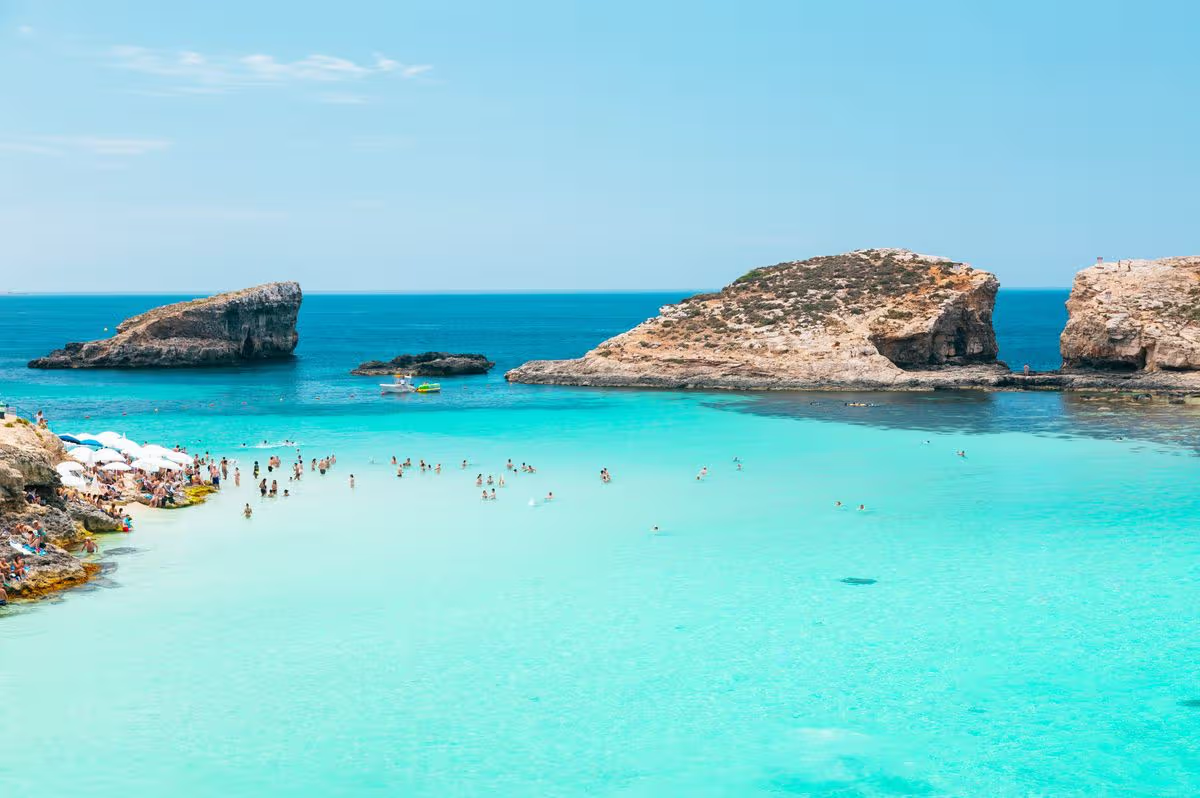
However, during my most recent cruise, I was taken aback to spot guests turning up to the main formal restaurant dressed entirely casually.
While the vast majority of passengers respected the dress code and arrived smartly dressed, a handful turned up in shorts, T-shirts and flip-flops.
Some even in short dresses that were not appropriate for this evening.
I found this rather surprising, given that the dress code had been clearly communicated in advance and was designed to create a special atmosphere for everybody on board.
I personally relish formal evenings as dressing up isn’t something that features heavily in my day-to-day life, so it was disappointing that not all guests adhered to the rules.
While other cruise lines may enforce their policies more rigorously, I feel the one I sailed with could have done considerably more to uphold the dress code.
It was a similar story on my cruise the previous year, when a number of guests turned up at the main dining room on formal night without the appropriate attire.