The popular airline has shared a booking update for holidaymakers planning their next trip
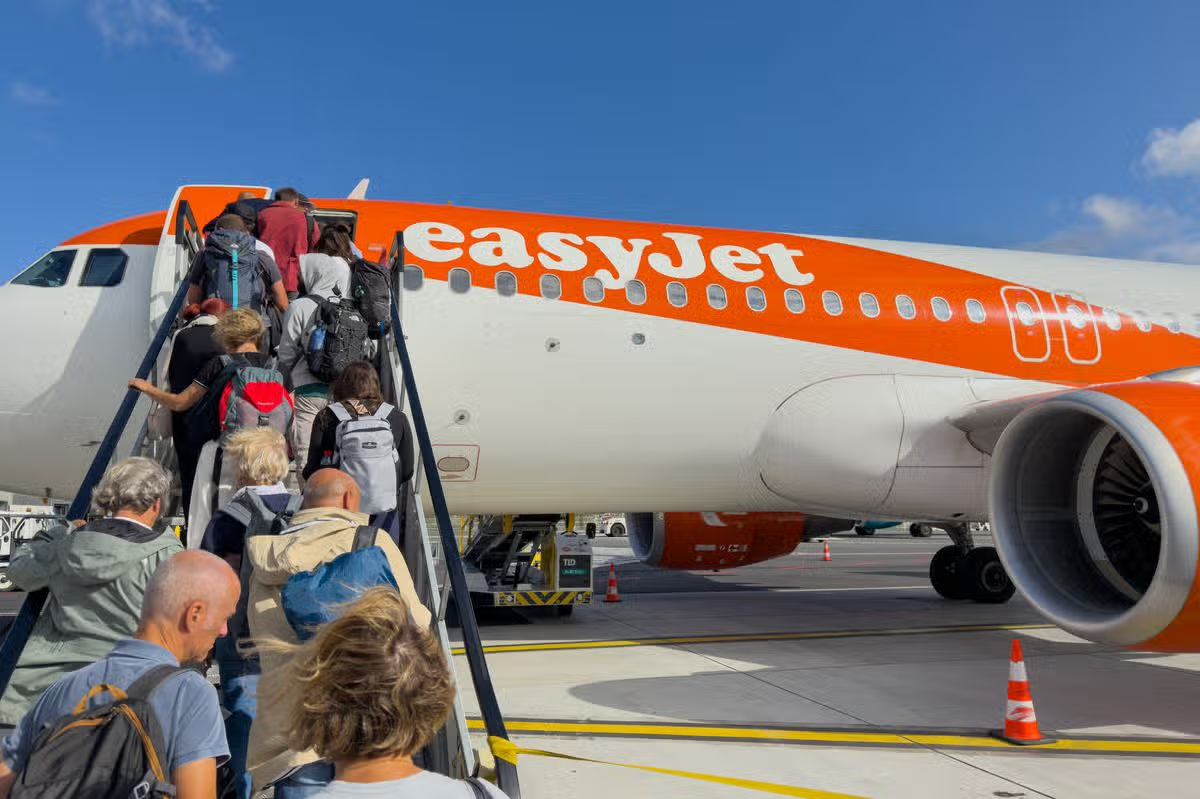
The airline has shared an update for passengers (stock photo)(Image: Getty)
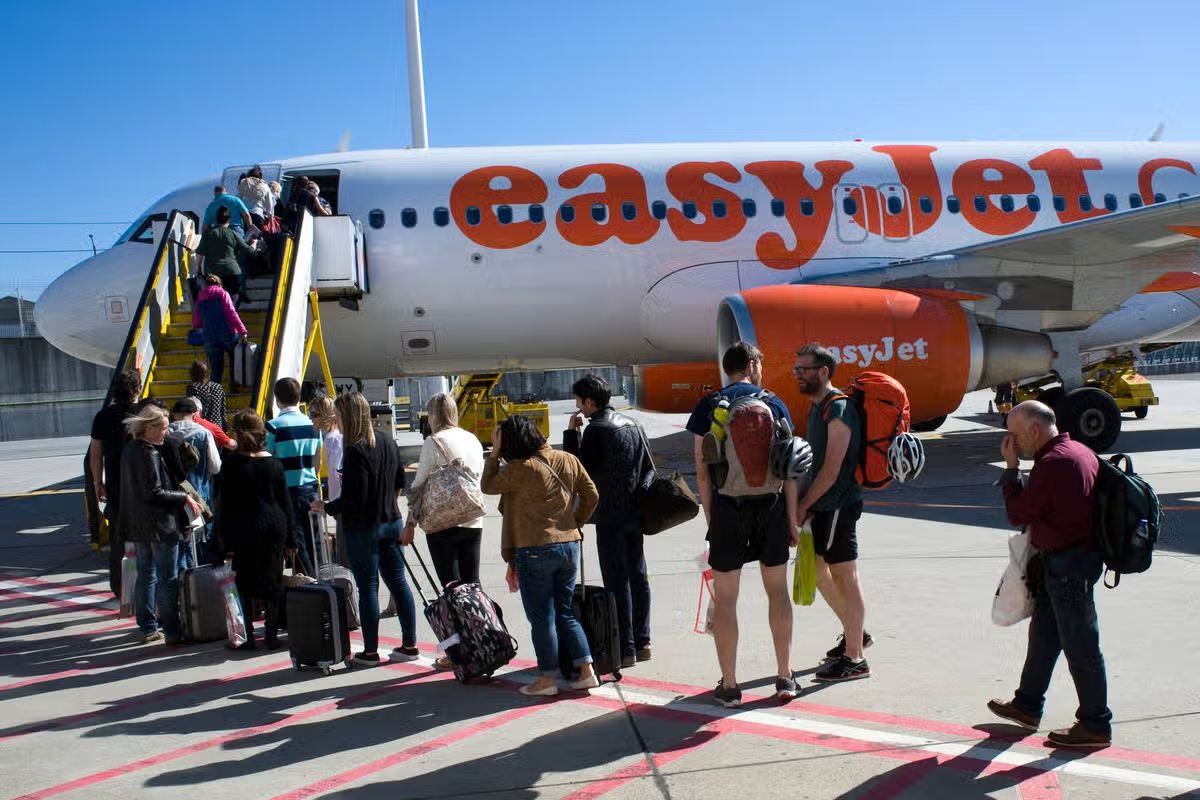
easyJet has shared a major update for holidaymakers planning their 2027 getaway. While the 2026 summer holidays aren’t over yet, many families are looking ahead to next year. For anyone interested in booking with easyJet, there’s good news.
The airline says its ‘big seat release’ has arrived, and customers can now book seats up until September 2027. Sharing a booking update on social media, easyJet took to Facebook to share the news with passengers. The post said: “Summer 2027 has landed.”
easyJet explained: “Our Big Seat Release is here, meaning you can secure your seat up until 26th September 2027 and start counting down to your next trip.” More information on the easyJet website states: “Summer 2027 flights are now on sale, making it easier than ever to plan your next adventure for the summer holidays and beyond.
“Whether you’re keen to explore somewhere new or revisit a favourite destination, you can book with confidence. Secure your seats for travel between 14 June 2027 and 26 September and start counting down to your well‑earned getaway. Book now and get ready to fly.”
According to the airline’s FAQ page, autumn 2027 flights will also be released soon. Passengers planning ahead can sign up for the airline’s newsletter to find out about upcoming releases. easyJet said its ‘big seat release’ events offer the ‘chance to grab the best fares early for popular destinations.’
If 2026 is anything to go by, travellers in 2027 will be booking destinations inspired by their favourite TV shows, books, and sports. In a blog post dedicated to 2026 travel trends, easyJet said 28% of Brits have been picking destinations based on TV or film.
This could be thanks to inspiration from hit shows like The White Lotus. Sharing a tip for customers, easyJet said: “Instead of the expensive Saint-Tropez, travellers are looking at nearby Toulon or Villefranche-sur-Mer for Riviera glamour at a lower price.”
Book enthusiasts are getting in on the action, too. easyJet said: “Travellers are visiting historic towns rediscovered through classic literature or their modern retellings. Top Spots: Verona (Shakespeare) and Pamplona (Hemingway). Why: People are seeking depth and narrative meaning rather than just ‘chasing novelty’.”
Meanwhile, sports lovers are choosing destinations that offer pickleball and padel when booking active holidays. The airline shared: “Golf holidays are no longer the only game in town.
“One in 10 Brits is now playing pickleball or padel while away. The Hotspot: Spain is the global centre of Padel, with over 20,000 courts and higher participation than tennis.
“Convenience: Padel racquets are small enough to fit in hand luggage, making it an easy addition to a trip.” More information is available on the easyJet website.
Brits have been urged to make two essential passport checks before heading abroad this summer as data shows more than one million UK passports could fail entry requirements
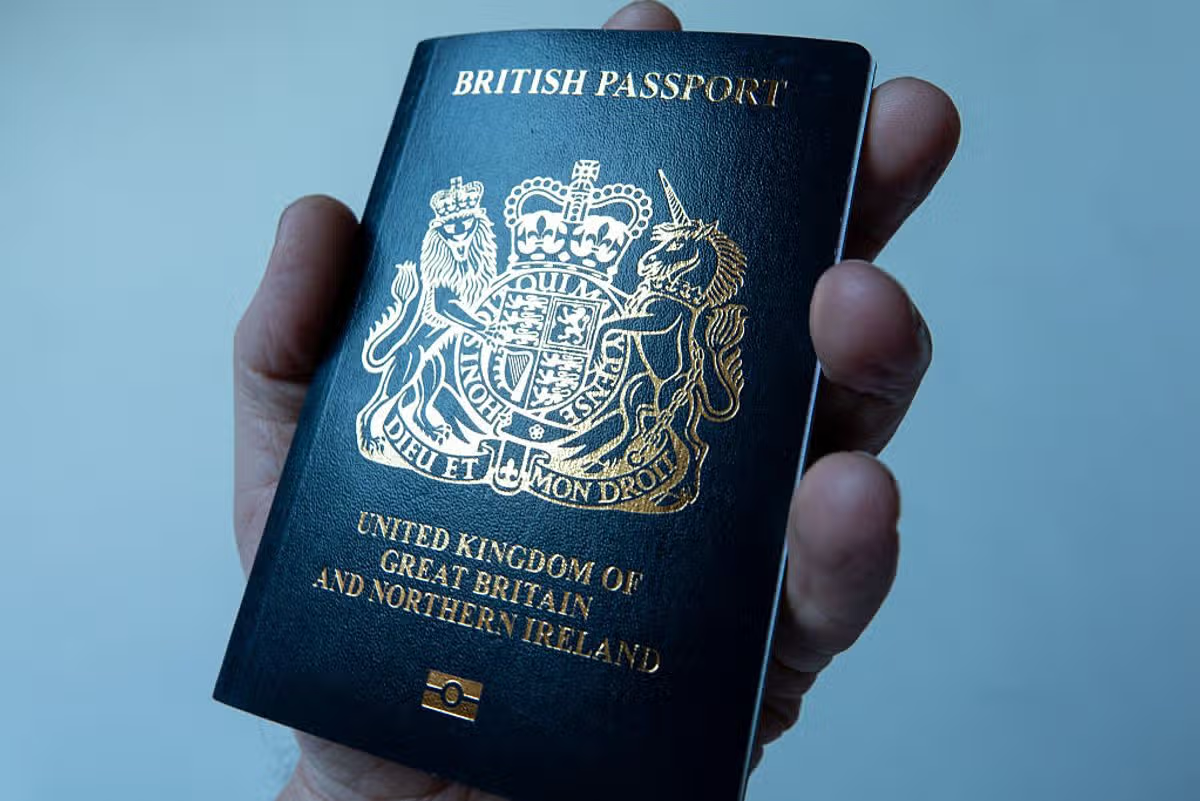
Brits urged to make passport checks before travelling(Image: Nicolas Economou/Getty Images)
British travellers heading to France, Greece, Italy and Spain have been urged to make a crucial passport check before heading on their summer holidays as new data reveals more than one million UK passports could fail entry requirements.
New data reveals that more than 705,000 UK passports currently have fewer than three months’ validity remaining, meaning travellers would be unable to board their plane.
A further 350,000 were issued more than a decade ago, meaning more than one million could fail entry requirements for some overseas destinations.
Holidaymakers have been urged to check their passports before travelling abroad in the coming months following this new analysis of HM Passport Office data from June 2026.
The 10-year rule is particularly relevant for travellers whose passports were issued before September 2018. Before then, when renewing a passport, HM Passport Office could add up to nine months of unused validity from an old passport to a new one.
This means some passports may still be in date but no longer meet the Schengen entry requirements.
In total, HM Passport Office data shows that 2.37 million passports are due to expire during 2026.
Tim Knighton, travel insurance expert at Compare the Market, said: “Many travellers assume if they have a valid passport they can travel overseas without any issues, but that’s not always the case.
“Some countries, including many popular European destinations, require several months’ validity extending beyond the length of a trip, so it’s important to check the entry requirements for each destination before travelling.
“With more than 700,000 UK passports now having less than three months’ validity remaining, it’s worth travellers taking a few minutes to check theirs before heading abroad.
“Renewing a passport early could help avoid unnecessary stress and reduce the risk of holiday plans being disrupted.”
The airline shares tips for budget travellers looking to get the cheapest deal on their flights
Passengers can save money by following the advice(Image: Getty)
easyJet passengers looking for cheap flights might want to avoid travelling on Fridays. The popular airline, known for its budget-friendly prices, has advice for travellers looking for low-cost tickets.
The airline shares the latest travel advice for passengers on its website, which also features FAQs for customers who want to get the ‘best value’ from their holiday. On the FAQ webpage, easyJet answered a common question often raised by passengers: ‘Which are the cheapest days of the week to fly?’
According to aviation experts, the answer often varies depending on your dream destination, but midweek flights are typically the cheapest. easyJet said: “The cheapest day of the week to fly can vary depending on the destination, flights available, and time of year.
“However, we’d recommend being flexible with your dates and considering flying outside of peak weekend flight times. By booking to fly on Wednesday or Thursday rather than Friday, you can find bargain flights (and get more time at your destination!)”
Passengers can also save by choosing a cheaper month for their destination, as prices can vary depending on the time of the year. easyJet added: “The cheapest month to fly often depends on the destination and the type of trip you’re planning. For traditional warm-weather destinations in Spain or Italy, you can often find the cheapest plane tickets in the winter months of January and February.
“If you’re booking a trip to the mountains or traditional winter destinations like Finland, you’ll often find cheaper flights in November or March. You can use our low fare finder to search for the cheapest flight dates for the destination you have in mind.”
Ultimately, it’s all about being as flexible as you can. If you have to travel on a pricier day, such as a Friday, you might still be able to find a better deal by being flexible with your flight time.
The airline added: “If you can, try to keep an open mind when searching for flights. By booking to fly Friday morning instead of Friday night, or by returning earlier on Sunday than you’d initially planned, you can often snag a much better flight deal.”
easyJet said that waiting until the last minute might not always be the best tactic for cheap flights. However, passengers might strike it lucky using the airline’s ‘Low Fare Finder’ tool.
easyJet explained: “Booking too close to the travel time can result in higher prices, especially during peak seasons, so we’d typically recommend booking your flights well in advance. However, if you’re looking to travel soon, you can use the Low Fare Finder to discover flight prices for your upcoming travel.”
This important question can easily cost holidaymakers extra cash
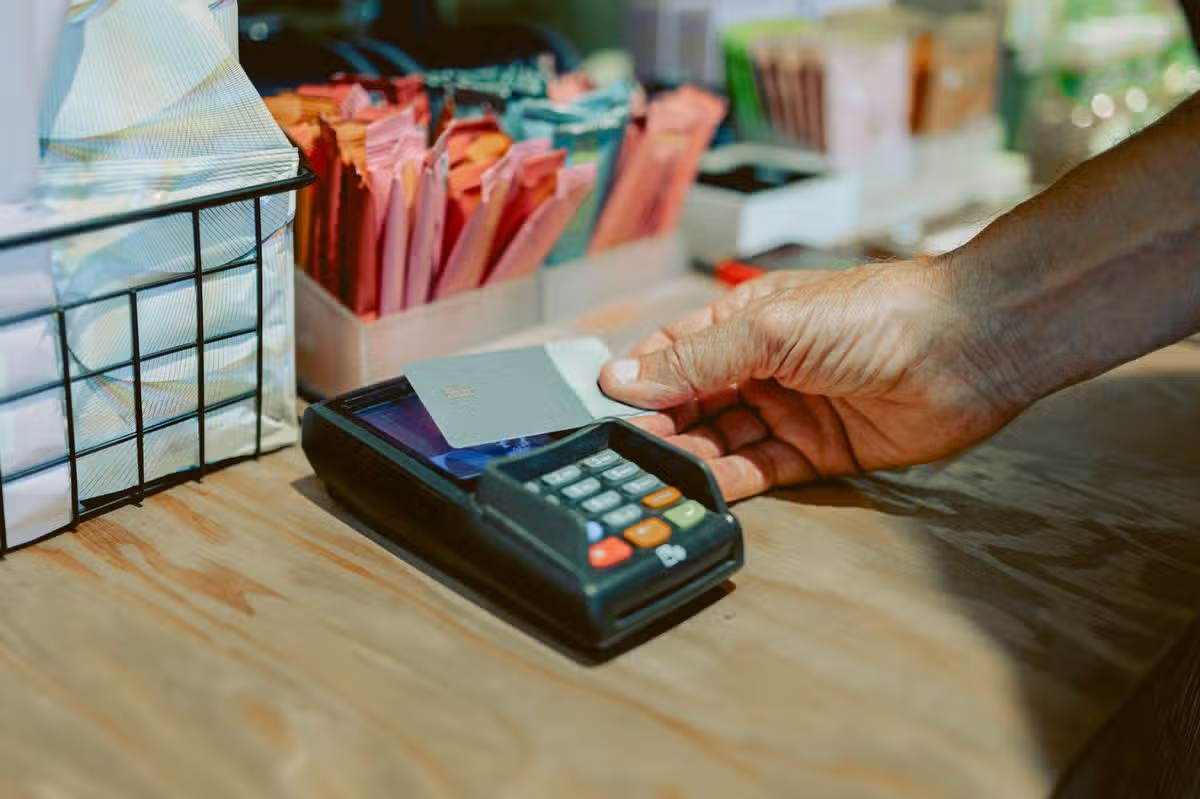
Tourists need to pick this option when paying for items abroad to avoid ‘hidden fees’(Image: Getty)
People going on holiday this summer should know this simple money mistake to avoid as it could needlessly cost you more without realising. The ‘rule’ to remember is very simple, according to money and travel experts.
Travel specialist Kate Donnelly (@Thedonelleyedit) claims that all British people heading abroad this summer should remember one important thing that could result in hidden fees when on holiday. She said that we all have the option to avoid these, even if the choice seems clear and convenient.
She said: “When you are abroad, you should always pay in the local currency. Whether that’s euros or dollars, depending on where you are, and you should never select the option of paying in Great British Pound (GBP).”
Why does it matter what you choose?
Whether you’re buying a meal or using a cash machine, you should always have the option to pay in local currency instead of DCC. Nobody should choose on your behalf.
Content cannot be displayed without consent
Kate confirmed: “When you’re abroad, and you choose to pay in pounds, you are allowing the ATM or the shop to do the exchange. Within this, there will also be a conversion charge, which is notoriously a really poor rate, meaning you will end up paying significantly more if you pay in the local currency.
“It’s your bank or the card provider that does the exchange. Even if they add on a transaction fee, you are still going to be getting a better rate if you choose to pay in pounds.”
Choosing dynamic currency conversion (DCC) means the amount is converted from the local currency to pounds at the point of sale. But, “DCC usually costs you more”, according to HSBC.
The bank said: “You might choose DCC and pay in pounds because it’s a currency you’re more familiar with. It could give you a better understanding of how much you’re spending. But there are extra fees, and the exchange rate is usually higher.”
Kate added: “The best thing to do when going on holiday is to invest in a fee-free card, such as a Monzo or a Starling. They add no transaction fees, and they also offer the best exchange rate.”
Martin Lewis previously appeared on ITV’s This Morning to talk about this exact issue. He said that the best thing to do, wherever you are in the world, is to pay in local currency to avoid inflated fees.
A couple have shared the game-changing hack they used to guarantee they get a full row to themselves on a plane – but there’s one big catch that means it doesn’t always work
The couple managed to book themselves a full row on a plane without spending any extra cash (stock photo)(Image: Images By Tang Ming Tung via Getty Images)
A savvy booking trick could see you snapping up an entire plane row for yourself. Let’s be honest – flying is rarely a comfortable experience, particularly when you’re wedged next to strangers for hours on end in a cramped seat with minimal legroom and precious little room to breathe.
However, if you’re travelling with a companion, there’s a nifty hack worth trying that could leave you both with the whole row to yourselves. One woman and her partner recently put the trick to the test on social media, and ended up with considerably more space than they’d ordinarily have had.
In a TikTok video, Lucy-Emma revealed that she and her partner had each booked the window seat and the aisle seat in the same row, deliberately leaving the middle seat vacant. They were banking on no one else claiming that middle spot, effectively bagging an extra seat without spending a penny extra – and it came off brilliantly.
She said: “We decided to do the thing where you book the aisle and the window seat and hope that no one sits here [in the middle seat]. Especially because I dislocated my toe this morning, and I want somewhere to put my feet up.”
Lucy-Emma later captured herself and her partner on film once all passengers had boarded, confirming that the middle seat remained unoccupied. This meant she could use it to rest her injured foot, while also taking advantage of the tray table to give herself extra room to watch her favourite show on her laptop.
Content cannot be displayed without consent
Viewers of the video were left gobsmacked, with many having no idea that booking two seats and leaving the middle one empty was even an option. Others, however, admitted they were petty enough to deliberately book the middle seat just to scupper couples attempting to use this trick to their advantage.
One person said: “I didn’t know you could do this!”
Another added: “Wow, so lucky!”
But one argued: “And I’m the a**hole who sits in the middle seat and refuses an offer to swap seats. S*** goes both ways.”
A fourth also shared: “I’m that person who purposely books the middle seat just to miff people off.”
Numerous other commenters were quick to flag that this method is far from foolproof. Certain airlines may not permit you to leave the middle seat vacant, while on fully booked flights, the seat could simply be assigned to another passenger.
One person pointed out: “Doesn’t this only work if the flight isn’t full? If the flight is full, the booking system will automatically put someone there who hasn’t booked a seat.”
As such, this isn’t a reliable method of securing extra space on board, as you could find yourself with a complete stranger wedged between you and your travel companion – and they may well refuse to budge so the pair of you can sit together.
If you’re looking to guarantee more room on a flight, the only surefire solution is to book the middle seat yourself, which some airlines may offer at a reduced rate compared to your actual seat.
Airports have warned that kids could be forced to leave the items behind
09:19, 21 Jul 2026Updated 09:19, 21 Jul 2026
Squishy toys could easily raise a red flag at airport security this summer (stock image)(Image: Getty)
Parents are being told to leave certain children’s toys at home. If kids bring them to the airport, they may be taken from them at security. There is a high chance that items like NeeDoh cubes and other popular ‘squishy’ toys could be flagged and confiscated.
Even at airports using advanced scanners, gel-filled toys look highly unusual on security screens. This frequently triggers a manual bag check, causing travel delays, and some staff will not take the risk with these items going any further into the airport.
Travel specialist Kate Donnelly (@Thedonnelllyedit) said: “From my own personal experience, [squishy toys] do tend to come under closer scrutiny when passing through airport security. My top tip for parents this summer, pack these items in your whole luggage.
“There is a high chance that if you put these in your hand luggage, they will get confiscated. There are absolutely no markings on them to let you know exactly how much liquid is contained within them, and therefore, they are very easily removed.
“This means that you have upset children and you will have to pay out for a whole new load of toys when you get to your destination.” She suggested that the best thing to do is to pack toys safely in your main suitcase that gets checked into the hold, as this allows more liquids than hand luggage does, helping you avoid delays and reduce the risk of them being confiscated.
Content cannot be displayed without consent
Posting online, Luton Airport confirms that any squishy toys, including NeeDoh cubes, that contain a gel or liquid must comply with the strict liquid rule when packed in hand luggage. The airport said: “As the quantity of gel contained within these items cannot be accurately verified during the screening process, they are not permitted through security in hand luggage.”
Manchester Airport also said: “Things like squishy toys contain liquid – this includes NeeDohs, which use malt syrup. Smaller versions of the toy are under 100mls, but larger versions are not.
“The problem is that, as they don’t have measurements printed on them, security staff have to estimate their size. Our advice is that all but very small squishy toys should be placed in hold baggage.”
As a result, kids could be forced to bin their favourite toys before going on holiday. The issue is that there is often no way to verify exactly how much ‘liquid’ is inside one of these objects.
Not all UK airports follow the same rules about liquids in 2026 due to a staggered rollout of new high-tech 3D CT security scanners that allow the 100ml rule to be relaxed. Different locations are at different stages of upgrading, with a pause currently in effect this summer to avoid disruption over peak travel times.
Below is a list of what airports are following the new (2000ml) rules. At the airports accepting two litres in hand luggage, the scanners also mean people do not need to empty their bags, as scanners are powerful enough to detect these items, as well as electronics:
Belfast City
Belfast International
Birmingham
Bristol
Edinburgh
London Gatwick
London Heathrow (All terminals)
Teesside International
These airports are still following the original (100ml) rule:
He said choosing the wrong option could automatically add 10 per cent to what you should be paying
Simon Calder issued the warning to Brits preparing to travel this summer(Image: ITV)
A travel expert has warned Brits going away that they are going to be ‘ripped off’ unless they make the right decision when paying for things on holiday. Simon Calder, who is a travel expert at the Telegraph, said it was essential that people going away paid for things in the local currency rather than pounds if they were using their credit card.
He said choosing the wrong option could automatically add 10 per cent to what you should be paying. It is something which catches out many travellers, with people unsure of which option to choose when given the choice between paying in pounds or the local currency.
Mr Calder explained why you should choose pounds, and why it can cost you if you choose the wrong option. He said: “Just at the start of the summer rush, I need to warn people about dynamic currency conversion.
“You’re in a foreign country, you’ve got your credit card, you come to pay, the shop assistant, the waiter says, ‘Okay, here’s the card terminal and look, do you want to pay in Euros or in good old British pounds?’
“And you might be tempted for thinking, ‘Well, I’ll pay in Sterling of course, then I’ll know how much it costs’. The one thing you will know is that you are going to be ripped off to the tune of typically 10 per cent.
“So, on a £20 lunch, you pay an extra £2, which you will never get back. Leave it for the waiter instead. So, just remember, paying by credit card, always pay in local currency.”
Content cannot be displayed without consent
Withdrawing money abroad
The dynamic currency conversion (DCC) that Mr Calder is warning people about is also a topic money-saving expert Martin Lewis has discussed. However, he used a similar example at ATMs, urging people to use the local currency when abroad.
He said that when an ATM or card terminal enquires whether you wish to pay in pounds or euros, it is essentially asking you who should perform the currency conversion.
“If it’s euros, do you want your card company to do the conversion? If it’s pounds, we will do the conversion for you and then charge your card,” Martin said.
According to consumer group Which?, DCC permits foreign retailers and ATM operators to convert a transaction into pounds at the point of sale, yet the exchange rates on offer are frequently far worse than those provided by banks and card issuers.
Mr Lewis even warned that ATMs abroad often try to convince the individual to use pounds due to the unfavourable exchange rate and even added withdrawal fees.
“I want euros, please. Are you sure? We won’t do the conversion. Are you absolutely sure? Yes, I want euros,” he said. “The ATM… they are desperate to persuade you to let them do the conversion because they make a lot of money from it.”
Picking the right plane seat can make all the difference to your journey – and one flight attendant says there’s a simple strategy that could leave you with a much more comfortable flight
The flight attendant has shared the best seats to pre-book (stock)(Image: Getty)
Whether it’s a weekend break or a long-haul holiday, most travellers spend at least a little time trying to pick the best seat on the plane that they can find. Now, one flight attendant has shared the plane seats she always recommends booking in economy – along with the ones she avoids at all costs if you want a more relaxing flight.
Air hostess Sandra Jennie Kwon, who posts as @jeenie.weenie on TikTok, explained how she worked out her ideal seat after years of working onboard aircraft. In the video, she says: “The first elimination should be a no-brainer – the middle seats suck.
The back row of every section doesn’t recline. I’m not a tall person, so I don’t need the emergency exit rows. There’s also nowhere to store your personal belongings there. They also have those flimsy tray tables and seats, so let’s scrap them.”
The travel expert then revealed why she prefers sitting towards the back of the plane, explaining that airlines typically fill seats from the front first to help with weight distribution.
Because of this, she believes passengers at the back are more likely to end up with an empty seat next to them.
“For those odds, I prefer the back,” she said. “Seats near a toilet really stink, so I recommend a five-row buffer just to stay in the safe zone.”
She also ruled out window seats for one simple reason.
Content cannot be displayed without consent
“I hate asking people to move so I can use the toilet,” she explained. “So I eliminate all the window seats.”
However, she admitted there’s one advantage to sitting closer to the front.
“Meals are typically served from front to back, so you have a higher chance of getting your first meal choice.”
After weighing up the pros and cons, Sandra revealed her ideal economy seats are 49 C, D, F or G.
Her advice quickly sparked debate online.
One person joked: “No! Now everyone will rush to these seats and they’ll become more expensive than business class.”
Another wrote: “I was listening right up until you scrapped the window seat.”
A third added: “The amount of people that’ll be fighting for seats 49 C/D/F/G after watching this… omg.”
While someone else commented: “Me taking notes even though I probably won’t be on a plane for another year.”
Lots of people travel with easyJet, but there’s a certain rule passengers need to follow. If they don’t stick to it, they could end up having to pay more money
easyJet passengers should follow the rule (stock image)(Image: Peter Charlesworth, LightRocket via Getty Images)
If you’re set to travel soon, and you’re flying with easyJet, there are some crucial travel tips you need to come to terms with before you depart. This is information you don’t want to ignore, as failing to follow the guidelines could see you having to cough up extra cash during your journey.
Everyone wants to squeeze as much value as possible out of their holiday budget, so it pays to know exactly what baggage is included before you book. Many travellers tend to focus on the headline ticket price, but baggage fees can swiftly add a considerable sum to the total cost of a trip.
According to Ricky Durrance, travel expert at package holiday specialists Teletext Holidays, getting to grips with easyJet’s baggage rules can save you a tidy sum and help you make the most of your baggage allowance. The good news is that every easyJet passenger is allowed to bring one small bag on board without any extra charge.
However, that’s where things get complicated as, if your bag won’t fit beneath the seat in front of you, you’ll probably need to pay an additional fee.
Overhead locker space is restricted and frequently comes at a price, so it’s worth weighing up whether a checked bag represents better value. The easyJet website states: “Our low fares include one small cabin bag free of charge.
“Your bag can weigh up to 15kg, but we do ask that you’re able to lift and carry it yourself. You can purchase additional bags online when you make your booking or any time before you travel, via Manage bookings on our website or mobile app.
“Buying online is always cheaper than at the airport. Fees vary depending on the route selected, flight and time of booking.”
However, it’s crucial to remember that, if you wish to pay for a large cabin bag, charges can be steeper during busy travel periods. For couples and mates travelling together, it’s worth crunching the numbers to determine whether sharing a checked suitcase makes more financial sense before you book.
Things you may be overlooking
Managing your baggage allowance can be a right faff, and it becomes even trickier when your suitcase eats up a substantial chunk of the weight limit. easyJet’s large cabin bag allowance permits up to 15kg.
However, many hard-shell cabin cases tip the scales at between 3.5kg and 4.5kg when empty, meaning the usable space for clothes and other belongings can end up being considerably less than anticipated.
You may find yourself with as little as 10.5kg available for packing, which can disappear remarkably quickly. In contrast, a shared 23kg checked bag using a similarly weighted case still leaves upwards of 18.5kg free for packing, which can make a world of difference.
Ricky added: “It’s also worth knowing that booking your baggage allowance sooner rather than later can help save you money.”
easyJet’s baggage fees tend to be cheaper when added at the point of booking rather than closer to the departure date. For those booking a package holiday rather than directly through the airline, it’s worth checking this as early as possible, ideally at the time of booking.
When airlines levy extra charges for every kilogram and each bag, careful planning of your luggage before you travel is absolutely crucial, according to Ricky.
Brits with holidays booked this year to Europe could risk facing issues entering Europe if they don’t check a number on their passport well in advance
15:11, 16 Jul 2026Updated 17:02, 16 Jul 2026
Important advice for anyone with a trip booked over the six weeks holiday (Image: Getty)
Schools across the UK will close for the six-week summer holiday, and thousands of families will be taking the opportunity to spend time together abroad during the peak travel season. However, a travel insurance specialist has issued an alert urging people to check a specific number on their passports before they jet away to avoid risk of being refused entry to Europe.
Travellers with passports issued before 2018 are being warned that they could face issues entering Europe if they don’t check a specific number, thanks to a ’10-year passport rule’. New analysis from Saga Travel Insurance found that the EU and Schengen ’10-year passport rule’ was the most discussed passport concern among travellers on Reddit, with discussions amassing 35,417 upvotes across the platform.
The Schengen area is a group of 29 European countries where travellers can move between countries without routine passport checks. It includes popular holiday destinations such as France, Spain, Italy, Greece and Portugal.
Michelle Cooper, Director of Saga Travel Insurance, said: “EU and Schengen countries require passports to be less than 10 years old on the day of entry. While all new passports last exactly ten years, passports issued before 2018 remain valid for 10 years and nine months.
“If you have an older passport, make sure you check both the issue date and expiry date before travelling to avoid problems at the border.” Michelle warns that passengers travelling with these 10-year and nine-month passports may face issues travelling in Europe if they’re in the final nine months of their passport.”
More tha
The analysis also found that more than three-quarters (80%) of holidaymakers are unaware that different countries have different passport validity requirements, according to Saga Travel Insurance’s survey. Meanwhile, half (50%) believe that every country requires a passport to have six months remaining before travel.
Michelle said: “It’s important to check the specific rules of the country you’re travelling to so that you know how long you need to keep your passport. Some destinations require three months remaining on your passport, while others require six months.
“If you travel to a country without enough time left on your passport, there is a possibility you’ll be denied entry into the country. This could be by your airline, before flying, or by border security, once you reach your destination. If you’re denied boarding or refused entry because your passport doesn’t meet those rules, travel insurance is unlikely to cover costs such as cancelled accommodation, missed flights or return travel expenses.
“This is because the responsibility typically sits with the traveller to ensure their passport meets the entry requirements of the country they’re visiting. That’s why checking your passport carefully before travelling is one of the most important things you can do before a holiday.”
Frequent flyers could be turned away for not having enough blank passport pages
Some countries require travellers to have a minimum number of blank pages remaining in their passports for stamps and visas. Michelle says: “People can sometimes focus entirely on expiry dates and forget to check how many blank pages they have left, but some destinations can refuse entry if there isn’t enough room for official stamps or visa documentation.
“If you’re a frequent traveller, you should regularly check how many blank pages you have remaining in your passport before booking a trip. You might also benefit from purchasing a passport with additional blank pages.
“As travel systems evolve, including the gradual rollout of digital border systems such as the EU’s Entry/Exit System (EES), physical passport stamping may become less common. But for now, requirements can still vary depending on destination and border process.”
What should you do if you lose your passport?
One in 20 (5%) Brits have needed an emergency replacement passport before travelling, according to Saga Travel Insurance’s survey. And, one in 25 (4%) have cancelled a holiday because they couldn’t find their passport before departure.
Michelle says: “If you lose your passport before travelling, you can apply for a one-week fast-track application. This is an in-person application that requires an appointment, so it’s important to factor in booking availability – as well as the additional cost. It’s £76 more than a standard passport but means you should still be able to go on holiday.
“If you lose your passport while abroad, you should report this to the HM Passport Office as soon as possible. You will also need to apply for an emergency travel document online so that you can travel home. You’ll typically need a valid digital passport photo, your phone number, an email address, and a debit or credit card to make the £125 payment.
“If the loss of your passport means that you need to delay or rearrange your journey home, travel insurance may be able to help with some of the associated costs depending on your policy. Check your insurance documents and contact your insurer as soon as possible to understand your next steps.”
Brits warned over new ETIAS travel checks for Europe
From late 2026, British travellers visiting most European countries will need to apply for a new European Travel Information and Authorisation System (ETIAS) before travelling. The new system is similar to the UK’s Electronic Travel Authorisation (ETA) scheme and will apply to visa-exempt travellers visiting 30 European countries for short stays of up to 90 days within a 180-day period.
Michelle says: “Travellers may not realise that visiting Europe will soon involve an additional pre-travel authorisation step. From late 2026, British holidaymakers will need to apply for ETIAS approval before travelling to many popular European destinations. The authorisation will be linked directly to your passport, meaning travellers could be denied boarding if their ETIAS details don’t match their travel document or if the authorisation has expired.
“Most ETIAS applications are expected to be processed within minutes, but it could take longer if additional checks are required. Holidaymakers should apply well in advance of departure to avoid last-minute disruptions.”
She added: “Similar systems already exist elsewhere. For example, UK travellers visiting the United States must apply for an Electronic System for Travel Authorisation (ESTA) before departure. These systems are becoming more common globally, so it’s important to check requirements for each destination well ahead of travel.
“As with passport validity rules, people are responsible for making sure they have the correct travel authorisation before they leave the country. If someone is unable to travel because they failed to obtain valid ETIAS or ESTA approval, travel insurance is unlikely to cover costs associated with denied boarding or cancelled trips.”
Breaking a little-known beach rule may carry a hefty financial penalty
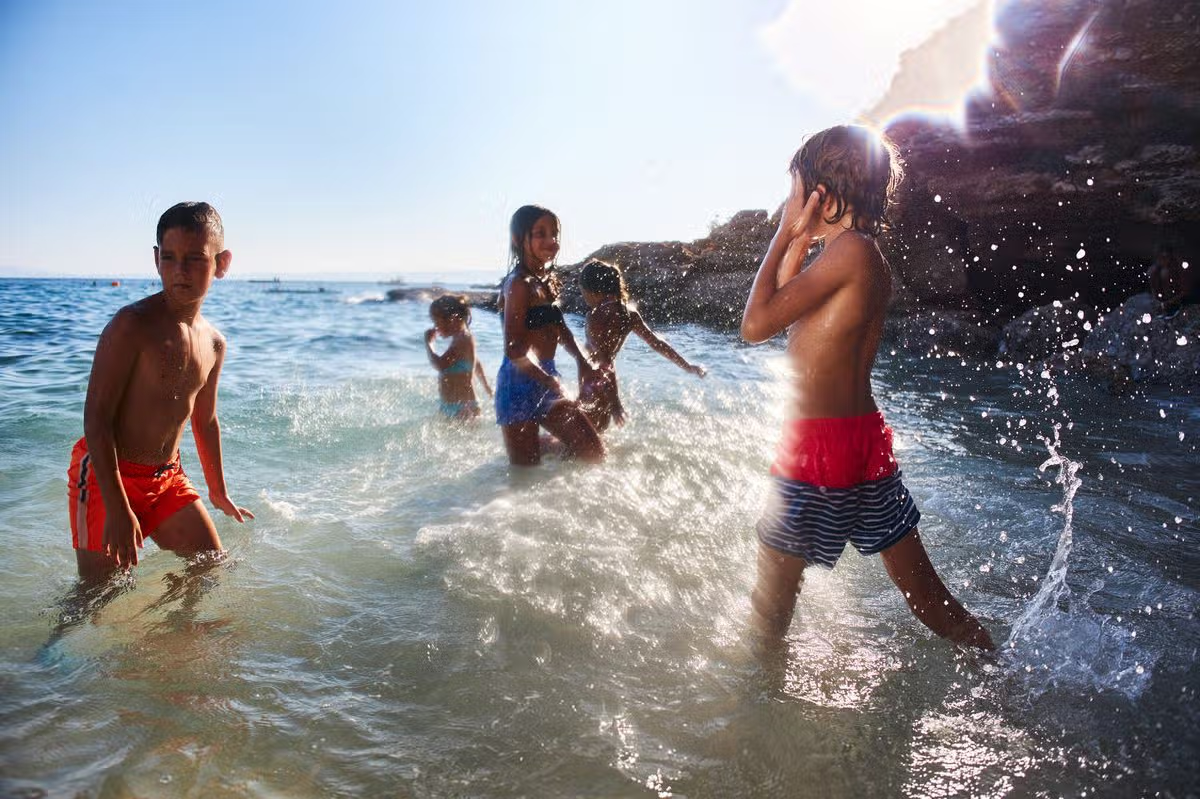
Group of children playing and splashing water in the ocean(Image: Getty Images)
Taking a dip in the sea is one of the highlights of any beach holiday. With the sun beating down, temperatures soaring and swimwear at the ready, millions of holidaymakers head into the water each year to cool off and enjoy time with family and friends.
Anyone travelling to Portugal hoping to do the same may want to brush up on local rules first, as breaking one little-known sanitation regulation could reportedly lead to fines of up to €750 (around £630). Knowing the law before you head to the beach could help you avoid an unexpected and potentially costly mistake.
It relates to urinating in the ocean, something many people – particularly children – have probably done at some point without giving it a second thought. While some may assume the sea would quickly dilute human waste, some travel experts say Portuguese rules are intended to protect marine ecosystems and coastal hygiene.
According to travel website Islands, beach sanitation rules allow authorities to issue fines of up to €750 for people caught urinating in the sea. It does mention, however, that there is no practical way for authorities to monitor the behaviour beneath the waves, and that enforcement is considered rare.
The law exists to reduce pollution in coastal waters, particularly in areas that attract large numbers of visitors during the summer months. Portugal’s beaches are among Europe’s most popular, drawing millions of holidaymakers each year to destinations including the Algarve, Lisbon Coast and Madeira.
Fortunately, most public beaches in Portugal provide public toilets or nearby facilities, making it easy for visitors to avoid any potential issues. Using designated toilets also helps protect water quality and the wider coastal environment.
Portugal is not the only European destination with strict rules covering beach behaviour. In parts of Spain, including Vigo and Marbella, local authorities have introduced similar bans on what they describe as “physiological evacuation” in the sea, with fines also reaching €750, according to local municipal regulations.
Holidaymakers should also be aware of other rules in Portugal. Several beaches prohibit loud music from portable speakers, while Albufeira has introduced regulations that could see people fined for wearing swimwear away from designated beach areas as part of efforts to tackle anti-social behaviour.
The UK Foreign, Commonwealth and Development Office advises British travellers to familiarise themselves with local laws and customs before travelling abroad. Checking the rules before heading to the beach could help visitors avoid unexpected penalties and ensure they enjoy a stress-free holiday.
Machines that scan our luggage could raise an alarm over this packet
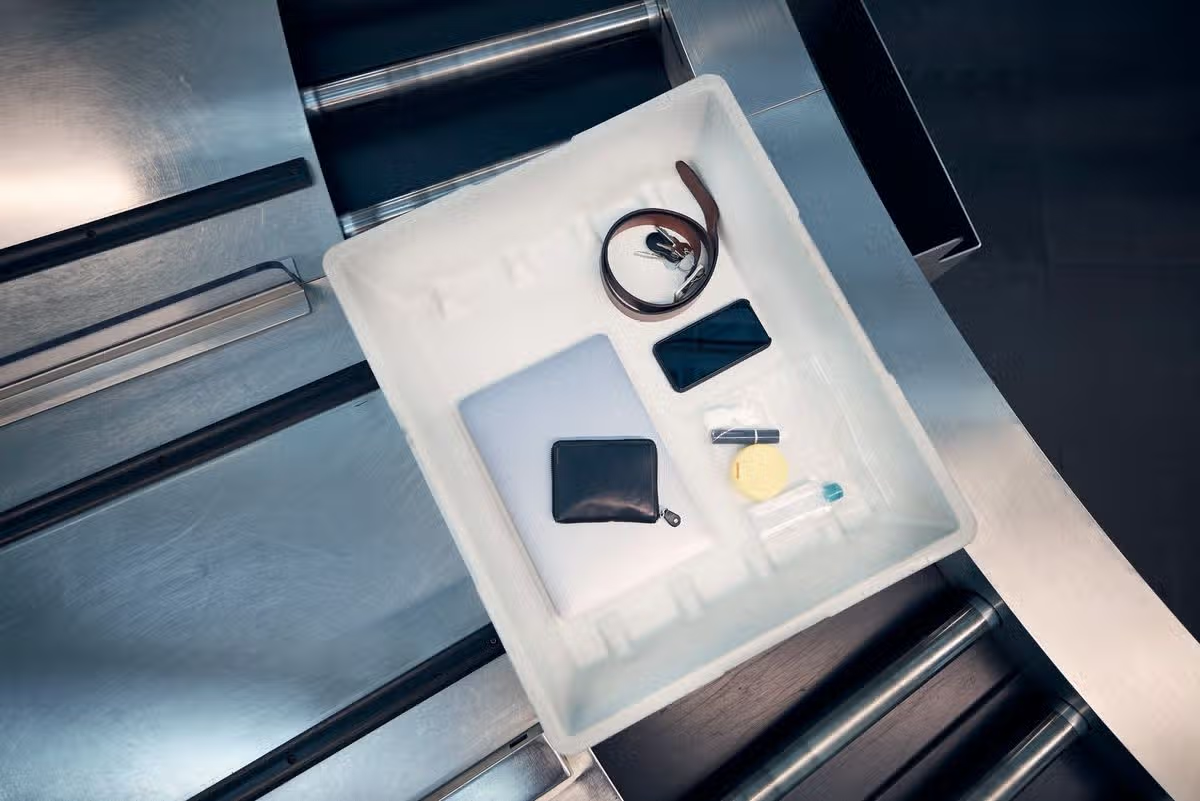
The common item could be flagged as suspicious by airport scanners(Image: Getty)
If you have a long flight ahead or fancy some screen-free entertainment, bringing a pack of playing cards can seem like a good idea to beat boredom. But they can cause a security issue at airports, which could mean you’re held up while items are checked.
Many items are banned for being sharp and potentially dangerous, but even innocuous items such as corkscrews could be confiscated. But, some seemingly harmless items could also raise an alarm with security staff and require further checks.
The Transportation Security Administration (TSA), which oversees airport security in America, told Travel and Leisure that any deck of cards, from classic playing cards to games to collectables like Pokémon, could trigger a security red flag if they are picked up by scanners that notice the suspicious look of the otherwise innocent item.
Ian Cava from the TSA explained that the shape of the cards can trigger additional checks and make them appear as if there’s something hidden inside. He said: “When items are stacked tightly together, like decks, binders, or graded slabs, the X-ray image can make it difficult for officers to confirm there are no prohibited items concealed in or around them.”
Even family-friendly games like UNO have a strong chance of triggering alerts. A standard UNO deck has 112 cards, making it twice as thick as a regular 52-card deck. The X-ray operators cannot see through the thick stack, so they must check it for hidden contraband.
Although the advice comes from the TSA, people travelling from UK airports can also follow the guidance, as the security processes are quite similar. For an X-ray scanner, a tightly packed deck appears as an organic solid block that could be flagged as a potential explosive, electronic device, or dense liquid, all of which require further checks.
A standard bag search usually takes up to 15 minutes once your bag reaches the inspection table. However, during peak travel times, the queue of bags waiting to be manually checked can back up, significantly extending your wait.
Many UK airports are currently upgrading to advanced 3D scanners. If your security lane uses these newer machines, you often do not need to take anything out of your bag, drastically reducing false alerts. Because the rollout is not happening all at once across every UK airport, some lanes still use older X-ray machines that strictly require manual checks for dense items like cards and games.
Tips to get through security faster with playing cards:
To avoid delays, treat playing cards like anything else you’d take out of your bag. Place the card box in a tray to be checked rather than waiting for the security alert to be triggered.
People can also avoid issues by not packing cards in metal tins or carry cases – typically provided or bought for collectables. Use a cardboard or plastic case because metal tins are harder to scan.
Putting any of your board games and cards in hold luggage is the safest way to avoid security delays, as they don’t go through manual bag checks that require you to wait. While this completely eliminates the risk of your hand luggage being pulled aside for a card or game check, passengers risk having their items bent, crushed, or lost if the airline misplaces their suitcase.
People have been told that the more intense checks have ‘an upside’ after arriving
Brits told ‘one upside’ to tighter new Gibraltar border checks(Image: Getty)
Brits visiting Gibraltar now face new rules, including security screening and passport scrutiny, when landing in the British Overseas Territory. Travel journalist Simon Calder reported for The Telegraph that new rules came into force from today, July 15, as part of a post-Brexit deal.
The UK-EU agreement to create an open land border between Gibraltar and Spain has been signed in Brussels – and was brought into effect from Wednesday. It will make Gibraltar effectively part of Europe’s passport-free Schengen Zone, with the removal of checkpoints and border fences.
But the changes introduce tighter border controls at Gibraltar’s airport. On arrival at Joshua Hassan Gibraltar International Airport, Brits should expect two new sets of checks, which will satisfy entry into Gibraltar and the Schengen Area:
Gibraltar entry immigration controls – performed by the Gibraltar authorities
Schengen entry immigration controls – performed by the Spanish authorities
This includes registration under the Entry/Exit System (EES) where it applies. All of the updated entry requirements for tourists can be found on the GOV.UK website here.
The main page reads: “To enter Gibraltar, your [full UK] passport must have been issued within the previous 10 years and its validity must extend for at least three months after the day you intend to leave Gibraltar or the Schengen Area.”
If you are a British–Irish dual national and travel on your Irish passport, you will be treated as an EU citizen on entry to Gibraltar and the Schengen Area. You will not be subject to the 90-day limits, EES or ETIAS. If you travel on your British passport, the conditions above apply.
Content cannot be displayed without consent
What were the rules before July 15?
Before July 15, 2026, UK citizens visiting Gibraltar did not have their stay count toward the Schengen Area’s 90-day limit, and they only faced a single immigration check handled solely by Gibraltarian authorities upon arrival. Because the provisional UK-EU Gibraltar Agreement had not yet taken effect, Gibraltar operated entirely outside of the Schengen rules
UK nationals could visit Gibraltar for up to 90 days without a visa. Passports simply needed to be valid for the duration of the intended stay. But from today, tourists visiting the territory bordering Spain will face new rules.
What are the new ‘rules’?
As explained by Simon, he said: “From this summer, it gets a bit trickier to reach [Gibraltar] for British passport holders. The British Overseas Territory is not joining the Schengen area, but the effect for UK passport holders is the same.
On arrival in the Rock, you will be checked by Spanish passport officials to make sure that your passport meets those tricky rules on expiry and issue dates. They’ll also want to know if you’ve spent more than 90 days in the last 180 days in the Schengen area, and any time you spend in Gibraltar will count towards that total.”
With these new checks, Simon adds that there will be “an upside”. He claims that, with these stronger checks carried out in the airport upon arrival, visitors are considered inside the ‘frontier free zone’ and could travel straight into Spain without stopping again.
Keeping the item with you until you’ve got off the plane and collected your luggage on the other side is best
11:39, 13 Jul 2026Updated 11:40, 13 Jul 2026
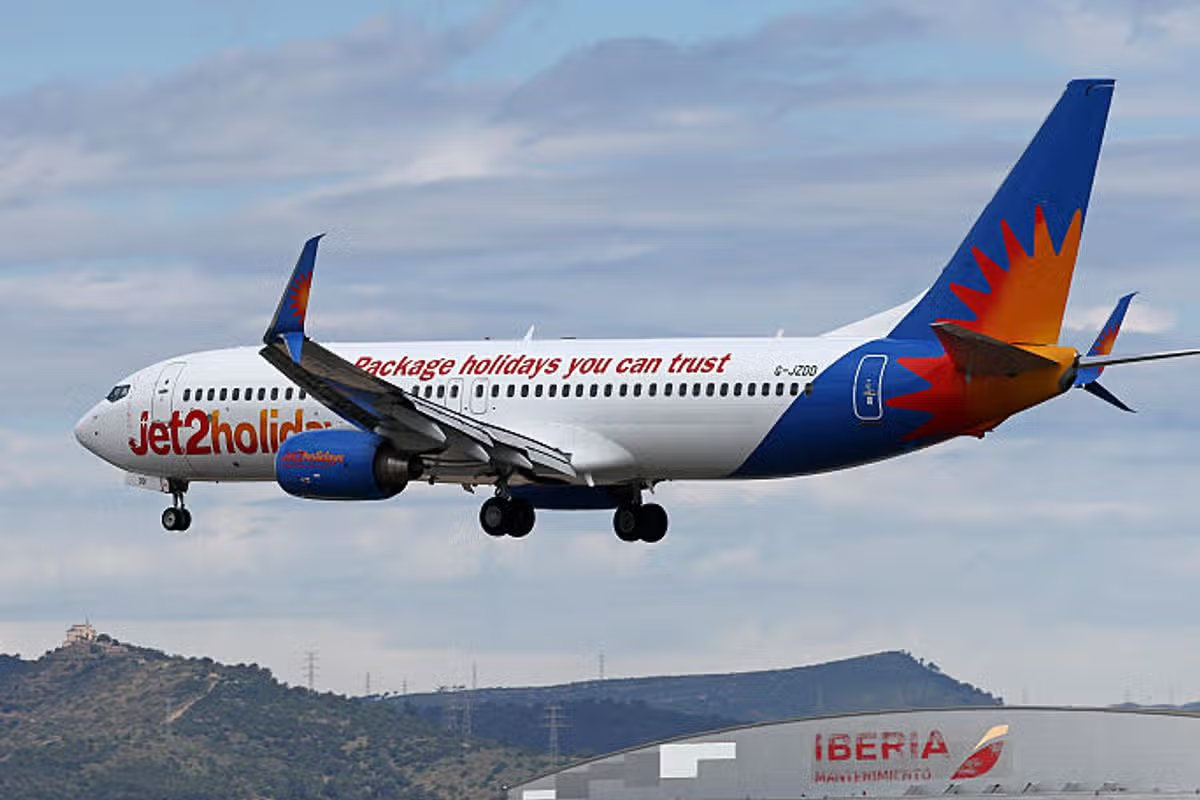
Jet2 urges passengers “do not get rid” of it(Image: Getty)
Millions of people are expected to go abroad during the six-week holiday, as the peak travel season typically sees masses of British families take advantage of the kids being off. With so many people set to pass through UK airports over the coming weeks, it is important to stay up to date with the latest guidelines and advice to ensure a smooth journey.
Jet2 is one of the most popular budget airlines in the UK, and welcomes around 20 million passengers on board each year. Jet2‘s website is full of information for passengers to read up on and keep in mind when travelling, including steps to take and things to do to minimise disruption and delays as much as possible, especially when bringing luggage to go into the aircraft’s cargo hold.
On its ‘Top Tips Before Travel‘ page online, the airline urges passengers to bring one particular item along with them on their journey, right until they collect their checked luggage at their chosen destination. By doing so, they can reduce the risk of longer delays should the worst happen
The airline explains: “At check-in, each item of checked baggage will be given a destination tag showing your flight number. Do not get rid of your checked baggage receipts (if given) until you pick up all checked baggage at your destination airport. Never carry unidentified items on behalf of other people.”
Why is it important to keep the luggage receipt with you?
It’s important to keep your checked baggage receipt because it helps you track down lost luggage, file for compensation, and prove ownership if security or customs officials need to check your bags. Usually, these are the small adhesive tags that get stuck to your boarding pass or passport after you drop off your luggage at the check-in desk.
When you check-in a bag, the barcode and receipt information are linked to your digital flight booking file. If your suitcase doesn’t show up, the barcode and the 10-digit number on your receipt help airline agents find your specific bag using global systems like WorldTracer.
If I lose my luggage receipt, will I face delays?
If your bag is lost and you have misplaced your checked baggage receipt, the airline can still look up your digital tracking information, but the process will require more manual verification and may face delays. Locating your profile manually can be time-consuming, particularly during busy travel times or when the booking system is experiencing delays.
If your bag is lost for good (missing for over 21 days), the airline or your travel insurance company may ask for more evidence of check-in. Misplacing the receipt can complicate the process of making a formal financial compensation claim, but your digital booking records usually serve as a valid paper trail, according to Citizens Advice.
Jet2 also urges passengers to label each piece of baggage with their name, flight number, and phone number. It adds: “Please ensure your baggage is strong and fit for purpose, to protect the contents and to withstand the normal baggage handling process. Soft sided cases and handles, wheels and locks can be particularly vulnerable.”
The airline also says: “Take care when claiming your baggage at your destination, as many suitcases look the same. It is best to always check the name on the baggage tag.
“You must contact the Jet2.com team at the airport (or our handling agents) immediately if your baggage is damaged or has not arrived. Irregularities must be reported immediately as claims cannot be processed once you leave the airport. Staff will help you to complete a Property Irregularity Report Form.”
An airport has revealed an easy trick for a shorter wait at airport security
People could save time using the airport-approved tip (stock photo)(Image: Getty)
Holidaymakers can cut down the time they spend waiting at airport security using a little-known trick. The travel hack was shared by Manchester Airport, and it could be perfect for families ahead of the busy summer holidays.
According to Manchester Airport, there’s an easy way to reduce your queue time if you’re allowed to choose which lane to wait in. Posting tips for passengers online, the travel hub shared an ‘Ultimate Airport Guide’ on its website. There are various tips, covering everything from the best shoes to wear and how to decorate suitcases for maximum visibility.
In the ‘at the airport’ section of the guide, there’s a hack that could help passengers fly through security using ‘reverse psychology.’ Manchester Airport said: “If given the choice of security lanes, pick the left. Most passengers are right handed and will subconsciously prefer the right, making the left a little quieter.”
The airport added that customers can also pay to upgrade to FastTrack for a faster experience. “For just a few pounds, you can purchase FastTrack tickets to use the priority lane and avoid the queues before Security on your way out and Passport Control on your way in.” Many airports offer a similar experience, allowing passengers to pay to use FastTrack.
Elsewhere, London Stansted Airport offers the same security advice for passengers. The airport retierates: “If given the choice of security lanes, pick the left.”
The tip could be especially helpful when many passengers are travelling at the same time, such as during the school summer holidays. However, it’s worth noting that passengers don’t always get to choose their lane.
Nonetheless, they can help speed up the process by avoiding accessories that are difficult to remove. This makes the process faster for everyone.
Offering advice online, London Stansted Airport said: “To prepare your outfit for security, wear shoes that you can take off and put on easily. Avoid fiddley belts or fastenings in your clothes and excess jewellery. Try and keep your pockets empty of non-essentials.”
Despite this, passengers might still want to pack a few layers for later in their journey. The airport recommends packing items such as jumpers, which are easy to take on and off when the temperature changes.
The travel advice said: “Temperatures aboard flights can vary so wearing a few removable layers is advised. An extra jumper can always be used as a pillow if nothing else.”
If you’re looking for a crowd-free holiday, this island is the perfect option.
03:14, 11 Jul 2026Updated 08:18, 11 Jul 2026
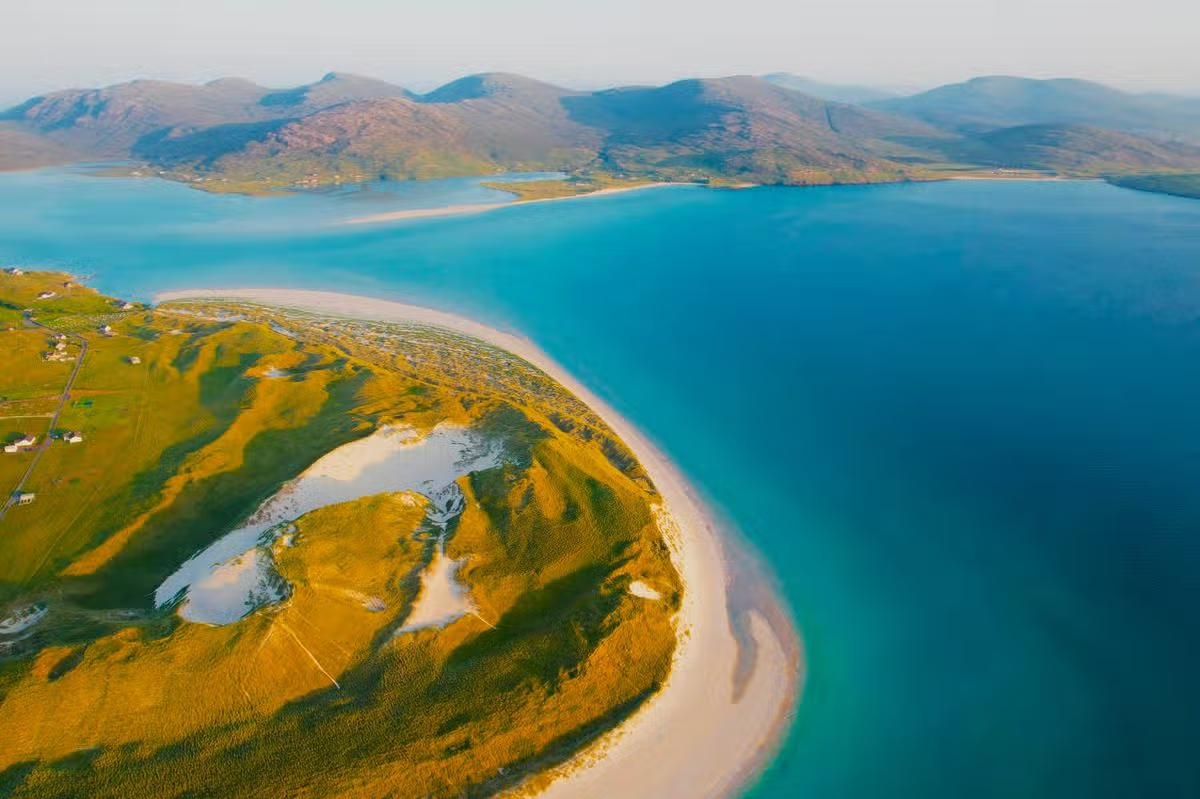
This beautiful island is in the UK(Image: Daily Record)
As the summer holidays approach, the excitement of planning a getaway often comes with the puzzle of picking the perfect spot. Luckily, being in Britain puts the diverse beauty of Europe just a stone’s throw away.
Navigating the sheer volume of stunning destinations on our doorstep can be quite the task. For those who crave peace and quiet, the secret is finding those hidden gems tucked away from the main tourist paths that still promise a sun-soaked, relaxing experience. To help you out, the travel pros at Solmar Villas analysed over 160 locations to pinpoint the absolute best spots for a crowd-free break.
Whilst most of the destinations are overseas, there is one place right here in the UK that made the list.
The Isle of Harris in Scotland came in at sixth place on the list of the quietest places to enjoy a summer holiday. Harris is the southern island of Harris and Lewis which are in Scotland’s Outer Hebrides.
Despite being the third biggest island on the British Isles, Harris and Lewis has a population of just 20,500 people. Known for its white-sand beaches, dramatic landscapes and low population density, it remains one of the UK’s quietest summer staycation escapes.
One of the most famous sights on the island is Luskentyre Beach which is frequently mentioned on lists of the most beautiful beaches in the world.
This long stretch of bright white sand looks as if it’s been plucked straight from the Caribbean — although the water is likely a little bit colder.
Luskentyre Beach sits on the north coast of South Harris and is protected by the island of Taransay, which you can see across the water.
Taking a wander down the white sand you can spot dolphins, seals, otters, eagles and sometimes even whales. The Isle of Harris is a gorgeous spot for a relaxed summer holiday without having to bother about airport security or expensive international flights.
To get to the island, ferries go daily from the Scottish mainland and you can take a car with you too so you can better explore what the island has to offer.
Sharon Bradbury, a travel expert at Solmar Villas , said: “Many families don’t have the option of travelling outside the school holidays, so choosing the right destination becomes even more important.
“What stands out from this research is that some of the world’s most enjoyable summer destinations don’t necessarily attract the biggest crowds. For families looking to make the most of their summer break, it can be worth looking beyond the usual hotspots.
“A quieter destination often means a more relaxed experience from the moment you arrive.”
The 20 quietest places to visit on school holidays
A cabin crew instructor has revealed where he would choose to sit on the plane
16:40, 10 Jul 2026Updated 16:40, 10 Jul 2026
Some seats offer plane passengers more legroom (stock photo)(Image: Getty)
A cabin crew member has shared what he claims is the best seat on the plane. The regular flyer dished out advice for passengers looking to make the most of their journey. Wizz Air Cabin Crew Instructor Gabriel Randone shared his favourite seat. He also revealed the best seat for ‘free perks’ – if you’re lucky enough to get it.
Talking to the Mirror, Gabriel shared his preferred seat as a passenger. He said: “I absolutely love the front. Row one gives you extra legroom. There are some perks to staying there as well.
“For example, you would be the first one to disembark. Sometimes you’ll be the first one to come in as well. You have a reserved overhead compartment for yourself.
“So, yeah, row one is absolutely amazing. But to be honest, when I do travel, and I can choose to book a seat, I will book any window seat.
“I just love staring outside during the flight and enjoying the views.” According to Wizz Air’s website, front-row seats are classified as premium seats.
However, it’s not the only good option. Other premium seats include upfront seats at the front of the aircraft and extra-legroom seats in the emergency exit rows. Usually, passengers need to pay more for these seats, but sometimes they strike it lucky and get asked to move to emergency exit rows.
Gabriel explained that customers sometimes get ‘upgraded’ to these seats and get to enjoy the perks for free when the flight is not fully booked. “Sometimes, because the flights might not be fully booked, there would be no one close to the emergency exits”, Gabriel said.
“So what we need to do is to select someone who we call an ABP, an able-bodied person, and select them and to move them close to the emergency exits so that they can help out in case of an emergency”. He added: “Now, statistically, emergencies are quite rare, so that is basically an upgrade.”
Not everyone is eligible for these unofficial ‘upgrades’. The Wizz Air website explains: “For safety purposes, regulations prohibit passengers under 16 years old, overweight passengers, individuals with special needs, expectant mothers, and those travelling with infants (under 2 years old) from occupying Extra Legroom or Front Row seats.”
As Gabriel explained, these policies are implemented to ensure the safety of everyone onboard. In case of an emergency evacuation, passengers seated in the emergency rows will be instructed to open the doors. Any passengers seated in these rows will be briefed at the beginning of their flight.
Harry Poulton moved from Brighton and moved to Benidorm after visiting the city with his mates when he was 18 – but there are certain spots he says tourists should avoid
Harry said his decision to move to Benidorm was the best choice he’s made(Image: Jam Press/@harrytokky)
Benidorm is one of the most popular European holiday destinations among Brits and attracts approximately five million tourists annually. Harry Poulton, 24, grew fond of the resort following a visit with mates at 18 and now regards his decision to relocate there as the finest decision he’s ever made.
Nevertheless, he wishes to pass on his expertise to holidaymakers preparing to explore the seaside city on Spain’s Costa Blanca. Taking to TikTok, where he’s amassed more than 40,000 followers, he highlighted three locations in the nightlife hotspot that he believes are best avoided owing to safety concerns.
First on his list is the ‘Yellow Brick Road’, a centre of bars and eateries that represents the core of local nightlife, covering streets such as Leanto, Ibiza, and Leerida.
Harry cautioned: “The Yellow Brick Road – this little public pathway […] leads all the way up to the Rio Park. Now, it has been known for a few things, mainly small thefts like pickpocketing. Generally, during the day, it’s absolutely fine. I’d recommend avoiding it at night.”
The second spot Harry suggests swerving is Pueblo Alley, situated close to Levante Beach.
“This is one I definitely recommend avoiding, especially late at night, as you do get the pickpockets hanging around this area,” he warned. “You also get the odd lady of the night. There are plenty of other ways around”.
Topping Harry’s list of places to steer clear of is ‘Mugger’s Alley’, meanwhile.
“It is the most notorious – it’s the one we all know,” he exclaimed. “Known for pickpocketing, ladies of the night, it’s just an area I would avoid. They’re even doing these new taxi scams. It’s crazy. Save yourself the hassle and cross the road.”
Despite acknowledging these risks, Harry remains a devoted admirer of this popular holiday hotspot.
He argues that many British holidaymakers hold misconceptions about Benidorm, insisting that concerns over crafty scams and overpriced goods are often way off the mark.
What’s more, since swapping Brighton for Benidorm, Harry has watched his living expenses drop considerably, with monthly outgoings now falling between £500 and £1,000, including bills.
Harry proclaimed: “If you live here, you get it. Benidorm is paradise – and anyone who says otherwise is lying.”
With pristine beaches, upmarket hotels and plenty of historical sites to explore, Bodrum is a Turkish Delight for all ages, says mum of two Hannah Britt
Hannah and Poppy explore the Karnas Vineyards in Bodrum
Looking for your next family holiday destination? Look no further than Bodrum, a stunning Turkish peninsula on the Aegean coast. Known by insiders as the Maldives of Europe thanks to its crystal clear waters, it’s loved for its Mediterranean climate and rich history. Bodrum perfectly blends relaxing beach holidays with vibrant nightlife and ancient ruins, all framed by classic white-washed houses and the iconic Bodrum Castle.
What to do…
Bodrum Castle
A trip to Bodrum Castle is a must to wander through the historic fortress. Built by the Knights of St John, it now houses one of the world’s most important collections of ancient shipwrecks and relics. There are a flock of friendly peacocks in residence too, which I have to say were the highlight for both my girls.
Bodrum Antique Theatre
Elsewhere, Bodrum Antik Tiyatrosu is a remarkably preserved 4th-century BC Greco-Roman amphitheatre carved into the slopes of Mount Göktepe. Overlooking the city and the Aegean Sea, it stands as one of Anatolia’s oldest surviving theatres.
Bodrum windmills
A walk up to the 18th-century windmills between Bodrum and Gümbet provides sweeping views of Bodrum and beyond. On clear days you can see the Greek island of Kos. The windmills themselves are in need of some TLC, but it’s a lovely spot to sit – and there’s a cafe right next to them, with a swing on which to take some snaps for Instagram. The coffee is good too, along with the pomegranate juice.
Where to eat…
Liman Koftescisi
We headed down to the glamorous Bodrum marina to dine by the water at Liman Koftescisi, a renowned Turkish restaurant. The meatballs with aubergine were divine. We sat outside to enjoy the early evening sunshine and it’s a lovely spot to watch the world go by. The kids enjoyed the delicious food as much as the grown ups, and staff catered to their every whim – including several glasses of milk.
Körfez Restaurant
Also on the marina lies Körfez, Bodrum’s oldest dining establishment. First opened in 1927, this renowned seafood and Mediterranean spot specialises in fresh Aegean and Cretan cuisine, famous for dishes like octopus rice, fried calamari, and freshly caught local fish. The atmosphere is airy and bustling, and the catch of the day was cooked to absolute perfection.
Where to drink…
Karnas Vineyards
For those who love wine, Bodrum is abundant. Karnas Vineyards is a family-owned, boutique winery and agricultural estate located in the Karaova region of the Bodrum peninsula. Spanning over 20 hectares, it is famous for being the first vineyard to plant the Zinfandel grape variety in Turkey, producing award-winning wines using sustainable and traditional techniques. Featured in the Michelin Guide, the vineyard features a terrace restaurant serving local, farm-to-fork meals made from ingredients grown on-site or by local farmers.
Garova vineyard
Just down the road, Mehmet Vuran is the owner and winemaker at Garova in the Karaova Valley of Bodrum. A visit to his estate is as much of a delight for children as it is for the grown ups thanks to a menagerie of animals, with cows, chickens and baby chickens running around. As the golden sun dipped behind the horizon, as our visit to Bodrum drew to a close, we toasted to our return.
Where to stay…
Club Med, Bodrum
Club Med, Bodrum, is a real hidden gem. A luxury all-inclusive hotel, perched on a hill at the end of a beautiful beach, it’s a want-for-nothing palace of a place. While it’s not specifically for children, little ones are welcomed with open arms. We stayed in a dual-floor family complex, which was roomy, spotless and with a lovely view out over the archery courts.
A large balcony with ample seating and shade provided a lovely place to sit a while too. Elsewhere, food options are brilliant – with an ever-changing buffet, mixed up to keep things fresh. Once a week the Club Med white party sees everyone dressed to the nines and brought together for an evening of live music and food around the pool.
A daily boat trip welcomes children on board and provides a complimentary sightseeing and snorkelling tour – a brilliant touch. And the sandy beach has enough beds and brollies for everyone to enjoy peace and quiet. The water, clear enough to see the fish nibbling your toes, is divine. When I tell you that we didn’t want to leave, it is no lie. From the eldest of us to the youngest we were thoroughly impressed.
*For more on planning a trip to Türkiye, see Go Türkiye
*Getting there – Without Flights: Seven nights all-inclusive stay at Club Med Bodrum, Palmiye, Turkey from £2,490(based on a family of four). Price based on departure date 06.06.26. Book now at www.clubmed.co.uk/r/bodrum/y or call 03453 676767. London Flights: Seven nights all-inclusive stay at Club Med Bodrum, Palmiye, Turkey from £4,014 (based on a family of four). Price based on departure date 06.06.26. Book now at www.clubmed.co.uk/r/bodrum/y or call 03453 676767
One solo traveller who often shares tips and clips from his overseas adventures with his online followers has named the five cities he’d ‘never go back to if his life depended on it’
Cathedral of León, Nicaragua(Image: Getty Images/iStockphoto)
Many people are often looking for new places to explore if they’re planning to go travelling, whether that be alone or in a group. However, one solo traveller who says he’s been to 60 countries has advised against the places you definitely shouldn’t go – according to him.
Lucas Brancatisano, who is known as @alocalguide_ on Instagram, often shares travel tips, experiences and clips from his overseas adventures with his 6,300 followers on the site. In one of his latest reels, he named the five cities he’s visited during his travels that he’d ‘never go back to if his life depended on it’.
1. New Delhi, India
Lucas described the Indian capital as a ‘whole new level of overstimulation’, saying that there’s pollution, noise, busses, horns and cows on the road, and claims that the sky is ‘filled with smog’.
He exclaimed: “It’s not for me, I don’t think I’ll ever go back.
“The rest of India in parts is absolutely lovely, but New Delhi… not for me.”
2. León, Nicaragua
The solo traveller described León as “sweaty and dangerous at night”. Lucas said Nicaragua itself is fantastic and he had a “great time” there in 2024, but that he just didn’t enjoy going to León. “I’ll never go back,” he said.
3. Oia, Santorini
Lucas exclaimed: “This place is my definition of hell,” as he describe the holiday spot.
He added: “In summer, getting sunburnt, 1,000 selfie sticks with everyone getting the same sunset photo.
“You can just look at it online, you don’t have to go and get a photo of it.
“Don’t go there, you’ll have a really bad time.”
4. Phnom Penh, Cambodia
Lucas said he went to Phnom Penh in Cambodia “a long time ago”, but said that when he went there, all he remembers is a very built up city with lots of tyre shops and “not much going on”.
He added: “I could be wrong, and please let me know in the comment if I am wrong, because Phnom Penh maybe I would go back to.
5. Benidorm, Spain
The traveller descried Benidorm as “hell”, adding: “If you find yourself there and you’re not British, you’re in hell.
Lucas said there’s English breakfasts on every single menu there and loads of British people “rolling around”, as well as “pasty skin everywhere”, saying that it’s just “not a very nice place”.
He added: “If you’re in Spain and you’re going to Benidorm, you need tor rethink all the life choices you’ve made up to that point, because your’e in the wrong spot.”
Concluding his reel, Lucas exclaimed: “That’s my list, there’s not many I wouldn’t go back to, but they are five of them.”
Despite the post racking up more than 6,000 likes, some people had differing views.
One person wrote: “Will definitely go back to León in Nicaragua.”
While another added: “I was in Phnom Penh last year. It was very cool. Great riverside markets, river cruise, pubs and restaurants, temples. Beauty everywhere.”
A third chimed in: “I loved Oia!”
While a fourth added: “Benidorm to Brits is Cancun to Americans.”
A fifth chimed in: “Went to India, New Delhi, 10 years ago; the taxi just dropped me off in the city centre and left. I was so overwhelmed with everything going on that I sat down on the footpath and started to cry, a cow came out of nowhere and started to eat a cardboard box beside me.
“Locals stopped and started pointing at me and taking photos. Weirdest and best travel story I think I have, would I do it again? Hell ya haha.”
From World Cup watch parties to spa breaks and seaside getaways, guests can enjoy a slap-up breakfast on the house
This article contains affiliate links, we will receive a commission on any sales we generate from it. Learn more
Best Western has more than 200 properties across the UK(Image: Getty)
If this current heatwave has got folks fantasising about a proper summer getaway, they’re certainly not alone. There’s something about not having to make the bed or sort out breakfast that makes a morning on holiday feel infinitely more relaxing.
But with household budgets under pressure, finding a getaway that won’t break the bank is more crucial than ever. Hotel breakfasts alone can easily set a family back £40 or more per day, which is why Best Western’s latest summer offer really catches the eye.
Holidaymakers who book a break with Best Western before the end of July can bag a free breakfast for the duration of their stay. To help you capitalise on this, we’ve explored how a tasty start to the day can be teamed up with their newly launched “GEMS” (Great Experiences, Memorable Stays) packages.
READ MORE:
With the 2026 World Cup currently taking over our screens, attempting to host watch parties in a stuffy living room isn’t exactly appealing. With selected Best Western locations offering dedicated sports packages or lounge bars, escaping for a football-watching break could prove an inspired choice, reports Wales Online.
These convenient bundles combine a hotel room with local experiences, meals or added extras, making the entire trip simpler to arrange. Whether you’re sticking closer to home in Wales or venturing further afield, here are some of the smartest ways to maximise the offer this summer.
Enjoy a free breakfast at over 200 Best Western properties
Of course, the UK is also home to some of the finest golf courses in the world, and many Best Western hotels provide specially designed packages for golfers. Trade the confines of the office for the fairways with a package that includes your stay and course access.
If the summer heat is leaving you feeling more exhausted than energised, a spa package might be exactly what you need. Guests can enjoy a short break with accommodation and spa access, with optional treatments available at a selection of Signature Collection Hotels.
As temperatures rise, many Brits are drawn towards the coast. Best Western boasts a range of seaside hotels positioned along some of the UK’s most breathtaking coastlines, including Brighton, Blackpool, Newquay and Scarborough. Before venturing out to build sandcastles in the sun, a complimentary breakfast awaits.
City breaks are equally popular with families seeking entertainment during the summer holidays. With over 200 Best Western properties scattered across the UK, there are as many as 12 places to stay in London, with many more in sought-after destinations such as York, Manchester, Bristol and Edinburgh, offering numerous heritage and urban escapes.
With a growing number of Brits opting to holiday on home soil this summer, Macdonald Hotels is offering a range of breaks for golf enthusiasts and spa-goers, with discounts available at selected venues. For families seeking great-value getaways with entertainment and activities on their doorstep, Parkdean Resorts boasts more than 65 parks in coastal spots across the UK.
One guest who stayed at the Best Western Aberavon Beach Hotel described it as a “Brilliant hotel”, adding: ” A first class experience, pleasant stay, staff very helpful, rooms good, breakfast just what you want, good place to stay.”
Another traveller who opted for a more tranquil semi-rural stay near the Heritage Coastline chose the Premier Heronston Hotel and Spa, saying: “We were looking for somewhere to stay that was local to a beach and luckily this hotel is near Ogmore by Sea. We had a lovely, spacious room. We have 2 small children, and the hotel went above and beyond to help us with all our needs.”
A third guest who stayed at the upscale Best Western Lamphey Court Hotel and Spa remarked: “Absolutely spot on. The staff on arrival were excellent, kind and patient. Went out of their way to accommodate us. Nothing was hurried. Room was spacious and spotless. I wanted to take the bed home. Food in both restaurants was really good and breakfast although buffet style was all fresh ( I’m a fussy breakfast eater ) A perfect stay – trying to find an excuse to go back.”
Not every visitor was quite so enthusiastic, however, with one reviewer of the Pontypool Metro Hotel commenting: “The views from the hotel are not brilliant, however, everything else was very good. The room was spacious and clean and tidy. The staff were friendly and efficient. The lounge area was small but adequate. Breakfast was well-cooked and tasty. All in all a very satisfactory stay.”
A separate guest who stayed at the very same hotel offered a contrasting perspective, writing: “I came and stayed here when I was setting up a new retail store on the park. Safe car park, friendly staff. The bar is 24/7 which for me was great as I was working overnight shifts. Thank you for an easy stay, my partner and I are already planning to come back.”
On The Beach’s Rob Brooks has highlighted a city he claims is the ‘Barcelona of Eastern Europe’ that boasts a stunning beach, vibrant streets and architecture, and restaurants that don’t require you to spend a fortune
The location has been described as the ‘Barcelona of Eastern Europe’ (stock)(Image: Patryk Kosmider/Getty Images)
If you’re yet a to book a trip abroad this summer, a holiday expert highly recommends the “best hidden gem beach holiday” in Europe, claiming it comes at a fraction of the price of the most popular resorts on the continent. Rob Brooks, who works for travel agent, On The Beach, took to TikTok with advice for those who’d appreciate all the perks of Barcelona, but without the cost.
“I’ve just found Eastern Europe’s Barcelona, and you’ve definitely never heard of it,” he began in a video. “So here’s some clues – it’s half the price, around a two-hour flight from the UK, it’s brilliant for families and it can even feel like proper luxury if you book smart.”
For anyone wondering where Rob could be referring to, he went on to tease that it’s not in Spain, Portugal, Turkey, Italy or France.
“One destination has suddenly landed on my desk after a sudden explosion in holiday searches,” he continued. “So I went away and did my research, crunched the numbers and dug through the data – and now I’m genuinely convinced this could be one of Europe’s biggest hotspots in a few years.”
Rob admitted that he had previosuly considered the destination a “rogue place” for a beach holiday, but that all changed when he saw the photos of it.
Content cannot be displayed without consent
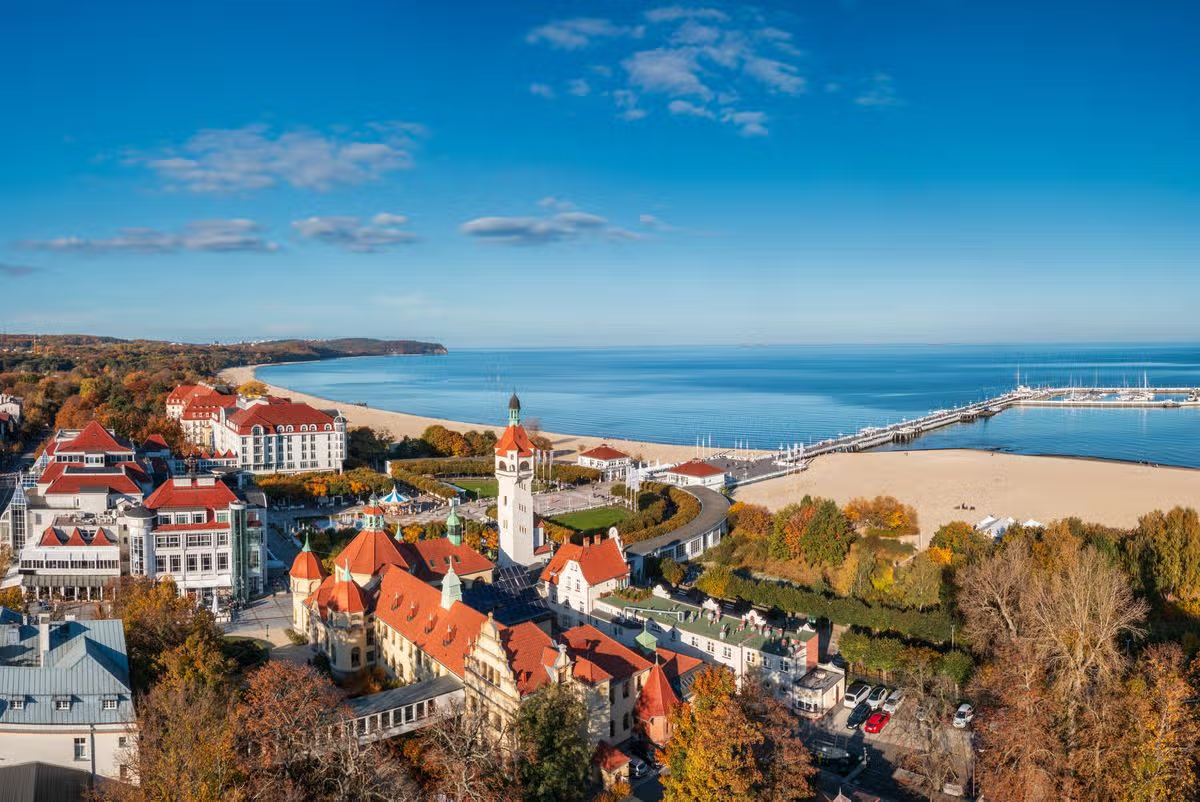
“It’s got a huge, golden sandy beach, it’s got loads of beachfront bars and restaurants… colourful streets, beautiful architecture and there’s loads of luxury hotels and a massive pier that stretches out right into the sea,” he enthused.
Rob said he then realised why comparisons are being made to Barcelona – only this location is “nowhere near as busy or expensive”, and hardly anyone is talking about it.
Direct flights from UK airports take as little as two hours and five minutes, with Rob finding one for as little as £36.
“It sounds much further away than it actually is, but what really caught my eye is how much variety there is there,” he explained. “You can spend the morning on the beach, wander around beautiful old streets in the afternoon, eat ridiculously well and eat gorgeous food without spending a fortune – and because spending money goes such a long way here, it feels way more luxury than it probably should.”
So where is Rob talking about? “Summer temperatures are sitting at up to 26 degrees… I really don’t think this place will stay a secret for much longer,” he said. “The more I looked into it, the more I realised that this location is only going to get bigger and bigger over the next few years.
“It’s Sopot – a gorgeous seaside town on Poland’s Baltic coast. I even found a deal here I genuinely might book myself.”
Rob closed by highlighting one particular deal – five nights at the Hotel Aqua beside the beach for just £265 per person – which includes flights from London Stansted Airport this September.
“You’re getting Barcelona’s beach culture, but for Poland’s prices,” he declared.
Sopot’s tourism website boasts online: “Sopot is one of the most charming places in Poland and a hugely popular Baltic resort. Here you’ll find not only abundant greenery, beautiful sandy beaches, and the soothing sound of waves, but also a rich history, spa architecture, and top-class hotels and restaurants.”
Writing in response to Rob’s video, one TikTok user exclaimed: “It’s a beautiful place, I was there in May. Gdansk is just along the way which is even better. Definitely worth a visit.”
A second person added: “Sopot is a beautiful town and so is neighbouring Gdynia. Both towns are within a short commute of the larger city of Gdansk, which is also a marvel. Very clean environment, moderate prices to eat out and drink and very well worth a visit.”
While a third wrote: “Sopot is stunning, we had a great time earlier this year. We stayed in Gdansk which is about 15 minutes by train. I couldn’t recommend both places enough.”