Oil prices have jumped amid the latest outbreak of hostilities between the United States and Iran over the Strait of Hormuz.
Brent crude, the main international benchmark, rose more than 4 percent on Monday as Washington and Tehran traded attacks amid their escalating standoff over control of the critical waterway.
Recommended Stories
list of 4 itemsend of list
Brent futures for September delivery stood at $79.26 a barrel as of 05:00 GMT, the highest since June 22.
US Central Command (CENTCOM) said on Sunday that it had carried out dozens of strikes on Iran to degrade its ability to attack vessels in the strait, hours after striking hundreds of targets in the country.
US forces launched the earlier round of strikes after accusing Iranian forces of “blatantly” attacking a Cyprus-flagged container ship, the MV GFS Galaxy, as it was transiting the strait.
“The Strait of Hormuz is a vital maritime corridor for global trade. Iran does not control it,” CENTCOM said in a statement late on Sunday.
“US forces are postured and prepared to ensure that freedom of navigation remains available to commercial shipping despite Iran’s continued unwarranted aggression, harassment, threats, and arbitrary declarations.”
Iranian forces on Sunday launched a wave of missile and drone attacks against the United Arab Emirates, Qatar, Kuwait, Oman and Bahrain in response to the US strikes.
Iran’s Persian Gulf Strait Authority, which claims the right to control traffic through the Strait of Hormuz, earlier reiterated that vessels attempting to cross the waterway without using its preferred route would “not be covered by safe passage guarantees”.
“The consequences arising from transit through unauthorized routes shall be the responsibility of the owner, operator, and vessel commander,” the authority said.
After ticking up following Washington and Tehran’s signing of a memorandum of understanding on ending the war last month, maritime traffic in the Strait of Hormuz has declined sharply amid the renewed fighting between the sides.
Just six vessels were tracked crossing the strait between 18:00 GMT on Thursday and 06:00 GMT on Friday, compared with 18-22 daily crossings earlier this month, according to maritime intelligence platform Windward.
Nine vessels were tracked in the waterway between 18:00 GMT on Saturday and 06:00 GMT on Sunday, four of which were flying the Iranian flag, according to Windward.
Roughly 130 vessels transited the strait, a conduit for one-fifth of the global oil trade in peacetime, each day before the start of the war.
Oil prices, which had returned to pre-conflict levels following the signing of the memorandum on June 17, are now about 9 percent higher than before the US and Israel launched their initial strikes on Iran in late February.
Mukesh Sahdev, founder and chief oil analyst at XAnalysts in Sydney, Australia, said he expects the per-barrel price of Brent to remain in the upper $70s during August and September amid the heightened geopolitical uncertainty.
“There could be occasional spikes and dips outside that range,” Sahdev said in a note to clients on Saturday.
“Long-haul procurement forces refiners to make supply decisions weeks in advance,” Sahdev added.
“Those decisions have already reduced immediate reliance on the Middle East, and the latest escalation is likely to reinforce rather than reverse that trend.”
Fabien Yip, a market analyst at IG in Sydney, Australia, said prices are unlikely to approach the much higher levels seen earlier in the war despite the latest turmoil.
“Oil’s return towards pre-war levels in June reflected markets pricing in a best-case outcome for the fragile US-Iran arrangement; last week’s re-escalation exposes how fragile that assumption was,” Yip said in a note to clients on Monday.
“Near-term, the risk premium should keep prices supported, though a repeat of the earlier spike appears unlikely, as demand remains slow to recover while stranded-tanker releases and OPEC+ output quota expansion continue to add barrels to an already oversupplied outlook.”
Major Asian stock markets fell on Monday amid the renewed fighting in the Middle East.
Japan’s benchmark Nikkei 225 fell more than 2 percent in afternoon trading, while South Korea’s Kospi plunged more than 8 percent.
Hong Kong’s benchmark Hang Seng Index dipped about 0.2 percent.
July 10 (UPI) — Apple on Friday filed a lawsuit against OpenAI and former Apple employees that work their for stealing confidential product information for the artificial intelligence company’s use.
The lawsuit specifically names two former Apple employees who allegedly handed over information to OpenAI when they joined the company that related to products they worked on at their former employer, The Hill reported.
In its filing, Apple said that OpenAI has been telling employees it hires away from the company to bring design information, prototypes and other information on how it makes its products.
There are, reportedly, more than 400 former Apple employees working for OpenAI, in addition to the company’s partnership with former Apple design chief Jony Ive’s io and his effort to lead the AI company’s hardware development.
“At Apple, our teams are constantly developing breakthrough technologies to create the best products and services in the world, and protecting their work and intellectual property is something we take very seriously,” an Apple spokesperson told 9to5Mac.
“Recently, significant evidence has emerged suggesting individuals employed by OpenAI wrongfully took Apple’s secret and confidential information regarding our unreleased technologies, process and products,” the spokesperson said.
Apple alleged its former vice president of product design, Tang Tan, has told Apple employees that he is interviewing for roles at OpenAI that they should bring things from Apple headquarters for “show and tell” sessions.
OpenAI denied the allegations in a statement, saying that the company remains “focused on building innovative technology that empowers people” and has “no interest in other companies’ trade secrets.”
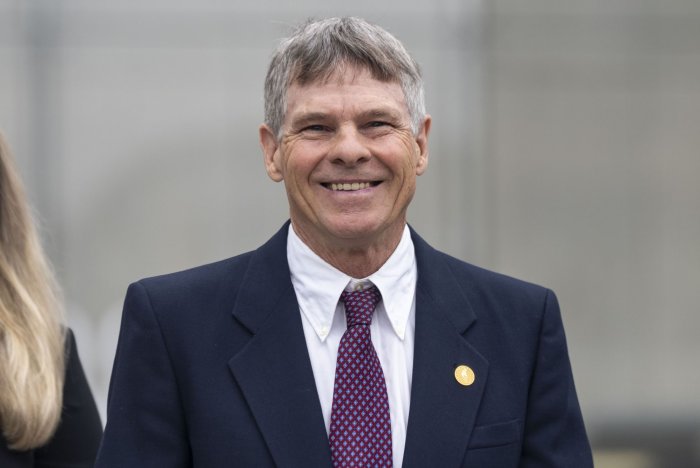
Olympic canoeist David Hearn departs the Moultrie Courthouse after pleading not guilty to damaging the Lincoln Memorial Reflecting Pool on Thursday. Hearn was indicted on July 2 on one count of destruction of property of more than $1,000 for allegedly damaging the Reflecting Pool, carrying a maximum penalty of 10 years in prison if convicted. Photo by Bonnie Cash/UPI | License Photo
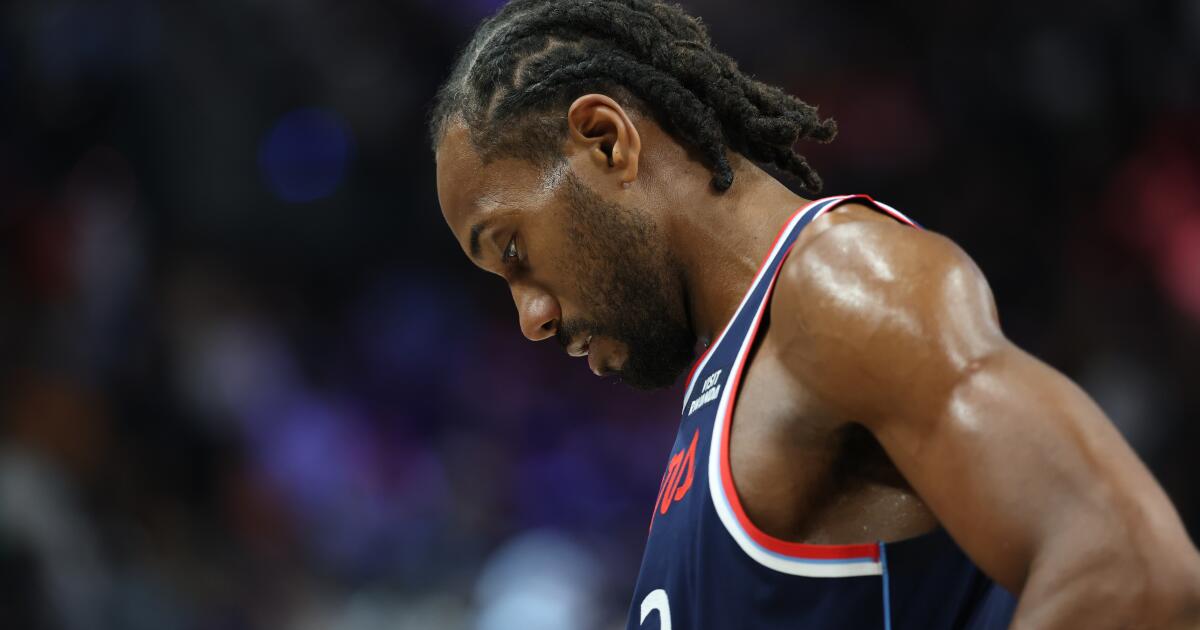
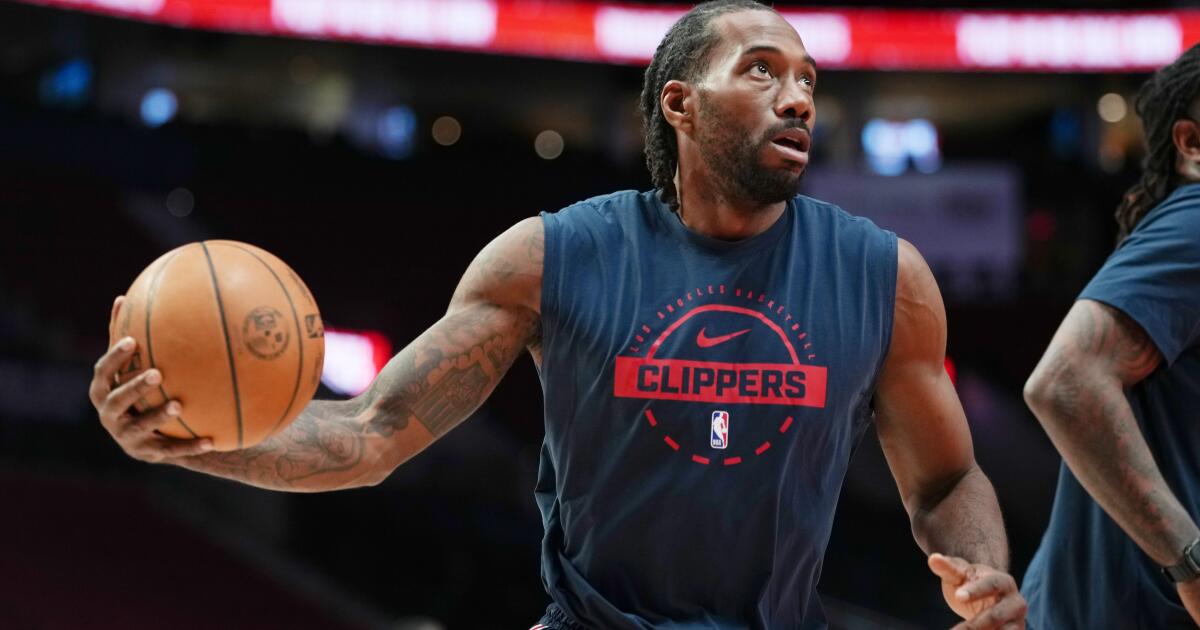
The Toronto Raptors have put the brakes on acquiring Kawhi Leonard from the Clippers, announcing Thursday that the trade is on hold until the NBA investigation into whether the Clippers circumvented salary cap rules is complete.
“The NBA league office informed us that as a result of the ongoing investigation involving the Clippers, we would assume the risk of any potential outcome of the investigation impacting Kawhi,” the Raptors said. “In light of this, we will wait until the league’s investigation is complete.”
The trade sent Leonard to Toronto for forward Brandon Ingram, shooting guard Gradey Dick, two first-round draft picks, a pick swap and two second-round picks. Leonard has spent the last seven seasons with the Clippers after leading the Raptors to the 2019 NBA championship.
The probe was triggered in September when the “Pablo Torre Finds Out” podcast aired an episode detailing a contract Leonard received from Aspiration, a self-described “socially-conscious and sustainable banking services and investment products” firm. Clippers owner Steve Ballmer invested $60 million in the now-defunct company that in turn agreed to pay Leonard $28 million for endorsements he never fulfilled.
The investigation is being conducted by Wachtell Lipton, a high-powered New York law firm the NBA has frequently used when attempting to determine off-the-court wrongdoing by team owners, players or referees. There is no timetable for its conclusion, and the league had no comment Thursday.
Ballmer invested $50 million in Aspiration in September 2021. A month later, the Clippers announced a $300-million sponsorship deal with the company. Ballmer nearly granted Aspiration naming rights to the team’s new $2-billion venue as well, but instead chose financial services firm Intuit.
Two years later when Aspiration was experiencing severe financial difficulties, Ballmer made an additional $10 million investment and Clippers co-owner Dennis Wong — Ballmer’s former college roommate — invested $1.99 million in Aspiration nine days before Leonard received a $1.75 million payment from the company. Leonard ultimately was paid $21 million of the $28 million agreed upon in his contract with Aspiration.
Leonard averaged 25.1 points, 6.4 rebounds, 4.1 assists and 1.7 steals over six seasons with the Clippers and was selected to four All-Star teams, four All-NBA teams and two All-Defensive teams while in L.A. Leonard averaged a career-high 27.9 points while playing 65 games last season.
“The Raptors remain eager to bring Kawhi back to Toronto and look forward to a swift resolution for our players, our organization, and our fans,” the Raptors said.
Weekly insights and analysis on the latest developments in military technology, strategy, and foreign policy.
In his latest spat with a fellow NATO member, U.S. President Donald Trump condemned Spain as a “wasted cause” and “terrible partner” in the alliance. Speaking at the NATO Summit in Ankara, as NATO Secretary General Mark Rutte looked on, Trump said he wanted to cut off all trade relations with Spain. While Spanish officials have stressed that relations won’t be affected, it does raise questions about the long-term status of the U.S. military presence in Spain, should the situation deteriorate further.
.@POTUS: “Spain is a wasted cause. We don’t want to do any trade business with Spain anymore by the way… Spain is a terrible partner in NATO. They don’t participate, they don’t pay. I don’t want anything to do with Spain.” pic.twitter.com/3prqux6p54
— Rapid Response 47 (@RapidResponse47) July 8, 2026
“We don’t want to do any trade business with Spain anymore… I’d like you to cut it off,” Trump said. “Spain is a terrible partner in NATO. They don’t participate; they don’t pay. I don’t want anything to do with Spain. Cut off all trade with Spain, please, including visits. Watch them, watch them come running back; oh, they’ll come running back.”
He continued: “We don’t have to trade with them. I don’t want to do any more trade with them… Don’t even talk to them; they’re hopeless, bad people, because you know they have everybody else going and paying and working… They’re open about it, they’re hostile about it, and let’s see how hostile they remain when they call up, and they ‘please, please, we want to trade with you, sir. We want to trade with you, sir.’ They make so much money with us, and we’re going to see that they make a lot less. I want no business with them.”
According to U.S. Congress figures, mutual trade between the two countries was worth $75 billion in 2025, and the United States made $3 billion more from the relationship than Spain.
In an effort to heal the rift, Spanish Prime Minister Pedro Sánchez later insisted that relations with the United States were “very positive,” and that he had spoken to Trump.
“We talked about the World Cup… there was no tension whatsoever, on the contrary it was all very friendly,” said Sánchez.
Spanish Prime Minister Pedro Sanchez downplays tensions with President Donald Trump after the US leader threatens to halt trade with the NATO ally, describing their exchange as informal and courteous with “absolutely no tension.” pic.twitter.com/SRNfdfuWkV
— Al Arabiya English (@AlArabiya_Eng) July 8, 2026
The BBCreported that government sources in Madrid said that Spain had no plan to change their “excellent social, cultural, and economic relationship.”
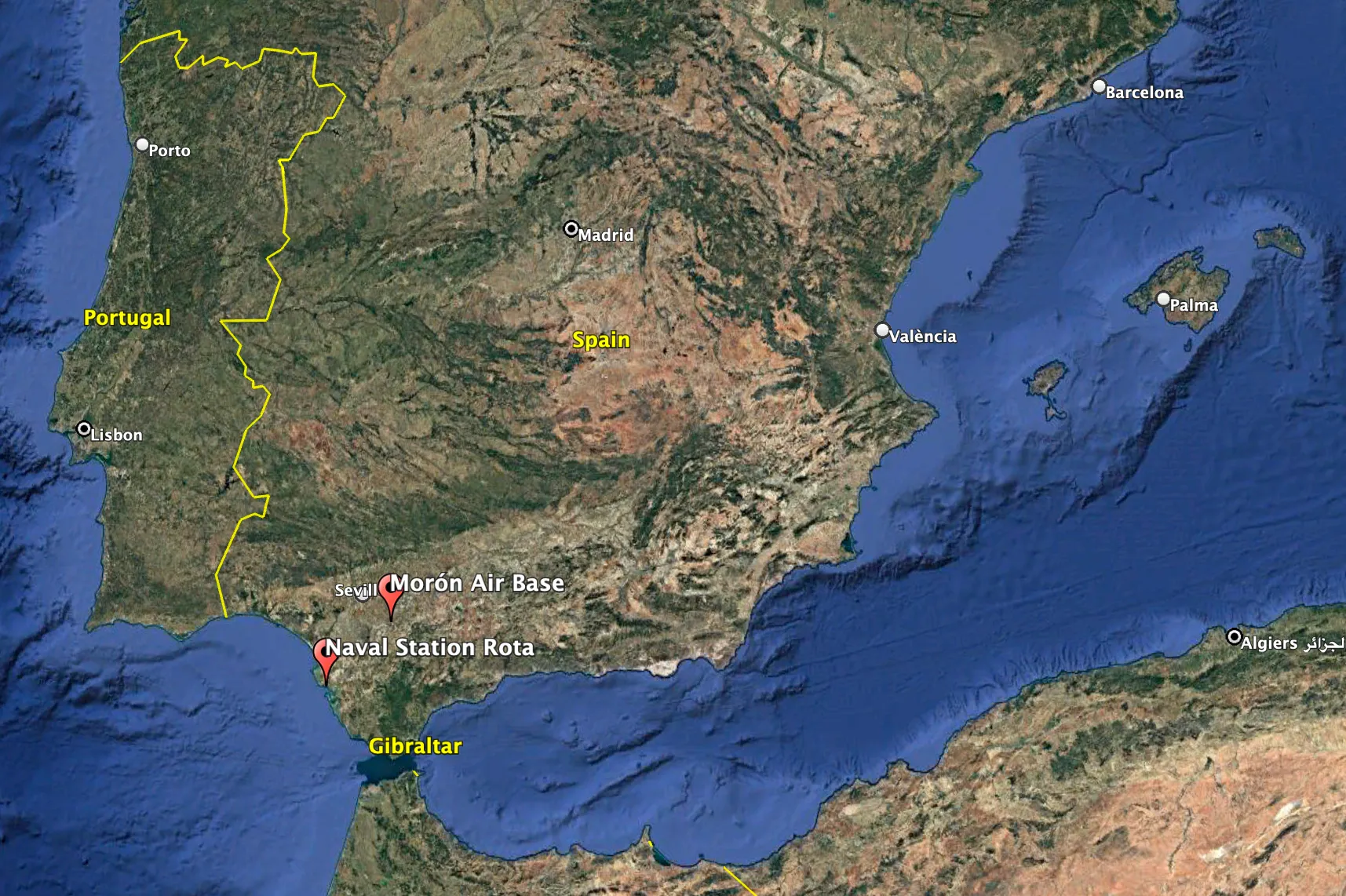
The background to this is Trump’s unhappiness with the Sánchez government refusing the U.S. military permission to use its bases at Morón and Rota in Spain for missions during the war against Iran.
Another point of conflict is Sánchez’s refusal to increase defense spending to five percent of GDP, in line with NATO targets.
This is not Trump’s first threat to cut off trade relations with Spain. The same had happened back in March, in response to Sánchez’s stance on the Iran war.
While there was no change to trade between the two countries after that, were relations between the United States and Spain to worsen, the continued access to Morón and Rota would become a question.
The approximate location of Morón and Rota in southern Spain. Google Earth
Of the two, Naval Station Rota, in the province of Cádiz, is the most critical. It sits in a strategic position at the mouth of the Mediterranean, which is one of the world’s most important naval control points.
Described by the U.S. Navy as “the gateway to the Mediterranean,” Rota is one of the most strategically important U.S. military hubs in Europe, critical to supporting U.S. and allied naval operations across multiple theaters. The installation is central for Naval Forces Europe-Africa/Central (EURAFCENT) and the U.S. Sixth Fleet.
Located on a 6,100-acre Spanish Navy facility in southern Spain, Rota functions as a major logistical gateway linking North America with Europe, the Mediterranean, Africa, and the Middle East.
Naval Station Rota. Google Earth
The base supports the movement of personnel, equipment, fuel, and supplies through its three operational piers, a 670-acre airfield capable of supporting U.S. Navy and Air Force aviation operations, and some of the largest weapons and fuel storage facilities in Europe.
Perhaps the highest-profile resident unit at Rota is Destroyer Squadron 60 (DESRON 60), one of three U.S. Navy destroyer squadrons permanently based outside the continental United States and the only one of these to call Europe home.
In 2024, the Arleigh Burke class destroyer USS Oscar Austin arrived at Rota, as the first of two additional destroyers to join the Forward Deployed Naval Force-Europe, which will have an eventual total of six. These warships are notably modified with special defenses tailored to the European theater, as you can read about here.
The USS Oscar Austin arrives at its new homeport of Naval Station Rota, Oct. 15, 2024, as the first of two additional DDGs to join the Forward Deployed Naval Force-Europe. U.S. NavyA SeaRAM defense system awaits testing aboard USS Porter, March 3, 2016. Porter, a destroyer forward-deployed to Rota, Spain, was preparing for deployment in the U.S. Sixth Fleet area of operations. U.S. Navy photo by Lt.j.g Laura Adams/Released U.S. Naval Forces Europe-Africa/
Other key Navy units at Rota include Helicopter Maritime Strike Squadron Seven Nine (HSM-79), the “Griffins,” flying the sub-hunting MH-60R Seahawk, and Explosive Ordnance Disposal Mobile Unit Eight.
MH-60R Seahawk helicopters assigned to Helicopter Maritime Strike Squadron 79 land on the flight deck of the Spanish Galicia class landing platform dock Castilla during a bilateral flight operations exercise at Rota, April 28, 2026. U.S. Navy photo by Mass Communication Specialist 1st Class Drace Wilson Petty Officer 1st Class Drace Wilson
Turning to Morón, this airbase is located southeast of the city of Seville in southern Spain. While Naval Station Rota is a springboard for U.S. maritime forces, Morón provides a similar role for the Air Force. Its strategic position means it plays a key role as a forward operating location for air operations, rapid response missions, and contingency support across Europe, Africa, and the Middle East.
Morón Air Base. Google Earth
The base’s capabilities include airfield operations, aircraft support, logistics, maintenance, communications, security, and host-nation support, all of which are geared toward rapid deployment and sustainment of U.S. forces when and where they are needed.
U.S. Marines with Special Purpose Marine Air-Ground Task Force-Crisis Response-Africa (SPMAGTF-CR-AF) 19.1, Marine Forces Europe and Africa, prepare to conduct a helicopter support team training event using a U.S. Marine Corps MV-22 Osprey at Morón Air Base, Spain, March 13, 2019. U.S. Marine Corps photo by Sgt. Katelyn Hunter Staff Sgt. Katelyn Hunter
Resident U.S. Air Force units at Morón, under the Third Air Force, include the 496th Air Base Squadron, a geographically separated unit (GSU) that comes under the command of the 86th Airlift Wing at Ramstein Air Base in Germany. The 86th Airlift Wing flies C-130J airlifters as well as C-21A and C-37A staff transports.
Morón also serves as a critical node in the transatlantic and transeuropean tanker bridges, making it a key logistical gateway for the massive movements that are critical to buildups in Europe and the Middle East, as well as for more routine transatlantic deployments.
A KC-10, KC-46, and three KC-135s sit on the flight line at Morón Air Base on April 14, 2022. At the time, the three airframes represented the entire might of the U.S. Air Force’s refueling arsenal. The KC-10 has since been retired. U.S. Air Force photo by Staff Sgt. Nathan Eckert Tech. Sgt. Nathan Eckert
As well as other U.S. Air Force assets that temporarily deploy to Morón, including from the Bomber Task Force, the base also regularly hosts deployments of U.S. Marine Corps aircraft.
Two B-1B Lancers with the 9th Expeditionary Bomb Squadron from Dyess Air Force Base, Texas, are prepared for takeoff in support of Bomber Task Force Europe at Morón Air Base, Spain, April 4, 2024. U.S. Air Force photo by Senior Airman Zachary Wright Staff Sgt. Zachary Wright
Both Morón and Rota operate under the U.S.-Spain Agreement on Defense Cooperation, which allows the United States and Spain to operate alongside one another and share critical infrastructure.
Morón Air Base and Naval Station Rota remain key nodes in the U.S. military’s global posture, providing a strategically positioned bridge between Europe, Africa, and the Middle East. Their combined capabilities allow U.S. forces to rapidly move, stage, and sustain aircraft, ships, personnel, and equipment across multiple theaters.
A Spanish Air Force Eurofighter flies next to a U.S. Marine Corps MV-22 Osprey with Special Purpose Marine Air-Ground Task Force-Crisis Response-Africa 20.1, Marine Forces Europe and Africa, as part of a tactical recovery of aircraft and personnel (TRAP) exercise near Morón Air Base, Spain, May 6, 2020. U.S. Marine Corps photo by Cpl. Kenny Gomez Sgt. Kenny Gomez
A loss of access to Morón and Rota would extend far beyond a bilateral dispute between Washington and Madrid. While the United States could maintain operations through other European and regional locations, replacing the unique combination of air, maritime, and logistical capabilities provided by the two installations would take time and impose additional strain on U.S. forces. Loss of access to these bases, especially Rota, could be one of Spain’s most powerful cards to play if Trump’s rhetoric turns into action.
More importantly, any decision by a NATO member to restrict access to critical allied infrastructure would have broader implications for the alliance, raising questions about the reliability of defense commitments and the political cohesion that underpins collective security.
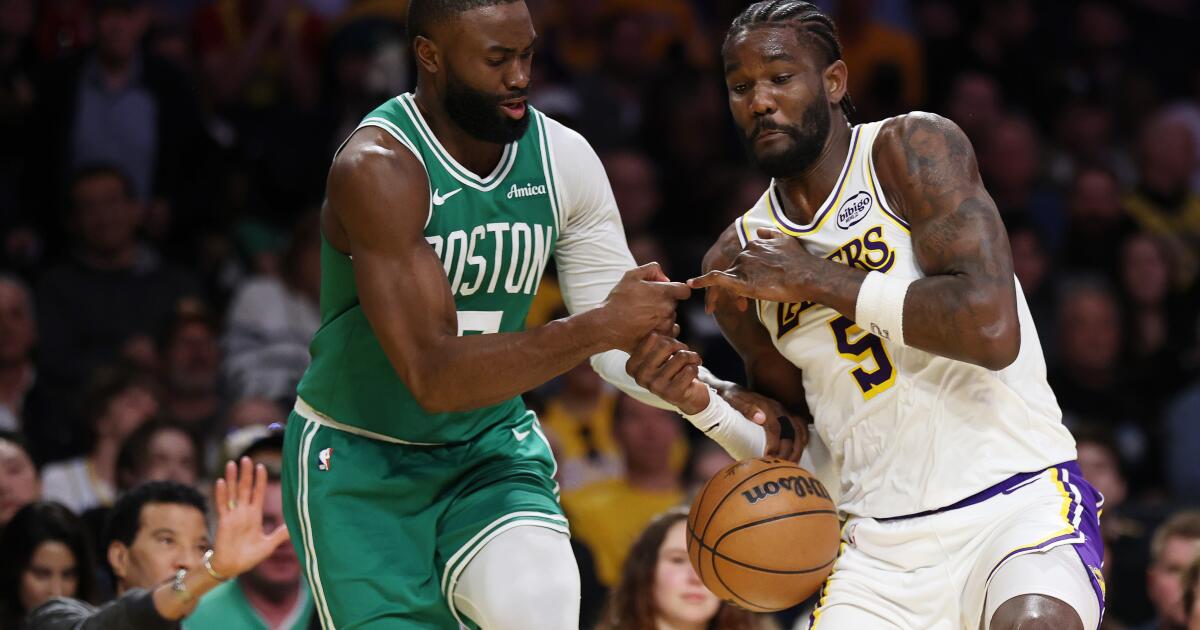
The Boston Celtics are trading 2024 NBA Finals MVP Jaylen Brown to the Philadelphia 76ers for Paul George and a slew of draft capital in yet another blockbuster offseason move, a person with knowledge of the terms said Wednesday.
Boston also gets two first-round picks and two second-round picks, according to the person who spoke to the Associated Press on condition of anonymity because the trade had not yet received league approvals.
It brings Brown’s tenure in Boston to an end after five All-Star appearances in a 10-season run that saw him play in more wins — counting regular-season and playoff games — than any other player in the league.
And it is another huge move being made via trade this summer, after Giannis Antetokounmpo went from Milwaukee to Miami, Kawhi Leonard and Brandon Ingram headlined a swap between the Toronto Raptors and the Clippers, and Ja Morant got traded to Portland by Memphis.
The trade breaks up what has been one of the league’s most successful 1-2 punches in Brown and Jayson Tatum, who helped carry the Celtics to the 2024 NBA title. Tatum missed most of last season while recovering from an Achilles tear that happened during the 2025 playoffs.
The 76ers also agreed to a $39-million, four-year deal with veteran forward Dean Wade.
Powell agrees to deal with the Bulls
Norman Powell has agreed to a two-year deal that could be worth up to $45 million with the Chicago Bulls, a person with knowledge of the talks said. Powell also received some interest from the Detroit Pistons, said the person, who spoke on condition of anonymity because the contract can’t be finalized until July 6.
The Bulls hold a team option for 2027-28. Powell spent this past season in Miami, where he became an All-Star for the first time and averaged 21.7 points in 58 games.
Vucevic agrees to rejoin the Magic
Nikola Vucevic is headed back to the Orlando Magic, agreeing on a one-year deal for just under $4 million, a person with knowledge of those talks confirmed.
Vucevic is second all-time on the Magic list in rebounds, third in points and fourth in games played. The 35-year-old center now joins a young core led by Paolo Banchero and Franz Wagner. Orlando lost Moritz Wagner, Franz’s brother, in free agency to Brooklyn on a two-year deal.
Celtics to add Conley, Robinson
Mitchell Robinson just won a title with New York, and now the center will chase another in Boston.
The Celtics agreed to a $47.4-million, three-year deal with Robinson, a person with knowledge of that agreement said. And veteran guard Mike Conley Jr. also is headed to the Celtics on a one-year deal, a second person with knowledge of that agreement said.
Etc.
Forward John Collins agreed to a three-year contract with the Detroit Pistons, a person with knowledge of those negotiations told the AP. ESPN reported the deal is worth $51 million. He started his career in Atlanta, spent two seasons in Utah and played for the Clippers last season. … The San Antonio Spurs added forward Tobias Harris on a two-year deal worth about $31 million. … The Indiana Pacers have agreed to terms with Kelly Oubre Jr. on a two-year deal worth about $17 million.
The Kawhi Leonard era might soon be over in Los Angeles.
A deal to send the seven-time NBA All-Star forward back to Toronto, where he won his second NBA title, is in the works, according to a person with knowledge of the situation who is not authorized to speak publicly on the matter.
The trade — which the Clippers hope to land All-Star forward Brandon Ingram, shooting guard Gradey Dick, two first-round draft picks, a pick swap and two second-round picks — would mark the end of another promising-but-empty chapter in the franchise’s ringless history.
Leonard, a Moreno Valley native who won his first title with the San Antonio Spurs, joined his hometown Clippers as a highly coveted free agent in July 2019 after leading Toronto to its first championship in a classic one-and-done season.
“The front office was very transparent, they want to win,” Leonard said at his introductory Clippers news conference on July 24, 2019. “Just the opportunity for us to build our own, to make history — they haven’t been to a final, haven’t won a final — that was something big and exciting for me to make my decision.”
The Raptors were in the same championship-less boat before Leonard saved them. The Clippers, meanwhile, are still trying to get over the hump.
Leonard averaged 25.1 points, 6.4 rebounds, 4.1 assists and 1.7 steals over six seasons with the Clippers and was selected to four All-Star teams, four All-NBA teams and two All-Defensive teams. Leonard averaged a career-high 27.9 points while playing 65 games last season.
Yet most will only remember that Leonard’s tenure in the City of Angels netted zero Larry O’Brien trophies and instead plenty of load management and one ongoing salary cap circumvention investigation. The Clippers, of course, have been accused of paying Leonard $28 million through an endorsement deal with bankrupt sustainability company Aspiration.
Whether there was salary cap circumvention or not, L.A. truly went all-in on its latest bid to win a title to no avail, as encapsulated by the infamous Paul George-Shai Gilgeous-Alexander deal that accompanied the launch of the Leonard era.
Unfortunately for the Clippers, Leonard, George and the era’s other big-name players were rarely healthy or at their peaks when the lights were brightest. And in Oklahoma City, Gilgeous-Alexander led the Thunder to its first title and developed into a two-time league MVP, all before his 28th birthday.
Hindsight is 20/20.
The Clippers, though, did come as close to a ring as ever before, reaching the Western Conference finals for the first time in franchise history in 2021. However, Leonard tore his anterior cruciate ligament during that run and left L.A. and the NBA wondering “What if?” — the everlasting theme of Steve Ballmer’s ownership of the Clippers.
Leonard played at least 65 games just twice over his seven seasons in L.A. and missed the 2021-22 season entirely because of the ACL tear. The Clippers won only three playoff series with Leonard, with no series victories to show for over his final five seasons in L.A.
And in arguably the Clippers’ most healthy playoff run with Leonard — during the 2020 NBA bubble — L.A. blew a 3-1 lead to the Denver Nuggets in the Western Conference semifinals, spoiling a matchup against the Lakers, the ultimate victors of the COVID-shortened season, in the conference finals.
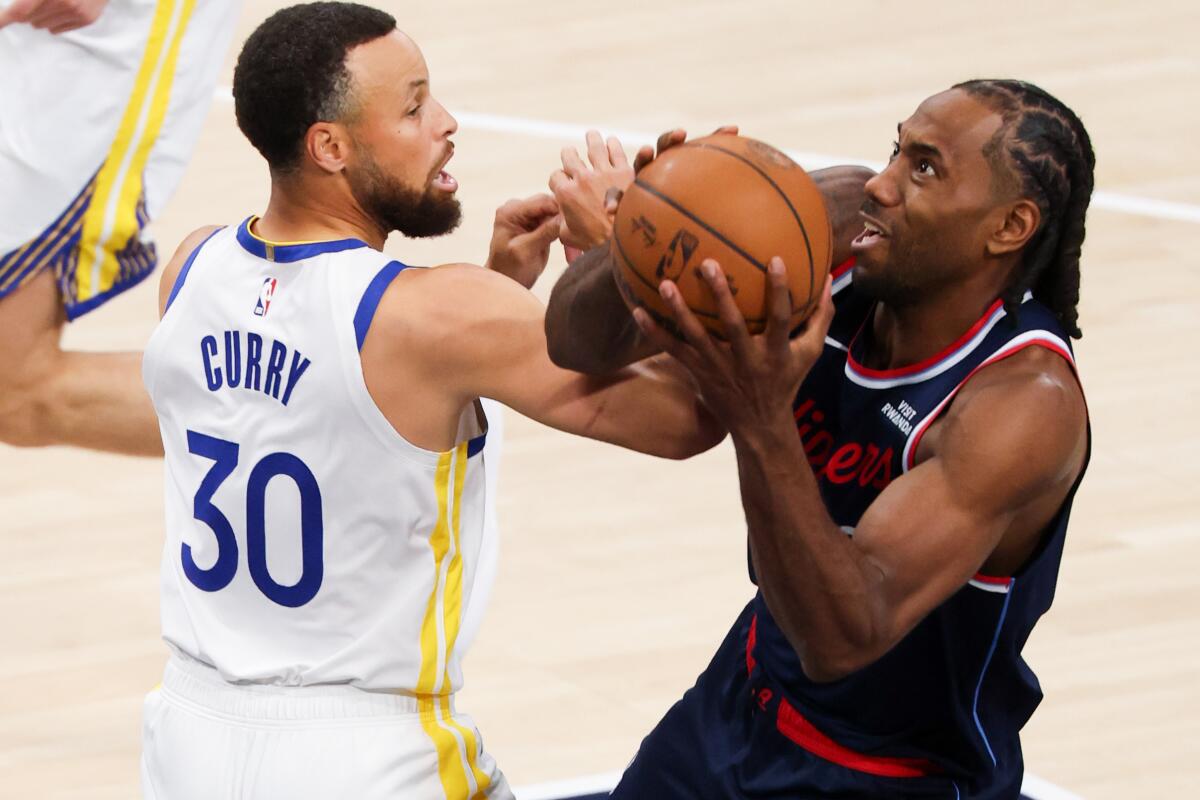
Clippers forward Kawhi Leonard tries to go up for a shot while defended by Warriors guard Stephen Curry during a play-in game in April.
(Allen J. Schaben / Los Angeles Times)
The Clippers had their moments with Leonard, like when he posted a career-best and franchise-record 55 points against the Detroit Pistons in 2025.
If anything, the future Hall of Famer sure appeared to enjoy his time back home, which was a major reason why Leonard initially turned down a royal life in Canada to play for Southern California’s other team.
Besides free agency opening on Tuesday, the timing does add up for Leonard’s trade, as Clippers president of basketball operations Lawrence Frank has steered the franchise through a refreshing youth movement over the past year.
“Yeah, plan’s still win with Kawhi,” Frank said last week. “But the bigger plan is — we understand we’re not a contender. We’re competitive. How are we going to get back to contention?”
During the 2025-26 season alone, L.A. sent a 40-year-old Chris Paul into retirement; traded 36-year-old guard James Harden to Cleveland for 26-year-old guard Darius Garland; traded 29-year-old center Ivica Zubac to the Indiana Pacers for two first-round picks, a second-round pick, 24-year-old center Isaiah Jackson and 24-year-old guard Bennedict Mathurin; and liked what it saw from up-and-comers like center Yanic Konan Niederhauser and guards Kobe Sanders and Jordan Miller.
And just last week, the Clippers selected 19-year-old Illinois guard Keaton Wagler fifth overall in the draft — via the Zubac trade — instead of packaging the pick for a veteran star.
“You can learn a lot. Like you said, he has a lot of experience,” Wagler said of possibly playing with Leonard. “He’s won championships and played in finals and won a lot of games and played a lot of seasons. Just being able to learn from him and see what it takes to become that caliber of a player.”
Presumably a bummer for Wagler, he and Leonard might not be teammates in L.A.
Leonard’s last game with the Clippers was symbolic of his tenure with the franchise. In a home play-in loss to the Warriors on April 15, L.A. led Golden State for most of that contest — and by as much as 13 — before Leonard and his running mates went cold late, ending their fun season early.
“Let me cry about this loss a little bit more,” Leonard said about his future with the Clippers after that blunder. “We’re going to have our discussions when that time comes.”
Staff writer Broderick Turner contributed to this report.
The United States is expected to formally notify its North American partners that it will not extend the United States Mexico Canada Agreement (USMCA), triggering the pact’s sunset review process and beginning a potential 10-year countdown to its expiry in 2036. While the move does not immediately terminate the agreement, it opens a prolonged period of negotiations during which the three countries will seek to resolve disputes over automotive rules, regional manufacturing, market access and measures to prevent Chinese goods from benefiting from preferential trade provisions.
The decision reflects the Trump administration’s push to reshape North American trade around greater US manufacturing content and stricter supply chain rules rather than preserving the agreement in its current form.
Sunset clause launches a decade of negotiations
The notification activates the USMCA’s sunset review mechanism, requiring annual consultations if no agreement is reached to renew the pact for another 16 years. Rather than ending the agreement immediately, the process creates a structured but uncertain negotiation period that could last until the agreement expires in 2036 unless the three countries reach a revised deal.
The review mechanism is intended to keep the agreement under continuous assessment but also introduces long-term uncertainty for businesses operating across North America.
Stay ahead of the geopolitical week.
MD Briefing delivers expert analysis across five global fronts — the Indo-Pacific, energy, geoeconomics, European security, and the Middle East — every Monday morning. Free.
Washington pushes for tougher automotive rules
The United States is seeking significant changes to the agreement’s rules of origin, particularly in the automotive sector. Washington wants a substantially larger share of vehicle components to be produced in the United States while increasing overall North American content requirements to reduce dependence on Asian supply chains.
The proposals form part of a broader industrial strategy aimed at strengthening domestic manufacturing, creating more US jobs and preventing third-country producers, particularly China, from indirectly accessing preferential North American trade benefits.
US and Mexico lead negotiations while Canada remains sidelined
Current negotiations are taking place primarily between Washington and Mexico, with Canada playing a more limited role amid ongoing bilateral trade disputes with the United States.
The narrower negotiating format highlights differing priorities within the three-country partnership and raises questions about whether a comprehensive trilateral agreement can be achieved without parallel negotiations involving Ottawa.
The proposed revisions extend beyond traditional tariff issues and reflect a wider effort to reorganise North American manufacturing. By tightening content requirements and strengthening origin rules, the United States aims to encourage companies to relocate production closer to home while limiting opportunities for Chinese manufacturers to circumvent trade restrictions through regional supply chains.
This shift illustrates how trade policy has become increasingly intertwined with industrial policy and national economic security objectives.
Businesses face prolonged policy uncertainty
The activation of the sunset clause is unlikely to disrupt trade immediately, but it introduces a prolonged period of uncertainty for manufacturers, exporters and investors whose operations depend on integrated North American supply chains.
Companies may delay long-term investment decisions until greater clarity emerges on future tariff structures, production requirements and the overall direction of regional trade policy.
Future Outlook
Negotiations are expected to intensify over the coming months as the United States continues pressing for stricter manufacturing rules and stronger regional content requirements. While Mexico appears willing to negotiate toward shared industrial objectives, Canada’s future role remains less certain given unresolved bilateral trade disputes.
Unless the three countries reach a mutually acceptable compromise, the USMCA could remain under annual review for the next decade, prolonging uncertainty for businesses while reshaping North America’s manufacturing landscape. The outcome of these negotiations will likely determine not only the future of the trade agreement but also the competitiveness of regional supply chains and the balance between economic integration and national industrial policy.
Reasons for the Clippers to trade Kawhi Leonard are apparent. So are reasons to keep the seven-time All-Pro forward who turned 35 on Monday.
For now, the team is engaged in discussions and entertaining offers for Leonard, who is highly regarded despite being central to a league investigation into allegations of salary-cap intervention.
Representatives for Leonard, who has one year remaining on a three-year, $152.4 million contract, have informed other teams he prefers to remain with the Clippers and would only sign an extension with the Toronto Raptors or San Antonio Spurs if the Clippers trade him, ESPN reported. Leonard helped both of those teams to NBA titles, the Raptors in 2019 and the Spurs in 2014. He was Finals MVP both years.
However, the Athletic reported that the Dallas Mavericks offered to trade power forward P.J. Washington, shooting guard Klay Thompson and draft picks for Leonard. Mavericks president Masai Ujiri held the same position with the Raptors when they won the 2019 championship.
If Leonard doesn’t agree to a contract extension with Dallas, he essentially would be a one-year rental and not worth as much in trade capital. Ujiri engineered the trade in 2018 that brought Leonard to the Raptors without the player agreeing to an extension, and the result was a championship followed by Leonard bolting to the Clippers.
Another factor in assessing Leonard’s trade value and the Clippers’ motivation to move him is the ongoing NBA investigation involving team owner Steve Ballmer, Leonard and the now-bankrupt sustainable financial technology firm Aspiration.
Triggered in October when the “Pablo Torre Finds Out” podcast detailed a $28 million endorsement contract Leonard received from Aspiration, the NBA hired a prominent law firm to conduct the probe. Findings could be announced soon because NBA commissioner Adam Silver said June 2 that it was time to “wrap it up.”
Aspiration had a $300 million, 23-year endorsement deal with the Clippers and Ballmer personally invested $60 million into the company, whose co-founder Joseph Sanberg was convicted of two counts of wire fraud and sentenced to 14 years in federal prison. Ballmer admits introducing Leonard to Aspiration executives but has denied that he knew details of the endorsement deal that Leonard never fulfilled.
Silver has not stated that the NBA would hold up any trade involving Leonard because of the investigation. Still, the Clippers expressed at the end of the regular season that keeping the 14-year veteran was a priority.
“Our plan is to win with Kawhi,” Clippers president Lawrence Frank said.
Leonard is coming off his best season of six with the Clippers, averaging a career-high 27.9 points over 65 games. He has averaged 20.7 points a game during his career.
The Raptors are rumored to be dangling former Lakers forward Brandon Ingram and first-round draft picks
NBA mock drafts projected Cameron Carr getting selected somewhere between 15 and 20 in the first round on Tuesday night.
Ending up with the Lakers later in the draft, however, was more than Carr could have asked for.
The Lakers acquired his draft rights from the New York Knicks, who took the 6-foot-5 Baylor guard with the 24th pick, in a multiple-team deal in which L.A. sent the draft rights to Spanish guard Sergio De Larrea, who was taken 25th, and cash considerations to New York.
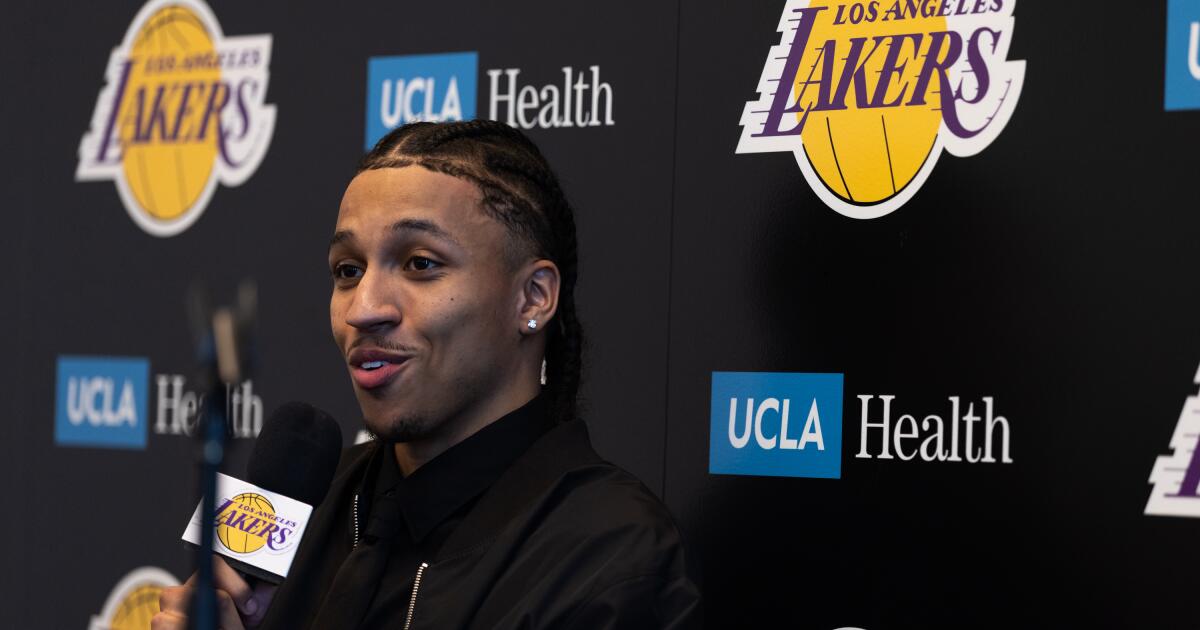
As he sat for his introductory news conference Friday, dressed in all black, Carr shared what his thoughts were when he found out he would be playing for the Lakers.
“I’m going to the Lakers! It was more of an exciting thing,” he said. “It felt surreal. It didn’t feel real for the first couple minutes when I found out. It was trying to get my head around, ‘Man, I’m about to walk across the stage and be an NBA player.’ I’ve dreamed of this my whole life, especially since I was a kid. So it took a second. Still trying to get my head wrapped around it, but nothing but excitement and happiness. I feel more motivated to work.”
Rob Pelinka, the Lakers’ president of basketball operations, met Carr at the facility on Friday but didn’t speak with the media during the news conference.
It meant Pelinka couldn’t be asked about Austin Reaves agreeing to re-sign with the Lakers on a four-year, $185-million deal, or about how conversations are going with free agent LeBron James.
But NBA rules prohibit team officials from commenting on anything during the free agency moratorium, which won’t be lifted until July 6.
So, this day was all about the 21-year-old Carr and how impressed he was being in the Lakers’ building.
“Walking in the building, first thing you notice is the rich tradition of the people that have been here before you,” Carr said. “It’s a moment of happiness. As a kid, you always dreamed of walking across that stage and accomplishing everything you wanted to. Man, it just felt good to walk in the gym and look at the people that came before me. Now I’m in their shoes.”
Carr was viewed by NBA scouts as athletic with his 42½-inch vertical leap and as having a good jump shot.
During his sophomore season at Baylor, Carr averaged 18.9 points, 5.8 rebounds, 2.6 assists and 1.3 blocks in 34 games. He shot 49.4% from the field, 37.4% from three-point range and 80.1% from the free-throw line.
But Carr quickly talked about how playing defense will be his calling card with the Lakers.
“Stepping into an organization with people with the same type of mindset and abilities, it only makes my job easier,” Carr said. “I’ve just got to cut and dunk the ball for them, and run in transition. But first things first is establishing a defensive consistency and showing I can be dominant or a plus on the defensive end as someone they would like to guard the best player.”
Carr always had his dad, Chris Carr, to lean on during his journey as a basketball player. Having him as a mentor was so beneficial because his father spent six seasons in the NBA. His most famous moment came in 1997, when he became the runner-up to Kobe Bryant in the slam dunk contest.
Now father and son have something else in common: making the NBA.
“I’ve always wanted to be better than him,” Carr said. “I’ve always been behind, so I want to show he’s put a lot of work in me becoming a better man. So I feel the only way I can credit him and show I’m thankful for him is by putting in the work and using it every single day. He was a heck of a player, so it’s some big footsteps I’ve got to follow and a long journey.
“It’s good motivation. My ‘why’ is just to be better and show people I’m better than a lot of people that are put in front of me. I feel like that’s the chip on my shoulder, or the fire under my feet.”
Questions surely will follow Dusty May as he leaps to the Dallas Mavericks after coaching Michigan to the NCAA national championship.
Can he provide blessed amnesia to the Mavericks faithful? Can he help them forget Luka Doncic and Nico Harrison and Anthony Davis and Jason Kidd? Can he allow them to peer into a future anchored by budding superstar Cooper Flagg without constantly checking the rearview mirror?
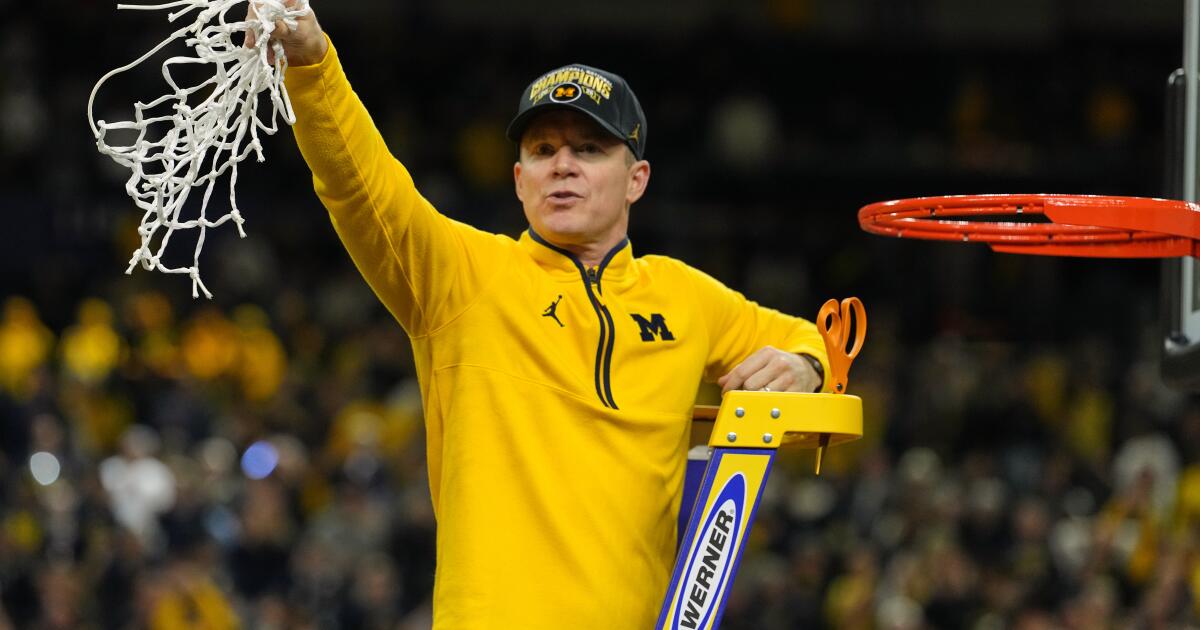
May, 49, was hired Tuesday as the Mavericks’ head coach,. He led Michigan to the pinnacle of March Madness last season and posted a 64-13 record in two years. He also coached Florida Atlantic to the 2023 Final Four and a 60-13 record in the last two of his six seasons there.
“We set out to find a leader who embodies the values we want to define our organization,” Mavericks president Masai Ujiri said in a statement. “Dusty has won at every stage of his career because of his ability to build. He develops players, creates accountability, and brings people together around a shared standard of excellence. His work ethic is extraordinary, and his teams consistently reflect his values.”
The list of high-profile college coaches who struggled to replicate their success in the NBA is daunting: Rick Pitino, John Calipari, John Beilein, Lon Kruger, Tim Floyd and Mike Montgomery immediately leap to mind.
Not only did May not coach or play in the NBA, he barely played in college. He was a 5-foot-10 point guard at NAIA Oakland City for one season before transferring to Indiana and serving as team manager under coach Bobby Knight.
But his arrival will divert attention from the past, from the hugely unpopular and disastrous trade of Doncic to the Lakers for Davis and spare parts on Feb. 1, 2025.
Mavericks fans staged a faux funeral complete with a casket a day later in front of the Dirk Nowitzki statue outside American Airlines Center. They booed Harrison — the general manager who engineered the deal — at every home game and chanted “Fire Nico.”
When Doncic returned as an opponent, Mavericks fans chanted “MVP” when the Laker shot free throws.
Harrison admitted to underestimating the backlash from fans but defended the trade, initially saying he had “no regrets.” By November, he was fired and updated his social media profile to “unemployed.”
Next to go was Kidd, a Hall of Fame point guard who helped the Mavericks to their only NBA title as a player and to the NBA Finals as a coach. At the time, it wasn’t clear whether Kidd was an advocate of the Doncic deal or a victim of a front-office blunder. But Mark Cuban, the Mavericks’ former majority owner who currently owns 27% of the team, indicated March 31 during a podcast that Kidd was complicit.
“I think there was animosity between [Harrison] and some people on Luka’s team — his agent and some of the people around them,” Cuban said. “I don’t think they got along. I think there were issues.
“J-Kidd had coached Anthony Davis and was close to him, and Nico was close to AD since he was like 13 years old. So I think there was some confirmation bias as well. But that doesn’t justify our coach and our general manager to stand up and trade our best player.”
Doncic, 26, flourished in his first season in Los Angeles despite a late-season injury that kept him out of the playoffs. The shooting guard led the NBA with 33.5 points per game and he will be a franchise cornerstone. Davis played only 20 games with Dallas because of injuries and in February was traded to the Washington Wizards.
The makeover began when the Mavericks secured the first pick in the 2025 NBA draft despite having only a 1.8% chance of obtaining it through the lottery. They took Flagg, a forward from Duke who went on to lead Dallas with 21 points per game and was named rookie of the year.
Next, they hired respected former Raptors executive Ujiri as team president. And now they have added May as coach. This week they will add two more promising players via the first round of the draft.
“I am honored to join the Dallas Mavericks organization,” May said in a statement. “This is one of the most respected franchises in professional sports, with passionate fans, a talented roster, and a clear commitment to building a championship organization.”
The franchise is trying to eliminate reminders while attempting to instill hope for the future.
“When you study [May’s] journey, you see someone who has earned every opportunity through preparation, discipline, humility, and an unwavering commitment to improvement,” Ujiri said. “We believe those qualities make him the right leader for the Dallas Mavericks.”
Meanwhile at Michigan, a loaded roster will report to interim coach Mike Boynton Jr., May’s top assistant and the head coach at Oklahoma State from 2019 to 2024. Players are allowed to enter the transfer portal for 15 days following a coaching change, so job one for Boynton will be to keep them from fleeing.
Investors turned to defensive stocks on Tuesday as a sell-off in the tech sector accelerated. The selling in stocks seen as AI beneficiaries led some investors to take shelter in consumer staples names. Household prodicts giant Procter & Gamble (
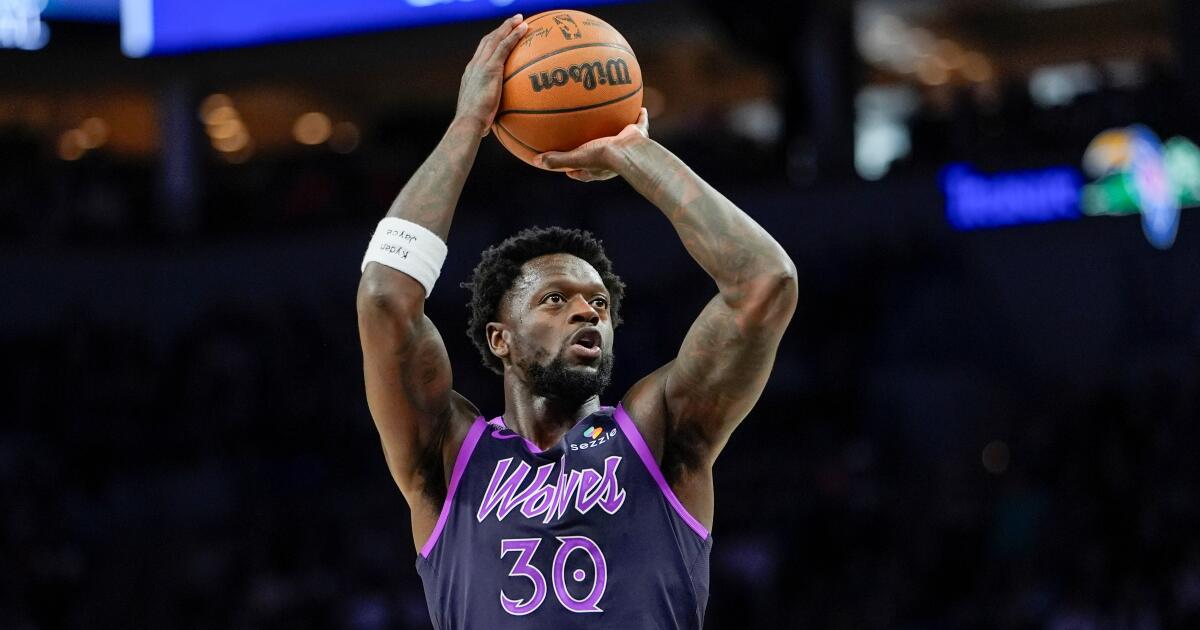
Julius Randle is headed back to New York, although he will be playing in a different borough this time around.
The Brooklyn Nets acquired the 12-year veteran after he spent the past two seasons with the Minnesota Timberwolves, multiple media outlets reported Monday night.
As part of the three-team deal, Minnesota will send Randle and the 28th pick in Tuesday’s draft to Brooklyn in exchange for the Nets’ No. 33 overall pick. In addition, Brooklyn will send veteran center Nic Claxton to the Chicago Bulls. The Timberwolves will receive Mo Gueye from Chicago but are expected to waive the third-year forward.
For Minnesota, the trade creates a $33 million trade exception as well as financial flexibility to seek free agents to play alongside superstar Anthony Edwards. Later on Monday, the Timberwolves came to terms with guard Ayo Dosunmu on a five-year, $112 million deal to remain with the team after being acquired from Chicago at the trade deadline.
Randle goes from a team that won 49 games in each of the last two seasons and three playoff series during that stretch to one that won just 20 games last year and a combined 78 over the last three seasons.
The Nets, who haven’t had a representative in the All-Star Game since Kevin Durant in 2022, will continue rebuilding with the No. 6 overall pick in the 2026 draft to go with the first-rounder they received from Minnesota.
The Lakers drafted Randle at No. 7 overall in 2014, with his first two NBA seasons coinciding with the final two of Lakers legend Kobe Bryant. After becoming a free agent in 2018, Randle played one season with the New Orleans Pelicans before becoming a three-time All-Star during five seasons with the New York Knicks.
In October 2024, Randle went to Minnesota as part of the deal that brought Karl-Anthony Towns to New York. Towns was a key member of the Knicks team that defeated the San Antonio Spurs in the NBA Finals and celebrated with a championship parade in Lower Manhattan last week.
During the 2025 postseason, Randle shook his reputation for fading in the playoffs, crediting his perseverance to a mentality instilled in him many years earlier by Bryant.
“I had a great mentor in Kobe that didn’t necessarily let me pout or get down on myself,” Randle said after scoring a career playoff high of 31 points during a conference semifinal game against Golden State. “His thing was always, ‘All right, what’s next? How can you get better? How can you improve?’ So I always just kind of took that mentality with me.”
While Randle hasn’t publicly commented on the trade, his wife Kendra posted a video to her Instagram Story of 9-year-old son Kyden, the oldest of their three children, stating that he’s “so excited” and “so happy” to be returning to New York.
“@brooklynnets fans he really wanted to make this,” Kendra Randle wrote as a caption to the video.
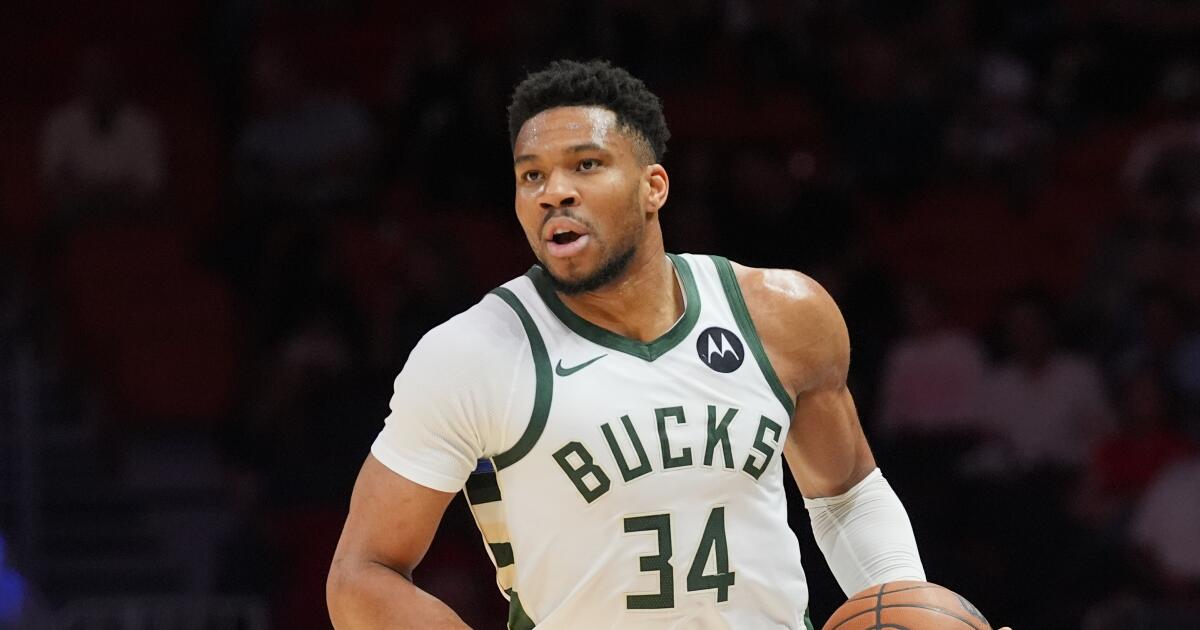
Ending a marathon watch for the next great Miami get, the Heat landed Antetokounmpo — a two-time NBA MVP and 10-time All-Star — from the Milwaukee Bucks on Monday night in exchange for a massive haul of players and draft picks.
The terms, according to a person who spoke to the Associated Press on condition of anonymity because the move has yet to receive the required league approval: Antetokounmpo and Bobby Portis are heading to Miami for Wisconsin native Tyler Herro, Jaime Jaquez Jr., Kel’el Ware and Kasparas Jakucionis. Milwaukee also gets at least four picks, including the No. 13 selection that will be made in Tuesday night’s NBA draft.
It ends a wild back-and-forth in the final days of the saga, with the Bucks considering offers from both Miami and Boston for Antetokounmpo — who led Milwaukee to the 2021 NBA title, was on the NBA’s 75th anniversary list of its greatest players ever, is a nine-time All-NBA selection and is coming off an injury-shortened season where he averaged 27.6 points per game.
There has been no secret that this is what Miami has sought, because this is what Miami usually seeks. The Heat pulled off similar moves by landing Shaquille O’Neal in 2004 (helping lead to the 2006 NBA title) and by getting LeBron James and Chris Bosh to play alongside Dwyane Wade in 2010 (leading to four NBA Finals runs in four seasons together, along with the 2012 and 2013 NBA titles).
Now, it’s Antetokounmpo’s turn. At 31, the Heat clearly believe he still has many good years left — and it’s generally presumed that by making this deal they’ll give the Greek superstar a massive extension later this year.
He was a perennial MVP candidate in Milwaukee, getting votes for that award in nine consecutive seasons before 2025-26, when too many missed games left him ineligible.
He has averaged 24.1 points and 9.9 rebounds per game in his career, with 10 consecutive seasons of averaging at least 22.9 points — with three years in there of averaging more than 30 points per game.
Only seven current players have more points in their careers than Antetokounmpo, who has totaled 21,531 to this point.
Antetokounmpo had been mentioned in trade talks countless times in recent years, with the Bucks always insisting — with words and actions — that they had no interest in trading their best player and one of the best players in the history of their franchise.
But this time, it seemed different.
The Bucks, who fired Doc Rivers as coach after the season, don’t have a roster that would be considered a championship contender. By trading Antetokounmpo, they can essentially start over with four players (and the Heat were high on all of them) along with draft capital.
“I just think before the draft is a natural time, right, because if Giannis does play somewhere else we’re going to get a lot of assets. … You’ve got to get it right,” Bucks co-owner Jimmy Haslam said in May, when the team introduced new coach Taylor Jenkins — who was told that Antetokounmpo may or may not be with the franchise when next season starts.
Jenkins and the rest of the NBA now has the answer: Antetokounmpo won’t be there.
Antetokounmpo had spoken highly of Miami many times over the years, even when the Heat and Bucks were going head-to-head in the playoffs. He also shares an agent with Heat star center Bam Adebayo, who was the only player that Miami clearly was not willing to part with in order to make this deal happen.
“They’re going to play tough and they’re not going to stop playing,” Antetokounmpo said after Milwaukee played Miami on March 12. “That’s the Miami Heat culture.”
Little did anyone know that night that those words were coming after what would be the next-to-last game for Antetokounmpo in a Bucks uniform. He played three nights later against Indiana, then was held out of Milwaukee’s final 15 games of the season.
The Bucks said that was for injury-related reasons. Antetokounmpo said he wanted to play.
He had some bouts with injury this past season: Antetokounmpo missed four games in late November with a left adductor strain and sat out eight games in December with a right calf strain, then he injured the right calf again in January.
He landed awkwardly on a dunk in that March 15 victory over Indiana and didn’t play again because of what team officials had labeled as a left knee hyperextension and bone bruise. Antetokounmpo said the last few weeks of the season that he was healthy and wanted to play, a dispute that resulted in an investigation by the league office.
As the European Union tries to fight its record-high €1 billion deficit per day with China, the bloc’s leaders are increasingly pointing to the problem of currency manipulation, which they say Beijing is using to make products even cheaper on the EU market – which is already flooded with Chinese imports.
ADVERTISEMENT
ADVERTISEMENT
“An artificially low currency is an advantage for those who want to improve their economic competition positions,” German Chancellor Friedrich Merz said after the European Council summit on 19 June.
The matter of the Chinese currency and its management was also high on the agenda of last week’s G7 summit in France.
The signs are that this is a new front in Europe’s trade battle against Beijing. To understand why the devaluation of the yuan (or renminbi) matters, here are three things to know.
What’s wrong with the Chinese currency?
According to a report by the Haut Commissariat à la Stratégie au Plan, a French government advisory body, the undervaluation of the yuan is estimated at around 20-25 percent.
“While there is no universally recognised method for determining unequivocally whether a currency is significantly overvalued or undervalued, the assessment that the renminbi (RMB) is significantly undervalued is now widely shared, including among international institutions,” the report said.
In theory, China’s trade surpluses should naturally create demand for the yuan, leading to an appreciation of the currency, but it is not the case.
However, the devaluation of the yuan might not be the direct result of central bank intervention. Alicia Ferro Herrera, an expert at the Brussels-based think tank Bruegel, told Euronews that China prevents its currency from appreciating faster by not bringing all of its export revenues back to the mainland.
“They stay in Hong Kong and they are not converted into RMB,” she said.
How does it impact trade between China and the EU?
The EU deficit with China hit a record-high €359.9 billion in 2025. That same year marked the first time that all EU member states had a trade deficit with Beijing, including Germany, the EU’s largest economy.
“This is simply not sustainable,” European Commission President Ursula von der Leyen said last Friday.
According to the Haut Commissariat au Plan report, the undervaluation of the yuan plays a large part in keeping Chinese products competitive; as things stand, they are assessed by EU industry to be around 30-40 percent cheaper than European equivalents.
However, Ferro Herrera pointed out that the inflation differential also plays a great part.
“My estimate is that the inflation differential and its accumulation in Europe since the invasion of Ukraine explains about three quarters of the loss in external competitiveness,” she said.
What can the EU do?
In his remarks last Friday, Merz suggested the EU begin dialogue with China on the currency issue.
“We have to talk about this topic with each other,” he said. “It is in the interest of both sides.”
The German chancellor cited the 1985 Plaza Agreement, which saw the US, Japan, West Germany, the UK and France agree to depreciate the US dollar against the Japanese yen and the Deutsche Mark. The goal was to head off a protectionist turn from the US as its trade deficit deepened.
Merz also referred to the European Monetary System, which before the adoption of the euro relied on exchange-rate bands to limit currency fluctuations.
“That was a system where countries could coordinate through exchange-rate corridors,” he said.
Conversely, Ferro Herrera points out that the US did not push for any such negotiation when economic imbalances were discussed during the G7 last week.
In her view, Europe should monitor China’s export prices for major sector-by-sector deviations, since this is an important sign of overcapacity, as negative price growth occurs when goods cannot be sold.
China has added 10 United States-based companies to its export control list and barred government procurement from nearly 50 US companies two weeks after the Pentagon blacklisted some of China’s best-known companies for their alleged ties to the Chinese military.
China’s Ministry of Commerce announced the export order on Monday, barring Chinese companies from exporting “dual-use” items that can be used for civilian or military purposes to the US firms.
Recommended Stories
list of 4 itemsend of list
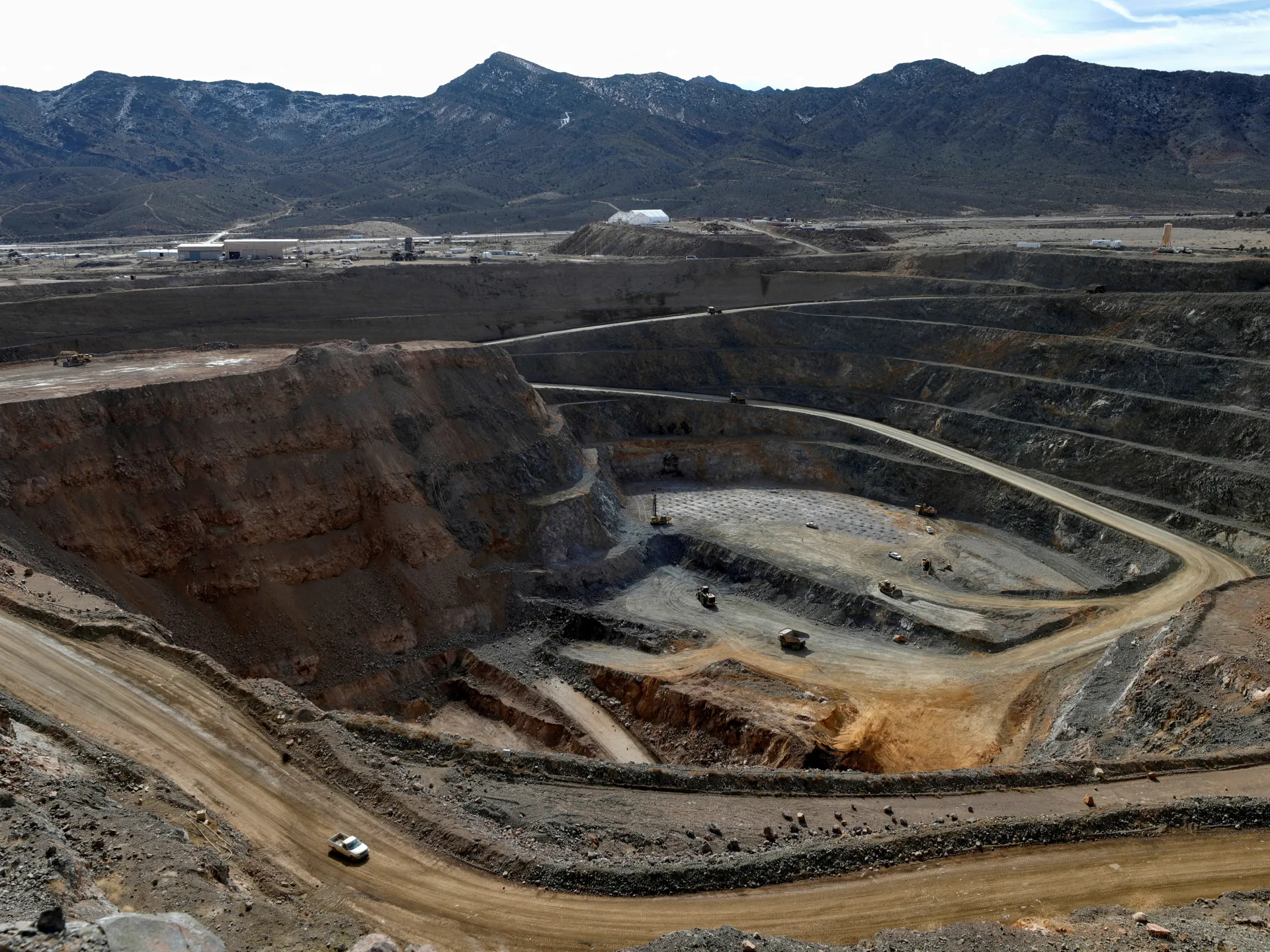
The list of companies includes rare-earth mine operator MP Materials Corp, rare-earth magnet maker USA Rare Earths, and US defence contractors specialising in fields such as aerospace, drones, synthetic-aperture radar, and shipbuilding and repairs.
Under the order, “foreign institutions and individuals worldwide are also prohibited from transferring or providing Chinese dual-use goods to them” while ongoing export transactions must be suspended immediately.
The Commerce Ministry said the export ban had been issued to “safeguard national security and interests and fulfil international obligations such as non-proliferation”.
China’s Ministry of Finance on Monday separately barred Chinese government procurement from 46 companies, including subsidiaries of major US defence contractors like Lockheed Martin, Boeing, General Atomics and General Dynamics. US-funded, locally registered companies, however, have been given an exemption by the ministry.
Experts described Beijing’s orders as a retaliation, albeit a largely symbolic one, against the US after the Pentagon in early June added about 80 Chinese companies and their subsidiaries to its list of “Entities Identified as Chinese Military Companies Operating in the United States”.
The designation means the Pentagon either believes the companies are owned or controlled by the Chinese military or they are “military-civil fusion contributors”, a term for commercial companies that contribute to China’s military development despite their civilian status.
The updated list includes Chinese e-commerce giant Alibaba Holdings, search engine giant Baidu and electric automaker BYD, some of China’s largest and best-known companies.
While the order does not bar US companies from doing business with them, it does impact US defence contractors and their future supply chains.
“We can interpret this as a tit-for-tat response, and that fits into China’s playbook any time we’ve seen escalation from the US side in terms of trade and investment tools,” said Nick Marro, global trade lead analyst at the Economist Intelligence Unit.
China-based supply chain consultant Cameron Johnson said the Commerce Ministry’s order mirrors US semiconductor export controls designed to keep the most advanced chips out of Chinese hands.
“They basically say it doesn’t matter where or who you are, you are bound by this regardless of circumstance,” said Johnson, who is also a senior partner at the Shanghai consultancy Tidal Wave Solutions. “Organisations or individuals in any country or region are prohibited from transferring dual-use materials that originated in China.”
He said Beijing’s orders in practice may be hard to enforce and many of the companies named in those orders have already moved their supply chains out of China or begun to “de-risk” their operations there.
Johnson said the wide scope of companies included in Washington’s and Beijing’s directives could be a sign of more to come and may signal a new front in the US-China trade war.
“This is probably just the beginning of the back and forth,” he said. Last year, after returning to the White House for a second term, US President Donald Trump reignited the US-China trade war, leading Washington and Beijing to impose escalating rounds of tariffs on each other.
Trump and Chinese President Xi Jinping agreed to a trade truce in October, which was extended during a summit between the two leaders in Beijing in May.
Despite promises to “enhance economic cooperation” during the meeting, observers like Singapore-based geopolitical analyst Steve Okun predicted the goodwill may be short-lived.
“The US’s recent closure of chip export loopholes and China’s continuing addition to its export bans show the national security lane remains active in both capitals regardless of the diplomatic niceties at the recent Trump-Xi summit,” Okun told Al Jazeera.
“There is no ‘truce’ in the US-China trade war. Expect further actions from both sides as well on export controls and investment restrictions,” he said.
Japan’s trade deficit significantly decreased to JPY 378.7 billion in May 2026, down from JPY 662.5 billion a year earlier and performing better than the market’s expected JPY 564.6 billion shortfall, the contraction was driven by exports expanding faster than imports.
The lawsuit originally filed in September focused on broader alleged misappropriation of confidential information.
Published On 15 Jun 202615 Jun 2026
A United States federal judge has dismissed a lawsuit by Elon Musk’s artificial intelligence company xAI that accused rival Sam Altman’s OpenAI of stealing trade secrets for chatbots.
US District Judge Rita Lin in San Francisco said on Monday that xAI failed to show that OpenAI induced former xAI senior engineer Xuechen Li to divulge confidential information related to its Grok chatbot, or that OpenAI engineers knew Li might have disclosed any.
Recommended Stories
list of 4 itemsend of list
Lin dismissed the lawsuit with prejudice, saying it would be “futile” to continue. She dismissed an earlier version in February. The lawsuit originally filed last September focused on broader alleged misappropriation of confidential information, including source code, by xAI employees who left for jobs at OpenAI.
Monday’s decision is Musk’s second legal loss against OpenAI in four weeks.
On May 18, a federal jury ruled against Musk, the world’s richest person, in his $150bn lawsuit accusing OpenAI and Altman of “stealing a charity” by betraying the company’s original mission as a nonprofit to enrich themselves.
The xAI business is part of Musk’s rocket, satellite and AI company SpaceX.
Lawyers for xAI did not immediately respond to requests for comment. OpenAI and its lawyers did not immediately respond to similar requests.
Discussing past work
The amended complaint focused on a presentation that Li gave while OpenAI was recruiting him.
Musk’s company said OpenAI wanted secrets related to the July 2025 release of Grok 4, knowing its forthcoming update to ChatGPT “could not compete” on complex reasoning, and because OpenAI was “lagging” in reinforcement learning and post-training techniques that Li understood.
But the judge said asking job candidates to discuss their prior work was routine, and one could not infer that OpenAI pushed Li to leak anything confidential.
“To hold otherwise would potentially expose employers to liability any time they inquire about a candidate’s past work,” Lin wrote.
OpenAI has said Li never worked for the company and that it never acquired xAI secrets.
In seeking dismissal, lawyers for OpenAI wrote: “OpenAI does not need or want anyone’s trade secrets, especially not from xAI, which is failing in the marketplace and hemorrhaging talent.”
Li is being sued separately by xAI and has denied wrongdoing.
European Commission President Ursula von der Leyen, European Council President Antonio Costa and with South Korean President Lee Jae-myung celebrated the signing of new a digital trade agreement at a ceremony in Brussels on Wednesday.
ADVERTISEMENT
ADVERTISEMENT
The event marked the EU and South Korea’s 11th summit, with everything from security and defence to trade on the agenda.
“Korea is one of Europe’s closest partners in the Indo-Pacific region and on the global stage,” von der Leyen said. “In today’s uncertain world, stable and trusted partnerships like ours are more precious than ever.”
The trio released a joint statement extolling the value of the talks and committing the two sides to a firm and friendly relationship.
“We reaffirm our shared commitment to effective multilateralism, and to a stable and predictable rules-based free and fair economic order,” the statement reads.
The semiconductor factor
Both sides have an interest in diversifying their trade relationships at a time of growing tensions with both China and the US, and the EU-South Korea digital trade agreement comes more than a decade after a landmark free trade deal.
Since 2015, trade between the EU and South Korea has doubled, with goods trade reaching approximately €124.25 billion in 2025, according to figures from the European Commission.
“The European Union-Korea Free Trade Agreement remains one of the European Union’s most successful trade agreements since its entry into enforcement in 2011,” European Council António Costa said on Wednesday.
South Korea is becoming an increasingly important investor in Europe, particularly in strategic sectors such as batteries, electric vehicles and semiconductors.
For the EU, a key objective is to secure semiconductor supply chains while attracting further investment from Korean companies into Europe.
“Korea has a global leadership position in semiconductors,” an EU official said. “This is clearly an area with significant potential for cooperation that would benefit both sides.”
The digital trade agreement concluded on Wednesday is expected to complement the broader trade partnership by reducing “unnecessary barriers to digital trade” and providing greater “legal certainty” for businesses operating across the two markets, according to another EU official. It will facilitate cross-border data flows while prohibiting the mandatory transfer of source code.
The deal is also designed to establish robust online consumer protection rules, though both partners intend to maintain their respective levels of protection for personal data and privacy.
Economic security was also high on the summit agenda, with the two sides agreeing to establish a high-level dialogue on supply chain resilience.
Supply chains came under pressure last year following China’s restrictions on exports of strategic materials, including rare earths – essential for green technologies and the defence sector – as well as products linked to the chip industry, which are critical to automotive manufacturing.
Security and defence
One thing that did not get over the line was a security of information agreement, which had been touted by EU officials prior to the summit as a means of strengthening the flow of classified information between Brussels and Seoul.
“I hope that the security of information agreement will be adopted soon, so that Korea and the EU can share confidential information safely, which will allow the two sides to engage in industrial and research cooperation actively through information exchange exchange,” President Lee said on Wednesday.
The agreement would build on the Security and Defence Partnership agreement that South Korea and the EU signed in 2024. That deal was designed to facilitate cooperation in areas spanning maritime security, countering hybrid threats, fighting foreign information manipulation and interference, and more besides.
In the run-up to this week’s talks, a senior EU official said a key topic of the discussions will be nuclear non-proliferation, as North Korea continues to hold a small but concerning stockpile of nuclear-armed warheads.
North Korea (the DPRK) and Russia were considered “big questions” at the summit, the source said, with Brussels ready to share information on its support for Ukraine with Seoul.
The joint statement from the summit reiterates this, with words of condemnation directed at North Korea and other nations who enable Russia to sustain its war of aggression against Ukraine.
“We urge Russia and the DPRK to immediately cease all such activities and abide by the UN Charter and all relevant United Nations Security Council resolutions,” the statement reads.
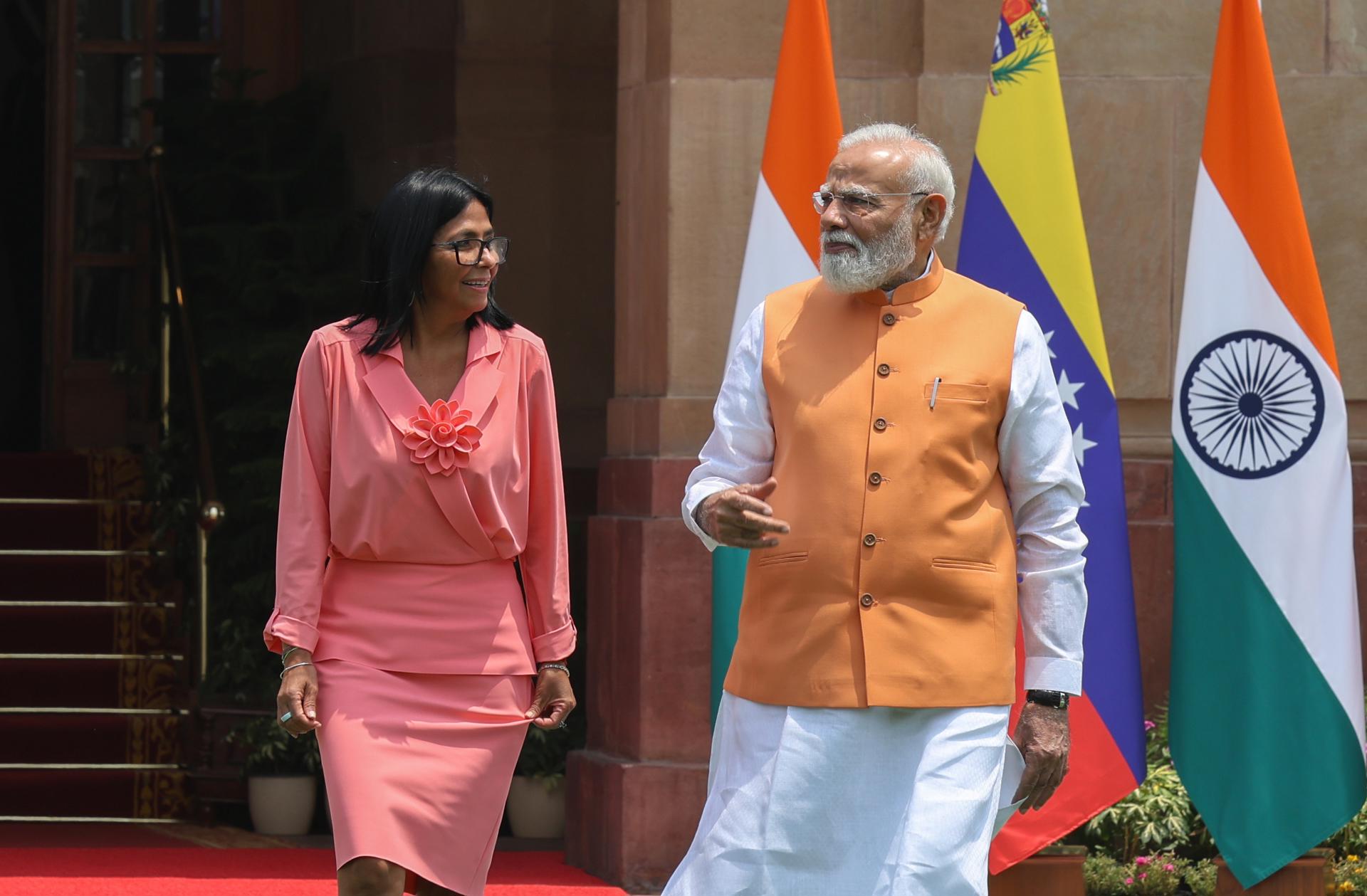
Delcy Rodríguez was hosted by Narendra Modi in New Delhi. (EFE)
Mérida, June 8, 2026 (venezuelanalysis.com) – Venezuelan Acting President Delcy Rodríguez concluded a four-day high-profile diplomatic tour of India on Sunday, having held meetings with Prime Minister Narendra Modi, Indian cabinet members, and major business conglomerates.
Rodríguez, who assumed the acting presidency after the kidnapping of President Nicolás Maduro in a US military operation on January 3, led a large ministerial delegation including the foreign affairs, science, and transport ministers. The visit was Rodríguez’s sixth trip to India.
Caracas’ main stated goal was to deepen long-term energy ties with the Asian giant and expand crude exports. The Trump administration has publicly backed India to increase purchases of Venezuelan crude as part of efforts to move its Asian partner away from Russian energy imports.
One of Rodríguez’s first meetings was with Petroleum and Natural Gas Minister Hardeep Singh Puri, who stated that Indian companies are looking to “build upon” existing investments in the Caribbean nation.
“Indian companies are additionally looking for newer opportunities for fruitful collaborations which will provide momentum to our quest towards energy security,” Singh Puri wrote on social media.
For her part, Venezuela’s acting president described India as a “reliable partner” and invited Indian corporations to explore new investment opportunities in the country’s energy sector. Rodríguez highlighted the “energy complementarities” between the two nations.
Venezuela’s oil exports reached 1.25 million barrels per day (bpd) in May, with India reportedly receiving 427,000 bpd, making it the second-largest destination after the US. In recent years, under wide-reaching US sanctions, Venezuela had repeatedly sought to increase exports to India, only to see efforts blocked by US threats of secondary sanctions.
The meeting with Singh Puri likewise featured executives from several Indian public energy companies, including ONGC, Indian Oil Corporation (IOLC), Oil India, and ONGC Videsh (OVL). The companies own multiple minority stakes in the San Cristóbal and Petrocarabobo heavy crude projects in the Orinoco Oil Belt.
Indian authorities stressed addressing an outstanding US $500 million debt in unpaid dividends to ONGC Videsh as a priority before new investments are to be considered.
Rodríguez went on to tour the Jamnagar refinery complex, owned by Reliance Industries, in Gujarat state. The refinery is the world’s largest, with a daily capacity to process 1.4 million bpd. In recent months, Reliance has emerged as a top buyer of Venezuelan crude, purchasing cargoes directly from state-owned PDVSA as well as from traders Vitol and Trafigura.
The Venezuelan delegation held further meetings with top Indian business conglomerates. On June 6, it toured Tata Group facilities in Mumbai. According to Venezuela’s embassy in India, the discussions centered on renewable energy, ecological projects, and urban transport. Venezuelan Transport Minister Jacqueline Faría highlighted Tata’s cutting-edge electric public transportation vehicles.
Rodríguez’s agenda also included talks with Indian dairy giant Amul. Venezuelan state media emphasized interest in Amul’s massive production of buffalo milk. Venezuela currently holds the largest buffalo herd in South America and officials have touted buffalo dairy as a priority export venture.
Likewise in Mumbai, the Venezuelan officials visited multinational conglomerate Essar, with discussions reportedly focusing on infrastructure and electricity. Venezuela’s National Assembly is presently advancing legislation to open electricity, from generation to distribution, to private sector investment and participation.
Rodríguez’s visit featured a meeting with Indian Prime Minister Narendra Modi in New Delhi. In a social media message, Modi praised Venezuela as a “valued partner” and disclosed that discussions had centered on “expanding cooperation in energy, critical minerals, technology, agriculture, health, and people-to-people ties.”
The Venezuelan delegation was also hosted by External Affairs Minister Subrahmanyam Jaishankar, who praised Rodríguez’s “longstanding commitment” to deepening Venezuela-India ties.
In a press briefing, Rudrendran Tandon, Secretary (East) in the Ministry of External Affairs, emphasized discussions on pharmaceutical cooperation and increasing supplies of low-cost generic drugs for Venezuela’s public healthcare system. Tandon also brought up a $700-800 million debt to Indian pharmaceutical manufacturers but said the Venezuelan side was “very sensitive” to the issue.
While no formal agreements were announced, Venezuela’s acting president offered a positive balance of a visit that “consolidated the friendship and cooperation between the two nations.” She went on to thank Modi for the hospitality.
Rodríguez’s last day in India included a visit to the Prasanthi Nilayam ashram in Andhra Pradesh, a spiritual center founded by Indian religious guru Sathya Sai Baba (1926-2011). In a social media message, Rodríguez expressed her “deep belief” in Sai Baba’s “love all, serve all” motto.
The Venezuelan leader’s tour featured a stop in Istanbul on Tuesday before the return to Caracas. Rodríguez met with Turkish President Recep Tayyip Erdoğan to discuss bilateral trade and diplomacy between Venezuela and Türkiye.
Tensions have escalated between Iran and Israel while ongoing diplomatic efforts have failed to yield a lasting peace deal.
Published On 8 Jun 20268 Jun 2026
Iran and Israel were on Monday locked in tit-for-tat missile attacks, as the fragile ceasefire that has held in place since April 8 appeared closer to collapse than at any point in the past seven weeks.
These escalating hostilities between Iran and Israel come as the United States-Israel war on Iran enters its 101st day on Monday.
Here is what is happening:
In Iran
Explosions heard in Iran: Iran’s IRNA news agency reported that at least “two powerful explosions” were heard in Tehran and at least three in the city of Isfahan. The broadcaster also reported that explosions were heard in Tabriz. The Israeli military had said it “attacked military targets” in western and central Iran.
Power plant in Mahshahr attacked: A security officer in the southwestern Khuzestan governorate told the Fars news agency that Israeli forces have attacked the Karun Petrochemical Company in the city of Mahshahr. The Israeli army confirmed striking the petrochemical plant. The Mahshahr Petrochemical Special Economic Zone announced that its workers have evacuated the site following the Israeli strike.
Iran denies attacking base in Saudi Arabia: Responding to reports of an explosion at the Al-Kharj airbase in Saudi Arabia, Iran’s IRIB broadcaster cited a military official as saying that “Iran has not fired any shots.”
Red Crescent on standby: The Iranian Red Crescent says it is standing by to respond to any fallout from Israel’s attacks across the country this morning.
In Israel
Security cabinet meeting: Israeli Prime Minister Benjamin Netanyahu will convene a security cabinet meeting at 11am local time (08:00 GMT) amid escalating hostilities with Iran, according to multiple Israeli media reports.
The Israeli military issued a series of alerts starting Sunday over waves of missiles launched from Iran towards Israeli territory.
Iran’s Islamic Revolutionary Guard Corps (IRGC) said on Monday that they launched attacks against Israel’s Nevatim and Tel Nof airbases as a response to attacks on radar sites within Iran, the Fars news agency reported.
Israel’s Channel 12 broadcaster and Ynet News said a missile fired from Yemen was intercepted.
In the US
The US State Department issued a security alert for citizens in Jordan over reports of projectiles in the country’s airspace – presumably missiles fired by Israel towards Iran, or by Iran towards Israel.
Democratic Senator Chris Murphy said Israel’s latest attack on Iran “compounds” the “humiliation” for US President Donald Trump, as it comes after the US president reportedly told Netanyahu not to retaliate to Iran’s missiles fired at northern Israel.
In Lebanon
Explosions were heard in the Lebanese capital Beirut early on Monday, but these were likely rocket interceptions, Al Jazeera’s Zeina Khodr reported from Beirut.
On Sunday, Israel had hit the suburbs of Beirut, in attacks that Iran described as crossing a red line in terms of violating a ceasefire between Lebanon and Israel. Iran then said its decision to hit northern Israel was in response to these attacks near Beirut.
War diplomacy
Israel defends attacks on Iran: The Israeli ambassador to the US, Yechiel Leiter, defended the attacks on Iran, saying “no self-respecting country” would tolerate Iran’s missile launches against Israel.
Canada expresses concern: Canada’s Foreign Ministry has expressed concern about the resumption of conflict between Iran and Israel, saying it jeopardises the ongoing negotiations and “the prospects for peace”.
Saudi-Qatari foreign ministers speak: Saudi Foreign Minister Prince Faisal bin Farhan Al Saud spoke by phone with his Qatari counterpart, Sheikh Mohammed bin Abdulrahman bin Jassim Al Thani, the Saudi Foreign Ministry said.
Qatari-Iranian foreign ministers speak: The Qatari foreign minister, who is also the country’s prime minister, spoke by phone with Iranian Foreign Minister Abbas Araghchi about mediation efforts between Iran and the US, as well as the latest developments in Lebanon, according to a Qatari statement.
Iran and Israel exchanged threats after Tehran launched missiles towards Israel in response to Israeli strikes on Beirut’s southern suburbs. Israel vowed to deepen attacks on Lebanon, while Iran warned of further action if the strikes continue.