top news

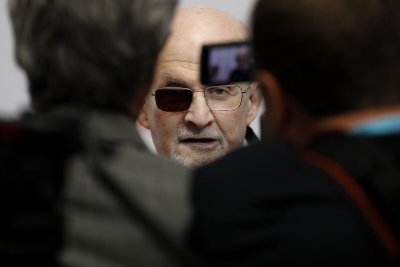
Jury convicts Salman Rushdie attacker on terrorism charges

July 30 (UPI) — A federal jury has convicted the New Jersey man who attempted to murder writer Salman Rushdie on additional terrorism-related charges, including attempting to provide material support to the Iran-backed militia Hezbollah.

Hadi Matar of Fairview, N.J., was sentenced to 25 years in prison in a state court in May 2025 for trying to kill Rushdie on Aug. 12, 2022.

Matar rushed the stage and stabbed the India-born writer at New York’s Chautauqua Institution in Mayville, N.Y., before being subdued by audience members and taken into police custody. Rushdie lost vision in his right eye and suffered nerve damage as a result of the attack.

A federal jury in the Western District of New York on Wednesday convicted Matar on charges of attempting to provide material support to a designated foreign terrorist organization, engaging in an act of terrorism transcending national boundaries and providing material support to terrorists. Matar faces a maximum penalty of life in prison on the most serious charge when sentenced on Nov. 3.

“Hadi Matar, who was born and raised in the United States, chose to align his values with the terroristic values of the leaders of Iran, which often promote violence, and in this case, the call for murder,” U.S. Attorney for the Western District of New York Michael DiGiacomo said in a statement.

“The defendant spent months planning and preparing to carry out what he hoped would be the execution of Salman Rushdie and possibly follow in the footsteps of martyrs he admired. Instead, his attempted act of terror failed, and Salman Rushdie survived, thanks to courageous members of the public and law enforcement, who saved Rushdie and captured Matar.”

The trial began July 22, and Rushdie, 79, testified.

DiGiacomo said Rushdie answered every question asked of him by the defense and prosecutors.

“It was very powerful,” DiGiacomo said.

“And at the end, at some point, Mr. Rushdie removed his glasses so the jury could see the extent of the injury to his eye that he no longer has vision it.”

Prosecutors said Matar was attempting to carry out the orders of Iran’s late spiritual leader Ayatollah Ruhollah Khomeini, who in 1989 called for Rushdie’s murder after the publication of his award-winning novel The Satanic Verses on the grounds that it was blasphemous to Islam.

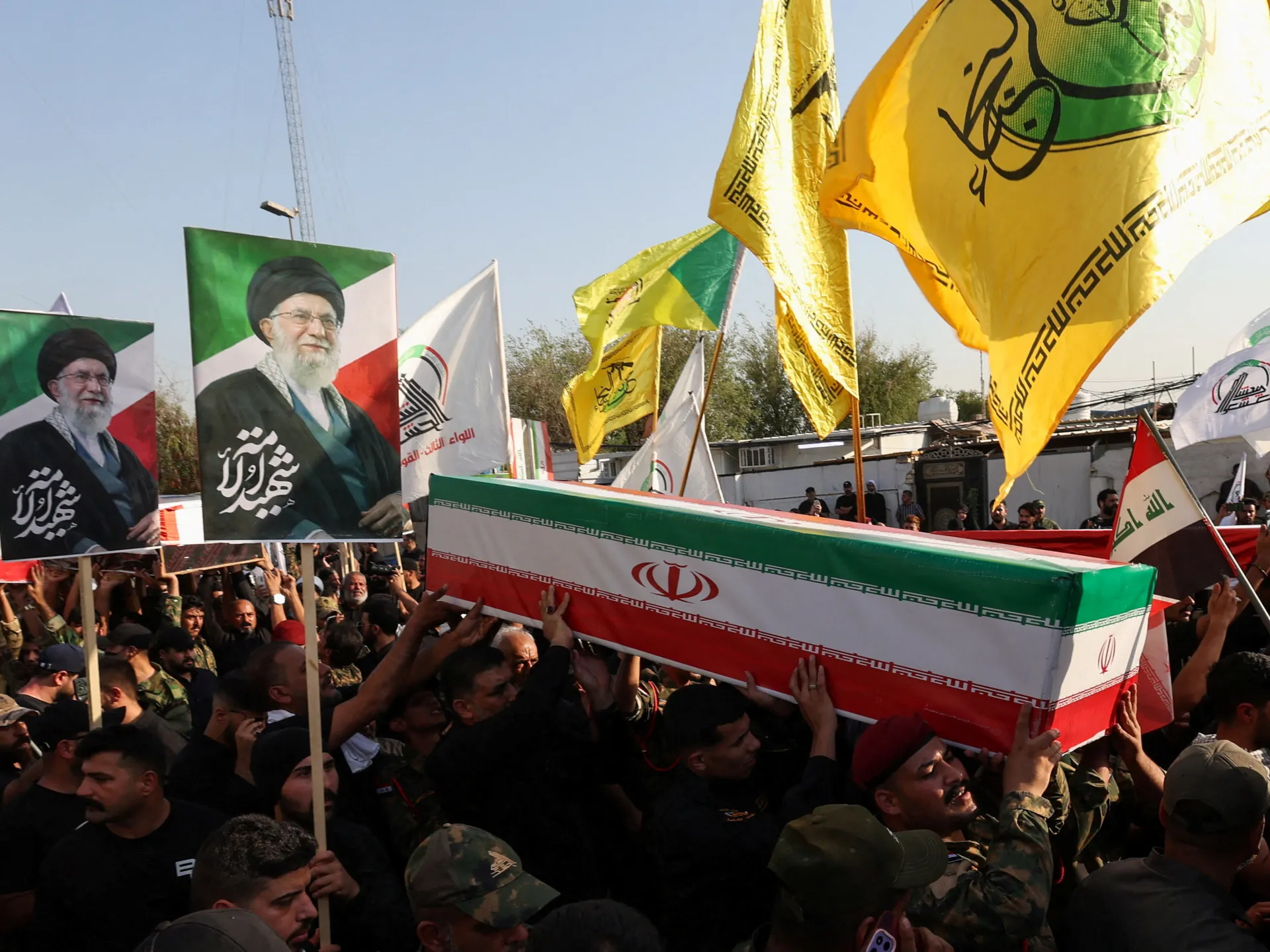
The fatwa was reaffirmed in 2017 by Khomeini’s successor, Ali Khamenei, and endorsed by Hezbollah Secretary-General Hassan Nasrallah. Nasrallah was killed Sept. 27, 2024, in Israeli airstrikes on Beirut, while Khamenei was killed Feb. 28 in joint U.S.-Israeli airstrikes on Iran.

Federal prosecutors said during the trial that Matar had spent more than a year researching the fatwa before deciding to try to kill Rushdie and discussed it with people in Iran, Australia and Canada.

According to the Justice Department, Matar had surrounded himself with Hezbollah symbols ahead of the attack and had traveled to the institution that day with a false driver’s license bearing the name Hassan Mughniyeh, with Hassan being Nasrallah’s first name and Mughniyeh being the surname of Hezbollah’s former external security organization head, Imad Mughniyeh.

DiGiacomo told reporters following the conviction that ahead of the attack, Matar traveled by bus from New Jersey to Buffalo, then traveled toward the Chautauqua Institution.

On the morning of the attack, Matar visited a website run by Hezbollah and took screenshots of Hezbollah operatives who had died that month.

“The evidence presented in the trial showed that this attack was not spontaneous. It was deliberate. It was research. It was planned. It was motivated by violent extremist ideology,” Alan Davis, special agent in charge of the FBI’s Buffalo field office, said during the press conference.

“For more than a year, the defendant researched a decades-old fatwa, communicated with individuals overseas about carrying it out and embraced the propaganda and symbols of Hezbollah before traveling to western New York to commit this violent act.”

Source link

Evo Morales defiant after new Bolivia arrest warrant | News

Bolivia’s former president is being investigated ‘for armed uprising’ against the state, among other things.

A court in Bolivia has issued an arrest warrant for former President Evo Morales.

The Santa Cruz district prosecutor’s office said Morales is being investigated for “armed uprising against the security and sovereignty of the state, terrorism and attacks on the safety of means of transport”.

Morales backed protests in June by farmers and truckers against an economic crisis, rising living costs and conservative President Rodrigo Paz’s austerity plans.

“They will not intimidate us,” he responded to the charges in a post on X.

Morales said the government was going after him “to conceal the true drama Bolivia is experiencing: a deep economic and social crisis…a model that has abandoned the people and protects corruption”.

Demonstrators stand amid tear gas as they protest against President Rodrigo Paz's government amid an ongoing economic and fuel crisis in El Alto, Bolivia, May 16, 2026. [Claudia Morales]
Demonstrators stand amid tear gas as they protest against President Rodrigo Paz’s government amid an ongoing economic and fuel crisis in El Alto, Bolivia, May 16, 2026 [Claudia Morales/Reuters]

Morales, Bolivia’s first Indigenous president, rose from poverty to serve three terms as president, one of Latin America’s longest-serving leaders.

He was in office from 2006 until his fraught 2019 ouster, when he was forced to resign after elections tainted by claims of fraud.

Initially refusing to leave power, he eventually had to go, casting a shadow over nearly 14 years of economic progress and poverty reduction mixed with accusations of political heavy-handedness.

He went into exile in Mexico and later, Argentina, returning a year later after his political ally Luis Arce won the presidency.

In late 2024, allegations surfaced against him of trafficking a minor and statutory rape of a 15-year-old girl who became pregnant.

By early 2025, Morales’s supporters cut off roads and paralysed the country in protest against the charges, which he rejected. He has also refused to appear at court hearings.

As the unrest over Bolivia’s economic crisis was brewing in May, Morales was found in contempt of court, and a renewed warrant for his arrest on the rape charges was issued.

His supporters threatened to “throw the country into turmoil” if he was arrested, at a time when protests had shut down roads and forced the government to airlift food to some areas.

After Paz declared a state of emergency in June and the protests slowed, the latest investigation began, triggered by a criminal complaint over Morales’s involvement with the demonstrations.

The complaint, filed by the civic group Comit pro Santa Cruz and later picked up by the Interior Ministry, alleges that Morales’s supporters “caused a shortage of food, fuel and medicine” by blocking transport in the country for 53 days.

The charges filed on Wednesday were outlined in a document published by local media, according to German wire service DPA.

The order instructs police to detain Morales and bring him to the special anticorruption unit.

“We will continue fighting alongside the people, as we have always done, with the conviction that Bolivia deserves a different path: one of dignity, sovereignty, social justice, and the recovery of hope for all,” said Morales responding to the latest charges.

Source link

‘Like volcanic ash falling’: Inside Aeon mall after Japan’s earthquake | Earthquakes News

Japanese PM Takaichi says it’s a ‘race against time’ to rescue those still trapped in the mall and others affected by the quake.

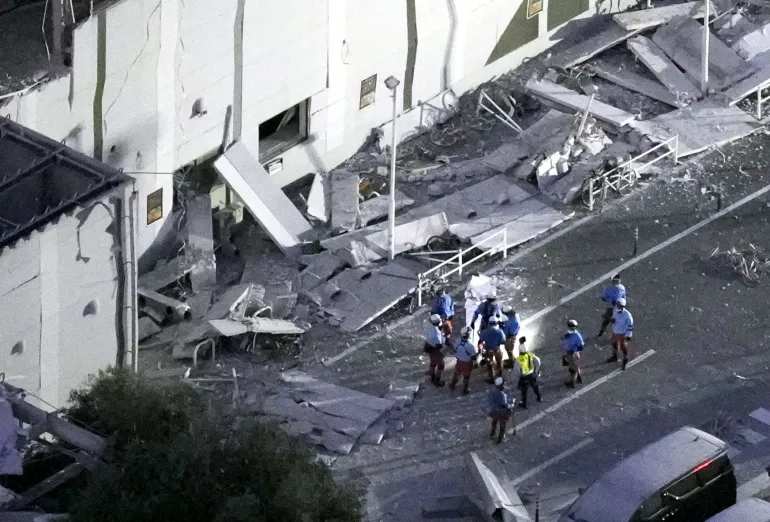
Thousands of shoppers and store employees, quickly evacuated by staff after a magnitude 7.1 earthquake, watched in horror as an explosion ripped through Kumamoto’s Aeon mall, exposing steel beams and catapulting debris across the parking lot.

Workers in and around one of southern Japan’s largest shopping centres described being thrown to the ground and enveloped in a disorienting cloud of dust by the explosion that followed the massive quake on Tuesday.

“I thought a bomb had gone off,” Takateru Sonoda, 41, who runs a combined hair salon and cafe near the mall, told news agency Jiji Press.

“There were people calling on others to evacuate, and sirens were ringing out. Nearby roads were gridlocked; it was a state of panic.”

First responders, initially fearful of entering the wreckage, hauled eight people from the partially collapsed site early on Wednesday, three dead among them.

The status of three shop workers remains unknown, Aeon said, adding that it was investigating a possible gas leak as a potential cause for the explosion.

Japanese Prime Minister Sanae Takaichi said on Wednesday that it was a “race against time” to rescue those trapped in the mall and others affected by the quake.

About 170 soldiers have been deployed to help with rescue operations at the site.

All 25 cats left behind in a cat cafe during the hasty evacuation were rescued on Wednesday, the cafe owner said in a social media post, thanking rescue workers.

Aeon mall had just reopened last month, a new and improved shopping and entertainment complex, after its recovery from another deadly tremor a decade ago.

After being badly damaged in the magnitude 7.3 Kumamoto earthquake in April 2016, the operator highlighted its seismically reinforced ceilings and overall improvements to safety and resilience.

Across the street, in a pub about 300 metres (330 yards) from the mall, Kazuya Tsurunaga was cleaning up dishes and glasses broken by the quake when he heard the deafening blast.

“A large cloud of smoke was billowing up, and because the wind happened to be blowing, and the wind direction was toward the shop, it was like volcanic ash was falling around us,” he told broadcaster TBS.

Police officers and firefighters were wary of entering the wreckage because of the risk of further collapse amid a series of aftershocks, a police official said. By the end of Tuesday, more than 100 aftershocks had occurred in Kumamoto.

Rescue workers conduct search and rescue operations at the Aeon mall, where an explosion occurred after a magnitude 7.1 earthquake, in Kashima, Kumamoto Prefecture, Japan, July 28, 2026
Rescue workers conduct search and rescue operations at the Aeon mall, where an explosion occurred after a magnitude 7.1 earthquake, in Kashima, Kumamoto Prefecture, Japan, July 28, 2026 [Kyodo/via Reuters]

Aeon President Akio Yoshida told a news conference on Wednesday that staff evacuated 3,000 shoppers within half an hour after the quake hit. But an unlucky few were inside when, 50 minutes later, the explosion occurred.

“We confirmed that all customers had been evacuated. We believed that employees had also evacuated, but it later emerged that some people had remained inside, or returned for whatever reason,” Yoshida said, adding that one survivor was found injured in a toilet.

Video shot by a police officer inside the building early on Wednesday showed large sections of the ceiling collapsed, storefronts blown open and furniture strewn across the floor.

Yoshida said the possibility the explosion was caused by gas was “very high”, but that thorough investigations were needed to understand what went wrong.

“We had not fully anticipated that an explosion of this kind could occur,” he said. “We have never had an accident like this.”

Source link

Why did Anthony Fauci invoke the Fifth Amendment? Senate hearing explained | Coronavirus pandemic News

Dr Anthony Fauci, a former top United States public health official, has declined to answer questions at a Republican-led Senate committee hearing into the origins of COVID-19 and the handling of the pandemic.

The former director of the National Institute of Allergy and Infectious Diseases (NIAID) repeatedly invoked his Fifth Amendment right against self-incrimination on Wednesday.

Recommended Stories

list of 1 itemend of list

Fauci was called to testify by Republican Senator Rand Paul of Kentucky, who accuses him of misleading Congress and questions whether US-funded research in China played a role in the pandemic, allegations Fauci denies.

Although former President Joe Biden granted Fauci a preemptive pardon in 2025, Republicans claim it does not protect him from any alleged crimes committed after it was issued, such as perjuring himself at a Senate hearing.

Fauci’s lawyers advised him not to testify, arguing that anything he said under oath could expose him to new legal risks.

Here is what to know:

Who is Anthony Fauci?

Fauci, 85, is a physician and immunologist who led the US NIAID for 38 years, advising seven presidents, both Republican and Democratic.

He became the public face of the US response to the COVID-19 pandemic in 2020, after helping lead the country’s response to health crises including HIV/AIDS, Ebola and the 2001 anthrax attacks.

He became a target of conservative criticism over pandemic policies, including mask recommendations, vaccines and school closures.

During his last year in government, Fauci was also chief medical adviser to Biden until he retired in 2022.

During the pandemic, between 2019 and 2022, he kept more than 1,000 pages of diary entries documenting his work advising the White House and responding to the pandemic.

The notes chronicle his interactions with senior officials and the media.

Why is Fauci being questioned?

He was subpoenaed to testify over his handling of the pandemic and its origins before the Senate Homeland Security and Governmental Affairs Committee.

The hearing, led by Paul, focused on several issues:

  • COVID-19’s origins: Paul has long argued that the coronavirus that causes COVID may have leaked from a laboratory in Wuhan, China, and questioned whether US-funded research played a role in the outbreak.
  • Gain-of-function research: Republicans say Fauci misled Congress about whether the National Institutes of Health (NIH) funded gain-of-function research at the Wuhan Institute of Virology, involving modifying viruses to understand how they evolve and assess pandemic risks. Fauci says the NIH did not fund research that caused COVID-19.
  • Allegations of a cover-up: Paul accused Fauci of making false statements to Congress and concealing the NIH’s involvement in research in Wuhan. Fauci denies that.
  • Fauci’s diary: Before the hearing, Paul released more than 1,100 pages of Fauci’s typewritten diary. Health Secretary Robert F Kennedy Jr said the notes were government record because they were written by a federal employee on a government computer during a public health emergency and they were found on government property.
  • Paul said the diary showed differences between Fauci’s private discussions and his public statements. Fauci’s supporters say the entries reflect the uncertainty scientists faced as they learned more about a new virus.
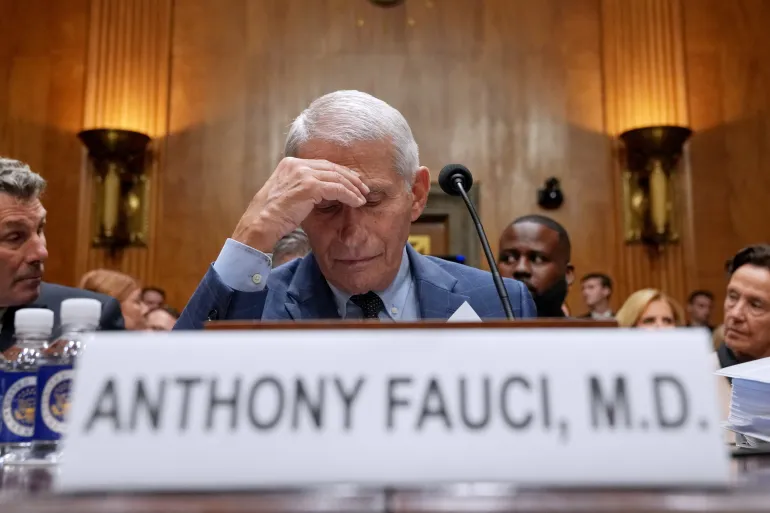
Dr. Anthony Fauci appears before the Senate Homeland Security and Governmental Affairs Committee at the Capitol, Wednesday, July 29, 2026, in Washington. (AP Photo/Allison Robbert)
Dr Anthony Fauci appears before the Senate Homeland Security and Governmental Affairs Committee at the Capitol on July 29, 2026 [Allison Robbert/AP]

What happened at the hearing?

The tense hearing lasted about three hours.

After a brief opening statement, Fauci repeatedly invoked his Fifth Amendment right against self-incrimination and declined to answer more than 100 questions.

He accused committee chairman Paul of having an “obsession” with prosecuting him.

Committee chairman Senator Rand Paul, Reublican from Kentucky, takes his seat as he arrives for a Senate Homeland Security and Governmental Affairs committee hearing with Dr. Anthony Fauci on Capitol Hill in Washington, DC, on July 29, 2026.
Committee chairman Senator Rand Paul, a Republican from Kentucky [AFP]

The hearing included several tense moments:

  • Contempt vote: Paul said the committee would vote next week on whether to hold Fauci in contempt of Congress over his refusal to answer questions, threatening “consequences for refusing to answer”.
  • Lawyer removed: Paul directed Capitol Police to remove Fauci’s lawyer, David Schertler, after he tried to speak without being recognised by the committee. “This testimony is from Anthony Fauci. This is not a game with his lawyers,” Paul said. Schertler later described the hearing as an “obsessive vendetta”.
  • Democrats defend Fauci: Democratic senators said the hearing was politically motivated. Senator Gary Peters called it “a partisan exercise” designed to support “a predetermined conclusion” rather than offering legitimate oversight.

Closing the hearing, Paul asked rhetorically: “Did [Fauci’s] actions lead to the largest man-made plague in history?”

Why did Fauci invoke the Fifth Amendment?

Fauci said he invoked the Fifth Amendment on the advice of his lawyers because he believed his answers could expose him to new legal risks.

He argued that Paul was trying to build a criminal case against him rather than conduct legitimate congressional oversight.

Although Biden’s pardon protects Fauci from prosecution for actions before January 2025, Republicans say any false statements made under oath during this hearing could still expose him to perjury charges.

The Fifth Amendment protects people from being forced to give evidence that could incriminate them in a criminal case. Invoking it is a constitutional right and does not imply guilt.

What do scientists believe about COVID-19’s origins?

Most scientists believe COVID-19 likely spread naturally from animals to humans, known as zoonotic spillover, pointing to a wildlife market in Wuhan as the most likely place where it first spread.

Fauci has consistently said he believes that scientific evidence points to a natural origin, while remaining open to other possibilities.

Notes from his diary detail a January 2020 call with 11 top virologists and evolutionary biologists – only two were convinced the virus had a natural origin, while the rest debated whether it could have been engineered.

Today, most scientists favour a natural origin, while the US intelligence community is divided.

The FBI said in 2023 that a laboratory-related incident is the most likely origin of the pandemic. The CIA reached the same conclusion in 2025, but with low confidence. Other agencies and the National Intelligence Council continue to favour a natural origin or remain undecided.

Does Biden’s pardon protect Fauci?

Yes, but only what happened before the pardon was issued.

On January 19, 2025, Biden granted Fauci a full and unconditional pardon covering any federal offences he may have committed since 2014, saying the move aimed to protect Fauci from “politically motivated prosecutions”.

The pardon does not cover actions taken after it was issued. Fauci could face legal consequences if he were accused of committing a new crime, such as making false statements under oath during Wednesday’s Senate hearing.

Paul and other Republicans also argue that because Biden’s pardon shields Fauci from criminal liability for his past actions, he can no longer claim that his testimony about those actions would incriminate him and should not be able to invoke his Fifth Amendment.

The legal standing of this argument is not clear, and Paul has acknowledged that it is a novel “legal question that the courts may have to decide”.

Can Fauci be held in contempt or prosecuted?

Potentially, but it remains unclear whether either will happen.

Paul said the Senate committee will vote next week on whether to hold Fauci in contempt of Congress after he refused to answer more than 100 questions.

Being held in contempt means lawmakers believe a witness has refused to cooperate with a lawful investigation. It does not automatically lead to criminal charges, but can trigger further legal action.

If the committee approves the measure, it could refer the case to the Justice Department for possible criminal prosecution, ask a federal court to pursue a civil action, or, in the rarest case, ask the Senate to use its powers to detain a witness through the Senate sergeant-at-arms.

Paul has not said which option, if any, he plans to pursue.

Source link

After a deadly raid, a displaced Nigerian mother finds a lifeline in sewing | News

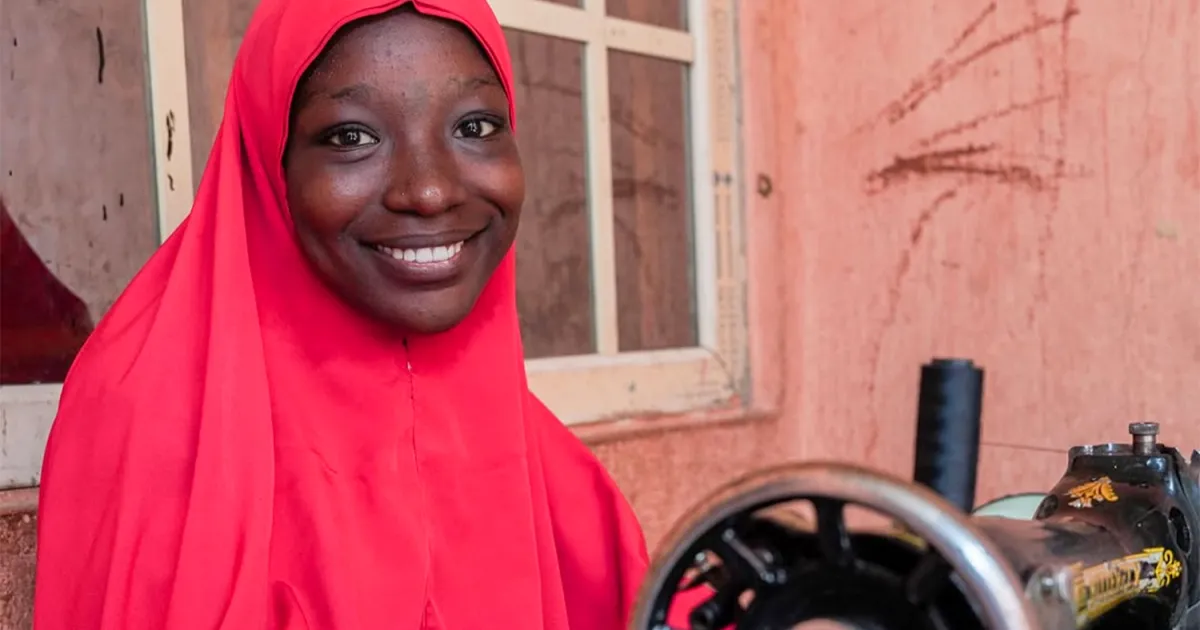
Jibia, Katsina State, Nigeria – Safiya Musa’s sewing machine has given her something violence had taken away: a way to provide for her children.

But the livelihood she built after losing her husband and two of her children has left her facing a painful choice: whether to return home or risk losing the fragile independence she has created after being forced to flee.

Safiya cannot remember which month it was, only that it was 2023, when armed bandits raided the town of Kankara in Katsina State, where she and her husband had built their life after moving from their hometown of Batsari. Kankara is a small rural community where farms sit close to homes, and her husband worked as a farmer and foodstuffs trader. They lived there with their two youngest children, Umar (4) and Maryam (6), while their three older children, Sani (12), Hajara (10) and Zubaida (8), were staying with relatives in Batsari.

The attackers had come to kidnap the town head, but the attempt failed. As gunfire spread through the community, Safiya locked herself inside her room while Umar and Maryam were outside playing with other children. Her husband had left for the farm when the attack happened. The bandits killed about 20 people as they left the town.

Three days later, after she had learned that her husband had also been killed during the attack, she fled to Batsari, where she was reunited with Sani, Hajara and Zubaida. When another bandit attack reached Batsari, she fled again with her three surviving children – now aged (15), (13) and (11) – to Jibia, where they eventually settled in a camp for displaced people.

She still remembers the night she lost much of her family.

“Minutes later, silence overwhelmed the atmosphere,” she recalled. “Then I started thinking about my husband, who had left for the farm, and my children, who were outside playing with other kids.”

The thought of them pushed her out of hiding.

But she was too late.

“They were all killed,” she told Al Jazeera.

Safiya’s experience reflects a wider crisis affecting communities across northwest Nigeria. For more than a decade, the region has faced attacks, kidnappings and village raids by armed groups commonly called bandits.

The violence has forced thousands of families from their homes, disrupted farming and trade, and left many people struggling to rebuild their lives.

Katsina State, which borders Niger, has been among the areas hardest hit.

After arriving in Jibia, Safiya survived by taking whatever work she could find. She ground grain for local residents and relied on temporary jobs to support her children.

She was then selected for a handbag-making training programme organised by the United Nations Development Programme (UNDP) through its Climate Security Project.

The initiative provides women affected by conflict with vocational training and equipment to help them start small businesses.

Months later, the programme gave her a source of income. The work brought stability, but it also created a new uncertainty: whether she could continue the business if she returned home.

“The essence is to give them an opportunity to become self-reliant,” said Muhammad Hamisu, the project coordinator in Jibia.

A skill that changed her circumstances

After completing the training, Safiya turned handbag-making into a source of income for her family.

With sewing materials and new skills, she began cutting fabric, stitching designs and producing handbags she could sell to support her children.

The work did not erase the pain of what she had lost, but it gave her something she had struggled to regain since fleeing: the ability to provide for herself.

“I used to wake up with nothing to offer my children,” she said. “There were days I sent my boys out with bowls to beg for food because I had nothing to give them. Now I can feed them myself.”

In March 2024, the Climate Security Project trained 20 women in Jibia in handbag production and provided sewing machines and materials to help them begin working.

Jibia’s location near the border with Niger also gives traders access to cross-border markets, including those in the Maradi region, one of Niger’s major commercial areas.

For some women, the business has become an important source of income.

“I make approximately $50 a month,” said 30-year-old Karima Sule, who has lived in Jibia since fleeing violence four years ago. “When demand is high, I earn even more. I help my husband and pay the school fees for my two older children from this business.”

A business shaped by insecurity

But building a business in a conflict-affected area remains difficult.

Safiya said her biggest challenge is finding enough money to buy materials.

“Sometimes I run out of stock and don’t have the funds to buy more,” she said. “When that happens, I lose customers.”

Karima said violence continues to affect sales.

“Whenever violence happens, market activities slow down for days,” she said. “People stop buying, and we lose income.”

Their growing economic activity may also expose them to new risks, according to Abdussamad Ahmad Yusuf, a human security researcher at HumAngle, a Nigerian newsroom that reports on conflict.

“Kidnapping for ransom in that region is becoming more targeted,” he said. “Authorities should conduct regular conflict and security risk assessments to identify high-risk trading routes, markets and emerging threats before expanding commercial activities.”

The Katsina government established the Community Watch Corps in 2023, a local security initiative that uses community members to gather intelligence and support responses to attacks.

Officials said security has improved in some communities, but many families who fled violence remain uncertain about returning home.

An uncertain future

Safiya hopes to return home one day and reunite her children with their relatives.

But the livelihood she has built in Jibia has become a reason to hesitate.

The handbag business has allowed her to buy food, support her children and depend less on unstable work. Leaving it behind could mean losing the independence she has worked hard to build.

She has been told that conditions in her hometown are improving, but she remains unsure whether she could rebuild the same source of income there.

For Safiya, returning home is not only about finding safety again. It is also about whether she can continue providing for her family.

“I want to go back home because my children need their relatives,” she said. “But I am afraid of losing this business. If I cannot continue it there, how will we survive?”

Source link

Russian ballistic missile strikes on Kyiv come after Zelenskyy’s warning | Russia-Ukraine war News

Returning from the US, Zelenskyy says Ukrainians’ safety depends on allies’ willingness to provide anti-missile defences.

Kyiv Mayor Vitali Klitschko says some non-residential sites in the city caught fire as Russia struck the Ukrainian capital with ballistic missiles.

Multiple explosions were heard in the city at 1:18am on Thursday (22:18 GMT Wednesday), according to Kyiv Independent reporters on the ground. Klitschko instructed people to seek shelter.

Recommended Stories

list of 4 itemsend of list

Ukrainian President Volodymyr Zelenskyy had warned on Wednesday that a massive Russian attack on Ukraine was likely and the safety of Ukrainians depended on the willingness of allies to provide anti-missile defences.

He was returning from the United States, where he said President Donald Trump had agreed to give Ukraine licences to make Patriot missiles.

Zelenskyy also repeated his request to Ukraine’s allies to supply Kyiv with the missiles its air defence system lacks in an X post.

In early July, Trump had expressed his intention to allow Ukraine to make the surface-to-air missiles at a time when Russia had stepped up its ballistic missile strikes.

Only US Patriot systems are capable of shooting down Russian missiles, but Ukraine is short of PAC-3 interceptor missiles.

This shortage has worsened since the war on Iran launched by the US and Israel in February.

In Washington, DC, Zelenskyy held what he called a “good meeting” with Trump, as he underscored Russian President Vladimir Putin’s loss of initiative on the war front due to heavy losses.

Zelenskyy spent just over an hour with Trump at the White House, in talks that came as Kyiv and Moscow intensified long-range strikes, as US-led diplomatic efforts to end the war stalled.

After the meeting, Trump posted photos to social media with a note that said: “Many things were discussed. The meeting went very well!”

Relations between Zelenskyy and Trump have warmed since the start of the US president’s second term, with Trump suggesting earlier this month that Ukrainian strikes inside Russia “could help” end the war.

Source link

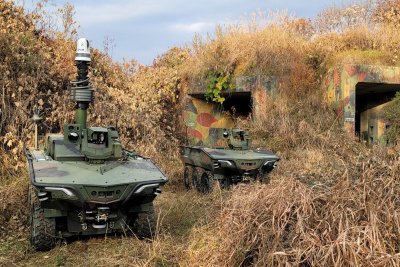
Hanwha wins South Korean military robot vehicle program

Hanwha Aerospace’s Arion-SMET multipurpose unmanned ground vehicle. Photo courtesy of Hanwha Aerospace

July 29 (Asia Today) — Hanwha Aerospace said Wednesday it was formally selected to supply its Arion-SMET multipurpose unmanned ground vehicle to the South Korean military.

The Defense Acquisition Program Administration notified Hanwha of its selection for the 49.6 billion won ($33.6 million) program, the company said.

Hanwha Aerospace and Hyundai Rotem reportedly competed for the contract.

The Arion-SMET can carry a payload of about 990 pounds and is equipped with day-and-night surveillance systems that help distinguish friendly forces from potential threats. It is also designed for extended continuous operations.

The arms procurement agency’s defense project management committee previously reviewed and approved the Arion-SMET as the vehicle for the military’s multipurpose unmanned ground vehicle program.

The vehicle is considered a key component of Army TIGER 4.0, South Korea’s program to modernize Army units through artificial intelligence, unmanned systems and networked combat capabilities.

Hanwha Aerospace is also involved in projects to develop and deploy unmanned reconnaissance vehicles, explosive ordnance detection and disposal robots and manned-unmanned chemical, biological and radiological reconnaissance vehicles.

The company plans to sign a mass-production contract with the procurement agency as early as August.

“As South Korea’s leading UGV platform company, we will continue building a comprehensive manned-unmanned teaming portfolio that combines unmanned systems with existing platforms such as the K9 self-propelled howitzer and infantry fighting vehicles,” a Hanwha Aerospace official said.

The official said the company would rapidly begin mass-production procedures to minimize any gap in military capabilities.

— Reported by Asia Today; translated by UPI

© Asia Today. Unauthorized reproduction or redistribution prohibited.

Original Korean report: https://www.asiatoday.co.kr/kn/view.php?key=20260729010010793

Source link

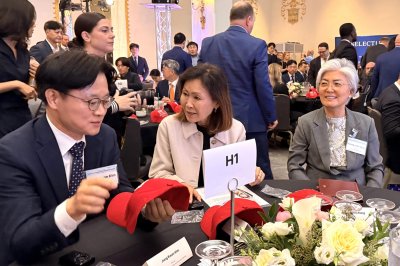
New U.S. Ambassador Steel set to arrive in S. Korea on Thurs.

New U.S. Ambassador to South Korea Michelle Steel (C) will arrive in Seoul on Thursday, sources said Wednesday. In this photo, she speaks to South Korean Trade Minister Kim Jung-kwan (L) and Ambassador to the U.S.

Kang Kyung-wha at an event in Washington on July 23. Photo by Yonhap

New U.S. Ambassador to South Korea Michelle Steel is set to arrive in Seoul on Thursday, becoming the first U.S. envoy to assume the post since President Donald Trump returned to office, sources said.

Steel is expected to arrive at Incheon International Airport, west of Seoul, at around 3:20 p.m. from Los Angeles, according to the sources. She was nominated by Trump in April and confirmed by the U.S. Senate last month.

The ambassadorial post has been vacant since Philip Goldberg left South Korea in January last year.

The submission of copies of her credentials is expected to take place as early as next week, as Foreign Minister Cho Hyun and the foreign ministry’s chief of protocol are currently accompanying President Lee Jae Myung on his trip to South America and are scheduled to return early next week, the sources added.

Before formally beginning their duties, newly appointed foreign ambassadors are required to present copies of their credentials to the chief of protocol at the foreign ministry. U.S. ambassadors also traditionally pay a courtesy call on the foreign minister on that occasion.

A Korean American Republican politician, Steel was born in Seoul in 1955 and immigrated to the United States in the mid-1970s. She served two terms in the U.S. House of Representatives representing California from 2020 to 2024.

Steel is the second Korean American to serve as the top U.S. envoy to South Korea, following Sung Kim, who served in Seoul from 2011 to 2014.

Responding to a question from Yonhap News Agency in Washington last week, Steel described strengthening the South Korea-U.S. alliance as her “top priority.”

Her arrival comes as Seoul and Washington face a series of pending security and economic issues, including South Korean investment in the U.S., civilian nuclear cooperation, Seoul’s push to build nuclear-powered submarines and ongoing efforts to modernize the decades-old alliance.

Steel’s nomination had drawn criticism from some progressive civic groups here, which view her as a conservative figure.

South Korean government officials, however, said she has a firm understanding of the importance of the South Korea-U.S. alliance and is committed to cooperating with the Seoul government.

“South Korea and the U.S. have a wide range of issues to work on together amid the rapidly evolving security and economic landscape,” a foreign ministry official said. “We welcome Ambassador Steel’s arrival and hope it will help advance discussions on those issues.”

Copyright (c) Yonhap News Agency prohibits its content from being redistributed or reprinted without consent, and forbids the content from being learned and used by artificial intelligence systems.

Source link

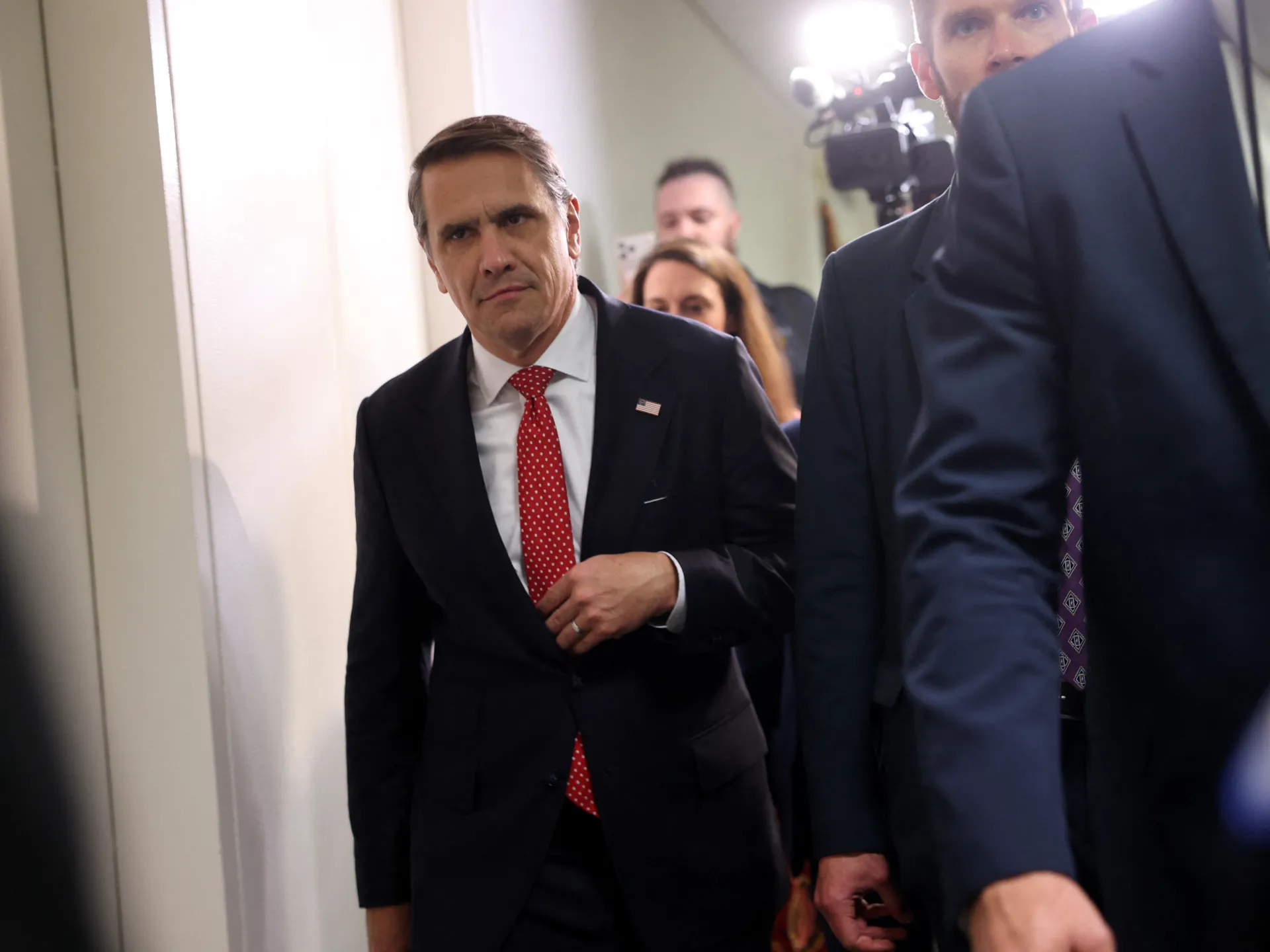
Trump’s attorney general pick faces possible Republican roadblock | Donald Trump News

Interim United States Attorney General Todd Blanche is facing a possible roadblock from within the Republican Party as he faces a confirmation hearing to formally lead the Department of Justice.

Speaking to reporters on Wednesday, Republican Senator John Cornyn said he was still sceptical about confirming Blanche to the top federal law enforcement position in the country.

Recommended Stories

list of 3 itemsend of list

“I’m not prepared to vote yes,” said Cornyn.

The senator’s comments come a day before a key committee vote in the US Senate to move Blanche’s nomination forward.

Cornyn cited concerns about Blanche’s current stewardship of the Department of Justice, which he has led in an acting capacity since April.

Previously, Blanche served as deputy attorney general, and before joining President Donald Trump’s second term, he worked as the Republican leader’s criminal defence lawyer.

But Cornyn has questioned a rare settlement Blanche brokered in May, in response to a lawsuit Trump filed against the Internal Revenue Service (IRS).

Under the deal, Trump and his family would be shielded from future IRS audits. The scheme also created a so-called “anti-weaponisation fund”, under which individuals deemed to have faced alleged political persecution could seek financial compensation.

Blanche has backed away from the “anti-weaponisation fund” amid bipartisan backlash. Critics had described it as a slush fund that would benefit the president’s allies.

Earlier this month, a federal judge also ruled the settlement illegal, accusing Blanche of double-dealing by working on behalf of both the federal government and Trump as a private citizen.

During his confirmation hearing, Blanche again assured lawmakers that the fund was dead, but Cornyn said he was awaiting written guarantees on the matter.

“I haven’t seen a single piece ⁠of writing that is responsive to what I’ve requested,” Cornyn told reporters.

Committee vote looms

Cornyn spoke before the Senate Judiciary Committee is set to hold a Thursday vote on Blanche’s nomination, the first step in a wider Senate debate on his confirmation.

All Republicans on the committee would need to vote in favour of Blanche for him to progress to the broader confirmation hearing.

While Republican lawmakers have generally been wary of opposing Trump, Cornyn has become an increasingly public critic of the president in recent months.

Trump endorsed Cornyn’s primary opponent, former Texas Attorney General Ken Paxton, in May. Paxton went on to win the Republican Party’s nomination in May, allowing him to progress to the midterm election in November.

That race will see Paxton take on Democratic upstart James Talarico in what is expected to be one of the closest Senate races of the season.

Cornyn will leave the Senate, where he has served for more than two decades, at the end of his term in January.

In an Oval Office news conference on Wednesday, President Trump was asked about Cornyn’s reticence about approving Blanche for the attorney general role.

“ Well, all I can say is Todd Blanche is outstanding,” Trump said, before questioning Cornyn’s motives.

“Maybe John Cornyn’s upset with me because I didn’t endorse him. I don’t know what it is, but I haven’t heard that there’s a problem.”


Critics have accused Blanche of placing his loyalty to Trump above all else, including by using the Department of Justice to prosecute the president’s political adversaries.

Under Blanche’s watch, for instance, the Justice Department chose to file a second indictment against James Comey, a former director of the Federal Bureau of Investigation, over a social media message made of seashells.

Blanche has denied any claims that his relationship with Trump presents a conflict of interest, saying he acts independently of the president.

However, he did little to shed the perception during a mid-July hearing before US lawmakers. Senator John Kennedy, a Republican, asked at the time if Blanche considered Trump a “friend”.

“I’m his lawyer,” Blanche replied, before quickly correcting himself to say “was his lawyer”.

The Department of Justice has had a long tradition of prosecutorial independence, whereby criminal charges are not meant to be influenced by politics.

Source link

US Fed holds interest rates steady citing ‘elevated’ inflation | Inflation News

The United States Federal Reserve is set to hold interest rates steady as inflationary pressures mount, driven by heightened fuel prices as tensions between the US and Iran continue.

The central bank said on Wednesday that it will maintain rates at 350-375 basis points during the second monetary policy decision under new Chairman Kevin Warsh.

Recommended Stories

list of 4 itemsend of list

“Inflation remains elevated relative to the Committee’s 2 percent goal, in part reflecting supply shocks that have driven price increases in certain sectors, including energy. The Committee will deliver price stability,” the central bank said in a statement upon the release of its decision.

CME FedWatch, which tracks the likelihood of monetary policy decisions, forecast a 66.3 percent chance of maintaining rates, while there was a 33.7 percent chance that rates would increase to 375-400 basis points.

Of the 12, three members, Beth M Hammack, Neel Kashkari, and Lorie K Logan, voted to raise rates by 25 basis points.

“My colleagues and I considered the economic shocks of recent years, strained supply chains arising from the pandemic, military conflicts, energy supply disruptions, substantial increases in tariff rates, and yes, the surge in AI-related investment,” Warsh told reporters.

“We are not relying on any one individual piece of data as cover or as an excuse, or as validation. What I care about and what I think the Committee cares about is trends on the data.”

Monetary policy decisions have become more uncertain as Warsh has scrapped forward guidance, which typically helps financial institutions and journalists better understand upcoming policy choices.

Flying blind

That is putting pressure on analysts.

“With little guidance on the reaction function under the new chairman, markets are filling the void with speculation that Warsh may be eyeing a surprise hike to reinforce anti-inflation credibility,” Barclays economists said in a note.

Citadel Securities earlier this week forecast a rate hike. Meanwhile, analysts at S&P Global forecast that rates would hold steady.

At the last meeting, the central bank’s governors were evenly split on whether to raise interest rates this year, as the central bank maintained rates during its first meeting under Warsh.

Warsh had previously said that there was “no tolerance” for inflation as the central bank pushes to reach the Fed’s 2 percent target.

Market shifts

Financial pressures on the broader market eased last month, with consumer inflation moderating. The Consumer Price Index report released in July for the month of June by the US Labor Department’s Bureau of Labor Statistics showed a 0.4 percent decline in consumer inflation, marking the first monthly decline since April 2020 in the early days of the COVID-19 pandemic. However, that was a correction from the previous month, when the CPI rose by 0.5 percent.

The CPI remains elevated at 3.5 percent on an annual basis, according to the report, though that is still a slowdown from 4.2 percent in May. However, consumers are still feeling the pinch, especially at the petrol pump.

Prices are on the upswing. The average price for a gallon of petrol is $4.09 ($1.08 per litre), up 3 cents from this time last week, and up from $3.86 ($1.02 per litre) this time last month, according to the American Automobile Association (AAA), which tracks daily petrol prices. By comparison, daily petrol prices were $2.98 ($0.78 per litre) when the US and Israel first struck Iran on February 28.

Those pressures are echoed by a slump in consumer confidence for the third straight month, according to The Conference Board, which released its report on Tuesday.

“Consumers anticipate little improvement in business conditions over the next six months,” Dana M Peterson, chief economist at The Conference Board, said upon the report’s release.

Political flashpoint

The decision is overshadowed by pressure from the White House. Interest rates have been a point of contention between Trump and the central bank. Trump has long pushed the Fed to cut rates, putting former Chair Jerome Powell in the crosshairs and making him the subject of investigations by the US Department of Justice.

But Warsh has yet to become a target of Trump’s scorn. “Kevin is fantastic,” he told reporters on Monday on board Air Force One. “He’s got a board, and the board members are very political.”

Trump made those claims despite the central bank’s longstanding commitment to maintaining its independence from political pressure.

Source link

Israel bombs mosque in Gaza, says it was a weapons depot

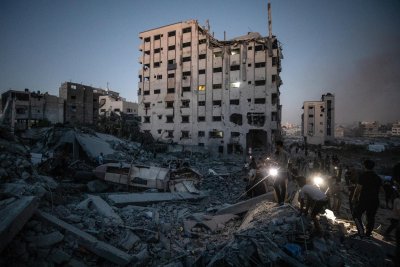
Palestinians inspect a destroyed mosque following an Israeli air strike in Gaza, Tuesday. The Palestinian Ministry of Health said at least four people were killed in Israeli attacks across the territory on Tuesday. Photo by Mohammed Saber/EPA

July 29 (UPI) — The Israeli military on Wednesday accused Hamas of storing weapons inside a mosque it bombed in northern Gaza on Tuesday, an allegation Palestinian sources called false.

The mosque was “another example of terror organizations using civilian infrastructure for terror purposes,” The Times of Israel reported, citing the Israeli military.

Israel said the weapons were to be used in attacks on Israeli troops in Gaza and Israeli civilians, and the sites were hit “to remove the threat.”

The Hamas government said the allegations were “entirely false” and that Israel used the claim “to justify its attacks on mosques,” The New York Times reported. There were no reports of deaths from the mosque attack, but there were four deaths from attacks in Gaza, the Palestinian Ministry of Health reported.

The Israeli military said it gave advance warning of the attack to civilians “to mitigate the risk of harm to them.”

“It was a terrifying sound,” Riyad al-Masri, 31, who lives near the mosque, told The New York Times. “It shook the ground.”

Despite a cease-fire signed in October, Israel has increased its attacks on Gaza in recent weeks.

More than 1,200 people have been killed in Gaza since the cease-fire, on top of more than 73,000 killed during the war, according to the Gaza health ministry. Its list does not distinguish between combatants and civilians, The New York Times reported.

Under the 20-point peace plan for Gaza negotiated by the United States, Hamas was required to disarm. The group has agreed to give up administrative control of Gaza, but it has not yet agreed to disarm.

IDF Deputy Chief of Staff Maj. Gen. Tamir Yadai said earlier this month that Israel would continue strikes in Gaza if Hamas doesn’t disarm, The New York Times reported.

“At the end of the day, this place will be demilitarized, and there will be no Hamas,” he said in remarks published by Channel 14, a right-wing Israeli TV station.

Source link

Is the world at risk of another energy shock? | US-Israel war on Iran

Disruptions across Strait of Hormuz, Bab al-Mandeb and the Black Sea threaten supplies and raise costs for consumers.

Shipping through the Strait of Hormuz remains in effect halted.
Tankers are now avoiding another critical waterway – Bab al-Mandeb – as Yemen’s Houthi forces threaten Saudi-linked vessels. Ukrainian strikes have hit Russian export infrastructure.
Three major routes are now disrupted at once: the Gulf, the Red Sea and the Black Sea.

Together, they threaten trade flows equivalent to nearly a quarter of global oil supplies just as reserves sit at multiyear lows.
Goldman Sachs says oil could rise above $120 a barrel by the fourth quarter if disruptions in the Strait of Hormuz alone persist.
Economies worldwide are bracing for another energy shock.

Source link

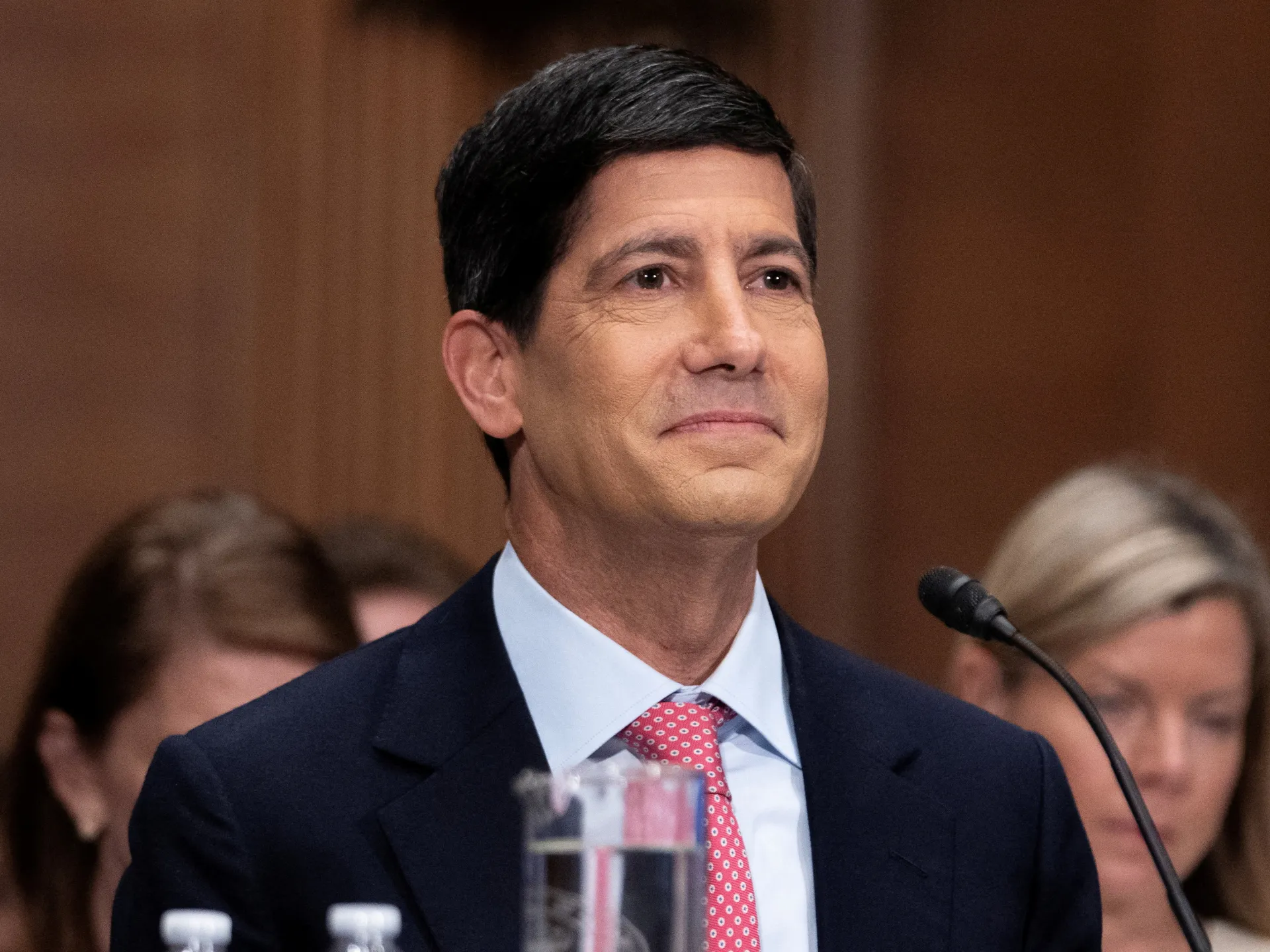
The Fed faces interest rate decision as Dow drops 400 points

Chair of the Federal Reserve Kevin Warsh looks on during a Senate Banking, Housing and Urban Affairs Committee hearing on the Federal Reserve’s semi-annual monetary policy report at the U.S. Capitol in Washington, D.C., on July 15. Photo by Bonnie Cash/UPI | License Photo

July 29 (UPI) — The stock market opened with the Dow falling 400 points on Wednesday ahead of the Federal Open Market Committee’s latest interest rate decision.

The committee will announce its decision on Wednesday afternoon with Federal Reserve Chairman Kevin Warsh making his second address since being appointed. Economic indicators point to the Fed holding interest rates at a target range of 3.5% to 3.75%.

“My colleagues and I recognize that high inflation has been an undue burden on American households and businesses,” Warsh said during a Senate Banking Committee hearing earlier this month. “The members of our committee have no tolerance for persistently elevated inflation and we share a resolute commitment to restore price stability.”

The war in Iran has increased economic pressure, driven by rising fuel costs as the United States and Iran use the crucial Strait of Hormuz as a point of negotiation. The annual inflation rate rose to 4.2% in May on the back of rising gas prices.

The Federal Reserve has maintained a target goal of 2% annual inflation rate.

The average fuel price in the United States is $4.09 per gallon for regular grade gasoline on Wednesday, AAA reports.

The Federal Reserve will announce its interest rate decision at 2 p.m. EDT, followed by an address by Warsh at 2:30 p.m. EDT.

Source link

Why Saudi Arabia holds the key to Palestinian statehood | Opinions

Nearly eight decades after the establishment of Israel, the creation of a sovereign Palestinian state remains the defining question of the Arab-Israeli conflict. Wars have been fought, peace treaties signed and diplomatic initiatives launched, yet this central strategic issue remains unresolved.

Today, Saudi Arabia is at the forefront of the efforts to establish a Palestinian state and deliver a lasting peace arrangement with Israel. Its commitment to the issue is made clear by its decision to cosponsor the creation of the Global Alliance for the Implementation of the Two-State Solution in 2024, which is currently meeting in Rome.

King Salman and Crown Prince Mohammed bin Salman are following in the footsteps of successive Saudi monarchs. For more than half a century, the kingdom has maintained a remarkably consistent position. The question has never been whether peace with Israel is possible, but whether the political conditions required to make such a peace comprehensive, legitimate and irreversible were present.

Within that framework, recognition of Israel and the establishment of a sovereign Palestinian state are parallel components of a single settlement. Neither is intended to precede the other.

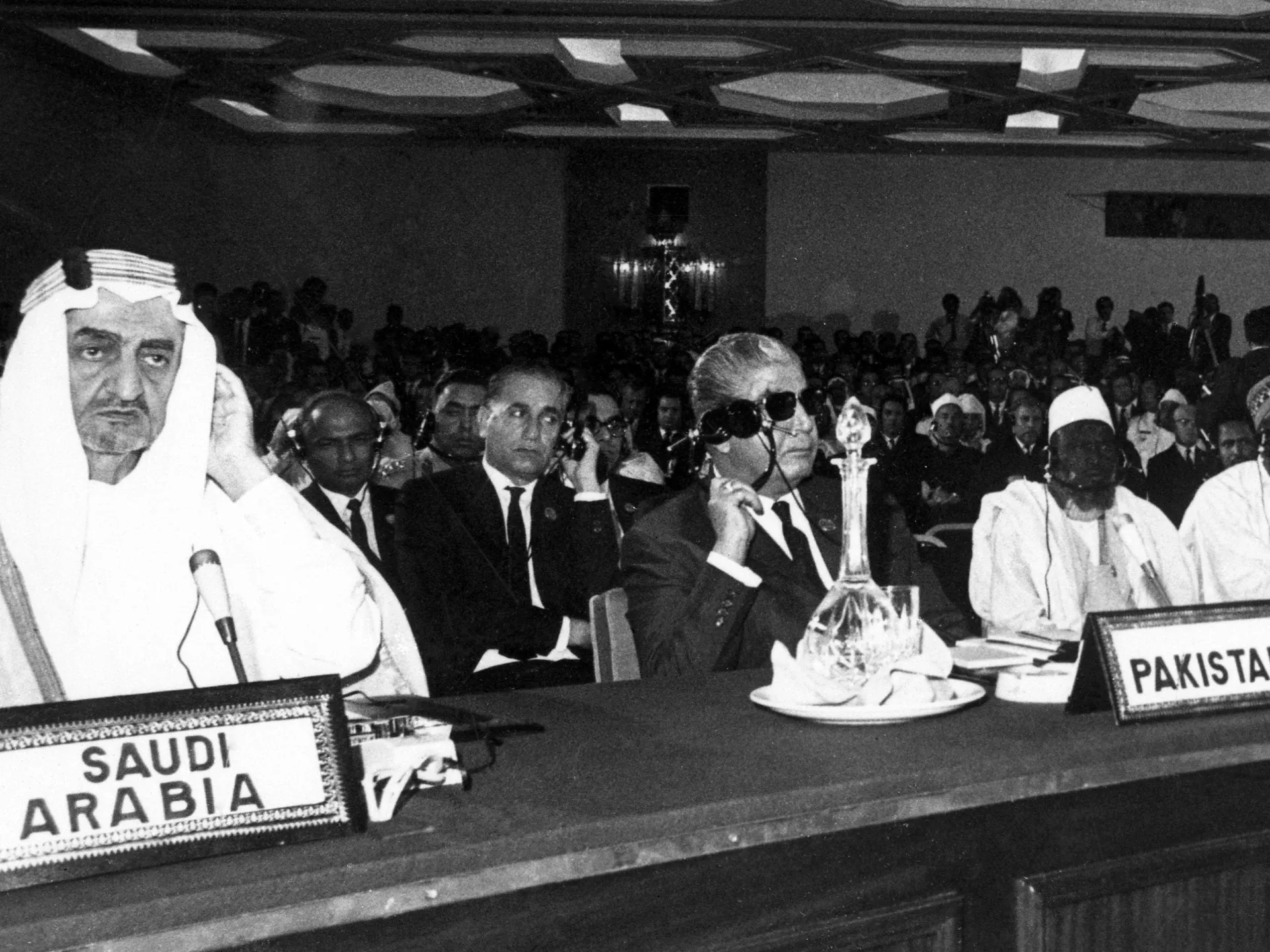
That doctrine originated under King Faisal, who made Palestinian self-determination a central pillar of Saudi national security policy. His successors preserved the principle while adapting its diplomatic expression to changing regional realities. The objective remained constant even as the diplomatic environment evolved.

The Fahd Plan of 1981 – named after King Fahd – translated that doctrine into a formal peace proposal calling for Israeli withdrawal from occupied Arab territories and recognition of Palestinian national rights. Two decades later, the Crown Prince and later King Abdullah expanded the same strategic logic through the 2002 Arab Peace Initiative. Israel was offered comprehensive peace and normal relations with the Arab world in return for withdrawal from the territories occupied in 1967 and the establishment of an independent Palestinian state.

The current Saudi leadership therefore inherits an established strategic doctrine rather than an unresolved policy debate. Their responsibility is to determine whether today’s diplomatic environment can finally satisfy conditions that have remained fundamentally unchanged for decades.

That continuity also reflects a broader question of state legitimacy. For the Saudi monarchy, support for Palestinian statehood has never been solely a matter of foreign policy. It has become one of the enduring pillars of the kingdom’s political and religious legitimacy, rooted in the monarch’s role as Custodian of the Two Holy Mosques and reinforced by the kingdom’s longstanding position within both the Arab and Islamic worlds.

The significance of that continuity became clearer after the Abraham Accords of 2020. By establishing diplomatic relations between Israel and the United Arab Emirates and Bahrain, later joined by Morocco and Sudan, the accords demonstrated that Arab-Israeli normalisation could advance without progress on Palestinian statehood. They reshaped regional diplomacy, but they neither resolved the Palestinian question nor completed the wider peace process.

Successive US administrations have regarded Saudi participation as the decisive missing element. The Abraham Accords could expand without Riyadh, but they could not acquire their full strategic significance without the kingdom’s participation.

The Trump administration has once again placed Saudi-Israeli normalisation at the centre of its regional diplomacy. But this diplomatic push has to be evaluated in the larger post-October 7 context.

The war in Gaza created an entirely new diplomatic environment. The subsequent ceasefire initiative and the establishment of the Board of Peace introduced a framework intended to end the conflict, stabilise the territory and begin reconstruction. Their significance lies not in replacing a political settlement, but in creating conditions under which one might become possible.

For the kingdom, however, the essential political requirement remains unchanged: the actual and irreversible establishment of a sovereign Palestinian state.

That position rests upon mutually reinforcing political, religious and economic foundations. The monarch governs not only as head of state but also as Custodian of the Two Holy Mosques, a responsibility carrying religious authority throughout the Islamic world. Any decision concerning recognition of Israel would therefore require both political approval and broad religious legitimacy. Such legitimacy could not credibly rest upon promises of future negotiations. It would require the establishment of a sovereign Palestinian state.

The kingdom’s wider influence reinforces that position. It is by far the Arab world’s largest economy, representing about one-third of total Arab economic output. The kingdom is the only regional member of the G20, one of the world’s leading energy superpowers and the world’s leading crude oil exporter. It is also the Middle East’s principal economic engine. Combined with its religious standing, these factors give Saudi decisions consequences extending far beyond bilateral diplomacy.

The implications would reach well beyond the kingdom itself. Several major Arab states, including Lebanon, Syria, Iraq and Algeria, have not recognised Israel. Their decisions are sovereign, but a Saudi-Israeli settlement founded upon Palestinian statehood would nevertheless transform the political environment in which those decisions are made.

Lebanon illustrates the point. Washington is encouraging Beirut to move towards formal relations with Israel as part of a broader effort to stabilise the Israeli-Lebanese frontier. The domestic political cost of such a decision, however, would look fundamentally different after a Saudi-backed settlement based upon Palestinian statehood than before one.

The same logic extends across the wider Muslim world. Major influential countries such as Pakistan, Indonesia, Bangladesh and Malaysia have withheld recognition of Israel because the Palestinian question remains unresolved. A settlement accepted by the Custodian of the Two Holy Mosques and accompanied by the establishment of a Palestinian state would compel those governments to follow. It would remove the principal political and religious obstacles to reconsidering their positions.

This is what ultimately distinguishes Saudi Arabia from the earlier Abraham Accords. Saudi Arabia’s participation would be different in kind, not merely in scale, carrying political, economic and religious significance across the Arab and Muslim worlds.

Whether the current diplomatic process can ultimately reach that point remains uncertain. Israel, the Palestinians, the United States, the European Union and certain regional governments all have indispensable roles to play. The final Saudi decision, however, rests with King Salman and Crown Prince Mohammed bin Salman.

Within the strategic framework they have inherited, Palestinian statehood and recognition of Israel are not sequential steps but parallel obligations. Neither can acquire lasting legitimacy without the other.

The views expressed in this article are the author’s own and do not necessarily reflect Al Jazeera’s editorial stance.

Source link

Infantino sets deadline for FIFA offer in Kushner-backed World Cup plan | Football News

FIFA’s president lobbies for latest proposal for investment in football’s governing body, which has met with criticism.

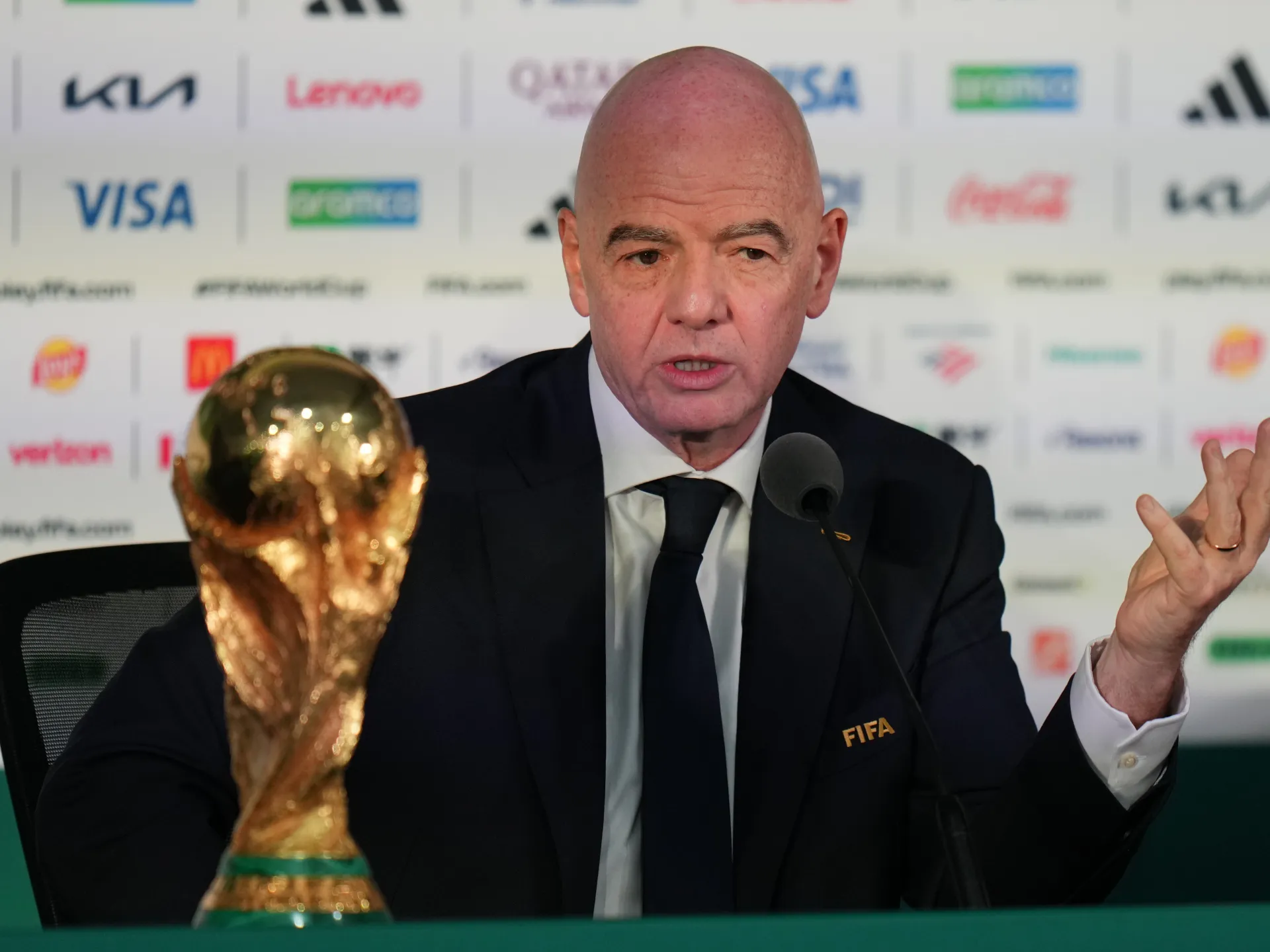
FIFA President Gianni Infantino has set a September 19 deadline for the 211 member federations to accept a one-off $20m offer to each underwritten by the investment firm of Jared Kushner’s brother as part of a project to sell stakes in the World Cup.

Infantino set out the “singular and unique funding opportunity” in a letter detailing why he wants to create a $20bn FIFA subsidiary that would be 20 percent owned by private investors and would run the football body’s competitions and events like World Cups and Club World Cups.

Recommended Stories

list of 4 itemsend of list

“It is my duty and responsibility as FIFA president to present such game-changing opportunities to you, our members,” Infantino wrote on Wednesday in the letter seen by The Associated Press news agency.

The proposal, revealed on Tuesday and backed by Joshua Kushner’s investment firm Thrive Capital, was met with immediate fury by Infantino’s former colleagues at the European football body UEFA, which said the World Cup “is not FIFA’s to sell”.

UEFA is expected to call its 55 member federations to an emergency online meeting, likely on Thursday.

Joshua Kushner’s brother, Jared Kushner, is a son-in-law of United States President Donald Trump.

FIFA’s private equity plan is the latest ambitious project proposed during Infantino’s 11-year presidency, during which he has increasingly seemed to be an executive leader acting without consulting football’s major stakeholders.

Previous plans include creating a FIFA Peace Prize and trying to reorganise football’s calendar with World Cups every two years instead of four.

Concerns about the previously secret plan were aired on Wednesday by the continental football bodies for Asia and the North American, Central American and Caribbean region, known as CONCACAF.

“We are deeply concerned by the lack of due process,” CONCACAF said in a statement.

The Kuala Lumpur-based Asian Football Confederation said it was “disappointed that a matter of such significance entered the public domain before the AFC family had been afforded the opportunity to examine and discuss it.”

Continental bodies that organise their own international club and national team competitions – such as the Champions League, European Championship and Copa America – likely will see threats to those events from FIFA wanting to increase revenue and value for investors by playing World Cups and Club World Cups for men and women more often.

If the FIFA Forward Enterprise subsidiary is approved by a majority of the 211 members, they are each promised $20m in funding from the four-year commercial cycle tied to the men’s 2030 World Cup.

That would lead, Infantino wrote, to “a pool of diverse international investors” joining Joshua Kushner’s Thrive as the anchor investor. “This process will be led by J.P. Morgan,” his letter said.

If Infantino’s plan is rejected, those members will get their previously promised $10m over the next four years, the letter stated.

FIFA’s plan met quick opposition from British Prime Minister Andy Burnham, whose government is preparing to support hosting the 2035 Women’s World Cup in England, Scotland, Wales and Ireland. FIFA is to confirm that lone bid for 2035 at an online meeting in November.

“Football does not belong to investors,” Burnham, a longtime football fan, said in a video message on Instagram. “Once you have sold a piece of [the World Cup], you have sold out. Football belongs to the fans. It always has, and it always will.”

Resistance by British lawmakers – including threats of legislation by then-Prime Minister Boris Johnson in 2021 – previously helped stop the divisive European Super League project that was criticised as an existential threat to UEFA’s Champions League and which Infantino had discreetly supported.

Source link

Trump administration bans imports of Chinese-made humanoid robots

July 29 (UPI) — The United States announced a ban on imports of humanoid robots from China and other countries, citing “unacceptable risks” to national security and the safety of Americans.

The advanced robots ban, including humanoid, four-legged robots and bipeds, was part of a Federal Communications Commission update on Tuesday to a list of equipment and services “deemed to pose an unacceptable risk to the national security of the United States or the security and safety of U.S. persons” under the 2020 Secure Networks Act.

Power inverters that convert DC electricity to the AC electricity that flows across the country’s power grid were also banned.

The bans come after government agencies with “appropriate national security expertise” convened by President Donald Trump to look at the issue designated both technologies as national security threats.

“The networked capabilities of advanced robotic systems create extensive vulnerabilities and vectors for attacks that can manipulate the data and physical operation of the advanced robotic system. Relying on foreign-produced advanced robotic devices presents unacceptable supply chain and cybersecurity vulnerabilities,” the group said in its National Security Determination.

“Advanced robotic devices collect data that could be leveraged by malign actors to surveil Americans, enhance the capabilities of foreign intelligence services, or to remotely commandeer the robots,” it added.

China is the world’s largest producer of humanoid robots, with the United States its largest market.

Power-inverters, a critical kit which converts DC electricity from solar panels, batteries and other alternate energy sources into AC electricity enabling it to be fed into the U.S. energy grid, were also banned over fears overseas supplies could be manipulated or disrupted, compromising the United States’ electricity supply.

Any threat to electricity supply constituted a threat to the economy and national security, the FCC said, adding that in addition to supply chain vulnerabilities it was concerned increasingly networked inverters posed cybersecurity risks, including the possibility they could be switched off or used to harvest data as well as “facilitating remote access and surveillance by foreign government actors.”

Both bans only apply to new models and exempt overseas manufacturers with existing conditional waivers from the Public Safety and Homeland Security Bureau or, in the case of robots, the Defense Department, with the FCC saying it encouraged suppliers to apply for “conditional approval.”

FCC Chairman Brendan Carr said he welcomed the measures from the White House.

“I am pleased that the FCC has now added foreign produced advanced robotics and power inverters to the FCC’s Covered List. Following President Trump’s leadership, the FCC will continue to do our part to secure America’s critical supply chains and, with today’s action, the FCC is acting in lock step with our national security agencies to do just that,” said Carr.

China criticized the move, accusing the United States of overreach and erecting trade barriers.

“China firmly opposes the U.S. overstretching the concept of national security and going after Chinese companies. Protectionism does not make the U.S. more competitive and will only hurt the interests of U.S. companies and consumers,” Foreign Ministry spokeswoman Mao Ning told a news conference in Beijing on Wednesday.

“China will continue to do what is necessary to firmly defend the legitimate and lawful rights and interests of Chinese companies,” she added.

China’s Commerce Ministry called for the global community to combine forces to develop technologies “for the positive and for good,” saying Beijing resolutely stood against the “politicizing” of trade issues and the use of “groundless pretexts” to justify sanctions.

“China urges the United States to heed the objective and rational voices of the business communities in both countries, abandon its hegemonic mindset, and stop smearing Chinese companies and threatening them with sanctions,” a spokesperson for the ministry said.

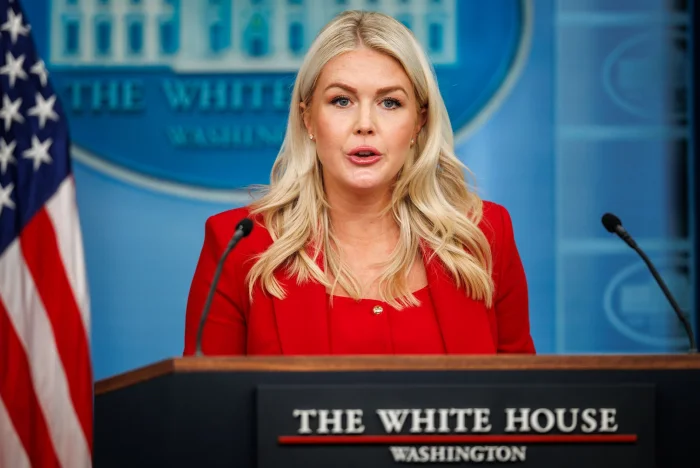
White House Press Secretary Karoline Leavitt speaks during a press briefing in the James S. Brady Press Briefing Room at the White House on Thursday. Photo by Samuel Corum/UPI | License Photo

Source link

Infantino’s FIFA World Cup stakes plan: Would UEFA boycott, would it work? | Football News

The dust has barely settled on the expanded 48-team FIFA World Cup 2026, yet further development of the competition’s future has already been mooted, as well as struck by a fierce backlash.

The shine on the trophy, now held by Spain after their defeat of Argentina in the final, still glitters brightly, but there were tarnishes to this year’s event.

Recommended Stories

list of 3 itemsend of list

Now, the game’s global governing body, FIFA, and its president, Gianni Infantino, face yet more criticism after a plan was released to sell stakes in future World Cups and other events to private investors.

From European football’s governing body, UEFA, to the United Kingdom’s new prime minister, Andy Burnham, FIFA’s plan has been slammed. There has even been a suggestion of a boycott by UEFA.

Al Jazeera Sport takes a look at what the latest proposals on FIFA’s desk mean.

What are Gianni Infantino and FIFA’s new World Cup plans?

FIFA announced plans on Tuesday to sell stakes in future World Cups and other events to private investors in a bid to maximise revenue for the sport.

The proposal is to create a $20bn subsidiary to run the World Cup and other events.

FIFA says it would retain the majority share of a newly created FIFA Forward Enterprise (FFE) scheme, meaning it would still preside over football governance, competitions, match calendars and regulatory and sporting decisions.

Minority stakes, however, would be sold to external investors to raise up to $4.2bn as part of the new proposal.

Why do Infantino and FIFA want to sell stakes in the World Cup?

Debate raged for months in the build-up to World Cup 2026 that FIFA’s ticket pricing was pushing fans out of “the people’s game”, as it has long been regarded.

FIFA’s defence was that the World Cup is their main source of income to support the game around the globe – from the sport’s grassroots to the administration of the major international events.

This latest proposal is FIFA’s attempt to stretch that revenue potential even further.

How would the new plan for the FIFA World Cup work?

Billions of dollars are already raised by FIFA tournaments, largely from broadcasting rights, sponsorship and other commercial deals.

This new commercial subsidiary, the FFE, would extend beyond traditional means of raising funds and would be akin to the franchise model that many sports have now turned to.

The Indian Premier League (IPL), a T20 cricket tournament, was one of the first competitions to fully exploit the potential of franchise models, selling stakes in teams in a newly formed competition.

On Wednesday, the IPL – only formed in 2008 – announced its value had soared more than 11% this year to 20.6bn.

Teams in that competition are owned by majority investors, who therefore hold significant sway in how it is run.

Other models, including The Hundred of the England and Wales Cricket Board (ECB) – an attempt to rival the IPL – have sold minority ownership of the teams.

ECB, as a result, retains control of the competition, and this is what FIFA is proposing for the share of the World Cup and its events that it intends to sell privately.

Nonetheless, a share is a share and new investors, be it in cricket’s The Hundred or in the FIFA World Cup, will expect at the very least to be heard when it comes to decision-making.

This is where concerns are being raised about the proposals.

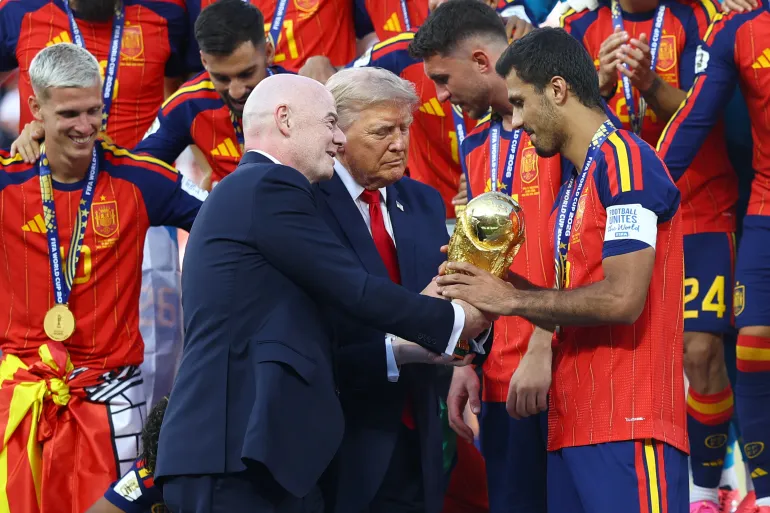
US President Donald Trump and FIFA President Gianni Infantino, left, hand the World Cup trophy to Spain’s Rodri before the 2026 trophy lift
US President Donald Trump and FIFA President Gianni Infantino, left, hand the World Cup trophy to Spain’s Rodri before the 2026 trophy lift [Hannah Mckay/Reuters]

Who are the potential investors in the World Cup and other FIFA events?

Thrive Eternal, a United States venture capital firm, has been put forward to lead the proposed investor group, FIFA said.

The vehicle was founded by Joshua Kushner, the brother of US President Donald Trump’s son-in-law, Jared Kushner.

Any potential investors would thereafter buy into the FIFA events via Thrive Eternal.

What benefits are FIFA claiming if the World Cup and events plan succeeds?

FIFA has said all net benefits will be reinvested in football, and that all countries should benefit from the ever-increasing profitability of the sport.

“Football is the world’s most popular sport,” FIFA President Gianni Infantino said in a statement.

“Parts of the game have turned that popularity into remarkable commercial value – and we celebrate that success and want it to continue, because it lifts the whole game.

“Our job is to make sure the rest of football grows with it: FIFA exists to support sustainable, inclusive development in every corner of the world.”

‘It is not FIFA’s to sell’: UEFA and UK PM reaction to Infantino’s World Cup plan?

FIFA has already clashed with domestic and continental governing bodies during World Cup 2026. The European powerhouse, UEFA, was the first to speak out against the new proposals.

“This crosses a line that football’s governing institutions should never cross,” UEFA said.

“UEFA takes it extremely seriously. So should every National Football Association. So should every stakeholder who cares about the future of the game.

“The soul and governance of football are not assets to trade – especially with zero transparency as to who gains financially. None of us are the owners of football. It is not FIFA’s to sell.”

Andy Burnham, who only replaced Keir Starmer as the United Kingdom’s prime minister last week, wrote on X: “Let me say this very directly. Football does not belong to investors. It belongs to the people who fill the stands and who stand on the touchline week in, week out, rain or shine.

“The World Cup is not a product. It is the greatest competition in world sport, and it was never anyone’s to sell. Dress the deal up however you like. Once you have sold a piece of it, you have sold out.

“Football belongs to the fans. It always has, and it always will,” he added.

The Confederation of North, Central America and Caribbean Association Football (CONCACAF) said on Wednesday that it ⁠had not been informed of FIFA’s proposed sale of equity to outside investors and was “deeply concerned” over a lack of due process.

What will happen next for FIFA’s World Cup plans, and will UEFA boycott?

Any change will need to be voted through by FIFA’s 211-country membership.

Of that number, 55 nations fall within UEFA’s governance.

The European body will hold an emergency meeting later this week to discuss the proposals.

Were FIFA to implement such a plan, one possible response UEFA could take would include a boycott of FIFA competitions.

Although at just above a quarter of FIFA membership, Europe has produced the winner of six of the last eight World Cups.

Argentina and Brazil are the only teams to prevent a clean sweep by the Europeans in that time, and, indeed, are the only nations outside Europe to win the World Cup since fellow South Americans Uruguay won their second and last title in 1950.

What were the main criticisms of FIFA World Cup 2026?

The main criticism going into the 2026 World Cup, held in the US, Canada and Mexico, was pricing. From tickets to transport links, it was felt that football fans on median salaries around the world were being priced out of the game.

During the World Cup, the decision to suspend a red card shown to USA striker Folarin Balogun “undermined the game’s integrity and credibility,” according to UEFA.

US President Donald Trump said he called Infantino about the ban that Balogun faced – the forward lined up for USA in their next match against Belgium.

FIFA also faced a backlash over hydration breaks that were introduced midway through each half of those matches. Critics said the breaks functioned primarily as commercial opportunities for broadcasters and disrupted the traditional flow of football matches at the tournament.

Argentina superstar Lionel Messi, right, during a hydration break at the World Cup
Argentina superstar Lionel Messi, right, during a hydration break at the World Cup [Lee Smith/Reuters]

Source link

Uganda declares itself Ebola-free as virus spreads in DRC

Uganda on Tuesday declared itself Ebola-free on Tuesday as the virus spreads through the Democratic Republic of Congo. File Photo Marie Jeanne Munyerenkana/EPA

July 29 (UPI) — Uganda has declared itself Ebola-free, as the virus continues to spread in neighboring the Democratic Republic of Congo.

Uganda’s Foreign Ministry made the declaration Tuesday, saying Uganda discharged its last confirmed Ebola patient on June 16.

“The declaration follows the successful completion of all outbreak response measures and confirms that there has been no further transmission of the virus,” the ministry said in a statement.

Uganda declared an Ebola outbreak on May 15, after infected individuals crossed into Uganda from the DRC.

A total of 20 people were infected in Uganda’s outbreak, including 15 Congolese nationals and five Ugandans — four health workers and a driver. Two patients died from the virus, according to ministry statistics.

Despite the declaration, the ministry said the risk of Ebola importation remains high due to the ongoing outbreak in the DRC.

Minister Chris Baryomunsi urged residents online to remain alert and continue to observe health measures.

“We shall continue to support our brothers and sisters in DRC to contain the Ebola disease there,” he said.

The outbreak that affected Uganda and remains ongoing in the DRC is caused by the Bundibugyo virus, with the first suspected case reported involving a DRC health worker on April 24. The health worker later died.

There is no approved vaccine for the Bundibugyo virus.

According to the World Health Organization, there were 3,262 cases and 1,437 deaths to the outbreak, making it the largest outbreak caused by the Bundibugyo virus to date.

The United Nations health agency said the outbreak in the DRC continued to “intensify” with sustained transmission, increasing mortality and ongoing geographic spread within the country.

“Although no new cases have been reported outside the Democratic Republic of the Congo, persistent transmission in areas connected by major national and cross-border mobility corridors continues to sustain a high risk of regional spread,” the WHO said earlier this week.

Source link

Jayden Seales takes five wickets as West Indies beat Pakistan in first Test | Cricket News

West Indies take a 1-0 lead in the two-Test series after Jayden Seales dominates with the ball on day 4 in Trinidad.

Paceman Jayden Seales ‌claimed his fourth five-wicket haul to bowl the West ⁠⁠Indies to ⁠a 90-run victory over Pakistan in the opening Test match in Tarouba, Trinidad and Tobago.

After eking out a 29-run first-innings ⁠lead, the West ⁠⁠Indies made 181 in their second innings to set Pakistan a target of 211 on Tuesday, the fourth day of play.

Recommended Stories

list of 2 itemsend of list

Seales (5-20) and his pace ⁠colleagues returned to produce a superb fast-bowling display at the Brian Lara Stadium, routing Pakistan for 120 in a little over 40 overs, with one day of play remaining.

Pakistan captain Babar Azam made an unbeaten 58 and combined ‌with number 11 Mohammad Abbas (23) in a brief resistance, but the West ⁠⁠Indies’ victory appeared a formality after the tourists slumped to 71-9.

Pakistan number three Shan Masood, who fractured his finger during his first-innings knock of 109, batted at number eight in the second innings. He made three before ⁠Seales dismissed him.

Captain Roston ⁠Chase dedicated the victory to West Indies great Garry Sobers, who died earlier this month.

“We wanted to make him proud and had a chat about it ⁠before the match. I hope he is smiling down on us,” Chase said afterwards.

“I ⁠love the direction this team is ⁠heading. We’re not relying on one or two players; everyone is chipping in at crucial moments.”

Babar said Pakistan’s lack of partnerships proved costly.

“Today, as a batting ‌unit, we weren’t up to the mark. We kept losing wickets back-to-back, and the batting failed. That’s something we’re working ‌on,” ‌he said.

The second and final Test match in Port of Spain begins on Sunday.

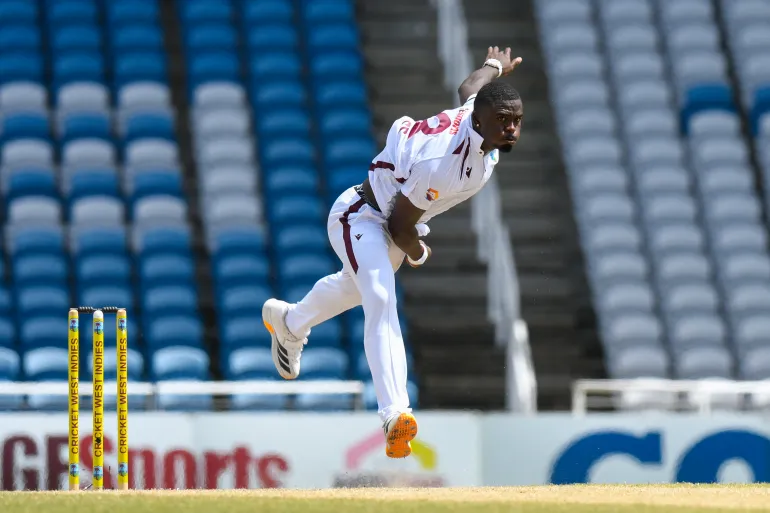
Seales took five wickets for 20 runs in the second innings against Pakistan
Seales took five wickets for 20 runs in the second innings against Pakistan [Randy Brooks/AFP]

Source link

Will Germany bring back mandatory military conscription next year? | Military News

Berlin, Germany – Music is a major part of Rayhan Butt’s life. The 18-year-old from the west German city of Bielefeld discovered his passion for the piano a few years ago, and now plays daily, sometimes for 12 hours a day. Picking up singing along the way, he performs regularly across the country.

Butt has now found a way to combine his love of music with his love for Germany. Next month, he will travel to Berlin for an internship with the German Armed Forces, and in autumn he will be joining full-time as part of the army’s marching band.

Recommended Stories

list of 4 itemsend of list

“Music, especially piano and singing, is not a hobby – it’s my whole life, and I want to build my future around it,” Butt tells Al Jazeera. “The Bundeswehr [German Armed Forces] has an excellent reputation, and there are a lot of opportunities to perform at a very high professional level, for example, in front of the German chancellor.

“I have decided to enrol because I can continue receiving musical training alongside learning valuable skills within the army such as teamwork and discipline.”

As he looks ahead to joining, Butt says that he supports voluntary military and civic duty and believes all young people should pursue one of these paths. “If tomorrow I’m called away from the marching band to fight, I would not hesitate in stepping up as a soldier. I’m a child of immigrants, and I’ve had a lot of opportunities growing up here, such as freedom and a great education. I would definitely defend this country with my life,” adds Butt, who Al Jazeera met through his participation with Generation Global, an initiative by the Liz Mohn Foundation that aims to prepare young people for future leadership roles.

That’s a sentiment the German government is desperately counting on, as it seeks to ramp up its military recruitment.

Rayham Butt playing the piano [Photo courtesy Rayham Butt]
Rayham Butt playing the piano [Holger Thiem/ Al Jazeera]

Germany’s expanded military ambitions

The Bundeswehr wants to increase its active-duty force by 80,000 men and women to 260,000, through a voluntary recruitment drive. In addition, it wants 200,000 men and women in the reserves.

The drive forms part of the Military Service Modernisation Act, which came into effect on January 1 and lays out a new set of requirements for young Germans. Since January, more than 300,000 letters have been sent to 18-year-olds to gauge their willingness to join the armed forces, as well as requesting information on their physical fitness and education. Women have also been sent the letter but, unlike young men, are not legally required to respond.

It’s one strand within Germany’s broader military expansion plans, initiated in 2022 after Russia’s full-scale invasion of Ukraine. In one of his first major speeches as chancellor last year, Friedrich Merz pledged to build the “strongest conventional army in Europe”.

Most recently, a new military concept outlining how Germany intends to fight and a capability profile were published three months ago.

Moritz Graefrath, an assistant professor of international security at the University of Oklahoma’s School of International Studies, said that more than this new document, the timing of its publication is what’s significant.

“One of the most plausible explanations is that it’s part of an effort to show, particularly to Washington as well as potentially other European allies within NATO, how serious the German government now is about ‘Europeanising’ European security and taking on more of the burden of continental defence,” he told Al Jazeera. “In many ways, this is a relatively costless signal of commitment to that idea of burden shifting within NATO, to that idea of taking on more responsibility.”

Bela Breitner, a member of a students group that’s campaigning against conscription [Photo courtesy Bela Breitner]

Opposed to conscription

Yet the latest measures on conscription are not being welcomed by all.

Official figures published on July 14 showed that so far this year,  6,000 young men have applied to remain out of the military service on “religious” and “moral” grounds, more than the number throughout the whole of last year.

A clause in the new law that required young men between the ages of 17 and 45 years old to seek prior approval for long stays abroad was repealed following a backlash by opposition voices, including student activists who have arranged three large-scale demonstrations attended by a reported 50,000 young people across 90 German cities since December.

Bela Breitner is a 22-year-old computer science student living in Bochum in western Germany. He is part of the Schulstreik Gegen Wehrpflicht (School Strike Against Conscription) campaign group, which formed late last year in response to what they see as the “militarisation” of German society.

“Our main focus point is conscription,” he tells Al Jazeera. “Many students are in opposition to these measures because within the last few years, we feel like we haven’t received anything positive from the state.

“Many young people lost opportunities during the COVID pandemic, the school system in Germany is criminally underfinanced, and now they want to implement conscription to force us to be trained in combat. Many of us feel like our voices are not being listened to.”

History of conscription in Germany

Conscription was first introduced in Germany in the mid-1950s, and suspended only in 2011. Graefrath says the suspension was driven by societal factors as well as government calculations around things such as budgets.

“On the one hand, there was a sense of post-Cold War peace where it seemed inconceivable for another war in Europe to take place, let alone one that would involve Germany, so the conscription framework was seen as a relic of the past,” he said. “On the other hand, it became apparent, especially to young Germans at the time, that if the model was abandoned, they could study, start apprenticeships and enter the workforce, rather than having at least one year of compulsory service. So there was that societal element there.”

While the Bundeswehr says it is optimistic about achieving its targets, only about 500 recruits have been enrolled so far this year. The figures prompted one senior politician earlier this month to say that Germany will have to decide by next July at the latest whether to reintroduce compulsory military service.

Analyst Graefrath said that Germany would need to decide the future of conscription based on its reading of wider geopolitical challenges. “This would be how unreliable the United States is right now and in the foreseeable future, and how big a threat Russia actually poses.”

Meanwhile, the clause for young men to seek permission before shifting abroad remains repealed but only as long as conscription remains voluntary.

Student activist Breitner says the issue doesn’t just affect students, but people from across society, and the campaign group will continue efforts to mobilise wider support.

“I don’t know any Russians, but I believe there are many people in Russia and around the world who have dreams and want to achieve something else with their life other than fighting a war,” he said. “I believe that there are more people who share values such as peace, freedom and the right to choose over what may separate us.”

Source link