July 31 (UPI) — Fourteen nations have backed the formation of a Saudi-led coalition to protect shipping routes from Houthi attacks in and around the Red Sea, drawing more countries into the Iran-U.S. war.
The kingdom’s defense ministry announced their support for the multinational defensive maritime alliance Thursday following a meeting in Riyadh attended by the defense ministers and representatives of 43 countries.
According to a statement, the alliance is aimed at “strengthening maritime security, protecting freedom of navigation, securing international trade routes and energy supply routes and safeguarding shared maritime interests in the Bab el-Mandeb Strait, the Red Sea and the Gulf of Aden.”
“The alliance is exclusively defensive in nature and does not target any state, alliance or international organization,” it said.
The statement said participation in the alliance’s activities and operations “will remain a sovereign decision” for each state, meaning any member country can opt out of specific missions.
It also identifies Saudi Arabia its founding state and the alliance’s leader and says thee kingdom will host its permanent headquarters.
A second statement added that other countries that had participated in the meeting “expressed support for the initiative and are in the process of completing the necessary domestic procedures and approvals to join the joint statement.”
The 14 countries are Saudi Arabia, Kuwait, Bahrain, Qatar, Pakistan, Turkey, Egypt, Jordan, Yemen, Bangladesh, Nigeria, Sudan, Djibouti and Somalia, the Saudi Press Agency reported.
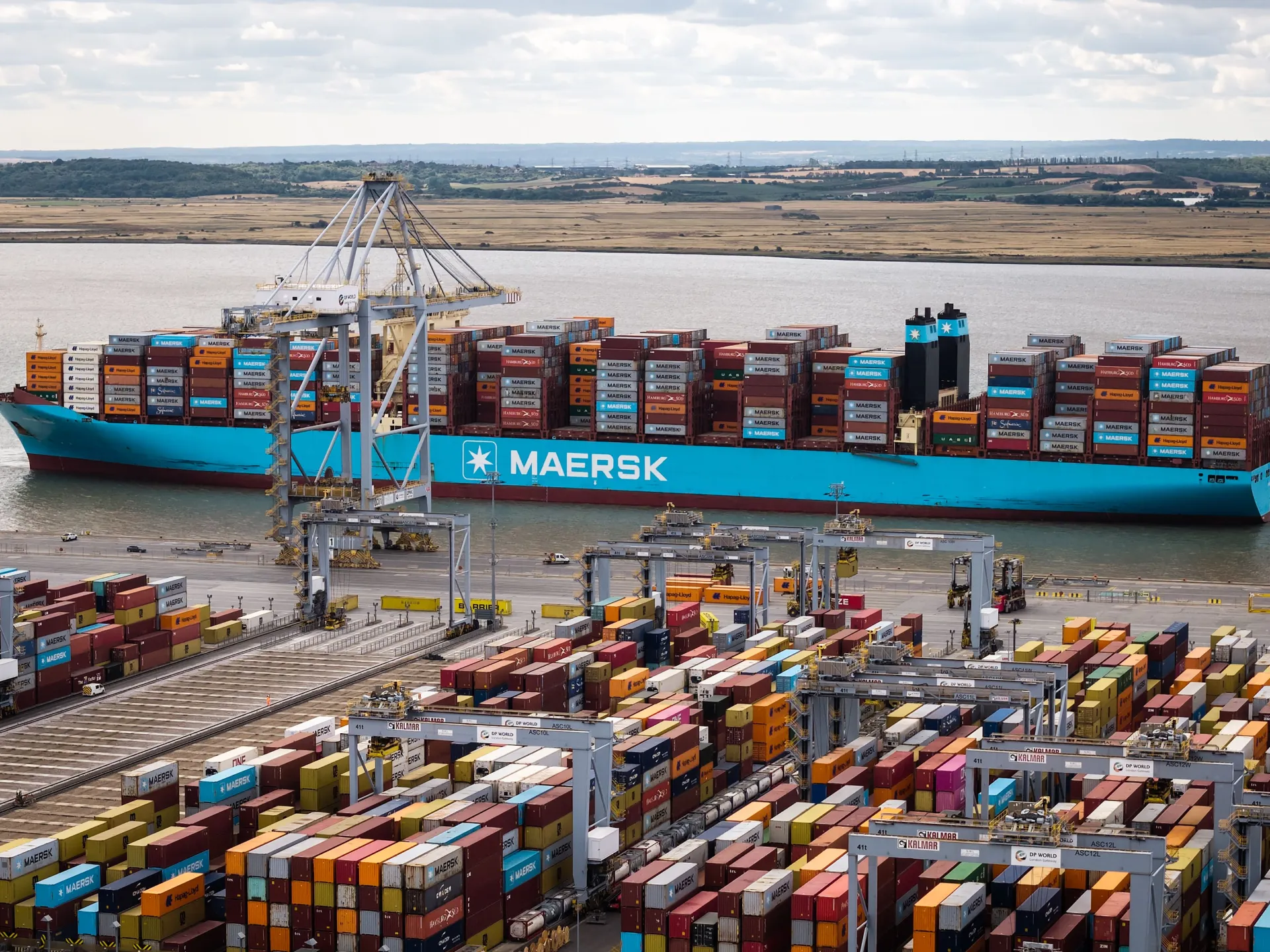
The alliance was formed after the Iran-backed, Yemen-based Houthis early last week announced a maritime blockade targeting Saudi vessels traveling through the Red Sea via the Bab el-Mandeb Strait, accusing Riyadh of conducting an “unjust and oppressive siege on our people.”
The blockade threatens energy shipments that exit ports along the western side of the oil-rich nation at a time with Iran is exercising a similar blockade of commercial vessels at the Strait of Hormuz near Saudi Arabia’s eastern side.
The move is expected to further strain energy supplies, potentially causing fuel prices to surge and trigging an international energy crisis. Yemen’s Houthi forces have already claimed to have attacked Saudi oil tankers in the region for allegedly violating its maritime ban.
وشهد الاجتماع مشاركة رؤساء الأركان وممثليهم من 43 دولة إلى جانب مندوبية الاتحاد الأوروبي لدى المملكة، من أصل 51 دولة ومنظمة مدعوة، بما يعكس الاهتمام الدولي بتعزيز التعاون الدفاعي البحري وتوحيد الجهود لحماية أمن الممرات البحرية. pic.twitter.com/la8vuyh7DF— وزارة الدفاع (@modgovksa) July 30, 2026
The Seodaemun Police Station in Seoul. Photo by Asia Today
July 30 (Asia Today) — South Korean police have referred a woman in her 20s to prosecutors on allegations that she spread false information about the May 18 Gwangju Democratization Movement on Instagram.
The Seodaemun Police Station in Seoul said Thursday that the woman, whose identity was withheld, was recently referred without detention on suspicion of violating a special law concerning the 1980 democracy movement.
The woman allegedly posted a comment May 15 describing the movement as an armed insurrection carried out by anti-state forces.
She posted the comment under an Instagram message promoting benefits offered in Gwangju and other areas to commemorate the anniversary of the movement.
She then captured an image of her comment and shared it through the Instagram Stories feature on her account, police said.
The May 18 Gwangju Democratization Movement began in May 1980, when citizens protested martial law and military rule. Government troops violently suppressed the demonstrations.
South Korean law prohibits knowingly spreading false information about the movement through newspapers, broadcasts, the Internet or other publicly accessible channels.
A conviction can carry a prison sentence of up to five years or a fine of up to 50 million won, or about $34,200.
Police began investigating after receiving a complaint through the government’s online civil petition service May 21.
“Historical distortion concerning May 18 not only insults victims and their families and damages their reputations but can also create social confusion by spreading a false understanding of history,” a police official said.
Police said they would strictly investigate the deliberate creation and distribution of clearly false information that exceeds the legally protected boundaries of free expression.
Seattle Mayor Katie Wilson speaks to the media at the scene after a fatal shooting during the Bite of Seattle food festival at Seattle Center in Seattle on Sunday. Photo by Genna Martin/EPA
July 30 (UPI) — Seattle Police Department Chief Shon Barnes resigned on Thursday, as city officials have come under criticism following a mass shooting Sunday at the Bite of Seattle food festival that left three people dead and four others wounded.
Seattle Mayor Katie Wilson announced that she had accepted Barnes’ resignation and said he “served this department and this city with dedication.”
“I share Chief Barnes’ hope that we can return our focus to addressing youth gun violence and ensuring that every family can feel safe in their neighborhood and across the city,” Wilson said in a Thursday afternoon press release.
His exit comes as city officials face mounting criticism over their response to the shooting, particularly the lack of communication with the public in its immediate aftermath. Barnes also faced criticism for being out of town when the shooting occurred, renewing scrutiny of how frequently he was away from Seattle.
In a statement issued to local media by his attorney, Barnes said Wilson had requested his resignation on Wednesday. Though he was “surprised” by the request, he believed that the city should be focused on investigating thee shooting, securing justice for the victims and helping the community heal.
“I want to emphasize that it has been one of the greatest honors to lead the Seattle Police Department and to serve the citizens of the City of Seattle,” he said.
Deputy Chief Andre Sayles has been named interim chief, according to the mayor’s office. Wilson said a thorough search will be conducted to find a permanent replacement.
In a recorded statement published to social media later Thursday, Wilson addressed criticism of the city’s lack of communication with the public, stating that a review “revealed real gaps.”
“Information could and should have gone out much faster through social media, the emergency alert system, the SPD blotter and-or an off-site press conference,” she said.
“The public should have heard sooner about outstanding suspects and the status of the Seattle Center campus.”
She vowed her office would work with the police department ensure that, if a similar situation arose again, information would released more quickly.
She acknowledged that she had been wrong to defend the city’s decision not to use its emergency system, saying the review revealed a miscommunication between departments that resulted in no alert being issued. She also cited a miscommunication between her office and the police department over the timing of a Sunday night press conference.
Following the shooting, SDP issued a statement on its social media platform. No further information was released by the department until a late-night press conference. The Seattle Fire Department provided UPI with an update on the shooting.
“What I did not fully understand in that moment was how little information had reached the public or the press since the incident began at 6 p.m.,” she said.
“Had I known that, I would have pushed for an immediate briefing, rather than waiting for a press conference to be organized.”
Barnes, 51, was reportedly not in Seattle when the shooting took place. During a press conference on Monday, reporter Connor Nash of The South Seattle Emerald asked Barnes about reports that he is often out of town, leading to a heated confrontation.
“I don’t have to tell you where I go,” Barnes responded. “I have been working as hard as I can for this city from the day I got here. Do you got that?”
Barnes was at the National Organization of Black Law Enforcement Executives Conference in Dallas on Sunday when the shooting took place, he said.
Barnes was scheduled to give an interview with KING 5 on Wednesday but the interview was canceled about 30 minutes before it was set to begin.
Three people were killed and four others were wounded, including a 2-year-old, during the shooting at the food festival. Police say it was a targeted, gang-related shooting.
A 15-year-old was arrested at the scene. A 19-year-old suspected to have been involved in the shooting was among those killed. The 15-year-old was charged on Wednesday with one count each of assault in the first degree with a firearm enhancement and unlawful possession of a firearm in the second degree.
The Seattle Police Department has published Barnes’ 2026 schedule to date, showing four trips to Chicago and some trips to conferences.
Barnes was appointed Seattle’s police chief in 2024 by then-Mayor Bruce Harrell. Wilson retained Barnes when she became mayor on Jan. 1. He was the police chief in Madison, Wis., from 2021 until taking the position in Seattle.
Barnes has overseen reductions in violent crime during his tenures in Madison and Seattle.
Prior to Sunday’s shooting at the food festival, there had been 15 homicides recorded in Seattle. The city also recorded its first June since 1970 without a homicide. Homicides have decreased in Seattle each year since recording 74 in 2023.
Barnes also oversaw an increase in female representation during his tenure with the Madison Police Department. The rate of female staff increased to 28%.
July 30 (UPI) — Negotiators implementing the Gaza cease-fire plan and Iran-backed Hamas have reached a framework for disarming militant groups in the Palestinian enclave, President Donald Trump announced Thursday.
The tentative agreement could mark a significant breakthrough toward ending Israel’s war in Gaza, though it is contingent on Israel agreeing to withdraw its troops. Prime Minister Benjamin Netanyahu‘s administration has yet to comment.
“This agreement is a critical step towards Gaza finally being governed by a new Palestinian government that will work closely with the Board of Peace to help the Palestinian people,” Trump said in a statement.
“At the same time, Israel will have the security it deserves, with Gaza no longer used as a base for terror attacks.”
Trump’s so-called Board of Peace — a coalition of 28 countries, including Israel and weighted toward Middle Eastern and smaller or midsize nations — was formed in January and is tied to a U.N.-backed, 20-point plan for the stabilization and reconstruction of Gaza, which has been devastated by the war.
According to a late Thursday statement from the Board of Peace, the agreement concludes months of negotiations and is the first time Hamas has committed to disarmament.
The board said that under the agreement, Israeli forces are to withdraw from Gaza after Hamas and other militant groups in the Palestinian enclave relinquish their weapons.
Trump said that after Israel withdraws, the International Stabilization Force will work with a new Palestinian police force to assume responsibility for security of Gaza.
The agreement “holds the promise of delivering significant benefits to the people of Gaza, who have waited for too long for a better future, and security to the people of Israel,” the board said.
Egypt, Qatar and Turkey mediated the agreement, Trump said.
Dozens of Israeli soldiers have abandoned their weapons and walked out of the Sde Teiman military base in a dispute with a senior commander reportedly trying to restore discipline. Soldiers at the base have long been accused of flagrant violations of laws, including torture of Palestinian detainees.
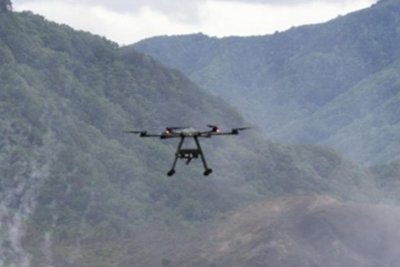
A South Korean Drone Unit is shown in an undated file photo unrelated to Thursday’s incident near the inter-Korean border. Photo by JEON HEON-KYUN / EPA
July 30 (Asia Today) — Residents near South Korea’s border with North Korea were briefly ordered to evacuate Thursday after the military detected an unidentified aircraft that was later confirmed to be a U.S. drone involved in a training exercise.
South Korean troops detected the aircraft south of a general outpost in northern Gyeonggi province and responded in accordance with established operational procedures, the Joint Chiefs of Staff said.
“After checking, it was confirmed to be a U.S. drone participating in training,” a Joint Chiefs official said.
The aircraft was detected by South Korean personnel using thermal observation equipment. The military initially could not determine whether it belonged to South Korea, North Korea or another operator.
Residents living north of the Civilian Control Line near Cheorwon in Gangwon province received emergency messages at about 2:30 p.m. telling them that a drone had been detected and instructing them to move to nearby shelters or leave a restricted checkpoint area.
The Civilian Control Line marks a restricted zone south of the Demilitarized Zone where civilian access is limited for security reasons.
The military identified the aircraft as a U.S. drone about an hour after the warning was issued and ended the emergency response.
U.S. Forces Korea later said the incident occurred during combined training involving U.S. Marines and South Korea’s 1st Marine Division.
“The U.S. Marine Corps is assessing the circumstances surrounding the incident and remains in coordination with the Republic of Korea Marine Corps and relevant local authorities,” U.S. Forces Korea said.
It remained unclear whether the drone’s flight plan had been shared in advance with all South Korean units responsible for monitoring the border area.
South Korean military officials said further investigation was needed to determine the aircraft’s specific unit and why its operation was not immediately identified.
The incident raised the possibility that incomplete communication about the U.S. training exercise caused confusion among South Korean troops and local authorities.
The USS George Washington (CVN-73)
nuclear-powered aircraft carrier docks at a naval base in Busan, South Korea.
File.
Photo
by YONHAP
/ EPA
July 30 (Asia Today) — The nuclear-powered aircraft carrier USS George Washington arrived in the central Vietnamese city of Da Nang on Thursday, one day after a Russian naval group completed a visit to Cam Ranh International Port.
The five-day port call is the fourth visit by a U.S. aircraft carrier to Vietnam since the two countries normalized diplomatic relations in 1995. It comes as the U.S. Navy has concentrated some of its carrier forces in the Middle East during the conflict with Iran.
The George Washington, flagship of Carrier Strike Group 5, arrived with the guided-missile cruiser USS Robert Smalls and the guided-missile destroyer USS Shoup. The ships are scheduled to remain in Da Nang through Monday.
The Nimitz-class carrier is based in Yokosuka, Japan, and is the U.S. Navy’s only forward-deployed aircraft carrier.
Its air wing includes F-35C Lightning II stealth fighters, F/A-18E/F Super Hornets, EA-18G Growlers, E-2D Hawkeyes, CMV-22 Ospreys and MH-60 helicopters.
The visit is the first by the George Washington to a Vietnamese port. The carrier previously hosted Vietnamese delegations at sea in 2010, 2011 and 2012.
The USS Carl Vinson became the first U.S. aircraft carrier to visit Vietnam after the war when it called at Da Nang in 2018. The USS Theodore Roosevelt followed in 2020 and the USS Ronald Reagan visited in 2023.
Vietnam’s Defense Ministry said the latest visit would contribute to maintaining and developing relations between Hanoi and Washington.
The U.S. Consulate General in Ho Chi Minh City said the visit reaffirmed the U.S. Navy’s commitment to a shared vision of a free and open Indo-Pacific.
The United States and Vietnam elevated their relationship to a comprehensive strategic partnership in September 2023, Vietnam’s highest diplomatic classification.
The two countries have since expanded defense discussions, including maritime security, information sharing, defense trade and efforts to address the consequences of the Vietnam War.
The ships’ scheduled activities include public tours, performances by a U.S. Navy band and sporting and cultural exchanges with Vietnamese participants.
Visit follows Russian naval stop
The U.S. carrier arrived one day after a Russian Pacific Fleet group completed a four-day visit to Cam Ranh International Port in south-central Vietnam.
The Russian vessels, including the Kilo-class submarine Ufa, visited from Sunday through Wednesday and participated in submarine rescue training with the Vietnamese Navy.
The close timing of the Russian and U.S. visits reflects Vietnam’s effort to maintain defense relations with multiple major powers without entering a formal military alliance.
Chinese, Indian and Japanese naval vessels have also visited Vietnamese ports in recent months.
Vietnam’s 2019 defense white paper established its “Four No’s” policy: no military alliances, no alignment with one country against another, no foreign military bases or use of Vietnamese territory against another country and no use or threat of force in international relations.
Vietnam has expanded defense cooperation with the United States but continues to purchase and operate large amounts of Russian-designed military equipment.
Differences in cost, maintenance systems and compatibility have limited Vietnam’s purchases of U.S. weapons.
China likely to monitor visit
The George Washington entered the South China Sea after passing through the Luzon Strait on July 22, following two recent confrontations between Chinese and Philippine vessels in disputed waters.
Carl Thayer, emeritus professor at the University of New South Wales in Australia, said the visit signals that U.S.-Vietnam engagement is continuing despite the transfer of some American military assets to the Middle East.
He said China would likely monitor the carrier strike group with ships and aircraft but avoid the sharp public criticism it often directs at the Philippines.
Beijing has generally sought to avoid pushing Vietnam into a closer military relationship with Washington, despite disputes between China and Vietnam in the South China Sea.
The port call illustrates Hanoi’s broader strategy of welcoming military vessels from competing powers while maintaining its formal policy of strategic independence.
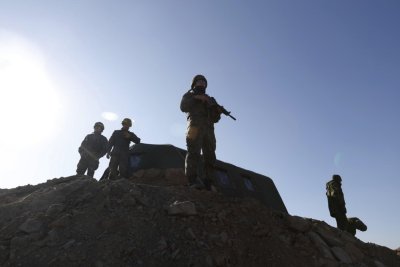
South Korean soldiers stand guard at a destroyed South Korean guard post during a mutual on-site verification of the withdrawal of guard posts along the Demilitarized Zone (DMZ) in northern Gangwon-do, South Korea. Photo by JEON HEON-KYUN / EPA
July 30 (Asia Today) — South Korea’s military began inspecting front-line Army units Thursday after a corps changed its guard procedures and stopped loading live ammunition into heavy weapons deployed near the border with North Korea.
The review follows concerns that the change could weaken the military’s ability to respond quickly during an emergency.
The Joint Chiefs of Staff said the Army Ground Operations Command began an on-site inspection of the 1st Corps on Thursday and plans to examine other front-line corps under its command.
Military officials will consider additional measures after completing the inspections.
The Ground Operations Command oversees five regional corps – the Capital, 1st, 2nd, 3rd and 5th corps – as well as the 7th Maneuver Corps. The inspections will cover front-line units in some of the five regional corps.
The 1st Corps, which is responsible for the western section of the inter-Korean border, reportedly changed its procedures during the first half of this year.
Under the revised procedures, soldiers at guard posts and general outposts did not load live ammunition into crew-served weapons, including K6 heavy machine guns and K4 automatic grenade launchers.
The ammunition was instead stored in ammunition boxes near the weapons.
South Korean front-line units are generally required to keep live ammunition loaded in weapons used for guard operations. The 1st Corps reportedly made an exception under the authority of its commander, Lt. Gen. Han Ki-sung.
The measure was reportedly intended to prevent accidental discharges, but critics said it could delay the military’s response to a North Korean attack or other emergency in the heavily fortified border area.
Questions have also been raised about whether Han’s decision was influenced by an accidental discharge that occurred while he commanded the Army’s 25th Infantry Division last year.
During that incident, a K6 machine gun round was accidentally fired toward North Korea while soldiers at a general outpost were inspecting the weapon.
A military official said inspectors would examine whether it was appropriate for a commander to change ammunition-loading procedures at his discretion, along with other operational issues.
“The use of firearms at front-line guard posts and general outposts is based on the principle that live ammunition must be loaded,” the Joint Chiefs of Staff said.
The military said it would take necessary action after examining units operating under exceptions to that rule.
Detailed information cannot be disclosed because of operational security, it said.
United States economic growth slowed in the second quarter of 2026 amid a growing deficit and increasing inflationary pressures.
US gross domestic product (GDP) grew by 1.5 percent between April and June. That is a sharp decline from 2.1 percent growth in the first quarter of the year, according to a Bureau of Economic Analysis (BEA) report released on Thursday.
Recommended Stories
list of 4 itemsend of list
A widening trade deficit is a key reason why GDP is slowing, as is a jump in petrol prices, experts say.
“It’s a classic supply shock. The combination of tariffs and oil price spikes is exactly what a macroeconomist would expect to happen,” Michael Klein, professor of international economic affairs at The Fletcher School at Tufts University, told Al Jazeera.
The US has increased purchases of goods like semiconductors, telecommunications equipment, and industrial equipment, according to BEA data. Business investment in equipment rose by more than 15 percent in the second quarter. Those are essentially the elements needed for the ongoing investment boom to support the growth of artificial intelligence (AI).
“Imports rose due to the investment and consumption driver, and so net exports were a drag on overall growth. Overall, the US is investing and consuming more but not producing more,” Rachel Ziemba, adjunct senior fellow at the Center for a New American Security, told Al Jazeera.
Exports have not kept pace. The trade deficit in May grew to $77.6bn, a 42 percent increase from the month before, according to BEA data.
Exports tumbled by 3.2 percent to $317.7bn, and imports rose by 3.3 percent to $395.3bn.
This comes as countries around the globe seek to reduce their dependence on the US due to President Donald Trump’s tariff policies.
Among them is Canada, historically one of the US’s biggest trading partners. Canadian Prime Minister Mark Carney has pursued new trade deals with China and Saudi Arabia in recent months, for example, as Trump has slapped steep tariffs on the country, threatened to annex it and called it the 51st state, and refused to renew a trade deal with Canada and Mexico.
Are US tensions with Iran a factor?
In the second quarter, energy prices fluctuated greatly over the past few months. For US consumers, that was mostly reflected in petrol prices. During the second quarter, US petrol prices hit $4.48 per gallon (3.78 litres) in May.
They later retreated to $3.96 per gallon by the end of June. But the reprieve was short-lived as a fragile peace deal failed to take hold, with petrol prices increasing throughout July after the deadline for data to be included in second-quarter GDP had passed. Prices have since moved back above the $4 mark.
Petrol prices drove inflation for much of the second quarter. Between March and April, petrol prices jumped 5.4 percent. The next month, they jumped another 7 percent. They eased between May and June, falling 9.7 percent as global benchmark prices pulled back.
According to analysis from Bank of America, discretionary spending surged in June, the final month of the second quarter, as spending on products outside of petrol jumped while fuel prices temporarily eased.
“With gasoline prices easing in June, total card spending excluding gas surged 5.6% YoY [year over year] – also the strongest growth since April 2022,” the report said.
How can the GDP recover?
US consumers have ramped up spending on prescription drugs, automobiles like light trucks, and new furniture. There was also increased spending in areas like restaurants and hotels, suggesting that consumers remain somewhat resilient.
But, says Fletcher School’s Klein, that spending is by high-income earners, a trend that indicates a K-shaped economy, which is when the wealthy thrive, while lower-income consumers and small businesses face tougher economic conditions.
“The continued consumption growth of those who are better off depends upon things like the stock market staying strong and housing prices staying strong, because people feel wealthier through the value of their house or their stock portfolios, so they’ll spend more. But by a number of measures, the stock market seems to be very highly valued,” Klein, who also authors the EconoFact economic analysis website, told Al Jazeera.
Overall, consumer confidence fell for the third straight month in July, according to a Conference Board report released on Tuesday. Consumers attributed the decline to “current business conditions”, and the organisation expects “little improvement” for the remainder of the year.
Business investment would also need to surge more broadly to lift the wider economy. While there has been a boom in the AI sector, other industries have not been as eager to keep their inventories stocked.
Klein says consistent trade policies would change that.
“The pervasive uncertainty in the economy will affect businesses’ decisions on hiring and investing. That can also contribute to the slowdown, because, in an uncertain environment, businesses don’t want to make decisions that have long-lasting consequences when they have little idea of what the future will look like,” Klein said.
Creating economic conditions that encourage consumers and businesses to spend would help drive up GDP in the coming quarters. However, uncertain trade policies and concerns about widespread layoffs, as has been the case in several tech companies, have made consumers more cautious with the pocket books.
“If people were more secure and felt that their jobs would be there next year; if they felt that things weren’t more expensive and they could afford to spend more. But those are not easy fixes, right? And talk is not going to change what people rightly perceive as a fraught situation,” Klein added.
July 30 (UPI) — The ABC network has accused the Federal Communications Commission of attempting to censor what it broadcasts by pressuring its local stations to apply for early renewal of their licenses.
In its regulatory filing, which is a response to the FCC’s request that ABC-owned broadcast stations reapply for their licenses, ABC alleged that FCC chair Brendan Carr’s criticism and actions at the agency have amounted to “attempted censorship,” Politico reported.
The network said in the filing that actions by the agency and Carr have been aimed at shaping news reports across the media in ways that violate U.S. Constitutional freedom of the press.
The FCC, in a statement on Thursday to The Hill, contended that it is operating in the public interest, based on what it said are “equal opportunity regulations” as it accused the network of operating “in the narrow or partisan interests of a political party.”
The Trump administration, and President Donald Trump, have long alleged that members of the media — print, online or television — who are critical or engage in satire of him during his two terms as president are violating federal law.
“The retaliation against ABC is a signal to every media company in the country: accommodate the administration’s view of what news coverage should look like or pay the price,” the network said in the filing.
“Across the government, regulatory and contracting carrots and sticks have been trained on other disfavored speakers,” ABC said. “The tools vary; the objective does not: a media industry too fearful of official reprisal to report the news freely.”
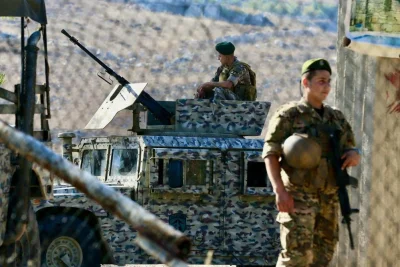
Lebanese soldiers stand guard as the Army deploys to Zawtar al-Gharbiya in southern Lebanon on July 23. Lebanon sent troops to take control of so-called pilot zones in southern Lebanon from which Israeli troops are to withdraw. Photo by EPA
BEIRUT, Lebanon, July 30 (UPI) — The widespread destruction left behind by Israeli forces in Zawtar al-Gharbieh — the first U.S.-backed “pilot zone” in southern Lebanon — was beyond anything its returning displaced residents could have imagined, providing a glimpse of the devastation across the southern region and the extensive reconstruction needs ahead.
Situated in the central sector of southern Lebanon near the strategic Litani River, Zawtar al-Gharbieh represents the testing ground for the success of the pilot zones — the cornerstone of the U.S.-brokered framework agreement reached between Lebanon and Israel on June 26.
It was the first village designated by Israel to begin withdrawing its troops, allowing for the deployment of the Lebanese Army and return of displaced residents. Yet, it reveals the significant and complex challenges facing the process.
The residents rushed back to the village when the Lebanese Army moved in July 21, returning each morning and waiting at the entrance for five days before they were finally allowed to enter and inspect their homes and properties.
The army was carrying out security inspections of all homes and removing missiles and unexploded ordnance remaining from the Israeli military presence.
“We were shocked by the scale of the destruction. It was much, much more than we had expected,” Mayor Abed Ezzedine told UPI.
Ezzedine said Israeli forces “spared nothing,” destroying or damaging everything in their path — from homes and schools to places of worship, shops and the municipality building.
He said the water infrastructure was torn up, the electricity networks blown up and burned, and the village’s only water well destroyed.
“In this life, everything has limits. Even war should have limits,” he added. “They changed the face of the village beyond recognition.”
Some 250 housing units — representing up to 80% of the village’s homes — have been destroyed, while the remaining houses have suffered severe damage and are no longer habitable.
Several of Zawtar al-Gharbieh’s 4,500 to 5,000 residents were killed, including entire families, while others were injured as they fled Israeli attacks and advancing troops three months ago, according to Ezzedine, who said “they showed no mercy to anyone.”
Although Israel stopped targeting the village after the Lebanese Army deployment, he said its drones never left the sky, hoovering at very low altitude “over our heads.”
“What kind of cease-fire or arrangement this is?” Ezzedine asked rhetoically.
Very few residents were able to stay — those who were fortunate enough to still have one room in their homes standing and safe. However, they lacked the basic necessities to continue living, including water, electricity and even Internet access.
The vast majority, meanwhile, spent their days in the village and returned at night to their shelters.
Ezzedine struggled to locate his home among the rubble — one of 25 houses in his neighborhood that had been reduced to ruins.
The rapid reconstruction of Zawtar al-Gharbieh will be a key factor in determining the success of the pilot zones, easing residents’ suffering, restoring confidence in the Lebanese state and reducing the likelihood of them turning again to Hezbollah.
“We want to see action on the ground. This is a test of good faith,” Ezzedine said.
According to a Lebanese official source, the main obstacle is the lack of necessary funding.
The source emphasized that rebuilding the village is an important step in supporting Lebanon’s diplomatic approach and consolidating the success of the pilot zones.
He told UPI that the government faces two options: organizing a reconstruction conference for southern Lebanon, which would require considerable time, or quickly rallying support from friendly states such as Saudi Arabia and Qatar to rebuild the first pilot village.
However, success also largely depends on Israel, which has insisted that it will not withdraw from parts of southern Lebanon it is occupying — specifically its self-declared “yellow zone” — or from Gaza and Syria.
Lebanese and Israeli negotiating teams are scheduled to meet Aug. 4 to 5 to evaluate progress on the pilot zones, the U.S.-led verification mechanism and the withdrawal of Israeli forces from additional occupied Lebanese territories.
The official source told UPI that the United States, which does not want to have boots on the ground in southern Lebanon, would have to “find an acceptable formula for all parties” for the verification process, potentially involving countries such as Italy, France or Spain — proposals reportedly rejected by Israel — or others to carry out the mission.
The source confirmed Lebanon’s commitment to the framework deal, saying, “We will not back out of it,” despite knowing that Israeli Prime Minister Benjamin Netanyahu is not prepared to withdraw from southern Lebanon at this stage, ahead of the October 17 Israeli elections.
Netanyahu remained firm that the disarmament of Hezbollah is a precondition for Israel’s complete withdrawal from southern Lebanon.
A well-informed source expects “tough negotiations” at next week’s Rome talks over the establishment of additional pilot zones, as Israel continues “its aggressions, infiltrations and systematic house demolitions” in violation of the framework agreement.
The Lebanese Army warned this week that Israeli aggressions are hindering completion of its deployment, delaying the return of displaced residents to their villages and undermining efforts to consolidate stability in southern Lebanon.
The source told UPI that the U.S. is exerting pressure on Israel, but “not enough,” adding that Israel “is trying to find an excuse” to withdraw from the framework agreement, which aims to end the nearly three-year war between Israel and Hezbollah and pave the way for peaceful relations between Lebanon and Israel.
More than 1,500 migrants have reached Spain’s North African enclave of Ceuta by sea over the past week, many swimming from Morocco using wetsuits and inflatables. Local authorities say reception centres are overwhelmed and have called for an emergency response.
Citizen vigilantes patrol Ghana’s streets, fighting an opioid crisis. We meet those taking the law into their own hands.
Ghana is facing an opioid addiction crisis, with a flood of cheap, synthetic drugs destroying lives and communities. In the northern city of Tamale, a group of civilians, frustrated by what they see as the inaction of local authorities, are taking the law into their own hands. The ‘anti-drug task force’ patrols the streets, seeking out dealers and users and meting out its own brand of justice. Some government officials condemn the vigilantes, while others embrace them as a useful tool in the fight against illegal drugs. As word spreads about the success of Tamale’s task force, some question whether civilians can properly replace state services – and warn about the dangers of vigilante justice.
Estimates of up to 2,000 migrants have entered Spain’s territory of Ceuta in recent days in attempts to reach Europe.
Published On 30 Jul 202630 Jul 2026
Authorities in Ceuta have raised the alarm after thousands of migrants breached the border to the North African Spanish enclave from neighbouring Morocco in recent days.
The government of Ceuta said on Thursday that between 1,500 and 2,000 people had entered in the last 10 days. Hundreds more were estimated to have arrived on Thursday, prompting regional President Jesus Vivas to declare an “absolute humanitarian and social emergency” and call on Madrid to send troops to reassert control of the border.
Recommended Stories
list of 4 itemsend of list
Spain’s Interior Ministry rejected calls to declare a national emergency, saying such a measure does not cover migration crises, but promised additional resources.
Footage showed some of the migrants shouting “Viva Espana!” as they entered the territory, many of them having travelled by water from the Moroccan side on inflatable devices.
Crowds were shown walking around the breakwaters onto local roads, reported The Associated Press news agency. State news agency EFE said others had crossed by the border by land, scaling fences.
Migrant rights activist Zakaria Zarroqui told the Reuters news agency that the surge in migrant numbers was similar to one that occurred in May 2021, when some 10,000 Moroccan and sub-Saharan youths entered the enclave within days.
“The situation remains out of control as we speak,” Zarroqui said, adding that people were still flocking to the Moroccan city of Fnideq in an attempt to cross the border.
Ceuta, together with Melilla — another autonomous Spanish city in North Africa — represents the European Union’s only land border with Africa. Both cities often experience surges in attempted crossings by people seeking to migrate to Europe.
Earlier this month, Spain’s Supreme Court ruled that migrants intercepted at sea while attempting to reach Ceuta or Melilla cannot be returned to Morocco.
“It has been a slow trickle since the Supreme Court’s ruling, but today has been an explosion,” a Guardia Civil spokesperson told Reuters.
Spain’s Interior Ministry said it was working closely with Morocco to address the surge in irregular arrivals, blaming people-smuggling networks for exploiting the Supreme Court’s ruling and encouraging undocumented migration.
Interior Minister Fernando Grande-Marlaska is expected to visit Ceuta on Friday to evaluate the situation.
Pakistan is facing accusations that its security forces have killed dozens of unarmed protesters in the past week of demonstrations in Pakistan-administered Kashmir. Al Jazeera’s James Bays asked panellists on Inside Story if Islamabad is borrowing tactics from Indian-administered Kashmir.
A handout photo made available by the Fire and Rescue Departmental Service 33 shows firefighters crew battling a fire near Le Porge, in southwestern France on Wednesday as a wildfire rages through the forest in Gironde. Photo by EPA
July 30 (UPI) — Tens of thousands of residents in Spain and France are returning home Thursday after being evacuated from wildfires that have torn through Europe.
Firefighters have contained wildfires near Madrid in Spain and in France’s Bordeaux region for the moment. However, authorities in both countries warn that there is still work to be done while Europe withstands conditions that are conducive to the fires spreading again.
Spanish Prime Minister Pedro Sánchez said Wednesday that firefighters were making progress, focusing on hot spots to prevent the fires from regaining momentum. Authorities later began lifting some evacuation orders.
France lifted evacuation orders for about 84,000 residents in the southwest region of the country Thursday. In total, about two-thirds of evacuees have been given the go-ahead to return to their homes.
While progress is being made in the fight, the heatwave in Europe continues. It has been one of Europe’s hottest summers ever recorded. Fires are still raging from Spain to Turkey. Northern Africa has also been battling wildfires for more than a week.
France is bracing for weather conditions Thursday that Sophie Brocas, prefect of the French department of Gironde, has called “unfavorable.” High winds, falling humidity and a chance of thunderstorms have increased the chances of renewed intensity.
Bordeaux received some rainfall Thursday.
In Spain and France alone, more than 300,000 acres have burned.
Kizza Besigye, who faces treason charges, is reported to be ‘unconscious’ in hospital after collapsing in court.
Published On 30 Jul 202630 Jul 2026
Detained Ugandan opposition leader Kizza Besigye has been hospitalised in an unresponsive state after he collapsed during a court hearing on Wednesday, according to his wife.
Besigye, who has been in prison since late 2024 on treason charges, is now “unconscious, unable to speak, and unresponsive”, his wife, Winnie Byanyima, said in a post on X on Thursday.
Recommended Stories
list of 3 itemsend of list
He has been admitted to the intensive care unit at Mulago National Referral Hospital in the capital, Kampala, added Winnie Byanyima, who also heads the United Nations AIDS programme UNAIDS.
Byanyima has called for her husband to be transferred out of Mulago hospital, a public facility, and into a private facility where he can be treated by his personal physician.
“[Besigye’s] family is saying he needs special treatment and they do not trust the government hospital,” reported Al Jazeera’s Catherine Soi from Nairobi in neighbouring Kenya.
“There’s a lot of frustration. The court has not granted that permission for him to be transferred.”
‘Not responding to anything’
Besigye, 70, was seen falling into the dock during his Wednesday courtroom session while protesting against his trial without lawyers of his own choosing, after authorities also detained and charged his main lawyer, Erias Lukwago.
“Before he collapsed, he cried out that he was being injured,” said Byanyima.
Ingrid Turinawe, a close confidant of Besigye, told The Associated Press that she and others were not allowed to see Besigye at Mulago hospital.
“He is in the ICU, and he is not responding to anything,” she said, adding that Besigye’s personal physician was able to see him several hours after he collapsed.
Besigye, a former ally-turned-critic of longtime President Yoweri Museveni, has been in custody since November 2024. He was jailed together with his aide Obeid Lutale in Kenya and both were repatriated to Uganda where they were subsequently charged with treason.
Besigye’s lawyers, supporters and rights activists say that the charges are politically motivated and that his prolonged detention is part of an ongoing crackdown on opponents by Museveni.
Both Museveni and his son, military chief Muhoozi Kainerugaba, have already weighed in against Besigye.
Kainerugaba, alleging that Besigye plotted to kill his father, has previously described the opposition figure as “a dead man walking”. And Museveni himself has said Besigye must answer for “the very serious offences he is alleged to have been planning”.
In recent days, prosecutors have moved to present evidence they say will prove Besigye and others plotted to overthrow the government
Museveni, 81, was declared winner of the last election in January although the results were rejected by runner-up Bobi Wine, who has since gone into exile in the United States.
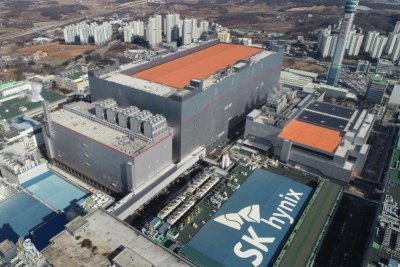
Memory chip facilities operated by SK hynix in South Korea. The company’s share price has plunged over the past month despite posting record earnings. Photo by SK hynix
SEOUL, July 30 (UPI) — South Korea’s SK hynix posted record earnings in the second quarter of this year amid the AI boom. However, shares of the world’s No. 2 memory chipmaker have continued to plunge on the Seoul bourse.
The company noted Wednesday that it logged sales of $55.1 billion and operating profit of $42.1 billion during the April-June period. Revenue more than tripled from a year ago, while profit increased more than sixfold.
“Driven by sustained demand growth from expanding AI infrastructure investments, high-performance products for AI servers led price increases, enabling the company to surpass its previous record set in the prior quarter,” SK hynix said in a statement.
“With major tech companies increasing their AI infrastructure investments, additional supply requests continue to mount. As these investments are supported by revenue generated from AI services, the momentum in memory demand is expected to persist,” it added.
Despite the stellar performance and solid outlook, its shares have struggled to find their footing on the Korea Exchange. They fell 14.65% on Monday before dropping another 9.61% on Wednesday and 5.64% on Thursday.
Since reaching a record high in late June, SK hynix’s market capitalization has fallen by more than half in just over a month. This came after its shares had surged more than tenfold in the year through late June.
Observers attribute the bearish run to a combination of factors, including lower-than-expected earnings, concerns over the sustainability of the AI boom and the emergence of Chinese competitors such as recently listed CXMT.
Although SK hynix chalked up a record bottom line in the previous three months, the figure came in about 5% lower than the market consensus. There are also questions over whether SK hynix has secured sufficient long-term agreements, or LTAs, with customers to reduce uncertainty about future earnings.
“The market remains skeptical about LTAs, so we believe it will take time for confidence to build,” NH Investment & Securities analyst Ryu Young-ho said in a report, reducing his target price for SK hynix by 17.1%.
Other brokerage houses, including Shinhan Securities, Hanwha Investment & Securities, and Samsung Securities, also followed suit.
“We revised down our operating profit estimates for SK hynix for 2026 and 2027 by 7% and 9%, respectively, to reflect a more conservative price outlook,” Shinhan Securities analyst Kim Hyung-tae said in a report, cutting his target price by 35.7%.
However, some experts remained optimistic, raising their target prices on expectations that SK hynix shares will eventually rebound.
“The main reason second-quarter operating profit fell short of the market consensus was that DRAM price growth was weaker than expected,” Korea Investment & Securities analyst Chae Min-sook said.
“However, this was caused not by slowing demand, but by the postponement of some shipments, which should instead contribute to improved earnings in the third quarter,” Chae added, raising the target price by 24%.
DB Securities came up with a similar view.
Leveraged ETFs tied to memory chipmakers
Also at the center of controversy are leveraged exchange-traded funds, or ETFs, linked to individual stocks. They debuted in late May and are tied to the shares of the country’s two blue-chip companies, Samsung Electronics and SK hynix.
Investors have complained of heavy losses. Samsung, the world’s top memory chipmaker, has also seen its share price plummet in recent weeks.
Against this backdrop, critics argue that the new products have amplified market volatility by encouraging short-term speculative trading. Over the past two months, KOSPI circuit breakers have been triggered repeatedly by sharp market swings.
Because these products magnify both gains and losses, they tend to attract retail investors seeking quick profits, potentially leading to larger price swings during periods of market uncertainty, according to experts.
During a parliamentary session on Wednesday, lawmakers summoned top financial officials to criticized the leveraged products and the market slump.
“The government has encouraged people to sell their real estate and invest in stocks. But after the stock market crashed, retail investors ended up suffering heavy losses,” Rep. Park Jun-tae from the main opposition People Power Party said.
In response, Financial Services Commission Chairman Lee Eog-weon promised to do everything possible to minimize market-related volatility but failed to present specific measures.
“South Korean equities have been buoyed by the strong performances of memory chipmakers. But the rally overshot because of a few factors, including the debut of the single-stock 2x leveraged ETFs,” economic commentator Kim Kyeong-joon, formerly vice chairman at Deloitte Consulting Korea, told UPI.
“Once market sentiment turned bearish, the leveraged ETFs accelerated the market’s decline. The problem is that the products cannot simply be abolished because doing so would create even greater market disruption,” he added.
1 of 3 | Captain Gordon McArhtur looks out from the State of Maine’s bridge with two students. Photo courtesy of Maine Maritime Academy
CASTINE, Maine, July 30 (UPI) — The new State of Maine has arrived in historic Castine, where Revolutionary War history and maritime tradition converge on the shores of Penobscot Bay, bringing advanced technology to the Maine Maritime Academy as it trains the next generation of merchant mariners.
The $330 million, 525-foot ship is the third of five National Security Multi-Mission Vessels built for the U.S. Maritime Administration. to prepare the next generation of merchant mariners. The ship accommodates up to 600 cadets and features advanced navigation and engineering systems, classrooms and modern diesel propulsion.
Constructed at the Hanwha Philly Shipyard in Philadelphia by more than 2,000 American shipbuilders, engineers and apprentices, the vessel also reflects renewed investment in the U.S. shipbuilding industry. The shipyard was acquired by South Korea’s Hanwha Group in late 2024 for $100 million, bringing advanced automation and digital manufacturing technology there.
The South Korean shipbuilding conglomerate is betting $5 billion on a dramatic revival of American shipbuilding, planning to turn its Philadelphia yard into a high-volume production hub.
The investment would increase annual output from fewer than two vessels to as many as 20, pairing advanced Korean manufacturing technology with expanded U.S. capacity to build commercial ships and naval vessels.
For Maine Maritime Academy, the new ship represents a dramatic leap from the wooden schooners and comparatively simple navigation instruments that once defined maritime training along the Maine coast.
Its bridge features sophisticated navigation and communications systems, digital charts and advanced ship-control technology designed to prepare cadets for an increasingly automated global maritime industry.
Despite the technology, the fundamentals of seamanship have changed little. Cadets must still read weather and sea conditions, work as a crew and make decisions under pressure.
“We start with the basics,” said the academy’s Captain Gordon “Mac” McArthur, 56. “Rowing in an eight-person lifeboat is a large part of the fall semester freshman year. We build from tying knots and turning a wrench to the more complicated things. We are training problem-solvers and critical thinkers. The technology-based things don’t matter if you don’t have those fundamentals.”
The training ship’s arrival underscores the community’s enduring maritime identity, where centuries-old seafaring traditions meet the technology shaping the future of global shipping.
Nowhere is that contrast more evident than at Maine Maritime Academy, where the state-of-the-art ship shares the waterfront with Bowdoin, the academy’s 1921 National Historic Landmark schooner — a living symbol of the evolution from wind-powered seamanship to the digital age of navigation.
Yet, both are classrooms for learning many of the same fundamental lessons about life at sea.
The academy’s new flagship reflects Castine’s balance of maritime tradition and the future of seafaring. While Maine Maritime Academy trains the next generation of mariners for a high-tech global industry, the town is fighting to preserve the working-waterfront traditions that shaped its identity.
Just down the harbor, Eaton’s Boatyard — where wooden boats have been built and repaired since 1931 — remains a living workshop of Maine craftsmanship, proving that even in the digital age, some skills are still best learned by hand.
Eaton’s Boatyard preserves a cornerstone of Castine’s maritime heritage as the birthplace of the 18-foot wooden Castine Class sloop, designed by Mace Eaton in 1951. On July 18, 13 of the one-design racing sailboats, including two originals still owned by descendants of their first owners, competed in Castine Harbor, continuing a nearly 70-year racing tradition on Penobscot Bay.
David Biggs, honorary chairman of the 27th annual Castine-to-Camden Yacht Race, said the Downeast harbor’s maritime traditions continue to thrive as new generations embrace sailing.
“It’s still exciting to see these beautiful boats in our harbor, especially our own Castine Class Caroline B,” Biggs, 93, who has lived there with his wife, Marian, for more than 50 years, told UPI.
Though Castine has evolved from a working fishing and shipbuilding port into an upscale summer village, its identity remains firmly tied to the sea through Maine Maritime Academy, one of the nation’s leading schools for merchant mariners.
“It’s become a college town with a deep maritime soul,” Biggs said.
Kenny Eaton, 81, Mace Eaton’s grandson and the third generation of the boatbuilding family, has watched Castine’s waterfront change from a working harbor toward one increasingly shared with recreational boats and seasonal residents.
“You can’t stop change,” Eaton said. “But you hope the next generation understands that Castine wasn’t built just because it had a beautiful view of the water. It was built because people worked on it.”
That maritime connection continues among a new generation at Maine Maritime Academy.
That sense of maritime tradition also runs through families. Marin Griffin, 18, of Bangor, Maine, recently completed her freshman year at the academy and is following a path already taken by two generations before her.
“I’m the third generation in my family to attend Maine Maritime,” Griffin told UPI.
A harbor shaped by history
Castine’s ties to the sea run deep. Once a strategic outpost and later a bustling center of fishing, shipbuilding and coastal trade on Penobscot Bay, the town has evolved into a quiet Downeast harbor, while Maine Maritime Academy has carried its seafaring legacy into the modern era, training generations of merchant mariners and maritime professionals.
The State of Maine’s Captain Craig ‘Mac’ McArthur said Castine’s centuries-old connection to the Atlantic world continues to define both the school and the town.
“I’ve run into Maine Maritime alumni in Korea, Malaysia, Brazil, Dubai and other places around the world. Most don’t talk about their time at Maine Maritime,” McArthur said. “They talk about their time ‘in Castine.’ There is something about the remoteness of this place that prepares you for world travel.”
The academy’s legacy endures in the careers of graduates who credit its seamanship training for their success. Jon Parsons, 59, spent 23 years with Polar Tankers, transporting oil from Valdez, Alaska, while Tip Macdonald, 70, served as a ship pilot at the Port of Baltimore.
“I was a successful ship pilot at the Port of Baltimore for thirty years,” Macdonald told UPI. Both men say the academy’s rigorous instruction remains as strong today as when they attended, and that Castine continues to preserve the maritime traditions that have shaped generations of mariners.
An industry under pressure
Across coastal Maine, maritime trades are being reshaped by rising costs, technological change and a changing marine environment. Fishing remains dependent on generations of accumulated knowledge, but boats, engines, electronics, fuel and regulatory uncertainty have made entering the industry increasingly expensive.
A warming, rapidly changing Gulf of Maine is reshaping life on the water. Veteran tuna fisherman Justin McCarthy said Atlantic bluefin catches have declined and prices have fallen sharply, squeezing a fishery that once yielded five-figure paydays.
Yet, he sees hope in the next generation: his son, Mac, graduated from Maine Maritime Academy and returned home aboard the State of Maine, extending the family’s seafaring tradition.
Today’s merchant marine cadets are entering a maritime industry transformed by satellite navigation, electronic charts, automation and digital communications. Built for that environment, the State of Maine provides hands-on training with modern shipboard technology, preparing future deck officers and engineers to operate increasingly sophisticated commercial vessels.
Retired Navy Capt. Justin Cooper II, Maine Maritime Academy’s commandant of midshipmen, brings decades of naval experience to Castine. A former fighter pilot, Cooper served aboard the aircraft carriers USS Enterprise, USS Abraham Lincoln and USS Nimitz.
“We are training these young men and women to take their place in the maritime community,” Cooper told UPI. “We want them to be good leaders and to prepare them to enter the global maritime industry.”
Founded during World War II, Maine Maritime Academy still instills the discipline and seamanship demanded by U.S. Coast Guard standards. While most graduates now head into the commercial maritime industry rather than military service, the academy’s mission remains the same: preparing mariners to lead when conditions at sea turn unforgiving.
That emphasis on fundamental seamanship is reinforced by another academy vessel.
The Bowdoin, a 1921 Arctic exploration schooner, comes from an era when sailors depended on wind, weather, charts and celestial observation. Berthed alongside the State of Maine, the two vessels bridge more than a century of maritime education, reflecting both the evolution of seafaring and the enduring maritime heritage that has defined this coastal community for generations.
Saudi Arabia has hosted the last two Asian Champions League Elite finals and has now been confirmed for the next three.
Published On 30 Jul 202630 Jul 2026
Saudi Arabia will organise the next three editions of the Asian Champions League Elite finals after the Asian Football Confederation’s executive committee confirmed the country’s provisional hosting rights had been made permanent.
The Saudis have hosted the first two editions of the event, which sees the quarterfinals, semifinals and final played in a centralised venue, since the continent’s premier club competition was restructured before the 2024/2025 season.
Recommended Stories
list of 4 itemsend of list
Jeddah-based outfit Al-Ahli have won the title on the two occasions the city has hosted the finals, defeating Japan’s Kawasaki Frontale in 2025 before beating Machida Zelvia, also from Japan, in May.
The upcoming edition of the tournament, which features the domestic champions of the leading competitions from the region, will see the league phase expanded from 24 to 32 teams.
The qualifying rounds will start on August 11, with the draw for the league phase to be held in Kuala Lumpur on August 18 and play commencing on September 14.
Saudi Pro League side Al-Ahli completed their back-to-back victories with a 1-0 win after extra time against Machida Zelvia, of the Japanese J1 League, in last year’s final.
Fellow Saudi Pro League side Al-Hilal are the record winners of the competition with four wins from nine appearances in the final – which is also a record.
Japan’s Urawa Red Diamonds and South Korea’s Pohang Steelers have each lifted the trophy twice, having both appeared in the final on three occasions.
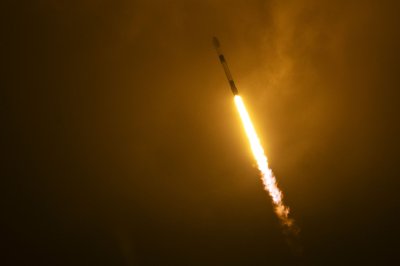
A SpaceX Falcon 9 rocket, like the one seen here, launched from Launch Complex 40 at the Cape Canaveral Space Force Station, Fla., early Thursday with a payload for the national Reconnaissance Office. Photo by Joe Marino/UPI | License Photo
July 30 (UPI) — A Falcon 9 rocket topped with a classified payload for the National Reconnaissance Office launched from Florida’s east coast early Thursday.
The rocket launched at 3:10 a.m. EDT from Space Launch Complex 40 at Cape Canaveral Space Force Station in Florida.
Little information about the NROL-95 mission has been made public aside from the fact that the payload was designed, built and will be operated by the NRO. The broadcast of the launch was restricted at the request of the NRO, SpaceX said, with the second stage two and deployment of the payload not shown.
The first-stage booster, on its seventh flight, returned to Earth and successfully landed at Cape Canaveral Space Force Station.
It was the 88th Falcon launch of the year and the 12th this month, according to SpaceX.
There was a 30% chance of weather-related launch constraints, with a backup launch scheduled for Friday.