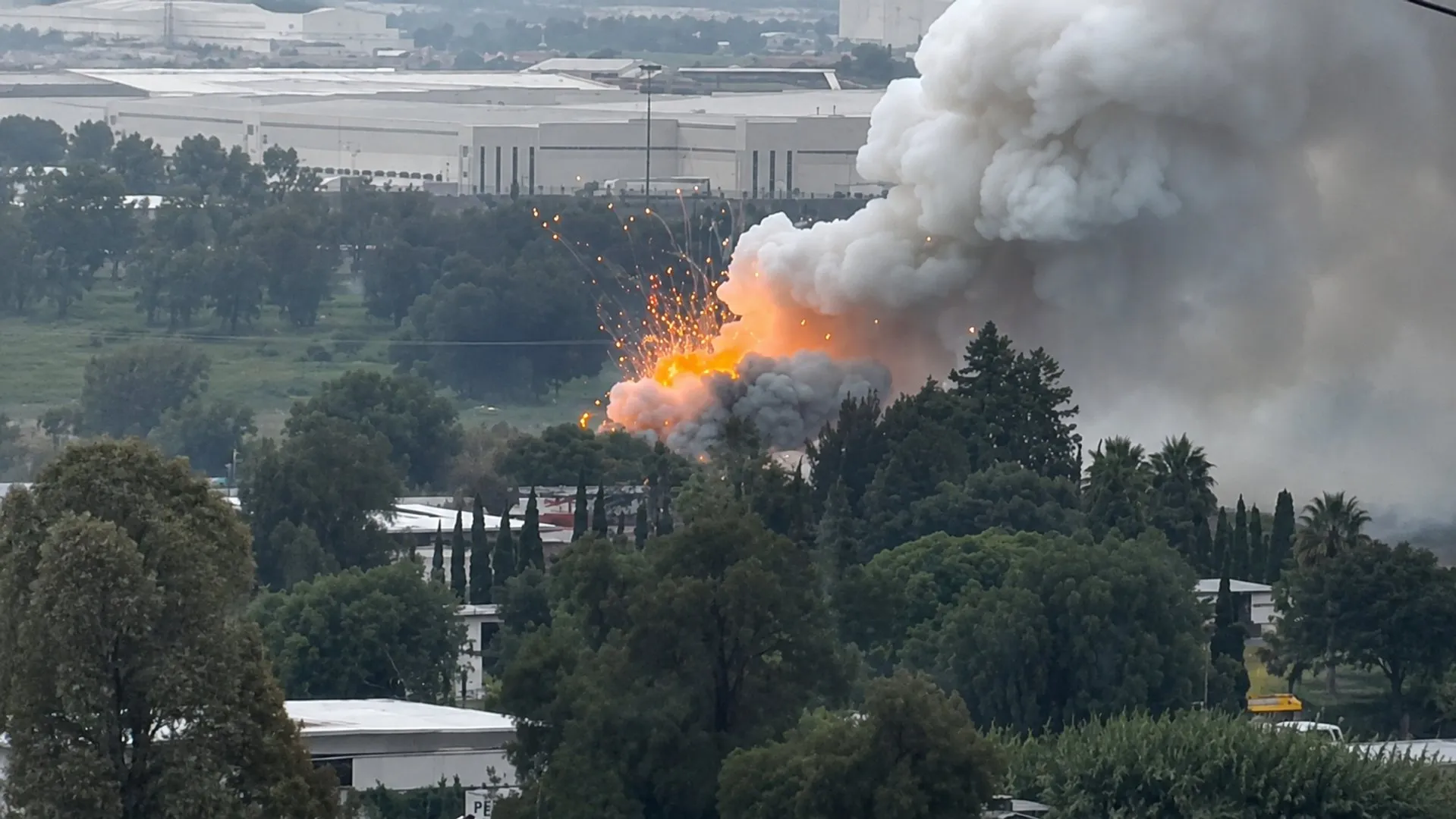
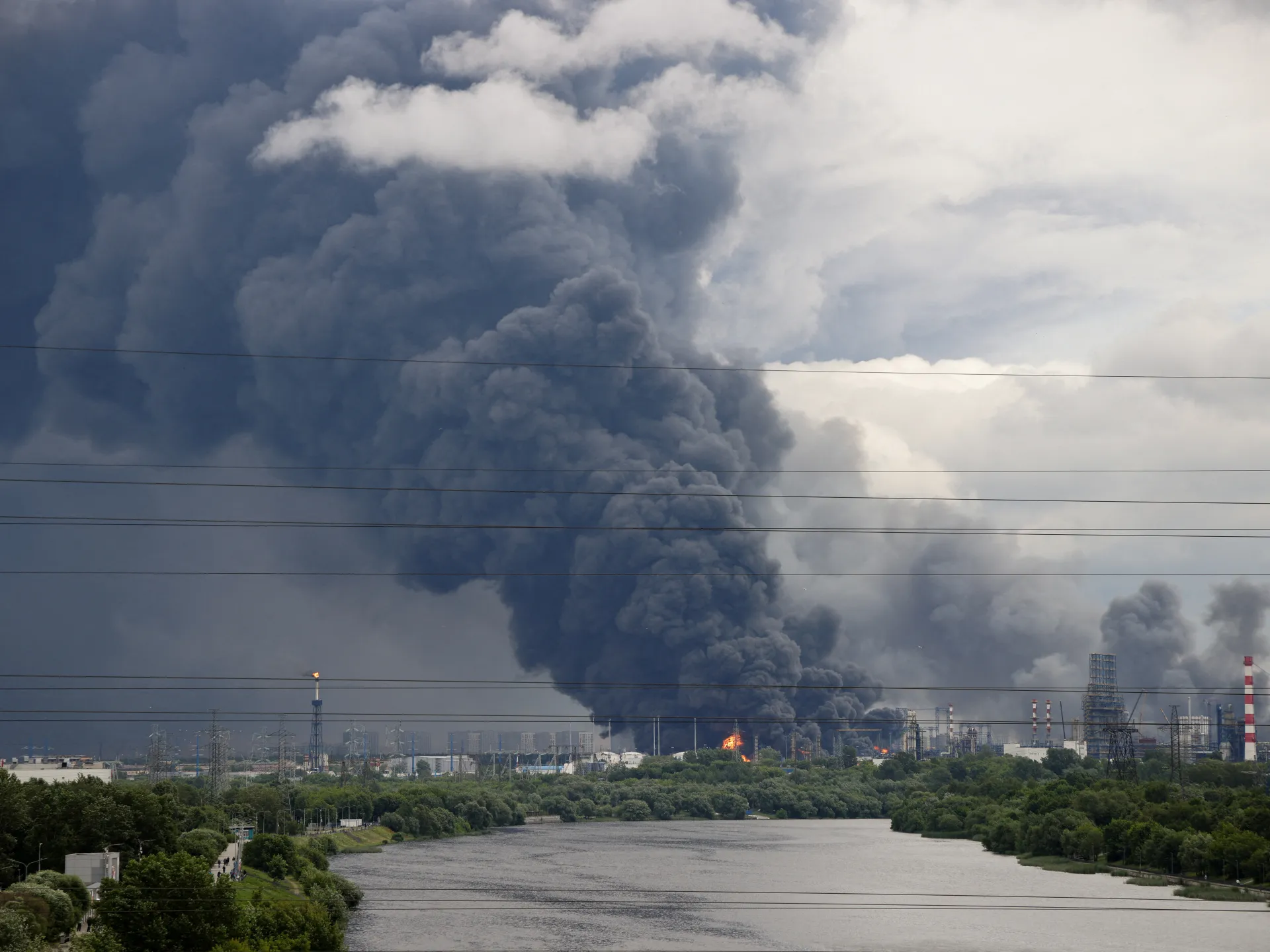
Two explosions have hit a fireworks facility in Tultepec, Mexico, sending a spectacular mix of flames and explosions into the air. The building was flattened but no injuries were reported.
Meta, parent company of Instagram and Facebook, is on trial over claims it sought to hook young users on its platforms despite mental health concerns.
Published On 26 Aug 202626 Aug 2026
The top executive at Instagram has admitted that few teenagers have used a feature meant to counter addiction before it was turned on by default, as hearings in a landmark trial against its parent company, Meta, continue in the United States.
Adam Mosseri testified on Tuesday as Meta’s trial – over accusations that it designed its platforms, including Facebook, to be addictive to young people – entered its second week.
Recommended Stories
list of 3 itemsend of list
Mosseri, who has led Instagram since 2018, denied any suggestion by US states suing Meta that Instagram had stalled by not making the “Take a Break” feature the default setting for teenagers until September 2024, nearly three years after its launch.
“Most teens didn’t want it,” Mosseri said. “We decided to push forward with it anyway.”
Mosseri is a central witness in the lawsuit brought by 29 US states, in what experts call the biggest legal test yet of social media’s effects on young users.
Four of the states – California, Colorado, Kentucky and New Jersey – have accused Meta of designing the platforms to hook young users, driving anxiety, depression and even suicide, while misleading consumers about the platforms’ safety.
All 29 states say Meta violated US federal law by improperly collecting and employing the personal data of children under 13 while they used its platforms.
The states are seeking approximately $200bn in damages from Meta.
‘Designed to fail’
Meta has rejected accusations that it sought to addict children, saying its research showed no clear link between adolescents’ social media use and a lack of wellbeing.
Under questioning from Jason Slothouber, a lawyer for Colorado, Mosseri acknowledged that the percentage of teenagers using Take a Break was in the low single digits before Instagram made it the default.
Take a Break encourages teenage users to close the app after a certain amount of time. Mosseri had estimated in a December 2021 blog post that more than 90 percent of teenagers who turned the feature on kept it on.
That number, however, referred to the number of those who had turned on the feature.
When asked whether Meta had disclosed its low adoption, which had reached only 1 or 2 percent of accounts, Mosseri admitted the company had not, but said the safety features were later turned on by default in Teen Accounts, which launched in 2024 and have parental controls.
Former Meta employees have said that features such as Take a Break and Quiet Mode were difficult to find and not widely used, casting doubt on whether they represented a serious effort by the company to limit screen time for young users.
“In my experience, Take a Break is a feature that’s designed to fail,” Arturo Bejar, a former Meta engineering director, testified last week.
George Volichenko, a data scientist who worked on safety features at Instagram in 2022 and 2023, likewise stated on Monday that adoption rates of such features were “very low” and that company leadership had declined to approve turning on Quiet Mode by default for young teenagers.
He added that turning on such features automatically would have had a “notable negative impact” on user engagement.
The trial could last six weeks.
Jurors are expected to issue an advisory verdict. US District Judge Yvonne Gonzalez Rogers will decide whether Meta is liable and, if so, determine any civil penalties and changes to Facebook and Instagram.
Aug. 25 (UPI) — The U.S. military killed four people Tuesday in its latest strike targeting an alleged drug-trafficking boat in the Caribbean, the second strike in a matter of days after a two-month pause.
U.S. Southern Command has killed at least 227 people in 68 publicly acknowledged strikes targeting alleged drug-trafficking boats in the Caribbean and Pacific since the first strike on Sept. 2, according to UPI’s tally, which is based on SOUTHCOM press releases.
As with previous strikes, SOUTHCOM said intelligence confirmed the boat it struck Tuesday was involved in narco-trafficking and that it was “operating along established narco-trafficking routes in the Caribbean.”
As it has done with previous strikes, SOUTHCOM did not provide proof.
A seven-second aerial video of the strike published online by SOUTHCOM shows a boat driving along the water before it is enveloped in a flash.
“We will hunt, disrupt and defeat these narco-terrorist networks,” Gen. Francis Donovan, commander of SOUTHCOM, said Tuesday in a statement.
“SOUTHCOM is resolved to neutralizing cartel terror and violence throughout the region and into the U.S. homeland.”
“Joint Task Force Western Hemisphere continues executing precise, lethal operations against the cartels. We will hunt, disrupt, and defeat these narco-terrorist networks. SOUTHCOM is resolved to neutralizing cartel terror and violence throughout the region and into the U.S…. pic.twitter.com/Kj4k9onYxx— U.S. Southern Command (@Southcom) August 26, 2026
Earlier this month, SOUTHCOM replaced Joint Task Force Southern Spear, which had carried out Operation Southern Spear, with the broader Joint Task Force Western Hemisphere, a new command intended to provide unified command and control at the tactical and operational levels while integrating military capabilities with 18 partner nations of the Americas Counter Cartel Coalition, according to the Defense Department.
The Trump administration has said the task force’s purpose is to “synchronize” U.S. military operations with Caribbean and Latin American allies, such as Trinidad and Tobago.
Tuesday’s strike was the second by the joint task force after it killed two people SOUTHCOM accused of being narco-terrorists on Sunday.
The Sunday strike was the first since June 21. The Armed Conflict Location and Event Data conflict monitor told UPI in an emailed statement that Sunday’s strike ended the longest interruption in U.S. strikes on alleged drug-trafficking vessels since the campaign began.
The cause of the lapse was not immediately clear and UPI has contacted SOUTHCOM for an explanation.
The strikes have been widely criticized by legal and civil rights advocates as well as United Nations experts as illegal extrajudicial killings under international law. The Trump administration has argued that it is in “armed conflict” with the drug cartels, though a Justice Department legal memo justifying the strikes against people allegedly affiliated with a secret list of designated groups remains classified.
Despite the Trump administration’s claims that all those killed are narco-terrorists, evidence suggests that at least some of them were fishermen. A lawsuit filed against the U.S. government by the American Civil Liberties Union states that two people killed in the same strike in September were returning to their homes in Trinidad and Tobago after working as farmers and fishermen in Venezuela.
Earlier this month, Sen. Tim Kaine echoed this sentiment after reviewing classified documents on the operation.
In a letter to Trump, the senior Democratic lawmaker from Virginia and a member of the Senate Armed Services and Foreign Relations committees urged him to examine whether military leaders had exceeded his order by targeting people the Justice Department did not say in its memo could be legally targeted and killed.
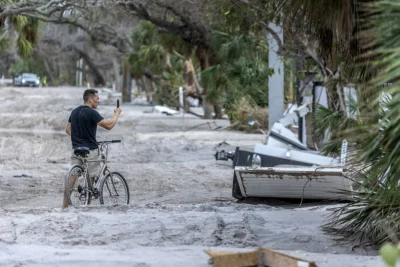
A passerby takes a photo of a property from a road covered in sand after Hurricane Milton’s landfall in October 2024 in Manasota Key, Fla. A government watchdog report said Tuesday that FEMA crews broke the law when they skipped some houses with signs supporting U.S. President Donald Trump during hurricane relief efforts. File photo by Cristobal Herrera-Ulashkevich/EPA-EFE
Aug. 25 (UPI) — An internal government watchdog said Tuesday that a Federal Emergency Management Agency crew violated the Hatch Act when it skipped houses with signs supporting President Donald Trump during Hurricane Milton recovery efforts in 2024.
The report comes from the inspector general’s office of the Department of Homeland Security. Officials determined that crew skipped 11 homes in Florida with Trump signs.
This “eroded public trust in FEMA’s ability to treat everyone impartially, offer unbiased and consistent assistance and ensure equal access to resources and tools,” the report said.
The Hatch Act, first passed in 1939, limits certain political activities by federal employees to make sure they’re administered in a nonpartisan way.
Trump has called for abolishing FEMA, later trying to downsize it and providing limited aid to states. The Office of the Special Counsel also found in 2025 that the same 2024 actions violated the Hatch Act.
Christopher Logan, FEMA associate administrator, said it no longer takes part in “FEMA-led door-to-door outreach efforts” and that agency staff now provides support “from fixed locations determined by state and local officials,” The Hill reported. Logan also said that after the 2024 case, FEMA gave staff mandatory Hatch Act and ethics training.
Michael Cohen, FEMA’s chief of staff at the time, told The Hill that the report reinforces that the “violations were not systematic and were isolated.” He said FEMA took appropriate action.
The Trump administration has also been accused of making disaster aid related to political leanings. Politico reported in March that it’s three times more difficult for Democrat-led states to obtain disaster aid for residents under the Trump administration.
The administration has also been accused of violating the Hatch Act, including in messaging on government websites.
Trump says all mines have been cleared from Strait of Hormuz’s international waters and that Tehran received warnings that ships laying new mines will be ‘destroyed’.
The human rights situation in Myanmar has “plummeted to a new low”, the United Nations has said, citing the “ever-worsening brutal abuse” of the Rohingya minority and the devastating impact of illicit economies, including illegal mining for rare earths.
In a new report, published on Tuesday, the UN’s human rights office said the quest for control and legitimacy by Myanmar’s military – which seized power in a coup in 2021 – has only deepened the suffering of civilians in the country.
Recommended Stories
list of 3 itemsend of list
The military has deployed tactics such as “airstrikes, arson attacks, displacement and denial of assistance” against civilians as it battles ethnic armed groups and militias for control of the vast resource-rich country, the report said.
An estimated 8,075 civilians, including 1,074 children, have been killed since the coup, with at least 1,241 of them occurring in the past year, it said.
The toll is likely higher, the report cautioned, noting that open sources indicate that as many as 15,731 civilians may have been killed since the coup and 3,102 in the last year.
The violence has also resulted in the number of internally displaced people rising to 3.6 million, it said. Some 12.4 million people were facing acute hunger, while 400,000 young children and mothers were suffering from acute malnutrition.
In western Rakhine State, the military and the Arakan Army – a powerful ethnic armed group they are fighting against – have continued to commit widespread and systematic violations and abuses against the mostly Muslim Rohingya minority, it said.
The continuing violence, which comes nine years after a brutal crackdown that forced some 700,000 Rohingya to flee into Bangladesh, has caused renewed displacement, it said.
The report went on to accuse the Arakan Army of carrying out arbitrary arrests, torture, sexual and gender-based violence, forced labour and recruitment, and destruction of villages and religious sites.
When Rohingya try to escape forced recruitment, they are detained and “routinely subjected to ill-treatment”, with former detainees describing beatings, the removal of fingernails, and chilli being applied to genitals.
The UN human rights office said the absence of the rule of law in Myanmar has resulted in a booming illicit economy, with illegal rare earth mining in northern Kachin and northeastern Shan state strengthening the expansion of transnational criminal networks.
Satellite imagery confirmed Kachin state as the primary rare-earth mining area, with 302 new sites since 2021 – a 149 percent increase.
Mining runoff, meanwhile, has caused environmental contamination, which, in turn, has affected maternal and reproductive health, it said, citing sharp surges in miscarriages and other pregnancy complications tied to heavy metal and chemical exposure.
UN High Commissioner for Human Rights Volker Turk called the findings deeply troubling.
“This report depicts a picture of suffering, misery, and cruelty on multiple levels and across the country that is heartbreaking,” Turk said.
The high commissioner urged states, companies and investors to reconsider their involvement with the state.
“I call on all states, companies and investors to undertake serious soul-searching with respect to their actions – or inaction; to ask: is this fair and just for the people of Myanmar?”
Acting U.S. Attorney for the Southern District of New York Audrey Strauss speaks during a news conference in July 2020 to announce charges against Ghislaine Maxwell for her role in the sexual exploitation and abuse of multiple minor girls by Jeffrey Epstein. On Tuesday, a federal judge turned down an request by Maxwell to overturn her conviction and prison sentence. File photo by Jason Szenes/EPA-EFE
Aug. 25 (UPI) — A federal judge on Tuesday denied Ghislaine Maxwell’s attempt to overturn her conviction and prison sentence, slamming the petition as “demonstrably meritless.”
In the the ruling, U.S. District Judge Paul A. Engelmayer said the petition by Maxwell, a co-conspirator of the late sex offender Jeffrey Epstein, was “generally based on speculation, distortions and/or outright falsehoods.”
“There is no fact that Maxwell fairly puts in dispute that has any potential to disturb the outcome of her trial,” Engelmayer wrote.
Maxwell sought to overturn her five felony convictions on the stance that her due process rights were violated, claiming the documents released by the Department of Justice this year supported this. She also made claims of juror misconduct, inaccurate evidence and “selective prosecution” on the part of the Justice Department.
Engelmayer wrote that Maxwell’s claim “incriminates her or reinforces the correctness of the legal rulings Maxwell challenges.”
Maxwell was convicted in 2021 and sentenced to 20 years in prison in 2022. She had been found guilty of conspiring to lure underage girls for Epstein to sexually abuse. She is serving time in a minimum-security federal prison camp in Texas.
Epstein, already a convicted sex offender, was awaiting trial in 2019 when he died by suicide while in jail. Earlier this year, the Department of Justice released many documents related to Epstein’s activities under the Epstein Files Transparency Act, passed by Congress in November 2025.
The U.S. government has been criticized for the limited release of some of the files, in which names of alleged perpetrators were heavily redacted while many victim names were not.
Lisa Phillips, a survivor of Jeffrey Epstein and Ghislaine Maxwell, speaks out during a rally with other survivors on Capitol Hill in Washington on September 3, 2025. Photo by Anna Rose Layden/UPI | License Photo
Aug. 25 (UPI) — A man is facing federal charges for forging the signature of Supreme Court Chief Justice John Roberts and impersonating a federal agent.
Joshua M. Culver was indicted Friday in the Northern District of Indiana on four counts of falsely impersonating an officer of the United States and one count of forging the signature of a judge and court seal.
The indictment alleges that Culver identified himself as a National Security Agency agent on at least two occasions in September 2025. He allegedly did so at the Tippecanoe County Sheriff’s Office trying to get information about the location of a family member. The indictment also alleges that he made phone calls to someone at their employer threatening them and accusing them of breaking the law.
In January 2026, Culver allegedly claimed to be a “Special Master enforcing orders of the United States Supreme Court” to get a Lake County, Ind., judge to dismiss criminal cases and judgments against him.
He’s accused of forging Roberts’ signature and using a counterfeit seal on an order in September that told a Grant County, Ind., court to drop theft charges against him.
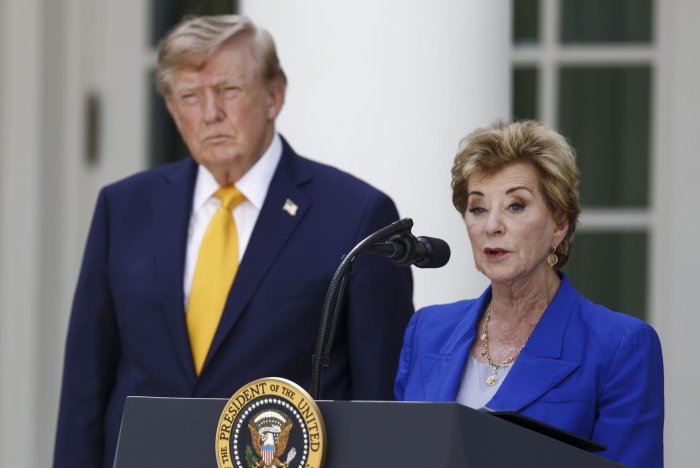
President Donald Trump looks on as Secretary of Education Linda McMahon speaks during a back-to school event in the Rose Garden of the White House on Monday. The event focused on education and the Trump administration’s education policies. Photo by Will Oliver/UPI | License Photo
Aug. 25 (UPI) — On Tuesday, the U.S. Food and Drug Administration approved a device designed to continuously monitor both blood sugar levels and ketone levels in people with diabetes.
The Libre Duo 10-Day Continuous Dual Glucose Ketone Monitoring System is the first of its kind to be approved in the United States — both the first wearable device to monitor ketone levels and the first to combine monitoring of ketone and blood sugar levels, the FDA said. It’s approved for those ages 2 and older.
“Today’s authorization is a breakthrough for the safety of children and adults living with diabetes,” said Dr. Michelle Tarver, director of the FDA’s Center for Devices and Radiological Health. “Knowing that ketone levels are rising, and having that information in real time, around the clock, can be the difference between early intervention and a life-threatening emergency.”
The U.S. Centers for Disease Control and Prevention estimates that 40.1 million Americans live with diabetes. About 2.1 million of them have type 1 diabetes, which also makes it important to monitor the levels of ketone, an acid. The body creates this substance when, due to a lack of insulin, it uses fat instead of glucose to produce energy. Too much ketone can cause diabetic ketoacidosis, a dangerous complication.
“Early detection of rising ketone levels is critical,” the FDA said.
Until now, the agency said, people had to monitor ketone levels with separate tests that only provided a single measurement at one point in time. The new system combines blood sugar and ketone tests and monitors them continuously. Readings — and alerts in case of dangerous trends — are sent wirelessly to a smartphone app.
The FDA previously granted “breakthrough device” status to the system, which is meant to expedite the device’s development and review.
Aug. 25 (UPI) — In its 100th Falcon 9 launch of the year, SpaceX marked a record-setting 37 missions for the rocket’s first-stage booster, a reuse milestone.
The rocket launched early Tuesday from Cape Canaveral in Florida, carrying 29 Starlink internet satellites. There are already more than 11,000 Starlink satellites in orbit, making it the largest satellite constellation so far.
Falcon 9 rockets include extensive reuse of boosters, with nine of the company’s boosters making at least 30 flights. The one used Tuesday, B1067, entered service in June 2021. About 8.5 minutes after liftoff, the booster landed on a droneship in the Atlantic Ocean as the upper stage continued on to low Earth orbit.
Falcon 9 rockets flew 165 missions — all of them successful — in 2025. The reuse of the boosters makes the rockets cheaper and more efficient to use. While competitors have been working toward the same concept, SpaceX is so far the only one to manage it.
The next step for the company is the “megarocket” Starship, which is designed to be completely reusable multiple times a day. Only the Falcon 9 boosters are reusable.
Tuesday’s launch is expected to be the final one for Falcon 9 rockets in Florida. Kiko Dontchev, SpaceX vice president of launch operations, confirmed this in a social media post Tuesday.
“From here on, Starlink missions out of Florida will fly on Starship,” Dontchev wrote. “The West Coast team will continue regularly launching Starlink from Vandenberg.” This refers to Vandenberg Base in California.
SpaceX has not yet tested Starship in orbit. The next launch is expected in mid-September from Texas. If that one goes well, the next Starship launch will be from Florida.
“Once Starship is flying reliably several times a week, it makes sense to shift … production resources to Starship to get launch rate to several times per day,” SpaceX CEO Elon Musk said in a social media post Saturday.
Falcon 9 rockets launched for the first time in 2010. There have been nearly 700 launches since.
The SpaceX Falcon Heavy rocket launches the ViaSat-3 F3 satellite from Launch Complex 39A at the Kennedy Space Center in Florida on April 29, 2026. Photo by Joe Marino/UPI | License Photo
On Monday, Treasury Secretary Scott Bessent set out plans to “sever every economic lifeline” to Iran, targeting countries that do business with the country.
China’s foreign ministry representative, Lin Jian, said China is firmly opposed to what it called “illegal unilateral sanctions” and would take “all necessary measures” to defend its rights.
“Cooperation between China and Iran has always been conducted within the framework of international law and should not be interfered with or disrupted,” Lin said.
China is the largest customer of Iranian oil.
The United States listed more than 60 brokers, companies and ships facing new sanctions. They included more than a dozen small businesses from Hong Kong and China, The New York Times reported. But larger companies in China weren’t on the list, which some have speculated means Washington was being careful not to antagonize the country.
Chinese President Xi Jinping is planning to visit the United States next month to meet with Trump and continue talks.
Iranian Economy Minister Ali Madanizadeh said Tehran was “fully prepared” for the broader sanctions, which he said would lead to “another defeat” for the United States.
“The government is and was ready and has a two-year plan to manage these events,” he told state television. “We also have our own tools and know how to play the game,” he said. He also said that Tehran had been “waiting for these plans for a long time.”
President Donald Trump looks on as Secretary of Education Linda McMahon speaks during a back-to school event in the Rose Garden of the White House on Monday. The event focused on education and the Trump administration’s education policies. Photo by Will Oliver/UPI | License Photo
The US move would be a major sanctions relief for Syria, aiming to boost post-war reconstruction.
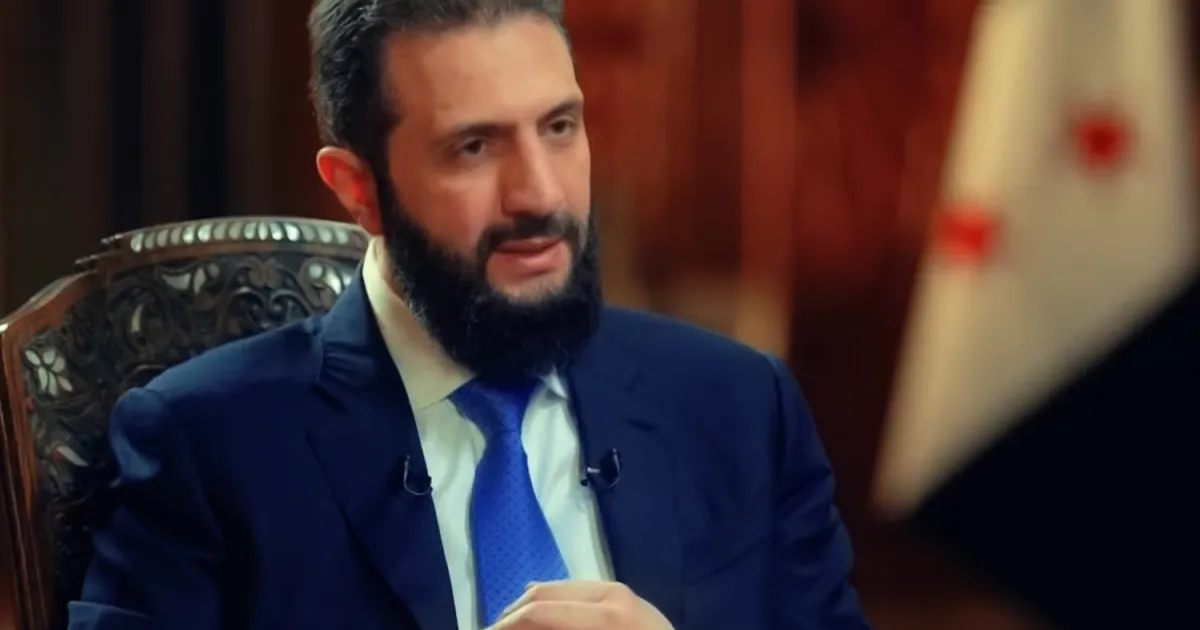
Syrian President Ahmed al-Sharaa hailed the United States’ removal of his country from the “state sponsors of terrorism” list, a major sanctions relief step for a country aiming to boost post-war reconstruction.
“Today, Syria shakes off a dark stain and tears away a painful chapter of its past to embark on a path of development, reconstruction and rebuilding,” al-Sharaa said in a speech.
Recommended Stories
list of 4 itemsend of list
Washington’s decision on Monday rescinded a decades-old designation that came with severe economic restrictions, marking another step in warming ties between the countries following the 2024 ouster of longtime Syrian ruler Bashar al-Assad.
Al-Sharaa expressed his “many thanks to the President of the United States of America, Donald Trump, and to all the friendly and supportive nations that stood by us”.
US Treasury Secretary Scott Bessent said in a statement that Monday’s move “will help foster additional investment in Syria to promote political and economic stability”.
But the Treasury stressed that its removal of restrictions on Syria “does not change Treasury’s posture with regards to countering global terrorism and our commitment to hold bad actors in Syria accountable”.
The US listed Syria as a “state sponsor of terrorism” in 1979, accusing the country, then under the rule of Hafez al-Assad, Bashar’s father, of supporting Palestinian fighter groups and other armed movements in neighbouring Lebanon.
Monday’s move gave Syria “a path to prosperity”, according to US Secretary of State Marco Rubio. The action “eliminates the final major barriers for private sector investment in Syria and promotes Syria’s economic recovery and reintegration into the global economy,” he said in a statement.
The World Bank estimates post-war reconstruction to cost more than $216bn.
Several countries welcomed the US move. Turkiye, a key backer of Syria’s new authorities, said the decision will “lend momentum to efforts to strengthen Syria’s ties with the international community and to establish lasting security and stability in the country”.
“At this stage, we call on the international community to unite its efforts toward the goal of a prosperous Syria and to fulfill its responsibilities to bring an end to aggressive actions that jeopardize this vision,” Ankara said.
Qatar and Jordan also welcomed the US decision, saying the move would support stability and recovery efforts in the country.
Qatar’s Ministry of Foreign Affairs said in a statement that the step “supports the path of a political settlement in line with international legitimacy resolutions and the aspirations of the Syrian people”.
Jordan’s Foreign Ministry also welcomed the US decision, calling it “an important step” towards supporting Syria’s reconstruction, recovery and development.
Welcoming the move, Saudi Arabia wished Syria “further security, stability, and prosperity, and continued progress in its reconstruction and development efforts” in a way that would benefit the “aspirations of its people”.
Ukraine’s Foreign Minister Andrii Sybiha said in a post on X that Ukraine had consistently supported Syria’s new government and people since the ouster of the Assad regime in their efforts to achieve recovery, peace and development.
In another sign of Syria’s growing international reintegration, Damascus also moved to expand its diplomatic outreach on Monday by launching an English-language social media account for its foreign media department.
Syrian Airlines will also begin operating regular direct flights from Damascus to Denmark’s capital, Copenhagen, and Austria’s capital, Vienna, on September 21, Syria’s civil aviation authority announced.
Omar al-Hosary, head of Syria’s General Authority of Civil Aviation and Air Transport, told the SANA news agency that the new routes are part of continuing efforts to expand the national carrier’s international network and strengthen air links between Syria and Europe.
Colombian President Abelardo De la Espriella ordered police and immigration authorities to begin to identify and deport migrants without legal status, Photo by Carlos Ortega/EPA
Aug. 25 (UPI) — Colombian President Abelardo De la Espriella ordered police and immigration authorities to begin to identify and deport migrants without legal status, starting in Barranquilla, the president’s office said.
De la Espriella issued the order during a security council meeting in the Caribbean city, where he announced measures to combat homicide, extortion, drug trafficking and other crimes, according to an official statement.
“The order to Migration is clear: coordinated operations with the police must begin in Barranquilla to find illegal immigrants,” De la Espriella said.
The president said authorities would first target foreign nationals committing crimes and then those who have not regularized their immigration status in Colombia.
“This is a presidential order that must begin to be carried out this week,” he said. “I will not accept illegal immigrants, regardless of where they come from, who are committing crimes in Colombia. They will leave, and we will deport them.”
De la Espriella said the measure was a political and administrative decision by his government. However, the announcement did not include a decree, an enforcement protocol or a deportation target.
The government also has not explained whether the order changes existing legal standards or seeks to intensify enforcement already carried out by Colombia’s immigration authority.
Deportations and expulsions were already part of Colombia’s immigration policy. Between August 2022 and June, Migration Colombia documented 3,389 deportations and 2,576 expulsions — a total of 5,965 people.
The leading reasons for deportation during that period were remaining in the country without legal status, with 1,380 cases, and entering or leaving the country illegally, with 1,315, according to Migration Colombia.
Other cases involved fraudulent documents, false statements, unauthorized activities, court orders and threats to national security or public order. The immigration authority said deportations and expulsions require individual administrative proceedings.
The decision fulfills a campaign promise. In June, when he was still a candidate, De la Espriella said foreign nationals who entered Colombia legally would receive guarantees, while those who violated immigration rules would be returned to their home countries, El Colombiano reported.
Colombia is home to more than 2.8 million Venezuelans, the country’s largest foreign population. Migration Colombia had registered 2,831,561 Venezuelan nationals intending to settle in Colombia as of Aug. 31, 2025, according to an official report.
The Association of Venezuelans in Barranquilla called on authorities to respect due process and the right to a defense during the new operations.
“Anyone who commits a crime must answer to the justice system, regardless of whether they are Colombian, Venezuelan or any other nationality,” the organization said. However, it warned that “irregular immigration status is not synonymous with criminality,” according to Caracol Radio.
Hundreds of students clashed with police on Tuesday in India’s Bihar state over alleged paper leaks in a highly competitive state-level exam. The test, which was conducted over a year ago, is held to recruit officers for the state administration.
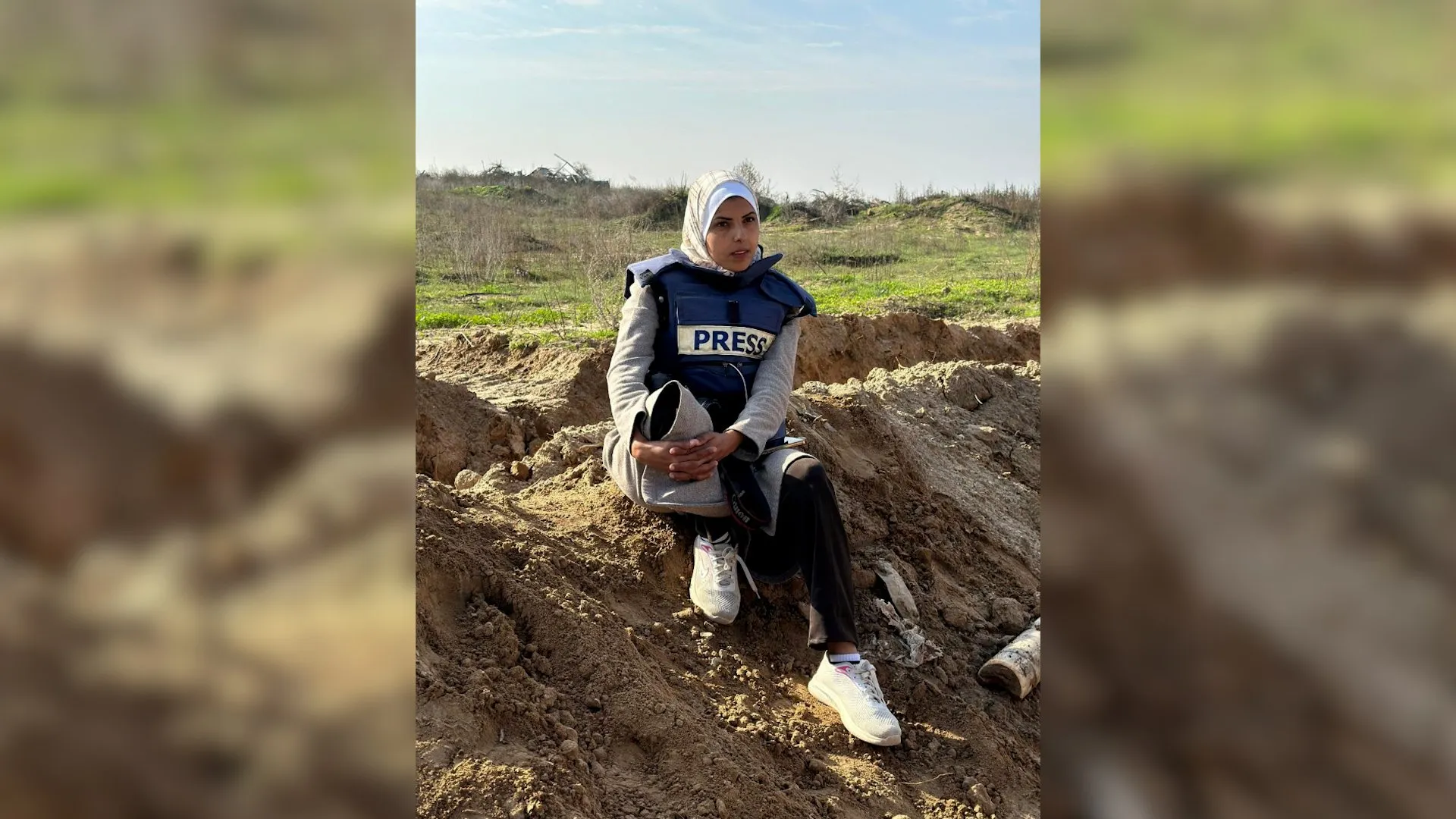
It’s been one year since AP journalist Mariam Dagga was killed in Israeli strikes on Gaza’s Nasser Hospital. Her father, Riyad Dagga, is still waiting for justice.
Aug. 25 (UPI) — The Securities and Exchange Commission is investigating Situational Awareness, the Artificial Intelligence-focused hedge fund run by a 24-year-old.
The fund nearly collapsed last month when it dipped from about $45 billion to $10 billion in a late-July tech sell-off.
The SEC sent subpoenas to banks that provided loans for leveraged trading, The New York Times reported. The subpoenas wanted details on the timing of the trades and communications with lenders. They also told the banks to save any information about Situational Awareness.
The SEC investigates any fund that has large losses, and Situational Awareness has not been accused of any wrongdoing.
“It is to be expected that regulators would closely examine any funds that are high profile, produce significant returns or have particularly dramatic drawdowns,” a Situational Awareness spokesperson said in a statement. “We are a highly regulated business and will cooperate to the fullest extent with any regulatory request.”
The fund, at its highest mark, managed more than $30 billion and borrowed billions more. It was a client of firms that included Bank of America, Citi, Goldman Sachs and JPMorgan Chase, according to a regulatory filing.
The fund was founded and is managed by Leopold Ashcenbrenner, a young German Columbia University alum who last worked as a researcher at OpenAI. Aschenbrenner founded the fund at age 22. He named it after an essay that he wrote about the future of AI.
When the fund’s value plummeted in July, Aschenbrenner was forced to sell much of its portfolio to Citadel at a large discount. Citadel founder Ken Griffin told investors in a letter Friday that it has since sold about 80% of the risk from the Situational Awareness portfolio. Two of the positions Situational Awareness sold, SK Hynix and CoreWeave, have since rallied, CNBC reported.
NTT IndyCar Series Drivers Scott Dixon (R) and Graham Rahal (L) pose with first lady Melania Trump during an event in the Rose Garden of the White House on Thursday. The first lady announced that a $2 million donation from IndyCar and Fox Corporation will fund Fostering the Future scholarships at Indiana University and Purdue University to expand academic opportunities for individuals transitioning from foster care. Photo by Bonnie Cash/UPI | License Photo
Ukraine hits Russia’s Afipsky oil refinery and gas plant in latest attacks targeting energy infrastructure.
Published On 25 Aug 202625 Aug 2026
A fire broke out at the Afipsky oil refinery in Russia’s Krasnodar region following a drone attack, local authorities have said.
At least two people were killed and two others were injured due to falling drone debris at the Afipsky railway station, Governor Veniamin Kondratyev said on Tuesday.
Recommended Stories
list of 3 itemsend of list
Ukraine has been targeting Russia’s oil refineries and other infrastructure, attempting to undermine Moscow’s war efforts and reduce financial revenue.
Ukraine’s General Staff said its forces struck facilities at Afipsky.
It said its forces also hit a gas processing plant in Russia’s Astrakhan region overnight.
Russia’s Ministry of Defence said its forces had struck a cargo vessel carrying goods for the Ukrainian army in the port of Pivdennyi near Odesa, as well as port infrastructure facilities used for unloading military cargo.
The ministry said Russian air defences shot down 148 Ukrainian drones overnight.
Ukraine has ramped up attacks on Russian energy infrastructure in recent months, escalating a fuel crisis in the country.
Amid the continuing attacks, Russian President Vladimir Putin signed a decree on Monday that would allow the state to take temporary control of critical infrastructure found to be inadequately protected from attack.
The attacks come after a meeting in Kyiv where Ukraine’s allies pledged to continue supporting the country during the ongoing war.
Ukrainian President Volodymyr Zelenskyy told the assembled leaders in an evening address that he wanted to “raise production” of drones and missiles to wage “more attacks” on Russia, matching its strikes on Ukraine.
The meeting was attended by 30 leaders of the so-called Coalition of the Willing, including British Prime Minister Andy Burnham, who called for negotiations with Russia, and French President Emmanuel Macron, who participated remotely and predicted that “NATO countries will be targeted and the provocations will multiply”.
Finnish President Alexander Stubb was also in attendance, urging Ukraine’s allies to help expand its ability to strike deeply inside Russia.
The Kremlin said on Tuesday that Burnham and Stubb belonged to the “party of war”.
Owing to his illness, 26-year-old Sasha from Orenburg, a city in Russia close to the Kazakhstan border, has a Category V military ID, which under normal circumstances makes him ineligible for service.
But not during wartime.
Recommended Stories
list of 4 itemsend of list
Just before partial mobilisation was declared in 2022, he considered leaving for Kazakhstan. But while awaiting the bus, he struck up a conversation with his soon-to-be girlfriend.
As they turned back together, they decided against making the drastic move.
Over the past year, however, they have grown increasingly anxious.
“Since mid-2025, my girlfriend and I have been experiencing a severe decline in mental health. We see psychiatrists and take antidepressants,” Sasha told Al Jazeera.
He requested to be identified only by his first name to protect his anonymity.
“I don’t go outside unless it’s urgent and try never to be alone. I carry pepper spray for protection against aggression if it happens, like in Penza.”
Since June, there have been reports of attempted press-ganging in Penza, 625km (388 miles) southeast of Moscow.
Recent footage shared on social media has shown individuals dressed in plainclothes trying to force fighting-age men into vehicles to take them to the recruitment centre, while weeping women try to intervene – echoing similar scenes in Ukraine.
Potential recruits have also been reportedly summoned to police stations under bureaucratic pretexts, then beaten or threatened – for example, by having illicit drugs planted on them – into signing a military contract.
Local authorities deny the reports, claiming only men attempting to dodge the draft, who have already been mobilised, are being approached. They have also accused residents who have shared footage of the roundups of spreading disinformation.
Although the Penza roundups have received attention lately, local authorities throughout Russia have been accused of coercive methods for some time.
“In October 2022, a friend was stopped at night by military police,” said Sasha. “They identified themselves as civilians and didn’t show identification. They demanded a passport or military ID, and that he accompany them. My friend ran away.”
(Al Jazeera)
According to Mikhail Liberov, from the Conscientious Objectors Movement, military recruiters select the “right targets who, for one reason or another, are vulnerable to seduction, deception, blackmail, or are simply unaware of their actions”.
He said this group includes drug addicts, alcoholics, mentally unwell people, those with large debts and migrants “who don’t speak Russian or barely know what’s actually written, and are also afraid of deportation”.
Men above 35 years of age are also approached, and some are “willing to risk their lives and the lives of others for big money and the chance to become ‘heroes’.
“Then comes the threat of prison: A man arrested for petty hooliganism might be intimidated by the idea that, say, ‘We’ll plant drugs on you and put you in prison for 12 years,’ and many agree to sign contracts.”
Oleg Ignatov, senior Russia analyst at the International Crisis Group, said the recent roundups in Penza are likely isolated instances of local authorities trying to fill their recruitment quotas, rather than a systemic, nationwide effort.
‘Mobilisation will still happen’
These renewed recruitment incidents come amid rumours of a mobilisation effort and an expected Russian offensive this winter that will likely involve ramped-up attacks on Ukrainian energy infrastructure.
“I’ve already accepted that mobilisation will still happen, unless something happens that forces (Russian President Vladimir) Putin to end the war in Ukraine,” said Liberov, who believes Russia will ready troops within a year.
“Human rights activists are already working on the assumption that mobilisation will take place this fall,” he said.
In September 2022, Putin signed a decree allowing for partial mobilisation. Fearing deployment, thousands of men fled to neighbouring countries. But that mobilisation effort effectively ended two months later.
Russia has since been able to replenish its ranks by enlisting prisoners, as well as promising generous payouts.
However, the recruitment pool is dwindling.
According to the independent Russian news site IStories, the number of people voluntarily signing military contracts halved by late 2025. Those who enlist are disproportionately from underprivileged corners of society.
“The protracted war with Ukraine, the large number of dead soldiers, and the degradation of the Russian economy demotivate people from participating in such an adventure in the name of Putin,” said Liberov.
Official casualties are not made public in Russia.
The Washington, DC-based Center for Strategic and International Studies puts the number of deaths among Russian forces since the invasion of Ukraine in early 2022 at nearly 450,000.
Meanwhile, the 2022 mobilisation decree remains in effect, and the Russian offensive in Ukraine is lagging. The war is now being felt at home as Ukrainian drones strike deep into Russian territory.
“I only live once. I’m not going to sacrifice it for someone else’s wishes and will fight to the bitter end,” said Sasha. “Human life is priceless, and you have to cling to it until the end.”
Vladimir from Ulan-Ude, who has previously served as a conscript and is thus eligible for mobilisation, said he has a “generally negative attitude” about Russia’s war in Ukraine.
“I am preparing for a possible draft. In the event of an escalation, I will insist on the alternative civil service,” said the 35-year-old, who requested to withhold his surname over fears of reprisal. “I wouldn’t want to leave the country.”
According to the Russian constitution, alternative civilian service can be applied for when “convictions or religious beliefs contradict military service”.
Conscripts can serve either for 21 months at an organisation “subordinate to the bodies of the executive branch”, often taking jobs as nurses, cleaners or postal workers, or for 18 months at a defence manufacturing plant. According to the Ministry of Defence, about 2,000 people apply for alternative civilian service each year, with approximately half receiving approval.
Earlier this summer, Ukrainian President Volodymyr Zelenskyy claimed the Kremlin was secretly preparing for a mass mobilisation – a claim backed by reports in Russian independent media.
In June, lawmaker Andrey Gurulev of the governing United Russia party wrote on Telegram that “there’s now active talk, both behind the scenes and in high places, about the need for a new large-scale mobilisation.”
But expanding the army is expensive while budgets are under strain, and a huge influx of recruits still leaves a shortage of experienced officers and trained specialists.
“I would say that Russia’s problems right now are less about the quantity, but more about the quality of contractors,” said Crisis Group’s Ignatov.
“Russians need more skilled soldiers who can operate drones, who can operate modern warfare systems. And here they have more problems than the Ukrainians.
“But if this war continues, of course, we can assume that (mobilisation) could happen.”
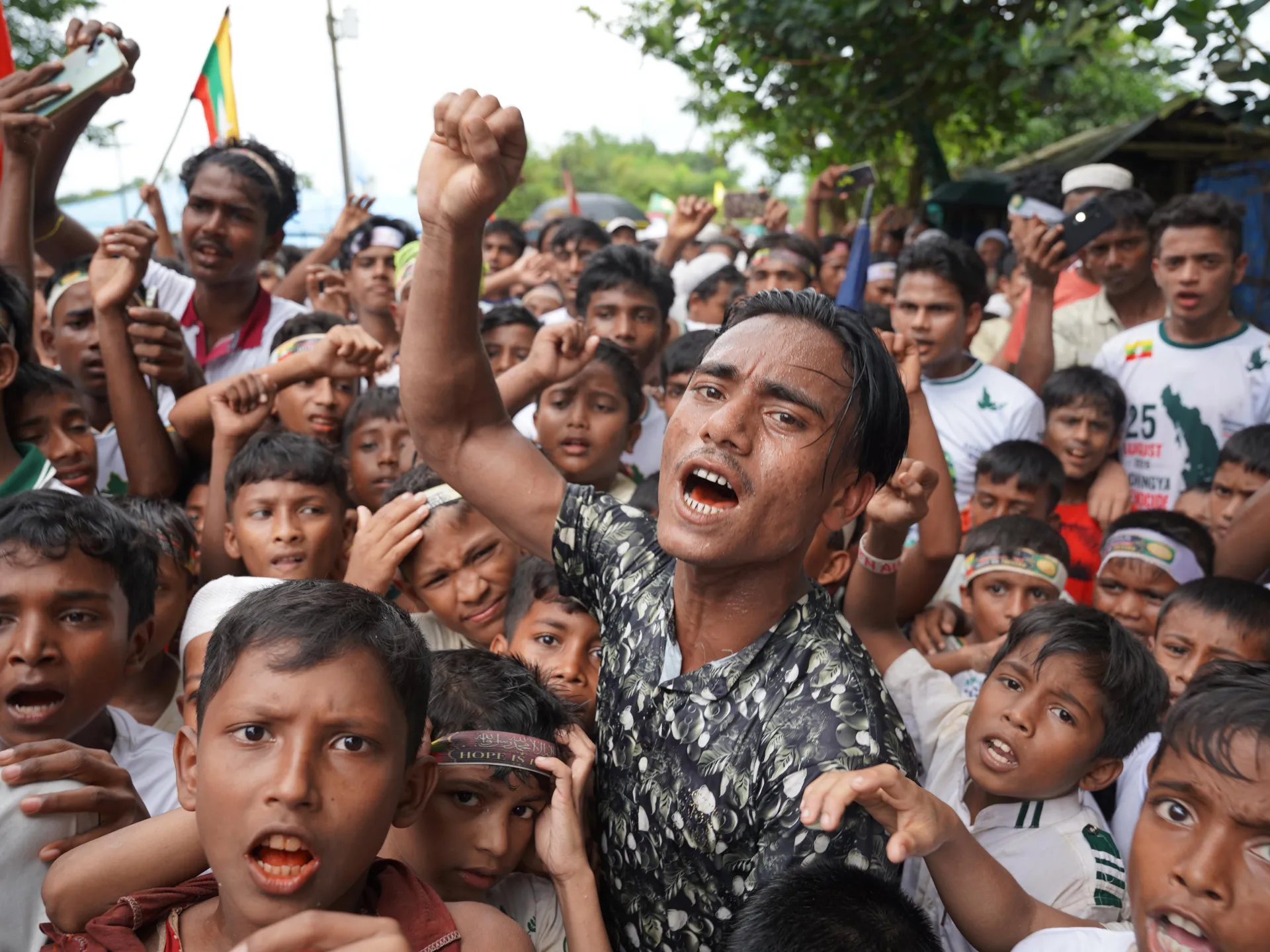
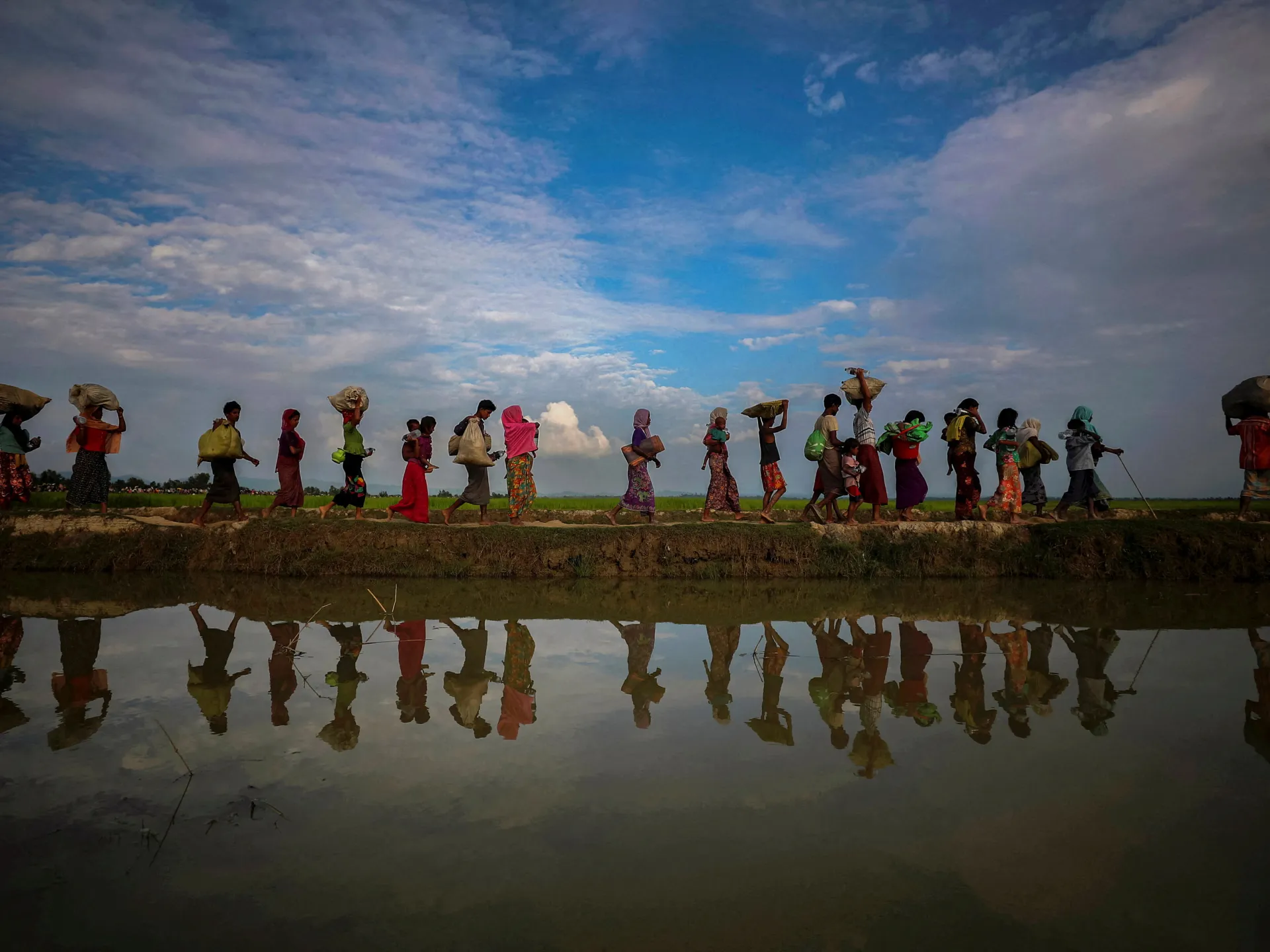
August 25 is an incredibly painful day for the Rohingya. It marks the anniversary of the 2017 genocidal campaign by the Myanmar military. Babies and young children were thrown into fires. Women and young girls were systematically gang-raped and mutilated. Entire families were slaughtered as they fled. Others were trapped inside their homes and burned alive. More than 700,000 of our people were forced to flee to Bangladesh.
The Rohingya, who are an ethnic Muslim-majority group who speak their own language from the Indo-Aryan family, have long faced discrimination and persecution in Myanmar.
Today, about 1.2 million Rohingya remain trapped in camps in Bangladesh, while a new wave of persecution is forcing more Rohingya from their homes in Rakhine state. Others are risking their lives at sea in a desperate search for safety.
In this desperate situation, there is a ray of hope raised by international justice proceedings in Argentina and the International Court of Justice (ICJ). Still, the international community is falling short in fulfilling its commitments to ensure accountability and protect the Rohingya.
The genocide never stopped
Over the past two years, the balance of power in Rakhine has dramatically changed. The Arakan Army (AA), an ethnic Rakhine armed group, now controls most of the state, including the main Rohingya areas in the north. But the brutality and persecution Rohingya face have not ended.
As the AA has consolidated its control, evidence has mounted of mass killings and targeted attacks on civilians, documenting what Rohingya communities have been warning of.
Rohingya also face forced recruitment, forced labour, detention and severe restrictions on movement. Sexual violence, a hallmark of the Rohingya genocide, is continuing under AA authority.
Rohingya in Rakhine report that the violence and oppression they now face from the AA is just as brutal as the Myanmar military’s ethnic cleansing in 2017. Taken together, we see these abuses as part of a deliberate strategy to drive Rohingya from their homes and continue their erasure from Myanmar.
The same anti-Rohingya racism that drove decades of persecution by the Myanmar military is also at the heart of the AA’s treatment of the Rohingya. The perpetrators may have changed, but the dehumanisation and denial of our identity and rights continue.
The AA is completing what the Myanmar military started. Rohingya are being driven from their villages and prevented from returning, while their land is confiscated and new Rakhine settlements are built on it, sometimes by Rohingya coerced into forced labour. The possibility of return is being destroyed in real time.
Nowhere safe to go
More than 150,000 Rohingya have fled to Bangladesh since late 2023, just as international humanitarian funding for refugees is being slashed. Learning centres in Cox’s Bazar have closed and essential services are being cut. Children who fled genocide are growing up without education or hope for their future. Others were born in the camps and have never known a life outside them. The international community is allowing an entire generation of Rohingya children to be abandoned.
Rohingya are being forced to choose between continuing persecution in their homeland and hunger, insecurity and an increasingly desperate existence in camps.
For those forced to flee, there is often no safe route to protection. The very people forcing Rohingya to flee are often involved in and profiting from their trafficking as they try to escape. In July, two boats carrying more than 500 Rohingya, including children and young people, sank after leaving Rakhine. No one would put their children on such a dangerous journey unless staying was even more dangerous.
Meanwhile, there is growing anti-Rohingya sentiment in countries that host them as refugees. Governments talk about Rohingya returning home while more are being forced out and the land they would return to is being taken. We want to go home. But we want to go home with our rights: citizenship, equal rights and the right to return to our own land.
Nine years of impunity
For nine years, the Myanmar military leaders responsible for genocide against Rohingya have faced no real consequences. The architects of the genocide remain free, while the same military has gone on to commit atrocities against communities across Myanmar. Accountability is not only about the past. It is about stopping the violence happening now and preventing further atrocities.
The world cannot repeat the same failure with the Arakan Army. We have seen this pattern before and know where it leads. The longer the Myanmar military and AA are allowed to act with impunity, the closer we come to the complete erasure of the Rohingya from Rakhine.
Rohingya survivors and organisations have spent years documenting crimes, giving evidence and fighting for accountability. We had to pursue justice on the other side of the world because governments and international institutions failed to deliver it.
That fight is finally producing results. My organisation, the Burmese Rohingya Organisation UK (BROUK), brought a universal jurisdiction case in Argentina which has resulted in international arrest warrants for 22 Myanmar military officials and three civilians, including the military government’s leaders Senior General Min Aung Hlaing and General Soe Win, for genocide and crimes against humanity. We are also pursuing reparations for Rohingya survivors.
A judgement is also expected in the coming months in the genocide case brought by The Gambia against Myanmar at the ICJ.
Rohingya are getting closer to justice in international courts but at the same time are being pushed further from our homeland. Legal progress means little if Rohingya continue to be killed, forced out and stripped of the land to which they hope one day to return.
We have fought for years to get this far. Now governments must act. Every possible pressure point must be applied.
States must enforce the Argentinian arrest warrants whenever those wanted enter their jurisdictions, and Interpol must act on Argentina’s request for red notices. Governments must impose coordinated targeted sanctions on the AA and the Myanmar military, alongside restrictions on arms, aviation fuel and revenue streams that enable further atrocities. Maximum international pressure must be applied on the AA to end its persecution of Rohingya and ensure our protection and equal rights.
The United Nations Security Council must act. The United Kingdom, as penholder on Myanmar, must push for an urgent council meeting on the atrocities taking place in Rakhine and the continued failure to protect the Rohingya.
Governments must restore and increase humanitarian funding for Rohingya in Bangladesh and Rakhine, facilitate cross-border aid and pressure the Myanmar military and the AA to end restrictions on humanitarian access.
Governments must pursue every available route to justice and accountability for crimes by the Myanmar military and the AA. They must also be ready to respond to the forthcoming ICJ judgement.
Justice and accountability delivered years too late will mean nothing if there are no Rohingya left in Myanmar.
Justice is not only about what happens in courtrooms. For Rohingya, it means being able to return to our villages and our land. It means restoring the citizenship and rights that have been taken from us. Above all, it means being able to live freely and as equals in Myanmar, without ever again facing persecution and genocide.
The views expressed in this article are the author’s own and do not necessarily reflect Al Jazeera’s editorial stance.
Celebrated artist Sliman Mansour, one of the founding figures of contemporary Palestinian art, has died at the age of 79 after a long illness, his family announced on Monday.
Born in Birzeit, near Ramallah, in 1947, Mansour rose to prominence in the 1970s as part of a generation of Palestinian artists, writers and poets seeking to rebuild a threatened identity through symbols rooted in land and memory. Over more than five decades, his paintings came to embody the story of Palestine: the farmer clinging to his soil, the stone house on a hill, the embroidered thobe and the smile of a young girl carrying the hope of return.
Mansour studied art in Beirut and Washington and went on to exhibit extensively, both in solo shows and group exhibitions across the Arab world and internationally. His works are held in museums and private collections worldwide, and he received numerous awards in recognition of his contribution to Arab and Palestinian culture.
His visual language drew deeply from the region’s ancient civilisations – Canaanite, Pharaonic and Assyrian – as well as Islamic and Arab art, particularly calligraphy and geometric motifs. At the same time, his upbringing in Birzeit anchored his work in the everyday life of Palestinian villages: the landscape, peasants, traditional homes and clothing. Mansour also absorbed influences from global art that carried messages of freedom and resistance, blending local forms with a universal appeal.
During the first Intifada, he helped found the New Vision group with fellow artists, turning to mud, straw, wood, leather, henna and natural dyes after Palestinian artists boycotted Israeli-made supplies. This shift, he later said, forged a vital link between post-Nakba art and the work of younger generations.
For many Palestinians, Mansour’s canvases were more than images; they were a visual archive of the cause itself. His brush, critics and admirers agree, carried the homeland.
Aug. 25 (UPI) — British authorities said a dozen people have been arrested in an investigation following a weekend crash that killed seven people, including two police officers.
Police in Cleveland, which serves the Teesside area of northeast England, announced the arrests Monday, identifying those detained as nine men and three women between the ages of 19 and 61.
They were detained on a range of offenses, including allegations of participating in organized crime, possession of an offensive weapon and drug-related crimes.
The suspects were detained over the weekend in a wide-scale investigation following a collision early Saturday involving a Volkswagen Passat and a police vehicle on the A66, resulting in the deaths of the five occupants of the Passat and two officers in the police vehicle.
Authorities were initially alerted early Saturday to reports of two vehicles being driven dangerously in Middlesbrough. A Volvo XC60 was reportedly seen ramming properties, while a Volkswagen Passat was believed to be associated with the Volvo. Police said both vehicles were operating with cloned license plates.
Police later spotted the Passat and pursued it for nearly seven minutes before the Passat entered the A66 at South Bank, traveling against traffic, prompting the pursuing police vehicle to end its case.
However, seconds later, at 3:39 a.m. local time, the Passat collided with a second police car, which was traveling in the correct direction, authorities said.
The deceased officers have been identified as Matthew Blades, 37, and Tom Clough, 38. The deceased occupants of the Passat were named as Cole Robert Worthy, 17, Theo Rae, 17, Makai Saddington, 18, and 23-year-olds Jakub Matusiak and Michael Robert Cahill.
“The events of that tragic night will have a lasting and profound impact on the Cleveland area and the communities we seek to protect,” Assistant Chief Constable Wayne Fox said Monday in a statement.
Fox said they have a duty to investigate the “serious criminal activity” that led to the fatal crash and bring those responsible to justice, though it was not clear how those detained were involved.
“Our robust response will continue in the weeks and months to come, as we continue to tackle those that seek to cause harm to our communities and tackle serious and organized crime,” Fox said.
The 20-time Grand Slam champion confirmed he’s only going to play in an exhibition match and has no plans to return.
Published On 25 Aug 202625 Aug 2026
Roger Federer is actually nervous about his tennis.
The man who won five straight US Open championships during the height of his dominance of the sport is set to play again in Arthur Ashe Stadium on Tuesday night for the first time since 2019. And he’s not quite sure how the game that perhaps nobody ever made look more elegant will appear now.
Recommended Stories
list of 4 itemsend of list
“I haven’t played a singles set in, I don’t know, [Hubert] Hurkacz at Wimbledon maybe, so it’s been five years,” Federer said on Monday, referring to his 2021 quarterfinal loss in his last Grand Slam match.
“I don’t know how it’s going to go tomorrow. So there is a lot of uncertainty but a lot of happiness that I can return to Arthur Ashe, a place where I have had so many beautiful moments.”
It’s only one set of singles in an exhibition against Andy Roddick and one set of doubles with John McEnroe against Roddick and Andre Agassi. The winner of 20 Grand Slam singles titles should be fine for those.
But a return to tennis beyond that, competing in major tennis tournaments in his mid-40s like Venus and Serena Williams?
“No, no, no, no. No, not at all,” Federer said during a news conference.
“Thanks for asking. I wasn’t sure if the question was going to get asked, but I’m happy you did so I can clarify in case anybody thought.”
At 45, Federer still looks fit, and said he enjoys working out in the gym. But he said he goes through long stretches where he is rarely on the court.
His lengthy absence from the US Open has done little to dampen his popularity, based on the number of people around the grounds who were mentioning his name. The appearance of “Roger Federer” up on the big board for all to see again, before his afternoon practice on Ashe, where Federer collected the trophy every year from 2004-08, was a welcome sight for his fans.
The trip to New York is a stop for Federer on his way to Newport, Rhode Island, where he will be enshrined in the International Tennis Hall of Fame on Saturday.
Federer never really had the chance to say goodbye to New York as a player, because there was no way to know his loss to Grigor Dimitrov in the 2019 quarterfinals would be his last match. He had reached the French Open semifinals and the Wimbledon final earlier that year, falling to Rafael Nadal in Paris and then Novak Djokovic in a fifth-set tiebreaker at the All England Club.
Federer will play one set of singles in an exhibition against Andy Roddick and one set of doubles with John McEnroe against Roddick and Andre Agassi [Sarah Yenesel/EPA]
‘Knee is tired’
It was easy to imagine him returning to the US Open the next year and making another deep run. But after falling to Djokovic in the semifinals of the Australian Open to begin 2020, he had knee surgery that February, then another procedure in May.
He returned to play in the French Open in 2021 but had to withdraw before his fourth-round match. After the loss to Hurkacz – where he appeared to struggle and lost 6-0 in the third set – Federer had another knee surgery that August and knew there would be no more comebacks.
“The knee can’t do it any more. It’s tired,” he recalled thinking. “The mind can’t be patient even more and wait for another couple years and see what happens.”
Federer knows Tuesday night won’t be real tennis, joking that he and Roddick hopefully would be respectful and not try to drop shot each other. But it will be different from when he did return to Ashe a couple of years back to watch.
“They gave me an ovation because they saw me on the big screen, but I just feel, like, tomorrow and I guess today, as well, and Monday next week, it really gives me a true opportunity to say thank you and goodbye, which I think is important for some,” Federer said.