top news

South Korea defense agency vows overhaul to become top exporter

South Korea’s Defense Minister Lee Jong-sup (2-L) attends a ceremony to unveil the signboard of the Defense Acquisition Program Administration (DAPA) at the agency’s new home in Daejeon, some 164km south of Seoul, South Korea. File Photo by YONHAP / EPA

March 20 (Asia Today) — South Korea’s arms procurement agency has pledged a sweeping overhaul of its systems and export strategy as it pushes toward the government’s goal of becoming one of the world’s top four defense exporters. The Defense Acquisition Program Administration, or DAPA, is South Korea’s defense procurement agency, and it is now led by Administrator Lee Yong-cheol.

Speaking at a briefing with defense reporters in Seoul on Wednesday, Lee said the agency would press ahead with faster decision-making, stronger export execution and greater technological self-reliance. He said the current moment amounted to a last chance to reform an organization long criticized for inefficiency and delay.

Lee said DAPA’s export drive must go beyond ceremonial overseas trips and focus instead on securing contracts and building practical business outcomes. But he also acknowledged that export growth alone is not enough if the underlying system remains slow and structurally weak.

One of the clearest examples, he said, was the long-delayed KDDX next-generation destroyer program. The project drifted for more than two years as authorities failed to make a policy choice between direct contracting and open bidding, exposing what Lee described as a deeper decision-making problem rather than a regulatory one.

Lee said South Korea also remains behind in drone warfare capabilities. While drones have become central to modern combat, the country’s military systems are still focused largely on reconnaissance, with limited strike and interception capacity and continued dependence on imported core components. He said DAPA plans to rely more heavily on rapid acquisition and early deployment of prototypes to speed fielding.

Defense semiconductors remain another major vulnerability. South Korea depends heavily on foreign technology for key components used in radars, guided weapons and communications systems, a weakness Lee described as an urgent national task. He said the answer lies in building stronger links between the civilian semiconductor sector and military demand while sustaining long-term investment.

Lee also pointed to Canada’s submarine procurement program as a major test of South Korea’s export competitiveness. He said the outlook was not unfavorable but remained uncertain, describing the bid as a national effort involving diplomacy, industry and military capabilities. Yonhap reported Friday that Lee sees the contest as essentially even, with South Korea competing against Germany for a contract covering 12 submarines.

DAPA said it will also seek structural reforms to prevent repeated delays, including penalties for intentional slowdowns and changes to procurement procedures that can trap projects in repeated failed bidding cycles. Lee has instructed staff to move from planning-based administration to execution-based management, with clear deadlines and accountability.

The agency’s challenge now is whether it can turn reform rhetoric into durable institutional change. For South Korea to become a top-tier defense exporter, industry officials say, speed, structure, technology and political resolve will all need to advance together.

— Reported by Asia Today; translated by UPI

© Asia Today. Unauthorized reproduction or redistribution prohibited.

Original Korean report: https://www.asiatoday.co.kr/kn/view.php?key=20260320010006140

Source link

300 million people celebrate Nowruz under a cloud of war | US-Israel war on Iran

NewsFeed

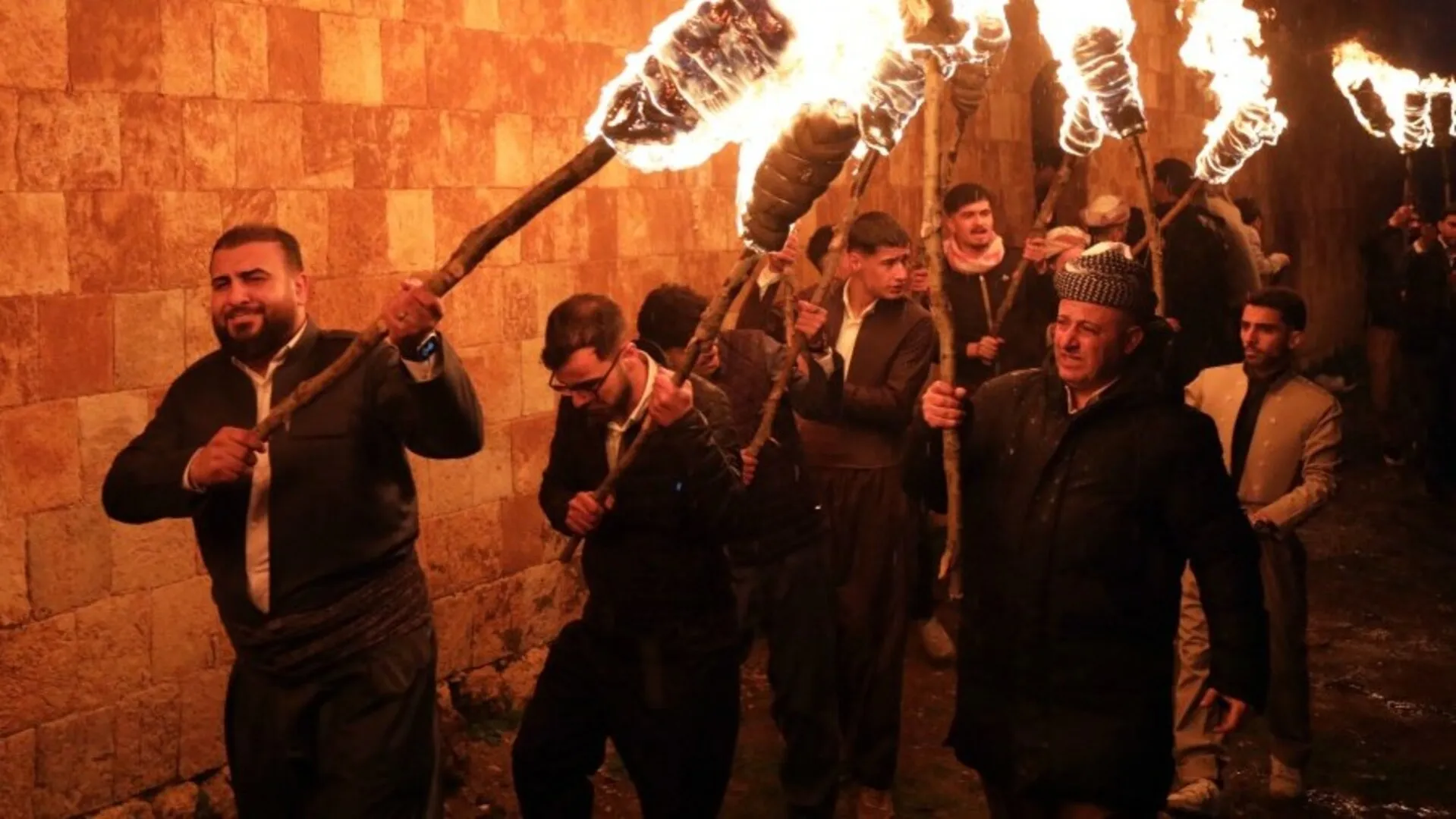
Millions of people have rung in the ancient Persian New Year, Nowruz, as war grips the Middle East. The 3,000-year-old Zoroastrian-rooted celebration marks the beginning of spring in the northern hemisphere and is celebrated by 300 million people in Iran and Central Asia.

Source link

Seoul mayor hopeful Kim Young-bae pledges practical fixes

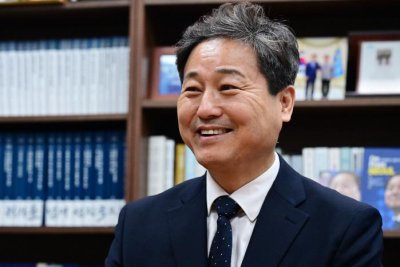
1 of 3 | Kim Young-bae, a preliminary Seoul mayoral candidate from the Democratic Party, speaks during an interview with Asia Today in Seoul. Photo by Asia Today

March 20 (Asia Today) — Kim Young-bae, a lawmaker and preliminary candidate for Seoul mayor from the ruling Democratic Party, said Thursday he would focus on practical policies to improve daily life for residents, promising to “give back one hour a day” by reducing commuting, caregiving and administrative waiting times.

Kim, a former Seongbuk district mayor and former presidential secretary, described himself as the most prepared candidate in the June 3 local election, citing experience in local administration, national politics and foreign affairs.

“What citizens really want is for someone to change even a small part of their lives,” Kim said in an interview with Asia Today. “The times call for practical politics and bread-and-butter politics focused on people’s lives, not ideology or division.”

Kim said his central campaign theme is “time inequality,” arguing that long commutes, caregiving burdens and inefficient public services leave residents with less time to plan their lives or pursue new opportunities.

As part of that agenda, he proposed high-density mixed-use development in four central Seoul areas – Yeongdeungpo, Sinchon, Cheongnyangni and the Dongdaemun Stadium area – to expand affordable housing near jobs. He also called for a better-linked public transit system connecting electric bikes, neighborhood buses, subways and city buses to create what he described as a more comfortable “10-minute station area.”

Kim said his strength over primary rivals lies in what he called a combination of administrative ability, political skill and global perspective. A two-term lawmaker, he currently serves as the ruling party’s senior member on the National Assembly Foreign Affairs and Unification Committee and as secretary-general of the Korea-U.S. Parliamentary Alliance.

He also criticized incumbent Seoul Mayor Oh Se-hoon, saying Oh should not seek another term after serving a combined 10 years in office. Kim pointed to a recent audit involving the Han River Bus project and argued that Seoul needs new leadership.

Among his other campaign proposals, Kim pledged to turn Seoul into a K-culture hub city and promote multi-core growth zones around gateway areas bordering Gyeonggi Province to reduce long commutes and ease congestion.

Kim said he wants to work with President Lee Jae-myung to usher in an era of practical politics that delivers tangible results for citizens.

— Reported by Asia Today; translated by UPI

© Asia Today. Unauthorized reproduction or redistribution prohibited.

Original Korean report: https://www.asiatoday.co.kr/kn/view.php?key=20260320010006220

Source link

South Korea audits oil agency over 900,000-barrel overseas sale

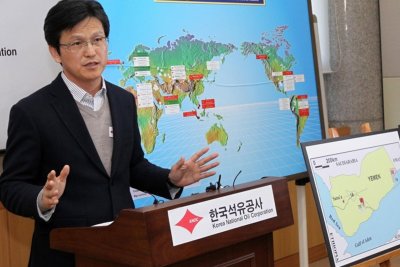
An official at the Korea National Oil Corp. (KNOC) briefs reporters at the KNOC main office in Anyang, south of Seoul, South Korea. Photo by YONHAP / EPA

March 20 (Asia Today) — South Korea’s Industry Ministry has launched an audit of the Korea National Oil Corp. after about 900,000 barrels of crude stored under the country’s international joint stockpiling program were sold overseas without the state oil company exercising its priority purchase right, according to Asia Today and the ministry.

The oil had been owned by a foreign company and stored at a reserve facility in Ulsan under a program that allows overseas suppliers, including oil-producing countries and foreign firms, to use South Korea’s spare storage capacity. In an emergency, South Korea is supposed to have the first option to buy that oil.

The ministry said the Korea National Oil Corp. did not immediately exercise that right before the crude was sold abroad. It added that the audit would determine whether the company violated internal rules or procedures.

The international joint stockpiling program began in 1999 as part of efforts to stabilize domestic oil supply and demand.

The ministry said any confirmed violations would result in strict disciplinary action.

— Reported by Asia Today; translated by UPI

© Asia Today. Unauthorized reproduction or redistribution prohibited.

Original Korean report: https://www.asiatoday.co.kr/kn/view.php?key=20260320010006239

Source link

British steel curbs add pressure on South Korean exports

Coast Guard officials inspect the area in the aftermath of a fire at the POSCO steel factory in the city of Pohang, South Korea. Photo by YONHAP / EPA

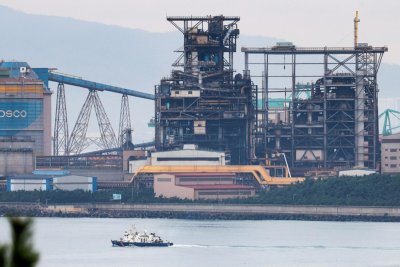
March 20 (Asia Today) — South Korea’s steel industry faces mounting pressure as Britain moves to tighten import restrictions, adding to growing trade barriers in the United States and Europe. Britain said it plans to cut steel import quotas by 60% and raise the tariff on volumes above the quota to 50% from 25%, with the new measures set to take effect July 1.

The tougher British measures have raised concerns about weaker exports and shrinking profitability for South Korean steelmakers. South Korea exported 640,000 metric tons of steel to Britain last year, accounting for 2.3% of its total steel exports, according to the industry ministry.

South Korean companies including POSCO and Hyundai Steel have shipped products such as heavy steel plate to Britain. POSCO said it is reviewing the situation and plans to respond after Britain releases more details on the affected products and volumes. The industry ministry said the move could violate World Trade Organization rules and the Korea-Britain free trade agreement, which provides for tariff-free steel trade, and pledged to work with London to limit damage to Korean companies.

The British action comes as other major markets also harden their trade defenses. The United States raised tariffs on imported steel and aluminum to 50% in June 2025. The European Union is also pursuing a tougher steel regime that would cut tariff-free import volumes by 47% and double out-of-quota duties to 50%.

The broader protectionist shift has already hurt Korean producers. Industry officials say companies are increasingly reliant on government trade talks as barriers rise across major export markets.

— Reported by Asia Today; translated by UPI

© Asia Today. Unauthorized reproduction or redistribution prohibited.

Original Korean report: https://www.asiatoday.co.kr/kn/view.php?key=20260320010006218

Source link

Military movements indicate Trump is considering Iran ground operation | US-Israel war on Iran

NewsFeed

The US is moving military assets to the Middle East that are key to providing support for ground troop operations. Al Jazeera’s Kimberly Halkett says it’s the clearest sign yet of potential US boots on the ground in Iran to secure the Strait of Hormuz.

Source link

Supreme Court sides with street preacher free speech lawsuit

March 20 (UPI) — The U.S. Supreme Court on Friday ruled in favor of allowing a so-called street preacher in Mississippi to challenge a law prohibiting where he can protest.

The high court said Gabriel Olivier can file a civil suit in response to a law in Brandon, Miss., that prevents public protests outside of designated areas. He said the law violates the 1st Amendment’s free speech protection.

Police in Brandon, Miss., arrested Olivier in 2021 as he and a group of protesters shouted slurs and insults at concertgoers as they entered an amphitheater. Some members of the group also held up graphic signs showing aborted fetuses.

He was convicted of violating the city’s laws banning protesters from coming within about 265 feet away of the amphitheater and from using loudspeakers that can be heard from more than 100 feet away, CNN reported.

Olivier pleaded no contest to the charges and was ordered to pay a fine and serve a year of unsupervised probation. Following his sentence, he sued the city, saying its law violated his free speech rights.

A 1994 Supreme Court ruling — Heck v. Humphrey — though says that a defendant convicted of a crime can’t then sue over the legality of their conviction. Otherwise, he and other defendants could be cleared of their convictions outside of the normal criminal appeals process, The Washington Post reported.

Olivier’s lawyers said his case should be allowed to proceed because success wouldn’t affect the result of his conviction, for which he wasn’t imprisoned. The Supreme Court agreed with a unanimous vote.

The ruling did not pass judgment on the constitutionality of the city of Brandon’s laws, only that Olivier is allowed to challenge them.

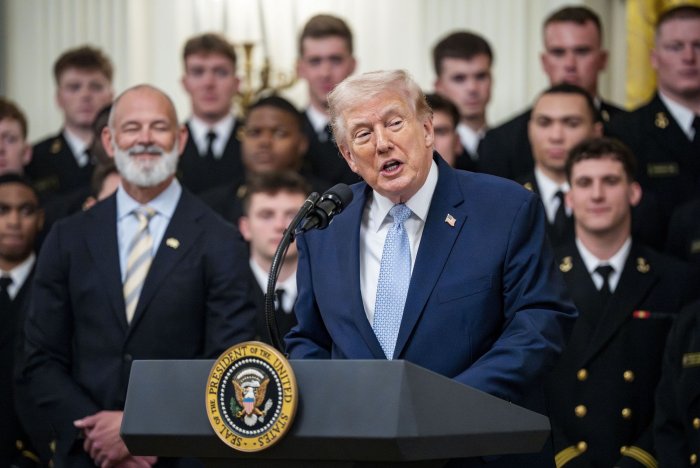
President Donald Trump presents the Commander in Chief’s Trophy to the Navy Midshipmen football team during a ceremony in the East Room of the White House on Friday. The award is presented annually to the winner of the football competition between the Navy, Air Force and Army. Navy has won the trophy back to back years and 13 times over the last 23 years. Photo by Bonnie Cash/UPI | License Photo

Source link

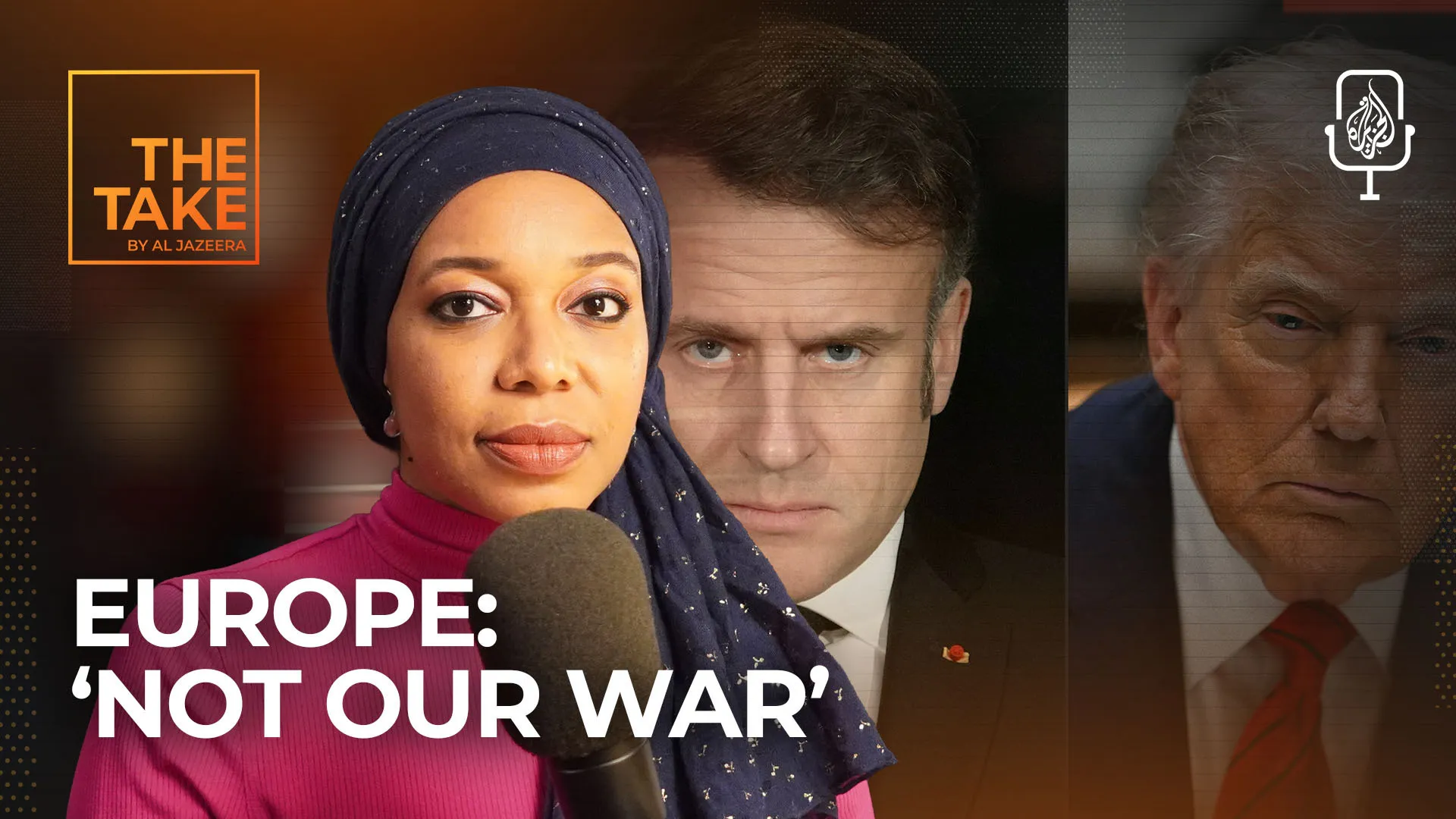
Will Europe be pulled into the Iran war? | News

Europe is under pressure as Trump pushes allies to support the Iran war. How are they responding?

As US President Donald Trump pushes deeper into war with Iran, Europe is keeping its distance, calling it “not our war”. But as strikes on Gulf energy facilities send oil and gas prices soaring, that distance is being tested. In a rare joint move, leaders from across Europe and Japan have pledged to help stabilize energy markets and ensure safe passage through the Strait of Hormuz. Can Europe stay out of the fighting while being pulled in by its economic consequences?

In this episode: 

  • Sven Kühn von Burgsdorff, Former EU Diplomat

Episode credits:

This episode was produced by David Enders and Chloe K. Li, with Spencer Cline, Sonia Baghat, Tuleen Barakat, Catherine Nouhan and our host, Malika Bilal. It was edited by Sarí el-Khalili. 

Our sound designer is Alex Roldan.  Our video editors are Hisham Abu Salah and Mohannad al-Melhem. Alexandra Locke is The Take’s executive producer. 

Connect with us:

@AJEPodcasts on X, Instagram, Facebook, and YouTube


Source link

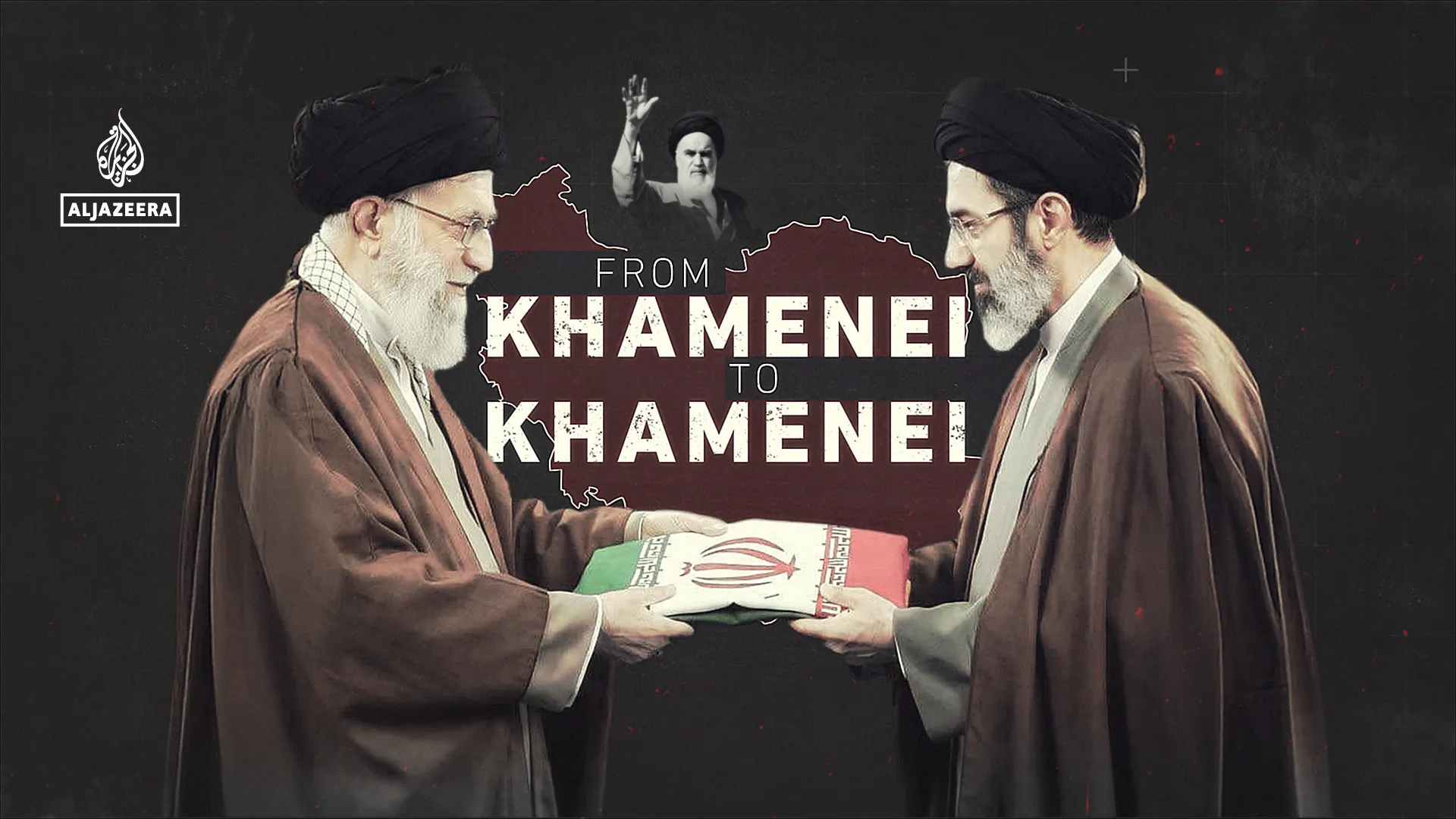
Iran: From Khamenei to Khamenei | US-Israel war on Iran

How Iran’s power structure was built, and how it survives its architect.

After a US-Israeli strike killed Iran’s Ali Khamenei, the war on Iran escalates, and the Islamic Republic faces a critical moment. Mojtaba Khamenei has been elected supreme leader, marking a rare and controversial succession. This explainer breaks down how Iran’s power structure was built after the 1979 Islamic revolution led by Ayatollah Ruhollah Khomeini, and how Ali Khamenei transformed that revolution into a complex political and security structure.

We examine how the supreme leader sits above all institutions in Iran, shaping decisions across government, the military, and the Islamic Revolutionary Guard Corps, and how this system is designed to endure beyond any single leader. As Mojtaba Khamenei takes power, questions grow over how Iran will be governed, how the IRGC will influence decision-making, and whether the system Ali Khamenei built can withstand both internal pressure and external conflict.

From Ali Khamenei to Mojtaba Khamenei, this is the story of Iran’s supreme leader, the system behind power in Iran, and what comes next.

Source link

Norway’s Mette-Marit says Jeffrey Epstein ‘manipulated and deceived’ her

March 20 (UPI) — Norway’s Crown Princess Mette-Marit said she was “manipulated and deceived” by late sex offender Jeffrey Epstein in her first interview about the relationship that lasted years.

Mette-Marit, who is married to Crown Prince Haakon, had a long-term friendship with Epstein, as shown in their emails released in the Epstein files in February by the U.S. Department of Justice.

She said in the interview with Norwegian broadcaster NRK that she “did not know he was a sex offender or an abuser.” But one email in 2011 said she Googled him after he had been sentenced to 18 months in prison and had pleaded guilty to soliciting from girls as young as 14.

She said she now wishes she had never met him.

Mette-Marit decided to do the interview after scrutiny and pressure to explain, including from Norwegian Prime Minister Jonas Gahr Støre.

The Norwegian parliament voted Tuesday to create an independent commission to investigate connections between Epstein and the Norwegian foreign office, The Guardian reported.

The palace has released a past statement in which Mette-Marit admitted she had shown “poor judgment” and expressed “deep regret at having had any contact with Epstein.” Other than this, Mette-Marit has stayed mute on the matter.

Mette-Marit and Haakon did the 20-minute interview Thursday with Norwegian broadcaster NRK at their home, the royal residence Skaugum, near Oslo. It was broadcast Friday.

Mette-Marit’s oldest son, Marius Borg Høiby, is facing seven years in prison for 39 charges that include four counts of rape. She also has pulmonary fibrosis and has said she needs a lung transplant.

“I am the mother of a young man who has been in a very demanding situation,” she told NRK. “In addition, I have health that requires a lot of rest. And it has developed even more.”

“It is incredibly important for me to take responsibility for not checking [Epstein’s] background more carefully. And to take responsibility for being so manipulated and deceived as I was,” she said.

She described her “great anger” that Epstein’s sex trafficking victims have not seen justice. “At the same time, it’s important for me to say if I’ve done something that has contributed to giving him legitimacy in some way.”

Mette-Marit said she was introduced to Epstein through mutual acquaintances in 2011 when she was a special envoy for the United Nations Aids Program.

In the October 2011 email, Mette-Marit wrote: “Googled you after the previous email. Agreed, it didn’t look good :).”

The interviewer asked what she meant, and she said she didn’t know.

“I spent a lot of time trying to figure that out myself. I wish I had the rest of that email correspondence,” she said. “But if I had found information that made me realize that he was an abuser and sex offender, I wouldn’t have written a smiley face.”

The interviewer mentioned a Wikipedia article that was available at that time saying he was a convicted rapist.

“It’s hard for me to say, because I can’t remember. But I didn’t know he was a sex offender or an abuser, if that’s what you’re asking.”

Mette-Marit also stayed at Epstein’s home in Palm Beach, Fla., in 2013, the files showed.

She said she went to the house because “a mutual friend of ours had borrowed the house” but that it is “one of the things I have spent the most time processing after the serious abuses became known in 2019.”

“The fact that I have been there and, not least, have a sense of guilt for the victims. I have spent a lot of time processing this. So, it is very difficult for me personally,” she said.

Mette-Marit mentioned a “situation” that made her feel uneasy on the last day of her stay, but she refused to elaborate, except to say she called her husband about it. Haakon told the interviewer that he remembers the call and that it made his wife feel “unsafe.”

But she stayed friends with Epstein after the incident.

“I am overly trusting, I tend to think the best of people,” she said. “But I also chose to end all direct contact with him. And it was because of such episodes as that.”

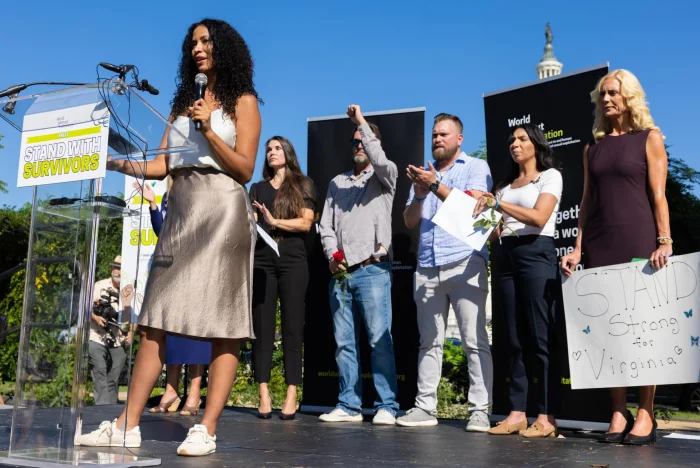
Lisa Phillips, a survivor of Jeffrey Epstein and Ghislaine Maxwell, speaks out during a rally with other survivors on Capitol Hill in Washington on September 3, 2025. Photo by Anna Rose Layden/UPI | License Photo

Source link

U.S. court sentences Bolivian ex anti-drug chief to 25 years

March 20 (UPI) — A U.S. district court has sentenced former Bolivian anti-drug chief Maximiliano Dávila to 25 years in prison for conspiring to import large quantities of cocaine into the United States.

Dávila, 54, was convicted of coordinating cocaine shipments and using heavy weapons to protect drug trafficking operations while serving in senior law enforcement roles in Bolivia under former President Evo Morales.

The sentence, imposed Thursday by U.S. District Judge Denise L. Cote in a Manhattan court, concludes a legal process that began with his arrest near Bolivia’s border with Argentina in 2022 and his extradition in December 2024, Bolivian newspaper La Razón reported.

Dávila served as head of Bolivia’s Special Force to Fight Drug Trafficking, the country’s main anti-narcotics agency, until November 2019. His tenure placed him among the most influential figures in Bolivia’s efforts to combat drug trafficking.

However, his career was marked by allegations of ties to criminal networks, which later led to international investigations, according to local outlet Red Uno.

Prosecutors in New York said Dávila used his position to facilitate drug trafficking operations rather than combat them, turning his office into a logistical hub for organized crime.

They said he ensured safe passage for aircraft carrying cocaine from Bolivian airstrips to intermediate destinations in Central America and the Caribbean, with the drugs ultimately bound for the United States.

According to the investigation, Dávila provided armed protection for cocaine shipments, Bolivian newspaper El Deber reported.

In 2022, the U.S. State Department offered a $5 million reward for information leading to his conviction, underscoring his alleged role in regional drug trafficking networks.

In addition to the 25-year prison sentence, Dávila will face five years of supervised release. His defense has indicated it may appeal, though legal experts say the strength of the evidence makes a reduced sentence unlikely.

Source link

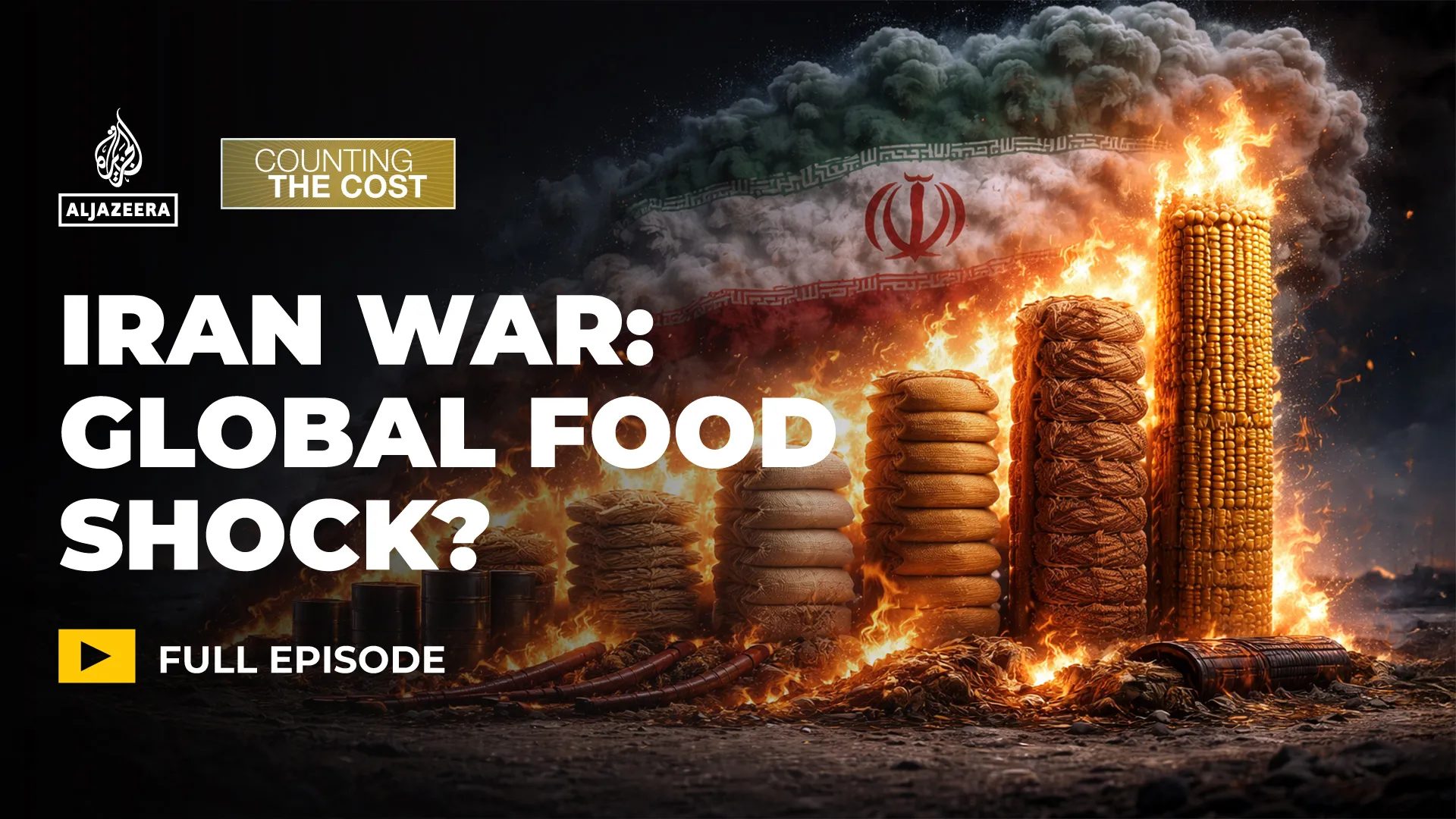
Could Iran war trigger the next global food shock? | US-Israel war on Iran

From factories to supermarket shelves, the Iran war is disrupting global supply chains.

First came the energy shock. Now, the Iran war is hitting something even more basic: Food.

With the Strait of Hormuz blocked, vessels are being rerouted and supply chains are under strain.

The disruption is pushing up the costs of almost everything from factories to supermarket shelves thousands of miles away.

The longer the Iran conflict continues, the greater the pressure on businesses and consumers worldwide.

The United Nations warns that rising food, oil and shipping costs could push an additional 45 million people into acute hunger – taking the global total above its record of 319 million.

Source link

Zelenskyy says Ukraine wants timeline for next round of Russia talks | Russia-Ukraine war News

Volodymyr Zelenskyy says ‘clear dates’ needed as Ukrainian negotiators prepare for discussions in US.

Ukraine’s President Volodymyr Zelenskyy says Ukrainian negotiators will push for a clear timeframe for the next round of Russia talks, as diplomatic efforts to end the conflict have been paused amid the US-Israeli war on Iran.

Speaking to reporters on Friday, Zelenskyy said Kyiv wants “clear dates – at least approximate ones” for the negotiations.

Recommended Stories

list of 3 itemsend of list

“Everyone understands that the situation in the Middle East, the war, is affecting the postponement of this date,” he said.

Zelenskyy’s comments come as Ukrainian negotiators are set to hold talks in the United States on Saturday on US-brokered attempts to reach an agreement to end the more than four-year Russia-Ukraine war.

Previous rounds of negotiations between Kyiv and Moscow in Geneva and Abu Dhabi failed to yield a breakthrough.

The main sticking point has been territory, with Russia pushing for Ukraine to give up the remaining 20 percent of the eastern region of Donetsk that Russian forces have failed to capture.

Kyiv has refused that demand while calling for robust security guarantees from its Western allies to prevent any other Russian attack should an agreement to end the war be reached.

“We have received signals from the US side indicating readiness to continue working within the existing negotiation formats to bring an end to Russia’s war against Ukraine,” Zelenskyy said in a social media post on Thursday.

“There has been a pause in the talks, and it is time to resume them. We are doing everything to ensure that the negotiations are genuinely substantive.”

A senior Kremlin official indicated on Friday that a new round of US-mediated negotiations between Moscow and Kyiv will likely take place soon.

“The pause is temporary, we hope it’s temporary regarding the continuation of the trilateral format,” he said.

Amid the Iran war, Ukraine’s European allies have sought to reassure Kyiv that their attention remains focused on maintaining pressure on Russia to end the war.

“There is obviously a conflict in Iran going on, in the Middle East, but we can’t lose focus on what’s going on in Ukraine and the need for our support there,” British Prime Minister Keir Starmer said this week after meeting with Zelenskyy in London.

European countries also have raised concerns about a decision by US President Donald Trump’s administration to waive sanctions on some Russian oil supplies in a bid to offset soaring energy costs linked to the Iran war.

On Friday, Zelenskyy said Ukrainian officials at the US talks on Saturday would discuss the recent “dangerous” decision to ease those sanctions on the Russian energy sector.

Source link

Labor union rallies behind Korea Zinc before key shareholder battle

A smelter of Korea Zinc. The company is scheduled to hold a high-stakes shareholders’ meeting Tuesday. Photo by Korea Zinc

SEOUL, March 20 (UPI) — Korea Zinc’s incumbent management and its major shareholder, Young Poong, are locked in a fierce showdown ahead of a regular shareholders’ meeting Tuesday.

The world’s largest non-ferrous metal producer said Friday that it posted record sales and profits last year, which led to high dividends and other shareholder-friendly policies.

Citing the strong performance, Korea Zinc has called for the leadership continuity, as the 2026 shareholders’ meeting would select at least five board members out of 15 seats. The term of Chairman Yun B. Choi is also set to expire.

“We believe that our continued efforts to improve corporate governance and expand shareholder returns have laid the foundation to steadily grow our business and operate our organization in a stable manner,” the firm said in a statement.

But, Young Poong argued that proxy advisers and the National Pension Service, another key Korea Zinc shareholder, have effectively supported its position by opposing the reappointment of Choi as an inside director.

According to Young Poong, such decisions suggest that “this is no longer merely a management control dispute, but judgment over potential structural flaws in corporate governance and failures of oversight.”

Since early 2025, Korea Zinc has been fighting to repel an aggressive takeover bid from Young Poong, which has teamed up with the country’s leading private equity firm, MBK Partners.

The battle came to a head at the March 2025 shareholders’ meeting, and another high-stakes clash is looming at this month’s gathering.

Each side reportedly controls roughly 40% of the voting shares, while NPS holds a 5.2% stake.

Meanwhile, the labor union at Korea Zinc expressed strong support for the current board, urging the NPS to immediately reverse its decision.

“We will fight to the end to prevent the dark hand of speculative capital from tainting our sacred workplace at this shareholders’ meeting,” the union said in a statement.

“If our warning is ignored and the company is undermined, we will mobilize all possible means, including a general strike, to wage an all-out struggle,” it said.

Source link

FIFA World Cup 2026: Security concerns grow in US as funding stalls | World Cup 2026 News

Intelligence briefings have warned of the potential for extremists and criminals to target ⁠the FIFA World Cup 2026 at a time when hundreds of ⁠millions of dollars of approved security funds have been delayed, causing United States preparations to fall behind.

The previously unreported briefings from US federal and state officials and FIFA, the international federation overseeing the World Cup, outlined the risk of extremist attacks, including attacks on transportation infrastructure and civil unrest related to President Donald Trump’s immigration crackdown.

Recommended Stories

list of 4 itemsend of list

The football World Cup, one of the ⁠globe’s biggest sporting events, will be held in June and July this year across three countries – the United States, Canada and Mexico.

While security at such events is always intense, US law enforcement officials have been on especially heightened alert since the start of the US-Israeli war on Iran, and have raised concerns over retaliatory threats.

Officials working to prepare for the World Cup in the US have increasingly sounded alarms in recent weeks over a stalled $625m in ⁠federal security grants for the event that were part of a Republican-backed spending bill passed in July 2025.

The Federal Emergency Management Agency, tasked with distributing the money, said in November that it was expecting to allocate the funds no later than January 30.

Following inquiries by Reuters this month after officials and organisers complained that they had still received nothing, FEMA announced on Wednesday that it had awarded the grants, saying the money would “bolster security preparations”.

With the first matches kicking off in Mexico on June 11 and then the US and Canada the next day, states and cities hosting the events are deep into planning, including how to safeguard from possible attacks. The delayed funding and threat warnings have compounded ‌an already complex process, multiple officials involved told Reuters.

The grant money distribution process normally takes months, and efforts to buy technology and equipment can take even longer, according to Mike Sena, president of the National Fusion Center Association, which represents a network of 80 information centres across the US that facilitate federal, state and local intelligence sharing.

“It will be extremely tight,” he said.

A December 2025 intelligence report from New Jersey looking at potential threats to matches in the state – which will include the final – flagged recent domestic attacks, disrupted terror plots and a proliferation of extremist propaganda. The report also noted the possibility of spontaneous gatherings related to tensions between countries.

Another intelligence report, dated September 2025, described an online post appearing to encourage attacks on railroad infrastructure during the World Cup that said there were “plenty of opportunities for us to knock it off the tracks” and highlighted matches on the West Coast of the US and Canada. The documents were obtained through open records requests by the transparency nonprofit Property of the People.

Delayed funding risks lead to growing concerns, while ICE worries mount

Democrats have blamed outgoing US Department ⁠of Homeland Security Secretary Kristi Noem for delaying the release of the money. Under Noem’s leadership, the DHS also withheld hundreds of millions of dollars in homeland security funds last ⁠year from a dozen Democratic-led states and Washington, DC, while pressing them to increase immigration enforcement.

In response to a request for comment, White House spokesman Davis Ingle faulted Democrats for the delayed funding, citing disagreements over immigration enforcement tactics.

“The president is focused on making this the greatest World Cup ever while ensuring it is the safest and most secure in history,” Ingle said in a statement. “The Democrats need to stop playing games.”

Trump’s immigration crackdown has already cast a pall over the event and raised concerns about the presence of US ⁠Immigration and Customs Enforcement officers. Since Trump took office in January 2025, masked immigration agents have rounded up suspected immigration offenders in US cities and detained some tourists at airports.

That has coincided with a Trump-era dropoff in overall international visitors, according to US Commerce Department data. Early signs have, however, indicated still strong appetite for flight bookings ⁠and ticket sales for the tournament.

In a FIFA weekly intelligence briefing dated January 28, analysts warned that anti-ICE activism in US cities in response ⁠to immigration enforcement could lower the barriers “to hostile actions by lone actors or extremist elements”.

Trump has also placed full or partial travel bans on nationals of more than three dozen countries, including Iran, which is in talks with FIFA to move its matches to Mexico due to its current conflict with the United States. Three other countries whose fans face Trump travel bans – Haiti, Ivory Coast and Senegal – have also qualified for the tournament.

Security concerns extend to FIFA World Cup 2026 fan events

Several World Cup and state officials have said “FIFA Fan Festival” events are of particular concern. The events ‌allow large numbers of people to watch matches together on open-air screens.

A Fan Festival event that had been planned in Liberty State Park in Jersey City for the duration of the tournament was cancelled unexpectedly last month and replaced with smaller gatherings.

New Jersey Governor Mikie Sherrill said at the time that many smaller events would allow more people in the area to enjoy the experience. Security concerns also factored in the decision, a person familiar with ‌the ‌planning said.

US Representative Nellie Pou, a Democrat representing a district in New Jersey that includes MetLife Stadium, one of the sites where games will be played, said that each of the World Cup’s 104 matches would be equivalent to a Super Bowl.

“Local government, local law enforcement, will certainly have their hands full,” Pou said. “They need every single dollar that they are eligible to receive, and they need it now.”

Source link

Israel says it hit Syrian army camps in the south after Druze ‘attacked’ | Syria’s War News

Israeli air strikes target army camps in response to alleged attacks on the Druze community in Suwayda on Thursday.

Israel’s military has said it struck Syrian army camps overnight in response to what it claimed were attacks against the Druze community in the south of the country.

“This was in response to yesterday’s events, in which Druze civilians were attacked in the [Suwayda] area,” the Israeli military said in a post on Telegram on Friday.

Recommended Stories

list of 3 itemsend of list

“The [Israeli military] will not allow harm to come to Druze in Syria and will continue to act for their protection.”

The Syrian Observatory for Human Rights monitor reported on Thursday that fighting broke out between government forces and fighters from local tribes against opposing Druze factions in the western countryside of Suwayda.

The fighting began after mortar shells fell on areas under the control of Druze factions.

The shelling later hit residential neighbourhoods in the city of Suwayda, sowing panic and fear among residents, the Syrian Observatory said.

Syria’s state-run SANA news agency did not acknowledge the fighting in Suwayda or the Israeli attack.


Violence first erupted in Suwayda on July 13 between Bedouin tribal fighters and Druze groups.

Government forces were sent in to quell the fighting, but the bloodshed worsened, and Israel carried out strikes on Syrian troops and also bombed the heart of the capital, Damascus, under the pretext of protecting the Druze.

Israel had already pushed deeper into Syrian territory following the fall of Bashar al-Assad in December 2024, occupying the buffer zone and saying the 1974 deal with Syria had collapsed.

The latest flare-up between the neighbouring countries comes as war roils the Middle East after the United States and Israel attacked Iran on February 28.

In a speech delivered after the Eid al-Fitr prayers on Friday in Damascus, Syrian President Ahmed al-Sharaa said he is working to keep Syria out of any conflict.

“It is important to remember that Syria has always been an arena of conflict and strife during the past 15 years and before that, but today it is in harmony with all neighbouring countries regionally and internationally,” he said.

He added that Syria stood “in full solidarity with the Arab states”.

Source link

At least 5 people injured on Delta flight from Los Angeles to Sydney

March 20 (UPI) — At least five people were injured Friday after a Delta Air Lines flight hit severe turbulence on its final approach to Sydney, Australia.

Delta told the BBC that Flight 41 from Los Angeles with 160 passengers and crew on board “encountered brief turbulence” as it landed at Sydney Airport, injuring four flight attendants.

The Airbus A350 touched down “safely and normally,” said a Delta spokesperson.

Three of the injured were taken to hospital by ambulance crews waiting on the tarmac after sustaining what paramedics determined were “musculoskeletal and lower back concerns.”

“I believe five were assessed; in total three were transported to Royal Prince Alfred Hospital with minor injuries,” said Lisa Frow, manager of NSW Ambulance’s Mascot station.

Delta said none of those hurt were passengers, but Australian media listed two 71-year-olds, a 60-year-old-woman and a 37-year-old woman among the injured.

In July, more than two dozen passengers aboard a Delta Air Lines Airbus A330 were hospitalized after it was buffeted by “significant turbulence” en route from Salt Lake City to Amsterdam.

The flight diverted and landed safely at Minneapolis-Saint Paul International Airport with 25 passengers taken to area hospitals.

In June, five people were injured when an American Airlines Airbus A321 hit “unexpected turbulence on flight from Miami to Durham, N.C.

Three flight attendants and two passengers were taken to the hospital.

Passengers reported an unconscious man, a flight attendant with a broken arm and another burned by hot water from a drinks cart.

The American Airlines incident is under investigation by the Federal Aviation Administration, as is standard for incidents where there are injuries.

In May 2024, one person died and 71 were injured, seven critically, aboard a Singapore Airlines flight from London to Singapore that ran into unexpected extreme turbulence when it was at cruise altitude.

The flight deck declared an emergency, but landed the Boeing 777 safely at Bangkok’s Suvarnabhumi International Airport. Health officials determined that Briton, Geoff Kitchen, died of a suspected heart attack.

The incident prompted Singapore Airlines to revise its seat belt policy so that it would no longer provide hot beverage or meal service when the fasten seatbelt sign was illuminated

While strong or severe turbulence — where disturbed air pitches an aircraft violently upward or downward, creating G-forces of up to 1.5 — is on the increase, it remains extremely rare, with only one in 7,000 flights affected.

However, experts warned that flying was likely to become rougher more often in the future due to climate change as temperature changes and shifting wind patterns impact atmospheric conditions.

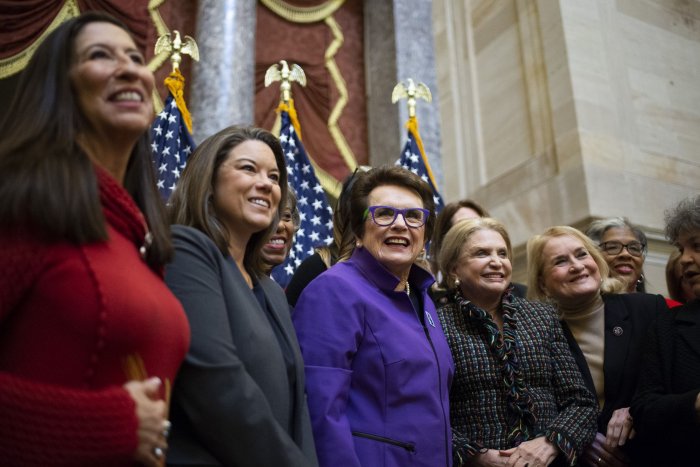
Founder of the Women’s Tennis Association and tennis great Billie Jean King (C) smiles with representatives after speaking during an annual Women’s History Month event in celebration of the 50th anniversary of Title IX in Statuary Hall at the U.S .Capitol in Washington on March 9, 2022. Women’s History Month is celebrated every March. Photo by Bonnie Cash/UPI | License Photo

Source link

14 unaccounted for in fire at Daejeon car parts plant

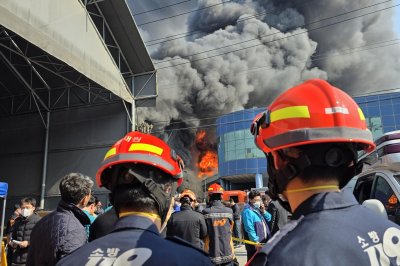
Fire authorities are on the scene of a fire that broke out at a car parts plant in the central city of Daejeon on Friday, injuring at least 53 people, with 14 others unaccounted for. Photo by Yonhap

A fire broke out at a car parts plant in the central city of Daejeon on Friday, injuring at least 53 people, with 14 others unaccounted for, authorities said.

The fire was reported at around 1:17 p.m., prompting the National Fire Agency to issue a national firefighting mobilization order, which is given when the scale of the fire is deemed to surpass the firefighting capacity of the local government.

A total of 170 workers were inside the plant when the blaze started, and 14 of them have been unreachable, officials said.

Of the injured, including 24 with serious injuries, many had inhaled toxic gas or fallen from the building, they said.

More than 200 firefighters and 90 pieces of equipment have been deployed to the scene to put out the blaze, aided by helicopters from the forestry service.

Of the two buildings making up the plant, one has completely burned down, while the other is still burning. Firefighters have not been able to enter the structure due to concerns it could collapse.

Also complicating the firefighting effort is 200 kilograms of sodium inside the building, which could explode if poorly handled.

President Lee Jae Myung ordered authorities to mobilize all available resources to rescue the victims and contain the fire, his office said.

Earlier, Prime Minister Kim Min-seok gave similar instructions to the interior ministry and the fire agency, while ordering the Daejeon metropolitan government and the police to ensure no further damage by implementing traffic control and evacuation measures.

Copyright (c) Yonhap News Agency prohibits its content from being redistributed or reprinted without consent, and forbids the content from being learned and used by artificial intelligence systems.

Source link

Long before Trump: How US policy has harmed the environment for decades | Climate Crisis News

Health and environment advocacy groups in the United States are suing the Environmental Protection Agency (EPA) over the Trump administration’s decision to withdraw a key 2009 climate change ruling known as the “endangerment finding”.

That finding had established that greenhouse gases are a risk to public health and environmental safety, given that they are the primary drivers of climate change. It formed the legal basis for many regulatory policies aimed at curbing climate change.

When US President Donald Trump, who has called climate change a “hoax” and a “con job”, rescinded the declaration in February this year, the EPA supported the move, deeming it the “single largest deregulatory action in US history”.

The lawsuit, filed on Wednesday this week, alleges that the Trump administration’s decision will risk the health and welfare of US citizens.

“Repealing the Endangerment Finding endangers all of us. People everywhere will face more pollution, higher costs, and thousands of avoidable deaths,” Peter Zalzal, the associate vice president of clean air strategies at the Environmental Defense Fund, one of the plaintiffs, said in a statement.

Trump’s revocation of the endangerment finding is the latest in a series of steps he has taken to prioritise deregulation, boost fossil fuel production and reverse climate regulations.

But Trump is not the first US president to enact policy damaging to the environment. Here’s how decades of US policy have harmed the environment before he arrived in the White House

What is the ‘endangerment finding’?

The endangerment finding was established under the presidency of Democrat Barack Obama. It states that carbon dioxide and other greenhouse gases pose a threat to public health and welfare.

That ruling allowed the EPA under President Obama to move forward on policy aimed at limit the release of greenhouse gases in the US, Michael Kraft, professor emeritus of political science and public and environmental affairs at the University of Wisconsin-Green Bay, told Al Jazeera.

Under the endangerment finding, power plants were required to meet federal limits on carbon emissions or risk being shut down. This forced oil and gas companies to invest more to detect and fix methane leaks, curb flaring, and improve tailpipe and fuel‑economy standards to enable automobile companies to manufacture more efficient, lower‑emitting vehicles.

What does rescinding it mean?

“By allowing for increased pollution, these recent changes [by the Trump administration] will harm practically every single person on the planet,” Washington, DC-based policy researcher Brett Heinz told Al Jazeera.

“People living near fossil fuel facilities will be some of the most immediately affected, as they will be exposed to the new air and water pollution unleashed by deregulatory policies,” Heinz added.

Without the endangerment finding in place, the EPA has lost a key legal basis on which to limit greenhouse gas emissions, making it easier for coal plants, oil refineries and petrochemical complexes to run older, dirtier equipment for longer, expand without installing modern pollution controls, and emit more soot, smog‑forming gases and toxic chemicals into nearby communities.

Heinz explained that higher greenhouse gas emissions from burning fossil fuels in power plants, cars and industry as well as continued deforestation will also amplify the dangers posed by natural disasters. This is because increased warming exacerbates heatwaves, storms, floods and droughts, and raises sea levels – all of which turn existing natural hazards into more frequent and more destructive disasters.

“The only people who will benefit from these decisions are a small handful of wealthy fossil fuel executives and shareholders, who will see healthy profits while the world grows sick. These fossil fuel elites, many of whom contributed money to Trump’s presidential campaign, have now gotten a return on this investment,” Heinz said.

Experts say that Trump’s decision to entirely do away with environmental policy is unlike any president before him.

“The White House’s tidal wave of new pro-pollution policies is completely unprecedented. While past administrations have modified environmental rules, the second Trump administration is essentially trying to eliminate them entirely. So far, this has been the most radically anti-environmental presidency in American history,” Heinz said.

How have previous US presidents endangered the environment?

Trump is by no means the first US president to enact policy which is damaging to the environment, however.

Under Republican Theodore Roosevelt, who was president from 1901 to 1909, Congress passed the Reclamation (Newlands) Act of 1902, which treated land and rivers primarily as raw material for large infrastructure projects rather than as ecosystems in need of protection.

This was furthered by Democrat Harry Truman, who was president from 1945 to 1953 and pushed for rapid post‑war industrial and suburban expansion by commissioning the construction of interstate highways and promoting car‑centric development.

Under Republican Dwight Eisenhower, who was president from 1953 to 1961, the interstate highway system burgeoned, and the private car became a developmental priority in the US.

While Republican Richard Nixon, who was president from 1969 to 1974, signed key environmental laws, he also backed massive fossil‑fuel expansion. Under Nixon, the highly toxic herbicide, known as Agent Orange, was used by the US military during the Vietnam War.

Republican Ronald Reagan, who was president from 1981 to 1989, appointed people to the EPA and the Department of Interior who pushed for expanded oil, gas, coal and timber extraction on public lands.

To facilitate this, they favoured deregulation and industry interests, and rolled back existing environmental policy, slashing budgets for EPA enforcement of the Clean Air and Clean Water Acts, easing rules on toxic emissions and pesticides, and opening up more federal land – including wilderness and wildlife habitat – to oil, gas, mining and logging activities.

Republican George W Bush, who was president from 2001 to 2009, refused to ratify the 1997 UN-backed emissions reductions Kyoto Protocol and actively undermined global climate negotiations by formally withdrawing US support for Kyoto in 2001, appointing senior officials who questioned climate science, and pushing voluntary, industry-friendly approaches instead of binding emissions cuts.

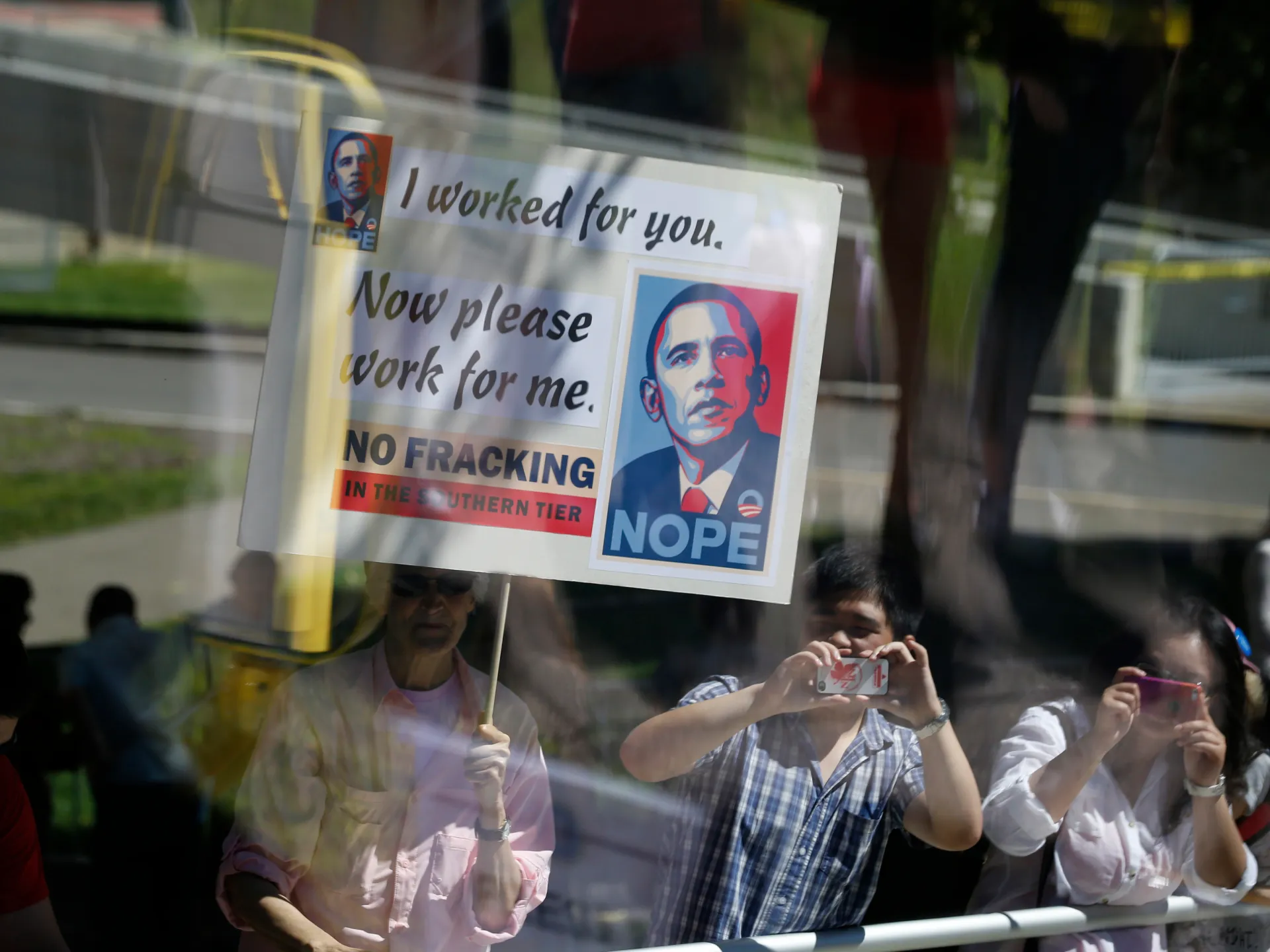
While Obama, who was president from 2009 to 2017, introduced several landmark climate regulations, he also oversaw the fracking boom, making the US the world’s largest oil and gas producer, and locking in long-term fossil infrastructure.

Fracking, or hydraulic fracturing, involves blasting water, sand and chemicals into shale rock to release oil and gas, a process believed to cause methane leaks, groundwater contamination, heavy water use and increased local air pollution.

Democrat Joe Biden, who was president from 2021 to 2024, approved large fossil projects such as the Willow project in Alaska. This involved oil development on federal land in the National Petroleum Reserve, projected to pump hundreds of millions of barrels of crude over several decades.

Figures released by the the US Bureau of Land Management (BLM) suggested that the project would release 239 million to 280 million tonnes of greenhouse gases over its lifetime. The project, approved in 2023 and ongoing, was projected to continue for 30 years.

Biden also backed LNG export growth by approving new and expanded export terminals and long‑term export licences, allowing companies to lock into multidecade contracts to ship US gas to Europe and Asia.

Is this a partisan issue?

No.

“The failure of US policymakers to aggressively tackle global warming is not so much a Democrat versus Republican matter,” Steinberg said.

“It’s neoliberalism, a form of corporate freedom, that is the heart of the problem. A bipartisan consensus on the need for economic growth has led to a general trend toward weakening environmental regulations,” he added.

The US once led the world in conservation by creating an extensive national park system in the 19th century, Ted Steinberg, a history professor at the US-based Case Western Reserve University, told Al Jazeera.

“That was then. US corporate interests, especially the fossil fuel industry, combined with the one-party political system, in which both Republicans and Democrats indenture themselves to the business class, have caused the United States to drag its feet on global warming,” Steinberg said.

What is the history of Washington’s impact on the environment?

The US has historically been the largest contributor to global warming, experts say.

“As in most countries, US environmental policy has been a response to the problems caused by industrialisation and urbanisation, starting in the mid-19th century and proceeding from there, happening at the local, state and national levels,” Chad Montrie, a history professor at the University of Massachusetts Lowell, told Al Jazeera.

“Much of that policy has been limited and inadequate, especially when corporations were able to exert their influence, but in some cases, it has been ahead of what other nations were doing,” Montrie, who specialises in environmental history, added.

There was a time when environmental policy was bipartisan. The EPA was, in fact, created by Republican President Richard Nixon in 1970.

“It wasn’t until the rise of pro-business politics in the 1980s that Republicans like President Reagan took a hard turn against environmental protections,” Heinz said.

“The Democratic Party continues to believe in environmental protection and climate-friendly policies to some degree, while the Republican Party has become one of the few political parties worldwide that completely denies the scientific facts around climate change.”

How does this affect the rest of the world?

“US policy often sets the standards for policy in other parts of the world, both because of its cultural influence and because of the control that the US has over global bodies like the International Monetary Fund,” Heinz said.

“Right now, the US is actively pushing dirty fossil fuels on the rest of the world and even threatening some of its allies for trying to negotiate new environmental agreements.”

Heinz explained that this pressure, coupled with soaring energy prices, seems to have convinced Europe to retreat from some of their climate goals. Household electricity prices jumped by about 20 percent across the European Union between 2021 and 2022, according to Eurostat data.

Heinz said that if the latest United Nations Climate Change Conference, or COP negotiations are any indication, global climate ambition appears to be on the decline right now.

The latest conference concluded in November 2025 in Brazil with a draft proposal which did not include a roadmap for transitioning away from fossil fuels, nor did it mention the term “fossil fuels” at all. This drew rebuke from several countries attending the conference.

“So long as Donald Trump remains in office, the hope of future generations relies upon the nations of the world coming together and acting responsibly to preserve a healthy environment at a time when the United States has gone truly mad.”
Source link