
Trump pauses ‘massive attack’ on Iran, says new talks to begin
US President Trump says new talks with Iran will start Monday ‘in the form of a negotiation’ after calling off attack.
Source link
US President Trump says new talks with Iran will start Monday ‘in the form of a negotiation’ after calling off attack.
Source link


Candidates for the ruling Democratic Party’s leadership race, (L-R) Kim Min-seok, Chung Cheong-rae and Song Young-gil, hold their hands up together to greet the crowd at a joint speech for the preliminary elections for party leader and Supreme Council members at CJB Media Center in Cheongju, North Chungcheong Province, South Korea, 01 August 2026. Photo by YONHAP / EPA
Aug. 2 (Asia Today) — Chung Cheong-rae rebounded in the South Korean ruling Democratic Party’s leadership race Sunday, defeating Kim Min-seok in the southeastern region after narrowly losing the opening contest in central South Korea.
Chung and Kim have each won one of the first two regional rounds ahead of the party’s Aug. 17 national convention, leaving the race for party leader virtually even.
Chung received 25,189 votes, or 46.65%, from eligible party members in Busan, Ulsan and South Gyeongsang Province.
Kim finished second with 23,675 votes, or 43.84%, leaving Chung ahead by 1,514 votes, or 2.81 percentage points.
Former party leader Song Young-gil received 5,129 votes, or 9.49%. The officially reported percentages were rounded to 46.65% for Chung, 43.85% for Kim and 9.5% for Song.
Kim had narrowly won Saturday’s opening round in the Chungcheong region, which includes Daejeon, Sejong and North and South Chungcheong provinces.
Kim received 45.05%, compared with Chung’s 44.61%, a margin of 303 votes, or 0.44 percentage points. Song received 10.34%.
After the first two rounds, Chung held a narrow cumulative lead with about 45.5%, compared with Kim’s 44.5%.
The results announced during the regional contests represent only the first-choice votes of eligible party members. Delegate votes and the results of a public opinion survey will be announced at the national convention in Daejeon.
One-person, one-vote system raises importance of members
The Democratic Party finalized an electoral roll last week containing 17,667 delegates and more than 1.52 million dues-paying party members.
The leadership election is the first to apply a one-person, one-vote principle equally to delegates and eligible members, replacing a system in which individual delegate votes carried substantially more weight.
Combined votes from delegates and eligible party members will account for 70% of the final result, while a public opinion survey will make up the remaining 30%.
The large number of party members means their preferences are expected to play a decisive role.
The Chungcheong and southeastern electorates together represent less than 20% of the total party electorate, however, making it too early to predict the final outcome.
Chung told reporters after Sunday’s results that he had regained the lead.
“I have come from behind,” Chung said.
He compared his campaign with former President Roh Moo-hyun’s victory over Lee In-je during the 2002 presidential nomination race.
Chung said Roh defeated an opponent supported by an established political organization and numerous lawmakers despite having little comparable institutional backing.
“Just as Roh Moo-hyun defeated Lee In-je, who lined up organizations and lawmakers behind him, Chung Cheong-rae will defeat Kim Min-seok,” he said.
Chung also told party members during a speech at the BEXCO convention center in Busan that “organization cannot defeat a political wind.”
Candidates exchange accusations of factional betrayal
The close race has intensified a broader conflict over factions within the ruling party.
During a joint campaign speech in Ulsan, Kim called for an end to what he described as a damaging confrontation between factions aligned with President Lee Jae-myung and Chung.
“We must end the vicious cycle of the Lee-Chung conflict,” Kim said.
He said he would refer people responsible for improper factional activity during the campaign to the party’s ethics committee.
Chung responded by invoking Kim’s conduct during the 2002 presidential election.
Kim left Roh’s then-ruling party after joining lawmakers who pushed for Roh to form a unified presidential ticket with independent candidate Chung Mong-joon.
The group was widely criticized by Roh’s supporters as having abandoned the party’s presidential nominee.
“A person who betrays once will betray again,” Chung said, directing the remark at Kim.
The renewed dispute over the episode reflects the extent to which events from the 2002 presidential campaign continue to influence relationships and perceptions inside South Korea’s progressive political camp.
Song also criticized Chung’s attempt to return as party leader.
“The Democratic Party does not permit consecutive terms,” Song said. “Is there really a need to seek another term?”
Ranked-choice votes could determine winner
The Democratic Party is using a preferential voting system in the three-candidate leadership contest.
Voters rank the candidates by preference. Should no candidate receive a majority of first-choice votes, the candidate finishing last will be eliminated and that candidate’s second-choice votes will be redistributed to the remaining two contenders.
The redistribution process will continue until one candidate secures a majority.
The regional percentages released so far include only first-choice votes and do not show how Song’s supporters ranked Chung and Kim as their second choices.
With Chung and Kim each receiving less than 50%, Song’s redistributed votes could determine the winner if the close three-way pattern continues through the remaining regional contests.
The regional campaign will continue Saturday in Jeju and Incheon, followed by Gangwon Province, Daegu and North Gyeongsang Province on Aug. 9.
Voting in the Honam region, covering Gwangju and North and South Jeolla provinces, is scheduled for Aug. 15. The final regional events will take place in Gyeonggi Province and Seoul on Aug. 16.
A 5% strategic-region bonus will apply in the traditionally conservative Yeongnam and Gangwon regions.
The party leader candidates are also scheduled to participate in televised debates on KBS on Wednesday and SBS on Aug. 12.
The final result will be announced at the Democratic Party’s national convention in Daejeon on Aug. 17.
— Reported by Asia Today; translated by UPI
© Asia Today. Unauthorized reproduction or redistribution prohibited.
Original Korean report: https://www.asiatoday.co.kr/kn/view.php?key=20260802010000251
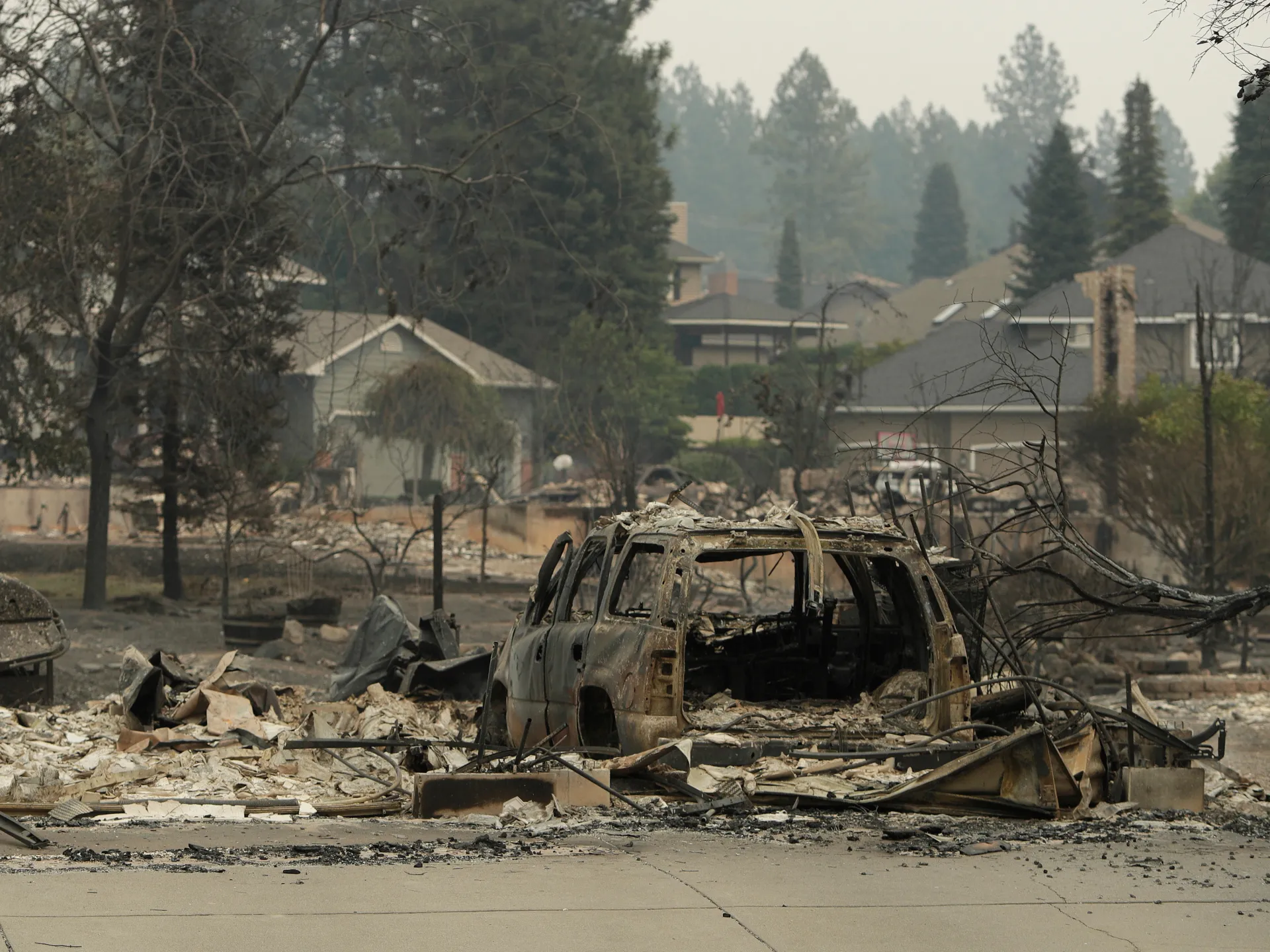
A total of 1,000sq km (386sq miles) has burned across Washington state, and some of the fires have not been contained.
Published On 3 Aug 20263 Aug 2026
Wildfires in eastern Washington state have forced the evacuation of 60,000 people in the Spokane area and destroyed at least 600 homes, businesses and other structures, authorities said on Sunday.
The fires in and around Spokane, the state’s second-largest city, burned about 21 square kilometres (8sq miles) over the weekend and were among dozens of wildfires across the Western United States that stretched the ability of federal, state and local agencies to fight them.
Roughly 1,000sq km (386sq miles) have burned across the state, and some of the fires, including those in the Spokane area, have not been contained.
Fire and law enforcement officials said there had been no reports of injuries or people unaccounted for, but they stressed it was early in the response effort.
Videos from the Spokane area showed buildings on fire, black smoke billowing up near neighbourhoods, and the smoking ruins of homes, with only chimneys still standing. Several officials expressed concern that the area appears set to continue having dry weather in the coming days.
“We are not out of danger,” Senator Maria Cantwell said during a news conference with federal, state and local officials in Spokane. “The next couple of days will be challenging.”
Investigators have not determined how the blazes began.
Spokane was not the only region struggling to contain fires.
Crews using bulldozers and helicopters continued for a tenth day to fight a fire that has burned nearly 1,360sq km (525sq miles) of grassland in western Idaho and eastern Oregon. The area is home to cattle ranches, with authorities saying the fire is threatening more than 600 homes and 800 other structures.
In central Utah, a massive blaze more than doubled in size over the weekend, jumping from about 41sq km (16sq miles) to 145sq km (56sq miles) by Sunday morning. More than 100 cattle have been killed, according to local law enforcement.
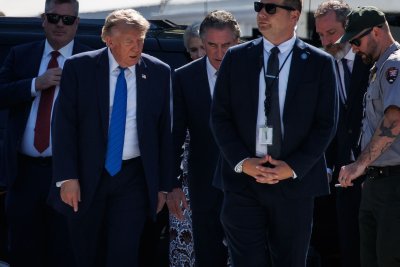

Aug. 2 (UPI) — President Donald Trump said Sunday night that negotiations with Iran toward ending the war will resume Monday, about a month after formal talks between the two unraveled and preceded a return to open conflict.
Speaking to reporters aboard Air Force One en route to Washington after spending a weekend at his Bedminster, N.J., golf club, Trump said talks with Iran will begin Monday afternoon, claiming, as he has repeatedly throughout the war, that Iran wants “to make a deal.”
“We’ll see if it’s true,” he said. “I’d love to do that. Save a lot of lives. Save a lot of unnecessary power, to be honest with you.”
Trump had called off what he advertised as a massive attack on Iran over the weekend, stating it was at the request of allies and Tehran, which he said had agreed to “the parameters of a deal.”
Aboard his plane, he identified Saudi Arabia, the United Arab Emirates and Qatar as the nations that had asked him to hold off.
“It would have been a massive attack. We were all set to go. But when the allies ask to call it off, you go to sort of say, ‘well, let’s see,'” he said. “And the reason they asked they think there’s a deal.”
Trump has long sought a deal with Iran to constrain its nuclear program, going back to his first administration when in 2018 he unilaterally pulled the United States from an Obama-era multinational accord in order to fashion a new one, and imposed sanctions on Tehran to force it to the negotiating table.
In late February, the United States and Israel attacked Iran with the aims of destroying its remaining nuclear capabilities and inciting regime change, instead igniting the five-month-long war, during which Tehran has laid military claims to the vital Strait of Hormuz.
An April cease-fire created conditions for a memorandum of understanding to be signed in mid-June that was to lay the foundation for ending the war. Amid negotiations on implementing the MOU, disagreements arose over its stance on the vital energy route, which led to a resumption in fighting last month.
Monday’s negotiations would be the first publicly acknowledged since early last month. Trump said the discussions will concern the Strait of Hormuz and led into nuclear talks.
He said that the three allies believe “a deal is imminent.”
Trump called off the attack after speaking with Saudi Crown Prince Mohammad bin Salman over the phone. Trump said Sunday that bin Salman warned him that the consequences of the attack would be unpredictable.
“I mean, will they be flooded with people pouring into their country,” he said. “A lot of bad things can happen.”
Trump said it would have been “the biggest attack since World War II” and “disastrous” for Iran.
The United States is seeking to restore freedom of navigation through the strait, while Iran is trying to maintain some form of control over commercial vessels that pass through it.
According to the nonpartisan, Washington-based Institute for the Study of War, Iranian negotiators may be willing to make what it called “limited compromises” with the United States over Tehran’s control of the strait, though what those concessions may be were not entirely clear.

Aug. 2 (UPI) — Greek police announced Sunday they have arrested a man in connection with the grisly discovery of a British woman whose body had been stuffed into a suitcase and abandoned in an Athens neighborhood.
The Hellenic Police said a 26-year-old foreign man was identified as a suspect in the case and that he has been charged with manslaughter, robbery and violation of weapons laws.
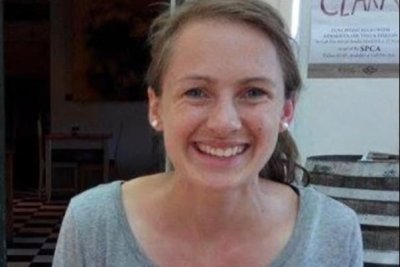
The victim was identified by police as a 38-year-old British woman whose body was discovered stuffed into a suitcase left in an abandoned building in the neighborhood of Kypseli at on July 18.
Multiple media reports named the victim as Elisabeth-Jane Ross, a resident of Scotland.
Authorities determined she had been dead for eight days before her body was discovered.
They said the suspect confessed to his actions after being interrogated on Thursday, confirming to authorities he placed Ross’ body in a suitcase and transported it to the abandoned site.
The man later used victim’s bank cards to withdraw money from he accounts, police said.
During searches carried out at his home, a replica pistol and a knife were found and seized, accounting for the weapons charge.
Hellenic Police said they worked closely with British and Scottish counterparts in investigating the case.
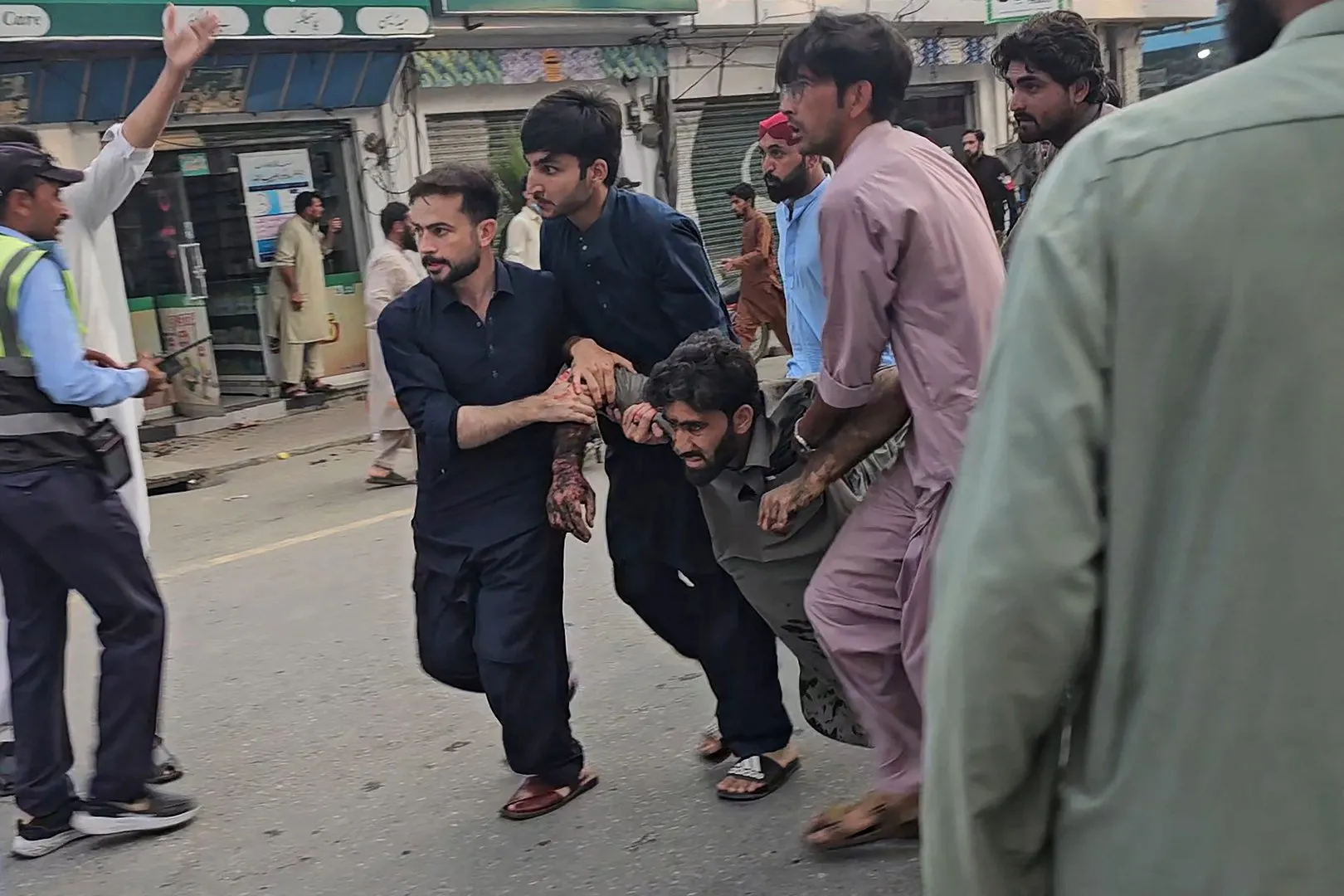
Footage shows blast victims hurried into a hospital in northwestern Pakistan, after a suicide bombing at a police station in Kabal near the Afghan border killed at least 14 people. Crowds of people had been protesting nearby when the bomb exploded.
Published On 3 Aug 20263 Aug 2026
Share
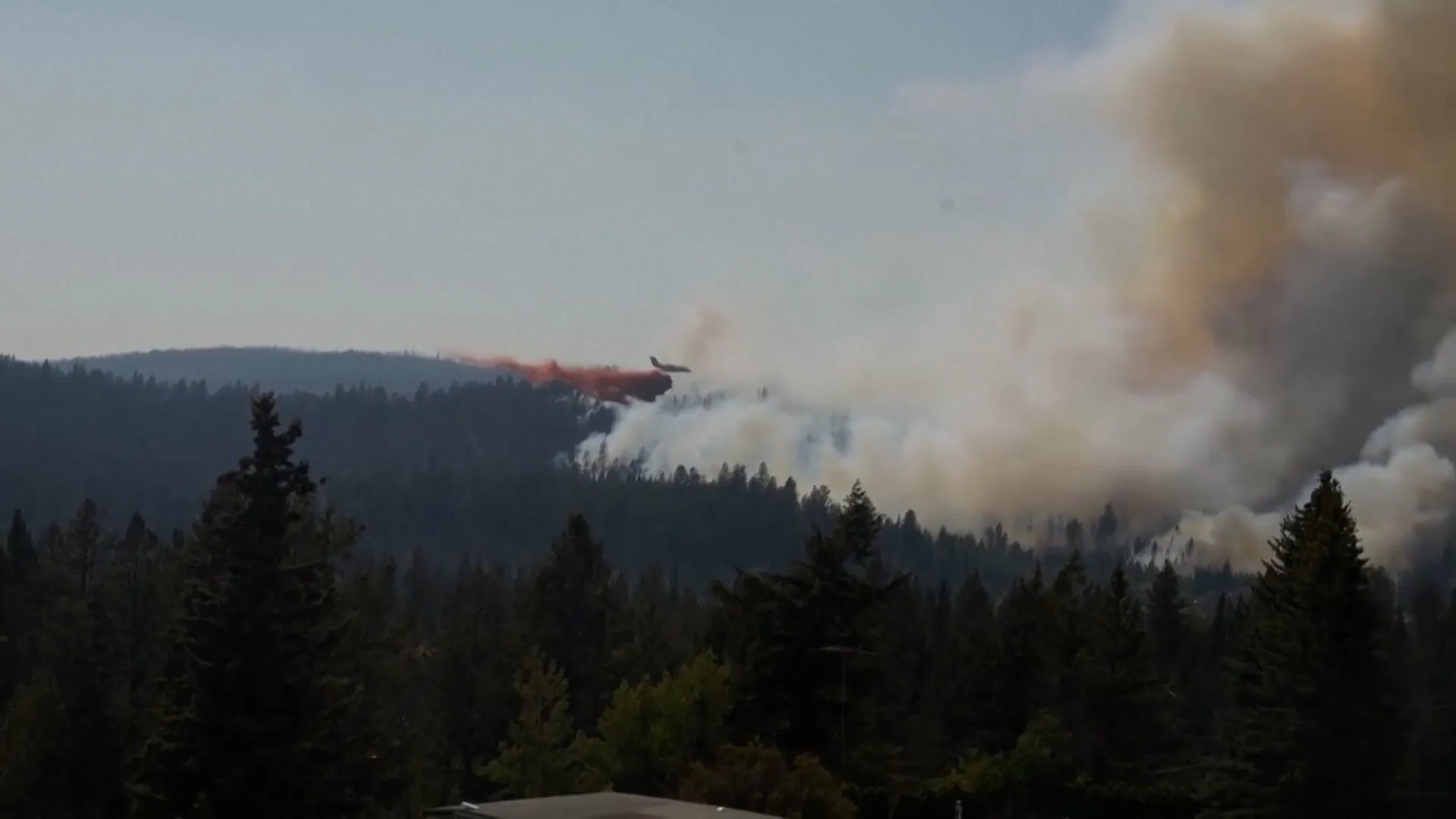
Fast-moving wildfires have scorched more than 250,000 acres across Washington state, forcing widespread evacuations around Spokane. Communities in neighbouring British Columbia, Canada are also under threat as the UN warns of worsening global heat.
Published On 2 Aug 20262 Aug 2026
Share
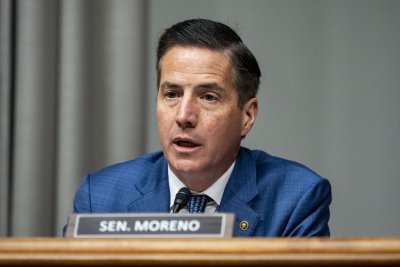

Aug. 2 (UPI) — Sen. Bernie Moreno on Sunday said his former son-in-law, Rep. Max Miller, should not be serving in the U.S. House of Representatives amid mounting allegations of domestic abuse made by Miller’s ex-wife.
Moreno, R-Ohio, broke his silence on the subject of Miller, R-Ohio., in a statement issued on social media in which he said his daughter Emily’s former husband “should not serve in the House of Representatives.
“I believe Max Miller needs to seek professional help to end the clear pattern of abuse he has left in his wake,” Moreno wrote. “I believe he should not be free to continue endangering others until he does.”
Miller, the Republican incumbent from a district in northeastern Ohio and a staunch ally of President Donald Trump, has been locked in a bitter custody battle with Emily Moreno over their 2-year-old daughter following the finalization of their divorce last year.
During their legal fight, Emily Moreno, a conservative policy adviser, has accused Miller of incidents of domestic violence such as scalding her with hot water and hitting and threatening her while they were married.
While those claims were previously known, they came back into the foreground last month when new court filings and police reports released by Mother Jones magazine detailed new information that their daughter had suffered a broken collarbone.
Miller has denied all of Emily Moreno’s allegations and on Sunday again pleaded his innocence and reiterated he would not withdraw as a GOP congressional candidate in the upcoming midterm election.
In a video posted on X, he blamed the “left-wing media” for his predicament and called his ex-wife a woman with “mental health challenges” while linking to a cache of documents he claimed refute all of her charges.
However, his former father-in-law — another vocal supporter of President Trump — nonetheless ended his strategy of avoiding comment on the situation, instead calling Miller unfit to hold office.
“As he has admitted privately, Max Miller needs serious psychological help,” Bernie Moreno said. “He is a danger to my daughter, and I hold my breath every minute he has custody of my granddaughter.”
The GOP senator asserted that “If there are any basic standards of character required to hold elected office, Max Miller fails them. He should not serve in the House of Representatives.
“I believe Max Miller needs to seek professional help to end the clear pattern of abuse he has left in his wake. I believe he should not be free to continue endangering others until he does.”
His remarks came after some Democratic House members called on the Ethics Committee to investigate Miller over what they called “deeply disturbing” reports of “domestic violence and child abuse.”
The deadline for Ohio Republicans to replace Miller on the November general election ballot is Wednesday, and his troubles are leading some Democratic strategists to view his seat as a possible political opportunity.
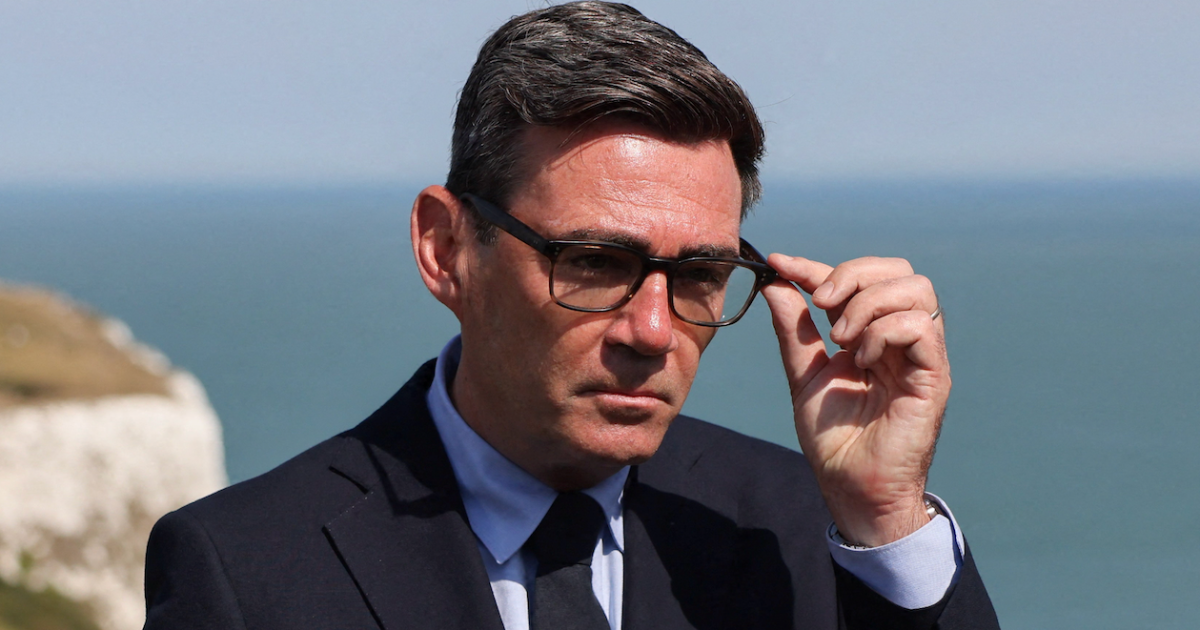
UK Prime Minister Andy Burnham said his government will be “relentless” in tackling small boat crossings across the English Channel, saying crossings are down by 50% compared with the same period last year despite Britain recording its highest daily arrival figure of 2026 last week.
Published On 2 Aug 20262 Aug 2026
Share
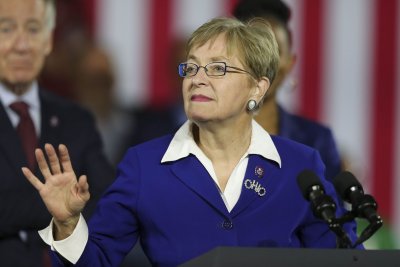

Aug. 2 (UPI) — U.S. Rep. Marcy Kaptur was hospitalized on Sunday after being struck in a hit-and-run accident in Ohio, her office said.
Kaptur, D-Ohio, was on her way to church, riding as a passenger, when the car was hit shortly before 11 a.m.
“She is active, alert, and being treated for non-life threatening injuries,” the statement from her office said. “We look forward to additional information from Toledo Police as they investigate the accident.”
One witness told WTOL 11 the other driver was picked up by a third vehicle and fled the scene.
“Toledo Police Accident Investigators have responded to the scene, and the investigation remains active and ongoing,” Toledo police said in a statement obtained by CBS News.
Kaptur, 80, is the longest-serving woman in congressional history, having first been elected to her seat in 1982.

By Al Jazeera Staff, AFP and Reuters
Published On 2 Aug 20262 Aug 2026
Iran’s foreign minister says negotiations with Oman on the Strait of Hormuz are entering their “final stages”, as Tehran insists the vital waterway will never return to its pre-war status.
In a post on Telegram on Sunday, Abbas Araghchi said that in a report he presented to the cabinet, he described the negotiations between Tehran and Muscat as “on the way to being finalised”.
list of 3 itemsend of list
Foreign Ministry spokesman, Esmail Baghaei, said that Tehran and Muscat were close to reaching a deal on a new maritime route through Hormuz, separate from existing corridors.
“We are now going to reach an understanding on a route acceptable to both sides – neither the northern route nor the southern route – but one that respects the sovereign rights of both sides and safeguards our national interests and security,” Baghaei said in an interview with state television.
Muscat did not immediately comment on the matter.
Both Iran’s and Oman’s territorial waters border the Strait of Hormuz, the key waterway through which about 20 percent of global oil consumption is normally shipped.
Details of the new route were not immediately clear, but Iran has effectively maintained control over the strait since the outbreak of war. On February 28 , the US and Israel launched strikes aimed at destroying Iran’s missile programme, preventing a nuclear weapon and cutting off support for allied armed groups.
A June ceasefire collapsed within weeks in a dispute over shipping routes through Hormuz and fighting reignited in July.
Baghaei earlier said “an understanding between Iran and Oman on a new route has nothing to do with whether the Strait of Hormuz is reopened or remains closed”. He blamed the US for the closure and accused Washington of breaching its commitments, according to Iran’s Fars news outlet.
“The strait was closed because of the United States’ breach of its commitments, its naval blockade of Iran and all the hostile measures that the United States has taken against the Islamic Republic of Iran during this period,” he said.
Hassam Ghashghavi, spokesman for the Iranian parliament’s national security commission, said on Sunday that mediators were trying to revive the June memorandum of understanding with the US, and were aware that Hormuz remained the central issue, Iranian news outlet SNN reported.
Ghashghavi said it was possible that an Iranian delegation would travel to Muscat again as part of ongoing diplomacy. “This is the nature of diplomacy and this exchange of views continues regularly,” he said.
The comments come after US President Donald Trump said early on Sunday that the US and Israel had agreed to halt new attacks on Iran, provided a deal to end the months-long conflict is reached “rapidly”.
Trump posted on Truth Social that the US was “locked and loaded and ready to go against the Islamic Republic of Iran”, but Tehran and other Middle Eastern countries asked him to hold off on new attacks.
“Based on this request, I have agreed, for the future benefit of the WORLD and, likewise, the survival of a successful and prosperous Iran, to cancel the attack, subject to being able to rapidly make a DEAL.”
Trump said the deal “would include the Immediate, Complete, and Total OPENING OF THE HORMUZ STRAIT, and an end to Iran’s nuclear threat”.
“The Country of Israel joins me in this commitment. Get to work, everybody, and get it DONE,” he wrote.
Saudi Arabia’s Crown Prince, Mohammed bin Salman, (MBS) spoke to Trump by phone on Saturday, urging him to “prioritise dialogue” and “reduce escalation”, the Saudi Press Agency reported.
US news website Axios reported that MBS expressed concern over Trump’s plans for large, new attacks against Iran and reportedly urged him to refrain.
“We know that, in a larger context, Iran is habituated to dancing to the same old tune, as it is receiving this oscillating rhetoric from the US president about the possibility of another round of confrontation on the one hand, [while also hearing] statements about these talks going well and that a potential deal is within reach,” said Al Jazeera’s Tohid Asadi, reporting from Tehran.
“In that regard, we know that the Iranian side, at the same time, is responding with the same two-sided message, saying that the road for diplomacy is open on the one hand, [while also maintaining] full preparation for another round,” he added.

Residents searching through the rubble of an Israeli strike in western Gaza City recovered the body of an unborn baby after the attack killed a pregnant woman, her husband and their five-year-old son.
Published On 2 Aug 20262 Aug 2026
Share
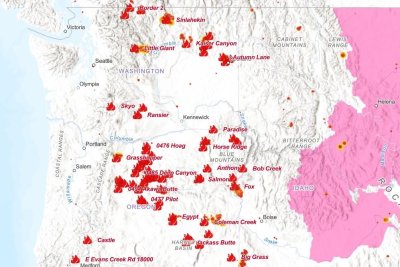

Dangerous wildfires are spreading across the Pacific Northwest, forcing thousands of people to evacuate their homes in parts of Washington state and Oregon. Photo Courtesy Washington Department of Natural Resources.
Aug. 2 (UPI) — Thousands of people were ordered to evacuate their homes across the Pacific Northwest on Saturday, as dangerous wildfires spread in parts of Washington state and Oregon.
Three major wildfires are burning around Spokane, the largest of which had burned more than 3,500 acres by Sunday morning, NPR reported.
“I was sitting near an elementary school and saw a wall of flames east of the school and just a cascade of black smoke and a wall of flames coming toward me,” Alexandra Duggan, who lives in the area, told NPR.
More than 5,000 structures are threatened by the fires, which have knocked out power from ore than 13,000 homes, CNN reported.
Gov. Bob Ferguson of Washington declared a state of emergency, saying, “Our record-setting drought and high winds are creating dangerous conditions across the state.”
“If you are in the area, please continue to be vigilant and follow directions of emergency personnel,” Ferguson said in a statement on X.
In Oregon, wildfires have burned more than 1.8 million acres this season, OPB reported.
On Saturday, more than 25,000 Oregonians were under evacuation orders in central and southeastern Oregon.
One of the blazes, east of Mount Hood, had already burned some 23,000 acres by Saturday morning and remained at 0% containment.
“The reason we’re seeing these conditions… is that things are really dry,” said Matt Callihan, a lead meteorologist for the National Weather Service, to OPB. “We haven’t seen rain in a long time. It’s been hot, so that’s allowed fuels to cure pretty well.”
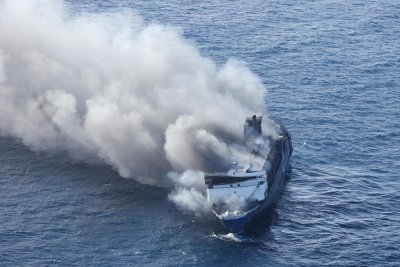

Thick smoke was seen billowing from the ferry KMP Mutiara Sentosa 2, which was carrying 271 passengers and crew when it caught fire off the coast of Indonesia’s Madura Island on Sunday. Photo by Stringer/EPA
Aug. 2 (UPI) — At least five people were killed and 41 remain missing after a ferry carrying hundreds of people caught fire off the coast of Indonesia’s Madura Island on Sunday, officials said.
Thick smoke was seen billowing from the passenger vessel KMP Mutiara Sentosa 2, which was carrying 271 passengers and crew.
The ferry’s captain reported the fire as the vessel traveled from Surabaya to Makassar about 6 a.m. local time.
Indonesia’s National Search and Rescue Agency said survivors were rescued by a number of vessels that had been in the area, the Jakarta Globe reported.
Search and rescue efforts continued throughout the day. The ferry was still smoking by mid-afternoon, the Globe reported.
Victims were taken to three area hospitals for medical evaluation.
“Our main focus is on rescuing the victims and ensuring they receive the best possible care upon their arrival on land,” Sumenepe Police Chief Ariek Indra Sentanu told iNews. “The TNI, Polri, and district government are working together in the field.”
The cause of the fire remains under investigation, officials said.

Andrius Kubilius on the lessons from Ukraine and why drones and space are transforming Europe’s security strategy.
Europe is rearming for a new era of conflict. European Commissioner for Defence and Space Andrius Kubilius calls for a “big bang” increase in defence spending, warning the continent must be ready for a potential Russian attack by 2030. He explains how Ukraine is reshaping modern warfare, why drones, satellites and space capabilities are now as vital as tanks and troops and why Europe must achieve greater defence independence. For Kubilius, only strength can preserve peace.
Published On 2 Aug 20262 Aug 2026
Share

On Thursday, United States President Donald Trump announced that Hamas had agreed to disarm and move to the next phase of the ceasefire deal in Gaza. The announcement was received positively by various regional actors while the US president characterised it as a “historic agreement”.
The problem is that the disarmament is unlikely to take place. That is because Hamas has made clear that it has conditioned relinquishing its weapons on Israel abiding by its obligations under the agreement, which the latter has failed to do since it was reached in October. The Board of Peace, the body tasked with overseeing the ceasefire and Gaza’s reconstruction, has done nothing to pressure it into compliance.
This is one of the many failures of this body, which has very little to show for its six-month existence. It lacks the power, financing, enforcement mechanisms and legal standing within the international legal system to fulfil its self-declared mandate. Rather than creating a pathway towards de-escalation, it has created an appearance of diplomatic progress that provides political cover for the continuation of the Israeli genocide in Gaza.
The only way to move forward is for the board to be abandoned and responsibility returned to the United Nations.
The Board of Peace was established under Article 9 of Trump’s 20-point peace plan for Gaza, announced in October. Its mandate is to oversee a temporary Palestinian technocratic body that would manage Gaza and an International Stabilization Force (ISF) of multinational peacekeepers. In theory, the board would supervise Gaza’s reconstruction and Israel’s gradual withdrawal. In practice, it has not achieved any progress on either of these processes.
Despite lofty promises from the Trump administration about transforming Gaza into a modern urban landscape, there has been no movement in that direction. The majority of the population still lives in abhorrent conditions in tents.
Last month, the board scaled down the reconstruction plan to a pilot project near Rafah, close to the Egyptian border, which is under the control of the Palestinians who collaborate with Israel. Israel would vet the Palestinians who are allowed to stay in that development.
Worse still, the board is trying to give itself the right to confiscate Palestinian properties or use them “free of charge”. This signals its willingness to serve as a facade for continuing Israeli theft of Palestinian land.
An Israeli withdrawal – the other major process the board should oversee – has been all but forgotten. Instead, Israel has continued to kill Palestinians in regular bombardments and encroach on more and more Palestinian land.
Since the ceasefire began in October, Israel has killed more than 1,100 Palestinian civilians. It has continued to carry out demolitions of Palestinian homes and to move its “Yellow Line”, expanding its control to about 70 percent of Gaza’s territory, up from 53 percent at the start of the ceasefire.
The Board of Peace has taken no action in response to these Israeli colonial practices and has not issued any public statements condemning them.
Meanwhile, the board has framed Palestinians as responsible for the lack of progress. Its high representative, Nickolay Mladenov, has described Hamas as the “principal obstacle” to implementing the ceasefire despite no recorded Palestinian attacks since its beginning.
This one-sided scrutiny reveals the board’s function: not peacemaking but providing cover for the ongoing occupation.
The Board of Peace has also maintained arrangements that allow Israel to control the flow of aid into Gaza. Although Trump’s plan stipulates that neither Hamas nor Israel should interfere with the entry and distribution of assistance, the Israeli military continues to determine both the quantity and type of assistance allowed into the Gaza Strip.
Major European countries and China have declined to join the Board of Peace. States that initially signalled a willingness to contribute to the ISF have since frozen or withdrawn their commitments.
This lack of confidence is also reflected in funding failures. Despite initial pledges of $10bn from the US and a further $7bn from other countries, the World Bank account established for the board reportedly has received no funds. Instead, it has relied on a few million dollars deposited into a private JP Morgan account, much of which has been spent on salaries and administrative overhead rather than reconstruction or civilian protection.
Perhaps the starkest sign of the failure of the Board of Peace is that it is seeking to give itself immunity from prosecution. In a draft resolution, the board appears to pursue protections for its members and administrative bodies, including the Office of the High Representative, Palestinian technocrats, international military forces and nonresident contractors.
In other words, the board wants to operate above the law. The goal is clear: impose a foreign governance structure that obscures Israeli colonisation of Gaza behind an international body.
The continuing existence of such a body is an international disgrace, and it needs to end.
The appropriate response is a collective push by states that support the two-state solution and the peaceful resolution of the Israeli-Palestinian conflict to bring the process back to the United Nations umbrella. Palestinian factions should be at the forefront of this effort.
The UN should assume responsibility and transfer any relevant functions away from the board to established UN bodies.
Critics may counter that the UN has failed to resolve the Palestinian-Israeli conflict for more than seven decades. That is true. But its umbrella offers an international legal framework that anchors action in international law and readily identifies violations. That provides structure and legal levers the Palestinians can use to continue pushing for their rights.
What is more, there is a dedicated UN agency – UNRWA – that deals with Palestinian refugee problems and is best equipped to handle the vast challenges of a displaced and impoverished population. The return of UNRWA is important not only as a service-provision body but also as an entity that protects the rights and status of Palestinian refugees.
The UN and its associated bodies have established accountability and transparency mechanisms that can minimise the misuse of resources needed for rebuilding Gaza. While ending the occupation depends on the political will of the world’s foremost powers, the UN umbrella maintains the legal status of Gaza as occupied territory and protects the rights of the occupied population.
The UN can also play a role in the deployment of the ISF. The force should be deployed not just in Gaza but also the West Bank to protect Palestinians from settler attacks. Giving the ISF a UN mandate would encourage more countries to contribute to its creation and help build a wider coalition of countries invested in the stabilisation and protection of Gaza and the West Bank. This could be a preliminary step that sets up Israel’s withdrawal from these occupied territories.
The international community must act now. The Board of Peace must be abandoned, and all responsibility for Gaza must be transferred back to the UN system. The UN must be empowered to take the lead in any future arrangements.
Continuing to maintain the current situation in Gaza means the continuation of Palestinian suffering and the deepening of uninhabitability, in effect paving the way for the forced displacement of Palestinians from their land. What is urgently needed is a UN-led mechanism that is immediately enforceable and grounded in international law.
The views expressed in this article are the author’s own and do not necessarily reflect Al Jazeera’s editorial stance.
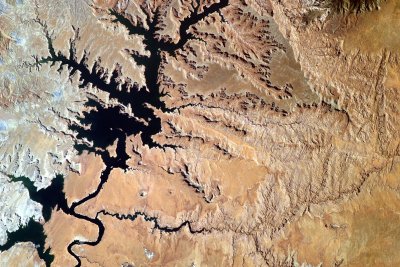

July 31 (UPI) — Federal officials on Friday released an updated framework for the Colorado River, requiring Arizona, California and Nevada to significantly reduce their water use in the coming years.
The plan, released by the Interior Department’s Bureau of Reclamation, reduces the water available for use by the three states by 3 million acre-feet in the coming decade.
One acre-foot is enough water for as many as four households to use for a whole year. The cuts represent the largest proposed cuts for those states to date
“The [report] contains a framework that includes sideboards that are unacceptable for the state of Arizona,” the Arizona Department of Water Resources said in a statement to The Colorado Sun. “Such reductions would devastate Arizona’s water users and its economy.”
The Colorado River’s resources are divided among seven states, combined into two groups: Upper Basin states include Colorado, New Mexico, Utah and Wyoming, while Lower Basin states are Arizona, California and Nevada.
Upper Basin states have a target for voluntary cuts of up to 200,000 acre-feet per year, or 5% of their annual water use.
The Colorado River provides water for some 40 million people.
Federal officials said drought conditions over the past 25 years have dwindled the water capacity available to the states that rely on the river.
“The department has a responsibility to ensure the Colorado River system remains reliable and resilient for the millions of Americans, communities and industries that depend on it,” Interior Secretary Doug Burgum said in a statement. “This framework provides the flexibility to respond to changing hydrologic conditions while preserving the opportunity for the Basin States to continue working toward durable, consensus-based solutions.”

Published On 2 Aug 20262 Aug 2026
Harare, Zimbabwe – Harare’s streets have been quieter than usual as residents wait to see whether a call for a nationwide shutdown against constitutional changes would lead to protests.
The first thing that stood out was the traffic.
Cars on the roads leading into the city centre on Friday were fewer than usual. The morning rush hour that normally fills the capital’s streets was missing, and the journey into Harare’s central business district was quicker than expected.
For a normal working day in Zimbabwe, the difference was noticeable.
Police were deployed across Harare as opposition groups and civil society activists called for a nationwide shutdown over constitutional changes. Critics said the amendments could extend President Emmerson Mnangagwa’s time in office until 2030.
Across the city, the security presence was difficult to miss.
Police blocked access to a popular park where people often gather, making it clear that no one would be allowed inside. Nearby, water cannon trucks were parked in an open space that has been used for previous demonstrations.
By about 8:30am (06:30 GMT), parts of Harare’s central business district were slowly coming to life.
In areas where taxis operate and small businesses line the streets, some shops had opened while others remained closed.
The heavy police presence showed that authorities were prepared for possible demonstrations, which police have banned.
In Zimbabwe, public gatherings require police approval, and opposition groups have repeatedly criticised restrictions on protests.
As the day continued, Harare remained calm.
The shutdown call followed constitutional amendments approved by Zimbabwe’s Parliament and signed into law in July.
The changes move the next presidential election from 2028 to 2030 and extend presidential and parliamentary terms from five years to seven.
They also change how future presidents are chosen, replacing a direct presidential election by voters with a system in which the president would be elected by parliament.
Mnangagwa came to power in 2017 after longtime leader Robert Mugabe was removed from office.
He won elections in 2018 and 2023 and was previously expected to leave office at the end of his second term in 2028.
The amendments have drawn criticism from opposition groups and civil society organisations that argue they could allow Mnangagwa to remain in office beyond 2028.
The government has defended the changes, saying they are aimed at reducing political tensions and creating greater stability.
For Godfrey Gurira, who fought in Zimbabwe’s liberation war, the constitutional changes represent a betrayal of the ideals he fought for.
“When we went to war, we were fighting for the people,” he told Al Jazeera.
“We were fighting for one man, one vote. That’s what we want to see happening. We were not fighting for a dynasty or anything along those lines.”
The ruling ZANU-PF party has governed Zimbabwe since independence in 1980. The party has rejected accusations that the amendments are designed to extend Mnangagwa’s time in office.
Farai Marapira, the ZANU-PF’s information and publicity director, told Al Jazeera that the constitutional changes were intended to address political tensions linked to Zimbabwe’s electoral cycle.
“We have noted that there is a sequence which follows a five-year electoral cycle,” he said.
“Within the first two years, there is contestation of the previous election. In the third year, there is mobilisation for the next election.”
Marapira said the changes would reduce periods of heightened political tension before elections.
Opposition groups disagreed, saying the amendments weaken democratic accountability.
The shutdown call did not lead to widespread disruptions in Harare.
As the day continued, the city gradually returned to its normal rhythm.
More shops opened. Taxis returned to the streets. Traffic increased.
But the constitutional amendments that triggered the shutdown call remain contentious.
Opposition groups and activists are challenging the changes in the Constitutional Court while the government continues to defend them.
By the afternoon, Harare had largely returned to its normal weekday routine. But the dispute that brought police onto the streets and prompted the shutdown call is not over.
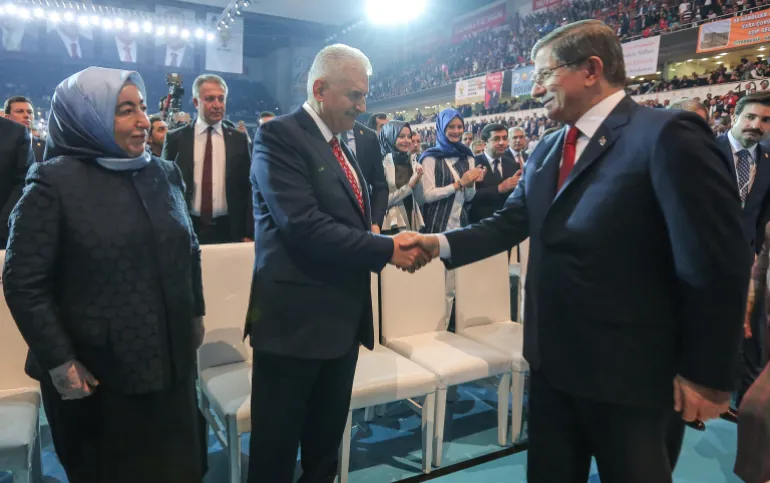
Ahmet Davutoglu was once one of Turkiye’s most powerful figures: The academic who helped shape the country’s ambitious foreign policy after the turn of the century, served as foreign minister and prime minister, and was chosen by President Recep Tayyip Erdogan to lead the governing Justice and Development Party, or AK Party.
But later, he became a critic of the political system he had helped build.
list of 3 itemsend of list
Now, after announcing that his opposition Future Party would cease political activities, Davutoglu is withdrawing from party politics. He described the decision not as surrender but as an effort to distance himself from what he called Turkiye’s “polluted political climate”.
His departure leaves a contested legacy – that of an intellectual who transformed Tukiye’s diplomatic outlook, but struggled to turn his ideas and prominence into an independent political movement.
Born in 1959 in Taskent, in the central province of Konya, Davutoglu studied economics and political science at Bogazici University before becoming an academic.
He taught in Malaysia and at universities in Turkiye, with students calling him “Hoca”, or the professor – a title that followed him into government.
Davutoglu became widely known for his so-called “strategic depth” doctrine, the argument that Turkiye’s geography, Ottoman history and connections across the Balkans, Middle East, Caucasus and Central Asia could make it a central diplomatic power rather than a country confined to Europe’s periphery.
After the AK Party came to power in 2002, he became Erdogan’s chief foreign policy adviser. He was appointed foreign minister in 2009 and entered parliament in 2011.
His early years in government coincided with an expansion of Turkish influence.
Ankara opened embassies, strengthened its presence in Africa and the Middle East, mediated regional disputes and promoted trade and visa-free travel with neighbouring countries. The approach became known as “zero problems with neighbours”.
Tarik Celenk, a writer and analyst familiar with Turkiye’s conservative intellectual tradition, said Davutoglu altered the country’s diplomatic culture.
“Davutoglu brought a change of mentality to the Foreign Ministry cadres,” Celenk said, crediting him with opening diplomacy to businesses and civil society.
Celenk noted that Davutoglu sought to position Turkiye as a country capable of communicating with otherwise incompatible actors. “Davutoglu was able to have good relations with Hamas, with Russia, and also to have good relations with the US,” he added.
Davutoglu called this intensive and multidirectional engagement “rhythmic diplomacy” – an effort to maintain dialogue across competing regional and global power centres.
But the Arab uprisings, particularly the war in Syria, exposed the limits of that vision, analysts said. Turkiye supported the Syrian opposition and anticipated that President Bashar al-Assad’s government would fall quickly. Instead, the conflict brought mass displacement, security threats and prolonged instability.
“His principal mistake in foreign policy was that he was very emotional, very romantic,” said Celenk, arguing that Davutoglu struggled to establish boundaries between “idealism, romanticism and realism”.

When Erdogan moved from the prime minister’s office to the presidency in 2014, he selected Davutoglu to succeed him as AK Party leader and prime minister.
The arrangement contained a fundamental contradiction. Under Turkiye’s parliamentary system at the time, Davutoglu formally headed the government. But Erdogan continued to dominate the governing party and exercise authority from the presidency while advocating an executive presidential system.
Davutoglu led the AK Party through two elections in 2015. After losing its parliamentary majority in June, the party regained it in November with nearly half the national vote. Yet the victory did not give Davutoglu an independent power base.
According to Celenk, Davutoglu entered politics imagining a forest without “wolves, foxes, jackals or snakes” – but discovered while prime minister “that this forest did not exist”.
Amid disagreements over appointments, governance and Erdogan’s efforts to expand presidential authority, Davutoglu stepped down in 2016. He remained in the AK Party for another three years before resigning and establishing the Future Party in 2019.
The party sought to attract conservative voters disillusioned with Erdogan while advocating parliamentary democracy, the rule of law and accountable government. It never developed substantial electoral support.
Political scientist Berk Esen said opposition parties face structural disadvantages in Turkiye, where the governing party has extensive access to state resources and much of the media.
But those conditions did not fully explain the failure of Davutoglu’s party, he added. “For one thing, the Future Party was already half stillborn by its very foundation,” argued Esen.
Davutoglu and Ali Babacan, another former senior AK Party figure, established separate opposition parties, dividing an already limited pool of disaffected conservative voters. Both also struggled to confront the records of the governments in which they had served.
In the 2023 elections, Future Party candidates entered parliament on the lists of the Republican People’s Party, or CHP, then Turkiye’s main opposition party. The arrangement delivered seats but exposed the party’s dependence on a larger organisation.
Esen said pursuing guaranteed representation prevented the Future Party from fielding its own candidates across Turkiye and building local networks.
“In order to achieve a small success in the short term, they squandered the party’s institutional identity in the medium term,” he said. “And that is already why this party closed.”
Celenk offered a similar assessment: “You could say that the Future Party was never the party of the future. It became stuck in the past.”
Yet he distinguished between Davutoglu, the unsuccessful party leader, and Davutoglu, the intellectual.
“Let us criticise Ahmet Davutoglu the politician together, all the way to the end,” he said.
“But Ahmet Davutoglu’s intellectual production capacity within the conservative community was belittled and not taken seriously,” added Celenk, referring to sections of Turkiye’s conservative political and religious establishment which, according to him, benefited from Davutoglu’s ideas and intellectual framework but did not sufficiently acknowledge his contribution.
Esen said he doubts Davutoglu could exercise significant political influence while Erdogan remains in power. “But I think, in practice, his political career appears to be over,” he said.
Yet the analysts found substance in Davutoglu’s explanation for withdrawing. Celenk said his four-page letter offered a serious diagnosis of “the state the country, its politics and its society have reached”, including the risk that Turkiye was “losing its character as a nation”. Esen agreed that “Turkish politics has become very polluted and authoritarian”, adding that some of Davutoglu’s criticisms were therefore well grounded.
Davutoglu exits party politics without establishing the conservative democratic alternative he promised. But some of the ideas and diplomatic practices he introduced survived his loss of power, ensuring that debate over his legacy will outlast the party he founded.
“At least as Davutoglu leaves politics and withdraws from institutional politics, this must be remembered,” said Celenk.

World Series champions for the past two years add Skubal to star-studded roster that already includes Shohei Ohtani.
Published On 2 Aug 20262 Aug 2026
The Los Angeles Dodgers have acquired the biggest prize on the trade deadline market, getting two-time reigning American League Cy Young Award winner Tarik Skubal from the Detroit Tigers.
Skubal got the news on Saturday night during the Tigers’ 8-6 win over the Athletics and was emotional after the game as he prepared to leave the team that drafted him in 2018 and developed him into a pitching star to join the World Series champions for the past two years.
list of 4 itemsend of list
“I’m excited to be a Dodger,” he said. “I’m excited to get down there and meet all those guys and chase three championships in a row. That’s hard to do, so I’m so excited to be a part of that. But it’s a lot of different emotions. Definitely kind of a roller-coaster a little bit.”
Skubal is the latest star to join the high-priced roster for the Dodgers, which already has big-name players like Shohei Ohtani, Yoshinobu Yamamoto and Mookie Betts.
If everyone is healthy, he could be part of a rotation with Ohtani, reigning World Series MVP Yamamoto, fellow two-time Cy Young Award winner Blake Snell and Tyler Glasnow. The Dodgers lead the majors with a 3.36 ERA from their starting pitchers and now add Skubal to the mix.
The Dodgers are in first place in the National League West and before adding Skubal were already the favourites to become the first team to three-peat since the New York Yankees from 1998 to 2000.
ESPN first reported the deal and said the Tigers would receive three minor league prospects in right-handers River Ryan and Brady Smith and outfielder Zyhir Hope.
Skubal is eligible for free agency after the World Series in October. He has a $32m annual salary, a record total in arbitration after the team offered $19m, and is expected to sign an enormous contract in the off-season.
The 29-year-old left-handed pitcher said in July that it was his preference to finish the season with the Tigers and to compete for a World Series championship, which has eluded the franchise since 1984. Skubal said it was “very tough” to leave the Tigers having fallen short of the goal of winning a title.
Skubal is 7-5 this season with a 2.79 ERA and 116 strikeouts in 96 2/3 innings. He is 61-42 with a 3.04 ERA over seven seasons, all in Detroit. In two postseasons, Skubal is 2-1 with a 2.04 ERA in six starts.
Skubal had a minimally invasive surgery on May 6 to remove a loose body from his pitching elbow and returned to pitch on June 13.
“The way the surgery went is exactly how it was supposed to go,” he said in July.

Bunia, Democratic Republic of the Congo – As Ebola cases continue to emerge in the eastern Democratic Republic of the Congo (DRC), Virunga National Park – Africa’s oldest – is strengthening health measures to protect communities and the endangered mountain gorillas living in it.
The measures are part of the park’s emergency response after the World Health Organization (WHO) declared the Ebola outbreak in the DRC and neighbouring Uganda a Public Health Emergency of International Concern in May.
“It is a terrible disease and one that poses a threat first and foremost to human populations. Protected areas such as Virunga National Park are vast natural spaces where there are no human populations. They act as barriers to the spread of the disease,” Emmanuel de Merode, director-general of Virunga National Park, told Al Jazeera.
Virunga previously supported efforts to contain the DRC’s 10th Ebola outbreak between 2018 and 2020, which killed nearly 2,300 people in North Kivu and Ituri provinces. De Merode believes the park can again contribute to slowing transmission during the country’s 17th outbreak, which has killed more than 1,400 people, according to Congolese health authorities.
The park has established six health checkpoints within and around its territory, a 300km (186-mile) stretch of protected forest that park officials describe as a natural barrier across North Kivu. It has also deployed 40 paramedics alongside 80 rangers as part of an initial six-month emergency response.
De Merode told Al Jazeera the checkpoints on roads crossing the park allow authorities to monitor movement through the protected area.
![Mountain gorillas in Virunga National Park. [Courtesy of Virunga National Park]](https://i0.wp.com/occasionaldigest.com/wp-content/uploads/2026/08/1007015277-1785575646.jpg?w=640&ssl=1)
“We are setting up checkpoints, which act as roadblocks, together with health units for handwashing and temperature screening, and a first-level isolation centre next to each checkpoint,” he said.
In Ituri province, the epicentre of the outbreak, checkpoints north and south of Bunia, the provincial capital, are screening travellers arriving from areas affected by Ebola.
“We have supported the health service with protective equipment, body bags, thermometers and vehicles because, when the disease first broke out, the health services faced real difficulties, particularly in North Kivu,” de Merode said.
Virunga, a United Nations Educational, Scientific and Cultural Organization (UNESCO) World Heritage Site since 1980, is located in a region that has experienced more than two decades of armed conflict. More than 800 rangers protect the park, which is home to a number of the world’s most threatened species.
De Merode said experience from previous outbreaks has strengthened cooperation between Virunga and Congolese health authorities, particularly in surveillance and early detection.
Reflecting on the 2018-2020 Ebola response, he said members of the outbreak response committee considered Virunga an important factor in limiting the spread of the virus.
“The response committee at the time noted that the fact the disease never widely spread to Goma or to other parts of the country was also due to Virunga National Park, which was considered a major factor in preventing the disease from spreading southwards or eastwards,” he said.
De Merode stressed that Virunga remains only one part of a wider response led by Congolese health authorities and supported by technical and financial partners.
“All the information collected at our checkpoints is immediately transmitted to the Congolese National Institute of Public Health for follow-up,” he said.
In Ituri province, three checkpoints managed by the Congolese Institute for Nature Conservation within Virunga are screening travellers arriving from areas most exposed to Ebola.
Park officials say two suspected cases have been identified at the checkpoints and referred to public health authorities for monitoring.
“If, unfortunately, cases do arise beyond the checkpoint, we are able to trace them and all the contacts who were travelling with them, and this enables us to monitor any potential cases that may be on the move,” de Merode said.
Mountain gorillas (Gorilla beringei beringei) are among Virunga National Park’s most iconic species. Classified as endangered by the International Union for Conservation of Nature (IUCN), their population is estimated at just above 1,000 across the Greater Virunga Landscape, which spans the DRC, Rwanda and Uganda.
The DRC is home to a significant share of the world’s remaining mountain gorillas, with Virunga protecting one of the last populations of these great apes.
Eddy Syaluha, a veterinarian with Gorilla Doctors, a conservation organisation working to protect the health of great apes in the DRC, Rwanda and Uganda, told Al Jazeera that the close biological relationship between humans and mountain gorillas makes them vulnerable to diseases carried by people.
![Motorbike riders have their temperatures checked by a Virunga National Park health agent at an Ebola screening checkpoint in northern Bunia, Democratic Republic of the Congo. [Prosper Heri Ngorora/Al Jazeera]](https://i0.wp.com/occasionaldigest.com/wp-content/uploads/2026/08/1007094932-1785575652.jpg?w=640&ssl=1)
“Mountain gorillas share more than 90 percent of their DNA with humans, which means they are susceptible to many of the same infectious diseases, including Ebola and respiratory illnesses,” he said.
Syaluha said the risks underline the importance of a One Health approach, which recognises that human, animal and environmental health are interconnected.
Despite repeated Ebola outbreaks in the region over the past five decades, Syaluha said no mountain gorilla has ever been infected with the virus in Virunga National Park or elsewhere in the DRC.
He said conservation teams continue to monitor gorilla health and screen visitors to reduce the risk of human-to-animal transmission. Previous Ebola outbreaks have shown the devastating impact the virus can have on great apes, with some studies documenting mortality rates above 90 percent among western lowland gorilla populations in Central Africa.
Syaluha said the close relationship between humans and great apes makes prevention and surveillance essential to keeping Ebola away from Virunga’s gorillas.
“We are doing everything we can to ensure that what happened in other countries does not happen to our gorillas here,” he said.
“We are focusing primarily on preventive measures centred on humans to prevent transmission to our gorillas. We regularly monitor the health of our gorillas to remain on high alert.”

FIFA’s Gianni Infantino has scrapped his controversial plan to sell a stake in the World Cup to private investors after global outrage. The FIFA president is up for re-election next year, so why is no one running against him? Soraya Lennie unpacks the details.
Published On 2 Aug 20262 Aug 2026
Share