top news

U.S. to build quarantine facility in Kenya for Ebola-exposed Americans

A Liberian man walk pass an ebola awareness painting on a wall in downtown Monrovia, Liberia, in 2015. The United States wants to build a quarantine facility for exposed Americans in Kenya. File Photo by Ahmed Jallanzo/EPA

May 27 (UPI) — The United States and Kenya are in talks to create a quarantine facility in Kenya for Americans exposed to Ebola, unnamed officials told multiple media outlets Wednesday.

The U.S. Public Health Service would staff the planned field hospital and isolate and monitor Americans exposed to or at risk of the ongoing outbreak of Ebola in the Democratic Republic of Congo, Uganda and South Sudan.

The Kenyan government has not yet approved the plan, The Star, Kenya, reported.

The plan is to have the facility built with 50 beds within a week, with the potential to expand to 250 beds later, The Washington Post reported.

The staff at the Public Health Service has begun training at Joint Base Andrews in Maryland to staff the Kenya facility, two people familiar with the response told The Post. But one person said they were concerned that the training was only three days.

The plan could keep U.S. citizens from re-entering the United States, a former official from the Centers for Disease Control and Prevention who has worked on the Ebola response told CBS News.

“It would be unbelievably unethical and irresponsible to maroon Americans, given Kenya doesn’t have a proper Level 4 containment facility or much experience” in dealing with Ebola.

Nahid Bhadelia, director of Boston University’s Center on Emerging Infectious Diseases who has cared for Ebola patients in multiple outbreaks, told The Post that creating a makeshift quarantine hospital overseas brings risks.

“My biggest concern would be that you cannot re-create the same quality of care or training among healthcare staff at an ad hoc center that you would at any of the well-trained and established hospitals that the U.S. has set up since 2014 to take care of these types of patients,” Bhadelia said. “I’m also concerned what this does is effectively discourage Americans and American organizations from working in the area if they know it will be difficult for them to come back in case of an emergency.”

Bhadelia added that if quarantined people contract the disease, staff “would need to be able to provide ICU-level care.”

Meanwhile, the American Foreign Service Association is calling on the State Department to send affected Foreign Services workers and their families home, saying they can be repatriated and monitored at the same U.S. facilities where Americans exposed during previous outbreaks were admitted.

“Those facilities still exist, and the government has the ability to transport people safely and without endangering other travelers,” the AFSA said in a statement.

“Foreign Service employees are there because the U.S. government sent them. They are entitled to the same standard of care that has always applied, including the right to come home.”

More than 220 people have died in the DRC in the latest outbreak of the rare Bundibugyo strain of Ebola. The World Health Organization has declared it a public health emergency of international concern. WHO and partner agencies have reported more than 900 suspected cases in Congo and Uganda as of Tuesday.

The WHO reported Wednesday that fighting in Congo is also making it difficult for aid workers to respond to the outbreak.

Source link

US returns Palestinian rights expert Francesca Albanese to sanctions list | United Nations News

The Trump administration has sought to pressure international officials who scrutinise reported abuses by Israeli forces.

The United States government has returned UN human rights expert Francesca Albanese to a list of sanctioned individuals after a judge had granted a temporary injunction against the designation.

On Wednesday, an update appeared on the US Treasury Department’s Office of Foreign Assets Control (OFAC) website, indicating that Albanese had been added to the agency’s list of Specially Designated Nationals (SDN), without offering further details.

Recommended Stories

list of 3 itemsend of list

Albanese serves as the UN’s special rapporteur on the occupied Palestinian territory, and her criticism of Israeli policies has made her a target under US President Donald Trump.

In July 2025, Secretary of State Marco Rubio issued a statement announcing sanctions against Albanese, accusing her of “lawfare” and “biased and malicious activities” against Israel.

He also cited her recommendation that the International Criminal Court (ICC) should issue arrest warrants against Israeli Prime Minister Benjamin Netanyahu and former Minister of Defence Yoav Gallant, which it ultimately did in November 2024.

The announcement was one in a series of actions the Trump administration has taken against critics it sees as hostile to US and Israeli interests.

The sanctions barred Albanese from entering the US and froze her assets in the country. They also prevented any US-based entity from doing business with her.

Albanese, an Italian citizen, has close ties to the US: Her daughter is a US citizen, and the family maintains a residence in the country.

In February, members of Albanese’s family filed a lawsuit on her behalf, stating that the sanctions had disrupted her life, even preventing her from accessing her bank account.

The lawsuit also accused the Trump administration of trying to intimidate those who speak out against Israeli rights abuses.

Albanese has been vocal in her assessment that Israel has committed genocide in Gaza, a view echoed by leading human rights experts around the world. More than 75,000 Palestinians have been killed in the territory since 2023, when Israel launched its genocidal war on the Strip.

Albanese is not alone in facing economic penalties for her work. Since taking office for a second term, Trump is estimated to have issued sanctions against nine ICC judges, as well as prosecutors for the court.

The judges and prosecutors were reportedly involved in probes into abuses by US and Israeli forces.

Legal experts have condemned the sanctions as an assault on international law and an effort to shield the US and its allies from scrutiny.

On May 13, US District Judge Richard Leon, an appointee of former President George W Bush, ruled in favour of the Albanese family’s lawsuit, granting a temporary injunction against the sanctions.

Leon found that the Trump administration had used the penalties to curtail Albanese’s constitutionally protected speech. He also stated that Albanese could not be blamed for the ICC’s actions.

“It is undisputed that her recommendations have no binding effect on the ICC’s actions,” Leon wrote. “They are nothing more than her opinion.”

As a result of the ruling, Albanese was removed from the sanctions list this month.

But the Trump administration appealed Leon’s order. It also said it would restore her to the sanctions list as soon as it was able, though it is unclear what prompted Wednesday’s change.

Source link

Chinese military says it used electronic attacks to drive off Dutch figate

Sailors assigned to the USS Tulsa and Helicopter Sea Combat Squadron 21 conduct flight operations in 2021 while sailing with the USS Kidd in the South China Sea. The Chinese military said Wednesday that it drove off a Dutch frigate sailing near the disputed Paracel Islands in the region. File Photo by Mass Communication Specialist 3rd Class Chase Stephens/U.S. Navy

May 27 (UPI) — Representatives for the Chinese military on Wednesday said forces used electronic interference attacks to drive off a Dutch frigate that was near the disputed Paracel Islands in the South China Sea

The Chinese army’s Southern Theater Command posted on its official social media account that the Dutch ship, the De Ruyter, “illegally intruded into China’s Xisha Islands” and a helicopter stationed onboard had entered Chinese airspace, the South China Morning Post reported. The Paracel Islands are called the Xisha Islands in China.

The islands are about 190 miles from China’s Hainan province. They’ve been under Chinese control since 1974, although Vietnam and Taiwan also claim them.

Chinese forces “took necessary measures including verbal warnings and warning electronic interference,” said Zhai Shichen, representative for the Chinese army’s Southern Theater Command.

“We firmly oppose such acts and solemnly demand that the Dutch side immediately cease its infringement and provocative actions,” Zhai said, USNI News reported. “The Chinese military will maintain a high state of alert at all times and resolutely safeguard China’s national sovereignty, security, and regional peace and stability.”

The Netherlands has not issued a statement on the incident, the South China Morning Post said. It reported that Zhai also said the ship was “extremely liable to trigger misunderstanding and miscalculation” in its actions.

USNI News said the De Ruyter was deployed to the region as part of the five-month-long Pacific Archer mission, which “aims to promote freedom of navigation and foster ties with allies and partners.”

Source link

Markets rally amid hopes of US-Iran deal | US-Israel war on Iran News

Markets betting a deal will reopen the Strait of Hormuz and soothe the deep global economic uncertainty cast by the closure of the vital oil & gas route.

The United States stock market has been hovering near record highs and oil prices have plunged amid new hope that a ceasefire deal between the US and Iran is close.

The rally came on Wednesday as negotiations continued between Washington and Tehran, with markets betting that a deal would reopen the vital Strait of Hormuz, easing oil and gas supply concerns and soothing the deep uncertainty afflicting the global economy.

Recommended Stories

list of 3 itemsend of list

Oil prices declined sharply after Iran’s state broadcaster said it had obtained a preliminary document outlining a framework for a potential deal.

The price of US crude fell 5.5 percent to settle at $88.68, while Brent crude, the international oil benchmark, decreased to $92 after prices traded above $100 last week.

The report suggested that Iran would allow traffic through the strait at pre-war levels within 30 days. It added that the US would lift its naval blockade on Iranian ports.

Prices remained subdued even after the White House dismissed the report as a “complete fabrication”.

The S&P 500 rose 0.1 percent and added to its all-time high set the day before. The Dow Jones Industrial Average was up 243 points, or 0.5 percent, with an hour remaining in trading, and the Nasdaq composite was 0.1 percent higher.

Wednesday is far from the first time markets have rallied amid reports of a possible end to the war, only to slump once more as negotiations fail to deliver a resolution.

However, the strength of the current surge reflects statements over the past week that suggest the two parties may be closer than ever to reaching a deal.

President Donald Trump said during a cabinet meeting on Wednesday that US officials were not yet satisfied with the agreement, “but we will be”.

“I think they’re starting to give us the things that they have to give us,” he said. “And if they do, that’s great, and if they won’t, then the man on my left will have to finish them off,” he said, pointing at Defense Secretary Pete Hegseth.

Sticking points

It remains unclear whether the two parties have come to an understanding on the major sticking points, including the fate of about 440 kilogrammes (970lbs) of highly enriched uranium; Iran’s nuclear infrastructure, which the US has long insisted it wants to see dismantled in its entirety; Tehran’s ballistic missiles and its support for armed groups in the region.

It is also not clear whether a halt in hostilities in Lebanon would be part of a deal. Iranian officials have repeatedly said that any agreement would have to include that. However, Prime Minister Benjamin Netanyahu this week ordered the Israeli military to step up its attacks against Hezbollah.

There are also questions on whether Washington would agree to lift its sanctions against Iran and release millions in frozen assets.

Source link

FAA tells SpaceX to investigate booster failure during test launch

May 27 (UPI) — The Federal Aviation Administration on Wednesday ordered SpaceX to investigate why a booster for its Starship rocket system failed during a test flight Friday, grounding the megarocket for a time.

The FAA declared the incident a “mishap” that involved the Super Heavy first-stage booster as it separated from the main ship and returned to the Gulf of Mexico after launch. The booster was supposed to perform a sustained burn to a controlled landing in the gulf, but a possible engine failure meant it fell back to Earth instead in a “hard splashdown,” SpaceX said in its launch report. The FAA said there were no reports of public injury or damage to public property from the mishap.

“The FAA will oversee the SpaceX-led investigation, be involved in every step in the process, and approve SpaceX’s final report, including any corrective actions,” the agency statement said.

“A mishap investigation is designed to enhance public safety, determine the root cause of the event, and identify corrective actions to avoid it from happening again,” the statement continued. “A return to flight of the Starship-Super Heavy vehicle is based on the FAA determining that any system, process, or procedure related to the mishap does not effect public safety.”

This means that another launch is less likely before the company’s planned initial public offering in June, TechCrunch reported.

The Starship system has two parts: the Super Heavy booster and the spacecraft itself, also called Starship. This was the first launch of the third version of the system, which is the first capable of deep-space flight. Plans call for Starship to carry Artemis 4 astronauts to the surface of the moon in a mission set for late 2028.

The Starship portion of the overall system did make it to space during this test launch, although it also lost one of its Raptor 3 vacuum engines there. Overall, this and other portions of the launch, including deployment of satellites and simulators, were considered a success.

The SpaceX Falcon Heavy rocket launches the ViaSat-3 F3 satellite from Launch Complex 39A at the Kennedy Space Center in Florida on April 29, 2026. Photo by Joe Marino/UPI | License Photo

Source link

Florida’s ‘Alligator Alcatraz’ migrant detention centre to close | Donald Trump

NewsFeed

The US is set to shut down the federal migrant detention centre known as ‘Alligator Alcatraz,’ with detainees expected to be transferred by early June. It comes after allegations of abuse, including migrant disappearances, and restricted medical access.

Source link

Canada chooses Swedish early warning planes rather than US model | Business and Economy News

Canada has announced plans to buy a fleet of early warning planes from Sweden’s Saab rather than a competing option from Boeing as it seeks to reduce its reliance on the United States.

Prime Minister Mark Carney said on Wednesday that Canada would opt for Saab’s GlobalEye, which is based on Bombardier’s Global 6500 jet. Boeing’s E-7 Wedgetail plane – which has suffered from delays and cost overruns – had also been in contention.

Recommended Stories

list of 4 itemsend of list

“With a suite of advanced sensors and mission systems, Saab’s GlobalEye will be a key resource for the Canadian Armed Forces to detect and deter threats across the Arctic,” Carney told a defence conference in Ottawa.

The Prime Minister pledged in March that Canada would take full responsibility for protecting its vast Arctic territory, after relying for decades on a partnership with the US to monitor its more than 4.4 million square km (1.7 million square miles) of land and sea, a territory larger than India.

Carney’s Liberal government last year announced plans to ramp up defence spending. The US and other allies had complained for years that Canada was not meeting longstanding NATO targets on military expenditure; Carney announced in March that Canada hit that target of spending 2 percent of its GDP on defence last year.

In a statement, Saab said it planned to invest in research and development work in Canada as part of any deal.

Although Carney did not give details of the fleet size or the cost of a potential contract, military officials had earlier said they were looking to buy six early warning aircraft.

Philippe Lagasse, associate director of international affairs at Ottawa’s Carleton University, said Canada’s decision to buy the GlobalEye planes was “an important test case for the Carney government’s policy of pivoting away from American military capability”.

He said in a statement that the decision confirms Canada’s relationship with Sweden, a new NATO ally that has also been eager to strengthen its ties to the Canadian military.

Canada has previously said it wants to work more closely with the Nordic countries in the Arctic on defence and other issues, in a global environment in which the US has become a less reliable partner.

“GlobalEye is already creating jobs in Canada, and working with the Canadian supply chain. This decision ties our two nations even closer together,” Swedish Prime Minister Ulf Kristersson said in a social media post.

Saab is also in the running to sell Canada some of its Gripen fighters.

Canada has a deal to buy 88 F-35 jets from Lockheed-Martin, but last year, after the US slapped tariffs on key Canadian imports, Carney asked the military to probe whether it could cut back the order and buy some planes from another manufacturer.

Carney later told reporters Ottawa would make a decision on the fighter fleet in due course and declined to comment when asked whether the military would be operating two jets.

Last week, a Pentagon official, speaking after Washington suspended planned biannual defence talks with Canada, said the delay in making a decision on the F-35s showed how Ottawa was prioritising politics over defence issues.

Still, Lagasse of Carleton University said he expected Canada would ultimately decide to stick with a fleet of F-35 jets rather than splitting the fleet by buying some Saab Gripens.

“If the government was determined to buy Gripens, I would have expected them to make the announcement alongside this [GlobalEye] decision,” he said.

Trade tensions

The announcement came amid ongoing trade tensions between US and Canada after US President Donald Trump slapped tariffs on Canada after taking office last year, alongside multiple comments threatening to annex the country and make it the 51st state of the US.

Historically, nearly 80 percent of Canada’s exports have been to the US. While the vast majority of those were protected under the USMCA, the trade agreement between the two countries that also includes Mexico, that is now due for a review, which starts on July 1, and Trump has said the US does not really need that deal.

While the US has announced bilateral talks with Mexico, there has been no mention of Canada.

Deputy US Trade Representative Jeffrey Goettman will lead bilateral talks in Mexico City on Thursday and Friday focused on “economic security and rules of origin for key industrial goods,” the department said in a statement on Wednesday.

USTR said the US and Mexico will hold a second round of negotiations in Washington on June 16-17, focused on agriculture and “a level playing field,” with a third set of talks in Mexico City scheduled for the week of July 20.

The first Trump administration held trilateral negotiating rounds with both Mexico and Canada to create the existing USMCA, which replaced the 1994 North American Free Trade Agreement in 2020.

But so far, there have been few discussions between US Trade Representative Jamieson Greer and his Canadian counterpart, Canada-US Trade Minister Dominic LeBlanc, since early March, and no formal launch of a US-Canada negotiating process.

Source link

FIFA subpoenaed by New York, New Jersey in World Cup ticket investigation | World Cup 2026 News

US States react following increasing criticism of football’s global governing body for the pricing of FIFA World Cup 2026.

FIFA faces a subpoena from the ‌states of New York and New Jersey as part of an investigation surrounding ticket pricing and ⁠accuracy of seat locations for the 2026 World Cup.

In a joint news release on Wednesday, New York Attorney General Letitia James and New Jersey Attorney General Jennifer Davenport ⁠said prices for the 2026 World Cup matches “far exceeded the prices for any previous World Cup tournament”.

Recommended Stories

list of 4 itemsend of list

FIFA has detailed the first-time use of “dynamic pricing” to adjust ticket costs based ⁠on demand. Fan complaints and allegations of paying for tickets in one location of the stadium but receiving a less-desirable seat caught the attention of state officials.

When pressed to explain why prices of tickets, which went on sale in October, were so high, FIFA President Gianni Infantino ‌defended the governing body on multiple fronts by pointing to the limited ticket supply for an event with worldwide demand.

The state attorneys general confirmed they are seeking information regarding the general event pricing structure, location pricing structure, seat locations and other details related to the eight World Cup matches scheduled to be played at MetLife Stadium in East Rutherford, New Jersey, in the United States. The July 19 final as well as group stage matches and early knock-out round games are to be held at MetLife Stadium.

“New ⁠Yorkers have been waiting years for the World Cup to ⁠come to their backyard, and they deserve a fair shot at affordable tickets,” James said in a release. “No one should be manipulated into paying sky-high prices for seats, and fans should be able to trust that the ⁠tickets they purchased will be the ones they receive.”

The investigation seeks to soothe concerns for fans who’ve purchased – or hope to have an ⁠opportunity to purchase – tickets but feel misled about ⁠the final product.

“FIFA has turned buying a ticket to the World Cup into a gauntlet of confusion, fake scarcity and impossibly high prices – all at the expense of consumers and hard-working New Jerseyans,” Davenport said in the statement.

James said ‌watchdogs called on government officials for guidance to resolve disputes from fans who said they had selected a seat in one category of the four available at MetLife Stadium only to be ‌assigned ‌seats farther back from the playing surface.

FIFA contributed to elements of the seating location confusion with the late introduction of a premium ticket option, or “Front Category”, after initial tickets had already been sold.

Source link

Biden sues to prevent release of conversations with ghostwriter

May 27 (UPI) — Former President Joe Biden filed suit against the Department of Justice Tuesday to block the release of unredacted audio recordings and transcripts of his private conversations with the ghostwriter of his 2017 memoir.

In 2024, the Heritage Foundation filed a Freedom of Information Act to get Biden’s comments to Mark Zwonitzer while writing, Promise Me, Dad: A Year of Hope, Hardship, and Purpose.

Under the Biden administration, the Justice Department had withheld the materials. But when Trump took over the presidency, “the Department has reversed that position,” the suit said.

In February, Biden’s attorney Amy Jeffress wrote, “without any formal explanation for its about-face, the Department notified President Biden of its intention to release the audio recordings and transcripts to the plaintiffs in the FOIA Action.”

On May 5, “the Office of the Deputy Attorney General informed President Biden, through counsel, that the Department had made a final decision to release the materials, with limited redactions, to the Heritage Plaintiffs and to Congress on June 15,” the lawsuit says.

“Every American, including a sitting or former vice president, has a right to privacy in the personal conversations he has within his own home,” Jeffress wrote in the lawsuit. “And when the U.S. Department of Justice obtains that private information through a criminal investigation, the Department bears a particular responsibility to protect it from disclosure.”

The documents were from records that then-special counsel Robert Hur used to write some parts of a 2023 report on Biden’s handling of classified documents that described him as “painfully slow, with Mr. Biden struggling to remember events and straining at times to read and relay his own notebook entries.” Hur didn’t bring charges against Biden.

Redacted transcripts of those conversations have already been released to the public.

Rep. Jim Jordan, D-Ohio, chair of the House Judiciary Committee, said he wanted the tapes released.

“I think it’s just important for the American people to know exactly where the President of the United States was… . (W)e’d like to see all that information, I think, to underscore what the Democrats were trying to hide just a few years ago,” CNN reported Jordan said.

Vice President JD Vance speaks during a roundtable on anti-fraud initiatives in the Indian Treaty Room in the Eisenhower Executive Building near the White House on Tuesday. Photo by Bonnie Cash/UPI | License Photo

Source link

Muslims worldwide celebrate Eid al-Adha, the Festival of Sacrifice | Religion News

Muslims around the world have begun celebrating Eid al-Adha, the “Festival of Sacrifice”, which falls on the 10th day of Dhul Hijjah, the 12th and final month of the Muslim lunar calendar.

One of the biggest holidays in the Muslim calendar, it coincides with the last day of the annual Hajj pilgrimage in Saudi Arabia.

In Gaza, where Israel’s months-long offensive has devastated neighbourhoods and displaced most of the population, many families are marking Eid in tents and crowded shelters, with little meat or festive clothing.

More than 1.7 million people are taking part in the Hajj this year, slightly up from 2025, even as a war pitting the United States and Israel against Iran casts a long shadow across the Middle East.

On Tuesday, pilgrims prayed on Mount Arafat, where Prophet Muhammad is believed to have delivered his final sermon. They then spent the night out in the open at Muzdalifah, halfway between Arafat and Mina, where they collected pebbles for the symbolic stoning of the devil.

After the stoning ceremony in Mina, pilgrims return to Mecca for a final circumambulation of the Kaaba, the cube-shaped building at the heart of the Grand Mosque towards which Muslims around the world face when they pray.

Eid al-Adha commemorates the Quranic story of Prophet Ibrahim’s willingness to sacrifice his son Ismail as an act of obedience to God. Islamic tradition holds that God spared the boy, replacing him with a ram.

The day is marked with the sacrifice of an animal – usually a sheep, goat or cow – and the distribution of its meat among family, neighbours and those in need, underlining the festival’s themes of faith, charity and community.

Source link

Mogadishu gathers for Eid with prayers, family meals and outings | Religion News

Mogadishu, Somalia- Muslims around the world celebrated Eid al-Adha, the Festival of Sacrifice, which marks the end of the Hajj pilgrimage period.

It is the second major holiday in the Islamic calendar after Eid al-Fitr, which follows the holy month of Ramadan.

In Somalia’s capital, Mogadishu, families and communities gathered across the city on Wednesday to celebrate the occasion.

The holiday is typically marked by communal prayers in the morning, family visits, festive meals and outings for children.

Popular locations for the city’s residents include Lido Beach, the Darus Salam Zoo, and Maka al-Mukarama Road, the central business district.

More broadly, Mogadishu has been tentatively emerging from the waves of violence that have rocked the city over recent decades.

Since 2006, the government has been battling al-Shabab, a local affiliate of al-Qaeda, for control of the country – a conflict that has made Mogadishu one of the world’s most dangerous capitals.

But improving security has led to a surge of investment in the city, alongside the emergence of new cafes, restaurants and other recreational spaces.

At an Eid speech at the Islamic Solidarity Mosque, Somalia’s President Hassan Sheikh Mohamud said, “We see the change that has happened in Mogadishu’s security,” and called on the public to protect the city’s peace. Ali Jimale Mosque, the country’s largest, usually draws the biggest crowds and serves as a gathering place for the city’s residents.

Central to Eid al-Adha is the ritual sacrifice of livestock, commemorating the Prophet Ibrahim’s willingness to sacrifice his son before God provided a ram in his place.

The meat is traditionally shared among relatives, neighbours and people in need, reflecting the festival’s emphasis on charity, community and devotion.

Costs for livestock have soared in recent months in Somalia due to failed rains and drought, with a United Nations hunger monitor warning of famine risk in parts of the country.

The Integrated Food Security Phase Classification has said 6.5 million people in Somalia are facing “high levels of acute food insecurity”, a crisis worsened by the country’s ongoing armed fighting and a political standoff that has persisted since the president’s term expired on May 15.

Source link

IDF claims it killed Hamas military leader Mohammad Odeh

May 27 (UPI) — The Israeli Defense Force said Wednesday that it has killed Mohammed Odeh, a senior commander in Hamas‘ military, during a strike in northern Gaza.

An airstrike in Gaza City hit a residential building Tuesday and also killed at least three Palestinians while injuring dozens more. It struck the upper three floors of the al-Kayali building above a busy shopping area in the center of the city.

The IDF claims the residential building was used by Odeh as a hideout.

The area of the strike was busy as shoppers prepared for Eid al-Adha, a Muslim holiday that began on Wednesday.

The IDF said Odeh was responsible for planning Hamas’ Oct. 7, 2023, terrorist attack in Israel.

“The commander of Hamas terror [organization’s] military arm number 4 in Gaza was eliminated yesterday and sent to meet his partners in the depths of hell,” Israel Katz, Israeli Defense Minister, posted on social media.

The IDF said it had been tracking Odeh for months leading to the airstrike.

More than 900 Palestinians have been killed in Gaza since Israel and Palestine reached a ceasefire agreement enacted on Oct. 11. The Gaza Ministry of Health reports that 72,803 Palestinians have been killed in the war since Oct. 7, 2023.

Wreathes are seen amongst the statues at the Korean War Veterans Memorial during Memorial Day weekend in Washington on May 27, 2023. Memorial Day, which honors U.S. military personnel who died while in service, is held on the last Monday of May. Photo by Bonnie Cash/UPI | License Photo

Source link

Trump moves cabinet meeting back to White House citing weather

May 27 (UPI) — President Donald Trump said his cabinet meeting on Wednesday afternoon will be at the White House instead of Camp David, as was planned, due to weather.

“Based on the possible bad weather conditions tomorrow, we will be having our Cabinet Meeting in the White House, and will be postponing the Cabinet trip to Camp David,” Trump posted on Truth Social Tuesday afternoon.

Thunderstorms are expected in the region.

The meeting will “highlight recent successes of the administration, including economy and small business wins, Task Force to Eliminate Fraud highlights, and foreign policy updates,” a White House official told ABC News.

Trump hasn’t been to the Presidential Retreat at Camp David in Frederick County, Md., in nearly a year.

Director of National Intelligence Tulsi Gabbard is expected to attend. She will depart her position at the end of June after announcing her resignation last week.

President Donald Trump leaves the White House on Tuesday. Trump is traveling to Walter Reed National Military Medical Center for his annual physical. Photo by Will Oliver/UPI | License Photo

Source link

The West only discovers property rights when the landowners are white | Opinions

On May 7, Zimbabwe’s Agriculture Minister Anxious Masuka announced in parliament that the government would return 67 farms seized during the country’s land reform programme to European nationals from Denmark, Germany, the Netherlands and Switzerland. The farms, he said, were protected under bilateral investment protection agreements signed between Zimbabwe and the four European states before the land seizures.

The measure forms part of President Emmerson Mnangagwa’s effort to restore relations with Western governments and international financial institutions after more than two decades of crisis, sanctions, isolation and debt default linked in part to the fast-track land reform programme of the early 2000s.

Zimbabwe is trying to restructure about $11.7bn in external debt, including $7.7bn owed to multilateral and bilateral creditors. On May 20, the International Monetary Fund approved a staff-monitored programme to support reforms and debt restructuring.

Resolving disputes linked to land reform has become central to that re-engagement process. In July 2020, Zimbabwe signed a $3.5bn compensation agreement with former white commercial farmers for infrastructure and improvements on acquired land. Last year, it began compensating treaty-protected foreign farmers, including claimants from Germany, Switzerland and Belgium.

But this development also exposes a deeper contradiction embedded in the global order governing land and property rights in former settler colonies: European claims arising from postcolonial redistribution are treated as urgent, enforceable and respectable, while African claims arising from colonial dispossession remain largely outside the same legal and moral framework.

The colonial dispossession that created white land ownership in Rhodesia never received the same urgency as the one now directed at restoring European claims after postcolonial redistribution. At independence in April 1980, no comparable mechanism forced Britain, Rhodesia or settler beneficiaries to compensate Africans dispossessed through conquest, racial legislation and forced removal. Yet once postcolonial Zimbabwe attempted to redistribute that land, its protection suddenly became tied to legality, investor confidence and international respectability.

In October 1889, Cecil John Rhodes’s British South Africa Company (BSAC) received a royal charter from the British Crown, accelerating white settler expansion across the territory that became Southern Rhodesia. The 1893 war against King Lobengula’s Ndebele kingdom opened vast areas of land to settler occupation, while the crushing of the 1896-97 First Chimurenga, led by resistance figures such as Mbuya Nehanda, consolidated British control across the colony.

Early dispossession was not only territorial. After 1893, BSAC forces seized cattle on a large scale in Matabeleland, weakening the economic foundations of local communities. By 1958, Southern Rhodesia’s European population of roughly 207,000 controlled almost 48 million acres of prime agricultural land, while about 2.55 million Africans had 41.95 million acres of poorer, overcrowded and less arable land.

From the 1890s onwards, colonial land seizures in Rhodesia were enforced and legitimised through the selective application of British imperial law and BSAC decrees. African ownership of land was never recognised with the same standing granted to settler occupation.

That legal order survived the expansion of settler rule through the Land Apportionment Act of 1930 and continued to shape later legal frameworks.

That lopsided inheritance still shapes the global response to Zimbabwe’s land question decades after independence.

Bilateral investment treaties signed between Zimbabwe and foreign states gave protected investors the right to seek compensation when property covered by those agreements was expropriated. In practice, certain foreign-owned farms seized during fast-track land reform entered an international system backed by arbitration mechanisms, treaty enforcement and diplomatic pressure, even though the land itself had been acquired through conquest and war. The 67 farms covered by Masuka fall into that category.

Africans dispossessed under colonial rule were never granted comparable access to international reparations or protected claims against empire.

Part of this asymmetry is structural: European farmers can invoke treaties their governments signed and a compensation deal Zimbabwe itself agreed, while the dispossessed have no counterparty to sue, no instrument to enforce and, in Rhodesia, no surviving state to hold to account. But that is precisely the point. The legal architecture was built to recognise one kind of loss and not the other.

In April 2009, Dutch farmers protected under a bilateral investment treaty brought Funnekotter and others v Zimbabwe before the International Centre for Settlement of Investment Disputes (ICSID), and the tribunal ordered Zimbabwe to compensate them for expropriated farms. In 2015, another ICSID tribunal ruled in favour of European claimants linked to Swiss and German property interests in von Pezold and others v Zimbabwe after land seizures under fast-track reform.

The contrast is stark for everyday Zimbabweans.

My maternal grandparents lived in what was the Seke Reserve in Mashonaland, a place where most people were settled on small plots of land with “rather poor sand veldt with a lot of bush”. The reserve was created in 1899 along a boundary that ran roughly along the Hunyani River to the north and northeast, separating African-occupied land from areas soon to be claimed by white settlers.

On the other side of that line, colonial authorities allocated fertile, riverfront and midslope land to white commercial farmers, while families who had once farmed across that broader landscape were confined to a narrow, overcrowded reserve with low-grade soils and limited water.

This was part of a wider colonial regime that, from 1894, also pushed many Ndebele communities into the dry, low-rainfall and tsetse-fly-infested Gwaai and Shangani reserves in Matabeleland North.

Their subsequent, imposed impoverishment and losses, of land, cattle, livelihoods, political authority and economic autonomy, were absorbed into colonial history rather than treated as enforceable claims demanding compensation from the imperial system that created them.

They all died landless and economically broken, largely invisible to the global legal order and without meaningful redress, much like countless Indigenous communities around the country.

Yet Zimbabwe’s compensation framework, shaped largely by external pressure and Western imperatives, recognises losses arising from fast-track land reform and treaty-protected commercial farms. It does not recognise losses like those experienced by my grandparents, or by countless families whose land, cattle and livelihoods were taken under colonial rule.

For years, Zimbabwe’s debt re-engagement process has been tied to arrears clearance, economic reforms and the settlement of land-related disputes. The restoration of treaty-protected European claims has therefore become intertwined with Zimbabwe’s attempts to regain access to international finance and repair relations with Western creditors, chiefly the IMF and World Bank.

Compensation agreements and investor protections are presented as proof that Zimbabwe is becoming governable, predictable and safe again for international capital. In effect, Zimbabwe is being asked to rehabilitate confidence in settler-derived property rights as part of its return to global financial legitimacy.

Launched in 2000, Zimbabwe’s fast-track land reform programme was characterised by widespread economic disruption and violence against Black farmworkers, white farmers and opposition MDC supporters. Those failures do not erase the history of land theft that made redistribution a central political question in the first place.

The unresolved collision between colonial property systems and African restitution claims extends far beyond Zimbabwe. In former settler colonies such as Zimbabwe and Namibia, it is overwhelmingly Black Africans who are expected to absorb mass land dispossession without compensation.

Colonial seizure is treated as inconvenient background history, while postcolonial attempts to restructure ownership are framed as threats to “markets” and “investor confidence”.

African efforts to recover land face more obstacles than the colonial systems that stole it.

Land reform should be lawful, accountable and economically productive. Nonetheless, international law cannot treat property rights created through settler colonialism as morally untouchable while dismissing African compensation as dangerous or illegitimate.

The 67 farms are standing remnants of an old and unresolved colonial atrocity.

My grandmother’s people also have rights.

Zimbabweans are still waiting for justice.

The views expressed in this article are the author’s own and do not necessarily reflect Al Jazeera’s editorial stance.

Source link

US, Iran have launched multiple attacks during ceasefire: A timeline | US-Israel war on Iran News

Iranian and US forces have continued to exchange strikes despite an April ceasefire, fuelling tensions across the Gulf and the Strait of Hormuz, while raising fears the fragile truce could unravel as mediation efforts continue in Doha.

On Monday, the United States Central Command (CENTCOM) said it carried out new strikes on southern Iran, targeting missile sites and boats allegedly attempting to place naval mines. It said the attacks had been carried out in “self-defence” to protect US troops from threats posed by Iranian forces.

Recommended Stories

list of 4 itemsend of list

On Tuesday, the Islamic Revolutionary Guard Corps (IRGC) said it had downed a US drone and fired at a jet and another drone that entered Iranian airspace, according to state media. Iran also said it retained the “legitimate and definite” right to respond to any violations of the ceasefire.

Since a temporary ceasefire was announced on April 8, Iran has continued to control shipping through the Strait of Hormuz, through which one-fifth of the world’s oil and natural gas supplies are shipped in peacetime, while US forces have enforced a corresponding blockade on Iranian ports. Negotiations for a long-term ceasefire are ongoing, but repeated military flare-ups in the meantime underscore the deep mistrust between the two sides, experts say, as Iran and the US jostle for leverage amid a back-and-forth of peace proposals from both sides.

Here is what has happened since the ceasefire:

April 8: Ceasefire announced after 40 days of war

The US and Israel launched strikes on Iran on February 28, as negotiations between Washington and Tehran progressed via mediators, amid claims that Iran was developing nuclear weapons. While the US and Israel provided no evidence to support their allegation, Iran continued to deny. It responded with missiles and drones targeting Israel and US military and infrastructure assets in the Gulf region and the wider Middle East.

On April 8, following mediation by Pakistan, the two sides agreed to a two-week pause in fighting to allow for further negotiations. Delegations from both countries met in Islamabad on April 11 and 12, but failed to reach a broader agreement, with draft proposals exchanged through Pakistani mediators in an attempt to end the conflict. The ceasefire was extended to allow for more proposals to be exchanged.

At least 3,468 people – aged between eight months and 88 years – have been killed in US-Israeli attacks on Iran since February 28, according to its Ministry of Health. They included seven infants, 376 children and 496 women.

At least 26 Israelis have been killed and 7,791 wounded in Iranian attacks, while the US military has confirmed 13 combat-related deaths across the region. Dozens of people were also killed in the Gulf countries. Lebanon remains the worst hit in the region, where, despite a ceasefire, Israel continues to carry out attacks amid its ground invasion. More than 3,200 people have been killed, according to the Lebanese Ministry of Public Health.

April 10: Kuwait accuses Iran of drone attacks

The ceasefire faced near-immediate strain when Kuwait said seven drones entered its airspace on April 10. It accused Iran and allied armed groups of the attacks.

Kuwait’s Ministry of Foreign Affairs condemned what it described as violations of its sovereignty and airspace. Separately, the US Department of State accused Iran-linked armed groups in Iraq of launching attacks from Iraqi territory. However, Iran denied any role in the attacks, saying it had not targeted any Gulf country since the ceasefire began.

April 12: US naval blockade deepens tensions

Four days into the ceasefire – and following the collapse of direct talks in Islamabad – the US announced a naval blockade targeting maritime traffic entering and leaving Iranian ports, after talks mediated by Pakistan collapsed. The US argued that Iran had benefitted from continuing to export oil, while the Strait of Hormuz was closed to nearly all other shipping.

The blockade formally came into effect the following day, although Washington said vessels travelling to non-Iranian ports would be allowed past.

Iran condemned the move as “illegal”, warning that ports in the Gulf region would not be safe if Iranian ports were threatened.

The blockade came after Iran tightened its control over shipping in the Strait of Hormuz, restricting some foreign ships while allowing passage to countries it viewed as friendly.

The International Maritime Organization has said no country has the right to block shipping in international transit straits.

April 18-22: Ship seizures, attacks at sea

On April 18, Iranian forces fired on two Indian ships in the Strait of Hormuz, which it said did not have permission to pass.

Maritime tensions escalated further on April 20, when US forces seized an Iranian container ship near the Gulf in a move Iran described as an “act of piracy“. CENTCOM and US President Donald Trump said the vessel, the Iran-flagged Touska, had ignored orders to withdraw from its route through the Strait of Hormuz.

Days later, on April 22, the IRGC fired on three ships in the strait and seized two foreign container vessels, the Panama-flagged MSC Francesca and the Liberian-flagged Epaminondas, saying they lacked authorisation to transit the waterway.

The incident came the day after Trump extended the ceasefire while maintaining the US naval blockade on Iranian ports.

May 4: UAE refinery fire blamed on Iran

On May 4, the United Arab Emirates accused Iran of launching missiles and drones at the country, triggering a fire at an oil refinery in Fujairah and wounding three Indian nationals.

The UAE said its air defences had intercepted 12 ballistic missiles, three cruise missiles and four drones launched from Iran. Abu Dhabi condemned what it described as “unprovoked Iranian attacks” on civilian infrastructure.

The UAE said the attacks were the first on its territory since the ceasefire had commenced on April 8. The strikes came as Trump launched a new effort to escort stranded oil tankers through the Strait of Hormuz, much of which had remained closed since the war began.

Iran’s military warned commercial vessels against accepting US escorts and threatened to attack if they entered the strait. Trump abandoned the effort after one day.

May 14: Commercial vessels targeted again

On May 14, an Indian cargo ship transporting livestock from Africa to the UAE sank off the coast of Oman, while the United Kingdom Maritime Trade Operations reported that “unauthorised personnel” boarded another vessel near Fujairah and redirected it towards Iran.

India condemned the attack, saying commercial shipping and civilian sailors continued to be targeted despite the ceasefire.

May 17: Drone strike close to UAE’s Barakah nuclear plant

A drone strike has sparked a fire on the perimeter of the Barakah Nuclear Energy Plant in the United Arab Emirates (UAE), raising new concerns over a potential new regional escalation amid a fragile ceasefire between Iran and the United States.

Authorities in Abu Dhabi said the blaze broke out at an electrical generator outside the plant’s inner perimeter in the Al Dhafra region on Sunday. No injuries were reported, and officials said radiation levels remained normal. The UAE did not specifically blame Iran, but said the drones ⁠had been launched from the “western border”.

May 17: Drones intercepted in Saudi Arabia

Saudi Arabia also said it intercepted three drones fired from Iraqi airspace. The Saudi ⁠defence ministry said it would take “necessary operational measures” in the event of any attempt to violate its sovereignty and security.

Talks continue despite distrust

Diplomatic efforts to secure a broader peace agreement are continuing. Senior officials from Iran travelled to Qatar this week for negotiations aimed at ending the US-Israel war on Iran, with discussions reportedly focused on the release of frozen Iranian assets.

Iran is also seeking sanctions relief for its oil and petrochemical exports during a proposed 60-day period to hold talks about its nuclear programme. A further proposed 30-day timeframe would see the US lift its blockade of Iranian oil ports while Tehran restores commercial shipping through the Strait of Hormuz.

Tehran is also seeking guarantees related to a ceasefire in Lebanon, where Israel continues to strike and occupy towns and villages in the south of the country. Meanwhile, Trump is reportedly attempting to link the negotiations to efforts for Saudi Arabia, Qatar and Pakistan to normalise ties with Israel under the Abraham Accords.

Analysts say any agreement remains politically sensitive, with deep distrust persisting as all sides seek leverage to secure a deal they can present domestically as a victory.

Source link

Unionized workers of Samsung Electronics vote to accept wage deal

Samsung Electronics Co.’s unionized workers voted to approve a wage agreement, the union said Wednesday. This photo, taken Wednesday, shows Samsung headquarters in Suwon. Photo by Yonhap

Samsung Electronics Co.’s unionized workers voted to approve a wage agreement that includes a substantial bonus package for chip workers, the union said Wednesday, easing concerns over potential disruptions to the global supply chain.

In the six-day vote, 73.7 percent of the 62,616 members of the tech giant’s two largest unions approved the tentative deal. The agreement was finalized after a majority of eligible voters took part in the vote and a majority voted in favor of the proposal.

Later in the day, the two sides signed the wage agreement, with management pledging to strengthen the company’s global competitiveness.

“Starting with the conclusion of this wage agreement, labor and management will work together as one to strengthen our global competitiveness,” Yeo Myeong-gu, head of the company’s Device Solutions division’s People Team, said in a press release.

The labor union and management reached the agreement just an hour before an 18-day strike was set to begin at the world’s top memory chipmaker last Thursday.

Labor and management had been deadlocked since late last year over performance-based bonuses tied to earnings from the company’s artificial intelligence (AI)-related semiconductor business amid the ongoing global memory chip boom.

Under the deal, Samsung will allocate a special semiconductor performance bonus equivalent to 10.5 percent of business performance earnings, without a cap.

The special bonuses will be paid in company stock over at least 10 years, based on targets for the chip division to achieve more than 200 trillion won (US$132 billion) in annual operating profit from 2026 to 2028 and 100 trillion won from 2029 to 2035.

Of the total bonus pool, 40 percent will be allocated to the division as a whole, while 60 percent will be distributed to individual business units.

Based on forecasts that Samsung’s operating profit could reach 300 trillion won this year, the agreement could translate into bonus payouts of up to 600 million won for each of the 28,000 employees in the company’s profitable chip division.

Following the signing, the company announced it will create a 5 trillion-won fund over the next five years to invest in future talent development and build an ecosystem supporting its suppliers and underprivileged groups.

“Over the next five years, we will raise a total of 5 trillion won to invest in win-win cooperation and building a healthy ecosystem, as well as nurturing future talent,” according to the statement attributed by company executives.

The move is widely seen as an effort to counter criticism that the company has been distributing massive profits from the semiconductor supercycle as excessive employee bonuses.

Copyright (c) Yonhap News Agency prohibits its content from being redistributed or reprinted without consent, and forbids the content from being learned and used by artificial intelligence systems.

Source link

U.S. kills one in latest strike on suspected drug trafficking boat

May 27 (UPI) — The U.S. military has killed another person in its latest strike on a suspected drug-trafficking boat in the Trump administration’s deadly crackdown on alleged narcotics trafficking in interenational waters.

The Tuesday strike was the 58th publicly disclosed by U.S. Southern Command in President Donald Trump‘s monthslong campaign, which has now killed at least 194 people.

SOUTHCOM said three people were aboard the boat and that the U.S. Coast Guard has been notified to conduct search-and-rescue operations.

As with the previous strikes, SOUTHCOM claimed in a statement that “intelligence confirmed the vessel was transiting along known narco-trafficking routes in the Eastern Pacific and was engaged in narco-trafficking operations.”

No evidence has been made public amid the campaign, which began in early September.

A black-and-white aerial video accompanied the SOUTHCOM statement showing a boat racing across the water and then erupting into flames.

SOUTHCOM says the boats are operated by one of 10 drug cartels and gangs that Trump has designated as terrorist organizations. Trump has said the United States is in “armed conflict” with the designated organizations in justifying the use of military force in drug-enforcement operations.

However, his administration has been accused of committing extrajudicial killings with the attacks by numerous legal and human rights organizations, as well as by United Nations experts.

Critics contend that it is unlawful for the Trump administration to use the military for ostensibly law-enforcement operations.

President Donald Trump leaves the White House on Tuesday. Trump is traveling to Walter Reed National Military Medical Center for his annual physical. Photo by Will Oliver/UPI | License Photo


Source link

‘Deep suspicion’ of US lingers as Iran ponders agreement to end war | US-Israel war on Iran News

Tehran, Iran – “The fundamental principle is distrust towards America” – this is how senior lawmaker Abbas Moghtadaei described the situation to state television on Tuesday afternoon.

It came after an Iranian delegation, led by Parliament Speaker Mohammad Bagher Ghalibaf, returned to Tehran from Qatar amid efforts to reach an understanding with the United States on ending the nearly three-month-long war on the country.

Hours earlier, the Ministry of Foreign Affairs accused Washington of committing a “blatant violation” of the shaky ceasefire reached on April 8 by attacking the southern province of Hormozgan on Monday night. It added that the strikes validated the “deep suspicion” Iran harboured towards the US.

The Islamic Revolutionary Guard Corps (IRGC) said Iranian armed forces fired back and shot down a US-made RQ-4 drone, using a domestically-made air defence system called Arash-e Kamangir – named after a hero in Persian mythology. State television aired footage of the remains of a downed drone.

The US military said it was hitting missile launch sites and Iranian boats attempting to lay sea mines in a “defensive” move, but IRGC commanders said they have the right to retaliate.

On Tuesday afternoon, a tanker reported an external explosion and fuel leak some 60 nautical miles (about 111 kilometres) east of Oman’s capital city Muscat, according to British maritime intelligence. Iranian officials did not comment on the incident.

The escalation comes as the two sides try to hammer out the final details of a Memorandum of Understanding (MoM) that could potentially facilitate increased transit through the Strait of Hormuz, which has largely frozen since the US and Israel launched a wave of strikes on Iran on February 28.

The deal would also grant Iran access to some of its own overseas funds that have been frozen due to US sanctions and offer a pathway for a future agreement over the country’s nuclear programme.

Nicole Grajewski, an assistant professor at Sciences Po’s Center for International Research, said many in the Iranian leadership appear concerned that an agreement could simply provide operational pause, intelligence access or political cover before the US and Israel launch another round of large-scale attacks on the country.

“For the deal to be politically sellable internally, Tehran likely needs to frame it not as capitulation under military pressure but as a managed stabilisation that preserved core sovereign red lines,” she told Al Jazeera.

“That probably means maintaining some form of enrichment capability for now, avoiding immediate surrender of the stockpile, securing meaningful sanctions or asset relief, and preserving regional deterrence structures, at least formally outside the agreement.”

‘Negotiating with the enemy is pure loss’

From relatively moderate Iranian politicians in the government to the most hardline military-security factions, all have pledged that the Islamic Republic will not accede to a deal that amounts to “surrender”.

President Masoud Pezeshkian told state television earlier this week that he wants to assure the international community “we are not after nuclear weapons, we are not after insecurity in the region”.

But Majid Mousavi, the influential aerospace commander of the IRGC, wrote in a post on X, in reference to former Supreme Leader Ayatollah Ali Khamenei: “As our martyred imam said, negotiating with the enemy is pure loss.”

Mousavi said he would follow the orders of the country’s new supreme leader, Khamenei’s son Mojtaba, who said in a message to mark the Muslim festival of Eid al-Adha on Tuesday, that “nations and territories of the region will no longer be the shield of American bases”. He also predicted that Israel would no longer exist in 15 years’ time, as foreshadowed by his slain father.

Ali Abdollahi, the commander of the Khatam al-Anbiya Central Headquarters and a leading figure in the war, made a first public appearance on Monday to urge the Iranian armed forces to make the “defeat” of the enemy a priority.

“The Americans talk too much and keep changing their story in a moment. We’ve said many times that we will show on the battlefield what we are capable of,” he told state television on the sidelines of a ceremony in Tehran to commemorate Iranian leaders killed during the war.

In his first public message as the secretary of the Supreme National Security Council, released on Monday, Mohammad Bagher Zolghadr, who is also a top IRGC general, pledged, “there will be no retreat”.

IRGC commander Ahmad Vahidi has also expressed readiness to resume military confrontations with the US if necessary.

Alex Vatanka, senior fellow at the Middle East Institute, said decision-makers in Tehran are not just concerned about a ‘bad deal’ but also one that could force Iran to give up key leverage in the event of future disputes.

“Hardliners are especially alarmed by any discussion involving Hormuz, sanctions sequencing or nuclear concessions because they increasingly view coercive leverage, especially maritime pressure, as Iran’s main post-war bargaining asset,” he told Al Jazeera. That is why the debate inside Tehran has shifted from ‘should we negotiate?’ to ‘what exactly are we giving up?” he told Al Jazeera.

For a deal to succeed, the Iranian leadership will need to believe that some sanctions relief will be tangible and fast, he added.

Iran will also seek to preserve enough of a deterrence mechanism and symbolic dignity to avoid looking defeated, and ensure that the agreement prevents another war from breaking out in the future.

But as it stands – and there is scant information on it – Vatanka said the emerging memorandum “looks less like a historic peace settlement and more like a ceasefire-management mechanism designed to buy time, reduce immediate war risks, reopen parts of Hormuz, and defer the hardest nuclear questions into later rounds”. This would mean lingering suspicion and uncertainty would persist.

Concern for assassination

Iranian state media pundits have also claimed that senior Iranian figures would be vulnerable to assassination if military operations resume.

“If the US, at any point during the current agreement talks, gains access to our supreme leader, it will strike without any consideration for its other interests or consideration for intermediaries like Pakistan and Qatar,” Nima Akbarkhani, an IRGC-linked pundit, said on state television on Tuesday.

Ali Samadzadeh, another state-linked analyst, claimed the emerging US-Iranian agreement could even be a “honeypot” scheme to draw out leaders.

According to US media outlets, Khamenei, who has not been seen or heard from in public since the start of the war, except for written messages attributed to him, is hiding in an undisclosed secure location where even many government officials have no access to him. US officials have said this has slowed the process of talks.

Sciences Po’s Grajewski said over the next few days, the key issue for the Islamic Republic will be securing internal approval. Hardline factions will also scrutinise any concessions made to the US, even those made as part of a crisis-management memorandum that leaves more difficult issues to be faced at a later date.

“So, the realistic outcome in the near term is probably an unstable interim arrangement rather than a comprehensive settlement,” she said.

“Whether it evolves into something more durable depends almost entirely on whether the follow-on nuclear negotiations produce concrete mechanisms both sides can live with.”

Source link

Iran war day 89: Lebanon strikes kill 31 as ceasefire tensions rise | US-Israel war on Iran News

Israeli strikes kill 31 in Lebanon as attacks intensify and displacement orders spread.

Israeli attacks across southern Lebanon killed at least 31 people and wounded 40 others on Tuesday, as Israeli forces intensified strikes and issued dozens of displacement orders for towns and villages in the country’s south and east.

Panic spread across southern Lebanon as residents fled the escalating assault, with Israeli ground forces reportedly pushing deeper into Lebanese territory amid fears of a wider offensive.

Meanwhile, Iranian officials condemned what they called “blatant violations” of the ceasefire by the United States after attacks on southern Iran on Monday, saying the strikes had further damaged already fragile diplomatic efforts.

Here is what we know:

In Iran

  • Iran accuses US of violating ceasefire: Iran said the US violated the ceasefire by carrying out strikes near the Strait of Hormuz, complicating efforts to end the war. Iranian officials described the attacks in Hormozgan province as a “gross violation”, while the US claimed the strikes were defensive and targeted missile sites and vessels attempting to lay mines.
  • Khamenei warns Gulf states over US bases: In an Eid al-Adha message, Iran’s Supreme Leader Mojtaba Khamenei said the US was losing influence in the Middle East and warned regional countries against hosting military bases that could be used to launch attacks on Iran.
  • Iran seeks frozen assets release: Iran’s Tasnim news agency said Tehran is pushing for the release of $24bn in frozen assets as part of ongoing negotiations, with half expected to be unlocked after an initial agreement is signed.
  • Internet partially restored: Meanwhile, internet access has begun gradually returning after what NetBlocks described as Iran’s longest nationwide crackdown on online access.

War diplomacy

  • US says Iran deal still possible despite strikes: Despite new US attacks, Secretary of State Marco Rubio said a peace agreement with Iran remained within reach. The strikes threatened the fragile ceasefire between Washington and Tehran, as China called on all sides to honour the truce and resolve disputes through diplomacy.

In Israel

  • Netanyahu warns of ‘more to come’ in Lebanon: Israeli Prime Minister Benjamin Netanyahu said Israeli forces were “deepening” operations inside Lebanon, with troops “seizing and controlling” territory and expanding what he described as a “security zone”. Speaking after Israeli attacks, Netanyahu also said Israel was intensifying efforts against Hezbollah drones and pledged fighting would continue “until ensuring the full security of Israel’s citizens”.
  • US warplanes remain stationed in Israel: Israel’s Kan broadcaster reported an “unprecedented” deployment of US fighter jets and refuelling aircraft at Israeli airports, saying the military presence at Ben Gurion and Ramon airports is affecting civilian aviation capacity. The aircraft have remained in Israel despite the ceasefire with Iran.

In the US

  • US senator criticises Trump’s Iran strategy: Democratic Senator Cory Booker said President Donald Trump’s approach to Iran had backfired, arguing the conflict had strengthened Tehran’s position and given it greater leverage over the Strait of Hormuz. Booker said the US was now in a “worse” situation than before the war and accused Trump of leading the country into a costly deadlock.

In Lebanon

  • Israeli attacks kill 31 in Lebanon: Recent Israeli ground and air operations killed at least 31 people, as Israeli forces intensified strikes and pushed deeper into Lebanese territory. Israel also issued dozens of forced displacement orders across southern Lebanon and the eastern Bekaa Valley.
  • Hezbollah ‘not losing the war’: Security affairs analyst Ali Rizk told Al Jazeera that Israel’s intensifying military campaign suggests mounting concern over Hezbollah’s resilience on the battlefield, while also reflecting growing political pressure on Israeli Prime Minister Benjamin Netanyahu at home.
  • ‘Illusion of a ceasefire is entirely gone’: Reporting from Tyre in southern Lebanon, Al Jazeera’s Obaida Hitto said the sharp escalation in Israeli attacks shows that diplomatic efforts to contain the conflict have in effect collapsed. Massive strikes hit eastern Lebanon, including areas near the strategic Qaraoun Dam, while displacement orders spread across dozens of towns and villages. Hitto said civilians were once again facing the “devastatingly familiar reality” of widespread destruction, displacement and fear.

Source link

DOJ sues UC over alleged antisemitism in UCLA protests

May 27 (UPI) — Federal prosecutors are suing the University of California, alleging civil rights violations were committed in connection with pro-Palestinian campus protests, the latest lawsuit by the Trump administration, which has targeted universities over issues from antisemitism to their hiring practices.

The Trump administration has taken dozens of actions against higher education institutions, including investigations, lawsuits and funding freezes, in what critics describe as an effort to crack down on left-leaning ideology in public and private spaces.

The lawsuit, filed Tuesday in the Western District of California, focuses on the encampment erected on the University of California, Los Angeles, campus in April 2024 as pro-Palestinian protests erupted across U.S. universities against Israel’s war in Gaza as students sought to pressure their schools to divest from Israel.

Federal prosecutors allege the school failed to protect its Jewish and Israeli students through its inaction concerning the encampment, which was erected April 25, 2024, and torn down May 2, 2024, when the school permitted police to clear the campus of protesters.

“Universities have an obligation to maintain safe and inclusive campuses for all students,” First Assistant U.S. Attorney Bill Essayli of the Central District of California said in a statement.

“Universities that violate our nation’s civil rights laws by repeatedly failing to shield Jewish students from antisemitism will be held accountable.”

The lawsuit is similar to the one federal prosecutors filed against UCLA in February, accusing the institution of creating a hostile work environment for Israeli and Jewish faculty and staff over its inaction with regard to the encampment.

UCLA Chancellor Julio Frenk on Tuesday rejected the accusations.

“Let me be direct: The suggestion that UCLA has been passive in the face of antisemitism is simply wrong. Combating antisemitism is a moral imperative — one rooted, for me, in personal history that makes indifference unthinkable,” he said in a statement.

Frenk highlighted a series of actions the school has taken over the past year, from recruiting an associate vice chancellor for campus and community safety to reorganizing its civil rights office, as proof of the school’s commitment to stand against antisemitism.

The Justice Department is seeking a court declaration that UCLA unlawfully discriminated against Jewish and Israeli students, an order forcing it to institute a series of changes and a declaration that the federal government does not need to make additional grant payments to the university.

Earlier this month, the Justice Department announced the results of an investigation into UCLA’s medical school admissions process, saying it discriminated by race to favor Black and Hispanic applicants.

Critics have accused the Trump administration of using the Justice Department to crack down on disfavored speech and ideology.

In April 2025, more than 200 college and university leaders issued a joint statement condemning the actions of the Trump administration targeting higher education institutions as “unprecedented government overreach and political interference.”

President Donald Trump leaves the White House on Tuesday. Trump is traveling to Walter Reed National Military Medical Center for his annual physical. Photo by Will Oliver/UPI | License Photo

Source link

One dead, nine missing following implosion at Washington paper mill

May 26 (UPI) — Nine people remained missing Tuesday evening following an implosion at a paper manufacturing facility in Washington that killed one person and injured nine others, authorities said.

The incident at the Nippon Dynawave Packaging facility in Longview, Wash., occurred around 7:15 a.m. PDT. Officials told reporters during a Tuesday evening press conference that a 900,000-gallon tank containing a chemical used in the production of paper in what authorities described as an implosion.

Officials believe that the tank potentially contains up to 90,000 gallons of the chemical known as white liquor — a water solution of sodium sulfide and sodium hydroxide, according to the Environmental Protection Agency — posing a threat to responders and hampering recovery efforts.

“Crews are actively assessing the structural integrity of that tank and were working on plans to stabilize that tank before additional recovery operations can safely proceed,” Scott Goldstein, chief of the Cowlitz 2 Fire and Rescue, said.

Battalion Chief Matt Amos of the Longview Fire Department added that the recovery efforts would resume Wednesday morning if safe.

“Due to the instability of the site, some areas remain inaccessible at this time,” he said. “All impacted families have been notified.”

The officials said 10 people injured in the incident were transported to area hospitals, including one person who died. Of the nine injured, eight were employees of the plant and one was a firefighter who has since been released.

The severity of the injuries of those taken to the hospital was not made public, but Amos said several suffered “critical injuries.” Longview Fire earlier said several suffered chemical burns. The department also said the victims were transported to hospitals in Longview and Vancouver.

Sen. Patty Murray, D-Wash., said she knows the public has many questions concerning about how the implosion occurred and that she will continue to apply pressure to get them answers.

“This community deserves that,” she said.
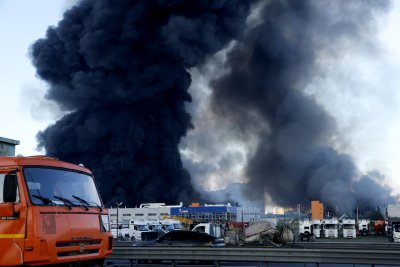
The Longview Fire Department said there was no immediate threat to the public.

Washington State Department of Ecology spokeswoman Anna Izenman told The Seattle Times that spill responders were on site evaluating any potential environmental impacts from the incident. She said white liquor cannot be collected and cleaned up in the same manner as oil; it can only “self-neutralize” with water over time.

Source link