Loaded pistol and rifle among items found in suspect’s pocket, car and home following arrest, police say.
Published On 5 Aug 20265 Aug 2026
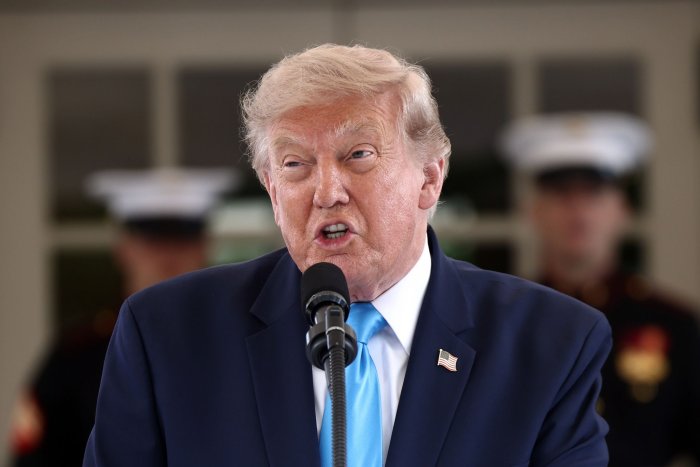
A man carrying a loaded handgun and hollow-point ammunition has been arrested at Donald Trump’s Los Angeles-area golf club, days before a scheduled visit by the US president, local authorities said.
The man, arrested on Sunday at the Trump National Golf Club in Rancho Palos Verdes, was identified by the Los Angeles County Sheriff’s Department as 38-year-old Jeanine John Taele. The department said he had been seen photographing and filming the grounds while appearing to monitor security preparations ahead of Trump’s scheduled appearance at a Republican Party fundraising dinner on Tuesday.
Recommended Stories
list of 3 itemsend of list
Deputies said they found a 16-round magazine loaded with ammunition in his pocket, and later recovered a loaded pistol with a round chambered, along with a second loaded magazine, from his vehicle in the golf course car park.
Officials said Taele had already been under investigation by the El Segundo Police Department over a separate robbery case.
On Monday, detectives working with the FBI’s Joint Terrorism Task Force searched Taele’s Downey home, where they said they recovered an illegally modified rifle, a second pistol, body armour, high-capacity magazines, bulk ammunition and other radio signal devices and notebooks containing what officials described only as “concerning statements”.
The sheriff’s department said it had not identified any credible threat to the public and that Taele is being held without bail while prosecutors weigh charges.
Trump’s visit is part of a broader campaign swing through California and Nevada ahead of the November midterm elections.
A Ukrainian man has relived the moment a suspected Russian drone chased him before it blew up. The video, which made headlines round the world, shows Yurii, the vegetable seller, being attacked in Kerson.
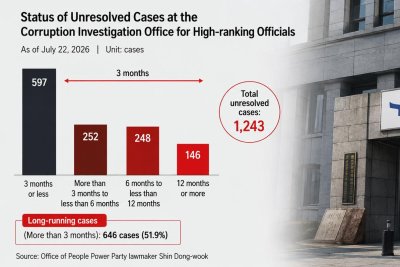
More than half of the 1,243 unresolved cases at South Korea’s Corruption Investigation Office for High-ranking Officials had been pending for more than three months as of July 22. Data from the office of People Power Party lawmaker Shin Dong-wook. Graphic by Asia Today and translated by UPI
Aug. 4 (Asia Today) — More than half of the unresolved cases at South Korea’s anti-corruption agency have been pending for more than three months, raising concerns that chronic understaffing is undermining its ability to investigate alleged crimes involving senior government officials.
Data submitted by the Corruption Investigation Office for High-ranking Officials to People Power Party lawmaker Shin Dong-wook showed that 646 of its 1,243 unresolved cases had been pending for more than three months as of July 22.
The figure represented 52% of the agency’s unresolved caseload. The agency generally classifies cases pending for more than three months as long-running investigations.
The data showed that 597 cases had been pending for three months or less. An additional 252 cases had been pending for more than three months but less than six months, while 248 had been unresolved for six months to less than a year.
Another 146 cases had remained unresolved for at least one year.
The agency attributed the backlog primarily to a continuing increase in criminal complaints and accusations, along with a chronic shortage of personnel.
Under the law establishing the agency, it may employ 25 prosecutors, including its chief and deputy chief. It currently has 23 prosecutors, meaning it has not filled even its legally authorized staffing level.
The agency operates four investigative divisions, but only 18 prosecutors, including four division chiefs, are assigned directly to investigative work. Based on the total backlog, that is equivalent to more than 300 unresolved cases for each division.
The agency was launched in 2021 under the administration of former President Moon Jae-in to investigate alleged abuse of authority, bribery, violations of political funding laws and other crimes involving senior public officials and their family members.
Its creation was intended to strengthen oversight of powerful officials and root out corruption in government. Staffing shortages, however, have repeatedly been cited as a major limitation on the agency’s operations.
Legal experts said a prolonged backlog could damage public confidence not only in the agency’s investigative capabilities but also in the institution itself.
Cases involving high-ranking officials frequently involve complex facts, extensive questioning of witnesses and time-consuming efforts to obtain evidence. Excessive delays, however, can weaken the effectiveness of an investigation.
Concerns about South Korea’s overall ability to process criminal cases are also likely to increase as prosecutors face a growing number of unresolved investigations while long-pending cases accumulate at the anti-corruption agency.
“The number of long-running cases has increased because of the continuing rise in criminal complaints and accusations and the chronic shortage of personnel,” an agency official said.
“All members of the agency are making every effort to process cases promptly,” the official said.
Revenue was up more than 90 percent from the same period a year ago, beating analyst expectations.
Published On 4 Aug 20264 Aug 2026
SpaceX reported a loss of more than half a billion dollars in its first quarterly statement as a public company, but the loss was less than Wall Street expected and revenue soared.
On Tuesday, the company run by Elon Musk reported a loss of $541m, or 9 cents per share, in the three months through June, less than half what financial analysts had expected.
Recommended Stories
list of 4 itemsend of list
Revenue jumped to $7.8bn, up more than 90 percent from the year-earlier period, beating analyst expectations. LSEG had forecast revenue growth of more than $6.9bn, and Bloomberg analysts had forecast $6.8bn.
The Starbase, Texas-based giant ended the second quarter with $100bn in cash, according to United States Securities and Exchange Commission filings.
The company touted several achievements in the quarter, including $6bn in new US government contracts for Starshield, its national security-centric satellite system, and two successful launches of its Starship V3 in the last 90 days.
Starlink and SpaceX’s broader connectivity operations remain the company’s primary financial engine, underpinning Musk’s push to build an AI-first business that extends beyond renting compute capacity to developing frontier models, consumer and enterprise software, and, eventually, data centres in space.
The company’s satellite-internet unit has continued to expand its global subscriber base, aided by launches of additional satellites and a growing range of consumer, enterprise, aviation, maritime and government services.
Investors are watching whether SpaceX can maintain growth while improving the economics of its network, particularly as it spends heavily to expand coverage, increase capacity and develop direct-to-device mobile services.
The company said it spent $18.37bn on Starlink and Starship expansion efforts, in addition to building out its AI infrastructure. Musk said the company expects its “Starmind” AI satellites to be launched next year.
In its AI business, the tech giant had an operating loss of $1.2bn, as the company also released its most powerful Grok model yet. This comes as the company faces lawsuits around the globe for Grok being used to generate sexualised images of people without their consent.
Separately, SpaceX said it had partnered with Nvidia to use its chips in the Starmind AI1 orbital compute satellites.
When SpaceX debuted on public markets earlier this year, it was the largest stock market debut in history, cementing Musk as the world’s first trillionaire. However, it was a short-lived title because of a sell-off in the broader AI sector and on investor worries that Musk had oversold them on the company’s future prospects for space travel and colonisation, among other issues.
The company’s stock has tumbled 8 percent since its IPO.
SpaceX surged on Tuesday trading. It finished the day up 9.4 percent, but has since tumbled in after-hours trading and was down 7.2 percent since the market close.
Palestinians inspect a destroyed mosque following an Israeli air strike July 28 in the Gaza Strip. Mourners gathered at a funeral Tuesday in Gaza City for 112 members of an extended family killed in a 2023 Israeli attack. Photo by Mohammed Saber
Aug. 4 (UPI) — Hundreds gathered Tuesday in Gaza City to mourn more than 100 people killed in 2023 in one of the deadliest Israeli military strikes of the war.
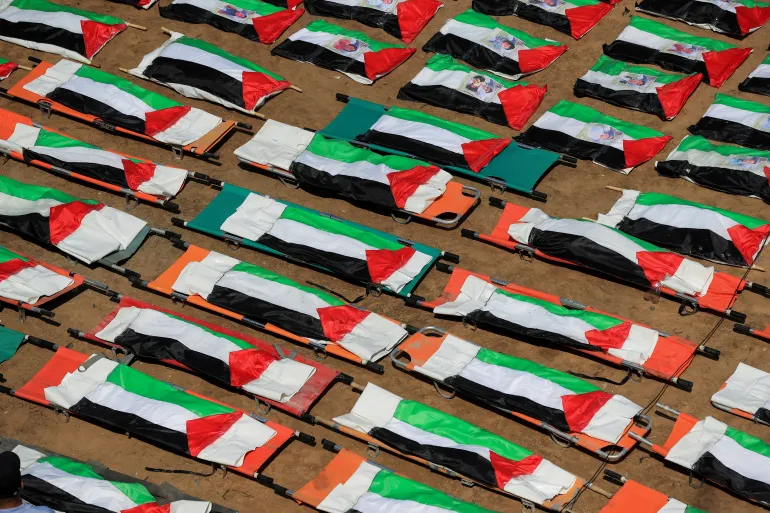
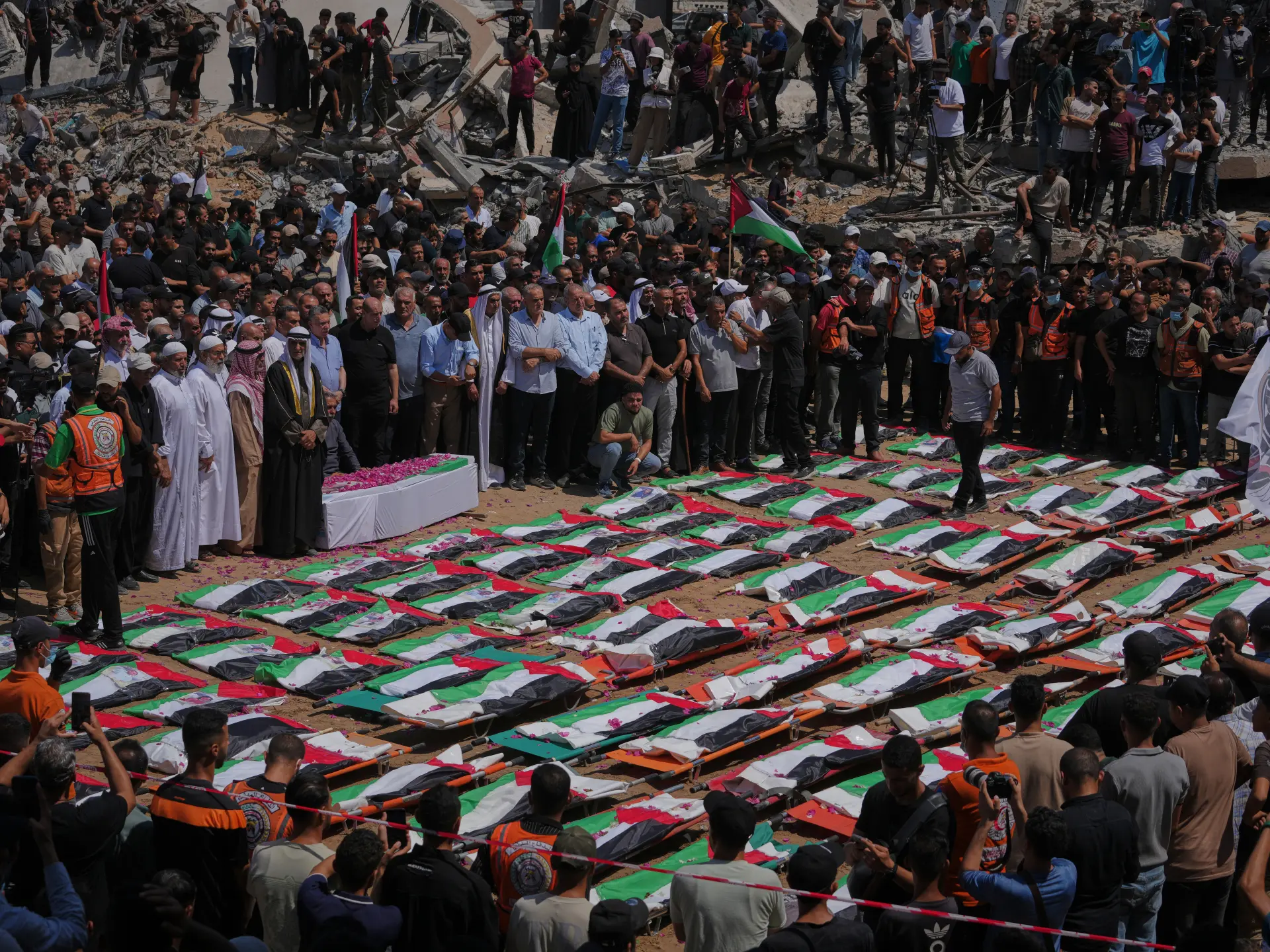
The 112 coffins, each covered with a Palestinian flag, contained mostly the remains of those from a single extended family group — the Hassayna and Abu Sharia clan. About 40 were children.
“O nation, why are children getting killed in Gaza?” said Mahmoud Basal, spokesman of Gaza’s Civil Defense, at the funeral. “Why are women getting killed in Gaza? Why are massacres committed against innocents in Gaza?”
Mourners scattered flower petals over the bodies and prayed for the dead before they carried the coffins to their burial site.
CBS News reported that Israel’s military said in a statement that it “does not deliberately target the civilian population and takes all feasible measures to mitigate harm to civilians.” It passed the blame to Hamas,saying that it “systemically operates from within, beneath and in close proximity to densely populated areas and civilian infrastructure, exploiting the civilian population to shield its military activities.”
It took nearly three years to recover the bodies because of ongoing attacks by Israel. The original attack in November 2023 struck a residential block in Gaza City. At the time, people could only recover about 40b odies with the tools available, but more than 300 were presumed killed.
More recently, civil defense recovery teams were able to dig through the rubble and exhume the remains of the 112 people memorialized Tuesday. In addition, about 150 people are still missing.
In June, a United Nations commission found that Israel is committing genocide in Gaza and that security forces “deliberately targeted and killed” Palestinian children. Human Rights Watch and Amnesty International have also found that Israel committed genocide in Gaza.
Israeli officials deny this and say Hamas attempted genocide in its Oct. 7, 2023, attack on Israel. About 1,200 people were killed in that attack, while five Israeli soldiers have died since the October 2025 cease-fire.
Israeli attacks have killed more than 73,000 people in Gaza since Oct. 7, 2023. That included more than 1,250 people since the cease-fire.
Charity warns that shrinking humanitarian support could threaten efforts to support communities trying to rebuild lives after 1,200 days of conflict.
Published On 4 Aug 20264 Aug 2026
The International Federation of Red Cross and Red Crescent Societies (IFRC) has called for greater international support for Sudan, saying humanitarian needs are escalating while funding falls far short.
“Sudan is one of the world’s largest humanitarian crises, yet it is also one of its most overlooked” IFRC Special Envoy for Sudan, Derk Segaar, told reporters in Geneva after returning from the Sudan.
Recommended Stories
list of 4 itemsend of list
Sudan plunged into all-out war in April 2023 between the paramilitary Rapid Support Forces (RSF) and the Sudanese military, leading to the deaths of at least 59,000 people, according to Armed Conflict Location and Event Data, a conflict monitoring group.
Aid groups say the figure is an undercount and the true number could be many times higher.
Segaar said while some aid is trickling into Kordofan and Darfur regions, the whole of Sudan has been devastated by the war, including Khartoum, where millions lack reliable electricity, clean water and healthcare, as cholera, malnutrition and floods pose additional risks.
He said 35 million people require humanitarian assistance, more than 9 million are internally displaced, and fighting has driven 4.5 million people out of Sudan.
Fighting
Speaking before a gathering of soldiers, Sudanese Army Lieutenant-General Yasser al-Atta on Monday said the military is advancing on all fronts with the aim of eliminating the RSF before the end of the year.
The location of the gathering was not specified.
“We are implementing the theory of advancing in all directions, with all fronts moving simultaneously, as happened during the recapture of Khartoum state,” al-Atta said.
“Before the end of this year, there will not be a single Janjaweed fighter,” he said, using a term to refer to the RSF, “or a foreign fighter, and we are determined to achieve that”.
Al-Atta’s remarks came days after the army and allied forces carried out a rapid operation in which they seized Bara, Jabra al-Sheikh, Um Sayala and other positions along a key road connecting Omdurman with el-Obeid in North Kordofan.
Sudan’s three Kordofan states – North, West and South – have witnessed continued fighting between the army and the RSF since October 2025.
Diplomacy
Meanwhile, the United Nations is ramping up efforts to get the stalled political process on track.
The UN says representatives from five international organisations, including the African Union, the Intergovernmental Authority on Development (IGAD), the European Union and the League of Arab States held talks with Sudanese political parties on Monday.
“Building on exploratory consultations held in Addis Ababa in June, the Quintet engaged Sudanese civilian political leaders in recent days. Discussions continued on proposals and perspectives for advancing the political process, including through the establishment of confidence-building measures,” said UN deputy spokesman Farhan Haq.
The UN Secretary-General’s Personal Envoy for Sudan, Pekka Haavisto, is also talking with RSF leader General Mohamed Hamdan Dagalo to discuss reducing escalation.
Aug. 4 (UPI) — The U.S. labor market saw an increase in the number of hires in June despite a drop in the number of job openings, the Bureau of Labor Statistics said Tuesday.
Some of the highest decreases were seen in the number of jobs in education and health services, which lost some 133,000 jobs, or 8% since May.
Experts had expected the number of available jobs to drop in June, CNN reported.
“Hires ticking up even as postings slow is the kind of detail that keeps this from reading as a market losing steam,” Bachaud added to the outlet. “Whether that holds through the summer will depend a lot on whether prices and consumer spending stabilize or keeps sliding.”
But Dan North, a senior economist with Allianz Trade, said the numbers are not strong enough to suggest a dramatic shift in the jobs market.
“The wheels are not coming off the bus — there’s certainly not negative job growth at the moment,” North told CNN.
“It’s stable, somewhat solid, but there are signs of decay and shakiness underneath,” he added.
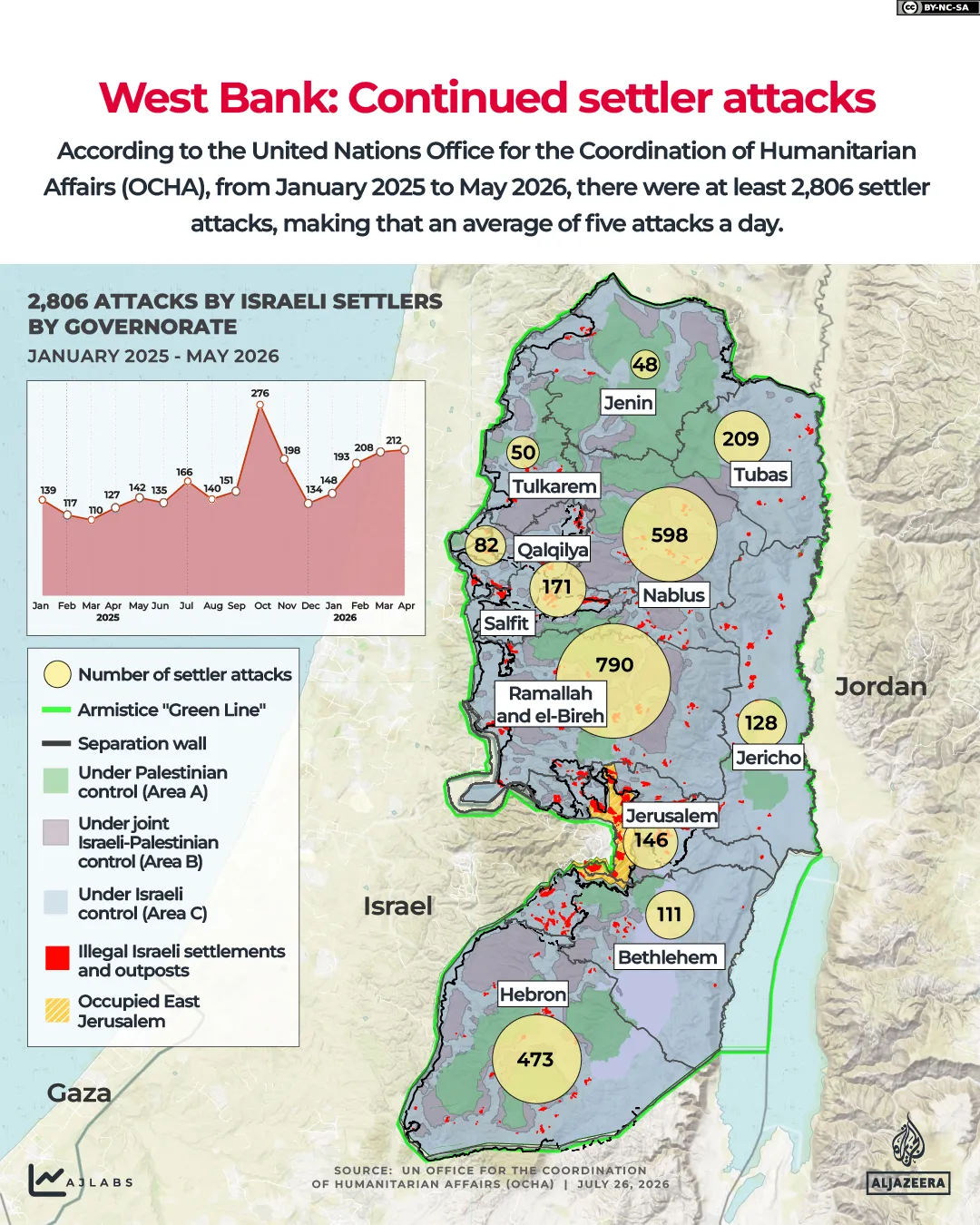
As Israel gears up to hold elections in October, a dramatic surge in settlement activity has heightened concerns that the settler movement is stepping up efforts to cement its grip on the occupied West Bank, in stark defiance of international law.
Last week, the United Nations warned that attacks by Israeli settlers – often carried out alongside Israeli forces – and the creation of illegal settlements and outposts had hit “an all-time high”.
Recommended Stories
list of 4 itemsend of list
The uptick comes as members of Israel’s hard right seek to ratchet up the political temperature ahead of the crucial polls. It also follows a parliamentary term during which Israel moved to entrench control over the West Bank deeper within the machinery of the state, shifting authority from military administration to civilian institutions, accelerating settlement planning and expanding infrastructure.
However, the Religious Zionist Party of Finance Minister Bezalel Smotrich – the man widely credited as pushing the settler project to the forefront of Israeli political debate – is suggested by numerous opinion polls to be far from certain to even meet the electoral threshold for the post-election Knesset.
This has prompted what analysts describe as a desperate scramble to promote the settlement mission while consolidating the support of the settler minority that Smotrich grew up within.
Speaking at a meeting of Prime Minister Benjamin Netanyahu’s right-wing Likud Party in late July, Israel’s Defence Minister Israel Katz boasted that, under the governing coalition and Smotrich’s supervision, Israel had approved the establishment of 104 illegal settlements and some 160 settlement farms in the West Bank since coming to power in 2022, according to Israeli media.
In August of last year, Smotrich announced the creation of the E1 settlement project, linking occupied East Jerusalem with the existing settlement of Maale Adumim, located several kilometres to the east – a proposal which, Smotrich bragged, “buries the idea of a Palestinian state”.
The race to settle
Smotrich, who made increased administrative control over the West Bank a condition for supporting Netanyahu’s right-wing coalition in 2022, has undertaken a series of measures to expand the influence of settlers within policymaking.
In 2023, he established his influential Settlements Administration agency within the Ministry of Defence – which oversees the West Bank’s occupation. And last month, he legally embedded the agency within the ministry, making it harder to reverse any of the decisions taken under its watch.
Israeli political analyst Nimrod Flaschenberg said it is “hard to imagine” that Netanyahu “won’t come up with some kind of imaginative ploy to keep him and the far right on the ticket”, referring to Smotrich.
“He has very strong support within the settlements and the ideological far-right,” Flaschenberg added, “but that might not be enough in and of itself to get him securely past the threshold. He’s being squeezed between the populism of [far-right Israeli National Security Minister Itamar] Ben-Gvir and what many people in the lower middle class see as the security of Netanyahu.”
Keeping the hard right
Allied to Smotrich is a prime minister who observers describe as facing not simply an electoral battle, but an existential battle for both his freedom – as a consequence of his long-running corruption trial – and legacy, should the independent inquiry into his failings ahead of the Hamas-led attack of 2023 go ahead.
Given the stakes, some analysts have suggested the incumbent was far from ready to gamble on losing the support of Israel’s hard right and settler movement by condemning the increasing levels of violence in the West Bank.
“We saw him come out on US TV and concede that there may have been a few incidents in the West Bank, but nothing serious,” Chatham House’s Yossi Mekelberg said of Netanyahu’s response to the widespread violence that has swept the West Bank in recent weeks.
“He needs the hard right and settlers’ support, if not for him individually, then at least for his bloc.”
While Netanyahu may feel he has room to manoeuvre over the hugely controversial issue of ultra-Orthodox conscription, no such margin existed within the hard right and settlers. Ultra-Orthodox parties, a key component in the 2022 coalition government, have made the exemption of their constituents from the draft – which almost all Israeli adults are eligible for – a pillar of their political campaigning in recent years.
“Netanyahu knows that the ultra-Orthodox will likely stay with him,” added Mekelberg. “The settlers are more binary. You’re either for them or against,” he said.
Israeli Finance Minister Bezalel Smotrich holds a map that shows the E1 settlement project during a news conference, in August 2025 [File: Ohad Zwigenberg/AP]
Cresting the wave
Irrespective of electoral tactics, the consequences for people living in the occupied West Bank have been catastrophic. In July alone, according to the Palestinian Authority’s Colonization and Wall Resistance Commission, there were 2,256 attacks against Palestinians and their property: 1,458 by the Israeli army and 798 by settlers.
After Yair Golan, leader of the opposition Democrats party, offered a rare criticism of the settler “extremism” which triggered the latest round of violence, Katz accused him of spreading a “blood libel”.
According to leaks of the same meeting in Hebrew-language media, other ministers present called for a harsher response to any resistance from Palestinians, and for the military to be given even greater freedom to shoot at them.
“As the election gets closer, we’re seeing an even greater increase in the violence that’s been escalating ever since October 2023,” said Yair Dvir, of the Israeli rights group B’Tselem.
“It’s important to add this isn’t just the scale of the violence, but also its brutality and the participation of the Israeli state – both the soldiers and the political support they’re receiving.”
More than 100 Palestinians whose bodies were trapped beneath rubble for nearly three years have been laid to rest in Gaza City, in one of the largest mass funerals held in the enclave since Israel’s genocidal war on Gaza began.
Thousands of people gathered on Tuesday to bury the remains of 112 members of the Abu Sharia and al-Hasayna families after rescue teams recovered their bodies from the site of a November 2023 Israeli attack in the Sabra neighbourhood.
Recommended Stories
list of 4 itemsend of list
According to Palestinian officials, the November 22, 2023 attack killed 308 members of the two families, including 40 children, 30 women and seven people with disabilities.
Bags containing the remains of Palestinians, draped in Palestinian flags, are lined up during the funeral in Gaza City, August 4, 2026 [Dawoud Abu Alkas/Reuters]
Rescue teams recently recovered more than 100 bodies from the site, allowing families to hold funeral prayers and burials. Palestinian authorities say about 157 people remain missing, either still beneath the rubble or otherwise unaccounted for.
Rows of coffins draped in Palestinian flags were carried through Gaza City as mourners gathered for the funeral. Large banners bearing photographs of the victims were displayed alongside calls for an end to Israel’s war on Gaza that began in October 2023.
‘Exceptional and painful scene’
The Palestinian Civil Defence in Gaza described the funeral as one of the largest held in the territory during the war, with spokesman Mahmoud Basal posting on X that Gaza was “set for an exceptional and painful scene”.
He said the funeral procession reflected the scale of the human losses suffered by Palestinian families who have waited years to bury their relatives.
The funeral also prompted an outpouring of grief from Palestinian researchers, activists and human rights advocates, many of whom said it symbolised the suffering of families still waiting to recover loved ones buried beneath the rubble.
Mustafa Barghouti, secretary-general of the Palestinian National Initiative, described the funeral as potentially being “the largest funeral in Palestinian history”.
Palestinian researcher Mahmoud Hamed al-Aila said Gaza was “extracting the bodies of its children from under the rubble after years of genocide”.
“What heart can bear this pain?” he asked.
Activist Mohammed Haniyah said dozens of other bodies have decomposed or are still missing under the rubble.
Another activist, Ali Abo Rezeq, said the procession turned “massacre statistics into coffins and shrouds”, highlighting that some families searched through the rubble with their bare hands because of the shortages of heavy equipment.
Online bloggers, including Malik Al-Shanbari and Khaled Safi, viewed the funeral not merely as a burial ceremony, but as a “renewed testament to the scale of the tragedy left behind by the war”.
Ramy Abdu, chairman of the Euro-Med Human Rights Monitor, said around 200 members of the Abu Sharia family are still believed to be beneath the rubble, and that their remains may have decomposed.
The funeral also highlighted the fate of thousands of other Palestinian families who are still waiting to recover the remains of their relatives believed to be missing beneath the rubble across Gaza.
The funeral was held amid ongoing Israeli violations of a “ceasefire” agreement in October. As of Monday, continued Israeli strikes have killed at least 1,250 Palestinians and injured 4,110 others.
The so-called ceasefire deal was signed after more than two years of Israel’s genocidal war on Gaza, which has killed at least 73,375 Palestinians and wounded at least 174,220, most of them women and children.
About 90 percent of Gaza’s infrastructure has also been damaged or destroyed during the genocide.
Meanwhile, the Assembly of Palestinian Clans and Families called on the Western-backed Board of Peace to accelerate efforts to recover bodies still trapped beneath the rubble, clear the debris and support the reconstruction of Gaza.
It said the burial of 112 Palestinians may have marked the end of the long wait for some families, but it did not end the search for thousands of others still missing.
Skye Anderson, who has been with the company for 26 years, was tapped to oversee nearly 14,000 restaurants as president of McDonald’s USA. File Photo by Kevin Dietsch/UPI | License Photo
Aug. 4 (UPI) — McDonald’s on Tuesday named a company veteran to lead the burger chain’s largest market.
Skye Anderson, who has been with the company for 26 years, will oversee nearly 14,000 restaurants as president of McDonald’s USA. She had previously been chief operating officer of the company’s U.S. business.
Chris Kempczinski, chairman and CEO of McDonald’s Corporation, said Anderson combines “deep operational discipline with strong financial judgement.”
“I’ve had the opportunity to work closely with Skye throughout much of her career, and I’ve repeatedly turned to her to lead some of our most important businesses and transformation efforts because she’s a proven change agent who can act with urgency to mobilize our System,” Kempczinski said in a statement.
Anderson succeeds Joe Erlinger, a 20-year McDonald’s veteran who had been president for the past seven years before deciding to leave the company.
Kempczinski said Erlinger will work closely with Anderson during the transition period.
Anderson’s appointment comes at a tricky time for McDonald’s, as the company on Tuesday reported quarterly results falling short of its expectations.
Executives described the performance as “disappointing,” CNBC reported.
“We don’t have a strategy problem,” Kempczinski said, the outlet reported. “We simply didn’t execute at the level we needed to in the second quarter.”
President Donald Trump announces a program to allow veterans to expedite a career in commercial trucking on Thursday. Known as the Freedom Haulers program, the initiative would allow any veterans who drove heavy equipment to be automatically eligible for a commercial trucking license. Photo by Jim Lo Scalzo/UPI | License Photo
Thousands of Palestinians have taken part in a mass funeral in Gaza City for 112 members of the Hassayna and Abu Sharia families, whose remains were recently recovered from beneath the rubble nearly three years after an Israeli air raid.
Mourners gathered on Tuesday as bodies wrapped in Palestinian flags were carried through the streets of the besieged city before burial, in what local media described as one of the largest funerals since Israel’s genocidal war on Gaza began in October 2023.
Gaza’s civil defence said its crews spent two weeks excavating a destroyed residential building in the Sabra neighbourhood, eventually retrieving the remains of 112 people, including at least 40 children.
The families were killed in an Israeli strike in November 2023 that flattened their homes.
Relatives used the funeral to renew accusations that Israel committed war crimes in Gaza and demanded international investigations into the attack and the hundreds of bodies still believed to be buried under rubble across the territory.
Aug. 4 (UPI) — The Democratic primary for Michigan’s Senate seat between Abdul El-Sayed and Rep. Haley Stevens is just one of Tuesday’s key races to watch.
Michigan is one of five states holding primaries on Tuesday, along with Virginia, Missouri, Kansas and Washington.
El-Sayed and Stevens are running for the seat left open by retiring Sen. Gary Peters. El-Sayed has received endorsements from Rep. Alexandria Ocasio-Cortez, D-N.Y., and Sen. Bernie Sanders, I-Vt., while Stevens has the endorsement of Michigan Gov. Gretchen Whitmer.
Stevens represents a more moderate wing of the Democratic Party while El-Sayed is the more progressive candidate.
Mike Rogers, a former Republican congressman, is running unopposed in the Republican primary. Rogers lost a tight race against Sen. Elissa Slotkin, D-Mich., in 2024. Rogers is endorsed by President Donald Trump.
Whitmer’s endorsement of Stevens is among the last endorsements she will make as sitting governor. She has reached her term limit, leaving the governor’s seat up for grabs.
For the Democratic Party, Secretary of State Jocelyn Benson is running against Genesee County Sheriff Chris Swanson. For the Republican Party, Rep. John James is running against businessman Perry Johnson. James is endorsed by Trump.
The Democratic Party is focused on flipping House seats in Virginia after the state’s Supreme Court struck down a congressional redistricting plan pushed by Democrats. The proposed map would have favored Democrats in 10 of 11 congressional districts.
Instead, Democrats are hoping to flip several Republican-held seats, including that of Rep. Jen Kiggans, R-Va. Elaine Luria, a former congresswoman, is running to take on Kiggans, who defeated her in 2024. She is one of four Democrats vying for the party’s nomination.
Seven Democrats are running for the opportunity to challenge Republican Rep. Rob Wittmann in the Williamsburg and suburban Richmond district. The Democratic Party has supported prosecutor Shannon Taylor’s primary campaign. Taylor was the first Democrat to be elected Henrico Commonwealth attorney in 40 years.
A Republican-led redistricting in Missouri has altered the makeup of the state’s congressional districts. Rep. Emanuel Cleaver, D-Mo., who represents Kansas City, is running unopposed in a district that suddenly is more Republican-leaning than it has been in recent elections. The Republican primary to challenge Cleaver includes six candidates.
Former Rep. Cori Bush, D-Mo., is seeking a return to Congress after losing her seat to Rep. Wesley Bell, D-Mo. Bush and Bell are running in a firmly Democratic district in St. Louis. The district voted 80% for Vice President Kamala Harris in 2024.
In the state of Washington, nonpartisan primaries will see the top two vote getters on the ballot in November regardless of party. Rep. Marie Gluesenkamp Perez, D-Wash., is running for re-election against eight candidates in Washington’s District 3.
The Kansas gubernatorial election is an open race with Democratic Gov. Laura Kelly reaching her term limit this year. Three Democrats and seven Republicans are running for her seat in a state that favored Trump by 16 points in 2024.
President Donald Trump announces a program to allow veterans to expedite a career in commercial trucking on Thursday. Known as the Freedom Haulers program, the initiative would allow any veterans who drove heavy equipment to be automatically eligible for a commercial trucking license. Photo by Jim Lo Scalzo/UPI | License Photo
British oil giant BP posted second quarter profit on Tuesday of $5.7 billion, more than double the $2.35 billion it made in the April to June period in 2025, amid sharply higher oil and gas prices caused by the U.S.-Iran conflict. File photo by Neil Hall/EPA
Aug. 4 (UPI) — British oil giant BP posted second-quarter profit on Tuesday of $5.7 billion, more than double the $2.35 billion it made in the April to June period in 2025, amid sharply higher oil and gas prices caused by the U.S.-Iran conflict.
Profit was $2.5 billion more than what the company made in the first quarter, the first two months of which were before the United States and Israel attacked Iran on Feb. 28, and easily beat the $5 billion expected by analysts.
BP’s results, the latest of the oil giants to report bumper profits in recent days following on from Shell, Exxon Mobil and Chevron, came a day after U.S. President Donald Trump accused energy firms of exploiting the current shortage of supply.
“Based on a shortage, they’re making too much money,” he said Monday after Exxon Mobil and Chevron last week reported a combined $26.5 billion profit for the second quarter.
Trump demanded the companies return some of their windfall to the public by cutting their retail prices, saying profits that had jumped as much as 12-fold were not acceptable and that he was not happy about it.
On Friday, Shell, the other British supermajor, also posted results showing it more than doubled its earnings, reporting a $9.84 billion profit for the April to June period, up from $4.26 billion in the same period last year.
Environmental groups criticized the profit made by BP as unseemly.
“Clearly not everyone is feeling the pain of the energy crisis. While BP banks another round of enormous profits, millions of households are paying the price through sky-high energy bills and a climate crisis accelerating rapidly out of control with increasingly severe heatwaves, wildfires and droughts,” said Friends of the Earth campaigns head Rosie Downes.
BP CEO Meg O’Neill told CNBC on Tuesday that while she understood the pressure ordinary consumers felt when they were confronted by the prices at the pump, the company had little control over the cost.
“The reality is we produce a global commodity and the prices for the product we sell hangs off that global commodity price, said O’Neill, who stressed that the sterling financial results were due to strong performances across all its businesses,” she said.
She added that the company had tweaked the firm’s refining runs to ensure the products consumers needed most at any given point in time were available in sufficient quantities but insisted BP was “there was more to do.”
“We are not making the most of our potential. Our performance over the past few years has not met our own expectations, let alone those of our shareholders. We have not delivered consistently; we have written off too much value; and our costs and liabilities are not resilient enough in a low price environment,” said O’Neill.
BP’s results came four days after it put its North Sea oil business on the market amid uncertainty over whether the British government will forge ahead with phasing out North Sea oil and gas, in line with its Net Zero by 2050 target, or issue some new drilling licences to meet U.K. demand in the interim.
O’Neill said Tuesday that in a conversation with Prime Minister Andy Burnham he had assured her that he would take a “pragmatic” approach to the issue.
“The U.K. is still using a huge amount of oil and natural gas every single day, and we ought to be using our domestic resources first instead of buying those resources from a third party,” O’Neill added.
Analysts estimate BP’s 24 fields, about half of which are still producing, should fetch around $2.6 billion.
There are estimated to be at least 12 billion barrels of oil left under the North Sea, although developed reserves awaiting to be pumped are much lower.
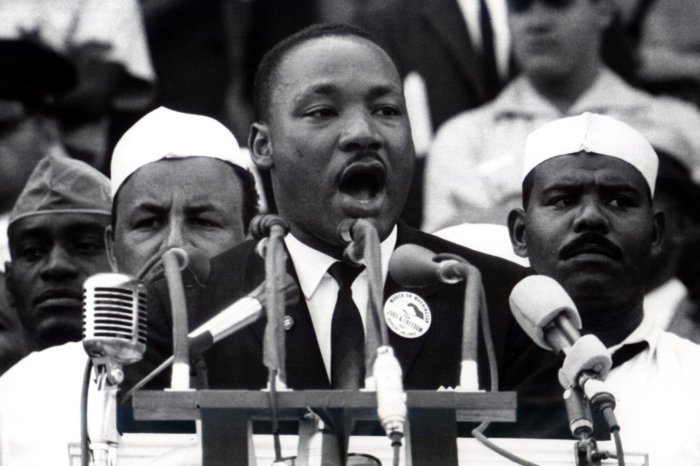
Martin Luther King Jr. delivers his famed “I Have a Dream” speech from the steps of the Lincoln Memorial in Washington on August 28, 1963. The speech galvanized the nation’s civil rights movements and led to the passage of the 1964 Civil Rights Act, the 1965 Voting Rights Act and the 1968 Fair Housing Act. File photo by UPI | License Photo
FIFA executive Arsene Wenger backs decision to drop FIFA President Gianni Infantino’s World Cup sell-off plan.
Published On 4 Aug 20264 Aug 2026
FIFA executive Arsene Wenger has distanced himself from President Gianni Infantino’s failed plan to sell stakes in future World Cup profits to private investors and says it was “absolutely necessary” to drop the proposal.
Wenger’s statement on Tuesday on the controversy came after a preservation letter from UEFA, confirmed to Al Jazeera by European football’s governing body, was sent to FIFA, the world governing body.
Recommended Stories
list of 4 itemsend of list
Upon confirming the legal request was sent, UEFA said it would be making “no further comment at this stage”.
The Associated Press news agency, however, has reported that it has seen a letter from lawyers representing UEFA that has named Wenger, the French coaching great, among 18 executives whose data and communications should be retained as potential evidence.
“I was not involved in this strategic plan and first became aware of the project through media reports,” said Wenger, who was hired by Infantino in 2019 and is FIFA’s chief of global football development.
The statement by the former Arsenal coach did not name Infantino and comes after a weeklong furore across world football.
“The decision to withdraw the project was absolutely necessary and beyond question, because I firmly believe in an independent FIFA that serves our game with commitment, transparency, and integrity,” Wenger wrote.
Infantino withdrew his $20bn proposal early on Saturday after a furious backlash by global football officials and organisations, including UEFA warning of a boycott of all FIFA games and events.
The plan would have created a subsidiary, known as FIFA Forward Enterprise (FFE), to run the money-making parts of the nonprofit football body’s work, including organising tournaments like the World Cup and selling broadcasting and sponsorship rights and tickets.
It proposed raising $4.2bn from investors by selling stakes amounting to about 20 percent in FFE, based on an equity valuation of $20bn.
The “anchor investor” would have been Thrive Eternal, launched by Joshua Kushner, whose brother, Jared Kushner, is a son-in-law of United States President Donald Trump.
FIFA’s 211 member federations – already the essential owners of the governing body as a nonprofit association under Swiss law – were offered $20m each. The deadline to accept was September 19.
They also were promised a doubling of their FIFA funding for the four years through 2030 to $20m instead of the previously announced $10m.
Infantino shared details of the project to FIFA management just one week after the July 19 final of the financially successful World Cup in North America that drove FIFA’s revenues to $15bn for the 2023-2026 commercial cycle, almost double the income tied to the 2022 World Cup in Qatar.
Wenger said his FIFA duties were to “oversee the data analysis of the game, the FIFA online training centre, the development of youth education through 60 academies across 60 countries where they are most needed, and youth competitions around the world”.
Just over one month into the war on Iran, US President Donald Trump made an apocalyptic threat that raised the alarm in Washington and Middle Eastern capitals alike, attached to a tight deadline.
If Iran didn’t immediately reopen the critical Strait of Hormuz, Trump warned on April 7, “a whole civilisation will die tonight, never to be brought back again”.
Tehran didn’t blink. And with two hours to the deadline, Trump walked back the threat and instead announced a two-week ceasefire, brokered by Islamabad.
Since then, the US president has repeated this pattern multiple times. It goes like this: Trump ups the ante, shaking up the markets, and then dials it back down at the 11th hour, apparently hoping this strategy will influence negotiations.
On Monday, Trump again insisted that negotiations were close to ending the war – and, yet again, gave “duplicitous” Iran “one last chance” to make a deal or suffer catastrophic strikes.
For its part, Tehran denies any ongoing talks with the US, saying it is only talking to Oman about how to manage the Hormuz strait, the closure of which has caused oil prices to soar amid havoc in energy markets around the world.
The war is now in its 23rd week, with no end to hostilities in sight, and both Washington and Tehran are more entangled than before, with additional variables in the conflict that could determine its direction.
So, how many times has Trump given Iran “one last chance” to make a deal or suffer the consequences, before walking his threat back? And how many times have we heard from the US president that a deal is just around the corner?
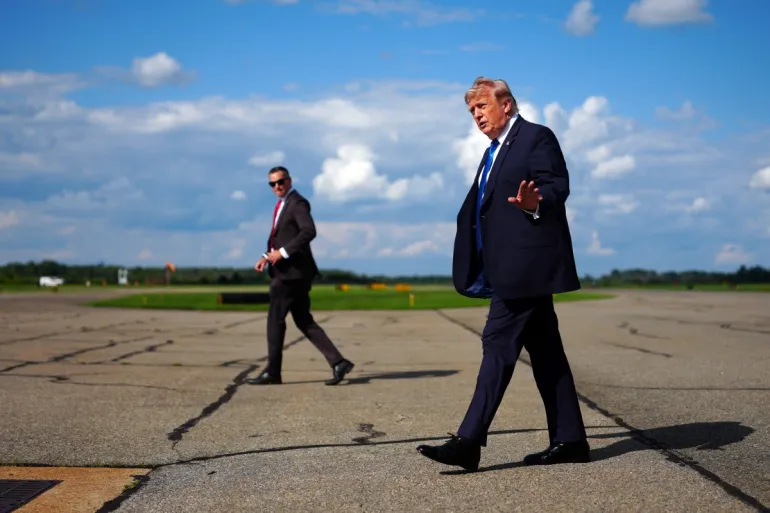
US President Donald Trump gestures after stepping off Air Force One upon arrival at Morristown municipal airport in Morristown, New Jersey, on July 31, 2026 [Aaron Schwartz/AFP]
The times Trump threatened heavy attacks – before backing down
There have been several times since February 28, when the US and Israel launched their first joint attacks on Iran, that Trump has threatened an attack but did not follow through.
March
Less than a month into the war, Trump threatened Tehran over its closure of the Strait of Hormuz, saying the US would strike Iran’s power plants if the critical waterway was not reopened. Two days later, he postponed the strikes for five days, citing “progress” in talks.
As the delayed deadline neared on March 26, Trump delayed the strikes again, this time for 10 days, claiming that Tehran requested it.
April
Then came the April 7 threat that a whole “civilisation will die”, before Trump called off those strikes and announced a two-week ceasefire, to give Iran a chance to reach a peace deal.
No deal emerged. And then, after threatening to strike Iran “harder”, and in the final hours of the ceasefire, on April 21, Trump announced an indefinite ceasefire, saying Pakistani mediators had asked him to do so.
May
With those talks making no progress, Trump returned to his threats to strike Iran on May 17, saying “nothing will be left” of Iran if Tehran did not make a deal with the US.
But the next day, Trump again told reporters that he had decided to “put it off for a little while, hopefully maybe forever, but possibly for a little while, because we’ve had very big discussions with Iran”.
By May 27, US strikes were back on after negotiations faltered, once again.
June
On June 11, after two days of back-and-forth strikes, Trump threatened the US would take “total control” of Iran’s oil and gas industries. But then, a few hours later, he posted on social media, claiming there had been a breakthrough in negotiations and called off the attacks.
On June 17, the US and Iran signed a Memorandum of Understanding (MoU), announcing a ceasefire and a 60-day period to complete negotiations for a lasting peace. Within days, that had fallen apart over the glaring gaps in the two sides’ positions over the contents of the MoU, triggered mainly by who had control of the Strait of Hormuz – and both sides returned to tit-for-tat, widening strikes.
July-August
On July 27, Trump halted the strikes, claiming the “perimeters of a deal” had been agreed to, but noting that Washington “is locked and loaded and ready to go against the Islamic Republic of Iran, at levels of Military Terror, Strength, and Power not seen since World War II”.
On Monday this week, Trump told reporters again that negotiations were close to ending the war and that this was Iran’s “last chance before decapitation”. The US has not followed up on this latest threat yet.
Iran denies it is talking to the US, although it may be holding indirect talks via mediators, analysts say.
US President Donald Trump looks on during an announcement about Dulles International Airport renovations in the Oval Office of the White House in Washington, DC on July 29, 2026 [AFP]
The times Trump said Iran peace deal was imminent
Trump has insisted that Iran is “desperate” to cut a deal, or that a deal is imminent, multiple times since the start of the war.
March
Two days after launching the first attacks on Tehran on February 28, which the US initially appeared to believe would be a quick operation, Trump seemingly conceded it might take a bit longer when he said at the White House: “We projected four to five weeks [to end Iran war], but we can go far longer than that.”
The US president changed tack again on March 9, when he told CBS that “the war is very complete, pretty much”, and that the US military operation was “way ahead of schedule”.
Later the same day, he shifted his stance again, saying the war is “both complete and just beginning”. And later that day again, he said: “We’ve already won in many ways, but we haven’t won enough.”
On March 23, Trump told reporters outside Air Force One that “major points of agreement, I would say – almost all points of agreement” had been reached with Iran. Tehran was denying that it was party to negotiations at this point.
Two days after that, Trump repeated that Iran wanted to “make a deal so badly”. The next day, he also told a cabinet meeting that Iran was “begging to make a deal”.
April
On April 7, Trump said, again, that Washington was “very close to a deal” with Iran, before threatening to blow up a “whole civilisation”, but then walked back on that to announce a ceasefire the next day.
Over the following days, throughout April, Trump reiterated that the war was, in fact, pretty much over. But it continued.
Trump repeatedly claimed on separate occasions that Iran had “agreed to everything”, that “I think we will get a deal in the next day or two”, and that “I don’t think there’s too many significant differences” between the US and Iranian positions.
May
On May 23, Trump said the administration was “getting a lot closer” to a deal, which was “largely negotiated, [and] subject to finalisation”.
June
On June 8, Trump called for “total victory” in the next two weeks and claimed Iran was “willing to give us everything”. Still, no peace deal has materialised and the conflict began again in July.
August
On Monday this week, Trump again told reporters that Iran was “desperate” for a deal and warned Tehran it had “one last chance” before “decapitation” to make an agreement. Iran denies it is even holding talks with the US, saying that it is only speaking with Oman about management of the Strait of Hormuz.
Second-quarter revenue jumped 93 percent but Palantir’s ties to Israel and role in military technology are controversial.
Published On 4 Aug 20264 Aug 2026
United States artificial intelligence and data analytics giant Palantir Technologies has reported “otherworldly” quarterly results, sending its shares more than 14 percent higher in after-hours trading, as its growth shows no signs of slowing despite mounting criticism over its close ties to the US and Israeli governments and concerns about its growing role in artificial intelligence and warfare.
Palantir Technologies reported a revenue of $1.94bn for the second quarter, up 93 percent from a year earlier, and raised its forecast annual revenue to between $8.15bn and $8.158bn, up from $7.65bn to $7.662bn earlier. It said strong demand from both commercial customers and government agencies drove the surge.
Recommended Stories
list of 3 itemsend of list
“This quarter was otherworldly: our US commercial revenue grew 149 percent year-over-year, our overall revenue grew 93 percent year-over-year,” Chief Executive Alex Karp said. “Demand for AI sovereignty has now been unleashed.”
In a letter to shareholders, Karp wrote: “Our business is compounding at a rate and scale that we have never before witnessed.”
Palantir holds multibillion-dollar contracts with US government agencies, including the US Army. Revenue from its US government business rose 90 percent year on year to $809m, even as the company has faced growing opposition over its role in President Donald Trump’s immigration crackdown, which critics say has resulted in unlawful deportations and killings.
Founded in 2003 by technology entrepreneurs including Karp and multi-billionaire Peter Thiel, Palantir opened its first office in Israel in 2015 and has since expanded its work with the Israeli military.
Following what Palantir described as a “strategic partnership” with Israel in January 2024, the company significantly expanded its operations supporting Israel’s military campaign in Gaza and operations in the occupied West Bank.
According to Open Intel, a platform tracking corporate involvement in the genocidal war on Gaza, Palantir has actively recruited former members of Israel’s elite Unit 8200 cyberintelligence division. The group says Palantir’s software integrates intercepted communications, satellite imagery and other datasets to help generate military targeting lists for Israeli forces.
In a statement to Al Jazeera earlier this year, Palantir UK reiterated the company’s support for Israel.
The company has also secured major contracts with the United Kingdom’s government. In January, the UK’s Ministry of Defence awarded Palantir a $323m (240-million-pound) contract. A separate $444m (330-million-pound) NHS contract awarded in November 2023 has also attracted criticism, with campaigners raising concerns about the handling of sensitive health data and the heavy redaction of contract documents.
Palantir has also faced scrutiny over its vision for the future of artificial intelligence. In The Technological Republic, a recent book co-authored by Karp and the company’s head of corporate affairs, Nicholas W Zamiska, the authors argue that technology companies have a responsibility to build advanced military AI capabilities. Critics have described the philosophy as a form of “techno-fascism”.
Michelle Park Steel, the new U.S. ambassador to South Korea, arrives at the foreign ministry to meet Foreign Minister Cho Hyun and submit a copy of her credentials on Tuesday. Photo by Yonhap
Michelle Park Steel, the new U.S. ambassador to South Korea, met with Foreign Minister Cho Hyun on Tuesday, as she began her official duties by submitting a copy of her credentials.
Steel visited Seoul’s foreign ministry to hand the copy to the ministry’s chief of protocol before paying a courtesy call on Minister Cho, according to officials.
Under diplomatic protocol, newly arrived ambassadors assume their posts upon submitting a copy of their letters of credence to the foreign ministry, which serves as a preliminary step before the formal presentation ceremony with the head of state.
Accompanied by her husband, Shawn Steel, she did not respond to reporters’ questions before entering the ministry building.
The foreign ministry said Cho and Steel would discuss measures to strengthen bilateral relations.
Steel landed in South Korea on Thursday, becoming the second Korean American ambassador to serve as U.S. ambassador to the country.
Her arrival ended an 18-month vacancy in the post, following the departure of former Ambassador Philip Goldberg, who served from July 2022 to January 2025.
The new U.S. ambassador took up the role at a pivotal moment for Seoul-Washington relations, with several issues pending, including tensions over South Korea’s regulatory action against U.S.-listed Coupang over a massive data breach, Seoul’s investment pledges in the U.S. and the South’s push to build nuclear-powered submarines.
“The ambassador is expected to draw on her understanding of the South Korea-U.S. alliance and bilateral relations to help strengthen ties and friendship between the two countries,” Park Doo-soon, the ministry’s spokesperson, said in a regular briefing.
Copyright (c) Yonhap News Agency prohibits its content from being redistributed or reprinted without consent, and forbids the content from being learned and used by artificial intelligence systems.
Aug. 4 (UPI) — Authorities in Washington said late Monday that officers have arrested a 37-year-old man accused of starting one of three wildfires burning in Spokane County that have forced tens of thousands of people to evacuate and destroyed hundreds of structures.
The suspect, Aaron Farinacci, was detained Monday afternoon in Spokane County. He has been charged with one count of first-degree arson. He is being held on $1 million bond.
The Old Trails Fire erupted Saturday at around midnight PDT.
Spokane County Sheriff John Nowels told reporters during a press conference that authorities began investigating the fire when it ignited. He credited local citizens with helping investigators arrest Farinacci.
He said a “very good citizen” early Saturday was driving into Old Trails Road are to pick up a friend when he noticed a man standing by the roadside “looking into the trees.” On their way back, the citizen again saw the man who was now “bending down near some grass” and “looked very nervous,” the sheriff said.
A short time later, the citizen, now at home, saw smoke coming from the area where they had seen the man. The citizen returned to the scene and contacted the police, giving them a detailed physical description of the man they had seen.
“That description was broadcast to units in the area,” Nowels said, resulting in Farinacci being contacted by police about 1 1/2 miles from where the fire was started. Farinacci was detained, questioned and released after the witness identified him as much was still unknown at that early stage.
But following further investigation, police identified Farinacci as a suspect, developed probable cause “and determined that the origin of the fire was indeed exactly where the witnesses had seen Mr. Farinacci kneeling in the grass earlier that day,” he said.
A judge signed arrest and search warrants for Farinacci at 3 p.m. Monday and he was detained by 5 p.m., Nowels added.
“This was fantastic and very quick work by everybody involved,” he said.
“As it happens in so many critical cases, it was citizens who were paying attention to their surroundings, being aware and willing to step up and say something that led to the relatively quick apprehension of Mr. Farinacci.”
Farinacci has a felony conviction for manslaughter and was previously arrested in the same case on a charge of premeditated murder in Arizona, according to authorities.
Authorities will be looking at further charges in the Old Trials Fire case as the investigation continues, according to Nowels.
He said authorities allege that Farinacci started the fire with either waterproof matches or a butane lighter, both of which were in his possession of when arrested.
A motive is being investigated, according to Nowels, who said Farinacci told police when he was detained “about [that] we didn’t know the whole story, or something to that effect.”
The Old Trails Fire, Fairview Fire and Autumn Lane Fire have ripped through Spokane County, where roughly 65,000 people were forced to evacuate and more than 700 structures were destroyed.
According to a Monday update from the county, the three fires have burned about 8,026 acres of land and were 0% contained.
A cluster of fast-moving wildfires has devastated the outskirts of Spokane, Washington state, with 65,000 people told to leave their homes. More than 700 buildings have been destroyed as the fires spread from surrounding vegetation into residential neighbourhoods, posing an unprecedented threat to lives and property.
The blazes have become the top firefighting priority in the US because of their scale and the danger they pose to communities. While no deaths have been confirmed, authorities say it will take time to assess the full extent of the damage as search teams begin entering the hardest-hit areas.
Recommended Stories
list of 1 itemend of list
The evacuation orders expanded from about 4,000 people on Sunday to 65,000 by Monday, highlighting the speed at which the fires spread into populated communities.
Here is what to know:
What is happening in Spokane, Washington?
Spokane, Washington’s second-largest city, is at the centre of one of the state’s most destructive wildfire emergencies in recent history after three fast-moving wildfires erupted on its northern outskirts over the weekend. Fanned by strong winds and fueled by exceptionally dry vegetation, the fires have burned more than 8,000 acres (3237 hectares) and spread from surrounding forests and grasslands into residential neighbourhoods, forcing approximately 65,000 people to evacuate, according to the Spokane Valley Fire Department.
Hundreds of buildings, most of them homes, have already been destroyed, with aerial surveys suggesting many more may have been damaged. Entire neighbourhoods have been reduced to charred rubble, with some properties left standing only as brick chimneys.
The scale of the disaster has overwhelmed local resources, prompting one of the largest firefighting operations in the state, with more than 1,000 firefighters deployed from across the region.
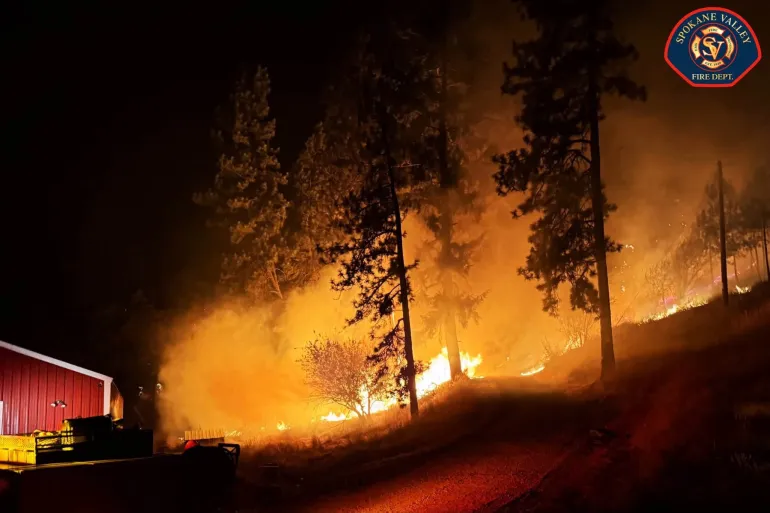
A handout photo made available by the Spokane Valley Fire Department shows the Fairview Fire northeast of Spokane, Washington [EPA]
Despite the massive response, the fires remain uncontained, and officials say it could take days to fully assess the destruction. While no deaths have been confirmed, authorities initially received nearly 300 reports of missing people after the evacuations, though that number has since fallen significantly as families have been reunited. Emergency shelters have been opened across Spokane, and officials are urging residents not to return to evacuated areas or fly drones, which can disrupt critical aerial firefighting operations.
Firefighters are taking advantage of a brief period of cooler temperatures and lighter winds, but forecasters warn that hotter, drier and windier weather is expected to return later this week, raising fears that the fires could spread even further.
Washington is experiencing one of its worst wildfire seasons in more than three decades, with about 450,000 acres (182,000 hectares) burned so far this summer. More than 250,000 acres have burned in recent major fires alone.
A handout photo made available by the Spokane Valley Fire Department shows the Fairview Fire northeast of Spokane, Washington [EPA]
What caused the fires?
Local news outlets have reported that the Spokane County Sheriff’s Office announced on Monday evening that a 37-year-old had been arrested on suspicion of arson in connection with the fire.
However, experts say the conditions that allowed the fires to spread so rapidly were already in place.
Washington has been experiencing severe drought and an unusually low winter snowpack, leaving vegetation exceptionally dry and highly flammable. Those conditions have been compounded by periods of extreme heat, low humidity and strong winds, creating an environment in which even a small ignition can quickly grow into a fast-moving wildfire.
Scientists have also linked increasingly severe wildfire seasons across the western US to human-caused climate change, which has contributed to hotter temperatures, longer droughts and drier landscapes. While climate change does not directly ignite wildfires, it makes them more likely to spread rapidly and become more destructive once they start.
Why are the Washington wildfires so severe?
The Washington wildfires have become particularly severe because several factors have converged, allowing the blazes to spread rapidly.
Multiple large fires burning simultaneously: Spokane is dealing with three major wildfires at once, while dozens of other significant fires are burning across the western US. Managing multiple large incidents simultaneously has made it harder to concentrate resources on a single fire.
The fires advanced rapidly into populated communities: Driven by strong winds, the flames jumped roads and rivers, allowing them to move from forests and grasslands into residential neighbourhoods. More than 700 buildings have been destroyed, making the fires far more difficult to contain as they threaten homes, businesses and critical infrastructure.
Firefighting resources are stretched: More than 100 new wildfires have been reported across 15 US states over a single weekend, placing extraordinary pressure on national firefighting resources. Although more than 1,000 firefighters have been deployed to Spokane, emergency officials say aircraft, equipment and personnel are being shared across multiple emergencies.
An ongoing threat despite improved weather: Firefighters have benefitted from a brief period of cooler temperatures and lighter winds, but officials warn that hotter, drier and windier conditions are expected to return. With the fires still not contained, there is a significant risk that they could grow further or ignite new areas.
What role are drought, heat and climate change playing?
Scientists say drought, extreme heat and climate change are making wildfire seasons longer, more frequent and more destructive across the western US.
Drought dries out vegetation, turning forests and grasslands into fuel that can ignite and burn more intensely.
Heat and low humidity accelerate fire spread by drying vegetation even further and creating conditions in which flames can move rapidly across the landscape.
Climate change amplifies these conditions, as rising global temperatures are increasing the likelihood of prolonged droughts, more frequent heatwaves and longer fire seasons, making large, destructive wildfires more likely once they ignite.
A Virgin Mary statue remains untouched in front of a burned-out residential home in the Balboa neighborhood of Spokane, Washington, on August 2, 2026 (AFP)
What is the weather forecast for midweek?
The weather is expected to worsen again by midweek.
While Monday and Tuesday offered a brief, helpful window of cooler temperatures and calmer winds, the midweek forecast calls for a return of:
Extremely high temperatures, particularly on Thursday, with highs forecasted up to 37 degrees Celsius (99 degrees Fahrenheit). On Monday, it was at 22C (72F).
Low humidity (very dry conditions).
Gusty winds with speeds up to 26 km/h.
Because the fires remain completely uncontained, authorities are keeping evacuations in place. They warn that the worst outcome would be letting residents return to their homes, only to have to evacuate them again 24 to 48 hours later when the hot, windy weather returns.
Washington’s entire congressional delegation is awaiting a response from President Donald Trump regarding their request for an expedited emergency declaration to deliver immediate federal relief to displaced families.
Are other states also fighting wildfires?
According to the National Interagency Fire Center, most of the fire activity in the US remains concentrated across the country’s northwest.
Right now, the major fires are mostly grassland burns in Idaho, Oregon and Utah, as well as fires in Florida’s Everglades National Park, in addition to new fires reported in Left Creek in Wyoming, Antelope Creek Fire in Nevada and the Sand Creek and Middle Coulee fires in Montana.
A lightning-caused fire that has burned more than 530 square miles (about 1,370 sq km) of grassland in western Idaho and eastern Oregon continued to grow on Monday. The area is home to cattle ranches, and authorities said the fire is threatening more than 600 homes and 800 other structures.
In central Utah, a blaze quadrupled in size more than the weekend to nearly 109 square miles (282 sq km) by Monday afternoon. More than 100 cattle have died, according to law enforcement.
Aug. 4 (UPI) — The U.S. military’s strikes on alleged drug-smuggling boats in the Caribbean and eastern Pacific may have killed people not involved in drug trafficking, said Sen. Tim Kaine after reviewing classified documents on the operation.
The senior Democratic lawmaker from Virginia and a member of the Senate Armed Services and Foreign Relations committees sent President Donald Trumpa letter Monday urging him to examine whether military leaders exceeded his orders by targeting people the Justice Department did not say could be legally targeted and killed.
“And once you have done so, I urge you to halt this illegal, costly and ineffective operation,” Kaine said.
Since the first strike on Sept. 2, the U.S. Southern Command has killed at least 221 people in 66 publicly acknowledged attacks, according to UPI’s count based on military press releases.
Human rights and legal experts have widely condemned the strikes as illegal extrajudicial killings carried out by the military in what is ostensibly a law enforcement matter. The Trump administration argues that it is in “armed conflict” with the drug cartels.
Little information about the strikes has been made public because much of it is classified. SOUTHCOM has responded to UPI’s requests for information on the planning and execution of these strikes by stating it does not comment on ongoing operations.
In July 2025, Trump authorized the Department of Defense through a still-classified directive to us military force against organizations he selected in a classified target list.
In September, after the strikes began, the Justice Department’s Office of Legal Counsel issued an opinion providing legal support for the operation, and stipulating who could be targeted in the attacks. That opinion remains classified, as does an October order from the Pentagon that contains targeting criteria SOUTHCOM is to use in carrying out these strikes.
Kaine said he had reviewed the classified documents, which often include descriptions of the targets and their activities during the kinetic operations. He said the documents make clear “that the United States is engaged in violent and fatal attacks against people far beyond those whom the OLC opinion claimed could be lawfully targeted.”
“In other words, a careful review of the available evidence suggests that the United States has killed individuals who are not involved in narcotrafficking,” he said.
“They are murder victims.”
At least some of those killed in the strikes have been credibly described as fishermen who were not involved in drug trafficking. Colombian President Gustavo Petro has accused Trump of murdering Colombian fisherman Alejandro Carranza in an early September attack. The families of two men killed in October are also suing the Trump administration for damages, saying their loved ones were killed as they were heading home to Trinidad and Tobago after working as fishermen and farmers in nearby Venezuela.
Kaine’s letter follows a report by The Washington Post that found the fatal strikes have failed to curb the amount of cocaine entering the United States.
SOUTHCOM’s Operation Southern Spear, which includes the boat-strike campaign, had incurred $647 million in obligations through March, according to a Pentagon inspector general report.
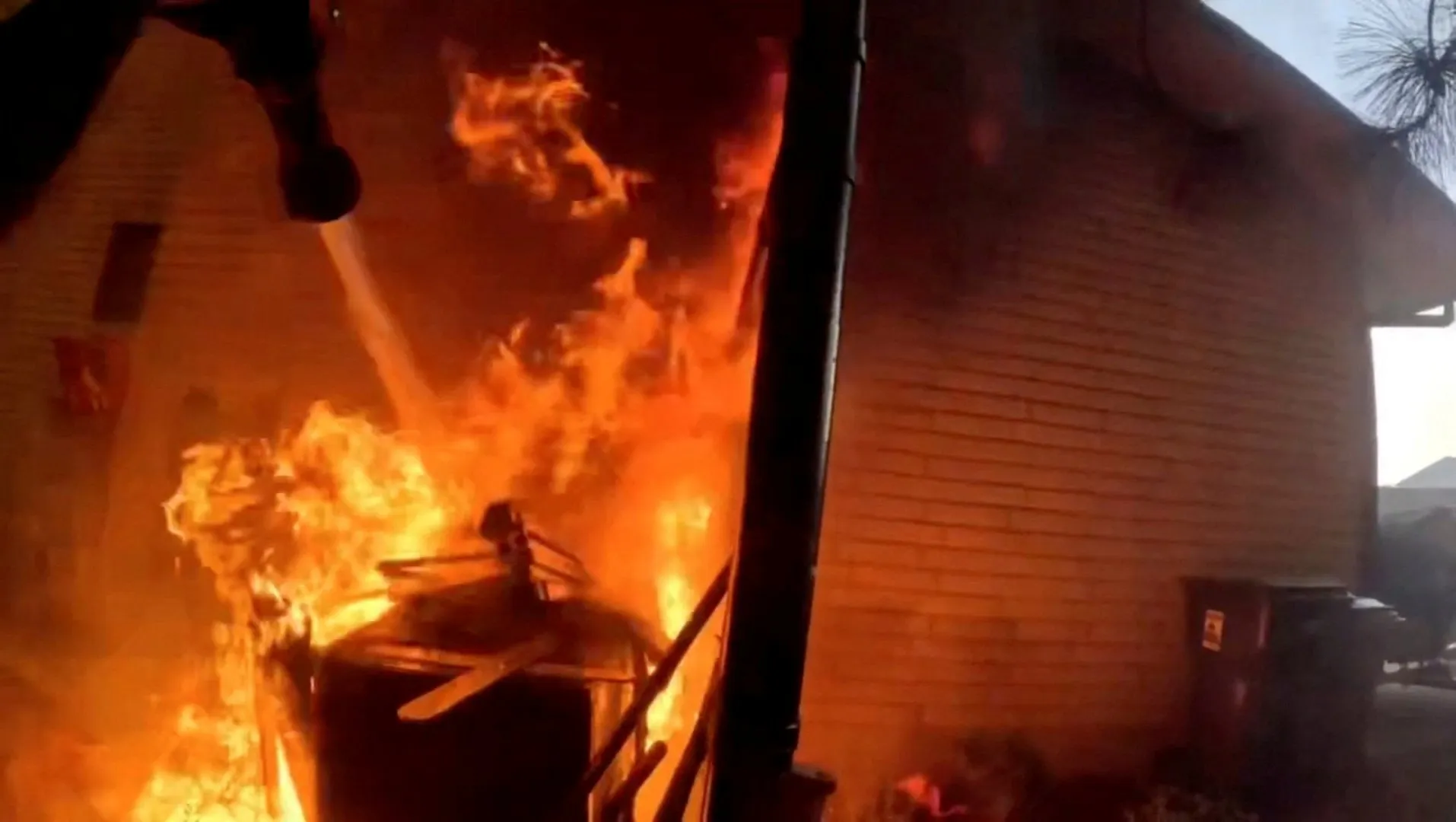
Bodycam footage from firefighters shows the speed needed to put out the blaze sweeping through the northwestern US. More than 60,000 people have fled their homes as wildfires raged near Spokane, Washington for a third straight day.















![US President Donald Trump looks on during an announcement about Dulles International Airport renovations in the Oval Office of the White House in Washington, DC on July 29, 2026 [AFP]](https://i0.wp.com/occasionaldigest.com/wp-content/uploads/2026/08/afp_6a6abc6f49c9-1785379951.jpg?w=640&ssl=1)





![A handout photo made available by the Spokane Valley Fire Department shows the Fairview Fire northeast of Spokane, Washington [EPA]](https://i0.wp.com/occasionaldigest.com/wp-content/uploads/2026/08/14192119-1785811036.jpg?w=640&ssl=1)
![A handout photo made available by the Spokane Valley Fire Department shows the Fairview Fire northeast of Spokane, Washington [EPA]](https://i0.wp.com/occasionaldigest.com/wp-content/uploads/2026/08/14192121-1785811148.jpg?w=640&ssl=1)