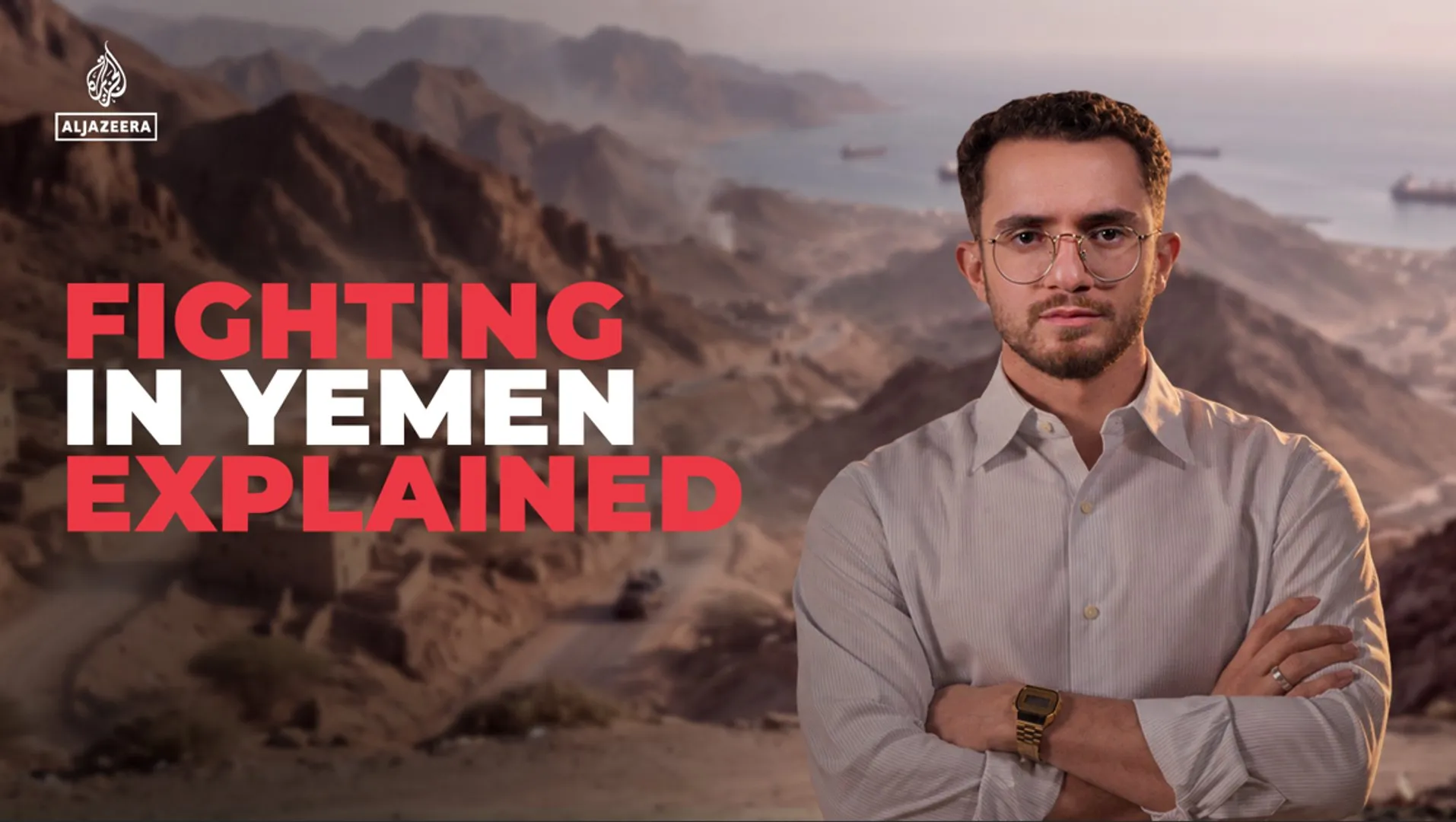
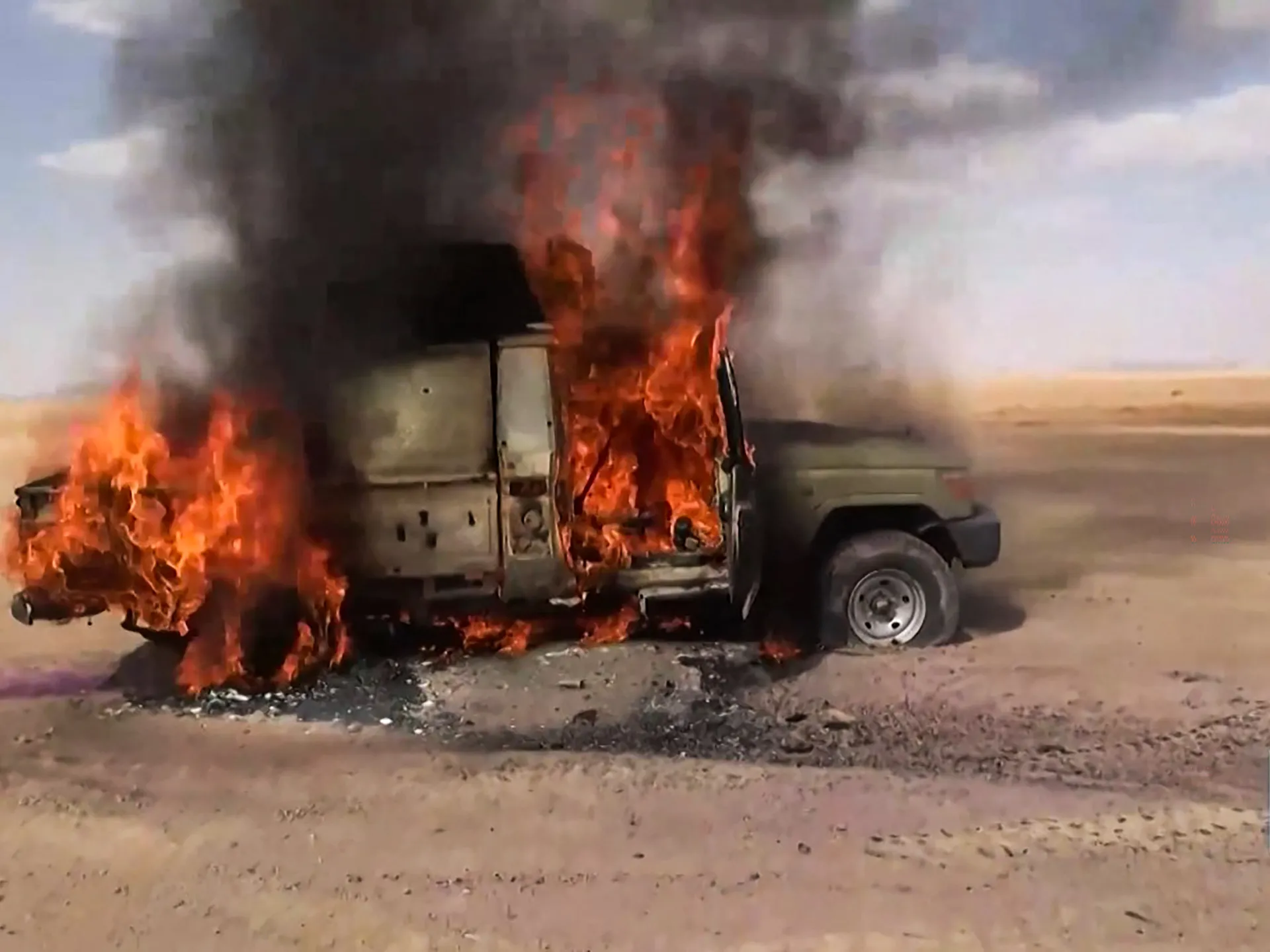
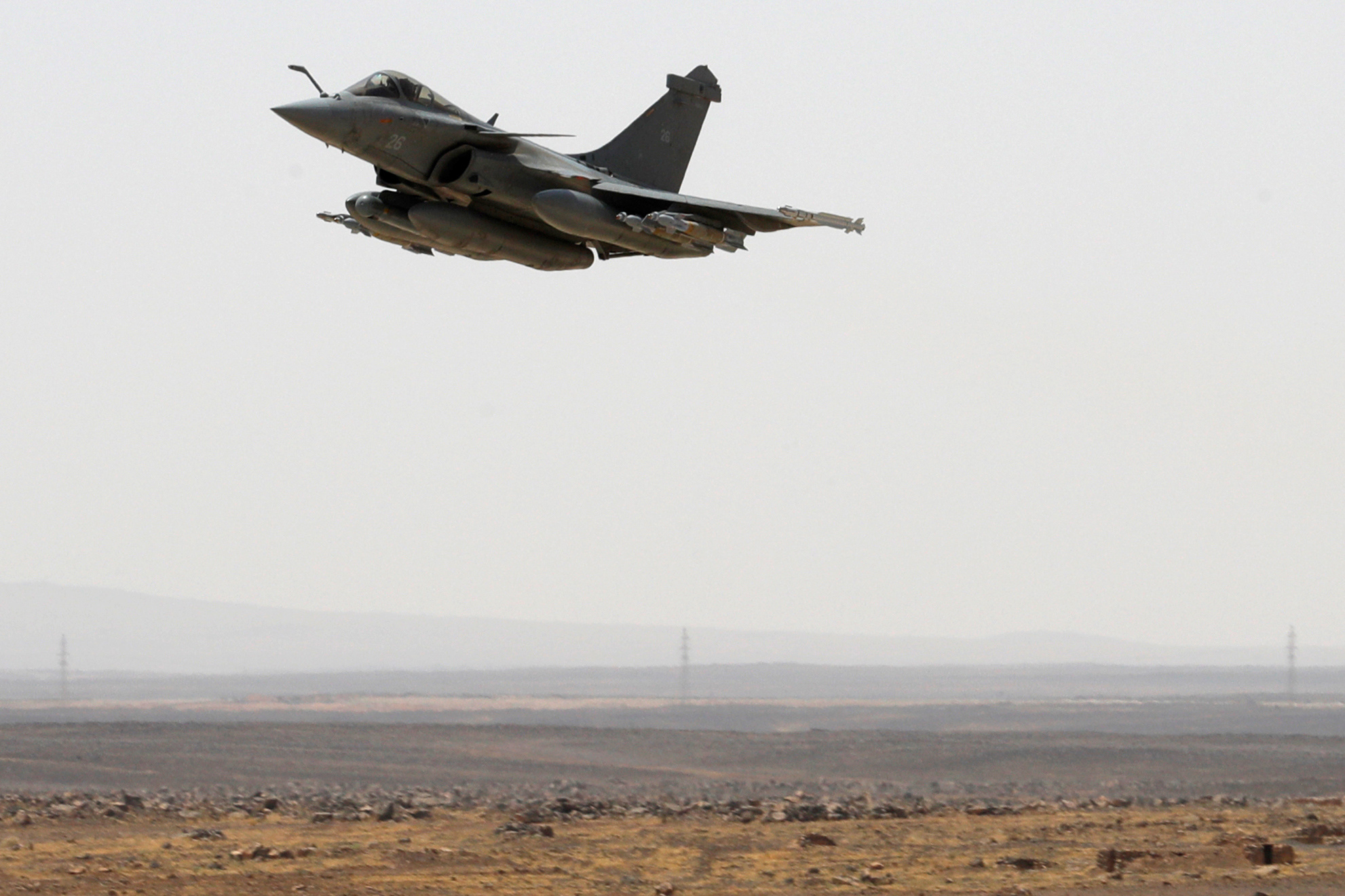
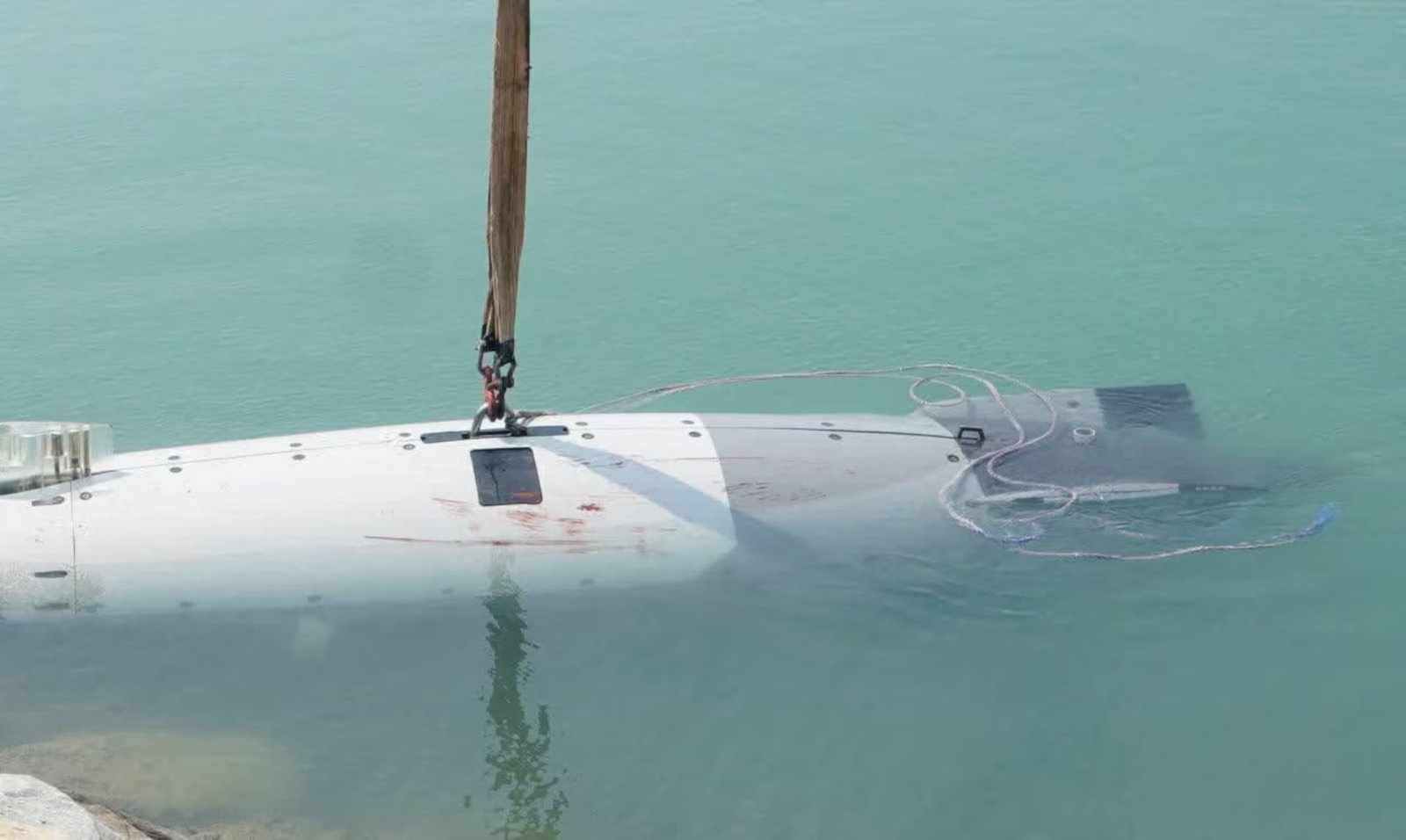
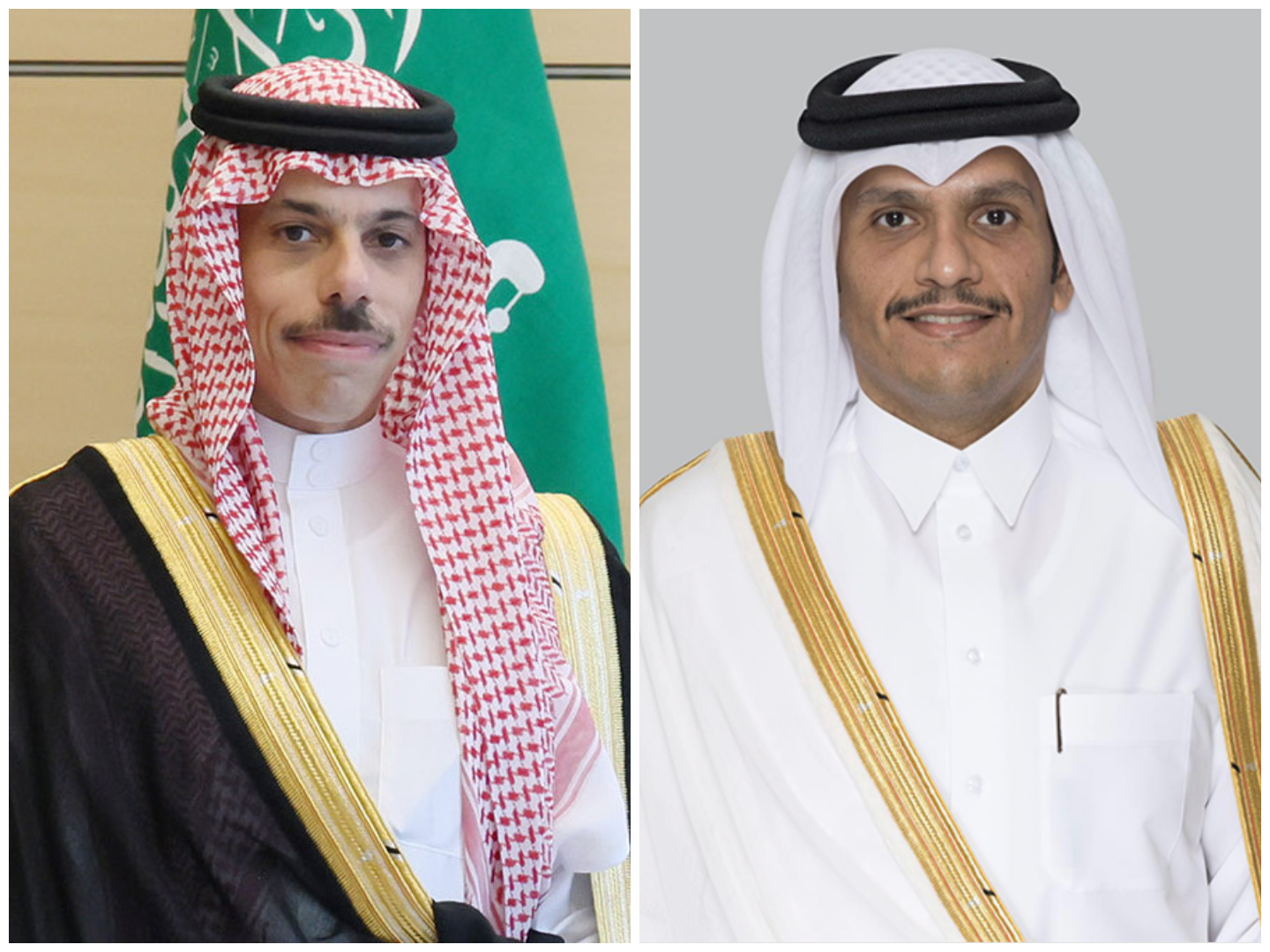
Fighting has reignited in Yemen as Houthi forces push south towards the strategic Bab al-Mandab Strait, raising fears of a wider confrontation with the Saudi-backed government.
Al Jazeera’s Mohammad Saleh has the latest.
BERLIN: Buoyed by partisan home fans, host Germany upset Belgium 93-74 to reach the semifinals of the women’s FIBA World Cup on Thursday.
Leonie Fiebich scored 17 points and had 10 rebounds to lead Germany to a showdown with France on Saturday. Nyara Sabally also had a double-double with 16 points and 12 rebounds.
“I can’t quite believe it yet,” forward Frieda Bühner said. “We’re among the best four teams in the world. I can’t believe it. It’s crazy.”
The players screamed and whooped in celebration. Germany had never reached the semifinals before.
“Everyone stepped up today and we did it from the first second to the very last,” said Alexandra Wilke, who scored 10 points.
Germany lost their opening game by 30 points to Spain, but bounced back with impressive wins over Japan and Mali before routing South Korea in a playoff to reach the quarterfinals.
Egged on by fervent commentary from the announcer, fans cheered, jumped and waved Germany flags at the Berlin Arena to help the home team keep their momentum going.
“It’s always really cool to play in front of such a crowd,” Sabally said. “I couldn’t have wished for more, especially in Germany. It’s really cool to see that there’s so much hype and the whole venue is caught up in it. It’s really, really cool.”
It’s the sixth straight World Cup at which the host have made the final four since China failed to make the semifinals in 2002.
Belgium, the European champion, were one of three teams that advanced through group play without a loss.
Emma Meesseman led Belgium with 29 points and added eight rebounds, but her team were unable to regain the lead after Bühner made it 20-19 toward the end of the first quarter.
Germany did not qualify for the World Cup since the unified country’s only previous appearance as host in 1998. East Germany’s women’s basketball team finished fourth at the 1967 tournament.
France rout China
Marine Johannès and Janelle Salaün led France to the semifinals for the first time by beating China 90-61 earlier.
Both Johannès and Salaün scored 15 points while Gabby Williams contributed 14 as the Olympic finalists put themselves in contention for a first World Cup medal since the inaugural tournament in 1953, when France finished third in the final round.
“It means a lot,” Williams said of reaching the semifinals for the first time. “We want to be one of the greatest teams ever to put on the French jersey. Obviously, we have a big goal this tournament, but it’s great to check this off the list.”
Chants of “Allez les Bleues” rang around the Berlin Arena before Williams opened the scoring, and the French supporters made sure they were heard for the rest of the game as their team dominated on the court below. France have been fluid and free-scoring, beating their four opponents so far by a combined 156 points.
The team set a tournament record for 3-pointers in a single game by netting 22 in their final group game on Monday. The French players connected on 14 of 37 attempts Thursday, with Johannès and Salaün scoring three triples each.
“We are lucky because we are a group that have known each other for a couple of years now,” Salaün said of France’s team spirit. “We went through a lot of things, the Olympics, training camp(s), so we just know each other and we know what we want. We have a goal and we want to do everything to get to this goal.”
Salaün had an ice pack bound to her right knee. France coach Jean Aime Toupane told The Associated Press it was just a precaution.
Zhang’s impact limited
The French defense limited the impact of China’s 7-foot-3 Zhang Ziyu, who had the attention of two French players any time she received the ball. The 19-year-old sensation was held scoreless over her 7 minutes, 18 seconds of play in the first half, though she contributed in defense with three blocks before halftime.
There was nothing Zhang could do to stop Johannès from scoring successive 3-pointers in the third quarter, when she also got on the scoreboard. Zhang finished the game with seven points, eight rebounds and seven turnovers.
Han Xu, who had a double-double in each of her four games at the tournament, again led China with 21 points and nine rebounds.
US never in danger
The United States, the four-time defending champion, routed Hungary 108-56 in the first quarterfinal with Napheesa Collier scoring 19 points to stretch their winning run in the tournament to 34 games since a semifinal loss to Russia in the 2006 semifinals.
The US await the winner of Spain-Australia in the last quarterfinal later.
Demoralised tourists reach 52-2 before rain ends play early on day two, needing 268 runs to make England bat again.
Published On 10 Sep 202610 Sep 2026
Ollie Robinson continued his outstanding summer with two wickets in his opening over as England pushed Pakistan towards defeat in the third Test at Edgbaston.
Robinson, man of the match in the first two Tests, struck with the first ball of Pakistan’s second innings on Thursday and again three deliveries later to leave England closing in on a 3-0 series whitewash.
The demoralised tourists reached 52-2 before rain ended play early on day two, needing 268 runs to make England bat again.
Robinson, 32, has been almost unplayable in this series, taking 21 wickets at an average of under seven runs each.
He continued in the same vein in Birmingham, removing Saim Ayub, who was dismissed for a duck in both innings, and then Abdullah Shafique to finish the day with figures of 2-10 from his six overs.
“He’s probably one of the most consistent bowlers in world cricket. He knows what he’s doing with the ball, and he wears you down a bit so it’s a challenge,” said Pakistan batting coach Mike Smith.
“He has bowled exceptionally well, and he’s in a little purple patch as a player. We need to find a way to combat that as well as we can.”
Shan Masood, who was dropped at slip by Ben Duckett off Gus Atkinson, was still there on 21 at the close, alongside opener Azan Awais on 29, but Pakistan’s position appears hopeless.
England, who led by 23 overnight, had earlier pressed the accelerator to extend their first-innings advantage to a daunting 320.
They made 453 with Harry Brook and Dan Lawrence extending their fifth-wicket partnership to 86 until Brook set off for an impossible single and was run out by Masood for 75 from 97 balls.
Lawrence went on to make 65 from 82 balls before dragging a wide ball onto his stumps to give Mohammad Imran his first Test wicket. It was a third Test half-century in a row for Lawrence, who was recalled after a two-year absence for this series.
“I’m really happy with how I’ve contributed,” said Lawrence. “I was feeling really good today, got on a bit of a roll with Brooky and went with it.
“I thought I was going to make a really big score, to be honest. It wasn’t to be, but I think if I’d been offered 65 at the start of the day, I’d have taken it.”
There was also a welcome half-century from the out-of-form Jamie Smith, who overcame an uncertain start and a finger injury, which caused him to hand over the wicketkeeping gloves to Jordan Cox, to strike 69 off 84 balls including one six and nine fours.
It was his highest Test score since a second-innings 88 against India on the same ground 14 months ago.
Robinson chimed in with a 50 of his own, which included a huge six into the Hollies Stand off Mohammad Abbas, before becoming Razaullah’s fourth victim.
The blooding of the 21-year-old, who had only played eight first-class games prior to his call-up, was one of the few positives for Pakistan.
While he was expensive – he conceded 148 runs off his 23 overs – he posed a threat with his pace and aggression.
Razaullah may represent a brighter future for Pakistan, but the present remains bleak for a team that has lost 15 of its last 20 Tests.
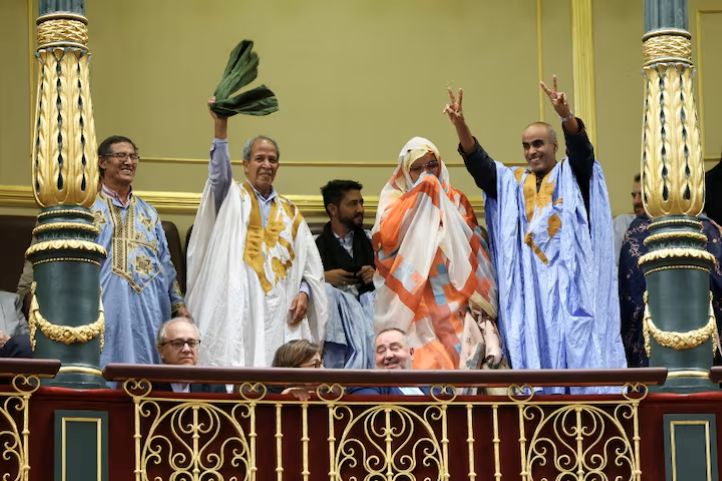
MADRID: Spain’s lower house voted on Thursday to grant citizenship to Sahrawis born when Madrid administered the North African territory of Western Sahara as a colony, a move that could inflame delicate relations with Morocco.
The legislation, which a statement from parliament said was approved with 168 votes in favor, 31 against and 145 abstentions, would also allow descendants of those granted citizenship to acquire it.
Some 70,000 to 110,000 Sahrawis could be eligible for Spanish citizenship, according to local media.
Spain’s ruling Socialist Party and its junior left-wing partner Sumar, which filed the initiative, were among those who supported the bill, while the opposition conservative People’s Party abstained and far-right Vox voted against it.
“With the adoption of this legislation, we are restoring – and I emphasise, restoring – the Spanish national identity card to those Sahrawis who once held it and from whom this state took it away,” said Tesh Sidi of the leftist Sumar coalition, the first woman of Sahrawi origin to serve in parliament.
Tensions with Morocco
Tensions have grown between Spain and Morocco following the mass arrival of at least 70,000 migrants in Spain’s North African enclave of Ceuta in July.
Spain controlled Western Sahara under various administrative arrangements from 1884 until 1976. Morocco claims sovereignty over Western Sahara and began asserting control over the territory after Spanish rule ended.
The Algerian-backed Polisario Front independence movement seeks recognition of an independent state called the Sahrawi Arab Democratic Republic.
Many Sahrawis live in refugee camps in Tindouf, Algeria, or elsewhere abroad, while others remain in Western Sahara. Spain had supported a referendum in the territory — in line with United Nations resolutions — until Sanchez’s government reversed course in 2022 and backed Morocco’s position. Tensions eased somewhat after that shift, with Madrid describing Rabat’s autonomy proposal for Western Sahara as “serious, credible and realistic”.
Prices spiked as attacks on oil tankers escalated in the Middle East.
Published On 10 Sep 202610 Sep 2026
Oil prices have increased by four percent, with benchmark Brent crude hitting $105 a barrel after the biggest rise in attacks on shipping since the Iran war began spurred trader concerns about further supply disruptions.
Brent crude futures were up $4.05, or four percent, at $105.26 a barrel by 1215 GMT on Thursday. United States oil topped $100 a barrel for the first time since May, as West Texas Intermediate crude futures CLc1 rose $3.99, or 4.15 percent, to $100.04.
Recommended Stories
list of 4 itemsend of list
Brent prices have surged by more than 30 percent from lows touched in early August, as a permanent agreement between the US and Iran to cease attacks never materialised and fighting resumed.
Iran-aligned Houthis seized control of Yemen’s port of Mocha on Thursday, further threatening Red Sea traffic, while Gulf traffic remains restricted through the Strait of Hormuz as tanker attacks in the region have intensified in recent days.
“The recent run-up in prices lays bare the market’s approach: this conflict will last longer than anticipated even a month ago, let alone at the beginning of the summer. If oil supply and exports are diminished, the oil balance remains tight and prices remain elevated,” PVM analyst John Evans said.
Iran said it had attacked 10 ships near the Strait of Hormuz on Wednesday, after the US hit five Iranian oil tankers. Iran’s Islamic Revolutionary Guard Corps said it would escalate its response to any further attacks.
While fears of prolonged and more severe supply disruptions in the Gulf have lifted Brent above $100, analysts say the durability of the rally will hinge on China.
Chinese demand
China, the world’s largest crude importer, has stepped up purchases in recent weeks after months of subdued demand, boosting physical crude markets, ING analysts said in a note.
If Chinese buying continues to recover, it could amplify the impact of any supply disruptions and drive prices higher, while a pullback in imports could temper market gains, ING said.
“For months, the bearish case rested on soft Chinese demand,” said David Jorbenaze, global oil market lead at commodities information provider, ICIS.
Rising oil prices have worsened worries about inflation and cranked up pressure within the bond market, helping to lower stocks again on Wall Street.
The S&P 500 fell 0.6 percent and is on track for a fourth straight loss.
The increase in oil prices has pushed the price for a gallon of regular petrol to an average of nearly $4.28 across the US, according to the American Automobile Association. That is not only costing more at the pump but also through higher prices for all kinds of products that move by truck to store shelves.
Following Thursday’s reports, traders are betting on a close to 70 percent chance the Fed will raise the federal funds rate at its meeting next week. That’s up from the 61 percent probability seen the day before, according to data from CME Group. That’s also despite President Donald Trump’s consistent lobbying for interest rates to go lower rather than higher.
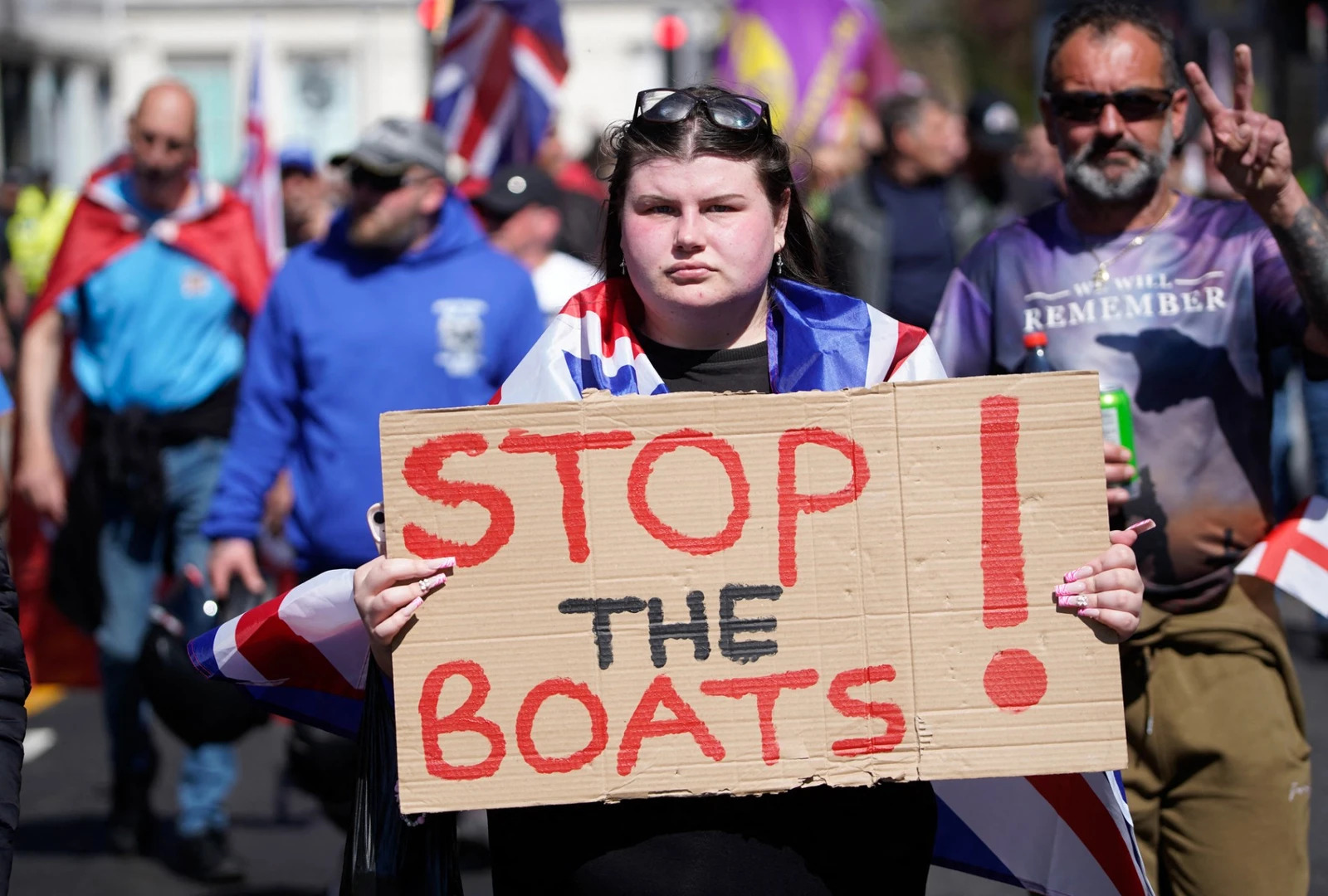
The number of migrants arriving on British shores in small boats so far this year has fallen by more than 40 percent compared to the same period last year, with the people smugglers being forced into a change of tactics due to the French and British police’s closures of many gaps. However, the last week has seen alarming incidents of “intimidating and thuggish behavior” — as described by a government spokesperson — by far-right activists.
On Sunday, roads in Portsmouth were blocked after a boat carrying 140 migrants was brought ashore there. This came the day after similar scenes of direct action had blocked roads and disrupted travel in and out of the Port of Dover. In both incidents, organized men in black, with some wearing balaclavas, blocked traffic and even smashed the windscreens of police cars.
Though largely peaceful, the protests reflect a change in tactics, raising questions about policing, intelligence gathering and the lack of robust measures taken against them. The threat posed by these groups should not be belittled. There is the potential not just for a climate of fear among immigrants but also a threat to law and order and the standing and reputation of the UK as a tolerant country.
The police, the government and officials from all parties condemned the protests. Many rightly questioned the scale of Kent police’s failure after it emerged a tipoff was received the day before the far-right agitators blocked Dover’s roads. Details were apparently passed to police after residents of a nearby village heard individuals boasting in a pub about going to Dover to “attack Muslims.” That information fell on deaf ears and Kent police even later described the protest as “spontaneous.”
Far-right groups are of the opinion that no action taken or policy adopted by the government is good enough
Mohamed Chebaro
Nick Lowles, the chief executive of Hope Not Hate, an organization that charts far-right activity, told the BBC: “To have 300, 400 people with balaclavas marching down the streets, stopping traffic. You know, it’s not just good enough. We need to call these people out for their politics and for the type of Britain that they want to see.” He added: “We’ve got different ways to register our protest. We do not go on the street. We do not burn people out of their houses. We do not cause trouble and threaten to fight the police.”
We should be careful about the repercussions of these images and videos being widely shared and the normalization of those scenes and the messages they convey. They are not viewed only by people in the UK but are also disseminated around the world.
Hope Not Hate was quicker than the police to inform the public that the Dover disturbances were organized by a far-right group called Patriot Platform. This new network was launched in June, uniting smaller, localized antimigrant groups. It claims to represent a Christian “army of patriots,” rallying around a vision of reclaiming the country’s borders and a message that Britain belongs to the British. It seems its adherents are ready to adopt vigilante methods to combat immigration in an effort to revive the country’s Christian values, as the group claims.
After winning power in July 2024, the Labour governments of first Keir Starmer and now Prime Minister Andy Burnham have fought to curb the arrival of small boats across the Channel, using a variety of laws and tactics to deter people from making the dangerous journey. But the past two years have also shown that far-right groups are of the opinion that no action taken or policy adopted by the government is good enough, as if antimigrant agitation could be a conduit to replacing Labour with Reform UK, the party led by colorful euroskeptic politician Nigel Farage.
Surely those that marched in Dover and Portsmouth are not like the Blackshirts just yet. But the resemblance is there
Mohamed Chebaro
After two nights of vigilante, militant-style action against migrants, people have begun to question whether the UK is witnessing the rise of fascism. What we saw at the weekend was a reminder of Italy’s Blackshirts, the violent private army and paramilitary wing of Benito Mussolini’s National Fascist Party, which was founded in 1919. Not long after them came the Hitler Youth of the 1930s, which transitioned from a fringe, violent paramilitary wing into a powerful, mandatory state apparatus.
Surely those that marched in Dover and Portsmouth are not like the Blackshirts of Oswald Mosley’s British Union of Fascists just yet. But the resemblance is there to be seen. This time, the “enemy” is not the Jews of the 1930s but migrants, who are seemingly considered to all be of the Muslim faith.
How the government can act against this clear and present danger is not obvious, as it could end up with more ugly scenes. Already, citizens have taken it upon themselves to “defend the realm” through encircling hotels and government facilities housing migrants or wearing black uniforms and balaclavas and blocking roads and ports. Surely the obvious thing to ask is who is behind them? Who is financing and organizing these acts, which we are told are only the beginning?
It is going to be very difficult for the British government to undo the damage caused by the men in black at Dover and Portsmouth. Launching an investigation to find any lapses of intelligence or policing should be the first step.
Governments across Europe seem to be increasingly at the mercy of far-right forces that are riding high in a changing world. This emerging threat rests on three aspects: the far-right nativist ideology; a warped digital realm that magnifies and spreads toxic, hate-filled content; and an unexplained financial lifeline.
The task ahead is daunting. The so-called patriotic drive of the far right is not aimed at migrants alone — its real enemies are democracy, liberties and the rule of law. Its methods are not peaceful protests but organized activism bordering on vigilantism and militancy.
Mohamed Chebaro is a British-Lebanese journalist with more than 25 years of experience covering war, terrorism, defense, current affairs, and diplomacy.
Mohamed Chebaro is a British-Lebanese journalist with more than 25 years’ experience covering war, terrorism, defense, current affairs and diplomacy. He is also a media consultant and trainer.
*Some interviewees asked that their surnames be withheld because of the political nature of the interviews.
Malmo, Sweden – A very Swedish political tradition is playing out in Malmo, the country’s third-largest city. Rows of twee campaign booths, known as “election cottages”, are packed into a corner of the central square.
Recommended Stories
list of 3 itemsend of list
National polls have Sunday’s election on a knife-edge, with the centre-left opposition bloc led by the Social Democrats just a few percentage points ahead of the right-wing group – a gap that has tightened over the past month.
In the middle of the row, representatives of the Left Party and the far-rightSweden Democrats (SD), bitter rivals from opposite ends of the political spectrum, campaign a metre apart.
Migration is a key election issue. Multicultural Malmo, with more than a third of the city’s 368,000 residents born outside Sweden, has become the centre of the debate.
For the right, the city represents failures of integration, a cautionary tale it says of what happens when immigration goes unchecked. Beyond Sweden, Malmo draws disproportionate interest.
In 2017, the populist English politician Nigel Farage branded it the “rape capital of Europe”, a claim a leading Swedish criminologist dismissed as nonsense, while Germany’s far-right AfD has used it in its narratives about the dangers of immigration.
Strength in diversity
In the city’s town hall, a grand building with a Dutch Renaissance-style facade, Anfal Mahdi, an opposition councillor in Malmo for the Left Party, sits amid the splendour of green velvet chairs, historical oil paintings and royal portraits.
Right-wing politicians ignore the socioeconomic challenges of living in the areas built under Sweden’s “Million Programme”, she said, referring to an ambitious scheme to build one million new homes between 1965 and 1974.
It began as a social housing initiative for working-class Swedish families. In later decades, as many of those families moved out, the apartments were allocated to migrant and refugee newcomers.
Observers say what began as a utopian welfare project gradually became the physical framework of today’s segregated suburbs.
Mahdi, whose family fled Iraq after the Gulf War, grew up in one of these areas during cuts to the welfare state that had defined modern Sweden, as public spending tightened after its early-1990s economic crisis.
But what they lacked in welfare, they made up for in diversity, she said.
“I had friends from Bosnia, Palestine, Somalia and when we grew up we did not have much, but we leant on each other,” she said.
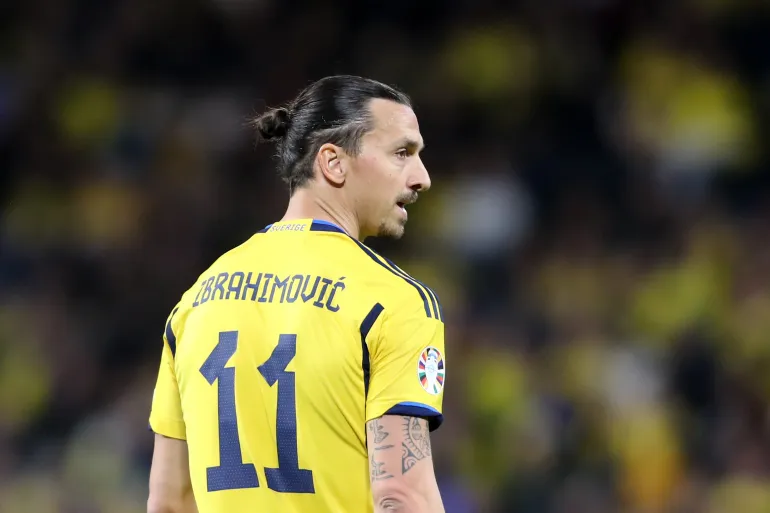
The city’s most famous son, Zlatan Ibrahimovic, grew up in Rosengard, a Million Programme estate on Malmo’s eastern side that police still classify as a “particularly vulnerable area”. The famous footballer regularly credits the area for shaping the skill and confidence that defined his career.
Zlatan Ibrahimovic grew up in Rosengard and went on to become Sweden’s all-time top goalscorer [File:Linnea Rheborg/Getty]
“It’s often in these neighbourhoods that people can shine; there is a sense of community that doesn’t exist elsewhere,” said Adam*, a 20-year-old florist who also grew up in one of the areas Sweden officially labels “vulnerable”.
He rejects the stereotypes associated with Malmo, saying young people here are far more concerned with the cost of living, finding work and the everyday pressures of getting by.
Mahdi shared this sentiment, saying “wallet politics”, relating to healthcare and unemployment, are central issues for all sections of society.
Healthcare tops voters’ concerns nationally, while unemployment in Malmo, at around 11 percent, is among the highest of any Swedish municipality.
A Green Party campaigner in Malmo, behind are stands belonging to the Moderate Party and Communist Party of Sweden, September 9, 2026 [Nils Adler/Al Jazeera]
But not everyone sees it that way.
Lena, a 78-year-old campaigner for the Moderate Party, which leads the right-wing bloc, believes integration along with schooling are taking centre stage. At the last election cycle, it was care for the elderly, she said.
Jacob, a 19-year-old resident who was speaking to representatives of various parties, said a taboo has been broken with more young people turning right, including towards the SD, now polling as Sweden’s second-largest party.
The far-right party with neo-Nazi roots could enter government for the first time if the right-wing bloc wins: Prime Minister Ulf Kristersson has promised cabinet posts, including the migration portfolio.
Anfal Mahdi in Malmo town hall, January 9, 2026 [Nils Adler/Al Jazeera]
‘Divisive politics’
Sara, a woman in her twenties of Palestinian heritage, said “divisive politics” are normal now. The rhetoric around immigration and Islam in particular has left her feeling some “don’t want integration or even assimilation, they just want you to leave”.
Under the current right-wing government, many teenagers who grew up in Sweden with their families were ordered to leave on turning 18 while their parents were allowed to stay. The government paused the separation in March after a public outcry and moved to reform in June.
In February, the Swedish Migration Agency ordered an eight-month-old boy born in the country, Emanuel, to be deported alone to Iran while the rest of his family kept their permits.
Thousands of pro-Palestine protesters march through the streets of Malmo, May 11, 2024 [Nils Adler/Al Jazeera]
The system concerns Binto Drammeh, whose father is of Gambian heritage.
“Our uncle was made to leave as he didn’t meet the income threshold,” she told Al Jazeera.
The government has repeatedly raised the salary threshold for work permits, most recently in June, when it increased from 80 to 90 percent of the Swedish median wage.
Failing to meet it could ultimately lead to a deportation order.
Criminal networks
Crime is another main election issue.
With a population of 10.6 million, Sweden has one of Europe’s highest rates of deadly gun violence, even though lethal violence fell last year to its lowest level since 2012.
Among the challenges, criminal networks are recruiting children as young as 12 to transport weapons, sell drugs and carry out contract killings. In 2024, Danish gangs were found to be hiring Swedish teenagers to carry out shootings and bombings.
How to tackle the problem divides the parties.
The right prioritises punishment and deterrence, while the left and centre-left emphasise tackling root socioeconomic causes, rehabilitation and preventive social work. The lines are not always clean, however: the Social Democrats backed lowering the age of criminal responsibility, while the Left, Green and Centre parties voted against it.
TikTok politics
Young voters appear more engaged than at the last election.
Lena of the Moderate Party said: “I haven’t met one person who said they won’t vote,” while Mahdi said the Palestine issue has had a galvanising effect.
“Right now, all the posts on my TikTok page are from party accounts; they got a lot of likes and views and many videos are trending,” said Jacob, the 19-year-old resident.
Yet some are undecided about whom to vote for, partly because of Sweden’s unusual bloc system. Built on the idea of consensus, it means a vote for one party’s policies may be diluted in coalition, or are hard to push through.
“I will be honest, I have not voted yet,” Adam said, as he looked out at the array of campaign booths next to his flower stand. “Young people are interested in politics, but many of us think that no matter who comes, nothing will really change.”
A Social Democrat Party poster (left) reads ‘Now it is the ordinary folks’ turn’ and Left Party posters read ‘Yalla, Yalla housing for all’ and ‘Good schools for every young person’.
US President Trump is headlining both nights of the Republicans’ first ever midterm convention. Even though delegates aren’t voting on anything, the RNC midterm convention serves as a rallying cry for Republicans attempting to keep the majority in Congress. Al Jazeera’s Emma Withrow has the highlights from the first day.
The chatter among Barcelona fans this summer was all about who would be the club’s next star striker after Robert Lewandowski – the team’s top scorer for the past four seasons – left to play in the United States.
The 18-year-old Egyptian, Hamza Abdelkarim, was not an answer anyone would have given at the beginning of preseason. This time last year, he had only played a single game at senior level, and that was for Cairo giants Al Ahly.
But as Barca’s dogged pursuit of Argentinian striker Julian Alvarez from rivals Atletico Madrid ended in failure, and the club only managed to secure a 10 million euros ($11.5m) move for Gabriel Jesus on the transfer window’s deadline day on September 1, Abdelkarim emerged from obscurity to dominate headlines in Catalonia and Egypt.
Abdelkarim’s four goals in five games made him Barcelona’s top scorer during preseason. He even scored against his boyhood club, Al Ahly, in the Joan Gamper Trophy – the fixture that is used to introduce the team to the fans and inaugurate the league season – but chose not to celebrate the goal as a mark of respect.
“Hamza offers something different,” Adrian Healey, ESPN’s La Liga match commentator, told Al Jazeera.
Fans in Egypt and Barcelona have taken to calling him the Egyptian Erling Haaland on account of his physical prowess and presence in the box.
When the striker caught the eye of FC Barcelona, a low-risk, low-commitment agreement was struck in the winter transfer window with Al Ahly to bring him to Spain. A six-month loan period was cut in half due to paperwork issues, but Abdelkarim made up for lost time by scoring goals; not for the first team, or even the reserves, but the Under-19 team – netting six times in 11 games.
Abdelkarim had also impressed for Egypt at the 2025 U17 World Cup, grabbing two goals and an assist in four appearances.
Despite the lack of top-level experience, Abdelkarim had done enough to prompt Egypt national team manager Hossam Hassan to take a gamble by selecting the uncapped teenager for his World Cup 2026 squad.
The veteran Mostafa Mohammed was left at home in favour of Abdelkarim, who went on to make his debut against Brazil in a friendly and featured in four World Cup matches.
On the advice of Mohamed Salah, the striker decided not to take a vacation after the World Cup and returned to Barcelona immediately after Egypt were knocked out by Argentina in the round of 16.
“Mohamed Salah is always talking to me, and I follow everything he says. He is an example to be followed, and the success he achieved is not by accident,” he told Egypt’s OnSport after FC Barcelona lifted the Joan Gamper Trophy.
The exposure to a professional like Salah has only served to supercharge Abdelkarim’s development.
Barcelona had already seen enough and decided to make his loan move permanent in June, paying Al Ahly 1.5 million euros ($1.75m) for his services.
“I am not surprised at all in Hamza’s [emergence],” Ismail el-Hamalawy, a footballing content creator who has closely followed the young striker’s journey, told Al Jazeera, citing his World Cup performances.
“He is the striker Egypt has been missing for two decades,” el-Hamalawy told Al Jazeera.
The only other Egyptian-born player to have played in La Liga was Mido, who came through the ranks at Zamalek before leaving Egypt as a 17-year-old in 2000 and played in Belgium, the Netherlands, Spain, France, Italy and England.
At the turn of the century, most Egyptians followed Mido’s progress through newspapers and local talk shows. Now, Egyptians can easily track Abdelkarim’s development in real time online.
The interest has been so profound that Barcelona signed a surprise sponsorship with EgyptAir through the 2028-29 season this week as both entities look to leverage the image of Egypt’s next great footballer for commercial gain.
The club is now scrambling to improve his contract so that a larger buyout clause can be installed. As it stands, the 18-year-old could be poached by a rival club for only 15 million euros ($17m), so the Catalan giants are looking to place a 150 million euros ($174m) buyout clause to ward off any potential suitors.
An unused substitute in the first two matches of the season, Barcelona coach Hansi Flick has repeatedly told the media that the striker’s time will come.
“He deserves to play, and he will play,” Flick said. “I see him improving day by day. He has the right attitude and mentality.”
With such little top-level experience, it could have been considered irresponsible of the club to give the youngster too much responsibility too soon.
“He will have to [be] patient, but he will get minutes,” Healey said. “[But] I am not sure the signing of [Gabriel] Jesus changes much for him, as I see [Jesus] as just a stopgap solution. Abdelkarim might have had less minutes had Alvarez signed.”
On August 31, Abdelkarim replaced Raphina in the final five minutes of Barcelona’s 5-2 win over Rayo Vallecano.
With an official debut out of the way, the striker can focus on clearing the next hurdle – scoring his first official goal for the La Liga champions.
The renewed escalation in Yemen is no longer simply a Yemeni battlefield development. For Saudi Arabia, it is becoming a direct test of national security, economic resilience and the kingdom’s ability to prevent the wider regional war from spilling further across its borders.
The latest Houthi attacks have demonstrated this clearly. Missiles and drones have hit civilian and economic sites in Abha, Khamis Mushait, Jizan and Najran, injuring dozens of civilians and causing fires and temporary disruption at energy facilities. The attacks came as fighting intensified in Yemen and around the western coast, while the Houthis continued to threaten maritime traffic in the Red Sea and Bab al-Mandeb.
Saudi Arabia therefore faces two interconnected threats: Attacks on its territory and attempts to disrupt the maritime routes on which regional and international trade depends.
This creates a difficult strategic equation for Riyadh. Saudi Arabia has spent the past several years trying to move away from direct military involvement in Yemen and towards diplomacy, de-escalation and support for a political settlement. A return to an open-ended war would contradict that strategy and impose unnecessary political and economic costs.
But restraint cannot mean accepting repeated attacks on Saudi territory.
A different security environment
The security challenge today differs considerably from the first years of the Yemen war.
Saudi Arabia has strengthened its air and missile defences, improved coordination between its military and security institutions and accumulated considerable experience in countering drones and ballistic missiles. It is therefore much better prepared to defend its territory than it was a decade ago.
Yet the Houthi threat has also evolved.
The group possesses a combination of ballistic missiles, cruise missiles and increasingly sophisticated drones. Even when most incoming weapons are intercepted, relatively inexpensive systems can impose disproportionate defensive costs and create uncertainty around airports, industrial facilities, border communities and energy infrastructure.
This means Saudi security cannot depend on interception alone. No air defence system can guarantee a perfect shield indefinitely.
The strategic objective must therefore be deterrence: Convincing the Houthis that attacks on Saudi territory will impose costs greater than any political or military benefit they expect to obtain.
This does not necessarily require returning to the large-scale military campaign of previous years. Riyadh has more options today. These include intelligence operations, strengthening Yemeni government forces, improving border security, disrupting missile and drone supply networks and, where necessary, conducting proportionate operations against facilities directly involved in attacks on Saudi Arabia.
The distinction is important. Saudi Arabia does not need to choose between doing nothing and returning to a full-scale war.
The economic front
The economic consequences are equally important.
Saudi Arabia is one of the world’s largest energy exporters, which makes attacks on its oil infrastructure internationally significant even when physical damage is limited. The latest attacks affected energy facilities and contributed to renewed concern in already nervous global oil markets.
There is an apparent paradox here: Regional instability can push oil prices higher and temporarily increase Saudi oil revenues. But higher prices caused by war should not be confused with economic benefit.
Saudi Arabia’s economic strategy under Vision 2030 depends increasingly on stability, investment, tourism, logistics, technology and the development of major projects outside the oil sector. Persistent missile and drone attacks can raise insurance and transport costs and affect perceptions of regional risk even if the kingdom’s underlying economy remains strong.
The greater strategic concern is maritime security.
Saudi Arabia occupies a strategic position between two of the world’s most important energy corridors: The Strait of Hormuz to the east and Bab al-Mandeb to the west. Disruption of both routes represents a serious challenge not only for Saudi Arabia but for the global economy.
This is why the Red Sea dimension of the Yemen conflict is particularly important. Bab al-Mandeb connects the Indian Ocean with the Red Sea and the Suez Canal. A sustained Houthi ability to threaten shipping there would increase freight and insurance costs and potentially divert vessels around Africa.
Saudi Arabia, however, possesses an important strategic advantage: Its energy infrastructure is not completely dependent on the Gulf. The kingdom can transport significant quantities of oil through its East-West pipeline to terminals on the Red Sea. This provides an alternative to Hormuz and gives Riyadh greater strategic flexibility.
That advantage does not, however, eliminate Saudi Arabia’s exposure to insecurity elsewhere in the Red Sea, including around Bab al-Mandeb.
Protecting Bab al-Mandeb should therefore be understood not simply as a Saudi or Yemeni interest but as an international economic and security requirement.
Avoiding the Houthi trap
The greatest danger for Riyadh may be political rather than purely military.
The Houthis could benefit from drawing Saudi Arabia back into an extensive war. It would allow them to portray the conflict once again as a confrontation between Yemen and an external power rather than a struggle among Yemenis over the future of their state.
Saudi Arabia should avoid this trap.
Confronting the Houthis must remain fundamentally a Yemeni responsibility. The internationally recognised Yemeni government and its forces should carry the principal burden of confronting Houthi expansion on the ground, while Saudi Arabia provides political, economic, intelligence and defensive support.
This is particularly important on the western coast. If the Houthis consolidate their military position around strategic areas overlooking the Red Sea and Bab al-Mandeb, the consequences will extend far beyond Yemen.
The objective should not be to retake Sanaa through another large-scale air campaign or restart an indefinite regional war. It should be to prevent the Houthis from using military force to change the regional balance, threaten neighbouring states or threaten international maritime arteries.
Diplomacy backed by deterrence
Saudi policy is therefore likely to operate on several tracks simultaneously.
First, Riyadh will continue strengthening its air and missile defences and protecting critical infrastructure. Second, it can increase support for Yemeni government forces while avoiding unnecessary direct involvement in ground combat. Third, it will seek broader regional and international cooperation to secure the Red Sea and Bab al-Mandeb.
At the same time, diplomatic channels should remain open.
Saudi Arabia has repeatedly demonstrated its preference for a negotiated settlement in Yemen. But negotiations are sustainable only when both sides believe that escalation carries unacceptable costs.
Diplomacy, therefore, must be backed by credible military power.
Saudi Arabia has strong incentives to prevent Yemen from becoming another permanent front in the wider regional confrontation. The kingdom’s economic transformation requires stability, while its geopolitical interests require secure borders, uninterrupted energy exports and freedom of navigation.
But the same logic that encourages restraint also places limits on it.
If attacks on Saudi cities, civilians and energy infrastructure continue, Riyadh will increasingly regard the issue not as intervention in the Yemeni civil war but as the defence of Saudi territory.
That distinction will shape what comes next.
Saudi Arabia does not need another prolonged Yemen war. Nor does Yemen. But avoiding one requires restoring deterrence while preserving the possibility of a political settlement.
The most effective Saudi strategy, therefore, is neither unlimited escalation nor passive restraint. It is calibrated pressure: Defend the kingdom, strengthen legitimate Yemeni institutions, protect the Red Sea, keep diplomatic channels open and make clear that attacks on Saudi territory will carry consequences.
The views expressed in this article are the author’s own and do not necessarily reflect Al Jazeera’s editorial stance.
The continental games will officially open on September 19, but several team competitions will get under way earlier.
Published On 10 Sep 202610 Sep 2026
The Asian Games have begun in Japan with Qatar beating Iran in men’s basketball, the first action in the continental multisport showpiece that has more participants than the Olympics.
Qatar held off a comeback from Iran to win their Group B encounter 59-35 at the Aichi International Arena in Nagoya on Thursday.
It was the first match of a men’s basketball competition that will have medal finals on September 20, the day after the opening ceremony.
“We know we need to win at least one game so we can qualify for the next round,” said Qatar’s Michael Lewis, the United States-born player who scored a game-high 21 points.
“Feels good to get some team camaraderie back, and now we have got to keep going.”
Later in Group B, Taiwan beat Jordan 83-80.
The Qatar vs Iran men’s basketball match was the first one of the Asian Games 2026 [AFP]
More than 17,000 athletes and officials are expected to take part in 43 sports at the Nagoya-Aichi Games, which do not officially start until the opening ceremony on September 19 and will run until October 4.
Several events such as basketball, football, cricket, hockey and modern pentathlon will get under way before the opening ceremony.
Los Angeles 2028 Olympics qualifying spots are up for grabs in several sports at the Asian Games, which are returning to Japan for the first time since 1994.
Organisers hope the athletes will have a “unique experience” staying in accommodation ranging from a cruise liner and wooden containers to standard hotel rooms.
Officials are confident that the plan will not be affected by Japan’s typhoon season, which is usually in full swing in September-October.
Rainwater also leaked into some competition venues, with more wet weather forecast for the coming days.
Among those in action at the Games will be Philippine tennis sensation Alexandra Eala and a pair of world-class teenage talents: 15-year-old Indian cricketer Vaibhav Sooryavanshi and 13-year-old Chinese swimmer Yu Zidi.
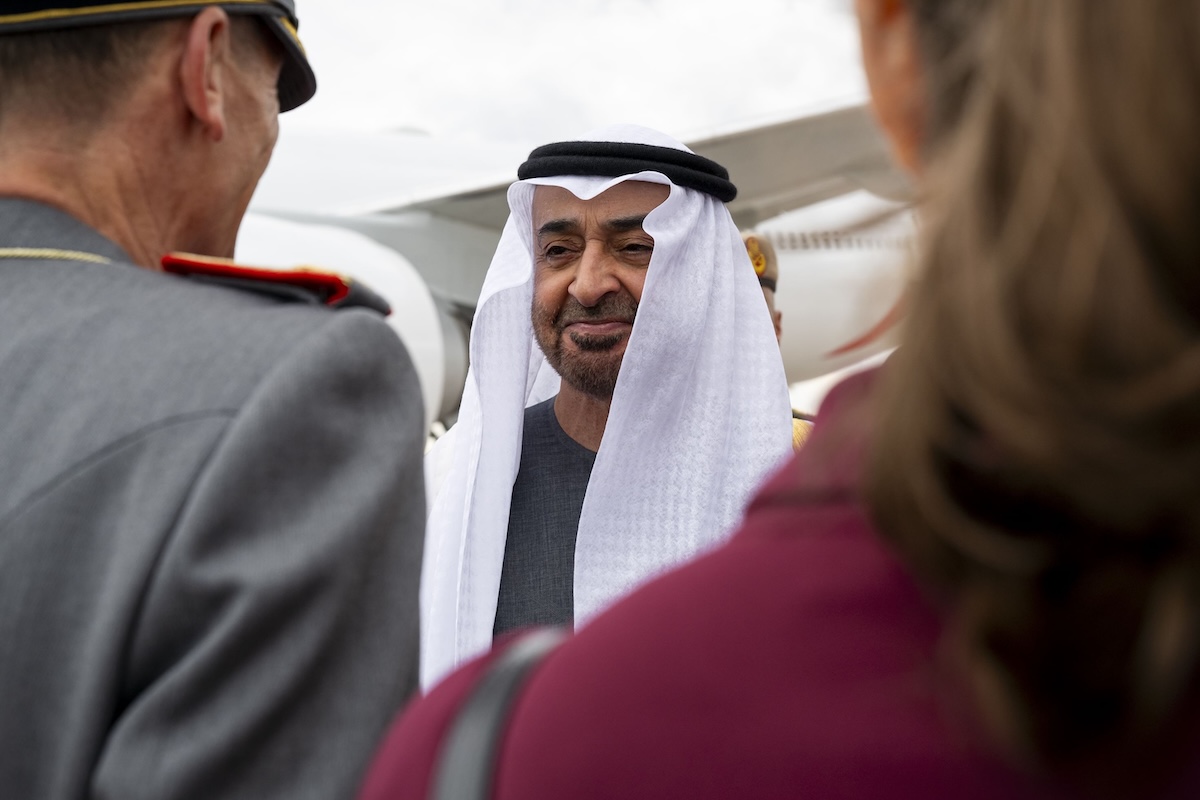
BERLIN: The leader of the United Arab Emirates began a state visit to Germany on Thursday, during which deals worth billions of euros will be signed in sectors including energy and technology, Emirati diplomats said.
Berlin rolled out the red carpet for Sheikh Mohamed bin Zayed Al-Nahyan, who was received with military honors by President Frank-Walter Steinmeier and was later to meet Chancellor Friedrich Merz.
Security was tight for the visit, with Berlin cordoning off flag-lined streets and deploying large numbers of police.
“Over the course of this visit, the UAE and Germany will make a number of key announcements and multibillion-euro agreements across investment, business, technology, AI and energy,” senior UAE diplomat Lana Nusseibeh said at a briefing ahead of the visit.
The visit comes as the US war against Iran has roiled the Gulf region, with US President Donald Trump’s erratic diplomacy unsettling many midsize powers and leading them to diversify their strategic and economic partnerships.
Merz visited the Gulf region in February, shortly before the US-Israeli war started against Iran. He said then that “we need such partnerships more than ever at a time when major powers are increasingly dominating politics”.
The UAE is Germany’s largest trading partner in the Gulf, with bilateral trade topping $15 billion last year, and many big German companies have a presence there including BMW, Siemens, ThyssenKrupp and rail operator Deutsche Bahn.
The UAE meanwhile has made major investments in Germany, including in the chemical industry and offshore wind power.
During Merz’s visit in February, German energy giant RWE and Abu Dhabi’s national oil company ADNOC signed a memorandum of understanding on LNG imports over the next decade.
Gulf countries have also long bought defense equipment from Germany and have shown interest in start-ups that make drones to bolster NATO’s deterrence efforts against Russia.
Germany, the largest EU economy, supports talks towards a European Union free trade deal with the Emirates.
The group Human Rights Watch called on German leaders during the visit to “publicly call out the United Arab Emirates’ human rights record and its role in regional conflicts”.
No joint press conference was scheduled with Merz and Sheikh Mohamed.
Bettiah, India – Neyaz Miya was adjusting a kitchen handle. Mehadi Hassan was fixing a bracket for a bed.
They were at different construction sites – Miya in a half‑constructed home, a little higher up the hill, while Hassan was on the ground floor of Ganesh Hotel, closer to the Trishuli River that flowed through Syafrubesi, a bustling market town near the Nepal‑Tibet border, now wiped off the map by the August 26 flash floods.
More than 1,200 bodies have been recovered since then, at least 4,000 people remain missing, and more than 13,000 have been rescued.
“First came the terrifying loud sound. Then the ground trembled, and dark clouds descended upon us,” recalls 34‑year‑old Miya, who ran further up the hill with his phone and slippers that morning, five or six others running alongside him.
Hassan, lower on the slope, did not wait to reach for his slippers or his phone. He just ran, climbing a narrow, stair‑like path, up the hill, stopping only when he reached roughly 60 metres (200ft) above the road.
At some point, Miya and Hassan found each other. Around them were 60 to 70 other survivors who had also gathered high up on the hill.
A decade earlier, Miya had arrived in Syafrubesi as a carpenter. Three years later, he brought Hassan with him – both men from Bihar’s Bettiah district. Over the years, they built the town’s interiors – sofas, beds, almirahs, and kitchens for hotels and homes.
On that Wednesday morning, they watched all of that washed away. The multi‑storey hotels where they had worked – Red Panda, Garden Hotel, Buddha Hotel, Sunrise Hotel – were all swallowed by the flood.
“The town was gone in a blink,” Miya recounts, now sitting in his home in Turhapatti village of Bihar, India, just across the Nepal border. “There were only three kinds of people who survived that day: Those who were out of town, those who were at work and managed to run, and those who lived a little higher up the hill.”
Based on what he witnessed, Miya says only a few hundred people in Syafrubesi, a town that had a population of 2,271 in the 2011 census, likely survived.
Miya and Hasan are among them. Three of their close friends and colleagues, also migrant workers from Bihar, are not.
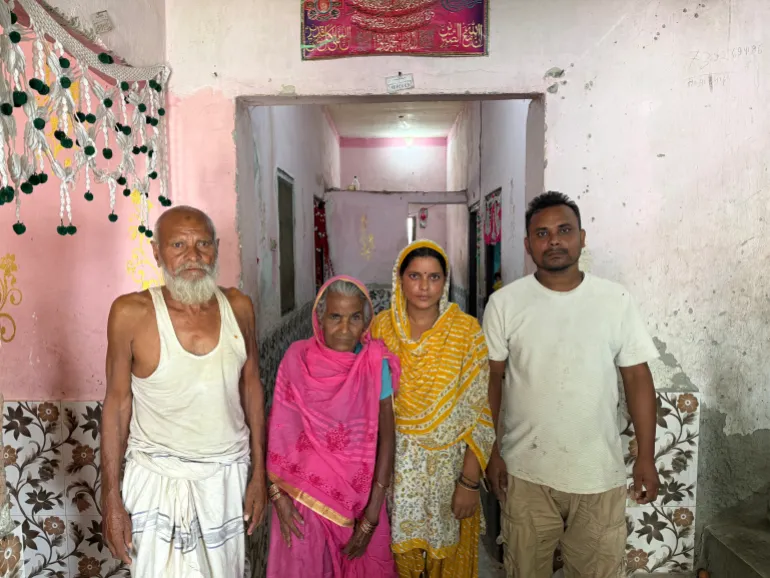
Neyaz Miya (far right), with his wife Rijwana Khatun, his mother Rubaida Khatun, and his father Doshahmad Miya. Neyaz survived the floods, but lost his masonry tools, worth almost $1000 [Jyoti Yadav/Al Jazeera]
A workday like no other
When the floods reached Syafrubesi, the men were already at work: Their shifts began at seven in the morning.
“To start at seven, we would wake up at four or five,” Miya recalls. They would leave with empty stomachs and were fed tea with doughnuts or biscuits at the construction site by building owners. Their first break came at 11am, when they returned to the rented one‑room space (3,500 Nepali rupees or $23 a month) that housed five to seven migrants at a time.
On the morning of August 26, they left for work alongside 34‑year‑old Arman Ansari, 20‑year‑old Samir Ansari, and 52‑year‑old Mukhtar Ansari, all migrants from Miya’s Turhapatti village.
In the rented room, two teenage boys, Arman’s 14‑year‑old son, Salman Alam, and his friend Shibu Alam, 17, remained asleep. They had come a month earlier to visit the hills.
“My father had cooked meat bhaat (rice with meat),” Salman recounts. He was waiting for his father to return at 11am so they could eat together.
Arman, his father, was working beside Hassan on the ground floor, pasting sunmica onto the same bed. Samir and Mukhtar were on the top floor of the Full Moon Hotel.
When Hassan ran out of the under-construction building and up the hill, he believed Arman was behind him. But by the time Hassan and Miya met higher up, there was no sign of the other three: Arman, Samir and Mukhtar.
Miya and Hassan found the boys, Salman and Shibu, terrified, on the hill. “Salman was crying, howling and searching for his father,” Hassan said.
The flood, which came with a high speed, took half an hour to recede. Soon, helicopters started hovering above them, airlifting the critically injured.
The four of them – Miya, Hassan and the boys – walked down the hill on foot to search for the three missing in the debris. They found nothing but sludge. Miya’s furniture-cutting tools and machines, worth 80,000 Nepali rupees ($530), were buried in the debris.
When they got back to their room, perched high on a slope, they found that it had survived.
But the army had taken charge, and soldiers herded survivors away from tenements near the river. “They said it [the flood] might come again,” Miya recalls.
They slept that night in a government school building in a village, he says. “At night, we were given daal bhat (rice and daal), and we wrapped ourselves in tarpaulin and slept.”
The next morning, a helicopter took them to another village. From there, another helicopter carried them to an army compound in a town. In the evening, they teamed up with five other migrants and hired an SUV to reach Nepal’s capital Kathmandu, each paying 3,500 rupees ($23).
The next morning, on August 28, they hired another SUV, which charged them 950 rupees ($6) each for a distance of 290km (180 miles) to Birgunj, a town on the India-Nepal border. They then crossed the border on foot before boarding buses for their villages.
It wasn’t the homecoming Indian migrants who work in Nepal usually plan.
A lane in Turhapatti village, Bihar, India, where the migrant workers are from. It is a village where almost every family has a story of migration [Jyoti Yadav/Al Jazeera]
‘No regular work’ back home
Turhapatti is among thousands of villages tucked along the 1,715km (1,066-mile) stretch of the India-Nepal border, where generations have crossed back and forth in search of work.
The two countries share an open border, and on both sides, especially in Bihar, the bond is known as a roti-beti ka rishta (a relationship of food and daughters), alluding to ties of livelihoods and matrimonial kinship. People live, work, and marry across the border.
Kathmandu is as close to Turhapatti as is Patna, the capital of Bihar. Per its 2021 Population and Housing Census, Nepal had 700,000 foreign-born residents, 97 percent of them from India.
Miya and Hassan say the wages for a carpenter or a mason on the Indian side are between 600-700 rupees, while for the same work in Nepal, wages are about 900 rupees. That drives migrant workers from India over the border into Nepal.
Nepal, for its part, is facing a major out-migration crisis — its per capita income is the lowest in South Asia, barring Afghanistan, and hundreds of thousands of young men and women leave each year to find work elsewhere. This creates a demand for migrant workers from Bihar, India’s poorest state that lies just across the border.
In Turhapatti, Miya owns only 0.03 hectares (0.06 acres), not enough to feed his family of six children, wife and parents. In recent years, he transitioned from being a carpenter to a contractor, which allowed him to bring in more workers from Bihar.
He had been sending 30,000 Indian rupees ($315) back to his family every month.
Hassan has even less back home: He inherited a 6×8-metre (20×25ft) room from his father and no agricultural land. “There is no regular daily work here,” he says. He would send 15,000 Indian rupees ($157) home from Nepal each month for his wife and four children.
Their story echoes in most homes in Turhapatti. The village had a population of 16,000 people in the 2011 census, India’s latest one. In nearly every household, men have left to work in other parts of India and abroad as carpenters, masons, or labourers mixing cement and sand into mortar.
The destinations are Kashmir, where close to 700 men from the village work; Nepal, with nearly 600; and thousands scattered across Indian cities: Chennai, Kolkata, Delhi, Mumbai. About 100 men have migrated to Dubai, Oman and Saudi Arabia.
The houses they built in Turhapatti stand in stark contrast to those of those who remain in India. The marble-fronted and iron-gated homes belong to men working in the Gulf, while semi-permanent dwellings belong to those who stayed behind.
Migrants in Nepal fall in between: Miya has been able to raise a brick house.
Sahrun Khatun, Arman’s wife, with her eldest son Salman (holding the youngest child) who survived, her mother-in-law, and two younger children, outside their home in Turhapatti, Bihar, India [Jyoti Yadav/Al Jazeera]
‘My body shivers at the thought’
This economic reality is what drove Arman Ansari to Syafrubesi. On July 26, Arman left for Nepal with Samir and Mukhtar. Arman’s son and his friend Shubu went with the three adults; the teenagers were on a trip to the hills.
Now, Arman’s brother-in-law. Jameel Miya, a carpenter in Kathmandu, scours the city’s hospitals for Arman’s body, telling authorities that his brother-in-law’s right hand and chest had deep scars, cut by shards of glass when he was young.
Arman’s wife, Sahrun Khatun, has only her last phone call with Arman to hold on to. They spoke two hours before the floods swept him away. “He was about to get his wages on September 1 and return home,” she says.
Salman, who had tagged along with his father to see the hills, hasn’t been able to sleep since the flood.
“The moment I close my eyes, I feel the flood is coming for me,” he says.
Mukhtar’s family lives a few lanes away.
Since the floods, Kasmun Khatun, Mukhtar’s wife, has been glued to the internet for any news of her missing husband. Joining her in that remote search are her daughter Asmana (18) and son Sadre Alam (14).
Her eldest son, Osama, 25, a tailor in Kathmandu, has been busy searching for his father in city hospitals.
“After waiting for a week and watching the videos, I submitted my DNA samples,” he says over a phone call. Osama manages to send home 6,000 rupees ($63), but that is no longer enough – his mother needs eye surgery that has already been delayed and cannot be put off much longer.
“The guardian has gone, all of a sudden,” he says, referring to his father.
At the far edge of Turhapatti stands the home of Samir Ansari, the youngest among the missing migrants and youngest of his five migrant brothers.
The Ganesh Hotel project he was working on was only three days from completion.
“He said he found another site to work on,” recalls his father, Hasmuddin Miya, remembering their last phone call on the evening of August 25.
Samir was a mason who specialised in marble tiles, a skill he had learned in Kashmir while working under his elder brothers at construction sites.
The three families are preparing to host a bhoj, the funeral feast – a custom of feeding hundreds of people – having given up on hope.
Meanwhile, the two survivors, Miya and Hassan, are already making calls to find work again. This time, their search turns towards Nepal’s plains. They pledge never to return to the hills.
“My whole body shivers at the thought of going there,” says Hassan.
Harimoto, whose record 3,085 career hits still stands, was inducted into the Japanese Baseball Hall of Fame in 1990.
Published On 10 Sep 202610 Sep 2026
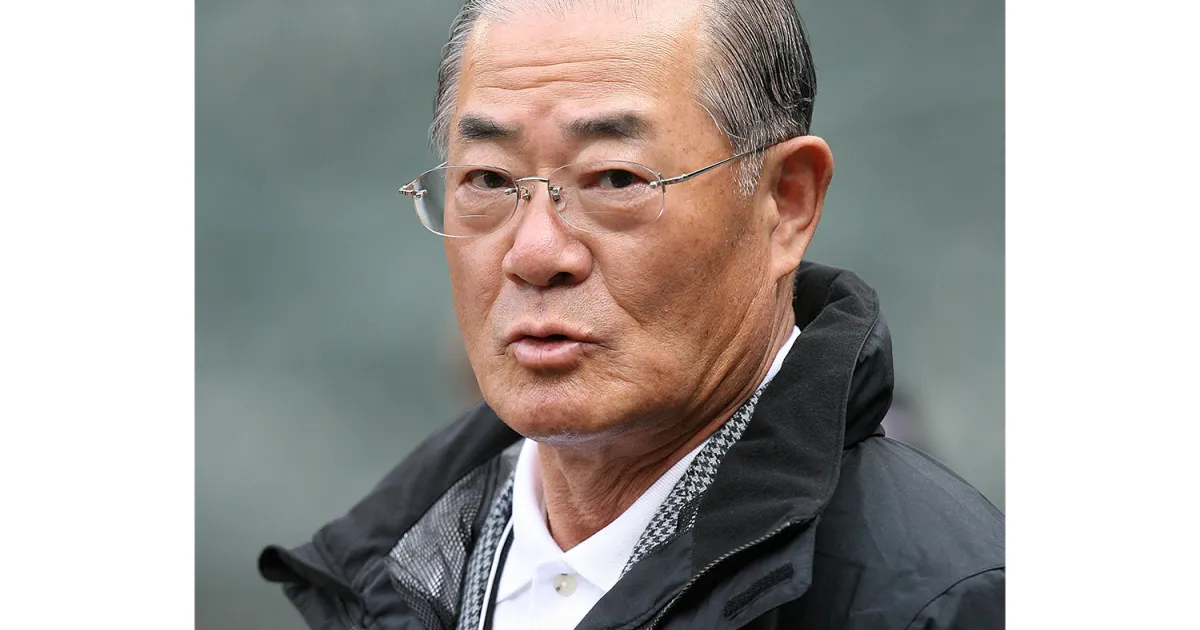
Japanese baseball legend Isao Harimoto, who survived the atomic bombing of Hiroshima and became the first player from his country to reach 3,000 hits, has died aged 86, reports said.
Born to Korean parents in Japan, Harimoto learned to play left-handed when an accident at the age of four left him with severe burns and limited mobility in his right hand.
Recommended Stories
list of 4 itemsend of list
He survived the atomic bombing as a five-year-old, his mother jumping in front of him and his sister to shield them from the blast.
He went on to rack up 3,085 career hits, which still stand as a record in Nippon Professional Baseball.
He played for several teams in Japan, including the all-powerful Yomiuri Giants, and earned himself the nickname “Hit Machine” for his batting prowess.
He retired in 1981 after 23 professional seasons and worked as a TV commentator.
Harimoto was inducted into the Japanese Baseball Hall of Fame in 1990.
Sept 9 (Reuters) – Multiple American military aircraft suffered damage in strikes overnight on the Muwaffaq Salti Air Base in Jordan, CBS reporter Jennifer Jacobs said on Wednesday on X.
One A-10 Thunderbolt, known as the Warthog, was struck and left with a missing wing, while roughly eight F-15s sustained light damage and were placed back into service, she added.
RIYADH: Saudi civil defense issued an emergency alert for the south western province of Khamis Mushait to warn of potential danger for the fourth time in 24 hours.
The civil defense posted on X shortly after saying the danger has passed.
The General Directorate of Saudi Civil Defense said: “The danger has been lifted from Khamis Mushayt Governorate. For your safety, continue to follow the instructions of the Civil Defense and completely avoid gatherings and photography. In case of emergencies, call the number (998).”
Yemen’s Houthis said on Tuesday they had attacked an airbase in the area, which lies in the south of the Kingdom.
Houthis attacks have left more than 70 people injured, including women and children, a military spokesman said on Tuesday, adding that the Kingdom would take measures to counter the militia.
The spokesperson for the Coalition to Support Legitimacy in Yemen, Maj. Gen. Turki Al-Maliki, described the Houthi escalation and attempts to target Saudi territory and infrastructure as “dangerous,” saying they demonstrated the group’s “hostile and irresponsible” approach.
Al-Maliki said the latest attacks targeted civilian and economic sites in the Saudi cities of Abha, Khamis Mushayt, Jazan and Najran, resulting in 73 civilian injuries.
The spokesperson added that the coalition’s joint forces would take all necessary operational measures to deter the Houthis and confront what he described as their hostile approach.
The Saudi Cabinet on Tuesday said the Houthis had committed a heinous act of aggression against civilian and economic targets, and directed that the highest level of medical care and attention be provided to those injured in the terrorist attacks.
The Saudi Foreign Ministry condemned the attacks, stating the Kingdom will not tolerate any attack targeting its territory and resources, as it reserves the legitimate right to take the necessary measures to defend its sovereignty.
The UN also condemned the cross-border attacks by the Houthis.
“We condemn the Houthi cross-border attacks against multiple sites in southern Saudi Arabia, which affected civilian and energy infrastructure, and express deep concern over reports of civilian injuries,” UN spokesperson Stephane Dujarric told reporters, citing an escalation in hostilities in recent days.
The EU also urged the Houthis to “end all attacks” after strikes on Saudi Arabia.
GCC Secretary-General Jasem Al-Budaiwi condemned the Houthis for targeting southern Saudi cities.
Pakistan also condemned the strikes, with Prime Minister Shehbaz Sharif writing on X: “I condemn in the strongest terms the cowardly attack by Houthis targeting civilian and energy facilities in the Kingdom of Saudi Arabia, which left many people injured. Pakistan stands in unwavering solidarity with the Custodian of the Two Holy Mosques His Majesty King Salman bin Abdulaziz Al-Saud, His Royal Highness Crown Prince Mohammed bin Salman and the brotherly people of Saudi Arabia.
“Such dastardly attacks threaten innocent lives as well as regional peace and security. We reaffirm our steadfast support for the Kingdom’s sovereignty, security and territorial integrity, and pray for the swift recovery of all those injured,” he added.
Joining the condemnation, Algeria criticized the attacks — which injured civilians, including women and children — and expressed its full solidarity with Saudi Arabia.
In a statement, the Algerian Ministry of Foreign Affairs affirmed Algeria’s strong condemnation and described the attacks as a violation of the Kingdom’s sovereignty and a threat to its security and stability.
Somalia also strongly condemned the attacks. In a statement, its Ministry of Foreign Affairs and International Cooperation said that the deliberate targeting of civilians and civilian infrastructure constitutes a dangerous escalation and a grave violation of international law, expressing its full solidarity with Saudi Arabia.
Israeli prime minister denies claim that UAE president warned him of Hamas plans before the 2023 attacks.
Published On 10 Sep 202610 Sep 2026
Israel’s Prime Minister Benjamin Netanyahu has said he will sue the Haaretz newspaper over a report that claimed he was warned of Hamas’s plans for an offensive days before the attacks of October 7, 2023.
In a statement on X on Wednesday, Netanyahu called the report “fabricated” and “false” and said he had instructed his lawyers to also sue Haaretz and the authors of the report, Shlomi Eldar and Ruth Yaval.
Recommended Stories
list of 4 itemsend of list
The report, published on Tuesday, claimed that the president of the United Arab Emirates, Mohammed bin Zayed had warned Netanyahu about a possible attack by Hamas 10 days before the events of October 7, 2023.
Palestinian fighters killed at least 1,195 people in southern Israel on that day, and took some 251 others captive. The attacks prompted Israel’s genocidal war on Gaza, in which at least 73,669 Palestinians have been killed.
The Haaretz report claimed that the UAE president, who is also known as MBZ, spoke to Netanyahu by phone and warned him of a threat from then-Hamas leader Yahya Sinwar.
According to Haaretz, Sinwar – who was angered by stalled prisoner exchange talks and Israel’s continued blockade of Gaza – had relayed the warnings to the UAE through an intermediary. He said he was preparing a “huge surprise” and told contacts to tell Israel “to expect an earthquake”, according to the report.
It said MBZ and his aides read this as a sign of an impending full-scale attack and passed the intelligence to Israel’s Shin Bet agency. But the internal security agency dismissed the threat.
MBZ then raised the warning directly with Netanyahu, who also brushed it aside, the report said.
The UAE has declined to comment on the allegations.
Its Ministry of Foreign Affairs issued a statement on Tuesday saying that “the UAE government does not comment on media stories or speculation regarding conversations between government leaders”.
The Haaretz report comes at a time when Netanyahu is trying to secure his position as prime minister in the upcoming Knesset elections in October. Netanyahu has been trailing in the polls, facing a fierce challenge from former military chief Gadi Eisenkot.
Netanyahu on Wednesday called the Haaretz report “politically motivated” and part of the “left’s election campaign”.
He also denied its claims of a phone call with MBZ.
“The National Security Council and the Military Secretary meticulously reviewed the Prime Minister’s call log for those days—and found no trace of it whatsoever,” he said.
In a separate statement, Netanyahu also claimed that the person responsible for Haaretz’s “false report” was the Palestinian political figure, Muhammad Dahlan.
Dahlan was expelled from the Fatah party in 2011 after a power struggle with the current president of the Palestinian Authority, Mahmoud Abbas, and lives in the UAE.
Dahlan’s representatives have rejected the claim, according to Israeli media.
Pennsylvania senator who has clashed with party over Israel support says he will reject ‘the extremes and socialism’.
Pennsylvania Senator John Fetterman, a Democrat who has distanced himself from his party, has appeared in a video recording on the first day of the Republican Party’s two-day midterm convention in the United States.
The video on Wednesday was a surprise for those who attended the conservative gathering in Dallas, Texas, where President Donald Trump is seeking to galvanise support ahead of the November elections.
Recommended Stories
list of 3 itemsend of list
“Yes, I’m Senator John Fetterman, Pennsylvania. Yes, I’m a Democrat. Why am I here talking to you today? Because, well, I’m a common-sense Democrat,” Fetterman said as he introduced his Republican colleague, Senator Dave McCormick of Pennsylvania.
Fetterman, a 57-year-old first-term senator, has cast himself as an outsider within the Democratic Party.
He has offered outspoken support for Israel and the war on Iran, even as voters and progressive voices in his party criticise those elements of US foreign policy.
“I’m always going to stand with America. I’m always going to reject the extremes and socialism and that anti-American way of life,” Fetterman said in the video clip.
But his appearance at the Republican Party’s first-ever midterm convention is likely to exacerbate criticism from his Democratic colleagues.
US Representative Brendan Boyle, another Pennsylvania Democrat, has repeatedly questioned Fetterman’s party allegiance, as well as his commitment to public service. He renewed that sentiment after Wednesday’s video aired.
“A year ago I labeled John Fetterman ‘Trump’s favorite Democrat.’ Tonight, he yet again proves why,” Boyle wrote on social media.
Fetterman has also faced questions about his fitness for office following a series of reports that detail his apparent lack of enthusiasm for his Senate responsibilities.
A recent Wall Street Journal article found that the senator had cancelled meetings with constituents.
In one case, The Wall Street Journal said he skipped a June meeting with injured military veterans, citing illness, only to show up later for a Fox News interview about Israel and its joint war with the US on Iran.
His approval rating is now higher among Republicans in Pennsylvania than among members of his own party.
Last month, a poll from The New York Times, Siena College and The Philadelphia Inquirer suggested that 73 percent of Pennsylvania Republicans approved of Fetterman’s performance, up from 25 percent in 2024.
Meanwhile, Democratic support in the state had slid dramatically over the last two years, slipping from 74 percent to 22 percent. Some 63 percent of Democratic respondents held an unfavourable view of him.
While Fetterman has depicted himself as a maverick within the Democratic Party, he has denied that he would switch parties to become a Republican.
“I’m not going to be a Republican, but I’m going to be a Democrat that’s going to have a conversation with whoever is playing it straight,” he said in a recent interview with Fox News.
Still, speculation about Fetterman’s party credentials has continued as the midterms near.
The election on November 3 will decide which party controls Congress for the final two years of Trump’s term.
Republicans currently hold a small majority in the House of Representatives and Senate, but they could face a setback at the polls as voters express frustration over cost of living issues and Trump’s deepening unpopularity.
Still, reclaiming the Senate especially could be an uphill climb for Democrats. Only a third of Senate seats are up for re-election this year, compared with all 435 House seats.
BEIJING: A week after his robot outran humanity’s fastest man, Jack Guo is already chasing a harder goal.
TianGong Ultra stunned spectators at the World Humanoid Robot Games when it covered 100 meters in 8.64 seconds, almost a full second faster than Usain Bolt’s world record. Behind the feat were days of round-the-clock testing and repairing battered robots between races.
“When it started smoothly and got past 50 meters, that was when I finally relaxed,” said Guo, who leads development of Ultra and Omni, a smaller model used in 400m races, at the Beijing Humanoid Robot Innovation Center, known as X-Humanoid.
Just a week later, the bespectacled 34-year-old engineer is already focused on a bigger challenge.
“We want to turn high performance into high reliability and high usability,” he told Reuters in his first interview with foreign media.
The record-breaking run offers a rare window into China’s growing lead in humanoid robotics, where state-backed research, deep supply chains and intense competition are accelerating advances in machine mobility. Yet Guo’s next goal underscores a harder task facing the industry as it struggles to turn dazzling demonstrations into useful workers.
Inside the workshop
X-Humanoid sits in Yizhuang, a high-tech development zone in Beijing’s southeast and one of China’s main robotics clusters. Long home to automakers, the district now boasts a robot sales center and even a robot-themed restaurant, part of the capital’s push to showcase the industry.
An engineer works near Tiangong Omni humanoid robots in the research and testing area of the Beijing Humanoid Robot Innovation Center, also known as X-Humanoid, in Beijing, China, September 4, 2026. (Reuters)
The first-floor showroom traces generations of TianGong robots, including one that still wears the vest from a winning half-marathon run last year.
On the ninth floor, white Ultra and Omni humanoids stand suspended in metal frames. One wears a red “Champion TianGong” headband.
During a Reuters visit, engineers repaired and tested robots, with one removing a head cover, another tightening a leg, and others running walking trials.
In the adjoining office, Guo’s team develops software before testing it on physical machines.
Established in November 2023, X-Humanoid is backed by state-owned and private investors including robotics firm UBTech, along with domestic tech giants Xiaomi and Baidu. It develops hardware, motion-control software and AI for the wider industry while commercialising its own robots.
X-Humanoid has not disclosed how many of its own robots it has sold or deployed commercially.
Its customers include universities, research institutes and companies exploring industrial applications. At Foton Cummins’ engine factory in Beijing, the company’s robots have been trialled moving boxes, with its Tianyi 2.0 robot lifting 8-12 kg boxes onto shelves in what the factory described as an early-stage exploration.
Useful work begins
Ultra was not originally designed to win a race. It started as an experiment to push the boundaries of humanoid movement.
Guo likens today’s humanoids to the earliest cars: first make them controllable, then pair reliable bodies with smarter AI “brains” capable of handling complex tasks on their own.
He said the immediate challenge was making the robot body and movement-control system stable and reliable for everyday use. Developing the AI needed for more complex autonomous tasks would take longer.
Making a robot run develops generalized mobility, improving its ability to cope with different terrain.
An engineer works near Tiangong Omni humanoid robots in the research and testing area of the Beijing Humanoid Robot Innovation Center, also known as X-Humanoid, in Beijing, China, September 4, 2026. (Reuters)
The smaller Omni has already shown what that can mean in practice. In an internal test this year, it climbed from the first floor to the 17th floor of X-Humanoid’s headquarters.
Guo expects smaller humanoids to find early roles in commercial services and light industry, while Ultra could eventually perform outdoor inspection or emergency rescue.
One major challenge is braking. Ultra weighs 75kg and at top speed can exceed 17 meters per second. At the Games, a crash mat sat beyond a short run-off area, leaving sprinting robots in the 100m races to slam into the barrier.
Future versions could be lighter, brake harder and adopt a safer posture, Guo said.
Conquering speed
Ultra arrived at the Games armed with three running strategies trained in simulation. One was battle-tested, two faster on paper but less proven.
Each strategy is a trained motion-control system that continuously adjusts joints and balance, allowing the robot to sprint upright without an operator directing every step.
Ultra used a different program in each race, running 9.39 seconds in the preliminary, 8.86 in the semifinal, and 8.64 in the final.
Between races, engineers returned to their test site to push faster programs harder and adjust navigation and running controls. Engineers pulled several all-nighters, sometimes testing into the following day before returning to the venue.
Pushed to their limits, robots stumbled, lost balance and crashed, forcing teams to roll out backup machines while repair crews scrambled to fix the damaged ones.
Earlier in development, the breakdowns were even more dramatic. “Legs broke, waists broke,” Guo said.
A late surge
Even on the morning of the final, the team was testing a newly trained running program. It worked repeatedly during trials, but not on the competition track. Differences between individual robots also created headaches, leaving Guo uneasy before the race.
Ultra’s heavier legs limited early acceleration, but once it passed about 10 meters per second, it could keep building speed and reel in rivals.
The team had shaved roughly half a second from its starting response by the semifinal, Guo estimated. From there, attention shifted to outright speed.
In the final, a faster reaction time and late acceleration allowed Ultra to pull off a more decisive overtake.
Backstage, the team celebrated. At the closing ceremony, a row of TianGong humanoids donned red capes emblazoned with “Champion,” some waving pom-poms.
“Finally, I could get a good night’s sleep,” Guo said.
PARIS, France: Holders Paris Saint-Germain made a smooth start to their bid for a third consecutive Champions League title as Ferran Torres scored a hat-trick in a 6-1 rout of Slovan Bratislava on Wednesday, while Liverpool came from behind to beat Atletico Madrid.
Barcelona kicked off their campaign by scoring five goals against Feyenoord, while Arsenal impressed with a 1-0 win at Napoli.
PSG, who are hoping to become only the fourth club to win three European Cups in a row, visit Manchester City and host Barca in their next two European games.
“It is the Champions League, we always play against tough teams, but we have to be focused first in Ligue 1 because we didn’t start in the right way,” said Torres, with PSG yet to win a domestic game this season.
But they wasted little time in picking apart Yaya Toure’s Slovan at the Parc des Princes.
Ousmane Dembele hammered in a rebound and then nodded in a deflected cross to put Luis Enrique’s men two goals ahead inside 22 minutes.
Torres tapped home Dembele’s cross just after the half-hour mark and drilled in his second less than two minutes after the restart.
Spain’s World Cup final hero completed his hat-trick in the 57th minute, shanking a shot with his knee that spun into the bottom corner.
Suleiman Camara crashed in a consolation for Slovan, but Fabian Ruiz had the final say for PSG when he pounced on a mishit clearance.
Liverpool made it successive victories after winning at Ipswich in the Premier League last week by beating Atletico 2-1 at Anfield.
Atletico grabbed a 17th-minute lead as Julian Alvarez, starting for the first time this season after failing to force a move away from the club, played in Marcos Llorente to dink the ball over Alisson in the Liverpool goal.
Llorente has now scored five times in three visits to Anfield, after netting a double at Liverpool last season and in Atletico’s dramatic last-16 victory in 2020.
Liverpool hit back five minutes before the break through Dominik Szoboszlai, courtesy of a clever backheeled pass from Ronald Araujo.
Alexis Mac Allister then hammered the hosts in front five minutes into the second half with a left-footed strike from outside the box, and Atletico could not find a response.
“I’ve loved it. The atmosphere has been incredible and I feel lucky, lucky to experience it,” said Liverpool’s new manager Andoni Iraola after his Champions League coaching debut.
Odegaard sinks Napoli
Arsenal missed several first-half chances at the Stadio Armando Diego Maradona, with Napoli goalkeeper Alex Meret making an excellent save to keep out Mikel Merino’s header.
Piero Hincapie fired over a golden chance from just three yards out as the English champions continued to push after half-time, but last season’s runners-up finally forged ahead with 15 minutes left.
Martin Odegaard, who scored the winner against Chelsea at the weekend, played a clever one-two with Christos Tzolis on the edge of the area and crashed a shot in off the far post.
Barcelona made an excellent start to their latest bid to end a 12-year wait to lift the trophy, as Raphinha continued his superb form by scoring twice in a 5-1 thumping of Feyenoord.
Hansi Flick’s men, who lost to Atletico in the quarter-finals last season, have won all five of their matches in all competitions so far this season, scoring five goals in four of them.
“We controlled the game, we are dominant and this is fantastic to see. This is our style and how we want to play,” said Flick.
Raphinha put Barca into a third-minute lead before a brilliant long-range strike from summer signing Karim Adeyemi.
Brazilian Raphinha, playing up front this season after the departures of Robert Lewandowski and Torres, made it eight goals already for the campaign in the second half.
Lamine Yamal netted a free-kick which crept through the wall, and although Sem Steijn pulled one back for Feyenoord, Gabriel Jesus came off the bench and then headed in his first Barca goal.
Ermedin Demirovic scored a first-half hat-trick as Stuttgart eased to a 3-1 home win over Norwegian champions Viking, playing in the competition for the first time in 34 years.
Sporting, quarter-finalists last season for the first time since 1983, fought back to see off Galatasaray 3-1 in Lisbon.
WASHINGTON: Iran’s capture of a US military underwater drone gives Tehran an opportunity to study and potentially reverse engineer the vessel, delivering a setback for the Pentagon and drone maker Anduril.
The US military and Anduril have downplayed the significance of the drone falling into Iranian hands. The vessel, a Dive-LD autonomous underwater vehicle designed for long-range surveillance and other undersea missions, is among a new generation of military drones intended to operate for days with little human intervention. Washington has previously treated the loss of advanced drones to Iran as a serious matter.
After Iran captured an RQ-170 Sentinel stealth reconnaissance drone in 2011, then-President Barack Obama publicly asked Tehran to return the aircraft. Iran later claimed it had reverse-engineered the drone and subsequently unveiled domestically produced models that appeared to draw heavily on its design.
More recently, the US military moved swiftly to prevent Iranian forces from taking possession of uncrewed maritime technology. In 2022, a US Navy patrol ship and MH-60S Seahawk helicopter were deployed after an Iranian naval vessel attempted to tow away a Saildrone surface vessel in the Gulf, according to the Navy.
Analysts say Iran is unlikely to gain a decisive military advantage from the captured drone, but the episode nonetheless represents a propaganda victory for Tehran and an awkward setback for Washington’s efforts to project technological superiority.
IRANIAN EMBASSIES MOCK US
Iranian embassies around the world have mocked the US for losing its drone. Iran’s embassy in Ghana, in a post on X, boasted about picking the submersible up in “a strait controlled by people who can hear a shrimp sneeze,” adding that, “Our guys picked it up like a plastic bottle in a fishing net. Fully intact. Still blinking like an idiot. Condolences to whoever was holding the joystick.”
Anduril and the Pentagon did not immediately respond to requests for comment.
“Of course Iran will take every opportunity as a propaganda win,” said Farzin Nadimi, a senior fellow at the Washington Institute for Near East Policy. “It can help the (Islamic Revolutionary Guard Corps) make better versions of their own designs.”
Iran will almost certainly try to pry open the drone’s hardware, but the drone’s software carries built-in defenses, said Bryan Clark, a senior fellow and director of the Center for Defense Concepts and Technology at the Hudson Institute. Iranian engineers “could definitely reverse-engineer the mechanical systems,” he said, pointing to Tehran’s track record with captured American aircraft.
“Unboxing ceremony by our reverse engineers, tomorrow morning!” Iran’s embassy in Hyderabad wrote on X.
The incident has also highlighted a disconnect between the messaging of Anduril and its customer, the US Navy.
Navy officials said the Dive-LD was an older-model vehicle that suffered a malfunction and was recovered by Iranian forces after being left “dead in the water.”
Anduril has promoted the Dive-LD as “the most reliable and flexible” large autonomous underwater vehicle available, saying it is capable of operating for up to 10 days in demanding conditions.
“This is something that Iran has proven very adept at exploiting for its own benefit in terms of seeking to frame the narrative as one of US, in this case, ineptitude and their ability to sort of retain control over the Strait of Hormuz,” said Mona Yacoubian, director of the Middle East program at the Center for Strategic and International Studies.
RIYADH: Qatar on Wednesday condemned Houthi attacks on civilian and economic sites in southern Saudi Arabia during a phone call between the two countries’ foreign ministers.
Qatari Prime Minister and Foreign Minister Sheikh Mohammed bin Abdulrahman Al-Thani expressed his country’s condemnation of the attacks during a call with Saudi Foreign Minister Prince Faisal bin Farhan, the Saudi Press Agency reported.
The two officials also discussed the latest regional developments and diplomatic efforts by Saudi Arabia and Qatar to de-escalate tensions and preserve regional security and stability, SPA said.
The call came as the Iran-backed Houthis targeted civilian and economic sites in the southern cities of Abha, Khamis Mushait, Jazan and Najran, injuring 73 civilians, including women and children.
Operations at some energy facilities were temporarily halted.
The Saudi-led coalition described the attacks as a “dangerous escalation” and said it would take measures to protect the Kingdom’s sovereignty, civilians and national assets.
Qatar’s Foreign Ministry separately condemned the attacks on Tuesday as a “dangerous escalation” and a violation of Saudi sovereignty and international law.
Doha reaffirmed its “full solidarity” with the Kingdom and its support for measures taken to protect its sovereignty, security and territorial integrity, adding that Saudi security was an integral part of the collective security of Gulf Cooperation Council states.
It also called on the international community to take a firm position against the attacks and ensure the implementation of relevant UN Security Council resolutions concerning Yemen and the security of navigation in the Red Sea.
Fighting between the Houthis and forces aligned with Yemen’s internationally recognized government has intensified in recent weeks, raising fears of a return to wider conflict after a UN-brokered truce in 2022 largely halted years of fighting between the Houthis and the Saudi-led coalition.
The Houthis, who control Sanaa and much of northern Yemen, declared a naval blockade against Saudi Arabia in July and have since stepped up attacks on the Kingdom and vessels in the Red Sea. Saudi-backed Yemeni government forces have meanwhile launched an offensive on several fronts against Houthi-held areas.