Tigray

Ethiopia’s Tigray war: Where do the UAE and Saudi Arabia stand? | News

Addis Ababa, Ethiopia – As renewed fighting in Ethiopia’s Tigray region threatens to destabilise the Horn of Africa, public backing by the United Arab Emirates (UAE) of Ethiopia’s federal government and Saudi Arabia’s record of regional diplomacy are drawing scrutiny.

Both Gulf powers have strategic interests in the Horn of Africa, but their roles differ. The UAE has publicly backed Ethiopia’s government while Saudi Arabia has previously helped broker an Ethiopia-Eritrea rapprochement and was reported to have offered to mediate between the two countries in 2025.

The renewed fighting threatens to unravel the November 2022 Pretoria peace agreement, which ended a war between Ethiopia’s federal government and Tigrayan forces. As tensions with Eritrea add to the risks of a wider confrontation, the positions of Abu Dhabi and Riyadh offer a window into the interests of external powers in the crisis.

The UAE: Clear alignment, unproven leverage

On September 25, the UAE condemned attacks by the Tigray People’s Liberation Front (TPLF) and its allied armed groups against Ethiopian federal forces, the seizure of airports in Tigray and the escalation in the neighbouring regions of Afar and Amhara.

Sheikh Shakhboot bin Nahyan Al Nahyan, the UAE minister of state, expressed solidarity with Ethiopia’s government and people, reaffirmed support for the country’s sovereignty and territorial integrity, and called for an end to hostilities, the protection of civilians and adherence to the Pretoria Agreement.

The statement made Abu Dhabi’s public position clear: It backs Ethiopia’s federal government while calling for de-escalation and dialogue. It did not establish whether the UAE was providing military assistance or had secured commitments from the parties to end the fighting.

The UAE also has commercial interests across the Horn of Africa. Dubai Ports World (DP World) operates Berbera port in Somaliland, and a shipping route launched in 2025 connects the port with Jebel Ali in the UAE, providing an additional corridor for cargo serving inland destinations, such as Ethiopia. Landlocked since Eritrea’s independence in 1993, Ethiopia relies heavily on Djibouti for access to international trade.

These commercial links help explain Abu Dhabi’s interest in regional stability and its relationship with Addis Ababa. However, they do not establish that the UAE can influence the TPLF, persuade Eritrea to de-escalate or change Ethiopia’s military calculations.

The extent to which Abu Dhabi can use its relationship with the federal government to encourage a political response to the conflict remains unclear.

Saudi Arabia: Diplomatic experience, uncertain engagement

Saudi Arabia has yet to publicly announce its position on the latest fighting in Tigray.

The kingdom has not publicly commented on the renewed war, according to an October 1 analysis by Critical Threats, although it undertook diplomatic efforts earlier this year to reduce tensions between Ethiopia’s federal government and the TPLF.

Saudi Arabia has previously sought to mediate between Ethiopia and Eritrea. In November 2025, Chatham House reported that sources said Riyadh had offered to mediate between the two countries amid rising tensions over maritime access and regional security.

A June 2026 analysis by Germany’s SWP think tank said previous Saudi mediation efforts had failed, partly because negotiations did not address Ethiopia’s interest in the Eritrean port of Assab.

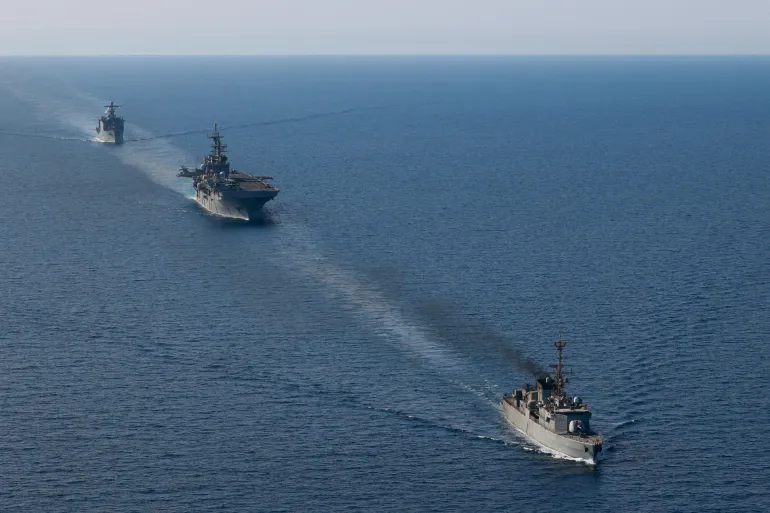
A Royal Saudi Navy frigate sails alongside US 5th Fleet ships during operations to support maritime security in the Red Sea, where rising tensions between Ethiopia and Eritrea have raised concerns about wider regional stability. [File: Reuters]
A Saudi navy frigate sails alongside US 5th Fleet ships during operations to support security in the Red Sea, where rising tensions between Ethiopia and Eritrea have raised concerns about wider regional stability [File: Reuters]

The kingdom’s broader regional alignment also matters. An August 2026 analysis by the Soufan Center described Saudi Arabia and Egypt as backing Eritrea in opposition to Ethiopia’s ambitions for Red Sea access.

This is an assessment of regional alignment, however, not evidence that Saudi Arabia is directly providing military support to Eritrea or the TPLF in the current fighting.

Saudi Arabia has a strong interest in Red Sea security, a vital corridor for international shipping and its own oil exports. Whether Riyadh will take a more public diplomatic role as tensions escalate remains unclear.

Egypt’s rivalry with Ethiopia adds to regional tensions

Egypt’s role in the crisis is shaped by its longstanding dispute with Ethiopia over the Grand Ethiopian Renaissance Dam (GERD) and its growing ties with Eritrea.

Cairo has also stressed that responsibility for the governance and security of the Red Sea rests with countries bordering the waterway, a position shared by Asmara. The issue has added to regional tensions as Ethiopia seeks reliable access to the sea.

In September, Ethiopia’s army chief, Field Marshal Birhanu Jula, accused Egypt and Sudan of supporting armed groups fighting the federal government, including the Tigray People’s Liberation Front (TPLF).

His remarks, reported by Al Jazeera on September 28, did not provide evidence substantiating the accusation. Egypt’s Foreign Ministry spokesperson, Nader Zaki, subsequently reaffirmed Cairo’s commitment to state sovereignty and non-interference, rejecting suggestions that it had departed from those principles.

He did not directly address the specific allegation of Egyptian support for the TPLF.

Egypt’s relationship with Eritrea has nevertheless become an important part of the regional picture. President Abdel Fattah el-Sisi met Eritrean President Isaias Afwerki in Cairo on June 8, 2026.

According to Egypt’s presidency, the talks covered bilateral cooperation, developments in the Horn of Africa and Red Sea security.

The two leaders also stressed the importance of coordination to maintain regional stability. The meeting highlighted closer cooperation between Cairo and Asmara, but did not establish that either country was involved in the renewed fighting in Tigray.

For Cairo, the dispute with Ethiopia extends beyond Tigray to the Nile and the balance of power in the Horn of Africa.

Its relations with Eritrea and its disagreements with Addis Ababa form part of the wider regional context, but they are not evidence of direct Egyptian involvement in the renewed conflict. Whether these regional relationships will affect the course of the fighting remains uncertain.

From Tigray to a wider regional crisis

The risks extend beyond Tigray. Ethiopia’s pursuit of maritime access has become a source of tension with Eritrea, whose Red Sea coastline includes the port of Assab. Addis Ababa argues that reliable access to the sea is a national priority while Asmara rejects any threat to its sovereignty.

Ethiopia has accused Eritrea of sending troops across the border and supporting armed groups. Eritrea denies the allegations and has called on the United Nations Security Council to intervene. The allegations remain contested, but deteriorating relations have raised the stakes of renewed fighting in northern Ethiopia.

A wider confrontation could put more civilians at risk, complicate humanitarian access and disrupt regional trade and security. It would also test whether external partners could encourage restraint without appearing to endorse either side’s military objectives.

The UAE’s close ties with Addis Ababa could provide a channel for diplomatic engagement while Saudi Arabia’s record of regional diplomacy offers a possible opening for renewed talks. However, the available public evidence does not establish that either country is currently leading an initiative to contain the crisis.

Influence must be measured by outcomes

The UAE and Saudi Arabia should not be cast as pursuing opposing strategies simply because one has publicly backed Ethiopia’s federal government while the other’s current position is less visible. Their interests and diplomatic approaches differ, but the evidence does not show that either has decisive influence over the fighting.

Their contribution should be assessed by whether they can help secure concrete steps towards de-escalation, renewed political dialogue and a reduction in tensions between Ethiopia and Eritrea. Public statements, commercial interests and past diplomatic achievements may create opportunities for engagement, but they are not substitutes for progress on the ground.

The Pretoria Agreement remains the framework for a political settlement in Tigray, yet renewed fighting underscores the difficulty of sustaining peace while underlying disputes persist. A durable settlement will depend primarily on the parties themselves. External partners could contribute by encouraging restraint and supporting credible negotiations.

For now, the UAE’s public alignment with Ethiopia and Saudi Arabia’s diplomatic record offer different potential channels for engagement. Whether either country can turn those relationships into a meaningful contribution towards de-escalation remains unresolved.

Source link

Ethiopian troops enter Adigrat in Tigray, near the Eritrean border | Conflict

Ethiopian government forces entered Adigrat in northern Tigray after rebel fighters withdrew, heightening tensions with neighbouring Eritrea. The two neighbours cut off diplomatic ties last week. Al Jazeera’s Hamza Mohamed reports.

Source link

Will Ethiopia’s neighbours intervene as Tigray war escalates? | Armed Groups News

Addis Ababa, Ethiopia – After nearly two weeks of fierce fighting, Ethiopian federal forces entered the Tigrayan capital of Mekelle as forces from an alliance of rebel groups, including the Tigray People’s Liberation Front (TPLF), withdrew from the city.

The fighting that erupted late last month has effectively ended the 2022 Pretoria ceasefire and the fragile peace that followed the devastating Tigray war.

But Mekelle’s capture may mark the end of conventional warfare rather than the end of the conflict. Fighting has continued elsewhere in Tigray, while reports of Eritrean troops entering northern Tigrayan towns have added a potentially more dangerous regional dimension.

Ethiopian federal forces used air power and ground forces to advance across Tigray. After suffering successive defeats around the towns of Alamata and Kobo, rebel forces withdrew into the surrounding countryside. They have pledged to continue fighting.

“We will confront the enemy on our terms and where we choose,” TPLF leader Debretsion Gebremichael said.

A war that may not be over

There are echoes of the war that began in 2020, when Prime Minister Abiy Ahmed’s government declared victory after federal forces captured Mekelle. Tigrayan forces subsequently regrouped in the mountains, retook much of the region and recaptured the capital, prolonging the war for nearly a year and a half.

The renewed conflict could follow a similar trajectory, particularly if the TPLF and other armed groups succeed in turning the mountainous terrain into a prolonged armed rebellion. Ethiopia is already fighting insurgencies in Amhara and Oromia, raising the prospect of its federal forces being stretched across multiple fronts.

But the battlefield reversals suffered by the rebels could have implications well beyond Tigray. They have raised concern in Egypt and among other Ethiopian rivals, according to Hossamaldeen Ibrahim, an African analyst at the Bloomsbury Intelligence and Security Institute.

“Egypt views the Renaissance Dam, and any Ethiopian [army] move towards the Red Sea, as a strategic threat, so it has allied with Eritrea, Sudan and Somalia against any Ethiopian unilateralism,” Ibrahim told Al Jazeera.

“Ethiopia is seeking a sea outlet; Eritrea sees this as an existential threat.”

Ethiopia’s Red Sea ambitions

Ethiopia has been landlocked since Eritrea won its war of independence in 1991, leaving Addis Ababa heavily dependent on neighbouring countries for access to international trade.

Abiy has increasingly made access to the Red Sea a strategic priority since 2023, raising concerns in Eritrea over Ethiopia’s ambitions, particularly over the port of Assab.

Ethiopia currently relies heavily on Djibouti for maritime trade, while also pursuing alternative arrangements, including through Kenya and Somaliland.

After being sworn in on Monday for another five-year term following his party’s victory in the June 1 election, Abiy again put the issue at the centre of his parliamentary address.

“Based on the principle of give and take, we will work diligently to ensure that Ethiopia has an outlet to the sea,” he told parliament.

The issue has increasingly become part of a wider regional contest.

A loose regional alignment

In recent months, Egypt, Eritrea, Sudan and Somalia have found themselves sharing concerns over Ethiopia’s regional ambitions. On October 4, the leaders of the four countries met for a quadrilateral consultative summit in New Alamein, Egypt, where they discussed regional issues and pledged to strengthen political, economic and trade cooperation as well as consultation and coordination.

The meeting does not amount to a formal military alliance, and the four countries have different interests in their dealings with Addis Ababa. The summit’s joint declaration also called for respect for sovereignty and territorial integrity, noninterference in internal affairs and the peaceful resolution of disputes.

But their concerns increasingly overlap around Ethiopia’s ambitions in the Red Sea, the Nile and the wider Horn of Africa.

Relations between Ethiopia and Eritrea have also deteriorated sharply since the Pretoria ceasefire. Ethiopia closed its embassy in Eritrea and expelled Eritrean diplomats on October 1, accusing Asmara of hostile acts and involvement in the renewed fighting. Eritrea responded by severing diplomatic ties, while denying that it supported the opposition alliance. Egypt and Sudan have also denied Ethiopian accusations that they are backing the alliance.

The Ethiopian army’s advance into Tigray has added another layer to that rivalry.

“The [Ethiopian army’s] advance in Tigray directly threatens [Eritrean President] Isaias [Afwerki] and the Eritrean state,” said Etana H Dinka, an assistant professor of African history at the University of Miami.

Eritrean forces fought alongside Ethiopian troops during the 2020–22 Tigray war, but relations between Abiy and Isaias have since deteriorated. Eritrean troops have reportedly been seen in towns in northern Tigray, adding a potentially significant new dimension to the conflict. The Associated Press news agency reported Eritrean troops entering Adigrat and Idaga Hamus after crossing into Ethiopia, while Eritrea has neither confirmed nor denied the troop movements.

Eritrea’s role could be decisive

For Eritrea, the location of the fighting matters as much as its outcome.

A prolonged conflict in Tigray could keep Ethiopian forces tied down and limit Addis Ababa’s ability to pursue its Red Sea ambitions. But a decisive Ethiopian victory could leave the federal government with greater freedom to turn its attention towards regional rivals.

“With reports that Eritrean troops are moving into Tigray, Eritrea seems keen on boosting TPLF forces withdrawing northwards, so that the engagement between Ethiopian and Eritrean soldiers takes place in Tigrayan territory, and not in Eritrea,” said Mohamed Kheir Omer, a researcher focused on the Horn of Africa.

That could create an incentive for Eritrea to support forces capable of keeping the Ethiopian army tied down, without necessarily entering a direct confrontation of its own.

Sudan adds another layer

Sudan’s war adds another dimension to the regional rivalry.

Egypt has provided political backing and logistical and technical support to Sudan’s army, according to the Reuters news agency, while the Rapid Support Forces (RSF) have been accused of atrocities in Darfur.

Ethiopia has faced accusations of facilitating support for the RSF. A Reuters investigation reported in February that Ethiopia was hosting a camp in its western Benishangul-Gumuz region where thousands of fighters linked to the RSF were being trained. Reuters cited eight sources, including a senior Ethiopian government official, who said the United Arab Emirates financed the camp’s construction and provided military trainers and logistical support. The UAE denied the allegations, and Reuters said it could not independently verify the UAE’s role.

Those competing relationships are part of a broader contest over the Nile, Sudan, the Red Sea and access to trade routes.

For Egypt, its dispute with Ethiopia over the Grand Ethiopian Renaissance Dam remains a major strategic concern. For Eritrea, Ethiopia’s search for a Red Sea outlet is viewed through the lens of national security. For Sudan’s neighbours, the conflict threatens to reshape regional power balances.

Will Egypt, Eritrea, Sudan and Somalia intervene?

The shared interests of Ethiopia’s regional rivals do not necessarily translate into direct intervention.

Egypt has its own calculations over the Nile and Sudan. Eritrea has a direct security interest in developments in Tigray. Somalia is dealing with its own security challenges and a complicated relationship with Addis Ababa. Sudan remains consumed by its devastating civil war.

At the same time, Ethiopia’s federal forces now face the possibility of fighting on several fronts.

The TPLF, Amhara Fano and the Oromo Liberation Army (OLA) have each sought to challenge the federal government in different parts of the country. If they can maintain pressure on the army while retreating from major population centres, the fall of Mekelle could prove to be only the first phase of a much longer conflict.

For Ethiopia’s rivals, the question is whether to exploit that vulnerability or avoid being drawn into another regional war.

The extent of any regional involvement may ultimately depend on whether the TPLF can keep federal forces tied down in Tigray, and away from the Eritrean border.

“It isn’t difficult to understand Cairo’s commitment to prevent Ethiopia from succeeding in the current warfare, whatever its army’s intended goals, including Abiy’s acclaimed access to the Red Sea, are,” University of Miami’s Dinka said.

The question now is whether those regional calculations will remain largely diplomatic or spill into the battlefield.

Source link

Ethiopia’s forces retake Mekelle amid renewed Tigray fighting | News

Addis Ababa, Ethiopia – The capture of Tigray’s regional capital Mekelle by Ethiopian federal forces and allied Tigray Peace Force fighters has revived painful memories of the 2020–22 Tigray war, with residents fearing a return to prolonged violence, displacement and economic hardship.

The Tigray People’s Liberation Front (TPLF) confirmed on Saturday that it had withdrawn from Mekelle, saying its regional administration would temporarily operate from another location. Government forces and allied fighters entered the city on Saturday, with a pro-government militia source, a humanitarian worker and a Mekelle resident confirming to the Reuters news agency on Sunday that they were in control of the city.

The development comes less than four years after the Ethiopian government and the TPLF signed the Pretoria agreement that ended two years of devastating fighting.

Berihu, a 32-year-old bajaj driver in Shire, northwestern Tigray, said the latest fighting had been particularly difficult to watch.

“I feel very heartbroken knowing that Tigray has gone back to full-scale war,” he said in a phone interview with Al Jazeera. “We have already seen what the last war did to our people, and now it feels like we are going through it all over again.”

The 2020–22 war killed hundreds of thousands of people, according to estimates, displaced millions and caused extensive damage to infrastructure and livelihoods.

The African Union-facilitated agreement, signed in Pretoria in November 2022, ended the large-scale fighting, but key issues, including the status of disputed territories, the return of displaced people and the disarmament of Tigrayan forces, remained unresolved.

In July, the TPLF said the Pretoria agreement had effectively collapsed, accusing the federal government of failing to implement key provisions. The federal government rejected that characterisation, saying it remained committed to the peace process while accusing the TPLF of undermining the agreement.

The political dispute was accompanied by growing military tensions, including reports of sporadic clashes and drone strikes in parts of Tigray. The two sides also traded accusations over troop movements and preparations for renewed fighting.

The capture of Mekelle marks a major development in the renewed conflict, putting the city once again at the centre of the fighting.

Fear spreads beyond Tigray

In Addis Ababa, the developments have also alarmed residents who remember the consequences of the previous war.

Abel, a 30-year-old shopkeeper, said the fighting had felt distant until explosions were heard in the capital.

“I woke up and heard that my city had been hit,” he said. “You hear about fighting in Tigray, and it feels far away. But when you hear about explosions in Addis Ababa, you start asking yourself what will happen next.”

Diplomatic sources said explosions were heard in several parts of the capital, including near the headquarters of Ethiopia’s military. Reuters separately reported that a source linked to an opposition alliance claimed the group had carried out drone strikes in Addis Ababa, including against military facilities. The claim could not be independently verified.

For Abel, the economic consequences are as concerning as the fighting itself.

“If the war becomes bigger, ordinary people will suffer,” he said.

Bisrat, a college student in Addis Ababa, said the overnight explosions had reinforced his fear that Ethiopia could be entering a much wider conflict.

“If Ethiopia goes into a full-scale war, ordinary people will suffer,” he said. “I fear seeing another Sudan.”

Sudan has been engulfed in war since April 2023, when fighting broke out between the army and the paramilitary Rapid Support Forces, displacing millions and creating a major humanitarian crisis.

The current fighting also involves a wider set of actors than the Tigray war that ended in 2022. The TPLF is part of a broader opposition alliance that includes armed groups from several parts of the country.

Fighting has also spread into Afar, while relations between Ethiopia and Eritrea have sharply deteriorated.

Ethiopian officials have accused Eritrea of interfering in Ethiopia’s internal affairs and supporting forces opposed to the federal government. Eritrea has rejected the accusations.

On Thursday, Ethiopia’s Ministry of Foreign Affairs announced the closure of its embassy in Asmara and declared 10 Eritrean diplomats persona non grata, saying they had been involved in activities that posed a threat to Ethiopia’s national security.

Eritrea subsequently announced that it was severing diplomatic relations with Ethiopia.

The diplomatic rupture has added to concerns that the renewed fighting could acquire a wider regional dimension.

Mekelle changes hands again

In Mekelle, residents were left trying to understand what comes next after the TPLF withdrawal.

Goitom, 37, said there was a period of uncertainty after TPLF forces left the city, with what he described as a security vacuum allowing theft in some areas, including government offices.

“On Friday night, we were hearing gunfire but did not know what was happening,” he said.

By Saturday, Ethiopian federal forces and allied fighters had taken control of key locations, including the airport, according to Goitom. Reuters and The Associated Press news agency also reported that government-aligned forces had entered Mekelle following the TPLF withdrawal.

“It feels like we are back to square one,” he said. “We have already seen what war can do to this city and to our families. People are worried about what will happen next.”

The TPLF, however, portrayed the withdrawal as a tactical decision rather than an end to the fighting.

In a statement issued on Saturday, the group said it had “temporarily moved out of Mekelle” and that the regional government would “operate from somewhere else”. It said the decision was intended to prevent further destruction in the city and indicated that its forces would continue the conflict from other positions.

For the federal government, the capture of Mekelle represents a significant step towards restoring federal control over the region.

Abraham Belay, former president of the Tigray Interim Administration, said on Sunday that preparations were under way to establish a new interim administration in Tigray, with the aim of holding regional elections within months.

“We are working to establish a new administrative structure that will enable the people of Tigray to govern themselves,” Abraham said in an interview with Fana Broadcasting Corporate.

He said new administrative structures would be organised from the kebele level upwards, with community participation, before regional elections were held.

The competing accounts leave the next phase of the conflict uncertain. The federal government says it is seeking to restore its authority and establish a new regional administration, while the TPLF says its forces will continue fighting from elsewhere.

Civilian fears return to the fore

For people who lived through the previous war, the return of fighting has brought back fears of displacement, destruction and another prolonged humanitarian crisis.

Berihu, the bajaj driver, said he had seen villages bombed and civilians caught up in the fighting during the previous conflict, experiences that have shaped his fears about what could follow.

“It is painful to even think that civilians could once again bear the cost,” he said.

After years of displacement, loss and disruption, he said, many people in Tigray simply want the fighting to stop.

“We have already suffered enough,” Berihu said. “We just want peace. We don’t want to go through the same thing again.”

Source link

Ethiopia’s government forces retake airport from Tigray rebels in Mekelle | Conflict News

The rebels are seen leaving the capital of the northern Tigray region, according to local sources.

Ethiopia’s federal army and pro-government fighters have recaptured the main airport in the capital of the northern Tigray region, with the rebels seen leaving the city, according to multiple unnamed sources.

The Ethiopian National Defence Forces regained control of Alula Aba Nega Airport in Mekelle, one source with knowledge of events in the city and a humanitarian source told Reuters news agency on Saturday.

Recommended Stories

list of 3 itemsend of list

The airport, which is about ⁠10km (6 miles) from the centre of Mekelle, was one of three airfields in the region that were seized by the rebel forces at the start of the fighting on September 23.

The fighters, as well as the leaders of the Tigray People’s Liberation Front (TPLF), were seen retreating from the city, a local journalist and residents told the AFP news agency.

The journalist added that federal forces had not yet been seen inside Mekelle.

“I am concerned that government and public property could be exposed to looting because there are no security forces in the city,” a resident told AFP.

“I am worried that lawlessness could spread in the city, and I am also afraid for my life. I want us to quickly return to law and order,” added another resident.

Al Jazeera could not independently confirm these claims. Media access is currently heavily restricted in Ethiopia, and there have been significant communications blackouts.

Last month, rebels announced the formation of a seven-party rebel coalition led by the TPLF, the same armed group that fought in the 2020-2022 civil war against federal forces from Addis Ababa. The new coalition includes rebel groups of varying sizes from across the country.

Later that month, the coalition started an offensive, seizing three airports around the contested Tigray state and engaging in fighting on the borders with Amhara and Afar states.

The government is now engaged in a counteroffensive, pushing into Tigrayan territory along three axes towards Mekelle, according to the Critical Threats Project, part of the American Enterprise Institute think tank.

Fighting has so far been concentrated in Tigray. However, rebels have reportedly carried out drone attacks on Addis Ababa.

The TPLF and government have not commented on developments on the ground.

The fighting has seen drone attacks, intensified forced conscription, and attacks on civilian infrastructure, according to Amnesty International, a global rights group.

The renewed conflict has not yet reached the heights of the Tigray war, which lasted from 2020 to 2022 and saw hundreds of thousands of deaths, but it is quickly taking on an international dimension.

Risk of conflict spreading

The government of Prime Minister Abiy Ahmed has accused Eritrea, Sudan and Egypt of backing the opposition coalition. Khartoum and Cairo have denied involvement.

Eritrea has severed diplomatic ties with Ethiopia over the accusations.

On Thursday, Eritrea also denied involvement in the Tigray conflict, and accused Addis Ababa of “pursuing an agenda of incessant hostility”. It also said Ethiopia, which is landlocked, was planning to invade Eritrea to secure sovereign access to the Red Sea coast.

The TPLF’s leader, Debretsion Gebremichael, said in a video published on Thursday that “the war is regional and it is a war to control the Red Sea”.

Ethiopia has previously ruled out seeking conflict with Eritrea over access to the coast.

Source link

Fighting widens across Ethiopia as Tigray clashes escalate | Conflict News

“They’ve begun an offensive around southern Tigray,” Abdisalam Balema, a member of the Tigray People’s Liberation Front’s (TPLF) central committee, told Al Jazeera by phone from Mekelle, the Tigrayan capital, on Wednesday morning.

“They’re carrying out strikes in many places. We are not sure of the extent of it or whether they will continue, but we will assess it.”

Recommended Stories

list of 3 itemsend of list

Balema did not know it then, but he was describing the start of a major military escalation.

Fighting intensified across parts of Tigray and later spread to the neighbouring Afar and Amhara regions, pitting federal forces against several armed groups. A day later, Balema told Al Jazeera that the situation had become a “full war”.

The Tigray Army said the federal government had launched a “full-scale offensive” involving infantry, mechanised units and drones, and said its forces had begun counteroffensive operations.

Getachew Reda, a former senior TPLF figure who now advises Prime Minister Abiy Ahmed, gave the opposite account of how the fighting began, accusing the TPLF of launching the attack.

The escalation disrupted air travel, as Tigrayan forces seized airports in the region and Ethiopian Airlines suspended flights across Tigray. Local reports also said they had captured Abala, a district capital in neighbouring Afar.

Amid the competing accounts of how the escalation began, the immediate question may now be whether Ethiopia has crossed into a wider conflict.

The intensification came days after seven armed movements from across Ethiopia, including the TPLF, announced the formation of the Ethiopian Peoples’ Forces Alliance for Survival, which committed itself to removing Abiy’s government.

The coalition has brought together the Amhara Fano National Movement and the Oromo Liberation Army, alongside other movements from Somali, Afar and Benishangul-Gumuz areas.

The alliance marked a striking realignment that had been almost a year in the making, bringing together movements with very different histories and grievances against the central government, including forces with bitter histories of conflict among themselves.

In a statement issued as the fighting widened on Wednesday, the alliance said the federal government was attacking its member forces on several fronts and presented their response as part of the broader struggle that had brought the coalition together.

The regional East African bloc IGAD called for hostilities to cease and direct dialogue to resume, while the United Nations has expressed concern over the formation of the new armed coalition and reports of drone attacks.

About three-quarters of a million people were already internally displaced in Tigray because of the earlier war, according to UN migration data.

Formation of the alliance

The alliance grew out of the political realignment that followed the Pretoria agreement, which ended the two-year Tigray war in November 2022. The deal brought peace between Addis Ababa and the TPLF, but fractured the coalition Abiy had assembled to fight the war.

Neither Eritrea nor Amhara forces, whose troops had fought alongside the federal army, were parties to the final agreement, and both later fell out with the federal government.

In Amhara, tensions over plans to dismantle regional forces helped trigger open conflict between the Ethiopian government and Fano fighters, organised under the Amhara Fano National Movement, in 2023. Relations with Eritrea also deteriorated, first over the Pretoria settlement and later over Abiy’s push for access to the Red Sea through Eritrean ports.

The Pretoria agreement also deepened divisions within the TPLF, between figures such as Reda, who continued to defend the settlement, and a faction led by Debretsion Gebremichael that increasingly rejected the political order it had created.

Pretoria “changed the equation”, Faisal Roble, a regional analyst and member of the East African Parliament, told Al Jazeera. “Abiy alienated all of them at different levels.”

The faction led by Debretsion later seized power in Tigray and repaired relations with former enemies, including Fano fighters in Amhara and Eritrea, upending the alliances that had defined the previous war.

The government’s spokeswoman, Billene Seyoum, told the Reuters news agency after the new coalition was announced that its members had already been collaborating with financial backing from Asmara and that the formal declaration confirmed statements by government officials.

Eritrea has repeatedly denied supporting Ethiopian armed groups.

Reda had dismissed the alliance’s chances of ousting the government shortly after it was announced. “I don’t lose sleep over that,” he told state media this week.

“Now it [the TPLF] goes back to the drawing board, and declares Pretoria dead and starts an alliance with the very people who fell out with the federal government because Pretoria was signed,” he added.

Balema, the senior TPLF official, said the party’s decision to join those former enemies reflected its determination not to find itself isolated if the conflict widened again.

“We’ve been forced to ally with other movements who also face an existential threat from the government,” he told Al Jazeera. “We don’t want a repeat of 2020 when we were encircled and alone.”

Balema acknowledged unresolved disputes within the alliance, including competing claims over western Tigray involving Amhara forces, but said the groups had agreed to address them through dialogue.

“We have a political charter, and our aim is to remove the personalist regime of Abiy Ahmed, establish a transitional government, hold a constitutional dialogue and move to elections,” he added, saying “the alliance is in consensus on this.”

“For now it seems like it will work, but when the deeper issues need to be resolved it will test their different constituencies, who have different expectations,” Mohamed Kheir Omer, a researcher focused on the Horn of Africa, told Al Jazeera.

“But right now it isn’t the urgent issue.”

Beyond northern Ethiopia

The alliance also draws in the Oromo Liberation Army and a faction of the Ogaden National Liberation Front, movements rooted in older demands for autonomy and self-determination among Ethiopia’s Oromo and Somali populations.

Both had fought the TPLF-dominated government that preceded Abiy and are now allied with the TPLF. Taking office in 2018, promising a break with the old order, Abiy sought to bring both into civilian politics.

The Oromo Liberation Front returned from exile, but disagreements over disarmament left part of its armed wing outside the settlement.

Those fighters continued their armed conflict as the Oromo Liberation Army, and subsequent peace talks with the government failed.

Though the OLA ultimately signed the new alliance agreement, its leader, Jaal Marroo, had described it in the preceding days as a “procedural consensus” rather than a substantive settlement on Ethiopia’s political future.

The ONLF stayed out of armed conflict after its own 2018 peace deal, but later fractured. An overseas faction accuses the government of failing to implement the agreement and eroding Somali autonomy, while the leadership inside Ethiopia’s Somali region denies joining the new alliance.

Abdulkadir Hassan Hirmoge, a spokesperson for the faction that joined, told Al Jazeera that it now regards the 2018 agreement as void.

He said joining the alliance did not mean restarting an armed struggle, but backing its programme of removing Abiy and establishing a transitional government.

Regional dimension

Ethiopia’s domestic conflicts are becoming harder to separate from wider rivalries in the Horn, particularly Sudan’s civil war and Addis Ababa’s deteriorating relationship with Eritrea.

Sudan’s army chief Abdel Fattah al-Burhan has visited Asmara twice since July for talks with Eritrean President Isaias Afwerki, while Mohamed Hamdan Dagalo, known as Hemedti, the commander of Sudan’s rival Rapid Support Forces, reportedly visited Addis Ababa in late August.

Reuters reported in February that thousands of RSF fighters were being trained at a camp in western Ethiopia, while Sudan has accused Ethiopia, and its ally the United Arab Emirates, which also reportedly backs the RSF, of allowing drones to be launched from its territory into Sudan.

The emerging Ethiopian opposition alignment has touched the same regional network.

Several figures associated with groups now in the alliance attended a meeting in Port Sudan in May, publicly presented as a “people-to-people” initiative.

In July, Abiy told lawmakers: “Let alone Eritrea, the TPLF and Sudan, even if others were added, we do not have an iota of fear regarding Ethiopia’s sovereignty.”

Balema, the senior TPLF official, denied that the alliance was receiving military or logistical support from either Eritrea or Sudan, saying its relationships abroad amounted to political contacts rather than foreign backing.

“We didn’t create the current problem with Eritrea; Abiy did with his demands on its ports, and the same with Somalia,” he said.

“In Sudan, he is now supporting the Rapid Support Forces. He has created his own enemies across the region and we are just picking up the pieces.”

Sudan has recently sought to ease tensions with Addis Ababa. Malik Agar, the second in command of its military-aligned government, said last week that “we do not want to get involved in a war with Ethiopia.”

Jawar Mohammed, an Oromo opposition politician, warned that Ethiopia could nevertheless become an “incongruent battlefield” in which wider regional contests increasingly play out.

“These things are impossible to control,” he said.

Source link

Ethiopia warns of ‘destruction’ as Tigray rebels launch offensive | Abiy Ahmed

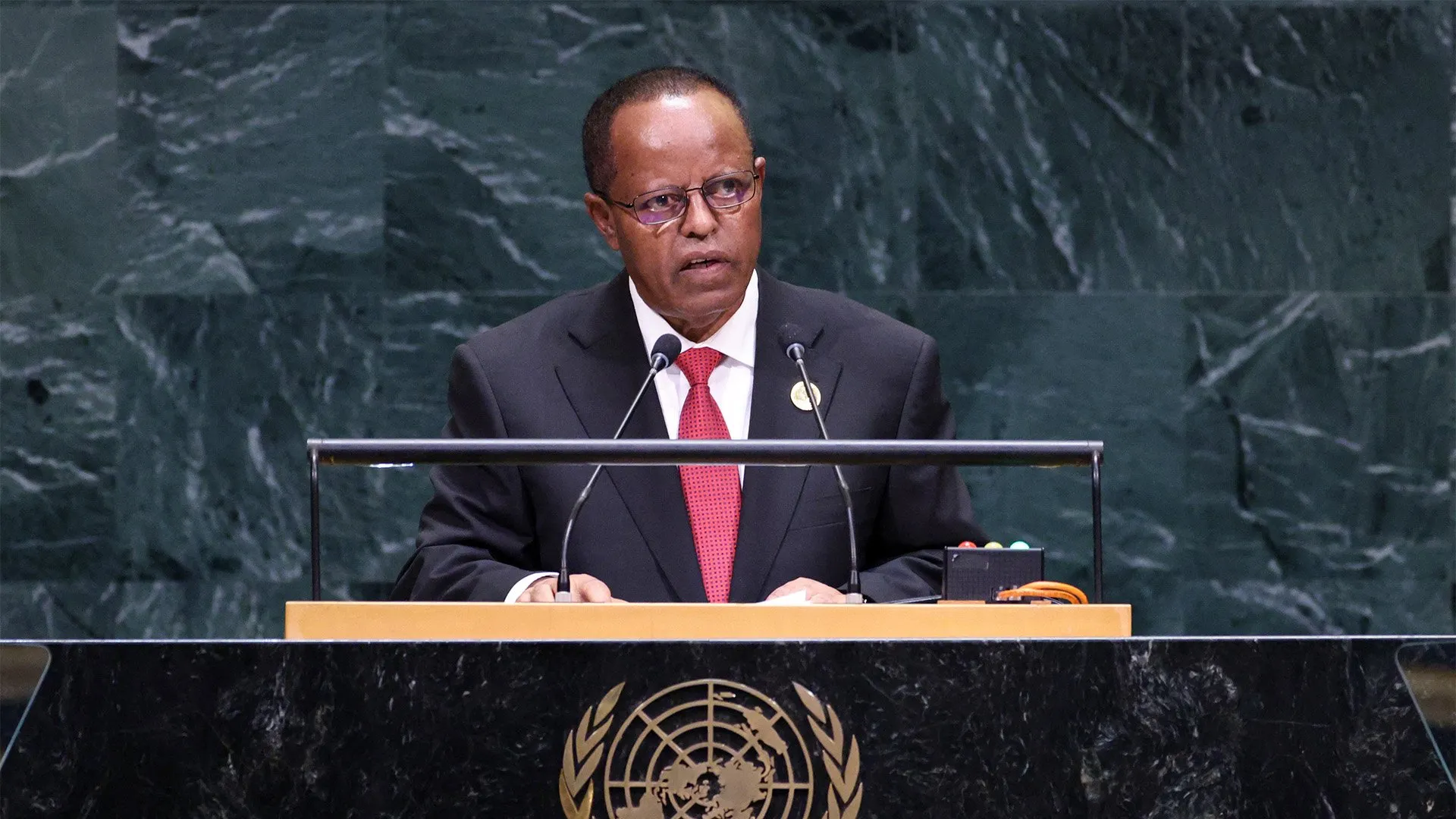
Ethiopian President Taye Atske Selassie warned the UN General Assembly of “forces of destruction and mayhem” as Tigray rebels joined other rebel groups to seize airports and target government positions in northern Ethiopia, triggering fears of a renewed civil war.

Source link