threatens

Trump threatens 50% tariffs on countries that supply Iran with weapons | Donald Trump News

It’s not clear under what legal authority Trump can tack on this tariff, and analysts called it an ’empty threat’.

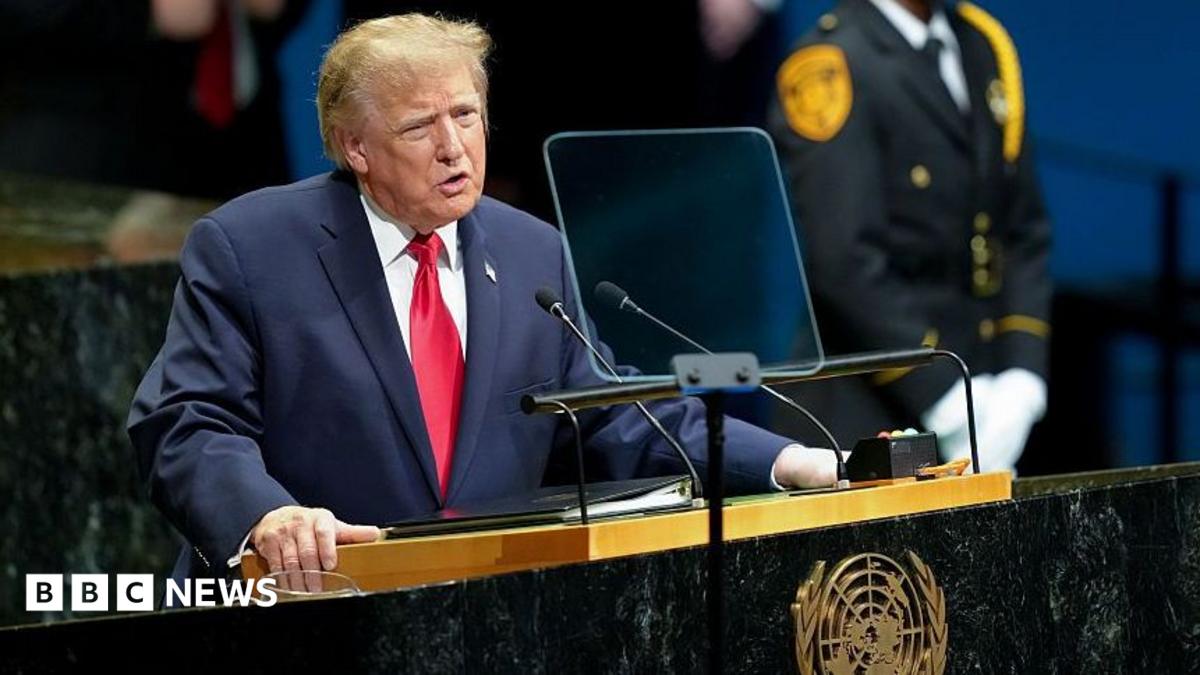
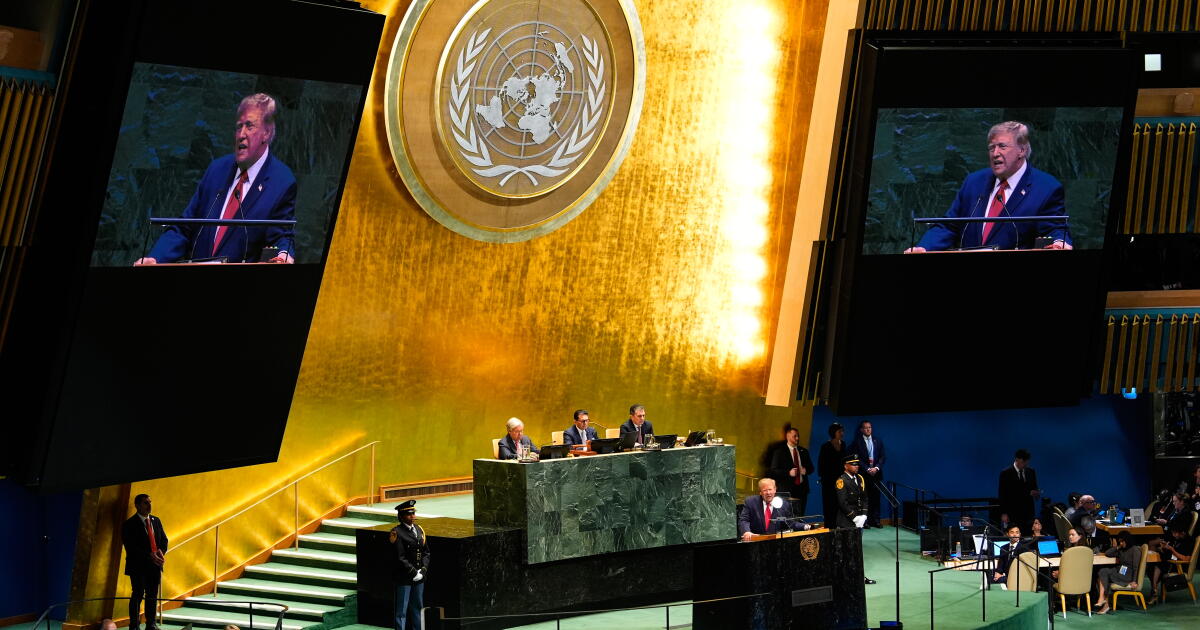
United States President Donald Trump has said imports from countries supplying Iran with military weapons will face immediate 50 percent tariffs with no exemptions, announcing the threatened duty in a social media post just hours after agreeing to a two-week ceasefire with Tehran.

Trump’s Truth Social post on Wednesday did not specify which legal authority he would invoke to impose such tariffs, as the Supreme Court in February struck down his use of the International Emergency Economic Powers Act [IEEPA] to impose broad global tariffs, prompting a lower court to order refunds of some $166bn collected over the course of a year.

Recommended Stories

list of 4 itemsend of list

The 1977 IEEPA law has been used extensively for decades to back financial sanctions against Iran, Russia and North Korea, but the court ruled that Trump overstepped his authority in using it to impose trade tariffs.

“A Country supplying Military Weapons to Iran will be immediately tariffed, on any and all goods sold to the United States of America, 50%, effective immediately. There will be no exclusions or exemptions! President DJT,” Trump wrote.

However, “it’s a lot more complicated to do that after IEEPA was struck down”, Rachel Ziemba, adjunct senior fellow at the Center for a New American Security, told Al Jazeera. “There’s no immediate policy lever and authorisation that is available for the US to do that. So they need either an act of Congress or need to adapt some other trade tool, and there isn’t really a national security-oriented trade tool.”

Trump did not name any countries that could face punitive tariffs. China and Russia have helped Iran build military capacity to counter US and Israeli pressure, supplying missiles, air defence systems and technology intended to bolster deterrence.

But that support appeared capped during the US-Israeli attacks on Iran. Both Beijing and Moscow have denied supplying any weapons recently, although allegations against Moscow have persisted.

The Reuters news agency has previously reported that Tehran was considering a purchase of supersonic antiship cruise missiles from China. In March, Reuters reported that China’s top semiconductor maker, SMIC, has sent chipmaking tools to Iran’s military, according to two senior Trump administration officials.

“This is a China-related threat, the way I read it. And China will read it that way,” said Josh Lipsky, vice president and chair of international economics at the Atlantic Council.

Although drone and missile parts routinely flow from Chinese entities to Iran, evading US sanctions, Lipsky said Trump was unlikely to follow through with new tariffs in the near term because that would derail his planned trip to Beijing to meet with Chinese President Xi Jinping in mid-May.

“US tariffs on Chinese products have gone down a lot since the court ruling,” said Ziemba, “and slapping on 50 percent tariffs now would be very expensive, especially for US importers and consumers.”

Moreover, with the Trump-Xi meeting looming, “this is kind of an empty threat, but shows that when push comes to shove, Trump comes back to tariffs”, Ziemba said.

Trump does have active “Section 301” unfair trade practices tariffs on Chinese goods from his first term, to which he may be able to add duties and similar pending cases related to excess industrial capacity and China’s compliance with a 2020 trade deal. But these would require a public notice period before they could take effect.

Trump also may be able to invoke Section 232 of the Cold War-era Trade Expansion Act of 1962, which allows sector-specific tariffs to protect strategic domestic industries on national security grounds, but using this law would require a new months-long investigation and public comments.

Russia has been another source of arms technology for Iran, but US imports of Russian goods have fallen sharply since the invasion of Ukraine in 2022 and the wave of financial sanctions imposed on Moscow as a result.

US imports from Russia, one of the only countries not subject to Trump’s now-cancelled “reciprocal” tariffs, jumped 26.1 percent to $3.8bn in 2025. These are dominated by palladium used in automotive catalytic converters, fertilisers and their ingredients, and enriched uranium for nuclear reactors. The US Department of Commerce is already moving to impose punitive tariffs on Russian palladium after an anti-dumping investigation.

Source link

Trump threatens Iran: ‘A whole civilisation will die tonight’ | US-Israel war on Iran

NewsFeed

Donald Trump warned that “a whole civilisation will die tonight” if Iran does not open the Strait of Hormuz, ahead of a Tuesday night deadline for Tehran to comply. The comments follow a “pretty shocking” silence from US Congress on the US-Israeli war, Al Jazeera’s Kimberly Halkett explains.

Source link

Trump threatens ‘hell’ for Iran over Hormuz Strait as deadline approaches | US-Israel war on Iran News

US president threatens to strike power plants and bridges on Tuesday in an expletive-laden social media post.

United States President Donald Trump has threatened to attack civilian infrastructure inside Iran, including bridges and power plants, if the Strait of Hormuz is not reopened by his stated deadline of Monday.

Trump made the threat in an expletive-laden social media post on Sunday, in which he repeated previous threats to pummel vital infrastructure across Iran.

Recommended Stories

list of 3 itemsend of list

“Tuesday will be Power Plant Day, and Bridge Day, all wrapped up in one, in Iran. There will be nothing like it!!! Open the F****** Strait, you crazy b*******, or you’ll be living in Hell – JUST WATCH! Praise be to Allah,” Trump said in a Truth Social post.

On March 26, Trump set a 10-day deadline for Iran to reopen the Strait of Hormuz, a key shipping route for the global energy market, where traffic has ground to a halt since the US and Israel first attacked Iran on February 28.

He told Fox News on Sunday that Iran was currently negotiating with the US and that he believed the two could reach a deal before the deadline.

The US president has frequently repeated that Iran is seeking a deal to end the war and that fighting will end soon since the conflict began. Iran has stated that it is not seeking to end the war and has vowed to step up escalation across the region if its infrastructure is targeted.

Throughout the war, US officials have threatened Iran with overwhelming violence if it does not capitulate to US demands. Last week, US Secretary of Defense Pete Hegseth threatened to send Iran “back to the Stone Age”.

US-Israeli strikes have already targeted civilian infrastructure and facilities, including bridges, schools, healthcare facilities, and universities. Experts have warned that some of those strikes could constitute war crimes.

The US president has said that he will hold a news conference in the White House on Monday.

Trump also offered additional details about the operation to locate and extract the pilot of an F-15E fighter jet that was shot down over Iran on Friday.

“We have rescued the seriously wounded, and really brave, F-15 Crew Member/Officer, from deep inside the mountains of Iran,” he said in a separate social media post on Sunday.

“An AMAZING show of bravery and talent by all!”

Source link

Trump Threatens NATO Departure, Claims Iran Wants A Ceasefire Ahead Of National Address (Updated)

Iran has asked for a ceasefire, U.S. President Donald Trump says. In a statement on Truth Social today, Trump claimed the request came from “Iran’s New Regime President.” Trump added: “We will consider when Hormuz Strait is open, free, and clear. Until then, we are blasting Iran into oblivion or, as they say, back to the Stone Ages!!!”

Trump did not mention the top official by name, but described the individual as “much less Radicalized and far more intelligent than his predecessors.”

Trump:

Iran’s New Regime President, much less Radicalized and far more intelligent than his predecessors, has just asked the United States of America for a CEASEFIRE!

We will consider when Hormuz Strait is open, free, and clear. Until then, we are blasting Iran into oblivion… pic.twitter.com/fwhoilfmCz

— Clash Report (@clashreport) April 1, 2026

Iran still has Masoud Pezeshkian as its president, but he was elected back in 2024. In media appearances — most recently yesterday, according to Iranian sources — Pezeshkian said that Tehran had the “necessary will” to bring the war to an end, while stressing that certain conditions and guarantees would be required for that to happen.

The Iranian foreign ministry says President Trump’s claim that the country has asked for a ceasefire is “false and baseless.”

Trump added, “I didn’t need regime change, but we got it because of the casualties of war. We got it. So we have regime change, and the big thing we have is they’re not going to have a nuclear weapon. Nor do they want one.” Iran, for its part, has always claimed that it has no plans to develop nuclear weapons.

Barak Ravid, global affairs reporter with Axios, writes that three U.S. officials confirmed that discussions are taking place about a possible ceasefire, dependent on the reopening of the Strait of Hormuz.

🚨Three U.S. officials told me discussions are taking place about a possible ceasefire with Iran in return for the reopening of the Hormuz strait. The officials said it is unclear if a deal can be reached https://t.co/an8vwqcEj6

— Barak Ravid (@BarakRavid) April 1, 2026

On Monday, Trump claimed he had already accomplished regime change by killing Iran’s supreme leader, Ayatollah Ali Khamenei, despite the fact that he had been succeeded by his son, Motjaba. While several other senior Iranian officials have been killed since the war began, critics argue that a leadership shift alone does not amount to true regime change.

“What we are seeing in Iran is not a regime change — but a transformation within the regime itself, one that has made it more extreme,” Danny Citrinowicz, the Israeli military’s former top Iran researcher, posted on X.

What we are seeing in Iran is not a regime change — but a transformation within the regime itself, one that has made it more extreme.

For years, Ali Khamenei maintained a delicate internal balance between hardliners and more pragmatic elements. That balance has now been… https://t.co/JZrTVXQhzy

— Danny (Dennis) Citrinowicz ,داني سيترينوفيتش (@citrinowicz) March 30, 2026

Overall, there are ongoing questions about whether the United States has met its evolving objectives since launching a joint attack with Israel on Iran more than four weeks ago.

As for the enriched uranium still possessed by Iran, Trump told Reuters today, “That’s so far underground, I don’t care about that… We’ll always be watching it by satellite.”

Here are some Trump quotes on Iran from his interview with Reuters’ @steveholland1:

Asked when the war would be over, Trump said: “I can’t tell you exactly …. we’re going to be out pretty quickly.”

“They won’t have a nuclear weapon because they are incapable of that now, and…

— Phil Stewart (@phildstewart) April 1, 2026

Speaking last night, Trump said that Operation Epic Fury could be concluded within two to three weeks. Trump added that reaching a deal with Tehran is not required to bring the conflict to an end.

“We will be leaving very soon,” Trump told reporters in the Oval Office last night.

Trump: “We’ll be leaving very soon… what happens in [Hormuz] we’ll have nothing to do with”

Other countries can “fend for themselves” if they want gas or oil from the Persian Gulf. pic.twitter.com/mZbaQNLCjA

— OSINTtechnical (@Osinttechnical) March 31, 2026

Whatever Trump’s intentions are, we should know more tonight. The White House announced that the U.S. president will deliver “an important update” in a national address this evening at 9:00 p.m. Washington time.

For those curious about the “behind the scenes” conversations: Yes, the White House asked the broadcast networks for airtime for Trump’s speech, and yes, all the networks are going to carry it. (Requesting time is customary since broadcasters have to preempt shows for POTUS.) pic.twitter.com/UcECoG9vwi

— Brian Stelter (@brianstelter) April 1, 2026

While it remains unclear what new details Trump will share about the claimed ceasefire request, it seems likely that he will voice his opinions about the future of U.S. membership in NATO.

In an interview with Reuters, Trump says: Will express ‘my disgust’ with NATO in his speech; says he is ‘absolutely’ considering withdrawing U.S. from NATO.

— Idrees Ali (@idreesali114) April 1, 2026

President Trump has said he is seriously weighing the possibility of withdrawing the United States from NATO, once again describing the alliance as a “paper tiger.”

“[NATO] is beyond recognition,” he said in an interview with The Telegraph.

“I was never swayed by NATO. I always knew they were a paper tiger, and Putin knows that too, by the way.”

In recent weeks, the U.S. president has criticized allied nations for their lack of involvement in efforts to reopen the Strait of Hormuz, which Iran has effectively closed amid the escalating conflict in the Middle East.

“Beyond not being there, it was actually hard to believe. And I didn’t do a big sale. I just said, ‘Hey’, you know, I didn’t insist too much. I just think it should be automatic,” Trump said.

He also stated that the United States has supported countries in need, including Ukraine, even though it “wasn’t our problem.”

Trump also directed further criticism at the U.K. government, with which his relationship is increasingly strained. He added, “You don’t even have a navy. You’re too old and had aircraft carriers that didn’t work.”

🚨 EXCLUSIVE: Donald Trump has told The Telegraph’s @connor_stringer he is strongly considering pulling the United States out of Nato after it failed to join his war on Iran.

Read the US president’s thoughts on what Putin thinks of the alliance and the UK’s reluctance to spend… pic.twitter.com/IrH3QYe3fE

— The Telegraph (@Telegraph) April 1, 2026

Soon after, U.K. Prime Minister Keir Starmer provided a press conference on the situation in the Middle East, referring to the growing rift with Washington.

“It is increasingly clear that as the world continues down this volatile path, our long-term national interest requires closer partnership with our allies in Europe and with the European Union,” Starmer said.

“It is increasingly clear that as the world continues down this volatile path, our long-term national interest requires closer partnership with our allies in Europe and with the European Union,” PM Keir Starmer says

Follow live: https://t.co/HwLsKBvAw5 pic.twitter.com/9lHRbQ1trv

— BBC Politics (@BBCPolitics) April 1, 2026

The Telegraph interview with Trump followed comments from U.S. Secretary of State Marco Rubio suggesting Washington may need to reassess its ties with NATO once the conflict with Iran concludes.

“We’re going to have to reexamine the value of NATO and that alliance for our country,” Rubio said in an interview with Fox News last night.

“If NATO is just about us defending Europe if they’re attacked, but them denying us basing rights when we need them, that’s not a very good arrangement. That’s a hard one to stay engaged in.”

SECRETARY RUBIO: Why are we in NATO? You have to ask that question. Why do we send trillions of dollars and have all of these American forces stationed in the region, if in our time of need, we won’t be allowed to use those bases? pic.twitter.com/DdYahXhli0

— Department of State (@StateDept) April 1, 2026

UPDATES:

Over coverage has now concluded.

UPDATE: 9:54 PM EST –

During his roughly 19-minute speech from the White House about the war in Iran, Trump offered no real concrete details about its future. He made no mention of sending in ground troops and provided no real sense of when it might end. Meanwhile, contrary to earlier reporting that he might announce a U.S. withdrawal from the NATO alliance, he didn’t even mention the word NATO once.

Here are some highlights.

On the goals of Epic Fury being met:

Our objectives are very simple and clear. We are systematically dismantling the regime’s ability to threaten America or project power outside of their borders. That means eliminating Iran’s Navy, which is now absolutely destroyed, hurting their Air Force and their missile program at levels never seen before, and annihilating their defense industrial base. We’ve done all of it. 

Their Navy is gone, their Air Force is gone, their missiles are just about used up or beaten. Taken together, these actions will cripple Iran’s military, crush their ability to support terrorist proxies and deny them the ability to build a nuclear bomb. Our armed forces have been extraordinary. There’s never been anything like it militarily. Everyone is talking about it, and tonight, I’m pleased to say that these core strategic objectives are nearing completion.

On Iran no longer being a threat:

We are in this military operation so powerful, so brilliant, against one of the most powerful countries for 32 days, and the country has been eviscerated and essentially is really no longer a threat. They were the bully of the Middle East, but they’re the bully no longer.

On The Strait of Hormuz, the flow of oil and allied involvement:

Remember, because of our Drill, Baby, Drill program, America has plenty of gas. We have so much gas. Under my leadership, we are the number one producer of oil and gas on the planet, without even discussing the millions of barrels that we are getting from Venezuela. Because of the Trump administration’s policies, we produce more oil and gas than Saudi Arabia and Russia combined. Think of that, Saudi Arabia and Russia combined, and that number will soon be substantially higher than that. 

There’s no country like us anywhere in the world, and we’re in great shape for the future. The United States imports almost no oil through the Hormuz Strait, and won’t be taking any in the future. We don’t need it. We haven’t needed it, and we don’t need it. We’ve beaten and completely decimated Iran. They are decimated both militarily and economically and every other way. And the countries of the world that do receive oil through the Hormuz Strait must take care of that passage. They must cherish it. They must grab it and cherish it. They can do it easily. We will be helpful, but they should take the lead in protecting the oil that they so desperately depend on. So to those countries that can’t get fuel, many of which refuse to get involved in the decapitation of Iran, we had to do it ourselves. I have a suggestion. Number One, buy oil from the United States of America. We have plenty. We have so much. And Number Two, build up some delayed courage. Should have done it before. Should have done it with us as we ask, ‘go to the Strait and just take it, protect it, use it for yourselves.’ Iran has been essentially decimated. The hard part is done. So it should be easy, and in any event, when this conflict is over, the Strait will open up naturally. It’ll just open up naturally. They’re going to want to be able to sell oil, because that’s all they have to try and rebuild.

On what happens next:

I’ve made clear from the beginning of Operation Epic Fury that we will continue until our objectives are fully achieved. Thanks to the progress we’ve made. I can say tonight that we are on track to complete all of America’s military objectives shortly, very shortly. We’re going to hit them extremely hard over the next two to three weeks. We’re going to bring them back to the Stone Ages, where they belong.

In the meantime, discussions are ongoing. Regime change was not our goal. We never said regime change, but regime change has occurred because of all of their original leaders’ death. They’re all dead. The new group is less radical and much more reasonable. Yet, if during this period of time, no deal is made, we have our eyes on key targets. If there is no deal, we are going to hit each and every one of their electric generating plants, very hard and probably simultaneously. We have not hit their oil, even though that’s the easiest target of all, because it would not give them even a small chance of survival or rebuilding, but we could hit it and it would be gone, and there’s not a thing they could do about it. 

UPDATE: 6:30 PM EST –

The New York Times is reporting that “multiple U.S. intelligence agencies have assessed in recent days that the Iranian government is not currently willing to engage in substantial negotiations over ending the U.S.-Israeli war.” The newspaper cited anonymous U.S. officials.

“The assessments say the Iranian government believes it is in a strong position in the war and does not have to accede to America’s diplomatic demands,” the Times proffered. “And while Iran is willing to keep channels open, they said, it does not trust the United States and does not think President Trump is serious about negotiations.”

Multiple U.S. intelligence agencies have assessed in recent days that the Iranian government is not currently willing to engage in negotiations over ending the war -U.S. officials to the NYT

Iran believes it is in a strong position and does not have to accept US demands.

— OSINTtechnical (@Osinttechnical) April 1, 2026

According to The Wall Street Journal, the Low-Cost Uncrewed Combat Attack System (LUCAS) kamikaze drones were designed not by private industry, but by the Pentagon. The drones were used in combat for the first time during Epic Fury. You can read more about these weapons, which CENTCOM commander Adm. Brad Cooper told us are “indespensible” here.

The powerful, low-cost attack drone the U.S. is using in its war with Iran doesn’t come from one of America’s venture-backed drone startups. Instead, the drone was designed by the U.S. military itself, using reverse-engineered Iranian technology. https://t.co/7yUW34Lbgm

— The Wall Street Journal (@WSJ) April 1, 2026

An image emerged online purporting to show damage to the Tabriz Shahid Madani International Airport control tower. The facility, which also serves as a military airbase, was struck in an attack earlier this week.

Footage shows the control tower at Tabriz Shahid Madani International Airport, which also serves as a military airbase, after it was struck in an attack earlier this week. pic.twitter.com/DLvjVJmhzY

— Open Source Intel (@Osint613) April 1, 2026

The explosive aftermath of an Israeli airstrike on an IRGC missile site can be seen in the following video.

Citing an intelligence firm, The Telegraph is reporting that Iran is using a covert network of front companies in China and Hong Kong to secretly bypass international sanctions and import parts to build its fleet of kamikaze drones.

🚨EXCLUSIVE🚨
Iran is using a covert network of front companies in China and Hong Kong to secretly bypass international sanctions and import parts to build its fleet of kamikaze drones. Full story: https://t.co/0I8nKnArnz

— Tom Cotterill (@TomCotterillX) April 1, 2026

The Israeli military said a strike in central Iran killed a figure it identified as a senior engineering officer in Iran’s Islamic Revolutionary Guard Corps (IRGC) Quds Force.

The Israel Defense Forces (IDF) said Mahdi Vafaei, head of engineering in the IRGC Quds Force’s Lebanon Corps, was killed in a strike yesterday in Mahallat.

According to the IDF, Vafaei “advanced underground projects across Lebanon and Syria” over the past two decades, including “dozens of underground projects in Lebanon that were used to store advanced weaponry.”

🔴ELIMINATED: Mahdi Vafaei, the Head of the Engineering Branch of the Quds Force’s Lebanon Corps in the Mahallat Area in Iran

Vafaei advanced underground projects across Lebanon and Syria, leading efforts to establish and manage underground terrorist infrastructure sites for…

— Israel Defense Forces (@IDF) April 1, 2026

Iran continues to send drones and missiles against different countries in the Gulf region.

According to the Israeli military, Iran launched its biggest ballistic missile salvo against Israel in recent weeks, when it fired 10 of the weapons at targets in the centre of the country today.

In the largest Iranian salvo on Israel since the early days of the war, some 10 ballistic missiles were fired at central Israel a short while ago.

— Emanuel (Mannie) Fabian (@manniefabian) April 1, 2026

A drone strike ignited a major fire at Kuwait International Airport, the state news agency reported, adding that no casualties had been recorded. This morning, Saudi Arabia said it intercepted and destroyed two drones. Bahrain also stated early Wednesday that it was tackling a fire at a commercial facility caused by an Iranian attack. The United Arab Emirates reported five ballistic missiles launched by Iran toward its territory today, as well as 35 drone attacks.

Remarkable footage posted by the IDF shows what it identifies as an Iranian ZU-23-2 anti-aircraft gun positioned on the roof of a high-rise building in Tehran. The gun is struck by an Israeli man-in-the-loop-controlled missile, after which two individuals can be seen hanging from the edge of the burning roof, before one falls. While old, the ZU-23-2 twin-barreled 23mm anti-aircraft gun remains most relevant for engaging helicopters, low-flying drones, and cruise missiles.

Israeli missile strikes hit an Iranian ZU-23-2 anti-aircraft gun positioned on the roof of a high-rise building in Tehran.

At the end, two people — possibly the gun operators — are seen hanging from the edge of the burning roof, and one falls. pic.twitter.com/CvWTngemVL

— Clash Report (@clashreport) March 31, 2026

QatarEnergy, the world’s largest liquefied natural gas (LNG) producer, said one of its tankers, the Aqua 1, was struck in a missile attack earlier today.

“None of the crew members on board were injured, and there is no impact on the environment as a result of this incident,” the state-owned company said in a statement.

Previously, the U.K. Maritime Trade Operations (UKMTO) had said that a tanker off Qatar’s coast was hit by two projectiles — one sparked a fire that has since been put out, while another remained unexploded in the ship’s engine room.

The vessel was hit roughly 17 nautical miles north of Qatar’s Ras Laffan industrial hub.

In a statement carried by Iranian state media, the IRGC said an oil tanker belonging to the “Zionist regime with the trade name Aqua 1” in the Persian Gulf “was precisely targeted.”

QatarEnergy statement on a missile attack on a fuel oil tanker

QatarEnergy confirms that the Aqua 1, a fuel oil tanker on charter to QatarEnergy, has been the subject of a missile attack in the northern territorial waters of the State of Qatar in the early morning hours of…

— QatarEnergy (@qatarenergy) April 1, 2026

According to Michael Haigh, Global Head of FIC and Commodities Research, the final vessels carrying jet fuel to the United Kingdom will arrive in the next 48 hours, with no more fuel scheduled to arrive after that.

The Strait of Hormuz closure is turning into real energy shortages according to Societe General.

Michael Haigh, Global Head of FIC and Commodities Research says the final vessels carrying jet fuel to the UK will arrive in the next 48 hours and “there is no more after that”… pic.twitter.com/Q3rDP1CJdJ

— Bloomberg TV (@BloombergTV) March 31, 2026

There are more signs that the Iran-backed Houthis are ramping up their strikes on Israel.

Houthi forces in Yemen say they were behind a missile strike on southern Israel earlier today, describing it as a coordinated effort with Iran and Hezbollah.

In a statement, the Houthi movement said it carried out its third missile attack in the conflict “in conjunction with Iran and Hezbollah in Lebanon”.

The Tehran-backed group added that it “carried out the third military operation… targeting sensitive Israeli enemy targets… with a barrage of ballistic missiles”.

It also warned of “further escalation” if Israel continues its attacks on Lebanon, Iran, Iraq, the occupied West Bank, and Gaza.

The statement was issued roughly three hours after the Israeli military reported intercepting a ballistic missile launched from Yemen toward southern Israel, noting that no injuries occurred.

The Israeli military says air defenses responded to a missile launched from Yemen, where Iran’s Houthi allies have claimed attacks on Israel in recent days.https://t.co/GYFllHYbHp

— Al Arabiya English (@AlArabiya_Eng) April 1, 2026

A video has emerged that may show the first documented instance of an interceptor drone being used to bring down an Iranian Shahed-series long-range one-way attack drone in Iraq.

Baxtiyar Goran shared the video on the social media platform X.

According to him, the footage was taken near the city of Erbil in northern Iraq, where pro-Iranian forces have launched various drone strikes against U.S. and allied objectives.

Possibly the first known video documenting the use of an interceptor drone to take down an Iranian Shahed-type long-range OWA-UAV during the ongoing war in the Middle East region.

Taken over Erbil in northern Iraq.pic.twitter.com/9CwUEb4d7r

— Status-6 (War & Military News) (@Archer83Able) March 31, 2026

Recent satellite imagery reveals the aftermath of Iran’s missile and drone attacks on Al-Udairi Air Base in northern Kuwait.

Imagery shows destroyed hangars, damaged military vehicles, and affected personnel shelters.

Also known as Camp Buehring, Udairi Air Base is a key strategic hub for the U.S. Army in the Middle East. Situated in the desert near the Iraq border, it functions as a major logistics center for U.S. forces.

Further details have emerged of the movement of U.S. Air Force A-10C Warthog attack jets to England, ahead of a likely move to the Middle East.

RAF Lakenheath in England has now received 12 A-10s from the 107th Fighter Squadron at Selfridge Air National Guard Base, Michigan, which arrived on March 30.

They were followed by another six A-10s from the 190th Fighter Squadron out of Gowen Field Air National Guard Base, Idaho, which touched down at Lakenheath on March 31.

All these aircraft departed for their transatlantic flight from Pease Air National Guard Base, New Hampshire.

CBS News reports that the U.S. military has lost 16 MQ-9 Reaper drones since the war with Iran began, including two more this week near Isfahan.

News: US has lost 16 MQ-9 Reaper drones since the war on Iran began, including two more this week near Isfahan, sources told @JimLaPorta. A single Reaper drone can cost around $30 million. The remotely piloted aircraft are used for intelligence, surveillance, and reconnaissance…

— Jennifer Jacobs (@JenniferJJacobs) April 1, 2026

In its latest Middle East update, the U.K. Ministry of Defense stated that it destroyed 10 Iranian drones overnight.

RFA Lyme Bay, a Bay class auxiliary dock landing ship of the British Royal Fleet Auxiliary (RFA), is seen here headed to port in Gibraltar, where it will reportedly be equipped with autonomous minehunting capabilities. It is unclear if and when the vessel will return to the Gulf region after spending a period on station in the eastern Mediterranean.

.@RFALymeBay inbound to Gibraltar this morning after short deployment to Eastern Mediterranean.

Due to be equipped with autonomous minehunting capabilities. She will be alongside for a while and deployment to the Gulf in the near future is unlikely without a change in… pic.twitter.com/A6RKLfsQye

— Navy Lookout (@NavyLookout) April 1, 2026

Greece is conducting training maneuvers to respond to possible Iranian attacks, according to Al Jazeera. The news agency reported on recent drills by the Greek merchant navy. These are primarily in response to the risk of drone strikes against Cyprus, where the British airbase of RAF Akrotiri has already been hit.

Greece is preparing for possible Iranian attacks, with its merchant navy holding drills after a drone strike.

While Gulf tankers remain potential targets, the only strike on European soil so far hit a British airbase in Cyprus.

Al Jazeera’s John Psaropoulos reports. pic.twitter.com/l1qLLU3UxN

— Al Jazeera English (@AJEnglish) April 1, 2026

U.S. military commanders voiced concerns about the vulnerability of the bases they were using in Saudi Arabia and other Persian Gulf states to Iranian missile and drone attacks years ahead of Operation Epic Fury. They proposed stationing key aircraft during a conflict in the western part of the kingdom, a safer distance away from Tehran, The Wall Street Journal reports. As we reported yesterday, the Pentagon is now prioritizing more hardened shelters to better protect U.S. forces at bases in the Middle East, according to Secretary of War Pete Hegseth.

The proposal was never adopted, with the Pentagon instead focusing on potential contingencies in the Asia-Pacific region. Last week, Iranian strikes heavily damaged or destroyed U.S. military aircraft at Prince Sultan Air Base, Saudi Arabia, including at least one of the Air Force’s prized E-3 Airborne Warning and Control System (AWACS) aircraft and refueling tankers.

“The Biden and Trump administrations didn’t act on recommendations to upgrade a network of Saudi bases near the Red Sea, focusing instead on strengthening the American military position in the Pacific to counter China, according to current and former officials…

The idea of… https://t.co/yhqWgjJskj pic.twitter.com/LadHxTmwt6

— Rob Lee (@RALee85) April 1, 2026

In his address to the nation, Prime Minister of Australia Anthony Albanese said the months ahead “may not be easy” and urged Australians to “think of others in your community, in the bush and in critical industries.”

The pope expressed his hope that President Donald Trump is seeking a way to decrease violence in the Middle East.

“I’m told that President Trump recently stated that he would like to end the war,” Pope Leo XIV said. “Hopefully he’s looking for an ‘off ramp.’ Hopefully, he’s looking for a way to decrease the amount of violence, of bombing, which would be a significant contribution to removing the hatred that’s being created and that’s increasing constantly in the Middle East and elsewhere.”

Pope Leo XIV: “I’m told that President Trump recently stated that he would like to end the war. Hopefully he’s looking for an ‘off-ramp’. Hopefully he’s looking for a way to decrease the amount of violence, of bombing, which would be a significant contribution to removing the… pic.twitter.com/PcANLJASri

— Catholic Sat (@CatholicSat) March 31, 2026

Contact the author: thomas@thewarzone.com

Thomas is a defense writer and editor with over 20 years of experience covering military aerospace topics and conflicts. He’s written a number of books, edited many more, and has contributed to many of the world’s leading aviation publications. Before joining The War Zone in 2020, he was the editor of AirForces Monthly.


Howard is a Senior Staff Writer for The War Zone, and a former Senior Managing Editor for Military Times. Prior to this, he covered military affairs for the Tampa Bay Times as a Senior Writer. Howard’s work has appeared in various publications including Yahoo News, RealClearDefense, and Air Force Times.


Source link

Trump says ‘serious’ talks are occurring, threatens strikes on Iran energy, water sites

President Trump threatened Monday to destroy vital Iranian energy and water infrastructure if a peace deal is not reached, as Tehran continued to deny negotiations were taking place and said it was preparing for a ground invasion following the arrival of thousands of American troops in the region.

If a ceasefire agreement is not reached quickly, the president said in a social media post, “We will conclude our lovely ‘stay’ in Iran by blowing up and completely obliterating all of their Electric Generating Plants, Oil Wells and Kharg Island (and possibly all desalinization plants!).”

The threats came within hours of the president insisting on Sunday night that diplomatic efforts would “probably” lead to a deal soon, and that Iran had allowed 20 more oil cargo ships to pass through the Strait of Hormuz as a “sign of respect.”

Trump said the United States is in “serious discussions with A NEW, AND MORE REASONABLE, REGIME in Iran” but offered no details.

Iran, however, continued to throw cold water on the negotiations Monday when Esmail Baghaei, the foreign ministry spokesperson, dismissed the Trump administration’s terms as “unrealistic, unreasonable and excessive.”

“I do not know how many people in the United States take American diplomacy claims seriously. Our mission is clear, unlike the other side, which constantly changes its position,” he said in comments carried by the semi-official Iranian agency Tasnim News.

Baghaei said that there have been no direct negotiations, but only messages through intermediaries stating that the U.S. wants to confer.

On Saturday, the USS Tripoli, a naval warship, arrived in the Middle East carrying about 3,500 sailors and Marines and a transport of fighter planes. Earlier this month, the San Diego-based USS Boxer and two warships from the 11th Marine Expeditionary Unit departed from Camp Pendleton to join the buildup of troops in the region.

The deployments have made Iranian diplomatic envoys even more dubious that American peace efforts are sincere.

“The enemy publicly sends messages of negotiation and dialogue while secretly planning a ground offensive. [They] are nothing more than a cover to hide preparations for a land invasion,” Iran’s top lawmaker, Mohammad Bagher Qalibaf, said in a statement Sunday.

He added that Iranian forces were waiting for the arrival of American troops on the ground to “set them on fire” and “punish their regional partners forever,” according to state media.

As officials in both Washington and Tehran strike increasingly hard lines, neighboring countries are desperate for a truce.

Egyptian President Abdel Fattah Sisi pleaded with Trump to stop the war during a speech at an Egyptian energy conference on Monday.

“I tell President Trump: Nobody can stop the war in our region in the gulf but you,” Sisi said.

“Please, Mr. President, please. Please help us stop the war. You are capable of doing so.”

Egypt, though not directly involved in the war, has contended with its repercussions on energy, fertilizer and food prices, not to mention disruptions to shipping income Cairo receives through the Suez Canal.

“Wealthy countries might be able to absorb this, but for middle-income and fragile economies, it could have a very, very severe impact on their stability,” ‌Sisi said, noting that predictions of oil reaching $200 per barrel were “not an exaggeration.”

Egypt and Israel signed a peace treaty in 1979, which saw Israel return territory it seized during the 1967 war. Though the agreement is deeply unpopular with most Egyptians, it has held despite escalating tensions during Israel’s campaign against Hamas.

In December, the two nations formally announced a $35-billion agreement expanding Israel gas exports to Egypt. But the war with Iran has disrupted supplies, tripling the cost of imports, according to Egyptian officials.

Last week, the government ordered energy-saving measures for a one-month period, including early closing times for most commercial establishments as well as reductions in street lighting and allocations for government vehicles.

Jordan, another U.S. regional ally that is also energy-starved, took similar steps, enacting bans on air conditioning in government offices and private use of government vehicles.

Despite talks of negotiations, the fighting showed little sign of abating.

Trump’s call for peace followed a fresh round of U.S. and Israeli airstrikes on Iran Monday. Tehran retaliated by hitting a major water and power facility in Kuwait, and Saudi Arabia and the United Arab Emirates said they intercepted incoming Iranian missiles.

Two U.N. peacekeepers were killed on Monday when an “explosion of unknown origin” hit their vehicle near the village of Bani Hayyan, in south Lebanon.

The deaths mark the second fatal incident in two days involving the United Nations Interim Force in Lebanon, known as UNIFIL, a peacekeeping force established in 1978 and which later monitored cessation of hostilities between the two nations.

UNIFIL also reported a peacekeeper was killed Sunday night when a projectile exploded in a UNIFIL position.

“We do not know the origin of the projectile. We have launched an investigation to determine all of the circumstances,” a UNIFIL statement on Monday said.

Meanwhile, Israel continued its bombardment of Lebanon, hitting areas near the capital and in the country’s south. One strike targeted a Lebanese army checkpoint, killing a soldier, the Lebanese military said. Lebanese authorities said on Monday that the death toll since hostilities broke out between Hezbollah and Israel earlier this month continues to rise.

The Israeli military said one of its soldiers was killed in a Hezbollah anti-tank missile attack in southern Lebanon, which also wounded four other soldiers. Six soldiers have been killed since Israel restarted its campaign in Lebanon.

Hezbollah rockets also killed two civilians, according to Israeli health authorities.

Israel’s fire and rescue service said a fuel tanker and a building at the oil refinery in the northern city of Haifa were hit by debris from an intercepted missile, according to a report from Israeli daily the Times of Israel.

It was unclear whether the missile was launched by Iran, the Lebanese Shiite group Hezbollah or Yemen’s Houthi rebels.

Deaths from the conflict continue to rise, with 1,900 people killed in Iran, over 1,200 in Lebanon, 19 in Israel and 13 U.S. military members. Millions of people have been displaced from their homes in Iran and Lebanon.

Ceballos and Quinton reported from Washington, Bulos from Beirut.

Source link

Trump threatens to ‘obliterate’ Iran power plants unless Hormuz Strait open | Conflict

NewsFeed

US President Donald Trump has threatened to ‘obliterate’ Iran’s power plants if Tehran fails to open the Strait of Hormuz to all vessels within 48 hours. This major escalation comes as Trump faces pressure over skyrocketing domestic energy prices due to the now three-week-long war.

Source link

Trump issues 48-hour Hormuz Strait ultimatum, threatens Iran power plants | US-Israel war on Iran News

Tehran responds to Trump’s threat by saying all US energy infrastructure in the region will be targeted if Iran is attacked.

United States President Donald Trump has threatened to attack Iran’s power plants if freedom of navigation is not fully restored at the Strait of Hormuz within 48 hours, a dramatic escalation as the US-Israeli war on Iran continues for a fourth week.

The statement on Saturday came as Trump faces increasing pressure to secure the vital waterway that Iran has promised to keep closed to “enemy ships”, leading to soaring oil prices and plunging stock markets.

“If Iran doesn’t FULLY OPEN, WITHOUT THREAT, the Strait of Hormuz, within 48 HOURS from this exact point in time, the United States of America will hit and obliterate their various POWER PLANTS, STARTING WITH THE BIGGEST ONE FIRST,” Trump, who is in his Florida home for the weekend, wrote on Truth Social at 23:44 GMT.

He did not specify which plant he was referring to as the biggest.

Following Trump’s threat, the Iranian army said it would target all energy infrastructure belonging to the US in the region if Iran’s fuel and energy infrastructure were attacked.

Trump’s escalatory comments came barely a day after he talked about “winding down” the war that he launched alongside Israeli Prime Minister Benjamin Netanyahu on February 28, when the US and Iran were engaged in nuclear negotiations.

In a social media post on Friday, Trump said the US was “getting very close to meeting our objectives as we consider winding down our great Military efforts in the Middle East”.

Key waterway

Shipping traffic through the Strait of Hormuz, where a fifth of the world’s oil and gas passes through during peacetime, has virtually ground to a halt since the early days of the war.

Iran has said the Strait of Hormuz is open to all except the US and its allies, with Minister of Foreign Affairs Abbas Araghchi saying last week that he had been “approached by a number of countries” seeking safe passage for their vessels.

“This is up to our military to decide,” he told the US television network CBS, adding that a group of ships from “different countries” had been allowed to pass, without providing details.

The head of US Central Command, Admiral Brad Cooper, asserted on Saturday that Iran’s ability to attack vessels on the strait had been “degraded” after US fighter jets dropped 5,000-pound (about 2,300kg) bombs on an underground Iranian coastal facility storing antiship cruise missiles and mobile launchers earlier this week.

The strike also destroyed “intelligence support sites and missile radar relays” used to monitor ship movements, Cooper said.

Reporting from Washington, DC, Al Jazeera’s Manuel Rapalo said there seemed to be a “gap between what the White House appears to want in the Strait of Hormuz and what the US military says they have already accomplished”.

“It is interesting, to say at the very least, to hear Trump talking about a major escalation, given the fact that we’ve been hearing throughout the course of the day how much damage the US has done, supposedly, to Iran’s ability to target oil tankers and vessels navigating through the strait.”

Source link

Ben-Gvir visits gallows museum, threatens the death penalty | Israel-Palestine conflict

NewsFeed

Israel’s National Security Minister has filmed himself in front of gallows at a Jerusalem museum, threatening the death penalty for “terrorists”. Itamar Ben-Gvir is leading a campaign to expand the grounds for execution, which human rights groups have slammed as discriminatory.

Source link

Iran’s neighbours brace for fallout as war threatens new refugee crisis | US-Israel war on Iran News

Islamabad, Pakistan — The war launched by the United States and Israel on Iran has already killed more than 1,400 people, set off retaliatory attacks by Tehran targeting Gulf nations and Israel, and pushed global oil prices above $100 a barrel.

Now, eighteen days into the conflict, aid agencies and countries neighbouring Iran are increasingly concerned about a potential refugee crisis.

Recommended Stories

list of 4 itemsend of list

The United Nations refugee agency, UNHCR, estimates that 3.2 million people have already been displaced in Iran since US-Israeli strikes began on February 28. For now, the number of people physically crossing Iran’s borders remains comparatively modest. But this is what could happen next, and has put Iran’s neighbours on high alert.

Iran borders seven countries: Afghanistan, Armenia, Azerbaijan, Iraq, Pakistan, Turkiye and Turkmenistan. Iraq shares the longest frontier, stretching for almost 1,600km (994 miles).

Each of these states faces its own political pressures, economic limitations and security concerns.

But pressure on the ground in Iran is mounting. The country’s Red Crescent Society reports that more than 10,000 civilian sites have been damaged since the war began, including 65 schools and 32 medical facilities, while more than 1,400 people have been killed in the US-Israel attacks. Strikes have hit residential areas in Tehran, Shiraz and Isfahan.

Meanwhile, commercial flights out of Iran have been suspended as airspace is closed.

Eldaniz Gusseinov, head of research at the geopolitical advisory firm Nightingale International, noted that because strikes have so far been concentrated largely on Tehran and western and southwestern Iran, other parts of the country — especially provinces bordering Turkmenistan, Afghanistan and Pakistan are absorbing much of the internal displacement.

“If the strike pattern remains the same, internally displaced people inside Iran will increasingly concentrate in provinces located near those states, creating the preconditions for cross-border movement,” the Almaty-based analyst told Al Jazeera.

And things could get worse. If Tehran, a city of about 10 million people, were to lose its electricity grid or water supply in a US-Israel attack, for instance, residents could be forced to leave en masse.

“Infrastructure destruction does not produce the gradual, manageable flows that the Syrian war initially generated. It produces sudden, massive displacement, driven by the collapse of basic urban services,” Gusseinov said.

Turkiye fears repeat of Syrian migration crisis

Among Iran’s neighbours, only Turkiye, Iraq and Pakistan have extensive experience of hosting large refugee populations.

Imtiaz Baloch, an independent researcher focusing on conflicts in Pakistan and Central Asia, said that if the crisis in Iran deepens, many Iranians could seek refuge in neighbouring states, particularly Iraq and Turkiye.

Analysts say no country faces greater political exposure than Turkiye.

“Turkiye is currently hosting many refugees from Syria and other countries. A new influx of Iranian migrants would likely intensify the humanitarian burden and create new challenges for both host countries and international relief agencies in the coming days,” Baloch said.

Turkiye shares a 530km (329-mile) border with Iran and allows visa-free entry for Iranian citizens. It already hosts the world’s largest refugee population, including roughly 3.6 million Syrians, and anti-immigrant sentiment has hardened within domestic politics over the past decade.

Turkiye’s interior minister, Mustafa Çiftçi, said earlier in March that the government had prepared three contingency plans for the war in Iran.

The first involves intercepting migration flows within Iranian territory before they reach the border. The second proposes establishing buffer zones along the frontier. The third would allow refugees to enter Turkiye under controlled conditions as a last resort.

Turkish authorities say they have already strengthened the border with Iran, adding 380km (236 miles) of concrete wall, 203 optical towers and 43 observation posts – undertaken, according to a Turkish Ministry of National Defence statement issued in January, as the US was building up its armada in the Gulf late last year.

“Although there is currently no mass migration detection at our borders, additional measures have been taken on the border line, and these measures will be implemented if needed,” the Defence Ministry stated on January 15.

So far, this has not been necessary. According to Turkish government data on the movement of people from Iran, 5,010 entered Turkiye from between March 1 and 3, while 5,495 exited.

But Turkiye has felt the effects of the war’s spillover in other ways. On March 9, NATO confirmed it had intercepted an Iranian ballistic missile over Turkish airspace. The debris landed near Gaziantep, in the western-most part of the country, about 50km (31 miles) from the Syrian border. Iran denied that it was behind the attack on Turkiye.

Crisis on an unprecedented scale?

What makes the current situation in Iran particularly urgent is the scale of its population, say analysts.

Syria had approximately 21 million people at the start of its civil war. Iran has roughly 90 million. The Syrian conflict caused more than 13 million people to be displaced, including more than 6 million who fled the country.

A proportionate displacement from Iran would represent a humanitarian crisis with few modern parallels. To put it into perspective, if a country of 90 million experienced the exact same scale of crisis as Syria, nearly 56 million people would be forced to flee their homes, and nearly 26 million of them would become international refugees.

Gusseinov said such a scale of displacement and the capacity of international aid agencies is “fundamentally mismatched”.

Furthermore, Iran itself hosts one of the world’s largest refugee populations: about 3.7 million displaced people, most of them from Afghanistan.

“Any mass displacement from Iran, therefore, creates a dual crisis: Iranian civilians fleeing outward, and Afghan and Iraqi refugees who were already in Iran being displaced a second time, or pushed back to countries that cannot absorb them,” he said.

Hamid Shirmohammadzadeh, 35, who arrived in Turkey from Iran, shows his passport while staying at a hotel in Van province, Turkey, March 5, 2026. REUTERS/Dilara Senkaya SEARCH "SENKAYA IRAN CRISIS TURKEY BORDER" FOR THIS STORY. SEARCH "WIDER IMAGE" FOR ALL STORIES.
Hamid Shirmohammadzadeh, 35, who arrived in Turkiye from Iran, shows his passport while staying at a hotel in Van province, Turkiye, March 5, 2026 [Dilara Senkaya/Reuters]

Iraq and the South Caucasus face difficult choices

Although most population movement is still taking place within Iran rather than across its borders, Iran’s neighbours do have cause for concern, analysts say.

“Iran’s neighbouring countries are already dealing with their own crises, which limits their ability to absorb a potential refugee influx. Countries such as Syria, Iraq, Azerbaijan, Pakistan, and Afghanistan are facing varying degrees of economic, political, or security challenges. These internal pressures make it difficult for them to accommodate a large influx of refugees,” Gusseinov told Al Jazeera.

Iraq, which shares Iran’s longest border, faces a particularly complex situation.

The country is not only a potential destination for Iranian refugees, but has also been caught in military exchanges between Washington and Tehran. US forces have targeted armed groups operating from Iraqi territory, while Iran and pro-Iran armed groups have struck – or attempted to strike – US military and diplomatic positions inside the country.

The UN’s International Organization for Migration says disruptions on the Iranian side of the border have led to the closure of several crossing points, although Iraqi crossings remain technically open. Meanwhile, the UNHCR says it is monitoring developments closely, and that the Iraqi government would lead any emergency refugee response.

The semi-autonomous Kurdish region of northern Iraq, which, unlike the rest of the country, still allows visa-free entry for Iranian passport holders, adds another layer of complexity.

The region hosts several Kurdish armed groups, some of which have reportedly been in discussions with Washington about receiving military support in return for joining the war against Iran. The development has prompted Iran’s Revolutionary Guard Corps (IRGC) to strike Kurdish positions inside Iraqi territory.

Baghdad has publicly stated that it will not allow its territory to be used to infiltrate Iran, but experts on the region say its ability to enforce the position is limited.

Further north, the South Caucasus states of Armenia, Azerbaijan and Georgia have each expressed concern while attempting to carefully balance relations with both Washington and Tehran.

Azerbaijan has closed its land borders to routine traffic, requiring government approval for any crossing, while Armenia’s border with Iran, which is just 44km (27 miles) long, remains open.

“Armenia is a small economy already absorbing Russian and Ukrainian migrants,” Gusseinov said.

INTERACTIVE - DEATH TOLL - tracker - war - US Israel and Iran attacks - March 15, 2026-1773559836
(Al Jazeera)

Pakistan and Afghanistan confront overlapping crises

To Iran’s east lie Pakistan and Afghanistan, each grappling with existing refugee pressures.

According to the UNHCR, since October 2023, about 5.4 million Afghans have returned to Afghanistan from Iran and Pakistan, many not by choice.

Following the withdrawal of US troops from Afghanistan and the Taliban’s return to power in August 2021, a huge wave of Afghans sought refuge across the country’s borders, fearful of economic collapse and security threats.

The UN and international migration agencies estimate that between 1 and 1.5 million Afghans fled to Iran in the immediate aftermath of the US withdrawal, pushing the total Afghan population in Iran to upwards of 5 or 6 million.

Concurrently, hundreds of thousands of newly displaced Afghans crossed into Pakistan, joining a long-established refugee community there and swelling the total number of Afghans in the country to more than 3 million.

In response to this influx and citing domestic economic and security pressures, both Pakistan and Iran initiated aggressive mass deportation campaigns, forcing millions back into Afghanistan. Between late 2023 and the end of 2025, between 2.8 million and 3.5 million Afghans are thought to have been sent back.

Pakistan’s stringent repatriation plans pushed out more than 1.3 million people, while Iran drastically accelerated its expulsions, deporting nearly 2 million individuals in 2025 alone.

According to the UNHCR, in 2026 so far, more than 232,500 Afghans have returned to their country, including 146,206 from Pakistan and 86,253 from Iran.

The primary concern now is that the war in Iran could accelerate these returns, pushing people into communities already struggling to cope and potentially triggering further onward migration. The UNHCR has also warned that largescale and hurried returns of refugees could trigger further instability in the region.

Further complicating the situation, Pakistan and Afghanistan have been engaged in fighting, as Islamabad claims that Afghanistan is providing a safe haven to armed groups launching attacks at Pakistan. Kabul has consistently denied the presence of any such groups on its soil.

Another bout of hostilities in October 2025 led Pakistan to close its borders with Afghanistan. Since then, Afghanistan’s trade and economic ties with Iran have deepened.

“Destabilisation of the Iranian economy, therefore, hits Afghanistan through two channels simultaneously: reduced trade flows and refugee return surges,” Gusseinov said.

Meanwhile, Pakistan faces its own geographical and security challenges.

The country’s border with Iran runs through Balochistan, its largest but most volatile province, where separatist sentiment has simmered for decades. The province has seen an increasing number of attacks by armed groups seeking independence from Pakistan. In February this year, Pakistan’s military concluded a weeklong security operation in the province, and claimed it had killed 216 fighters in targeted offensives.

While Balochistan’s provincial officials say they have sufficient resources to accommodate refugees if large numbers begin arriving across the southern border, researcher Baloch said the reality was more complicated. Any refugee crisis, he said, could make the situation in Balochistan difficult for Islamabad to manage.

“Balochistan’s porous border is next to Iran’s Sistan and Baluchestan province, a region that has historically been home to various separatist groups. Any significant influx of refugees across this border could impose additional security and economic costs on Pakistan,” Baloch said.

Source link

Trump administration threatens news outlets over critical coverage of Iran | US-Israel war on Iran News

The administration of President Donald Trump has warned that news outlets could have their broadcasting licences revoked over critical reporting on the war against Iran, accusing the media of “distortions”.

Federal Communications Commission Chairman Brendan Carr said in a social media post on Saturday that broadcasters must “operate in the public interest”, or else lose their licences.

Recommended Stories

list of 3 itemsend of list

“Broadcasters that are running hoaxes and news distortions — also known as the fake news — have a chance now to correct course before their license renewals come up,” Carr wrote.

The warning was the latest apparent threat from Carr, who has repeatedly attracted scrutiny for statements that appear to pressure broadcasters to conform with Trump priorities.

Last year, for instance, Carr called on the channel ABC and its distributors to “find ways to change conduct, to take action” on comedian Jimmy Kimmel, whose late-night show had been critical of the president.

“We can do this the easy way or the hard way,” Carr said of Kimmel on a podcast. ABC temporarily suspended Kimmel’s show in the aftermath of those comments.

Carr’s latest statement prompted swift condemnation from politicians and free-speech advocates, who likened his remarks to censorship.

“This is a clear directive to provide positive war coverage or else licenses may not be renewed,” Senator Brian Schatz of Hawaii wrote.

“This is worse than the comedian stuff, and by a lot. The stakes here are much higher. He’s not talking about late night shows, he’s talking about how a war is covered.”

Aaron Terr, the director of public advocacy at the Foundation of Individual Rights and Expression (FIRE), likewise denounced Carr for seeking to silence negative war coverage.

“The First Amendment doesn’t allow the government to censor information about the war it’s waging,” Terr said.

Trump denounces war coverage

Carr’s latest statement came in response to a social media post from Trump, accusing the “fake news media” of reporting that US refuelling planes had been struck in an Iranian attack in Saudi Arabia.

“The base was hit a few days ago, but the planes were not ‘struck’ or ‘destroyed’,” Trump said in a Truth Social post. “Four of the five had virtually no damage, and are already back in service.”

He added that reporting to the contrary was intentionally misleading. “Lowlife ‘Papers’ and Media actually want us to lose the War,” he wrote.

The president and his allies have faced accusations that they use the power of the state to penalise dissent and critical news coverage, raising concerns about press freedom.

Polling shows that the war, launched by the US and Israel on February 28, is largely unpopular in the US.

A recent Quinnipiac poll found that 53 percent of voters oppose the military action against Iran, including 89 percent of Democrats and 60 percent of independent voters.

The war has also been condemned by legal experts as a clear violation of international law, which prohibits unprovoked attacks.

Trump, however, has offered shifting rationales as to why he believes Iran posed an imminent threat to US security.

He has also asserted that the war is proceeding successfully, despite ongoing Iranian attacks on US forces across the region and the shutdown of the Strait of Hormuz, a key trade artery.

“We’ve won. Let me tell you, we’ve won,” he told a rally this week in Kentucky. “In the first hour, it was over.”

His administration, meanwhile, has blamed the news media for turning public opinion against the war.

“Yet some in this crew, in the press, just can’t stop,” Secretary of Defense Pete Hegseth said during a briefing on Friday.

A former Fox News host, Hegseth called for “patriotic” reporters to write more optimistic headlines instead. He denounced TV banners that read, for example, “Mideast war intensifies.”

“What should the banner read instead? How about ‘Iran increasingly desperate’? Because they are. They know it, and so do you, if it can be admitted,” Hegseth said.

He criticised the news outlet CNN, in particular, for a report asserting that the Trump administration had underestimated the chances of Iran closing the Strait of Hormuz.

Hegseth quipped that he hoped a prospective deal would soon place CNN under the control of David Ellison, son of close Trump ally and tech executive Larry Ellison.

“The sooner David Ellison takes over that network, the better,” he added.

Source link