tells

BBC star ‘hours from fatal heart attack’, doctor tells him

BBC Morning Live’s legal expert, Gary Rycroft said he thought he was suffering from asthma

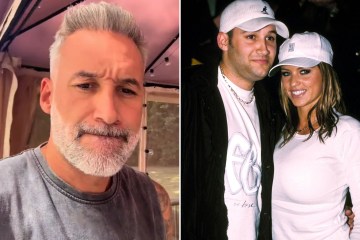
A BBC star has explained how he was horrified to be ‘hours’ from a potentially lethal heart attack after undergoing a surgical procedure. BBC Morning Live’s legal expert, Gary Rycroft, told hosts Rick Edwards and Helen Skelton that he had been suffering from a few chest pains, but put it down to just getting older.

He decided to do the Couch to 5k challenge – and said he had never felt better in many ways. He said: “I think it’s typical of dare I say men of my age, where we ignore things. We think we’re getting old. I didn’t wear glasses till I was 50. My hearing really is not as good as it used to be.

“So when I started to get chest pains walking my dog, I live on top of a hill, so I’m up and down the hill two or three times a day walking to work, walking my dog, and I’d say every fortnight or so I’d get a chest pain and it would it would pass really quickly. So I didn’t really think anything of it. I put it to the back of my mind as people tend to do.”

Mr Rycroft said whatever people do they should get any symptoms checked out. He only got it checked out because he was doing the Couch to 5k and thought he’d like to hear from a doctor.

He said: “I actually did feel a lot better and I lost quite a bit of weight. So, I was feeling really good, but I’d started this diagnostic journey with my GP. So, I’d had an ECG. They checked out the electrics of the heart. That was fine. And then in January, I went to have a cardiac CT scan, which is kind of an X-ray of the heart to check out the structure and check out the plumbing.

Content cannot be displayed without consent

“And when I got the result of that a couple of weeks later, it was really quite bad news which floored me, which was actually the main artery to your heart is pretty much blocked. And of course, you start googling and it was called the left anterior descending artery. Not very helpfully on the internet, it’s often referred to as the widow maker. So, suddenly I was in quite a dark place to be honest, and it was quite stressful for my partner Jenny and the kids.”

It was when he had the straightforward operation to put in a stent that the full extent became clear. Gary said: “The next thing to do is called an invasive angiogram, where they put a little tube up your wrist, and they fit what’s called a stent.

READ MORE: BBC doctor delivers verdict on antihistamines causing weight gainREAD MORE: BBC doctor issues ‘little-known’ warning to anyone taking common hay fever tablet

“So, I had that procedure. It was all done in about 40 minutes. It was pretty remarkable. And you know, thank goodness for medical science. When I came round from that, the cardiologist was kind of, you know, you’re a very lucky person, because you were probably hours or days from having a massive potentially fatal heart attack. So, that was that was quite a lot to take in.“

Doctor Xand van Tulleken said: “If you’ve had this procedure I mean they are safe. They are very common and Gary’s risk you know it is traumatic having these things. You get much closer to death than you would want to. But if you can manage your blood pressure, your cholesterol, quit smoking, manage your risk factors, your GP will help you with all of that afterwards, you you you know Gary’s life expectancy is pretty much the same as it was before the procedure, which is fantastic. That’s the reason to go and have it done.

Gary added: “This is a silent killer for people in their 50s and 60s and people will have lost people. And I wanted to talk about this because I wanted to say to people, don’t wait as long as I did. I had a very close shave. Don’t wait as long as I did. And if you’re living with someone who’s concerned, encourage them to have that conversation. If something’s not quite right, it’s well worth checking it out.”

Source link

Late Queen’s grandson tells of ‘amazement’ at royal secret ‘literally nobody knew’

As BBC marks what would have been Queen Elizabeth II’s 100th birthday, Peter Phillips says that his grandmother stunned them all in 2012

As the nation remembers Queen Elizabeth II on what would have been her 100th birthday next week, one grandson has given fresh insight into the subterfuge that went into her astonishing James Bond moment from the 2012 Olympics.

Peter Phillips was gripped by the scenes, along with the rest of the nation, in which the monarch comes face to face with Daniel Craig’s 007, before they seemingly parachute into the stadium from a helicopter.

But speaking in a new BBC documentary, Peter says even the family were kept totally in the dark about the extraordinary stunt. “When the clip first started we were like, ‘I wonder who they’ve got playing the Queen?’ And then she turned around. And we were like ‘wow’. It was sheer amazement. That was one of the best-kept secrets, because literally nobody knew.”

READ MORE: ITV reveals last ever outing for cast of 7 Up this year – but some faces will be missingREAD MORE: Iconic 90s TV show returning to Channel 4 for first time since 2015

The tribute film, which airs tomorrow, takes viewers through all the key moments of her reign, with insights provided by leaders, celebrities, experts and loved ones.

Queen Camilla speaks of her deep admiration for her late mother-in-law. Looking back at how she came the first female member of the royal family to join the army full time, when she joined the Auxiliary Territorial Service during the war, Camilla says: “I think duty has over-ridden everything. I don’t think I’ve ever seen anybody have a sense of duty like she had.”

Ex-US president Barack Obama agreed, commending the late Queen’s “combination of a sense of duty, with a very human quality of kindness and consideration and a sense of humour”. He adds: “I think that’s what made her so beloved, not just in Great Britain but around the world.”

Former Labour Prime Minister Tony Blair also had deep respect for Elizabeth II. “She was not a queen, but the queen,” he says. “I don’t think we’ll see her like again.”

Camilla recalls that celebrating the Queen’s platinum jubilee in February 2022, just as the Covid pandemic finally came to a close, was particularly joyous coming, as it would turn out, just a few months before the Queen’s death.

“I remember there were thousands and thousands of people lining the streets and lining The Mall – we were all looking for something to cheer us all up,” she says. “People hadn’t been out, they’d been stuck in their houses so it was an incredible jubilee. She was very much centre stage, I’ve never seen anything like it. Everybody was in a good mood.”

Helen Mirren, who put in as Oscar-winning performance as Elizabeth II in The Queen, agrees that the monarch’s profound sense of duty came naturally to her and says her death in 2022 left many feeling bereft. “She’d become such an intrinsic part of the tapestry of our life, it was as if you were going to pull a thread and the whole thing was going to fall apart.”

To research the role for the 2006 movie, Helen studied hours of footage, including plenty of when the monarch was a child. She laughs when shown an archive reel of a three-year-old Elizabeth. “I’ve never seen this before, so young! And her hair is almost the same as when she died. That’s incredible.”

Another clip shows Elizabeth aged around 10. “When I played the Queen I watched a particular piece of film over and over again of her getting out of a big black car,” the actress explains. “You see how she steps forwards and does what she knows she’s supposed to do, which is shake hands. She naturally had a sense of self control and duty.”

That innate sense of how to behave was again in evidence when Elizabeth’s father, George VI, died suddenly while she and her new husband Prince Philip were just six days in to a tour of the Commonwealth in 1951. Returning swiftly to Britain, she was filmed smiling and shaking hands with the many top-hatted, male politicians who were on the tarmac to greet her.

“She’s only just been told that her beloved, beloved father has died without her being there,” Helen 80, says. “I think that would have been so devastating to her, that she never had the chance to say goodbye.What you see happening is the duty stepping in, she does exactly what she’s supposed to do.”

Camilla is also astonished to see how calm and composed the young queen looks in this challenging moment, when she is dealing with her own grief. “It must have been so difficult being surrounded by much older men. There weren’t women prime ministers or women presidents, she was the only one. So I think she carved her own role.”

Over the course of her life Elizabeth faced plenty of difficult times, including the marriages of three of her children ending in the same year and the loss of many loved ones.

When her husband of 73 years, the Duke of Edinburgh, died during the pandemic, the Queen refused to break the rules governing the nation and instead broke hearts as she sat at his funeral all alone. Watching the sad clip of his isolated grandmother, Peter Phillips says all he wanted to do at the time was “give her a hug”.

But there were also times when the Queen came in for criticism rather than sympathy, never moreso than after the death of Princess Diana in 1997, when she opted to remain at Balmoral for more than a week rather than return to London.

BBC royal presenter Kirsty Young remembers: “There was tangible anger. Whether it was the flag being brought down to half mast or the Queen making a statement, these things were not happening. There was radio silence. There was a sense in which people might almost storm the gates of the palace.”

But the Queen then turned public opinion around with her heartfelt TV broadcast to the nation. Describing the former monarch as “quietly radical”, Kirsty adds: “I think the address by the Queen after the death of Diana illustrated beautifully that she had an ear to the public and that she was willing to do things that had never been done before.”

Blair agrees it was one of the Queen’s most challenging moments. “We had a series of really intense conversations where the Queen was having to balance the impact on her family, on her grandchildren, with the need to respond to what was a national mood at the time. Her genius was, in a way, to steer the monarchy through all of that whilst not really changing much herself.”

For her part, actress Helen believes the Queen was absolutely right to stay with her grandsons after the devastating loss of their mother. “I think she was right to stay in Balmoral with the children and then when she came out and did the very difficult walk with the flowers and everything, that was the right thing to do.”

Born just a couple of weeks after the Queen, Sir David Attenborough was running the BBC at one point in the late 1960s when it was decided the royals needed to become more relatable. This led to the BBC documentary Royal Family, an early example of reality TV, where they let the cameras in. “There was a feeling that the royal family was getting a bit remote and I remember the discussions we had in the BBC, that the image of the family should be softened in some way,” Sir David explains. It was huge hit with more than 30million UK viewers tuning in – but afterwards the Queen regretted her decision to display their private lives. The series has not been shown since the 1970s, with Elizabeth ordering it was locked away in the royal archives.

But tonight viewers can see rare clips from the series, showing a relaxed Philip cooking sausages and the queen laughing and joking with her children.

– Queen Elizabeth II: Her Story, Our Century, BBC1, 9pm, Sunday

Source link

Keir Starmer tells social media firms he is considering a child ban

Europe, Middle East and Africa President of Snap, Ronan Harris (L), and Wifredo Fernandez, director of global government affairs at X, leave No. 10 Downing Street in London on Thursday morning after meeting Prime Minister Keir Starmer to discuss ways to protect children safe when they are on social media . Photo by Neil Hall/EPA

April 16 (UPI) — British Prime Minister Keir Starmer put the big five social media firms on notice Thursday that he was considering state intervention, including the nuclear option of a ban, if they did not do more to protect children from being harmed by their products.

Starmer warned executives from Meta, Snap, Google, TikTok and X at a meeting in Downing Street that something had to give, saying a ban on children accessing their platforms would be “preferable to a world where harm is the price” for social media use.

“Things can’t go on like this, they must change because right now social media is putting our children at risk. In a world in which children are protected, even if that means access is restricted, that is preferable to a world where harm is the price of participation,” said Starmer.

“I am determined we will build a better future for our children, and look forward to working with you on this. I do think this can be done. I think the question is not whether it is done, the question is how it is done,” he added.

Executives attending the meeting included Google U.K. managing director Kate Alessi, Markus Reinisch, a public policy principal at Meta, and X’s global government affairs director Wifredo Fernandez.

TikTok was represented by Alistair Law, director of public policy for northern Europe, while Snap was represented by Europe president Ronan Harris.

Starmer put to the firms the negative impacts of social media use on children’s ability to concentrate, their sleep, relationships and the way they view the world that have been flagged by parents and child experts.

“It’s clear to me that parents aren’t asking us for tweaks at the edges, they’re asking us whether a system that clearly isn’t working for children should be allowed to continue at all. Companies have to grip this and work with us to do better by British children,” he said.

No. 10 had earlier acknowledged that some of the tech firms had “stepped up” by disabling autoplay of videos for children by default and providing better tools to parents to limit the amount of time their children spend looking at screens, but took a much tougher line at Thursday’s meeting.

Starmer’s Labour administration has previously pushed back on pressure from parents, educators and child safety advocates for an Australia-style ban for children younger than 16 on fears it could drive them onto the dark web and make them more vulnerable when they eventually begin using the apps by hindering development of their digital skills.

Most social media sites operating in Britain do not permit children younger than 13 to use their products.

However, in the past three months, Starmer’s administration has twice been forced to use its House of Commons majority to override two efforts by the House of Lords, the upper chamber of Parliament, to amend a government bill to include a ban for children younger than 16.

The most recent of these was on Wednesday in which the government defeated the Lords’ latest attempt to force through a ban, but with a reduced majority from the previous vote on March 10. More than 240 of 650 MPs either failed to show or abstained.

In January, 60 Labour Party backbenchers signed a letter urging Starmer to bring forward a ban.

The government managed to fend off the first challenge in March by launching a three-month public consultation on how to proceed with anticipation inside his administration growing that Starmer will yield to pressure for a ban when the findings are published in the summer.

Children race to push colored eggs across the grass during the annual Easter Egg Roll event on the South Lawn of the White House in Washington on April 21, 2025. Easter this year takes place on April 5. Photo by Samuel Corum/UPI | License Photo

Source link

Obama tells Singh that U.S. values its ties with India

President Obama reassured India’s prime minister Tuesday that the partnership between their two countries would be “one of the defining relationships of the 21st century.”

Appearing with Manmohan Singh at the White House after two hours of talks, Obama said the United States and India have agreed to broaden cooperation in a variety of areas, including the economy, agriculture, technology, trade and counter-terrorism.

“The United States and India are natural allies,” the president said at a news conference.

Indian officials have worried recently that the Obama administration might be less committed than its predecessors to strengthening the U.S.-Indian relationship. Indians are anxious that their relationship is taking a back seat to growing U.S. ties with China and Pakistan. Obama returned last week from a trip to Asia that included a three-day stop in China.

But the administration made a special effort to dispel those perceptions: Singh is the first foreign leader invited to the Obama White House for a state visit, which included a state dinner Tuesday night.

The president emphasized that the U.S. is not looking solely to China for leadership in Asia.

“The United States welcomes and encourages India’s leadership role in helping to shape the rise of a stable, peaceful and prosperous Asia,” Obama said. He also accepted an invitation from Singh to visit India next year.

Ashley J. Tellis, who was a senior South Asia aide in George W. Bush’s administration, said Obama’s statements held valuable symbolism.

But the “real tests are yet to come,” said Tellis, now at the Carnegie Endowment for International Peace.

It remains to be seen whether the United States will devote the time needed to build a strategic relationship, and whether the two countries can work out their differences on such issues as climate change and nuclear nonproliferation, he said.

The Obama administration would like India to take aggressive steps to reduce carbon emissions, while India contends that the developed world should bear a larger share of that responsibility.

India, which has nuclear programs, has also been reluctant to impose tough economic sanctions on Iran, with which it has strong economic ties.

The United States and many other Western powers allege that Iran is seeking to develop nuclear weapons, but Iran says its nuclear development program is for civilian energy purposes.

Obama and Singh may have been closer on concerns about Taliban militants in Afghanistan, a subject that the prime minister raised repeatedly this week at a series of public meetings in Washington, and which the two leaders discussed at the White House.

Michael Hammer, a White House spokesman, said Singh and Obama “agreed that stabilizing Afghanistan and preventing a return of the Taliban to power are critically important.”

Hammer said that in their discussion of Iran, the two leaders “resolved to work together to make sure that all countries live up to their international obligations in the nuclear context.”

Teresita Schaffer, a former U.S. ambassador now at the Center for Strategic and International Studies in Washington, said Indians don’t want the U.S. to fail in Afghanistan because they believe it would mean “a much bigger footprint for militant Islam.”

More broadly, she said, “they’ve bet their international role on ties to a United States strong enough to deliver the goods.”

paul.richter@latimes.com

cparsons@latimes.com

Source link

Samsung to end its texting app, tells U.S. users to switch to Google

Samsung announced that it is ending its Samsung Messages texting app in July when it will stop working and become unavailable for download, and is encouraging users to switch to Google Messages for their texting purposes. File Photo by Erdem Sahin/EPA-EFE

April 6 (UPI) — Samsung said on Monday that it will discontinue its messages app and told users to upgrade to Google Messages as their default method for sending texts.

The move is being billed as an upgrade, as Google Messages includes spam and scam filters, RCS-enabled messaging, artificial intelligence features because the app is integrated with Google’s Gemini, and the ability to continue chats across multiple devices without interruption.

The Samsung Messages app will not be available to download and will stop functioning in July, Samsung said in an end-of-service announcement.

Samsung Messages was the pre-installed, default texting app on all the company’s smartphones until 2021, CNET reported.

In 2024, it stopped pre-installing it and gradually started to motivate users to switch to the Google service with the release of its Galaxy Z Flip 6 and Z Fold 6 phones, and the Galaxy S26 — the newest version of its flagship smartphone — is not able to download the app.

“Once the Samsung Messages app is discontinued, sending messages via Samsung Messages on your phone will no longer be possible, except for emergency service numbers or emergency contacts defined on your device,” Samsung said in the announcement.

In the announcement, Samsung said that depending on the operating system on the device, some users may receive a notification in Samsung Messages about migrating to Google Messages, if the user opts for it.

For some users, the company said, Google Messages will not instantly be set as the default texting app and may not appear in the home screen doc, with Samsung providing instructions for accomplishing both.

It also noted in the announcement that watches launched before the Galaxy Watch4 do not support Google’s texting app, and that Samsung devices released before 2022 will require users on both ends of a text conversation to switch to Google Messages for full RCS conversations to be available.

RCS, or Rich Communication Services, is a SMS/MMS standard that has been adopted by most messaging apps, including the iMessage app on iPhones, that provides end-to-end encryption, ensuring a “more dynamic and secure conversation,” according to Google.

President Donald Trump speaks during the annual Easter Egg Roll on the South Lawn of the White House in Washington on April 6, 2026. Photo by Bonnie Cash/UPI | License Photo

Source link

Trump tells UK ‘go get your own oil’ and ‘King sent to US’

The headline on the front page of the Daily Mail reads: "Trump's taunt exposes a PM without a plan."

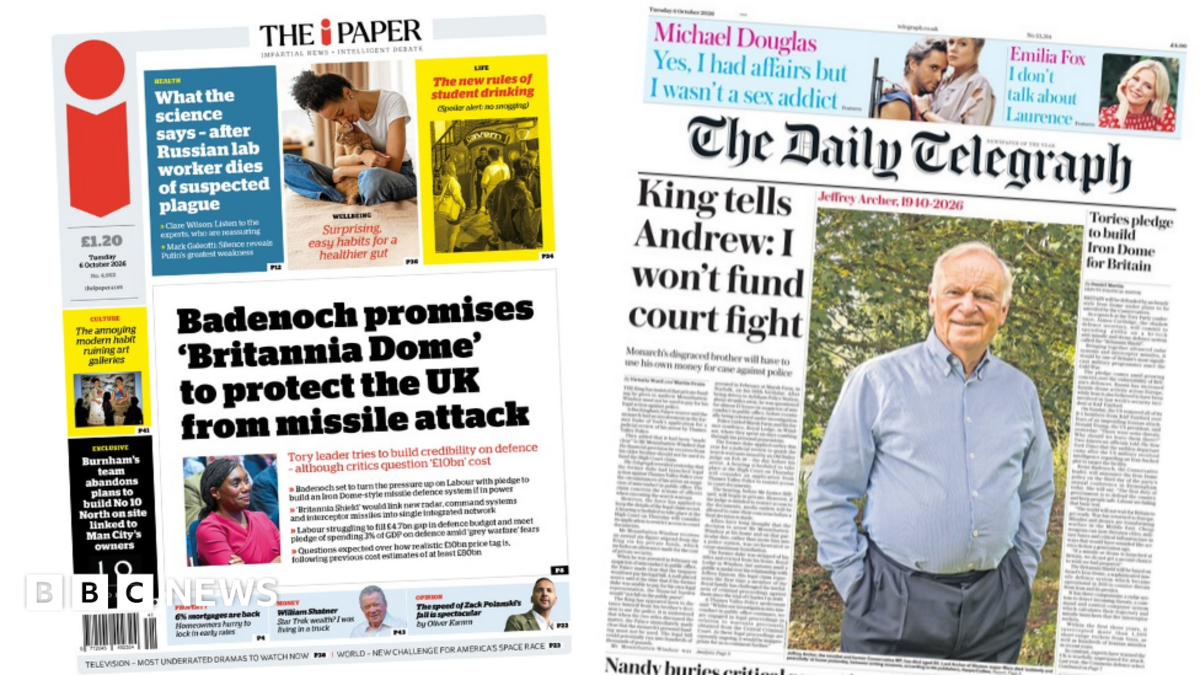
“Trump’s taunt exposes a PM without a plan” says the Daily Mail. The paper says MPs have accused Sir Keir Starmer of not having a clear plan after it emerged that the UK’s last known shipment of jet fuel from the Middle East is due to arrive within two days. Elsewhere, the paper continues its coverage on the BBC’s sacking of radio presenter Scott Mills. The broadcaster sacked Mills on Monday over allegations related to his personal conduct. The BBC has not given any further details over the allegations and it is not clear what, if any, role a police investigation into sexual offences played in his sacking. The investigation, which began in 2016, was closed in 2019 after the Crown Prosecution Service (CPS) deemed there was insufficient evidence to bring charges. Mills has been approached for comment.

Source link

Shepard Fairey tells Mark Mothersbaugh he’s not afraid of AI art

Legendary street artist and activist Shepard Fairey was omnipresent at the High Desert Art Fair, which unfolded in and around Pioneertown over two unseasonably hot days last weekend. Founded more than seven years ago by art dealer Nicholas Fahey and artist manager Candice Lawler, the event has morphed from a few dozen people in Lawler’s living room to a few thousand roaming the dusty, sunny environs of the kitschy Old West town, with ancillary events in Twentynine Palms and Joshua Tree.

Fairey, who bought a home in the area during the COVID-19 pandemic, DJ’d a spirited opening night party at the Red Dog Saloon — spinning punk, post-punk and new wave hits by Joy Division, Fugazi and Black Flag to a packed house of art fans wearing paint-splattered DIY couture — and he spoke during the weekend’s most anticipated panel alongside Devo frontman and gallery owner Mark Mothersbaugh in a conversation moderated by singer-songwriter Harper Simon, son of folk icon Paul Simon.

Shepard Fairey in a DJ booth.

Artist Shepard Fairey DJ’d the opening night party of High Desert Art Fair at the Red Dog Saloon in Pioneertown. The set was heavy of punk, post-punk and new wave.

(Jessica Gelt / Los Angeles Times)

Fairey was forthcoming about his opinions on art, politics and technology, drawing applause at one point for saying that using AI in art is not something to be afraid of. His assessment came after he lamented the fact that social media algorithms punish “decency” and reward “flamboyant narcissism and controversy.” He then joked that the “algorithm’s gonna love this. S— is gonna go nuts,” before talking about his recent collaboration with the digital artist known as Beeple who’s notorious in the art world for selling an NFT of his art in 2021 for $69.3 million.

People pack a bar.

The Red Dog Saloon was packed with art and music fans during the Friday night opening party of the High Desert Art Fair, which drew thousands of people to Pioneertown during the last weekend in March.

(Jessica Gelt / Los Angeles Times)

“He’s either the vanguard of a new way of working, and a maverick, a trailblazer, or he’s the worst thing that’s happened to art ever, or in between, or both, or neither,” Fairey said as the crowd laughed. “That’s totally my opinion.”

During a late-March event held in Fairey’s hometown of Charleston, S.C., Beeple Studios presented “Shepard Fairey: Obey and Resist,” which leveraged AI to help guests create their own Fairey-inspired paintings. During the panel, Fairey called the results “almost idiot-proof.”

He then elaborated on his feelings about AI’s encroachment on the art world, saying that if he were part of the “traditional art world thinking” he wouldn’t dare “go over to the dark side of digital art and AI, because that’s cheating.”

“All those same people a few hundred years ago when Da Vinci was using the camera obscura were like, ‘Get your proportions right, just by eye. Don’t use a cheating tool,’” Fairey said before taking the analogy to cave paintings and noting that those same types of naysayers would’ve been unhappy when it was discovered that horse hairs at the end of a stick were useful for distributing pigment and might have said, “That’s not keeping it real, bro. Use bloody elbow like everyone else.”

Fairey called that type of thinking “idiotic.”

“A tool in service of someone with a genuine vision that bends the tool to their will, rather than having themselves bent to the tool — that’s what creativity is about,” Fairey said.

The conversation about AI art started when Mothersbaugh, who was headlining a music set at Pappy & Harriet’s later that night, admitted that he was “fooling around with AI” and “just making myself laugh, like mutating old Devo photos and videos. It cracks me up. … I don’t know what is ever going to happen with it. Maybe they’ll just always live on my phone and eventually get thrown away or lost or something.”

An experimental music set-up on stage.

The stage is set for an experimental music show by the General, featuring the stylings of Devo frontman Mark Mothersbaugh.

(Jessica Gelt / Los Angeles Times)

It’s a rock ‘n’ roll art fair

The idea that AI won’t cannibalize artists and their work on a massive scale is refreshingly utopian, but in many ways so was the fair itself. It takes magical thinking to grow anything in the harsh desert environment, which is why artists have been making the trek for decades. There was a youthful, rock ‘n’ roll vibe to the proceedings that was punk in quality but earnest in its quest to be seen.

Mothersbaugh’s gallery, MutMuz, occupied one of 20 rooms reconfigured as show spaces at the Pioneertown Motel, as did Gross!, a Chinatown gallery founded by former Liars drummer Julian Gross and populated with the work of musicians such as Karen O, O’s costume designer Christian Joy and TV on the Radio’s Tunde Adebimpe.

A painting on fabric.

A work of painted fabric by Karen O‘s costume designer Christian Joy hangs in Gross! Gallery at the Pioneertown Motel during High Desert Art Fair. The gallery is owned by former Liars drummer Julian Gross who features plenty of work by fellow artists.

(Jessica Gelt / Los Angeles Times)

Desert pioneers are key to the spirit of the place

The fair featured tours of a number of the most interesting attractions in the area, including the Noah Purifoy Desert Art Museum of Assemblage Art in Joshua Tree and artist Andrea Zittel’s arts outpost and residency program, High Desert Test Sites.

Old computers stacked up.

Old computers are stacked at the center of an installation titled “Carousel” (1996) by Noah Purifoy at the Noah Purifoy Desert Art Museum of Assemblage Art in Joshua Tree.

(Jessica Gelt / Los Angeles Times)

Purifoy’s fantastical assemblages made of found objects and unloved detritus provided the most fitting example of the creative desert mindset. Outsider art in every sense of the word, and laden with scathing political and social commentary, Purifoy’s installations morph and change in the elements. A nonprofit exists to preserve them, but tour guide Teri Rommelmann said preservation efforts aren’t meant to alter the course of nature and time, but rather to save the work from sinking into the sand.

An outdoor sculpture.

Noah Purifoy’s 2001 installation “White/Colored” is the most frequently vandalized piece in the outdoor Joshua Tree museum dedicated to his work.

(Jessica Gelt / Los Angeles Times)

Another aspect of the preservation work is erasing vandalism, which happened most during the pandemic, and was quite telling in its main target: An installation featuring a water fountain marked “White” next to a toilet affixed with a water fountain mouthpiece and labeled “Colored.”

An art installation in the desert.

Noah Purifoy’s sculpture “Ode to Frank Gehry” (2000) stands in the sand as part of the Noah Purifoy Desert Art Museum of Assemblage Art. The piece was once featured in a show at the Los Angeles County Museum of Art, and transporting it can be quite tricky.

(Jessica Gelt / Los Angeles Times)

At High Desert Test Sites, Zittel’s famous A-Z West escape pods are no longer used for camping after the city said the nonprofit would have to attain a commercial camping permit to continue. Nonetheless, the organization’s 80 acres are home to a variety of artist residencies, which use the windswept isolation of the desert to activate dormant ideas. It was just announced that environmental artist Lita Albuquerque will have a residency at the site.

An outdoor sleeping pod.

Andrea Zittel’s famous A-Z West escape pods at High Desert Test Sites can no longer be used for camping, but they still dot the nonprofit’s 80 acres of land as an example of the creativity that the desert environment unleashes.

(Jessica Gelt / Los Angeles Times)

A kitchen with colorful tiles.

The tiled kitchen that artist Andrea Zittel designed for the main residence at High Desert Test Sites, which she lived in for nearly 20 years and can now be rented by artists in residence.

(Jessica Gelt / Los Angeles Times)

Art is everywhere in the desert — and growing

The success of this year’s High Desert Art Fair bodes well for the future of the area as a cultural destination.

Next year will see the return of Desert X, which for the first time will keep its large-scale, site-specific installations up for six months, timed to coincide with other SoCal cultural happenings including the Coachella Valley Music & Arts Festival and Frieze. There are also semi-permanent art installations everywhere in the area, including along driveways and the roadside. This includes a hair salon and museum in Joshua Tree, and the recently opened Reset Hotel in Twentynine Palms features dozens of rooms in retrofitted shipping containers, some with outdoor bathtubs and firepits. The hotel has also carved desert trails in its backyard, with plans to build an art park filled with installations.

An outdoor couch at sunset.

The shipping container rooms at the new Reset Hotel in Twentynine Palms feature outdoor living spaces with firepits and bathtubs. Some overlook trails that will lead to a planned art park on the property.

(Jessica Gelt / Los Angeles Times)

An influx of artists, collectors and art fans will surely have an impact on an area that is already wary of gentrification and the rising cost of living that accompanies it. But there will be no stopping progress, only a utopian, Fairey-like hope that those who come will be inspired to keep and nurture the magical qualities of the place.

Source link

Rubio tells Al Jazeera that Strait of Hormuz to reopen ‘one way or another’ | News

United States Secretary of State Marco Rubio has told Al Jazeera that the Strait of Hormuz will “reopen one way or another” in the wake of the eventual end of the US-Israeli war with Iran.

The exclusive interview on Monday came as speculation has grown over a possible US troop deployment in Iran and as the effective closure of strait continues to roil global oil markets.

US boots on the ground would represent a new phase in the grinding conflict, which began on February 28 with US-Israeli strikes, even as US President Donald Trump has repeatedly said that the US was pursuing diplomacy with Iran.

Rubio again maintained there were “ongoing direct talks between parties in Iran and the United States, primarily conducted through intermediaries”.

Iran has repeatedly denied that talks were ongoing. Pakistan on Sunday said it would host direct talks “in the coming days for a comprehensive and lasting settlement of the ongoing conflict”.

Rubio added that Trump “has always preferred diplomacy and seeks to reach a resolution – something that could have been achieved earlier”.

The Trump administration had previously pursued indirect talks with Iran to curtail its nuclear programme. One round of talks was derailed last year with Israel’s 12-day war against Iran, which ended with US strikes on Iran’s nuclear facility.

A second round of diplomacy was underway when the US and Israel began the latest war.

Rubio again indicated the administration’s preference for regime change in Iran, which the US and Israel have so far been unable to achieve despite several high-profile assassinations, including the killing of Supreme Leader Ayatollah Ali Khamenei.

“We would welcome a scenario in which Iran is led by individuals with a different vision for the future, and if such an opportunity arises, we will seize it,” he said.

Nuclear and ballistic weapons

Speaking to Al Jazeera, Rubio further called on Iran to take “concrete steps” to end its nuclear programme and stop “manufacturing drones and missiles”.

He accused Iran of seeking nuclear weapons to “threaten and blackmail the world”, a claim Tehran has for years denied, maintaining its nuclear programme was only for civilian purposes.

On Monday, the Wall Street Journal reported Trump was considering a special forces operation to seize enriched uranium stored in Iran. Military experts have warned throughout the war that US and Israeli airstrikes alone would not be able to destroy Iran’s capabilities.

In a statement to Al Jazeera, White House press secretary Karoline Leavitt did not deny the report, but said: “It’s the job of the Pentagon to make preparations in order to give the Commander-in-Chief maximum optionality. It does not mean the President has made a decision.”

Rubio said Iran “must also cease sponsoring terrorism and halt the production of weapons that threaten its neighbours,” he said. “The short-range missiles launched by Iran serve only one purpose: to attack Saudi Arabia, the UAE, Qatar, Kuwait, and Bahrain.”

Turning to the Strait of Hormuz, which Iran has effectively closed to open traffic, Rubio voiced optimism it would be reopened when the conflict ends.

“The Strait of Hormuz will reopen one way or another once our military operation in Iran is over,” Rubio said. “The strait will reopen either with Iran’s consent or through an international coalition including the US.”

He threatened “severe consequences” if Iran closes the strait after the fighting ends.

The US has previously sought to raise a coalition to protect ships in the Strait of Hormuz, but has faced wariness from many traditional allies concerned over tacit entry into the conflict.

‘Our objectives in Iran are clear’

Rubio’s statements on Monday broadly reflected a list of demands put forth by Washington to end the war.

Iran has rejected the proposal, with Iranian President Masoud Pezeshkian releasing its own list of demands, including “recognising Iran’s legitimate rights, payment of reparations, and firm int’l guarantees against future aggression”.

For his part, Trump told the Financial Times in an interview published on Sunday that he hopes to “take the oil in Iran” including by possibly seizing the key export hub of Kharg Island.

“Maybe we take Kharg Island, maybe we don’t. We have a lot of options,” he added. “It would also mean we had to be there [on Kharg Island] for a while.”

The Trump administration has presented a carousel of objectives in the war, including degrading Iran’s military capability, preventing it from ever developing a nuclear weapon, and helping to foment regime change.

However, its endgame has remained unclear, with its final goals possibly diverging from Israel, which has pushed for more comprehensive regime change.

To date, at least 1,937 people have been killed in Iran since the war began, with at least 20 killed in Israel, 26 killed across the Gulf states and 13 US soldiers killed.

Rubio told Al Jazeera that the administration did not expect the war to drag on indefinitely.

“Our objectives in Iran are clear, and we will achieve them within weeks, not months,” he said.

Source link

Clinton Tells of Marijuana Use in ’60s : Democrats: He says he tried the drug one or two times while a student in England. He had not been directly asked about it before and does not believe episode will hurt his candidacy, he adds.

Arkansas Gov. Bill Clinton acknowledged Sunday that he had experimented with marijuana while a 22-year-old student in England in the late 1960s, an admission that could raise doubts about his past candor in answering questions about his personal conduct.

For five years, the 45-year-old Clinton has answered questions about whether he had ever used drugs by saying he had never broken a U.S. law. During a televised debate here with Democratic presidential rival Edmund G. (Jerry) Brown Jr., a questioner for the first time asked Clinton explicitly whether he had ever broken either a state, federal or a foreign drug law.

“When I was in England I experimented with marijuana a time or two,” he answered on the WCBS-TV broadcast, “and I didn’t like it. I didn’t inhale and never tried it again.”

Asked the same series of questions, Brown answered bluntly: “No.”

Clinton’s disclosure, which overshadowed one of the most substantive exchanges of the political season between the two rivals, is hardly unusual for a person of Clinton’s generation. Two of the Democratic presidential candidates in 1988 acknowledged similar behavior. And nothing Clinton said about his use of marijuana contradicted what he had said before.

But his decision until now to fend off drug-use queries with a narrow response, which could mislead voters into thinking he had never used drugs of any kind, was likely to add to concerns of those who regard him as less than straightforward.

Clinton said he did not believe the episode would hurt his candidacy, noting that other politicians had admitted to using marijuana and had suffered no apparent electoral consequences. He defended his previous denials by saying he had seen no need to volunteer a reply to something he had not been directly asked.

“Nobody’s ever asked me that question point blank,” he said, adding: “I said I’ve never broken the drug laws of my country, and that’s the absolute truth.”

It was the second time in a week that Clinton found it necessary to clarify previous statements on drugs.

On Thursday, a Clinton campaign aide, Betsey Wright, volunteered to the Los Angeles Times that the governor had never used cocaine or knowingly been around it.

The Times had contacted Wright to ask about a state police drug investigation in the mid-1980s of Clinton’s half-brother and a political contributor. After answering the questions, Wright said: “I assume from the questions that you were implying guilt by association in a state where everybody is associated. For that reason, when I verified with Gov. Clinton the answers to some of the questions, I asked him the following questions:

“ ‘Bill, have you ever used cocaine?’

“He replied, ‘No.’

“I said, ‘Bill, have you ever been in a room where you were aware there was cocaine?’

“He replied, ‘No.’ ”

When asked Friday why she had posed questions never asked by The Times, Wright said she had heard “rumors” that reporters were trying to place Clinton at parties where cocaine had been used. “I decided it was best to go ahead and put the issue on the table,” she said. (Interviews by The Times with some people said to have been in attendance at those parties have produced no evidence linking Clinton to the drug.)

Later Friday, Clinton called The Times to say that the campaign had not intended to provoke a story quoting him as denying cocaine use. Senior Clinton campaign officials said they feared such a story might be seen by the public as raising yet another question about his personal life.

Clinton’s Sunday acknowledgement of marijuana use while a Rhodes Scholar at Oxford came only three days after Clinton was asked by a member of the editorial board of the New York Daily News whether he had been asked previously about his drug use.

Clinton said that he had been asked such questions, and that his answer had always been that he had never violated a U.S. law.

Clinton campaign officials later described the new admission as an “elaboration” of Clinton’s previous comments and suggested that it and the earlier, narrow denials were merely two ways of looking at the same issue.

“Bill Clinton told the truth at every step of the way,” his chief strategist, James Carville, said. “It’s like the old saying about the guy who’s being sworn into office and he’s asked, ‘Do you swear to tell the truth, the whole truth, and nothing but the truth?’ and he answers, ‘Which one do you want?’ ”

Carville and other senior Clinton aides nevertheless expressed concern that the issue would be given undue prominence and further tar their candidate at a time when polls show that a large number of Democratic voters still harbor questions about Clinton’s personal record.

For his part, however, Brown chose not to make an immediate issue either of Clinton’s marijuana use or his handling of questions about it.

After denying that he had violated any drug laws, Brown demanded of a questioner: “Why don’t you lay off this stuff? What you did 10 or 20 years ago is not really relevant.”

But Brown himself was forced during the debate to respond to a new suggestion of impropriety in a Washington Post story detailing his ties to a company that paid a $400,000 settlement to the federal government after being accused of making exaggerated claims about a product said to help treat AIDS.

Brown, who served on the board of directors of a subsidiary to the company, Costa Mesa-based ICN Pharmaceuticals Inc., until he began his presidential campaign, said he had had “nothing to do” with the episode. He said his position gave him “no responsibility and no contact” with the parent firm.

Clinton did not press the issue during the debate, saying his own experience made him wary of “piling on.” But he suggested later in the day that justice was being done as he told a Bronx audience that “the press is finally starting to look at” a rival he believes has been treated too gently.

Clinton framed his response to the drug question during an era when the issue rose to political prominence.

In 1987, Supreme Court nominee Douglas H. Ginsburg was forced to withdraw his name from nomination after it was learned that he had used marijuana when he was a law-school professor.

But other politicians, including Sen. Albert Gore Jr. of Tennessee and Gov. Bruce Babbitt of Arizona, both 1988 Democratic presidential candidates, acknowledged using marijuana while in college and suffered no apparent political consequences.

Supreme Court Justice Clarence Thomas has also admitted to having used marijuana, but the issue was given only passing attention during his confirmation hearings.

Clinton, by contrast, has steadfastly refused to answer “have you ever” questions about drug use, adultery or other matters of personal conduct on grounds that they are not legitimate subjects of inquiry.

He has said it is legitimate, however, for an officeholder or a candidate to be questioned about violations of law, and has always responded to questions about his drug use by stating that he had adhered to U.S. drug laws.

Earlier in the morning, Clinton delivered what amounted to an impassioned political sermon to the enthusiastic congregation of an African Methodist church in a mostly black neighborhood in Queens.

But faced with continued criticism of his periodic use of an all-white country club to play golf–conduct that Clinton has said was a mistake–his message Sunday was in part a plea for redemption from a black community from which he has so far drawn deep support.

“I have seen myself turned into a cartoon character of an old Southern deal-maker by the tabloids and television in a total denial of my life’s work,” he said.

He told the congregation he had made “a foolish mistake.” And as he cited Scripture later, the congregation joined him in a sympathetic chorus to murmur “those who are without sin should cast the first stone.”

The hourlong debate here between Clinton and Brown, who participated via satellite from Wisconsin, was one of the better illuminations of the differences between the Arkansas moderate and the California populist-liberal.

Again and again, the two candidates clashed on issues ranging from economic policy to capital punishment to labor issues to Middle East strategy.

On economic issues, Brown advanced his proposal to overhaul the current tax systems and replace them with a 13% flat-tax as a “progressive tax” whose simplicity would “jump-start the economy.”

But Clinton, who favors a more conventional middle-class tax cut and an increase on taxes for the wealthy, again derided Brown’s idea as a plan that would benefit only the wealthy and would “triple taxes on the poor and raise taxes on the middle class.”

In answer to a question, Clinton said he favored capital punishment as well as a proposal to accelerate what is now the time-consuming process under which a death-row inmate may appeal his sentence.

But Brown described Clinton’s decision earlier this year to order the execution of a man whose lawyer claimed he was retarded as a “moral abomination.” He contended that the proposal to limit death-penalty appeals was part of a “systematic erosion of civil liberties” and said: “I would oppose it with every ounce that I have.”

Brown said he would favor a five-year moratorium on the manufacture of handguns. But Clinton, while describing himself as an advocate of gun control, said he was unsure whether he could embrace such an approach.

On Israel, Clinton defended what he described as a longstanding U.S. willingness to “wink” at Israeli settlements on the occupied West Bank and criticized the Bush Administration’s recent get-tough policy. But Brown bluntly said he regarded the settlements as “a problem.”

Asked about an issue important to labor unions, the two candidates made clear that their allegiance pulled them in different directions.

Clinton said he would favor placing young people in jobs of all kinds as part of a civilian corps to give them training for the future.

But Brown warned that the low wages paid to such employees would undermine working people and suggested that any such corps be limited to outdoor conservation efforts.

Source link

Gabbard tells Senate panel only Trump can determine imminent threats

1 of 2 | Director of National Intelligence Tulsi Gabbard prepares to testify during a Senate Intelligence Committee hearing on worldwide threats in the Hart Senate Office Building on Capitol Hill in Washington, D.C., on Wednesday. Photo by Annabelle Gordon/UPI | License Photo

March 18 (UPI) — Director of National Intelligence Tulsi Gabbard defended U.S. military strikes on Iran during a Senate Intelligence Committee hearing Wednesday, calling them a strategic success.

Senators challenged Gabbard to reconcile the words of President Donald Trump with the intelligence her department has received on Iran. When pressed, Gabbard yielded that Trump has the final say on what threats the United States faces.

When the United States performed strikes on Iranian nuclear facilities in June, Trump said Iran’s nuclear capabilities were “obliterated.” Earlier this month, he said Iran’s development of nuclear weapons posed an imminent nuclear threat to national security, justifying military action.

Gabbard affirmed Wednesday that Iran’s nuclear enrichment program was “obliterated” in the June strikes.

“It is not the intelligence community’s responsibility to determine what is and is not an imminent threat,” Gabbard said. “That is up to the president, based on a volume of information he receives.”

Gabbard was once a vocal opponent of engaging in a war with Iran, even selling shirts that read “No War With Iran” in 2019 while she campaigned for the Democratic presidential nomination.

Iran is one of the United States’ top adversaries, the Office of the Director of National Intelligence’s “Annual Threat Assessment” said. China, Russia and North Korea are also on that list.

In the 19 days since the war with Iran began, Gabbard said the Iranian regime “appears to be intact but largely degraded.”

“Even so, Iran and its proxies remain capable of and continue to attack U.S. and allied interests in the Middle East,” Gabbard said. “The IC assesses that if a hostile regime survives it will seek to begin a yearslong effort to rebuild its missiles and UAV forces.”

President Donald Trump receives a bowl of shamrocks from Irish Taoiseach Micheal Martin to celebrate St. Patrick’s Day at the White House on Tuesday. Photo by Yuri Gripas/UPI | License Photo

Source link