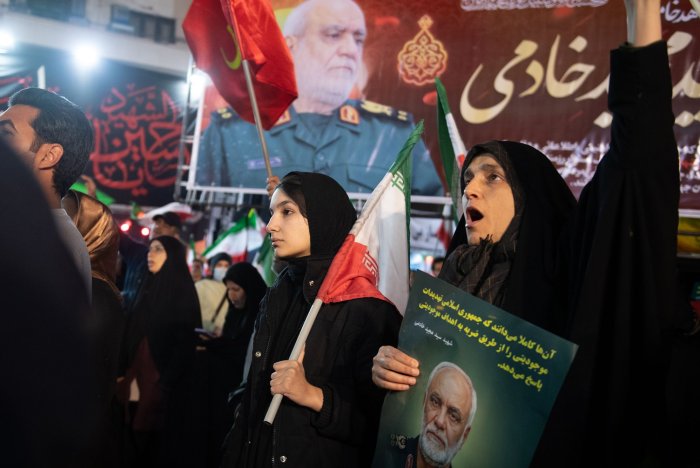
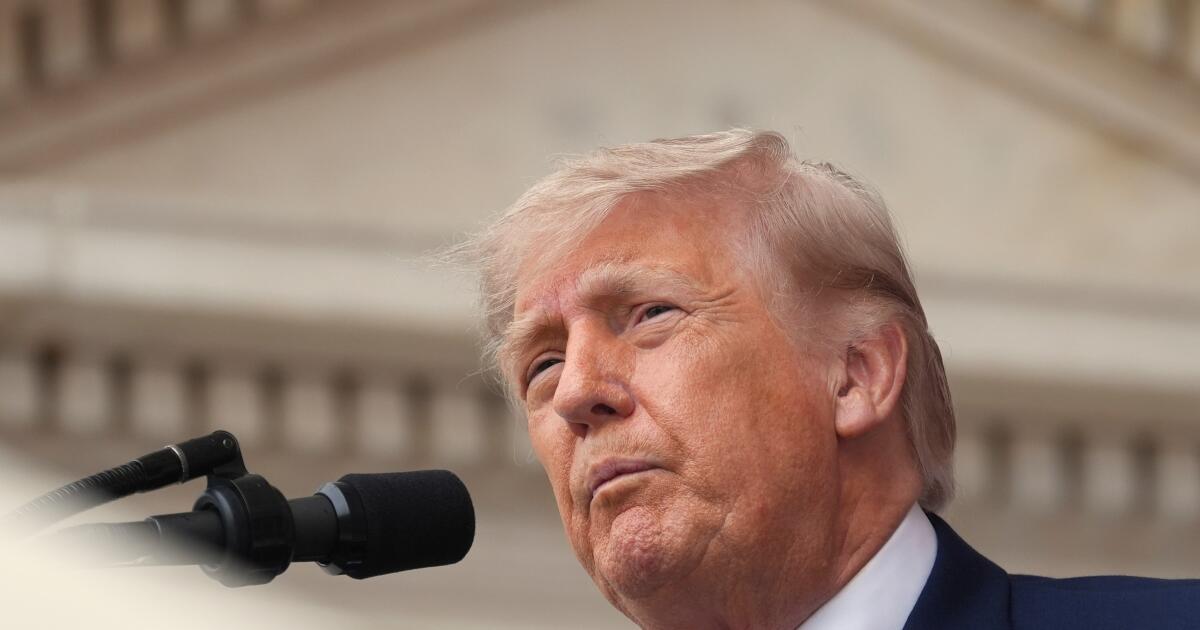
Israel has been trying to make the case for its war on Iran by portraying the country as a threat to European cities, warning Iranian missiles could reach capitals like London and Paris.
March 24 (UPI) — The price of oil climbed back above $100 per barrel on Tuesday as hopes for de-escalation in the Iran war faded after Washington said the situation remained “fluid,” Tehran denied there had been any negotiations and a fire put a major Texas refinery out of action.
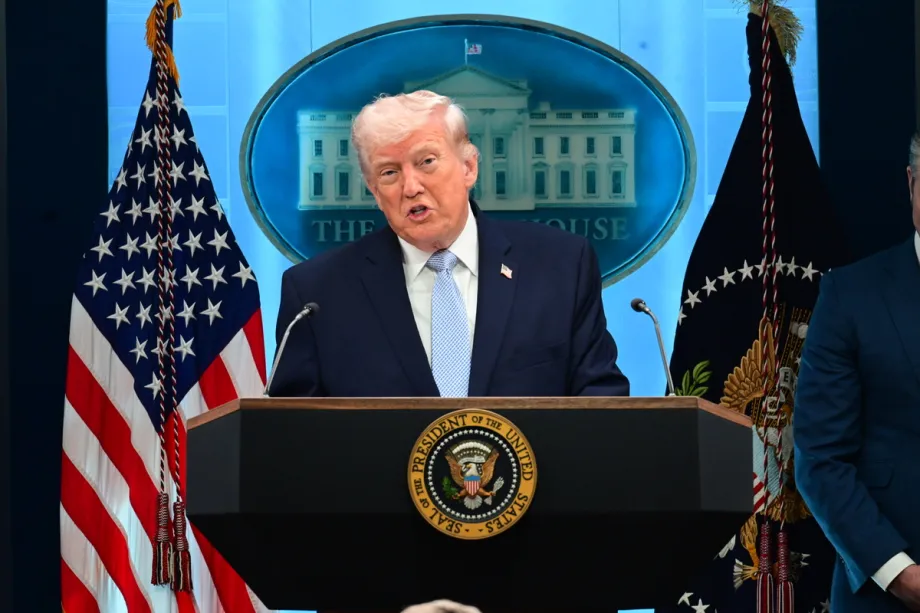
Claims by President Donald Trump of “major” progress in talks to halt the conflict on Monday sent oil prices tumbling and rallied stock markets, but benchmark Brent crude futures rebounded to more than $103 a barrel on Tuesday after the White House appeared to walk it back, saying no high-level formal meetings were scheduled and denying reports Vice President JD Vance may attend Pakistan-brokered talks.
“These are sensitive diplomatic discussions and the United States will not negotiate through the press. This is a fluid situation, and speculation about meetings should not be deemed as final until they are formally announced by White House press secretary Karoline Leavitt told the BBC.
Iran has, however, acknowledged there had been some contact between the sides regarding talks, with an Iranian foreign ministry official telling CBS that the regime had “received points from the United States.”
“We received points from the United States through mediators and they are being reviewed,” said the official.
The confirmation came amid claim and counterclaim after Trump walked back an ultimatum to destroy Iran’s power plants and energy infrastructure unless it allowed shipping to flow freely again through the Strait of Hormuz by Monday night.
Trump said he was giving Iran a five-day reprieve after “very good and productive” discussions with Tehran on Sunday and Monday but Iranian Parliament Speaker Mohammad-Bagher Ghlaibaf, who has been named as an interlocutor, described it as “fake news” and said there had been no talks.
With a blaze at the Velero Port Arthur refinery still burning after an explosion on Monday at the plant, 90 miles east of Houston, wholesale gasoline and diesel prices were up 10 cents and 16 cents per gallon, hikes Lipow Oil Associates president Andy Lipow said were due almost entirely to the incident, rather than the war.
The affected part of the plant makes diesel fuel and was likely to be out for an extended period, exerting pressure on diesel prices but gasoline production could come back online in the next few weeks as it was in a different area of the refinery, added Lipow who stressed he believed the incident was an accident and that there was no evidence of terrorist sabotage.
Analysts said the market remained fearful of the risk the Iran conflict could be an extended one with knock-on energy supply disruption impacts caused by associated strikes on critical energy production and storage facilities and shipping being unable to leave or enter the Persian Gulf.
“Despite the exuberance on Wall Street, ladies and gentlemen, oil is well off its lows after Tehran denied conducting any weekend negotiations with Washington,” Interactive Brokers senior economist Jose Torres wrote in a note.
“Additionally, in consideration of the vast number of attacks that have affected critical energy in the Middle East … there’s nervousness that there could be capacity and transportation disruptions that keep costs higher than at the beginning of the year even if there’s a deal,” added Torres.
Gulf oil-producing nations meet a large proportion of global oil and natural gas demand, about 20% of which — 20 million barrels a day — is exported on tankers that pass through the narrow Strait of Hormuz, a natural chokepoint effectively closed by Iran since the United States and Israel launched their airborne offensive on Feb. 28.
President Donald Trump presents the Commander in Chief’s Trophy to the Navy Midshipmen football team during a ceremony in the East Room of the White House on Friday. The award is presented annually to the winner of the football competition between the Navy, Air Force and Army. Navy has won the trophy back to back years and 13 times over the last 23 years. Photo by Bonnie Cash/UPI | License Photo
The last time Eric Idle’s “Monty Python and the Holy Grail” spoof musical “Spamalot” landed at a major L.A. venue a decade ago, he played the show’s tweedy historian, who sets the scene for the Arthurian legend with a seriousness entirely unfit for the absurdist romp to follow.
It was a perfect role for the “Monty Python’s Flying Circus” alum, to whom dry humor comes as naturally as breathing.
But when “Spamalot” makes its long-awaited return to L.A. Tuesday at the Hollywood Pantages, Idle will take the stage only briefly, and not as a cast member. His job is to pop on and “say something funny or rude, which sadly, comes quite easy to me,” he said in a recent interview at Written Hand cocktail lounge, located just north of the theater.
Over a margarita and a few chef’s olives, Idle recounted his earliest forays into comedy, his legendary run and subsequent break with his former “Monty Python” castmates, and why “Spamalot” arrives in L.A. at the perfect time.
Explaining his scaled-back involvement in this iteration of his meta-musical, Idle said that at the golden age of 82, “I can’t do anything eight times a week” — though his agenda that day begged to differ.
He’d woken up around 6 a.m. for his daily writing session, powered through a meeting with his book publisher and capped off the sunlight hours with some “Spamalot” promos and a photoshoot, all before sitting down to dinner.
Though his admin tasks may tire him, Idle said comedy never does. Recently, he ran into the actor who plays King Arthur in the Pantages production at their hotel bar and asked him for notes on the script.
“He said, ‘There’s one speech.’ I said, ‘I know exactly which one it is,’” Idle recalled. “Every time I hear it I go, I must rewrite that.”
So Idle workshopped it — did the algebra, as he described it — and wound up with a new, zingier joke he preferred. Reciting it at the dinner table, Idle snapped his fingers in time with the punchline.
“I’ve done it 62 years. It still fascinates me,” he said.
Idle’s lifelong fixation on comic craft began in his teenage years, when he saw “Beyond the Fringe,” the seminal British comedy stage revue that acted as a precursor to both “Monty Python” and “Saturday Night Live.”
“I didn’t know you could laugh at the monarchy, at religion, at the army, at the war,” Idle said, adding that he immediately purchased the sketch group’s record and learned all their bits.
From that moment, he said, “I wanted desperately to do comedy.”
“I love musical theater. I miss it,” Eric Idle said.
(Jason Armond/Los Angeles Times)
First with the Cambridge Footlights and later with the Pythons, Idle honed a linguistically-focused style that bridged highbrow absurdity and accessible, pop culture-driven humor. Then in the ’80s, he unlocked an affinity for musical theater while playing Ko-Ko in Jonathan Miller’s “The Mikado.”
Over the years, it became an established tradition that Ko-Ko rewrite his patter song, “I’ve Got a Little List,” to keep the operetta’s satire topical.
When Idle penned his own rewrite, he recalled thinking, “Woof, I like this.”
“It made me realize that I could write funny songs quite quickly,” he said. That epiphany in turn led him to meet with John Du Prez, who became the composer for “Spamalot.”
Idle and DuPrez wrote some 40 songs for the musical, many of them at a small studio in the Valley which they dubbed Killer Rabbit Studios. The idea was to compose a show that even those who weren’t “Monty Python” fans would enjoy, with hints of romance and sincerity absent from the source material.
Famed stage and screen director Mike Nichols made judicious cuts, Idle said, though occasionally changed his mind.
In an April 23, 2004, journal entry published in Idle’s 2024 book “The Spamalot Diaries,” the comic writes: “Mike also confesses to a dislike for the Knights of Ni, but when we act it out together, i.e. I say ‘Ni!’ and he pretends to be scared, it gets us both laughing uncontrollably and he is now convinced that it works.”
“I learned so much,” Idle said as he reminisced about those early years engineering the musical, which has appeared twice on Broadway and won three Tony awards during its inaugural run, including for best musical and direction. “I think it was the best fun of my life.”
The current “Spamalot” tour coming to the Pantages on Tuesday through April 12 remains a farce “lovingly ripped off” from “Monty Python” and featuring all the classic bits — flying cows, killer rabbits and the Lady of the Lake — but revamping its stage production with updated scenic and projection design by Paul Tate dePoo III. With Josh Rhodes directing, the new show brings a fresh take on the 2023 Broadway revival.
Idle said he’s especially excited to host a Saturday matinee attended by students from the Fernando Pullum Community Arts Center, which provides performing arts education to South-Central L.A. youth.
Each “Spamalot” production at the Pantages has been great, Idle added, but with all the upgrades, this one is “smashing.”
And it comes to L.A. at a critical time when joy is hard-fought, he said.
The Broadway revival of “Spamalot” opened in 2023 at New York’s St. James Theater.
(CJ Rivera / Invision / Associated Press)
“People really love this show because it makes you happy,” Idle said. “And these are the times when we need it really badly, because somehow, we’re being oppressed all the time.”
Despite his English roots, Idle after living in the U.S. for several decades is firmly entrenched in the country’s politics. As he’s watched the Kennedy Center drama unfold and arts infrastructure unravel, he said sitting among laughing audiences has been a balm — for himself and many others.
“It always goes well in a Republican war,” Idle observed about his show. “We opened during Bush and Cheney, when all these people were going off to war, and [‘Spamalot’] is about going off to war, really, rounding up the knights.”
It helps that the play’s script allows its actors to break the fourth wall and improvise dialogue that more closely speaks to the audience’s present moment.
As Idle talked about his show, he swelled with the same pride he said he has when he looks back on his time with the Monty Python troupe: “it makes me feel so warm towards them.”
“But those aren’t the same people we are now,” he said.
Preexisting tensions among the Pythons boiled over in recent years because of financial disputes, including a 2013 lawsuit over “Spamalot” royalties. Idle has for more than a decade been largely estranged from his former collaborators, but said he prefers not to linger on that fact.
“I think we were good, I really do,” he said, and that made for a great life. “But it doesn’t make you brothers.”
“Monty Python’s Flying Circus” original cast members John Cleese, from left, Terry Gilliam, Terry Jones, Graham Chapman, Michael Palin and Eric Idle pose on a beach.
(PBS / Associated Press)
Even while Idle was still with the troupe, being its only unpartnered writer made him feel distant from them, he said. It’s what he and Beatles lead guitarist George Harrison bonded over when they met.
“He was between two powerful people, and I was between two powerful groups,” Idle said. “So we played not dissimilar roles.”
The pair remained close until Harrison’s death in 2001.
“The worst thing about getting old is you lose all your friends,” Idle said somberly.
He wasn’t ready for Catherine O’Hara to go, nor Rob Reiner, who bade Idle a poignant farewell at a recent L.A. party.
The last thing the beloved director said to Idle was, “Goodnight, I’ll see you next year,” he recalled.
After dinner, Idle slung his Holy Grail-shaped bag — made by his daughter and lined with Spam-printed fabric — over his shoulder and left a voicemail for a friend he regularly jams with in L.A.
“Hey, Alex, I’m just finished what I was doing. I’m down by the Pantages. If you fancy a ding dong, give me a call. Otherwise, I’ll just head home.”
Gold’s reputation over the past year as the go-to refuge in a crisis is taking a battering as war rages and threatens to expand in the Middle East and financial markets buckle.
ADVERTISEMENT
ADVERTISEMENT
Spot gold plunged to a 2026 low near $4,100 in early trading on Monday before recovering sharply to above $4,400 after US President Donald Trump announced he was postponing military strikes against Iranian power plants for five days following “very good and productive conversations” with Tehran — a swing of around $300 in the space of hours.
The metal has still shed more than 20% since hitting a record high of $5,594.82 an ounce on 29 January.
Silver has lost nearly half its value since hitting an all-time high of $121.67 in January, in one of the more violent collapses in the precious metal’s modern history.
Spot silver was down 8.9% at $61.76 — a year-to-date low and almost half of its $117 level on 28 February, when the Iran war began.
The counterintuitive sell-off has rattled investors who piled into precious metals expecting them to hold firm.
The dollar dropped against the euro after Trump’s comments and traded around $1.1572 to the euro on Monday afternoon, while the pound was up at a rate of $1.3341. The yen traded at around ¥159.47 per dollar.
Oil shocks continue to reverberate
The main culprit is the oil shock. As crude surges past $100 a barrel, bond yields are climbing and the US dollar is strengthening, making precious metals far less attractive to investors bracing for higher interest rates.
The dollar has emerged as one of the clearest safe-haven winners, strengthening over 2% so far this month.
For a non-yielding asset like gold, that is a double blow.
The prospect of higher interest rates as a result of the war is also boosting government bonds among investors, at the expense of precious metals.
Yet seasoned observers urge caution before declaring the gold story over.
Russ Mould, investment director at AJ Bell, points out that gold is in the middle of only its third major bull run since 1971 and that the previous two also caused stomach-churning fluctuations.
“Neither interest rates staying higher for longer nor a stronger dollar may help the investment case for precious metals, but both the 1971-1980 and 2001-2010 bull runs saw several retreats which did not ultimately nullify or prevent major gains,” Mould said.
“So it may be too early to give up on gold just yet,” he continued.
During the first bull run, triggered by Richard Nixon’s decision to decouple the dollar from the gold standard in 1971, gold surged from $35 to a peak of $835 an ounce by January 1980, but not before enduring three mini bear markets and five corrections of 10% or more along the way.
The second run, which began in 2001 amid the wreckage of the dotcom bust and gathered pace through the 2008 financial crisis, was equally volatile, featuring two bear markets and another five double-digit corrections before gold peaked near $1,900 in 2011.
This third advance has been no smoother.
“A swoon of more than 20% caught some bulls off guard in 2022, as the world emerged from lockdowns, and 10%-plus corrections in each of 2016, 2018, 2020, 2021 and 2023 [gold peaks] warned that volatility was never far away,” Mould noted.
The question of dividends
The paradox at the heart of the current sell-off is that the very crisis that might once have sent investors flooding into gold is now working against it.
Rising oil prices fuel inflation fears, inflation fears fuel expectations of higher interest rates and higher rates make gold — which pays no dividend and costs money to hold — less appealing.
“Gold’s status as a haven may now be tarnished in the eyes of some,” Mould said, “as the precious metal is falling in price even as war roils the Middle East and financial markets alike.”
But not everyone is convinced the metal’s moment has passed.
The inflation and stagflation of the 1970s, partly triggered by the oil shocks of 1973 and 1979, ultimately made gold the standout portfolio pick of that decade.
A prolonged conflict that stretches government finances — pushing welfare costs up and tax revenues down, on top of surging defence spending — could yet revive that dynamic.
If central banks respond to recession with fresh rate cuts and quantitative easing, the case for gold as a store of value comes roaring back.
“The war in Iran and its effect on oil and gas prices is stoking fears of inflation and how that could force central banks to raise interest rates,” he concluded.
With US-Ukraine talks set to resume in Florida, Volodymyr Zelenskyy warns that Russia is increasing its oil revenues through shadow fleets.
Published On 22 Mar 202622 Mar 2026
President Volodymyr Zelenskyy has urged allies to keep up sanctions pressure on Russia’s economy ahead of a second day of talks between Ukraine and United States officials on ways to end the more-than-four-year Russia-Ukraine war.
Russia’s representatives were not present at the talks, which opened on Saturday in Florida. They were originally expected to attend the negotiations, which had been due to take place in the United Arab Emirates, before the US-Israeli war on Iran.
Recommended Stories
list of 3 itemsend of list
The US delegation is being led by special envoy Steve Witkoff and Jared Kushner, US President Donald Trump’s son-in-law.
In a post on X on Sunday, Zelenskyy called for tougher action against Moscow’s so-called shadow fleet of tankers and for it to be denied oil revenues.
“Over the past week, Russia launched nearly 1,550 attack drones against Ukraine, more than 1,260 guided aerial bombs, and two missiles. Over that same week, due to the easing of sanctions, Russia increased its crude oil sales to finance its war,” Zelenskyy wrote.
“Revenues give Russia a sense of impunity and the ability to continue the war. That is why pressure must continue, and sanctions must work. Russia’s shadow fleet must not feel safe in European waters or anywhere else,” he said.
The Ukrainian president added that tankers that “serve the war budget can and must be stopped and blocked, not just let go”.
The so-called shadow fleet is a network of vessels that continue to export oil and gas despite Western sanctions due to the ongoing war with Ukraine.
Last week, the French Navy seized an oil tanker in the Western Mediterranean, which France’s President Emmanuel Macron said was part of Russia’s shadow fleet, a network of vessels used to export oil despite Western sanctions.
The shadow fleet, which has grown following Western sanctions on Russia aimed at curbing Moscow’s oil revenues, has helped to keep Russian oil exports flowing.
Talks continue
The last time the Ukrainian and Russian delegations met was in February in the Swiss city of Geneva, but no progress was made, as key issues surrounding territory remain unresolved.
Moscow has repeatedly said it will not agree to a peace deal that gives up the Ukrainian territory it has captured during the war. In contrast, Kyiv has said it will not agree to a deal that does not lead to the return of its territory.
Elements of the peace plan being promoted by the US include a presidential election in Ukraine, alongside territorial concessions.
Zelenskyy, whose term has already expired, is under renewed pressure from Trump to hold a vote as Washington pushes Kyiv towards a peace deal.
Ukrainian law bars wartime elections, but Zelenskyy has said Ukraine would be ready to hold democratic elections if the US secured a two-month ceasefire to allow time to prepare infrastructure and put security guarantees in place.
Volodymyr Zelenskyy says ‘clear dates’ needed as Ukrainian negotiators prepare for discussions in US.
Published On 20 Mar 202620 Mar 2026
Ukraine’s President Volodymyr Zelenskyy says Ukrainian negotiators will push for a clear timeframe for the next round of Russia talks, as diplomatic efforts to end the conflict have been paused amid the US-Israeli war on Iran.
Speaking to reporters on Friday, Zelenskyy said Kyiv wants “clear dates – at least approximate ones” for the negotiations.
Recommended Stories
list of 3 itemsend of list
“Everyone understands that the situation in the Middle East, the war, is affecting the postponement of this date,” he said.
Zelenskyy’s comments come as Ukrainian negotiators are set to hold talks in the United States on Saturday on US-brokered attempts to reach an agreement to end the more than four-year Russia-Ukraine war.
Previous rounds of negotiations between Kyiv and Moscow in Geneva and Abu Dhabi failed to yield a breakthrough.
The main sticking point has been territory, with Russia pushing for Ukraine to give up the remaining 20 percent of the eastern region of Donetsk that Russian forces have failed to capture.
Kyiv has refused that demand while calling for robust security guarantees from its Western allies to prevent any other Russian attack should an agreement to end the war be reached.
“We have received signals from the US side indicating readiness to continue working within the existing negotiation formats to bring an end to Russia’s war against Ukraine,” Zelenskyy said in a social media post on Thursday.
“There has been a pause in the talks, and it is time to resume them. We are doing everything to ensure that the negotiations are genuinely substantive.”
A senior Kremlin official indicated on Friday that a new round of US-mediated negotiations between Moscow and Kyiv will likely take place soon.
“The pause is temporary, we hope it’s temporary regarding the continuation of the trilateral format,” he said.
Amid the Iran war, Ukraine’s European allies have sought to reassure Kyiv that their attention remains focused on maintaining pressure on Russia to end the war.
“There is obviously a conflict in Iran going on, in the Middle East, but we can’t lose focus on what’s going on in Ukraine and the need for our support there,” British Prime Minister Keir Starmer said this week after meeting with Zelenskyy in London.
European countries also have raised concerns about a decision by US President Donald Trump’s administration to waive sanctions on some Russian oil supplies in a bid to offset soaring energy costs linked to the Iran war.
On Friday, Zelenskyy said Ukrainian officials at the US talks on Saturday would discuss the recent “dangerous” decision to ease those sanctions on the Russian energy sector.
MEXICO CITY — Cuba has begun direct talks with the United States in an effort to solve “bilateral differences” between the two countries, Cuban President Miguel Díaz Canel said Friday.
The comments, broadcast nationwide in Cuba, are the first confirmation of bilateral talks between two governments that have been fierce adversaries for almost 70 years, since Fidel Castro’s revolution toppled the U.S.-backed dictator Fulgencio Batista.
What exactly the talks are about remains unclear, but the Trump administration—which has choked off oil supplies to the island, triggering a severe energy crisis—has been insisting that Cuba’s communist government must change.
In a statement released on social media, Díaz Canel said, “The primary purpose of this conversation is, firstly, to identify the bilateral problems that require a solution—based on their severity and impact—and, secondly, to find solutions for these identified problems.”
Rumors of direct talks between the two nations have been circulating for months, but neither Washington or Havana had confirmed the talks until now.
On Tuesday, the Cuban ambassador to the United States, Lianys Torres Rivera, told The Times that the Cuban government was “ready to engage with the U.S. on the issues that are important for the bilateral relations, and to talk about those in which we have differences.”
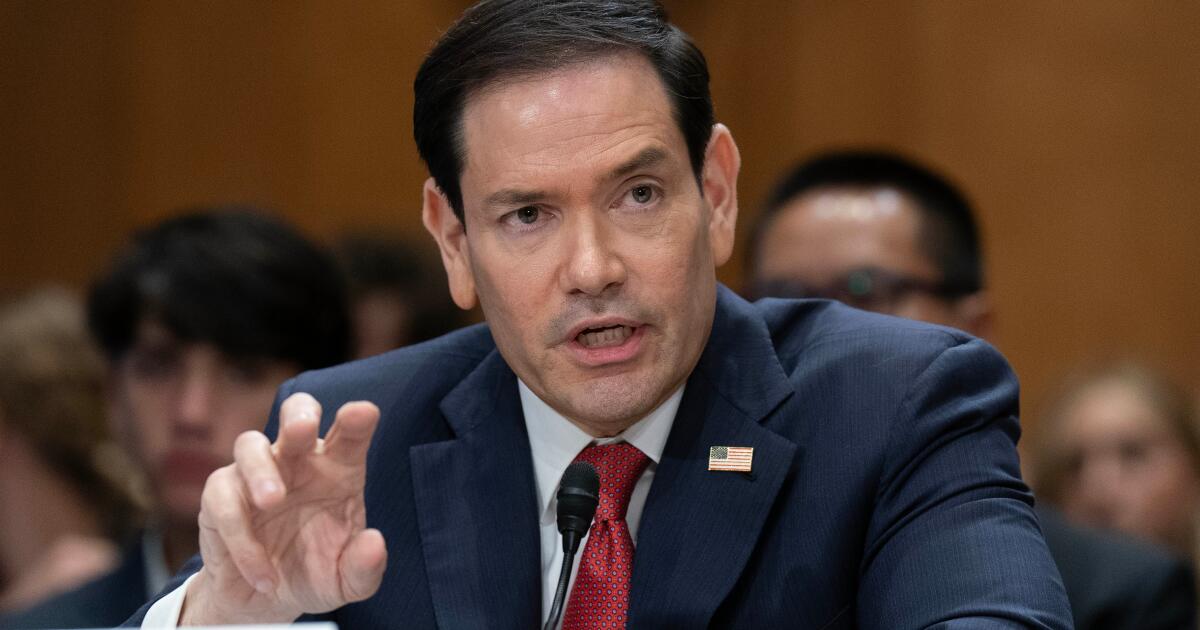
Trump and Secretary of State Marco Rubio, the son of Cuban immigrants, have been insistent that the current government must change.
“It may be a friendly takeover, it may not be a friendly takeover,” Trump told Latin American leaders gathered in Florida on Saturday.
“It wouldn’t matter because they’re down to, as they say, fumes. They have no energy. They have no money. They’re in deep trouble,” Trump said.
Trump responded to the Cuban leader’s willingness to negotiate on Friday morning by amplifying a news article with the headline:”Cuba confirms talks with Trump officials, raising hopes for US deal.” He posted that on his Truth Social account.
Rolling blackouts, shortages of food and medicine, a lack of gasoline and other shortfalls have become everyday occurrences on the island, home to 10 million. Images of uncollected garbage rotting on Havana’s streets have been broadcast across the globe. A lack of jet fuel has bludgeoned the critical tourism sector.
“The status quo is unsustainable,” Rubio said last month. “Cuba needs to change…And it doesn’t have to be change all at once. It doesn’t have to change from one day to the next.”
The Cuban announcement comes 13 days after the U.S. attacked Iran and two months after U.S. forces, deployed by Trump, deposed Venezuelan President Nicolás Maduro, a longtime Cuban ally, and brought him to New York to face drug trafficking charges.
Miguel Diaz-Canel says discussions held to find solutions ‘through dialogue’ as Washington tightens oil blockade.
Published On 13 Mar 202613 Mar 2026
Share
Cuban officials have held talks with the United States government to seek solutions to the crippling blockade imposed by Washington, President Miguel Diaz-Canel said, as the Trump administration’s threats to take over the Caribbean nation escalate.
“These talks have been aimed at finding solutions through dialogue to the bilateral differences we have between the two nations,” Diaz-Canel said in a video aired on national television on Friday.
Recommended Stories
list of 3 itemsend of list
Diaz-Canel said “international factors have facilitated these exchanges”.
He said no petroleum shipments have arrived on the island in the past three months, which he blamed on the US energy blockade.
Critical oil shipments from Venezuela were halted after the US attacked the South American country and abducted President Nicolas Maduro.
Cuba’s western region was hit by a massive blackout last week, leaving millions without power.
The talks come days after President Donald Trump levelled his latest threat at Cuba, saying the White House’s plans for the Caribbean nation may include a “friendly takeover”.
‘Impact tremendous’
Diaz-Canel added that Cuba, which produces 40 percent of its petroleum, has been generating its own power but that it hasn’t been sufficient to meet demand.
He said the lack of power has affected communications, education and transportation, and that the government has had to postpone surgeries for tens of thousands of people as a result.
“The impact is tremendous,” he said.
The president added that the aim was “to determine the willingness of both parties to take concrete actions for the benefit of the people of both countries”.
“And in addition, to identify areas of cooperation to confront threats and guarantee the security and peace of both nations, as well as in the region,” he said.
For decades, severe US economic sanctions on Cuba have crippled its economy and cut it off from global trade. In response, Cuba has depended on oil supplies from foreign allies, including Mexico, Russia and Venezuela.
WASHINGTON — Cuba’s top diplomat in Washington says Havana is prepared to enter diplomatic talks with the United States, reiterating the country’s willingness to engage even as tensions escalate with President Trump asserting that the island nation’s government could soon collapse.
“We are ready to engage with the U.S. on the issues that are important for the bilateral relation, and to talk about those in which we have differences,” Ambassador Lianys Torres Rivera, who leads Cuba’s mission in Washington, told The Times on Wednesday.
Any dialogue would need to respect Cuba’s sovereignty and its “right to self-determination,” the ambassador said.
“We are sure that it is possible to find a solution,” she said.
Her comments in a wide-ranging interview come at a particularly volatile moment for Cuba, which is under mounting economic pressure after the Trump administration imposed an oil blockade that has choked off the island’s energy supplies.
The measures have deepened a humanitarian crisis and prompted Cuban President Miguel Díaz-Canel to call for an “urgent” overhaul to the country’s economic model.
The situation in Cuba worsened after U.S. forces removed Venezuelan President Nicolás Maduro in January, allowing Washington to later cut off oil shipments from Venezuela to its longtime ally. The Trump administration later pressured other suppliers, including Mexico, to reduce deliveries.
“We are doing our best, and we are being very creative, but it has a serious impact,” Torres Rivera said of the blockade. “It is a collective punishment against the Cuban people.”
The White House this week framed Cuba’s worsening economic and humanitarian conditions as a potential opening to pressure Havana into negotiations.
“The country is obviously in a very weak place, economically speaking, the people are crying out for help, and the president believes and knows the Cuban regime wants a deal,” White House Press Secretary Karoline Leavitt said during a news briefing Tuesday.
Rep. Mario Diaz-Balart (R-Florida) told the Miami Herald on Wednesday that the Trump administration had been having secret, high-level conversations with several people in former President Raul Castro’s inner circle, a similar approach that was taken in Venezuela before Maduro’s capture. (The operation to seize Maduro killed 32 Cuban officers stationed in the country.)
Cuban President Miguel Díaz -Canel, fourth from right, holds up a Cuban flag during a rally in Havana on Jan. 16, 2026, to protest the killing of Cuban officers during the U.S. operation that captured Venezuelan President Nicolás Maduro.
(Ramon Espinosa / Associated Press)
Another report by the USA Today this week said the Trump administration was close to announcing an economic deal with Cuba that would ease travel restrictions, among other things. A representative with the Cuban government declined to comment on the report.
The White House has not specified what a deal may look like. But Trump has said the United States is interested in a “friendly takeover” and has suggested that the move would allow Cubans to visit the island, a place that many Cuban exiles have worried about returning to while the current regime is in place.
“It is just a question of time before a lot of unbelievable people are going back to Cuba,” Trump said at an event last week.
Several news outlets have reported that the Justice Department is examining possible federal charges against officials within Cuba’s government, a move that could prompt a change in the island’s government.
Torres Rivera said she is aware of the reports but said the “judicial accusations” are an “instrument of political coercion without any legitimacy.”
“It is not something we are losing sleep over,” she said.
As for the potential negotiations, Torres Rivera did not provide specifics but talked about restoring diplomatic ties somewhat to how they existed during the Obama administration.
“We are neighbors,” she said. “We have common challenges, common threats, and we can speak about all that, and we can speak on the basis of respect for each other’s sovereignty and each other’s right of self-determination. We are ready for that.”
President Trump has approached diplomacy with Cuba with a harsher tone.
“As we achieve a historic transformation in Venezuela, we’re also looking forward to the great change that will soon be coming to Cuba,” Trump said Saturday, one week after U.S. and Israeli forces attacked Iran and killed Supreme Leader Ayatollah Ali Khamenei.
He added: “Cuba’s at the end of the line. They’re very much at the end of the line. They have no money. They have no oil. They have a bad philosophy. They have a bad regime that has been bad for a very long time.”
Trump said that he has put Secretary of State Marco Rubio in charge of leading the talks with Cuba and that he believes a “deal would be made very easily with Cuba.”
Torres Rivera did not offer an opinion on Rubio being tapped to lead the negotiations. Rubio is the son of Cuban immigrants who came to Florida three years before Castro’s brother, revolutionary Fidel Castro, rose to power in 1959. She reiterated that Cuba is “ready to engage” in talks regardless of who is leading them.
“We are not talking about persons, we are talking about the government and we are ready to engage with the U.S. to talk about the very important issues that we have in bilateral relations,” she said.