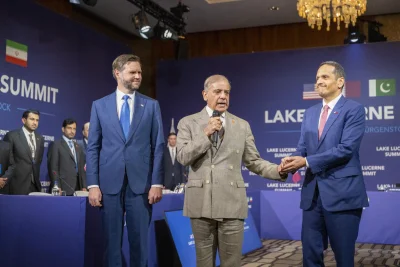
ISLAMABAD — The United States and Iran began face-to-face negotiations Saturday in Pakistan, days after a fragile, two-week ceasefire was announced, as the war that has killed thousands of people and shaken global markets entered its seventh week.
The White House confirmed the direct nature of the talks, a rare instance of high-level U.S. government engagement with the Iranian government.
Iran’s state-run news agency said three-party talks including Pakistan had begun after Iranian preconditions, including a reduction in Israeli strikes on southern Lebanon, were met, and after U.S. and Iranian officials met separately with Pakistani Prime Minister Shehbaz Sharif.
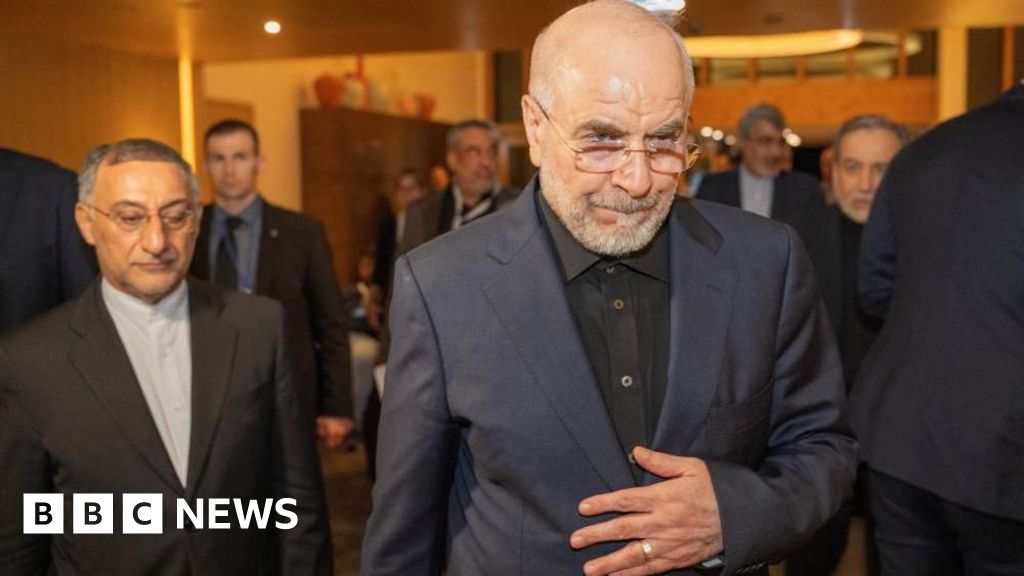
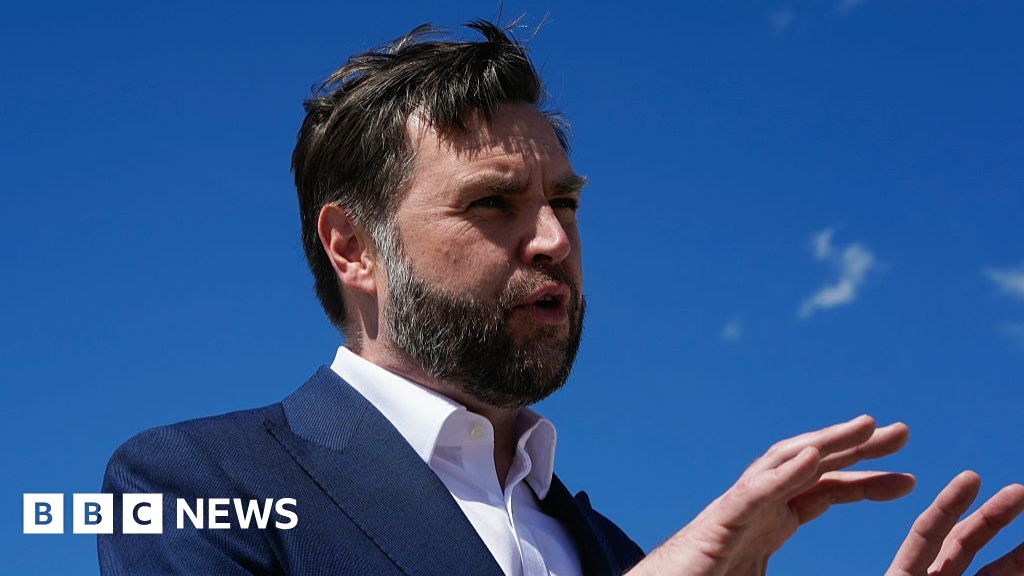
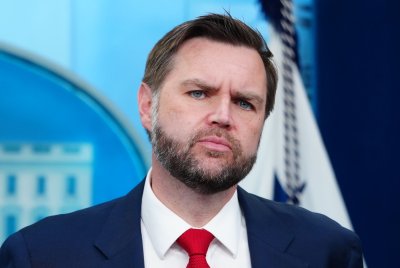
The U.S. delegation led by Vice President JD Vance and the Iranian delegation led by Parliament Speaker Mohammad Bagher Qalibaf were discussing how to advance the ceasefire already threatened by deep disagreements and Israel’s continued attacks against the Iranian-backed Hezbollah in Lebanon.
Since the Islamic Revolution in Iran in 1979, the most direct U.S. contact had been in September 2013 when President Obama called newly elected President Hassan Rouhani to discuss Iran’s nuclear program. The recent highest-level meetings were between Secretary of State John Kerry and counterpart Mohammad Javad Zarif during negotiations over the program.
Iran sets ‘red lines’ including compensation for strikes
Iran doubled down on parts of its earlier proposal, with its delegation telling Iranian state television it had presented some of the plan’s ideas as “red lines” in meetings with Sharif. Those included compensation for damage caused by the U.S.-Israeli strikes that launched the war on Feb. 28 and releasing Iran’s frozen assets.
The war has killed at least 3,000 people in Iran, 1,953 in Lebanon, 23 in Israel and more than a dozen in Gulf Arab states, and caused lasting damage to infrastructure in half a dozen Middle Eastern countries. Iran’s chokehold on the vital Strait of Hormuz has largely cut off the Persian Gulf and its oil and gas exports from the global economy, sending energy prices soaring.
Reflecting the high stakes, officials from the region said Chinese, Egyptian, Saudi and Qatari officials were in Islamabad to indirectly facilitate the talks. The officials spoke on condition of anonymity to discuss the sensitive matter.
In Tehran, residents told the Associated Press they were skeptical yet hopeful about the talks after weeks of airstrikes left destruction across their country of some 93 million people. Some said the path to recovery would be long.
“Peace alone is not enough for our country, because we’ve been hit very hard, there have been huge costs,” 62-year-old Amir Razzai Far said.
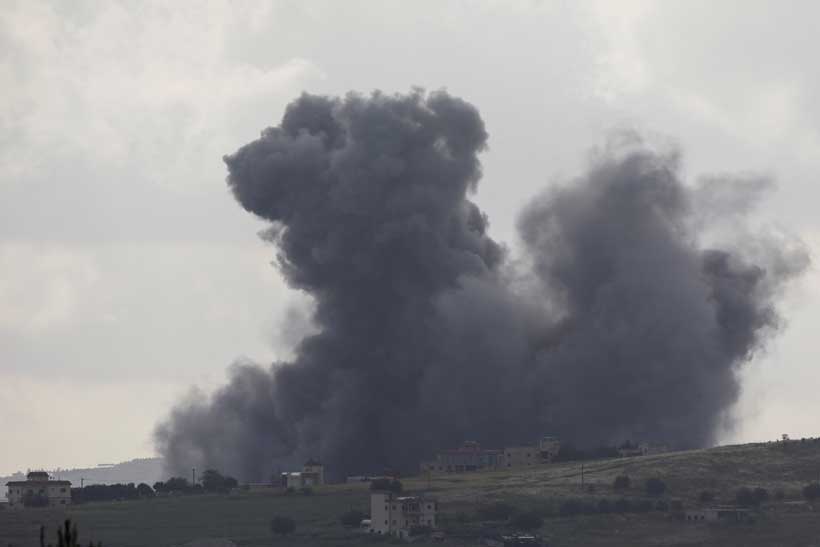
Meanwhile, Israel pressed ahead with strikes in Lebanon after saying there is no ceasefire there. Iran and Pakistan have disagreed. The Lebanese state-run news agency reported at least three people killed.
Officials posture over key issues ahead of talks
Ahead of the talks, President Trump accused Iran of using the Strait of Hormuz, a key artery for global energy supplies, for extortion, and told reporters Friday it would be opened “with or without them.”
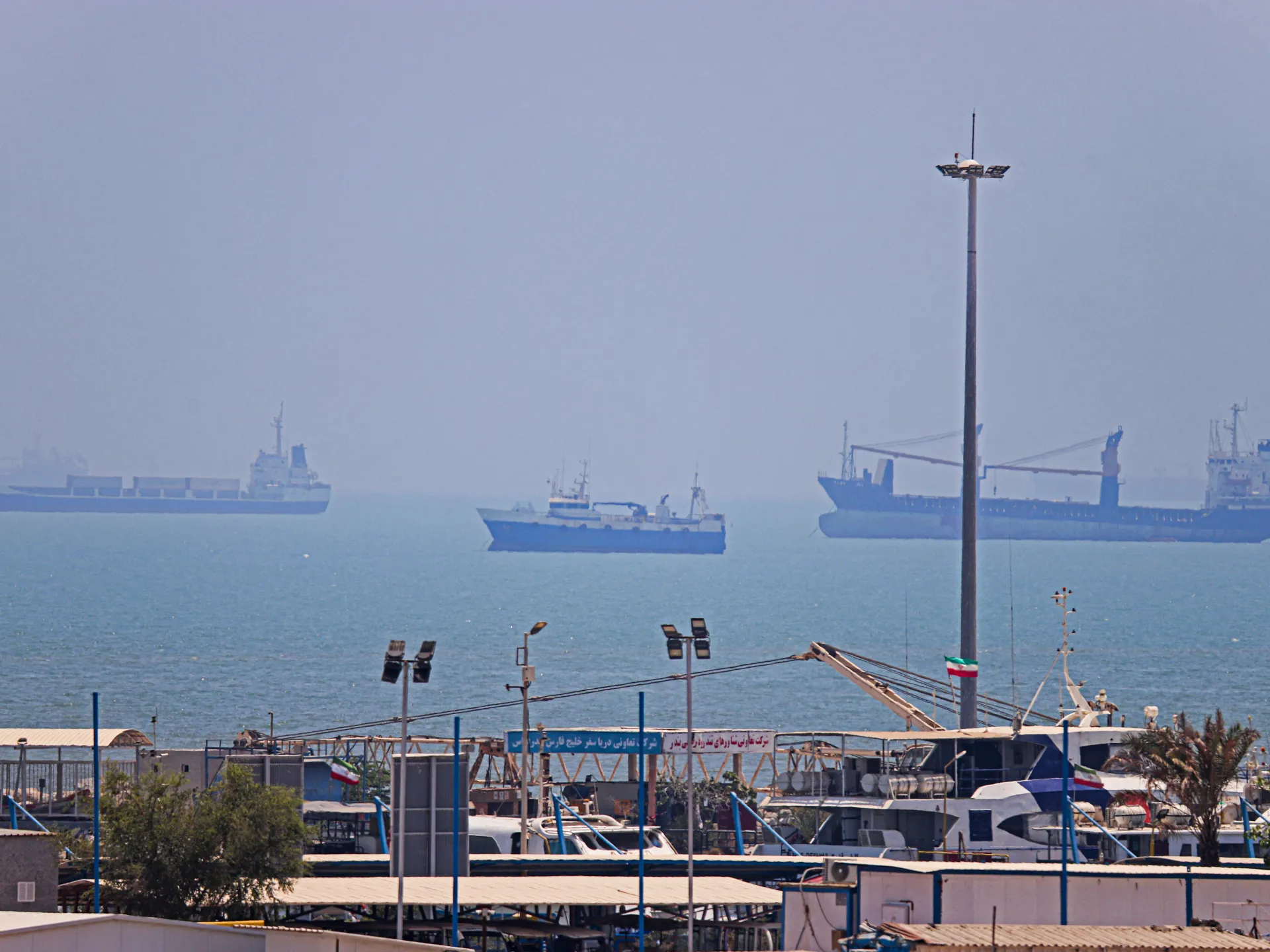
Iran’s closure of the strait has proved its biggest strategic advantage in the war. Around a fifth of the world’s traded oil had typically passed through on over 100 ships a day. Only 12 have been recorded transiting since the ceasefire.
Iran has floated the idea of charging ships, though the idea has been widely rejected by countries including the United States and Iran’s neighbor Oman.
On Saturday, Trump said on social media that the U.S. had begun “clearing out” the strait, but it was unclear whether he was referring to the reported use of mines there or Iran’s broader ability to control the area.
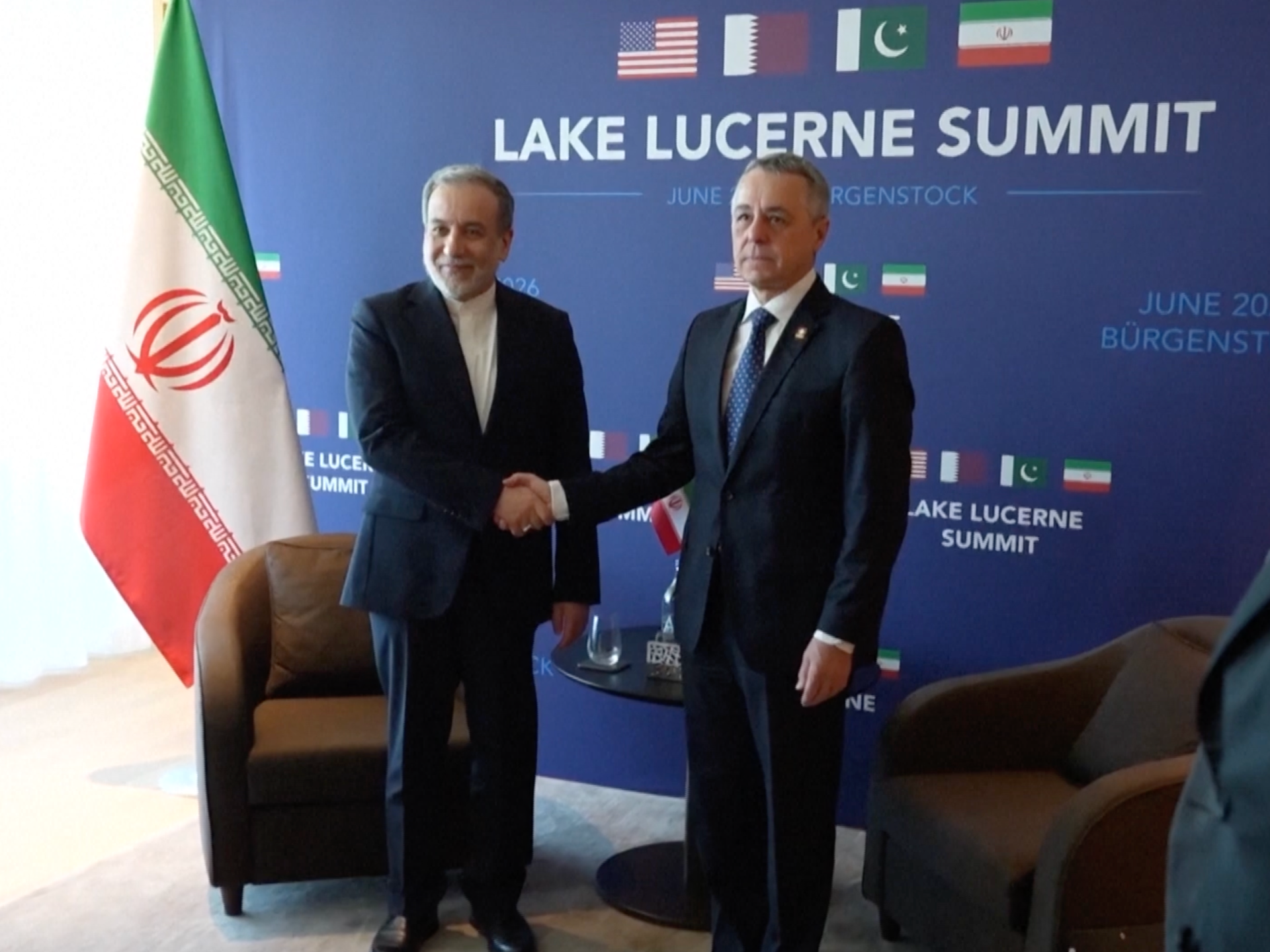
Iranian Foreign Minister Abbas Araghchi had said Tehran was entering negotiations with “deep distrust” after strikes on Iran during previous rounds of talks. Araghchi, part of Iran’s delegation in Pakistan, said Saturday that his country was prepared to retaliate if attacked again.
Iran and the United States outlined competing proposals ahead of the talks.
Iran’s 10-point proposal called for a guaranteed end to the war and sought control over the Strait of Hormuz. It included ending fighting against Iran’s “regional allies,” explicitly calling for a halt to Israeli strikes on Hezbollah.
The United States’ 15-point proposal includes restricting Iran’s nuclear program and reopening the strait.
Israel and Lebanon will have direct negotiations
Negotiations between Israel and Lebanon are expected to begin Tuesday in Washington, Lebanese President Joseph Aoun’s office said Friday, after Israel’s surprise announcement authorizing talks despite the countries lack of official relations.
Israel wants the Lebanese government to assume responsibility for disarming Hezbollah, much like was envisaged in a November 2024 ceasefire. But it is unclear whether Lebanon’s army can confiscate weapons from the militant group, which has survived efforts to curb its strength for decades.
Israel’s insistence that the ceasefire in Iran does not include a pause in its fighting with Hezbollah has threatened to sink the deal. The militant group joined the war in support of Iran in the opening days. Israel followed up with airstrikes and a ground invasion.
The day the Iran ceasefire deal was announced, Israel pounded Beirut with airstrikes, killing more than 300 people in the deadliest day in Lebanon since the war began, according to the country’s Health Ministry.
Energy pressures grow
The spot price of Brent crude, the international standard for oil prices, was above $94 on Saturday, up more than 30% since the war started.
And new pressures emerged in Europe for travelers.
The head of Airports Council International-Europe, Olivier Jankovec, warned the European Union that a ″systemic jet fuel shortage’’ could come within three weeks because of the blockage of the Strait of Hormuz.
Jankovec said in a letter obtained by the Associated Press that the crunch could impact the summer travel season and ″significantly harm the European economy.’′
Ahmed, Metz, Castillo and Magdy write for the Associated Press. Metz reported from Jerusalem, Castillo from Beijing and Magdy from Cairo. Associated Press writer Josh Boak contributed to this report.
US Vice President JD Vance and officials Steve Witkoff and Jared Kushner have met Pakistani PM Shehbaz Sharif in Islamabad ahead of possible direct talks with Iran. If confirmed, they would be the highest-level in-person talks between the US and Iran since the 1979 Islamic Revolution.
Pakistan’s ambassador to the US has told Al Jazeera that weeks of intense diplomatic efforts have led to a shared commitment from all sides to pursue a negotiated settlement, as US-Iran talks are set to begin in Islamabad.
Weekly insights and analysis on the latest developments in military technology, strategy, and foreign policy.
Donald Trump said he is “very optimistic” that a peace agreement with Iran is close, as a diplomatic team led by Vice President JD Vance heads to Pakistan for high-stakes talks this weekend aimed at ending the war. Meanwhile, however, there is no indication that Iran is easing its near-total blockade of the Strait of Hormuz, which has triggered what is reportedly the most severe disruption to global energy supplies on record.
Vance is leading the American delegation, joined by special envoy Steve Witkoff and Donald Trump’s son-in-law Jared Kushner, both of whom participated in three rounds of indirect nuclear talks with Iranian negotiators in Oman before the United States and Israel launched strikes on Iran on February 28.
Boarding Air Force Two on his way to the Pakistani capital of Islamabad, the vice president said, “We’re looking forward to the negotiation. I think it’s gonna be positive. We’ll of course see.”
Vice President @JDVance speaks to reporters before heading to Pakistan for peace talks with Iran:
“I think it’s going to be positive. As @POTUS said, if the Iranians are willing to negotiate in good faith we’re certainly willing to extend the open hand. If they’re going to try… pic.twitter.com/TBo0NNG1mh
Vance also cited Trump, adding: “If the Iranians are willing to negotiate in good faith, we’re certainly willing to extend the open hand.”
But he said: “If they’re gonna try and play us, then they’re gonna find that the negotiating team is not that receptive.”
Iran’s parliament speaker, Mohammad Baqer Qalibaf, said on Friday that two previously agreed conditions — a ceasefire in Lebanon and the unfreezing of Iranian assets — must be fulfilled before any negotiations can begin.
Posting on X, he stated that these steps were part of mutual commitments between the parties and cautioned that talks should not proceed until they are implemented, as disagreements over ceasefire terms and ongoing fighting in Lebanon continue to escalate.
MORE – (Reuters) – Iran’s parliament speaker Mohammad Baqer Qalibaf said on Friday that two previously agreed measures, a ceasefire in Lebanon and the release of Iran’s blocked assets, must be implemented before negotiations begin.
President Trump said that Iran has “no cards,” in a post on social media today.
Writing on Truth Social, he said: “The Iranians don’t seem to realize they have no cards, other than a short-term extortion of the World by using International Waterways. The only reason they are alive today is to negotiate!”
The New York Post reports that Trump is preparing military options in case talks with Iran fail. “We’re going to find out in about 24 hours. We’re going to know soon… We’re loading up the ships with the best weapons ever made, even at a higher level than we use to do a complete decimation.”
Trump says that he is preparing military options in case talks with Iran fail -NYP
“We’re going to find out in about 24 hours. We’re going to know soon…We’re loading up the ships with the best weapons ever made, even at a higher level than we use to do a complete decimation.”
In regard to the upcoming discussions, the U.S. president had previously said that Iran’s leaders “talk much differently when you’re at a meeting than they do to the press. They’re much more reasonable,” echoing his administration’s view that Tehran’s private messaging differs from its public statements.
Meanwhile, U.S. military transport aircraft are already arriving in Pakistan ahead of the talks, including this Air Force C-17.
A U.S. Air Force transport aircraft with “Charleston” written on its tail approaches PAF Base Nur Khan as Pakistan prepares to host the U.S. and Iran for peace talks, in Rawalpindi, Pakistan, April 10, 2026. REUTERS/Stringer pic.twitter.com/lFt5CvOP6r
At the same time as U.S. negotiators were heading to Pakistan, multiple reports indicated that at least some of their Iranian counterparts were still to depart for the talks.
The delegation was expected to be led by the Iranian foreign minister, Abbas Araghchi, and the parliament speaker, Mohammad Bagher Ghalibaf.
Ghalibaf had previously taken to social media to reiterate that Lebanon and the release of Iran’s blocked assets had been “mutually agreed upon between the parties” but are yet to be implemented. In a post on X, he said: “These two matters must be fulfilled before negotiations begin.”
Two of the measures mutually agreed upon between the parties have yet to be implemented: a ceasefire in Lebanon and the release of Iran’s blocked assets prior to the commencement of negotiations.
These two matters must be fulfilled before negotiations begin.
— محمدباقر قالیباف | MB Ghalibaf (@mb_ghalibaf) April 10, 2026
UPDATES:
UPDATE: 4:35 PM EDT –
Imagery released by Al Jazeera shows the wreckage of an Iranian Air Force Su-24MK Fencer strike aircraft that was shot down by the Qatar Emiri Air Force over the Persian Gulf while nearing Qatari airspace.
UPDATE: 4:25 PM EDT –
Within the last hour, Jennifer Jacobs, CBS News senior White House reporter, posted this photo to X, showing the aircraft carrying Vice President Vance about to touch down in Paris, en route to Pakistan.
Further to our previous reporting, France has released footage of its Tigre attack helicopters and Rafale fighters intercepting Iranian drones over the Middle East during the Iran war.
France has released footage of its Eurocopter Tiger attack helicopters and Rafale fighters hunting down and destroying Iranian drones over the Middle East during the Iran war. pic.twitter.com/MqsNoRQYln
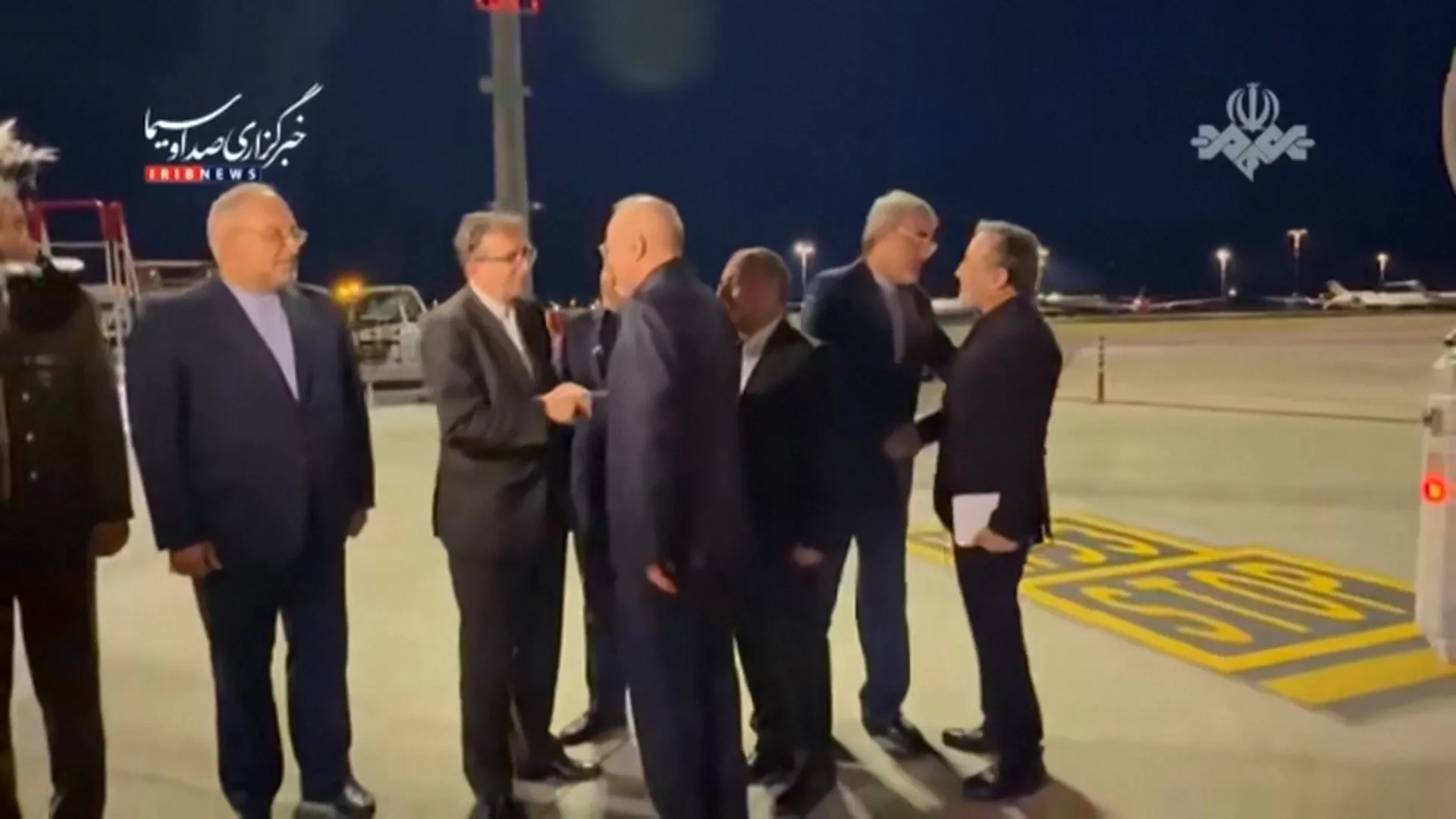
The Iranian delegation has reportedly now arrived in Islamabad. Iranian media reports that the Iranian negotiating delegation is led by Parliament Speaker Mohammad Baqer Qalibaf.
The Iranian delegation has arrived in Islamabad for peace talks with the United States.
According to SPG Energy Oil data shared with NBC News, just two ships crossed the Strait of Hormuz today, the lowest daily total since Trump announced the Iran ceasefire on Tuesday. Prior to the conflict, 130 to 160 ships typically transited the waterway each day.
Data provided to @NBCNews by @SPGEnergyOil shows just two ships transited the Strait of Hormuz today, the lowest number since President Trump announced the ceasefire with Iran on Tuesday. Prior to the war, 130-160 ships would typically pass each day.
In a televised address, Pakistani Prime Minister Shehbaz Sharif described upcoming U.S.-Iran talks as “a make-or-break moment.”
“I ask all of you to pray that these talks are successful and countless lives are saved and the world shall see peace,” he said.
UPDATE: 3:10 PM EDT –
President Trump is preparing a $98-billion supplemental spending request for U.S. military operations in Iran, a significantly lower figure than earlier Pentagon proposals, according to two people familiar with the administration’s plans, NOTUSreports.
Defense officials initially proposed packages nearing $250 billion to fund troop, ship, aircraft, and weapons deployments to the region and to speed munitions production — a top Pentagon priority. Estimates put the cost of Operation Epic Fury to date at $25 billion to $35 billion.
Joseph Haboush, Washington correspondent for Al Arabiya, writes that a first phone call between the Lebanese and Israeli ambassadors to the United States will take place imminently. This is expected to pave the way to direct negotiations next week.
The first phone call between the Lebanese and Israeli ambassadors to Washington is set to take place shortly. This initial call, to include US envoy to Beirut Michel Issa, will set the stage and date for the beginning of direct negotiations expected next week.
Further strain on the current temporary ceasefire comes from continued Israeli strikes on Lebanon, which both Iran and Pakistan say breach the truce. Trump says that he believes Israel is now “scaling back” its operations in Lebanon.
Israel has carried out a new wave of strikes targeting what it described as “Hezbollah launch sites” in Lebanon, after the Israel Defense Forces (IDF) earlier urged residents to evacuate Beirut’s densely populated southern suburbs. Later, Hezbollah said it launched a barrage of rockets toward settlements in northern Israel.
According to the Israeli military, Hezbollah fired around 30 projectiles from Lebanon into Israel on Friday, causing some damage.
A Hezbollah rocket struck a building at a sports court in the northern city of Nahariya a short while ago, causing damage but no injuries, according to rescue services.
According to the IDF, Hezbollah has fired some 30 rockets from Lebanon at northern Israel since this morning. pic.twitter.com/Ivdv0MXfI5
— Emanuel (Mannie) Fabian (@manniefabian) April 10, 2026
The IDF chief of staff, Eyal Zamir, said Israeli forces are continuing combat operations in southern Lebanon and are “not in a ceasefire” with Hezbollah. Zamir added: “The IDF is in a state of war; we are not in a ceasefire, we continue to fight here in this sector, this is our main fighting sector. In Iran, we are in a ceasefire, and we can return to fighting there at any moment, and in a very powerful manner.”
The IDF said in a statement that it has destroyed more than 200 rocket launchers, including approximately 1,300 launch tubes, belonging to the Iran-backed militant group since March 2.
Israeli Prime Minister Benjamin Netanyahu said he had directed his cabinet to begin direct negotiations with Lebanon focused on disarming Hezbollah, while maintaining that “there is no ceasefire” in Lebanon and that Israel will “continue to strike Hezbollah with force.”
Israeli PM Benjamin Netanyahu says he has directed his cabinet to begin ceasefire talks with Lebanon “as soon as possible”, a day after his country unleashed the largest-scale attacks yet on the country, killing at least 300 people.
Lebanon is now insisting on a ceasefire before direct negotiations with Israel can begin, with Lebanese President Joseph Aoun calling it “the only solution.” Beirut is also demanding that the United States serve as mediator and guarantor of any agreement. Those talks are scheduled for next week and will be hosted by the U.S. State Department in Washington.
Lebanese President Joseph Aoun said the only solution to the current situation in Lebanon is a ceasefire between Israel and Lebanon, followed by direct negotiations between the two countries. “I have conducted—and continue to conduct—intense international contacts in this… https://t.co/FG5BG0LD0O
— Ariel Oseran أريئل أوسيران (@ariel_oseran) April 9, 2026
In a social media post late Thursday, Trump said that Iran was doing a “very poor job” of allowing oil to go through the Strait of Hormuz. “That is not the agreement we have!” The U.S. leader also slammed Iran for reportedly charging tolls for the tankers that receive permission to transit the strait.
“There are reports that Iran is charging fees to tankers going through the Hormuz Strait — They better not be and, if they are, they better stop now!” – President DONALD J. TRUMP pic.twitter.com/wJIXNJ8z2Q
Iran is moving to further tighten its control over maritime traffic through the Strait of Hormuz in an effort to increase pressure on the United States, according to the think tank Institute for the Study of War (ISW).
ISW says the strategy is designed to keep oil prices elevated, giving Tehran greater leverage in upcoming negotiations with Washington and improving its ability to secure concessions.
According to the institute, Iranian officials have indicated that no more than 15 vessels per day will be allowed to transit the strait, down sharply from as many as 140 daily before the war. According to the ISW:
“The Iranian Ports and Maritime Organization published a graphic on April 8 instructing ships to follow designated entry and exit routes in coordination with the Islamic Revolutionary Guards Corps (IRGC) Navy to transit the strait. These routes move international maritime traffic into Iranian-controlled waters. The graphic warns that ships risk hitting mines outside of these routes.”
MORE ⬇️🧵(1/3): Iran is taking several steps to exert control over maritime traffic through the Strait of Hormuz, with the net effect of keeping oil prices high. Iran likely aims to use high oil prices to exert economic pressure on the United States and extract concessions from… https://t.co/J1pHUaSjUPpic.twitter.com/JUKCyYHe64
— Institute for the Study of War (@TheStudyofWar) April 9, 2026
On Thursday, four tankers and three bulk carriers transited the strait, taking the total number of vessels passing through since the ceasefire to at least 12, according to data firm Kpler.
Updated @MarineTraffic playback of the Strait of #Hormuz from 8 April (00:00 UTC) till 9 April (21:00 UTC). @Kpler data shows that 4 tankers and 3 bulk carriers have crossed today, bringing the total to 12 vessels since the ceasefire began, including 5 bulk carriers yesterday. pic.twitter.com/ER5x5ge6lh
The Strait could be open, and the supply of oil can return to usual in the next two months, according to National Economic Council Director Kevin Hassett.
“There are boats going through, but at about 10 percent of the normal pace,” Hassett told Fox Business.
IDF officials told a closed Knesset briefing that Iran’s new leadership is “more extreme than its predecessor,” amid ongoing regional tensions and uncertainty over the durability of the ceasefire. The remarks, first reported by i24NEWS Knesset correspondent Amiel Yarchi, come as Israeli officials assess both the outcome of recent operations and the risk of renewed conflict.
IDF officials told a closed Knesset briefing that Iran’s new leadership is “more extreme than its predecessor,” – i24NEWS
Kuwait has accused Iran and its proxies of carrying out drone attacks against its territory on Thursday, despite the ongoing two-week ceasefire in the Iran conflict.
The Kuwaiti foreign ministry said that drones “targeted some vital Kuwaiti facilities” on Thursday evening.
However, Iran’s Revolutionary Guard (IRGC) has denied launching any new strikes on Gulf states.
In a statement carried on Iran’s state-run IRNA news agency, the IRGC said: “If these reports published by the media are true, without a doubt it is the work of the Zionist enemy or America.”
Just before the ceasefire, the number of ballistic missile interceptors left in Israel’s arsenal had reportedly dwindled to “double digits,” according to a Trump administration source with knowledge of the situation.
The critical shortage had led Israeli military officials to be significantly more selective when confronting ballistic missile attacks from Iran as well as from Yemen. “They’re having to pick and choose what they shoot down,” the official told Drop Site.
Hezbollah claims it targeted Israel’s Ashdod naval base with missiles.
“In response to the enemy’s violation of the ceasefire and its repeated attacks on Beirut, and after the Resistance adhered to the ceasefire while the enemy did not, the fighters of the Islamic Resistance targeted… the naval base in the port of Ashdod with missiles,” the group said in a statement.
Hezbollah says it has targeted Israel’s Ashdod naval base with missiles, two days after deadly Israeli airstrikes on Beirut have left more than 300 people dead.https://t.co/HtHTEfgCzY
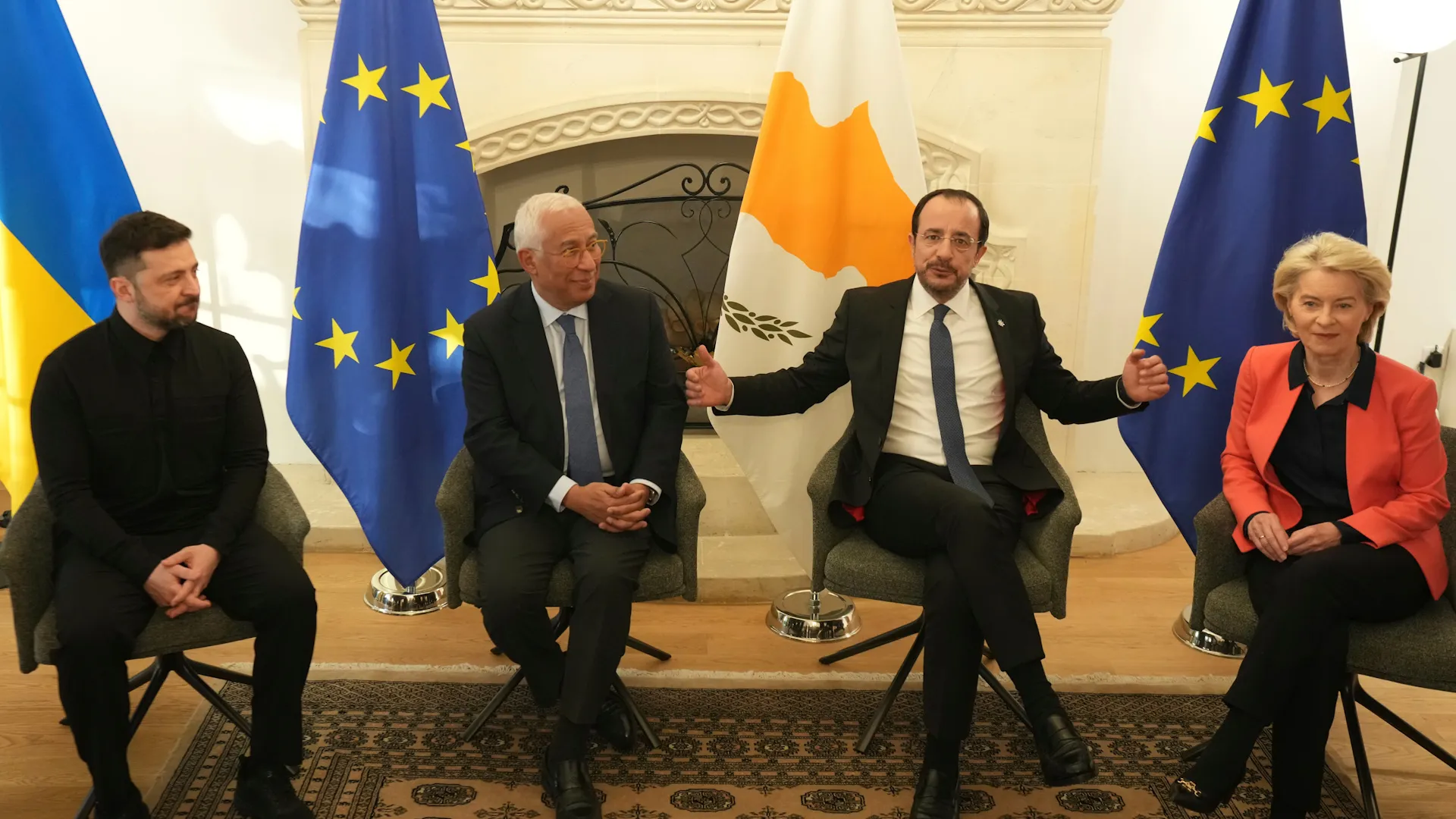
Volodymyr Zelensky has said that Ukrainian teams sent to the Middle East to strengthen regional air defenses have successfully shot down Iranian Shahed drones.
“We demonstrated to some countries how to work with interceptors,” the Ukrainian president said in a post on X.
“Did we destroy Iranian ‘Shaheds?’ Yes, we did. Did we do it in just one country? No, in several. And in my view, this is a success.”
We sent our military experts to the Middle East, including specialists in interceptor drones and electronic warfare. We demonstrated to some countries how to work with interceptors. Did we destroy Iranian “shaheds?” Yes, we did. Did we do it in just one country? No, in several.… pic.twitter.com/lNVkOpMqn3
Zelensky said Ukrainian forces participated in active operations using domestically produced, combat-tested interceptor drones.
“This was not about a training mission or exercises, but about support in building a modern air defense system that can actually work,” he added.
We sent our military experts to the Middle East, including specialists in interceptor drones and electronic warfare. We demonstrated to some countries how to work with interceptors. Did we destroy Iranian “shaheds?” Yes, we did. Did we do it in just one country? No, in several.…
— Volodymyr Zelenskyy / Володимир Зеленський (@ZelenskyyUa) April 10, 2026
The Israeli military has accused Hezbollah of using ambulances for military purposes.
In a post on X, Avichay Adraee, the Arabic-language spokesperson for the IDF, claimed that the militant group has been making “extensive military use” of ambulances, without providing evidence.
Hezbollah must stop using ambulances as part of its terror operations in Lebanon immediately, IDF Arabic Spokesperson Col. (res.) Avichay Adraee warned.
The United Arab Emirates says it will reassess which regional partners it can “rely on” and review its national priorities after bearing the brunt of Iranian attacks during the conflict.
UAE presidential adviser Anwar Gargash said Abu Dhabi will “scrutinize” its “regional and international relationships” while strengthening an economic and financial system that boosts resilience.
UAE says it will reassess which regional partners it can “rely on” and review its national priorities after bearing the brunt of Iranian attacks.
• Last month, Gargash criticized “major” Arab and Islamic nations for failing to support Gulf Arabs in “times of hardship.”
The U.K. defense minister, Luke Pollard, has raised the possibility of Britain bringing allies and partners together to work out solutions to reopen the Strait of Hormuz. Pollard said that the United Kingdom can play a “unique convening role.”
He also hit back at Trump’s claims that the Royal Navy is “too old” and that its aircraft carriers “don’t work” and are “toys.” “We’ve got a strong Royal Navy,” he told the BBC. “We’ve got a globally deployed navy at the moment.”
BREAKING: Responding to mocking comments by Donald Trump about the depleted state of the Royal Navy, including describing Britain’s aircraft carriers as “toys”, John Healey, UK defence secretary, says: “I reject the descriptions that have been levelled against them”. Healey says…
Photos have been published online that claim to show the hulk of Iran’s sea base-like ship Shahid Mahdavi, a converted container ship that missiles and drones could be launched from. It was the target of U.S. airstrikes earlier in the conflict.
Reports out of France, citing French military officials, state that French Army Tigre helicopter gunships deployed in the United Arab Emirates have shot down their first Iranian drones, although when this happened is unclear. The helicopters used their 30mm cannons to bring down the Shahed-type drones, rather than Mistral air-to-air missiles. Meanwhile, the integration of laser-guided rockets for the counter-drone role is said to be making progress.
An intriguing photo of the aftermath of the attack on a U.S. command post in Kuwait that killed six American servicemen reveals a single Soviet-era free-fall aircraft bomb. This led to much speculation that it may have been dropped on the base by Iran, most likely using a Su-24 Fencer strike aircraft, two examples of which were shot down by Qatar.
Trevor Ball, a conflict researcher at Bellingcat, has got to the bottom of the story, namely that the bomb was an inert example that was placed outside the base as an ornament. The same weapon can also be seen in official photos of the base taken long before the conflict.
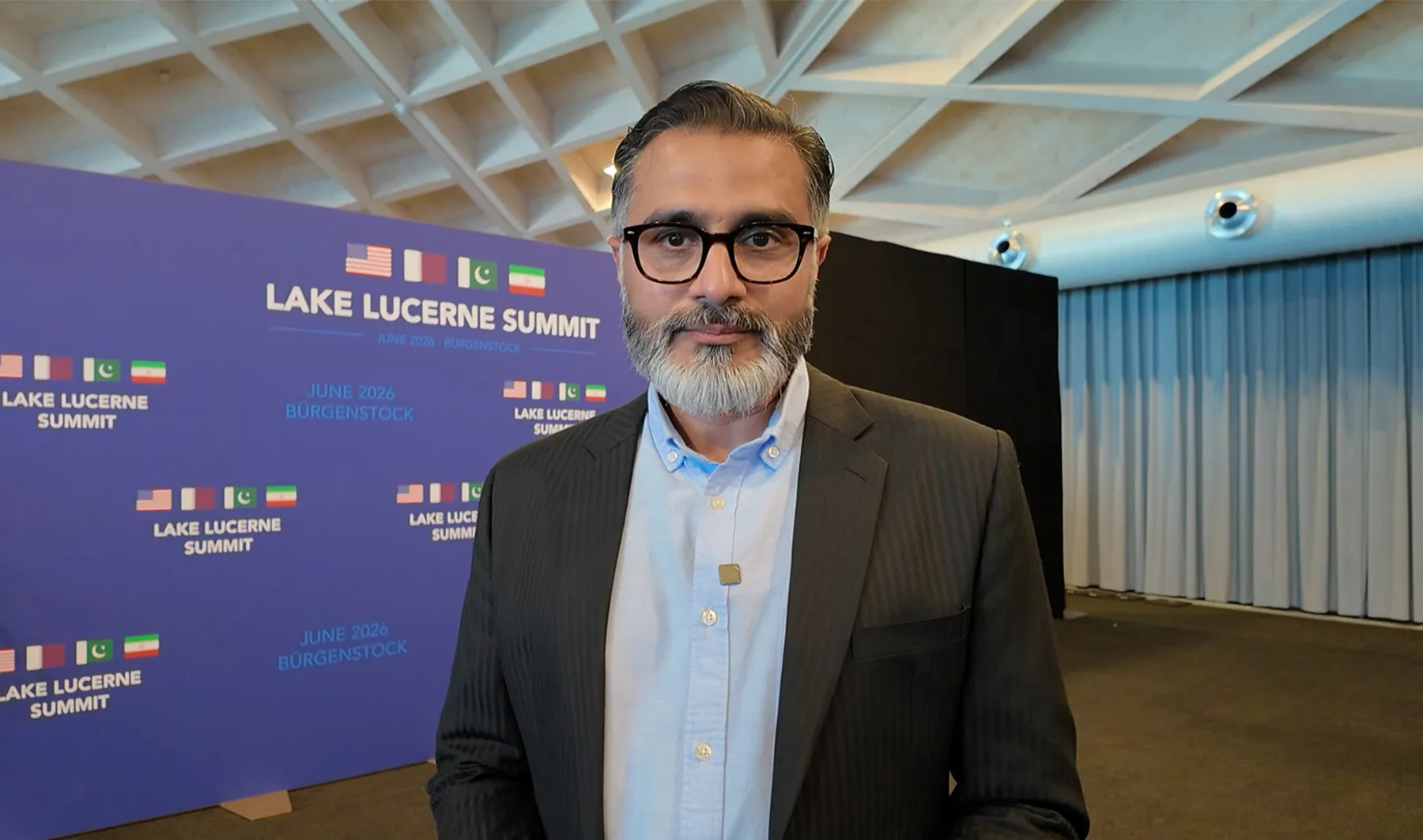
Islamabad, Pakistan – With key differences in the Iranian and American positions seemingly intact, Pakistan is aiming for what officials describe as a realistic – if modest – outcome from the negotiations between the two warring nations set to commence in Islamabad on Saturday.
The aim: to get the United States and Iranian negotiators to find enough common ground to continue talks.
On Friday, US Vice President JD Vance left Washington for Islamabad, where he will lead the American team, which will also consist of President Donald Trump’s chief negotiator Steve Witkoff and son-in-law Jared Kushner. While Iran has not formally confirmed its representatives at the talks, Foreign Minister Abbas Araghchi and Parliament Speaker Mohammad Bagher Ghalibaf are expected to lead Tehran’s team.
These high-level talks follow days after the US and Iran agreed to a Pakistan-mediated two-week ceasefire, and will be held exactly six weeks after the US and Israel launched their war on Iran with the killing of Iranian Supreme Leader Ayatollah Ali Khamenei on February 28.
Experts and sources close to the mediation effort said there was little expectation that a major breakthrough would be reached on Saturday. But by setting a more realistic ceiling – an agreement in Islamabad to continue deeper negotiations aimed at finding a lasting peace deal – Pakistan is hopeful it can help build on a truce that led to a collective sigh of relief globally.
“Pakistan has succeeded in getting them together. We got them to sit at a table. Now it is for the parties to decide whether they are willing to make the sacrifices necessary to reach an eventual solution,” Zamir Akram, Pakistan’s former ambassador to the United Nations, told Al Jazeera.
Now, he added, it will aim to secure an agreement for the US and Iran to continue dialogue.
The ‘proximity format’
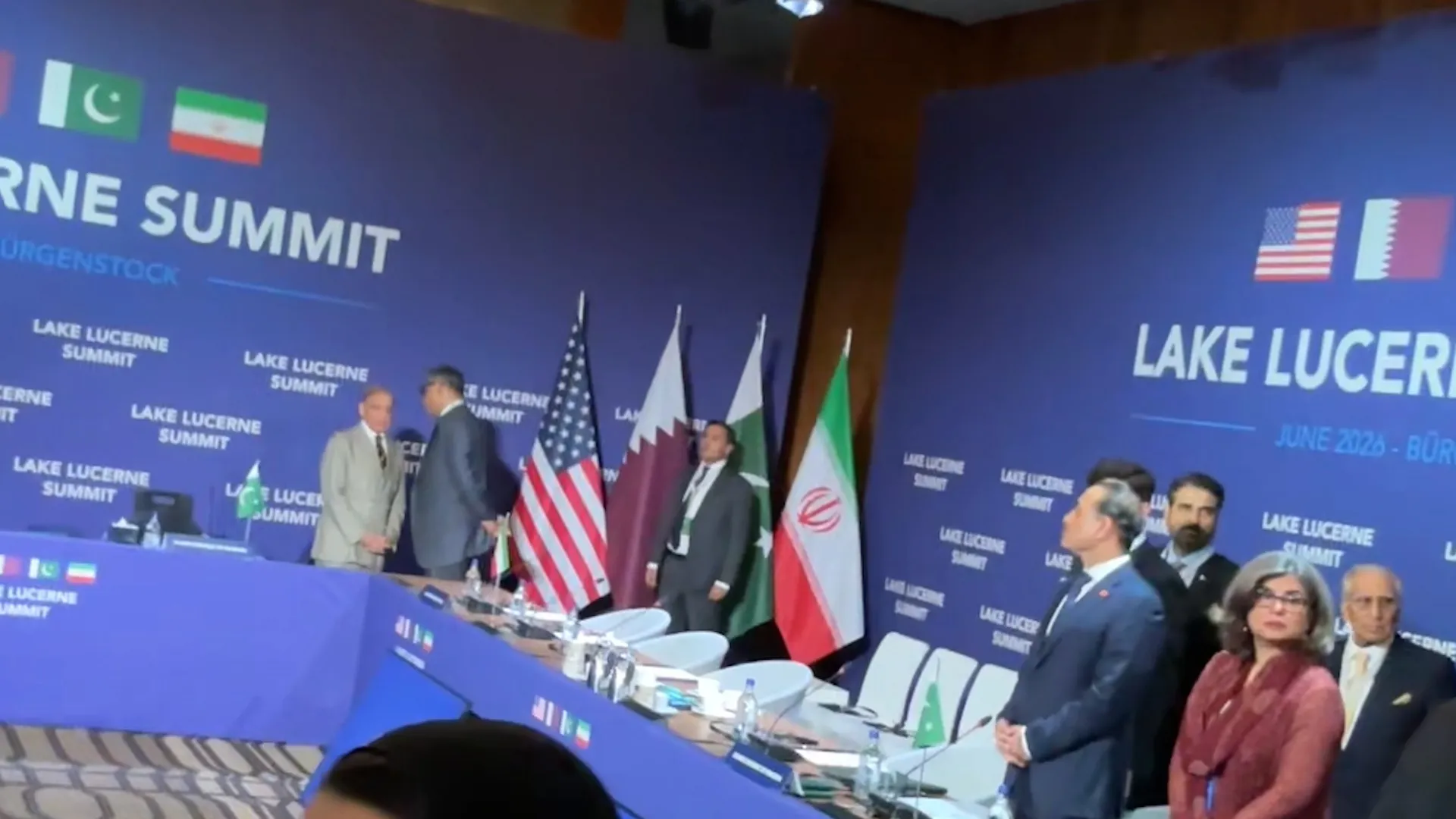
The US and Iranian delegations will land at the Nur Khan airbase outside Islamabad and then drive to the Serena Hotel, where they will stay, and where the talks will be held.
Though the two teams will be in the same hotel, they will not come face to face for the negotiations, officials said.
Instead, they will sit in two separate rooms, with Pakistani officials shuttling messages between them.
In diplomatic jargon, such negotiations are known as proximity talks.
Pakistan’s experience with such a dialogue is not new. In 1988, Islamabad itself participated in the Geneva Accords negotiations on the Soviet withdrawal from Afghanistan, where UN-mediated indirect talks between Pakistan and Afghanistan produced a landmark agreement.
Akram, who has represented Pakistan at the UN in Geneva from 2008 to 2015, said that history was relevant.
“Proximity talks have been used before. Pakistan itself participated in one in Geneva in 1988 on the Afghan issue,” he told Al Jazeera. “If the parties did not trust Pakistan, they would not be here. The metric of success should be an agreement to continue this process in search of a solution. It will not happen in a couple of days.”
Building diplomatic momentum
In the days between the ceasefire announcement on April 7 and the arrival of the delegations in Islamabad, world leaders moved quickly to register support.
UN Secretary-General Antonio Guterres welcomed the ceasefire and expressed appreciation for Pakistan’s role. Kazakhstan, Romania and the United Kingdom also issued statements endorsing Islamabad’s mediation.
French President Emmanuel Macron called Prime Minister Shehbaz Sharif to congratulate him, while Turkiye’s President Recep Tayyip Erdogan also spoke to the Pakistani leader.
Analysts say these calls were not only expressions of goodwill but signals of international backing, aimed at strengthening Pakistan’s hand in pushing both Washington and Tehran to deliver results.
Sharif spoke with eight world leaders, including the emir of Qatar, the presidents of France and Turkiye, the prime ministers of Italy and Lebanon, the king of Bahrain and the chancellors of Germany and Austria.
Foreign Minister Ishaq Dar, who is also deputy prime minister, engaged with more than a dozen counterparts over the past two days and held an in-person meeting with China’s ambassador in Islamabad.
In total, Pakistan’s leadership made or received more than 25 diplomatic contacts in roughly 48 hours.
Salma Malik, a professor of strategic studies at Quaid-i-Azam University, said the scale of engagement reflected confidence in Pakistan’s role.
“The two main parties showed confidence in Pakistan to act as a neutral agent, that is the first and most critical litmus test for any mediating country, and Pakistan passed it,” she told Al Jazeera.
The Lebanon problem
The most immediate threat to Saturday’s talks lies outside the negotiating room.
Iran has framed Israeli strikes on Lebanon as a direct challenge to the ceasefire. Iranian President Masoud Pezeshkian, who spoke to Sharif earlier this week, warned that continued attacks would render negotiations meaningless.
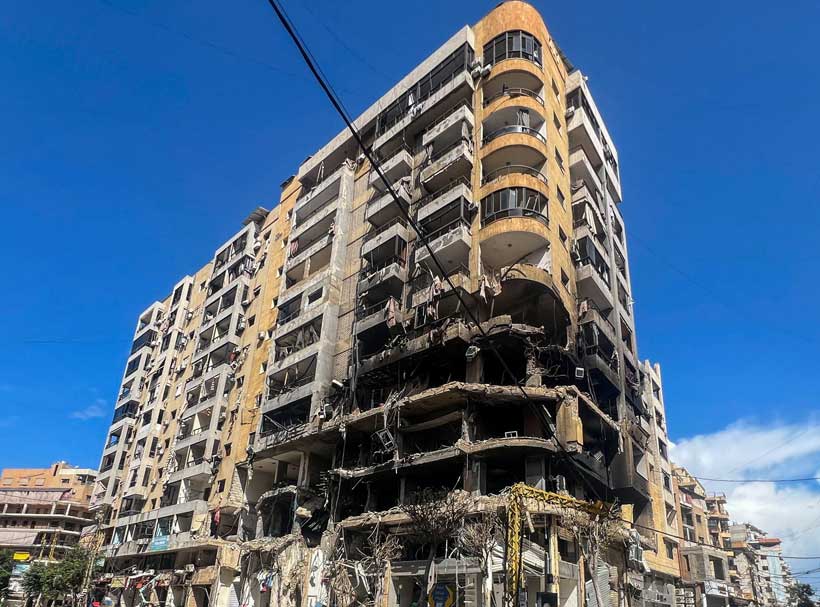
Hours after the ceasefire was announced, Israel launched its most widespread bombardment of Lebanon since the start of the conflict, killing more than 300 people across Beirut and southern Lebanon in a single day.
Rescuers stand at the site of an Israeli strike carried out on Wednesday, in El-Mazraa in Beirut, Lebanon, on April 9, 2026 [Raghed Waked/Reuters]
Foreign Minister Abbas Araghchi said Tehran could abandon the ceasefire entirely if the strikes continued.
Sharif, in a call with Lebanese Prime Minister Nawaf Salam on April 9, strongly condemned Israel’s actions.
Whether Lebanon is covered by the ceasefire remains contested. Pakistan has maintained that the truce extends across the wider region, including Lebanon, as reflected in Sharif’s statement earlier this week.
Washington has taken a different view. US Vice President JD Vance, who will lead the American delegation, said in Budapest that Lebanon falls outside the ceasefire’s terms, a position echoed by President Donald Trump and the White House.
Seema Baloch, a former Pakistani envoy, said the issue ultimately rests with Washington.
“Lebanon is key and Israel will use it to play the spoiler role,” she told Al Jazeera. “It is now the US decision whether it will allow Israel, which is not seated at the negotiating table, to play that role.”
There are, however, signs of limited de-escalation.
Israeli Prime Minister Benjamin Netanyahu said on Thursday that Israel was ready to begin direct negotiations with Lebanon “as soon as possible”, focusing on disarming Hezbollah and reaching a peace agreement.
The announcement followed US pressure. Trump told NBC he had asked Netanyahu to “low-key it” on Lebanon.
However, Netanyahu made clear there was no ceasefire in Lebanon, saying Israel would continue striking Hezbollah even as talks proceed.
Salman Bashir, a former Pakistani foreign secretary, said Lebanon remains within the ceasefire’s scope.
“Lebanon is very much part of the ceasefire, as was mentioned in the prime minister’s statement,” he told Al Jazeera. “The Israelis may be inclined to keep the pressure on Lebanon, but not for long if the US is keen on a cessation of hostilities, as it seems.”
Stumbling blocks
Beyond Lebanon, several other obstacles remain.
Washington is expected to push for verifiable restrictions on Iran’s nuclear programme, including limits on enrichment and the removal of stockpiled material.
Tehran, in turn, is demanding full sanctions relief, formal recognition of its right to enrich uranium and compensation for wartime damage.
The Strait of Hormuz, through which roughly a fifth of the world’s oil and gas passes in peacetime, remains a key pressure point, with Iran retaining the ability to disrupt maritime traffic.
Bashir said there could be movement on some of these issues.
“There may be an opening on the Strait of Hormuz, under Iranian control. Iran will not give up on the right to enrichment. If nothing else, there should be an extension of the ceasefire deadline,” he told Al Jazeera.
Muhammad Shoaib, a professor of international relations in Islamabad, said progress would depend on movement on core issues.
“Both parties agreeing on the need to continue or even extend the ceasefire, while in principle agreeing on crucial points such as the Strait of Hormuz, Iran’s right to enrichment and respect for sovereignty, will suggest that the first round is meaningful and successful,” he told Al Jazeera.
The regional atmosphere has also been shaped by sharp rhetoric from some of Iran’s Gulf neighbours.
The United Arab Emirates, which faced hundreds of missile and drone attacks during the conflict, has been among the most vocal.
Its ambassador to Washington wrote in The Wall Street Journal that a ceasefire alone would not be sufficient and called for a comprehensive outcome addressing Iran’s “full range of threats”.
Bahrain, meanwhile, presented a United Nations Security Council resolution on April 7 calling for the reopening of the Strait of Hormuz. The measure received 11 votes in favour but was vetoed by Russia and China, with Pakistan and Colombia abstaining.
Saudi Arabia, Turkiye and Egypt are not expected to have a formal presence at the talks, despite being closely involved in pre-negotiation diplomacy. The four countries held meetings in Riyadh and later in Islamabad aimed at securing a pause in hostilities.
Israel, a party to the conflict, will also not be represented. Pakistan, like most Muslim-majority countries, does not recognise Israel and has no diplomatic relations with it.
A slight easing
There are, however, tentative signs of easing tensions ahead of Saturday’s talks.
On Friday, as he was departing from Washington, Vance said that the US team was “looking forward to the negotiations”.
“We think it’s going to be positive. We’ll, of course, see. As the president of the United States said, if the Iranians are willing to negotiate in good faith, we are certainly willing to extend an open hand,” the US vice president said. “If they try to play us, they’re going to find that the negotiating team is not that receptive. So we’ll try to have a positive negotiation.”
He also said that Trump had given the US team “some pretty clear guidelines”.
Earlier this week, Saudi Arabia’s foreign minister spoke with his Iranian counterpart for the first time since the war started.
And Iran’s Supreme National Security Council said on April 8 that discussions could continue for up to 15 days, suggesting readiness for a prolonged process.
Akram, the former envoy, said the benchmark for success was clear.
“What they need to agree is that they will find a solution, and that in itself would be a step in the right direction,” he told Al Jazeera. “Finding a long-term solution will take time. It will not happen in a couple of days.”
Malik, the academic in Islamabad, said Pakistan’s expectations remained modest.
“What Pakistan expects is breathing space, an opportunity for peace. It is not expecting anything big. It is a small wish, but realising it will be very difficult,” she told Al Jazeera.
WASHINGTON — Pivotal negotiations in Pakistan this weekend between the United States and Iran could hinge on developments in Lebanon, where ongoing Israeli strikes Thursday risked derailing a wider regional ceasefire.
Tensions only deepened amid reports of limited Iranian drone attacks across the region, and as Arab states warned that the Strait of Hormuz — a vital global shipping route — had only partially reopened despite President Trump’s assurances that Tehran had guaranteed full access.
Yet tests of the ceasefire have not deterred Iranian and American officials from their plans to travel to Pakistan on Saturday for the highest-level talks between the two nations, aimed at a final agreement to end the war, now in its sixth week.
The stakes are high for Iran, which has been pummeled by U.S. attacks, and for Trump, whose pursuit of the war has been domestically unpopular. The plan appeared precarious early Thursday, amid ongoing disagreement over whether the ceasefire included Lebanon.
Iran warned that continued Israeli attacks targeting the militant group Hezbollah in Lebanon could jeopardize the two-day-old truce. Hours later, Israel Prime Minister Benjamin Netanyahu said his government would open direct negotiations with Lebanon — but subsequently declared he would not cease strikes there.
His move to negotiate with the Lebanese came the day after President Trump asked Netanyahu to slow operations in Lebanon ahead of the Pakistan talks, a source familiar with the matter told The Times. Iran’s Foreign Ministry spokesman, Esmail Baghaei, told reporters Thursday that the talks starting would be “contingent” upon hostilities ceasing in Lebanon.
As Israel’s posture on Lebanon injected uncertainty into the situation Thursday, the Strait of Hormuz — which Iran agreed to reopen in the ceasefire deal — remained closed, according to Sultan Al Jaber, a government minister in the United Arab Emirates. Traffic through the strait was below 10% of its usual volume Thursday, with only seven ships passing through in a 24-hour period, Reuters reported.
Trump, however, projected optimism Thursday about the weekend negotiations in Islamabad — even as the U.S. position appeared to weaken.
“I spoke with Bibi and he’s going to low-key it. I just think we have to be sort of a little more low-key,” Trump saidin an interview with NBC News. He said he was “very optimistic” that a deal with Iran was in reach.
A White House official said Vice President JD Vance will lead the U.S. delegation, which will also include special envoy Steve Witkoff and Jared Kushner, the president’s son-in-law. They would be the highest-level talks between the United States and Iran since the 1979 Islamic Revolution.
An Israeli official said the separate talks with Lebanon, to be conducted by the Israeli and Lebanese ambassadors to Washington, would start next week at the State Department. A State Department official confirmed the agency would host the talks.
Israel is not a direct party to the weekend negotiations in Pakistan between the U.S. and Iran. But “the United States knows our red lines in terms of nuclear disarmament, proxies, ballistic missile production,” the Israeli official said. “We believe we’re on the same page here.”
The Tuesday night ceasefire deal between the United States and Iran came after 39 days of conflict in the region, set off by Trump’s Feb. 28 attack on Iran. The full terms have not been publicly disclosed, and much remains uncertain about the agreement.
The agreement got off toa shaky start Wednesday: The strait remained restricted as the Iranians accused Americans of violating the agreement and it emerged that the U.S. and Israel were at odds with Iran over whether Lebanon was part of the ceasefire.
Trump threatened late Wednesday on his social media website that if Iran did not comply with the ceasefire, “then the ‘Shootin’ Starts,’ bigger, and better, and stronger than anyone has ever seen before.”
The deal’s status became even more fragile as Thursday dawned and Iran said Israeli strikes in Lebanon overnight violated the agreement. European leaders and the prime minister of Pakistan, which is brokering U.S.-Iran talks, warned that the operations could be putting the truce at risk.
“This is a dangerous sign of deception and lack of commitment to potential agreements,” Iranian President Masoud Pezeshkian said Thursday. “The continuation of these actions will render negotiations meaningless.”
The speaker of Iran’s parliament, Mohammad Bagher Ghalibaf,warned of “explicit costs” for any moves Iran views as violations of the ceasefire, saying Lebanon was an “inseparable part” of the deal.
Israel and the U.S. have said that Lebanon, where Israel says it is targeting Iran-backed Hezbollah militants, was not part of the ceasefire agreement. Netanyahu said in a Thursday evening statement that he was pursuing negotiations at the request of the Lebanese government.
“There is no ceasefire in Lebanon. We are continuing to strike Hezbollah with full force, and we will not stop until we restore your security,” he said.
Also Thursday, House Republicans rebuffed an attempt by Democrats to vote on restricting Trump’s war powers. Democratic leaders — who have raised concerns about Trump’s Easter Sunday threat to wipe out Iranian civilization and said his statement amounted to threatening war crimes — afterward called on Speaker Mike Johnson (R-La.) to bring Congress back to session.
Meanwhile, Trump railed on his social media website against conservative figures who have criticized his approach to the war, including former Fox News hosts Tucker Carlson and Megyn Kelly, calling them “stupid people” and proclaiming that the United States “IS NOW THE ‘HOTTEST’ COUNTRY ANYWHERE IN THE WORLD!”
He also continued to attack NATO members for not living up to his expectations in helping him with the war in Iran. In a post earlier Thursday, the president said the North Atlantic Treaty Organization has been “very disappointing” and suggested the United States needs to pressure allies in order for them to respond to its needs.
That followed a meeting Wednesday afternoon with NATO Secretary Mark Rutte at the White House, after which Trump asserted online that “NATO WASN’T THERE WHEN WE NEEDED THEM, AND THEY WON’T BE THERE IF WE NEED THEM AGAIN.”
In an interview with CNN, Rutte said Trump had made his disappointment with NATO allies clear. Rutte said he had emphasized to Trump that a large majority of European nations have given the U.S. some logistical military help, such as allowing American warplanes to land at their bases and fly over their territories.
Lebanon’s Health Ministry said Israel’s surprise barrage of airstrikes on Wednesday killed 303 people and wounded about 1,150 others, in a preliminary toll. It added that the numbers were likely to rise while search efforts for bodies and DNA testing continue.
If direct negotiations with Israel do take place, they would break a long-standing political taboo for Lebanon. Successive governments have dealt with Israeli diplomats only as far as allowing technical discussions with Lebanese military officials via the United Nations.
The prospect of direct negotiations is likely to kick up fierce opposition from Hezbollah and its political ally, the Lebanese Shiite party Amal.
Both parties — which together form the so-called Shiite Duo, are part of a voting bloc in parliament and hold important portfolios in Lebanon’s Cabinet — are already in a war of wills with the Lebanese government, which recently declared the Iranian ambassador-designate persona non grata and ordered his departure.
Amal and Hezbollah officials told the ambassador-designate to remain in Lebanon and exhorted the government to reverse its decision. He remains at the embassy in Beirut.
McDaniel and Wilner reported from Washington and Bulos from Amman, Jordan. Times staff writer Ana Ceballos in Washington contributed to this report.
Israeli Prime Minister Benjamin Netanyahu says his government is ready to hold direct talks with Lebanon, a day after Israeli attacks on its northern neighbour killed hundreds of people on the deadliest day of the ongoing round of fighting.
“In light of Lebanon’s repeated requests to open direct negotiations with Israel, I instructed the cabinet yesterday to start direct negotiations with Lebanon as soon as possible,” Netanyahu’s office wrote in a statement on Thursday.
Recommended Stories
list of 3 itemsend of list
“The negotiations will focus on disarming Hezbollah and establishing peaceful relations between Israel and Lebanon.”
The statement comes a day after Israeli attacks across Lebanon killed more than 300 people in a series of devastating strikes that have threatened to undermine a United States-Iran ceasefire.
Israel and the US have said Lebanon was not included in the US-Iran two-week truce, which aims to allow for negotiations on ending their more than monthlong war. Iran and mediator Pakistan have said Lebanon was included in the ceasefire, and several international leaders have called for Lebanon to be included.
Shortly before Netanyahu’s surprise announcement about potential talks, Lebanese President Joseph Aoun said he was working on a diplomatic track on this matter that was starting to be seen “positively” by international actors.
And Lebanon’s cabinet instructed security forces to restrict weapons in Beirut exclusively to state institutions, in a warning to the armed group Hezbollah.
“The army and security forces are requested to immediately begin reinforcing the full imposition of state authority over Beirut Governorate and to monopolise weapons in the hands of legitimate authorities alone,” Prime Minister Nawaf Salam said at the end of a cabinet meeting.
Attacks on Hezbollah
Hours before opening the way for talks with Lebanon, Netanyahu said Israel would continue striking Hezbollah “with force, precision and determination”.
Lebanon’s health ministry said at least 303 people were killed and more than 1,000 wounded on Wednesday in Israeli strikes in central Beirut and other areas of Lebanon, with Salam declaring Thursday a “national day of mourning”.
But Israel continued its bombardment overnight and into Thursday, saying it killed Ali Yusuf Harshi, an aide to Hezbollah leader Naim Kassem. There was no immediate comment from the Lebanese armed group.
Meanwhile, Lebanon’s National News Agency (NNA) reported on Thursday that the Israeli army targeted the centre of Bint Jbeil city with heavy artillery shelling.
At the same time, Hezbollah has announced at least 20 operations against Israel and said it had targeted Israeli vehicles on Lebanese territory.
Reporting from Beirut, Al Jazeera’s Malcolm Webb said the Israeli army had issued new forced evacuation orders for the capital’s southern suburbs in advance of an attack.
“[This is an] area where thousands of people had initially fled, so this will force people to be on the move once again, looking yet again for somewhere safe to go to avoid the kind of destruction we can see here at one of the sites in central Beirut that was hit just over 24 hours ago in that wave of bombings across the city,” Webb said.
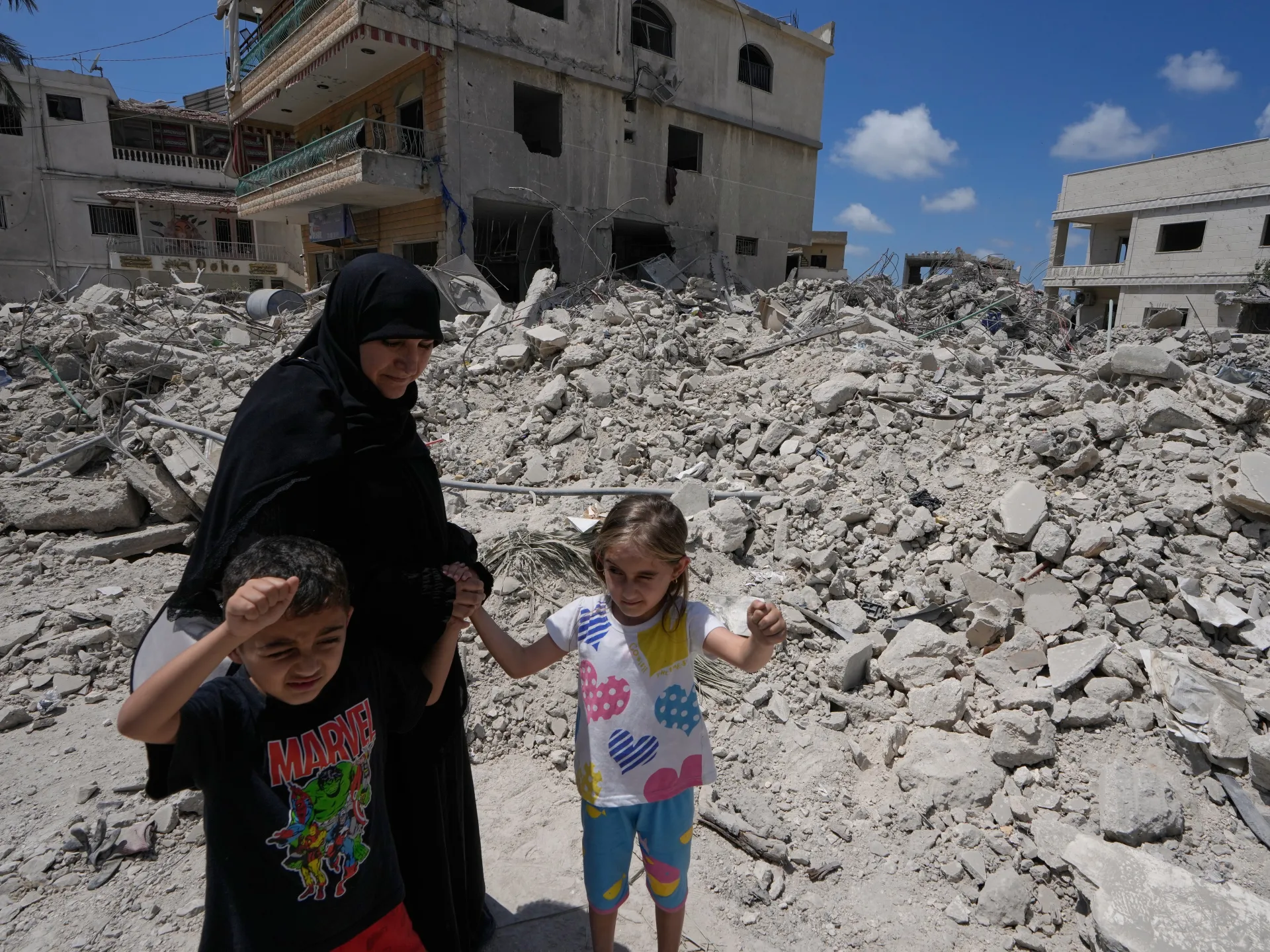
Since the ongoing Israel-Lebanon conflict began on March 2, Israel has issued evacuation orders for about 15 percent of Lebanese territory, displacing more than 1.2 million people, according to the United Nations. Israeli attacks have killed at least 1,888 people and wounded more than 6,000 others, according to Lebanese health authorities.
A Lebanese civil defence worker looks on as an excavator operates on the rubble of a building destroyed in an Israeli air strike a day earlier in Beirut, Lebanon [Hussein Malla/AP]
Ceasefire deal
As Israel continues its attacks on Lebanon, concerns are growing about the effect it could have on the originally fragile deal.
Since Wednesday, Iran has argued that attacks in Lebanon violate the ceasefire deal, with President Masoud Pezeshkian saying on Thursday that Israeli strikes on Lebanon would render negotiations meaningless, adding that Iran would not abandon the Lebanese people.
However, the US has said Lebanon is not covered by the truce, despite Pakistan, which acted as mediator, saying it was part of the deal.
Other countries, including the United Kingdom, France, Russia and Turkiye, have said the truce should extend to Lebanon.
Delegations from the US and Iran are expected to meet in the Pakistani capital, Islamabad, on Saturday for talks on ending the war.
Tehran says the negotiations will be based on its 10-point proposal, which calls for control over Strait of Hormuz and lifting of all sanctions.
Iran has agreed to a two-week ceasefire with the United States, with its National Security Council saying talks with Washington will begin in the Pakistani capital, Islamabad, on Friday, based on Tehran’s 10-point proposal.
The statement on Wednesday came after US President Donald Trump said he was calling off a threat to end Iranian civilisation and “suspend” attacks on the country for two weeks.
Recommended Stories
list of 4 itemsend of list
Trump said the truce was contingent on Iran agreeing to the “complete, immediate and safe opening” of the Strait of Hormuz, the narrow waterway that connects the Gulf to the Arabian Sea and through which a fifth of the global oil supply passes.
Iran’s partial blockade of the strait – imposed in the aftermath of the US and Israel’s attacks on February 28 – has disrupted global trade, driving up oil prices and causing fuel shortages across the world.
Iran’s retaliatory attacks have also reverberated across the Gulf and drawn in Lebanon’s Hezbollah and Yemen’s Houthis, both of which have launched attacks on Israel, significantly widening the conflict.
Trump said in his Truth Social statement that the US has received a 10-point proposal from Iran, “and believe it is a workable basis on which to negotiate”.
He said the US and Iran have agreed on “almost all of the various points of contention” and that the two-week period will allow the agreement to be “finalised and consummated”.
Iran’s Minister of Foreign Affairs Abbas Araghchi, speaking on behalf of the Iranian National Security Council, confirmed Tehran’s decision to halt the fighting.
“If attacks against Iran are halted, our powerful armed forces will cease their defensive operations,” he said in a post on X.
Araghchi said that safe passage through the Strait of Hormuz will be possible in coordination with Iran’s Armed Forces, and that the decision was taken in light of Trump’s acceptance “of the general framework of Iran’s 10-point proposal as a basis for negotiations”.
For his part, Pakistan’s Prime Minister Shehbaz Sharif said the warring sides had agreed to an “immediate ceasefire everywhere including Lebanon and elsewhere”.
The move is “EFFECTIVE IMMEDIATELY”, he wrote on X.
Sharif thanked the US and Iran and extended an invitation to “their delegations to Islamabad on Friday, 10th April 2026, to further negotiate for a conclusive agreement to settle all disputes”.
According to Iran’s National Security Council, its 10-point proposal calls for Iranian dominance and oversight of the Strait of Hormuz, which it said would grant it a “unique economic and geopolitical position”.
The proposal also calls for the withdrawal of all “US combat forces” from bases in the Middle East and a halt to military operations against allied armed groups across the region. It goes on to demand “full compensation” for war damages, as well as the lifting of all sanctions by the US, the United Nations Security Council and the International Atomic Energy Agency.
The proposal also calls for the release of frozen Iranian assets abroad and the ratification of any final agreement in a binding UN Security Council resolution.
The council said that while Tehran has agreed to talks, it does so “with complete distrust of the American side”.
It said Iran will allocate two weeks for these negotiations and that the time period “can be extended by agreement of the parties”.
The council added that Iran stood ready to respond with “full force” as soon as “the slightest mistake by the enemy is made”.
Kabul’s foreign minister expresses hope that minor interpretations will not hinder progress.
Published On 7 Apr 20267 Apr 2026
Afghanistan has said that peace talks with Pakistan being held in China have been “useful”.
The comment was issued by the foreign ministry in Kabul amid talks aimed at halting cross-border fighting between the two neighbours, which were launched last week following an invitation by China.
Recommended Stories
list of 4 itemsend of list
The peace process in the western Chinese city of Urumqi is an effort to stop the conflict that began in February, which has seen hundreds killed and perturbed Beijing, which is sensitive to the violence close to its western regions.
Pakistan, which declared it was in “open war” with its neighbour, has carried out air strikes inside Afghanistan, including in the capital, Kabul.
The United Nations’ Office for the Coordination of Humanitarian Affairs in Afghanistan posted on X on Tuesday that the conflict had displaced 94,000 people overall, while 100,000 people in two Afghan districts near the border have been completely cut off by the fighting since February.
The conflict has alarmed the international community, particularly as the area is one where other armed groups, including al-Qaeda and the ISIL (ISIS) group, still have a presence.
Foreign Ministry Deputy Spokesman Zia Ahmad Takal said Afghanistan’s acting Foreign Minister Amir Khan Muttaqi met China’s ambassador to Afghanistan on Tuesday, and thanked Beijing for arranging and hosting the talks, while also crediting Saudi Arabia, Turkiye, Qatar, and the United Arab Emirates for their mediation efforts.
“Noting that constructive discussions have taken place so far, FM Muttaqi expressed hope that minor interpretations would not hinder the progress of the negotiations,” Takal wrote.
Separately, Muttaqi said that “useful discussions have taken place”.
There have been few official statements regarding the discussions since they began on April 1 between mid-level delegations from the two sides.
Accusations
Even as the talks have been taking place, Afghanistan has accused Pakistan of carrying out shelling across its border on several occasions, killing and wounding civilians.
Pakistan has not commented. Islamabad often accuses Afghanistan of providing a safe haven to armed groups that carry out attacks, especially the Pakistan Taliban, known as Tehrik-e-Taliban Pakistan or TTP.
The group is separate from but allied with the Afghan Taliban, which took over Afghanistan in 2021 following the chaotic withdrawal of US-led troops. Kabul denies the charge.
The recent fighting, the most severe between the two neighbours, began after Pakistan carried out air strikes aimed at such groups. Afghanistan then launched cross-border attacks in response.
The clashes disrupted a ceasefire brokered by Qatar in October, after earlier fighting had killed dozens of soldiers, civilians, and suspected fighters.
On March 17, a Pakistani air strike hit a drug-treatment centre in Kabul, which Afghan officials claimed killed more than 400 people.
Pakistan denied it had targeted civilians, saying its strikes were against military facilities.
Loose Women’s Penny Lancaster shared insights into her marriage to Sir Rod Stewart and revealed how they keep their spark alive after 26 years together
15:19, 07 Apr 2026Updated 15:27, 07 Apr 2026
Penny Lancaster said she was ‘desperately missing’ Rod Stewart
Penny Lancaster has opened up about the secret behind her successful marriage to Rod Stewart. The couple have been together for 26 years, tying the knot in 2007 and going on to welcome two sons, Alastair Stewart and Aiden Stewart.
Penny, 55, Rod’s third wife and his longest marriage to date, shared what has helped keep their relationship strong – and the main reason might come as a surprise.
According to the former model, spending weeks apart has played a huge role in keeping things exciting. She told Best Magazine: “We don’t [live in each other’s pockets] and time apart helps keep the spark alive.”
At the time of the interview, the pair had been apart for three weeks and were planning on reuniting.
She told the publication: “We’re desperately missing each other and have been counting down the days. Rod generally has a driver pick him up from the airport, but I’m meeting him because we can’t wait to see each other. Right from the start of our 26 years together, we’ve spent time apart.”
Reflecting on the first year of their relationship, Penny said she had been studying photography in the UK while Rod was based in the US, meaning much of their time together was spent communicating through a screen.
“We’d spend hours and hours on the phone talking about everything, including photography and paintings,” she revealed.
Sharing more about her husband away from the spotlight, she added: “Rod has a deeply, spiritual, sensitive and artistic side. That’s what he’s like underneath it all.
“That’s the real man. He can be quite demanding and he does require a lot of attention, but that’s fine because I’m good at giving it,” she added.
In the same interview, the Loose Women star said effort was key to their relationship, revealing the pair make sure to have regular date nights – whether that’s going to the theatre or enjoying “long romantic walks” together.
She also said the couple still “flirt with each other and make each other laugh” to keep the intimacy alive. “We don’t take each other for granted,” she added.
Alongside the two sons he shares with Penny, Rod is also father to six other children – Sarah, Kimberly, Ruby, Renee, Sean and Liam.
Previously opening up about fatherhood, the Maggie May hitmaker admitted he has had to be “several different fathers” due to the large age gaps between his children.
His eldest daughter, Sarah Streeter, whom he shares with a former partner, is 62, while his youngest child with Penny is 14.
According to MailOnline, he added: “You really have to treat all of them as individuals with individual problems. As a dad, I’ve learned to listen and not blow my top.”
Intel (INTC) has been in ongoing discussions with at least two large customers, including Amazon (AMZN) and Google (GOOG) (GOOGL), for its advanced packaging services, Wired reported, citing multiple sources.
Intel’s ambitions for its advanced packaging business depend largely on
WASHINGTON — President Trump threatened Monday to destroy vital Iranian energy and water infrastructure if a peace deal is not reached, as Tehran continued to deny negotiations were taking place and said it was preparing for a ground invasion following the arrival of thousands of American troops in the region.
If a ceasefire agreement is not reached quickly, the president said in a social media post, “We will conclude our lovely ‘stay’ in Iran by blowing up and completely obliterating all of their Electric Generating Plants, Oil Wells and Kharg Island (and possibly all desalinization plants!).”
The threats came within hours of the president insisting on Sunday night that diplomatic efforts would “probably” lead to a deal soon, and that Iran had allowed 20 more oil cargo ships to pass through the Strait of Hormuz as a “sign of respect.”
Trump said the United States is in “serious discussions with A NEW, AND MORE REASONABLE, REGIME in Iran” but offered no details.
Iran, however, continued to throw cold water on the negotiations Monday when Esmail Baghaei, the foreign ministry spokesperson, dismissed the Trump administration’s terms as “unrealistic, unreasonable and excessive.”
“I do not know how many people in the United States take American diplomacy claims seriously. Our mission is clear, unlike the other side, which constantly changes its position,” he said in comments carried by the semi-official Iranian agency Tasnim News.
Baghaei said that there have been no direct negotiations, but only messages through intermediaries stating that the U.S. wants to confer.
On Saturday, the USS Tripoli, a naval warship, arrived in the Middle East carrying about 3,500 sailors and Marines and a transport of fighter planes. Earlier this month, the San Diego-based USS Boxer and two warships from the 11th Marine Expeditionary Unit departed from Camp Pendleton to join the buildup of troops in the region.
The deployments have made Iranian diplomatic envoys even more dubious that American peace efforts are sincere.
“The enemy publicly sends messages of negotiation and dialogue while secretly planning a ground offensive. [They] are nothing more than a cover to hide preparations for a land invasion,” Iran’s top lawmaker, Mohammad Bagher Qalibaf, said in a statement Sunday.
He added that Iranian forces were waiting for the arrival of American troops on the ground to “set them on fire” and “punish their regional partners forever,” according to state media.
As officials in both Washington and Tehran strike increasingly hard lines, neighboring countries are desperate for a truce.
Egyptian President Abdel Fattah Sisi pleaded with Trump to stop the war during a speech at an Egyptian energy conference on Monday.
“I tell President Trump: Nobody can stop the war in our region in the gulf but you,” Sisi said.
“Please, Mr. President, please. Please help us stop the war. You are capable of doing so.”
Egypt, though not directly involved in the war, has contended with its repercussions on energy, fertilizer and food prices, not to mention disruptions to shipping income Cairo receives through the Suez Canal.
“Wealthy countries might be able to absorb this, but for middle-income and fragile economies, it could have a very, very severe impact on their stability,” Sisi said, noting that predictions of oil reaching $200 per barrel were “not an exaggeration.”
Egypt and Israel signed a peace treaty in 1979, which saw Israel return territory it seized during the 1967 war. Though the agreement is deeply unpopular with most Egyptians, it has held despite escalating tensions during Israel’s campaign against Hamas.
In December, the two nations formally announced a $35-billion agreement expanding Israel gas exports to Egypt. But the war with Iran has disrupted supplies, tripling the cost of imports, according to Egyptian officials.
Last week, the government ordered energy-saving measures for a one-month period, including early closing times for most commercial establishments as well as reductions in street lighting and allocations for government vehicles.
Jordan, another U.S. regional ally that is also energy-starved, took similar steps, enacting bans on air conditioning in government offices and private use of government vehicles.
Despite talks of negotiations, the fighting showed little sign of abating.
Trump’s call for peace followed a fresh round of U.S. and Israeli airstrikes on Iran Monday. Tehran retaliated by hitting a major water and power facility in Kuwait, and Saudi Arabia and the United Arab Emirates said they intercepted incoming Iranian missiles.
Two U.N. peacekeepers were killed on Monday when an “explosion of unknown origin” hit their vehicle near the village of Bani Hayyan, in south Lebanon.
The deaths mark the second fatal incident in two days involving the United Nations Interim Force in Lebanon, known as UNIFIL, a peacekeeping force established in 1978 and which later monitored cessation of hostilities between the two nations.
UNIFIL also reported a peacekeeper was killed Sunday night when a projectile exploded in a UNIFIL position.
“We do not know the origin of the projectile. We have launched an investigation to determine all of the circumstances,” a UNIFIL statement on Monday said.
Meanwhile, Israel continued its bombardment of Lebanon, hitting areas near the capital and in the country’s south. One strike targeted a Lebanese army checkpoint, killing a soldier, the Lebanese military said. Lebanese authorities said on Monday that the death toll since hostilities broke out between Hezbollah and Israel earlier this month continues to rise.
The Israeli military said one of its soldiers was killed in a Hezbollah anti-tank missile attack in southern Lebanon, which also wounded four other soldiers. Six soldiers have been killed since Israel restarted its campaign in Lebanon.
Hezbollah rockets also killed two civilians, according to Israeli health authorities.
Israel’s fire and rescue service said a fuel tanker and a building at the oil refinery in the northern city of Haifa were hit by debris from an intercepted missile, according to a report from Israeli daily the Times of Israel.
It was unclear whether the missile was launched by Iran, the Lebanese Shiite group Hezbollah or Yemen’s Houthi rebels.
Deaths from the conflict continue to rise, with 1,900 people killed in Iran, over 1,200 in Lebanon, 19 in Israel and 13 U.S. military members. Millions of people have been displaced from their homes in Iran and Lebanon.
Ceballos and Quinton reported from Washington, Bulos from Beirut.
During his first Cabinet meeting since launching the U.S. war on Iran, President Trump spent 10 minutes talking about the price of ceremonial White House pens — which he claimed to have brought down, from $1,000 to $5, by switching to his favored Sharpie brand.
Trump was trying to make the point during the Thursday meeting that he’s a great money saver. He seemed chipper, joking with the other leaders of his administration at the table.
Late Thursday, when asked on “The Five” on Fox News about whether Iranian people have access to basic necessities such as drinking water and food, Trump complimented the looks of Dana Perino, the Fox host who’d asked the question, compared to when he’d met her years before.
“Now I’m not allowed to say this, it’s the end of my political career, but you may be even better looking, OK?” Trump said. “You’re not allowed to say a woman’s beautiful anymore.”
He then talked about Iranian authorities killing protesters, but said he’d been pleased with them more recently because they had given him a “present” by allowing oil ships through the Strait of Hormuz.
Through both discussions, Trump maintained a flippant, casual tone — the same he has maintained since the war began a month ago, and a vast departure from that of past wartime presidents.
For weeks, Trump has batted away criticisms of the war campaign and questions about why it was justified and how long it will last. He has derided reporters for asking questions about tactics and whether he’ll deploy boots on the ground as inappropriate and foolish, and repeatedly met concerns about the human toll of the war by shrugging them off or changing the subject.
Meanwhile, his war has cost the U.S. billions of dollars and depleted its global reserves of critical weapons systems such as Tomahawk missiles, which cost millions of dollars each and are needed to maintain U.S. security around the world, according to the Washington Post.
Entering its fifth week, the war has badly disrupted markets, with U.S. stocks falling Friday as Wall Street approached the end of its fifth straight losing week — the longest such streak in nearly four years — and oil prices rising again.
Markets have fluctuated based on Trump’s changing messages on an end to the war, planned and then postponed strikes on Iran’s power plants, strikes on oil and gas infrastructure across the Middle East and Iran’s stranglehold on the Strait of Hormuz, through which a quarter of global oil usually passes.
Trump has talked in recent days about an impending deal to end the war, but so far it has not materialized, with Iran downplaying the seriousness of the negotiations. Iran instead appeared to be formalizing its hold on the strait, including by creating what amounts to a toll on ships seeking passage through the channel from its Islamic Revolutionary Guard Corps.
The number of U.S. deaths in the conflict has held steady for days — at 13 — but the war continues to exact a daily, devastating toll in the Middle East. In Iran, thousands of targets continued being hit, with the death toll ticking toward 2,000.
Speaking by video during a Human Rights Council meeting in Geneva on Friday, Iranian Foreign Minister Abbas Araghchi accused the United States and Israel of harboring a “clear intent to commit genocide” in Iran, claiming that more than 600 schools had been damaged or demolished and more than 1,000 students and teachers “martyred or wounded.”
The discussion related in part to a Feb. 28 strike on an elementary school in Minab that killed more than 165 people, most of them children, which evidence reportedly suggests was the work of the U.S. and which the U.S. says is under investigation.
Casualties also continued in Gulf nations allied with the U.S., where Iran continues to strike U.S. military installations and other infrastructure, and in Lebanon, which Israel has invaded and bombed relentlessly in its own war with the Iranian-aligned Hezbollah force.
And yet, Trump has bounced between speaking engagements and more formal meetings with an apparent lightness — seeming unbothered by the weight of the conflict and acting as if U.S. victory were already at hand.
“We’ve already won the war. Militarily we’ve totally won the war,” he told “The Five” on Thursday.
After Trump’s exchange with Perino, fellow host Greg Gutfeld began to change the topic, saying, “I’m debating whether to be serious or not serious.”
“Do you think Biden would do this interview? Can you imagine? You think Biden — Sleepy Joe — he would do it?” Trump said.
He called the war a “little bit of a detour” from what he said were his otherwise winning economic policies, and asserted again — without providing evidence — that Iran was on the cusp of having a nuclear weapon and would have used it to cause devastation across the Middle East and to the U.S. if the U.S. hadn’t struck first, including when it bombed Iran’s nuclear sites last summer.
“You can’t let a madman or you can’t let a mad ideology have a nuclear weapon,” Trump said.
He repeated his long-pushed lie that he won the 2020 election, and suggested his support among his MAGA base remains at 100%.
An AP-NORC poll this week found that most Americans believe that the U.S. military campaign in Iran has gone too far — including about a quarter of Republicans — and that many are worried about gas prices.
During his Cabinet meeting Thursday, Trump seemed supremely confident, but also aware that the conflict was far from settled.
He said that the U.S. was “extremely — really a lot — ahead of schedule” in its war effort, and that “the Iranian regime is now admitting to itself that they have been decisively defeated.” But he also said that “even now, we don’t know if there are any mines” in the Strait of Hormuz, despite the U.S. having wiped out Iran’s “mine droppers,” and acknowledged that “if you think there may be a mine, that’s a bad thought and it stops things up.”
He said the U.S. has “decimated” about 99% of Iranian capabilities, but “the problem with the strait” is that the remaining 1% threat “is unacceptable, because 1% is a missile going into the hull of a ship that cost $1 billion.”
“If we do a 99% decimation, that’s no good,” he said.
During “The Five” interview, Trump was also asked if the CIA had told him that Supreme Leader Ayatollah Mojtaba Khamenei — who took on the Iranian leadership role after his father, Supreme Leader Ayatollah Ali Khamenei, was killed in initial strikes — is gay, which would be a crime under Iranian law.
“Well they did say that, but I don’t know if it was only them. I think a lot of people are saying that. Which puts him off to a bad start in that particular country, you know?” Trump said, in a stunning acknowledgment of a previously rumored intelligence briefing.
Brent crude tops $104 a barrel as hopes fade for deescalation in US-Israel war on Iran.
Published On 26 Mar 202626 Mar 2026
Oil prices have climbed higher amid fading hopes of deescalation in the Iran war following Tehran’s denial that talks with the United States are under way.
Futures for Brent crude, the international benchmark, rose nearly 2 percent on Thursday to top $104 per barrel after Tehran dismissed reports of direct negotiations with US President Donald Trump’s administration.
Recommended Stories
list of 4 itemsend of list
The rise comes after oil prices eased on Wednesday following reports that Trump had shared a 15-point plan for ending the war with Iran.
Asian stock markets opened lower on Thursday, with Japan’s Nikkei 225, South Korea’s KOSPI and Hong Kong’s Hang Seng Index all seeing losses.
Iranian Foreign Minister Abbas Araghchi said in an interview with state media aired on Wednesday that Tehran was not engaged in direct talks with Washington and has “no intention of negotiating for now”.
White House Press Secretary Karoline Leavitt warned on Wednesday that Iran would be “hit harder” than ever before if Tehran did not accept military defeat.
Iran’s effective closure of the Strait of Hormuz, a conduit for one-fifth of global oil supplies, and its attacks on energy facilities across the Middle East have prompted a surge in energy prices worldwide.
Oil prices are up more than 40 percent compared with before the US and Israel launched strikes on Iran on February 28, prompting numerous countries to implement fuel rationing and other energy conservation measures.
Market-watchers say prices are likely to rise further until shipping is free to traverse the strait, despite efforts by countries to bolster supply by tapping emergency stockpiles in coordination with the International Energy Agency.
While Tehran has repeatedly claimed that the strait is open to ships that are not aligned with its enemies, daily transits have all but collapsed since the start of the conflict.
Four vessels were tracked transiting the waterway via their automatic identification systems on Tuesday, down from an average of 120 daily transits before the conflict, according to maritime intelligence firm Windward.
Malaysia’s Prime Minister Anwar Ibrahim said any talks with Iran must aim to end the war, not serve as a “tactical advantage” or temporary pause. He reaffirmed Iran’s right to defend its sovereignty while urging restraint to avoid wider regional fallout. His comments come as the US warns Iran to accept defeat or face being “hit harder”.
“No negotiations have taken place.” Iran’s foreign minister, Abbas Araghchi says his country is not and will not negotiate with the US while it is under attack. A day earlier, President Trump said the US was already in talks with Iranian officials, which Tehran denied.