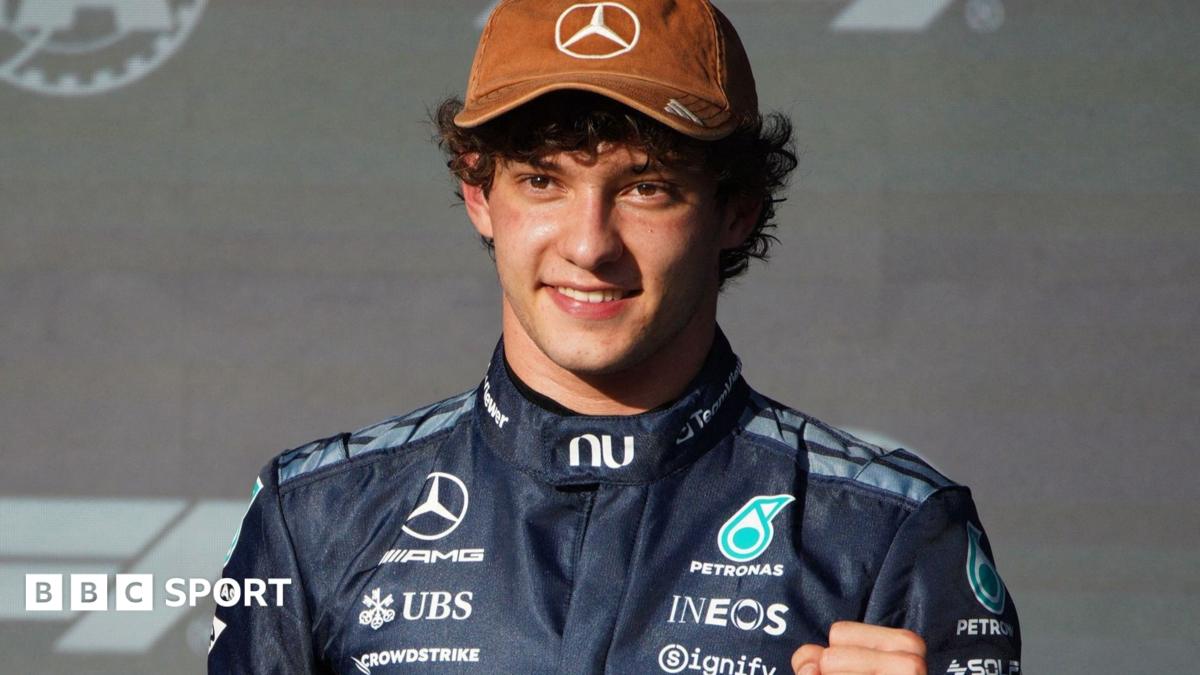
Kimi Antonelli took pole position for the United States Grand Prix on the weekend on which he can potentially clinch his first world title.
The Mercedes driver beat Red Bull’s Max Verstappen by 0.179 seconds, with the Dutchman’s team-mate Isack Hadjar third ahead of Ferrari’s Charles Leclerc and Lewis Hamilton.
Antonelli whooped with delight as he took his first pole position since the Belgian Grand Prix in July and said: “It feels good to be back.”
The 20-year-old Italian will become world champion on Sunday if he wins the race in Austin with Hamilton lower than fourth and Russell lower than eighth.
Hamilton is already below that position having qualified fifth, while Russell will start sixth ahead of the McLarens of Oscar Piastri and Lando Norris.
Antonelli’s pole came as something of a surprise after the Ferraris had topped all three practice sessions and Verstappen had looked strong through the second part of qualifying.
“I wasn’t expecting that,” said Antonelli’s engineer Peter Bonnington, emphasising that his charge’s first lap in final qualifying was good enough for pole.
Verstappen had been fourth quickest in Q2 despite being on used tyres but he found his car lacked the requisite grip in the final session.
Antonelli said: “We got pole so we will try to win tomorrow but Max has been very quick and Isack did an incredible job so it is not going to be easy.
“We try to get a good start and hopefully lead into Turn One and try to set the pace, even though it’s going to be very tight.”
Verstappen said: “Q3 was not good, Q1, Q2 were nice but for whatever reason in run one and two just didn’t have a nice balance. No mistakes, just not enough grip. But if it’s still a P2, I take it.”
Rwanda’s controversial Formula One GP leads Lewis Hamilton to call for freedom for DR Congo, while renewing Palestine plea.
Published On 23 Oct 202623 Oct 2026
Seven-time Formula One champion Lewis Hamilton has renewed his call for freedom for Palestine when pressed on the controversial decision to award a Grand Prix to Rwanda.
The 41-year-old is the only Black competitor in the motorsport and said an African race would make people more aware of the continent, but recognised there were concerns and used the issue to expand on his stance on humanitarian issues across the world.
Recommended Stories
list of 4 itemsend of list
Human rights campaigners Amnesty International recently accused Formula One of hollow words and offering Rwanda a “sportswashing prize” – an accusation levelled at countries perceived to be using sport to improve a tarnished image abroad.
Hamilton, who was speaking before Sunday’s US Grand Prix, has long called for a Gaza ceasefire amid Israel’s genocidal war and returned to the matter – as well as other conflicts – when asked about a Grand Prix in Rwanda.
“I think we need to make sure we’re pushing to free Congo, free Sudan, free Syria, free Palestine,” Hamilton said.
“There’s a lot of peace that I’m hoping we get to at some stage.”
Rwanda in the spotlight after Formula One GP award
Rwanda President Paul Kagame has been accused of repressive methods to keep his grip on power, with opponents dying in prisons, independent media muzzled, and other abuses.
Neighbouring Democratic Republic of the Congo (DRC) joined the criticism of Formula One’s decision to award a race to Rwanda, which is accused by the DRC, the United States and United Nations experts of backing the M23 rebels fighting in the DRC.
“Of course, I don’t get to choose where we go,” Hamilton continued.
“Naturally, there are problems all over the world today, so I’ve seen many of the stories. But I think we really have to approach it with humility.
“Of course, going there doesn’t mean that you neglect the things that are happening there.
“So hopefully many people start to educate themselves a little bit more about what is happening there and what has happened there for hundreds of years. I hope that does spark the conversation.
“Growing up in England, they never taught us anything about Africa. It needs to be on the curriculum.
“A lot of the problems they have there are still results of colonialism and the West intervening.”
Formula One’s return to Africa has been Hamilton’s dream
Hamilton said a race in Africa was a dream that could keep him going longer in the sport now that Formula One has done a deal with Rwanda for a Grand Prix in the early 2030s.
The Ferrari driver will be 42 in January and has a contract for 2027. Fernando Alonso, the oldest active F1 driver, is 45 and recently signed up for another season with Aston Martin.
“I’m now forced to stay a lot longer because we have a race in Africa, and that’s been my dream, to be able to race in Africa,” Hamilton said on Thursday in a news conference alongside championship leader Kimi Antonelli.
“I have to keep fighting to try and stay fit. If I can still punch out good results over the next year, we’ll keep it going.”
Antonelli, who replaced Hamilton at Mercedes last season and is still only 20 years old, encouraged him: “You got to do at least the first one.”
Hamilton, the sport’s first and only Black champion, has long campaigned for a race in Africa – a continent that last hosted a race at South Africa’s Kyalami circuit in 1993 – and spoke of his efforts.
“Countless meetings with the stakeholders, so many meetings with (F1 CEO) Stefano (Domenicali) at his office in London, but also on race weekends, countless calls: ‘What’s happening? Where are we going? Who are you meeting with?’
“Many meetings with different presidents from different countries. Lots of phone calls with different presidents from different countries within Africa,” he recalled.
“I think for me, it’s a place that deserves to have a Grand Prix. It’s about more than just one country. It’s about the continent itself.”
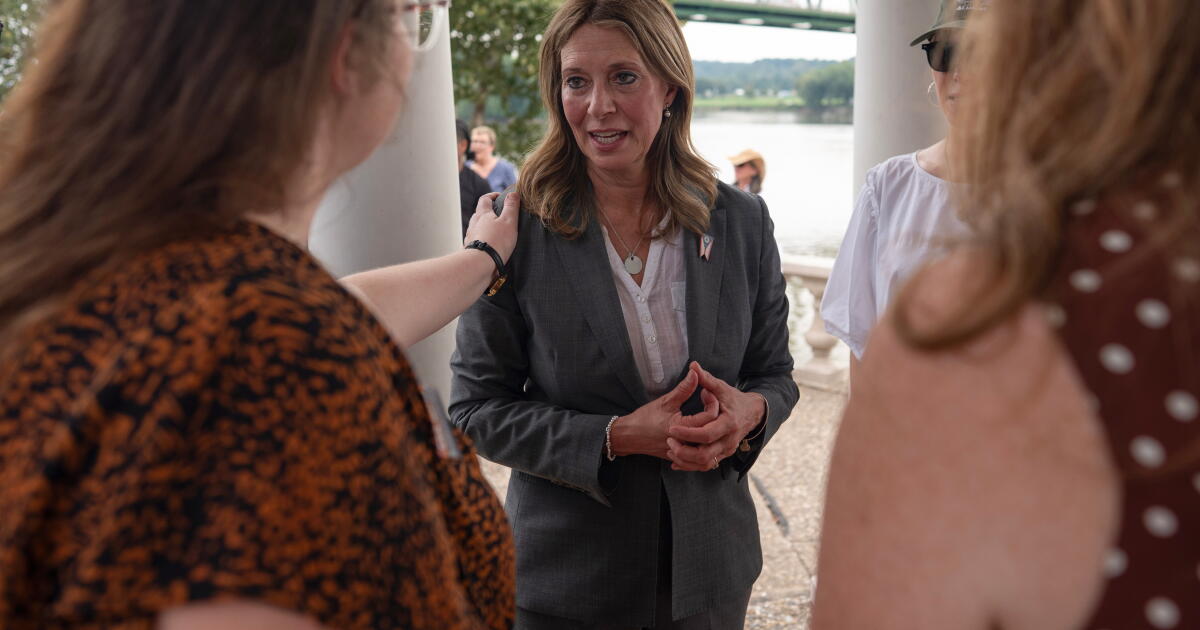
COLUMBUS, Ohio — Republican Vivek Ramaswamy ’s team confirmed late Tuesday that it produced a controversial advertisement featuring the estranged mother of Amy Acton, and the campaign said it will spend $4 million to promote it despite facing bipartisan rebuke for dredging up the painful childhood of his Democratic opponent in Ohio’s governor’s race.
The decision exacerbates a deeply personal element in one of the country’s most closely watched and expensive campaigns for state office. Questions about the video will likely shadow Ramaswamy, a biotech billionaire who previously ran for president but has never before held public office, in the final two weeks of the contest. Democrats said he was growing desperate at a moment when more than 676,000 people have already cast ballots in Ohio.
The advertisement features Acton’s birth mother, Donna Arthur, calling her “a liar” and insinuating she has mental health issues. Acton, Ohio’s former public health director, has made no secret of facing homelessness and abuse as a child. Arthur lost custody of her children after their stepfather was indicted for raping Acton.
The video’s origins were initially murky when it started circulating online. It first surfaced in a post by an Ohio political blogger, then spread across social media. It did not include the “paid for” tag that is legally required to air on television so viewers can know who produced and paid for it. D.J. Brynes, who blogs as “The Rooster,” told CNN he got the video from a voter who viewed it as part of a poll and recorded it.
Connie Luck, a spokesperson for Ramaswamy’s campaign, said Acton’s mother was not paid for the one-minute video, which she said will stream online and air on television.
Acton spent Tuesday condemning Ramaswamy for the ad even before his campaign confirmed its provenance.
“I won’t normalize somebody who has said that my childhood is just something I’m complaining about, who today just released an ad using my birth mother, who I was removed from at the age of 12 for severe abuse and neglect, and sexual abuse,” she told Spectrum News, a cable news outlet in Ohio.
She said Ramaswamy made similar personal attacks during his run for the Republican presidential nomination two years ago, calling it “a lifelong pattern.”
Ramaswamy’s campaign initially issued a statement that did not address whether he was responsible for the ad or knew who produced it. In the earlier statement, Luck said Acton “has some serious problems with the truth that the public needs to be aware of.”
Democrats and Republicans condemn the ad
Casey Putsch, a car designer and YouTube provocateur who competed against Ramaswamy for the Republican nomination for governor, said on social media that he would be voting for Acton in the wake of the ad’s release. He called the video “pretty damn low.”
Acton’s campaign released a statement from her brother, Philip Stearns, who said the two were removed from their mother Donna Arthur’s custody as children after their stepfather, Arthur’s husband, was indicted for raping Acton as a child. Acton has not seen Arthur, whose last known address was in Pennsylvania, since they were in a courtroom together in 1978.
Later Tuesday, the Acton campaign released a video featuring Stearns, who recalls his older sister taking “the worst” of the abuse they faced as children in order to protect him and disparages Ramaswamy and his allies for exploiting the situation.
According to police and court documents obtained by the Associated Press, Cledith Arthur was arrested and charged with the rape of his stepdaughter, then 12, in July 1978, after Acton’s biological father reported him to authorities. The abuse allegedly happened from December 1976 to April 1978.
Cledith Arthur pleaded not guilty. He was indicted by a grand jury that September, but failed to show at a court hearing and remained a fugitive until at least 1981. He has since died.
High-profile Republicans who back Ramaswamy — including Donald Trump Jr. and influencer Laura Loomer — elevated the video in online posts.
But others joined Democrats in condemning the ad. Meghan McCain called it “dastardly” and Dan Hauser, a strategist for Republican Sen. Mike Lee of Utah, said he deleted his post sharing the video once he realized “the very serious accusations that caused their issues.”
The Democrat running for U.S. Senate in Ohio, Sherrod Brown, described the spot as “disgusting” and said everyone — including his opponent, Sen. Jon Husted — should be willing to condemn it. Husted’s campaign didn’t respond to a request for comment.
Smyth writes for the Associated Press. AP writer Ali Swenson in New York contributed to this report.
Cuban American poet Kyle Carrero Lopez first learned what sanctions were as a child — not as a political measure, but as a gendered one. In his poem “Sanctions,” he describes how his father, a surly Cuban refugee who worked as a DJ, laid out the terms of acceptable masculinity.
“No dance class/no “girl toys”/don’t walk like that,” writes Carrero. “His anthem, his law, hammered, hammered, into me.”
The poem features in his debut book of poetry, “Party Line,” released in July by indie publisher Graywolf Press. As a gay, Black Cuban American, Carrero uses social etiquette as a springboard to critically examine how marginalized people learn to negotiate space — whether at a nightclub; in the stratified gay mecca of Fire Island; at a socialist magazine party; or in line for customs at the U.S. border. He cites Black cultural figures like the queen of salsa Celia Cruz, American fashion journalist André Leon Talley, the late French singer and dancer Josephine Baker and political activist Assata Shakur as guiding lights.
“There are two sides of me,” he told De Los. “Between the party girl and the politico is Kyle Carrero Lopez.”
Born in 1995 to Cuban parents in New Jersey, Carrero is now based in New York City, where he earned a master of fine arts in poetry at NYU and published his award-winning 2022 chapbook, “Muscle Memory.” He answered my phone call in South Carolina, while overlooking the Atlantic Ocean; his mother was on the precipice of getting married a second time. Carrero, already a poet, scholar, political organizer and nightlife host, would flaunt yet another title that weekend as wedding officiant. “My work is naturally in conversation,” he explained.
Many of the poems in “Party Line” came to Carrero after visiting Cuba for the first time in 2017, through the CubaOne Foundation. Inspired by the Birthright Israel program for Jewish youth, the nonprofit sponsored trips for Cuban Americans to connect with Cubans on the island. Yet for Carrero, this strengthened his political dissonance with many Cubans in the U.S., who’ve supported economic sanctions on the communist nation. In order to force regime change, in January the Trump administration levied an oil blockade on Cuba, triggering a humanitarian crisis.
Written with an unmistakably Caribbean verve and snappy, conversational meter, Carrero defines his stance on Cuba in no uncertain terms.
“This book really is for Cuban Americans,” he said. “Those of us who are not trying to destroy Cuba, that is.”
Carrero spoke to De Los about party politics, Black Cubanidad and how visiting the island changed his writing for the better. The following interview has been lightly edited for clarity and length.
A lot of people fall back on these ideas about immigrant communities being all hard work and drudgery — but we come from a festive, dance-fueled culture. How did you get the idea to combine poems about parties with poems about politics?
I’ve always been involved in politics. I’ve done a lot of canvassing. In high school, I was in a learning community called the Civics and Government Institute. We did a “social reformers” panel, where you had to play somebody from a social movement. They had me up there dressed up as Elijah Muhammad in the 10th grade, asking me what I’d think of Obama. I had to drag Obama! These Nation of Islam people were not feeling the moderate Democrats.
But that informed my political engagement to this day. I was concerned with the language surrounding the embargo and U.S. aggression against Cuba. In my poem “Torricelli,” I talk about how [former New Jersey congressman and senator] Bob Torricelli wrote the Cuban Democracy Act, which he designed to, quote, “wreak havoc on that island.”
And I write a lot about nightlife. It is a family industry for me on both sides. My maternal grandfather ran a social club in New Jersey, a games parlor. My mom was a club kid. She was out all the time. Parenthood changed some things, but my father still had DJ gigs. Our basement was his studio. He’d leave the house at 9, 10 o’clock to go to the gigs. You know that new Jordan Firstman movie, “Club Kid”? I’m the original club kid.
How do you write for those who may not be ready to receive the club kid and the politico at once?
I like challenging assumptions that political people are drab and unglamorous — and that party people are brain-dead, escapist and have nothing to say. One of the problems I have with the ’90s club kid scene, as it existed, is they were extremely apolitical. And not only were they apolitical, but I would go so far as to say the club kids in the ’90s were a white supremacist entity. We don’t talk enough about how their whole thing was like whiteness and white privilege. All we’re here to do is have fun — and we see what that mentality leads to, right?
[The movie] “Party Monster”!
Yes, “Party Monster”! Michael Alig literally killed a man of color. That is not the party world that I live in. We don’t take off who we are just because there’s low lighting and fog and loud music. I’m going to respond the same way to harassment and perceived injustice as I would any other space.
To this day, there are white club kids in New York who are in the club talking in black-ccents and wearing imitations of black people’s hairstyles. And then if you call them out, they’re like, “Why? It’s a party!” And I’m like, “OK, but it’s a party where all of the music comes from Black people … you are a guest in this space.” Before I’m going to serve you a history lesson, let’s at least start with decency.
And though you may not think you’re doing politics … politics will still do you. Your club kid parents experienced politics by coming to the U.S. from Cuba. Can you tell me about their journey?
My father emigrated from Havana as a child. My mother was born to parents who emigrated in the 1950s during Batista’s regime. Cubans have a privileged relationship to immigration — the pipeline available to us [political asylum] was not the same for most people of Latin American descent.
My family came here not only as Cuban immigrants, but as Black immigrants. Politics happened to them. My father came to the U.S. in the late ’60s, getting called the N-word walking home from school with his two sisters…. They got hit so hard with belts that they would go home having soiled themselves. They were not only Black, but they didn’t even know what language or culture they were trying to assimilate to. There were layers of hatred…. When people talk about Cuban Americans, they think of white, rich Miami Cubans. It’s irresponsible to think in such a flat and one-dimensional way.
In the poem “Usefulness,” which was originally published in the Yale Review, you speak of how Black Cubans exist at the nexus of two different political agendas: the pro- and anti-Revolution contingents. Can you talk about that?
My opinion is very useful to many agendas. I joke that I would make a great Republican talking head. If I decided tomorrow that I wanted to get the GOP bag and be like, “Democrats are liars! I hate immigrants! I hate welfare! There’s two genders! We don’t need gay marriage!” — I would be a millionaire in under six months.
There’s a tokenism that happens when you exist at this nexus of identities. It’s true of the left as well sometimes. You could ask five different people in Cuba what they think about the government and they will give you five different answers. And that is OK! We need to allow that to be the case.
I don’t want what Trump and the Marco Rubios of the world want for Cuba — which is to seize it, to subjugate it and turn it into the next Puerto Rico. If people who are progressive and committed to Cuba’s autonomy don’t want that, I think part of [the work] is talking to Cuban people and hearing them out. I don’t think it’s acceptable to seek out only the opinions that match your own.
You bring up a historical moment that not a lot of Cuban Americans know about, which was the 1976 bombing of Cubana Flight 455, by an anti-Castro Cuban exile group. You said they planned on bombing a flight to Havana the week before, which your mom and her sister were on. How did they manage to avoid that?
[My grandfather] was an influential man. He knew the right people. So he heard something was going down and said, “I’m not putting my kids on that flight.” The flight went on as planned, but these men knew my grandfather and heard that his daughters were getting on the plane. To me that’s like getting on the list … sometimes you get into the party, or the plane [isn’t] bombed. It’s the same negotiation. Or just a moment of alignment.
What was it like visiting Cuba for the first time after the Obama administration eased travel and trade restrictions?
I don’t give Obama much, but he did try to normalize relations there. Unfortunately, Biden didn’t follow through with that, but for a second, we did care about Cuba.
The first time I went was in 2017, when I was 22. It was an incredible experience. My mother traveled to Cuba as a teenager; my father never went back. But they never discouraged me from going. I know that’s the case for a lot of Cuban Americans; there’s so much baggage. But once there was an easy path to go, it changed my life.
I write about Amiri Baraka’s time in Cuba, when he was earlier in his poetry journey — and his writing changed from being there. He wrote a poem called “Betancourt,” named after a young radical there. It made me more politically serious. I feel closer to my heritage, having done that.
What made you close the book with “I Saw Assata In Havana”? Did you really see Assata Shakur?
That was an imagined encounter. But it was the vision of what I imagine was her new life in Cuba — her second chance. I thought that it was a good ending note to land on, pushing against prevailing narratives.
I think the ways that we talk about our radicals — the Huey Newtons of the world, people like Kwame Ture or Angela Davis — we think of them as mythical beings, or, depending on who you ask, terrorists. But that disconnects them from their humanity. I wanted to create a portrait of [Shakur] as a normal lady who needed to pick up groceries sometimes. These were regular people who saw what was going on in the world and decided that they needed to do something about it. Each of us has that ability to enact change.
There are so many ways to make societal shifts, whether that’s writing to your officials or protesting or creating art that is challenging. What Shakur did was to say, “I don’t like this for my people. I don’t like this for the world I’m living in.” The same boot that’s on the necks of Black American people is on the necks of people in the Congo, people in Palestine, people of the global majority. We all have to share the planet. If we work together, we can have a world that can actually sustain itself.
My last question for you is: What would you like to see happen for Cuba?
I’m not a politician; I’m an artist. My duty is not toward any specific government; it is toward truth. My Cuba position, as a Cuban American, is focused first and foremost on my home country’s contribution to the conflict. If Cuba is truly no more than a failed state, why not lift all of the restrictions? Let’s see what happens when Cuba is unimpeded by hostile U.S. policy. That’s how you can best prove your point, right? Unless, of course, you’re afraid of what Cuba could be.
Great Britain’s Joe Truman said team-mate Matt Richardson’s withdrawal was “not ideal” and they had started “on the back foot” as they exited in the first round of the men’s team sprint at the World Track Cycling Championships.
The 27-year-old, who had also been expected to contend for medals in the individual sprint and keirin, said he would co-operate with a British Cycling investigation into the allegations.
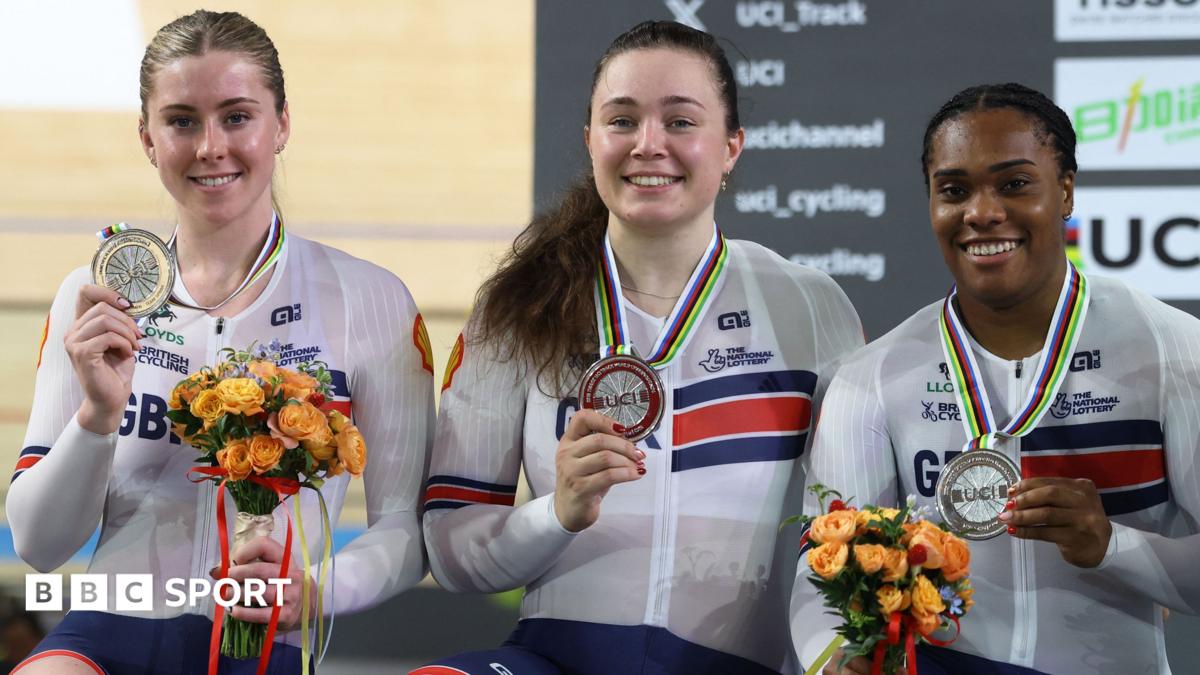
His withdrawal overshadowed preparations for the event in Shanghai, though Britain’s women did secure silver in the team sprint.
Emma Finucane, who is Richardson’s partner, Sophie Capewell and Rhianna Parris-Smith finished fastest in qualifying, and beat France but lost to hosts China in the gold-medal race.
The men’s team – Truman, Ed Lowe and Harry Ledingham-Horn – finished fifth in the qualifying stage but were beaten by fourth-placed Australia in the opening round of head-to-head races.
“We came with a bit of a last-minute change, obviously,” said Truman. “We all said this morning we’re here just to ride our bikes.
“We’re on the back foot a bit but let’s just put our best foot forward, put a time on the board at the start of Olympic quali and we got a time to be proud of.
“None of us are riding in ideal circumstances but we’re professional athletes and so it’s what we train to do – we train to race when it’s not perfect – so I think we did OK. We’re looking ahead to the next couple of years and think we’re in a great spot.”
Elsewhere on day one, Britain’s women and men progressed as first and second fastest respectively in qualifying for the team pursuit events.
Meanwhile, Abigail Miller finished 17th of 24 riders in the women’s scratch race.
Katie Price has taken a subtle social media swipe at Lee AndrewsCredit: wesleeandrews/InstagramLee has been scrubbed from the former glamour model’s Instagram pageCredit: Instagram – Katieprice/Backgrid
Katie ended their marriage over WhatsApp last monthCredit: InstagramShe is bracing herself for a ‘messy divorce’ as Lee vows to return to the UKCredit: Getty
A source previously said: “Katie is determined not to be in financial trouble again.
“She’s been working really hard to get enough income to be comfortable – with her OnlyFans and various other projects, but she is all to aware of how easily it can be lost.
Skydance-owned Paramount Pictures has taken over the lease for the Bay Theater in Pacific Palisades and intends to reopen the cinema, which has been closed since the January 2025 Palisades fire last year.
Paramount plans to upgrade the theater with state-of-the-art projection systems and in-seat food and drink service, Rick Caruso, whose company owns the Palisades Village shopping center where the Bay Theater is located, said in an interview. Caruso is founder and executive chairman of the real estate firm Caruso.
Paramount plans to show first-run theatrical movies from all studios. The theater will be operated by The Lot, a La Jolla-based luxury dine-in theater chain with four locations in California. The theater is expected to reopen later this year, Caruso said.
“The comeback of this movie theater is a great signal for all of L.A.,” he said. “Los Angeles is resilient, and we’re going to show the country that Los Angeles can bounce back from a terrible, terrible disaster, and the comeback is going to be much greater than the setback.”
Palisades Village reopened in August after more than $100 million in renovations, including major infrastructure work. The upscale outdoor mall survived the Palisades fire, but needed refurbishment to eliminate any potential contaminants from the blaze.
Caruso declined to share terms of Paramount’s lease agreement, saying only that it was long-term. Paramount declined to comment on the size of its investment in the theater.
Caruso said he brought up the Bay Theater over lunch last year with David Ellison, chief executive of Skydance, who was then working to acquire Paramount. The two were discussing that deal and Ellison’s belief in the importance of the movie theater business to the industry.
“Together with Caruso, we are proud to help bring the Bay back to life as a place for the Pacific Palisades community to gather around the shared experience of cinema,” Ellison said in a statement. “This theater has always meant more than movies alone — it’s woven into the fabric of this neighborhood, and helping restore it is a privilege.”
The Bay Theater was previously leased by Netflix, which took it over in 2021. The company used the theater to host special events, screen classic films and showcase its own original theatrical movies.
Caruso described Netflix and company Chief Executive Ted Sarandos as “incredible stewards” of the theater, adding that Sarandos was “very much a gentleman” in having the discussion about Paramount stepping in at the theater.
Ellison has long extolled his love of movies and appeared at the CinemaCon movie theater owners convention earlier this year to reiterate his commitment to theatrical releases.
Studios were barred from owning theaters for decades under the Paramount consent decrees, which a federal judge terminated in 2020. Netflix has since operated the Egyptian Theatre in Hollywood and the Paris Theater in New York.
“Through our curated offering and dedicated hospitality, we look forward to welcoming the Pacific Palisades community back to the movies, the way they were intended to be shared,” Adolfo Fastlicht, founder and chief executive of The Lot, said in a statement.
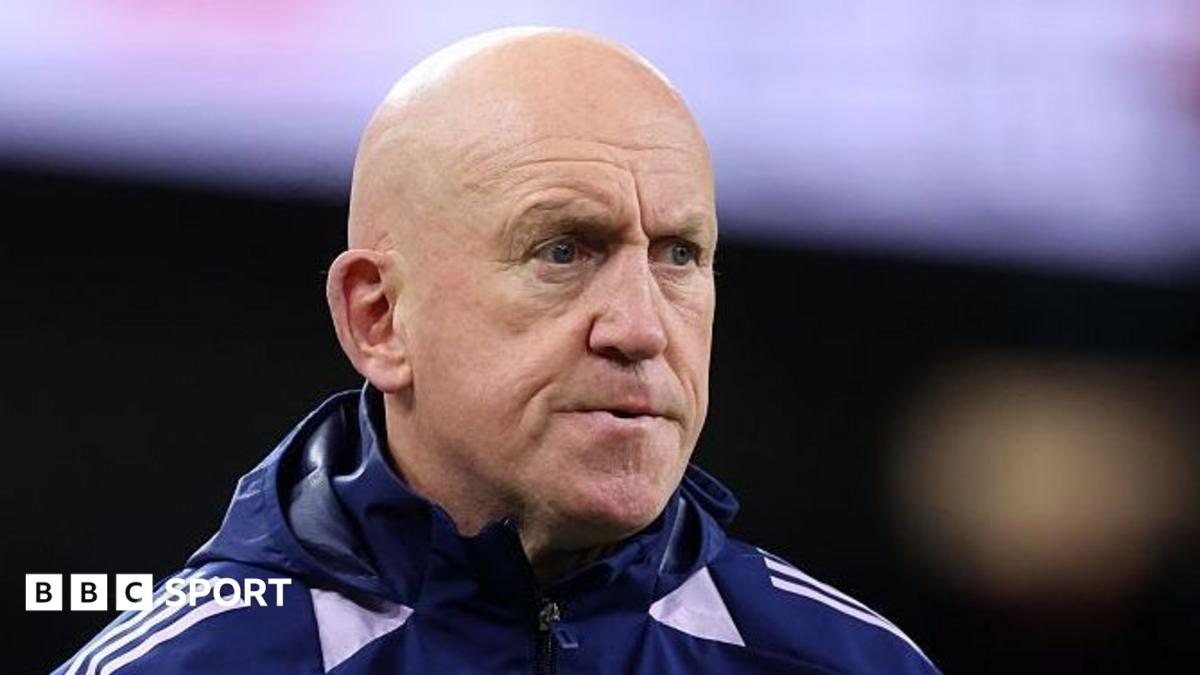
Defence coach Shaun Edwards has joined Argentina’s coaching staff on a deal that runs until the end of the 2027 Rugby World Cup in Australia.
The announcement ends any speculation that Edwards could be handed a role in Steve Borthwick’s England set-up, with the 59-year-old set to fulfil his consultancy role with England’s women’s team before joining Felipe Contepomi’s staff.
“I’m delighted to join Felipe Contepomi, his coaching staff and the Argentina rugby team at the end of this month until the World Cup next year in Australia,” said Edwards.
“I’ve always admired the ability and quality of Argentine players and I hope to bring some of my international experience to the team during the next year,” added the former Wigan rugby league great.
Englishman Edwards, who is one of the most decorated coaches in rugby union, left his position as France men’s defence coach earlier this year after helping them win three Six Nations titles.
Edwards and former Argentina head coach and hooker Mario Ledesma, who has been appointed to take charge of the forwards, will start work with the Pumas at the end of October.
Argentina are then set to face Ireland, Italy and France in November in Nations Championship matches.
Three-time semi-finalists Argentina have been drawn in a pool with Fiji, Spain and Canada at the World Cup which takes place between 1 October and 13 November in 2027.
Edwards, who also spent a successful 12 years with Wales and won four English titles and two Champions Cups while on Wasps’ staff, said in March that he was interested in coaching in the Rugby Championship, the southern hemisphere tournament contested by South Africa, New Zealand, Australia and Argentina.
He turned down a chance to coach his country in 2006, believing that the busier fixture list at Wasps would suit him better as he grieved the death of his brother.
KATHERINE Ryan couldn’t resist taking a cheeky pop at David Beckham as she joked about being “cancelled” by the BBC after her rude slur about his wife Victoria.
Katherine Ryan made a cheeky joke about David Beckham just weeks after complaints over her slur about Victoria was upheld by the BeebCredit: GettyShe couldn’t resist a joke at David’s expense but declared her love for VictoriaCredit: instagram/victoriabeckham
Two weeks ago, Katherine issued an online apology to Victoria, 52, after the ruling by the BBC‘s Executive Complaints Unit (ECU).
Raising the controversy during a stand-up gig in Chelsea, London, last night, the 43-year-old declared her love for Victoria Beckham while making a sly joke about her famous footballer hubby.
Sign up for the Showbiz newsletter
Thank you!
“I have been cancelled by the BBC for allegedly calling Victoria Beckham the C word,” she said.
“Or as David Beckham knows it – the K word, because bless him the alphabet is hard,” prompting laughter from the audience.
“But I actually did not do that, I actually love Victoria Beckham.”
Katherine make a joke about David Beckham in a London comedy gig last nightCredit: @alwaysbecomedy/InstagramThe comedian came under fire for her rude remark about Posh on an episode of Have I Got News for YouCredit: BBCThe BBC’s Executive Complaints Unit said ‘there was no such justification’ for the comment about Victoria which two viewers had complained was ‘gratuitously offensive’Credit: PAKatherine later apologised to Victoria online and showed the message she had sent her privatelyCredit: Instagram/kathbum
Speaking in an episode that aired on November 7 in 2025, Katherine made reference to a 2013 private email sent by David Beckham, where he allegedly used the word ‘c***’.
She said on the show: “I don’t know that we are allowed to broadcast the C-word, but you did reference Victoria Beckham earlier and we’ll allow that.”
The BBC’s Executive Complaints Unit said “there was no such justification” for the comment which two viewers had complained was “gratuitously offensive”.
They added that the word was justified in relation to David’s alleged use of it, but not in reference to his wife.
Now an edited version of the episode has replaced the original on the BBC’s streaming service.
Katherine Ryan publicly apologised to Victoria in an Instagram reel where she shared a screenshot of her message to the fashion designer.
“Hi I’m comedian Katherine Ryan and today the BBC announced their decision to uphold a complaint made by two very influential viewers about a joke that I tried to make on an episode of Have I Got News For You eleven months ago,” she began.
“At that time, though there is no defence, I was suffering from a condition called matrescence.
“I was in that building with a 10-day old baby. Should I have left the house?
“This is gonna be a tough one for the feminists because I was a woman going to work but I did call another woman a c***.
“Sometimes I forget that celebrities are not my friends. If I had called Jimmy Carr a c***, he wouldn’t have minded.
“Joanne McNally, c***, she wouldn’t have minded but this was described by the BBC as a slur.
“As though c**** are part of a protected group,” Katherine said in her trademark sarcastic way.
“The trouble is now that section’s been taken off iPlayer so the incident only exists in printed media, online media and then you lost the context because on the day, if you watched it, it was clearly a joke and the whole audience went ‘huhhhh’ and I said ‘whoaaaa’.”
She then plugged her new book before adding: “I love Victoria Beckham so much that I actually included her in one of my celebrity firstborn daughter chapters.
“I’d like to read you that now whilst remaining very sorry.”
In her apologise message to Victoria shown on screen, Katherine told her it was a “throwaway” comment and that she immediately expressed her love for her after, making it clear it was a “stupid joke”.
BECKY Hill has taken a swipe at The Voice bosses as she opened up about how she has missed out on becoming a coach on the show.
The Loose Control singer, 32, shot to fame on the first series of the ITV show back in 2012 when she was 18-years-old.
Becky Hill has revealed the reason why she won’t return to The Voice as a coachCredit: Capital FMThe singer took part in the ITV show when she was a teenager in 2012Credit: Handout
Capital FM host Jimmy Hill was interested to know if Becky would ever return to the singing programme after it was revealed Sir Tom was axed last month.
Sign up for the Showbiz newsletter
Thank you!
Jimmy asked her: “Would you ever go on The Voice as a coach?”
Becky replied: “I don’t think the show would have me on.”
Becky has become a huge pop star since starring on the showCredit: GettyBecky was coached by Jessie J (pictured with Cassius Henry, Ruth-Ann St Luce, Toni Warne, and Vince Kidd)Credit: BBC
She continued: “Because I had an interview with them a few years ago because they were having a fifth chair.
“And in the interview I said well I’m the only success story from The Voice and there is a reason for that because you have talented people on your show.
“You make a TV show out of them, and then you don’t help them out afterwards.
“I remember being 18 and having to knock on so many doors when I was that age, but there were so many people on that show in my year, that were contestants that didn’t have that experience, kind of came off the show feeling like they had a normal job.
“They were then shoved on TV in front of 12 million people and then they were just spat back out.
“And I would wonder whether me saying to The Voice I would like to help artists. I don’t just want to be employed to be like ‘When it was me, I know how you feel’.
“Because I know that that’s what they’re going to try and get me to do.
“I would love to help people out and make people into, introduce them to people.
“Never got a callback. So I don’t think it’s a case of ‘Would you do The Voice?’
“I think it’s a question of would The Voice do me?”
When Becky appeared on The Voice in 2012 the show aired on BBC One and was presented by Holly Willoughby and Reggie Yates.
The coaches were will.i.am, Sir Tom Jones, Jessie J and Danny O’Donoghue.
The series was won by Leanne Mitchell.
The Voice has now aired 14 series since then and it recently hit headlines after it was revealed that Sir Tom Jones was axed.
A source told us at the time “ITV absolutely love Sir Tom and they’re working very hard behind the scenes to make this work.”
A pet project of architect Frank Gehry, a smaller concert hall to complement his legendary Walt Disney Concert Hall, is taking shape in downtown Los Angeles for an opening next September.
Elements Gehry devised to set it apart are already visible, as construction on the $337-million addition to the Colburn School of Performing Arts reveals details the architect conceived years ago.
The centerpiece of the expansion will be a 1,000-seat concert hall named for Pasadena philanthropists Terri and Jerry Kohl with an in-the-round design meant to create intimacy between the performers and the audience. The hall will include an orchestra pit and a stage similar in size to the one at Disney Hall so it can accommodate grand orchestra, opera and dance performances.
The Colburn Center, still under construction, in downtown Los Angeles last week.
(Genaro Molina / Los Angeles Times)
Gehry set out to create an immersive hall that would inspire artists and envelop the audience, said Meaghan Lloyd, his chief of staff and right-hand at his firm, Gehry Partners.
“Frank’s passion was bringing the audience closer to the performers and getting the relationship between the two just right, so that the audience can feel the performers, the performers can feel the audience reacting,” Lloyd said.
Kohl Hall will be part of the school where Colburn’s symphony orchestra, bands, youth string programs and children’s choirs will perform. It will also be available for rent for outside productions such as jazz and classical music concerts. It is expected to be in use more than 200 times a year.
Architect Frank Gehry with a model of his design for an addition for Colburn School.
(Christina House / Los Angeles Times)
The hall will open with a concert on Sept. 25, the Colburn School announced Tuesday. The weekend celebration will include inaugural performances at the Dance Center, a new dance instruction and performance venue being built as part of the 100,000-square-foot Gehry-designed addition.
The new Dance Center will double facilities for the school’s Trudl Zipper Dance Institute. The dance facilities will include a 100-seat theater for dance and four professional-size studios for dance instruction and rehearsal.
Beginning next year, the hall will be the home of the Los Angeles Chamber Orchestra, a group of professional musicians about half the size of the Los Angeles Philharmonic. LACO concerts will feature premieres of new fanfares by celebrated film composers, including a work by John Williams to be performed at LACO’s inaugural concert in the hall.
Meaghan Lloyd, chief of staff and partner at Gehry Partners, left, and Sel Kardan, president and chief executive of the Colburn School, look over construction of the Terri and Jerry Kohl Hall.
(Genaro Molina / Los Angeles Times)
Part of the hall’s commercial appeal is expected to be its size, in a sweet spot between the 2,265-seat Disney and the popular 415-seat Herbert Zipper Concert Hall already on the Colburn campus. The nearby Dorothy Chandler Pavilion seats about 3,200 guests. The Peacock Theater at L.A. Live seats 7,100.
Kohl Hall’s in-between size “is the missing piece of the venue puzzle” for Los Angeles, Colburn President Sel Kardan said.
A key feature already in place, hanging from the ceiling, is an array of steel clouds packed with concrete, designed to improve acoustics and evoke a sense of airiness. The clouds were made in the Netherlands by a firm with a history of building steel ship hulls that now specializes in building complex steel constructions like the clouds using digital data.
Visitors stand underneath concrete sound clouds designed to improve acoustics.
(Genaro Molina / Los Angeles Times)
The exterior metal cladding of the addition features a luminescent pink paint coating called Pink Kandi.
Japanese acoustical engineer Yasuhisa Toyota will serve as the hall’s acoustician, as he has for all of Gehry’s concert halls, beginning with Disney Hall.
The long-awaited Colburn School addition will be the third Gehry-designed building on Bunker Hill, which already has Disney Concert Hall and the Grand LA, a $1-billion apartment, hotel and retail complex he designed for New York mega-developer Related Cos.
The Colburn School dates to 1950 and moved to its current location downtown in 1998, where it has more than 2,000 students, most of whom range from middle school to college age.
Sir David liked Brooklyn’s video he postedCredit: BackGridDavid likes Brooklyn’s video – sparking speculation he might be offering an olive branch to his sonCredit: BackGrid
Fans spotted ex-England footie star Becks had liked a video of the couple posted on Friday after the Messika Womenswear show in Paris.
Brooklyn and Nicola previously told his parents to stop reaching out to them on social media.
Nicola wore a simple black crop top and flashed her abs for the Messika bash.
The event was held two miles from where designer Victoria later unveiled her own collection in the French capital.
Brooklyn, 27, and Nicola, 31, have been estranged from the Beckhams for almost two yearsCredit: GettyBrookly’s shirt efers to pop star Justin Bieber’s 2025 paparazzi meltdown, when he complained: ‘It’s not clocking to you I’m standing on business’Credit: Getty
Brooklyn, 27, and Nicola, 31, have been estranged from the Beckhams for almost two years.
He claimed his family treated him as a commodity and said: “I do not want to reconcile.”
DANNY Cipriani’s ex wife Victoria Rose has taken a savage swipe at the rugby star as she sells off his “prized possessions” for £850.
Victoria, who was married to Danny from 2021 to 2024, has suggested a dark side to the former England rugby union star that requires the help of a priest.
Danny Cipriani’s ex wife Victoria Rose has take a savage swipe at the rugby starCredit: Instagram/victoriaroseciprianiVictoria is flogging his ‘prized possessions’ for £850 on VintedCredit: Instagram/@victoriarosecipriani
She’s now flogging his old rugby kits, international caps and even his old kit bags on Vinted.
And Victoria wrote on social media alongside a personalised England Rugby bag: “What I’m finding inside some of these bags, I’m learning far more about my ex husband than I ever needed to know. Some of it needs a priest, not a Vinted listing.”
Sign up for the Showbiz newsletter
Thank you!
Victoria also said of his old Gloucester top: “As you know, guys, I’ve put this up for sale a few times and then taken it straight back down again.
“It was one of his most prized possessions, so I’ve always found this one particularly hard to let go of.
Victoria took a swipe at her ex saying he needs a ‘priest’ after finding certain thingsCredit: Instagram/@victoriaroseciprianiDanny has since married American actress AnnaLynne McCordCredit: Getty
“But the truth is, it can’t mean more to me than it did to him. So. it’s back online.”
Victoria is selling the gear after claiming that he has left her in financial woe.
She posted: “I take no pleasure in posting this, but when someone else’s debts end up on your doorstep, silence stops being an option.
“Sorry to drop this on such a gorgeous day, but let’s be clear: I have zero qualms airing this publicly.
“My ex-husband once happily sold a pack of lies about me to the press, lies that dragged me through two brutal years of court hell before I was fully exonerated and proven innocent. He didn’t lose a second’s sleep over how that wrecked my life, so forgive me if I return exactly the same courtesy now.
“This morning I woke up to bailiffs banging on my door and my car clamped. My car.
“Because the system decided that a debt racked up by my ex, after we’d already separated, in his name, his responsibility, gets to magically teleport across the Atlantic and land on me in the UK while he ghosts every letter, email, and demand sent his way.
“I had to pay his debt today just to get my car unclamped and back in my driveway. Not my bill.
“Not my problem, except it became my problem because he’s untouchable in LA.
“Meanwhile, Danny’s over there in the States, blissfully “connecting with his inner child,” chatting mystical dragons with his girlfriend, posting about soul growth and manifesting miracles.
“How touching. Shame the actual, physical world bills don’t manifest the same level of enlightenment; they just keep boomeranging back here for someone else to sort out.
“Receipts are kept, proof is solid, and today the emails start flying, including straight to the embassy.
“Because the same man currently trying to charm his way into US residency can’t even handle basic adult responsibilities in the country he left behind. If you can’t face your debts here, you don’t deserve the privilege of pretending to be squeaky clean somewhere else.
“Take responsibility for your own actions, Daniel. This is your public warning! I’m initiating proceedings for your DEBT!!!!”
Victoria previously claimed he left her to cover the £16,000-a-month household bills and tens of thousands of pounds of debt.
However, no airlines have been confirmed for the airport yet.
Christian Foster, Director of FlyDoncaster – the company set up to manage the airport – told Sun Travel: “It does feel like the world has changed post-Covid, whereas people were focused two weeks in Spain or Greece, nowadays we’re seeing a lot of people keen to take city breaks.
“We’d love to fly to places like Croatia, and other destinations that are a bit more quirky like Azerbaijan.
“We’re keen to look at emerging places to visit as well, like India.“
It closed back in 2022 and has been left abandoned sinceCredit: Alamy
Inside, there are plans to fill the airport terminal with local businesses instead of your usual Costa or Starbucks.
There would be a mixture of restaurants, bars and shops.
Back in July, the airport also gained approval was given by the Civil Aviation Authority (CAA) to move forward with a public consultation.
During the public consultation, locals can express their opinions on the reopening of the airport before October 4.
In the airport’s latest update, three fire appliances have also been ordered for the airport ahead of its reopening next year and before welcoming passengers in 2028.
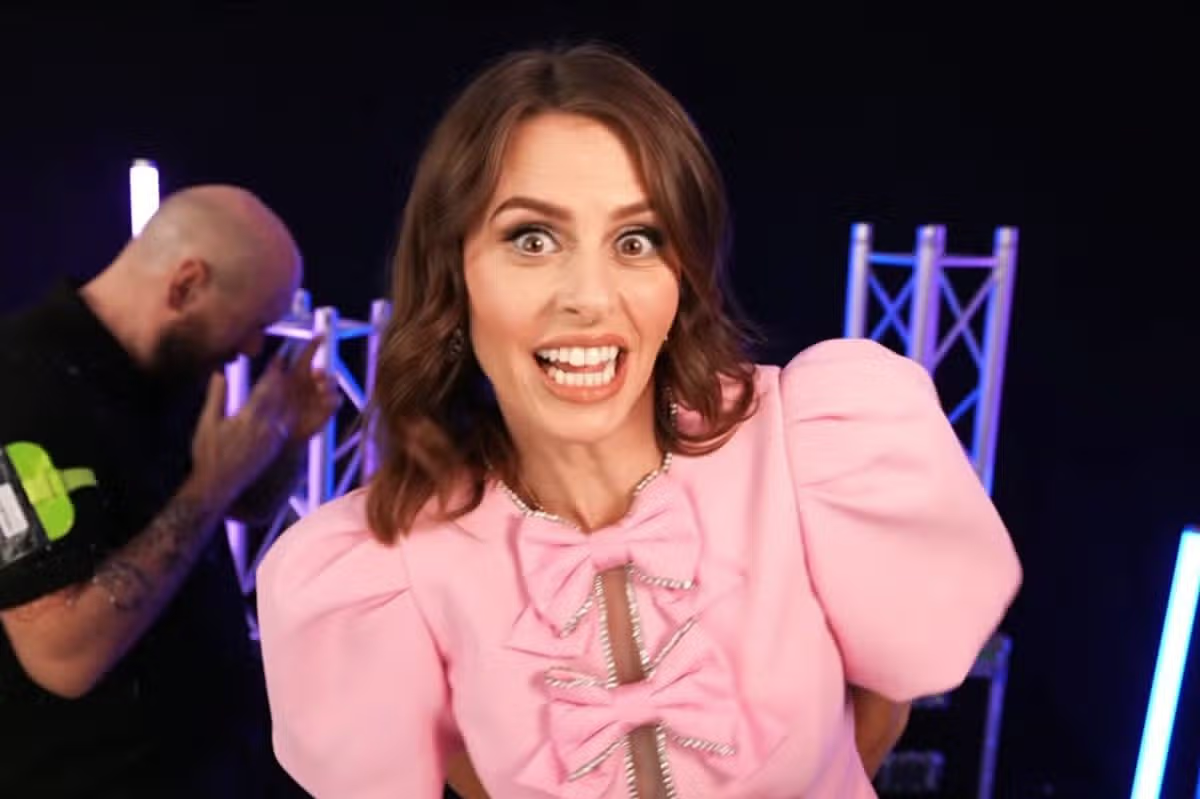
Strictly Come Dancing fans are all making the same comment new It Takes Two presenter about Ellie Taylor. The comedian has replaced Fleur East and Janette Namrara on the BBC Two show
Ellie Taylor has earned praise from It Takes Two viewers(Image: BBC/Strictly It Takes Two)
Following the announcement that Emma Willis and Josh Widdicombe would be replacing Tess Daly and Claudia Winkleman on the main programme, the BBC revealed in August that there were plans to revamp the midweek show as well. This decision saw Ellie given the It Takes Two presenting duties – four years after her stint on Strictly as a contestant.
Following the Beeb’s confirmation of Ellie’s role back in August, she said in a statement: “What a total joy to return to Strictly in this new role. I feel incredibly honoured to follow in the footsteps of the phenomenal line-up of hosts who’ve made Strictly – It Takes Two so loved over the years.
“I can’t wait to immerse myself in all the gossip and sequins flying out of the ballroom in order to bring my fellow Strictly fans everything they need to know. I’m so excited, I could cha cha! (But I won’t – don’t worry… no one needs to see that again.)”.
Now, after the series’ first two showers, fans have issued praise towards Ellie, 42.
“Just catching up on It Takes Two,” one person said on X.” I’m not enjoying everything, but my God Ellie is smashing it soo far. Absolutely brilliant.”
A second person agreed: “Don’t like the changes, but Ellie is fab. Should have got the main gig with Emma.”
A third shared: “Ellie Taylor hosts it well, but the new version of It Takes Two has nothing worth watching anymore.”
While a fourth viewer added: “Ellie Taylor is good, the new It Takes Two set is awful with the wooden unvarnished floor all that glitz and glamour gone, no pro interviews. I know they wanted to revamp both the Strictly main show and It Takes Two but the changes aren’t good.”
And a fifth asked: “I adore Ellie Taylor but I’m not sure I like this new It Takes Two at all. Why are they making so many changes – why change the ITT set this year when it literally got changed last year?”
Content cannot be displayed without consent
Essex-born Ellie old rose to prominence as a comedian before transitioning into presenting roles on programmes including Snog Marry Avoid? and The Great Pottery Throw Down. On It Takes Two, she faces the challenge of following in the footsteps of previous hosts Zoe Ball, Rylan Clark and Claudia.
It Takes Two producer Rhe-An Archibald said of the changes: “This is Strictly – It Takes Two, reinvented for the 2026 season. With a wealth of new features and deep dives, we want to reflect the conversations happening in living rooms up and down the country – full of opinions, laughs, surprises and those moments everyone wants to talk about.
“With the fun and funny Ellie at the helm, it will be an utterly unmissable companion to Strictly Come Dancing.”
Strictly Come Dancing: It Takes Two airs Monday to Friday at 6:30pm on BBC Two and is also available on BBC iPlayer.
India is facing growing discontent among its youth and they are taking to the streets. One Indian artist tells Al Jazeera the Modi government changed his voting status and had his Instagram post taken down. Now he’ll join thousands expected at a Cockroach Janta Party-led protest demanding change.
CNN Chairman and Chief Executive Mark Thompson could remain in his role at the news network after Paramount completes its deal to acquire the news network’s parent company, Warner Bros. Discovery.
Thompson, 69, is said to be in early stages of a discussions with Paramount Skydance Chief Executive David Ellison about continuing in the job he has held since April 2023, according to two people familiar with the matter who were not authorized to discuss it publicly.
The Wall Street Journal was first to report Thursday that Thompson has been approached by Ellison about staying with the network. A representative for Paramount declined to comment.
Retaining Thompson in his role would provide short-term relief to CNN staffers who are concerned about the change in ownership. As Paramount pursued its $111-million deal to acquire Warner Bros. Discovery — which is moving forward following a judge’s decision to settle an antitrust suit filed by state attorneys general who wanted to block the deal — the Ellison family have reportedly had discussions with President Trump about altering the network’s coverage, which he has often deemed as unfair.
As part of the settlement, Paramount agreed to the formation of an editorial oversight board that will monitor adherence to editorial independence from its owners and shareholders. The editorial board is part of an agreement to end the states’ antitrust fight that threatened to delay the completion of the deal for months.
Keeping Thompson at CNN raises questions of how CBS News Editor-in-chief Bari Weiss will be integrated into the new company.
Weiss, who joined the storied news division after Paramount acquired her contrarian digital news site the Free Press last year, has made major changes at “CBS Evening News” and the top rated newsmagazine “60 Minutes,” with no audience gains to show for it.
CNN insiders have been skeptical over how Weiss could take over the vastly larger and more profitable news organization based on her CBS track record so far.
CNN and CBS News are expected to consolidate some of their operations, such as its overseas bureaus. But there are obstacles to a rapid consolidation, as many CBS News employees work under union contracts. Most of CNN is not unionized.
But if Thompson remains, its likely he we will have the task of reducing costs, as the traditional TV audience that provides the bulk of revenues for both CNN and CBS News continues to shrink.
Thompson has been behind a major effort to generate more revenue from CNN’s digital operations, which now include a subscription streaming service that makes the channel available without a cable or satellite TV package. He oversaw the New York Times’ successful transformation into a dominant digital news product during his run as president and chief executive from 2012 to 2020.
The Paramount-Warner deal will close soon after a judge signed a settlement that ended the antitrust lawsuit brought by Calif. Atty. General Rob Bonta and 11 other attorneys general. The detente , however, has not cooled tensions between CNN and the White House.
CNN was scheduled to provide press pool coverage of Trump’s trip to Texas and Oklahoma on Thursday. But the White House removed the network from the pool, despite a judge’s order last week to block the administration’s attempt to ban access for some media outlets.
Last week, CNN, MS NOW and Politico were banned from White House grounds. Trump cited the outlets’ ongoing negative coverage of him as the reason for the ban. The administration later tried to argue in court that their coverage was a threat to national security.
New Delhi, India — Speaking at an event in New York this week, India’s Foreign Affairs Minister S Jaishankar offered a blunt assessment of Washington: It has been an insensitive partner to India’s concerns over “terrorism”; has warmed to its arch-rival Pakistan; and has pursued “self-centered” trade policies that have disproportionately hurt the Global South.
That tone marks a new edge in how New Delhi is dealing with US President Donald Trump’s administration in Washington, analysts say, on the back of rising bilateral tensions between the capitals.
For decades, India has dealt with divisive issues with otherwise friendly nations quietly behind the scenes, away from spectacle. That has especially been New Delhi’s approach with Washington, where the relationship has broadly enjoyed wide bipartisan support.
However, after months of tensions, New Delhi is adopting a more openly critical tone towards Washington to address the volatility and uncertainty that Trump brings to the White House.
The changing tune in New Delhi also comes at a critical time for Prime Minister Narendra Modi, who faces mounting domestic pressure and criticism from the opposition for allegedly bowing down to US pressure, time and again. On Wednesday, Modi held a telephone call with Trump, which the Indian PM called “productive” — a cold and formal depiction far removed from his description of the US president as a “good friend” in previous years.
Chietigj Bajpaee, a senior research fellow for South Asia at the Chatham House think tank, said that Jaishankar’s remarks “offer a frank assessment” on the current state of the India-US relationship. “Clearly, the shine has come off the bilateral relationship after India was initially among the most optimistic about a second Trump term,” he said.
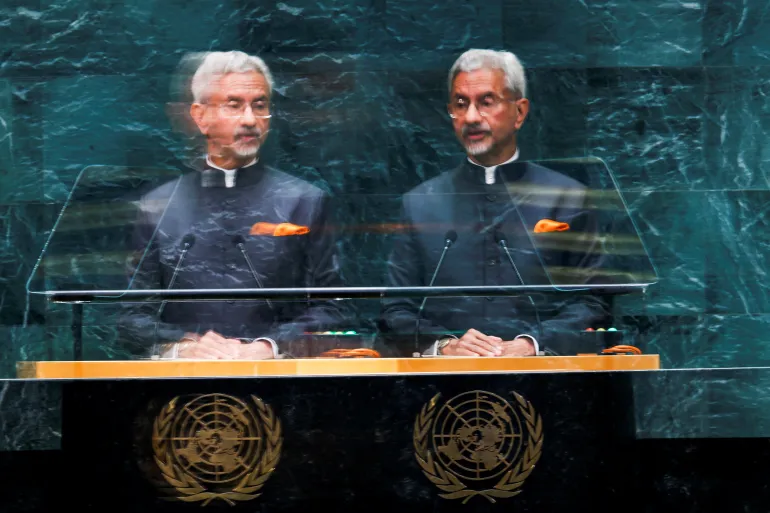
Indian Minister of External Affairs Subrahmanyam Jaishankar addresses the 81st United Nations General Assembly at UN headquarters in New York City, US, September 26, 2026 [Eduardo Munoz/Reuters]
India’s pain points
Jaishankar addressed frictions between India and the US while speaking at an Asia Society event after the UN General Assembly in New York ended on Monday.
“If I stand back and look at the [India-US] relationship, I note that much of the world has had a more difficult relationship with the US,” he said. “I mean that may not be a consolation, but that’s a reality.”
Trade
Trade has been one of the flashpoints. Washington is India’s largest trading partner, with bilateral goods trade reaching $149.1 billion in 2025; but the relationship remains tilted towards India with a $58.4 billion goods surplus.
Jaishankar started by noting: “Countries should not be so self-centred that you’re in your own world and take your decision and say, ‘Well, it was not my intention to make your life difficult’.”
The minister was partly referring to the economic spillover of the wars in Iran and Ukraine, urging that “sound common sense” should ensure that the basic needs of countries were not neglected.
But then, he referred to the trade negotiations between India and the US, that have so far yielded a roadmap to a deal — but not a deal itself. “Apart from the per capita gap between India and the United States, the nature of production and the nature of society is very different,” he noted.
The agricultural sector has been among the most contested points between the two, where India has kept its market largely closed for decades to safeguard its farmers. “The expectation that it could rapidly move forward was tested against the ground reality, which was much more complex,” he said, adding that “there is more or less an understanding on the trade agreement.”
At one point, India was among the countries facing the worst tariff rates imposed by Trump. After the US Supreme Court struck down Trump’s sweeping tariffs in February, his administration swiftly turned to other tools, including a new 10 percent global tariff. Earlier this month, Trump signed a law under which the US can impose up to 100 percent tariffs on countries like India that purchase Russian oil.
Jaishankar pointed to these changes, noting that the negotiations created “bumps last year for the relationship,” and added that once the deal is closed, it “would contribute to a better relationship.”
Ajay Bisaria, a retired diplomat who served as high commissioner to Canada and Pakistan, and as ambassador to Poland, told Al Jazeera that with Washington, in particular, “India has decided to be more public because there has been a lot of public criticism and a sentiment that the US is bullying India and India has been silent.”
The new 100 percent tariff on India, due to come into effect in less than a month, “is sort of a deal breaker in the relationship right now,” said Bisaria. “If that becomes reality, then all Indian efforts [to reach out to the US] would come under scrutiny.”
‘Terrorism’
But trade isn’t the only challenge in the relationship. A major rupture emerged in May last year, when New Delhi engaged in a four-day war with its bitter neighbour, Pakistan, after an attack by armed fighters in Indian-administered Kashmir killed 26 civilians.
New Delhi was upstaged as President Trump announced a ceasefire, claiming that he threatened both countries with economic damage if they didn’t stop fighting. For India, any question on Kashmir is strictly bilateral with Pakistan, with no room for so-called third-party intervention.
Nevertheless, Trump has gone on to claim dozens of times that he brokered the crucial ceasefire — as recently as at the UNGA in New York — that halted the war between two nuclear-armed neighbours. India took offence to these claims.
On the other hand, Pakistan’s leaders cozied up to Trump, showered high praise, and nominated him for a Nobel Peace Prize. Since then, the relationship between Islamabad and Washington has bloomed, to New Delhi’s obvious irk.
For India, Jaishankar said, “particularly important is the issue of terrorism.”
“As a country, perhaps there are very few countries which have been subjected to the kind of terrorism that we have from a neighbour as part of a deliberate, conscious policy over many, many decades,” Jaishankar said, referring to Pakistan.
“Now, if something which matters so deeply to us, there isn’t enough understanding or appreciation or empathy of that, I think that creates a problem too,” he said, adding that India’s primary concerns are “not fully appreciated” by its partner, the US.
New Delhi’s changing tone while addressing Washington “is a lesson learnt from its experiences,” said Bisaria, the former diplomat. “After the ceasefire issue, the moods changed — and it all became worse.”
Harsh Pant, vice president of the Observer Research Foundation, a New Delhi-based think tank, said that “the obsession with Pakistan in the Trump administration without taking India’s sensitivities into account contributed to the sense that, look, we need to start articulating it.”
“When at the top level, you don’t see reciprocity, then calculations change and decisions are taken to bring differences out in the open,” Pant told Al Jazeera, referring to Jaishankar’s comments.
India’s Prime Minister Narendra Modi offers a hand to US President Donald Trump during a family photo before a cultural performance and concert during the G7 summit, in Evian-les-Bains, France, June 16, 2026 [Evelyn Hockstein/Reuters]
Domestic Pressure
Indians have been the biggest beneficiaries of the US’s H1B programme which allows hiring of foreign workers with training in specialty fields. But that has come under fire from Trump, under whose watch Washington has raised barriers and fees for applicants, amid growing criticism of the scheme from supporters of his MAGA movement.
“For many years, mobility was seen as an economic gain. Today the economics of mobility and the politics of mobility are at odds with each other, at least in some quarters,” Jaishankar said, referring to Trump’s anti-immigration politics.
“That certainly in public perception is an issue,” the minister said.
Domestic pressure appears to be finally catching up in New Delhi. “Modi is feeling domestic pressure, with key state elections coming up next year, especially amid some anti-incumbency,” said Bisaria. “It dictates that the government’s posture should not be one of taking bullying from the US.”
Pant said issues like migration impact the general public in India, with the world’s largest population. For years, such connections made the US “an attractive partner for a large mass of Indians.” But today, he said, ”the same issues are becoming a negative drag on the relationship.”
“The public mood in India is also changing perceptibly towards the US. And I think the government is articulating that negative sentiment now publicly,” Pant said.
President Donald Trump and India’s Prime Minister Narendra Modi shake hands during a news conference in the East Room of the White House, Thursday, February 13, 2025, in Washington. (Alex Brandon/AP Photo)
‘Waiting out Trump’
When Trump returned to the White House for his second presidential run, many in New Delhi’s strategic community were optimistic about bilateral relations, because of the US president’s warm personal relations with PM Modi during his first term.
But things unravelled in the coming months.
Still, Chatham House’s Bajpaee said that despite widening divisions between the US and India, “both have not given up on reviving their relationship”.
He pointed to Jaishankar’s remarks that India isn’t singled out in having a difficult relationship with the US. “Rather, the downturn in India-US relations is a reflection of the Trump administration’s transactional and often unpredictable or erratic foreign policy,” he told Al Jazeera.
“This offers a potential off-ramp for an eventual reset in relations. The conclusion of a bilateral trade agreement is a key watchpoint for this,” Bajpaee added.
For New Delhi, Pant said, “it is now just the question of waiting Mr. Trump out.” Though he added, with a laugh, that India is not alone in that queue.
“Everyone is waiting him out. President Trump has little respect for conventions and norms of inter-state behaviour. How do you just deal with that individual?” Pant said.
PETE Wicks has seemingly taken a thinly veiled swipe at his exes Maura Higgins and Megan McKenna.
The swipe came as the star chatted to the Daily Mail about how he and Olivia got together, as he seemed to shade his past relationships.
Pete Wicks has opened up and shared more about his romance with Olivia AttwoodCredit: GettyHe appeared to throw shade at his exes in the process (ex Megan McKenna pictured)Credit: Getty – Contributor
Speaking about how in love he feels, Pete shared that it feels like the first time he’s truly fallen.
He said: “Yeah, I think so. I’ve loved people, of course, but it’s a different feeling to what I’ve had before.
Sign up for the Showbiz newsletter
Thank you!
“She’s [Olivia’s] become my best friend. She’s that before anything else.
“I have fallen in love for the first time and I don’t really have anything to compare it to.”
Pete said he’s now fallen in love for the first time (ex Maura Higgins pictured)Credit: SplashPete and Olivia went from friends to loversCredit: Instagram
Pete also revealed that he opened up about his feelings for Olivia before Olivia opened up to him.
Chatting about whether he was nervous, Pete noted: “I’m quite a confident guy in a lot of areas, but not as confident when it comes to feelings.
“It was not a case of just fancying someone. Obviously I do – she’s beautiful, I think she’s incredible – but there was more.
“I didn’t really know what that was, or where it came from. It just happened.”
Pete and Olivia started dating in February of this year, and made their relationship Instagram official during a trip to Ibiza in July.
Trump retaliated against Canada’s counter-tariffs on $20bn worth of US imports by banning $1bn of Canadian goods.
Published On 29 Sep 202629 Sep 2026
The United States is implementing a ban on nearly $1bn in imports from Canada, including alcoholic beverages, dairy products and motorcycles.
The ban took effect early Tuesday and is likely to further strain already-tense relations between the two neighbours.
Recommended Stories
list of 4 itemsend of list
Ottawa and Washington DC have long been allies and trade partners, with approximately $880bn worth of annual two-way trade. That relationship has been upended during US President Donald Trump’s second term as he unleashed tariffs on most trading partners, including Canada, and referred to the northern neighbour as the 51st state of the US.
Most recently, the US slapped 50 percent levies on Canadian goods worth $20bn, including dairy and motorcycles, on August 22 after trade negotiations failed. Canadian Prime Minister Mark Carney retaliated, saying Ottawa will match US tariffs “dollar for dollar in order to protect Canadian workers, farmers, families and businesses”. Canada levied tariffs of 15 percent, 25 percent and 50 percent on US exports of a similar value.
Tuesday’s ban was Trump’s punishment for Canada’s retaliatory tariffs.
“The impact of such a ban will be minor, it is only $1bn while we trade hundreds of billions with Canada,” Professor Gary Shields at Wayne State University’s School of Business told Al Jazeera. “It is, however, rather astonishing how President Trump treats our allies in Canada and Europe, while rolling out the red carpet for China’s dictator when he visited the US last week”.
“It is a tit-for-tat. It will not reduce people’s taxes and won’t put money in their pockets. It is kind of personal and a way of showing off toughness,” Shields added.
Canada’s economy grew by an estimated 0.2 percent in August after remaining unchanged in July, according to Statistics Canada. But the new US-Canada tariffs, tighter financial conditions and a shrinking population should further weaken growth in late 2026 and early 2027, Michael Davenport, senior Canada economist at Oxford Economics, said in a note provided to Al Jazeera.