suspect

The most-read Los Angeles Times stories of 2025

2025 was challenging for Angelenos. The year began with the double firestorms, and chaos and uncertainty continued into June when immigration agents and protesters clashed, as the Trump administration deployed thousands of National Guard troops to the city. Unquestionably, these news events were among the most-read articles published by the Los Angeles Times this year.

However, several other stories made the list, including two notable faith-focused stories, how Cesar Galan joined the priesthood after belonging to a violent L.A. street gang and how the hosts of a popular evangelical podcast known as “Girls Gone Bible” have become unlikely religious authorities.

To look back on the diverse stories that defined this year, we compiled our most-visited coverage into three categories: The articles that attracted the highest number of readers, the stories our audience spent the longest time reading (most of them are accompanied by audio) and the most popular stories that only our subscribers get to read.

Most-read stories | Deep reads | Subscribers’ favorites

Most-read stories

(ranked by overall number of visits)

1

The Times published countless live blogs, stories, investigations and feature pieces related to the catastrophic January fires that blazed through thousands of acres, killed 31, forced the evacuation of roughly 100,000 people and destroyed more than 16,000 structures.

These stories, undoubtedly, received the highest number of visits, as the Eaton and Palisades fires brought disruption, displacement and uncertainty across the city.

Residents received faulty emergency alerts, exposing early on the systemic failures in preparedness, evacuation protocols and emergency response. The Times reviewed the aftermath of L.A.’s double disaster to call city and county officials to account, reveal critical gaps and make the case for ensuring that we’ll be better prepared next time.

2

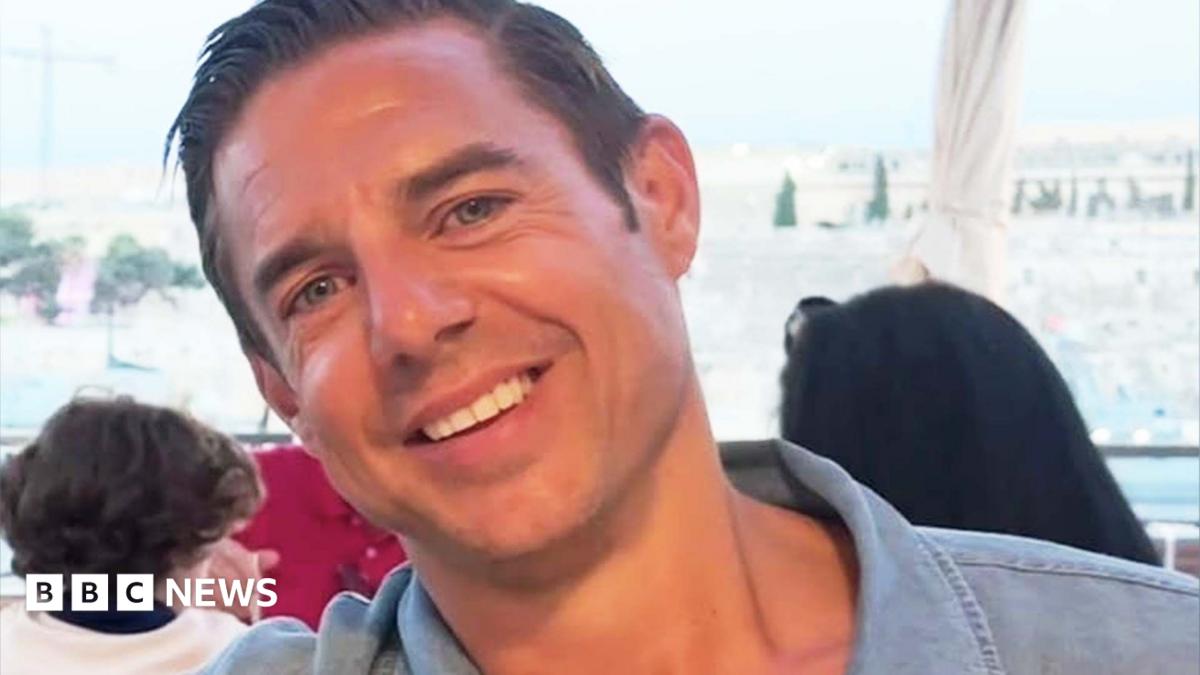
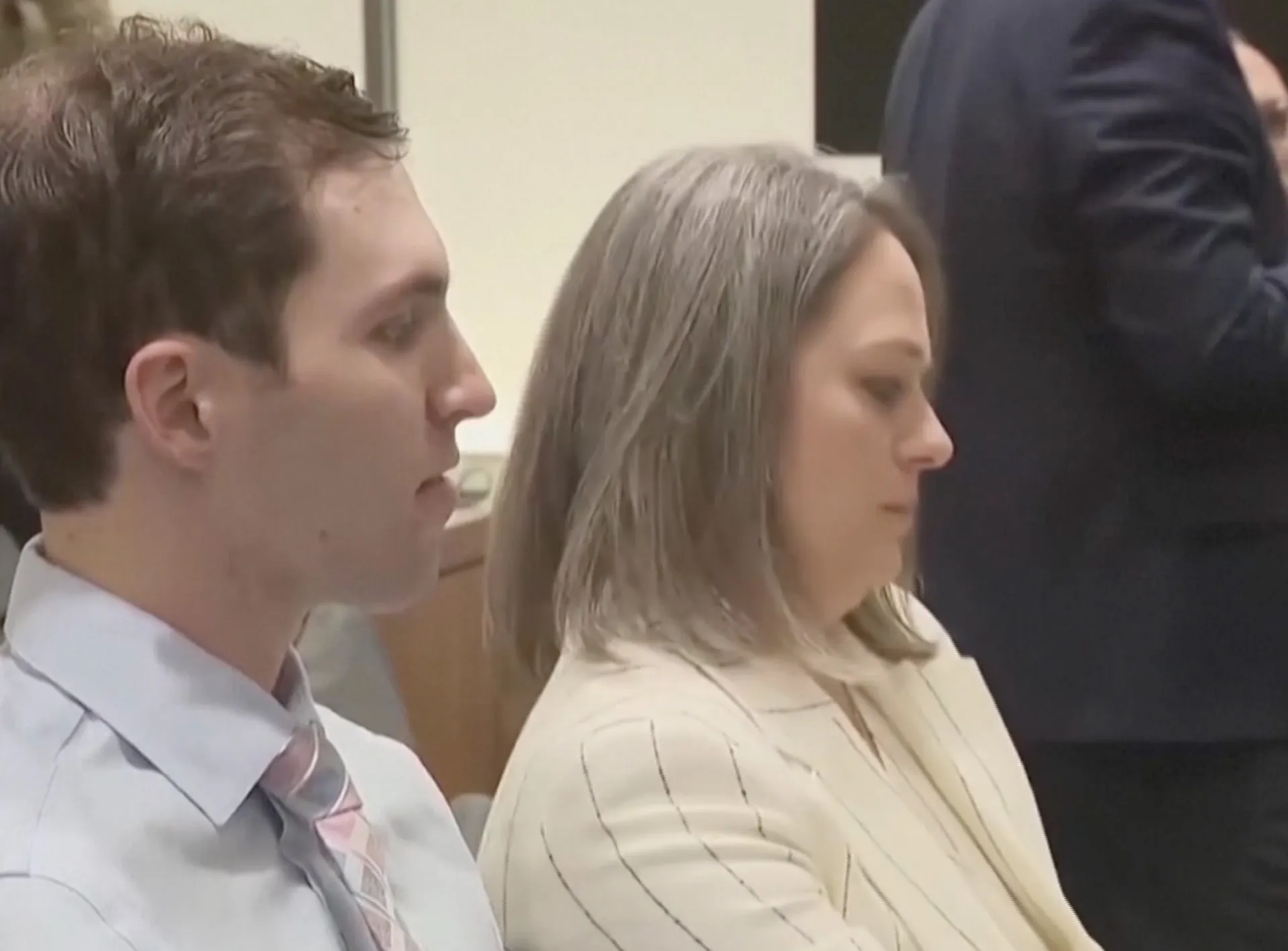
The news of the killings of “When Harry Met Sally” director Rob Reiner and his photographer wife, Michele Singer Reiner, sent shock waves across Hollywood and the country’s political establishment — Reiner championed progressive causes and was involved in efforts to challenge the proposition that had banned same-sex marriage in California in 2008. Reiner’s son Nick, who struggled with addiction for years, was arrested on suspicion of murdering his parents.

What we know about Nick’s addiction struggle and the hours before the director and his wife were killed.

3

A massive earthquake of magnitude 8.8 in Russia brought tsunami alerts to a wide swath of the Pacific. After the tsunami waves arrived in California, advisories were downgraded and canceled for much of the state. Southern California saw only modest waves and the highest tsunami waves reported on state shores peaked around 4 feet in Crescent City, about 20 miles from the Oregon border, where a dock was damaged. For how monstrous the earthquake was, why was there so little damage?

4

In September, detectives discovered a girl’s badly decomposed remains in an abandoned Tesla registered to rising singer D4vd at a Hollywood tow yard. Authorities identified the remains as those of 15-year-old Celeste Rivas, an Inland Empire resident who was reported missing in April 2024. According to court documents reviewed by The Times, the LAPD is now investigating Rivas’ death as a homicide.

5

The fifth-most read story of the year was those pertaining to the June immigration raids and protests in L.A. On June 6, U.S. Immigration and Customs Enforcement agents carried out a series of immigration sweeps, including two downtown that sparked a tense standoff. In the following days, immigration agents and protesters clashed across L.A. In a show of force, President Trump sent 2,000 California National Guard troops to the city, marking the first time in 60 years that a president had deployed a state’s National Guard without a request from that state’s governor.

Read more about what happened in the days following the National Guard’s arrival in L.A. and find more immigration stories here.

6

As the wildfires raged into Wednesday, Jan. 8, scores of fire hydrants in Pacific Palisades had little to no water flowing out and all water storage tanks in the area quickly “went dry.” Gov. Gavin Newsom ordered an investigation into the causes behind the dry fire hydrants that hampered firefighting efforts and L.A. City Council called on the city’s water utility to explain why firefighters ran out of water and why a key reservoir was offline.

Nearly a year later, residents and experts are examining the weaknesses of L.A.’s water systems and are calling to redesign Southern California’s water infrastructure.

Also widely read: State to probe why Pacific Palisades reservoir was offline, empty when firestorm exploded

7

Seven-month-old Emmanuel Haro disappeared on Aug. 14 after his mother, Rebecca Haro, said she was assaulted by an unknown man in a sporting goods store’s parking lot and was rendered unconscious. The missing baby’s mom told investigators that when she awoke, her son was gone. More than a week later, baby Emmanuel’s parents were arrested on suspicion of murder.

According to a news release from the San Bernardino County sheriff’s department, the couple faked the story about their son being kidnapped. In November, Jake Haro, Emmanuel’s father, was sentenced to 25 years to life for the murder of his son.

8

In late January, after President Trump said on social media that the U.S. military had “entered” California and “TURNED ON THE WATER,” the U.S. Army Corps of Engineers dramatically increased the amount of water flowing from two dams in Tulare County. In a visit to L.A. the previous week, Trump had also vowed to “open up the valves and pumps” in California to deliver more water. Local water managers were caught off-guard by the decision, but they said they convinced Army Corps officials to release less water than originally planned.

9

A week after the Palisades fire began, several areas reopened to residents as officials continued to investigate the cause of the wildfire. Officials focused their efforts on a popular hiking trail that reveals the famous Skull Rock and views of the Pacific Ocean. The general area was the site of a small fire on New Year’s Eve that burned for a few hours before fire officials said they extinguished it.

In October, authorities offered a detailed timeline about what they allege caused the fire: The Jan. 1 blaze, now known as the Lachman fire, rekindled to become the Palisades fire days later. They also simultaneously announced the arrest of a 29-year-old man whom they suspected of setting the initial fire on New Year’s Eve. He has now been charged with deliberately setting the Lachman fire.

A Times investigation later found that firefighters were ordered to leave the smoldering burn site, instead of monitoring the burn area for reignitions.

10

Over the first weekend of the January fires, firefighters were able make progress with the help of calmer winds and higher humidity. As a fleet of aircraft worked to prevent the Palisades fire from scorching homes in Brentwood and Encino, officials warned that Santa Ana gusts were expected to pick up again the following week and cautioned the public to stay on alert.

Most-read stories | Deep reads | Subscribers’ favorites

Deep reads

(ranked by average time spent on the page)

1

This is the story of Father Cesar Galan, a chaplain at St. Francis Medical Center, who experienced the lowest moment of his life and found the grace to change in the very hospital in which he now listens to patients’ fears, prays with them and offers to hear their confessions if they are Catholic. Galan grew up in the heart of Chivas and belonged to its street gang until a bullet spun him down to the ground on his stomach.

2

For Alejandro Sánchez, reclaiming a gold mine in Mexico, which was taken over by the sons of the drug lord Joaquín “El Chapo” Guzmán, was more than a business proposition. It was a reckoning with his past.

For years, Sánchez had worked to revive the mine, encountering corrupt officials and cartel operatives who demanded hefty bribes. He once had to dive for cover during a firefight. But now he was close to resuming operations at the mine with deposits worth billions.

Why did the billion-dollar mine matter so much to Sánchez and was he able to reckon with his past and reclaim the billion-dollar mine?

3

Angela Halili and Arielle Reitsma are best friends who both have a background in modeling and acting. Nearly every week for the last two years, the two have shared heart-to-hearts that are at the core of “Girls Gone Bible,” their faith-based podcast they launched in 2023. The evangelical podcast now has millions of listeners and as a result, Halili and Reitsma have built a two-microphone megachurch. They have gone on a national live tour and prayed at President Trump’s pre-inauguration rally.

The co-hosts of this podcast that tops religious charts on Spotify predict that a Southern Californian Christian revival is coming.

4

Times staff writer Christopher Goffard revists old crimes in L.A. and beyond, from the famous to the forgotten, in his series “Crimes of The Times.” In this installment of the series, Goffard examined the 1968 assassination of Robert F. Kennedy in California, after the Trump administration released a cache of classified files.

Convicted gunman Sirhan Sirhan’s current attorney, Angela Berry, said a team of researchers is combing the files for new evidence. Have they been able to find anything of use?

5

As the Eaton fire devastated parts of the San Gabriel Valley, Santa Anita Park stepped up and fulfilled its role as a community citizen. Even though the 80-year-old track was unaffected by the fires and the air quality was well within the range for safe racing, the park canceled racing the first week after the fires and opened up its expansive space to be used as a center for donation collection and distribution among other charitable gestures.

But horse racing is decades past the days when spectators lined up to watch the sport. As attendance continues to decline from what it was years ago, many battle with the unfathomable idea that the track may soon close or be sold.

6

This is the story of Jerardyn, a 40-year-old refugee from Venezuela, who at the height of the immigration raids and protests in Southern California, confronted a painful decision: After entering the United States last year with her family in hopes of obtaining asylum, Jerardyn would migrate again, this time, voluntarily.

7

Authorities initially ruled the 2023 death of 18-year-old Amelia Salehpour an open-and-shut case of accidental overdose. The medical examiner’s office agreed, deciding against a more thorough autopsy. But Salehpour’s family was unconvinced. They hired a high-end investigative firm that uncovered evidence that Amelia was being groomed for sex work, that she was strangled to death and that her death had been made to look like an overdose.

The contradictory findings have since triggered internal conflict among L.A. County prosecutors and detectives from the LAPD’s homicide and narcotics units.

8

From Andrew Garfield to Zendaya, Daniel Craig and Demi Moore, Hollywood’s biggest stars dressed to impress at the 82nd Golden Globe Awards.

Also widely read: Oscars red carpet 2025: Ariana Grande, Mikey Madison and all the best looks

9

Since L.A. experienced its first wide-scale homelessness during the Great Depression and the housing crunch after World War II, it has suffered chronic homelessness. Former Times staff writers Mitchell Landsberg and Gale Holland explored the key events and policies that shaped L.A. to become the homeless capital of the U.S.

10

In April 2024, USC hired a new coach for its men’s basketball program. USC athletic director Jennifer Cohen declared the day Eric Musselman was introduced as a “transformational day for USC men’s basketball.” Almost a year later, in March, Times USC beat writer Ryan Kartje joined Musselman toward the end of a hard first season.

Most-read stories | Deep reads | Subscribers’ favorites

Subscribers’ favorites

(subscriber-exclusive stories ranked by number of visits)

1

A new California housing bill, which took effect July 1, has changed the way homeowners associations are allowed to discipline homeowners. The changes came just in time for Jinah Kim, who was set to be fined up to $500 per day for fixing a doorway inside her condo even though her homeowners association said she couldn’t. Under the new rules, she now owes only $100.

Will the new rules allow homeowners to get away with things they shouldn’t and abuse community rules?

2

In July, talk show host Phil McGraw’s TV network, Merit Street Media, which launched last year, filed for bankruptcy protection from creditors and sued its distribution partner, Trinity Broadcasting Network. During a nearly three-hour hearing in Dallas in October, U.S. Bankruptcy Judge Scott Everett said that he’d “never seen a case” like the Chapter 11 filing Dr. Phil’s company was attempting.

How did the genial celebrity psychologist’s media network crash?

3

Entering the job market can be a stressful endeavor for new graduates and for a fresh generation of students behind them who are preparing to start their college journeys. The unemployment rate for recent college graduates is at its highest nationwide since 2021. What are the lowest- and highest-paying majors according to a Federal Reserve Bank of New York report?

4

This investigation was so popular, it also landed on our list of deep reads.

5

Every year for the last 13 years, The Times has published its essential guide to L.A.’s dining scene. This year, Times restaurant critic Bill Addison took the challenge further and spent months journeying California to find the best restaurants that depict the state’s eclectic food scene accurately. Instead of ranking the restaurants that make the Golden State, in Addison’s words, a “culinary juggernaut,” the list, which is only a beginning, offers a glimpse into the cultures and diversities that make up California. Start eating!

Also widely read: These are the 101 best restaurants in Los Angeles

6

This is the grisly story of Patrice Miller, 71, who was found dead with her right leg and left arm partially gnawed off in her kitchen and whose autopsy determined, officials said, that she had probably been killed by an animal after it broke into her home. Miller’s death marked the first known instance in California history of a fatal bear attack on a human and has sparked increasingly heated battles around predators in the state.

What solutions are lawmakers representing conservative rural districts in the state’s rugged northern reaches pushing forward? Would measures to ward off California’s predators increase safety?

7

Tulsa Remote is a program that pays remote workers to relocate to Oklahoma’s second-largest city for at least a year. Since its inception in 2019, the program has attracted more than 3,600 remote workers. More than 7,800 Californians have applied to the program and 539 have made the move.

Why are Californians moving to Tulsa through the program, cementing California as the second-most popular origin state behind Texas?

8

In a more recent edition of the “Crimes of the Times” series, Goffard writes about a 50-year-old West Virginia man, Alex Baber, who dropped out of high school and taught himself codebreaking. Baber now says he has cracked the Zodiac killer’s identity, and in the process solved the Black Dahlia case as well.

9

This series attracted a high number of readers and also landed on our list of deep reads.

10

Artificial intelligence’s coding capabilities and tools are rapidly advancing, making experienced engineers more productive. But these improvements now outpace entry-level programmers, making job prospects for early-career software engineers more difficult to find.”We don’t need the junior developers anymore,” said Amr Awadallah, chief executive of Vectara, a Palo Alto-based AI startup. “The AI now can code better than the average junior developer that comes out of the best schools out there.”

Source link

3 officers, 1 other shot in Rochester, N.Y.; suspect killed

Dec. 20 (UPI) — Three officers with the Rochester (N.Y.) Police Department and another man were shot by an assailant, whom police tracked down and killed in a gunfight on Friday night.

The officers responded to a domestic disturbance call at 10:15 p.m. from a man who reported another man was trying to break into his girlfriend’s apartment and might be armed, USA Today reported.

The caller also said he was armed with a pistol and had a permit for it.

When the officers arrived at the woman’s home, they found the suspect on the side of the house.

“He immediately pulled out a handgun and fired multiple shots from close range toward the officers and the victim, striking two officers,” Rochester Police Chief David Smith told media on Saturday morning.

The man who called the police engaged the suspect and exchanged gunfire, but was shot several times.

The suspect then fled the scene, but another police officer located him within minutes.

The suspect also shot that officer, but that officer and others who arrived at the scene shot and killed the suspect.

An officer who had been shot several times in the upper body was hospitalized in stable condition, while another who was shot in the upper body underwent surgery and is in stable but critical condition.

The third wounded officer was seriously injured but is in stable condition, while the man who called the police is hospitalized with multiple gunshot wounds that are not life-threatening and is in serious condition.

None of the identities of those involved have been released, and an investigation into the matter is ongoing.

Source link

Trump government suspends visa lottery linked to Brown University suspect | Donald Trump News

The administration of President Donald Trump has announced it will halt the visa lottery programme that allowed the suspect in the Brown University shooting to enter the United States.

The lottery awards approximately 50,000 immigrant visas each year, according to the US government.

Recommended Stories

list of 3 itemsend of list

But Trump has long opposed the Diversity Immigrant Visa Programme, sometimes known as the DV Programme. On Friday, his Secretary of Homeland Security Kristi Noem revealed that he had directed her to end the lottery immediately.

She also identified the suspect as Portuguese national Claudio Manuel Neves Valente, who received his green card — a certificate for permanent residency — through the lottery in 2017.

“This heinous individual should never have been allowed in our country,” Noem wrote in her social media statement.

“At President Trump’s direction, I am immediately directing USCIS [US Citizenship and Immigration Services] to pause the DV1 program to ensure no more Americans are harmed by this disastrous program.”

Campaign to end visa lottery

Friday’s announcement is not the first time Trump has sought to wind down the diversity visa lottery.

Trump has long sought to narrow the country’s pathways to legal immigration, and he has used crime as a pretext for doing so.

Noem herself pointed out that, in 2017, Trump “fought” to shut down the diversity visa lottery in the wake of an attack in New York City that saw a truck ram into a crowd of people, killing eight.

Speaking at a graduation ceremony for the Federal Bureau of Investigation (FBI) in December 2017, Trump — then in his first term as president — called on Congress to “end the visa lottery system”.

“They have a lottery. You pick people. Do you think the country is giving us their best people? No,” Trump said.

“What kind of a system is that? They come in by lottery. They give us their worst people.”

The Diversity Immigrant Visa Programme was established in 1990 to ensure applicants from underrepresented countries had access to the US immigration system.

Immigration rights advocates have long argued that pathways to permanent residency are narrow for those who do not already have a spouse, relatives or some other kind of sponsor in the country.

The visa lottery helps to answer that need, by creating an alternative route to residency.

The lottery system selects visa recipients randomly, but critics argue it remains a long-shot avenue to gain US residency, and even successful applicants must still pass a rigorous screening process after the lottery.

While the Diversity Immigrant Visa Programme used to accept 55,000 applicants each year, in 2000 that number was lowered to its current level, according to the American Immigration Council.

Surveillance footage of the Brown University suspect, with a suitcase
Surveillance images released by police show Claudio Neves Valente, the suspect in the mass shooting at Brown University [Providence Police Dept via AP Photo]

A suspect identified

Friday’s decision to immediately suspend the lottery comes as new details emerge about Neves Valente, a physics scholar found dead in a storage unit in New Hampshire after a nationwide manhunt.

The search began on December 13, when gunfire erupted on the campus of Brown University, a prestigious Ivy League school in Providence, Rhode Island.

The school’s fall semester was at its conclusion, and the exam period had begun. Students in the Barus and Holley physics laboratory were taking their end-of-course exams when a suspect, clad in black, entered the building and opened fire, killing two students and injuring nine others.

The physics lab was close to the edge of campus, and the suspect was able to escape on foot undetected.

The manhunt included several false starts, as authorities said they quickly detained a person of interest, only to release the individual without charges.

Then, on November 15, law enforcement officials announced that a plasma physics scholar named Nuno Loureiro had been found dead at his home, after suffering multiple gunshot wounds.

Loureiro was also a Portuguese immigrant, and he served as a professor at the Massachusetts Institute of Technology (MIT), a highly regarded science institution.

It was not immediately clear that the two shooting incidents were related, and authorities faced pressure to bring the Brown University shooter to justice, as the manhunt dragged on.

But on Thursday night, officials announced they had discovered Neves Valente dead from a self-inflicted gunshot wound, and that they believed him to be responsible for both attacks.

Neves Valente had previously studied in a PhD programme at Brown, though he did not complete his degree, and he had been Loureiro’s classmate in Portugal.

Visa revocations

The administration of President Trump has a track record of revoking visas and terminating immigration programmes after high-profile attacks.

On November 26, for example, two National Guard members from West Virginia were shot while on patrol in Washington, DC, as part of Trump’s crime crackdown in the capital.

The suspect in that case was identified as Rahmanullah Lakanwal, an Afghan national who had previously worked with allied forces during the US-led war in Afghanistan.

One of the National Guard soldiers, 20-year-old Sarah Beckstrom, ultimately died from her wounds.

Trump responded to the incident by announcing he was halting all visa applications and asylum requests from Afghan nationals, despite outcry from human rights and veterans groups.

The Republican leader also said he would pursue a “permanent pause” on entry for immigrants from “all third-world countries”.

In the aftermath of the shooting, the Trump White House tightened entry for 19 countries it had identified in June as “high risk” and expanded the list of restrictions to include 20 more countries.

Trump has also taken targeted actions to strip individuals of their immigration status following shootings.

After the assassination of conservative commentator Charlie Kirk in September, the Trump administration announced it was yanking visas from six foreign nationals who posted disrespectful comments or memes online about the attack. They hailed from countries ranging from Argentina to Brazil, Germany to Paraguay.

Free-speech advocates said the decision was a clear violation of the First Amendment of the US Constitution, which protects the freedom of expression.

But the Trump administration has repeatedly threatened to boot foreign nationals that do not align with its policy priorities.

“Aliens who take advantage of America’s hospitality while celebrating the assassination of our citizens will be removed,” the US State Department wrote in response.

The suspect in the Kirk shooting is a 22-year-old US citizen named Tyler James Robinson from Utah.

Studies have repeatedly shown that US-born citizens are more likely to commit violent crimes than immigrants.

Source link

Trump suspends green card lottery program that let Brown University, MIT shootings suspect into U.S.

President Trump suspended the green card lottery program on Thursday that allowed the suspect in the Brown University and MIT shootings to come to the United States.

Homeland Security Secretary Kristi Noem said in a post on the social platform X that, at Trump’s direction, she is ordering the United States Citizenship and Immigration Services to pause the program.

“This heinous individual should never have been allowed in our country,” she said of the suspect, Portuguese national Claudio Neves Valente.

Neves Valente, 48, is suspected in the shootings at Brown University that killed two students and wounded nine others, and the killing of an MIT professor. He was found dead Thursday evening from a self-inflicted gunshot wound, officials said.

Neves Valente had studied at Brown on a student visa beginning in 2000, according to an affidavit from a Providence police detective. In 2017, he was issued a diversity immigrant visa and months later obtained legal permanent residence status, according to the affidavit. It was not immediately clear where he was between taking a leave of absence from the school in 2001 and getting the visa in 2017.

The diversity visa program makes up to 50,000 green cards available each year by lottery to people from countries that are little represented in the U.S., many of them in Africa. The lottery was created by Congress, and the move is almost certain to invite legal challenges.

Nearly 20 million people applied for the 2025 visa lottery, with more than 131,000 selected when including spouses with the winners. After winning, they must undergo vetting to win admission to the United States. Portuguese citizens won only 38 slots.

Lottery winners are invited to apply for a green card. They are interviewed at consulates and subject to the same requirements and vetting as other green-card applicants.

Trump has long opposed the diversity visa lottery. Noem’s announcement is the latest example of using tragedy to advance immigration policy goals. After an Afghan man was identified as the gunman in a fatal attack on National Guard members in November, Trump’s administration imposed sweeping rules against immigration from Afghanistan and other counties.

While pursuing mass deportation, Trump has sought to limit or eliminate avenues to legal immigration. He has not been deterred if they are enshrined in law, like the diversity visa lottery, or the Constitution, as with a right to citizenship for anyone born on U.S. soil. The Supreme Court recently agreed to hear his challenge to birthright citizenship.

Spagat and Golden write for the Associated Press.

Source link